(Almost) In a Vase on Monday

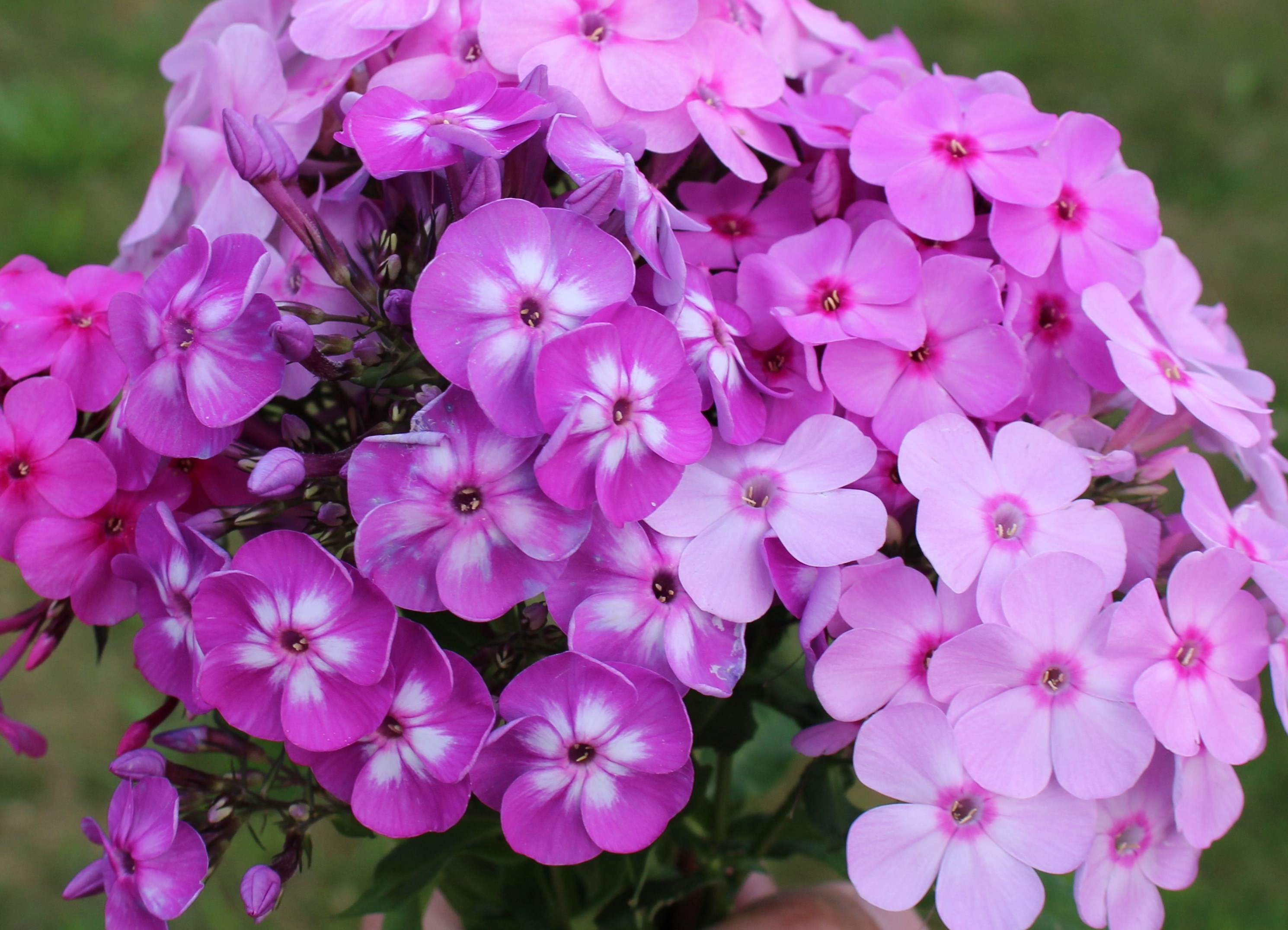
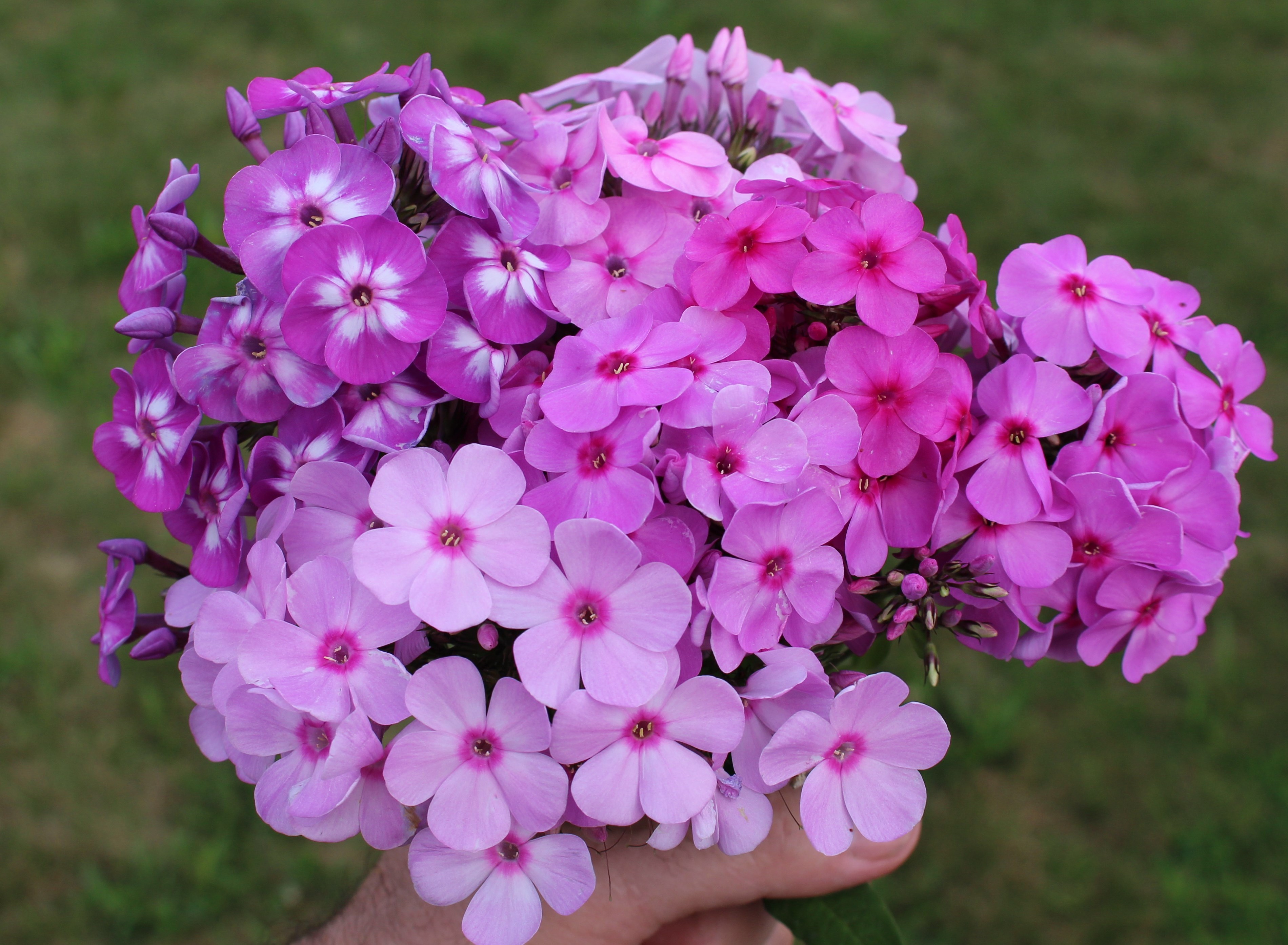
This afternoon I dutifully plucked my choices, prepared to plunk them in a vase, and was told in no uncertain terms to remove the flowers from the house.  Who is this woman I married who cannot tolerate the scent of garden phlox!?  Allergies and a lack of any thoughtfulness were brought up but by that time I had already scurried back outside.  So with camera in one hand and bouquet in the other, my vase is quite open to interpretation this week.

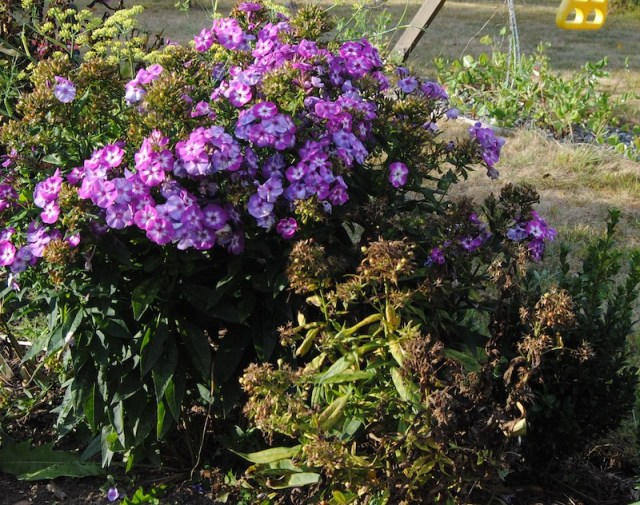
tall phlox seedlings

Late blooming garden phlox, all seedlings found scattered here and there throughout the garden beds.

I hope it’s not considered offensive to have a Monday vase without a vase, but Cathy over at Rambling in the Garden who hosts this weekly effort seems to be all for stepping outside the box now and then, so I don’t think there will be any hard feelings.  Plus, when you consider my arranging efforts are usually not far removed from throwing everything down on a table anyway, even with a vase it’s not likely things would have improved much!

self sown phlox

I actually ripped out the two plants on the right a year ago, but apparently they came back from the roots. I’m glad they did, and I should show them a little more respect from now on.

Hopefully the flowers speak for themselves.  These are all unnamed garden phlox seedlings (phlox paniculata) that were looking nice scattered around the garden.  So often I read the repeated advice that phlox should be deadheaded, don’t allow seedlings to grow, and if you do all sorts of chaos will ensue… but I suspect this is yet another bit of garden advice regurgitated yet never tested by the speaker.   Sure if you grow your own phlox seedlings, the plants may not be as excellent as the parents, but I just want to say mine have reseeded, the original plants are fine, many of the seedlings are attractive, and no zombie apocalypse has descended down upon my garden.  If you only have room for one phlox, by all means get a guaranteed color, but if you have a little room to experiment, give it a go.  The surprise can be nice and if not there’s always the compost pile.

Have a great week, and if you’re interested in seeing what other gardeners are doing with real vases give Cathy a visit over at her blog!

Garden Bloggers Foliage Day -Aug.2014

For nearly three years Christina of Creating my own garden of the Hesperides has been hosting the meme which focuses on foliage in the garden.  I believe her intention was to explore the important role which foliage plays in the garden, and remind everyone that although flowers often steal the stage, foliage remains to carry the show.  Going out this week with the intention of focusing on foliage surprised me in two ways.  First of all I always assumed I was one of those “immature” gardeners who always falls for the flash of flowers and doesn’t have much foliage interest.  That was wrong….  apparently nearly all flowers come with some kind of foliage (who knew!) and even the most flower blinded gardener will have foliage.  Secondly I learned another important revelation…. my garden looks much, much better in close-ups!
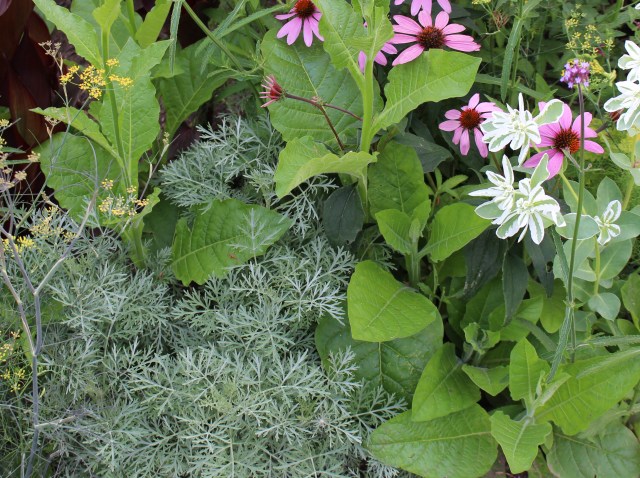
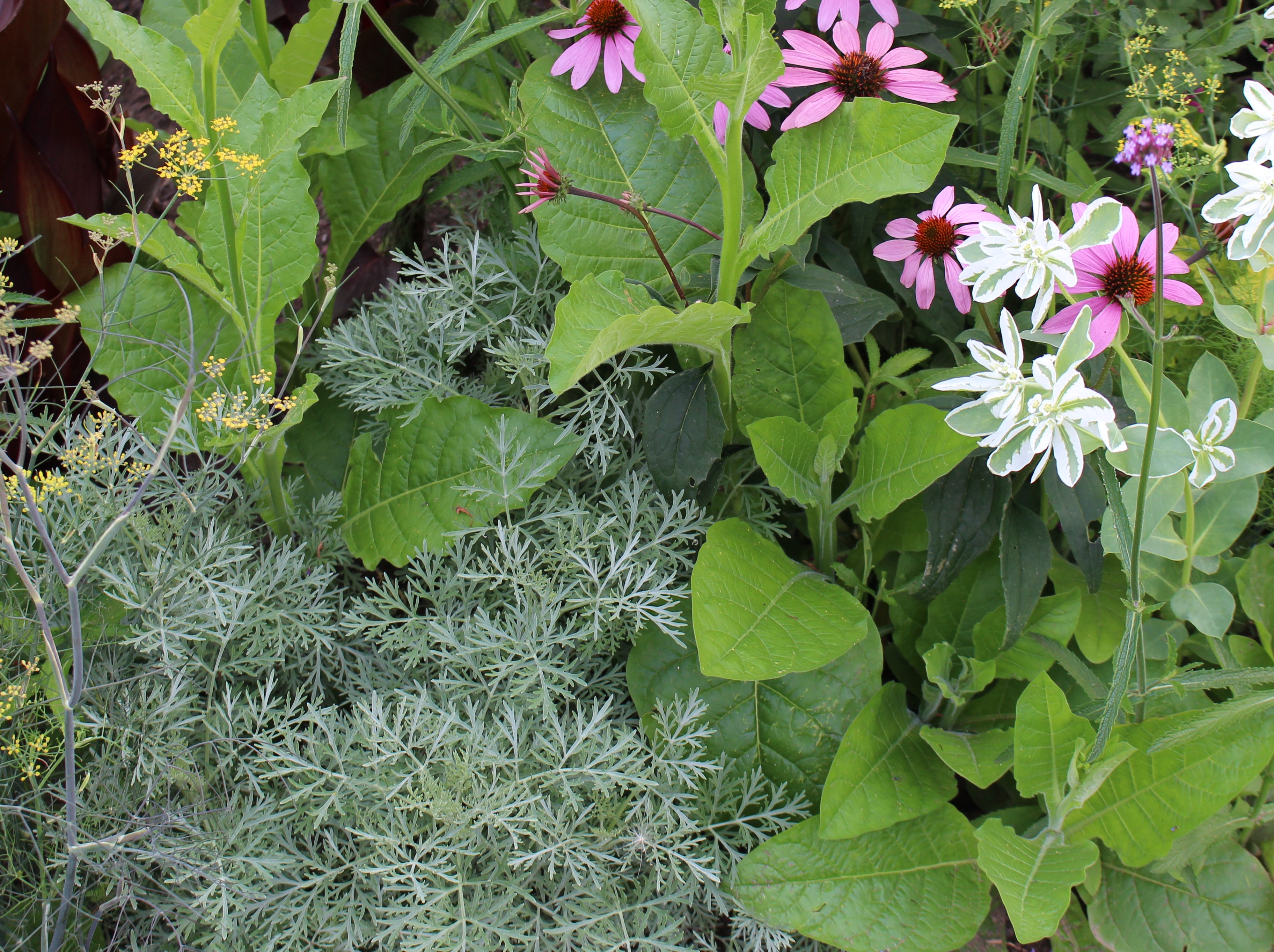
Powis castle Artemisia, snow on the mountain, nicotina, and Echinacea

I’ve grown Artemisia “Powis Castle” before, but never here in Pennsylvania. It was planted this spring and I love the gray foliage mixed with all the other stuff that seeded in with the compost. (fennel, nicotina, Echinacea, snow on the mountain)


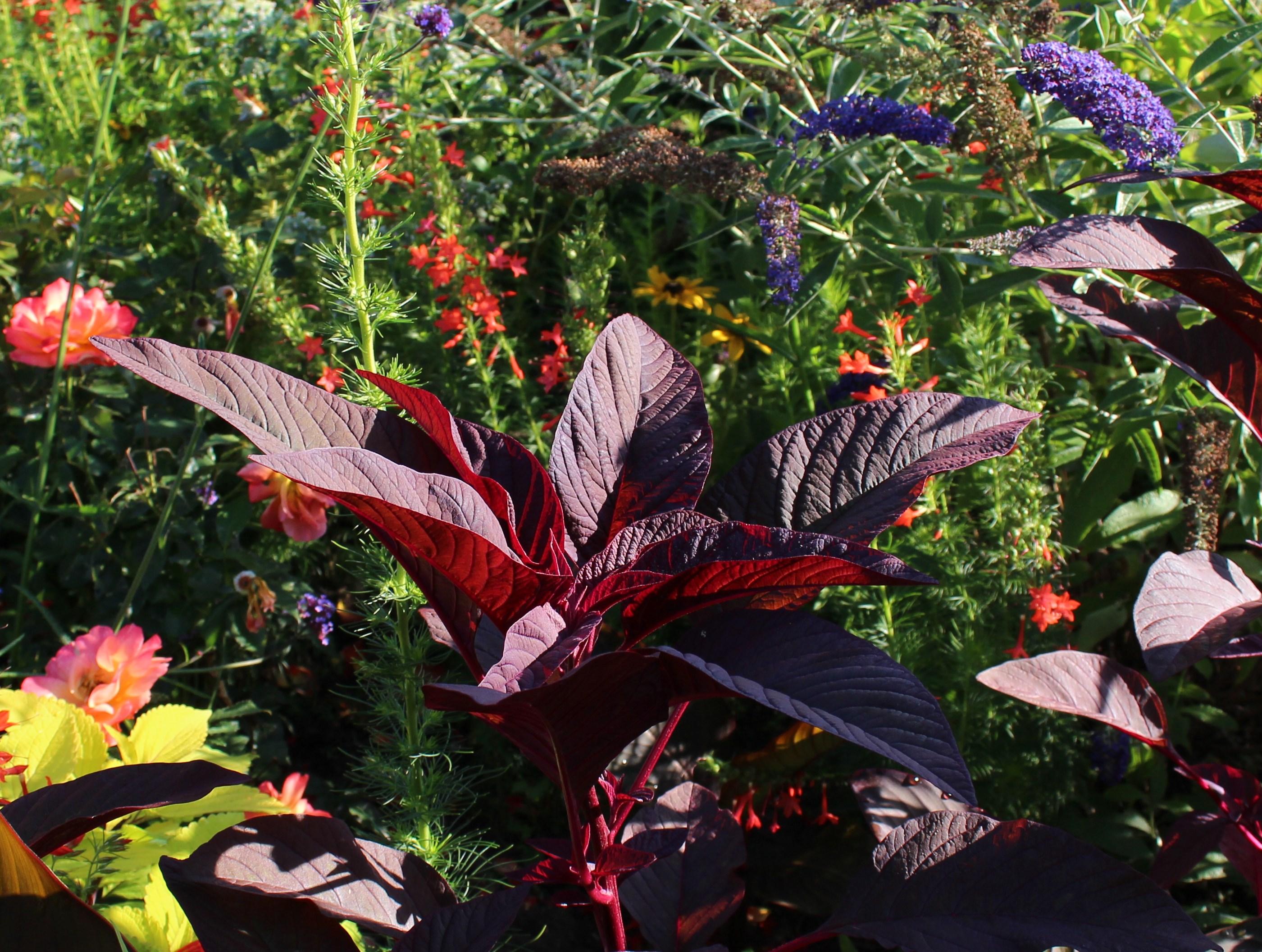
Starting with A and Artemisia is as good place as any, and while we’re here I guess we’ll just keep going along the front street border.  Soil improvement this spring and moving things around brought in plenty of seed-laced compost, and “Hopi Red Dye” amaranthus is easy to spot with its dark red leaves.
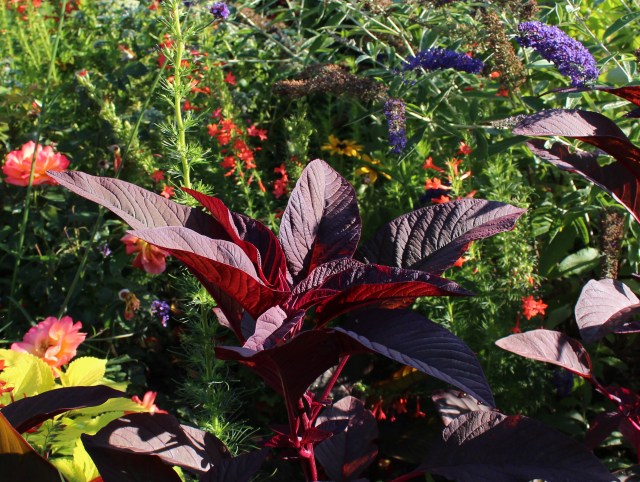
amaranthus hopi red dye

Amaranthus “Hopi Red Dye”, as easy to grow as its more weedy relatives.

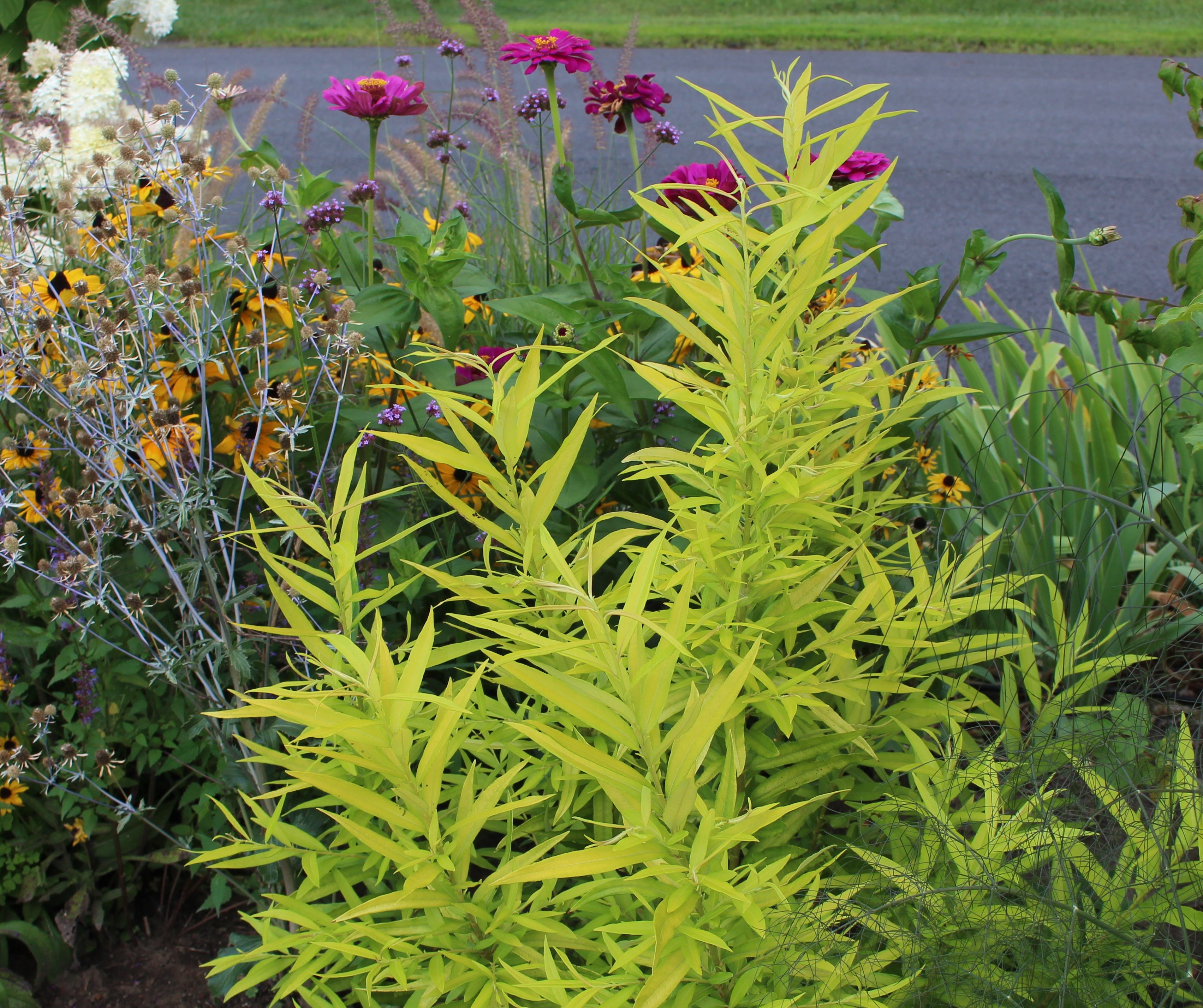
I like purple leaves, but I don’t think I can resist a plant with yellow foliage, and this “Golden Sunshine” willow was an impulse buy last year.  Rabbits mowed it down last winter but willows don’t sulk and this one bounced right back.  Actually I think cutting this one back to the ground each spring would probably be the best way to keep the bright new foliage coming.
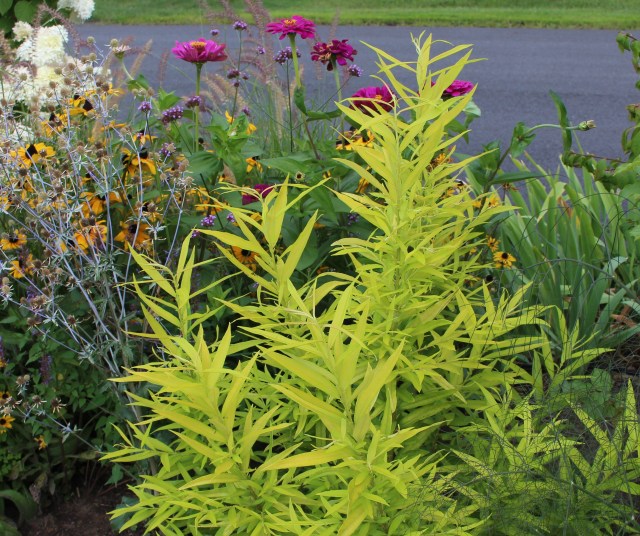
golden sunshine willow

Salix “Golden Sunshine”… or at least I think that’s what this willow goes by.  I really need to have a better recording system for my plant IDs.

If pushed I might even admit to having too much yellow foliage around the yard.
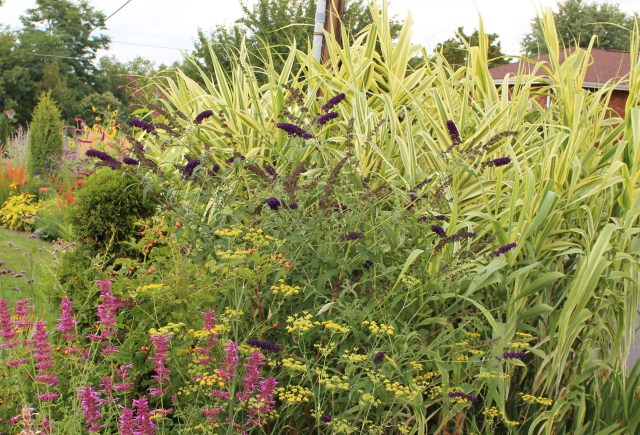
arundo donax variegata in perennial border

Arundo donax “variegata” in the front perennial border. An explosion of color with “Black Knight” buddleia, pink agastache, and yellow fennel blossoms. Btw, the arundo is probably 8 feet tall and the butterfly bush 6. Also it’s unusual for the grass to have this much color so late in the summer. Usually the heat makes it go all green.

Here’s a little blue in the blue spruce I moved last spring…. and more yellow.
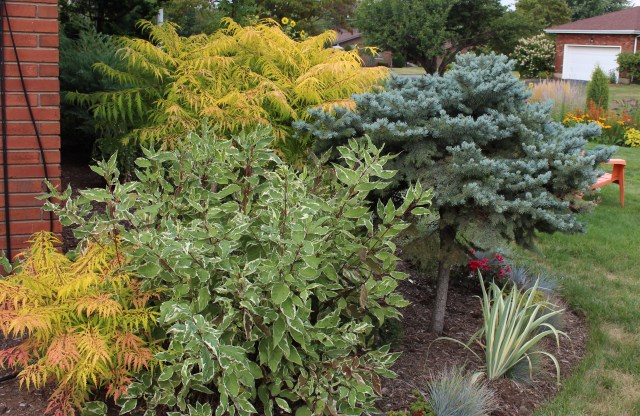
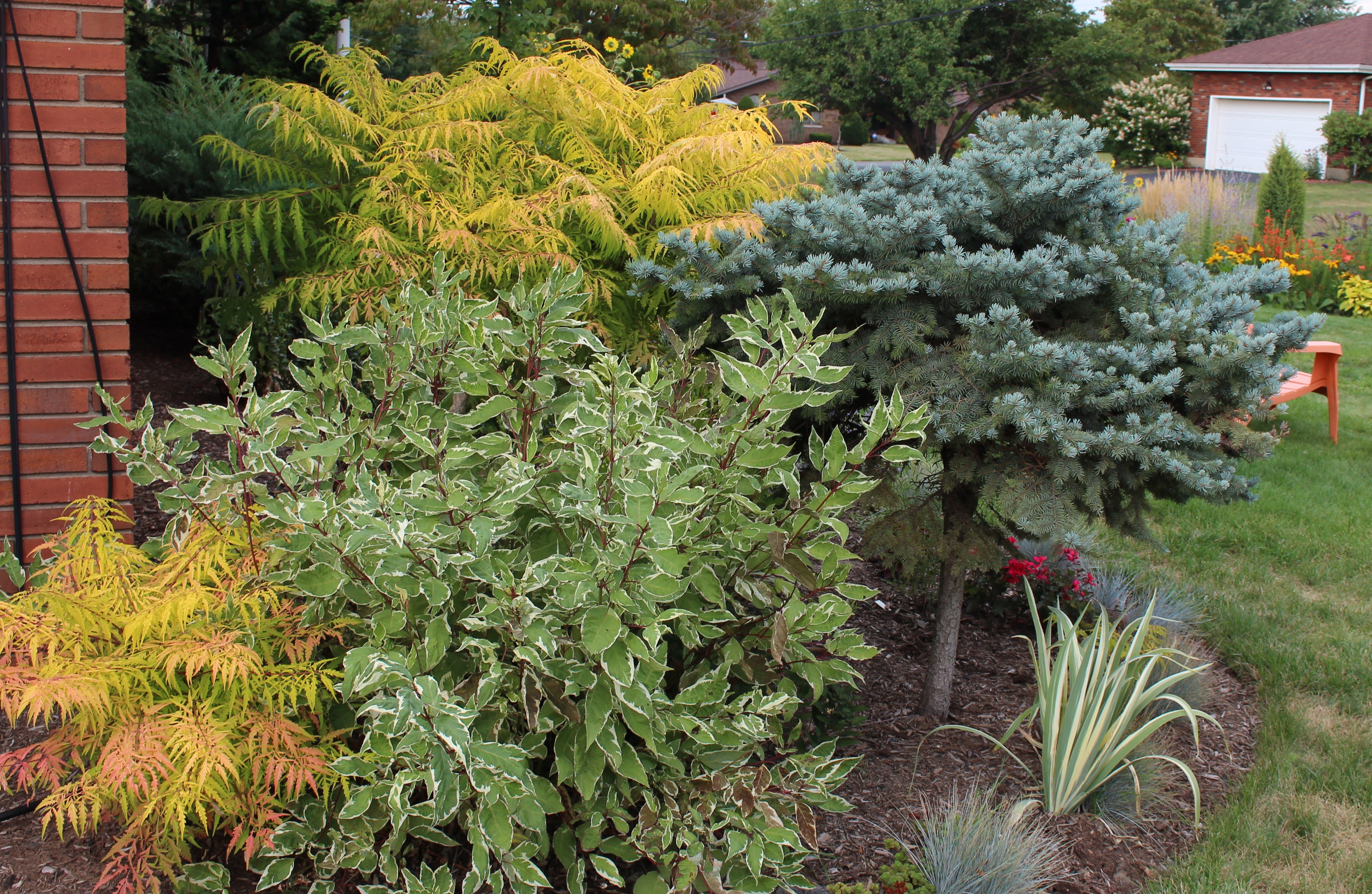
sumac tiger eyes with blue spruce

Have I ever mentioned my love for the foliage of “Tiger Eyes” sumac? It suckers around a bit, but in my mess of a garden that’s no big deal. I haven’t yet decided if this is a formal enough planting for the front of the house though.

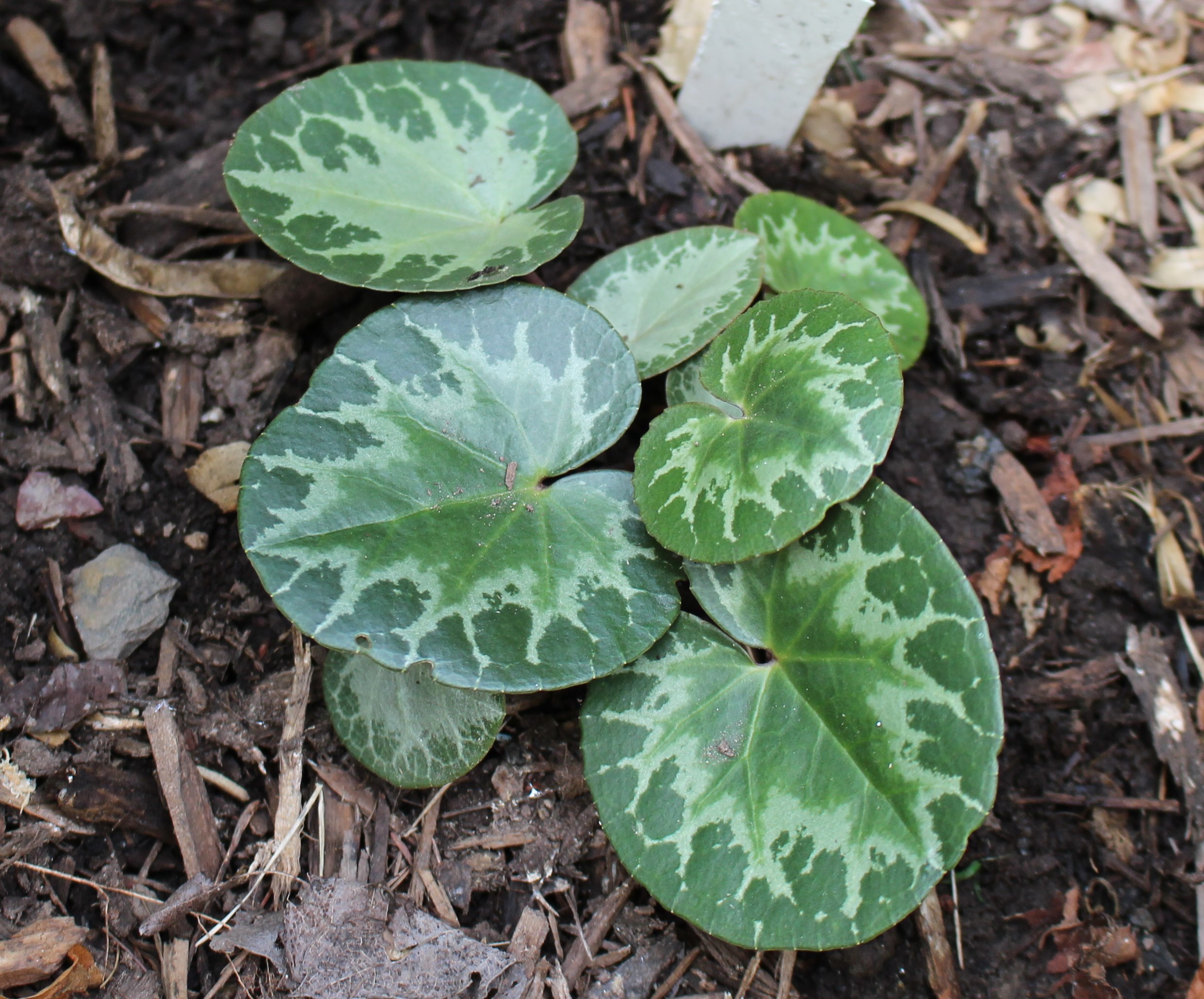
A foliage post without mentioning a cyclamen is just crazy, so here’s my little c. purpurascens plant (probably two or three plants since I see at least two leaf forms).
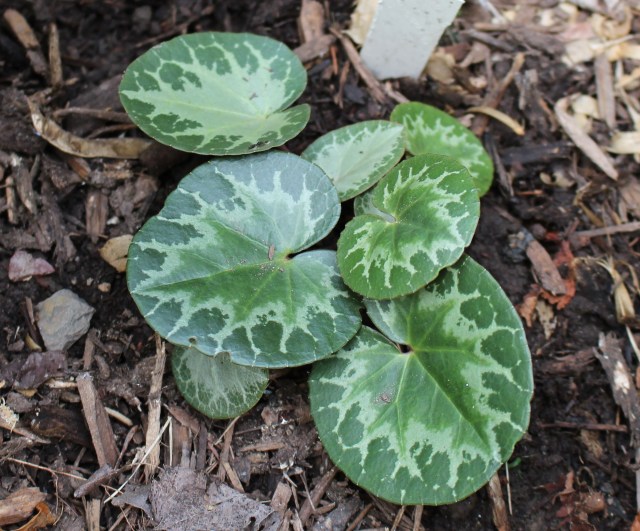
cyclamen purpurascens foliage

Good things come in little packages, this cyclamen purpurascens is a baby at only maybe 5 inches across but it might be my favorite cyclamen right now…. I’m sure that will change as others appear 🙂

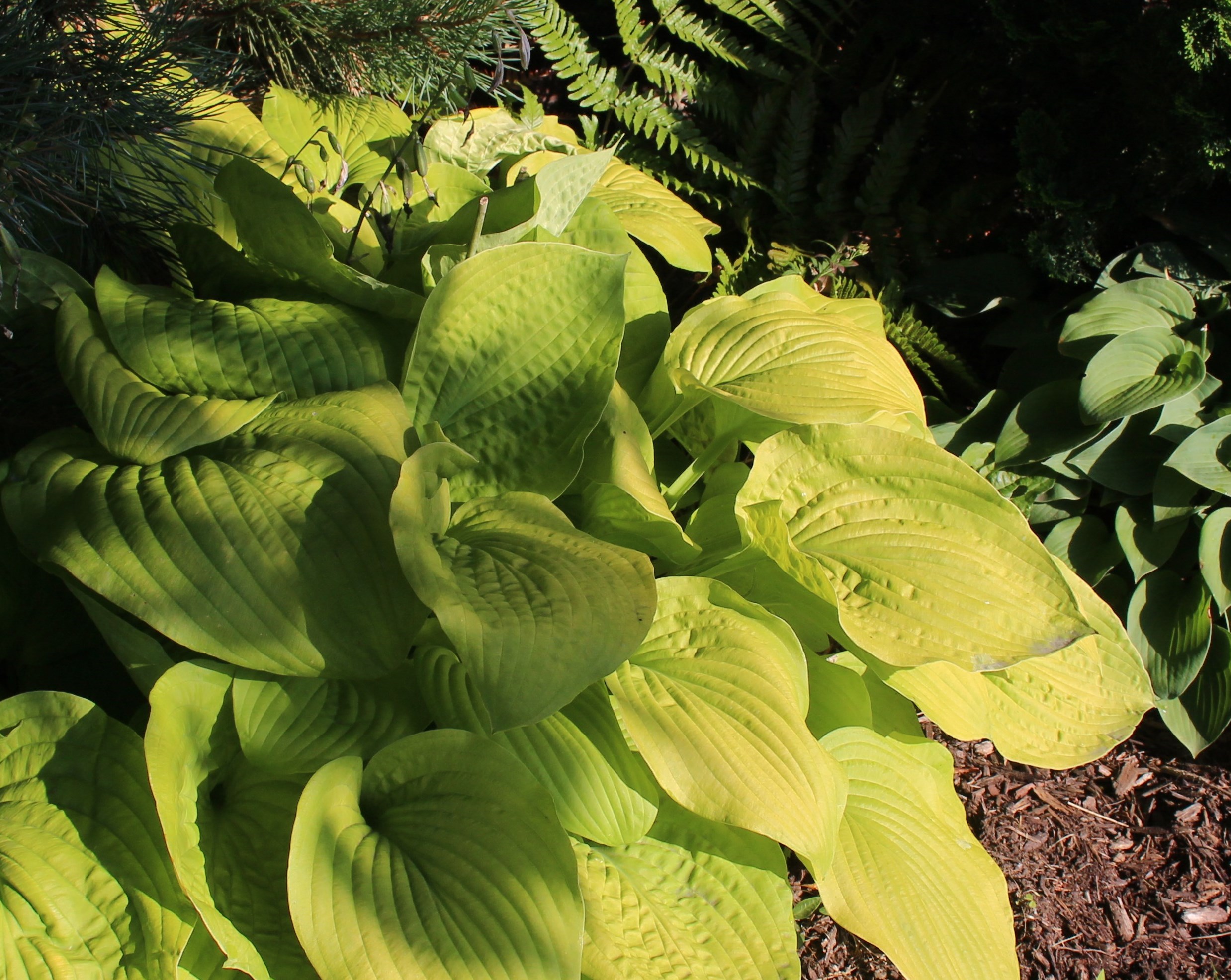
I took a lot of pictures so this may be all over the place, but I’ll try to finish up the front yard first.  Sometimes people think of hosta when they hear the word foliage, and I’ve seen them in a few gardens here and there (just a few!).  Here’s “August Moon” a favorite old variety which lightens to nearly white when in full sun.
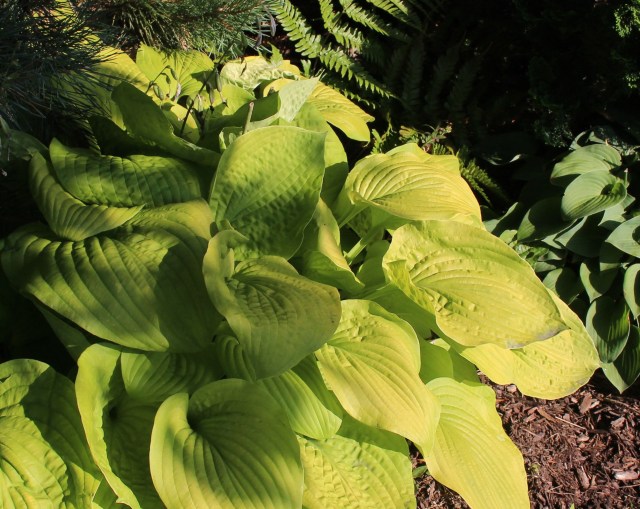
hosta august moon

Hosta “August Moon” in one of my few shady areas.

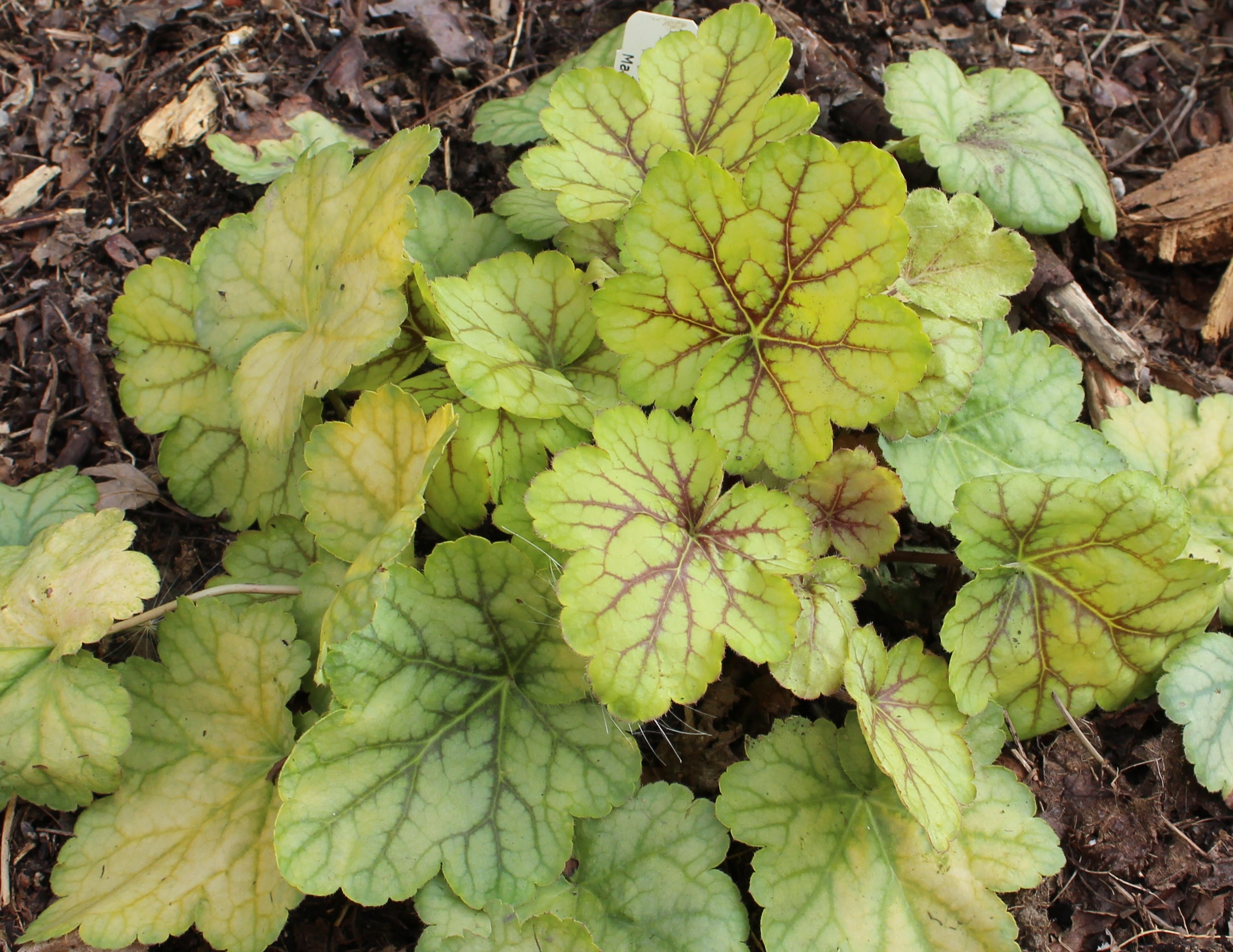
Moving into the back near the (another yellow) sunflowers is the new heuchera patch.  Someday you’ll suffer through an all out heuchera post, but until they grow in a bit I’ll let you off with just one.
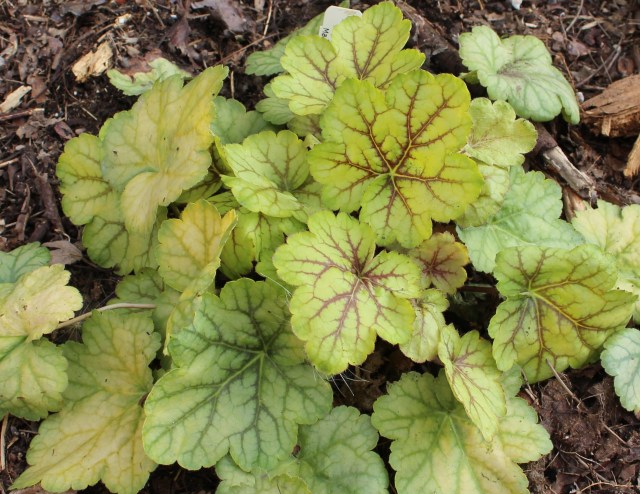
heuchera circus clown

One of several new heuchera plants, heuchera “Circus Clown” is off to a good start with a nice mulch and some much needed rain. It’s amazing how the colors on these plants change throughout the year.

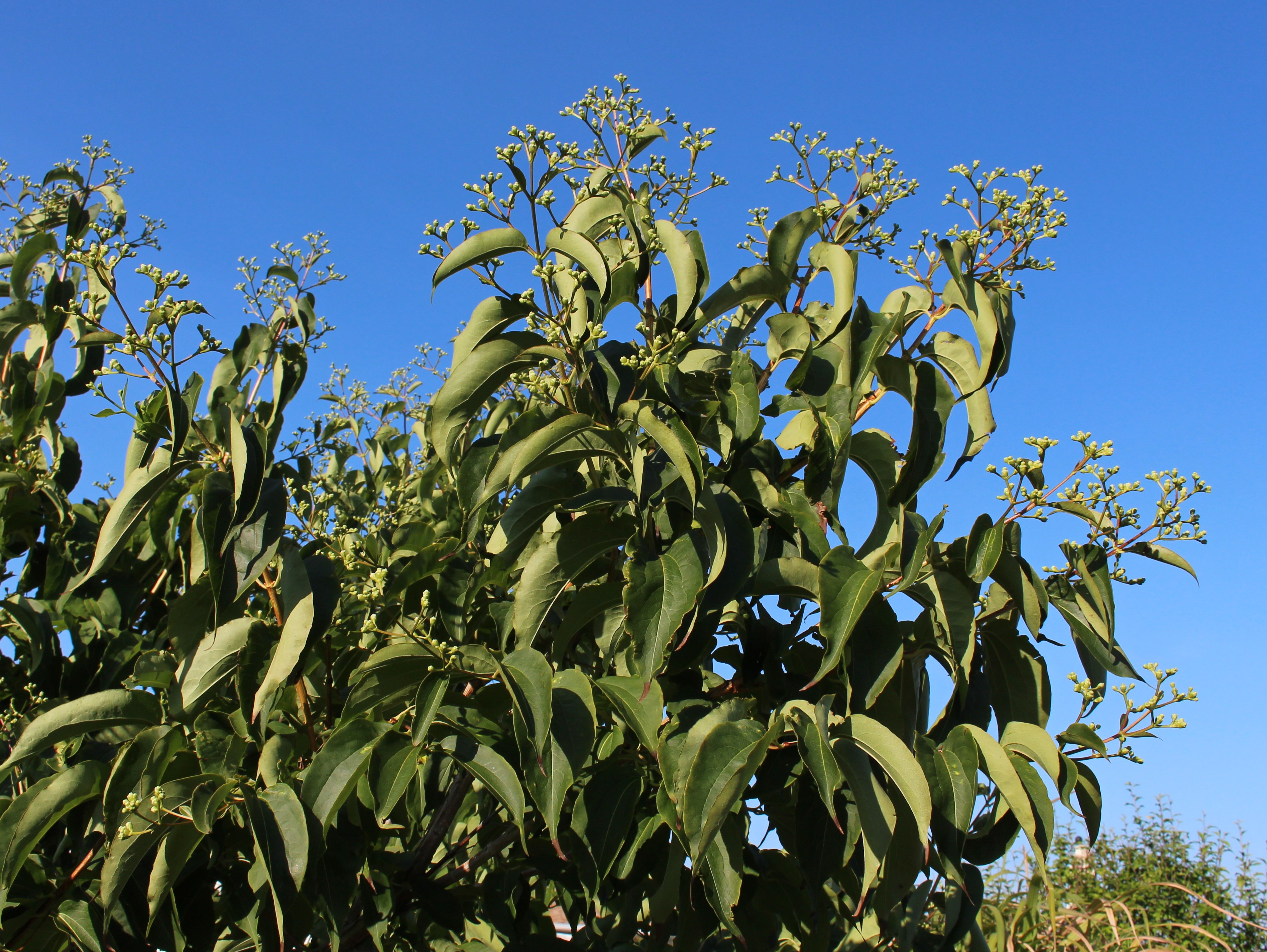
The reason the heuchera can survive here is from the shade of a Seven Sons shrub/tree (heptacodium miconioides).  My plant gets cankers and loses trunks every now and then but I hope it someday gets past that.  Right now I’m enjoying the rich green of the curled stiff leaves.  Kind of a coarse look, but for a guy with so many cannas and dahlias refinement isn’t one of my strong points.
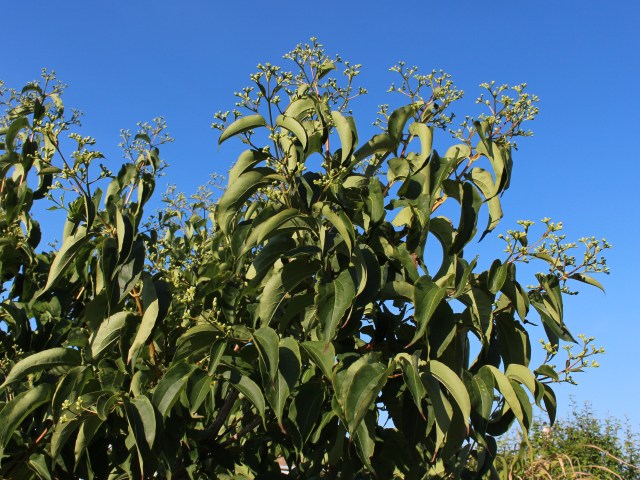
heptacodium miconioides leaves

Heptacodium miconioides leaves against a perfectly clear blue sky.

Enough with the babbling.  Look but don’t touch.
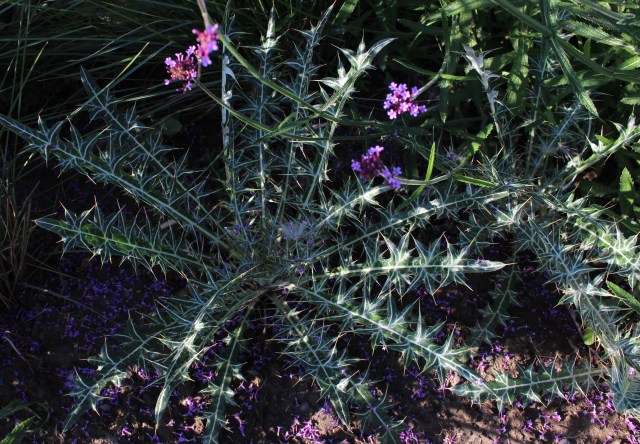
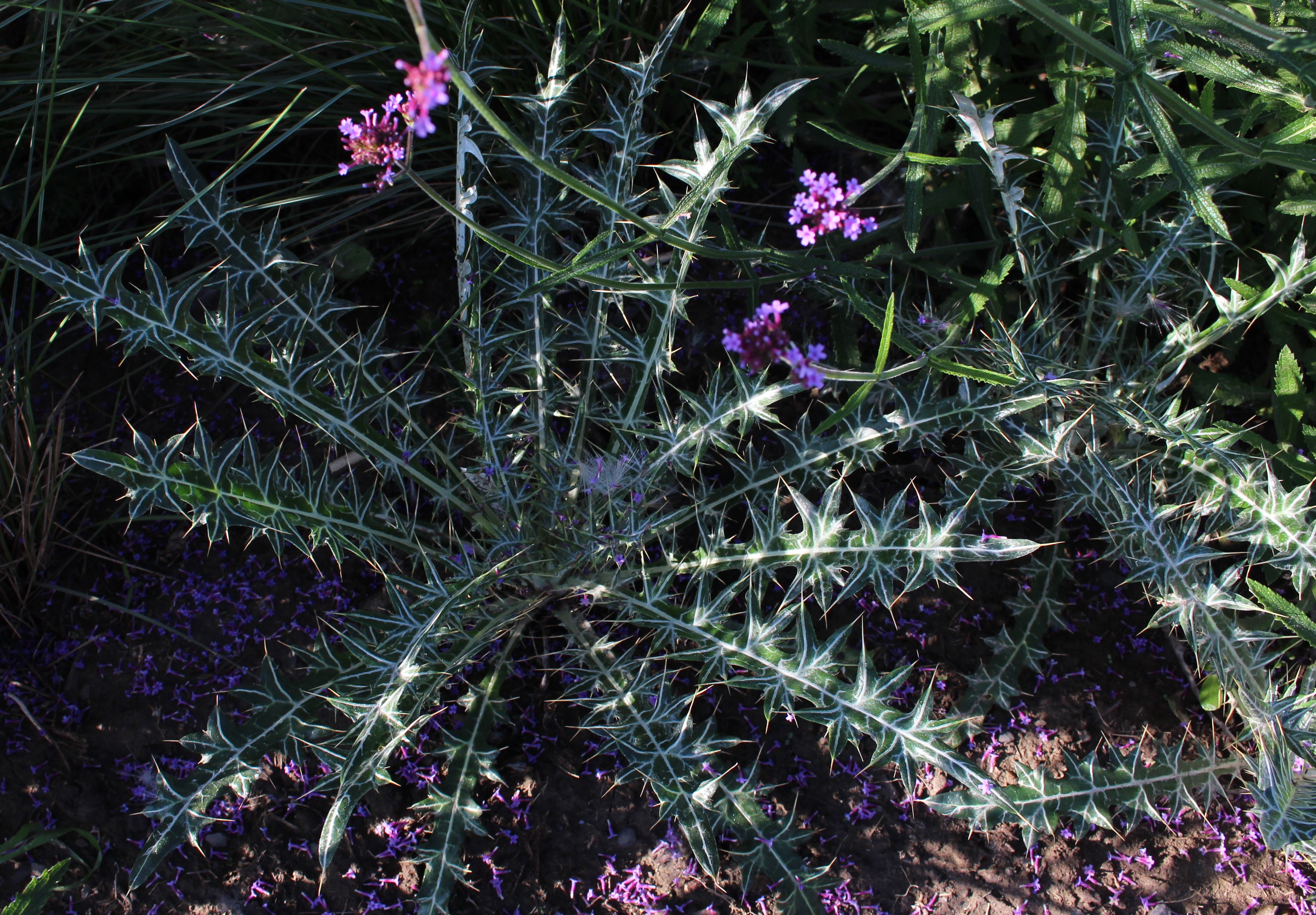
Ptilostemon diacantha

Ptilostemon diacantha with verbena bonariensis blossoms. Of course this is where all the missed baseballs end up rolling.

Almost good enough to eat, plants in the vegetable garden (or potager when I’m feeling fancy) also can put on a good show.
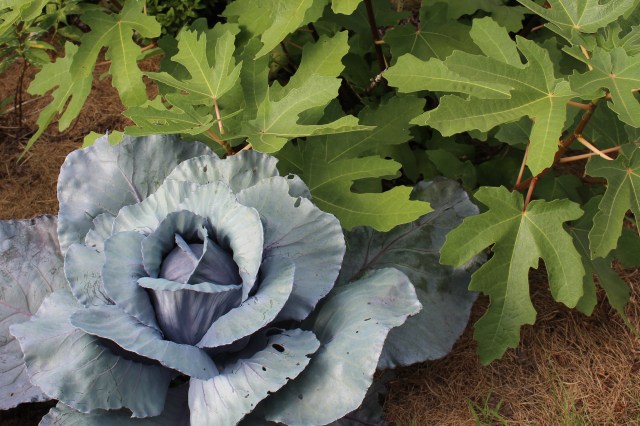
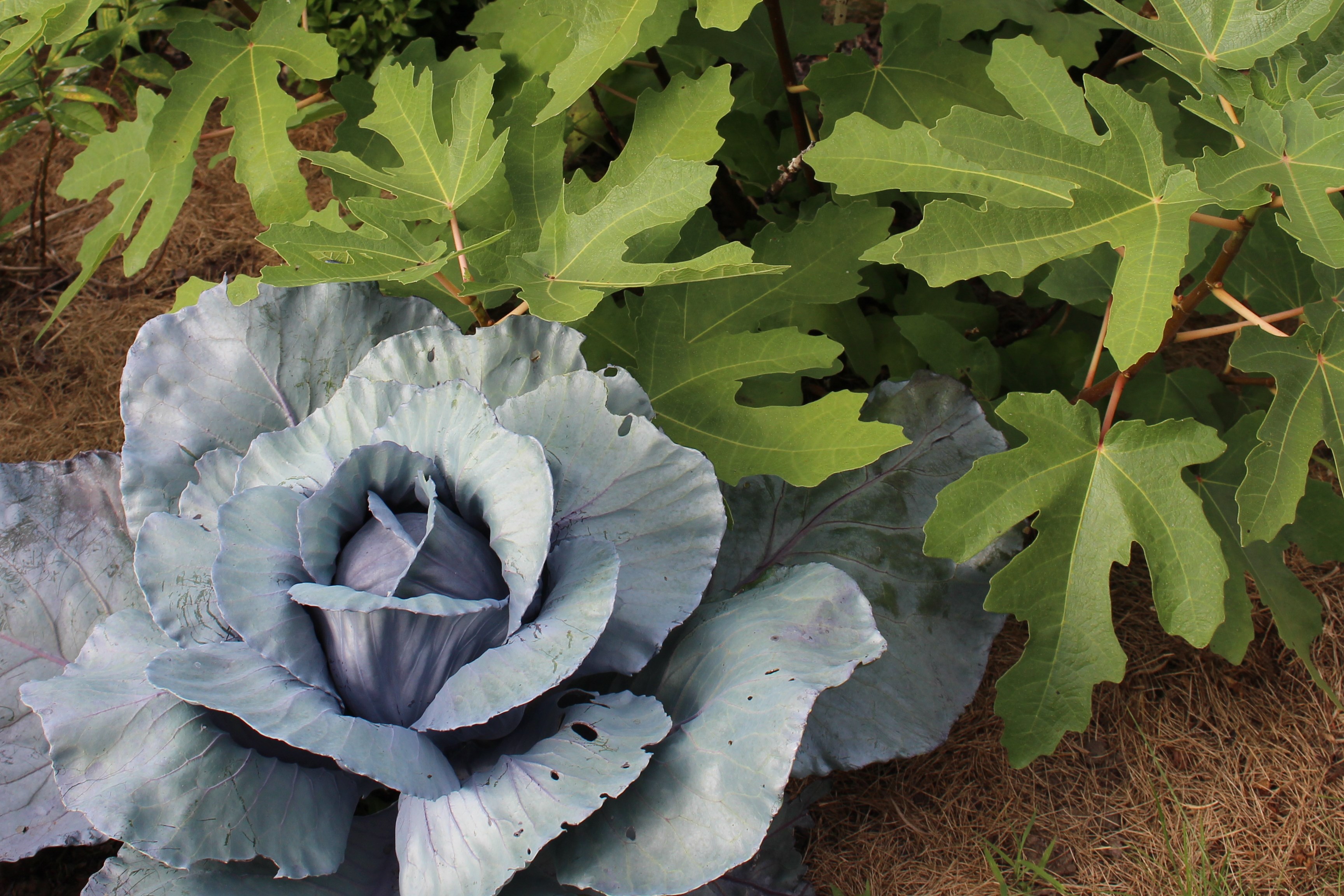
red cabbage and fig leaves

Red cabbage and fig leaves, the fig would be happier in Christina’s Mediterranean garden but it hangs on here and the perfectly cut leaves make up for not getting any actual figs 🙂

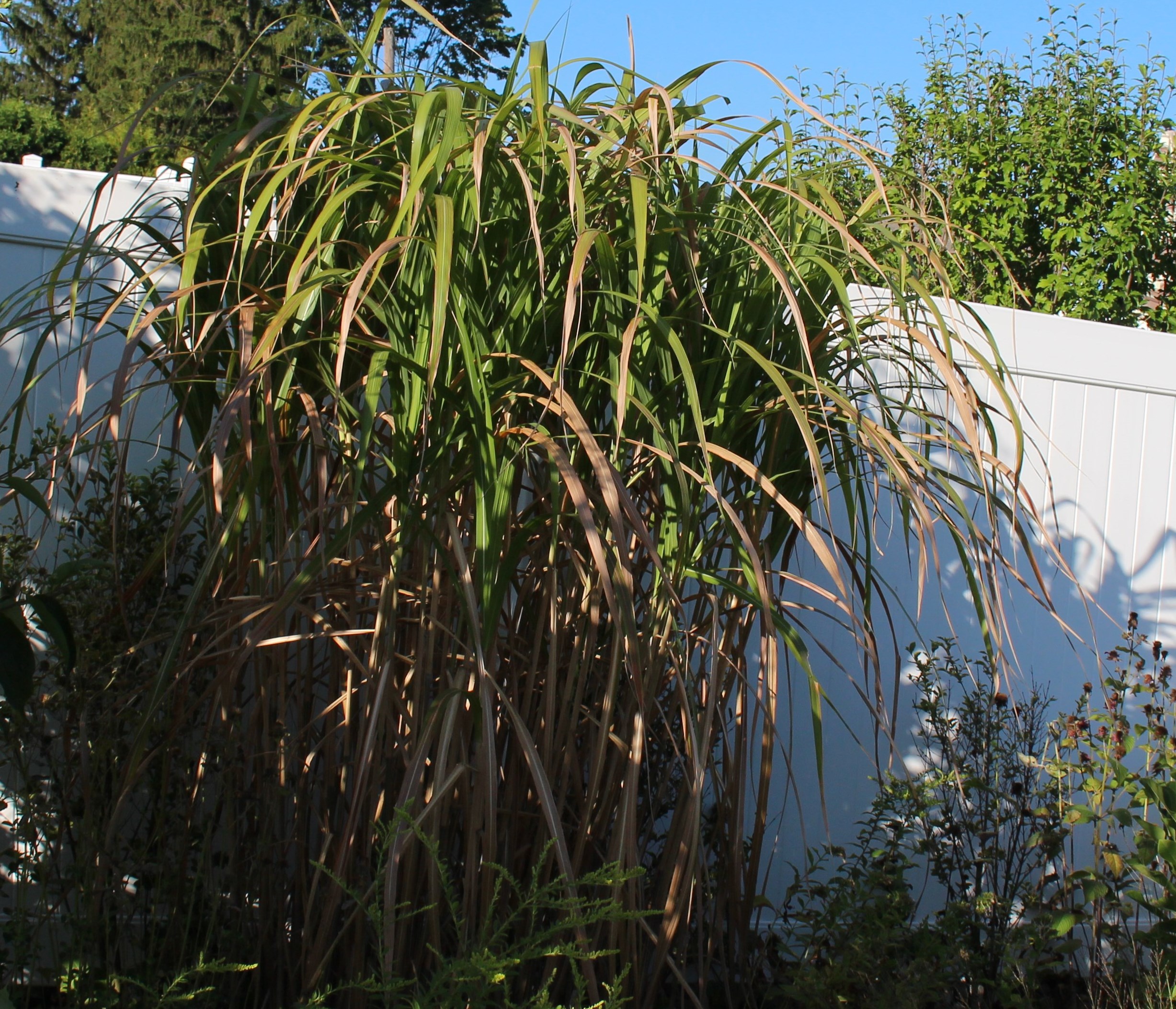
Not all the foliage news is good.  Miscanthus giganteus was off to a good start but our dry spell threw it for a loop and killed off all the lower leaves.
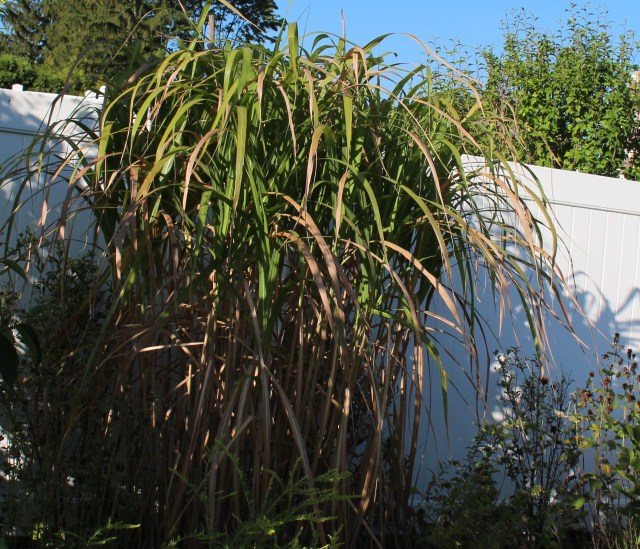
miscanthus giganteus

Miscanthus giganteus wants the steady moisture which I’m too frugal to supply. It might be easier to get something else for this spot.

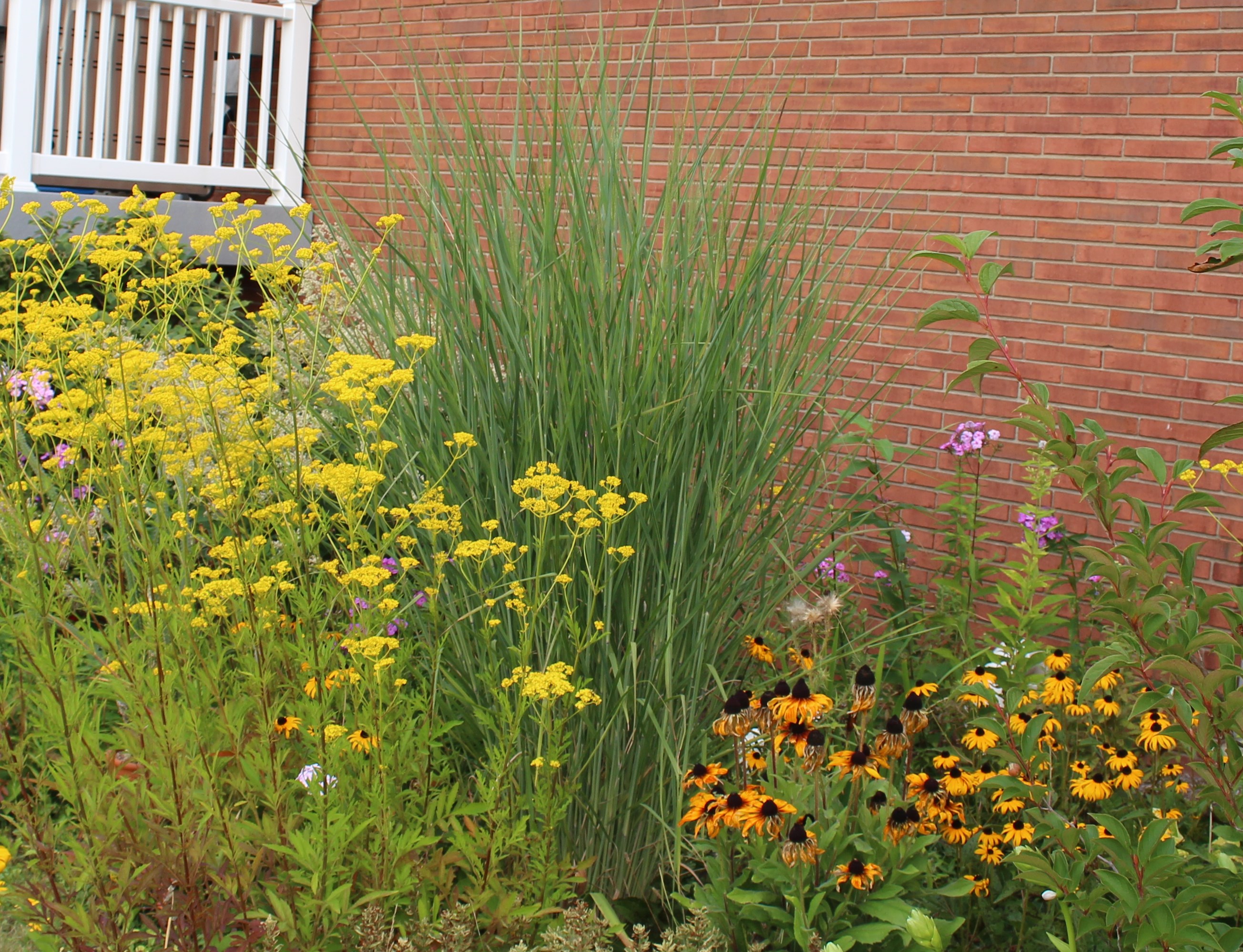
Back by the house is a panicum “Cloud Nine” which is much more comfortable with drought.  I hate this bed and constantly neglect it, but nature did its own thing and filled the gaps with rudbeckia, phlox, and patrina scabiosifolia seedlings.  Sure beats the boring mulch I had there before.
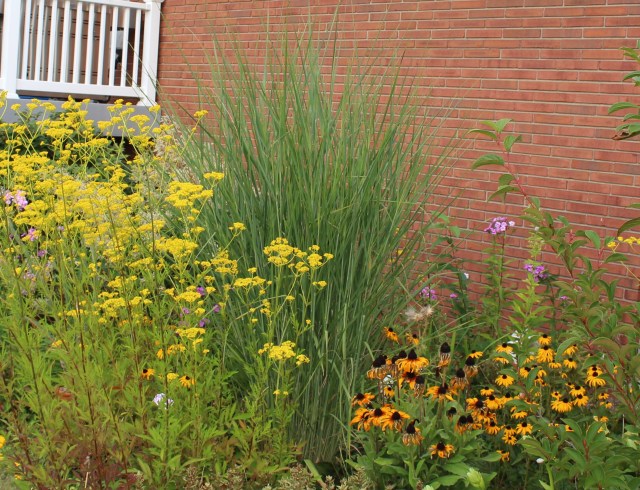
panicum cloud nine with patrina

The stepchild bed with Patrina, panicum, rudbeckia, and phlox.

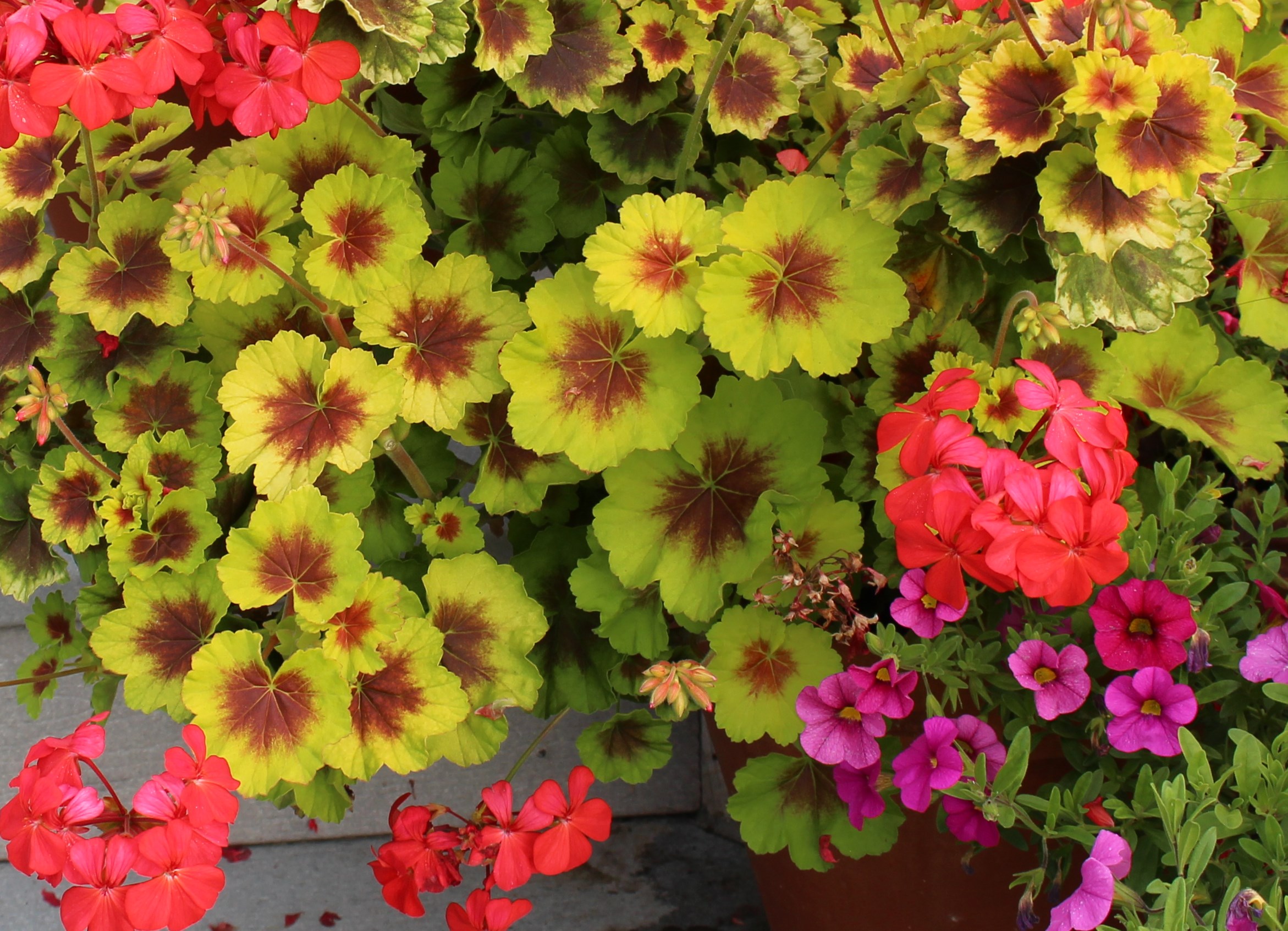
So much for anything that even approaches subtlety.  My tropicals come next, and first off are the geraniums (pelargoniums) which in my delusion and denial I have added to the overwinter and collect list.
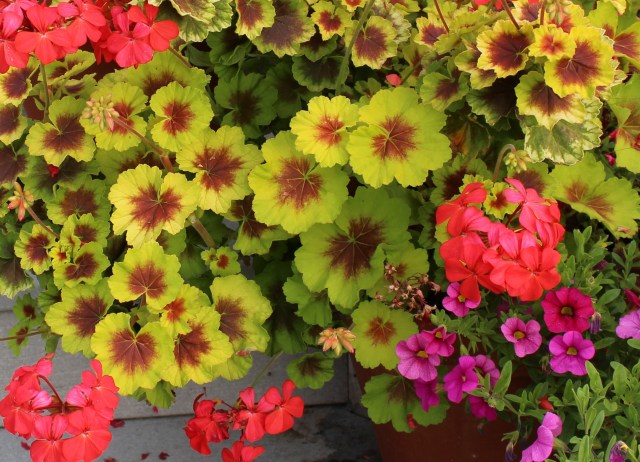
zonal geranium

I have to dig up the name for this one, it’s in its second or third year with me and keeps looking better.

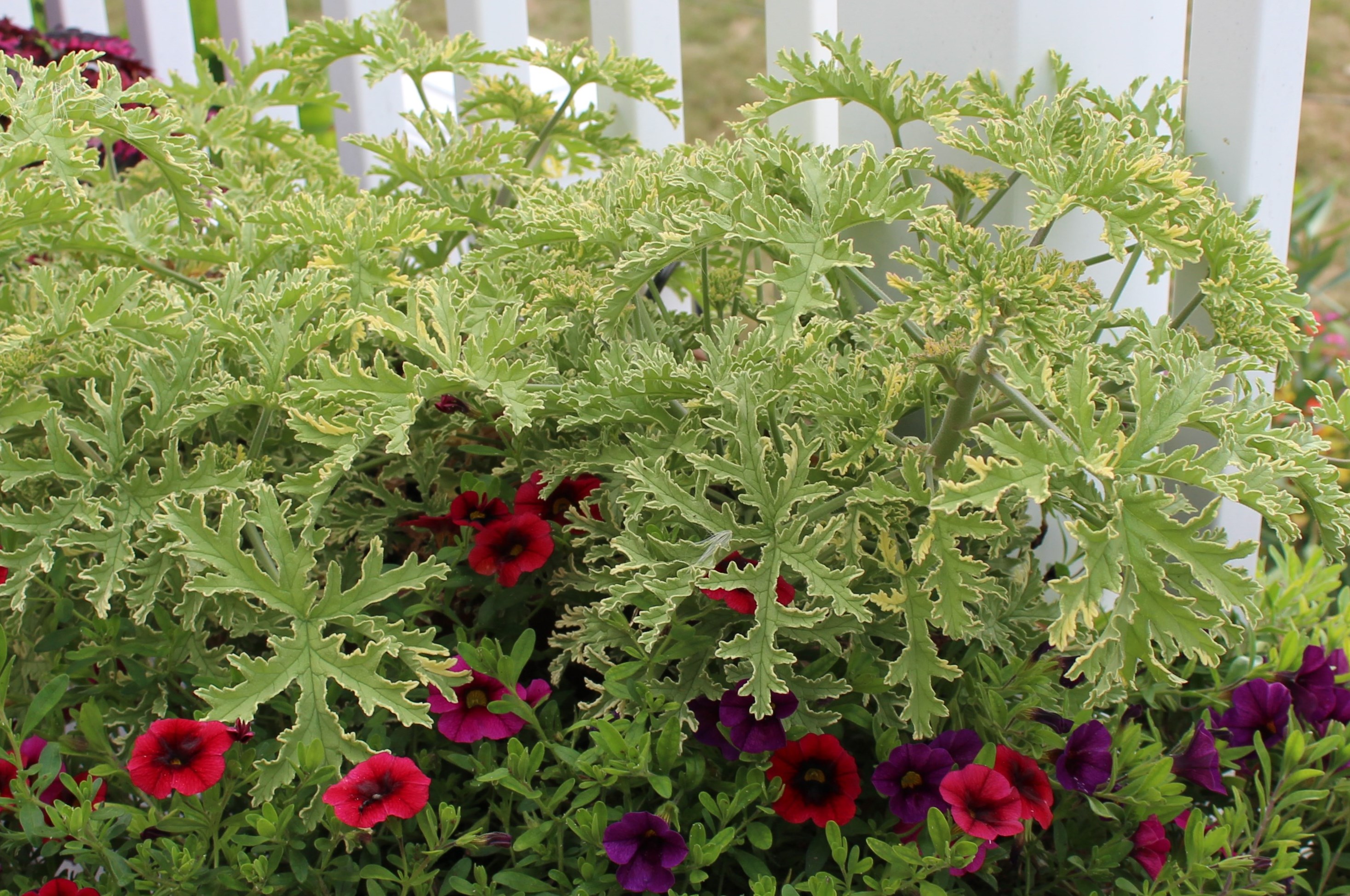
A scented leaved geranium (pelargonium actually) with cut leaves, variegation and scent.  Too much or something for everyone?
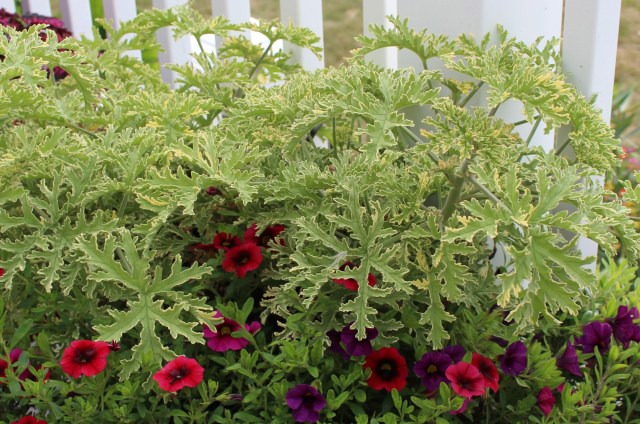
scented leaf geranium

This scented geranium is another plant who’s ID is lost in the pot-full-o-tags database. I should probably work on that.

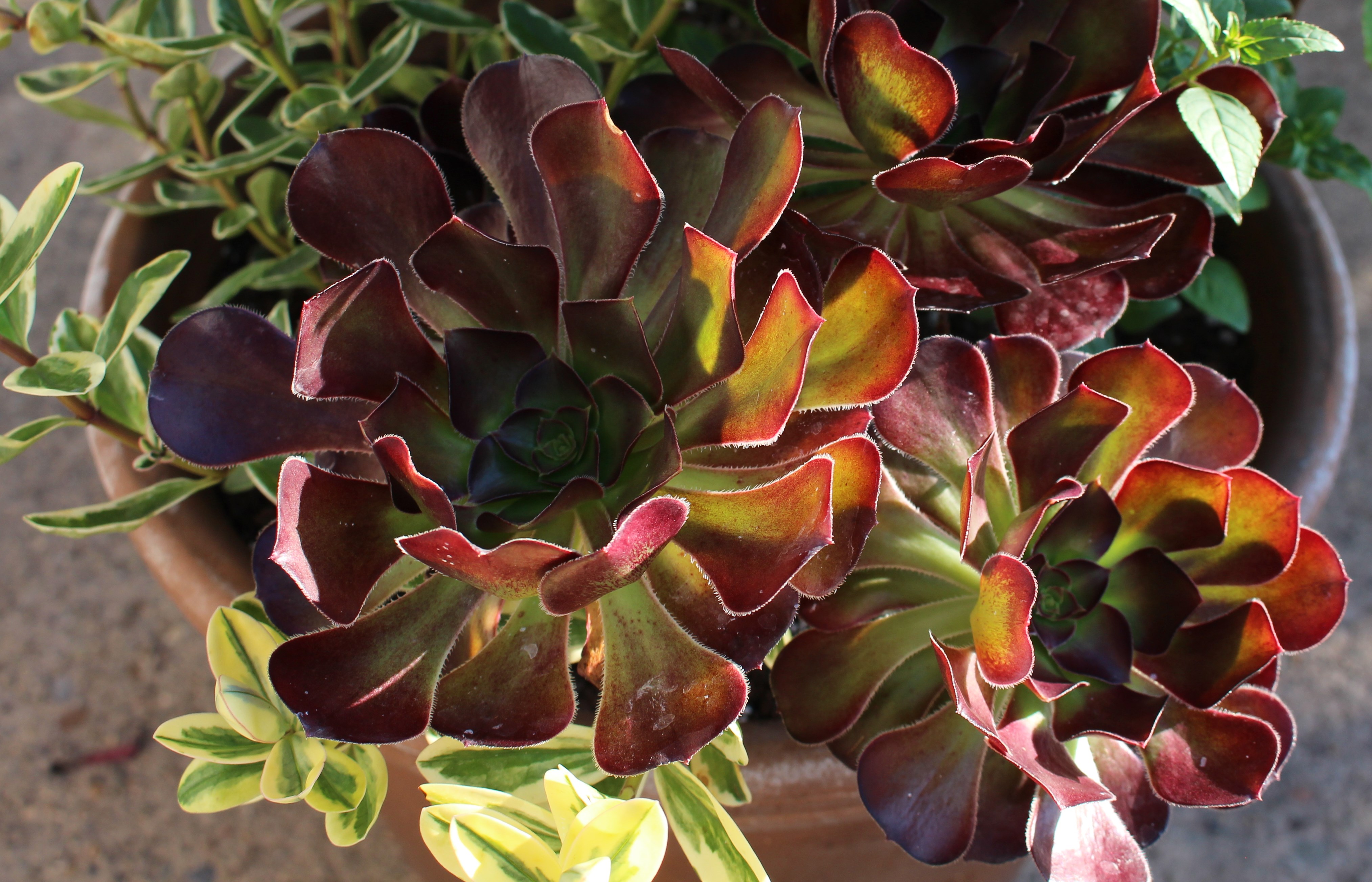
Another one to overwinter in the garage, my first aeonium is looking well.  Hopefully it can handle the high-water location I planted it in -a pot with a variegated hebe and cape fuschia (phygelia).
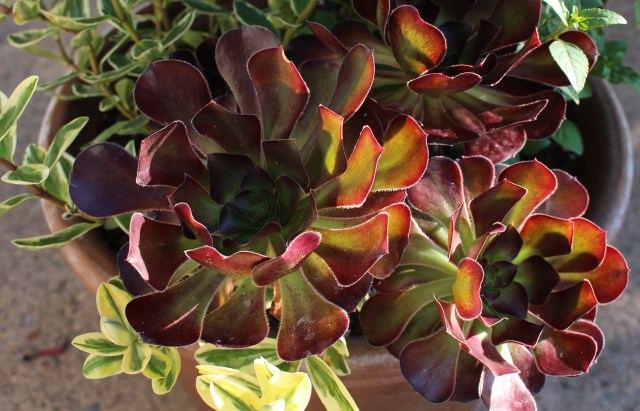
aeonium with variegated hebe

This one’s label must still be near the top of the tag bucket since it’s a new purchase. A good gardener would go out there, find it and label it…. but all I’ve got for you is it’s not “Schwarzkopf”.

Now to wrap things up (so I can finally get to work on the stupid basement tiling job I started) here are my foliage stars.
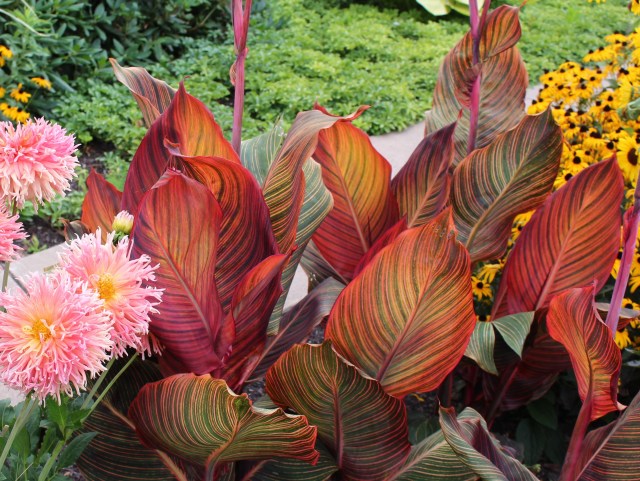
canna tropicana

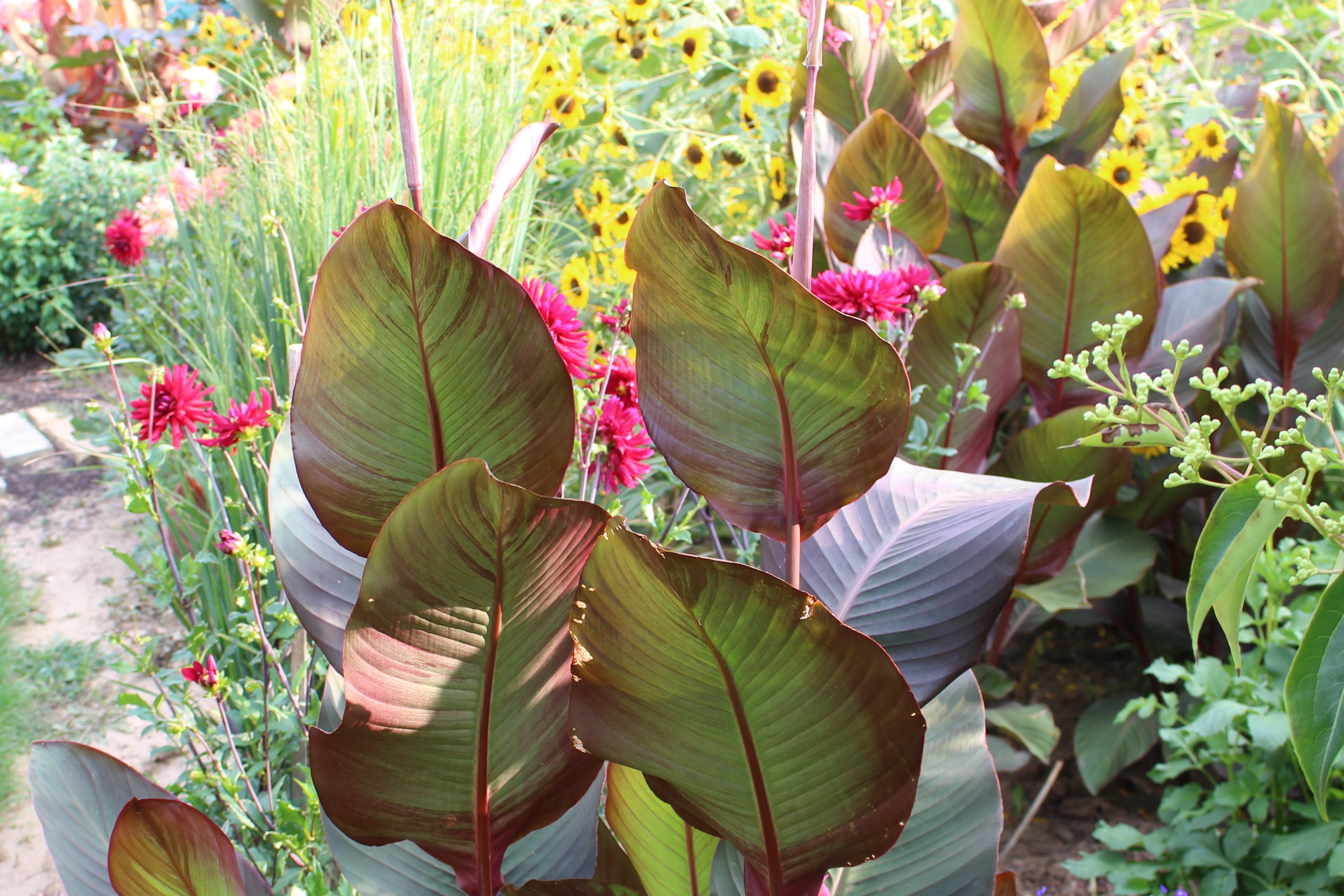
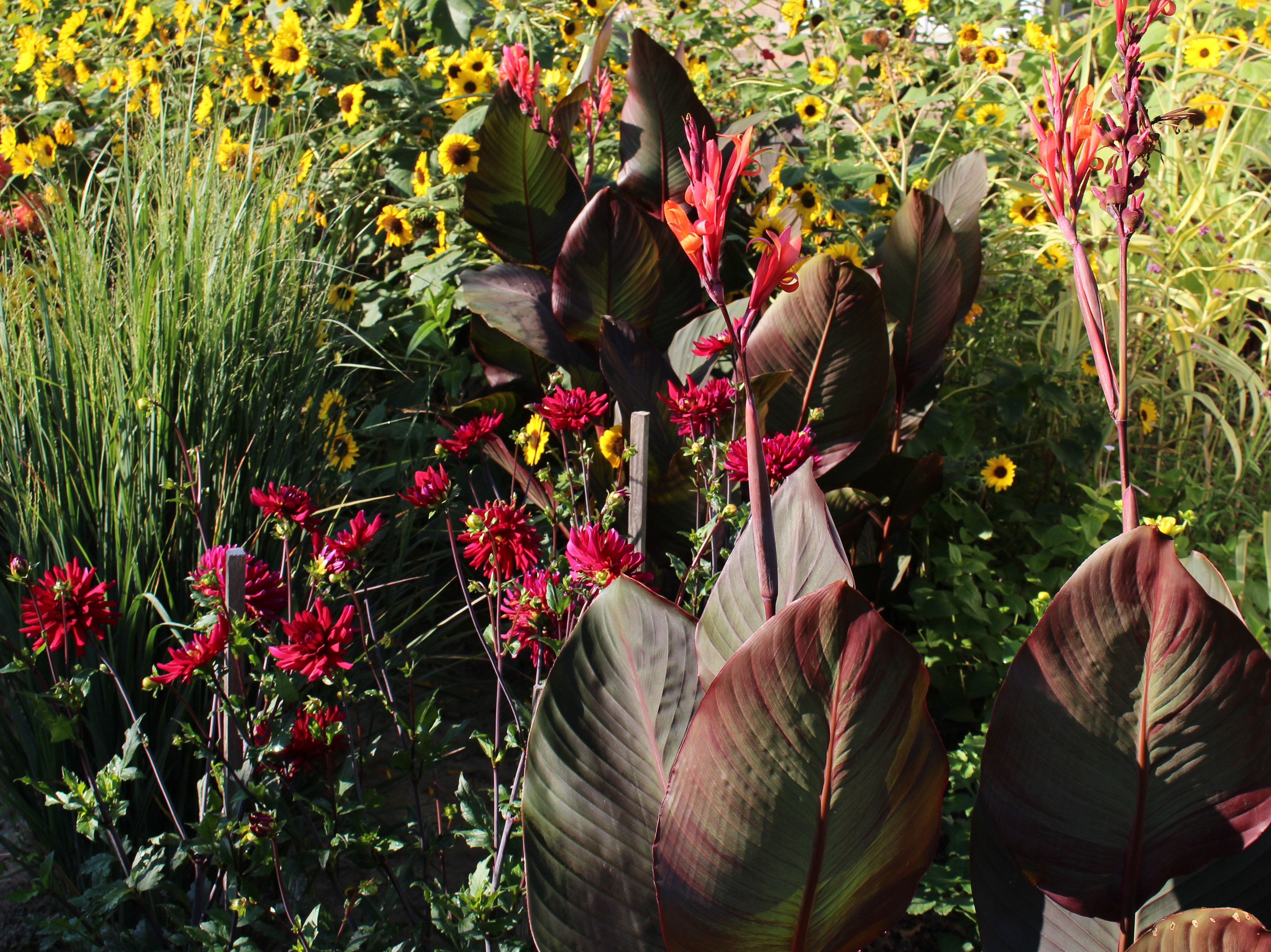
Canna “Tropicana” might be the most obscene show of gaudy color in my garden. I love it with the dahlias and rudbeckia.   Good thing there’s some green nearby to calm things down.

Morning light on the sunflower patch.
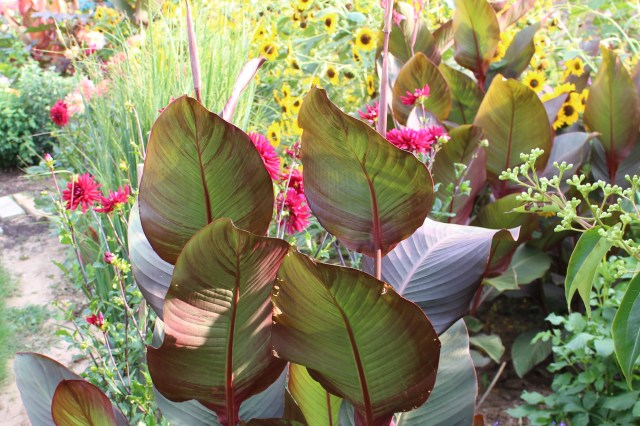
canna in the garden

My ‘Polish cannas’ were a gift which traces it’s history back to a friend’s old Polish neighbor. It’s probably really canna indica “purpurea” or “Russian red”.

And same cannas at noon.  A sculptural plant I think.
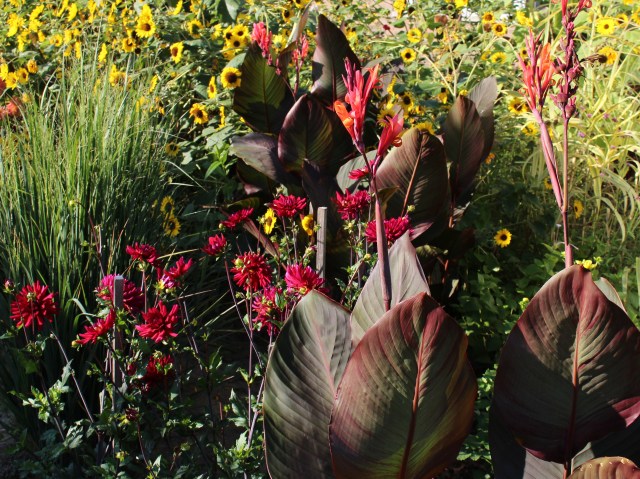
canna with perennials

The small blooms aren’t much for a flower lover, but they have a graceful look and the hummingbirds appreciate them.

So that’s my foliage, thanks for sticking it out.  I did manage to keep all the coleus out (but of course there’s still all of September for that) and I hope that gave a little relief, but I was really surprised by how much color and interest I get from foliage.  Maybe I am growing up and my tastes are maturing…. but I hope not.  I like my messes of color too much!

Thanks Christina for hosting and thanks for opening my eyes to all that foliage does in the garden.
And the clouds opened

For some reason my little valley has been missing all the rains again, and up until last week it’s just been dry, dry, dry…. until Tuesday.  The cold front came through and we enjoyed two days of on and off rain, and the garden just soaked it all up.  It reminded me of one of those nature specials out of the Serengeti.

heucheras in dry shade

You can’t even weed this rock hard “topsoil”. My new heucheras are toughing it out, but this bed sure won’t make it onto a postcard any time soon!

The grass dried up, the trees started dropping leaves, the waterhole pulled in all the wildlife, and animals were on the move.  Anything not within hose range shriveled up, but at least the temperatures were low.  Last year we had a hot baking which killed off the weak, this year I think everyone should recover.

asclepias tuberosa during drought

Asclepias tuberosa is a tough one. I planted these seedlings out last summer and after a few weeks they shriveled up and died due to neglect. Spring resurrected them and they are now trying so hard…. but they’re not cacti!

It looks horrible though.  The front yard had two sprinkler days and just looks dry, the back looks dead!  Here’s the director of cinematography following me around getting the shots that I missed.

lawn dead from drought

I would call this dormant. The weeds even gave up.

But just like in the nature specials, when the rains return the landscape springs back into life.  I took a couple pictures at the end of the two days and although a few things look a bit battered, even the dead back lawn is giving out a sigh of relief.

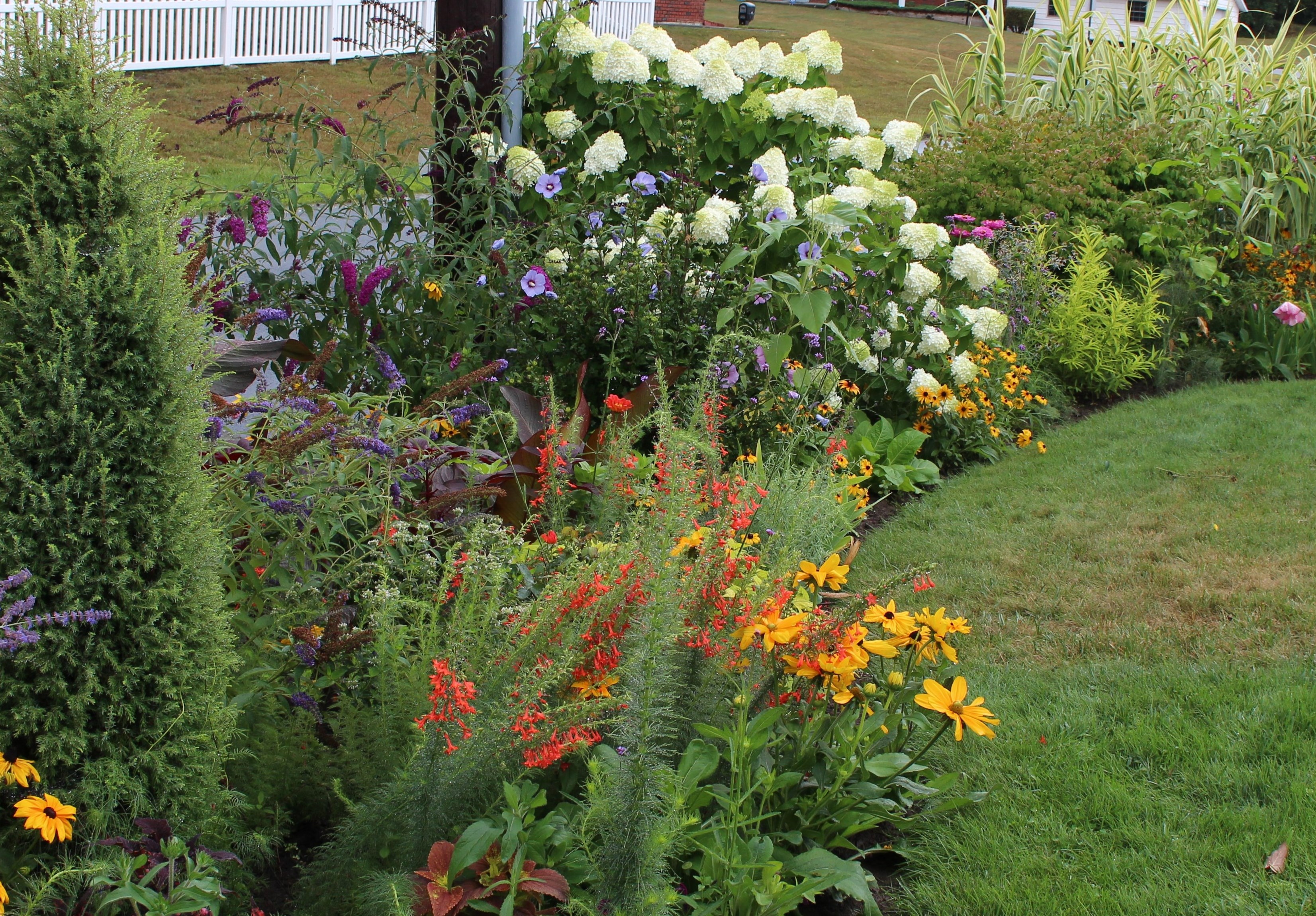
front border with hydrangea

The front street border starts to put on its best show at this time of year, and although polite people would refer to its plantings as “a riot of color” others would call it a mess. Suits me just fine though!

The front foundation bed is a much calmer mix this year.  No bright oranges or over-bright coleus, but all my good intentions from last year of removing the overgrown evergreen and NOT letting any sunflowers grow up kinda fell to the wayside.

foundation planting

I don’t think I can physically pull and compost a sunflower, it’s just unethical to me…. sunflowers and dogwood seedlings, can’t pull either one.

I spend way too much time admiring the “Limelight” hydrangea.  It’s just about at full bloom now and I love its green going into white phase and the way its heavy flower heads are held up on strong stems.  It’s the only white plant out there, and it does stick out, but each spring I look proudly at its buds and imagine how much bigger the show will be!

limelight hydrangea

“Limelight” hydrangea nearly overwhelming the border….More of a purple-yellow theme going on here, but none of my planting plans are ever set in stone.

For some reason prior to the rain the yard was overrun with birds.  Flocks of starlings, catbirds, sparrows, house finches, hummingbirds, goldfinches, cardinals, doves, robins and mockingbirds would swarm each morning.  A large cherry and staghorn sumac berries brought in the fruit eaters, but the others were just all milling about looking for what-nots.  With all those hungry eyes it’s no wonder I’ve seen so few butterflies.

holes in lawn from birds feeding

The day after the rain the back lawn was riddled with all these bill holes. I don’t know what they found in the freshly wetted grass, but there was a flock of around 50 who kept milling around going from lawn to cherry to sumac to lawn.

Strangely enough since the rains came there seem to be far fewer birds.  I need to get out there and explain why their straying from script is throwing off the documentary.  On TV the return of the rains always brings on the migrating hordes!

sunflowers, dahlias and cannas

The rains were just in time for the former tropical bed. Leaves were starting to wilt and I just didn’t have it in me to add another bed to the water-triage list.

So we are back in business.  I hate drought and I hate watering and between the two of them dry spells always get ugly.  Now if it can only get a little warmer again this could have the makings of a great end of summer rally.

Ipomoea quamoclit

Maybe the birds can stop pecking off the tips of the cypress vine (Ipomoea quamoclit) long enough for it to scale the arbor. It’s heading for the top but the birds are relentless. Good thing it’s not a bunny though, the other side for some reason is abused daily by our single resident baby bunny, and can’t even start climbing.

I should be thinking fall garden but I’m going to hide behind denial for a few more days.  The cool weather is supposed to warm up again and hopefully summer will stay strong for another couple weeks.  It’s hard to deny though as the cyclamen sprout and the corn ripens.  Go away autumn, I’m not a fall person!

Laura is a great phlox.

It’s been a tough summer but “Laura” is still holding her own.  If you can ignore the  photo quality long enough, I hope you’ll see her still blooming away into September while ‘barsixty’ (coral flame) towards the front is just a shriveled brown mess.  The freshness might not be with “Laura” any more but at least she’s doing her part to keep the color going  Two months and counting is a good job considering I’ve done nothing other than water enough to keep the poor thing from wilting too badly.  I’m officially going to name Laura my best phlox paniculata 🙂

Fall is in the air

The last couple days have been cooler, less humid and just plain pleasant to be outside in.  I’m not saying it’s fall weather, but it’s pretty close, and based on the dry, sad state of many plants in my garden I might say they’re ready for this summer to be over.  The front border has been on an IV drip of water and this life support intervention has kept it looking decent.  Having done a mid summer bed expansion here, and having added many annuals and tropicals, it kind of needs it in order to not become a dusty wasteland…. what a lovely contrast to the lawn which has not benefitted from any watering.

The pink in front is a sedum which has been doing very well the last few years.  I always hated this color growing up, but this might be an improved version of regular sedum spectabile.  It was given to me without a name, but after surviving a transplant and division during 90 degree heat I guess I owe it a place.  Next year I’m hoping for an even fuller plant.

From the other direction more of the elephant ear, coleus, and cannas are visible.  The ‘hot biscuits’ amaranthus is blooming now and I like the brown seedheads…. it kind of gives a grainy farmland look here in suburbia.

My birdseed sunflowers are all doing well in spite of the lack of water and lack of attention.  The only drawback is their lack of pollen, and you can see the centers of the flowers are black, not pollen-yellow.  Pollen free is great for cut flowers but the bees are not thrilled.  A few come by for nectar, which I guess is enough to get them pollinated, but they’re not the busy centers of activity that the rest of the flowers are.

I’m just glad they’re hanging in there.  Sunflowers must be quite drought tolerant for an annual since this is how the rest of the bed looks….  I’ve given up on keeping it watered.

In the backyard, the dahlias are still getting water and even with me cutting nearly every bloom, they’re still giving a nice spot of color in front of the dead lawn.

While it was still hot and humid I got around to mowing down the meadow.  I traded in my electric chopper for the day and borrowed my brother in law’s heftier gas powered lawnmower.  It made quick work of the crispy dried grass and wildflowers.  Typically I try to cut back the meadow earlier in the year, but with the hot, dry weather I really didn’t feel like doing anything at all, so it was only now that I found the motivation.  Because of my lack of enthusiasm everything got cut, there was no mowing around butterfly weed or native grasses, it all got the same treatment.  It was a good thing I finally got it done, because for some reason the colchicums have heard the call of autumn and begun to sprout.  How they come up through the dry, hard-packed, rock-like soil is anyone’s guess, and what triggers them to wake up is beyond me, but there they are.  Fresh blooms in a sea of dry crispiness.

I wish there was some similar promise in this end of the yard.  The Annabelle hydrangeas were fantastic in the spring but now are just dying sticks.  They’ll recover if rain comes soon, but for now everything just skips over our little spot, or never even reaches the ground.

It could easily be worse, there are still a few green weeds in there, but Pennsylvania usually doesn’t go this long without rain.  On top of that it doesn’t help that most everywhere else on the east coast is at above average rainfall… but I have faith.  Right now Thursday is showing 100% chance of rain, and maybe this cooler weather is signaling a change in the weather.

Chanticleer (part 3 of 3)

Finally!  The last part of my Chanticleer visit.  I suspect I might have gone on a little too long over my visit, but I really did enjoy the trip and the gardens are just the type of plantings I like to see at this time of year.  Lush healthy tropical plants putting on their last big hurrah before the first frost cuts them down.  Plus I like to use this blog as a photo record of the year, and I’m sure these images will come in handy during the icy days of winter.

Here’s the last big stop of the tour, the terrace gardens surrounding the main Chanticleer house.  As usual it’s a dose of reality when I see plants from my own garden used to so much better effect.  The Japanese maple, variegated Pagoda dogwood “Golden Shadows”, blue ageratum and “limelight” four o’clock near the path…. all look a lot nicer here!

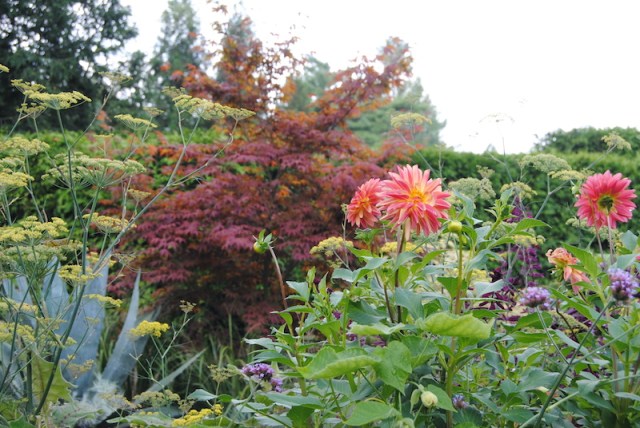
I’m sure a terrace of bluestone pathways and stone steps would help my garden design immensely, but even the bronze fennel, dahlias, and verbena bonariensis look dreamier and fresher here.  The blue of the spiky agave helps too…. hmmm I grow that as well.  It’s sitting under the deck in a broken clay pot, wishing it were at Chanticleer.

The boxwood hedge which I’ve planted around my vegetable garden still needs several years before it reaches this immaculately trimmed state.  I like a nice boxwood edging, I think it’s worth the extra work of frequent trimming, and adds a nice touch of control to a bed that might otherwise look to be on the verge of messy.

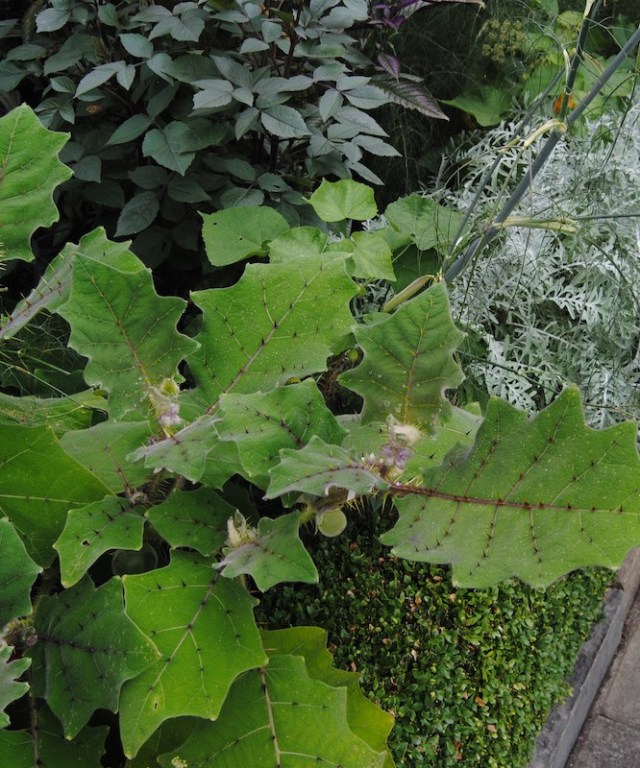
Once my own boxwoods turn into a neat hedge I might start to refer to the vegetable garden as a ‘potager’.  Sounds so much more refined 🙂 .  But I might opt out on planting the prickly ‘bed of nails plant’ (solanum quitoense) in the potager.  Although it’s a near relative of eggplants, tomatoes, peppers and potatoes, the spiny leaves might be better suited for a focal spot out front (I love the poky plants!)

‘Black Pearl’  ornamental peppers also look great right up against the hedge, and these could easily fit into my future potager.

If you’re interested in reading a little more about these plants and some of the thoughts behind the plantings, check out this link at the Hardy Plant Society.  Jonathan Wright, the horticulturalist in charge of this part of the garden, wrote a great article on this area and some of the practices used to keep it looking at its peak from March into November.

Still in the terrace garden was something new that I liked.  An area formerly kept as a cut lawn had been turned over to a flowery meadow of fluffy little red amilias, red dahlias, and violet verbena boanariensis.  I wonder if this section will hold over to next year,  the grass was boring, but it did give a bit of a calm amidst all the overflowing beds.

The area around the house is absolutely crammed with treasures and accents.  These huge baskets have more in them than most average gardens.

And of course there were plenty of seating areas surrounding the house.  A great place to stop for a needed break.

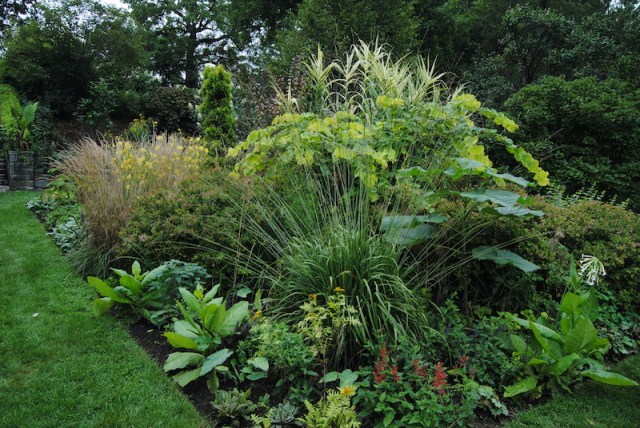
With reds and purples and bronzes dominating some of the other gardens, here the terrace garden leans towards yellows and yellow foliage.  I have a real weakness for this color lately and loved the mix.  Too bad I had no idea what half the plants were!  The best I can do is say the little vine here is probably canary creeper (Tropaeolum peregrinum) a relative of the nasturtiums.  It’s supposed to be easy from seed so maybe……

Back to red and purple.  The purplish upright dracaena is again one I have, and I will definitely copy this combo with the red leaved coleus.

I’m almost through my picture horde.

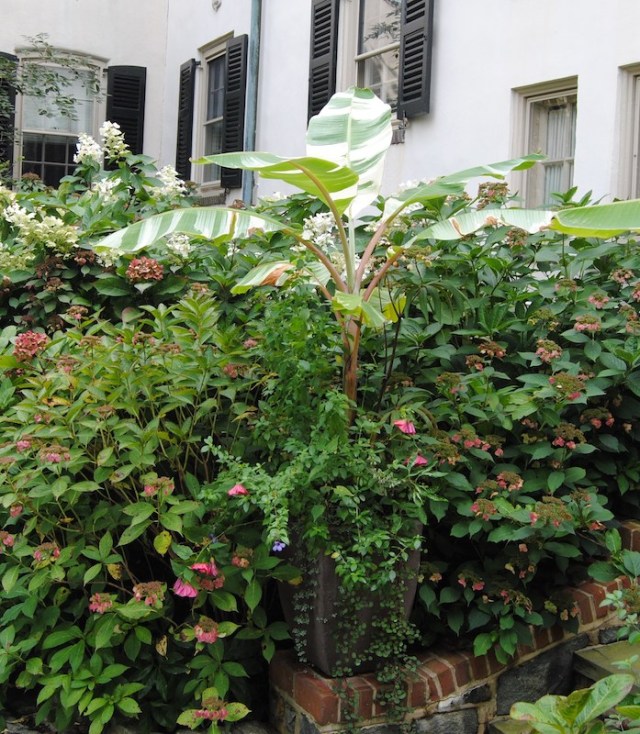
One more here for banana lovers.  I believe this is the infamous ‘Ae Ae’ variegated banana.  First found in Hawaii, it’s a little cranky to grow and therefore a little expensive to buy.  Established pups (offshoots of the mother plant) typically run $200-$300 and fraud runs rampant.  Don’t buy seeds and don’t buy from a shifty Georgia nursery is all I’ll say (not that I’ve ever considered it).  The leaves are really cool looking though and to have it flanking both sides of the main doorway…..

I’ll stick to my yellows and chartreuse.  Here’s a yellow leaved redbud, potted ‘mossy’ plants and a circle of raked gravel.  Very calming.

And so on to the exit.  No time to sit, but there was still ample color coordinated seating.

I bet someone has fun moving the seats about finding them the perfect spot, a good idea I think.  I should keep it in mind next time I’m moving stuff to bring the lawn mower through… not that my dead grass ever needs mowing.

Out the front gate.  It’s a beautiful locale and I wouldn’t mind living closer, but I have to question whether our housing budget can handle the zipcode.  A quick real estate search of Wayne, Pa shows it to be a tad out of our budget.  Even with the sale of our current house, just the down payment  for properties running in the 1-5 million range would be an issue.  I guess we could lower our expectations, but I want the hayfield too. 🙂

  Thanks for looking!

Chanticleer (pt 2 of 3)

It’s been longer than I planned, but here’s the continuation of my Chanticleer visit.  Part 2 of the visit picks up at the tennis courts, a part of the gardens who’s former function should be obvious!

The flat area that used to function as the court has been turned into a group of five beds filled with all sorts of interesting plants.  My favorite was this one which leans towards a yellow theme.  A redbud with yellowish foliage anchors the bed and a nice clump of the tall variegated arundo donax grass is peeking out from behind.  For a late season garden it still looks good.

There was plenty going on around the garden with cleanup and cutting back,  I don’t know how it is on other weekdays but during my visit the place was buzzing with garden staff.  Here’s another view with a nice banana, some of the annual purple perillia, and a couple of those dead looking brown sedges.  Grasses and sedges seem well used around Chanticleer and they do add long season airiness and texture.

Beyond the courts is the cutting garden.  The Chanticleer interpretation is more like a wild ocean of frothy flowers, some of which top out at over 10 feet!  A cool garden to wander through since it comes in on you from all sides.  You can just make out the asparagus hedge that closes in the right side here.

A little structure in this garden is given by the archways.  I’m stealing this idea since it’s not tough to copy.  A rebar arch forms the basis while vines and branches are twisted around…. since I already have the rebar arch set up, no problem-o on twisting some twigs around!

The tall orange sunflower-ish plants are the annual tithonia.  It’s supposed to be easy from seed but I’ve never had much luck.  It sure did well here though.

This path leads to a small fenced in vegetable garden, a nice little spot to take a breather on one of the vegetable themed benches.  For as wild and bloomy as the cutting garden is, there were still a ton of late bloomers left to come, so I bet this garden comes to a peak in about another month…. in case you’re still considering a visit!

A relaxer next.  A woodland section called Bell’s Woods is a streamside collection of North American plantings.  Even though it probably peaks in the spring there were still plenty of cardinal flowers (lobelia cardinalis) in bloom.  It’s a nice soft stroll since the “wood path”  is actually a soft rubber mat that looks like wood chips…. or at least that’s what I read… even after being told, I still thought they looked like shredded bark!

Throughout the gardens are bits of functional art such as chairs, railings, and this metal “hollow log” bridge.

Even though Chanticleer is a relatively small garden and heavily planted, there are still plenty of restful areas, many of which have a nice seat and an excuse to linger.

And nearly all are somehow color coordinated!

Around the red chair you can see some clumps of prairie dropseed.  It’s a native grass used as a kind of lawn replacement for many of the open areas beyond Bell’s Wood.  It’s also probably my least favorite of the plantings here since I just can’t get past what Wikipedia refers to as a “vague scent of popcorn, cilantro, or sunflower seeds”.  I just call it stink, and forgive me if we skip this and the ruins garden and head straight to the gravel garden.

The gravel garden is a very un-Pennsylvania bit of sloped, well-draining garden that is filled with plants better suited to a more Mediterranean type environment.  It’s a bit of surprise to see hardy cacti, yuccas, and agaves this far north, but apparently they like the winter drainage.

The gravel garden tumbles down to the antithesis of good drainage, the pond garden.

 I love a nice pond (unlike my pathetic leaky pre-formed) and this one is just surrounded with a nearly wild planting of moisture loving growth.  Well fed Koi are always fun too.

I loved the pond gardens.  If I had more room a big waterlily pond would be near the top of the want list.  Waterlilies are just so saturated with color, so waxy and lush, that they just draw you in.  This one was nice and close to the pond edge.

My want list also got a new plant added.  This yellow hollyhock looking plant is abelmoschus manihot, an annual that I eliminated from a seed order last winter and now wish I hadn’t.  It’s sometimes referred to as sunset hibiscus, but it’s actually a close okra relative… that means nothing to a Yankee like myself, but southerners may weigh in on that!

I think I’m about to overdo the pictures here, but there was so much to see.  The bottom pond was given over nearly entirely to sacred lotus.  Lotus is so cool in the way the leaves stand up above the water, the oversize leaves and blooms, the water beading leaf surface, the shower head seed pods….  You know if I had the room I’d grow this one too!

Asian woods next.  Restful and green…. too many pictures already so I’ll move on!

I was a little thirsty and just had to stop at this.  Every little bit of this garden is thought out and then re-thought out and it shows up in all the little flourishes and details.

My last stop on the Chanticleer tour was a stroll around the terraces of the main house.  If you thought this post was picture overkill there’s still more to come.  The terraces contain all the stuff I really go for like bold colors, overplanted beds, fat container plantings, and tons of tropicals.  Hang in there, it’s the last Chanticleer post!

Dahlias

Dahlias are the one flower I always cut… that and gladiolus, but the glads were planted late, so who knows if they’ll ever bloom!?growing dahliasThe “Plum Pretty” are my favorites, I like the curly cactus petals and the dark color.  The creamy “moonlight” bloom nonstop and the violet “Ooh La La” are nice enough (ok so they’re not my favorite).  The peachy-yellow are an older one from one of those Sam’s club mixes.  The more you cut, the more blooms will come up, so there’s sure to be another post or two of gratuitous dahlia color!

I made a trip down to Chanticleer this week.  It was beautiful and you can bet there will be MANY pictures posted.  Here’s a taste.  I was pleased to see this color combination, it’s similar to my salvia-verbena combo (that some people didn’t like) and I feel vindicated to see it used elsewhere… with a lot more green, I think the green calms it nicely.chanticleer I saw so many cool ideas and plants, it will be a long post or two… or three 🙂


A Hawaiian Shirt

Normally I try to give this flower bed a little respect, calling it the tropical bed instead of just “the mess”, but for whatever reason this year it really is a mess.  The usual tropicals went to fill up new bed space this spring and I didn’t save enough goodies for here, plus it was planted late too…. (more excuses)…. and about half the plants are volunteers that just came up on their own, so it’s a patchwork of screaming colors.

Red salvia is loved by the hummingbirds, but the color really asserts itself.  Some people have poo-pooed this pairing with the violet verbena as too “bleech”, but I think it could have been worse.red salvia splendens  The bigger view shows the weediness of the planting…..

tropicalismo garden

I suppose I could have ripped out the amaranthus plants that came up (they’re the tall leafy stalks) and the squirrel ravaged sunflower is no beauty…. and the white buddleia in front of the white fence…. I could go on and on….

But it’s bright and colorful and it was meant to be vibrant.  Next year I’m hoping to add a little green to calm it down and going back to more cannas to make it a little more “solid”.  The white will be moved out.tropicalismo garden

The “summer poinsettia”  is actually starting to grow on me, it’s the dark purple leaf which is developing the red tops.  I like its lushness and maybe if I can just find some good neighbors it will really make a statement…. not that it’s keeping quiet now 🙂