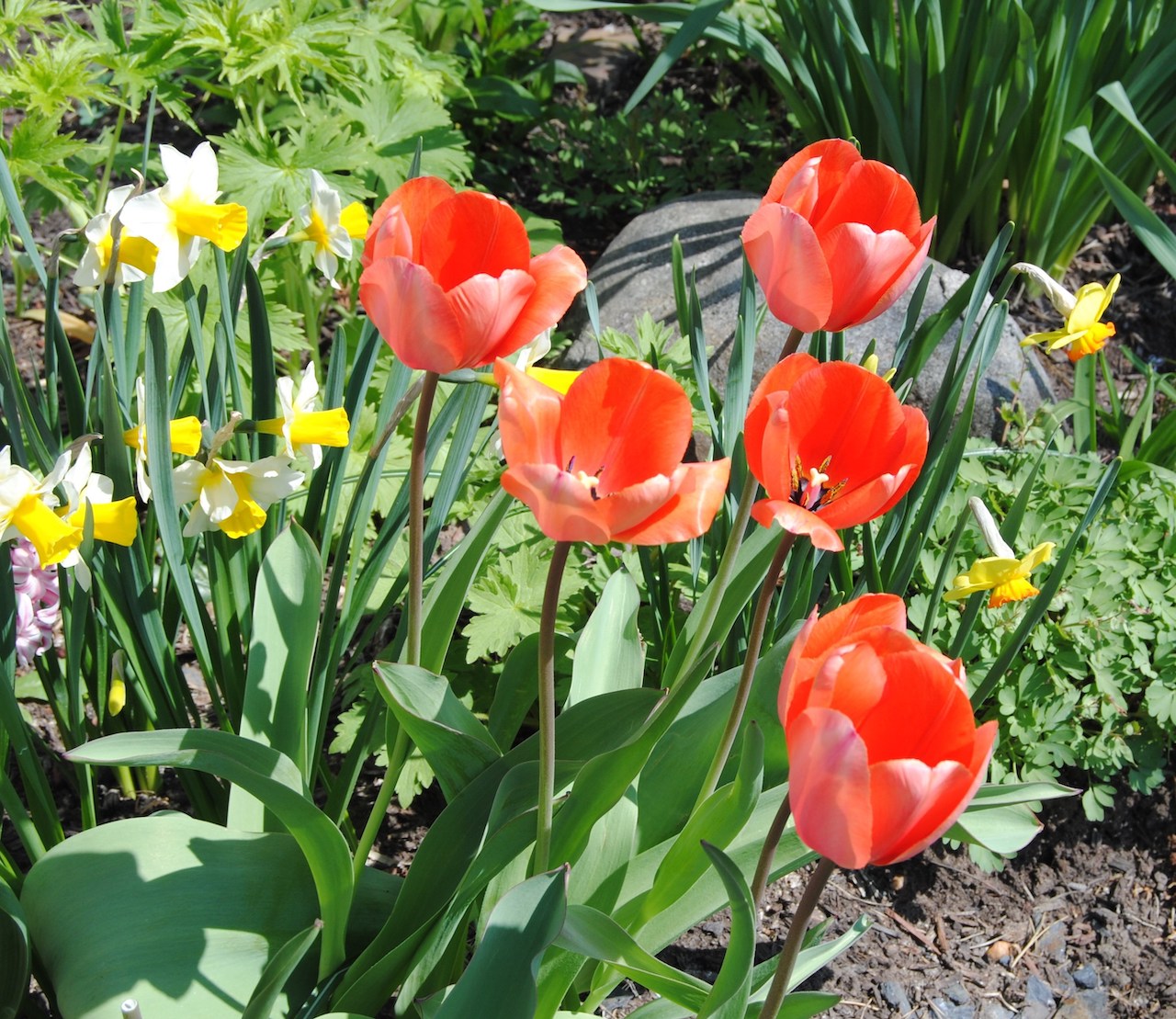
Making up for lost time

The first few weeks of spring all happened in four days, four gloriously warm and sunny days!  I prefer a drawn out cool season with no big shocks but I don’t think that will be the case this year.  Last Saturday went up to just over 80F (27C) and the drab gray garden exploded into color.
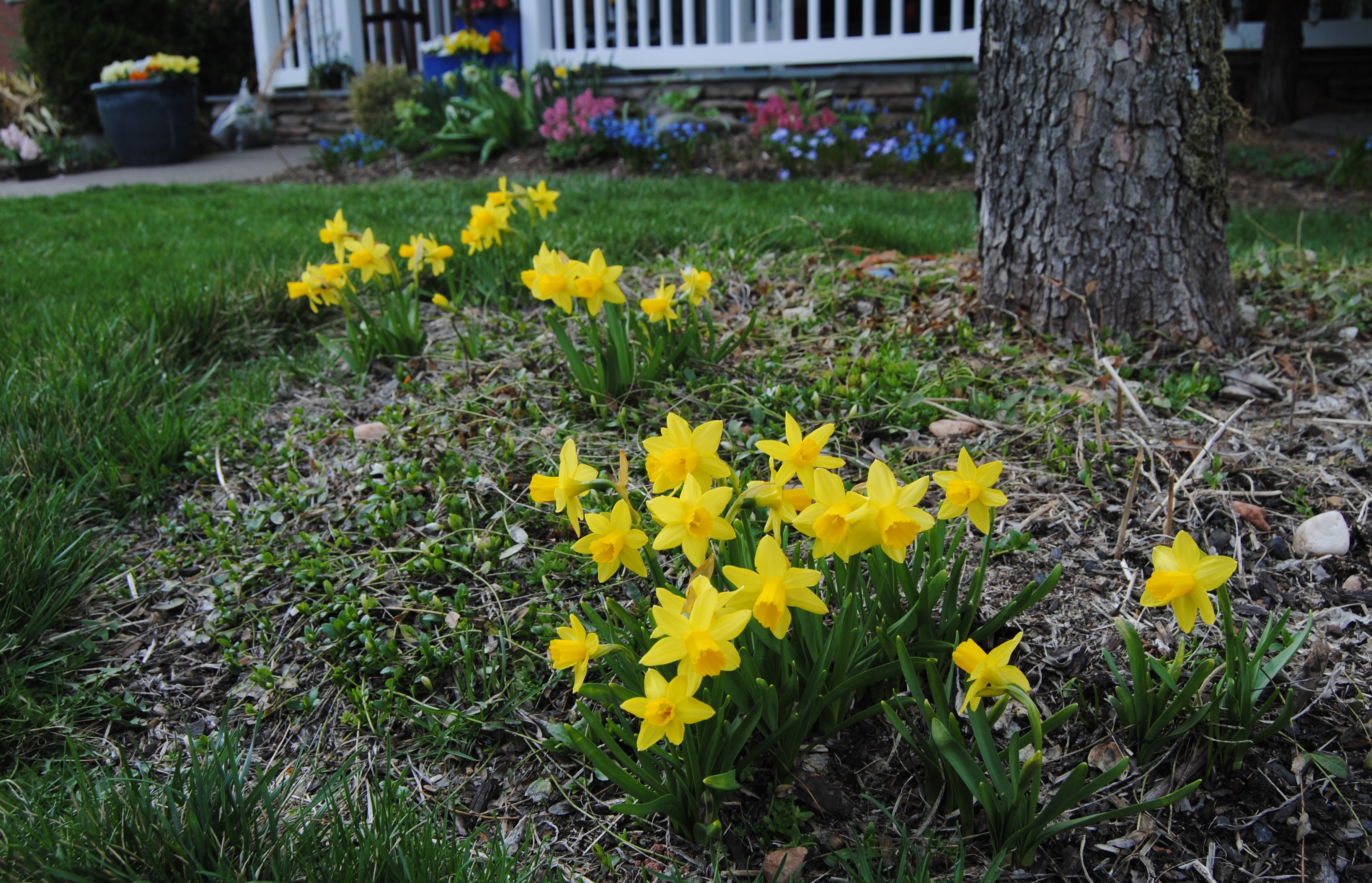
narcissus tete a tete

Narcissus “Tete a Tete” one of the best small, early daffodils for the garden and also for forcing in pots.

Just a few days ago we were freezing our kazooies off looking at snowdrops, now I’m rushing to admire the last spring snowflake (leucojum vernum) before the warm weather fries its delicate bloom.  It’s hanging on in a cold spot which only just thawed out last week.

leucojum vernum

Leucojum vernum the spring snowflake, that’s a flake, not a drop, even though snowdrops are a close relative.

Around front, the shelter of the house has things popping up even faster.  Corydalis “George Baker?” and the hellebores opened in two days, the hyacinth was a fat bud Sunday and then full bloom on Monday when I took this picture.

hellebores and corydalis

I have good luck with hyacinths.  In fact the blooms get so big and heavy they end up flopping when fully open.  This little piglet has been in the same spot for five years and has a bloom bigger than ever, plus two secondary stalks.  If only the yucca “colorguard” behind wasn’t so beat up by the winter….

how I like all my hyacinths to grow

The hard winter may have been good for something though.  This is the first spring I’ve ever seen corydalis seedlings, and Carolyn over at Carolyn’s Shade Garden said she notices an abundance of seedlings around her plants after a snowier winter.  Maybe the snow cover helps moderate the soil moisture or temperature and aids in germination or maybe after all the snow we’re just looking more desperately and notice every single green sprout!

corydalis solida seedlings

Corydalis seedlings, I first thought they were some odd one-leafed clover that needed weeding out!

Corydalis are one of my new favorites, and the most confusing thing about the seedlings is I never even noticed the seed pods forming… and trust me I was looking!  I have it in my head to nurture nice swaths of corydalis color similar to the showcase found in Carolyn’s garden.  The ones I have here (“George Baker and “Beth Evans”) were originally ordered from Brent and Becky’s and are exactly the bold colors I’m looking for.  I also added some straight species corydalis solida from Van Engelen’s,  but they’re just a little too pale and small and actually seem to be dying out.
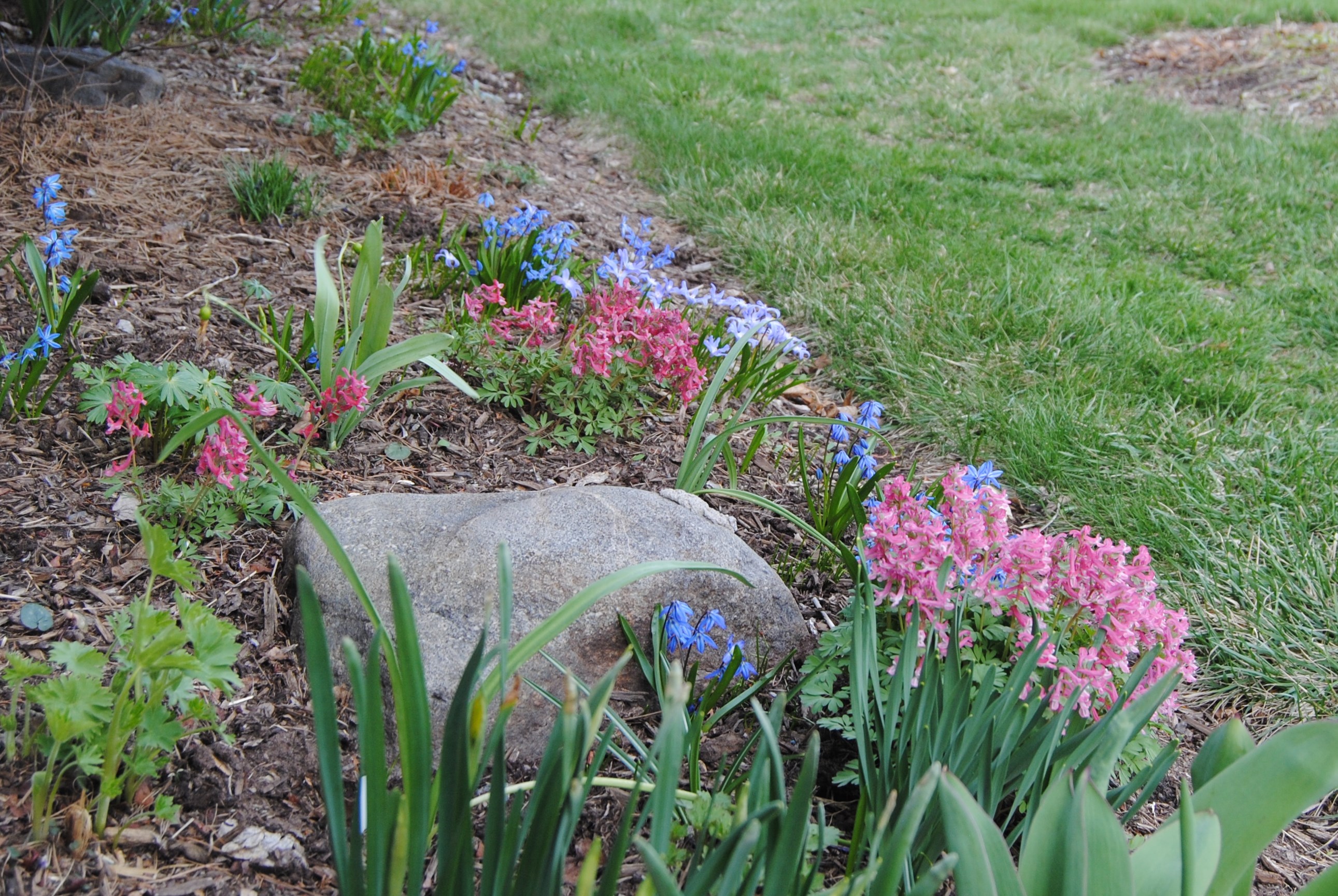
corydalis and scilla "spring beauty"

Corydalis solida with blue scilla siberica “Spring Beauty” and Chiondoxas…. and finally some greening grass.

Corydalis really appreciate division and replanting, and this single bulb moved the year before last is already a nice little clump.  You just have to get to them quick though, they die down fast after blooming and it’s hard to remember where they were.

corydalis george baker

Corydalis “George Baker” with some hyacinths in need of division and replanting.

My focus for the last few days has been getting the cleanup done so everything can sprout up all nice and fresh.  Some people are concerned that early cleanups leave the little sprouts exposed to late frosts, but I never have a problem.  Actually I feel that mulched areas warm up in the sun more quickly than damp exposed earth, but overall it’s the mid May freezes that kill my plants, not the cold blasts in March and April, so I clean up as soon as I can get out there.  It lets me see all the weeds such as this campanula that has taken over most of what was supposed to be an iris bed.

kids in the garden

Cleanup includes taking the seeds out from under the deck.  What was I thinking when I started all these!?  Even if I get rid of all the campanula plus some more lawn, there still might not be enough room for planting out all these seedlings.  A few pots already show sprouts btw.

seeds sown in winter

Seed pots sown throughout fall and winter and left to stratify (exposed to the elements) under the deck.

Daffodils will also need some attention this summer.  The first are opening and I’d like to divide several of these clumps after they die back.  Here’s the early yellow “Peeping Tom” and some unknown bicolor that I’d love to put a name to.

daffodil peeping tom

Some of the daffodil beds got a nice mulch of mowed up maple leaves last fall, but they only go so far.  As I clean out the flower beds everything from leaves to perennial stalks to shrub trimmings to ornamental grass tops, all gets run over by the mower and bagged up to either mulch beds or feed the compost.  The warm weather brought up this clump of narcissus “Rapture” so fast, I barely had time to get the mulch around it before the blooms opened.

narcissus rapture

Narcissus “Rapture” opening so fast in the warm weather the blooms barely had time to make it up out of the ground.

I really should use some of these early daffodils out in the front beds along with a few of these blue chiondoxas.  This clump was actually just a weed which hitchhiked in on some scilla mischtschenkoana bulbs which share this same spot.  Six days prior the scilla was in full bloom and there wasn’t a sign of the chiondoxa.  Now look at it!

chiondoxa forbesii

A clump of what might be chiondoxa forbesii… don’t know for sure since I never really planted it 🙂

There’s nothing subtle about spring in my garden.  Besides yard cleanup I planted these pansies out in pots by the front door, and although these are in a more subtle grayish pot, the rest were planted in a bright cobalt pot!  Planter choices aside,  I may be on to something with the pansy mix.  Christina over at Creating my own garden of the Hesperides used a similar color mix for an arrangement of Gerber daisies, and I’m going to be on the lookout for my own daisies in these colors too.
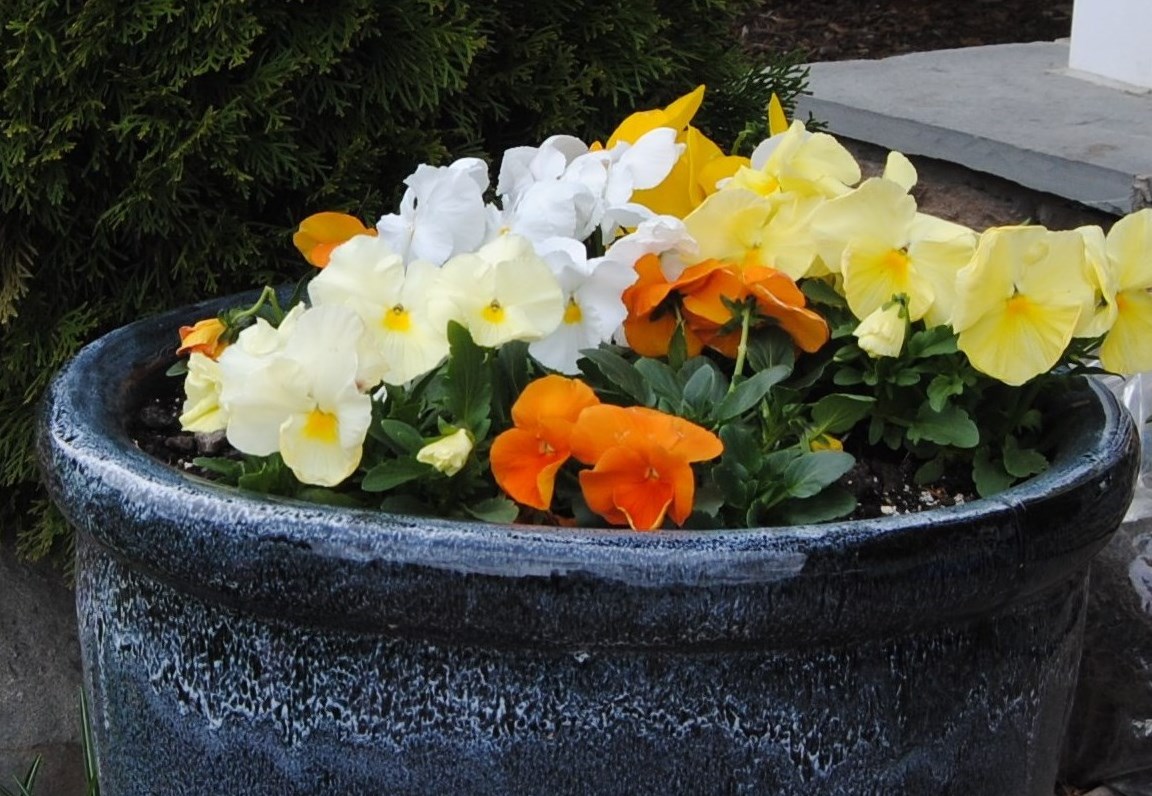
matrix daffodil mix pansies

‘daffodil mix’ Matrix pansies

So that brings us to the next flush of color.  The hellebores are also starting to open up in the exposed parts of the garden.  Here’s “HGC Silvermoon” still looking kind of greenish.  The foliage on this one is great and I’m jealous of gardeners who are able to get it through the winter with leaves worth looking at.

hgc silvermoon

Hellebore “HGC Silvermoon” just starting to open up. Too bad the nice foliage on this one was burnt up by the cold.

And one of the first Elizabethtown seedlings just starting to come up.

pink hellebore

A nice freckled hellebore from Elizabethtown seed.

So spring is finally here in full force, just in time for Easter.  There are still a few bumps in the road …..such as last night’s snowfall and low of 21F (-6C) but I think we’ll make it.  I just have to find the time to catch up on all the things that were on hold because of the weather.  It’s way too early to fall behind!

Uh Hello Spring?

Spring will start Thursday.  Technically it should take off with the spring equinox, but around here Thursday will be the first day.   I’m sure of that.

Today’s high just barely reached the freezing point and yesterday didn’t quite make it, but the forecast shows warming and I’m 100% positive spring will come Thursday and stay…..  unless it doesn’t.  The first winter aconite opened so that’s a hopeful sign, but to see the snowdrops all flat and frozen this morning didn’t warm my heart any.

winter aconite (eranthis)

First blooms of winter aconite (eranthis)

I’d been hoping to get a better picture of the snow crocus in the meadow, but the two warm days were only enough to bring out a few and these quickly became the spring tonic for our local rabbits.  There will be secondary buds coming up, so fingers crossed, but how can I resent the little bunnies for their springtime snacking after the winter they’ve had?  Look at that dead grass…. no vision of spring there.

snow crocus

snow crocus (almost) blooming out in the meadow

The new snowdrops are also just waiting…… This planting of galanthus viridapice (a green tipped snowdrop) has one bulb that is just a little earlier and looks just a little bit off, I suspect it’s mislabeled, perhaps it’s “sharlockii”.

galanthus viridapice

galanthus viridapice? just waiting for warmer weather to open

Also on my mislabeled snowdrop list is this galanthus “Sam Arnott”.  It’s not supposed to be double or green tipped…. also there’s not supposed to be a tulip sprouting there just in front,  maybe I was a little hasty in throwing all the moldy bulbs into the compost… and then using the compost too soon.  Oh the stuff that never gets mentioned in the gardening books 🙂

galanthus sam arnott

galanthus “Sam Arnott” and not galanthus “Sam Arnott”

But until Thursday rolls around, there’s not much else to look at.  I did turn an optimistic corner and started the winter garden changeover.  All the snowdrops and cyclamen were replaced with seedlings of lettuce and broccoli and hopefully by the time they’re a decent size it will be time to go outside.  For now the highlight is a potful of muscari “Valerie Finnis”.  I surprised myself by getting this one chilled and through the winter and then into bloom.  It’s a nice look, too much foliage for my taste, but remember beggars can’t be choosers.

muscari valerie finnis

Muscari “Valerie Finnis” forced indoors under lights

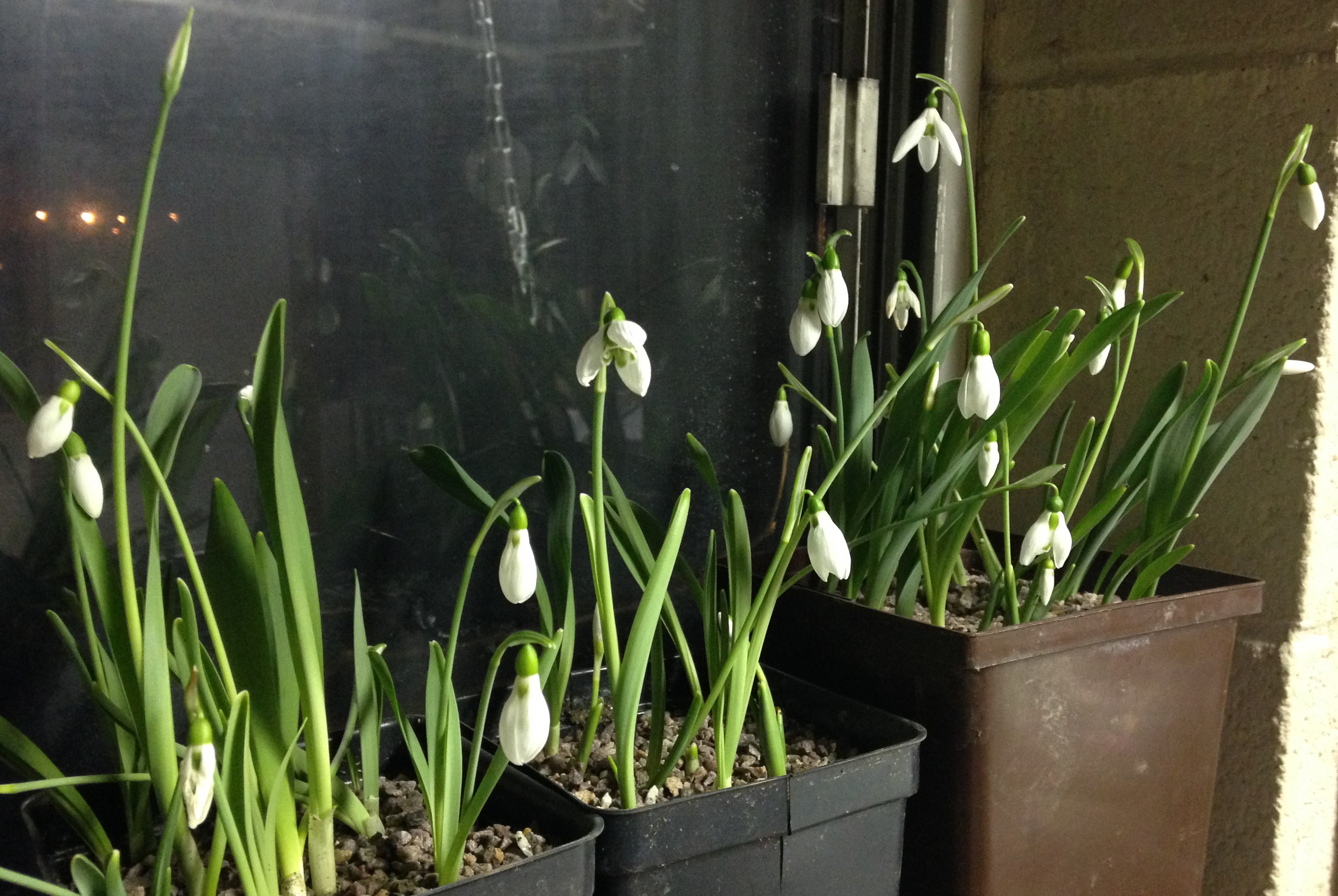
Here’s another reason spring will come Thursday.  My “in the green” snowdrops from Carolyn’s Shade Garden have arrived all safe and sound and need to go outside in the garden (“in the green” because they’re bareroot, actively growing, not dormant bulbs).  They can handle plenty of frost, but the next two nights of 16F (-9C) lows might be too much of an insult for these city drops (Carolyn is located outside of Philadelphia).  I’ll leave them to sit like this on a windowsill for the next two nights with just enough water to keep them wet, but not enough to have them sitting in water.  I’m excited to have them and the plus side to this treatment is I get to admire them close up for a couple days.  The blooming one is “Straffan”.

snowdrops in the green

Snowdrops in the green from Carolyn’s Shade Gardens

So wish me luck.  I don’t often complain about winter but I think I’m done with this one.  The clock’s ticking and I’d like at least three weeks before people start complaining about the heat!

Do I detect a thaw?

Longer days and stronger sunshine doesn’t necessarily mean it’s springtime.  Warmer weather and a lack of snowstorms means spring to me, and since we’re 0-2 on that front, this weekend’s forecast of almost normal weather gives me some hope that the snow may eventually melt.  My fingers are crossed that the receding snow will reveal healthy snowdrop sprouts, and in the front bed along the foundation this might be true.  This bunch has come along since the last time it was uncovered (Jan 13th), but it’s still far behind last year’s bloom date of Jan 31st.  Still it amazes me that even under feet of snow and temperatures down to 0F (-18C) they continue to grow, disregarding the frozen soil and surrounding ice.snowdrops and snow

Indoors is a different story.  The forced snowdrops are at their peak, and I regret giving them the cold shoulder in my last post.forced galanthus

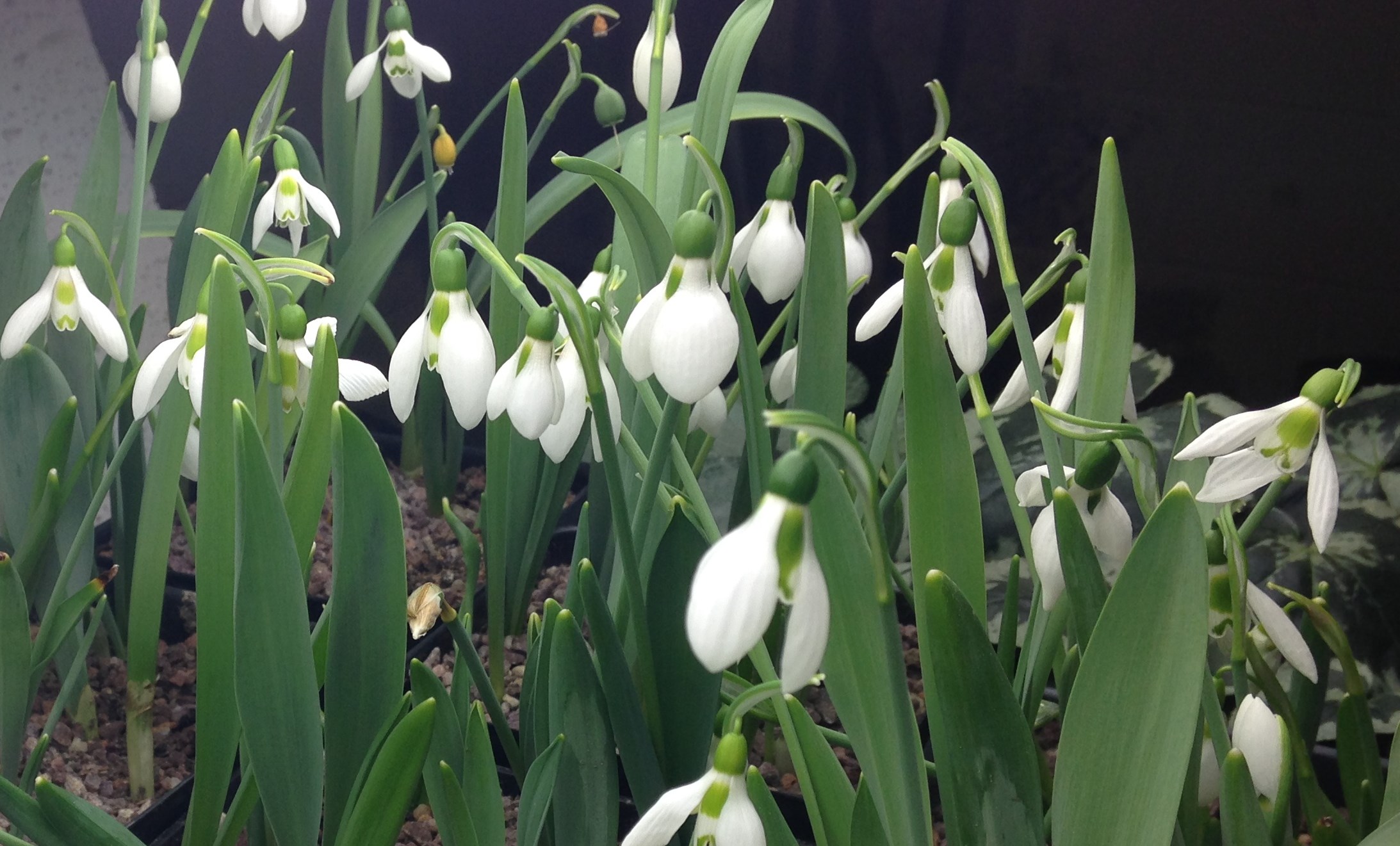
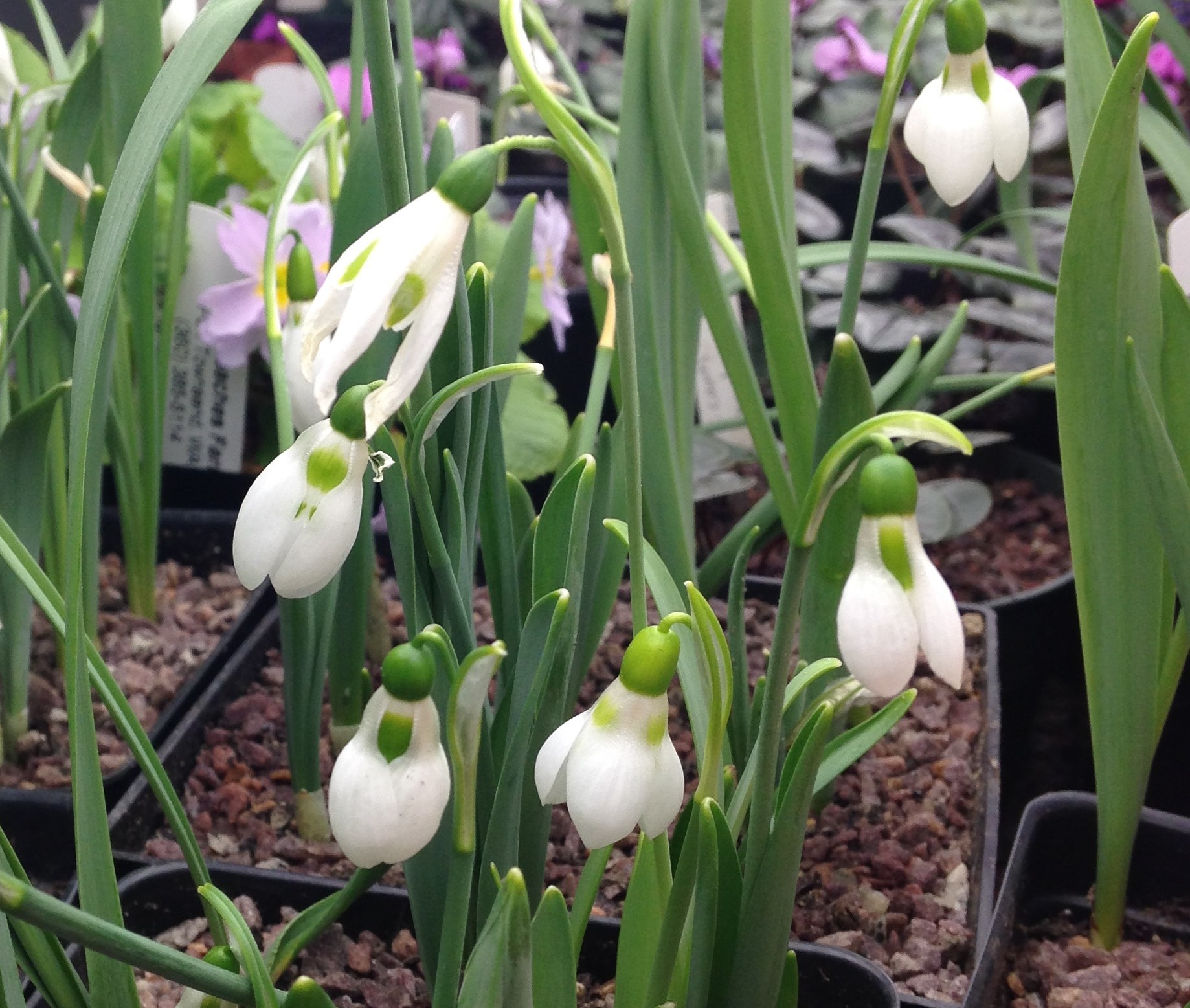
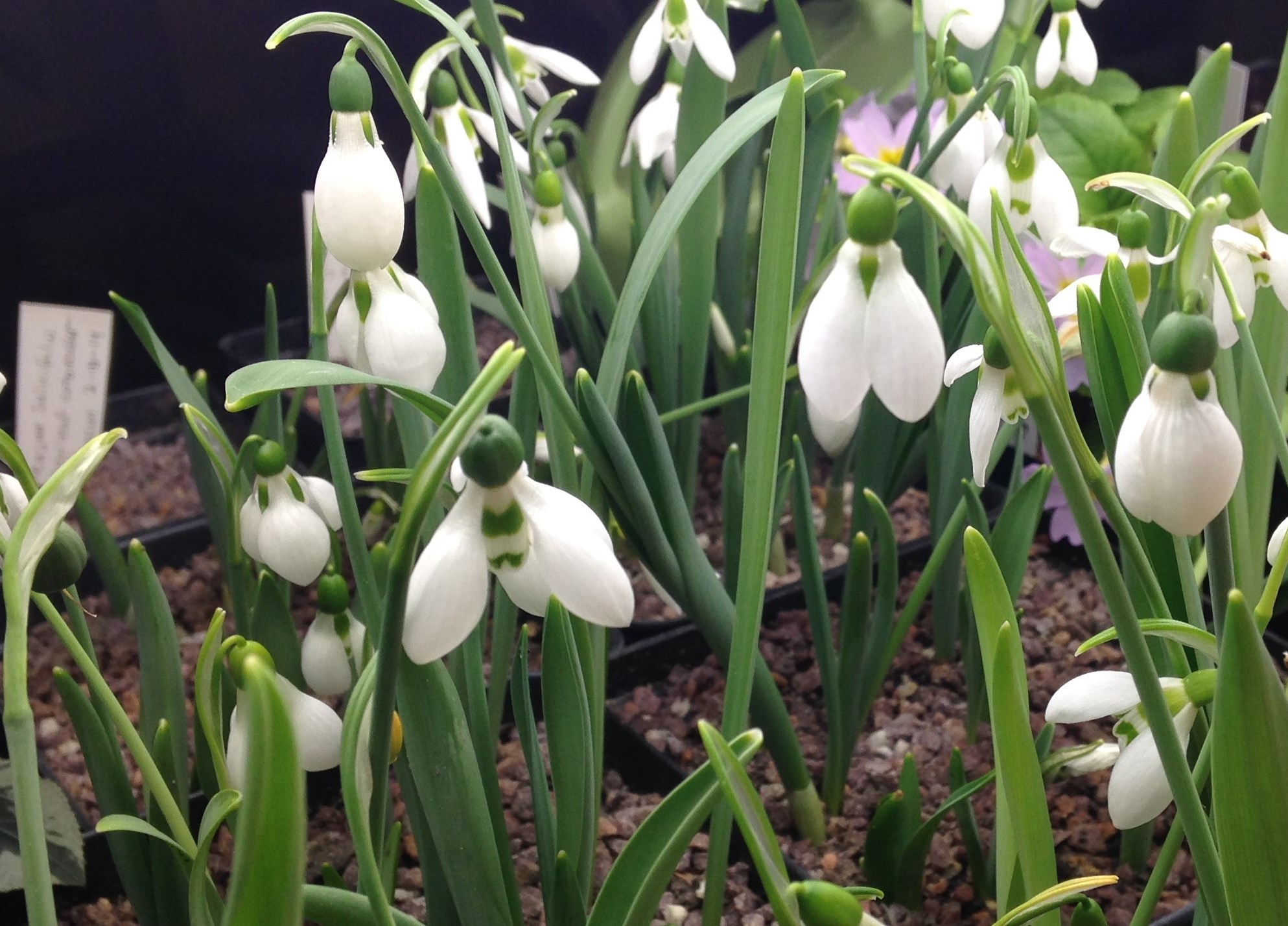
There’s plenty of variation in bloom shape, plant height, and color and pattern of the green markings inside.  I’m quite pleased all over again and it makes me even more excited the ones outside might someday open!forced galanthus elwesii

A better gardener would keep track of their favorites, and carefully plant them out for observation…. but I’m just fine with big patches of anonymous white.  If there are a few real special ones I can separate them out, but we’ll see what happens once they have a chance to grow outside in the real garden.  The pale drops are nice, but the dark green markings such as this one also look interesting once open. snowdrops forced indoors

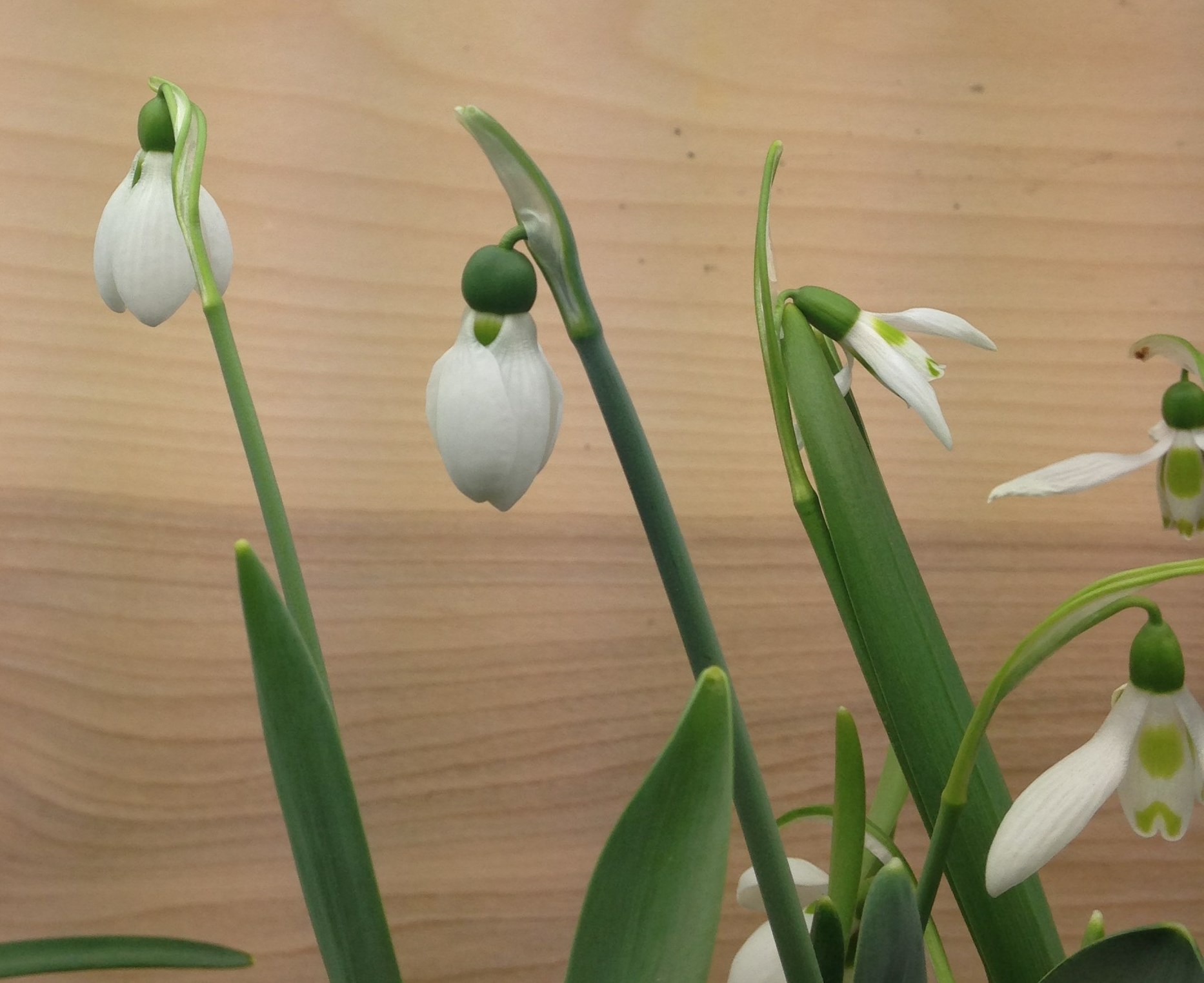
This one has such a stumpy, stout stem (but small bloom) that it really contrasts with the daintier one to the lower right of this photo.strong stem on galanthus

Having potted up all 200 of my bulbs for growing indoors, there are pots all over.  I might have gone a bit overboard since usually the windowsills are reserved for post-bloom hangout until things warm up enough to go outside.snowdrops on windowsill

I’ve been pollinating away, so hopefully there will be a few snowdrop seeds to start this summer.  My fingers are crossed since it looks like the sprouts I had coming along with so much promise in January all died during the last couple arctic blasts.

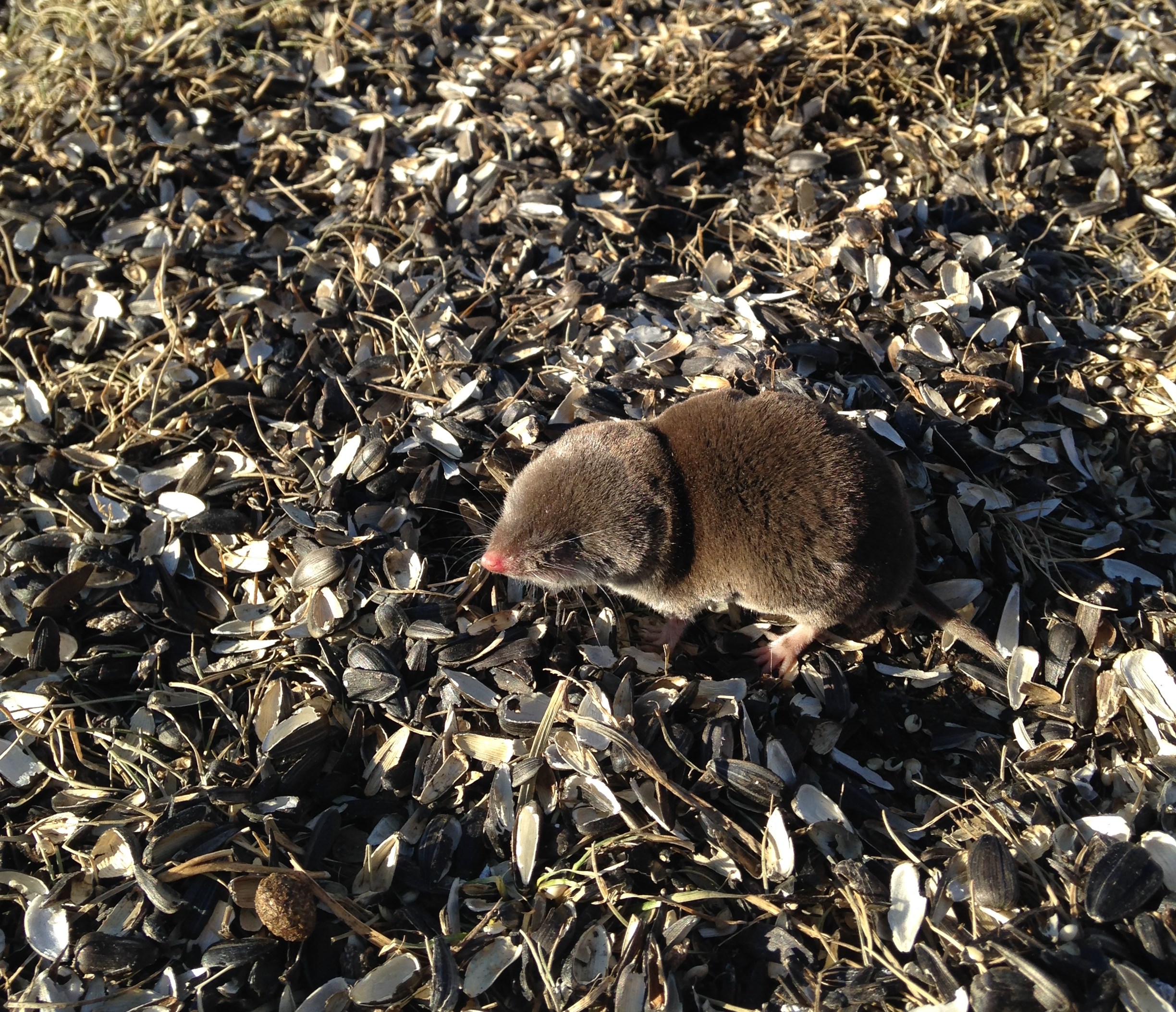
There’s a different kind of hope though.  Birds are singing in the sunshine in a way not heard since last spring, and this little guy was spotted rooting around under the feeder.  He’s not a mouse or vole, but a little half-blind shrew.  I’ve never seen one out (alive) but this guy let me take his close-up from about 12 inches away while he burrowed around in the seed hulls looking for bugs and whatnot.  He’s an interesting guy, one of only a few poisonous mammals (their saliva is toxic enough to kill a similar sized animal), and their hyperactive lifestyle has them eating nearly their entire weight in food each day.  They’re also a little stinky, which we discovered last fall when an opening in the foundation let a couple into the basement. shrew at feeder

Stay out by the feeder is all I have to say… that and have a great weekend!
That wasn’t smart 3.0

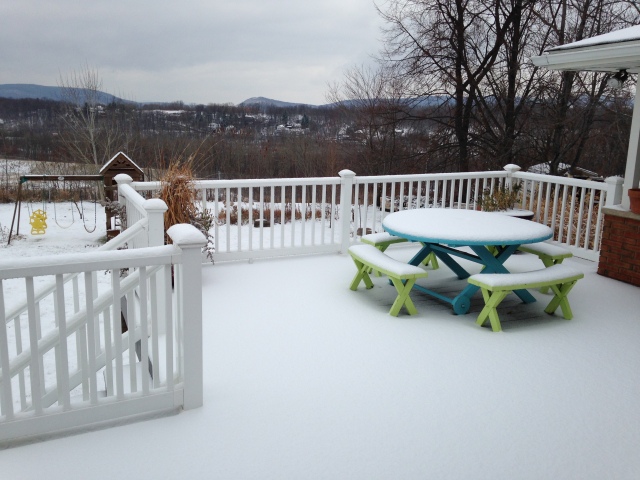
Yesterday afternoon my Brent and Becky bulbs arrived….. did I mention I bought quite a few during their end of the season clearance sale?  So knowing the weather report I was out in the dim light and freezing rain getting things into the ground before the snow and cold came.  Bulbs go in quick when you’re wet and freezing, and I did pretty good although there was at least one shout from the house about catching pneumonia or what not…. I beat the snow by at least two hours 🙂first snowfall on deck

That was a close call since the weatherman is predicting more snow tomorrow and lows around 7F (-14C) for next week, and things will surely freeze solid.  Sensible people are finished for the year, unfortunately I have a stubborn streak and a history of stupid ideas put into action.  Brent and Becky was sold out of the 50 snowdrop bulbs I ordered so they were missing from my shipment (such is the risk of a late season order).  Instead of accepting my situation, I somehow ended up at Van Engelen’s website this morning and clicked OK to 200 more snowdrops (plus a couple hyacinth).  Not the smartest move.  Better check the potting soil supply 😉

Thinking of next year yet?

I’m still in denial that summer is winding down.  Every sunny day and higher temperature reading gives me hope the warmth is still holding on, but eventually I’ll need to come to terms with winter’s approach.  My least favorite season is just about here and it’s time to shake off that summertime laziness and start making plans.

By least favorite season I mean fall.  I dread the fall shutdown that plants go through and the first frost.  Even  the fall foliage looks to me like death warmed over.  The best thing about fall is all the planting, and for hardy bulbs fall is the number one planting season.  Although I was lost in tulips this spring, it’s daffodils that I really like, and in order to convince you to get more too I dredged up a couple pictures from the good old days of spring.

‘Accent “(1960- the year this daff was registered) is a great daffodil, it has a medium pink cup (corona) surrounded by pure white petals (perianth).  The color is reliable, the plant is reliable, and it’s not too hard to find.  I like fancy things too, but reliable fills a garden every spring with beautiful blooms, and in this next (over exposed) picture “accent” is paired with another great, reliable one (and one of my real favorites) “Tahiti”(1956).

There are thousands of named daffodils out there and thousands of ways to pick the best ones for your garden.  Picking up a bag at the box store is fine and inexpensive and a good starting point but if you begin to get serious take a look at the Wister Award winners.  It’s an American Daffodil Society award for outstanding garden daffodils and will give you a shopping list of the best daffodils for your garden.

Another good pink is “Pink Charm” (1977)

It’s a little newer than “accent” and only just a bit different with more white in the cup, but for two years I’ve been impressed with the opening color and then the later blend of pink fading to white in the center.

“Passionale”(1956) is a strong growing older pink.  The flowers open with a yellowish tint to the cup which is common for these older varieties.  In daffodils, pink is a relatively new color for breeders, and it’s been a long journey to separate the color and strengthen it to a ‘real’ pink color.

Daffodil breeders are always tinkering with their favorites but they generally fall into 13 divisions.  To take a look at some of the fanciest and newest examples of each division click here“Palmaries”(1973) falls into the split cup category.  It’s frillier and flouncier than what I usually like, but it has been doing well in my garden.

“Newcomer”(1992) has the saturated darker pink of a newer introduction.  It won’t be an easy daff to find but does show the long lasting pure colors of a modern daffodil.

“Sagitta”(2007) shows one of the newest combinations, yellow-pink.  This one will likely be a very popular daffodil, so far it’s been a great grower, multiplier, and bloomer for me and I love it.

But there’s nothing wrong with a yellow trumpet daffodil.  Since “King Alfred” was registered in 1899 new yellow daffodils continue to come out with stronger blooms, colors, and growth habits.  The true King Alfred is tough to find today since years of slapping the name onto any yellow daffodil has muddied the water, but with so many solid yellows such as “Primeur”(1978), how can you go wrong?

My favorite group of daffodils are the cyclamineus types.  Daffodils in this group all share the reflexed petals and long trumpets of the original narcissus cyclamineus species.  “Peeping Tom” (1948) is on the top of my list, it’s an oldie but I love the long trumpet, wide flare and early bloom season.

Another one in this group that’s doing well for me is “Jetfire” (1966).  It’s a good grower with a little orange in the trumpet (more so in cooler springs) but it’s a little stubbier and shorter than “Peeping Tom”.

If you can’t find “Peeping Tom” (I don’t see it in many catalogs any more) you could try out one of it’s children.  “Wisley”(2004) comes from the seeds of a Peeping Tom cross.  It’s new for me, but the flowers have a love-it or hate-it look that I’m still trying to figure out.

If you’re ever looking for daffodil info, Daff Seek pretty much has it all.  It’s the searchable database of the American Daffodil Society and has photos and information on most registered daffodils…. plus interesting tidbits such as daffodil lineage and breeding info.

My latest color craze has been the yellow red combo.  “Serola”(1986) is a great one that multiplies well, doesn’t fade in the sun, and is bright!

“Montego” (1968) has the same colors in a smaller rim of red.  I might have gone overboard with this color range in the last few years but I really do like them.

If you’re unsure where to start with your own daffodil quest, but ready to move past the generic offerings, start with  Brent and Becky’s.  Even if you end up ordering elsewhere, they probably offer the best selection of good varieties and don’t carry the duds.  Some of the best sources for bulk daffodils are Van Engelen and Colorblends.  Just be careful, before you know it you’ll be looking up the specialists such as Mitsch’s and Cherry Creek and really killing your gardening budget.

Ok one more yellow-red.  “Molten Lava” (1987) has slightly more subtle coloring, but still rich tones.

White never goes out of style and “Misty Glen” (1976) is a great daffodil in white.  Over 40 other registered daffodils trace their roots to this variety and it’s won many awards.  It’s one of the best daffodils.

If you still don’t feel the need to add more daffodils, here’s another try.  The small cupped daffodils such as “excitement” (2001) also come in all kinds of color combos just like the big guys.

Beyond the big and little cups and the trumpets there are still thousands of “other” daffodils out there.  They’re all just different expressions of the genus Narcissus.  The name daffodil is just a common name most people apply to the bigger trumpet sorts but it works for all of them.

Some of the other types have unique traits that can be traced back to one of the original narcissus species. “Geranium” (pre 1930) is a reliable, hardy tazetta type which shows the clustered blooms and fragrance of this of this group.  I might put this one on my top 10 best daffodil list, but with so many new types to distract me, I sometimes forget about the multiple award winners like Geranium.

Paperwhites are a well known member of the tazetta group, they’re just not hardy enough to grow up in this part of Pennsylvania.  One that does suffer through is “Erlicheer” (pre 1951), it’s listed as a double but tazetta blood runs through it’s veins.  The problem for me with Erlicheer is its early sprouting habit anytime there’s a break in winter temperatures.  You can see how all the leaf tips have been burnt by cold snaps that came along after growth started.  Too much cold combined with too active growth will eventually kill these.  Sometimes erlicheer is sold as a “summer daffodil” because they don’t need the deep freeze of winter in order to bloom.  You can plant them in the spring, have summer flowers, but they’ll be back to normal spring flowering the following year.

I never meant for this to be such a long post, but daffodils are so easy to grow…… and I admit I’m slightly addicted.

Here’s an example of one of the poeticus types.  “Pentucket” (pre 1946) might be hard to find, but there are several look alikes out there.  Poeticus daffodils (the Poet narcissus) have been grown since ancient times and are most likely the daffodil referenced in Greek poetry and myth.  Today they are grown by the perfume industry for the narcissus oil they produce and apparently it’s one of the most popular fragrances…. oddly enough I don’t pick up much scent in these.

So plan ahead for spring and get some more daffodils in the ground!  Even if it’s a dainty non-daff like “Baby Boomer” (pre 2008) they’re all equally easy to plant.

I find the easiest method to plant daffodils is to take out the big shovel, scoop out one or two shovel-fulls of dirt, dump the bulbs in, and cover.  You don’t need to set the bulbs correctly (although I usually do put them pointy side up) and your regular soil should be fine without improvements, just get them in the ground!
Good luck, and I’d love to hear how your bulb ordering and planting is going:)

Camassia

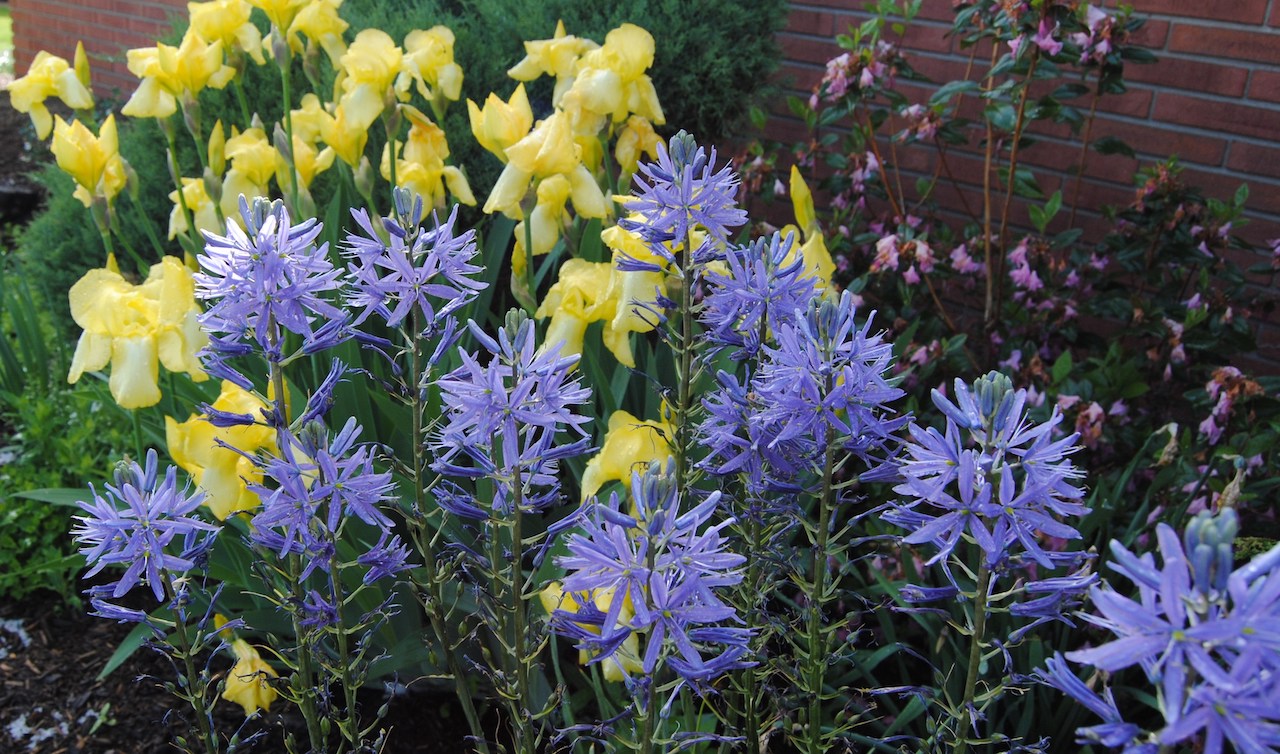
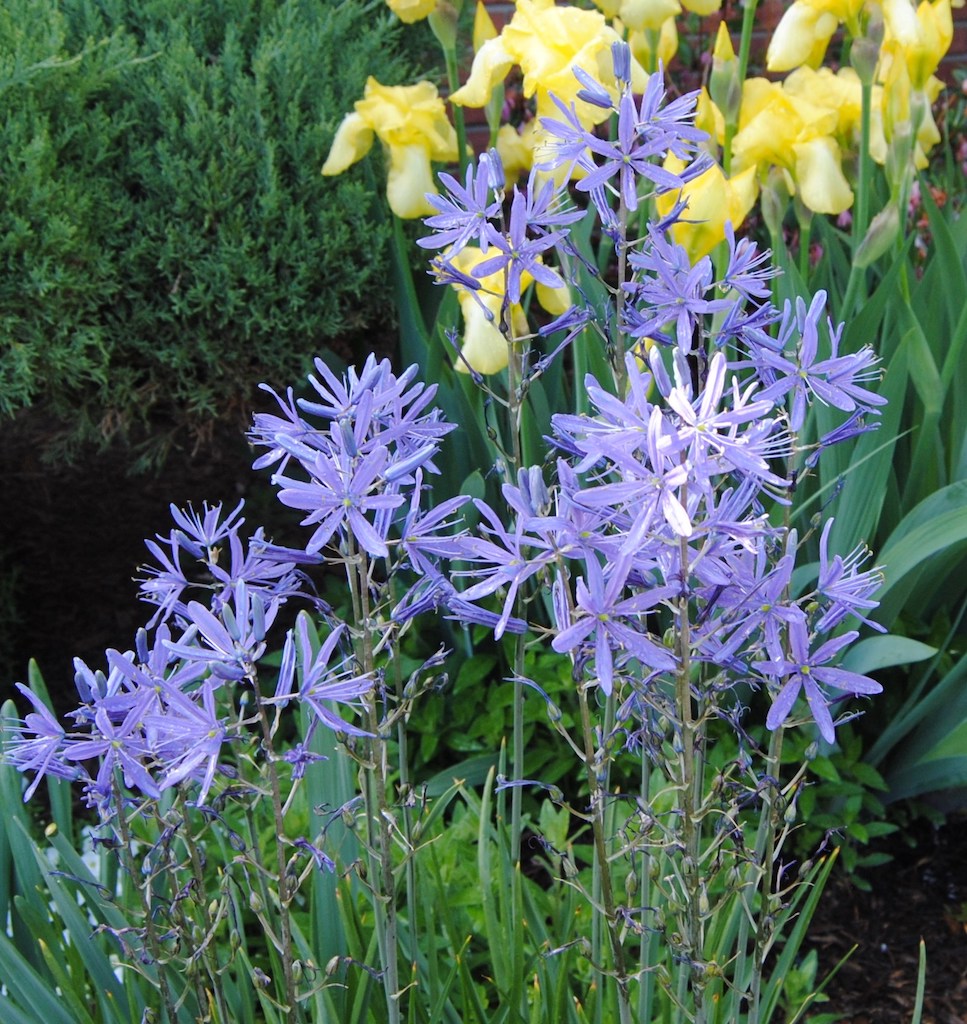
The garden here always goes through a bit of a slump once the tulips begin to fade.  The iris haven’t kicked in yet and most of the late spring flowers aren’t doing a whole lot.  Bleeding hearts, columbine, and oriental poppies would all probably help out, but camassia is what looks the best right now.  I have two types, Camassia ‘Caerulea’ and ‘Blue Danube’.  One is supposed to have a rich lavender color and the other a dark blue…. but I can’t tell a difference between them.  One might be a few inches shorter but that could be soil or location or whatever.camassiaThe yellow iris behind is ‘Elsa Sass’, a historic iris from 1939. It blooms early for me, but maybe that’s from being close to the house.

camassiaCamassias are a bulb native to Northwestern North America and while I grow them in regular garden soil, they’re supposed to tolerate wet soils and clay soils.  Apparently they’re edible too, but I’ll pass for now.  This is the other clump, Camassia ‘Caerulea’.  I like both types well enough, blue is always welcome and they’ve never required any special care, but for me they don’t seem to bloom very long.  Just over a week seems about average, I’d much rather they held out for at least two.

Snowdrops in the green

Most bulbs are best moved around and transplanted after they’ve yellowed and died back.  The bulbs are dug, dried and stored for a couple of weeks and then replanted again when the proper planting time rolls around.  It’s a convenient way to handle them and most bulbous plants are designed to handle months of dry, hot, dormancy.  Snowdrops are not.  Most snowdrops don’t appreciate drying out, and to get around this quirk the practice of sending snowdrops “in the green” started.  It’s a genteel way of saying you dug them up while growing and transplanted them that way.

My “in the green” snowdrops from The Temple Nursery arrived about a week and a half ago.snowdrops in the green

Snowdrops in the green are dug and sent shortly after bloom or even while still blooming.  I planted them (almost) as soon as I got them and I can’t wait to see them grow and thrive in my garden.  The bulbs look great and are carefully packed in damp sphagnum moss, wrapped in paper towels, hand labeled, bagged in plastic, and shipped priority mail.  Everything about my order said that care was taken and attention was paid to all the details.  Mr Hitch Lyman is the proprietor of The Temple Nursery and is well known for this old-school attention to details.  The catalog is a carefully prepared list out of his own garden, and the list changes from year to year depending on what’s ready for dividing.  There’s no internet presence, and correspondence is hand written.  Based on how fresh my bulbs were I feel his “dug to order” description was entirely accurate.

I didn’t mean for this post to be a gushing waterfall of praise, but I guess I’m excited about my plants.  There are a couple other sources for snowdrops, Brent and Becky sells them dry and is a good source, the three other “in the green” sources I’ve heard about are:  Carolyn’s Shade Garden, Linden Hill Nursery, and Black Hog Farms (couldn’t find a web link… they might only do garden shows etc.).  I also got a batch of dry bulbs from Van Engelen, and they were excellent.

If you want to give the Temple Nursery a try, send a catalog request to: The Temple Nursery, (Mr. Hitch Lyman), Box 591, Trumansburg, NY 14886.  I’ve never heard anything official on this but I sent $4 with the request.  Send it early.  Not only do the snowdrops sell out fast but the catalogs are also limited, so send it out soon!


Finally…. mulch is down

It might take normal people a weekend to get their mulch spread, but I went for the one week plan.  The biggest time drain was sprinkling the mulch down in between emerging  clumps and working the wheel barrow back into a bed that was filled with soft sprouts.  On top of that I was trying to stretch every mulch dollar by walking the fine line between too thin and too thick and trying to figure out just where exactly my limited mulch supply would go.  Oh, and did I mention the allergies and sinus infection?

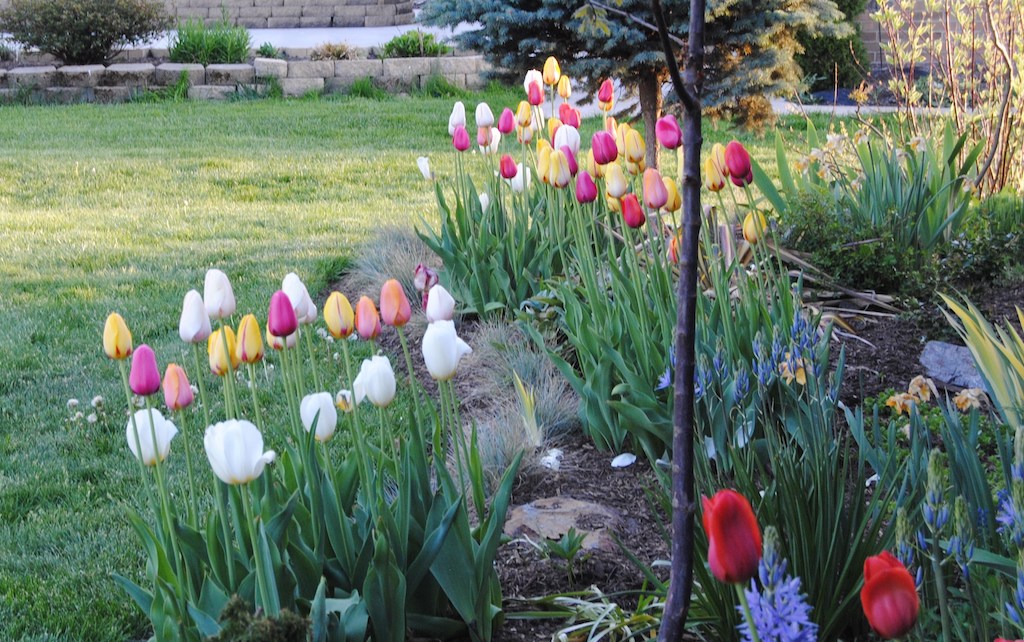
The newly renovated front bed got a nice top coat, showing off the mix of tulips I put in last fall.  This is what a weak moment during Van Egelen’s fall clearance sale will get you. It’s the Scheeper’s mix, made up of all Scheeper hybrids.  Not sure if the color is a good choice for in front of the orange brick….. but oh well, colors don’t clash in May   🙂scheepers tulip hybrids

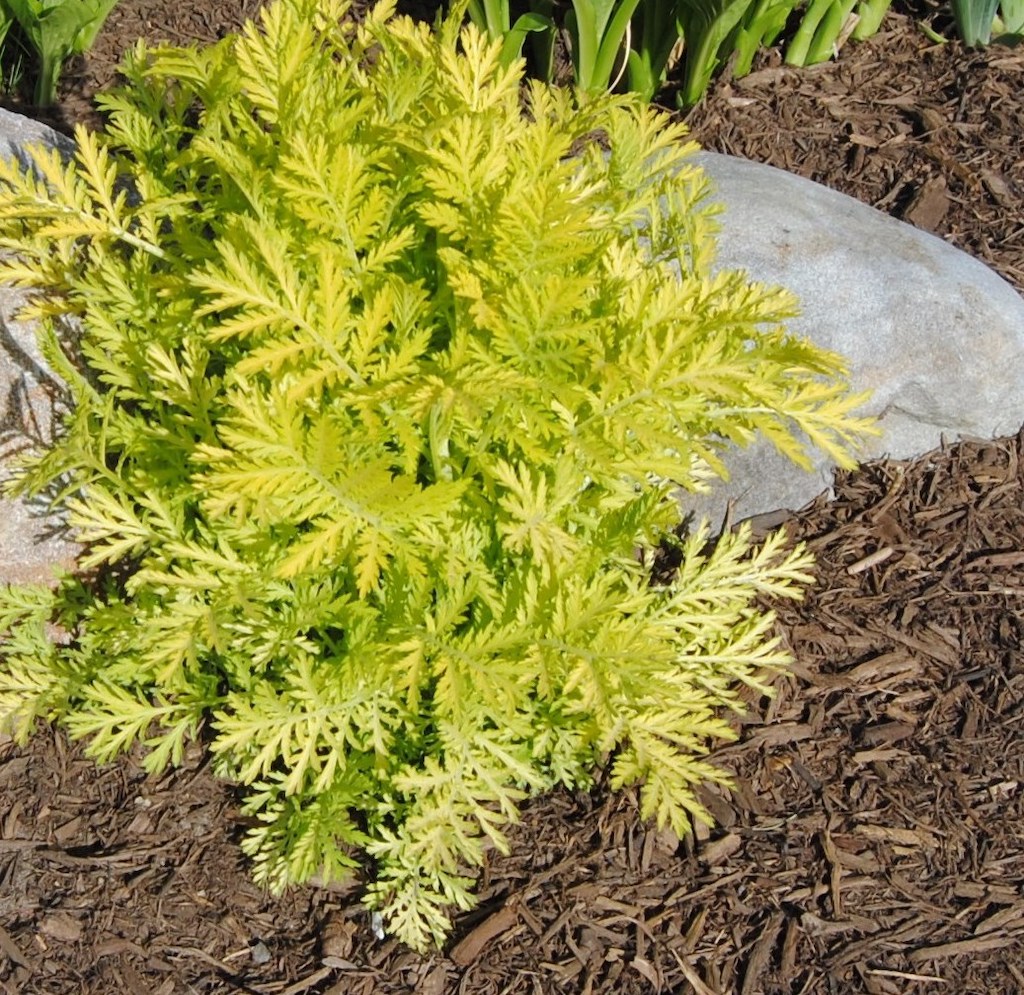
isla gold tansyThe mulch looks so neat and tidy, and it does look better than before when dirt was splashing everywhere and weeds were popping up by the thousands.  Look how it sets off this “Isla Gold” Tansy.

The tansy is one of my favorites right now.  I’ll be the first to admit I’m going through an I-need-everything-with yellow-foliage phase, but the lacy foliage, the fresh color, and the fact it keeps this color all season are just a couple reasons for my smitten-ness.  Did I mention it even has little buttons of yellow blooms in late summer?  I bet it would look great then with a blue salvia.

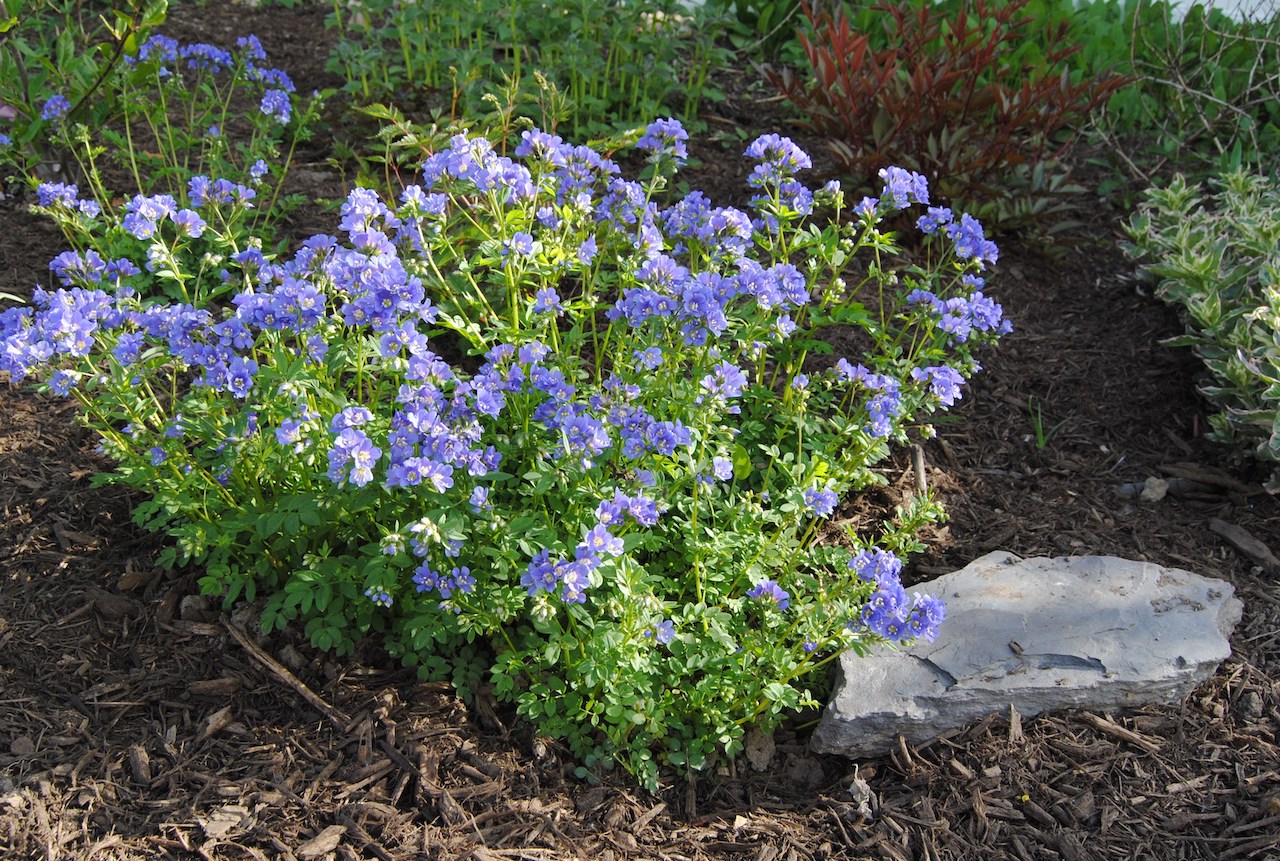
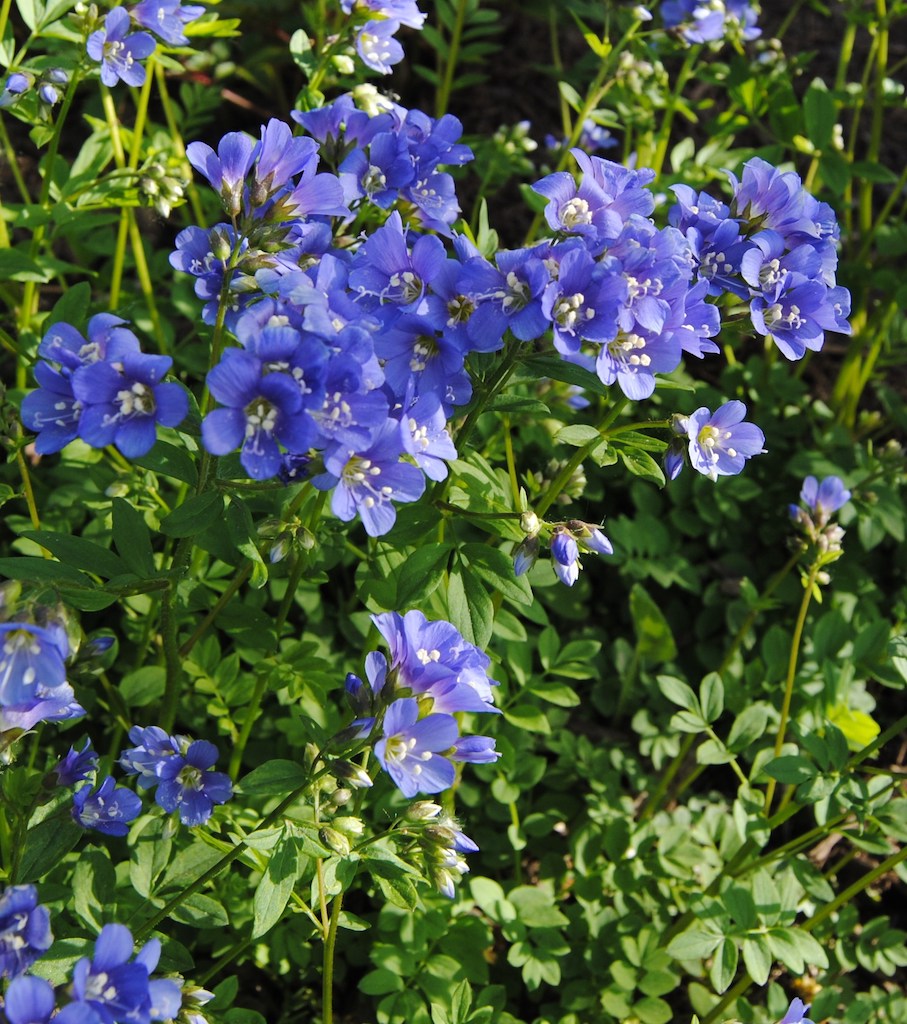
Right now I could pair it with polemonium reptans which is in bloom.polemonium reptans

polemonium reptansThe polemonium comes from my parent’s house.  The original planting was there when they first purchased the house over 40 years ago and has been going strong ever since, without dividing or anything.  You could trim it back after blooming if you want but I never get around to it.

Probably about half the beds are now covered, but in order to complete the job I’m guessing it will take another load.  Together the two loads will run about $660.  That really kills my garden budget for the year, but mulch costs are easy to pass by the boss.  I sometimes think that if our yard was just mulch beds, lawn expanses and a few rounded yews she’d be happy.

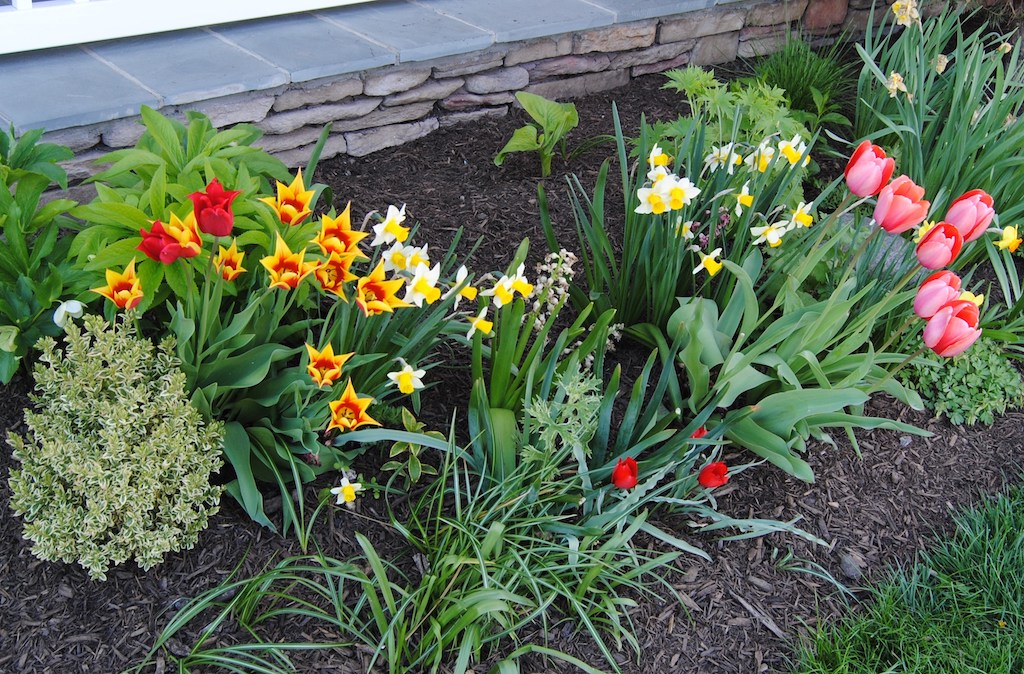
It’s May and tulips and daffodils are blooming all over the place.  There’s more to do than time to do it but I need to post a few tulip pictures.  They really rule the yard right now, and here’s a well mulched batch of “apricot impression” and some mixed lily flowered tulips.  After the tulips fade this bed will hit a lull for a couple weeks,  and I’m working on that, but usually hostas take over and a couple coleus find their way in.  So it all works out well enough.lily flowered tulips

There are more tulip pictures.  A lot more.  I’ll be catching up on those next.


Springtime Fun

The weather is perfect, the pond leaks, the mulch is here, and Donna wants to rearrange the furniture. With all this going on, the only thing I want to do is wander the yard with coffee in hand.

But there’s a couple yards of natural mulch in the driveway and it can’t stay there.  It looks nice and dark right now, but will fade quickly unlike the dyed mulches.  I don’t mind.  I want to focus on the plants, cut down on weeding and save some watering.  Plus my garden can do without the dye and whatever else they put in.

mulch pile

lily tulips

I guess furniture moving is first on the list.  Then move the furniture again.  Then talk paint colors (furniture moving always leads to multiple projects).  Then try to make my escape.  The mulch beckons and it will take me forever since everything has already sprouted and needs to be mulched around.  Plus I stop all the time to admire stuff, and with tulips opening there’s lots of stuff to admire.

There are mixed lily flowered tulips, of which only the yellow/red seem to return reliably…. not the pink and white ones that I preferred.

salmon tulips

These are “apricot impression” going on their third year.  I have luck with tulips here, probably since I don’t water in the summer and they like the drought.  Still, after three or four years division is a good idea.  I guess we’ll see in June if I remember or not.


Daffodil season is here!

I like daffodils. The color range isn’t nearly as wide as tulips, they sometimes nod a little too much, but they’re still a sure sign of spring. In another couple days daffodil and tulip season will be in full swing here (assuming it ever warms up) and if the wind would only die down a bit maybe I could get some decent pictures.

daffodils

“Golden Echo” is a real nice shorter one, it grows, blooms and multiplies well but I wouldn’t mind if the blooms stood up a little higher.  Still a current favorite.

daffodils

The yellow in front is “St Patrick’s Day”, a little bit of a nod-er, but a strong plant in the garden. “Barret Browning” is behind, it’s an oldie, but how can I complain about a reliable, good doer that holds it’s blooms up above the foliage and faces out nicely?

daffodils

“Ice King” on the other hand, is a mess this year.  The up and down, cooler temperatures have put alot of greenish color into the blooms, and the wind and heavy rains have thrown the top heavy blooms all over the place.  I meant to remove this one last summer but forgot exactly where it was, so only dug up maybe a half dozen bulbs.


daffodilsThe big brother to “Ice King” is “Ice Follies”, the two are nearly the same plant just one has a mutation which resulted in a doubled center (called a sport).  Among serious daffodil nuts (those infected with the “yellow fever”)  “Ice Follies” is looked down on as the cockaroach of the narcissus world.  It’s nearly unkillable and a perfect daffodil for beginners.  I have to laugh at this section of my daffodil bed where a nuclear bomb or something has nearly killed off the other narcissus while “Ice Follies”  just gets fatter.

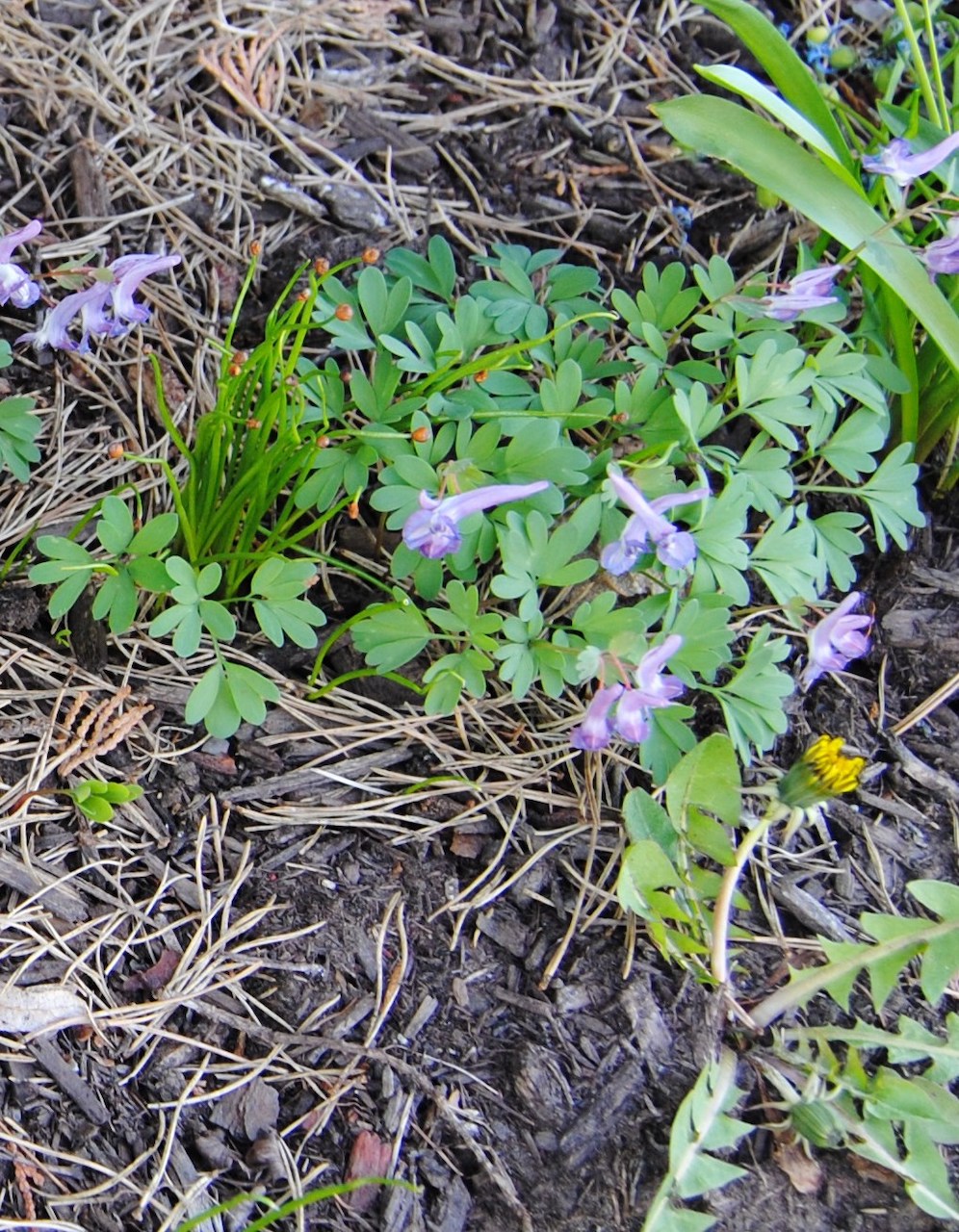
corydalis solidaI promised a picture of my plain old corydalis solida in bloom, so here it is.  Kind of washed out, but it does have its good qualities.  Note the attractive Taraxacum coming into bloom on the right.  Latin sounds alot fancier than just calling it a dandelion.  Also the grassy sprouts with the brown seeds still attached are scilla siberica seedlings.  I might be just a couple years away from a new weed problem here.

I’m hoping for better daff pictures this week.  I have a few more in the back and I hate to leave you with the impression that all I grow is”Ice Follies”!daffodils