Tuesday View: The Tropics 7.26.16

We returned from Florida this afternoon and were pleased to discover that the weather here was even hotter and drier than 1,200 miles South.   The few scattered thundershowers which should have given the garden some hope while we were gone just weren’t enough, and overall things look completely miserable.  Here’s a view from Florida since I’d rather not face Pennsylvania yet.

flowers at Epcot

At least in the tropics an afternoon downpour can give some relief.  Here in Epcot I liked the way these mixed cannas filled the bed, a little short of a plant for my taste, but I’m sure they’ll fill the area with color all summer.  

I hope to catch up a little tomorrow, but for now it’s ok to be back and we’ll see if I can scrape together enough care to bring the garden back from crispiness.  If I never post again I just want to say thanks for all the comments and friendship and I wish you all well.

Tuesday View: The Tropics 7.19.16

Cathy at Words and Herbs takes a look at the same garden view each week and follows it as the year goes on.  My post this week should be self explanatory 🙂

The beach fl

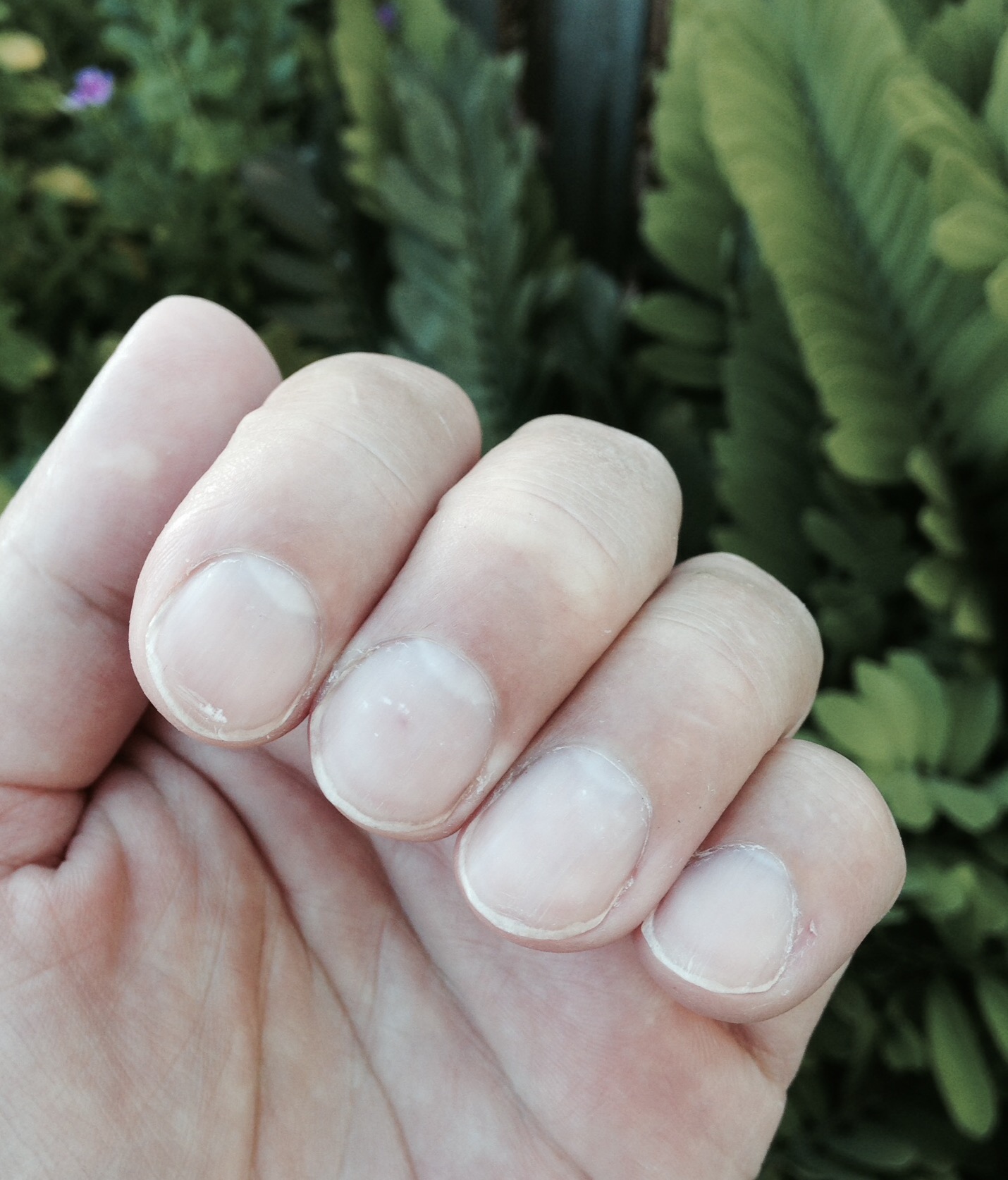
I think most gardeners will understand this next photo as well…

Are those nails clean!?

Are those nails clean!?

Have a great week!

Thursday’s Feature: The Wooly Thistle

Each Thursday I like to join Kimberley at Cosmos and Cleome and single out a plant which has tickled my fancy that week.  For the most part my choices have been on the respectable side but this week I’ve gone back to the dark side and chosen the wooly thistle (Cirsium eriophorum), a plant which if anything should be kept far, far away from your fancy since direct contact will definitely NOT tickle.

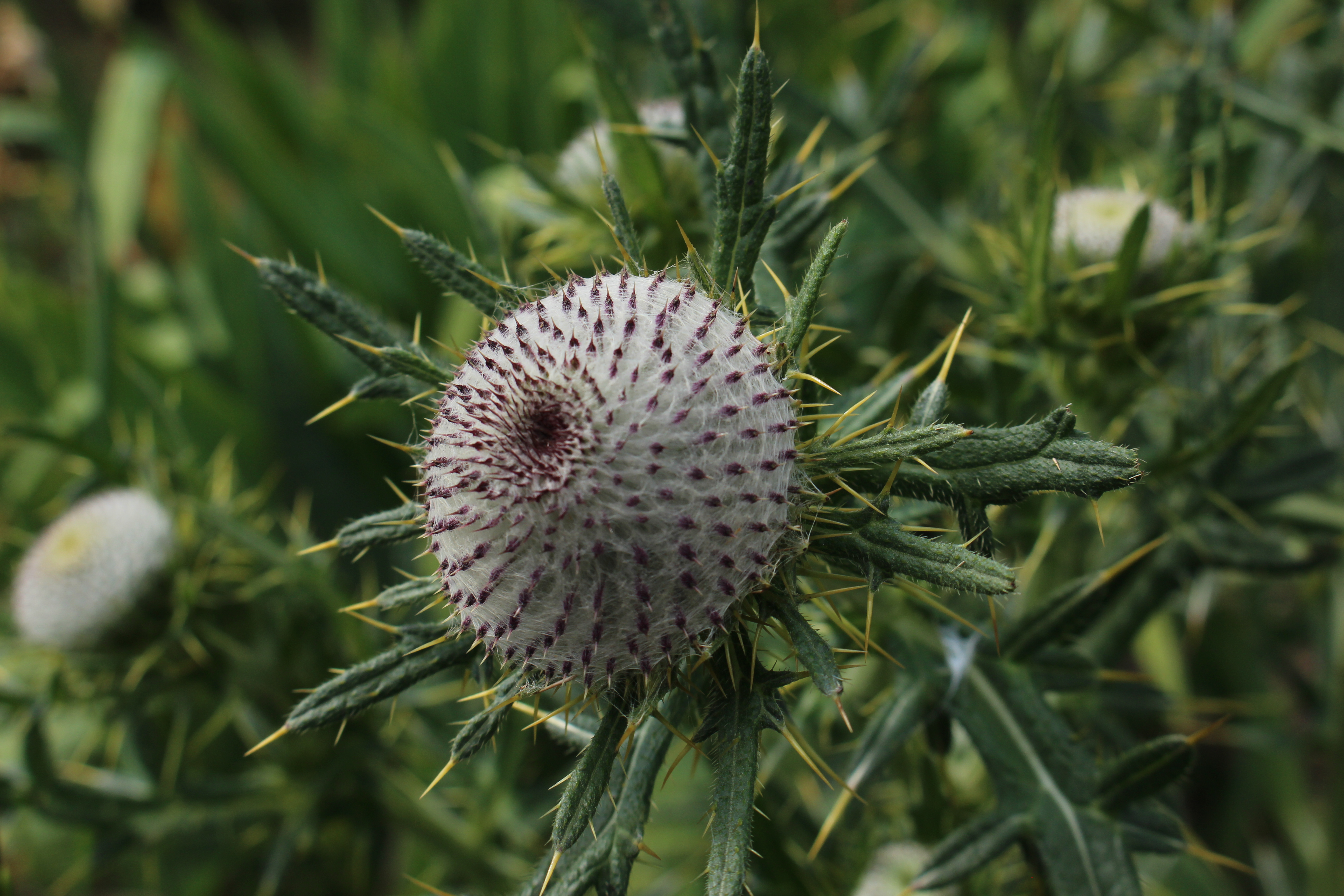
Cirsium eriophorum, wooly thistle

Cirsium eriophorum, the wooly thistle, with its first bloom opening in late June.

Despite its cute common name, the wooly thistle is probably cursed by many a gardener and farmer throughout its native Europe.  I don’t think many a gardener here or there would go through the trouble of finding seeds through a seed exchange, sowing them and nursing the plant for three years, and then briefly enjoy it’s heavily armed flowers for a few weeks until it set seeds and died… but I think it’s absolutely fascinating!

Cirsium eriophorum, wooly thistle

A baby picture only a father could love.  Wooliness studded with purple tips and all so nicely geometrical!

Who knows if I’ll replant the seeds once mama thistle is gone, she is a bit of a hostile presence after all, but she’s very welcoming to the bees and ants which swarm the flowers.  She’s also very popular with a group of weevils which have poked their noses into the wool and I’m sure laid eggs while nibbling the flower buds.  Weevil grubs eating thistle seeds is probably not the worst thing to have and even with them there will likely still be more than enough seeds produced.

Cirsium eriophorum, wooly thistle

The spines are just as vicious as they look 🙂

I will completely understand a less than enthusiastic review to this week’s choice.  Please feel free to just smile politely and then later shake your head, I’ll understand.

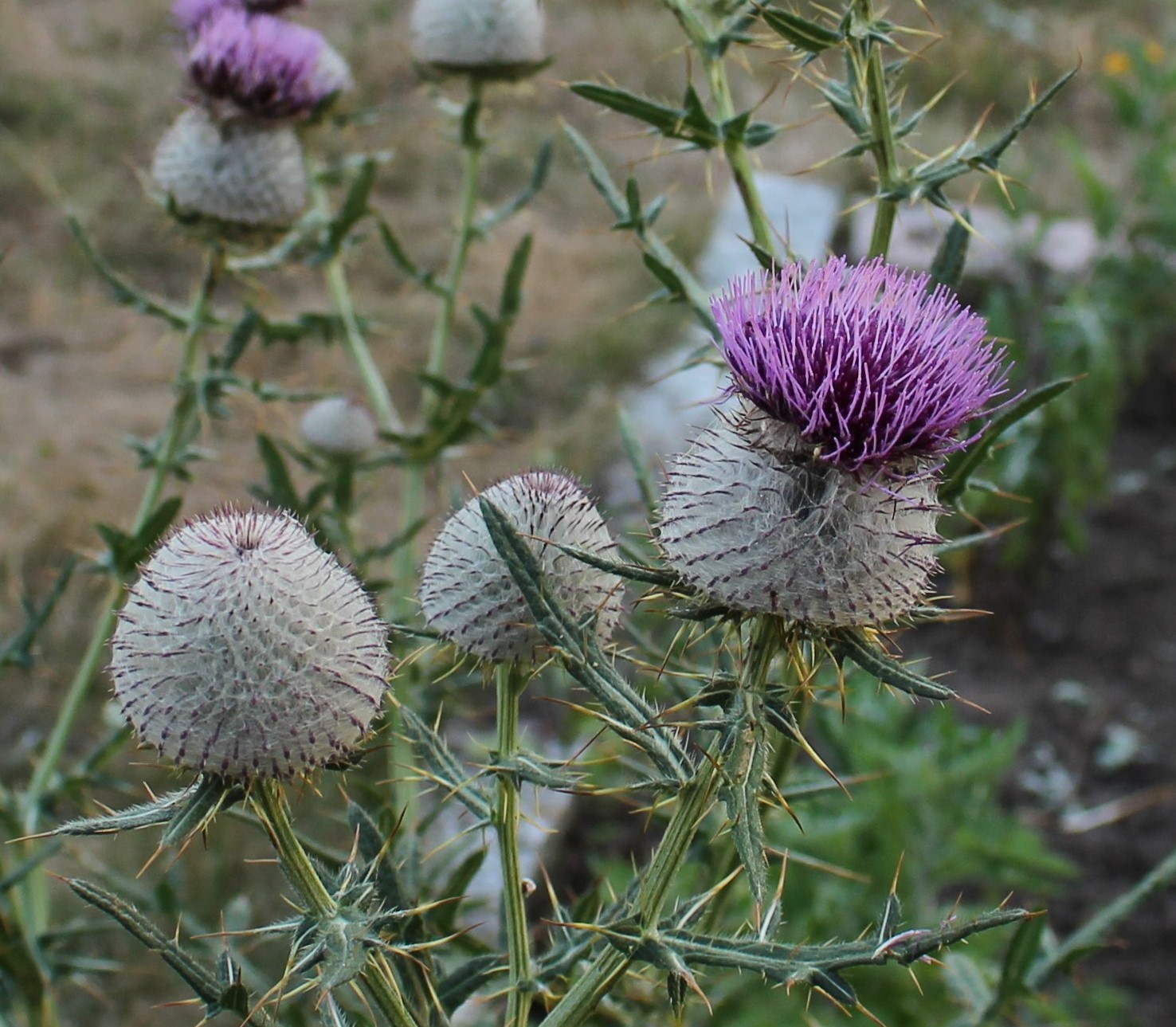
Cirsium eriophorum, wooly thistle

Cirsium eriophorum today with its fat wooly flower heads.

Please also feel free to visit Kimberly and enjoy what she’s selected for this week.  I hear it’s a delightfully pure Shasta daisy, and I’m sure it’s far better suited for vases and placing behind the ear than this thing!

Gratuitous phlox

I don’t have nearly as many of the tall garden phlox (Phlox paniculata) as I’d like.  The photos are misleading without the big picture so here’s the big picture with a wider view of the potager (complete with freshly trimmed hedge).  A couple (4) in the front bed, and a dozen or so in the back bed is not a lot of phlox.

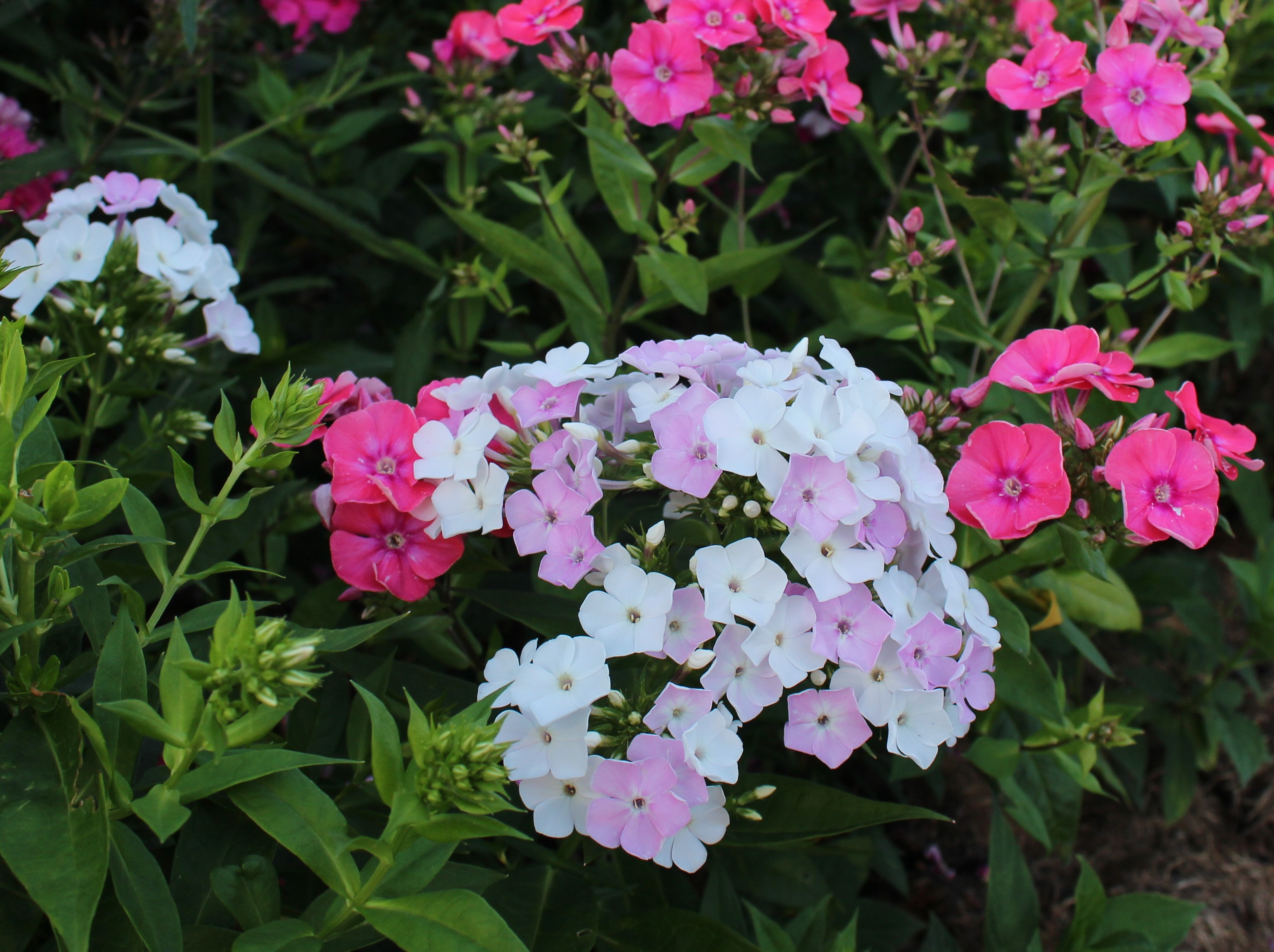
garden phlox

Mid July and most of the garden phlox are nearing their peak.  Can I call them a favorite flower?  I feel like I do that to something new every other week.

We’re just going from one phlox to the next here.  No commitment.

phlox dorffreude

Phlox ‘dorffreude’… I think that roughly translates to town’s joy?

A few cooler nights have deepened some of the colors and although I don’t know the names for several of these it doesn’t matter as far as enjoying them goes.

phlox paniculata seedling

This random seedling gets a pink tint when the temperatures drop.

But the dry weather has them all a little miserable, and unless they get watered every few days the leaves and flowers wilt and the spider mites procreate.

phlox paniculata seedling

Another random seedling which opens pink and then fades.  Note how bushy the plants are… that’s thanks to this year’s frequent deer, woodchuck, and rabbit nibbling.

The next few days promise more dry, clear skies with temperatures into the 90’s (32+C) and the garden will be on its own as we go off traveling.

phlox nicky laura

The dark purple ‘Nicky’, starry eyed ‘Laura’ and an unknown salmony red passed on from a friend.  A threesome of color.

Of course there’s always the pretty yet troubled one.  Phlox ‘Brigadier’ has a great reddish color yet doesn’t bloom well, is losing stems, is a magnet for mites, and resents every dry spell… but I can usually just get her a drink and she’s ready to go.

phlox brigadier cabots pink

Phlox ‘Brigadier’ with ‘Cabot’s Pink’ in the back.

I guess when you’re jumping from one phlox to the next you’re bound to run into problems but I’ll admit I’m a phlox addict and don’t really want to change.  When I was out at the nursery last week there were about six new ones which I had a chance at and they all looked like a fun time (even if I already have a few waiting at home) but I said no.  It will be a hard enough time staying faithful this winter when it’s just me and the computer and the great online phlox source, Perennial Pleasures.  They’re like a Craigslist for hooking up with new phlox and I’m sure I’ll click on something I shouldn’t.

Tuesday View: The Tropics 7.11.16

This week I was a little late in the day with my photo so it’s full of artsy backlighting.  A good effect for soft lighting, but not the best to see what’s going on in a Tuesday view.

tropicalismo

The tropical garden at about 7 in the afternoon.

One thing which you will likely notice is the pile of grass trimmings and the wheelbarrow.  It was a busy afternoon in the bed and much of this was the result of the bed’s new designation as the Tuesday view.  Who would have suspected joining in with this meme would be the motivation needed to buckle down and make some of the changes I’ve been thinking about for the past few years?

rose 'black forest'

Not exactly tropical, but the color of the rose ‘black forest’ is hot enough to fit right in.  This is already its second flush of bloom and other than a few holes chewed into the leaves (most likely from some annoying beetle) it’s almost perfect.  Last year this plant was potted on the deck, still great but much younger and smaller.

Change one: The variegated miscanthus ‘Cosmopolitan’ had too much of a head start on the new plantings so I went ahead and cut it down to about a foot high.  We will see how this works out since I’ve never tried it before, but it’s grass right?  I suspect just like a scalped lawn it will send up plenty of new shoots, and in the meantime the cannas and dahlias will be able to grow upwards in peace and lay claim to their own airspace.

newly planted musa basjoo

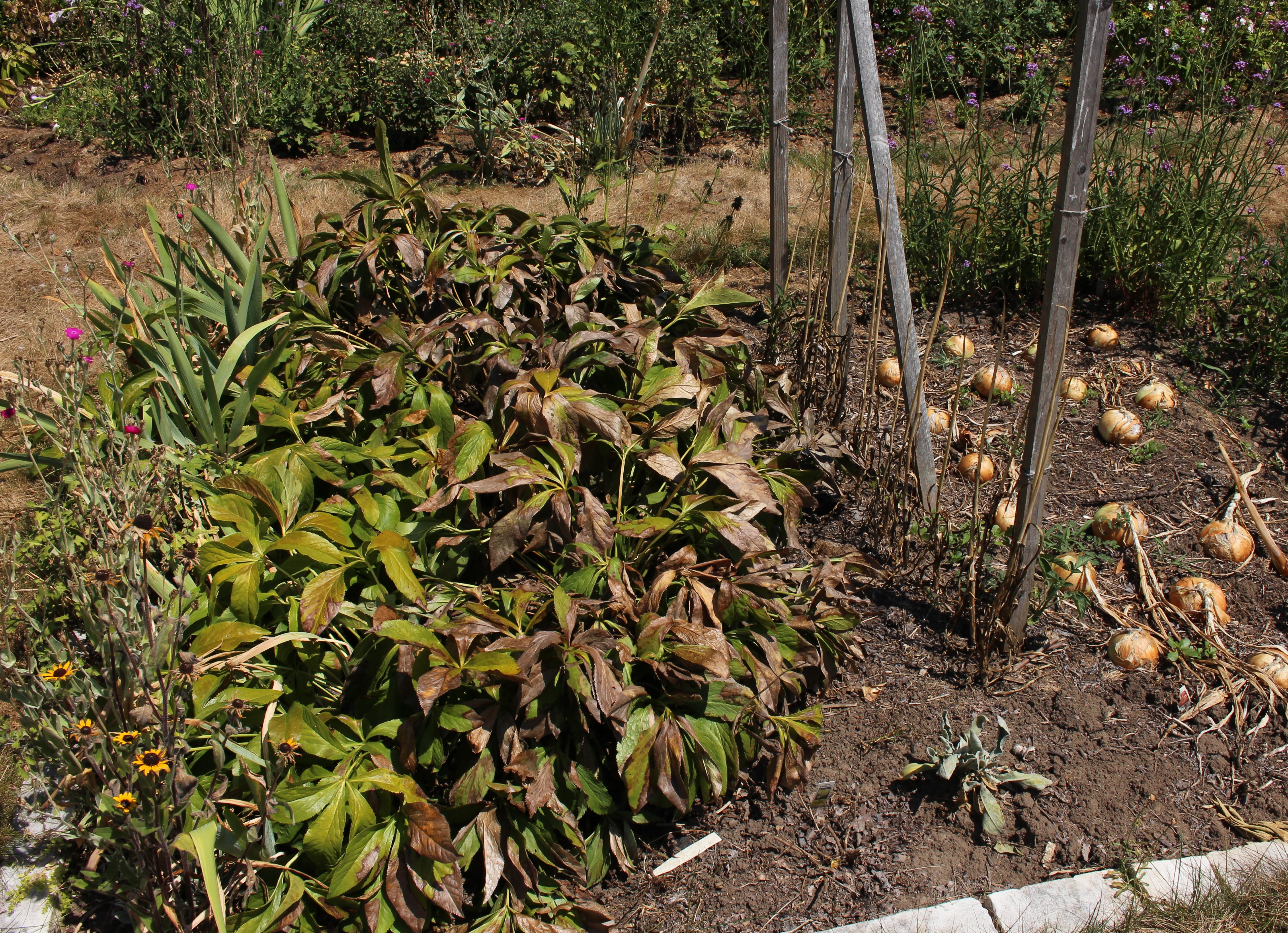
Change two:  A newly planted banana (Musa basjoo) has replaced the peony which was just taking up space here… and mildewing.  When sunflowers grew up and covered it in years past there was no reason for it to bother me, but now it does so out it went.  I’ve never composted a peony, it seems absolutely criminal and I’m not sure I should be confessing, but there you go.  I yanked a few salvia as well.

We were gone for four days last week and the garden nearly dried out and died due to the heat.  Rumor has it rain fell, but of course all the big storms avoided us.  When I returned to see the pathetic state of my plants I first cursed, then cursed some more, and then decided to mow everything down and give up for the year, but after watering that evening and then the next day visiting my favorite nursery (Perennial Point), things seemed less bleak.  They had awesome bananas and elephant ears and a bunch of other stuff and in my weakened state two new bananas came home with me (plus a new fern and red hot poker).

Kochia Scoparia

Kochia Scoparia is a new one for me.  The common names are burning bush and summer cypress and I suspect I will like it, but for now keep in mind it’s listed as a noxious weed in several Midwestern states.

I didn’t need the bananas, but I did need the bananas, especially after seeing how well they have done for my brother in his zone 7 LI, NY garden.  In case you’re wondering, Musa basjoo is likely the hardiest banana, and although I won’t get into all the logistics of me being the one to give him the plants in the first place, and him being completely deaf to all hints at how much I wanted one and which one could he spare… I now have one again and promise to mulch it well EVERY winter so it doesn’t die off again.

long term weed killer

The rest of the zinnias are doing well, but I suspect my MIL was again a little heavy-handed with the weed killer here since it’s a dead spot which seems to stunt all life.  She has an unexplained attraction to any herbicide which says ‘controls weeds for months’, and this in turn stunts and kills anything planted in the treated area or anything planted near the runoff area… for months.

So here we are again, all over the place on what should be a simple post.  I promise to get less wordy once we get through this planting and intro phase but for now I can’t help it.  Just be grateful you’re not stuck here on a visit and I’m really going on and on!

lythrum salicaria purple loosestrife

Now what do I do with this?  The flower stalks of a Lythrum salicaria (purple loosestrife) have appeared in the back part of this bed and I like it.  The problem is it’s a terrible invasive in this part of the country, but only in wetlands and my garden is far from being a wetland.

If you’d like to join in the Tuesday view, Cathy at Words and Herbs follows her own view each week and I’m sure she’d welcome the company.  It’s a great way to track changes through the season and apparently it can even motivate some of the less motivated gardeners into tackling a few things on the to-do list!

That wasn’t smart 5.0

I’ve been neglecting my ongoing series regarding the stupid moves which I perpetrate in the garden, and trust me it hasn’t been because of a lack of material.

The blue poppy (Meconopsis species) is a nearly legendary sky blue flower from the heights of the Himalayas, and their amazingly perfect blooms have lured many a gardener (and photographer) into an awkwardly greedy and covetous state.  The blue flowers are also well known for their difficult and fickle nature outside of any region where the thermometer rises above 80F (26.5C) and summers take on a more serious tone.  Here in my Pennsylvania garden the thermometer has been going well over 90F this month, and I don’t know why I didn’t see this coming back in December when I ordered the seeds… or back in February when they were sown… or now when my last seedling is wasting away to nothing.

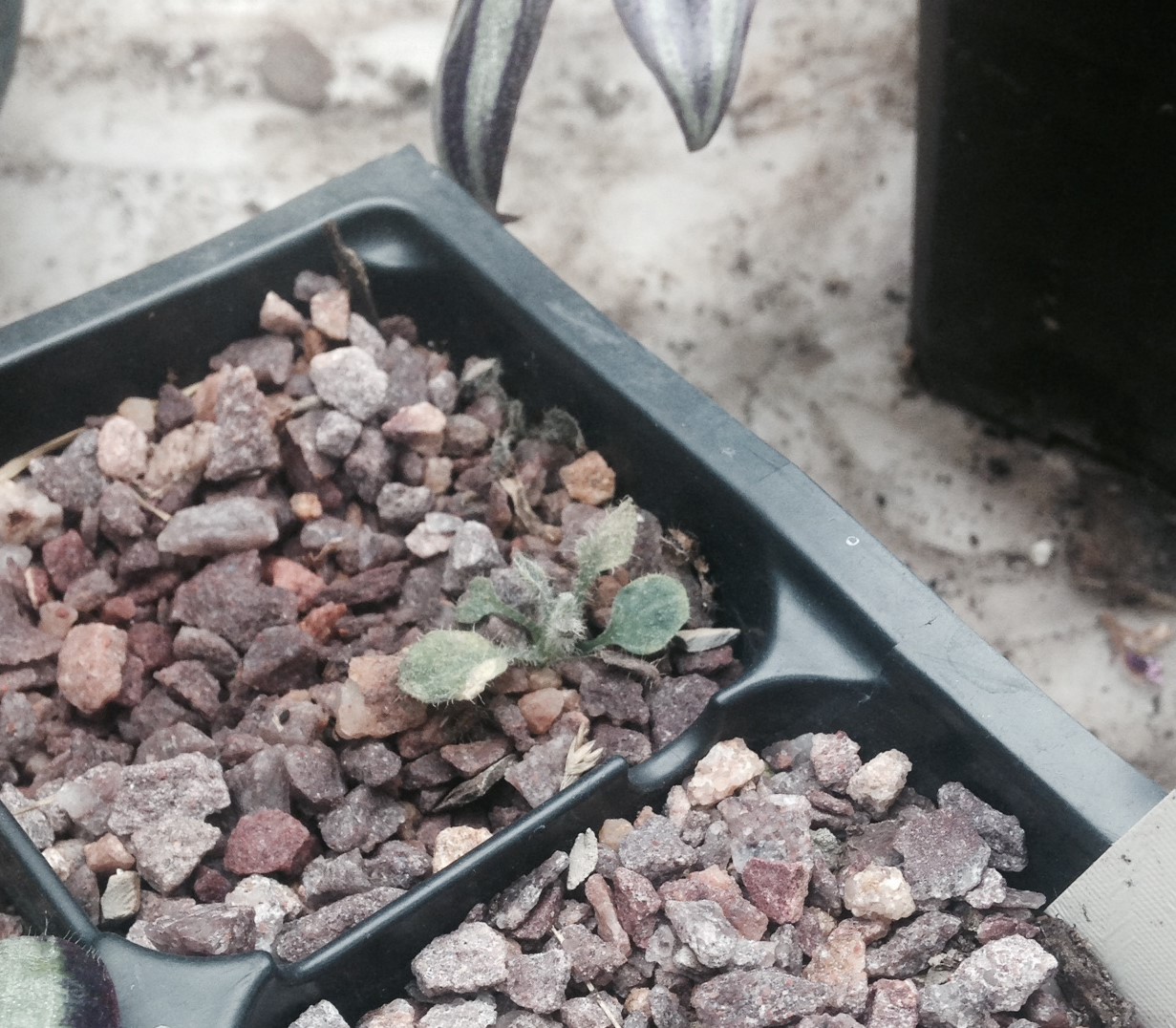
meconopsis seedling

Go to the light little poppy.  You’ve put up a valiant struggle.

I briefly debated placing a window unit air conditioner into one of the workshop windows and seeing just how long I could drag this out but then finally came to my senses.  I’m sure I can kill other plants just as easily with far less trouble, so until I move North or become insanely rich I think I’ll pass on the next seed offer.  Fortunately this latest stupid move didn’t involve blood and from now on I suppose I’ll keep myself happy enjoying them via Pauline blogging about the ones in her Devon England garden (I believe they’re practically weeds for her) or just enjoying the ones Longwood Gardens forces into bloom each spring.

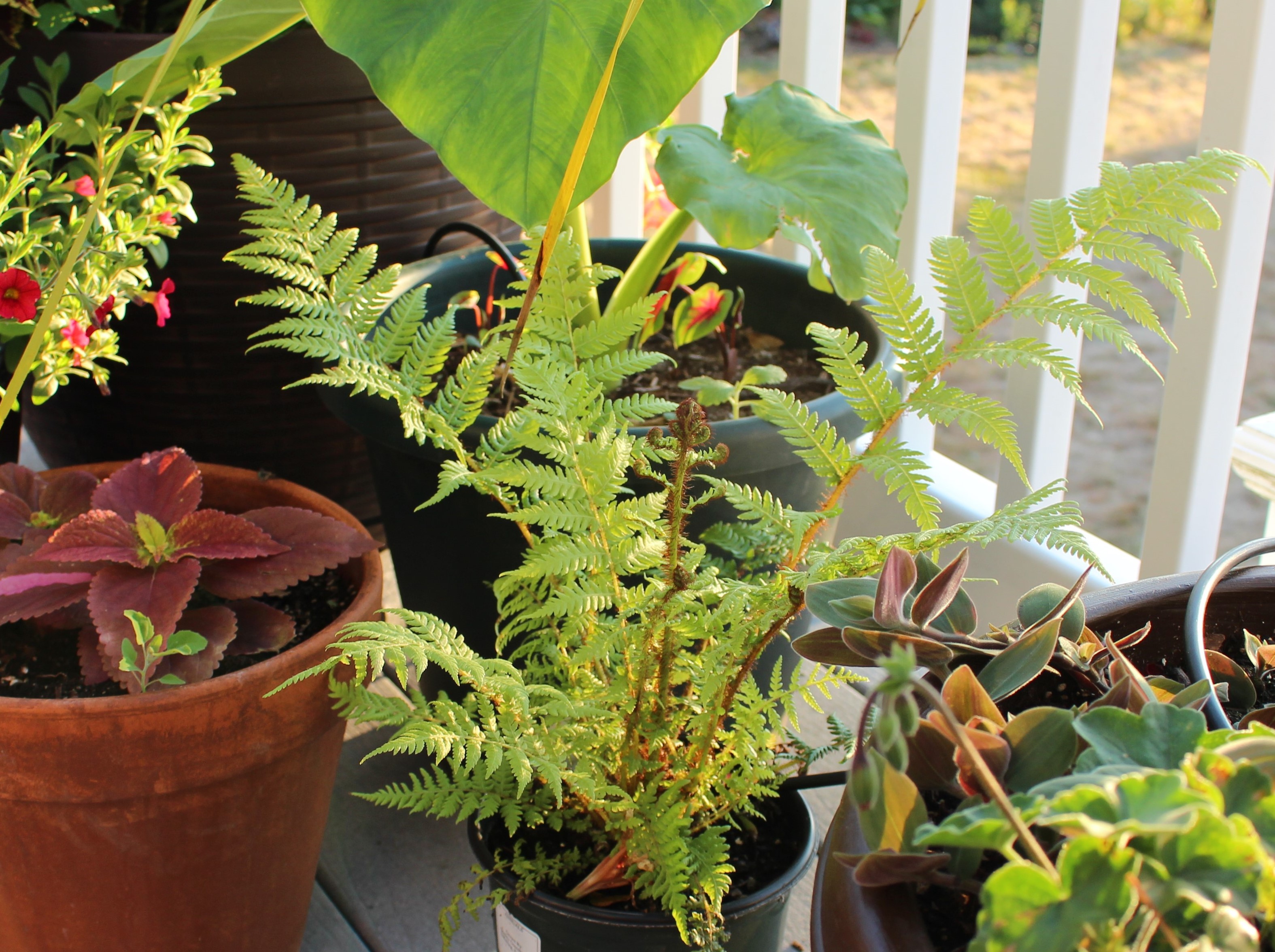
So a lesson learned is a lesson learned, and on today’s trip to the nursery I picked up something far more sensible.  Under “Growing Conditions” it’s as easy as part sun, plant 24″ apart, so I’m sure my new Australian Tree Fern will be no problem at all.  Later on I’ll just have to figure out what to do with the “reaches 20 feet tall, up to 10 foot long fronds”.

Australian tree fern

Even a 10 year old can see there are too many plants on this deck, he told me last week.

We will see where this goes, but in the meantime have a great week, and may all your decisions be sensible and well thought out 🙂

Thursday’s Feature: Allium flavum ssp. tauricum

This week’s feature is a mouthful, one unlikely to be spoken while browsing the plant racks at Home Depot or even on the tables of your better nurseries.  It’s not particularly showy or amazing, but all the same it’s showy and amazing and I’m glad to have it here in the garden.

allium flavum ssp tauricum

Allium flavum ssp tauricum, a range of pastel flower colors as well as a range of foliage colors, from straight green to blue-gray.

This small, summer blooming allium is one of those onions which may surprise gardeners who typically think of flowering onions as mostly purple, and mostly late spring bloomers, but here it is in all its early summer, pastel tones.  Mine came via the North American Rock Garden Society seed exchange (another mouthful) and were labeled “ex McDonough”.  For those of you not in the onion know,  Mark McDonough is the onion man, essentially a global authority on all things allium and if you’re interested he hosts a website called PlantBuzz to which I heartily recommend a visit.  If you can’t find anything interesting on his site I’m going to guess you stopped reading my post after the first few sentences, but if you’re still with me give it a click… if only to look at wonder upon the different forms of even something as simple as chives!

allium flavum ssp tauricum

Another view, same clump…. Allium flavum ssp tauricum ex McDonough.  I feel like my onions have quite the pedigree 🙂

Regular plain old Allium flavum (yellow onion) doesn’t have the range of pale, pink, and rusty tones which the subspecies tauricum shows, but I think they’re both equally easy to grow.  Mine were planted in February of 2013, the pot went outdoors and the seeds came up that spring.  The first flowers showed the year after and other than digging and spreading the clump out a bit two years ago they’ve been plugging along in a full sun spot ever since with no help from me.

allium flavum ssp tauricum

Last year’s seedlings blooming for the first time… less diverse, but still nice!

For as easy to grow as they are you would think they could be a pest, but I have yet to see a single seedling come up on its own.  They just politely do their thing and all I do is clean up a few dead leaves and flower stems once flowering is finished… they are an evergreen onion, so there’s some foliage all year even after things die down a bit in August.

Keep your eyes open for A. flavum ssp tauricum and grab it if you have the chance.  Also if you have the chance, give Cosmos and Cleome a visit to see what Kimberly and other bloggers are featuring this Thursday.  Each week she encourages us to focus on a single plant and it’s fun seeing which favorites show up on other gardener’s blogs  You’re more than welcome to join, and if you do leave a link on Kimberley’s blog so we can come find you!

Tuesday View: The Tropics 7.5.16

Between you an me this is the Monday afternoon view, but to get anything online before Tuesday night I may have to cheat a little here and there 🙂

I started planting all the true tropicals and annuals about two weeks ago, and although they’re beginning to put on some weight it’s still the scattering of perennials which give all the color.  As you can guess from looking at the lawn we still haven’t had any decent rain.

annual flower bed

The tropical garden in the first week of July.  The red of the rose ‘Black Forest’ carries over from last week and the orange lily has opened up.

Water is not an issue for the papyrus though since it’s sitting submerged in a planter which lacks a drainage hole.  The green algae has passed its peak and the water looks much less stagnant.  I may even throw a few fish in this week to keep the mosquitos from breeding.

papyrus in pot

The orange lily ‘Liberty Hyde Bailey’ should have been fantastic this year, but I suspect my MIL may have hit it with a bit of stray weedkiller this spring.  The flowers don’t open properly, are a little on the small side, and look stunted in general.  Fortunately the bright color makes up for the stunted-ness.

You may have noticed the purple haze of Verbena bonariensis which is beginning to develop over the bed.  Because of the mild winter several plants of this borderline hardy perennial survived and are already beginning to put on an early show.

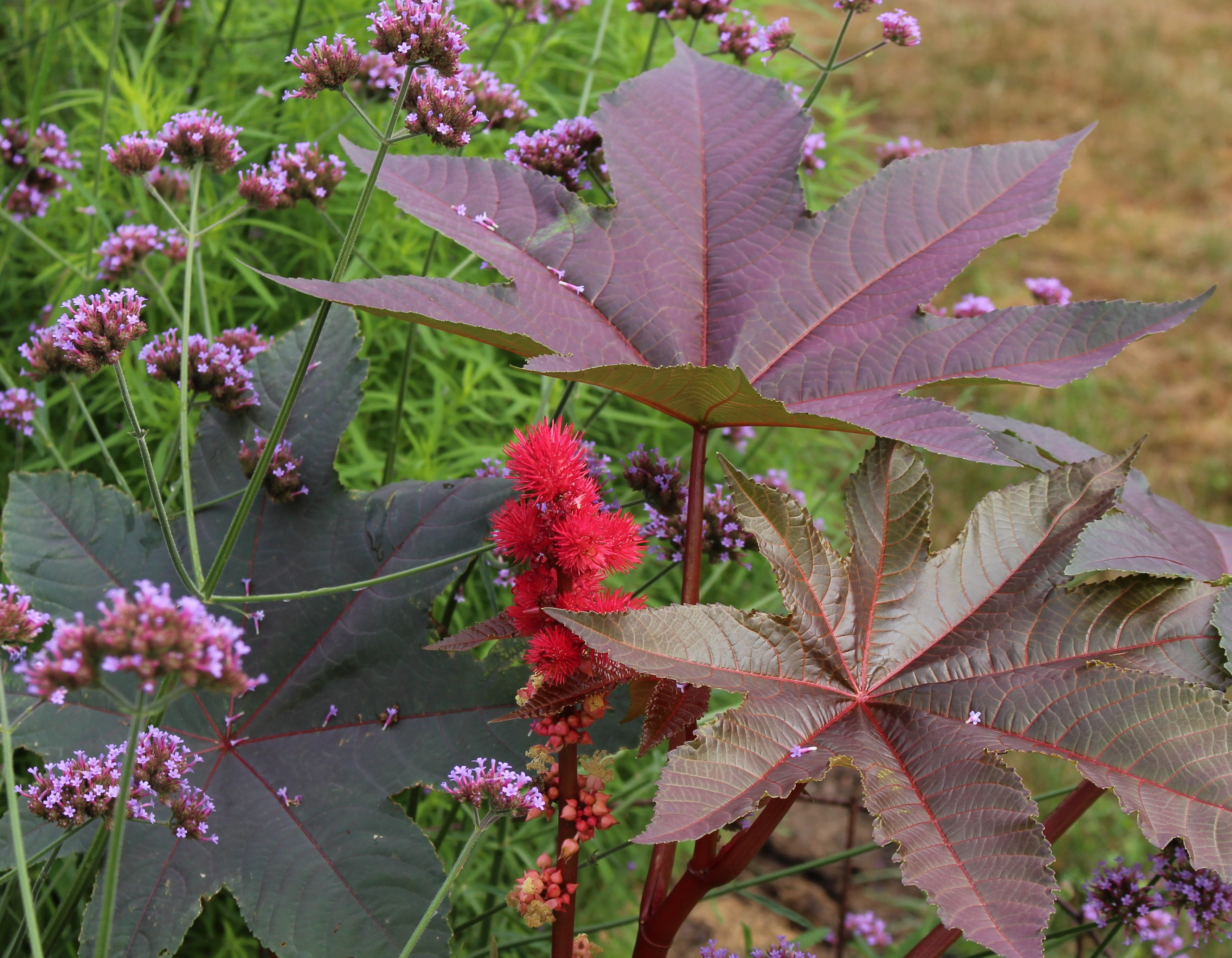
castor bean seedling

One of the castor bean seedlings (Ricinus communis) beginning to pick up speed.  If all goes well a few leaves should reach a foot or more across.

This isn’t the first year I’ve had a late start to planting the tropical bed.  There are so many other jobs to attend to before this reaches the top of the list, plus there’s always procrastination and general laziness on my part.  Fortunately I’m a quick learner and have picked up a few tricks along the way, one of which is “The lazy man’s canna and dahlia pre-starting method”.  Rather than potting roots and tubers up and getting them going in a greenhouse or other gardening luxury, I drag the storage tubs out onto the (full, hot-sun) driveway, open tubs and bags, try to orient growing point up, and spray a little water on them all.  Less water is better than too much, and over a week (or three) the shoots begin to grow and the break out of dormancy in a way which I feel is quicker than planting them straight into the cooler ground.  I’d show you pictures but the mess of trays and tubs and bags spread out in front of the garage is a bit embarrassing.

sprouting canna leaves

A few of the cannas are already over a foot tall just maybe ten days after planting.

While we wait for the tropicals, the perennials continue to have their moment.  The purple salvia ‘Caradonna’ is already fading, but there’s an interesting Verbascum showing off behind it.  Normally this would pass unnoticed as a sea of sunflower seedlings takes over this end of the bed and overwhelms everything in it, but this year I’ve manned up and stood up to the little thugs.  One by one I pulled sunflower seedlings out and although it was nearly sinful composting such healthy volunteer plants, it was also a bit cleansing.  I’m ready for something different here.

July perennial border

I was hard on the sunflowers but apparently still let a clump of daisies pass through… oh well.  A sharp eye can make out the yellow spikes of the Verbascum just slightly left of center in this photo.

I’m pretty sure it’s Verbascum nigrum, the black mullein.  It came here uninvited as a hitchhiker in the root ball of a red -stemmed dogwood.  The dogwood in turn was one of those gifts from a better gardener who heard me (how could you not) whining about how nice her dogwoods were, and how I can’t seem to find the same kind anywhere around here.  Sure enough on her next visit a bag came out of the car and inside were the roots of a nearly full sized division off her own plant.  That’s awesome, but even better was the clump of scilla and the healthy verbascum plant which also came up the next spring from the root ball.  I judge a gardener by the weeds they battle, and her scillas and verbascum almost embarrassed me when I thought of the crabgrass and bitter cress which probably followed her home.  Paula was smart to only accept bulbs…. they’re usually weed free 🙂

verbascum nigrum

A closeup of the flowers is an almost unnatural mix of yellow, orange pollen, and purple stamens (I think that’s what the part is called).   I almost wonder if the orange pollen tastes different, since it looks more like Cheetos dust than any kind of bee food…

So that’s where we are this week.  Both Kimberley at Cosmos and Cleome and Cathy at Words and Herbs are also following views each Tuesday and it’s a great way to follow the changes which happen throughout the season.  Give Cathy a visit to see what others are up to , and if you happen to join in please leave a link at Cathy’s blog so we can find you.  Have a great week!

Introducing ‘Blue Spot’

In a brutal world where a person were limited to growing just two plants, I’d chose snowdrops and phlox.  Snowdrops have an awfully long ‘down’ season, but phlox carry on through the summer and if you can assume that this cruel two-plants-only world doesn’t have any other issues going on, I think phlox season would keep me pretty happy.  The phlox family is an attractive family to begin with, but today I’m talking tall garden phlox, Phlox paniculata.  Purists would call them North American native plants, but native flower is not something I think of when they burst into bloom, and as phlox season ramps up around here I can’t picture these hybrids fooling anyone into adding them into their patriotic natives only planting schemes.

phlox paniculata

phlox paniculata in the ‘Potager’… formerly known as the vegetable garden.

I’m stretching things with the native part as I know most people are not putting these plants in as part of a program to make America great again, and are rather planting natives for their attractions and benefits to native pollinators and wildlife, so I guess if I have a point here (since as usual I’m all over the place this morning) it’s that these were once wildflowers but now fit right in with the fancy delphiniums and chrysanthemums.

phlox salmon beauty

Phlox ‘Salmon Beauty’ (1940’s intro).  Sorry about the dried up grass in the background, but this phlox is just glowing today.  

There’s a real risk that the phlox will slowly take over the potager completely and leave me with zero space for actual vegetables, but that’s a chance I’ll take.  It’s not the idea spot for them since the relentless sun and drying winds invite pests such as spider mites in, but as long as I keep them fairly well watered and make sure their diet is complete (they enjoy a rich soil), the phlox do well enough.

phlox cabot pink

Phlox ‘Cabot Pink’.  Several of the phlox I grow are heirlooms from the pre-WWII era when Europe (which included England back then) was putting out some of the best phlox varieties yet seen.  “Cabot Pink’ may or may not be one of these as its name d after the Cabot Vermont town in which it’s been passed around, and may or may not be the original name. 

Like I said, although “the phlox do well enough” here, not everyone is completely happy.  The 1990 Piet Oudolf introduction ‘Blue Paradise’ has yet to take off.  Flowering is no problem with even the most pathetic stalk blooming, but it’s been floppy and mildewy and just plain miserable in its spot (everything which it’s supposed to not be).  Of course I’m to blame since it seems to take off for everyone else, but maybe this fall I can move it and find just the right location to cheer him up.

phlox blue paradise

The “blue” morning color of phlox ‘Blue Paradise’.  The color changes with time of day and temperature which is cool, but so far I haven’t been able to change his slumping nature and unenthusiastic growth rate.  Here he is flopped over onto the boxwood hedge, which is the only thing keeping him up out of the dirt.  

Ok, so here’s my latest favorite phlox.  It’s ‘Blue Spot’, a newer introduction which for some reason I can’t seem to find any information on just now.  For some reason 2008 introduction by way of a Connecticut nursery comes to mind, but I’ll likely have to update that when I figure it out.  This plant came to my garden last fall by way of Perennial Pleasures Nursery, a Vermont nursery which has the best phlox offerings I’ve seen, and fortunately also does mailorder!

phlox blue spot

Phlox ‘Blue Spot’

My plant still needs some growing to do, but in spite of multiple woodchuck grazings, it’s managed to put up a few flower stalks.  I love the bluish swirls and I think it gets this pattern from another favorite, ‘Blushing Shortwood’ which may or may not be a parent (again… top of my head).

phlox blue spot

A closeup.  In my mixed up world of color naming, I’m calling this a blueberry stain on a white background.

I look forward to seeing this one clump up and hopefully avoid another run-in with the local wildlife.  So far my theory of letting weeds grow up around it to hide it from attack has been working, but that has its downsides as well… we will see, just like you will likely see plenty more phlox photos as the season rolls on.  We still have all of July and August you know!

Have a great weekend, and a happy and safe Fourth of July.