Fall Lawn Care

The lawn maintenance contract for the yard next door was on the market this spring and guess who had the winning bid?  Yours truly!  The field of entries was stacked with lawn doctors and local landscaping companies and when the offers were reviewed my bid of zero dollars for time and labor rose to the top.  Last year I was already doing the mowing, but some chem-lawn was handling the other stuff… now it’s all me.

She did express some doubt in my laissez-faire approach to lawn maintenance but in the long run I think the economics won her over.  My own lawn is only now just reviving from the drought of summer.

Without boring you with the details (your welcome to ask for more info if interested) my lawn care consists of the following: use an (expensive) quality blend of grass seed (I don’t like rye grass, so the less of that the better), use the cheapest plain old fertilizer you can find (I usually go for the K-grow from that K-store), mow on the high side and if it doesn’t bother you leave the clippings on the lawn.  Forget everything else.

Because I don’t water, the lawn was completely dead from late July on, but as soon as rain and cooler temperatures arrive it comes back fast.  To get it prepared for this rebirth I gave the dead lawn a close haircut without a bag and left all that thatch wherever it fell.  I threw around some of the cheap fertilizer and waited for the fall to do its magic.  Two weeks later and two weak rain storms and it’s started to green up again…. although I did do a little supplemental watering for my MIL’s yard (we’re still 8″ short of normal for rain this year….)

The patchy spots will fill in over the next week or two as that grass comes back to life, but it’s real important to get the lawn nice and thick now so that it’s too dense for crabgrass seeds to sprout next spring.  Also never cover the whole lawn with grub killer.  Grub killer may kill grubs for a season, but it also kills off the earthworm population, and there’s nothing better than earthworms for free fertilizing, free aeration, and free thatch removal.

The down side to all this is that lawn mowing is back on the to-do list.  My lawn can still wait a week, but the extra water next door means mowing this weekend.  Oh well, the clippings will give the earthworms over there a well deserved end of summer snack!

A Few Good Weeds

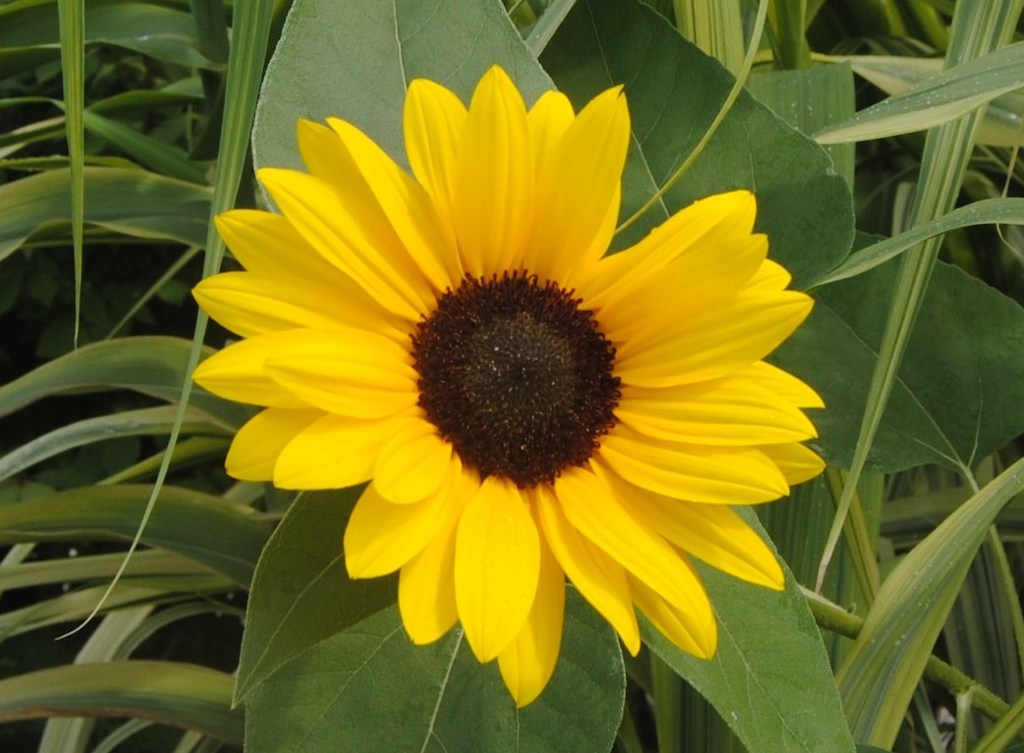
Somewhere way back I remember reading a comment on one of the fancier English gardens,  it went something like this- “Even the compost pile was filled with treasures”.  I took this to mean there were so many good things growing that even the cast-offs thrown onto the heap would have been worth keeping in most other plots.  Too much of a good thing is not a problem in my garden, the compost overflows with crabgrass and thistles, bittercress and prickly lettuce, but I may be turning a corner.  The birdfeeder is a big sunflower seed spreader, and rarely can I bring myself to pull out any of these weeds.sunflower

Maybe right next to the front door wasn’t a good spot (last year) but for the most part they pick pretty good spots to settle down.  Here a few squeezed in between the butterfly bushes and rose of Sharon. blue rose sharon

I’m always surprised by the range that shows up.  This year I’m playing host to dark centers, yellow centers, golden flowers, brownish tones, and even one of the huge 1ft across monters.  The ones here in front of the house have a bit of a rusty ring around the bloom, and give some needed height to the recently renovated foundation bed….. the rudbeckia underneath also crashed the party.  I’ll be the first to admit they look better there than anything I would have thought up!self sown sunflower

The most entertaining part of having sunflowers is still to come.  Goldfinches love the seed and fly by every day now to check out how they’re doing.  Once the seed are ripe we’ll have front row seats to the daily acrobatics of the little yellow parents and their greenish kids.

Rudbeckia are another plant that seeds about enough to end up on the compost pile.  My fancy attempt at a red border was ruined by this invasion of gold.  As usual it looks better with the surprise…. not sure about the pink phlox though… didn’t plant that either, but even if the color clashes it still looks better than crabgrass.rudbeckia goldsturm

The vegetable garden can always use a good weeding.  Persicaria orientale gets pulled each spring by the bucketful but a few always stay.  It’s not a small plant and can easily top seven feet in good soil.  ‘Kiss me over the garden gate’ is another name for it and I can picture this heirloom plant hanging over picket fences back in the day.rudbeckia goldsturm persicariaAnother garden invader is this ‘hopi red’ amaranth.  I’m a sucker for colored leaves and couldn’t bring myself to pull this one from the middle of a row of leeks.amaranthus hopi dye

‘Hopi Dye’ is supposed to be the darkest red amaranth around and even though I grow it for the looks its real claim to fame is as a dye plant.  This patch survived a harsh May weeding and is a little further along.  You can see how it matures and I love the dark foliage and fluffy blooms, and I love the fact it grows like a……. (weed?).amaranthus hopi dyeIn all honesty the tropical bed is really just one big weed patch.  That’s my excuse for the maybe-not-the -best color combos such as scarlet salvia and peachy pink dahlias.  I’m hoping the big green sprout in the front turns out to be a ‘Hot Biscuits” amarathus,  but there’s a strong possibility it and a few others are just well grown examples of pigweed (another amaranthus).  I guess that just goes to show what a fine line there is between weed and wildflower.

Other selfsown weeds in this bed are the red salvias, purple verbena bonariensis, and all the leafy purple amaranthus in the center of the bed.  This one I believe is called summer poinsettia or Joeseph’s Coat.  As the summer goes on it will sprout hot pink center leaves that should really add to this tasteful composition.amaranthus hot biscuits

I have a soft spot for the spiniest of plants, and it’s quite often that my spot gets a painful poke from growing stuff like this purple malevolence.   Solanum atropurpureum is an potato/tomato relative and the dark spines just look cool.  Guess what?  It’s easy to grow, as is the white flowered mirabilis longiflora growing next to it.  Luckily the mirabilis has no spines, it’s just kind of sticky and only blooms in the afternoon….. hence the common name four O’clock.purple malevolence solanum

I’ll end this with one of my favorite (real) weeds.  Bull thistle is all weed and if it wasn’t for my strange obsession with weedy spiny plants it would be a goner…. but…. it’s not that hard to kill, it only spreads by seed (unlike some really noxious thistles) and it’s really popular with wildlife.  I leave the ones that sprout up along the yard edges.bull thistle

Besides loving sunflowers, goldfinches love thistle seed.  They love it enough that the German name for goldfinch is distelfink or thistle-finch.  Around here you’ll often see the distelfink image show up on Pennsylvania Dutch artwork as a symbol of happiness and good fortune, and I’m not going to mess with that.  There will always be room for a thistle or two, just watch your soft spot!bull thistle


Viva la Tropicalismo!

“Tropicalismo” is so very ’90s but being in style was never my strong point. I still love the tropical look with big leaves and bright colors and lush happy growth right during the months when everything else looks a little tired and faded. Too big elephant ears, too bright cannas and just a little too tall grasses always make me smile when the bleeding hearts are dying in the heat. I even like the bright red salvia that is normally reserved for gas stations and trailer parks. Feel free to judge me, here’s a picture of the tropical bed last year.
tropicalismo planting
This was a new area that was the perfect match of big space, full sun, and no planting budget, so I pulled together the leftover canna roots, popped in a couple sweet potato cuttings, and scattered some annual seedlings and with plenty of water and fertilizer it all came together.
As usual this year I’ve fallen behind, and the tropical bed is still a weed infested patch of leftover perennials, a few nice salvias, and an appropriately bright knockout rose.
tropicalismo planting
I finally got around to weeding, mulching, and planting. It may seem like all is lost with such a late planting date, but the experience of a chronic procrastinator has taught me things will still work out fine. Also the late planting allowed several self sown red salvias and amaranth to make themselves known. All good things since I used up all the spare annuals when I expanded the front yard border.
So here it sits, still a little sparse, but ready to take on all the drought and heat summer throws its way.
tropicalismo planting
With any luck I’ll still have the same tastelessly colorful display as last year, minus a few of the exceptionally colorful and tacky tropicana cannas.
tropicalismo planting

Tending the Phlox

The tall garden phlox (phlox paniculata) is coming into full bloom around here and I’m pleased.  This smugness comes from the fact that last year I replanted several favorites into a new bed which had been dug over properly, composted, mulched, and then protected from bunnies in the spring.  Sometimes effort is rewarded and this time it was, in the form of healthy, strong blooming phlox.garden phlox paniculata

A better gardener would have blended them into a well thought out perennial border, mixing the colors with interesting foliage and varied forms…. but I’m not there yet.  Plus I like my phlox in heavy doses.  Overkill some might say.

Barsixty (coral flame is the trademarked name) is first in line.  I really shouldn’t not like it but there are a few little annoying things that get to me.  I think it’s too short, this is the first year it looks nice (after a couple dud years), and the edges of the blooms curl up a bit.  For many gardens, the ~16inch height is perfect and the curling adds interest, so it’s got a place in my garden… but I’m just saying I like other phlox more!garden phlox paniculata

I love “Laura”, it’s about two feet tall (which I still think is on the short side) but she always puts on a great show and looks good for weeks.  Here Laura is in the front with phlox “Nicky” towards the back.  Nicky is a little darker and booms a few days earlier.  (This section has been picked over by the kids, the big dark flowers are too tempting for little flower pluckers.)garden phlox paniculata
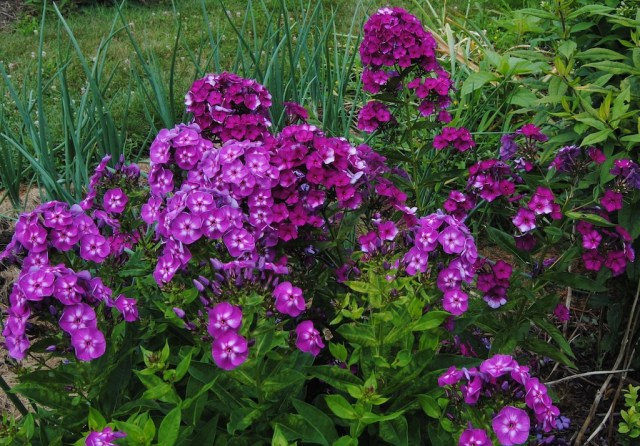
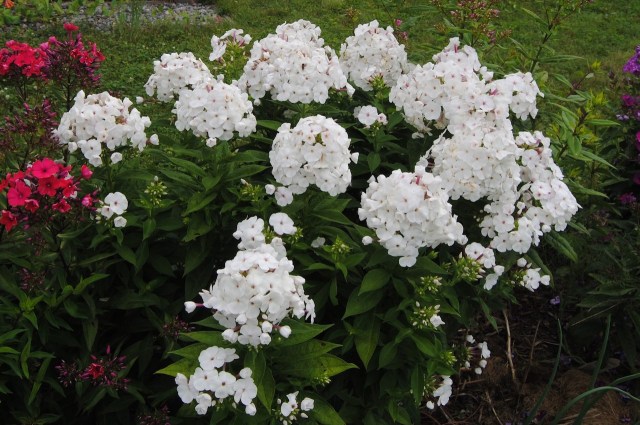
I’m kind of a snob with other plants but not with phlox.  Having named phlox is great for knowing what you have (and not buying the same plant twice!) but it doesn’t guarantee a nice plant in the garden.  I think this white is great, but it’s just a stray seedling that came up a couple years ago.  It’s about three feet tall and although pure white is always perfect, I like the way this one has small dots of red at the bloom center and a reddish blush on each bloom stem. garden phlox paniculata

I took this picture yesterday when the clump really hit full bloom.garden phlox paniculata
This one I don’t know the name for,  I think it might be “starfire” but can’t say for sure.  The color is great (if you like the reds!) and I like how the foliage and stems have a darker tint to them.  It’s a little floppy though….. garden phlox paniculata

I need more of the clear pinks.  Here is “Bright Eyes” which I got just last fall, it came as a rootbound 4″ potted plant and will probably need one more growing season before it takes off.  I love the packed flower heads but they tend to hold onto dead flowers.  “Franz Schubert” is just starting to the left.  It’s another one in need of more settling in time.garden phlox paniculata

This white seedling may still earn itself a spot in the phlox bed.  It’s a short early blooming seedling which opens with a pink flush and later fades to pure white.  We’ll see if it gets moved in the fall…..garden phlox paniculataPhlox do well in pretty much the same conditions as any other garden flower.  Even moisture, fertile soil, sun to light shade and you should be able to make them happy.  In the spring I do nothing more than cut the old stems down and then come summer the only other thing I do is admire the flowers.  For many gardeners powdery mildew is a problem, and I wish I had some brilliant solution but I don’t.  Mildew is just not much of a problem in my yard, probably because it’s a real open, breezy location near the top of a hill.  The air movement likely helps but I can’t say for sure since as we speak the monarda plants are covered in mildew and they’re just a few feet away.

My most annoying phlox growing problem is the spider mite attacks.  They build up under the leaves and suck and suck until the leaves start to look speckled and yellow.  Spraying the undersides of the leaves seems to help wash them away but the best defense seems to be consistent moisture and plenty of compost and fertilizer.  Dry spring weather, warm breezes (which keeps away the mildew) and stressed plants seem to just call the mites in from all around.

Another problem I’ve had (which made me leave all the phlox behind the last time I moved) are eelworms.  They’re tiny worms which live in the stems and buds of infected plants.  They cause the stems to distort and ruin the nice big flower heads of a healthy plant.  The only solution I’ve heard of is to grow new plants from root cuttings, destroy all the old ones and find a new spot to grow phlox….. or move.

I just want to end by saying I need more phlox.  I think I’ve kind of run through all the local sources and have what most mailorder sources offer, but I know there are more great phlox out there!  I may have found a source at Perennial Pleasures, a Vermont nursery that specializes in heirloom plants and also has dozens of phlox varieties available.  I’ve heard good things about them and it’s very likely an autumn order will show up at my doorstep.


History in the Garden

Using the term history around here is a bit of a stretch.  History to me means centuries, not the fifty or so years that have passed since our house was built.  Fifty puts us into the outdated category as far as baby blue bathroom themes go, but it doesn’t exactly put us on the historical register.  The garden is even younger.  Fifty years ago five trees were planted, they did well but four were removed just before we bought the place…. and for fifty years the lawn was mown.  So I guess we have one pink dogwood, antique grass and not much else.

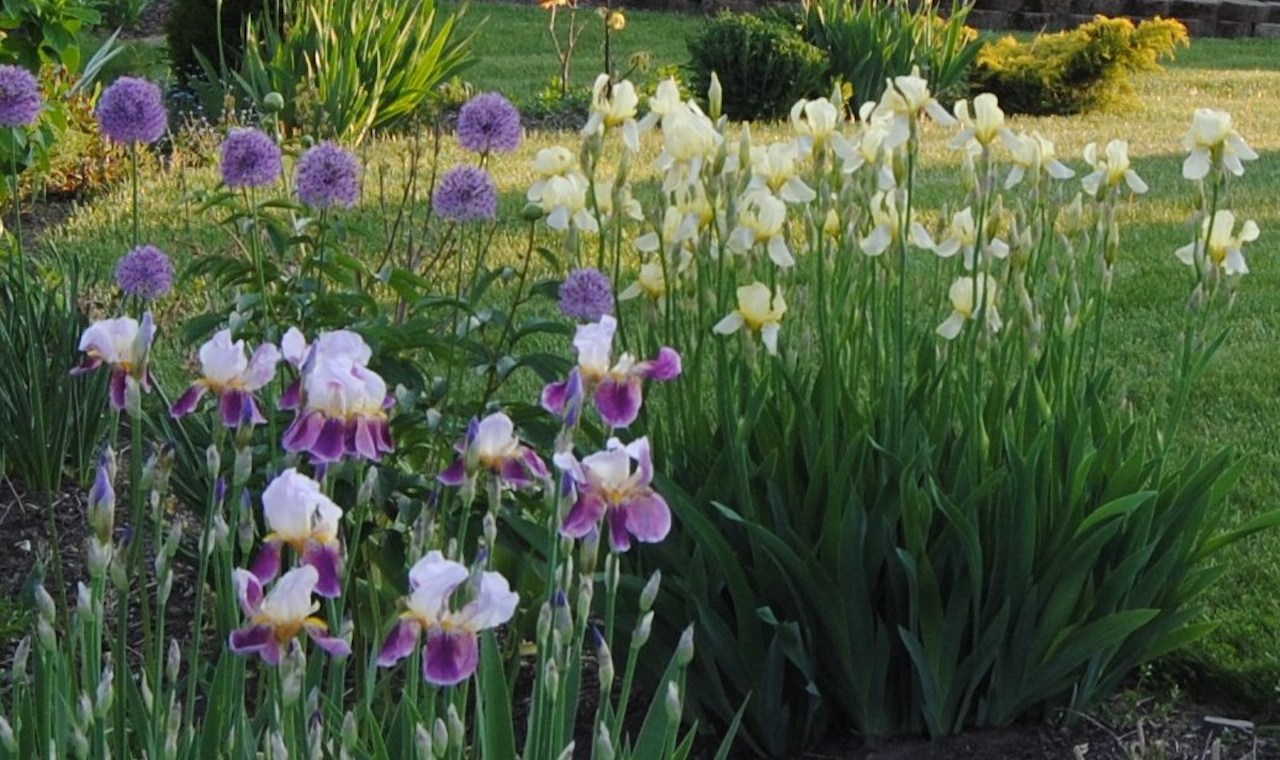
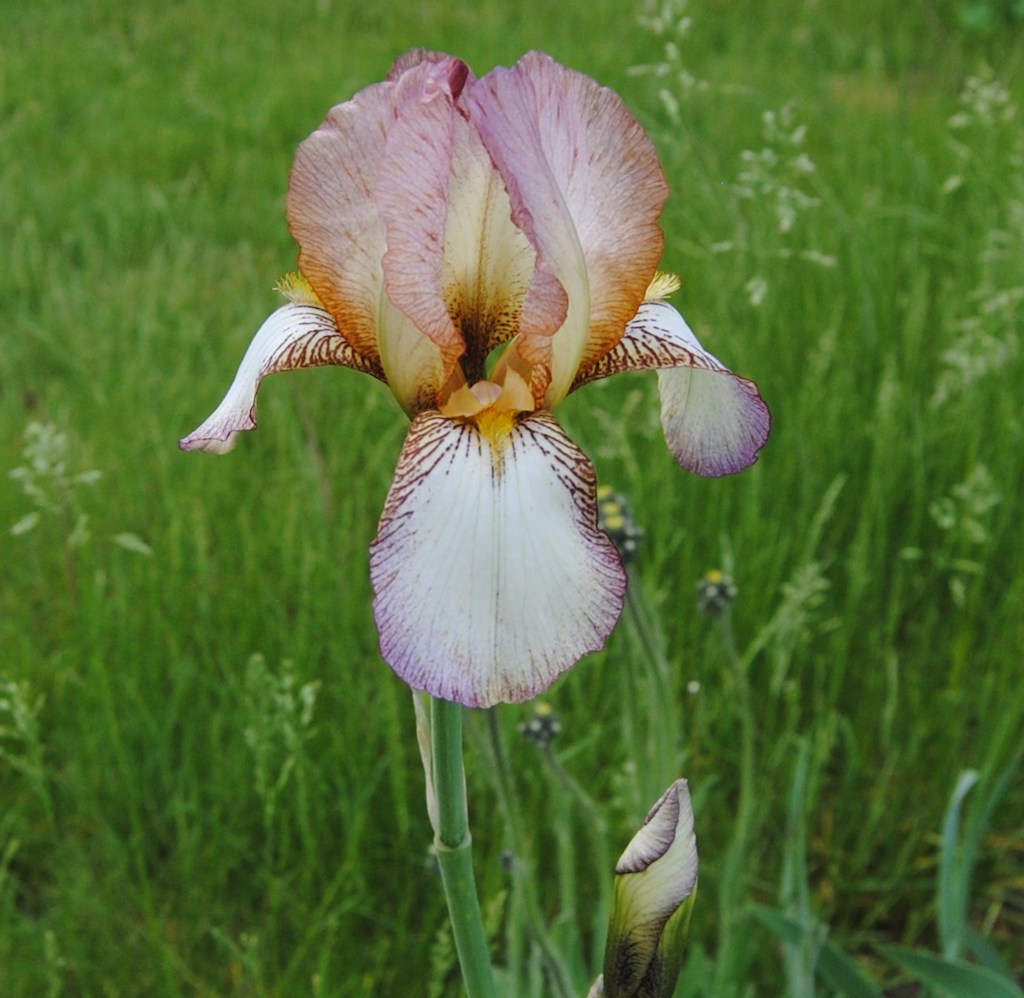
Since I can’t afford timeless stone walks and weathered brick walls I settle for the history behind plants.  In my opinion plants with a story behind them are worth growing just for that.  Passalong plants are those which are passed on from gardener to gardener and generation to generation.  “My grandmother gave it to me” vs “I bought it at Home Depot” I guess.  Iris pass on easy, and some of the historic iris even followed the settlers west as they looked for familiar plants to fill their farmyard gardens.  Maybe that’s what I was thinking when I brought these up from the old garden to plant out by the street.iris flavescens folkwang

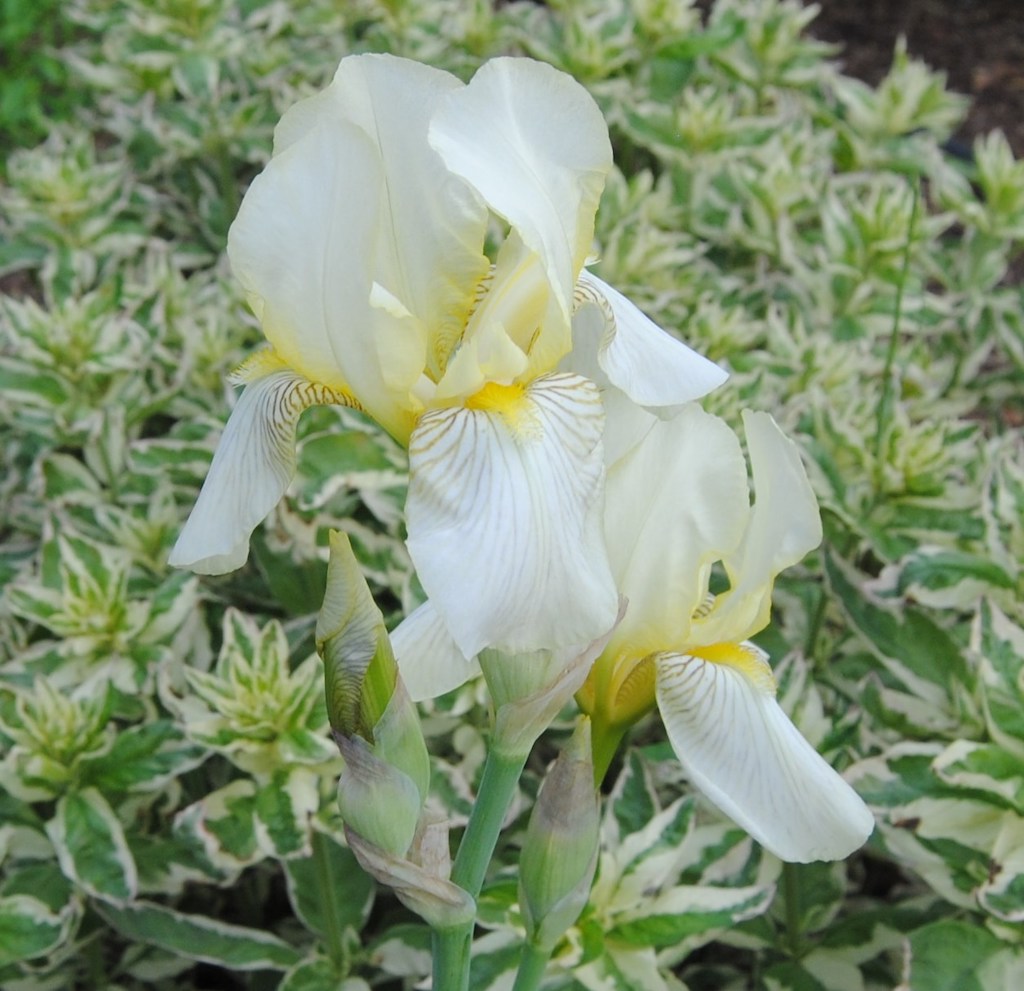
iris flavescensThe pale yellow is “flavescens” which dates to 1813 and is indestructible.  Mine comes from the side of a highway and survives drought, mowing, weeds, salt…. but does much better in the garden.  Sometimes it gets beaten down by relentless gale strength winds (such as we had last weekend) but it always blooms, blooms long, and keeps decent foliage all season.

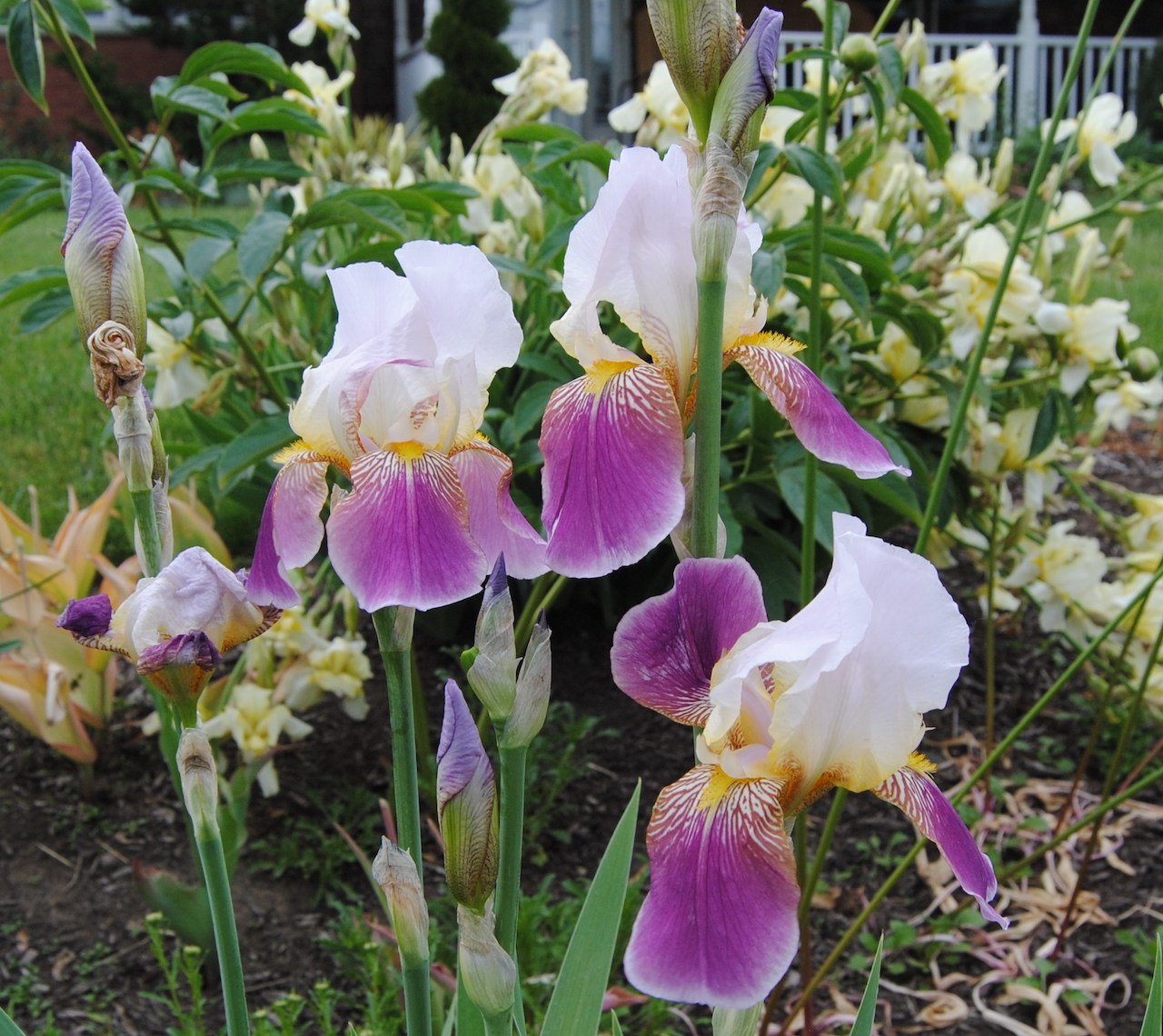
iris folkwangThe other iris, a mauve/violet with white standards (the top part) is from my mother’s garden.  It’s been there since they bought the house 40ish years ago and is a favorite.  Like many historic iris it has a strong grape scent which fills the yard (you can see the windblown flavescens in the background).

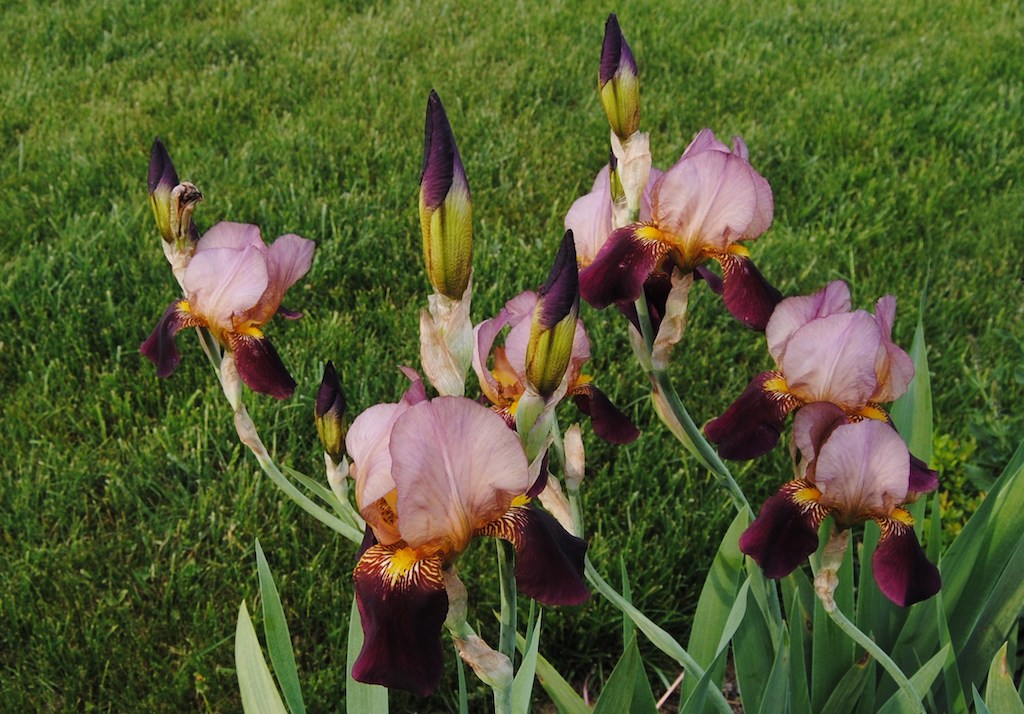
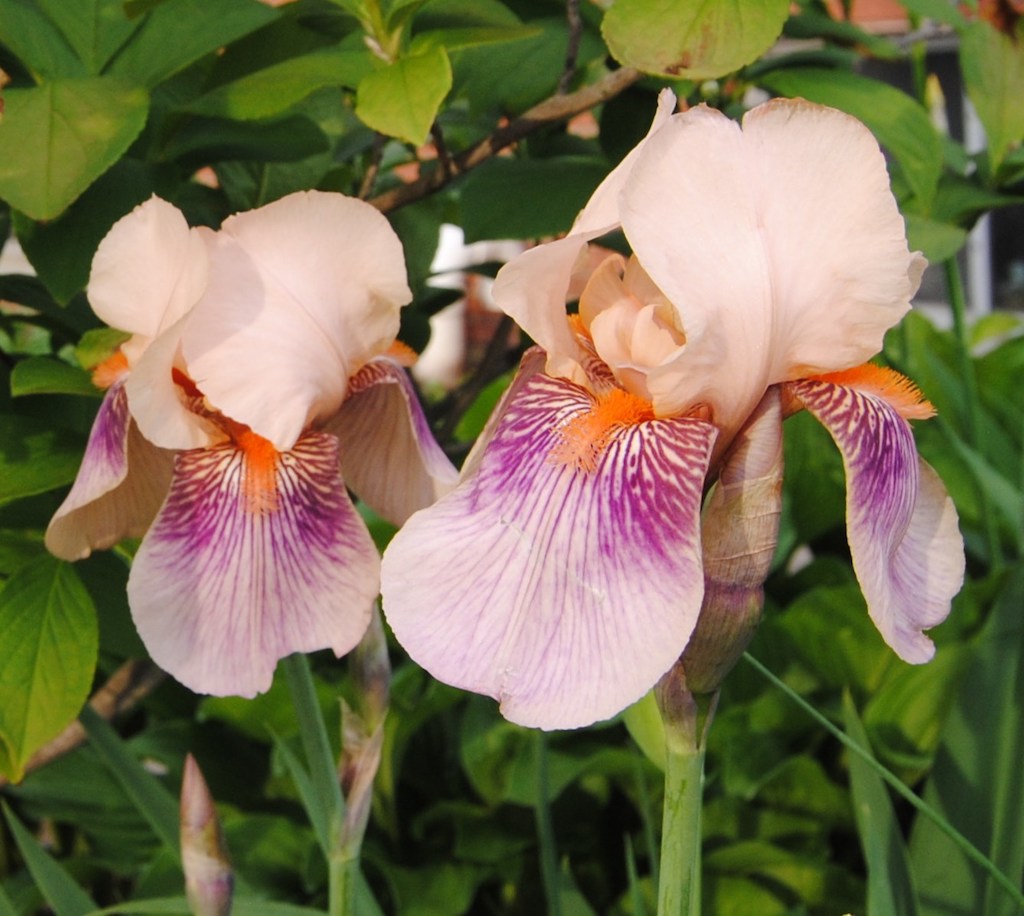
“Indian Chief” 1929, was given to me by a friend and is also out there.  It’s a well-known historic and shows up in cemeteries around here frequently since it welcomes neglect.  I sometimes find the darker ‘smokier?’ colored iris hard to show off in the garden and this is one of them.  If anyone has any suggestions on combining them I’d love to hear it.iris indian chiefiris color carnival“Color Carnival” 1949 is not a favorite of everyone.  I would describe it as a fleshy pink with purple veins and a tangerine beard.  My descriptions don’t always match the catalogs.

This batch came up when I used some not completely done compost in this bed.  A year of composting and the roots still made a comeback, not bad.

I got this iris as a kid.  It was growing in our neighbor’s yard against the wood fence.  Rather than outright ask for a bit I patiently pried apart the boards enough so that a single fan could grow through.  A year it did and at that point I felt comfortable digging it up and calling it my own.  It’s been following me around ever since.

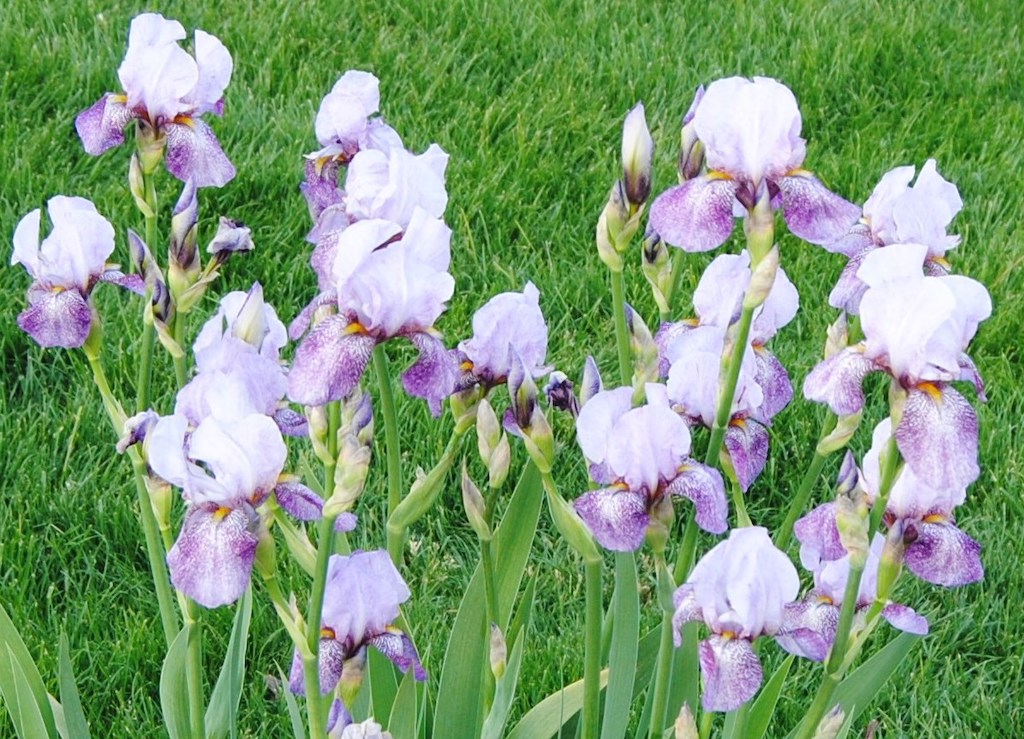
“Rhages” 1934 was purchased.  No story.  It’s reliable and I like the speckling.  In iris talk the speckling around the petal edges is called plicata, sounds fancier that way.iris rhages

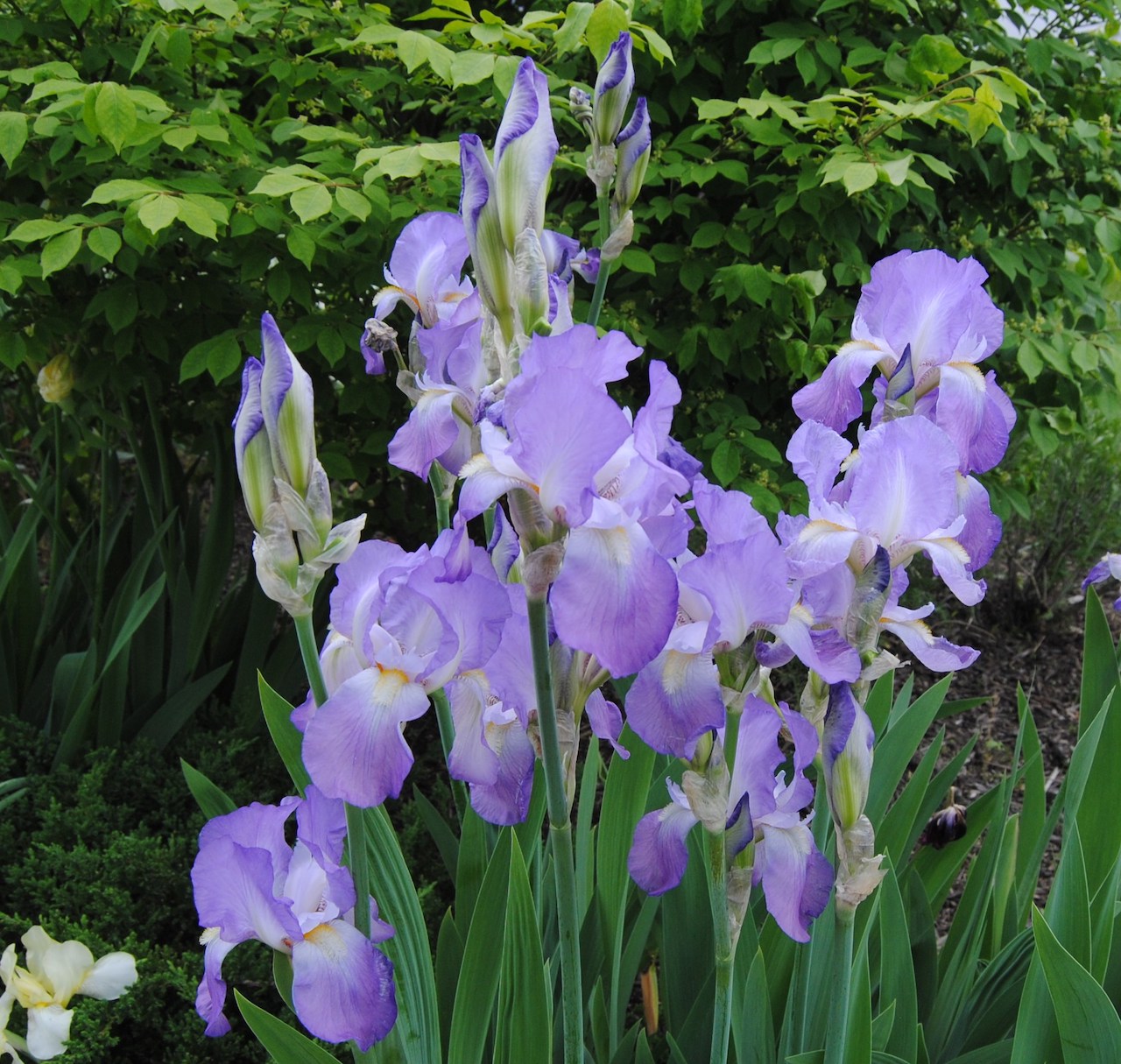
Of course iris do blues best of all.  This no ID comes from the same highway roadside as flavescens and is just as hardy.  Flowers aren’t too big or too ruffled or too deeply colored, they’re just clear and elegant.historic iris

I guess that’s plenty of iris.  One last one is “Mme Chobaut” 1916 it’s growing out back in the meadow and could use a decent home.  Maybe this year. iris mme chobaut

In case you’re interested in older iris there’s HIPS, the historic iris preservation society.  It’s a great resource for info and for getting in touch with other old-iris lovers.  Members have an iris database to browse and a forum to post to.  There’s also an annual sale and quarterly magazine. 

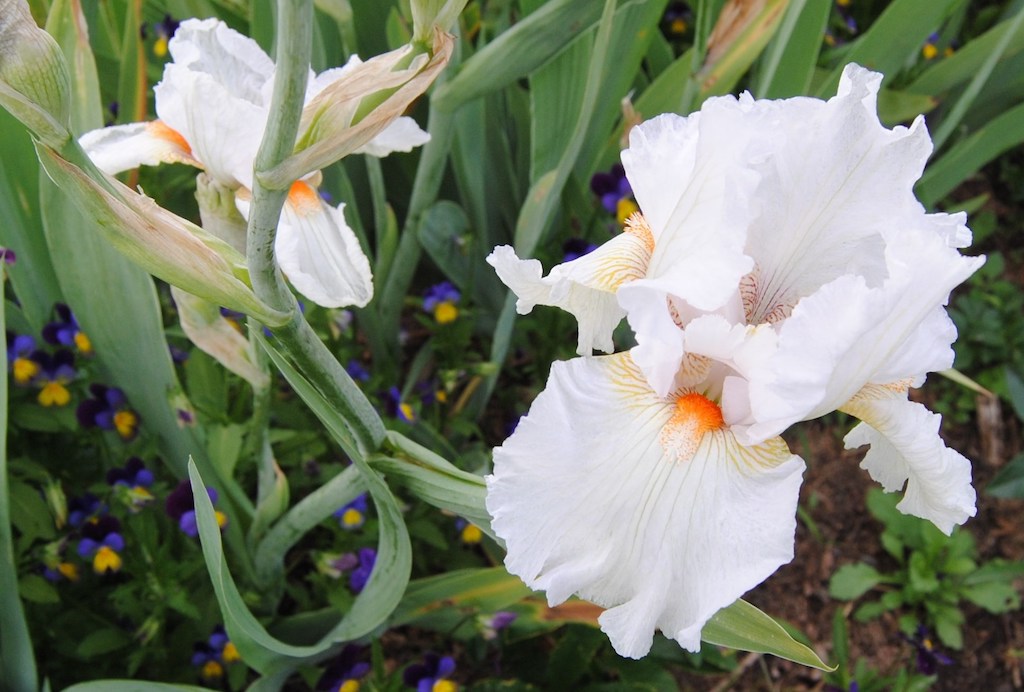
I could easily be convinced to grow more of the modern iris, some of them are just amazing in their ruffled fluffery and colors, but I resist.  For now I’ll stick with the tried and true.  Plus this year the late freeze has killed most of their blooms.  Here’s an iris traded to me as “mesmerizer”, but it’s not.  Maybe it’s “Nordica”, another white but with orange beards. iris snowbank

The one bloom looks ok but the other is stunted.  The freeze also damaged leaves and killed off most of the other stalks.  Such is gardening.  It’s like baseball, there’s always next year…. even though you hate to lose.

Late Freeze

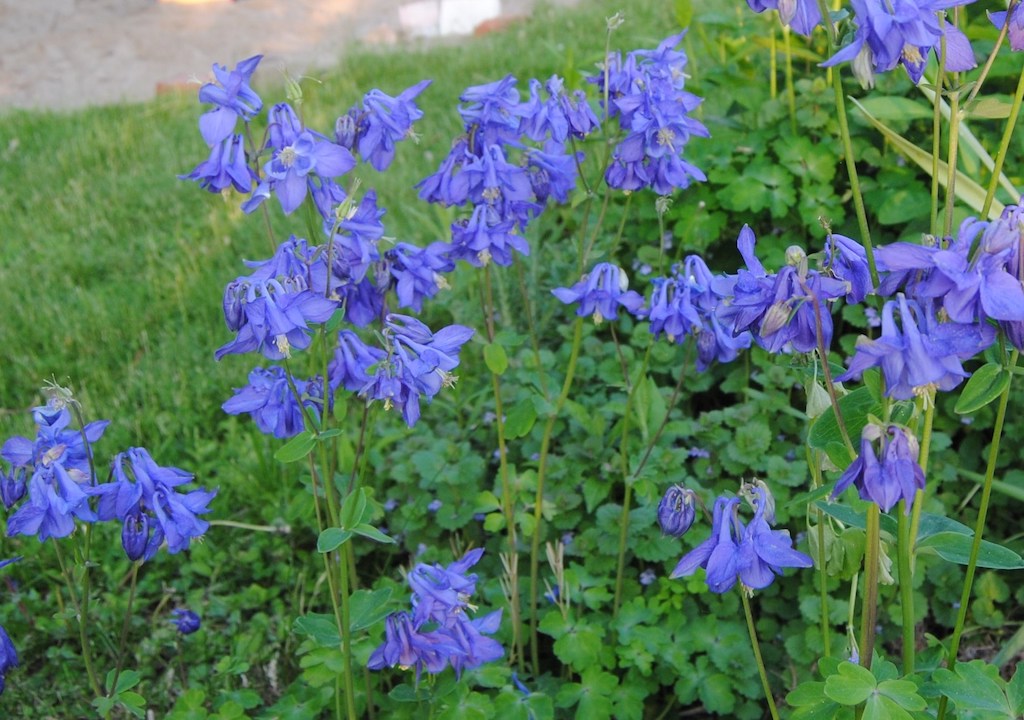
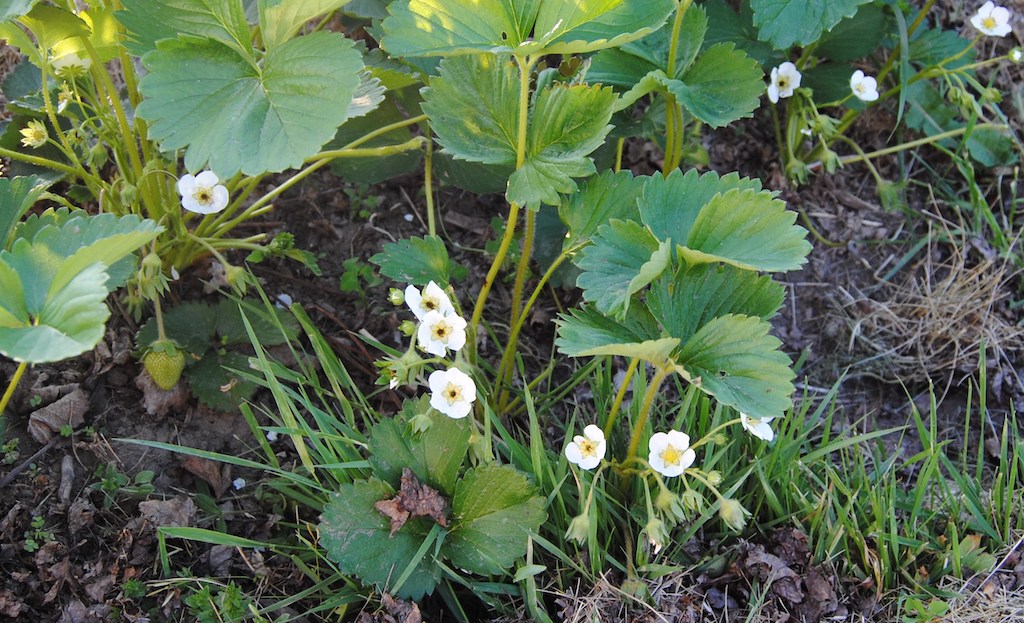
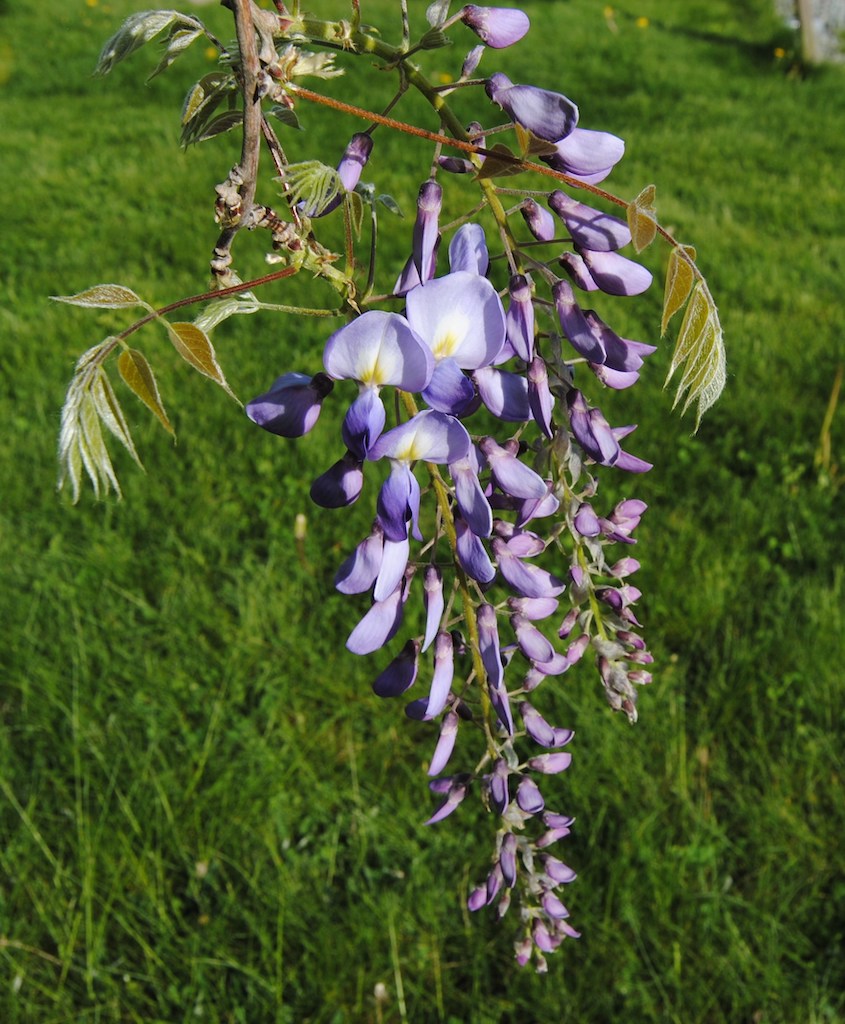
A little over a week ago snow and rain and then freezing nighttime temperatures hit this part of Pennsylvania.  Plants were frozen solid and frost covered the lawns in the wee hours of the night until the sun finally came out again to warm things up.  There was damage to many things, but even a week later things are still showing up.  Luckily these blue columbines didn’t miss a beat. aquilegia vulgaris blueStrawberries also looked good on the surface, but closer in you’ll see black centers to some of the blooms.  I think the freeze killed off the berry part of the bloom while the flower was developing.  Good thing there are more coming.freeze damage strawberrywisteria flowerThe wisteria was getting ready for a great show, a good recovery from last years freak freeze that killed all of 2012’s bloom.  Then this freeze came and did the same thing all over again.  Here’s how it looks today, most leaves are dead and damaged and the blooms have all fallen off.
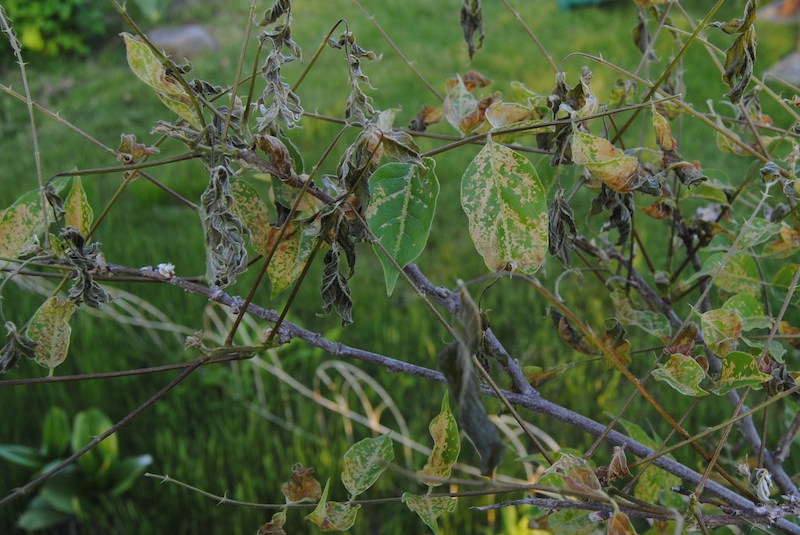
freeze damage wisteriaEven with the damage on most shrubs and trees, I have no doubt they’ll all make a full recovery (the aggressive wisteria for sure).  The dried and damaged leaves won’t look good for weeks and maybe all season, but if it’s not a freeze ruining perfection it would be chewing bugs or children with golf clubs or something worse.

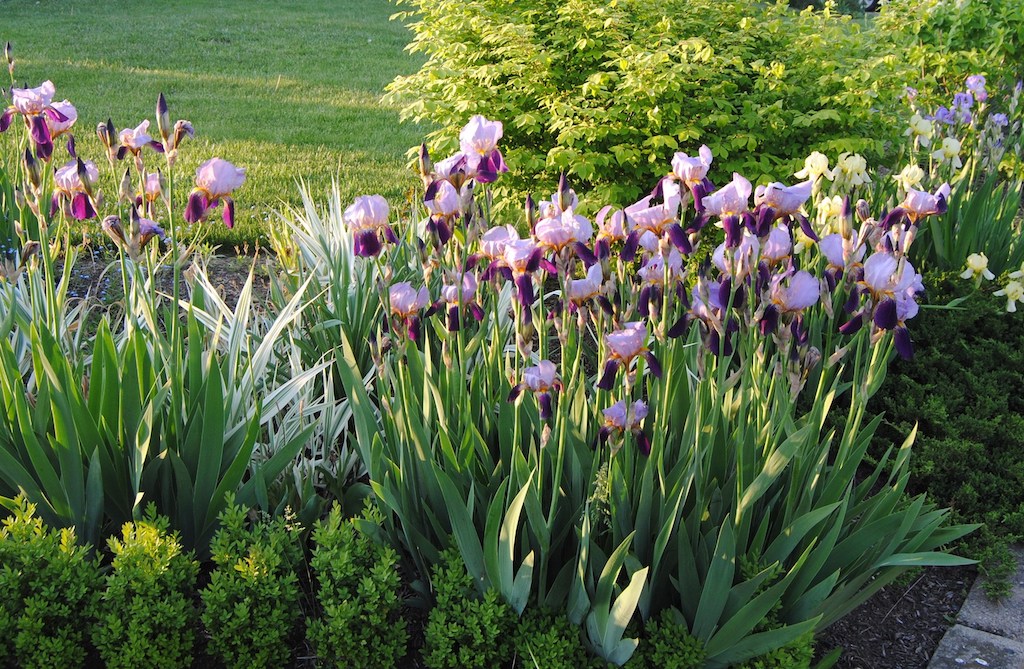
Enough about the freeze.  How can you think badly of spring when it’s the start of iris season?  Down along the street the historic ‘Ambassadeur’ (1920) is just coming into full bloom.  It’s not a favorite, but grows like a champ and the grape scent perfumes the area.iris ambassadeur

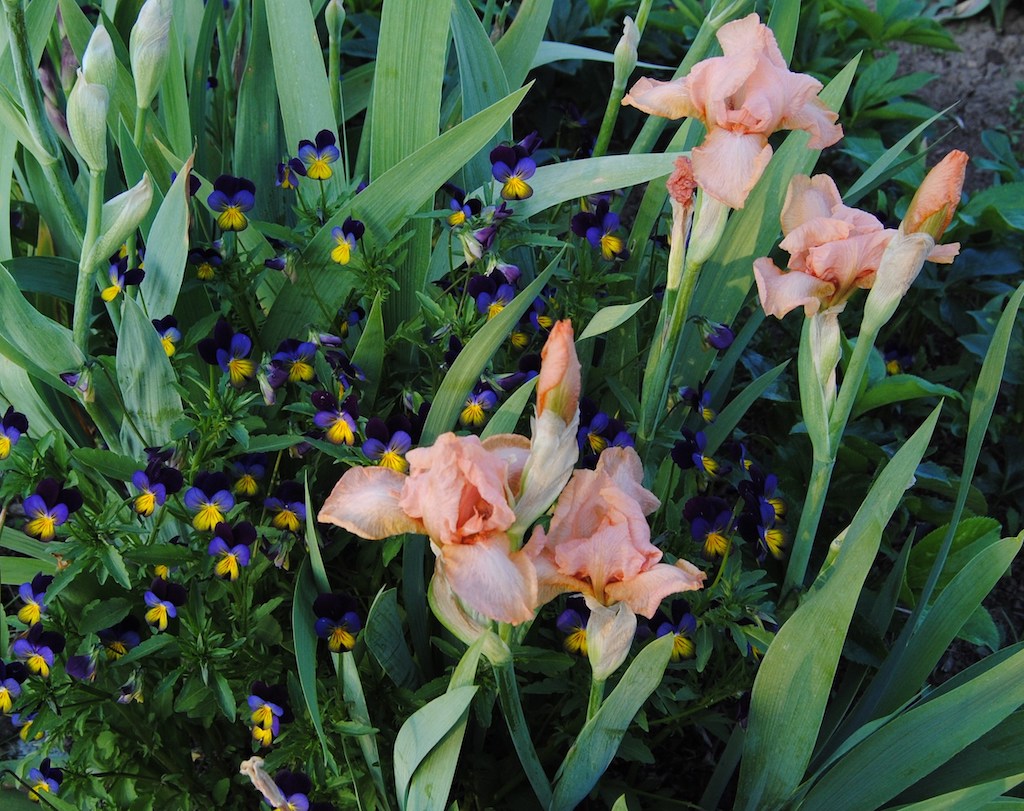
I’ve got to move those boxwood, they were never supposed to stay there.  I have hedging issues and for some reason always have a couple dozen little boxwood cuttings coming along and in need of a spot to call home.  There are projects galore to deal with around here and finding homes for hedges is always one of them.  It seems like such a good idea in August to take a couple dozen cuttings, but when you have a tray of fifty looking for a home guilt kicks in.  Enough guilt.  Here’s more iris.  This is ‘Pink Bubbles’, a more modern iris…. I’m not crazy about it this year but the violas make a nice backdrop.iris pink bubble

Just another day at the salt mines

I can sorta relate to the people looking for low maintenance plants and landscaping.  I for one love being outside, watching things grow, tending plants, dividing, staking, deadheading…. even weeding.  About the only thing I really don’t care for is watering, so when it’s spring and I have a list of projects to work on and halfway through start to think it’s more trouble than it’s worth….. well it might be time to hit the lawnchair with a drink.  In a sick way I sometimes look around at my fellow suburbanites and think their yards look just as good as mine, but then I remember it’s unlikely they have a couple dozen different iris coming along into bloom, and they probably don’t even have any more than one or two snowdrops.  That helps my mood and I go through and finish the day with a smug grin, quite pleased with myself all over again.

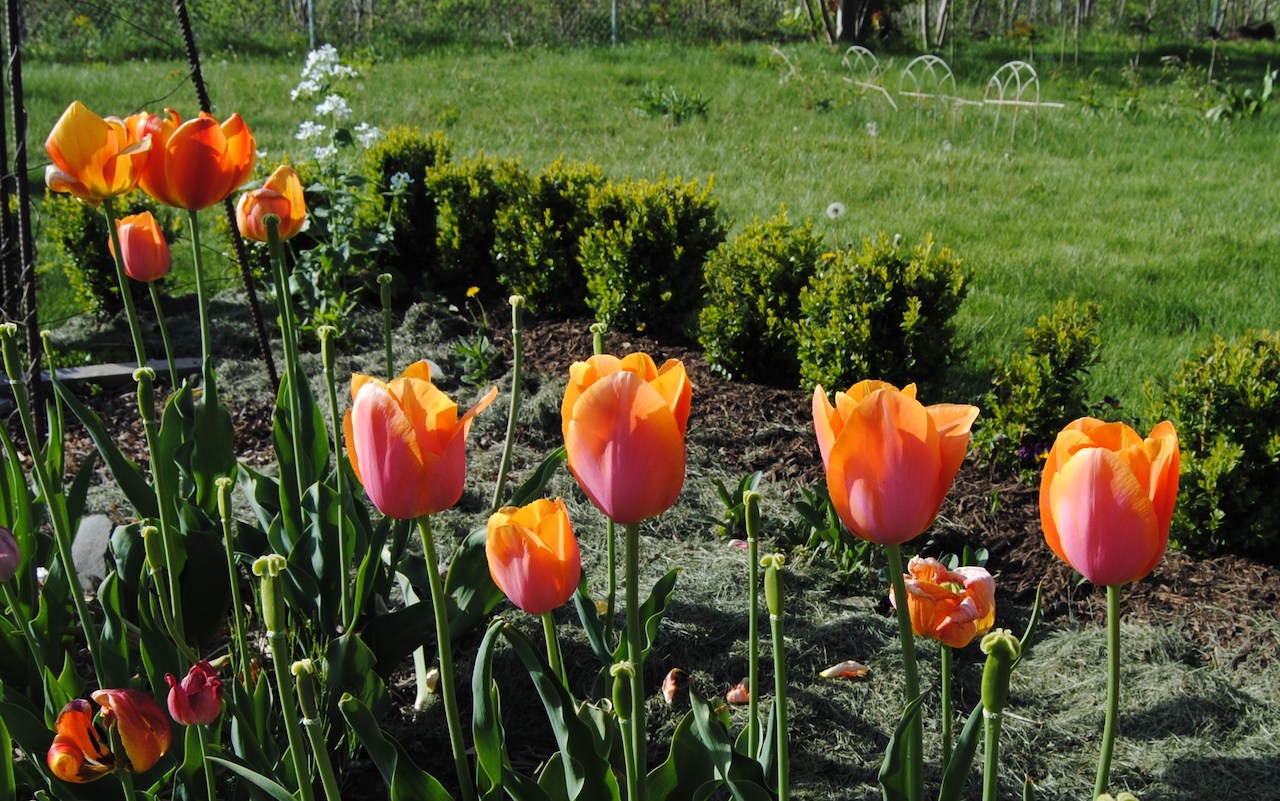
The late tulips are still holding out, these (probably “Dordogne”) mixed in with all the others keep the patch colorful even after the rest are over.  Unless Sunday’s high winds beat them silly, they should last another week.tulip dordogne

I think what beats me down is the lawn maintenance.  If you want to talk high maintenance a lawn is right there on top.  Part of that is my fault, I’m stubborn and insist on using a corded electric mower instead of something bigger, stronger, and faster.  It’s not the most manly mower, but from someone who’s always wandering the yard looking at his flowers….. well, the mower doesn’t help.

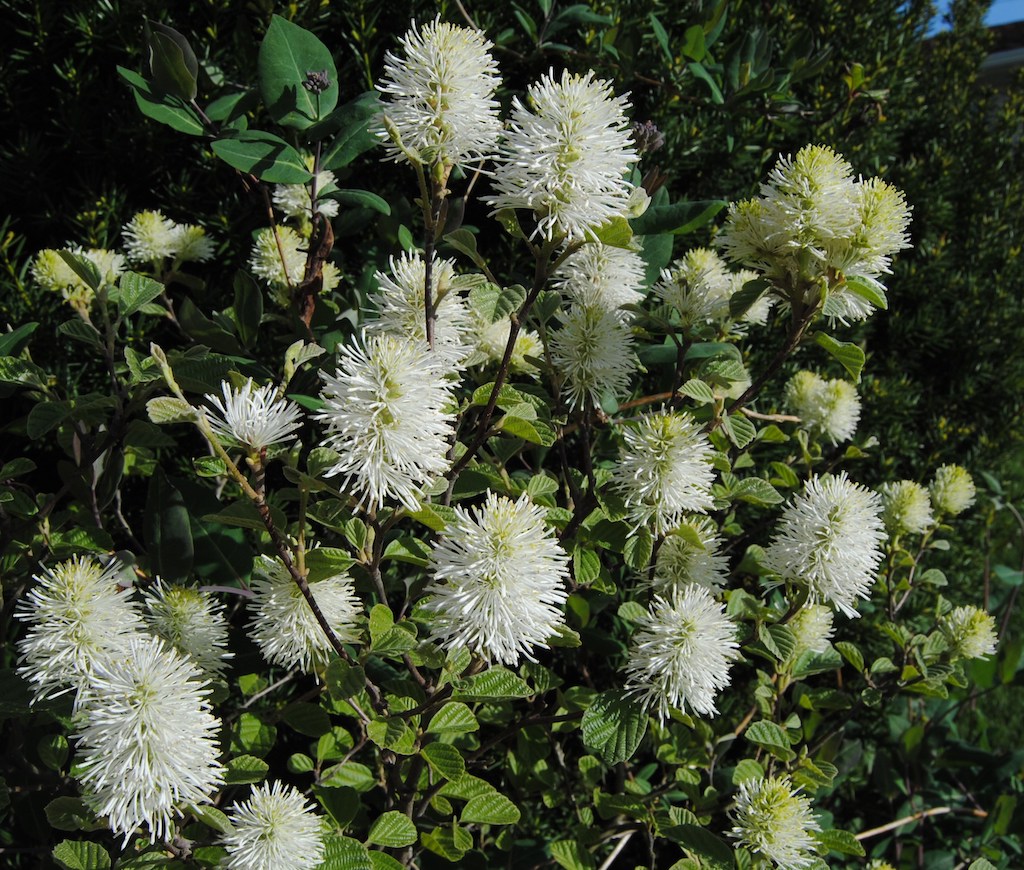
fothergillaSomething that’s mostly no-maintenance is fothergilla.  It doesn’t need pruning, blooms with these nice white bottlebrush flowers, is presentable all summer, and come fall puts on a nice show of glowing reds, yellows and oranges.  The blooms don’t last long for me, somewhere around two weeks, but that’s plenty.  You miss it when it’s gone, which in my opinion is better than a plant that wears out its welcome.

Round around July the lawn starts wearing out its welcome.  Mowing in the heat stinks and I look forward to the summer sun and drought sucking the green out of its blades.  As long as I mow on the long side it just goes dormant, and the summer vacation from mowing is much welcomed, since mowing clearly cuts into pool time.  But right now I need the flush of green clippings since they’re my number one mulch for the vegetable garden.   I use them and some leftover chopped maple leaves to smother the grass and weeds that are buried in this new bed.lasagna bedMost of the weeds and grass will die, and hopefully by the time tomato planting weather rolls around (2 more weeks?) I can carefully dig down to soil level, plant the seedlings, top the bed with new clippings, and admire my avoidance of actually digging up this patch of hardpacked gravely “soil”.

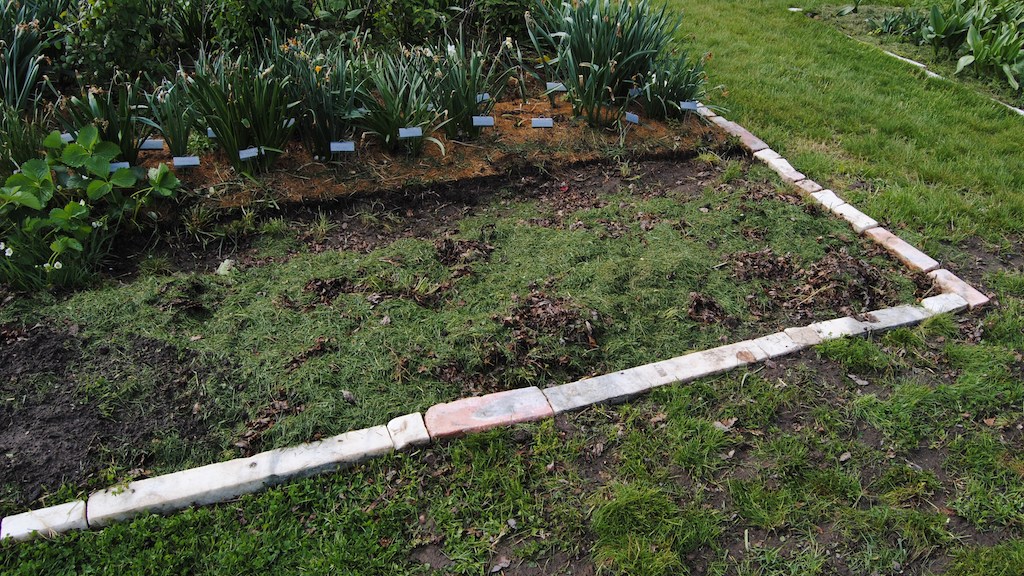
Since I don’t have enough better things to do I actually transplanted some of the grass from the new bed into the former bed-turned-new-pathway (lower right of the picture).  I’m a big sod mover.  I hate waiting for grass seed to sprout.  People will disagree, but I like grass paths through the garden.  If you noticed, mine are edged with fancy pink marble sections.  Some people have compared the look to “deep south cemetery”, but it’s the best use I could think of for the stone we pulled off the house front.  Maybe it’s the second best…. we also have a pink marble compost bin.

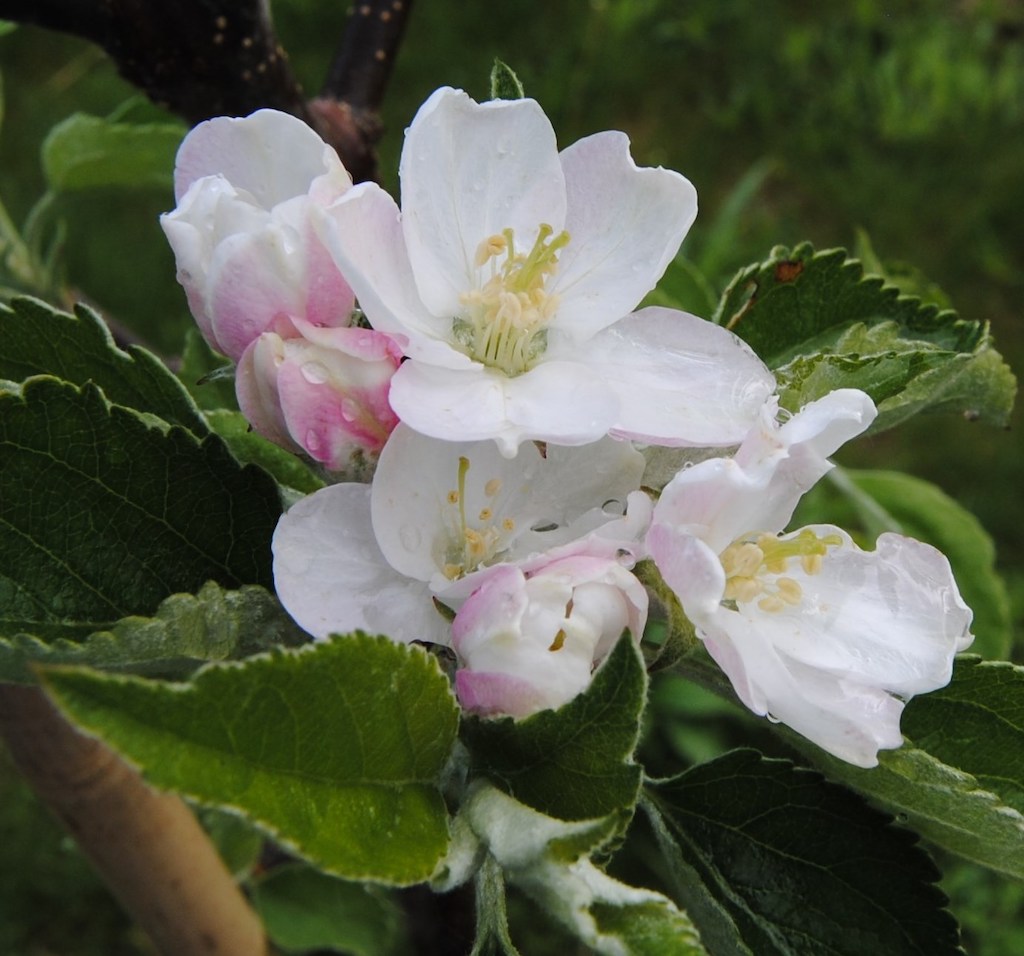
apple blossom In the orchard our new “Freedom” apple has even put out a few blossom clusters.  I should of course nip them off so the tree has more energy to establish, but I don’t care.  For all I know the tree could die tomorrow, so I’ll enjoy the blooms today.

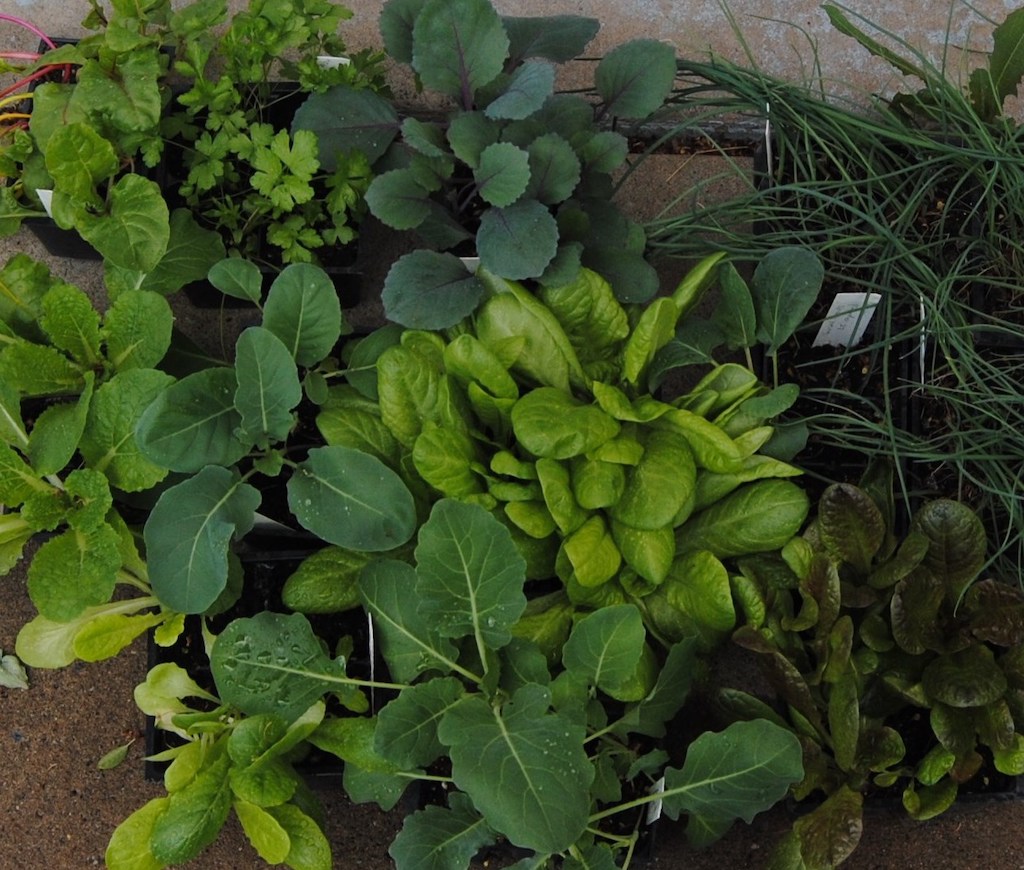
vegetable transplantsSpeaking of dying tomorrow, we have a frost predicted for tonight.  I brought in a few succulents and four or five early summer plant purchases.  The rest of the stuff is on its own.  Planning for low maintenance gardening means not sweating the small stuff like late frosts.  The cold weather veggie seedlings will tough it out (strong sun would damage them more than cool weather).

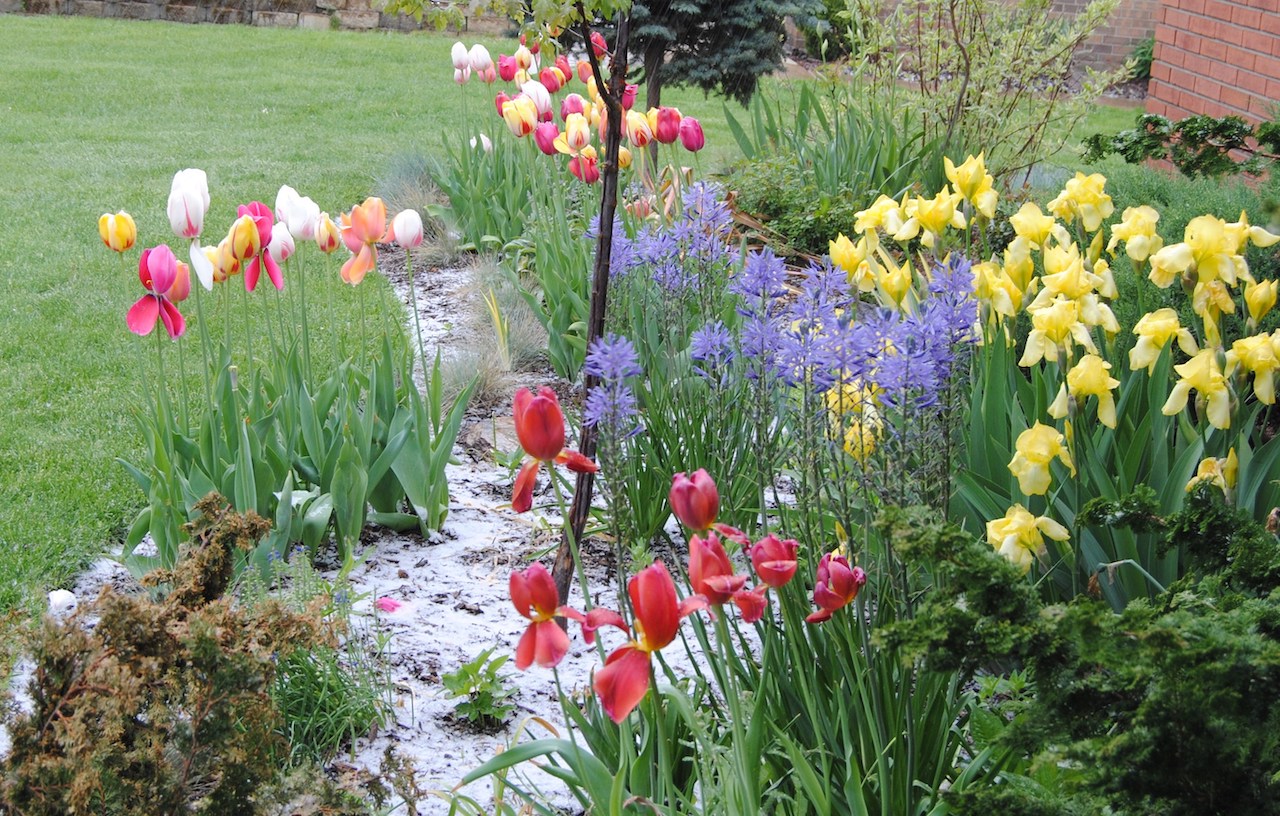
So we will see where the weather takes us.  I figure if the tulips and iris don’t mind this afternoon’s snow, they shouldn’t mind a slight frost.tulips in snow


Snowdrops in the green

Most bulbs are best moved around and transplanted after they’ve yellowed and died back.  The bulbs are dug, dried and stored for a couple of weeks and then replanted again when the proper planting time rolls around.  It’s a convenient way to handle them and most bulbous plants are designed to handle months of dry, hot, dormancy.  Snowdrops are not.  Most snowdrops don’t appreciate drying out, and to get around this quirk the practice of sending snowdrops “in the green” started.  It’s a genteel way of saying you dug them up while growing and transplanted them that way.

My “in the green” snowdrops from The Temple Nursery arrived about a week and a half ago.snowdrops in the green

Snowdrops in the green are dug and sent shortly after bloom or even while still blooming.  I planted them (almost) as soon as I got them and I can’t wait to see them grow and thrive in my garden.  The bulbs look great and are carefully packed in damp sphagnum moss, wrapped in paper towels, hand labeled, bagged in plastic, and shipped priority mail.  Everything about my order said that care was taken and attention was paid to all the details.  Mr Hitch Lyman is the proprietor of The Temple Nursery and is well known for this old-school attention to details.  The catalog is a carefully prepared list out of his own garden, and the list changes from year to year depending on what’s ready for dividing.  There’s no internet presence, and correspondence is hand written.  Based on how fresh my bulbs were I feel his “dug to order” description was entirely accurate.

I didn’t mean for this post to be a gushing waterfall of praise, but I guess I’m excited about my plants.  There are a couple other sources for snowdrops, Brent and Becky sells them dry and is a good source, the three other “in the green” sources I’ve heard about are:  Carolyn’s Shade Garden, Linden Hill Nursery, and Black Hog Farms (couldn’t find a web link… they might only do garden shows etc.).  I also got a batch of dry bulbs from Van Engelen, and they were excellent.

If you want to give the Temple Nursery a try, send a catalog request to: The Temple Nursery, (Mr. Hitch Lyman), Box 591, Trumansburg, NY 14886.  I’ve never heard anything official on this but I sent $4 with the request.  Send it early.  Not only do the snowdrops sell out fast but the catalogs are also limited, so send it out soon!


Tulip Time!

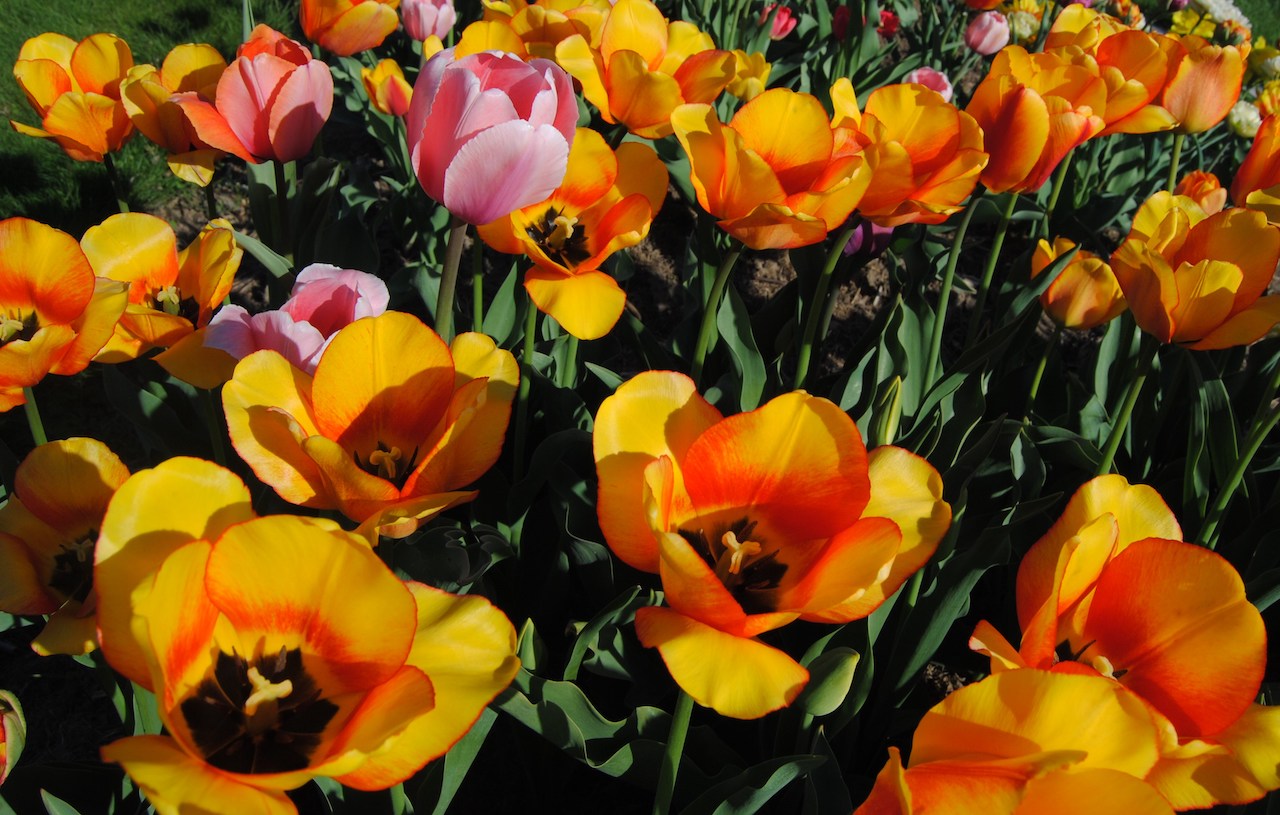
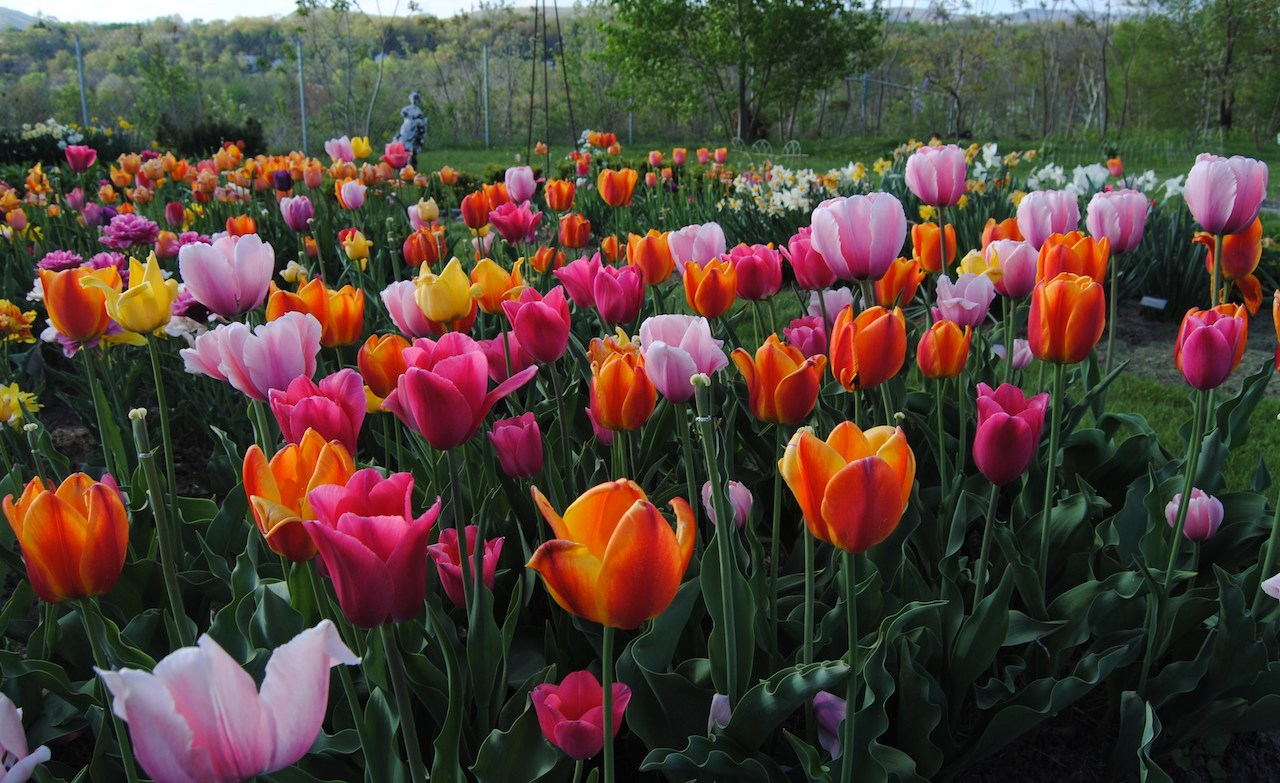
There must be some Dutch in me because I’m a little wacky about tulips.  Not real bad, I don’t collect every kind and have them all over the place (my criteria for plant wackiness), but I’m always adding a few new ones…. and then I feel some kind of urge to tend them and multiply them and replant them.  It should end once this relatively new garden starts to fill up, but for now I can indulge that inner Dutch.

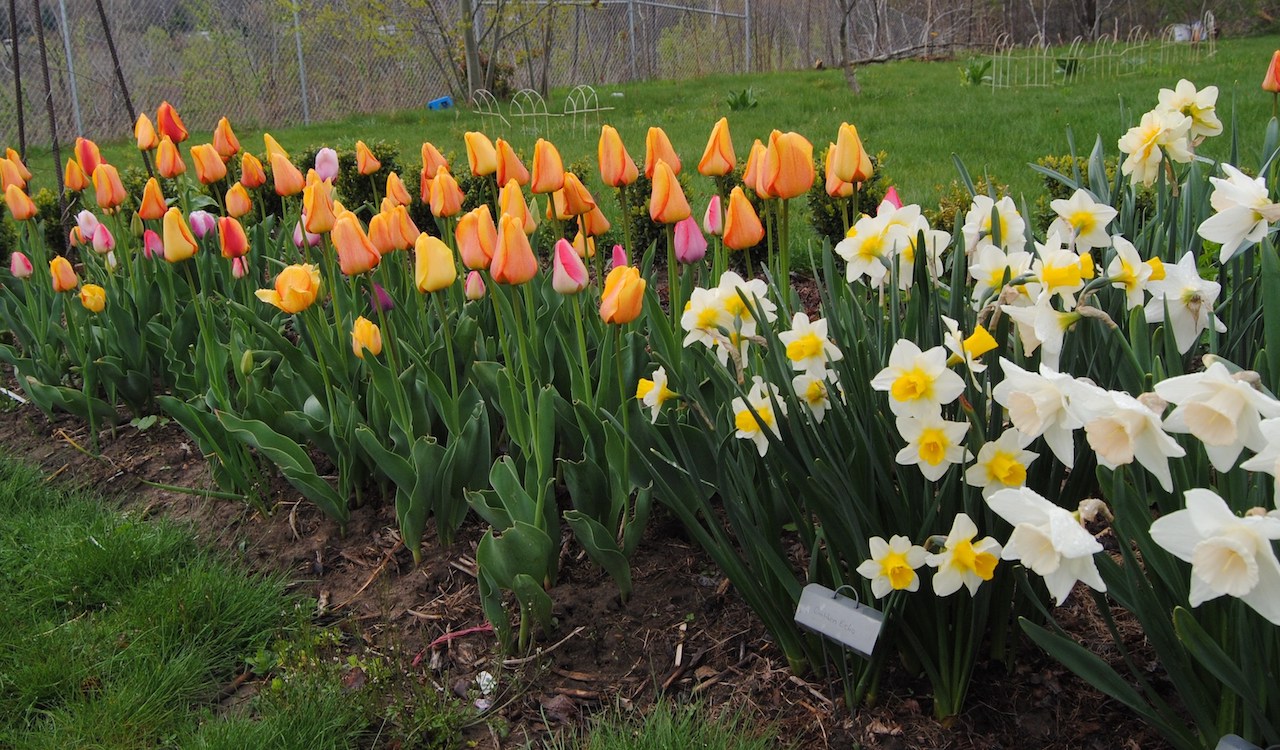
The rain and cold kept them shut for a while, but even then they looked nice (these are pictures from early last week).  Four years ago I bought this blend on clearance as a generic “darwin mix”… it was nearly all orange, so I threw in a couple pinks just beacause I had them.darwin tulips

daffodil geranium

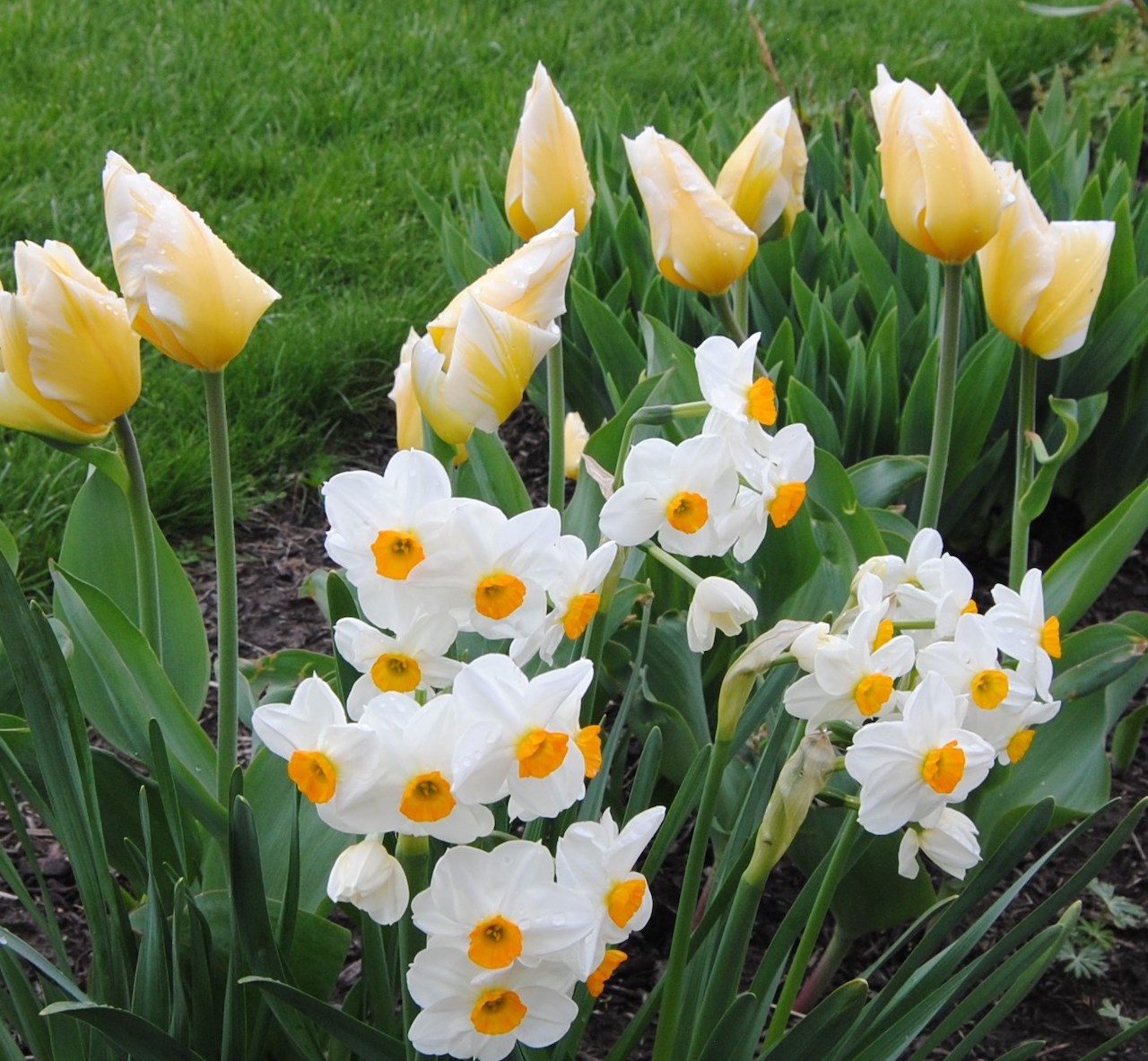
The “sweatheart” tulips were new this year, don’t know why I bought a lemon meringue colored tulip when I have so many daffodils in similar colors…..

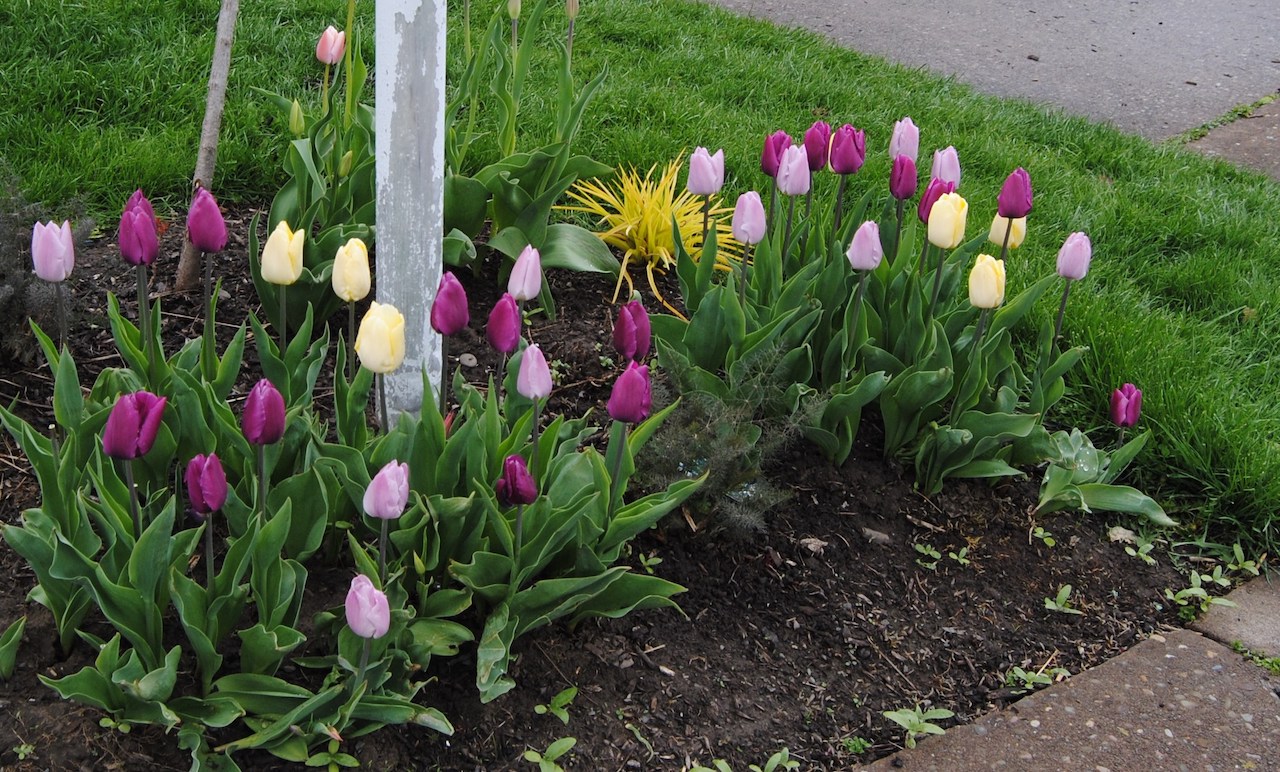
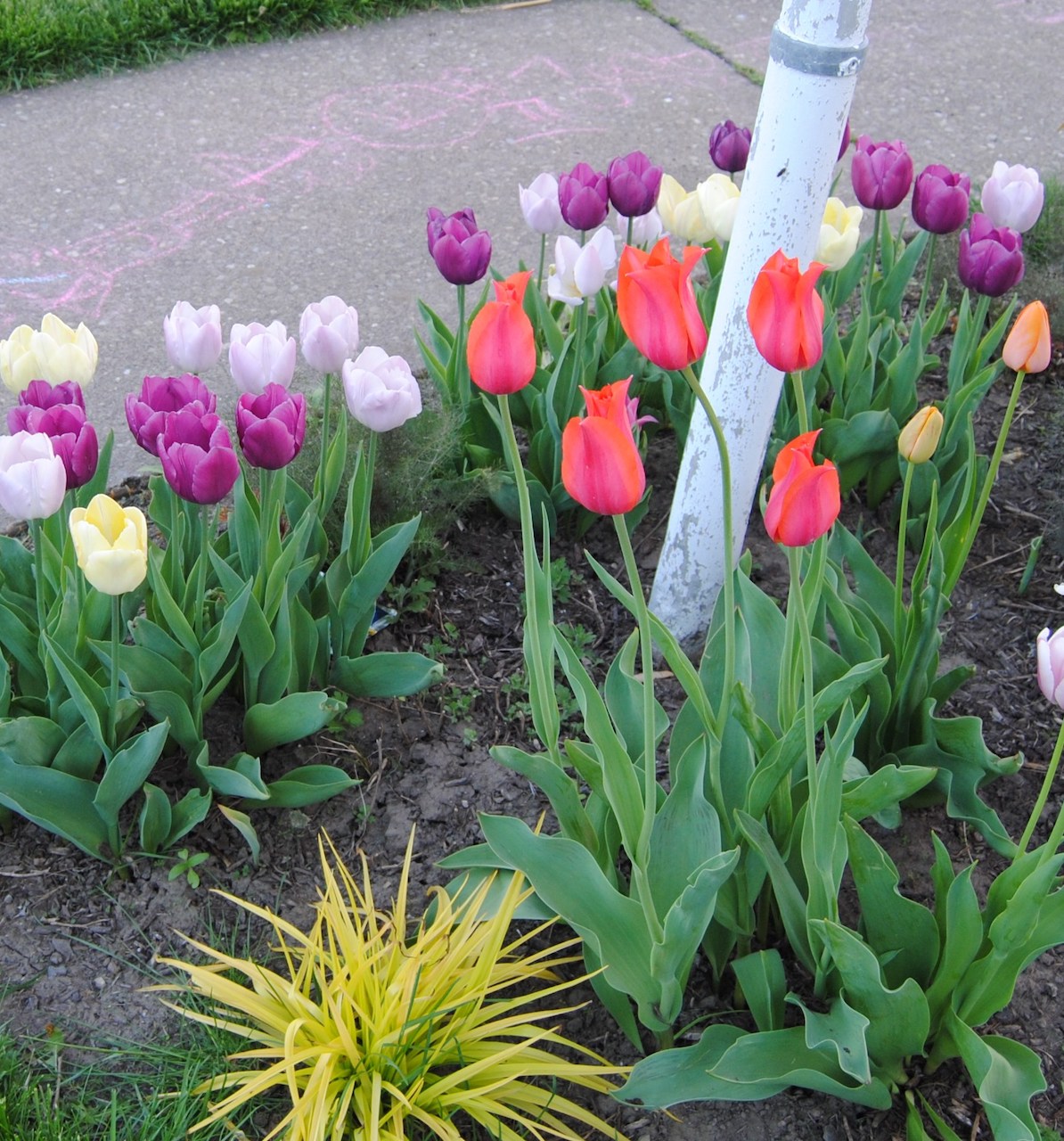
Also new was the “Princely mix” from Van Engelen.  Not sure what’s in it, but again…. on clearance… can’t beat this color for around$15.  Plus I spread the other half of the box around the rest of the beds :)The random white peeling post is our attractive front light.  The less you see of that the better.

tulip princely blend

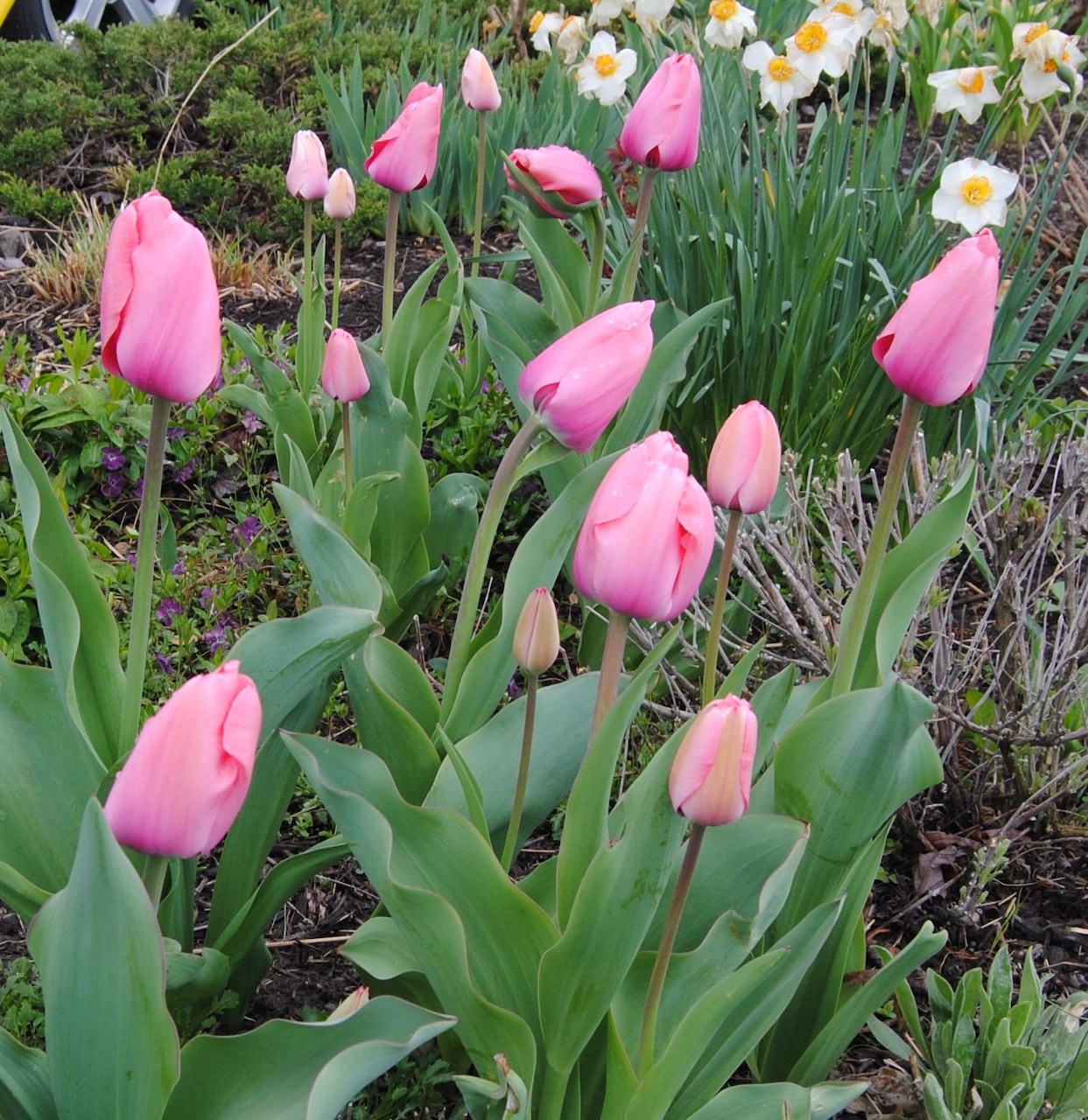
tulip pink impression“Pink Impression” (also new) is always a winner.  I’ve bought it before but have gotten other, similar tulips instead.  This looks to be the real thing  and the flowers are huge!

Tulips will last much longer in cool weather, but when a warm sunny day finally hits (like we had last week) the flowers open wide and you know it’s finally full, head-on spring.darwin tulips

I just go around on days like this and get nothing done.  It’s too tempting to just sit around, enjoy the sun and admire the season.  Since the vegetable garden is the easiest place to plant out your excess tulips, that’s where most end up.  I’ll regret this in a couple of weeks as I’m scratching my head looking for a spot to stick a tomato. darwin tulips

I don’t really cut too many for the house, most of the picking is done by the kids.  A couple end up at grandma’s, some get planted in the mulch, many get pulled apart and thrown, and random neighbors often get deliveries in exchange for an ice pop or cookie.darwin tulips

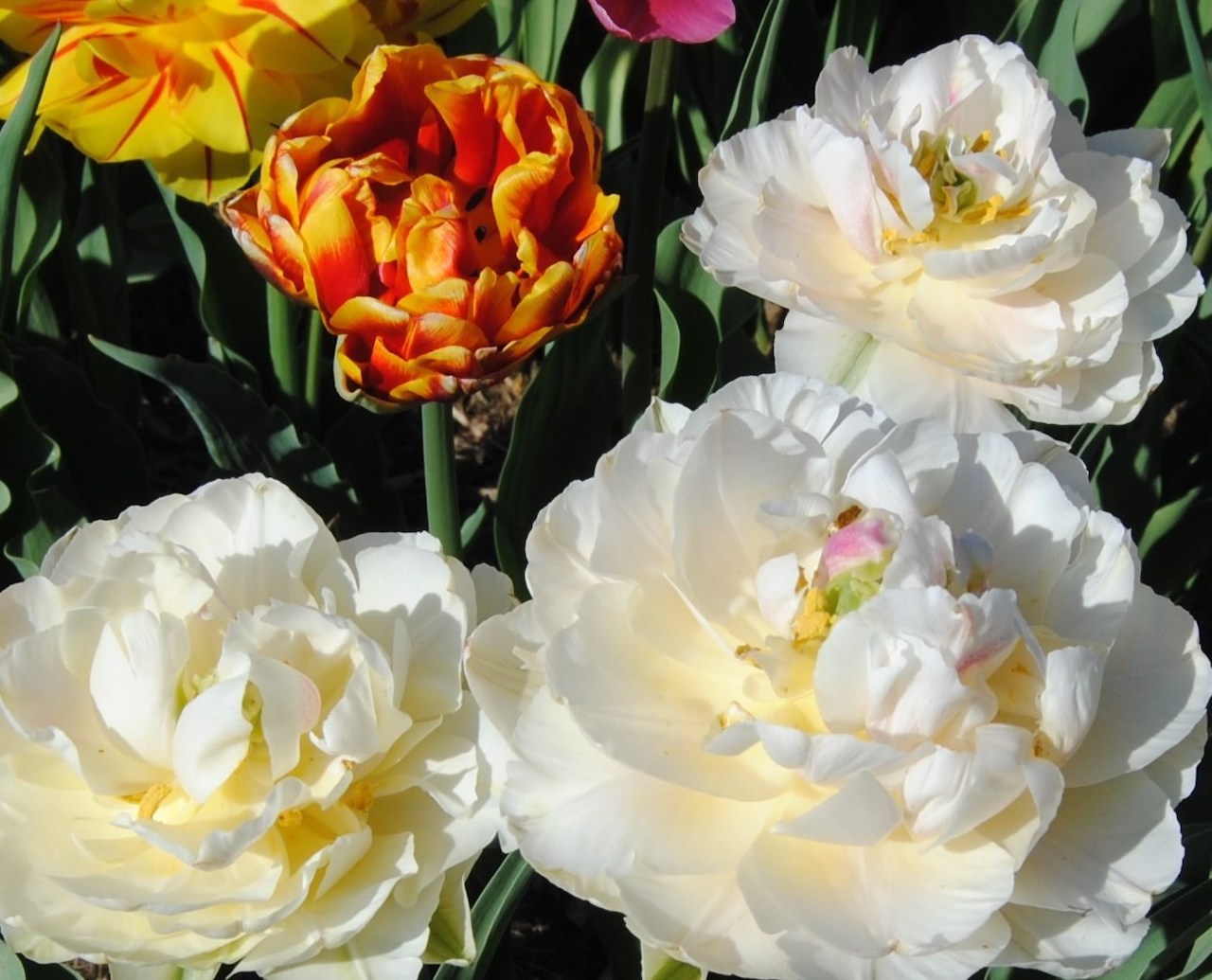
double tulipDaddy sometimes gets a flower, but much of his time is spent protecting the double tulips, since they seem to be particularly attractive to flower collectors.  The doubles have started to grow on me though.  Ever since I bought this mix of early doubles called “magic carpet”, I’m finding an excuse to keep them around (even though the singles are still so much more graceful).  To me the doubles look like huge fluffy wads of tissue paper…. but wow!  that’s some fluff!

temple of beauty tulipsMy favorites might be the ones just coming into bloom now.  The late tulips seem to have the most subtle blends and nicest forms.  If you ignore the color clashes in this planting and just look at the color and almost lily shape of these fruity colored “Temple of Beauty” tulips, I think you might like them a little too, even with the crappy camera focus.


Tulip season is a little past peak now with the earliest ones already going by.  The pickers are still keeping busy and I’ll be busy too when I need to dig them all up out of the veggie garden.  That’s a job for June though,  May is for enjoying flowers.spring dress


The Winter Garden


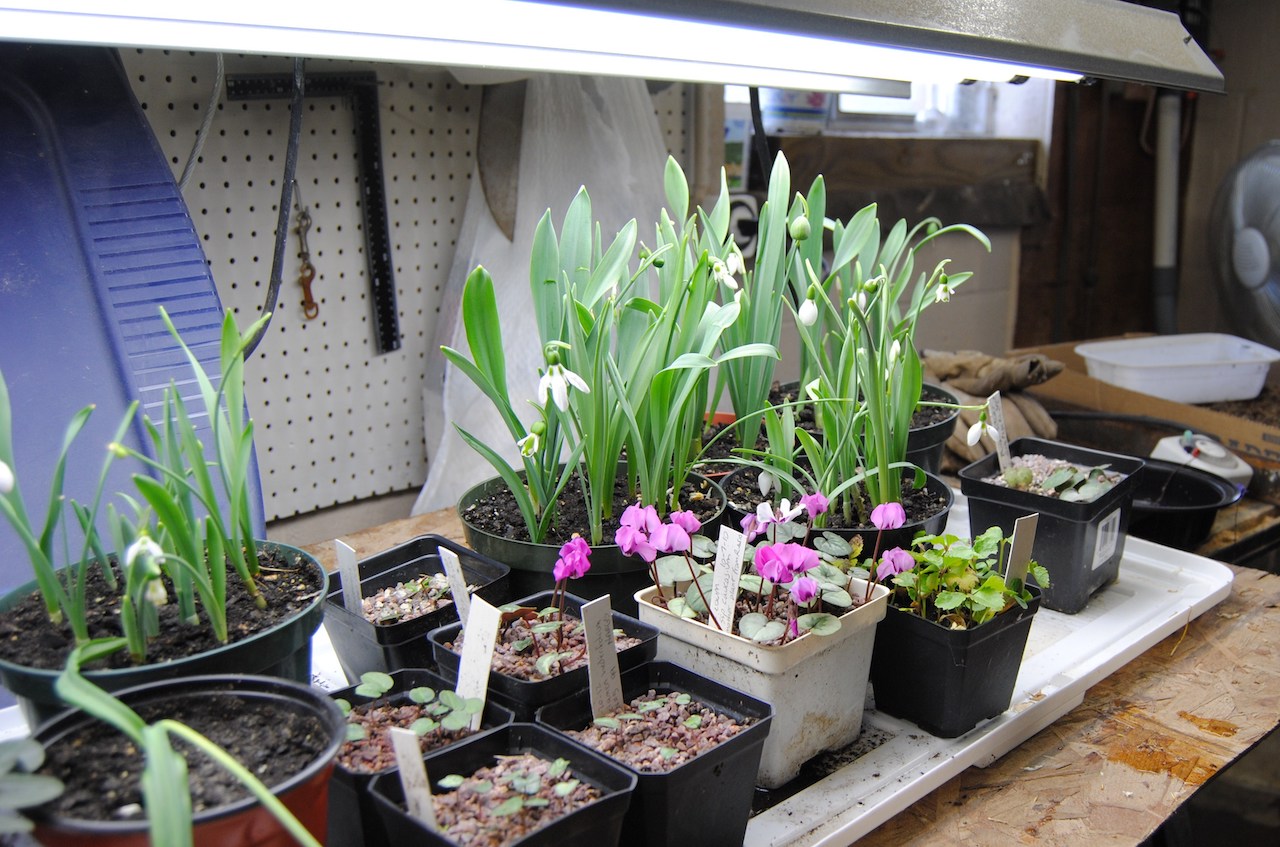
growing under lights

Gardening indoors

A winter garden usually means something a little fancier than my shop light setup that sits in the back part of the garage.  Hellebores, evergreens and snowdrops could fill a corner of an outdoor winter garden, a nice glass conservatory planted with camellias and clivias would be a perfect spot for a January morning cup of coffee,  even a couple southern windows with a flowering lemon tree and a couple amaryllis is nice….. but this is all I’ve got.  It’s better than nothing.

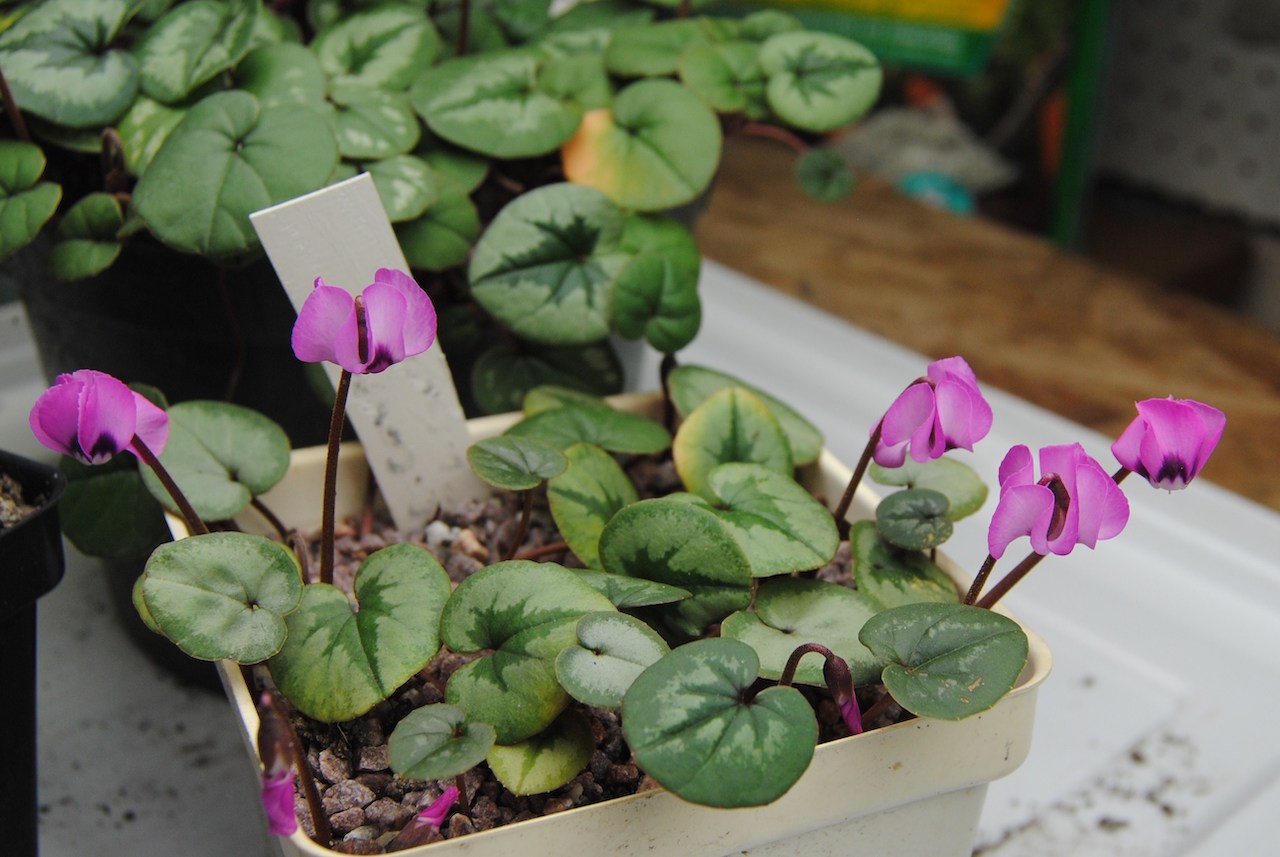
The cyclamens love the cooler temperatures of the garage.  I keep some of my babies here, the ones that I didn’t get around to planting out or ones that I wanted to “keep close” for another year.   Right now the cyclamen coum are blooming.  Here’s one grown from  Green Ice Nursery seed.  The mother plant was collected in Russia, and I think it’s cool that my little plants are only one generation removed from the Russian wilderness.

Cyclamen coum seedling

Last year’s Cyclamen coum seedlings

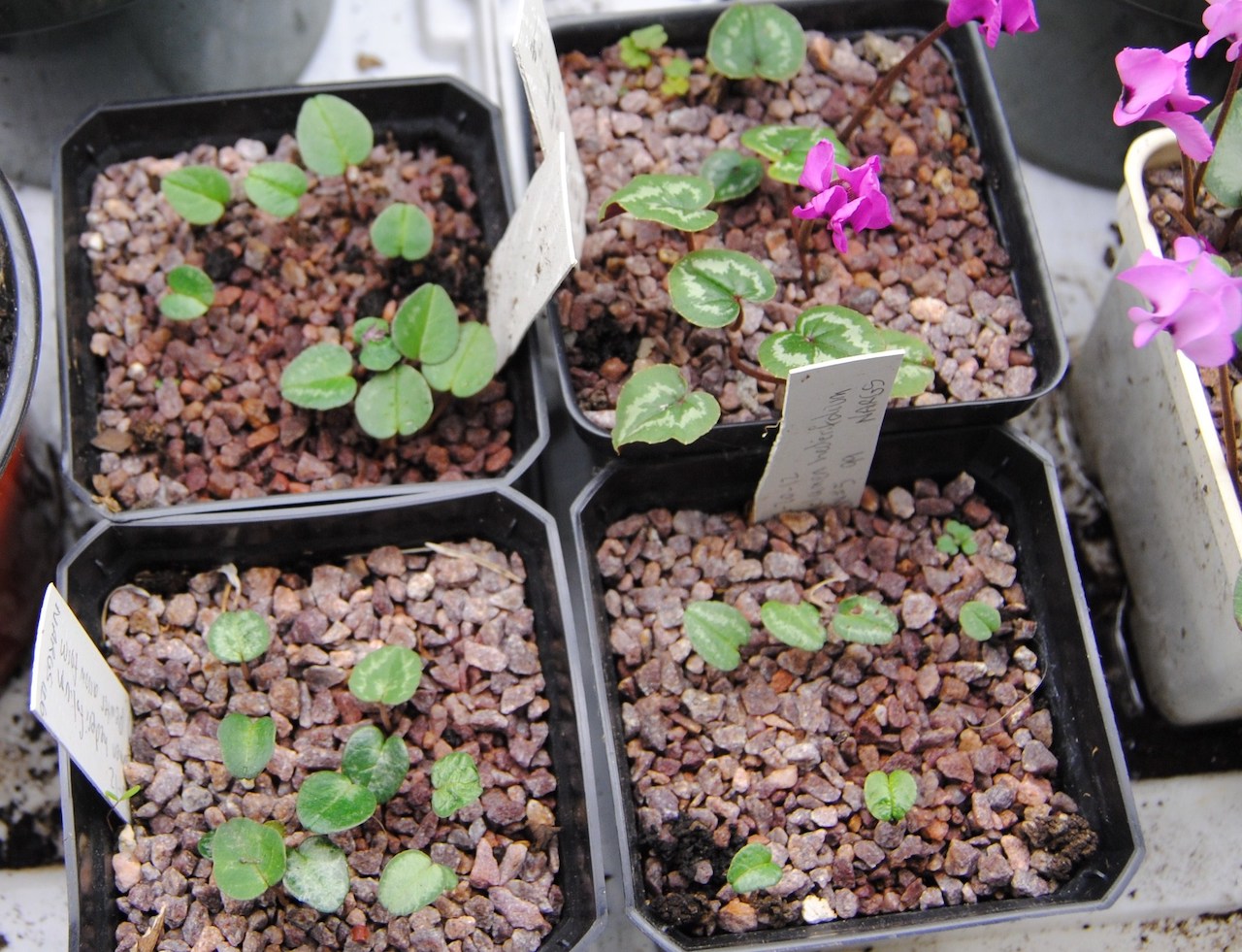
Seedlings for the next generation of Cyclamen hederifolium are also coming along in the winter garden.  They were sown last winter, didn’t get enough of the cold they wanted, sat all summer and then finally sprouted in the fall.  I could have left them outside but they take up barely any space and I can check up on their progress any time I want.

cyclamen coum seedlings

Various hardy cyclamen seedlings