The start of May is always an exciting time because for us it’s that part of spring when everything just explodes into growth. We might be a little behind this year, but you still can’t beat the first of May. The biggie bulbs like daffodils and tulips are taking off now and the front bed has finally been resurrected from its winter drabness.
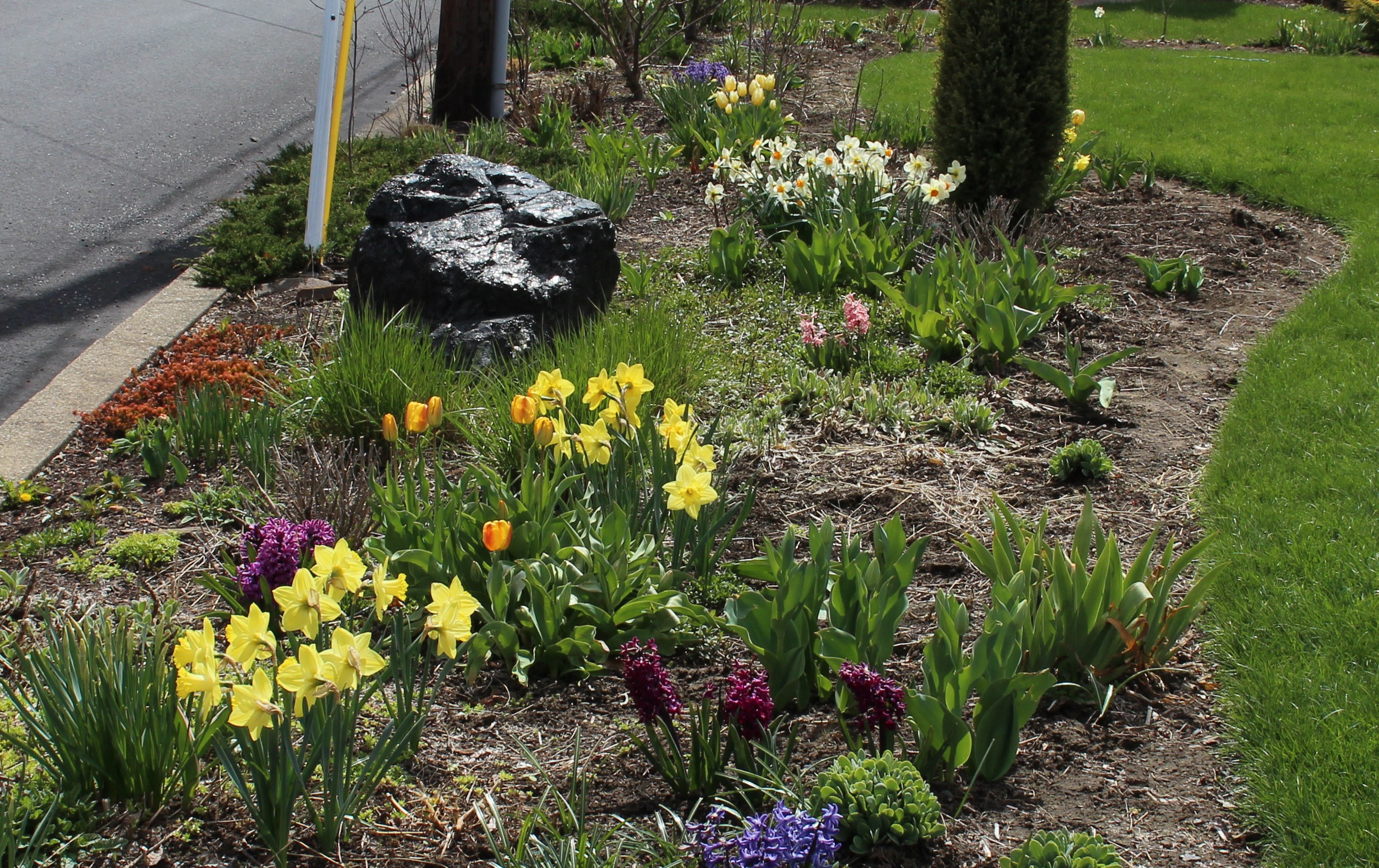
Early daffodils and a few of the first tulips opening up along the front border.
I’m trying to get things moved around while it’s still cool but life always interferes with colds, work, and T ball games so I’m already way behind. Last Saturday all I wanted to do was move seven rooted privet cuttings into place to start a nice little hedge along the back fence, instead it turned into an hour long project and I ended up digging out a good sized boulder. At least I got this magnolia transplanted before it leafed out.

Magnolia in position near the street. I wish I knew the variety but it’s a layered cutting stolen from my brother in Law’s yard….. yes, it needs some pruning.
If I had more land there’s a good chance I’d find room for a number of magnolias. But I don’t, so I try to stick with some of the smaller types… even though a nice big one would make for a good shade garden once you trim it up. Here’s magnolia “Ann”, one of the smaller bush/tree sized ones, finally big enough to bloom after several years of rabbit attacks.

Magnolia “Ann”. A smaller, later blooming cultivar that should grow into a nice sized bush here in front of the fence.

“Little Gem” magnolia still looking worse for wear after the winter.
While on the subject of magnolias, the freezer burned “Little Gem” is still looking sad and brown and dead, but I’m still pretty sure it will recover just fine once warm weather hits. As soon as these brown leaves start to drop off I’ll know the plant is starting to think about putting on new leaves. It will look worse before it gets better, but hopefully by June will look as good as new.
Luckily other parts of the garden look good enough to distract you from the first aid beds. Yellow primrose has clumped up nicely in the damper parts of the yard. In the next few days I’m going to try separating this clump, and hopefully this really is the right time of year to tackle this. My track record on primula is not too good, so wish me luck.
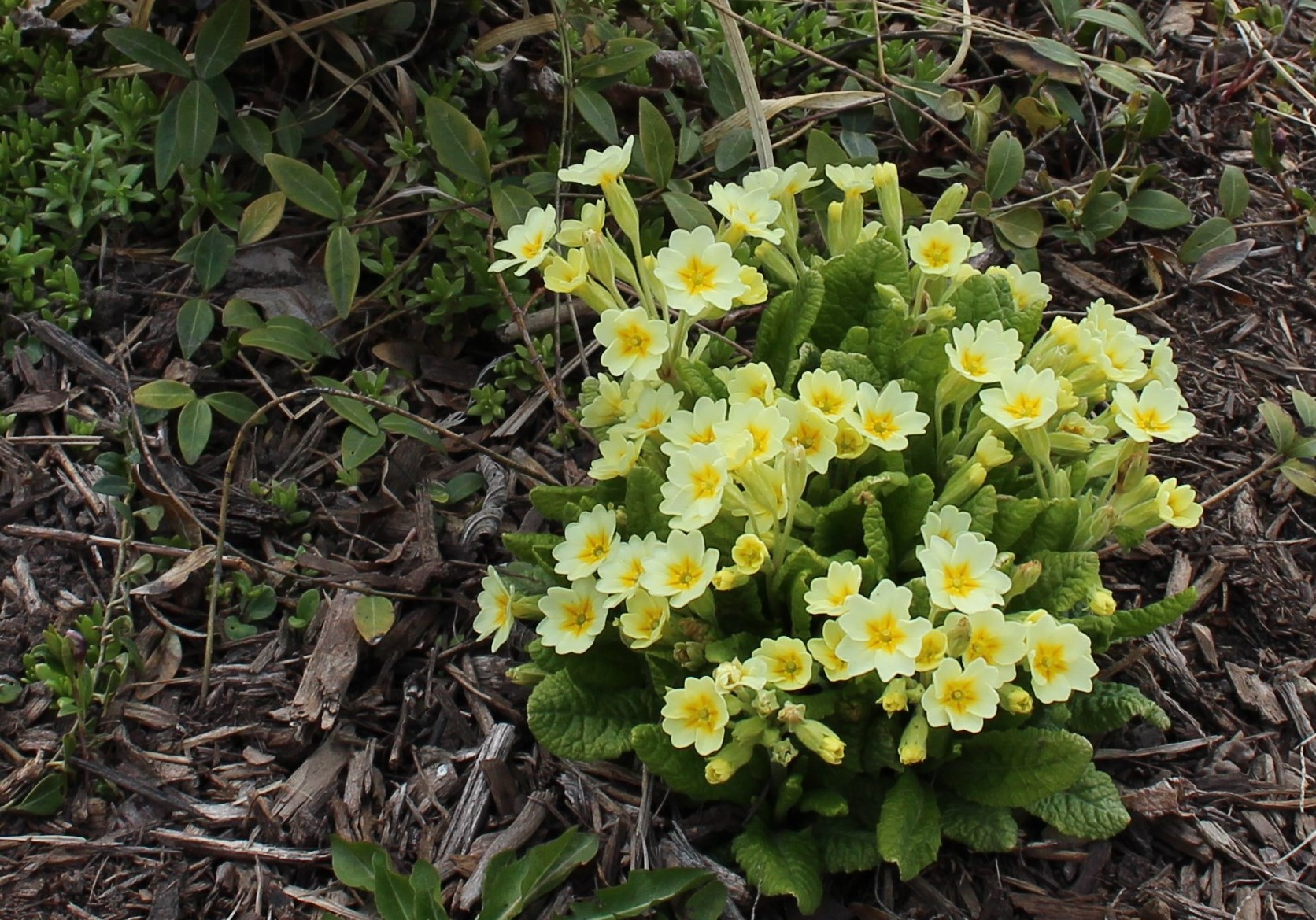
A yellow primrose (primula vulgaris?), one of the few primula to survive any amount of time in my care.
I guess I might as well bore you with a few daffodils too 🙂 I have quite a few and really do need to give them some attention this summer in terms of division and moving and “thinning the herd”.
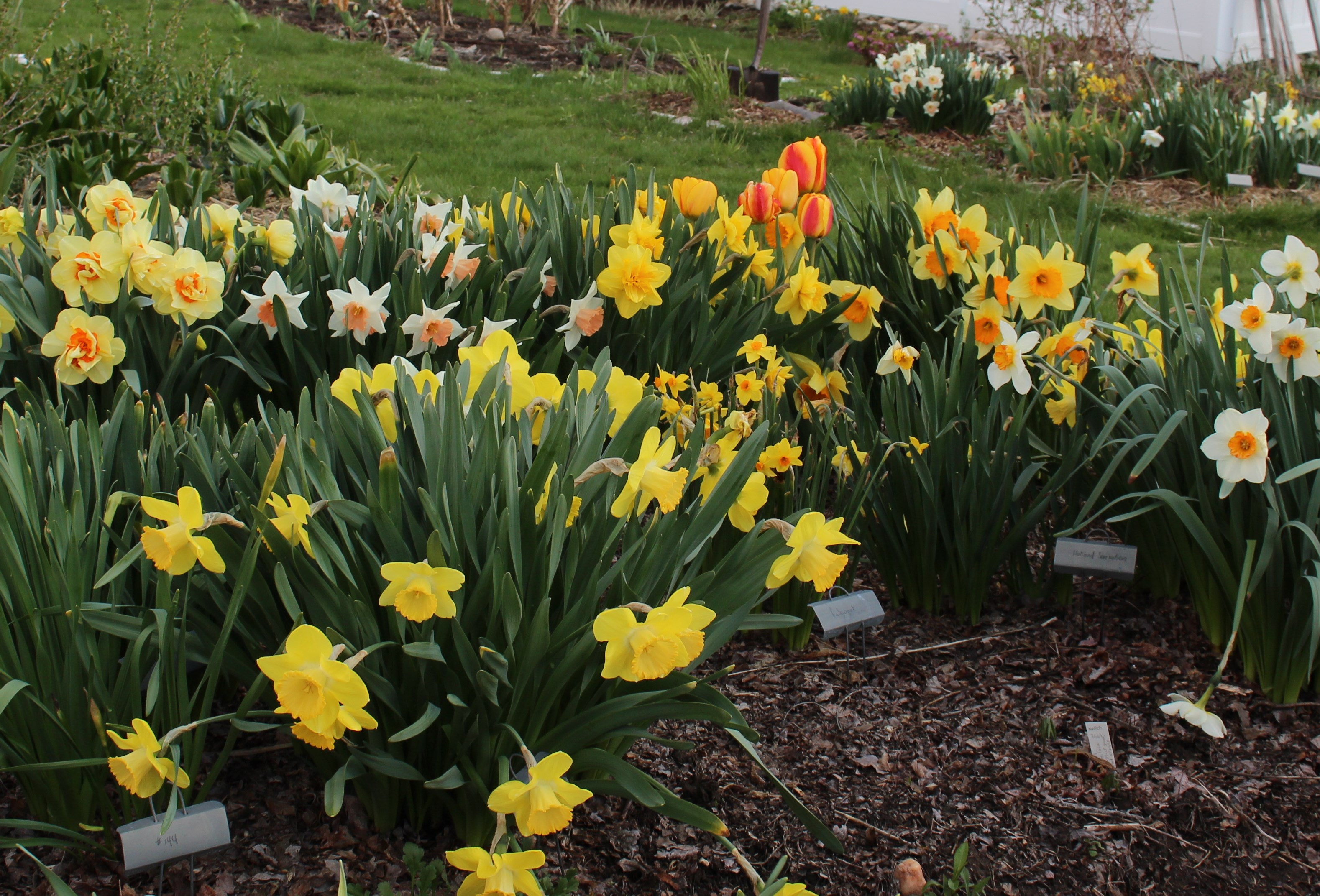
Some of my favorite daffodils…. with a few tulips sneaking in.
A friend of mine lured me in to the daffodil world a few years ago. While she succumbed to the dark world of show daffodils, I’ve held strong and try to keep myself satisfied with just a few good garden varieties…. actually it’s hard to go wrong with daffodils, and it’s also hard to stop at just a hundred or two!

Left to right- narcissus “golden echo”, “passionale”, and “serola”
Maybe I’ll admit to having just a few show quality daffodils. As far as I know something like this one, with a nice strong (not tissue papery) flower substance, nice flat petals, clean unmarked, and no nicks or anything around the edge…. that’s what makes for a flower you could bring to a show (that and a few years practice and you might bring home a bunch of ribbons!)
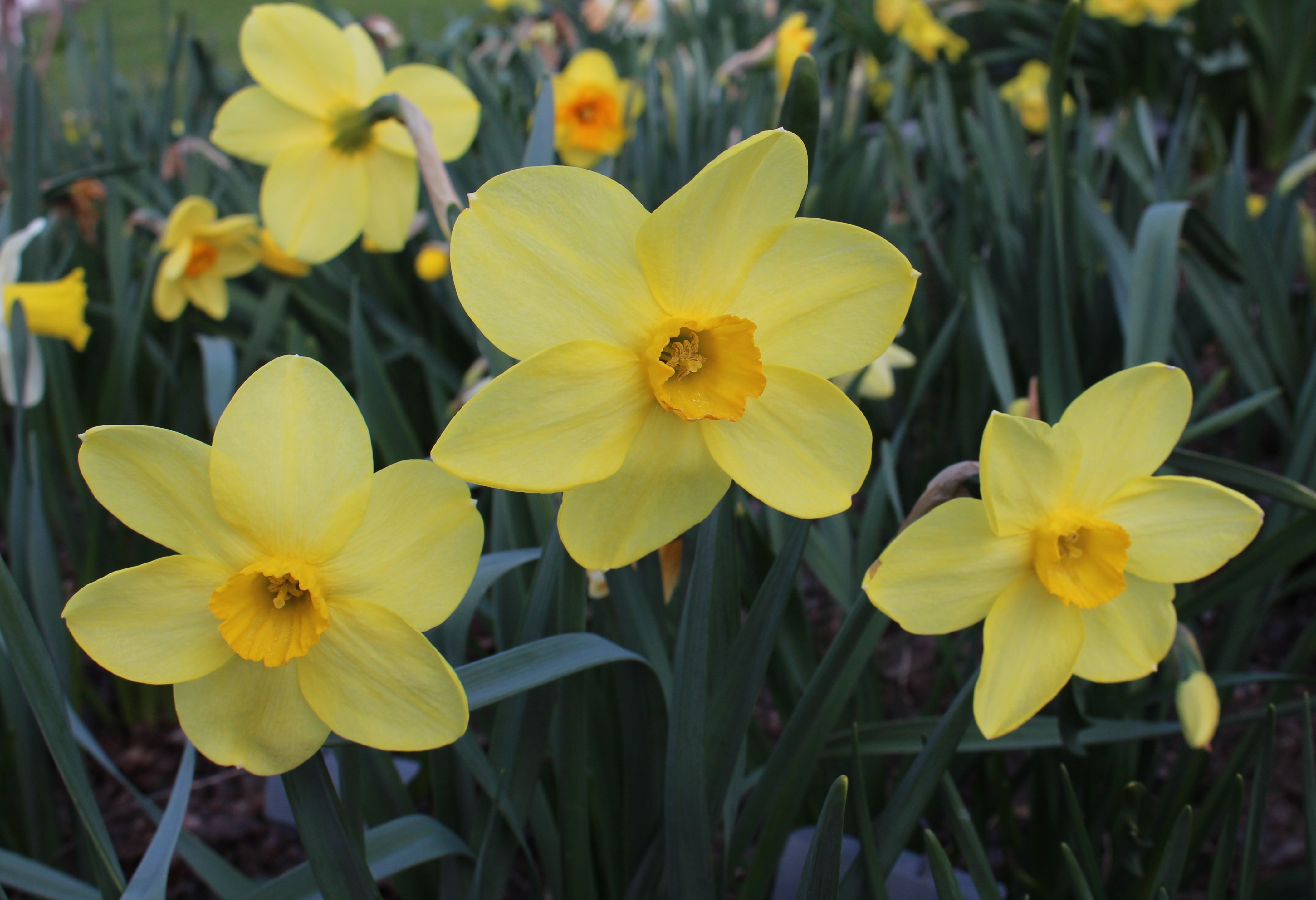
Narcissus “New Penny” looking nice in the garden and maybe worthy a spot on the show bench?
It’s still a little early here for tulips, they’re only just starting to color up around the beds and add in a little contrasting pinks and reds, but the muscari always brings in a nice blue to go along with the yellows and whites of the daffodils. These can be a pest in some gardens, but I guess I’m still young enough or dumb enough to not mind them spreading a bit…. or I’ve been conscientious enough to behead them after blooming to stop their seed spreading ways.

Regular old blue muscari given to me by a friend. I need to remember to spice up this planting with a few of the pale blue “Valerie Finnis” which still need planting out.
A plant I wouldn’t mind seeing spread a little is this nice double hellebore that’s blooming for the first time this spring. It’s another seedling from the now closed Elizabethtown nursery and I believe it was supposed to be a double pink cross. Double it is but pink it’s not, and I’m quite happy with this genetic mix up. The newest blooms open a pale chartreuse and then darken to a limey green. I can’t wait to see what it looks like next year!

First year’s bloom of a lime green double hellebore from Elizabethtown seed.
And that just about does it. After the subtle rarefication of a lime green hellebore I leave you with a final view of bright tulips and a photo bombing tacky orange plastic Adirondack chair. It was a gift from my mother in law and I’m really quite pleased with it. I guess my endless whining about wanting a couple for the back yard didn’t fall on deaf ears.

What better front yard art is there than brightly colored plastic lawn furniture?
I wonder how long it can stay out there before the Hillbilly comments start and people again loudly question my design sense? Maybe a pair of these chairs would be twice as good? I might have to test that this weekend, since I eventually will retire these to the back. In the meantime I’m beginning to think this could be the new millennium’s version of the pink flamingo.

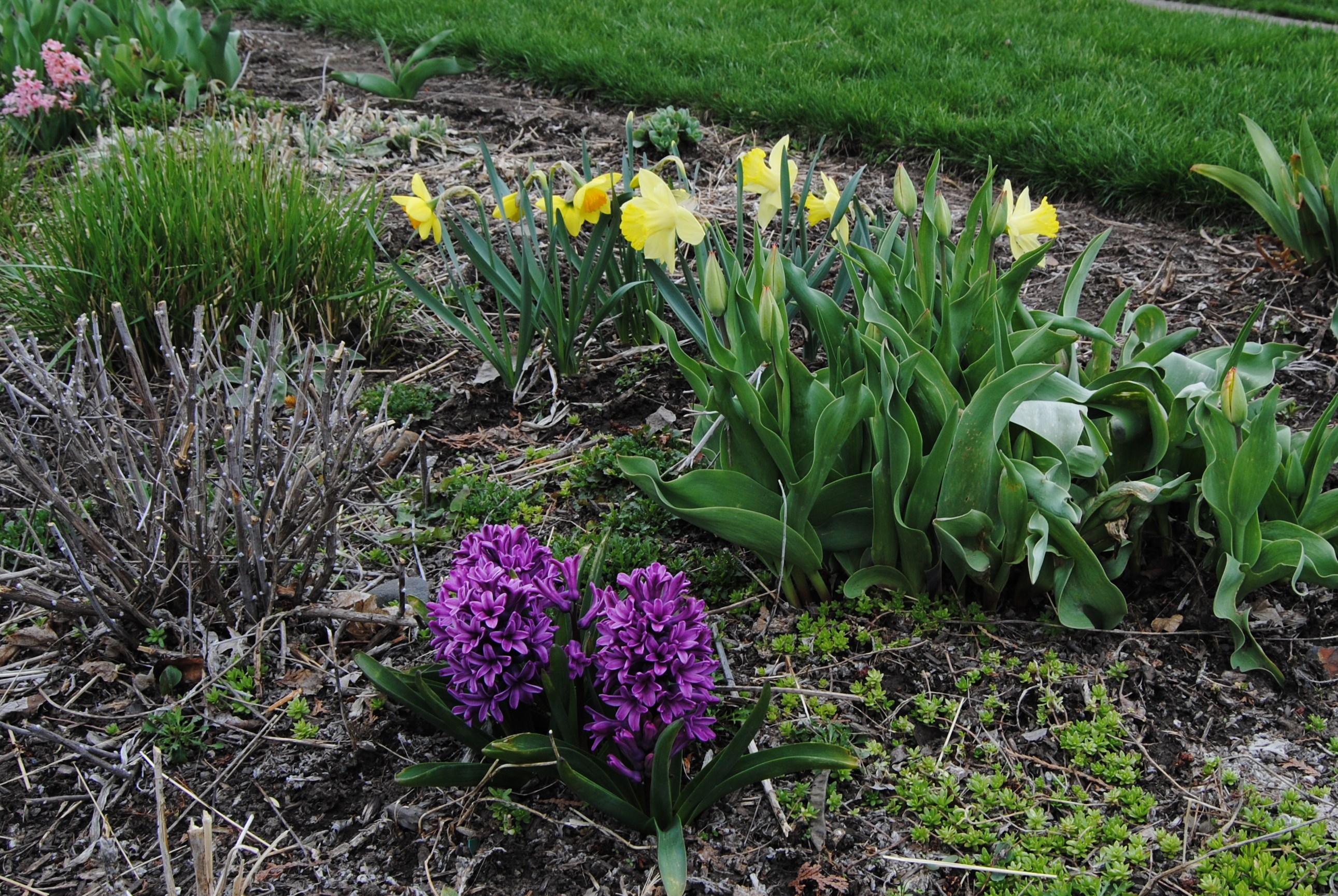
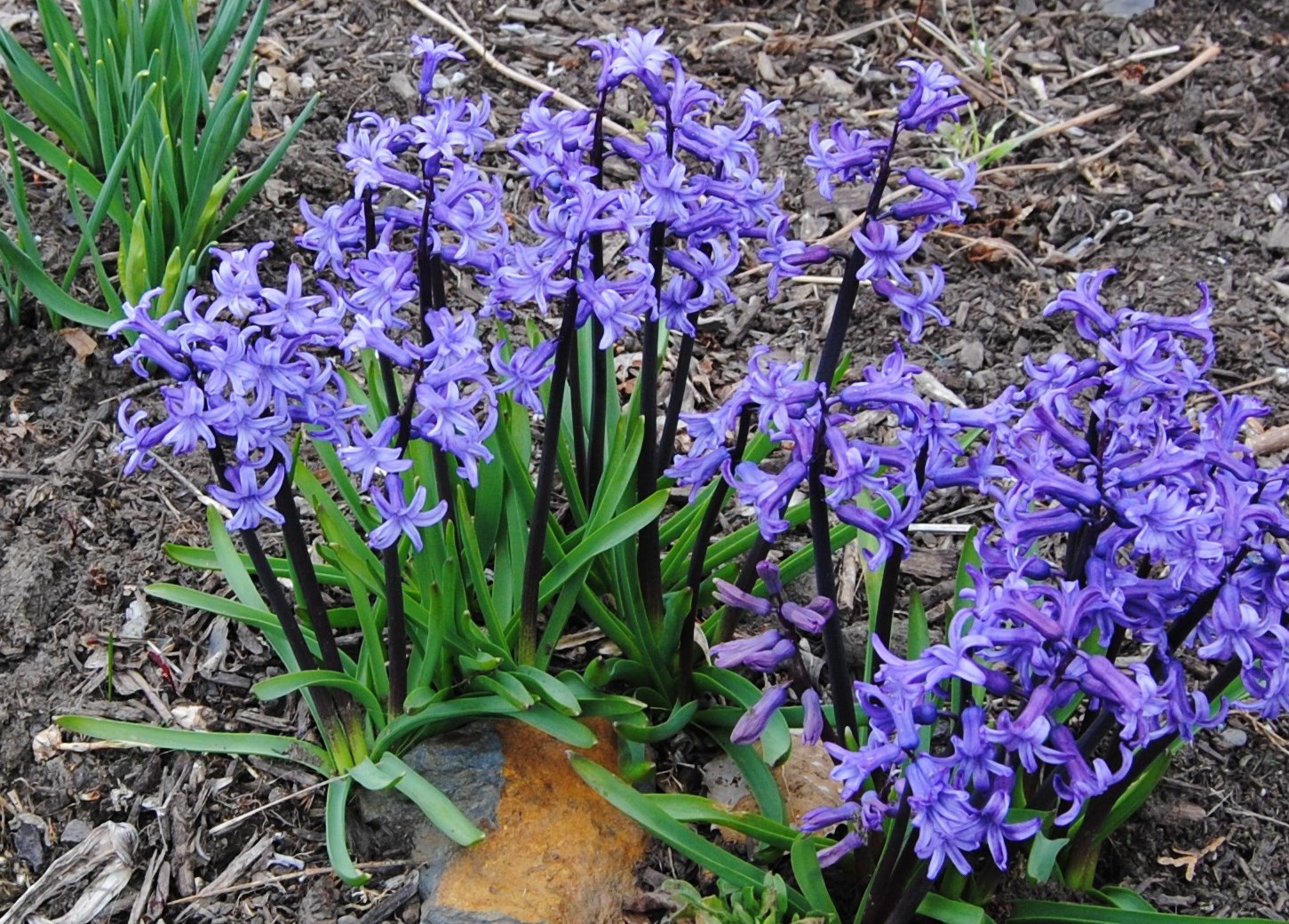
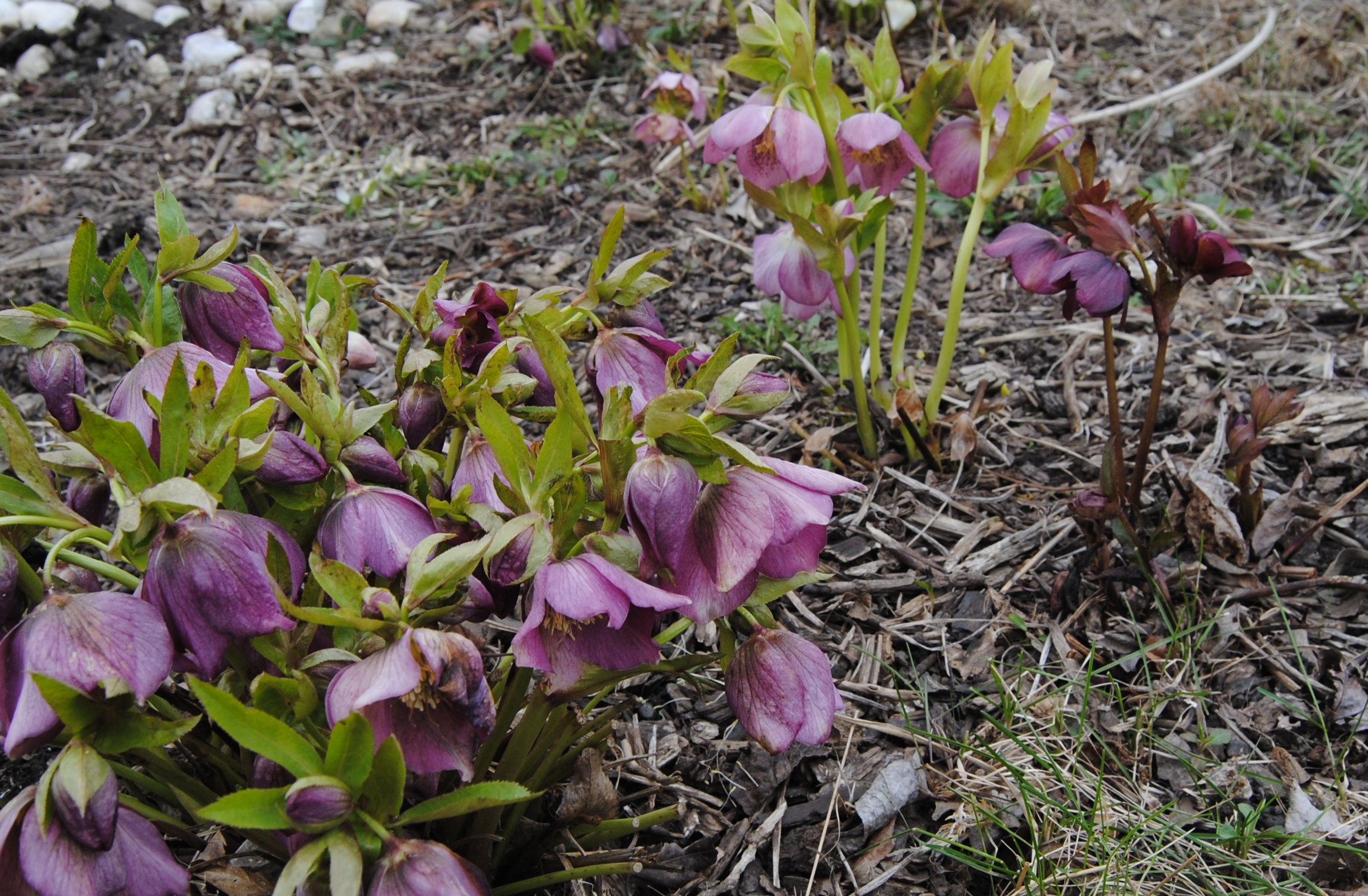
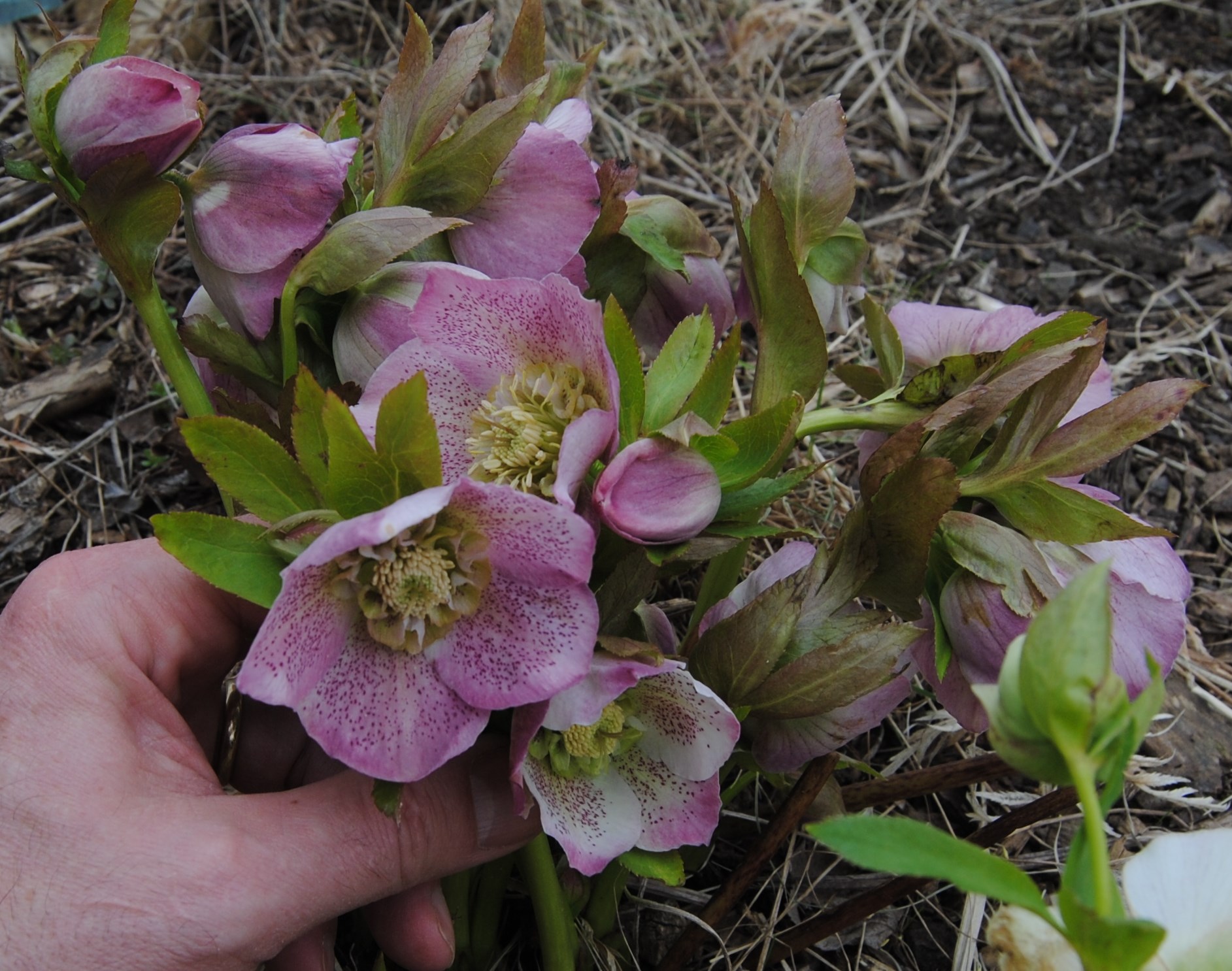
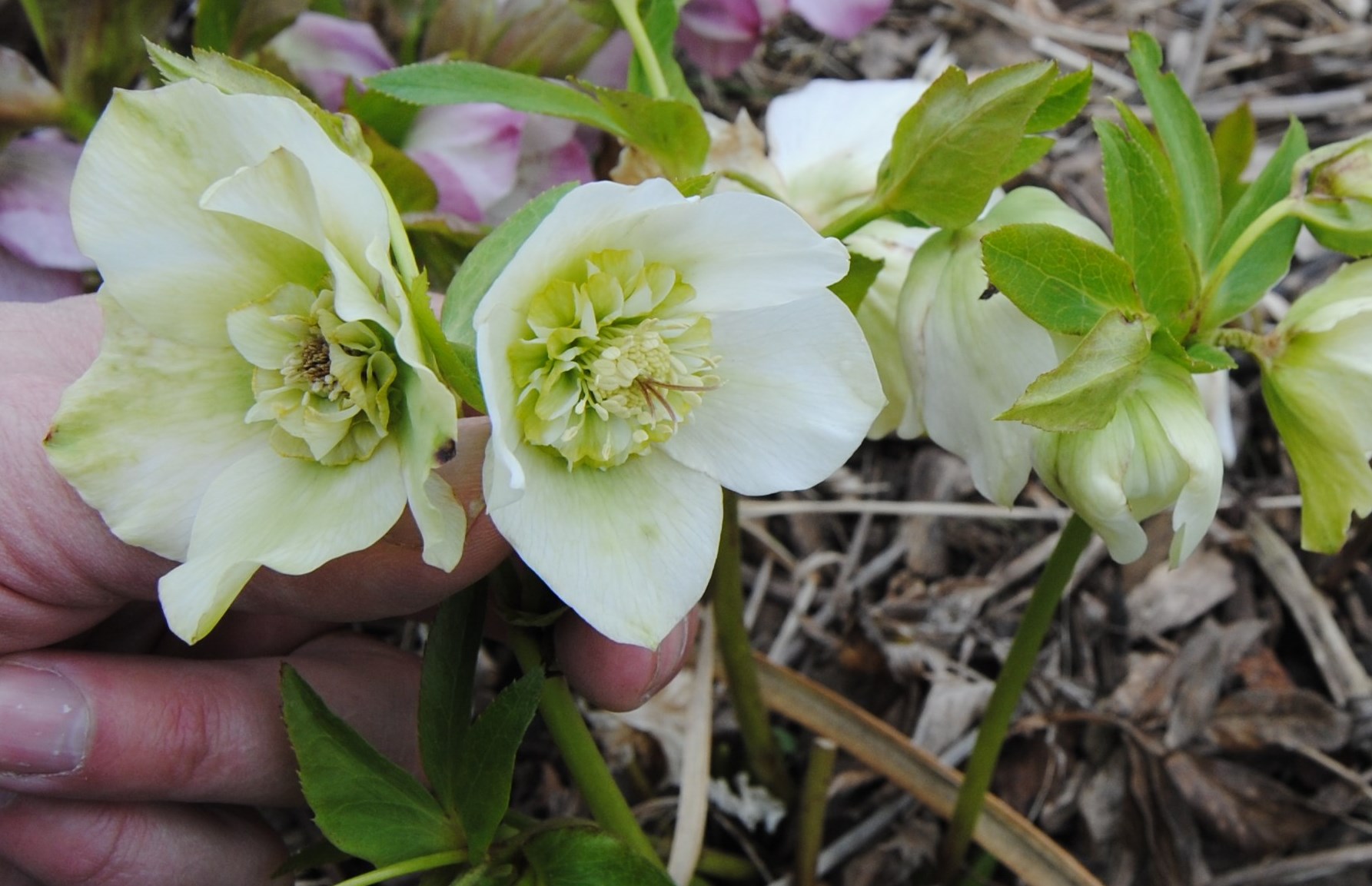
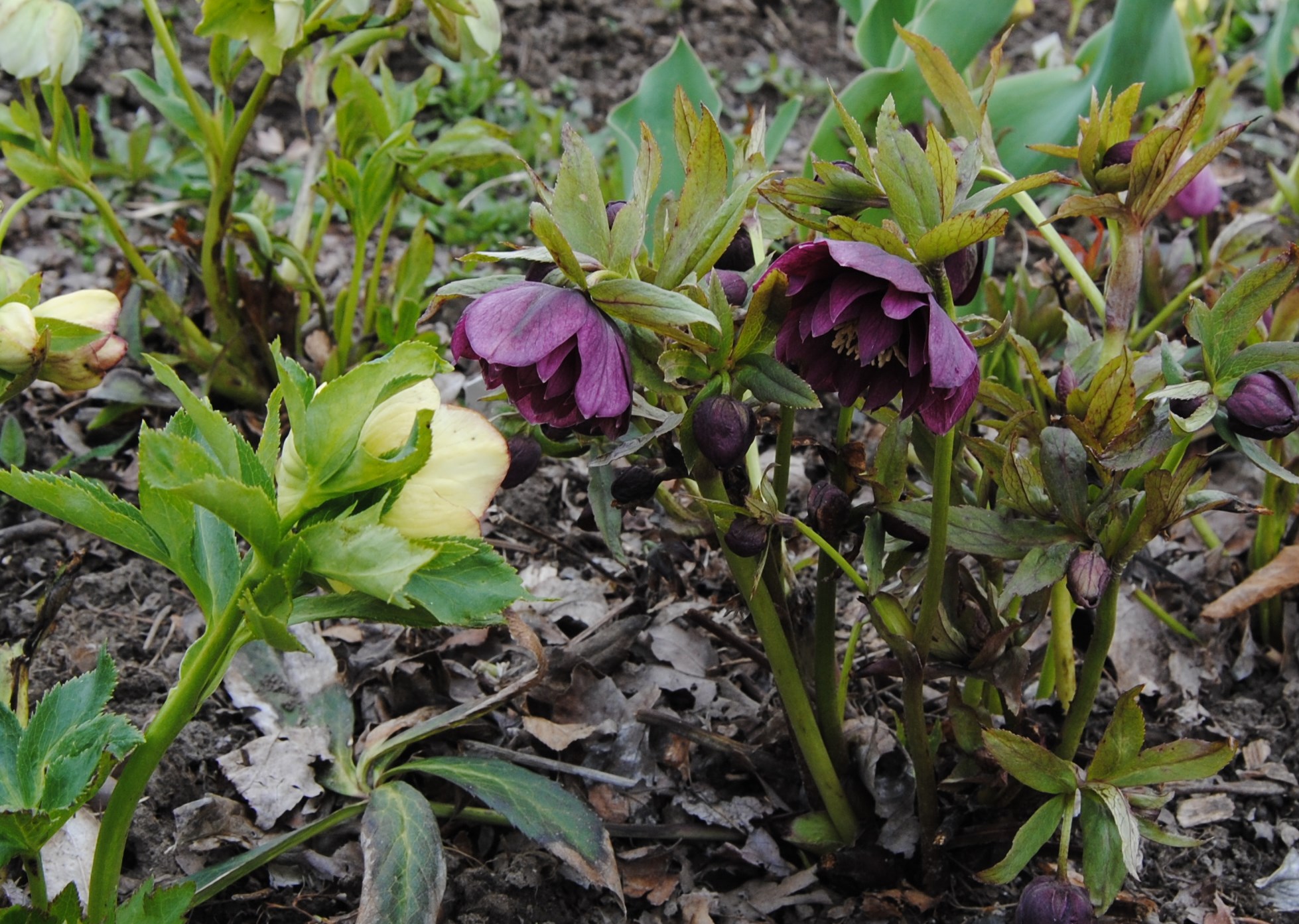
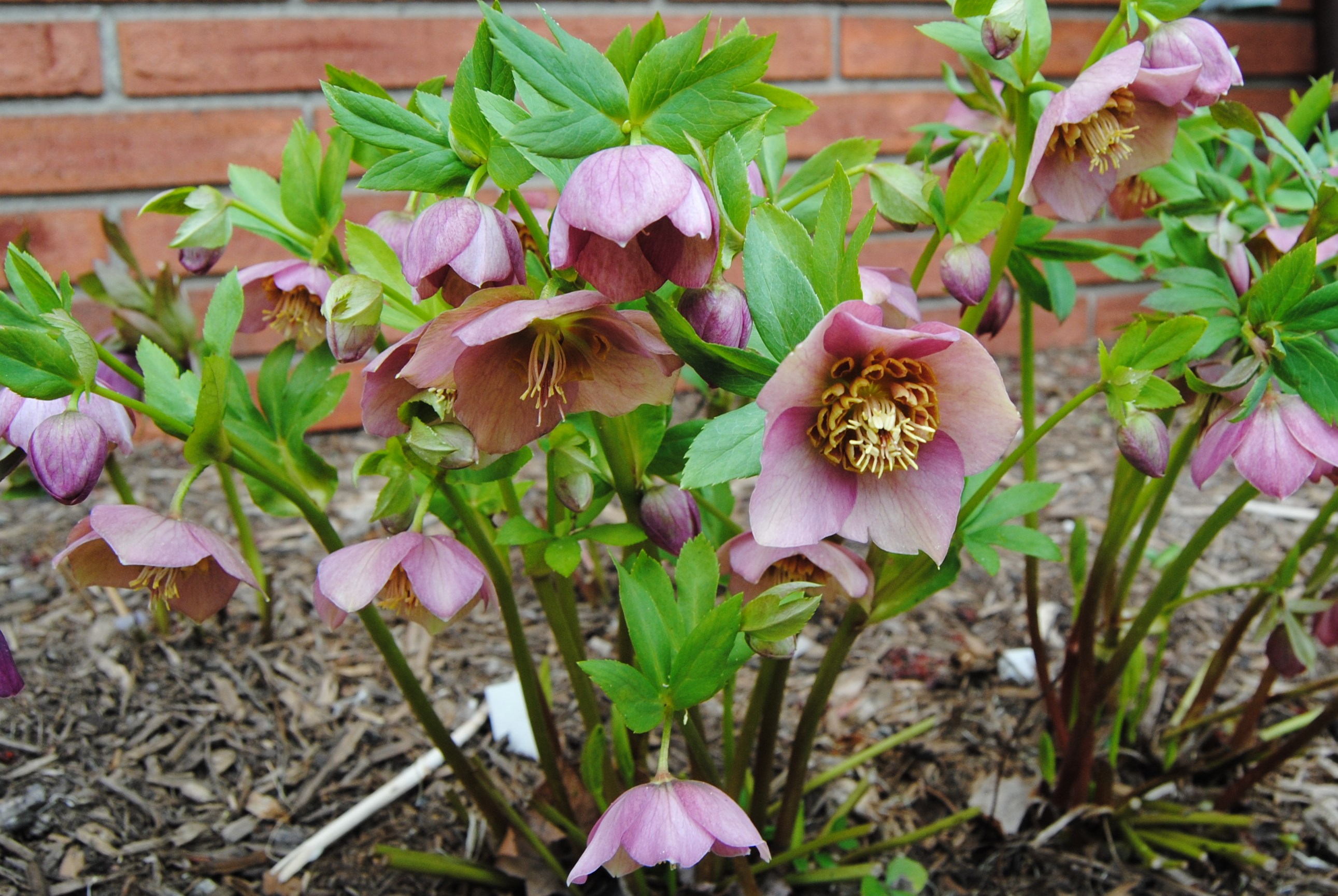


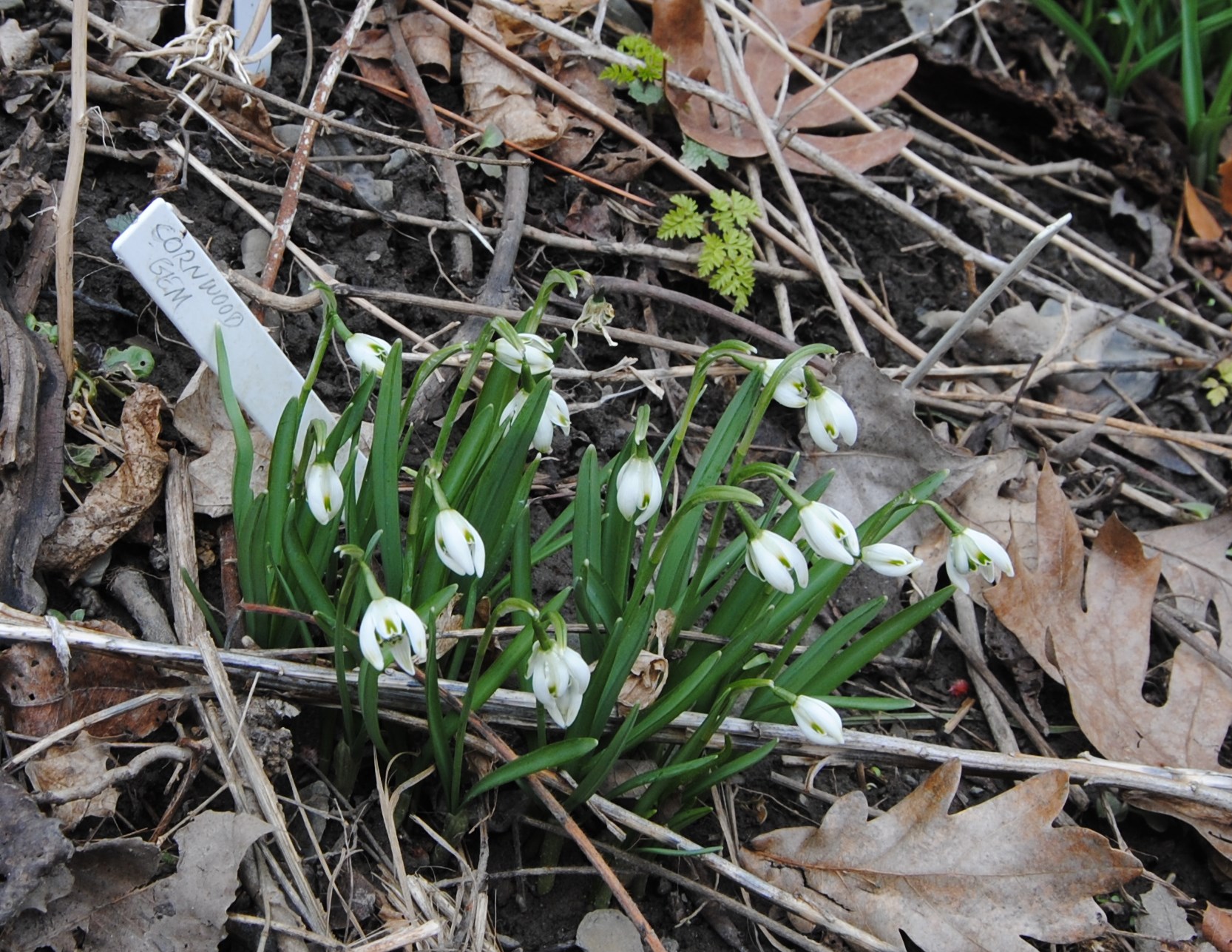


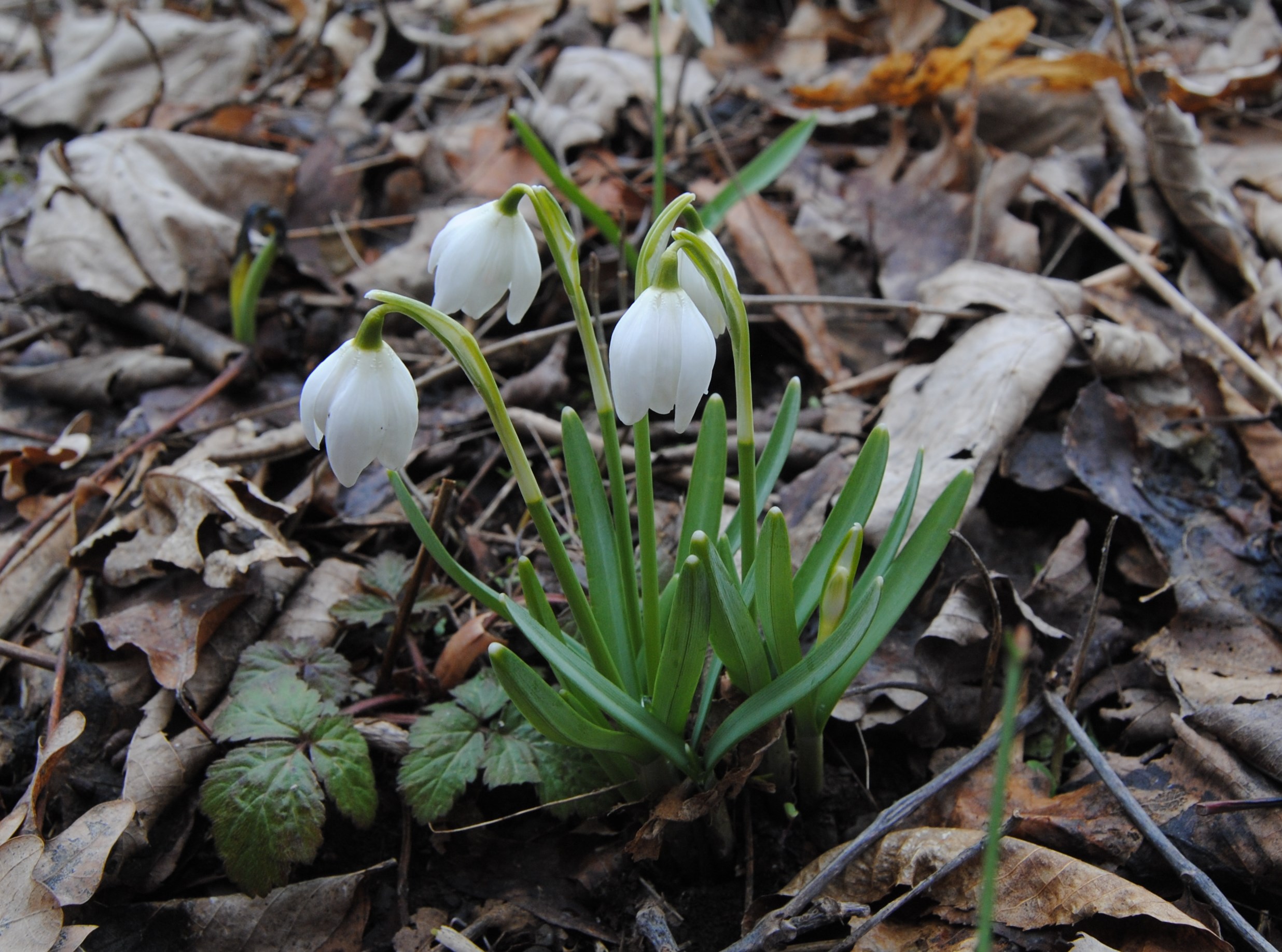
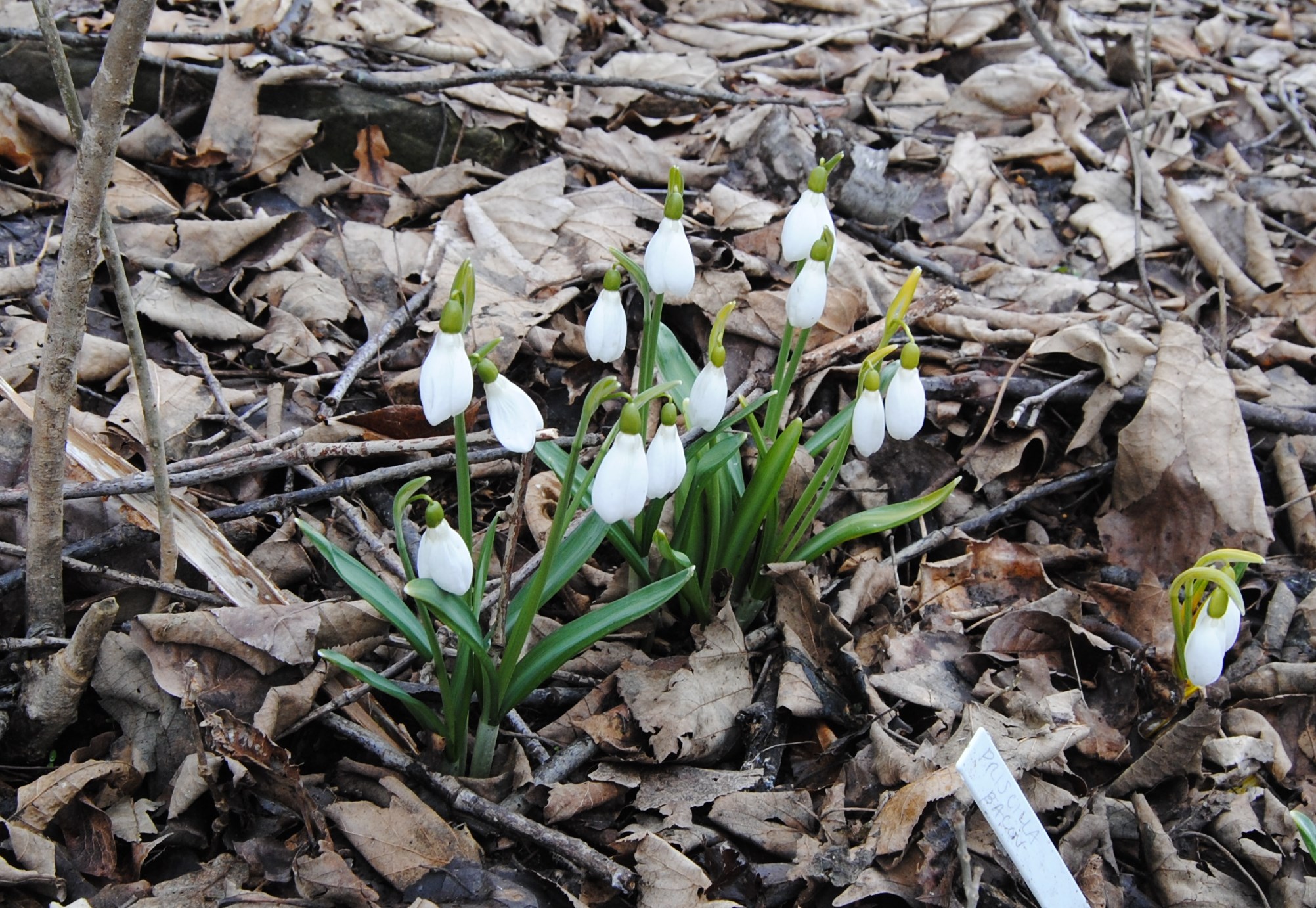


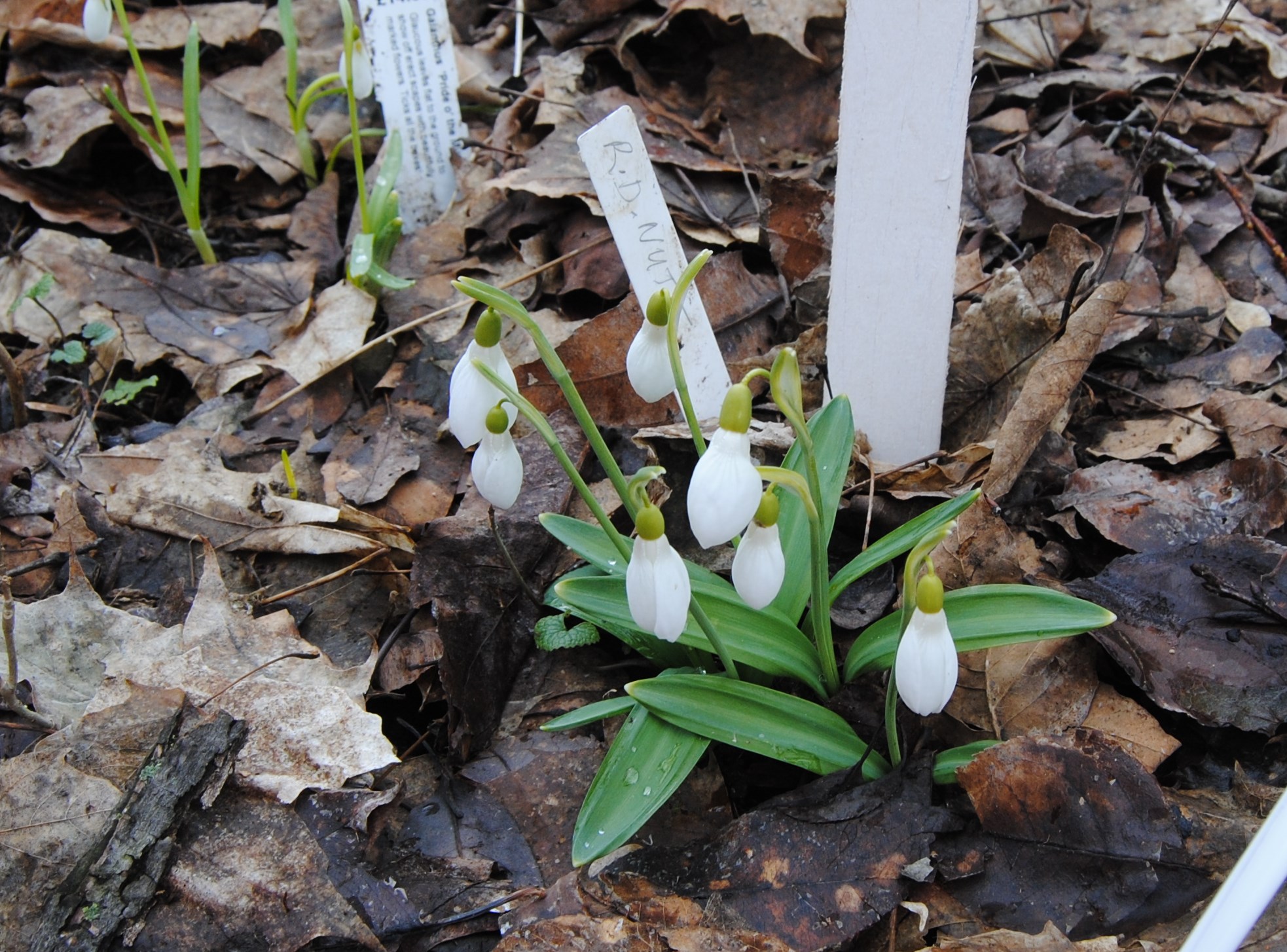




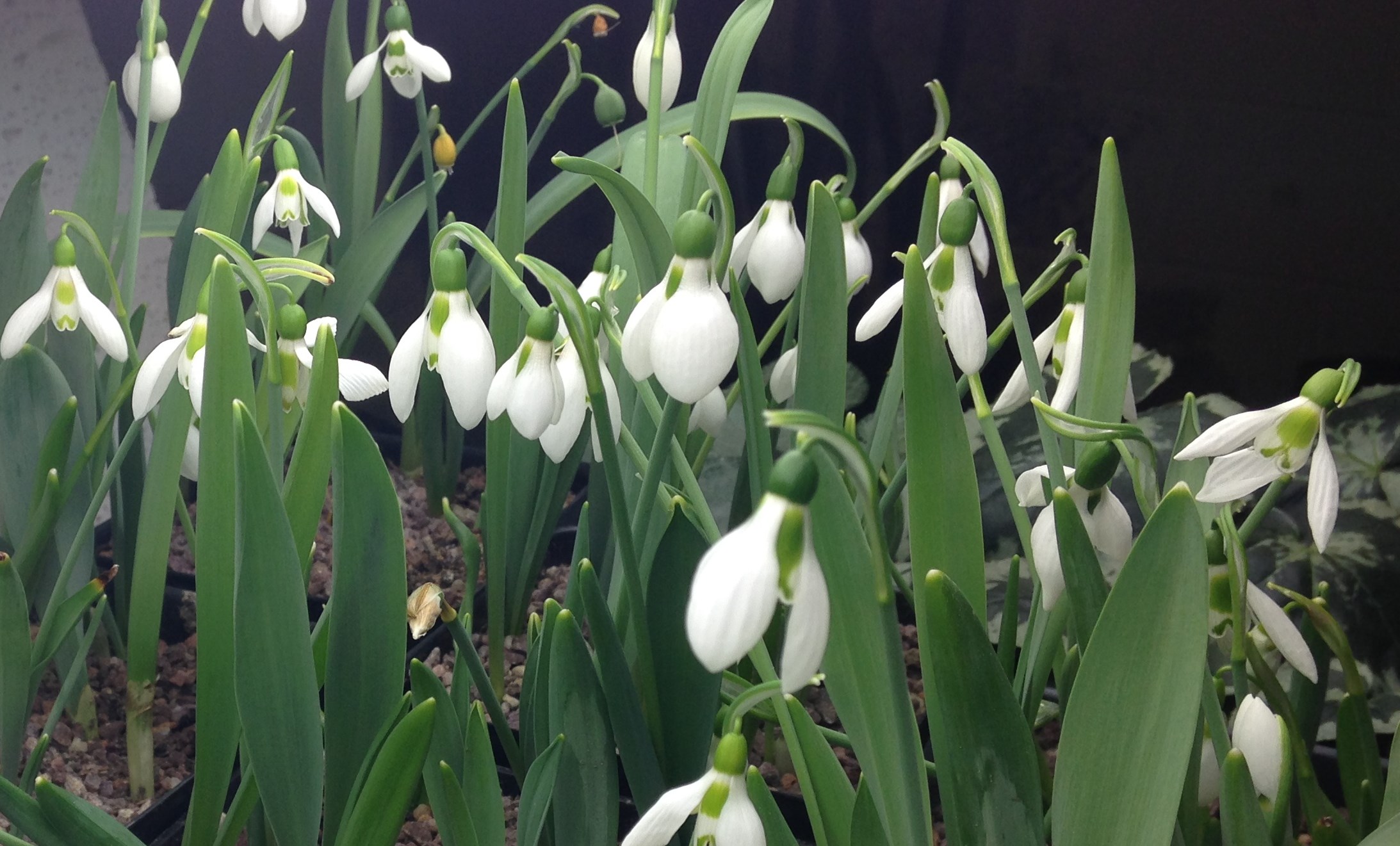
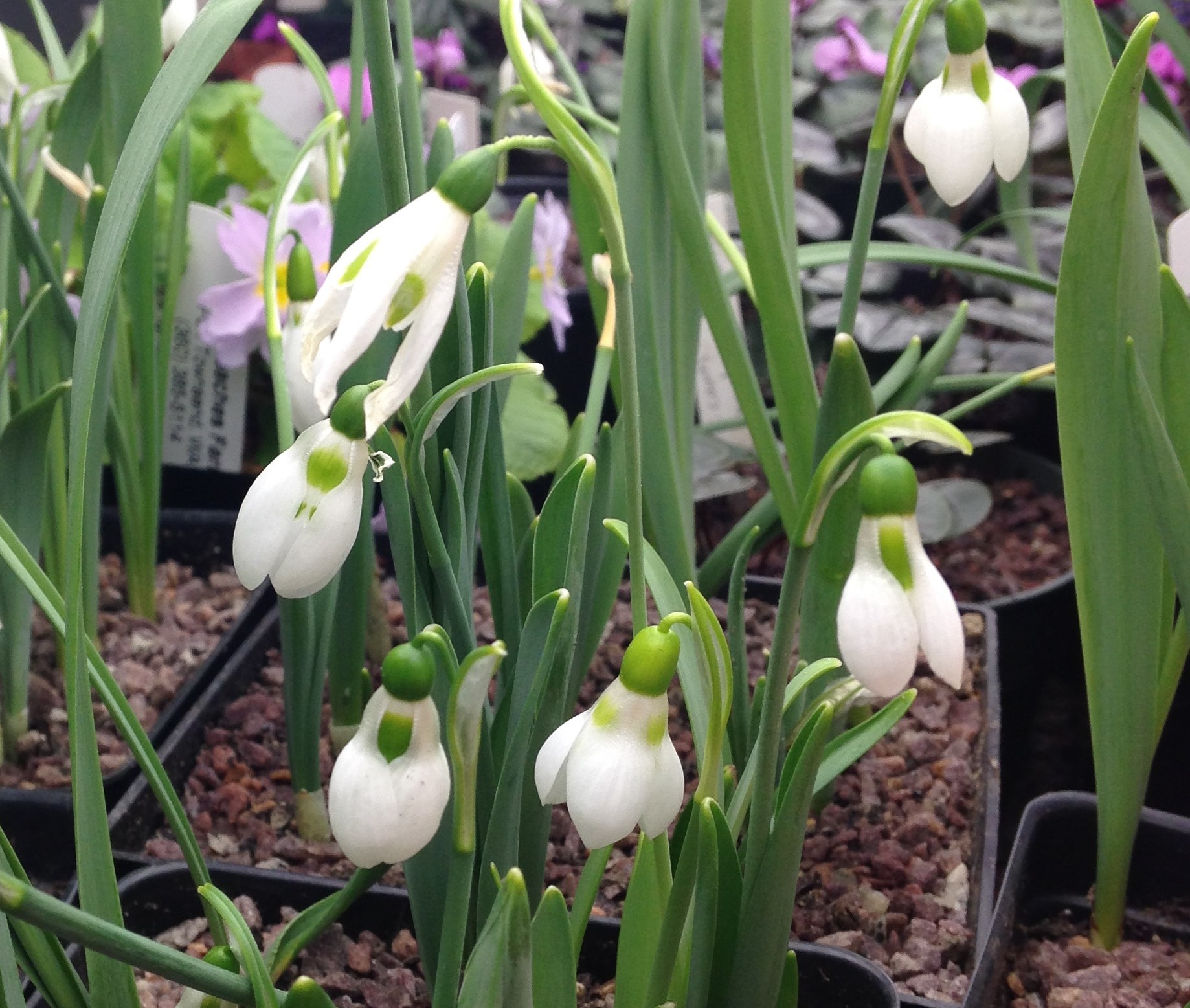
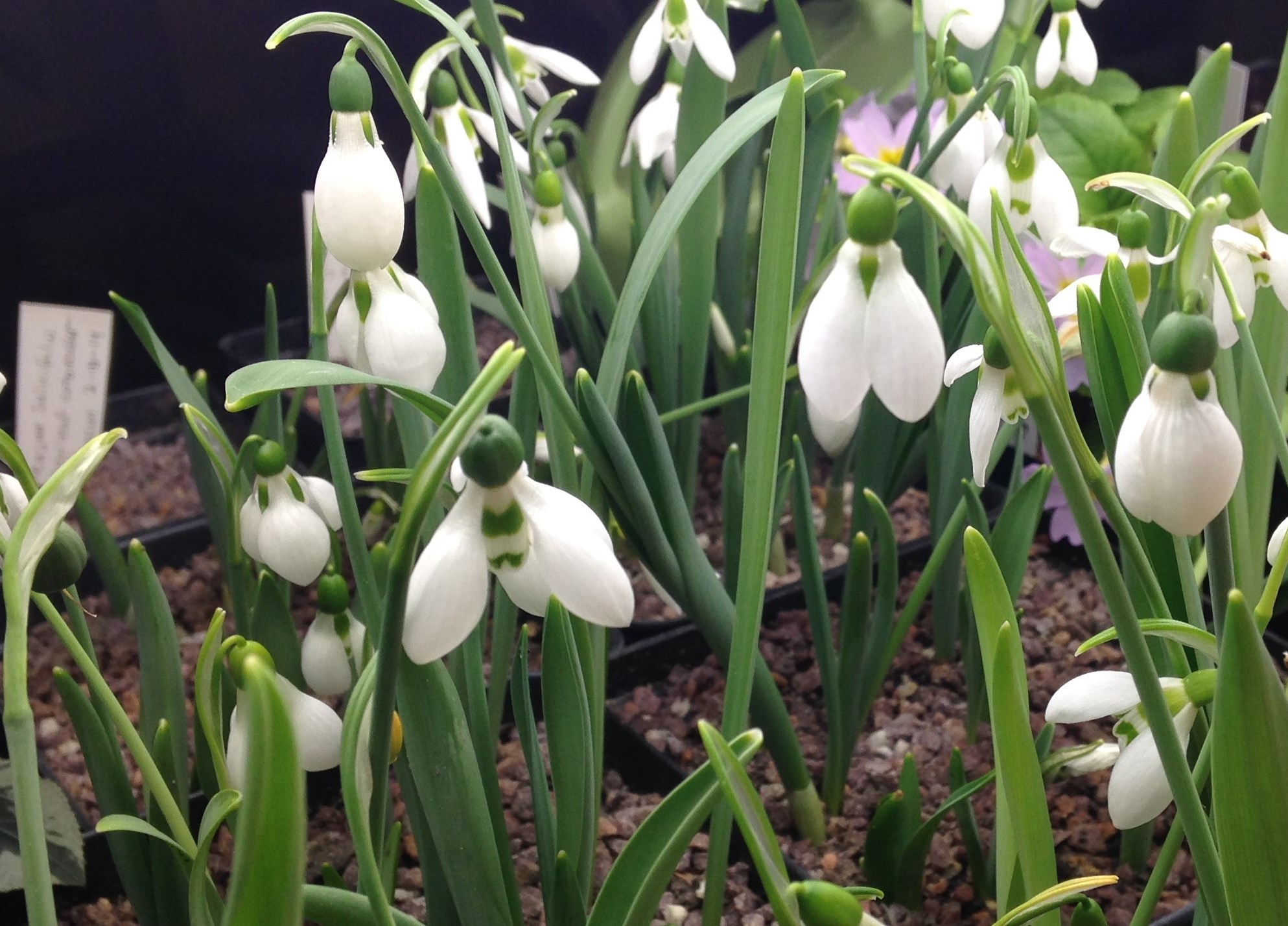
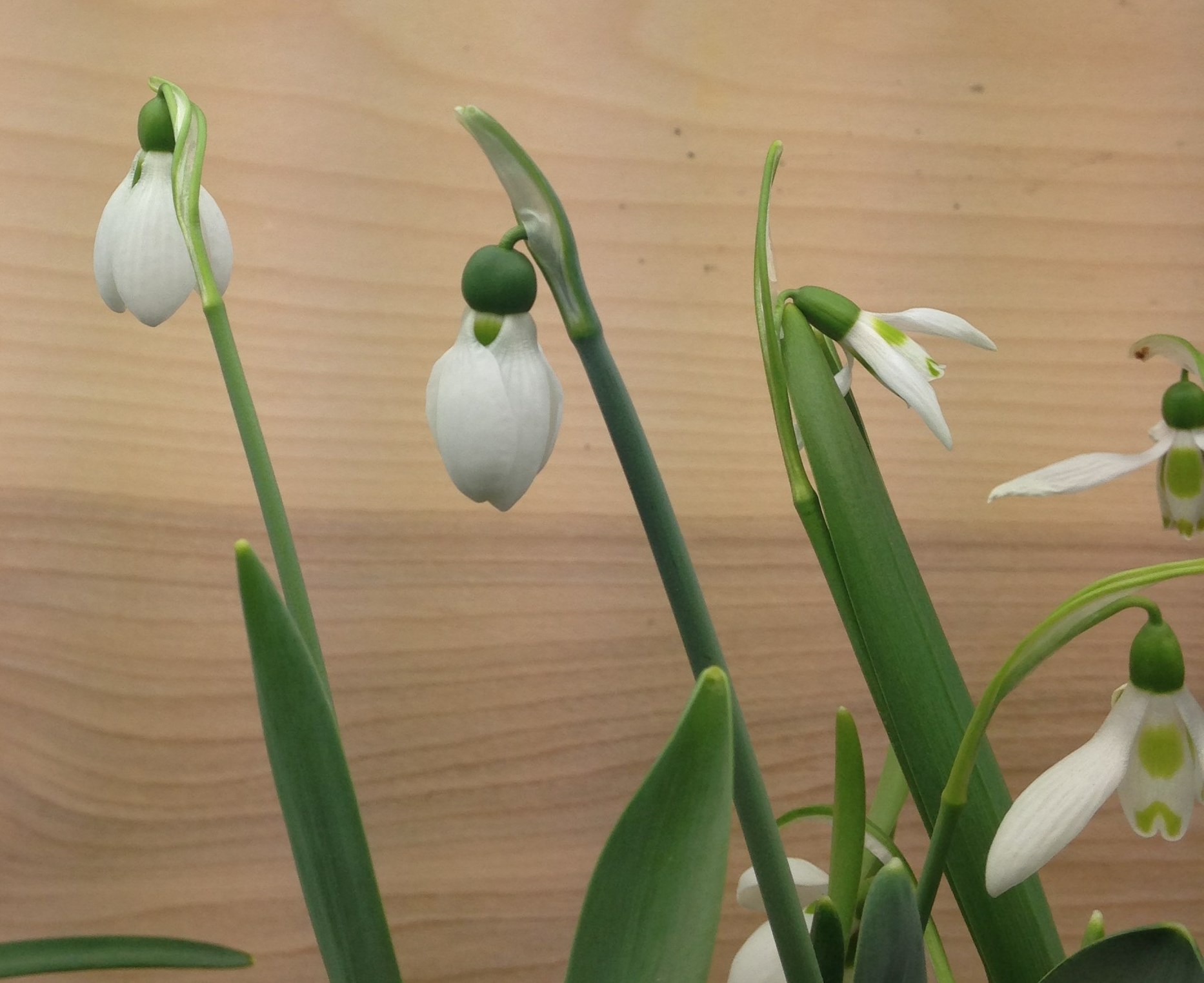
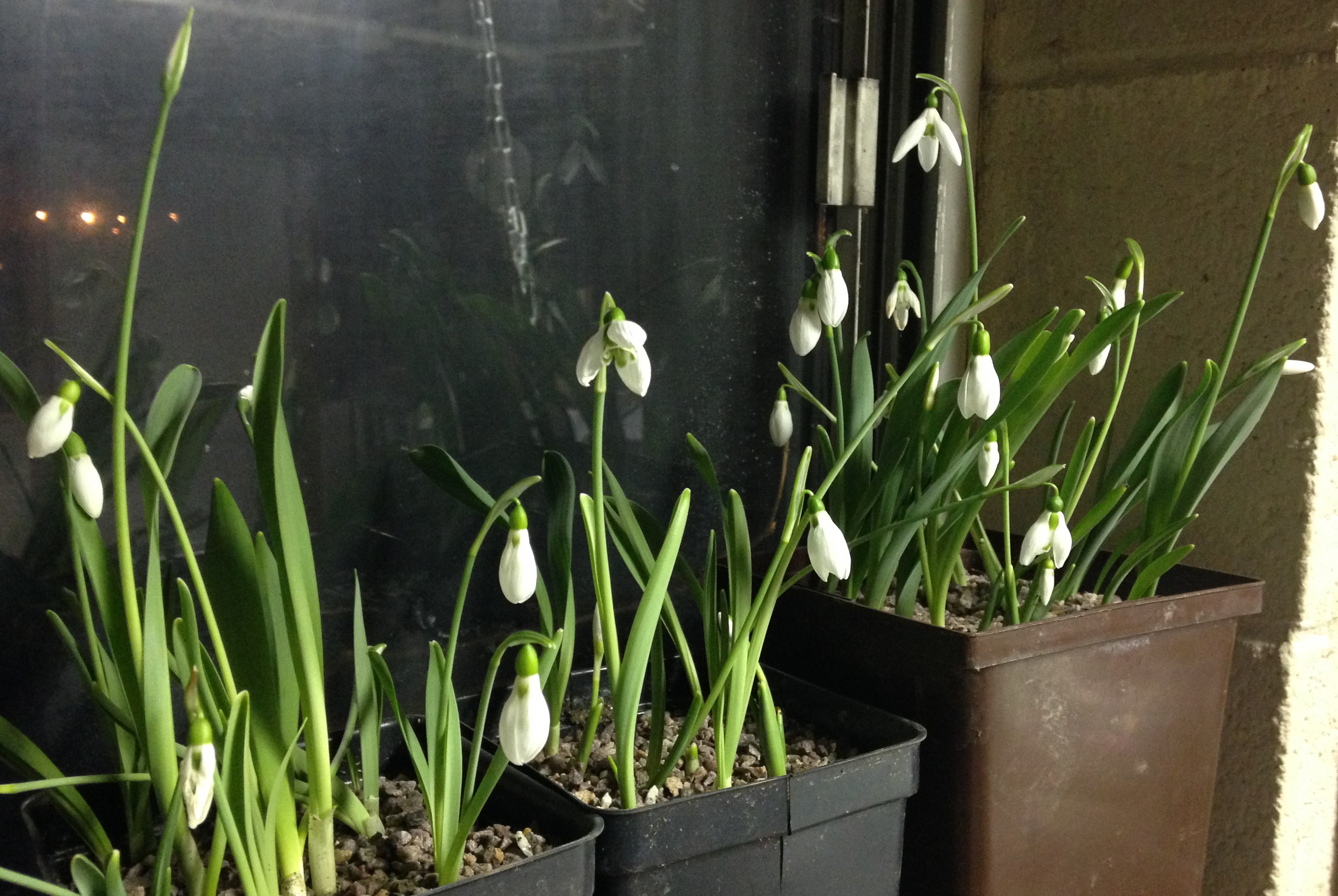
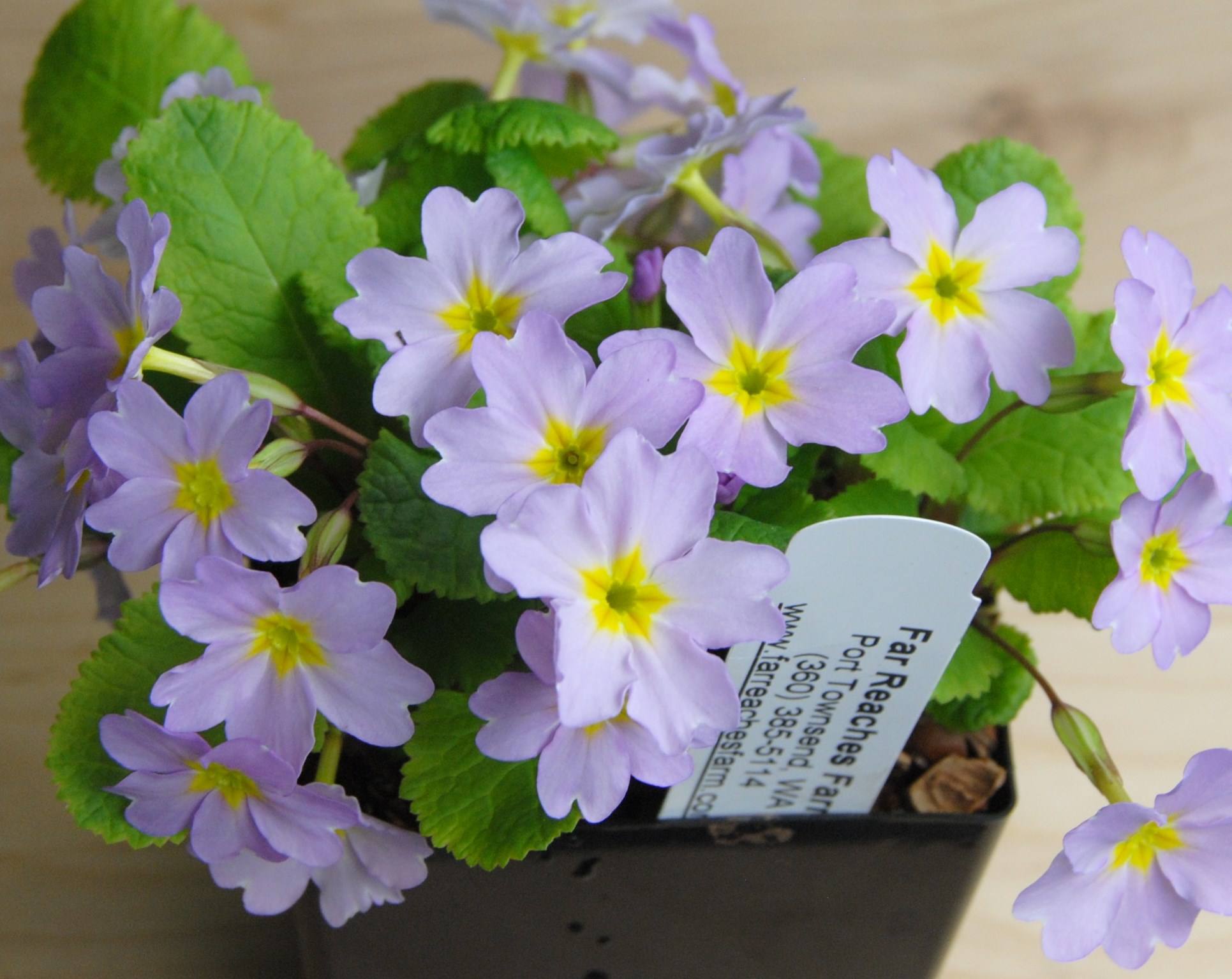
 Sure they would be hardy outdoors under the snow, but to see them blooming now is twice as nice, even though they have suffered more than ever this winter under my neglectful care. Most are unnamed mixed seed, but the darker, smaller bloom is from the Meaden’s Crimson seed strain.


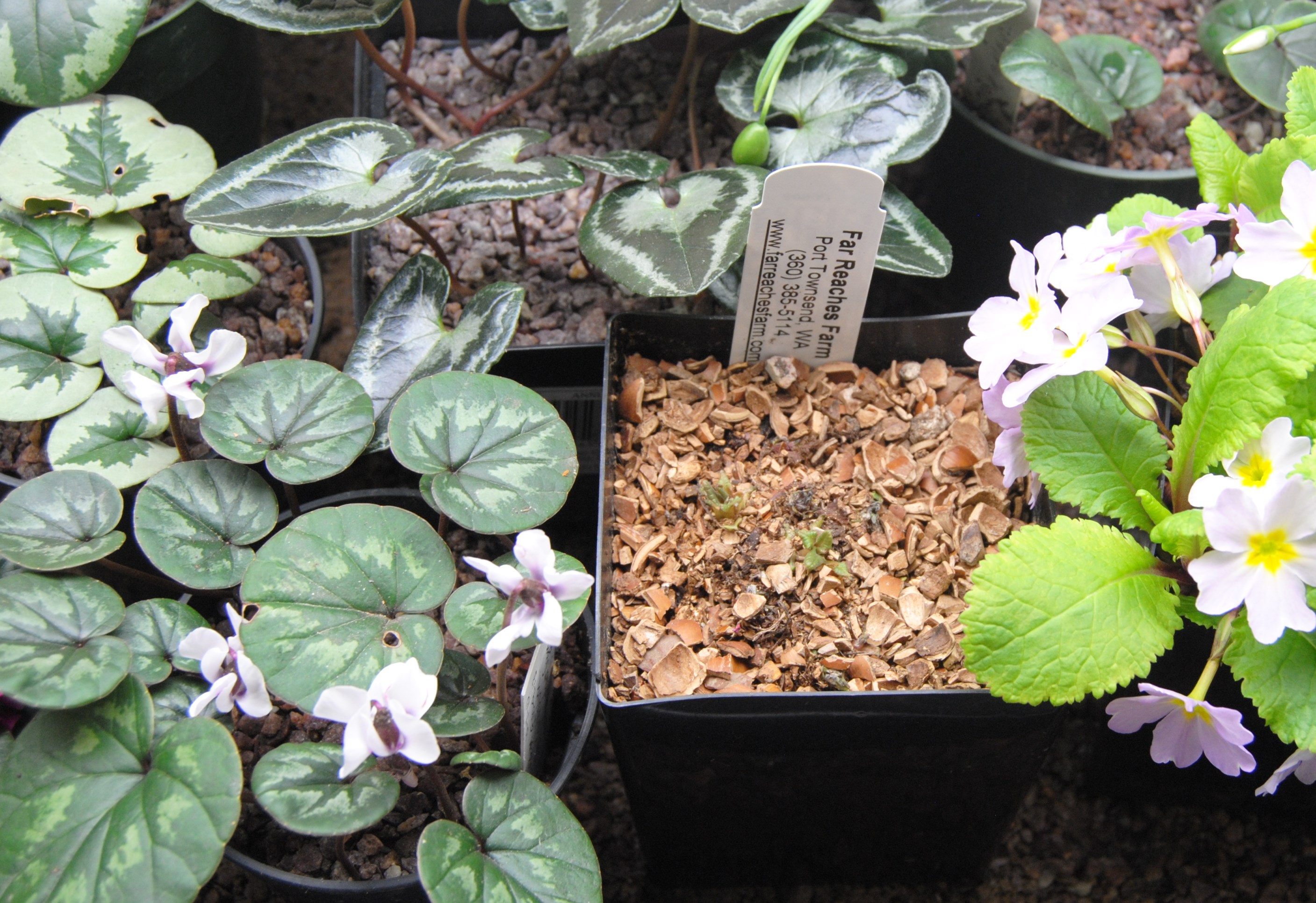


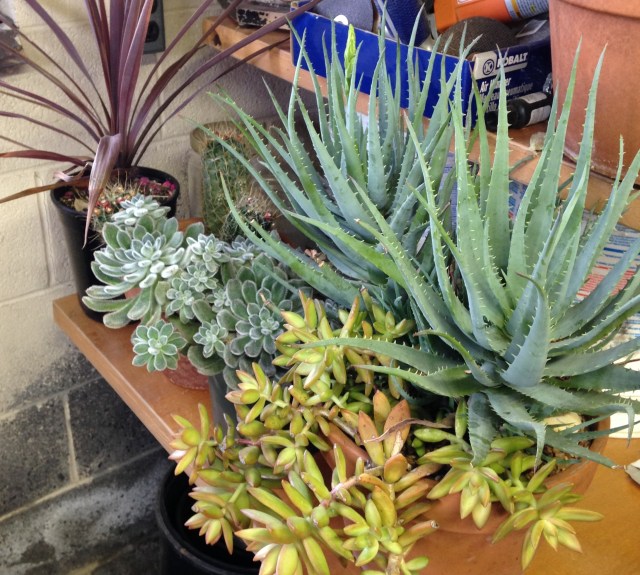
 Snow, snow, and snow. At least the morning dawned sunny and bright so there’s hope for a change.
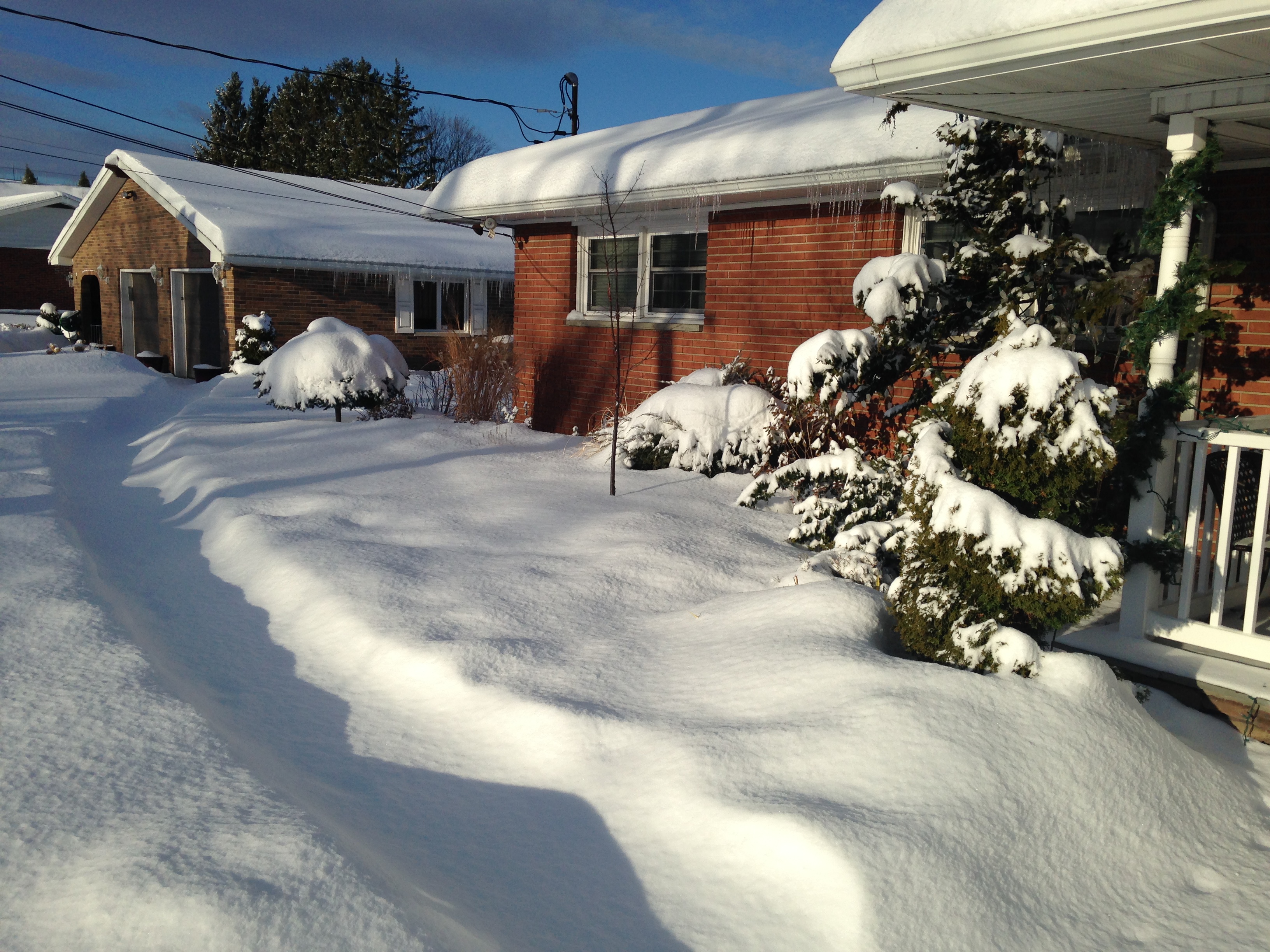

 By the way, the odd lumps are snowman and snowlady bodies. It’s all part of a whole new winter world out there with the tropical border acting as a sled run, the cyclamen bed as the foundation for a snow fort, and dried hydrangea as excellent snowperson hair. Looks like we’ll be enjoying it for at least another week or two!
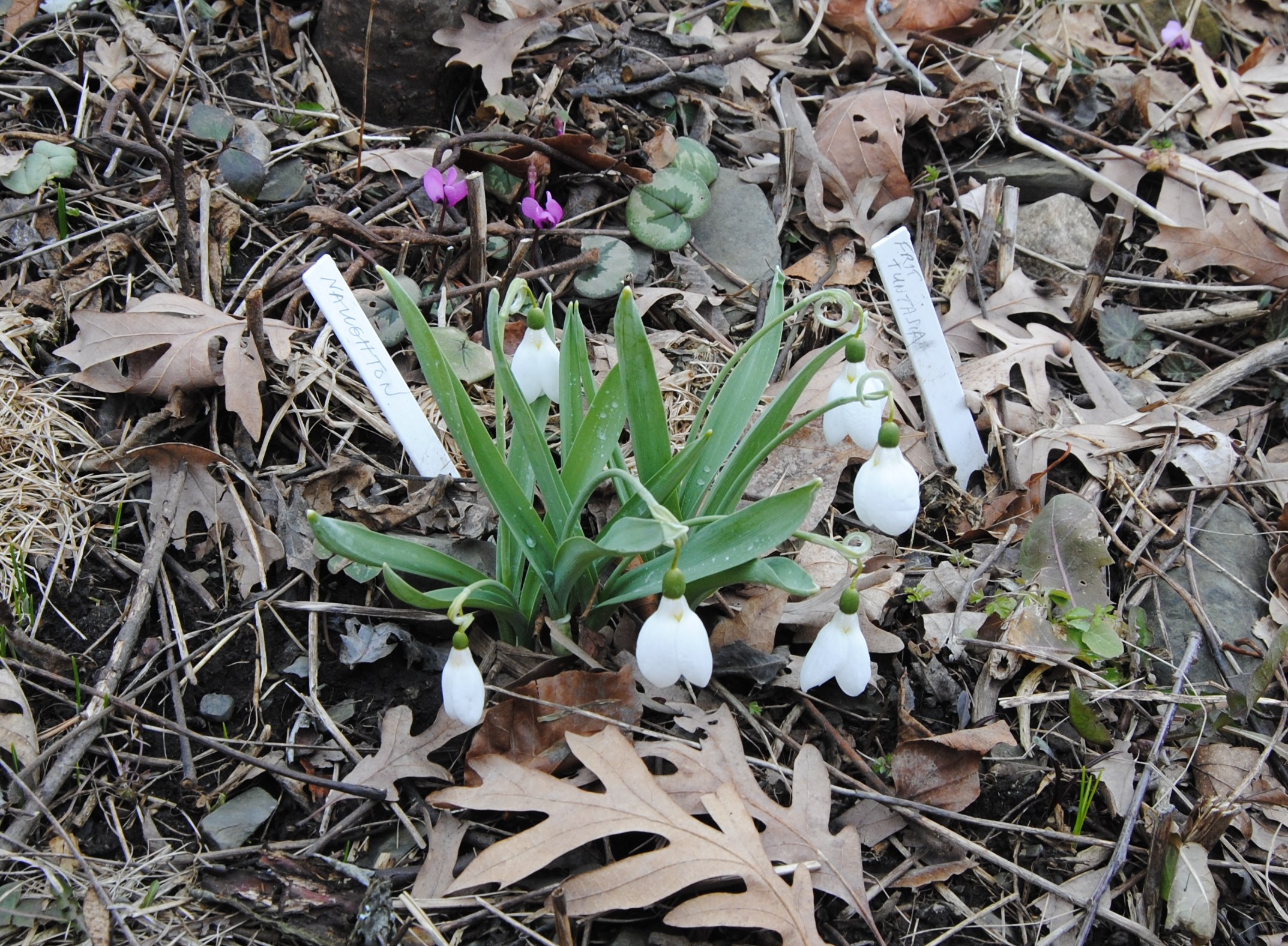
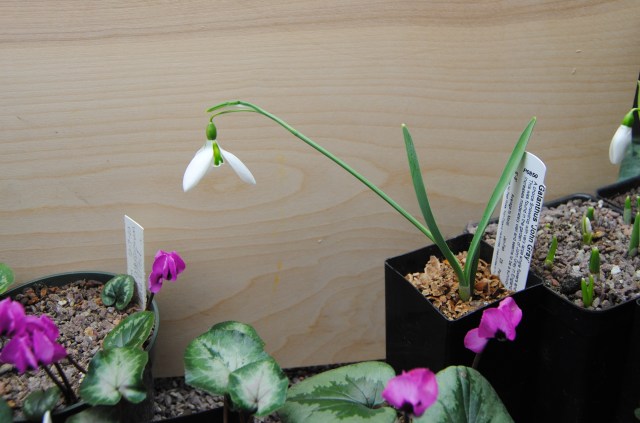 I also picked up ‘Blewbury Tart’. Maybe she’ll grow on me as the little tart clumps up but for now I’m still lukewarm to her small sideward facing congested bloom. Both of my new snowdrops show up on ‘best growing’ or ‘favorite snowdrop’ lists, so I’m pretty sure that even when they’re out in the garden among all the other snowdrops they should someday make me proud.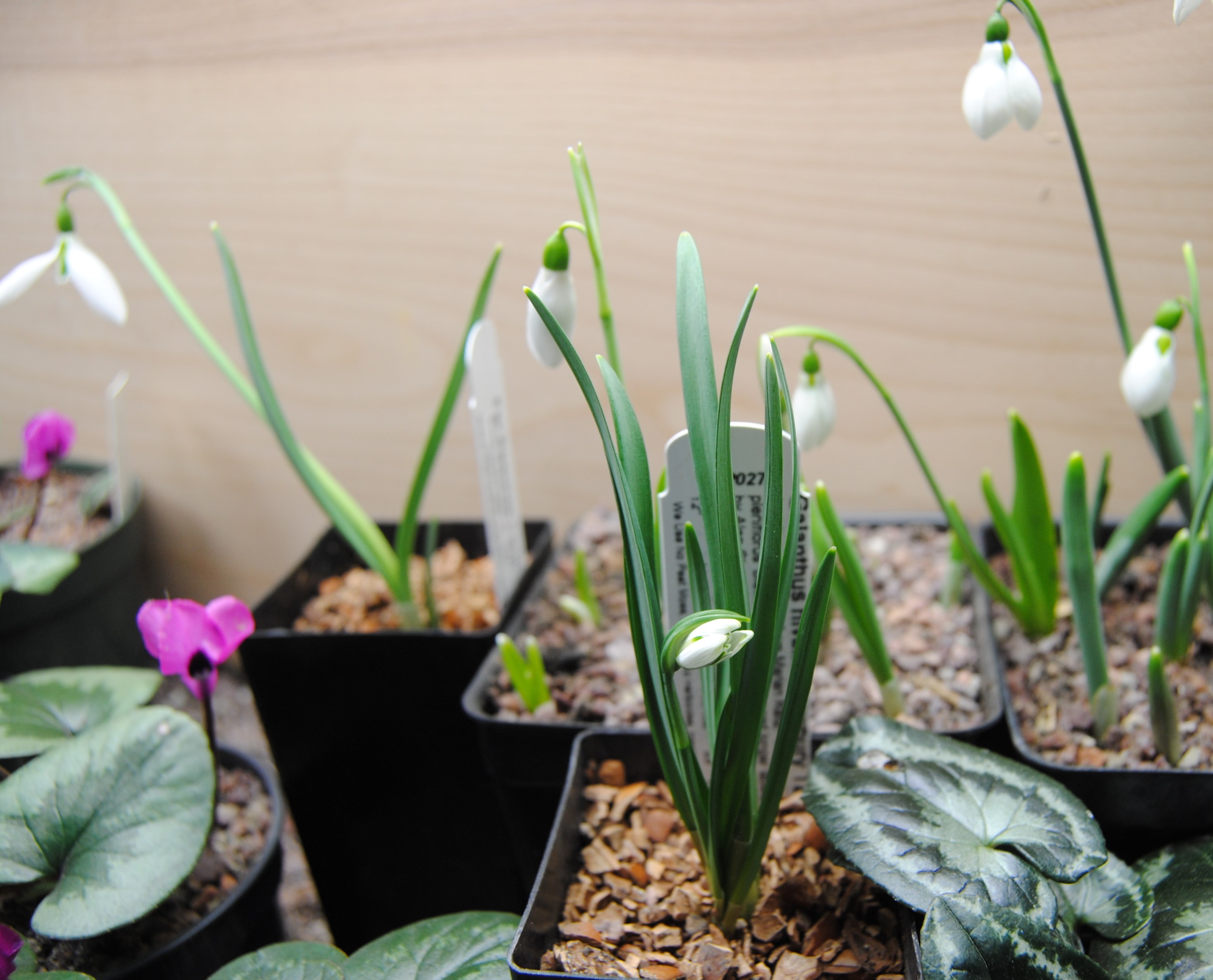
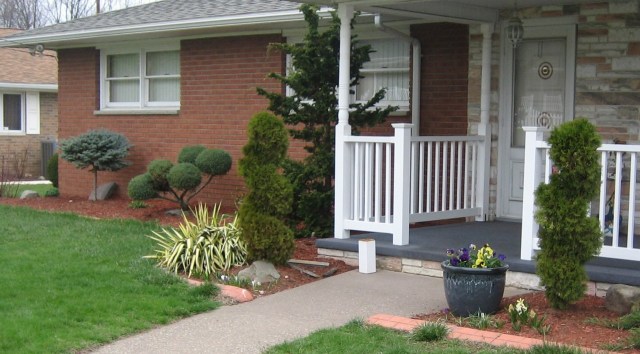 The combination of toddler, new baby, and home renovations is a fun mix, and outside changes were mostly put onto the back burner, but that summer I did manage to get out the salmon colored edging and covered the colorful red bark mulch with a more natural shade. I’m not saying it looked better, but at least it’s a little less sterile looking.


 Blues, yellows , and greens seem to complement the house better than all the loud mixed up flower colors. For a couple weeks I didn’t mind this look, even as the tulip foliage yellowed and died off. But then boredom and excess plants struck, and I was back to my old ways of sneaking in a few new plants here and there.


