Setting the Table

The holiday season has been off to an early start this year.  Under pressure from the children the decorations went up the afternoon of Thanksgiving and within 48 hours the house went from reasonably autumnal to yuletide overload.  I love it of course and even if it means we’ve finally all fallen victim to the day after Thanksgiving holiday commercialism, at least we’ll go down with a smile.  With that in mind, might as well fire the holiday candle full flame and head down to Longwood Gardens for an early peek at the holiday display.

This wouldn’t be our first visit to the gardens during the holidays, we’ve been down before and to be honest I was a little nervous about the crowds on this trip.  The last two visits managed to hit on some of their busiest days and with admission tickets sold out for Friday’s opening day I was holding my breath to see how Sunday would work out.  I should have relaxed, it worked out great.  We arrived around 3pm and were able to just fit into the main parking lot, showed our tickets at the gate, and then walked right in with plenty of smiles and not a single delay.

Longwood Christmas

The exhibition hall with this year’s focal point, a huge ivy and poinsettia tree highlighted with dozens and dozens of white moth (Phalaenopsis) orchids.

I usually have a plan of what’s to be done and seen, but now that the kids are older they’re far more determined to do and see what they want.  There was a much faster pace as we rushed through the displays and barely noticed much more exciting things such as orchid displays, bonsai trees and carnivorous plants.  There was also this odd fascination with organ recitals and Christmas carols, of which we were required to sit (and sing) through two full showings.  This enthusiasm must not have gone unnoticed since by the end of the second session our organist, Rudy Lucente, invited the girl up to give her a close-up of the organ mechanics.  What a thrill that was for our budding musician.

Longwood Christmas

Rudy Lucente at the organ.

So the visit took on a different tone.  I did get to explore the gardens for a bit before the sun set but the visit was more about enjoying the season than it was about examining every new plant.

Longwood Christmas

I sometimes forget there are ‘other’ parts of the conservatory which are devoted to music and grand entertaining. 

Once we had a bite to eat and the sun went down it was time to re-explore with all the lights on.

Longwood Christmas

A Longwood Christmas inside the conservatory.  I was particularly impressed with the huge hanging chrysanthemum balls.  Someday I hope to get down here for that show as well, I’d love to see the greenhouses decked out in fancy autumn mums.

For all the visits we’ve had this might be the first where we’ve sat through the fountain display.  I’m a little embarrassed to admit that since the water, lights, and music were more impressive than I thought they could be…. did I mention I’m more of a plants person?

Longwood Christmas

I guess the DuPonts were onto something when they spent millions on building fountains and then inviting friends to view them. 

The decorated grounds are the highlight of the night though.  I’d show more pictures but we really just spent our time wandering, sipping a warm drink, and enjoying the fact this was our first above the freezing mark visit.

Longwood Christmas

A Longwood Christmas on the grounds.  Music, snacks, beverages, bonfires, and a beautiful night.

What seemed like pushing the season turned out to be perfect.  The two weeks since have flown by and I know this trip wouldn’t have fit in between other visits and snowy weather.  Better to get it in while you can.

Give >their website< a visit even if you can’t make it yourself.  I’ve left out so much and their photography is exceptional.  You can also easily see if things are crowded and if tickets are selling out.

All the best as we begin to wrap up the year!

Our Days Are Numbered

There’s an impending air of doom hanging over the garden, and the threat of next week taints everything.  The Cubs winning the World Series was likely the first sign of the apocalypse and now I can only imagine what next Wednesday could bring.  Our current stretch of warm weather has me even more nervous since as we know from high school science, freezing is an exothermic process and on the chance that Hell has indeed frozen over science would predict that things up here on the surface would warm up as a result.  I’ve never hoped for a cold snap more, even if it means losing the last of the autumn flowers.

late chrysanthemum

The latest of my seedling chrysanthemums.  This one’s not as hardy as the rest but does well enough up near the foundation.

The last of the autumn leaves are really hanging on in the warmth.  This red maples along the fence is always my favorite with its sunset blend of reds, oranges, and yellows.  As the days go on it will hopefully fade to pale yellow with red highlights before finally covering the lawn with a carpet of next year’s mulch and compost.

maple fall foliage

For most of the year I resent the greedy water stealing roots of this pesky red maple (Acer rubrum), but for a few days in autumn I forgive it and soak up every glowing minute of its final foliage show.

Closer to the ground the earliest (or latest, depending on your perspective) bulbs are beginning to show signs of growth.  My absolute favorite right this moment is the fall blooming snowdrop a friend of mine brought back for me from Nancy Goodwin’s Montrose Gardens in Hillsborough, North Carolina.  I love a plant with a story and this one has a good one.  Its full name is Galanthus elwesii var. monostictus Hiemalis group ex. Montrose and to be honest I love writing that one out.  It’s the nerdy Latin way of describing a fall blooming snowdrop with a single green mark that comes to me via Montrose Gardens.  This one and its thousands of sisters are all the descendants of a handful of bulbs Mrs. Goodwin purchased decades ago at a local hardware store.  They say the rest is history, but in this case it’s a history which required years of division and transplanting as the bulbs were slowly spread across her acres of woodland.  The bulbs now make an unparalleled show each autumn around Thanksgiving and I wouldn’t rule out some day making the eight hour trip to see it in person.  Such are the dreams of the obsessed, but if you’d like more information have a look at this NY Times article on a visit to the gardens, and also consider looking up Nancy Goodwin’s book “Montrose: Life in a Garden” for a monthly chronicle of the gardens.  She was also a big fan of the Cyclamen family and grows thousands of them as well.  That’s my kind of gardener.

fall galanthus elwesii monostctus

Galanthus elwesii var. monostictus Hiemalis group ex. Montrose.  Yeah.

Besides fall blooming snowdrops, there was also an October surprise here when my two auricula primrose insisted on sending up a few autumn flower stalks.  I’d rather they waited until spring since the flowers don’t look nearly as big or nice as the could, but my hope is they really liked their repotting and are only just ramping up to an even more amazing show in March under the growlights…. unless they’re planning on dying, which is always another possibility for plants in my care.

primula auricula

A pair of primula.  Primula auricula hybrids to be exact.  The yellow had bloomed before but this is the first flower for the brownish one, and I’m pleased with the color.

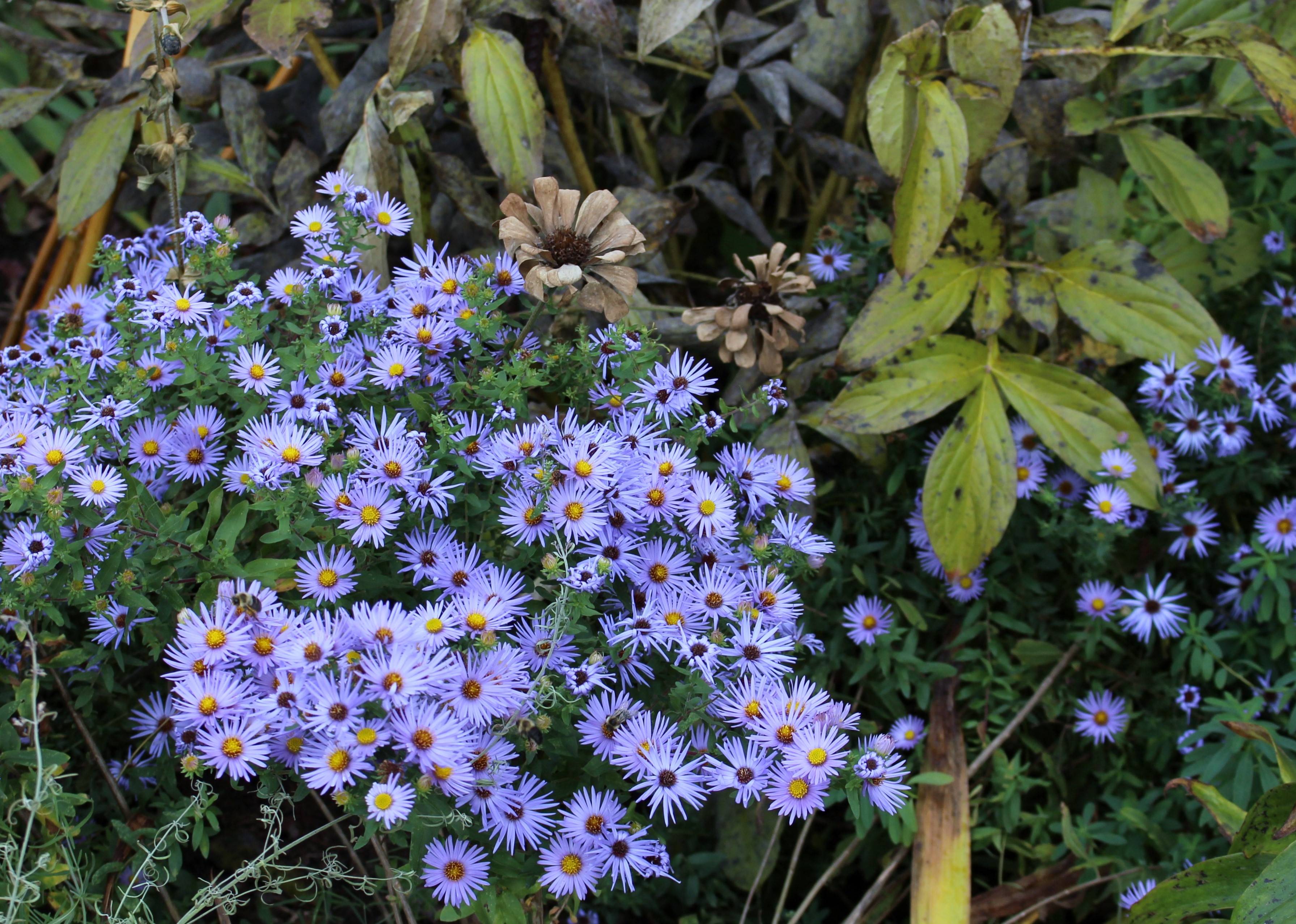
Some other final color in the garden is the Aster oblongifolius ‘Raydons Favorite’.  It waits until the very end of the season and carries it out with a clear lavender blue color and attractive dark eyes as the flowers fade.  I should really give it a little more room and respect next year, and not let it suffer all summer crowded and untended while the summer annuals steal the show.

Aster oblongifolius 'Raydons Favorite'

Amidst the mildew decay of fading peony foliage and frosted zinnias, Aster ‘Raydons Favorite’ offers up fresh color for this part of the border.  I think more would be a good idea.

I can’t do a late fall post without slipping in a cyclamen or two.  They’re sending out more and more of their beautiful foliage and while other parts of the garden are fading, these go from strength to strength.  I may have to talk to John Lonsdale about adding a few new ones since you can never have too many of these treasures and he always seems to have a few special ones for sale at Edgewood Gardens.

cyclamen hederifolium

The hardy Cyclamen hederifolium starts flowering without foliage in late summer.  I love it even more when the leaves begin to come up and there are still plenty of blooms to accent them.

The range of foliage types in Cyclamen hederifolium is really outstanding.  The dainty and distinct flowers are almost more of an afterthought.

A pale pink form of Cyclamen hederifolium with a leaf pattern which I love.

A pale pink form of Cyclamen hederifolium with a leaf pattern which I love.

For the moment I may have resisted adding any new Cyclamen but don’t be under the false impression I’ve resisted all the other goodies which can be found during fall planting season… or even better found during autumn clearance sales.  For some reason I found the Santa Rosa clearance sale (still going on btw, and don’t miss out on the additional 20% off coupon code) and discovered I needed more grasses and a trio of carnivorous pitcher plants.  Who knew?

Sarracenia from santa rosa gardens

Three new bog plants (Sarracenia) for the bog I don’t have.  Hopefully I can keep them happy elsewhere since they’re so absolutely cool with their sinister insect trapping pitchers.

As I go on and on about new plants I won’t even mention the tulips which need planting, the daffodils which need replanting, and the projects which need finishing before the bottom drops out of this pleasant autumn weather.  Let’s hope that’s the only thing which the bottom drops out of this week.

Have a good one!

Those boring chrysanthemums again.

It’s a rainy and dark October afternoon and you need a light on inside to do just about everything except nap.  This wasn’t my plan but then dark skies and October thunderstorms aren’t easy to plan for in general.  Better to just get on the computer and look at a few photos from earlier in the month, and it seems like all the earlier photos center on those most under appreciated of autumn flowers, the chrysanthemums.

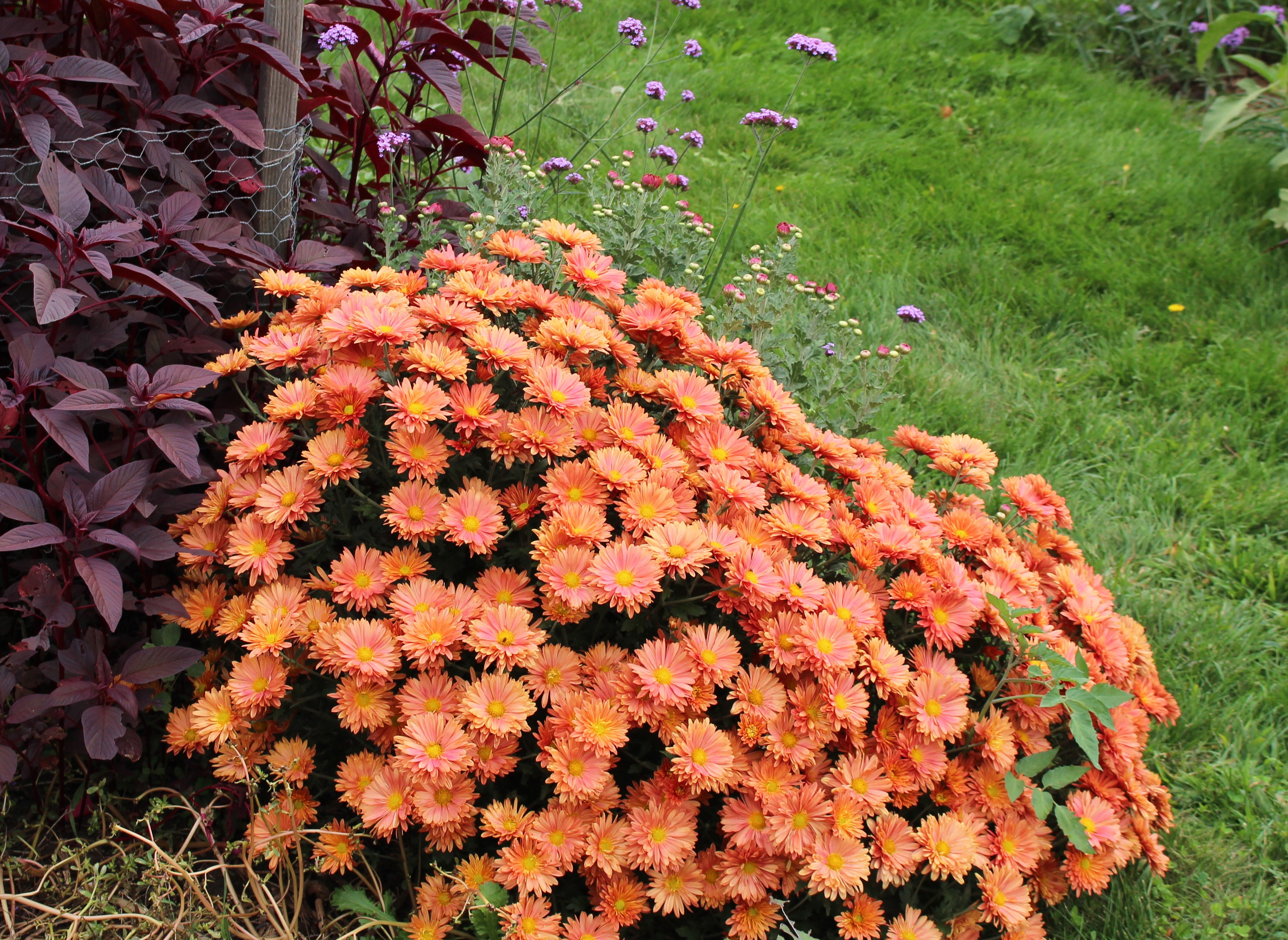
chrysanthemum seedling

A nice seedling of one of the cushion mums.  Not much form or grace to it but the cantalopy orange with just a tint of pink looks good in the failed beds of the vegetable garden. 

I happen to like chrysanthemums.  More so now than in March but even if it’s a seasonal love I think they deserve more respect than that of a disposable pot of color which usually ends up in the trash on the weekend after Thanksgiving.  They’ve earned it after all, 600+ years of cultivation in Eastern Asia with a reputation for happiness and royalty shouldn’t just fade away the minute Walmart offers them at 3 for $10.  Take a look here at the National Chrysanthemum Society’s webpage for a brief overview of their history.

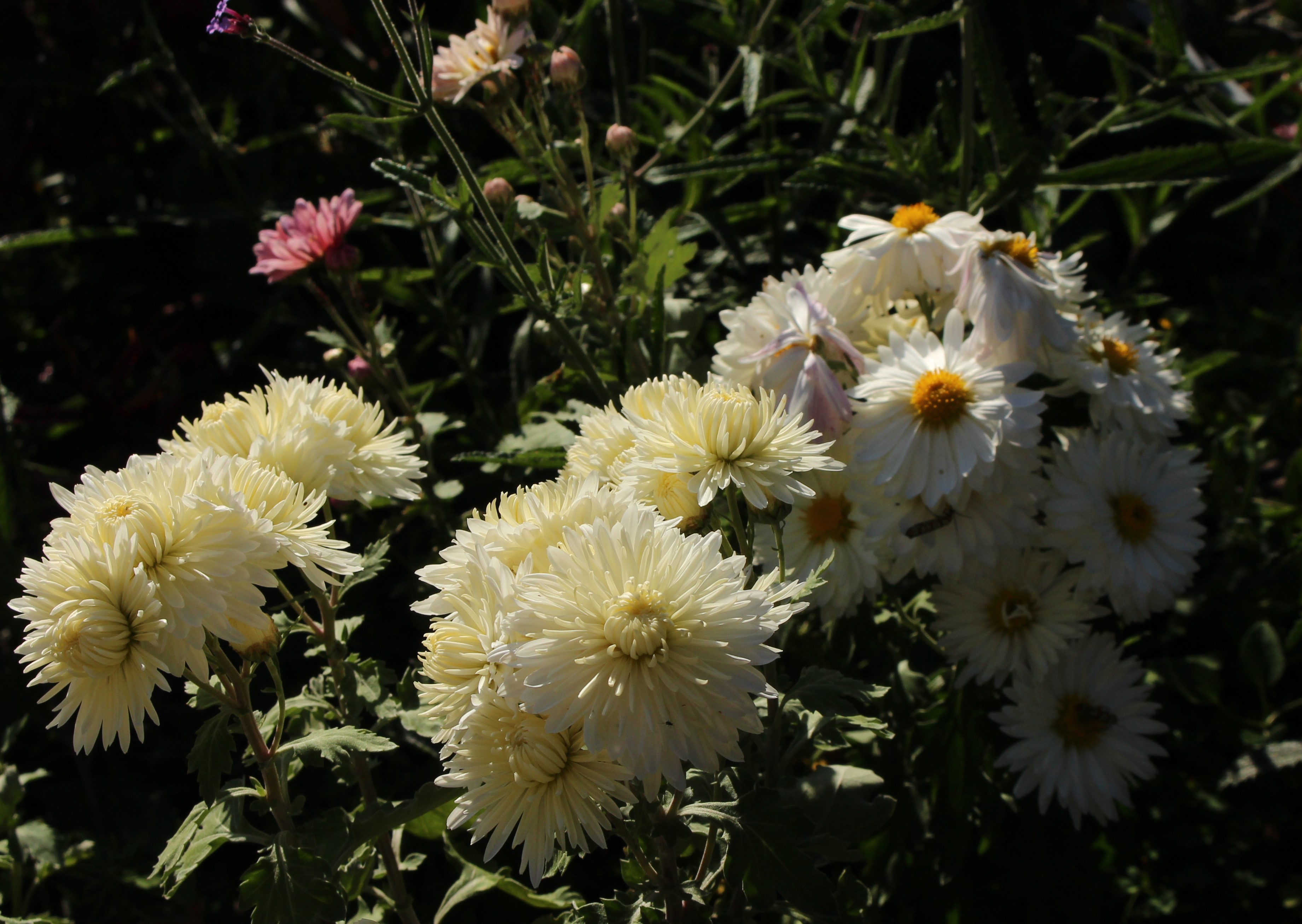
chrysanthemum centerpiece

Chrysanthemum ‘Centerpiece’ on the left with a similar looking seedling to the right.  Just a little bit of difference separates the two but I bet a chrysanthemum breeder would twitch at the inferiority of the other. 

I would guess if there’s one single thing which defeats the Chrysanthemum’s reputation it’s the lack of hardiness of all those late season purchases.  Gardening amateurs and experts alike often wonder why their attempts at overwintering these perennials routinely fail and why they’re left with a dead plant come springtime, and to keep my story short (and match my limited attention span), it’s because they just aren’t hardy.  They were bred for color and shape and reliable bloom and overwintering ease just didn’t factor in.

chrysanthemum seedling

A butterscotch colored seedling… or is it pumpkin colored… either way it’s a nice dose of color.

I suppose this all brings me to the point of this post.  I’ve been ‘dabbling’ in the hardier chrysanthemum sorts, the kinds which look great, grow without a care, and overwinter without a problem, and I’ve found it’s easier than you’d think.  As an added bonus they seem to like my poor soils and frequent droughts, and the bare patches of my beds will usually sprout a few mystery seedlings each spring to keep me guessing as to what surprises are coming along each fall.  A few online sources offer hardier types but I’ve been getting most of mine through Faribault Growers and their Mums of Minnesota offerings.

chrysanthemum Bristol white

Chrysanthemum ‘Bristol white’ in front (not a favorite since hard freezes will brown the tender centers) with a few interesting seedlings behind.

The mums I’ve been getting have had little trouble with winters here (z6a) but every now and then give up due to frost heaving or a late spring freeze (about half my plants unexpectedly died this year when an arctic front rolled through in late March after growth had started…).  They’re still not as surefire hardy as the Korean mum types (developed using the hardily named Chrysanthemum sibiricum) but they’re shorter and bushier and have more of a variety of flower colors and forms and it’s just what I need to distract me from the changing leaf colors and dying annuals of autumn.

chrysanthemum seedling

Another seedling.  The singles seem to be more popular with the pollinators, I’m just impressed that these survived a summer of neglect and drought and poor soil here at the base of a yew hedge.

I believe one of the more popular Mums of Minnesota introductions have been the Mammoth mum series.  They’re spreading, hardy perennials and just massive mounds of color when in bloom, but for as much as it pains me to say I have to classify them as a little boring.  They do great next door in my MIL’s mulch beds (which honestly are even more boring without the mums), but for as far as a plant to get excited about…. they’re not.  Luckily they know a little trick, and that’s their promiscuous selfsowing and all the little surprises they leave in the monotonous spread of shredded wood mulch.

mammoth mum seedlings

Momma plant (‘Red Daisy’) fills the upper left of the view, her mongrel offspring fill in along the bottom and up the right.  As you can see they don’t come anywhere near to ‘true’ from seed and there are even a few well-doubled flowers showing up.

Next year I may try and find a spot to plant out a bunch of the seedlings and see what greatness they amount to but I warn you not to hold your breath on that one.  It’s hard to get excited about mum in April and even harder to find enough open spots to fill with something that doesn’t pay off until October.

chrysanthemum mellow moon

This might be my favorite.  Chrysanthemum ‘mellow moon’ has these large, softly colored flowers which make great cut flowers but as you can see the clump’s been invaded by an odd yet attractive pink daisy seedling.  Hopefully next spring I can separate them out since I don’t want to crowd out the moon. 

chrysanthemum seedling

Another seedling, this one a complete dwarf.  I wonder how better soil conditions will change this plant, since this dry part of the bed is far better suited to cacti.

The whole mum clan seems pretty easy from seed and it’s always fun to see what shows up.  My last few photos are of a seedling which came from the HPS seed exchange and although they’re nothing like their ‘Innocence’ parent (a pale pink single which blushes pink with age) they’re indestructible through winter cold and summer drought.  Their only flaw is either the need for staking, or a harsh chop back in early July to control floppiness.

chrysanthemum innocence

A seedling of chrysanthemum ‘Innocence’

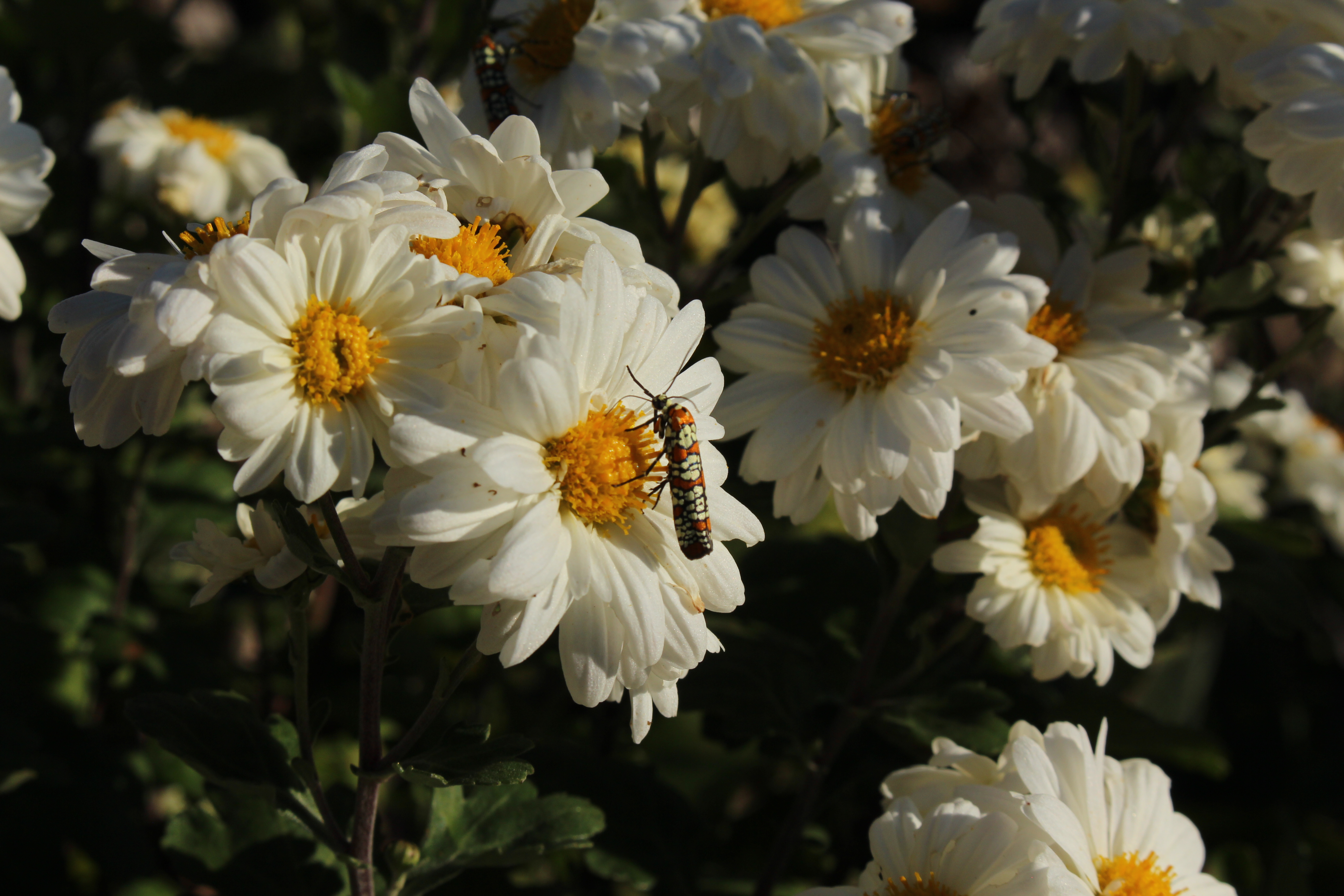
If you noticed the previous picture has about half a dozen ailanthus webworm moths wandering the flowers.  It’s an oddly colored little thing and I was hoping for something rarer and possibly native when I first spotted them… but as it is with most insects around here, if there are more than enough, chances are it’s not native.

ailanthus moth

Ailanthus webworm moth (Atteva aurea).  A unique look in my opinion.

I’ll leave you with another one of the large flowered mums which seems quite content in my less than ideal garden conditions.  I had taken at least two or three pictures before I realized the flower was looking back at me.

chrysanthemum gold country

Chrysanthemum ‘Gold Country’ with someone else who might be interested in pollinating moths and such. 

Hope you had a great weekend, gloomy rain or not, and hopefully there’s a spell of nice planting weather coming up so I can finish up all the unfinished gardening work of 2016… or not.  There will be plenty of time for gardening ambition in February 🙂

GBFD October ’16

Christina at Creating my own Garden of the Hesperides is the host of a monthly look at the importance of foliage in the garden, and for some reason this celebration always sneaks up on me.  Fortunately this month it falls on a weekend, and a rainy one at that, so rather than start projects inside and waste the weekend doing all those boring things which end up on a to-do list, I’m going to sit and relax with a coffee while reviewing the beautiful week that was.

autumn colors pennsylvania

The view out the back door.  My camera must be an optimist since it really is much rainier and gloomier than this photo would suggest.

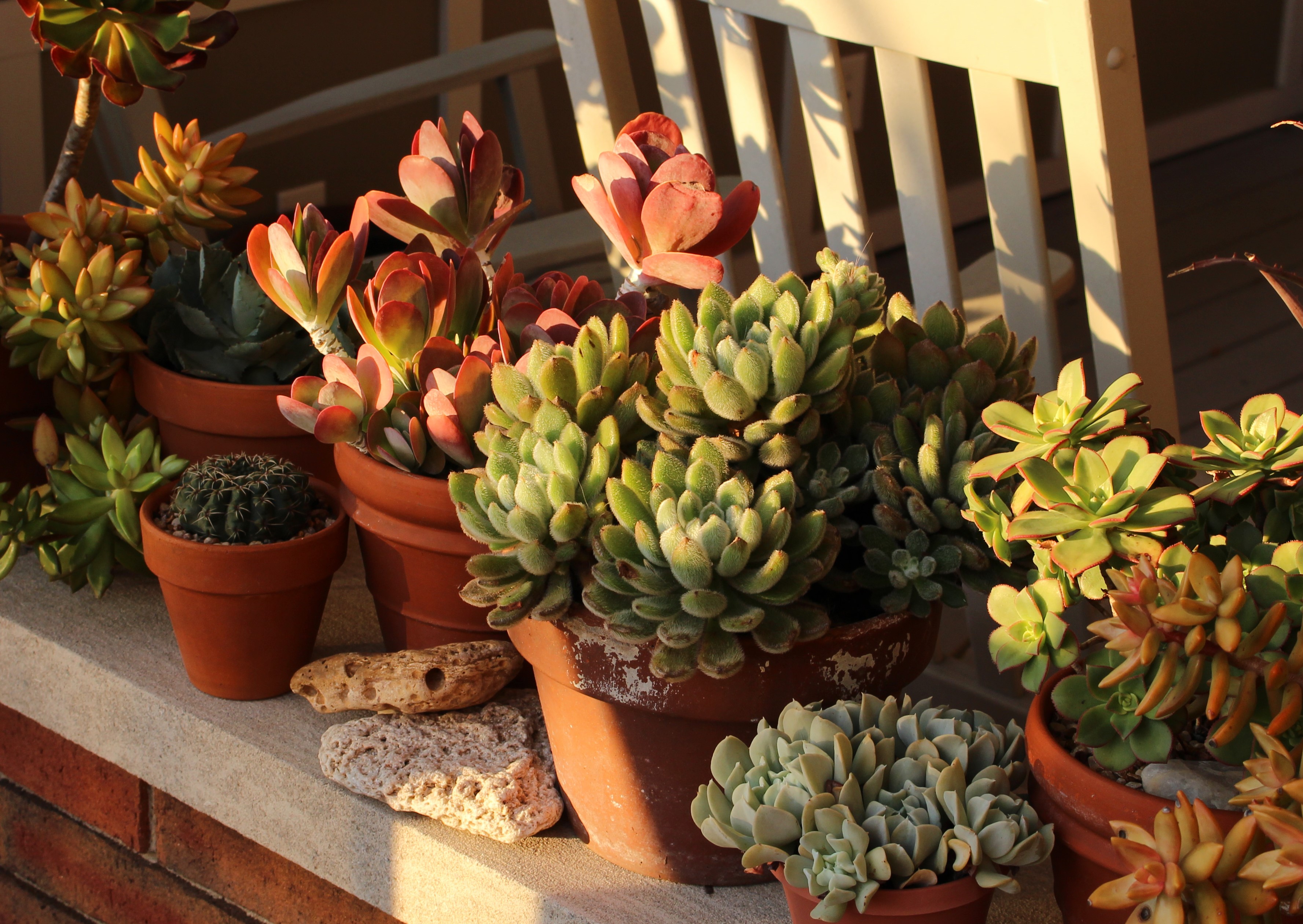
We were back in shorts and T-shirts this week as summer returned for a few days.  The ground is on the dry side but it was still perfect for just puttering around and thinking about getting ready for winter.  I should be doing more than just thinking though since each year I seem to add more and more stuff which needs winter protection.  Fortunately the first step was taken and all the succulents have moved up under the back porch for a quick look-over before moving on.  A few go into the garage, a few go near a window in the basement, but they all go into a cool spot which won’t freeze over the next several months.

succulent containers

Succulents can be dangerous.  They come in cute tiny pots and many root off the smallest bit of stem or leaf, so before you know it there’s a collection. 

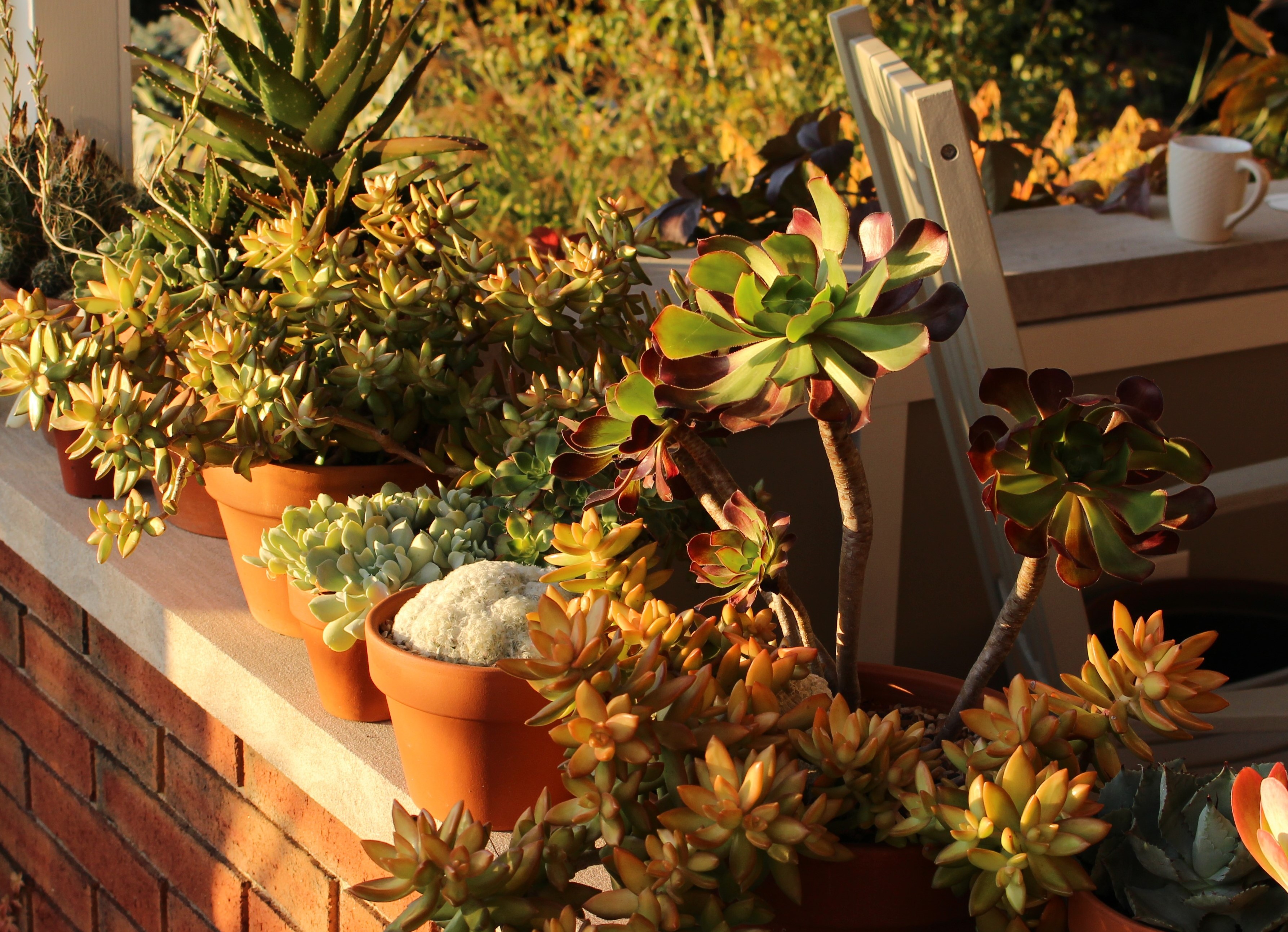
I kill plenty of these each winter and these survivors can all handle the conditions which I put them through.  Cool, dry, and dimly lit… although I would give them more light if I could…  A little shot of water maybe once every two months (if I remember) and if they make it good.  These do, and in the low autumn light I love the way their various foliage shapes and colors go together.

succulent containers

Again I need to replant, they never seem to change yet suddenly all have grown!

The light of autumn has also been very kind to the foliage and flowers of the grasses.  Their colors just fit at this time of year and it’s kind of a sunset of the season with all their reds and pinks and yellows.

pepermintstick arundo flower

I moved this ‘Peppermint stick’ Arundo donax this spring and it’s been much happier in this more open, better watered spot.  Next year I’ll pull out the floppy Miscanthus from its right and hopefully figure out how best to complement the strong variegation of this grass.  

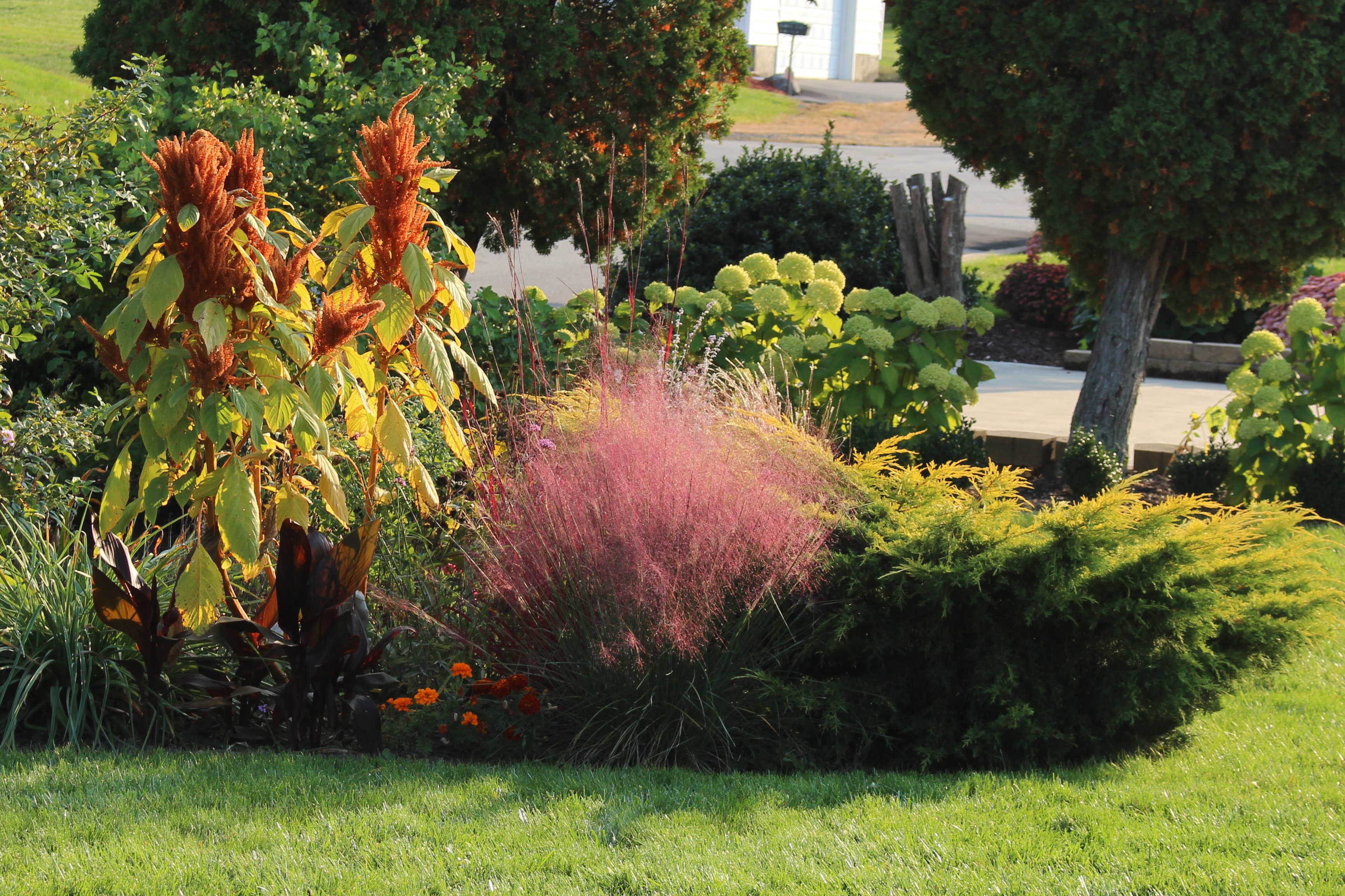
Another grass which is doing well is this spiteful clump of pink muhly grass (Muhlenbergia capillaris).  It’s been doing particularly well this year and I bet it’s because I evicted its two lazy neighbors and told this clump it would be next if it doesn’t shape up.  They always look miserable for months and then only flower just in time to get killed by frost.  I think they’re just not well-suited to this latitude and I’m trying out a selection called ‘Fast forward’ which is supposed to bloom earlier… but so far it’s been on exactly the same time table.  Maybe next year after it’s become better established, but this spring I was just happy enough it survived its late autumn planting.

pink muhly grass

Pink muhly grass flowering in the last few days of frost free weather.  It will still be nice enough after the cold comes, but the pink color will fade to white.

The foliage on the muhly grass does absolutely nothing for me and even with this late season show I already had plans to replace it.  To this end I bought another grass, a giant bluestem (Andropogon gerardii ‘Red October’) with purple summer foliage and bright red autumn color.  My fingers are crossed and so far so good, but I’ve heard stories that it’s a bit difficult to establish from a later planting.

pink muhly grass

A close-up of the pink muhly grass with a few blades of ‘Red October’ coming up behind.  I love it so far!
Autumn foliage is showing up all along the street as well.  The summer lushness has faded and things are beginning to call it a year.

limelight hydrangea in autumn

The dogwoods have taken on their russet red shades, and there’s no more pristine white on the ‘Limelight’ hydrangea.  Such a nice pink tint on the hydrangea is something I haven’t experienced before, usually the flowers  just brown off in the dry heat of late summer.

Also calling it a year is the front border bed.  Because of the dry summer I gave up on it in July but it still looks fine even without the annuals I usually add for some extra color.  Less work is always a good thing, so maybe just maybe I’ll do the same thing next year…. unless I dig it all up and replant everything.  Why keep things simple?

tiger eyes autumn color

A calming border of blue fescue grass and a jolt of autumn color from the ‘Tiger Eyes’ sumac.  I wish I had a hedge or wall blocking out the rest of the neighborhood, but that’s just not how we roll here in suburbia.

I better stop here.  The sun is out again yet there’s a bitter wind blowing until tomorrow morning.  I suppose I can take today off from the garden but tomorrow if the sun shines I’m sure I’ll be out there again.  In the meantime please consider giving Christina a visit to see what others around the globe are enjoying in their gardens.  Enjoy!

Agriculture in Suburbia

This post was mostly finished last weekend but for some reason I never got around to publishing.  I wish I had a good excuse, but it might have just been one of those Sunday evening get ready for the workweek make lunches and clean the kids off from the weekend kind of things.  In any case here it is and to be honest I have little idea what I was talking about back then with all the design comments and self reflection.  Sometimes I really wonder where this stuff comes from, but regardless the pictures have me thinking of last June when the garden looked ready to die so let me just start off with a photo from then 🙂

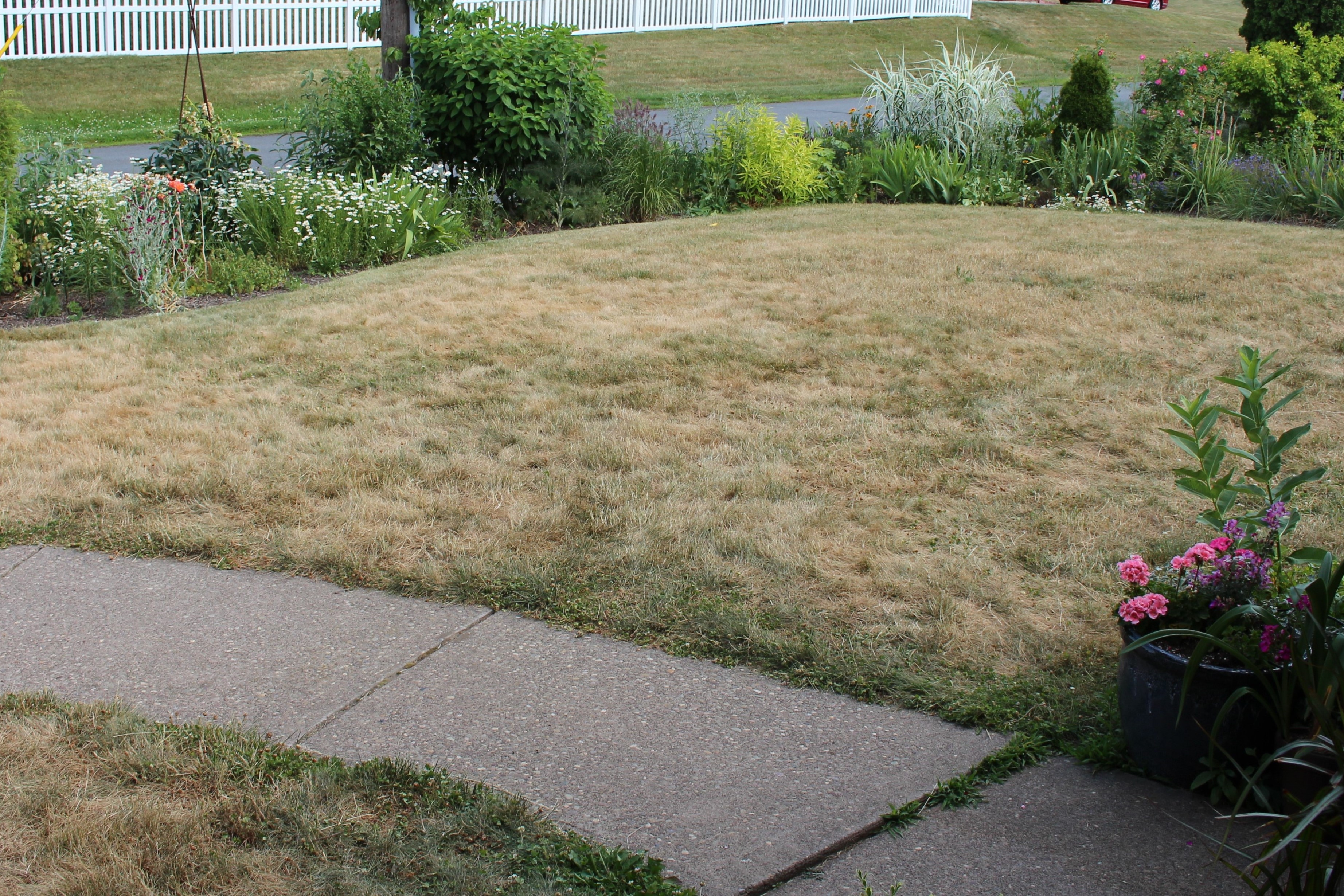
dormant lawn

The beauty of the  garden in June.  Roadside daisies and dead grass.  Fortunately the rains came back in August, but not until all July passed and I reached the “wordless Wednesday: I hate gardening” stage.

It’s always nice to hear compliments about your garden, and I am one who by reflex nearly always shrugs them off or dismisses them.  I’m sure there’s some childhood trauma involved which has long been forgotten, but it’s my way and it’s a rare day when I can just accept with a thank you.  Now I’m not saying I get a lot of compliments, but I do get a comment every now and then about a nice design touch or a combination which actually worked out.  Those are the compliments I always downplay since I rarely (unless I’m doing it subconsciously) put a whole lot of thought into what goes where.  With few exceptions my design process revolves around having a new favorite plant in hand and then desperately needing a spot in which to cram it.  Sometimes it works sometimes it doesn’t.

front street border

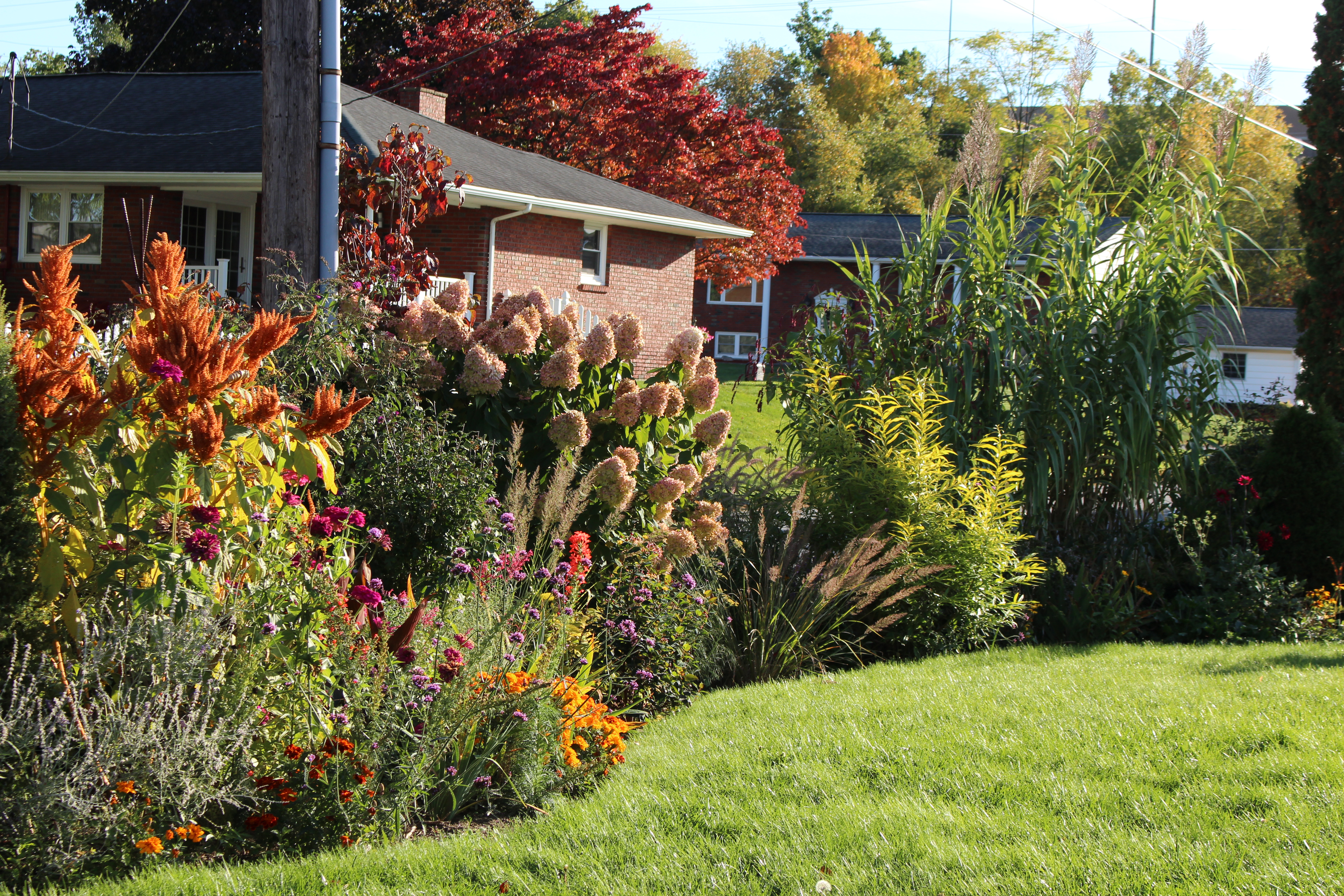
The front border in mid September.  If I had to put a name to this year’s design theory it might be something like ‘neglected agricultural’.

The front border along the street may not look brilliant, but it does look colorful, and with five months of winter breathing down my neck colorful is perfect.  Colorful and agricultural I suppose, since this years feature plant seems to be ‘Hot Biscuits’ amaranthus and in my opinion it either looks sort of farmyard weedy or like a particularly bright sorghum crop.  Ornamental or not I just can’t look away.  It’s big and bright and grainy and between it and the wheat-like feather reed grass (Calamagrostis x acutiflora ‘Karl Foerster’) and the sugarcane-like giant reed (Arundo Donax) I feel like it’s almost harvest time out there.

front street border

The view from the street side.  The purple perovskia has seeded around a bit and put out a few runners, the purple coneflowers as well, but I’ve done essentially nothing here since March and I kind of like that.

I owe this year’s crop of ‘Hot Biscuits’ to my friend Paula who surprised me one afternoon with a packet of seeds in the mailbox.  I had grown it before and ended up losing it, but fortunately she had a few seeds to spare and sent them my way.  That was last year, and I efficiently killed all the seedlings which sprouted, but this year was a different story and I ended up with a few clumps of healthy seedlings.

hot biscuits amaranthus

Just the first of many amaranthus close-ups which will pepper this post.  No one could plan this combo since I’m sure it violates numerous design principles, but I just love it.

The amaranthus shows up here and there all along the border, which is probably a good thing since even the simplest design theorist will tell you it repeats and unifies a theme.  Repetition is important since this bed frequently suffers from “I always start from the driveway end and use up all the best plants there” syndrome.  The far end of the bed gets less weeding, less watering, less tending… it basically gets less of everything, so carrying the amaranthus theme all the way through helps hide the sparseness of the neglected end.

wine zinnia

Here in the preferred end of the bed are well tended seedlings of Benary’s Giant wine zinnias and the pink gomphrena ‘fireworks’.  These were the seedlings I was most excited about this year, so in they went first 🙂

I did have a few too many zinnias this spring so was pretty generous about placing them in the border, but when the Brenary’s Giant scarlet began to open next to the pink gomphrena I immediately cringed.  For about a week I thought it looked awful but now I quite like it.  It reminded me of the first time I saw pictures of some of the late Christopher Lloyd’s magenta and pink plantings at Great Dixter.  They also bothered me at first and I think my first thought was “grow up Chris and plant some lavender and white and pink instead of that mess”… but look at me now.

scarlet zinnia fireworks gomphrena

Scarlet zinnia with ‘fireworks’ gomphrena.  Am I suffering from retinal fatigue or does it actually look nice together?

Maybe the green lawn and the parchment color of the feather reed grass tames it a bit but between this and the orange of the amaranthus I’m just plain pleased.

scarlet zinnia karl forester grass

A very technicolor look with the yellow of the ‘Tiger Eyes’ sumac across the lawn.

Here’s another amaranthus photo-bomb.

hot biscuits amaranthus

Looking down towards the ‘less interesting’ end of the border.

Ok. One last amaranthus photo.

hot biscuits amaranthus

From the neglected, far end of the border, more amaranthus 🙂

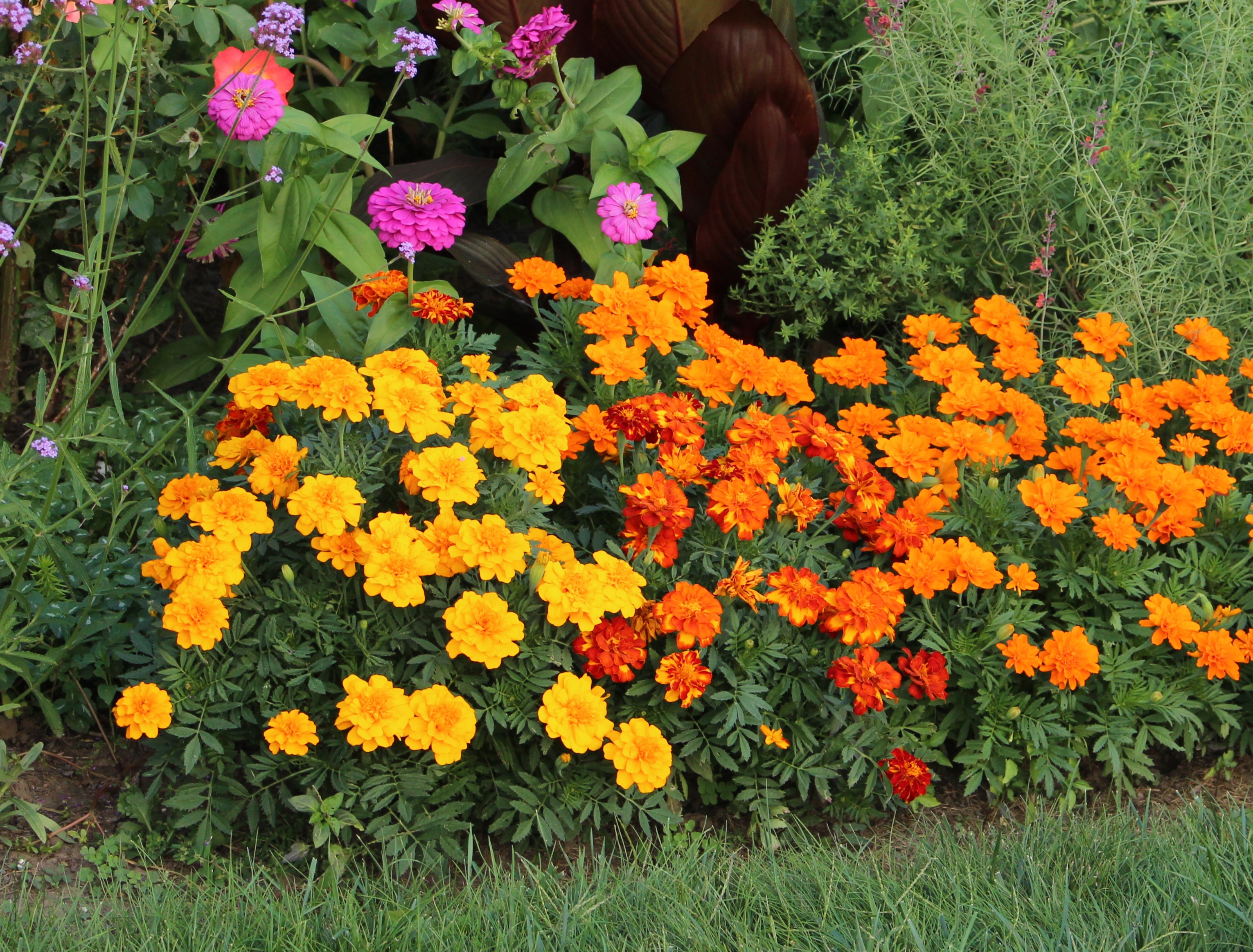
You may have noticed a bright golden patch of marigolds in the border.  The fall smack dab in the middle of my newfound love for the most offensively bright colors and I’m not sure I can resist planting a whole border of them next year.  I had to smuggle these seeds out of my stingy older brother’s garden last year and was lucky that a few sprouted and survived July’s dry spell.  He’s been letting them reseed for a couple years now and they still come up in a good range of colors on relatively short and large flowered plants.

marigolds tagetes

A few marigolds putting on a nice end of summer show.  More might be nicer, and by more I mean a whole border.

What to plant them with?  I think they’ll go at the far end of the border, alongside the bright gold of a juniper, but other than that I have no plans.  Should I back them up with some darker foliage plants?

img_3082

Korean feather grass (Calamagrostis brachytricha) in front and pennisetum ‘Karley Rose’ towards the back. With the ‘Limelight’ hydrangea it all looks very calm and refined, but I think a nice border of marigolds will give it a good jolt of color!

We will see what happens.  There’s a good chance it will all come down to whatever seeds sprout the best next spring, but in the meantime it’s nice to dream about having a more plan-comes-together kind of garden.  That is until the snowdrops bloom.  Once that happens my brain goes to mush and I’m lucky if I get anything planted 😉

Thursday’s Feature: Colchicums!

As one considers the winding down of summer and the general decay of the growing season… as I suppose one should on this first day of autumn… there do seem to be a few positive notes which make the changing of the seasons more bearable.  While other things die or flee in response to cooler temperatures and weakened sunshine, a few plants spring to life, and if you count yourself among the optimists you could almost consider this to be the start of a new growing season with flushes of new foliage for the cooler weather, healthy root growth and spring buds forming below ground, and the first of the autumn flowers.  “Good for you” I say since I am not a lover of fall and its frosty death, but even I will admit colchicums make it easier to cope, and the fresh blooms at this time of year make it all seem a little less final.

With those cheery thoughts in mind I’m again joining Kimberley at Cosmos and Cleome for her Thursday Feature, and the flowers of the autumn crocus or naked ladies (Colchicums) are what stand out in my garden this week.

colchicum nancy lindsay

A reliable Colchicum with smaller flowers and colored flower stems, Colchicum ‘Nancy Lindsay’ would be on the short list of favorites.

As a good blogger I should take this opportunity to discuss the various details of researched growing conditions and also cover the finer points of colchicum cultivation but as you may have already guessed from previous posts I bore easily and tend to laziness, so to be honest I’d recommend getting that book learnin’ elsewhere.  I’m more of a stick it in the ground and see if it grows kind of guy, so if you don’t mind, click on >this link< and you’ll find a few of Kathy’s posts over at Cold Climate Gardening which should do very nicely to fill the void I leave.  She’s like a crazy cat lady of colchicums, and in addition to growing, showing, sharing, and speaking on colchicums, she also does an excellent job of putting that information online.  She’s also a wonderful person, so I hope she finds neither ‘crazy’ nor ‘cat lady’ offensive since I would hate to offend her good nature.

colchicum innocence

Colchicum run a range of pink shades from dark to light, but the odd white form really lights up an autumn bed.  Here’s Colchicum ‘Innocence’.  Decent sized blooms, slight pink tint when you look for it, and a good grower.

Better sources of information aside, I guess I should mention some of the barest essentials of Colchicums.  They bloom bare, without foliage, hence the common name of naked ladies.  Their bloom shape resembles that of crocus, hence the name autumn crocus -although they share no family relation whatsoever.  Of course being unrelated to crocus is not the worst thing since wildlife love the crocus around here yet completely avoid the poisonous parts of colchicums.

In the early spring, colchicums quickly grow leafy, hosta-like foliage but then yellow and disappear once the weather heats up.  Decent, well drained soil, sun or part shade (the more sun in spring the better), and hope for the best.

colchicum foliage

Spring species tulips and the springtime foliage of colchicums growing in the lawn.

With their fall blooms, colchicum are a bit of an oddity when compared to the regular spring and summer flowers of most bulb catalogs.  Maybe this is why they seem expensive when compared to the mass produced spring bulbs, but don’t let it fool you.  They might require some special handling and storing, but overall  it’s an easy group to grow.  If I have one bit of advice which may be helpful it’s to plant shallowly in heavy soils.  The flowers seem to struggle when sprouting up out of hard-packed soil, and if they can’t make it up chances are the spring foliage won’t make it either, and your special new bulb will die.  Cover loosely I say, and if the bulbs (actually corms btw) are already flowering, do not cover the flowers with dirt and expect them to rise up out of the soil.  The flowers, and foliage as well, seem to take advantage of the old, dried floral tubes and follow these paths up out of the soil.  When newly planted, the tunnels from last year no longer exist, so to get around this plant shallowly and cover with some mulch once flowering is finished and you should be in good shape.

colchicum lilac wonder

Colchicum ‘Lilac Wonder’ planted in grass.  If planting in lawns, be prepared to hold back on mowing until the foliage has yellowed off.  I like a field of gone-to-seed grass swaying in the breeze in June.  You may not.

Over the last two years I’ve been adding colchicums to the meadow garden, and so far have been pleased enough to want to add more this fall.  I’m hoping they do well enough amongst the root completion of the grass and so far so good on that.  Another plus is I prefer the flowers when set off by the green grass, even though in most years this area usually has more of a brown grass look to it.

colchicum lilac wonder

More Colchicum ‘Lilac Wonder’ planted in the meadow garden. This is my favorite colchicum right now, it really does well here.

colchicum in meadow grass

A more sparse planting of an unknown colchicum.  This one will sulk if the spring is too short or dry, or isn’t exactly to its liking.  I’d blame the lawn, but the same lack of blooming happens in my flower beds as well.

I’m going to wrap it up here since although I can stare at and talk colchicums for hours in the garden, I am way past the limits of my attention span here at the computer.  But before ending I have to show Colchicum x aggripinum and the remarkable pattern of its blooms.  Many colchicums show tessellation in their flowers and of the ones I grow this one shows it best.

colchicum x aggripinum

The smaller, shorter foliage and flowers of colchicum x aggripinum still show up very well in the garden.  This clump liked being divided last summer, but didn’t like the late freeze and short spring we had, so I hope it fills in better next year.

colchicum x aggripinum

Tessellation on a flower of colchicum x aggripinum.  I love this patterning.

If you’ve made it this far I might as well apologize while I still have your attention.  There are still a few weeks left in the colchicum season and it’s very likely you’ll see more of them at some point or another as I try to work my way through this otherwise miserable new season.  In the meantime though, please consider giving Kimberley a visit to see what she and others are posting about this Thursday.  Perhaps they have a higher opinion of autumn.

Not a bad morning.

It’s beautiful out this morning and I can’t even see problems in the garden.  The lawn is relatively under control, some staking and weeding was done yesterday, the soil is damp enough that watering is not an issue, and other than some chipmunk issues the wildlife of the garden is behaving in an entirely picturesque and harmless manner.  This feeling may fade quickly but while it lasts I’ll just sip my coffee quietly and hope the kids don’t find me.

datura metel

Datura metel.  I expected an annual but this one re-appeared out of nowhere once the rains came and the soil heated up.  It’s doing so much better than last year.

The light is often perfect in my garden but my photos rarely show this.  Even with a better half who loves expensive electronics and insisted on a fancy camera there’s still a skill component missing and I often look at what shows up on the computer screen and wonder what happened.  Fortunately this morning things just came together and it’s as good as it’s going to get.

IMG_2548

Light and shadows on a Datura flower. Even a few dew drops to make it glisten.

Last fall a friend gave me a few seedheads of what is probably Gomphrena ‘fireworks’.  It’s supposed to be in the same species as the regular globe gomphrena (G. globosa) but I don’t see it, and even though it loves the same heat and full sun, the flowers are more like yellow tipped pink brushes rather than tight globes.

gomphrena fireworks

Gomphrena ‘fireworks?’ in the morning light.  Easy from seed (needs warmth and bright light) and loves the heat.

Another annual which catches the light perfectly is amaranthus ‘Hot Biscuits’.  Practically a weed, it just shot up when the rain started falling and the humidity shot up.  This is another one which came via friend…. thanks Paula!

amaranthus hot biscuits

Amaranthus ‘hot biscuits’ in the front border.

I would have laughed if you told me I’d ever grow (and like) a brown flower but here it is.

amaranthus hot biscuits

A nice late summer show of amaranthus coming up among the butterfly bushes (Buddleia)

I do buy a few seeds here and there and zinnias are one which I like to keep in good supply.  Brenary’s Giants ‘Lime’ does NOT show well in the garden but it’s just too interesting to leave out.

Benary’s Giants lime zinnia

Benary’s Giants ‘lime’ zinnia from Fedco Seed.  I bet a good designer could do great things with this color… but me, not so much.  I think it’s cool regardless.

The birds and bees get the credit for this sunflower as well as whatever religious deity you believe protected it from my weed bucket.  I swore up and down I would not allow sunflowers in the tropical bed but there you have it.

double sunflower

A little doubling and a darkly rich center, I’m quite pleased to have this sunflower sharing space with the cannas and bananas.

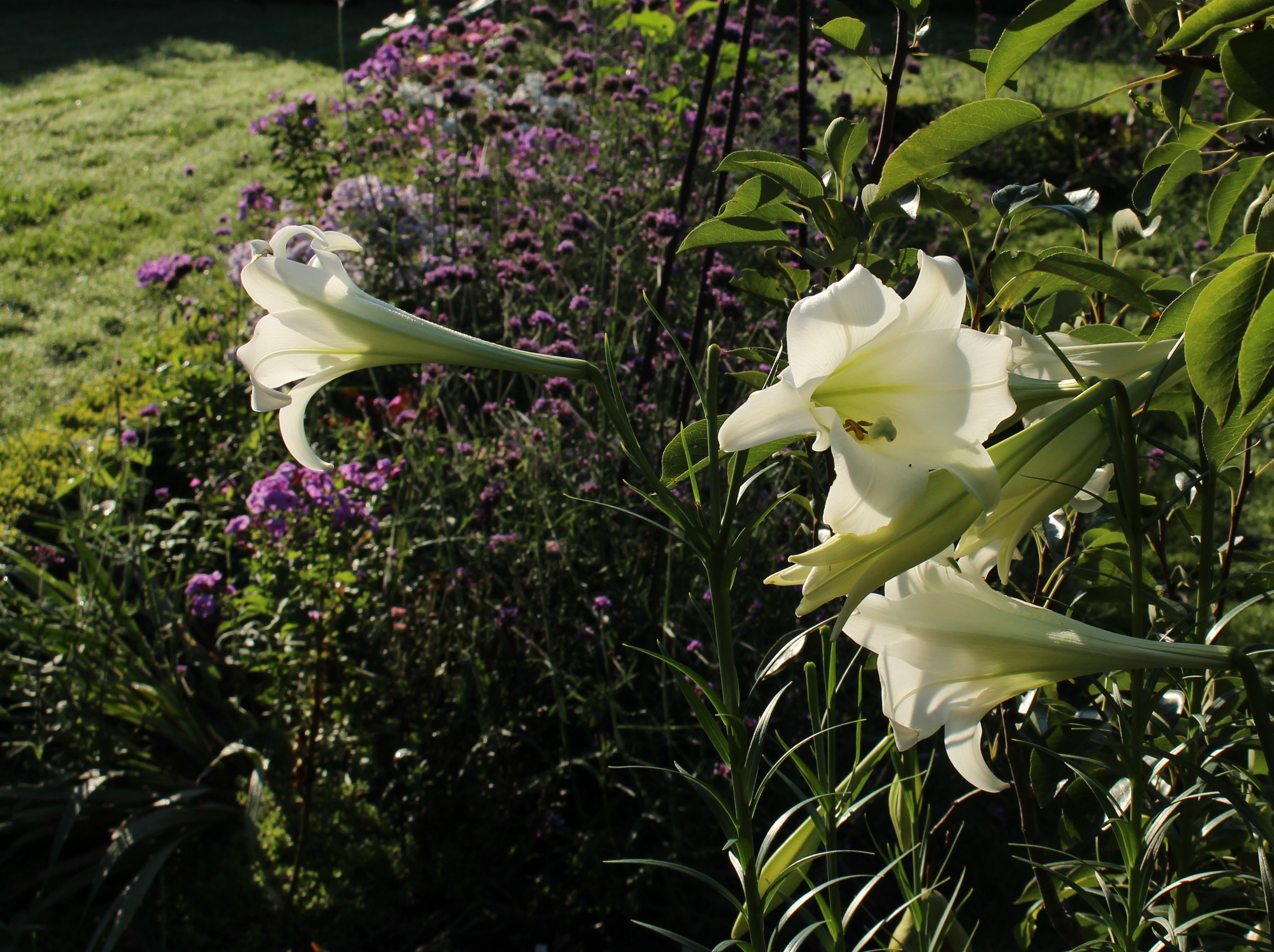
The Formosa lilies (Lilium formosum) were stunted by weeks of drought back in the no-man’s land which I tend to ignore, but are still forgiving enough to fill the garden with their sweet summer perfume.

lilium formosum

Lilium formosum.  For some reason I thought planting them where they’d grow up into the branches of a pear tree would be a good idea… but then again why would I think my little seedlings would ever amount to anything?

The meadow got its mowing just in time.  The first colchicum blooms were beheaded, but now the others can come up nicely in the short (and for once green) grass.

cochicum in lawn

cochicum in lawn

Back in July we didn’t even remember what rain looked like.  Then something happened.  August was warm and humid with perfectly spaced rain showers and this blessing from above even resurrected (most) of the phlox bed.  If you look closely the damage is still there, but on a beautiful Sunday morning it’s easy to see past that.

garden phlox paniculata

Phlox paniculata in the late August light.

Please click on “I hate gardening” to see what this bed looked like a month ago.  You could call the change miraculous and I don’t think that’s an exaggeration.

garden phlox paniculata

Just in time for Monarch migration, the garden phlox and Verbena bonariensis are again filled with flowers and this bed is a very busy place.

I do love my phlox.

garden phlox paniculata

Back from the dead, random phlox paniculata seedlings.

Have a great Sunday and all the best for the upcoming week.  I’m going back outside now and suspect nothing will get done other than a second cup of coffee.

GBFD August ’16

They say better late than never, but according to that theory just about everything I do should be better… and I know that’s not the case, so I’ll let you be the judge.

I’ve let a few too many of Christina’s Garden Blogger Foliage Days pass by without a decent post, and that’s a shame since I really enjoy her prodding us to take a monthly step back to look past all the flowers.  The flash of flowers often catches the eye and as a result foliage often fades into the periphery of subconscious thought, so on the 22nd of each month it’s not the worst idea to look around and consider what the leafiness of your garden is doing for the bigger picture.

lasagna garden bed

The bed-which-I-can’t-decide-what-to-do-with just before we left on our camping trip.

I showed the above picture just a few days ago and although I knew there were a few weeds sprouting I just didn’t get to them before we left.  Let me just insert here that this is not going to be the “decent post” which GBFD deserved this month because it’s a post on only one type of foliage, and that’s the quick growing green of crabgrass and other uninvited leafy pests.

weedy flower bed crabgrass

The same bed exactly one week later.  A bounty of rain, heat, and sunshine plus a fertile soil (the dumping spot for our rabbit’s used bedding) have greened up everything.  Even the clover and creeping Charlie have filled in any last remaining dead patches in the “lawn”.

I spent a recent afternoon clearing out all the lush growth.  The bed is empty again but this time I stuck a few stray cuttings here and there and with a little luck perhaps I’ll have some more varied foliage for September’s GBFD.  At the very least it might give the weeds a little competition since apparently there’s not much slowing them down now.

Thanks for humoring me with this ‘foliage’ post and if you haven’t already been over please consider giving Christina a visit to see what others have done this month with their posts.  You won’t be disappointed.

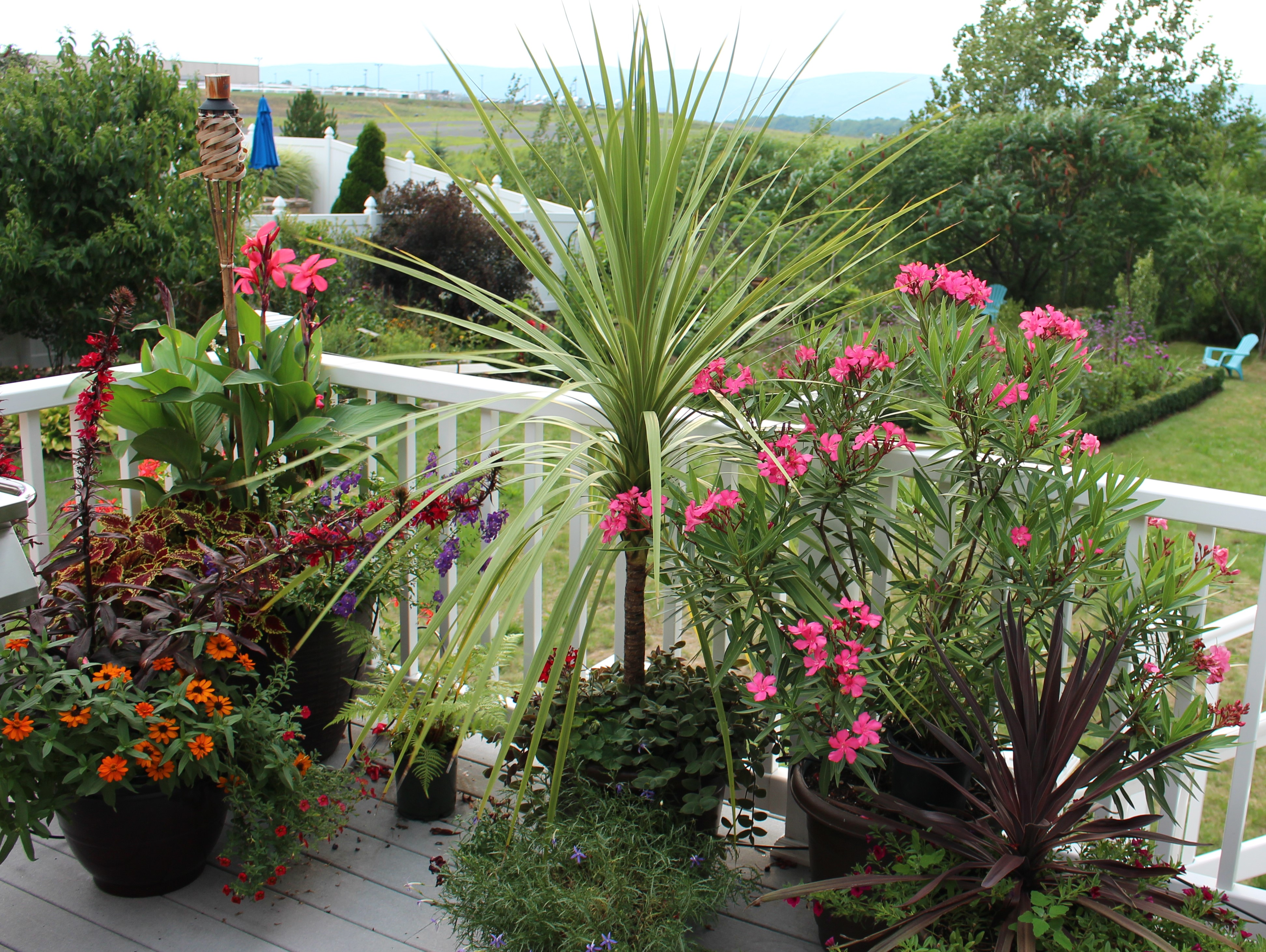
The containers. Meh.

Planting the deck always starts out innocently enough but then degenerates into a huge project.  This year was no different in that respect, and to even get started with the ritual power washing all the winter debris of kid-play and kitchen remodel-scraps had to be dragged off first.

deck cleaning

The entire covered part of the deck is filled with debris and scaffolding in addition to the furniture and terracotta pots which need to be stored under cover for winter (they’ll crack if they freeze while still wet and filled with wet soil).  btw the dark gray object is the old kitchen sink, so even that is out here…

So hauling off trash is the first project, then the cleaning, then the decision that all the mishmash of geriatric plastic planters should match, so off for a paintbrush and some leftover paint.

painting plastic containers

No more black nursery pots, or old teal and faded gray, all the plastic was painted with my trusty mocha-tinted, all surface Sherwin Williams paint.

Our last frost date is around the 15th of May, but most planting jobs are usually procrastinated way beyond that.  This year the big deck planting was pushed off until June 8th, which meant a lot of sitting around for the earliest purchases but it also meant clearance sales were in full swing.

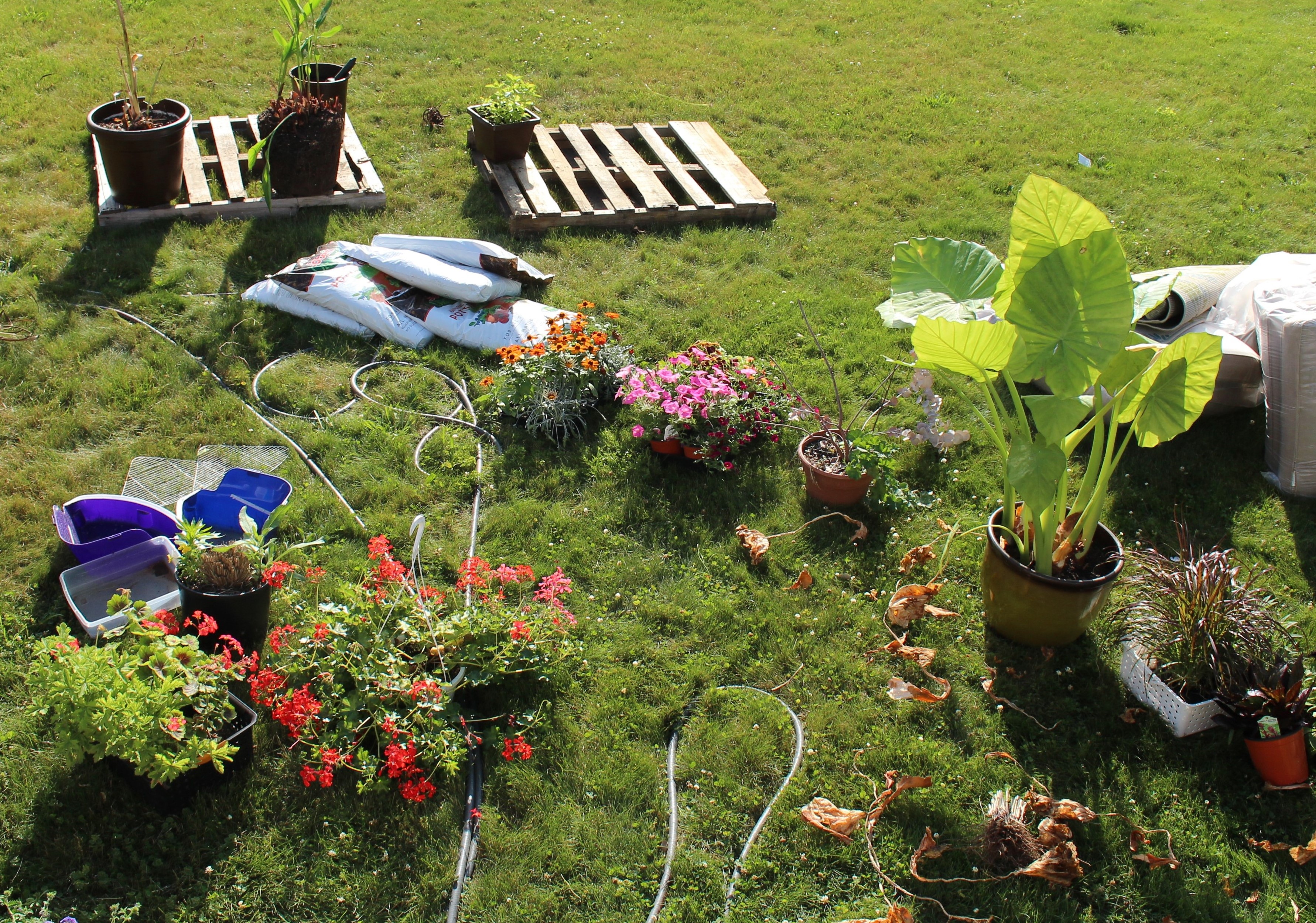
container planting

I tend to spread out while setting the deck up.  There’s a mess everywhere 🙂

So this is where the ‘meh’ comes in, and since the weather is kind of ‘meh’ today as well it might be the best day to discuss…  I usually go out with little to no idea or plan and as a result come home with whatever catches my eye.  Usually it works out, but this year I just feel like something’s missing.  Maybe I need yellow, maybe it’s the lack of sweet potato vines, maybe there’s too much red, maybe it’s the pink… I’m not much of a ‘pink’ person.

deck container plantings

One purple fountain grass is nice, three might have been overkill, still the rosemary enjoyed its division and replanting, and most other plantings are hanging in there.  You may notice my amaryllis bulbs tucked in here and there.  The strappy leaves don’t look half bad in my opinion.

I should be giving things a nice liquid feeding each week and part of the ‘meh’ might be that things are underfed.  A rich diet for these flashy annuals is what they thrive on, and upon thinking back it’s possible I’ve missed four out of the last five feedings.  As usual I’m my own worst enemy.

balcony flowers

I do like how the creepers, in this case cascading geraniums (pelargoniums), work their way through the railing.  They’re very popular with the hummingbirds even if the color might be a little too orangey for the companion plantings.

Some other disappointments have been the underperforming vines.  My three little babies, the Chilean Glory vines (Eccremocarpus scaber) did not take off as planned.  Apparently they are foolproof but this fool will challenge that label since my plants (nurtured along from tiny seedlings) made a go at it but then died off one by one.  I did get to see one single bloom cluster of amazing little orange lipstick tubes of color but that was it, and I think if I was brave enough to beat back the grasses, I would find my last glory vine has also passed over.  That’s too bad but I’m already excited to grow this plant again next year since I’m sure things will go differently even if I do everything exactly the same… but in the meantime at least my snapdragon vine (Asarina scandens) is coming along.

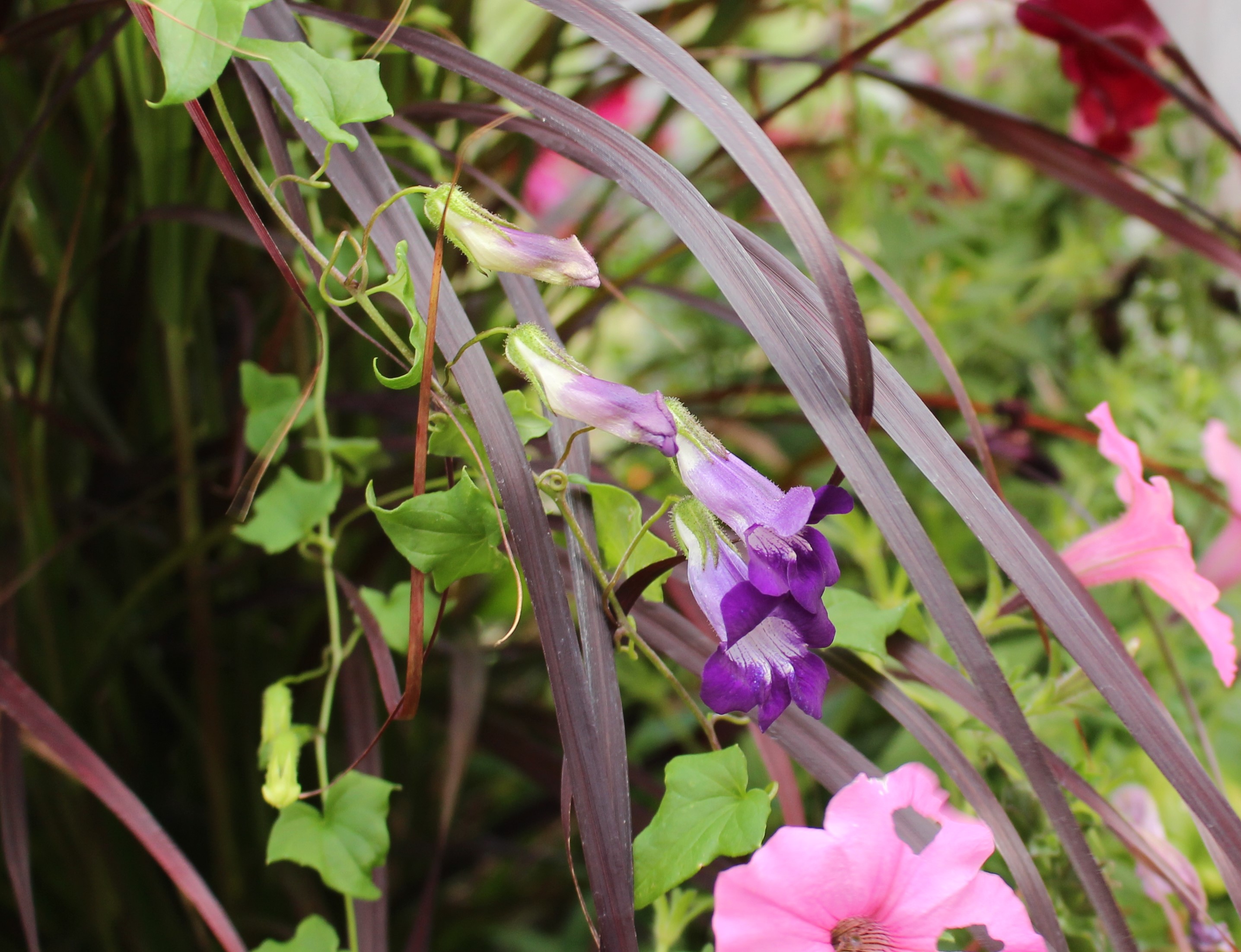
snapdragon vine Asarina Scandens

Snapdragon vine (Asarina Scandens) growing up into the purple fountain grass.  At least this one has been a forgiving grower and easy bloomer.

While many of the plantings leave me uninspired, a few things are doing great.  The oleander and overgrown spikes are back for another year and the canna ‘cannaova rose’ is again putting on a nice show.  The canna just hit a lull (probably lack of fertilizer induced) but I’m sure will return to glory shortly and I’ve divided last year’s roots up between a few spots so it’s likely you’ll see these showing up elsewhere as well.

dracenea spike

Those little dracaena spikes which show up in nearly every pre-made container planting seem to turn into something a little more interesting given a few years of growth.  My goal is to have a small grove of these some day soon 🙂

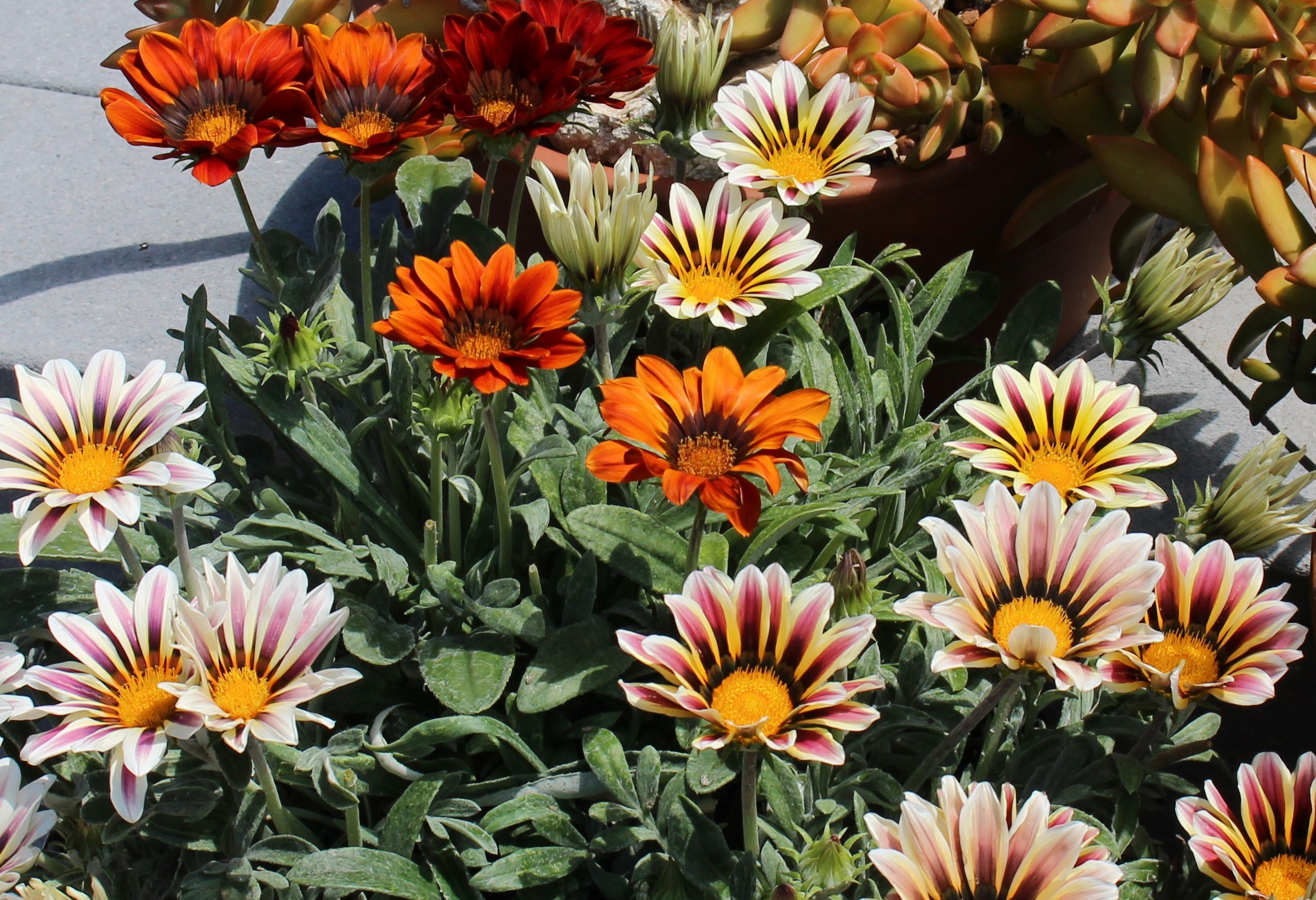
There are a few new things this year which did beat the ‘meh-ness’.  Gazania are a plant which although they don’t grow consistently for me, do look great when they feel like it.

annual gazania

The unusual colors of Gazania really don’t blend well with any look I’m going for but who cares, they just look cool when opened up for the sun. (just keep in mind that they close when the sun goes away…)

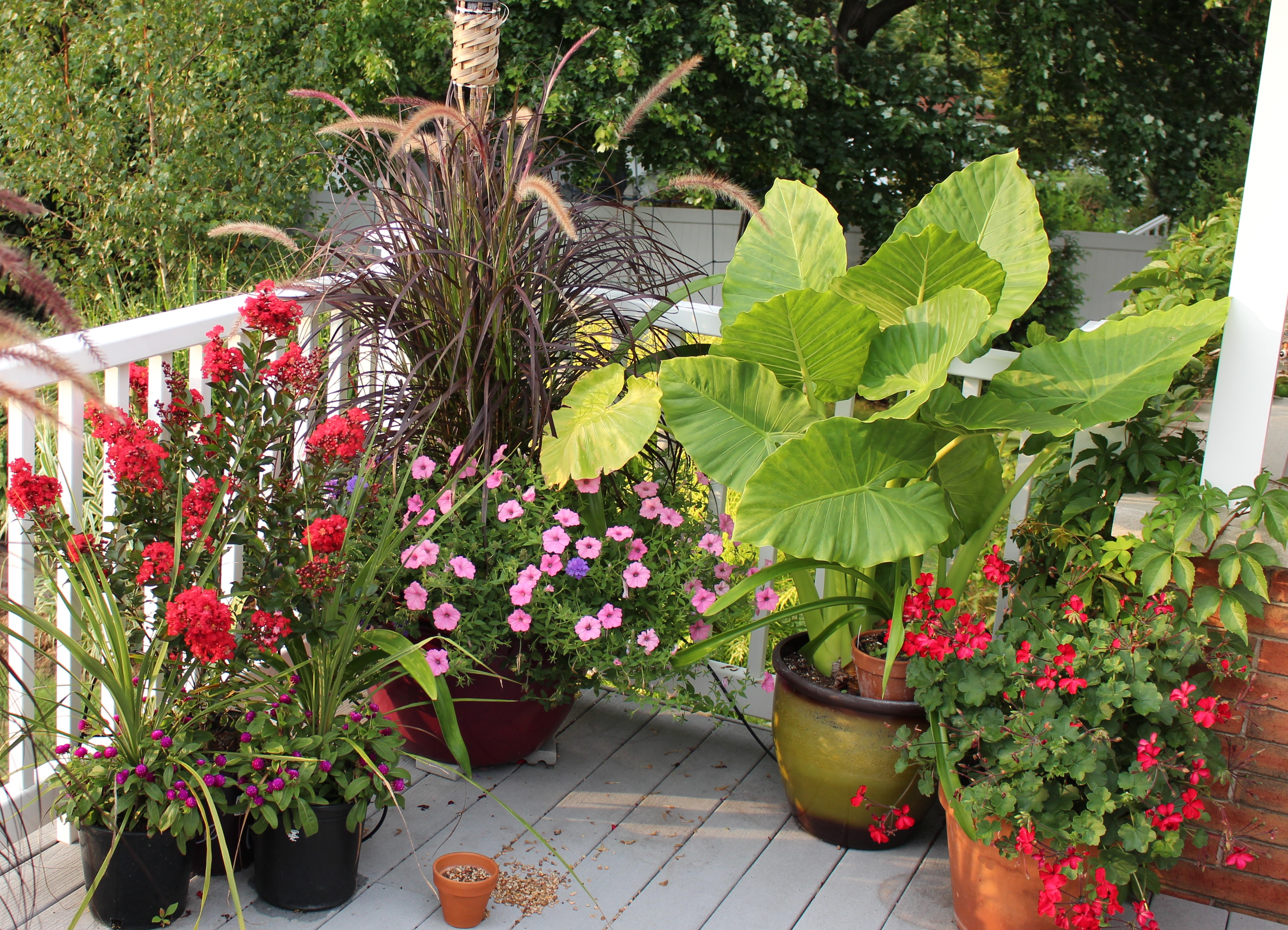
By the way I forgot about the elephant ears and the new crape myrtle, both of which are not ‘meh’.  The two are just soaking up the rain and heat and humidity and picking up where the petunias and million bells drop off, but before I begin to sound too positive let me point two things out.  First I have too much red, and since the obviously red myrtle was labeled purple I’m innocent there.  Second there’s a plant missing out of the small terra cotta pot in the front of the photo.  There’s a cute little b***ard chipmunk who decided it would be fun to end my three year relationship with a slowly growing clump of lithops (living stones).  After a few days searching I found the chewed up corpse under a nearby shrub.  Time will tell if the shriveled bits can recover, my only hope is that they were poisonous.

deck container plantings

Blood red crape myrtle and geraniums, pink ‘bubblegum’ petunias, elephant ear (Alocasia calidora?)… an ‘interesting’ look I suppose.

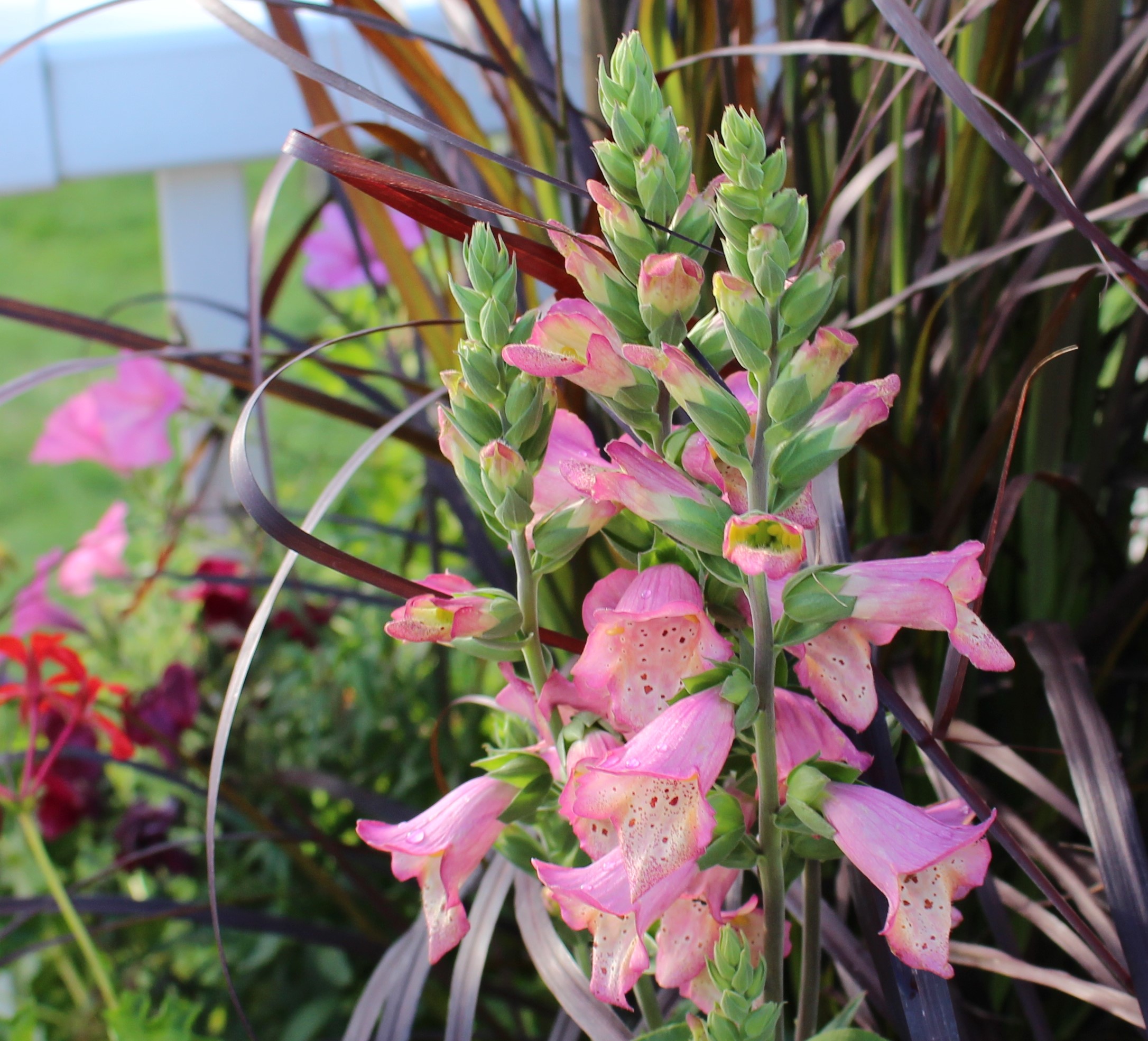
I still need to mention the digiplexis which just came into bloom this week.  It’s a inter-species cross between a foxglove (digitalis) and an Isoplexis (Canary Island foxglove) and when it first hit the market in 2012 it immediately went on to many ‘must have’ lists.  My must have list is always a few years behind but I was finally able to try it out this year when I found it for a reasonable price.

digiplexis

Digiplexis ‘Canary Berry?’.  It’s nice enough but I’m not overwhelmed yet.  It’s one of the foxgloves, and I love a nice foxglove, but this non-hardy version might be something left for those everything-grows-for-me San Francisco gardeners who have super mild winters and cool nights which bring on stronger colors.

So there’s good and not-so-good out there and to be honest no matter how it looks it always beats the deck in January.  January seems to keep all gardening outcomes in perspective and as I check things out every day and multiple times a day I’m still happy with it.  Now if only I could get out there and fertilize, but the lawn needs mowing too and I’m not doing both until things cool off a bit.

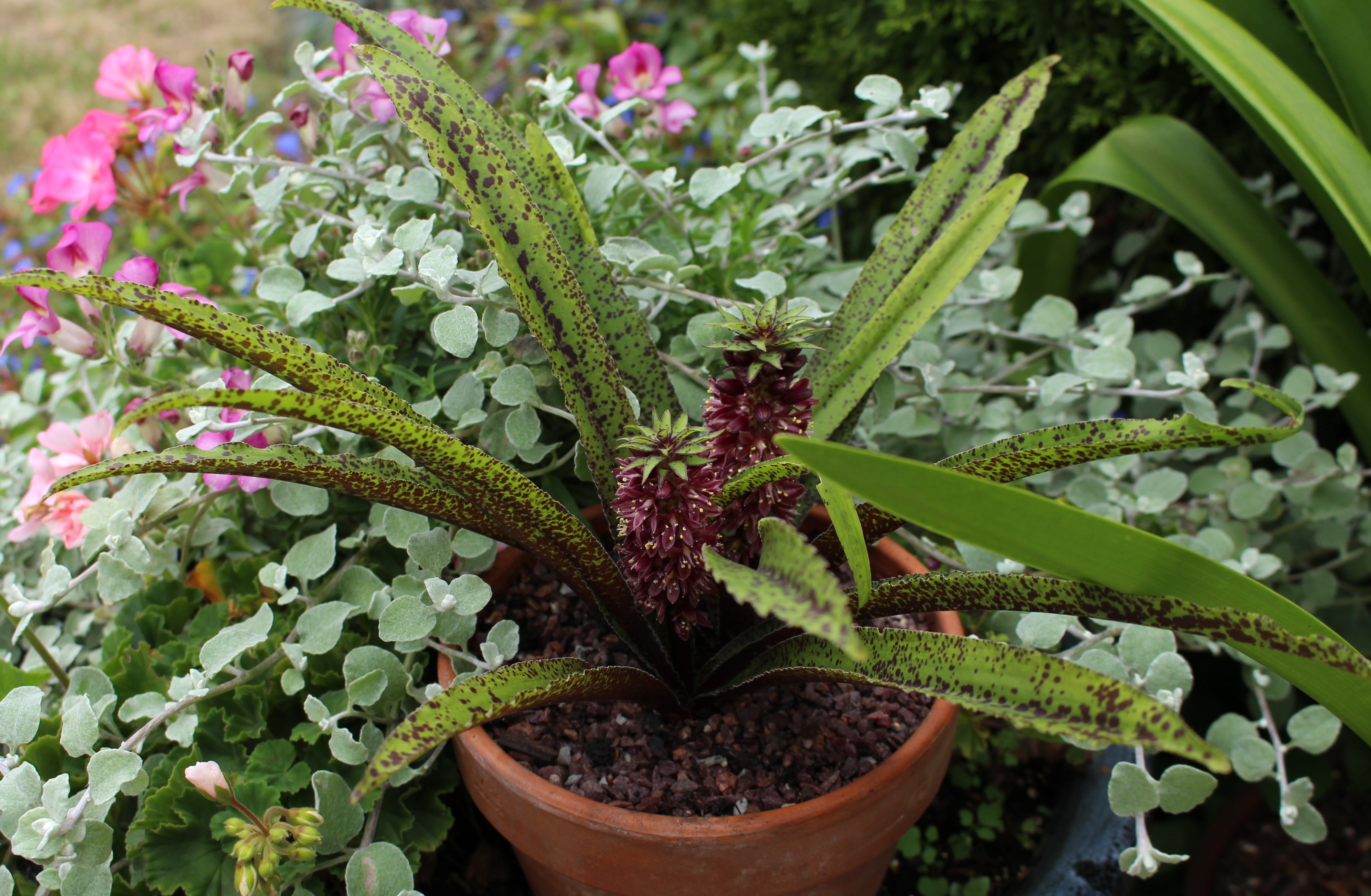
Thursday’s Feature: Eucomis ‘Freckles’

Eucomis ‘Freckles’ sounds more like a health condition than a cool plant, but I can assure you when it grows on you there’s no need for a doctor’s visit.  Mine was an impulse buy a few years ago and the fact it’s still with me should say something about its ease of growing.  Dormant and dry in a frost free spot for the winter, plant outside when it gets warm.  It forms a bulb, it likes it sunny, and it does just fine in regular garden soil.

Eucomis Freckles

Eucomis ‘Freckles’ in a pot on top of another pot. I can water both at the same time which is so much more efficient than single pots 🙂

I don’t think anyone can accuse me of overcomplicating this post with over-the-top growing instructions but it really is that easy to grow.  ‘Freckles’ is a hybrid version of the Eucomis species E. vandermerwei and as you might guess from the flower heads these plants are part of the group commonly referred to as pineapple lilies.  I keep mine potted, but you don’t have to, they grow just fine in the open garden.  ‘Freckles’ is a little on the small size and would likely get lost in the mess around here but someday the open garden might be worth a try, since rumor has it these are much hardier than you might think.  Some reports even have them overwintering with no problem up into zone 6.

As a regular reader might guess I’ve got a few seedlings coming along as well since they’re relatively easy from seed.  I’ll spare you the pictures but there’s a good chance you’ll see more and more pineapple lilies in the years to come 🙂

So there you have it, a short and sweet Thursday’s feature.  Kimberley at Cosmos and Cleome hosts each week and it’s always nice to focus on one of the plants making you happiest each week.