Dahlias!

I’m a sucker for a nice dahlia.  There are a few I overwinter each year, but one cold night last winter I broke down and committed to some new ones.  Here are the first of them, cut and artfully (hah!) arranged on the kitchen table.

growing dahlias

The three peachy ones towards the front have been with me for years, but the others are all new.  I got my new ones from Swan Island Dahlias, but you can do the same (maybe cheaper) at any box store or general bulb seller in the spring.  Mine all appear to be exactly as labeled, cheaper sources are sometimes hit or miss….. but if you just want a couple beautiful flowers, is a name that important?  They also look great in the garden.  Here’s “Moonstruck” which is the best bloomer so far.growing dahlias

“Plum Pretty” is already a new favorite.  I love the pointy petals of the cactus type, and these have a lighter bottom that shows when the petals curl.growing dahlias

“Pink Petticoat” is a little girly for me in both name and color but if pushed I’ll admit I like the two toned color and the smooth wide petals.  It also has outer petals that curl back around to the stem, and I think this is important for show quality blooms, but mine rarely go further than the kitchen!growing dahlias

Ok.  So I really like Pink Petticoat too.

I find dahlias easy to grow.  Most of mine are in the vegetable garden since it’s easier to plant and dig there, and I don’t do anything special as far as care.  A full sun spot, a little compost when planting, a bit of miracle grow if they look pale, and a stake to keep them upright, and you should be good to go.  That reminds me, mine are still unstaked…  another do as I say, not as I do moment 🙂

A sad little Border

When we first moved here one of the priorities (among many others!) was to try and downplay the bright white vinyl fences which dominated either side of the yard.  Vinyl has its place, but to me a 6ft solid white wall just screams FENCE HERE! and I’d rather have a calmer yard.  So I started to screen.ugly white vinyl fence

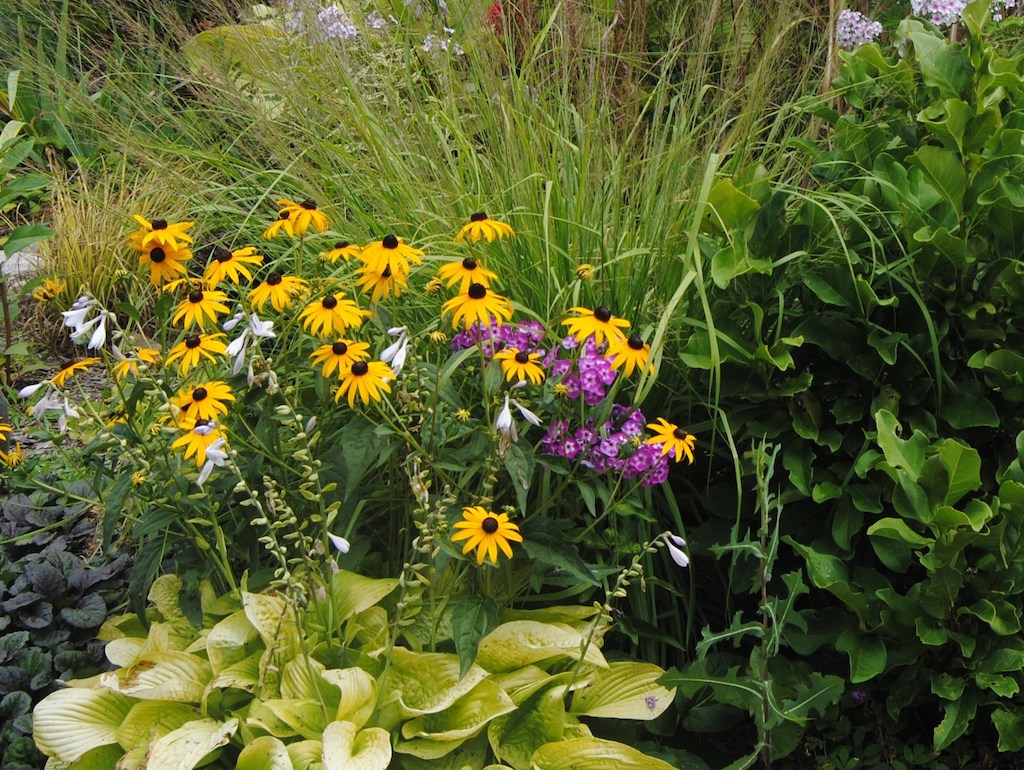
For some reason I wanted a red garden in this spot, so I planted the closest thing I had which were reddish leaved and could possibly cover the fence, those being tall cannas and the ‘coppertina’ ninebark.  (The scarecrow of a plant toward the left is a seven sons tree  -Heptacodium miconioides- more on that later).  Over the last four years its become a dumping ground of red plants which refuse to flourish and other plants which needed homes.  This is what my “red” garden looks like today.rudbeckia goldsturmThe first thing you might notice is the mess.  The second thing might be the lack of red.  I plan on working on both of these in the somewhat near future, but for now the stupid leaking preformed pond is just hanging over my head.  It disgusts me, so what better to do than ignore it and hope it learns its lesson.garden remodelWhile I wait for the pond to heal itself, the kids have take advantage of the neglect and frequently throw things in, stir the water, and use it to add magic to whatever messy dirt project they have going on.  It’s not helping but at least its motivated me to pull the pond shell out and set it aside until I can get myself moving.
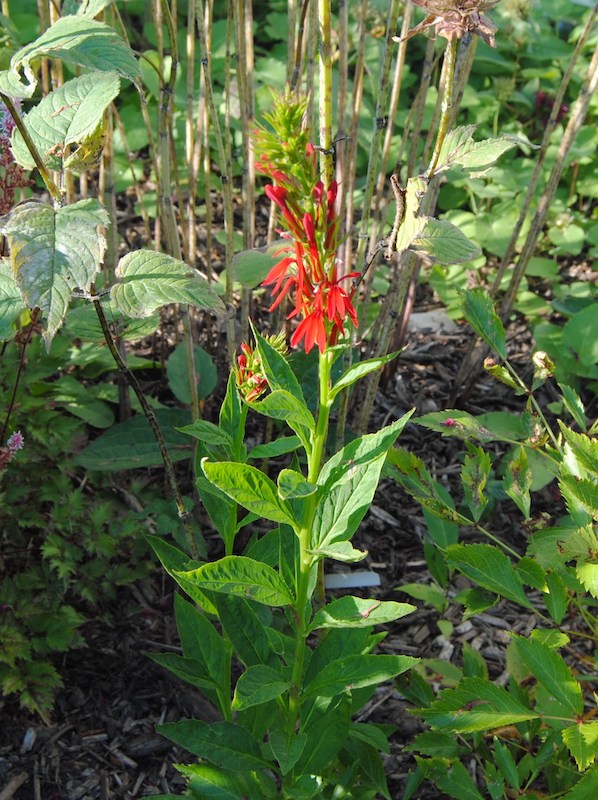
My inspiration may have arrived.  Last fall while scrambling to find homes for a number of random seedling, I stuck in what I thought was a species foxglove (with yellow flowers) into the ‘used to be’ red border.  Unlike many of the other plants here, these seedlings did well, and to my surprise put out a bloom this week.  Look at what it turned out to be!lobelia cardinalis

Cardinal flower (lobelia cardinalis)!  I’ve been trying for years to get a few going but the seed is like dust and my aftercare just doesn’t cut it.  This random mix up of seed has reminded me of my dream to have a red garden and refocused my vision!….. not really…. but how can I deny this brightest red of native wildflowers?  It’s time to get moving, before the golden rudbeckia ‘goldsturm’ take over. (btw none of these were planted, they all invited themselves in)rudbeckia goldsturmTwo things I should start with.  The first is to add more dark leaved plants.  Ideally a dark hedge along the fence would be a nice backdrop, but I can’t think of anything better than the struggling variegated privet which is there now.  A darker background seems to really highlight the red and gold.rudbeckia goldsturm

So the plan is to fix the pond, remove a few of the pinks and golds, think of a better background, and do some soil improvement/replanting so the red flowers already there really reach their potential….. in a spot with fewer washed out lavender flowers…garden phlox paniculata

This blurry picture is a new-for-me annual/biennial/perennial which might have a place in the revamped border.  It’s standing cypress (Ipomopsis rubra), a southeastern native perennial which will likely be an annual here.  This looks like a perfect hummingbird plant and of course I love the color and the fluffy leaves.  I hope it reseeds, but if not there may be a few leftover seeds just in case.

Am I the last person to hear about this plant?  I’ve been looking for it for a couple years but had some trouble finding it.  Maybe now that it’s here it will stick around.standing cypress annual

A Few Good Weeds

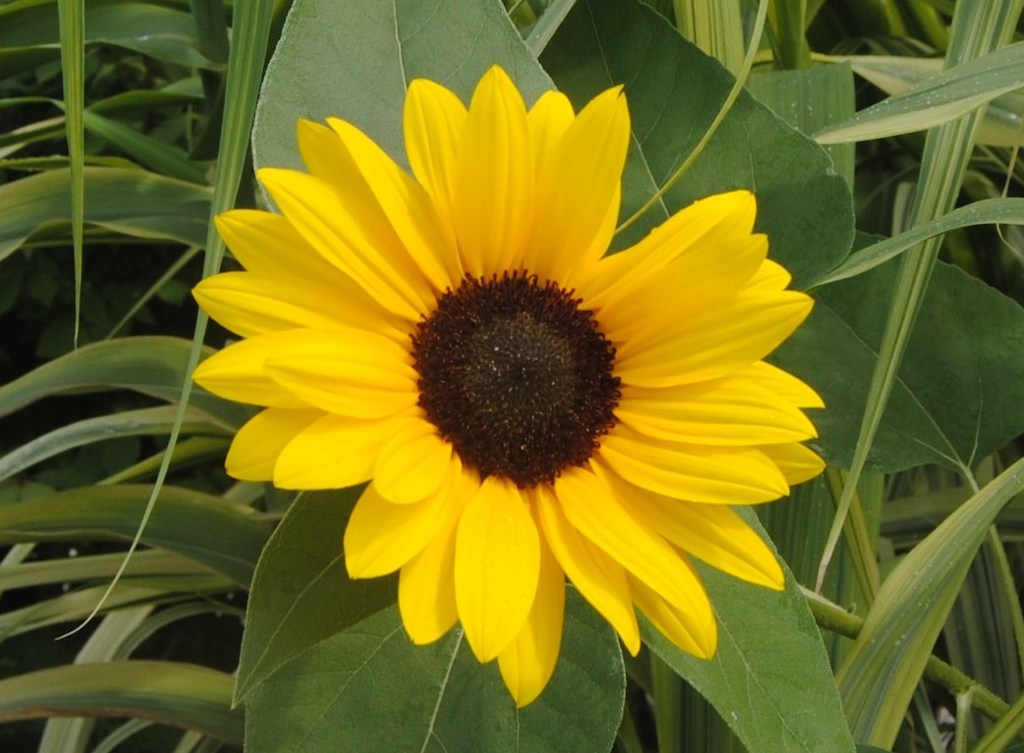
Somewhere way back I remember reading a comment on one of the fancier English gardens,  it went something like this- “Even the compost pile was filled with treasures”.  I took this to mean there were so many good things growing that even the cast-offs thrown onto the heap would have been worth keeping in most other plots.  Too much of a good thing is not a problem in my garden, the compost overflows with crabgrass and thistles, bittercress and prickly lettuce, but I may be turning a corner.  The birdfeeder is a big sunflower seed spreader, and rarely can I bring myself to pull out any of these weeds.sunflower

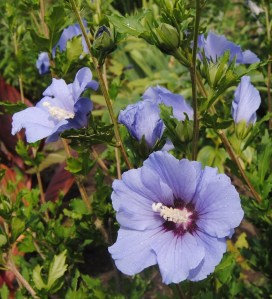
Maybe right next to the front door wasn’t a good spot (last year) but for the most part they pick pretty good spots to settle down.  Here a few squeezed in between the butterfly bushes and rose of Sharon. blue rose sharon

I’m always surprised by the range that shows up.  This year I’m playing host to dark centers, yellow centers, golden flowers, brownish tones, and even one of the huge 1ft across monters.  The ones here in front of the house have a bit of a rusty ring around the bloom, and give some needed height to the recently renovated foundation bed….. the rudbeckia underneath also crashed the party.  I’ll be the first to admit they look better there than anything I would have thought up!self sown sunflower

The most entertaining part of having sunflowers is still to come.  Goldfinches love the seed and fly by every day now to check out how they’re doing.  Once the seed are ripe we’ll have front row seats to the daily acrobatics of the little yellow parents and their greenish kids.

Rudbeckia are another plant that seeds about enough to end up on the compost pile.  My fancy attempt at a red border was ruined by this invasion of gold.  As usual it looks better with the surprise…. not sure about the pink phlox though… didn’t plant that either, but even if the color clashes it still looks better than crabgrass.rudbeckia goldsturm

The vegetable garden can always use a good weeding.  Persicaria orientale gets pulled each spring by the bucketful but a few always stay.  It’s not a small plant and can easily top seven feet in good soil.  ‘Kiss me over the garden gate’ is another name for it and I can picture this heirloom plant hanging over picket fences back in the day.rudbeckia goldsturm persicariaAnother garden invader is this ‘hopi red’ amaranth.  I’m a sucker for colored leaves and couldn’t bring myself to pull this one from the middle of a row of leeks.amaranthus hopi dye

‘Hopi Dye’ is supposed to be the darkest red amaranth around and even though I grow it for the looks its real claim to fame is as a dye plant.  This patch survived a harsh May weeding and is a little further along.  You can see how it matures and I love the dark foliage and fluffy blooms, and I love the fact it grows like a……. (weed?).amaranthus hopi dyeIn all honesty the tropical bed is really just one big weed patch.  That’s my excuse for the maybe-not-the -best color combos such as scarlet salvia and peachy pink dahlias.  I’m hoping the big green sprout in the front turns out to be a ‘Hot Biscuits” amarathus,  but there’s a strong possibility it and a few others are just well grown examples of pigweed (another amaranthus).  I guess that just goes to show what a fine line there is between weed and wildflower.

Other selfsown weeds in this bed are the red salvias, purple verbena bonariensis, and all the leafy purple amaranthus in the center of the bed.  This one I believe is called summer poinsettia or Joeseph’s Coat.  As the summer goes on it will sprout hot pink center leaves that should really add to this tasteful composition.amaranthus hot biscuits

I have a soft spot for the spiniest of plants, and it’s quite often that my spot gets a painful poke from growing stuff like this purple malevolence.   Solanum atropurpureum is an potato/tomato relative and the dark spines just look cool.  Guess what?  It’s easy to grow, as is the white flowered mirabilis longiflora growing next to it.  Luckily the mirabilis has no spines, it’s just kind of sticky and only blooms in the afternoon….. hence the common name four O’clock.purple malevolence solanum

I’ll end this with one of my favorite (real) weeds.  Bull thistle is all weed and if it wasn’t for my strange obsession with weedy spiny plants it would be a goner…. but…. it’s not that hard to kill, it only spreads by seed (unlike some really noxious thistles) and it’s really popular with wildlife.  I leave the ones that sprout up along the yard edges.bull thistle

Besides loving sunflowers, goldfinches love thistle seed.  They love it enough that the German name for goldfinch is distelfink or thistle-finch.  Around here you’ll often see the distelfink image show up on Pennsylvania Dutch artwork as a symbol of happiness and good fortune, and I’m not going to mess with that.  There will always be room for a thistle or two, just watch your soft spot!bull thistle


Front border update

Looking back on the weather, I believe I picked the hottest days of the year to do my digging, transplanting and bed expanding.  It’s cooled a bit recently but the strong sun and spotty rain combined with my thin skin of topsoil have left things a little tired looking.  Crispy tan grass dominates the yard, but here and there is some fresh color to keep me motivated.

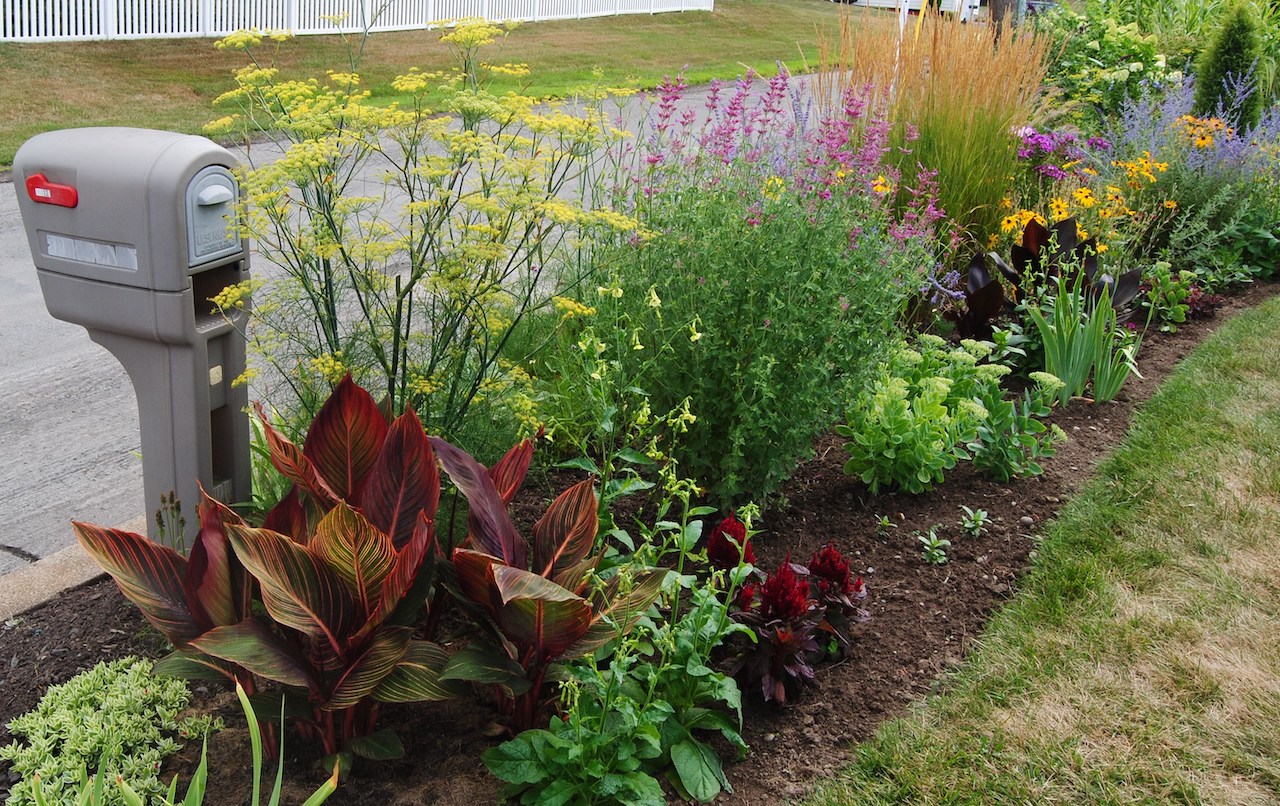
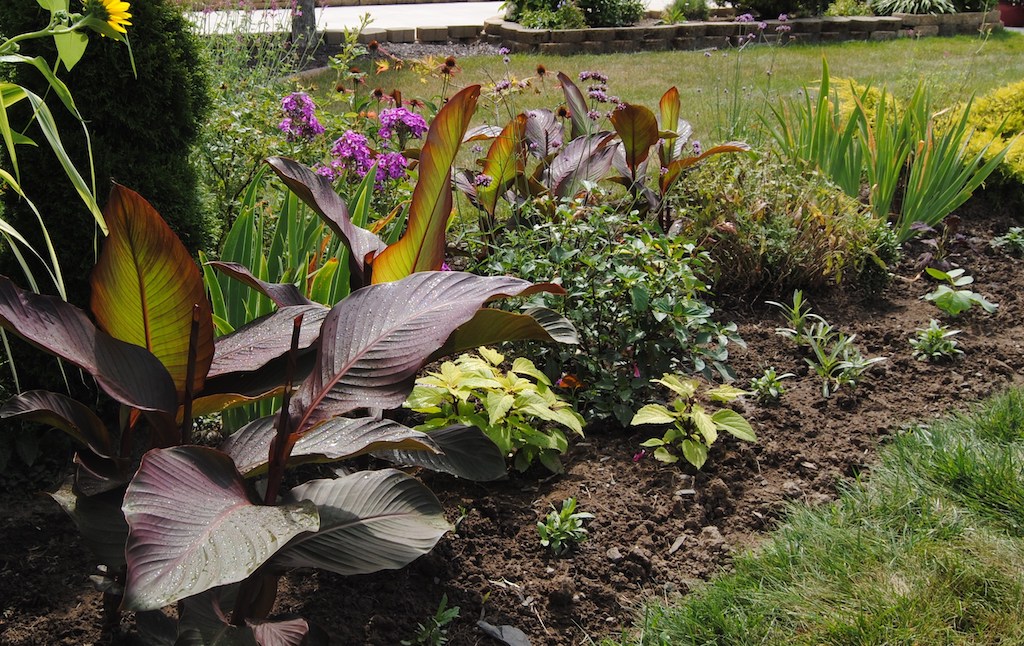
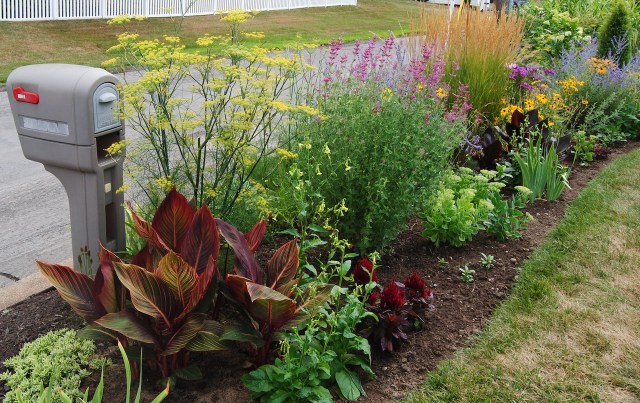
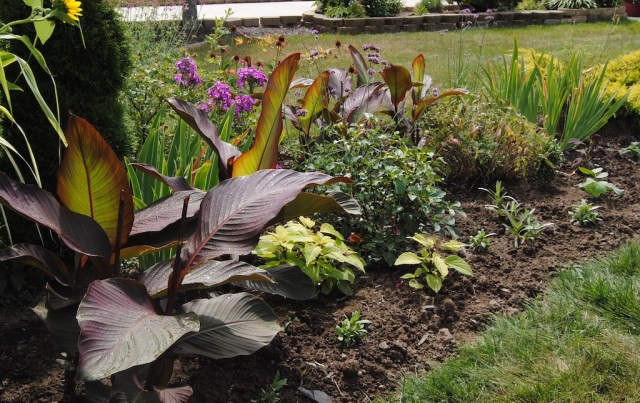
Here’s how the new transplants are doing.  The ‘Tropicanna’ cannas love the heat and don’t look bad next to the airy fennel that’s trying to take over the mailbox.  It’s been cut back a bunch due to the huge numbers of pollinating wasps drawn in to the flowers… no one needs a mailbox that buzzes.august perennial border
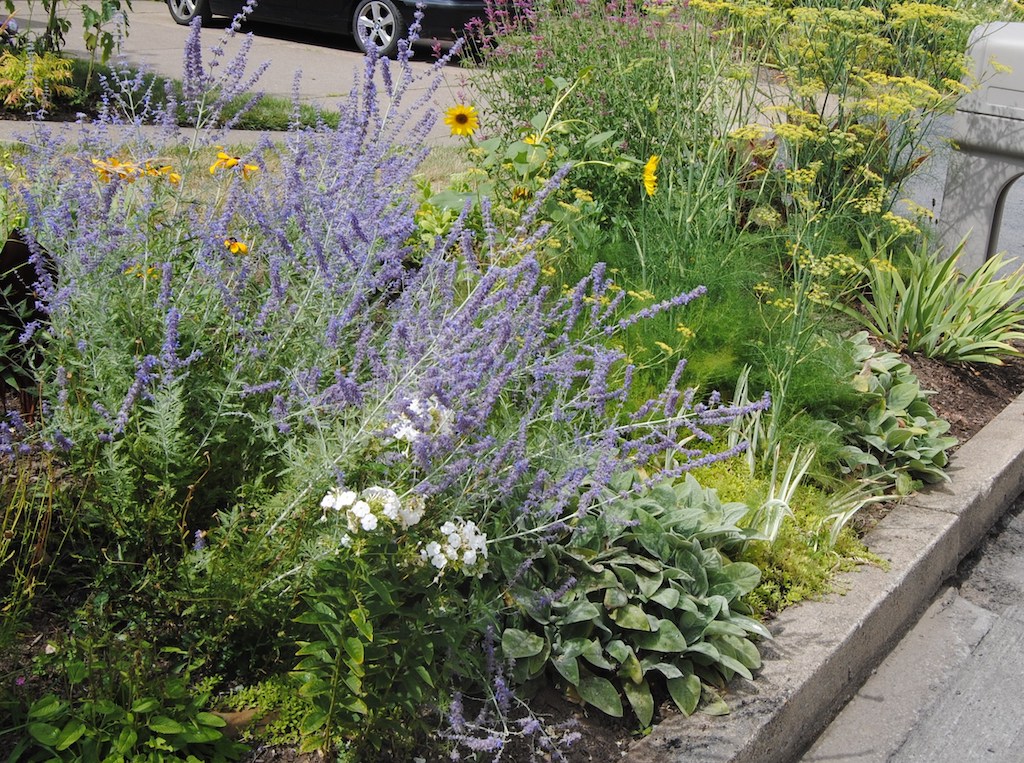
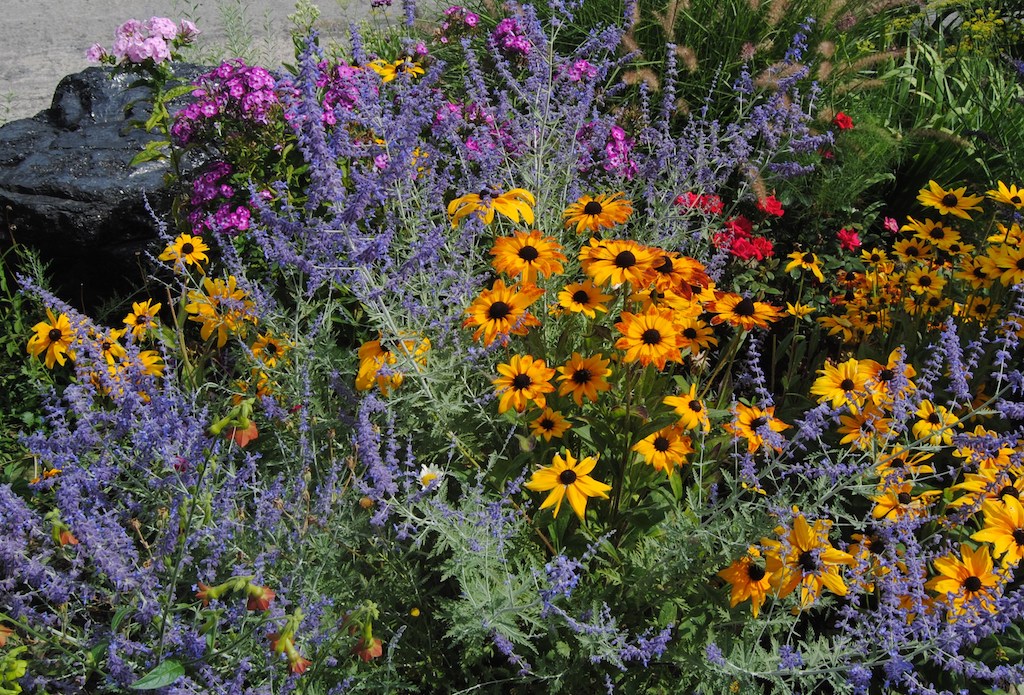
The street side of the border isn’t nearly as well kempt as the freshly weeded, freshly planted house side, but it looks interesting with a lively mix of Russian sage (perovskia), sedum, and lamb’s ears (stachys ‘Helen von Stein’) with all kinds of self-sown volunteers such as phlox.august perennial border
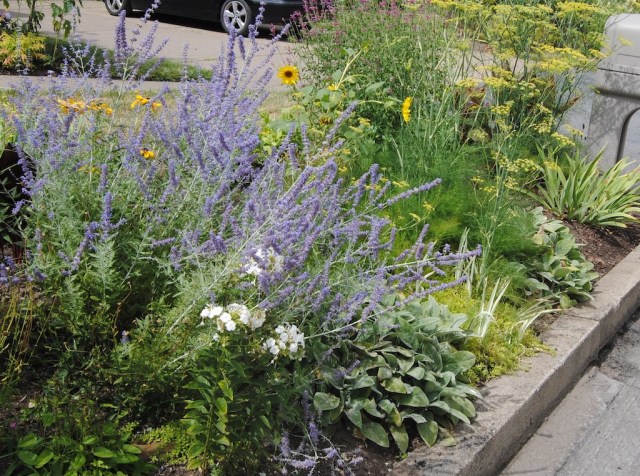
I’ve been busy re-taming this border after returning from our recent Florida vacation.  Ten days of living the suburban dream of Disney and a tropical beach in late July, it doesn’t get any more relaxing than that.  Pulling crabgrass in the blazing August sun (without a million other people) was a refreshing return.

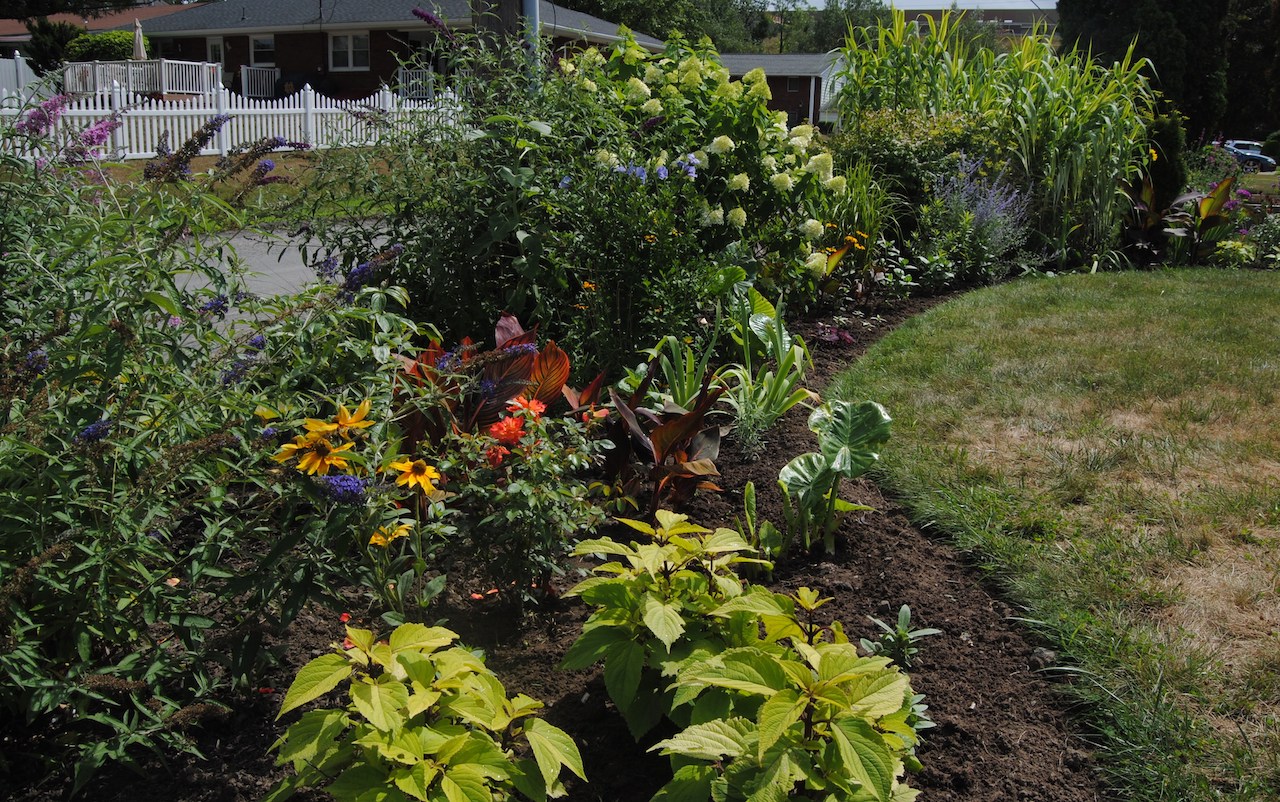
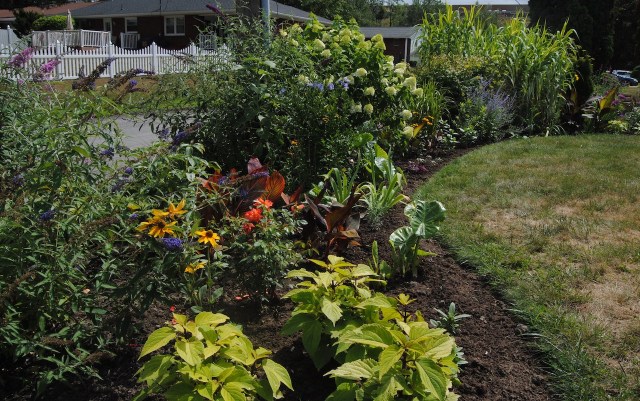
The annual coleus and zinnia seedlings liked the heat and it also brought out blooms on the butterfly bushes and ‘Limelight’ hydrangea.
august perennial border

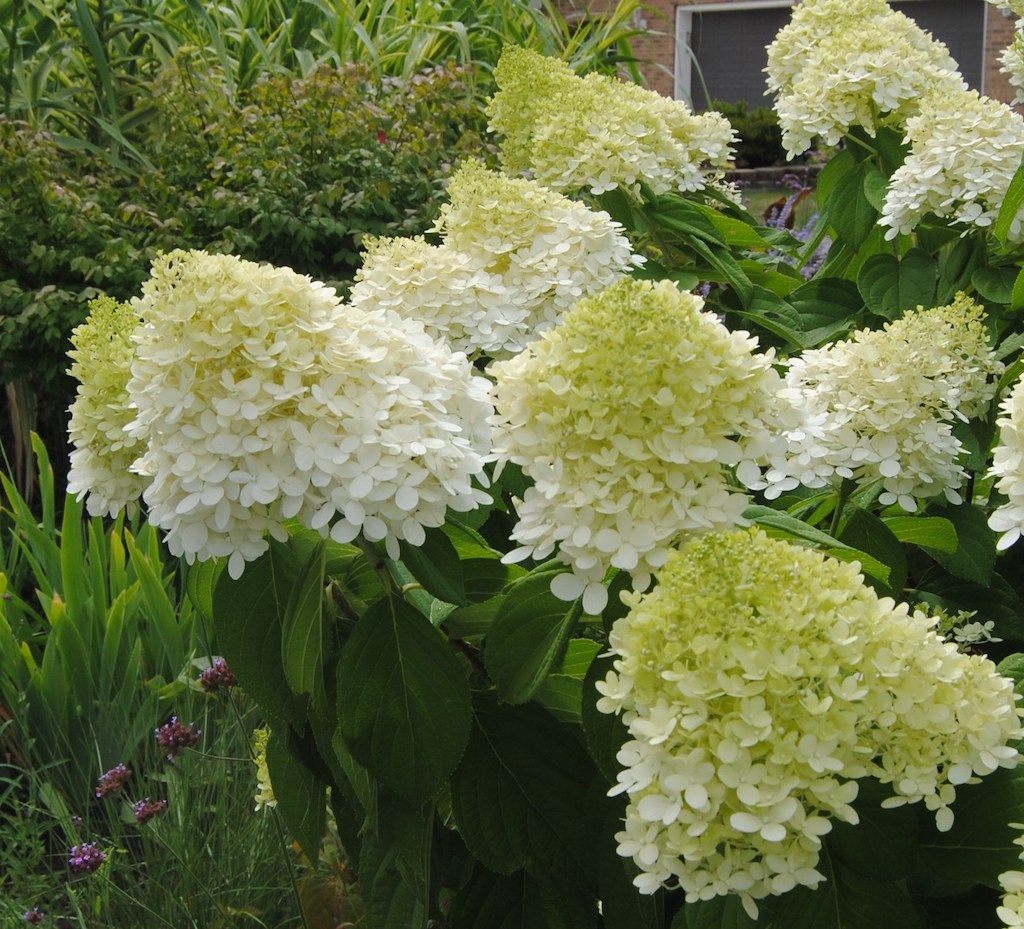
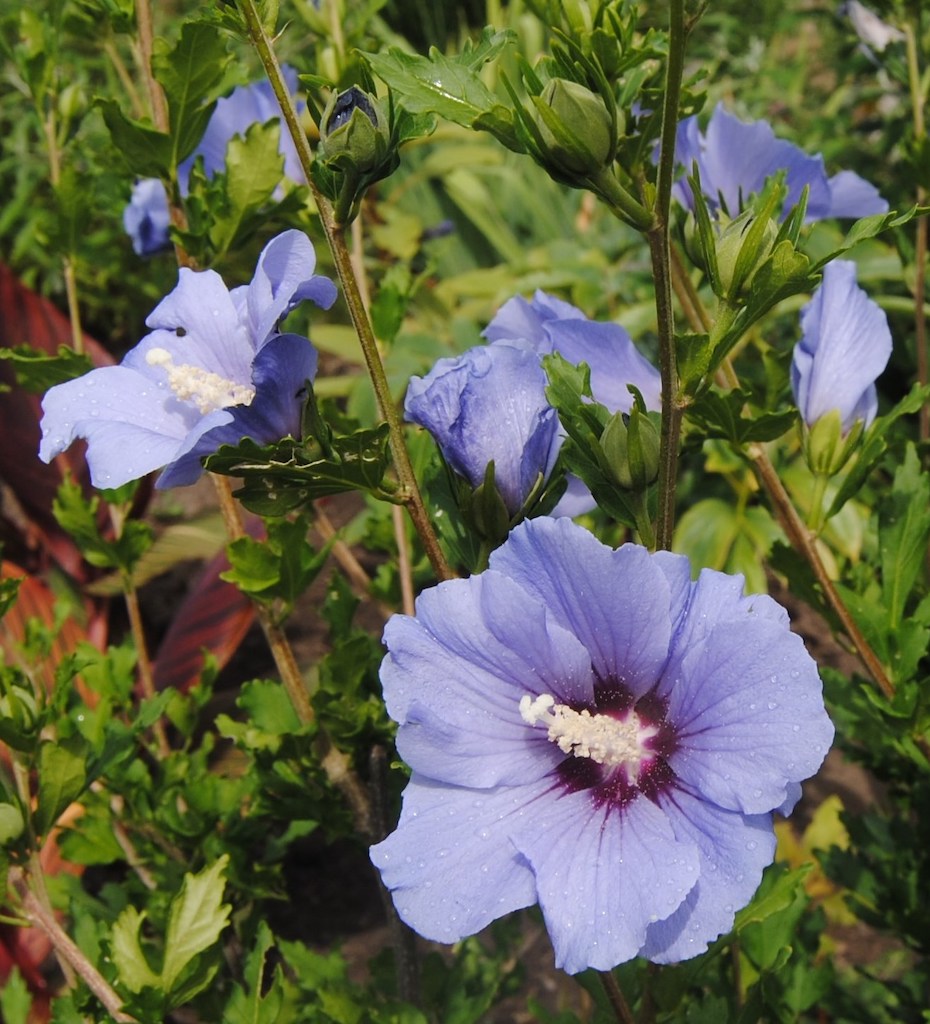
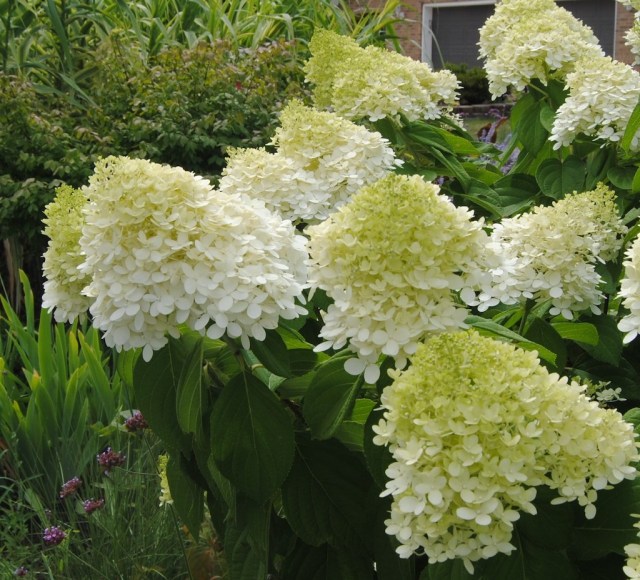
I love the hydrangea, it’s getting to be on the big side but I’m all for big plants in the garden.  ‘Limelight’ is a type of hydrangea paniculata, a group that blooms in late summer (usually white or pinkish), tolerates dryer soils, welcomes full sun and flowers reliably each year.  It blooms on new growth, so you could take a chainsaw to the thing in spring and still get a mass of blooms later in the year.  ‘Limelight’ has a nice greenish tint to the new blooms and has stems strong enough to keep the heavy flower heads from flopping.august perennial borderAnother all-summer bloomer is rose of Sharon (althea syriacus), they laugh at heat and drought and are nearly impossible to kill.  They have some well known faults, and two of the biggest are it’s late leafing out and it’s enthusiastic reseeding habits, but I grow it anyway.  ‘august perennial borderDiana’ is a sterile white cultivar and an awesome plant, but with all the white vinyl around here I can only fit in so many bright white flowers, so the one I grow is ‘Blue Bird’. ‘Blue Bird’ earned its spot because of the trouble free blue color of its blooms.  I don’t think it’s as showy as some of the others but the color is worth a little seeding around.  Every now and then I think it has a little look of weediness to it, and even though in my garden this isn’t a noticeable fault, in some more refined plantings this might stick out.  I guess  that’s a cross better gardeners are meant to bear.
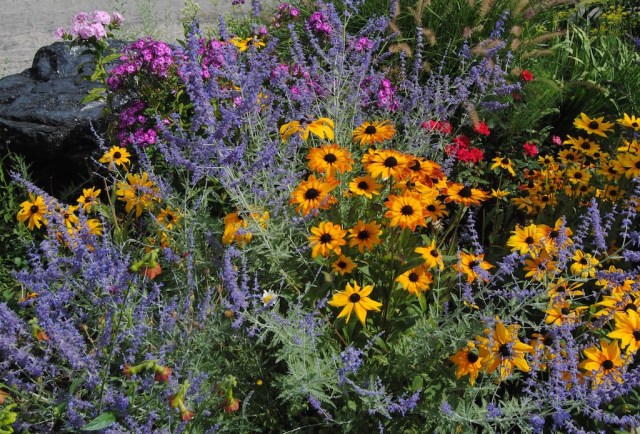
Drought tolerance is something that everything in this street border has to deal with.  Perovskia, self-sown gloriosa daisies (rudbeckia), and ornamental grasses all take it in stride.  It’s a little messy, but right now I think the color holds up well to the bright sun and higher temperatures…. no room for pastels here…. The purple ‘Laura’ phlox gets extra water now and then, it handles a little dry weather and heat, but complains the whole time.august perennial border
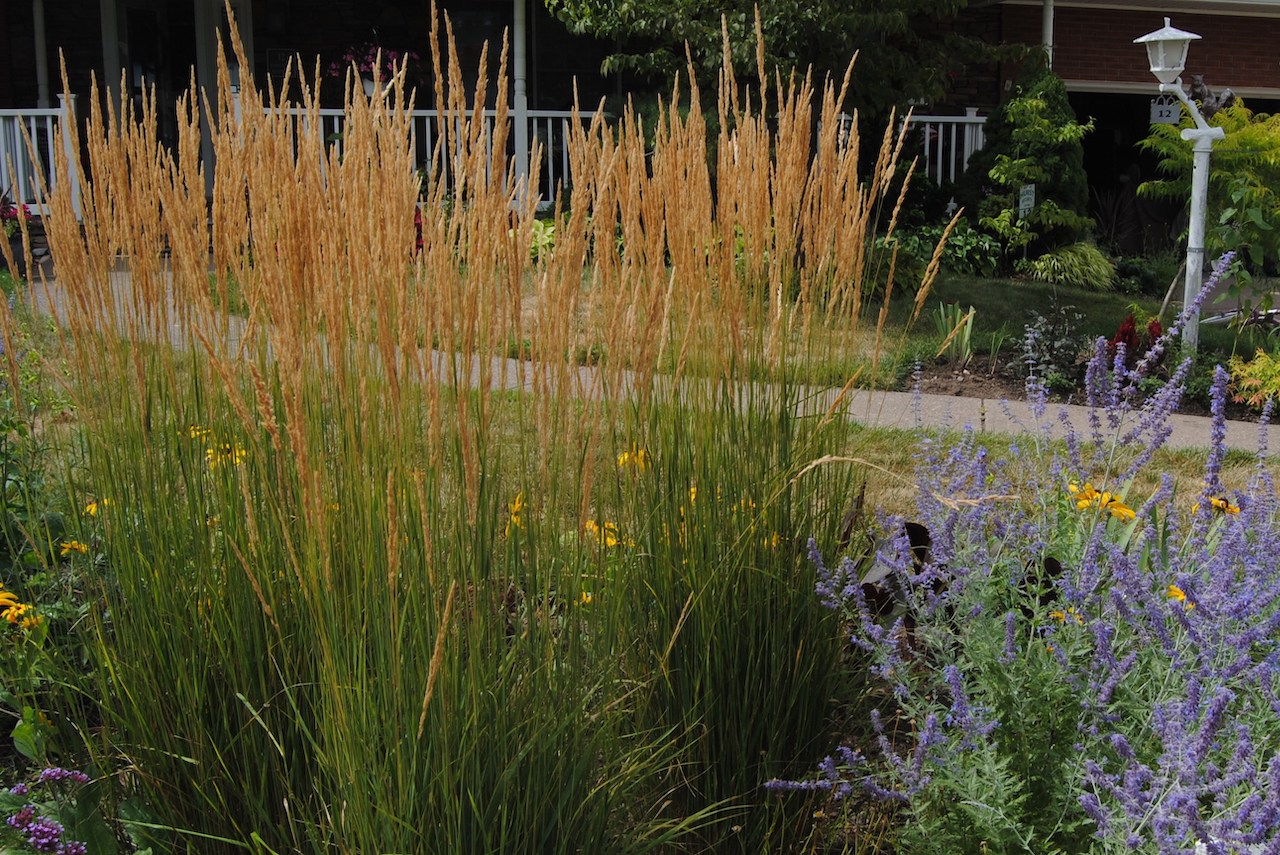
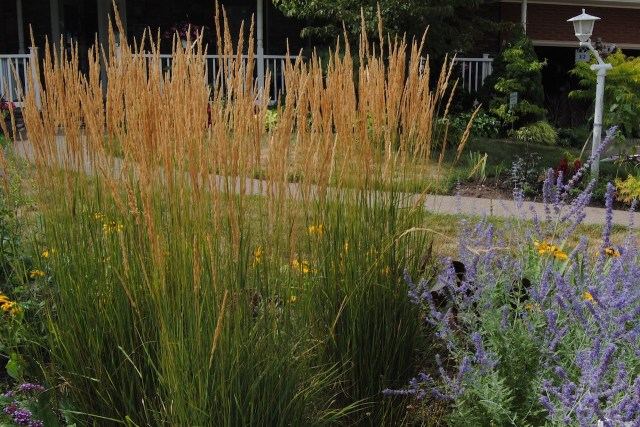
‘Karl Foerster’ feather reed grass doesn’t complain about anything.  A haircut in the spring is all the maintenance it needs and if you like the grassy look this is what it gives you all summer, fall, and winter.  Doesn’t reseed, doesn’t need fertilizer, looks good all year…….I’m a fan.august perennial border
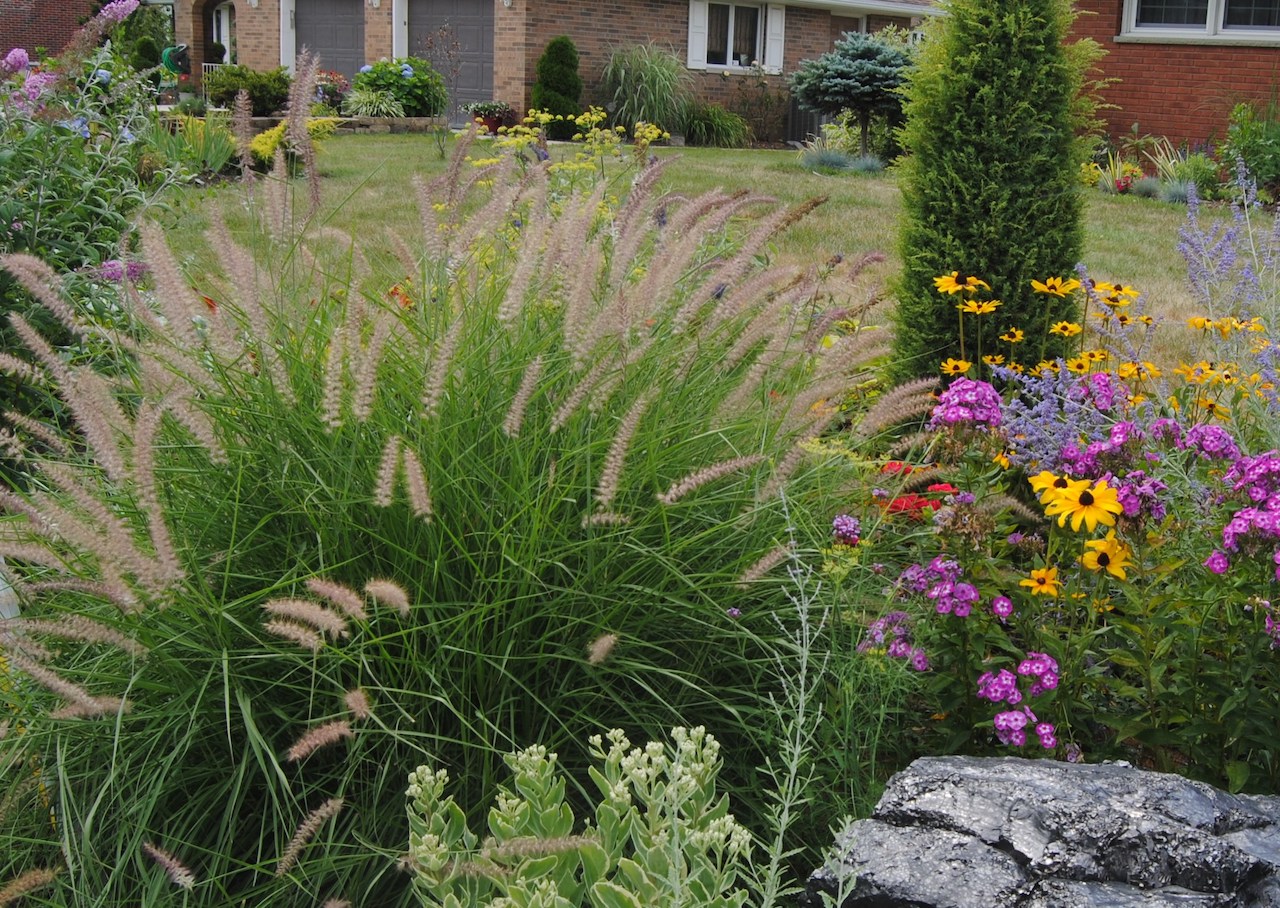
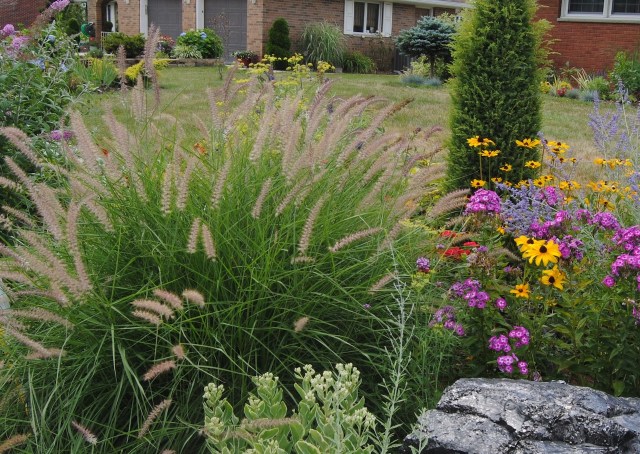
‘Karley Rose’ fountain grass is another good one.  It can get floppy after a rain, and doesn’t hold the good looks through the winter like Karl does, but makes a nice accent. august perennial border
Hopefully the annuals planted last month will fill in and make an accent before frost.  The newest plantings look more like a late May picture than an intro to August, but such is procrastination.  At least I’ll have a few empty spots to shoehorn spring bulbs into once that planting season starts. 🙂august perennial border
Best wishes for your August garden!

Hanging out on the Deck

The deck planters are starting to look good. The tropicals love the heat and the annuals have settled in. Last year I had some big grasses in the three main planters, but the winter was too much and they didn’t make it,  so this year I returned to my roots and stuffed the pots full with my favorite all summer plantings.
‘Tropicana’ canna, black sweet potatoes, million bells, and a New Guinea impatient fill this pot. Some ‘red rocket’ snapdragons fill in the back. I’ve never done the snapdragons before but right now they look great….. We’ll see how they last in the heat.
annual container planting
For some reason red was the color of choice this year. Usually I don’t buy most of the plantings and just use over wintered stuff, but this year I treated myself to a nursery run. 33% off helps and if you buy it all on one day I guess a red mood will give you red plantings.
This one has similar plants with the cannas replaced by a nice new coleus and burgundy fountain grass in the center.
annual container planting
The aloe pot here was overwintered, but the red blooms on the dipladenia are new. Not to rub it in but I think I found it for about $2 at a local greenhouse clearance and I hope to overwinter it for next year.
annual container planting
Here’s a new coleus, overwintered geranium, and a pot of blue fanflower/red celosia combo. The celosia is ‘new look’ celosia and I really like the bright flowers and dark foliage.
annual container planting
Herbs have a spot too; parsley, rosemary and a pot of annual vinca for color.
annual container planting
Here’s one pot that I’m not yet thrilled with. It should have a pink ‘Alice Dupont’ mandevilla climbing up the bamboo stakes, but for some reason she won’t grow…. She blooms well, but won’t grow. It was an impulse buy at a box store and looked great, but is no bigger today than it was the day I brought it home. I can’t help but wonder if it was treated with something to trigger blooming at the expense of new growth. Does anyone have an opinion on that?
There’s a chartreuse sweet potato that may step up and take over, and also an ‘Australia’ canna coming in…. But I really like mandevillas 🙂
Oh and a big basil that’s just about worn out its welcome. I never thought it would take off like that.
annual container planting
So that’s the news from the deck. I’ve been away for about a week so things have hopefully grown some since, but I’m pleased with the results so far. Yes, a little yellow might have brightened things up a bit, but my planting are always a little impulsive, so each year turns out a little different. Who knows, maybe next year all the grass will be back, or cannas will take over, we’ll see!

Viva la Tropicalismo!

“Tropicalismo” is so very ’90s but being in style was never my strong point. I still love the tropical look with big leaves and bright colors and lush happy growth right during the months when everything else looks a little tired and faded. Too big elephant ears, too bright cannas and just a little too tall grasses always make me smile when the bleeding hearts are dying in the heat. I even like the bright red salvia that is normally reserved for gas stations and trailer parks. Feel free to judge me, here’s a picture of the tropical bed last year.
tropicalismo planting
This was a new area that was the perfect match of big space, full sun, and no planting budget, so I pulled together the leftover canna roots, popped in a couple sweet potato cuttings, and scattered some annual seedlings and with plenty of water and fertilizer it all came together.
As usual this year I’ve fallen behind, and the tropical bed is still a weed infested patch of leftover perennials, a few nice salvias, and an appropriately bright knockout rose.
tropicalismo planting
I finally got around to weeding, mulching, and planting. It may seem like all is lost with such a late planting date, but the experience of a chronic procrastinator has taught me things will still work out fine. Also the late planting allowed several self sown red salvias and amaranth to make themselves known. All good things since I used up all the spare annuals when I expanded the front yard border.
So here it sits, still a little sparse, but ready to take on all the drought and heat summer throws its way.
tropicalismo planting
With any luck I’ll still have the same tastelessly colorful display as last year, minus a few of the exceptionally colorful and tacky tropicana cannas.
tropicalismo planting

Tending the Phlox

The tall garden phlox (phlox paniculata) is coming into full bloom around here and I’m pleased.  This smugness comes from the fact that last year I replanted several favorites into a new bed which had been dug over properly, composted, mulched, and then protected from bunnies in the spring.  Sometimes effort is rewarded and this time it was, in the form of healthy, strong blooming phlox.garden phlox paniculata

A better gardener would have blended them into a well thought out perennial border, mixing the colors with interesting foliage and varied forms…. but I’m not there yet.  Plus I like my phlox in heavy doses.  Overkill some might say.

Barsixty (coral flame is the trademarked name) is first in line.  I really shouldn’t not like it but there are a few little annoying things that get to me.  I think it’s too short, this is the first year it looks nice (after a couple dud years), and the edges of the blooms curl up a bit.  For many gardens, the ~16inch height is perfect and the curling adds interest, so it’s got a place in my garden… but I’m just saying I like other phlox more!garden phlox paniculata

I love “Laura”, it’s about two feet tall (which I still think is on the short side) but she always puts on a great show and looks good for weeks.  Here Laura is in the front with phlox “Nicky” towards the back.  Nicky is a little darker and booms a few days earlier.  (This section has been picked over by the kids, the big dark flowers are too tempting for little flower pluckers.)garden phlox paniculata

I’m kind of a snob with other plants but not with phlox.  Having named phlox is great for knowing what you have (and not buying the same plant twice!) but it doesn’t guarantee a nice plant in the garden.  I think this white is great, but it’s just a stray seedling that came up a couple years ago.  It’s about three feet tall and although pure white is always perfect, I like the way this one has small dots of red at the bloom center and a reddish blush on each bloom stem. garden phlox paniculata

I took this picture yesterday when the clump really hit full bloom.garden phlox paniculata

This one I don’t know the name for,  I think it might be “starfire” but can’t say for sure.  The color is great (if you like the reds!) and I like how the foliage and stems have a darker tint to them.  It’s a little floppy though….. garden phlox paniculata

I need more of the clear pinks.  Here is “Bright Eyes” which I got just last fall, it came as a rootbound 4″ potted plant and will probably need one more growing season before it takes off.  I love the packed flower heads but they tend to hold onto dead flowers.  “Franz Schubert” is just starting to the left.  It’s another one in need of more settling in time.garden phlox paniculata

This white seedling may still earn itself a spot in the phlox bed.  It’s a short early blooming seedling which opens with a pink flush and later fades to pure white.  We’ll see if it gets moved in the fall…..garden phlox paniculataPhlox do well in pretty much the same conditions as any other garden flower.  Even moisture, fertile soil, sun to light shade and you should be able to make them happy.  In the spring I do nothing more than cut the old stems down and then come summer the only other thing I do is admire the flowers.  For many gardeners powdery mildew is a problem, and I wish I had some brilliant solution but I don’t.  Mildew is just not much of a problem in my yard, probably because it’s a real open, breezy location near the top of a hill.  The air movement likely helps but I can’t say for sure since as we speak the monarda plants are covered in mildew and they’re just a few feet away.

My most annoying phlox growing problem is the spider mite attacks.  They build up under the leaves and suck and suck until the leaves start to look speckled and yellow.  Spraying the undersides of the leaves seems to help wash them away but the best defense seems to be consistent moisture and plenty of compost and fertilizer.  Dry spring weather, warm breezes (which keeps away the mildew) and stressed plants seem to just call the mites in from all around.

Another problem I’ve had (which made me leave all the phlox behind the last time I moved) are eelworms.  They’re tiny worms which live in the stems and buds of infected plants.  They cause the stems to distort and ruin the nice big flower heads of a healthy plant.  The only solution I’ve heard of is to grow new plants from root cuttings, destroy all the old ones and find a new spot to grow phlox….. or move.

I just want to end by saying I need more phlox.  I think I’ve kind of run through all the local sources and have what most mailorder sources offer, but I know there are more great phlox out there!  I may have found a source at Perennial Pleasures, a Vermont nursery that specializes in heirloom plants and also has dozens of phlox varieties available.  I’ve heard good things about them and it’s very likely an autumn order will show up at my doorstep.