Off for a bit

We just got back from a nice little camping trip up into the “mountains” of Pennsylvania.  Rickett’s Glen State Park is just a short drive from our house, but it seems like a world away.

Lake Jean Pa

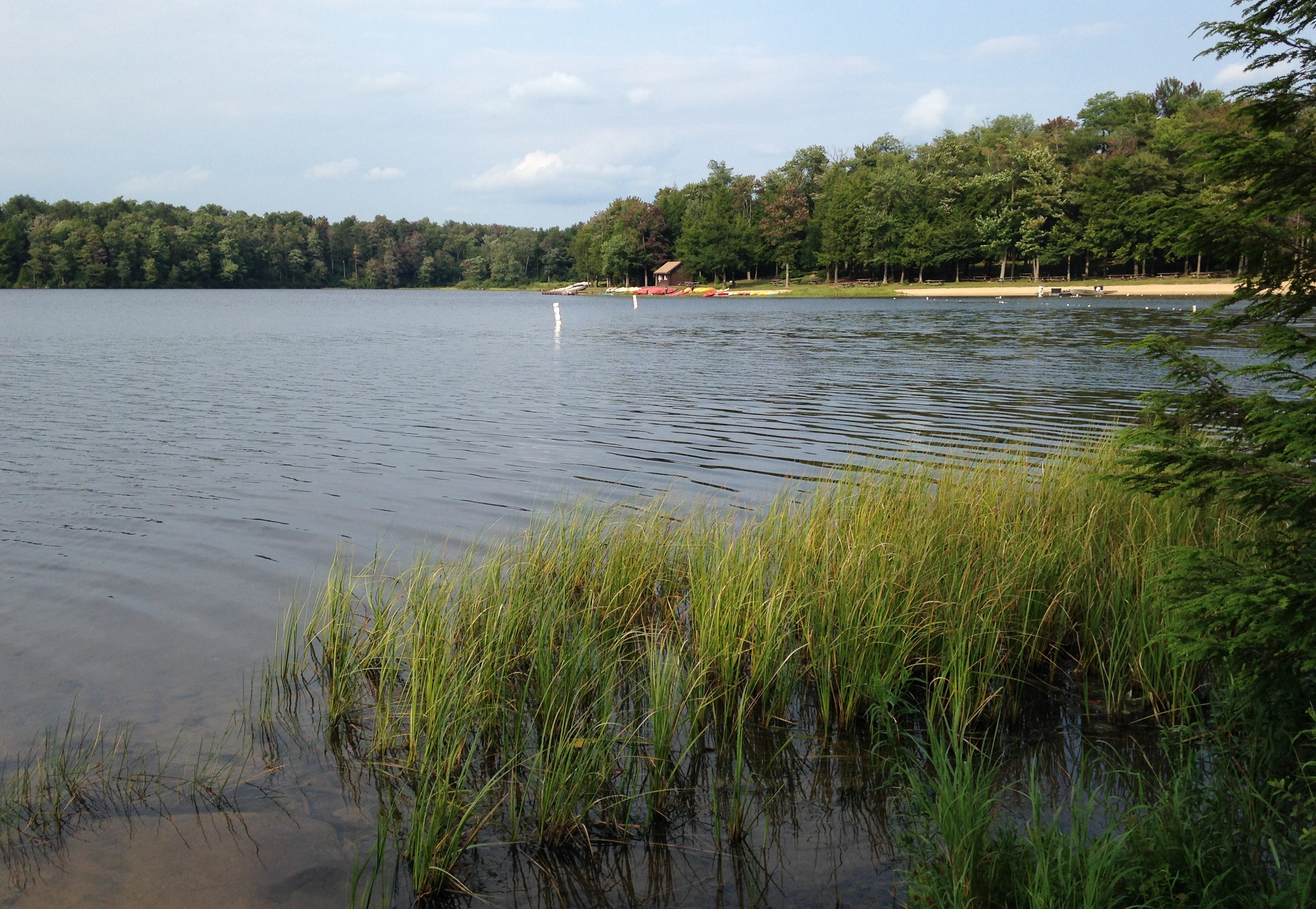
Lake Jean is near the summit of Red Rock Mountain (2,400ft) and the campground is lakeside.

The kids love to spend the day by the cool clear lake, but Rickett’s Glen is best known for its waterfalls and old growth trees.  Sadly though, after centuries of timeless growth many of the massive hemlocks are now dead and dying.  The newly arrived wooly algeid from Asia has literally sucked the life out of them and the glen is now filled with the gray remains of these crumbling giants.  Better hurry if you want to get anything close to the effect that used to be here even as short as ten years ago, the hemlocks are fading and things don’t look good for the giant ash trees either as the emerald ash borer comes our way.

ricketts glen hemlocks

They’re not as impressive as west coast evergreens, but the Rickett’s Glen hemlocks push 400+ years

One of our first jobs after setting up camp was to head out and collect breakfast…. sort of.  The former hayfields and apple orchards in the park are filled with wild highbush blueberries, and tis the season for blueberries!

-although I couldn’t help but think of the children’s book “Blueberries for Sal” and her surprise run in with a blueberry loving bear 🙂

monarda fistulosa

Monarda fistulosa growing in the former hayfields of Colonel Rickett.

But outside of hunting and gathering the bulk of the trip was spent sitting by the fire, playing at the lake, exploring the woods, and cruising the campground -as part of the children’s biker gang which my kids promptly joined.

playing in the creek

Any running water invites dam building, and here Opa was trying to give a few pointers.

The park ecosystem has a few problems, but for the most part it’s a nice snapshot of the woods which used to be.  There was still a late season bird chorus to wake us at dawn and the woodlands still contained the wild trillium, hepatica, and tiarella which the damp glen protects.  Japanese stilt grass was probably the only non-native invasive plant which was making inroads, a nice contrast to my own overrun neighborhood.

indian pipe

I haven’t seen the ghostly sprouts of indian pipes in a long time. I believe they’re the aboveground flowers of an underground parasitic plant, and not a type of mushroom which I used to think.

Spring is such a busy time but I always say I’m going to get here and see if I can catch a glimpse of the spring ephemerals blooming.  It would also be kind of nice to sneak off here sans children and squeeze in a hike of the treacherous falls trail and see the many waterfalls which fill the glen.  It’s been years since I made the hike, but I just don’t have the nerves to watch the kids teetering near every drop-off and slipping on every mud covered step.

walking tree

Our campsite was surrounded by Lord of the Ring Ent trees. They get their legs when the tree trunk or upended root ball they sprouted on rots away and the new tree’s roots are left behind exposed.

So we’ll stick to the easy trails.  It’s unambitious and tame but it suits us just fine!

walking in the woods

Walking the lower end of the falls trail. We never make it to the waterfalls but the easy walk through the forest is still beautiful.

Next year they’re draining the lake for dam repairs so Rickett’s Glen might be off the list.  We’ll have to venture further,  but I’m sure we’ll find something just as nice and I’m sure it will be just as much fun.  Viva la Summer!

A summertime stroll with a couple surprises

I think I’ve been pretty good this summer keeping up with the garden.  Usually I have so many more weed patches and unplanted pots, but this year  things look a little better.  I know, I know…. prep soil first, have a plan, buy new plant with a spot in mind, don’t plant more than you can take care of, keep low maintainence in mind….  but that’s not how I roll 🙂

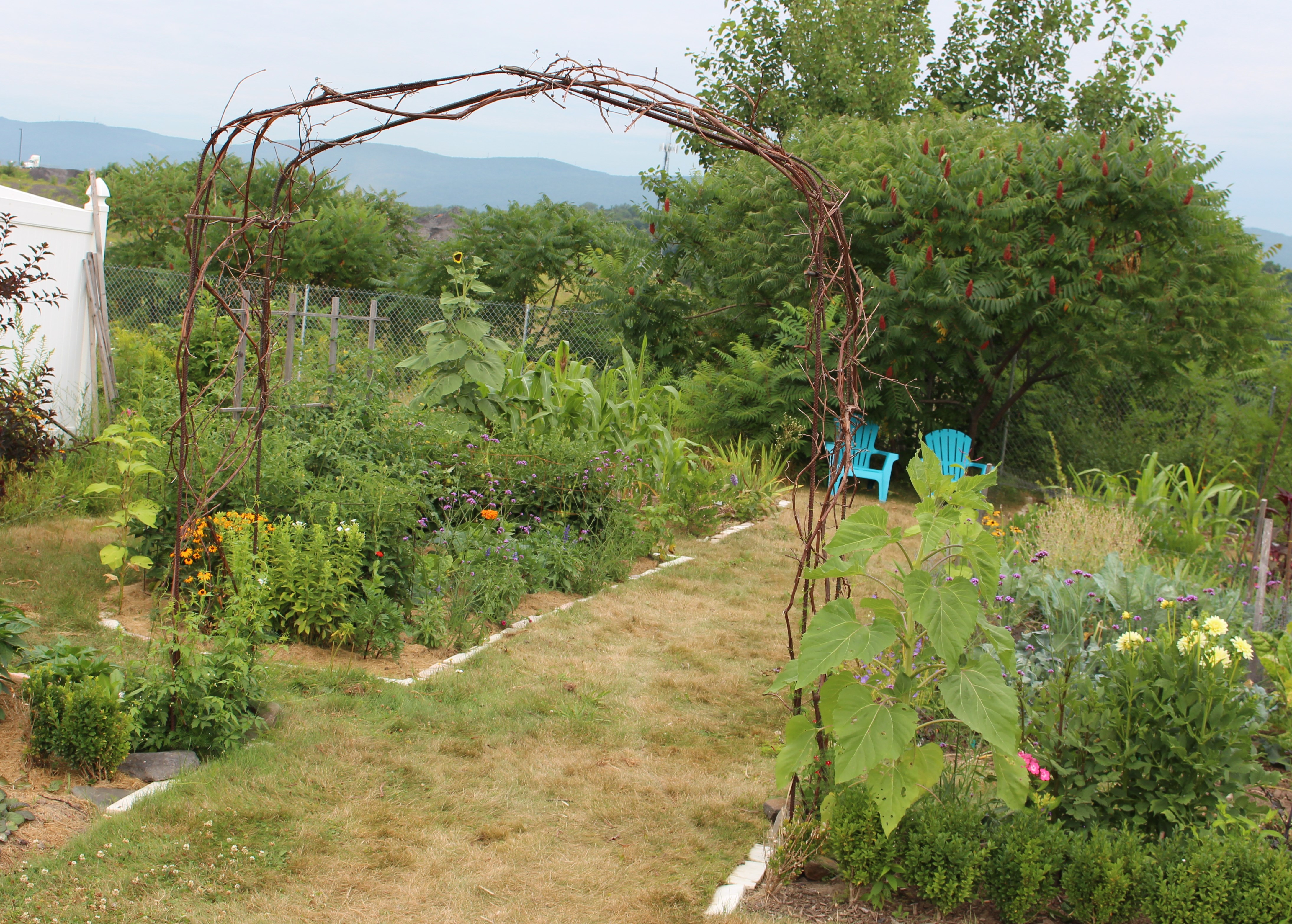
I finally cut, bent, and put together the rebar arbor I’ve pictured in my head for the last two years.  Last summer it was a single span, this year I doubled it for more stability and wired in a few cross braces.  I really should throw a little concrete around the base…. but I’ll wait till it blows over this autumn before I learn that lesson (again).

rebar garden arbor

Arbor going into the vegetable garden. The rebar alone looked a little bare, so I went out back and ripped down a few grape vines to bulk it up, and give the vines a little something to hold on to.

Since we’re in the vegetable garden, here’s the early garlic harvest.  This is the first year I managed to plant it properly (in October), and I’m pleased.  I’m even more pleased since these were stray, sprouting cloves I found in the bottom of the vegetable crisper which were planted out rather than thrown away.

garlic harvest

Garlic harvest. The ones I actually bought from the garden center specifically for planting are a later variety and yet to be harvested.

Last winter was one of the coldest, snowiest ones I’ve experienced living here, so you can imagine my surprise to find some gladiolus overwintered.  I vaguely remember there being a few thin little wisps of gladiolus leaves here last summer (I must have missed some of the tiny cormlets when the mother bulbs were lifted) but never gave them much thought.  This year they’re back, and voila, the little things surprised me even more by blooming!

phlox 'bright eyes'

Not only was the gladiolus a surprise, but the color coordination with the phlox, verbena and pole bean blooms is better than anything I could plan!

I only finished laying out and digging up the vegetable garden last summer, prior to that it was lawn and a holding bed for some of the plants brought up from the old house.  One of those plants was a wisteria vine, and when I moved it the remaining roots put up a couple suckers.  Surprise again when one of the suckers actually put out a bloom!

wisteria summer bloom

Not many gardeners are avant-garde enough to combine sweet corn with wisteria, and the fact that I’m considering building another arbor or tuteur in order for this guy to stay here says a lot about the haphazard design of my garden.

It surprises me that I would actually post a photo of this mess.  It’s the unfinished steps to the deck, and it’s were I like to sit with a drink thinking about all the tasks I should be finishing up instead.

tropicals in containers

Tropicals in pots, geraniums on the steps, and plenty of weeds. I actually did trim them all back yesterday but I’m sure they’ll have rebounded by the time I take another picture.

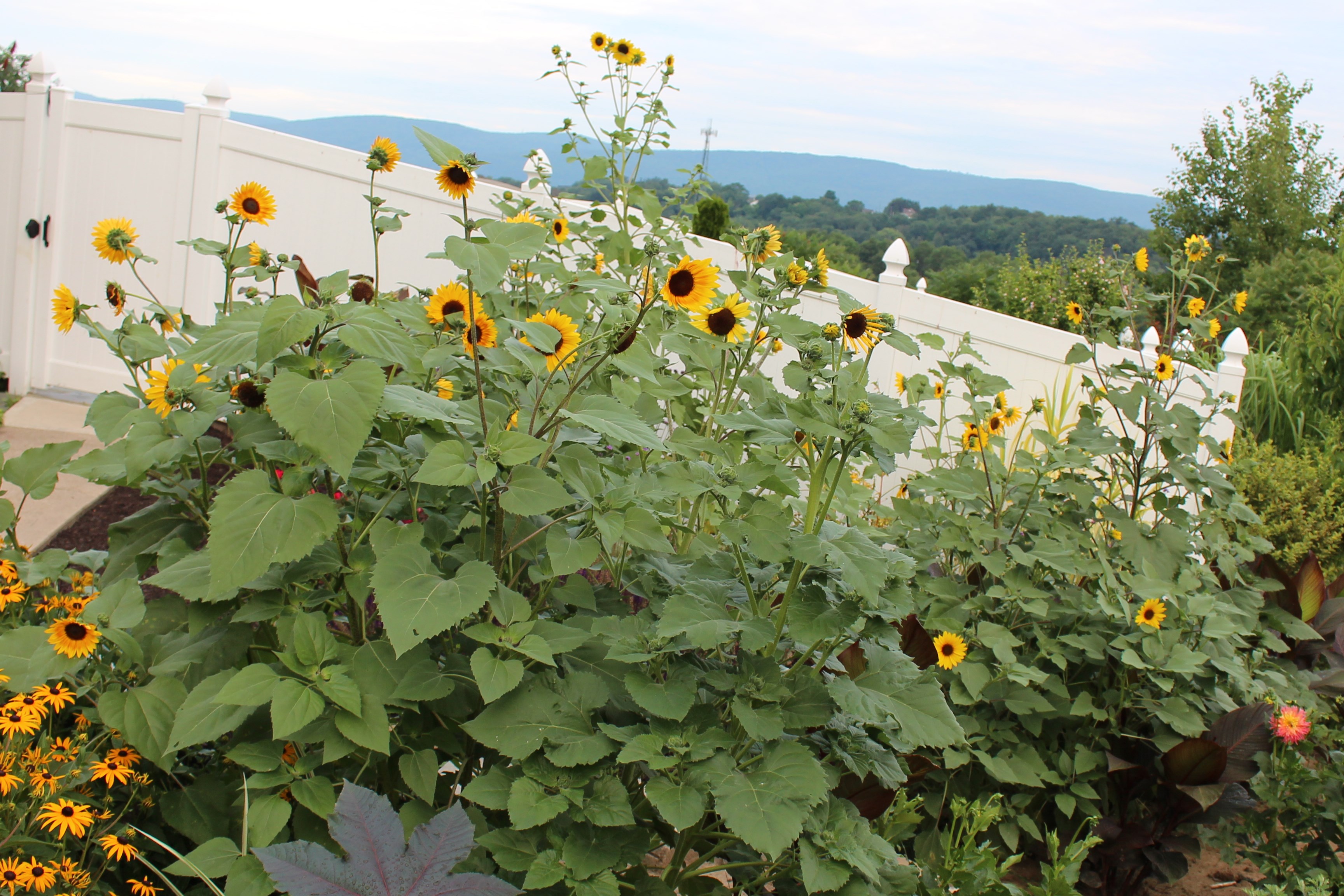
From the steps I get a good view of the vegetable patch -I like to call it the farm 🙂 , and the sunflower patch.  Last week I noticed this quilled version in with the others.  The rolled up petals are different enough to be interesting.

quilled sunflower blooms

In the center is the quilled version of the regular sunflowers. The flowers are nice enough, but it’s the coming and going of the goldfinches and sparrows that keeps things busy around here… as well as the angry little hummingbird who tries to chase everyone away.

I’m getting the feeling yellow is a little passé as far as being a fashionable color -if it ever was- but I clearly have a problem with “acquiring” yellow leaved plants.  “Isla Gold” Tansy is one of my favorites with its finely cut foliage and drought tolerance.

isla gold tansy with bon bon sedum

‘Isla Gold’ Tansy (Tanacetum vulgare) in front of ‘Bon Bon’ sedum. Don’t let the stupid name throw you off, the sedum is also a great plant.

Around the house in the front yard I finally gave up on the way-too-dry-and-hard-to-water spot by the lamppost.  I trimmed the ‘Tiger Eyes’ staghorn sumac back to the ground and let it and its suckers fill in the bed.  Too much yellow?  I don’t think so, and I no longer have to water this spot.

tiger eye sumac

I hope the plant police don’t find me. ‘Tiger Eyes’ cutleaf sumac (Rhus typhina “Bailtiger”) is a patent protected plant, and here it is propagating itself without corporate approval.

Another weedy spot has been the front street border.  I should probably do something about this since it’s a slightly prominent location which everyone who passes sees… but I’m a little bored with it right now.  Maybe once this bright red standing cypress (Ipomopsis rubra) blooms and some of the other annuals take off I’ll like it again.  I wish I had some nice mulch for it though.  I’m constantly jealous of compost rich gardeners and the ones who flaunt their piles of aged leaf mould,  and I think I’m close to breaking down and raiding the yard waste dumped by my neighbors in the nearby woods.  I’m sure my mother in law will be horribly embarrassed.

selfseeding annuals

More golden yellow in the form of rudbeckias, this time tastefully paired with red standing cypress -which almost has a touch of orange in the blooms. If people complain I’ll remind them the ipomopsis is a southeast native plant and hummingbird friendly, hopefully that will distract them from judging my trailer park color combos too harshly.

“Blue Satin” -or maybe ‘Blue Bird’, I forget- rose of sharon (hibiscus syriacus) always looks a little out of place or a little weedy to me, but the color is interesting and it just laughs off drought and abuse.  The white variety “Diana” (a sterile variety) still needs to be acquired, I keep forgetting to take a cutting of my mother’s bush in NY.

blue satin hibiscus

As close to blue as you get in rose of Sharon, “Blue Satin” is a cool color but reseeds freely, and the seedlings though nice enough are all more purplish.

You can’t help but notice the big clump of arundo donax ‘variegata’ (variegated giant reed) growing at the end of the bed.  Wow,  I love it.  It will easily reach 10+ feet by autumn and if frost holds off we’ll even see the seed plumes.  This variety will begin the season with a crisp white/green variegation, mellow to yellow around now, and then go green as soon as temperatures peak for the summer.  It’s invasive down south, so keep that in mind, but the huge clumps I used to see down in Texas were quite impressive.

arundo donax variegata

Still bright, this clump should ‘green out’ in the next few weeks if temps go up… the cool summer has kept it brighter for longer than usual.

A few pennisetum “Karley Rose” divisions (also patented, so please don’t tell anyone I split my clump) are still gaining momentum here amongst the black eyed susans.  They would have done better without all the company but I just couldn’t rip out the daisies.  I’m sure by next year the grass will just muscle it’s way through and form a big clump to hopefully balance out the big hydrangea.

karley rose pennisetum with black eyed susans

Pennesitum ‘Karley Rose’, rudbeckia hirta seedlings, and erynginum in the shadow of the almost blooming ‘Limelight’ hydrangea.

I’ll end with a non yellow.  Verbena bonariensis is starting to open up all over the borders and I wish I had more!  Serves me right for having ripped so much out this spring.

verbena bonariensis

Finally something to balance out all the yellow, but is that a prickly thistle coming up through the middle of the clump!? Who missed that weed?

You might notice in the last picture that there’s a mild green tint to the lawn.  I’m afraid I’ve gone over to the dark side, and have begun to water the lawn.  The brown straw mat I looked at all last July and August was just too depressing, and if I can just get it to the next thunderstorm (tonight I hope), things should stay green for at least another week or two.  Honestly I only ran the sprinkler one day, and the back lawn is responsibly dead….. but I may or may not have also fertilized the day before I watered…. sometimes even good people stray.

Have a great week!

Resist temptation

Summertime DIY projects are an awful thing, and not just for their interference with pool time.  This beautiful time of year with its warmth and sunshine is also the time when nurseries and box stores try and clear out their inventory, and as long as I’m at the store picking up lumber and sandpaper I might as well take a stroll through the plants to see what’s going on.  So far an oleander and golden arborvitae have joined the screw and hinge purchases, and under the relentless strain of repeated returns to the store it’s no surprise my resistance wears thin and a small eucalyptus or succulent falls in the cart too.  Some people buy chocolate, I buy plants, and at a midsummer 50% off sale I run the risk of getting fat.

The DIY store is not a nursery.  The plants are not well cared for and are right in there with washing machines, pipe, and soda coolers…… but sometimes you get lucky.  Sometimes you don’t though, and it bothers me that they sell diseased and dying plants such as these ‘Tropicana’ cannas.

virus in canna leaf

Canna ‘Tropicana’ should be a gaudy blend of yellow, pink, and red stripes on a purple leaf, without breaks and mottling of color. You’re looking at canna virus.

I would guess the store doesn’t know and doesn’t much care to know but the grower should, and to send out plants looking this bad (and to then sell them for nearly $15!) seems irresponsible.  Reputation must not matter much as long as the bottom line keeps looking good.

diseased cannas

Back in the day people went crazy over the wild colors which would show up in virused tulips….. but they learned the lesson and dumped the plants. ‘Tropicana’ growers didn’t get the memo, and each year I see these deformed offerings.

I would think if it’s your business you would want to send out the healthiest plants possible, and I’ve seen several online sources openly discuss the canna virus struggle, but some don’t seem to care.  ‘Tropicana’ can be a really cool plant…. if not entirely tasteful 🙂

healthy tropicana canna

Tropicana out by the mailbox last year. Maybe not virus-free (I’m back and forth on whether or not it’s clean) but it sure looks better than the store version.

I like my cannas and try to toss anything that looks suspicious, but I hate to see the pros doing a worse job than me.

I’d also hate to leave on a down note so here’s another lapse in judgment that you might enjoy.  Santa Rosa is an excellent online source for plants, and they run some amazing sales, here are the goodies which arrived last month after I fell victim to their online summer clearance.

plants from Santa Rosa gardens

I wasn’t even aware of my heuchera addiction until this showed up. My collection of one plant just increased by a dozen more….

The sale is still going on by the way, and if you use the coupon code of JULY10 when checking out, another $10 will come off your $35 minimum order… that’s practically giving plants away and I’m not going to go there (but I would never judge others who lack my amazing will power!)


The garden formerly known as tropical

There’s a spot in my yard (actually most of it inches over into my Mother in Law’s yard) where I like to indulge in a little of the tropics.  Last year it was full of cannas, sweet potatoes, and other warm weather friends, but this year it seems to have lost some of that bold tropical flair.  As usual it’s my own fault, and as usual it’s a long story, so I’ll try to keep it short.  It all begins in April when mulch was purchased for next door, and a willing volunteer was needed to spread it.  I foolishly agreed, but the deal was to add a couple tons of topsoil (I said I needed it to fill in along a sidewalk).  “I’ll spread all your mulch if you buy me even more stuff which needs spreading”.  Let me just say I run a hard bargain.

new flower bed

Look at that three inch drop from the sidewalk into the tropical bed. Clearly an ankle twisting lawsuit in the making!

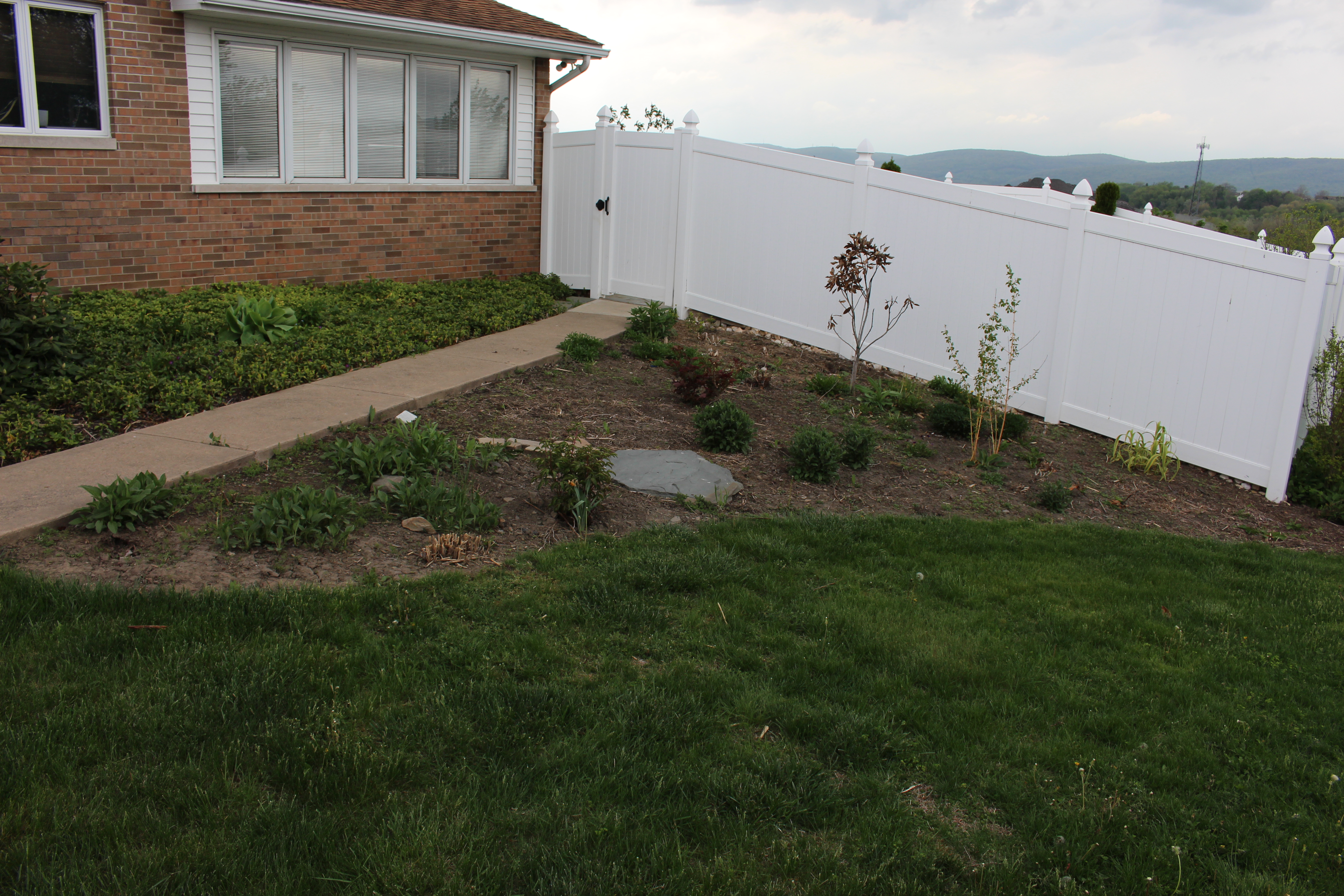
So the mulch was spread, perennials divided, shrubs trimmed, weeds pulled…. the deal kept getting better and better it seems, but then it came down to the heap of topsoil sitting in the driveway.  I used a few wheelbarrows to raise the soil along the walk and was still left with plenty.  Finally my plan was coming together hah hah hah.  I’m pretty sure I mentioned I might use the topsoil to expand the bed a bit, so that’s what I went ahead and did 🙂

digging a new perennial bed

Line the edge with a hose, cut in and dig out the edge, smother the grass with about two inches of topsoil… wow did I hate mowing this sloped little patch of sickly grass!

No one said a word about the tripled in size, very empty bed.  I think people around here may be a little wary about asking questions for fear I will plant up a field of dandelions or something.  Some people have said I’m stubborn and criticism may tend to encourage me even more.  I like to think of it as proving a point 😉

fresh soil in flower bed

A huge empty garden bed in May. What could possibly make a gardener happier (other than a few loads of compost mixed in)?

The last bits of mulch made the bed a little more suburban-friendly and a few paver scraps thrown down along the center made an acceptable shortcut for the kids.  Then on to the real fun!  Canna and dahlia roots were lugged out and planted, and that was well enough, but then trouble started brewing.  A box filled with a dozen or so rooted chrysanthemum cuttings showed up at the door.  I can check on them constantly if they’re right along the edge of the new bed, so that’s where they went.  Don’t ask me why I needed a box of chrysanthemums, February is a tough month.

new flower bed

Somehow random perennials invaded the tropical border, that and chrysanthemums….

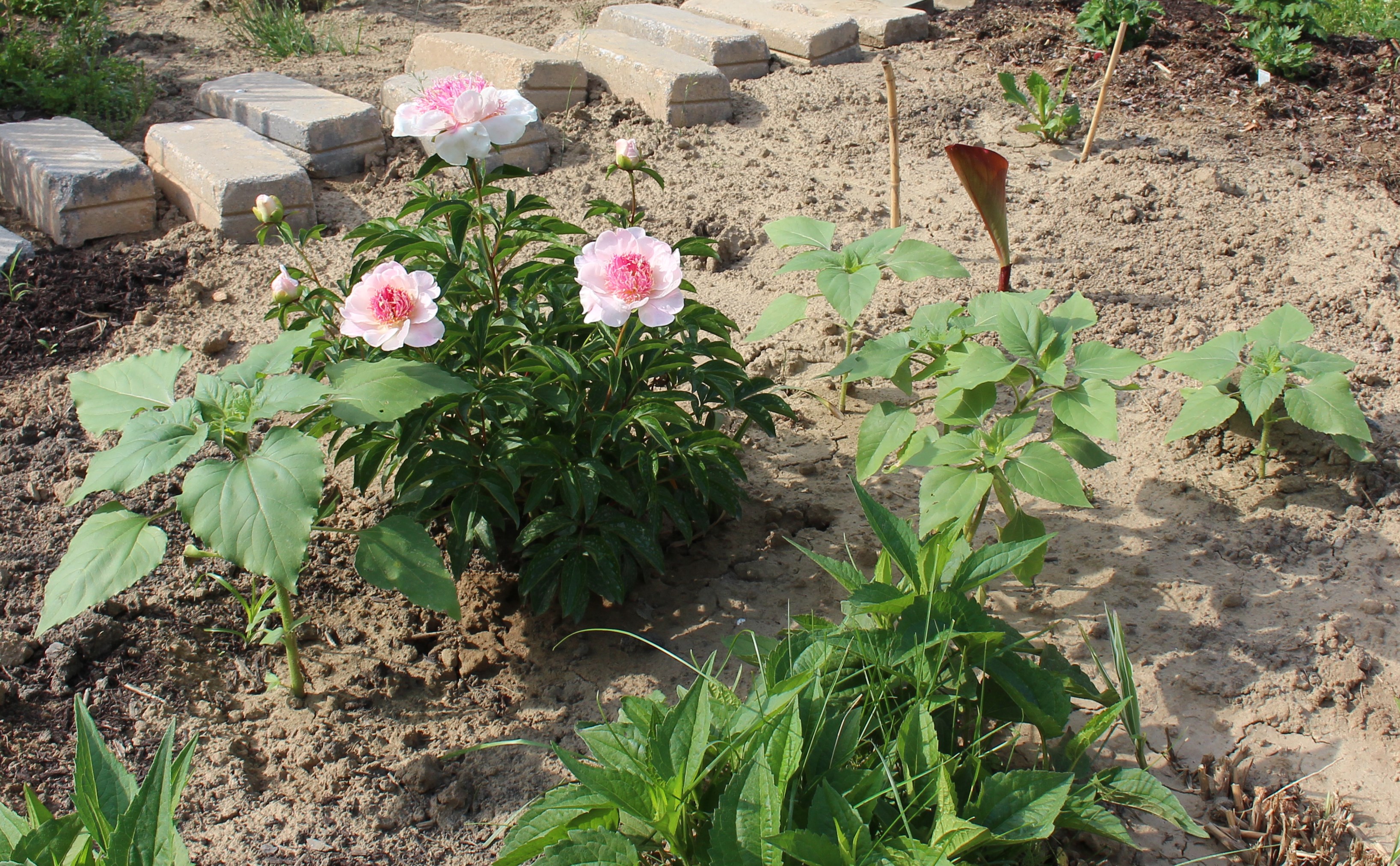
Then of course I tried to make the front yard more respectable by not having sunflowers all throughout the foundation plantings.  Out they came and into the new bed they went.  I have a serious problem in trying to show any kind of resolve against sunflower seedlings, they’re all summer and sunshine and it seems borderline criminal to pull them as weeds.

peony "do Tell"

Peony “Do Tell” can’t seriously expect to be the only plant using this spot of sun all year. The sunflowers should take over by July and the peony will just hang out in their shade until next year…. that’s the theory at least.

Things still look awfully barren but until the heat of summer hits it’s all kind of just biding its time.  Looking over from my yard you can see the bit of slope which made me hate mowing this spot.  Plus I’m not all that crazy about lawn to begin with *yawn* ….. it’s only really good for walking around on while checking the plants out!

side view

Year two of “I should give the table another coat of pain” -June 10th

My grass just doesn’t have the strength to come up through the soil (southerners may have a different experience), and even without soil improvement the new plants are still doing well as they feed off the decaying lawn underneath.  A month later and things are looking better.  The cannas still give a tropical look, but all the sunflowers are giving more of a neglected-agriculture vibe!

cannas, grasses, and sunflowers

July 13th, about a month later and the cannas are up, the sunflowers are growing, and I still keep looking at the bare dirt wishing for some compost or mulch to cover it up with.

As the sunflowers come into bloom they’re pretty and cheerful… but they’re not the tropics.

sunflower bed

It looks lush and green, so I should be happy. Also it’s not the color disaster I grew here last year, another reason to be pleased!

Besides it being a non-tropical border, a few other problems are coming to light.  The first is that some of the chrysanthemums relentlessly insist on setting buds and blooming for summer instead of fall.  I think I failed to pinch them back enough when planting them out in the spring, but I just don’t have the heart to do it now.

mums blooming too early

Chrysanthemums blooming in July, hopefully they’ll be on the correct schedule next year…. but they’ll need dividing by then, so I have no idea where to put them all!

To me a more insidious problem is the sunflower blooms.  When the first flower opened I cringed.  They’re completely pollen free, and because of that they don’t offer much to pollinators, and even worse they don’t set seed as well as the normal types.  I thought for sure since they were selfsown from last year’s plants that they should be normal functioning sunflowers but that’s not the case.  These all appear to carry the pollen-free gene, a gene which I’m sure came from the birdfeed seed.  I’m not big on all the seed conspiracies, but this looks like a genetic insurance policy that keeps farmers coming back to the seed supplier each year, and keeps them from replanting their own crop.  Good for a seed seller but not so good for me and all my now genetically tainted sunflowers.

pollen free sunflower with bee

Not much here for the bees.

Luckily there’s a small patch of sunflowers out front which still grow normally.  Once these started blooming I noticed a few seeds starting to form in the other patch (I guess a little pollen goes a long way throughout the garden!).  I need to make sure I get my seedlings from this area next year.

wild sunflower

This sunflower looks like it’s full of tasty seeds, not full of empty husks like over in the other patch.

The sunflowers look pretty enough, but all I see are the black soulless eyes of the walking dead…. ok maybe not that bad, but they lack the busy bees and bugs that usually do laps around the big open pollen filled flowers.  The goldfinches have also been very insulting as they touch down to check on the seed supply and come up empty.  Hopefully pollen from the front yard will work it’s way back here to at least make the birds happy.  Just in case, I planted a patch of heirloom sunflowers in the now completely dug up daffodil patch.  They’ll be late, but they’ll have pollen, and I think they’ll still make it before frost.

selfsown sunflowers

Sunflowers coming on strong.

I’m still holding out for a few tropical effects.  One castor bean seed came up and is now taking off, and “tropicanna” canna is looking healthy.  Also if I have nothing better to do this week, a few coleus and sweet potato cuttings can fill in one or two of the still empty spots, and maybe by late August ‘tropicalismo’ will revisit this bed once again.

castor bean with tropicanna canna

Castor bean “carmencita” and a few over-fed “Tropicana” cannas. The cannas seem to get much brighter colors when grown on the lean side, or with just a little 10-10-10 fertilizer. This batch has a lot of green in them due to higher nitrogen, probably from some miracle grow.

I don’t know if they say tropical to everyone, but dahlias never fail to bring brightness.  This peachy pink with yellow cactus flower makes me think of some overdone tropical drink.  Yummy!

pink and yellow cactus dahlia

Unknown dahlia which I keep saving from year to year. This spring I tried to show some restraint with them since last season planting a dozen or so might have been overkill 🙂

One plant I still need to plant out more of is verbena bonariensis.  In almost all my other beds it can be counted on to show up and make a play for taking over any open spot, here in the new soil it hasn’t had a chance to seed in yet.  Any transplants made this time of year will shrug off the shock of moving quickly and should be blooming up a purple storm in no time at all so I better get moving.

arundo donax "gold chain"

The grassy tropicalish leaves of arundo donax “gold chain” make a great mix with the sunflowers and verbena. I might have to plant this combo on purpose next year to make sure it happens again!

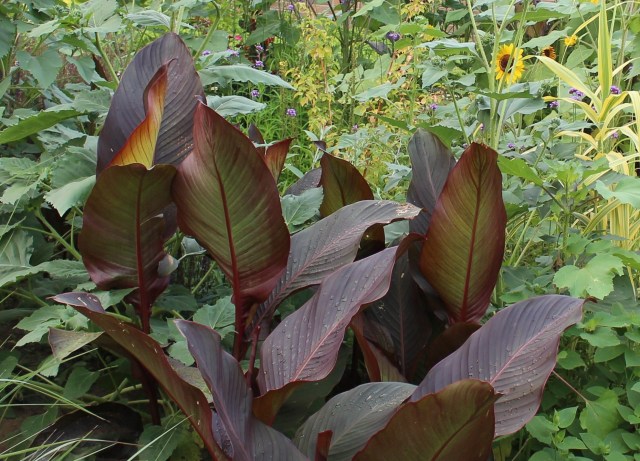
The tall old fashioned red leaved cannas always make me happy.  They’re super easy to overwinter, never look ratty, and always grow as fast as the fertilizer and water will take them.  The small reddish blooms which come later in the season aren’t much to talk about, but the hummingbirds love them.
red russian canna

Maybe canna “red Russian”? We call them Polish cannas after the old Polish woman who years ago gave the first ones to a friend of mine.

So that’s the latest from the ex-tropical bed.   It may still heat up as the season progresses, but for now it’s decidedly temperate and might remain so for a while.  No amaranthus or salvia seedlings showed, and this spring was a bust as far as all the seeds I started, so many of the brightest colors from last year are hushed.  For now I’ll have to keep satisfied with my little bit of the tropics in containers.

tropicals in containers

A couple real tropicals planted in containers where I can best keep an eye on them.

Not to go on any longer than I already have, but those weak little pots of tropicalismo surrounded by weeds and dead grass aren’t just a bad planter arrangement.  To me they’re the accent on a new gavel terrace backed by a low stone wall.  Maybe a fire pit.  I think one of the reasons my garden looks the way it does is because I have a bit too much vision, but we’ll see.  I do tend to work backwards and always find the plants first…. who cares if the seating area is still a little “in development”?
Love hurts

My prickly eryngiums are finally blooming, and to be honest I was a little disappointed by how underwhelming they were.  They gave me the longest wait ever, recently started to color up, and are finally looking cool.  Pollinators of all kinds love them, and these black and white wasps in particular swarm the plants from sunup to sundown.

pollinators on eryngium

The eryngium is very popular with the pollinators small and large.

They’re not as poky as you might think (although falling into a bed of lettuce would be the wiser choice), the more painful thing these plants offer is a nice wasp bite.  Most of the seedlings are a pale silvery color, but a few patches are showing an attractive blue tint.

eryngium

A few of the eryngium plants are showing off a nice blue tint. I like them, but will be on the lookout for too many seedlings.

Being a lover of all plants which walk the border between spiny farmyard weed and interesting garden plant, I of course love these, but my disappointment comes from the expectation that these would be the famous “Miss Willmott’s Ghost”.  Miss Ellen Willmott was a fascinating gardener, and the strain of eryngium that bears her name should be a stouter plant with wider silvery bracts.  Mine are thinner and tall enough to risk flopping.

small flowered eryngium

These plants are biennials and although they’ll need replacing each year you shouldn’t complain about a plant that blooms itself to death.

While I was struggling to get a decent picture I came to the conclusion this is a real photographer’s plant, with it’s airy blooms, subtle coloring, and busy bug guests. A real photographer could do wonders with it!

I’m sure I’ll get the real ghost someday, but in the meantime there’s no shortage of spiny, dangerous plants in the flowerbeds.  Ptilostemon diacantha is another biennial thistle which I’m totally in love with.  This one’s a real killer though with sharp spines that don’t give up tennis balls easily.

ptilostemon diacantha

Ptilostemon diacantha with nicely lined leaves and spines that feel as sharp as they look.

Sure the spines keep you on your toes, but there are plenty of other thorns out there in the garden.  Can you say rosebush?  Find me a rose grower who never sat down with a box of bandages after wrestling with a wayward climber and I’ll show you a gardener who has a checkbook healthy enough to hire out all the crappy jobs 😉

rose livin' easy

Gratuitous rose photo from earlier in the month. It’s “Livin’ Easy” and I never see blackspot or fungus on it. If it weren’t for the “Knockout” tidal wave sweeping the country I’m sure this would be a much more popular rose…. even with all those nasty sharp thorns 🙂

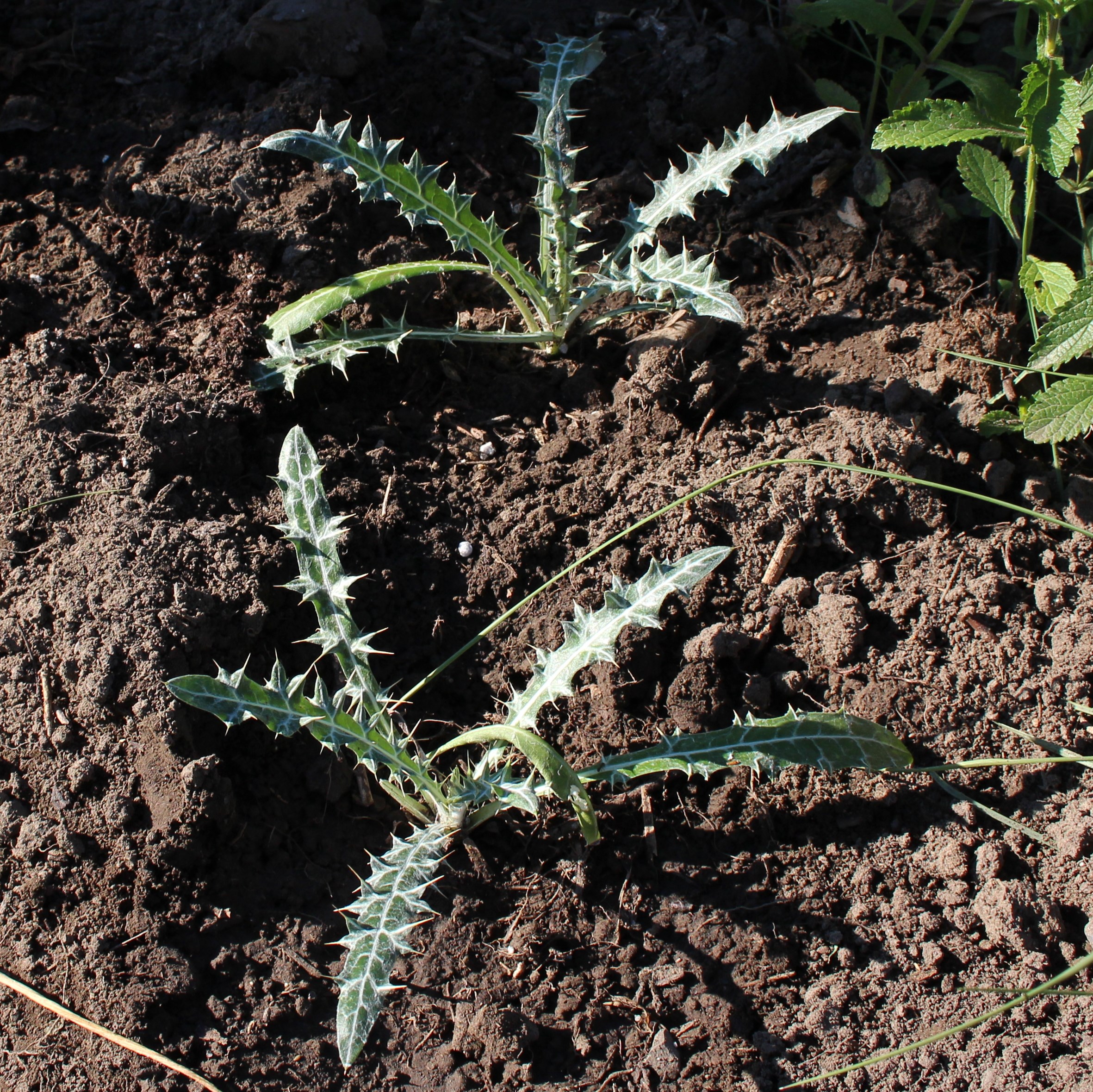
Here’s my newest little baby.  I finally had success with the cirsium japonicum “white frosted” seeds which I’ve been trying each winter.  They’re everything I love in a plant, variegated foliage, mild spine-age, bold colored thistle blooms (I hope)….. it’s even a perennial (hopefully not an invasive one).  There will surely be plenty of gushingly over the top praise put onto this little plant in the future!

cirsium japonicum white frosted

One of the cutest baby pictures ever of cirsium japonicum “white frosted”.  I hope it grows up to be just as attractive an adult.

The wild bull thistles are blooming around the fringes of the garden and I’ll spare you from those photos.  Weeding will be a gloved affair, but can I just say the pollinators love them and the goldfinches will be thrilled?  Have a great end of the week 🙂

Catching up with summer

I always admire other gardeners who seem to throw things together and they work out perfectly.  A list, a trip to a store or two,  a few hours of work, and voila!  You’re ready to relax and move on to something more entertaining.  My projects never, never,  ever work out like that.  I start something innocently enough and before you know it a budget is blown, there are walls missing from the house, or you’ve been for a visit to the emergency room.

refinishing a table

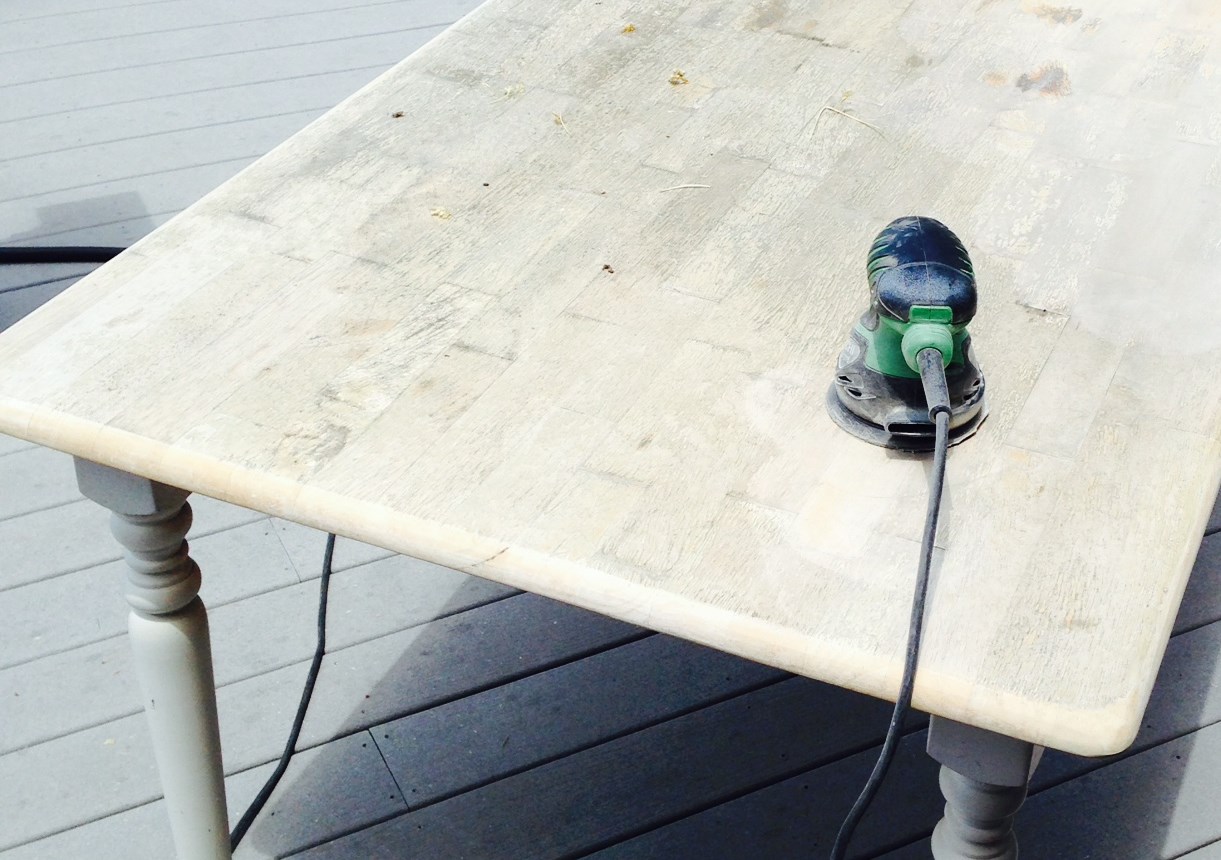
Wax on, wax off. This tabletop has seen better days.

So here’s this year’s deck saga.   You give it a good cleaning, plant up a few pots and warm up the grill for dinner, right?  Not in my lucky world.  As you get ready to pressure wash you notice the kid’s craft table is looking a bit worse for wear and really should be cleaned up before the next waterpaint session.  Out comes the sander and varnish.

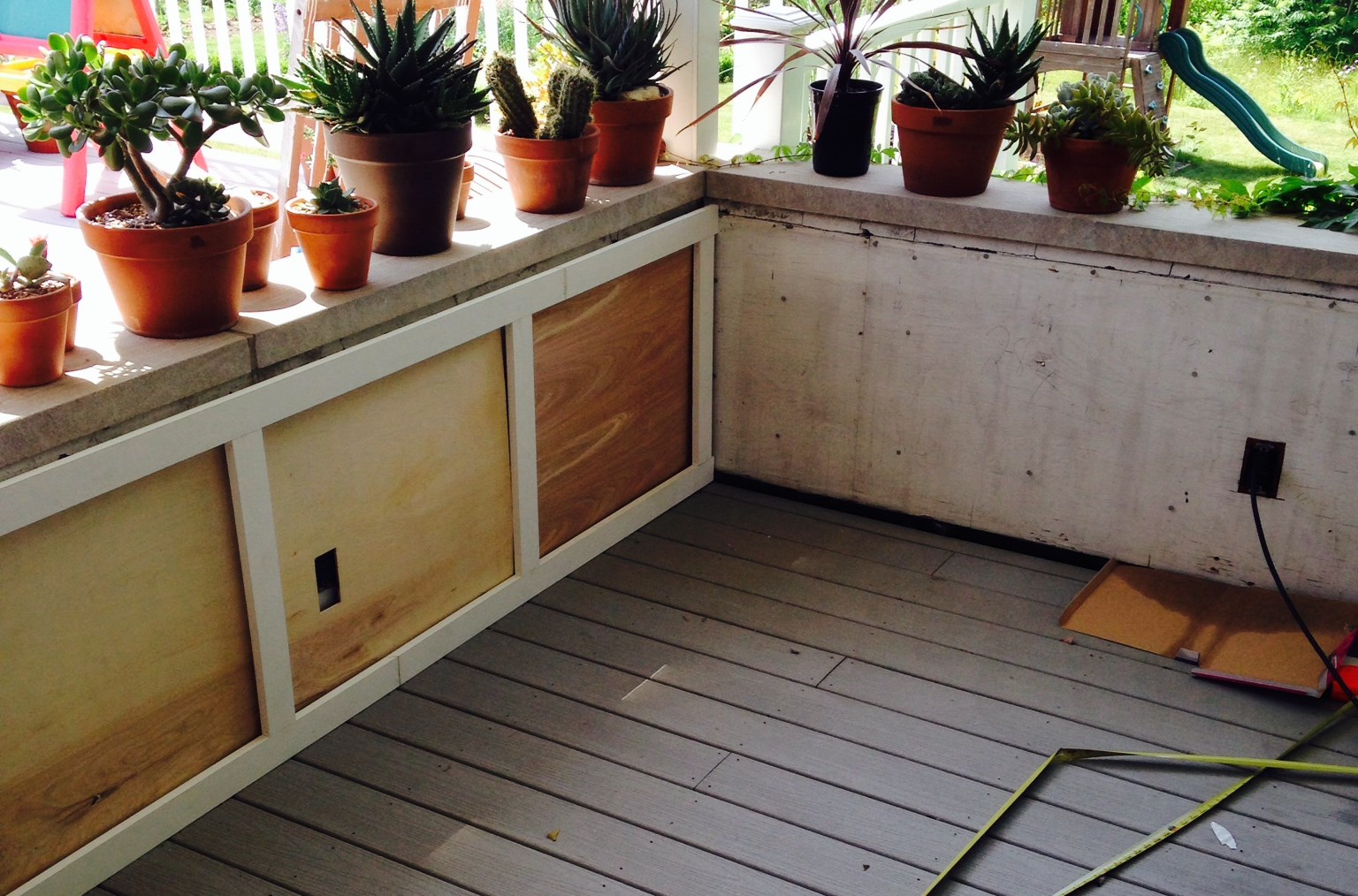
Once the table is all spiffy, the pressure washing commences.  The clean looks great, but it makes you realize how abused and dirty the vinyl siding is under the covered portion of the deck.  So off it comes.  You’ve been wanting to replace it with wood paneling and now that the table is looking nice again…..

wood paneling for a covered porch

The succulents will look so much better when this is done… and the wasp nest is removed from the outlet box… and the rusted broken light fixture replaced….

The woodwork should only take a few days, but then I might as well paint the rocking chairs saved from the dumpster, and I need to plant a few of the annuals so they don’t die waiting for their deck planters.

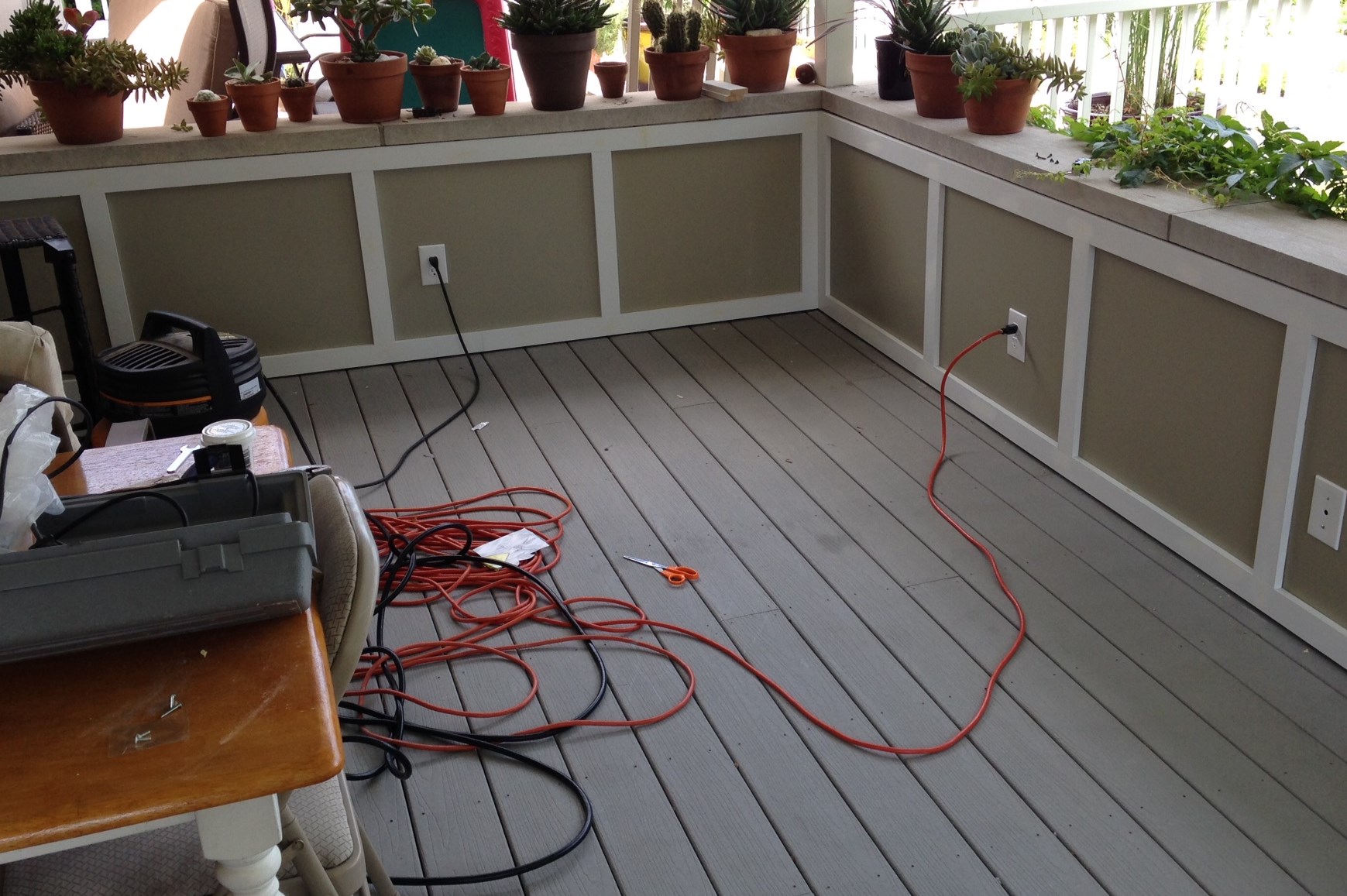
painted porch siding

As long as you’re redoing the siding, a pair of ceiling fans sure would be nice….

calibrachoa seedlings

A pot crowded with calibrachoa seedlings. I’ve never had reseeding with these before so I’m curious to see how they turn out… these are just four spoonfuls of seedlings out of the hundreds that came up!

Not to change the subject (as if I could stay focused long enough to finish something anyway), while the renovation is going on I still need to get the annuals planted in the deck pots.  Of course this is the year everything reseeded.  One pot is full of blue salvia seedlings, another is packed with red snapdragons, and a third has hundreds of baby calibrachoa.  They all need moving off to find new homes.

Once the planters are vacant (mostly) I decide I really need some tall miscanthus in the big planters.  Mine hasn’t quite recovered from the winter, but a quick phone call finds a friend across town who can spare a few wedges out of his clump.  So off for that.

And the weeks go on.  Finally the porch and deck are finished and the new plantings are filling in.

covered porch with new wicker furniture

All set for fireworks viewing on the fourth of July, but all I could think about were the agaves and succulents in need of repotting.

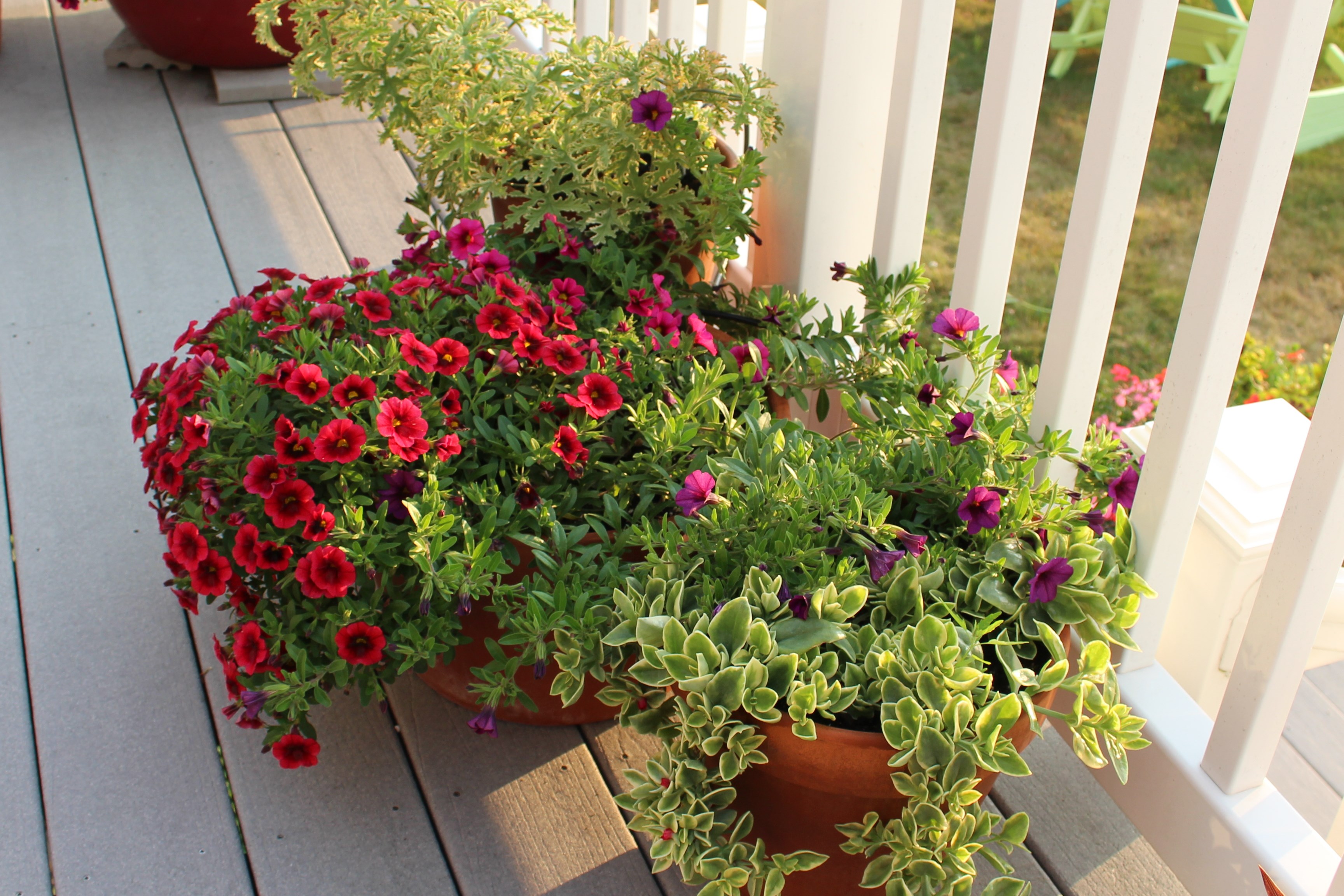
I really like calibrachoa on the deck.  They bloom constantly and don’t get the little inchworms in the blooms like petunias do.  These were all purchased plants, luckily by the time I got to the nursery it was so late in the season they were all marked down!

deck planters

Calibrachoas filling in a few of the deck pots.

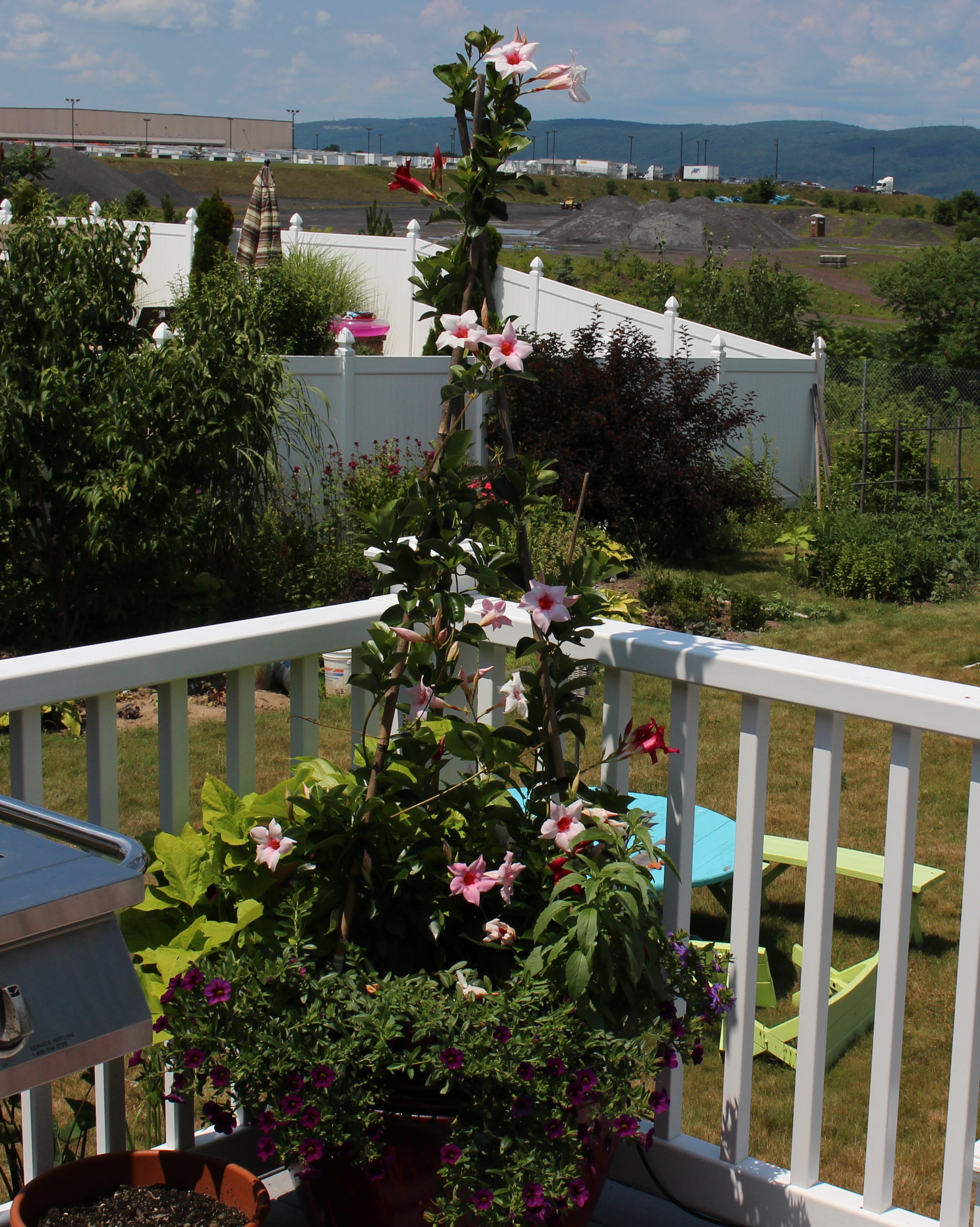
This year I plunked down the money for a nice mandevilla.  It’s not my favorite “Alice DuPont”, but after complete failure with Alice last year, it was time for a change, and this one is filling in nicely.  I suspect last year’s vine (purchased from a box store) had been chemically treated to bloom nicely in the pot.  It produced blooms all summer but never grew an inch (which defeated the purpose of growing a vine), and I suspect it’s from the blooming hormone cocktail it received before it got to me.

mandevilla vine on bamboo stakes

Mandevilla growing up bamboo stakes on the deck. White vinyl fencing and construction out back complete the picture 🙂

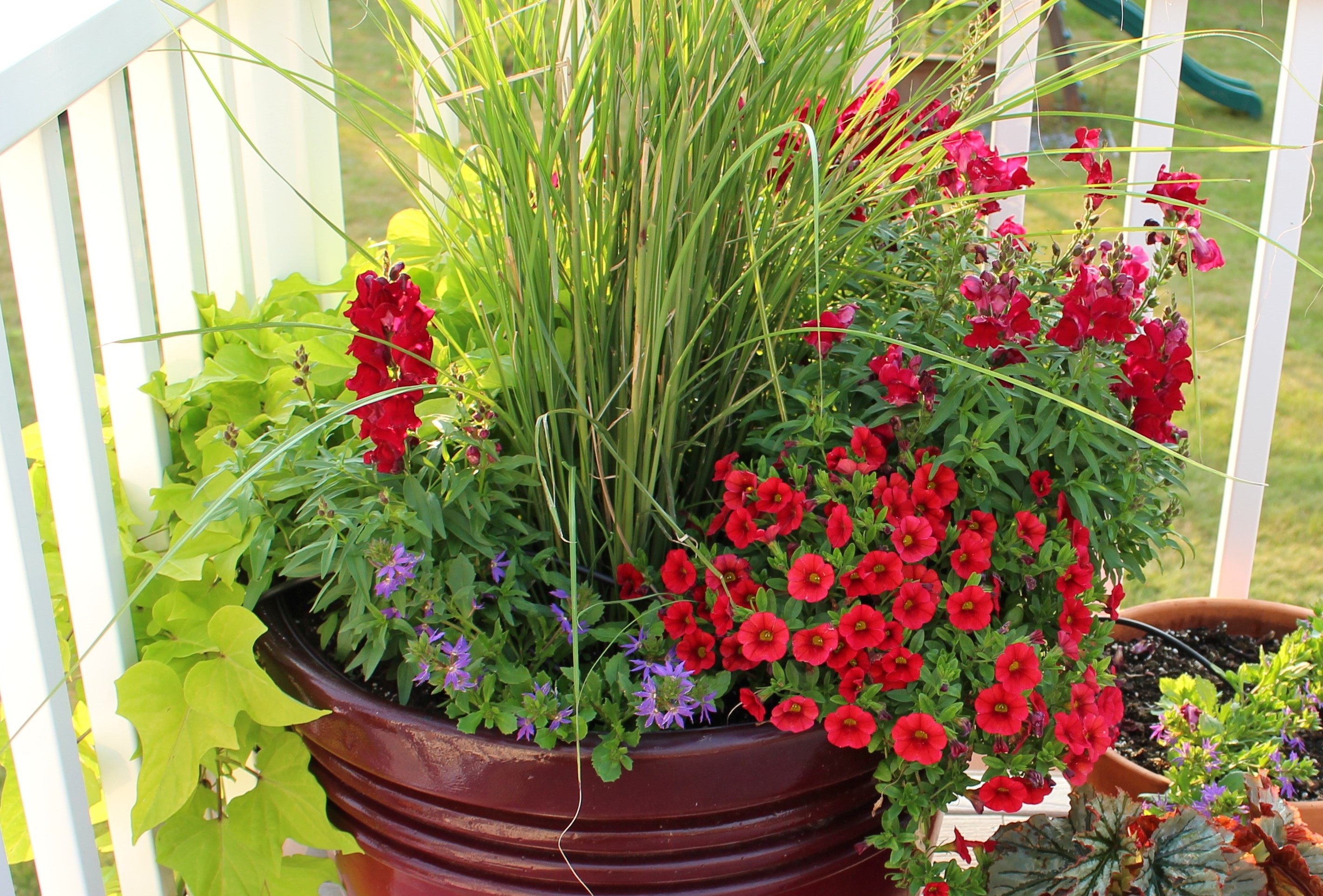
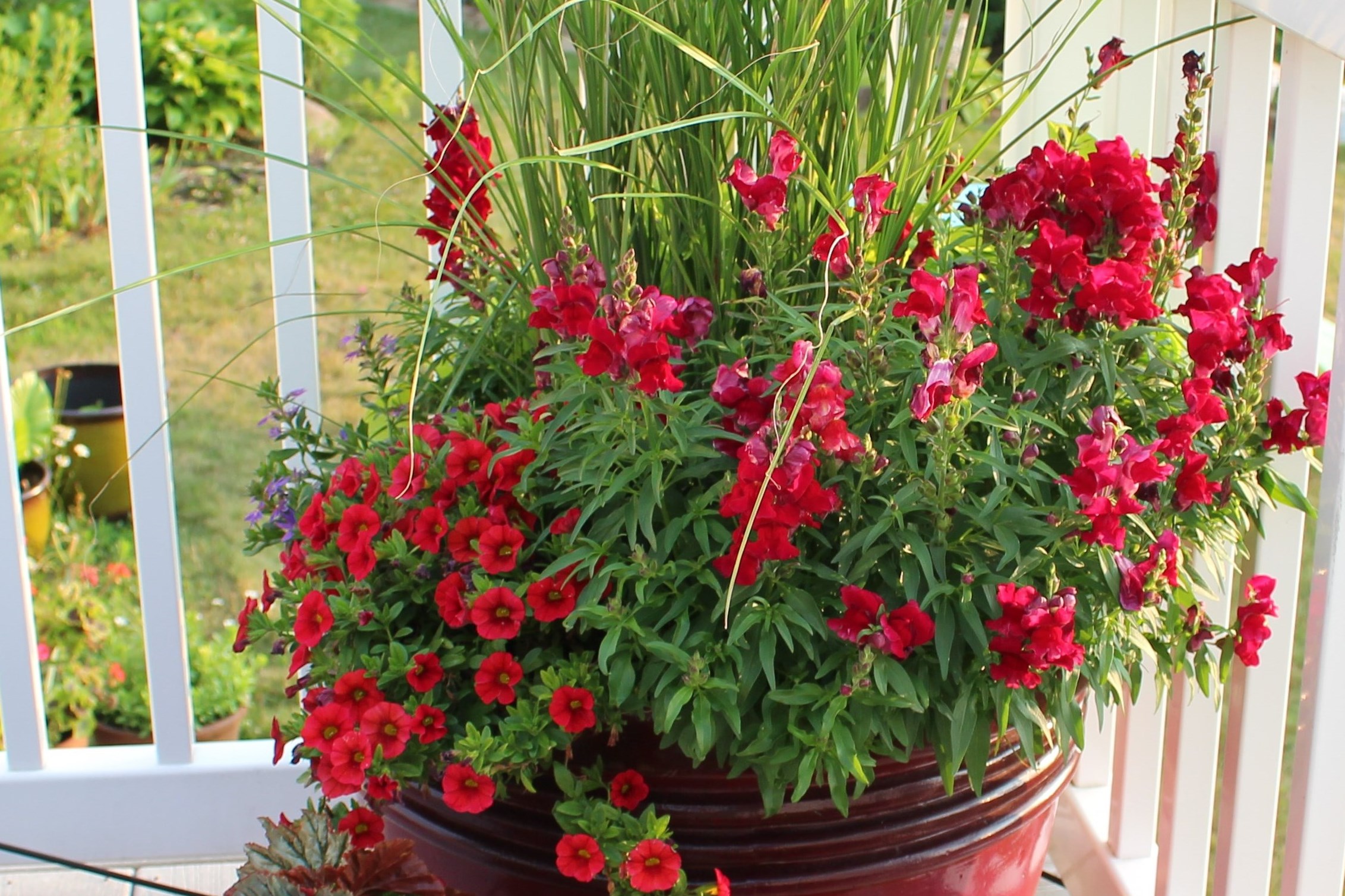
I managed to squeeze a bunch of the miscanthus into this pot, and although temperatures shot up to the 9o’s (32C) two days after its division the grass recovered nicely.  All the red was kind of a surprise though.   The snapdragons came in on their own (and all bloomed in reds) and the calibrachoa really clumped up, and the overall effect is growing on me.  I like it even more with the chartreuse leaves of the sweet potato.

red calibrachoa and snapdragons

Chartreuse sweet potato vine, red calibrachoa, miscanthus grass, and red snapdragons (with a little plug of blue scaveola).

I’m really glad I just left the snapdragon seedlings, they took off once the pots started getting regular water and feedings, and I love the color.   Now snapdragons are showing up in a second pot which was supposed to have just a single miscanthus in it.  I had pulled all the extra snapdragon seedlings out of it, but with determination like that I guess I’ll have to let them stay now.

red snapdragons in a container

Another gratuitous photo of red 🙂

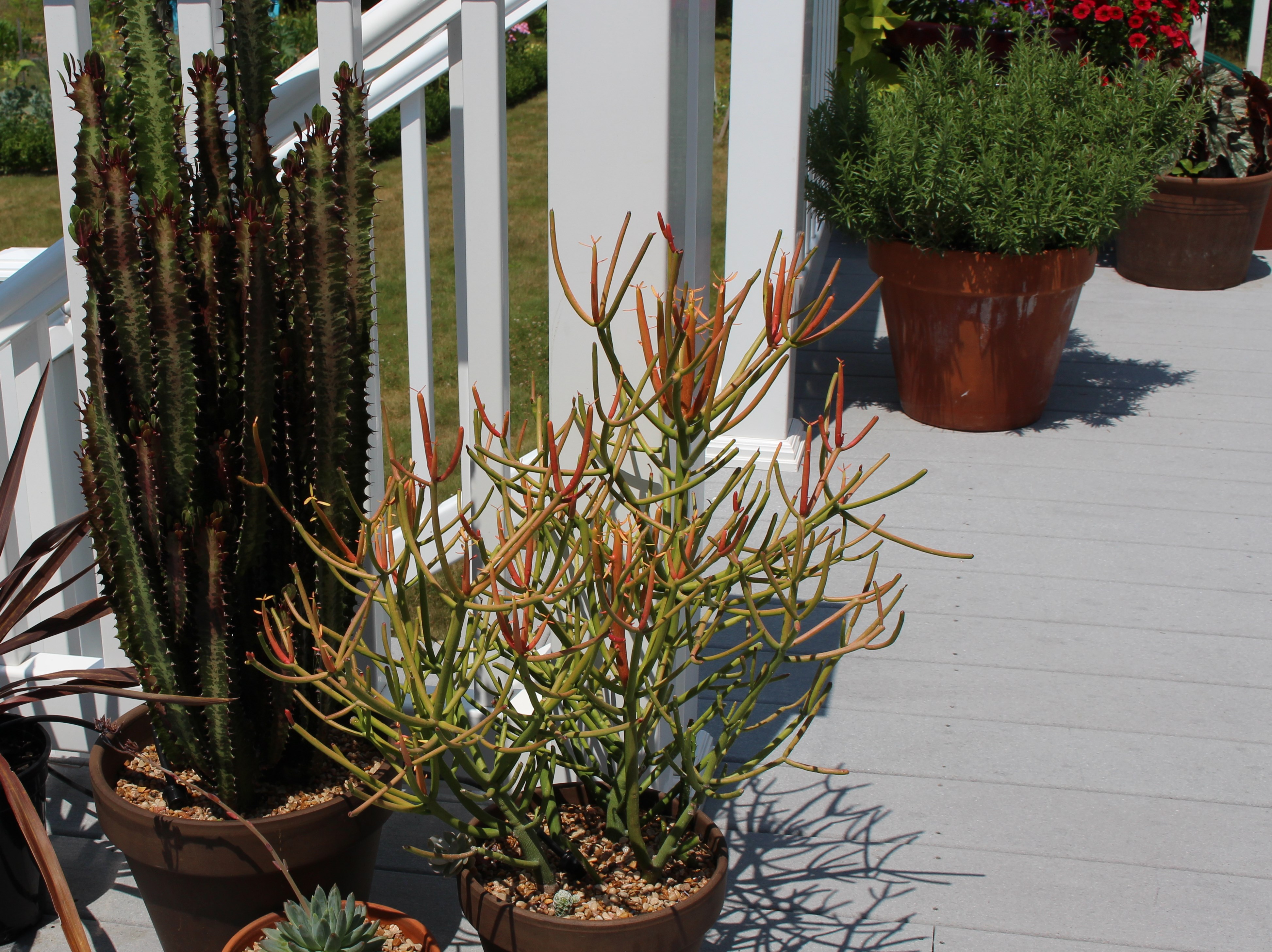
Fortunately the succulent pots are more subdued.  They’re calming things down a bit as well as the other survivor from last summer, the rosemary.

pencil succulent on deck

I’m developing a little bit of a terracotta habit, I blame the cacti and succulents for it.

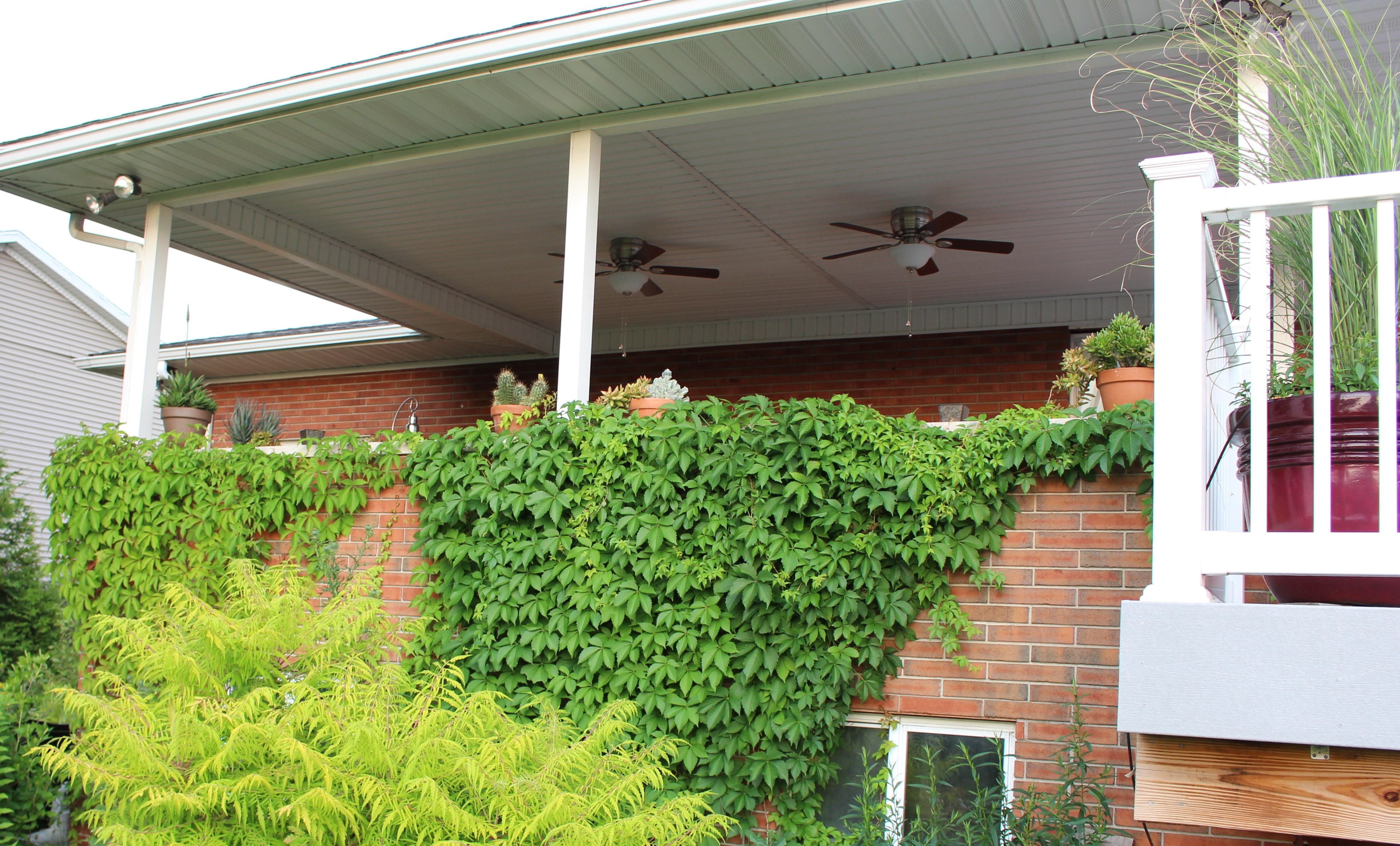
So finally I’m done cleaning the deck.  The covered part has become a nice little retreat made all the more cozy (in my opinion at least) by the Virginia creeper which has brought the garden up to the porch edges.  Maybe next year I’ll work out some kind of trellising system so that the creeper can climb higher and then hang down as a sort of curtain.  I like the idea, but that’s another project!


porch with virginia creper

The view o the porch from the garden. The creeper was never planned, but once it started growing up I welcomed it. With access from both the top and bottom it’s easy to keep an eye on it.

Now I just have to decide what to do with the geraniums.  All the time at the DIY store and I figured I might as well pick up a few new pots….. and then find some dark chocolate paint to tone down the orange…. and then divide up all the overwintered geraniums (and maybe add a new one or two) to fill the pots.  And come to think of it I should probably finish off those steps too, and the deck supports would look a lot nicer wrapped in brick…..

potted geraniums

Why am I collecting geraniums? They overwintered a bit too well from last year and who am I to hold that against them.

I hope your summer projects are coming along at a faster pace than mine do!  With the way they move I tend to think nothing gets finished around here, so as the temperatures rise I might take a break and do a few recaps to see where things are going.

Pur Pur Purple

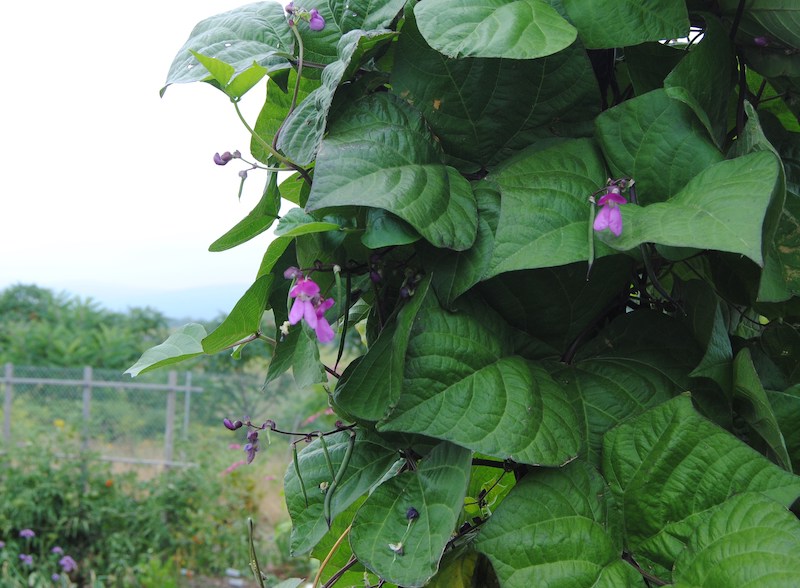
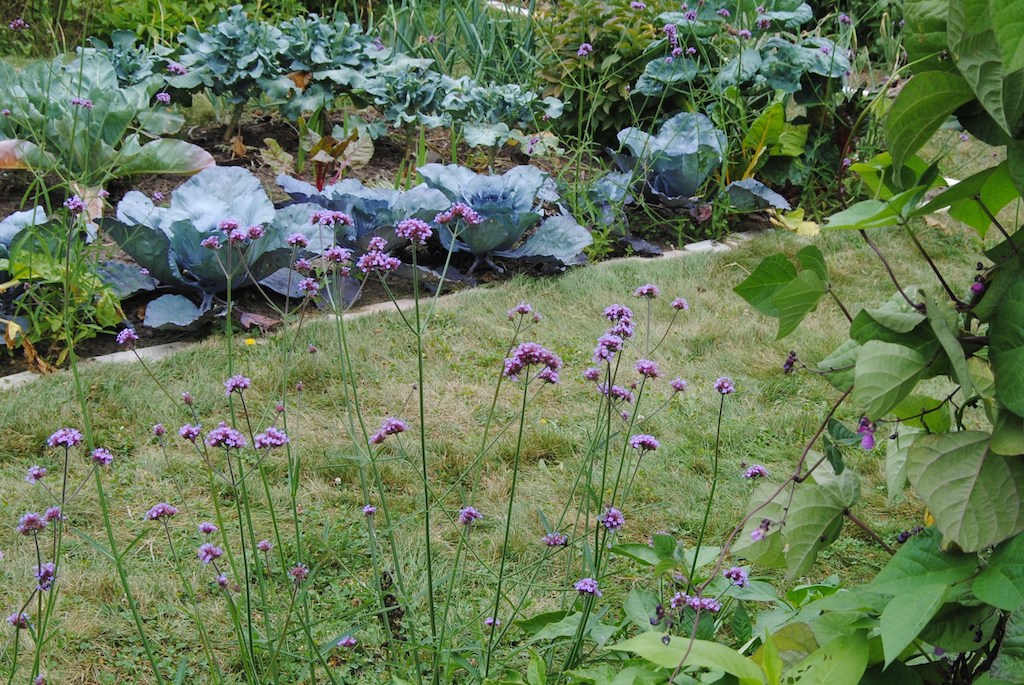
Something weird must have been going on last winter while I was picking out the veggie seeds for this summer… or maybe there’s something weird in the water…. in any case there’s a definite purple tinge to the vegetable garden this year.  I knew that these heirloom ‘Trionfo Violetto’ pole beans would be purple, but I chose them for the meaty, nutty flavored, stringless beans they produce.  They turned out great, but whether it was temperature or bird attacks, it took them a while before the blooms started setting little beans.purple vegetable gardenI rip out bucketfulls of the volunteer verbena bonariensis every year, but even after the carnage stops there are still plenty of their airy purple flowers throughout the garden.  They go good with the beans, but also match the ‘Ruby Perfection’ red cabbage on the other side of the path.  I never realized how purple red cabbage is until this year.purple vegetable garden

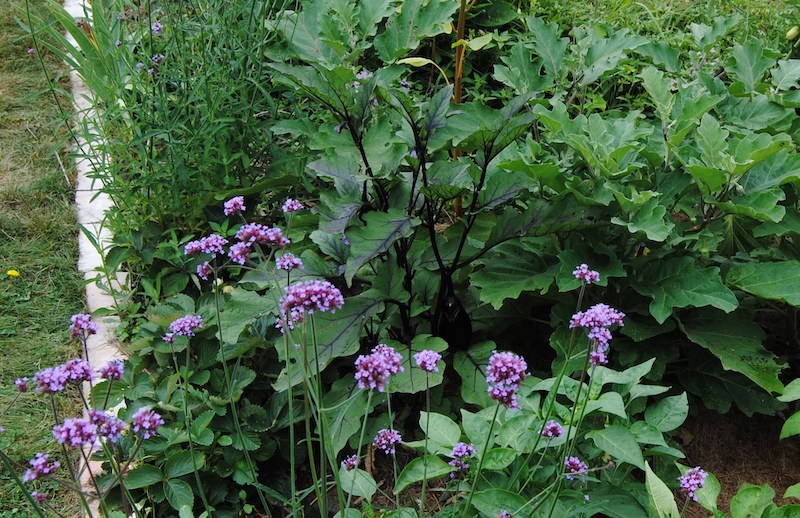
The verbena also picks up the black-purple of the ‘black egg’ eggplant.  Although the cold spring made for a slow start to the eggplant season, they’ve hit their stride now and are putting on decent sized fruit.  The ‘Black Egg’ is turning out to be productive and tasty even though I’d rather the fruits were a tad bigger.purple vegetable garden

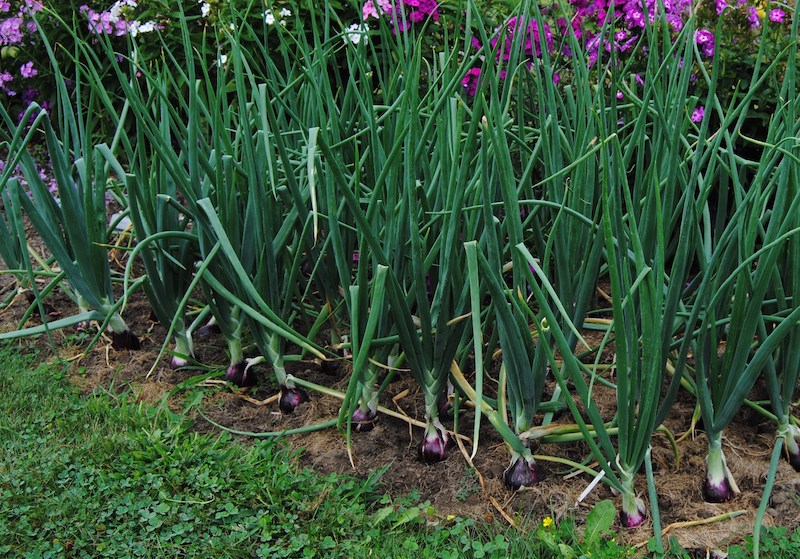
The ‘Red Wing’ onions are also doing great.  They’ve sized up more  since I took this picture and the purple flush of the bulbs matches up nicely with the purple phlox. purple vegetable garden

There are regular green beans and yellow onions, but for some reason they haven’t done nearly as well as the purple versions.  Go figure.  It makes me wonder if I could ever get organized and disciplined enough to have color coordinated vegetable garden.  In my case I doubt it, but it reminds me that vegetable gardens can look good too and if you ever want to give it a serious go check out some of the books by Rosalind Creasy.  She wrote the book on edible landscaping (plus a few others!) and her gardens really are amazing.

Hang in there Summer!

Cooler temperatures and earlier sunsets.  There’s no denying that summer is losing its grip, and with the kids starting school this week I guess it’s time to face reality.  Summer will not go on forever.  But delusion is a beautiful thing, and that’s what I’m sticking to, and for now at least I’ll focus on late August flowers….. not September.

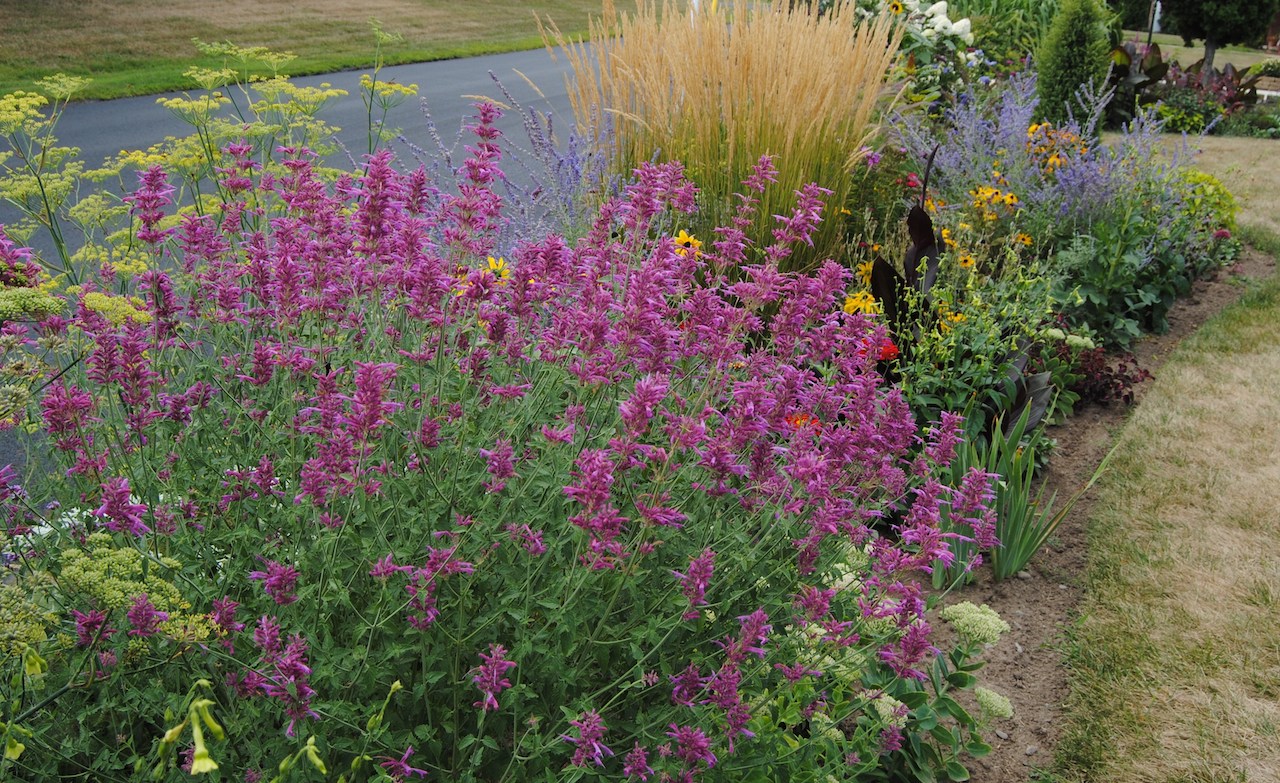
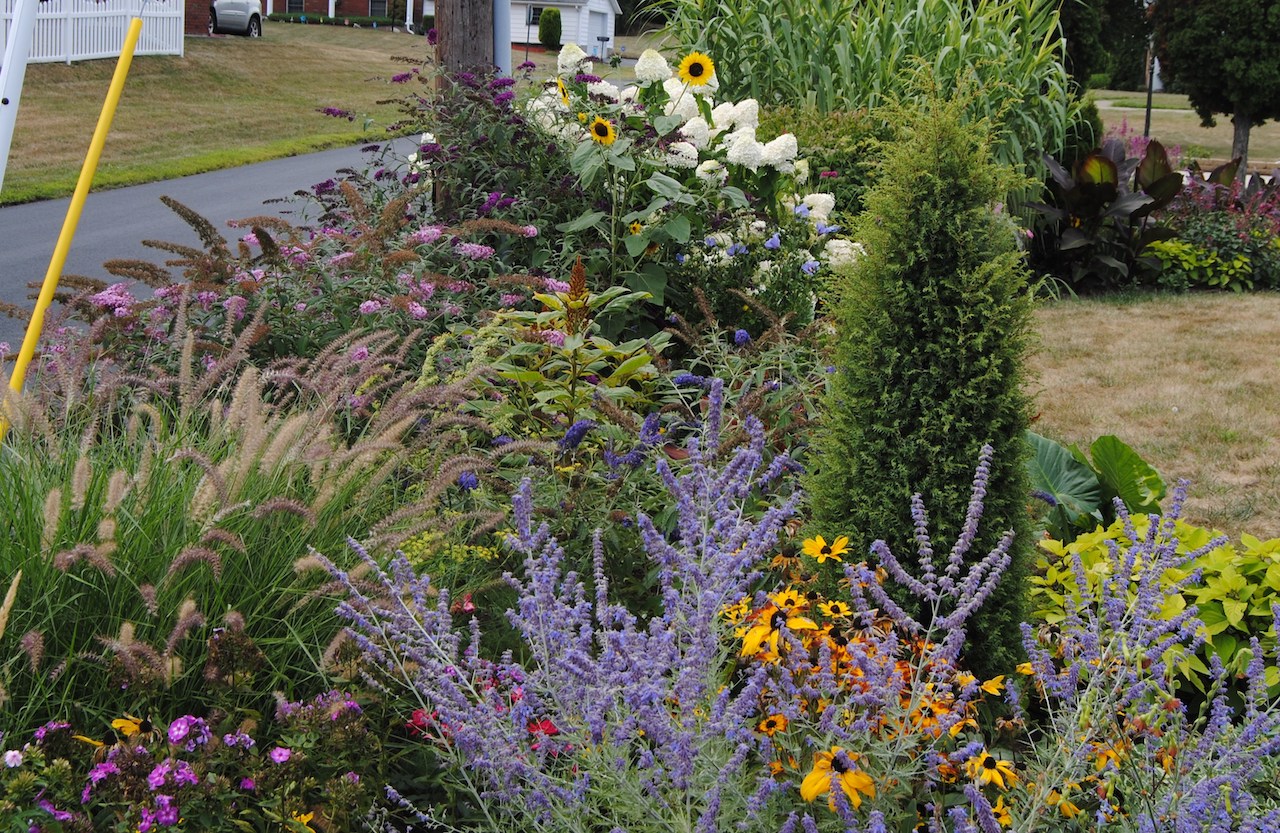
The front border is hanging in there in spite of the dry weather, and my half hearted watering seems enough to keep it this side of parched crispy.  Agastache “Tutti Fruitti” (I think), Russian sage, and the seedheads of “Karl Foerster” feather reed grass carry the show.

august perennials

Further into the bed it gets a little messy, and I bet deadheading the butterfly bush would help, but in the meantime it’s all almost one big wave of buzzing, fluttering color.  Lower left is “Karley Rose” pennisetum, basically carefree but not as sturdy as “Karl Foerster”.  The Russian sage and butterfly bushes just keep going….august perennials

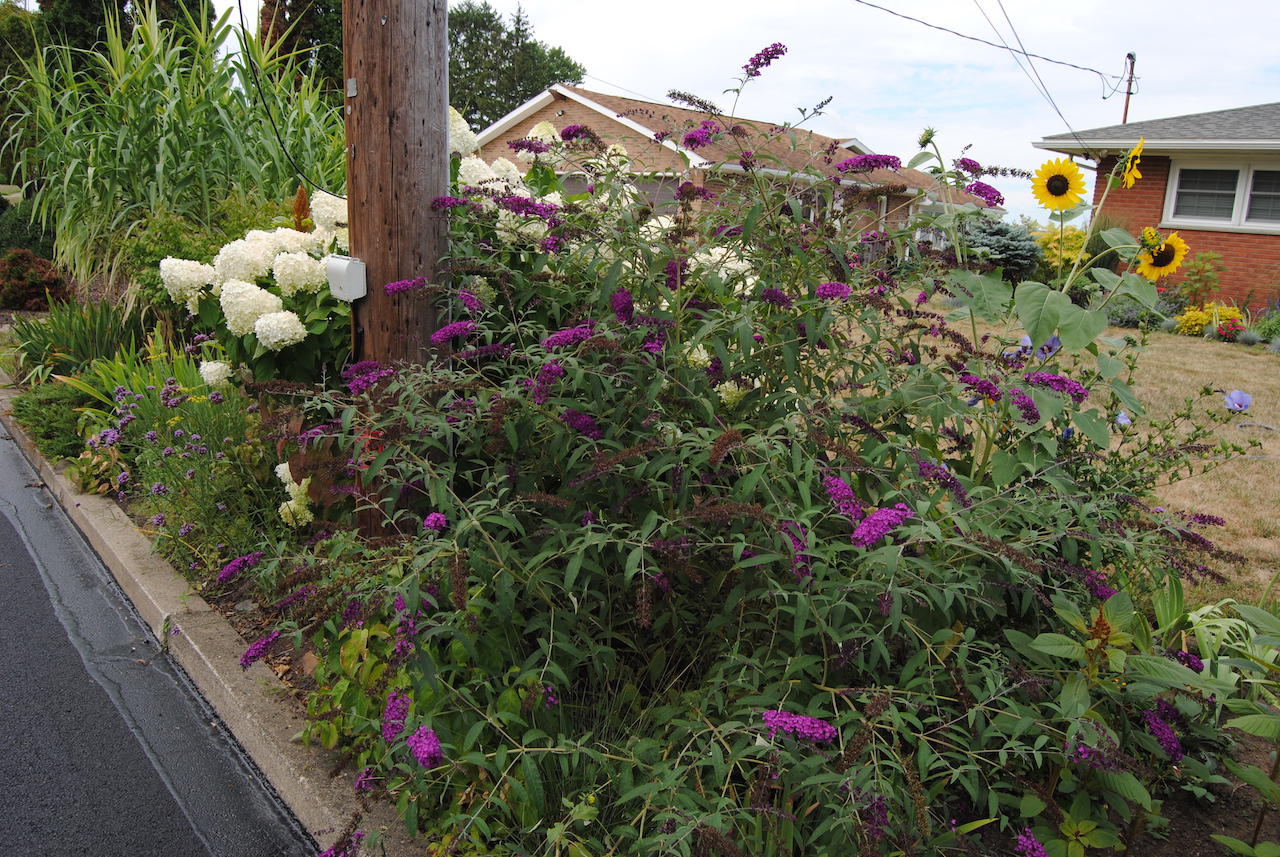
From the street it looks a bit messy, but maybe it distracts people from the dead grass…. here’s ‘Royal Red’ Butterfly bush (Buddleia).  It’s a little thin this year for some reason, but I’m sure it will be back to normal next year.

august perennials

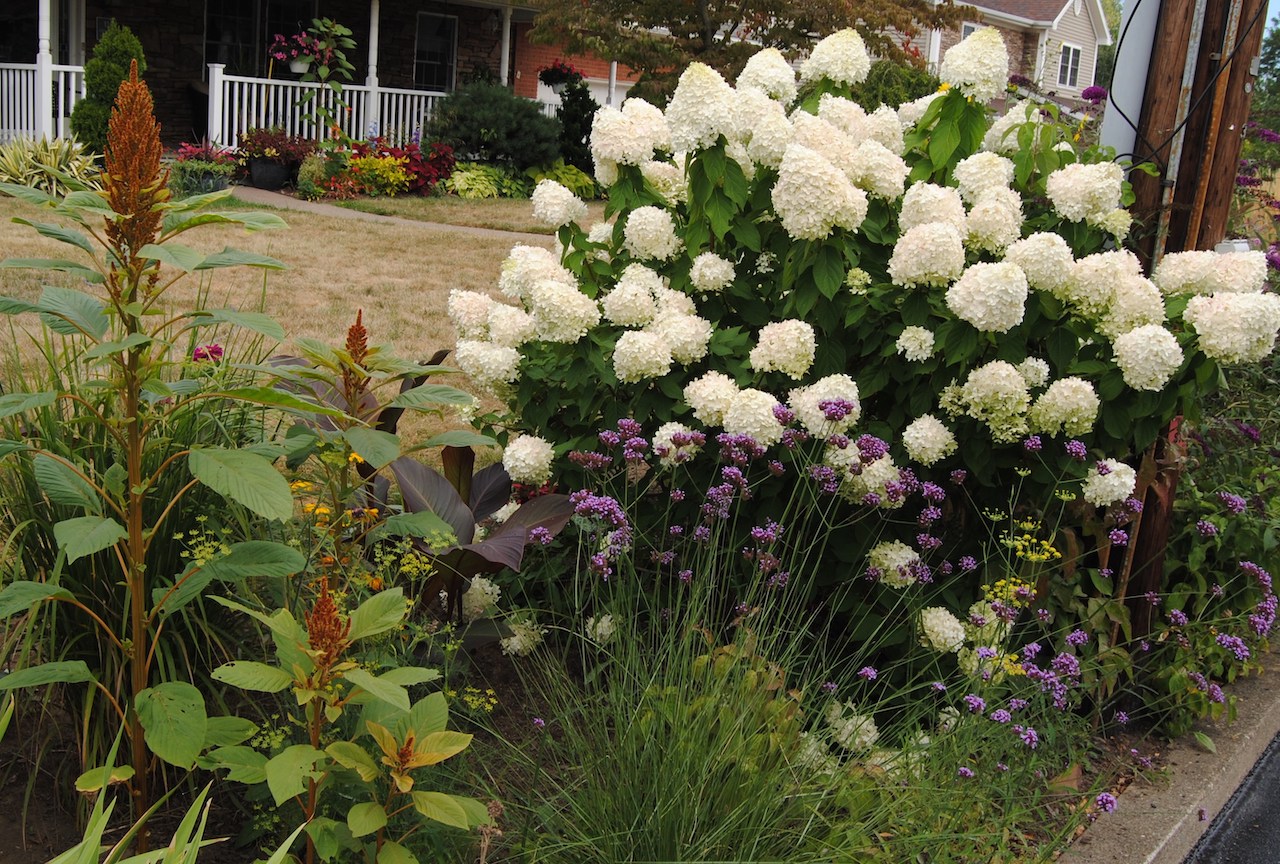
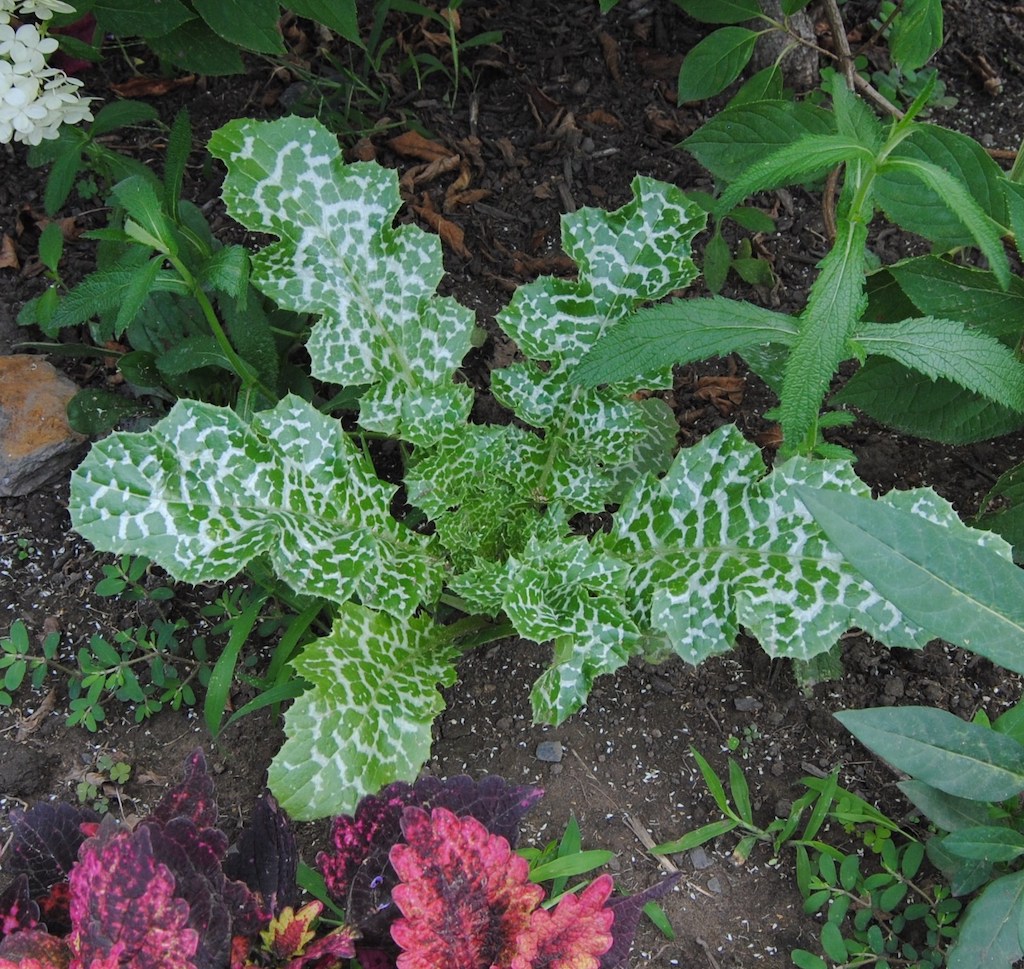
Also from the street, “Limelight” hydrangea paniculata.  Probably my favorite hydrangea, and it can get as big as it wants here.  The flowers start with a tinge of limey green, go white , and then blush with a bit of pink and red, and believe it or not the blooms are small this year (probably due to the dry summer).  Still there’s plenty of white flower overkill going on here!august perennialsThe extra water I give the hydrangea seems to be welcomed by its neighbors.  I love that this little milk thistle (Silybum marianumhas) sprouted up under the hydrangea.  august perennialsI don’t think it will amount to much this year, but maybe I’ll get lucky and have it overwinter and bloom.  Up till now I’ve only been successful with it as an annual.

If you’re bored, look up the history of milk thistle.  It’s been used medicinally for over 2,000 years and is still recommended today for the same liver disorders as it was in the middle ages.   Liver cancer, hepatitis, liver damage due to toxins…. mushroom poisioning….all this and it’s spiny with great foliage.  I love spiny!

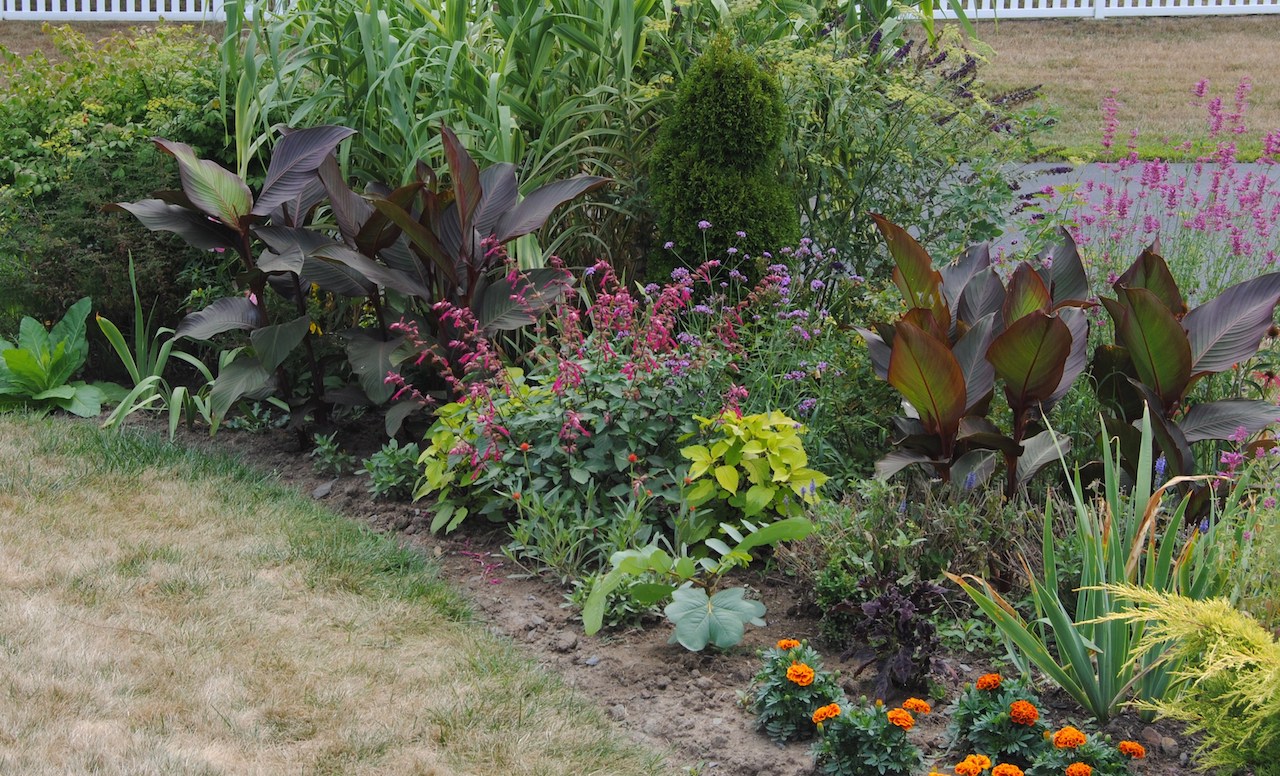
The far end of the street border is still filling in.  I can always count on the no-name, purple leaved cannas to give a nice background, and the ‘Wendy’s Wish’ salvia looks good in front of them.  I tried a couple marigolds in here too this year, they’re still small, but are taking the dry heat without a single complaint.  One of the great things about annuals is the chance to do it all differently next year.  I’m not sure if the brown-orange color is one I’ll chose to repeat.august perennials

Enough with the bugs!

So I’m bored with the garden, ok?

Until we get some decent rain most things are at a standstill…. except for the bugs.  They’re going full tilt and doing what bugs do (which is eat and multiply).  The grasshoppers are moving in off the dead grass of the meadow and taking advantage of the lush, watered parts of the garden.  I can do without a plague of these suckers, and fortunately they don’t seem to do too much damage.  I just pick them off and toss them on their way.grasshopper eating flower

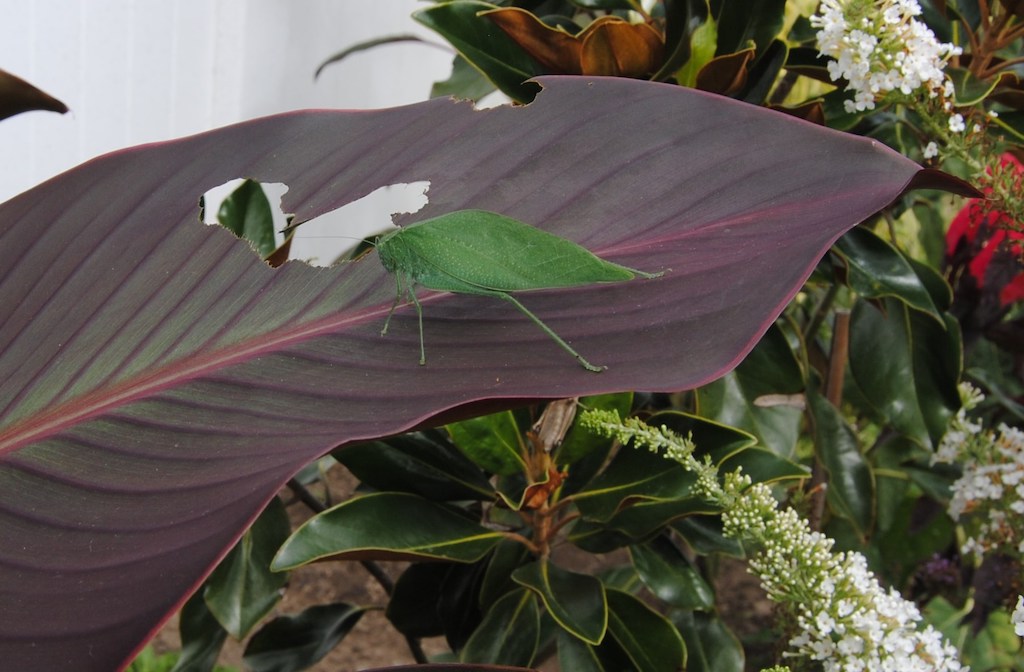
Katydids always show up on the purple leaved cannas.  I’m not sure if it’s just that the holes are more obvious on these big leaves, but I always seem to find one here.  If you look carefully you’ll see a second one further back, to the lower right.  These guys (actually this one might be a female) get their names from the “Ka-ty-did, she-didn’t, she-did” song they sing at night.  It’s one of the summer sounds I always look forward to.  If you want to see something even cooler, look up “pink katydid” and you’ll see some uncommon color forms of this already far too pettable insect.katydid eating canna

Believe it or not these things can fly too, and between their cool leaf shape, summertime song, and impressive size, I really don’t mind them eating as much canna leaves as they want.  Plus the kids love to play with these slow moving gentle giants.  I love having all this life going on in the garden and it’s the number one reason I avoid spraying whenever I can.katydid eating canna

The bugs don’t always have it that easy….. A big bug makes for a big meal and besides all the birds that search the garden each morning, these yellow garden spiders wouldn’t mind making a meal out of a fat bumble bee or grasshopper.  Judging by it’s plumpness I’d say the living is easy right now.  yellow writing orb spider

As you can see the phlox is still holding on, and I’ll try to show a couple flowers next time instead of continuing this parade of creepy crawlies.  But just look at the size of that spider!  Oh, and also notice the white zigzag “writing” on the web above and below the spider.  These orb spiders are sometimes called writing spiders, and I think the pattern is supposed to keep birds from flying into and ruining their webs…. Flowers next time, I promise.

Wild Kingdom

It’s confirmed.  Our little patch of Pennsylvania which hasn’t had decent rain since mid July, sits in the middle of a rain-garden of Eden.  In the last few weeks we’ve traveled out on each of the points of the compass and in each direction the lawns are lush and green and the roadsides are bursting with flowers.  But not here.  The lawn hasn’t needed mowing since the second week of July and the less popular plantings are dried and hanging with drought.  Such goes our summer.  Still I prefer this to the icy blast of winter, and I’ll take it.  I’ll just slow down the pace, stare at the brown lawn, and continue to drag around the hose.

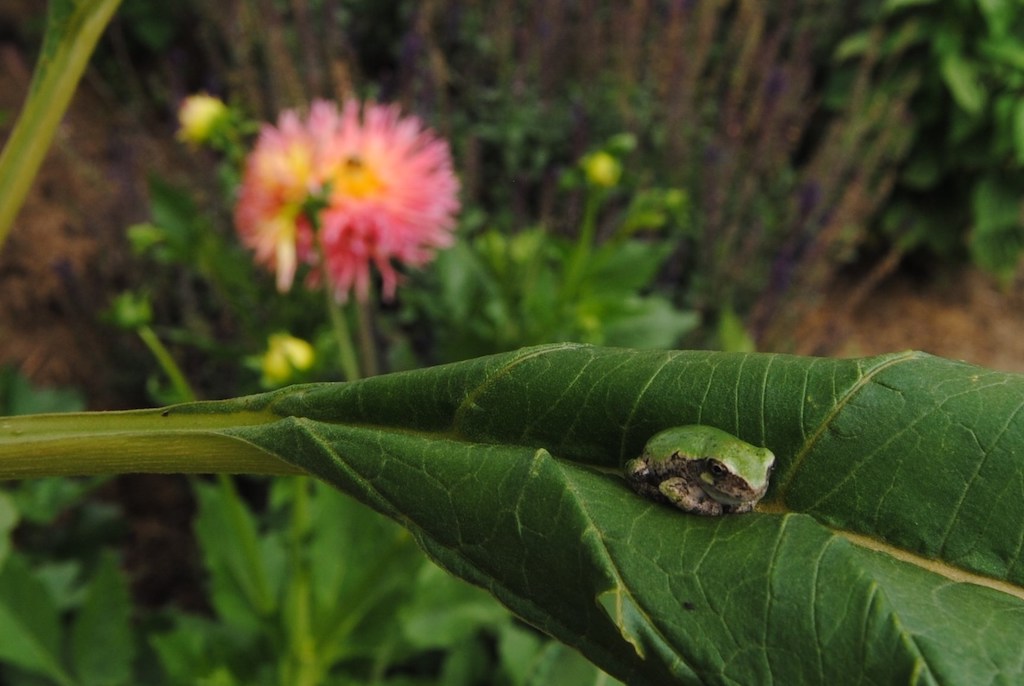
The watered areas of the yard seem to be drawing in more than their share of wildlife this summer.  Besides drought, we’re experiencing a plague of frogs this season.  Gray tree frogs both large and small are showing up all over, particularly around the house.gray tree frog

Before grilling the bbq gets a once over, and before moving furniture a quick look around helps prevent an ugly accident.  Raising the deck umbrella is always fun, since the plopping down of a frog or two on the table and umbrella-raiser is always a possibility and refreshing shock.gray tree frog

I like the frogs but never really thought I’d have to add “sweep frog-poop off deck” to the pre-party to-do list.

This year’s babies seem to prefer the large leaves of amaranthus  and corn, and in the baby-green phase they fit in pretty good.gray tree frog

Another surprise this year is the bumper crop of snakes showing up.  Our plague of snakes is fortunately of the garter snake variety and because of that, non-poisonous and small (two pluses), but there’s always a shock to seeing a snake slither away from the path or slide behind a step.  A different kind of shock than having a frog drop on your shoulder, but a surprise still.

Here’s a shaky shot of one that was calmly hunting through the plantings just off the front porch.  I didn’t know they were such good climbers of shrubbery, maybe I’d still rather not know that fact.garter snake

Drought, Frogs, snakes…. I think we’re still far clear of repeating the 10 plagues of Egypt, but we do have a lot of gnats this summer, and we did get a number of flies when a garbage bag stayed around too long.

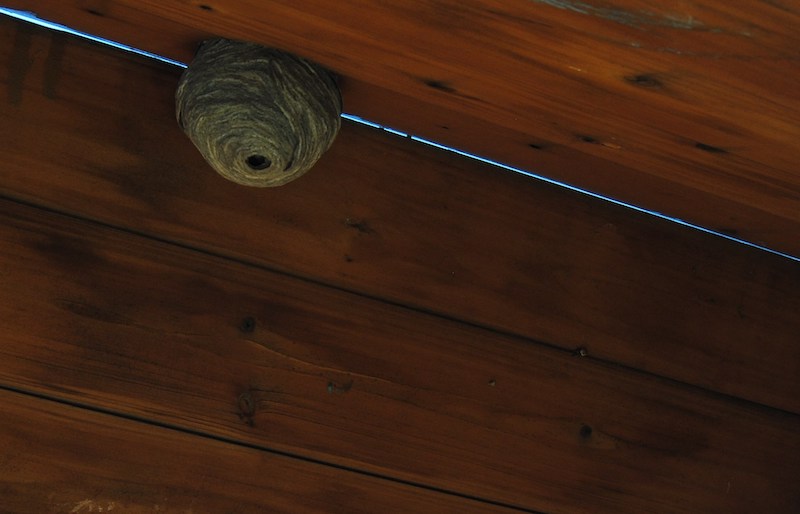
Next: bees and wasps.  This is paper wasp nest #3 on this year’s list of evicted wasp nests, it was brought to my attention one evening by the screaming of a stung five year old playing in the playhouse where they set up shop.  I’ve never had a large wasp nest in the garden until this year, so I’m not sure what’s brought on all these new neighbors, but at least I now know none of my kids nor the neighborhood kids are allergic.  They’ve all been tested as well as a few kids who were over for a birthday party last week.paper wasp nest

One day I’m going to try and figure out what all the bumblebees are.  The kids call them “fat bees” to group them away from “skinny bees” and “paper wasps”.  I still don’t follow their logic on the skinny bees, but it might be time for me to go a little more scientific and figure out all these black and yellow fatties.carpenter bee on phlox

bee on thistleThe bumblebees are interesting to watch.  On most of the flowers they “cheat” since their mouth parts are too “fat” to fit into the flower openings (hey, maybe the kids are on to something!)  On phlox for example, they stab a hole into the base and suck out the nectar without returning the favor of pollination to the bloom.  They seem to do this with a lot of plants such as butterfly bush, agastache, salvia… it’s actually a little annoying since on flowers such as the salvia and butterfly bush, they push in their mouths with enough force that they rip open the entire side.  The split flowers brown and fall off and I’m left with nothing colorful.  Oh well, at least they’re not stinging everyone.  I guess they’re more suited for open flowers such as hibiscus and sunflowers, or flat topped flowers like thistle.

Butterflies have been late to the party.  I’ve only just seen my first Monarch this week, and other types have been scarce all year.  But it looks like they’re working on it.  Here’s a Black Swallowtail on the potted parsley.  There’s something about these guys that I always like, and they’re more than welcome to a share of the herbs.black swallowtail larvae