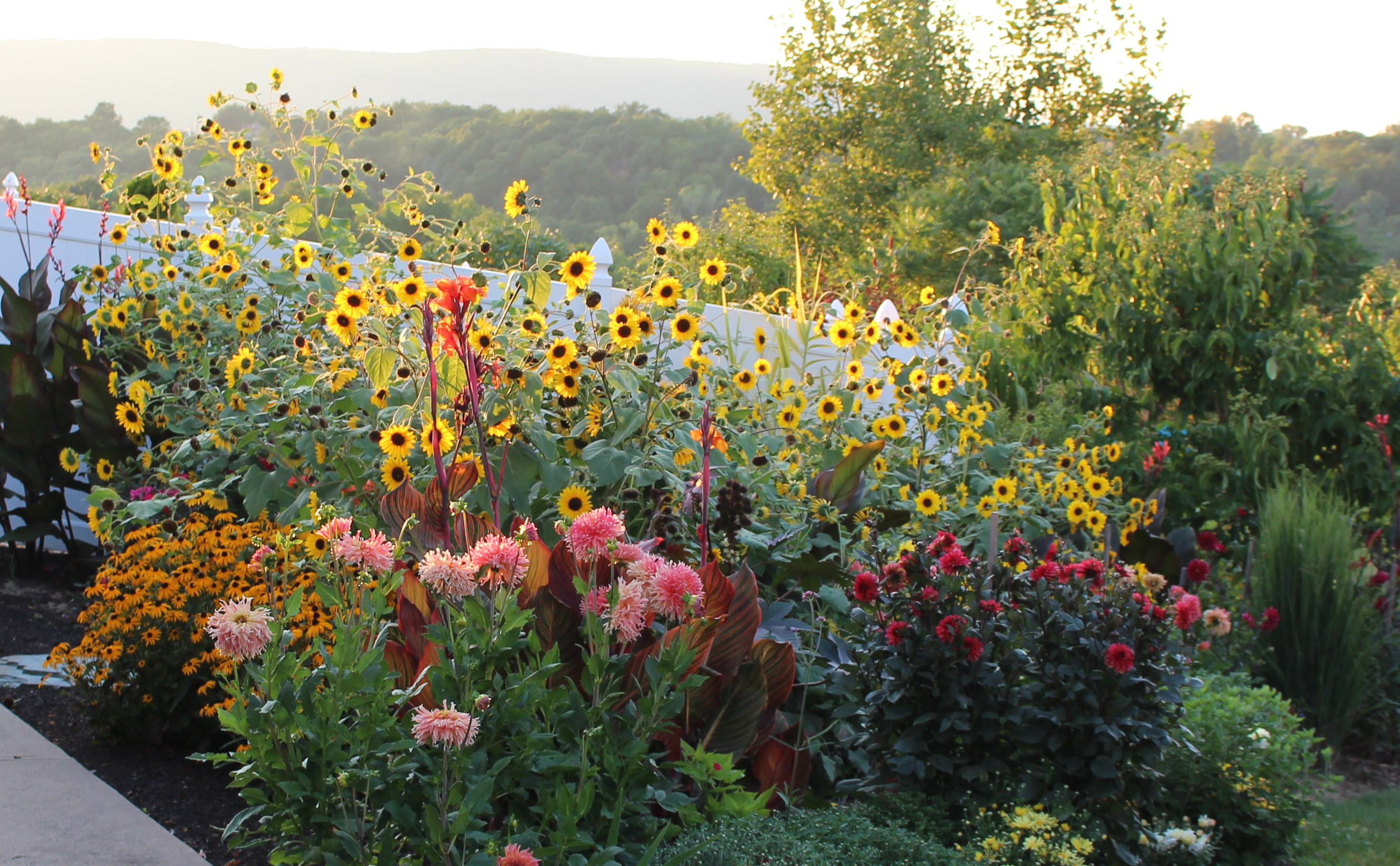
Down on the farm

Late August is bathing us in heat this year and the steady rains have brought on the harvest.  We modestly refer to our garden as “the farm” or “potager” and this is the time of year when it shines.  Produce begins to trickle in and suddenly there’s a little more interest in the backyard.
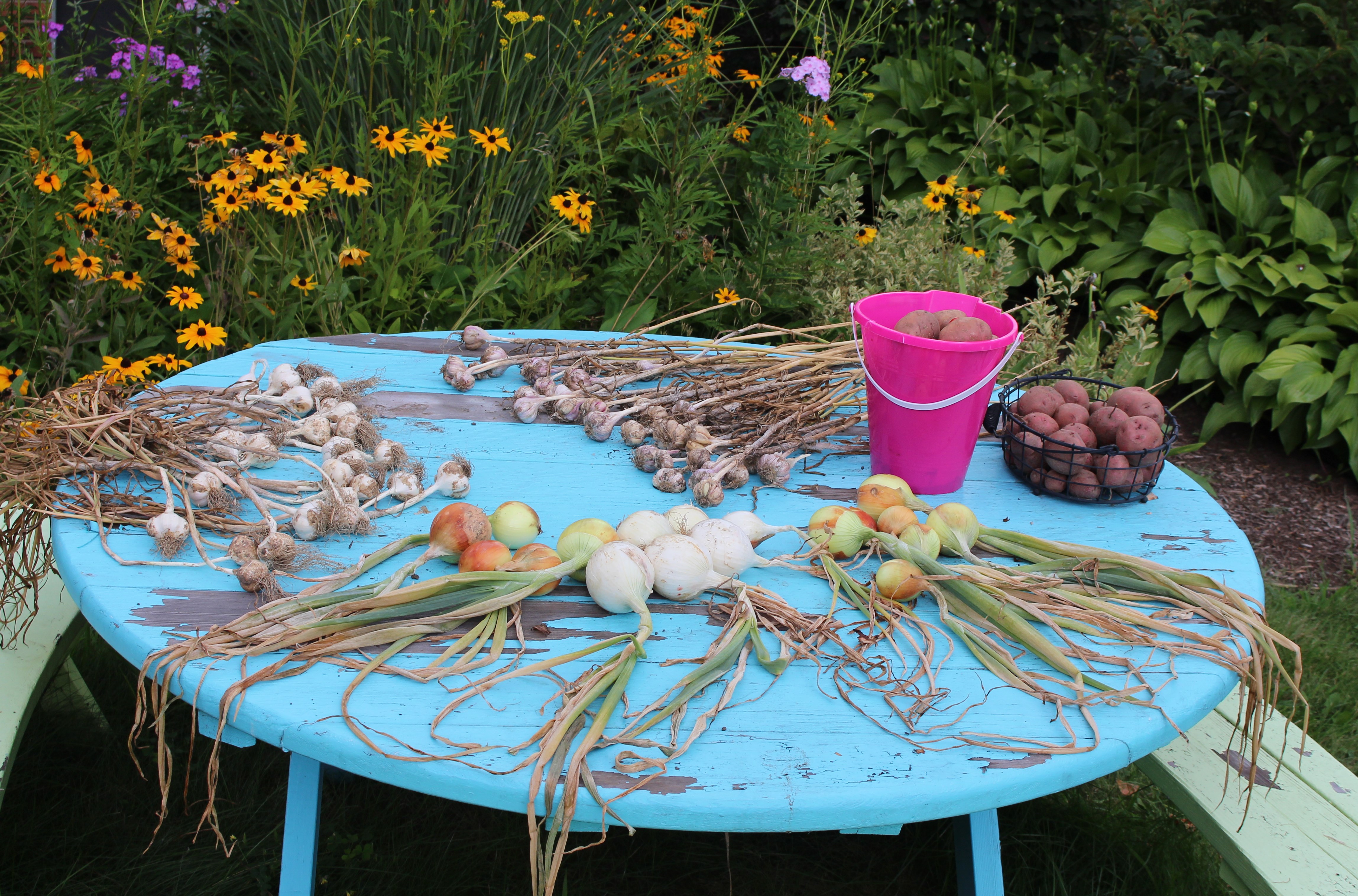
harvest from the garden

The picnic table is the place to be for drying off and cleaning up before the kitchen.  Garlic, potatoes, and the first of the onions started the month off.

Eggplant and peppers have been going out, onions are always popular, tomatoes are on their way, and beans are yet to come.  The harvest is late due to planter’s procrastination but who out there hasn’t ever fallen behind?  At this time of year even I fix up a plate of veggies, and they aren’t even deep fried 🙂

IMG_8425

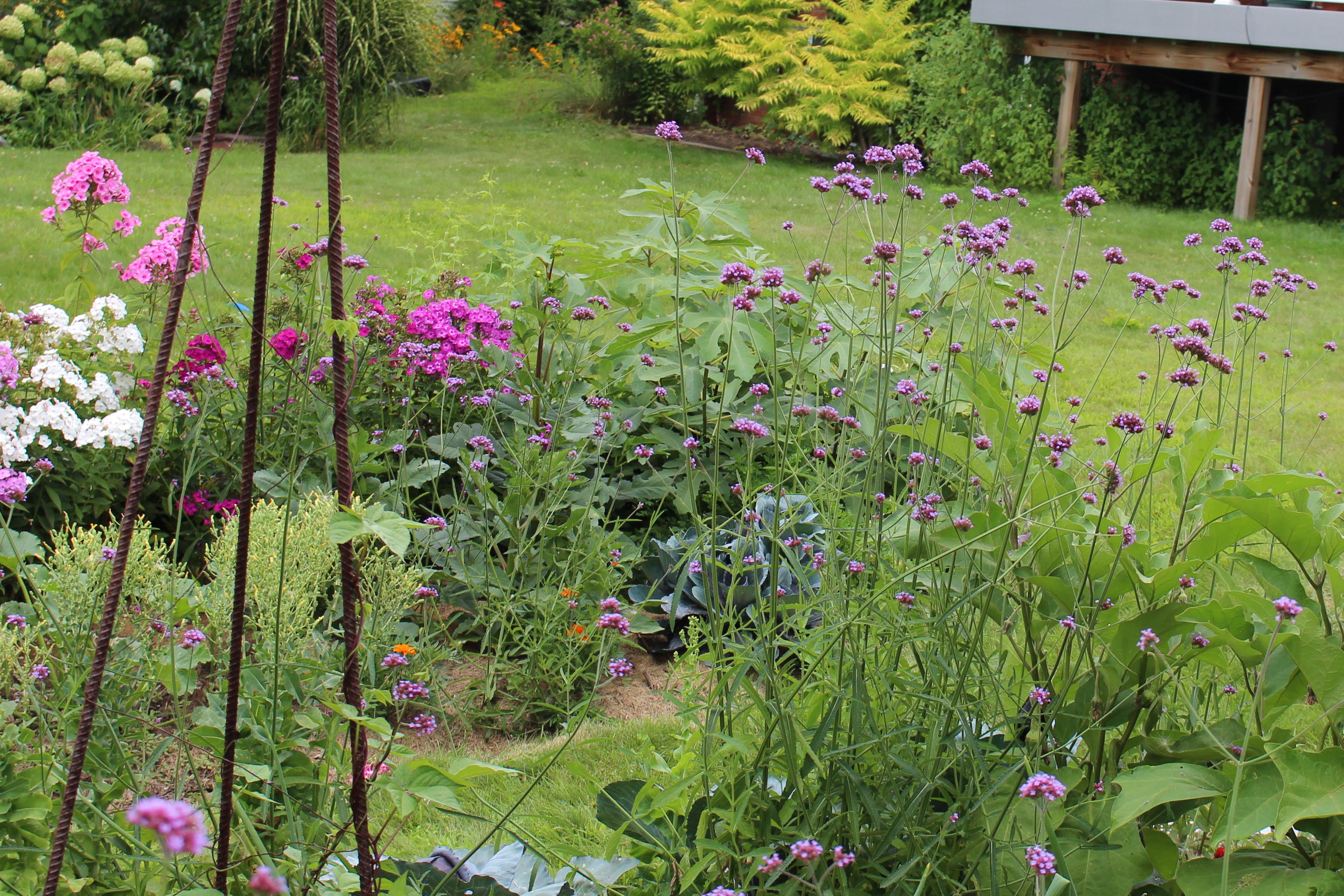
I grow red cabbage just for the looks, but there’s a good chance these heads will disappear soon and show up again later as rotkraut.  Fine by me, but in the meantime they look nice with the verbena, eggplant, and marigolds.

I admire a neat garden with raised, raked beds and straight rows of perfect plantings, but that’s nowhere even close to my garden.  The potager is tumbledown mix of flowers, crops, and all kinds of odds and ends that found an open spot of soil and made it their home.  Phlox are never turned away, and earlier in the month they started their summertime concerto and the music still plays on through the heat.  For this I consider myself lucky,  since earlier in the spring between spidermites and drought I got the feeling it would be a down year for the tall garden phlox (Phlox paniculata).

phlox paniculata dorffreude

Phlox paniculata ‘Dorffreude’ (Karl Foerster introduction, 1939) making a good argument that newer isn’t always better.

The phlox make me happy, but the other flowers which add to the non-agricultural chaos also make me smile, and the tall Verbena bonariensis leads the way with their bee and butterfly attracting bloom heads.
IMG_8305

Now’s the time when the verbena becomes too attractive to pull.  It’s a fair trade-off since the flowers draw in nearly every passing butterfly.

One area of responsible neatness is the boxwood hedge which edges the two forward sides of the garden.  After three years the small plants have finally begun to look nearly respectable.  To celebrate this milestone I spent way too much money on what I hope will be a set of premium hedge shears.  The electric trimmer has been shelved and I took the quieter, more contemplative path of manual trimming.  For me it’s relaxing and I think I’m one of the few who actually enjoys this job.

training boxwood hedge

Slowly the boxwood hedge fills in.  I can still remember the summer day way back when me, a bucket of boxwood clippings,  a few trays of potting mix, and a couple beers started this all.

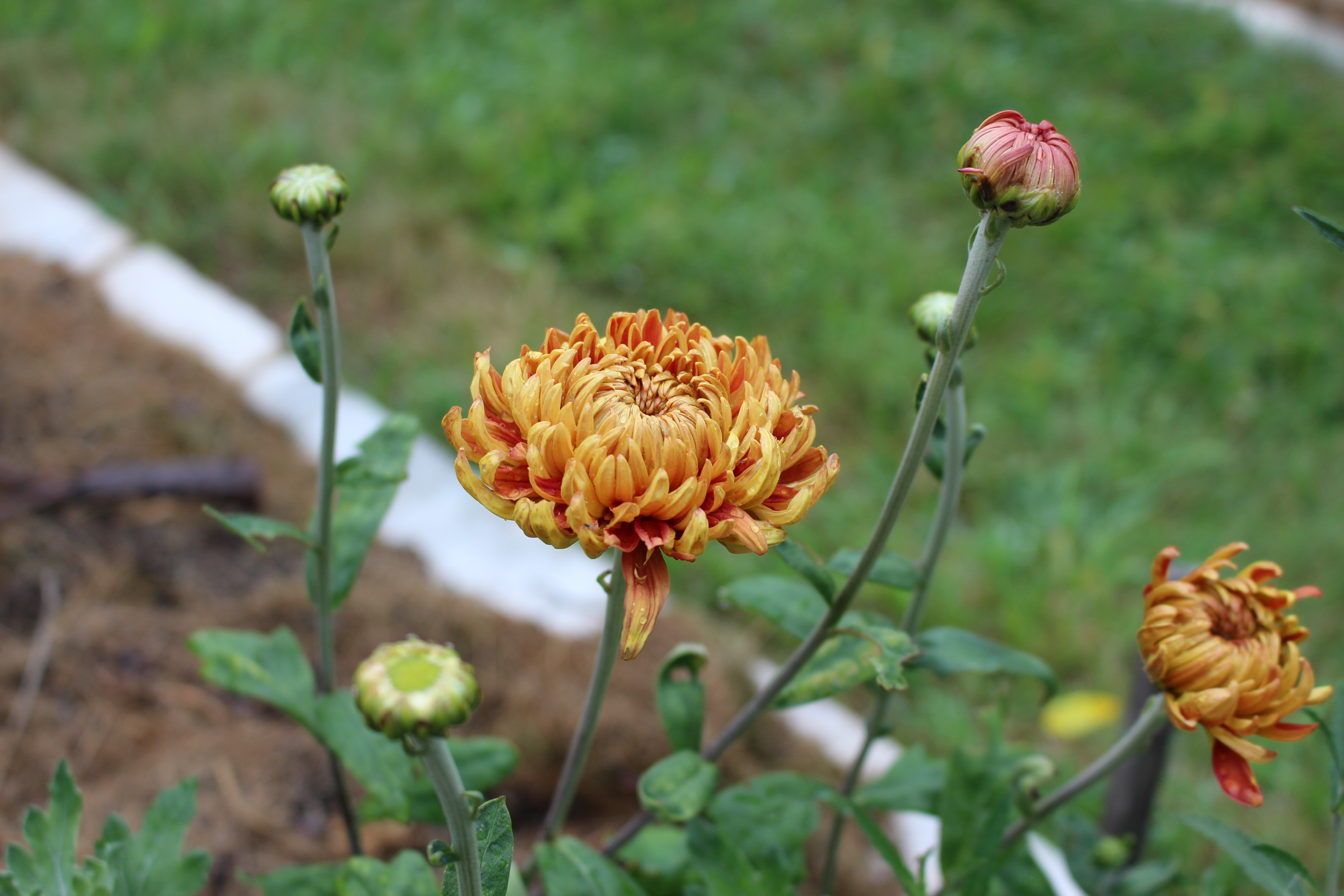
Besides boxwood and phlox, chrysanthemums (ok, new name dendranthema) are starting to make a serious play for potager real estate.  This spring I added even more of the larger flowered football types, trying to stick with anything which might be hardy through the winter.  I’d try to explain this growing obsession with mums but honestly after just admitting I enjoy hedge trimming I’m not sure there’s much I can say to defend this last quirk.
hardy football mum

Hardy (hopefully) football mum.  If the mood strikes next year I may even try disbudding a few of these to see if I can force all the plant’s energy into one single, perfectly large, perfectly perfect, bloom.

Dahlias.  I like dahlias.  I think I’ve already confessed to that.  Of course a late planting gives late flowers, and you know me and late.

moonlight dahlia

Dahlia ‘Moonstruck’.  This is its third year and it has yet to let me down, although I suspect it carries a virus which causes the leaves to yellow and die way too early in the season.

Sometimes late isn’t anyone’s fault.  For the second year in a row I’ve had these gladiolus bulbs overwinter in the open garden.  Against better advice I even transplanted them in June and look at that, the clump still managed to send up two bloom stalks.  If this keeps up I’ll need to divide the clumps next year since the other clump is up to 8 flower stalks!

winter hardy gladiolus

Just your average hellebore-gladiolus-rudbeckia-tomato planting.  I don’t think you’ll find this combo anywhere else… probably for good reason 🙂

But procrastination does have its down side.  Although the persicaria and rudbeckia have never looked better next to the potager, the light green ‘turf’ in the bed is 100% weeds…. and this is still supposed to be a red border, which rudbeckia is not.  Also the trellis never received a solid footing, and was never officially planted.  I guess that’s what the plans for next season are made of!

persicaria red border

persicaria red border

Enjoy your own harvest, whether it be fruits or flowers, contentment or excitement.  The season is here and as long as the heat doesn’t kill you first you can shelve these moments away in your mind for those dark days in January.


Spare the rod

My nemesis the sunflower.

bird seed sunflowers

Self sown sunflowers from birdseed backed up by variegated giant reed grass (Arundo donax ‘gold chain’).

Harmless and full of promise is how they appear in the spring, now two months later they’re acting more like closing time at the bar.  Sloppy drunks hang all over one another, sprawl across the beds, and smother the other sober little plants which have yet to grow.  If it weren’t for their summertime good looks and the goldfinches they pull in I would compost them all!

sunflower bloom birdseed

Future birdfood.

It doesn’t take many sunflower seedlings to overtake a bed and between the extra mulching and copious rainfall they’ve had everything they needed to explode.  It’s like a lovely tsunami of sun looming over the plantings.

flower border sunflowers

The sunflowers do look pretty with the purple verbena bonariensis, striped leaves of ‘tropicanna’ canna, and the first of the peach colored salvia splendens.

From the top of the bed it still looks pretty but only after I cut down two of the sunflower trees and chopped the rest back in order to clear the pool path again.

tropicals with annuals border

The tropical border looking colorful, but as usual not very tropical.

The inner depths of the tropical bed are beyond reach, I’ll have to wait for frost before I can get in there again.  Fortunately it’s well mulched and doesn’t need much of anything for most of the summer, so as long as the cannas and reed grass don’t get completely swamped I guess I can turn the other cheek and let chaos rule.

arundo donax gold chain with sunflowers

There’s a giant thistle in there as well, I see a steady trail of goldfinches flying in and out feasting on the seed.

Really.  Next year will be the year when this whole mess gets back under control.  The sunflowers will have to go as well as the chrysanthemums which never did get moved like they were supposed to.  In spite of the overwhelming agricultural look of the sunflowers (and I have to admit I really love the show right now) there are a few tropical highlights which have flickered on.  The cannas may not be as big as in years past, but I would never go without them.

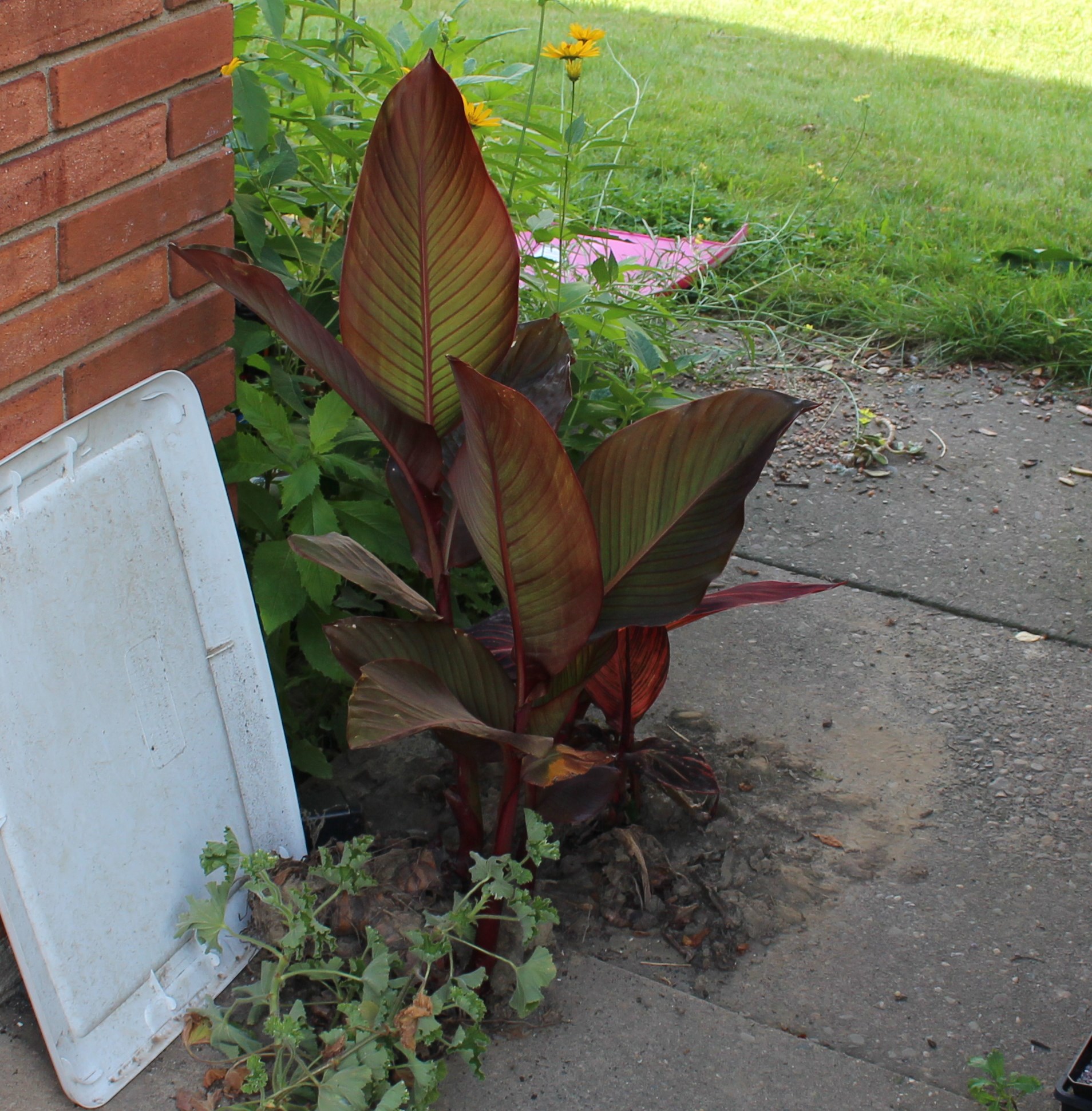
healthy canna tropicana

Healthy ‘Tropicanna’ canna leaves in a sea of green with only a touch of gold.

They’ve still got a good two months of growing before frost threatens and hopefully everything will still have plenty of time to fill in.  While other parts of the garden might be taking on a weary look this time of year, these tropicals are just going from good to better, and it’s not just the cannas.  The dahlias are beginning to come on as well.  The flowers are what I’m waiting for, but on a few the foliage show is even better.

dahlia happy single flame

Dahlia ‘happy single flame’ with the dark purple spires of ‘Lighthouse purple’ salvia behind.  I wish those salvia were just a tiny bit taller, right now this low planting looks closer to Victorian bedding than tropicalismo!

Although the foliage is fantastic, I wish I could say the same for the blooms of dahlia ‘happy single flame’.  They  don’t last long and never really make the ‘wow’ impression most of the other dahlias do.  The color is great though and I’ll try to hold on to this one for another year or two, even as the others bloom their heads off in comparison.

dahlia happy single flame

Peak bloom on dahlia ‘happy single flame’.

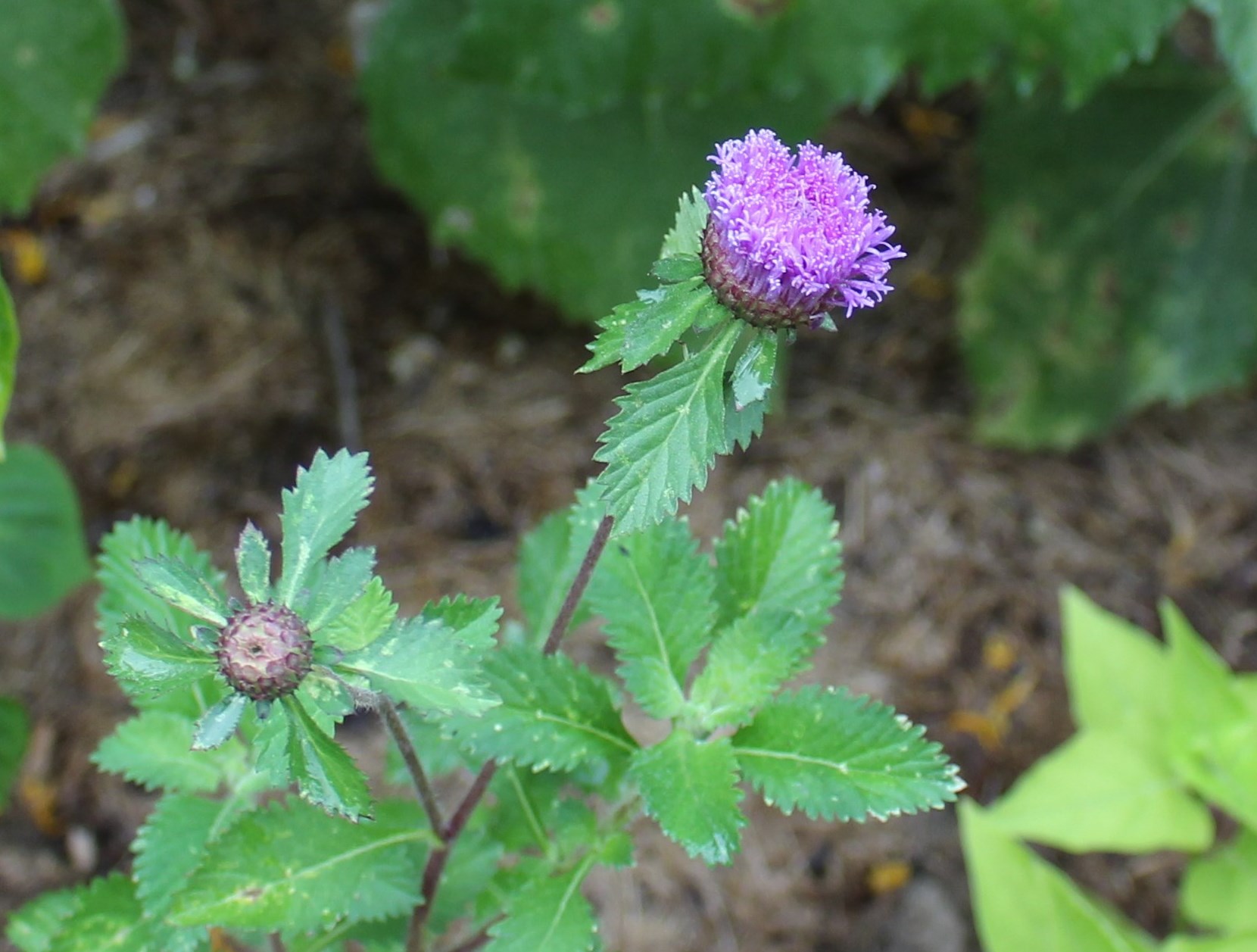
One plant which I had high hopes for but is now slightly underwhelming is the Brazilian button.  New this year from the HPS Mid Atlantic seed exchange, the buttons are nice enough but there could be more flowering at one time and most importantly have a color less like the verbena which I already have filling in all over.  You just don’t notice them in the mix.

Centratherum punctatum Brazilian button

Brazilian button (Centratherum punctatum)

But I’m being too negative.  The sunflowers are awesome and the patch is full of flowery interest, and whenever I get the chance I sit (with a drink preferably) and watch the comings and goings of the goldfinches, hummingbirds, and bees.

pink salvia splendens

The pink salvia splendens are only now starting to flower having spent most of the summer putting on weight.  The large leafy bushes should put on a great show for me and the hummingbirds.

I’m sure there will be more to come from the tropical garden, and if I can only keep a firm hand next year it might even look tropical-ish as well.  Right now I’m just happy enough it’s mulched and weeded from the topside all the way down to the low end.  Last year the low end was pathetic with its drought crisped annuals and struggling heucheras (is that the correct plural for heuchera?)  This year it’s much improved and I can see this becoming a nice transition to the pond garden…. once I get a non-leaky pond in!

panicum northwind in garden

Next year the new divisions will fill in and there should be a wall of panicum ‘northwind’  separating the tropics on the left from the heucheras and pond garden on the right.  

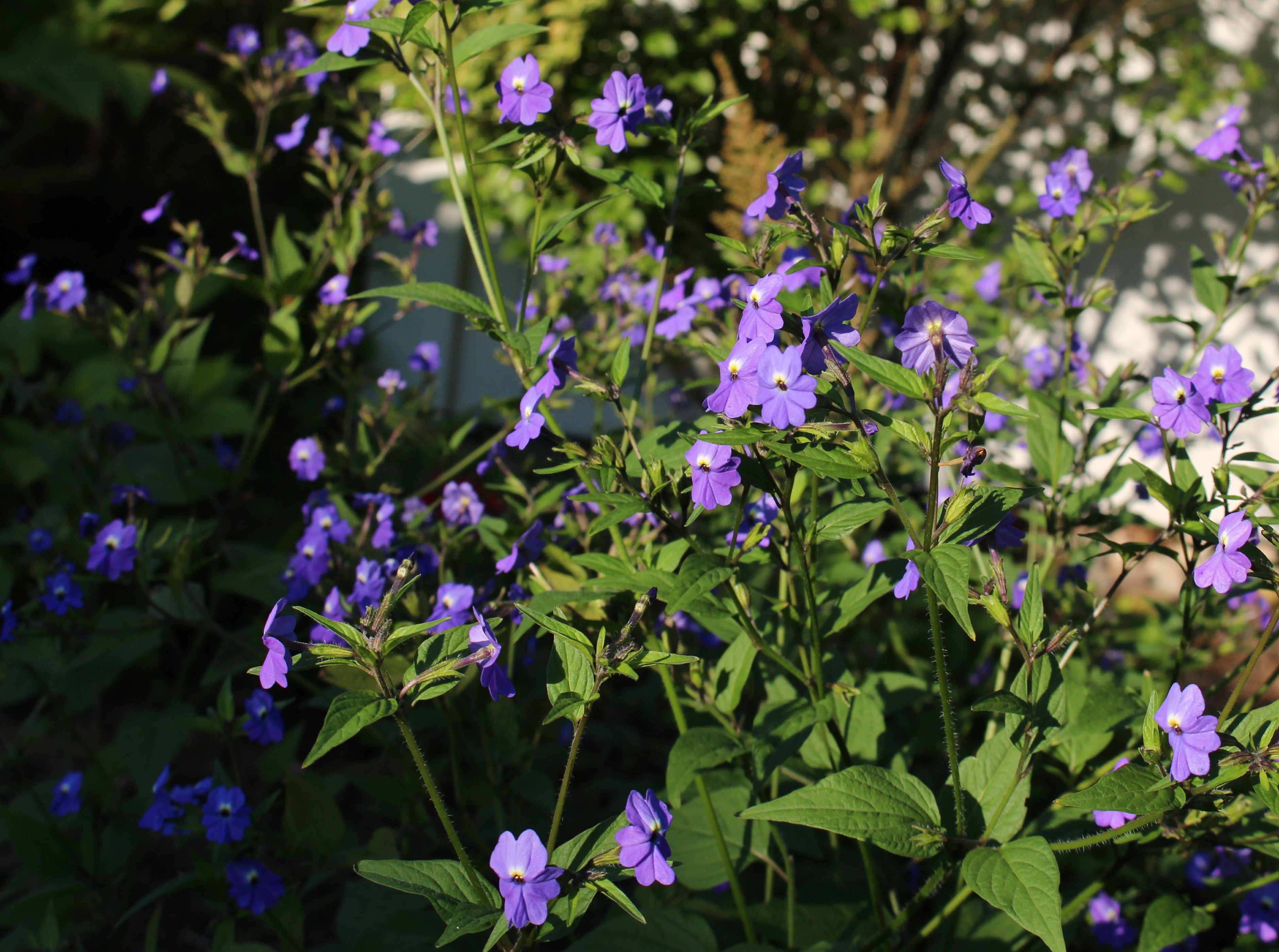
In the photo above you can barely make out the blue mist of Browallia Americana hovering above the hosta.  It’s an easy enough annual (native to Central and South America and across the Caribbean isles) and each year I like it’s nearly true-blue flowers even more.  Too bad I can’t get the camera to agree on the color, it always washes it out to a violet.

browallia americana

Browallia americana

So summer is still in full swing here, and for someone who prefers to ignore the calendar there’s not even a hint of the season winding down yet.  I like this sense of denial and will hang on to it for as long as I can…. but if pushed I will admit to thinking about next year already.  Ok, so I don’t even need a push.  I stumbled upon a summer sale at the nursery and took home a cool little banana plant.  It’s been a couple years since my banana growing days but I can feel the itch again and who knows what this means for next year’s plantings 🙂

A good foundation

Normally pictures of the front foundation border are avoided.  This area qualifies as one of my least favorite views probably because the plantings do little to set off or relate to the house.  They’re kind of a mess come to think of it, but believe it or not they’ve come a long way <click here to see>.  Our visit starts with a stroll up the front walk past the welcome squirrel and edging by the ‘Tiger Eyes’ cutleaf sumac, which threatens to engulf all visitors.

tiger eyes cutleaf sumac

Which is too much?  The overwhelming yellow, the tacky lamp décor, or the too-red petunias?

The right side of the house is fronted by the porch, and in front of the porch is a pretty generic planting of evergreens and hostas.  They do a great job of being green and covering up the beds which house my favorite snowdrops and corydalis earlier in the year.

phlox and rudbeckia

Of course a rudbeckia would show up here as well.  This is one of the completely perennial and later blooming R. fulgens types, and I make an effort each spring of ripping it out only to have a few stray shoots  survive anyway.  btw, The pink of the phlox ‘Laura’ with the gold of the rudbeckia is one of my least favorite color combos.

The left side of the house is my problem bed.  I tried ironing out a few of its problems earlier this year but it still makes me raise an eyebrow each time I pass.  My first after-vacation task was to pull up all the massive crabgrass plants which were taking over, and while doing this I couldn’t help but wonder why I can’t show this same resolve against the inappropriately large sunflowers which sprout up each year (in my defense I did rip most out… but once they get past a certain size it just seems wrong to yank them).

weeding crabgrass

Weeding crabgrass in August.  What gardener doesn’t know this story?

If I could only get visitors to crawl around on their hands and knees I think the impression this bed makes would be infinitely improved.

gray and red in a mixed border

The low view: Larger evergreen would probably do a better job of connecting the house to these beds, but a couple agastache, a verbascum, stray sumac suckers and a bunch of other stuff are a lot more interesting 🙂

I like how the blue fescue is filling in along the edge, it goes well enough with everything and seems to be doing ok.  I wish it would do better, but I haven’t yet cracked the fescue code on what really makes it clump up and fill in.

pepper masquerade seedlings

For some reason peppers seemed like a good  candidate for a foundation planting this year.  Last summer I bought a single ‘Masquerade’ ornamental pepper and these are its seedlings.  The purple fruits should go to yellow then orange then red as they mature, but a few plants are starting out yellow, and I don’t know what they have planned. 

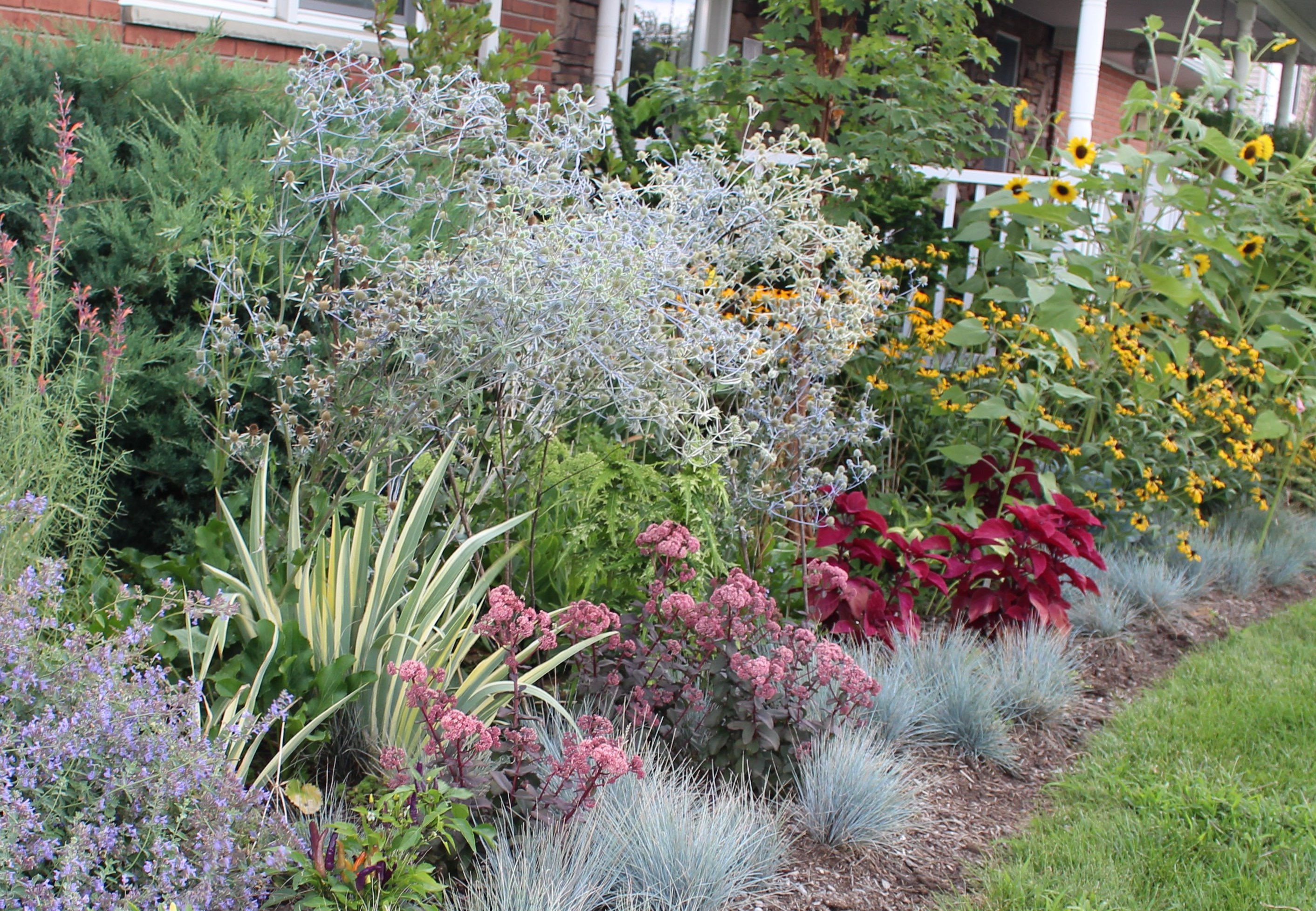
My unknown biennial eryngium turned out to be a perennial and is back for another show this summer.  If you can avoid the masses of wasps and bees the flowers attract it’s really a pleasant all summer cloud of blue-grey.

water wise plants

The mix of colors at this end of the border almost looks tasteful if you ignore the sunflowers peeking in on the right. 

Most of the plantings here are haphazard and either work or fail by luck, but the pairing of the blue fescue and pinkish ‘bon bon’ sedum was intentional.  I’m pleased with the contrast of the sedum coming up out of the fescue and it’s just what I was hoping for… as long as you overlook the sorta sparseness of the fescue.

sedum 'bon bon' with blue fescue

Sedum ‘bon bon’ with blue fescue and iris pallida aureo-variegata.

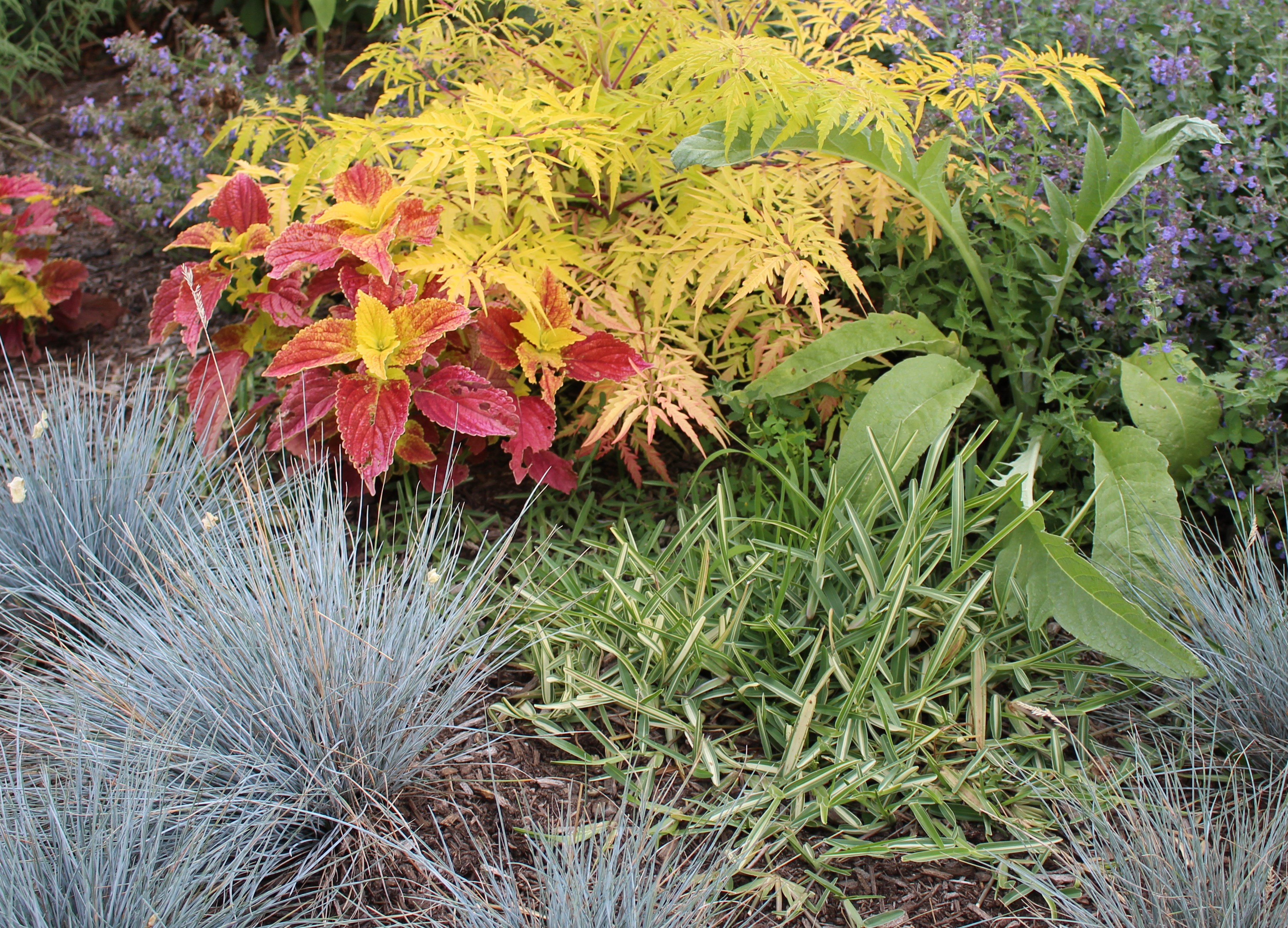
Things which didn’t work out quite as well were the cobweb thistles which drowned in our rainy July and the variegated St. Augustine grass which looks just a little too weedy.  I know it’s me though since I’ve seen it growing awesomely elsewhere and as a result I’m considering digging it up and trying it elsewhere, like in a pot… maybe even scissor trimming it for a neat little pot o’lawn 🙂

variegated st Augustine grass

Variegated st Augustine grass, ‘Alabama sunset’ coleus, more sumac, and an up and coming cardoon seedling.

Now off to the backyard!  My fingers are crossed we can get around the whole house by September 😉

Color for the neighbors

It’s a small slice of suburbia in which I live.  There’s nothing I consider a city nearby, yet faced by the acres of surrounding forest I guess we do huddle a bit on the outskirts of a sorta urban area in a sorta subdivision…. but even with the lack of a hustle bustle and heavy traffic, I do like to have a little shelter from the street and a little color for the neighbors.  Not exactly ‘curb appeal’, a term which makes me cringe when applied to any property not listed for sale, but it’s definitely colorful and whether the neighbors like it or not (they never really say, although I’m sure they talk) it does liven the block up for the half dozen neighbors and dog walkers which actually come by this way.

rudbeckia and butterfly bush buddleia

Butterfly bush (buddleia ‘Royal Red’ and ‘Pink Delight’) are now joining the black eyed Susans which have taken over the border.  The bearded iris which dominated in June are all nearly overgrown by this time of year!

Usually this border holds a lot more late summer and autumn color.  Annuals such as zinnias castor beans, and tender perennials such as cannas and dahlias, pick up at the end of the year just as the summer perennials are beginning to look a little tired. It’s a different story this year though, as things got away from the gardener and the rudbeckias took over.

august flower border

There’s nothing subtle about golden rudbeckias, but they do match the brightness of the sun.  At this point of the year I don’t even mind the formerly ‘too bright’ orange and pink sunpatients my daughter planted along the front.

And again I won’t complain.  I love the color, it looks great from the front porch, and I’ll deal with the ‘going to seed’ phase when its time comes.  Right now I’m just amazed we’ve had enough rain to keep the grass green all summer (although the actual work of mowing all this green grass is less than amazing).

beautiful front yard

The beds do look better framed by green grass.  Not bad considering the last two years were both marked by hot, dry, completely dormant (surely dead looking) turf patches…. for three entire months…

You may remember I mulched this bed completely with barely decayed, shredded leaves this spring.  It’s worked wonders for the soil quality and number of weeds, but it also greatly reduced the number of self seeders which normally fill the bed.  Purple Verbena bonarensis and the brilliant red Ipomopsis rubra (standing cypress) are sparse this year, but Euphorbia marginata (snow on the mountain) has not missed a beat.  Even after ruthless weeding there are still plenty of the cool white bracts showing up throughout the border and I can see how this native of the west has naturalized itself all across most of the US and Canada.

euphorbia snow on the mountain

The white streaked leaves of snow on the mountain form around the tiny flowers and eventually form a large ‘tree’ of white.

The snow on the mountain will look good until fall, but several of the earlier bloomers might not.  The bright magenta blooms of Lychnis Coronaria are long gone, but I can’t bring myself to pull up the nicely branched gray spent flower stalks.  I like them and as far as I’m concerned they can stay as long as they want.

Karl Foerster feather reed lychnis coronaria

Even gone to seed some things still look good.  I’ll never get tired of ‘Karl Foerster’ feather reed grass in the seedy stage, but this year even the Lychnis coronaria plants in front still look good.  Must be all the rain.

A backup plan isn’t the worst idea.  In my head these leftover cannas were going to go into carefully prepared spots throughout the front border.  They’ve been sitting on the driveway unplanted since April and just go to show how hardy some plants can be.

canna sprouting late

A clump of roots dumped on the concrete and still managing to grow.  A better gardener would cut their losses and move on… I’m still imagining they’ll get planted before frost 🙂

The canna were intended as a replacement for this ‘Blue Bird’ rose of Sharon.  I’ve come to the conclusion I just don’t like it and want it out…. no real reason, just something about it bugs me…

rose of Sharon blue bird seedlings

The blue flowers are the original ‘Blue Bird’ Rose of Sharon plant, the pink are up and coming seedlings.  My question of whether or not they come true from seeds was answered by a no, and I’m glad to now know for sure!  btw- the big leaf in front is Angelica gigas, a plant which I’m hoping will be *very* cool!

A plant which does NOT bug me is hydrangea ‘Limelight’.  Right now it’s just going from lime to pure white and it’s a mountain of soft flower heads and I admire it every day.  Personally I feel like the plant doesn’t like me, since it always seems just a little short of water and lacking just a little bit of fertilizer but apparently it doesn’t hold that against me and blooms reliably each summer.  The bush is up to about six feet now and I should really take a few cuttings to try it in a better location and see what it’s really capable of!

hydrangea limelight

Hydrangea ‘limelight’ hanging over into the street.

Something that didn’t need a better location are all the sunflowers which returned.  Here’s a 5+ foot tall plant which somehow managed to grow out of a less than 1/2 inch crack in the concrete edging along the street.

sunflower growing in crack

Sometimes you can’t hold a good plant down. 

The hydrangea isn’t all for the benefit of the neighbors, I see plenty of it from the house as well and its mature size does a good job in balancing out the masses of gold and the large clump of variegated giant reed grass (arundo) at the border’s end.  Have I mentioned my love for this grass?  It’s listed as invasive in the deep south, but up here in the cold North its vigor is just enough to make it exciting.

mixed perennial border

The street border from the far end.  Golden rudbeckias still dominate but I’m fine with that 🙂

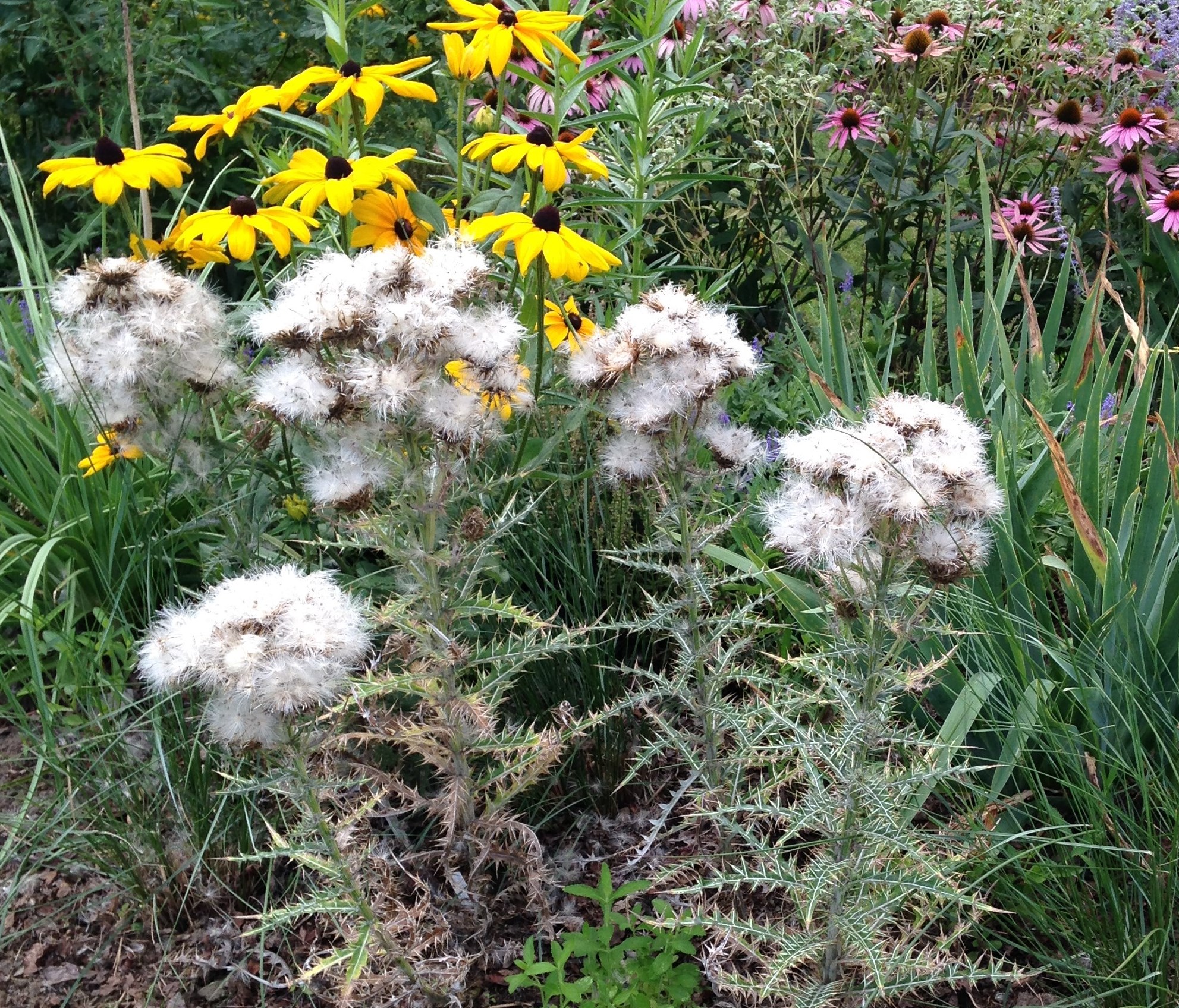
You may have noticed the fluffy white seedheads of one of this years favorite plants (although I may be alone in my favor for this spiny, poky almost-weed).  The lackluster mauve, bottlebrush blooms of the Ptilostemon diacantha were nothing to go ga-ga over, but the seed heads are interesting enough and you can still make out some of that awesome foliage as it slowly dies off.  I’m going to make a point of collecting these in a few days since the thistle seedheads look suspiciously weedy.

Ptilostemon diacantha seed heads

Ptilostemon diacantha.  The name is a mouthful and I far prefer the name suggested by Linda B.  “Ghost thistle” sounds almost friendly!

So that’s the front border.  It takes a little bit of work to get it cleaned up in the spring, I’m always looking for ways to ‘tweek’ the plantings, but for the most part when the perennials take over (like they did this year) it’s one of the lower maintainence areas in the yard.  A smarter person would stick with this plan, but I’m already considering removals and bulking up the annuals again.  Annuals are a lot of work 🙂

One “maybe” problem could be in the colors.  My weakness for yellow foliage is really showing and adding a few darker shades might not be the worst idea.  Hmmm, maybe I can replace the invasive burning bush with a nice purple smokebush?  Something to consider….

yellow foliage in the garden

Lots of yellow.  I think all the best gardens are avoiding yellow these days….

From the front border we’ll go to the foundation plantings.  They’ve taken off a bit as well!

Roadtrip to Long Island

Summer always seems to hit like a whirlwind around here, and during the season where the garden is changing and showing off more than ever the blog which is supposed to tell the story always enters a slump.  The gardener is busy outside of course, and posting about it falls to the wayside.   That’s bad though since going back through the pictures of seasons past is a favorite activity for the desolate dark days of winter and I need that sunny cheerful reminder to keep me going when icy cold locks up everything.  So let me apologize for the slowdown and also for the lack of visits to other blogs.  I still stop by of course and look, but more in a wallflower way taking it all in but not commenting… oh, and I’ll also apologize in advance if there are too many posts over the next few days.  I’m going to try and catch up and I hope I don’t seem like that other party person, the one who just goes on and on 🙂

avalon prairie stony brook

A prairie planting in Stony Brook NY

I grew up on Long Island and still return as much as I can to visit my parents and my brother’s family.  This last time while the kids were playing and others were visiting doctors and shopping, I snuck off alone for a visit to the Avalon Park and Preserve in Stony Brook, NY for a summertime peek at their fields of prairie plantings.  I was not disappointed.

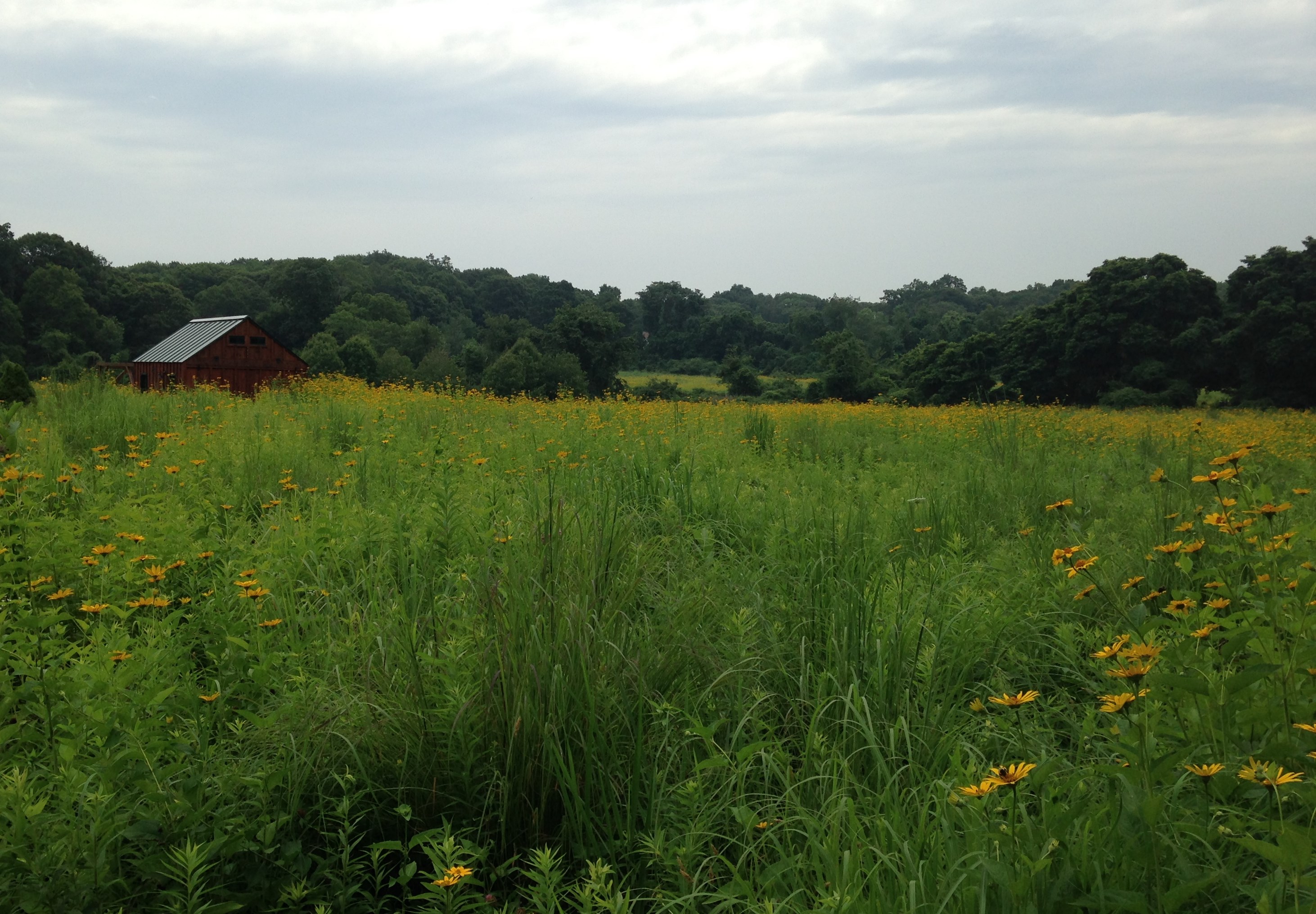
field of heliopsis avalon stony brook

In mid July Heliopsis helianthoides  (false sunflower) dominates the former farm fields of Avalon.  Keep in mind this photo was taken from above since most topped out at around five feet!

This is North shore Long Island, gold coast, old money territory, and with a location approximately 40 miles out of Manhattan it’s retained much of its city escape feel.  Think Great Gatsby, and although most of the old mansions have either fallen to ruins or been leveled there are still plenty of old estates and gentleman’s farms.  Fences and gates usually separate the common people from these retreats but in this case several tracts were purchased and the gates were opened.

milkweed prairie avalon

Common milkweed dotted the prairie but I didn’t see a single nibbled leaf or monarch caterpillar.

Avalon is made up of three sections, Avalon Park is a manicured area with woodland plantings, walking trails, and art features, Avalon Preserve consists of hiking trails through woodland, old field hedgerows, and the prairie plantings, and East Farm Preserve is a Nature Conservancy property accessible through the Avalon sections.  The three parts combine to form a nice cross section of Long Island’s former wilder self.

paul simmons avalon stony brook

Paul Simmons memorial at Avalon Park and Preserve.

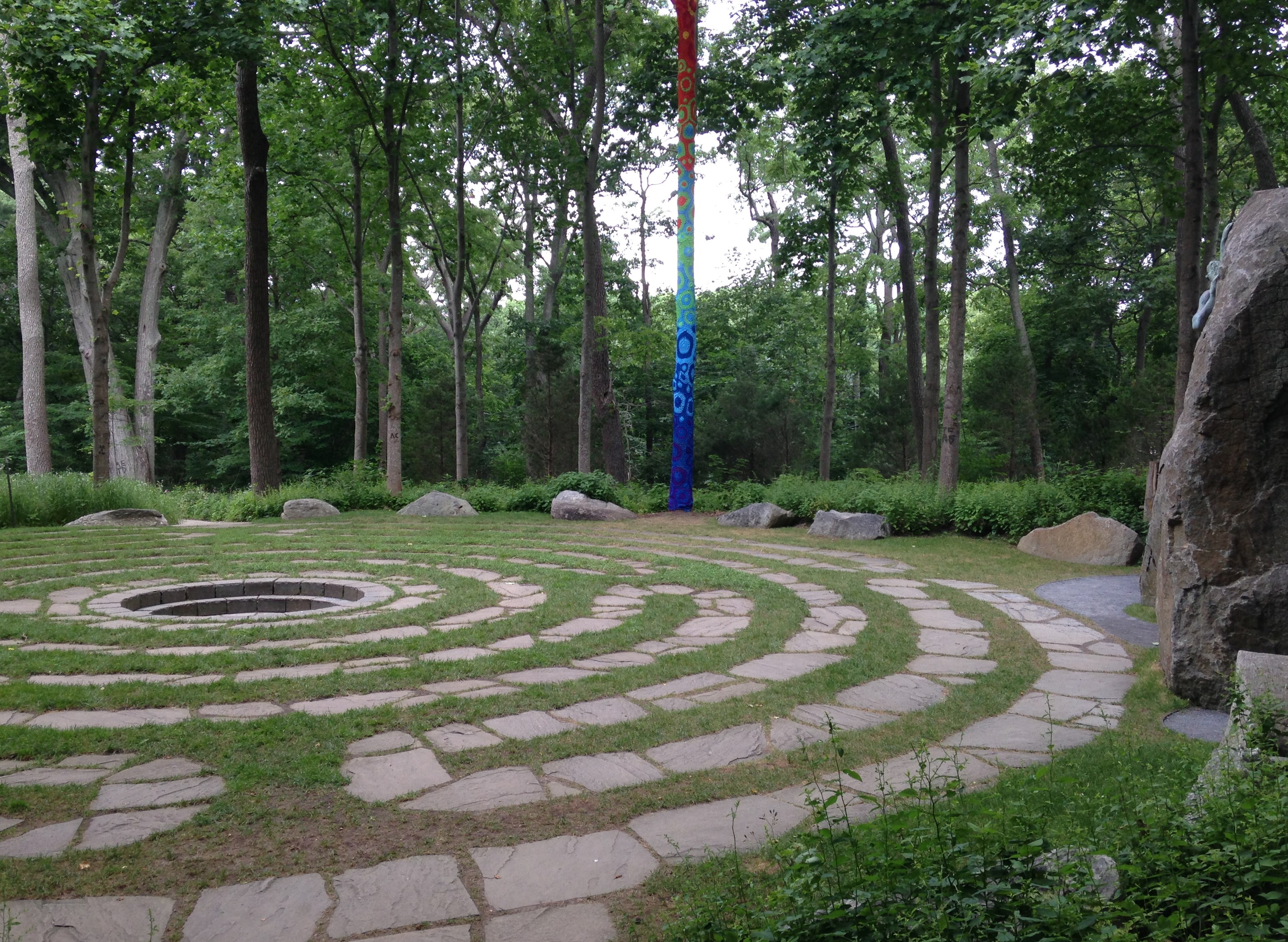
Although today the park is a peaceful oasis filled with children playing and friends strolling, the origins of the park are rooted in grief.  In 1996, 34 year old Paul Simmons was killed by automobile collision while cycling nearby.  To celebrate his life and love of the outdoors the park was created.  At the site of a former pre-park residential building a memorial for Paul has been built, with an adjacent meditation labyrinth.  On this visit art installations of colorful knit ‘tree sleeves’ and hanging patterns dotted the area.

avalon labyrinth stony brook

Meditation circle  

The park plantings, buildings, and care reflect a healthy park endowment and it’s not surprising considering that the father of Paul Simmons is one of the world’s wealthiest men.  James Simons is a math man who has translated his mathematical talents into the financial markets and stands somewhere in the 70-80 range of wealthiest people worldwide (around 30th for wealthiest Americans).  His story is a fascinating one, but his estimated 14 billion net worth surely hasn’t hindered park funding, and is always the subject of whispered stories in the three villages area of who works for his remarkably successful Renaissance Technologies and what their annual take home pay might be.

avalon park stony brook new york

A second residence on purchased park property has been transformed from a 1940’s ranch to a coastal New England style park office, ready for park foundation functions and always immaculately manicured. 

Coming down out of park brings you down to the Stony Brook mill pond.  This is the duck pond I loved visiting back in the day and is the power source for the Stony Brook grist mill (c.1751).  As recently as 1940 the mill was still carrying on the work of grinding local grains into flour and even today the wheels are put into motion on summer weekends for the sake of tourists. It’s an area rich in history from the sea captains who settled around the harbor, to the colonial farms which cover the rolling hills, to the Manhattan escapees who missed the train to the Hamptons and ended up here.

cormorant rookery stony brook

Cormorants nesting on a mill pond island.  These are relatively recent arrivals to the area,  only now recovering from their fish-robbing persecution from days gone by.

I love this area for its quiet waterfront peacefulness and many hidden treasures, but on this visit it was the flower filled fields which really made me smile.  On a still summer morning the low hum of thousands of native bumblebees visiting the flowers and the less-than-springtime-frantic chirping of songbirds really worked magic to calm the day.

Avalon prairie planting

Avalon prairie plantings.  Even with the heliopsis blooms dominating early summer, there were plenty of other native grasses and colorful perennials to carry on for the rest of the year. 

Good thing the day started out relaxed.  Summertime beach visits and afternoons spent barbequing can be so stressful 🙂

west meadow beach ny

Cousins exploring the salt marsh near West Meadow beach in Setauket, NY.

Now back to the garden.  We’ve been to Florida and back in the meantime and catching up in the garden has been an uphill battle against Japanese beetles and crabgrass…. but there’s been plenty of pool time too, so I really can’t complain!

Viva la summer 🙂

The sputtering tropics

Again I’m trying to recapture the tropical gardens of years past, but again I’m falling short.  The fault is entirely my own though and I know that, but in NE Pennsylvania tropical plantings mean around six months of empty planting area and I just don’t have enough self control to keep them perennial and bulb-free.  Really… in October how bad can it be to slip in an extra daffodil or lily?

liberty hyde bailey lily

First year blooms on ‘Liberty Hyde Bailey’.  Photo credits for this artistic shot go to the wife,  to tell the truth I wasn’t so sure she even knew where the garden was, let alone was interested in taking any pictures 😉

To my credit serious mulching with every scrap of mulched leaves and any garden debris I could send through the mower has substantially reduced last year’s problem.  The problem was that this bed was overrun with sunflowers, and if we ignore the fact that the gardener himself was responsible with planting them we can pretend that only having a half dozen or so of the plants this year is an improvement.  Still a few self seeded anyway and hopefully this more manageable patch won’t again overshadow the ‘tropical’ look with ‘overgrown agricultural’.  -and for the record I did rip out at least another dozen healthy sunflower seedlings, and nearly drove myself to drink over the guilt (but after a hard day of work what gardener doesn’t deserve a cool drink?)

saving money on mulch

A few sunflowers coming up but hopefully enough bright color and big leaves to make it look tropical.  I only had enough bark mulch for the outer edge, the rest is lawn clippings.

Mulching has been an obsession lately.  I raided the neighborhood woods again and brought home a few wheelbarrows of stinky dumped grass clippings which I used to cover the inner reaches of the bed.  It was just in time to smother tons of baby weeds but most importantly the rotting grass was a solid dose of fertilizer for all the little goodies coming up.  Within a few days everything turned a lush green and started putting out new growth.  It was amazing what a difference the grass made and I’m sure the earthworms are pleased as well.  In order to keep it more presentable I robbed some leftover wood mulch from next door and tidied up the edges of the bed with a few shovelfuls of that.  It’s the dyed mulch which I’m not crazy about, but it being free really appealed to my budget sense.

mulch and paver pathway

I also leveled and set the mismatched stone and paver bits which pave the shortcut between our yard and grandma’s pool.  It looks halfway decent now and is much less of an ankle twister.

Even with plants in and mulch applied, the bed is still not out of the woods.  There’s always a problem child or two.  First it’s the chrysanthemums which I planted and meant to transplant once spring rolled around.  That didn’t happen and to add insult to injury they are coming into bloom now…. just when I don’t need fall color.

mammoth yellow quill chrysanthemum

‘Mammoth yellow quill’ chrysanthemum looking good in July.  I guess next year I’ll pinch in May and try to delay bloom, mums in September would have been nicer!

Another problem are the two cannas I bought.  They were from a reputable online nursery and were listed as showing no signs of virus, but the first leaves tell a different story.  A refund is already on my account but I really wanted to add a healthy canna ‘Musifolia’ and ‘Pretoria’ to the bed.  the leaf streaking and yellowing/browning patches are sure signs of canna virus so these have regrettably been thrown to the trash.
canna virus

These leaves should have a lush, solid green, but instead are showing the streaks and mottling of canna virus.

As usual the third problem child is me.  How could I pull out this lusty little bull thistle?

bull thistle in garden

An excellent example of a weed.  The goldfinches will appreciate the seed heads of this thistle, and surprisingly enough I don’t get many seedlings even when I let them grow.  They seem to need open soil to sprout which is not easy to find around here.

As the tropical garden puts on some weight and gets ready for August I’m going to see if my tidying and weeding streak can finally extend next door to the not-so-red-border.  It needs the help, but so far all I’ve managed is the start of an access path which will circle around through the back of the border.  I’ve been eliminating the weedy campanulas and moving out other plants but still have a long way to go.

a new path into the flower beds

The start of a new path through the back of the red border.  Unfortunately that was as far as my free mulch would take me….

What is summer without a few projects?  Hopefully my neighbors will oblige me with more grass clippings, maybe temperatures will stay low, and maybe I can blaze a path through the thicket which is beginning to take over.  I won’t even mention the water filled hole which has formed where the pond used to be.  All the rain we had has made this area into a soggy mess!

hemerocallis altisima and raspberry wine monarda

Topping out at around 5 and a half feet, this daylily (hemerocallis altisima) looks cool with the dark blooms of ‘Raspberry Wine’ monarda and a few other leftovers from back when this bed was loved.  The tall grass (Miscanthus giganteus) is thriving on all the extra rain and is at least two feet over the neighbor’s six foot privacy fence. 

I guess it’s a start, and time will tell if it’s also an end.  With two weeks of vacation coming up and plenty of weekend trips in between, I may just sit back and enjoy summer rather than sweat out another bed re-do.  The wooliness doesn’t seem to bother anyone other than myself and digging is always more pleasant in September!

In a vase on Monday

Surprisingly enough I’ve made the Monday vase twice in a row, unheard of!

sunflowers from birdseed

Not a bad group of sunflowers, all volunteers from the birdfeeder.

The sunflowers inspired me, and their carefree summer spirit made it easy as pie to put this arrangement together.  After they were in place I was told they needed some other vase, and the red didn’t look good, but “don’t push me” is what I said!  I added the blue wine bottle,  I guess I was feeling very primary with all the sunflower yellow.

I didn’t do much fussing over them and I think they look fine, but I noticed this evening they had done a little of their own arranging, and heads were lifted and there was less of the droopy down facing that you see here.  It’s kind of like a vase of tulips in that they keep growing and twisting to get into a better position.  This should have come as no surprise from a flower that keeps turning its head to face the sun.

sunflower bloom

The birds have been enjoying the seedheads outside for weeks, I guess it’s time for me to enjoy a few myself indoors.

You would think a bunch of volunteer sunflowers grown from seed out of the feeder would all just run the range of yellow, yellow, yellow, but there is some variation in these.  They’re taller and shorter, branched higher and lower, longer petals, shorter, quilled petals, darker centers, pale yellow, splash of brown, deep golden… it’s quite the surprise.

sunflowers in a vase

Different colors and sizes, nothing real fancy, but nice surprises none the less.

I feel like I splurged in cutting these all for a few days in the house, but I’m sure more will come.  The patch still has plenty to look forward to and even a steady stream of goldfinches can’t eat them all.

black oil sunflowers

Sunflowers at sunset. They’ve officially taken over.

So that’s my Monday vase.  I may jump back in here and there to fill a vase, but work is gearing up again and the shorter days really kill my gardening vibe.  The vases are fun though and if you’re interested in joining I’m sure Cathy at Rambling in the Garden would be happy to have you.  Thanks for hosting Cathy!

In a vase on Monday

I’m usually far too distracted and disorganized to keep up with any of the blogging memes but every now and then voila!  It happened today, and I’m joining in with Cathy from Rambling in the Garden and putting together a vase full of freshly plucked blooms from the garden.

chrysanthemum "mellow moon"

The fat blooms of chrysanthemum “mellow moon”, yellow buttons of “Isla Gold” Tansy, and a few sprays of patrina scabiosifolia.

I feel a little outnumbered here as a male participant, but I’ll give it a go anyway.  As you can see accessorization is not my strongpoint, the flowers were picked and plunked into one of those fat little vases (probably saved from some Valentine’s day past) and dumped naked onto the table.  The generic yellow teapot was pulled out of the cupboard to keep it company…. might as well since it’s been sitting around uselessly since the day we were married 🙂

cream flower arrangement with chrysanthemums

Why these mums are blooming in August I don’t know, but I’m glad they are. Pale creamy yellow is one of my favorite colors.

I’m surprised by how much I like this chrysanthemum in the garden, and they look even better in the vase.  Although I was informed by the boy that the round yellow things are stinky I like the way the tansy and patrina bring out the yellow in the mum.  Who knew garden mums could be so nice?  I guess I just got used to those big disposable blobs of unanimous color that show up in autumn that I forgot about the older daisy types and the fancy bigger blooms.  I can see a problem developing with these 🙂

By dinner time the arrangement was joined by the season’s first ripe tomato.  A golden “Kellogg’s Breakfast” was sliced and plated with salt, oil, and bluecheese crumbles on top.  Unsophisticated yet Mmmm.  I’m not a big tomato lover but this mild meaty beefsteak is tolerable.

tomato Kellogg's Breakfast

Tomato Kellogg’s Breakfast. I wonder how golden pizza sauce would go over?

I didn’t quite make the cutoff for Monday, but hopefully late entries are accepted 😉  and if you get the chance take a look at some of the other contributions that roll in each Monday at Rambling in the Garden.  It’s great to see what’s blooming in gardens across the world, and I’m repeatedly amazed by the talent and creativity out there.

Have a great week!