The Efficiency of Factory Farming

Apparently it’s September.  Every time I look at the calendar it kind of surprises me that the year can fly by so quickly but really?  September?  It’s becoming harder and harder to convince myself that summer won’t end.

potager flowers

The view of the vegetable garden (aka Potager) in early September.

Many people consider September to be an autumn month.  I’m going to assume you know where I stand on that theory.  I bet those same people consider the vegetable garden to be the most appropriate place for growing vegetables,  and not a catch-all spot for all the flowers and shrubs which couldn’t fit into the regular borders and beds.   Neat, productive, raised beds bursting with produce are nice enough, but at this time of year I love the flowery, seedy look of a vegetable garden gone wild, even with all the overgrowth, bugs, and mildew 🙂

canna cannova rose

A sign of the season.  The bold colors say summer but the seed pods and overgrown vines say autumn.  A big spiderweb even sets it up for a halloween look.  In case you’re wondering these are some ‘Cannova Rose’ seedlings which I started this spring just to see how they turn out.  I think it was a success!

There were a few things which did manage to come out of the potager which were worth eating.  Potatoes, tomatoes, peppers, beans, and loads of zucchini  all somehow managed to find enough room to produce a harvest, as well as a meager crop of onions.  The onions looked so promising in April, but I think they just wanted more sun.

birdfood sunflowers

I was so close to wasting this space on corn.  Instead I bought a few ears at the farmstand and filled the bed with sunflower seedlings which were weeded out from other parts of the garden.  ‘Hopi Red Dye’ amaranths seedlings became a convenient complement to the sunflowers when I forgot to weed them out after the garlic was harvested.

Now the garden is mostly given over to the annuals which I rip out so religiously in May, but always seem to overlook in June.  The verbena, persicaria, sunflowers, and chrysanthemums quickly take advantage of the opening and I’m always happy to see them thrive.

colchicum x agrippinum

Of course there had to be a few bulbs in here and there as well.  When I crawled in under the sunflowers I found the colchicum x agrippinum patch in full bloom.  I’m a big fan of these late summer bloomers.

I do have plenty of flowering things which were planted on purpose as well.  The colchicums (autumn crocus, naked ladies, meadow saffron) are looking great right now and I can’t help but show a few pictures.  Actually I’m sure you’ll see more pictures in a later post.  For some reason the vegetable beds are where I’ve planted most of them, and even though the companion plantings are haphazard, the flowers themselves are very convenient to admire when planted out this way.

colchicum speciosum

Colchicum speciosum surrounded by mildewed phlox and verbena.  A fresh flower in the middle of all that decay is always such a treat.

Although I planted a few bulbs on purpose (if you can call it that when you’re wandering around with a plant and a trowel and no forethought to where it would go when you bought it) those plants are in the minority.  The most spectacular things invited themselves.

potager flowers

The marigold border and a gifted zinnia were the plan (thanks Kimberley!) and the peppers were the purpose, but the perfection came from self sown verbenas and the intense blue of Browallia americana. 

Up until June I pull out every last ‘Kiss Me Over the Garden Gate’ seedling (Persicaria orientalis).  Their 6+ feet of rapid, vigorous growth tends to intimidate the lettuce but eventually a few are overlooked and before I know it I’m ducking under the dangling chains of dark pink flowers every time I do the garden rounds.

kiss me over the garden gate

Persicaria orientalis towering over the failed onion bed.  For the record purslane and crabgrass had more to do with the underwhelming onion harvest than one too many flower seedlings 😉

The last thing to thrill me in the veggie patch are chrysanthemums.  I love how they and the colchicums wrap up summer around here.

potager flowers

I’m starting to sound like a broken record with the seeding out thing (assuming people still remember what broken records sound like) but even this chrysanthemum came on its own.  I guess that’s what barren soil and general neglect can do… plus the weeding out of nastier things of course.  I love the color and big flowers 🙂  

The back beds of the potager have the worst soil and get the least attention.  During most summers even the weeds struggle to take root since the soil crusts up and most seedlings can’t even get a root down before they die… except for quack grass (similar to couch grass).  I spent a few sweat filled summer afternoons tracing back grass roots and sifting soil, trying to get every last shoot.  Of course I didn’t but at least it’s one battle in this war where I took the upper hand.

hardy garden chrysanthemum

This is the chrysanthemum which started it all.  A seed exchange packet of “collected from ‘Innocence'” survived drought and flood and freeze and still looks great.  It does need a Chelsea chop in June to control floppiness, but that’s all. 

My neighbor put in some excellently neat and tidy raised beds this spring which grew some beautiful beets and salad and armloads of other produce.  His vegetables know their place and his flowers are neatly nestled into orderly mulch beds which surround the house.  My wife was very impressed. I have to admit I liked it as well but just don’t know if I can give up this spontaneous jungle.  Time will tell.

My apologies for not having shown any vegetables in this vegetable garden update.

Tuesday View: The Tropics 11.22.16

Following the first hard frost, the tropical view has continued to spiral downwards into the reality of its temperate latitude.  Our first significant snowfall came on Saturday night and although snow at this time of year is not unheard of, the long warm autumn and the fact Saturday topped out at 65F (18C) left me in a bit of a shock when I woke up to the white.

Tuesday view snow

I guess it might finally be time to dig the dahlias and cannas. 

The frosted annuals and browned cannas are still standing just where they were three weeks ago, and although the mess may look like complete apathy has set in the reality is I’ve been quite busy.  There’s been a good amount of earth moving and bed building on top of the required leaf cleanup and bulb planting and I feel pretty good about spring, I just want warmth to return for a few more weeks so I can finish digging and planting.

But if the weather doesn’t change I’ll get over it.  No one’s life has ever crumbled over a few unraked leaves or frozen dahlias and as long as there are plenty of snowdrops in April I’ll be fine.  There’s always next year 🙂

Our Days Are Numbered

There’s an impending air of doom hanging over the garden, and the threat of next week taints everything.  The Cubs winning the World Series was likely the first sign of the apocalypse and now I can only imagine what next Wednesday could bring.  Our current stretch of warm weather has me even more nervous since as we know from high school science, freezing is an exothermic process and on the chance that Hell has indeed frozen over science would predict that things up here on the surface would warm up as a result.  I’ve never hoped for a cold snap more, even if it means losing the last of the autumn flowers.

late chrysanthemum

The latest of my seedling chrysanthemums.  This one’s not as hardy as the rest but does well enough up near the foundation.

The last of the autumn leaves are really hanging on in the warmth.  This red maples along the fence is always my favorite with its sunset blend of reds, oranges, and yellows.  As the days go on it will hopefully fade to pale yellow with red highlights before finally covering the lawn with a carpet of next year’s mulch and compost.

maple fall foliage

For most of the year I resent the greedy water stealing roots of this pesky red maple (Acer rubrum), but for a few days in autumn I forgive it and soak up every glowing minute of its final foliage show.

Closer to the ground the earliest (or latest, depending on your perspective) bulbs are beginning to show signs of growth.  My absolute favorite right this moment is the fall blooming snowdrop a friend of mine brought back for me from Nancy Goodwin’s Montrose Gardens in Hillsborough, North Carolina.  I love a plant with a story and this one has a good one.  Its full name is Galanthus elwesii var. monostictus Hiemalis group ex. Montrose and to be honest I love writing that one out.  It’s the nerdy Latin way of describing a fall blooming snowdrop with a single green mark that comes to me via Montrose Gardens.  This one and its thousands of sisters are all the descendants of a handful of bulbs Mrs. Goodwin purchased decades ago at a local hardware store.  They say the rest is history, but in this case it’s a history which required years of division and transplanting as the bulbs were slowly spread across her acres of woodland.  The bulbs now make an unparalleled show each autumn around Thanksgiving and I wouldn’t rule out some day making the eight hour trip to see it in person.  Such are the dreams of the obsessed, but if you’d like more information have a look at this NY Times article on a visit to the gardens, and also consider looking up Nancy Goodwin’s book “Montrose: Life in a Garden” for a monthly chronicle of the gardens.  She was also a big fan of the Cyclamen family and grows thousands of them as well.  That’s my kind of gardener.

fall galanthus elwesii monostctus

Galanthus elwesii var. monostictus Hiemalis group ex. Montrose.  Yeah.

Besides fall blooming snowdrops, there was also an October surprise here when my two auricula primrose insisted on sending up a few autumn flower stalks.  I’d rather they waited until spring since the flowers don’t look nearly as big or nice as the could, but my hope is they really liked their repotting and are only just ramping up to an even more amazing show in March under the growlights…. unless they’re planning on dying, which is always another possibility for plants in my care.

primula auricula

A pair of primula.  Primula auricula hybrids to be exact.  The yellow had bloomed before but this is the first flower for the brownish one, and I’m pleased with the color.

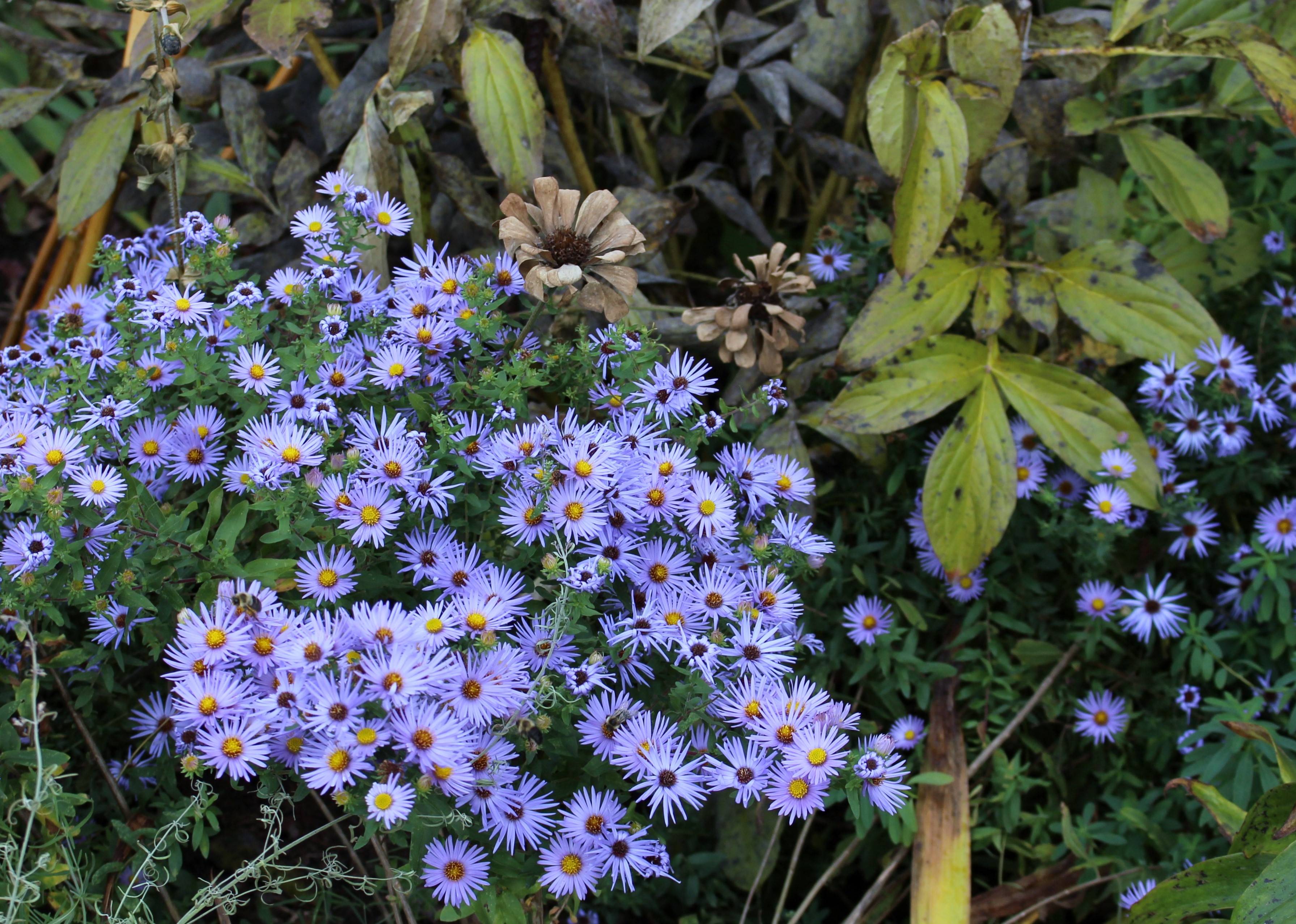
Some other final color in the garden is the Aster oblongifolius ‘Raydons Favorite’.  It waits until the very end of the season and carries it out with a clear lavender blue color and attractive dark eyes as the flowers fade.  I should really give it a little more room and respect next year, and not let it suffer all summer crowded and untended while the summer annuals steal the show.

Aster oblongifolius 'Raydons Favorite'

Amidst the mildew decay of fading peony foliage and frosted zinnias, Aster ‘Raydons Favorite’ offers up fresh color for this part of the border.  I think more would be a good idea.

I can’t do a late fall post without slipping in a cyclamen or two.  They’re sending out more and more of their beautiful foliage and while other parts of the garden are fading, these go from strength to strength.  I may have to talk to John Lonsdale about adding a few new ones since you can never have too many of these treasures and he always seems to have a few special ones for sale at Edgewood Gardens.

cyclamen hederifolium

The hardy Cyclamen hederifolium starts flowering without foliage in late summer.  I love it even more when the leaves begin to come up and there are still plenty of blooms to accent them.

The range of foliage types in Cyclamen hederifolium is really outstanding.  The dainty and distinct flowers are almost more of an afterthought.

A pale pink form of Cyclamen hederifolium with a leaf pattern which I love.

A pale pink form of Cyclamen hederifolium with a leaf pattern which I love.

For the moment I may have resisted adding any new Cyclamen but don’t be under the false impression I’ve resisted all the other goodies which can be found during fall planting season… or even better found during autumn clearance sales.  For some reason I found the Santa Rosa clearance sale (still going on btw, and don’t miss out on the additional 20% off coupon code) and discovered I needed more grasses and a trio of carnivorous pitcher plants.  Who knew?

Sarracenia from santa rosa gardens

Three new bog plants (Sarracenia) for the bog I don’t have.  Hopefully I can keep them happy elsewhere since they’re so absolutely cool with their sinister insect trapping pitchers.

As I go on and on about new plants I won’t even mention the tulips which need planting, the daffodils which need replanting, and the projects which need finishing before the bottom drops out of this pleasant autumn weather.  Let’s hope that’s the only thing which the bottom drops out of this week.

Have a good one!

Tuesday View: The Tropics 11.1.16

As you can see from this Tuesday’s view, the weather forecast was correct and Tuesday night we received our first strong frost.  One night and the tropical summer was over… but for this part of PA the last week of October is a late frost date, so there are no complaints from this end.  It was a great year!

tuesday view tropical plants

No denying fall is here now.  The cannas are browned, the dahlias are blackened, yet even at the end of the season there’s still some color left.

You wouldn’t guess it but I did spend a few minutes cleaning up.  The mildewed Verbena bonariensis had been bothering me so those were cut down, and a few large blackened salvias and coleus were taken out as well.  For the most part though the rest will come out this weekend (I hope) as I dig canna and dahlia roots and pack them away for the winter, but I have to say even with less color it’s still kind of interesting.  I’m discovering things here and there which have been overshadowed by the annuals for the past three months.

chrysanthemum carousel

A bit tousled by this weekend’s thunderstorm, chrysanthemum ‘Carousel’ is still holding up to the cooler nights.  The green nicotina is also doing well, but the surprise was the fat clump of Mexican feather grass (Stipa tenuissima… recently renamed though) which was hiding under the verbena I pulled.

Today I did go ahead and plant a few leftover snowdrops in the tropical bed.  The idea of early spring snowdrops sounds nice enough, but I’m pretty sure it will prove to be a bad idea come July when I want to replant all the summer visitors in the same spot.  “Oh well” I say.  Summer is a long time off and spring flowers are more fun to think of.

So as the season winds down here I’d again like to thank Cathy at Words and Herbs for hosting the Tuesday view each week.  It’s been a nice run but I believe winter has most of us calling it quits for the season and our thoughts are turning inside and towards the holidays.  Not a bad idea at all, but I might still have another week or two in me, if only to prove that I really did dig up and store all those fantastic roots and bulbs for next year!


Those boring chrysanthemums again.

It’s a rainy and dark October afternoon and you need a light on inside to do just about everything except nap.  This wasn’t my plan but then dark skies and October thunderstorms aren’t easy to plan for in general.  Better to just get on the computer and look at a few photos from earlier in the month, and it seems like all the earlier photos center on those most under appreciated of autumn flowers, the chrysanthemums.

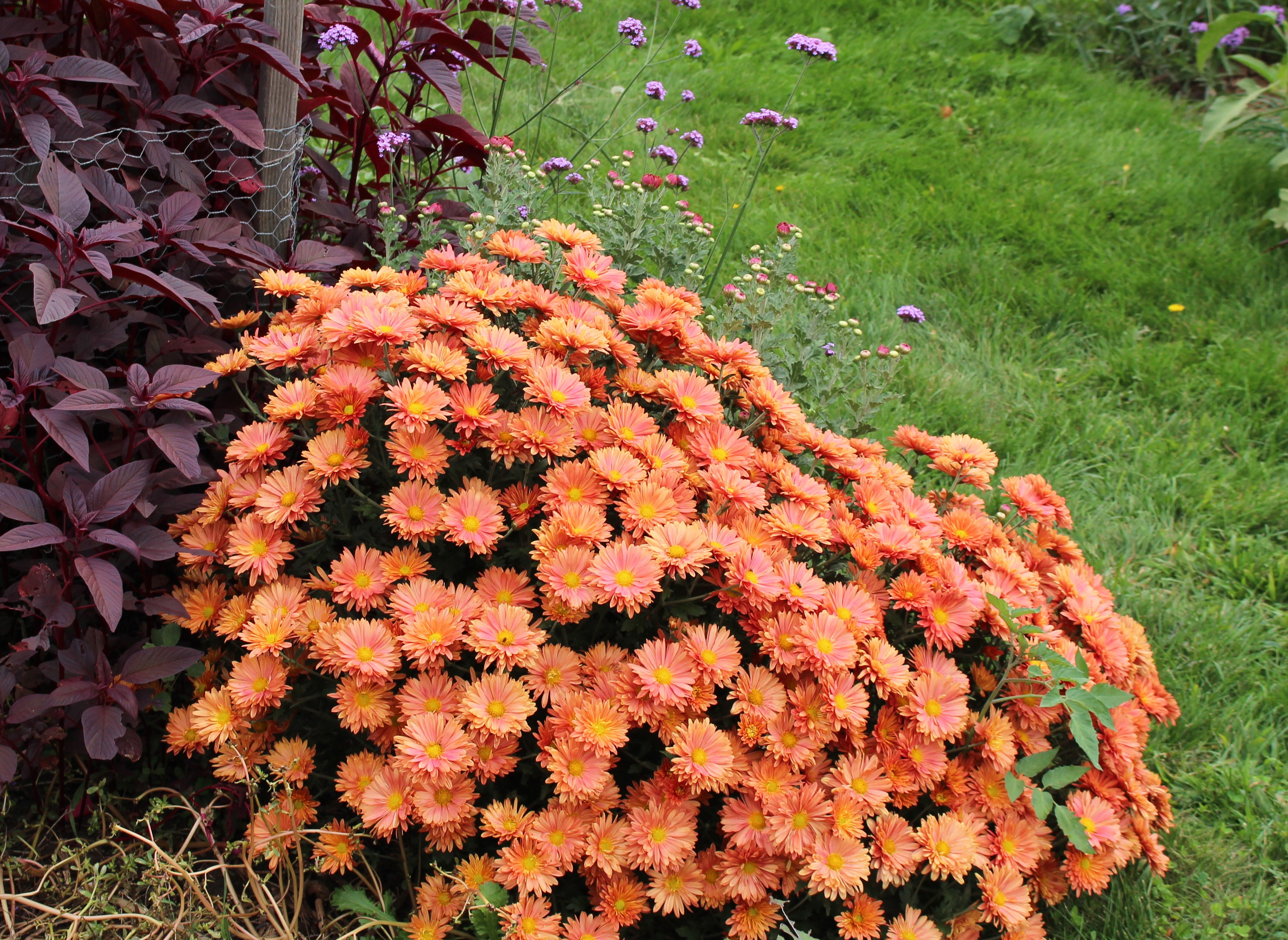
chrysanthemum seedling

A nice seedling of one of the cushion mums.  Not much form or grace to it but the cantalopy orange with just a tint of pink looks good in the failed beds of the vegetable garden. 

I happen to like chrysanthemums.  More so now than in March but even if it’s a seasonal love I think they deserve more respect than that of a disposable pot of color which usually ends up in the trash on the weekend after Thanksgiving.  They’ve earned it after all, 600+ years of cultivation in Eastern Asia with a reputation for happiness and royalty shouldn’t just fade away the minute Walmart offers them at 3 for $10.  Take a look here at the National Chrysanthemum Society’s webpage for a brief overview of their history.

chrysanthemum centerpiece

Chrysanthemum ‘Centerpiece’ on the left with a similar looking seedling to the right.  Just a little bit of difference separates the two but I bet a chrysanthemum breeder would twitch at the inferiority of the other. 

I would guess if there’s one single thing which defeats the Chrysanthemum’s reputation it’s the lack of hardiness of all those late season purchases.  Gardening amateurs and experts alike often wonder why their attempts at overwintering these perennials routinely fail and why they’re left with a dead plant come springtime, and to keep my story short (and match my limited attention span), it’s because they just aren’t hardy.  They were bred for color and shape and reliable bloom and overwintering ease just didn’t factor in.

chrysanthemum seedling

A butterscotch colored seedling… or is it pumpkin colored… either way it’s a nice dose of color.

I suppose this all brings me to the point of this post.  I’ve been ‘dabbling’ in the hardier chrysanthemum sorts, the kinds which look great, grow without a care, and overwinter without a problem, and I’ve found it’s easier than you’d think.  As an added bonus they seem to like my poor soils and frequent droughts, and the bare patches of my beds will usually sprout a few mystery seedlings each spring to keep me guessing as to what surprises are coming along each fall.  A few online sources offer hardier types but I’ve been getting most of mine through Faribault Growers and their Mums of Minnesota offerings.

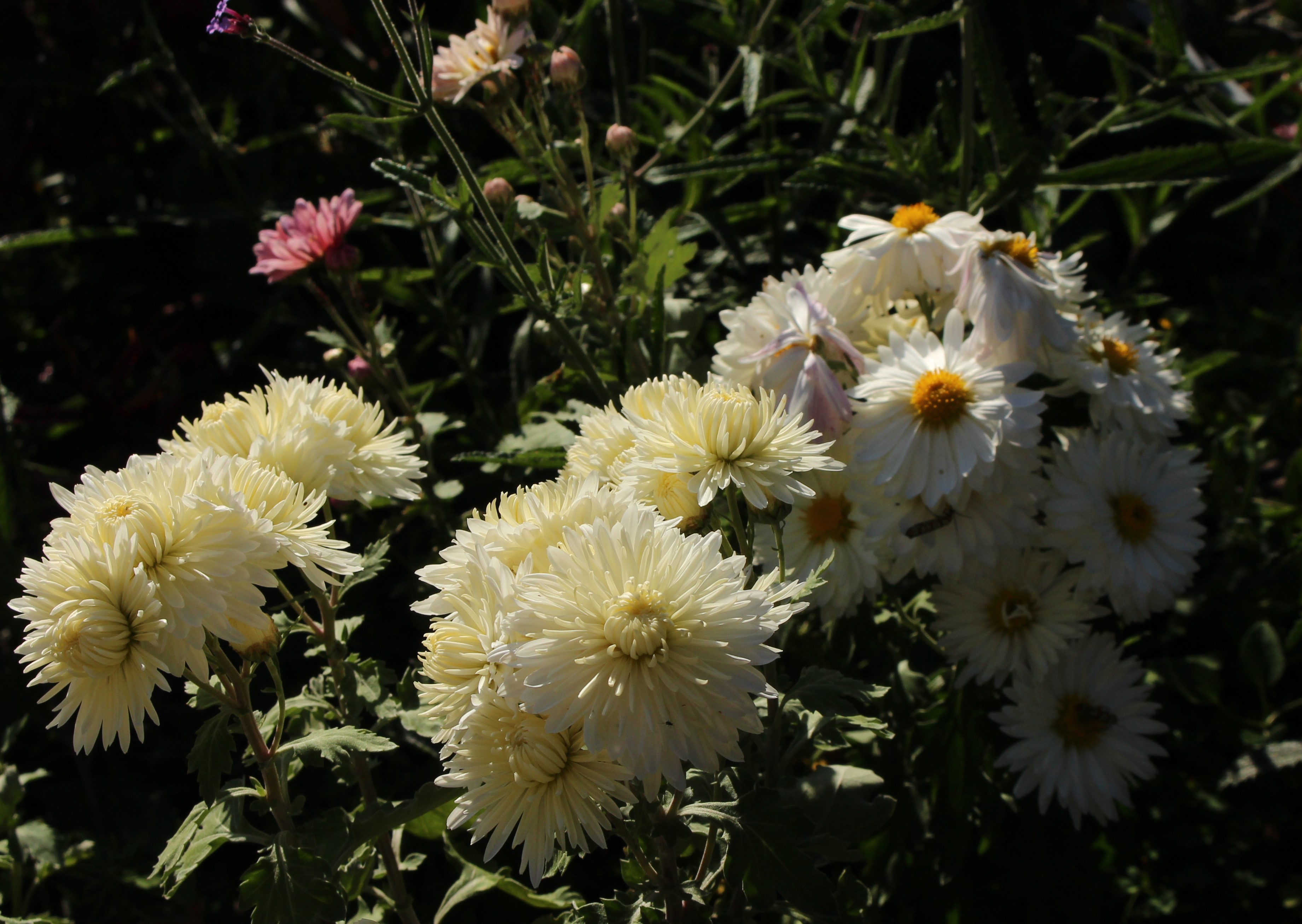
chrysanthemum Bristol white

Chrysanthemum ‘Bristol white’ in front (not a favorite since hard freezes will brown the tender centers) with a few interesting seedlings behind.

The mums I’ve been getting have had little trouble with winters here (z6a) but every now and then give up due to frost heaving or a late spring freeze (about half my plants unexpectedly died this year when an arctic front rolled through in late March after growth had started…).  They’re still not as surefire hardy as the Korean mum types (developed using the hardily named Chrysanthemum sibiricum) but they’re shorter and bushier and have more of a variety of flower colors and forms and it’s just what I need to distract me from the changing leaf colors and dying annuals of autumn.

chrysanthemum seedling

Another seedling.  The singles seem to be more popular with the pollinators, I’m just impressed that these survived a summer of neglect and drought and poor soil here at the base of a yew hedge.

I believe one of the more popular Mums of Minnesota introductions have been the Mammoth mum series.  They’re spreading, hardy perennials and just massive mounds of color when in bloom, but for as much as it pains me to say I have to classify them as a little boring.  They do great next door in my MIL’s mulch beds (which honestly are even more boring without the mums), but for as far as a plant to get excited about…. they’re not.  Luckily they know a little trick, and that’s their promiscuous selfsowing and all the little surprises they leave in the monotonous spread of shredded wood mulch.

mammoth mum seedlings

Momma plant (‘Red Daisy’) fills the upper left of the view, her mongrel offspring fill in along the bottom and up the right.  As you can see they don’t come anywhere near to ‘true’ from seed and there are even a few well-doubled flowers showing up.

Next year I may try and find a spot to plant out a bunch of the seedlings and see what greatness they amount to but I warn you not to hold your breath on that one.  It’s hard to get excited about mum in April and even harder to find enough open spots to fill with something that doesn’t pay off until October.

chrysanthemum mellow moon

This might be my favorite.  Chrysanthemum ‘mellow moon’ has these large, softly colored flowers which make great cut flowers but as you can see the clump’s been invaded by an odd yet attractive pink daisy seedling.  Hopefully next spring I can separate them out since I don’t want to crowd out the moon. 

chrysanthemum seedling

Another seedling, this one a complete dwarf.  I wonder how better soil conditions will change this plant, since this dry part of the bed is far better suited to cacti.

The whole mum clan seems pretty easy from seed and it’s always fun to see what shows up.  My last few photos are of a seedling which came from the HPS seed exchange and although they’re nothing like their ‘Innocence’ parent (a pale pink single which blushes pink with age) they’re indestructible through winter cold and summer drought.  Their only flaw is either the need for staking, or a harsh chop back in early July to control floppiness.

chrysanthemum innocence

A seedling of chrysanthemum ‘Innocence’

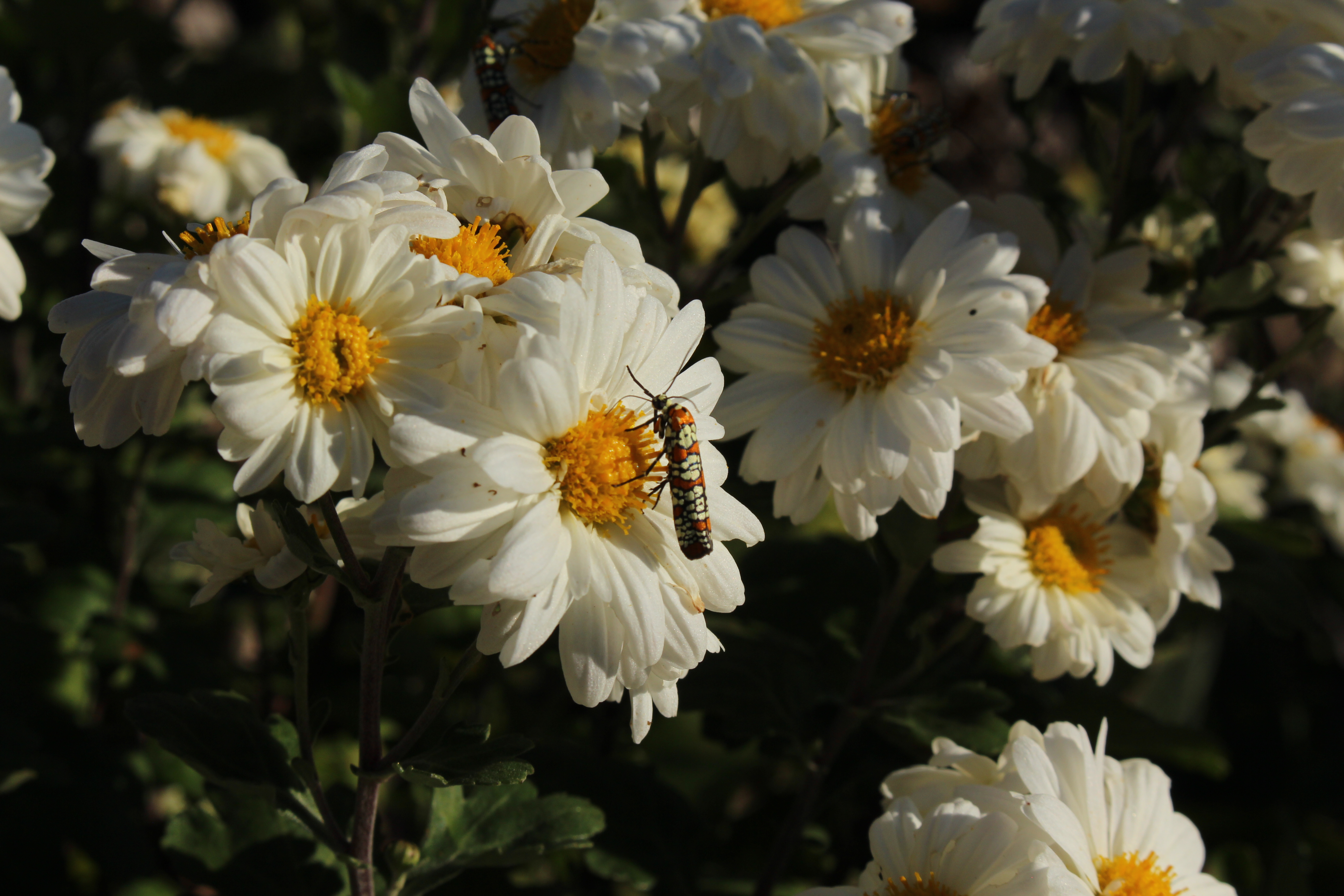
If you noticed the previous picture has about half a dozen ailanthus webworm moths wandering the flowers.  It’s an oddly colored little thing and I was hoping for something rarer and possibly native when I first spotted them… but as it is with most insects around here, if there are more than enough, chances are it’s not native.

ailanthus moth

Ailanthus webworm moth (Atteva aurea).  A unique look in my opinion.

I’ll leave you with another one of the large flowered mums which seems quite content in my less than ideal garden conditions.  I had taken at least two or three pictures before I realized the flower was looking back at me.

chrysanthemum gold country

Chrysanthemum ‘Gold Country’ with someone else who might be interested in pollinating moths and such. 

Hope you had a great weekend, gloomy rain or not, and hopefully there’s a spell of nice planting weather coming up so I can finish up all the unfinished gardening work of 2016… or not.  There will be plenty of time for gardening ambition in February 🙂

Tuesday View: The Tropics 10.25.16

It’s a cold and breezy Tuesday this week, with a wind that makes you feel like change is a’comin to this end of Pennsylvania.  The forecast tonight is a dip below freezing and there’s a good chance this will be the last week a colorful and lush view shows up in Cathy’s weekly meme.  There are still a few weeks left to the season, but after frost hits the view will be decidedly less colorful.

tuesday view tropical plants

A gloomy, gray Tuesday afternoon.  The last of the autumn color has worked its way down the mountains and into the garden and things are entirely autumnal.  The wheelbarrow is covering the flowering thistle,  I’m hoping to get a few ripe seeds before it freezes.

Whether or not this turns out to be our killing frost remains to be seen, but with the cold wind blowing I’m completely indifferent.  Sunday was spent clearing the rest of the garden of everything I wanted to save, so now it’s just a matter of letting nature run its course.  Snow is predicted for Thursday so I guess I’m officially giving up 🙂

tropical annuals

One last view.  The tropics have been good to me this year.

So next week will likely show some serious changes.  Once frost hits I like to get things out of the way and cleaned up fast so that I can put down some mulch before winter hits.  Any unmulched areas will likely sprout a carpet of winter weeds such as hairy bittercress and I’d rather not start next season with that kind of a mess on my hands.  Wish me luck.

After you wish me luck please consider giving Cathy at Words and Herbs a visit to see how autumn is progressing through other gardens in other parts of the world.  It’s always a great visit and a fun way to keep up over the season.  Have a great week!

Tuesday View: The Tropics 10.11.16

Tuesday is here and again I’m happy to join up with Cathy at Words and Herbs for the view.  Things still look warm, but the lows last night seem to have brought in the tiniest bit of frost which singed a few tomato leaves here and there in the vegetable garden.  We’re living on borrowed time!

tuesday view tropical plants

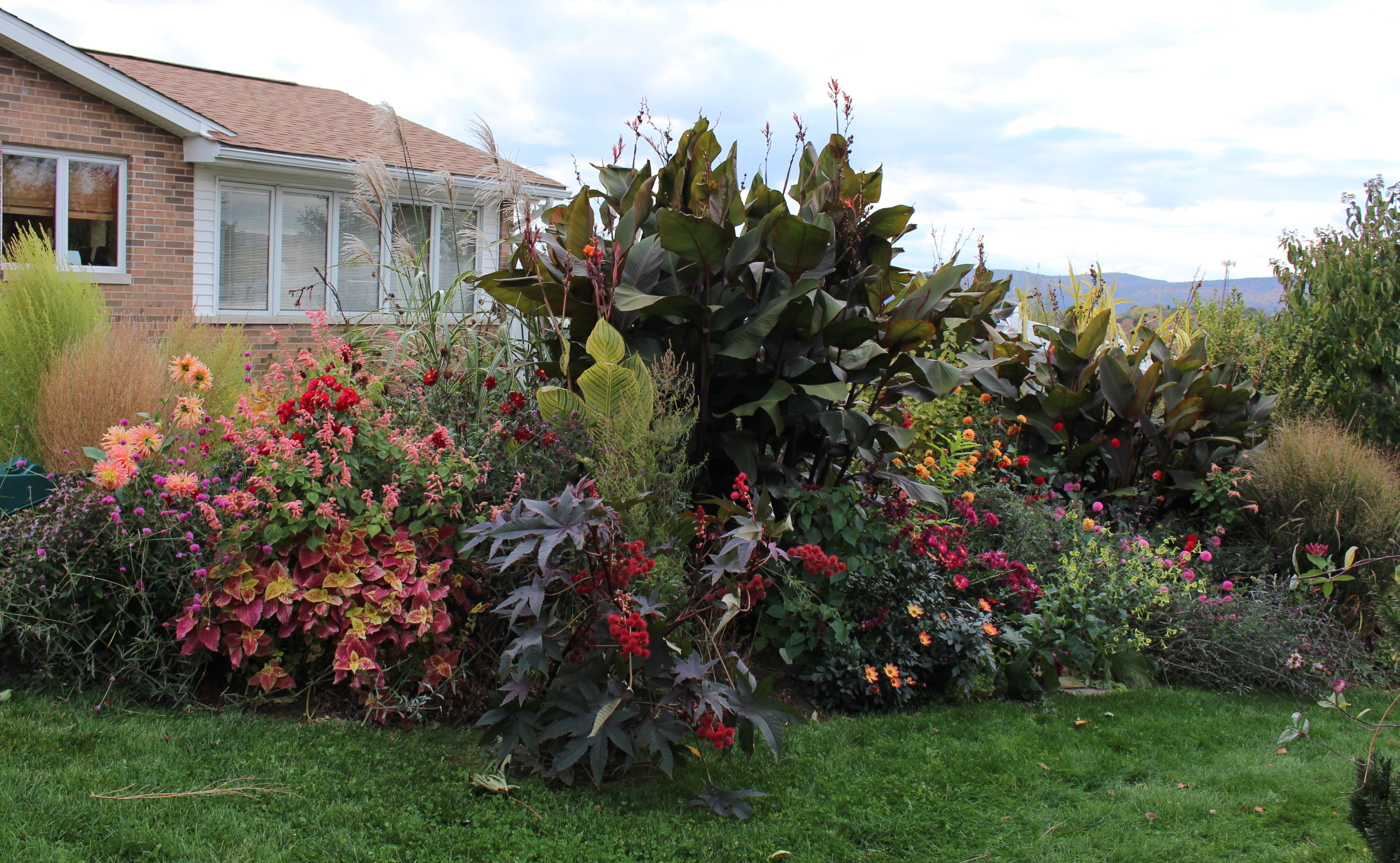
Still a tropical view.  The one kochia has gone brown, but the flowers and foliage of nearly everything else is all autumn abundance 🙂

I wish I had more to say but I’ve been distracted by the chrysanthemums and fall bulbs and time consuming things such as fall baseball and gymnastics.  I’ve also had a bulb buying relapse and in a weak moment ordered many more snowdrops than I could possibly need.  That and tulips… even though I recently said I wouldn’t buy any new ones this year.

My suspicion is that I’m the only one concerned about this latest purchase, but now that I think about it further (since I have absolutely no idea where to place these latest purchases), I wonder how the tropical border would look with a large swath of tulips and a small throw blanket of snowdrops.  I bet it wouldn’t look half bad!

Have a great week 🙂

Tuesday View: The Tropics 10.04.16

The nights have taken a turn towards cool here and for the first time it feels like the tropical bed is showing signs of autumn.  The winding down of the season is ok by me, but my fingers are crossed we don’t have a repeat of last year when a single 23F (-5C) night in mid October crushed all hopes for a mellow end to the season.  Frost is inevitable, but a brutal freeze?  Unnecessary.

Tuesday view tropicalismo

The Tuesday view on this first week of October

This Tuesday as I again join up with Cathy at Words and Herbs, I’d like to also give a nod to Eliza and copy her idea of showing a flashback to the earlier days of this season.  Everything looked so cute and tiny back in this last week of June.


Tropical garden

The first Tuesday view.  A few perennials making a show, but the only annuals visible are a flat of small orange zinnias, freshly planted out of their six-packs. 

Things have grown since then and one of my favorite growers has been the annual burning bush (Kochia scoparia).  One by one the individual plants in the seedling clumps I planted out are starting to color and I have to admit I like the look, even though the plants will go brown once they pass their peak of redness.


kochia scoparia

I love all these colors but last week the kochia at the lowest right of the clump was just at its peak.  Only seven days later and it has browned, so I hope the rest of the clump doesn’t follow as quickly. 

Sneaking up alongside the kochia is a new chrysanthemum seedling.  I evicted nearly all the mums from this bed earlier in the year, but I guess this one was small enough to miss.

self sown chrysanthemum

Not the greatest photo of it but a nice enough self-sown mum with small spoon shaped yellow petals.

Slightly less impressive are the late season flowers of ‘white frosted’ Japanese thistle.  There’s not much to them, and some might mention the word “weedy”, but I’m hoping for seeds since the spring variegation on these is great and my only other plant of this perennial thistle died during our relentless May rains.

'White Frosted' Japanese thistle (Cirsium japonicum).

The less than impressive flowers of ‘White Frosted’ Japanese thistle (Cirsium japonicum). 

There’s nothing less than impressive about the cannas and dahlias.  I know I constantly show the same combos, but….

canna Bengal tiger dahlia Mathew alen

Canna ‘Bengal Tiger’ looking as variegated as ever alongside the deep red flowers of dahlia ‘Mathew Alen’.  The purple cloud of Verbena bonariensis has been going strong all summer.

The path up through the center takes a little maneuvering to get through.  The purple leaved cannas have pushed most everything out of their way, and the dahlias now sprawl across the path.

dahlias in the garden

Dahlias and verbena up through the middle of the tropical garden.

The resident hummingbirds headed south a few weeks ago and with the exception of a few last stragglers migrating through the flowers have been left to the sleepy bumble bees of autumn.  Monarch butterflies still stop in here and there, but it’s getting pretty quiet as things cool off.

dahlia sylvia

Dahlia Sylvia seems to make a nice spot for a bumblebee’s afternoon nap.

Sleepy bumblebees kind of sum up how I feel about the garden these days.  Maybe it’s allergies or lack of a good night’s sleep, but if you had to put me in camp grasshopper or camp ant I think I’m more of a grasshopper.  I’ll enjoy the sun and last bits of warmth while they last, and just have to hope for the best when the axe of winter falls.

Tuesday View: The Tropics 09.27.16

Of course it’s late, and of course I’ve left this to the last minute, but I’d really like to join in with Cathy at Words and Herbs and get my Tuesday view up on time.  I can’t be a day late with everything 🙂

tuesday view tropical plants

The last Tuesday view of September

Cathy’s view has hints of autumn this week and I believe the same is happening here.  The last two nights have been into the chilly zone, and friends North of here have had their first frosts.  In the mountains, the maples are beginning to show color this week and if I can hope for anything it’s that there will be for another two or three weeks before the first frost hits here.  It’s been a good run though, and I really can’t complain.

canna x ehemanii

My little Canna x ehemanii surprised me with a bloom this summer, hopefully I can overwinter it and have twice as big a plant next year.

Color is at a peak this week and most everything is doing its best to flower and seed out before the final axe of winter falls.  It’s a tropical garden after all, and there’s no long kiss goodnight.  The first frost means it’s over.

roses and dahlias

My unknown peachy dahlia with ‘Black Forest’ rose, ‘fireworks’ gomphrena, and peach colored salvia splendens.  Even though the light wasn’t too good for this photo the colors still just explode. 

So I’ll just keep my fingers crossed and enjoy each day.  Winter is too long to not soak up every last minute of summer (and this borrowed summer) while we still can.  Have a great week!

Thursday’s Feature: Colchicums!

As one considers the winding down of summer and the general decay of the growing season… as I suppose one should on this first day of autumn… there do seem to be a few positive notes which make the changing of the seasons more bearable.  While other things die or flee in response to cooler temperatures and weakened sunshine, a few plants spring to life, and if you count yourself among the optimists you could almost consider this to be the start of a new growing season with flushes of new foliage for the cooler weather, healthy root growth and spring buds forming below ground, and the first of the autumn flowers.  “Good for you” I say since I am not a lover of fall and its frosty death, but even I will admit colchicums make it easier to cope, and the fresh blooms at this time of year make it all seem a little less final.

With those cheery thoughts in mind I’m again joining Kimberley at Cosmos and Cleome for her Thursday Feature, and the flowers of the autumn crocus or naked ladies (Colchicums) are what stand out in my garden this week.

colchicum nancy lindsay

A reliable Colchicum with smaller flowers and colored flower stems, Colchicum ‘Nancy Lindsay’ would be on the short list of favorites.

As a good blogger I should take this opportunity to discuss the various details of researched growing conditions and also cover the finer points of colchicum cultivation but as you may have already guessed from previous posts I bore easily and tend to laziness, so to be honest I’d recommend getting that book learnin’ elsewhere.  I’m more of a stick it in the ground and see if it grows kind of guy, so if you don’t mind, click on >this link< and you’ll find a few of Kathy’s posts over at Cold Climate Gardening which should do very nicely to fill the void I leave.  She’s like a crazy cat lady of colchicums, and in addition to growing, showing, sharing, and speaking on colchicums, she also does an excellent job of putting that information online.  She’s also a wonderful person, so I hope she finds neither ‘crazy’ nor ‘cat lady’ offensive since I would hate to offend her good nature.

colchicum innocence

Colchicum run a range of pink shades from dark to light, but the odd white form really lights up an autumn bed.  Here’s Colchicum ‘Innocence’.  Decent sized blooms, slight pink tint when you look for it, and a good grower.

Better sources of information aside, I guess I should mention some of the barest essentials of Colchicums.  They bloom bare, without foliage, hence the common name of naked ladies.  Their bloom shape resembles that of crocus, hence the name autumn crocus -although they share no family relation whatsoever.  Of course being unrelated to crocus is not the worst thing since wildlife love the crocus around here yet completely avoid the poisonous parts of colchicums.

In the early spring, colchicums quickly grow leafy, hosta-like foliage but then yellow and disappear once the weather heats up.  Decent, well drained soil, sun or part shade (the more sun in spring the better), and hope for the best.

colchicum foliage

Spring species tulips and the springtime foliage of colchicums growing in the lawn.

With their fall blooms, colchicum are a bit of an oddity when compared to the regular spring and summer flowers of most bulb catalogs.  Maybe this is why they seem expensive when compared to the mass produced spring bulbs, but don’t let it fool you.  They might require some special handling and storing, but overall  it’s an easy group to grow.  If I have one bit of advice which may be helpful it’s to plant shallowly in heavy soils.  The flowers seem to struggle when sprouting up out of hard-packed soil, and if they can’t make it up chances are the spring foliage won’t make it either, and your special new bulb will die.  Cover loosely I say, and if the bulbs (actually corms btw) are already flowering, do not cover the flowers with dirt and expect them to rise up out of the soil.  The flowers, and foliage as well, seem to take advantage of the old, dried floral tubes and follow these paths up out of the soil.  When newly planted, the tunnels from last year no longer exist, so to get around this plant shallowly and cover with some mulch once flowering is finished and you should be in good shape.

colchicum lilac wonder

Colchicum ‘Lilac Wonder’ planted in grass.  If planting in lawns, be prepared to hold back on mowing until the foliage has yellowed off.  I like a field of gone-to-seed grass swaying in the breeze in June.  You may not.

Over the last two years I’ve been adding colchicums to the meadow garden, and so far have been pleased enough to want to add more this fall.  I’m hoping they do well enough amongst the root completion of the grass and so far so good on that.  Another plus is I prefer the flowers when set off by the green grass, even though in most years this area usually has more of a brown grass look to it.

colchicum lilac wonder

More Colchicum ‘Lilac Wonder’ planted in the meadow garden. This is my favorite colchicum right now, it really does well here.

colchicum in meadow grass

A more sparse planting of an unknown colchicum.  This one will sulk if the spring is too short or dry, or isn’t exactly to its liking.  I’d blame the lawn, but the same lack of blooming happens in my flower beds as well.

I’m going to wrap it up here since although I can stare at and talk colchicums for hours in the garden, I am way past the limits of my attention span here at the computer.  But before ending I have to show Colchicum x aggripinum and the remarkable pattern of its blooms.  Many colchicums show tessellation in their flowers and of the ones I grow this one shows it best.

colchicum x aggripinum

The smaller, shorter foliage and flowers of colchicum x aggripinum still show up very well in the garden.  This clump liked being divided last summer, but didn’t like the late freeze and short spring we had, so I hope it fills in better next year.

colchicum x aggripinum

Tessellation on a flower of colchicum x aggripinum.  I love this patterning.

If you’ve made it this far I might as well apologize while I still have your attention.  There are still a few weeks left in the colchicum season and it’s very likely you’ll see more of them at some point or another as I try to work my way through this otherwise miserable new season.  In the meantime though, please consider giving Kimberley a visit to see what she and others are posting about this Thursday.  Perhaps they have a higher opinion of autumn.