I don’t know if colchicophile has the same ring to it that galanthophile does… and for that term I admit bias… but for a post on this blog I’ll at least try to stick with it. Colchicophile: a lover of the various species of the colchicum genus. I do like my colchicums and perhaps that could stretch into love on a particularly beautiful warm, sunny, September afternoon, but it’s not warm or sunny today, and the gloom of this second day of rain makes me think more about plants unhappy with the cold, rather than these enthusiastic and hardy autumn bloomers.
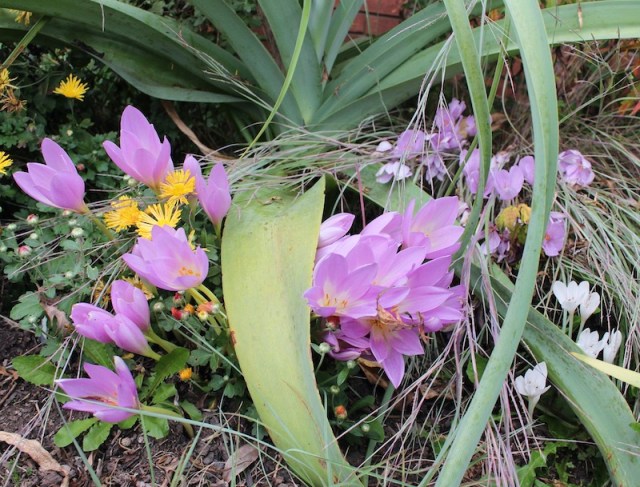
Colchicums elbowing up through the summertime placeholders in this colchicum bed. For those who need to know, it’s an unknown hybrid center and left, with the white of c. autumnale album to the right, and the last of x byzantinum to the back.
As a point of reference, there’s no need to collect colchicums. They might be a fascinating and colorful group of plants which send flowers up at a time of the year when most other plants are shutting down, but the springtime foliage dies down in early summer and that leaves a hole in your plantings until the flush of blooms comes up. No one wants gaps in their June border and then empty spots all summer, so don’t collect them. Even more critically don’t devote an entire bed to them because you’ll end up collecting sedums and other low growing things to fill in while the colchicums take a rest and it looks like you need more growing there than just a neatly tended mulch bed. Also you’re asking for trouble when you have a bed which looks like “just a few more” seedlings and transplants and new purchases could fit in, when in reality it’s already filled, so just don’t say I didn’t warn you. I used to have a nice, neat bed of colchicums and now I have an overgrown bed of colchicums and if you’re one to think that’s a problem well then that’s where any advice on my part ends. Just don’t do it.
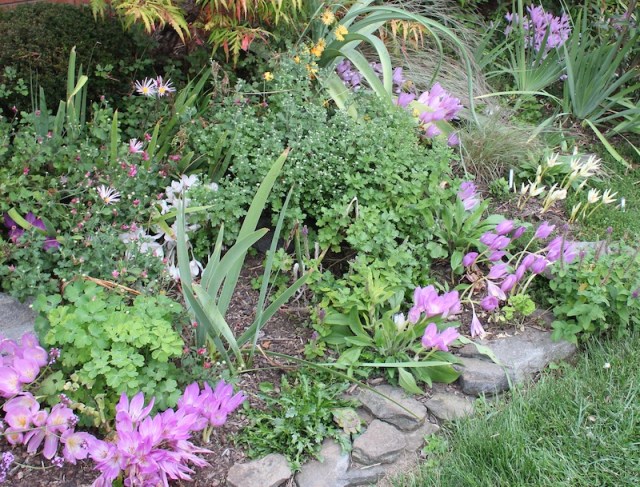
Colchicum popping up here and there in the not-a-rock-garden but plenty-rocky colchicum bed. They would look much nicer surrounded by mulch and not covered in chrysanthemums, but they are…
But if it does happen, and you find yourself with more than two or three clumps all I can say is enjoy the ride. It’s a nice way to get excited about September and even October as fresh flowers sprout up in a tired garden. Your July perennials are dying without grace but colchicums show enthusiasm and that’s in short supply after weeks of watering and toil.
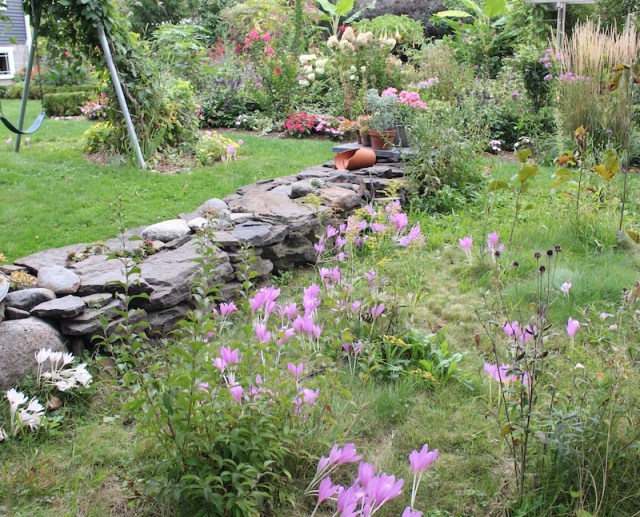
Colchicum naturalize well in grass as long as you allow enough time in the spring for the foliage to grow and then fade away. Either mow around it or just let the whole lawn look ‘country’ for a while. Sometimes I let the lawn ‘look country’ until late August and that’s been fine as well.
Here are a few favorites, and if you’re thinking they’re all my favorites they’re not. I have a bunch more which are just fine, but don’t get me thinking colchicophile when I see them. Maybe they just need time, or maybe they need a better spot, since some parts of the colchicum bed are probably drier and poorer soil than they’d like.
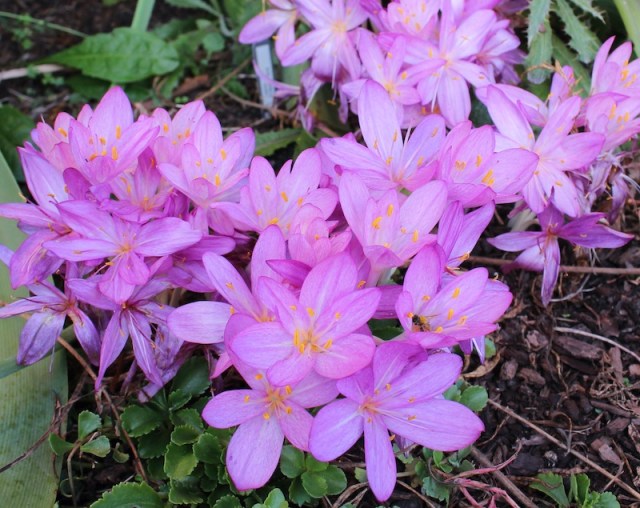
Colchicum cilicicum gives a wonderful show of neat and stocky blooms which seem to go on and on. I’d divide these and give them room to form an even bigger patch if I had the space.
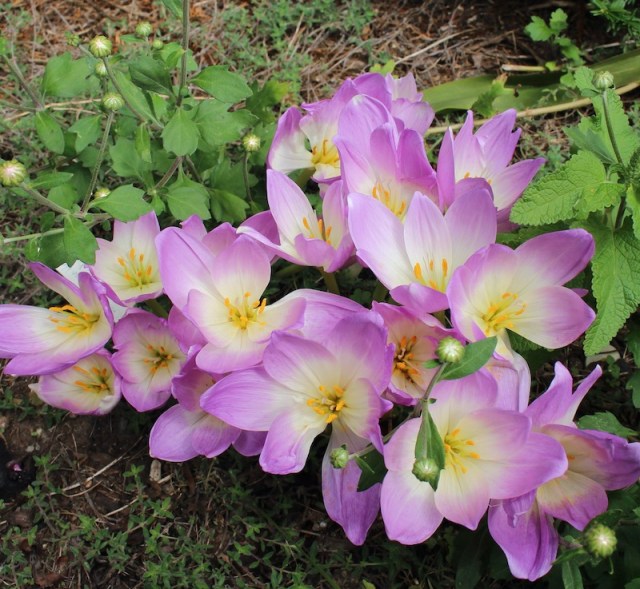
Colchicum ‘Autumn Herald’… I think… many a vendor will sell you a named form which doesn’t quite fit the name. I guess for normal people it’s just fine if their three clumps are perhaps mislabeled, but when your fifth clump looks similar to the second, and your white comes up just as pink as the others, I guess it starts to get more irritating.
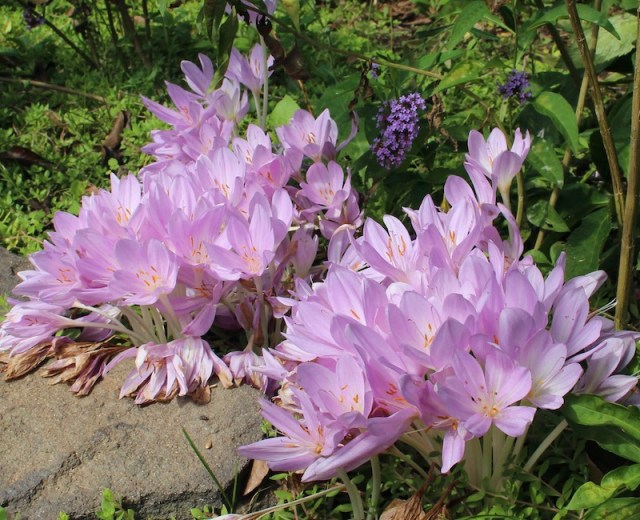
At first Colchicum xbyzantinum seemed a little boring to me, but over the years it’s clumped up and won me over with its long bloom season and hardiness and now I can’t complain.
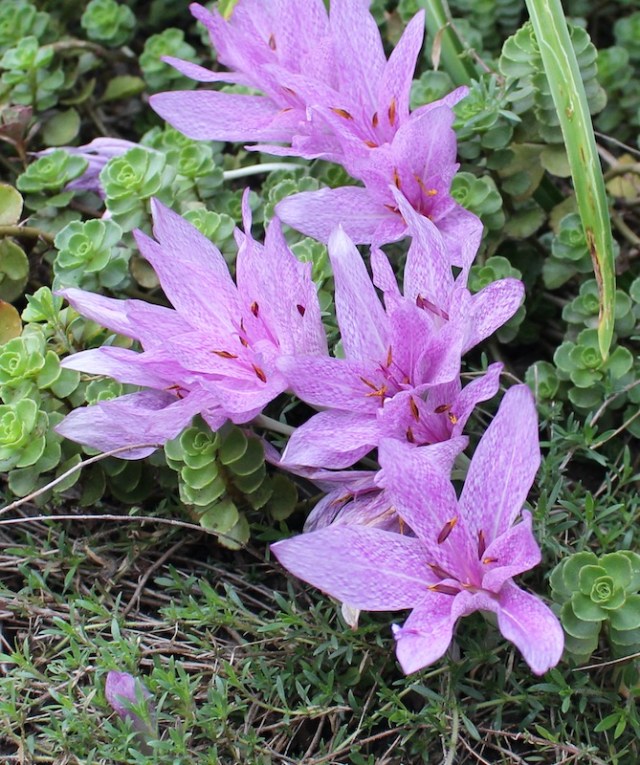
The checkered flowers of the almost-dwarf Colchicum x agrippinum are absolutely cool. This little guy is not one to plant in the grass unless your grass is of the weakest kind.
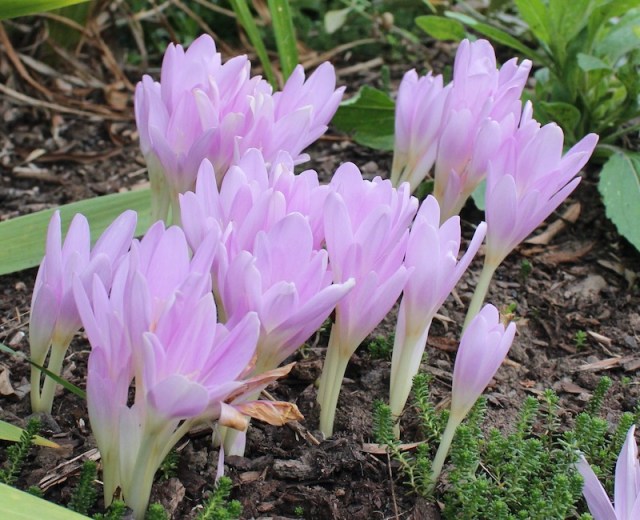
I don’t remember being overwhelmed by the colchicum ‘Spartacus’ when it first bloomed but now it might be top five. Once it became a good sized clump the flowers really fill in and the season goes on for weeks, and the smaller size and pale pink color stands out nicely against others in the colchicum patch.
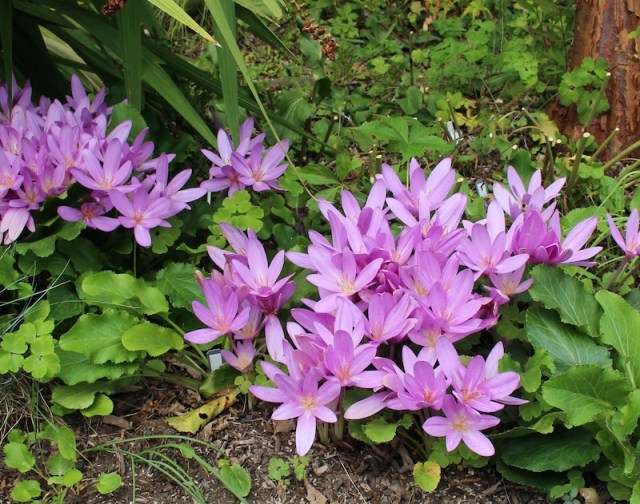
‘Nancy Lindsay’ is a colchicum everyone should grow. For me it clumps up well and makes a nice solid patch of color for a decent amount of time. I like it.
So there it is, a small sampler of the early and mid-season colchicum show here at Sorta Suburbia. The later forms are just starting and some of the mid-season ones are at their peak this weekend, so perhaps I can eke out another post… but that might be pushing it and the rain has to stop first. Also I should probably take a few cuttings inside and finish cleaning out the winter garden BEFORE I start bringing things in and dropping potted plants here and there. A system and some organization would help but nevermind. It will get done, and if it doesn’t? I have friends with plants and just like me they’re waiting for someone to show a little interest so they can fill a bag or a trunk or a truckbed with goodies.
Have a good week!


You missed one of my favorites, Colchicum autumnale plenum.
Do you like that better than Waterlily? I find ‘Plenum’ a weak grower compared to Waterlily, and not as full.
The unknown hybrid center and left might be Lysimachus, if you ever acquired that. But for me Lysimachus is an early bloomer and Neptune is a mid-season bloomer. They are side-by-side in my garden and Lysimachus is winding down and Neptune is just getting going. There is a design conundrum placing these bulbs but I think the low growing sedums are a good choice. I also grow them near daylilies or hostas and just cut back the foliage of the perennials if they obscure the colchicum flowers. And yes there is a problem of “sameness” in the trade. Some of the bulbs are mislabeled and some varieties are sold under more than one name. And some look very much alike in bloom, but bloom at different times or at least have different leaves.