Being the non-cooking type has its advantages on a day like Thanksgiving. Other family members were busy baking and broiling but I was settled down at the kitchen table going through my seed donations for the HPS (mid Atlantic) seed exchange. It’s my first time ever contributing to this type of seed exchange and the sharing part is great, but better yet is the fact that as a donor I get to add a few extra packets on to this year’s wish list!
I’m sinking deeper and deeper into seed addiction. Catalogs are nice enough, but for some of the really special things seed exchanges are a great deal, and around here the HPS exchange is a great place to start for hundreds of annuals, perennials, bulbs, shrubs and even trees. An annual membership is $25 and includes meetings and events, but since I live further away I really joined for the seeds. When the exchange opens in January members can choose 25 packets for something like $15 and it’s kind of like Christmas after Christmas. Not to rub it in but I’ll be choosing 35 this year with my donor status….. hopefully what I sent in passes muster and isn’t laughed at!
There are several other great seed exchanges. I’m doing the North American Rock Garden Society’s exchange (as a non-donor) and the basics are the same. Small fee=many cool seeds. The NARGS exchange also does a bonus round where you can pick through the leftovers after the first flush of orders are filled and although many selections may be scarce it’s an even better deal. Just last week I unearthed my haul from last year.  All kinds of goodies were re-discovered just in time for fall planting, I think it was something like 20 packets for $7 and I picked out 40. Who can’t use a few more lily seedlings coming along or a couple packets of winter aconite seed? NARGS keeps previous lists online, so if you’re curious to see if it’s something you might be interested in, click here.
There are plenty of other places to feed a seed addiction. Most plant societies run their own exchanges, and in the trenches there are other plant crazy gardeners willing to put in the time, resources, and tedious labor required for collecting and preparing seeds. Amy has a blog over at Primrose Hill Woodlanders and is the magic behind the Primrose Society’s annual seed exchange, and if you’ve never checked out Nan Ondra’s blog Hayefield, you really should. Nan just wrapped up her big seed giveaway, and all told packed and sent out around 1,000 packets of over 100 unique and hard to find varieties to her loyal blog readers. Just thinking about keeping track of who wants what and all the collecting and cleaning makes my head spin, so I’m happy enough to send my dozen seed varieties in as bulk donations and wait for the list to come out!
Have a great weekend…. and before I go, if you haven’t been tempted by seeds you may be tempted by late season bulb clearances. Brent and Becky are having their traditional after Thanksgiving clearance sale. 50% off all remaining stock! My fingers are crossed for a warm spell so I can still plant them in the garden and not pot them all up 🙂


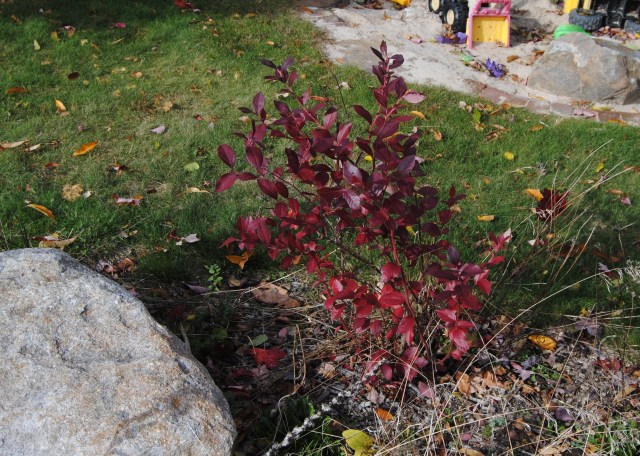
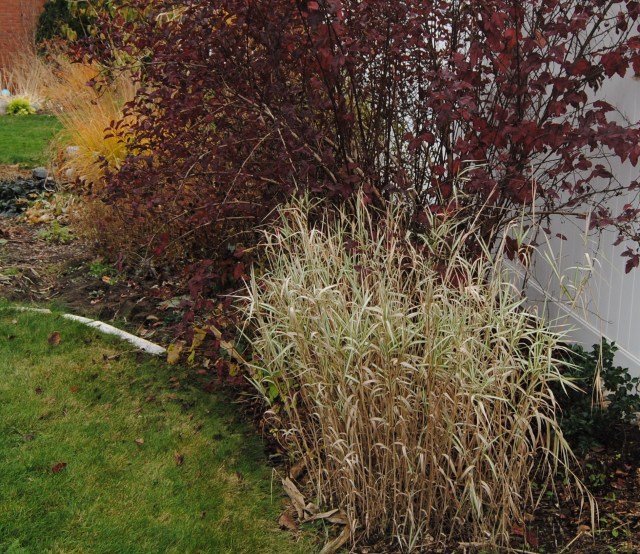
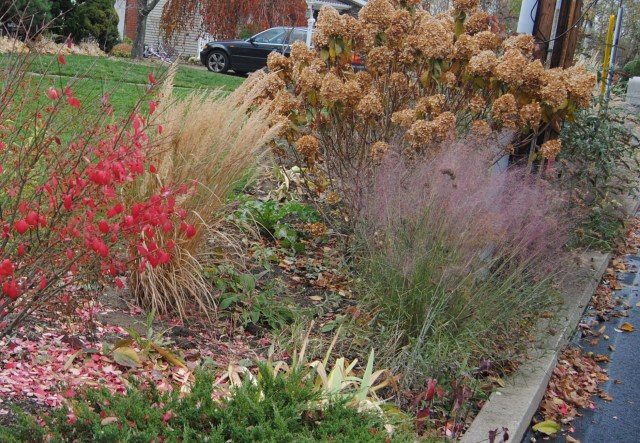 The red color in the last picture is a burning bush (euonymus alata) and its days may be numbered. Even though they show up in many local landscapes they’re very invasive. I haven’t seen any seedlings yet, but don’t doubt they’re out there, so next spring I may move one of the blueberries into its spot. The color is not as intense and the shape is less tight but you get delicious blueberries!
 ‘Skyracer’ purple moor grass (Molinia caerulea subsp. arundinacea) is a top 5 grass. Up to 6 foot tall seed heads come up out of a neat 2 ft fountain of foliage. It’s tall yet airy and light, and the yellow fall color hangs on for a while. If winter comes late and seeds ripen there might be a seedling or two next spring but hardly anything to worry about. The plant practically falls apart over the winter and is an easy cleanup.
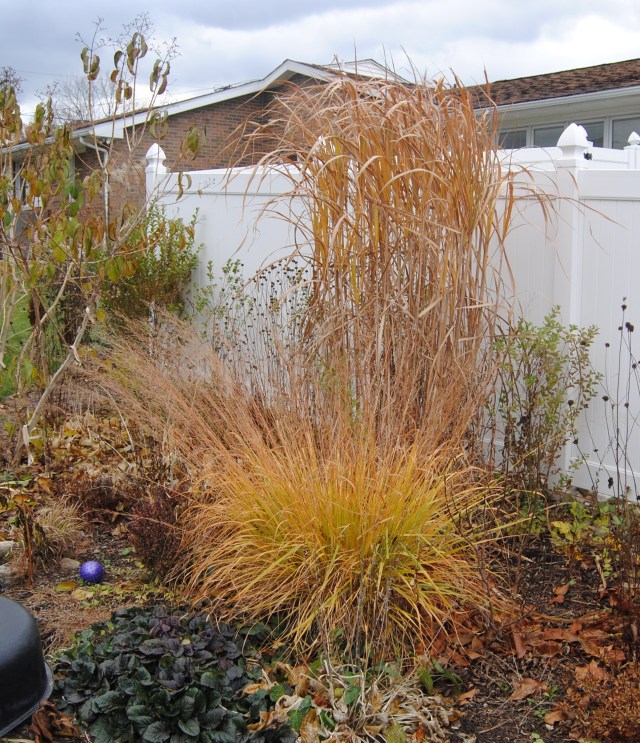 Miscanthus in general are losing their hold on me. The springtime cleanup is a pain with their tight clumps and I’m starting to think of them as industrial park plants. They look great there, but might be too much work in my own garden. I still have a few variegated kinds and who knows what next year will bring, since my fickle crabby self might divide up this porcupine grass (miscanthus sinensis ‘Strictus’) next spring and plant it all over the place.
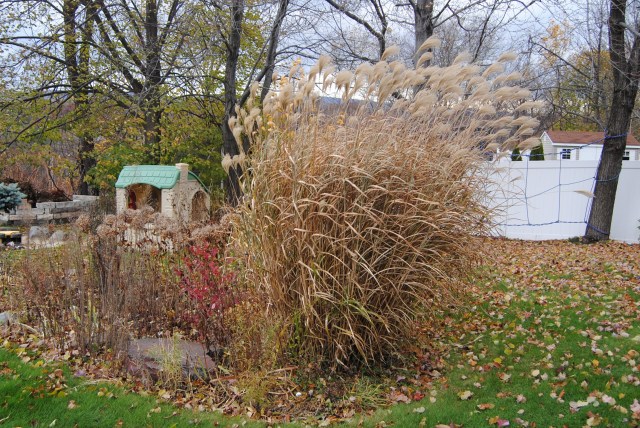 Planting grasses is easy, it’s removing ornamental grasses that’s the problem. My only advice is sharpen your shovel beforehand, you need a nice blade-sharp tip to make the job almost easy, but even then you really have to put your back into it. Also watch the seeders. I’ve evicted the taller Pennisetum alopecuroides because of their reseeding (the real dwarf ones seem to be sterile) and I’m keeping my eye on the Korean feather grass. Most of the trimmings can be composted, but don’t mulch your daffodil bed with fresh little bluestem mulch, it makes a great grass seedbed and will make you hate your daffodils and weeding them.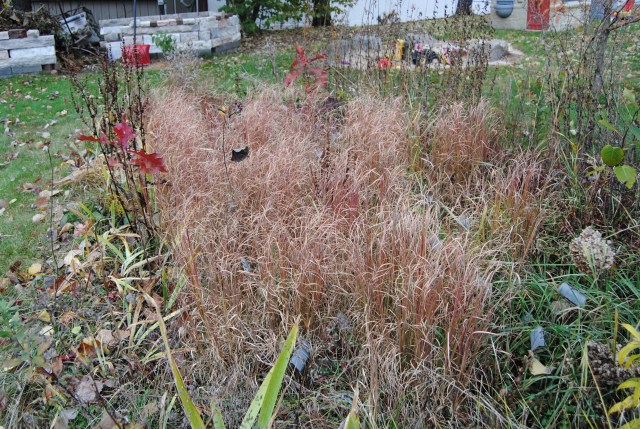
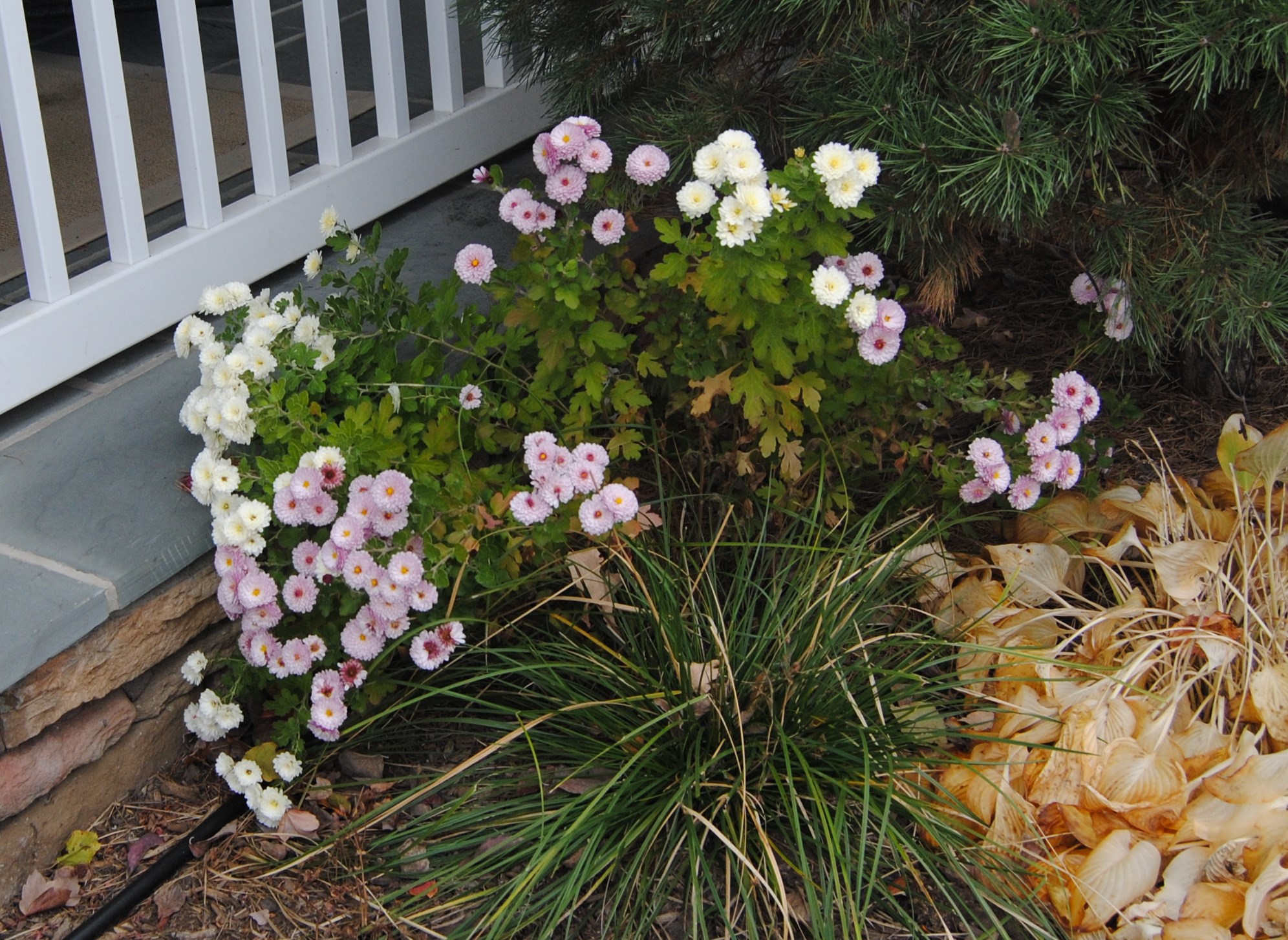


 sorta like suburbia