Spring is Quite Awesome

Okay.  So if this blog post goes up in the next day or two it’s just a three week gap and not four, and I guess that’s better, even if I’m forcing myself to sit here right now and get something done while my heart is saying do nothing, crawl into bed, find a blanket, play mindless phone games….

spring violas

The violas of spring look great, they love the cool weather and frequent rains, and for once I like the color mix in this pot.  Too often I impulsively buy a celebratory mess of spring shades and hope for the best, and then act confused when the colors still look like a mess when planted!

With this week’s chilly and damp weather a blanket is definitely required even though a couple days prior the air conditioning had to go on to fight the heat and humidity.  Those temperatures, alongside regular rains and then a little too many rains, has the garden bursting with growth and color and fortunately not with fugus and blight yet, and I hope it stays that way.  I grabbed a bunch of pictures last weekend during a gap in the rain, and my favorite subject was the lovely rose ‘Aicha’.  I love her soft shade of yellow, the simplicity of her single flowers, and the arching shape to the bush.  She has a light fragrance, and right now I can forgive the leaf spot and only a few here-and-there sparse reblooming flowers in late summer.

rose aicha

The yellow of ‘Aicha’ ushers in the yellow/blue/purple phase of the front garden.

I picked up ‘Aicha’ at Der Rosenmeister nursery on a spring trip to Ithaca NY one year, and each summer since it has been a rose dream to make it up to their open garden party (June 13th this year btw) which Leon hosts each year.  It’s a party with music and fun, plus hundreds of full-bloom, cold-hardy rambling and climbing roses massed across the grounds of his home.  I would make a wish list of course.  It took me days of contemplating to fit in just three, so a list would be trouble which I don’t need but where’s the fun in that?

variegated iris

Somewhat fitting into the yellow/blue/purple phase is the variegated Iris pallida ‘Aureo Variegata’ which I love for foliage as much as the lemony scented flowers.

It’s actually still early for roses so lets bask in the show of the bearded iris first.  The iris don’t like the rain right now, but last summer’s drought was just what they do like, and this spring they’re showing their appreciation of the previous year’s rot-free dry weather.  I probably said I wanted more last summer and then did nothing to accomplish that, so this year I have a plan.  I think they would do very well on the berm.  I’m at a point where I want to plant something appropriate on the berm, and as long as nobody complains too vigorously about weeds in the iris I think this summer I’ll give it try.  Younger me would  aim for weeding after planting, but I’m starting to understand my limits as I get a bit more experience, and I can warn everyone right now that the iris on the berm will be weedy and I apologize ahead of time.

iris sunol

‘Sunol’ is an oddly colored iris which would probably do better on a weedy berm rather than the garden since it’s just as crowded, but less sunny here.  I believe the “dwarf” blue spruce is squeezing it out faster than I wanted to imagine.

I guess you can’t talk about the May garden without mentioning weeds.  One of this year’s goals was to eliminate a few from the garden and mostly from the lawn, and when a friend saw that post they mentioned the idea of a wildflower section in a corner of the lawn as a a safe-zone to balance the weedless-lawn effort.  Upon hearing this excellent suggestion I realized that what I wrote was really a bunch of misleading nonsense.  Such is often the case for this blog but in this case it gives a totally different picture than intended.  I forgot that the lawn purists consider a lawn as a place for grass and only grass, and oh my gosh that’s not what I’m aiming for since in my opinion a grass-only lawn is about as boring as boring can be.  My weeds are narrowleaf plantain and creeping charlie.  I hate the plantain and have grown tired of the creeping charlie so they are now the two weeds who’s numbers I am trying to reduce.  Violets as well but I hesitate to mention that since they’re so beloved, but they seed everywhere and are nearly impossible to get out of flower beds, so enough is enough.  My biggest problem in spraying to control these three weeds is that the clover and dandelions are also killed if spray get on them, so I have to be careful and precise to miss them.  Hawkweed is also a treasure in my lawn, and to be honest I’ve transplanted plugs to get it into new spots… actually in the older parts of town I’ve seen a lawn or two with a few shades of yellow which I’d love in my own lawn, but I’m not quite ready to knock on doors asking for weed samples.  So just to be clear, for me a weed-free lawn is only grass-based, and the green is well spangled with the blooms of a carefully curated blend of colors, just with less plantain mostly because I just don’t like the stuff… unless it’s the wide-leaf form in purple which I guess I do like…

iris elsinore

Bearded iris are not weeds in any sense of the term.  This is ‘Elsinore’, one of my favorites.

So rest assured this garden is quite safe from a turf obsession.  To lose finches picking through dandelion seedheads, bunnies grazing the clover patches, and bees working the birds foot trefoil would be sad.  Actually I feel a little concerned when I see a vast expanse of fertilizer-hyped, weed-killer soaked turf and think of the hours wasted keeping it that way and the dollars which could have been spent on better pursuits.  Those people obviously never grew a snowdrop nor jealously eyed a patch of English daisies growing in a garden they visited last weekend and then thought of their own pot of English daisies and then spent the next three days staring out at a rainy garden wondering where a good spot would be to plant them in the lawn… Hmmm.  You may see why little actual work happens here when the gardener wastes hours thinking about where in the lawn to plant new weeds.

Glaucium corniculatum blackspot or red horned-poppy

The colchicum bed with a few not-colchicums filling in the gaps.  The orange poppies are red horned-poppies (Glaucium corniculatum) and love a dry, poor soil which doesn’t speak well of the soil in this bed.

Enough about weeds.  May here is about flowers and the enthusiastic growth of plants, and besides the iris here are a few odds and ends of treasures and tasks.

Robin's PlantainErigeron pulchellus 'Lynnhaven Carpet

Matt Bricker will often bring a few non-galanthus goodies to the Galanthus Gala, and one year a pot of Robin’s Plantain (Erigeron pulchellus ‘Lynnhaven Carpet’) came home with me.  It’s a nice low groundcover with soft leaves and cheerful daisies in spring and is about as easy to grow as anything.

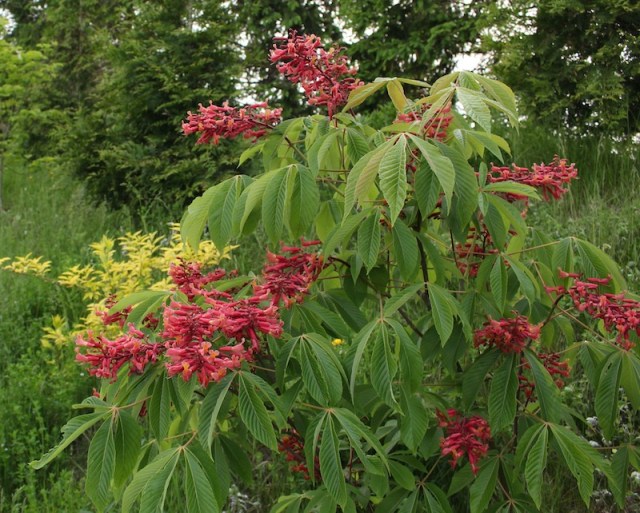
Not that I’m anything close to a purist but I just noticed the horned poppies and Robin’s Plantain (a daisy not to be confused with the previously mentioned plantain) are North American natives and to keep with a theme for more than a minute here’s one last shrubby, maybe someday small treeish native thing, the red buckeye (Aesculus pavia).  In a miserably hot and dry spot on the berm it carries on, growing inch by inch and blooming faithfully each spring.  It would like a better spot but carries on well enough with what it has, the show increasingly clashing with the pink and mauve rhododendrons which also suffer on the slope here.
Aesculus pavia red buckeye

Red buckeye (Aesculus pavia) is listed as a hummingbird magnet but as of yet… it’s just a pretty shrub on the berm.  I’m hiding buckeye seeds each year and maybe one day they’ll carpet the industrial park.

That was possibly a full minute of focus on how unfocused I am, but as I’m sure you know there are just so many other things going on it’s hard to stick to a task.  A gardener goes out with the ambition of transplanting a sedum but sees a branch to prune and a weed to pull and then gets lost looking for a trowel they remember using two days ago and before you know it the rain started again and you’re wondering why you spent twenty minutes deadheading hellebores instead of mucking leaves out of the pond.  There’s a mile long to-do list, which I’m sure is the same for every gardener (and if not and you are that rare exception please keep that an inside thought) and perhaps this weekend the list will get shorter before it gets even longer.  I don’t even know what my list says so here’s a guesstimate.  Most everything is out for the summer, most vegetables are coming along, a few new plants are here, but the summer bulbs and back porch have not yet been attended to.

bromeliads overwintering

The bromeliads are slightly pale but nearly as lush as when they came inside last fall.  They’re almost too easy and this gardener is only allowed to buy maybe one or (at most) two new ones this year since that’s ok and not a sign of addiction at all.

On a plus side the garage is still being used for vehicles rather than entering the annual contest to hold as many empty pots, wheelbarrows, boxes, bags of potting soil and tables full of drying bulbs and corms as possible, and to achieve that the driveway has stayed open enough to drive on.  It’s basic math since I am out numbered now.  Three out of the four drivers here agree that the driveway is better utilized for cars rather than as a makeshift summer nursery/pot ghetto/staging area for excessive plant additions to the garden, and now the gardener is forced to hide his compulsion just around the corner, alongside the garage 😉

golden ninebark seedling Physocarpus opulifolius

My friend Kathy Purdy warns that stray tree and shrub seedlings should be addressed when small and not allowed to sink their roots in and create a removal issue down the line, but… golden ninebark seedlings (Physocarpus opulifolius) are so cute and can’t possibly ever be in the wrong place… right?

That’s it from here.  It is now Saturday morning and once the last person asleep here wakes up we shall go to a coffee shop and the two children will make us breakfast… assuming we pay for it and tip them as well, and then after that I’m sure something will get done here even if your guess is as good as mine as to what it will be.  The lawn needs cutting, so I’ll probably head outside and start by planting petunias next door and then check the pool filter.  Maybe I’ll eventually find that trowel again, who knows, but in the meantime I hope you have a wonderful spring weekend!

Curb Un-Appeal

A few weeks ago I was next door talking to my neighbor.  The iris were in bloom and he’s got a few clumps of a rich purple iris in his front yard (‘Lent A Williamson’ is the ID I gave them although I’m sure he doesn’t care) which were putting on an excellent display.  A car slowly pulled by and after a polite wave the driver opened the window to say “I love your iris, I drive this way just to see them”.  I bit my tongue.  After a couple seconds passed, my neighbor realized the compliment was directed towards him, and said thanks.  He looked at me.  It just about killed me, I have iris too.

front street border

The house from the street.  I believe one of the first rules of curb appeal is to compliment, not block, the house.  Also large thistles should not become focal points.

We got a good laugh about it once she left.  I do like to show off my most exciting plants, but I realize they’re not to everyone’s taste, and the “overflowing” look of the plantings is focused more on the plants than the setting of the house.  Even the 12 year old said she doesn’t like it when it all gets so big, but when I mentioned moving out she gave me her pre-teen eye-roll of disgust… which I’m sure will only develop more as she finishes up middle school.

Cirsium eriophorum woolly thistle

More thistles around the corner.  Cirsium eriophorum is the European woolly thistle, and I just came up with the brilliant idea of pulling a few coneflowers out from along the street and planting the newest batch of seedlings there.

Before selling our previous house I spent a few weeks ripping things out and simplifying plantings.  If I ever cared to impress the neighbors or list this property I’d surely repeat the process here.  Lots of mulch, a clear view of the house, and sheared foundation shrubbery would put an appropriately sterile stamp of conformity onto the real estate head shot, and I’m sure it would scare fewer people away.

foundation perennials

Look at that mullein, it’s a keeper!  Eight feet tall and counting, the blooms are opening nice and large and I’m hoping it keeps going all summer.  The mullein, along with poorly trimmed and poorly placed trees and shrubbery, all add to the screen that blocks the curb view of our house.  

Just to be clear there is no talk of moving.  We have to stay at least 30 more years in order to reach the point of break-even on all the lumber purchased for the potager re-do.  For the accountants out there we finally went over the hump and added about $6.75 to the plus column for the salads we’ve picked in the last few days, and $6 worth of cauliflower as well.  Those were some exciting first harvests, so obviously we’re not going to dwell on the $89 which went into the liability column for a new hose and additional lumber.

drying daffodil bulbs

Delphinium in bloom are often enough of a distraction to keep people from noticing the bags of drying colchicum and narcissus bulbs lined out along the front porch.  **please note the snow shovel was just put there recently and hasn’t been sitting there since last winter**

So even if you can look past the unpruned, questionable design, and overlook the stray bags of bulbs and garden tools, there’s still always that massive pile of sand blocking the driveway.  “You’re always busy doing something” was the polite way another neighbor dealt with that topic.

common milkweed syriaca

The common milkweed (Asclepias syriaca) by the front door is in full bloom.  I’ll cut it back by half once it’s done flowering, not just to keep it neat, but also to invite the Monarchs to lay their eggs on the new growth that sprouts up.

A myopic view of things lets me enjoy things anyway, and in my opinion when everything else is going to heck there’s always plenty of little things to be thrilled with.  Like milkweeds.  They’re much more interesting than people give them credit for, and far more useful in the garden than just caterpillar fodder.  This week I have a new one in bloom… finally… after years of trying seeds and nursing seedlings.

purple milkweed purpurascens

Asclesias purpurascens, the descriptively named ‘purple milkweed’.  This one’s been tricky for me and maybe that’s just because it refuses to put up with the abuse and neglect which I leave it to.  I love the dark color though, and did water a little after seeing its leaves curling up from the dry.

I hope the purple milkweed continues to grow in spite of this shift to drier summer weather.  There was brief consideration given to trying it out in a new spot but after reading online that it can be hard to get established it’s staying put.  I’ve killed it in other spots already so why rush.

verbena bonariensis

The first of the Verbena bonariensis filling in.  The verbena is a great drought tolerant filler for years like this, and I might transplant a few out for color in August.  

There are plenty of other things to do rather than kill off new milkweeds.  I spent Friday night weeding and “editing” the front border and was planning on finishing today but surprisingly enough there’s been some rain and it’s now too humid and sticky to work.  The rain only took the edge off the dry soil and refueled the gnats but it was a good excuse to go for icecream instead.  I don’t think that’s a bad tradeoff.

Have a great weekend!
Time for a haircut

As you may know there’s a small section of lawn out back which I let go over the summer.  It’s what I call the meadow, and the goal is to have a spot where I can play around with a few bulbs in the lawn and also give the crickets and bunnies a spot to kick back in.

meadow garden

Over the last six years wildflowers such as rudbeckias and goldenrod have moved in and (to me at least) the meadow is an interesting place.

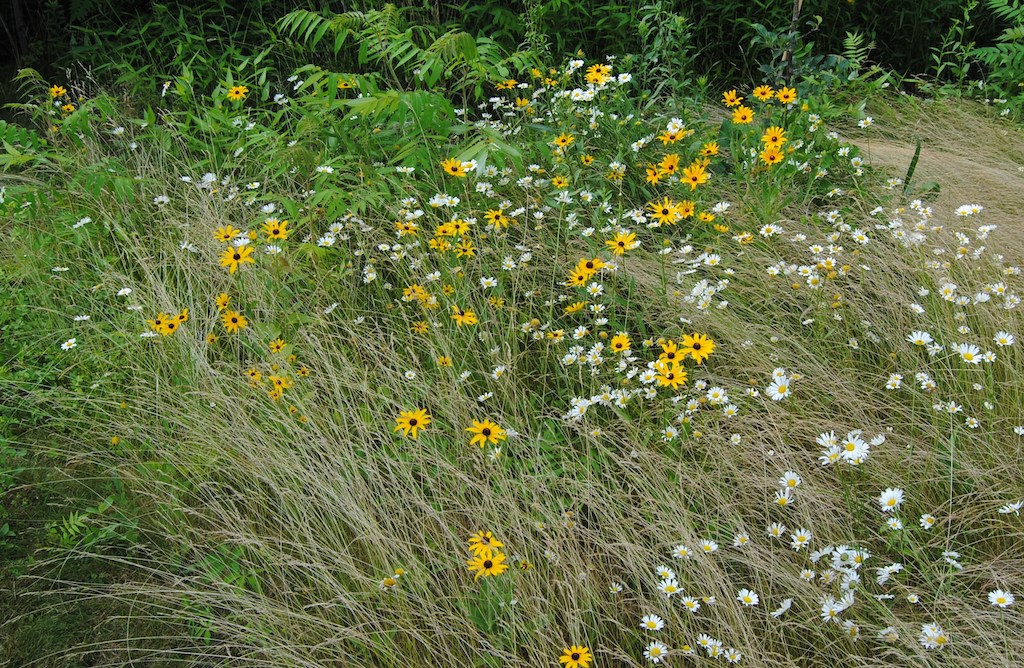
I love the meadow in early summer when the grasses go to seed and daisies spot the amber waves, but now it’s starting to look tired, and I have to remember what the plan is here.  Although the native little bluestem (Schizachyrium scoparium) is beginning to invade and I like it elsewhere in the yard, it’s not a prairie I want here so in late August I finally mow.

meadow garden

Little bluestem with a mix of rudbeckia and other wildflowers (weeds?).  I love the look, but it’s time to move on.

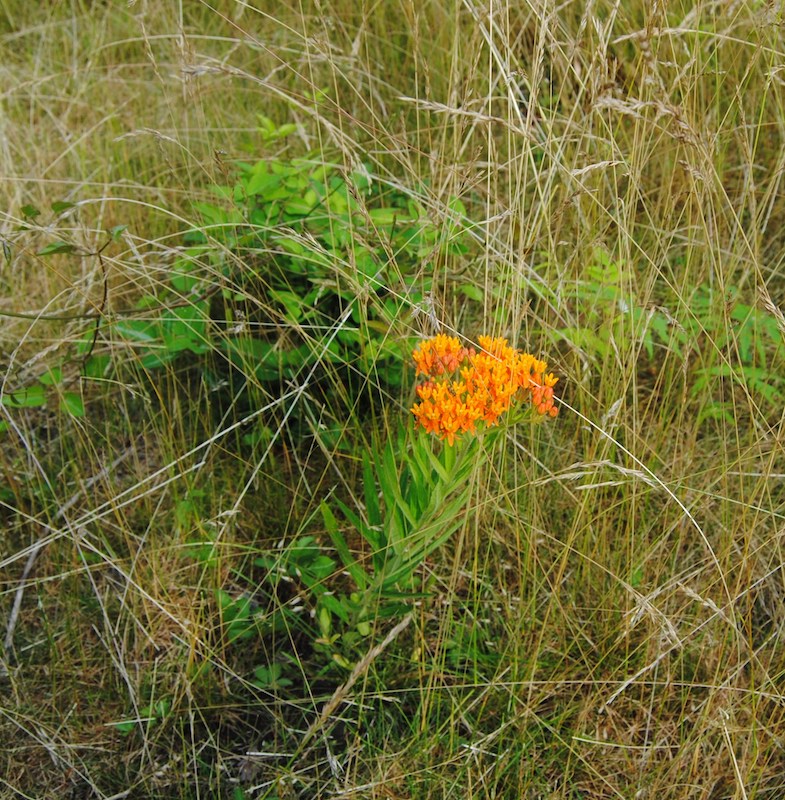
Tuesday evening I went through.  The crickets dug into the turf and hid, the rabbits ran off, and the katydids and mantis were old enough to fly to safety.  I’m not completely committed though, I left a few patches of bluestem and mowed around some butterfly weed (Asclepias tuberosa) since I was too weak to enforce my “it all just gets mowed” program.  Maybe next year.

cutting a meadow

The meadow returned to respectability…. and boredom.

It looks neat again which is a relief to the better half, and the midyear trim actually seems to encourage the earlier bloomers such as daisies and rudbeckia, and discourages the goldenrod.

cutting a meadow

I don’t know if it looks better cut, but tall grass is a no-no in suburbia, so I’m sure the neighbors are somewhat relieved.  They’re probably itching to finish things off with a string trim and weed-b-gone 🙂

So I’m back to the mowing routine for this area, but only for another two or so weeks until the colchicums begin to sprout.  They look better blooming in shorter grass, and if truth be told I do have a bias towards doing what it takes to keep them happy.

Have a great weekend!
In a vase on Monday: Goldenrod

In celebration of Labor Day and a Monday away from work, I’m once again making a contribution to the ‘In a Vase on Monday’ movement.  It may not exactly be a world changing movement, but it’s fun and does motivate me to bring a few flowers into the house so look at how it’s changing lives!

arrangement with goldenrod and dahlias

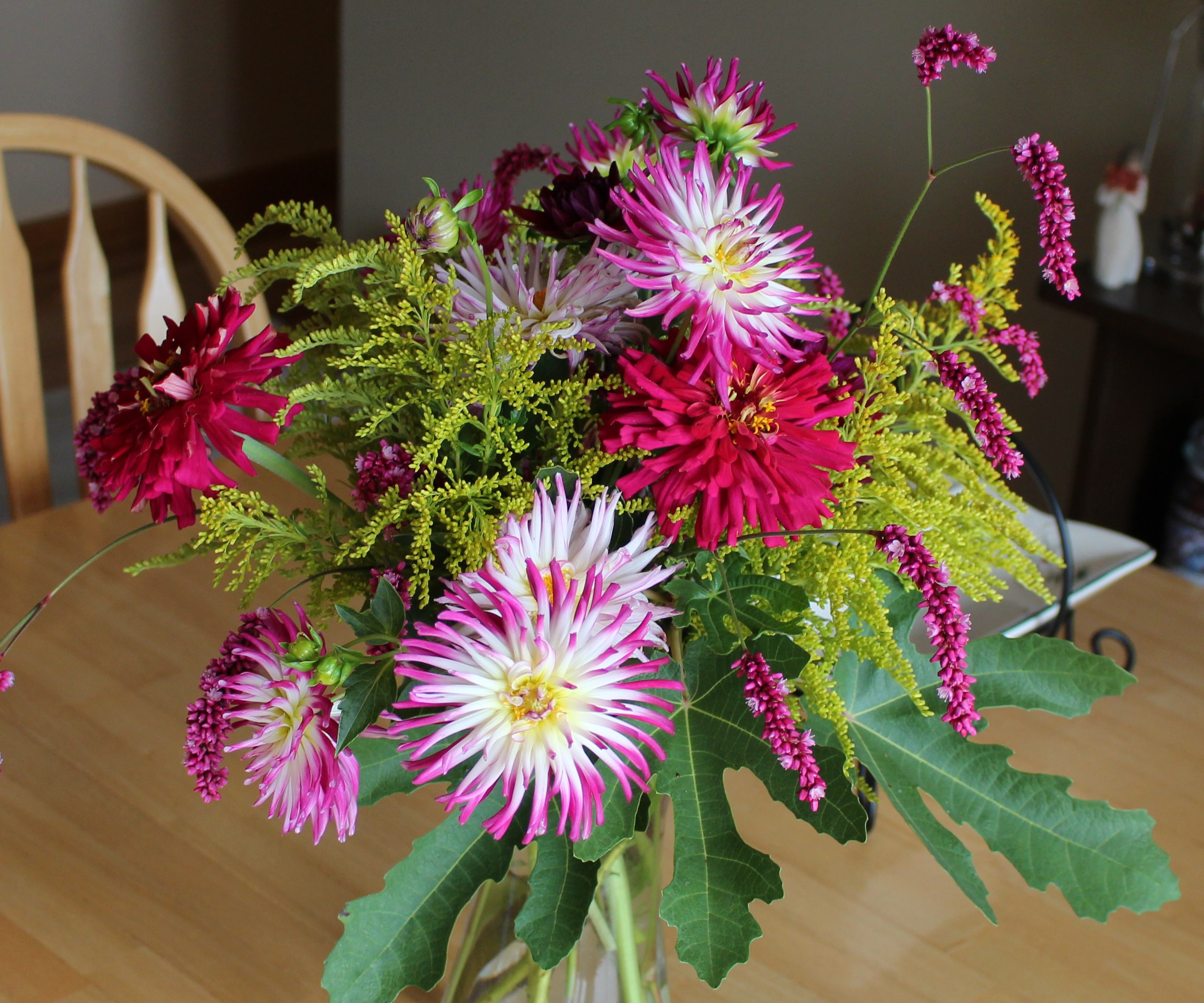
Another pluck and plunk arrangement. I didn’t realize how unbalanced it was until after I looked at the photos!

This week’s arrangement was inspired by Kimberley at Cosmos and Cleome.  In a recent vase Kimberley had the good sense to add a few sprays of goldenrod in to fill things up, and it took that vase to make me realize I have a ton of the stuff growing all over the place and should do the same!

goldenrod and dahlia

The just barely blooming goldenrod has a nice soft color and fills in well. It’s like a redneck version of baby’s breath plucked from the roadside.

Besides the goldenrod, this vase has the pink tipped blossoms of dahlia ‘Tanjoh’, a purplish red dahlia (maybe ‘Plum Pretty’?), a few zinnias, a couple pink sprays of ‘kiss me over the garden gate’ (persicaria orientalis), and a few fig leaves which were in the way of my boxwood trimming.  I like it 🙂

dahlia 'Tanjoh' with goldenrod

The goldenrod makes up nearly half of the arrangement yet you really just notice the larger blooms. Such is the curse of a ‘filler’…

With all the goldenrod coming into bloom I may have to admit to myself that autumn is approaching.  On the road to college I was always disgusted by the mass of goldenrod yellow filling the fields along the highway, and it’s always been a mental marker for the end of summer and the return to work.  I guess that’s my bias against the plant, but because of its native status I tolerate it when a seedling shows up.

goldenrod for cutting

There are more than enough wayward areas around the garden for goldenrod to sneak in a rod or two.

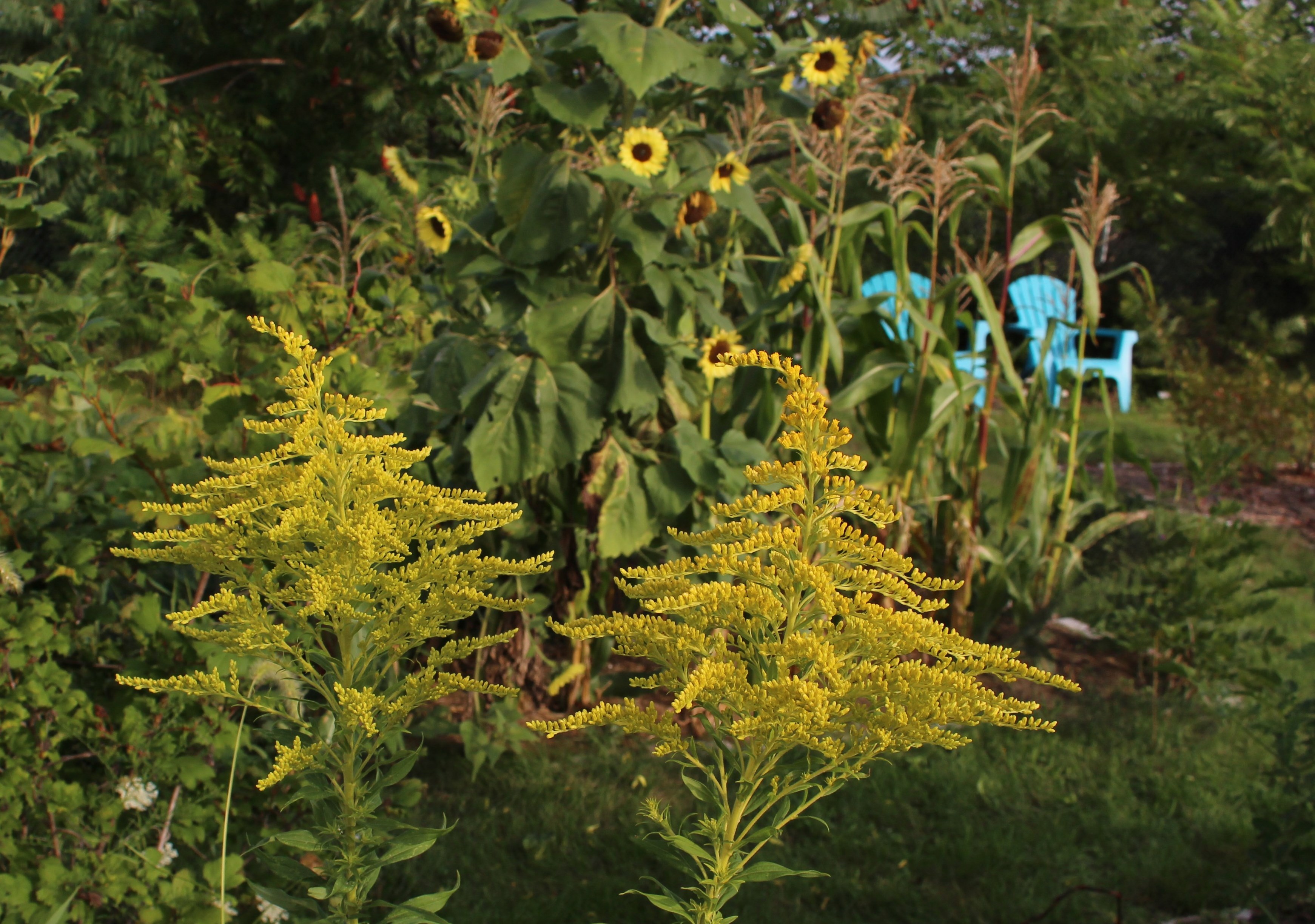
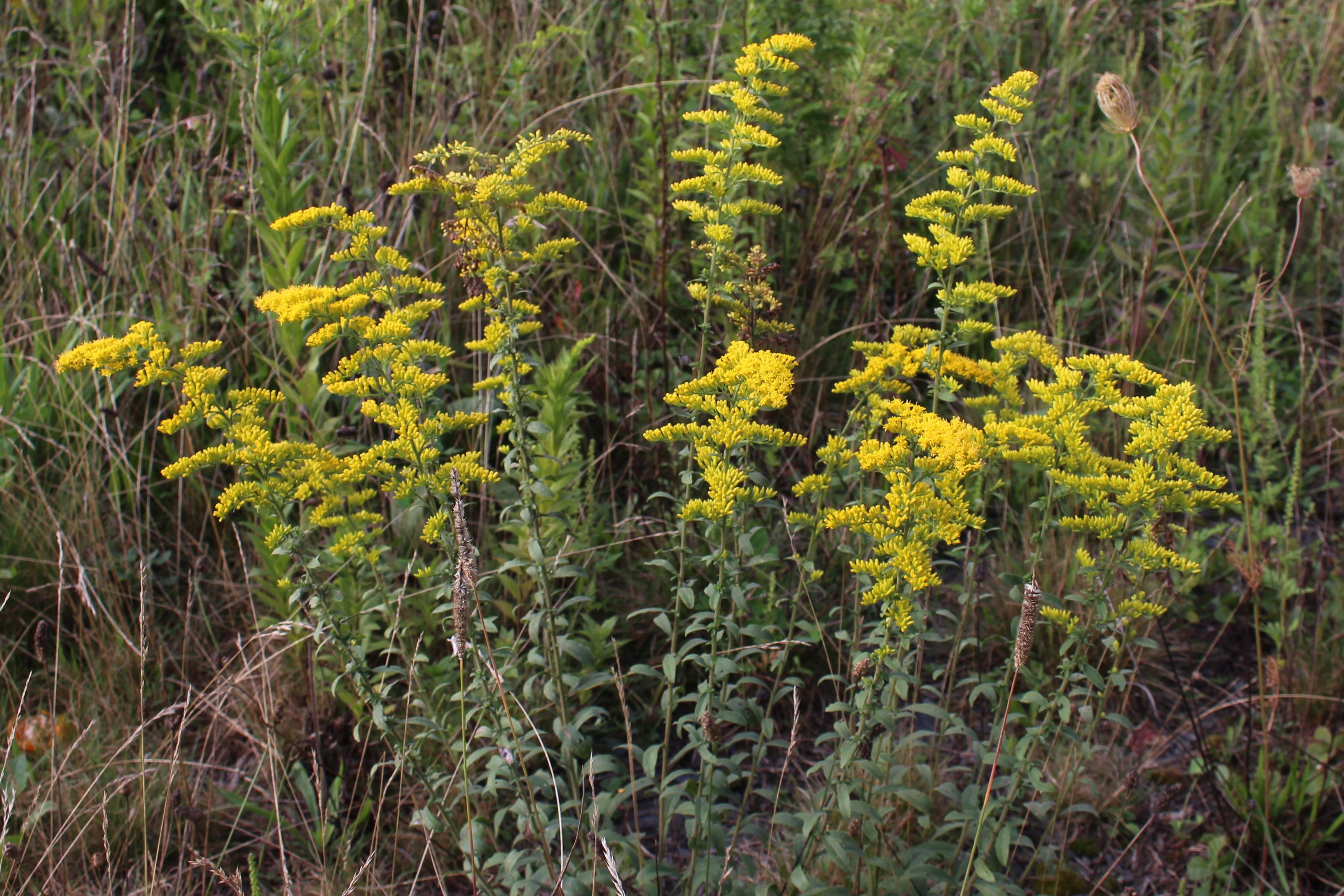
Not to stray too far from my Monday vase, but I guess some goldenrod annoys me less than others.  One of the species is only just starting to color, and I think it’s my current favorite.

goldenrod and sumac

Goldenrod just coming into flower along with some staghorn sumac which the starlings and robins will enjoy this winter.

This floppy one is not a favorite.  Once it’s finished blooming I’ll run back here and mow things down to give the grass a chance.

wild goldenrod

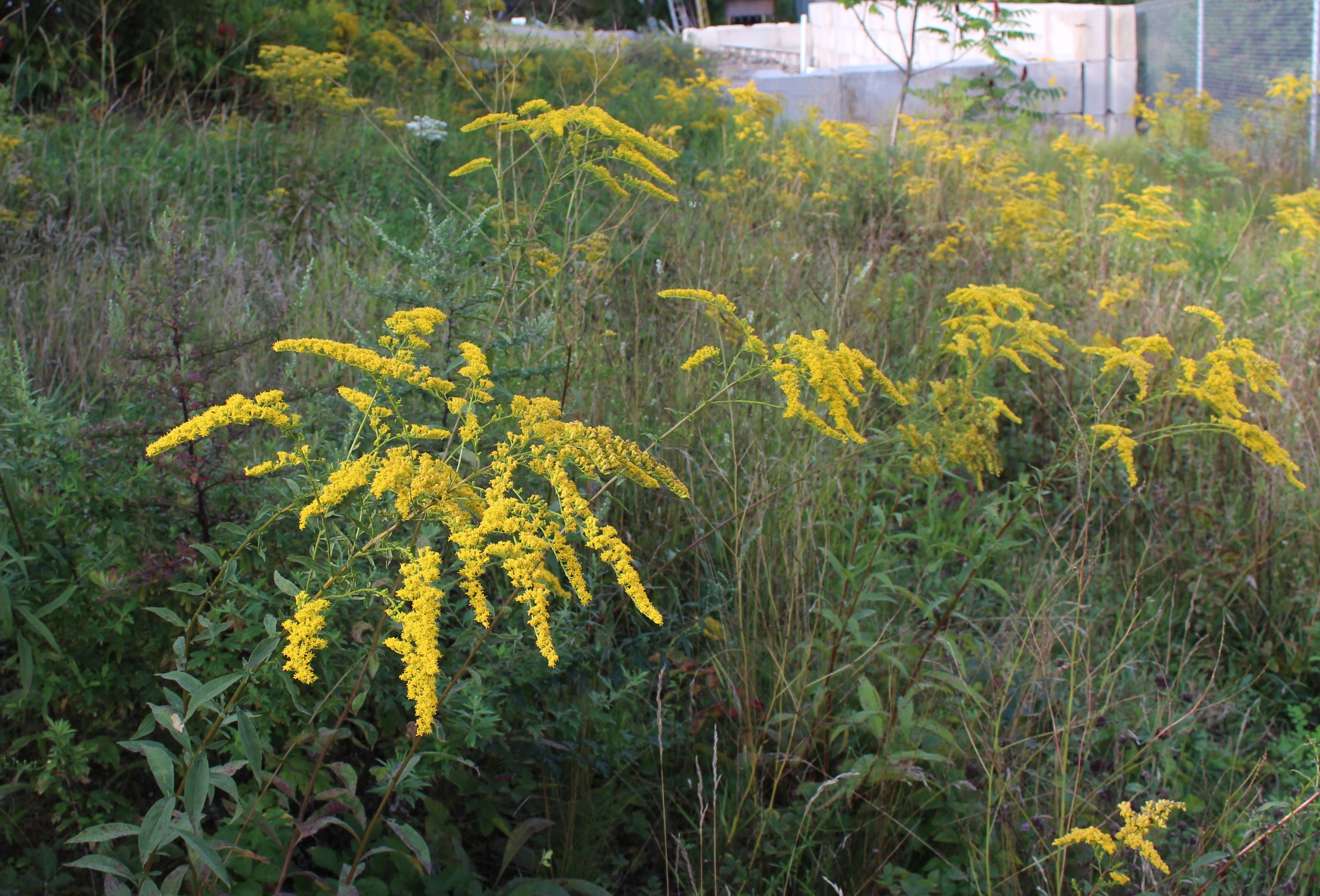
Not a bad goldenrod, there’s just too much and I’d rather leave a little room for some of the asters which are yet to come.

Here’s my last goldenrod.  I don’t know any of the species but this one’s a smaller, leaner version.  I would almost say I like it.

wild goldenrod

Unknown goldenrod…. any ideas? This one’s about two feet tall and like the others doesn’t need a thing from me.

Thanks for staying with me for my little segue from cut flowers to roadside weeds.  They’re wildflowers of course, and if I can just get past my stereotyping I may be able to call them all cutflowers someday.

If you’d like to see other cutflowers more artfully arranged I’d encourage you to visit Cathy over at Rambling in the Garden.  You can check out what she and other bloggers around the world are doing for their own “In a Vase on Monday”.   Have a great week!

Off for a bit

We just got back from a nice little camping trip up into the “mountains” of Pennsylvania.  Rickett’s Glen State Park is just a short drive from our house, but it seems like a world away.

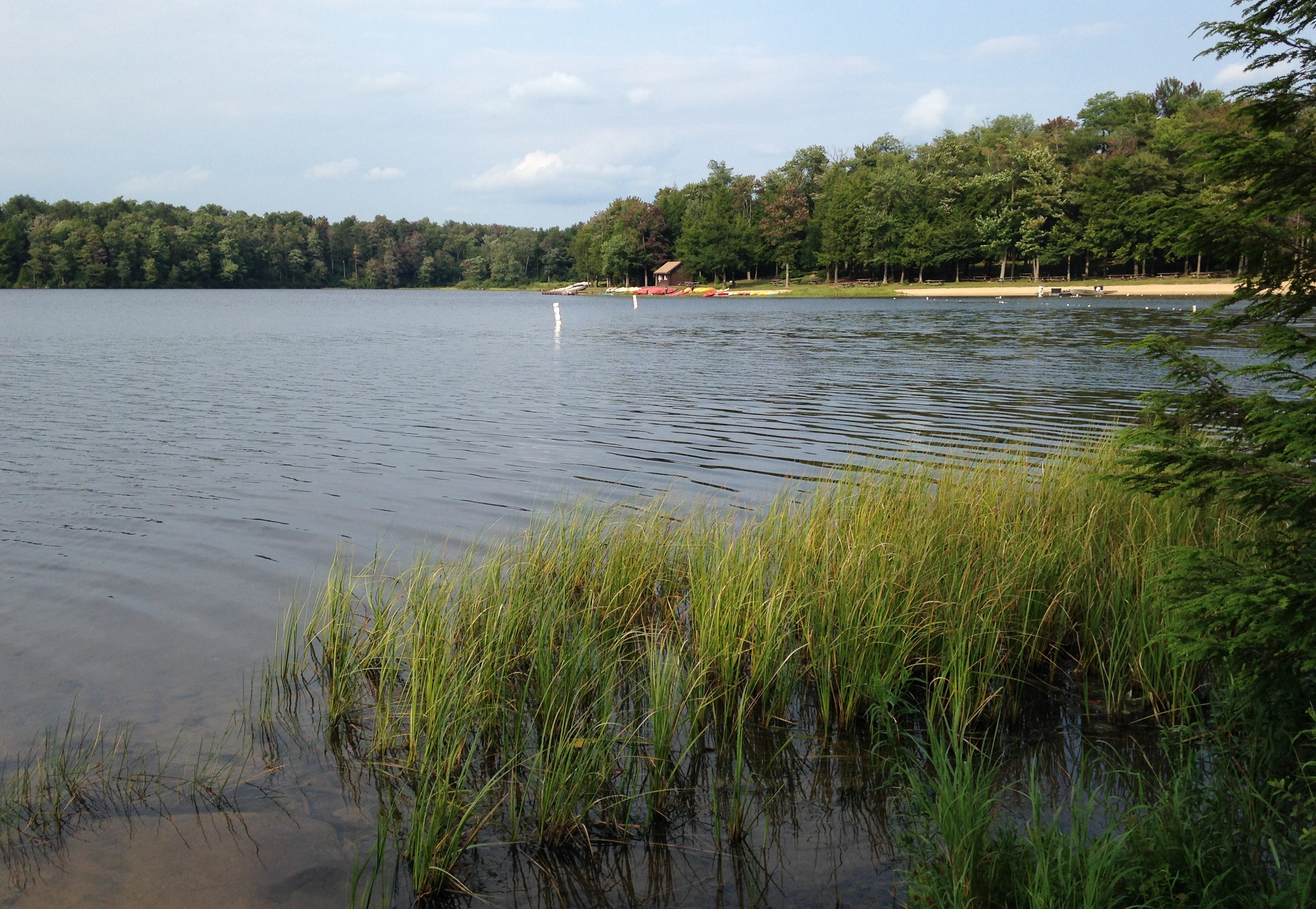
Lake Jean Pa

Lake Jean is near the summit of Red Rock Mountain (2,400ft) and the campground is lakeside.

The kids love to spend the day by the cool clear lake, but Rickett’s Glen is best known for its waterfalls and old growth trees.  Sadly though, after centuries of timeless growth many of the massive hemlocks are now dead and dying.  The newly arrived wooly algeid from Asia has literally sucked the life out of them and the glen is now filled with the gray remains of these crumbling giants.  Better hurry if you want to get anything close to the effect that used to be here even as short as ten years ago, the hemlocks are fading and things don’t look good for the giant ash trees either as the emerald ash borer comes our way.

ricketts glen hemlocks

They’re not as impressive as west coast evergreens, but the Rickett’s Glen hemlocks push 400+ years

One of our first jobs after setting up camp was to head out and collect breakfast…. sort of.  The former hayfields and apple orchards in the park are filled with wild highbush blueberries, and tis the season for blueberries!

-although I couldn’t help but think of the children’s book “Blueberries for Sal” and her surprise run in with a blueberry loving bear 🙂

monarda fistulosa

Monarda fistulosa growing in the former hayfields of Colonel Rickett.

But outside of hunting and gathering the bulk of the trip was spent sitting by the fire, playing at the lake, exploring the woods, and cruising the campground -as part of the children’s biker gang which my kids promptly joined.

playing in the creek

Any running water invites dam building, and here Opa was trying to give a few pointers.

The park ecosystem has a few problems, but for the most part it’s a nice snapshot of the woods which used to be.  There was still a late season bird chorus to wake us at dawn and the woodlands still contained the wild trillium, hepatica, and tiarella which the damp glen protects.  Japanese stilt grass was probably the only non-native invasive plant which was making inroads, a nice contrast to my own overrun neighborhood.

indian pipe

I haven’t seen the ghostly sprouts of indian pipes in a long time. I believe they’re the aboveground flowers of an underground parasitic plant, and not a type of mushroom which I used to think.

Spring is such a busy time but I always say I’m going to get here and see if I can catch a glimpse of the spring ephemerals blooming.  It would also be kind of nice to sneak off here sans children and squeeze in a hike of the treacherous falls trail and see the many waterfalls which fill the glen.  It’s been years since I made the hike, but I just don’t have the nerves to watch the kids teetering near every drop-off and slipping on every mud covered step.

walking tree

Our campsite was surrounded by Lord of the Ring Ent trees. They get their legs when the tree trunk or upended root ball they sprouted on rots away and the new tree’s roots are left behind exposed.

So we’ll stick to the easy trails.  It’s unambitious and tame but it suits us just fine!

walking in the woods

Walking the lower end of the falls trail. We never make it to the waterfalls but the easy walk through the forest is still beautiful.

Next year they’re draining the lake for dam repairs so Rickett’s Glen might be off the list.  We’ll have to venture further,  but I’m sure we’ll find something just as nice and I’m sure it will be just as much fun.  Viva la Summer!

Life on the Prairie

I’m still working on the street border cleanup and expansion.  Normally I would have called it quits as far as digging and transplanting go but with all the rain and overcast days I’m just trying to get  a little more done before the lazy days of summer kick in.  Today the humidity almost killed me but I did manage to push myself and got a little further.  An update is on its way but in the meantime here are a few pictures of another part of the yard.

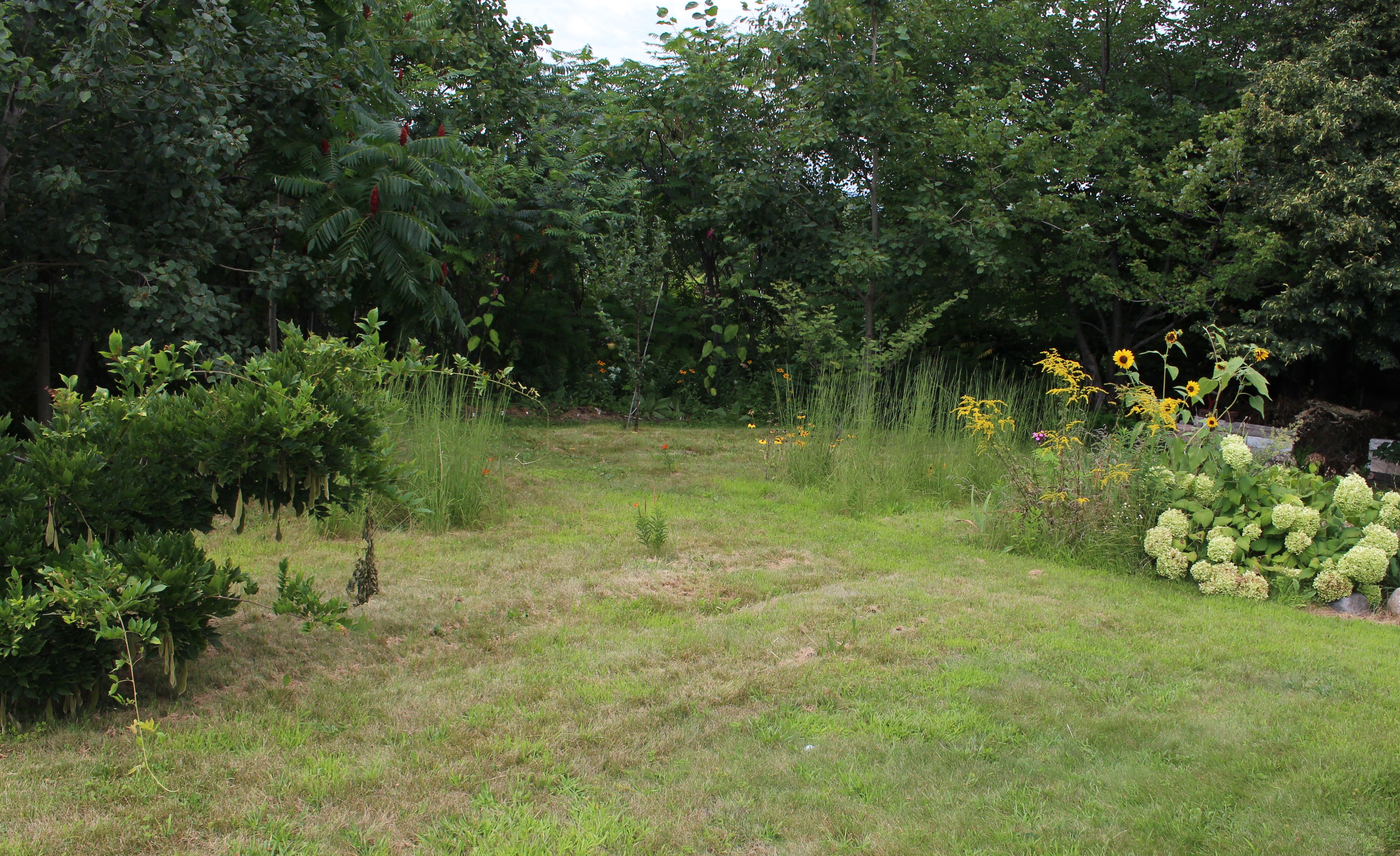
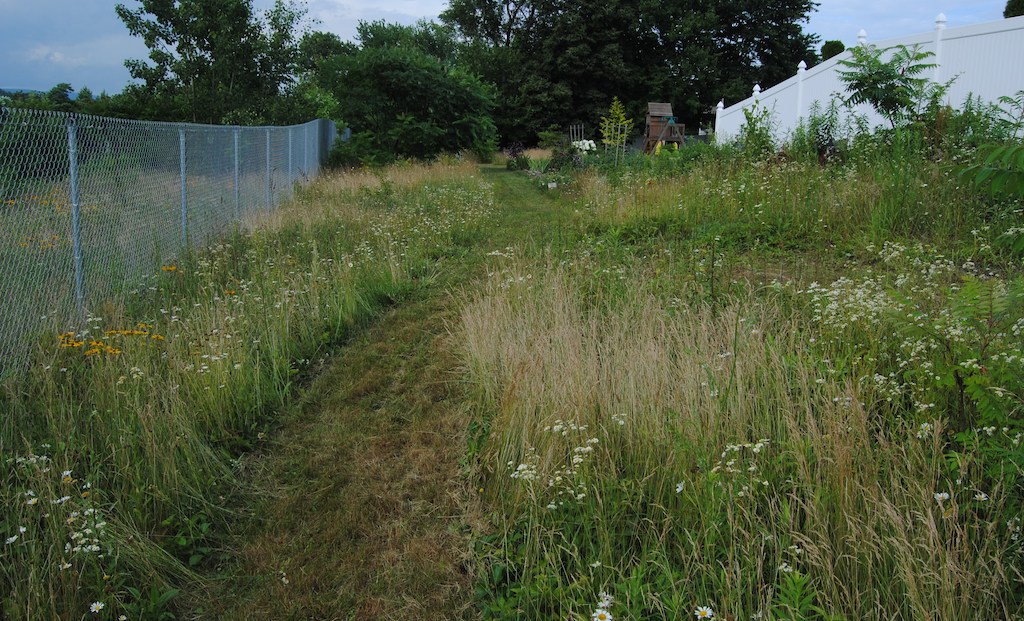
The far reaches of the yard are left to themselves for most of the year.  I love the wild look but that opinion is not held by everyone who lives here or who peers over the fence.  It will get a rough mowing around the end of July but for now it’s full of wildflowers and bugs and butterflies and bunnies.  I was so pleased with myself for getting all the paths mown I figured I’d take a couple pictures.meadow garden

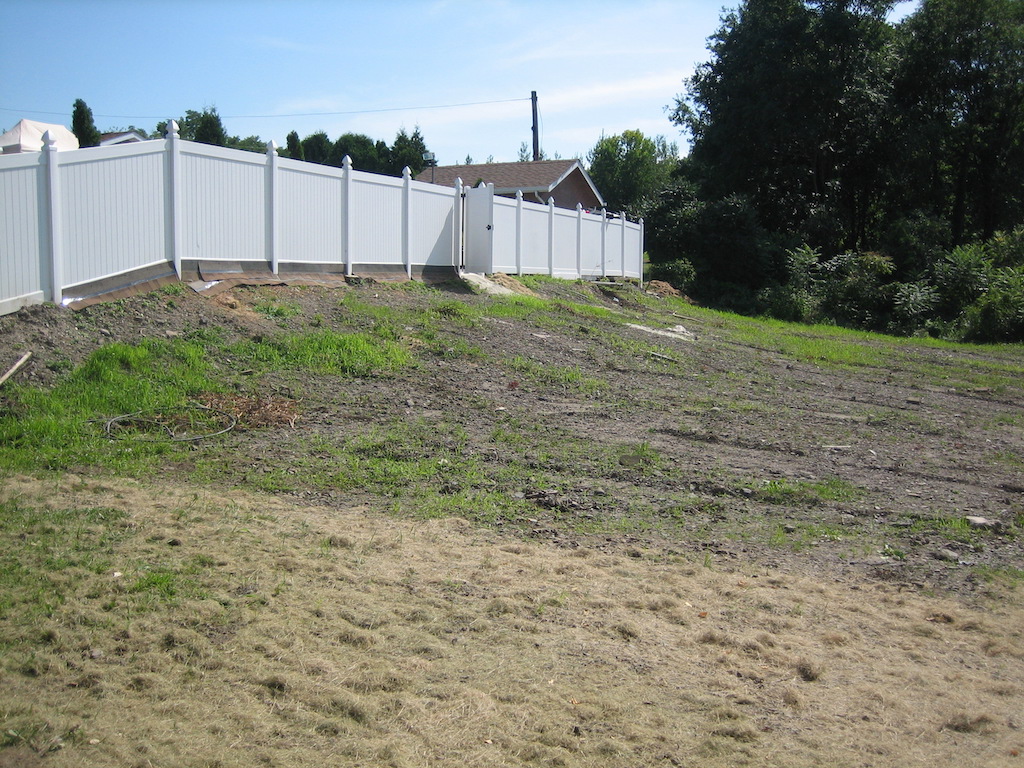
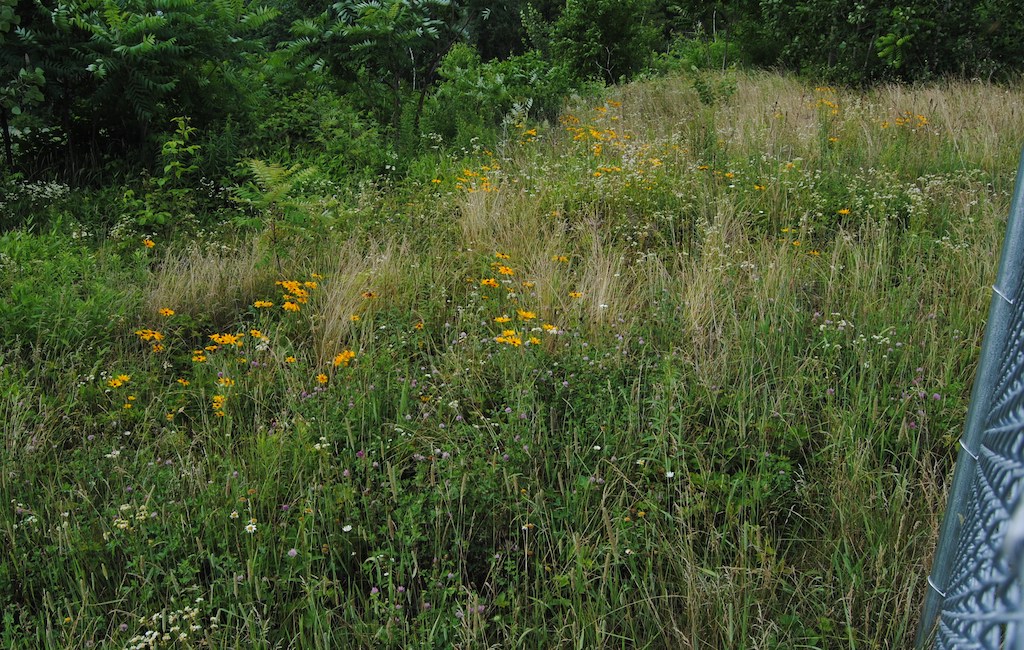
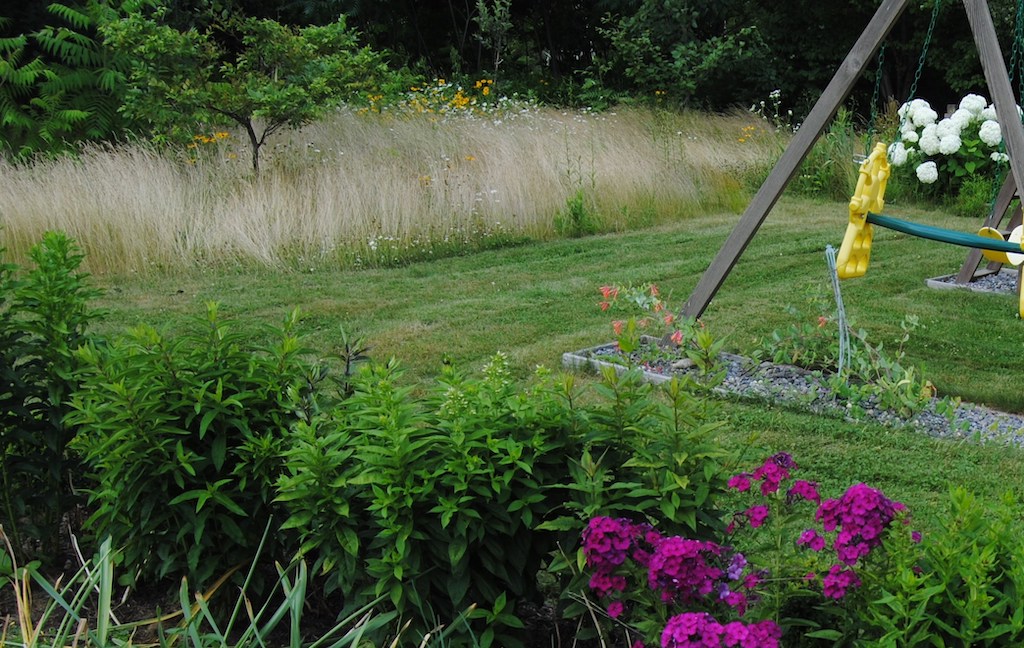
This is the area behind my mother in Law’s house.  It’s a no-man’s land between her fence and the new fence surrounding the new industrial park.  About five years ago this was just bare earth but over the years I’ve seeded in some grass, thrown down some daisy and rudbeckia seed and just kept it mowed (early spring and mid summer) to keep the worst of the weeds from taking over.  Here’s the five year picture.  In the front you can see where I spread the lawn clippings I collected from another part of lawn that had gone to seed. meadow garden

meadow gardenThe worst weeds back there are creeping blackberries, Canada goldenrod, and queen anne’s lace.  I think I pulled most of the QA Lace (too invasive) but the blackberries are giving me trouble.  The kids call them “pokies” and I hate the way the runners grab your leg and razor wire a cut right in the sensitive part of your ankle.  I hate them and remember hating them myself as a kid when one got me out in the woods.

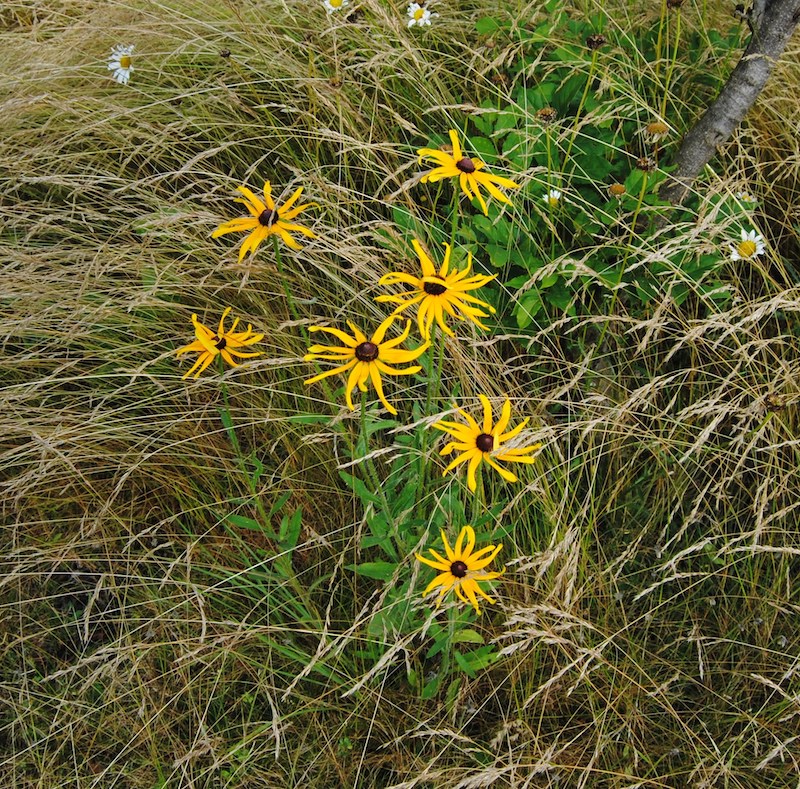
meadow gardenThe wild black eyed susans are blooming now as well as some late oxeye daisies.  Both of these are welcome and I’ve been trying to add some other interesting stuff to keep them company.  The late summer mowing should encourage the early blooming grass to fill in, but I’ve been planting out some butterfly weed seedlings (Asclepsias tuberosa).  The first to reach blooming size is flowering this year, I hope others follow.meadow garden

The chainlink fence went up last year and has cut me off from half the meadow.  There’s a possibility a gate will magically appear in the fence and I’ll again be able to give this a mow.  I’d like to be able to control what grows in back here and don’t want trees too big and too close to the fence.

Back on our side of the fence there’s a second half of the meadow called the ‘orchard’.  I planted an apple tree there this spring, hence the lofty renaming.  The grass in this section is thicker since part was already turfgrass before I started letting in all the daisies.meadow garden

With the paths mowed and the edges neat I think the meadow has a nice look.  It’s popular with the younger crowd for important activities such as daisy collecting and grasshopper catching.  It’s also a great place for firefly chasing, and since July is firefly season there was a lot of path running as the kids tried to catch as many as they could.meadow garden

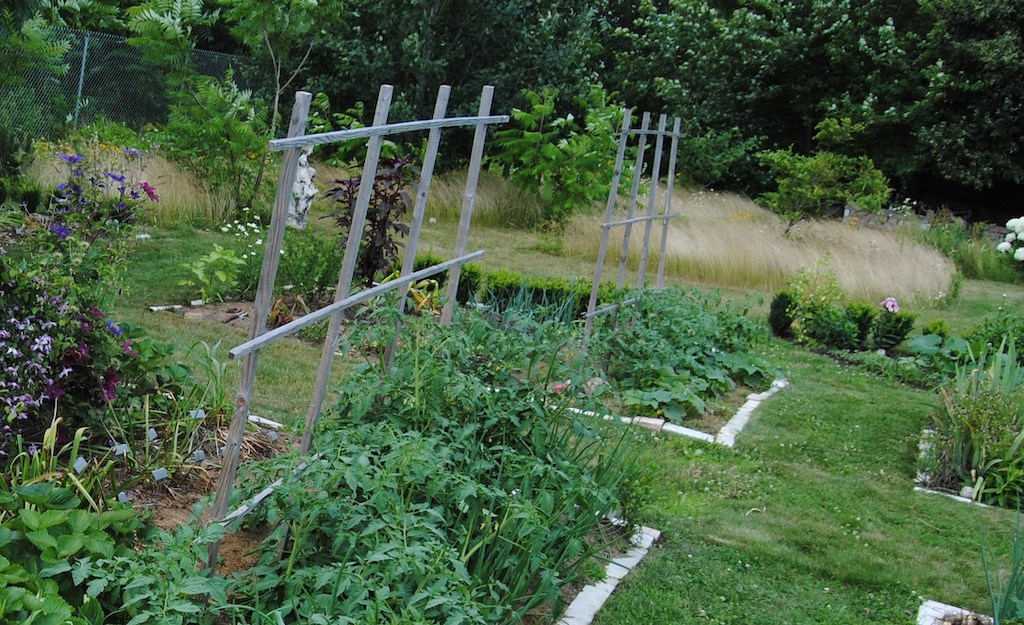
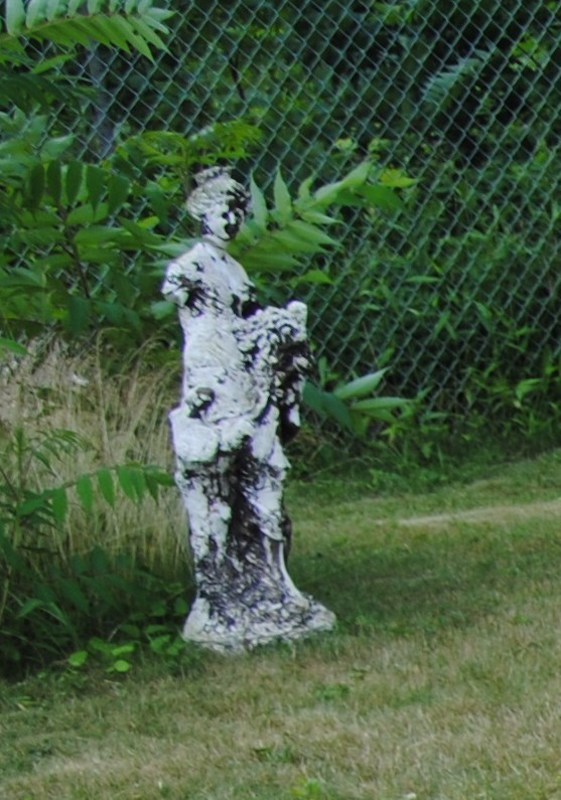
I’ll end with a look across from the vegetable garden to the meadow…. I mean orchard…… If you look carefully through the crooked tomato trellis you might catch a glimpse of ‘the queen of the prairie’.  She guards the entrance to the orchard and admires the overgrown lawn.  Some say she’s just an old plaster statue that wouldn’t sell at an estate sale.  I say she’s our queen.meadow garden

meadow gardenNow back to digging says the queen.