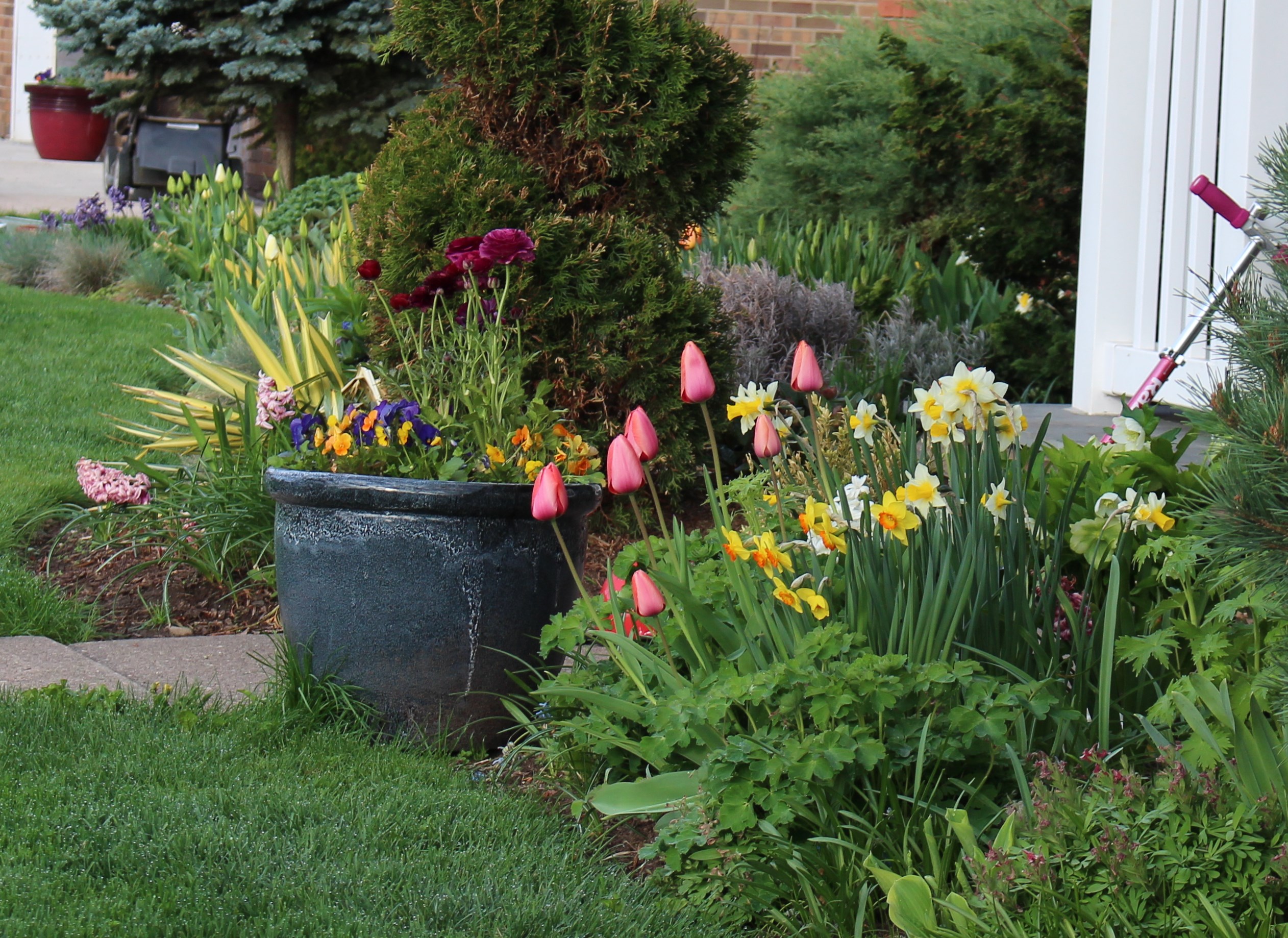
In Like a Lamb

I’m considering filing a restraining order against March this year.  Every spring-like warm spell brings the hellebores and snowdrops on a little further along but then some new brutal weather event comes by to smack them all down again.  It’s clearly an unhealthy relationship but I just can’t move on.  Every time the sun comes out again, spring becomes so real I just want to forgive and forget and say just one more chance.
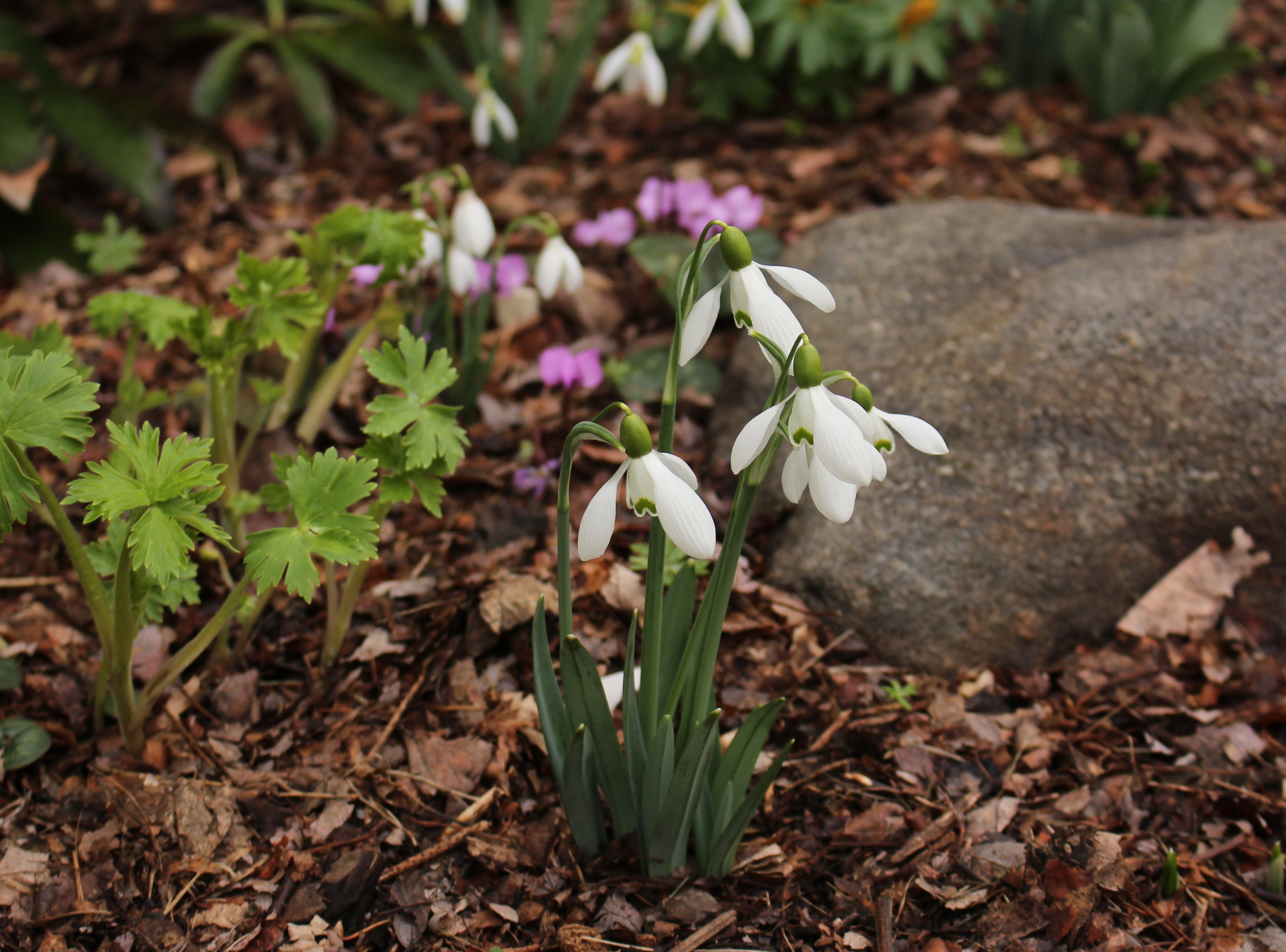
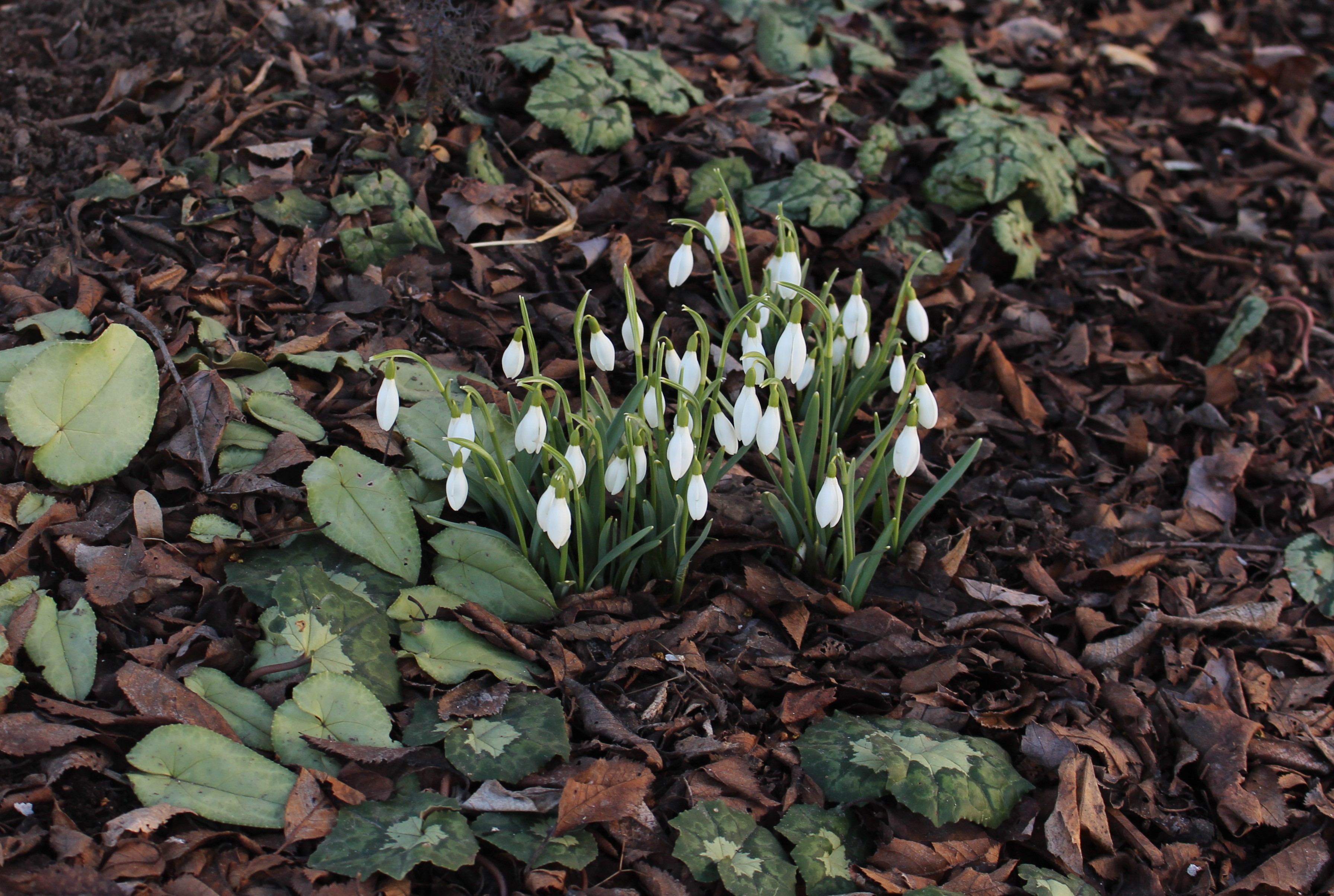
galanthus brenda troyle

Possibly my favorite snowdrop, ‘Brenda Troyle’ looks extremely average but it’s also so reliable and perfect I can’t say a single bad thing about it.

Most of the snowdrops were lost after the first chance for spring came and went, but a few hid here and there either underground or cozied up to the house foundation.  A shame they didn’t warn the hellebores about how fickle the season was being.
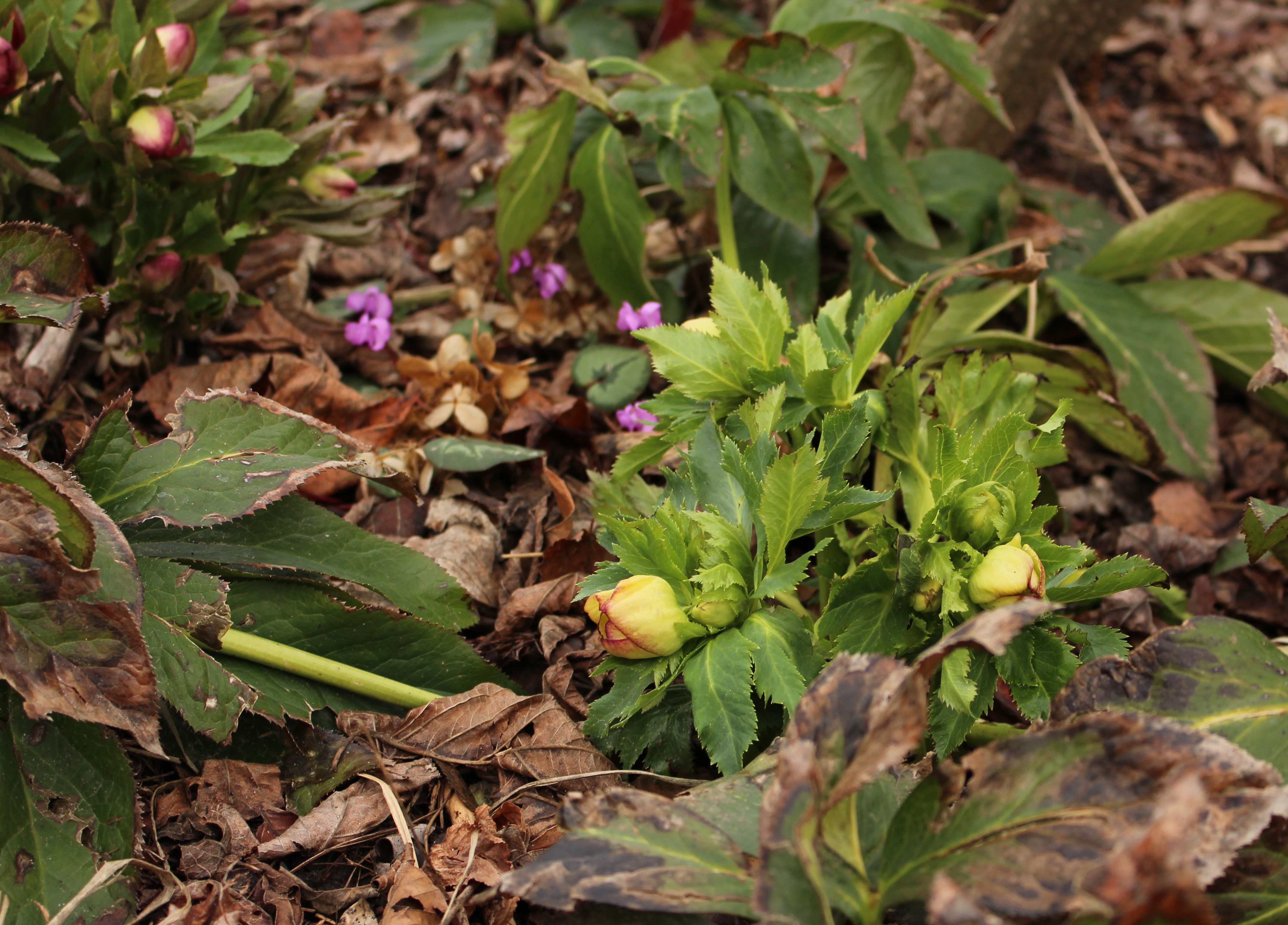
hellebore buds

The hellebores which could have been.

I admit I’m not much help in protecting things.  A few snowdrops received a plastic tub or bucket cover for when the thermometer dropped to 7F (-14C) one night, but most things are on their own.

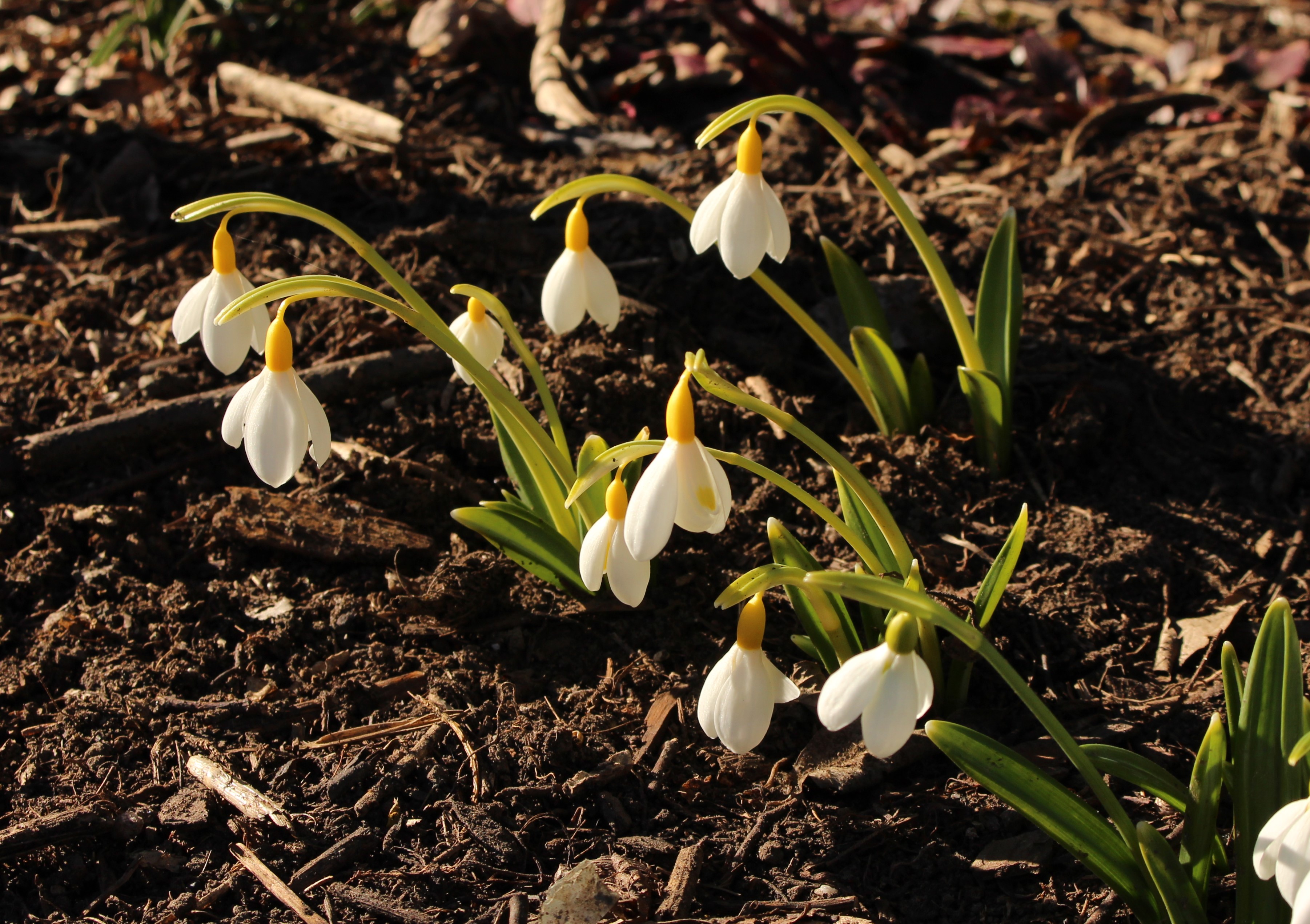
galanthus lagodechianus

Galanthus lagodechianus tried hiding underground for a while and did manage to avoid the hail, but then came up just as the latest arctic blast was about to hit.  Fortunately a simple cover saved its perfect flowers from damage and at least this week I’ll be able to enjoy the yellow coloring which is exceptionally bright this spring.  

The various snow crocus in the meadow garden are always a risky bet so I can’t complain much here.  The weather gets whatever the rabbits didn’t so even in a good year you need to be quick.

snow crocus

Some warm sun might be too much to ask for.  I keep waiting for the spring where I see a whole swath of opened crocus basking in the sunlight… but it hasn’t happened yet. 

To hedge my spring flowering bets I went around yesterday and plucked any undamaged hellebores which were still around.  A few remained and they were enough to remind me why I still bother growing them…. since last year’s season was mostly a bust as well.
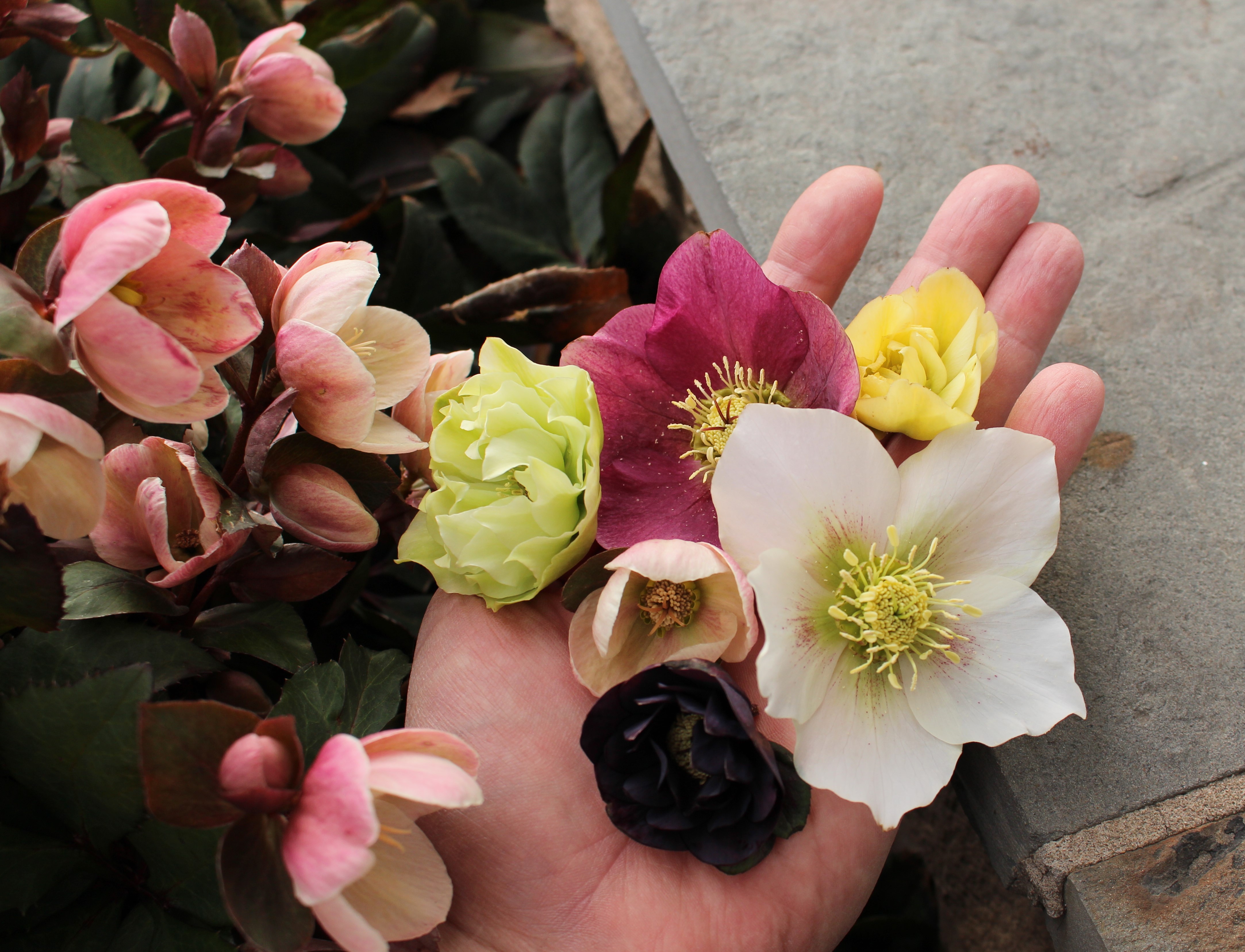
hellebore flowers

Snuggled up right next to the porch foundation, hellebore ‘Cinnamon Snow’ has actually flowered well this year. Usually the buds are killed much earlier in the winter and never make it to this point.  Wish I could say the same for the others, but this small handful were the only undamaged flowers I could rustle up. 

Hopefully the rest of March is a little gentler on the hellebores and the later flowers can still develop and put on a show.  It would be nice to see a few showy clumps instead of the wilted and blacked stalks I’ve been getting used to seeing.

hail damage magnolia

Fingers crossed that this is the last of the hail damage.  At first the magnolias didn’t look so bad, but once the damage started to brown it was a different story. Fresh foliage will make this all a memory in a few more weeks… I think.

One last complaint.  For some reason these snowdrops (G. woronowii) really took a beating from the cold.  Maybe it was the 62F to 7F drop in temperature, or the wet soil, or the exposed location, whatever the case I think a few might not be salvageable.
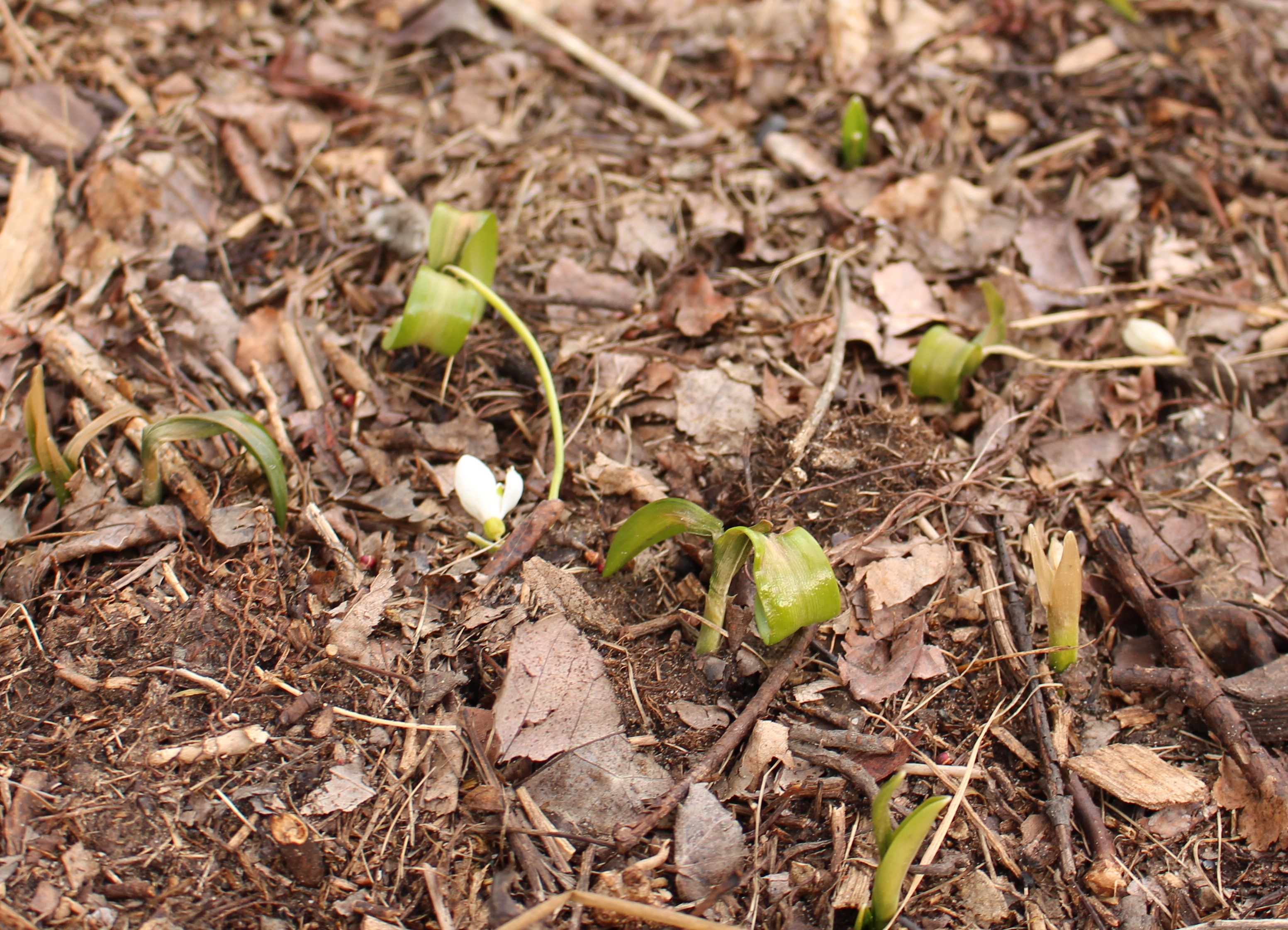
snowdrop freeze damage

Sad seeing freeze damage on a snowdrop but it’s not my first time.  Maybe a few will survive, but they (and about 200 others) were looking so promising for their first year. 

I guess some days it’s just better to stay indoors.
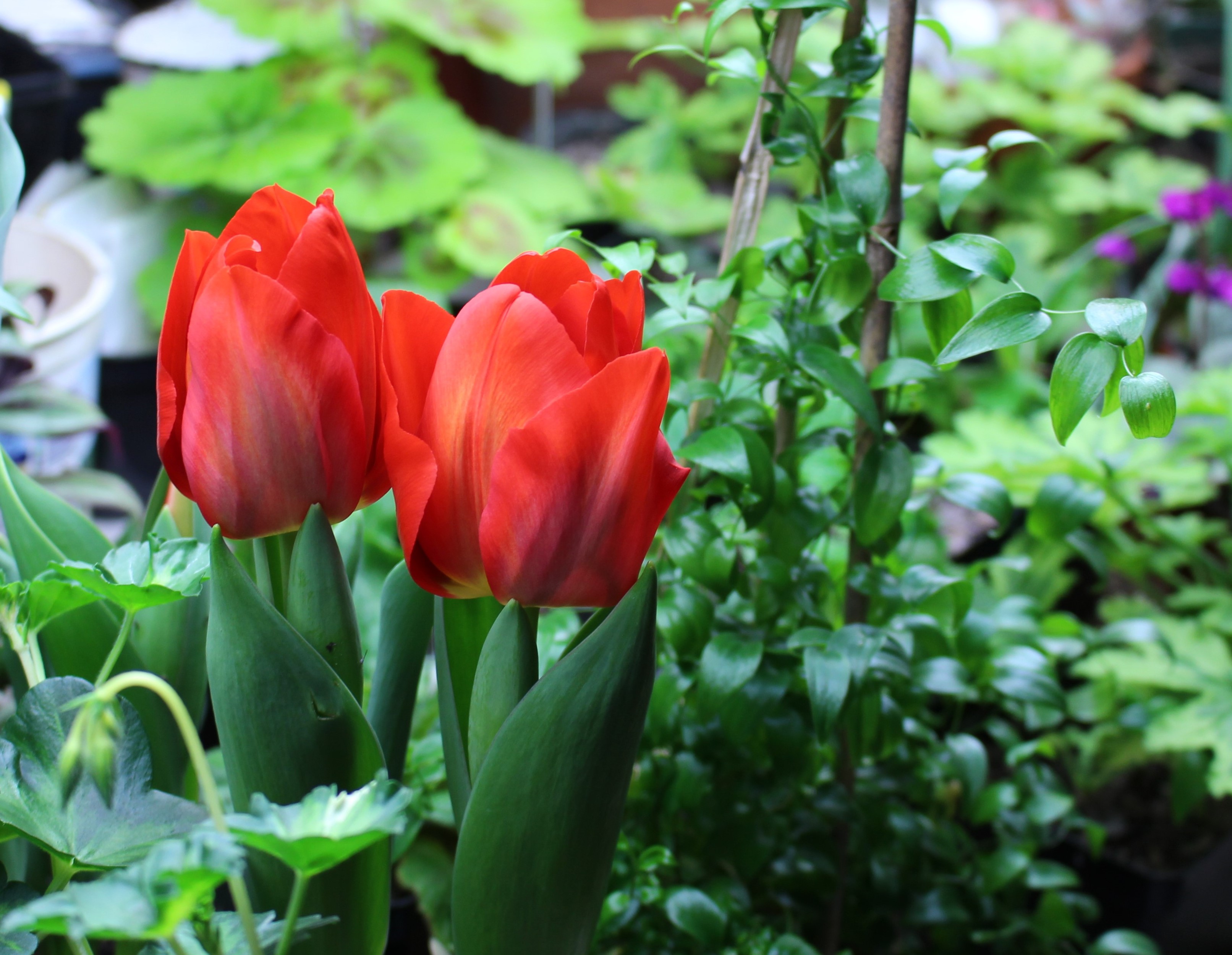
forced tulip

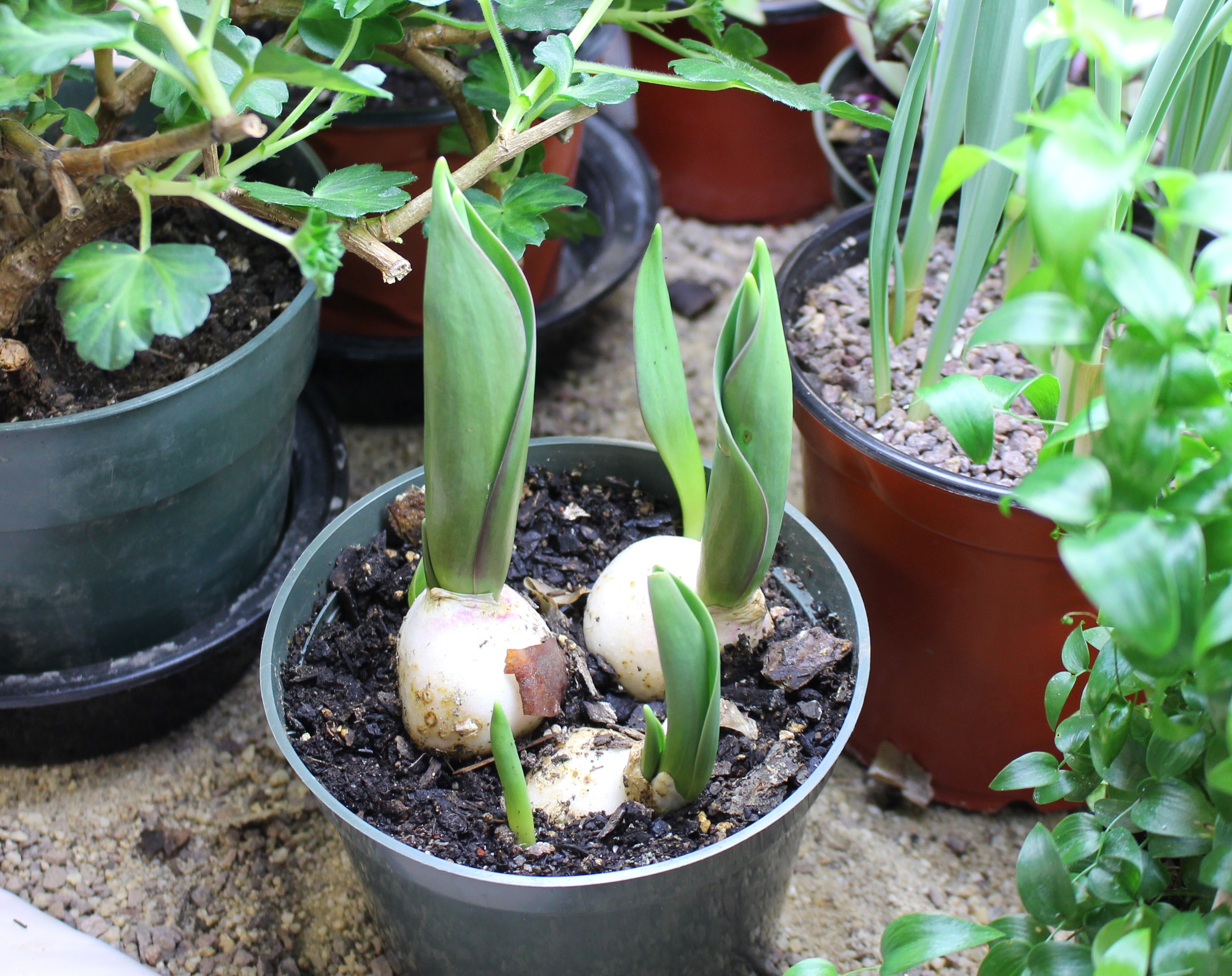
The first of the forced tulips are coming into flower.  I’m sure their shortness says something bad about their culture but to be honest the height actually works out perfectly for under the growlights 🙂

The indoor garden should really have many more seedlings getting size on them for spring planting, but for whatever reason I just haven’t yet been in the mood to tackle a whole under-lights seed agenda this year.  I planted onions, that’s it.  Good thing the primroses are filling in and starting to flower.

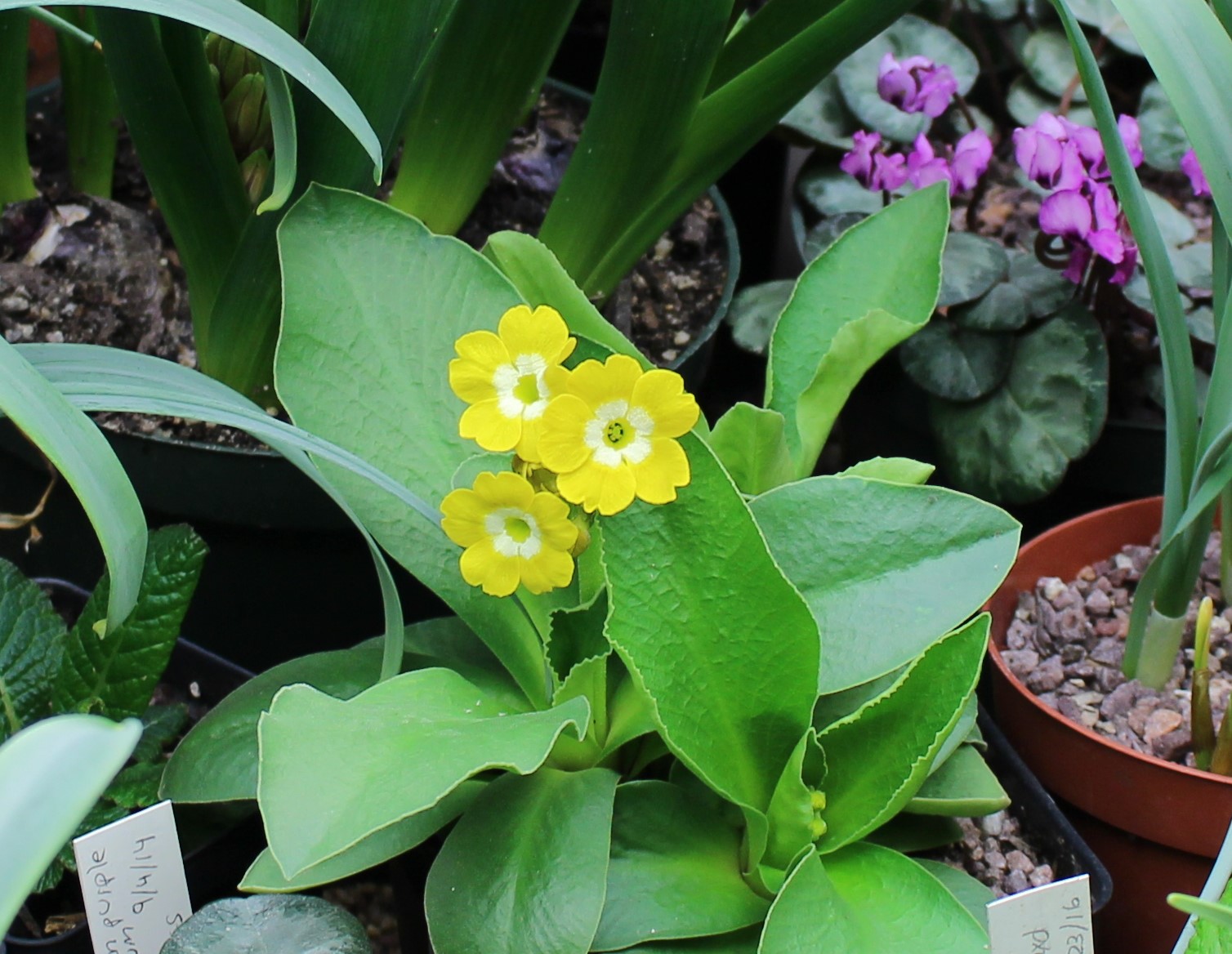
primula auricula

Photographing yellow is still a sticking point for me, but hopefully this picture still gets across how nicely this primula auricula has done.

Having my yellow Primula auricula survive for a second year was a surprise in itself, but the fact that it’s actually multiplied and flowered again is borderline unbelievable.

primula auricula

I still think the mealy powder on these flowers is one of the most exotic things. 

These indoor flowers will have to keep me and most of the East coast going for the next few days since March just decided to come back and slap us with a surprise snowfall.  Normally this would be another reason to complain, but at least snow should insulate things for the temperature drop which will follow.
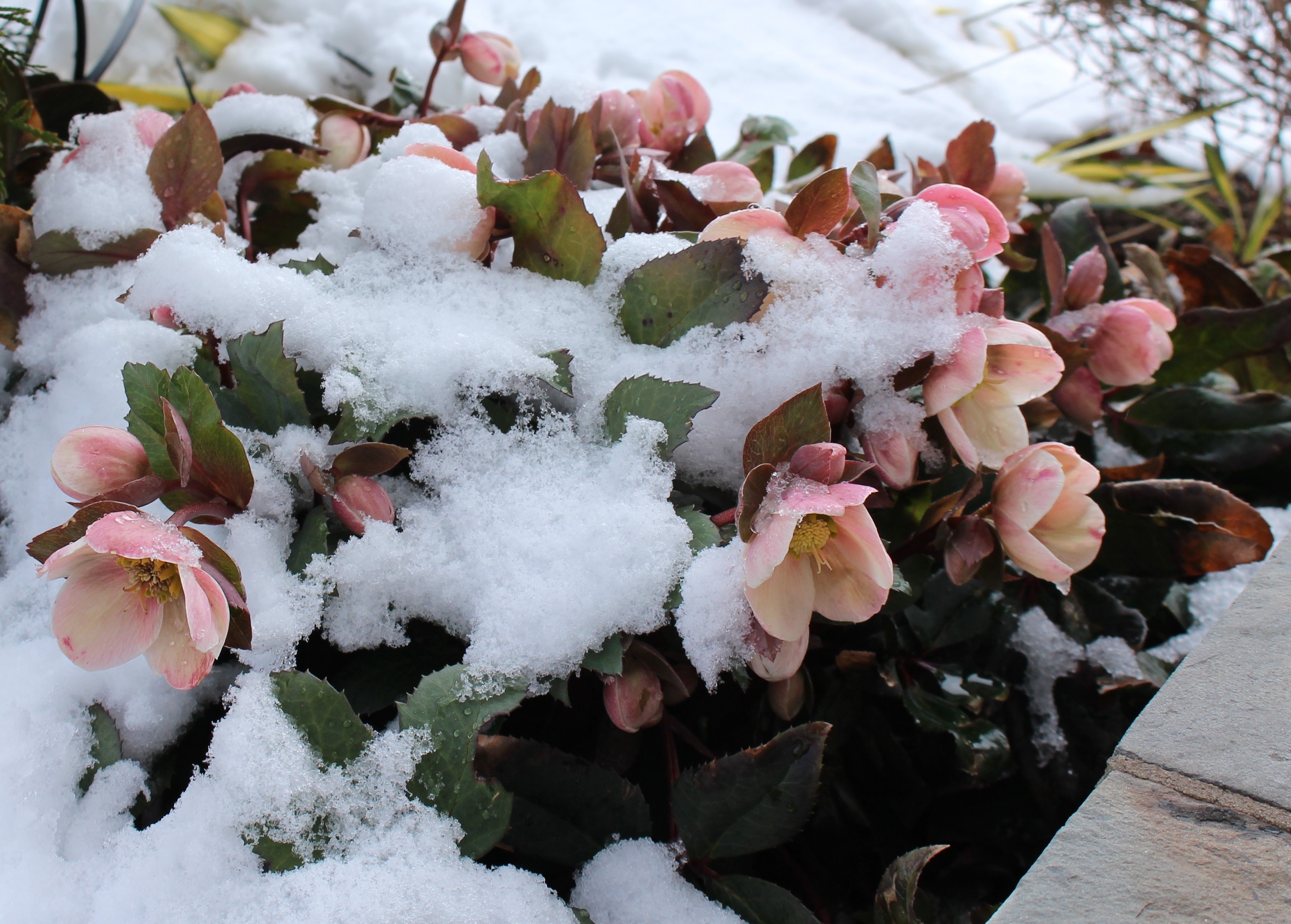
hellebore in snow

Hellebore ‘Cinnamon Snow’ in the actual snow.

Temperature drop and then more snow.  Right now they’re saying lots more but given the forecasting track record it’s still too soon to tell.  Wouldn’t that be something though if we get more snow in the first few days of spring than we did all winter.  March must know I was planning on a garden visit next weekend because I bet this weather forecast is what jealously looks like.  Stop it March!
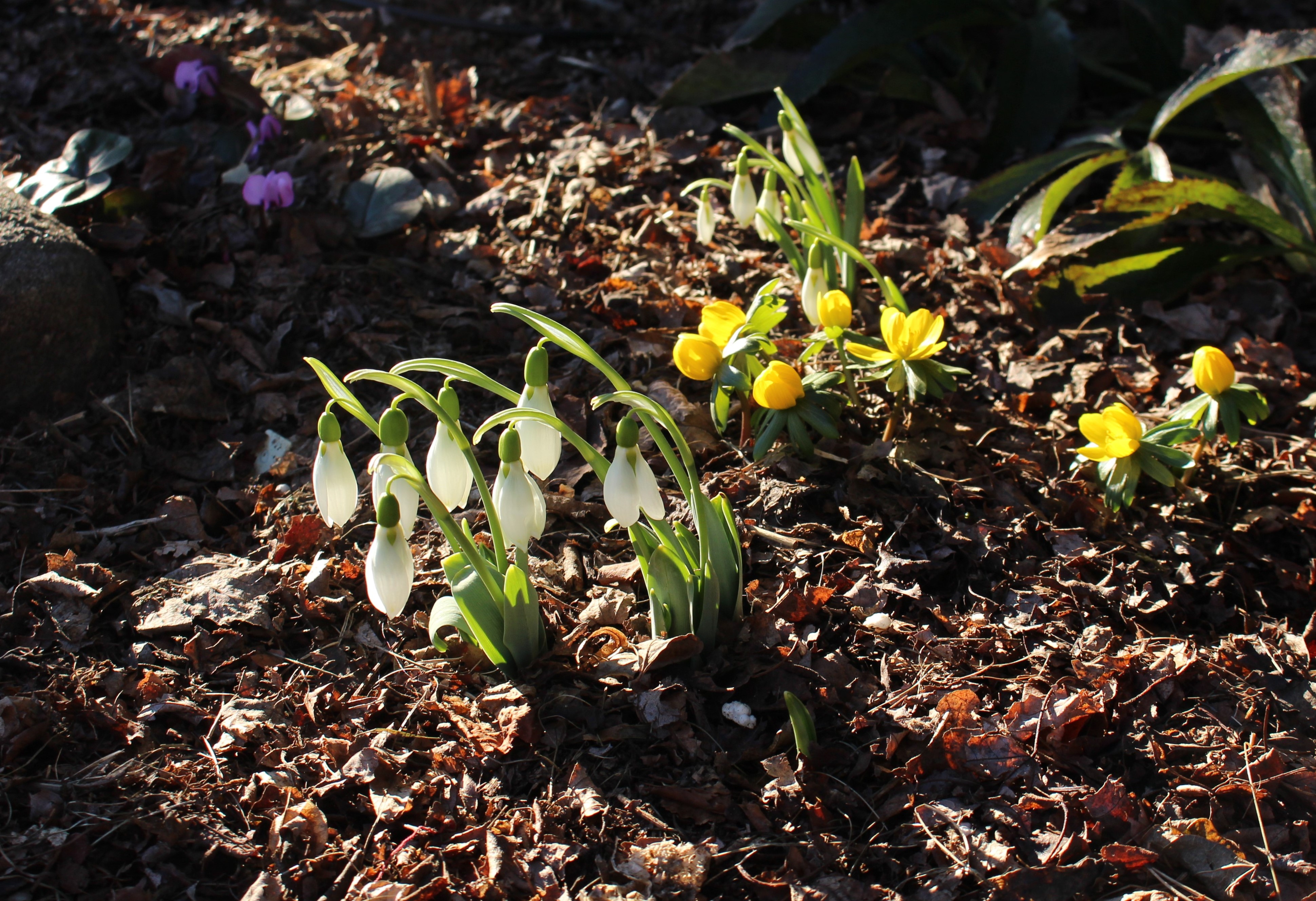
Earliest. Cleanup. Ever.

The title says it all.  Nearly all the snow has melted, jackets were thrown aside, and for a glorious weekend we enjoyed obscenely nice spring temperatures and sunshine.  I didn’t even do the responsible thing and wash the car first, I went straight for the clippers and rake and tidied winter away from the front yard.  With flowers bursting up out of the soil it was the only logical thing to do.

first snowdrops

The first snowdrops and the bright yellow of winter aconite (Eranthis hyemalis)

I’m not one to hem and haw about “is it too early” or “can I uncovered the perennials yet”, I just dive right in as soon as the weather gives me the chance.  Sure it will probably get cold again, but I find that covered or not they’re going to start growing anyway.

galanthus nivalis

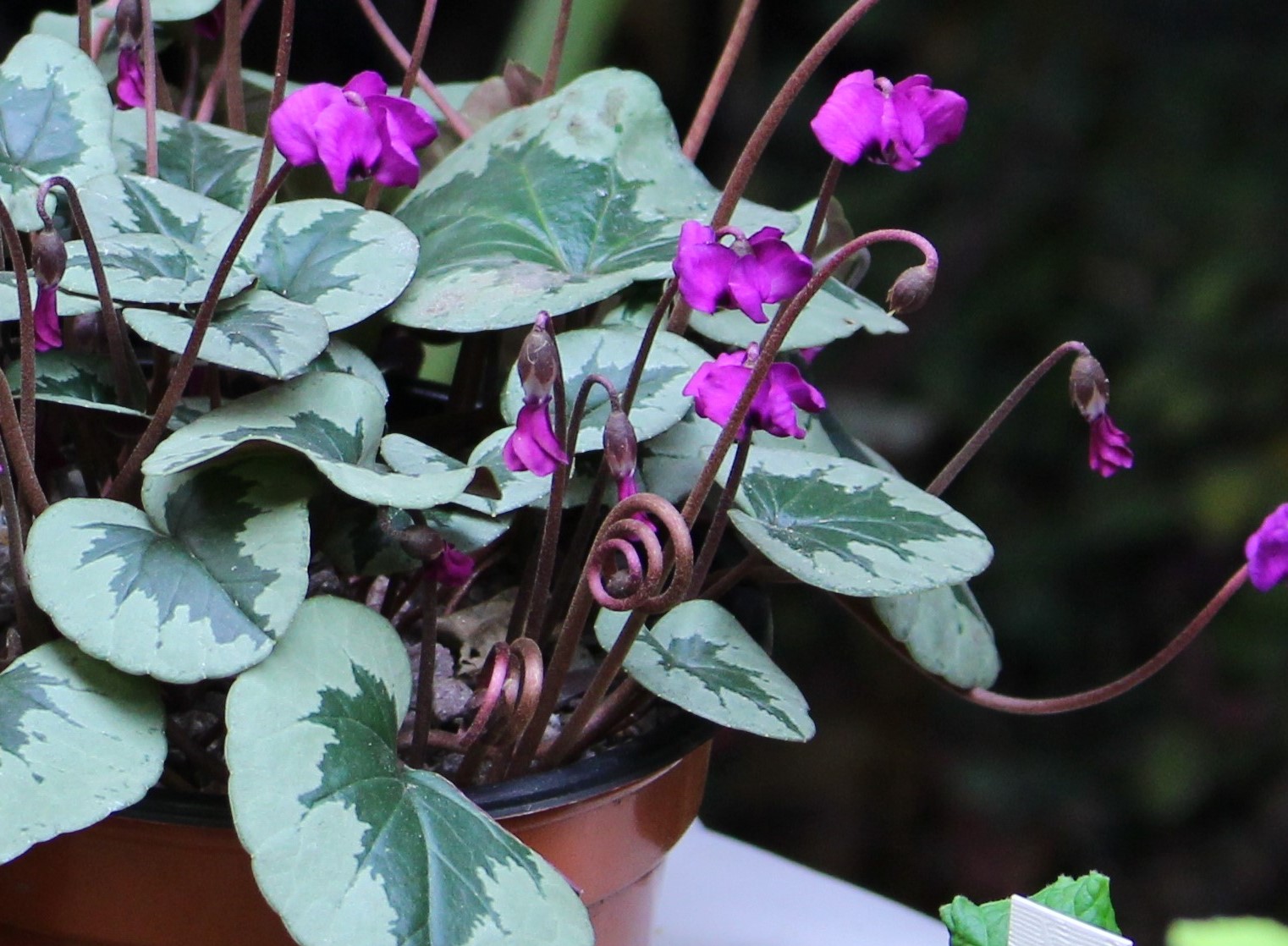
The earliest of the common snowdrops (Galanthus nivalis) came up completely as the snow melted Saturday.  I think they look even nicer coming up amongst a nice groundcover of hardy cyclamen.

I’d love to assault you (again) with far too many snowdrop pictures, but for now will limit myself to just three.  I do want to have a few readers left for the other 11 months of the year…

galanthus wendy's gold

‘Wendy’s Gold’  is one of the “yellow” snowdrops.  The color is exceptional this year, and just as bright as today’s sunshine.

After a downright miserable snowdrop season last year, this year (all three days of it so far) is shaping up to be outstanding.  With the usual optimism of a gardener I’m positive that last year’s arctic blasts and heat waves, combined with downpours and hail, will not repeat.  I see nothing but idyllic temperatures and sunshine, even though it is about a month early.  But just in case, I’ll keep watering the winter garden since it’s coming along as well.

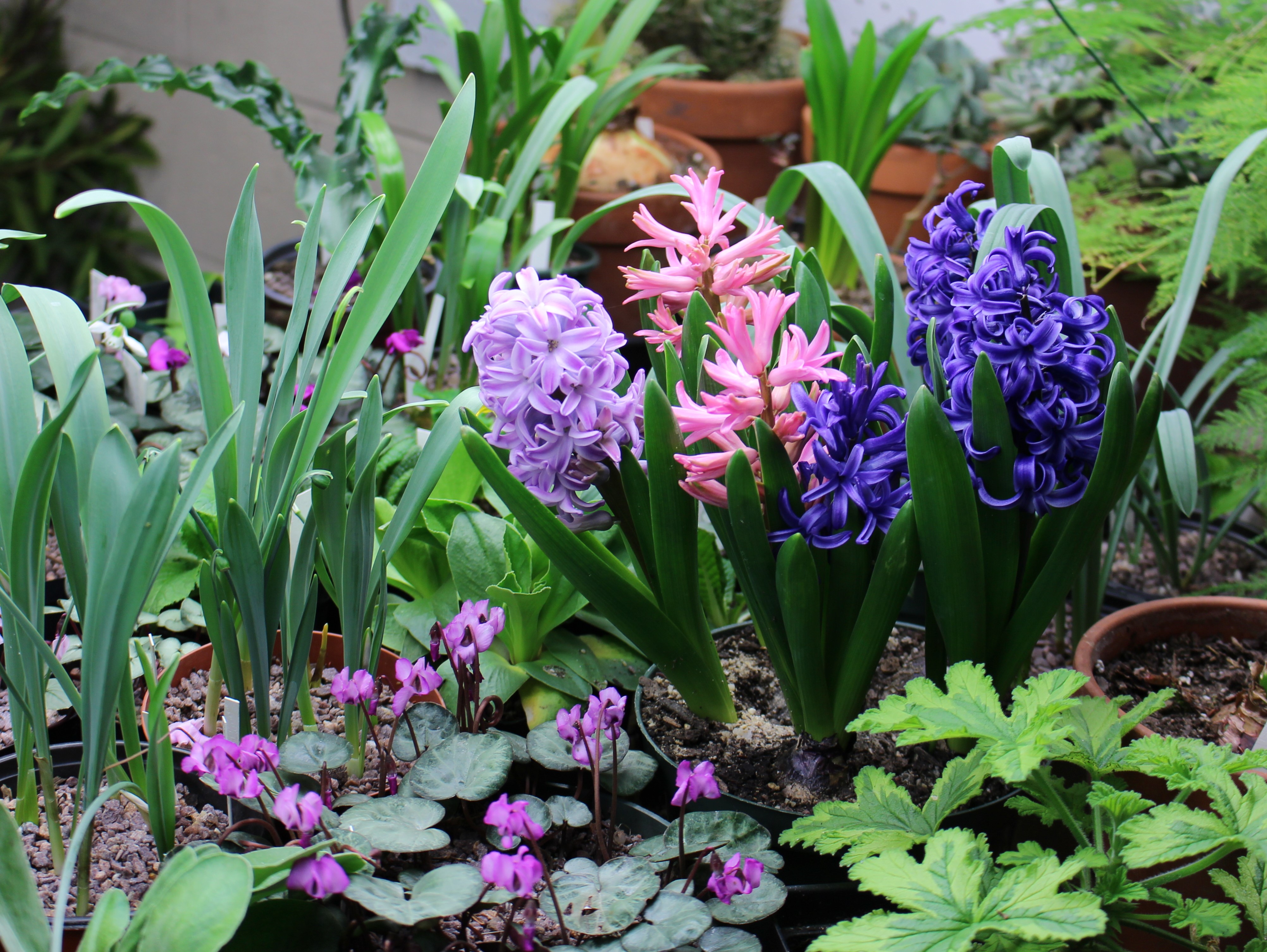
forced hyacinth

A few of the hyacinths I forced this winter.  Not bad for a bunch of clearance bulbs.

The indoor snowdrops are mostly over, but the cyclamen are going strong and the primrose are promising a nice show as they send up flower buds.  Miraculously I’ve managed to see my Primula auricula through the winter and bring it back into flower again under the lights.  I managed to grow this from seed (somehow) and I’m afraid it’s literally led me down a primrose path to membership in the American Primrose Society.  Now for a third year in a row I’ve ordered more seed and just in case you’re brave enough, the society has just opened up this seed exchange to non members.  Click here for a link to some of the best (and cheapest) primula seed available in the US.

primula auricula

Definitely not the fanciest example of an auricula primrose, but it’s my very own (and most importantly I haven’t killed it yet).  The fancier versions come in rich reds, blues or greens with larger flowers, bicolor blooms… all with that cool white-powdered center.

I’m excited again about the primroses, but Cyclamen coum are still a favorite.  Their numbers have dropped a little due to someone not being the most capable cyclamen grower, but I have plans to turn that trend around.  I’ve been going and dabbing pollen from flower to flower in the hopes of getting a few seeds to form, and if all works as planned there will be a new batch of these coming along in no time.

cyclamen seed forming

Unpollinated flowers will wilt and fall over, pollinated flowers will curl up and tuck themselves down close to the ground to form a seed pod.  I think this is one of the most curious traits of these little plants.

As the cyclamen set their seeds and the other flowers join the show I’ve decided to bring a few of the forced tulip bulbs under the lights to see what they can do.  Tulips indoors are a first for me, but with the way our weather’s going the ones outside will be nearly open anyway so it’s no great loss if failure strikes.

forced tulips

In typical fashion bulbs have been carelessly stuffed into a too small pot, and although I don’t anticipate any overwhelming demand for this less than attractive photo, in my opinion it looks extremely promising.

And we will see where this season takes us.  It’s a freakishly early start to spring but even in a normal year there’s plenty of unfortunate weather to go around, so a beautifully warm weekend in February isn’t the worst thing.  I guess we will just have to enjoy it while we can, and of course I’m fine with that.

An old familiar itch

It’s time to face the reality of unsown seeds and unplanted vegetable beds.  There… done.  For the past few years I’ve been making a real effort tot get all kinds of annual seed growing, all kinds of cuttings started, and all kinds of summer bulbs planted, but this year something is off.  Maybe I’ve been too busy with other things, but in all honesty I live a fairly lazy life and for me to say I don’t have the time or energy to start a few salvia seed or pot up a few coleus cuttings is just a bunch of excuses.  My reality this year is I just don’t care to.  I’m not a farmer after all, and the family won’t go hungry or broke if the potatoes fail, so I just keep enjoying what I’m doing and don’t stress it if this year I only start 10 or 20 coleus cuttings rather than 75.  The iris are in bloom after all, and this year they are nearly perfect.

historic bearded iris

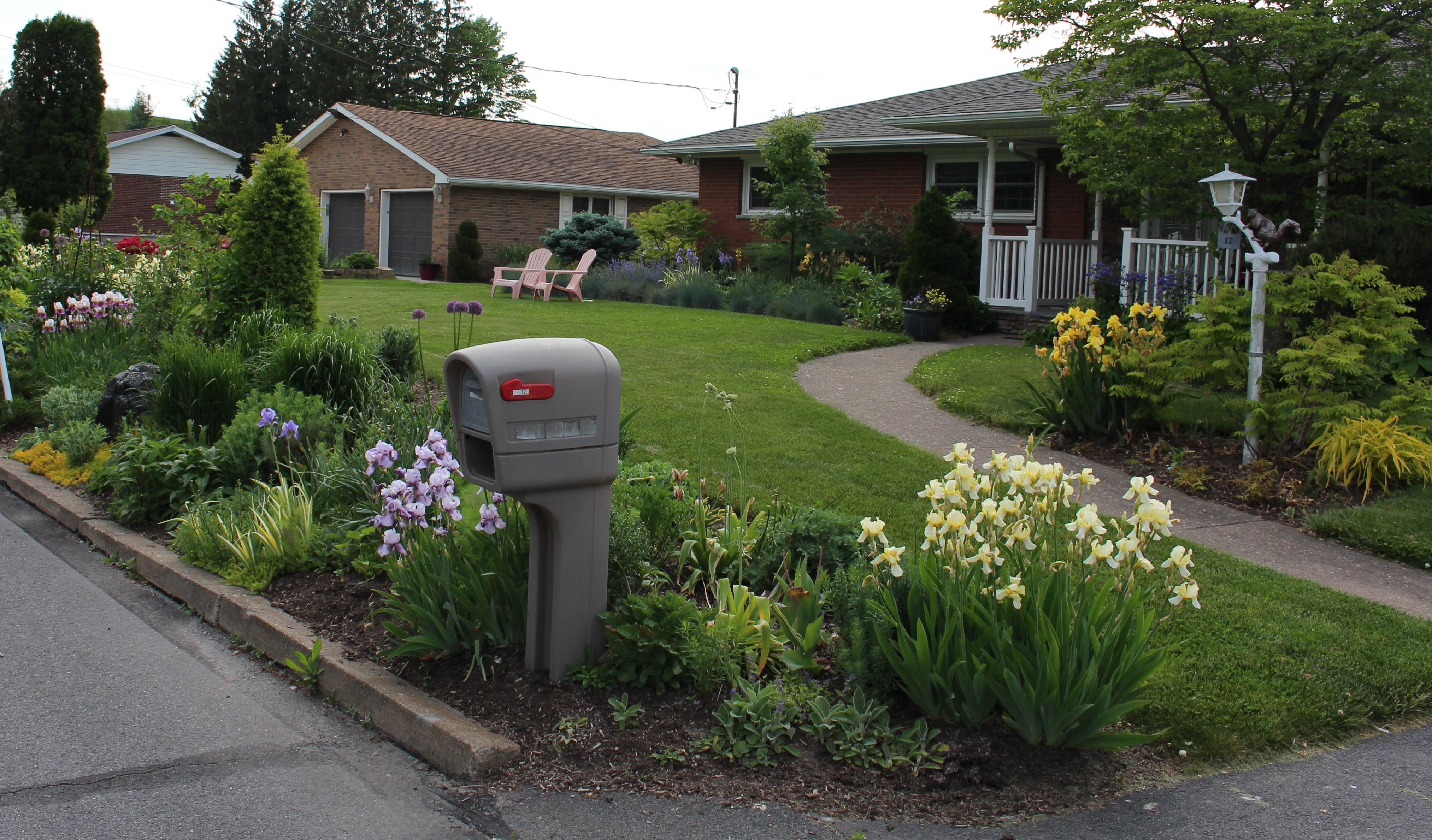
The view from the street is far nicer this spring with green grass and healthy spring growth.  I forgot what it’s like to start the year with cool temperatures and ample rainfall rather than dry winds and drought.

I have a weakness for iris, and go back and forth between indifference and obsession depending on the season.  This year it’s obsession.

historic bearded iris

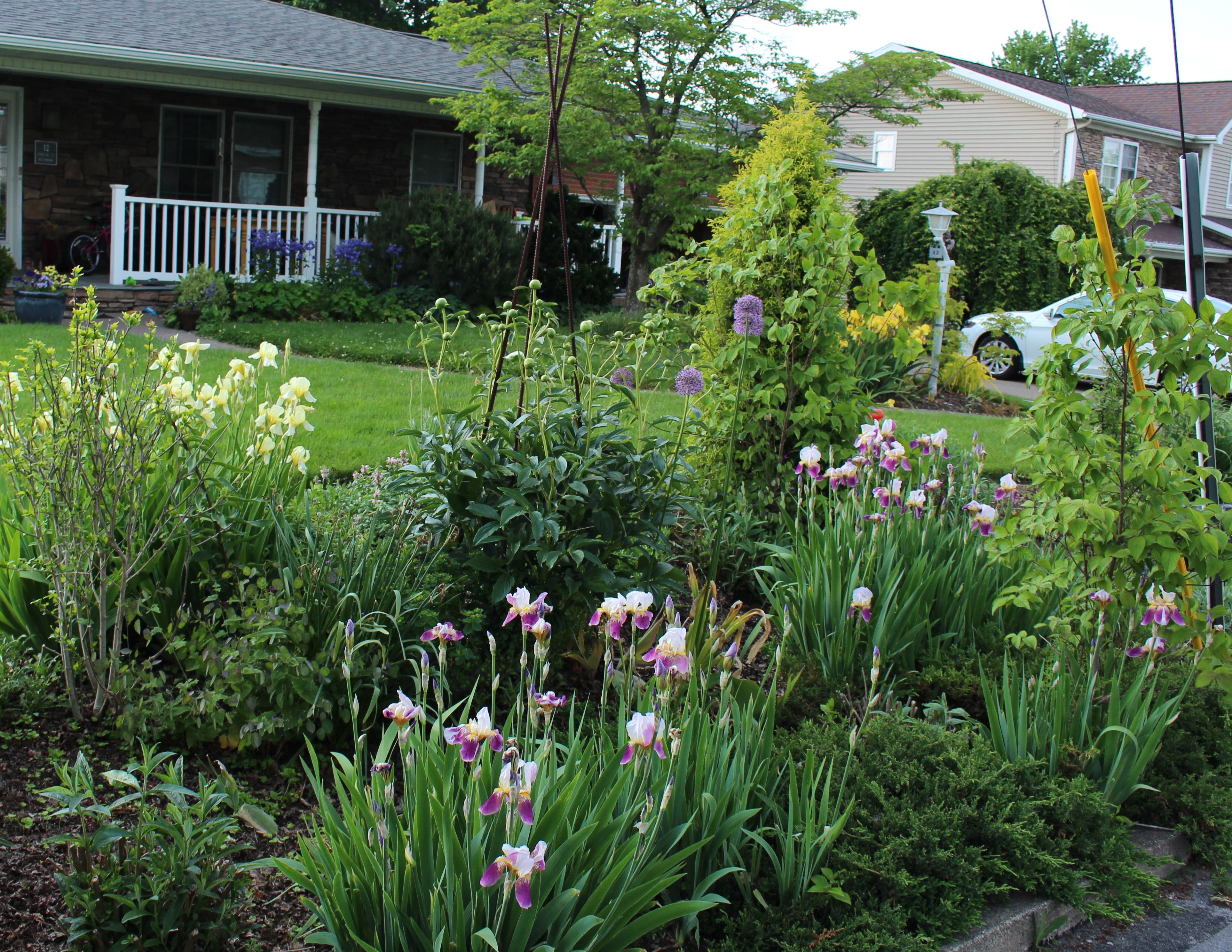
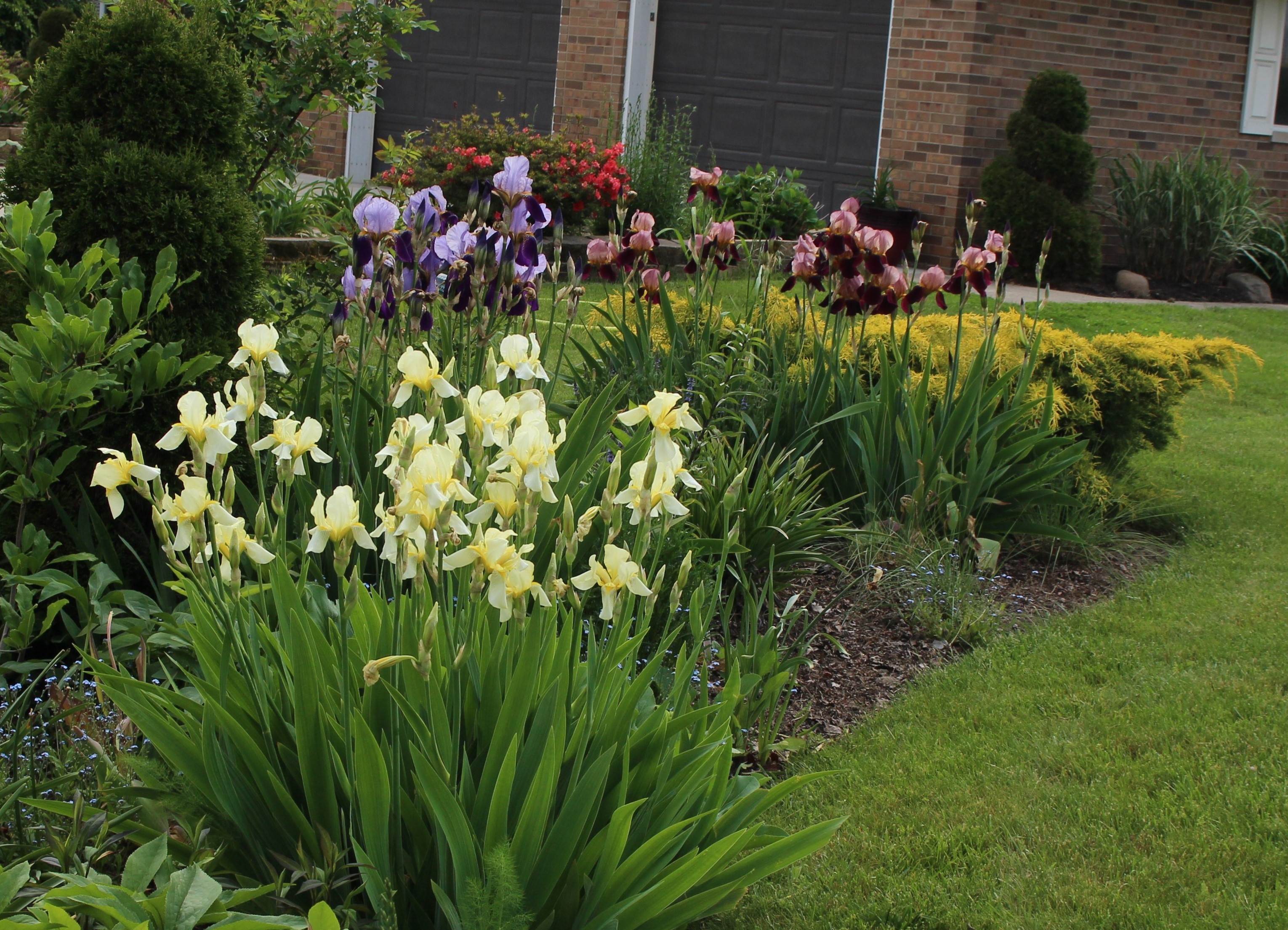
Clumps of iris are scattered throughout the front border.  They are mostly old cultivars (~100 years) and although they lack the ruffles and fluff of the modern iris, they’re very well suited to the rough and tumble of often neglected and often overgrown perennial beds.

The number of blooms, the colors, the fragrance, are conspire against me this season and I’ve been on and off iris websites far more than I should admit…. even though the majority of my iris are either pass-alongs or just plain found alongside the road and had nothing to do with a catalog order.

historic bearded iris

From left to right, Flavescens (pre 1813), Ambassadeur (1920), and Indian Chief (1929).

The jury is still out on any big iris orders since I should really take better care of what I have, but people say it doesn’t hurt to look and so far that’s all I’ve been doing.

blue foundation planting

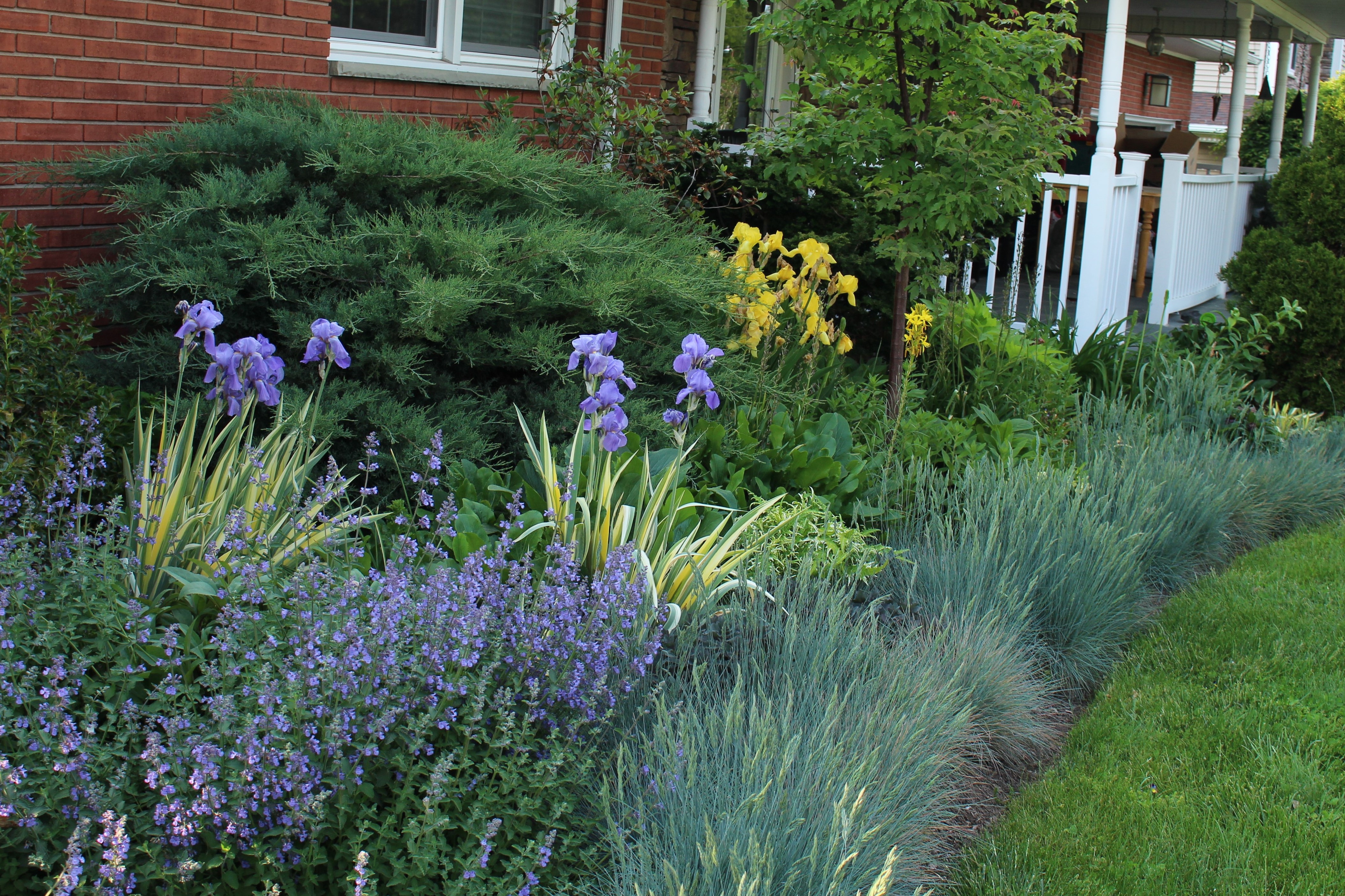
The striped leaves of Iris pallida ‘aureo-variegata’ accenting the front foundation plantings.  You can count on this iris to scent the whole corner of a bed with that delicious grape scent which many of the older varieties put out.

It hasn’t been all sloth and idleness in the garden this spring.  A few small projects are getting done in spite of my laziness, although I’m not promising they’ve all been done to the best of my ability or that they are the best value for my little effort.  One interesting discovery I came across is that bearded iris are fairly resistant to Roundup type (glyphosphate) herbicides.  That of course leads me to carelessness when spraying around the clumps next door, since the chances of iris damage are far outweighed by my ‘want to do as little free labor as possible especially when it includes pulling weeds out of monotonously boring mulch beds in someone else’s yard’.

roundup on iris

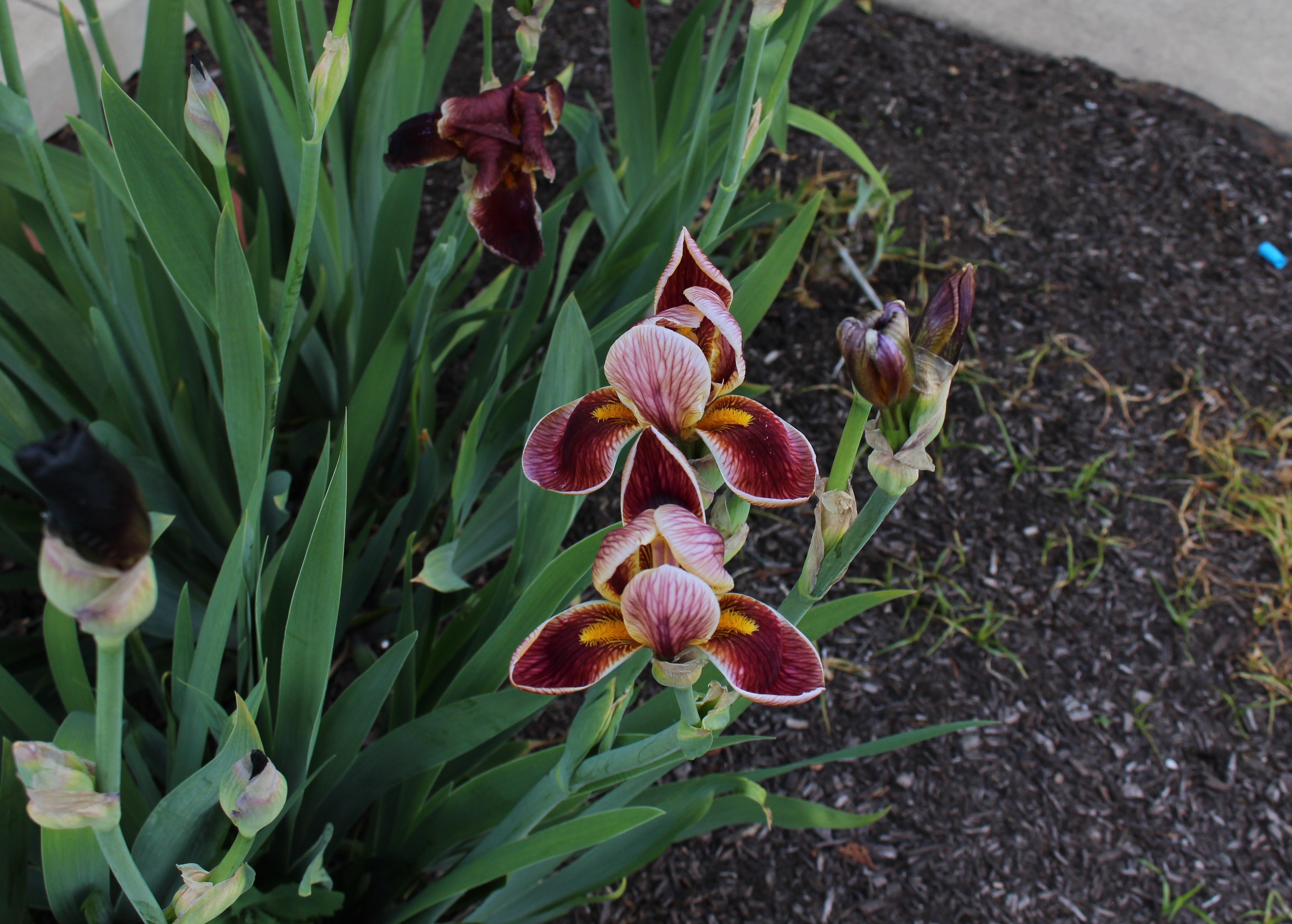
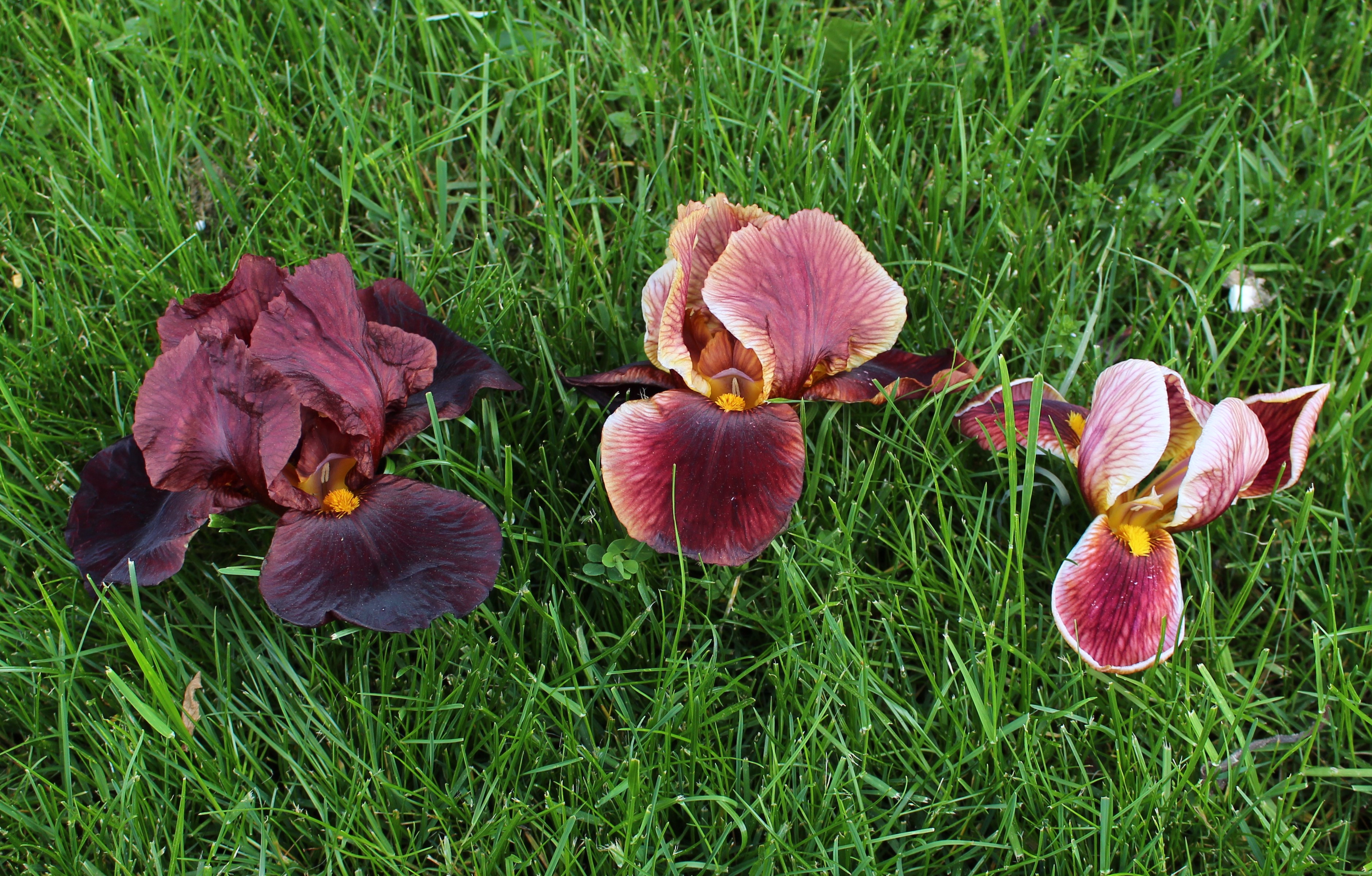
Iris foliage is fairly resistant to Roundup yet the flowers will discolor and stunt depending on how much of the poison they absorb.  These flowers should be larger and a dark velvety red rather than small and anemic looking.   

Before anyone gets too excited, I just want to say I really don’t use too many chemicals in the garden and although I like to appear as if I’m lazily spraying about I really am somewhat cautious, if only because I have too many more sensitive plants which I’d hate to lose.  For what it’s worth my research shows that iris, vinca, and nut grass are pretty much the only plants which will not be outright killed by careless Roundup spraying…. although for the vinca and nut grass the spraying was very intentional.

roundup on iris

Normal iris bloom to the left, increasing Roundup effects on the same plant to the right.  A heavy dose will give a colorless cauliflower-like stalk which is entirely uninteresting.

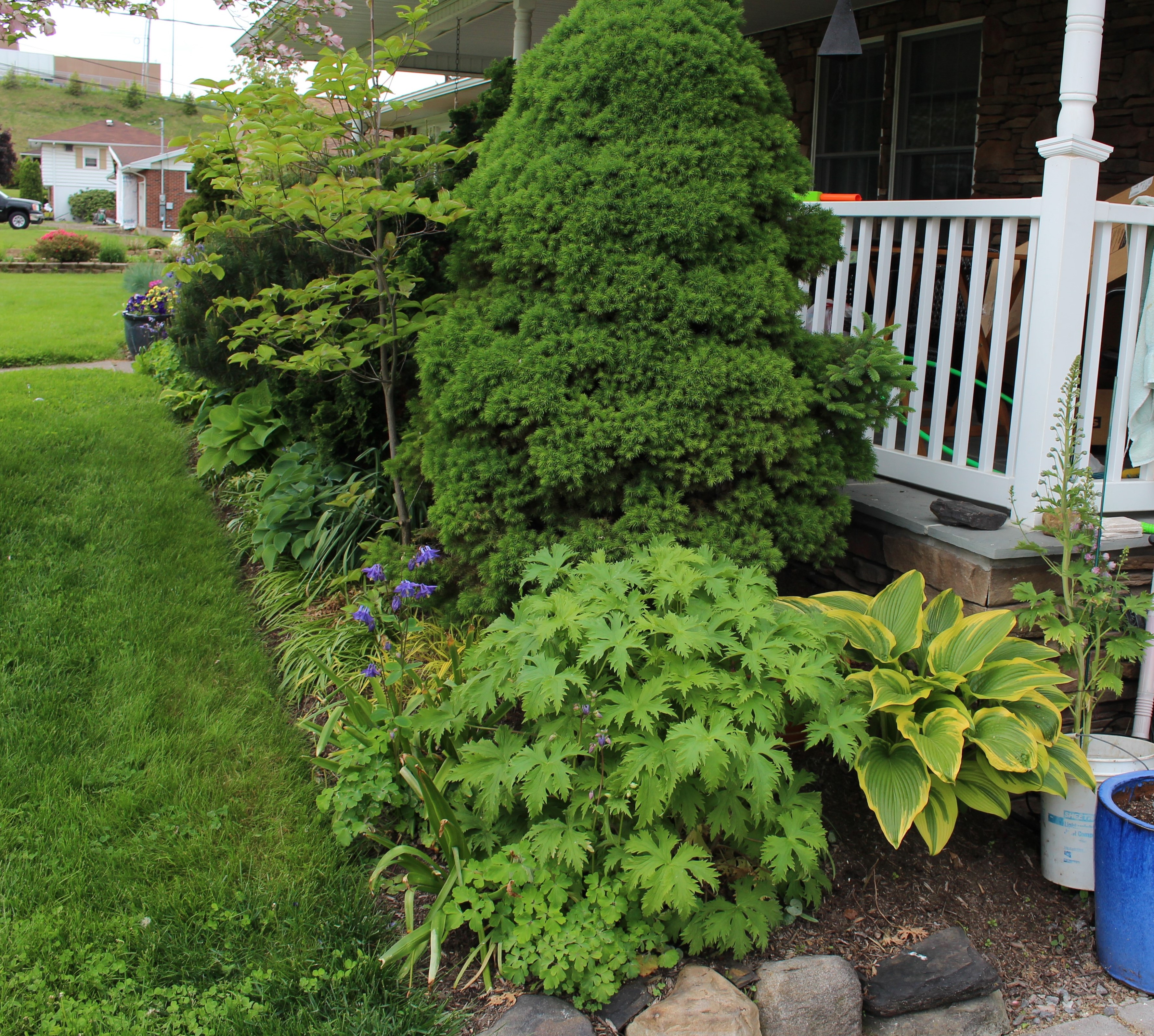
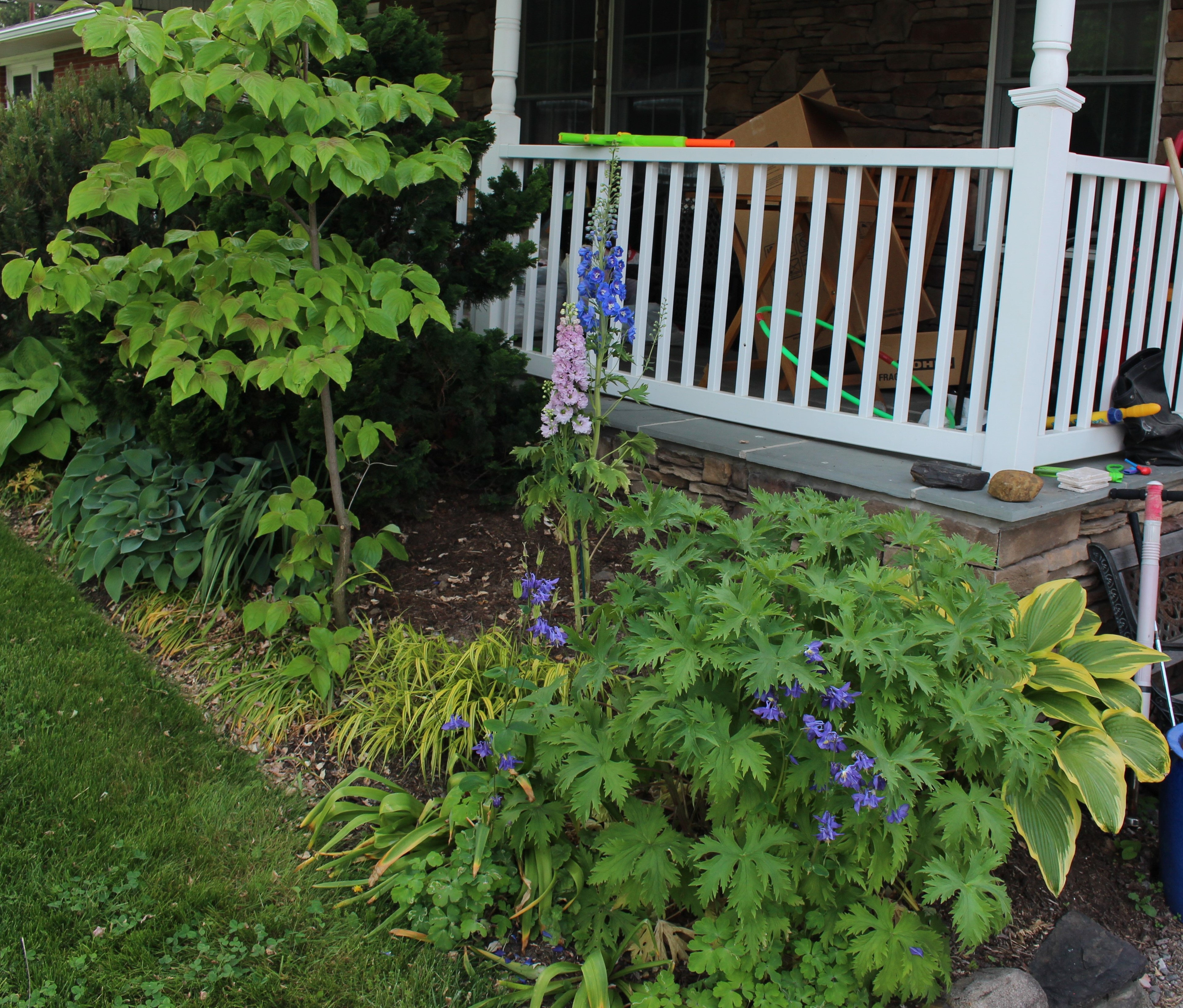
Besides chemical warfare on weeds, another questionable project started with my purchase of a Charlie Brown delphinium which needed a perfect spot in order to wow everyone with its amazing comeback.  My single successful clump grows alongside the front porch so this was the most obvious spot to try another, except for the six foot Alberta spruce which already grows there.

delphinium foundation planting

The healthy delphinium clump is front and center with the spruce behind.  The Charlie Brown delphinium sits soaking in the white bucket to the right.

Alberta spruce is a 365 days a year respectable plant, with an attractive form and many years of service in and many years of service to come.  It would make no sense to pull it out in favor of a temperamental diva which needs fussing and fertilizing and timely staking to protect it from the high winds which strike each year (always two or three days into peak bloom season).

delphinium foundation planting

Spruce gone, delphinium in (one of the ‘New Millenium’ hybrids).  Not the most logical decision I’ve ever made but in the garden I prefer to live guilt free and impulse happy.  Also, if you could, please ignore all the trash and clutter on the porch beyond.  I only got around to cleaning it up after this photo was taken.

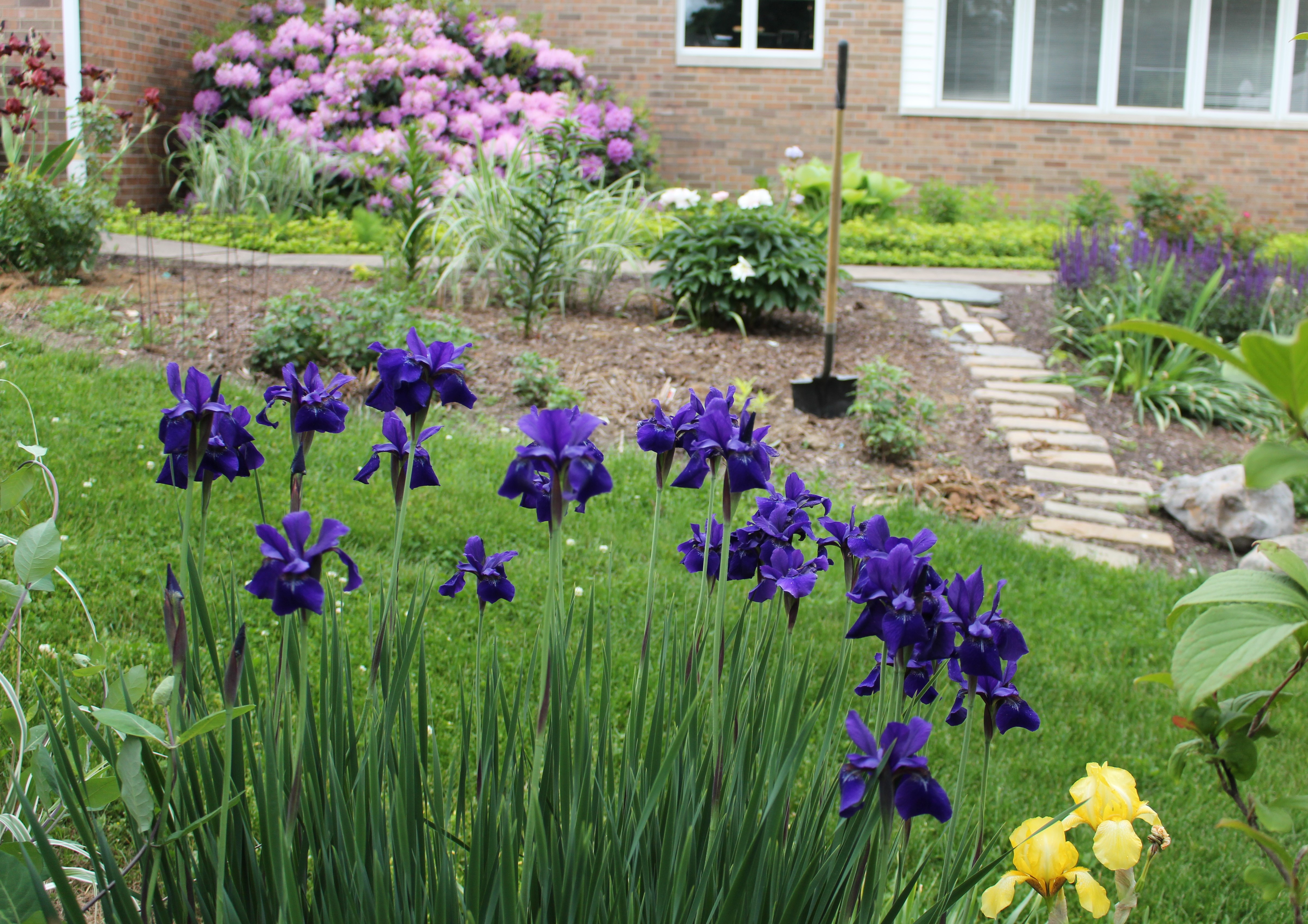
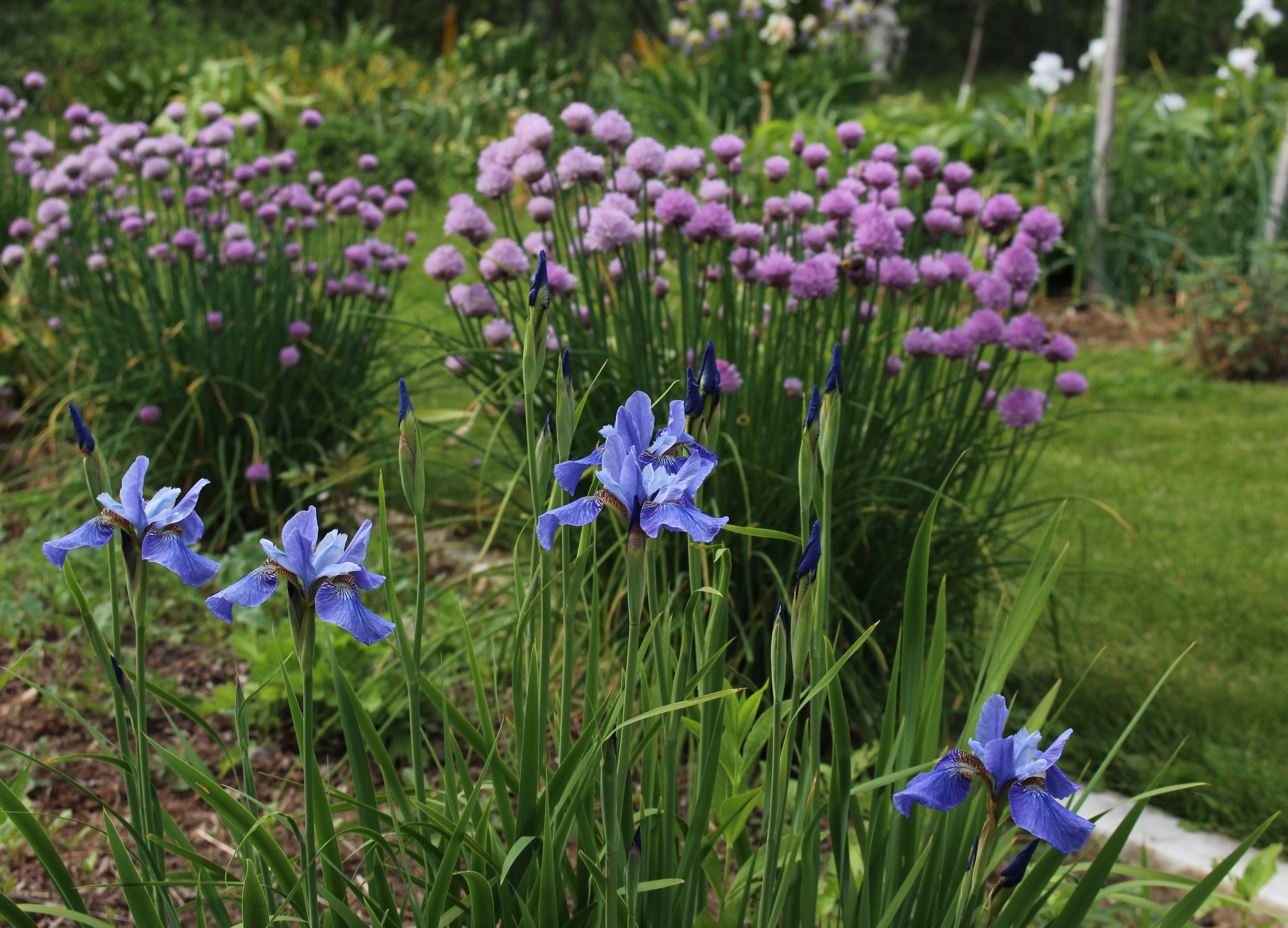
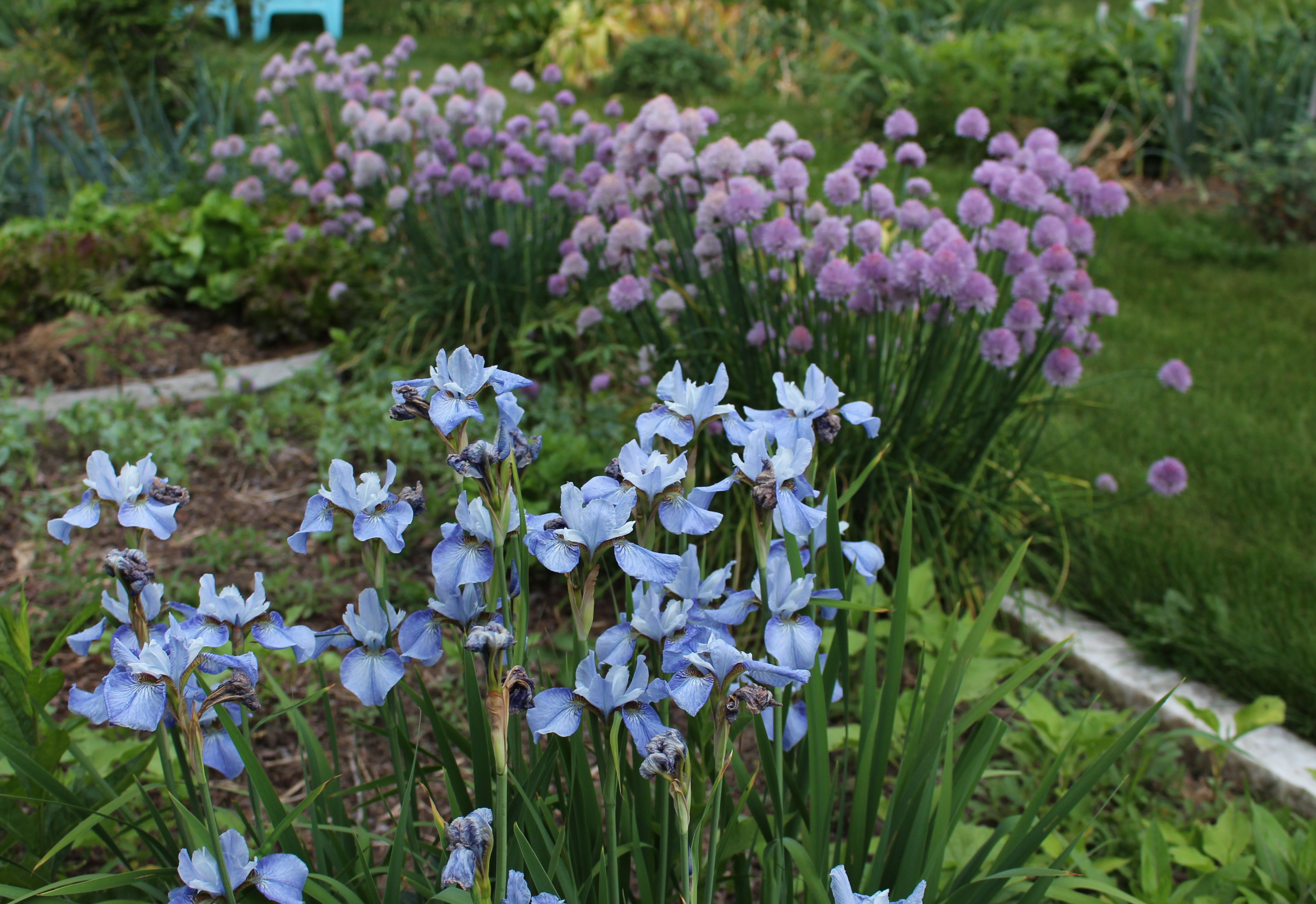
I’m distracted again, let me finish up iris season.  The Siberian iris and Japanese iris might be some of the most beautiful flowers of the plant world, but I don’t grow many.  They seem to flower for a total of one week and although the grassy foliage looks respectable all summer and they handle nearly any abuse which comes their way I try to limit any collecting urges.

purple siberian iris

An unknown purple siberian iris with a still unplanted tropical border behind it.

One Siberian iris which I couldn’t walk away from was ‘Super Ego’.  It’s not because it was in bloom when I saw it or that the color was unique or any other particular quality, it was because of a childhood dream which was set on fire by a random White Flower Farm catalog which showed up in my mailbox one winter.  I think I’ve confessed to being a little odd as a child so the fact that I’d sit around spending hours reading through this catalog probably shouldn’t surprise anyone, but this 1980’s era catalog (which I probably still have somewhere in the basement) had ‘Super Ego’s glamor shot in it alongside a poetic description which convinced me that owning this plant would make me richer, smarter, and more popular.  Unfortunately the WWF catalog was way beyond my 10th grade budget so the actual plant never left Connecticut and I was forced to go on without.

Siberian iris super ego

Siberian iris ‘Super Ego’ just starting to open on a Thursday. 

The actual experience of growing ‘Super Ego’, while pleasant enough, didn’t quite live up to my expectations.  For what it’s worth, I guess I’m as smart, rich, and popular as I’m ever going to be.

Siberian iris super ego

‘Super Ego’ five days later after a few 90F days bleached most of the darker blue color out.  The chives in the back seem unfazed by the weather or passing time, although they are entirely less exotic in my opinion.

So as I wait for a new plant to come along and change my life I’ll continue weeding through the backyard iris beds.  They are infinitely less photogenic with their hefty companion plantings of weeds, but the old iris continue to carry on and deserve more respect than their neglected planting spot gives.  I even planted a few zinnia and marigold seeds last weekend.  That may not speak of high class and taste nor earn me a spot in the White Flower Farms catalog but it does mean that things are starting to move on the seed front, and if it all works out July and August should still be full of flowery color.

Too much money

Some complaints will never get you any sympathy, and to complain that tulips are coming up and blooming in all sorts of odd places probably ranks right up there.  Truth be told it’s not a problem, but when every batch of compost seems to hold a new crop of bulbs, the spring planting in the parterre becomes a little more complicated.

tulips in the vegetable garden

Once again the vegetable garden is a complicated mess of far too many flowers and far too few edibles.

For all my failures in the garden, tulips seem to be one plant which enjoys the poorly draining, heavy soil of the flower beds.  It’s a surprise to see this considering many references suggest a loamy, free draining soil for your best chances at success, and even then it’s a safer bet to treat tulips as one or two year treat.  Fortunately no one has whispered this little secret into the ears of my bulbs and they keep coming back and multiplying.

tulips in the vegetable garden

Having a few tulips in the way is just the excuse I need to skip digging too deeply when it comes to planting the spring vegetables. 

I think I do know the secret though.  The soil may be heavy but it’s also thin and dries out relatively quickly once the heat of summer settles in, and if I do manage to drag my lazy self away from the pool to water it’s never a solid deep watering, it’s always a guilty stand around with a hose until things look less dead kind of triage.  I can’t imagine much of the water ever penetrates deeper than two or three inches and for this the heavy soil works to an advantage.  My tulips like a hot, dry summer similar to their ancestral haunts of Eastern Europe and Central Asia and most years (unfortunately) this is what my garden resembles.

tulips in the vegetable garden

Tulips in the onions, tulips in the lettuce.  I try to replant stray bulbs closer to the edges, but there are always more little bulblets in the compost or stray bulbs dug around in the soil.

When I was more ambitious I used to fill several of the beds each fall and then dig them again in June after the foliage died down.  It was a glorious spring explosion but one bad experience soured me to the whole deal and I ended up tossing hundreds of fat promising bulbs.  They really do need a good drying out over the summer and when mine all molded up and rotted one damp August I put a stop to the project.  But…. I can’t promise it won’t happen again some day 🙂

lettuce self sown seedlings

If all goes well this batch of tulip leaves should put out two or three blooms next year.  Not bad for a weed, and if you notice there are more weeds in the lawn, in this case lettuce seedlings from last years neglected plantings.

So to sum it up my tulips don’t mind a nice heavy fertile soil while they’re growing, the just need to follow it up with a warm dry summer rest.  Planting them in a spot which dries out and doesn’t get summertime irrigation is one option, actually digging them up and storing them in a hot, dry, ventilated area until fall planting is another.  Just be prepared to have more tulips than you know what to do with since most tulips will at least double in number every growing season.

double early tulip

Leftover Easter flowers from two or three years ago.  Let them bloom and grow as long as possible in their pot and then stick them into some out of the way spot, preferably one where they will not be overrun with bearded iris 🙂

Although most people recommend species tulips and Darwin types for the best chance at perennializing,  I don’t notice that much of a difference between the types.  Give them all a try is my advice, but for best results regardless of type you will have to dig and divide the bulbs every three or four years  when they begin to get crowded.

perennial Darwin hybrid tulips

A few stray tulips snuck in with the compost for this new snowdrop bed.  With snowdrop season long gone I’m quite happy to see the tulips flowering in a carpet of my favorite annual weed, purple dead nettle (Lamium purpureum). 

Alas, even plants relatively happy with their homes do not always lead perfect lives.  The tulip season may be a little sparse next year for two reasons, both of which revolve around the weather.  The first is our harsh April freeze which damaged many of the buds and much of the blooms for this year’s show.  That in itself could be tolerable, but in the weeks since the weather has remained damp and cool, and many of the damaged plants are now falling victim to gray mold (Botrytis).  Botrytis is bad news and seems to stick around for a few years even after better weather returns.  I’m wondering how many of the affected plants will be going on to tulip heaven…

tulip virus candy apple

Not to go on and on about this late freeze, but here’s yet another example of damaged foliage and stunted blooms.  To top it off I also suspect virus in the streaked blossoms of what should really be a solid colored flower. 

All is not lost though.   I still love tulips and would grow a few even if they only made it a year or so before falling victim to whatever tragedies visit my garden next.

tulip marit

Tulip ‘Marit’ is a favorite this year.  I don’t remember such round flowers last year but the shape and color this year really won me over. 

In the meantime I will keep my fingers crossed.  I far prefer being spoiled for choice as far as tulips go, and if it means working around a few bulbs here and there that’s fine with me.

tulip pink impression

Tulip ‘pink impression’ in the front border.  They’re huge and pink and although battered by the weather they’re still the crowning glory of the border.

Have a great Sunday and happy mother’s day to the moms!

A freeze and the daffodils

I can’t really hold the weather against them, but I do.  Again and again I told them not to get such an early jump on the season but they ignored me and sure enough one final blast of winter came through and taught them all a lesson.  Three weeks later and I’m still mourning the daffodil season which never was.

cold damage daffodil

Can you guess the prevailing wind direction?  Like a windswept bonsai this daffodil ‘Actea’ still managed to pull through and open a few blooms in spite of the 20F winds which blew through. 

I shouldn’t say the whole season was a wash but if I had to guess I would say about half the daffodils lost their buds and blooms completely and only about a quarter opened up nicely.  A quarter goes a long way though and I’m still grateful to have what I do, plus the weather has been very accommodating since so I suspect the surviving daffodils will put on an extra special show next year.

Isn’t that typical of a gardener?  It’s always “wait until you see this next week” or “imagine next year”…. or the apologetic “you should have seen it a few days ago”. 🙂

narcissus daffodil stepchild

One of my many favorites, narcissus ‘stepchild’ is later and in a spot sheltered from the wind, and although neighboring clumps were still de-flowered by the cold, she seems as pretty as ever. 

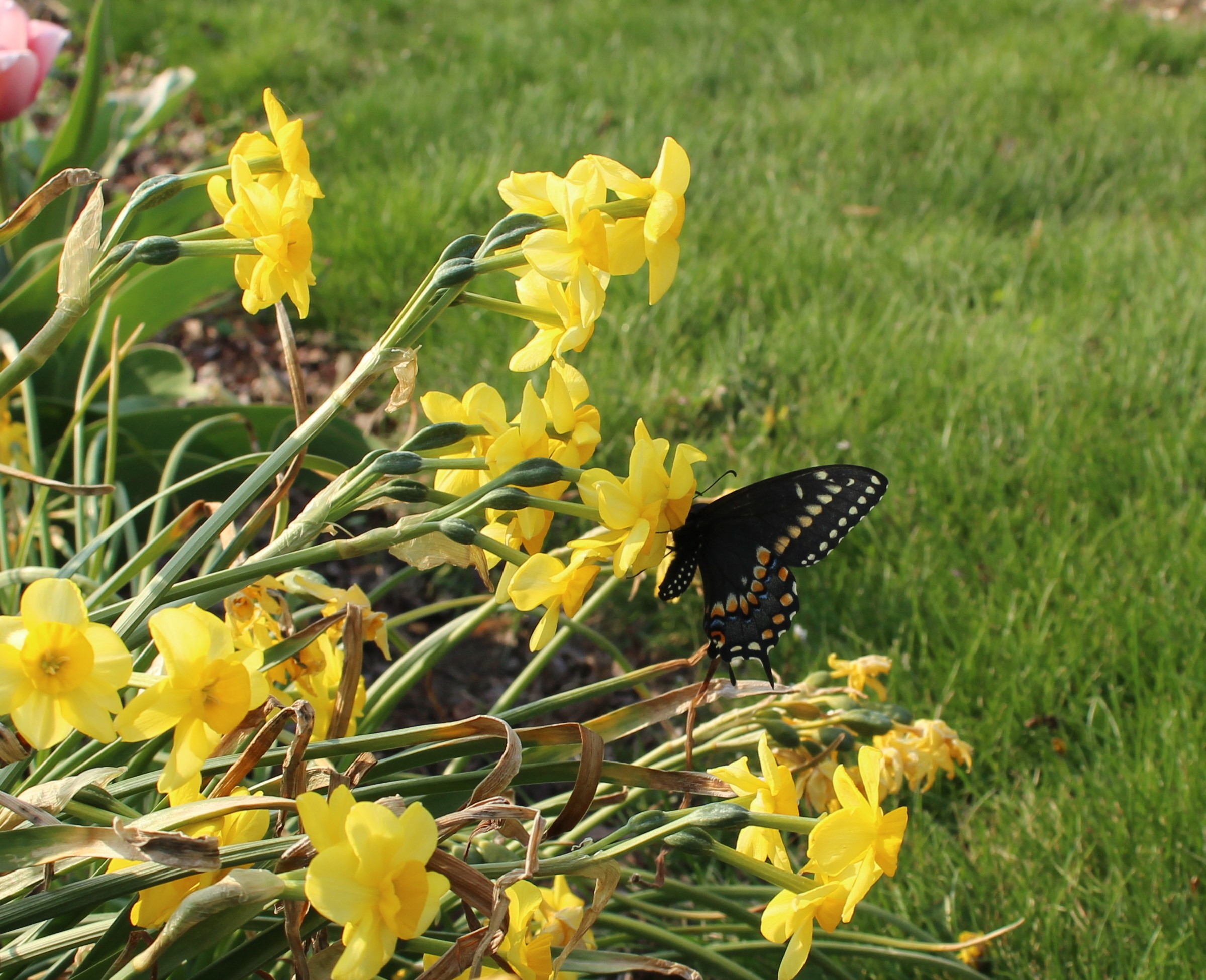
In spite of the wild swings in temperature the various butterflies of the garden seem unfazed and continue to shake off the cold and go about their business as soon as the weather warms enough.  Perhaps I hadn’t noticed in previous years, or perhaps there were other non-freeze burned sources of food available, but this year the daffodils have been very popular with several types of butterflies.

butterfly on daffodil black swallowtail

A black swallowtail feeding off the windblown and weather-beaten flowers of narcissus ‘kokopelli’. 

I hope my wallowing in self pity hasn’t made it seem like all is lost in my end of the woods.  Spring is a fantastic relief even with its frequent ups and downs and if one looks past the blackened cherries and mushy primrose blooms and perennial shoots there’s still more good than sad.

daffodil newcomer narcissus

Later is better this spring, and because a late replanting last fall set daffodil ‘Newcomer’ back a few days, its blooms missed the worst of the weather.  The tulips as well, the shelter of the garden’s tiny boxwood hedge seems to have helped them avoid the full brunt of the winds.

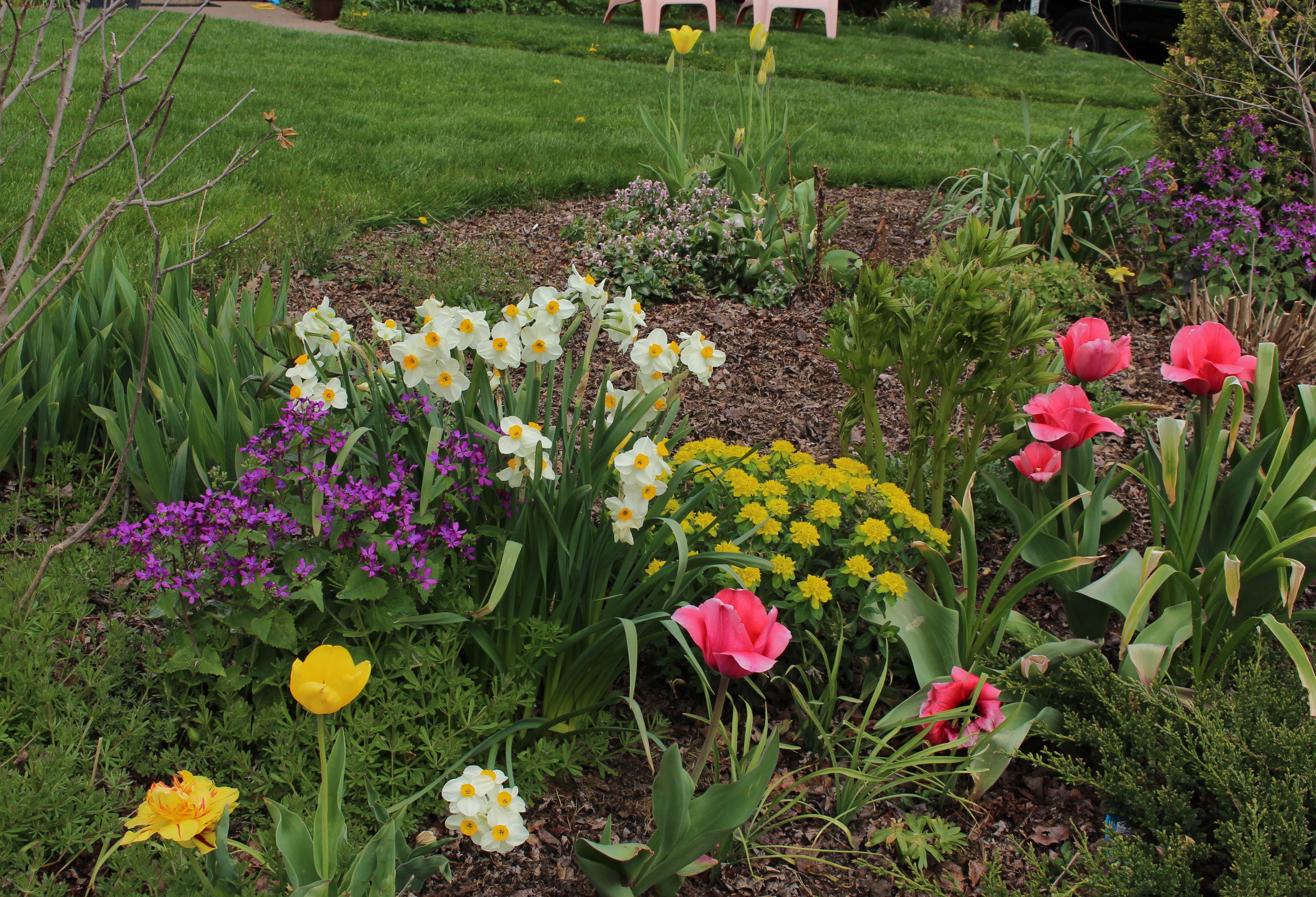
In the lee of the house the front garden missed the full force of the wind.  Here if I ignore all the mushy, blackened hyacinth blooms, and wilted early daffodils I can still find plenty to enjoy.

narcissus geranium daffodil

Blooms of the good old reliable daffodil ‘geranium’ set off by ‘pink impression’ tulips, yellow Euphorbia polychrome, and the purple flowers of ‘Rosemary Verey’ Lunaria annua (moneyplant).  I was hoping for darker foliage on the Lunaria but maybe having all the old leaves frozen off a few weeks ago left me with only fresh new green ones.

Maybe this freeze was a warning to diversify.  I admit to having way too many daffodils and maybe adding more supporting players isn’t the worst idea (as if I need a reason for adding more plants!)

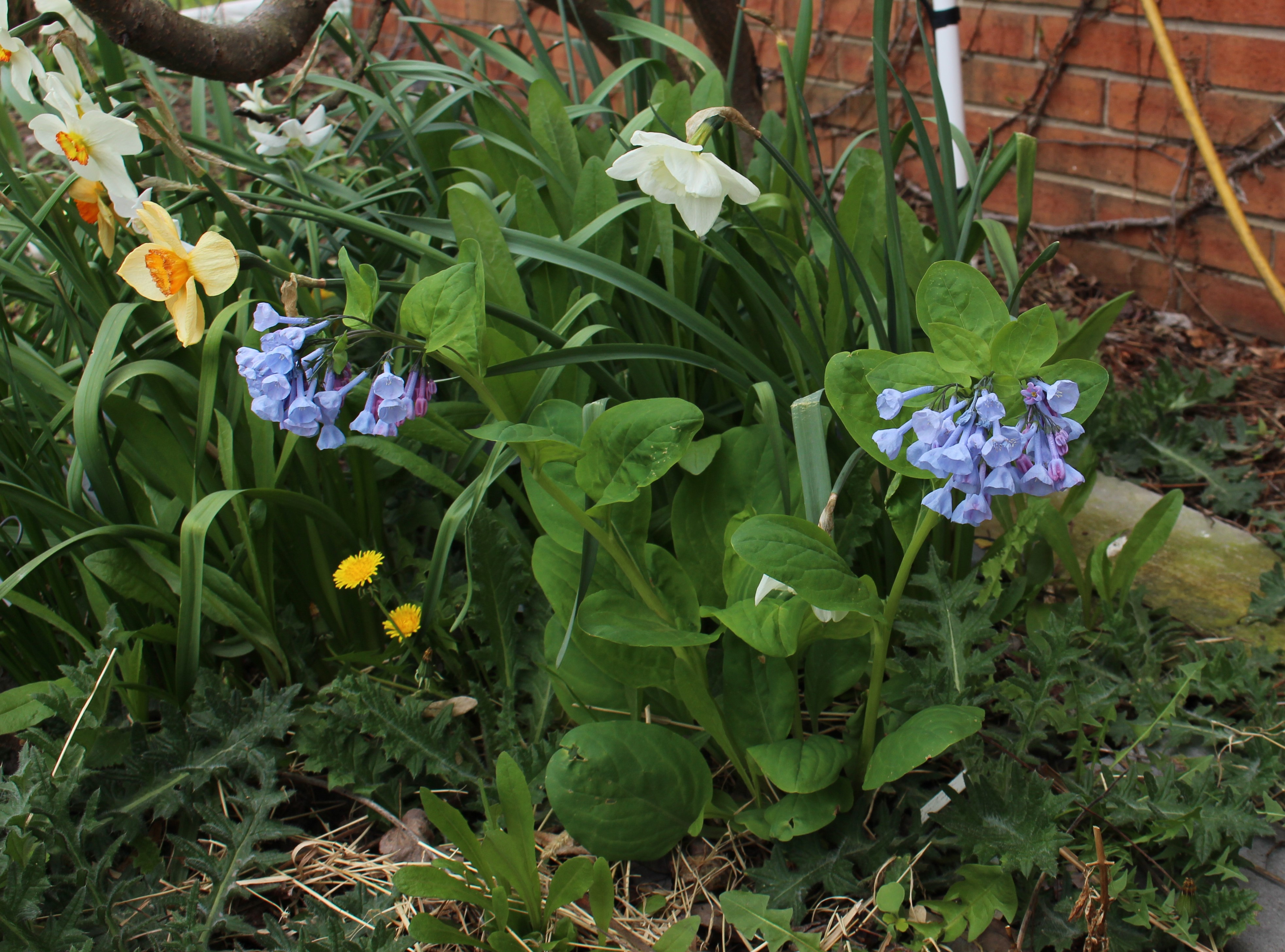
mertensia Virginia bluebell from seed

Finally!  After several failed attempts and then a three year wait for my only sprouted seedling to grow up, the first Virginia bluebell (Mertensia Virginica) is in bloom.  Others claim it to be nearly weedy in its ways, but I managed to kill the first one I bought and then never found it in the garden center again.

I’m kidding of course.  Although I do need to find new homes for many of the most promiscuous daffodils (please let me know if you can take any in), there are billions of new plants on the way regardless, as seeds sown last fall and winter begin to sprout.  I always love these new surprises as much as I love the warmer up sides to this spring’s manic mood swings.  Even a bright yellow dandelion makes me grin when the sun is out!

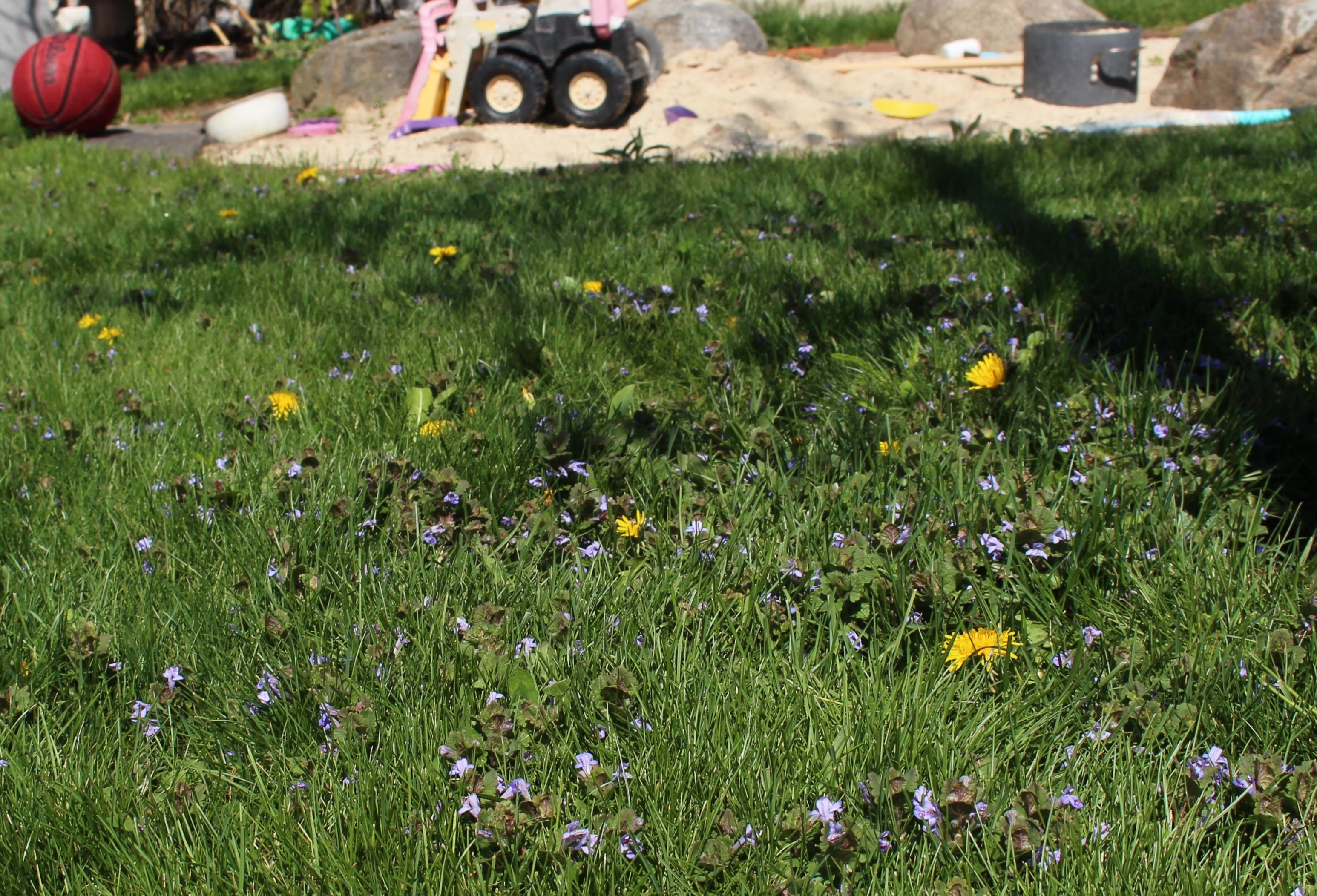
creeping Charlie dandelions

Creeping Charlie and dandelions on a sunny day.  A beautiful lawn in my opinion…. even if Charlie does get on my nerves later in the season.

I have one more gloomy post as I complain about the assault which the cold made against the tulips, but after that things should return to a happier tone which more accurately reflects the joy of the season.   Have a great weekend, I’ve spent far too long on the computer and need to get out there and dig a little before the first Little League game drags me elsewhere 🙂

GBFD April ’16

Imagine my embarrassment when I saw it’s been nearly two weeks since my last post.  I know the exact reason for the pause but right now just  don’t want to get into the ugly truths about mixing brutal cold fronts with fresh spring growth.  Instead I’ll focus on the beautiful sunshine of a cool spring morning and join in for a very quick visit to celebrate Garden Bloggers Foliage Day with Christina from ‘Creating my own garden of the Hesperides’.

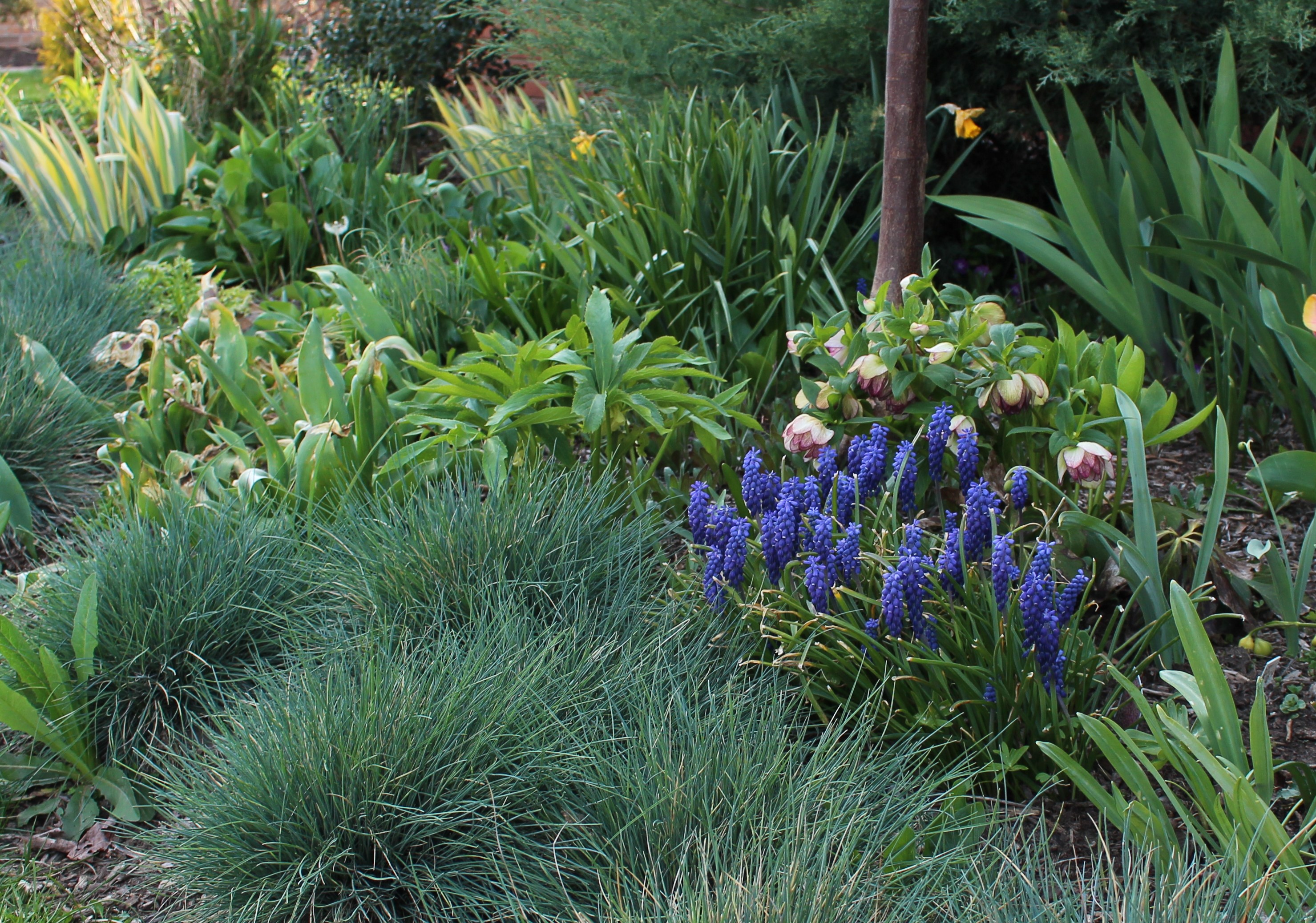
muscari and blue fescue

The grayish leaves of blue fescue (Festuca glauca) alongside the blue flowers of grape hyacinths (Muscari).  Please ignore the freeze burned tulips to the left of the photo…

Thanks to Christina for the monthly reminder to reexamine the contributions foliage makes to the overall look and feel of the garden, and this month it’s a border of blue fescue which has me most pleased with foliage effect.  This border was switched up last spring when I divided and spread a few clumps all along the foundation plantings, and this spring it has filled in with a lush vigor which really shows off the bed.  Now that the fescue is making me happy I’m fixated on a clump of blue muscari growing just behind the grass clumps.  There’s a strong possibility this will be divided and spread along as well since I like the combination.

The fescue and muscari are extremely common plants and both were free shovel-fuls from other gardens.  It kind of makes me reconsider that bucket of plant labels which no longer match living partners… but not enough to cure that plant lust for all the new goodies 🙂

See?  I promised it would be quick.  Please visit Christina’s blog as well, it’s always a pleasure to see and hear about the foliage others across the globe are enjoying in their own gardens, and have a great weekend!

Snowdrops part II

By now I’m going to guess several of you know I have a “thing” for snowdrops.  It’s a lonely thing since my nearest fellow snowdrop lover lives miles and miles away, but it’s a thing and like all things you just have to deal with it.  With that said I will forgive anyone who glosses over this post since not everyone will ‘get’ this thing, and many will not even want to appear as encouraging this thing, but that’s fine.  Once the daffodils open I’ll move on and we can again comfortably ignore my little secret until next year.

Luckily for you the season is practically over in my garden (so this will not drag on for the weeks which it normally does)  and here’s only just the briefest summary of a few of my favorites from this year’s snowdrop season.  We will begin with a new one, ‘Daphne’s Scissors’, which came via Carolyn’s Shade Gardens last spring.

galanthus daphnes scissors

Galanthus ‘Daphnes Scissors’, an early bloomer with me and early enough to open at the same time as the winter aconite (Eranthis Hyemalis).

‘Blonde Inge’ sometimes gives trouble as far as her blonde highlights go, but this year there’s a nice touch of yellow to the insides of her flowers.  This is her third year in the garden and she seems to be settling in nicely.

galanthus blonde inge

Galanthus ‘Blonde Inge’, the covergirl for Naomi Slade’s great little book “The Plant Lover’s Guide to Snowdrops” which I had the pleasure of reading this winter.

I’m trying to stick to snowdrops which don’t all fall under the same old same old category… this is still a stretch since green-white-yellow is the slightly limiting range which we’re always working with, but to the obsessed even the plain old white and green can be something special 🙂

galanthus straffan

Galanthus ‘Straffan’, an oldie but goodie which has been gracing the gardens of snowdrop lovers since 1858.  This is year three for my plant and I’m quite pleased to see its graceful upright blooms multiplying.  Maybe someday I’ll be up to the hundreds you see in other gardens 🙂

Galanthus ‘MoretonMills’ was the first expensive snowdrop I splurged on.  I won’t say how much I paid but it was a ridiculous amount for such a tiny little thing and each spring I hold my breath until it sprouts.  Fortunately it’s one of my favorites and is also beginning to multiply.

galanthus moreton mills

Galanthus ‘Moreton Mills’, a poculiform snowdrop where the three inner petals are as long as the three outer petals.  If this plant breaks the four inch barrier I’d call it a growth spurt.

As a variation on the green and white theme, here’s one which is more green and green and white 🙂

galanthus kildare

I love this one, it’s Galanthus ‘Kildare’ doing very well in its second year in the garden.  The blooms are huge. (relatively speaking of course!)

Another of my very favorites is ‘Primrose Warburg’.  It’s been doing very well here and is actually becoming what I could optimistically call a clump.  The downside to collecting unusual little bulbs is that you must often start with just one and to be completely honest a single snowdrop, no matter how special, does not exactly put on a major show in the garden.

galanthus primrose warburg

Galanthus ‘Primrose Warburg’.  Even those who yawn at the sight of snowdrops will acknowledge the bright yellow differences on this one 🙂

I’ll leave you with my lovely little golden snowdrop patch, and repeat that the snowdrop season is essentially over here.  It was a weird one, and for me it was a lame one with harsh late freezes damaging many of the blooms followed by a warm couple days which wilted the rest.  Add a few days out of town for work and snowdrops which came up before my schedule allowed me to fully admire them…. well enough said.  At least I was able to enjoy a few crocus.

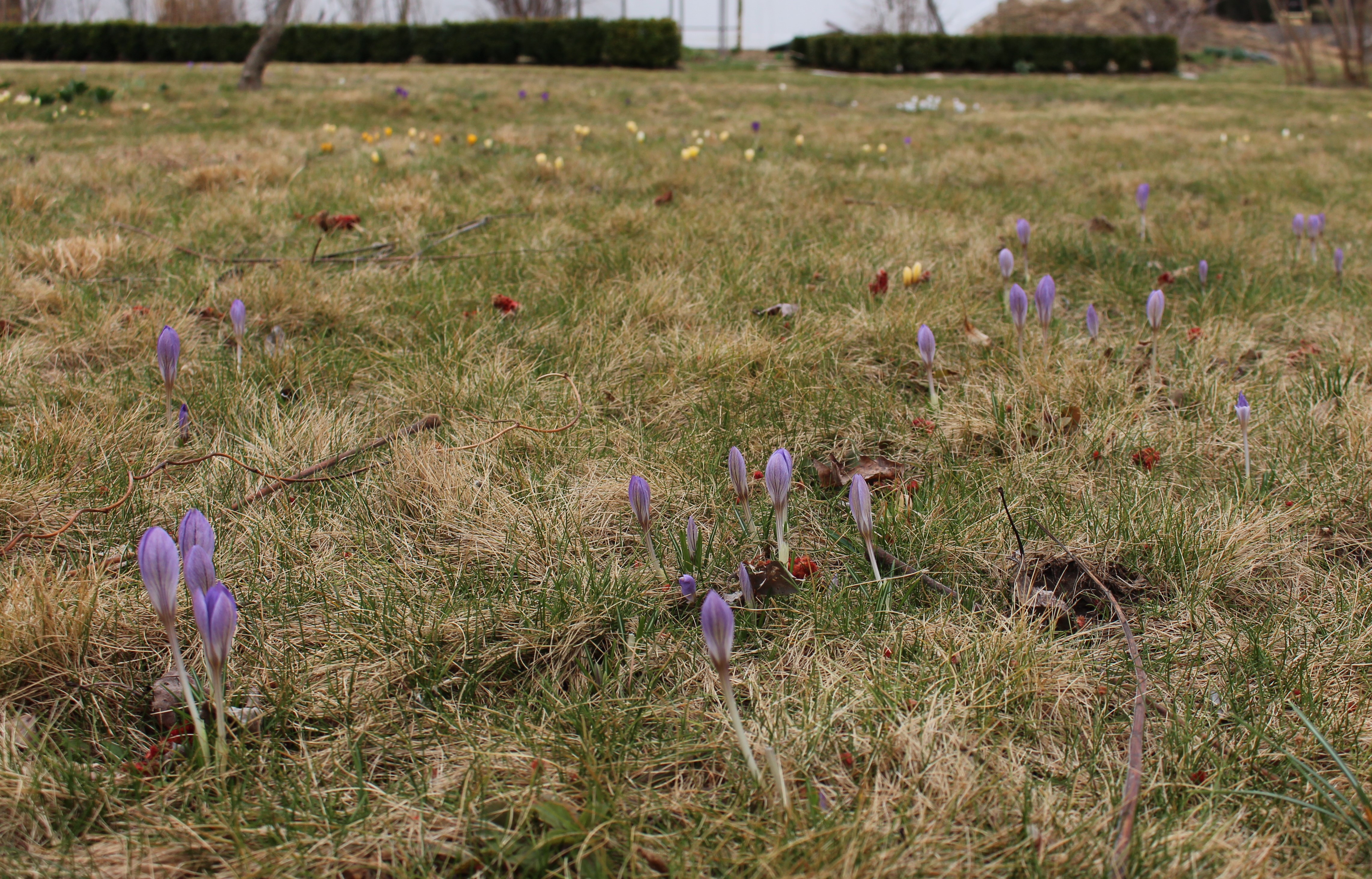
natuaralized crocus

All the crocus came up nicely in the meadow garden and even the rabbits couldn’t keep up with them all.  Luckily mother nature and global warming stepped in and wiped them all out with back to back hailstorms.  Oh El Nino, you’re really having your fun this year.

The crocus season felt like it lasted three days.  They burst up and bloomed and then the weather did them in.

dutch crocus

A few of those fat hybrid Dutch crocus growing by the front steps.  To get really nice clumps it helps to dig them up and spread them around every three of four years.  Forgetting where they are and accidently digging them up in June is my method of choice.    

Fortunately there’s still plenty of spring left since it’s only just the end of March.  A cold spell last week slowed everything right back down, but the first weeks of April look remarkably mild and I’m sure there will be plenty of things sprouting up and blooming and helping me ease my snowdrop hangover.  Don’t get your hopes up too much though, I did visit another snowdrop garden last weekend and have one more white and green post yet to come.

If I don’t speak with you before Sunday, have a great Easter!

GBFD The Promise of May

On the 22nd of each month Christina at Creating my own garden of the Hesperides encourages us to look past all the flowers and blooms of the garden and take a second look at what foliage does to support it all.  I’m happy to once again take part in the fun, and what better month to do it in than May, the month where my garden really starts to overflow with the promise of the new season.  Lets start with the front beds where hosta and self sown columbine have now sprouted up and covered the snowdrop and corydalis beds of early spring.

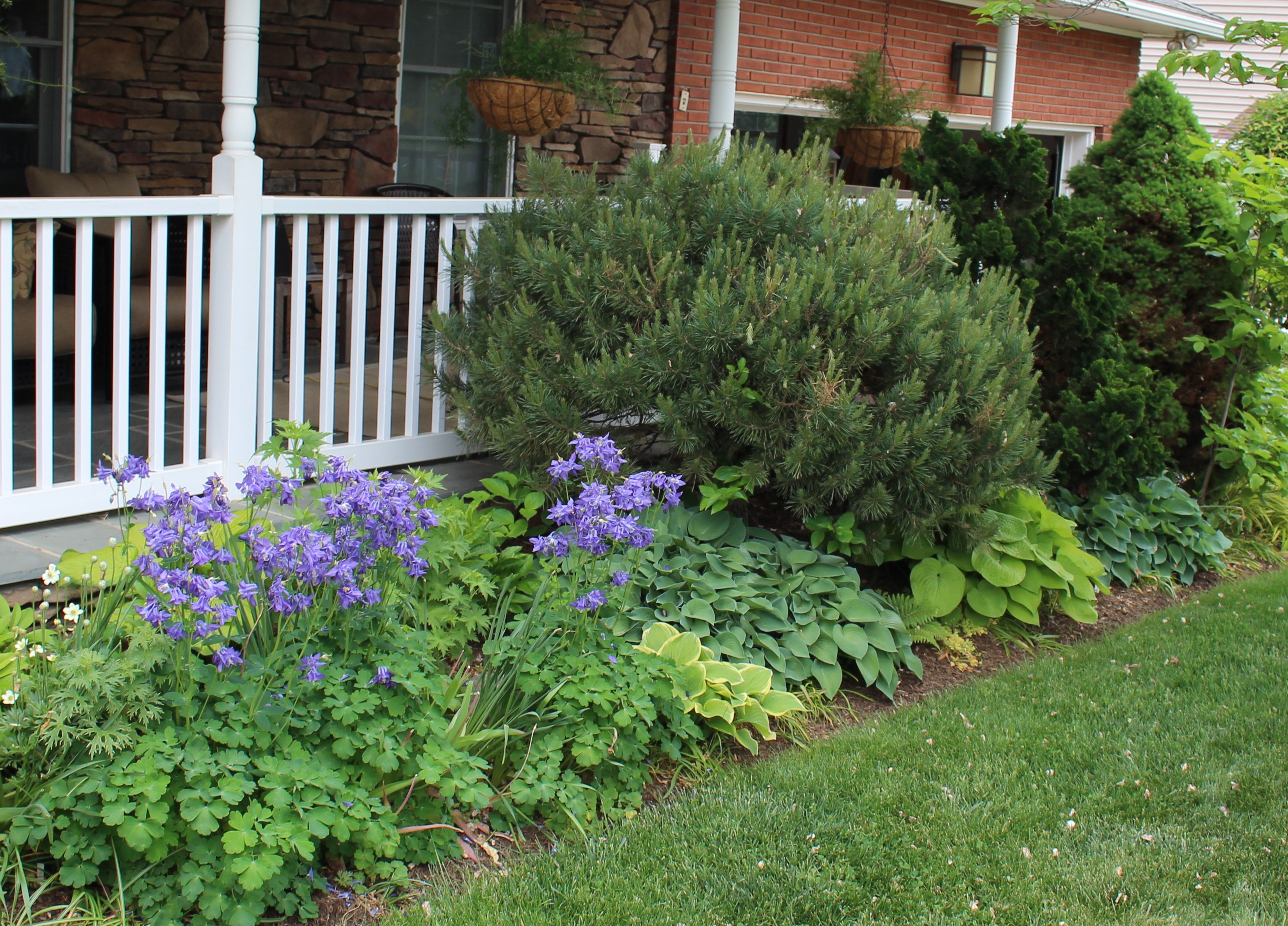
blue columbine with hosta

These blue columbine were originally found in the woods behind the house prior to its clearing for industrial park.  They’re just escaped or dumped aquilegia vulgaris, nothing rare or unusual, but I like to keep them around as a reminder.  Plus they’re carefree.

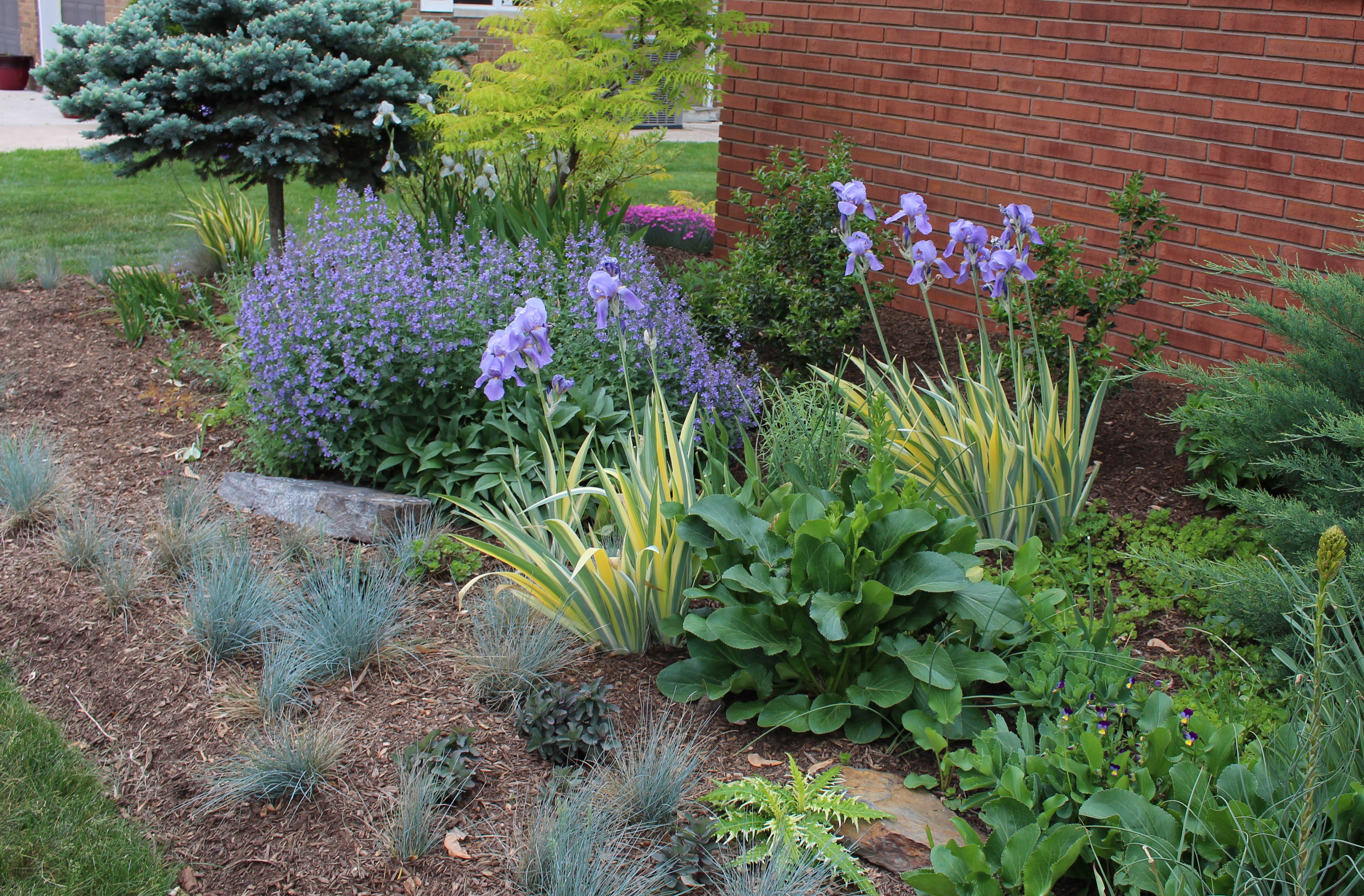
This will be our seventh year here and after a slow, cash strapped and baby filled start I think things are finally beginning to look like something.  The colors and shapes of the front foundation plantings are still a work in progress but for now the look is finally something I’m no longer bored or annoyed by. – Cathy here are the variegated iris in bloom, they have a fantastic fragrance 🙂

mixed perennial bed as foundation planting

The just recently mulched, expanded and divided plantings of the front foundation planting.

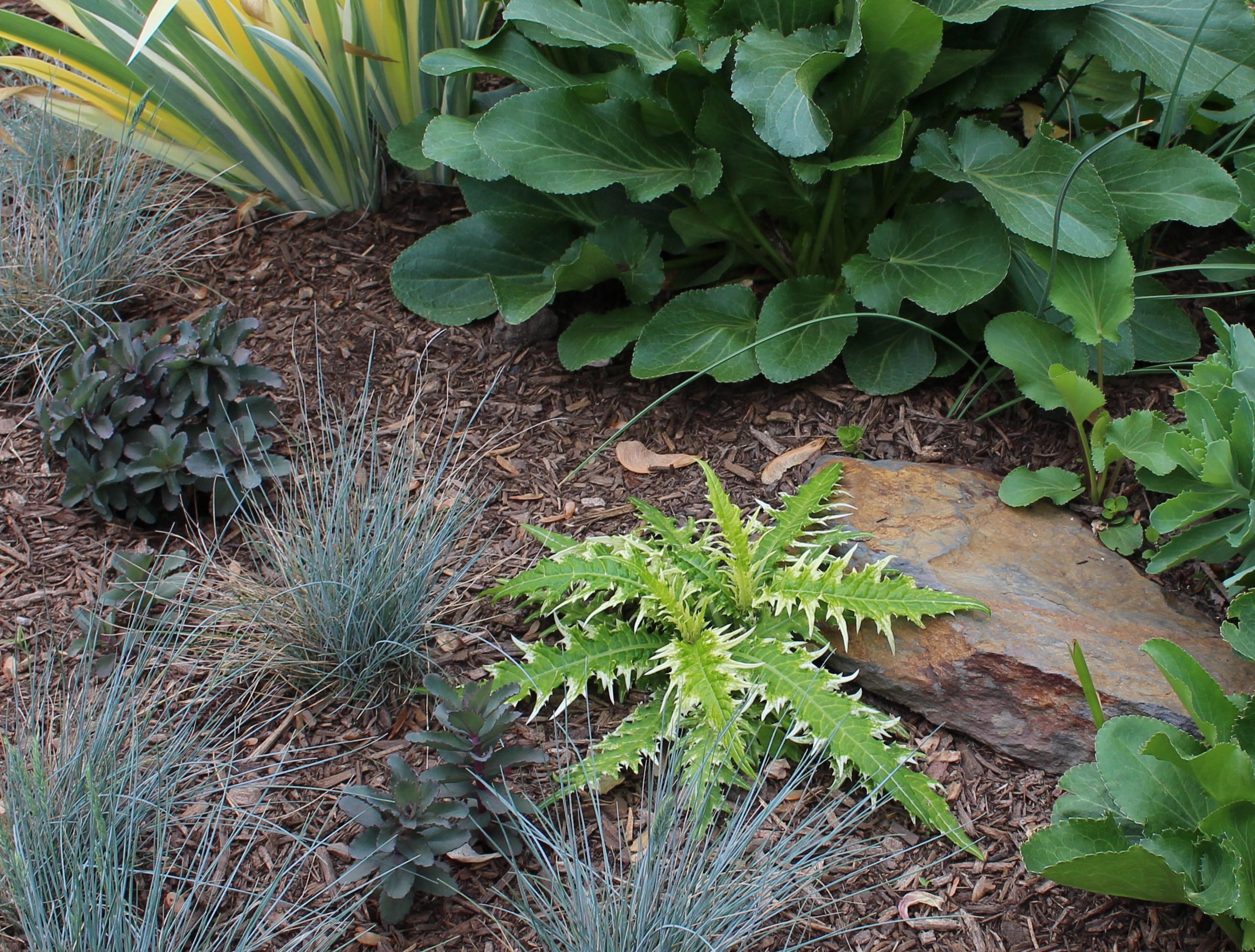
I love the different colors and textures out here at the moment, but my absolute favorite is the “white frosted” Japanese thistle (Cirsium japonicum).  I know I’m in a lonely position here, but the prickly thistles always fascinate me, and in my opinion variegation is almost always a plus!

Cirsium japonicum 'White Frosted' Japanese thistle

Cirsium japonicum ‘White Frosted’ with blue fescue and some just divided sedum ‘Bon Bon’.

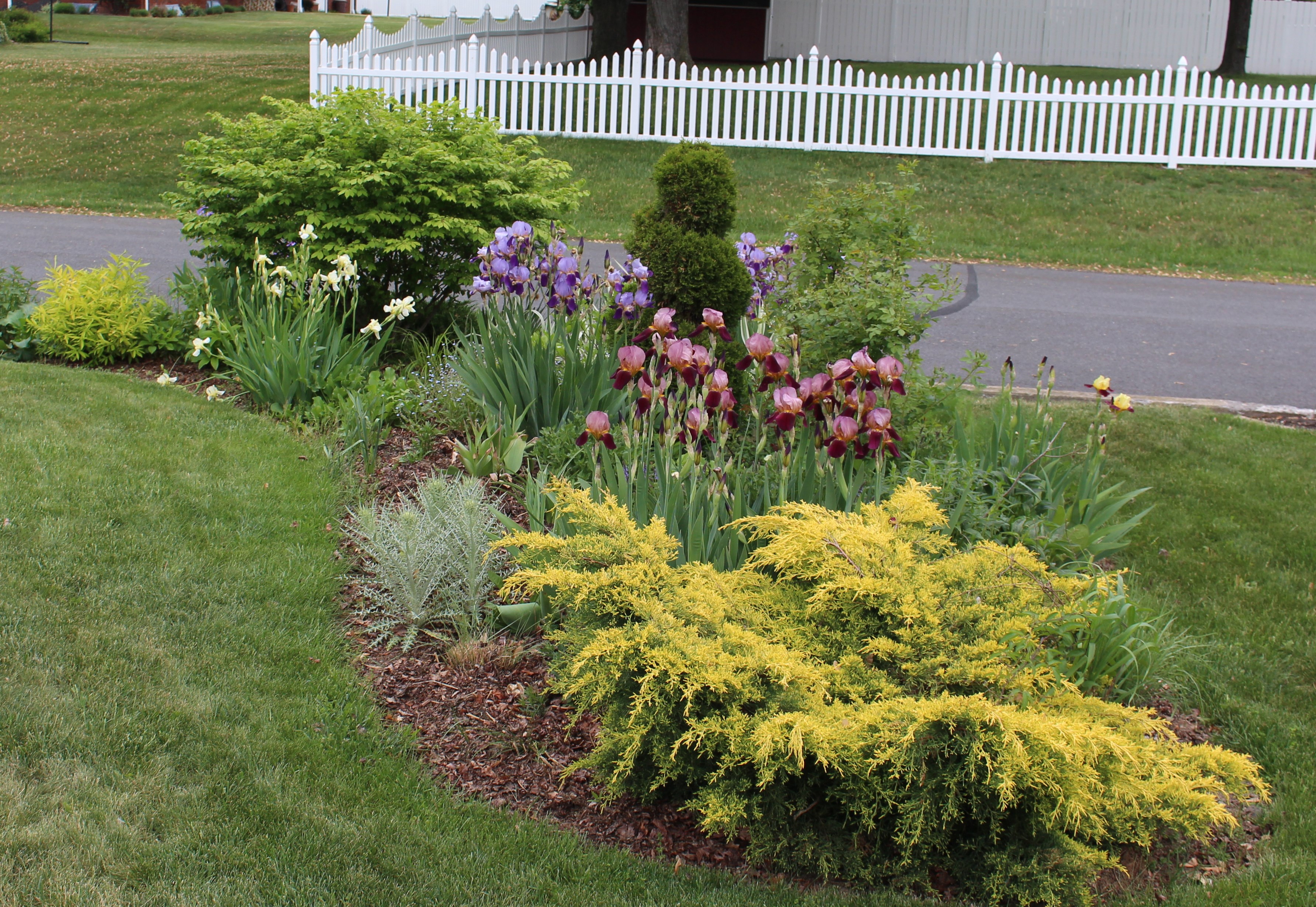
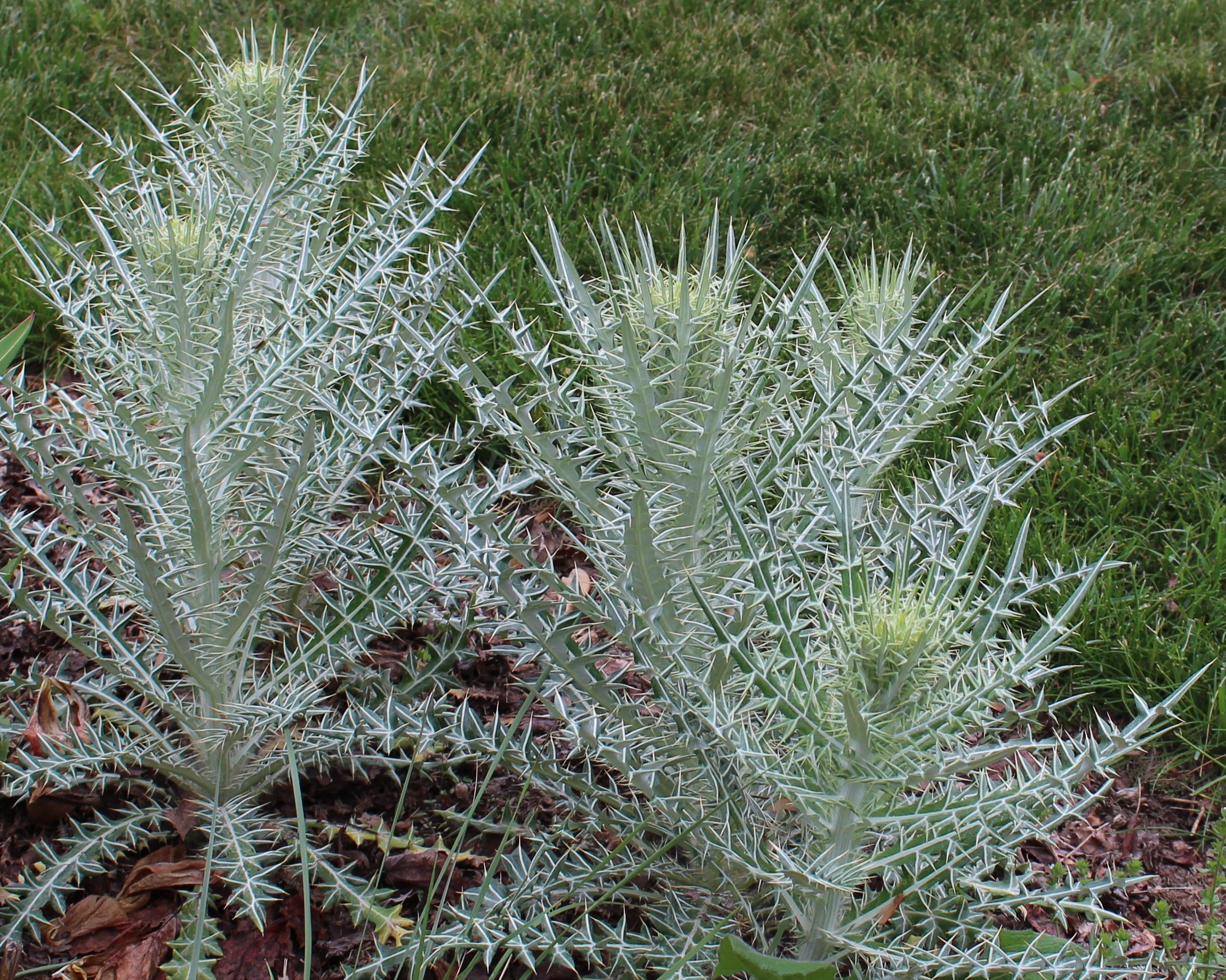
Even with the iris coming into peak bloom along the street border (it’s a good year for iris here), my favorite plant in this mix is the Ptilostemon diacantha.  Some see a spiny weed in need of pulling, I see some of the coolest foliage in the garden.

mixed border with historic bearded iris

Historic iris like the poor soil and hot, dry and sunny front border, and even though the pale yellow iris “flavescens” does not like the wind, the reddish ‘Indian Chief’ and lavender ‘Ambassedeur’ stand strong.

I know I’ve already shown this weed a couple times, but I’ve never seen it looking better…. not a difficult feat since this is its first time growing here!  I suspect the actual blooms will be a letdown, but the fine texture and pattern of the leaves…. 🙂

Ptilostemon diacantha

Foliage closeup of Ptilostemon diacantha.  A biennial thistle from the Balklands/Turkey region in need of a common name.  ‘Ivory thistle’ is the only one I came across and that one kind of bores me…. and with blooms of mauve I don’t see the connection.

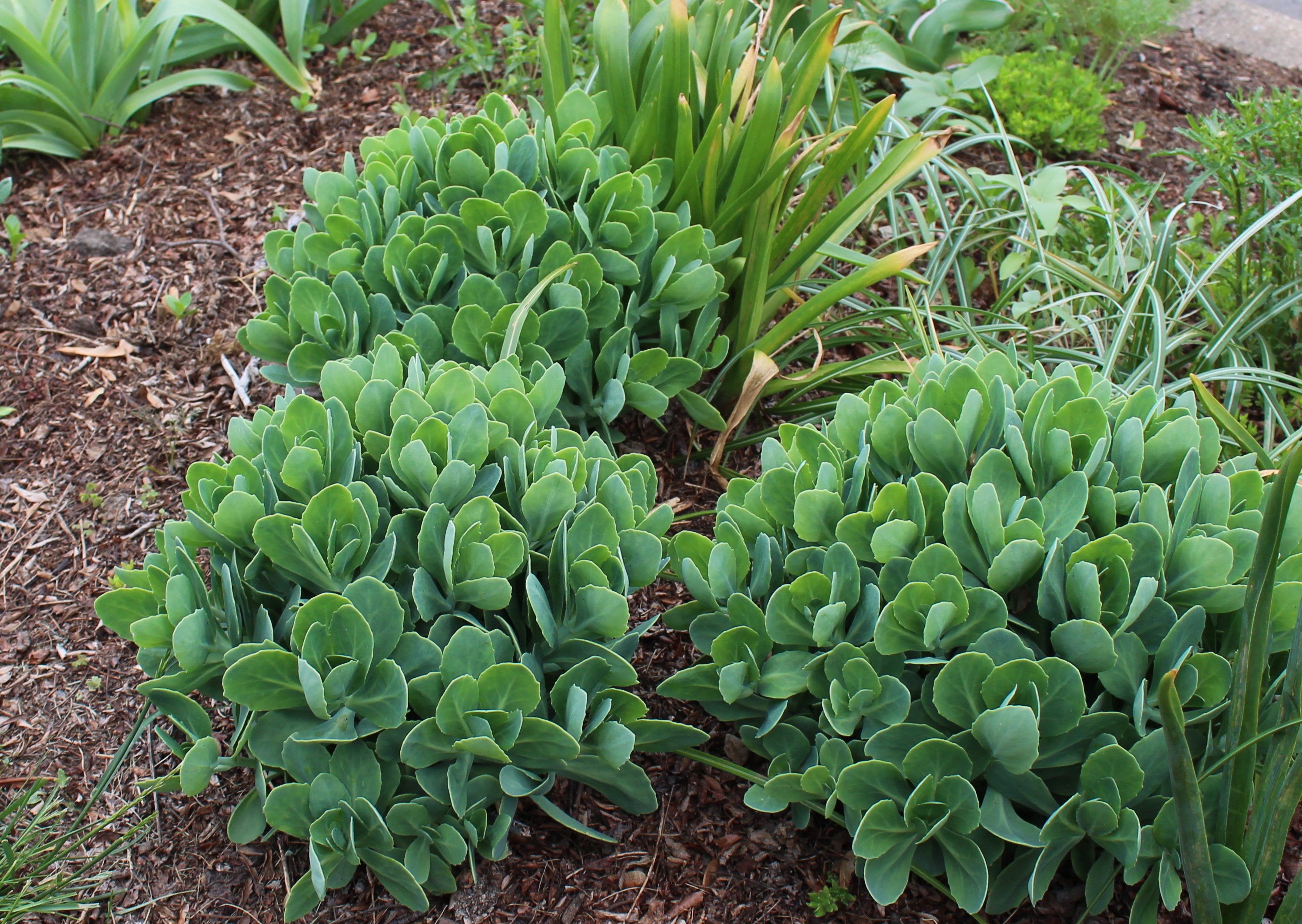
There are some friendlier foliages as well.  The juicy fat clumps of this unnamed sedum spectabile (apparently Hylotelephium spectabile is its new name) always make me smile, no matter how common they might be.

spring clumps of sedum spectabile

Spring clumps of sedum spectabile.  The common types are unkillable, and one plant survived for two years after I put the clump down on a stone step after being distracted while transplanting.

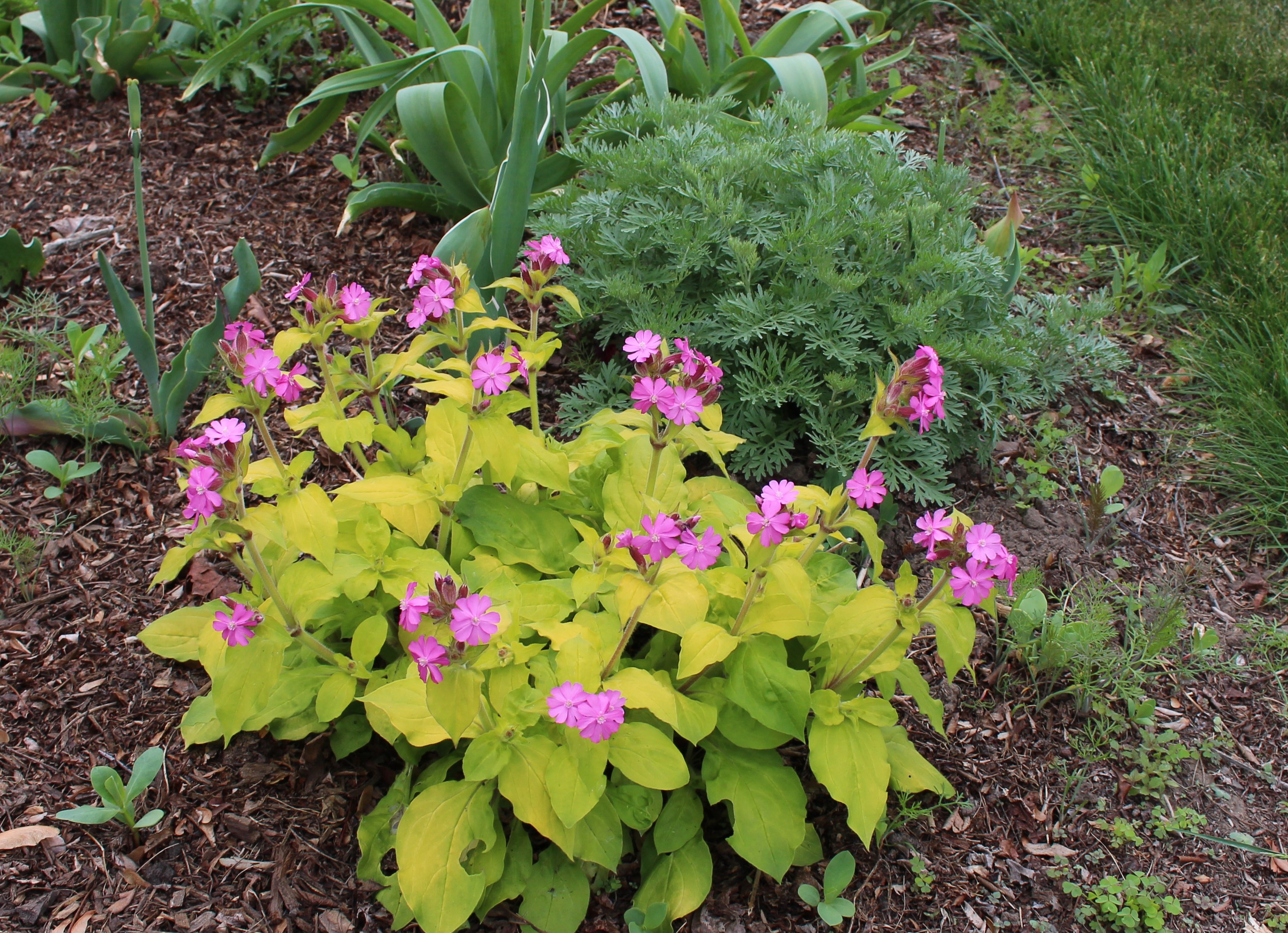
Another foliage favorite which I’m happy to have again is this plant of Silene dioica ‘Ray’s Golden’ Campion, which comes via seed from the talented Nan Ondra of Hayefield.  It’s short lived in my garden but easy to grow once you get the seeds planted.  Just rouge out the plain green seedlings.

Silene dioica 'Ray's Golden' campion

Silene dioica ‘Ray’s Golden’ campion with Artemisia ‘Powis Castle’ coming up behind.  This section of bed is still in need of weeding, fortunately the shredded leaf mulch has kept most of the little guys from sprouting.

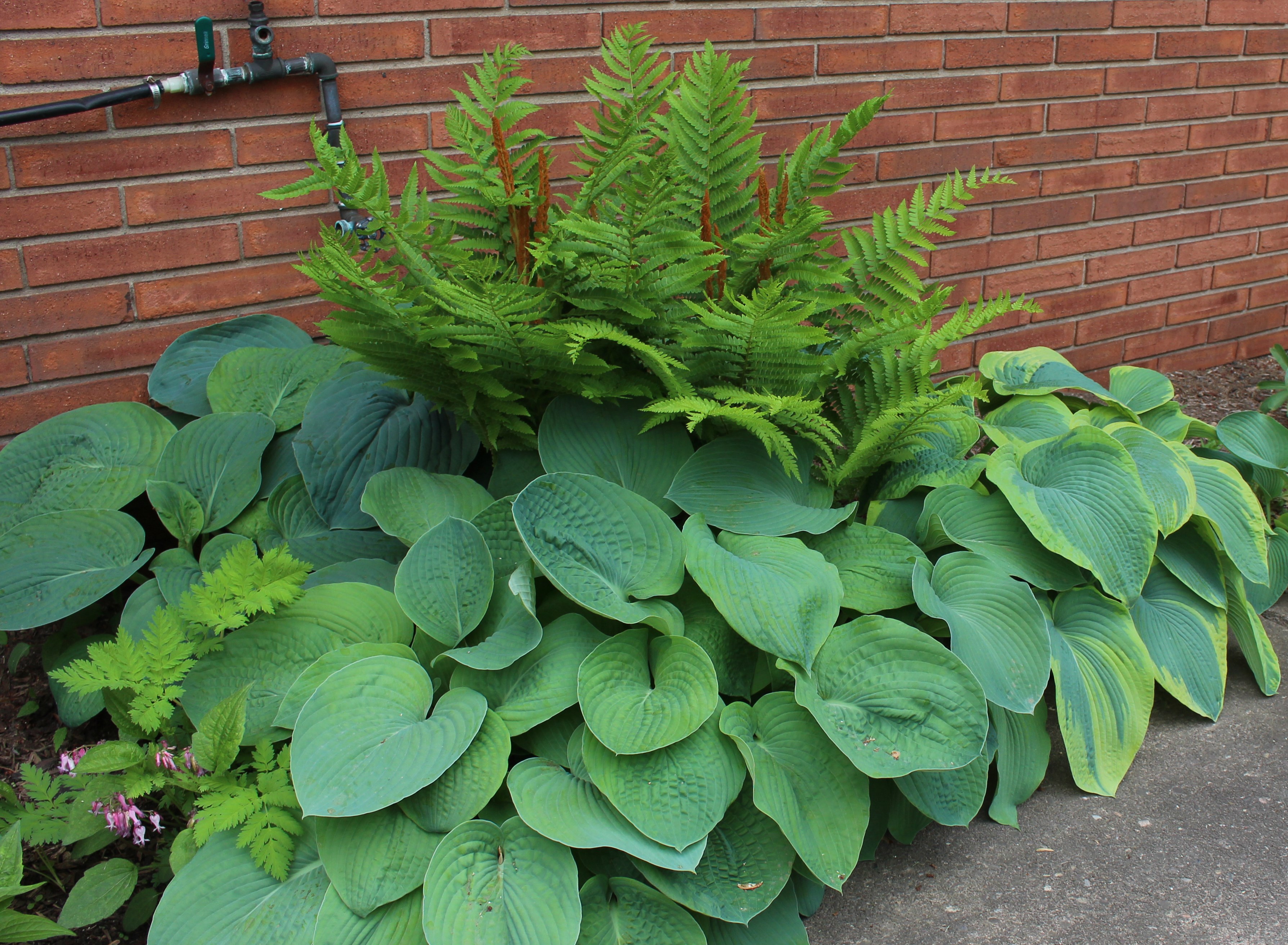
When you circle the house to get out back, you pass what comes closest to a shade bed in this mostly sun-baked garden.  A leaky faucet (left intentionally so for the plants… and laziness) keeps these ostrich ferns and hosta happy here under the dry overhang of the house eaves.

hosta frances Williams seedlings

Hosta ‘Frances Williams’ (just barely noticeable to the right) is the mother to all of these hosta seedlings.  I was curious to see if any would pick up mom’s variegation, but no luck.  All have a similar bluish tint free of any color streaks, a plain look but still beautiful.

The rest of this month’s foliage celebration are also a celebration of wintertime seed sowing.  Lets begin with the seed trays.

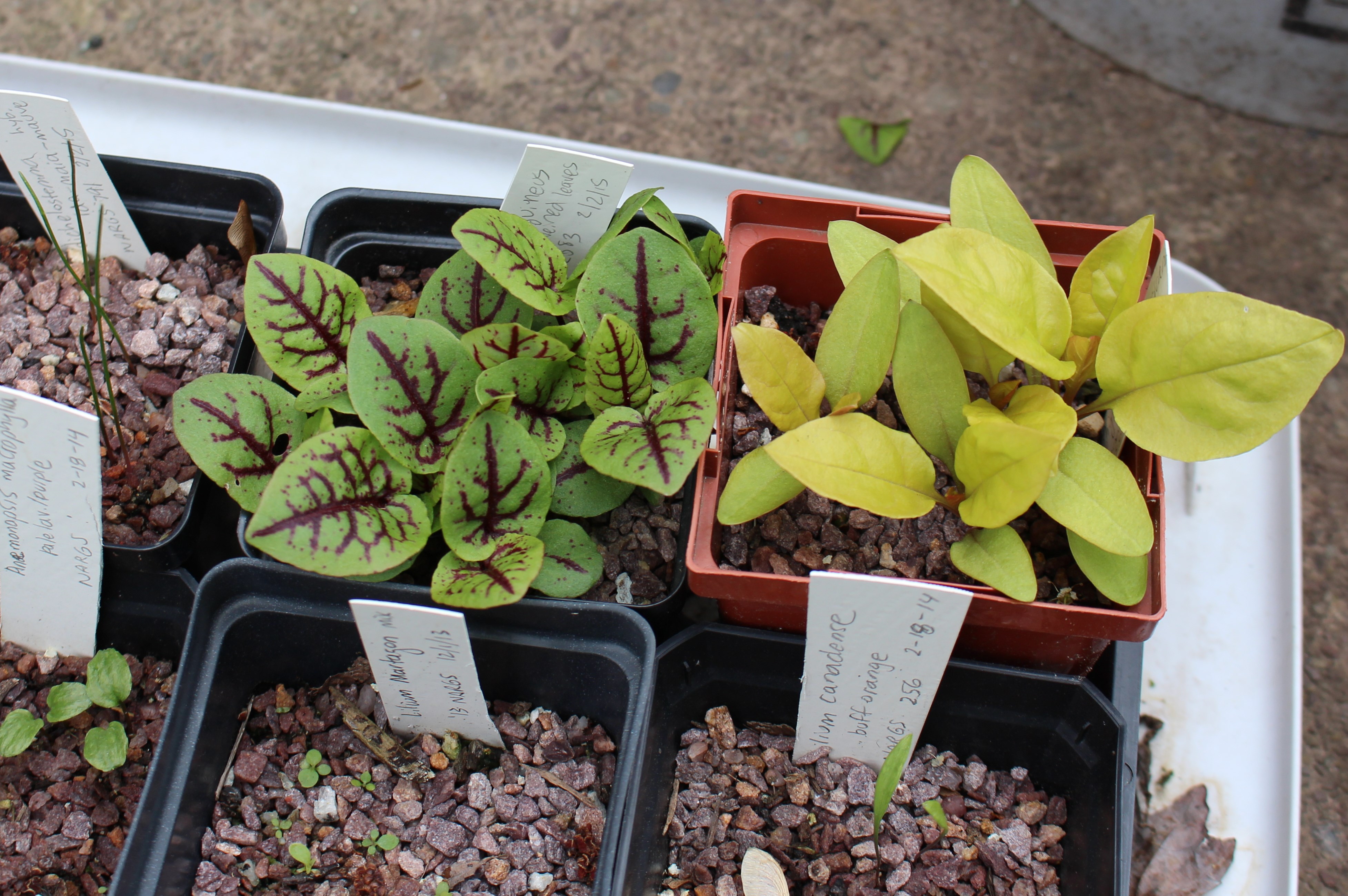
rumex sanguineus seedlings with 'sunny side up' pokeweed

My obsession with weeds continues.  Here the baby pictures of Rumex sanguineus seedlings with ‘sunny side up’ Phytolacca Americana next door make for a pretty combination.  Their common names of bloody dock and pokeweed sound much less special 🙂

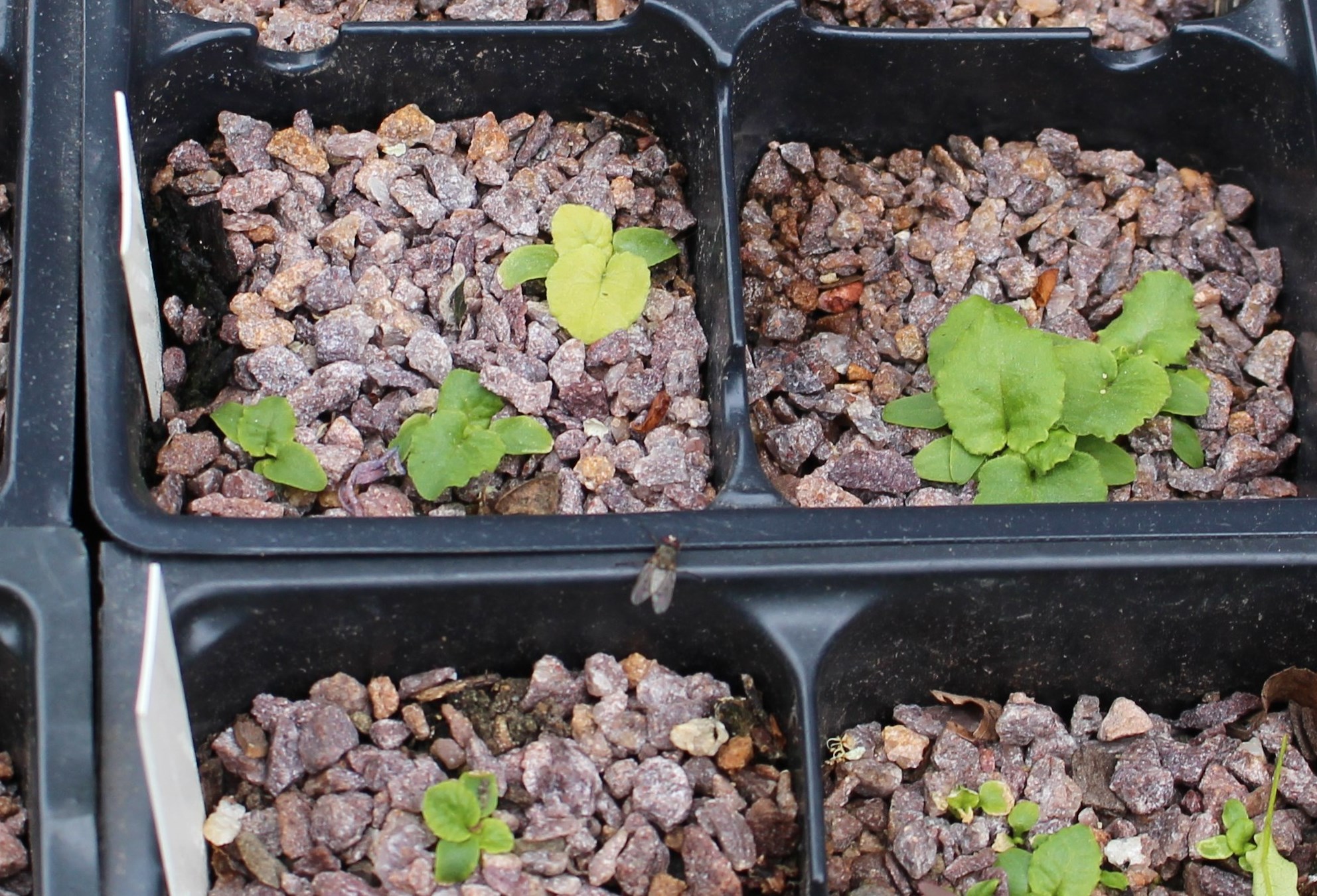
Any yellow leaved seedling is right up my alley.  Out of my American Primrose Society seeds comes this one little oddball.  My fingers are crossed I can nurse it along to adulthood.

primula polyanthus seedlings

Primula polyanthus seedlings with one yellow leaved sister.  I hope it stays this way and manages to limp through my on again off again care/abuse.  -don’t know why the fly had to photobomb the center of this photo.

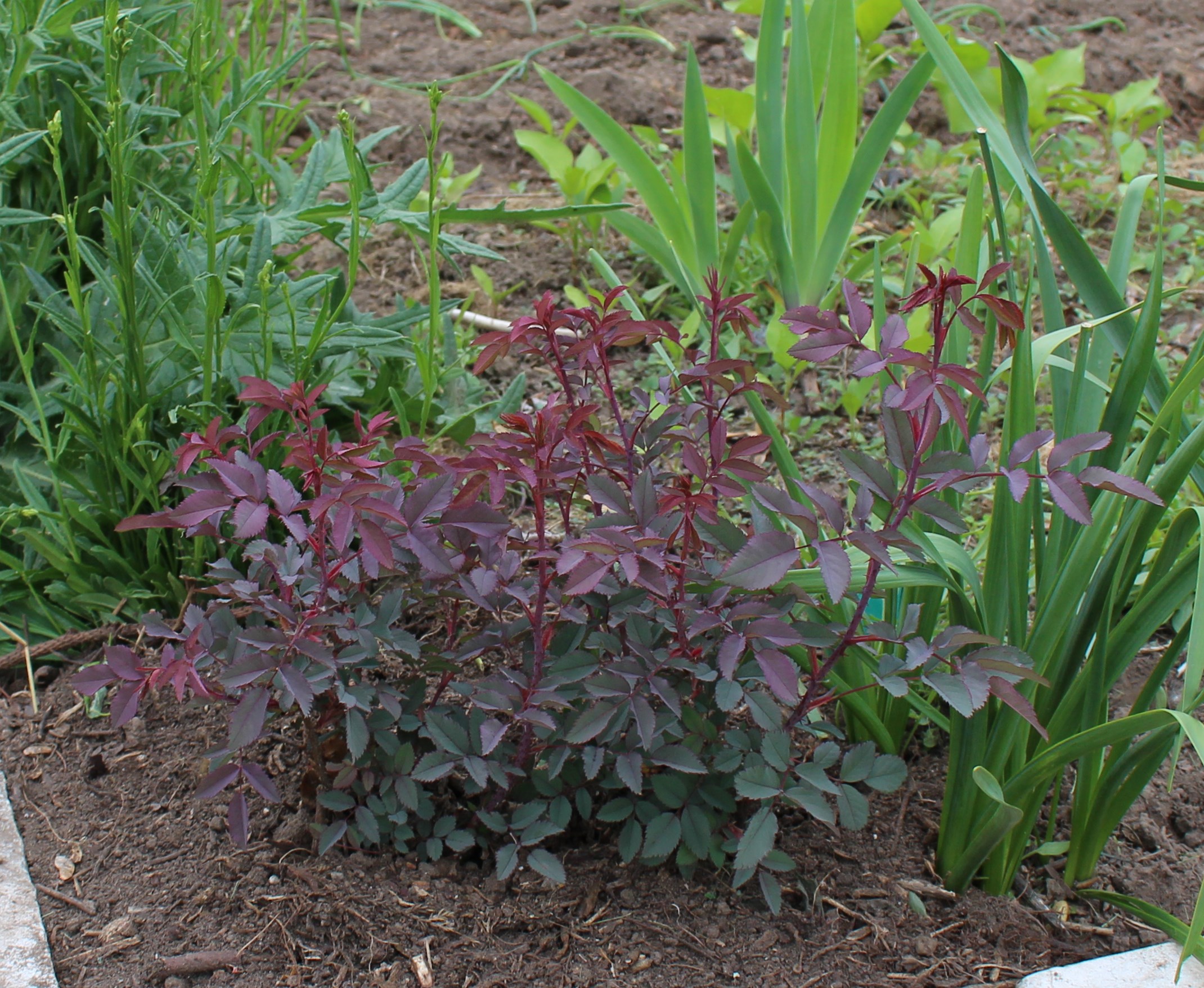
Another seedling which has somehow escaped neglect and abuse is this third year Rosa glauca.  I’m looking forward to seeing this one take off, it just needs to go somewhere other than the tomato bed.  Or not.  Maybe it would look nice next to a couple golden cherry tomatoes 🙂

rosa glauca seedling

Rosa glauca freshly mulched with a shovel full of compost.

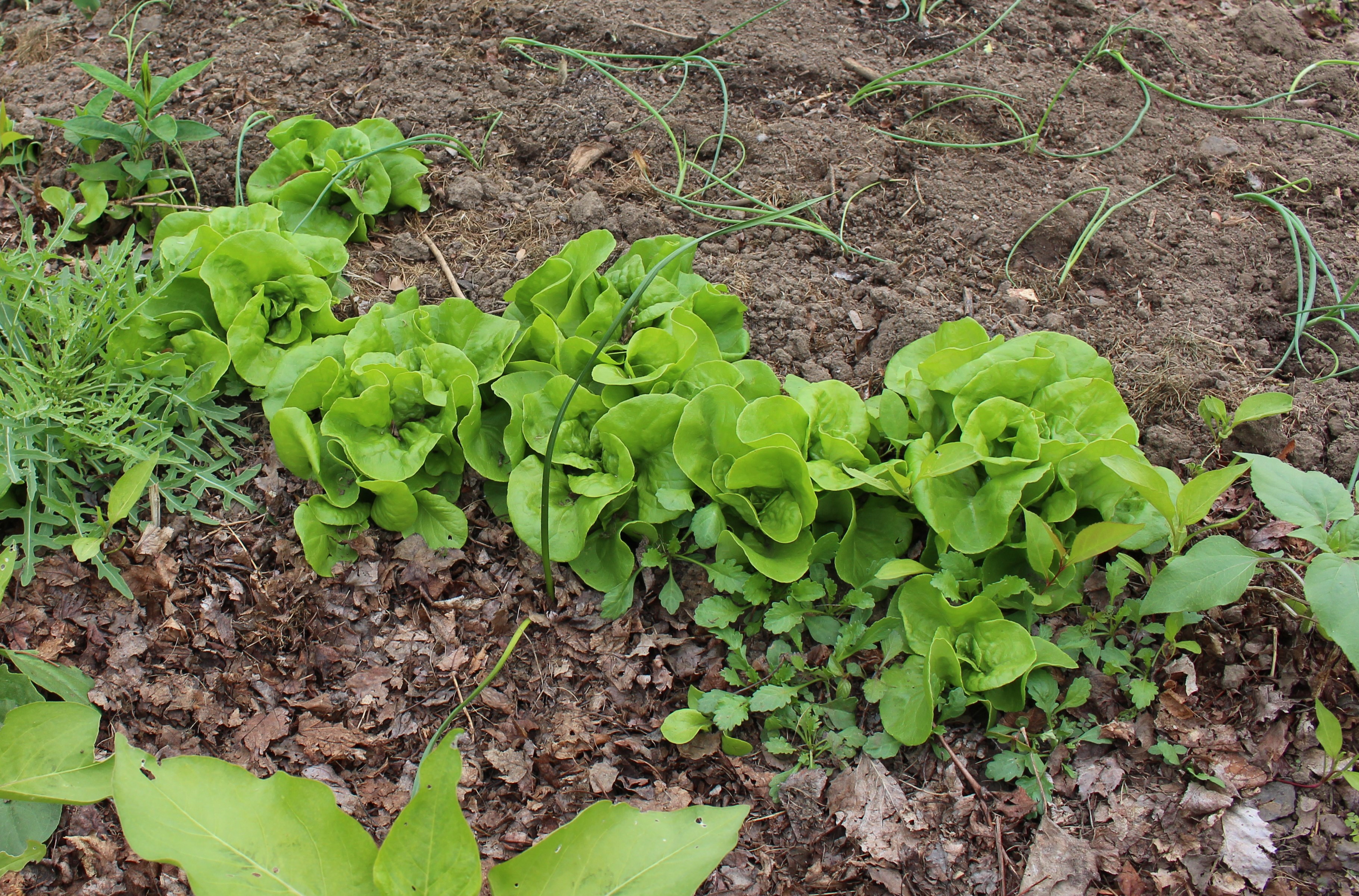
Sometimes neglect pays off.  The lovely leaves of this lettuce crop are the result of not removing last year’s leftovers until they had bolted and gone to seed.  They’ve even come up in a row as this was a ridge of soil where the mulch was blown off during some winter storm.  Dare I say this planting is nearly as nice as the seedlings I fussed over for weeks indoors and then carefully transplanted and nursed along?

self sown lettuce seedlings

The quality of my weeds is really coming along.  In this photo there’s lettuce, a nice bunch of arugula, phlox, daisies, a daffodil and sunflower.  I must stay strong and remove them all… this really is the only spot left where there’s any chance of fitting in a pepper.

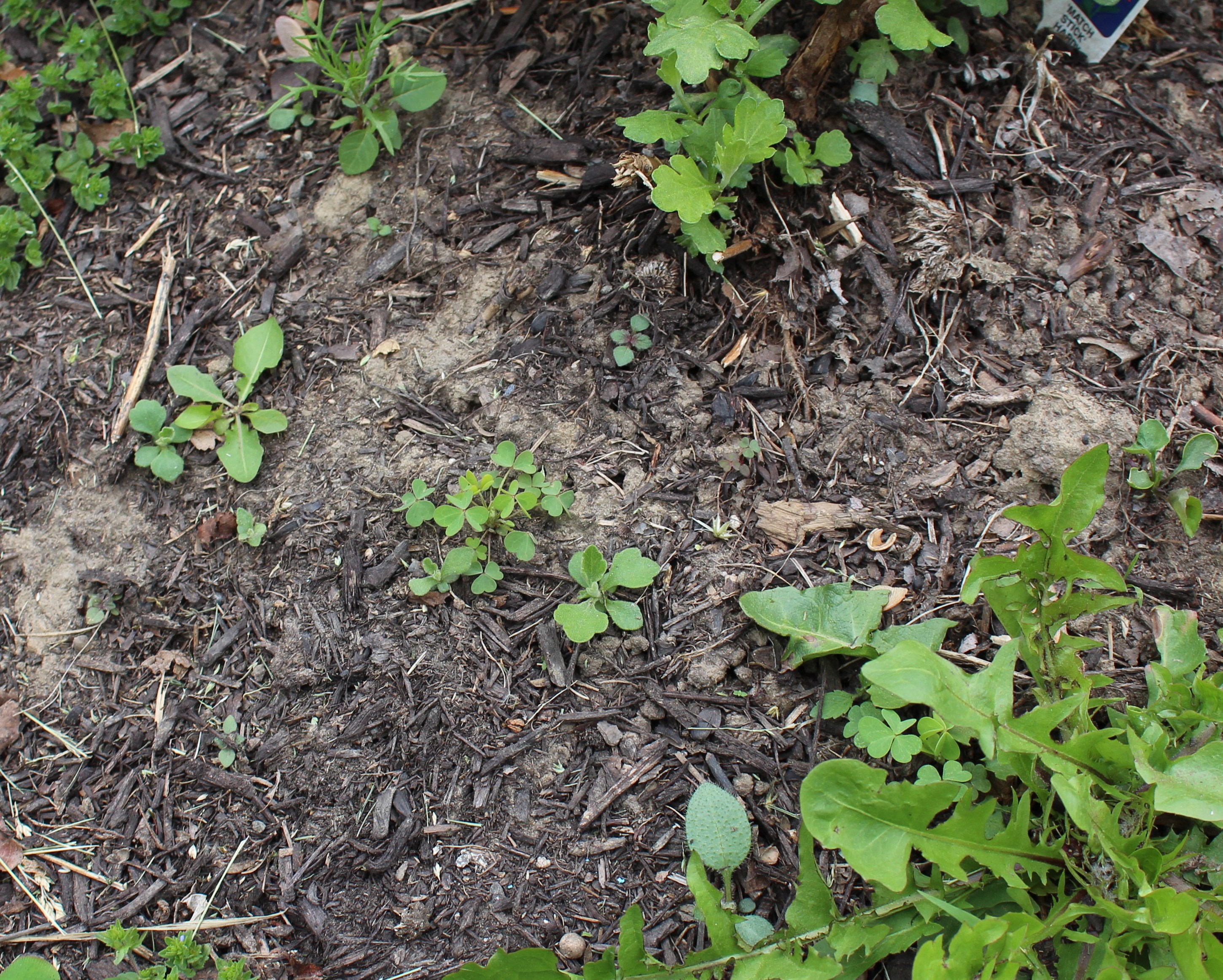
Another weed problem are the many chrysanthemum seedlings sprouting around last year’s plantings.  I must rip them out as well, I have no room for more mums… says he who has a dozen more new little pots in need of planting.

chrysanthemum seedlings

Not sure why I’m posting weed pictures, but you can make out the tiny leaves of chrysanthemum seedlings here amongst the dandelions and clover.

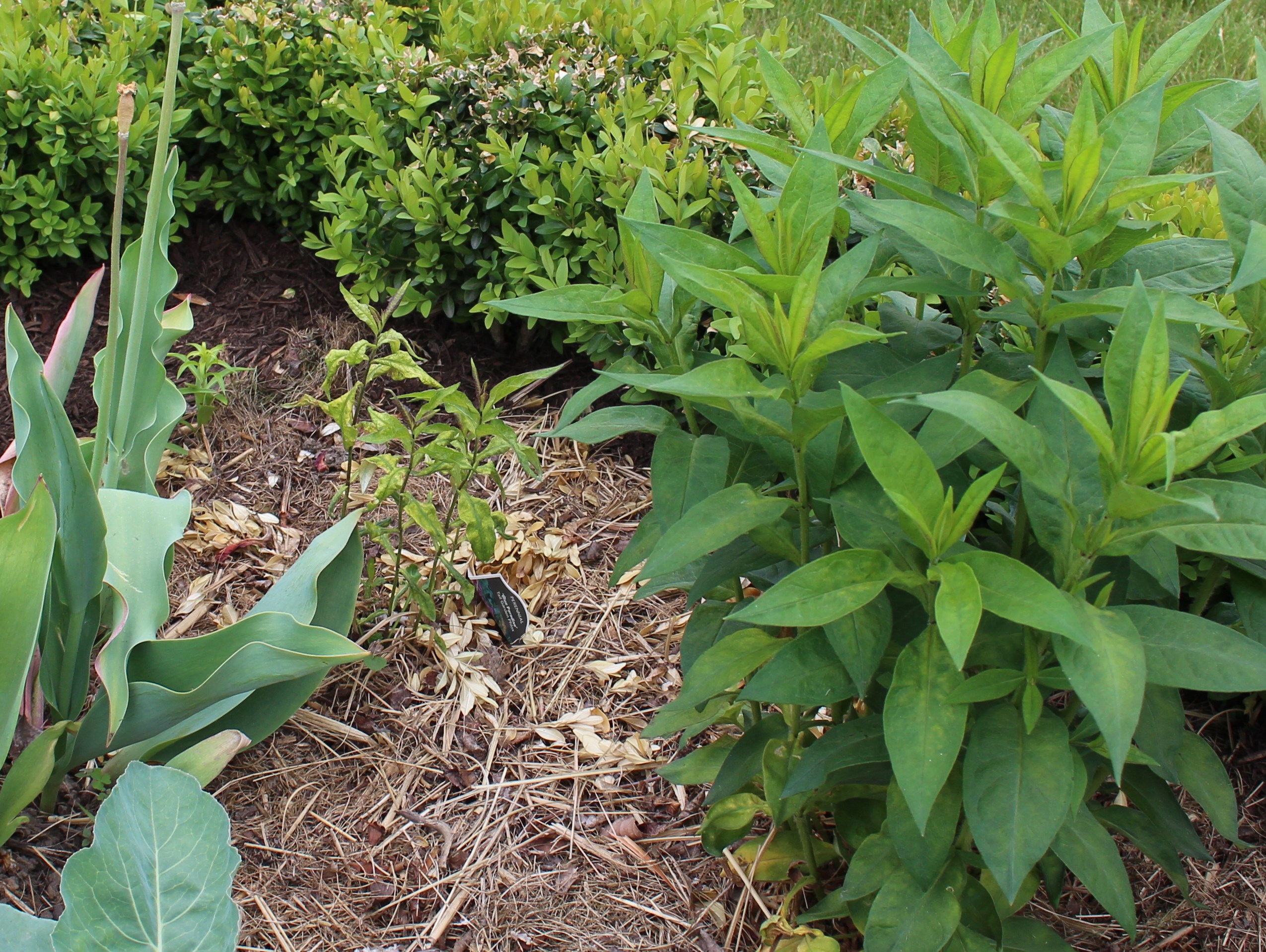
Weeds aren’t the only issue this spring.  The phlox hate the extended dry winds and droughty soil, it brings on the spider mites and I have no interest in spraying for anything.  I’ll make an effort though and spray the foliage off with the water hose while watering (just watering in the first place is probably  good start), then give them a dose of liquid fertilizer.  That and a few more sprays with the water hose might be enough of a shot of goodness to help them outgrow these annoying pests and save this year’s bloom season.  I can’t even imagine a phlox-free summer…

garden phlox with spider mites

What a difference.  Phlox ‘Blue Paradise’ on the left has nearly given up under the spider mite attack, while his neighbor to the right only shows a few yellow leaves and yellowed stippling from the spider mites.  I may just trim him back completely and hope for the best with any new growth which manages to come up. 

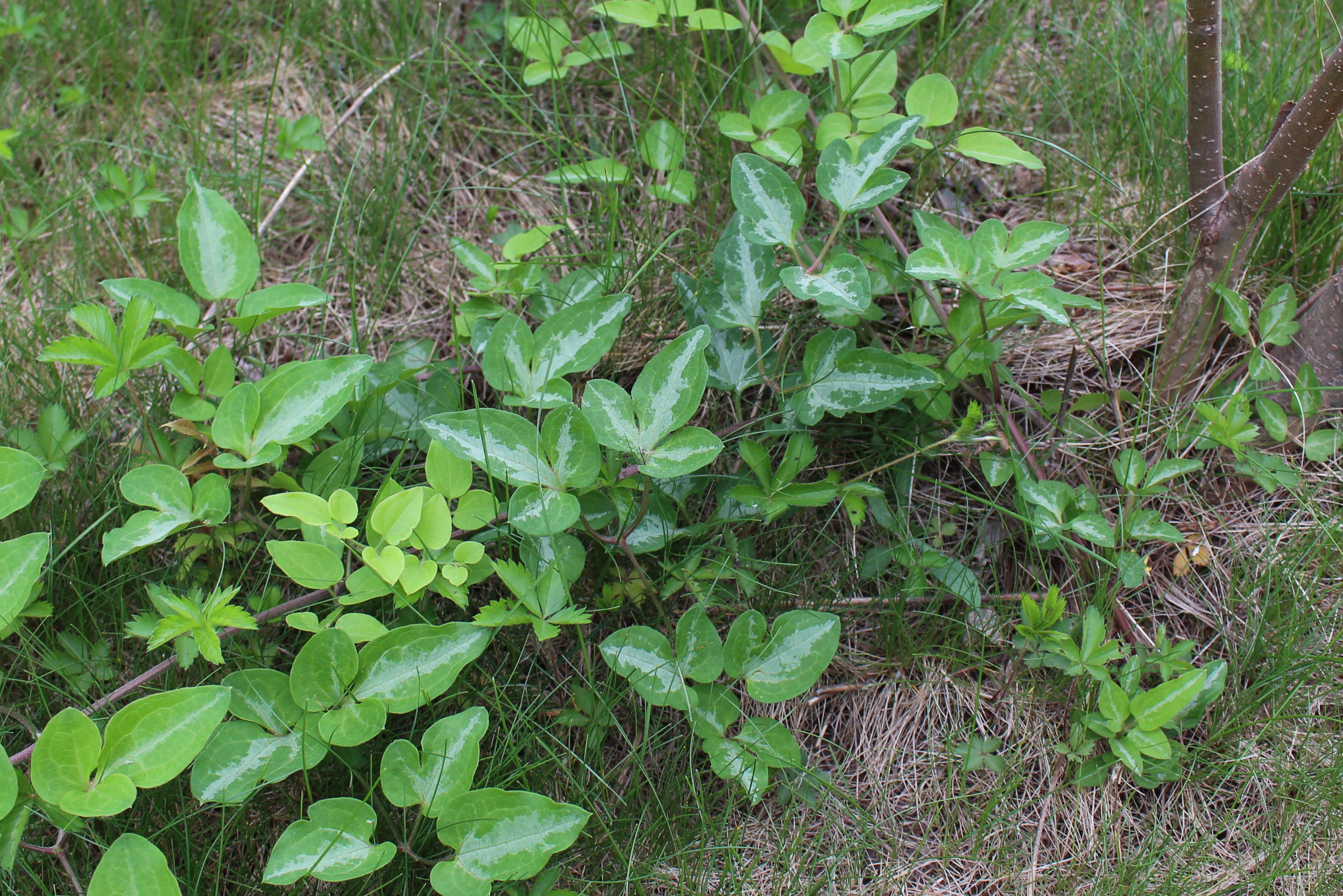
One more bad foliage visit.  Sweet autumn clematis (Clematis terniflora) is a pest in my meadow garden and each spring I battle the legacy of the single vine planted along the fence next door.  I suppose I could spray the clumps and eventually do them in, but I have to admit liking their patterned foliage and late season blooms…. even though I promptly rip the vines off before seed is set.

Japanese clematis Clematis terniflora foliage

Japanese sweet autumn clematis (Clematis terniflora) foliage.  I wish this wasn’t such an invasive thug. 

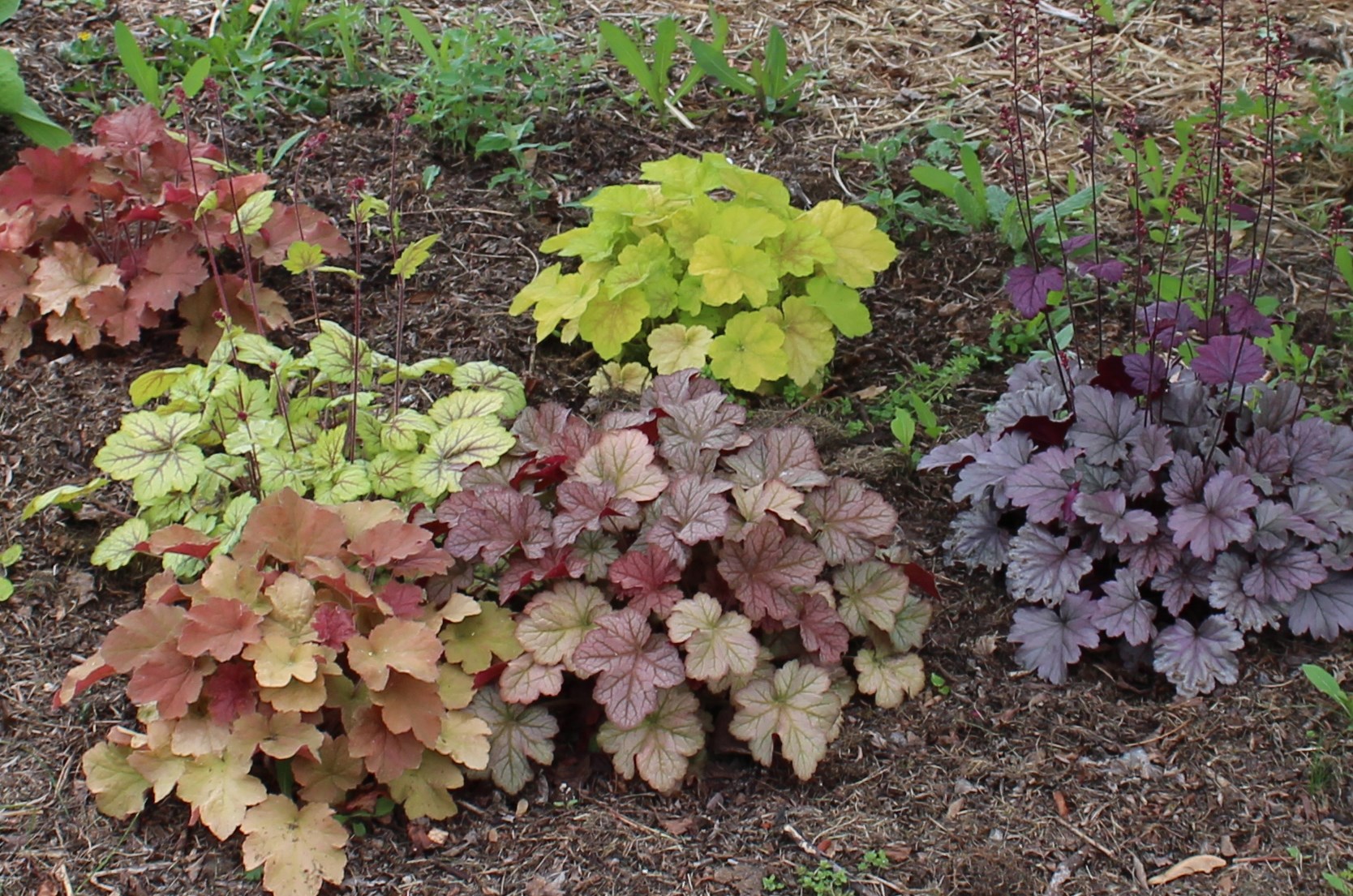
To wrap things up I’ll leave you with something a little cheerier.  With the exception of a few rabbit decimated plants, the bulk of last years clearance heuchera have overwintered nicely and are showing off their fresh spring foliage (as well as their bland and boring flower stalks).  Honestly I don’t like them all together in one big mess, but as plants grow (or die off) I’ll divide the survivors and see if I can work a few clumps into the rest of the garden and make some nicer foliage vignettes.

mixed heuchera planting

Mixed heuchera from last year’s Santa Rosa Gardens purchase.  Yes this bed also needs weeding and more mulch…

So those are the foliage highlights from this end of Pennsylvania.  If you’d like to see what others are up to please visit Christina’s blog to see what people across the world are seeing in their gardens.  It’s always inspiring!

Have a great weekend, here we have three days to observe Memorial Day and in addition to the usual holiday activities I hope to catch up on all things blogging.  Enjoy 🙂

April, May and June, all in one week

I’ve been hiding.  Our temperatures spiked up to 92F (33C) last week and watching the wilted daffodils and tulips being thrashed by the dry wind was just too depressing.  In a few hot days three weeks of bloom flew by and it’s now mostly over.  The temperatures finally dropped today but I still wish we would get some rain before the grass completely yellows.  I don’t like a dry spring.

Fortunately May is still May, and regardless of the weather there’s still plenty to be happy about!

growing perennials from seed

At least my winter seed sowing is paying off. This year I have my first frittilarias and tulips from seed, and it’s endlessly entertaining to search the pots for the latest sprouts.

Between NARGS, HPS, and American Primrose Society seed exchanges I have plenty of pots of little goodies to experiment with, and as long as nobody mentions the fact I have no room for most of these, I think we’ll all just enjoy the enthusiasm of the newest little sprouts in my garden 🙂

lilium martagon seedlings

Martagon lily seedlings going on to their third year.  At this rate there’s not much rush to find more room.

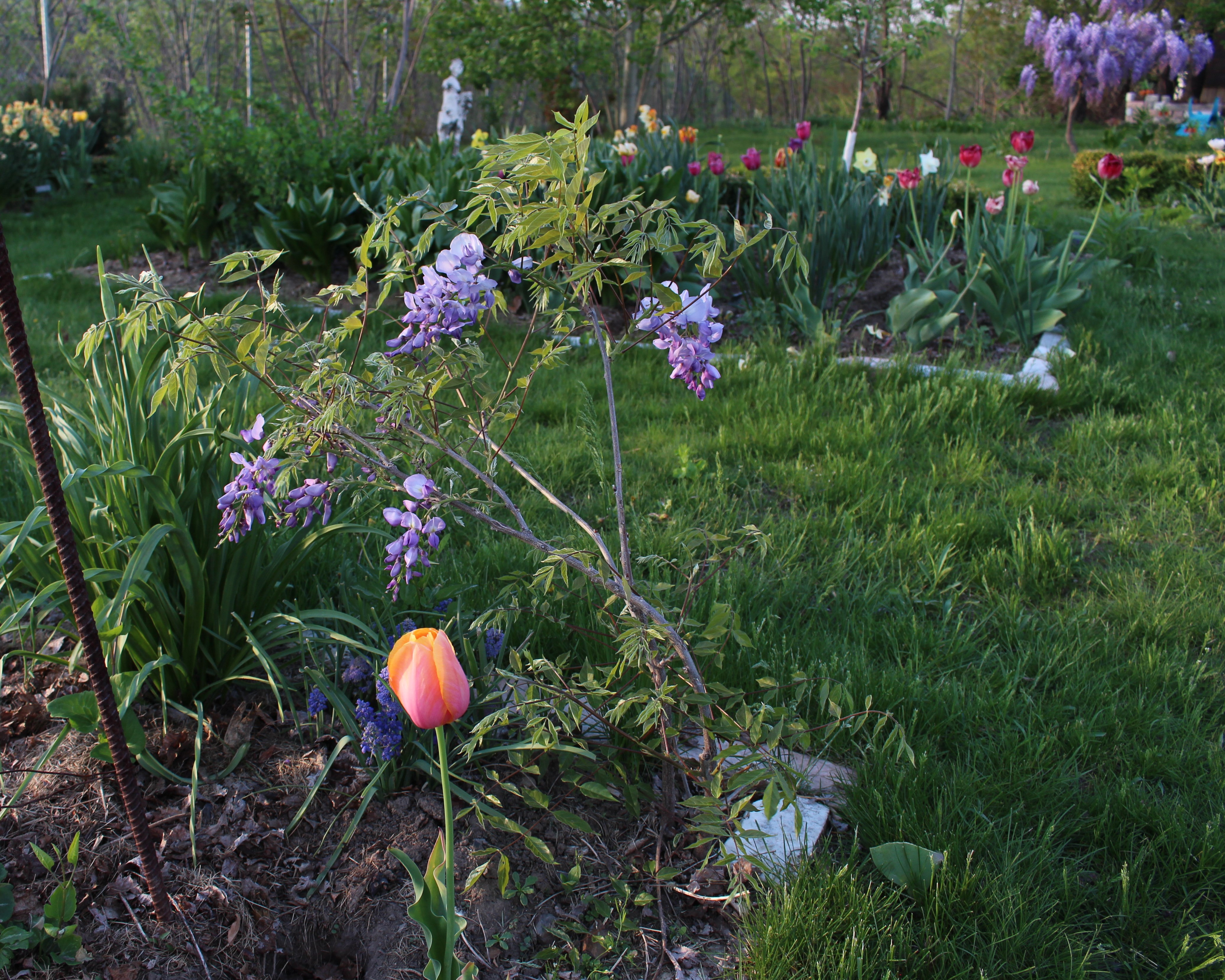
In addition to bringing on the seedlings the heat brought the wisteria from buds to blooms in barely four days.  Last spring was a total loss due to a harsh winter and late freeze, but this year about half the buds survived.  I don’t even miss the lost buds, it’s still full of flowers.

standard wisteria tree

Japanese wisteria planted out in the meadow.  Without anything nearby to grab onto and climb I think it’s invasive tendencies can be kept under wraps.

Maybe you noticed my sad little fritillaria imperialis blooming behind the wisteria.  The hot wind wilted the flowers quickly but I managed to get a photo of the interesting inside of the hanging blooms.

fritillaria imperalis nectaries

The nectar drops at the inner base of the fritillaria imperalis blooms.  A cool thing to look at, but it’s just a bit too “glandular” in appearance for my tastes!

The fritillaria will be something to keep my fingers crossed for in order for it to survive, but the japanese wisteria cannot be mentioned without a warning about it’s invasiveness.  Killing it would be far more work than the neglect which keeps it alive, and to turn your back on this plant runs the risk of having it take over.  I keep it in the middle of a lawn area were it cannot grab onto anything, to grow it as a vine and keep it on anything less than a massive arbor would be more work than I want to consider.

wisteria that doesn't refuse to bloom

Some seed grown wisteria may take decades before they finally decide to bloom, mine is a cutting off my parent’s plant which has always put on a heavy show of flowers.  Even this sucker which came up last year after I moved the mother plant already has a few blooms on it.  A smart person only needs one wisteria, I’m not sure why I’m going to keep this second one 🙂

Speaking of plants which wouldn’t mind taking over the world, I think I’ve finally decided against keeping this darker purple vinca minor.  I like it well enough but without a border or wall to hold it back it’s spreading out just a little to enthusiastically.  This plant (and my wayward campanula glomerata) are officially on the elimination list.  I might put some of it next door in one of the boring mulch beds around my mother in law’s house.  It’s not that hard to rip out, improves the look of an empty mulch bed immensely, and between the house and lawn it shouldn’t get into too much trouble.

vinca minor atropurpurea

Vinca minor ‘atropurpurea’.  A good groundcover in the right place, but a little to aggressive for my beds, and I wouldn’t want to let it escape into the wild. 

Before the heat struck I did manage to finish up a little hard labor.  The front house bed has had a once over, been expanded and topped with new mulch.  I forgot who gave me the idea, but I divided up the blue fescue clumps and spread them far and wide across the front of the border.  I like it, which isn’t something I could say the last time I redid this foundation planting.

mixed border foundation planting

The front foundation planting looking all springy.  Any opinions on the pink rhododendron in front of the brick?  I have mine, and it involves a shovel 🙂

The bed along the front of the house has been one of my favorites this spring.  The shelter of the house gives a little protection from the drying wind and my mulching has kept down many of the most annoying weeds.  Some would say my thistles are weeds but I think they’re fantastic.  You’re not going to want to touch them though….

Ptilostemon diacantha

Ptilostemon diacantha.  I can’t wait to see this one bloom (even though the blooms may be slightly anti-climactic) and will surely collect seeds if I get that far… using gloves of course 🙂

Something a little more suburbia-friendly are the tulips and camassia.  It looks nice enough here but I may remove a bunch of the camassia.  In the heat I don’t think they’ll last more than six days, a little too short of a bloom period for my tastes although I can’t complain about how carefree they are.  Maybe I’ll try them somewhere less prominent.

tulips and camassia

Tulips and camassia highlighting the front foundation planting.  The blue fescue has been divided up and spread all along the front now and I think it looks better than the gappy line which was there before.  Funny to think these are all the descendants of a single moth-eaten clump which I rescued from a neighbor’s yard. 

Close up the camassia are an airy, beautiful flower, and I think to see it growing en-mass in its native Western North American haunts would be great.  Maybe someday.

camassia leichtlinii caerulea or 'blue danube'

Camassia leichtlinii caerulea or ‘blue danube’, I’m not sure which since I planted both but they all look identical to me.

Iris season is next.  The stalks are shooting up all over and it makes the rapid passing of the daffodils feel a little less painful.  I’m sure it will be a fantastic year for iris…. unless that’s the exact point when the rain decides to come.

iris pallida 'variegata' in a mixed border

I always forget to divide the awesome iris pallida ‘variegata’.  It’s one of my favorites but seems to like more frequent division and better soil than some of the others.

So that’s it from here.  I have to apologize for not responding to comments or leaving any on the blogs I visit,  I’ve been keeping up with the reading but for the most part have been just too grumpy and unmotivated to add any productive comments.  But there’s hope.  The first irises are opening today and I’m already feeling better.  This sounds good, but unfortunately the weekend is already filled to capacity with field trips, birthday parties, dance recitals, sports banquets and baseball games and I’ll be lucky to even step foot in the garden for a few days.

But it’s almost Friday, and I hope a great weekend is had by all!

mumble mumble mulch

Spring is here and I love it.  It means work of course, and for me it’s hard to hit just the right balance of sitting around and actually doing something, but I try my best.  One problem which always haunts me is that I’m the type who (again while sitting around) usually gets tons of unnecessary projects in his head, starts them, and then moves on before they’re done.  Fortunately I’m not much bothered by this, but someone else here is, and sometimes decides to be helpful and remind me of the obvious…. but most of the time that person doesn’t notice unplanted chrysanthemum collections or realize it’s been years since the boxwood cuttings should have been planted out, so it all works out fine.  How can it not when rain and rainbows and warm sunshine have brought out the daffodils?

double rainbow over the garden

Double rainbow over the ‘potager’.  A beautiful sight if you can tune out the industrial park and white vinylrama next door 🙂

I’ve been relentlessly mulching.  It started innocently enough with a load of mulched leaves hauled out of the woods, but then exploded from there.  My neighbors were so generous last autumn with several heaps of nicely chopped leaves and grass clippings that I couldn’t stop lugging them back to the garden.  The entire front bed got a nice layer and I would have kept going but of course ran through all the available bounty.

cheap leaf mulched perennial beds

The front perennial bed all nestled in with a nice mulch of chopped leaves.  The earthworms will munch them all down by the end of  summer but for now they should go a long way in keeping the weed seedlings down.  Did I mention it was all free?

As if that wasn’t enough, for some reason when finished I got it in my head to crack open the wallet and order a load of shredded bark mulch to finish off the yard.  With most of the front already covered I felt finishing with a little purchased mulch might be something the budget could handle, so $290 later I was mulling over another new heap in the driveway.  It seemed a steep price to me but judging from the other $1,000 plus order slips hanging next to mine I guess I’m being downright frugal.  Also, mulch is a gardening expense the boss never criticizes, so now it just needs to be spread.  More on that later, daffodils first!

narcissus tahiti daffodil

Always a favorite, ‘Tahiti’ is an awesome daffodil.  Sorry if you’re not a fan of doubles, but this one never fails, and the yellow petals seem to glow with an orange shade which I love.

I’m stuck on orange lately.  The daffodil ‘Serola’ tops the list this year.

daffodil narcissus serola

Narcissus ‘Serola’ with the first of the tulips opening behind.  When I divide this bed (hopefully this June) I’ll need to put these out in the front garden to brighten things up even more!

My whining about space in the vegetable garden is entirely due to my weakness for spring bulbs and the abundance of open space left when vegetables finally give up the ghost in September.  It’s so easy to just pop a few bulbs in here and there 🙂

daffodils in the vegetable garden

It’s so much easier to line a few daffs out in the vegetable patch than it is to decide on a spot in the open garden!  I’ll just plant a few pumpkins or squash over them in July to make it look respectable again. (fyi it’s bouncy house season so please ignore the deflated mess in the background) 

One more orange.  ‘Kedron’ has a color which stands out very well…. if you’re into colors that stand out very well 🙂

daffodil narcissus kedron

Narcissus ‘Kedron’.  Notice the empty spaces nearby.  Not everyone does well here and I just don’t have the patience to nurse unhappy plants along, so while ‘Kedron’ takes off the others just fade away…

Although the vegetables complain, bulbs in general seem to like my lazy (or complete lack) of an efficient watering ethic.  Tulips in particular like the open, sunny, fertile soil, and unless I weed them out (which I could never do) most clump up and bloom.  Even if I do pull a few of the smaller bulbs they just end up in the compost anyway so get spread throughout the garden a few months later when I take and spread the barely rotted goodness.

tulips and double hellebore

Yet another plant which needs to find a permanent home outside of the vegetable patch.  This double hellebore seedling is taking up prime bean and pepper real estate.

Believe it or not I’m making progress with my bulb issues.  When I was younger and carefree I used to plant out patches of whatever tulips I had on hand and then dig them up again in June just in time to clear the beds for tomato planting.  It was insanely beautiful (to me at least) and I can’t rule out this happening again.

mixed darwin tulips

Tulips blooming in the vegetable garden (spring 2013). These would all be dug, dried, and stored while the warm season veggies occupied the same beds.

Maybe my bulbaholism isn’t getting any better.  Maybe it’s just migrating.  I planted these fritillaria imperialis bulbs out in the meadow late last fall (clearance bulbs) and can’t wait to see how they do.  If I get one decent spring out of them I’ll be thrilled, but in my heart I want them to settle in… even if they do look slightly out of place in the short turf.  Hopefully they enjoy the dry summertime baking this spot receives, and the grass should come up soon enough to hide the yellowing foliage.

growing fritillaria imperialis

My ‘meadow’ is in danger of becoming a bulb field.  The fritillaria imperialis don’t look entirely happy yet, but I have my fingers crossed they’ll at least bloom and then maybe return next spring?

Out front I may have a few bulbs as well.  Early spring is when I love the front beds the most.

spring bulbs front entry

Tulips and daffodils where snowdrops ruled just a few weeks ago.  I should have taken this picture today since I mulched yesterday afternoon, but after all the work I was ready to just sit and relax!

I better wrap this post up.  Now that mulch sits in the middle of the driveway I’ve got plenty to do even from the non-gardening viewpoint.  And it’s not the fastest process since mulch needs to be worked in between sprouts and edges need to be tidied up…. and actually a bigger problem is that I’m coming up with all kinds of bed enlargements and side projects while I dilly-dally on finishing the main project.  I promised to trim back the yews along the side of the house, and this golden arborvitae just happened to show up in the lawn between us and the neighbor.  As long as I’m mulching, might as well create a nice big bed around it 😉

new perennial bed

new perennial bed

Let me get out there then.  Good luck on all your own spring projects, may they progress more quickly than my own!