Our latest arctic blast has got me going through old pictures, and I found a few that have been sitting around for a while. They’re all about the bed along the front of the house, and they all relate to a redesign I attempted this past spring. Let me know what you think!
The house we live in now was built by my wife’s grandparents in the late 1950’s, and is probably still considered stylish by many. Unfortunately we don’t share that retro-Italianate taste in ranches and set about to change things up while remodeling. This was our front view circa spring 2009, not long after we moved in.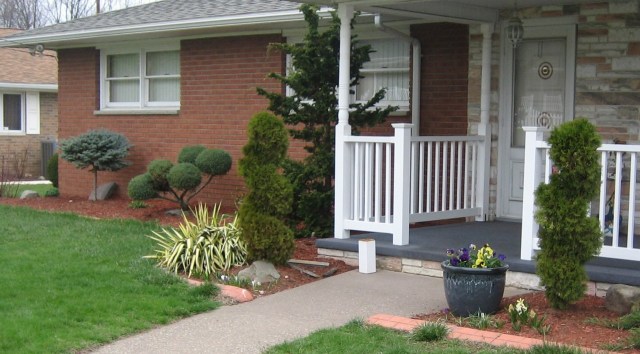 The combination of toddler, new baby, and home renovations is a fun mix, and outside changes were mostly put onto the back burner, but that summer I did manage to get out the salmon colored edging and covered the colorful red bark mulch with a more natural shade. I’m not saying it looked better, but at least it’s a little less sterile looking.
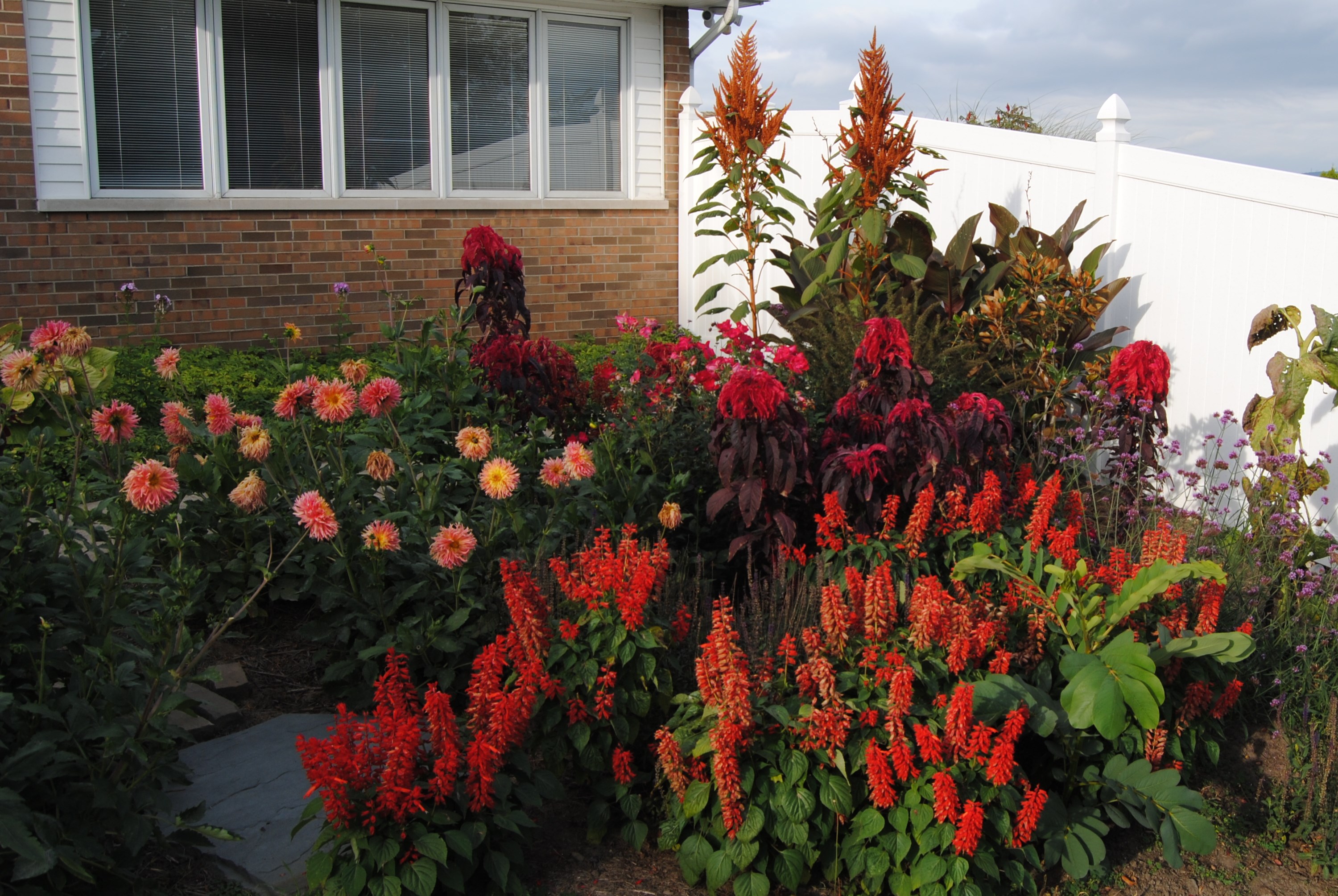
 If I was forced to give an answer I would probably say I hate the orangey color of our brick. We’re stuck with it though, and since there’s not much of a design flair in me the collector gene took over, and all the cuttings and divisions I collected easily found a home in the vacant mulch beds. By 2011 the mess was spreading and in an attempt to reign in the disorder I consulted with the ‘can’t beat em join em” theory. I tried to embrace the orange by entering into a red phase. I figured if I planted an even brighter scarlet then perhaps it would be bright enough to distract viewers from the orange brick…. or maybe I was trying to offend the neighbors, I don’t know- but I would like to challenge anyone out there to show me an example of red salvia used tastefully 🙂
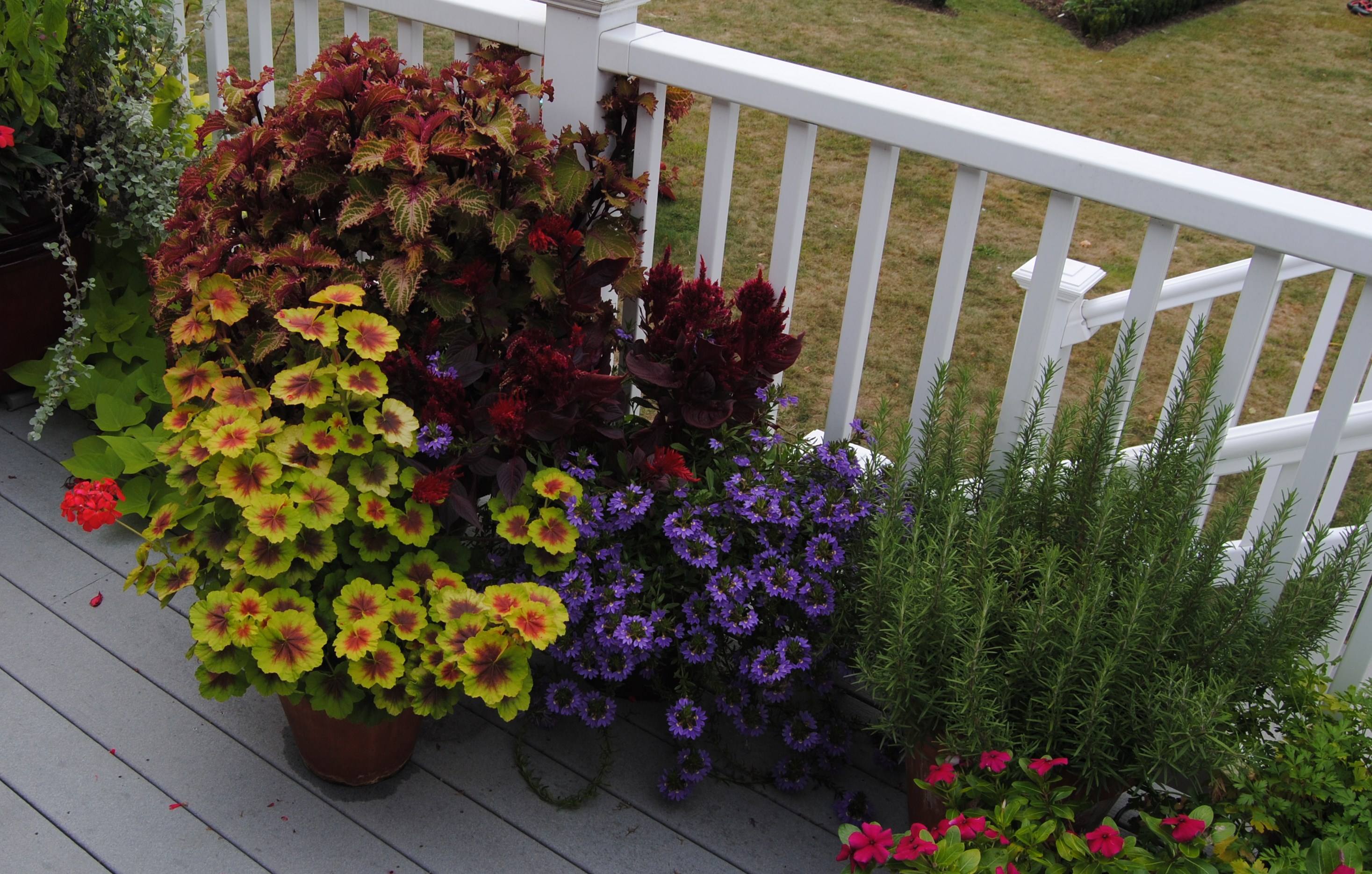
Maybe Secretly I delighted in reds and chartreuse, and I think I still do….. just not in the front bed highlighting the orange brick. This lovely combo has been saved and moved to the tropical bed to face down the already-overwhelmingly tasteful white vinyl privacy fencing there…. I’m not sure it looks much better there, but at least I’m sparing the neighbors from this assault of color. (fyi the hummingbirds loved it)
Now what to do? The next year I had no enthusiasm for the bed without my lovely coleus and salvia. A few perennials filled in to give it a fuller look, but it still lacks something. The blue spruce was getting too big for under the window, and the Chamaecyparis too tall….. and I was getting tired of trimming the silly pompom juniper.  So late that fall I laid out a bed expansion. Truth be told I over estimated the space available for tulips, so after lining out the new border I dug tulips in all around in the lawn and then left the grass for spring removal.
  That spring as the tulips came up through the overturned sod, I finished digging under the rest of the grass.
Moving the spruce was no picnic, and I almost thought it would die (considering how many roots I cut) but I think it will be much better off in the new position, and give a nice anchor to the end of the bed. Fortunately for me, just when the shrub moving started to get too back-breaking, a buddy stopped by to help.
Soooo, here’s the finished product. I moved a small paperbark maple over a few feet to be included in the bed, lined it with blues fescue divisions, and placed three tiny holly bushes where the spruce was. Against all other urges I tried to limit the plant choices and plant in groups. The curve is a little odd, but I’ll work on that during the next expansion 😉
With mulch applied and tulips blooming, it didn’t look half bad, but to be honest I still didn’t like it. (one of the reasons you rarely see pictures of this border)
I do like the yucca “color guard”. It and the blue fescue seem to be a nice fit for this border. Blues, yellows , and greens seem to complement the house better than all the loud mixed up flower colors. For a couple weeks I didn’t mind this look, even as the tulip foliage yellowed and died off. But then boredom and excess plants struck, and I was back to my old ways of sneaking in a few new plants here and there.
Red cabbage wasn’t the worst color to add, but maybe it was just a little inappropriate for a front yard foundation planting. Coleus crept in again, and the sunflower seedlings looked so innocent in the early summer…. but the lavender with the yucca and blue fescue kept it respectable.
Sunflower explosion. Still better than my red experiment, but not yet the look I was going for. 
Maybe annuals are just not a good choice for this bed. I’ll rethink it next year and maybe skip the dahlias too 🙂 For now I’ll use the excuse that they distract you from the too-small hollies planted under the window…. better to be distracted than to be downright bored I think…. By the way those hollies better get growing, I want them nice and big and prickly by the time my little daughter starts to consider things like sneaking out a window or meeting some Romeo who comes by throwing pebbles.
The border last month (before winter and winter boredom hit).
Four things: bigger plants, get rid of the grasses, remove the tall evergreen, and stick to a mellow color palette…. and of course expand the bed just a few more feet 🙂 Any other suggestions? I know there will be some good ones and I’m looking forward to hearing them as well as hearing some more criticism. I can take it, and I’m hoping it will get me back on the path that leads to me finally liking this bed!




 One of the centerpieces was the tree fern room. Always flooded with a thin sheet of water, this year Granny Smith and Rome apples were arranged into a floating flourish of color. The hanging “chandelier” isn’t too shabby either!



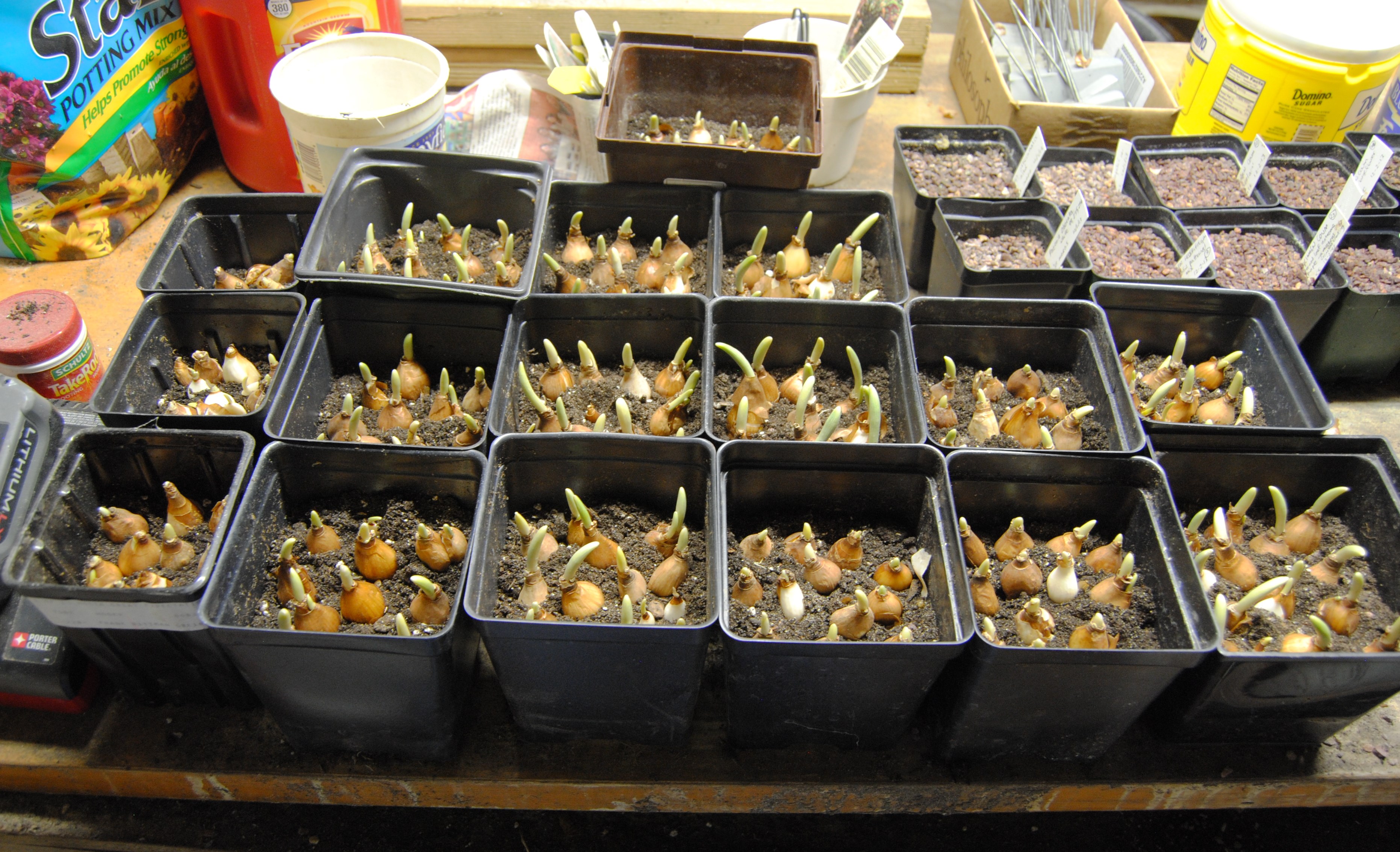


 Writing out the labels probably takes the most time. Name, notes, date, and source written with a plain old pencil.


 All kinds of goodies were re-discovered just in time for fall planting, I think it was something like 20 packets for $7 and I picked out 40. Who can’t use a few more lily seedlings coming along or a couple packets of winter aconite seed? NARGS keeps previous lists online, so if you’re curious to see if it’s something you might be interested in,
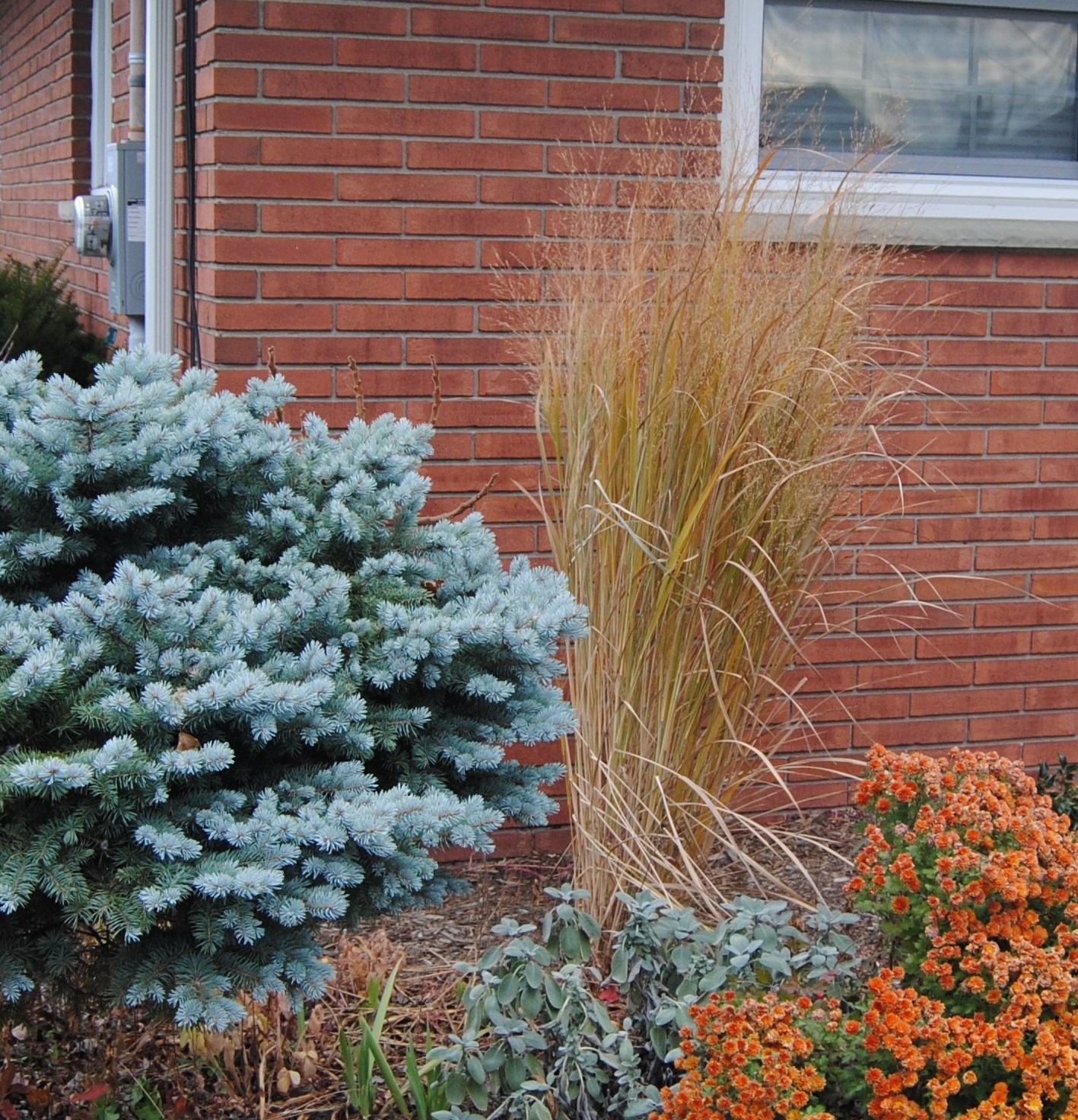

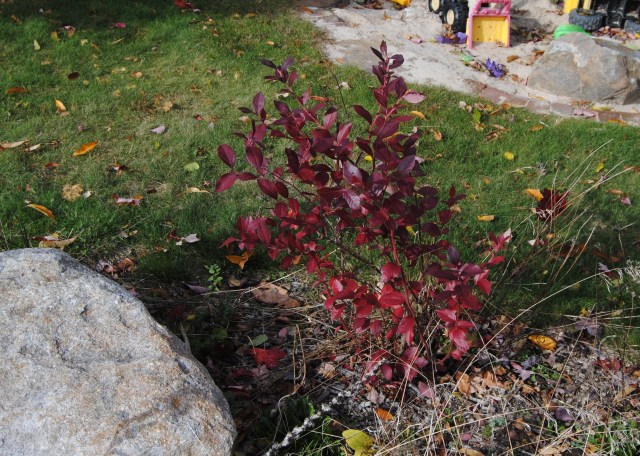
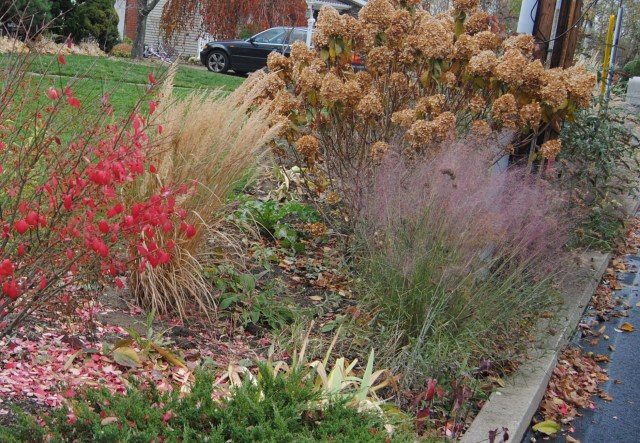 The red color in the last picture is a burning bush (euonymus alata) and its days may be numbered. Even though they show up in many local landscapes they’re very invasive. I haven’t seen any seedlings yet, but don’t doubt they’re out there, so next spring I may move one of the blueberries into its spot. The color is not as intense and the shape is less tight but you get delicious blueberries!
 ‘Skyracer’ purple moor grass (Molinia caerulea subsp. arundinacea) is a top 5 grass. Up to 6 foot tall seed heads come up out of a neat 2 ft fountain of foliage. It’s tall yet airy and light, and the yellow fall color hangs on for a while. If winter comes late and seeds ripen there might be a seedling or two next spring but hardly anything to worry about. The plant practically falls apart over the winter and is an easy cleanup.
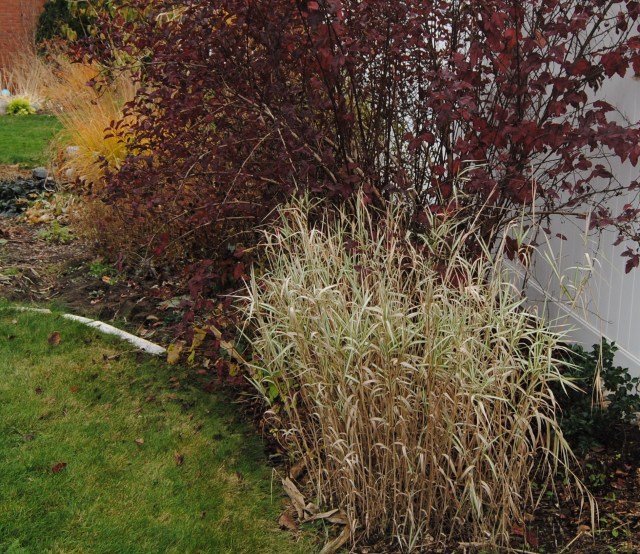
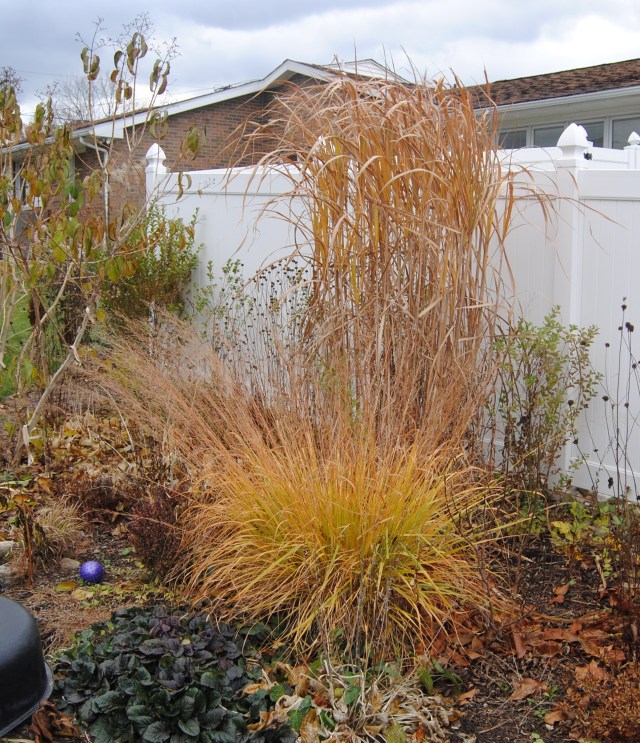 Miscanthus in general are losing their hold on me. The springtime cleanup is a pain with their tight clumps and I’m starting to think of them as industrial park plants. They look great there, but might be too much work in my own garden. I still have a few variegated kinds and who knows what next year will bring, since my fickle crabby self might divide up this porcupine grass (miscanthus sinensis ‘Strictus’) next spring and plant it all over the place.
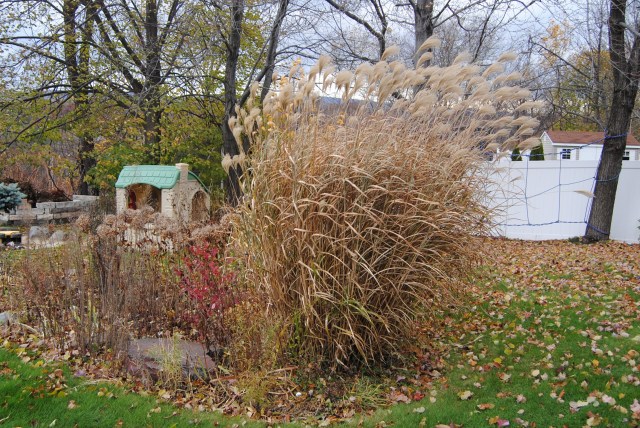 Planting grasses is easy, it’s removing ornamental grasses that’s the problem. My only advice is sharpen your shovel beforehand, you need a nice blade-sharp tip to make the job almost easy, but even then you really have to put your back into it. Also watch the seeders. I’ve evicted the taller Pennisetum alopecuroides because of their reseeding (the real dwarf ones seem to be sterile) and I’m keeping my eye on the Korean feather grass. Most of the trimmings can be composted, but don’t mulch your daffodil bed with fresh little bluestem mulch, it makes a great grass seedbed and will make you hate your daffodils and weeding them.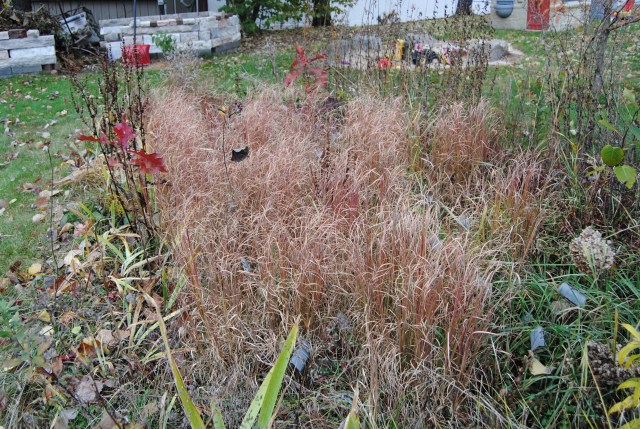


 sorta like suburbia