That wasn’t smart 6.0, 6.1, 6.2, and 6.3

Well I really racked them up this weekend.  My favorite nursery, Perennial Point, was having a customer appreciation weekend and all plants were on sale for 30% off.  A dead garden will make you weak in the face of temptation and I guess I blinked.

Not smart version 6.0:  The garden was bone dry and I couldn’t even take care of what I had.  Weeds are having a field day, the lawn is dead and other plants are dying left and right.  I just bought home several delicate, nursery-perfect plants which probably haven’t even broken a sweat their whole lives and I’m planning to throw them into this nightmare.

daylily bubblegum pie

Three big ticket items followed me home, ‘Plum Magic’ crape myrtle, hypericum ‘Red Fame’, and daylily ‘Bubblegum Pie’.

Not smart 6.1:  I don’t like daylilies, don’t ask me why I would buy one.  The leaves look horrible in late summer, the old blooms look like soggy tissue messes which need daily cleanup, and the name ‘Bubblegum Pie’ is insanely dumb.  The flower on this one is fat and fleshy and overdone with way too many ruffles.  There’s nothing graceful or elegant in the flower but I’ll plant it near the one daylily which came with the house (and resprouted after I thought I sent it to the compost pile) and the other species daylily which I grew from seed (Hemerocallis atissima, a tall and graceful night bloomer).  We will see how it does.

Hypericum inodorum 'Red Fame

Look at the fruits on Hypericum inodorum ‘Red Fame’!  I’ve seen these used in flower arrangements and never thought it might do well in the garden, so we’ll see if it does.  btw the crystalline glisten on the leaves is something called raindrops, yeah it took me a few minutes to recognize it as well, apparently we used to get a lot of it back in the day.

Not smart 6.2:  I bought a Hypericum ‘Red Fame’ which I think is cool with its juicy looking bright red fruits and according to what I’ve read may tolerate drought just fine, but I also bought a crape myrtle.  Crape myrtle are not hardy here and even at 30% off this one still wasn’t exactly cheap but somewhere deep down inside I seem to think someday a miracle will happen and one will survive.  Maybe fourth time’s the charm….

caladium

Three new caladiums and a new coleus.  Buy one get one free on annuals since no one bothers to buy annuals on the last weekend of July… no one except me apparently.

Not smart 6.3:  I bought more annuals.  Tomorrow is August 1st and the days for annuals are numbered and I should be focusing on limping through the summer and getting ready for fall gardening rather than wishing for another June and July.  Plus I seem to remember telling myself (you wouldn’t remember since Iwas talking solely to myself) that I had too many coleus last year and I should let some meet their maker when frost came.  Now I’m adding more?

caladium pink splash

Caladium ‘Pink Splash’ which I managed to overwinter from tubers purchased last year.  At least that was smart.  Also smart is the healthy, dark-leaved Eucomis (pineapple lily) grown from seed supplied by Nan Ondra.  I’m hoping it will be big enough to bloom next year!

Not smart 6.4:  I already have too many caladiums for a reasonable Pennsylvania garden, but if you hang on for another minute I’ll tell a quick caladium story.  It used to be I could overwinter them with ease and even had some survive for more than 5 years, but then my luck changed.  Dead tubers would greet me each spring and I wasn’t sure what was wrong.  Short story even shorter last winter I tried keeping them completely dry in their pots and in a warmer spot and lo and behold they made it through perfectly.  Logical next step is to take advantage of any good caladium deal which you come across and then be immensely disappointed when they go back to dying next winter…

caladium

White caladiums and a pot of mixed tubers which I found on clearance.  The spotted one is my absolute favorite.

Pristine white caladiums filling a terra cotta planter in the high shade of a southern garden is tasteful.  My mixed, gaudy plantings in reused plastic nursery pots are not.  But I digress, and will leave you with one last glimpse of my new daylily.

daylily bubblegum pie

The disgusting daylily ‘Bubblegum Pie’ with all its offensive frills and flounce.  It really is too much of everything and I’m positive this will be the one and only daylily I ever purchase for this garden.  Since I have it I might as well plant it, and I might as well even spare a few shovelfuls of my precious compost on it.  The pot has three fans already and I can only imagine three or four deliciously overdone stalks next year filled with more of these flowers!

Not that smart 6.5?  A few days ago I ordered some iris through the Historic Iris Preservation Society’s annual fund raiser.  That’s innocent enough, but now that the sale has wound down I noticed a posting on Facebook looking for volunteers to take in leftover rhizomes and grow them on for a year before sending them back for next year’s sale.  I’m wondering where I would put 10 or 20 more iris 🙂

It rained by the way.  An absolutely amazing soaking rain which stretched out for hours and got into many of the driest nooks and crannies of the garden.  I’m quite pleased and know it will be a good week and wish all the best for yours as well.

Thursday’s Feature: Cyclamen purpurascens

It’s time to get back into the saddle.  I’ve enjoyed telling the woeful tales of drought and loss in my garden and appreciated the kind words, but it’s time to stop the shameless pandering for sympathy and suck it up.  I’m sure most gardeners will agree that there’s nothing better for a poor attitude than a new plant, so I ordered a couple iris, planned a trip to the nursery, and I think I’m good 🙂

So first things first I’m joining Kimberley at Cosmos and Cleome for her Thursday’s Feature and highlighting one of the little treasures which don’t seem to care much about a few sunny days and a bit of heat.  This week’s plant is that hardiest of hardy cyclamen, Cylamen purpurascens.

IMG_2101

Blooming this week in the dry shade beneath the weeping cherry is Cyclamen purpurascens. I like the slight streaking and chunky flowers of this one.

Besides being a hardy plant ((the cyclamen society’s website lists this plant as tolerant of temperatures down to -4F… and my own plants have easily endured -9F without significant snow cover) this plant also has the distinction of retaining foliage year round.  Even now during he worst of summer the beautifully marked and mottled foliage lights up the gloomiest of dry shade locations.

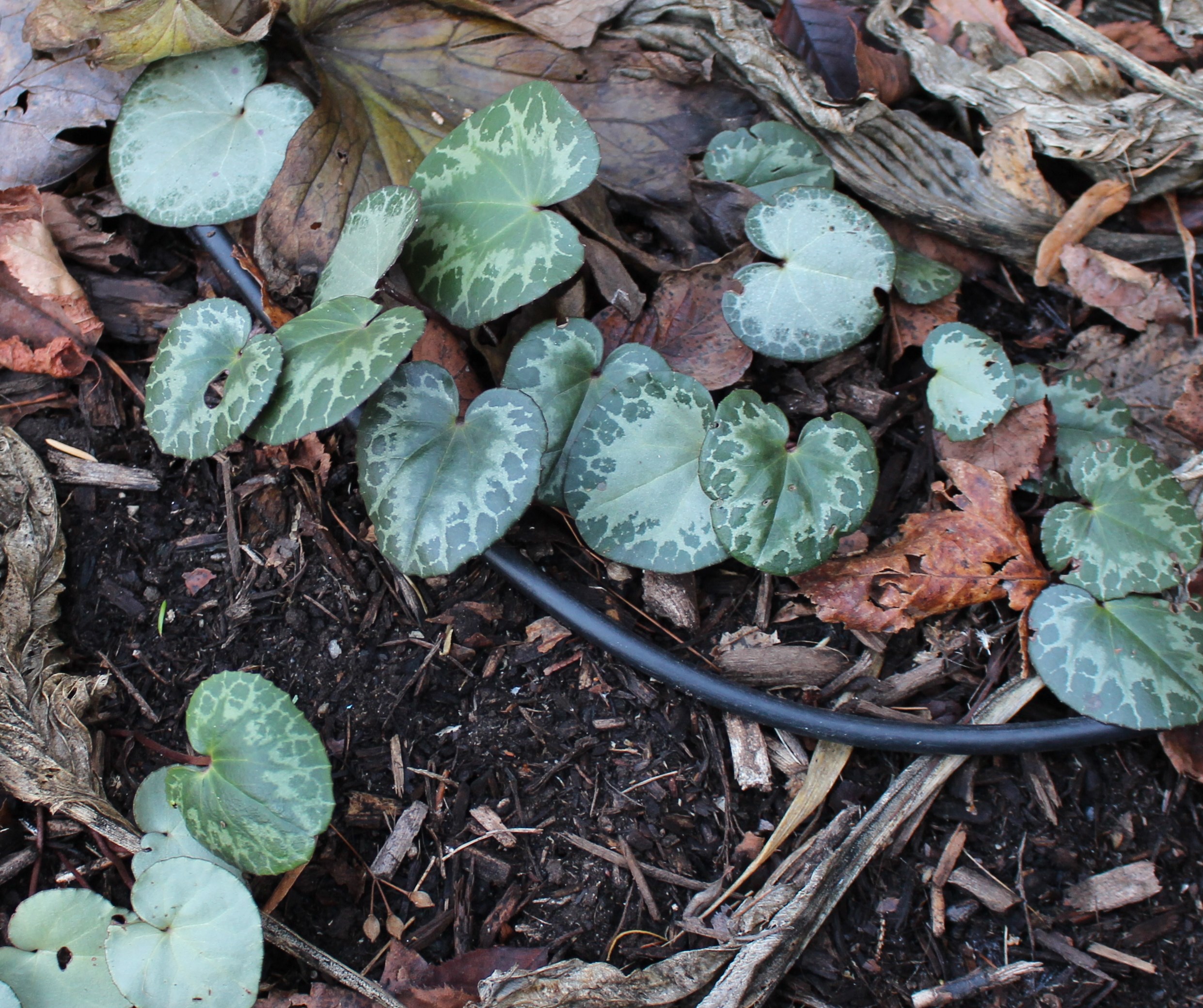
hardy cyclamen purpurascens foliage

Cyclamen purpurascens has the typically beautiful foliage shared by many of the cyclamen family, and the range of patterns is always amazing.

It also has the distinction of blooming now.  The flowers won’t blow you away until they come by the hundreds (which I’m hoping for someday), but for now the little splashes of color are a welcome relief for summer weary shade gardens.

cyclamen purpurascens

A more typical Cyclamen purpurascens flower with pink color and open, twisted petals. 

For more expert information and growing requirements I’d recommend the cyclamen society’s website, but from my own experience I find this cyclamen to be a little fussier and much slower growing than the others and also a plant which actually seems to welcome a good freeze in the winter.  Seedlings which I protected indoors really sulked until I threw them outside for the coldest months.

Mine were raised from seed, but honestly this is one cyclamen I’d have no problem buying as a plant.  Germination takes a year, it’s another year before they do any serious growing, another two or so years for a bloom if you’re not the most attentive grower, and then even the seeds take over a year to ripen before you can try for the next batch.  We’re not getting any younger, so save yourself a few years and buy a couple plants from John Lonsdale at Edgewood gardens.  For a plant which you probably won’t find anywhere else $12 a pop seems like a bargain to me and I’m a relatively cheap guy.

When you’re done with that give Kimberley a visit and see what else is on the radar this Thursday (or practically Friday as I look at the clock).  There’s always something interesting to be had and I know you won’t regret it!

Thursday’s Feature: The Wooly Thistle

Each Thursday I like to join Kimberley at Cosmos and Cleome and single out a plant which has tickled my fancy that week.  For the most part my choices have been on the respectable side but this week I’ve gone back to the dark side and chosen the wooly thistle (Cirsium eriophorum), a plant which if anything should be kept far, far away from your fancy since direct contact will definitely NOT tickle.

Cirsium eriophorum, wooly thistle

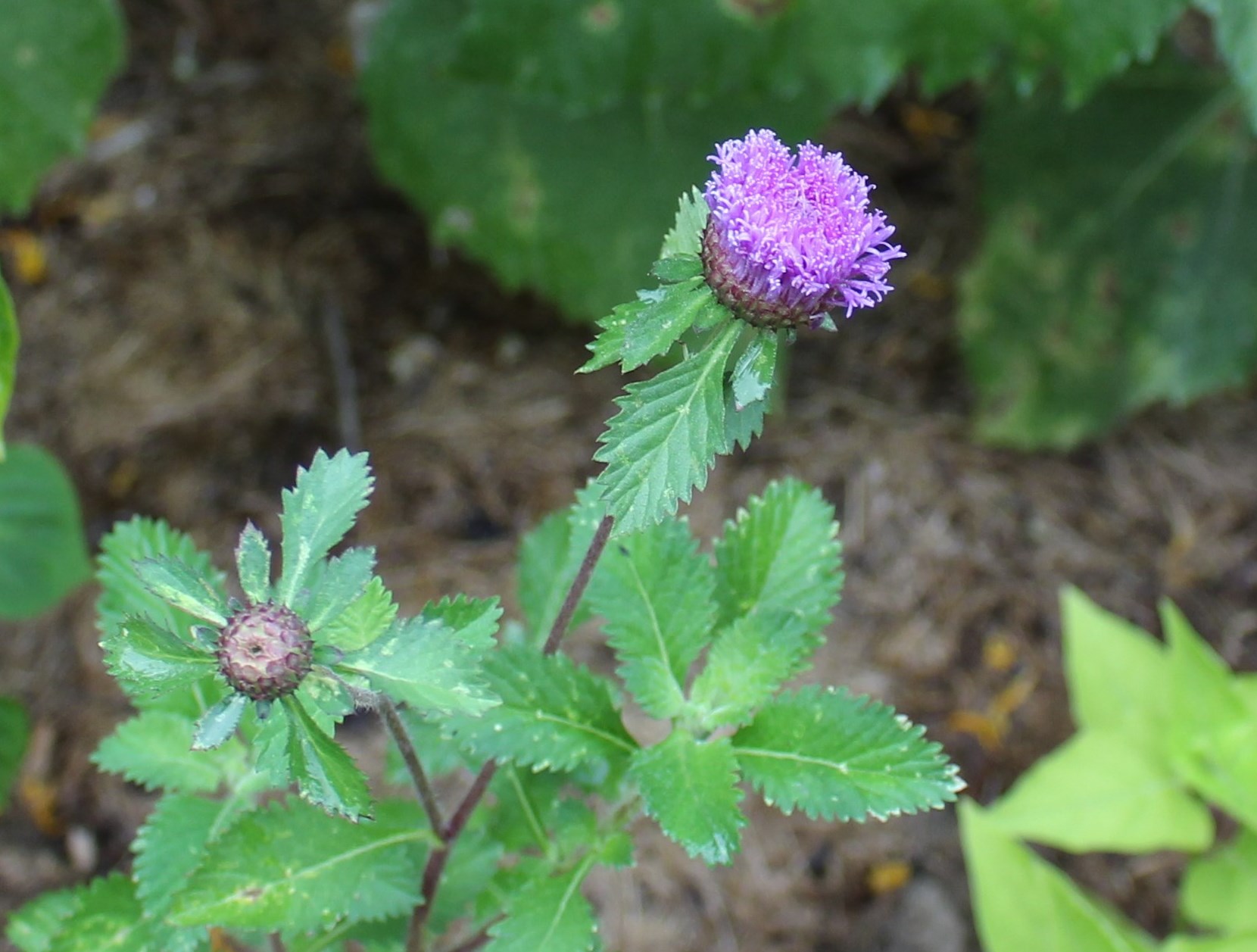
Cirsium eriophorum, the wooly thistle, with its first bloom opening in late June.

Despite its cute common name, the wooly thistle is probably cursed by many a gardener and farmer throughout its native Europe.  I don’t think many a gardener here or there would go through the trouble of finding seeds through a seed exchange, sowing them and nursing the plant for three years, and then briefly enjoy it’s heavily armed flowers for a few weeks until it set seeds and died… but I think it’s absolutely fascinating!

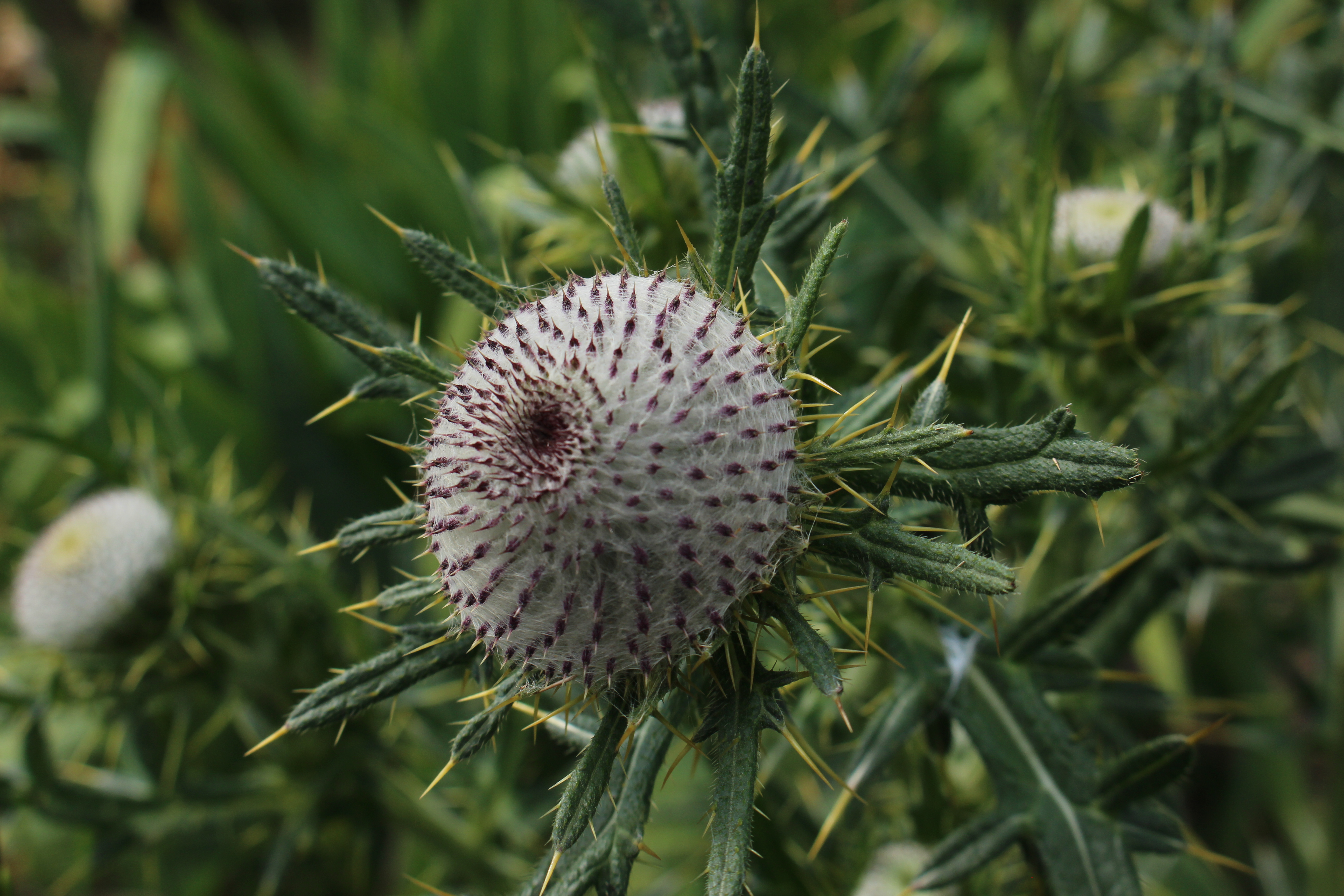
Cirsium eriophorum, wooly thistle

A baby picture only a father could love.  Wooliness studded with purple tips and all so nicely geometrical!

Who knows if I’ll replant the seeds once mama thistle is gone, she is a bit of a hostile presence after all, but she’s very welcoming to the bees and ants which swarm the flowers.  She’s also very popular with a group of weevils which have poked their noses into the wool and I’m sure laid eggs while nibbling the flower buds.  Weevil grubs eating thistle seeds is probably not the worst thing to have and even with them there will likely still be more than enough seeds produced.

Cirsium eriophorum, wooly thistle

The spines are just as vicious as they look 🙂

I will completely understand a less than enthusiastic review to this week’s choice.  Please feel free to just smile politely and then later shake your head, I’ll understand.

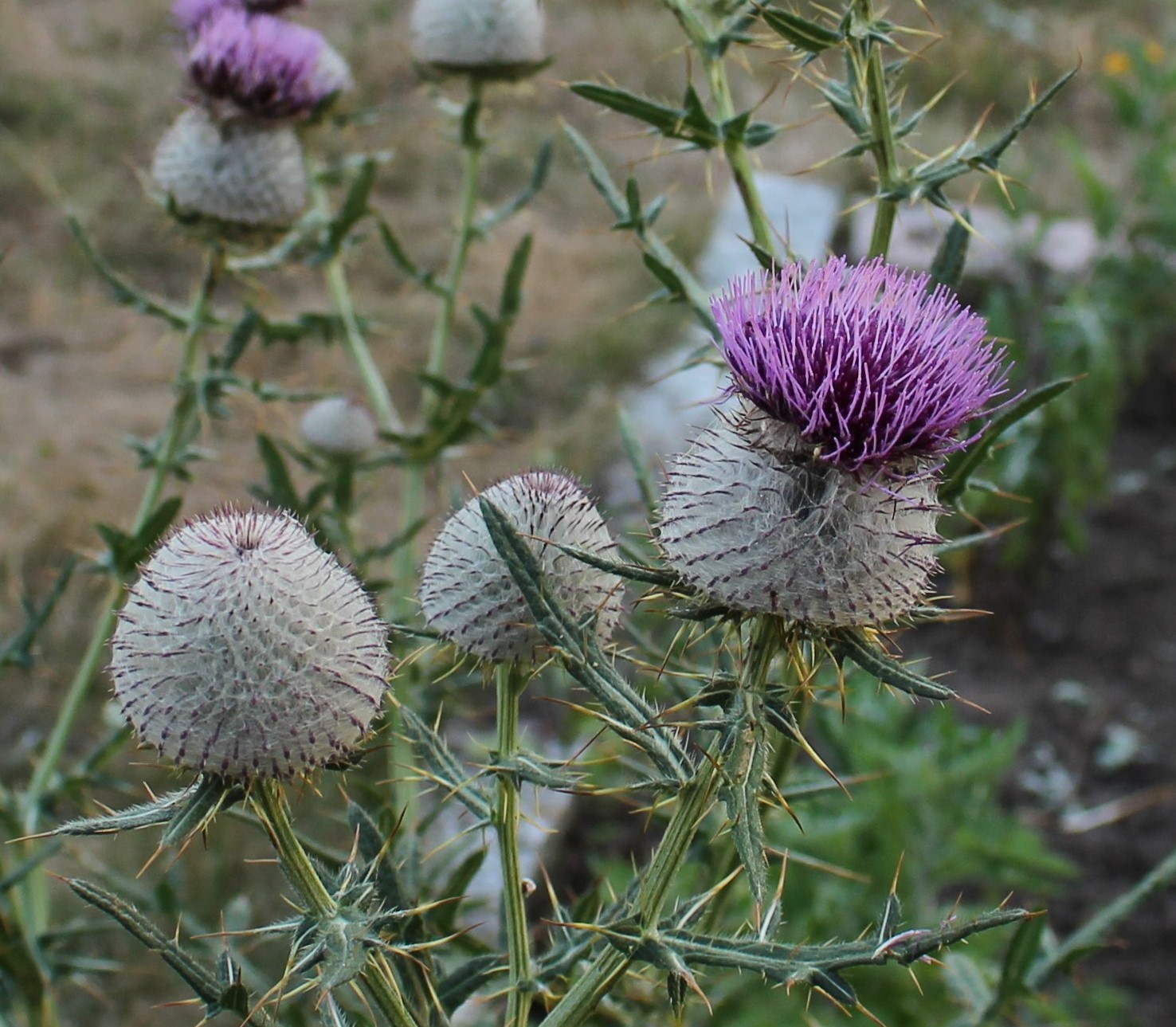
Cirsium eriophorum, wooly thistle

Cirsium eriophorum today with its fat wooly flower heads.

Please also feel free to visit Kimberly and enjoy what she’s selected for this week.  I hear it’s a delightfully pure Shasta daisy, and I’m sure it’s far better suited for vases and placing behind the ear than this thing!

Gratuitous phlox

I don’t have nearly as many of the tall garden phlox (Phlox paniculata) as I’d like.  The photos are misleading without the big picture so here’s the big picture with a wider view of the potager (complete with freshly trimmed hedge).  A couple (4) in the front bed, and a dozen or so in the back bed is not a lot of phlox.

garden phlox

Mid July and most of the garden phlox are nearing their peak.  Can I call them a favorite flower?  I feel like I do that to something new every other week.

We’re just going from one phlox to the next here.  No commitment.

phlox dorffreude

Phlox ‘dorffreude’… I think that roughly translates to town’s joy?

A few cooler nights have deepened some of the colors and although I don’t know the names for several of these it doesn’t matter as far as enjoying them goes.

phlox paniculata seedling

This random seedling gets a pink tint when the temperatures drop.

But the dry weather has them all a little miserable, and unless they get watered every few days the leaves and flowers wilt and the spider mites procreate.

phlox paniculata seedling

Another random seedling which opens pink and then fades.  Note how bushy the plants are… that’s thanks to this year’s frequent deer, woodchuck, and rabbit nibbling.

The next few days promise more dry, clear skies with temperatures into the 90’s (32+C) and the garden will be on its own as we go off traveling.

phlox nicky laura

The dark purple ‘Nicky’, starry eyed ‘Laura’ and an unknown salmony red passed on from a friend.  A threesome of color.

Of course there’s always the pretty yet troubled one.  Phlox ‘Brigadier’ has a great reddish color yet doesn’t bloom well, is losing stems, is a magnet for mites, and resents every dry spell… but I can usually just get her a drink and she’s ready to go.

phlox brigadier cabots pink

Phlox ‘Brigadier’ with ‘Cabot’s Pink’ in the back.

I guess when you’re jumping from one phlox to the next you’re bound to run into problems but I’ll admit I’m a phlox addict and don’t really want to change.  When I was out at the nursery last week there were about six new ones which I had a chance at and they all looked like a fun time (even if I already have a few waiting at home) but I said no.  It will be a hard enough time staying faithful this winter when it’s just me and the computer and the great online phlox source, Perennial Pleasures.  They’re like a Craigslist for hooking up with new phlox and I’m sure I’ll click on something I shouldn’t.

Tuesday View: The Tropics 7.11.16

This week I was a little late in the day with my photo so it’s full of artsy backlighting.  A good effect for soft lighting, but not the best to see what’s going on in a Tuesday view.

tropicalismo

The tropical garden at about 7 in the afternoon.

One thing which you will likely notice is the pile of grass trimmings and the wheelbarrow.  It was a busy afternoon in the bed and much of this was the result of the bed’s new designation as the Tuesday view.  Who would have suspected joining in with this meme would be the motivation needed to buckle down and make some of the changes I’ve been thinking about for the past few years?

rose 'black forest'

Not exactly tropical, but the color of the rose ‘black forest’ is hot enough to fit right in.  This is already its second flush of bloom and other than a few holes chewed into the leaves (most likely from some annoying beetle) it’s almost perfect.  Last year this plant was potted on the deck, still great but much younger and smaller.

Change one: The variegated miscanthus ‘Cosmopolitan’ had too much of a head start on the new plantings so I went ahead and cut it down to about a foot high.  We will see how this works out since I’ve never tried it before, but it’s grass right?  I suspect just like a scalped lawn it will send up plenty of new shoots, and in the meantime the cannas and dahlias will be able to grow upwards in peace and lay claim to their own airspace.

newly planted musa basjoo

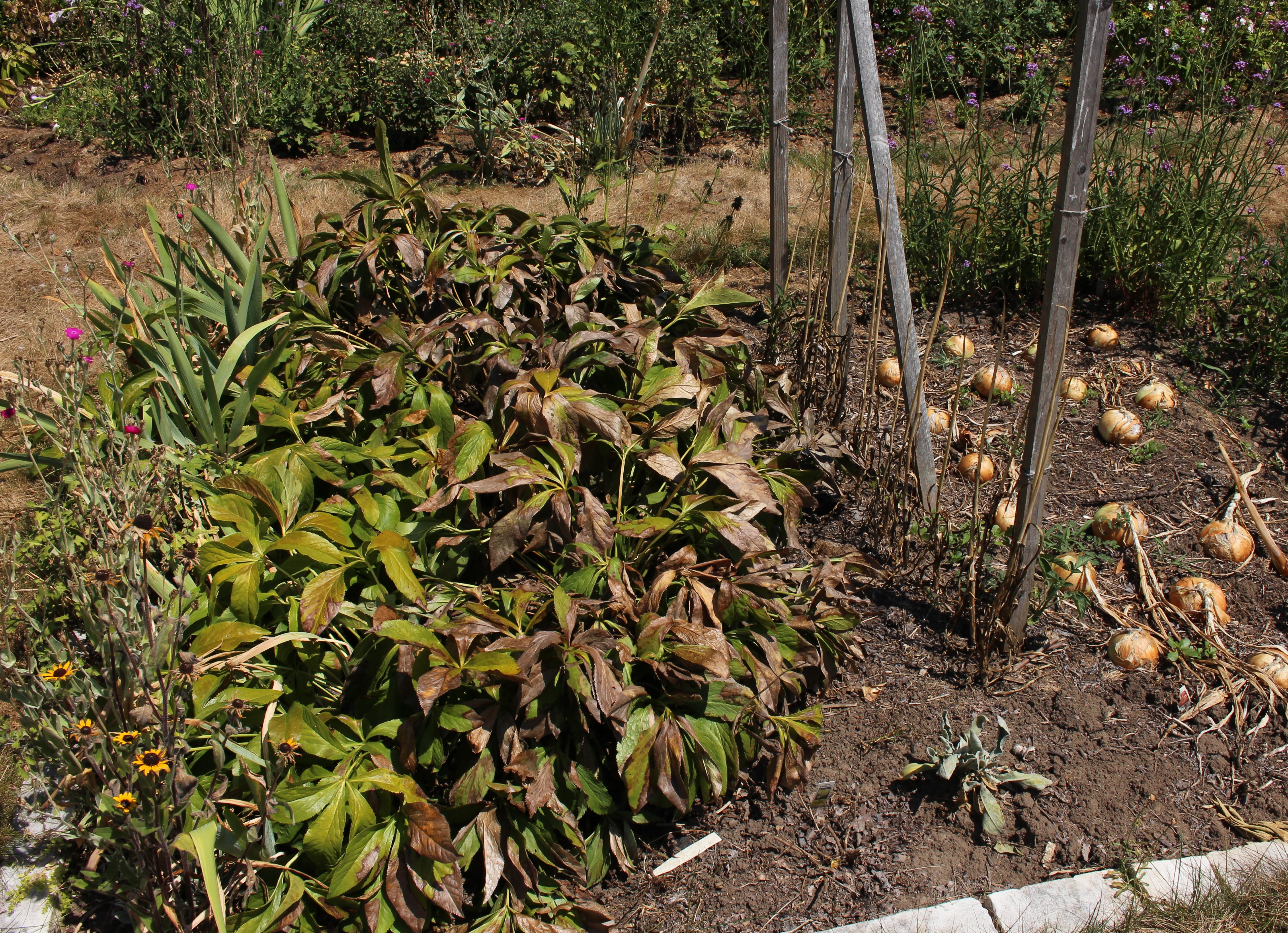
Change two:  A newly planted banana (Musa basjoo) has replaced the peony which was just taking up space here… and mildewing.  When sunflowers grew up and covered it in years past there was no reason for it to bother me, but now it does so out it went.  I’ve never composted a peony, it seems absolutely criminal and I’m not sure I should be confessing, but there you go.  I yanked a few salvia as well.

We were gone for four days last week and the garden nearly dried out and died due to the heat.  Rumor has it rain fell, but of course all the big storms avoided us.  When I returned to see the pathetic state of my plants I first cursed, then cursed some more, and then decided to mow everything down and give up for the year, but after watering that evening and then the next day visiting my favorite nursery (Perennial Point), things seemed less bleak.  They had awesome bananas and elephant ears and a bunch of other stuff and in my weakened state two new bananas came home with me (plus a new fern and red hot poker).

Kochia Scoparia

Kochia Scoparia is a new one for me.  The common names are burning bush and summer cypress and I suspect I will like it, but for now keep in mind it’s listed as a noxious weed in several Midwestern states.

I didn’t need the bananas, but I did need the bananas, especially after seeing how well they have done for my brother in his zone 7 LI, NY garden.  In case you’re wondering, Musa basjoo is likely the hardiest banana, and although I won’t get into all the logistics of me being the one to give him the plants in the first place, and him being completely deaf to all hints at how much I wanted one and which one could he spare… I now have one again and promise to mulch it well EVERY winter so it doesn’t die off again.

long term weed killer

The rest of the zinnias are doing well, but I suspect my MIL was again a little heavy-handed with the weed killer here since it’s a dead spot which seems to stunt all life.  She has an unexplained attraction to any herbicide which says ‘controls weeds for months’, and this in turn stunts and kills anything planted in the treated area or anything planted near the runoff area… for months.

So here we are again, all over the place on what should be a simple post.  I promise to get less wordy once we get through this planting and intro phase but for now I can’t help it.  Just be grateful you’re not stuck here on a visit and I’m really going on and on!

lythrum salicaria purple loosestrife

Now what do I do with this?  The flower stalks of a Lythrum salicaria (purple loosestrife) have appeared in the back part of this bed and I like it.  The problem is it’s a terrible invasive in this part of the country, but only in wetlands and my garden is far from being a wetland.

If you’d like to join in the Tuesday view, Cathy at Words and Herbs follows her own view each week and I’m sure she’d welcome the company.  It’s a great way to track changes through the season and apparently it can even motivate some of the less motivated gardeners into tackling a few things on the to-do list!

Tuesday View: The Tropics 6.28.16

Two of my favorite bloggers are bringing back a meme which I’ve always enjoyed.  Cathy of Words and Herbs and Kimberley of Cosmos and Cleome both highlight a longer view each Tuesday and we get to see it develop and change as the year passes.  I’m no expert on the meme but I think Cathy sticks to a specific viewpoint and time while Kimberly varies the perspective and location depending on what’s going on in the garden.  Myself on the other hand am barely capable of getting any post up in a given week, so to keep it simple I’m going to follow Cathy’s lead and go with one view, same bed, same point each week and see if I can handle that.  Also since the tropical bed went in last week (about time since it’s already past the solstice and well into summer) I’m going to highlight this bed as my view, and (hopefully) watch as it grows up. 

Tropical garden

My fingers are crossed that over the next few weeks this bed will become an explosion of color and foliage and maybe bring a taste of the tropics to this end of NE Pennsylvania.

I’ll try to keep this short, since assuming things grow I want to save a little material for future posts, but besides the thrill of actually getting most of the plants in last week I always get a little excited checking this patch each day to see how quickly things progress.  All season bloomers which sit as a lump of color and put out the same old flowers each week bore me a little, and even though I can appreciate someone wanting low maintenance, neat color, I want something that sneaks up on you and then overwhelms you, like a horticultural tsunami!  Hence the tropical garden, and anything bright and big and leafy is more than welcome.

papyrus with black forest rose

The papyrus was not happy last year and I suspect it didn’t get nearly as much water as it wanted so instead of planting it in the ground again I placed it in a pot submerged in a second pot full of water.  Green water.  So far the reviews of this planting have not been 100% favorable.

You can’t really tell from the tiny sprigs, twigs, and tubers, but this year’s theme is orange and purple.  That’s not a solid theme, it’s more my mood when I’m out picking up annuals or choosing which dahlias to put here versus in other parts of the garden… or finding a flat of orange zinnias on sale and liking zinnias.  So until the oranges fill in, hot pink and purple will have to do for a theme.  Besides the annuals, perennials have a way of sneaking in everywhere, and although I pulled a wheelbarrow full of daisies and transplanted dozens of chrysanthemums, there are still a few things such as this knockout rose and purple ‘Caradonna’ salvia which are just too colorful to stand up to.  Maybe next year will be the year I follow through on my threats to remove the salvias.

knockout rose with caradonna salvia

The ultra rare and uncommon ‘Knockout’ rose tastefully complimented with orange zinnias at its feet and scavenged lawn clippings as mulch.  This Tuesday view already promises to reek of class each week 🙂

So there you have it.  By next week I hope to have a few cannas sprouting and a few more zinnias assaulting your color senses and overall I really hope things don’t end up requiring a rototiller and a fresh start by August.

Think about joining in with the view and if you do leave a link at either Cathy‘s or Kimberley’s blog so we can find you.  Not to put words in their mouths but I’m sure both will agree “the more the merrier” and I always enjoy watching another garden grow throughout the season… even if it does turn into a trashy mess of too much color and chaos!

Down on the farm

Late August is bathing us in heat this year and the steady rains have brought on the harvest.  We modestly refer to our garden as “the farm” or “potager” and this is the time of year when it shines.  Produce begins to trickle in and suddenly there’s a little more interest in the backyard.

harvest from the garden

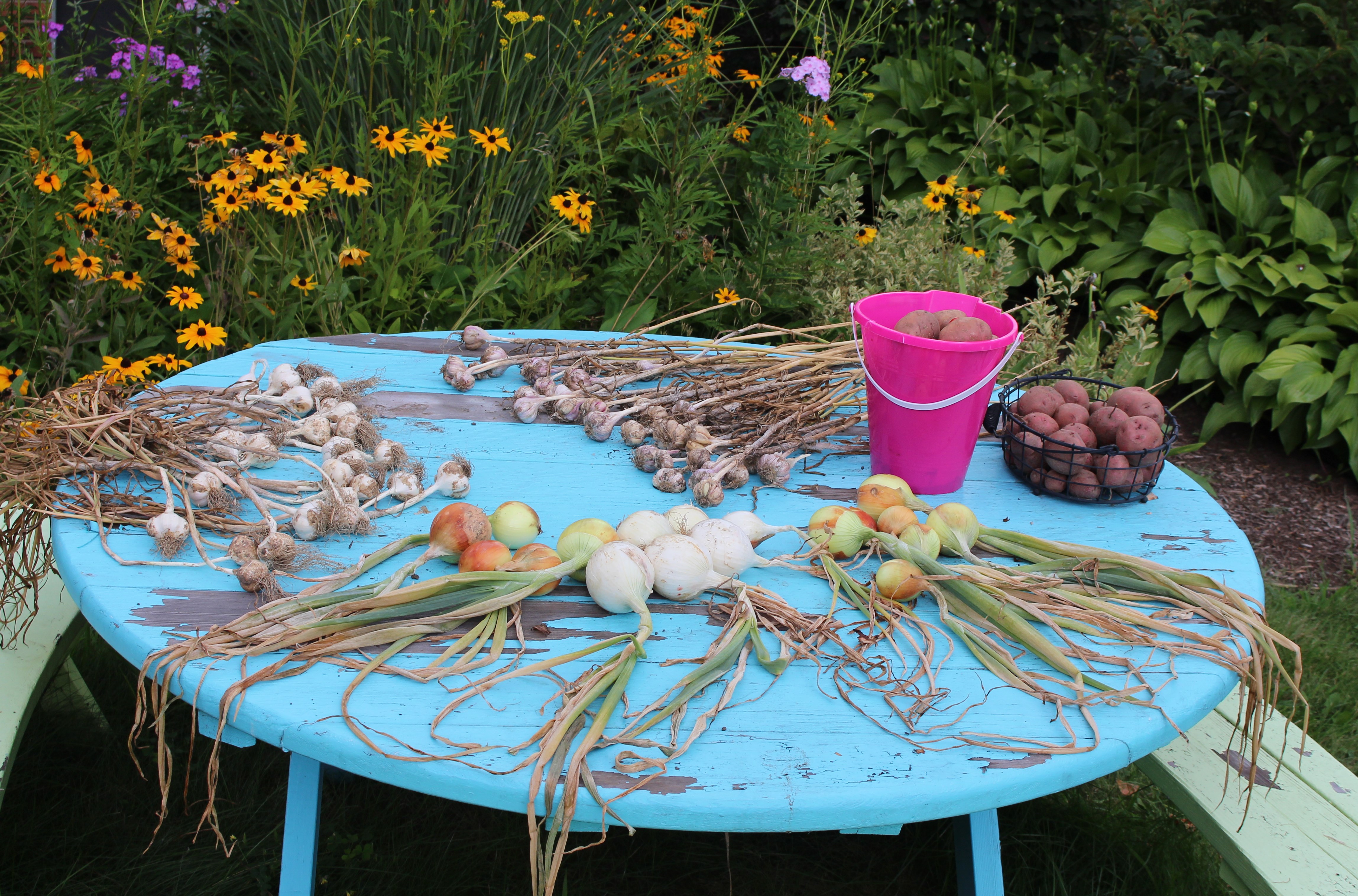
The picnic table is the place to be for drying off and cleaning up before the kitchen.  Garlic, potatoes, and the first of the onions started the month off.

Eggplant and peppers have been going out, onions are always popular, tomatoes are on their way, and beans are yet to come.  The harvest is late due to planter’s procrastination but who out there hasn’t ever fallen behind?  At this time of year even I fix up a plate of veggies, and they aren’t even deep fried 🙂

IMG_8425

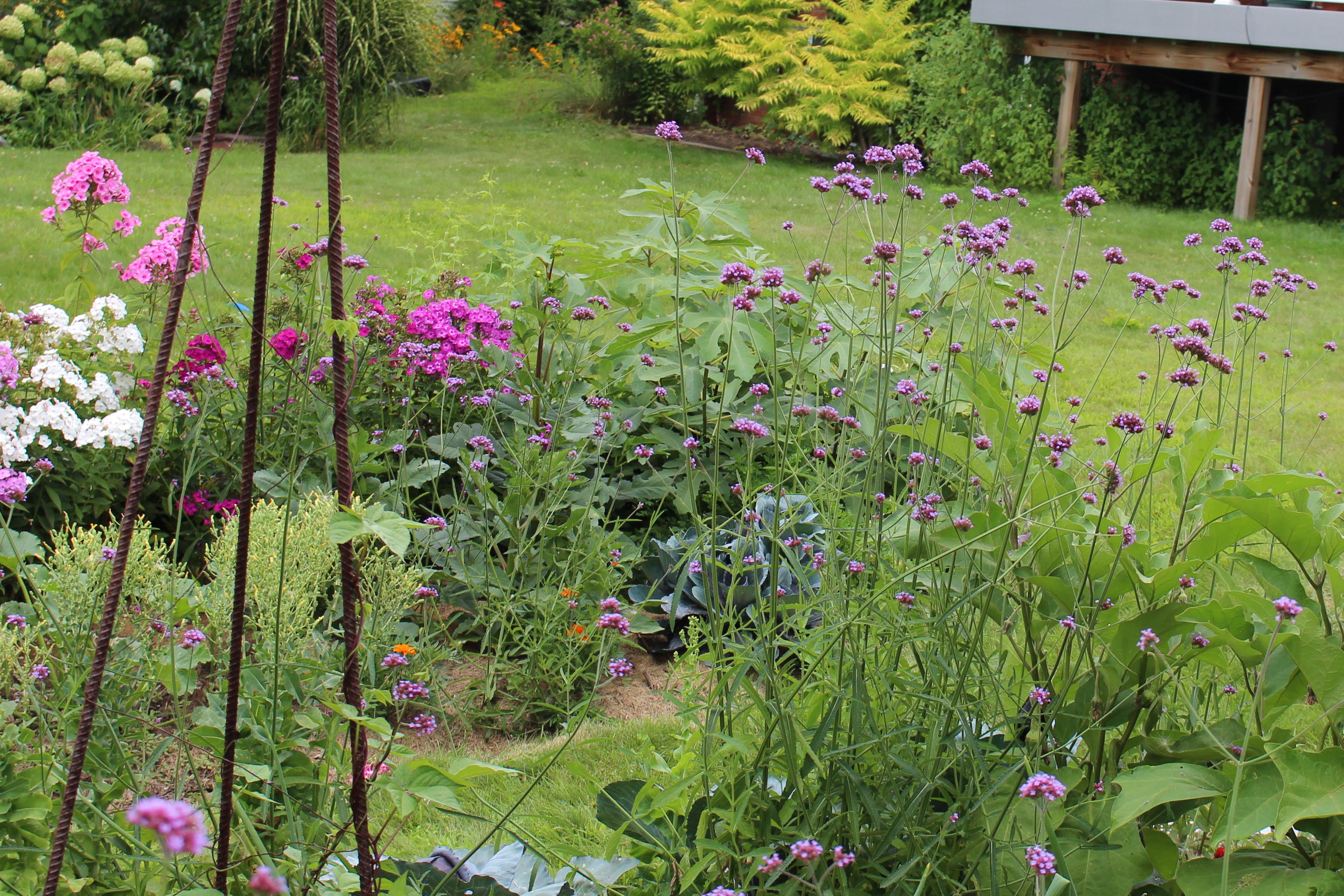
I grow red cabbage just for the looks, but there’s a good chance these heads will disappear soon and show up again later as rotkraut.  Fine by me, but in the meantime they look nice with the verbena, eggplant, and marigolds.

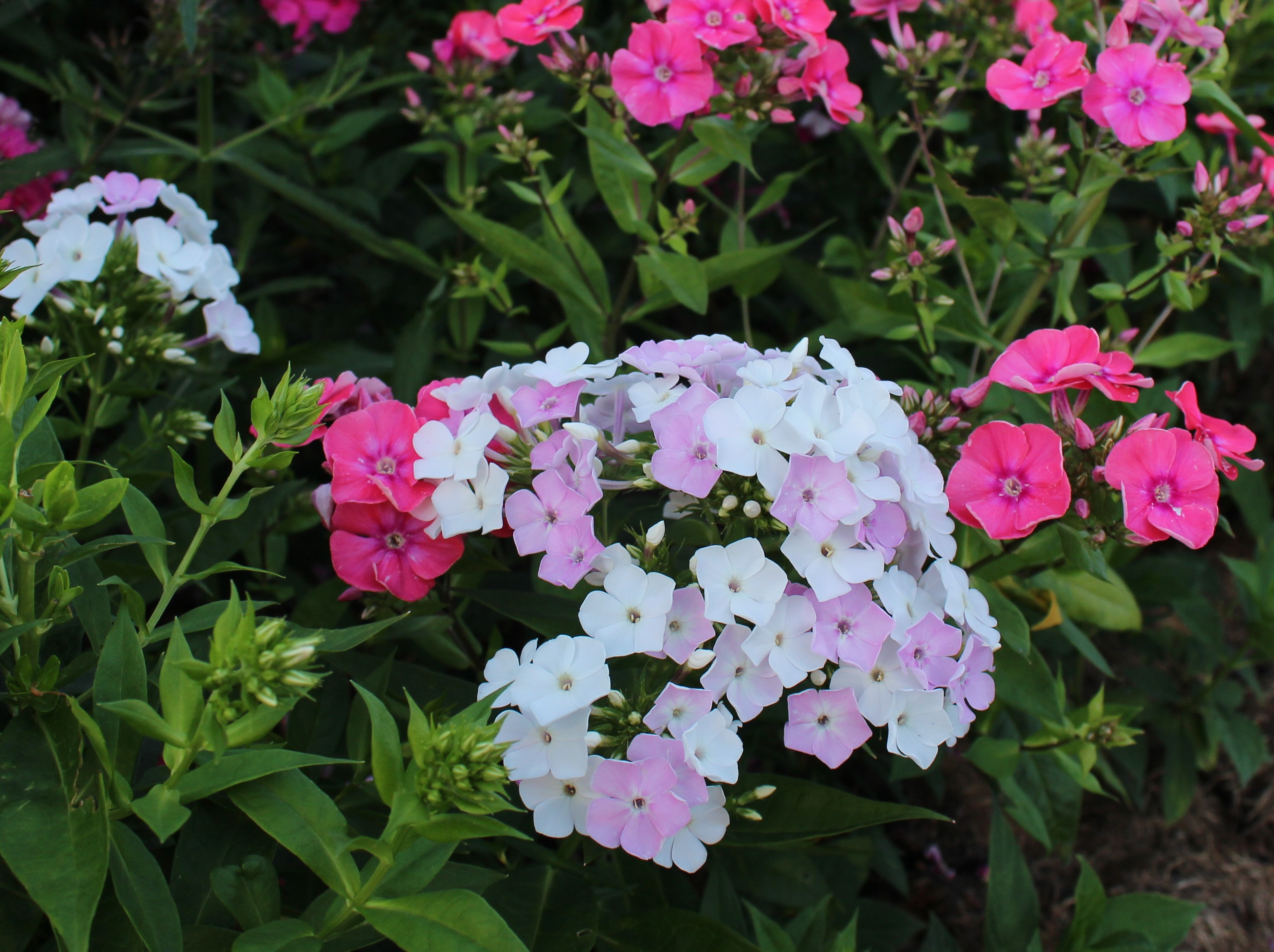
I admire a neat garden with raised, raked beds and straight rows of perfect plantings, but that’s nowhere even close to my garden.  The potager is tumbledown mix of flowers, crops, and all kinds of odds and ends that found an open spot of soil and made it their home.  Phlox are never turned away, and earlier in the month they started their summertime concerto and the music still plays on through the heat.  For this I consider myself lucky,  since earlier in the spring between spidermites and drought I got the feeling it would be a down year for the tall garden phlox (Phlox paniculata).

phlox paniculata dorffreude

Phlox paniculata ‘Dorffreude’ (Karl Foerster introduction, 1939) making a good argument that newer isn’t always better.

The phlox make me happy, but the other flowers which add to the non-agricultural chaos also make me smile, and the tall Verbena bonariensis leads the way with their bee and butterfly attracting bloom heads.

IMG_8305

Now’s the time when the verbena becomes too attractive to pull.  It’s a fair trade-off since the flowers draw in nearly every passing butterfly.

One area of responsible neatness is the boxwood hedge which edges the two forward sides of the garden.  After three years the small plants have finally begun to look nearly respectable.  To celebrate this milestone I spent way too much money on what I hope will be a set of premium hedge shears.  The electric trimmer has been shelved and I took the quieter, more contemplative path of manual trimming.  For me it’s relaxing and I think I’m one of the few who actually enjoys this job.

training boxwood hedge

Slowly the boxwood hedge fills in.  I can still remember the summer day way back when me, a bucket of boxwood clippings,  a few trays of potting mix, and a couple beers started this all.

Besides boxwood and phlox, chrysanthemums (ok, new name dendranthema) are starting to make a serious play for potager real estate.  This spring I added even more of the larger flowered football types, trying to stick with anything which might be hardy through the winter.  I’d try to explain this growing obsession with mums but honestly after just admitting I enjoy hedge trimming I’m not sure there’s much I can say to defend this last quirk.

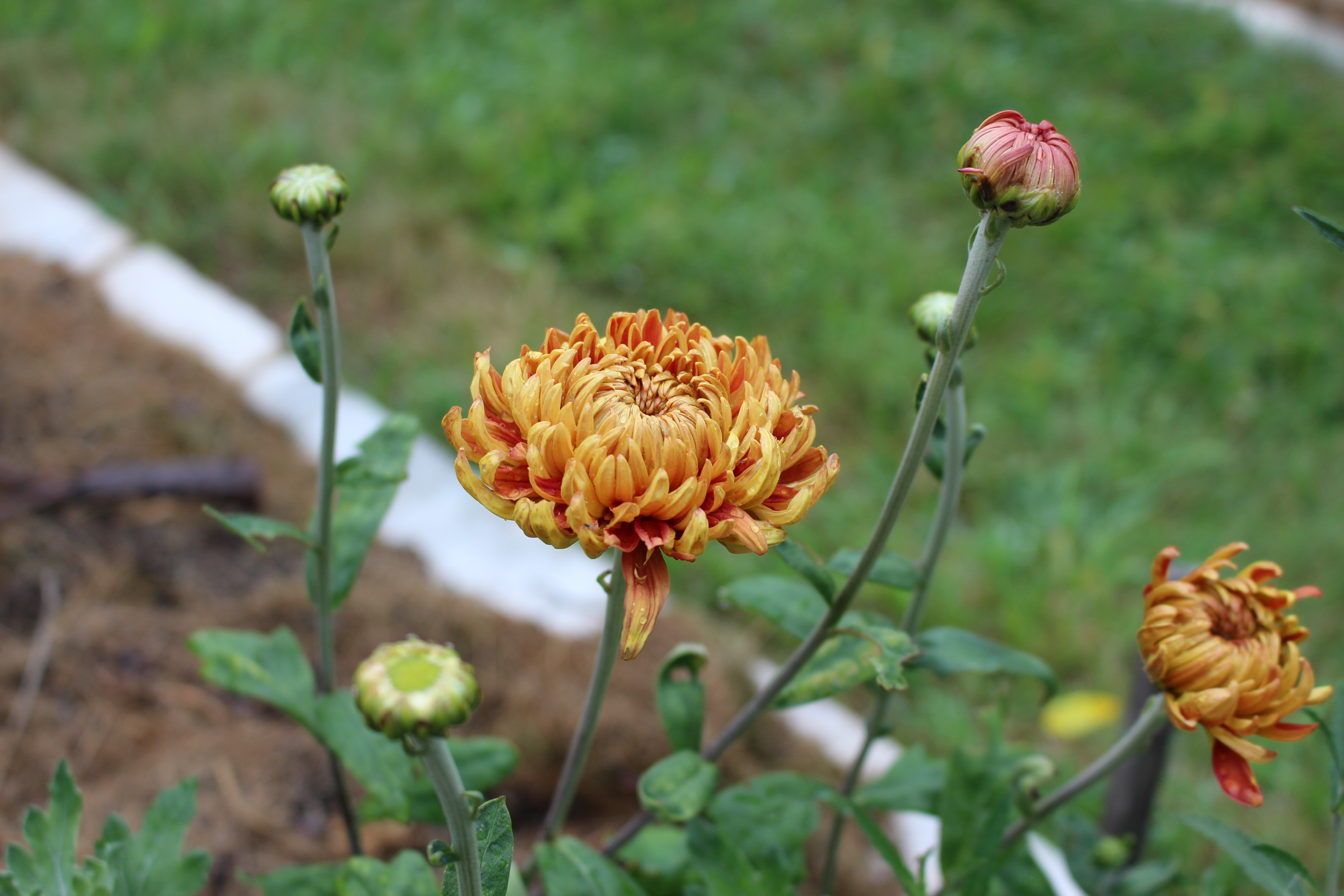
hardy football mum

Hardy (hopefully) football mum.  If the mood strikes next year I may even try disbudding a few of these to see if I can force all the plant’s energy into one single, perfectly large, perfectly perfect, bloom.

Dahlias.  I like dahlias.  I think I’ve already confessed to that.  Of course a late planting gives late flowers, and you know me and late.

moonlight dahlia

Dahlia ‘Moonstruck’.  This is its third year and it has yet to let me down, although I suspect it carries a virus which causes the leaves to yellow and die way too early in the season.

Sometimes late isn’t anyone’s fault.  For the second year in a row I’ve had these gladiolus bulbs overwinter in the open garden.  Against better advice I even transplanted them in June and look at that, the clump still managed to send up two bloom stalks.  If this keeps up I’ll need to divide the clumps next year since the other clump is up to 8 flower stalks!

winter hardy gladiolus

Just your average hellebore-gladiolus-rudbeckia-tomato planting.  I don’t think you’ll find this combo anywhere else… probably for good reason 🙂

But procrastination does have its down side.  Although the persicaria and rudbeckia have never looked better next to the potager, the light green ‘turf’ in the bed is 100% weeds…. and this is still supposed to be a red border, which rudbeckia is not.  Also the trellis never received a solid footing, and was never officially planted.  I guess that’s what the plans for next season are made of!

persicaria red border

persicaria red border

Enjoy your own harvest, whether it be fruits or flowers, contentment or excitement.  The season is here and as long as the heat doesn’t kill you first you can shelve these moments away in your mind for those dark days in January.


Spare the rod

My nemesis the sunflower.

bird seed sunflowers

Self sown sunflowers from birdseed backed up by variegated giant reed grass (Arundo donax ‘gold chain’).

Harmless and full of promise is how they appear in the spring, now two months later they’re acting more like closing time at the bar.  Sloppy drunks hang all over one another, sprawl across the beds, and smother the other sober little plants which have yet to grow.  If it weren’t for their summertime good looks and the goldfinches they pull in I would compost them all!

sunflower bloom birdseed

Future birdfood.

It doesn’t take many sunflower seedlings to overtake a bed and between the extra mulching and copious rainfall they’ve had everything they needed to explode.  It’s like a lovely tsunami of sun looming over the plantings.

flower border sunflowers

The sunflowers do look pretty with the purple verbena bonariensis, striped leaves of ‘tropicanna’ canna, and the first of the peach colored salvia splendens.

From the top of the bed it still looks pretty but only after I cut down two of the sunflower trees and chopped the rest back in order to clear the pool path again.

tropicals with annuals border

The tropical border looking colorful, but as usual not very tropical.

The inner depths of the tropical bed are beyond reach, I’ll have to wait for frost before I can get in there again.  Fortunately it’s well mulched and doesn’t need much of anything for most of the summer, so as long as the cannas and reed grass don’t get completely swamped I guess I can turn the other cheek and let chaos rule.

arundo donax gold chain with sunflowers

There’s a giant thistle in there as well, I see a steady trail of goldfinches flying in and out feasting on the seed.

Really.  Next year will be the year when this whole mess gets back under control.  The sunflowers will have to go as well as the chrysanthemums which never did get moved like they were supposed to.  In spite of the overwhelming agricultural look of the sunflowers (and I have to admit I really love the show right now) there are a few tropical highlights which have flickered on.  The cannas may not be as big as in years past, but I would never go without them.

healthy canna tropicana

Healthy ‘Tropicanna’ canna leaves in a sea of green with only a touch of gold.

They’ve still got a good two months of growing before frost threatens and hopefully everything will still have plenty of time to fill in.  While other parts of the garden might be taking on a weary look this time of year, these tropicals are just going from good to better, and it’s not just the cannas.  The dahlias are beginning to come on as well.  The flowers are what I’m waiting for, but on a few the foliage show is even better.
dahlia happy single flame

Dahlia ‘happy single flame’ with the dark purple spires of ‘Lighthouse purple’ salvia behind.  I wish those salvia were just a tiny bit taller, right now this low planting looks closer to Victorian bedding than tropicalismo!

Although the foliage is fantastic, I wish I could say the same for the blooms of dahlia ‘happy single flame’.  They  don’t last long and never really make the ‘wow’ impression most of the other dahlias do.  The color is great though and I’ll try to hold on to this one for another year or two, even as the others bloom their heads off in comparison.

dahlia happy single flame

Peak bloom on dahlia ‘happy single flame’.

One plant which I had high hopes for but is now slightly underwhelming is the Brazilian button.  New this year from the HPS Mid Atlantic seed exchange, the buttons are nice enough but there could be more flowering at one time and most importantly have a color less like the verbena which I already have filling in all over.  You just don’t notice them in the mix.

Centratherum punctatum Brazilian button

Brazilian button (Centratherum punctatum)

But I’m being too negative.  The sunflowers are awesome and the patch is full of flowery interest, and whenever I get the chance I sit (with a drink preferably) and watch the comings and goings of the goldfinches, hummingbirds, and bees.

pink salvia splendens

The pink salvia splendens are only now starting to flower having spent most of the summer putting on weight.  The large leafy bushes should put on a great show for me and the hummingbirds.

I’m sure there will be more to come from the tropical garden, and if I can only keep a firm hand next year it might even look tropical-ish as well.  Right now I’m just happy enough it’s mulched and weeded from the topside all the way down to the low end.  Last year the low end was pathetic with its drought crisped annuals and struggling heucheras (is that the correct plural for heuchera?)  This year it’s much improved and I can see this becoming a nice transition to the pond garden…. once I get a non-leaky pond in!

panicum northwind in garden

Next year the new divisions will fill in and there should be a wall of panicum ‘northwind’  separating the tropics on the left from the heucheras and pond garden on the right.  

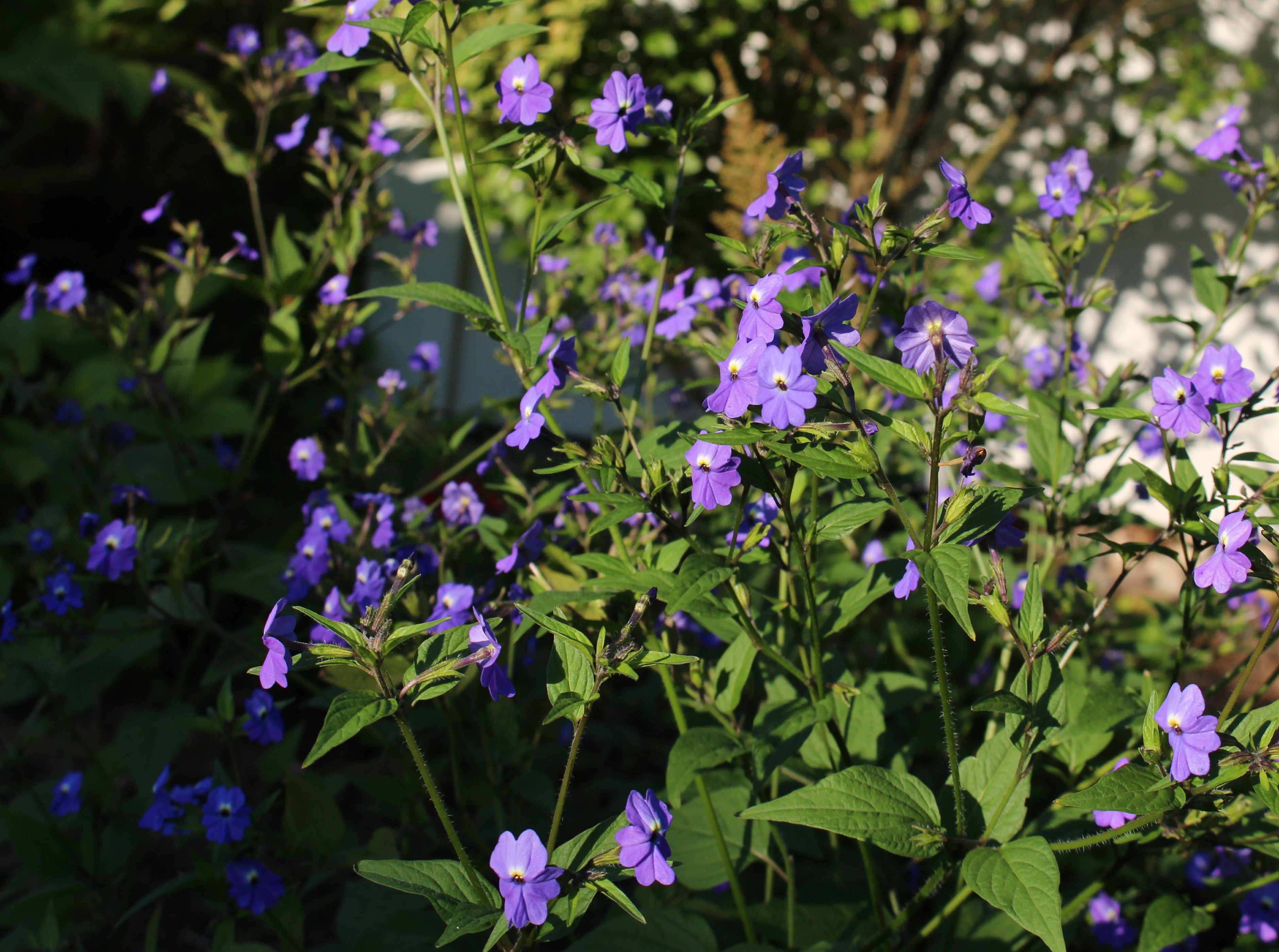
In the photo above you can barely make out the blue mist of Browallia Americana hovering above the hosta.  It’s an easy enough annual (native to Central and South America and across the Caribbean isles) and each year I like it’s nearly true-blue flowers even more.  Too bad I can’t get the camera to agree on the color, it always washes it out to a violet.

browallia americana

Browallia americana

So summer is still in full swing here, and for someone who prefers to ignore the calendar there’s not even a hint of the season winding down yet.  I like this sense of denial and will hang on to it for as long as I can…. but if pushed I will admit to thinking about next year already.  Ok, so I don’t even need a push.  I stumbled upon a summer sale at the nursery and took home a cool little banana plant.  It’s been a couple years since my banana growing days but I can feel the itch again and who knows what this means for next year’s plantings 🙂