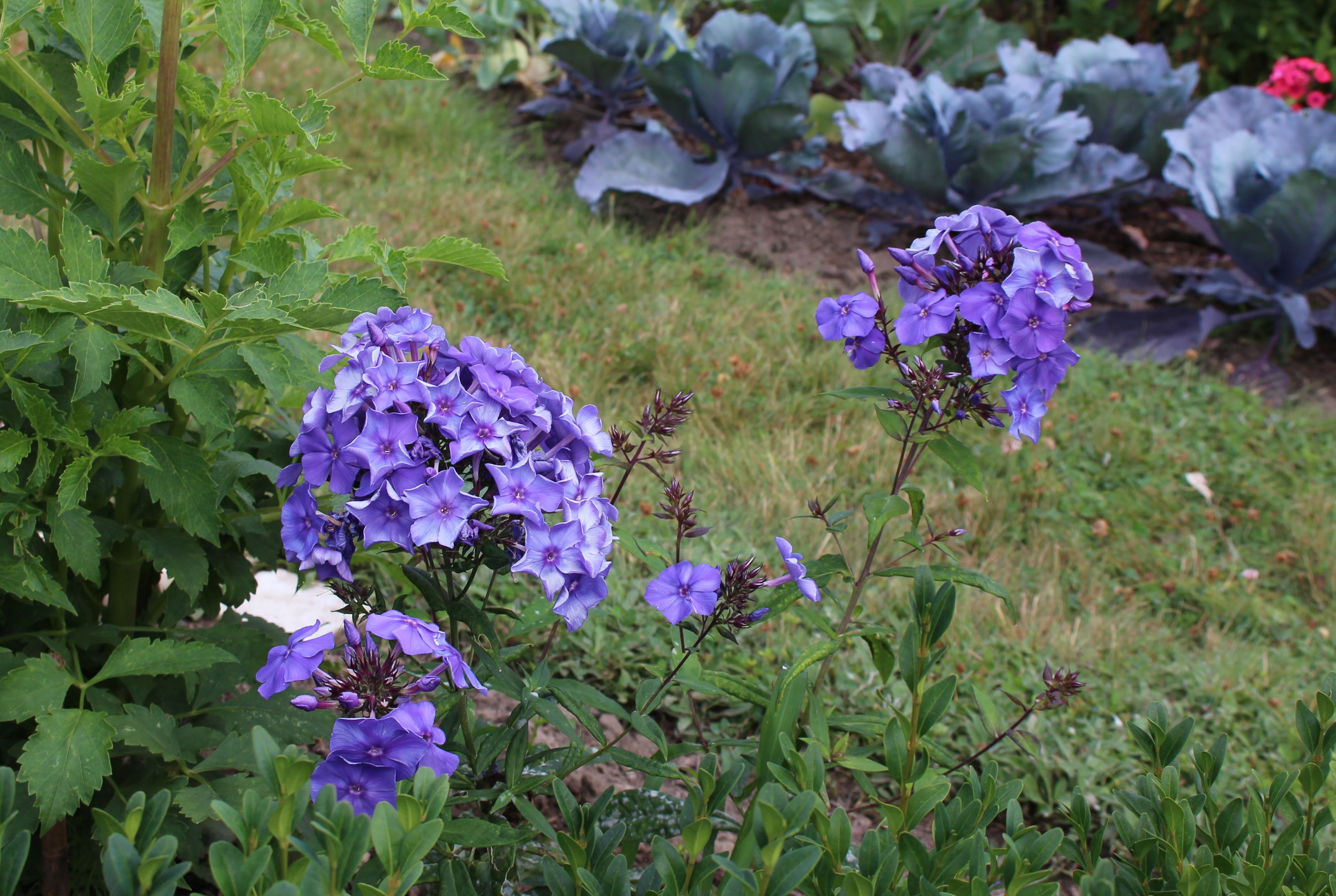
Not a bad morning.

It’s beautiful out this morning and I can’t even see problems in the garden.  The lawn is relatively under control, some staking and weeding was done yesterday, the soil is damp enough that watering is not an issue, and other than some chipmunk issues the wildlife of the garden is behaving in an entirely picturesque and harmless manner.  This feeling may fade quickly but while it lasts I’ll just sip my coffee quietly and hope the kids don’t find me.

datura metel

Datura metel.  I expected an annual but this one re-appeared out of nowhere once the rains came and the soil heated up.  It’s doing so much better than last year.

The light is often perfect in my garden but my photos rarely show this.  Even with a better half who loves expensive electronics and insisted on a fancy camera there’s still a skill component missing and I often look at what shows up on the computer screen and wonder what happened.  Fortunately this morning things just came together and it’s as good as it’s going to get.

IMG_2548

Light and shadows on a Datura flower. Even a few dew drops to make it glisten.

Last fall a friend gave me a few seedheads of what is probably Gomphrena ‘fireworks’.  It’s supposed to be in the same species as the regular globe gomphrena (G. globosa) but I don’t see it, and even though it loves the same heat and full sun, the flowers are more like yellow tipped pink brushes rather than tight globes.

gomphrena fireworks

Gomphrena ‘fireworks?’ in the morning light.  Easy from seed (needs warmth and bright light) and loves the heat.

Another annual which catches the light perfectly is amaranthus ‘Hot Biscuits’.  Practically a weed, it just shot up when the rain started falling and the humidity shot up.  This is another one which came via friend…. thanks Paula!

amaranthus hot biscuits

Amaranthus ‘hot biscuits’ in the front border.

I would have laughed if you told me I’d ever grow (and like) a brown flower but here it is.

amaranthus hot biscuits

A nice late summer show of amaranthus coming up among the butterfly bushes (Buddleia)

I do buy a few seeds here and there and zinnias are one which I like to keep in good supply.  Brenary’s Giants ‘Lime’ does NOT show well in the garden but it’s just too interesting to leave out.

Benary’s Giants lime zinnia

Benary’s Giants ‘lime’ zinnia from Fedco Seed.  I bet a good designer could do great things with this color… but me, not so much.  I think it’s cool regardless.

The birds and bees get the credit for this sunflower as well as whatever religious deity you believe protected it from my weed bucket.  I swore up and down I would not allow sunflowers in the tropical bed but there you have it.

double sunflower

A little doubling and a darkly rich center, I’m quite pleased to have this sunflower sharing space with the cannas and bananas.

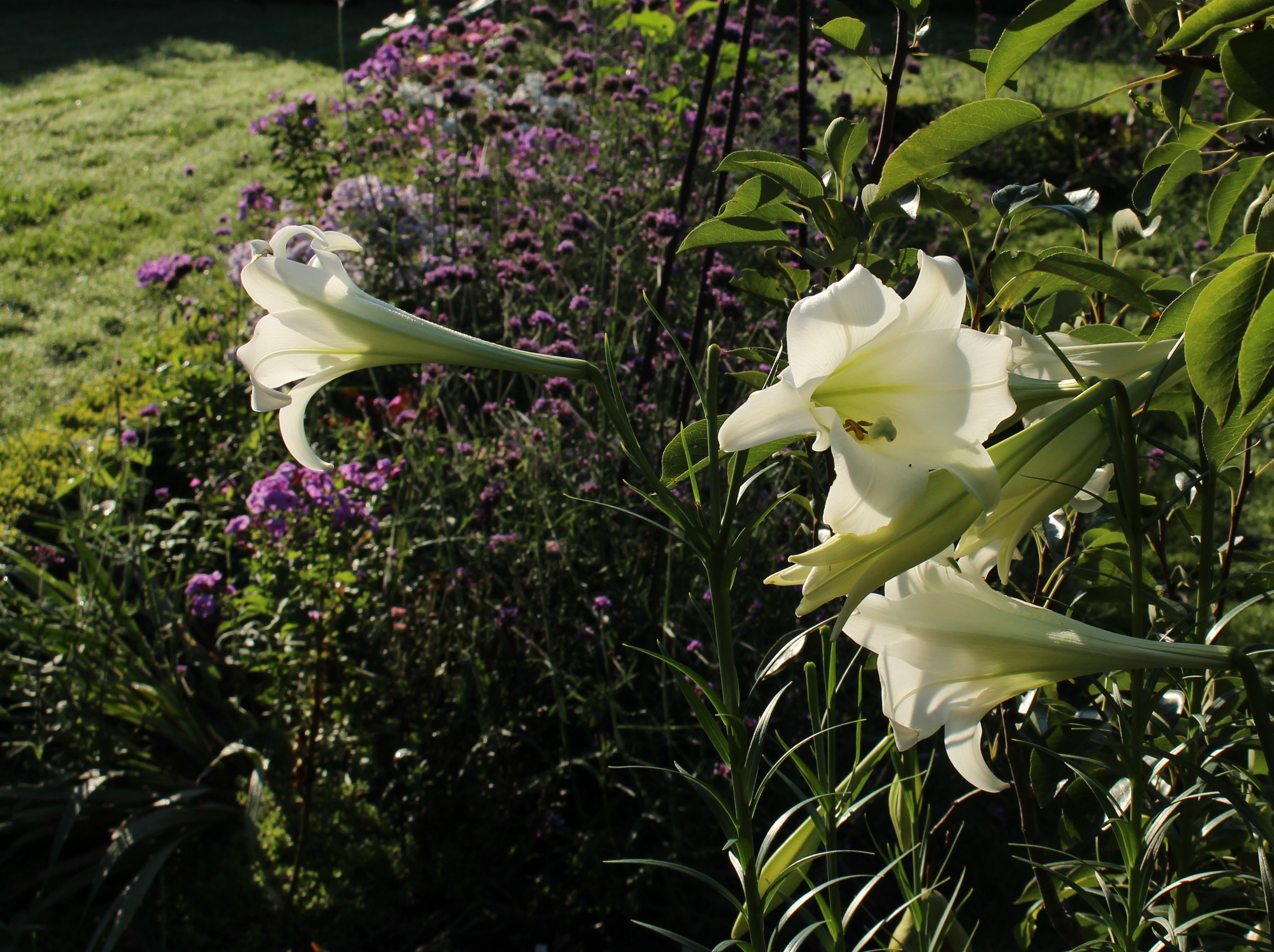
The Formosa lilies (Lilium formosum) were stunted by weeks of drought back in the no-man’s land which I tend to ignore, but are still forgiving enough to fill the garden with their sweet summer perfume.

lilium formosum

Lilium formosum.  For some reason I thought planting them where they’d grow up into the branches of a pear tree would be a good idea… but then again why would I think my little seedlings would ever amount to anything?

The meadow got its mowing just in time.  The first colchicum blooms were beheaded, but now the others can come up nicely in the short (and for once green) grass.

cochicum in lawn

cochicum in lawn

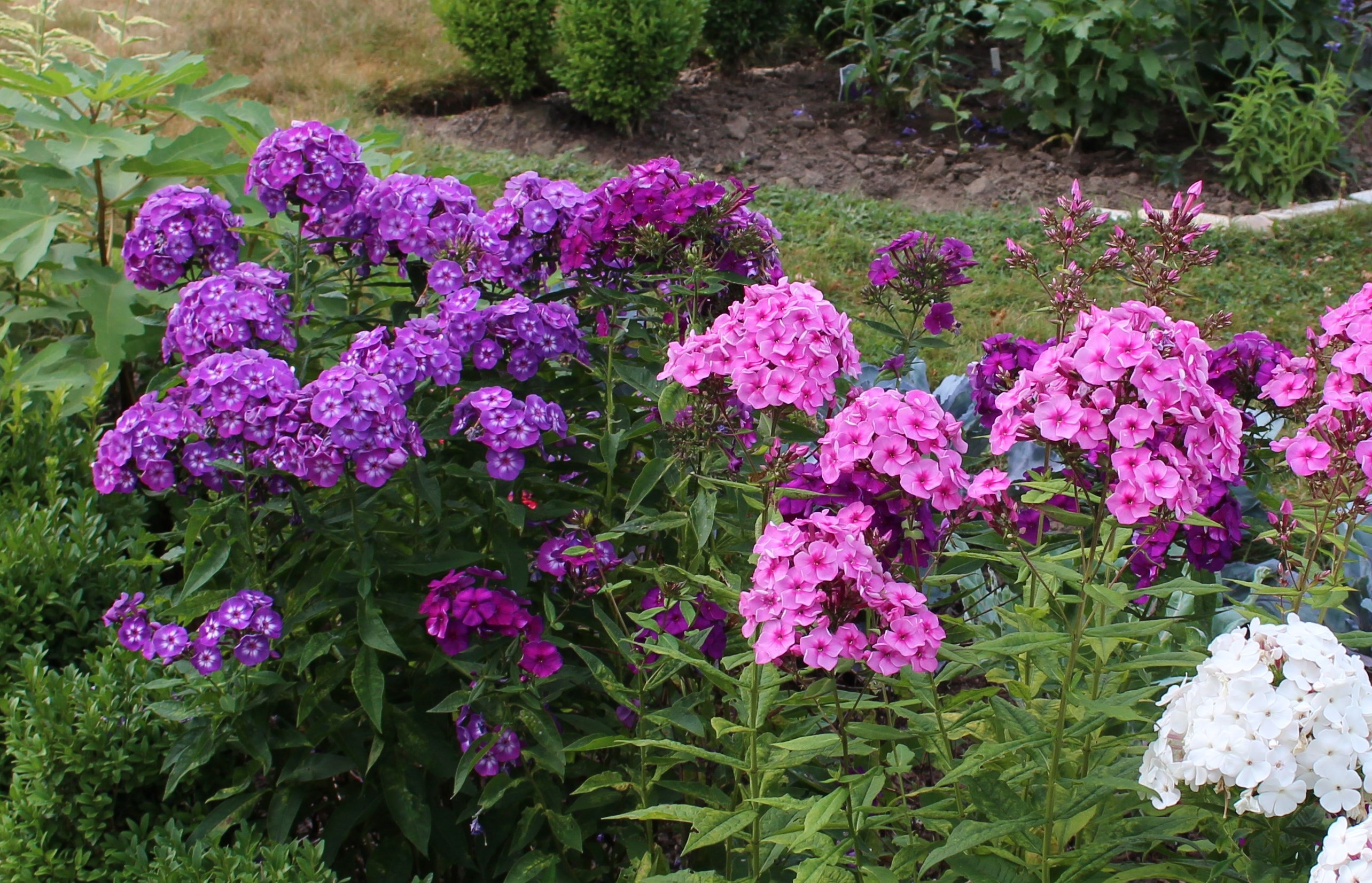
Back in July we didn’t even remember what rain looked like.  Then something happened.  August was warm and humid with perfectly spaced rain showers and this blessing from above even resurrected (most) of the phlox bed.  If you look closely the damage is still there, but on a beautiful Sunday morning it’s easy to see past that.

garden phlox paniculata

Phlox paniculata in the late August light.

Please click on “I hate gardening” to see what this bed looked like a month ago.  You could call the change miraculous and I don’t think that’s an exaggeration.

garden phlox paniculata

Just in time for Monarch migration, the garden phlox and Verbena bonariensis are again filled with flowers and this bed is a very busy place.

I do love my phlox.

garden phlox paniculata

Back from the dead, random phlox paniculata seedlings.

Have a great Sunday and all the best for the upcoming week.  I’m going back outside now and suspect nothing will get done other than a second cup of coffee.

Gratuitous phlox

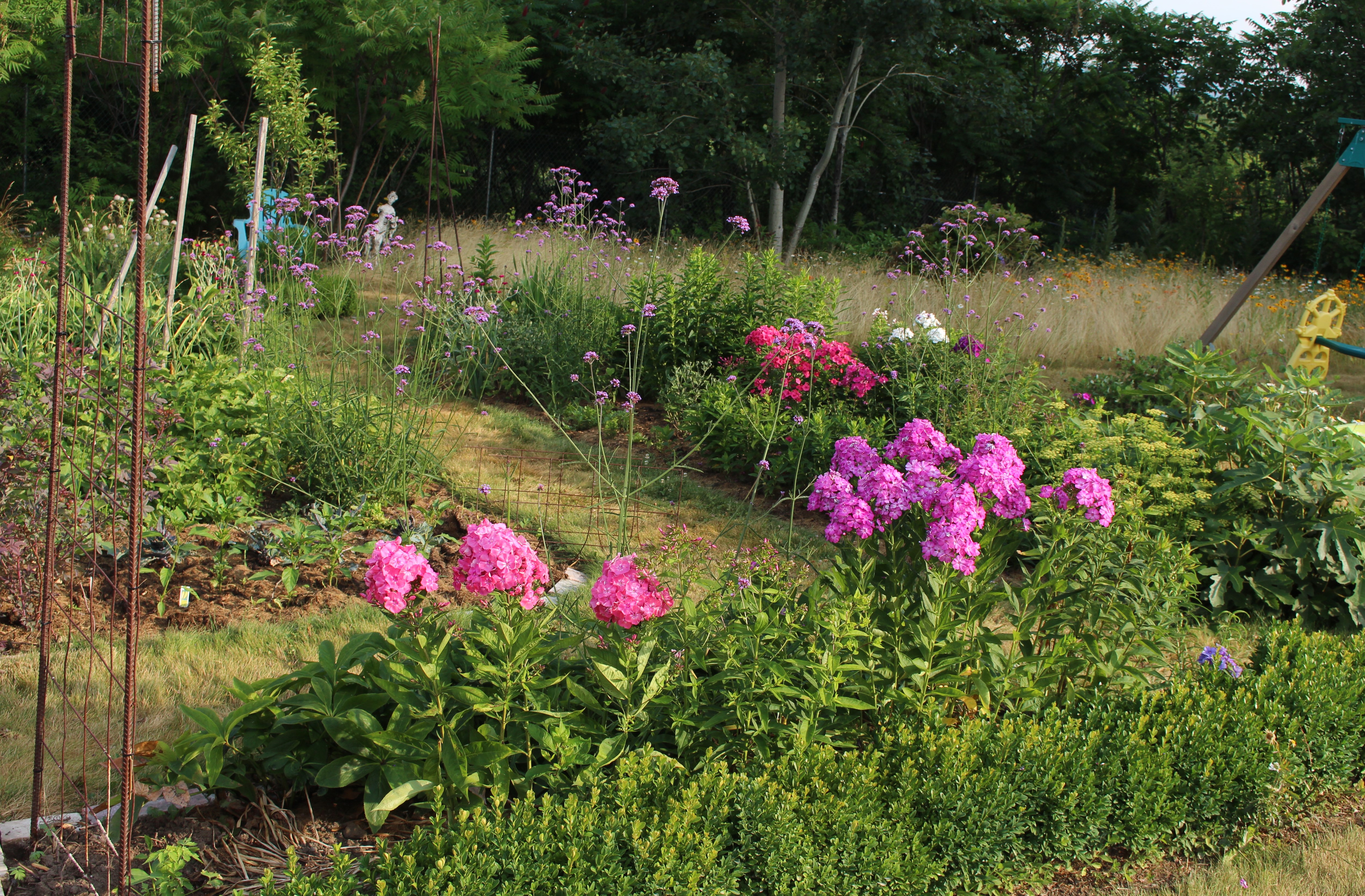
I don’t have nearly as many of the tall garden phlox (Phlox paniculata) as I’d like.  The photos are misleading without the big picture so here’s the big picture with a wider view of the potager (complete with freshly trimmed hedge).  A couple (4) in the front bed, and a dozen or so in the back bed is not a lot of phlox.

garden phlox

Mid July and most of the garden phlox are nearing their peak.  Can I call them a favorite flower?  I feel like I do that to something new every other week.

We’re just going from one phlox to the next here.  No commitment.

phlox dorffreude

Phlox ‘dorffreude’… I think that roughly translates to town’s joy?

A few cooler nights have deepened some of the colors and although I don’t know the names for several of these it doesn’t matter as far as enjoying them goes.

phlox paniculata seedling

This random seedling gets a pink tint when the temperatures drop.

But the dry weather has them all a little miserable, and unless they get watered every few days the leaves and flowers wilt and the spider mites procreate.

phlox paniculata seedling

Another random seedling which opens pink and then fades.  Note how bushy the plants are… that’s thanks to this year’s frequent deer, woodchuck, and rabbit nibbling.

The next few days promise more dry, clear skies with temperatures into the 90’s (32+C) and the garden will be on its own as we go off traveling.

phlox nicky laura

The dark purple ‘Nicky’, starry eyed ‘Laura’ and an unknown salmony red passed on from a friend.  A threesome of color.

Of course there’s always the pretty yet troubled one.  Phlox ‘Brigadier’ has a great reddish color yet doesn’t bloom well, is losing stems, is a magnet for mites, and resents every dry spell… but I can usually just get her a drink and she’s ready to go.

phlox brigadier cabots pink

Phlox ‘Brigadier’ with ‘Cabot’s Pink’ in the back.

I guess when you’re jumping from one phlox to the next you’re bound to run into problems but I’ll admit I’m a phlox addict and don’t really want to change.  When I was out at the nursery last week there were about six new ones which I had a chance at and they all looked like a fun time (even if I already have a few waiting at home) but I said no.  It will be a hard enough time staying faithful this winter when it’s just me and the computer and the great online phlox source, Perennial Pleasures.  They’re like a Craigslist for hooking up with new phlox and I’m sure I’ll click on something I shouldn’t.

Introducing ‘Blue Spot’

In a brutal world where a person were limited to growing just two plants, I’d chose snowdrops and phlox.  Snowdrops have an awfully long ‘down’ season, but phlox carry on through the summer and if you can assume that this cruel two-plants-only world doesn’t have any other issues going on, I think phlox season would keep me pretty happy.  The phlox family is an attractive family to begin with, but today I’m talking tall garden phlox, Phlox paniculata.  Purists would call them North American native plants, but native flower is not something I think of when they burst into bloom, and as phlox season ramps up around here I can’t picture these hybrids fooling anyone into adding them into their patriotic natives only planting schemes.

phlox paniculata

phlox paniculata in the ‘Potager’… formerly known as the vegetable garden.

I’m stretching things with the native part as I know most people are not putting these plants in as part of a program to make America great again, and are rather planting natives for their attractions and benefits to native pollinators and wildlife, so I guess if I have a point here (since as usual I’m all over the place this morning) it’s that these were once wildflowers but now fit right in with the fancy delphiniums and chrysanthemums.

phlox salmon beauty

Phlox ‘Salmon Beauty’ (1940’s intro).  Sorry about the dried up grass in the background, but this phlox is just glowing today.  

There’s a real risk that the phlox will slowly take over the potager completely and leave me with zero space for actual vegetables, but that’s a chance I’ll take.  It’s not the idea spot for them since the relentless sun and drying winds invite pests such as spider mites in, but as long as I keep them fairly well watered and make sure their diet is complete (they enjoy a rich soil), the phlox do well enough.

phlox cabot pink

Phlox ‘Cabot Pink’.  Several of the phlox I grow are heirlooms from the pre-WWII era when Europe (which included England back then) was putting out some of the best phlox varieties yet seen.  “Cabot Pink’ may or may not be one of these as its name d after the Cabot Vermont town in which it’s been passed around, and may or may not be the original name. 

Like I said, although “the phlox do well enough” here, not everyone is completely happy.  The 1990 Piet Oudolf introduction ‘Blue Paradise’ has yet to take off.  Flowering is no problem with even the most pathetic stalk blooming, but it’s been floppy and mildewy and just plain miserable in its spot (everything which it’s supposed to not be).  Of course I’m to blame since it seems to take off for everyone else, but maybe this fall I can move it and find just the right location to cheer him up.

phlox blue paradise

The “blue” morning color of phlox ‘Blue Paradise’.  The color changes with time of day and temperature which is cool, but so far I haven’t been able to change his slumping nature and unenthusiastic growth rate.  Here he is flopped over onto the boxwood hedge, which is the only thing keeping him up out of the dirt.  

Ok, so here’s my latest favorite phlox.  It’s ‘Blue Spot’, a newer introduction which for some reason I can’t seem to find any information on just now.  For some reason 2008 introduction by way of a Connecticut nursery comes to mind, but I’ll likely have to update that when I figure it out.  This plant came to my garden last fall by way of Perennial Pleasures Nursery, a Vermont nursery which has the best phlox offerings I’ve seen, and fortunately also does mailorder!

phlox blue spot

Phlox ‘Blue Spot’

My plant still needs some growing to do, but in spite of multiple woodchuck grazings, it’s managed to put up a few flower stalks.  I love the bluish swirls and I think it gets this pattern from another favorite, ‘Blushing Shortwood’ which may or may not be a parent (again… top of my head).

phlox blue spot

A closeup.  In my mixed up world of color naming, I’m calling this a blueberry stain on a white background.

I look forward to seeing this one clump up and hopefully avoid another run-in with the local wildlife.  So far my theory of letting weeds grow up around it to hide it from attack has been working, but that has its downsides as well… we will see, just like you will likely see plenty more phlox photos as the season rolls on.  We still have all of July and August you know!

Have a great weekend, and a happy and safe Fourth of July.

Down on the farm

Late August is bathing us in heat this year and the steady rains have brought on the harvest.  We modestly refer to our garden as “the farm” or “potager” and this is the time of year when it shines.  Produce begins to trickle in and suddenly there’s a little more interest in the backyard.

harvest from the garden

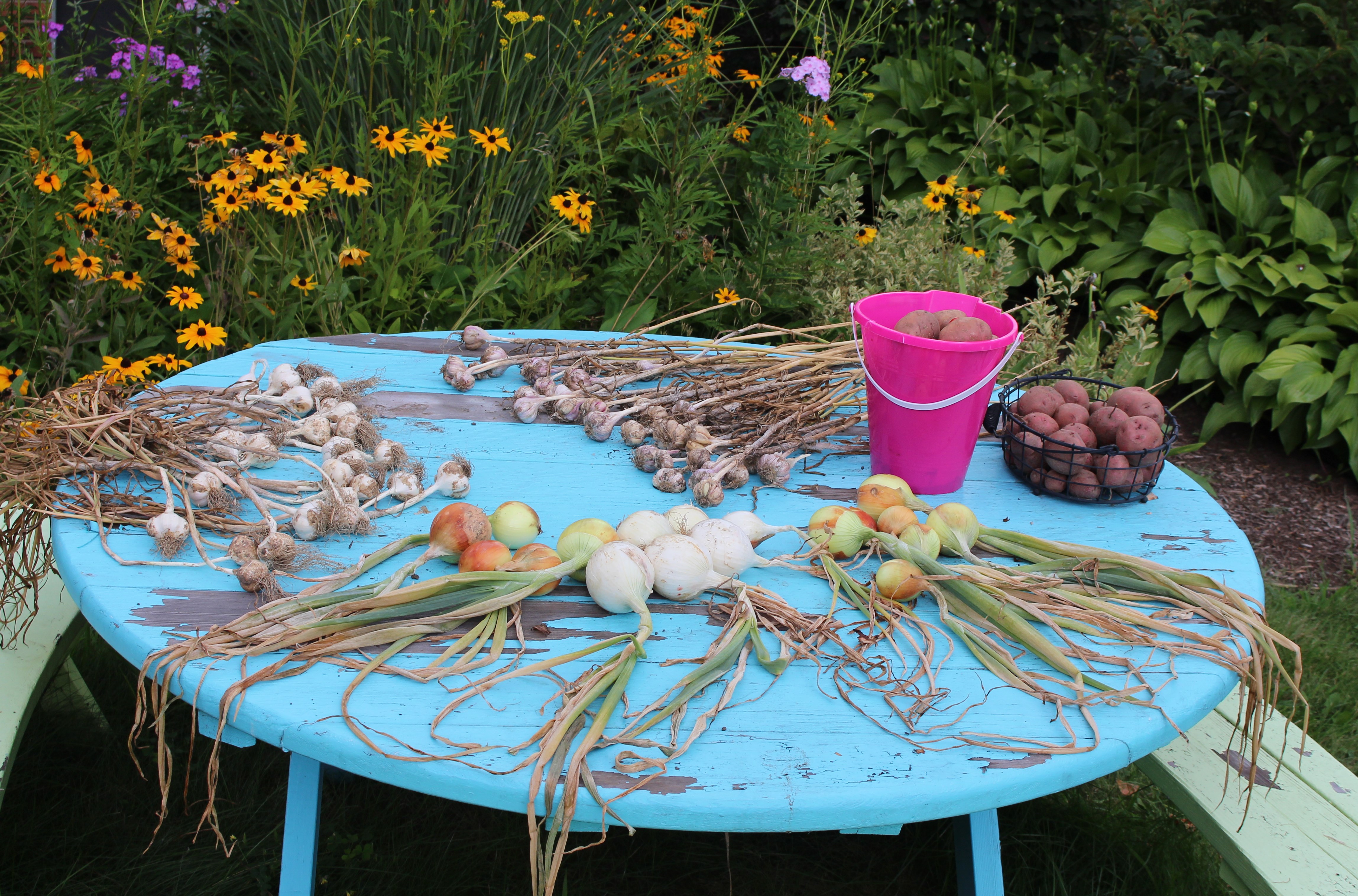
The picnic table is the place to be for drying off and cleaning up before the kitchen.  Garlic, potatoes, and the first of the onions started the month off.

Eggplant and peppers have been going out, onions are always popular, tomatoes are on their way, and beans are yet to come.  The harvest is late due to planter’s procrastination but who out there hasn’t ever fallen behind?  At this time of year even I fix up a plate of veggies, and they aren’t even deep fried 🙂

IMG_8425

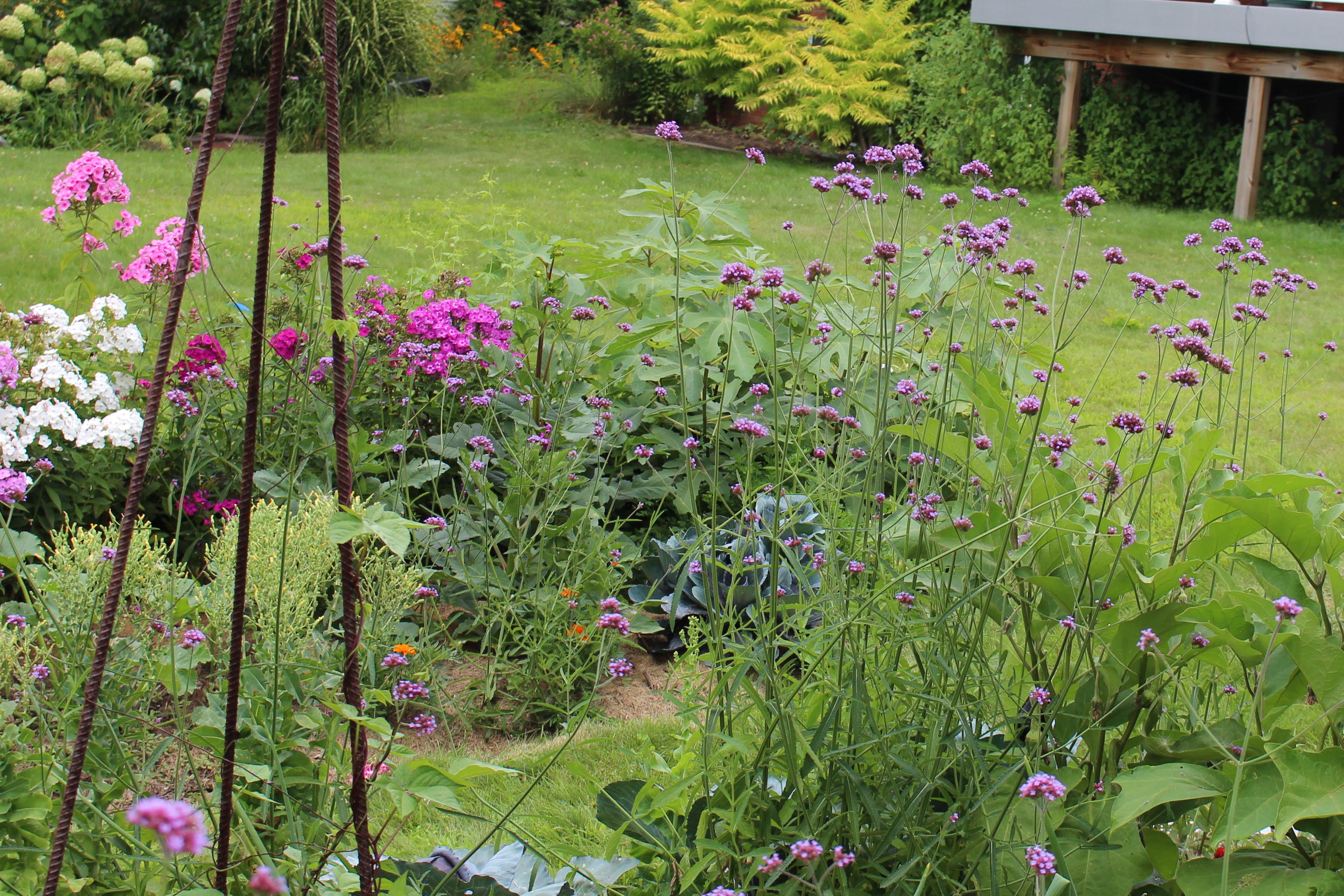
I grow red cabbage just for the looks, but there’s a good chance these heads will disappear soon and show up again later as rotkraut.  Fine by me, but in the meantime they look nice with the verbena, eggplant, and marigolds.

I admire a neat garden with raised, raked beds and straight rows of perfect plantings, but that’s nowhere even close to my garden.  The potager is tumbledown mix of flowers, crops, and all kinds of odds and ends that found an open spot of soil and made it their home.  Phlox are never turned away, and earlier in the month they started their summertime concerto and the music still plays on through the heat.  For this I consider myself lucky,  since earlier in the spring between spidermites and drought I got the feeling it would be a down year for the tall garden phlox (Phlox paniculata).

phlox paniculata dorffreude

Phlox paniculata ‘Dorffreude’ (Karl Foerster introduction, 1939) making a good argument that newer isn’t always better.

The phlox make me happy, but the other flowers which add to the non-agricultural chaos also make me smile, and the tall Verbena bonariensis leads the way with their bee and butterfly attracting bloom heads.

IMG_8305

Now’s the time when the verbena becomes too attractive to pull.  It’s a fair trade-off since the flowers draw in nearly every passing butterfly.

One area of responsible neatness is the boxwood hedge which edges the two forward sides of the garden.  After three years the small plants have finally begun to look nearly respectable.  To celebrate this milestone I spent way too much money on what I hope will be a set of premium hedge shears.  The electric trimmer has been shelved and I took the quieter, more contemplative path of manual trimming.  For me it’s relaxing and I think I’m one of the few who actually enjoys this job.

training boxwood hedge

Slowly the boxwood hedge fills in.  I can still remember the summer day way back when me, a bucket of boxwood clippings,  a few trays of potting mix, and a couple beers started this all.

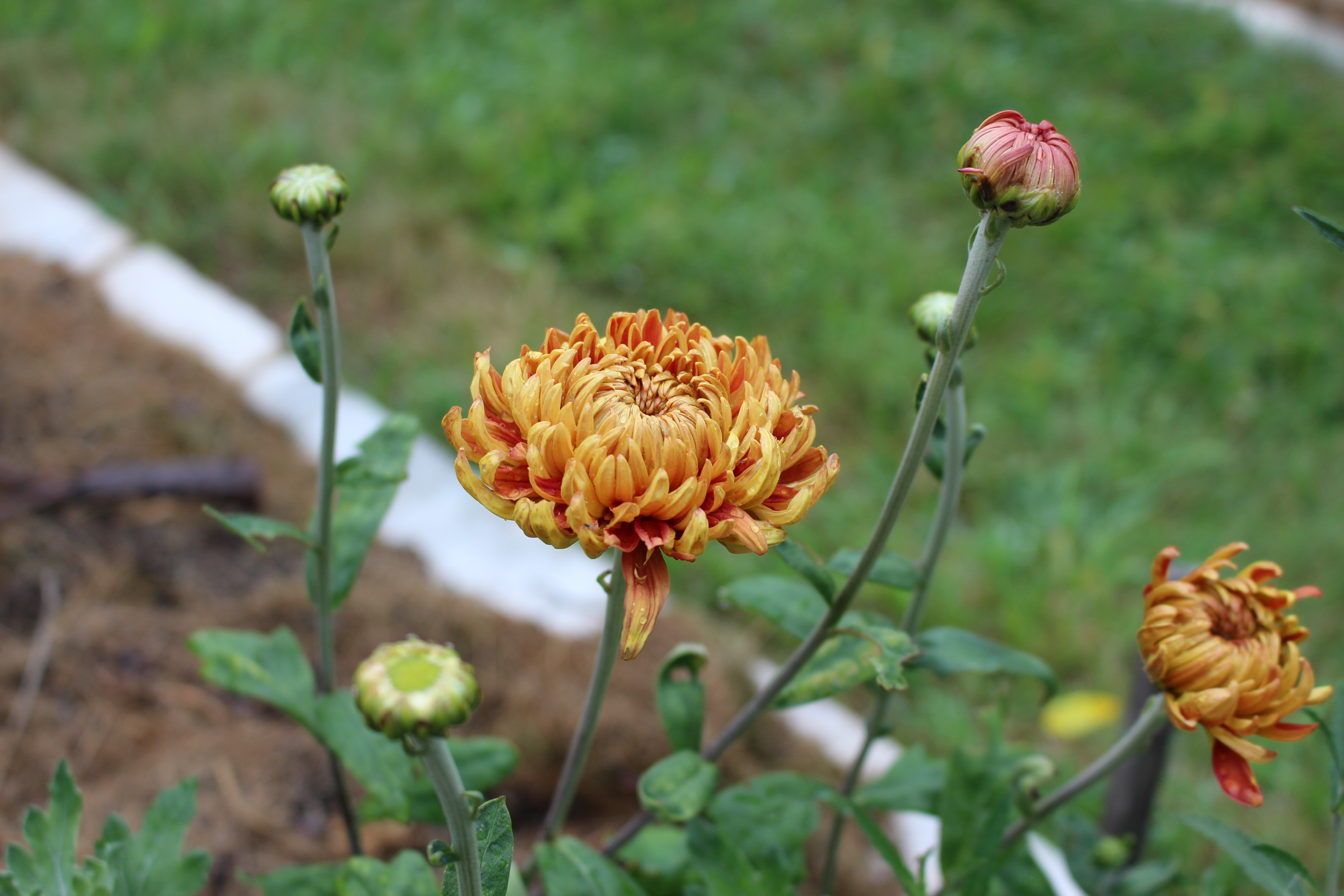
Besides boxwood and phlox, chrysanthemums (ok, new name dendranthema) are starting to make a serious play for potager real estate.  This spring I added even more of the larger flowered football types, trying to stick with anything which might be hardy through the winter.  I’d try to explain this growing obsession with mums but honestly after just admitting I enjoy hedge trimming I’m not sure there’s much I can say to defend this last quirk.

hardy football mum

Hardy (hopefully) football mum.  If the mood strikes next year I may even try disbudding a few of these to see if I can force all the plant’s energy into one single, perfectly large, perfectly perfect, bloom.

Dahlias.  I like dahlias.  I think I’ve already confessed to that.  Of course a late planting gives late flowers, and you know me and late.

moonlight dahlia

Dahlia ‘Moonstruck’.  This is its third year and it has yet to let me down, although I suspect it carries a virus which causes the leaves to yellow and die way too early in the season.

Sometimes late isn’t anyone’s fault.  For the second year in a row I’ve had these gladiolus bulbs overwinter in the open garden.  Against better advice I even transplanted them in June and look at that, the clump still managed to send up two bloom stalks.  If this keeps up I’ll need to divide the clumps next year since the other clump is up to 8 flower stalks!

winter hardy gladiolus

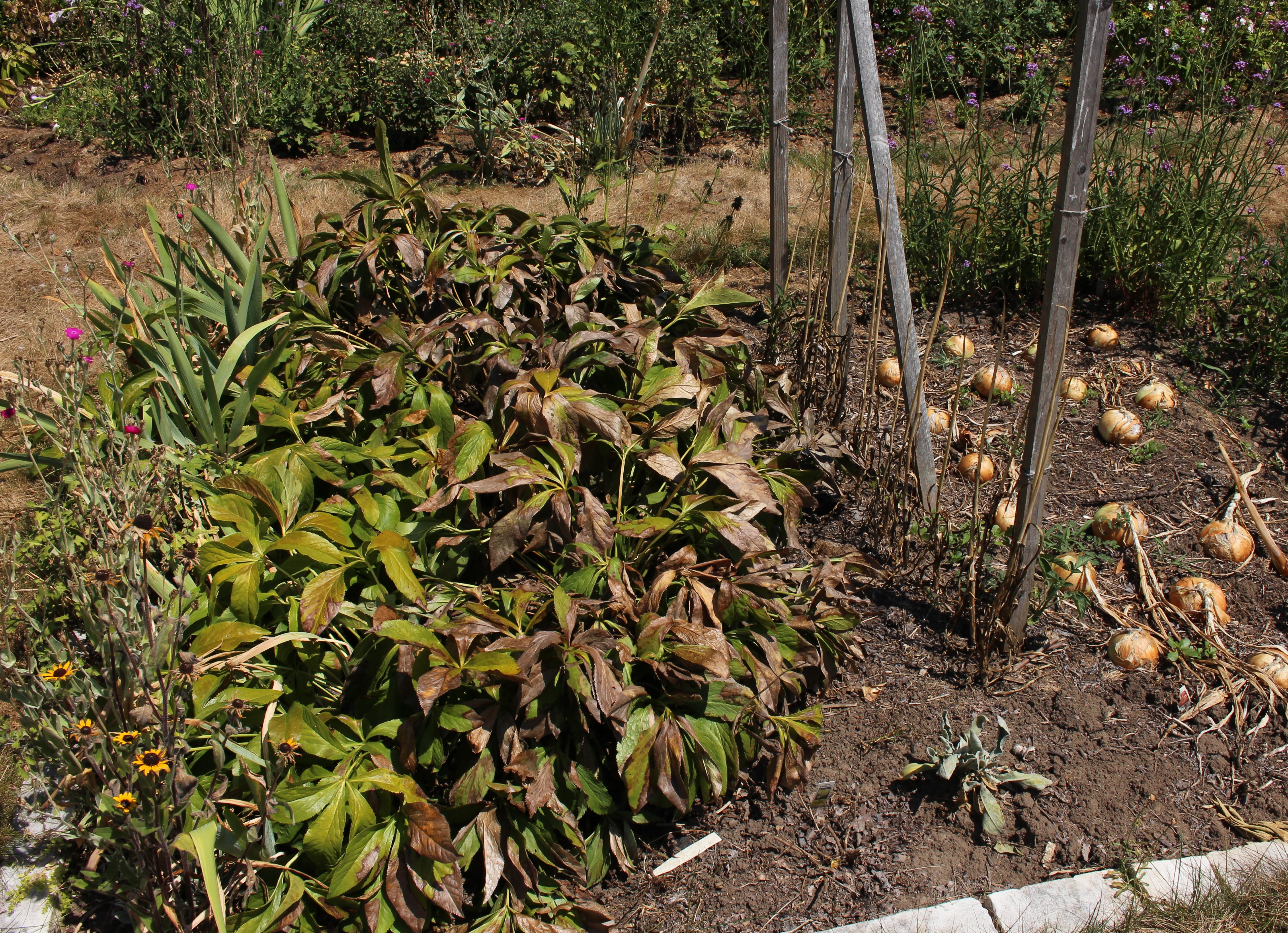
Just your average hellebore-gladiolus-rudbeckia-tomato planting.  I don’t think you’ll find this combo anywhere else… probably for good reason 🙂

But procrastination does have its down side.  Although the persicaria and rudbeckia have never looked better next to the potager, the light green ‘turf’ in the bed is 100% weeds…. and this is still supposed to be a red border, which rudbeckia is not.  Also the trellis never received a solid footing, and was never officially planted.  I guess that’s what the plans for next season are made of!

persicaria red border

persicaria red border

Enjoy your own harvest, whether it be fruits or flowers, contentment or excitement.  The season is here and as long as the heat doesn’t kill you first you can shelve these moments away in your mind for those dark days in January.


GBFD The Promise of May

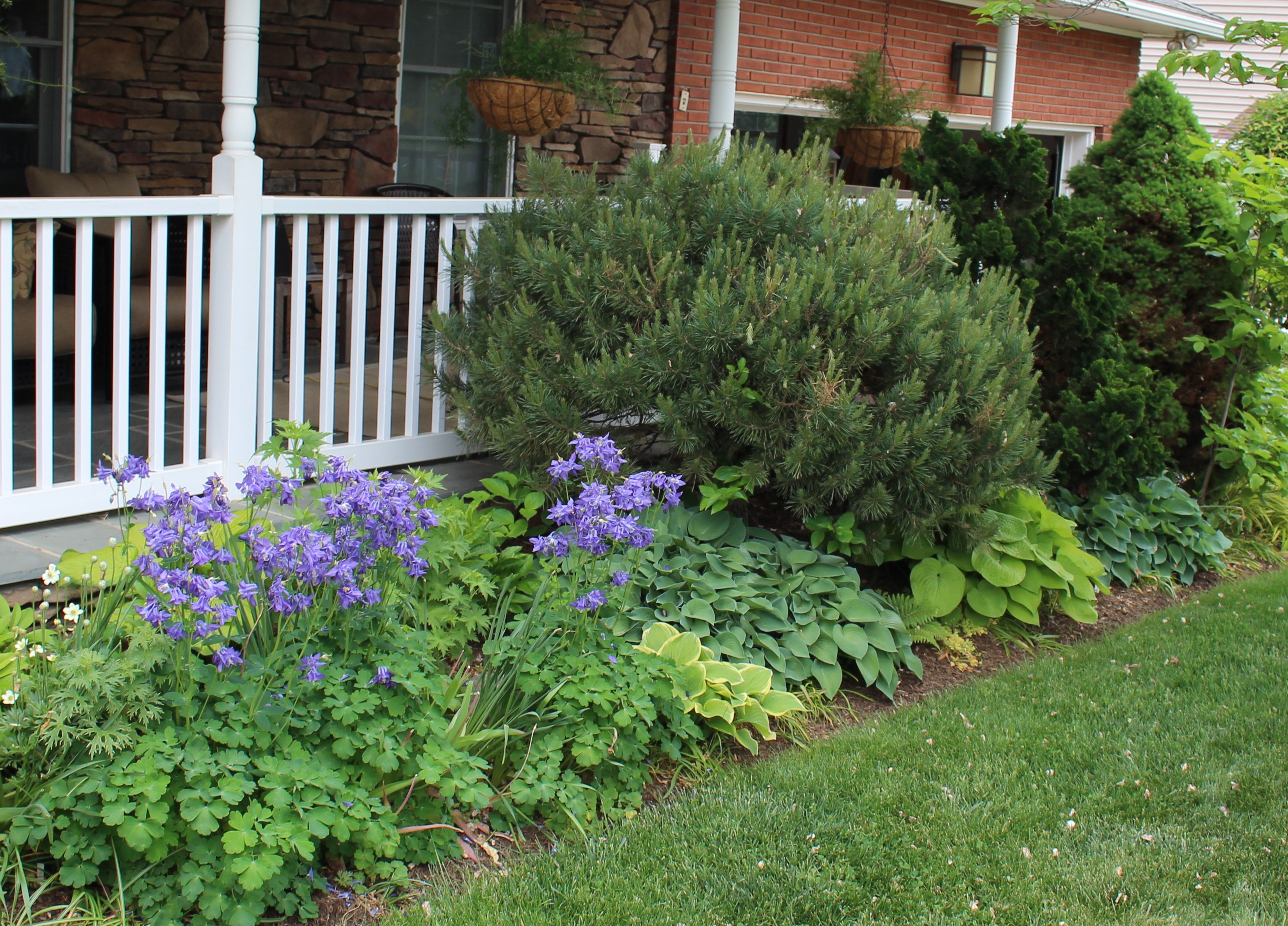
On the 22nd of each month Christina at Creating my own garden of the Hesperides encourages us to look past all the flowers and blooms of the garden and take a second look at what foliage does to support it all.  I’m happy to once again take part in the fun, and what better month to do it in than May, the month where my garden really starts to overflow with the promise of the new season.  Lets start with the front beds where hosta and self sown columbine have now sprouted up and covered the snowdrop and corydalis beds of early spring.
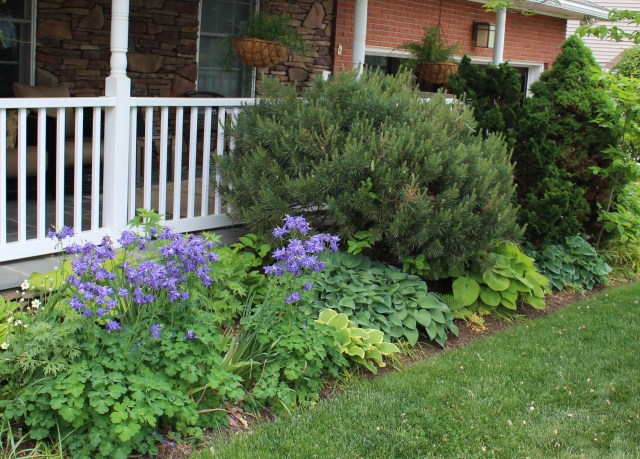
blue columbine with hosta

These blue columbine were originally found in the woods behind the house prior to its clearing for industrial park.  They’re just escaped or dumped aquilegia vulgaris, nothing rare or unusual, but I like to keep them around as a reminder.  Plus they’re carefree.

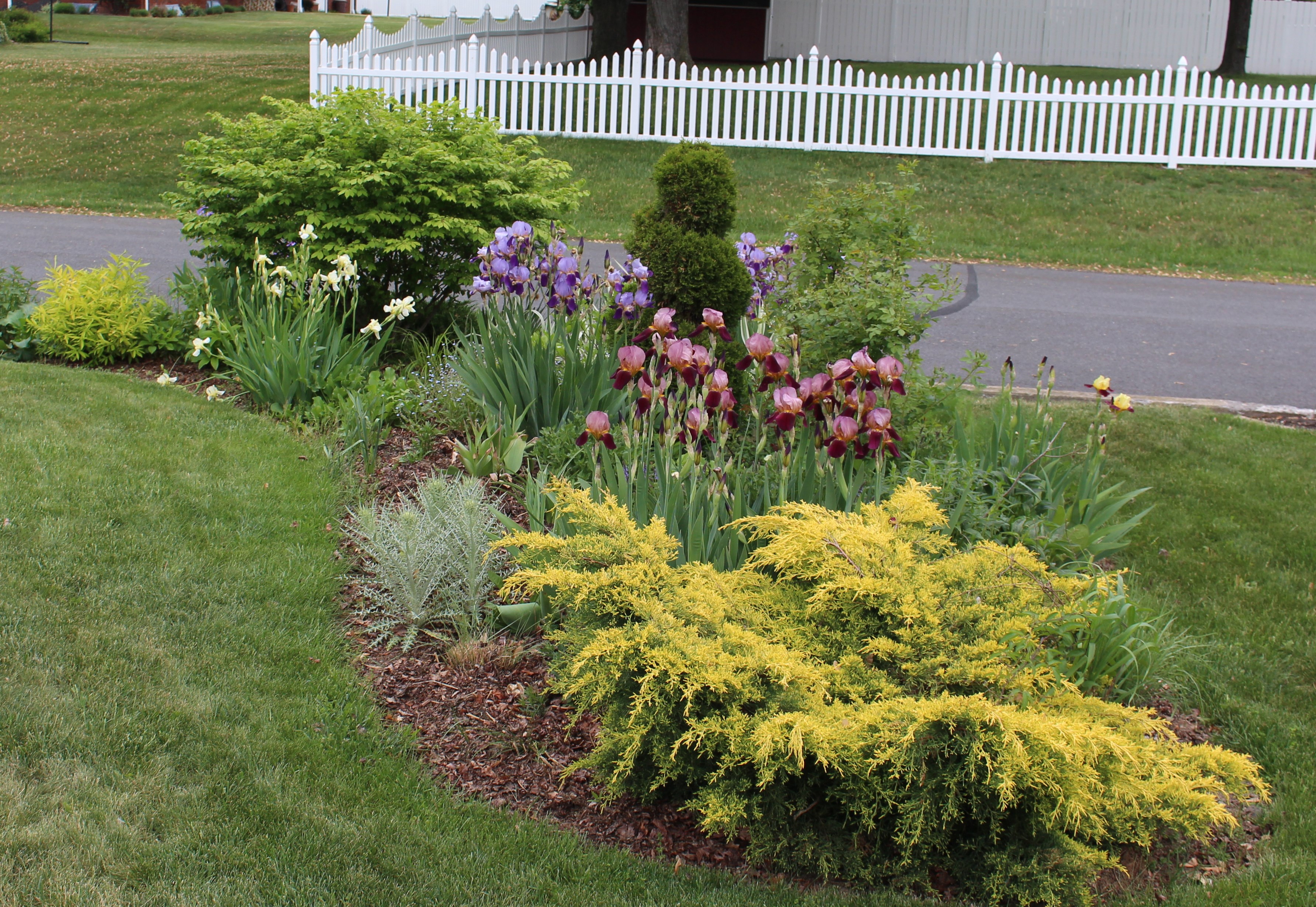
This will be our seventh year here and after a slow, cash strapped and baby filled start I think things are finally beginning to look like something.  The colors and shapes of the front foundation plantings are still a work in progress but for now the look is finally something I’m no longer bored or annoyed by. – Cathy here are the variegated iris in bloom, they have a fantastic fragrance 🙂
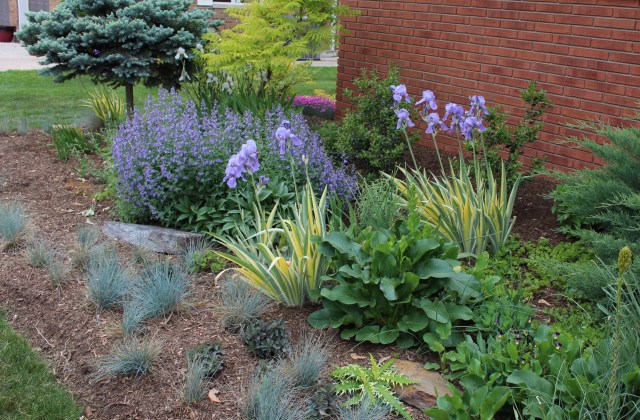
mixed perennial bed as foundation planting

The just recently mulched, expanded and divided plantings of the front foundation planting.

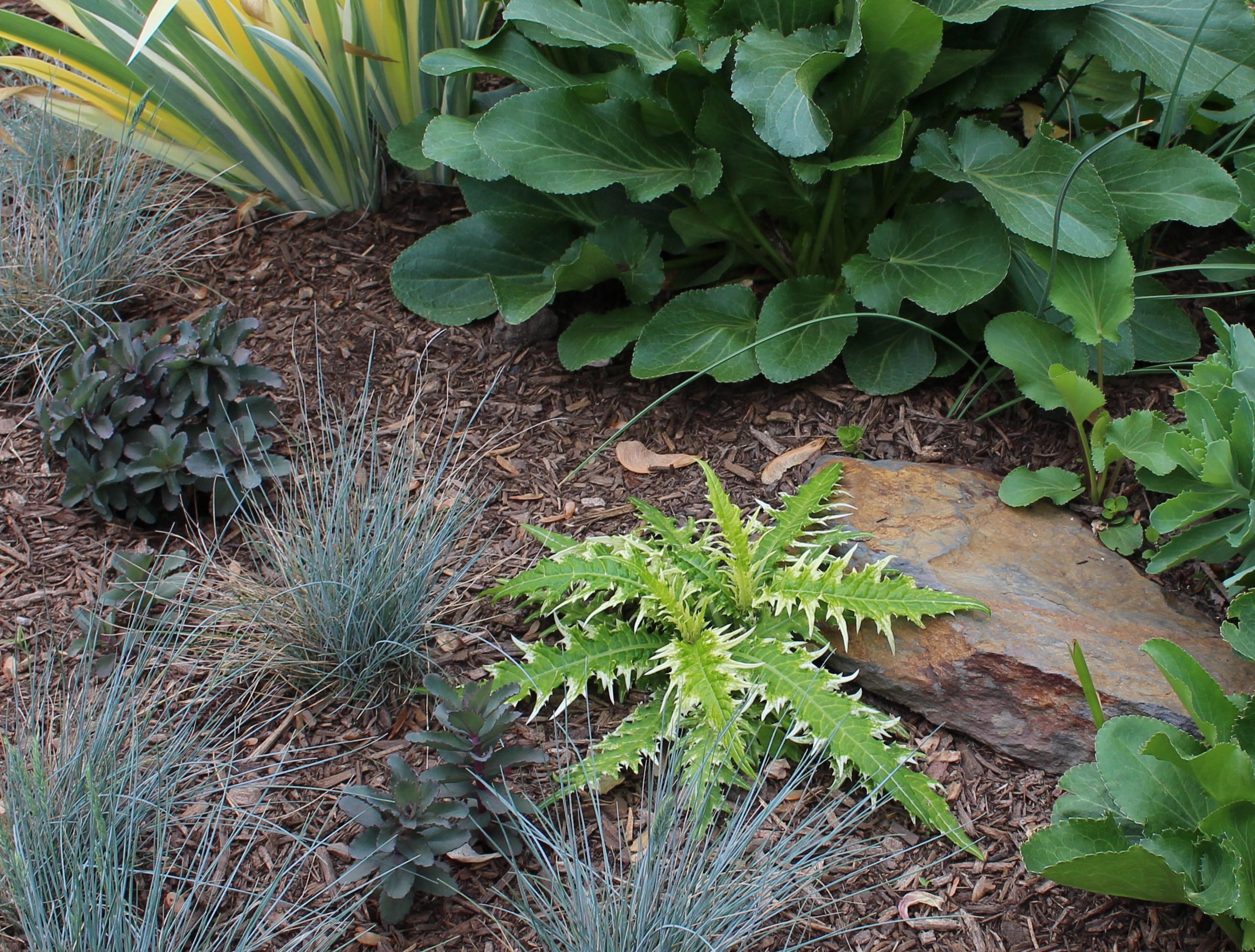
I love the different colors and textures out here at the moment, but my absolute favorite is the “white frosted” Japanese thistle (Cirsium japonicum).  I know I’m in a lonely position here, but the prickly thistles always fascinate me, and in my opinion variegation is almost always a plus!

Cirsium japonicum 'White Frosted' Japanese thistle

Cirsium japonicum ‘White Frosted’ with blue fescue and some just divided sedum ‘Bon Bon’.

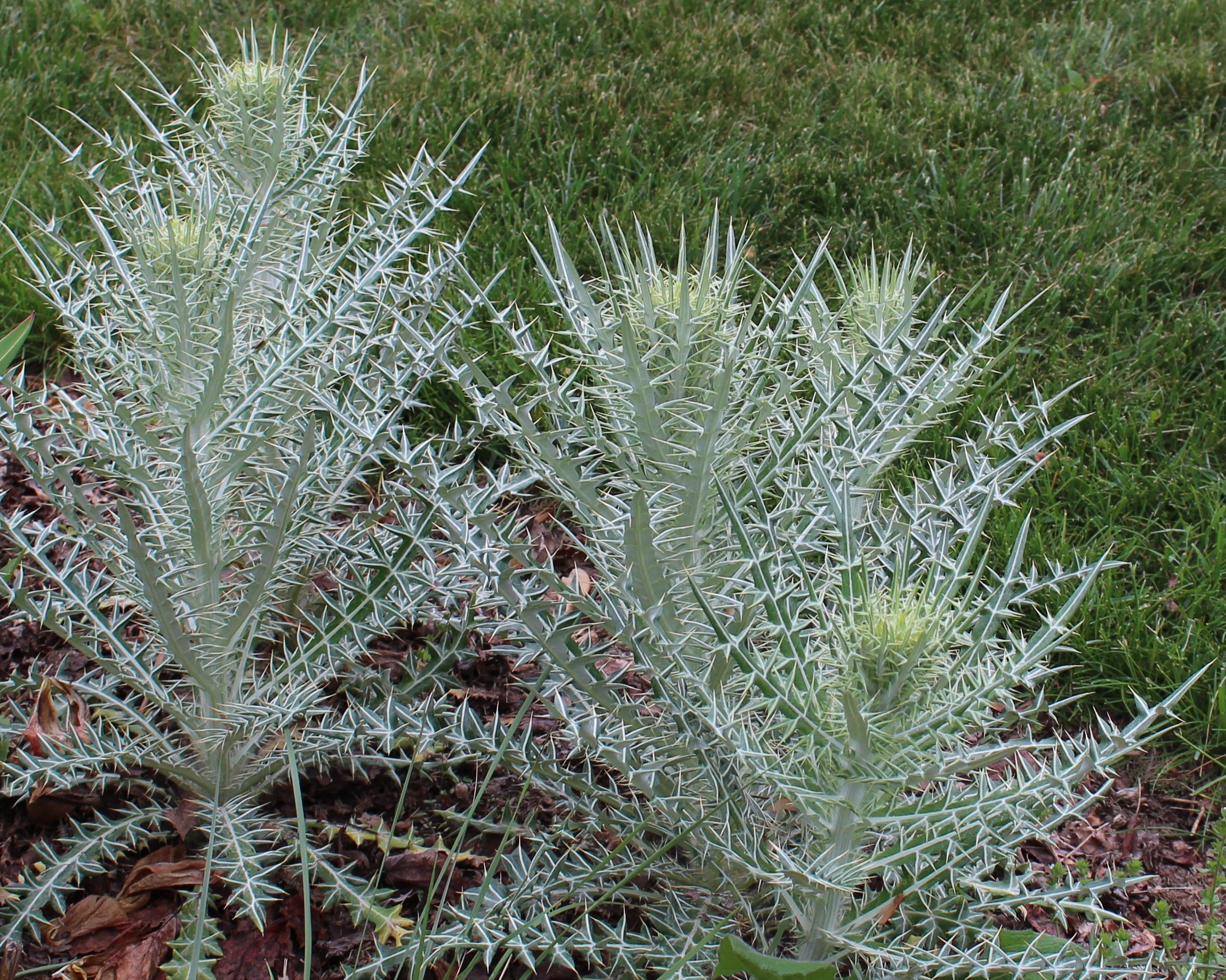
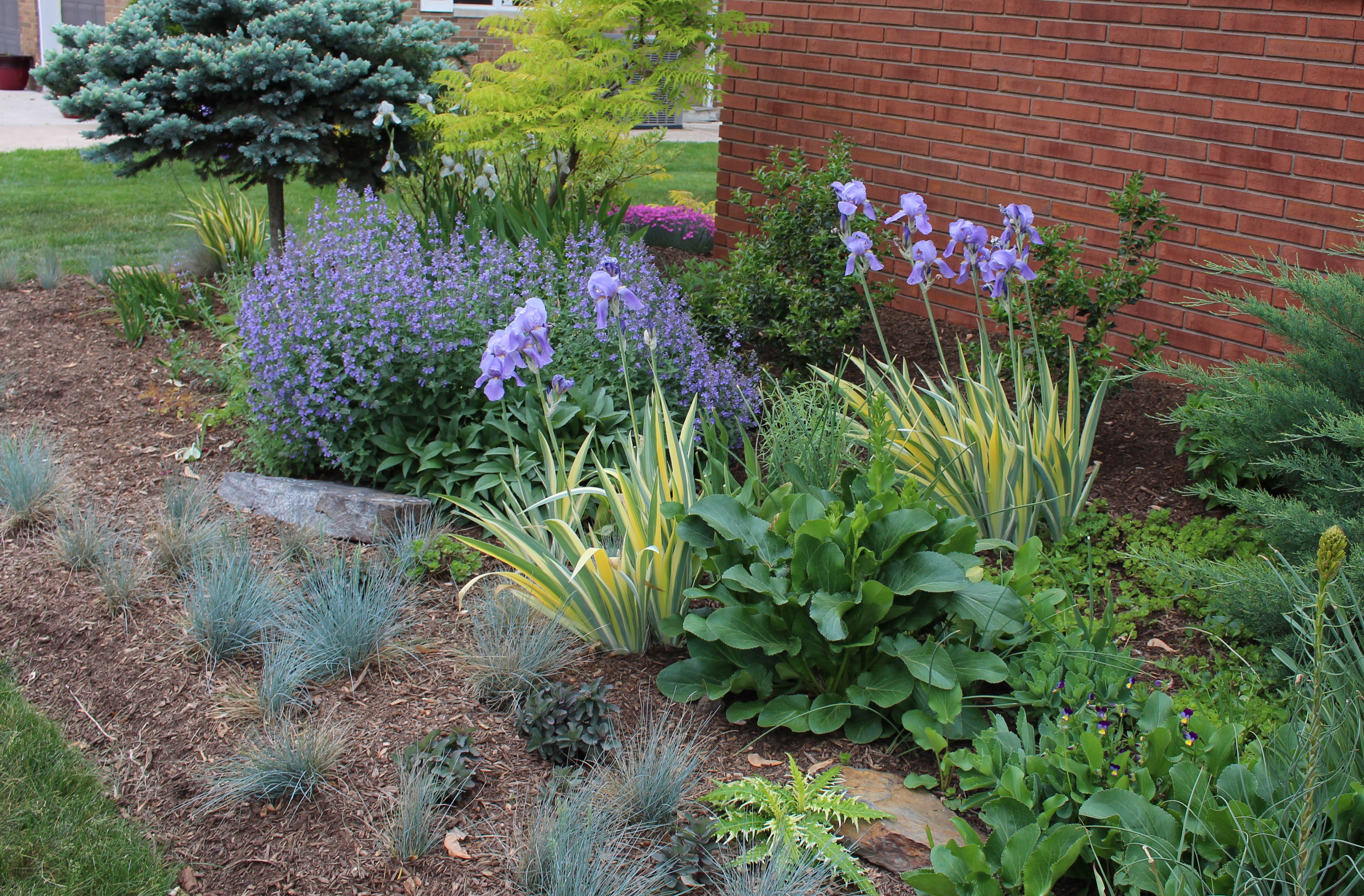
Even with the iris coming into peak bloom along the street border (it’s a good year for iris here), my favorite plant in this mix is the Ptilostemon diacantha.  Some see a spiny weed in need of pulling, I see some of the coolest foliage in the garden.
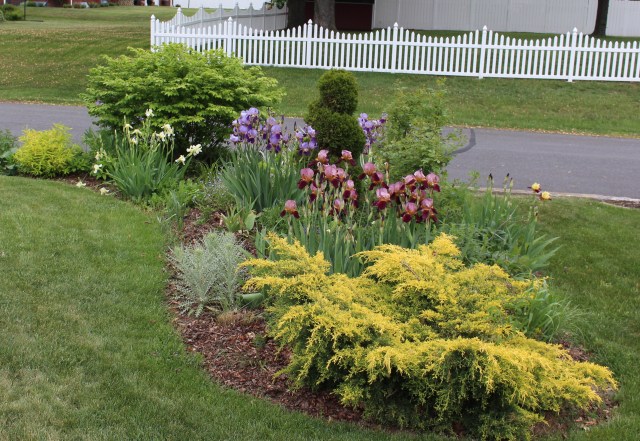
mixed border with historic bearded iris

Historic iris like the poor soil and hot, dry and sunny front border, and even though the pale yellow iris “flavescens” does not like the wind, the reddish ‘Indian Chief’ and lavender ‘Ambassedeur’ stand strong.

I know I’ve already shown this weed a couple times, but I’ve never seen it looking better…. not a difficult feat since this is its first time growing here!  I suspect the actual blooms will be a letdown, but the fine texture and pattern of the leaves…. 🙂

Ptilostemon diacantha

Foliage closeup of Ptilostemon diacantha.  A biennial thistle from the Balklands/Turkey region in need of a common name.  ‘Ivory thistle’ is the only one I came across and that one kind of bores me…. and with blooms of mauve I don’t see the connection.

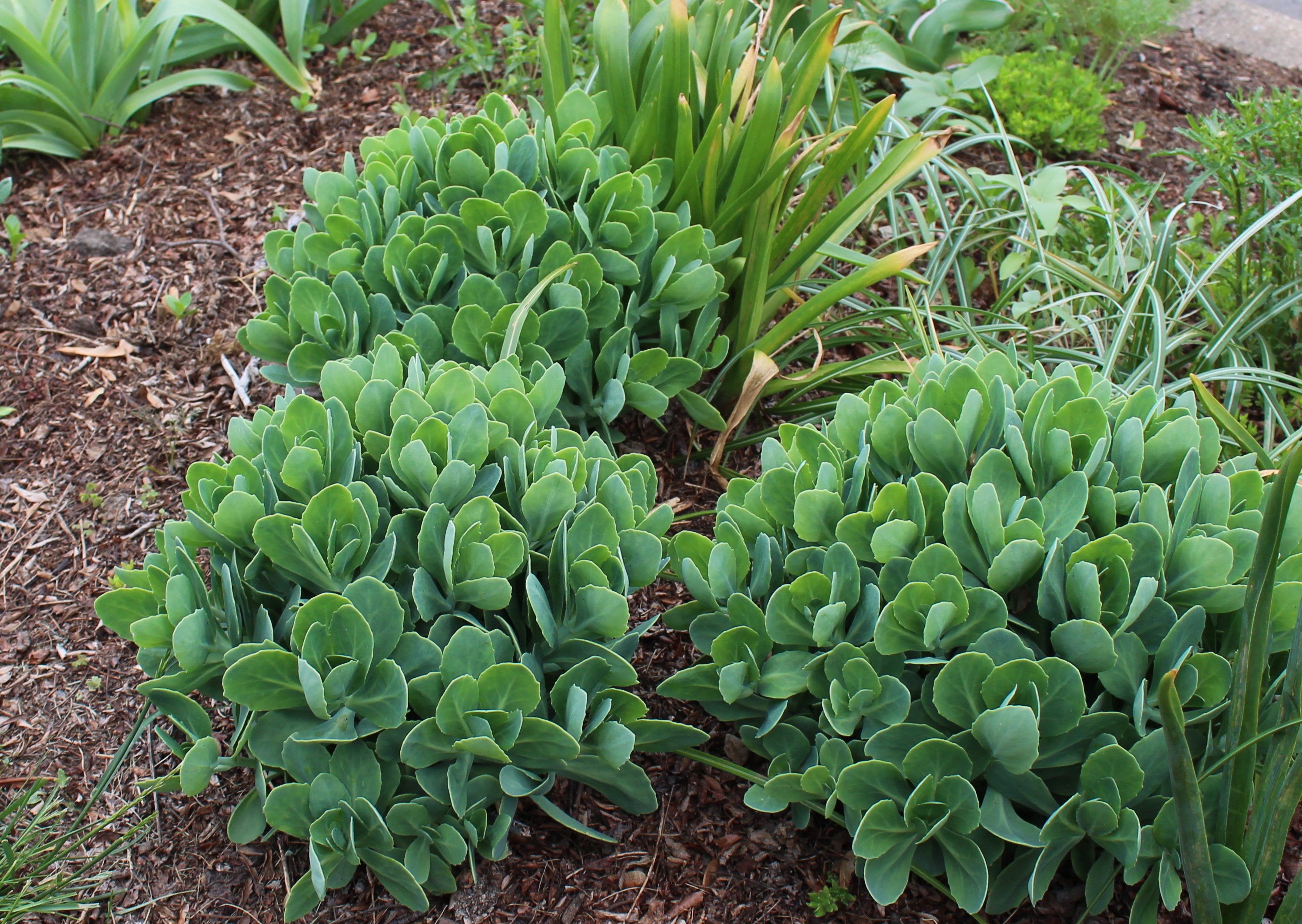
There are some friendlier foliages as well.  The juicy fat clumps of this unnamed sedum spectabile (apparently Hylotelephium spectabile is its new name) always make me smile, no matter how common they might be.
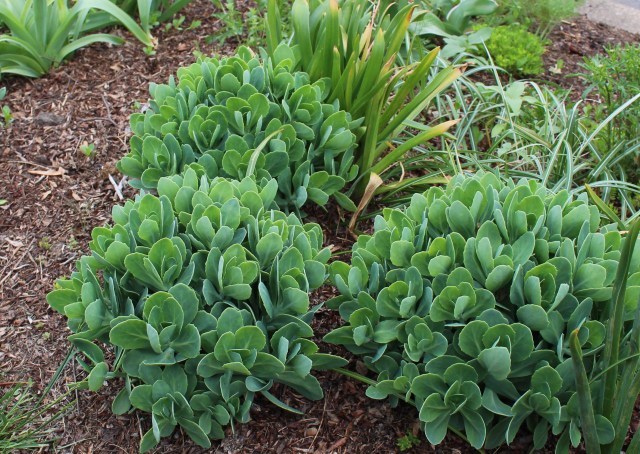
spring clumps of sedum spectabile

Spring clumps of sedum spectabile.  The common types are unkillable, and one plant survived for two years after I put the clump down on a stone step after being distracted while transplanting.

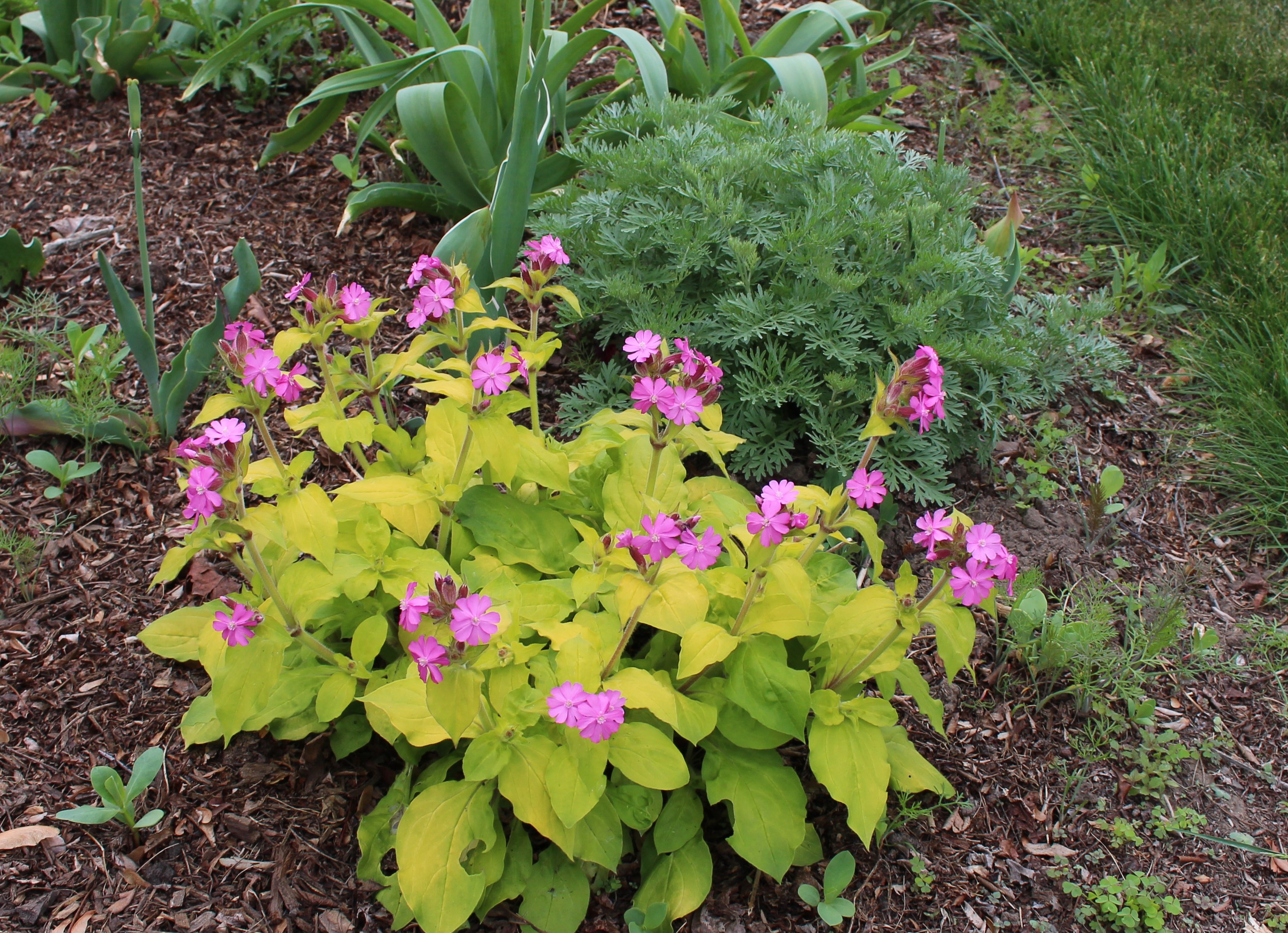
Another foliage favorite which I’m happy to have again is this plant of Silene dioica ‘Ray’s Golden’ Campion, which comes via seed from the talented Nan Ondra of Hayefield.  It’s short lived in my garden but easy to grow once you get the seeds planted.  Just rouge out the plain green seedlings.

Silene dioica 'Ray's Golden' campion

Silene dioica ‘Ray’s Golden’ campion with Artemisia ‘Powis Castle’ coming up behind.  This section of bed is still in need of weeding, fortunately the shredded leaf mulch has kept most of the little guys from sprouting.

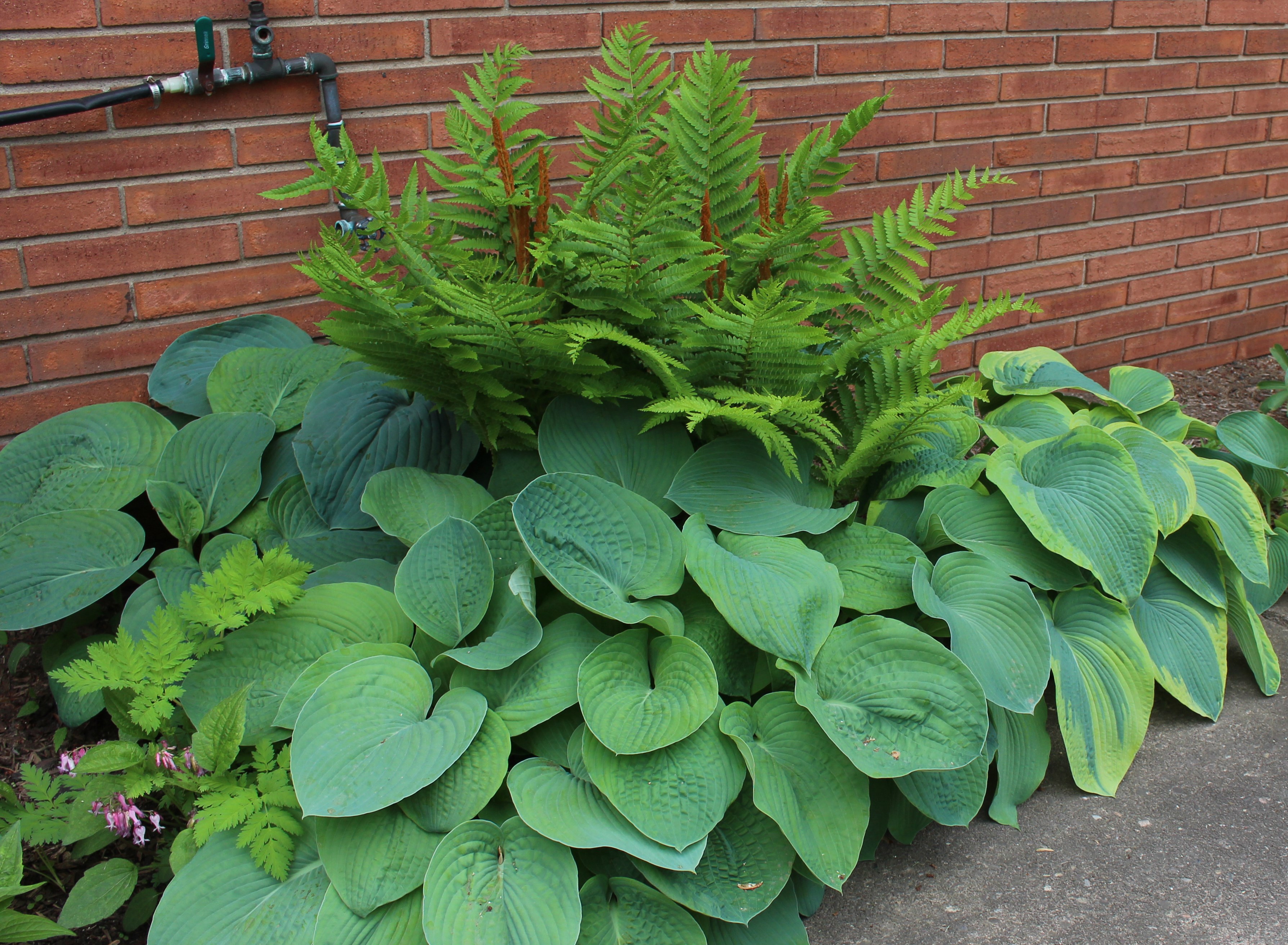
When you circle the house to get out back, you pass what comes closest to a shade bed in this mostly sun-baked garden.  A leaky faucet (left intentionally so for the plants… and laziness) keeps these ostrich ferns and hosta happy here under the dry overhang of the house eaves.
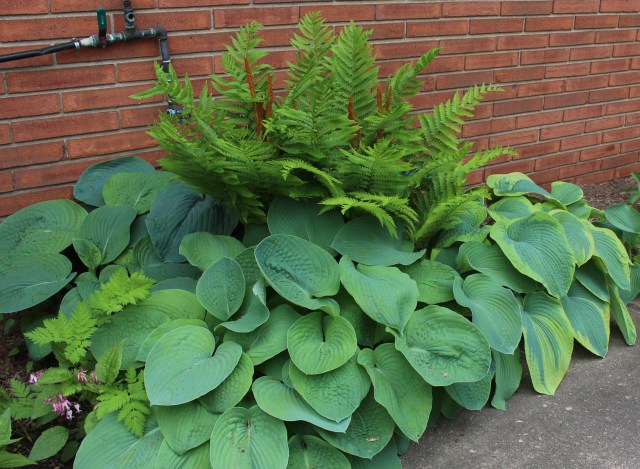
hosta frances Williams seedlings

Hosta ‘Frances Williams’ (just barely noticeable to the right) is the mother to all of these hosta seedlings.  I was curious to see if any would pick up mom’s variegation, but no luck.  All have a similar bluish tint free of any color streaks, a plain look but still beautiful.

The rest of this month’s foliage celebration are also a celebration of wintertime seed sowing.  Lets begin with the seed trays.
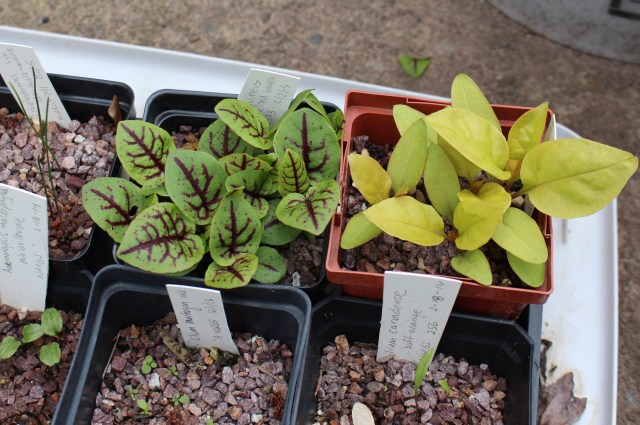
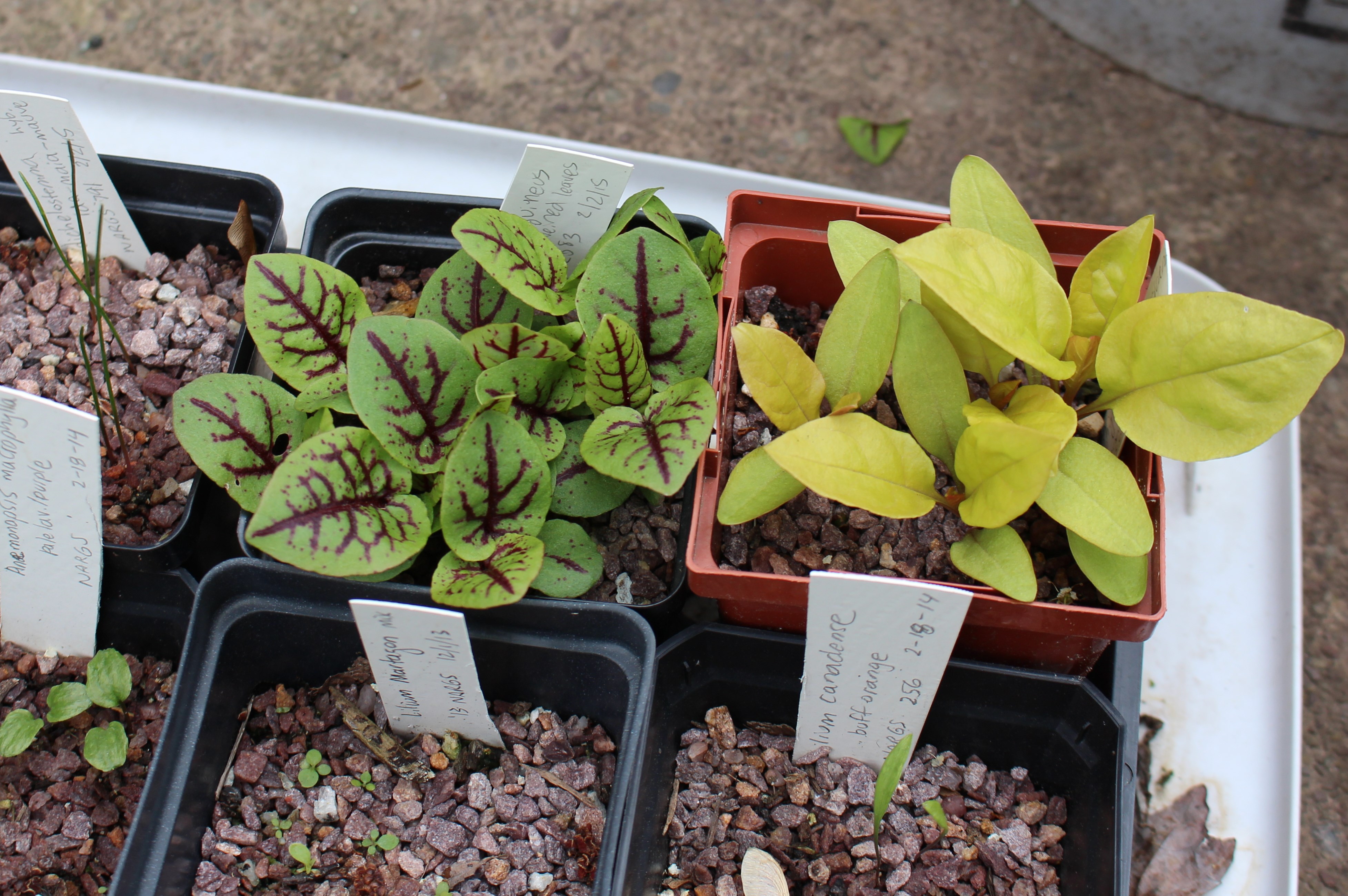
rumex sanguineus seedlings with 'sunny side up' pokeweed

My obsession with weeds continues.  Here the baby pictures of Rumex sanguineus seedlings with ‘sunny side up’ Phytolacca Americana next door make for a pretty combination.  Their common names of bloody dock and pokeweed sound much less special 🙂

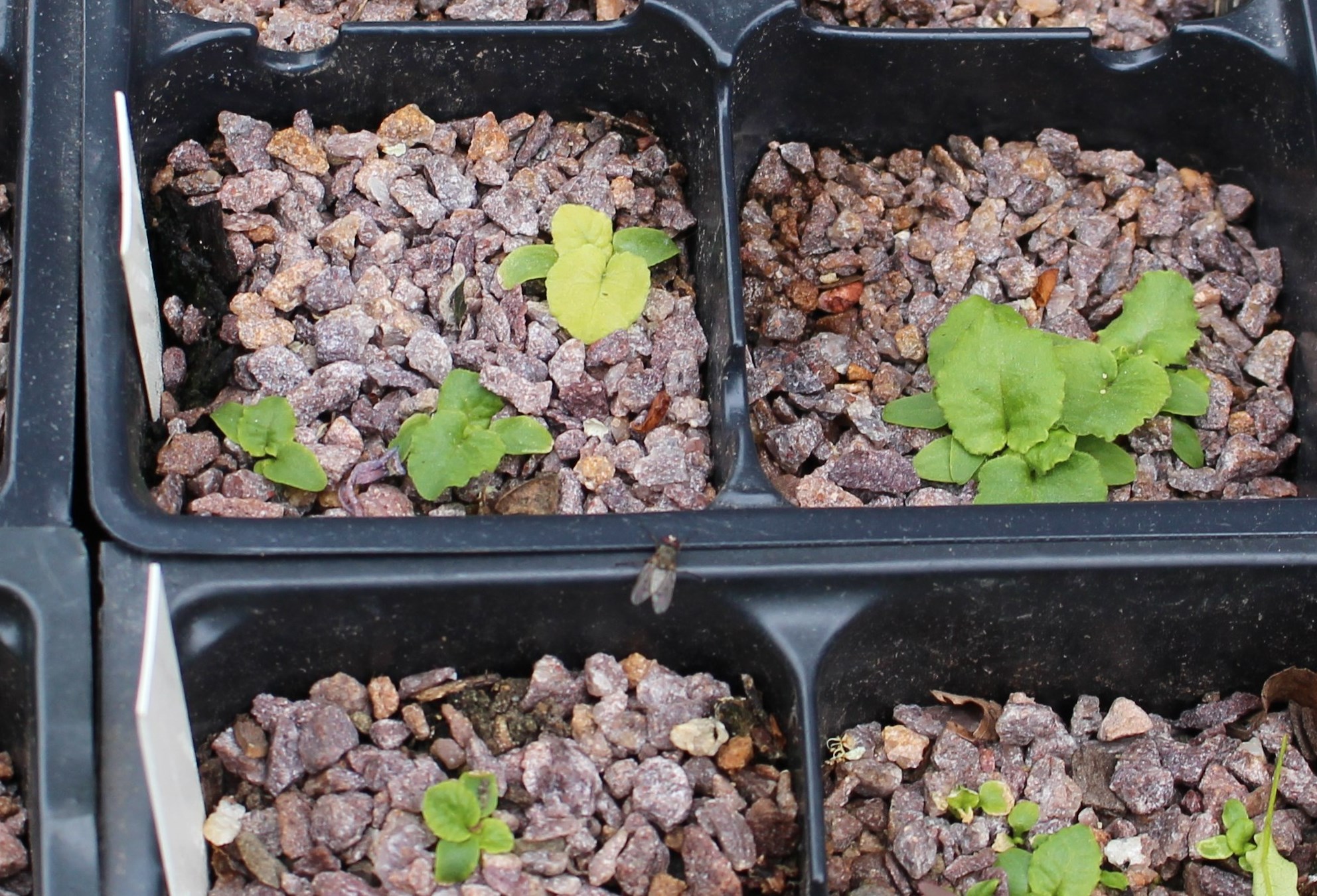
Any yellow leaved seedling is right up my alley.  Out of my American Primrose Society seeds comes this one little oddball.  My fingers are crossed I can nurse it along to adulthood.
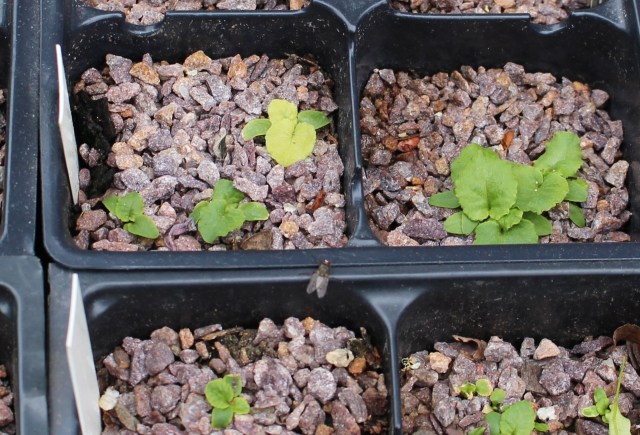
primula polyanthus seedlings

Primula polyanthus seedlings with one yellow leaved sister.  I hope it stays this way and manages to limp through my on again off again care/abuse.  -don’t know why the fly had to photobomb the center of this photo.

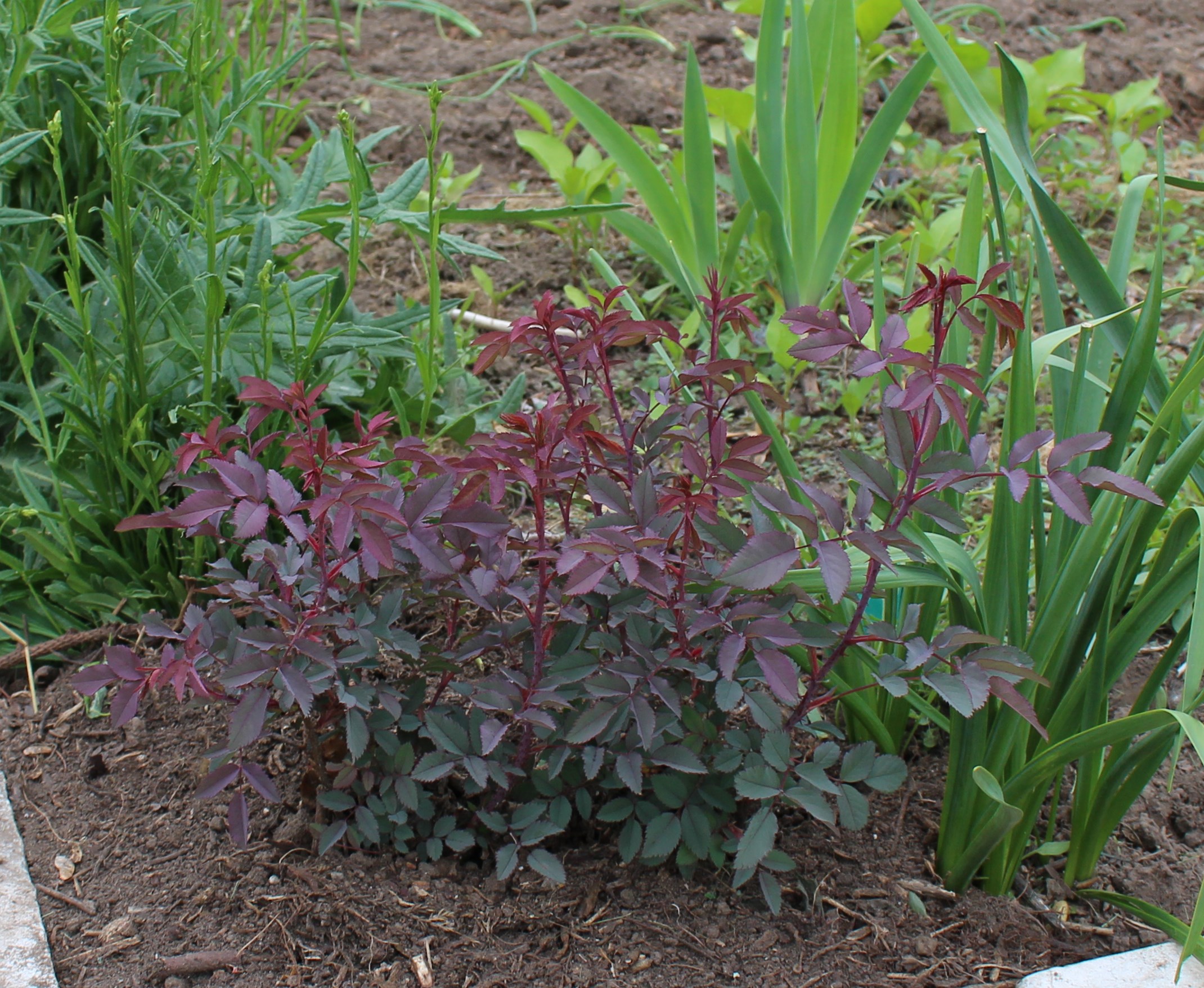
Another seedling which has somehow escaped neglect and abuse is this third year Rosa glauca.  I’m looking forward to seeing this one take off, it just needs to go somewhere other than the tomato bed.  Or not.  Maybe it would look nice next to a couple golden cherry tomatoes 🙂
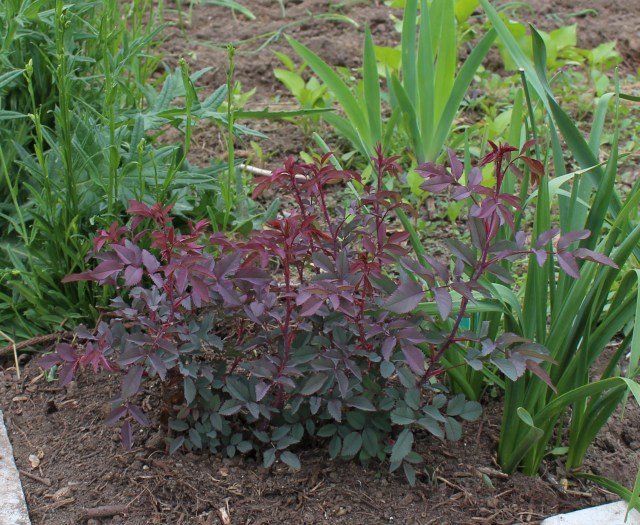
rosa glauca seedling

Rosa glauca freshly mulched with a shovel full of compost.

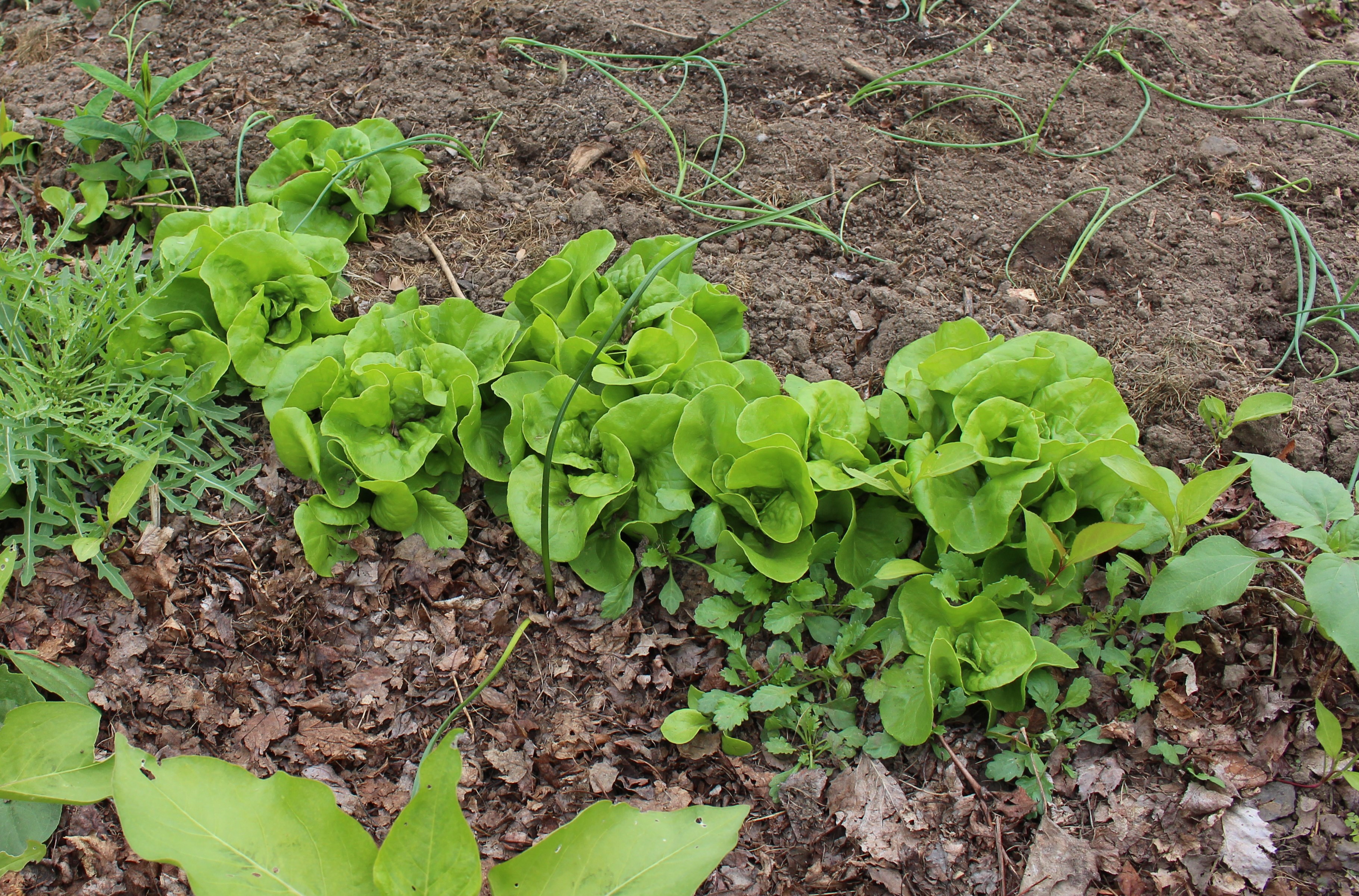
Sometimes neglect pays off.  The lovely leaves of this lettuce crop are the result of not removing last year’s leftovers until they had bolted and gone to seed.  They’ve even come up in a row as this was a ridge of soil where the mulch was blown off during some winter storm.  Dare I say this planting is nearly as nice as the seedlings I fussed over for weeks indoors and then carefully transplanted and nursed along?
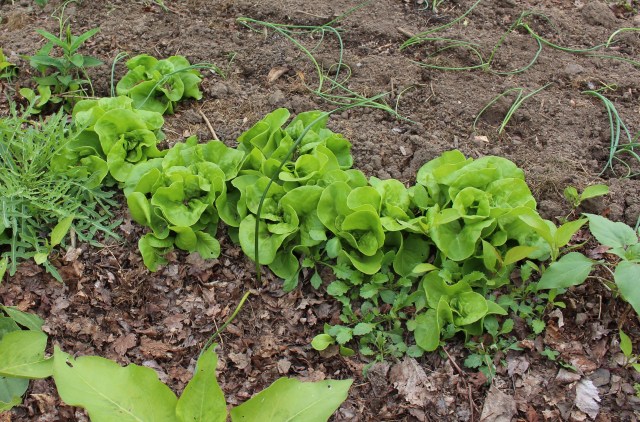
self sown lettuce seedlings

The quality of my weeds is really coming along.  In this photo there’s lettuce, a nice bunch of arugula, phlox, daisies, a daffodil and sunflower.  I must stay strong and remove them all… this really is the only spot left where there’s any chance of fitting in a pepper.

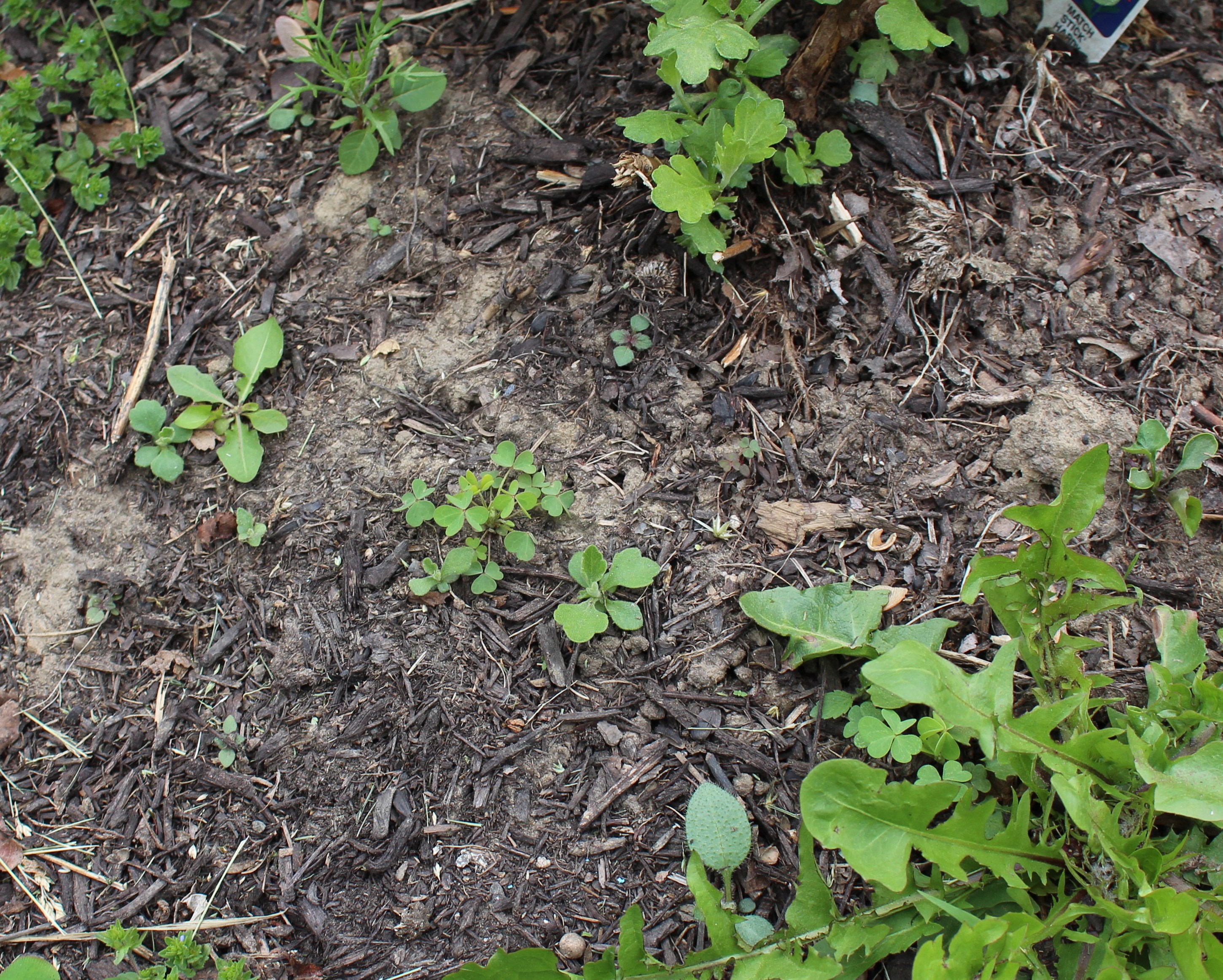
Another weed problem are the many chrysanthemum seedlings sprouting around last year’s plantings.  I must rip them out as well, I have no room for more mums… says he who has a dozen more new little pots in need of planting.
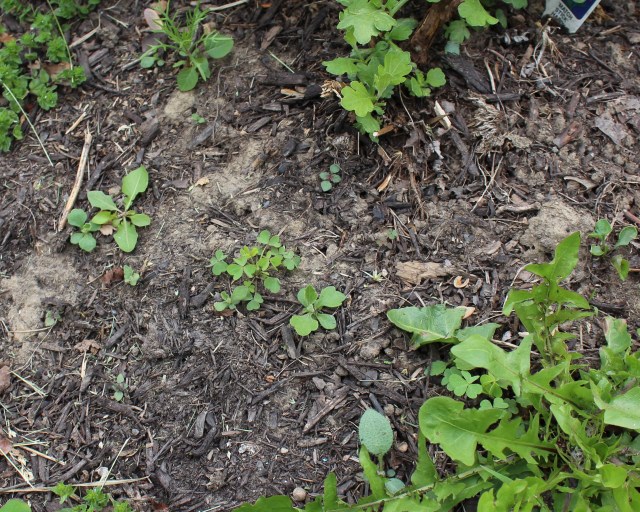
chrysanthemum seedlings

Not sure why I’m posting weed pictures, but you can make out the tiny leaves of chrysanthemum seedlings here amongst the dandelions and clover.

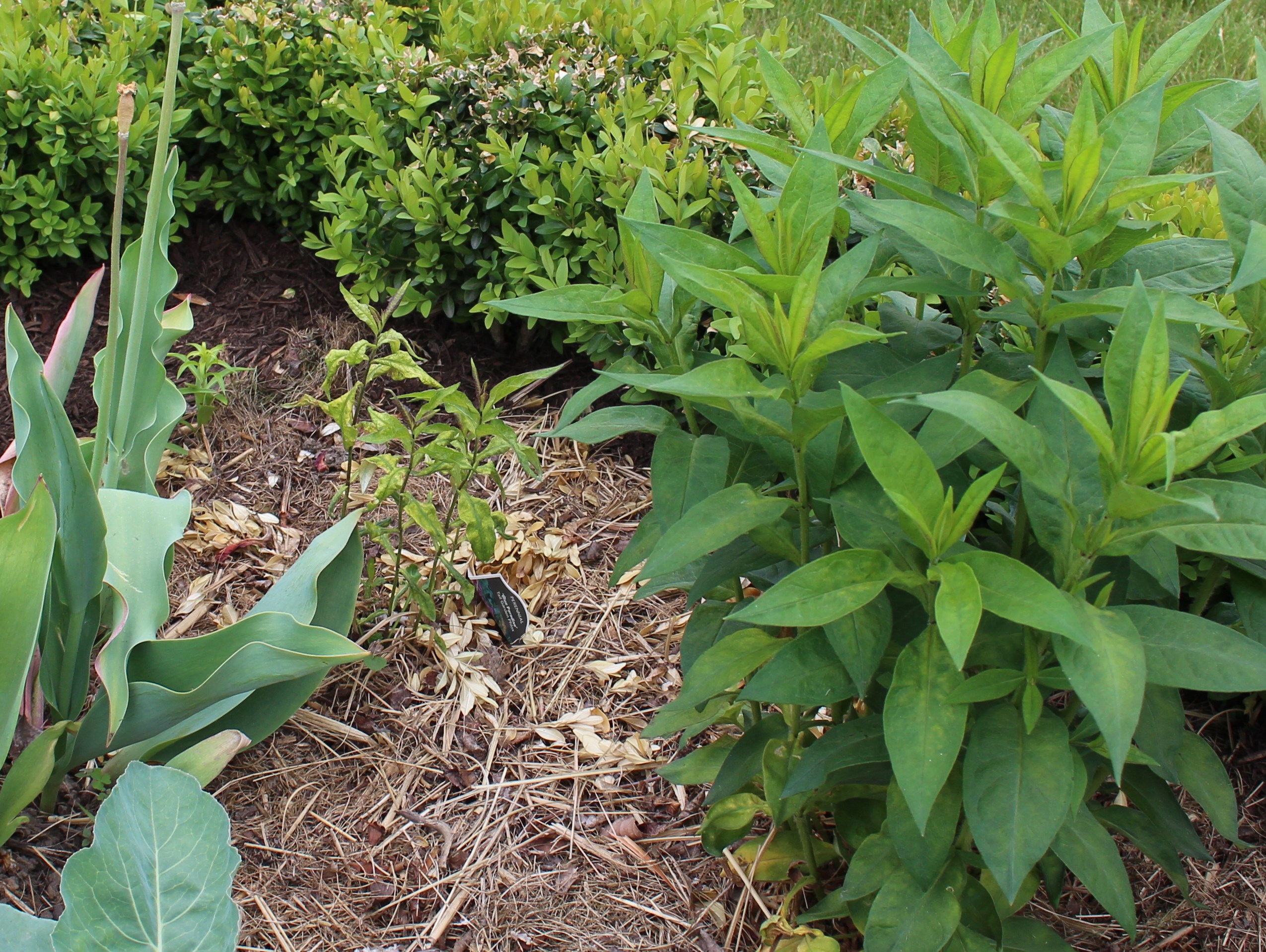
Weeds aren’t the only issue this spring.  The phlox hate the extended dry winds and droughty soil, it brings on the spider mites and I have no interest in spraying for anything.  I’ll make an effort though and spray the foliage off with the water hose while watering (just watering in the first place is probably  good start), then give them a dose of liquid fertilizer.  That and a few more sprays with the water hose might be enough of a shot of goodness to help them outgrow these annoying pests and save this year’s bloom season.  I can’t even imagine a phlox-free summer…
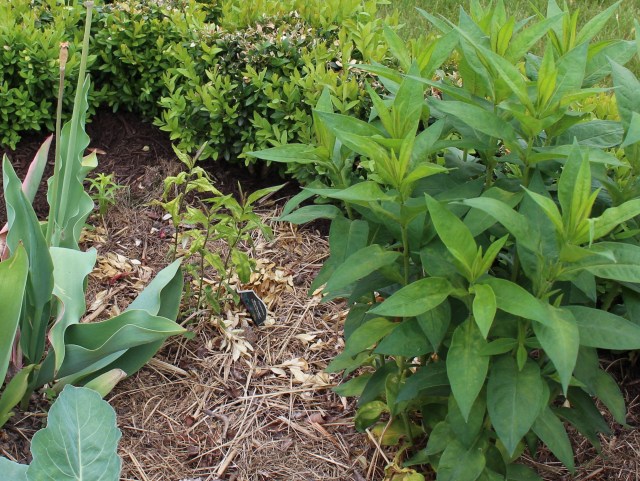
garden phlox with spider mites

What a difference.  Phlox ‘Blue Paradise’ on the left has nearly given up under the spider mite attack, while his neighbor to the right only shows a few yellow leaves and yellowed stippling from the spider mites.  I may just trim him back completely and hope for the best with any new growth which manages to come up. 

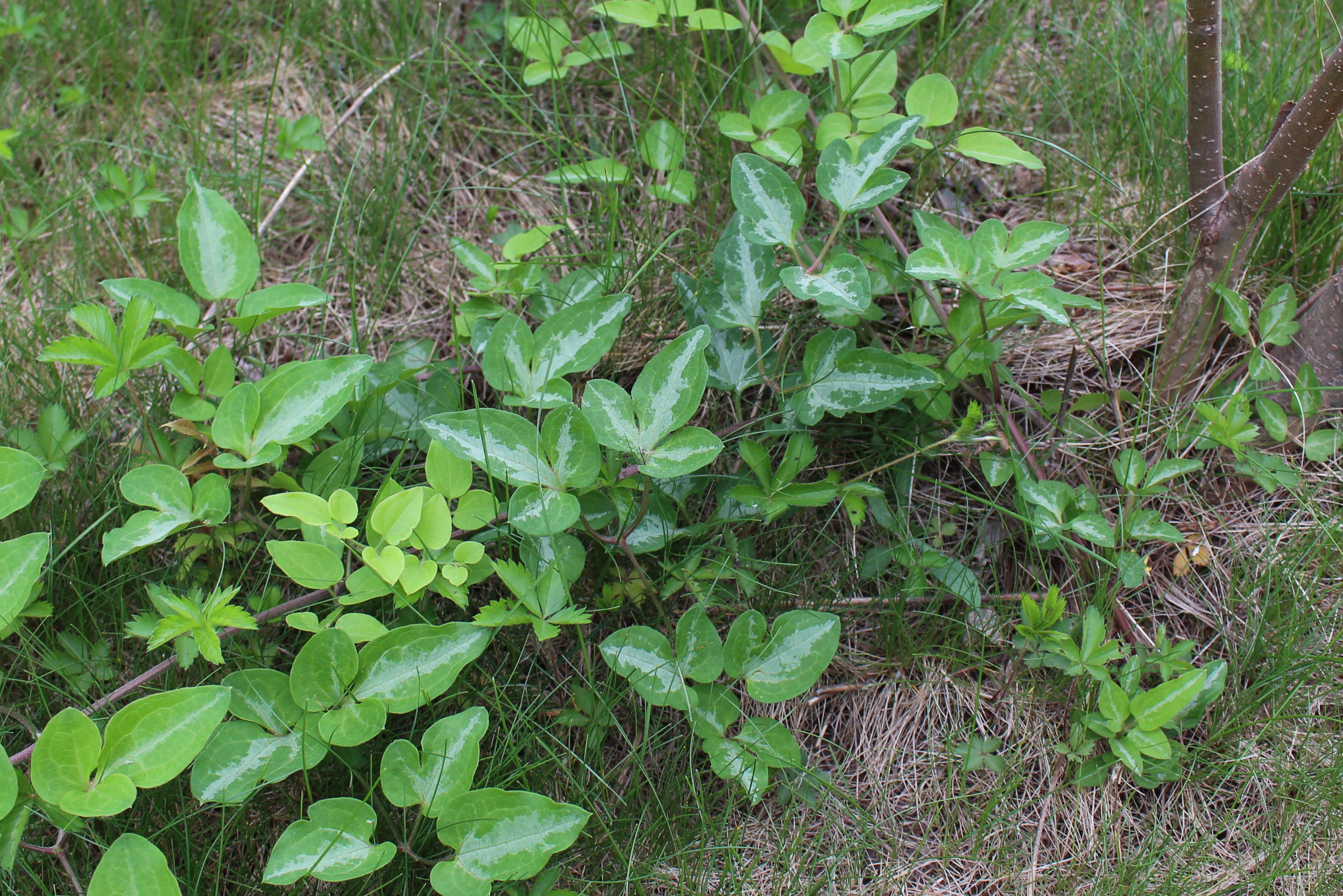
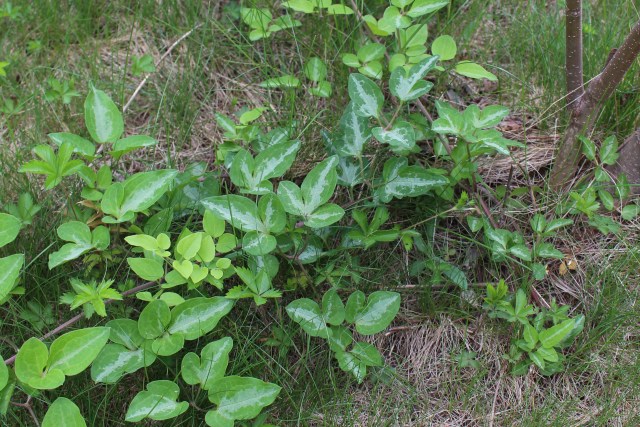
One more bad foliage visit.  Sweet autumn clematis (Clematis terniflora) is a pest in my meadow garden and each spring I battle the legacy of the single vine planted along the fence next door.  I suppose I could spray the clumps and eventually do them in, but I have to admit liking their patterned foliage and late season blooms…. even though I promptly rip the vines off before seed is set.
Japanese clematis Clematis terniflora foliage

Japanese sweet autumn clematis (Clematis terniflora) foliage.  I wish this wasn’t such an invasive thug. 

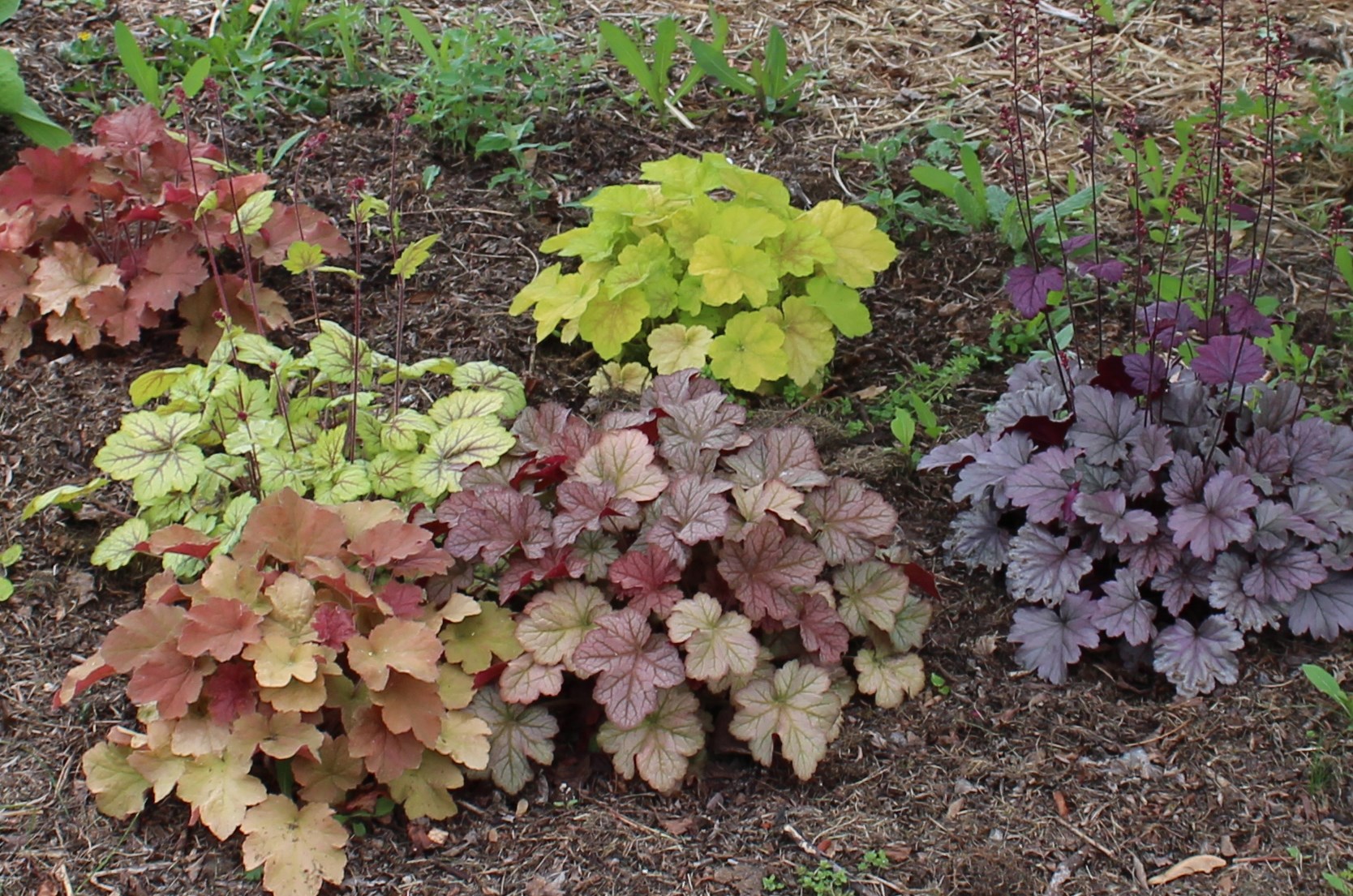
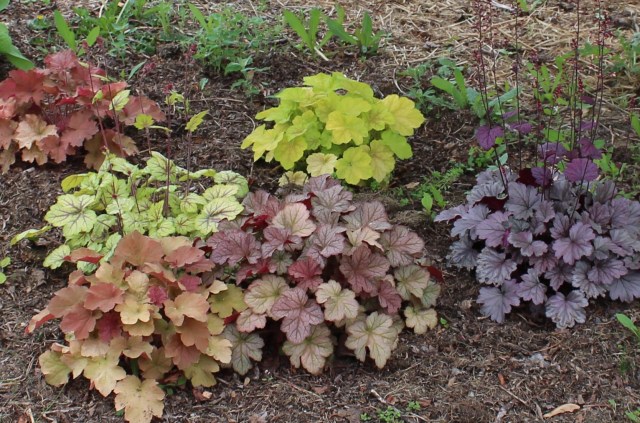
To wrap things up I’ll leave you with something a little cheerier.  With the exception of a few rabbit decimated plants, the bulk of last years clearance heuchera have overwintered nicely and are showing off their fresh spring foliage (as well as their bland and boring flower stalks).  Honestly I don’t like them all together in one big mess, but as plants grow (or die off) I’ll divide the survivors and see if I can work a few clumps into the rest of the garden and make some nicer foliage vignettes.
mixed heuchera planting

Mixed heuchera from last year’s Santa Rosa Gardens purchase.  Yes this bed also needs weeding and more mulch…

So those are the foliage highlights from this end of Pennsylvania.  If you’d like to see what others are up to please visit Christina’s blog to see what people across the world are seeing in their gardens.  It’s always inspiring!

Have a great weekend, here we have three days to observe Memorial Day and in addition to the usual holiday activities I hope to catch up on all things blogging.  Enjoy 🙂

(Almost) In a Vase on Monday

This afternoon I dutifully plucked my choices, prepared to plunk them in a vase, and was told in no uncertain terms to remove the flowers from the house.  Who is this woman I married who cannot tolerate the scent of garden phlox!?  Allergies and a lack of any thoughtfulness were brought up but by that time I had already scurried back outside.  So with camera in one hand and bouquet in the other, my vase is quite open to interpretation this week.

tall phlox seedlings

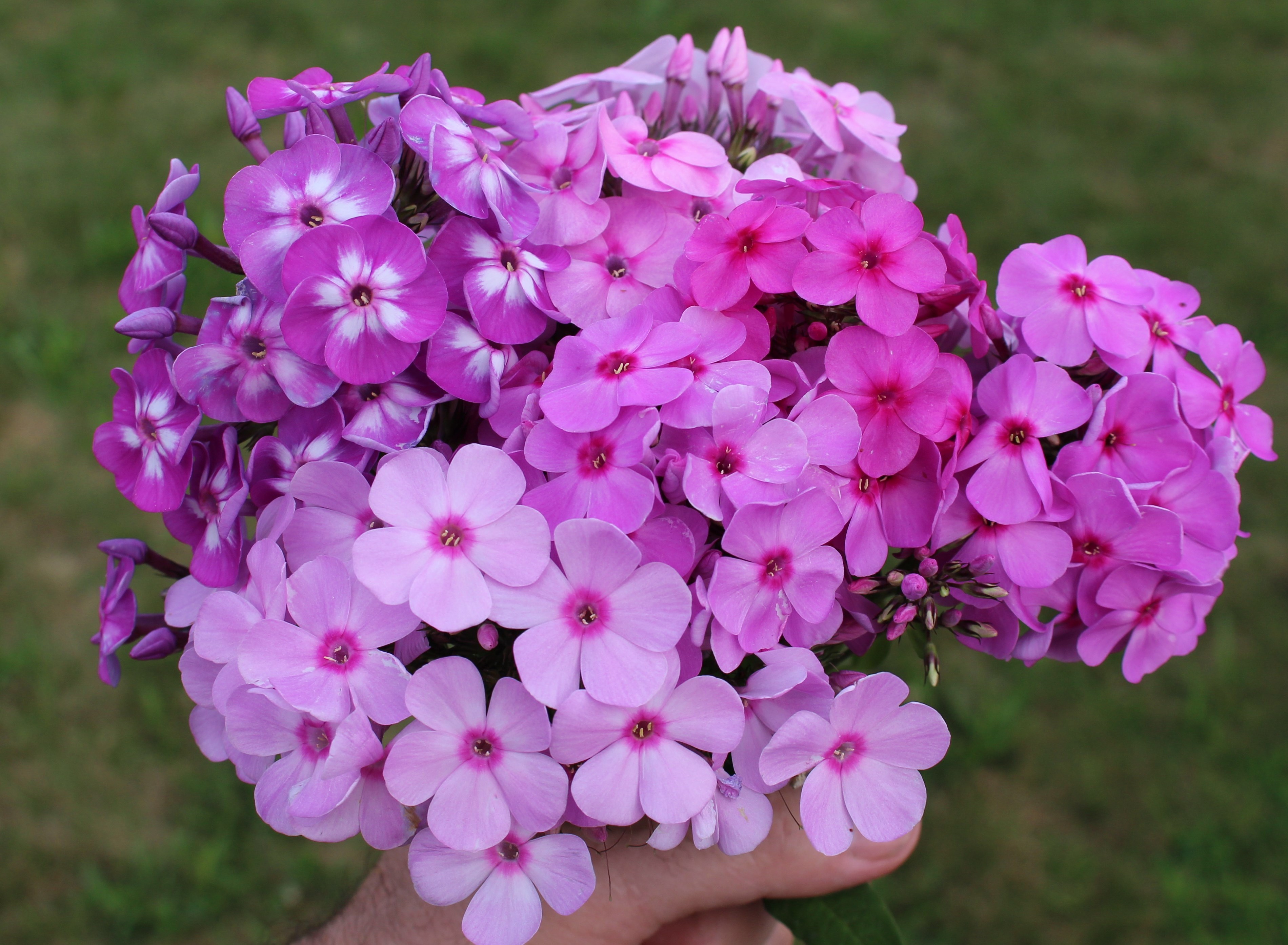
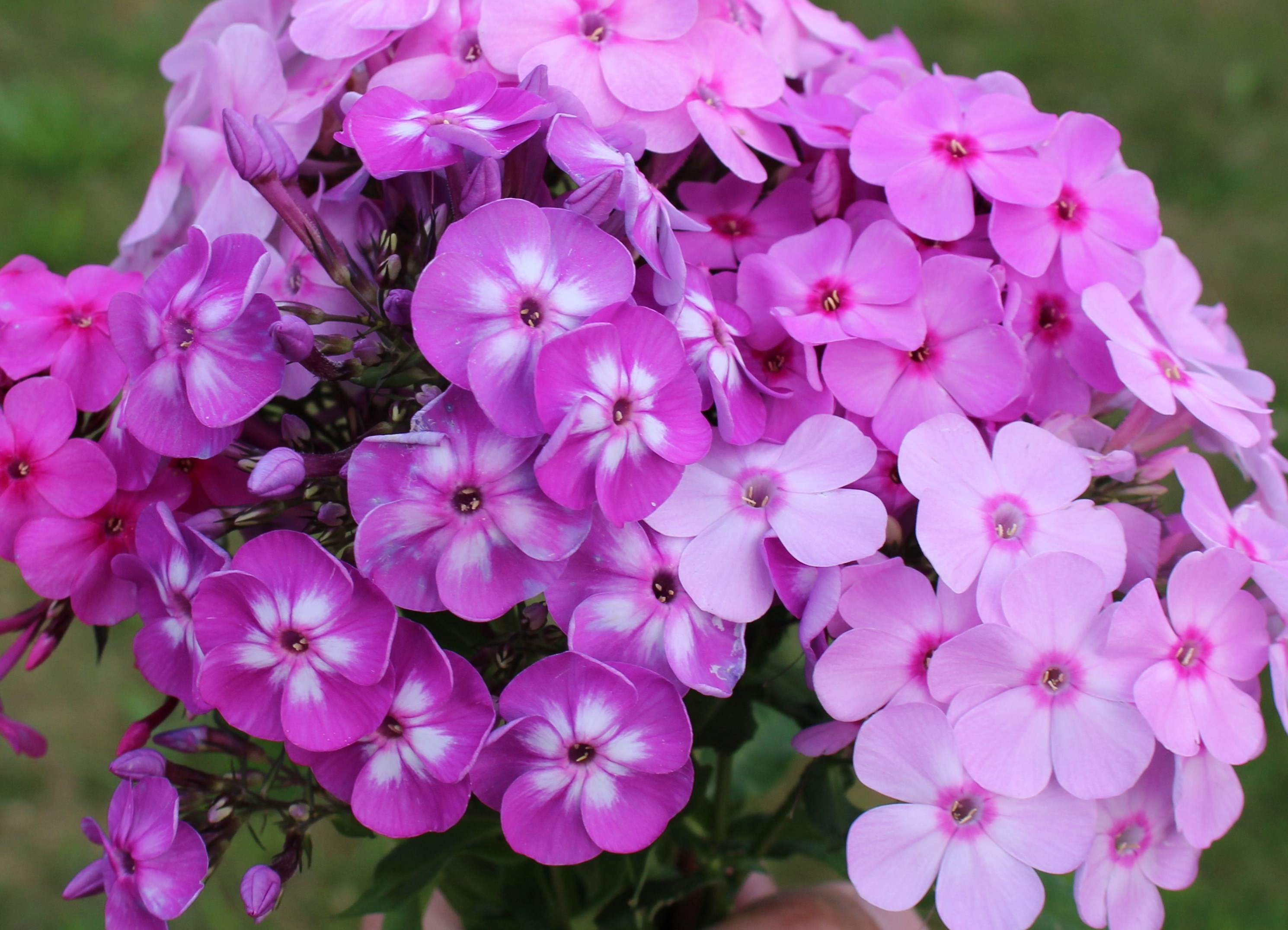
Late blooming garden phlox, all seedlings found scattered here and there throughout the garden beds.

I hope it’s not considered offensive to have a Monday vase without a vase, but Cathy over at Rambling in the Garden who hosts this weekly effort seems to be all for stepping outside the box now and then, so I don’t think there will be any hard feelings.  Plus, when you consider my arranging efforts are usually not far removed from throwing everything down on a table anyway, even with a vase it’s not likely things would have improved much!

self sown phlox

I actually ripped out the two plants on the right a year ago, but apparently they came back from the roots. I’m glad they did, and I should show them a little more respect from now on.

Hopefully the flowers speak for themselves.  These are all unnamed garden phlox seedlings (phlox paniculata) that were looking nice scattered around the garden.  So often I read the repeated advice that phlox should be deadheaded, don’t allow seedlings to grow, and if you do all sorts of chaos will ensue… but I suspect this is yet another bit of garden advice regurgitated yet never tested by the speaker.   Sure if you grow your own phlox seedlings, the plants may not be as excellent as the parents, but I just want to say mine have reseeded, the original plants are fine, many of the seedlings are attractive, and no zombie apocalypse has descended down upon my garden.  If you only have room for one phlox, by all means get a guaranteed color, but if you have a little room to experiment, give it a go.  The surprise can be nice and if not there’s always the compost pile.

Have a great week, and if you’re interested in seeing what other gardeners are doing with real vases give Cathy a visit over at her blog!

Phantastic Flox

I’ll try not to go on too long.  Phlox paniculata is one of my favorite flowers and it’s blooming now, and although my garden doesn’t give the best conditions for amazing phlox (rich soil, even moisture, maybe some afternoon shade) it gives me good enough phlox.  Phlox (along with snowdrops and cyclamen)  have always been among my favorites, and now that I have the room I might as well indulge myself.  Here are a couple that are making me happy right now 🙂
phlox nicky and laura

From the left it’s ‘Laura’, darker ‘Nicky’, and random pink and white seedlings.

I will grow just about any phlox I can get my hands on but should really start to show a little self control…. or not.  I love working in the vegetable patch when the breeze has that nice spicy phlox perfume on it.  The hummingbirds and butterflies seem to appreciate it too.

phlox seedling

This white phlox seedling is one of my favorites, nothing really special, but it’s so reliable. The pink is also a seedling and I like the color but it doesn’t bloom as long as some of the others. I keep it mostly for the odd darker centered leaves… which look slightly diseased when I think on it, but it’s all mine so it’s special.

I know all the books say to deadhead and rip out stray seedlings which sprout since they will overrun your better named phlox, but I’m a little funny about just accepting what people tell me…. plus I’m curious to see if they’ll really all turn out as ugly as the books say (I do still read books btw).  Last year this one was a little congested and washed out,  I almost tossed it and now I’m glad I didn’t.  The cooler weather this summer has brought out some nicer color, and a leaner diet has left it with neater flower heads and I’m again seeing some of the qualities that made me single it out in the first place.  I love the height too, it’s close to five feet.

tall garden phlox

No-name phlox, still nice with it’s white centers and a color that just about matches the verbena bonariensis behind it.

Nearly all my phlox look a little sickly due to a dry spring and summer which really brought on the spider mites.  Spraying them off with the water hose and a little fertilizer seems to have discouraged the mites but the damage remains in the form of yellowed and spotty leaves.  Strangely enough my variegated ‘Nora Leigh’ has the nicest leaves of all, which surprises me since variegated plants are always supposed to be a little weaker compared to the regular version.

phlox nora leigh

Green grass would be a nicer backdrop for the foliage of ‘Nora Leigh’ but I guess the neighboring fig leaves will have to do.

I’ve been obsessing a bit on the darker colored varieties.  ‘Starfire’ is supposed to be especially bright and I think that’s what this is.  I don’t know how the mite damaged leaves can support all the bloom it has but they do and I’m glad for it.

phlox paniculata seedlings

‘Starfire’ (maybe?) is definitely bright and probably shouldn’t be right next to white, but it happens. I’m thinking next year it deserves an extra serving of compost for this wonderful performance in the face of adversity.

I’ve been adding new ones here and there.  This spring I ordered a nice batch from Perennial Pleasures up in Vermont and was generally pleased with the plants I received.  One died a few days after I got it, but I didn’t even bother complaining since I was so happy to have finally found a place which has such an awesome selection of phlox online.  Hmmm, I wonder if another order this fall would be too soon 🙂
phlox blue paradise

Phlox ‘blue paradise’ is a new one and it’s of the kind that change their color throughout the day. Cool mornings give a rich blue shade which fades to violet as the day heats up.

My local nursery is pretty good about having a few new phlox each year so they tend to follow me home whenever I make a visit.  Here’s ‘Blushing Shortwood’ which joined me last summer… and then spent most of the year sitting in its pot on the driveway.  I’m glad to see it hasn’t held this against me.

phlox blushing shortwood

Phlox ‘blushing shortwood’ with it’s nicely bicolored blooms. The pink seems to fade as the thermometer rises but it’s still a nice flower.

I have a few others but don’t want to overdo it so I’ll stop here.  There’s always next year to do it again, and maybe by then I will have turned the entire tropical garden into a phlox field.  Now there’s an idea 🙂

Have a great week!

Tending the Phlox

The tall garden phlox (phlox paniculata) is coming into full bloom around here and I’m pleased.  This smugness comes from the fact that last year I replanted several favorites into a new bed which had been dug over properly, composted, mulched, and then protected from bunnies in the spring.  Sometimes effort is rewarded and this time it was, in the form of healthy, strong blooming phlox.garden phlox paniculata

A better gardener would have blended them into a well thought out perennial border, mixing the colors with interesting foliage and varied forms…. but I’m not there yet.  Plus I like my phlox in heavy doses.  Overkill some might say.

Barsixty (coral flame is the trademarked name) is first in line.  I really shouldn’t not like it but there are a few little annoying things that get to me.  I think it’s too short, this is the first year it looks nice (after a couple dud years), and the edges of the blooms curl up a bit.  For many gardens, the ~16inch height is perfect and the curling adds interest, so it’s got a place in my garden… but I’m just saying I like other phlox more!garden phlox paniculata

I love “Laura”, it’s about two feet tall (which I still think is on the short side) but she always puts on a great show and looks good for weeks.  Here Laura is in the front with phlox “Nicky” towards the back.  Nicky is a little darker and booms a few days earlier.  (This section has been picked over by the kids, the big dark flowers are too tempting for little flower pluckers.)garden phlox paniculata

I’m kind of a snob with other plants but not with phlox.  Having named phlox is great for knowing what you have (and not buying the same plant twice!) but it doesn’t guarantee a nice plant in the garden.  I think this white is great, but it’s just a stray seedling that came up a couple years ago.  It’s about three feet tall and although pure white is always perfect, I like the way this one has small dots of red at the bloom center and a reddish blush on each bloom stem. garden phlox paniculata

I took this picture yesterday when the clump really hit full bloom.garden phlox paniculata

This one I don’t know the name for,  I think it might be “starfire” but can’t say for sure.  The color is great (if you like the reds!) and I like how the foliage and stems have a darker tint to them.  It’s a little floppy though….. garden phlox paniculata

I need more of the clear pinks.  Here is “Bright Eyes” which I got just last fall, it came as a rootbound 4″ potted plant and will probably need one more growing season before it takes off.  I love the packed flower heads but they tend to hold onto dead flowers.  “Franz Schubert” is just starting to the left.  It’s another one in need of more settling in time.garden phlox paniculata

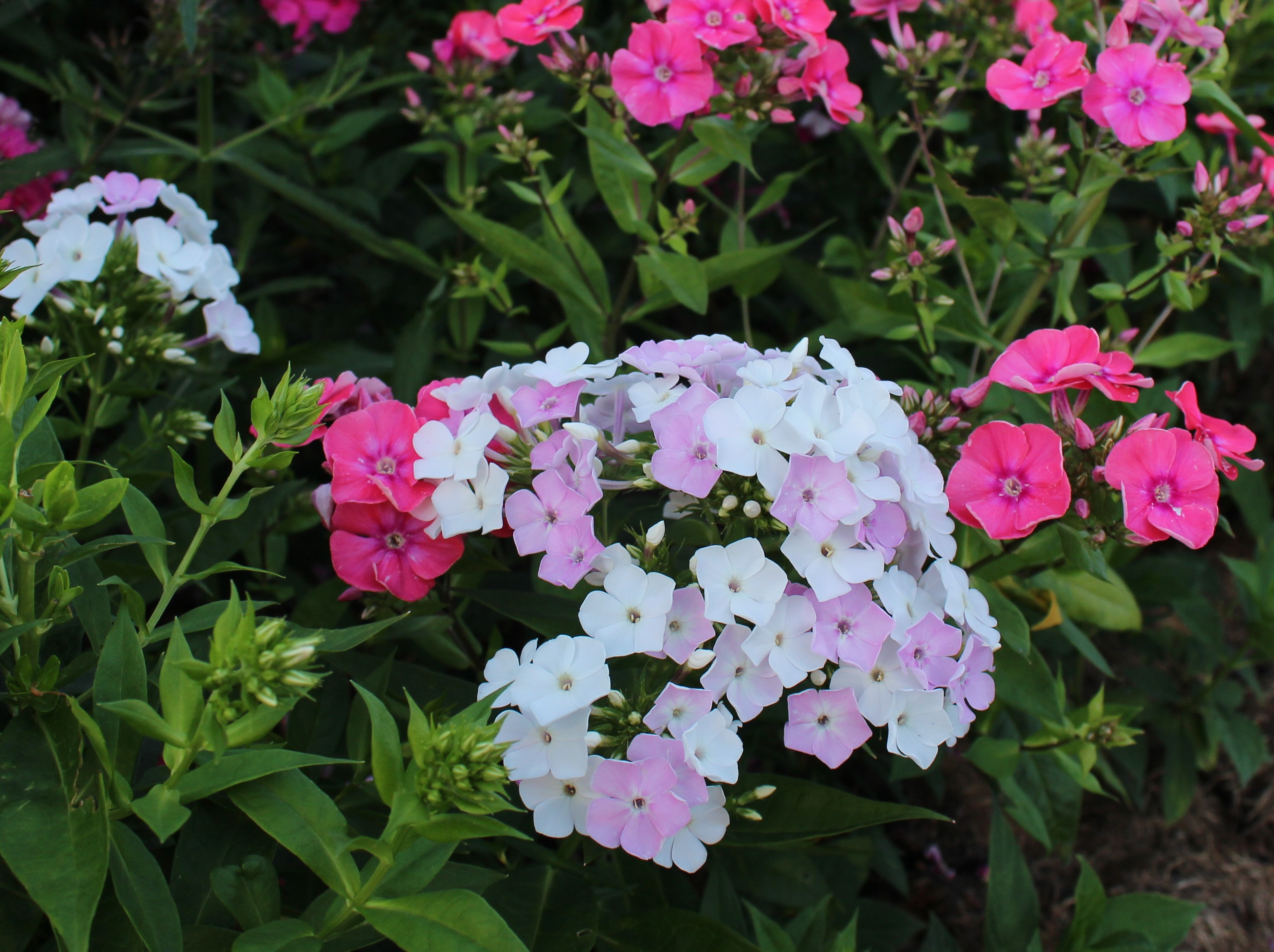
This white seedling may still earn itself a spot in the phlox bed.  It’s a short early blooming seedling which opens with a pink flush and later fades to pure white.  We’ll see if it gets moved in the fall…..garden phlox paniculataPhlox do well in pretty much the same conditions as any other garden flower.  Even moisture, fertile soil, sun to light shade and you should be able to make them happy.  In the spring I do nothing more than cut the old stems down and then come summer the only other thing I do is admire the flowers.  For many gardeners powdery mildew is a problem, and I wish I had some brilliant solution but I don’t.  Mildew is just not much of a problem in my yard, probably because it’s a real open, breezy location near the top of a hill.  The air movement likely helps but I can’t say for sure since as we speak the monarda plants are covered in mildew and they’re just a few feet away.

My most annoying phlox growing problem is the spider mite attacks.  They build up under the leaves and suck and suck until the leaves start to look speckled and yellow.  Spraying the undersides of the leaves seems to help wash them away but the best defense seems to be consistent moisture and plenty of compost and fertilizer.  Dry spring weather, warm breezes (which keeps away the mildew) and stressed plants seem to just call the mites in from all around.

Another problem I’ve had (which made me leave all the phlox behind the last time I moved) are eelworms.  They’re tiny worms which live in the stems and buds of infected plants.  They cause the stems to distort and ruin the nice big flower heads of a healthy plant.  The only solution I’ve heard of is to grow new plants from root cuttings, destroy all the old ones and find a new spot to grow phlox….. or move.

I just want to end by saying I need more phlox.  I think I’ve kind of run through all the local sources and have what most mailorder sources offer, but I know there are more great phlox out there!  I may have found a source at Perennial Pleasures, a Vermont nursery that specializes in heirloom plants and also has dozens of phlox varieties available.  I’ve heard good things about them and it’s very likely an autumn order will show up at my doorstep.