Cyclamen on the move

Rather than do the right thing at the right time I like to test the limits of my plants,  so if you’re looking for good advice you might want to move on to your next search result 😉 but if you’re like me and can barely get around to half the stuff you want to (even at the wrong times), well then I say “Tally Ho!”

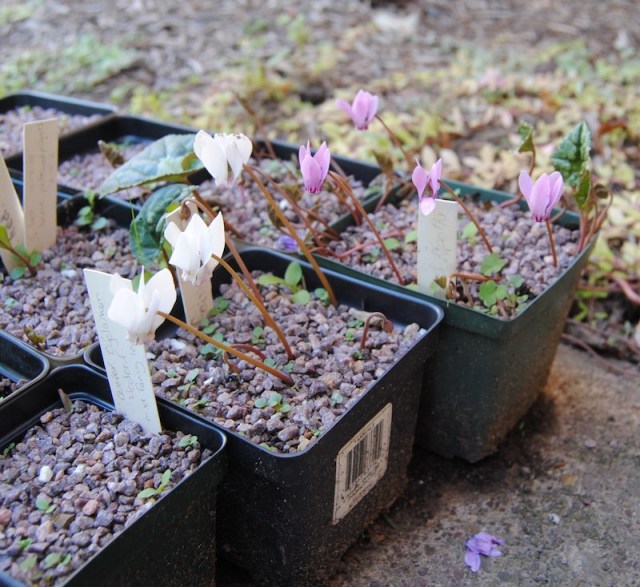
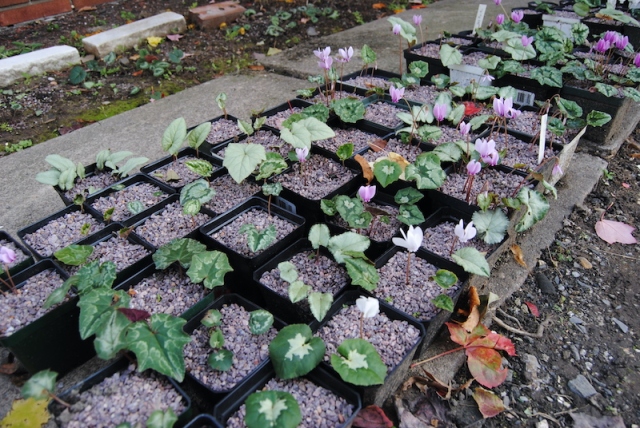
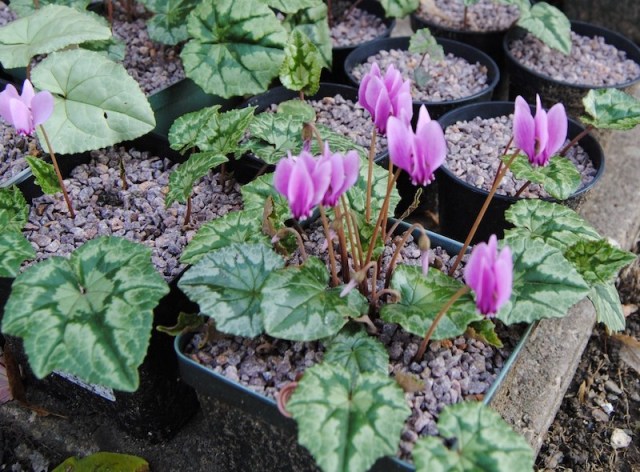
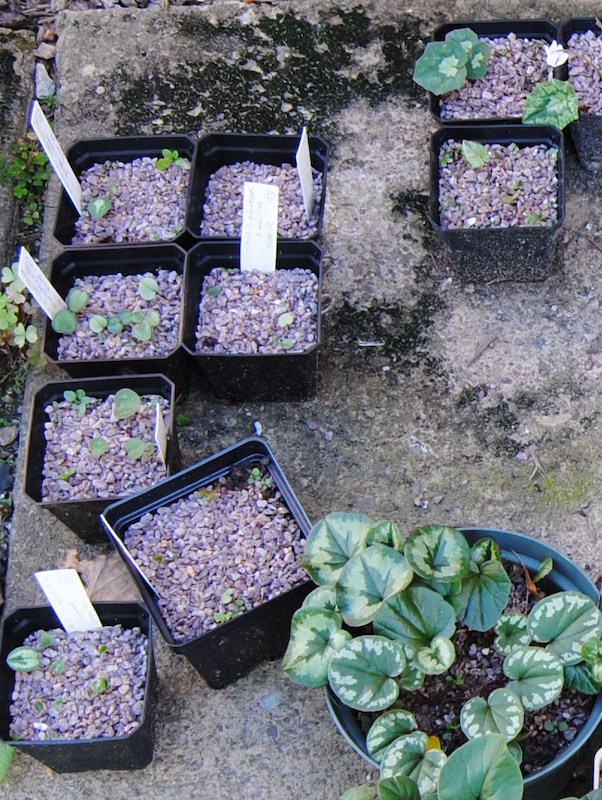
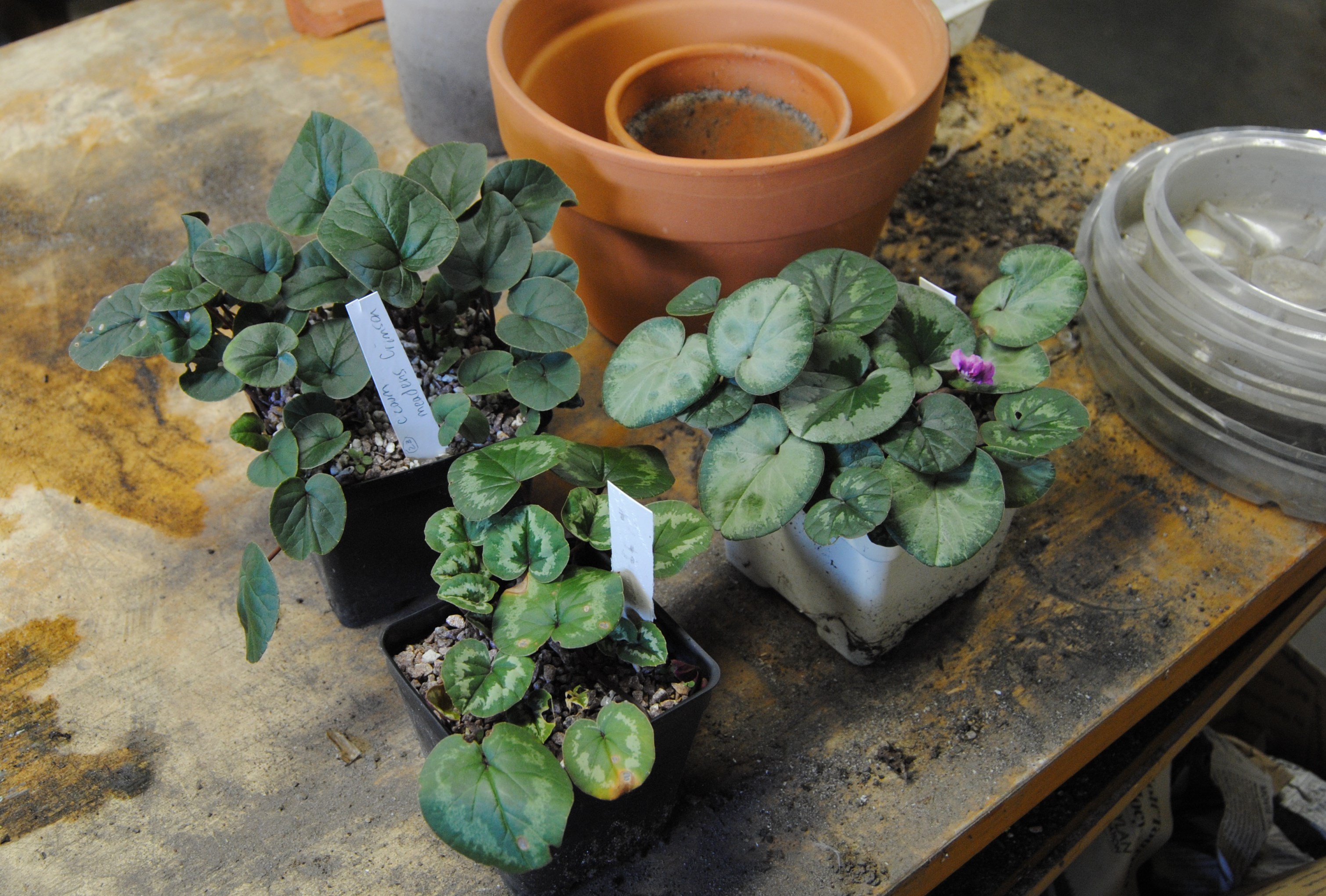
Cyclamen should be transplanted when dormant if possible.  It’s easier and probably less stressful for the plant.  I’ve found they don’t really care all that much and do it whenever the mood strikes, so when the mood struck last week (about two months too late) my little guys got roomier quarters.  Winter blooming cyclamen coum was my target and this replanting is to get them ready to come indoors and brighten up my winter garden.cyclamen coum ready for repottingC. coum is perfectly hardy outdoors around here (zone 5/6ish) and I only keep them potted because they’re so easy to grow and bloom in the back corner of our semi-heated garage.  They’ll bloom throughout the darkest days of winter, unless for some reason one decided to start now.
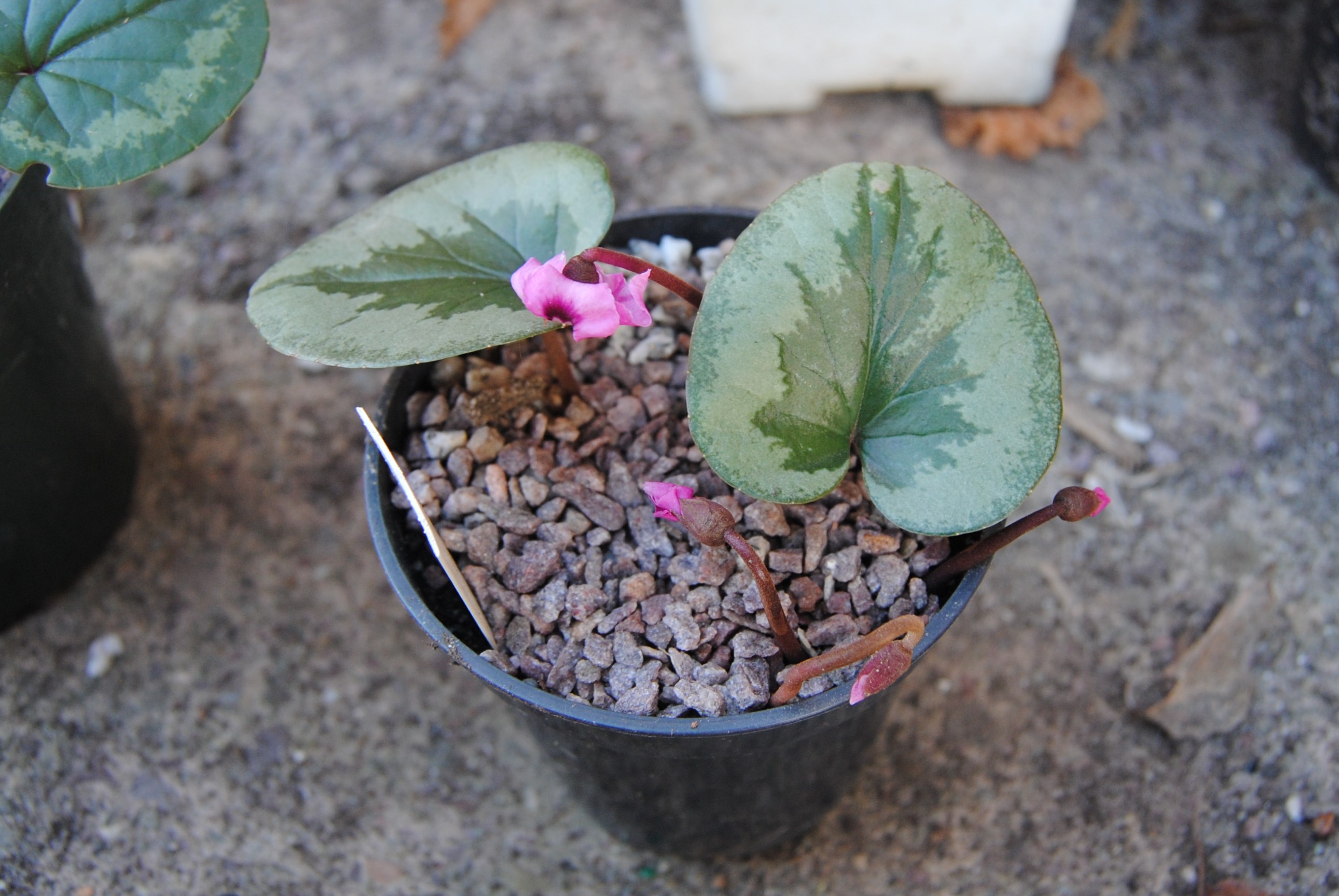
early blooming cyclamen coumFor repotting, a gritty good draining mix is perfect, but mine do well enough in a blend of 3 parts purchased potting soil mixed with about 2 parts sand robbed from the kid’s sandbox.  Sometimes the kids complain, and the mix gets less sand.  Replant the round bulbs with the top of the corm just at the soil surface and then cover it up with about an inch or so of gravel or grit.  I prefer chicken grit since it’s easy to find around here and was the topping first recommended to me by Carol, my cyclamen mentor and enabler.

Finished product.repotted cyclamenA few of the plain green ‘Meadens Crimson’ went into garden beds since winter garden space is limited, but this was a good start, and not as many plants as I thought, so it inspired me to take a leftover c. coum pot and bring them in too.cyclamen coum seedlings
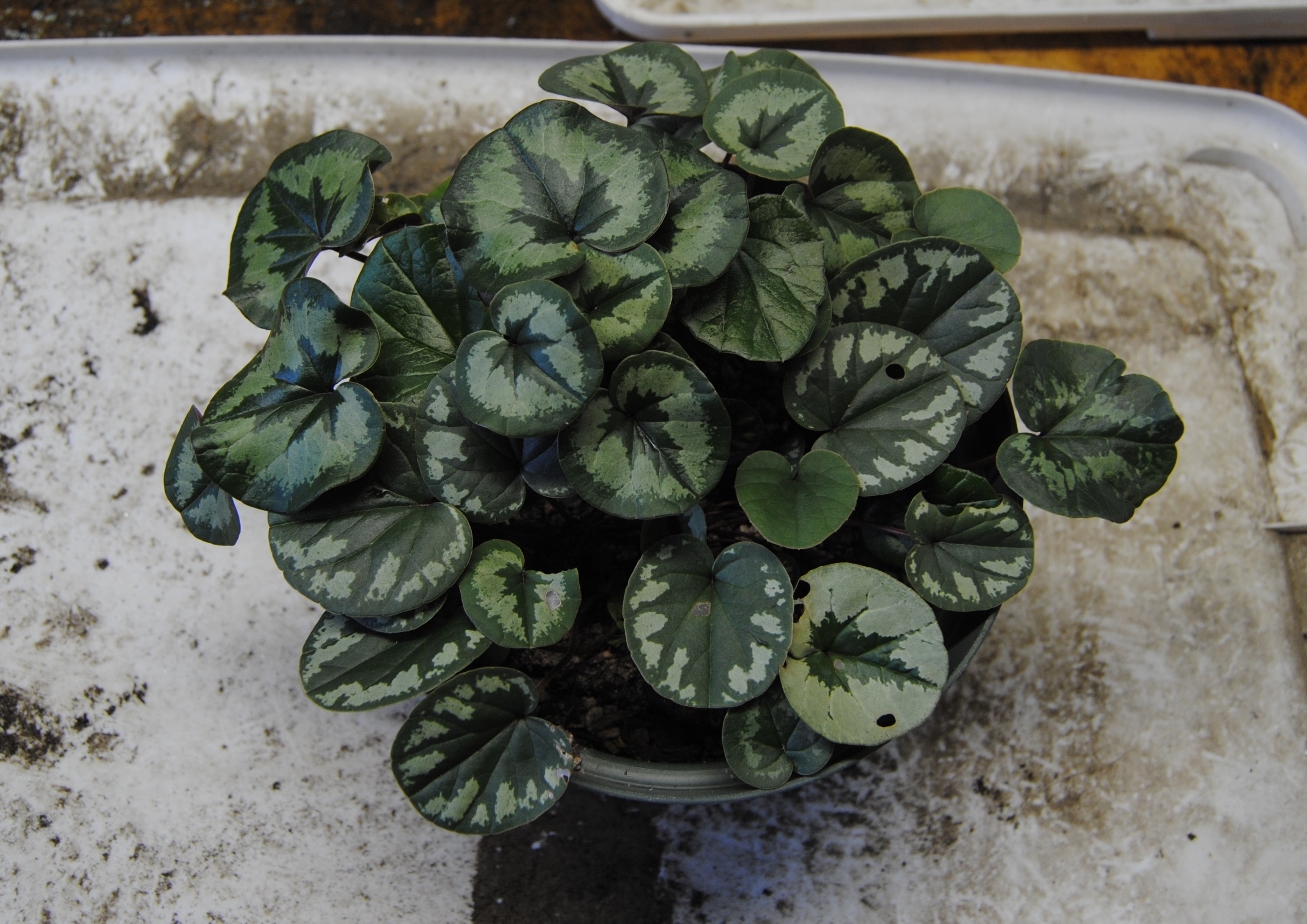
How could I resist?  I love the one with the ring of pewter patches, and the silver leaf with the small Christmas tree center….. also a favorite.  It’s been a few days and the plants have settled in well outside.  I feel like the cooler temps and good air circulation help avoid any rot or fungus, and I think the fact they are actively growing helps too, but untangling the leaf and bloom shoots is like separating Velcro.potted cyclamen coum
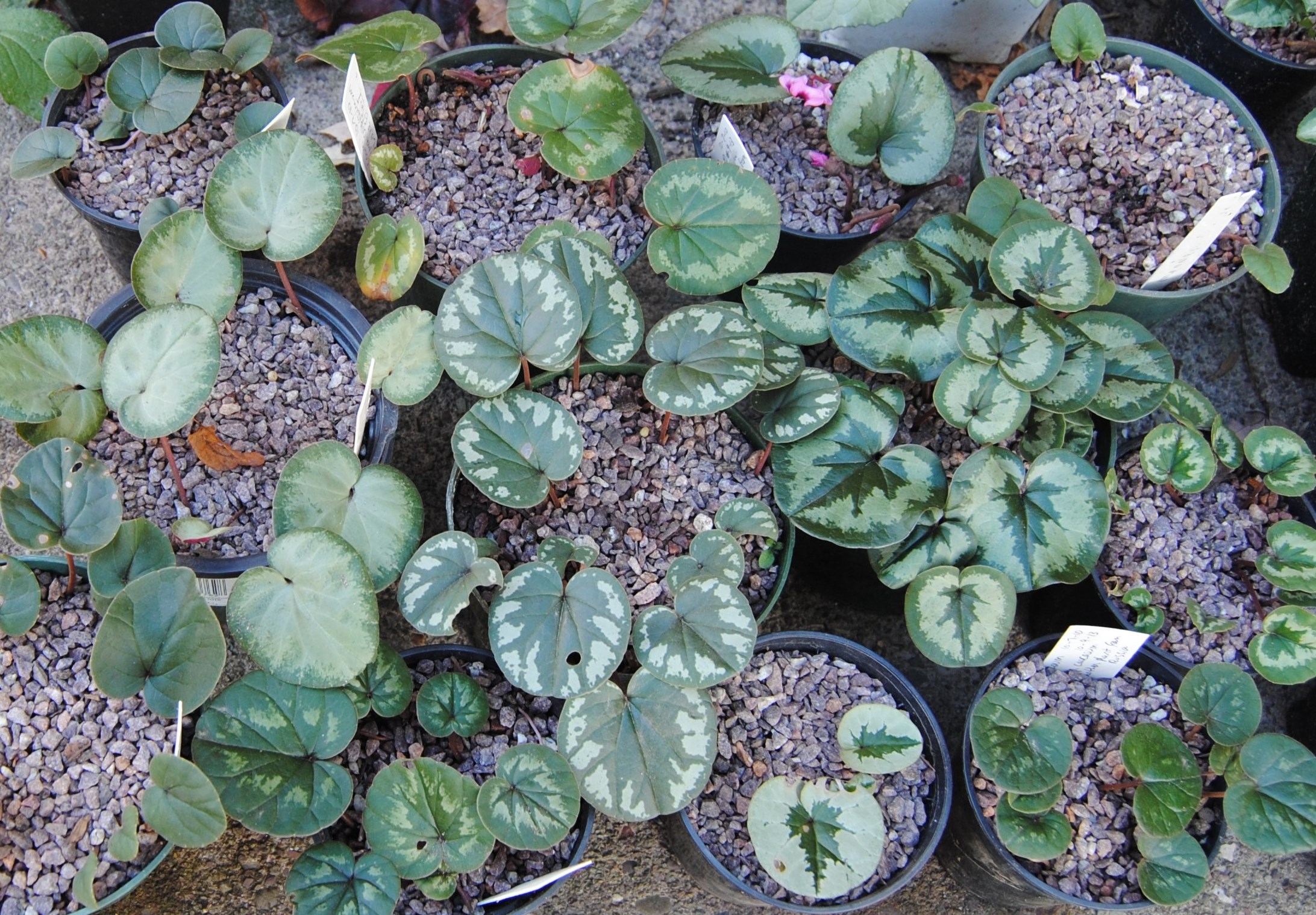
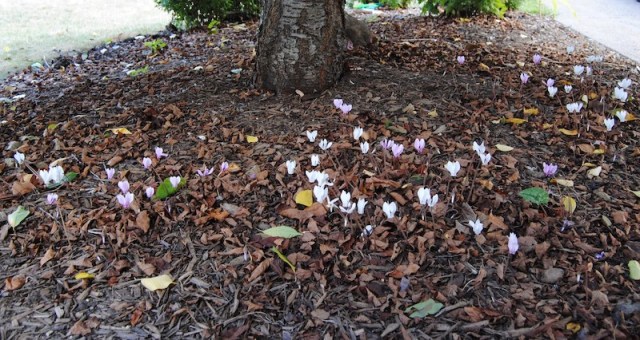
Most of the fall blooming cyclamen hederifolium will stay outdoors.  There are still a few blooms coming up, but from now through winter it will be the foliage which steals the show.fall cyclamen blooms

In this dark dry spot under a weeping cherry I’ve been putting a few of the too-large or excess cyclamens.cyclamen hederifolium

They might be too close together.  I think I’d prefer to be able to enjoy each different leaf pattern separately and some of the smaller plants don’t compete well with the bigger guys.  I’ll just have to put that on the to-do list.hardy cyclamen
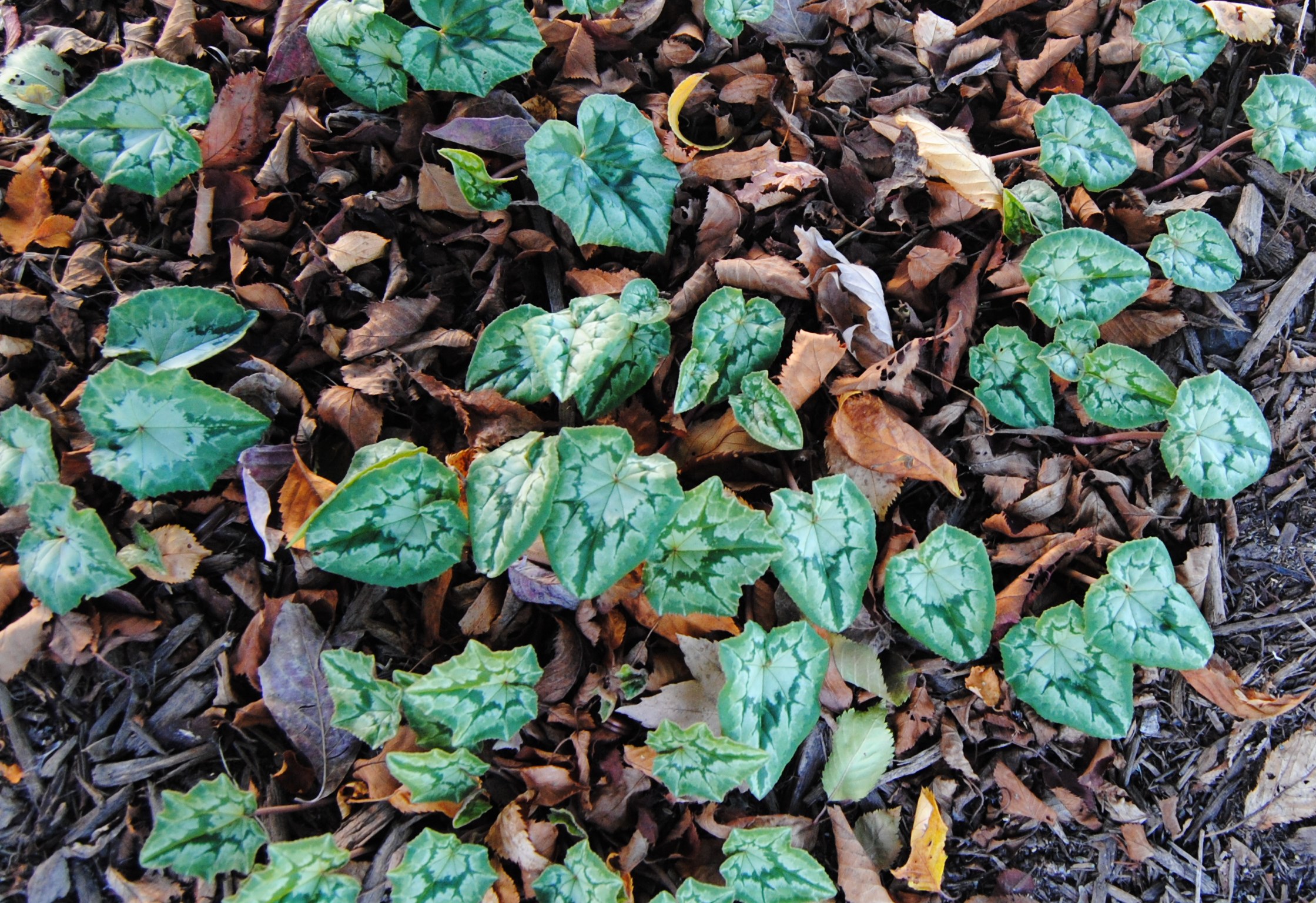
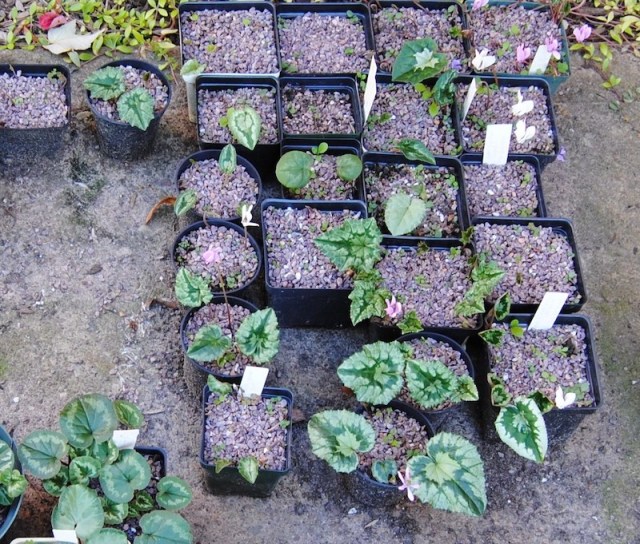
Also on the to-do list is finding homes for all the cyclamen hederifolium still in pots.  Last year my brilliant idea was to pot them up individually so I could get the full effect of each separate plant and maybe take them all in under lights.  Not enough room, so I tried to find a sheltered spot, dug in the pots and gave them a little winter cover and crossed my fingers.  Most died either over the winter or during the summer, so I will not test that method again.  These surviving treasures will either enjoy a winter garden spot or find a permanent planting bed.  The plants near the center are from (like nearly all the other cyclamen) Green Ice seed, these were from the ‘fairy rings’ strain.cyclamen hederifolium foliage

I like how this one’s more silvery leaves stand out.silver edged cyclamen hederifolium
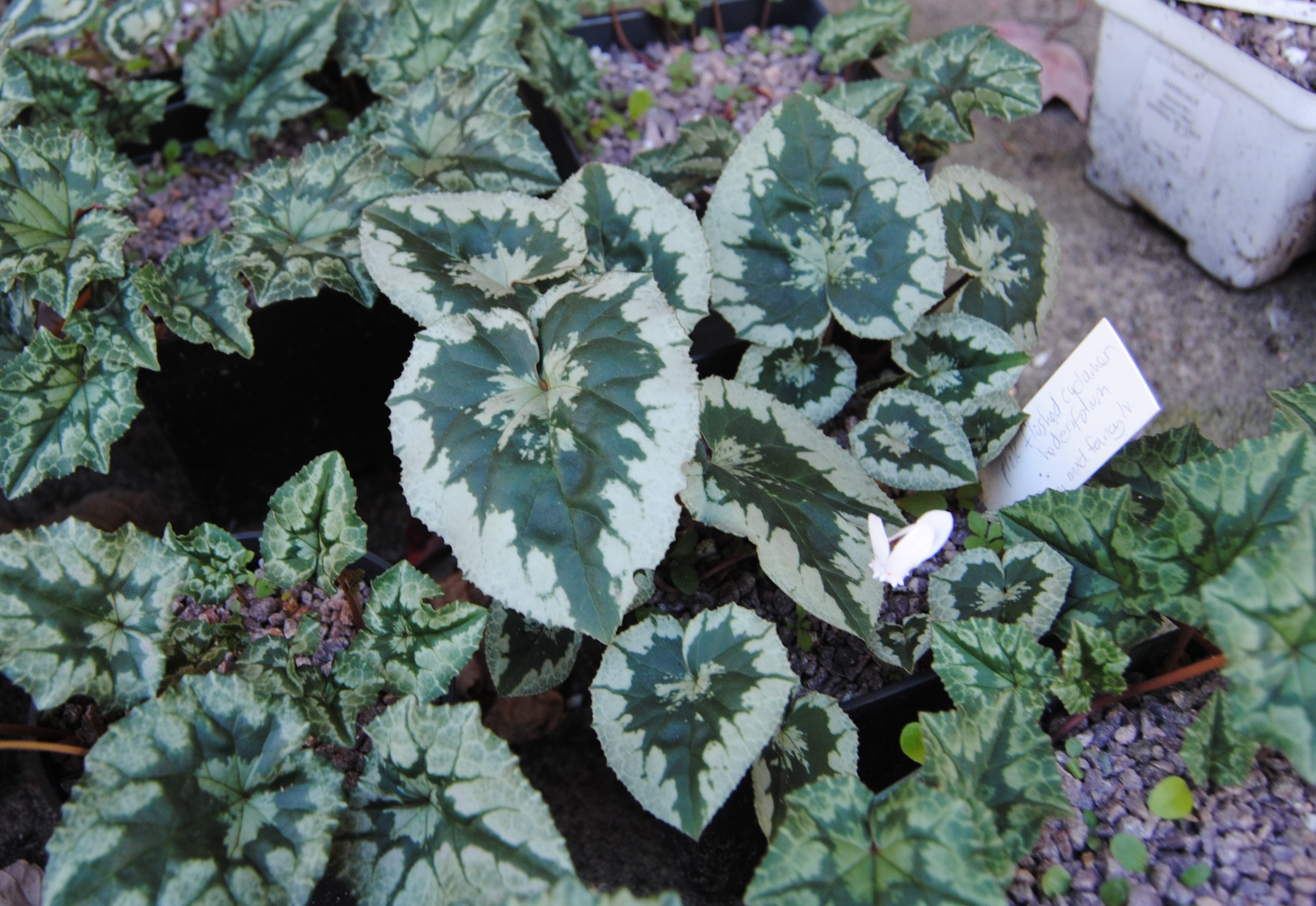
Here’s one that develops a pinkish center as temperatures drop.  This one will get a windowsill spot for sure.pink foliage on cyclamen hederifolium
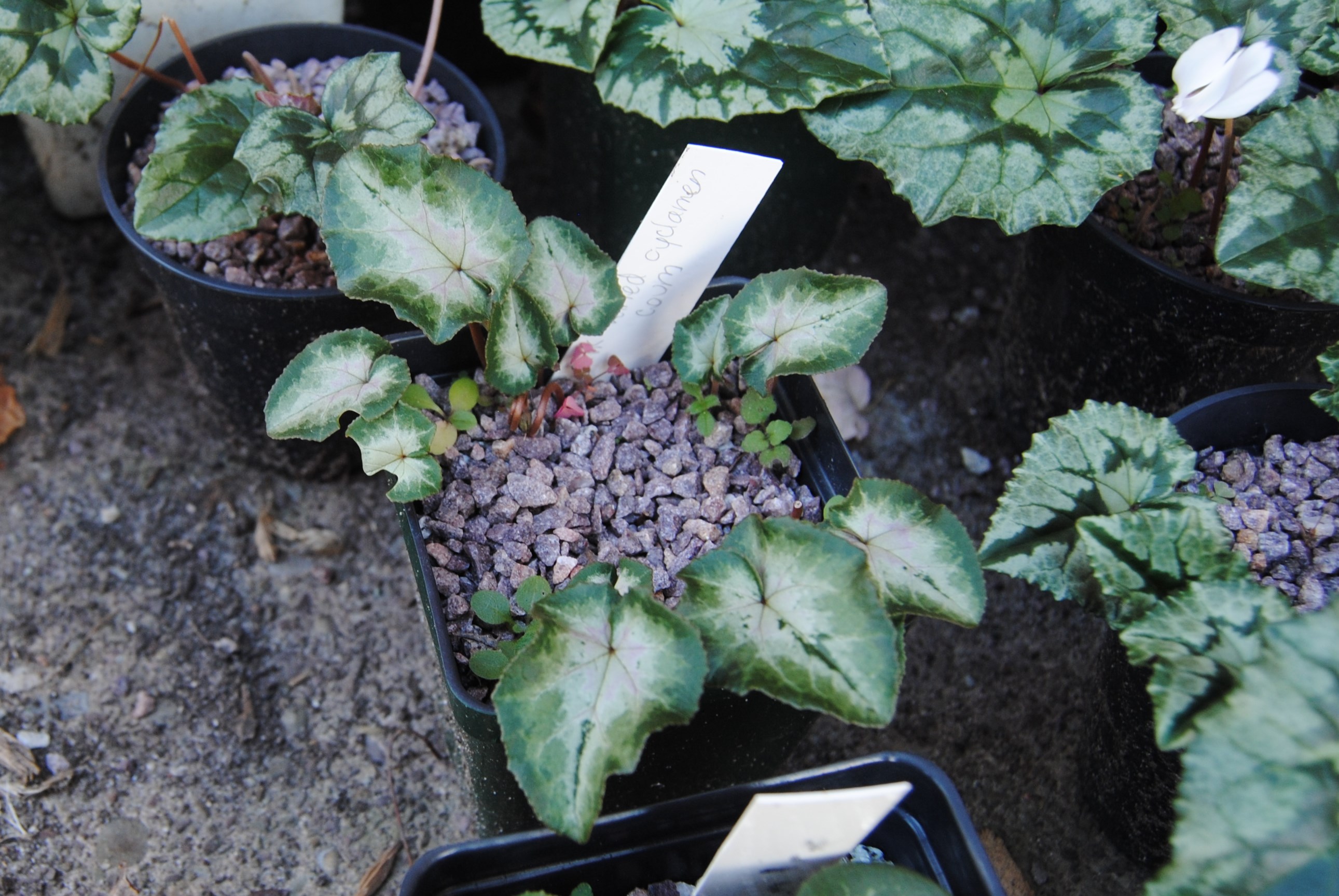
I do like my cyclamen…. addiction might be a word you could throw around here…. Just wait until the c. coum start to flower this winter, you’ll be avoiding this blog for sure as the entries fill with the same blooms over and over again.  I will try to show a little bit of restraint, but I don’t think I’m the only cyclamen fan out there 😉

If you’re craving more examples of great foliage, check out the garden blogger’s foliage day (GBFD) hosted over at Christina’s Hesperidesgarden.  It’s a great chance to check out each month’s best foliage plants from all over the world (and a great blog every other day of the month too!)

Tis the season for orange

The view from the back deck is changing.  As fall color moves down from the mountains into our valley, the woods and weedy edges of the yard are losing the tired green of a droughty fall and going gold.fall color from the deck

Dry soil and warm night temperatures don’t make for good fall color but there’s still plenty to go around, and inspired by this last hurrah I trudged out to my trusty favorite nursery, Perennial Point, and cracked open the wallet for a mum, ‘redbor’ kale and some pansies.  I’ve been trying to stick to a budget, and mums and pansies that may or may not survive the winter don’t fit well into the spending plan.  Still it’s always nice to bring home even a small patch of instant color.fall porch color

The budget is helped immensely by home-grown pumpkins and cornstalks, and a couple butternut squash fit in perfectly until I draft them for soup duty.  The pansies in orange and purple are not what I’d pick in spring, but seemed a perfect fall theme. autumn porch decorationsOrange is definitely the color of the season, and now that the front stoop has been re-decorated (by someone over the age of seven) I’m starting to notice orange all over the place.

The last of the Tropicana cannas are managing to get in a couple more blooms before frost cuts them down (any day now)tropicana canna with ninebark

These seed grown marigolds (I believe Sophia mix… although they don’t look too mixed) did well in spite of neglect, soccer balls, and drought, and I’m almost a little nervous about saying I really like them.  Orange marigolds…. a color and plant frequently looked down upon by more refined gardeners…. perfect for my yard!  orange fall marigolds

Another looked-down-upon plant which I love is ‘Tiger Eyes” sumac.  The wild version of staghorn sumac (Rhus typhina) provides most of the color in the backyard but I try to keep those weeds back a ways.  Here in the front, the slightly more refined chartreuse foliage of ‘Tiger Eyes’ is almost acceptable.  I can easily ignore its suckering ways when it glows like this.sumac 'tiger eyes' fall color

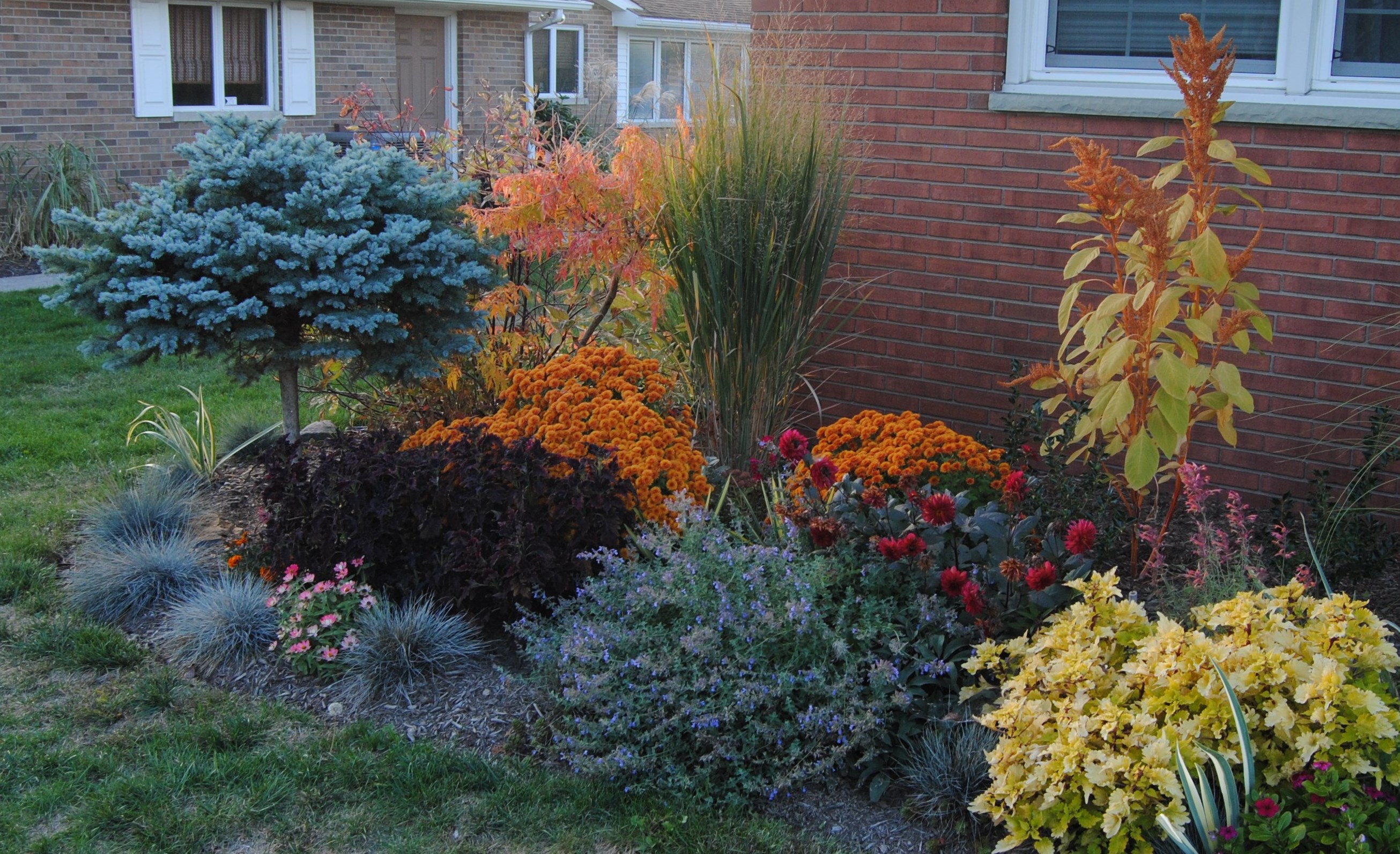
Here’s another one poking up by the house.  Even I think it may be a little too wild for a foundation planting, but until something better comes along the sumac stays. It actually looks good right now with the blues of the spruce, catmint and fescue grass.  Between that and the rusty chrysanthemums and orange amaranthus it almost looks like I planned it this way.  If anyone asks I’ll say I did 😉  orange mums with blue foliage

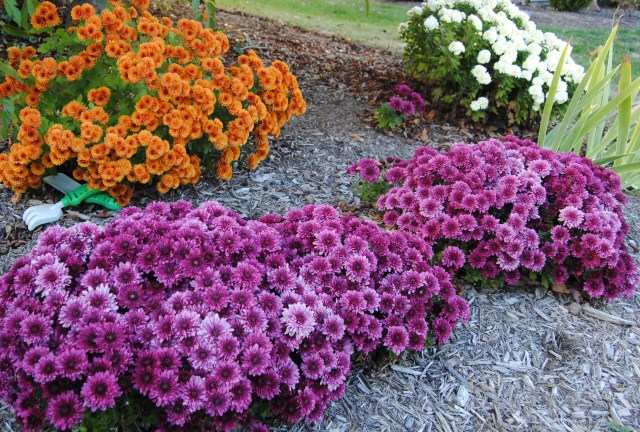
The rust colored mums stick with todays orange theme but it’s the purple ones I like best.  There’s a little fading in the blooms to give some depth and even without pinching they keep to a low mound.  I’m really appreciating the chrysanthemums in general this year and spring may bring some new additions.  How can I not like a plant which never got a drop of watering or fertilizer and still puts on a perfect show?purple and orange mums

I’ll have to enjoy these last splashes of color as fall starts to fade.  We’re on borrowed time as long as the frost stays up in the mountains, but our days are numbered.  This weekend the smart gardener will bring his tender plants indoors.  The other gardener will remember his plants just before bedtime and regret his procrastination as he fumbles with muddy plants, a flashlight, and cold fingers in the dark.


Colchicum Clear-up

My late colchicum shipment from Daffodils and More was well into bloom by the time I finished dragging my feet and placed an order.  I guess I didn’t elaborate enough on how these little guys work…. I thought everyone was obsessed with colchicums at this time of year!

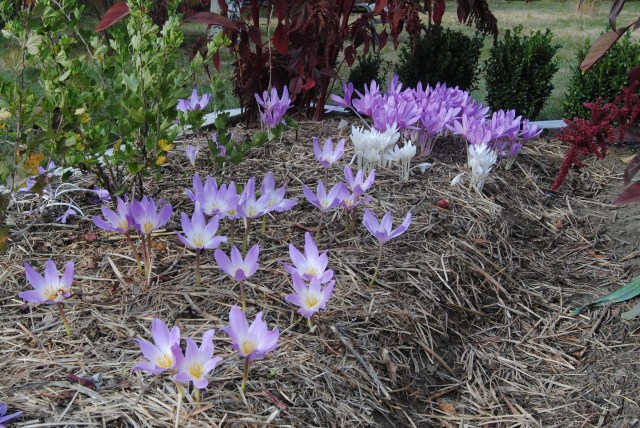
Colchicums are one of the “naked lady” bulbs that bloom in fall, they come up out of the dry autumn soil and surprise you with bare flowers minus the greenery.colchicum bed

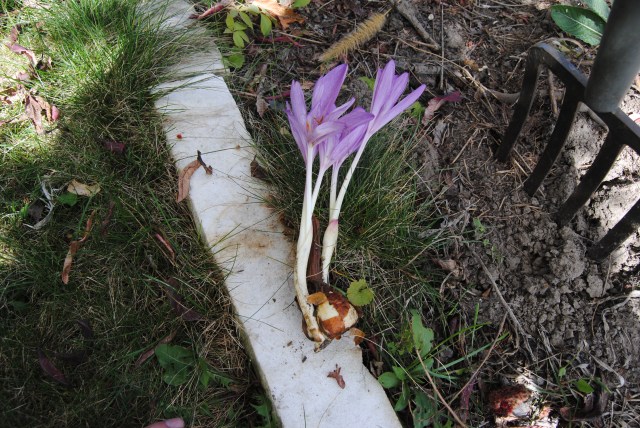
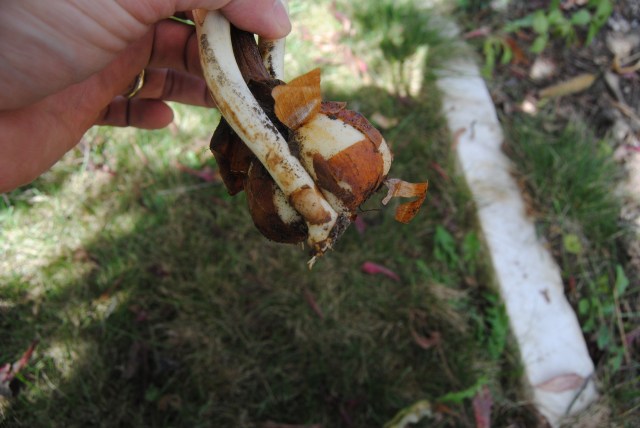
They grow their hosta-like leaves in the spring, just like other hardy bulbs, but the blooms wait till late summer before even thinking about showing up.  Colchicums are on their own schedule and if you’re a little late in getting them in the ground they’ll ignore your tardiness and go ahead and bloom anyway, soil or no soil.  No problem, since the fall rooting will just wait until the bulb returns to the damp earth before it kicks in.  This is how the bulbs looked coming out of their paper shipping bags.colchicum blooming without soil

The bulbs I received were perfect, they had all been stored upright so that the floral tube came straight up and the separate blooms sprouted normally from within the tube.  If the bulbs are stored willy-nilly the blooms come out all over the place and are a pain to plant properly.  If grown normally a bulb forms a ‘heel’ where the roots sprout from, and a tube which brings the flowers to the surface.

This bulb was planted last week and you can just start to see tiny roots growing… Sorry Annette, I just had to dig one up again to take a look and a photo!colchicum bulb heel

When you plant these already-in-growth bulbs, take care to keep the tip of the floral tube just above the soil surface.  When the leaves sprout in the spring they also come up the inside of this floral tube and use it as a path to the surface.  If planted too deeply or not facing up, the leaves cannot grow up, and as a result die underground.  This is a costly lesson to learn since colchicum bulbs aren’t all that cheap, and if a whole batch of late planted bulbs die you will feel guilty for at least three years, especially if you lose another batch the following year…. (ask me how I know this)

planting flowering colchicums

Once planted nothing much seems to bother colchicums.  The run of the mill garden types thrive in average soil and full sun to part shade and pests usually don’t bother them outside of slug attacks on the blooms.  Colchicums are in fact poisonous enough to cause a nasty end to gardener or gopher and the same compound that protects them from chewing rodents and grazing rabbits is also the original source of colchicine,  which is used to treat gout.  In the gardening world, colchicine is also the chemical treatment that will cause seeds to go into polyploidy (doubled and tripled sets of chromosomes) when the cells begin to divide.  Tetraploid daylilies are the best example I can think of, but a quick online search shows many others.  Maybe my colchicum obsession isn’t as much selfish plant lust as it is just plain old gratefulness to a bulb that keeps giving!

With the exception of a single recently dug bulb, my new colchicums are already settled into the colchicum bed.  One of their neighbors is colchicum speciosum, a vigorous, long blooming bulb.colchicum speciosum

The large speciosum (renamed as “Lilac Wonder” – Thanks Cathy!) dwarfs it’s tiny neighbor, the slightly off-white colchicum autumnale ‘Album’.   Both are very popular with the late season honeybees.  I’m going to hope the honey doesn’t take on any of the poisons!  (I’m sure it doesn’t)colchicum autumnale 'Album'

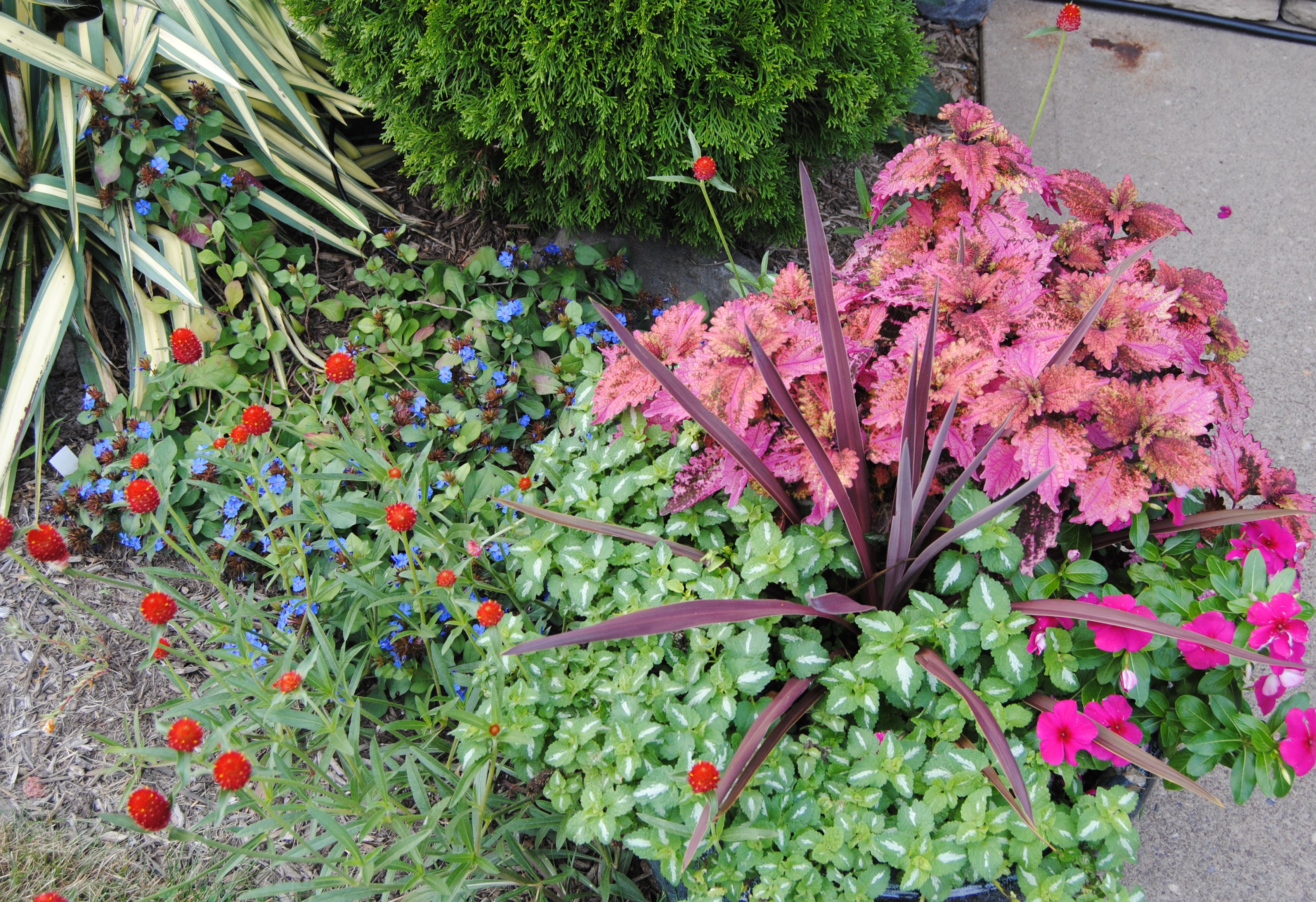
I’m thinking of giving the colchicum bed an overhaul.  The bulbs could use more elbow room and the display could use some background plantings a little more colorful than the drab mulch I threw on there this summer.  Susie over at pbmgarden got me thinking this summer about groundcovers and I think I have the perfect plan for at least a clump or two of the light pink colchicums.  I want to divide up the blue leadwort (Ceratostigma plumbaginoides) and spot a few colchicums into that.  Here’s where I have it right now in the front yard.  It makes a halfway decent groundcover with a long season of gentian-blue flowers and green foliage.  The leaves take on red tints with the cooler weather and the fact that it sprouts kind of late in the spring makes it an even better companion!  Ceratostigma plumbaginoides

So that’s the plan.

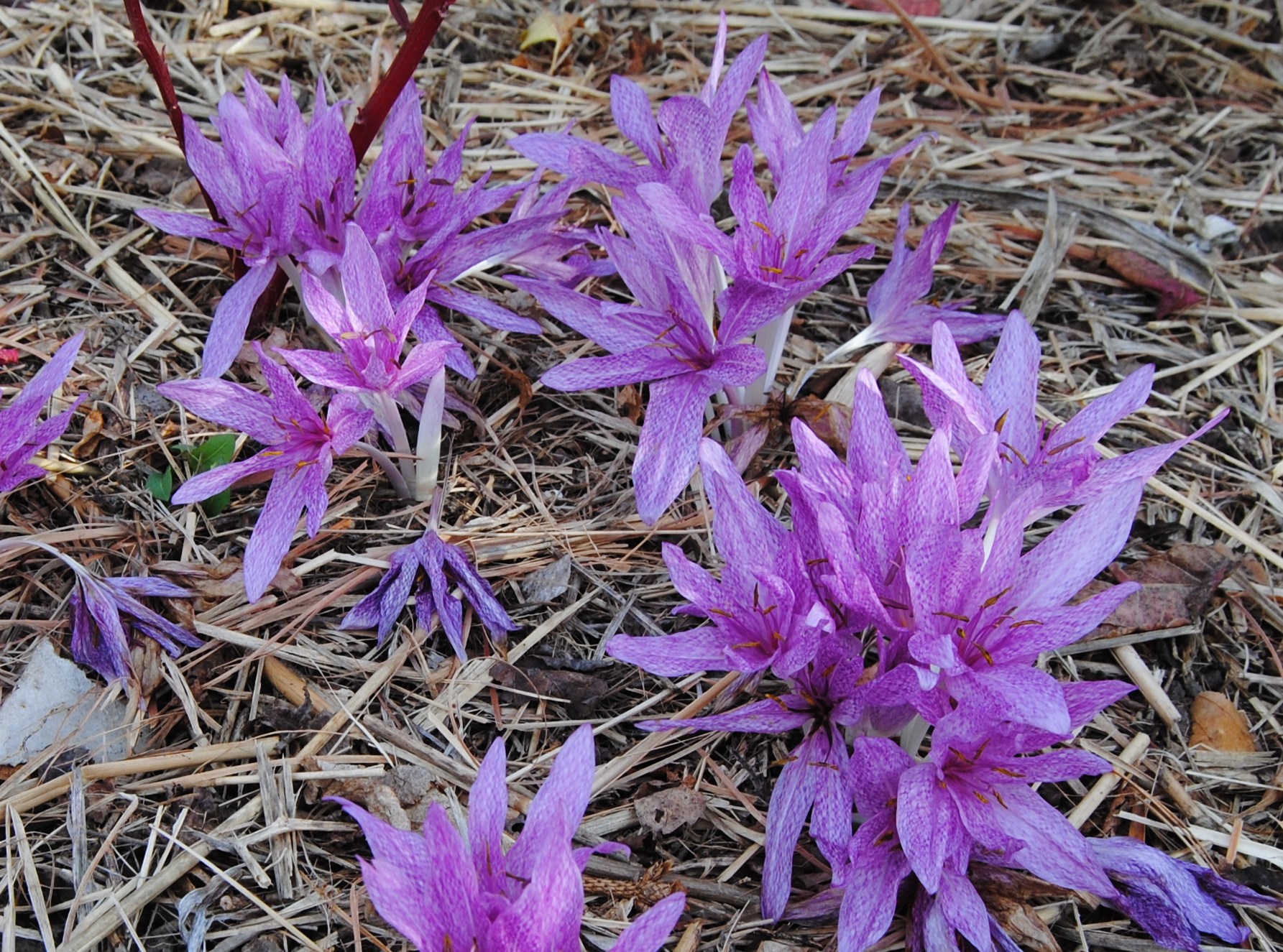
Just one more thing before I’m completely done with colchicums.  The word is ‘tesselation’ and it describes the geometric patterning some colchicums show.  Colchicum x agrippinum has plenty of this checkering and it’s one of my favorites.colchicum x agrippinum

Did I do that?

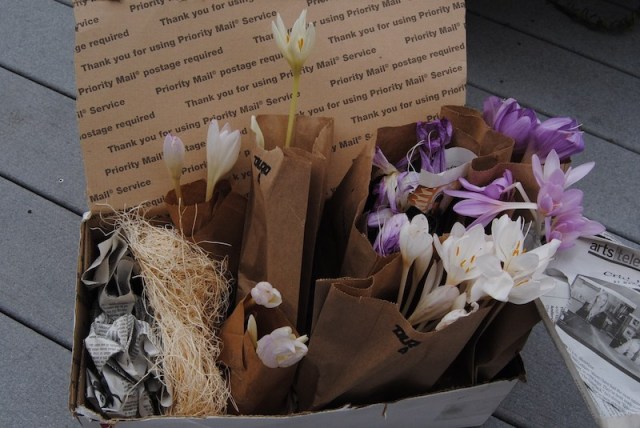
This box showed up on my doorstep Friday and it’s bursting at the seams with colchicum flowers!  The wise gardener orders these bulbs well in advance of autumn so that this scene takes place in the well prepared garden bed, but the procrastinating gardener takes the risk and begs via email for a late order and shipment.

I may have gone through this kind of poor planning before, so the bare-bulb blooms are no big surprise or worry, but the show would have been ten times better had the bulbs already been planted.  But this order was the result of panic.  A couple weeks ago I realized I didn’t have anywhere near as many colchicums as a self respecting colchicum lover should have, so I immediately went to Daffodils and More, David Burdick’s bulb website.  He dabbles in the colchicums, has an excellent selection, and after a couple emails back and forth I was able to convince him to part with a few, even though they were already headed into blooming stage (as you can see, they don’t need soil or planting in order to bloom!).  They arrived at my doorstep even before my check was cashed and I have to say they’re the best cared for colchicums I have ever received.  Instead of looking worse for their journey they’re already planted in the ground and settling in.

I was halfway tempted to keep them in the box and have them close enough to examine day or night while blooming, but better judgment won out and they were planted the next day.  I just need some groundcover ideas.  Some nice companion plantings would surely make this bed look even better as the bulbs clump up.

This info might be a little too late, but I noticed Brent and Becky’s bulbs just put their colchicums on sale for 50% off. It’s a great deal (and the source of many of my own bulbs) but most have already sold out…. but there are a couple left, and it’s not that I want to encourage any late season colchicum incidents in your own garden, but colchicum byzantinum and colchicum ‘giant’ are two of my favorites……

The cyclamen are back

It’s raining this evening and I hope this finally takes us out of the summer long drought we’ve been limping through.  The rain will hopefully soften the rock hard soil and usher in a nice gentle season of planting and transplanting.  Somehow the cyclamen knew the calendar had turned to fall, in spite of the heat and drought they’ve been sprouting up amongst the dry, dead leaves and giving fresh hope for fall.

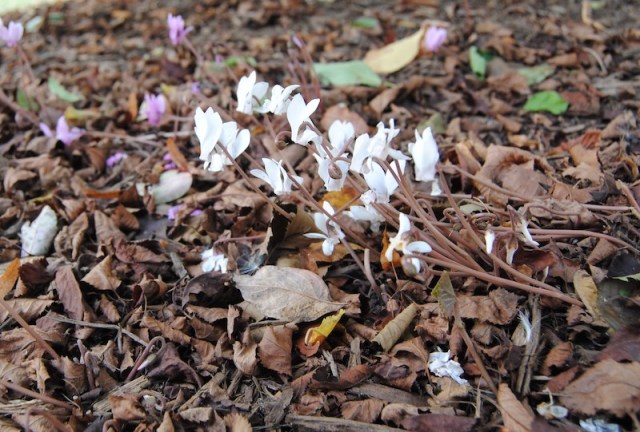
Nothing else grows in the dry shade of this weeping cherry, but the cyclamen don’t seem to mind.  The cyclamen hederifolium  normally come into bloom now, some years earlier, some later, but they always seem to know summer is winding down.  Usually the flowers come up before the leaves even show, but I like it when the two appear at the same time.

The colors range from white to dark purple and this planting was really starting to look good until some kind of basketball/wagon/quad/bicycle incident at dusk.

There might be some recovery but right now most are crushed or have a ‘windswept’ look.

All of these are from seed.  My introduction to these plants came from a friend who sent me a mixed packet to try out.  I planted them in the fall and was amazed to see them sprout during the winter on a cold windowsill and start showing off their fancy little leaves…. until I killed most of them when I left the pot out during a hard freeze.

But gardeners are nothing if not resilient, so next fall I planted a whole new batch of seeds from Green Ice Nursery in the Netherlands.  They were more than amazing.  I grew them under lights in the cool of the basement, repotted them for the next year, put them out for the summer and even enjoyed some flowers that fall.  Another winter indoors and I was starting to recover from the pain of killing off my first batch.

That summer I potted up the best looking ones into individual pots to really get the full effect.  I could admire the individual plants and their cool leaves this way.  (by the way, chicken grit -available at feed stores- makes the perfect pot topper for these guys)

A few really stood out.  This one was a nicely colored, heavy bloomer that sent up plenty of foliage as a backdrop for the two toned flowers.

,

Things were going really well until it came time to move them in.  I couldn’t find enough room for what was now about 80 pots in all kinds of sizes.  So I crossed my fingers, dug them in for the winter in a sheltered spot, and hoped for the best.

While hope may spring eternal, its got to make it through winter first.  Between January and August I again lost most of my little cyclamen, and as of today this is what remains.  Maybe 15 of the original 80 plants still survive.

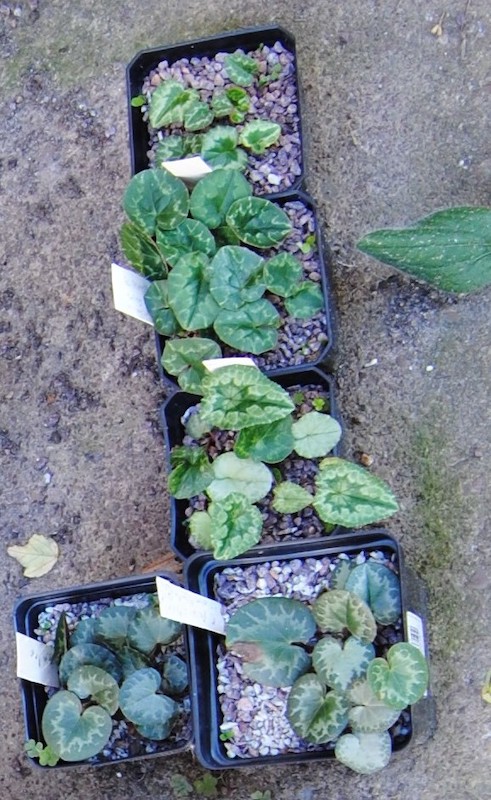
But never fear, any healthy new obsession involves overkill, and you can bet that even though I’ve lost so many there are also so many more coming along.  Here are last winter’s new seedlings growing happily.  They are courtesy the N. American Rock Gardens Society’s annual seed exchange.  Members donate seeds in the fall and other members such as myself reap the rewards during the winter exchange.  For a pittance to cover postage you can pick up all kinds of new and unusual plant seeds, many of which are just not available elsewhere.

Besides the exchange, there’s also the possibility I broke down last winter and ordered even more seeds from Green Ice.  Jan Bravenboer of Green Ice must have a great eye for cyclamen, so many of his strains seem to be one in a million plants picked out from here and there across Europe.  I had to get just a few more which are sprouting now, and I’m glad I did.  Changes in the inspection policies of the EU have made the certificates on small orders such as mine way too expensive for honest buyers/sellers.

The seeds in themselves are cool too.  When cyclamen blooms are pollinated, the flower stalk curls up and the growing seed pod is snuggled down into the mulch next to the plant.  There they sit safely tucked in until the seeds ripen.

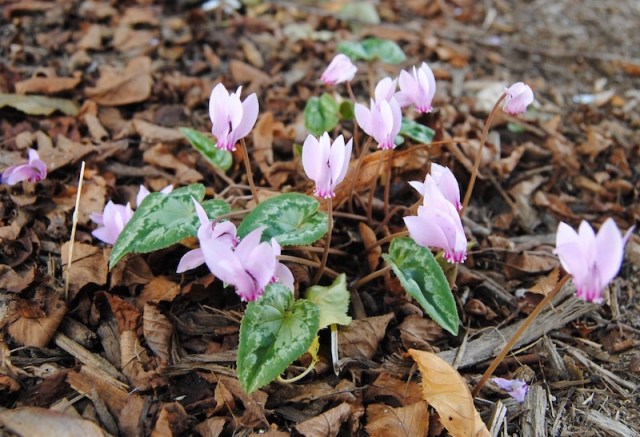
There are other cyclamen that overwinter just fine (when planted properly) in my zone 5/6ish garden.  The patterned waterlily shaped leaves below belong to cyclamen coum, which is setting buds for Feb/March blooming, and the smaller silvery leaves bottom right belong to cyclamen purpurescens.

The summer blooming C. Purpurescens might be the hardiest of them all.  I’m having a little trouble making it happy but I think once established it will settle into a zone 4 garden without trouble, and you can enjoy the leaves all year as they don’t die back like many of the other types.

I’m afraid I’ve gone on too long again.  It’s Sunday morning and the rain is finished and the birds are all over the place.  Time to head out there and check things out.  I’ll bore you with many more cyclamen in the future, trust me.

Laura is a great phlox.

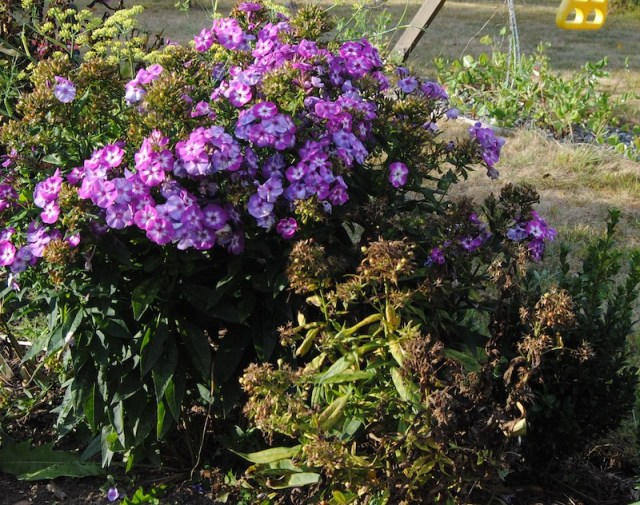
It’s been a tough summer but “Laura” is still holding her own.  If you can ignore the  photo quality long enough, I hope you’ll see her still blooming away into September while ‘barsixty’ (coral flame) towards the front is just a shriveled brown mess.  The freshness might not be with “Laura” any more but at least she’s doing her part to keep the color going  Two months and counting is a good job considering I’ve done nothing other than water enough to keep the poor thing from wilting too badly.  I’m officially going to name Laura my best phlox paniculata 🙂

Fall is in the air

The last couple days have been cooler, less humid and just plain pleasant to be outside in.  I’m not saying it’s fall weather, but it’s pretty close, and based on the dry, sad state of many plants in my garden I might say they’re ready for this summer to be over.  The front border has been on an IV drip of water and this life support intervention has kept it looking decent.  Having done a mid summer bed expansion here, and having added many annuals and tropicals, it kind of needs it in order to not become a dusty wasteland…. what a lovely contrast to the lawn which has not benefitted from any watering.

The pink in front is a sedum which has been doing very well the last few years.  I always hated this color growing up, but this might be an improved version of regular sedum spectabile.  It was given to me without a name, but after surviving a transplant and division during 90 degree heat I guess I owe it a place.  Next year I’m hoping for an even fuller plant.

From the other direction more of the elephant ear, coleus, and cannas are visible.  The ‘hot biscuits’ amaranthus is blooming now and I like the brown seedheads…. it kind of gives a grainy farmland look here in suburbia.

My birdseed sunflowers are all doing well in spite of the lack of water and lack of attention.  The only drawback is their lack of pollen, and you can see the centers of the flowers are black, not pollen-yellow.  Pollen free is great for cut flowers but the bees are not thrilled.  A few come by for nectar, which I guess is enough to get them pollinated, but they’re not the busy centers of activity that the rest of the flowers are.

I’m just glad they’re hanging in there.  Sunflowers must be quite drought tolerant for an annual since this is how the rest of the bed looks….  I’ve given up on keeping it watered.

In the backyard, the dahlias are still getting water and even with me cutting nearly every bloom, they’re still giving a nice spot of color in front of the dead lawn.

While it was still hot and humid I got around to mowing down the meadow.  I traded in my electric chopper for the day and borrowed my brother in law’s heftier gas powered lawnmower.  It made quick work of the crispy dried grass and wildflowers.  Typically I try to cut back the meadow earlier in the year, but with the hot, dry weather I really didn’t feel like doing anything at all, so it was only now that I found the motivation.  Because of my lack of enthusiasm everything got cut, there was no mowing around butterfly weed or native grasses, it all got the same treatment.  It was a good thing I finally got it done, because for some reason the colchicums have heard the call of autumn and begun to sprout.  How they come up through the dry, hard-packed, rock-like soil is anyone’s guess, and what triggers them to wake up is beyond me, but there they are.  Fresh blooms in a sea of dry crispiness.

I wish there was some similar promise in this end of the yard.  The Annabelle hydrangeas were fantastic in the spring but now are just dying sticks.  They’ll recover if rain comes soon, but for now everything just skips over our little spot, or never even reaches the ground.

It could easily be worse, there are still a few green weeds in there, but Pennsylvania usually doesn’t go this long without rain.  On top of that it doesn’t help that most everywhere else on the east coast is at above average rainfall… but I have faith.  Right now Thursday is showing 100% chance of rain, and maybe this cooler weather is signaling a change in the weather.

A sad little Border

When we first moved here one of the priorities (among many others!) was to try and downplay the bright white vinyl fences which dominated either side of the yard.  Vinyl has its place, but to me a 6ft solid white wall just screams FENCE HERE! and I’d rather have a calmer yard.  So I started to screen.ugly white vinyl fence

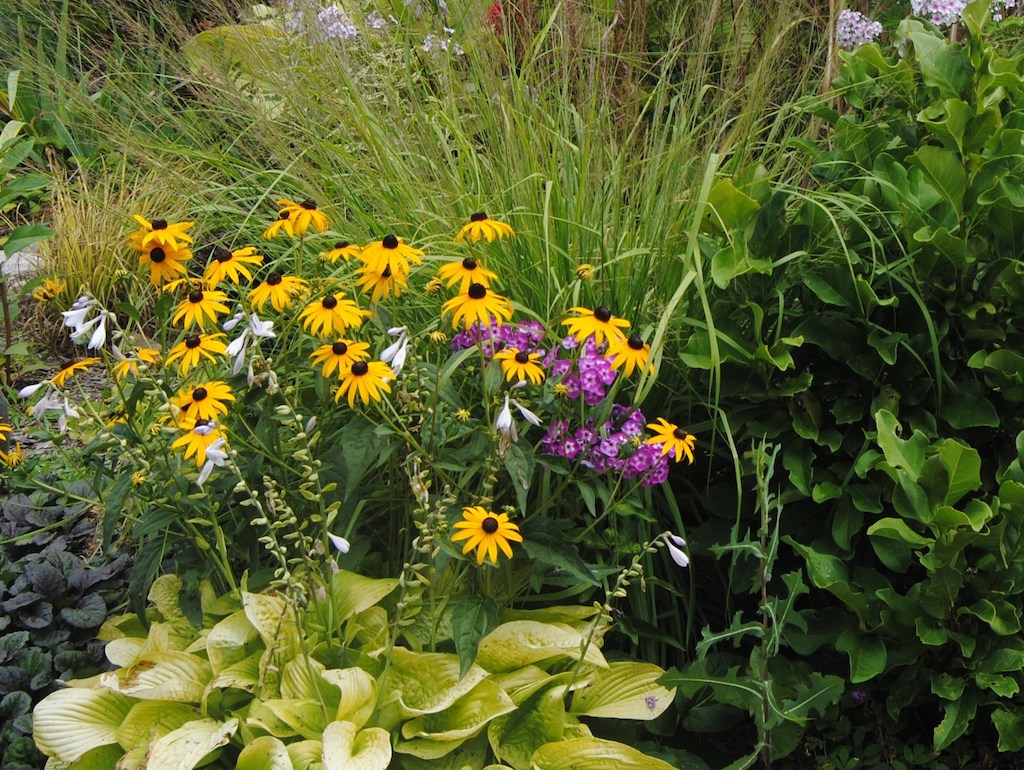
For some reason I wanted a red garden in this spot, so I planted the closest thing I had which were reddish leaved and could possibly cover the fence, those being tall cannas and the ‘coppertina’ ninebark.  (The scarecrow of a plant toward the left is a seven sons tree  -Heptacodium miconioides- more on that later).  Over the last four years its become a dumping ground of red plants which refuse to flourish and other plants which needed homes.  This is what my “red” garden looks like today.rudbeckia goldsturmThe first thing you might notice is the mess.  The second thing might be the lack of red.  I plan on working on both of these in the somewhat near future, but for now the stupid leaking preformed pond is just hanging over my head.  It disgusts me, so what better to do than ignore it and hope it learns its lesson.garden remodelWhile I wait for the pond to heal itself, the kids have take advantage of the neglect and frequently throw things in, stir the water, and use it to add magic to whatever messy dirt project they have going on.  It’s not helping but at least its motivated me to pull the pond shell out and set it aside until I can get myself moving.
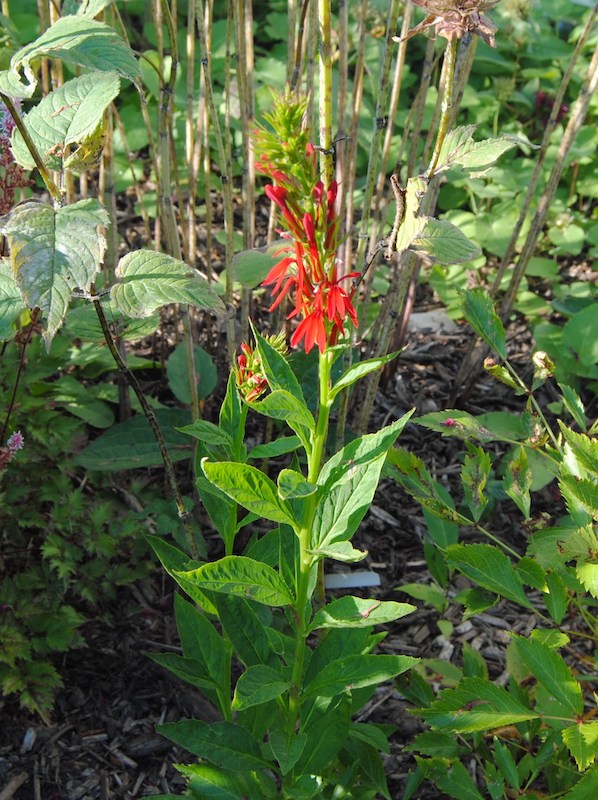
My inspiration may have arrived.  Last fall while scrambling to find homes for a number of random seedling, I stuck in what I thought was a species foxglove (with yellow flowers) into the ‘used to be’ red border.  Unlike many of the other plants here, these seedlings did well, and to my surprise put out a bloom this week.  Look at what it turned out to be!lobelia cardinalis

Cardinal flower (lobelia cardinalis)!  I’ve been trying for years to get a few going but the seed is like dust and my aftercare just doesn’t cut it.  This random mix up of seed has reminded me of my dream to have a red garden and refocused my vision!….. not really…. but how can I deny this brightest red of native wildflowers?  It’s time to get moving, before the golden rudbeckia ‘goldsturm’ take over. (btw none of these were planted, they all invited themselves in)rudbeckia goldsturmTwo things I should start with.  The first is to add more dark leaved plants.  Ideally a dark hedge along the fence would be a nice backdrop, but I can’t think of anything better than the struggling variegated privet which is there now.  A darker background seems to really highlight the red and gold.rudbeckia goldsturm

So the plan is to fix the pond, remove a few of the pinks and golds, think of a better background, and do some soil improvement/replanting so the red flowers already there really reach their potential….. in a spot with fewer washed out lavender flowers…garden phlox paniculata

This blurry picture is a new-for-me annual/biennial/perennial which might have a place in the revamped border.  It’s standing cypress (Ipomopsis rubra), a southeastern native perennial which will likely be an annual here.  This looks like a perfect hummingbird plant and of course I love the color and the fluffy leaves.  I hope it reseeds, but if not there may be a few leftover seeds just in case.

Am I the last person to hear about this plant?  I’ve been looking for it for a couple years but had some trouble finding it.  Maybe now that it’s here it will stick around.standing cypress annual

Front border update

Looking back on the weather, I believe I picked the hottest days of the year to do my digging, transplanting and bed expanding.  It’s cooled a bit recently but the strong sun and spotty rain combined with my thin skin of topsoil have left things a little tired looking.  Crispy tan grass dominates the yard, but here and there is some fresh color to keep me motivated.

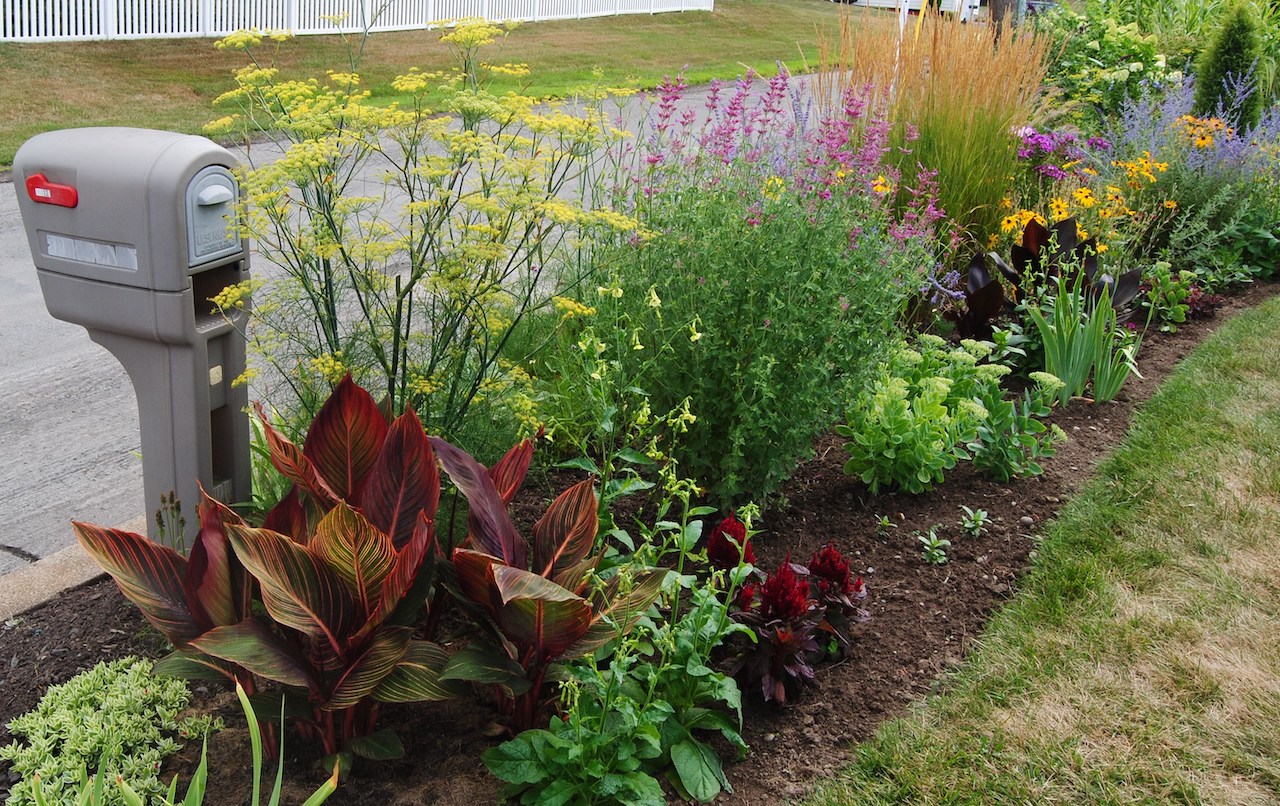
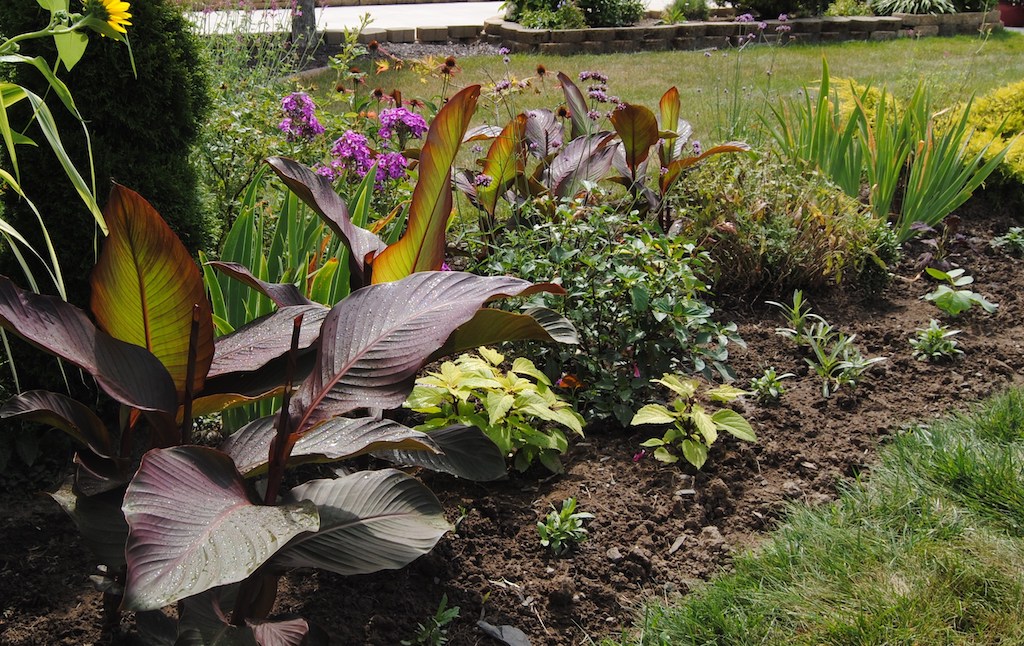
Here’s how the new transplants are doing.  The ‘Tropicanna’ cannas love the heat and don’t look bad next to the airy fennel that’s trying to take over the mailbox.  It’s been cut back a bunch due to the huge numbers of pollinating wasps drawn in to the flowers… no one needs a mailbox that buzzes.august perennial border

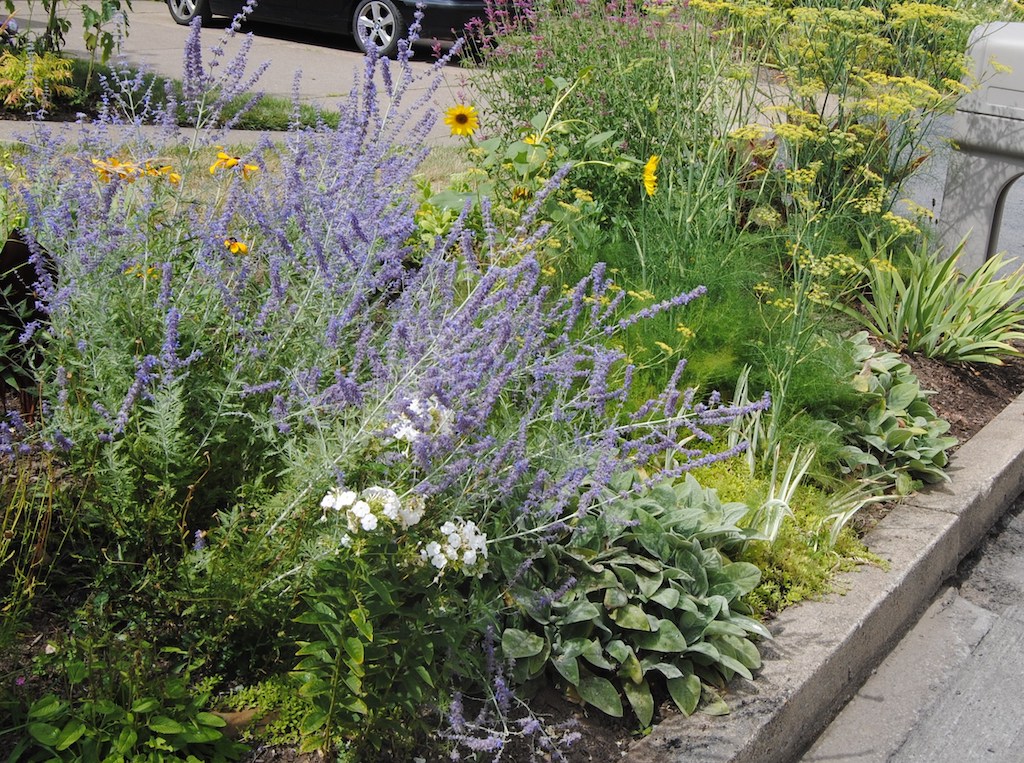
The street side of the border isn’t nearly as well kempt as the freshly weeded, freshly planted house side, but it looks interesting with a lively mix of Russian sage (perovskia), sedum, and lamb’s ears (stachys ‘Helen von Stein’) with all kinds of self-sown volunteers such as phlox.august perennial border

I’ve been busy re-taming this border after returning from our recent Florida vacation.  Ten days of living the suburban dream of Disney and a tropical beach in late July, it doesn’t get any more relaxing than that.  Pulling crabgrass in the blazing August sun (without a million other people) was a refreshing return.

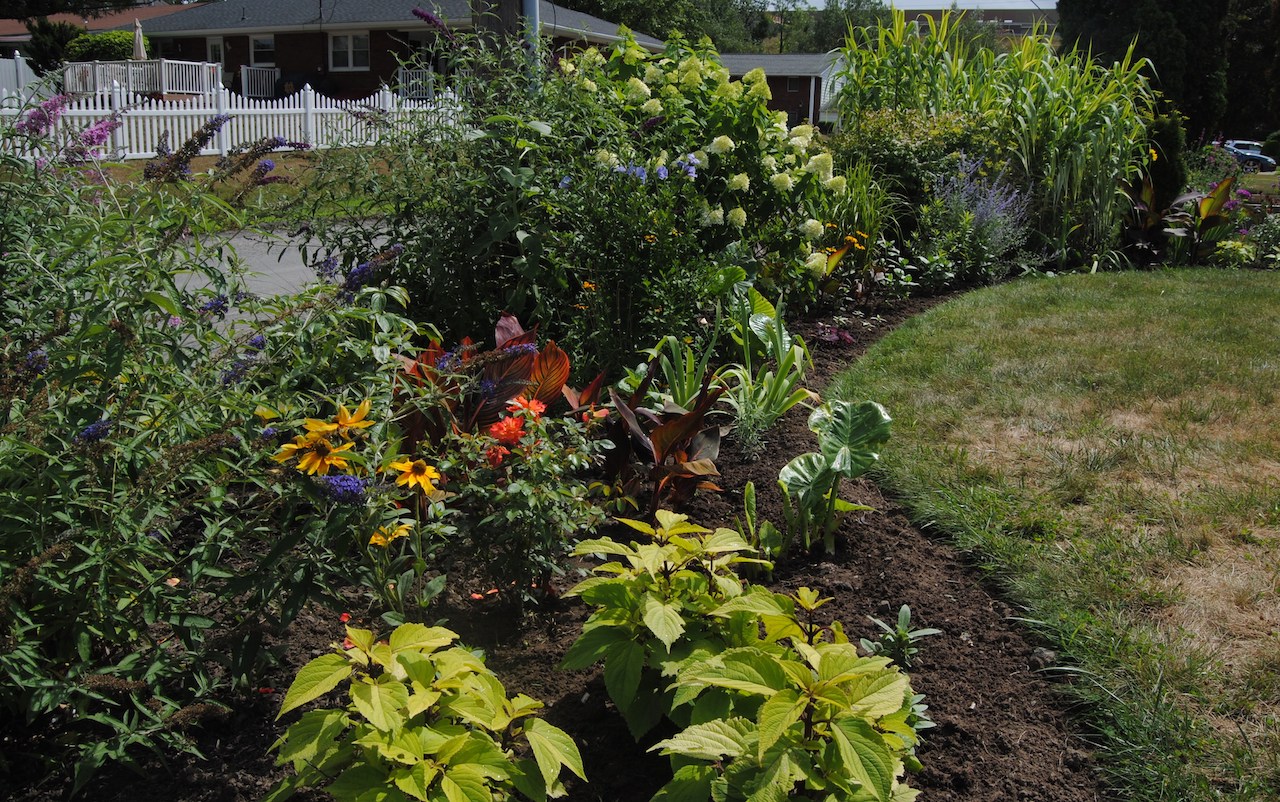
The annual coleus and zinnia seedlings liked the heat and it also brought out blooms on the butterfly bushes and ‘Limelight’ hydrangea.

august perennial border

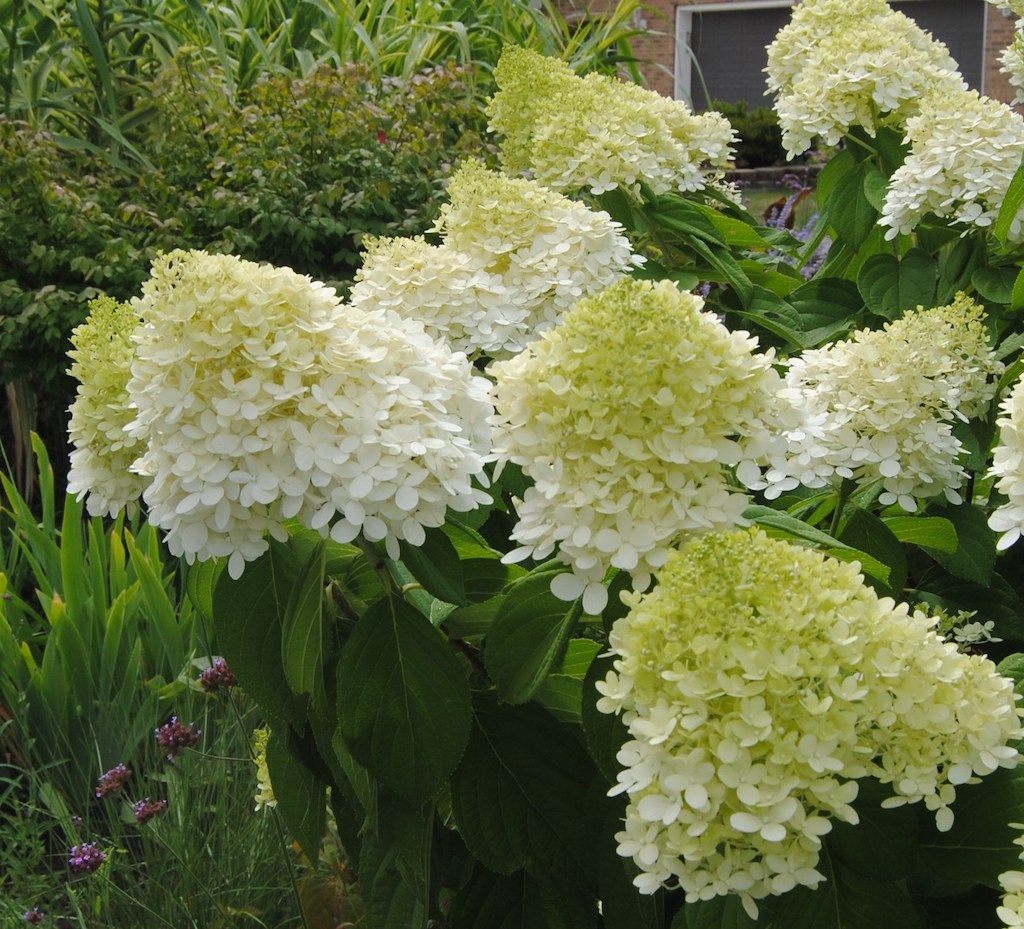
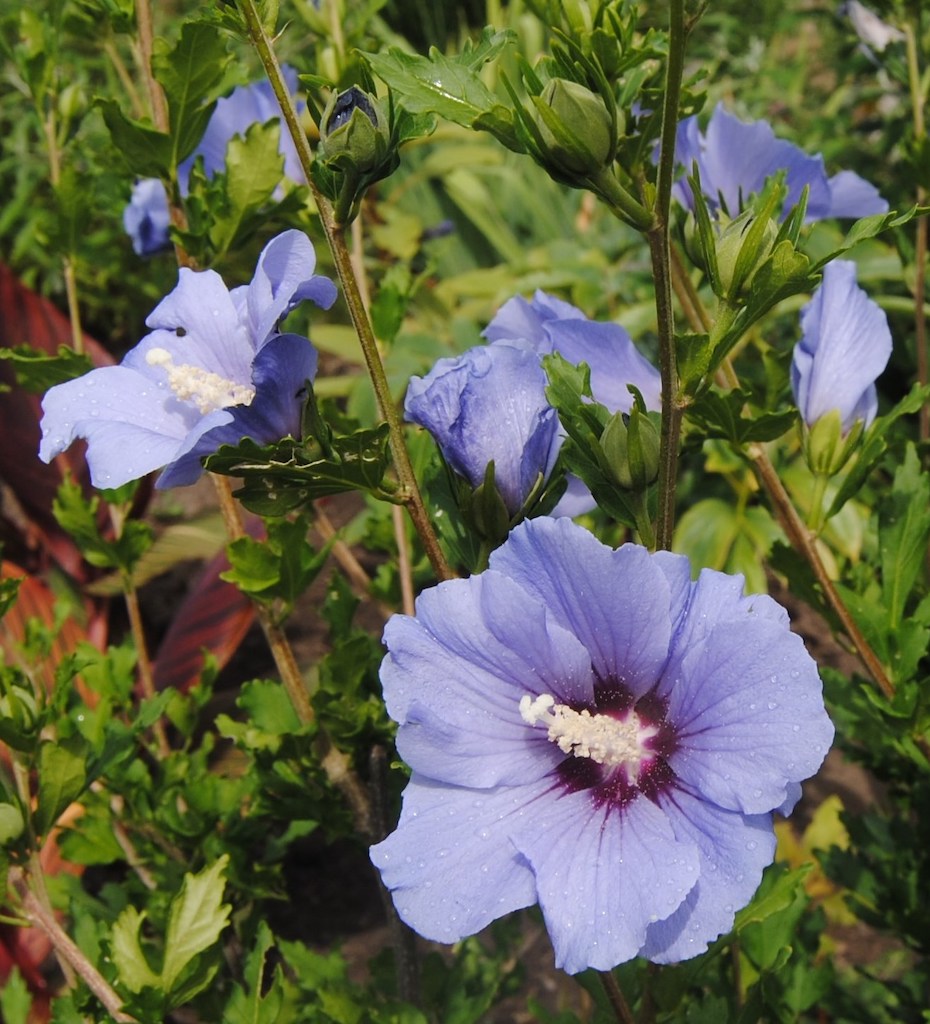
I love the hydrangea, it’s getting to be on the big side but I’m all for big plants in the garden.  ‘Limelight’ is a type of hydrangea paniculata, a group that blooms in late summer (usually white or pinkish), tolerates dryer soils, welcomes full sun and flowers reliably each year.  It blooms on new growth, so you could take a chainsaw to the thing in spring and still get a mass of blooms later in the year.  ‘Limelight’ has a nice greenish tint to the new blooms and has stems strong enough to keep the heavy flower heads from flopping.august perennial borderAnother all-summer bloomer is rose of Sharon (althea syriacus), they laugh at heat and drought and are nearly impossible to kill.  They have some well known faults, and two of the biggest are it’s late leafing out and it’s enthusiastic reseeding habits, but I grow it anyway.  ‘august perennial borderDiana’ is a sterile white cultivar and an awesome plant, but with all the white vinyl around here I can only fit in so many bright white flowers, so the one I grow is ‘Blue Bird’. ‘Blue Bird’ earned its spot because of the trouble free blue color of its blooms.  I don’t think it’s as showy as some of the others but the color is worth a little seeding around.  Every now and then I think it has a little look of weediness to it, and even though in my garden this isn’t a noticeable fault, in some more refined plantings this might stick out.  I guess  that’s a cross better gardeners are meant to bear.

Drought tolerance is something that everything in this street border has to deal with.  Perovskia, self-sown gloriosa daisies (rudbeckia), and ornamental grasses all take it in stride.  It’s a little messy, but right now I think the color holds up well to the bright sun and higher temperatures…. no room for pastels here…. The purple ‘Laura’ phlox gets extra water now and then, it handles a little dry weather and heat, but complains the whole time.august perennial border

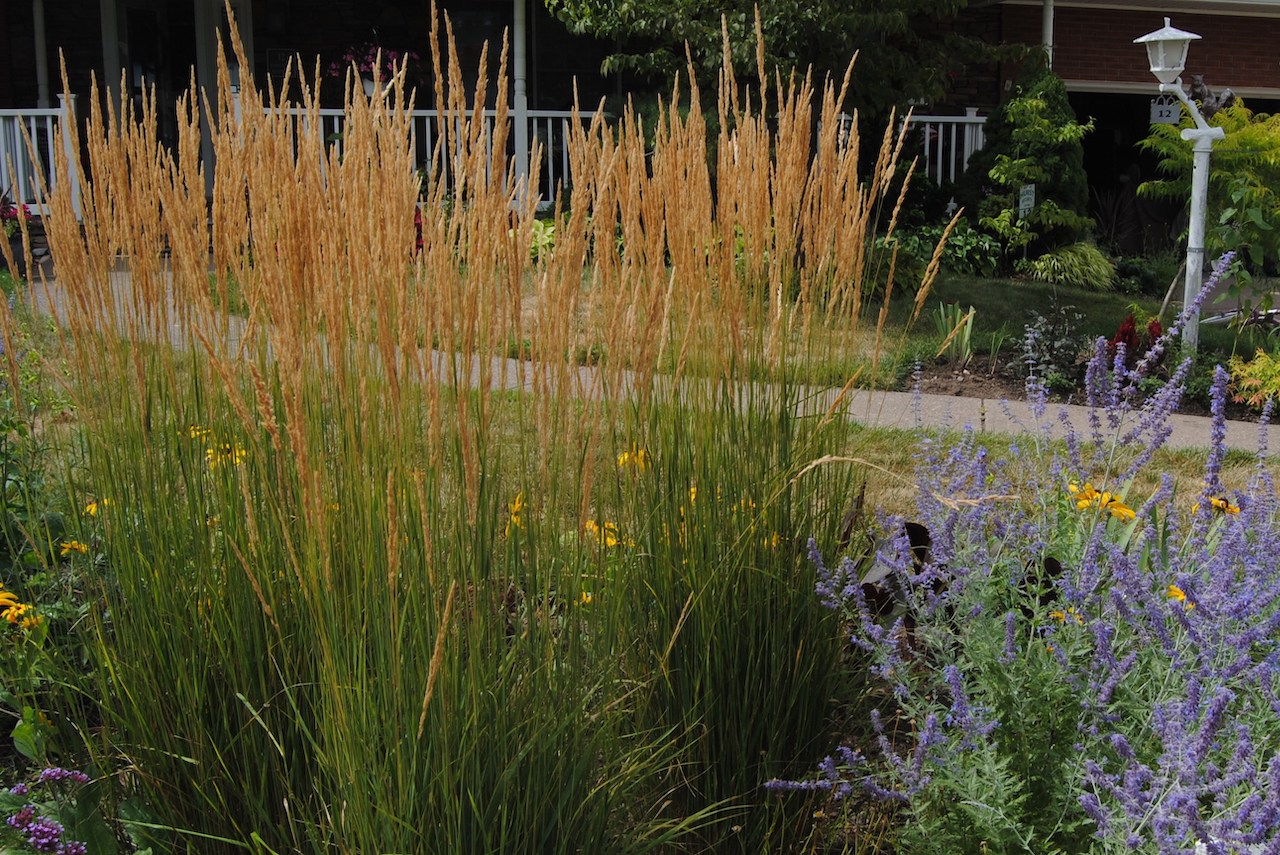
‘Karl Foerster’ feather reed grass doesn’t complain about anything.  A haircut in the spring is all the maintenance it needs and if you like the grassy look this is what it gives you all summer, fall, and winter.  Doesn’t reseed, doesn’t need fertilizer, looks good all year…….I’m a fan.august perennial border

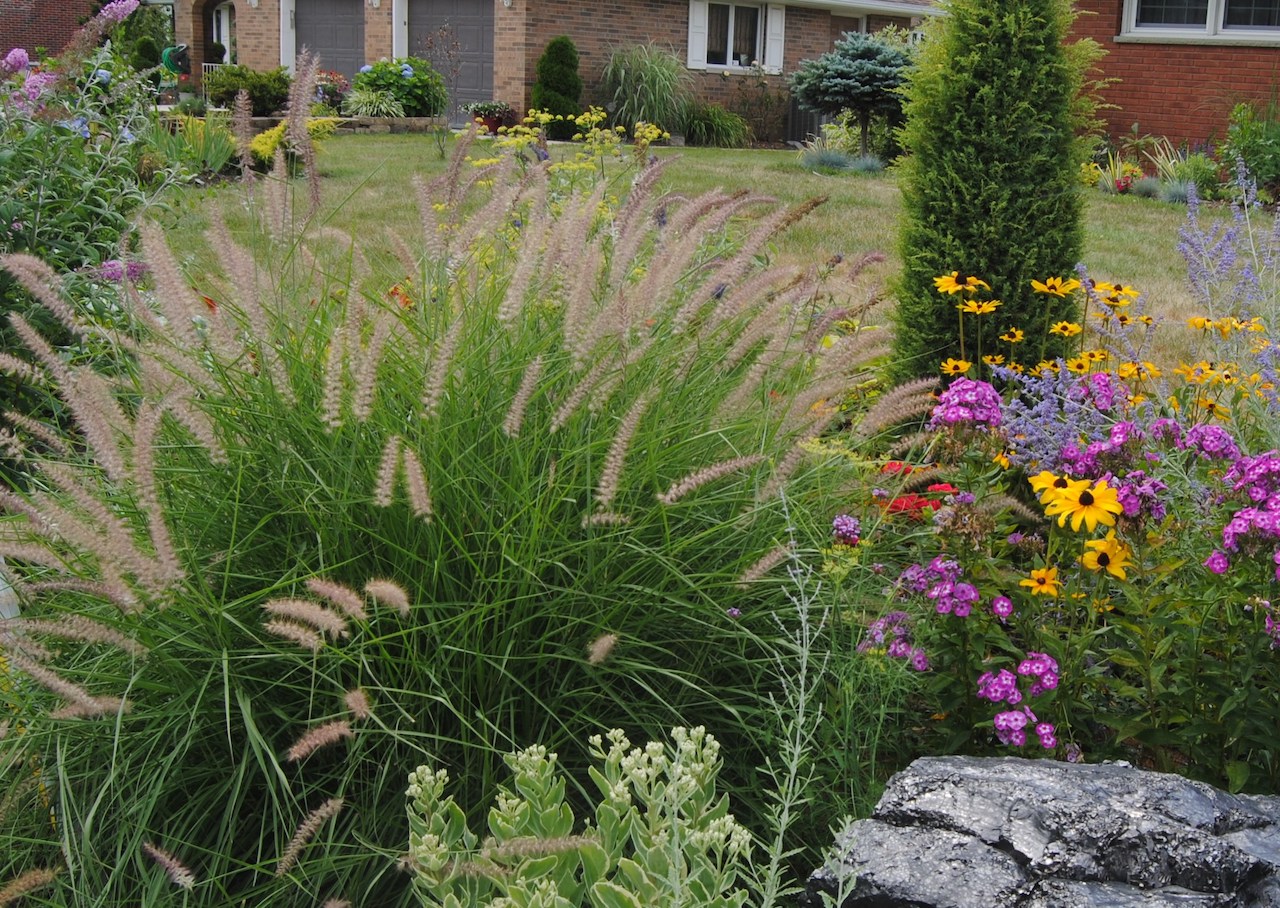
‘Karley Rose’ fountain grass is another good one.  It can get floppy after a rain, and doesn’t hold the good looks through the winter like Karl does, but makes a nice accent. august perennial border

Hopefully the annuals planted last month will fill in and make an accent before frost.  The newest plantings look more like a late May picture than an intro to August, but such is procrastination.  At least I’ll have a few empty spots to shoehorn spring bulbs into once that planting season starts. 🙂august perennial border

Best wishes for your August garden!

Tending the Phlox

The tall garden phlox (phlox paniculata) is coming into full bloom around here and I’m pleased.  This smugness comes from the fact that last year I replanted several favorites into a new bed which had been dug over properly, composted, mulched, and then protected from bunnies in the spring.  Sometimes effort is rewarded and this time it was, in the form of healthy, strong blooming phlox.garden phlox paniculata

A better gardener would have blended them into a well thought out perennial border, mixing the colors with interesting foliage and varied forms…. but I’m not there yet.  Plus I like my phlox in heavy doses.  Overkill some might say.

Barsixty (coral flame is the trademarked name) is first in line.  I really shouldn’t not like it but there are a few little annoying things that get to me.  I think it’s too short, this is the first year it looks nice (after a couple dud years), and the edges of the blooms curl up a bit.  For many gardens, the ~16inch height is perfect and the curling adds interest, so it’s got a place in my garden… but I’m just saying I like other phlox more!garden phlox paniculata

I love “Laura”, it’s about two feet tall (which I still think is on the short side) but she always puts on a great show and looks good for weeks.  Here Laura is in the front with phlox “Nicky” towards the back.  Nicky is a little darker and booms a few days earlier.  (This section has been picked over by the kids, the big dark flowers are too tempting for little flower pluckers.)garden phlox paniculata

I’m kind of a snob with other plants but not with phlox.  Having named phlox is great for knowing what you have (and not buying the same plant twice!) but it doesn’t guarantee a nice plant in the garden.  I think this white is great, but it’s just a stray seedling that came up a couple years ago.  It’s about three feet tall and although pure white is always perfect, I like the way this one has small dots of red at the bloom center and a reddish blush on each bloom stem. garden phlox paniculata

I took this picture yesterday when the clump really hit full bloom.garden phlox paniculata

This one I don’t know the name for,  I think it might be “starfire” but can’t say for sure.  The color is great (if you like the reds!) and I like how the foliage and stems have a darker tint to them.  It’s a little floppy though….. garden phlox paniculata

I need more of the clear pinks.  Here is “Bright Eyes” which I got just last fall, it came as a rootbound 4″ potted plant and will probably need one more growing season before it takes off.  I love the packed flower heads but they tend to hold onto dead flowers.  “Franz Schubert” is just starting to the left.  It’s another one in need of more settling in time.garden phlox paniculata

This white seedling may still earn itself a spot in the phlox bed.  It’s a short early blooming seedling which opens with a pink flush and later fades to pure white.  We’ll see if it gets moved in the fall…..garden phlox paniculataPhlox do well in pretty much the same conditions as any other garden flower.  Even moisture, fertile soil, sun to light shade and you should be able to make them happy.  In the spring I do nothing more than cut the old stems down and then come summer the only other thing I do is admire the flowers.  For many gardeners powdery mildew is a problem, and I wish I had some brilliant solution but I don’t.  Mildew is just not much of a problem in my yard, probably because it’s a real open, breezy location near the top of a hill.  The air movement likely helps but I can’t say for sure since as we speak the monarda plants are covered in mildew and they’re just a few feet away.

My most annoying phlox growing problem is the spider mite attacks.  They build up under the leaves and suck and suck until the leaves start to look speckled and yellow.  Spraying the undersides of the leaves seems to help wash them away but the best defense seems to be consistent moisture and plenty of compost and fertilizer.  Dry spring weather, warm breezes (which keeps away the mildew) and stressed plants seem to just call the mites in from all around.

Another problem I’ve had (which made me leave all the phlox behind the last time I moved) are eelworms.  They’re tiny worms which live in the stems and buds of infected plants.  They cause the stems to distort and ruin the nice big flower heads of a healthy plant.  The only solution I’ve heard of is to grow new plants from root cuttings, destroy all the old ones and find a new spot to grow phlox….. or move.

I just want to end by saying I need more phlox.  I think I’ve kind of run through all the local sources and have what most mailorder sources offer, but I know there are more great phlox out there!  I may have found a source at Perennial Pleasures, a Vermont nursery that specializes in heirloom plants and also has dozens of phlox varieties available.  I’ve heard good things about them and it’s very likely an autumn order will show up at my doorstep.