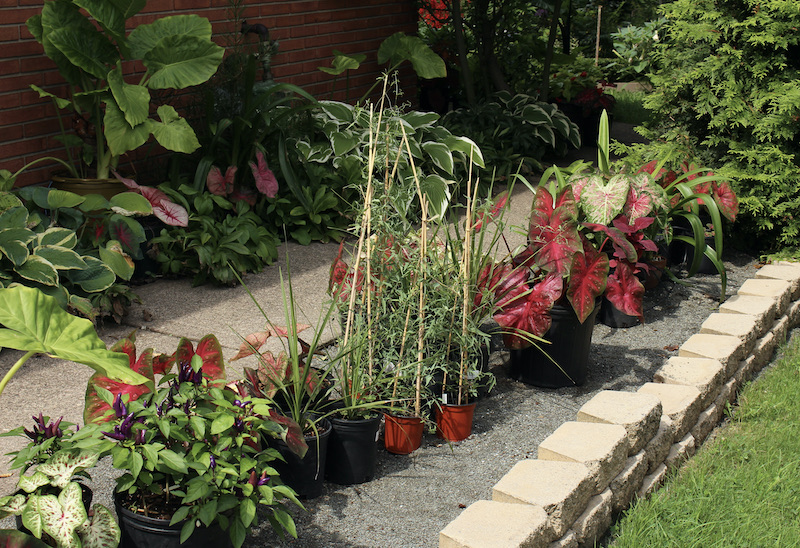
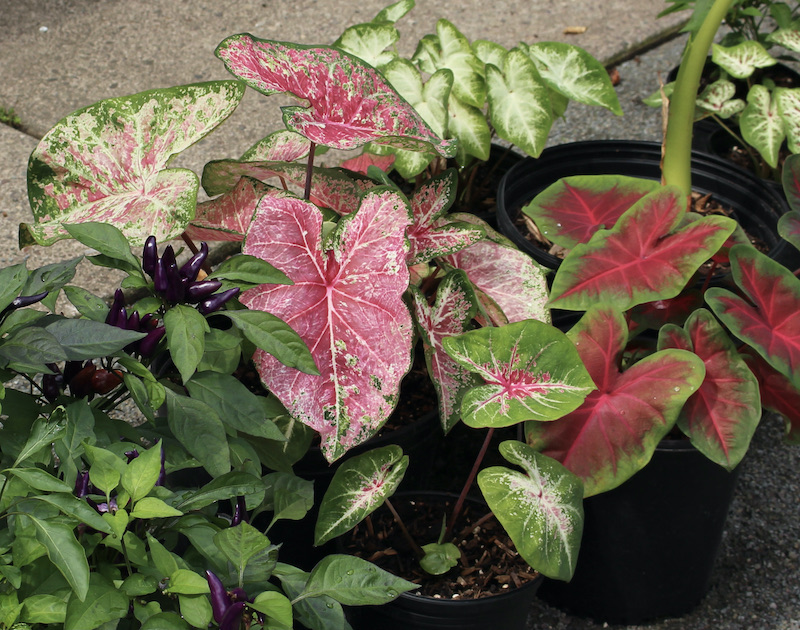
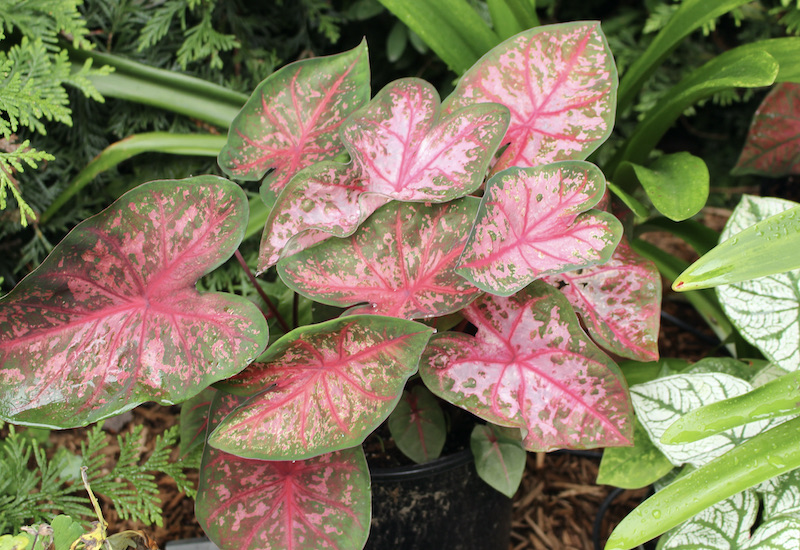
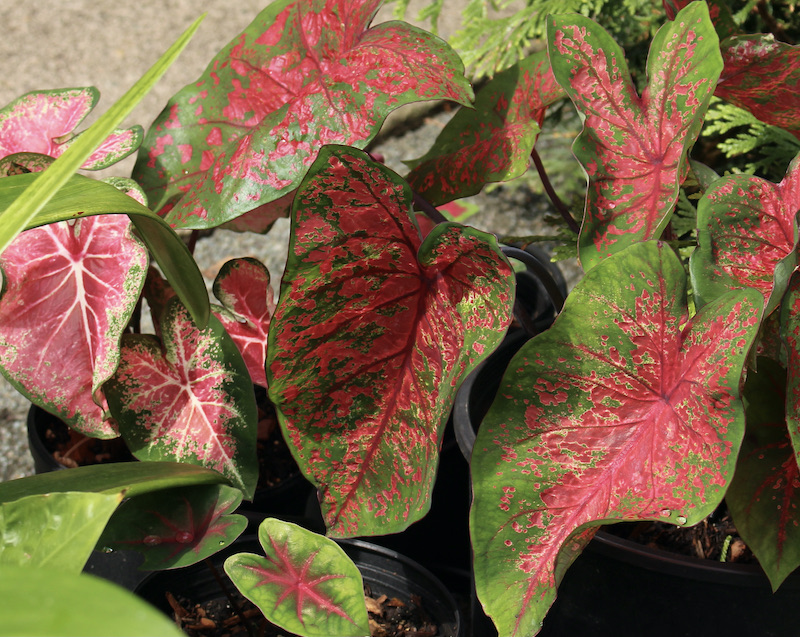
Why Not.

You wouldn’t be wrong to assume that because things are quiet here on this blog that I’ve been dull-eyed lazy and nothing at all has been accomplished here all summer.  My YouTube brush with fame did kind of go to my head, but when the movie deals still didn’t come through eventually I came back down to earth and sort of got back to work.  Life as a daylily farmer is a gritty life and this farmer here had a whole farm to rebuild, so from my hair and makeup days…. or maybe just a shower… it was back to the dirty, sweaty, buggy grind of digging and then sitting around wondering what I’d done.  That happens more than I care to admit and it becomes somewhat obvious when you look around the place.  I’m a grown man with little to no adult supervision, so when a few rocks sit around for a few days obviously that’s reason enough to build a rock garden even if the world would be better served with a nicely washed car or a painted basement.
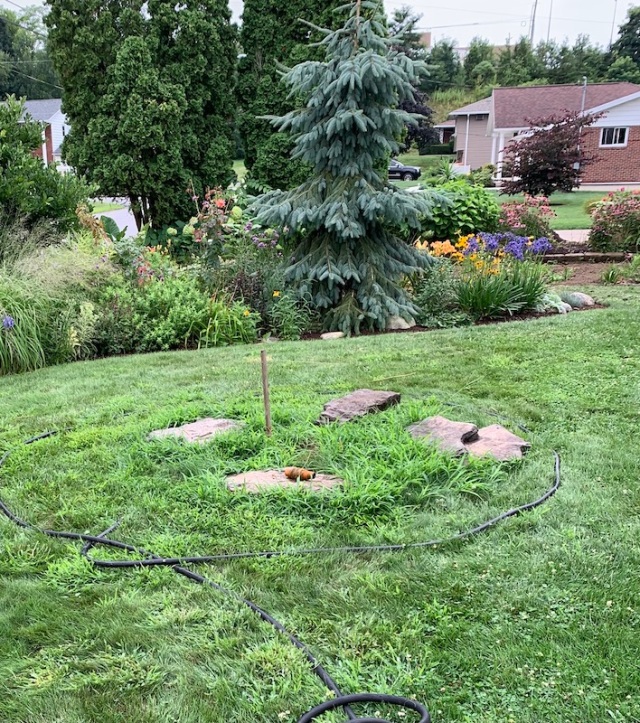
making a rock garden

When the daylily farm was dug up I asked them to save any cool rocks they came across.  Naturally the middle of the front lawn was a good place to throw them.

There was a little concern about the rocks on the lawn.  Concern and suspicion which I guess is justified, and when I said they’re for a rock garden that didn’t exactly smooth things over.  A plan was requested.  I just nodded because she knows as well as I do that there’s never really a plan, it’s usually more of a rock on a slope which starts sliding and dislodging more rocks and before you know it there’s a landslide.  So I went and ordered plants instead.
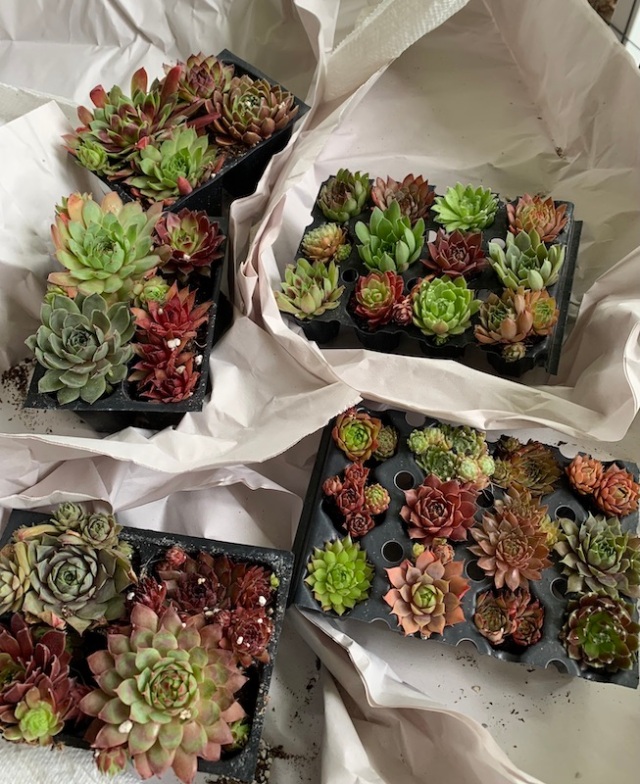
petal pusher sepervivum

An online order of mixed hens and chicks (sepervivum) from Petal Pusher Nursery might have been one of the top five highlights of the summer.  They’re awesome.  They deserve their own garden.

So 36 sepervivum, four rocks and then the township finally dumped some topsoil to rebuild the farm.  It was more than enough for the farm plus something, so clearly that something was another reason to build a rock garden.
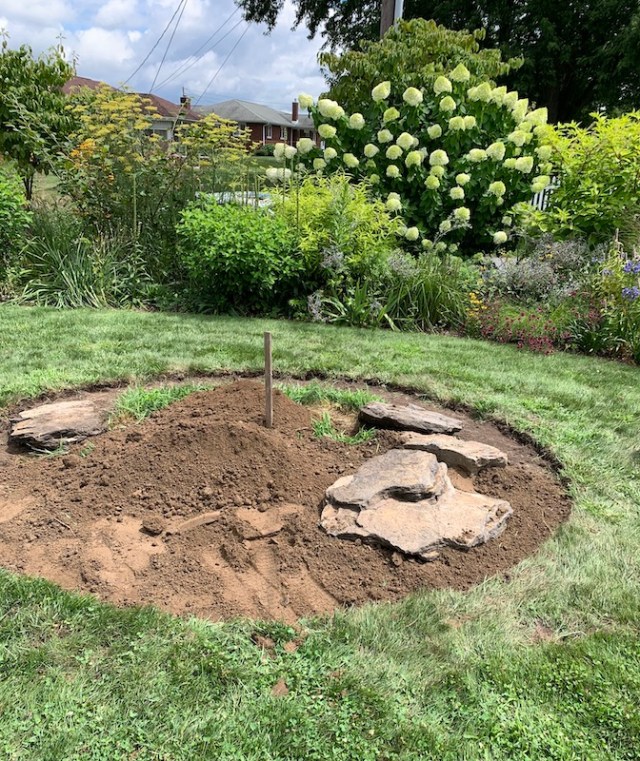
making a rock garden

Cut a circle, lift the sod along the edges, bury the lawn and crabgrass with topsoil… move all the rocks again because they probably shouldn’t be in the way like that… 

A funny thing which happened a few weeks before this was that a friend said to me “at least you’re not into rock gardening” while we were touring her garden.  Apparently rock gardeners are not just a little nuts but a lot and are some of the worst plant growers and killers and collectors out there but I digress, and just laughed off her comment since I knew plenty of people who were far crazier yet don’t even have a rockery, and I for one also was lacking.
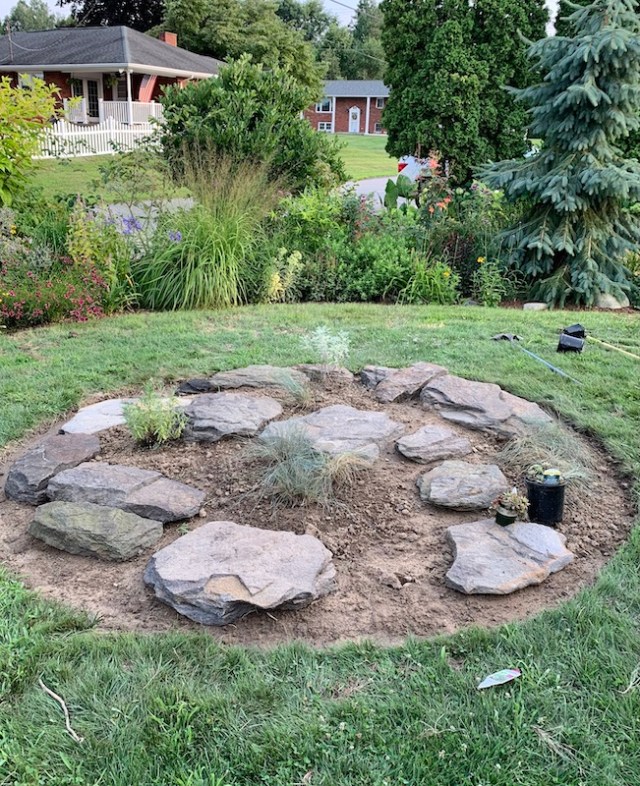
making a rock garden

Dirt mounded, rocks in position, a few random ‘not rockgarden’ plants in there just because.  

Just for transparency, I may have been collecting rock garden plants for a while but just killing most of them because the other beds here are just too rough and tumble, and poorly drained, to please most of the tiny things which shine in a rockery.  Actually, not to spotlight my own stupidity again, but one of the plants I’ve been really successful in killing have been the same hens and chicks which I built this garden around.  Friends have gifted me them.  They die.  I give spares to someone else.  They thrive.  Whatever, maybe fifth time is the charm and they’ll explode into growth and reach even higher levels of amazing!
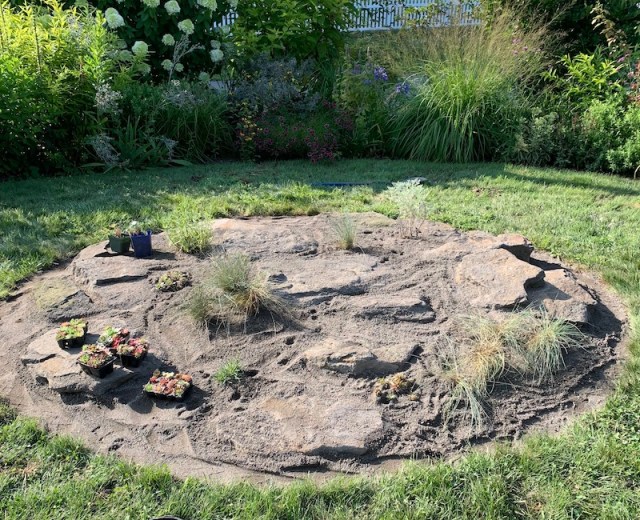
making a rock garden

The topsoil has been covered in about two to three inches of sand, in this case a coarse concrete sand, which will hopefully drain well enough to keep things happy.  

Just like every other new garden bed here, it’s somewhat disturbing how fast it fills up.  The sempervivums are tiny compared to the size of the bed and didn’t take up much room at all, but every walk around the yard had me returning with yet another little thing in hand which was supposed to be for the rock garden that I didn’t have.  Also there were a few little things in pots which I grew ‘just in case’ or brought home on a ‘maybe’…  I always say better safe than sorry.
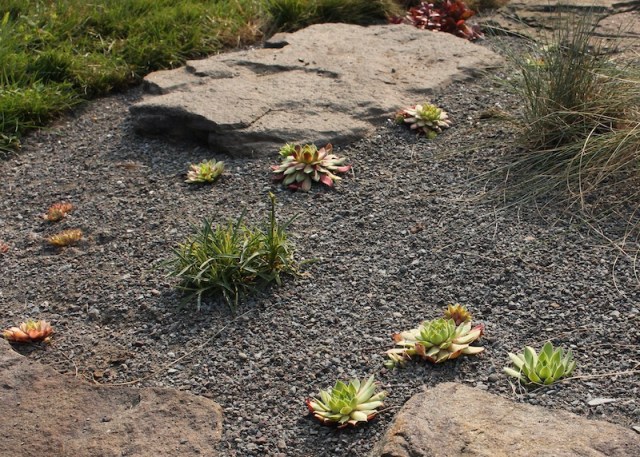
making a rock garden

Happily planted.  Everything doubled in size when watered, except for the dianthus which was immediately mowed down to numbs by the rabbits.  It had been safe covered in weeds elsewhere, here out in the open it must look more like a buffet offering.

And then my friends intervened.  Off to Longwood we went to check out the finally re-opened waterlily garden.
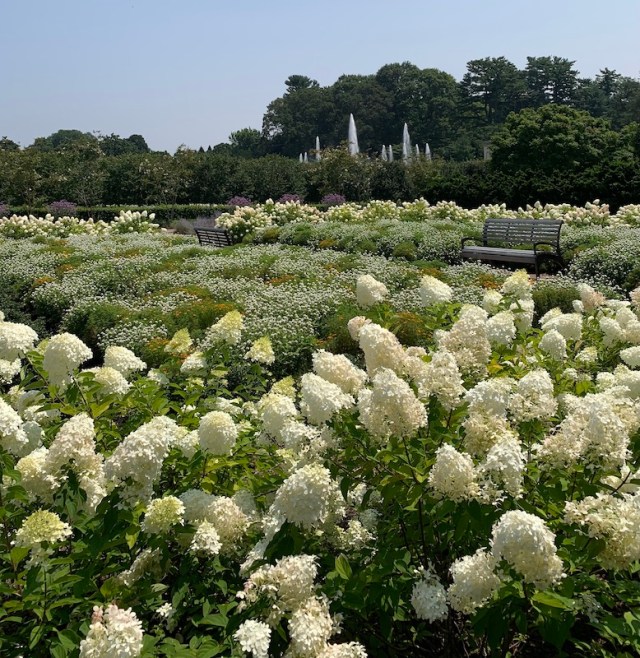
longwood gardens

One of the newly replanted areas near the fountains has been filled with hydrangeas and white annuals.  Quite a statement. 
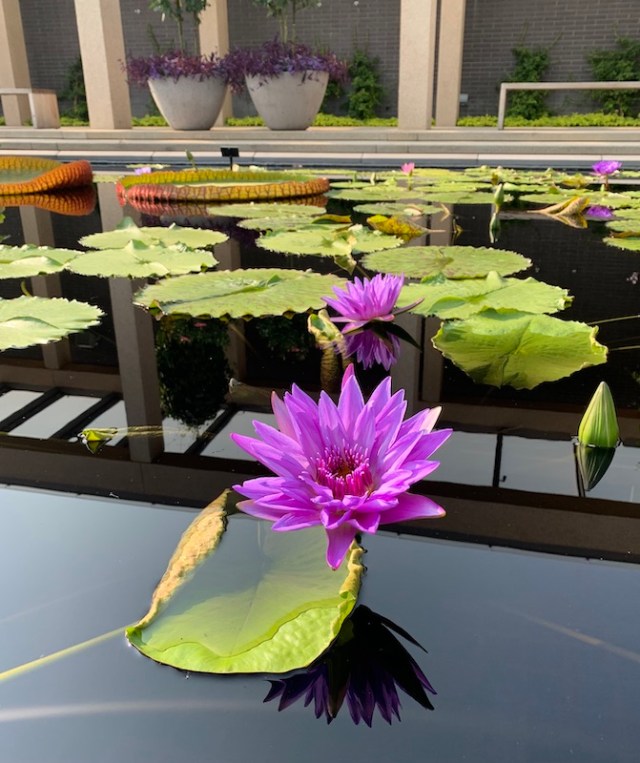
longwood gardens

The waterlilies were amazing.  This has always been my favorite part of the gardens and I’m happy to see its return as a focal point of the conservatory rebuild.  
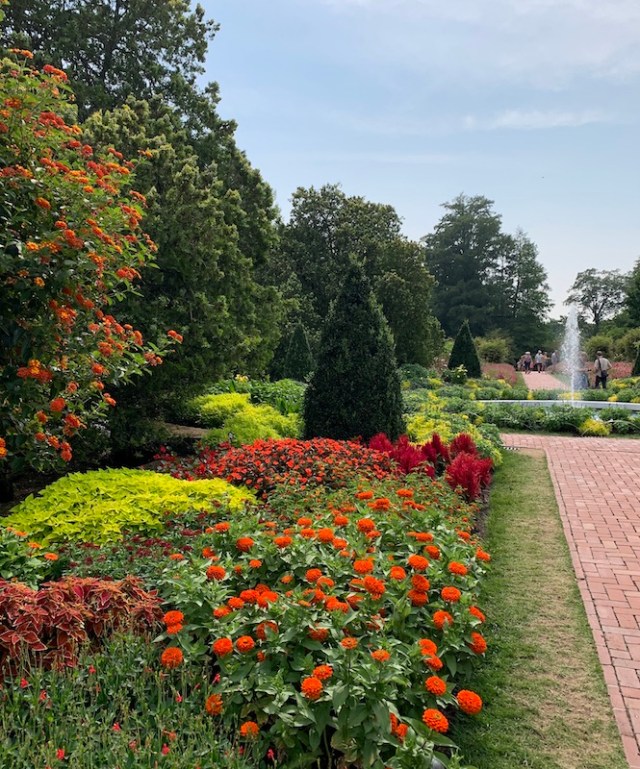
longwood gardens

The color borders are always fun even on a hot day and it makes me realize that annuals are worth the work.
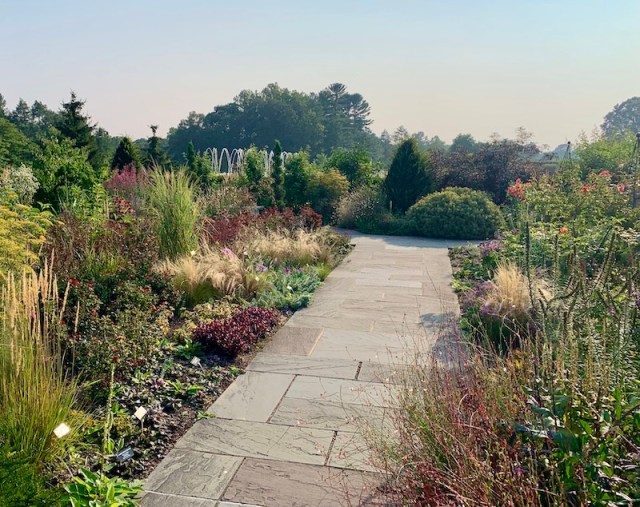
longwood gardens

The rose garden might be my new second favorite part of the gardens.  It’s interesting and more subtle than the masses of color in other parts of the garden.  Less grand, but I like it!

Okay back to the home garden.  The crowning glory of the new rock garden arrived in the mail and for about $150 and a little assembly I have this pretentious armillary with Atlas holding up the globe.  Atlas is a little flat, but I won’t complain.  I love it out there but don’t love that his price appears to have gone up at least $40 since the summer… even though it’s made in Massachusetts… but apparently the metal was not…
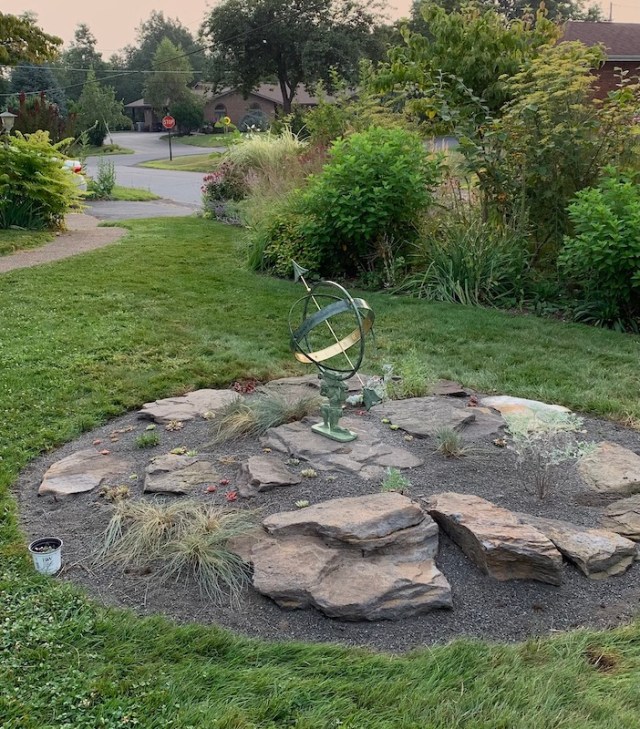
making a rock garden

The finished rock garden on a smoky summer morning.  I still need to set the time, and Atlas could really use a more formal pedestal but that may be a next year thing.

So for now the rock garden is as complete as anything in this garden.  Several plants will become too large for the space but I can easily put off that tomorrow problem, and tomorrow may come faster than you’d think since last weekend’s trip to the NA Rock Garden Society’s Adirondack chapter plant sale may have added even more plants to the garden.  There’s even a daphne.  I’m overly excited about that one and I hope it settles in since I can already picture a super fancy and refined mound of shrub that covers itself in bloom and drifts fragrance across the garden.

the waste area

Other parts of the garden.  The waste area looking more refined this year although the 7 foot shrub behind the fire pit is actually just pokeweed (Phytolacca americana ‘Sunny Side Up’), but the privet cuttings are beginning to make an enclosing hedge and that should fancy things up.

While I dream of lazy days surrounded by fragrance here’s some other summertime summaries before summer officially ends.  The waste area is becoming daylily beds, the deck has become a tropical oasis, and the potager is still in need of first aid.  Houseplants have all multiplied.  Someday I hope to add more and perhaps share pictures but I think you know how that will go.
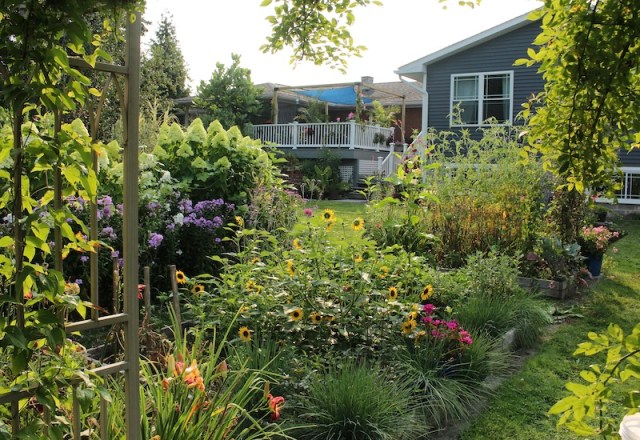
the potager

It has not been the year of the potager.  The beds need organic material and fertile goodness and my autumn covering of chopped leaves just isn’t enough.  Fortunately a sunflower fell over onto everything and has covered many a sin.  

Actually, speaking of going I don’t know where 90% of the summer went.  I need a do-over but that’s unlikely especially when a week of September cool at the end of August hits and reminds you that this is in fact a temperate climate and there’s a new season on the way.  Maybe this holiday weekend will be the turning point.  Two big projects await and even if they didn’t happen in the last three weeks, maybe the next two days will be what was needed?

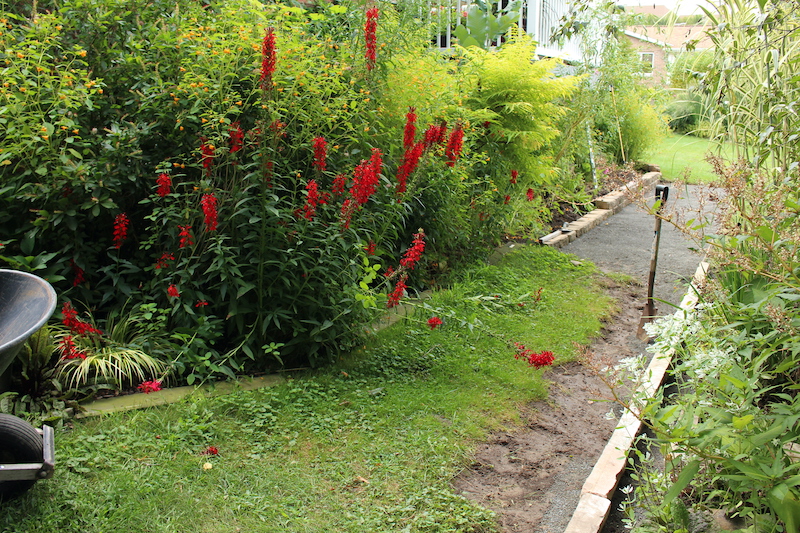
cardinal flower lobelia

Red lobelia and a project on the horizon.  Maybe this will be the weekend the kid’s old plastic playhouse finally metamorphisizes into its destiny as “Begonia House”.

Don’t let my gloom of undone projects and a fading summer get you down, there’s still a weekend in the garden on the way and whether it’s productive or not it should still be better than a week at work and I’m looking forward to it.  We could use rain, we could use less bugs, we could use lower prices but sometimes you get what you get and sometimes you get a new rock garden and a visit from Atlas.

Enjoy!
Day After Day

Greetings.  It’s been a while and the last post here probably says the same if I could remember that far back, but it’s time to put an effort in and I guess we’ll start with baby steps.  Step 1:  It’s fall.  Even back a week or two to when these photos were taken there was a tint of russet in the view.

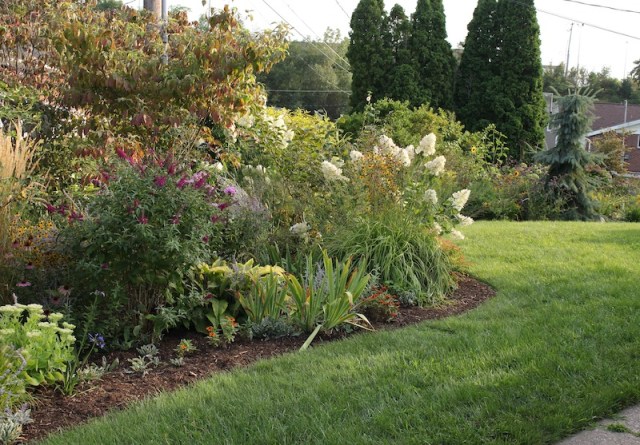
hydrangea paniculata

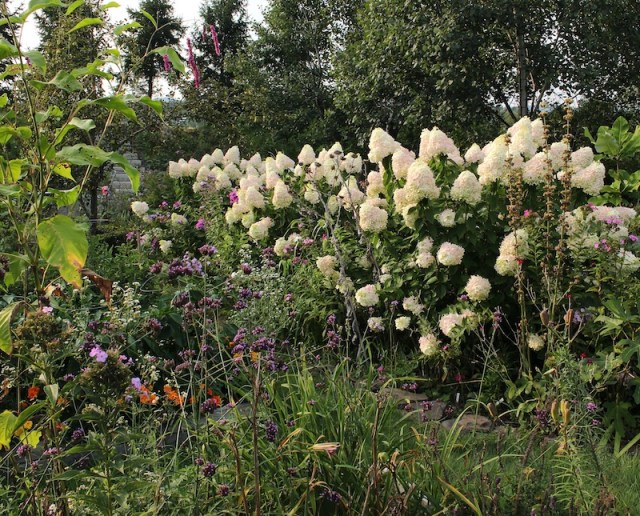
Back in late August when things were looking decent but still a little tired from the heat.  Fortunately we had enough rain to keep the Hydrangea paniculata looking awesome, and can you see that neat border of somewhat fresh mulch?

Step 2: This post has been sitting on my to-do list longer than I’d like to admit so I guess getting that guilty confession out is another step.  No reason, I’ve just been enjoying other things and have sadly neglected both blog and blogging friends.

daylily carved gold

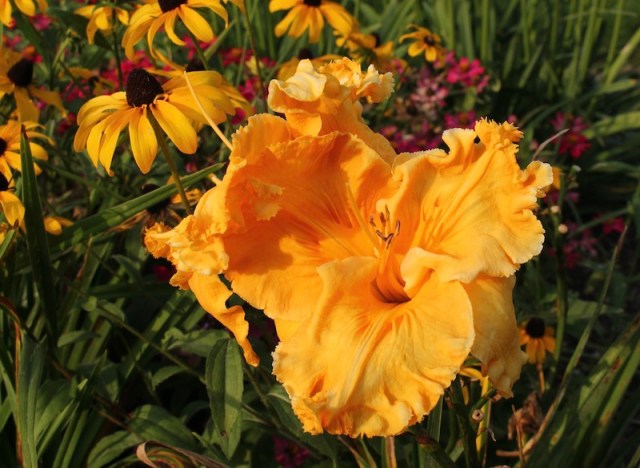
A late rebloom in the daylily farm.  ‘Carved Gold’ which is quite nice in my opinion.

Step 3:  Reassure anyone reading that even though it’s messy and may look neglected, things are still interesting to me and there are wonderful spots, and although I tend to the woe-is-me style of writing I don’t want to give the impression I’m fishing for any ego boosts here… although I’m always pleased to hear them!

hydrangea paniculata

You may notice the ‘Limelight’ planted in the potager has not yet moved and likely never will in spite of the fact I don’t always think this is a good spot.  But it looks great here in August and if I get another post up in September you’ll see it doesn’t look too bad then either!
Step 4:  Get through this and post.  I’m not particularly busy so that’s not the reason, it’s just so nice out this morning I’d like to fill another cup of coffee and use that excuse to sit around longer 😉

hydrangea paniculata

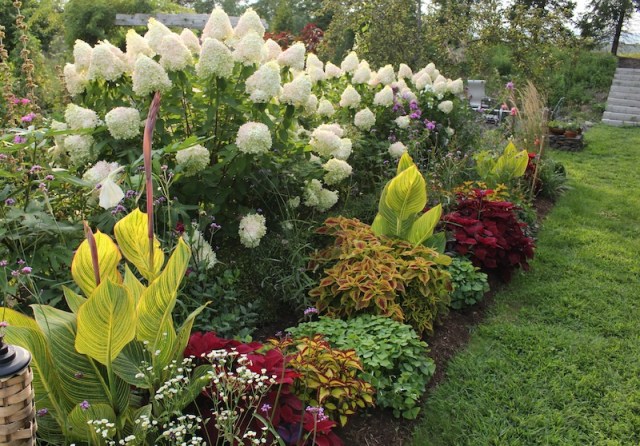
The other side of the ‘Limelight’ (Hydrangea paniculata) border with the new annual plantings where the tulips grew this spring.  There’s a boxwood hedge in there as well, but right now it’s all about the cannas and coleus!

Step 5:  Tell you how excited I am about the pumpkin patch aka former waste area maybe still waste area in the back of the yard.

pumpkin patch

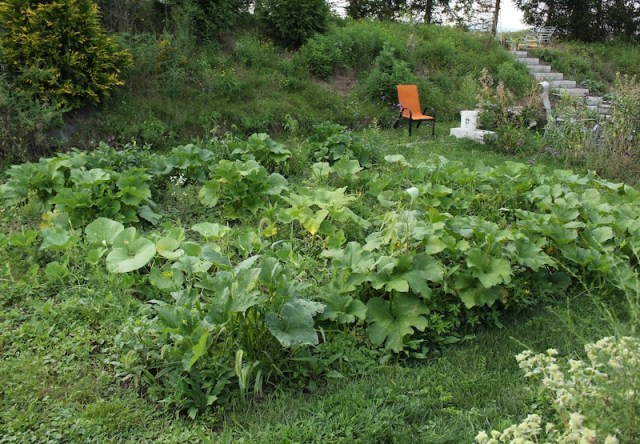
The pumpkin patch three weeks ago.  Pumpkins were just starting to form and I can now safely say a few of the smaller ones should ripen in time. 

Step 6:  It was a really nice although hot summer.  It flew by.  I feel like it was my shortest summer ever, with many missed opportunities -and that’s nothing to be proud of, but there are always enough highlights which is great.

lobelia cardinalis

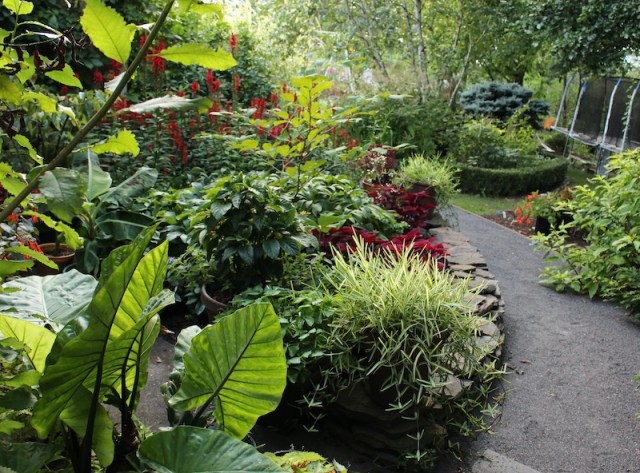
The shade garden area.  Plenty of the red spires of Lobelia cardinalis in this August photo, and a good amount is still in bloom today.

Step 7:  Just wrap it up.  Keep the babbling at a minimum so as not to tie up your visit, and one last photo from the summer garden.

codonopsis lanceolata

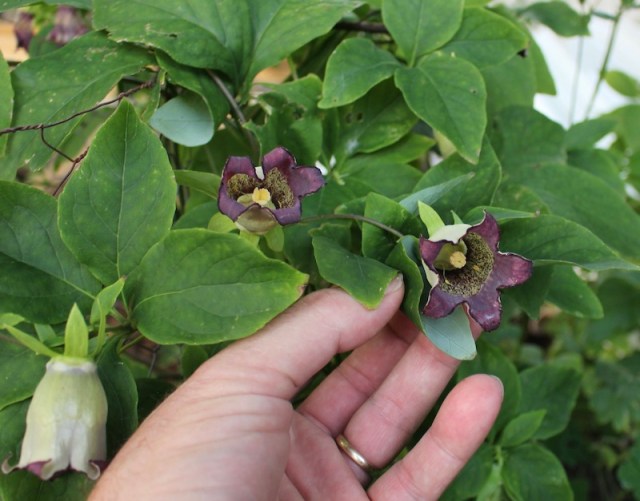
A nice random vine for those of you who like random vines, Codonopsis lanceolata is a late summer treat which has edible and medicinal uses but isn’t going to overwhelm your garden tour visitors.  Sometimes I even miss the blooms, but they are cool little things.

Step 8:  Thanks for visiting and hope you have a great week.  In my head I’m thinking ‘sure I’ll get another post up in a couple of days, colchicums are awesome, annuals are nice, fall feels good’, but my track record speaks otherwise.  We will see!

Summer Blinks

For a minute it was summer and then not.  Our warm weather has faded and we’re getting a taste of autumn, with chilly nights and dewy mornings, and temperatures which make a gardener think about what’s to come.

daylily border

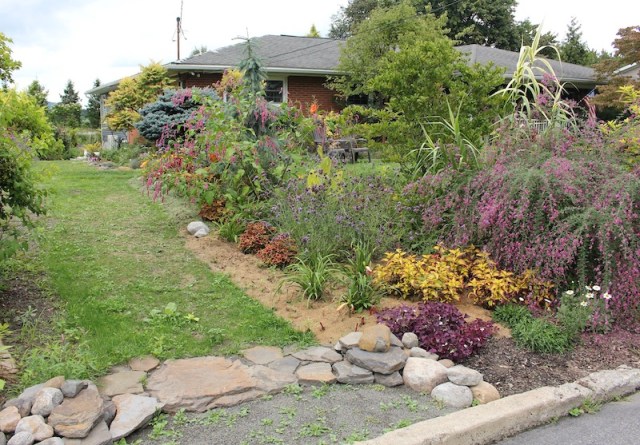
The bulldozer path to the back of the house is fading away as new lawn sprouts and the new daylily border fills in.  A purple mound of Lespedeza ‘Gibraltar’ fits in nicely with the pink and purple theme.

What’s to come?  Snowdrop season of course, but not until a thousand things get done and a million plants move indoors, and a billion weeds get pulled.

daylily september sol

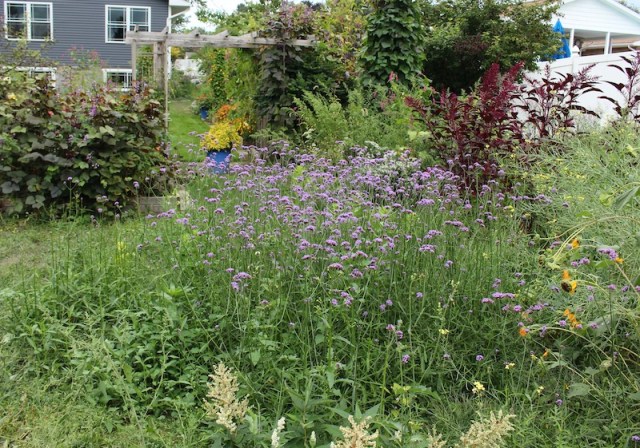
I went to a snowdrop gala in March and of course ended up with a daylily, in this case ‘September Sol’, off the sales bench of Matthew Bricker.  It does indeed come into bloom during September and brings a nice shine to the purple verbena masses.

So those are the good intentions, and hopefully they still amount to something because although I need more hardscape in the garden, I don’t want my paths to be paved with the good intentions which never became.  Walking down that path would not make for a nice garden tour and I’d rather just stick to gravel if that’s the case.

verbena bonariensis

The new grass path behind the potager is officially over-run with verbena bonariensis.  I think this is far nicer than lawn would ever be so obviously I’ll wait until November at least before running the mower through.

Perhaps it’s obvious, but thankfully this will be a brief post rather than the usual babbling on about all kinds of unrelated topics.  These photos were taken last week, and I hate to not remember these last joys of summer just because I was too distracted by other nonsense to get a post up.  So come February hopefully a thrown-together post from a lush September will at least be better than nothing.

autumn potager flowers

The potager has officially gone to seed.  We’re down to a few rotting vegetables and the flowers have completely taken over.

For obvious reasons my garden never reaches the well-tended, beautifully curated stage which many of my friends’ gardens become at this time of year.  There are no clumps of shapely mums and vignettes of asters and ornamental grasses, instead it’s a weedy wave of viny tangles and seedy remains… and it really suits my tastes 🙂

autumn potager flowers

The ferny tendrils of cypress vine (Ipomoea quamoclit) go from soft and innocent to smothering within days if the heat and humidity are there for it.

Or perhaps it’s possible I’ve convinced myself over the years that this is how I like my garden to look by September.  There’s just no time for immaculate care when thoughts are turning to the bulbs which need planting and the cuttings which need taking, things end up getting neglected, and for the sake of the gardener’s sanity it’s better to just think all is as it should be.

summer flowers on the terrace

This year the ‘Terrace’ was almost tame in how many pots ended up there.  A summer of dirt-moving has a way of dampening the urge to pot up hundreds of cuttings…

So with everything going according to plan maybe a few considerations towards the future are in order.  Lots of things should come in for the winter… but there’s only so much room…

fuschia gartenmeister bonstedt

Fuschia ‘Gartenmeister Bonstedt’ does very well in the cool winter garden but needs to be watched for spider mites.  Blue Streptocarpella will also come in, and is carefree if kept on the dry side.

Going around the garden and making a plan for it all is a terrible idea.  Better to start small and ignore the scope of it all until a sudden cold night forces your hand.  Nothing like going around with a flashlight on a 33F night and making on the spot decisions about what you can and can’t live without.  The desire to lug in a 100 pound pot filled with sharp agave foliage drops quickly when your fingertips are numb and your pajamas are soaked.

passiflora 'kew gardens'

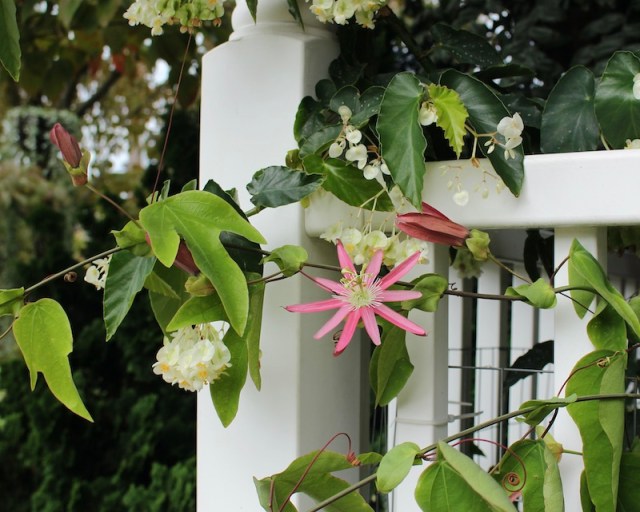
Maybe the passion flower ‘Kew Gardens’ deserves one more year.  The flowers seem to only open in the evenings and I often miss them, but they are pretty cool, and I always have a weak spot for vines.

Coleus cuttings in water will be first, and then maybe I’ll drag a few caladium pots in closer to the house so they can dry off a bit.  Maybe.  Some lantana cuttings is another option.  Eventually…

bessera elegans red

For all the effort some things get, it’s often a stray seed or corm in some leftover potting soil which does best.  A handful of Bessera elegans corms were carefully potted up and then promptly rotted.  Here a stray corm in some re-used potting soil is thriving.

Bah, it’s still the middle of September, there’s plenty of time.  Let me just enjoy the summer flowers while I can.

sun parasol original dark red

This ‘Sun Parasol’ “original dark red” mandevilla or whatever they’re called right now is surprisingly easy to overwinter.  Cool spot, some light, easy on the watering, and it will even try to flower all winter… unlike others (do you hear me ‘Alice DuPont’?) who promptly drop all their leaves and go dormant…

Enjoying the lingering summer flowers is even better when you can enjoy a few colchicum blooms at the same time.  This month I started an incentive program where the gardener gets to transplant a few colchicum on each day he reaches his to-do list targets.  To-do list targets are obviously less fun than transplanting colchicums, and they include debris hauling, concrete setting, and the endlessly boring task of lawnmowing.  I think it goes without saying that my teenage children are essentially worthless for everything on the to-do list…

colchicum x aggripinum

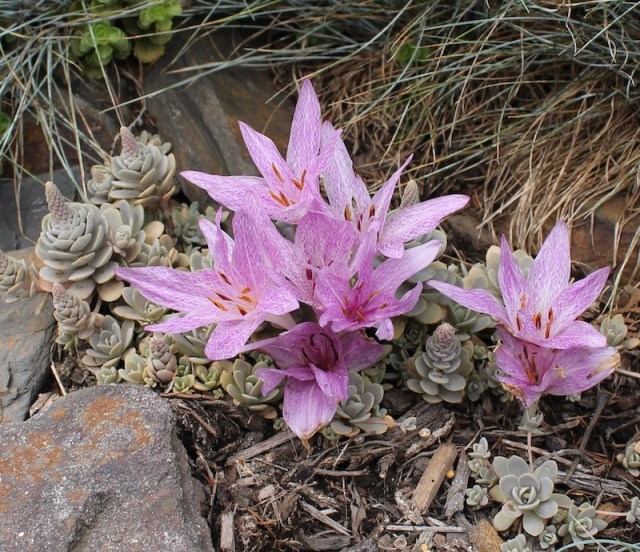
The always fun, tesselated flowers of Colchicum x aggripinum.  It’s a neat and long blooming smaller type and I wish I had as many as I used to, but one year they decided they didn’t love it here anymore so far I’ve been unsuccessful in winning them back over.

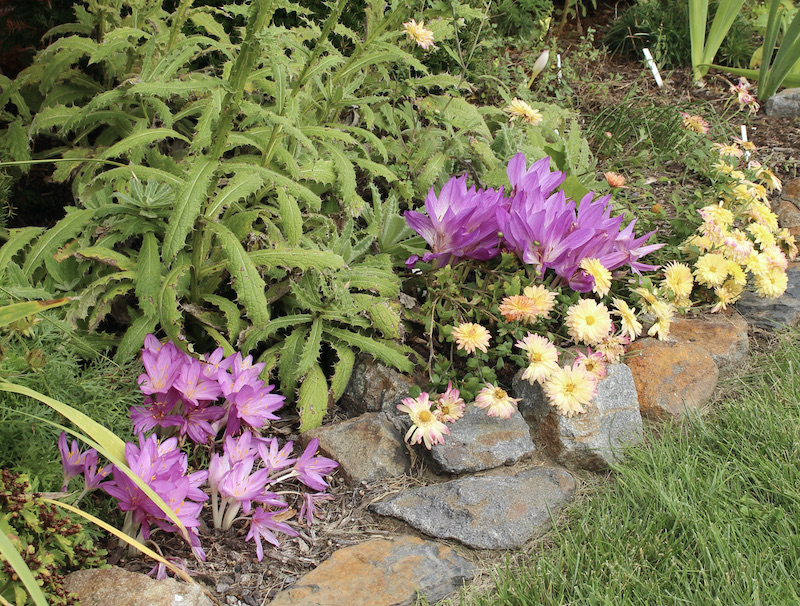
Here’s just one un-glamorous view of the colchicum progress.  The no-rocks rockgarden along the house is becoming a rocky colchicum bed, and before each new clump gets moved and planted the truck ruts need digging and loosening, and the rocks which were dumped in the ruts so the trucks could make more ruts, needed prying out and hauling off.  Just to be clear, this is the reward part and not part of the to-do list, so having this fun has been a slightly drawn out process.

transplant and divide colchicum

After division and some compost I’m expecting great things from ‘Nancy Lindsay’ and her friends.  I hope to get the whole bed mulched this autumn, and maybe in the spring add a few sedum and thyme starts to fill in the bed while the colchicum go dormant.

The colchicum project seemed much more innocent when the first bulbs were getting their new spots, and it still seemed fun after the second and third clumps, but today while replanting ‘Spartacus’ a little tinge of concern came over the gardener.  There appears to be a colchicum collection developing.  For years I’ve been adding one or two, just to see how they compare, and as you know one or two little bulbs really don’t amount to much, but one day they do… assuming (and this takes me out on a limb) they don’t die, and apparently enough haven’t.  Maybe a more honest confession would be excitement rather than concern, but let me just say next autumn should be colchi-rific and that’s a good thing, not a medical condition.

Hope your September days are full of good things and you enjoy the weekend!

Fast Forward

I’m not quite sure what happened to August, but I just looked at a calendar and it’s practically over.  I like August, and I’m not thrilled at all with this time warp.

January has the same number of days, and January never seems to fly by as quickly… even though the days are so much shorter… so maybe some weird time continuum thing is what happened.  Or maybe it’s a simpler explanation like ‘time flies when you’re having fun’.  Maybe not out-all-night, the-neighbors-called-the-police fun, more like stretching morning coffee time on the porch or going in the pool before bed just because you can fun, but it’s still fun and I feel like these days are numbered.

rudbeckia prairie glow

By June nearly all the Rudbeckia triloba ‘Prairie Glow’ in the front border was dried up and dead, but in July and August a steady lifeline of rainstorms pulled them through.  I’m happy for that, they look great now.

Maybe August flew by because the pressure here really eases off in late summer.  Things are either done or they’re not and there’s much less to worry or even care about.  With ample rain things here look good, and most days I just wander about admiring plants like rudbeckias and hydrangeas.  The Hydrangea paniculatas are at their peak now, and they’re always kinda awesome.

hydrangea limelight seedling

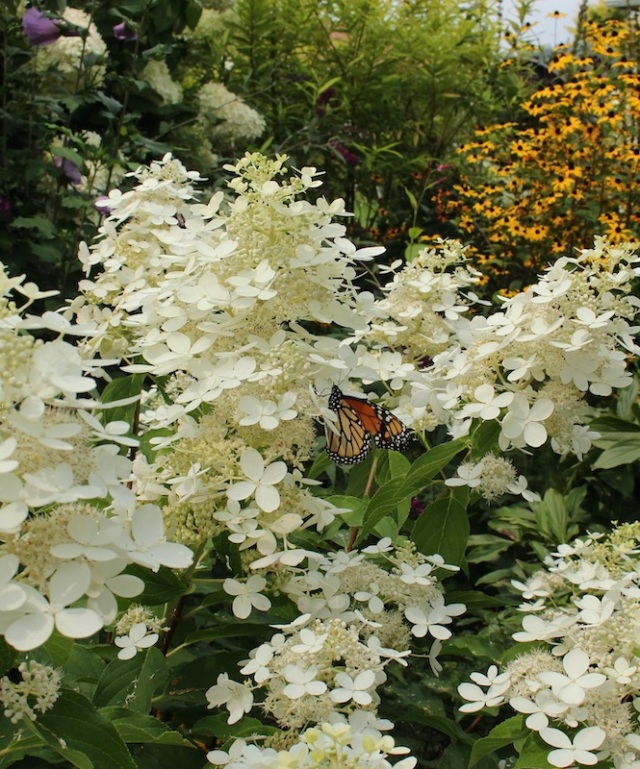
This lacier hydrangea was just buzzing with all the bumble bees and wasps, but even a Monarch butterfly stopped by for a drink.

In my opinion you can’t go wrong with one of these late season hydrangeas.  They’re hardy and always bloom here (unlike their blue cousins) and all they ask from me is a late winter pruning to thin out the stems and keep them from getting too out of hand.

hydrangea limelight seedling

A strong pruning in spring keeps the ones on the edge from getting too big, the ones further back are allowed a bit more freedom.

All these hydrangeas are either H. paniculata ‘Limelight’ or seedlings from her.  The seedlings have been remarkably nice, and I might try another batch just to have more of them since why not?  They’re all a little different and I enjoy the variations along the street border.  They’re all a little greenish to start, and I actually moved out my one pinkish ‘Vanilla Strawberry’ because it seemed too white and then too pink alongside all the limey tones.

hydrangea limelight seedling

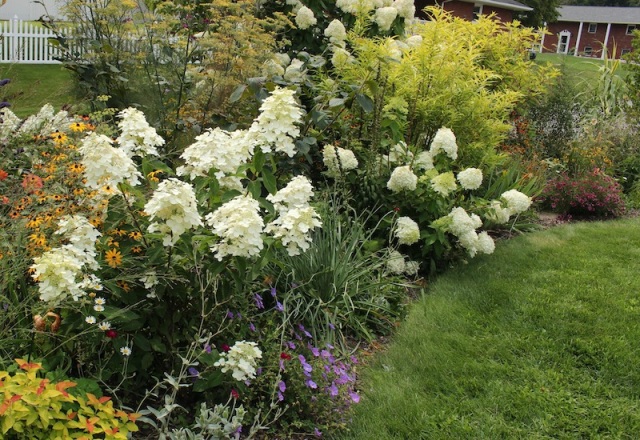
Seedlings of Hydrangea ‘Limelight’ carrying the front border through August.

I don’t think I’m kidding anyone when I talk about setting color themes and working out an organized display in this garden.  The history of this place is closer to planting whatever is at hand in whatever space is open and hope that something works out well.  I guess for late August these hydrangeas worked out well.

cannanova and verbena bonariensis

Cannas and Verbena bonariensis also work well.  The cannas were rudely dumped here and the verbena came up on its own.  Actually only the yucca on the left was planted here on purpose, and even that was a rescue from the trash.  Not bad, but I did weed out a bunch of less lovely things as well.

The rest of this post is just heres and theres and updates.  Less is more, right?  And based on how little I’ve been posting lately maybe it’s better to just get anything up rather than some overly wordy thing which gets tedious after a while, plus I’d like to get to bed early so that’s another incentive for brevity 🙂

dahlia matthew allen

Dahlia ‘Matthew Allen’ amongst the pokeweed.

garden stone wall

The stones are all “organized” along the slope and the grass seed is sprouting.  Finally it looks less like a excavating playground and more like a spot which just needs a little foundation work and a nice bed along the house with anything other than crabgrass.

As usual the potager is a mess of overgrown vegetables and aggressive vines.  Of course I like it, but I’ll have to confess that it only took two years for the 100% vegetable beds to turn into 25% vegetable beds plus bulbs, tree seedlings, shrub cuttings, small transplants, phlox beds, daylily beds…. a bare patch of soil is rarely planted to lettuce, coleus cuttings and canna seedlings are much more likely.

garden potager

At least the lawn is mowed.  Studies show that any disaster garden looks 78% better with a mowed and edged lawn area.

garden potager

Beans and a few diseased tomatoes are the only legitimate vegetables still growing here.  Now if I could only motivate myself to pick them.

lycoris sprengeri

Of course any decent potager has a few Lycoris in it.  This ‘magic lily’ from a mixed batch of Lycoris bulbs has produced some nicely colored blooms.  I’m guessing it’s a form of Lycoris sprengeri and I’m guessing it will now take three years off from blooming, just because…

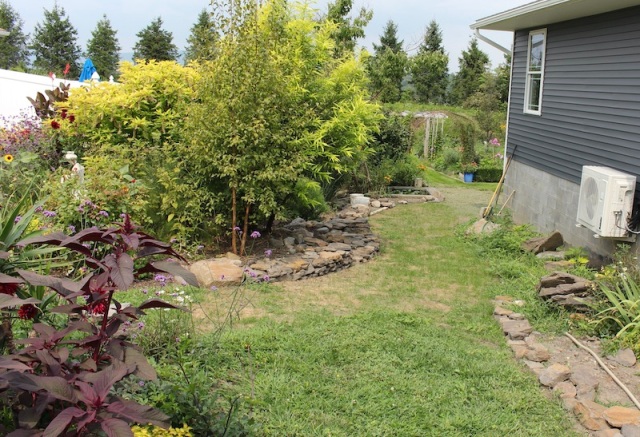
A weedy vegetable garden is one thing, but a weedy waste area is an even better thing.  Here’s an Instagram-ready photo of the lovely waste area which is now filled with blooming canola, sunflowers, and a new lawn infested with Verbena bonariensis seedlings.  It’s an interesting place, and while I stopped mowing the newly seeded section of lawn so the Verbena can grow into a purple mass of flowers, it’s the cannola patch which demands the most attention.  Hundred of honeybees (and a few others) make this corner of the yard buzz on a still afternoon.  I can’t believe how many there are.

garden waste area

The ‘waste area’ where all the construction fill was dumped and leveled.  It’s a weed factory and probably my favorite part of the yard right now.

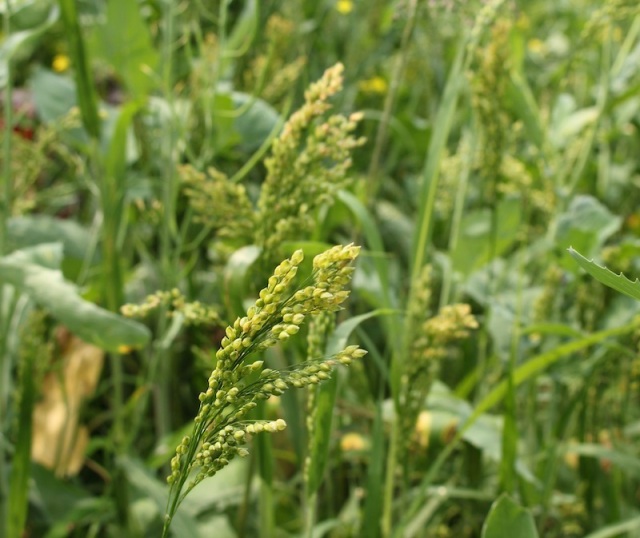
I’m still on the fence as to whether or not the birds will appreciate the cannola seed as much as the bees appreciate the flowers.  There will be plenty, but as of today I haven’t seen a single seed pod attacked for its contents.  That’s in stark contrast to the millet seed which is beginning to ripen in the shadow of the cannola.  Chipping sparrows and song sparrows attack the seedheads, and there are always a few in the area to entertain me.

millet bird seed

Millet seed heads beginning to ripen.

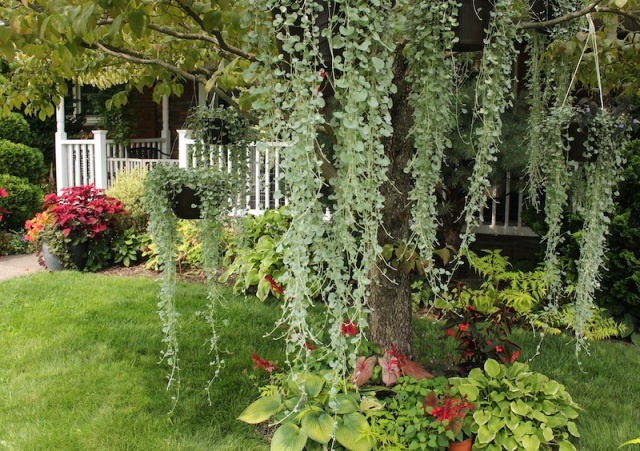
Besides an area of the yard dubbed ‘the waste area’ my garden also boast a slice of Savannah  this summer.  ‘The Old South’ is where all the hanging pots of Dichondra ‘Silver Falls’ ended up, and my boring old pink dogwood has been elevated to the role of sprawling live oak with the Dichondra playing tendrils of Spanish moss weeping down from the branches.  I’m entirely amazed with myself and smile at it every time I pass, even if the local review is closer to a polite ‘I don’t understand why’.

dichondra silver falls

It grows like a weed, and probably is a weed in warmer climates, but here Dichondra ‘Silver Falls’ is just a nice little plant which eats up the endless rain and humidity and turns it into curtains of gray.

Surprisingly the gardener has yet to smack his head on one of the hanging pots, and still smiles when he weaves through the pseudo-moss, not really moss but pseudo-bromeliad veil.

dichondra silver falls

There are even a few nice surprise weeds (spotted widows tears, Tinantia pringlei) in the pots of intentionally planted weeds.

I’m just excited to think how much more this will develop over the next month, and of course this winter I’ll foolishly try and winter them all over and see how much bigger and thicker they can get next year.  Obviously I’ll need more caladiums underneath and honestly I think a few Boston ferns would only add to the effect.  Maybe I can wire the ferns onto the dogwood trunk and tuck a few more into the branch crooks and bends.  My whole next year can revolve around this silly idea and I’m sure sitting inside this winter stewing on it will only help 😉

dichondra silver falls

No one really says anything about the tree but I’m pretty sure they all think it’s amazing.  If only I could find one of those ‘Midnight in the Garden of Good and Evil’ statues to complete the theme.  That would probably be much more tasteful than trying to re-create some marble mausoleum or deep South cemetery vibe on my front lawn.

In the meantime as this design concept matures, I’ve gone ahead and given two more crape myrtles a chance at life (but more likely death) in this garden.  This will be attempt four, and usually three is a respectable place to stop, but I’m gambling on science and planting for an increasingly warm climate here.  I saw crape myrtles (Lagerstroemia) in bloom all over Long Island on my last visit, and it’s only been a few decades since they would regularly freeze to the ground or outright die over winter in my parent’s garden.  Not to be greedy, but I’d like a large tree in purple and one in a bright cherry or red, and I’ll be on the lookout for a cheap starter to experiment with.  In the meantime the ones I’ve added are two dwarf forms which should easily sprout from the roots and bloom even when frozen to the ground.  From tiny plants this spring, they’re both forming buds and blooming this summer.

crape myrtle barista series

From the Barista series of dwarf crape myrtles, this small plant will hopefully develop into a mound of dark foliage studded with brilliant blooms.

So there it is.  The closest I came to a vacation this summer, a trip to fake-Savannah with it’s fake moss and a little token Mc Crape myrtle.  I hope to do better next year, but in the meantime even the weediest waste areas of the garden are entertaining me at this time of year, and I’m hoping to ease into colchicum season without the usual whining about fall and autumnal gloom.  It’s all good 🙂

A Week of Flowers-Day 6

The week of flowers continues and I think I’ve stumbled across one of those revelations which probably everyone else already knew, but when it’s about yourself you’re always the last to know.  My revelation is that I’m a little bulb obsessed.  Any bulb or corm or tuber seems just a bit more special than your average bunch of roots or twigs…. or quite possibly it’s just whatever I’m thinking about that week… and this week it’s bulbs.  Whatever.  Better to not think too long on things like this since the last time it happened I decided I needed to bring more ‘other’ bulbs into my life, as in adding more Lycoris to the garden.  It’s been a painfully slow process waiting for them to get settled in, watching them sulk, wondering if I can blame anyone other than myself for torturing these poor little things, and then one flower comes up and I’m on the computer for hours looking for more info to distract myself with.

lycoris x squamigera

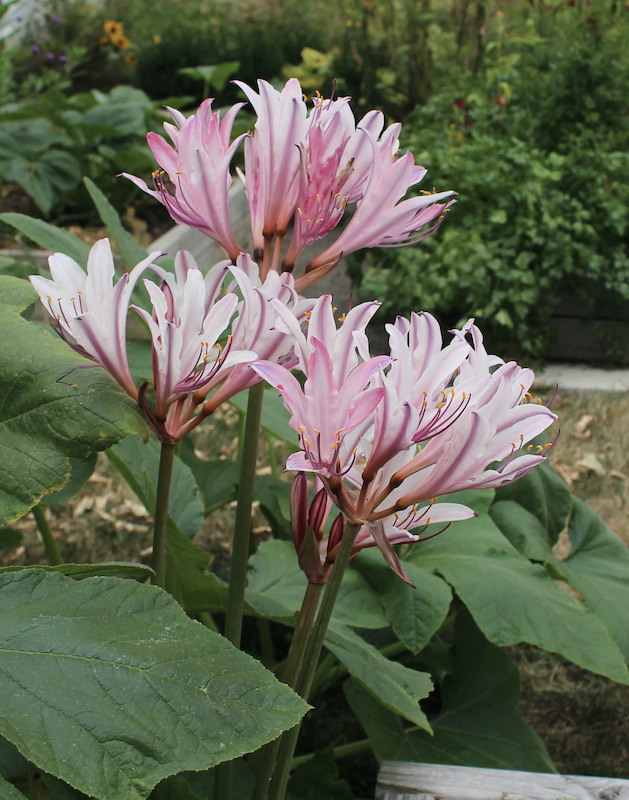
Lycoris x squamigera, the hardy magic lilies which thrive in most gardens but not so much here until recently…

Most of the magic lilies aka spider lilies aka hurricane lilies aka nakid ladies are not quite hardy enough for this garden, but several are, and they’re usually the type of flower which sets its roots down, blooms with abandon, and then outlives the gardener and homestead… unless they’re here of course.  Here they’ve limped along for years until just recently when they decided to humor me with a few exquisite blooms.

lycoris x houdyshelii

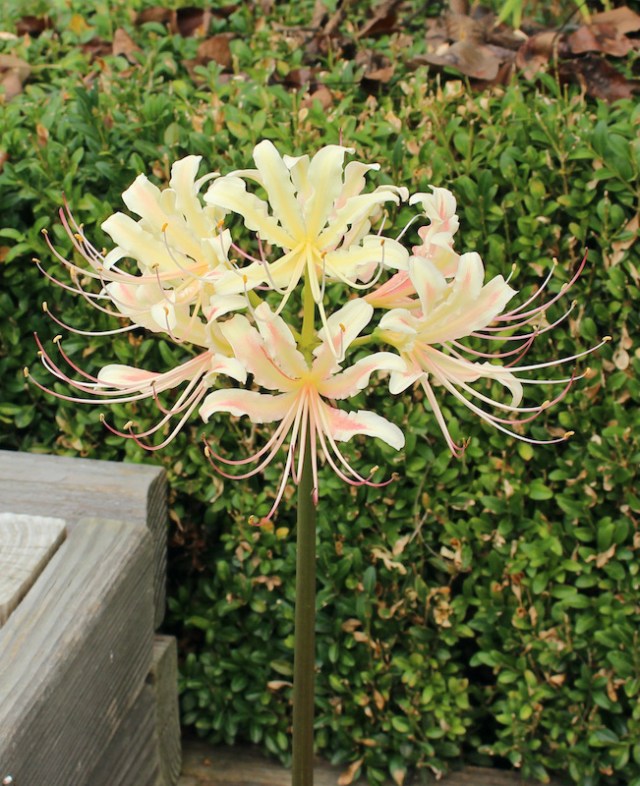
Opening pale yellow, and then fading to a strawberry blush, Lycoris x houdyshelii is a borderline hardy cross which finally sent a single bloom up this summer.  I hope I don’t have to wait another three years for the next bloom.

Maybe someday I can report back on the secrets to success with these, but today I think it’s better to just enjoy the flowers and reflect back on the cozy hot and humid summer days of their season.

lycoris x incarnata

The peppermint surprise lily (Lycoris x incarnata) is supposed one of the easiest and best growers, and last summer mine acted as such… it just took four years for it to figure that out!

lycoris radiata

In the South, I’ve been told red spider lilies(Lycoris radiata) grow like weeds.  Here in the North their winter foliage can cause problems, but last winter’s mild stretches seemed to make at least one bulb happy.  Sadly my other two bulbs decided to rot from all the melting snow runoff, so a 33% success rate is terrible yet it’s also good enough a success rate to fire up my delusions for another few years.

lycoris x caldwellii

I have high hopes for Lycoris x caldwellii which has been growing in the garden somewhat vigorously for years but only flowered for the first time this summer. I think my plantings need more sun.

So that’s a lot of complaining for day 6, and I apologize, but hopefully the pictures have brought on a few thoughts of your own late-summer flowers, pool-time, and cricket-filled evenings and that’s always a good thing.  Another good thing is a visit to Cathy’s Week of Flowers on Words and Herbs and all the additional flowers you’ll see there.

Have a great week!

One Last Summer Trip

It’s embarrassing to realize this trip and these photos are all already a week old, but no matter.  Visiting a garden like Chanticleer, just outside of Philadelphia never gets old, and after a summer of ‘wait, I have to be around for this… and that… and I wish it would rain…’ it was great to get away for what might be one of my last summer trips, and always fun to be out and about with garden stuff from dawn to dusk!  Here are a few impressions from the day.  Check out their website and other links for better photos and video, it’s such an awesome garden to visit and I tried to rush through in under two hours so…

chanticleer

The entry area is always a tropical planter paradise.  Note the leaf stalk of the Titan arum (corpse flower, Amorphophallus titanum) on the far right.  Am I the only person who couldn’t care less about the smelly bloom, yet loves the massive single leaf which they produce?

Hmmm.  Since it was such a rapid race of a visit maybe this should be a quick post, so here goes.  The ‘teacup garden’ is always my first and favorite section to visit.  It’s like a tropical conservatory out for the summer for a Pennsylvania country vacation.

chanticleer

Look at all these foliage goodies, and the hanging blooms of the Brugmansia are just summertime awesome!

Wander down to the tennis court next.  It’s been entirely re-done and although it’s lost the ‘tennis court’ vibe I like the new Netherlands-France rolling hedge vibe.

chanticleer

There’s a soft spot in my heart for neatly trimmed hedges.  Another year to grow in and this one will be perfect, plus a patch of my favorite giant reed grass (Arundo donax) doesn’t hurt either.

The cutting garden also underwent a re-do.  More vegetables, more paths meandering through, a little more controlled.  Personally I like a garden of chaos in September, but maybe deep down inside realize that this is a better look… hahaha just kidding.  I like it but miss the tsunami of towering blooms and grasping vines of years past.

chanticleer

Orange marigolds seemed to be a theme through several of the gardens this year.

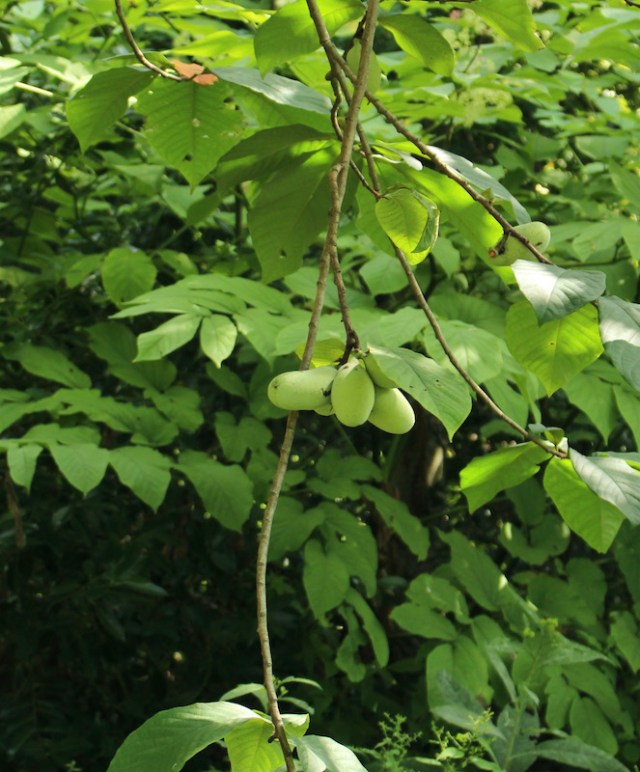
I skipped the woods but not before realizing the large magnolia wasn’t really a magnolia.  It was an American pawpaw tree (Asimina triloba) with plenty of fruit on its way to ripening.  I’ve never had one, but word is they’re delicious with their custardy-goodness.

chanticleer

American pawpaw tree (Asimina triloba) with a cluster of almost-ripe fruit.

I rushed through the meadow filled with full-bloom prairie dropseed (Sporobolus heterolepis), a beautiful spot but I just don’t like the “popcorn” scent of this grass, and then cut through the ruin garden to get to the gravel garden.  I love the gravel garden.  It was a full-sun, 90F (32C) morning and I was still standing around with that dumb look on my face, smiling at the succulent planters and running my hands through the grass like a real weirdo.  I’m so glad that finally, after 50 years, I finally grew out of that caring what other people think stage.

chanticleer

Not the best picture, but the gravel garden is an open spot filled with full-sun, drainage-loving Mediterranean-type plants which don’t seem to mind a couple months of hot.

Down around the ponds to visit the koi and admire the lush, water-loving stuff, and then quickly through the Asian woods and serpentine plantings, and finally to the main house.  The house is always surrounded by too many pots which are too big and overfilled with too many goodies.  Many of the plants are too cool.  The only way I didn’t spend another hour in just this section was because I was alone and because of that didn’t need to start pointing out and naming and babbling on about every single thing.  I will only share a few photos 😉

chanticleer

The mangave cult is alive and well here.  It’s a big plus they’re not as spiny and poky as they look.

chanticleer

Sometimes I had to put both hands in my pockets to fight the urge to take cuttings. Everything seems grown to perfection which is not easy to pull off in such mixed plantings.

chanticleer

The pool area. There are bananas and other tropicals all along the walls. Such an awesome sight although it makes me feel a bit guilty for killing mine… again…

chanticleer

Yeah. Just awesome. Red mandevilla and some yellow leaved jasmine.

chanticleer

Hmmmm. Passionflowers are pretty cool and maybe I should have more than just one…

A visit to Chanticleer is a good choice at any time of year, but I might have to admit to an ulterior motive for my visit.  Surprise lilies (Lycoris) have been interesting lately and I knew there were a few plantings here and there in the gardens, so why not make up an excuse to drive two hours to go see them?

chanticleer lycoris

I think these were yellow Lycoris chinensis with a few white Lycoris longituba mixed in, but since there was a fence and a few yards between me and them I couldn’t really get as close as I wanted.  

I might have been “interested” in some of the hardier Lycoris for a few years now (many of the nicest are tender and only thrive in Southern gardens), but based on their embarrassing performance in my own garden, I really didn’t want to admit it.  I guess it’s out now though.  My name is Frank and I grow Lycoris poorly.

chanticleer lycoris

Lycoris squamigera floating above the grass of the bulb meadow.  These will be joined by the early colchicums in just a few more days.

I don’t think I’m the only one who struggles with these bulbs.  They’re often referred to as surprise lilies or magic lilies, and although some people claim it’s because of the way they burst out of the soil and into bloom in just a few days, I believe it’s because each year it’s either a surprise or plain magic that they actually lived or even bothered to bloom for you.  It doesn’t help when you see them growing best alongside a burnt out building or abandoned farm or hear some old gardener complaining about how they take over their beds and there are just too many in their garden.  Based on this apparent finickiness I’m going to say there’s a better than good chance mine are dying out of spite.

chanticleer lycoris

Maybe a paler form of Lycoris chinensis up near the ruin gardens?  Just like all the others these appear to be settling in happily… unlike my little jerks…  

If I wanted to give myself a true dose of reality I’d look up how many years ago it was that I first planted my earliest bulbs.  ‘They’ say it takes a few years for them to settle in, but the difference between settling in and dying out is a distinction I’m having trouble with… so in the meantime I will continue admiring them in other peoples gardens.  A garden where they are doing much better in is my friend Paula’s.  Her garden is not an abandoned farmstead, and she is not an old gardener, but they are still doing well for her even if a few were just a little past prime for my visit.

lycoris hiaro blue

A trio of excellent hardier varieties of Lycoris.  From left to right, ‘L x haywardii’, ‘Hiaro Blue’ (a selection of L. sprengeri and I think the same as ‘Blue Pearl’), and ‘L x incarnata’.    

As is typical with many of my garden days, by the time it was wrapping up the sun was pretty much set, so sorry about not having photos of the rest of the lycoris in back, but the best thing I learned on this visit was ‘just move them’ if they’re not thriving.  For as obvious as that seems it was kind of a break through for me.

lycoris haywardii

A closeup of Lycoris x haywardii.  I would like to grow this one well enough to see this show in my own garden… and that’s an understatement based on the twitching I feel when I look at it!

So with a rushed visit to Chanticleer and a twilight garden tour with Paula, you might be thinking I stopped for a sit down lunch and dinner, or maybe wasted my time with some other nonsense, but the truth is I was digging daylilies.

transplanting daylilies

“I have a few I could share, stop by if you’re in the area” said a friend…

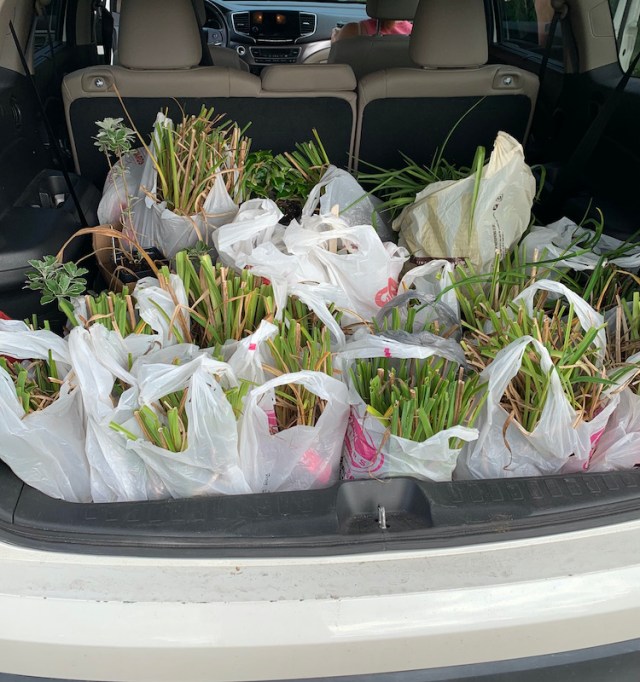
The back of my car was quite full of plants for the ride home.  There was even a gifted sprig of tuberose which perfumed the ride through the mountains.  I was quite pleased.

So I was kind of joking about the daylily farm, but with a whole side-of-the-house lawn destroyed by construction I figured what the hey, it’s better than replanting grass.  I’ve been pickaxing stones and trying to amend a driveway of fill ever since.  Have an excellent weekend and maybe this foolishness will help put your own into perspective 😉

A First Day of Autumn Tour

Who says you can’t change your ways?  I know a guy who’s been passionately anti-autumn for decades, and has actually been know to get hostile and crabby, short-tempered and moody as the day length shortens and a cool crispness taints the summertime air.  That person is changing.  He might even have said “Fall isn’t all that bad”, and smiled at a dewy morning lawn and a river valley full of mist as he sat on the back deck and had already sipped through at least half his morning coffee.  Prior to the coffee he was still kind of luke-warm about the change in season, but at least he was out there enjoying it rather than mumbling about the frigid ten day forecast.

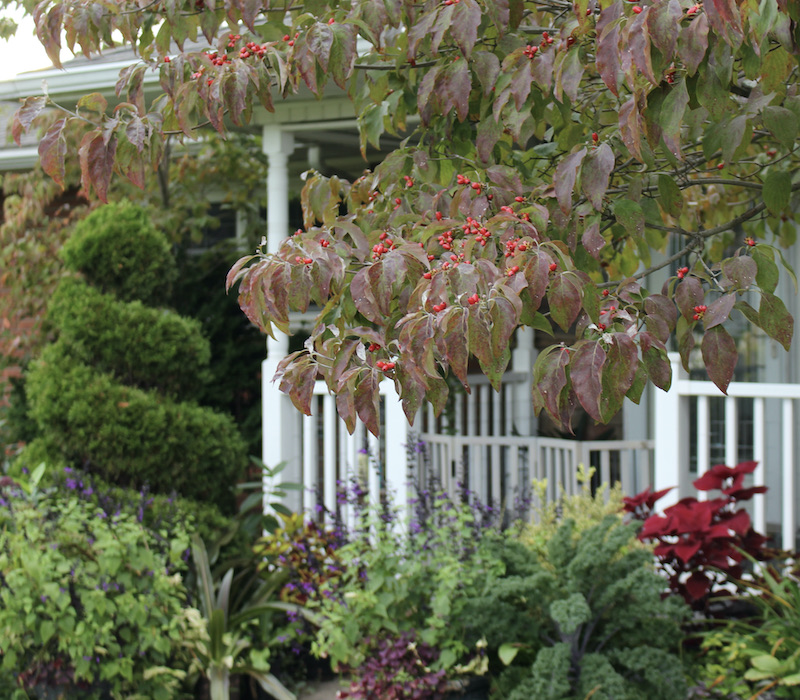
fall fruit on dogwood

Ripe berries and a touch of autumn colors on the dogwood

“Maybe it will kill some of the mosquitoes” was the delusional hope

autumn perennial border

The front border is looking exceptionally neat and well-groomed

No, the mosquitoes aren’t going anywhere, but fortunately they weren’t completely rabid the weekend before last when the local garden club, the Backmountain Bloomers, paid a visit to the Sorta Suburbia gardens.

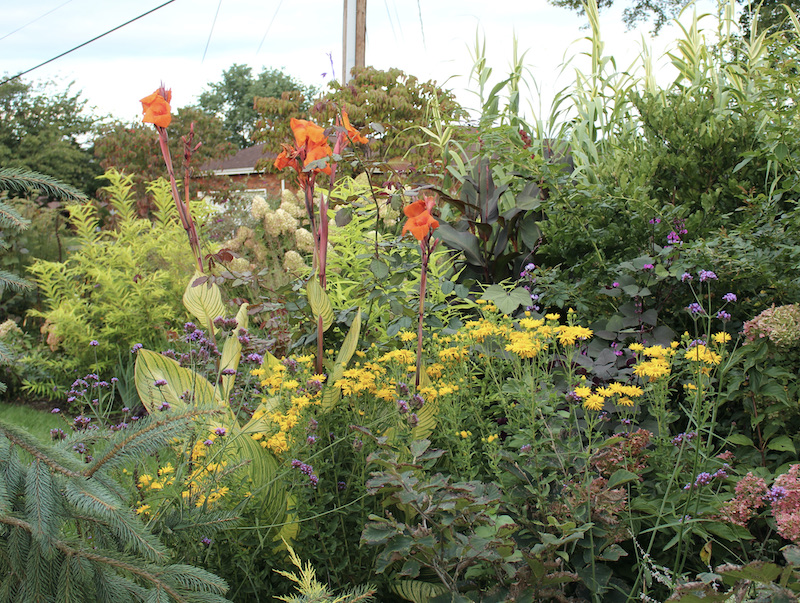
autumn perennial border

‘Bengal Tiger’ cannas with the yellow daisies of Heterotheca villosa ‘Ruth Baumgardner’.  I like this plant more and more every year.

I was absolutely thrilled that the club came by, and even more thrilled that a few more showed up than I had expected.  A muggy, buggy, September afternoon isn’t exactly prime garden visiting season so even a group of four felt-bad-for-you-so-we-came visitors would have been something special.  There were more visitors than that, so I hope I didn’t come across as too desperately excited 🙂 (I don’t often get visitors you know)

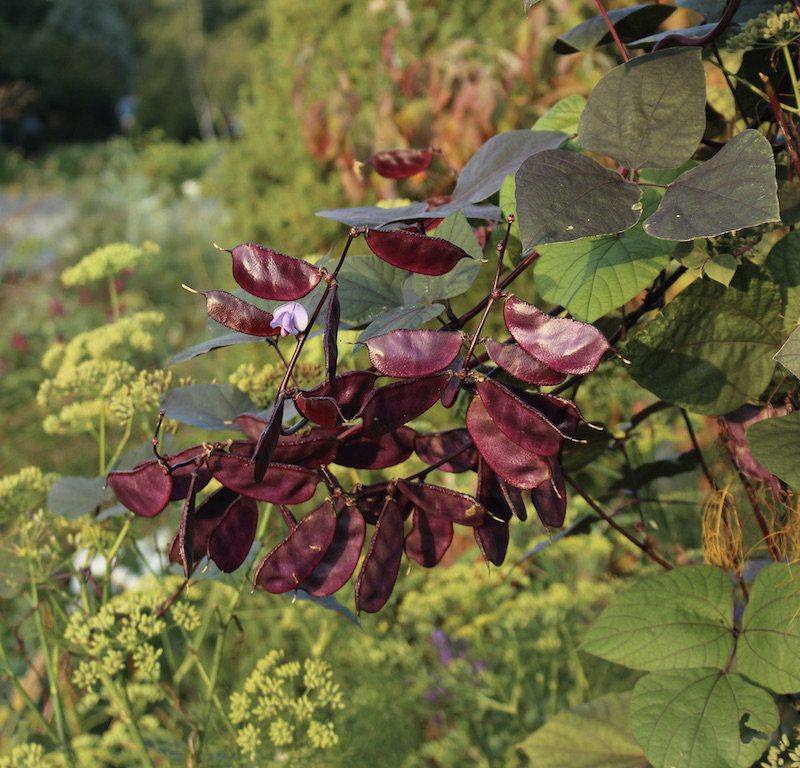
hyacinth bean pods

Purple hyacinth bean (Dolichos lablab) seedpods in the front border.  I threw a few seedlings in amongst the fennel forest, and I think they looked nice enough.

So that was the big excitement.  It was a nice balance to the insane cursing and swatting I experience every other day as I try to beat back the bugs and not catch West Nile while everyone else is getting Covid.  That would be just about right, I’m never any good at following the trends.

disraeli cilicium colchicum

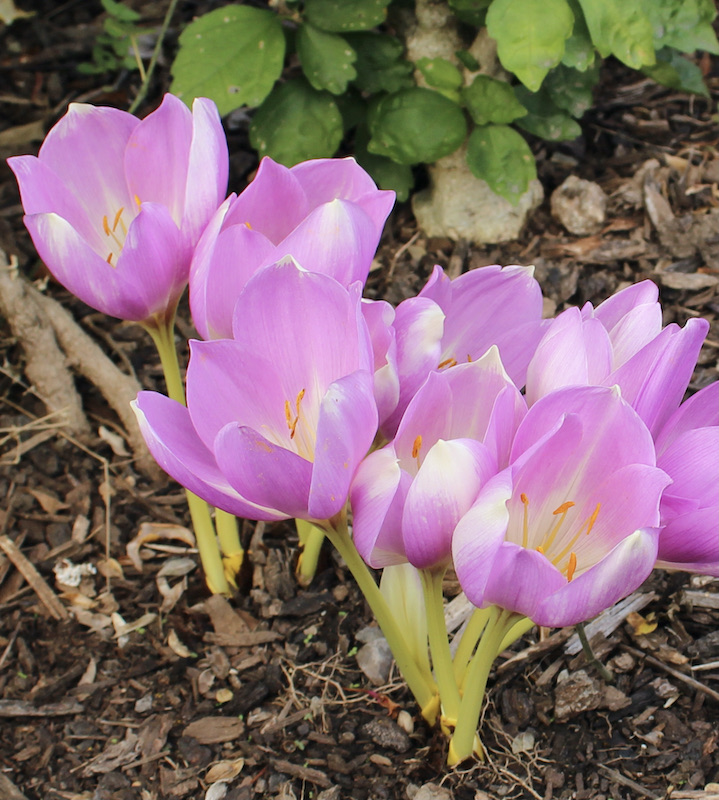
Colchicum cilicicum and some Colchicum ‘Disraeli’ coming up nicely through a few floppy chrysanthemums

With all that said, the garden does look nice.  There’s been enough (actually way more than enough) rain and I really gave the garden a once over of weeding and trimming.  Plus now there are more fall-bloomers than ever, and it’s really given me something to look forward to as everything else crumbles and dies prior to winter’s kiss of death… -ok i said I didn’t hate fall as much as I used to, I never went as far as to say I actually liked it-

colchicum autumn herald

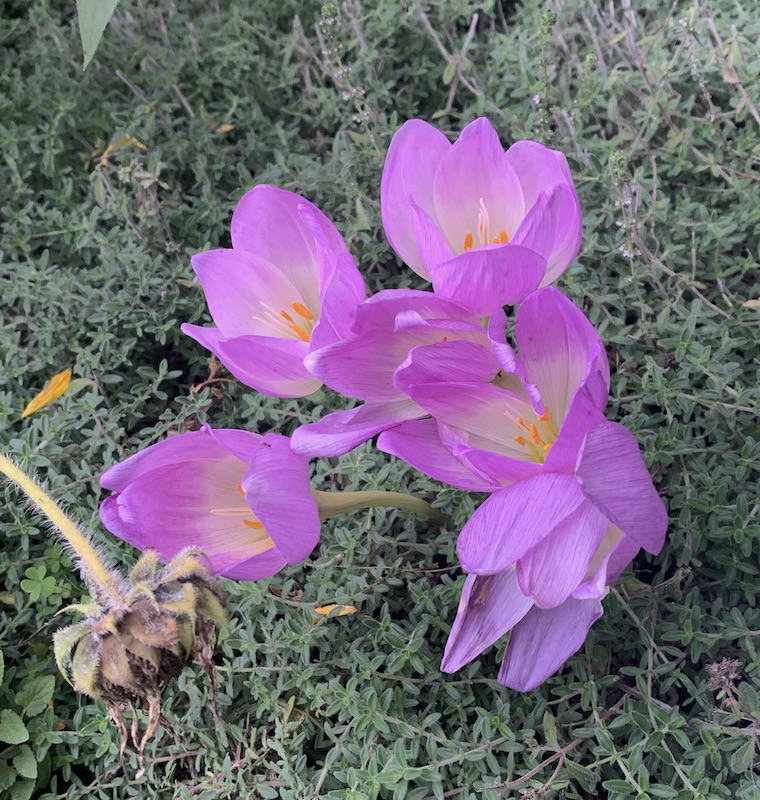
Colchicum ‘Autumn Herald’ coming up through the creeping thyme.

Colchicums are a big part of what’s become good about fall.  The earliest ones help distract me from the earlier and earlier sunsets, and then I have the mid and late season ones to look forward to.  Right now the Mid season ones are just hitting their stride.

colchicum glory of heemstede

Colchicum ‘Glory of Heemstede’ according to my label… love the darker color and checkering!

Let me just share a couple pictures and talk less 😉

colchicum Jochem hof

Colchicum ‘Jochem Hof’ is the name I have for this one.  For some reason colchicum names and IDs are notoriously muddled, and even a good source may give you a misnamed bulb.

colchicum faberge silver

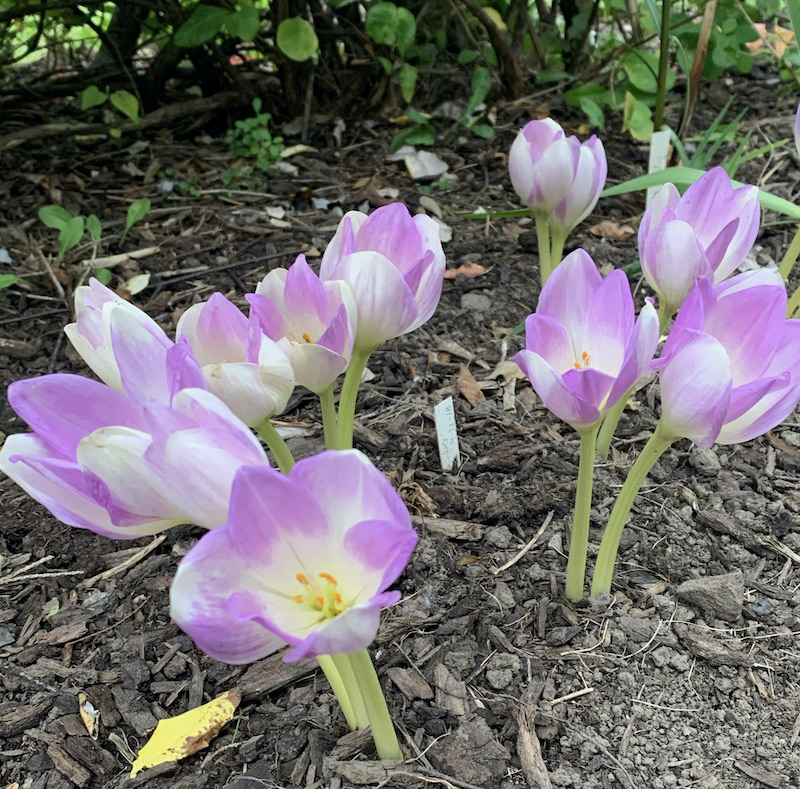
‘Faberge Silver’ is a newer variety with a nice blend of white and pink

colchicum nancy lindsay

‘Nancy Lindsay’ is a favorite and also a great grower here.  I have a few bigger patches of it and still feel like I could use more 🙂

colchicum world's champion cup

‘World’s Champion Cup’ has large goblets of bloom, often with a white highlight.

Colchicums aside (for just a minute), the backyard was also looking decent in its late summer colors.

autumn perennial border

The edge of the tropical bed always looks good with a few cannas, but for the most part it’s been neglected this year.  What a shame considering how lush it could have been with all the rain (as demonstrated by the lush green of the lawn)

The potager was also looking nice, even if it was mostly out of control.  Ten foot tall Kiss-me-over-the-garden-gate (Persicaria orientalis) has a way of demanding attention, and although no one asked for seeds, I guess in MY garden they liked it.

autumn potager garden

The pergola has almost disappeared under the vines and overgrowth of September

I of course liked showing off the castor beans and complaining about my dumpy seed-grown dahlias.  The black eyed susan vine was also something to be admired, but maybe my visitors know there are cooler colors out there, so plain old orange wasn’t so impressive.

autumn potager garden

My hiding spot in the now mosquito-infested potager.  Hopefully with long sleeve weather approaching I can safely hang out here again without losing a pint of blood.

Thankfully no one asked the awkward question of why there weren’t more vegetables.

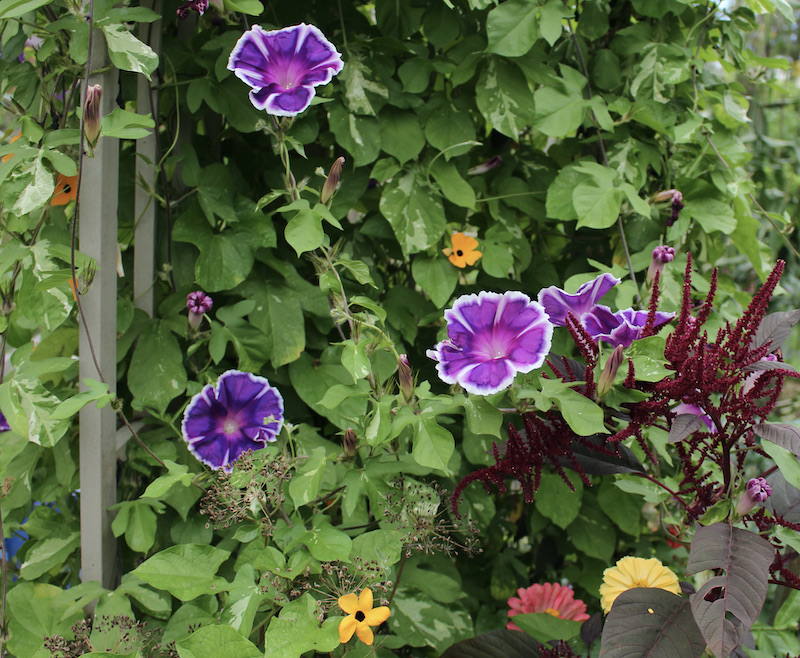
japanese morning glory

The Japanese morning glory Ipomea nil ‘Fuji no Murasaki’ has reseeded mildly enough that it doesn’t scare me like regular morning glories.  Let’s hope it stays that way.

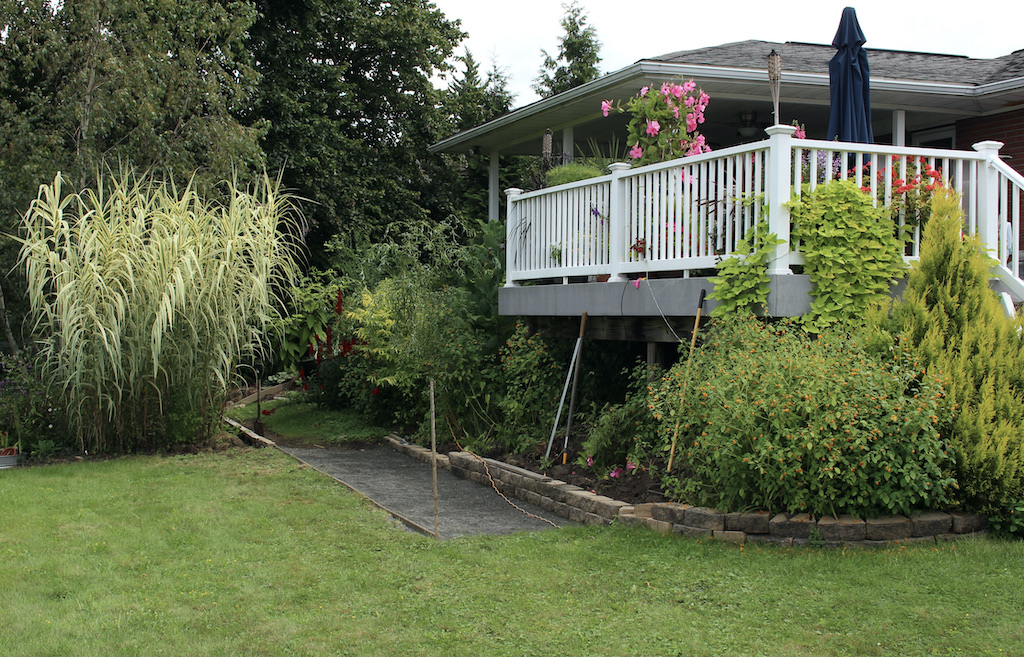
One last part of the garden which I was proud to show off was the nearly completed sand path which now runs around the back side of the house.  I think my visitors might have appreciated it more if it weren’t so overgrown, but if they only knew what a muddy mess this path was just three weeks ago I think they would have been more appreciative of this solid and dry passage.

sand garden path

The finished path.  There’s still plans afoot for this end so we will see…

My friend Lisa asked about the sand, and in the nicest way I think she was trying to figure out what if any thought process there was behind this decision.  Sand is nice at the beach, but anyone who has slogged a couple hundred feet through it knows there might be better path options out there, so let me point out this is the crushed sand usually used as a paver base, and it actually packs down fairly well as a path.  When I went to check out the ‘crusher run’ which is a rougher mix often used for paths, I saw this and thought it might be worth a try.  So far so good I think.  It has a nice clean look and is mostly crushed Pennsylvania bluestone so I like the mellow color as well.

sand garden path

Recycled retaining wall blocks on the right, recycled composite decking as an edging on the left.

Even with a bit of a slope there were no washouts after our six inches in two days rain event.

sand garden path

You can see some of the slope here.  The grass looks crappier than usual because I had to raise the lawn about four inches to meet the edge.  I’ve been filling in this part of the yard for years to bring it up.

Actually there was more erosion in the caladium sand bed than there was in the sloped walkway.  I suspect there was just an extreme amount of runoff from the concrete, so hopefully that’s a one time deal.

caladium in containers

It’s still ‘Year of the Caladium’ along this side of the house 

Here’s yet another gratuitous caladium picture.  They haven’t liked the cold spell we had, and then all the rain didn’t help, but they’re still awesome 🙂

caladium in containers

Mixed caladiums in need of a winter home.

Cooler weather had me thinking about what to do with the caladiums and also where to go with all the other pots which have accumulated around the garden.  I started to hear an echo in my head of ‘Oh, that just goes into the garage over winter’ because I think I said it dozens of times as an answer to wintering over questions.  It started to make me wonder…

deck planter mandevilla

‘Alice DuPont’ still looks great.  In general most of the deck still looks decent, and I really don’t need fall to come by.

So will it really all fit into the garage?  A quick count of pots quickly went over 100, and that wasn’t even counting anything under six inches or anything on the deck.  That’s a lot of overwintering, and that’s almost even stressful, and when I deal with stress I take cuttings.  So on Sunday I added another two flats full of little potted cuttings to bring in.  Maybe they won’t all make it.  Maybe I’ll find some kind of other space… doubtful… but with a suspicious box on the porch this afternoon and vague memories of bulb orders, I think a few pots of caladium tubers are the least of my worries.

Have a great week 😉

Yay. Fall.

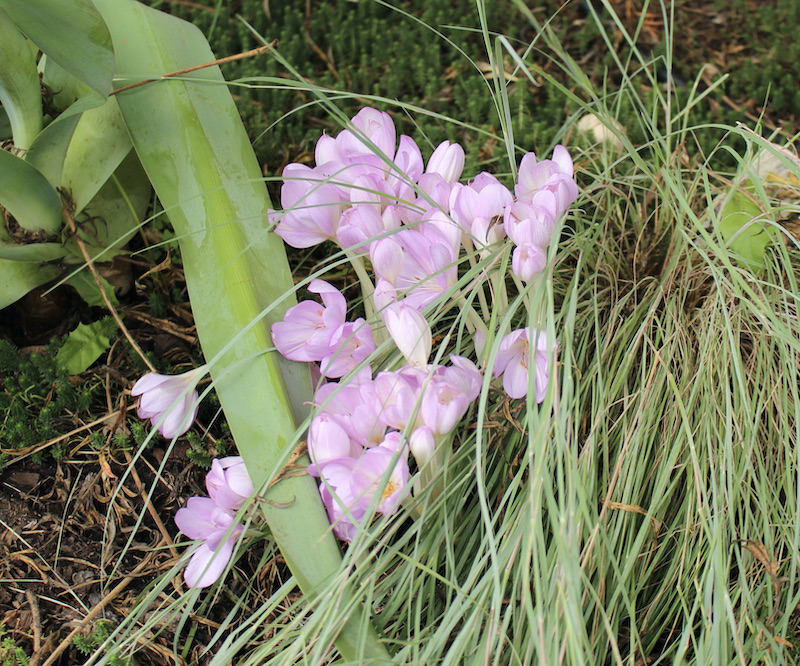
The colchicum are coming and that could mean that fall is approaching.  I say ‘could’ because these “autumn crocus” also come in forms which bloom in the winter and early spring, but most normal people are satisfied with the fall bloomers, and most of the named hybrids with the largest blooms come up at this time of year.  I of course am quite the normal person so shouldn’t have been surprised to come across the first clump of Colchicum x byzantinum shrugging off all the rain and coming into full bloom yesterday afternoon.  It was inspiring.  Instead of sitting on the porch all afternoon thinking about things which should be done, I found a garden fork and started lifting and dividing colchicum clumps.

colchicum byzantinum

Colchicum byzantinum coming up through the foliage of a floppy clump of little bluestem 

Less-normal people might listen to experts who know better, and divide their colchicum in early summer after the foliage dies down, but those experts clearly need more tulips to dig and caladiums to transplant because they obviously have too much time on their hands in July.  I do it now and even if the bulbs (corms actually) have begun to send out roots it’s not the end of the world to disturb them and get them into the spots which are not yet planted up with colchicum.  Actually, as long as I’m confessing faults I might as well admit I’m downright careless with the process and don’t even water in moved bulbs… even if it’s bone dry and fresh roots are sprouting… they don’t seem to mind at all.  I wish more plants were as forgiving.

colchicum byzantinum album innocence

Colchicum byzantinum ‘Innocence’ just starting into growth with no roots present yet.      

Honestly I far prefer moving them now.  It’s instant gratification and you can see how the flowers work with the neighbors, and most importantly you know they’re in a spot where you can see the blooms.  A lot can happen between July and September and usually it involves other plants covering the spot where you thought the colchicums would look perfect.

colchicum byzantinum album innocence

‘Innocence’ with a little more room to spread out.  Better gardeners would add a short groundcover of sedum to better show off the blooms, but one thing at a time please.

The colchicum bulbs looked great btw so I’m hoping for a good show this fall.  Fair warning: you might have to come with me to look at them all in bloom, since a quick review of last year’s posts show less than ten colchicum photos.  Unacceptable!  I need to refocus on my blog’s tagline of “more than you ever wanted to know about my garden”.

Speaking of ‘more than you wanted to know’, last Christmas I did get the new book on colchicums (titled ‘Colchicum: The Complete Guide’, just in case you’re struggling) and after going through it once last winter, I may now take a refresher weekend to brush up on a few things.  I say this to prepare you for all the smart-sounding observations I’ll be peppering my colchicum posts with over the next few weeks, things like why is it ‘x byzantinum’ and not just Colchicum byzantinum…  well it’s because the plant is believed to be a hybrid (hence the x) and not a true species, as writing C. byzantinum would indicate.  Wow.  You’re welcome, and please feel free to correct me as I overconfidently bumble my way through botany.

Hope you have a great weekend!

A(nother) Rain Day

Hurricane Ida is working her way through this end of Pennsylvania today.  Some parts of the country need the rain, but we sure don’t since just last week three and a half inches came by here, and another inch and a half the week before that.  These tropical storm systems just keep pouring out the love this year and I’m really starting to get tired of the endless gray skies.

But I won’t complain about too much rain.  Drought sucks and rain I can deal with, so as long as it doesn’t start raising the river and flooding out my neighbors…

deck plantings

A wet corner of the deck.  I think it’s only been dry enough for bench cushions for two weekends, and as a result the ‘Margarita’ sweet potato vines have moved in.  Also taking advantage of the endless rain is this pink lantana.  I need an overwintering plan for this one, I like it.

With all the rain I’ve been stuck pacing back and forth, looking out the same back windows every ten or fifteen minutes.  Sadly that’s the waterlogged view I’ll be sharing today.

deck plantings

I love the bright pink of ‘Alice Dupont’ (Mandevilla), and she doesn’t seem too upset about the rain, just a little windblown.  The red geraniums and blue and purple angelonia on the other hand…

The deck plantings looked better in July when the calibrachoas were overflowing with flowers and the geraniums were fresh, but even after a September soak they’re still nice enough.  I guess this came to mind since a certain someone who lives next door told me she was planning on ripping out and tossing all her plantings next week since it would be after Labor Day and they looked ‘tired’.  I can’t even imagine looking out the window here all September and October and seeing bare earth and barren pots… what a crazy thought…

deck plantings

Some more compact lantanas which I’d also like to overwinter plus a new favorite, ‘Tattoo Blueberry’ annual vinca (Catharanthus).  By the way the dead looking plant in the center is carex ‘Red Rooster’, and it’s probably not really dead but I’m never 100% sure.

My deck shall remain filled with pots and hopefully plants well into October and November, regardless of endless rain and even a few ‘tired’ looking plants.  Sunshine is actually in the forecast so that’s better, and even though I didn’t mind walking through the garden today (several times) with an umbrella to admire caladiums, I know it will be much more fun and also warmer if my feet are dry while I do it.

Hope you’re gearing up for a nice holiday weekend (Labor Day here in the US) and are enjoying or anticipating weeks and weeks more of beautiful weather.  I also hope your container plantings will carry you through those weeks, and I’d love to hear what kind of plants are thrilling you this year.  I sometimes like to try new plants… in a very cautious and restrained way of course.. and a few new suggestions couldn’t possibly hurt 😉

2021: Year of the Caladium

Maybe you missed it but I’m a little obsessed with some new caladiums this year.  They’re nothing particularly exotic, and I’m sure they would rather grow another zone or two south, but since the day they arrived in late April I’ve been gloating over all the tubers, looming over the planted pots, endlessly inspecting the first sprouts, anticipating every new leaf, and then agonizing over what to pot up together, what to pot up separately, how much sun is too much, how bad a chilly spell will be for them, how much they’ll grow during every stretch of hot weather… I’ve grown them before, but for some reason they are consuming me this year.  Who knows what happened.  I’m usually so rational with my plant decisions that this has really caught me off guard.  **90 second pause as I wait for lightning to strike me down**

growing caladiums

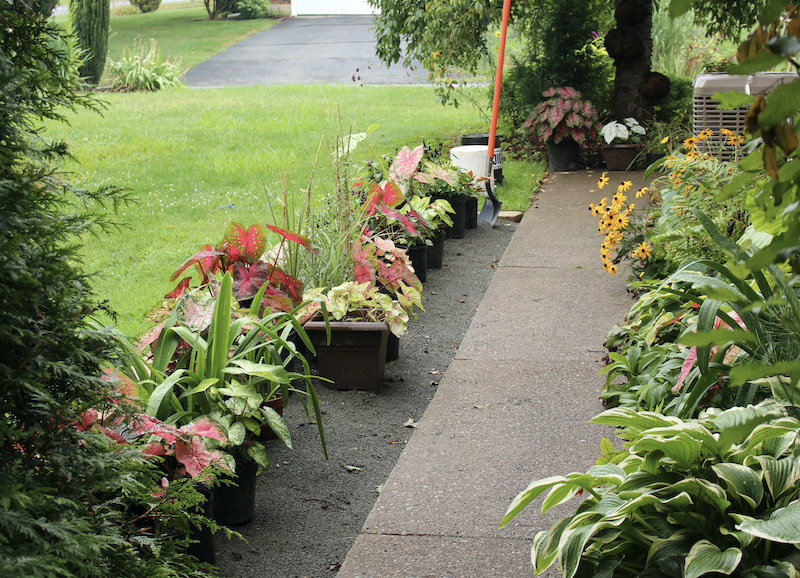
A few caladiums as well as other pots which are now off the driveway and moved into a new holding area.  This looks far more intentional than having all kinds of stray pots filling up the driveway waiting for homes.

So that went well.  It appears I will not be struck down for telling a little fib about frequent plant addictions, so let me just go ahead and tell a little story.  Back in late January I stumbled upon a caladium grower who sells mixed tubers by the pound.  Don’t ask why I was looking up caladium growers in January, but I was intrigued by the idea of ordering five pounds of caladiums with shipping for under $50 so I clicked yes.  They arrived in late April and I was thrilled.

caladium red flash

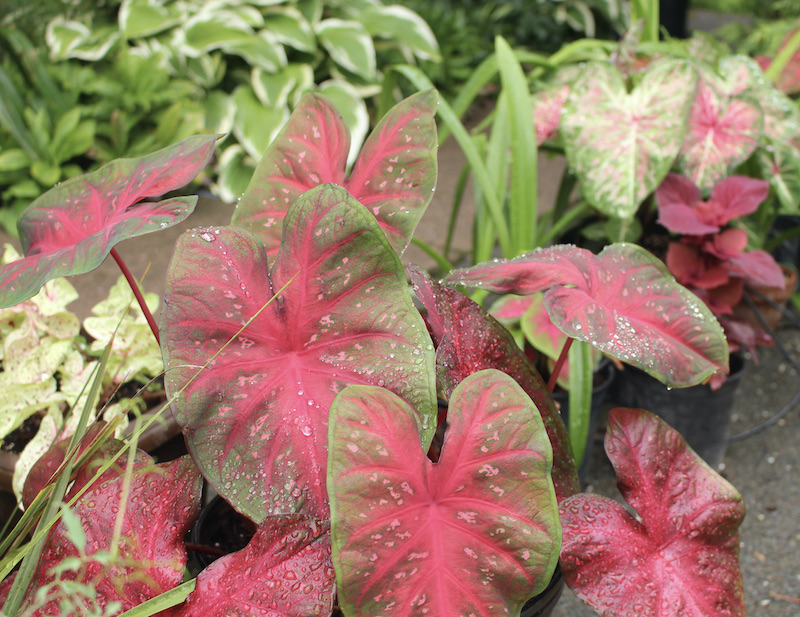
I believe this is ‘Red Flash’ a larger, good growing caladium which seems fine in full sun.

I waited until late May to pot them up.  Since they were mixed and I just couldn’t handle pots full of random colors all together, I potted each tuber up separately.  Five pounds came out to 78 pots in case you’re wondering, and once potted they were all lined out on the driveway to soak up the spring warmth with just a tiny bit of water to get them started.  And then the wait began.  A sprout here, one there, slowly they began to grow (really slowly it seemed) and every new leaf was an exciting surprise to see if it was something even more special than the last.  The rows of pots were starting to look like something.

growing caladiums

Ouch.  Halfway through setting the retaining wall blocks to hold the new bed I realized my level blocks did not match the sloping sidewalk and I’m absolutely annoyed with the way it looks.  Maybe some day I’ll redo it… maybe…

As different forms showed themselves they were grouped and potted up into whatever black plastic I could scrounge up.   For years I have been saving and storing every leftover pot from my own yard and the neighbors and now my moment to shine had finally arrived.  Ten of one size, fifteen of another, no problem!  I was feeling pretty rich even though absolutely no one appreciated my inspired foresight.  Someone (a pretty narrow-minded someone if I’m being honest) even said ‘Dad, you still have like a thousand more pots, do you really need them all?’ but of course genius is often misunderstood in its time, so I politely ignored the comment.

growing caladiums

Caladium ‘Pink Cloud?’ on the left with probably ‘Aaron’ as the white behind.

All the pots looked excellent on the driveway, but others suggested we use the driveway for cars so the caladium pots needed to move into their positions.  After putting four pots in place I came to the conclusion that there was nowhere else for the other 30 or 40 pots.  In January it was easy to say all the hostas and hellebores in the bed alongside the garage would be transplanted elsewhere, but in June when only one hellebore was gone it’s a different story.  Fortunately there was still grass on the other side of the walk.  It was a no-brainer to rip out the grass, throw in a few retaining wall blocks that the neighbor didn’t want, and then use sand from a recent sand delivery to level off a new bed.  Even though the new bed looks suspiciously like a big holding area for plants I didn’t really need in the first place, I like to think of it as the new sand terrace.  Of course I emphasize the second syllable of terrace to make it sound even fancier and French, and that of course is only natural in a garden which already boasts a potager.

caladium miss muffet

Caladium ‘Miss Muffet’ is amazing.  I wish it liked me more, but I suspect it would prefer a garden with more consistently warm weather and possibly a little more shade.

Having so many pots sounds silly, but genius foresight also ordered 100 drip emitters and some extra water tubing in May and now each pot is getting watered twice a day without the gardener lifting a finger (as if he even needed another excuse to be lazy) and the only real flaw in his plan is the nearly full sun exposure of the new bed and the part shade requirement for many of the caladiums…

growing caladiums

Maybe ‘Carolyn Whorton?’  An excellent grower here but also one who’s centers burn out in direct sun.

So for the last two weeks I’ve been shuffling sunburned caladiums into darker corners and moving up anything else which seems to tolerate more light.  It’s slightly concerning to see how many other plants have appeared out of nowhere to join the caladiums, but for some reason this year the gardener has been enjoying potting up things like clematis seedlings and ornamental peppers, and when this happens the few seed pots sown in March can rapidly become way more plants than anyone needs.

growing caladiums

One of the agonies of planting mixed caladiums is the possibility of a mixed pot.  Some might say that’s the whole point behind mixed tubers, but I thought I could get around it and this pot would be two of the same… but now as they grow on, the plant on the right has pink centers which burn, but the plant on the left seems more tolerant.  Are they different cultivars?  Will I ever know?

We will just ignore the ‘too many plants’ possibility and not think about all the extra pots this little project has generated.  Obviously I need to try and overwinter them all.  What a fiasco that will be, just imagine how much the gardener is going to complain about lugging all these in!

growing caladiums

I’ve just about given up on most IDs.  I wish they were like snowdrops or some other easy to identify plant, rather than something where earlier leaves are different than later leaves, sun and heat change the look, mature plants show more color…

Since I was running new drip lines I just went ahead and added in all the amaryllis (Hippeastrum) pots, as well as a bunch of other stuff.  It’s officially become a shady tropical garden and I quite like it as it wraps completely around the side and back of the garage.

potted shade garden

More goodies.  Actually only three pots of caladiums are new, the rest are all plants overwintered from last year… so I don’t want anyone thinking I’m still out there spending stimulus checks on new plants!

Not to keep going with bad ideas, but the amaryllis are finally getting some of the attention they’ve been missing for the last few years.  My fingers are crossed for many blooms this winter, but as of this minute I have no plans to add more, so at least that’s a plus 🙂

growing caladiums

Yeah I have no idea which caladiums these are.  To be honest the amaryllis were all misslabeled as well, so this really doesn’t do much for my need to organize.

So now for the other side of the story.  I didn’t just ‘happen to have’ a couple tons of sand and a pile of retaining wall blocks laying around, they were actually supposed to go towards a different idea.  I wanted to dig up the muddy lawn and replace it with a level sand path which is far less muddy and much more fun for kneeling on while admiring snowdrops.  Once the caladiums were situated the walk finally started… and of course didn’t get far since half the sand had already gone to a new bed and for topping off other areas which were short on sand (doesn’t everyone have endless sand needs?)

cardinal flower

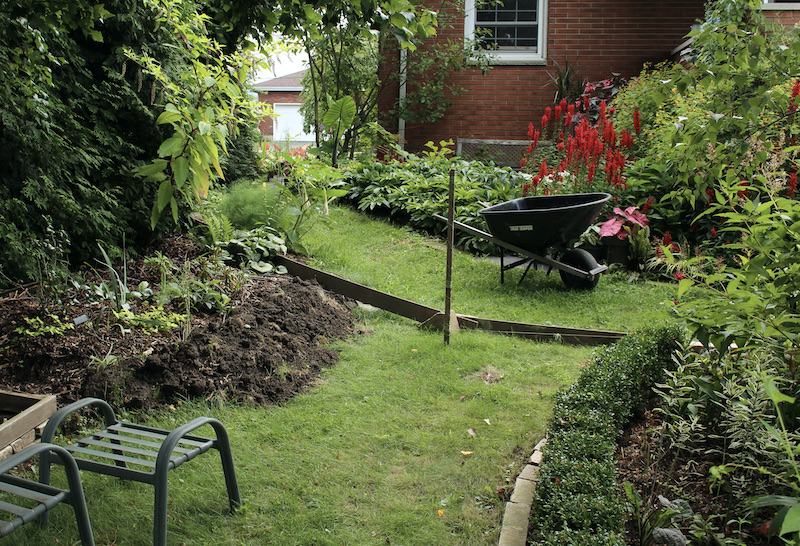
I never realized how slanted the lawn was here until I actually took a level to it.  Good riddance!

Hopefully the path will work out.  It’s got a slight incline to it and hopefully that won’t be enough to wash out the sand with each rain, but if worse comes to worse I have ideas on that as well.  For now I have to tackle the curve of the path, and the fact that there are plants here as well which didn’t get moved in the spring.

shade garden path

More path building and slope filling.

Since we ended up in this side of the yard, we might as well take a look around.  Not much since this is such an ugly corner of the yard, but who can resist the latest Lycoris joke?  Not even twelve hours after posting that it didn’t look good for any more Lycoris flowers this summer, Lycoris chinensis (yellow surprise lily) surprised me with a flower stalk.  From nothing to full bloom in just a few days I think it’s pretty cool.  I’m so pleased I won’t even be petty and complain that there were two flower talks last year.  Nope, not at all.  Just enjoy it for what it is.

lycoris chinensis

Lycoris chinensis.  All is forgiven, I love these things!

You can look across the yard from here and see the potager.  If I remember correctly (it’s been a while), on a day when the sun actually comes out you can sit here in the shade of the maples and take a break before heading out into the heat and humidity of the full sun areas.  That’s a nice thing plus it’s kind of hidden back here.  The dog can usually find me soon enough, but you have to be foolish enough to answer before the kids figure out where you are.

garden view

The view across the garden.  That’s one of the industrial park buildings up on top of the slope.  The trees still have a ways to go.

And that’s where we are at.  More sand is scheduled to arrive tomorrow (assuming this past week of torrential rains hasn’t washed it all away) and the path should progress a little further.  It doesn’t look like much but shoveling and wheel-barrowing and tamping and leveling and measuring are all the little tedious tasks which take me forever.  I’m sure someone more motivated would finish in two or three days, but well…

sand path

For a while I doubted myself on the path idea, but now it’s growing on me.  The fam is still on the fence, but once it’s done I think they’ll give it their seal of approval as well.

So I’ve got caladiums and sand.  Life is good.  Other people measure their success by different measures but right now I’m feeling pretty rich.  I even found another clearance caladium tonight while cinderblock shopping and a $2 caladium always makes the hard labor better.

Hope you have a great week!