Inching to Summer

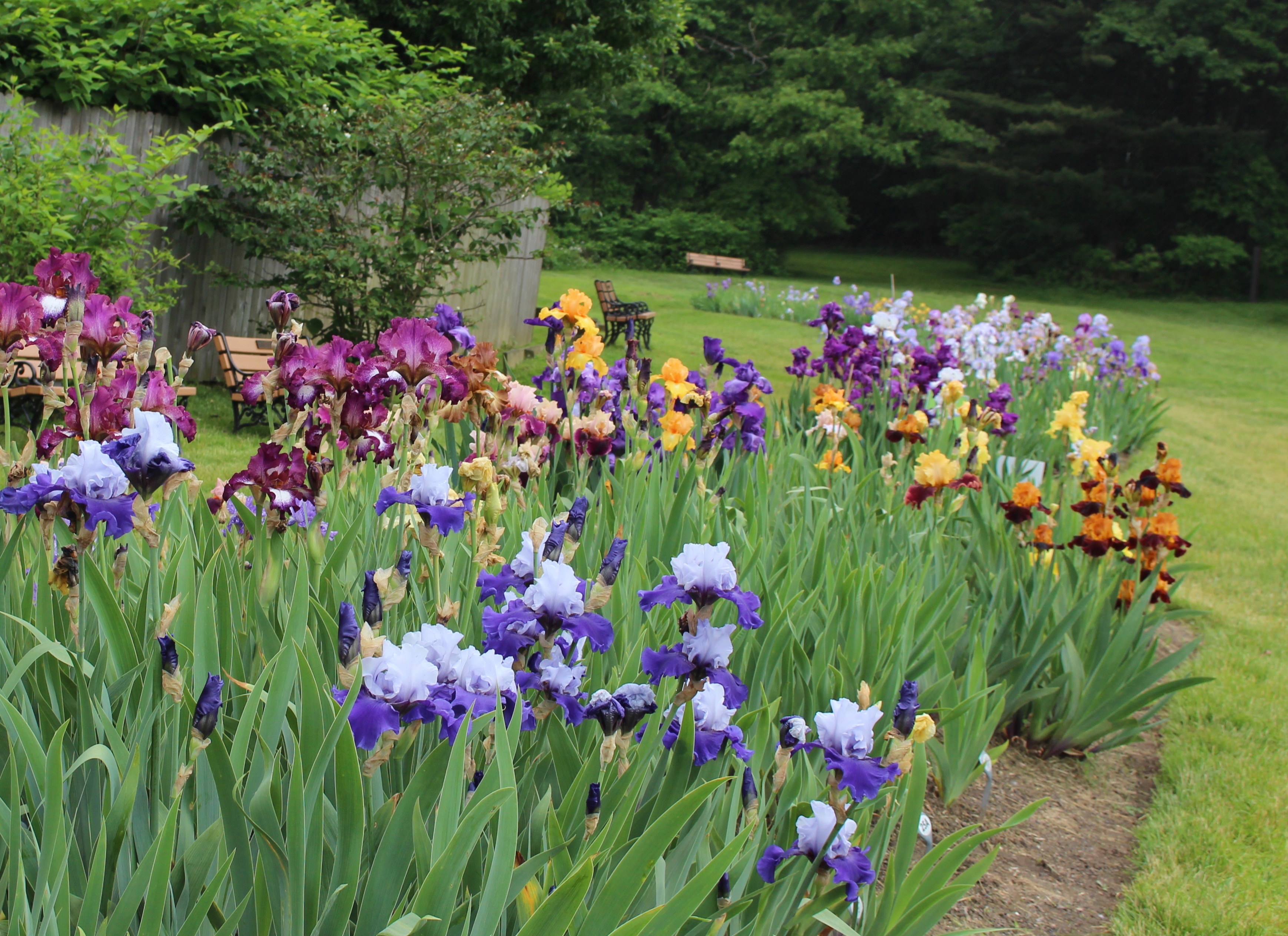
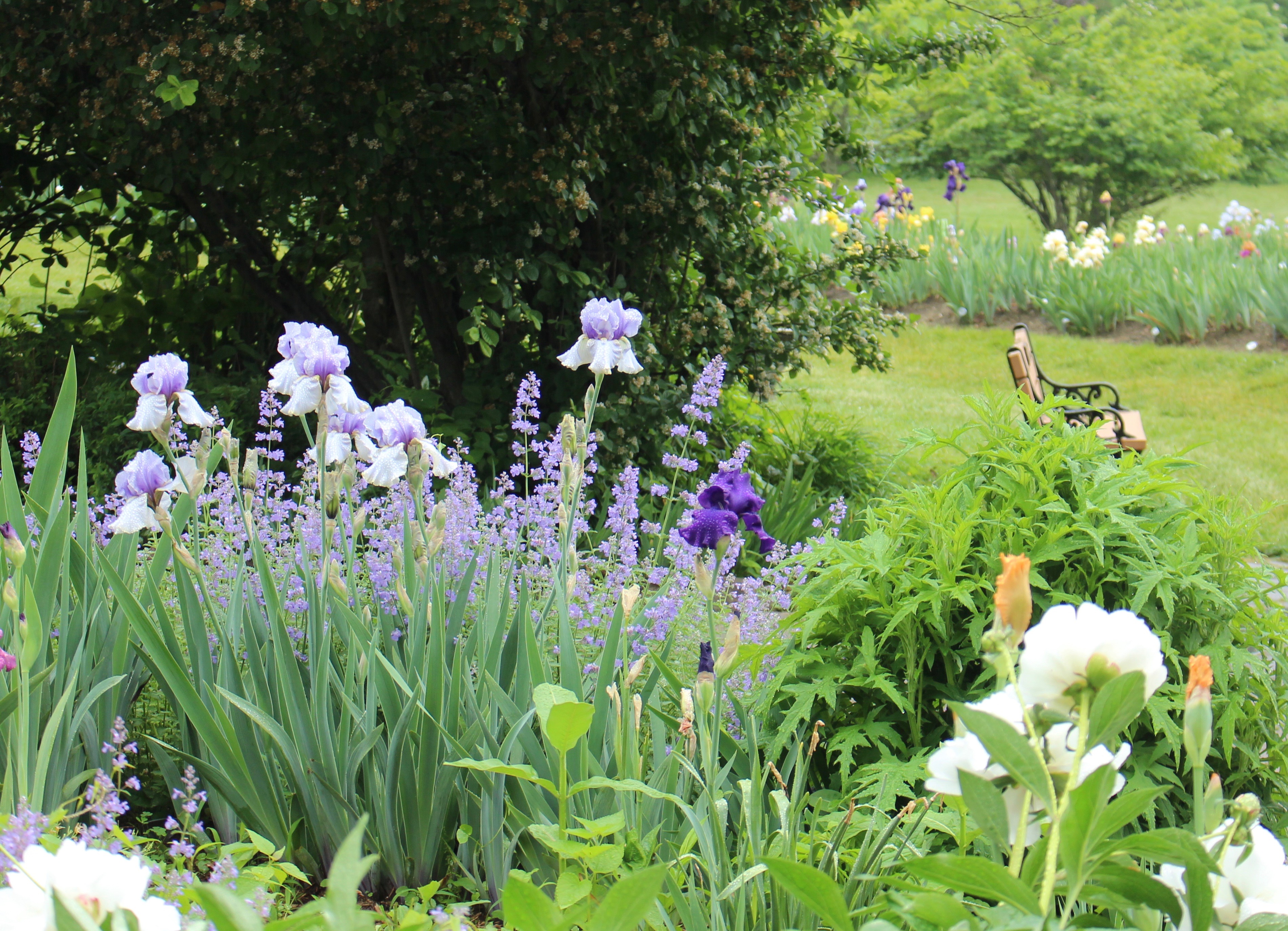
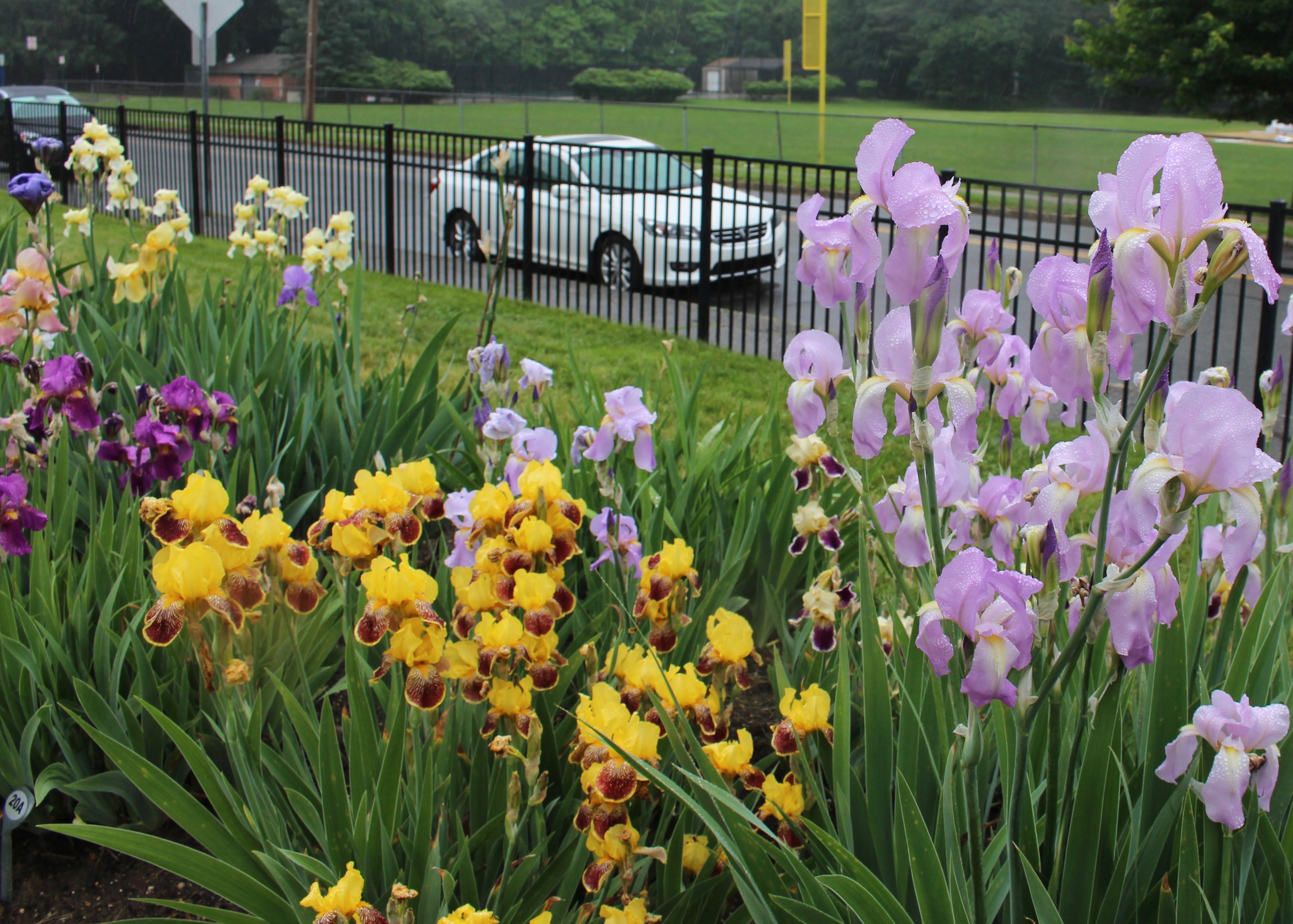
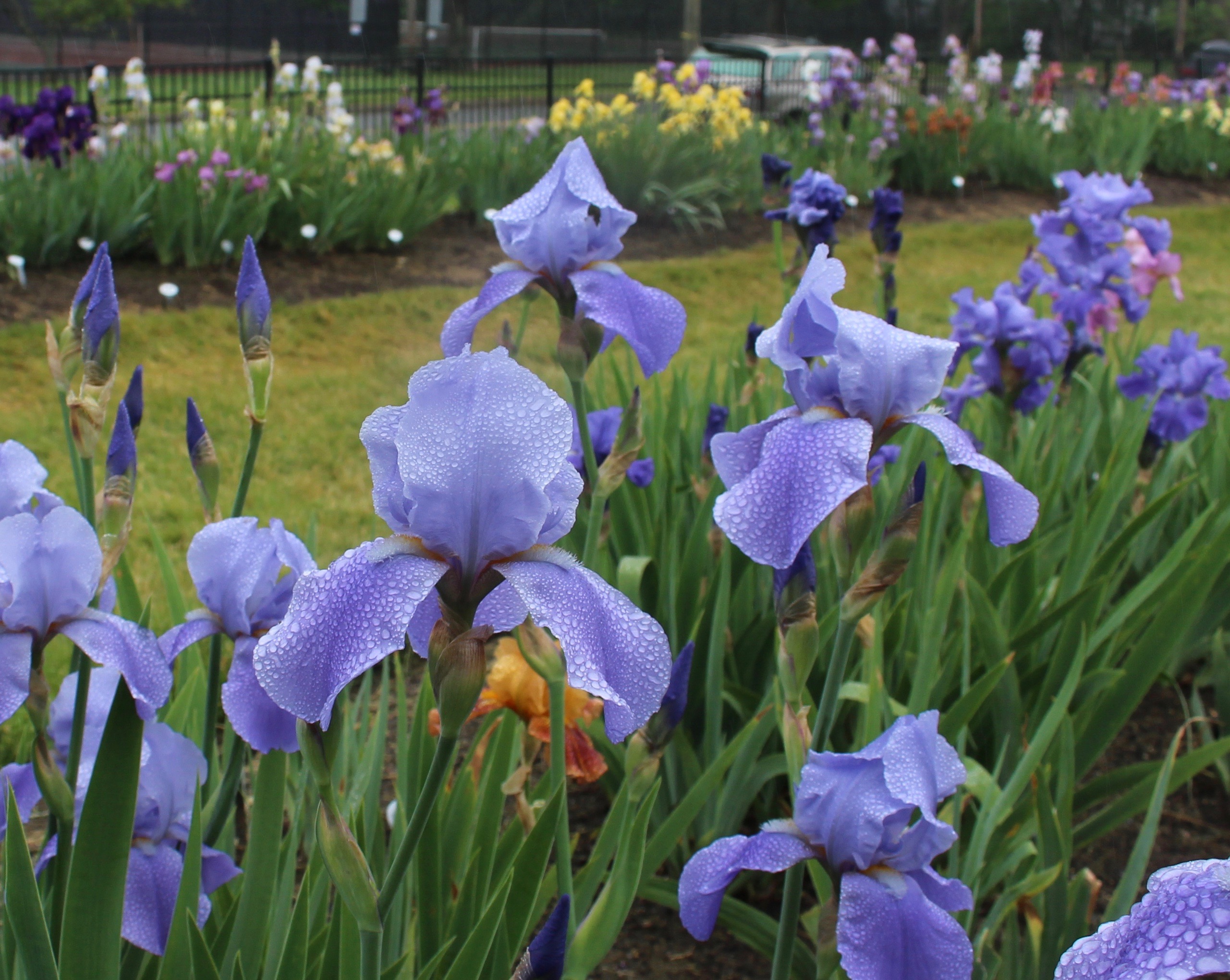
Well these pictures are only about a week old, so I think that’s an improvement in blog efficiency?  They’re just a couple of updates on the garden and I guess the biggest ones are that the gardener hasn’t been too lazy, and the iris were nice, and I felt the pressure to take a few pictures before they were all gone. Honestly though, I can barely remember back this far.  These spring days are busy, and so much is focused on what’s next it’s hard to live in the moment let alone remember the past,  but I believe this was one of those days when clouds rolled in but not too many, the lawn was longer but not too long, the weeds were growing but not too grown,  and I was tired but not too tired to take one more tour around the garden with a camera.  So let me start in the most urgent area, my NEED for more chive colors!  Chives as you know are an herb nearly everyone can stomach, with a mild onion taste which steps in when parsley is busy elsewhere.  I could go on now and possibly bring in all kinds of lore and growing information together and try to make this blog a useful resource… but that’s a lot of work, and I’m pretty sure you could prompt AI to write up as long a discourse on chives as you’d like so here I am empowering you.  Copy and past “write a three page paper on the history use, and cultivation of chives”  into the prompt at ChatGPT and there you go.  Before you know it you’ll be thanking ChatGPT  for an interesting read and then asking what it’s doing later and if it has time to chat some more.  I guess I should say my goodbyes now and thank you for following this blog for as long as you have.
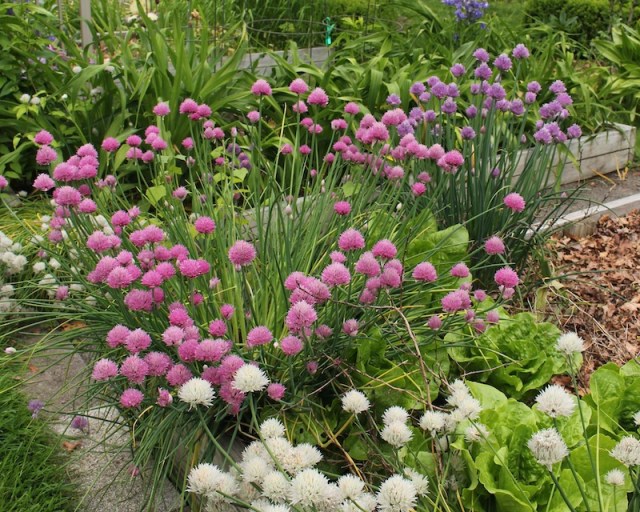
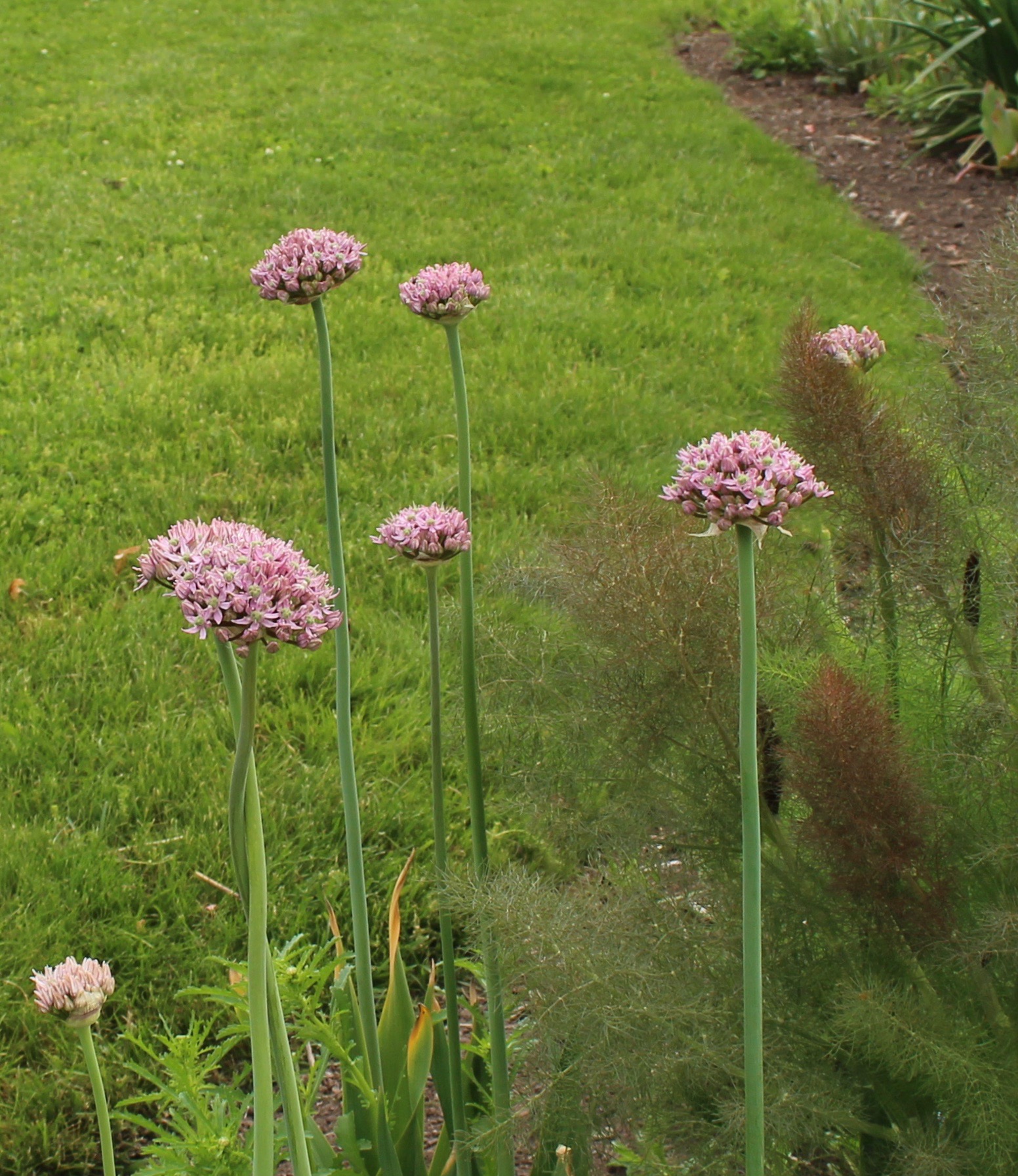
chives allium schoenoprasum

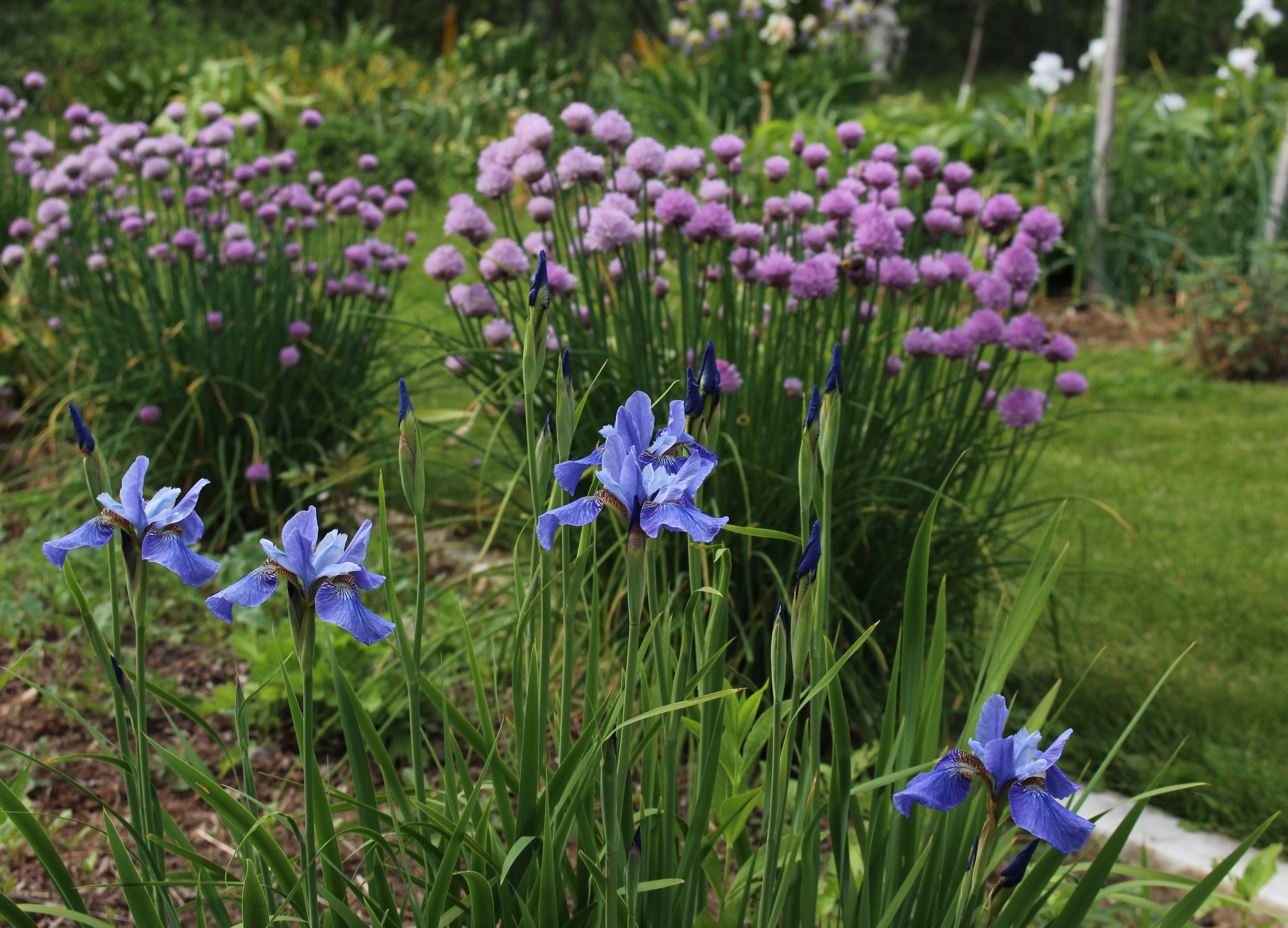
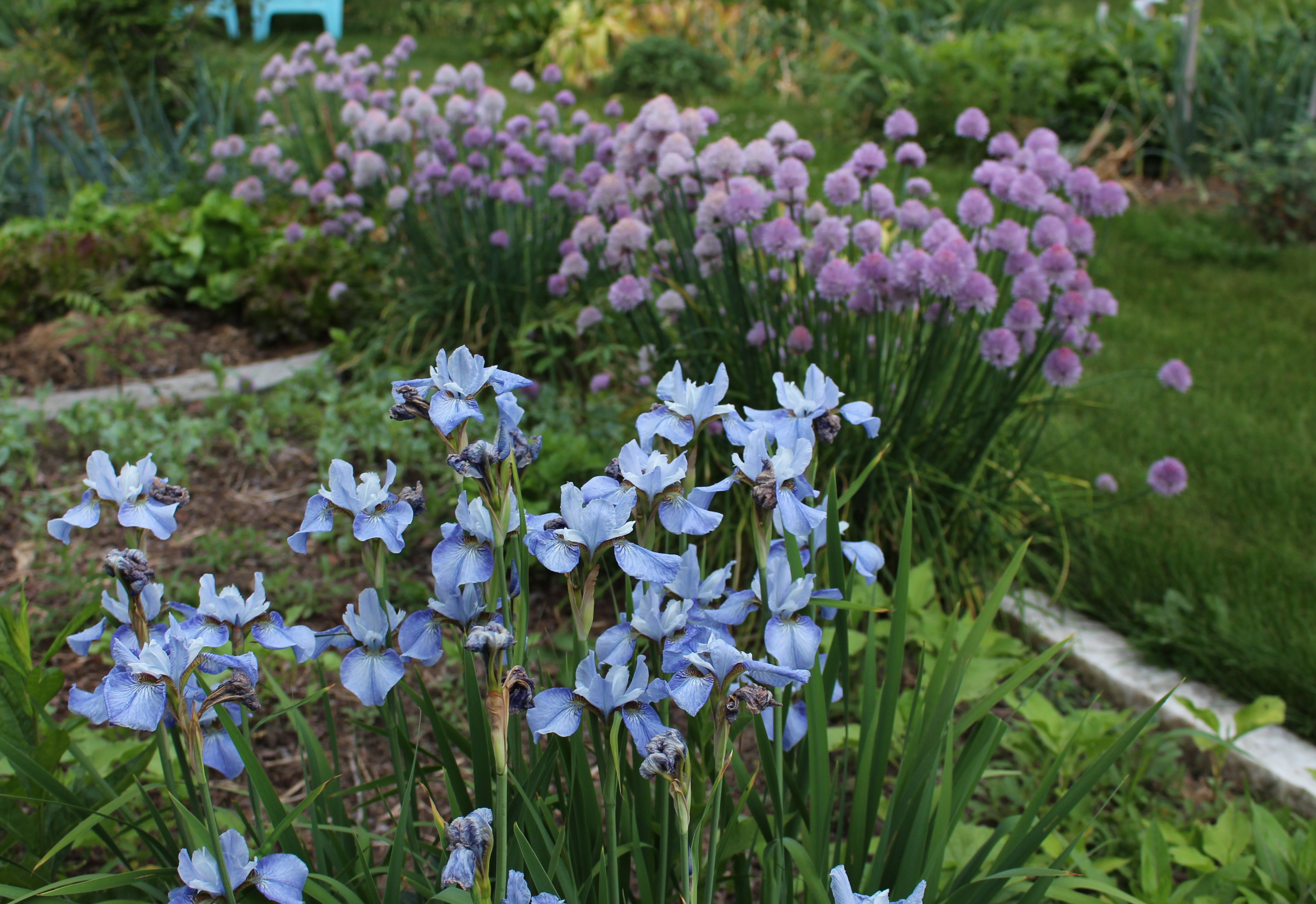
Pink ‘Forescate’, white ‘Album’, and the typical mauve of chives (Allium schoenoprasum) in the potager.  I think they’re amazing.

Before moving on to the last of the iris, let me also mention the fun fact that your innocent looking chives is a widespread species, native to scattered spots in North America, across Europe and Northern Asia, all the way to Korea and Japan, and as such shows plenty of variation, and as such should be in my garden as a strong purple as well as the colors already here.  Maybe someday.
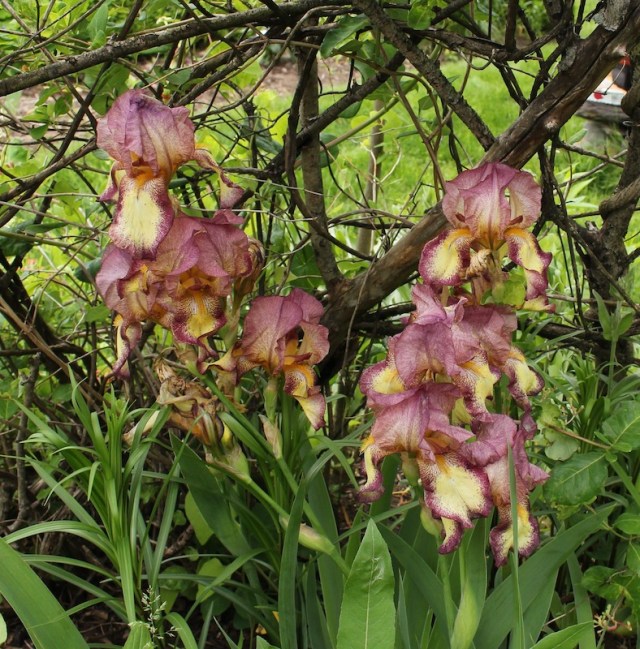
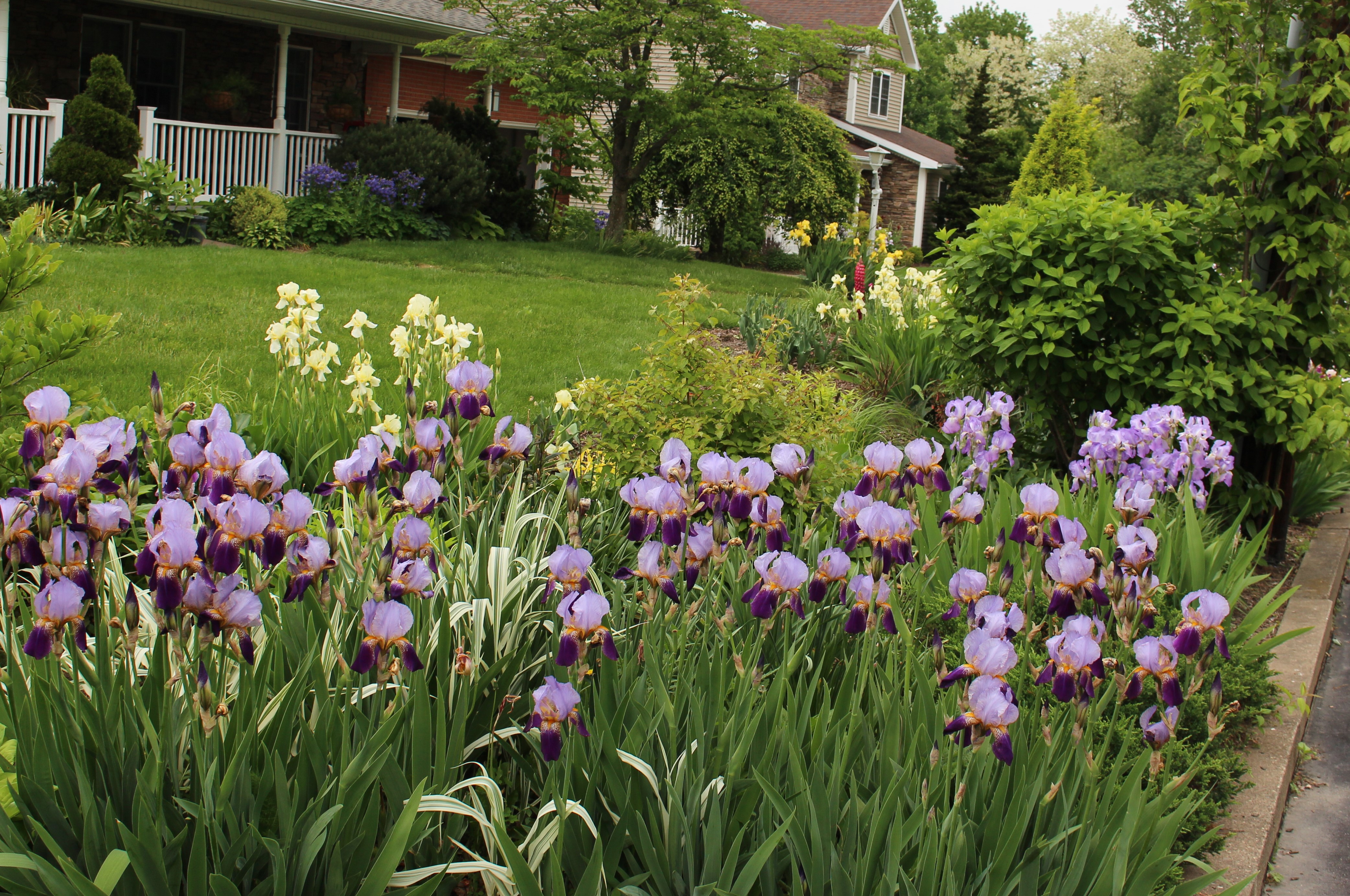
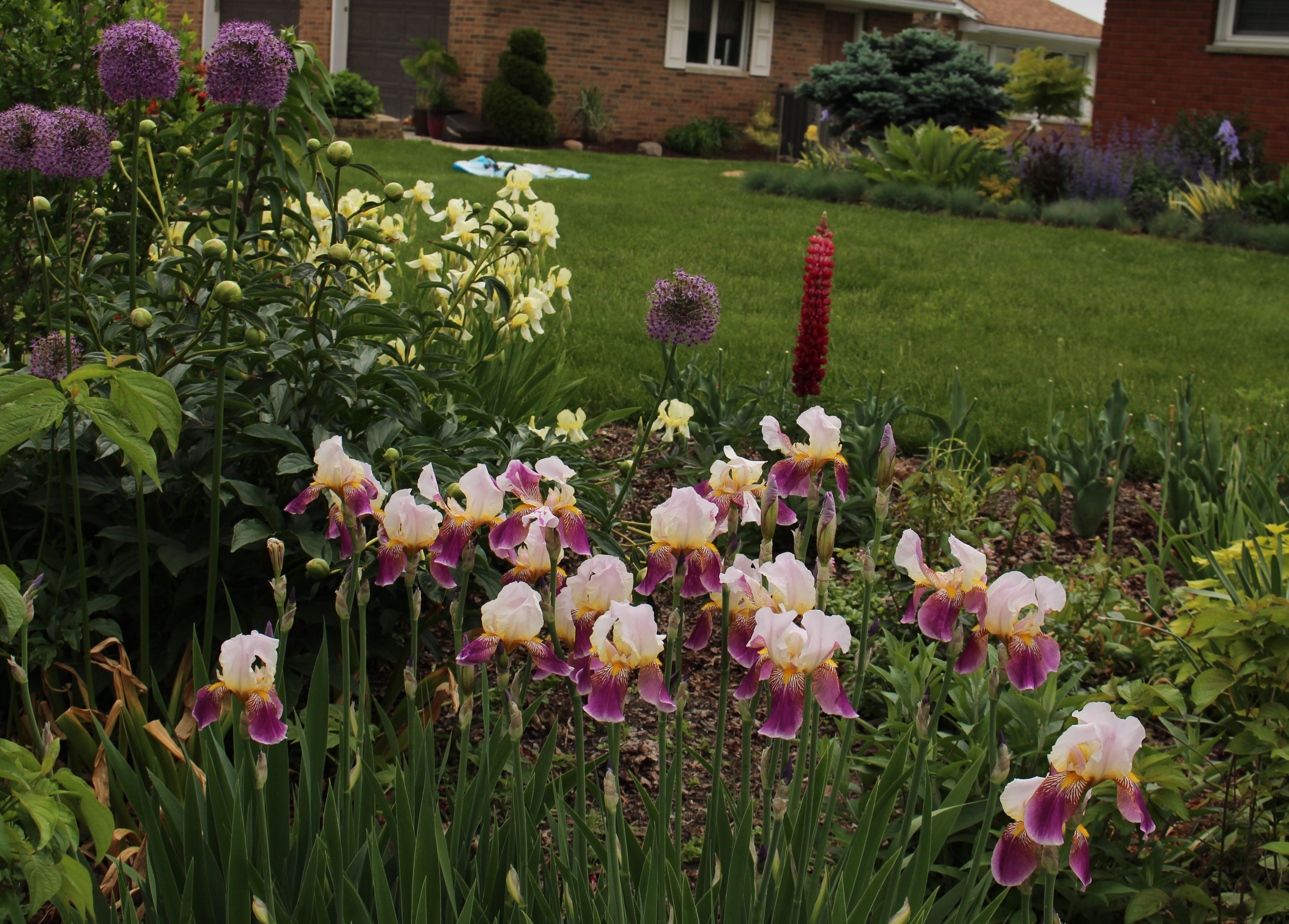
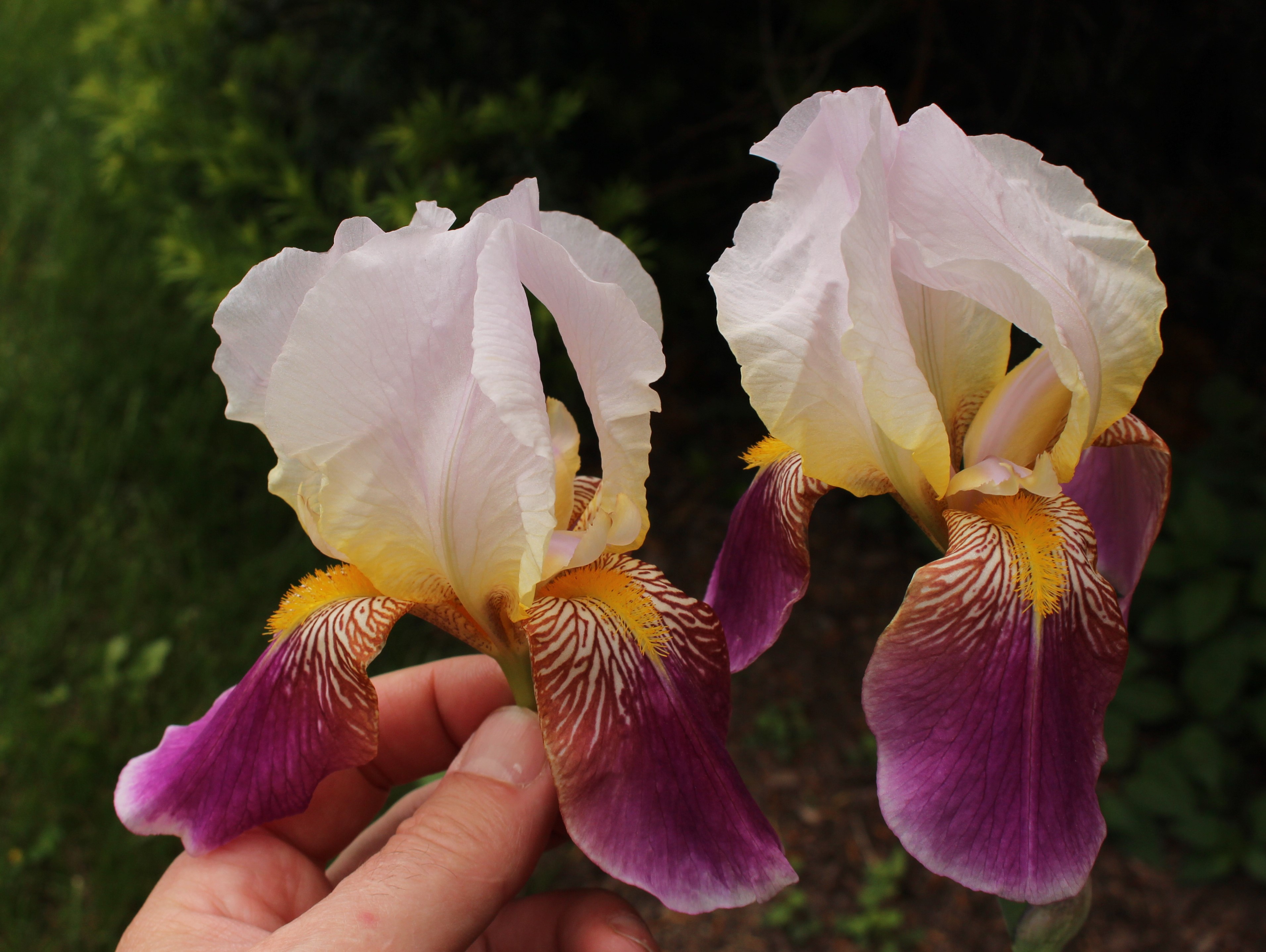
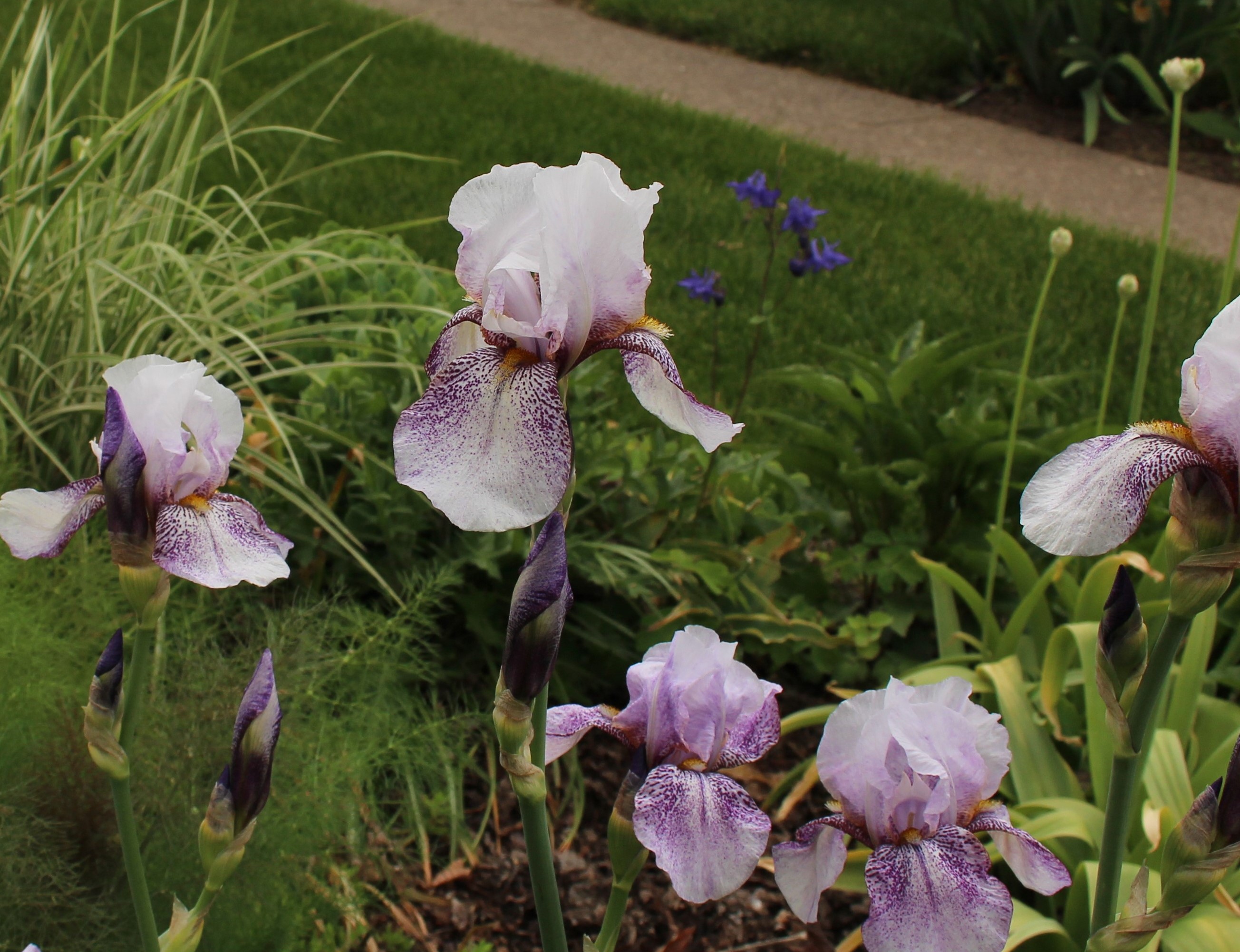
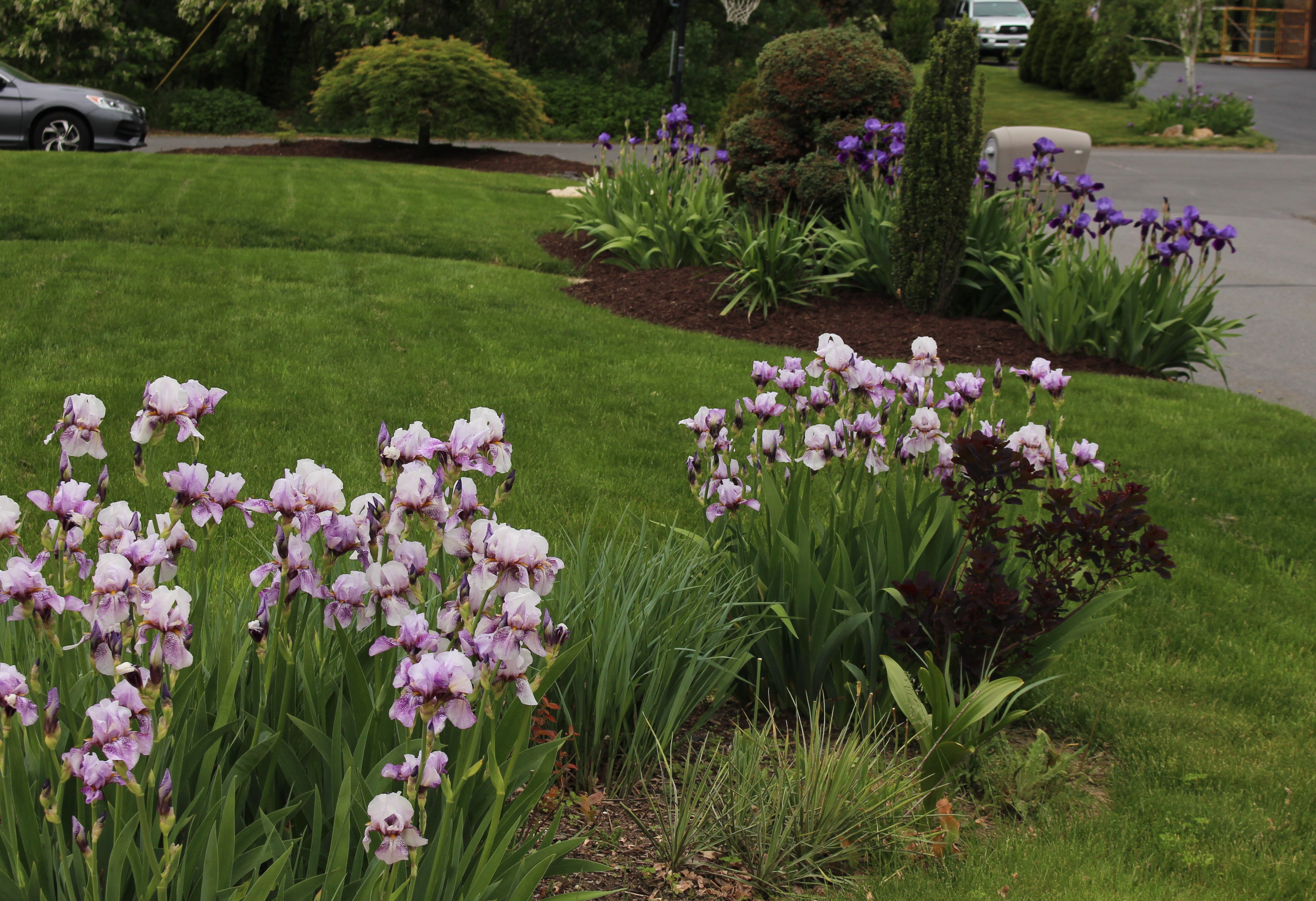
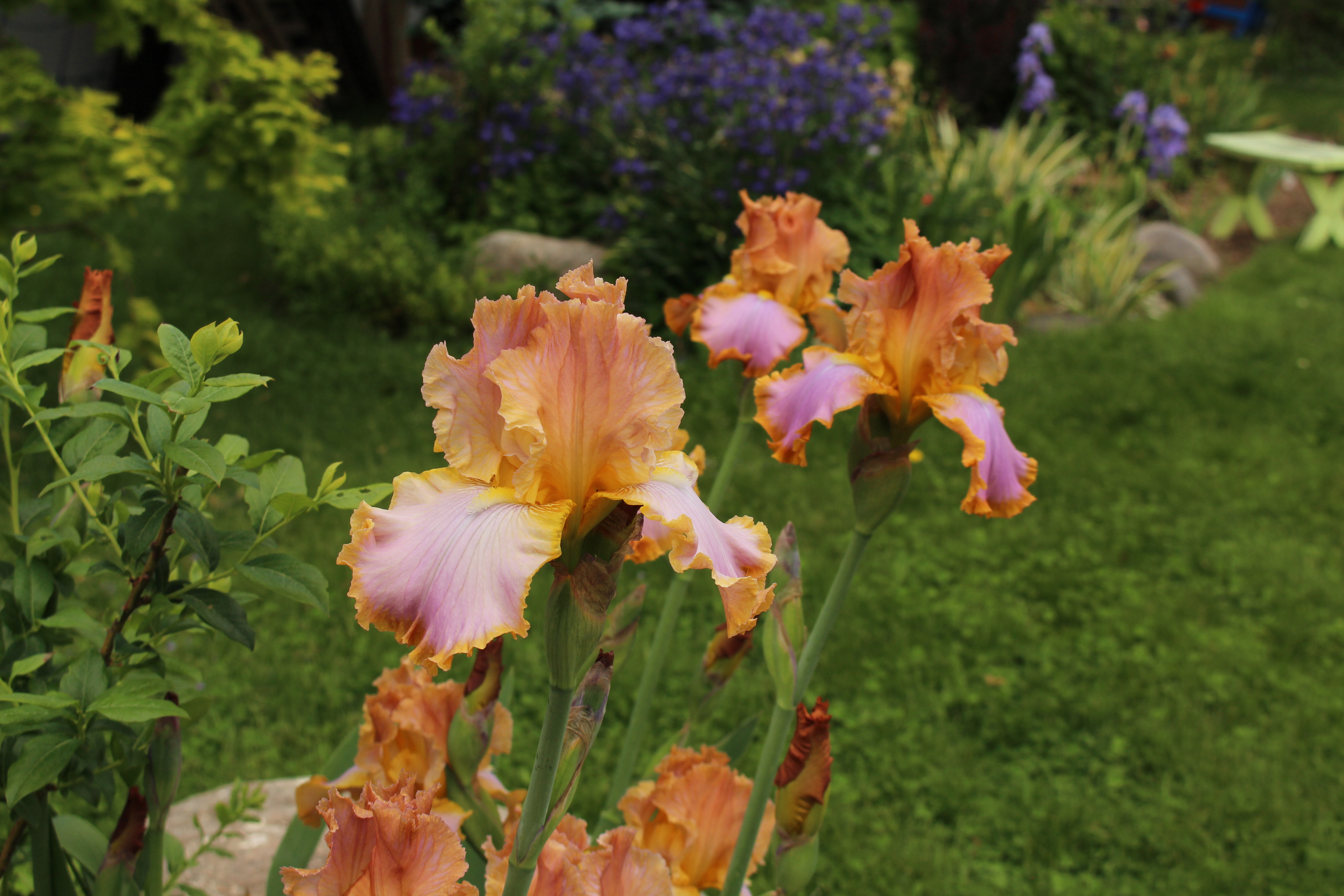
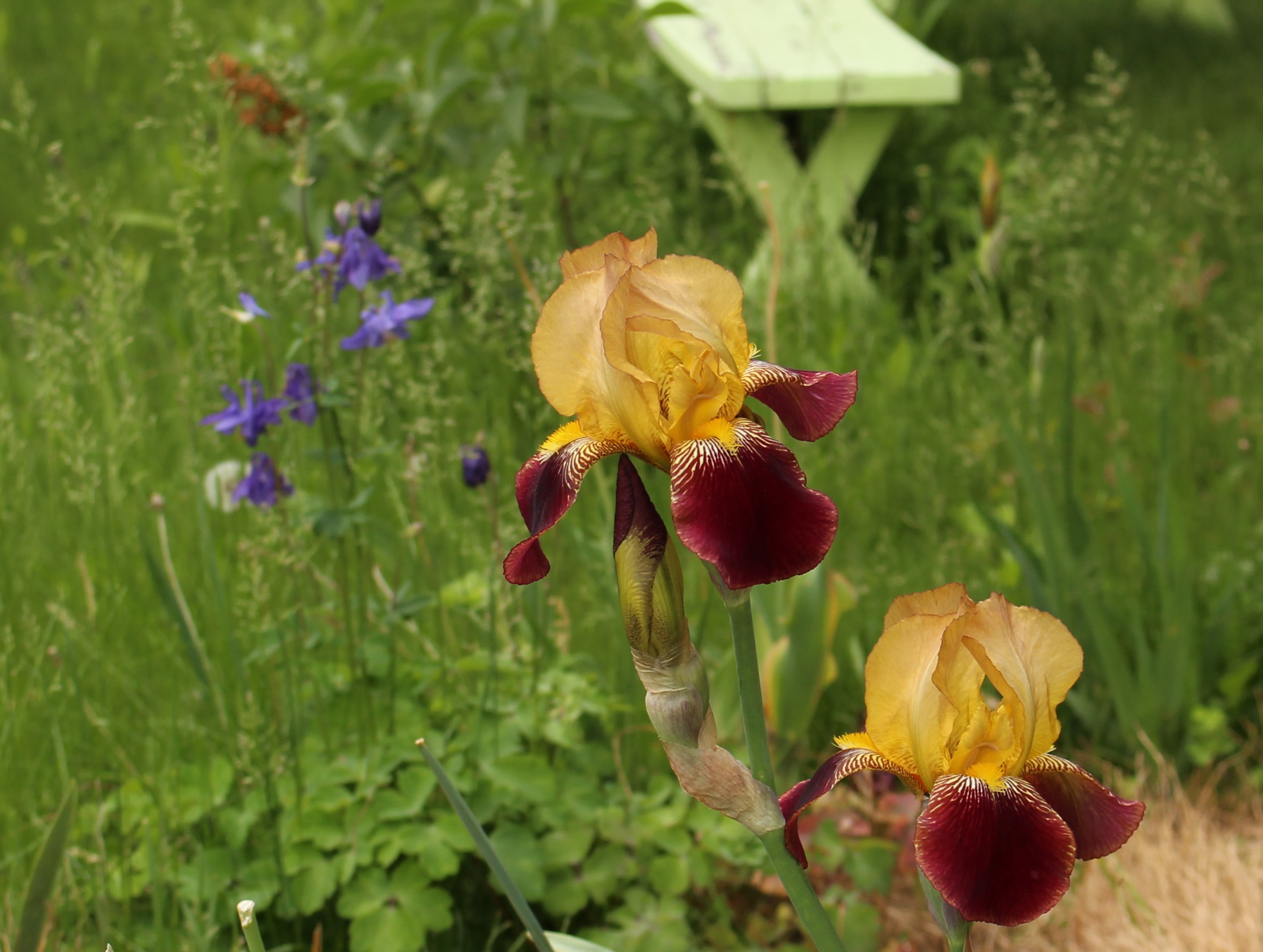
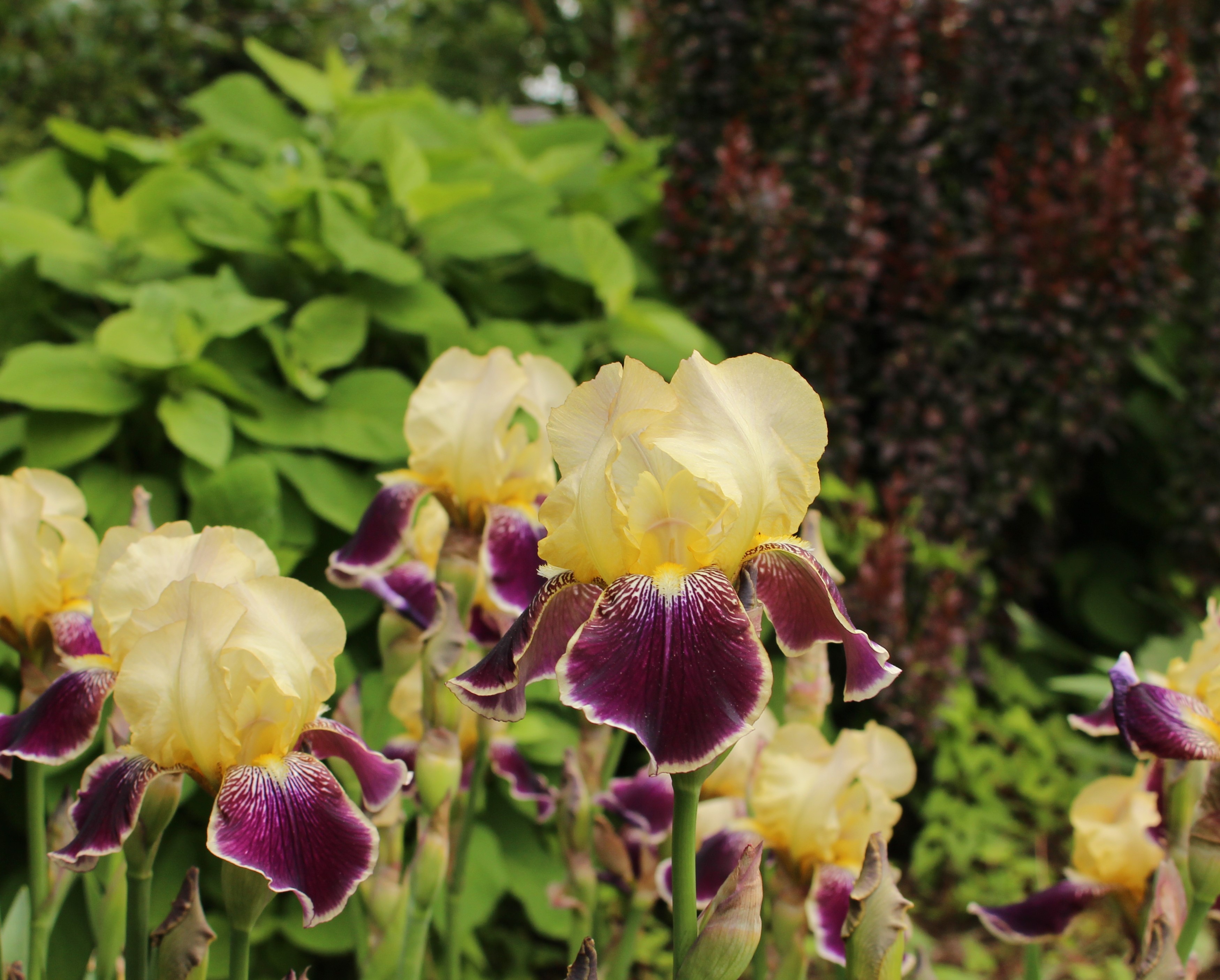
historic bearded iris

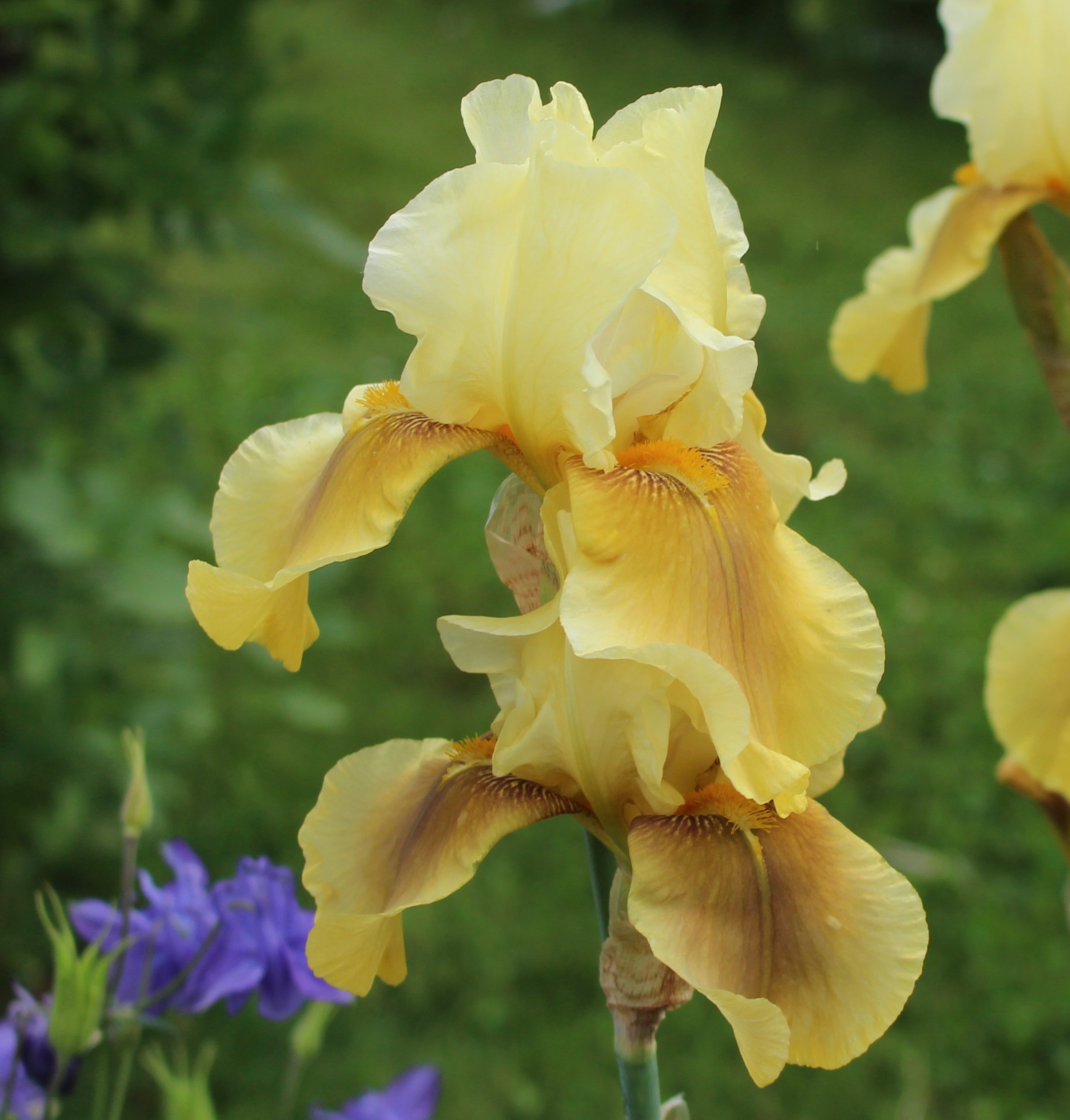
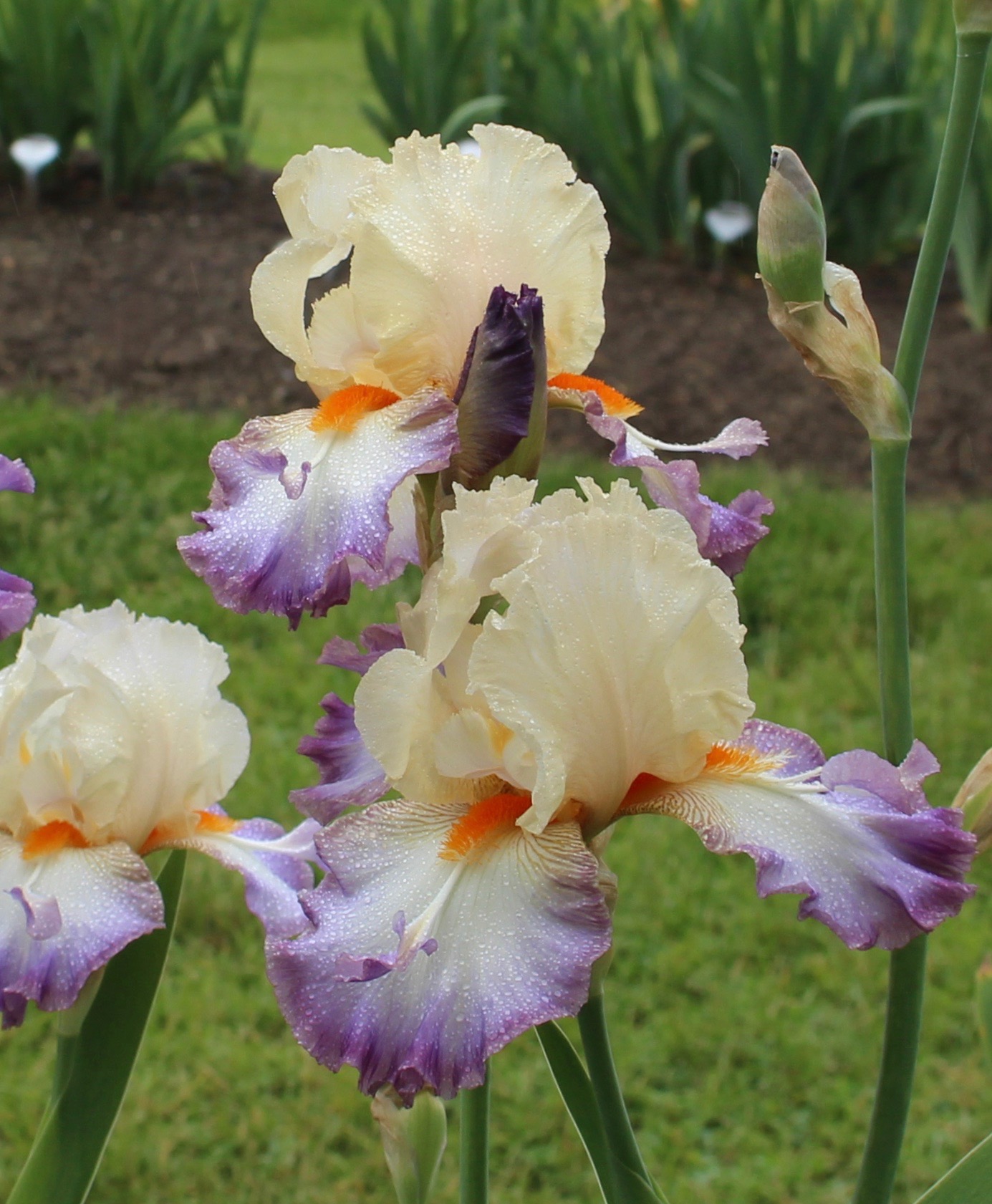
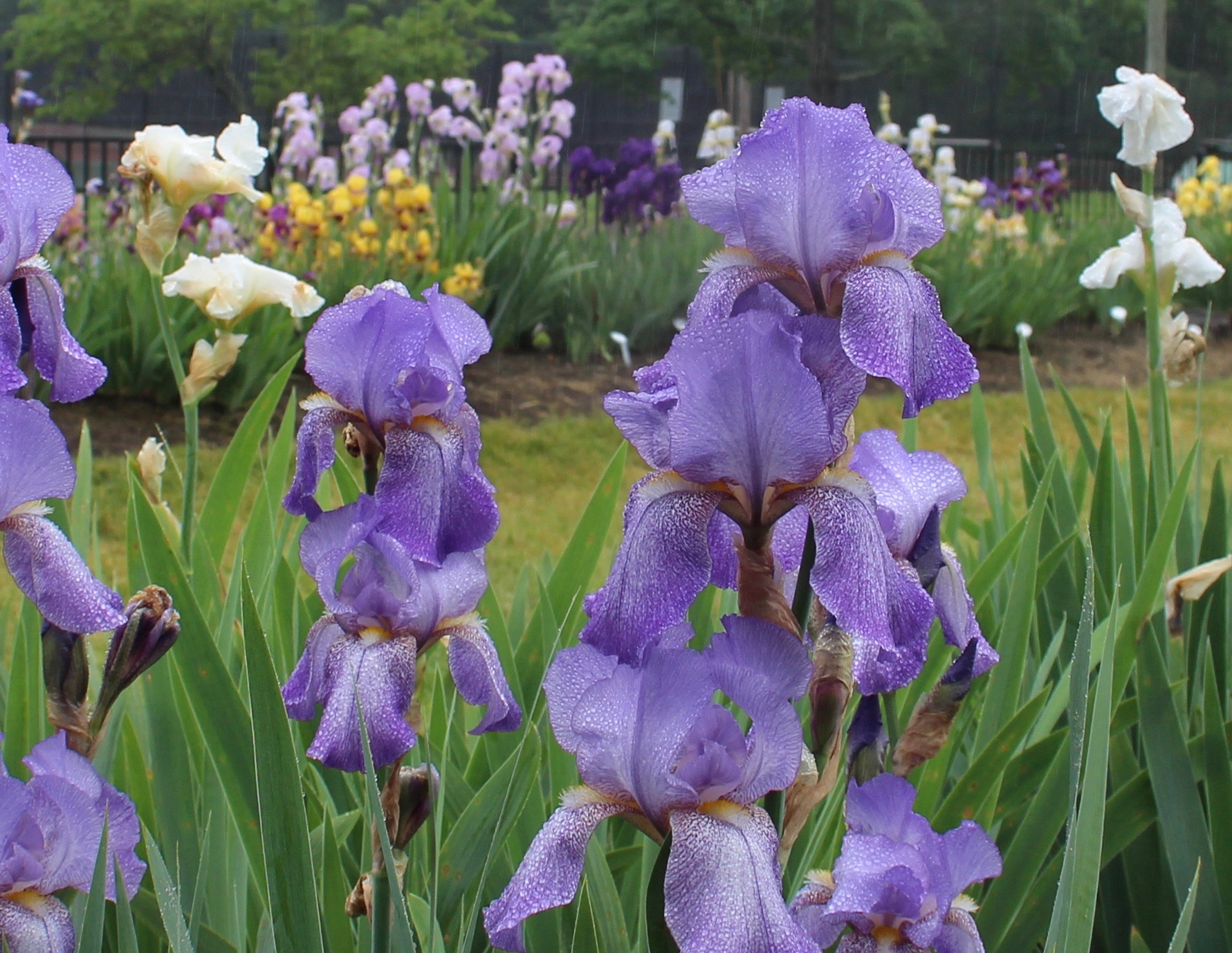
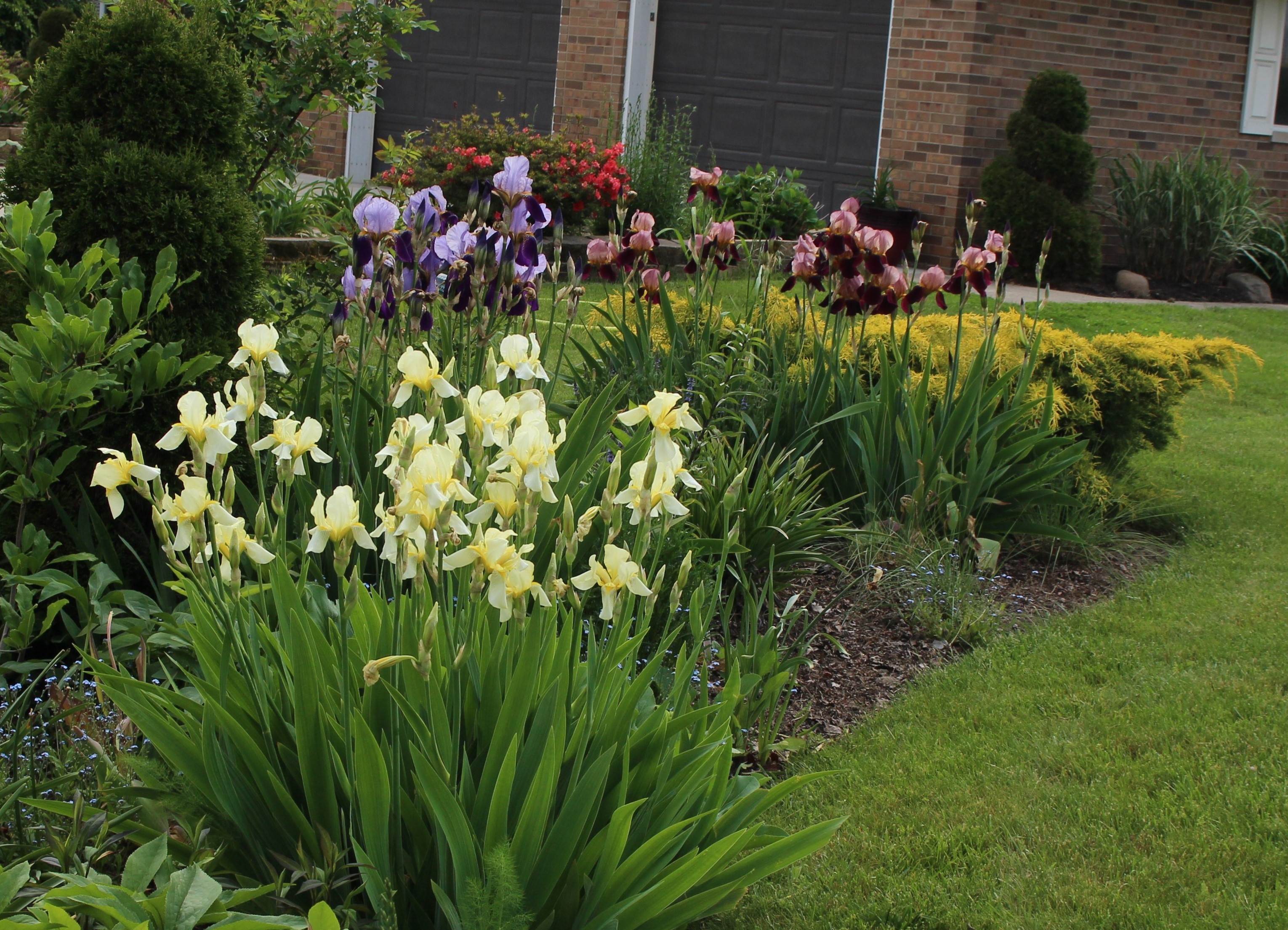
Neglected iris (‘Tiffany’, 1935ish) blooming as if they were pampered in a more appropriate spot.  Older, ‘historic’ bearded iris are much more forgiving than their ruffly modern cousins, although ‘Tiffany’ here isn’t exactly a plain Jane.

Perhaps it’s obvious, but when we jump right from chives to bearded iris you can see there’s not much planning or organization or connection in the writing of this blog, and to most everyone out there it’s obvious this is an entirely human production and 0% AI, but I guess just like I assume everyone knows I’m not endorsed by the multi-colored chives association when I go on about chives, I also assume you can see there’s no AI contribution to this blog.  You knew that of course but I’m rambling tonight  so when that happens I tend to re-state the obvious.  No AI writing and all the weeds and mess in the photos are real as well.  Wow is an AI blog sounding better and better with every keystroke!
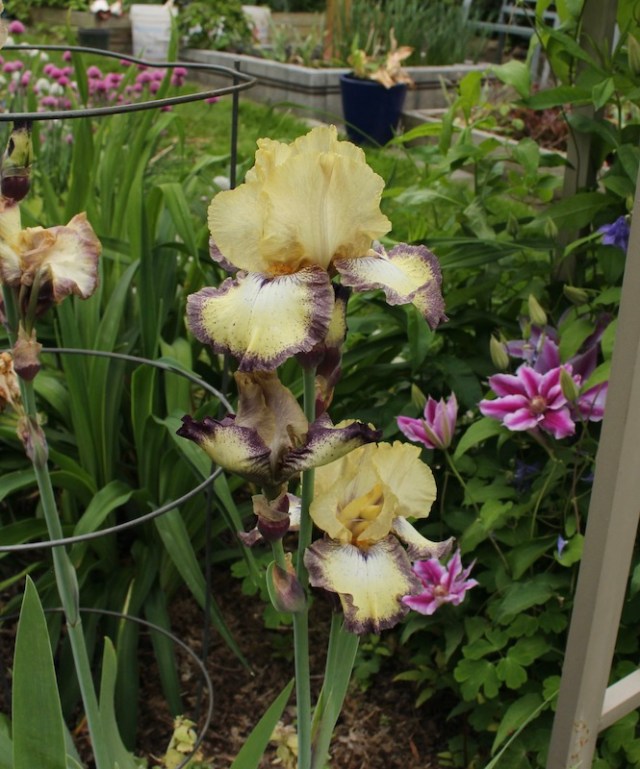
iris ominous stranger

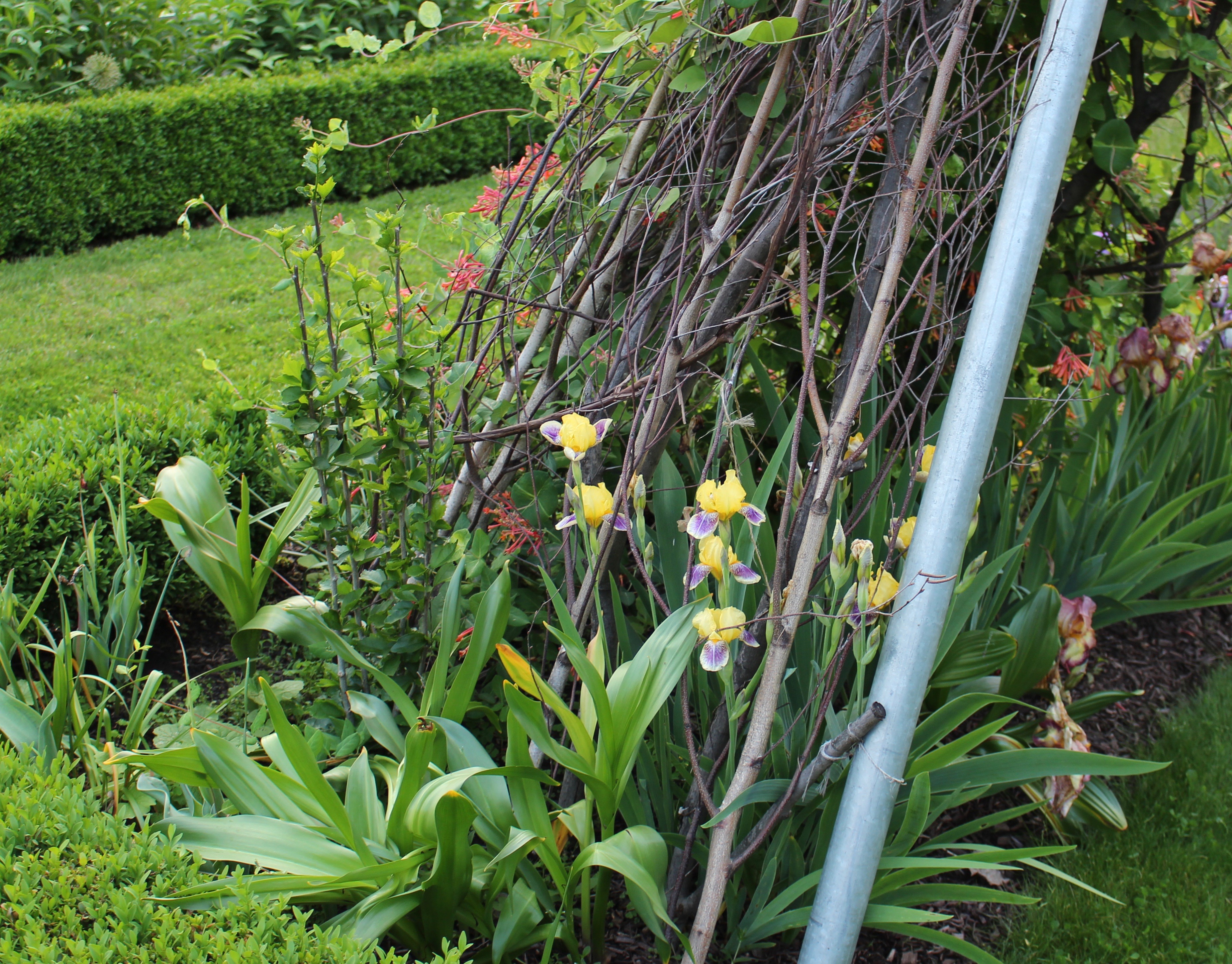
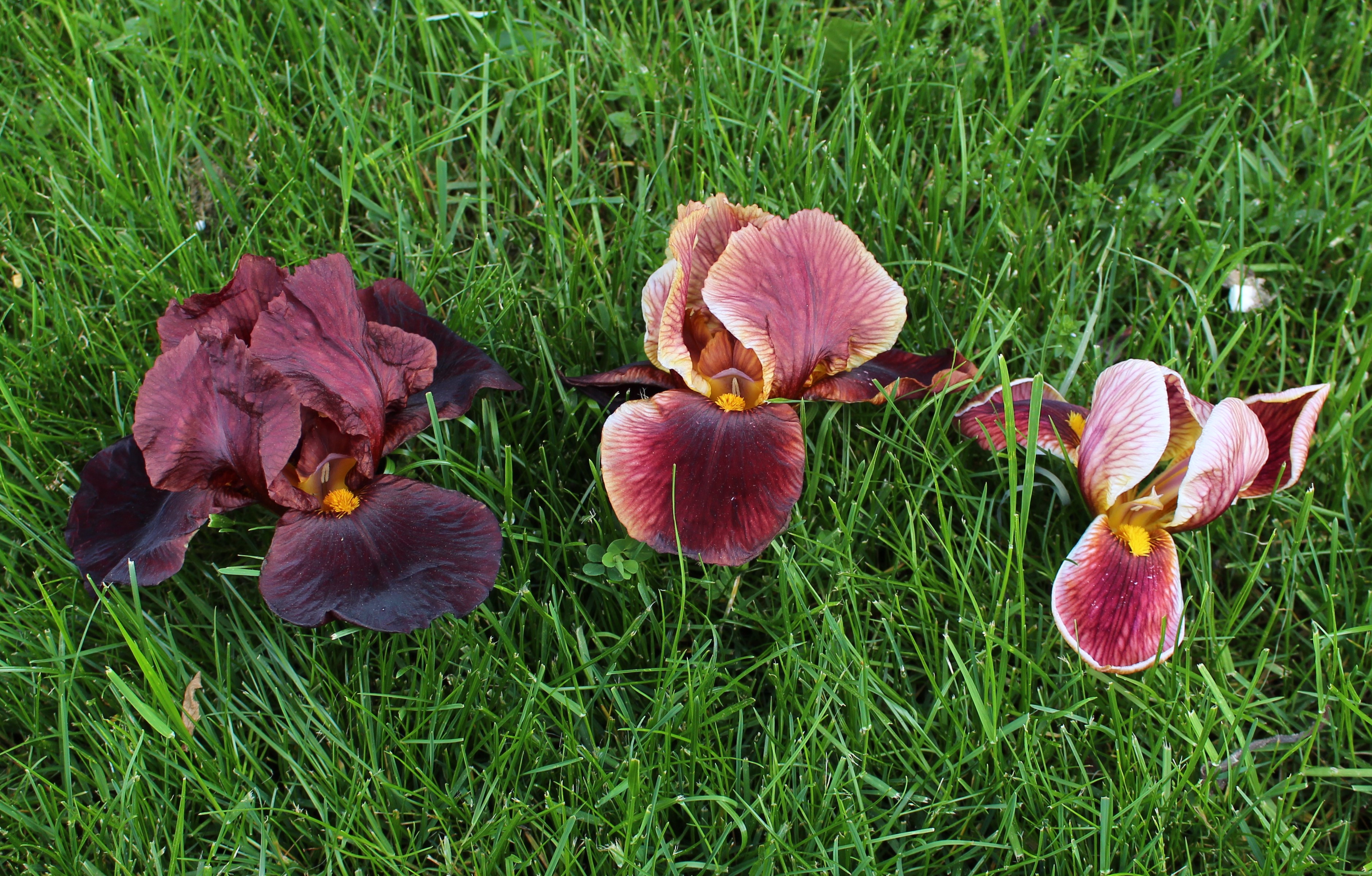
Iris ‘Ominous Stranger’ is cool but as a 1992 “historic” it puts this gardener into the historic category.  Hmmm.  Anyway, let me point out the from-a-bag clematis behind it.  Second year from one of those cheap bags which show up in the early spring and are dead by planting season, this ‘Nelly Moser’ survived!

I guess I’m replaceable.  Probably not replaceable, but invisible is just as final when this blog is lost in a horde of AI generated articles and banter… all the AI stuff which will soon overwhelm a person’s search results.  Come to think of it it’s not unlike the early days of the internet when people were generating tons of cool bits of information, but then slowly it shifted to everyone selling something and the info became a generic lure to one shopping site or another.  Oh.  Iris.  I like the historic ones.  They’re hardy and fragrant, and each year I claim I’ll take better care of them and then I don’t.
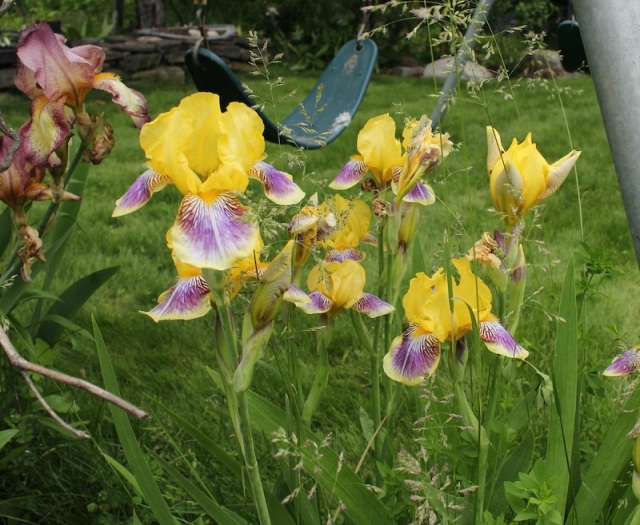
historic bearded iris

A weedy patch of ‘Darius’ an 1873 era historic iris.

This might be the year.  I want to put a bunch on the berm, so we will see.
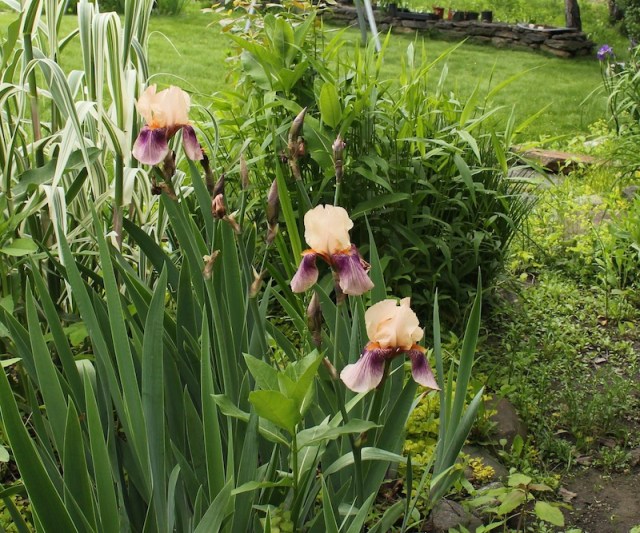
historic iris color carnival

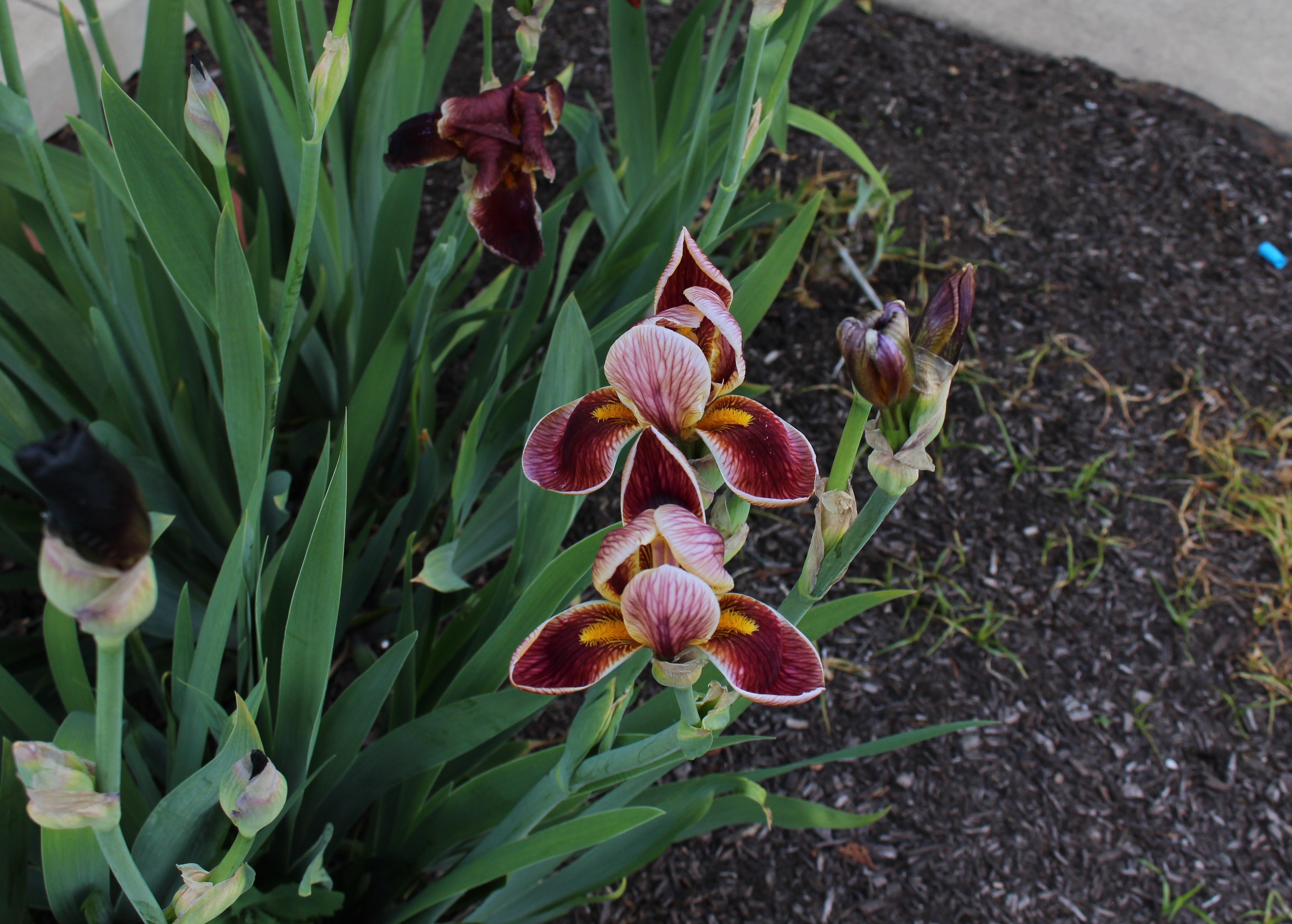
‘Color Carnival’, 1949 persists in terrible and wet spots where it can but would rather not.  A modern iris planted here would not have been as accommodating and would have become stinky mush years ago.

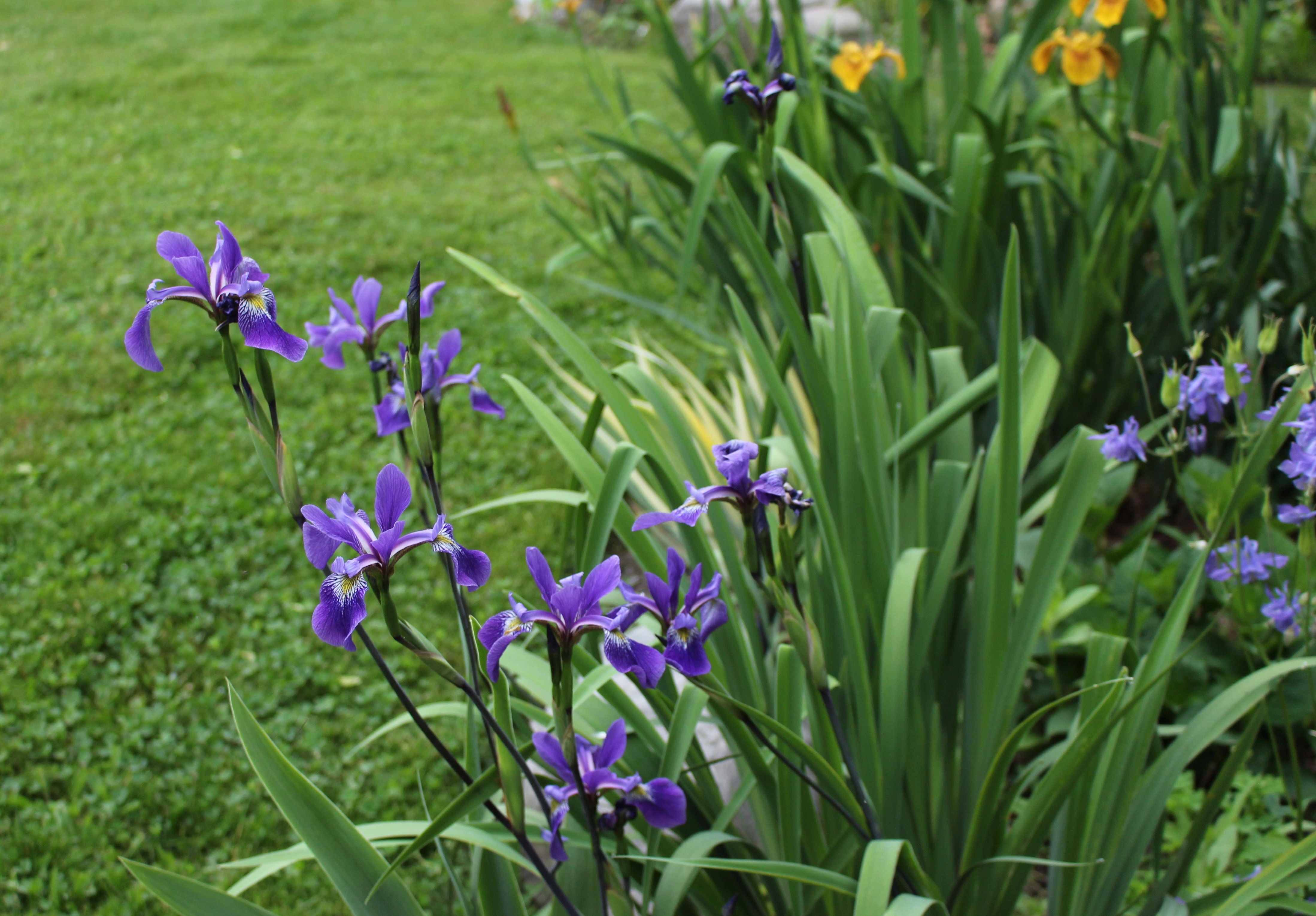
Honestly iris are some of the most amazing flowers.  It’s hard to find an ugly one and I think you can only do it when some of the oddly colored or over-ruffled ones edge into an area which isn’t your taste.  A few non-bearded iris which are flowering now (and to my taste) are the yellow flags and their relatives.
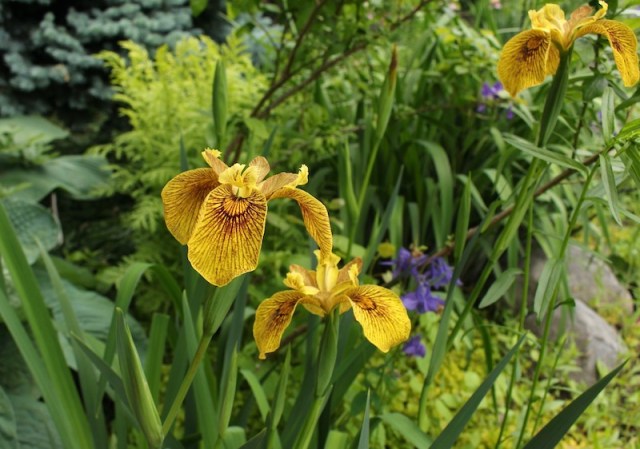
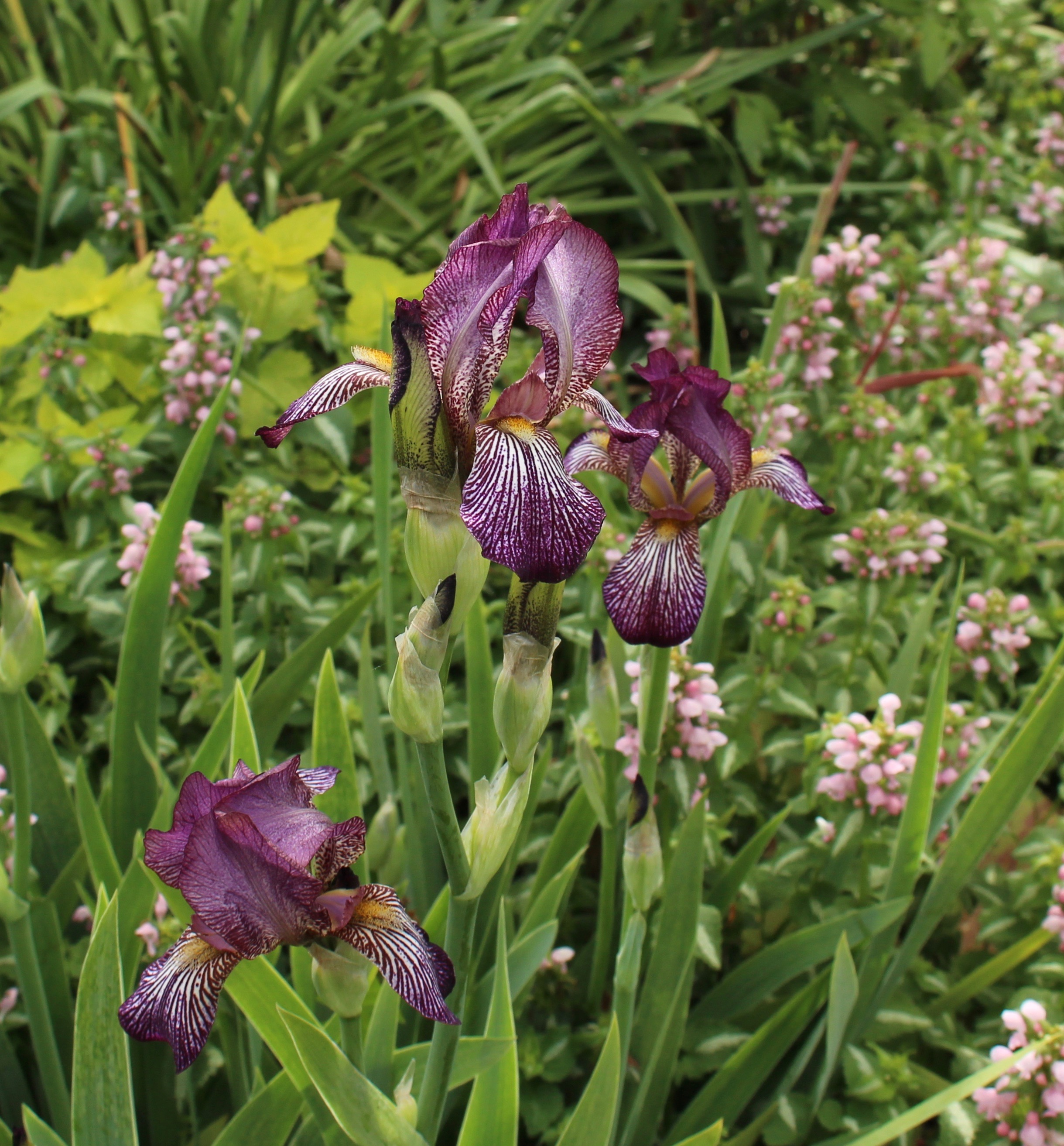
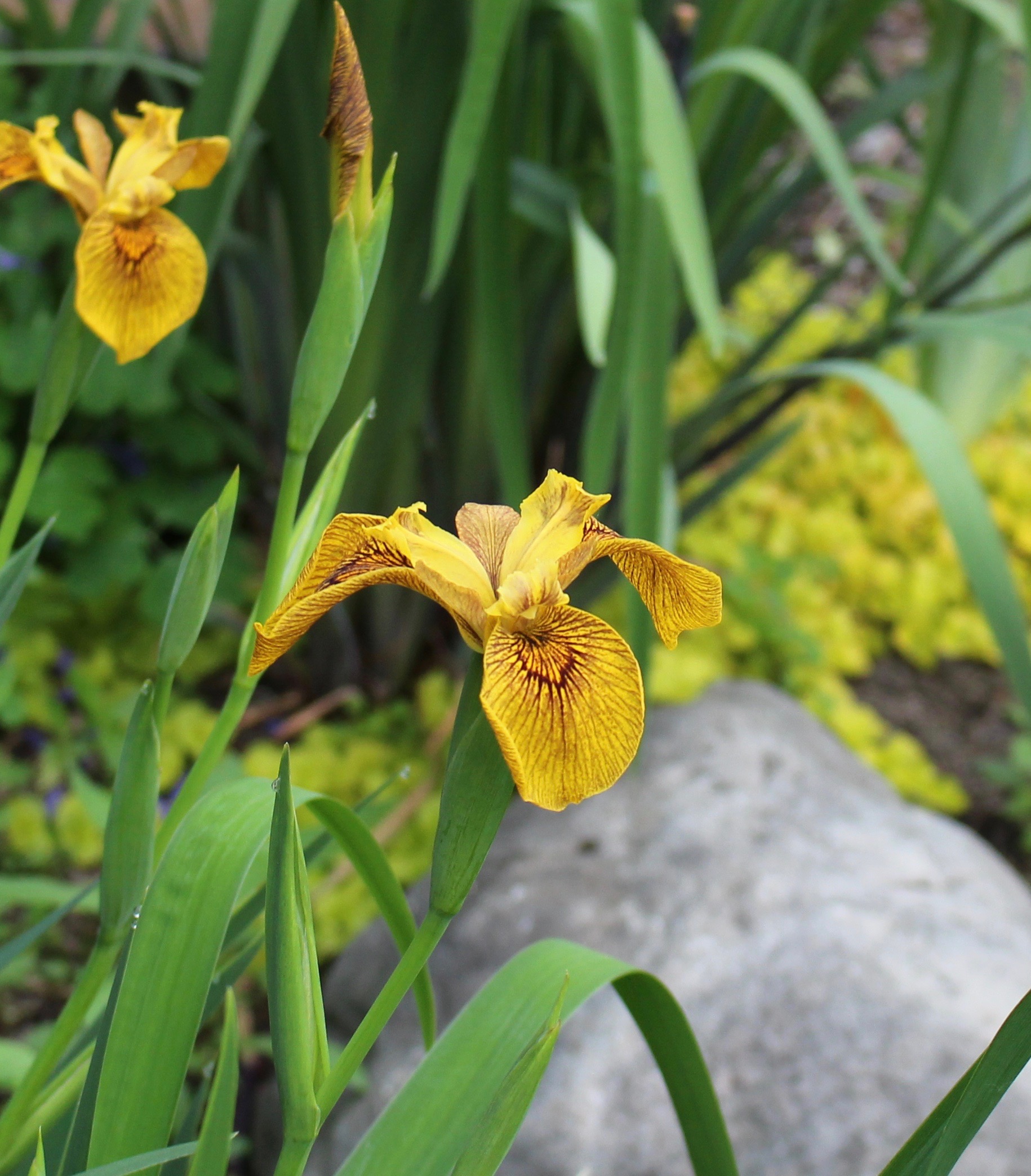
iris berlin tiger

Iris ‘Berlin Tiger’ is easy and unique.  Maybe not bed of geraniums impressive, but when you get all caught up in the pattern it’s amazing.

Okay, I have to move this iris thing along and won’t mention much on foliage.  There’s ‘Gerald Darby’ who emerges in spring with a strong purple color on the foliage which looks great for a couple weeks.  The foliage fades to green, but the simple blooms are also nice, and like ‘Berlin Tiger’ he’s easy to grow.  A few others have yellow emerging foliage or variegated, or… the iris family is big, there’s plenty to grow.   Trust me, you’ll run out of space before you run out of plants to try.
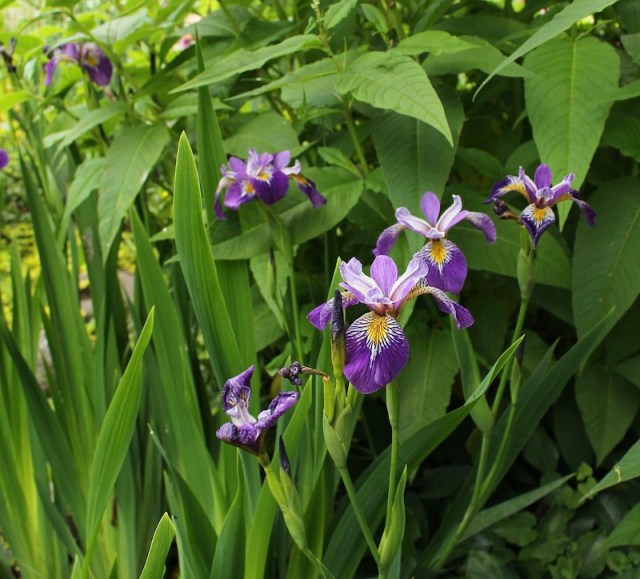
iris holden's child

An inter-species cross, ‘Holden’s Child’ has smaller blooms but a long season.

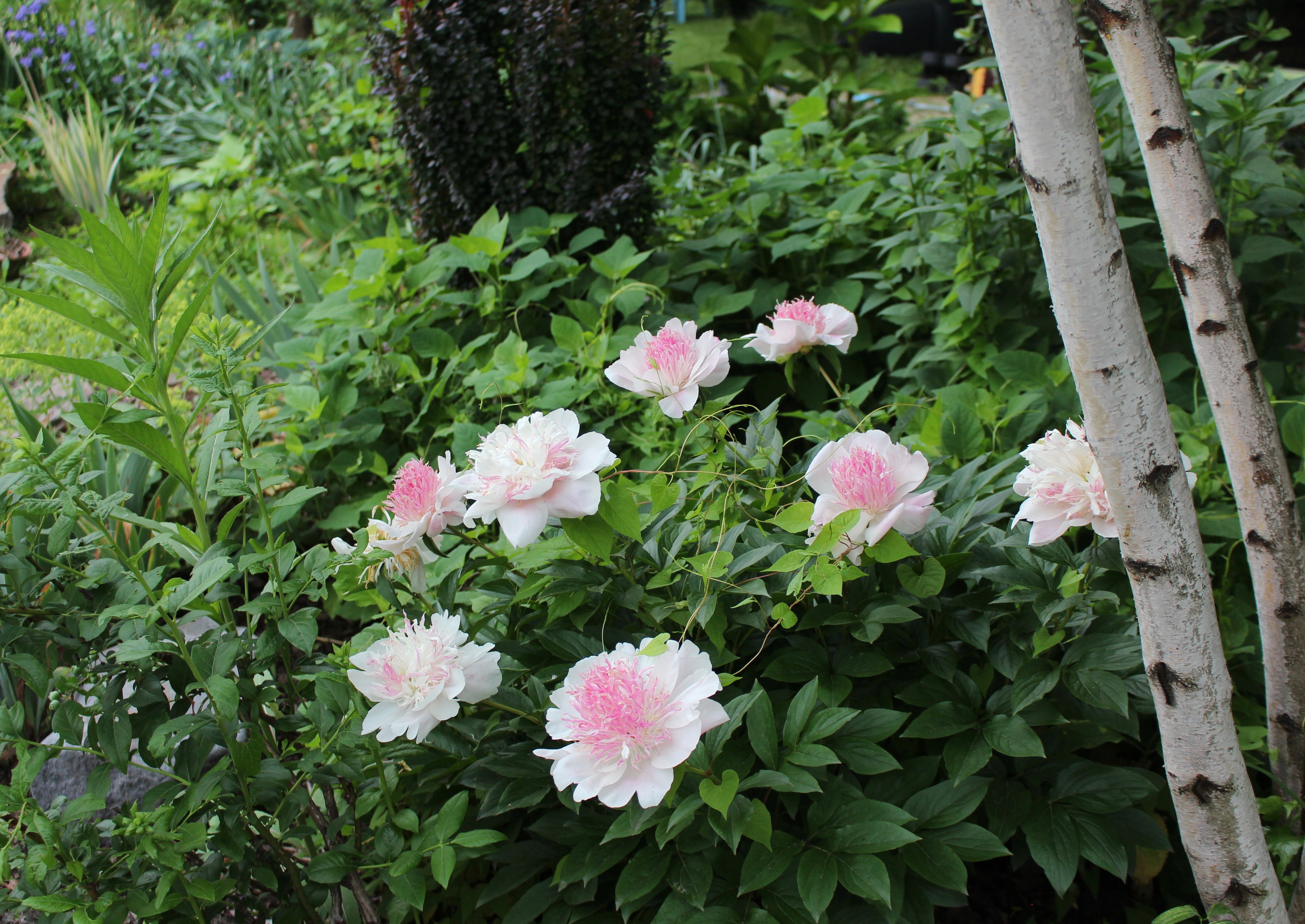
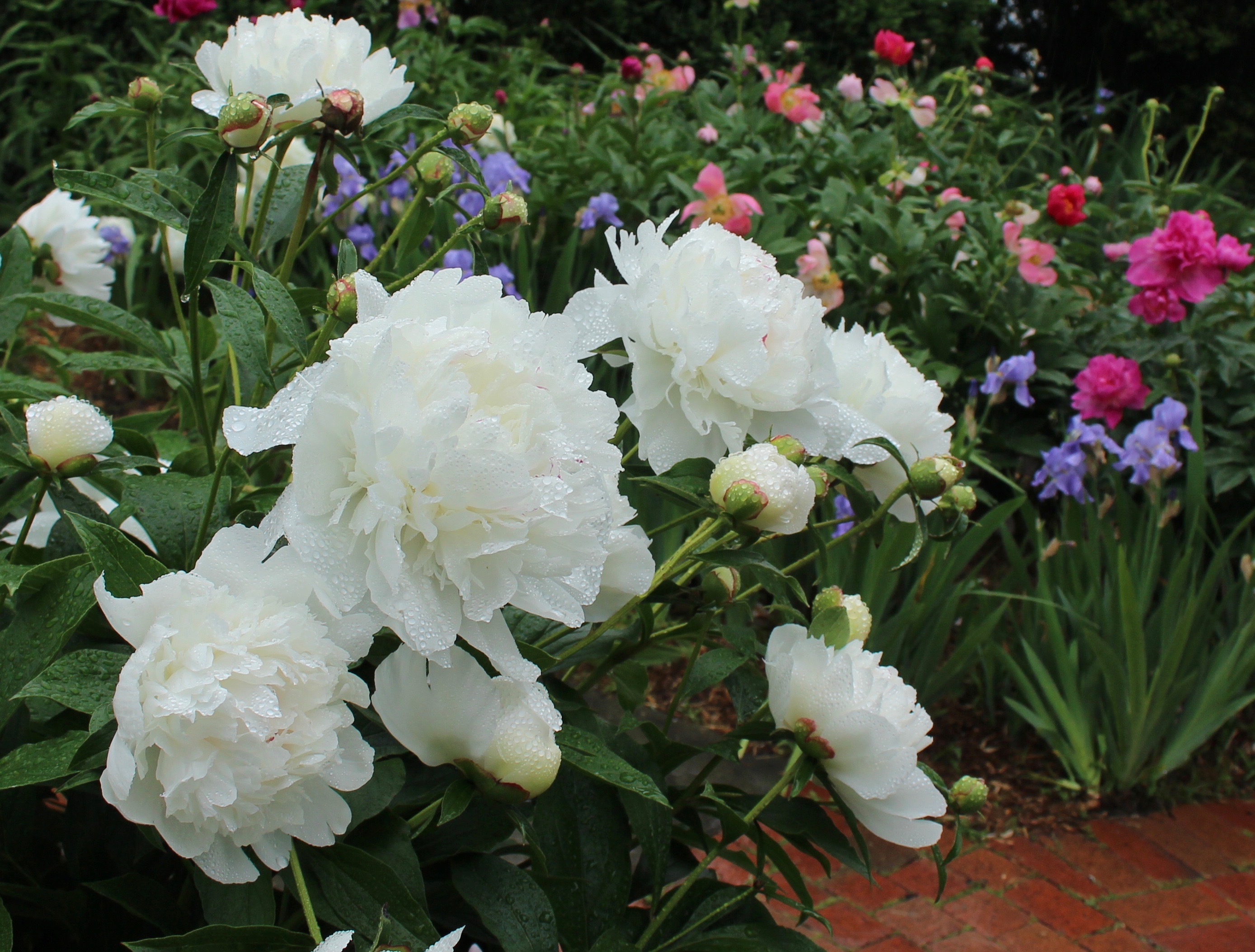
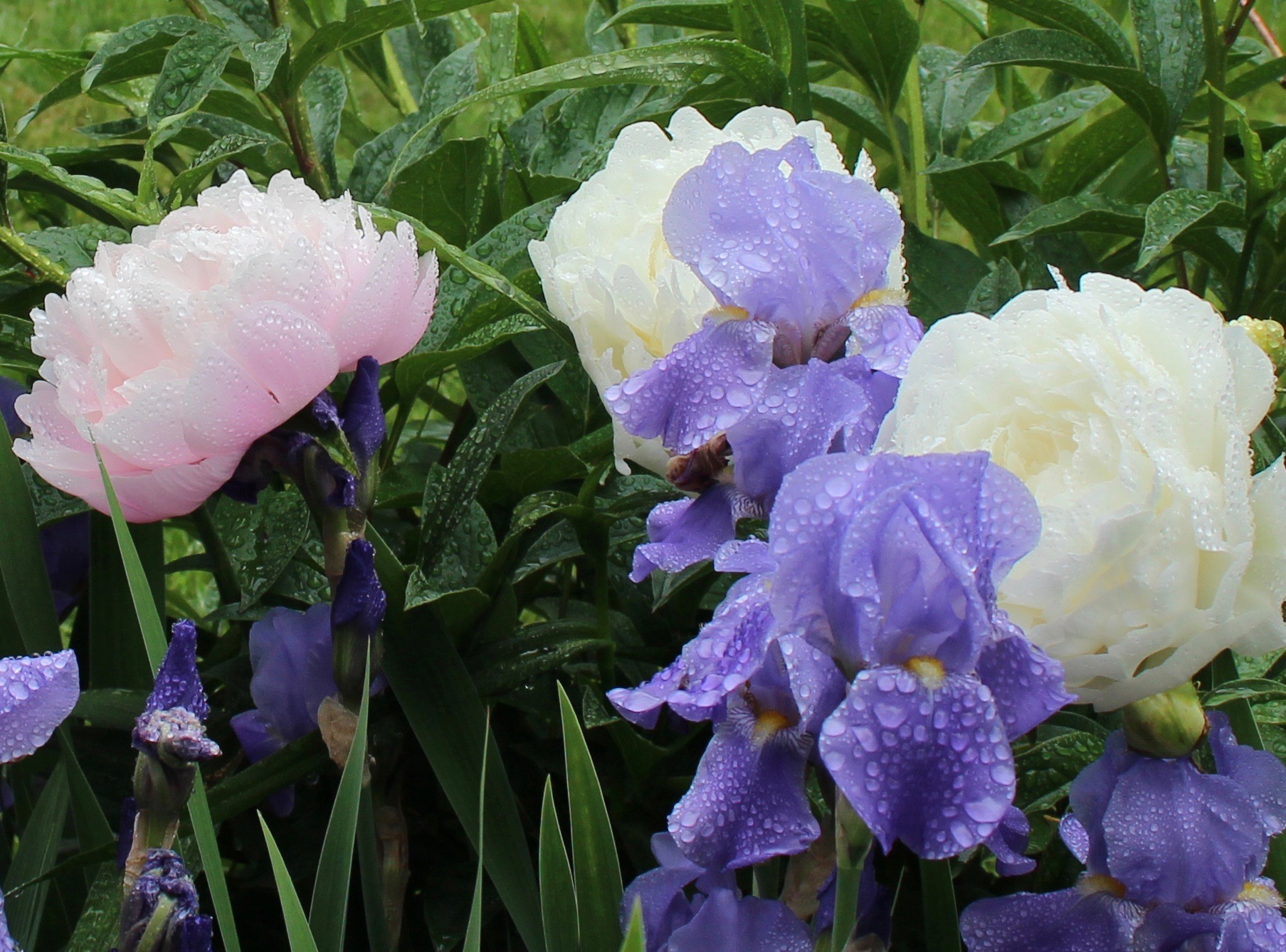
Peonies are starting and I don’t grow many.  Peonies, iris, roses, clematis… some of the most beautiful flowers, are all coming on now and you need to be careful before the whole garden is filled with May and June color and there’s nothing left for July.  Worse things could happen.  You could spend the rest of the summer at the beach if you overdo June, and that’s not bad either.
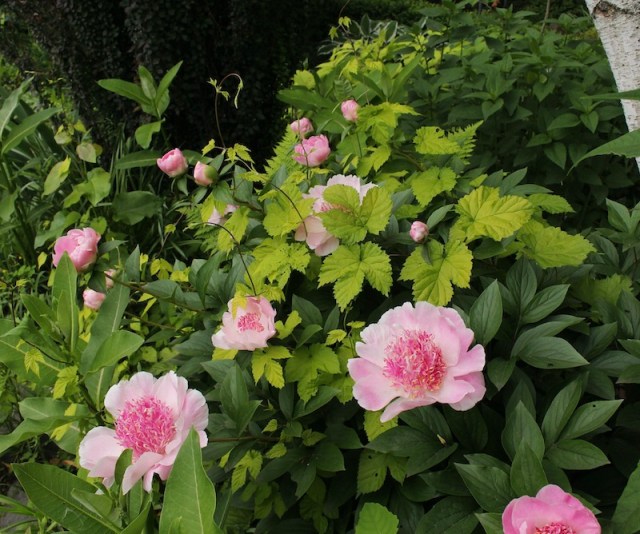
peony do tell

Peony ‘Do Tell’ was there and I bought it.  Now it’s stuffed in where it has to fight off golden hops each summer and that’s probably not ideal.  Try to avoid buying every amazing peony you find just like I avoid buying every amazing snowdrop I find.  well…. forget that, you do you.

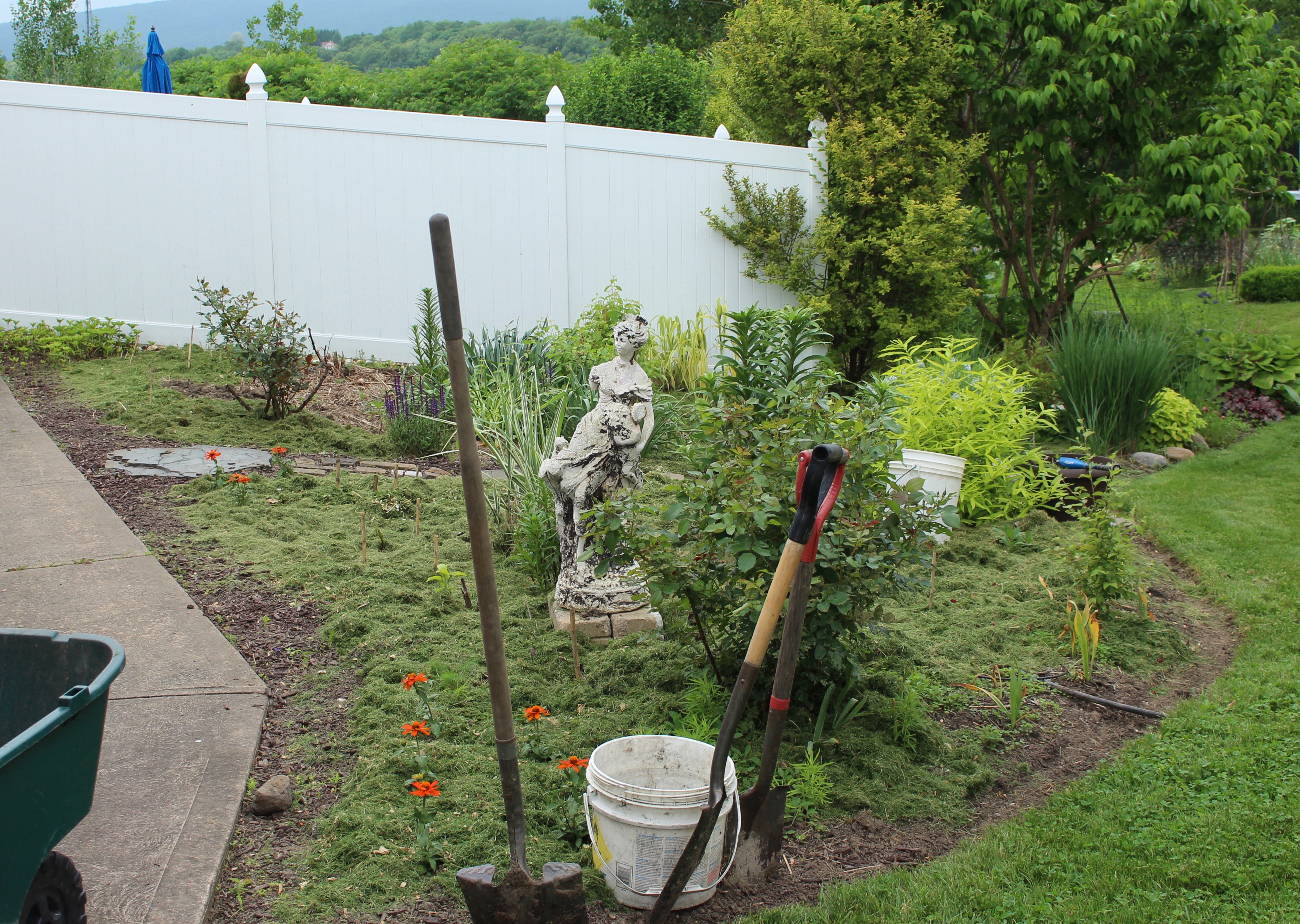
Sorry, as usual I’m going on too much.  Let me wrap it up with some wider scenes since the abundant rain has everything lush and excellent, and the gardener has had some success keeping things in order this spring.
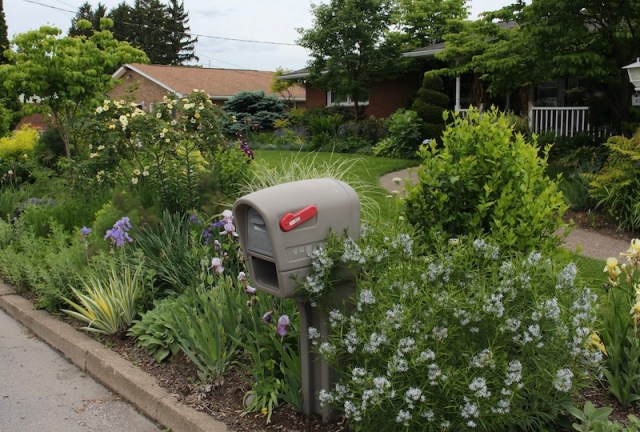
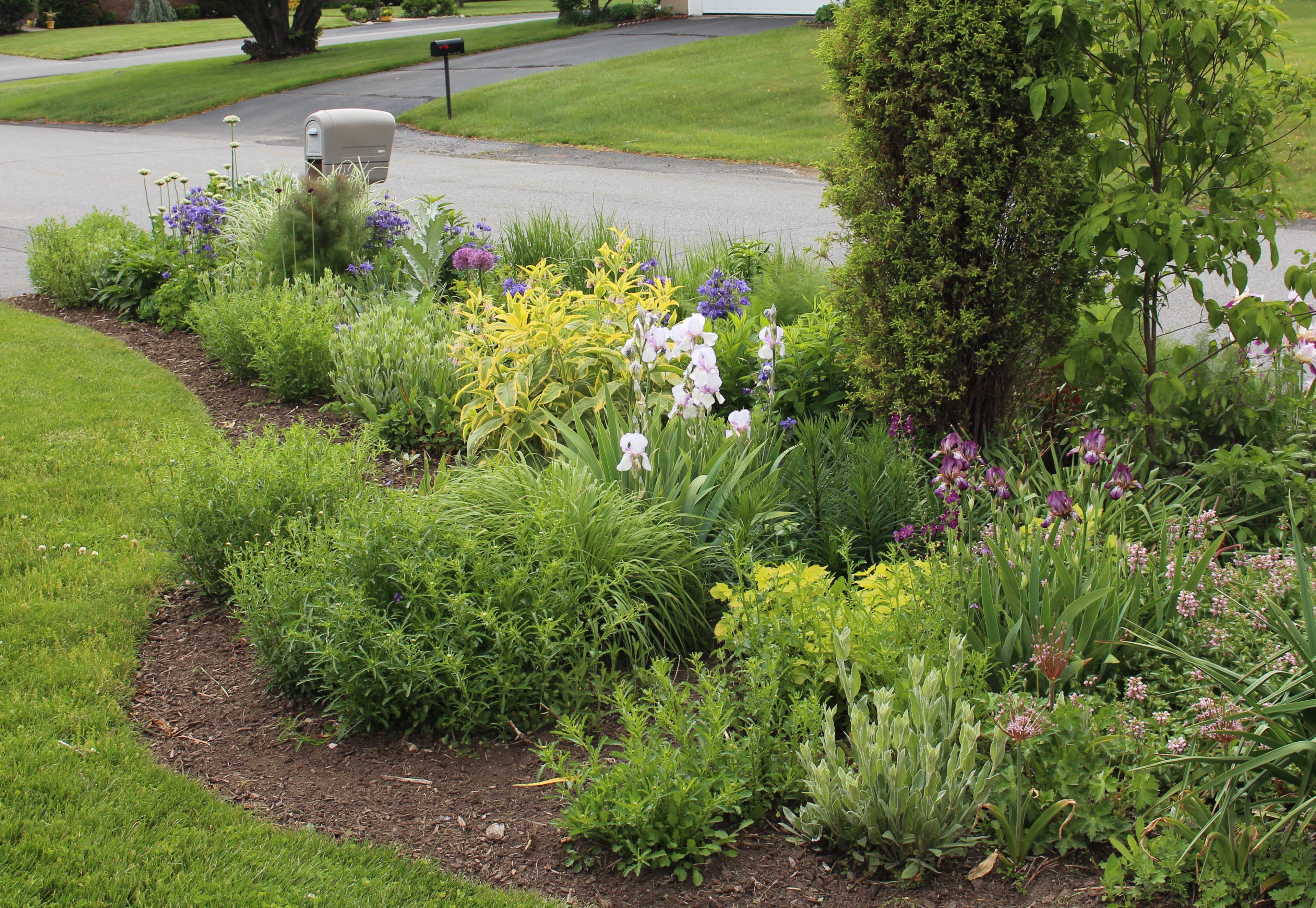
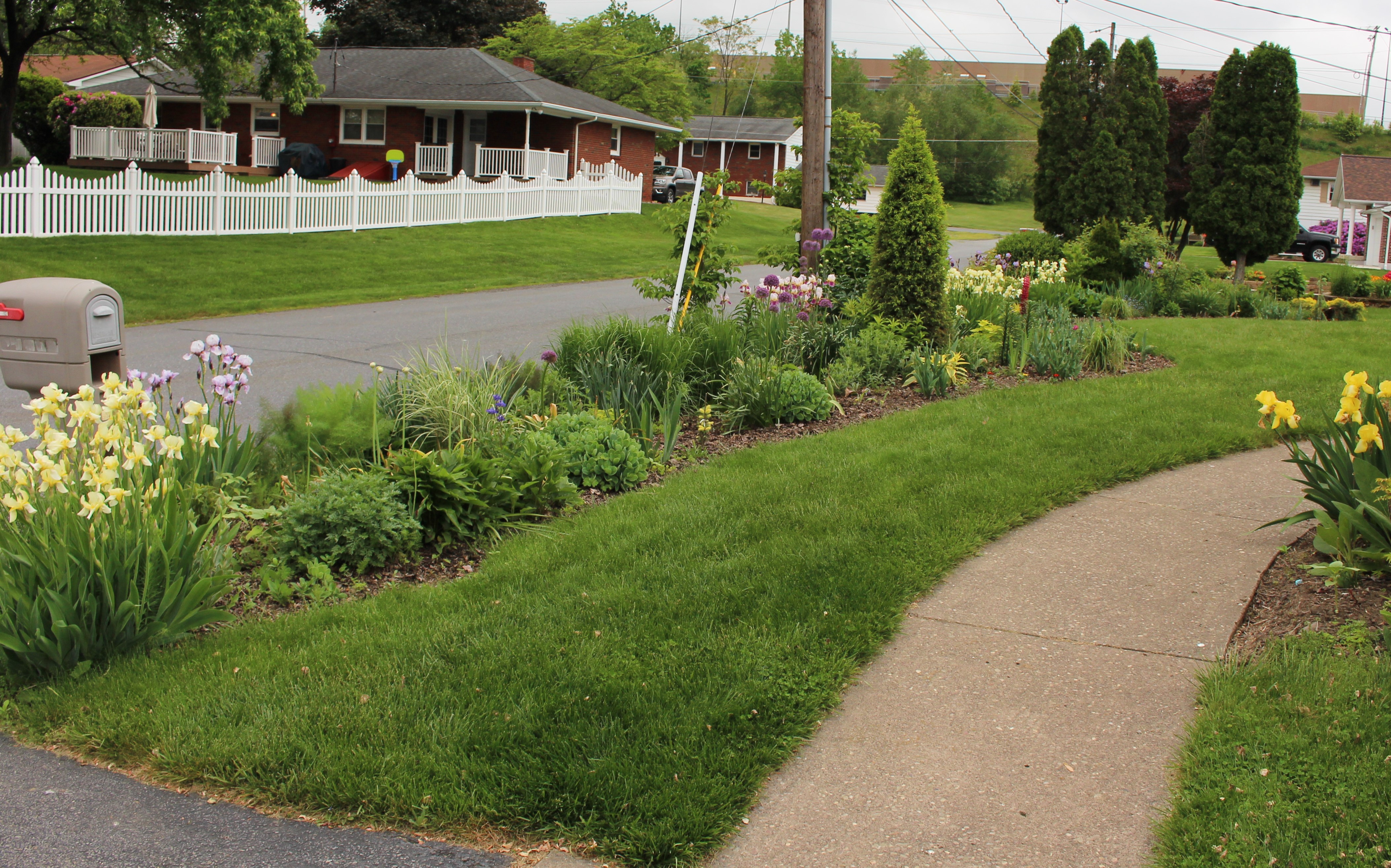
early summer perennial border

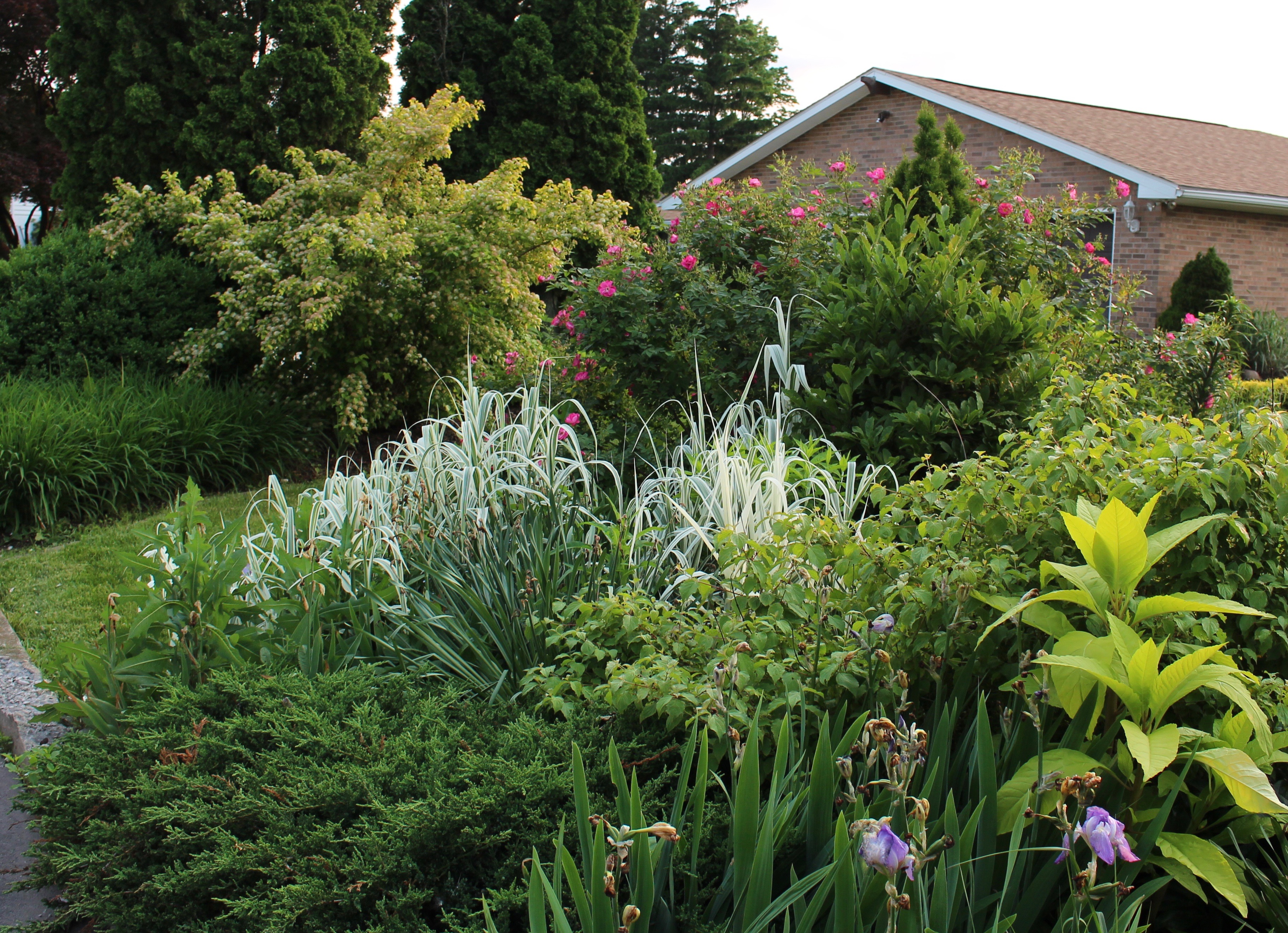
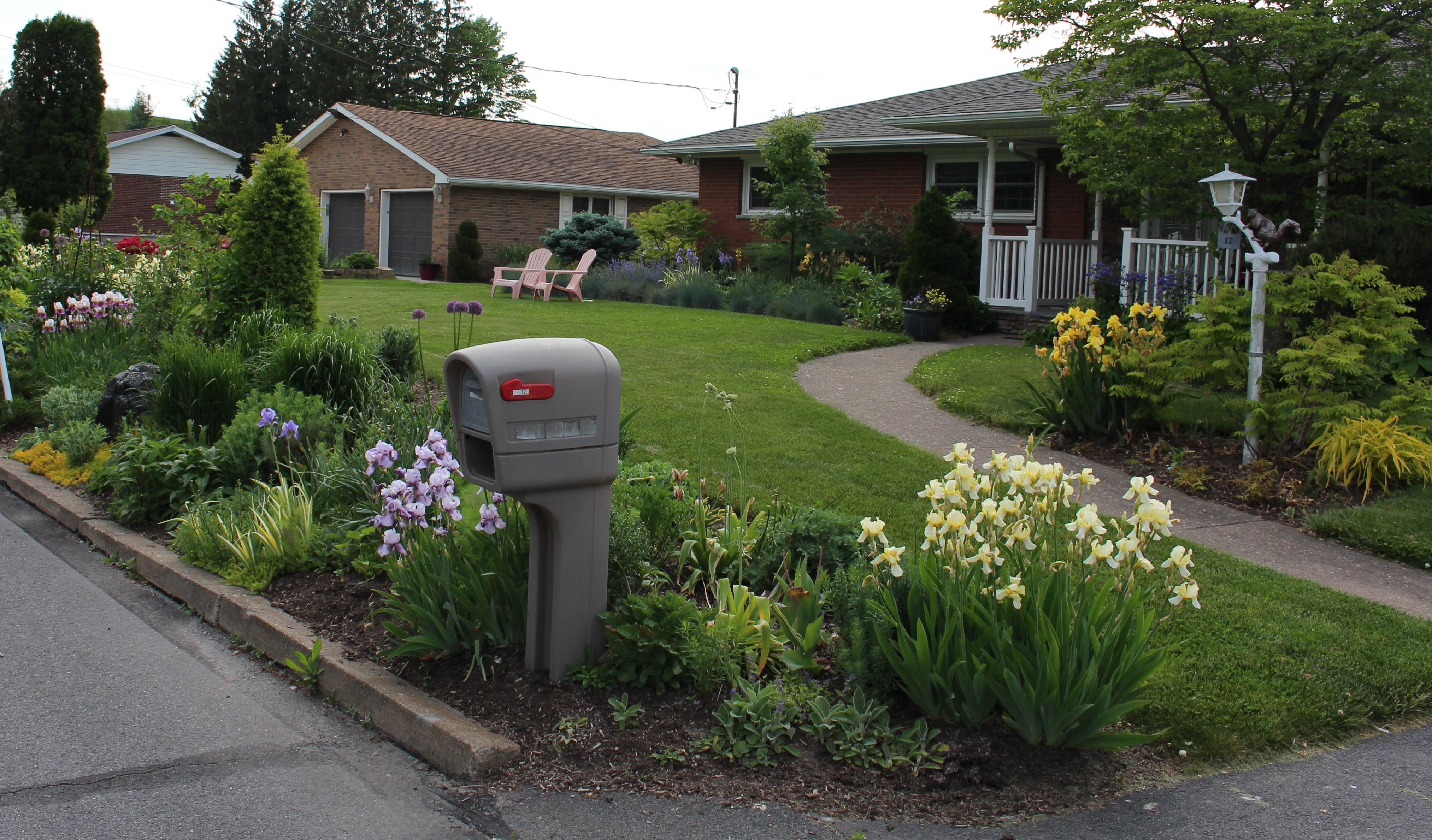
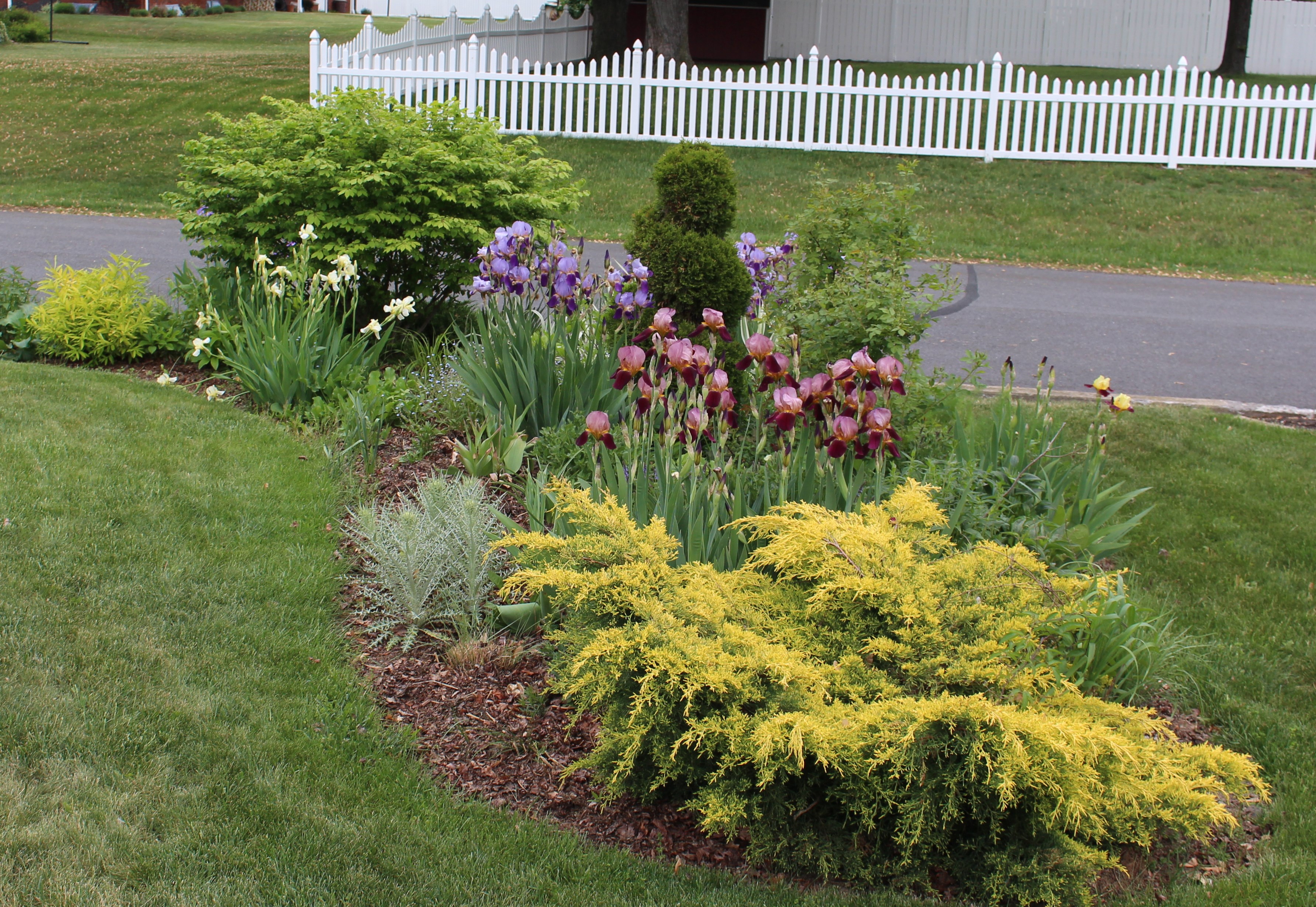
The street border is possibly going to get a firm thinning once the Amsonia is done blooming.  The Amsonia will be cut back to about 1-2 feet and behave much better than if left alone.  Also this will eliminate all the seeds which will otherwise overrun this corner.

Success in May and early June isn’t much of a flex in my opinion, since nearly everything still looks fresh and new right now, but I will take my wins as they come.  Last year I was still moving dirt and sowing lawn at this time, so anything looks better than that.
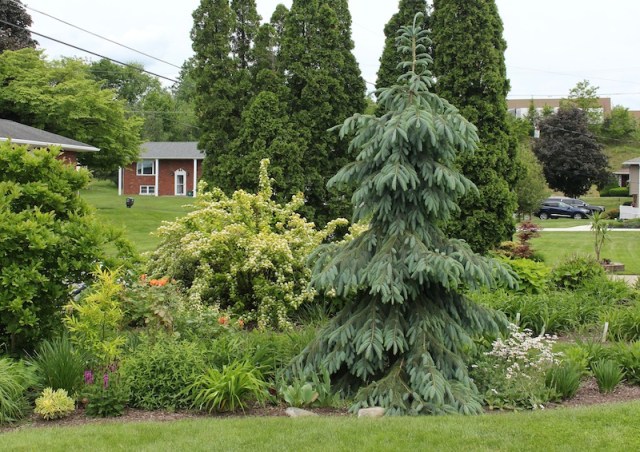
early summer perennial border

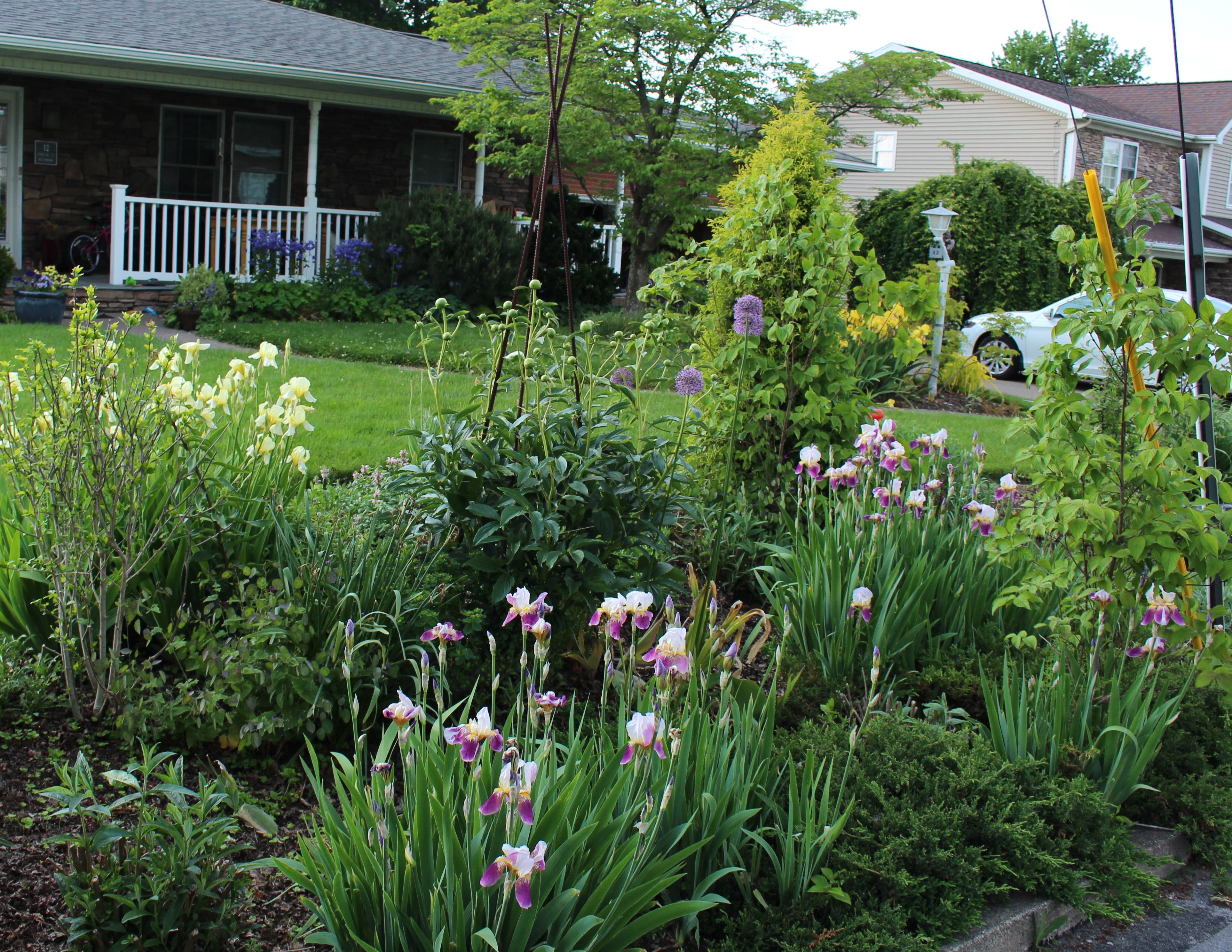
This end of the front border is now anchored by my beloved weeping white spruce (Pinus glauca ‘Pendula’).  Someday I should dig up a few baby pictures from when it landed on my doorstep as a tiny mail ordered graft.  The golden ninebark (Physocarpus opulifolius ‘Luteus’?) behind the spruce also came here as a twig in a box.
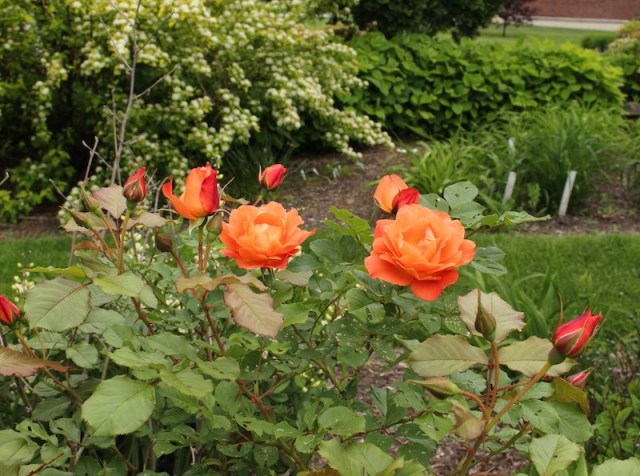
rose westerland

The almost a climber rose ‘Westerland’ is also in the far end of the front border.  I love the color but might have to move it to a viewed-from-afar location so I don’t feel as ashamed of the foliage issues later in the year.
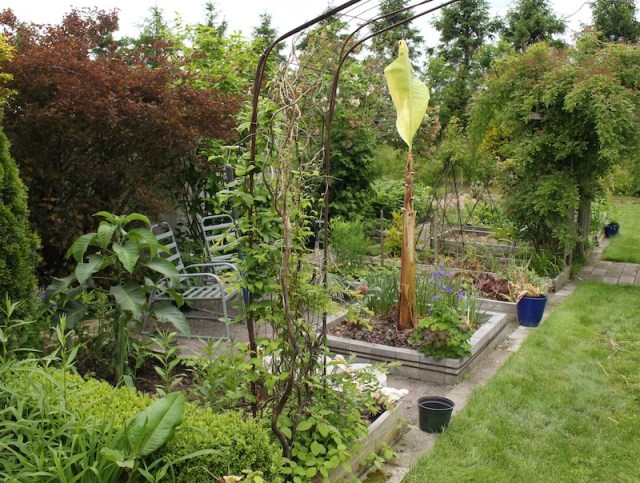
potager plantings

One last overview.  It appears the potager is becoming the new tropical garden.  The banana is out for the year and off to a great start.  A brugmansia and cannas have been planted as well, it should be fun.

That’s it on the “wide views” so not as may as I thought, but there’s other fun afoot such as all the other summer stuff which needs to go in on the deck and into pots.  Many people take care of this by June first…. I always have some stupid idea slowing me down, like how should I re-invent this wheel?
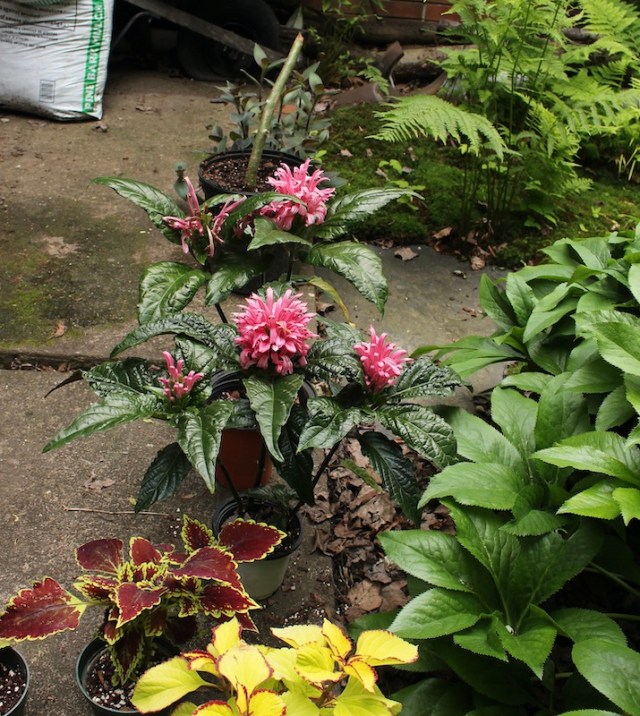
brazilian plume Justicia carnea

A friend gifted me a Brazilian plume (Justicia carnea) last year and I love it.  The mother plant froze last winter but not before I took a few cuttings (which, just for reference root very easily).

Fortunately the endless rain has kept my neglected pots watered and my optimism alive.  Few annuals are going in this year… assuming things don’t hit some major end-of-spring sale temptation… and the bulk of things are out of the winter garden and back for another year.  There are still a few new treasures picked up here and there, but overall I have no guilty splurges to confess.  Maybe one amazing Brugmansia and a palm that’s taller than me but I’ll only feel guilty if I return to the store today to pick up a second palm.  It was $15.  It’s taller than I am.  It’s like a tropical resort is coming together on my back deck and you know how much a resort trip would cost, so clearly this is a money saving option thank you.
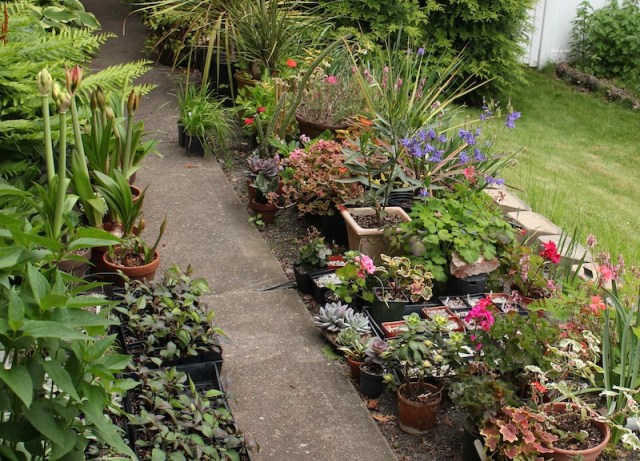
the pot ghetto

The pot ghetto next to the garage.  Let me point out the two flats of dahlia seedlings lower left.  ‘Bishop’s Children’ seed from the Mid Atlantic HPS seed exchange and I may fill the potager with dahlias this weekend.

I should get to work and not go palm shopping.  We will see, but in the meantime I hope you enjoy an excellent weekend.

Spring is Quite Awesome

Okay.  So if this blog post goes up in the next day or two it’s just a three week gap and not four, and I guess that’s better, even if I’m forcing myself to sit here right now and get something done while my heart is saying do nothing, crawl into bed, find a blanket, play mindless phone games….

spring violas

The violas of spring look great, they love the cool weather and frequent rains, and for once I like the color mix in this pot.  Too often I impulsively buy a celebratory mess of spring shades and hope for the best, and then act confused when the colors still look like a mess when planted!

With this week’s chilly and damp weather a blanket is definitely required even though a couple days prior the air conditioning had to go on to fight the heat and humidity.  Those temperatures, alongside regular rains and then a little too many rains, has the garden bursting with growth and color and fortunately not with fugus and blight yet, and I hope it stays that way.  I grabbed a bunch of pictures last weekend during a gap in the rain, and my favorite subject was the lovely rose ‘Aicha’.  I love her soft shade of yellow, the simplicity of her single flowers, and the arching shape to the bush.  She has a light fragrance, and right now I can forgive the leaf spot and only a few here-and-there sparse reblooming flowers in late summer.

rose aicha

The yellow of ‘Aicha’ ushers in the yellow/blue/purple phase of the front garden.

I picked up ‘Aicha’ at Der Rosenmeister nursery on a spring trip to Ithaca NY one year, and each summer since it has been a rose dream to make it up to their open garden party (June 13th this year btw) which Leon hosts each year.  It’s a party with music and fun, plus hundreds of full-bloom, cold-hardy rambling and climbing roses massed across the grounds of his home.  I would make a wish list of course.  It took me days of contemplating to fit in just three, so a list would be trouble which I don’t need but where’s the fun in that?

variegated iris

Somewhat fitting into the yellow/blue/purple phase is the variegated Iris pallida ‘Aureo Variegata’ which I love for foliage as much as the lemony scented flowers.

It’s actually still early for roses so lets bask in the show of the bearded iris first.  The iris don’t like the rain right now, but last summer’s drought was just what they do like, and this spring they’re showing their appreciation of the previous year’s rot-free dry weather.  I probably said I wanted more last summer and then did nothing to accomplish that, so this year I have a plan.  I think they would do very well on the berm.  I’m at a point where I want to plant something appropriate on the berm, and as long as nobody complains too vigorously about weeds in the iris I think this summer I’ll give it try.  Younger me would  aim for weeding after planting, but I’m starting to understand my limits as I get a bit more experience, and I can warn everyone right now that the iris on the berm will be weedy and I apologize ahead of time.

iris sunol

‘Sunol’ is an oddly colored iris which would probably do better on a weedy berm rather than the garden since it’s just as crowded, but less sunny here.  I believe the “dwarf” blue spruce is squeezing it out faster than I wanted to imagine.

I guess you can’t talk about the May garden without mentioning weeds.  One of this year’s goals was to eliminate a few from the garden and mostly from the lawn, and when a friend saw that post they mentioned the idea of a wildflower section in a corner of the lawn as a a safe-zone to balance the weedless-lawn effort.  Upon hearing this excellent suggestion I realized that what I wrote was really a bunch of misleading nonsense.  Such is often the case for this blog but in this case it gives a totally different picture than intended.  I forgot that the lawn purists consider a lawn as a place for grass and only grass, and oh my gosh that’s not what I’m aiming for since in my opinion a grass-only lawn is about as boring as boring can be.  My weeds are narrowleaf plantain and creeping charlie.  I hate the plantain and have grown tired of the creeping charlie so they are now the two weeds who’s numbers I am trying to reduce.  Violets as well but I hesitate to mention that since they’re so beloved, but they seed everywhere and are nearly impossible to get out of flower beds, so enough is enough.  My biggest problem in spraying to control these three weeds is that the clover and dandelions are also killed if spray get on them, so I have to be careful and precise to miss them.  Hawkweed is also a treasure in my lawn, and to be honest I’ve transplanted plugs to get it into new spots… actually in the older parts of town I’ve seen a lawn or two with a few shades of yellow which I’d love in my own lawn, but I’m not quite ready to knock on doors asking for weed samples.  So just to be clear, for me a weed-free lawn is only grass-based, and the green is well spangled with the blooms of a carefully curated blend of colors, just with less plantain mostly because I just don’t like the stuff… unless it’s the wide-leaf form in purple which I guess I do like…

iris elsinore

Bearded iris are not weeds in any sense of the term.  This is ‘Elsinore’, one of my favorites.

So rest assured this garden is quite safe from a turf obsession.  To lose finches picking through dandelion seedheads, bunnies grazing the clover patches, and bees working the birds foot trefoil would be sad.  Actually I feel a little concerned when I see a vast expanse of fertilizer-hyped, weed-killer soaked turf and think of the hours wasted keeping it that way and the dollars which could have been spent on better pursuits.  Those people obviously never grew a snowdrop nor jealously eyed a patch of English daisies growing in a garden they visited last weekend and then thought of their own pot of English daisies and then spent the next three days staring out at a rainy garden wondering where a good spot would be to plant them in the lawn… Hmmm.  You may see why little actual work happens here when the gardener wastes hours thinking about where in the lawn to plant new weeds.

Glaucium corniculatum blackspot or red horned-poppy

The colchicum bed with a few not-colchicums filling in the gaps.  The orange poppies are red horned-poppies (Glaucium corniculatum) and love a dry, poor soil which doesn’t speak well of the soil in this bed.

Enough about weeds.  May here is about flowers and the enthusiastic growth of plants, and besides the iris here are a few odds and ends of treasures and tasks.

Robin's PlantainErigeron pulchellus 'Lynnhaven Carpet

Matt Bricker will often bring a few non-galanthus goodies to the Galanthus Gala, and one year a pot of Robin’s Plantain (Erigeron pulchellus ‘Lynnhaven Carpet’) came home with me.  It’s a nice low groundcover with soft leaves and cheerful daisies in spring and is about as easy to grow as anything.

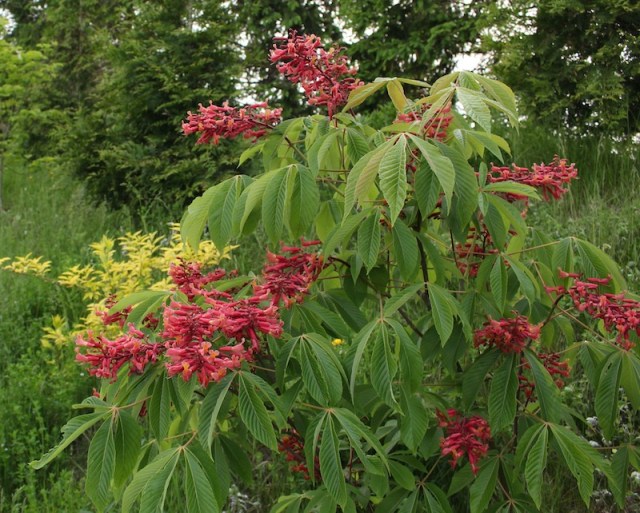
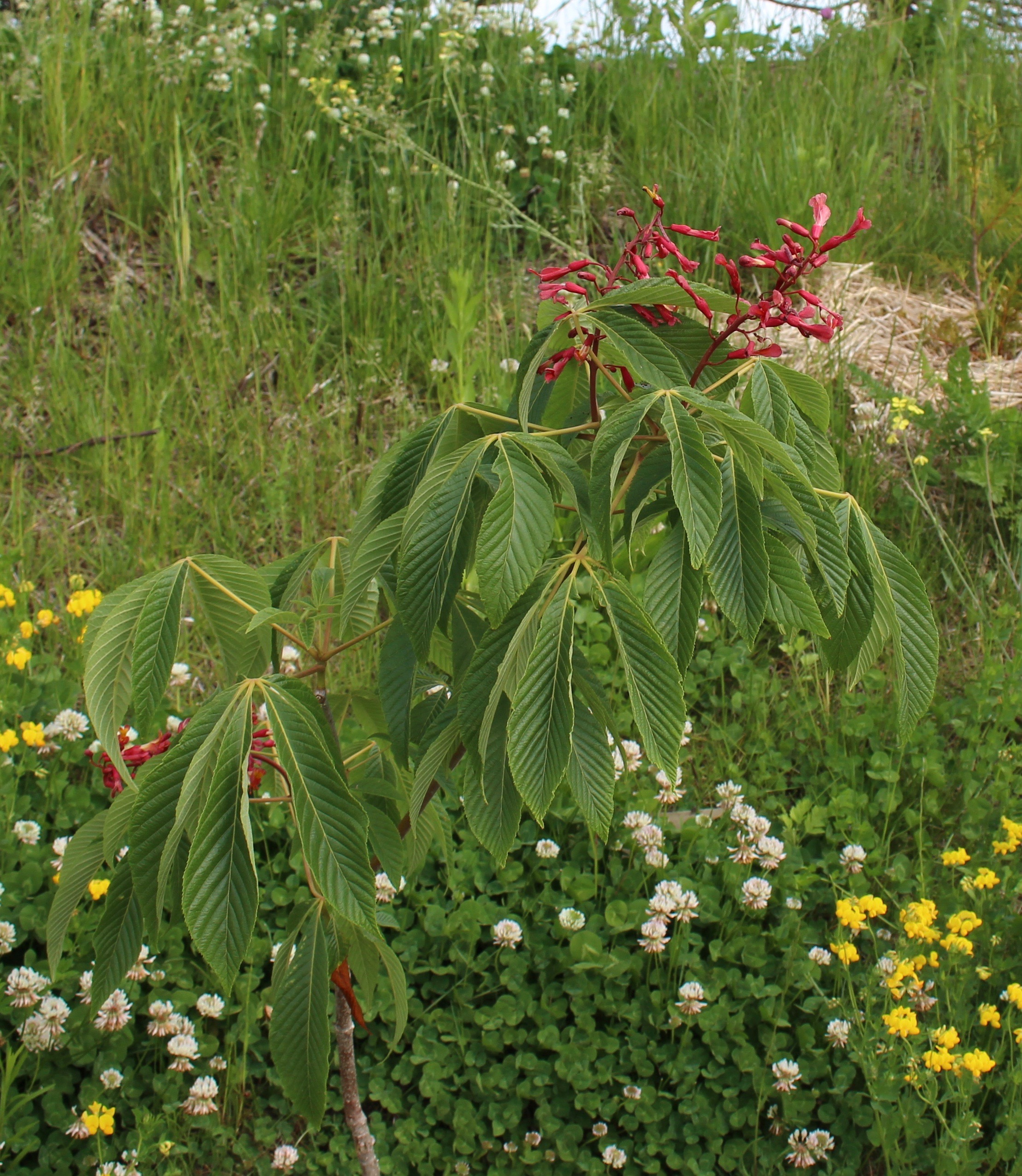
Not that I’m anything close to a purist but I just noticed the horned poppies and Robin’s Plantain (a daisy not to be confused with the previously mentioned plantain) are North American natives and to keep with a theme for more than a minute here’s one last shrubby, maybe someday small treeish native thing, the red buckeye (Aesculus pavia).  In a miserably hot and dry spot on the berm it carries on, growing inch by inch and blooming faithfully each spring.  It would like a better spot but carries on well enough with what it has, the show increasingly clashing with the pink and mauve rhododendrons which also suffer on the slope here.

Aesculus pavia red buckeye

Red buckeye (Aesculus pavia) is listed as a hummingbird magnet but as of yet… it’s just a pretty shrub on the berm.  I’m hiding buckeye seeds each year and maybe one day they’ll carpet the industrial park.

That was possibly a full minute of focus on how unfocused I am, but as I’m sure you know there are just so many other things going on it’s hard to stick to a task.  A gardener goes out with the ambition of transplanting a sedum but sees a branch to prune and a weed to pull and then gets lost looking for a trowel they remember using two days ago and before you know it the rain started again and you’re wondering why you spent twenty minutes deadheading hellebores instead of mucking leaves out of the pond.  There’s a mile long to-do list, which I’m sure is the same for every gardener (and if not and you are that rare exception please keep that an inside thought) and perhaps this weekend the list will get shorter before it gets even longer.  I don’t even know what my list says so here’s a guesstimate.  Most everything is out for the summer, most vegetables are coming along, a few new plants are here, but the summer bulbs and back porch have not yet been attended to.

bromeliads overwintering

The bromeliads are slightly pale but nearly as lush as when they came inside last fall.  They’re almost too easy and this gardener is only allowed to buy maybe one or (at most) two new ones this year since that’s ok and not a sign of addiction at all.

On a plus side the garage is still being used for vehicles rather than entering the annual contest to hold as many empty pots, wheelbarrows, boxes, bags of potting soil and tables full of drying bulbs and corms as possible, and to achieve that the driveway has stayed open enough to drive on.  It’s basic math since I am out numbered now.  Three out of the four drivers here agree that the driveway is better utilized for cars rather than as a makeshift summer nursery/pot ghetto/staging area for excessive plant additions to the garden, and now the gardener is forced to hide his compulsion just around the corner, alongside the garage 😉

golden ninebark seedling Physocarpus opulifolius

My friend Kathy Purdy warns that stray tree and shrub seedlings should be addressed when small and not allowed to sink their roots in and create a removal issue down the line, but… golden ninebark seedlings (Physocarpus opulifolius) are so cute and can’t possibly ever be in the wrong place… right?

That’s it from here.  It is now Saturday morning and once the last person asleep here wakes up we shall go to a coffee shop and the two children will make us breakfast… assuming we pay for it and tip them as well, and then after that I’m sure something will get done here even if your guess is as good as mine as to what it will be.  The lawn needs cutting, so I’ll probably head outside and start by planting petunias next door and then check the pool filter.  Maybe I’ll eventually find that trowel again, who knows, but in the meantime I hope you have a wonderful spring weekend!

Suddenly June

The deck was cleaned and ready just after Memorial day.  Considering how much extra time I supposedly have that isn’t much different than a “normal” year… and by normal I mean getting all the summer stuff up and running a week or two or three after everyone else does.  Things just run late here, and I’m starting to see that maybe it’s more than just basic laziness.  Maybe it’s laziness plus plain-old slow thats effecting how things run around here.

front border

I did manage to do a front border cleanup of old tulip foliage and baby weeds, and at least that part of the garden looks promising.

Slow is just fine with me.  A more generous person might say I’m not, and that I just overthink things, but unless your idea of overthinking includes an ADD journey of the mind then I don’t think it’s that either.  Maybe it’s something else…. someone else accused me of being a perfectionist, but that’s clearly not what’s going on either and I gave a little laugh when they said it.  One look around the garden really settles that point.

iris demi deuil

Iris ‘Demi Deuil’, an old, smaller iris with a cool pattern to it.

The garden is only now coming back into rights after the cold spell we went through in May.  Iris season has been disappointing with many freeze-deformed and aborted flower stalks and blooms, and only a few of the amazing clumps which usually celebrate the finishing up of spring.  Two years of excessively wet summers didn’t help as plants were rotting left and right, but I know they’ll be back.  The bigger uncertainty is how many more I need for next year in order to fill this emotional void.  I suspect there is some transplanting and dividing in store… maybe a few new ones as well 😉

allium nigrum pink jewel

A new allium this year, A.nigrum ‘Pink Jewel’.  The white, straight species is so reliable I thought it was time to try one of the pinks.  So far my impression is lukewarm but I’ll give it time.

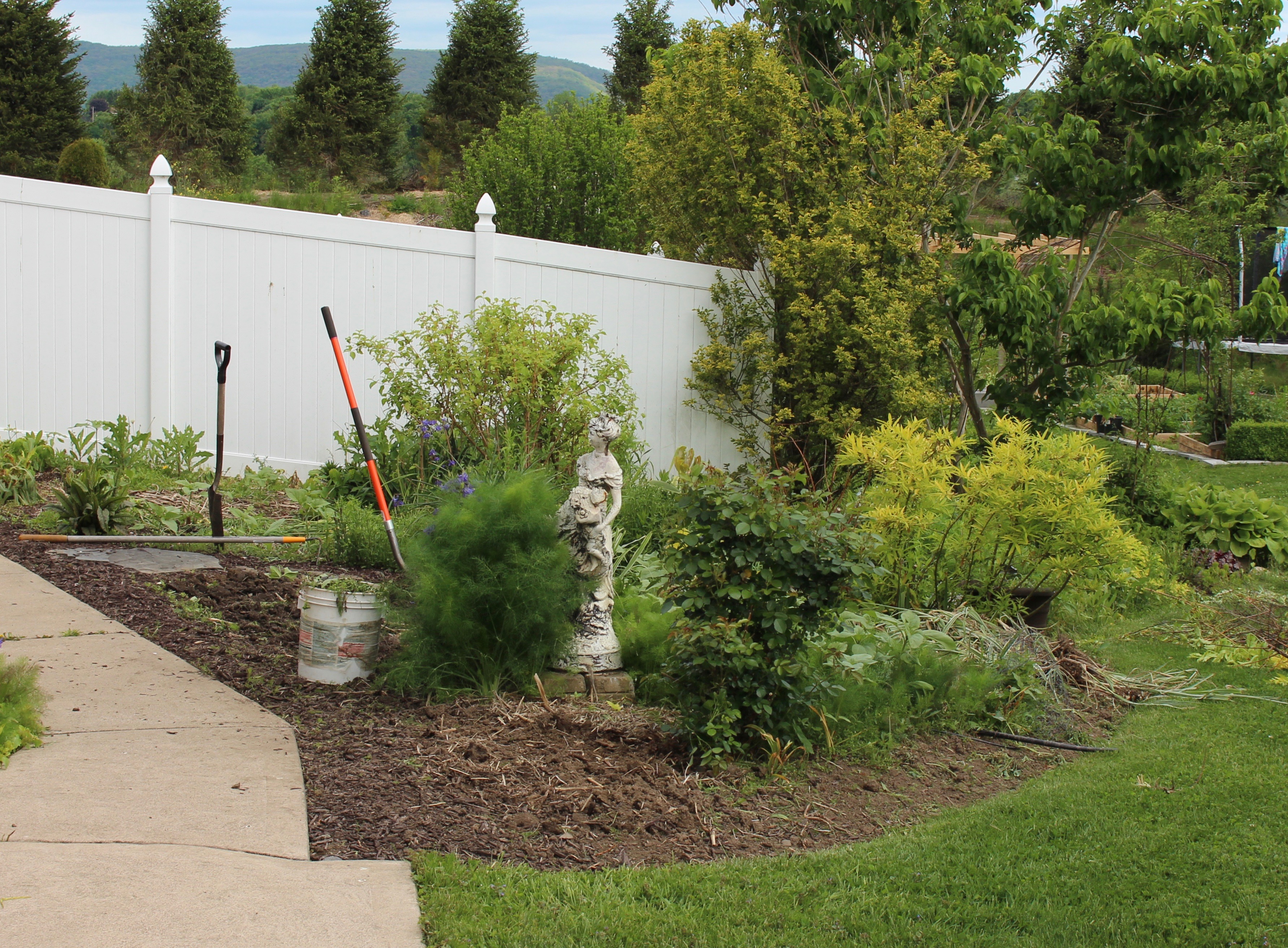
Although thoughts of dividing the iris have already sprung up, there’s so much more to do first.  Tulips and daffodils need digging, snowdrop seeds need sowing, weeding is endless, and the lawn always needs another cut.  I should mulch as well, plus the potager re-design needs finishing up before the growing season rolls over into 2021.  I should really give an update on that, but just a few more finishing touches before I bare my soul on that one.  In the meantime at least the foundation beds are  taking care of themselves…

foundation planting

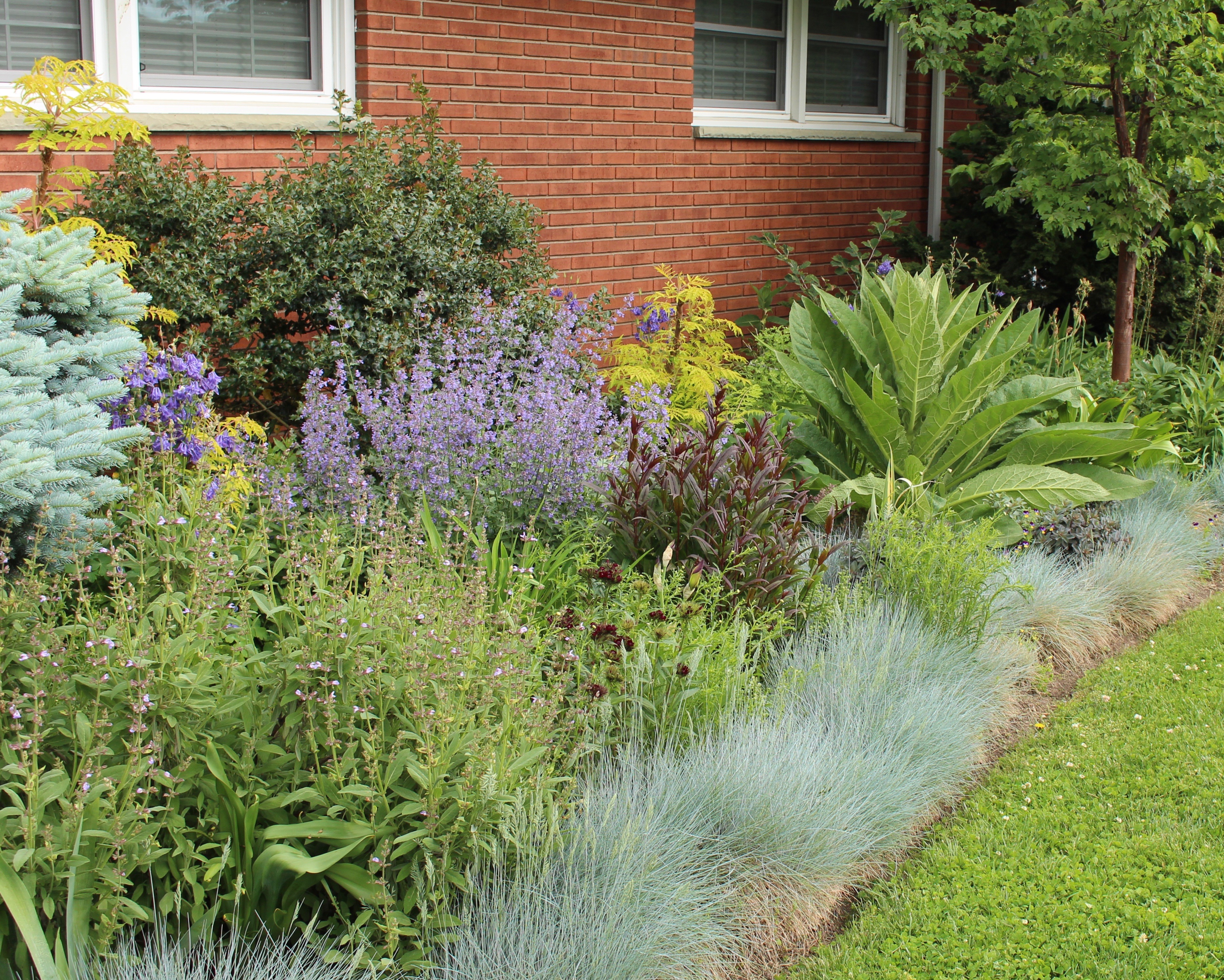
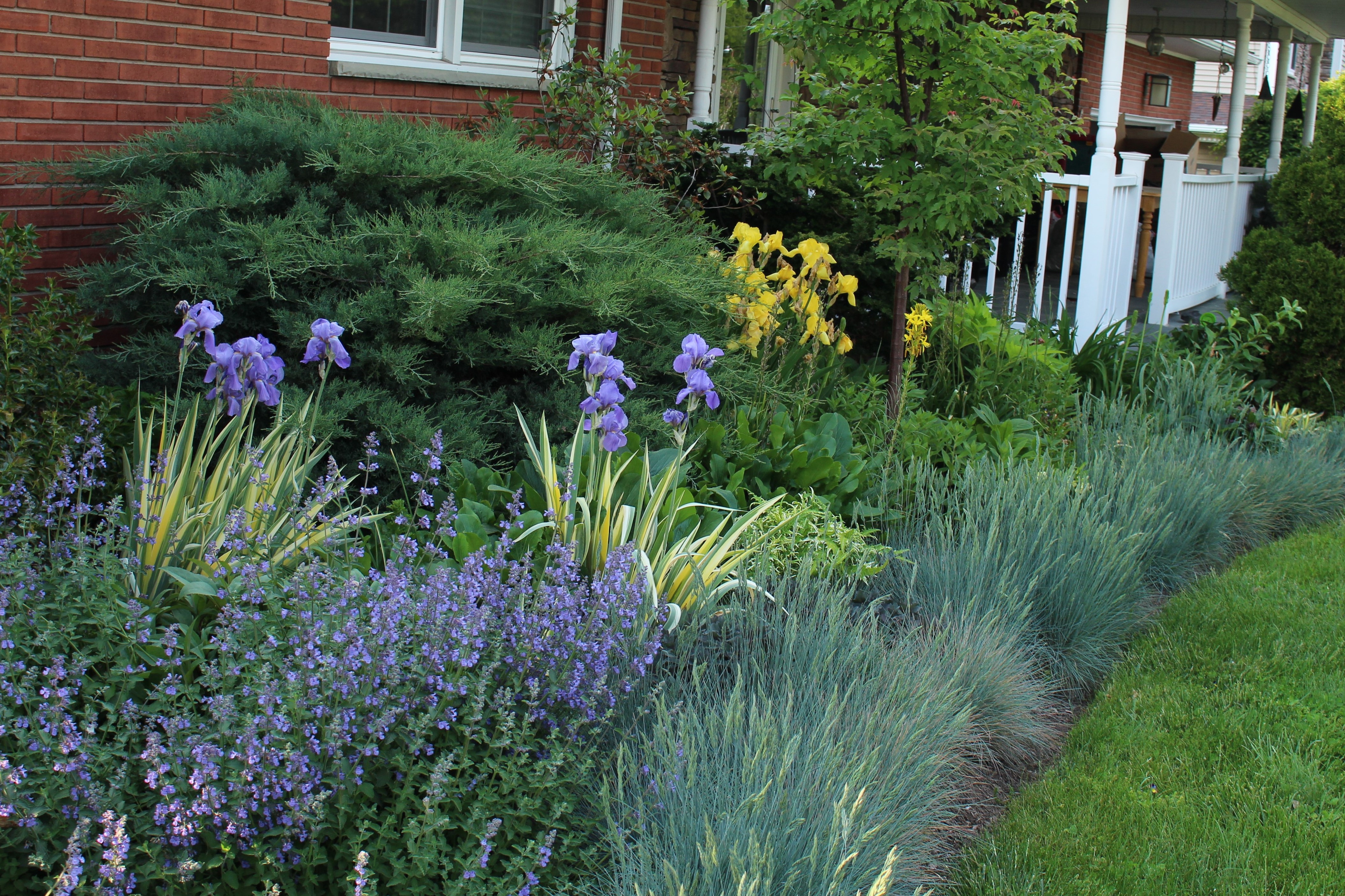
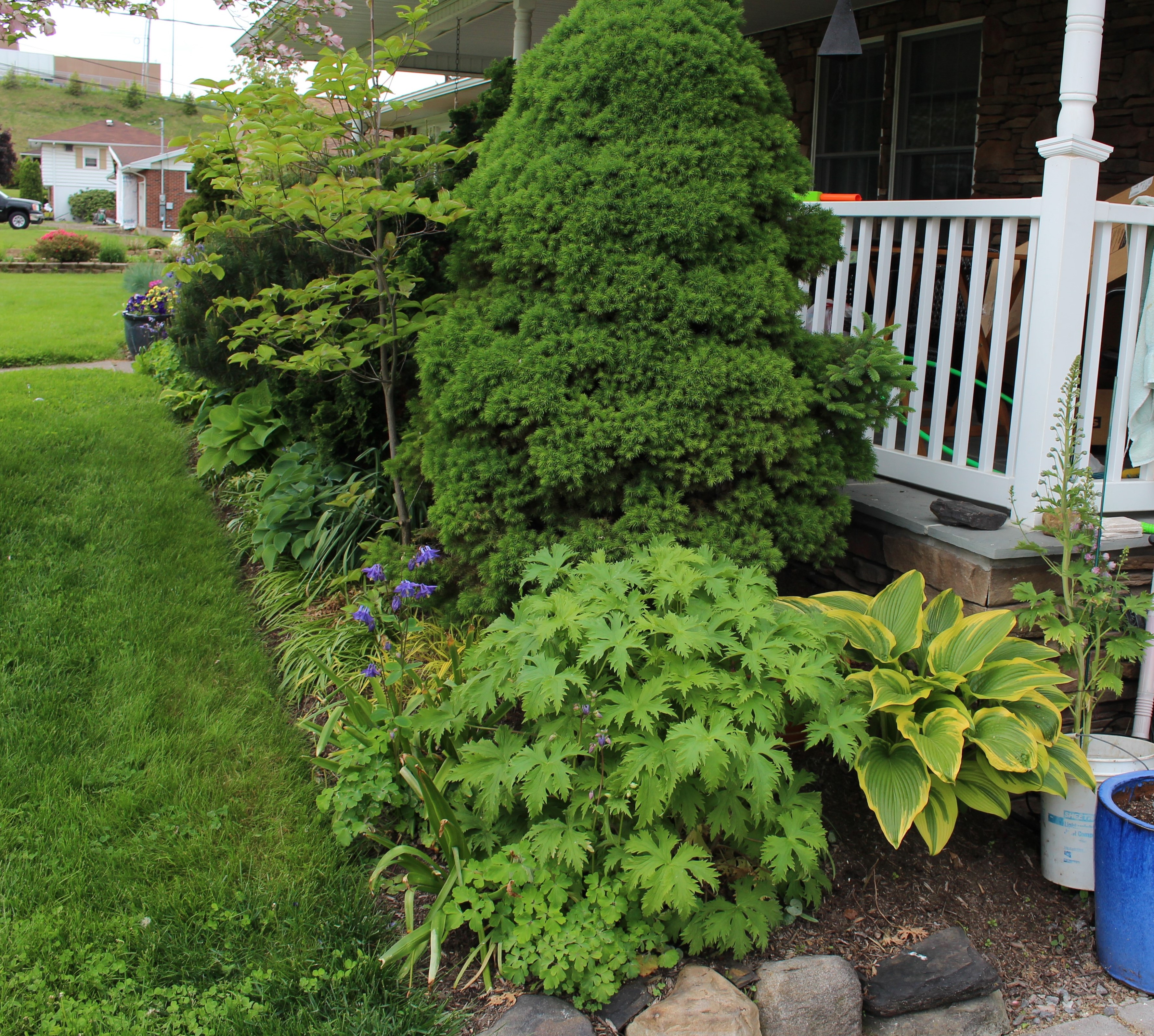
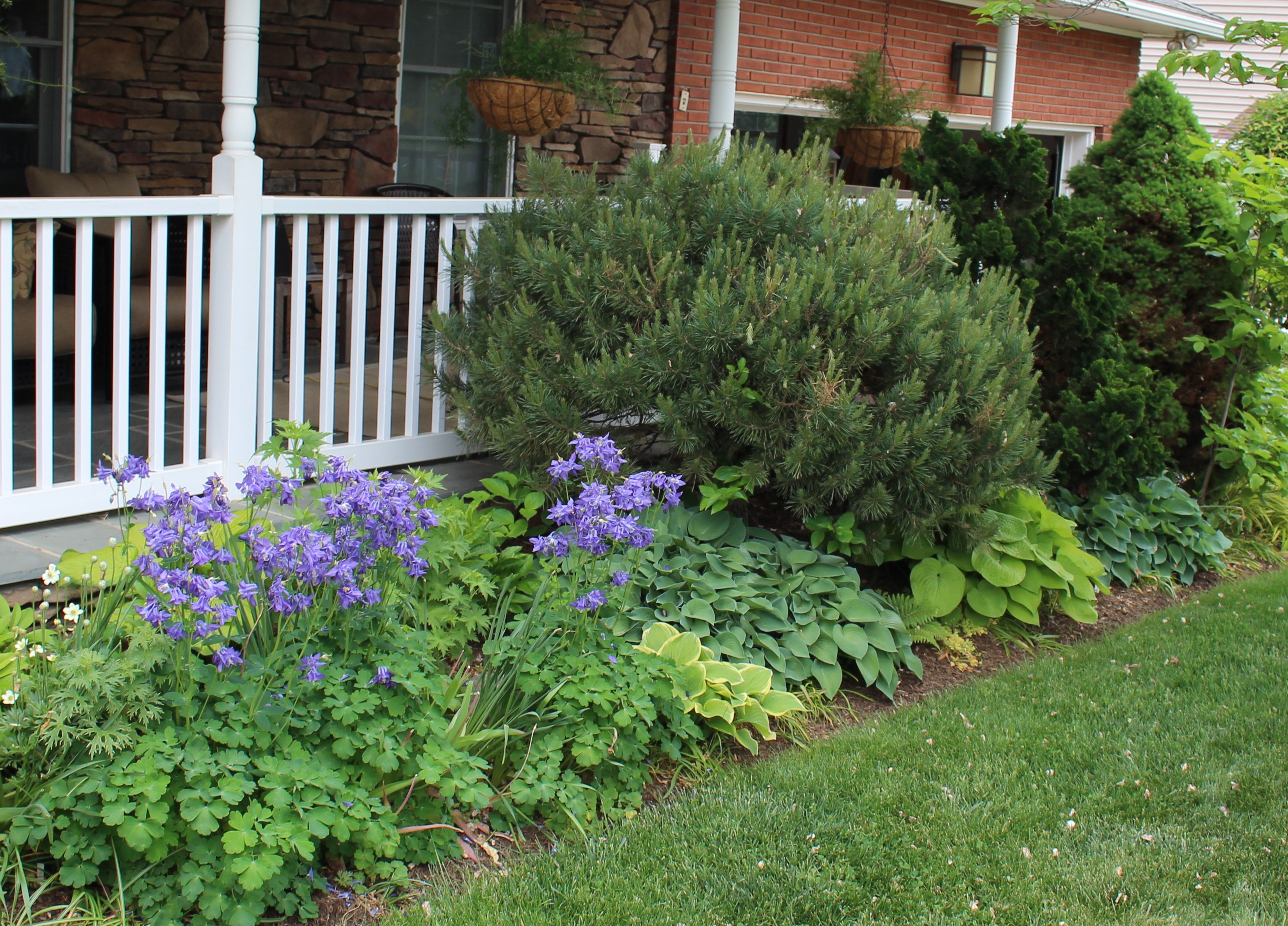
The relaxed and overfilled foundation bed is completely unlike what a front foundation planting “should” be, but there are too many interesting plants out there to waste time on yew meatballs and few azaleas in a sea of mulch.

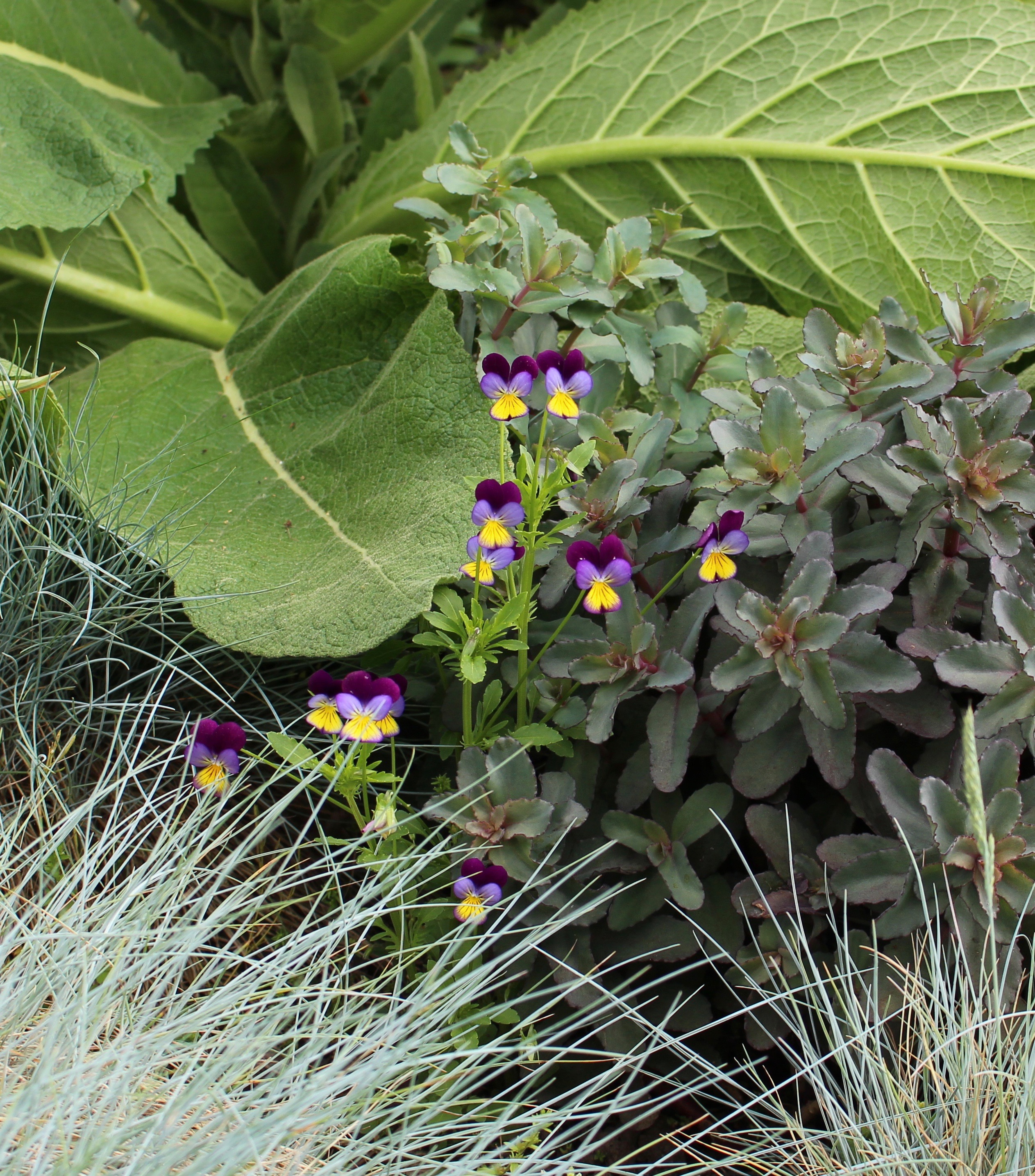
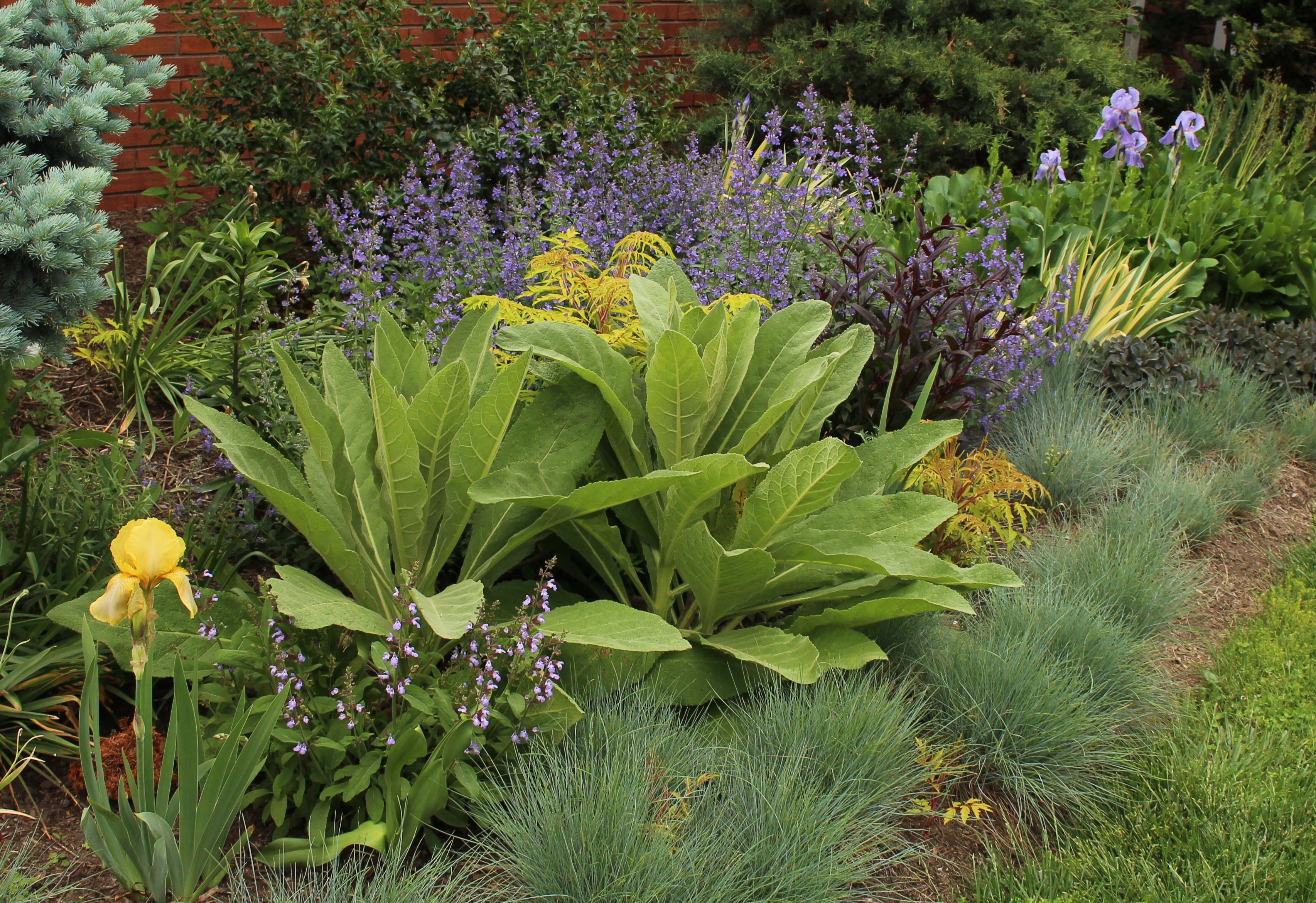
What might be the most anticipated plant of the year (possibly only by me) is the huge self-sown verbascum sitting right there in front of the house.  It’s a weed.  I know.  But also so lush and promising, and I’m hoping it’s something just a little fancier than the regular run of the mill mulleins.  I’ve let both grow here in the past, so it’s a crap shoot as far as seeing which one this will be, but it’s huge, so I love it.

johnny jump ups

Johnny jump ups trying to outgrow the mullein.

What I don’t love is weeding and planting the tropical garden.  In a no-excuses gardening year I’m stuck weeding it properly and not doing the old throw-it-all-in-and-eventually-it-will-all-look-ok planting method.  I don’t like it.  It’s work, and I think the tropical bed’s days are numbered.  We will see, but as of today a swath of sundrops (Oenothera fruticosa) which was slated to be removed, has been left, and although I never planted it there, leaving it in place sure is easier and a spot of low maintenance doesn’t sound bad today… even if that means a much smaller spot of the tropics.

tropical garden planting

The tropical garden in progress.  Who doesn’t like a hit of bright color on their way to enjoy a day at the pool next door?

There will be other things to keep me occupied.  Right now for some strange reason the wild back of the yard is my favorite spot to be occupied.  I barely lift a finger there but love to watch the bugs and birds and see what all can happen on its own.

tent caterpillar

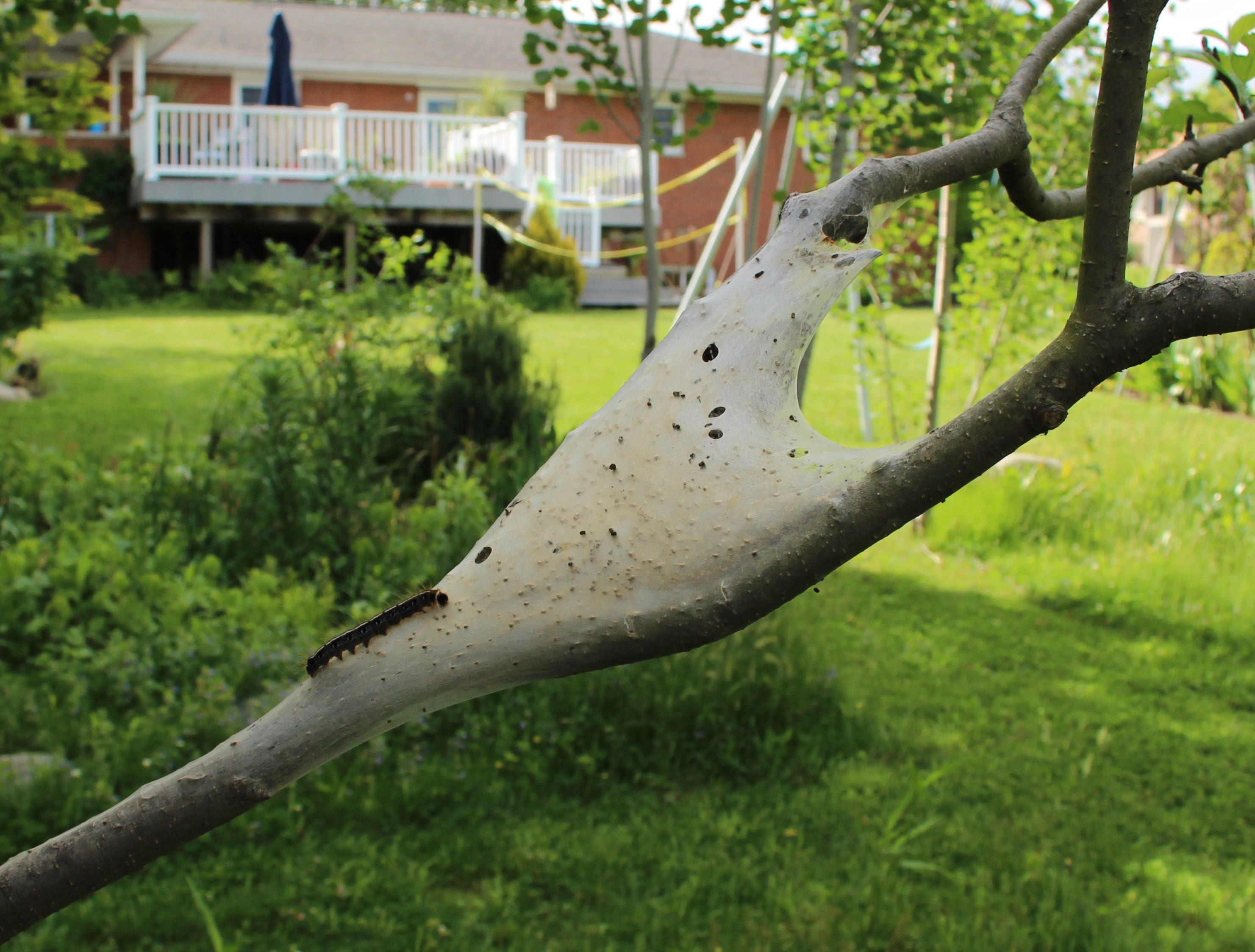
Tent caterpillars used to disgust me but once lily beetles, gypsy moths, and Japanese beetles moved in, these little tents of silk barely register.  Maybe the birds will enjoy a snack, the apples off this tree are overrated, and there are still leaves on the tree, so it seems everyone wins a little when they stay.

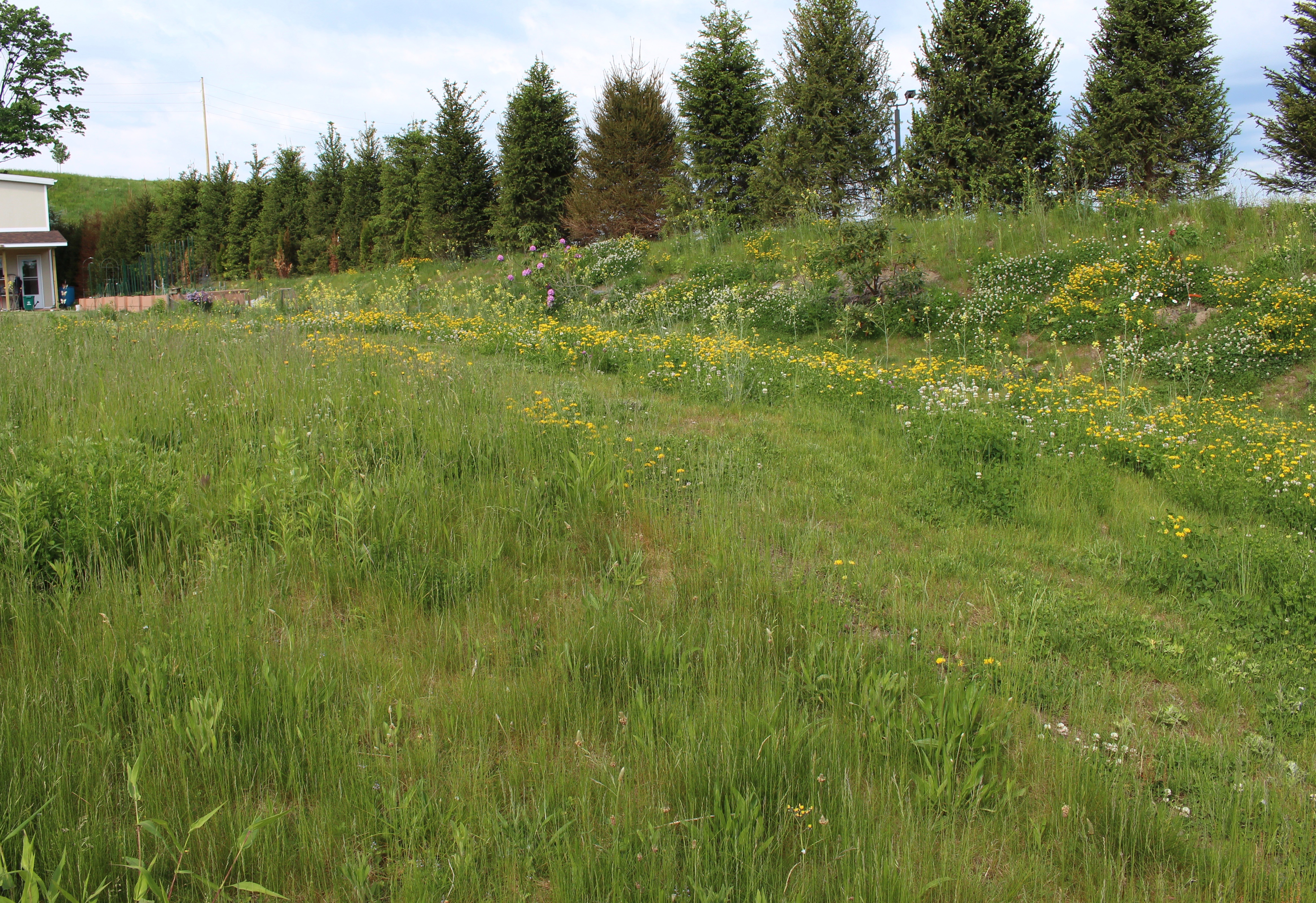
I spent some of the first quarantine days digging various tree seedlings and shrub transplants into the berm that stands between us and the new Industrial park behind our house.  They don’t look like much at all but in a few years…. maybe….you never know how well these things will do.  In the meantime they’re alive, and some of the rooted rhododendron branches which I butchered off their mother in April are actually alive enough to bloom.  Alongside the clovers and mustards and daisies it’s quite the show, but I’m not sure everyone around here prefers lively flowers over neatly mown embankments.  Let them mow it themselves I say.

the berm

I’m endlessly fascinated by these new weedy little meadows alongside the berm.  I don’t think it’s normal to be this obsessed, but who cares?  So what if I get overly excited for a new weed showing up or a new wildflower opening, I think it’s grand, and all I have to do to enjoy it is mow a few walking paths.

I hate to leave you off talking about weeds, but after being covered in smartweed last year the berm has now transitioned over to all kinds of clover and grass.  I don’t know what triggered the change but I suspect there was some fertilizer spread when they first seeded the slope, and now that its run out the smartweed is not happy.

aesculus pavia

Hopefully the red buckeye (aesculus pavia) can tolerate the full sun and dry soil of the berm.  I’d like to see it expand into a nice sized shrubby tree.

So I could talk for a while about the types of grass, the relative attractiveness of their seed heads, the spreading daisies, the annoying crownvetch and mugwort which I still need to eliminate, the rudbeckia yet to come, and all the topsoil building which is taking place, but I’ll spare you.  My fingers are sore from weeding and sanding and chiseling mortar and the typing isn’t helping much so you’re off the hook and I’ll just wish you a happy Sunday.

Let it Grow, Let it Grow, Let it Grow

I really can’t complain about too much for the 2019 gardening season.  Actually I really don’t have much to say at all about the 2019 season other than I still seem to be in my gardening funk.  Last year all the gloom and rain did me in, but so far this year I haven’t been able to shake it (in spite of marginally less downpours and fewer rained out weekends).  Don’t get me wrong, I’m still out in the garden any chance I get to check on what’s new and what’s grown, but overall it just seems like a lot of work to me.  Maybe I’ll just end up taking a sabbatical this summer and see what fall brings.

What doesn’t help at all is that my work schedule has been really interfering with my garden time.  May is a busy time to get planting and staking and I was stuck in Michigan for a week.  June is a time to weed and watch things fill in and I’m stuck in Missouri for two weeks.  Fortunately things should clear up by next week and garden projects can get going… or things can not get going.  We’ll see.

At least I got back from Michigan in time to see the last of the iris in bloom and pull out some of the biggest weeds.  Bigger weeds are much easier to find and pull when they get to the two foot stage, so I guess that’s a plus.

street front border

The front street border is well on its way to becoming the usual thicket with shrubs starting to crowd out the perennials.  One of my favorites is the yellow ninebark (Physocarpus opulifolius ‘Aurea’) in the back.

In the weekend before I left again I tried to triage my way through the garden, chopping what I could, pulling what I should, and planting anything that wouldn’t survive two weeks of neglect (the family is completely unreliable when it comes to watering and such).  To be honest I was more than a little sore as I stepped out of the car at the airport Sunday night.  I lived though, and hopefully when I return this weekend it doesn’t look too much worse than when these last pictures were taken.

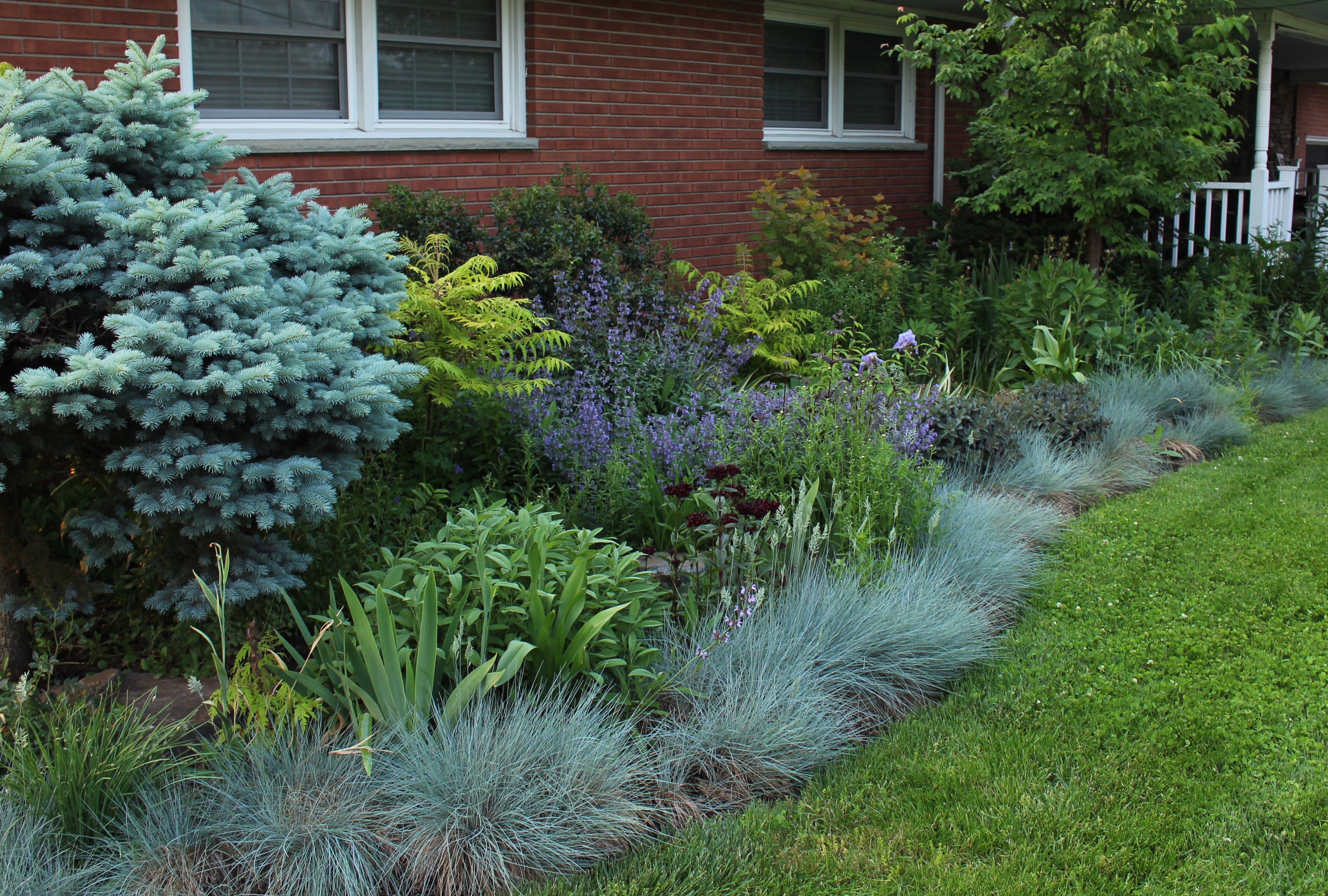
Let’s continue the farewell garden tour along the front foundation bed.  Here the plantings are mostly lower maintenance and that’s a great thing this year.

ranch foundation planting

The blue fescue border has come back enough to look acceptable (but a better gardener would probably still dig and divide the clumps to freshen them up).  As the plantings settle in here, I’ve finally reached the point were I don’t not like the colors in this bed.

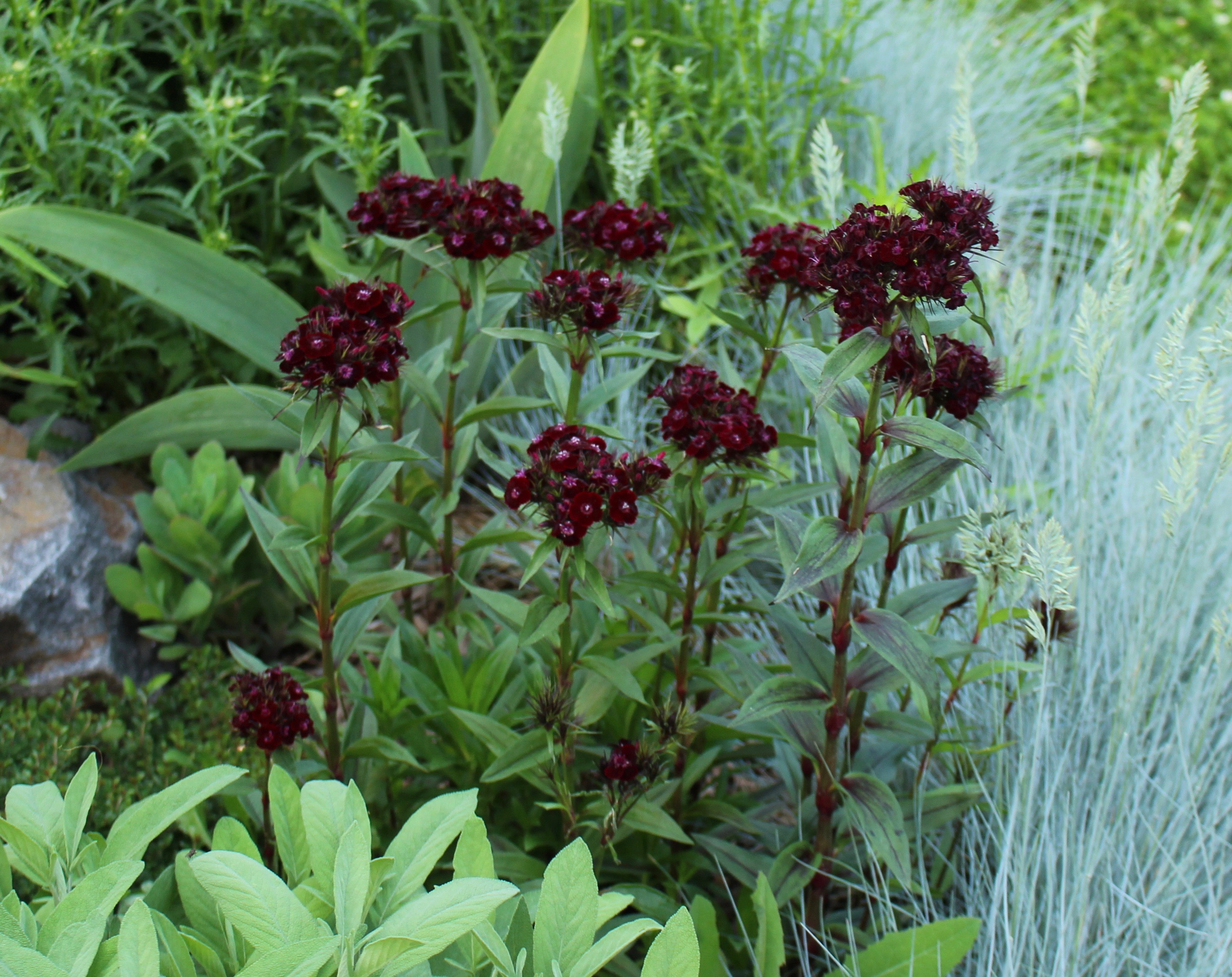
I am a little excited about one of the things in the front.  The sweet william seedlings I’ve been nursing along for three years have finally bloomed, and although they’re much too dark to be showy I think they’re absolutely cool.

dianthus sooty

Dianthus barbatus ‘Sooty’, a dark red selection of the old fashioned biennial sweet william.

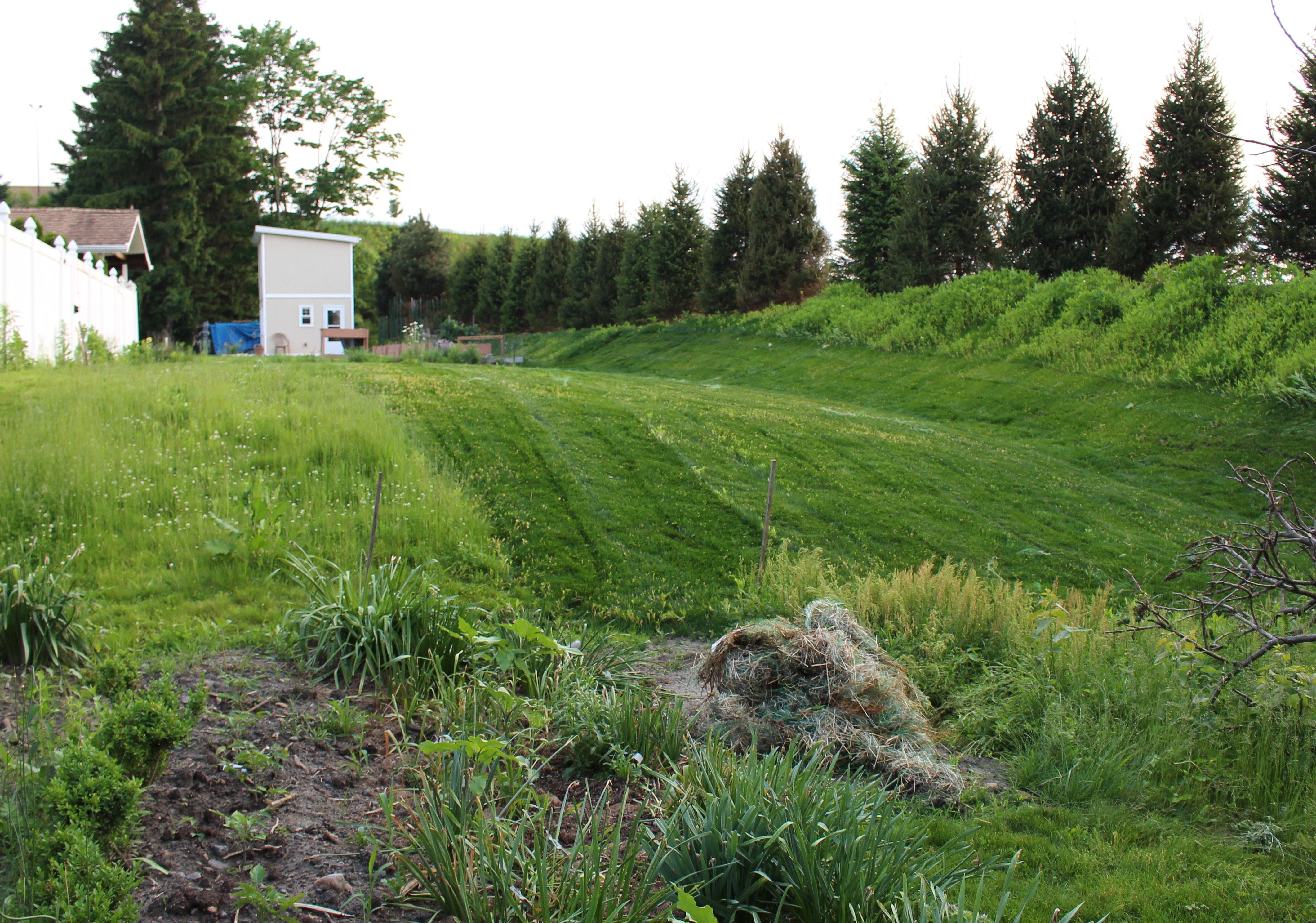
We’ll skip the just-planted-the-day-before-I-left-again tropical garden and go right over to the back of the yard.  Here the weeds and grass seedlings have covered up the mud and muck of all the construction and we can finally just stare at our row of wind tossed Norway spruce.  There will be plenty of time later to complain about how dull and lifeless the new barrier is, but for now I’ll just stick to complaining about how much more grass there is to mow back there.  At least the chainlink fence is gone and the area looks neat…  maybe too neat… how boring…

berm planting

You’re looking at all the fill I was planning on using to level my own backyard.  It’s all been covered nicely and seeded to lawn and I don’t think my mother in law would appreciate me bulldozering a few yards of it over into my low spots now, so guess who is out of luck…

With the completion of the berm we have far less dust and noise and lights streaming into our yard.  Those are all pluses which I need to remind myself of as I contemplate a fast-growing barrier of evergreens sapping the light and view from our back yard.  But it does look neat and tidy I guess…

ninebark physocarpus opulifolius diablo

More ninebark (Physocarpus opulifolius ‘Diablo’) in bloom.  I love the foliage and shape of these shrubs, and if the garden was bigger I’d add a few more.  Hmmmm, maybe the berm could use a couple 🙂

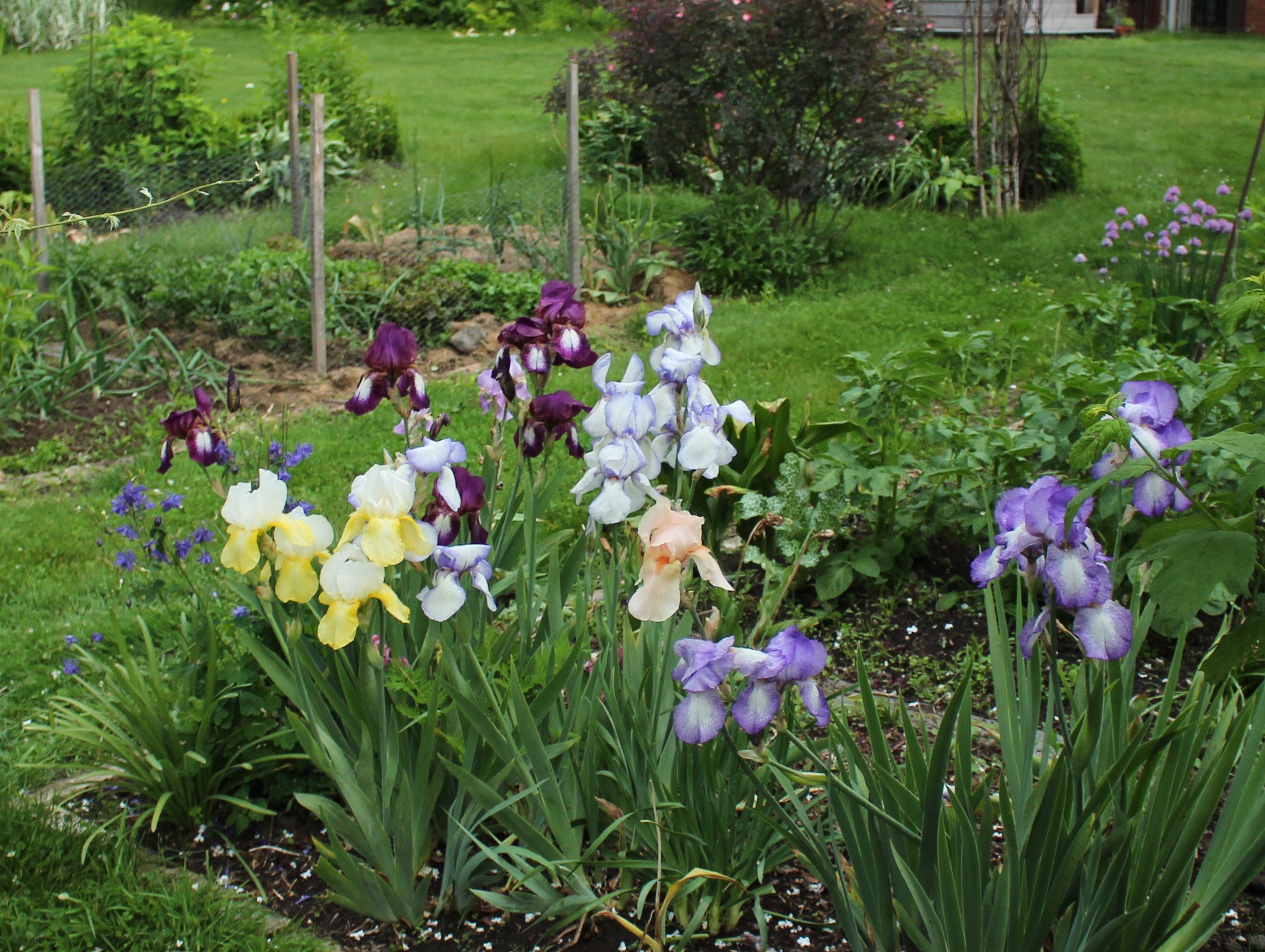
Iris are about the only other thing worth noting in the back.  Last year’s swampy soil killed off nearly all the modern hybrids, but the older cultivars just kept doing what they do, and have me considering devoting more real estate to iris again.

historic iris

The historic iris (these are mostly from the 40’s and 50’s) held on while their modern neighbors turned to mush.  Obviously a better spot with improved drainage would be another option, but I like the less is more approach 😉

I guess it’s only been a few years since the last time I decided to devote more property to iris.  Things go like that around here, but unfortunately in between planting passions other amazing ideas come up and things get crammed in all over.

historic iris darius

This was a decent iris spot a few years ago but plant a shrub or two, some colchicums, some climbers, build a support for the climbers, and before you know it the iris are struggling along in the shade.

Replanting a few iris this summer should be do-able even if it means time away from the pool and a little kick in the butt motivation.  Deep down inside I know it will be worth it next June when they crowd the borders with brilliant color.

Now if I can only first manage to get the deck planters planted.

ornithogalum dubium

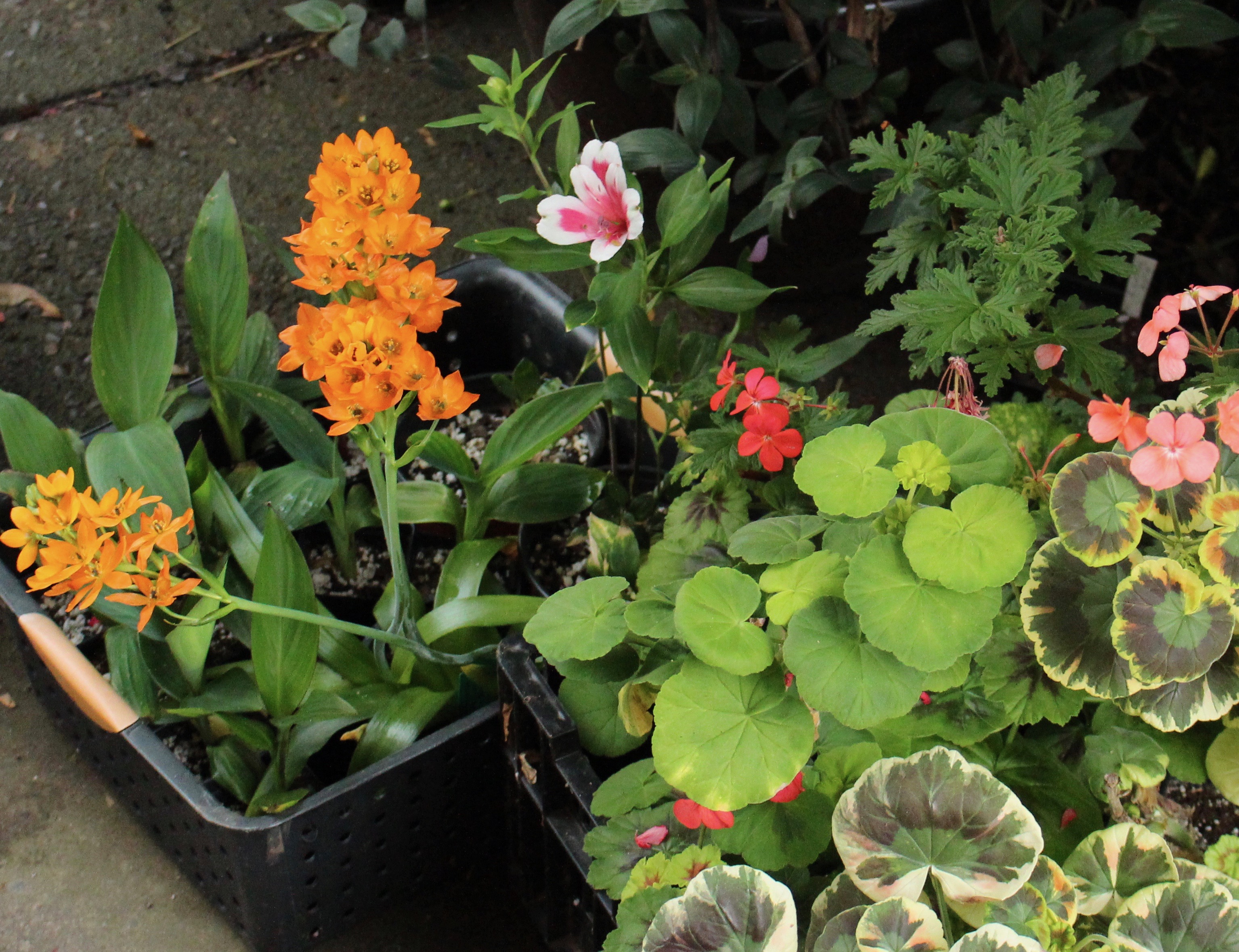
The last bits from under the growlights.  There was an abyssmal lack of seeds sown this winter, but for some reason I needed the orange Ornithogalum dubium bulbs, a dozen canna seedlings, and one cool little pink and white alstroemeria seedling that looks dissapointingly similar to her parent.

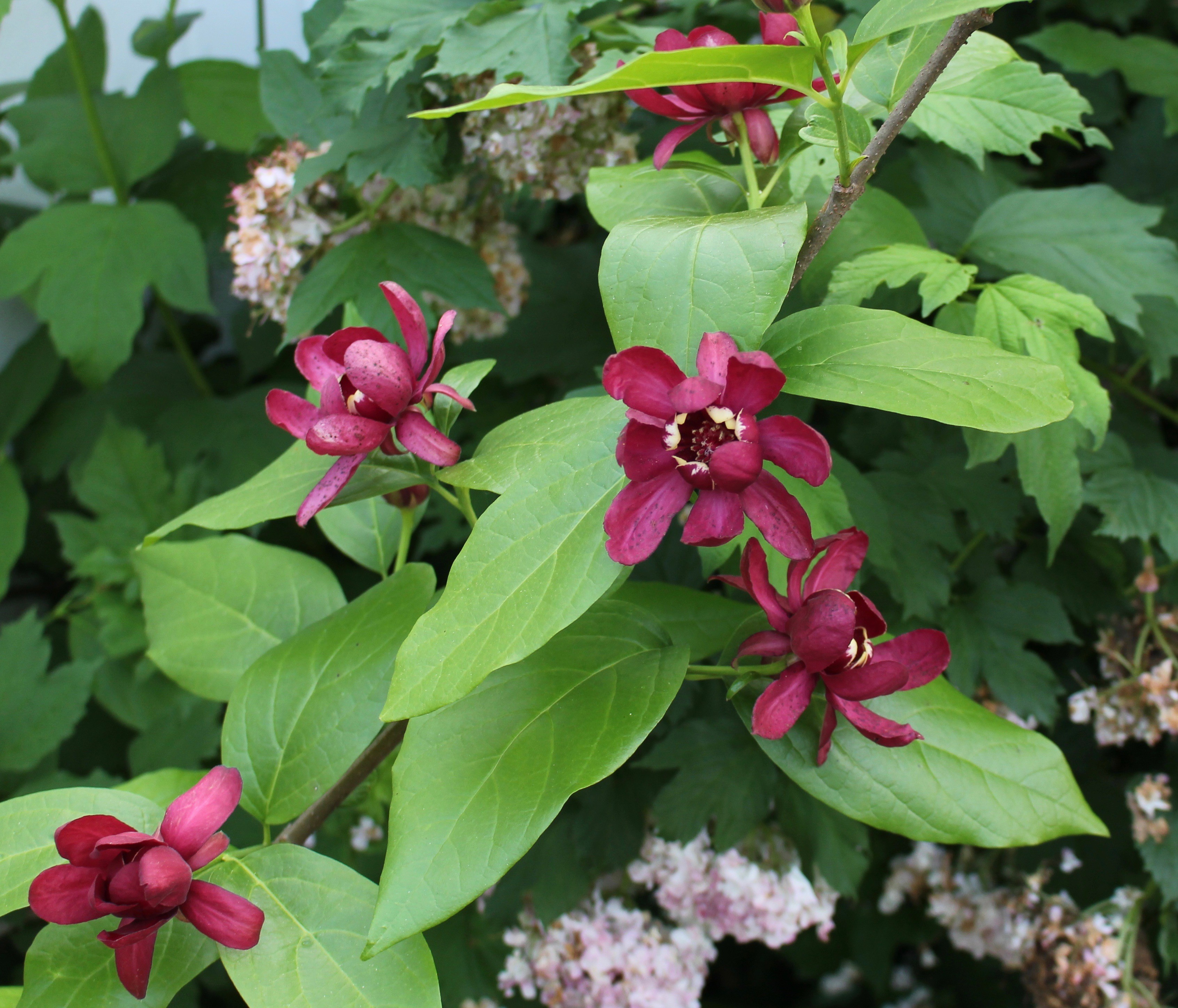
Who am I kidding.  Instead of planting the deck containers I took another round through the garden to make sure nothing new happened without me.  The sweetshrub is giving me its first year of decent bloom and I think the flowers are particularly cool.

calycanthus aphrodite

A hybrid sweetshrub (Calycanthus ‘Aphrodite’).  A scent would be nice, but for now the flowers are just fine.

If worse comes to worse I’ll just spend this summer wandering the garden, smelling flowers, and contemplating the life cycle of weeds.  New plants are still going to be added, that’s a given, but maybe there’s just going to be a lot more mulch this year.  I like mulch so.  Mulching can be very zen 🙂

And Then It Was Summer

Well now it’s official, the first roses are in bloom.

rose john cabot

Rose, possibly ‘John Cabot’, opening up at the far end of the front border.

I don’t think anyone out there dislikes roses.  They might not like growing them, but to dislike them or harbor worse opinions seems out of the question and even borderline suspicious to me.  There are a few roses around here but I’ve tried to hold back.  Rose Rosette Disease is in the wild roses all around us, and I’d hate to see it jump into the garden and decimate any big plantings I might end up putting in.  Unless they’re irresistibly fragrant of course.  The workhorses I have right now are barely fragrant, and at the start fo each summer I always give a little thought to adding something with a fierce perfume.  This year I’m thinking rugosas, and we’ll see if I can hold strong or not.

lupine red rum

A surprising return from last year, ‘Red Rum’ lupine.  I still think it’s amazing and of course want more.

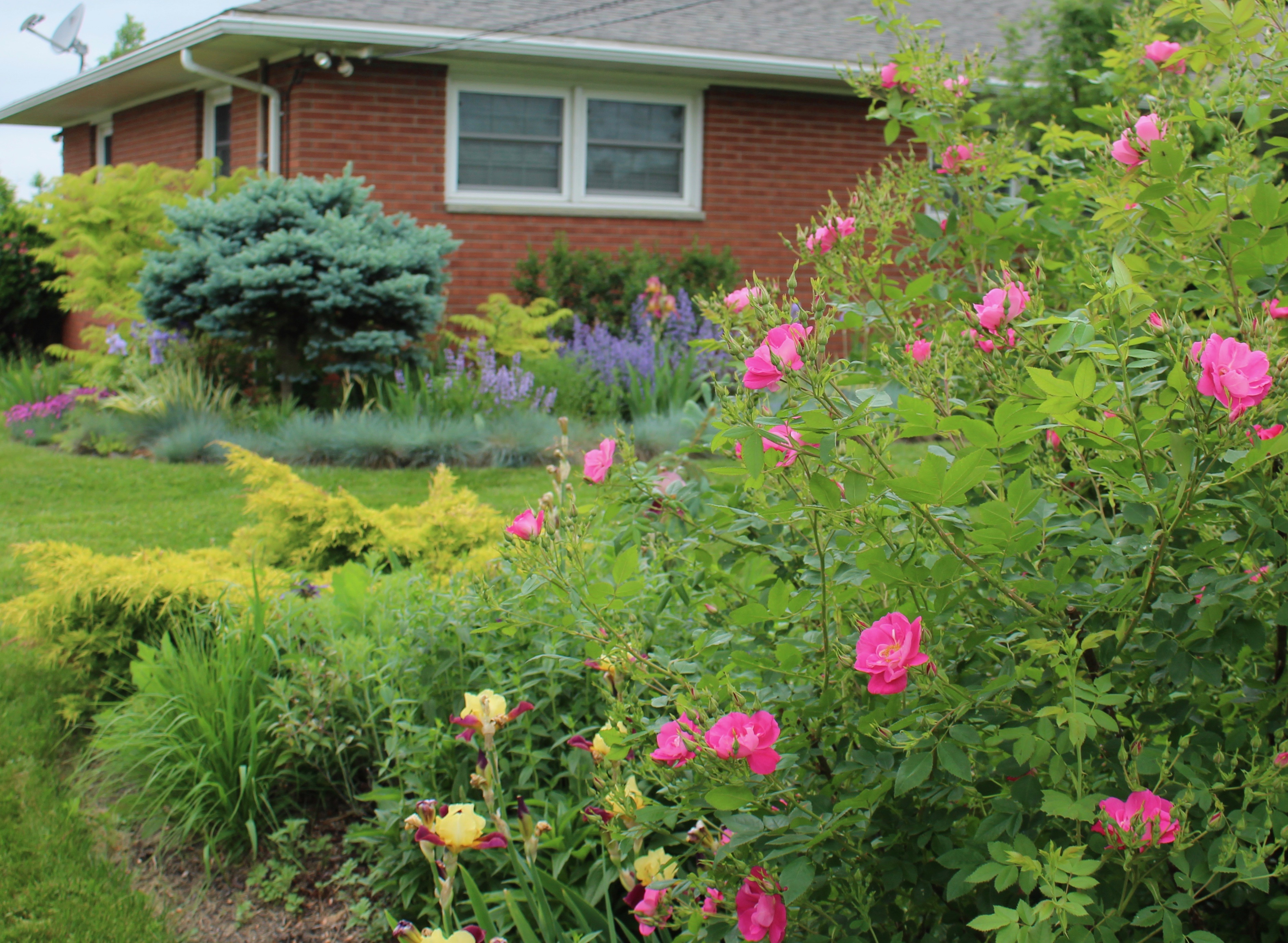
The front border along the street is still riding high with the last of the iris and alliums and a returning lupine star from last year.  I was sure the lupine would would be a one and done wonder but here it is in year two looking even better.  Between the lupine and some new allium schubertii I’m really pleased how it looks.  Usually the iris are followed by a lull, but not this year!

allium schubertii

A closer look at Allium schubertii.  Not super showy, but definitely super cool.

You may have heard it mentioned that someone here is going through an iris phase.  It’s true, and I guess it’s been building for longer than I’d care to admit.  Two years ago ‘Bayberry Candle’ was added, and this year I’m seeing how a flower which is not bright nor flashy, can still be rich and amazing.

iris bayberry candle

Iris ‘Bayberry Candle’ (1966)

It’s possible there have been other iris as well.  ‘Gerald Darby’ was showing off his purple foliage earlier in the year and now has sent up several purple tinged flower stalks topped with several elegant (purple of course) flowers.

iris gerald darby

Iris ‘Gerald Darby’ in bloom.

These later iris are part of what I call the ‘water iris’ group.  That term would likely make a more knowledgable iris grower cringe, but for me it’s one of the beardless iris which do well enough in occasionally soggy, and my always clayish soil, even to the point of sitting in water.  I put the invasive yellow flag (Iris pseudacorus) in this group, and although it’s a little too sloppy for me I do have the brown veined ‘Berlin Tiger’ version which will hopefully not seed around and spread as much as the standard variety.  This one has the distinction of being one of my most expensive iris, since even though the original plant was free from a friend (thanks Kathy!) I may have been tempted to search out similar varieties, order them from far away, and then add other things just to round out a decent order…. and I’m still thinking I should add a few more this summer…

iris berlin tiger

The finely veined flowers of iris ‘Berlin Tiger’ are pretty darn interesting.

Moving out of the iris world it’s also peony season.  On the plus side my garden is too small and this gardener is too fickle to invest in bunches and bunches of these.  I’m counting that as a good thing since if it weren’t set up that way I’m sure I could devote quite a few beds to these opulent flowers and surely I’d go overboard.

peony Do Tell

Peony ‘Do Tell’ wallowing in a weedy side bed.  I hope you believe that it’s been cleaned up since this photo was taken 😉

At this time of year the gardener is spending most of his time weeding and mowing, but what he really needs to do is finish planting.  Last weekend overwintered bulbs went into the tropical garden, and in an attempt to buy some time from the weeds the lawn clippings were collected and spread around as a mulch.

the tropical garden

Not the most attractive soil cover, but it sure beats an ocean of verbena and prickly lettuce seedlings.  In a few weeks you hopefully won’t even notice it under all the new growth.

I do prefer thick perennial plantings as a way of crowding out weeds rather than the trouble of mulching and cultivating, but a full bed in June doesn’t leave much room for all those annuals I’d like to still add.  Hopefully this doesn’t become a regret in August.

allium nigrum amsonia hubrichtii

Amsonia hubrichtii in front with its oddly icy colored pale blue flowers, and Allium nigrum rising up in the center.  I’ve been warned that the allium will be impossible to get rid of, so I pretend to be happy with its multiplying and just let it be.  

Maybe I will whack a few things back today and sneak a few castor beans and cannas in.  I also have a few orange marigolds which should really class things up, so maybe this weekend…  In the meantime here’s one more picture of my little darling ‘Red Rum’ lupine, I honestly look at this plant a million times a day.

lupine red rum

One last view of ‘Red Rum’.  The color is exciting, just try to avoid spelling the name backwards.

All the best for this weekend.  Hopefully you are either well into it or have already had an excellent time of it, I know I plan to 🙂

I just have to avoid the temptation of nursery hopping this weekend… in the hopes of finding some fragrant rugosa roses.  We’ll see.

An Iris Visit

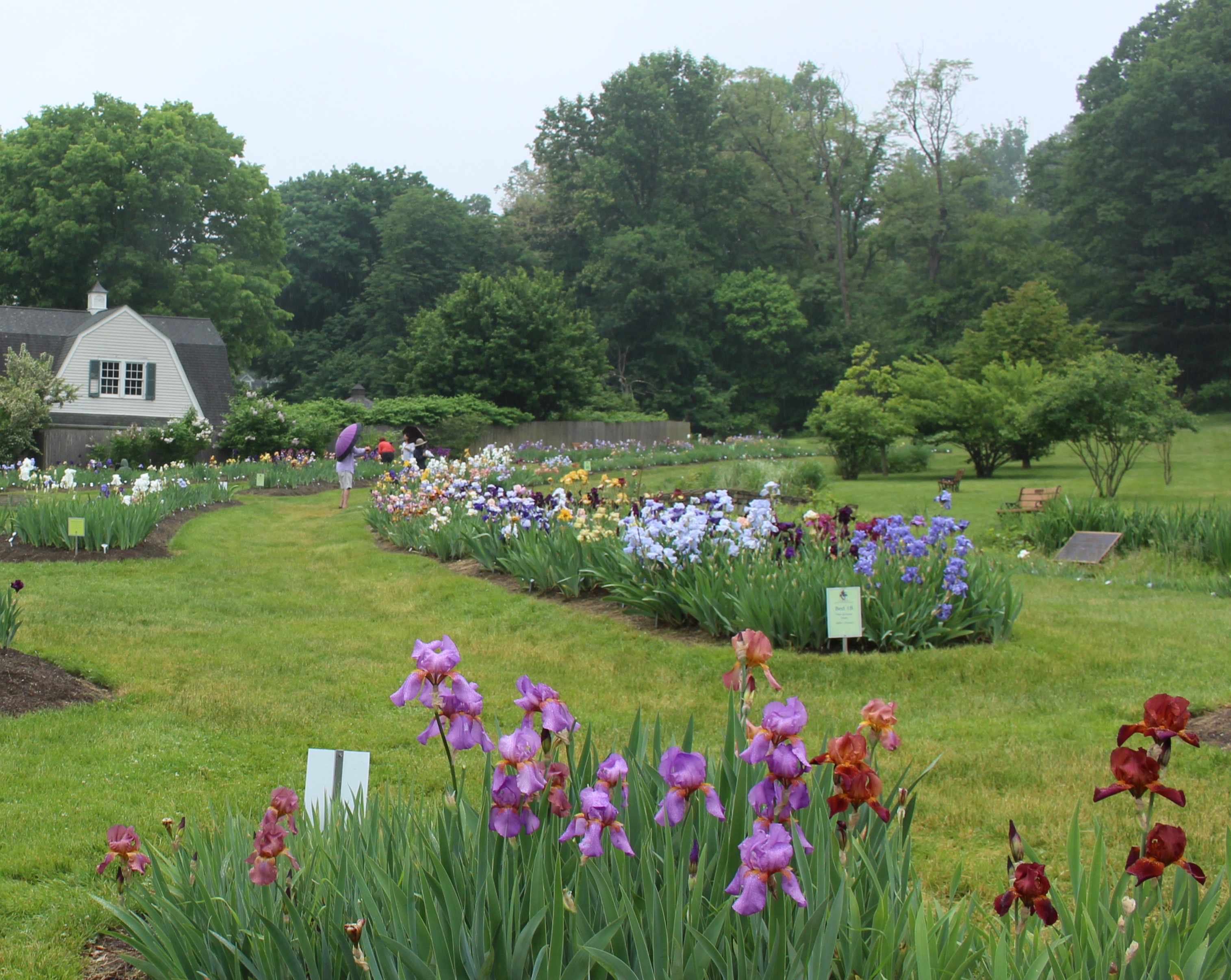
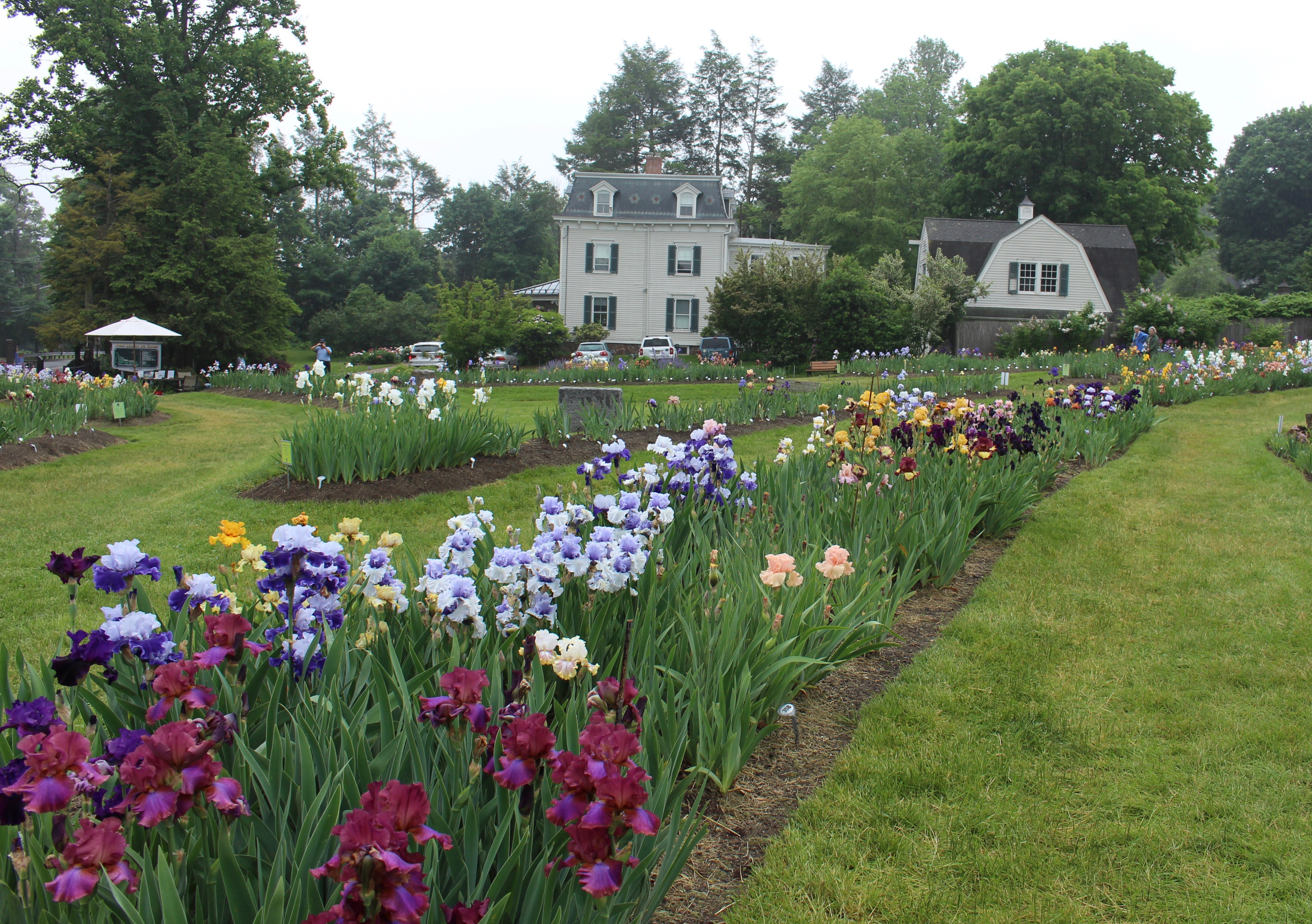
Although it was a struggle to break away from the garden during this (I should be) busy season, a friend convinced me to take a day and ride out to The Presby Memorial Iris Garden in Montclair NJ to finally follow through on a promise to visit.  Word was that the hot weather and rain had been tough on this year’s show, but that was all lost on me the minute we pulled up to the entrance and saw the beds full of color.  I was way too excited to be there, and just in case there was any doubt left, I’m absolutely a plant nerd.

presby memorial iris gardens

Looking across part of the Presby iris gardens towards the building which houses the Citizens Committee which oversees the gardens.

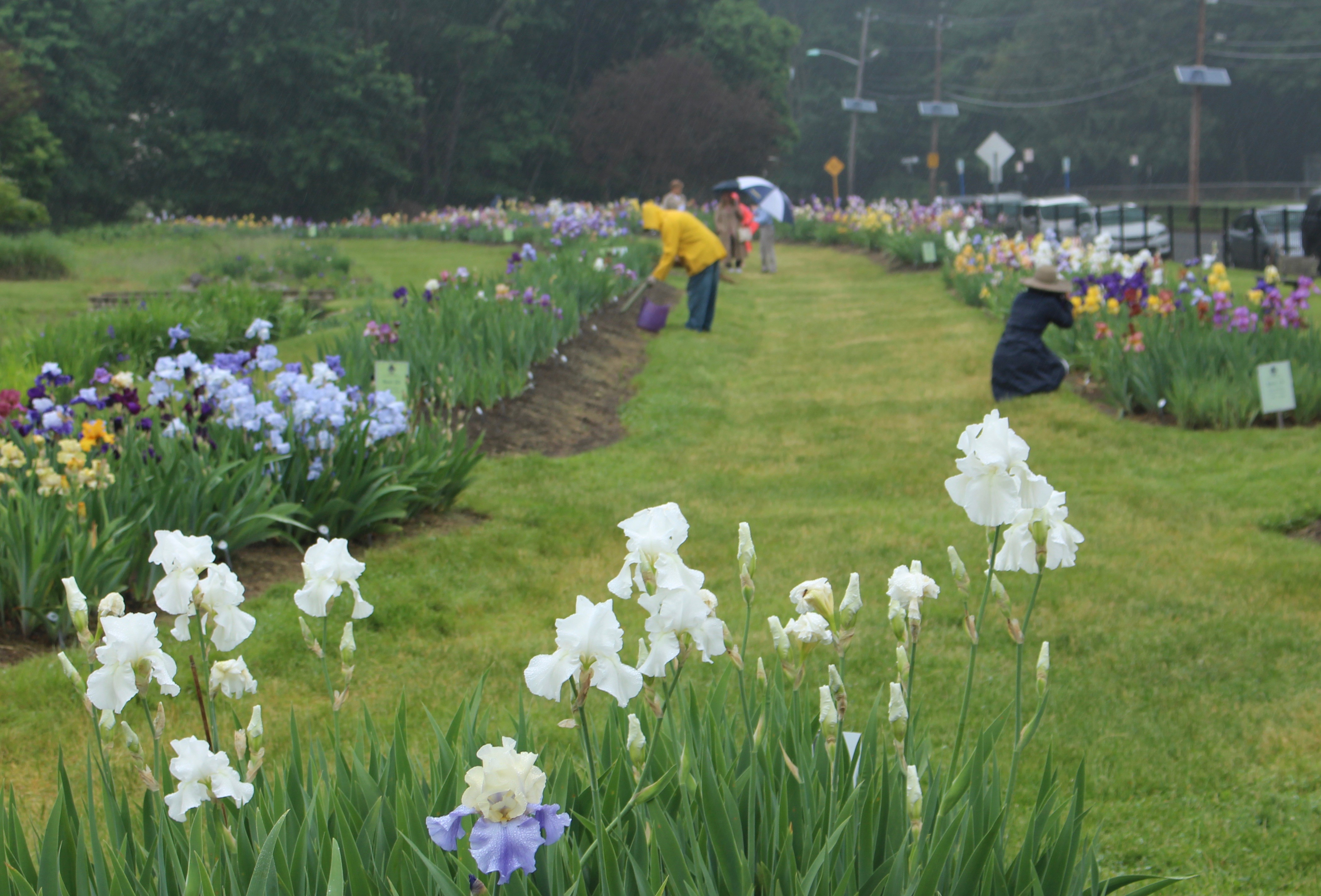
An all volunteer Committee runs and maintains the gardens, and their work is amazing.  There were several people out and about tending the beds, either deadheading or staking, and I’m sure that’s quite a job considering how many plants are being grown here and the maintenance needed to keep them at their peak.

presby memorial iris gardens

A bed of more modern iris (~1970’s) stretching upslope behind the house.

Personally I tend to prefer the older and simpler forms of historic iris (older than 30 years) but I’m only human and the fluffy, ruffly, overblown flowers of the modern tall bearded iris are very tempting.

iris 'wings at dawn' 2014

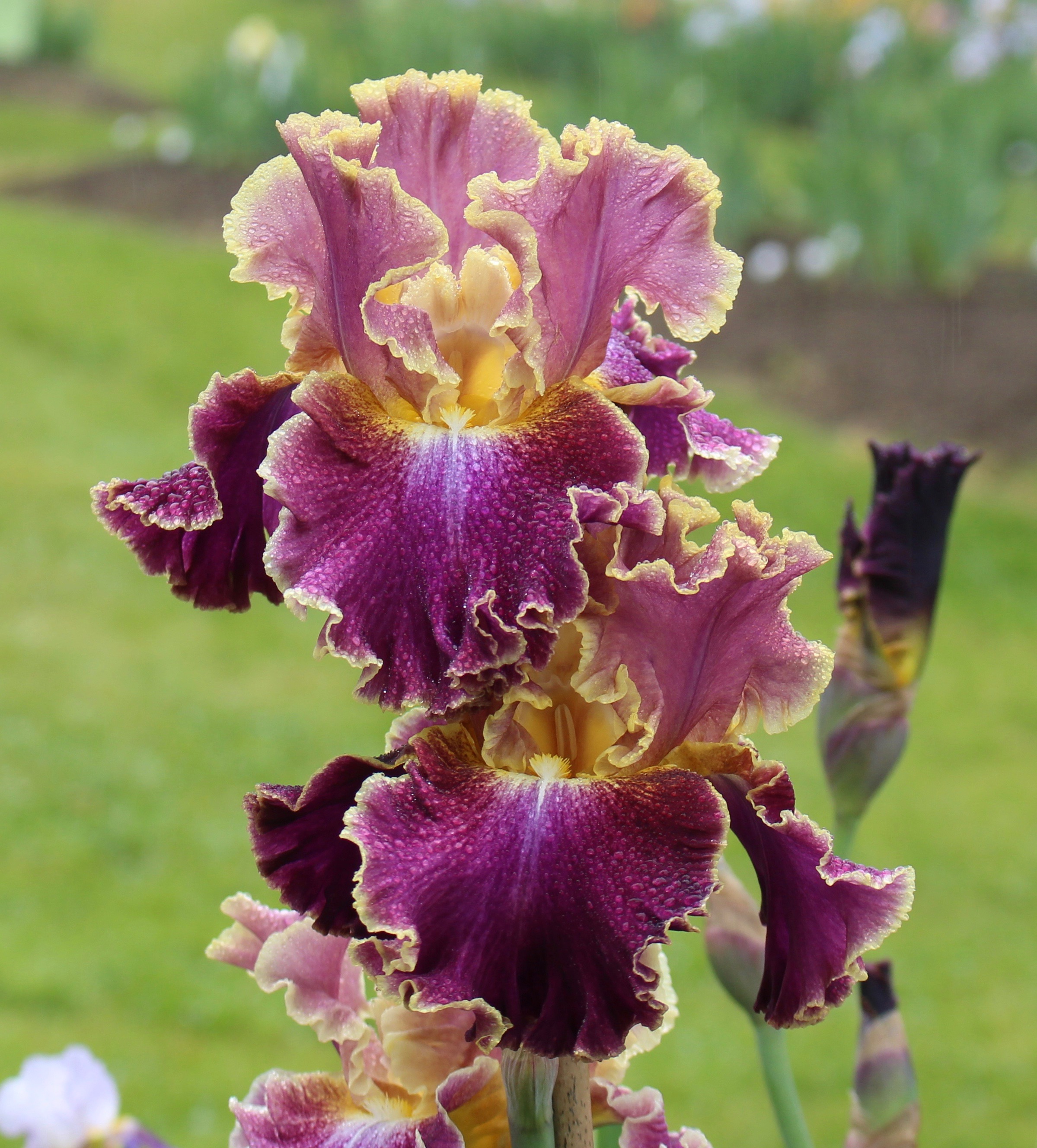
Iris ‘wings at dawn’ (2014).  A ‘space age’ iris due to the little tabs ‘launching’ off the falls of the flower.

This might have been my first time around so many iris.  They put on quite a show and I can see how the garden drew in hundreds of visitors the day before when the weather was nicer (but much hotter).  In spite of the fact I had actually brought an umbrella along, a light drizzle started shortly after we arrived and normally I’d complain about my luck, but actually the fine mist only added to the relaxing effect of the pearly light, glowing colors, and nearly empty gardens.

presby memorial iris gardens

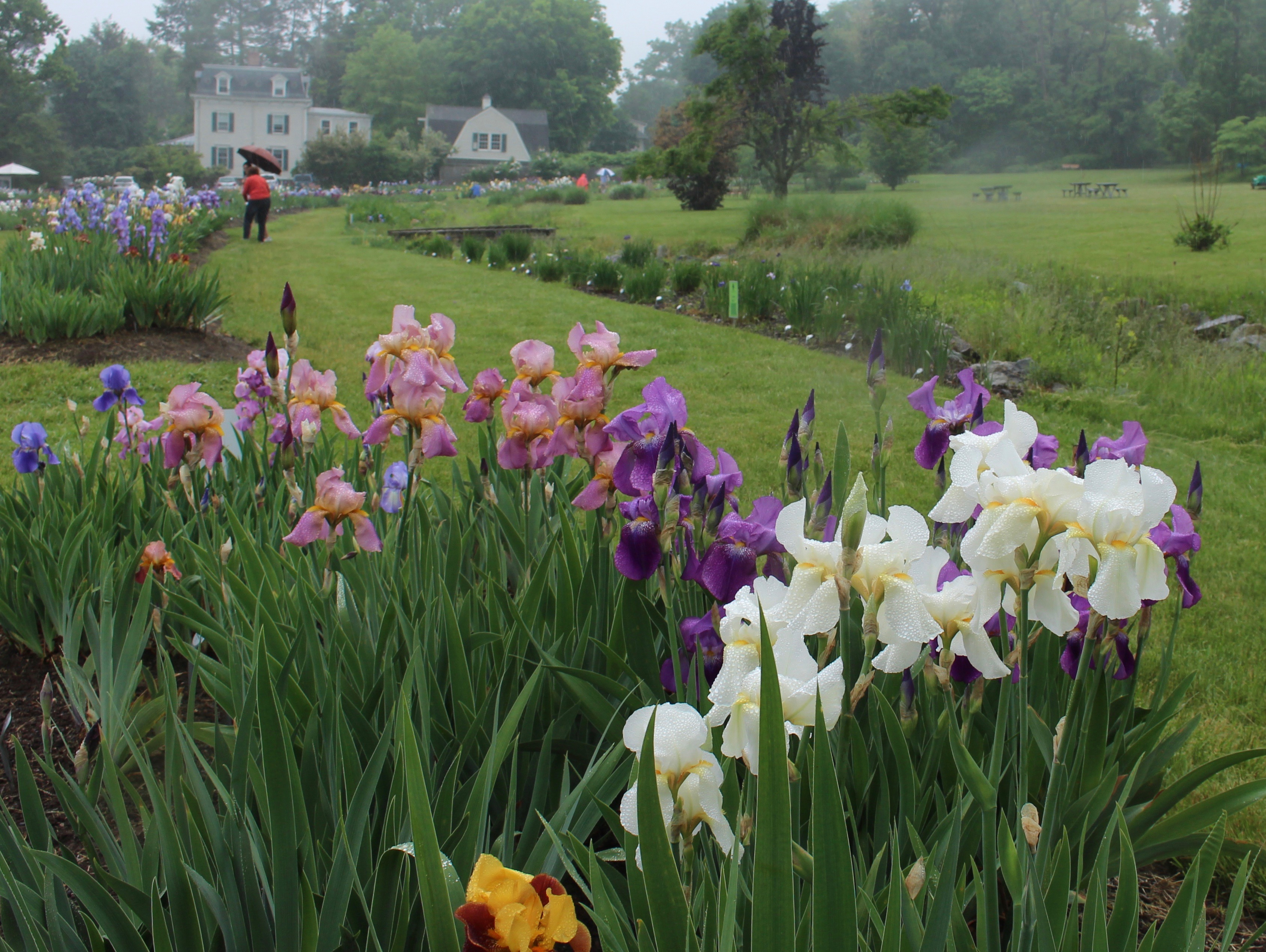
A mixed planting near the house.  

My friend and I slowly took in the plantings.  We went back and forth between admiring each bloom to admiring the overall setting and figuring out which varieties we had and which we absolutely needed now that we’ve seen them in person.

presby memorial iris gardens

Long iris beds follow the contour of the land along a small creekbed which separates the gardens from the rest of Mountainside Park.

Although I was mostly interested in seeing all the older iris this garden is known for, here’s just one more that’s “too much”.

iris montmartre 2008

Wow.  Iris ‘Montmartre’ (2008)

Before making the visit I saw an online comment calling the gardens “small”.  I guess I can believe that.  Some people could probably walk the gardens and take a selfie in just over 20 minutes and then hit lunch, but just for reference we iris lovers strolled about in the rain for about two hours before feeling we’d gotten a fair dose of iris.

presby memorial iris gardens

Iris stretching off along the street towards the woods. 

I did enjoy spending too much time admiring some older iris I’d never seen before.  They have a grace and elegance which some of the newest varieties lack and to be honest I might have added a few more to my wanted list.  Now would probably be a good time to mention the annual grab bag sale the gardens host as they replant beds each summer,  and also next month’s annual Historical Iris Preservation Society (HIPs) rhizome sale.  Both are excellent means by which a historic iris addict can add some of the seldom offered older varieties.

iris 'titian lady' 'melanie' 1941

White iris ‘Titian Lady’  and the rosy ‘Melanie’, both 1941 introductions.

I’ll leave you with just a few favorites as we enjoyed the older iris plantings.

historic iris 'ariane' 1930

Historic iris ‘Ariane’ (1930)

historic iris reingauperle 1924

I loved the tall historic iris ‘Reingauperle’ (1924).

historic iris 'waverly' 1936

The light rain was perfect for bedazzling the flowers of ‘Waverly’ (1936)

…and there were peonies as well.  The entrance to the building next door had a nice smattering of peonies filling its beds.

presby memorial iris gardens

Peonies outside the gift shop.

presby memorial iris gardens

Iris and peonies holding up to the rain.

Thanks to Trish for meeting me there, and thanks to the volunteers who make this show happen each year.  It was great seeing such a nice garden and it has me wondering how difficult it would be to start something similar in my neck of the woods 🙂

Have a great week!

Happy Memorial Day 2017

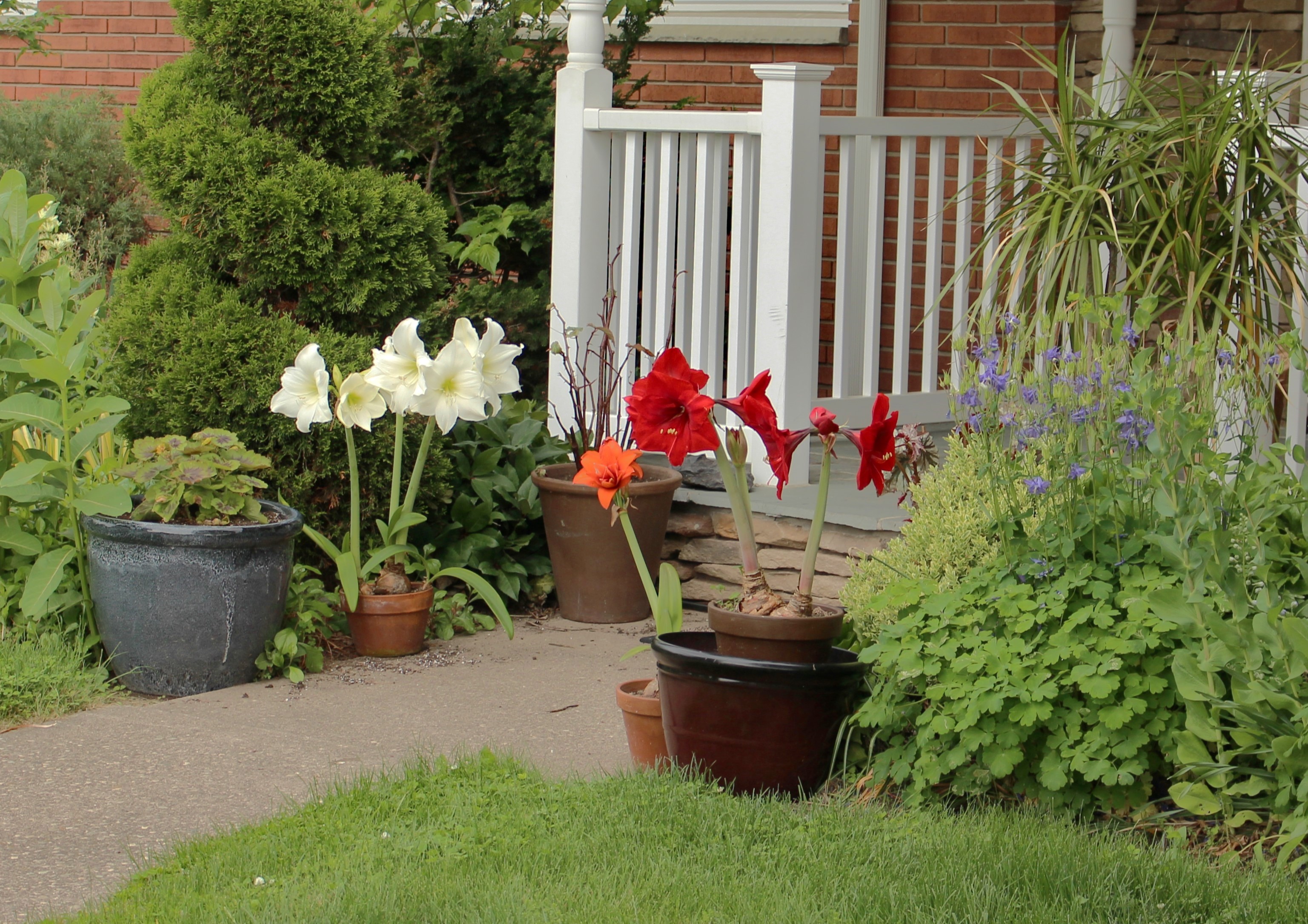
Here in the US Monday marks Memorial Day, a day when we honor those who’ve lost their lives serving in the armed forces.  It’s also the unofficial start to summer, and although I haven’t gotten around to filling the front porch containers these amaryllis were just too nice to leave hidden away next to the garage.  Hopefully their blooms will distract visitors from the as-yet-leafless overwintered begonia pots.

summer amaryllis

A day earlier and this would have been a suitably patriotic red, white, and blue combo, but last night the blustery winds pulled most of the last petals off the columbine clumps.     

The year before last I was all gung-ho about growing amaryllis (hippeastrum) again.  There was a beautiful show indoors as one after another opened but lo and behold as quickly as it came on it’s passed again.  This winter there were a few which came up and flowered indoors (and were appreciated), but the rest were tossed out of the garage as soon as temperatures allowed and have had to fend for themselves with whatever warmth and rain the weather has brought.

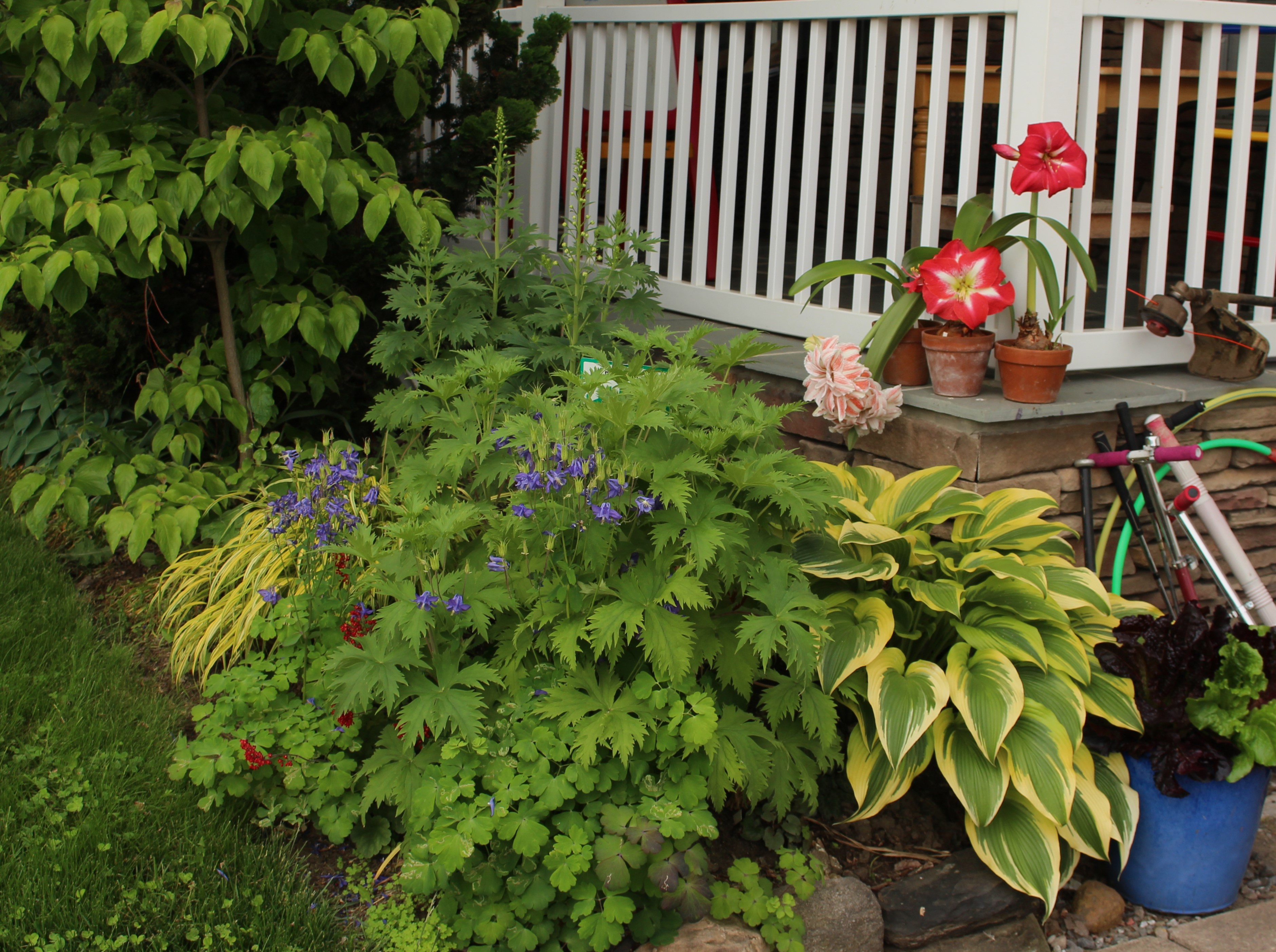
shade foliage

A few more amaryllis at the other end of the porch.  I really should cut the double and put it in a vase… 

A better gardener would repot and fertilize their amaryllis at this time of year.  Heavy feeding and plenty of moisture are the perfect recipe for building blooming size bulbs for next year and getting a jump on the next season’s flowers, but I’m far too distracted with swingsets, deck planters, iris flowers and barbeques.  Three days off from work will pass far too quickly.

mixed border bearded iris

I’m still completely distracted with iris season.  The chances that more clumps will go in and be spread around this June is nearly 100%.  Who needs marigolds.

I hope your weekend has gone well and you’ve had luck with both the weather and the to-do list.  Please wish me luck in still getting the lawn cut and vegetable garden planted on our final day off… neither has happened as of yet and that sounds like an awful lot of work for a holiday.  Maybe if I spent less time staring at the iris that would b a start, but this time of year goes so fast and I’d hate to miss a minute of it.

Tuesday View: The Front Border 5.23.17

So Tuesday is here again and although I just posted the view last week it would be a shame to ignore the irises which have come along since then.

street border

The Tuesday view showing the beginning of iris season.  Still lots of green but the iris are peaking!

Bearded iris are a favorite, and the older “historic” types just beg to be planted en masse in this full sun, often dry, and always exposed, location.  There’s little I have to do for them other than give them a little attention in June when I remove the spent flower stalks and pull up any borer infested plants I find.

iris ambassadeur

The view from the other end.  For now iris ‘ambassadeur’ is center stage, but will soon be swamped by the variegated arundo donax grass which is only just beginning to sprout.   

Besides the color these older iris also are also very generous with their lemony and grape fragrances.  My favorite is this bitoned iris which was growing in my parent’s garden when they bought their first (and current) house back in the 70’s.  After years of wondering, this spring I am officially naming it ‘Folkwang’, a German iris introduced in 1925 by the nursery of Goos & Koenemann.

iris folkwang

My newly named iris ‘Folkwang’ plus a lonely little lupine and a few alliums.

To search for a name for years may be a little obsessive, but it’s not like I was at it 24/7.  A little looking here, a little looking there until finally I found one which really looked close.  To seal the deal I searched high and low for a source, ordered myself a rhizome, planted it out last fall (and a few others of course), and finally this spring got to compare the named one to my own.

iris folkwang

I think it’s a match.  Iris ‘Folkwang’ on the right and a flower of my unknown to the left.

So maybe naming an unknown iris does border on the obsessive, but in the grand scheme of things it’s nothing when compared to how much time I spent this week planting dahlias and cannas and getting a garden ready for the whole half dozen people who might notice… yet again I digress.  It’s iris season, it must be enjoyed.

iris rhages

Iris ‘rhages’ looking a little pale this year.  Usually the flowers show much more spotting, but it’s still a beauty.

There are a decent amount of iris around the garden but to be honest I think I could use a few more.  In past years I spread iris ‘Rhages’ to the other side of the driveway, and they’re now the more impressive clumps compared to the little batch I have growing next to the mailbox.

iris rhages

Iris ‘rhages’ plus more iris next door in my BIL’s garden.  I wonder how he’d feel if I added a few other colors…

I am trying and trying so hard not to give in to the temptations of the newer, bigger, flouncier bearded iris.  They’re so much more of everything, but I just don’t find them as carefree and reliable as the older sorts, and in my garden once the pool and lawn chair start calling I need a certain amount of carefree.

bearded iris

An unknown modern iris which a friend forced onto me.  I couldn’t just let it die so in an out of the way corner of the garden it flowers and offends only me. 

I’m trying to decide which other iris I should add to the front street border.  Should I stick with the blue tones or just throw everything out there?

iris picador

I go back and forth between love and boredom on the mustardy reds of iris ‘Picador’.  I’m just not sure if this color will work out front so in the meantime it stays out back near the meadow.

I might have to make an exception for a cousin of my newly named ‘Folkwang’.  Iris ‘Vingolf’ is also a product of the breeding program of Goos & Koenemann and was introduced a year earlier in 1924.  I’m sure I could fit a clump of these out front.


iris vingolf

Iris ‘Vingolf’.  A shorter stouter iris, perfect for along the edge of the bed where the foliage will pick up once the flowers fade.

In this dry and sunny bed the foliage of these historic iris usually holds up well and looks decent throughout most of the summer.  It reminds me that with all this focus on grass trimming, canna planting, and Tuesday views, I’ve missed another monthly focus on foliage with Christina at Creating My Own Garden of the Hesperides so I’ll try and sneak that mention in as well.  Here’s a bed across the lawn from the street border, it’s highlight are a few lusty verbascum ‘Governor Aiken’ seedlings which appeared last year and were just too healthy to pull.

verbascum governor aiken

Verbascum and a whole bunch of other things looking Maytime fresh.  The ‘Tiger Eye’ sumac suckers look so innocent right now and of course there are more iris, variegated this time.

So there it is, the Tuesday view and a few other things all still posted on the appropriate day… assuming you are visiting from the Atlantic time zone… I suggest you take a look at Words and Herbs and see what others around the world are seeing this week.  Maybe it’s iris season there as well and I can’t help but say that’s a good thing.

An old familiar itch

It’s time to face the reality of unsown seeds and unplanted vegetable beds.  There… done.  For the past few years I’ve been making a real effort tot get all kinds of annual seed growing, all kinds of cuttings started, and all kinds of summer bulbs planted, but this year something is off.  Maybe I’ve been too busy with other things, but in all honesty I live a fairly lazy life and for me to say I don’t have the time or energy to start a few salvia seed or pot up a few coleus cuttings is just a bunch of excuses.  My reality this year is I just don’t care to.  I’m not a farmer after all, and the family won’t go hungry or broke if the potatoes fail, so I just keep enjoying what I’m doing and don’t stress it if this year I only start 10 or 20 coleus cuttings rather than 75.  The iris are in bloom after all, and this year they are nearly perfect.

historic bearded iris

The view from the street is far nicer this spring with green grass and healthy spring growth.  I forgot what it’s like to start the year with cool temperatures and ample rainfall rather than dry winds and drought.

I have a weakness for iris, and go back and forth between indifference and obsession depending on the season.  This year it’s obsession.

historic bearded iris

Clumps of iris are scattered throughout the front border.  They are mostly old cultivars (~100 years) and although they lack the ruffles and fluff of the modern iris, they’re very well suited to the rough and tumble of often neglected and often overgrown perennial beds.

The number of blooms, the colors, the fragrance, are conspire against me this season and I’ve been on and off iris websites far more than I should admit…. even though the majority of my iris are either pass-alongs or just plain found alongside the road and had nothing to do with a catalog order.

historic bearded iris

From left to right, Flavescens (pre 1813), Ambassadeur (1920), and Indian Chief (1929).

The jury is still out on any big iris orders since I should really take better care of what I have, but people say it doesn’t hurt to look and so far that’s all I’ve been doing.

blue foundation planting

The striped leaves of Iris pallida ‘aureo-variegata’ accenting the front foundation plantings.  You can count on this iris to scent the whole corner of a bed with that delicious grape scent which many of the older varieties put out.

It hasn’t been all sloth and idleness in the garden this spring.  A few small projects are getting done in spite of my laziness, although I’m not promising they’ve all been done to the best of my ability or that they are the best value for my little effort.  One interesting discovery I came across is that bearded iris are fairly resistant to Roundup type (glyphosphate) herbicides.  That of course leads me to carelessness when spraying around the clumps next door, since the chances of iris damage are far outweighed by my ‘want to do as little free labor as possible especially when it includes pulling weeds out of monotonously boring mulch beds in someone else’s yard’.

roundup on iris

Iris foliage is fairly resistant to Roundup yet the flowers will discolor and stunt depending on how much of the poison they absorb.  These flowers should be larger and a dark velvety red rather than small and anemic looking.   

Before anyone gets too excited, I just want to say I really don’t use too many chemicals in the garden and although I like to appear as if I’m lazily spraying about I really am somewhat cautious, if only because I have too many more sensitive plants which I’d hate to lose.  For what it’s worth my research shows that iris, vinca, and nut grass are pretty much the only plants which will not be outright killed by careless Roundup spraying…. although for the vinca and nut grass the spraying was very intentional.

roundup on iris

Normal iris bloom to the left, increasing Roundup effects on the same plant to the right.  A heavy dose will give a colorless cauliflower-like stalk which is entirely uninteresting.

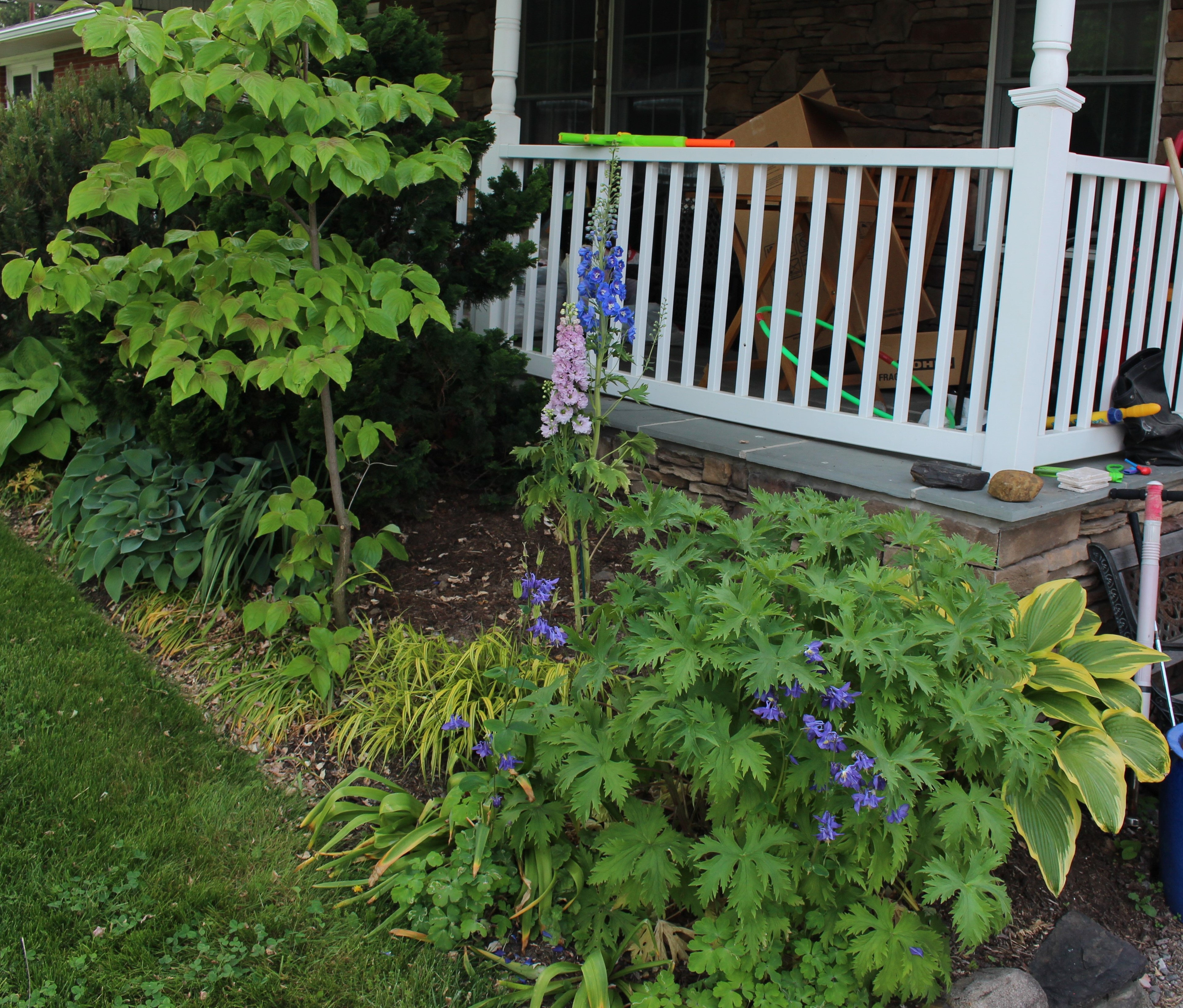
Besides chemical warfare on weeds, another questionable project started with my purchase of a Charlie Brown delphinium which needed a perfect spot in order to wow everyone with its amazing comeback.  My single successful clump grows alongside the front porch so this was the most obvious spot to try another, except for the six foot Alberta spruce which already grows there.

delphinium foundation planting

The healthy delphinium clump is front and center with the spruce behind.  The Charlie Brown delphinium sits soaking in the white bucket to the right.

Alberta spruce is a 365 days a year respectable plant, with an attractive form and many years of service in and many years of service to come.  It would make no sense to pull it out in favor of a temperamental diva which needs fussing and fertilizing and timely staking to protect it from the high winds which strike each year (always two or three days into peak bloom season).

delphinium foundation planting

Spruce gone, delphinium in (one of the ‘New Millenium’ hybrids).  Not the most logical decision I’ve ever made but in the garden I prefer to live guilt free and impulse happy.  Also, if you could, please ignore all the trash and clutter on the porch beyond.  I only got around to cleaning it up after this photo was taken.

I’m distracted again, let me finish up iris season.  The Siberian iris and Japanese iris might be some of the most beautiful flowers of the plant world, but I don’t grow many.  They seem to flower for a total of one week and although the grassy foliage looks respectable all summer and they handle nearly any abuse which comes their way I try to limit any collecting urges.

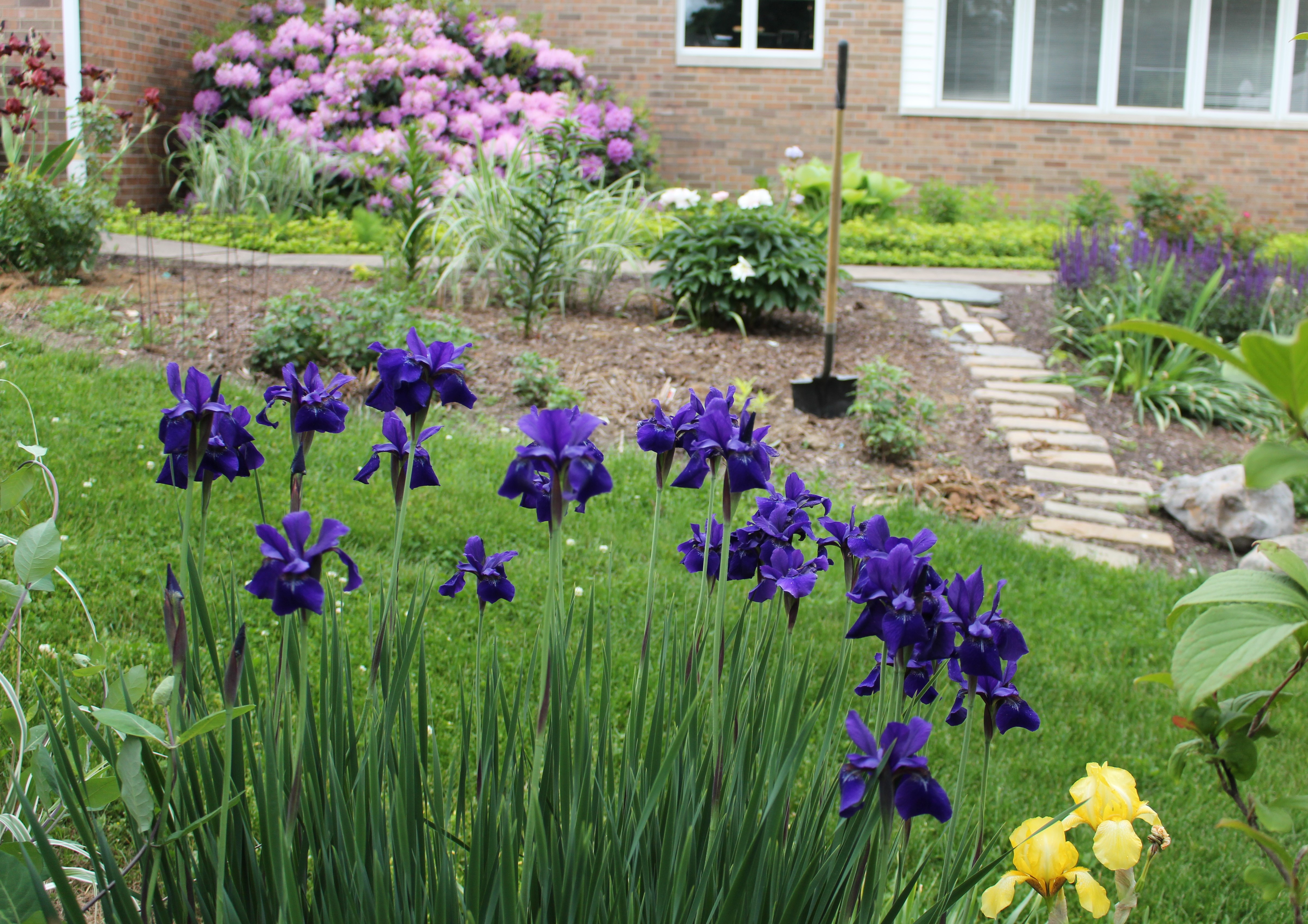
purple siberian iris

An unknown purple siberian iris with a still unplanted tropical border behind it.

One Siberian iris which I couldn’t walk away from was ‘Super Ego’.  It’s not because it was in bloom when I saw it or that the color was unique or any other particular quality, it was because of a childhood dream which was set on fire by a random White Flower Farm catalog which showed up in my mailbox one winter.  I think I’ve confessed to being a little odd as a child so the fact that I’d sit around spending hours reading through this catalog probably shouldn’t surprise anyone, but this 1980’s era catalog (which I probably still have somewhere in the basement) had ‘Super Ego’s glamor shot in it alongside a poetic description which convinced me that owning this plant would make me richer, smarter, and more popular.  Unfortunately the WWF catalog was way beyond my 10th grade budget so the actual plant never left Connecticut and I was forced to go on without.

Siberian iris super ego

Siberian iris ‘Super Ego’ just starting to open on a Thursday. 

The actual experience of growing ‘Super Ego’, while pleasant enough, didn’t quite live up to my expectations.  For what it’s worth, I guess I’m as smart, rich, and popular as I’m ever going to be.

Siberian iris super ego

‘Super Ego’ five days later after a few 90F days bleached most of the darker blue color out.  The chives in the back seem unfazed by the weather or passing time, although they are entirely less exotic in my opinion.

So as I wait for a new plant to come along and change my life I’ll continue weeding through the backyard iris beds.  They are infinitely less photogenic with their hefty companion plantings of weeds, but the old iris continue to carry on and deserve more respect than their neglected planting spot gives.  I even planted a few zinnia and marigold seeds last weekend.  That may not speak of high class and taste nor earn me a spot in the White Flower Farms catalog but it does mean that things are starting to move on the seed front, and if it all works out July and August should still be full of flowery color.
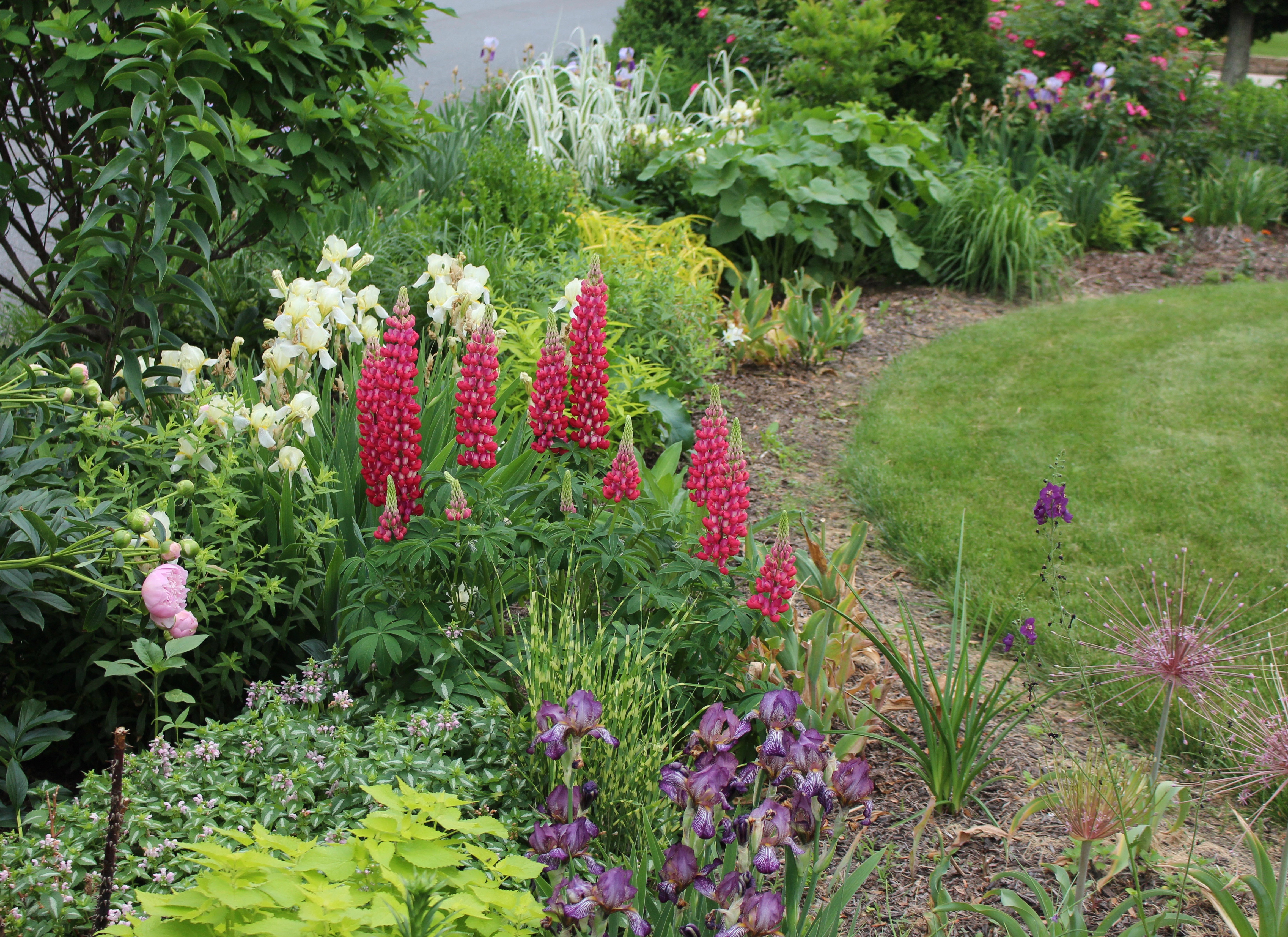
GBFD The Promise of May

On the 22nd of each month Christina at Creating my own garden of the Hesperides encourages us to look past all the flowers and blooms of the garden and take a second look at what foliage does to support it all.  I’m happy to once again take part in the fun, and what better month to do it in than May, the month where my garden really starts to overflow with the promise of the new season.  Lets start with the front beds where hosta and self sown columbine have now sprouted up and covered the snowdrop and corydalis beds of early spring.

blue columbine with hosta

These blue columbine were originally found in the woods behind the house prior to its clearing for industrial park.  They’re just escaped or dumped aquilegia vulgaris, nothing rare or unusual, but I like to keep them around as a reminder.  Plus they’re carefree.

This will be our seventh year here and after a slow, cash strapped and baby filled start I think things are finally beginning to look like something.  The colors and shapes of the front foundation plantings are still a work in progress but for now the look is finally something I’m no longer bored or annoyed by. – Cathy here are the variegated iris in bloom, they have a fantastic fragrance 🙂

mixed perennial bed as foundation planting

The just recently mulched, expanded and divided plantings of the front foundation planting.

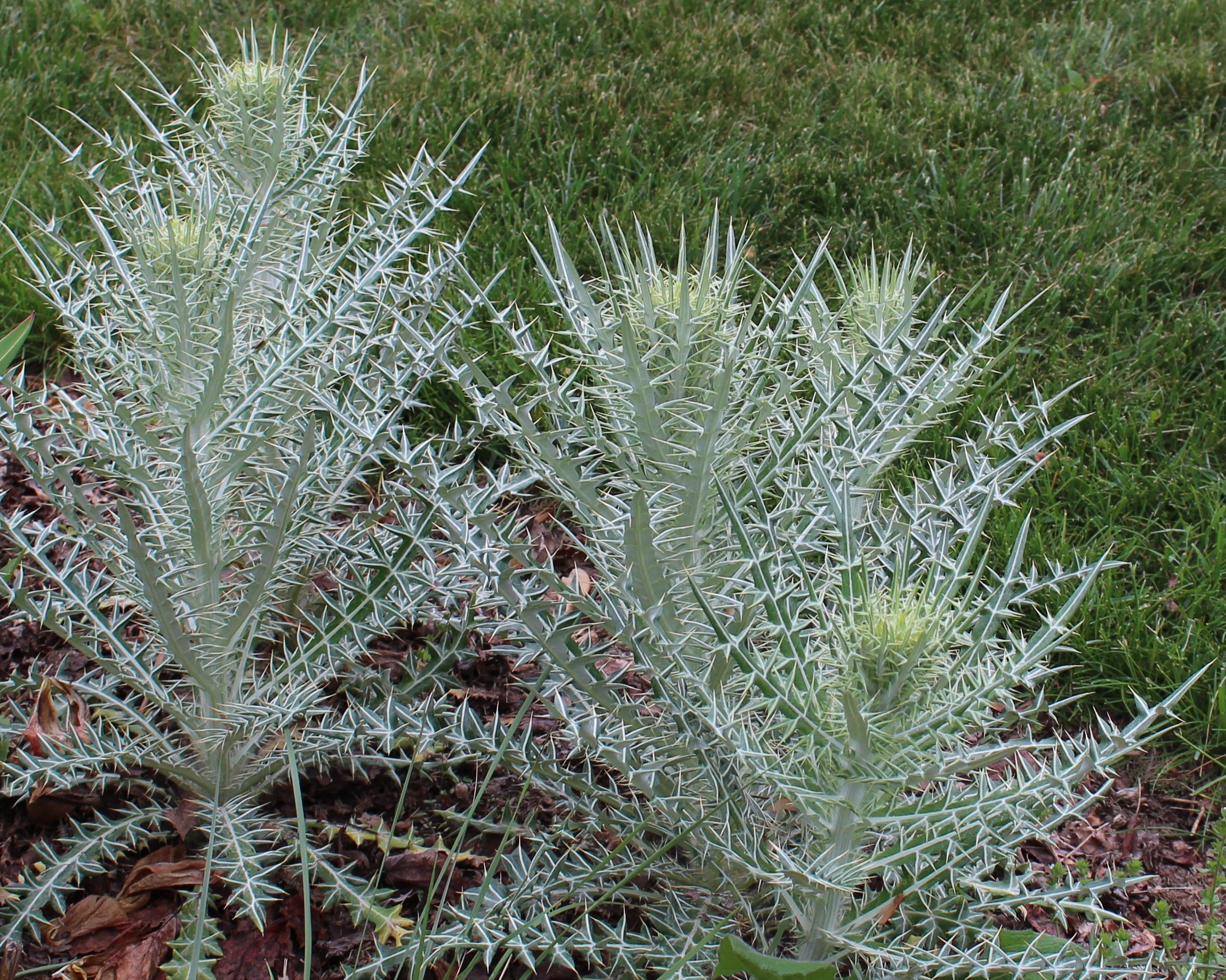
I love the different colors and textures out here at the moment, but my absolute favorite is the “white frosted” Japanese thistle (Cirsium japonicum).  I know I’m in a lonely position here, but the prickly thistles always fascinate me, and in my opinion variegation is almost always a plus!

Cirsium japonicum 'White Frosted' Japanese thistle

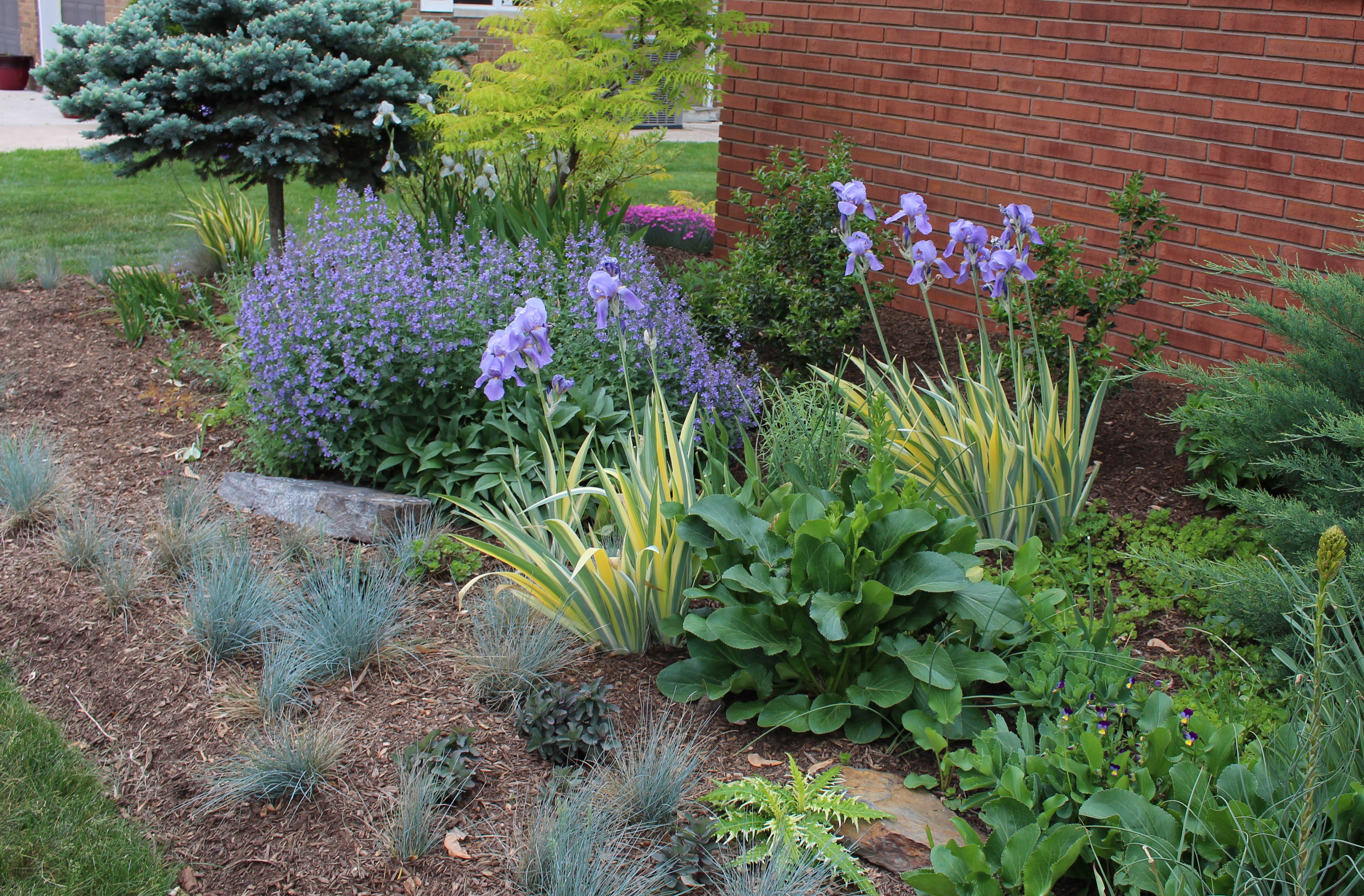
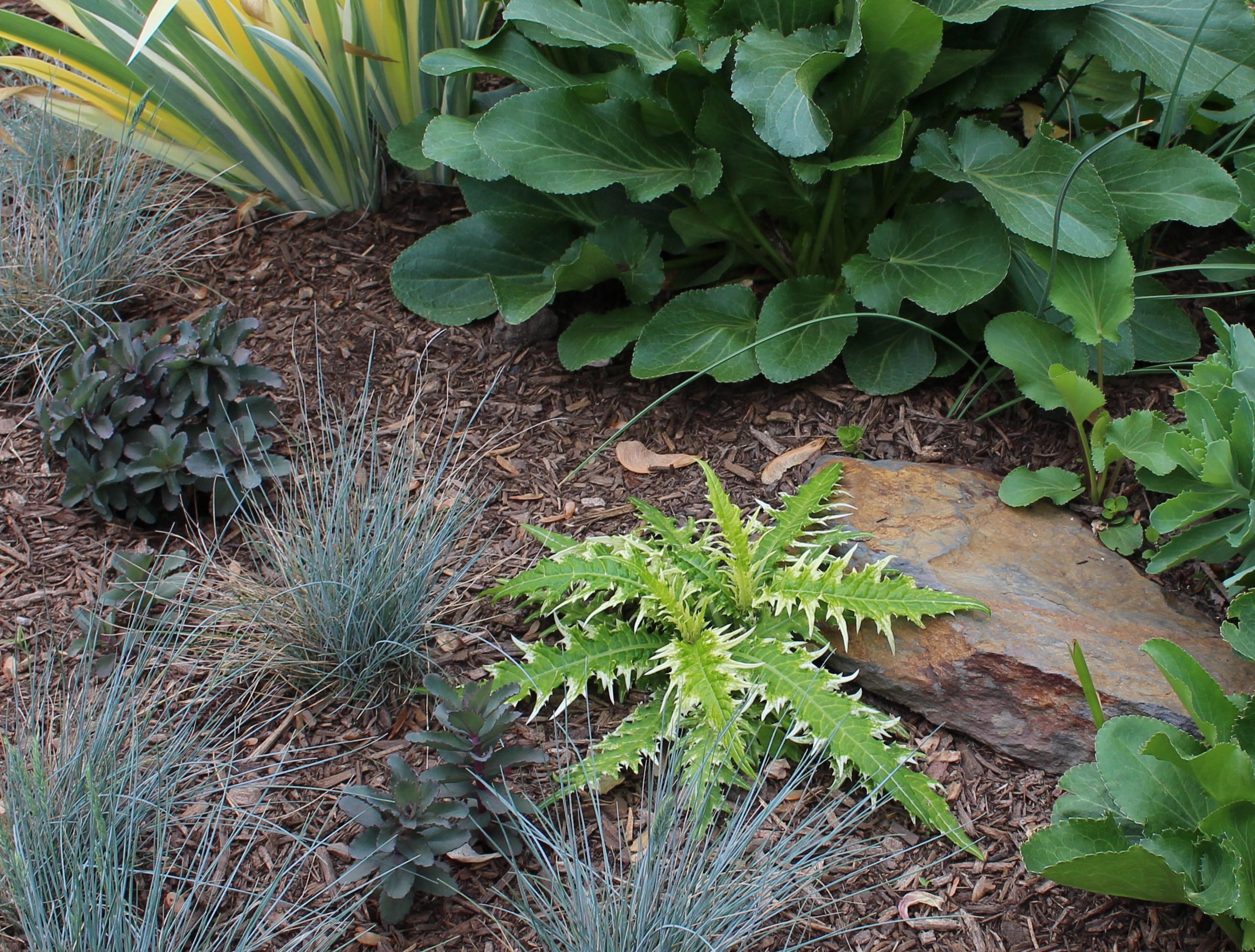
Cirsium japonicum ‘White Frosted’ with blue fescue and some just divided sedum ‘Bon Bon’.

Even with the iris coming into peak bloom along the street border (it’s a good year for iris here), my favorite plant in this mix is the Ptilostemon diacantha.  Some see a spiny weed in need of pulling, I see some of the coolest foliage in the garden.

mixed border with historic bearded iris

Historic iris like the poor soil and hot, dry and sunny front border, and even though the pale yellow iris “flavescens” does not like the wind, the reddish ‘Indian Chief’ and lavender ‘Ambassedeur’ stand strong.

I know I’ve already shown this weed a couple times, but I’ve never seen it looking better…. not a difficult feat since this is its first time growing here!  I suspect the actual blooms will be a letdown, but the fine texture and pattern of the leaves…. 🙂

Ptilostemon diacantha

Foliage closeup of Ptilostemon diacantha.  A biennial thistle from the Balklands/Turkey region in need of a common name.  ‘Ivory thistle’ is the only one I came across and that one kind of bores me…. and with blooms of mauve I don’t see the connection.

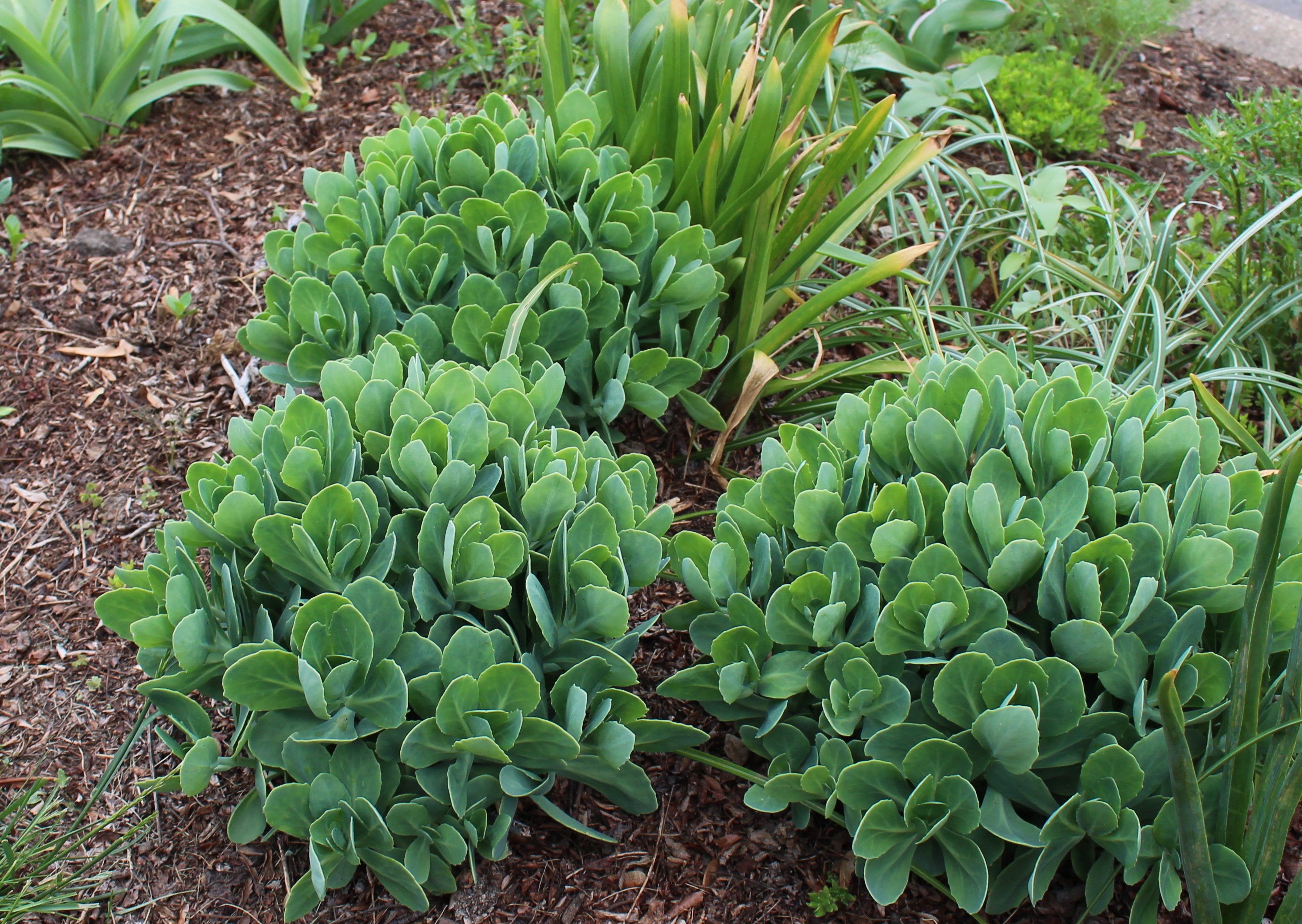
There are some friendlier foliages as well.  The juicy fat clumps of this unnamed sedum spectabile (apparently Hylotelephium spectabile is its new name) always make me smile, no matter how common they might be.

spring clumps of sedum spectabile

Spring clumps of sedum spectabile.  The common types are unkillable, and one plant survived for two years after I put the clump down on a stone step after being distracted while transplanting.

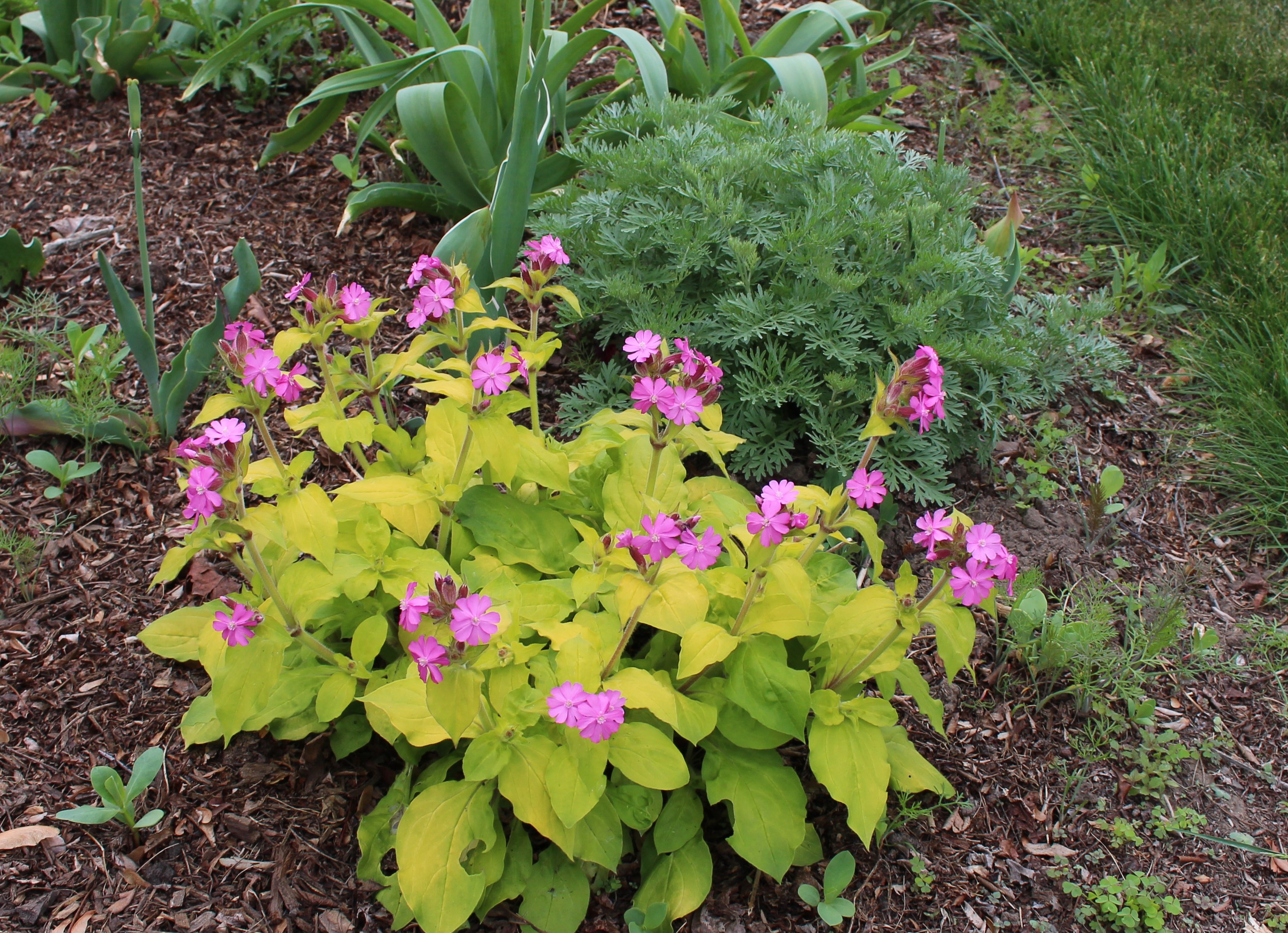
Another foliage favorite which I’m happy to have again is this plant of Silene dioica ‘Ray’s Golden’ Campion, which comes via seed from the talented Nan Ondra of Hayefield.  It’s short lived in my garden but easy to grow once you get the seeds planted.  Just rouge out the plain green seedlings.

Silene dioica 'Ray's Golden' campion

Silene dioica ‘Ray’s Golden’ campion with Artemisia ‘Powis Castle’ coming up behind.  This section of bed is still in need of weeding, fortunately the shredded leaf mulch has kept most of the little guys from sprouting.

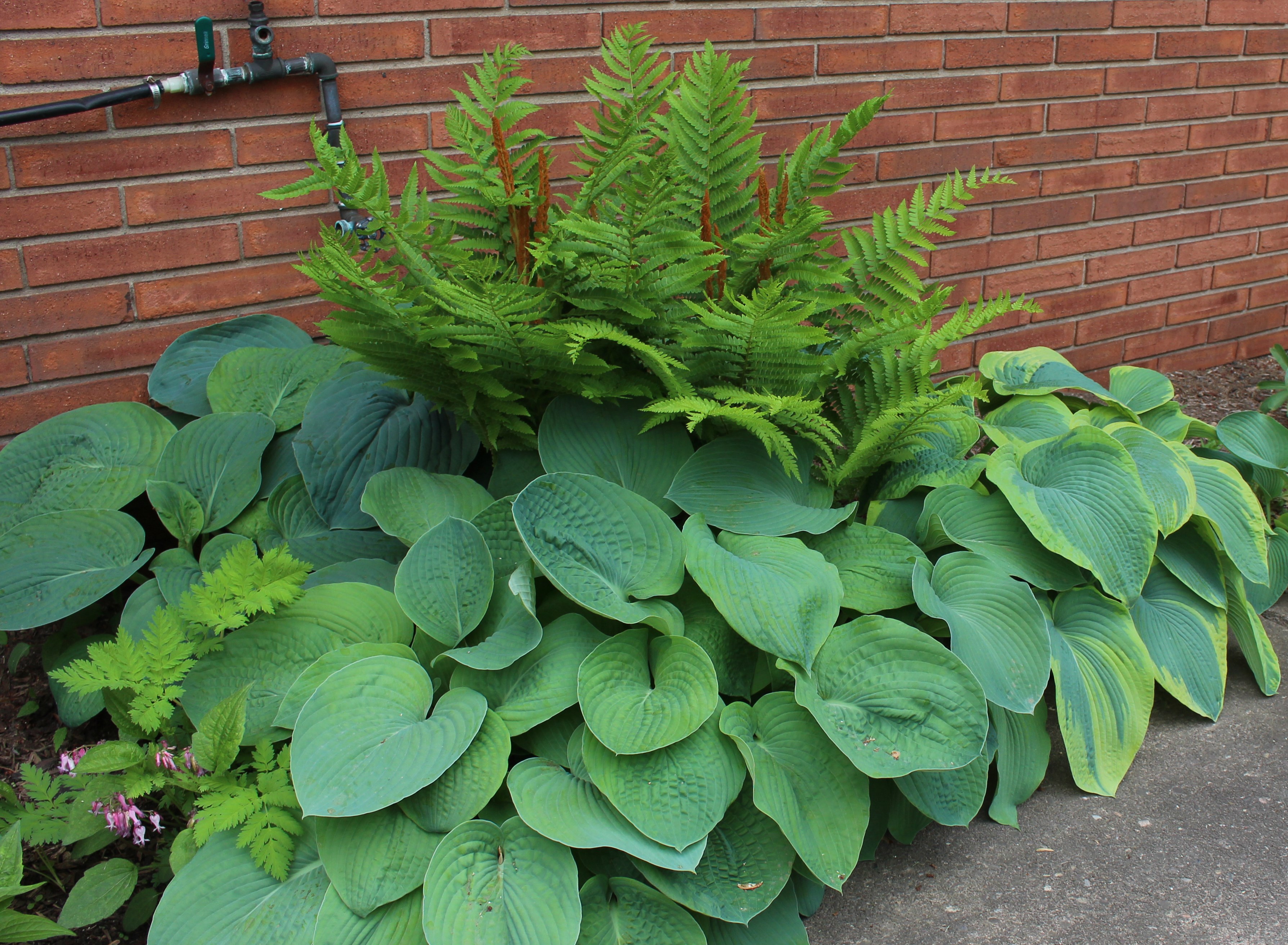
When you circle the house to get out back, you pass what comes closest to a shade bed in this mostly sun-baked garden.  A leaky faucet (left intentionally so for the plants… and laziness) keeps these ostrich ferns and hosta happy here under the dry overhang of the house eaves.

hosta frances Williams seedlings

Hosta ‘Frances Williams’ (just barely noticeable to the right) is the mother to all of these hosta seedlings.  I was curious to see if any would pick up mom’s variegation, but no luck.  All have a similar bluish tint free of any color streaks, a plain look but still beautiful.

The rest of this month’s foliage celebration are also a celebration of wintertime seed sowing.  Lets begin with the seed trays.

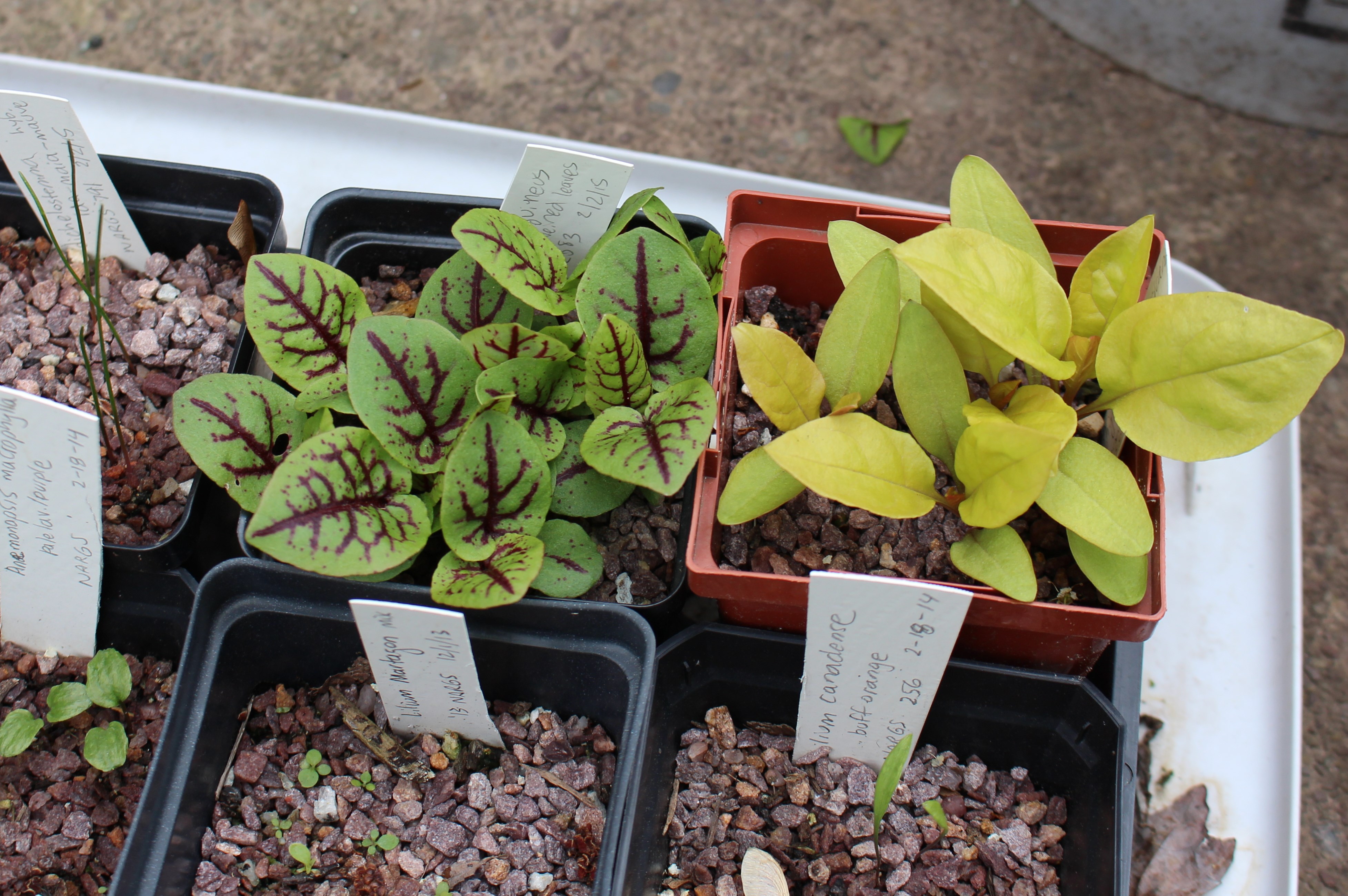
rumex sanguineus seedlings with 'sunny side up' pokeweed

My obsession with weeds continues.  Here the baby pictures of Rumex sanguineus seedlings with ‘sunny side up’ Phytolacca Americana next door make for a pretty combination.  Their common names of bloody dock and pokeweed sound much less special 🙂

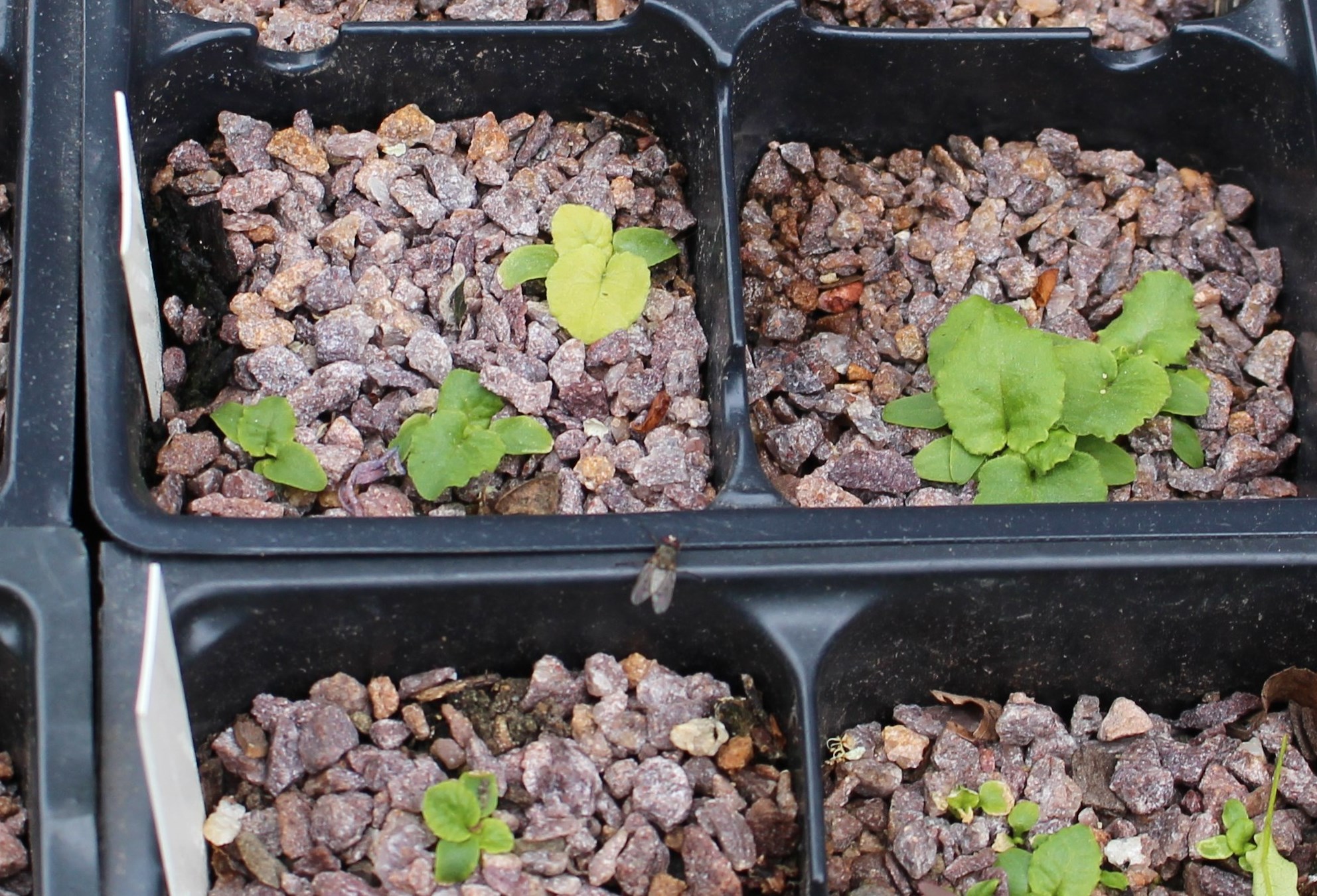
Any yellow leaved seedling is right up my alley.  Out of my American Primrose Society seeds comes this one little oddball.  My fingers are crossed I can nurse it along to adulthood.
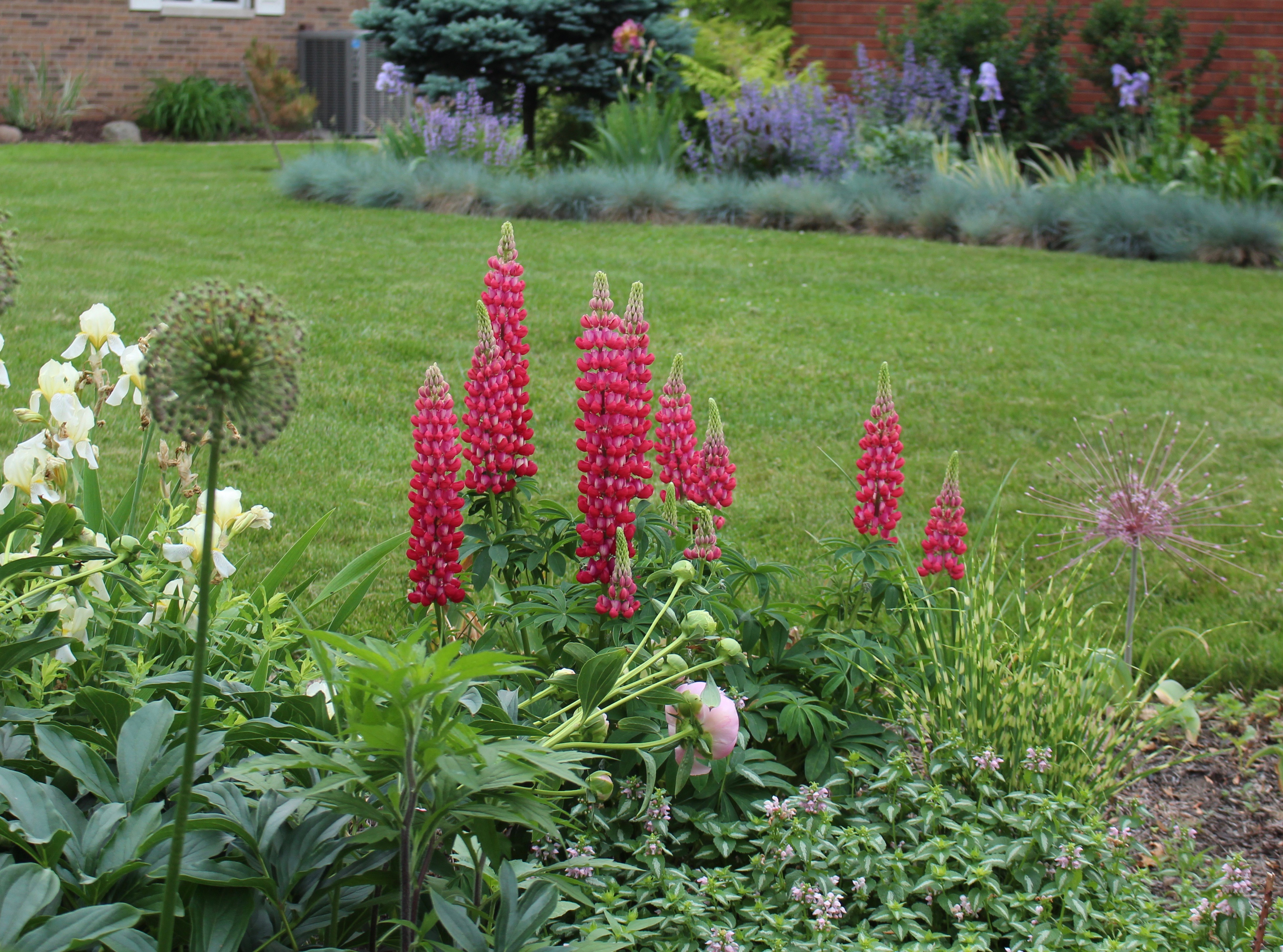
primula polyanthus seedlings

Primula polyanthus seedlings with one yellow leaved sister.  I hope it stays this way and manages to limp through my on again off again care/abuse.  -don’t know why the fly had to photobomb the center of this photo.
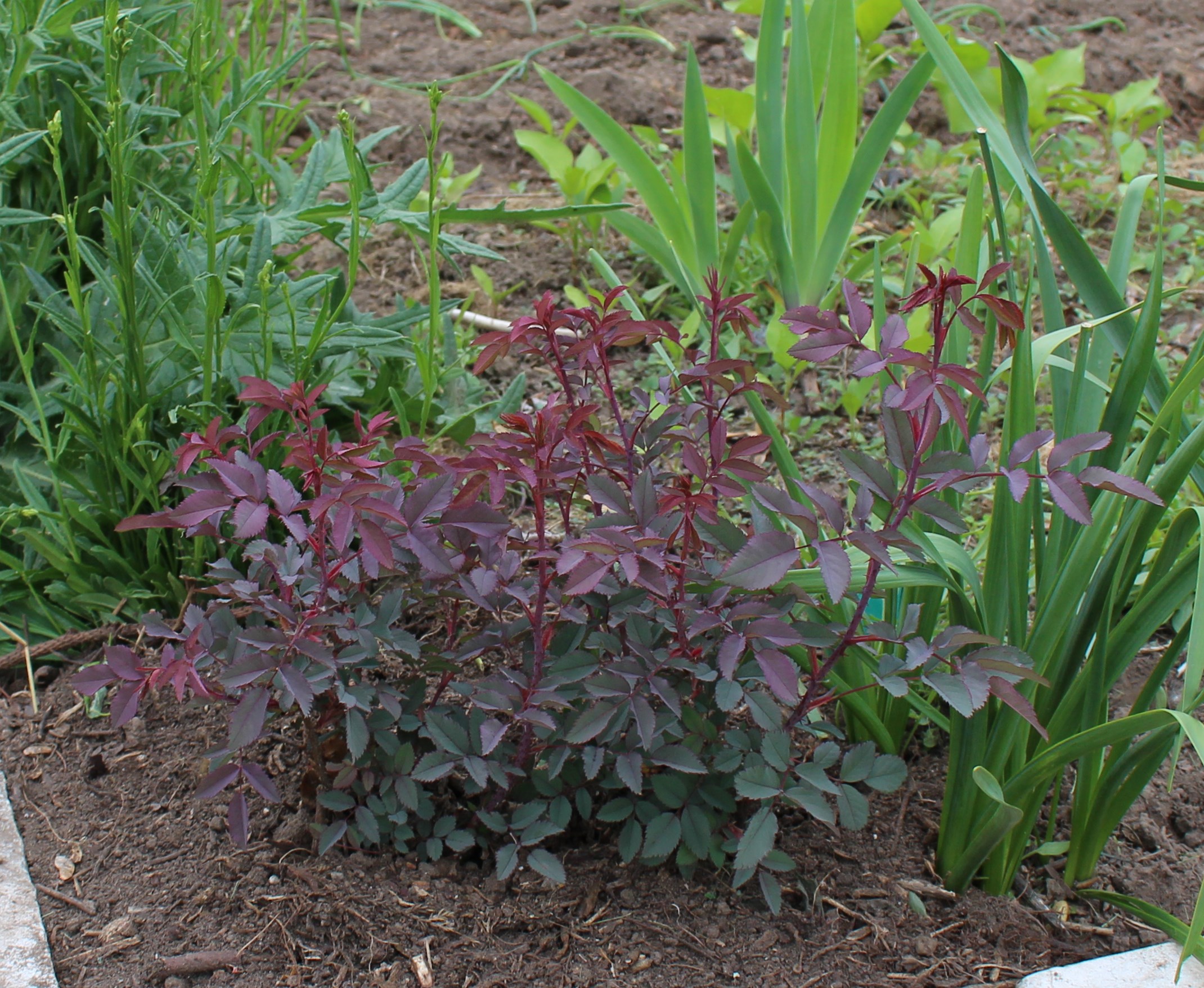
Another seedling which has somehow escaped neglect and abuse is this third year Rosa glauca.  I’m looking forward to seeing this one take off, it just needs to go somewhere other than the tomato bed.  Or not.  Maybe it would look nice next to a couple golden cherry tomatoes 🙂

rosa glauca seedling

Rosa glauca freshly mulched with a shovel full of compost.

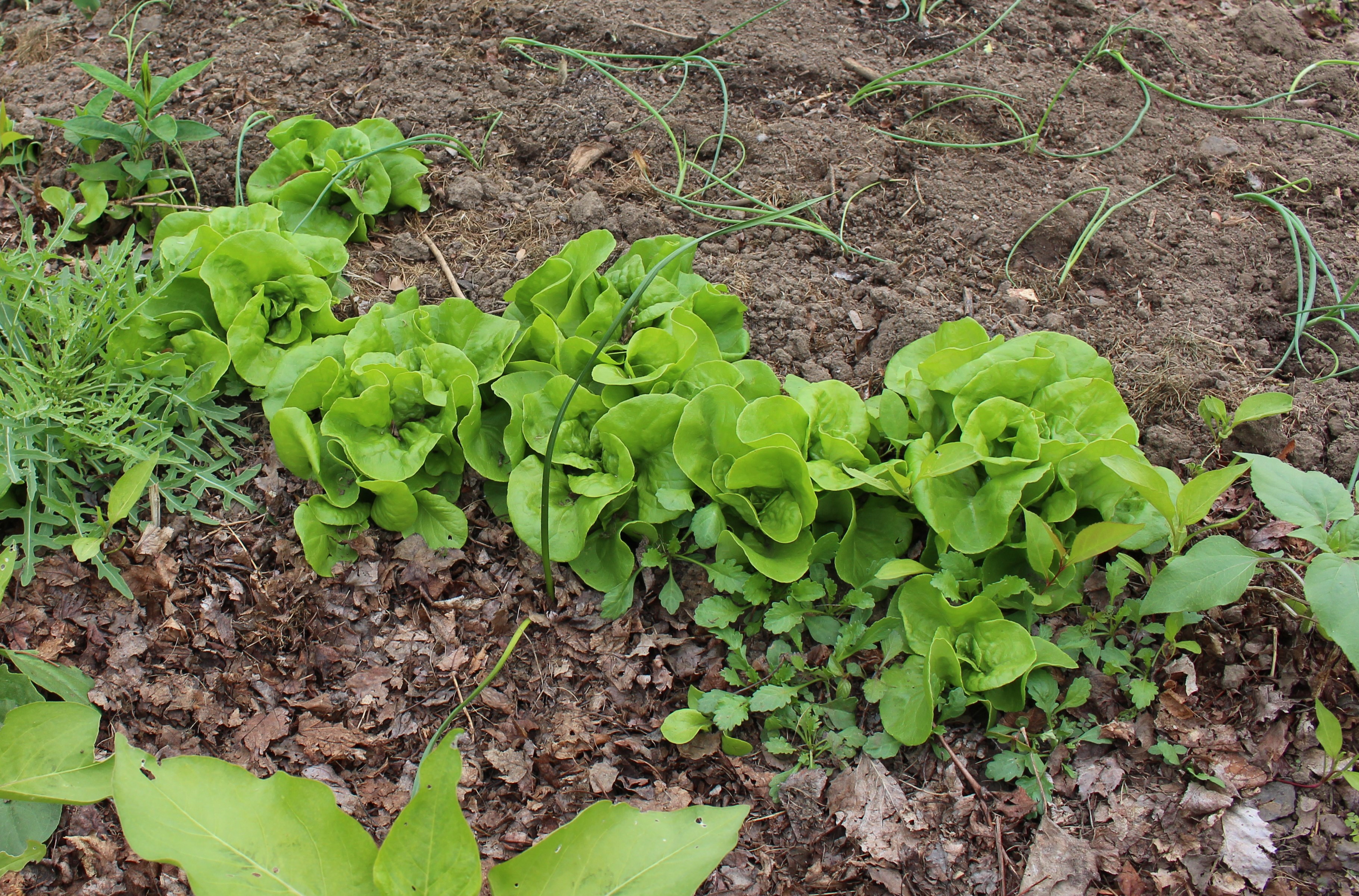
Sometimes neglect pays off.  The lovely leaves of this lettuce crop are the result of not removing last year’s leftovers until they had bolted and gone to seed.  They’ve even come up in a row as this was a ridge of soil where the mulch was blown off during some winter storm.  Dare I say this planting is nearly as nice as the seedlings I fussed over for weeks indoors and then carefully transplanted and nursed along?

self sown lettuce seedlings

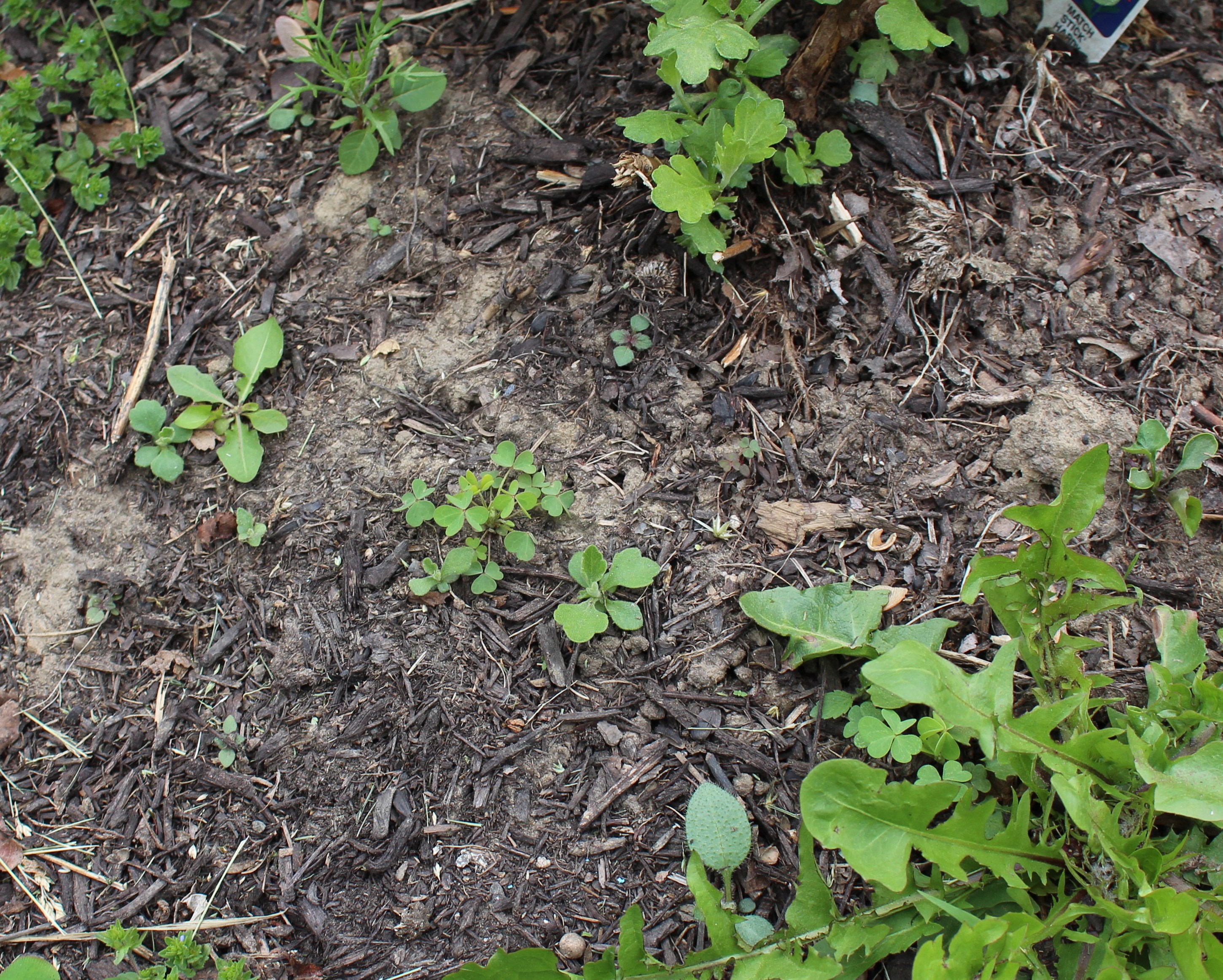
The quality of my weeds is really coming along.  In this photo there’s lettuce, a nice bunch of arugula, phlox, daisies, a daffodil and sunflower.  I must stay strong and remove them all… this really is the only spot left where there’s any chance of fitting in a pepper.

Another weed problem are the many chrysanthemum seedlings sprouting around last year’s plantings.  I must rip them out as well, I have no room for more mums… says he who has a dozen more new little pots in need of planting.

chrysanthemum seedlings

Not sure why I’m posting weed pictures, but you can make out the tiny leaves of chrysanthemum seedlings here amongst the dandelions and clover.

Weeds aren’t the only issue this spring.  The phlox hate the extended dry winds and droughty soil, it brings on the spider mites and I have no interest in spraying for anything.  I’ll make an effort though and spray the foliage off with the water hose while watering (just watering in the first place is probably  good start), then give them a dose of liquid fertilizer.  That and a few more sprays with the water hose might be enough of a shot of goodness to help them outgrow these annoying pests and save this year’s bloom season.  I can’t even imagine a phlox-free summer…

garden phlox with spider mites

What a difference.  Phlox ‘Blue Paradise’ on the left has nearly given up under the spider mite attack, while his neighbor to the right only shows a few yellow leaves and yellowed stippling from the spider mites.  I may just trim him back completely and hope for the best with any new growth which manages to come up. 

One more bad foliage visit.  Sweet autumn clematis (Clematis terniflora) is a pest in my meadow garden and each spring I battle the legacy of the single vine planted along the fence next door.  I suppose I could spray the clumps and eventually do them in, but I have to admit liking their patterned foliage and late season blooms…. even though I promptly rip the vines off before seed is set.

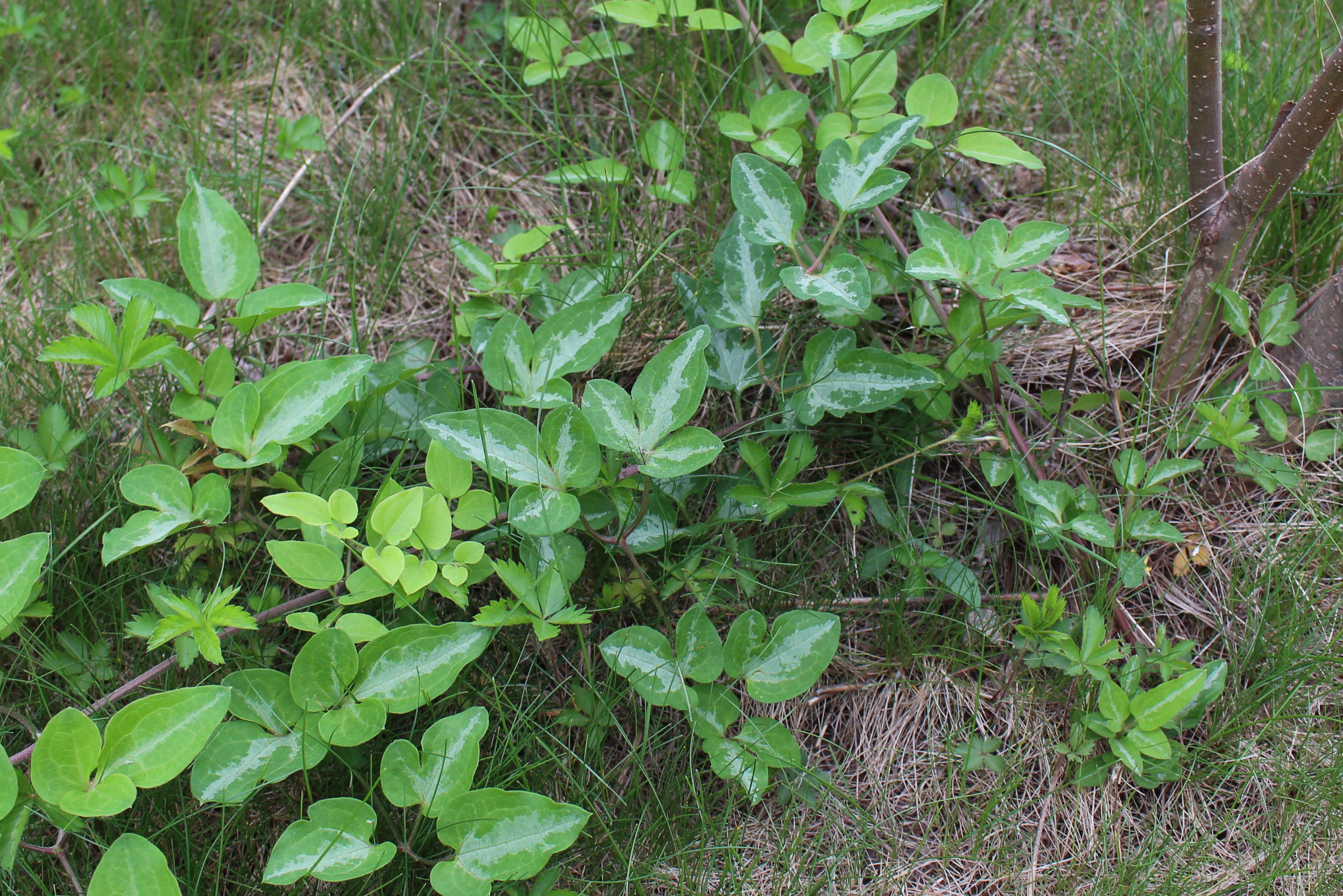
Japanese clematis Clematis terniflora foliage

Japanese sweet autumn clematis (Clematis terniflora) foliage.  I wish this wasn’t such an invasive thug. 

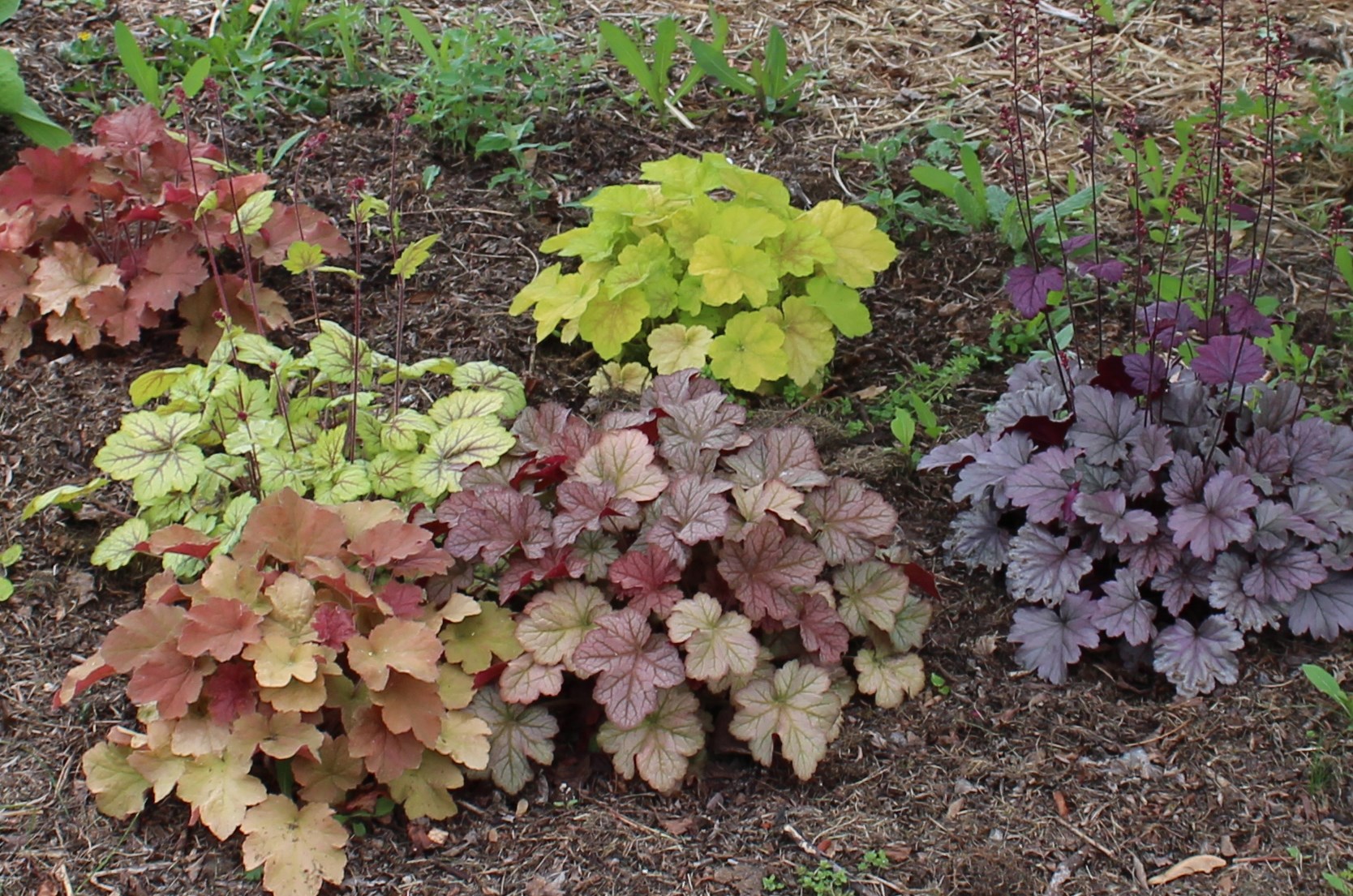
To wrap things up I’ll leave you with something a little cheerier.  With the exception of a few rabbit decimated plants, the bulk of last years clearance heuchera have overwintered nicely and are showing off their fresh spring foliage (as well as their bland and boring flower stalks).  Honestly I don’t like them all together in one big mess, but as plants grow (or die off) I’ll divide the survivors and see if I can work a few clumps into the rest of the garden and make some nicer foliage vignettes.

mixed heuchera planting

Mixed heuchera from last year’s Santa Rosa Gardens purchase.  Yes this bed also needs weeding and more mulch…

So those are the foliage highlights from this end of Pennsylvania.  If you’d like to see what others are up to please visit Christina’s blog to see what people across the world are seeing in their gardens.  It’s always inspiring!

Have a great weekend, here we have three days to observe Memorial Day and in addition to the usual holiday activities I hope to catch up on all things blogging.  Enjoy 🙂