Tuesday View: The Tropics 8.23.16

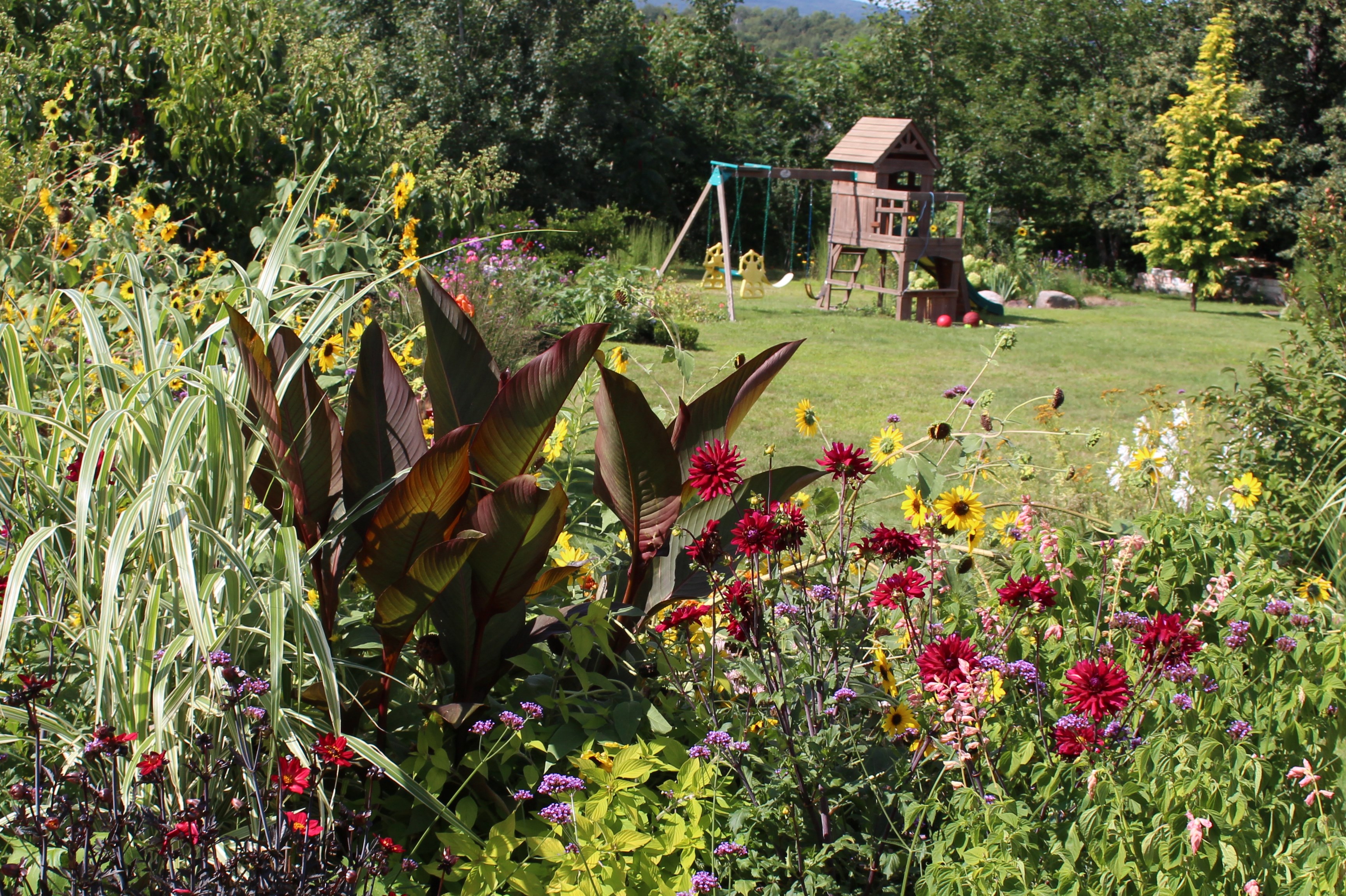
It’s another Tuesday and although I missed last week due to a quick summer jaunt up to the mountains of New Hampshire, this week I’m back to joining in with Cathy at Words and Herbs in order to look at the weekly progress of the tropical border.  Heat, humidity, regular rain showers, and strong summer sunshine in between have brought on an explosion of late summer growth and the purple leaved cannas now dominate the bed.

tuesday view

Purple leaved canna indica, maybe ‘purpurea’ or ‘red stripe’ or ‘Russian red’… I don’t really know since they were given to me years ago as just plain old canna… have now topped off at around 8-9 feet.

You’ll probably notice the small red blooms the cannas have put out.  They’re nice enough as a little decoration up top but hardly enough reason to grow these plants.  It’s all about the foliage and it’s looking particularly good on this deliciously cool and clear, breezy summer day.

canna indica purpurea Russian red

Canna indica ‘purpurea?’ blooms against the bright blue of a clear summer sky.  A very popular flower with the hummingbirds.

Have I referenced “summer” enough yet?  I’m hoping that if I keep saying the word it will hang on forever, and we’ll never have to deal with the cold little deaths called autumn and winter.  Surely it’s a part of life here in Pennsylvania, but I don’t mind if it holds off for another two months at least.

coleus Alabama sunset

I need to add more coleus to the bed next year.  As things grow so does the shade, and this coleus (maybe ‘Alabama Sunset’)  fills in nicely rather than fading away like some of the zinnias.

There’s a whole back half to the bed which has been blocked off by the main clump of canna.  It’s a little messy but hopefully in the next few weeks a dahlia or two can break through and add a little color as other things begin to fade out.

tropicalismo

Is ‘Tropical Weed Patch’ a look?  If I can only think of a better name maybe it will catch on but in the meantime you may notice the salvia ‘Caradonna’ which constantly annoys me is still exactly where its always been.  Sometimes things don’t move too fast around here 🙂 

With such a mess of randomness there’s bound to be a surprise here and there, and sometimes that surprise even turns out to be a nice one.  This week it was the salvia which has just come into bloom.  My favorite version of the stout, too-red, gas-station salvias (Salvia splendens) are the ones which don’t look like they’d end up in a gas station planting at all.   They’re the tall and lanky ones which are sometimes referred to as Salvia splendens ‘Van Houttii’ and up until now I’ve only succeeded with a peach colored one.  But last year I did have a short purple bedding type nearby, and apparently things happened at night and lo and behold this year one of their children is a tall, lanky purple.

purple salvia bloom

At about three feet tall this purple salvia bloom has all the grace and style which its shorter cousins lack.  Even better was that I found this as a self-sown seedling and was lucky enough to nurse it on to blooming size.  This makes me wonder as to what the other seedlings will look like.  

I’ve shown it before but have to show one more photo of the castor bean.  The bright seed pods look perfect amongst the purple foliage.

castor bean carmencita

The spiky red (and remember poisonous as well) seed heads of castor bean ‘carmencita’

This afternoon the sun hit the back corner of the bed perfectly.  You don’t even notice the weeds when the light is like this.

tropicalismo

Verbena bonariensis is the workhorse of this bed and although it threatens to swamp everything else here it’s still worth any bit of trouble it causes. 

At this time of year it’s easy to ignore any maintainence and just enjoy the plants as they slide on into autumn, but dahlias are yet to come and dahlias need staking.  Two weeks ago would have been the best time to do this but things happen and when things happen the dahlias fall over.  It will require twice as much time to carefully put them back up and some might just stay where they lie.  It will be more of a groundcover look, but with the way they are stretching away from the canna’s shadow nearly all the plants have verticality issues which might not be worth fighting.

panicum northwind

There are dahlias in them thar purple verbena, but for now lets just focus on the panicum ‘Northwind’ which is turning into a tight fountain of frothy seed-heads.

Dahlias will hopefully be staked tomorrow… or Thursday.  Weekend at the latest.  It’s so nice right now with green grass, butterflies, and flowers who wants to stake stuff?  Plus I needed to tackle a hedge of crabgrass which sprouted overnight in one of the other beds, it’s an embarrassing mess, but at least it’s green and green is so much nicer than the dead brown which surrounded me last month.

Mess or not I hope you enjoyed the view and if you’d like give Cathy a visit and see what this week has brought to her garden and others.  It’s  a nice way to keep tabs on things over the season and it’s also a great way to get things staked and weeded.  Shame is a great motivator and even if it means I have to stake with one hand and take pictures with the other, the job will get done long before I even consider publically admitting that the twine has defeated me 🙂

The containers. Meh.

Planting the deck always starts out innocently enough but then degenerates into a huge project.  This year was no different in that respect, and to even get started with the ritual power washing all the winter debris of kid-play and kitchen remodel-scraps had to be dragged off first.

deck cleaning

The entire covered part of the deck is filled with debris and scaffolding in addition to the furniture and terracotta pots which need to be stored under cover for winter (they’ll crack if they freeze while still wet and filled with wet soil).  btw the dark gray object is the old kitchen sink, so even that is out here…

So hauling off trash is the first project, then the cleaning, then the decision that all the mishmash of geriatric plastic planters should match, so off for a paintbrush and some leftover paint.

painting plastic containers

No more black nursery pots, or old teal and faded gray, all the plastic was painted with my trusty mocha-tinted, all surface Sherwin Williams paint.

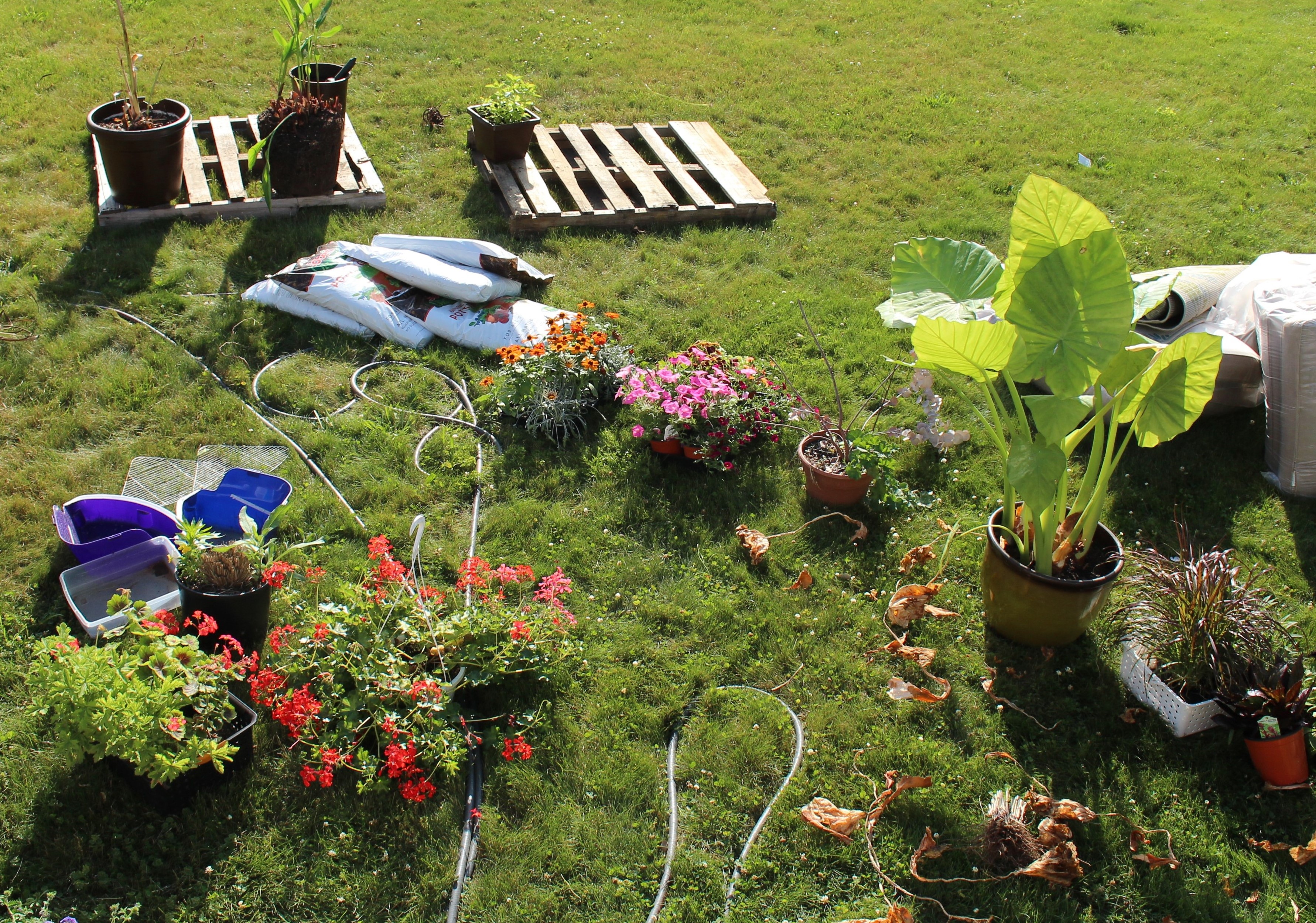
Our last frost date is around the 15th of May, but most planting jobs are usually procrastinated way beyond that.  This year the big deck planting was pushed off until June 8th, which meant a lot of sitting around for the earliest purchases but it also meant clearance sales were in full swing.

container planting

I tend to spread out while setting the deck up.  There’s a mess everywhere 🙂

So this is where the ‘meh’ comes in, and since the weather is kind of ‘meh’ today as well it might be the best day to discuss…  I usually go out with little to no idea or plan and as a result come home with whatever catches my eye.  Usually it works out, but this year I just feel like something’s missing.  Maybe I need yellow, maybe it’s the lack of sweet potato vines, maybe there’s too much red, maybe it’s the pink… I’m not much of a ‘pink’ person.

deck container plantings

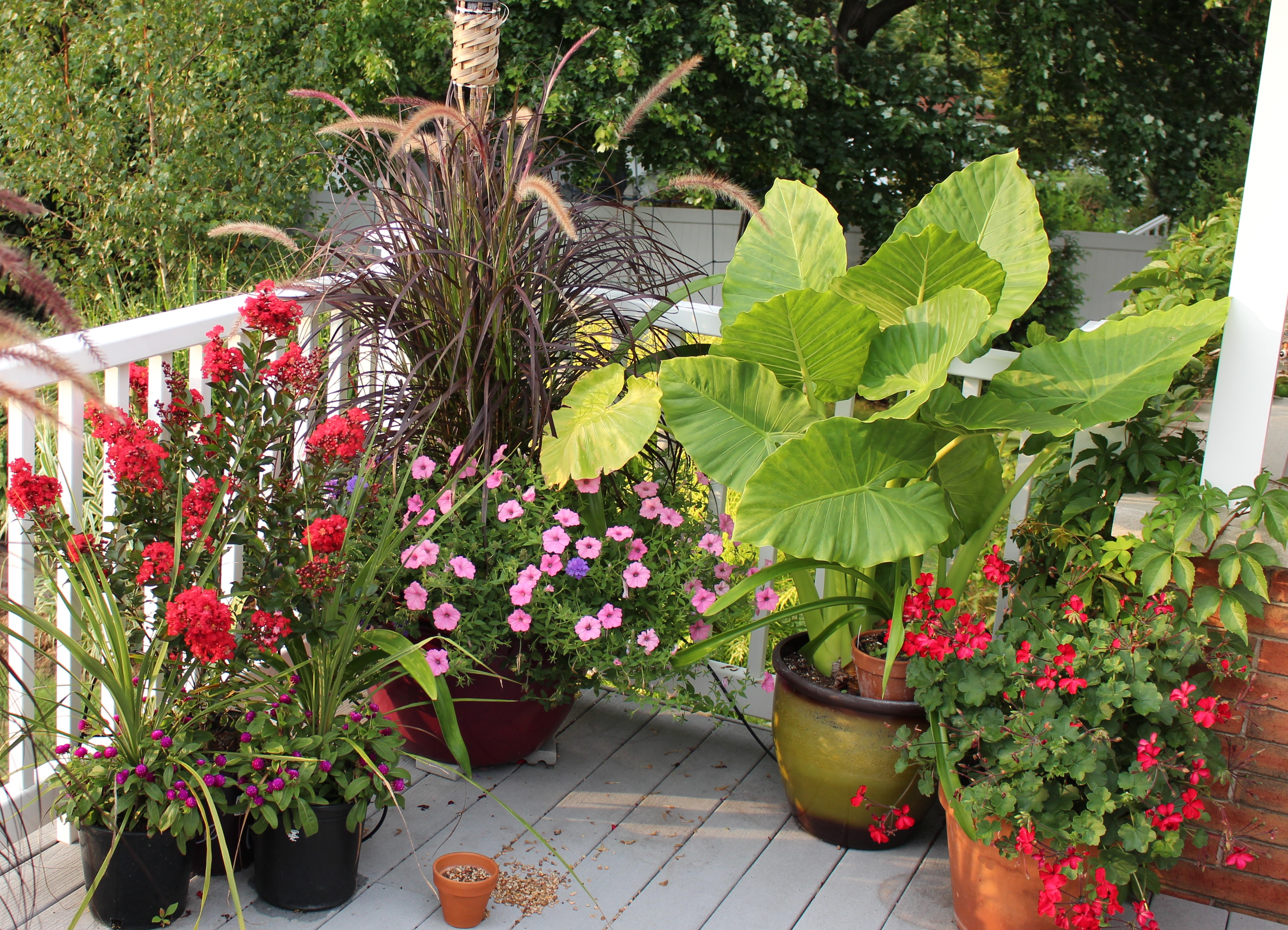
One purple fountain grass is nice, three might have been overkill, still the rosemary enjoyed its division and replanting, and most other plantings are hanging in there.  You may notice my amaryllis bulbs tucked in here and there.  The strappy leaves don’t look half bad in my opinion.

I should be giving things a nice liquid feeding each week and part of the ‘meh’ might be that things are underfed.  A rich diet for these flashy annuals is what they thrive on, and upon thinking back it’s possible I’ve missed four out of the last five feedings.  As usual I’m my own worst enemy.

balcony flowers

I do like how the creepers, in this case cascading geraniums (pelargoniums), work their way through the railing.  They’re very popular with the hummingbirds even if the color might be a little too orangey for the companion plantings.

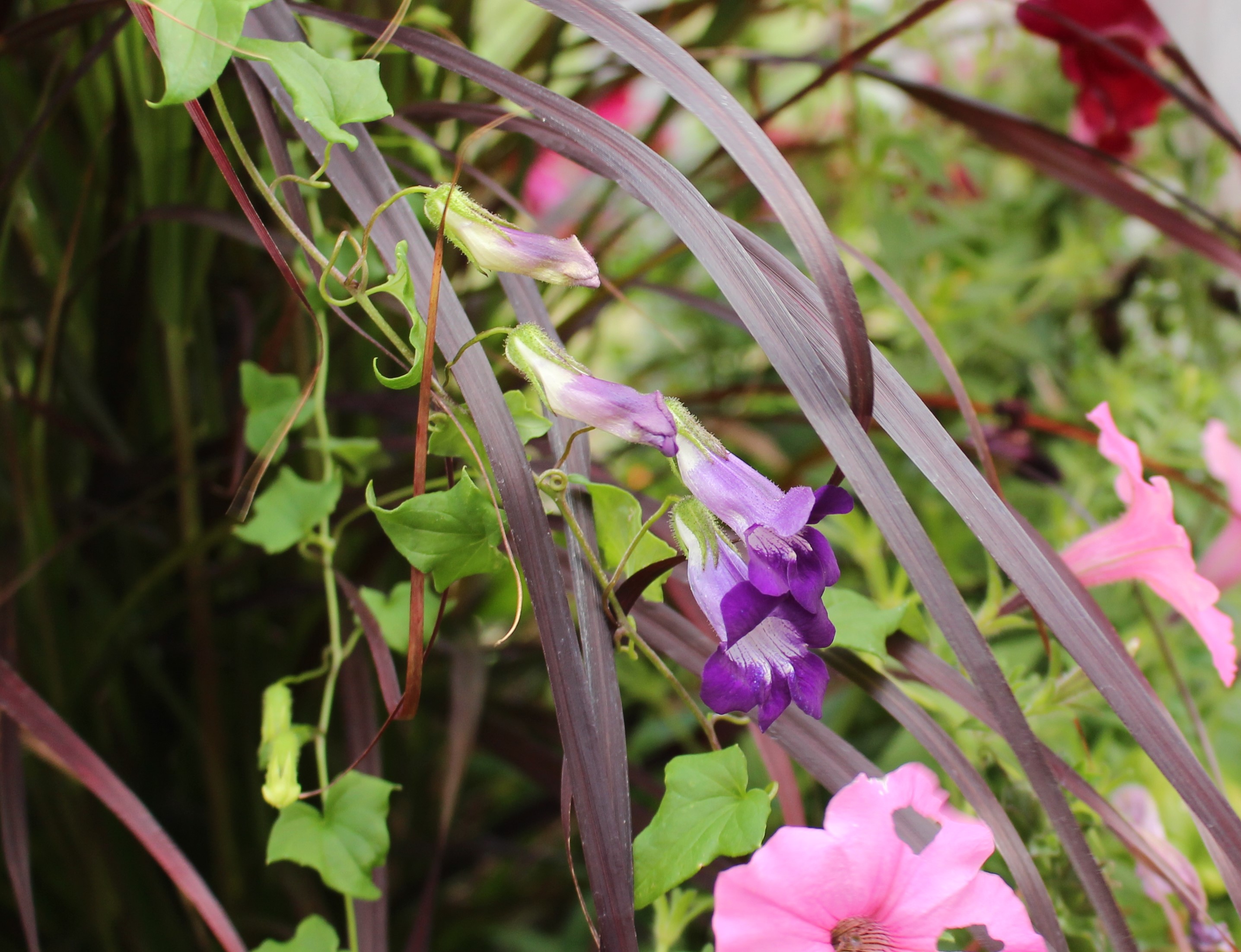
Some other disappointments have been the underperforming vines.  My three little babies, the Chilean Glory vines (Eccremocarpus scaber) did not take off as planned.  Apparently they are foolproof but this fool will challenge that label since my plants (nurtured along from tiny seedlings) made a go at it but then died off one by one.  I did get to see one single bloom cluster of amazing little orange lipstick tubes of color but that was it, and I think if I was brave enough to beat back the grasses, I would find my last glory vine has also passed over.  That’s too bad but I’m already excited to grow this plant again next year since I’m sure things will go differently even if I do everything exactly the same… but in the meantime at least my snapdragon vine (Asarina scandens) is coming along.

snapdragon vine Asarina Scandens

Snapdragon vine (Asarina Scandens) growing up into the purple fountain grass.  At least this one has been a forgiving grower and easy bloomer.

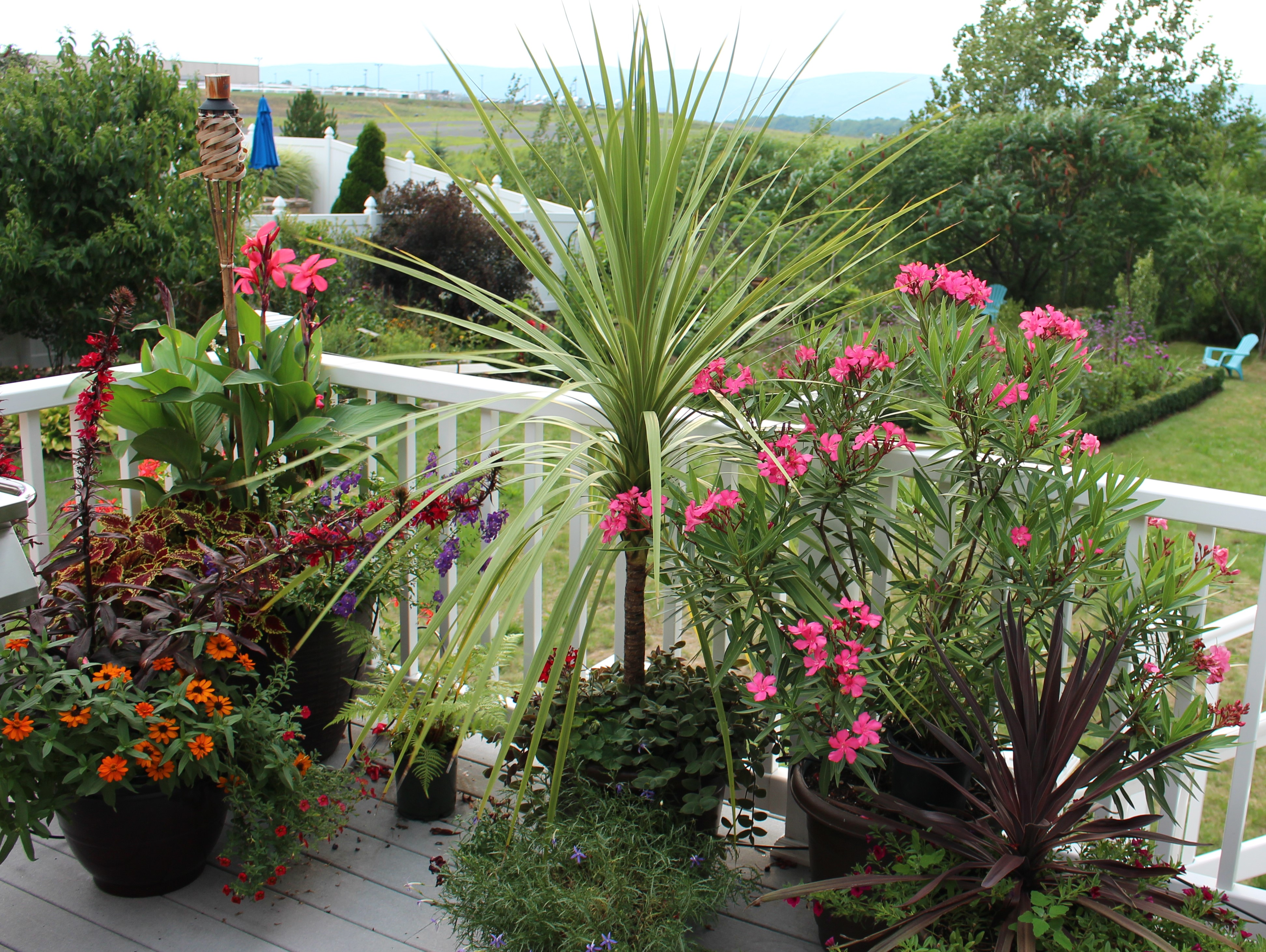
While many of the plantings leave me uninspired, a few things are doing great.  The oleander and overgrown spikes are back for another year and the canna ‘cannaova rose’ is again putting on a nice show.  The canna just hit a lull (probably lack of fertilizer induced) but I’m sure will return to glory shortly and I’ve divided last year’s roots up between a few spots so it’s likely you’ll see these showing up elsewhere as well.

dracenea spike

Those little dracaena spikes which show up in nearly every pre-made container planting seem to turn into something a little more interesting given a few years of growth.  My goal is to have a small grove of these some day soon 🙂

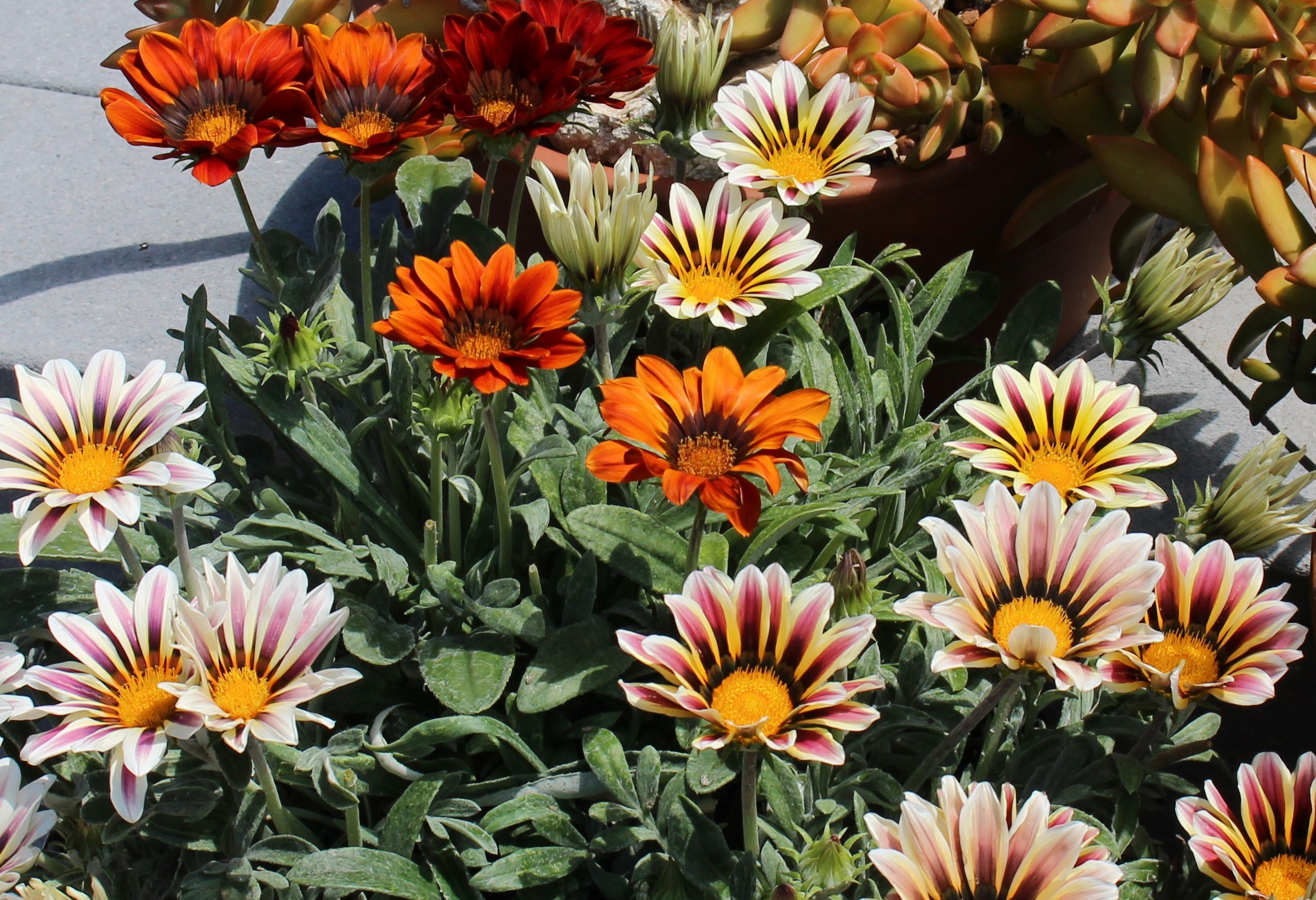
There are a few new things this year which did beat the ‘meh-ness’.  Gazania are a plant which although they don’t grow consistently for me, do look great when they feel like it.

annual gazania

The unusual colors of Gazania really don’t blend well with any look I’m going for but who cares, they just look cool when opened up for the sun. (just keep in mind that they close when the sun goes away…)

By the way I forgot about the elephant ears and the new crape myrtle, both of which are not ‘meh’.  The two are just soaking up the rain and heat and humidity and picking up where the petunias and million bells drop off, but before I begin to sound too positive let me point two things out.  First I have too much red, and since the obviously red myrtle was labeled purple I’m innocent there.  Second there’s a plant missing out of the small terra cotta pot in the front of the photo.  There’s a cute little b***ard chipmunk who decided it would be fun to end my three year relationship with a slowly growing clump of lithops (living stones).  After a few days searching I found the chewed up corpse under a nearby shrub.  Time will tell if the shriveled bits can recover, my only hope is that they were poisonous.

deck container plantings

Blood red crape myrtle and geraniums, pink ‘bubblegum’ petunias, elephant ear (Alocasia calidora?)… an ‘interesting’ look I suppose.

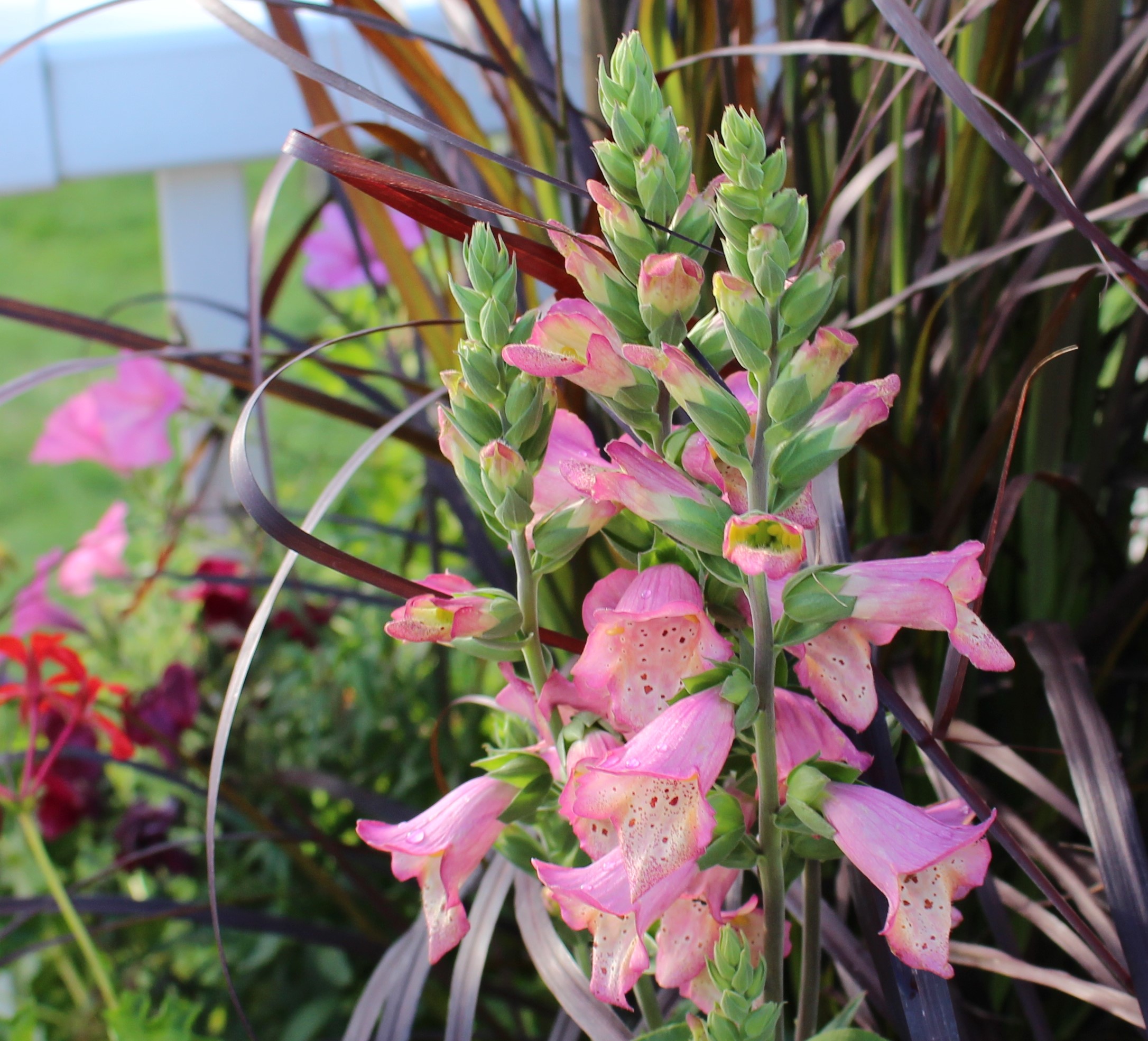
I still need to mention the digiplexis which just came into bloom this week.  It’s a inter-species cross between a foxglove (digitalis) and an Isoplexis (Canary Island foxglove) and when it first hit the market in 2012 it immediately went on to many ‘must have’ lists.  My must have list is always a few years behind but I was finally able to try it out this year when I found it for a reasonable price.

digiplexis

Digiplexis ‘Canary Berry?’.  It’s nice enough but I’m not overwhelmed yet.  It’s one of the foxgloves, and I love a nice foxglove, but this non-hardy version might be something left for those everything-grows-for-me San Francisco gardeners who have super mild winters and cool nights which bring on stronger colors.

So there’s good and not-so-good out there and to be honest no matter how it looks it always beats the deck in January.  January seems to keep all gardening outcomes in perspective and as I check things out every day and multiple times a day I’m still happy with it.  Now if only I could get out there and fertilize, but the lawn needs mowing too and I’m not doing both until things cool off a bit.

Tuesday View: The Tropics 7.11.16

This week I was a little late in the day with my photo so it’s full of artsy backlighting.  A good effect for soft lighting, but not the best to see what’s going on in a Tuesday view.

tropicalismo

The tropical garden at about 7 in the afternoon.

One thing which you will likely notice is the pile of grass trimmings and the wheelbarrow.  It was a busy afternoon in the bed and much of this was the result of the bed’s new designation as the Tuesday view.  Who would have suspected joining in with this meme would be the motivation needed to buckle down and make some of the changes I’ve been thinking about for the past few years?

rose 'black forest'

Not exactly tropical, but the color of the rose ‘black forest’ is hot enough to fit right in.  This is already its second flush of bloom and other than a few holes chewed into the leaves (most likely from some annoying beetle) it’s almost perfect.  Last year this plant was potted on the deck, still great but much younger and smaller.

Change one: The variegated miscanthus ‘Cosmopolitan’ had too much of a head start on the new plantings so I went ahead and cut it down to about a foot high.  We will see how this works out since I’ve never tried it before, but it’s grass right?  I suspect just like a scalped lawn it will send up plenty of new shoots, and in the meantime the cannas and dahlias will be able to grow upwards in peace and lay claim to their own airspace.

newly planted musa basjoo

Change two:  A newly planted banana (Musa basjoo) has replaced the peony which was just taking up space here… and mildewing.  When sunflowers grew up and covered it in years past there was no reason for it to bother me, but now it does so out it went.  I’ve never composted a peony, it seems absolutely criminal and I’m not sure I should be confessing, but there you go.  I yanked a few salvia as well.

We were gone for four days last week and the garden nearly dried out and died due to the heat.  Rumor has it rain fell, but of course all the big storms avoided us.  When I returned to see the pathetic state of my plants I first cursed, then cursed some more, and then decided to mow everything down and give up for the year, but after watering that evening and then the next day visiting my favorite nursery (Perennial Point), things seemed less bleak.  They had awesome bananas and elephant ears and a bunch of other stuff and in my weakened state two new bananas came home with me (plus a new fern and red hot poker).

Kochia Scoparia

Kochia Scoparia is a new one for me.  The common names are burning bush and summer cypress and I suspect I will like it, but for now keep in mind it’s listed as a noxious weed in several Midwestern states.

I didn’t need the bananas, but I did need the bananas, especially after seeing how well they have done for my brother in his zone 7 LI, NY garden.  In case you’re wondering, Musa basjoo is likely the hardiest banana, and although I won’t get into all the logistics of me being the one to give him the plants in the first place, and him being completely deaf to all hints at how much I wanted one and which one could he spare… I now have one again and promise to mulch it well EVERY winter so it doesn’t die off again.

long term weed killer

The rest of the zinnias are doing well, but I suspect my MIL was again a little heavy-handed with the weed killer here since it’s a dead spot which seems to stunt all life.  She has an unexplained attraction to any herbicide which says ‘controls weeds for months’, and this in turn stunts and kills anything planted in the treated area or anything planted near the runoff area… for months.

So here we are again, all over the place on what should be a simple post.  I promise to get less wordy once we get through this planting and intro phase but for now I can’t help it.  Just be grateful you’re not stuck here on a visit and I’m really going on and on!

lythrum salicaria purple loosestrife

Now what do I do with this?  The flower stalks of a Lythrum salicaria (purple loosestrife) have appeared in the back part of this bed and I like it.  The problem is it’s a terrible invasive in this part of the country, but only in wetlands and my garden is far from being a wetland.

If you’d like to join in the Tuesday view, Cathy at Words and Herbs follows her own view each week and I’m sure she’d welcome the company.  It’s a great way to track changes through the season and apparently it can even motivate some of the less motivated gardeners into tackling a few things on the to-do list!

Tuesday View: The Tropics 6.28.16

Two of my favorite bloggers are bringing back a meme which I’ve always enjoyed.  Cathy of Words and Herbs and Kimberley of Cosmos and Cleome both highlight a longer view each Tuesday and we get to see it develop and change as the year passes.  I’m no expert on the meme but I think Cathy sticks to a specific viewpoint and time while Kimberly varies the perspective and location depending on what’s going on in the garden.  Myself on the other hand am barely capable of getting any post up in a given week, so to keep it simple I’m going to follow Cathy’s lead and go with one view, same bed, same point each week and see if I can handle that.  Also since the tropical bed went in last week (about time since it’s already past the solstice and well into summer) I’m going to highlight this bed as my view, and (hopefully) watch as it grows up. 

Tropical garden

My fingers are crossed that over the next few weeks this bed will become an explosion of color and foliage and maybe bring a taste of the tropics to this end of NE Pennsylvania.

I’ll try to keep this short, since assuming things grow I want to save a little material for future posts, but besides the thrill of actually getting most of the plants in last week I always get a little excited checking this patch each day to see how quickly things progress.  All season bloomers which sit as a lump of color and put out the same old flowers each week bore me a little, and even though I can appreciate someone wanting low maintenance, neat color, I want something that sneaks up on you and then overwhelms you, like a horticultural tsunami!  Hence the tropical garden, and anything bright and big and leafy is more than welcome.

papyrus with black forest rose

The papyrus was not happy last year and I suspect it didn’t get nearly as much water as it wanted so instead of planting it in the ground again I placed it in a pot submerged in a second pot full of water.  Green water.  So far the reviews of this planting have not been 100% favorable.

You can’t really tell from the tiny sprigs, twigs, and tubers, but this year’s theme is orange and purple.  That’s not a solid theme, it’s more my mood when I’m out picking up annuals or choosing which dahlias to put here versus in other parts of the garden… or finding a flat of orange zinnias on sale and liking zinnias.  So until the oranges fill in, hot pink and purple will have to do for a theme.  Besides the annuals, perennials have a way of sneaking in everywhere, and although I pulled a wheelbarrow full of daisies and transplanted dozens of chrysanthemums, there are still a few things such as this knockout rose and purple ‘Caradonna’ salvia which are just too colorful to stand up to.  Maybe next year will be the year I follow through on my threats to remove the salvias.

knockout rose with caradonna salvia

The ultra rare and uncommon ‘Knockout’ rose tastefully complimented with orange zinnias at its feet and scavenged lawn clippings as mulch.  This Tuesday view already promises to reek of class each week 🙂

So there you have it.  By next week I hope to have a few cannas sprouting and a few more zinnias assaulting your color senses and overall I really hope things don’t end up requiring a rototiller and a fresh start by August.

Think about joining in with the view and if you do leave a link at either Cathy‘s or Kimberley’s blog so we can find you.  Not to put words in their mouths but I’m sure both will agree “the more the merrier” and I always enjoy watching another garden grow throughout the season… even if it does turn into a trashy mess of too much color and chaos!

GBFD April ’16

Imagine my embarrassment when I saw it’s been nearly two weeks since my last post.  I know the exact reason for the pause but right now just  don’t want to get into the ugly truths about mixing brutal cold fronts with fresh spring growth.  Instead I’ll focus on the beautiful sunshine of a cool spring morning and join in for a very quick visit to celebrate Garden Bloggers Foliage Day with Christina from ‘Creating my own garden of the Hesperides’.

muscari and blue fescue

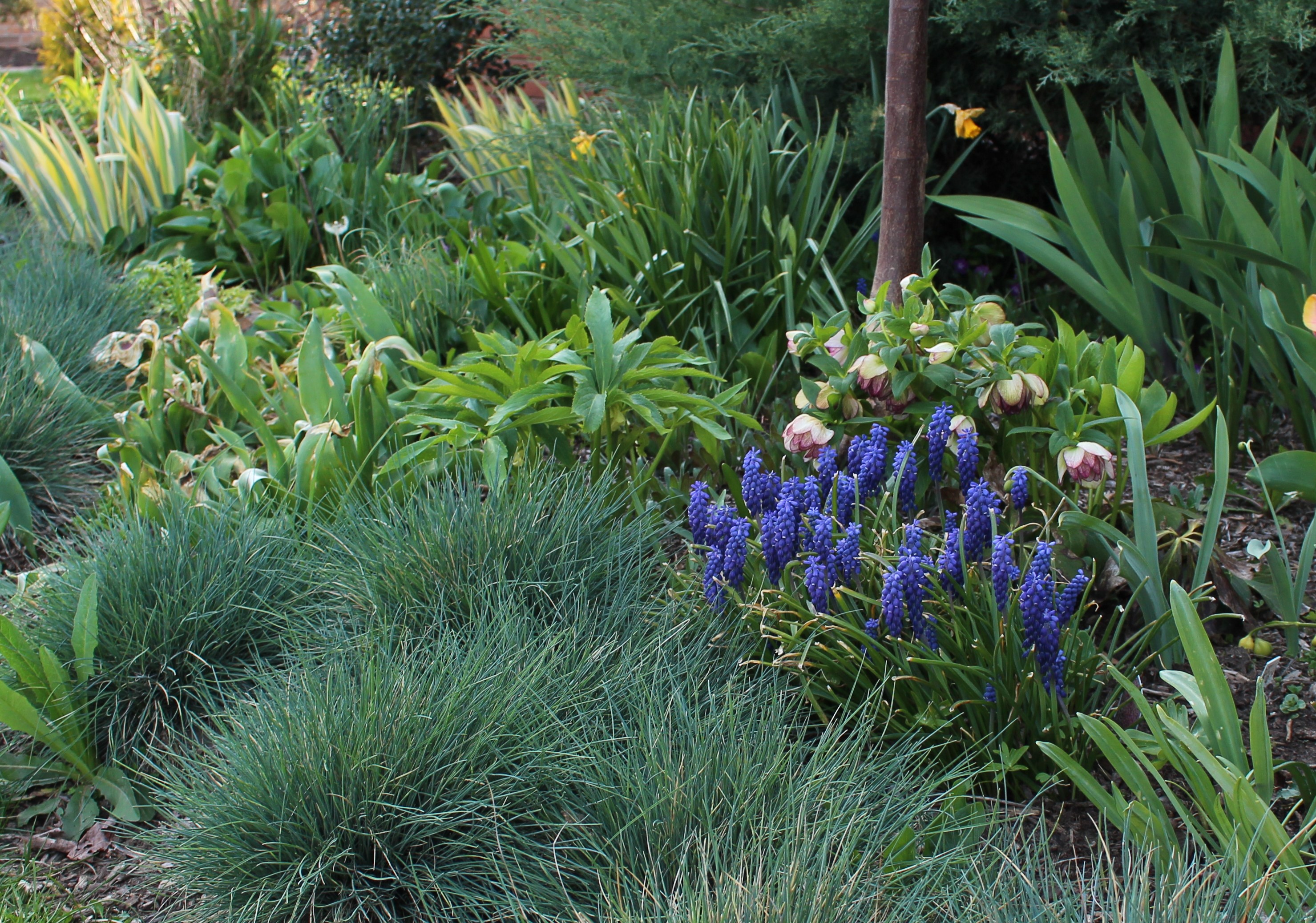
The grayish leaves of blue fescue (Festuca glauca) alongside the blue flowers of grape hyacinths (Muscari).  Please ignore the freeze burned tulips to the left of the photo…

Thanks to Christina for the monthly reminder to reexamine the contributions foliage makes to the overall look and feel of the garden, and this month it’s a border of blue fescue which has me most pleased with foliage effect.  This border was switched up last spring when I divided and spread a few clumps all along the foundation plantings, and this spring it has filled in with a lush vigor which really shows off the bed.  Now that the fescue is making me happy I’m fixated on a clump of blue muscari growing just behind the grass clumps.  There’s a strong possibility this will be divided and spread along as well since I like the combination.

The fescue and muscari are extremely common plants and both were free shovel-fuls from other gardens.  It kind of makes me reconsider that bucket of plant labels which no longer match living partners… but not enough to cure that plant lust for all the new goodies 🙂

See?  I promised it would be quick.  Please visit Christina’s blog as well, it’s always a pleasure to see and hear about the foliage others across the globe are enjoying in their own gardens, and have a great weekend!

GBFD February

Each month on the 22nd Christina of Creating My Own Garden of the Hesperides invites us to join in on a consideration of foliage in the garden.  Foliage effects in the winter months can seem to drag on and February may have its pleasant moments in Christina’s Italian landscape, but here in Pennsylvania February is the month when the relentless assault of winter begins to wear down even the toughest greenery.  Imagine my surprise when a beautiful February weekend comes along and gets me thinking about outdoor things other than snow.  It felt great to get outside again, do a few spring-like tasks, and consider what was holding the garden together.

pelargonium foliage color

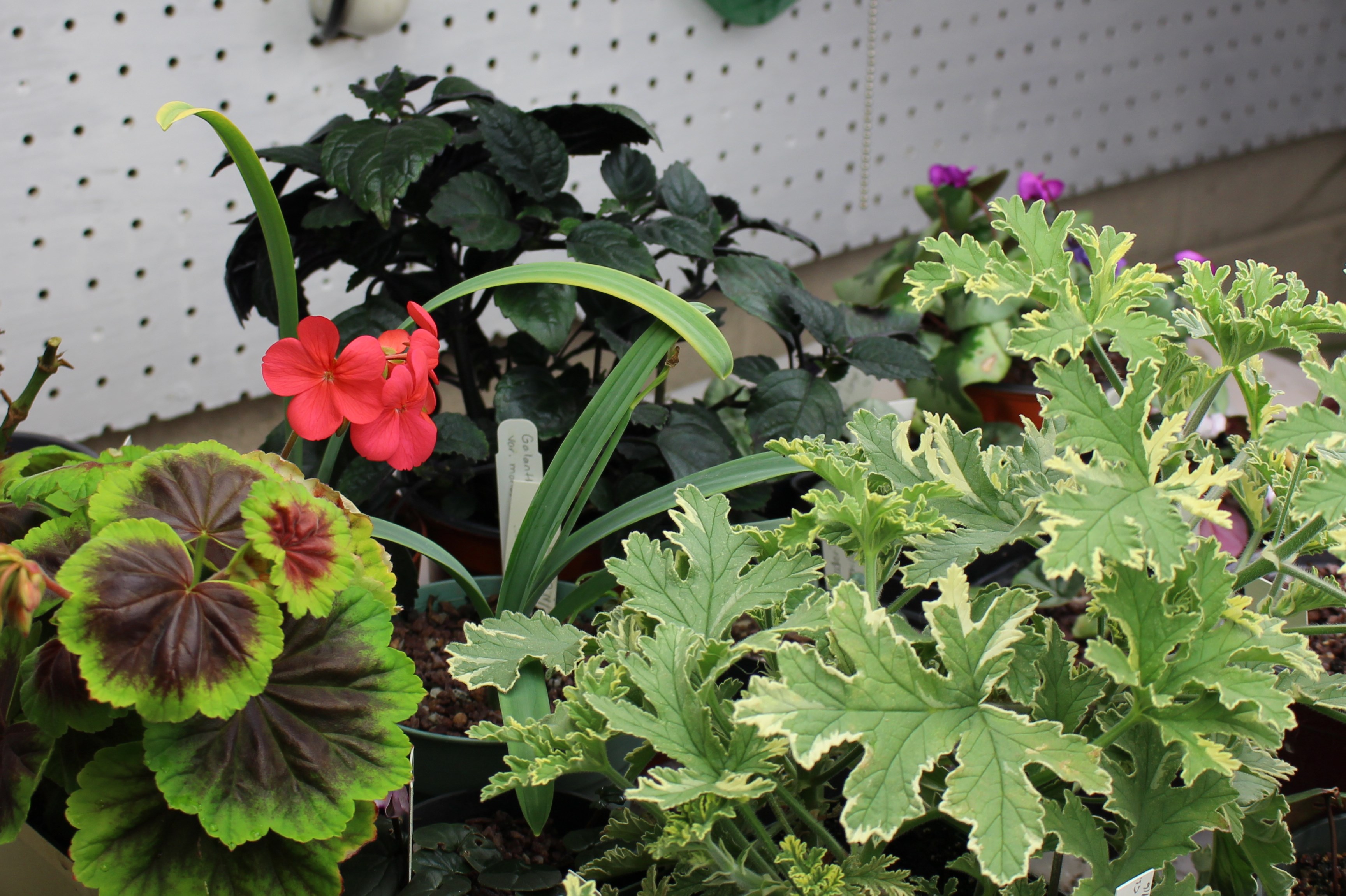
Even a nice February day needs some warmup time, so while waiting for the thermometer what better thing to do than enjoy the foliage of geraniums (Pelargonium) and other tender plants indoors under the growlights.

One task I did tackle was a little front garden cleanup.  The snowdrops are coming up here in the front foundation bed, and dead sunflower trunks do not add to ambiance of the scene.  Blue fescue (Festuca glauca, cultivar unknown) does though, and I’m enjoying the edging of faded blue which lines the front.  A nice solid swath of one plant helps tie this bed together but I’m not entirely convinced I can give up my collecting habits in favor of better (notice I won’t say good) design.  My single mass planting of little fescues is a starting point though and even if I can’t add more solid pools elsewhere maybe I can at least repeat a few nice patches of similar foliage here and there for the sake of continuity.

Festuca glauca winter color

Cute tufts of Festuca glauca in their winter finery…. which looks remarkably like their spring summer and fall finery, but every garden needs a few reliable doers.

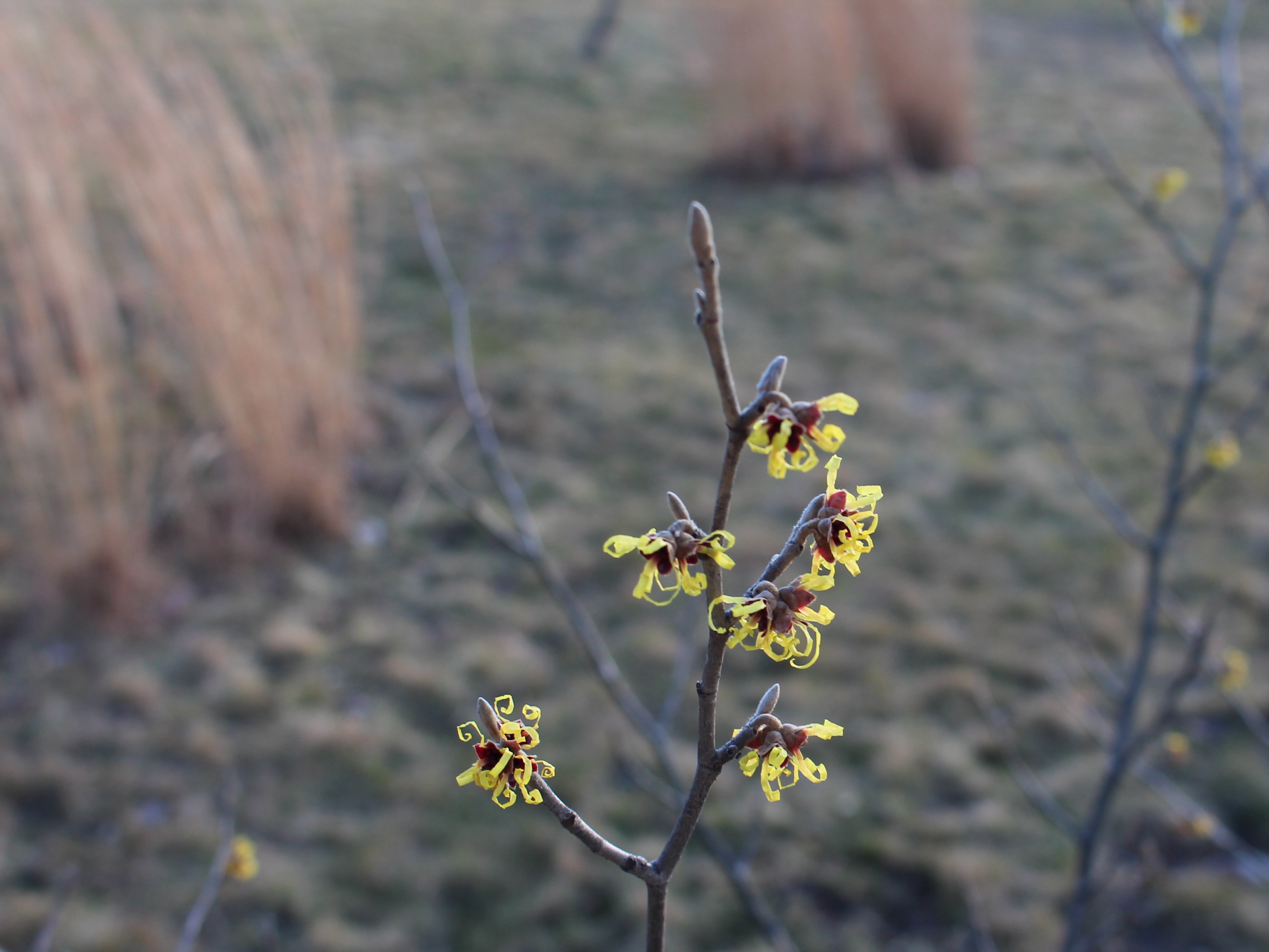
Another grass which has lasted well throughout the winter are the native little bluestem clumps (Schizachyrium scoparium) which dot the back meadow area.  They will be cut down shortly as crocus blooms begin to fill the meadow, but for now they’re a nice backdrop to my weakly flowering witch hazel (Hamamelis mollis ‘Pallida’).  It’s too dry and exposed here for the witch hazel to do well in this location, but it hangs on and every now and then has a good spring.

witch hazel pallida

The crinkled blooms of ‘Pallida’ Chinese witch hazel are always a nice winter surprise and I feel like the russet foliage of the little bluestem grass in the background complements the flower color well.

It may have felt like spring for a few hours but it’s still surely winter around here.  El Nino has thrown things for a loop and by my wildly inaccurate guess we are about three weeks ahead of a ‘normal’ winter.  Not a problem I say, and I’ll take the early snowdrops and deal with future wild temperature fluctuations as they come.

snowdrops and eranthis aconite

Cyclamen hederifolium foliage and a mulch of dried autumn leaves looks so much more comfortable than bare mud.  I guess even last year’s dead foliage counts on a February foliage day 🙂

So even in the dead of winter there is foliage making a contribution and there is hope for the upcoming year.  Hope is always a good thing, and what better way to breed more hope than to look at other inspiring foliage effects from around the world.  Give Christina’s blog a visit and as always have a great week!

Plant those bulbs deep

It might be optimism, it might be delusion, it might be weakness, but whatever it is around here there always seems to be an unreasonable amount of bulbs in need of planting….  or there might not be enough.  No one is ever really sure but one thing is definite.  I have never regretted planting too many bulbs, so until I do it’s always better to err on the side of caution and overdo it if possible.

planting spring bulbs

Last weekend I tried to put everything out in order to see exactly what still needs planting.  Tiny bulbs add up, and this innocent collection is well over 1,100 bulbs.

There’s no denying that I’m a bulboholic and I think if you keep up with this blog you already know that fact.  They’re my favorite plant type and for good reason.  Each spring they just explode into growth, bloom like there’s no tomorrow, and then politely fade away, all within a few weeks.  They’re like a spring fling which burns hot and then ends on good terms.

Somehow the bulbs just find me during the summer.  I dig a clump of daffodils to thin them, find a clump of tulips when moving something else, more daffodils come out when I move a bed… before you know it there are bulbs in saucers, bags, and boxes all over the garage, plus a few I pick up at the nursery.  This year an early clearance sale at Van Engelen’s added a few hundred more crocus and muscari.  You can’t overdo crocus and muscari, so obviously those needed to be purchased as well.  Since I don’t enjoy planting bulbs, 850 new crocus corms can border on autumn torture so I try to deal with them as efficiently and quickly as possible.  Here’s a trick I read online which I now love that really moves things along when planting larger numbers of small bulbs.

naturalizing crocus bulbs

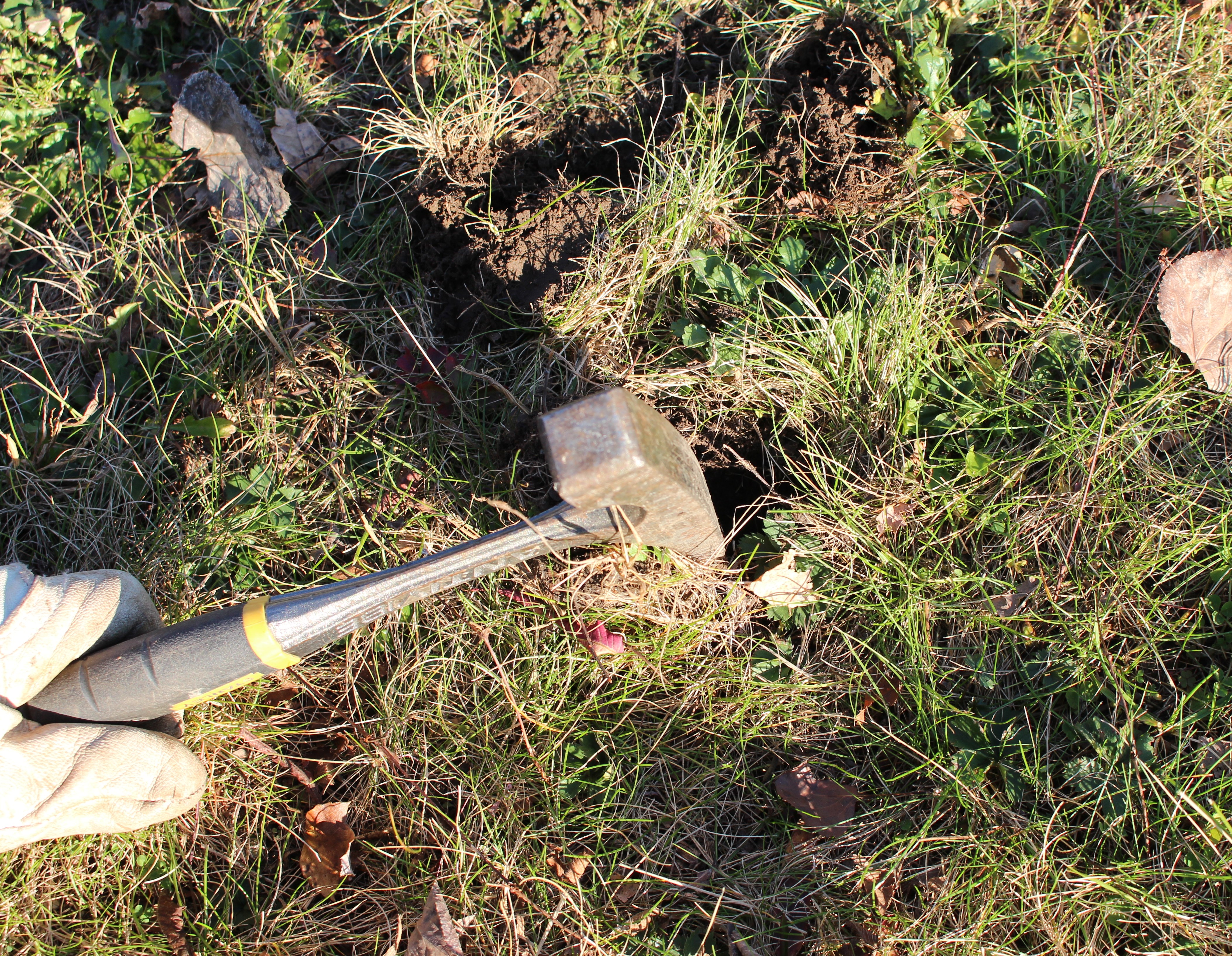
Tools of the trade for naturalizing larger numbers of small bulbs in turf.  Gloves, masonry hammer and small bucket stolen from the children.

A masonry hammer seemed necessary at some point for chipping stones and breaking cinderblocks, but it’s now become invaluable for planting small bulbs in the turf of the meadow garden.  Using a shovel is much more work than I’m willing to do and when you’re trying to naturalize bulbs, or make them look like they just seeded out into your lawn on their own, then digging large sections of turf up is just out of the question.  I find the hammer much easier to use.  One swing and it’s into the ground, a pivot back and you have just the hole you need for a tiny bulb or two.

naturalizing crocus and small bulbs

One down, 849 to go.

I start off carefully, trying to get the sprouting end up and the bulb gently eased down into the hole, but after the first 100 they’re getting dropped in and jammed down whichever way works.  A quick swipe with the hammer also closes the hole.  After about an hour and a half (including two 20 minute breaks to unlock my knees and back) all the bulbs were in.  People talk about the joys of gardening but for me I far prefer sitting back after the job’s done and visualizing the results.  I have plenty of other things which need doing in and out of the house, so the less time spent prepping cute little holes and overdoing a job the better.  If one had to sum up my entire bulb planting philosophy I think ‘shallow graves’ might not be the worst term to apply.  For larger tulips and daffodils I’m not above digging out a shovelful or two of dirt, throwing in a handful of bulbs and carelessly kicking the dirt back over them without bothering to prep the soil or put the bulbs right side up again.  In the vegetable garden some bulbs go into trenches so shallow that by the time the compost rots away from above them the tops of the bulbs are actually at the soil surface…. although this has just as much to do with thin soil and poor drainage as it does with a lack of enthusiasm for digging.

shallow tulip bulbs

These tulips might be on the shallow side. The original bulbs have split in two and both appear to be healthy blooming size bulbs, but if left uncovered mice and rabbits will likely find them and have a nibble.

I often read that in order to have bulbs such as tulips last longer and re-bloom reliably they should be planted as deep as possible, sometimes up to a foot deep.  This sounds like a lot of unnecessary work and I’m completely against it.  Perhaps a shallow bulb is more likely to split due to stress such as drought, but for the most part mine come back best when the spring is long and cool, tulips are deadheaded (daffs and hyacinths don’t seem to care), and tulips are either dug up for the summer or not watered in a spot which is nice and dry.  Planting depth, as long as it’s at least a couple inches down, doesn’t seem to factor in much at all and unless someone shows me actual research to prove otherwise I’m going to say deep planting is one of those often repeated bits of advice which don’t really do much here or there.

pink impression tulips

I planted these ‘Pink Impression’ tulips a few years ago and finally got around to getting more this fall. The new bulbs are from a good nursery and huge, so I know they’ll add to an even more awesome show next spring!

So we’ll see this spring if my lazy planting methods pay off again.  Good soil prep and proper planting depth are always a great thing, but I prefer to not overthink gardening.  If a squirrel can successfully plant sunflowers and oak trees throughout my flower beds, and the best iris can survive a year under the compost pile, I think I can pop a few bulbs into the ground without a PhD and still get good results.  I’m already looking forward to seeing the ‘bulked up’  meadow plantings next spring.

crocus lawn of dreams

The crocus plantings in the meadow garden began with approximately 500 bulbs,  this fall I’ve more than doubled that number 🙂

Two issues may still stand in my way.  Rabbits have huge appetites once they discover fresh crocus flowers, so I may have to do something about that come springtime.  The second worry is that the mixed crocus were irresistibly cheap when compared to the single color varieties I had been planting in the past.  Hopefully the Technicolor patches look as nice as the solid color patches I have now.  I did try to keep the single colors closer together and the mixed ones more spread out but who knows how this naturalizing theory will work out in the real garden.  If worse comes to worse the bunnies will make quick work of any mistakes.

Have a great weekend and I’d love to hear which bulbs have made the cut for you this year.  One request though,  please don’t rub it in too much that you’ve already completed your planting 🙂

Indian Summer

A single cold night in mid October ended the summer garden this year.  The thermometer dropped to 23F (-5C) and we abruptly went from balmy sunshine to snow squalls and blackened flowers.  It happens, but since that night we’ve barely had another touch of frost, and the short sleeves have come out again and shorts are back on as play clothes.  What better thing than to go to the beach?

international memorial flight 800

The TWA flight 800 memorial at Smith Point County park in NY.

It was a miserable beach day with showers on the way over and a tropical storm off the coast whipping the surf to a frenzy, but we’re not the sensible types and went through with our plans anyway.  Omi and Opa joined us and we ended up at the edge of the Atlantic on the sands of Smith Point County Park, near the Eastern end of Fire Island in NY.

smith point long island beach

Hardy miscanthus and feather reed grass mixed with yucca and annual purple pennesitum.  The wind kept everything moving and the coastal sun and saltspray keeps things short and tight.

We came for the sand and surf but can never avoid the memorial which stands for the 1996 plane crash which occurred just offshore here.

TWA Flight 800 Memorial

TWA Flight 800 Memorial

The memorial sits down a bit out of the wind and the calm quiet of the memorial is a stark and sad contrast to the panic and fear which must have accompanied the flight’s last seconds.

TWA Flight 800 Memorial

TWA Flight 800 Memorial

I remember the days and weeks after the crash and the weeks of debris washing up and the unease when visiting during that and later summers.  It’s strange to think over 20 years have passed since.

smith point beach in the fall

Even in the fall the Gulf Stream keeps the water warm for weeks beyond the end of summer.  There are miles of empty beach to explore but to some the sand and water are always more fun than walking.

Still it’s a beach trip, and I didn’t intend to make this such a somber post.  We and the kids loved the visit despite the windy sandblasting we received walking to the shoreline, and the clean warm water and sand were just too inviting for the kids to resist…. even if the calendar says fall.

smith point beach in the fall

Mom had enough sense to pass on an October beach trip.  You can tell dad was in charge.

It will be months before there’s any chance of getting back into the water so I was glad for this one last hurrah.  You never know what next year will bring, and the kids grow so quickly.

A hot day in Philly

The calendar is beginning to insist that all things summer will soon come to an end, so when a free day presented itself I made my best to take advantage of the last weeks of warmth.  A quick call to a friend near Phillidelphia and I was on my way to one of my favorite gardens, Chanticleer.  As usual the visit did not disappoint, and despite a mental note to just enjoy the visit I did break down at the end and went a little camera happy.  Hopefully I can show some restraint with the length of this post even if I couldn’t with the camera.

chanticleer red border

Red and purple as you come around the house. Coleus ‘redhead’ and the awesome canna x ehemanii… rounded out with a few random bananas.

I like to stroll around pretending this is my own estate, and if by chance if I do win millions (I’ve given up on earning them through hard work, marriage, or genius) I feel like this is the kind of garden I’d create.

chanticleer container plantings

Many exotic and unusual container plants are scattered around the house and terraces. All appear perfectly grown and cared for.

The tropical plantings around the house are some of my favorite plantings, although even away from the house a random banana or elephant ear may turn up (Chanticleer refers to itself as a ‘pleasure garden’… so I guess anything goes!)

teacup garden chanticleer

This year’s teacup garden plantings. Fiddlehead figs and canna ‘Ermine?’, plus many others.

I’m guessing on almost all the IDs since the gardens are for enjoyment and inspirations and not so much for the down to earth realities of botanical labeling, but there are plant lists available both in the gardens and online.  I apologize for being too distracted to look while there and far too lazy now to look them up online.

papyrus chanticleer

Potted dwarf giant papyrus. I love the pot in pot planting with a ‘groundcover’ of duckweed, and I’d love to imitate, but… no pot and no dwarf giant papyrus.  Maybe the plain old giant papyrus will work,  at least that’s finally become easy to find in the spring.

I can feel the banana itch coming back.  I was given one and bought another this summer….

chanticleer tropicalismo

Canna x ehemanii, various bananas, red and purple dahlias, and a few tall salvia splendens varieties.

…and how can you not like dahlias at this time of year.

chanticleer mixed border

A respectable boxwood border holding back a wave of visitors from the south.

On a hot day the dry, full sun, gravel garden was not the place to linger… but we did, and while sweat beaded we enjoyed the waterwise plantings and the mix of dryland perennials and tropical cactus and succulents.

chanticleer gravel garden

I think the yucca rostrada (hardiest of the trunk forming yuccas) stays here year round, but I’m not sure of the agave.  I do know I wouldn’t want to be the one to lift it come autumn.

All the rain earlier in the year probably helped most things, but some I’m sure didn’t appreciate the reminder they were in Pennsylvania and not Southern California.

artichoke bloom

Artichoke blooms?  Not the best leaf-wise, but the color of the flowers almost glowed in the heat.

Or South Africa…

chanticleer kniphofia

Kniphofia (a species I’m guessing) along the dry slope.  I love this plant family, but never get decent flowers on the ones I’m growing.

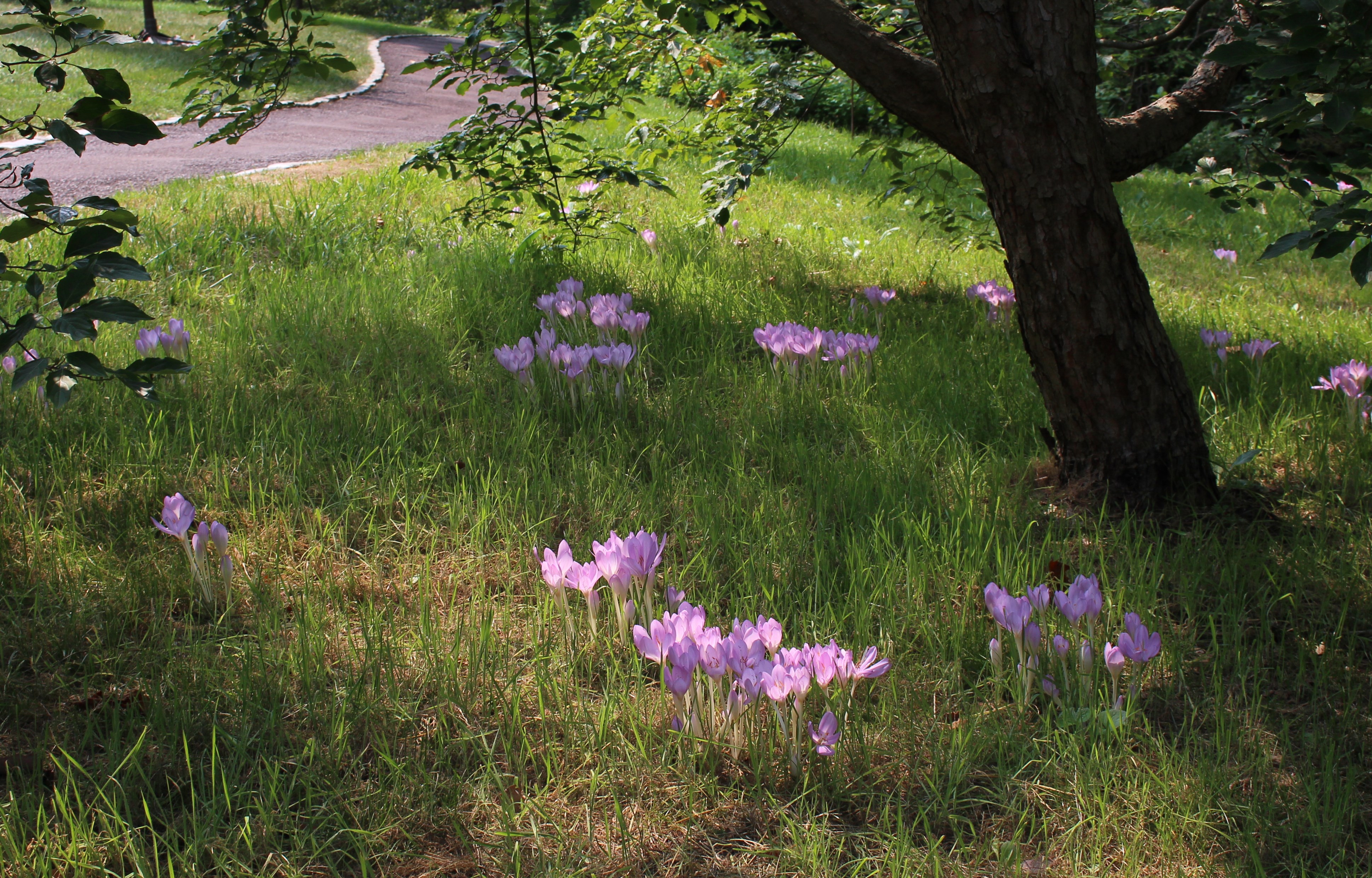
The bulk of the grounds around the house are open grass and trees, and this was the beginning of the colchicum season.

chanticleer naturalized colchicums

Some of the colchicums just beginning to bloom in the lawn at Chanticleer.  Form what I’ve heard there are many more to come.

And then there were the pond gardens…

chanticleer koi

Chanticleer koi

With lotus and water lilies.

chanticleer lotus bud

One of many lotus flowers.  My photos never do the blooms justice.

And then there was the cutting garden.  My favorite canna ‘Bengal Tiger’ (Pretoria) was the star, and in my opinion everything looks better when it’s next to this beauty.

chanticleer canna pretoria

The cutting garden.  Summer annuals, dahlias and cannas were at their peak.

It’s just pictures from here on.

chanticleer cosmos

Cosmos and dahlias with canna leaves.

chanticleer cutting garden

The beds threaten to swamp you in a tsunami of plants.  Still to come were all the hardy sunflowers and other native prairie plants which filled the inner portions of the bed.

dahlias chanticleer

Dahlia with gomphrena ‘fireworks’ (I think)

dahlias chanticleer

Dahlias again (it’s the season!) plus more awesome canna leaves. I think the ferny foliage belongs to the SE native dog fennel (Eupatorium capillifolium).

dahlias chanticleer

Nice right?

chanticleer summer flowers

Summer zinnas and cosmos. Who says fall is near?

I didn’t realize it’s been two years since I last visited (click here to see that very pintrest-popular post), and I’m glad to have had the chance to do it again.  The gardens are on a scale that really seems approachable, yet aren’t filled with how-to beds or dull bedding.  It’s really a place where you can enjoy the art of gardening,  and if you get the chance I would absolutely recommend a visit, but for those further afield there’s also hope.  September 23rd marks the release date for a new Timber Press book on the gardens and I for one am looking forward to it.  It has an excellent pedigree across publisher, author, and photographer and what I’m most looking forward to are the interviews with each area gardener.  I saw them at work during our visit but was a little too shy to bother them with an endless gushing of praise or question after question.  Hopefully the new book will pacify me. 🙂

Thanks for meeting me there Paula, and I wish everyone a great week!

GBFD Finishing August

Yesterday was the 22nd, today the 23rd, and by the time this post is finished the date will probably flip on to the 24th, which will make me two full days late in joining Christina in the celebration of Garden Blogger’s Foliage Day.  I’m sure she’s fine with my tardiness but I’m also sure I didn’t want to miss this month’s opportunity to look past flowers and recognize all the contributions foliage makes in the garden.

squash climbing in garden

In the vegetable garden the broad leaves of late planted summer squash threaten to swamp their less edible neighbors. I love how fast they grow in the heat.

I’m a big fan of large leaves and whether they’re squash or cannas or elephant ears, the more enthusiastic a grower the better!  While some plants did not enjoy the recent spell of hot weather, a newer resident of the garden did.

Alocasia Borneo Giant

One of the larger elephant ears, Alocasia ‘Borneo Giant’, is finally putting out some more enthusiastic growth. The leaf is still barely larger than my hand but the giant part of the name gives me hope for the future!

Summer is when I really enjoy the potted plants on the deck.  Not only can they be enjoyed from the window, they can be enjoyed as you walk by, as you sit in a comfy seat, or from below.  It’s as if you’re multitasking your enjoyment!

coleus in deck planters

The rich foliage pattern of this coleus sometimes gets lost in a planting, but against the white railings the colors really come through.

Besides showcasing my favorite plants close up, the deck is also a great place to show off the little things which get lost out in the garden.

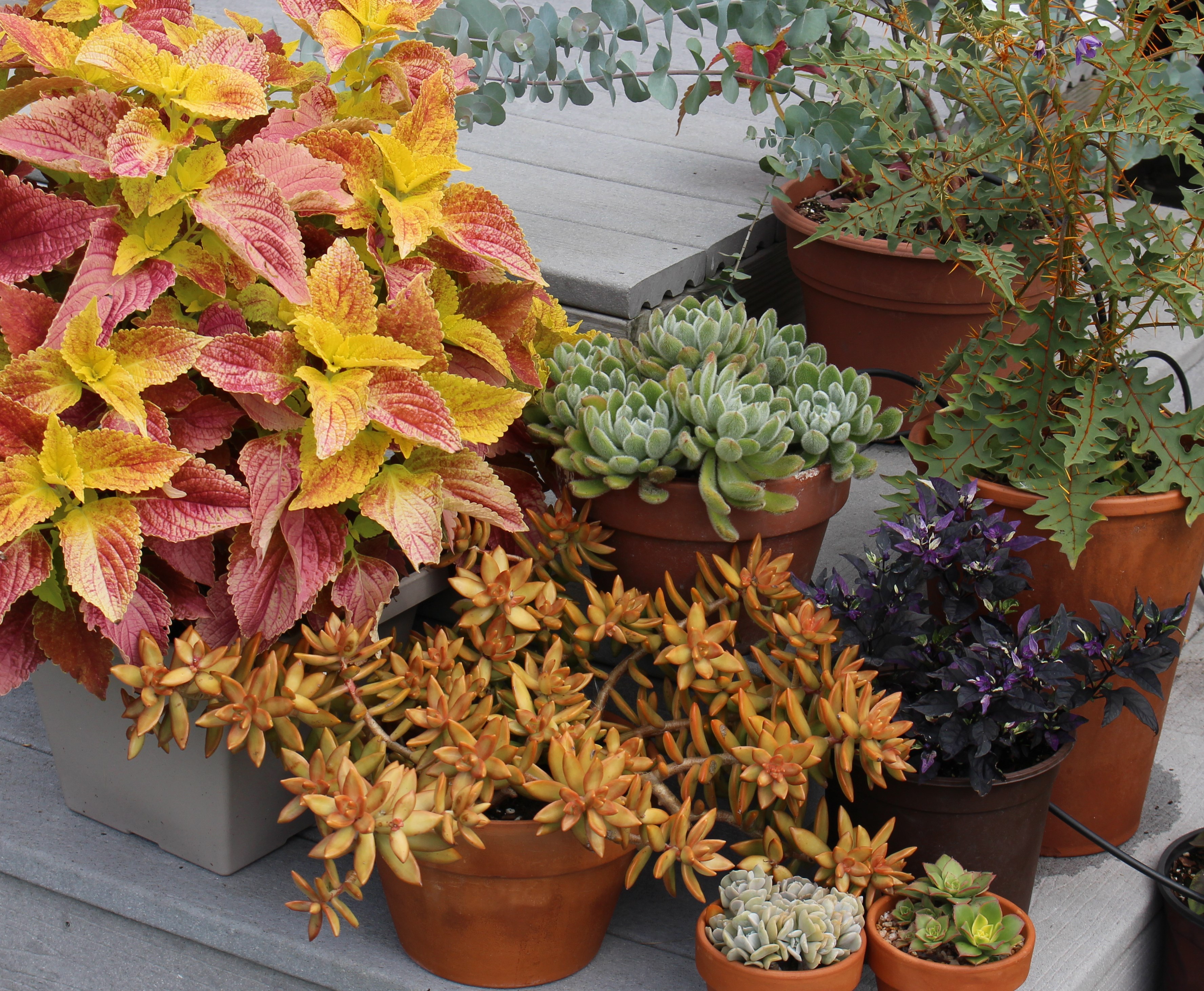
potted succulents

Little cacti and succulents which don’t mind a few missed waterings or weekend road trips.  They’re all foliage and make great deck plants… which look even better if the gardener finally repots them into roomier quarters (as I did this spring, although one of this bunch already needs a bigger home).

As I was walking about trying to focus on foliage, I realized this collection at the end of the deck steps doesn’t rely on a single flower to bring in the color.

deck planters

More succulents as well as ‘Alabama Sunset’ coleus, ‘purple flash’ pepper, and my belovedly spiny porcupine tomato.

It’s really way past time to do a catch-up post on this year’s deck planters (and hopefully I can come clean soon) but there’s only so much time tonight, and there’s still plenty of other foliage to consider in the garden.  For as exciting as flowers and color are, sometimes the eye needs to rest on a little green.  For me chrysanthemums are a nearly indestructible planting for some of the hotter, dryer, tougher-to-fill spots which could use a soft mound of green.

chrysanthemum foliage

Usually the iris in the back has nothing but sad, browning and yellowing leaves, but this year the rain has been enough to keep it growing strong.  The chrysanthemum on the other hand looks respectable for the entire summer, even when the crabgrass gives up.

Dry sun is bad, but dry shade is worse, and this year I’ve been surprised at how well variegated obedient plant, (Physostegia virginiana ‘Variegata’) has done.  In moist soil it may spread a little too enthusiastically, but here it seems downright demure, and I wonder if the straight green type would be as restrained.

Physostegia virginiana 'Variegata'

Physostegia virginiana ‘Variegata’ lighting up the shade.  It’s a dry spot full of maple roots, but the foliage on this plant still looks great.

In my only bit of non-rooty shade I can always count on the calm contrasts of foliage form and color via evergreens and hostas.  Although things are beginning to get crowded here, I won’t mess with this planting until it starts to look desperate.

shade foliage border

Along the porch the hostas cover the spring bulb plantings and dwarf conifers shelter the porch without overwhelming it.  They’re all slow growing plants, but not too long ago I remember being able to easily plant between these shrubs.

The calm of the shade garden is always appreciated in summer, but in sunnier spots August means flowers, and I do try for plenty of that as well.  Even with all the flowers though, a good foliage background can make a world of difference.

cannas and dahlias

The rich red flowers of dahlia ‘Mathew Allen’ set off even brighter next to the solid mass of the red-leaved cannas.   

I’m all for the masses of flowers but you sometimes need a rest here and there and a mass of foliage can be just the ticket.  For next year I’m already nursing along a few new bananas and elephant ears and I think things will look a little different in this border.  If worse comes to worse though I can always replant sunflowers 🙂

cannas and sunflowers

More cannas trying to keep their chin up against the tide of sunflowers which still swirls around the tropical garden.  In my opinion this bed could have used a few more masses of foliage to balance out all the bloom. 

So there are some August musings on foliage from my neck of the woods.  If you’d like to dabble a little deeper give Creating my own garden of the Hesperides a visit.  Each month on the 22nd Christina provides the platform there to host a foliage review, and I’m sure you won’t be disappointed by the foliage musings of bloggers from around the world!