June’s GBFD and Thursday’s feature: Arundo Donax

I feel like I’m cheating with this double post, but between Christina’s Garden Bloggers Foliage Day and Kimberley’s Thursday Feature I didn’t have the strength to choose just one… and ran out of time to do both.  So here’s the best I can muster, a feature plant which highlights foliage!

arundo donax variegata

A patch of Arundo donax ‘variegata’ in the street border.  The bold white variegated foliage accents the corner and contrasts the different foliage colors and forms of its neighbors.

Arundo Donax is not a plant for the meek or overly sensible.  It’s a large vigorous grass which overwhelms its neighbors and requires a backhoe or moving van for the owner who tires of it.  It’s listed as invasive in a few more Southerly regions but here on the Northern edge of its hardiness range it just comes across as enthusiastic.  There is a plain green form, but the ‘variegata’ is just straight cooler with it’s crisply bright color and its almost-as-vigorous growth.  13 feet tall (4 meters) is not unusual here in zone 5/6 NE Pennsylvania.

Arundo (giant reed grass) appreciates plenty of moisture but can also handle a considerable amount of drought.  It does NOT enjoy a late freeze.  Half of my patch surprised me by actually dying back this spring when a late freeze came just as the roots were emerging from winter dormancy.  Heat is what this grass prefers but just keep in mind that in the ‘Variegata’ form the bright white will fade to yellow and green when the thermometer goes above 90F, and if that bothers you chose the slightly less vigorous ‘Peppermint Stick’  which keeps the white all summer.

arundo donax variegata in perennial border

Arundo donax ‘variegata’ later in the season (August).  A relatively cool summer kept the variegation from fading completely.

You’re either going to love this grass or hate it and I won’t judge you regardless.  Arundo is not a plant for everyone just as Great Danes are not a dog for all households, but it does make a statement and I’ll leave it to you to decide whether that statement is a bold splash of color front and center or if it’s a rude, overwhelming haystack.  In either case I think you’ll agree it’s both foliage and a feature and if you’d like to explore other (possibly more tasteful) uses of foliage please visit Christina at Creating My Own Garden of the Hesperides on the 22nd of each month and if you’d like to see what plant features best this week visit Kimberley at Cosmos and Cleome each Thursday.  If you have the time you may want to consider joining in, there’s always room for one more and it’s always fun!

GBFD April ’16

Imagine my embarrassment when I saw it’s been nearly two weeks since my last post.  I know the exact reason for the pause but right now just  don’t want to get into the ugly truths about mixing brutal cold fronts with fresh spring growth.  Instead I’ll focus on the beautiful sunshine of a cool spring morning and join in for a very quick visit to celebrate Garden Bloggers Foliage Day with Christina from ‘Creating my own garden of the Hesperides’.

muscari and blue fescue

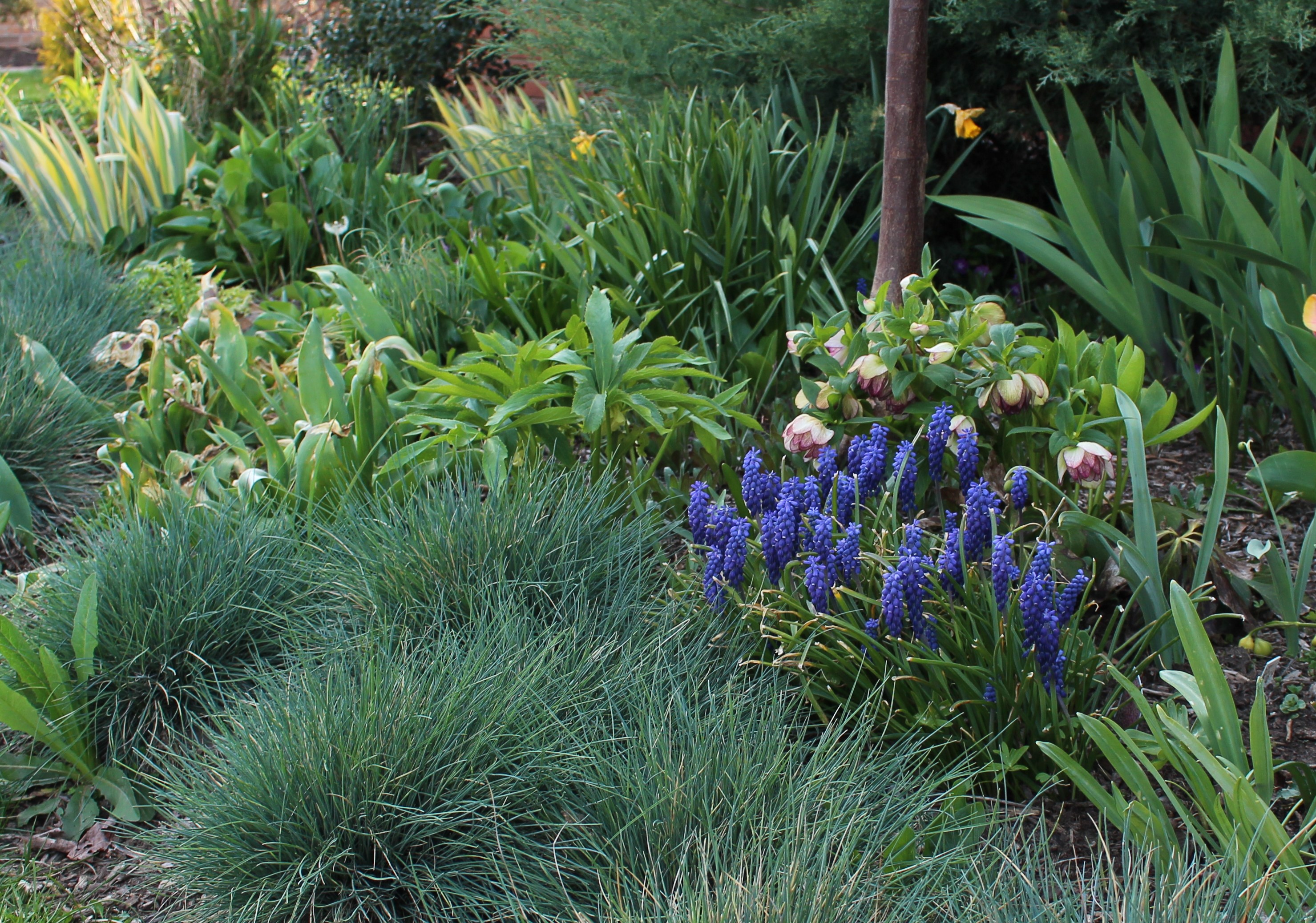
The grayish leaves of blue fescue (Festuca glauca) alongside the blue flowers of grape hyacinths (Muscari).  Please ignore the freeze burned tulips to the left of the photo…

Thanks to Christina for the monthly reminder to reexamine the contributions foliage makes to the overall look and feel of the garden, and this month it’s a border of blue fescue which has me most pleased with foliage effect.  This border was switched up last spring when I divided and spread a few clumps all along the foundation plantings, and this spring it has filled in with a lush vigor which really shows off the bed.  Now that the fescue is making me happy I’m fixated on a clump of blue muscari growing just behind the grass clumps.  There’s a strong possibility this will be divided and spread along as well since I like the combination.

The fescue and muscari are extremely common plants and both were free shovel-fuls from other gardens.  It kind of makes me reconsider that bucket of plant labels which no longer match living partners… but not enough to cure that plant lust for all the new goodies 🙂

See?  I promised it would be quick.  Please visit Christina’s blog as well, it’s always a pleasure to see and hear about the foliage others across the globe are enjoying in their own gardens, and have a great weekend!

Bury your head in the sand

Ignorance is bliss.  As the garden shivers and crackles under a freezing blanket of cold the wise gardener will hunker down indoors and enjoy the luxury of a warmer, climate controlled gardening experience.  Outdoors he can’t do anything but wait for the damage to show but indoors he can at least tweak the thermostat a little higher and take another sip of coffee… spiked or unspiked depending on the latest weather report.
rebloom amaryllis

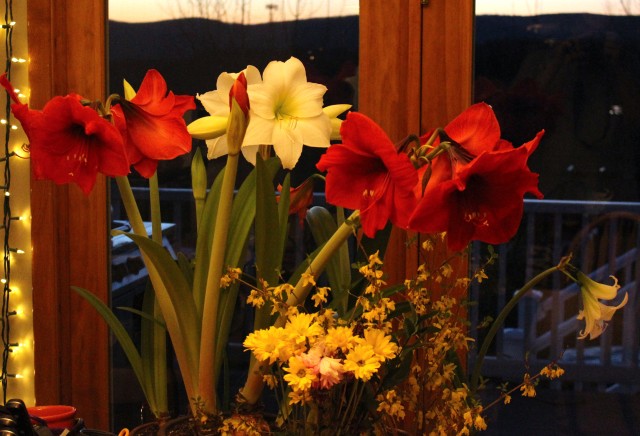
Leftover Easter flowers and a few too many amaryllis blooms.

I’ve been a little too excited about the new amaryllis I bought this winter and in my excitement ended up bringing the older bulbs out and giving them a little water too.  In a normal year I just throw the dormant bulbs outside in April and let them bloom right alongside the tulips, but this year I thought ‘the more the merrier’ and as a result I’m ending the winter with an amaryllis (Hippeastrum) extravaganza.  I’ve had these bulbs at least seven years now and if I remember to give them a little attention after flowering they reward me each spring with a fantastic color show.
red amaryllis

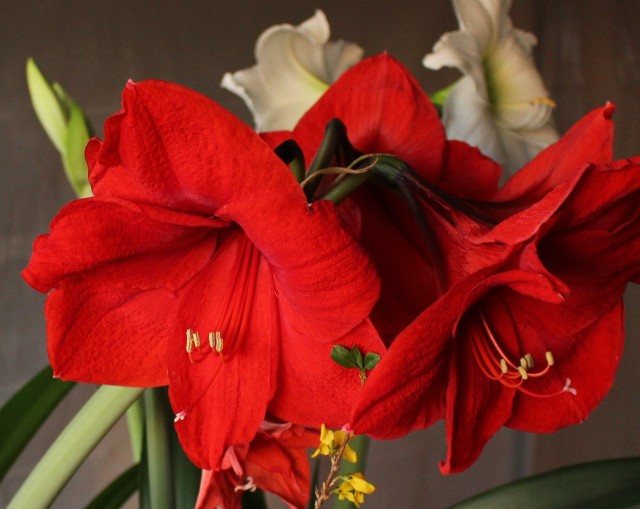
The bright red and pure white are perfect for Christmas… or I guess Easter 🙂

It sounds slightly ungrateful but of all the colors, Christmas red and snowy white are not what I’m normally looking for come springtime.  This of course was not what I was considering years ago when I picked the bulbs up for $1 a piece at some box-store clearance shelf… but please humor me as I shamelessly brag about how well they are doing now.  Each pot is already showing at least four bloom stalks a piece, and the plants themselves are on the verge of nearly overwhelming the dining room table, even with less than half the flower stalks open.  On the edge of the group you barely notice the last of the newbies, a delicate pink-flushed mini white named ‘Trentino’.

amaryllis trentino

Bigger may not necessarily be better as in the case of this ‘mini’ amaryllis ‘Trentino’.

Once it warms up outside (assuming it ever does) new and old amaryllis will all go out into a semi-shaded spot, get hooked up to the same drip irrigation system that waters the summer annuals, and will be ignored until November.  If I feel generous I’ll send some liquid fertilizer their way but for the most part they’re on their own.  If there’s a trick to it all I guess it’s that they sit in a gritty, peat-free soil mix which drains well, and they have a nice solid terracotta pot which breathes well and holds down their heavy tops.  Well drained, plenty of moisture, and a good feeding… mine enjoy that.

fancy leaf geranium

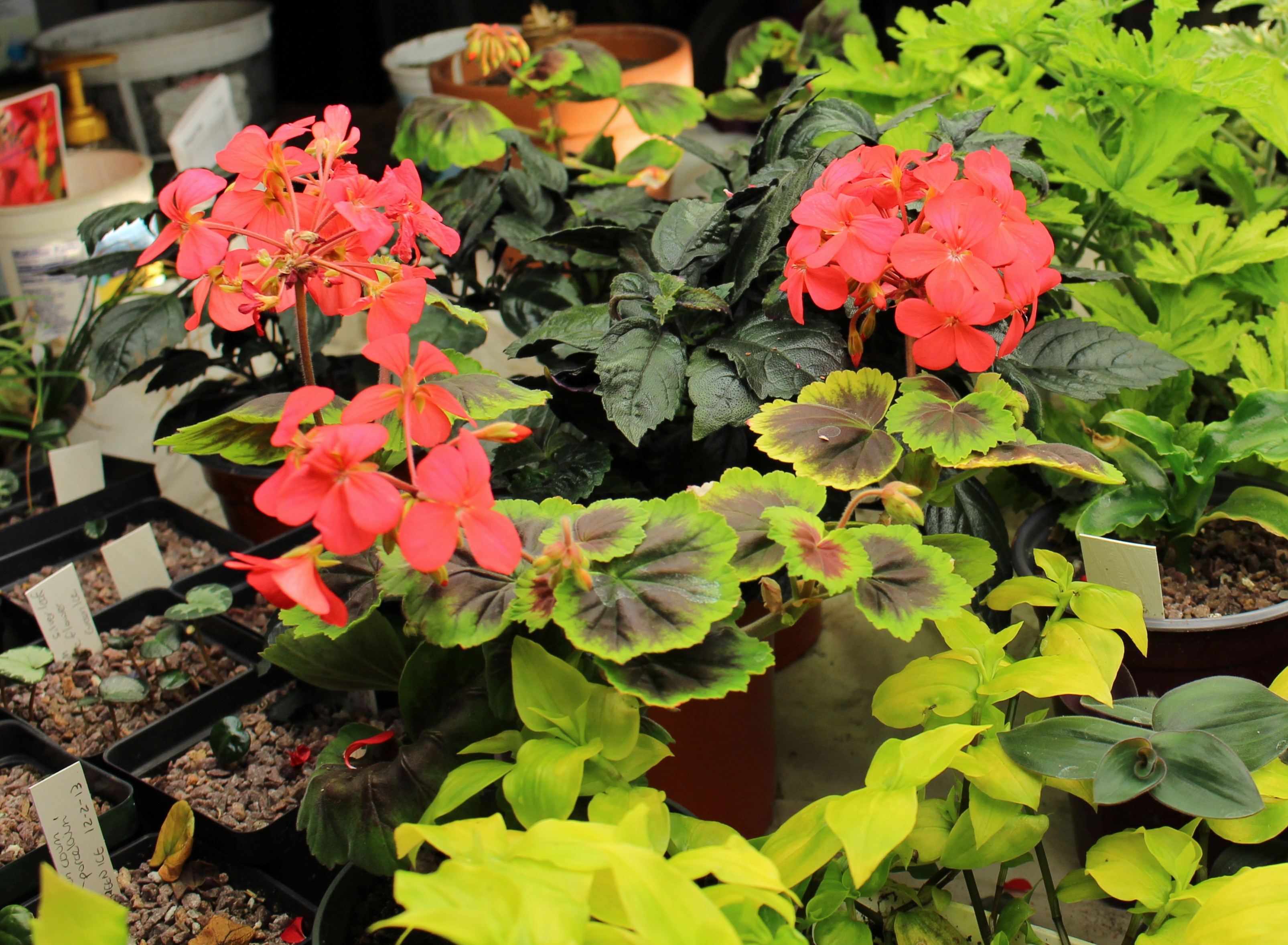
Geraniums blooming more than they should under the lights of the winter garden.  A better gardener would probably remove the flowers for the sake of stronger growth and a healthier spring transplant.

You may notice the attractive plastic sheeting which forms a subtle backdrop to the amaryllis photos.  The sheeting keeps the dust and debris of a kitchen remodel from drifting into the rest of the house, and also keeps us from enjoying the charms of a useable sink or stove.  If I try hiding indoors too long from the brutality of our latest arctic blast, eventually I need a new place to hide from the mayhem a kitchen run out of the living room…. so I escape to the garage and the winter garden.

scented geranium flower

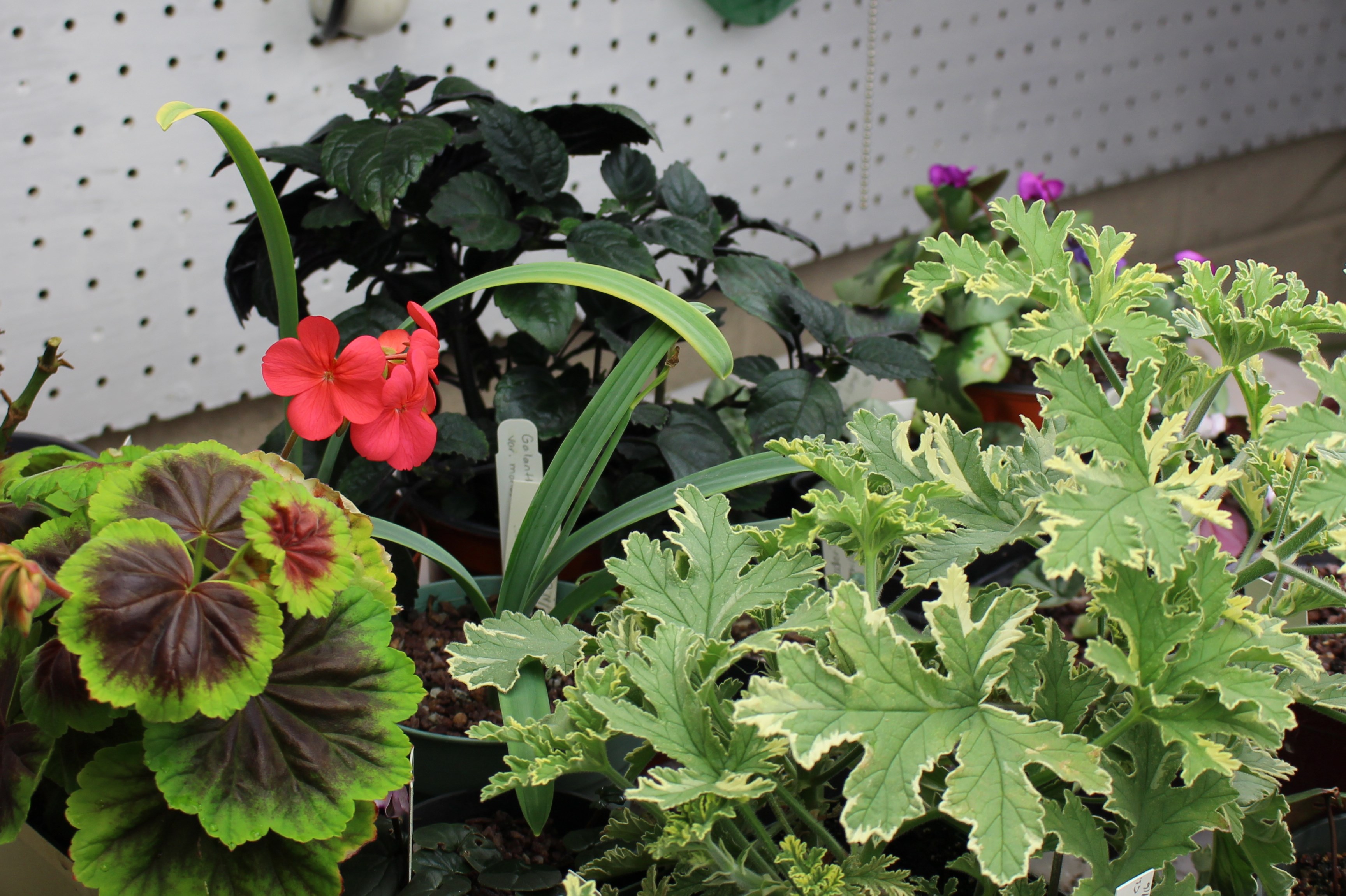
The scented leaved geraniums (Pelargonium) are also blooming under the lights.  The flowers are a treat, but I love the lemony scents which come off the foliage each time I move a plant or water a neighbor.

For a while the winter garden was being ignored.  Spring was early and I was back outside enjoying snowdrops, then crocus, and then daffodils… but now winter is back and I’m pretending it didn’t all happen and I’m just doing the regular sowing and repotting of late winter.  Because I foolishly brought sprouting bulb seedlings in during a December freeze I’m now at the point where I can dig seedlings out and see what grew.  Here’s a mixed potful of one and two year old Allium Christophii bulblets which just recently went dormant.  I’m fascinated even though a less than polite reader might point out I could get a bagful of blooming sized bulbs for under $10 this fall.

allium christophii seedlings

A few Allium christophii seedlings all grown up into pea sized bulblets.  I’ll plant them outside next year and hopefully see flowers in another two or three years.  I’m sure at that point I’ll wonder where they came from, since I’ll definitely forget where I planted them!

I find it interesting that even though I sowed the seeds shallowly, most have migrated to the very bottom of their four inch pots.  Readers of Ian Young’s Bulb Log at the Scottish Rock Garden Club will already know this since Mr. Young has observed this repeatedly, but for me to see it myself is of course more fun.

tulip from seed

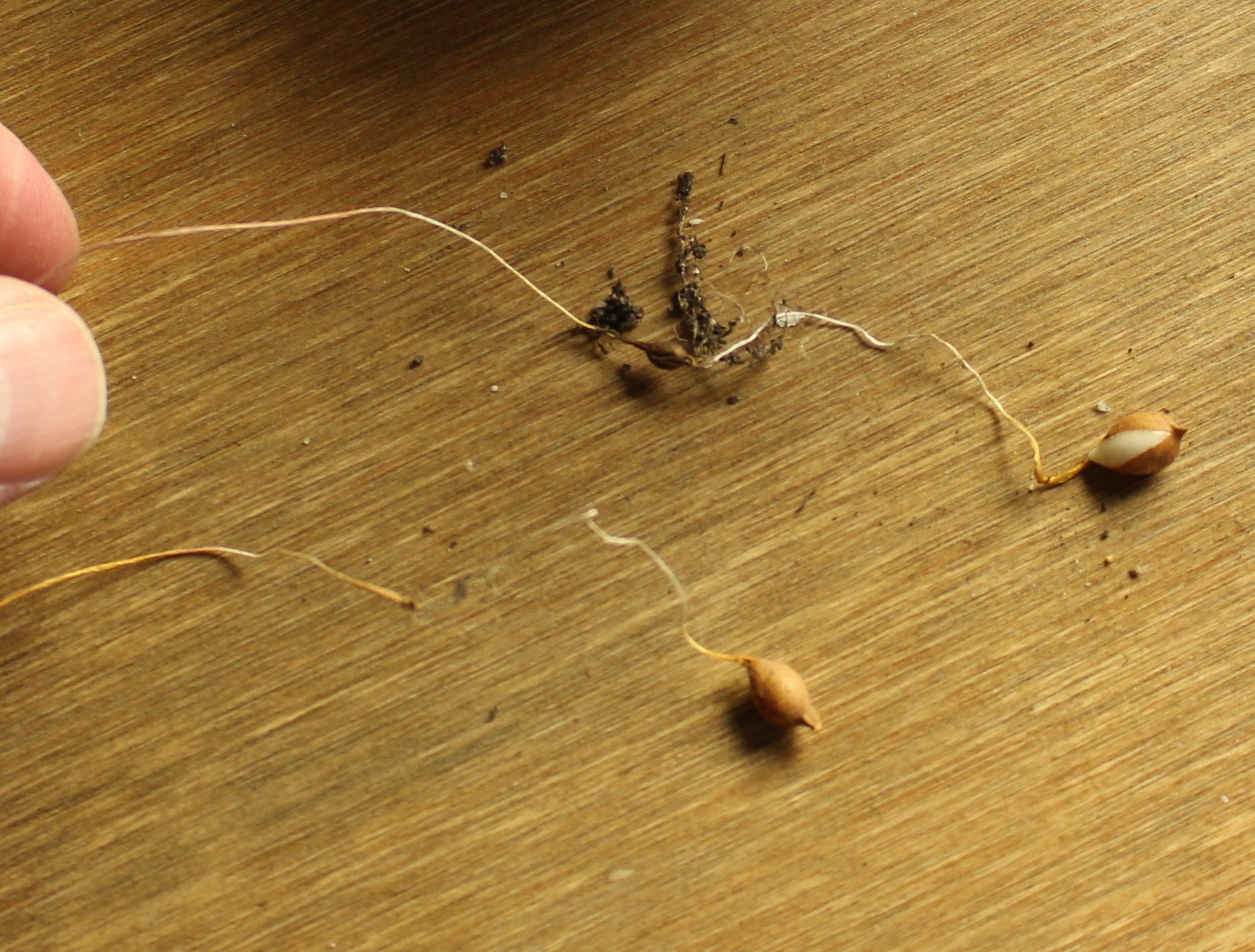
Second year for a tulip seedling.  In the middle of the photo you can see the dried rice-sized husk of last year’s bulb, if you follow this year’s root to the right (which would have grown deeper into the pot) you will find the newly formed pea sized bulb from this season.  Maybe by next year we’ll be up to kidney bean size 🙂 

I was also happy to find one of my fall snowdrops has made a nice sized offset.  I would have thought the double shoot from the top would have split the bulb into two, but instead it has just sprouted a new bulb off to the side.  So I guess that means there will be three growing tips next fall!

galanthus monosticus

One of my special snowdrops, a fall blooming Galanthus elwessi monosticus which a friend picked up for me at Nancy Goodwin’s Montrose Gardens in Hillsborough North Carolina.

Not all my escape gardening happens in seclusion.  Occasionally I have a helper and this year that helper has been assisting in writing out some of the many plant labels which go along with all the odds and ends which get seeded out.  She may actually do a neater job than I do, and her talent for labeling in Latin is impressive.

dyi plant label

The cut up vinyl blinds which I use for plant labels.  Plain old lead pencil seems to last for decades and I’ve found a few still readable in the garden, one going back to ’91 for a dogwood seedling which I apparently smuggled out of Longwood Gardens in a pocket…

Also impressive is one of my newest treasures.  It’s a Cyclamen Rhodium seedling from my visit to John Lonsdale’s Edgewood Gardens, and it’s blooming in spite of having been dumped out of its pot not even three minutes after John handed it off to me.  He was very forgiving of my clumsiness, but I never did mention that I dumped it over again a second time as I got into my car.  Fortunately it survived, and although John suggested that I give this one a try outdoors in a sheltered spot (planted six or more inches deep once it goes dormant), I’m not sure if I’m brave enough to risk its health a third time.

cyclamen rhodium

A really cool Cyclamen rhodium from the Southern Peloponnese and island of Rhodes in Greece.  Nice flower but look at that speckled foliage! 

So that’s how things are going here in my own sheltered locations.  I have some promising tomato seedlings sprouting as well as eggplant and peppers, but it will be a few days before the damage outside becomes definite.  Already things such as roses, lilacs and daffodils look rough, but for as long as I can stay in denial I will.  Maybe the hyacinth will bloom so much stronger next year now that their blooms have all been frozen off.  A gardener can hope 🙂

GBFD February

Each month on the 22nd Christina of Creating My Own Garden of the Hesperides invites us to join in on a consideration of foliage in the garden.  Foliage effects in the winter months can seem to drag on and February may have its pleasant moments in Christina’s Italian landscape, but here in Pennsylvania February is the month when the relentless assault of winter begins to wear down even the toughest greenery.  Imagine my surprise when a beautiful February weekend comes along and gets me thinking about outdoor things other than snow.  It felt great to get outside again, do a few spring-like tasks, and consider what was holding the garden together.

pelargonium foliage color

Even a nice February day needs some warmup time, so while waiting for the thermometer what better thing to do than enjoy the foliage of geraniums (Pelargonium) and other tender plants indoors under the growlights.

One task I did tackle was a little front garden cleanup.  The snowdrops are coming up here in the front foundation bed, and dead sunflower trunks do not add to ambiance of the scene.  Blue fescue (Festuca glauca, cultivar unknown) does though, and I’m enjoying the edging of faded blue which lines the front.  A nice solid swath of one plant helps tie this bed together but I’m not entirely convinced I can give up my collecting habits in favor of better (notice I won’t say good) design.  My single mass planting of little fescues is a starting point though and even if I can’t add more solid pools elsewhere maybe I can at least repeat a few nice patches of similar foliage here and there for the sake of continuity.

Festuca glauca winter color

Cute tufts of Festuca glauca in their winter finery…. which looks remarkably like their spring summer and fall finery, but every garden needs a few reliable doers.

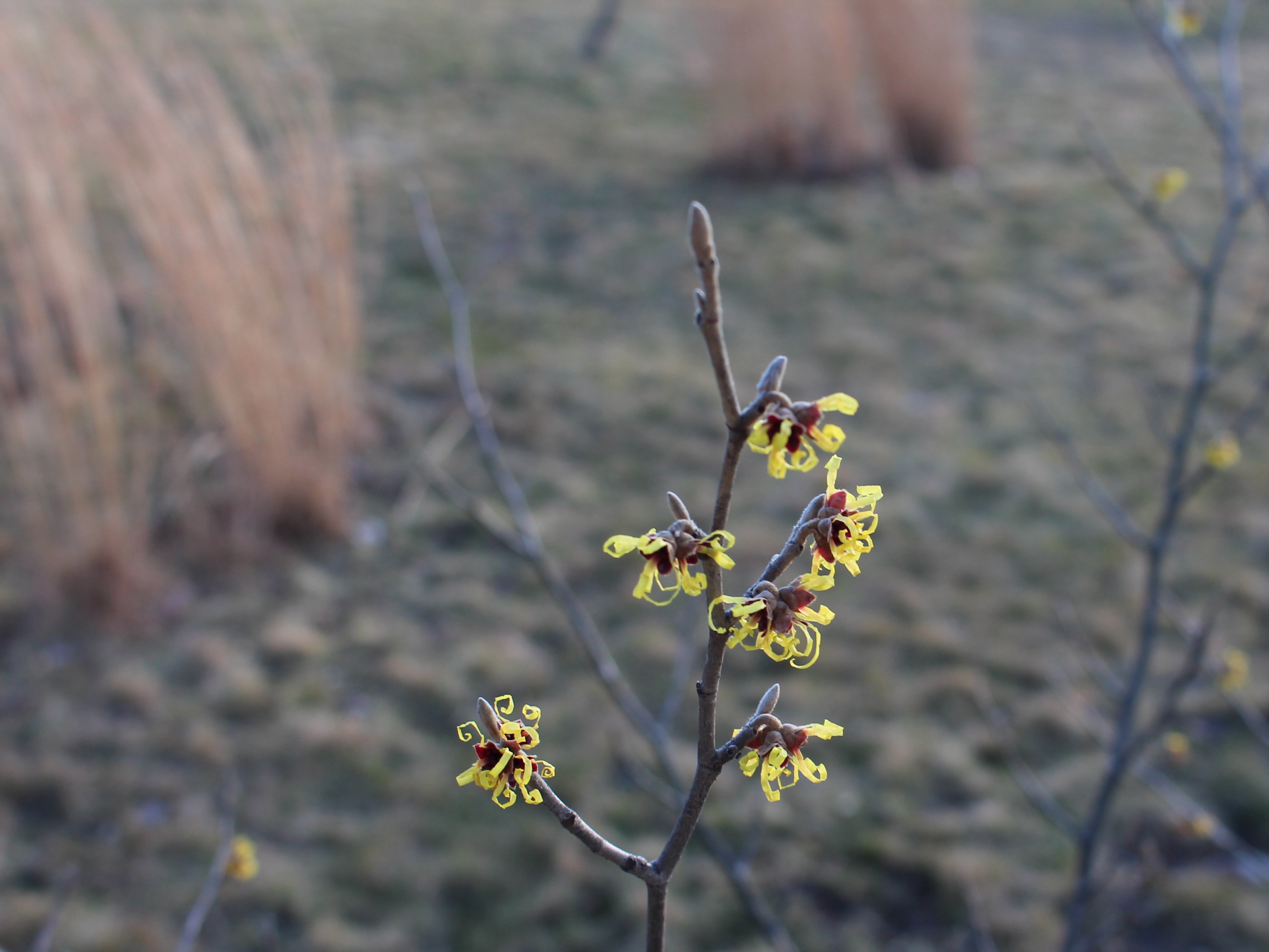
Another grass which has lasted well throughout the winter are the native little bluestem clumps (Schizachyrium scoparium) which dot the back meadow area.  They will be cut down shortly as crocus blooms begin to fill the meadow, but for now they’re a nice backdrop to my weakly flowering witch hazel (Hamamelis mollis ‘Pallida’).  It’s too dry and exposed here for the witch hazel to do well in this location, but it hangs on and every now and then has a good spring.

witch hazel pallida

The crinkled blooms of ‘Pallida’ Chinese witch hazel are always a nice winter surprise and I feel like the russet foliage of the little bluestem grass in the background complements the flower color well.

It may have felt like spring for a few hours but it’s still surely winter around here.  El Nino has thrown things for a loop and by my wildly inaccurate guess we are about three weeks ahead of a ‘normal’ winter.  Not a problem I say, and I’ll take the early snowdrops and deal with future wild temperature fluctuations as they come.

snowdrops and eranthis aconite

Cyclamen hederifolium foliage and a mulch of dried autumn leaves looks so much more comfortable than bare mud.  I guess even last year’s dead foliage counts on a February foliage day 🙂

So even in the dead of winter there is foliage making a contribution and there is hope for the upcoming year.  Hope is always a good thing, and what better way to breed more hope than to look at other inspiring foliage effects from around the world.  Give Christina’s blog a visit and as always have a great week!