Life on the Prairie

I’m still working on the street border cleanup and expansion.  Normally I would have called it quits as far as digging and transplanting go but with all the rain and overcast days I’m just trying to get  a little more done before the lazy days of summer kick in.  Today the humidity almost killed me but I did manage to push myself and got a little further.  An update is on its way but in the meantime here are a few pictures of another part of the yard.

The far reaches of the yard are left to themselves for most of the year.  I love the wild look but that opinion is not held by everyone who lives here or who peers over the fence.  It will get a rough mowing around the end of July but for now it’s full of wildflowers and bugs and butterflies and bunnies.  I was so pleased with myself for getting all the paths mown I figured I’d take a couple pictures.meadow garden
This is the area behind my mother in Law’s house.  It’s a no-man’s land between her fence and the new fence surrounding the new industrial park.  About five years ago this was just bare earth but over the years I’ve seeded in some grass, thrown down some daisy and rudbeckia seed and just kept it mowed (early spring and mid summer) to keep the worst of the weeds from taking over.  Here’s the five year picture.  In the front you can see where I spread the lawn clippings I collected from another part of lawn that had gone to seed. meadow garden
meadow gardenThe worst weeds back there are creeping blackberries, Canada goldenrod, and queen anne’s lace.  I think I pulled most of the QA Lace (too invasive) but the blackberries are giving me trouble.  The kids call them “pokies” and I hate the way the runners grab your leg and razor wire a cut right in the sensitive part of your ankle.  I hate them and remember hating them myself as a kid when one got me out in the woods.
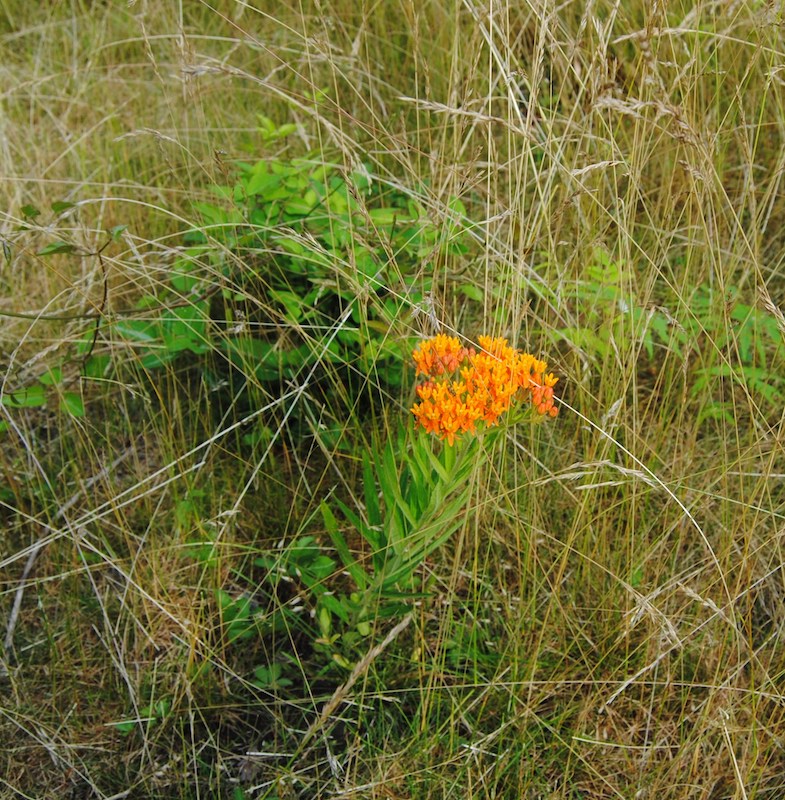
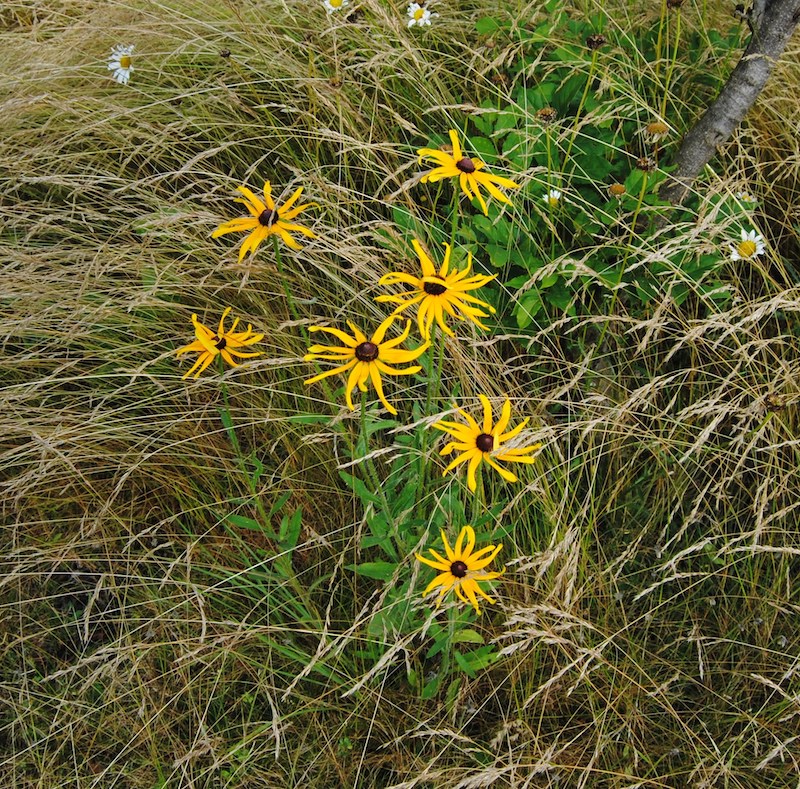
meadow gardenThe wild black eyed susans are blooming now as well as some late oxeye daisies.  Both of these are welcome and I’ve been trying to add some other interesting stuff to keep them company.  The late summer mowing should encourage the early blooming grass to fill in, but I’ve been planting out some butterfly weed seedlings (Asclepsias tuberosa).  The first to reach blooming size is flowering this year, I hope others follow.meadow garden
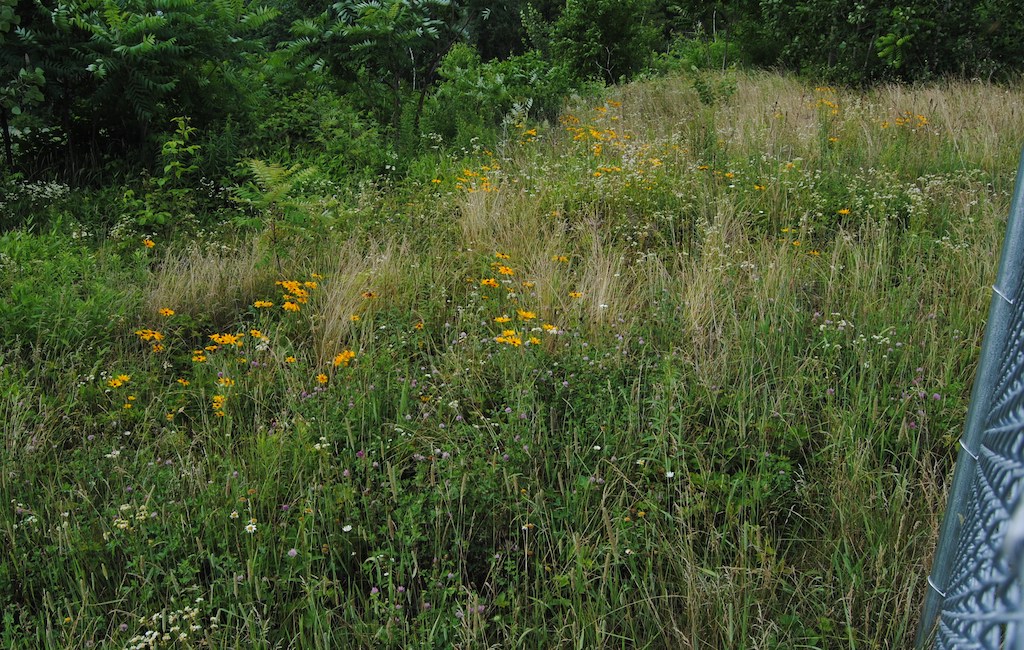
The chainlink fence went up last year and has cut me off from half the meadow.  There’s a possibility a gate will magically appear in the fence and I’ll again be able to give this a mow.  I’d like to be able to control what grows in back here and don’t want trees too big and too close to the fence.

Back on our side of the fence there’s a second half of the meadow called the ‘orchard’.  I planted an apple tree there this spring, hence the lofty renaming.  The grass in this section is thicker since part was already turfgrass before I started letting in all the daisies.meadow garden
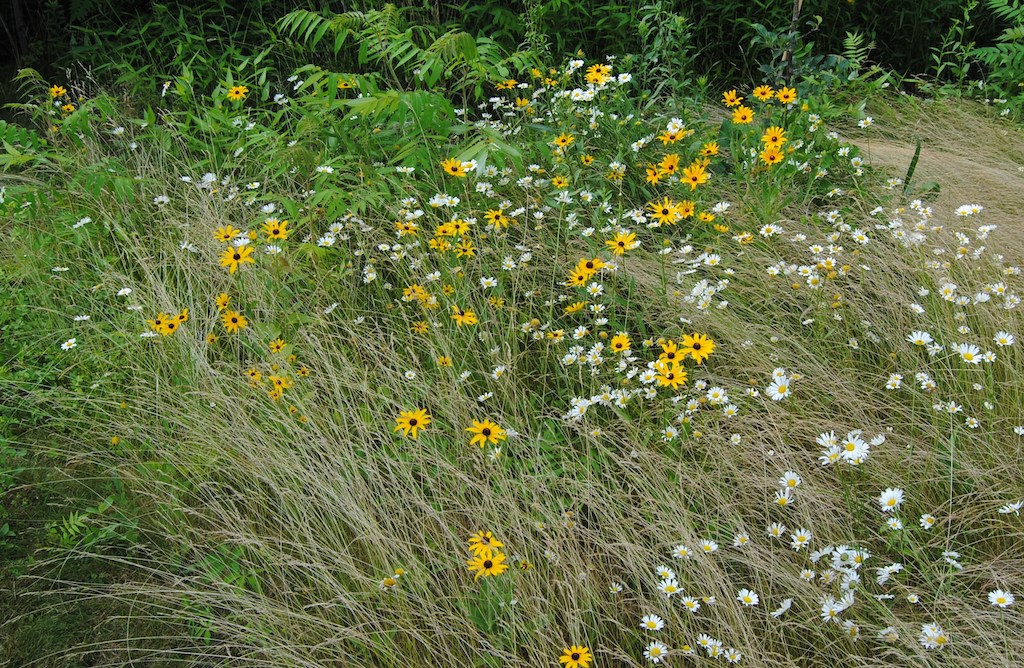
With the paths mowed and the edges neat I think the meadow has a nice look.  It’s popular with the younger crowd for important activities such as daisy collecting and grasshopper catching.  It’s also a great place for firefly chasing, and since July is firefly season there was a lot of path running as the kids tried to catch as many as they could.meadow garden
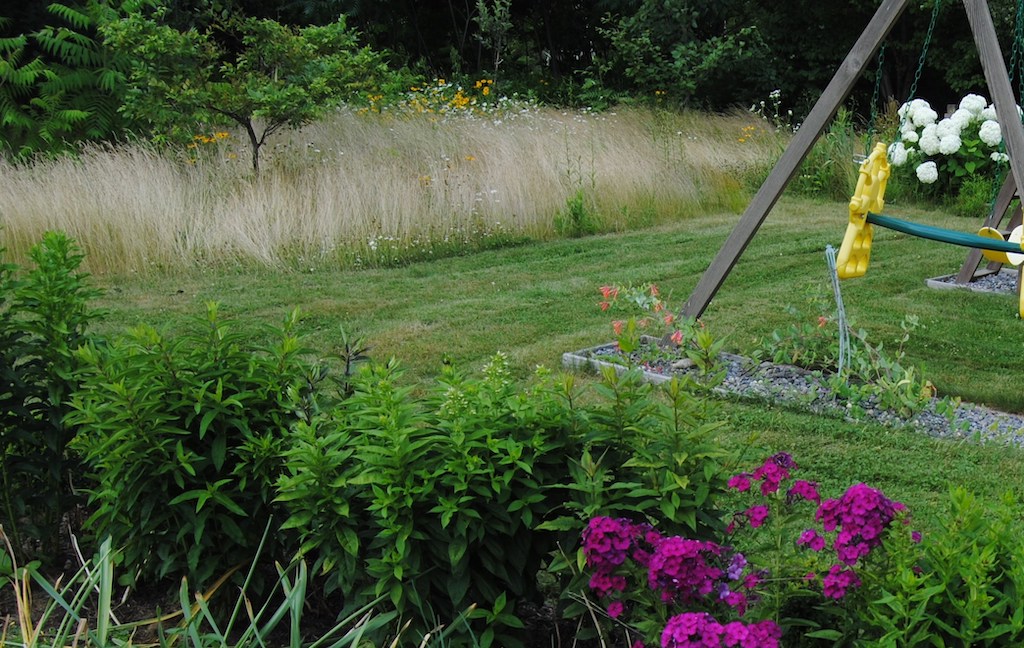
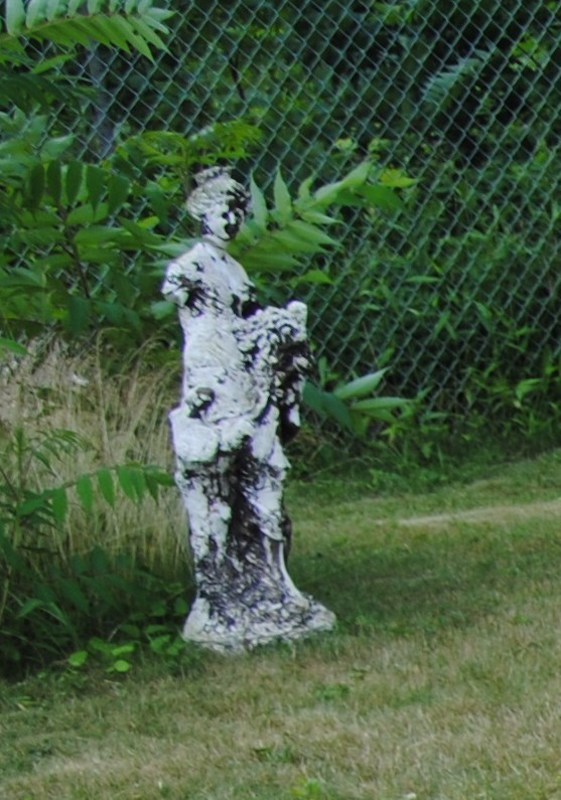
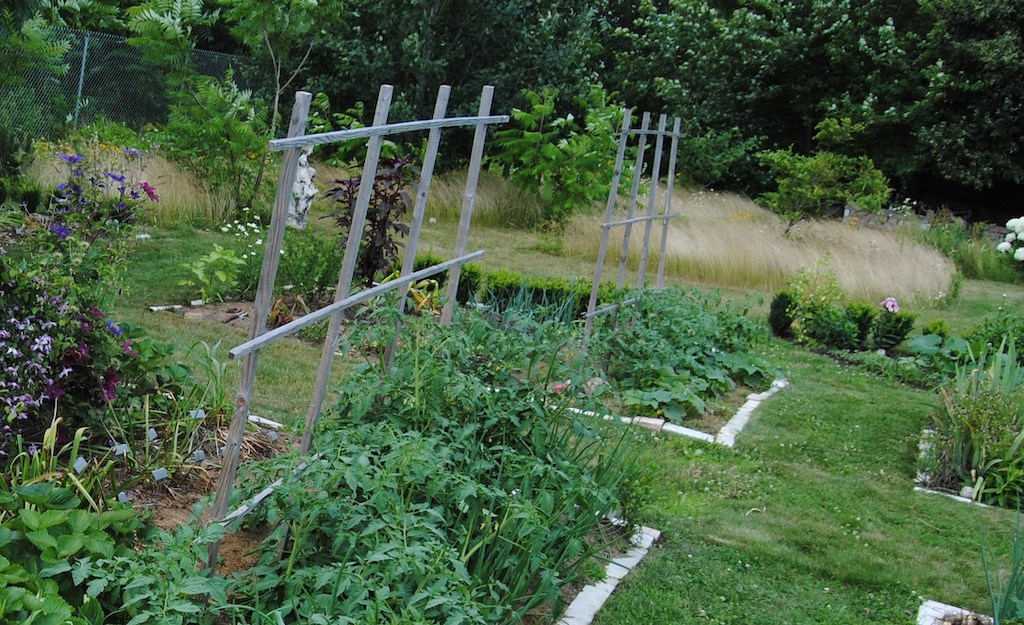
I’ll end with a look across from the vegetable garden to the meadow…. I mean orchard…… If you look carefully through the crooked tomato trellis you might catch a glimpse of ‘the queen of the prairie’.  She guards the entrance to the orchard and admires the overgrown lawn.  Some say she’s just an old plaster statue that wouldn’t sell at an estate sale.  I say she’s our queen.meadow garden
meadow gardenNow back to digging says the queen.

Annabelle

It was a dry spring, but based on the weather pattern we’re in now it won’t be a dry summer.  That’s fine with me since I hate watering, but others with different summer plans will disagree.  I took advantage of a break in the rain today and finally cut the grass.  Pretty much everything is lush and thick due to the extra water and the hydrangeas are no exception.

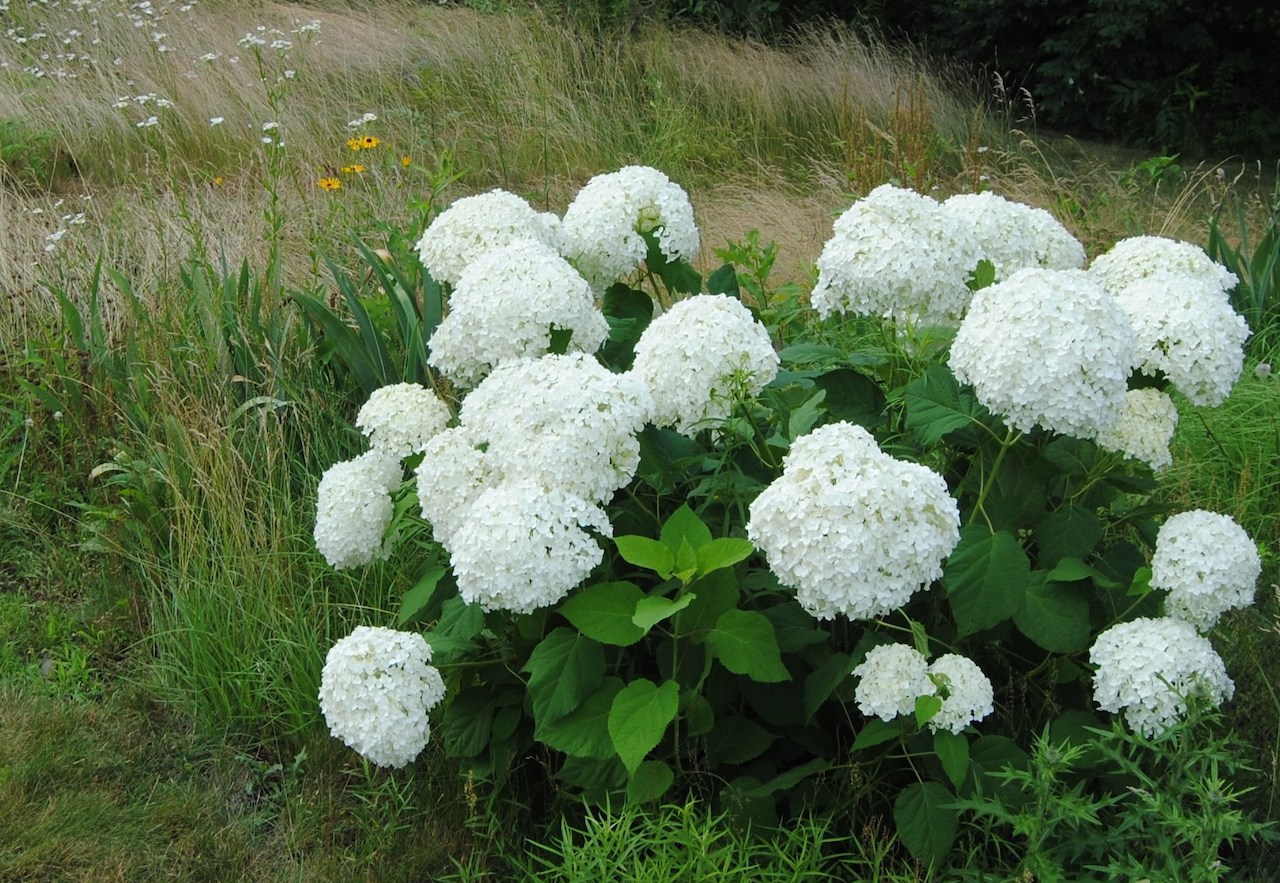
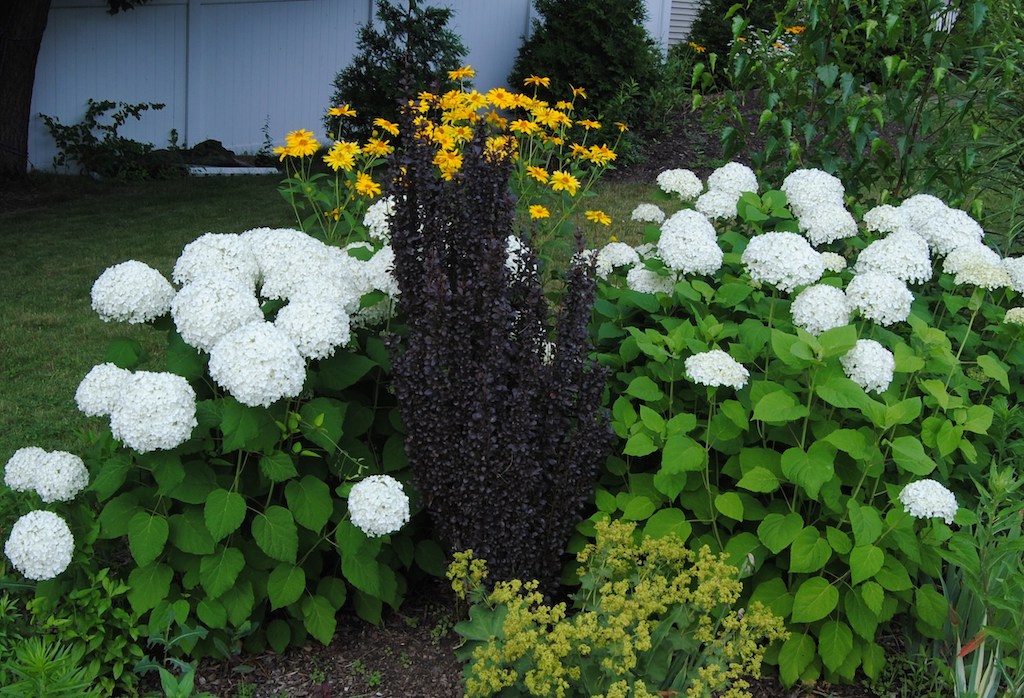
I grow “Annabelle” in a couple places around the yard but here at the edge of the orchard is the plant that seems happiest.hydragea annabelle

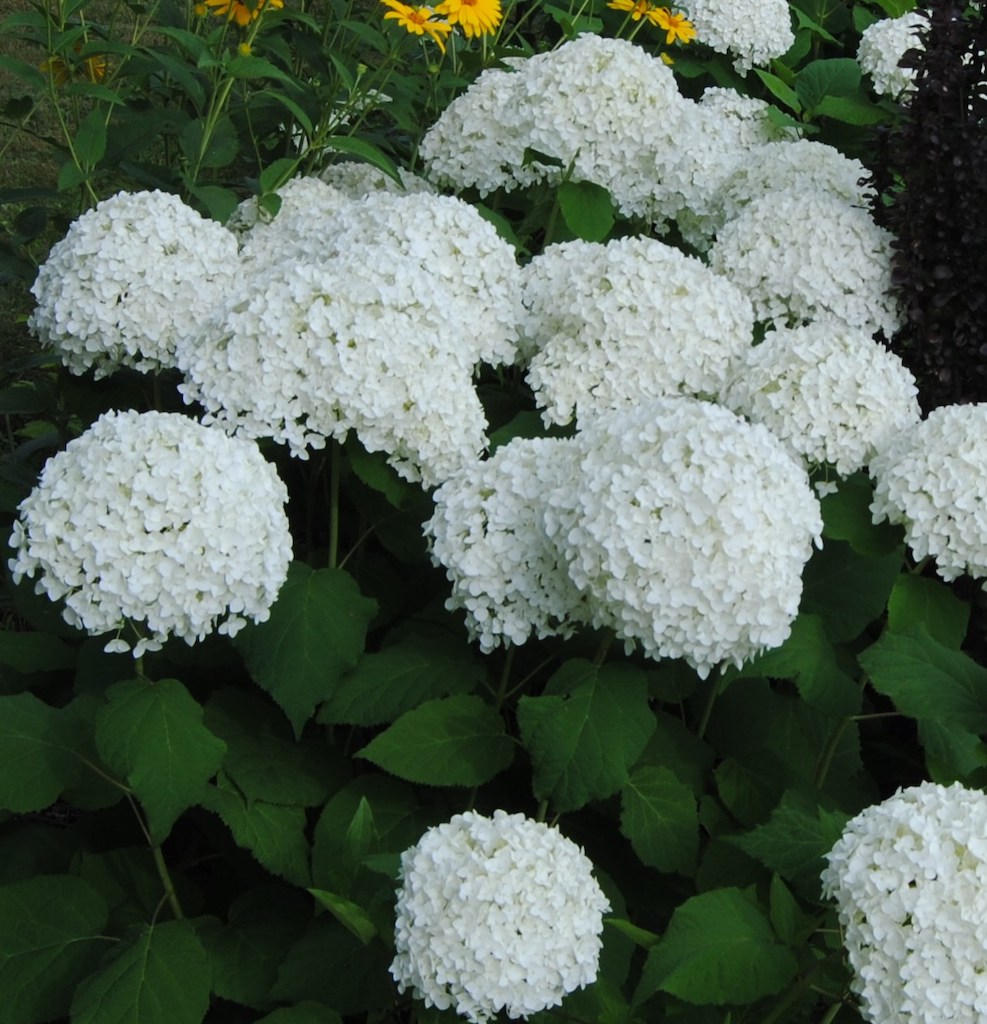
I think this plant came from a small shoot I felt bad for and stuck into the ground while planting daffodils.  It does well amongst the weeds and always puts on a great show with these volleyball sized bloom clusters.  “Annabelle” is one of the arborescens type hydrangeas.  Hydrangea arborescens is the species and it’s a different species than the less hardy florist hydrangeas (the blue/pink or purple ones), oakleaf hydrangeas, and the late summer h. paniculata (the big white or pinkish late summer bloomers).  They’re native around here and are commonly found along creeks and streams, just in a little more modest bloom form.  hydragea annabelle“Invincibelle spirit” (pink) and “incrediball” are also arborescens types that have recently come out, but the first has a pink color that I’m not crazy over and the second just hasn’t found its way into my garden yet (it’s supposed to be less floppy).  Arborescens hydrangeas are easy and reliable bloomers.  I cut mine back completely in the spring and that’s about all I do and still get a great show.  Water is about the only thing they might ask for.  Mine are in full sun and in years of less regular rain the plants wilt, die back, and the blooms get crispy edges due to my neglect.

“Annabelle” has been around for a while.  She was found back in 1910 in the wilds outside of Anna Illinois by Harriet Kirkpatrick, and it was her and her sister Amy that brought the original plant into their garden.  After decades of passing along from gardener to gardener “Annabelle” hit the big time in 1962 when she was introduced to the nursery trade.  She’s still a great garden plant.  This is a larger clump that slowly spreads a bit each year via short runners.  If I had a big yard with a little shade I think I’d have to spread these out to fill in a huge swath of white.hydragea annabelle

Garden Dolphin

Ok, so it’s kind of a dumb title but the name delphinium derives from the latin word for dolphin.  Something about the inner parts of a delphinium flower reminded someone somewhere of the shape of a dolphin.  Good enough for me, but last night’s deluge drowned all my little dolphins.  The rain was too much and nearly every single bloom is bent over or snapped off.  Fortunately I can remember them through last weeks pictures.

This is the sole survivor of a packet of “New Millenium” seed.  They sprouted well but a week of neglect in July left only this one.  Several more weeks of neglect stunted the seedling but then for some reason a late fall planting in garden soil and a winter rest inspired it to send up a bloom stalk.  My vote is nay on the fuzzy brown/black center but others are in favor.

perennial delphinium I’m much in favor of the dark center of this violet(?) bloom….. (sorry but my color vocabulary doesn’t go much further than blue and purple).  Note the permanent crook in the stem that comes from waiting too long on staking.perennial delphinium

This is another which was inspired to bloom well this summer.  It’s possible the cool weather has had a lot to do with this.perennial delphinium

These blooms are nothing compared to the flower show this plant is capable of.  Growing delphiniums is a borderline activity anywhere temperatures routinely go into the hot and humid range, and if you’re the type of person who enjoys spending the summer poolside or shaded under the porch (or hidden away under central air) well then you’ve probably got the beautiful summers that delphinium hate.

This amazing plant was obviously not the product of my upbringing.  Purchased this April for maybe $4 it’s worth every cent.  Unfortunately I can’t find any good pictures from when it was opened, just this starting view.  If you’re selecting a delphinium in the spring, look for one with a strong single stem, not multiple growing points.  One with a flower stalk showing if possible.perennial delphinium

One day I might give these plants what they really need.  In my zone (6-ish) that means morning sun, rich soil with no root competition, regular watering, and any soil amendment you can spare.  They are heavy feeders and if you noticed the yellowish leaves on my plants you’ll know I don’t fertilize them like I should.  Maybe somewhere deep down inside I know delphinium season always ends badly, and this year is no exception.  Summer storms and snapped stems let me cut what I never would have thought of cutting and bringing indoors.  The kids have something nice to look at today while they eat their breakfast.perennial delphinium


Vegetable update

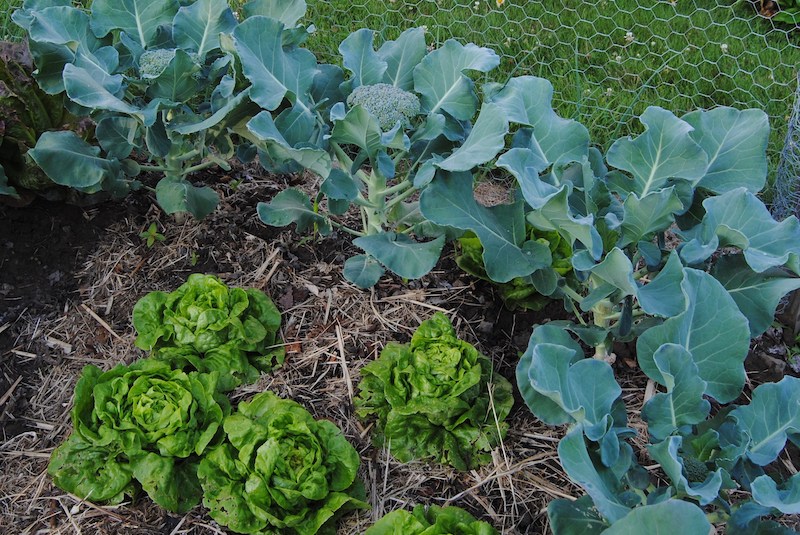
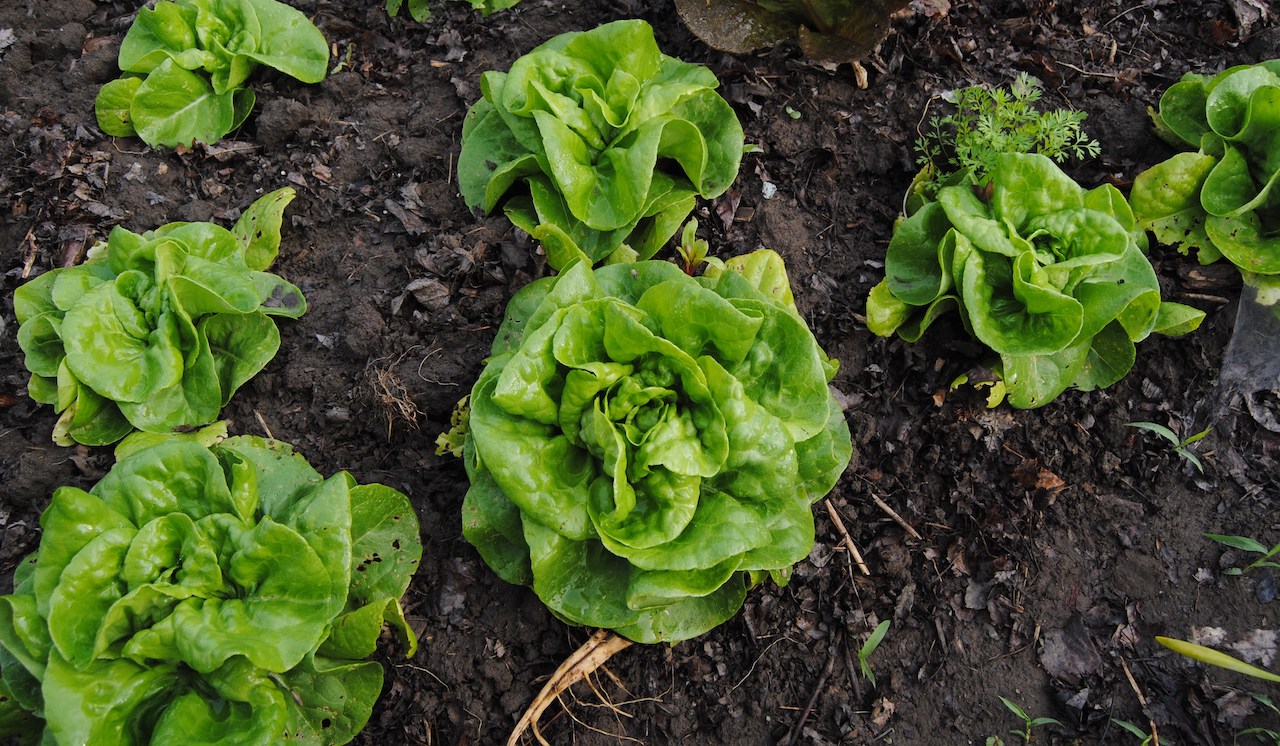
I have a few hours this morning and rather than get some real work done I wanted to give a quick vegetable garden update.  We’ve been picking lettuce from the deck planters and now also out of the fenced garden area.  This “Matina Sweet” butterhead is tasty and if you look closer to the fence you’ll see the first two “Packman” broccoli are ready…. even though I’m not exactly sure how to tell when broccoli is fit for harvesting.spring vegetables

Last year’s broccoli went towards raising a healthy, vitamin rich, wild bunny population, this year the fence has really made a difference.  Too bad it doesn’t keep out my newest pest- slugs.

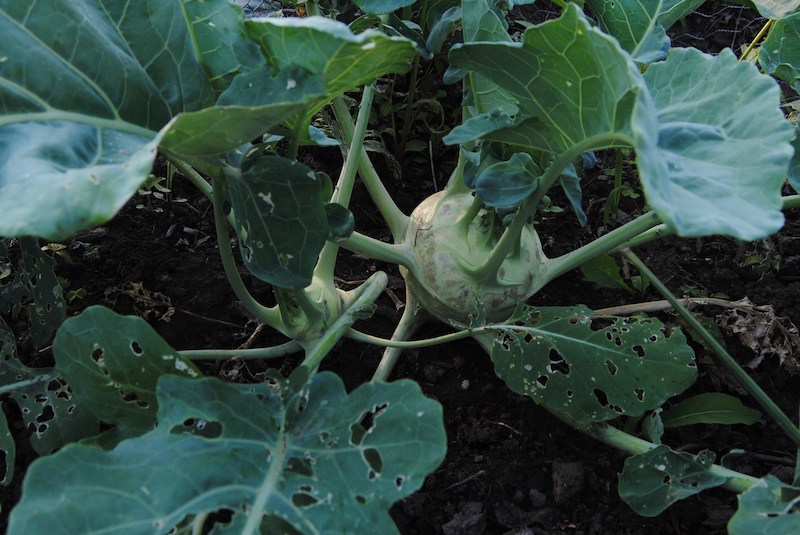
Here’s a slug chewed kohlrabi.  I hate peeling anything off these super fresh home grown veggies, but this one will need it.spring vegetables

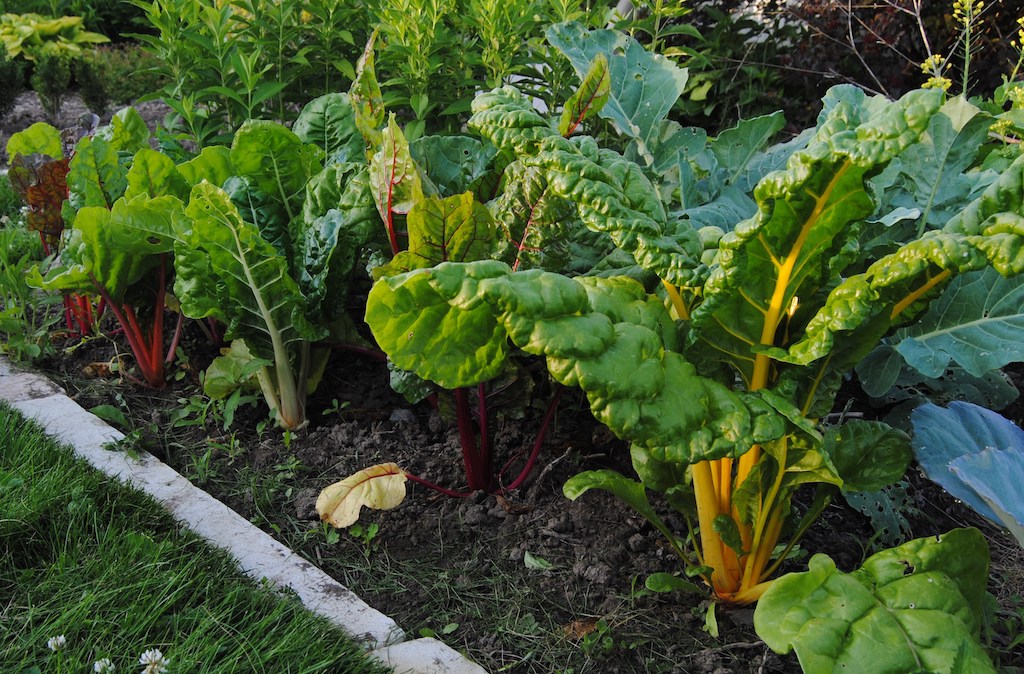
The “Bright Lights” swiss chard looks good enough to eat.  I cheated and prestarted in pots, that way when planting out the colors could be arranged 🙂spring vegetables

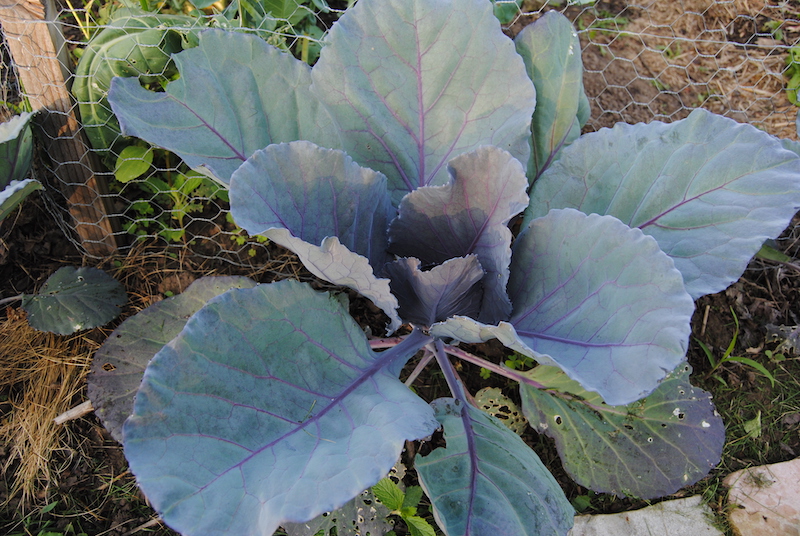
I just like the looks of red cabbage.  Better soil would have done this plant good but it’s not bad considering the only fertilizer for this bed was the bag of chopped maple leaves dug in during spring planting.  I did break down yesterday and gave everything a dose of miracle grow, we’ll see what that does.spring vegetables

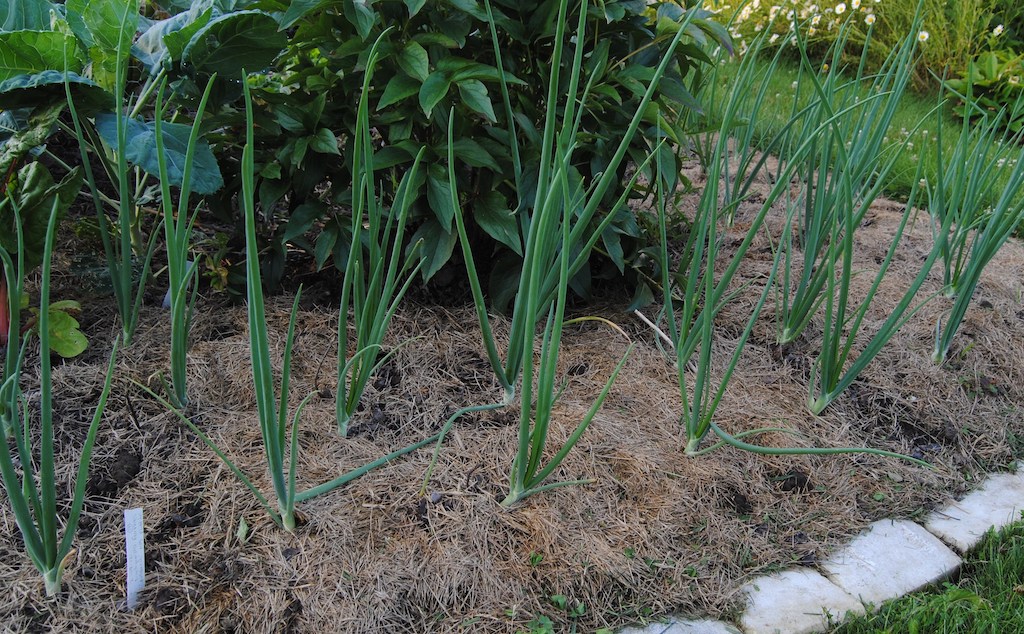
Onions look good, I just hope they make it in spite of my late planting.  They still have a way to go….. if worst comes to worst I guess we can try passing them off as tiny gourmet pearl onions or something.spring vegetables

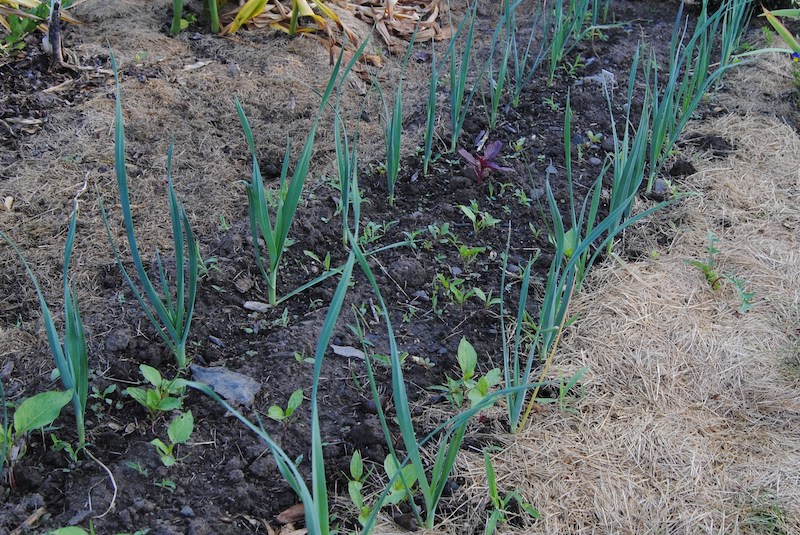
“Lancelot” leek.  We’ll see if anyone eats these, they’re new this year, but at least they have all year to get to a good size…. unlike the bulbing onions which will die back and bulb up once the days get short enough.

spring vegetables

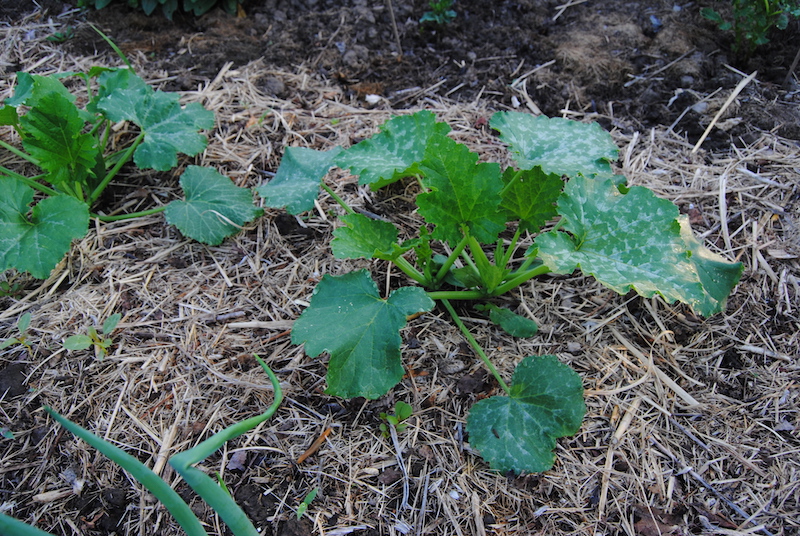
The zucchini seeds are up and growing fast now that summer temperatures are here.  If I had more room it wouldn’t be a bad idea to put in a couple new seeds for a late summer crop…. just in case the vine borers kill off this batch.spring vegetables

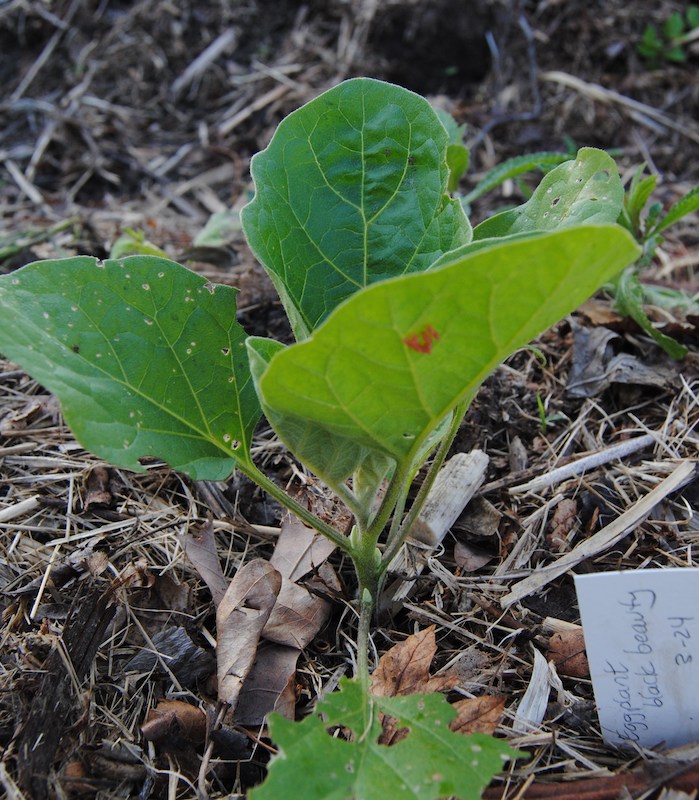
spring vegetablesPole beans, bush beans, corn, peppers…. all are starting to come along but for some reason the eggplants are a bit sluggish this year.  Just a few inches tall and they’ve got to deal with flea beetles and the little holes they make, plus some random bug (unfriendly I’m sure) leaving a batch of orange eggs….. possibly potato beetles….

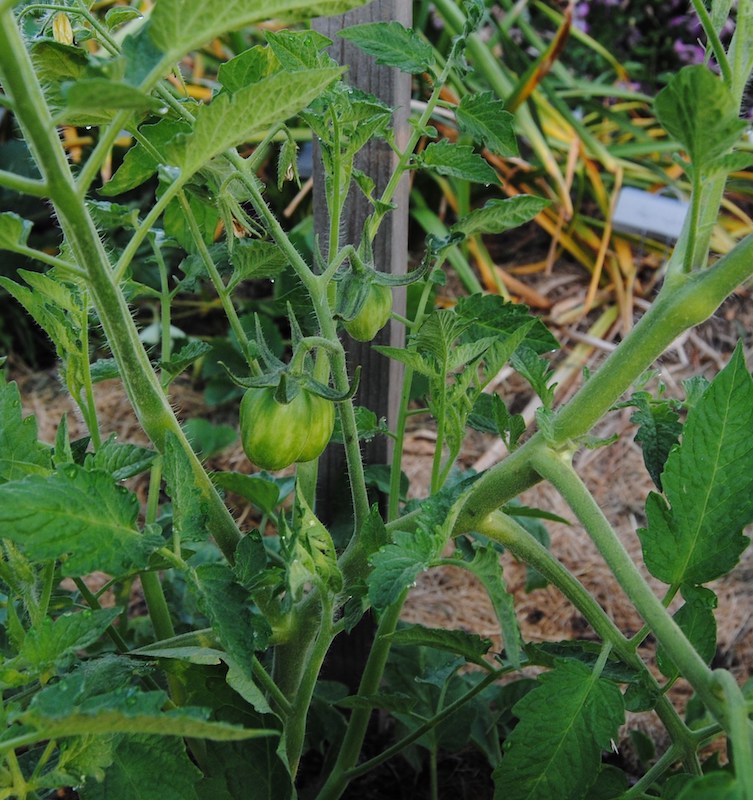
spring vegetablesEnough vegetables, it’s about time some flowers got in here and there are plenty coming along for July.  Next post should have a couple blooms, until then all I have are tomato flowers.  Not the most impressive but they make for promising green tomatoes.

Mid June Color

I’ve been feeling a little insecure about the garden.  It looks ok in spots, but there’s just not much that I consider worth posting.  I’m trying, and I think I’m making a little headway in weeding and planting, but it’s still a mess.  Apparently that leaves me with two choices, either put off posting or post the ugly.  I’m going with the second.  Maybe if I had more skills I could do a couple flower closeups, but my photography just isn’t there so as a result you’re left with weedy, unmulched, undeadheaded garden scenes….. Enjoy!

Here’s “William Baffin” (I believe), a climbing rose that hasn’t yet begun to climb.  It has started suckering though, and I was surprised and pleased to see the suckers blooming as well, and in the same color!  The variegated grass in back is Arundo Donax “variegata”, an awesome bold grass that should reach at least 10 feet by frost.  Because of the size it’s not for everyone and before you get too attached I want you to know it doesn’t keep this color all season.  It tends to “green-out” once heat and drought kick in.rose william baffin

“Blue Hill” salvia.  Nothing fancy about this one.  I call it a parking lot plant since it shows up all over the place, but my snobbery hasn’t pulled it out yet.  Looks like my snobbery also has yet to pull out the horseweed and old iris stalks that frame this picture.  (but give me credit for cropping out the dead dogwood which is right next to this)salvia blue hill

Another parking lot plant, I think it might be a “red carpet” rose, blooming away.  I tried not to show too much of the suffering yucca transplant growing to the front but couldn’t get it all out.  This is an old planting in the newly expanded front bed and hopefully one day I’ll be confident enough to show it off.  I’m back and forth on the colors here and can’t seem to work out what’s nicest in front of the brick.  So far red, yellows and gray are showing up most but I’m still not sure it’s a good look.rose red carpet

This is where I’m focusing right now.  The bed along the street needs a once over to get rid of old iris stalks, rip out overcrowded perennials, plant a couple annual patches, and hopefully get a layer of mulch….. oh and also widen the bed another foot or two 🙂June perennial border

It’s hard to see in the grainy photo, but there’s about a billion fennel seedlings that need to come up.  They’re nice and airy and I like a couple but enough is enough.


My best weed

My garden lacks sophistication.  There’s little if any structure, the planting schemes are weak, it’s usually a mess, and I have plenty of weeds.  To help get around these faults I’ve taken to accepting volunteer help in designing the beds and plantings.  What this means is I avoid a lot of unnecessary work by letting things self sow and keeping most of these volunteer seedlings as “design elements” instead of admitting they’re unplanned weeds.  Oxeye daisies are one of these and they do a great job filling every little gap anywhere they can.  I don’t mind.oxeye daisy

Between the daisies, fennel and verbena bonariensis I could keep this border filled all year without lifting a finger, but even I would have to admit it’s more of a highway wayside look than a garden.  I’ll need to pull most of these this week as I work through the bed thinning overgrowth and then adding a few annuals and tropicals for summer color.

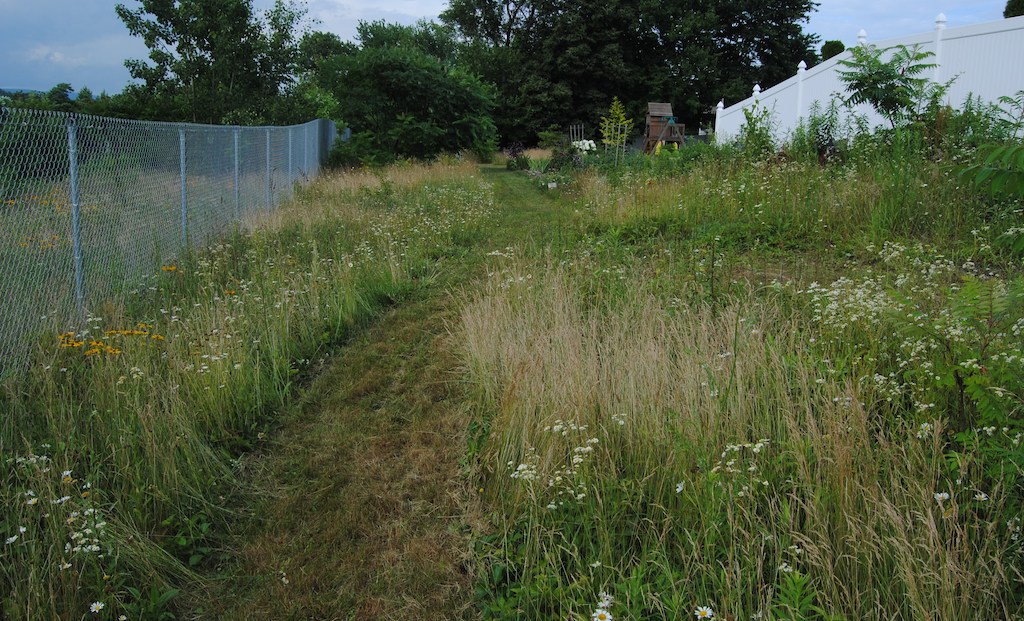
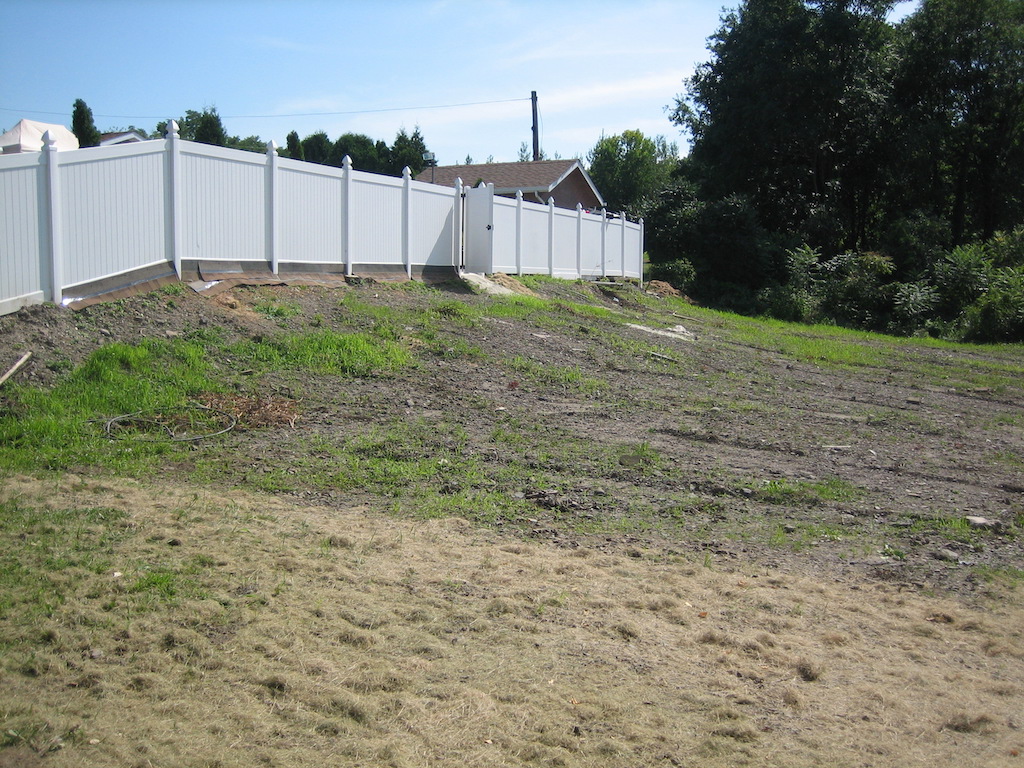
Daisies are even easier in the no-man’s land between the industrial park and our development.  Rather than keeping a tame suburban lawn here I’ve opted for a meadow of rough wildflowers and waving grasses.  The grasses are slowly establishing but the daisies filled in the first year.oxeye daisy

Rather than beating this area into submission every week, I let it go until July or so and then give it a cut to spread seeds and wack back the less-preferred sumac and golden rod.  With a mown path for more civilized access this is a popular area for the kids and their friends.  Many bouquets find their way out of this weed patch and onto our kitchen windowsill, and the grasshoppers and bunnies are just as popular….. unfortunately they also eventually find their way out of the meadow.oxeye daisy

To my surprise this meadow area is not as popular with the grownups.  It’s become a tradition each spring to engage in the ‘cutting of the weeds’ argument and then take the day long vow of silence that follows.  But for now the grass and daisies stay and the wildlife rejoices.

Plant of the Year 2013

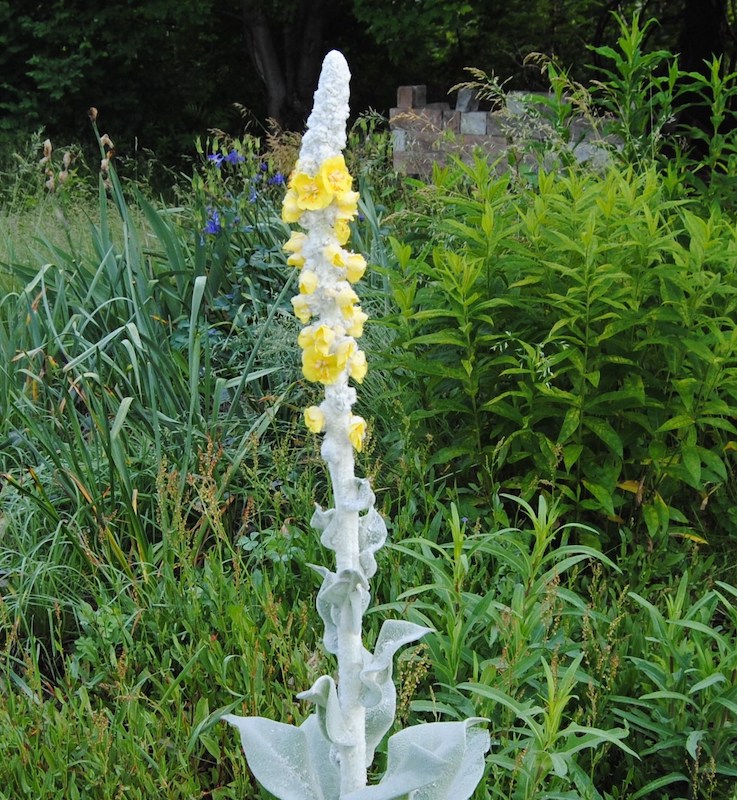
So what if it’s just June, I’m calling verbascum bombyciferum my plant of the year.  This means nothing as far as fancy decals or mass marketing campaigns go but it means I’m smitten with this plant.  It’s tall, it’s pet-able, it’s cheery yellow, it grows like it doesn’t care, and it’s always good looking. verbascum bombyciferum

Verbascum haters will point out it’s a biennial and will die after blooming but I say “be gone” and enjoy it for what it is…..  and I could list a bunch of perennials that never made it past year two for me and had much less interest.  They were started from seed last year and suffered the entire summer in a four pack.  While their brethren died from drought and neglect these two managed to root into the soil and survive.  Around September I desperately ripped up the plants, pulled them out of the four pack and shoved them into a poorly prepared garden bed.  They survived an autumn of stomping and whacking courtesy of the children and still came through for me.  What’s not to love about that?

verbascum bombyciferumI think my abuse was rooted in the doubt of their identity, I thought again these would grow up to be the common roadside mullein… which has happened three times already…. but apparently fourth time’s the charm.  You can bet I’ll be starting a more respected batch of seedlings this summer.  I’m hoping to top six feet with a better, less weedy and neglected upbringing.

I’m already looking forward to my seedlings and their fat fuzzy rosettes of pale grey winter foliage… kind of like a lambs ear on steroids…. now if I could only get rid of the rich purple weed that’s invaded the bed behind them.  Campanula glomerata, the clustered bellflower.  Nice but it really spreads.

Early June in the vegetable garden

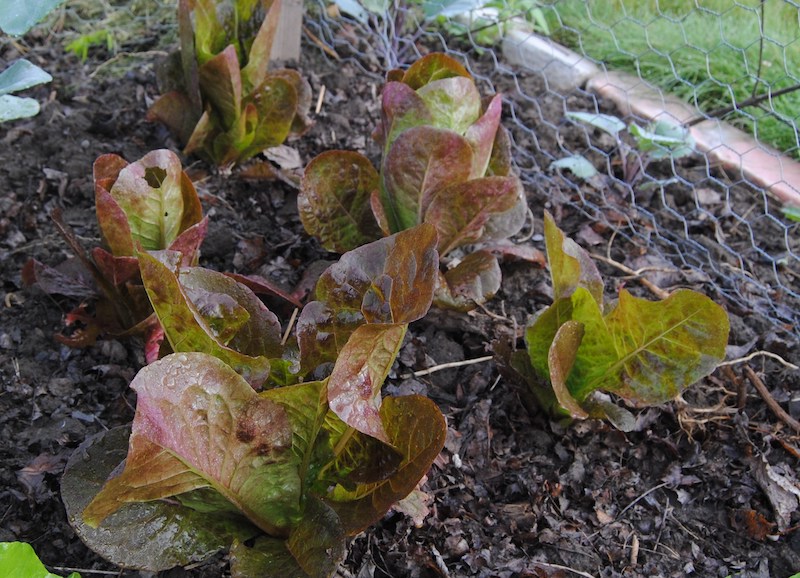
Things don’t look too bad out there.  I was late in getting everything planted (of course) but the cooler weather and the last couple days of rain have helped the spring crops come along.  This butterhead lettuce (I forget the variety) is starting to look real yummy.vegetable beds

There’s also some romaine coming along.  These are all in the ‘safe zone’ behind the chicken wire, but even outside the fence its been a relatively damage-free spring as far as the rabbits go.  Slugs have been more of a problem.vegetable beds

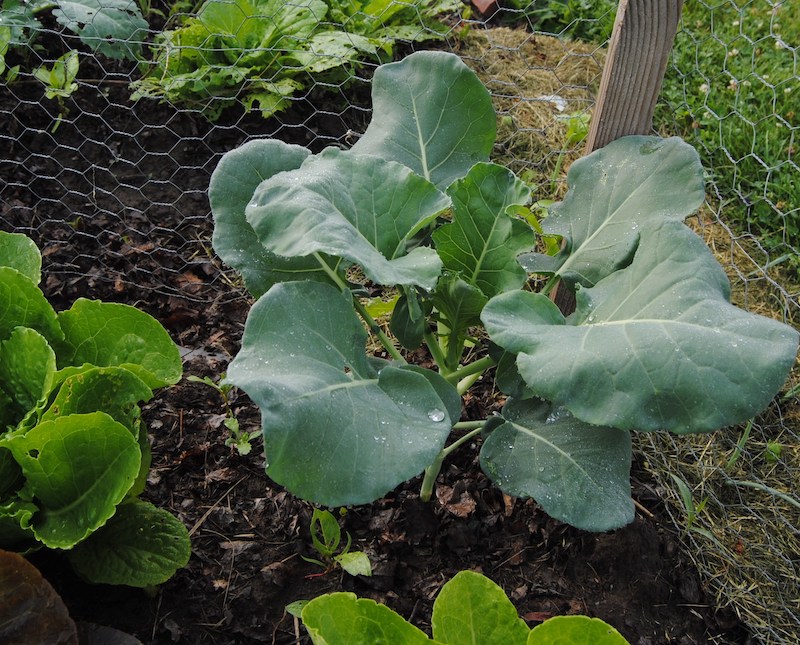
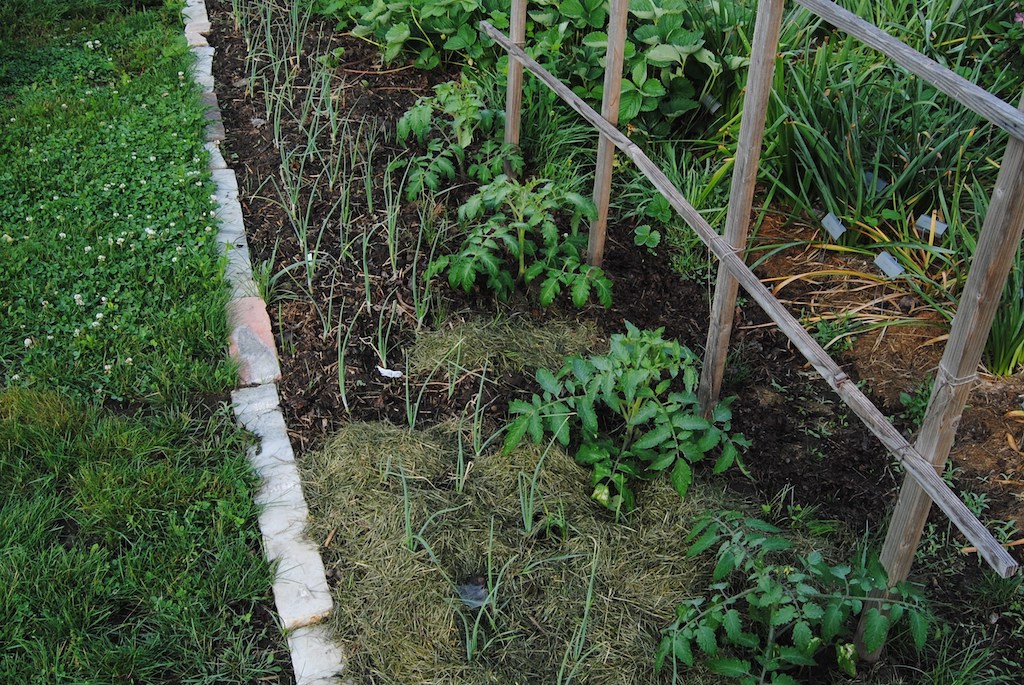
Brocoli is making progress too.  It’s finally taking off and spreading its roots after a too long delay in the six packs (these I bought prestarted).vegetable bedsThese tomatoes have been in for a week or two as well as the onion transplants.  This will be the year of the onion since I started way too many seedlings and then couldn’t bare to toss them into the compost.  They’re small for the time of year but I hope I get something by the time the harvest rolls around….. otherwise I guess we’ll have hundreds of scallions to deal with!vegetable bedsThe tomatoes are dealing with what might possibly be the worst soil prep in gardening history.  A month ago this bed was lawn.  I turned under the grass and added a little compost for the onions, but all the tomatoes got was a layer of leaves and grass clippings to kill the turf and then holes dug directly into the lawn.  Maybe I gave them a little compost on top.
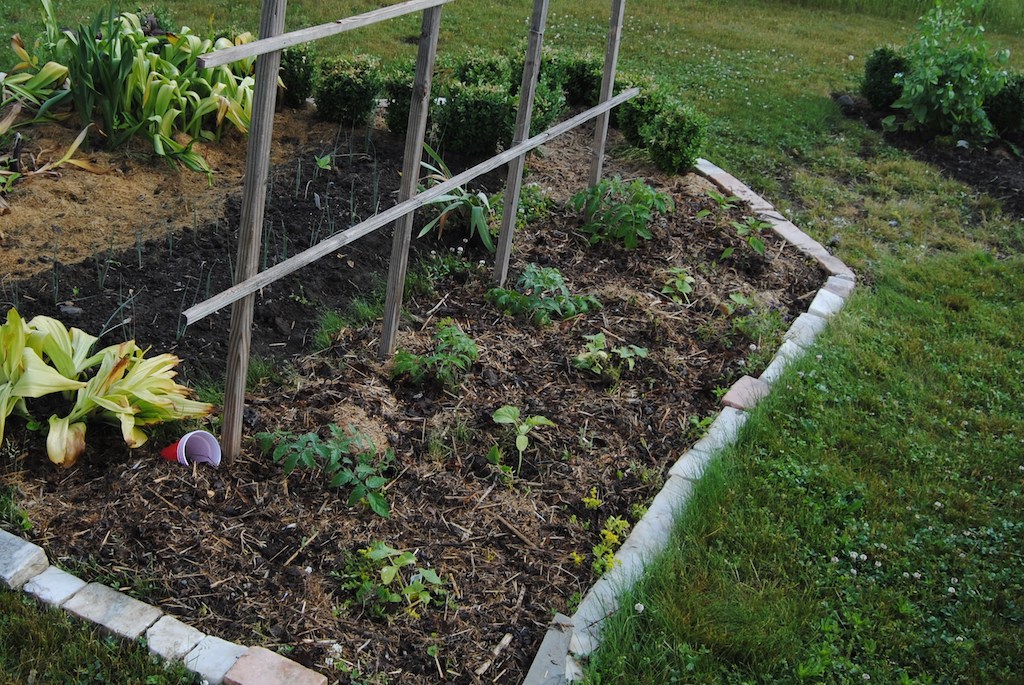
Actually the sister bed across the path which I planted on Saturday was even worse.vegetable beds

You can still see the lawn peeking out from behind the tomatoes and along the bed edging.  The plants went straight into holes dug into the lawn and then the grass and weeds were covered with a mulch of chopped leaves and twigs and whatever else the mower picked up during spring bed cleanup/winter debris removal…. I didn’t even have any nutrient filled tender grass clippings to put down!  Once I can dig out some more compost I might put a bit around the tomatoes, but until that happens they’re on their own.  At least I planted them deep, covering all the stem up to the top clump of leaves.  this should let them sprout more roots into the mulch and should help with the lack of soil prep.

vegetable bedsHopefully if I keep it watered the earthworms will find the mulch and rototill the soil with their tunnels.  Grass clippings will surely bring them in, in fact last Friday prior to the rain, I fertilized the front lawn.  I’m hoping it will produce a nice bumper crop of clippings before summer drought dries it up.

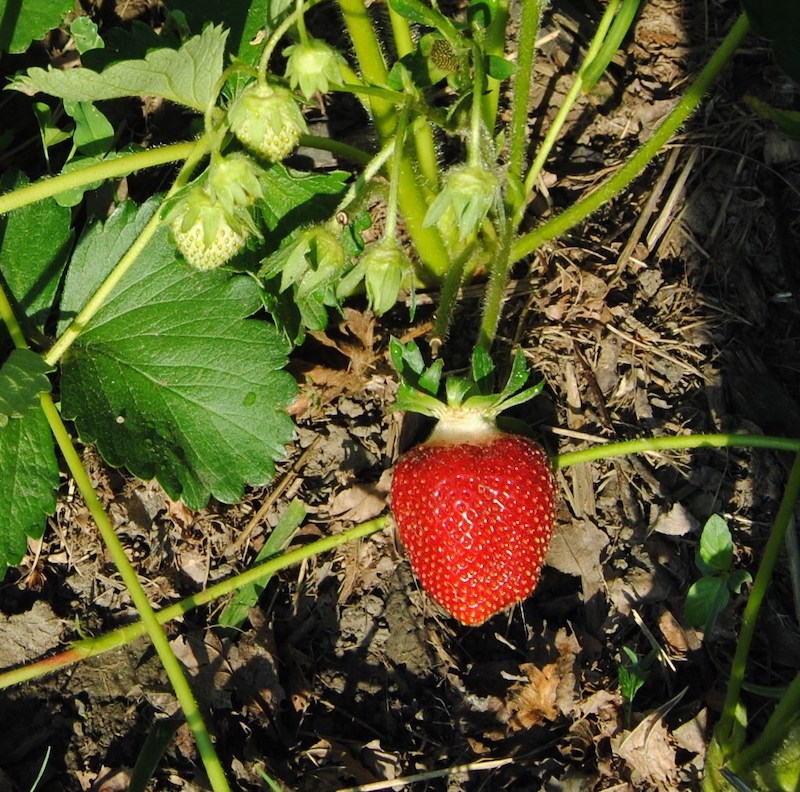
The garden isn’t all healthy vegetables, it’s also juicy sweet strawberries.  Even with the late freeze there are a couple coming along.

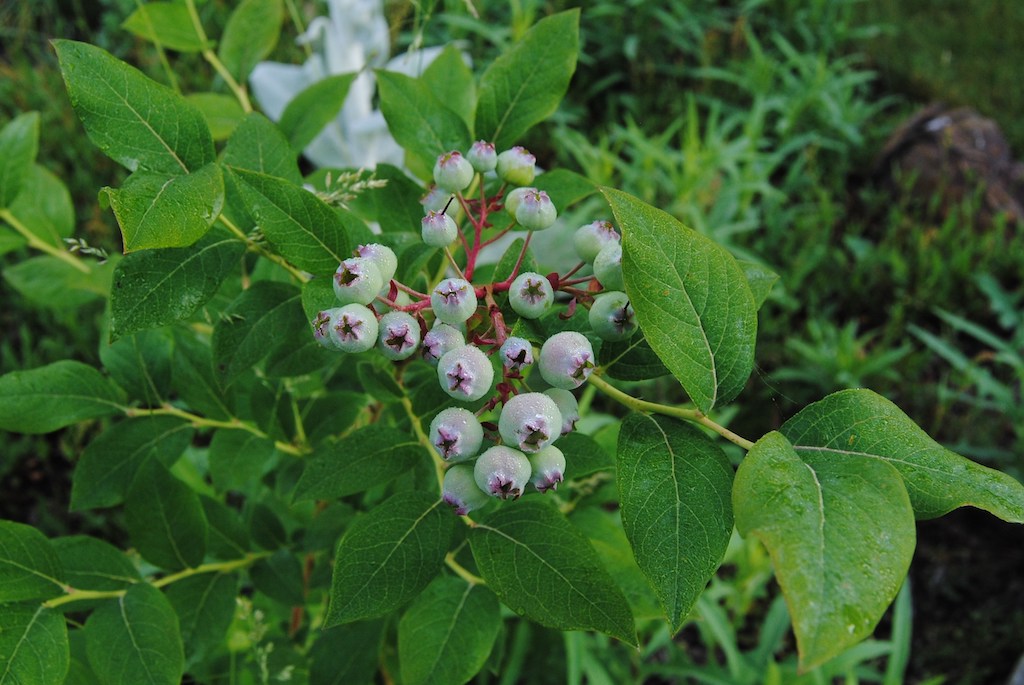
There’s also the promise of a few blueberries this summer.  Most likely the birds will beat us to them, but this bunch might be worth covering up and saving for ourselves.vegetable beds

Of course I’m only showing the good and new.  Peppers and eggplants still have to go in as well as pole beans.  I’m far from having everything planted and growing.  Right now the process of digging up the tulip beds is going on and it’s into these beds that the last of the transplants will go.  Someday I hope to have beds where I want them and supports ready to go but obviously it’s not going to be this year!

Please tell me I’m not the only one falling behind:)