Still Inching to Summer

So there’s been a good amount of porch sitting this June and although that sounds good in theory it’s maybe not the ideal scenario due to the reasons for all this sitting around.  Reason number one is the rain.  Here in NE Pa it just keeps raining and then it rains some more.  Hmm.  I just looked it up and it appears we have had something close to ten inches of rain since the beginning of last month and maybe that’s not something I needed to know on top of the fact it’s been chilly as well.  Much of the porch sitting has included a blanket with a dog on top for additional comfort so to sum it up, wet and cold.
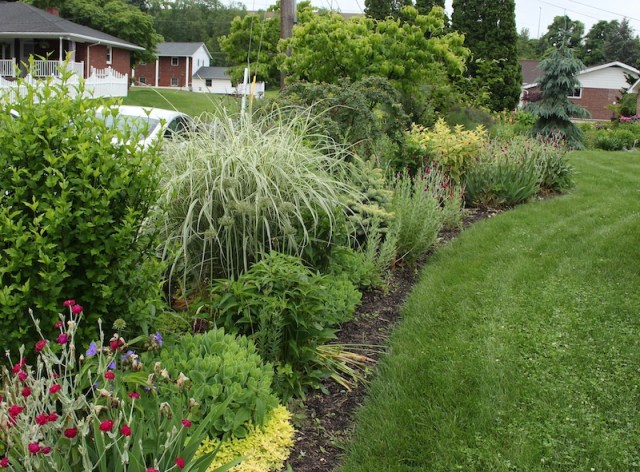
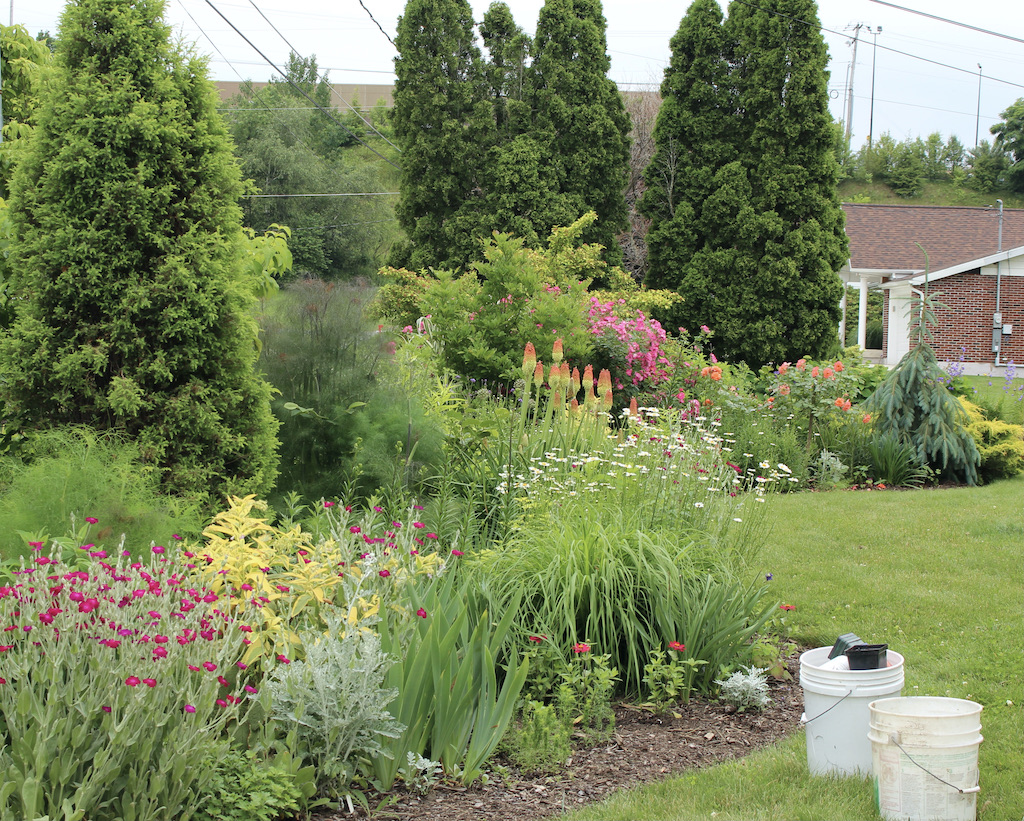
front street border

Along the street the daffodils, snowdrops and winter aconite have been covered by the lush, rain-fueled growth of summer perennials.  Luckily I mulched last summer.  I can’t imagine how many weeds I’d be looking at otherwise.

On the plus side I’ve done very little watering, but on the minus side I should have transplanted and divided more.  Oh well, no sense in dwelling on these things, it’s literally all just water under the bridge this year.
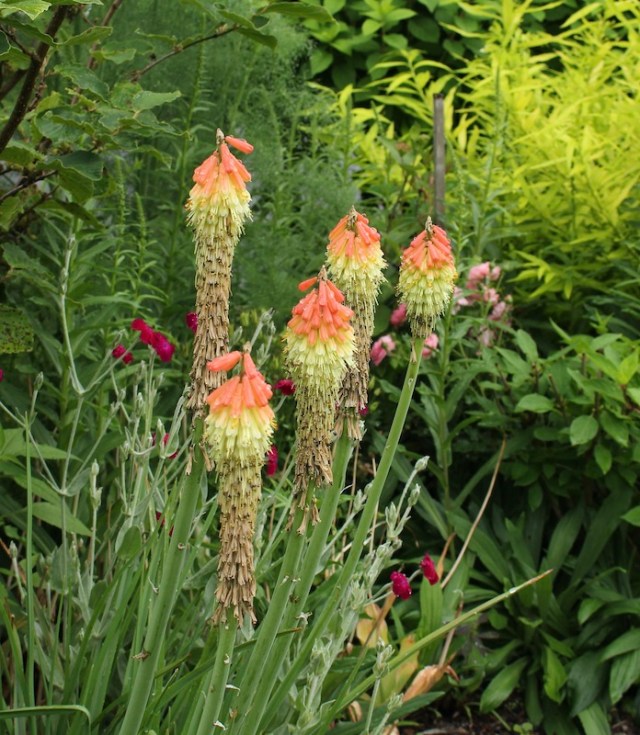
kniphofia caulescens

The earliest red hot pokers (Kniphofia caulescens) are bringing some warmer color to the garden although I think more sun would make them happier.

For all the complaining this gardener doesn’t mind the cool.  I can get through a garden day with just a shower before bed rather than repeated dips in the pool or hosing off every hour  to fight heatstroke.  Never fear though, the forecast says that’s on our way for the weekend plus a nice mix of severe weather and oppressive humidity to top it all off so it should be fun.  Sounds like someone will be opting for day drinking and cleaning out the basement rather than getting to all the neglected jobs which await outside in the swamp.
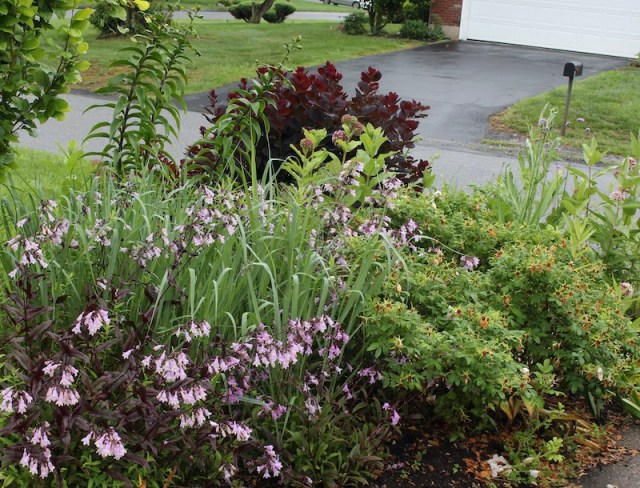
cotinus royal purple

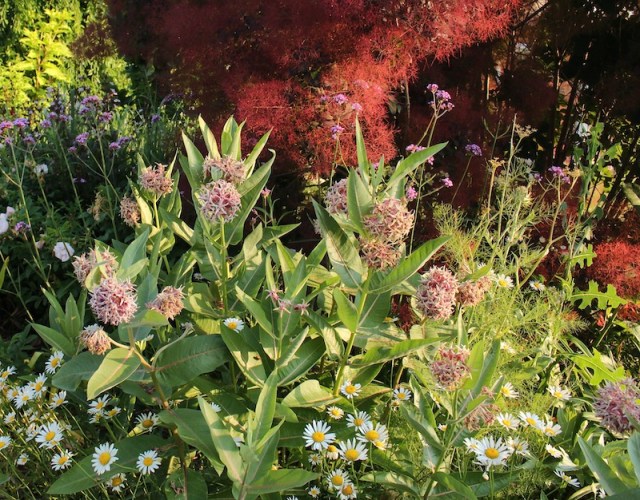
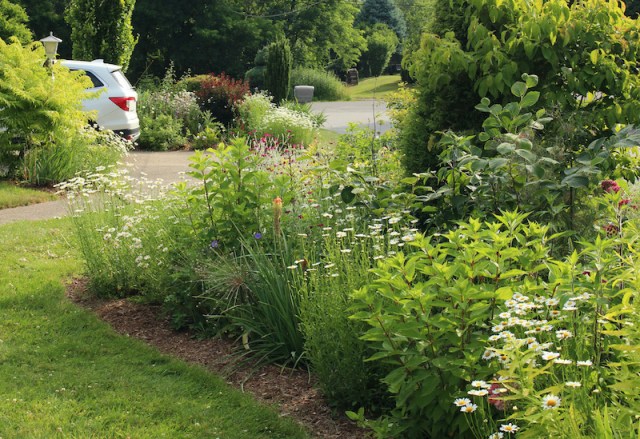
Alongside the driveway is one of my few attempts at a theme.  Purple foliage and whites and grays and I guess pink.  The smokebush (Cotinus ‘Royal Purple’) was cut to the ground this spring, so no “smoke”, but the foliage is lush and dark which is nice.

A weedy and lush garden means either closeups or from-a-distance photos so perhaps this post will use that as a theme today rather than relentless weather complaints.  Lets begin with weeds, specifically milkweeds.  I like them but can’t recommend everyone plant them because of the weed part of their name.  Why would you plant a weed is a very valid question, and I guess my only argument is don’t plant the weedy types, plant the clumping types and you won’t be dealing with mile-long runners and suckers coming up everywhere like I am.
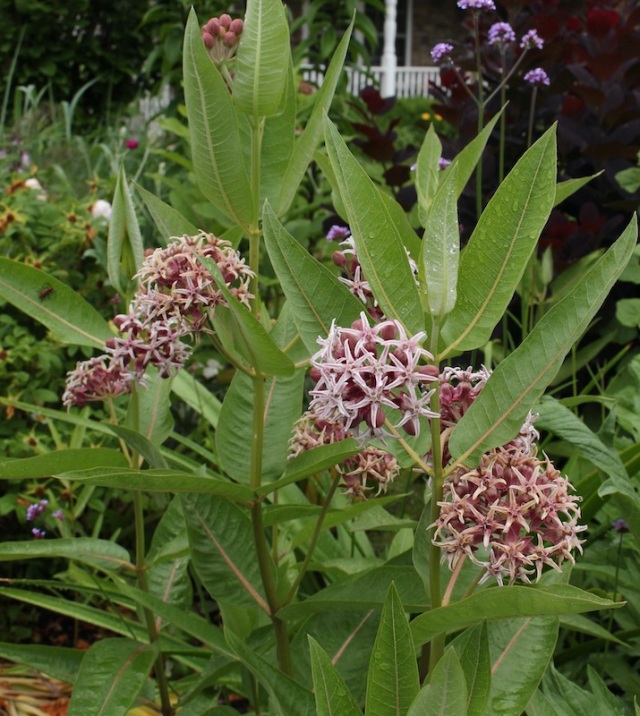
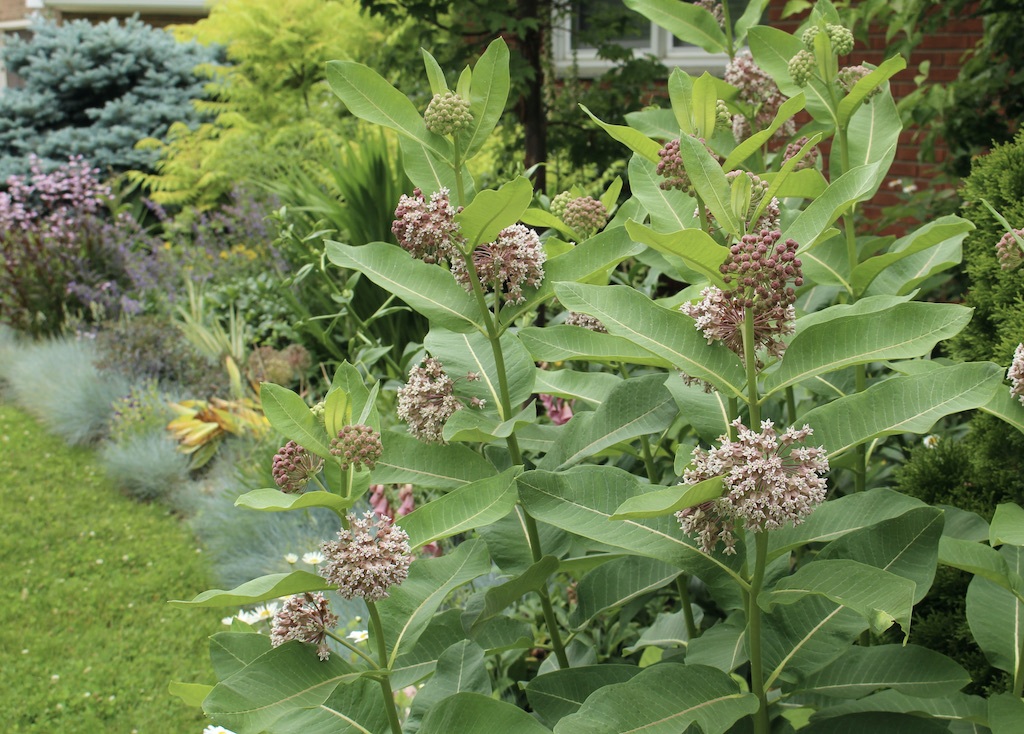
showy milkweed asclepsias speciosa

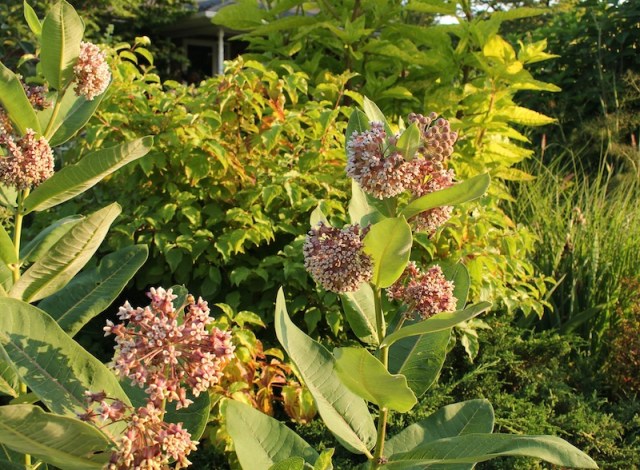
Showy milkweed (Asclepsias speciosa) is a nice enough weedy, spreading type, but I’d rather have a form with broader foliage and a good amount of silvery hairs covering the plant.  They’re out there, I just need to run one down.

Don’t plant the spreading milkweeds in a flower bed.  They will come up everywhere just like my golden cut-leaved sumac (Rhus typhina ‘Tiger Eyes’) does, and just like the sumac, I also love my weedy milkweeds.  I just pull them out when they get out of hand and don’t give a second though to the roots below.
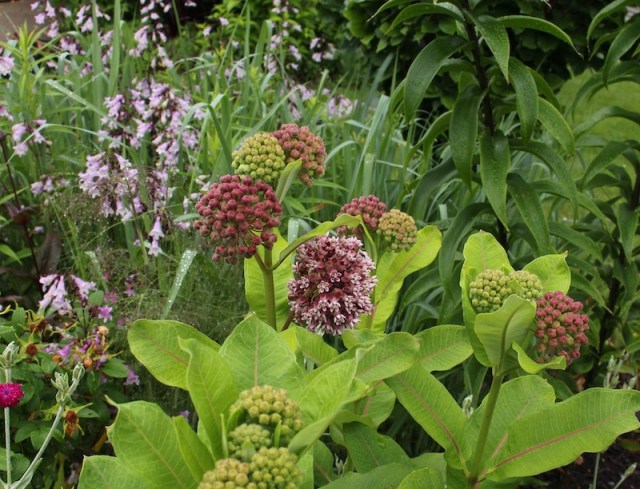
common milkweed asclepsias syriaca

The common milkweed (Asclepsias syriaca) is very common here.  In my opinion there should be named forms of this.  I love the darker flowered ones and have seen white, and wouldn’t mind some darker color in the foliage, so if you could get on that please do so.

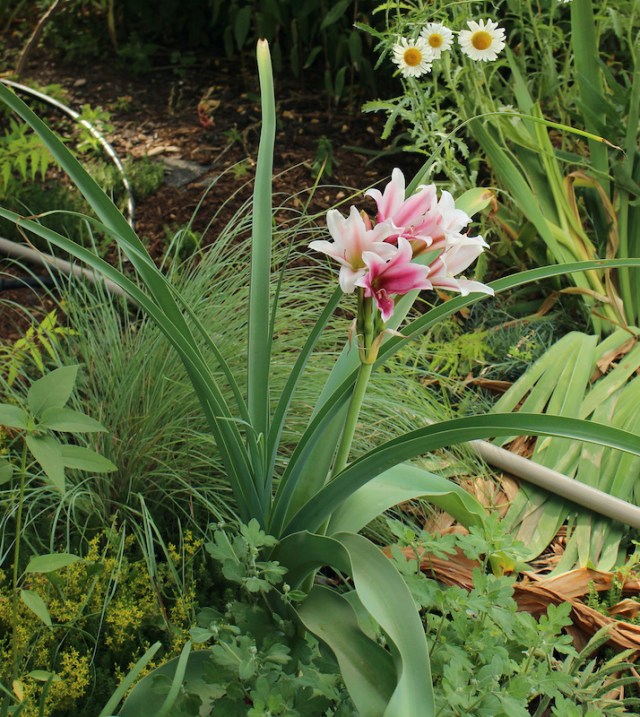
Again we are talking about weeds.  Lets stop there and move on to a more refined thing such as holiday amaryllis (Hippeastrum).  I have a few old pots in bloom now, and even through some heavy downpours they are looking nice.  Perhaps it’s not the season, but I didn’t feel like giving them space last winter under lights so they didn’t start into growth until April when they went outside.  I would tell you how long I’ve had these plants but it makes me feel old so let me just say over a decade and they have probably bloomed every year since so I can’t complain.  On the subject of blooming, I’m always a little surprised when otherwise excellent gardeners claim they have trouble getting them to rebloom.  Here’s my two cents… or maybe two nickels as the penny is phased out.  Plant them is a mix that has decent drainage and water and fertilize the crap out of them.  Ok, maybe not too much fertilizer, but go with a tomato or flower-focused fertilizer, and not one focused on nitrogen.  Give them plenty of sun, you want them actively growing all summer, and not just sitting there cramped in their holiday pot wishing they got as much attention as that mother’s day basket nearby.  The more leaves they put out the more flower stalks you will get, and if they still don’t succeed then just toss them.  Many are weakened by virus, and some just don’t grow well so stop trying to make a freeloader happy and just move on to your milkweed breeding program and buy a new amaryllis or two next winter.
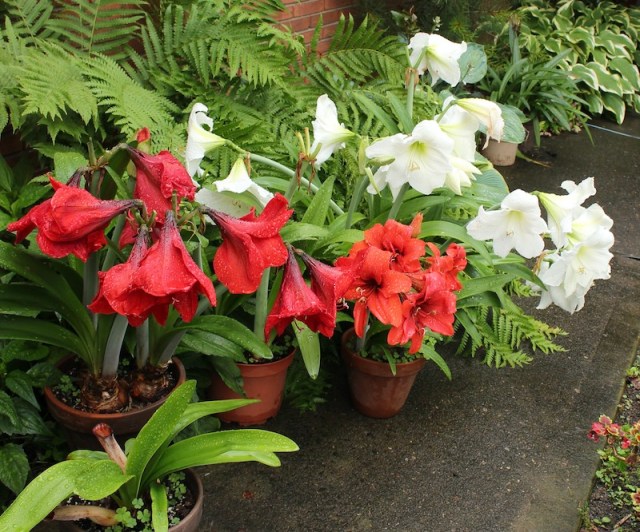
rebloom amaryllis

My favorite is the white.  It needs dividing since there are at least a dozen bulbs in the pot but with multiple bloom stalks it looks good for weeks.

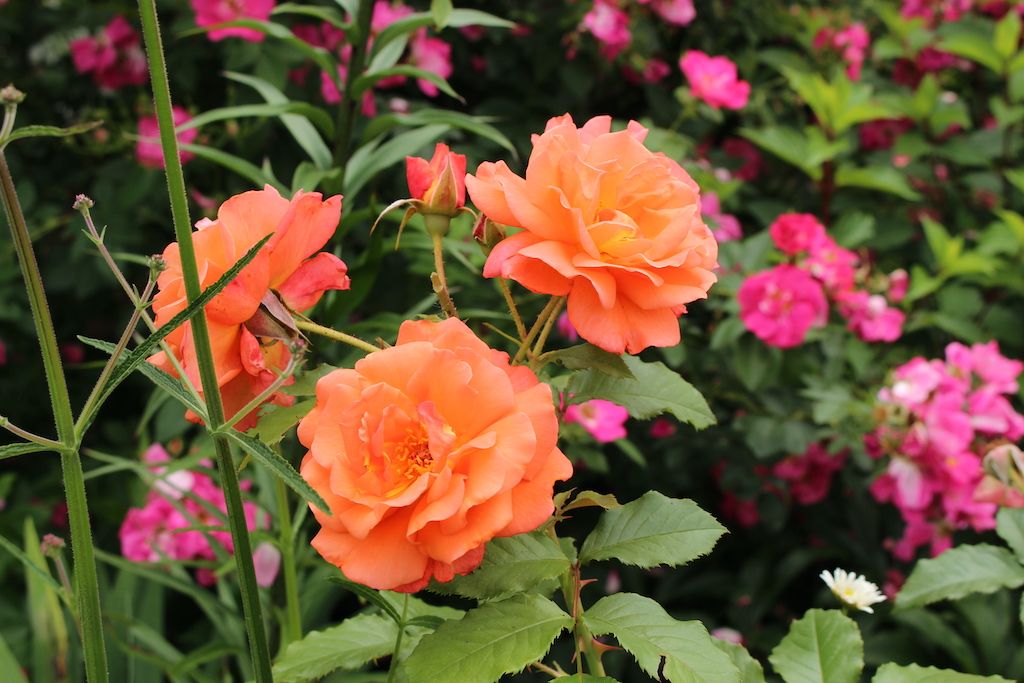
Let me shift to some more acceptable plants.  June is filled with some of the most beautiful flowers so rather than more weeds and out of season holiday flowers, here’s the view of ‘Wartburg’ in the potager.  ‘Wartburg’ is not the most glamorous name but I think it still outranks more nauseating things like ‘Pinky Winky’ and industrial names like ‘Bloomerang Dark Purple’, so keep that in mind.
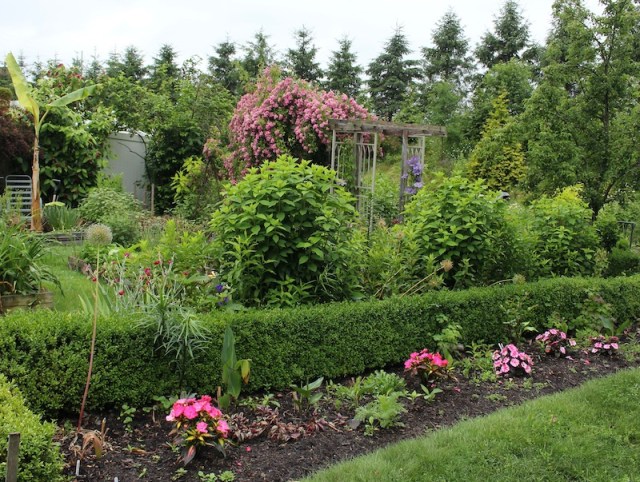
rose wartburg 1910

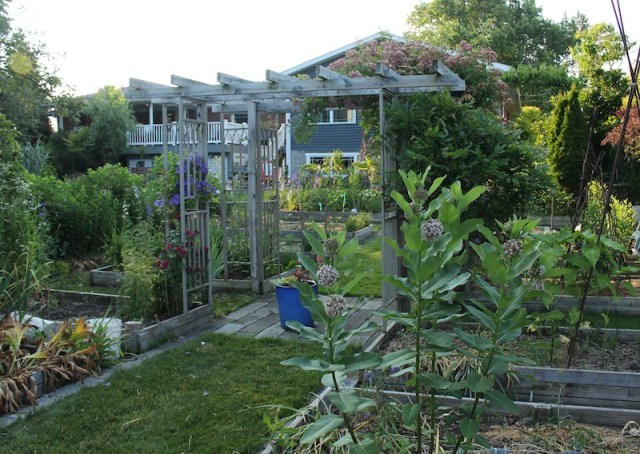
It might be a pink year.  Pink New Guinea impatiens are starting to fill in, with the rambling rose ‘Wartburg’ (1910) topping the pergola with a pink froth.
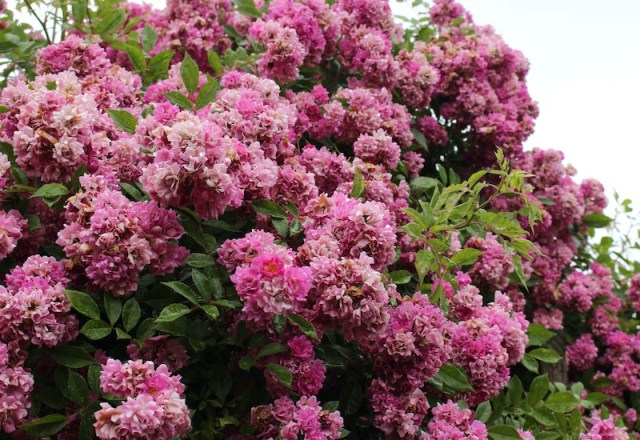
rose wartburg 1910

Wartburg is on the way out but still nice thanks to the cooler weather.  She’s also been darker this year.
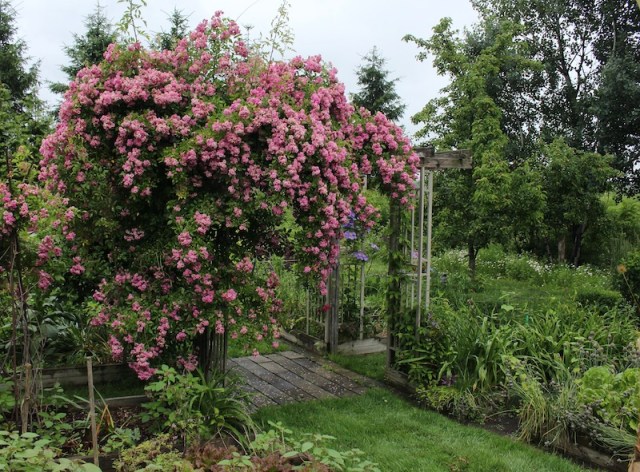
rose wartburg 1910

Covering most of the support, I think this is the year I have to do a little more serious pruning before ‘Wartburg’ becomes a bird infested mess.  Maybe.  I like birds too.

I have other roses through the garden, but am perhaps a little too picky with them.  A great show, fragrance, and disease resistance are my main reasons for keeping or trashing a rose, and I’ve trashed a few more than I care to admit.  Maybe that sounds bad, but at least I’m not cluttering up my garden with plants I don’t care about.  Back in the day they would go into triage for a I’m sorry, let me fix you massive investment of time and effort, but now it’s more a thank-you, next approach.  I’ve been happier,  you should consider it as well.
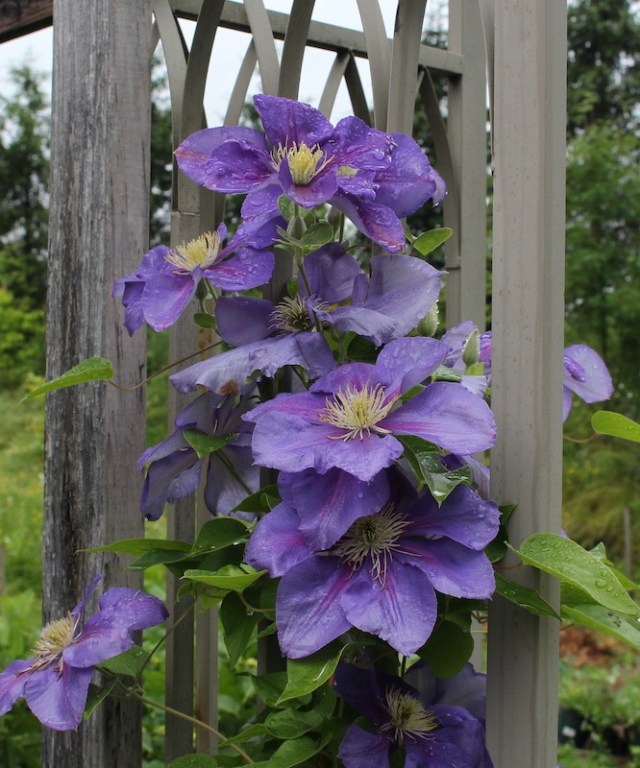
clematis hf young

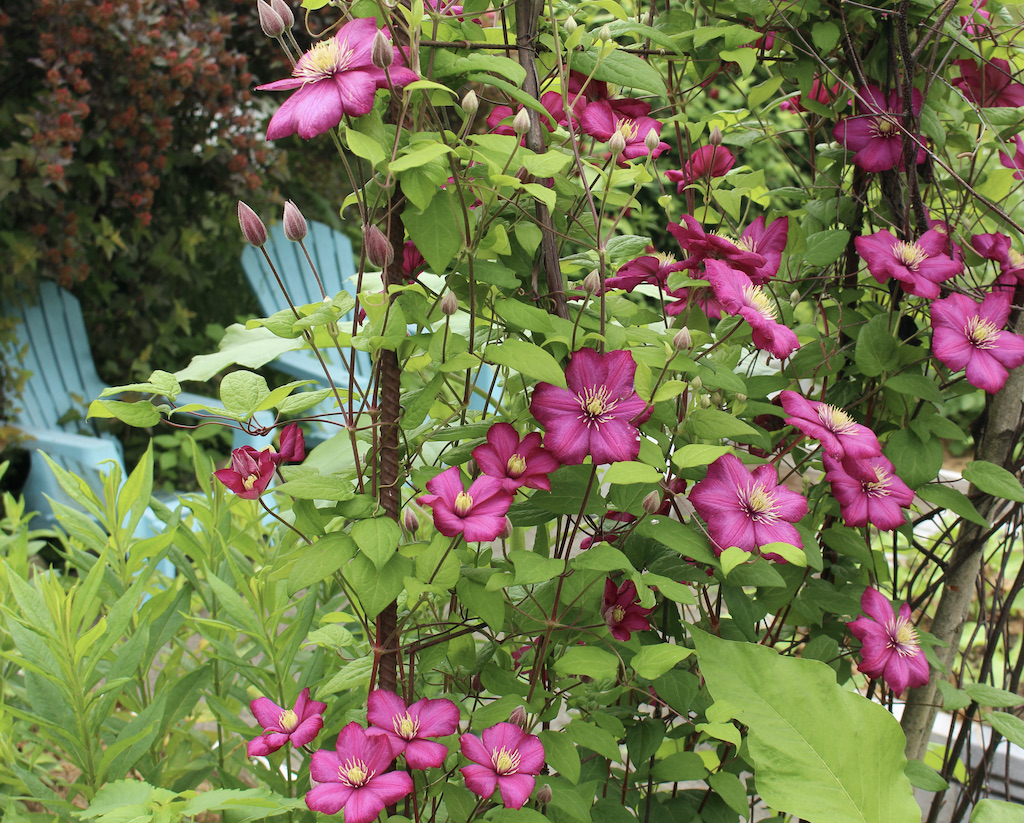
Clematis ‘HF Young’ also on the pergola with ‘Wartburg’.  Clematis are almost all worthy of growing, I think there have only been two that I lost patience with.
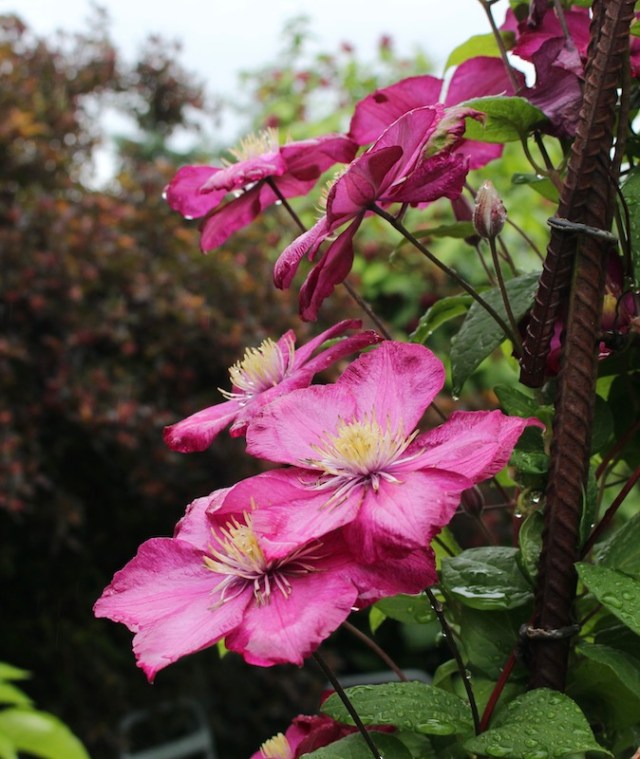
clematis ville de lyon

‘Ville de Lyon’ also lives in the potager.  She’s a favorite but could probably use a better spot to show off.

So I shall leave off on this thank-you, next theme.  June is fresh and promising and all the baggage of the season hasn’t been taken on yet, so don’t waste your time and effort devoting yourself to the neediest and most troubled plants.  You don’t want to reach September and realize you wasted your youth trying to fix him when all you really needed to do was sow a few zinnia seeds in the space.  Hmmmm, sounds like a pretty good policy in general.
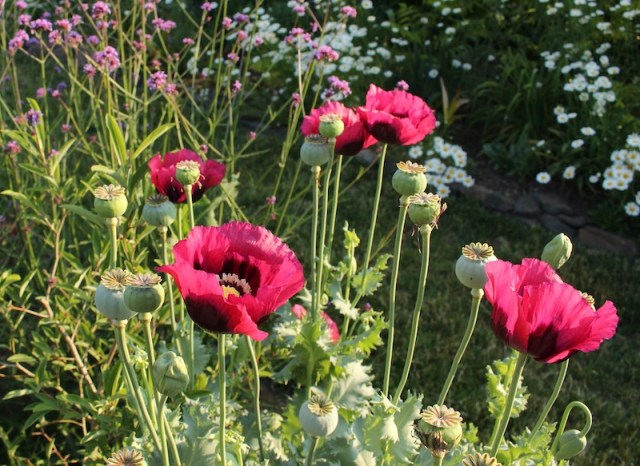
Bring it on

So if you see this post and think it’s been a while you’re right.  Two months of silence is an unprecedented void on this blog, and I’m a little annoyed with myself that this winter the blog review will go straight from early spring bulbs right into summer… but that’s something to worry about in January.  Today we’re just past the summer solstice and it’s midday with the thermometer at 95F (35C) and apparently that’s just what it took to get me inside and in front of the computer again.

Laurens grape poppy

One of the opium poppies (Papaver somniferum), probably a ‘Laurens Grape’ seedling, is looking exceptional in spite of the heat. The opium poppies are safe, but the Shirley poppies (Papaver rhoeas) became rabbit food once the bunnies developed a taste.  They were looking so promising…

So where was I?  Here of course.  Partially busy, partially lazy, going to work, and then off to Iowa for a week at the end of May (also for work).  Things were transplanted, things were weeded, regular rains helped everything immeasurably, and then a load of mulch helped me immeasurably in keeping the weeds from returning… once it was spread of course.  I think the garden looks nice, and if you can remember one of the reasons I wanted it to look visitor-nice was for a high school graduation party that would take place here.  It did take place.  Last weekend when the weather was cooler and excellent we had food and fun and about 70 people over to celebrate.  Last minute projects went until the last minute of course, but overall the scars and construction of the last few years have been erased and the garden is finally back.

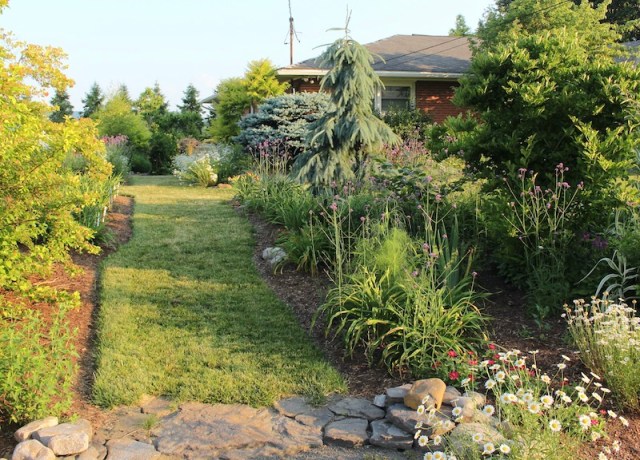
The daylily garden path

All the rain was a blessing for the lawn, with newly seeded areas sprouting well, and zero-topsoil areas growing as if their roots actually had something healthy to live on.  This is the side of the house where two years of concrete trucks and work vehicles had been accessing the addition.  I now call it the daylily walk.

To be honest the garden has been here throughout, but there was a lot more ‘interesting’ than anyone but myself would appreciate.  Buggy borders filled with weeds and waste spaces overflowing with seediness are the first things I’d check each morning, but others would likely hold a different opinion.  The fact that there were little to no complaints about the mess and in particular the lack of steps down from the deck for several years is quite amazing now that I think on it.  I should really do some before and after posts.

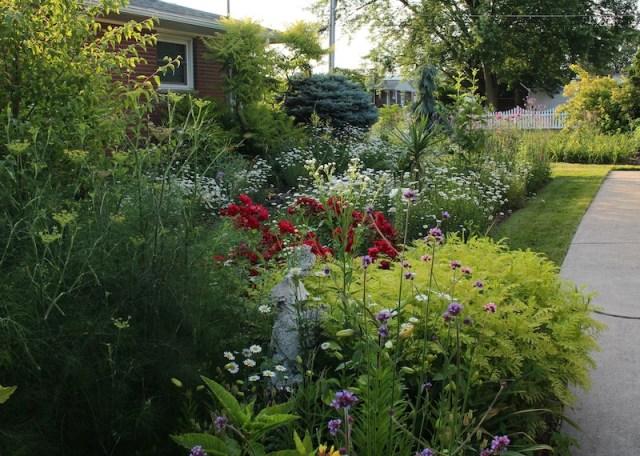
daisy garden

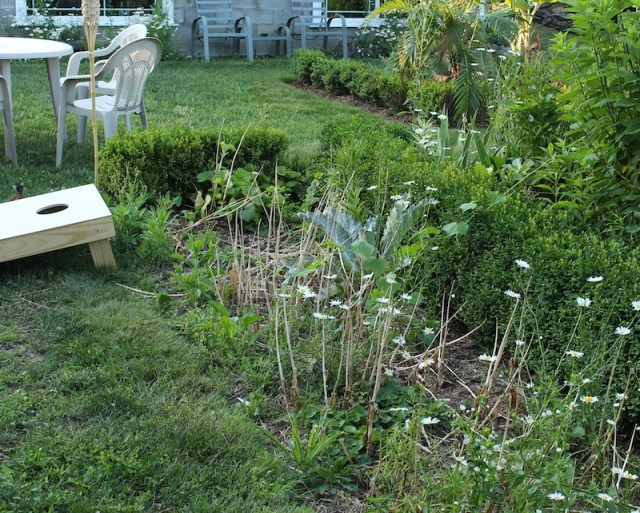
Currently the beds on the side of the house are overfilled with the common oxeye daisy.  It’s a weed but it’s a weed which I’d take over empty mulch beds any day, and until better things get planted… or the heat wipes them out… I’ll take it.

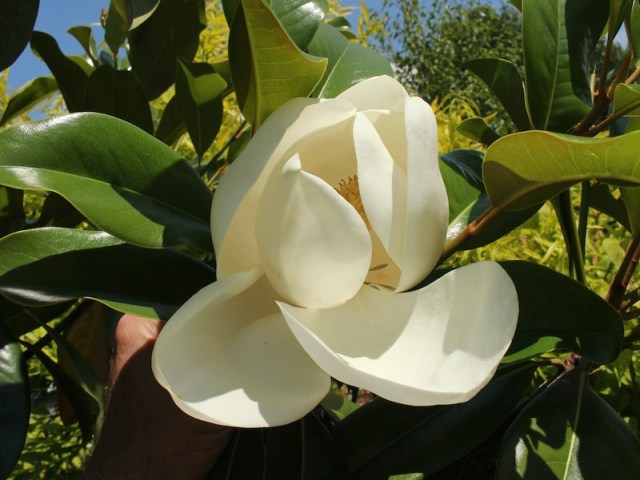
A before and after would be great for one of the big surprises this summer.  Little seeds sprout and grow and suddenly one afternoon you’re amazed by a huge flower on your baby Southern Magnolia (M. grandiflora).  Yes, trees have been growing from seeds for eons, but when it’s by your own hand that’s something else.  I would have to check, but I suspect the tree is somewhere around ten years old.

magnolia grandiflora flower

The first of five flowers which this Magnolia grandiflora has set.  This and one other seedling have flower buds, the third still has some growing to do.

Perhaps the mild winter helped the Magnolias along, since they’re borderline hardy in this zone, but I’ll take it regardless.  Another thing I’ll take is the nearly 100% overwintering of all the purple Verbena bonariensis which has come up just in time for the party.  There are seedlings (still too small to flower) as well, but for the party a few big patches of purple really make things look much better than they are!

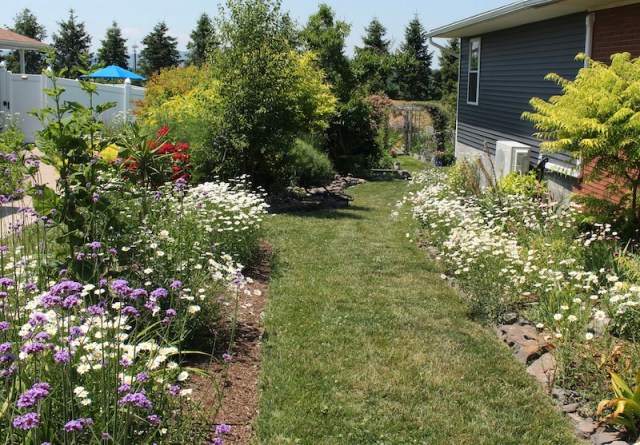
daisy garden

The path sloping down to the backyard and potager.

In between small talk and second helpings a few people noticed the garden.  “Wow, that’s a lot of plants”, “it looks nice”, and “that must be a lot of work” were some of the comments and they were all quite nice to hear but I kept shooting myself in the foot by pointing out how many of the plants were actual weeds.  For the oxeye daisies I kept telling people to look alongside the highway later and notice the same exact flowers, and for the verbena I pointed out that they’re all self-sown seedlings, and for the milkweeds I just highlighted the ‘weed’ part of the name.  I do like the milkweeds though.  They are a weed, but an interesting one and not as unattractive as many of my other “interesting” plants.

asclepias speciosa

Alongside the driveway the showy milkweed (Asclepias speciosa) is flowering for the first time.  It struggled to get started but apparently all the growth was underground since it’s sprouting everywhere this year!

Right now it’s the showy and the common milkweed which are putting on the best show.  They’re somewhat similar but the common is much taller, especially this year with all the rain.  Once they finish blooming I’ll wack em back since a six foot tall clump of m’weed by the front door is not the curb appeal our mailperson needs to see every day.

asclepias syrica

Common milkweed (Asclepias syrica) pops up throughout the garden because its roots go everywhere.  In okay spots it will be cut down to about three feet after bloom, in not-okay spots I pull them out, and usually they break off neatly at the root and I can ignore what must be a massive root system.  

So as usual I started this post with high hopes, but now it’s six days later and still not done.  Let me try and get moving.  A short summary (which is what I should have started this all with) is party was good, garden was decent, massive projects were finished enough, and summer is off to an excellent (although slightly exhausting) start.

japanese iris along path

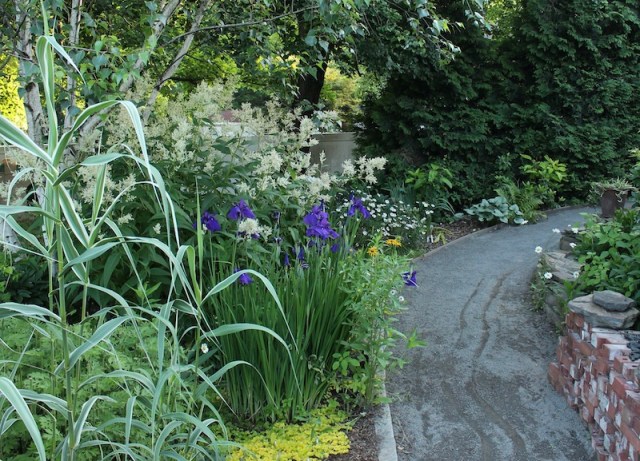
No one complimented the Japanese iris but I thought they were nice.  Please note the brick piles which still remain.  I can’t do everything!

So in the week since the party I’m less focused on plumbing and deck reconstruction and more focused on finishing up on the garden to-do list.  I’ll hopefully get another post up one of these days because the daylilies have started, the tulips have been dug, the annuals planted, and things look even better, especially since the heat broke yesterday and we had a nice downpour to water things.

asclepias syrica

The weedy end of the potager.  More milkweed and still a few beds of bulbs to dig, but a mown lawn goes a long way in making any corner of the yard tolerable.  

The cooler weather has been a nice break from the smothering heat and humidity, and yesterday I was able to work outside without the waterfall of sweat and overall homeless in Florida look which has been the rule for the last two weeks.

backyard firepit

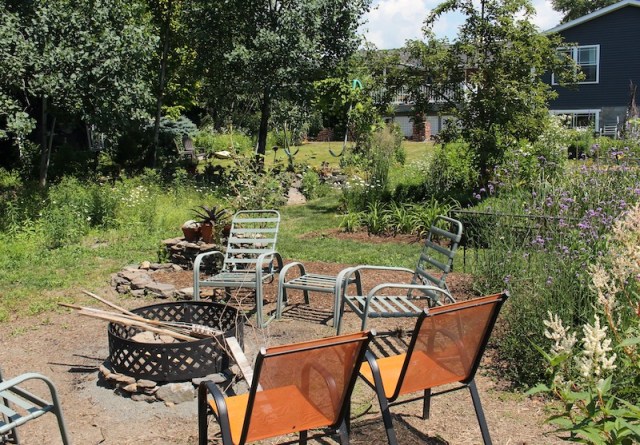
Part of last year’s ‘waste area’ became a firepit.  It looks so much more purposeful than a patch of weeds but with the hot nights there have been no demands to give it a try.

When I said the garden looked good enough I wasn’t kidding.  We were focused on other things, and other things always end up taking longer than expected and you don’t always get around to yanking out the dried up tulip stems.  Weeds can wait when it’s a couple hours before the party and you’re setting pavers at the base of the new deck stairs while someone else is asking if she could powerwash the stairs so that she could set up tables and chairs since she thought that would be an important thing to do as well.  She was right.  It all came together and no one openly questioned the plethora of exceptionally healthy no-doubts-they’re-real-weeds and the embarrassingly undug tulip beds.

tulip bed before digging

Someone with more sense might have focused on this bed in the very center of the yard, but…

Let me reassure you that in the days after the party the tulips have been (mostly) all dug and some of the biggest weeds are gone.  There’s hope, and in another week or so I won’t need the distractions of food, beer and lawn games to keep people from looking too closely since hopefully there will be far fewer ‘ouch’ parts of the garden!

garden sand path

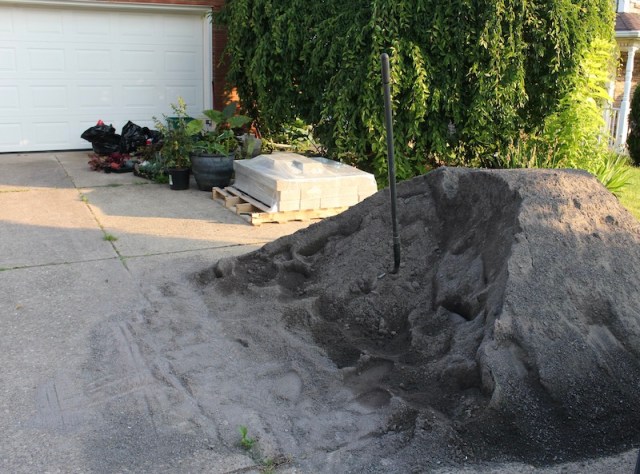
This driveway loudly announces ‘projects not done’, and no one said a word about it.  I guess we have some decent friends, or at least friends who know better than to get me started on some long sand moving explanation. 

So summer 2024 is off to an excellent yet tiring start.  There shall be droughts and bugs and deer attacks but with any amount of luck there will also be garden harvests, bird-filled mornings, flowers, fragrance, and fun… and daylilies.  I’m still kind of into the daylily thing, and with them opening up new blooms every day I have to make a decision on the daylily farm plans.  It started as a joke, people were enthusiastic, and now I fear they were just joking along with me!  We will see.

Thanks for reading and it’s good to be back!

A Few Things

I’m watching the weather radar with my fingers crossed for some rain tonight.  Its the typical summertime story for gardeners, where everyone else is hoping for another day of blue skies, while we’re sitting here hoping for a completely washed out day (or if it’s not too greedy, night, followed by a day perfect for weeding and planting but…).  Things are’t too bad, but there’s some heat on the way and without a little rain the garden will start complaining.  As it is the lushness has been sapped out of the lawn and the shade plantings are wilted, but to be honest I blame greedy maple roots for most of that.

summer garden flowers

It’s an oxeye daisy year in the front border.  Winter killed off much of the fennel, and the daisies appreciate the open real estate.  It’s not a fancy look, but still better than more yawn to mow.  

A few plants don’t mind, in fact prefer, the drier soils.  Here are a few of the more interesting things popping into bloom and looking quite good while they do it.  Thing one is this red Echium.

echium amoenum

Last year at the NARGS Ithaca plant sale I picked up an Echium russicum seedling and was a little unimpressed as it tried to flower amidst the lush chaos.  This year I’m loving its look in the sparseness of a drier flower bed.

The milkweeds always put on a decent show, and I wouldn’t complain if more show up, although one clump of the common milkweed is plenty… which of course doesn’t explain clumps two and three and four throughout the garden.

asclepias syriaca milkweed

Common milkweed (Asclepias syriaca) is a weed not suitable for the cultivated garden.  I like the fragrance though, and don’t mind pulling up every sucker which pops up in a 20 foot radius… every week… After bloom finishes I’ll cut them back to about 1.5 feet and the new growth will attract the Monarch butterflies.

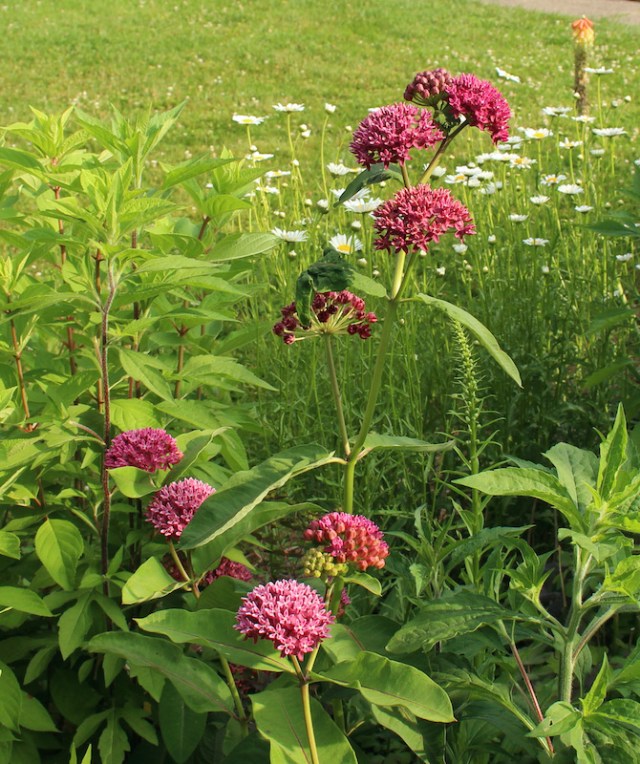
The purple milkweed (Asclepias purpurescens) is quite showy and quite a responsible flower border inhabitant.  This one hasn’t run around for me like it’s common cousin, and I actually may have to dig and divide it in order to spread it around.  That will be a new one for me and it makes me a little nervous since to get this one going took a few failed seed attempts and then quite some nursing along before the clump flowered for the first time.  Sadly I have yet to get a seedpod on this one.

asclepias purpurascens milkweed

Asclepias purpurascens, the purple milkweed.  Nice form and foliage and doesn’t mind a little bit of a dry spell, unlike it’s similarly colored swamp milkweed relative.

Another cool new thing in the purple color family is this knapweed.  I don’t like the most aggressive roadside-weedy ones, but this well-behaved perennial with the purple topped knobby buds is worth growing.  I was so excited to find it through Nan Ondra’s Hayefield Seeds.  If you haven’t already visited her site you should, the summer seeds are ripening and going on her list, and now is a great time to scatter them about for when the summer rains come  (they will either sprout now or wait until cooler weather returns).

centaurea atropurpurea

Centaurea atropurpurea, the purple knapweed.  Purple flowers poke up from scaly flower buds, and they’re quite popular with the bumble bees.

The knapweed seed was sown last summer and is blooming now, but the next plant has been inching along for at least 6 years.  Three small bulblets came in a ziplock bag with a note that they should be hardy for me, but I’ve heard that song before.  They were planted in a couple spots, one died the first winter but the rest slowly grew and grew until suddenly this week I had a flower stalk appear.  Honestly I was only just last week cursing the bulbs, because seriously I know it’s not the nicest garden but how long are we going to drag this out, and then all of a sudden a stalk and flower were there.  It’s my first blooming of the Orange River lily (Crinum Bulbispermum) and I’m not at all annoyed that it was the smaller bulb which bloomed and the larger bulb is still just sitting there pretending to be exotic.

crinum bulbispermum

Crinum bulbispermum, a plant which may need to be beaten with a water hose to induce blooming since that’s what our contractor did to it… and the un-beaten plant is still just foliage.  

Someone might remember I planted a few other, less-hardy Crinum lilies last summer, and shockingly they all survived with only some pitiful attempts at additional winter protection (I threw a bucket over them in January one cold night when I was feeling guilty about spending a bunch of money and not protecting them better).  Those bulbs are far less-likely to flower this summer since they all appear to have lost much of their bulbs to the cold, but maybe next winter will be different?  Maybe I’ll mulch and cover them and give them what they deserve?  Maybe…

crinum bulbispermum

The lighter blooms darkened up by the end of the day to the typical Crinum bulbispermum color.  I like them, even though I suspect they’ll be finished flowering by the end of the week.  These bulbs by the way receive no winter protection and have been perfectly hardy to just under zero Farenheit.

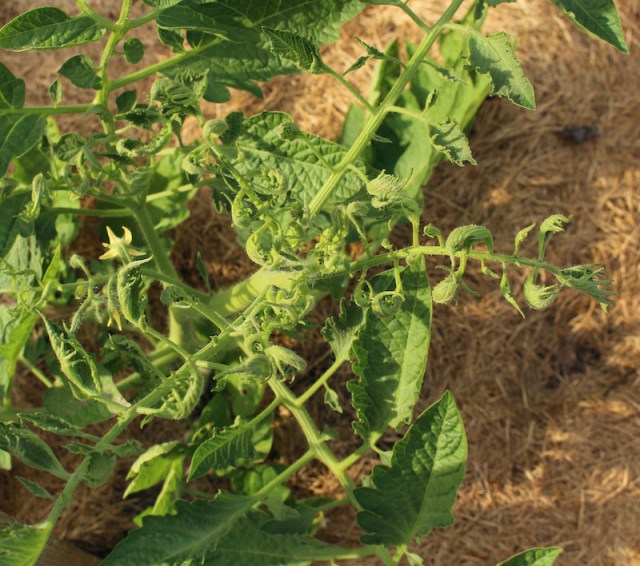
So is three as far as interesting things go here?  On to more mundane things.  I think I will give up and rip out the tomatoes poisoned by the herbicide-laced grass clippings mulch from next door.  They are all still sending up stunted, curled and twisted foliage and one plant is beginning to brown and die so I don’t think there’s much of a chance for any miraculous recovery.  New plants are in the next bed over and although I nervously mulched them with grass clippings from my own yard, they’re still doing fine, so I guess eventually there will be tomatoes for sauce this summer.

tomatoes herbicide damage

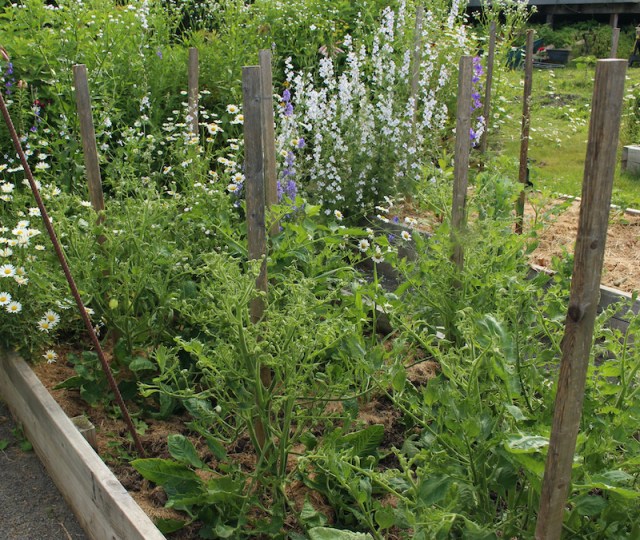
The sad, stunted tomatoes.  I haven’t noticed any damage in other plants, although some of the larkspur in this bed might be stunted, and thankfully the cabbage/cauliflower bed also looks fine in spite of getting the same mulch. 

I’m wondering if it would be weird to fertilize the lawn and water it just so I can mow it and bag the clippings to put down as mulch in the vegetable garden?  I guess it wouldn’t be much different than a hayfield that gets cut, and it’s still better than bagging the clippings to dump them in the trash, but maybe I should just work a little to keep the weeds down.  Nahhh.  Mulch is better, plus it conserves moisture and the earthworms eat it up and produce worm-manure all while aerating the beds with their worm-tunnels.  It would just mean more lawn mowing, which in theory I am against 😉

meadow garden

The meadow garden where mowing is still a no-no.  It’s drying out so tans are starting to show up.  There’s some rudbeckia opening, but the white is nearly all Erigeron anuus, the annual fleabane.  It’s an awesome weed for me and I let it grow wherever it wants, and I don’t think it’s greedy to hope for a blue or pink seedling to show up.

Tomorrow I’m repairing brickwork so that new siding for the addition can come right up to the old construction, where the bricks were pulled down.  I’m not a mason, so hopefully it turns out good enough that nobody notices my mistakes, but the reason I’m doing it is so I can move on to powerwashing the deck and moving deck pots into position.  Then I can re-do the drip lines and then hopefully no more hand watering the pots this summer.  It will be nice finally getting the deck clean and ready for summer since it’s been somewhat neglected with all the debris out there and the mess.  I sat out there on one of the chairs this afternoon and finally moved because a stupid wasp kept buzzing in my ear.  That’s when I noticed the other wasps and turned the pillow over to find the nest I was sitting on.  Hmmm.

It’s still not raining.  There are downpours to the East and downpours to the West but nothing here so I hope tonight’s not a bust.  In any case it’s still better than a February polar vortex 🙂

Rocking Ithaca with NARGS

Last Tuesday I made the trip up to Ithaca, New York to put in my time as a volunteer for the plant sale being held for the annual general meeting of the North American Rock Garden Society (NARGS).  It’s an easy two hour drive for me and although you wouldn’t be the first person to question a two hour drive just to work a plant sale, I did it anyway and thought it was an excellent way to splurge on gas money!

Mom:  “It sounds nice, and don’t volunteers get all kinds of free things?”

Me:  “They gave me a hat”

Mom:  “Oh… >pause<… how’s the construction going?”

I arrived an hour early in order to make a quick run-through of the Cornell Botanic Gardens and the Robison Herb Garden.  The weather was perfect, the gardens well-tended, and I even learned a few things.

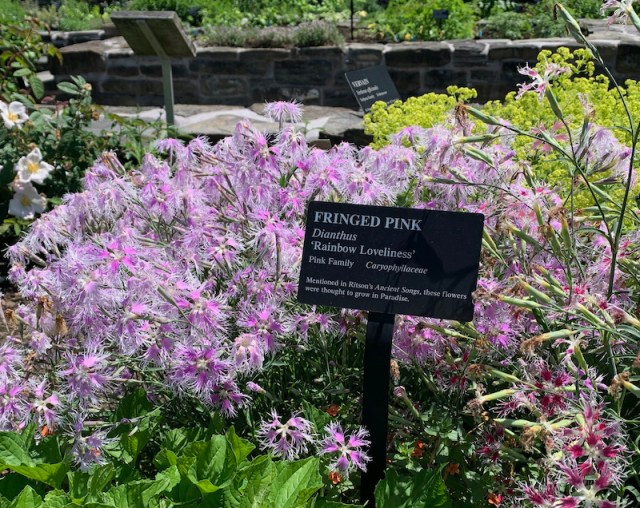
cornell botanic garden

‘These flowers were thought to grow in Paradise’ which after my own shoddy online research seems to refer to the sweet william version, but I’d rather think they meant Dianthus plumarias and that’s whats growing in my garden and thats clearly evidence I’m creating Paradise next to my garage.  Boom.

So I learned my garden is a tin version of Paradise and I also learned that I need to grow Good-King-Henry.  If one plant can create Paradise, maybe another can post an invite to a household elf named Heinz.  Hopefully Heinz can help out with the dishes or something, and not be a mischievous troublemaker since we already have a dog for that.

cornell botanic garden

I believe I would be a good caretaker of Heinz’s plant.

Maybe I didn’t learn quite as much as I should have from the herb garden, but sometimes people only hear what they want and of course I’m no exception.  I did make it to the plant sale though, and I think I was somewhat helpful although for much of the afternoon I just kept running through a list of plants I wanted and then keeping my eye on people who seemed a little too interested in those same plants.  I tried to be sociable but mostly bothered the vendors and other volunteers.  Some new plant heroes are Ted Hildebrant of Coldwater Pond Nursery (Coldwater might have been the “Oh yeah, I’m there” clincher for luring me to the sale) from where I added three new witch hazels but not a variegated hydrangea paniculata or a variegated horse chestnut or red chestnut or hardy fuschia or… there were many temptations… There was also Karen Perkins of Garden Visions Epimediums who chose two epimediums which will be perfect for me, but hopefully not too perfect that I need more and more varieties…. and then there was Karma Glos of Kingbird Farm who I probably bothered the most.  She had porcupine tomato seedlings and that’s all it took.  In addition to the porcupine a few other seedlings joined my box and it was fun finding all those weird things which most people aren’t willing to take a risk on growing and selling.  Those and a passionflower vine.  Apparently I needed to pick one of those up at a rock garden plant sale so I did 😉

Yeah the sale was fun, but I could see myself getting into one of these get-togethers if the chance comes up again.  The garden visits and excursions sounded and looked awesome, and the evening presentations sounded great.  Attendees looked like ‘my people’ and I regret not talking to more of them.  Maybe next time.

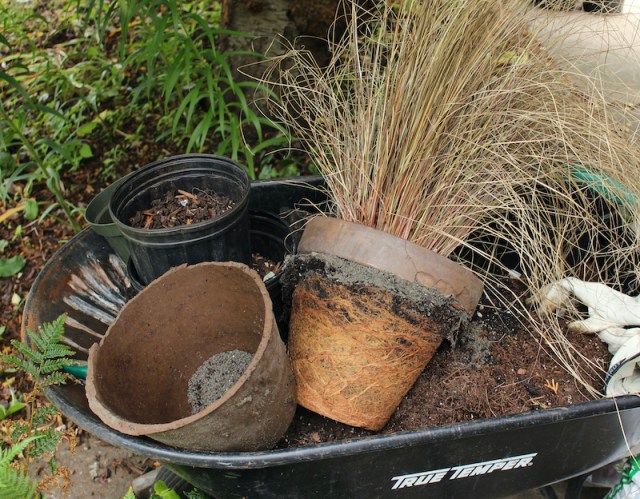
dead red sedge

Don’t try digging in your dead sedge for the winter if it’s in a clay pot.  The pot will still break.

Once home again it’s been a week of get the garden in order and do all the planting most people finished by Memorial Day, starting with my lovely little dead sedge.  If the last five years have taught me anything it’s that doubling down works and deny deny deny.  My sedge is not dead it only looks that way, and now I’m dividing and repotting it so I can make a nice mass display of what I believe is a still-living plant of ‘Red Rooster’ leather leaf sedge.  It’s beautiful.  It’s a sedge more beautiful than any other and everyone is going to want one and now I have five of them.

dead red sedge

Division was a brutal process, I hope they don’t die… any more than they already have.

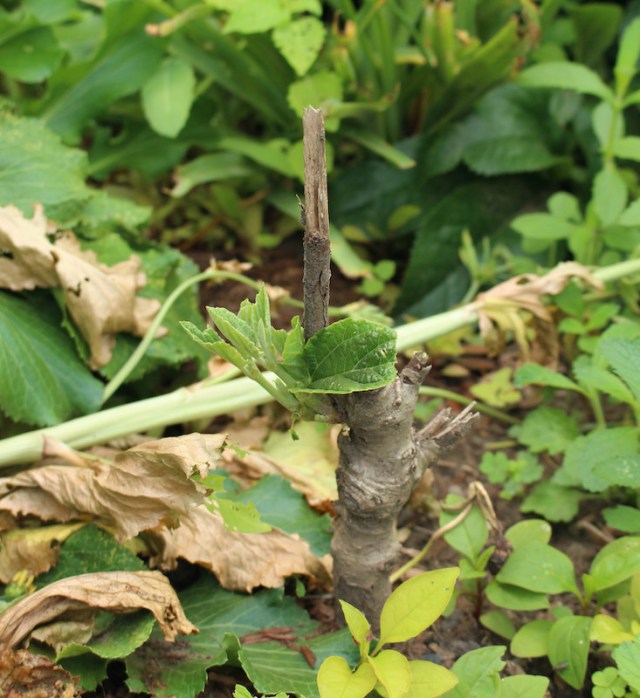
Speaking of dead things, one plant which I forgot about on the day my front yard was bulldozed has chosen life rather than the great unknown.

witch hazel graft

Hammamelis ‘Angelly’, a clear yellow witch hazel which might be back to beautiful in another 13 years if I’m lucky.  I’ll wait 🙂 

And a surprise flower amongst the amaryllis pots…

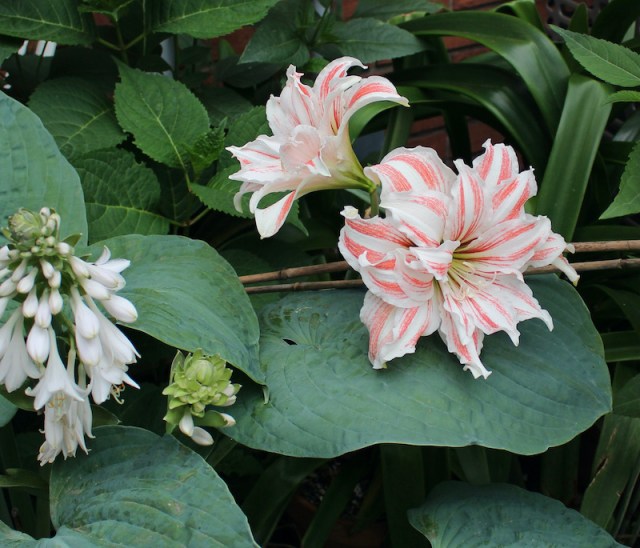
double amaryllis

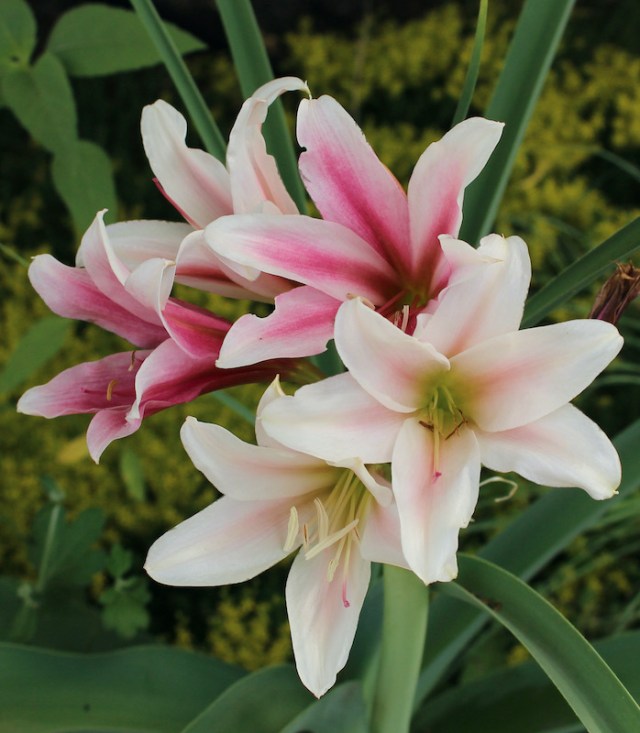
Better late than never, I do like how this *forgot the name*(edit: on good authority we will label it ‘Dancing Queen’) double amaryllis looks blooming in June.  All the rest look a little Christmassy and out of place, but this one fits right in!

There has been a lot of progress this week.  The gardener was mostly focused and had nearly all week to get things cleaned up and ready for summer.  The driveway can hold a car again and hopefully the cannas and other things appreciate their return to soil and will soon explode into growth.  I have high hopes.

All the best for a good Sunday and excellent week!

Summer Arrives

It finally feels like summer here with warm sunny days, an end to school bus traffic, and summer parties running full force.  These are those lazy, endless days which you remember from when you were a kid but think you grew out of.  Work is a pain, there are all those responsibilities, but I say forget it and take the summer back.  Spend a day in the hammock doing nothing and then read half a book somewhere the breeze is blowing.  Maybe a good thunderstorm will be enough to wash the car, and hopefully someone gets the hint and orders some pizza.  A sick day is not out of the question, and the lawn mowing can wait another couple days 🙂

sumac tiger eyes

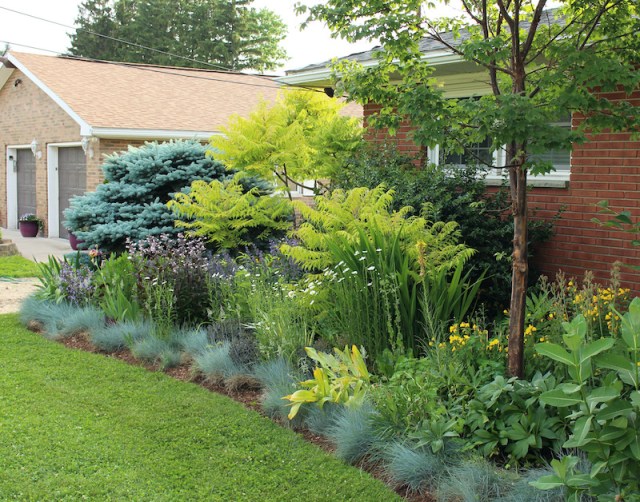
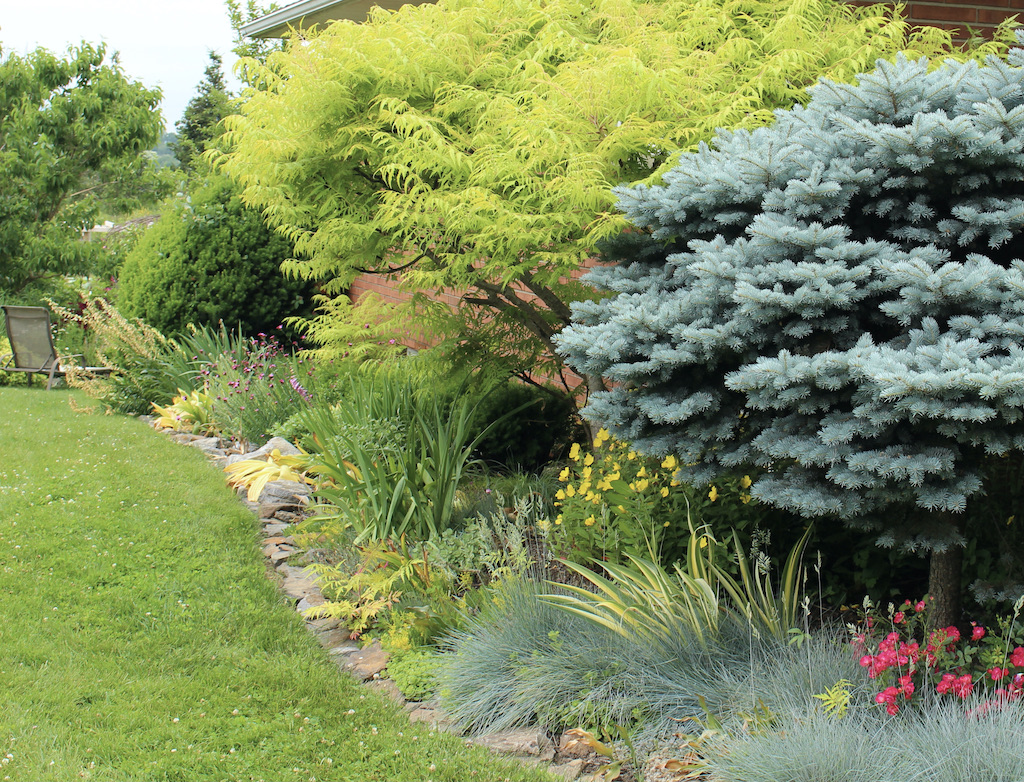
The fresh new growth of summer always looks great, even if there’s about twice as much growing in this foundation bed than there needs to be.  I’m starting to wonder just how big a dwarf blue spruce can get.    

I talk a good talk but there is still A LOT I’d like to get done before we click on the automatic watering systems and head to a beach or the mountains.  Tulips were dug last weekend, new tomatoes planted, lawns mowed and edged… many other things planted, weeded, mulched, tidied up… it needs it after I was away for a week for work and then completely unmotivated for another week as I nearly overdosed on painkillers while a toothache worked its way out.  I’ve recovered from both but surprisingly while the gardener was down for the count, the two teens here didn’t jump in and trim and edge and weed and water like I’d been hoping they would.

penstemon digitalis red

I was always luke-warm to the ‘Husker Red’ version of penstemon digitalis, but I really like the pink flowered forms.  I believe this is ‘Dark Towers’.

Honestly I’d rather not share my garden.  I’m tickled when they show an interest, but other than plant a few beans or pick a few onions I’d rather not give over a whole bed to their experiments.  I’m sure I would if asked, but the bad parent in me wants it all to myself.

penstemon digitalis red

I think this was Penstemon digitalis ‘Pocahontas’ but I’ve let it seed throughout the bed and may not care 100% about keeping the patch pure anymore!  

The kids find enough to keep occupied even without having a vegetable garden to weed.  Someday I suspect this general disinterest will change and someone might have a plant question, so to prepare for that day I’ll keep expanding things here so that when the time comes I might have an extra snowdrop or clematis to share 😉

clematis hf young

The pergola is one step closer to a cloak of vines.  The climbing roses were upset by the cold winter, but the clematis seems just fine.  I suspect this is ‘HF Young’ although I didn’t buy it as such.

I have been dabbling in a few things.  the kids may not want to experiment but I’m fine with it.  One of the best things is that my little Lilium pumilum is alive and flowering.  When I looked up the spelling on this thing it was a little insulting to see it referred to as ‘one of the easiest lilies to grow’.  Easy I guess if you don’t keep pulling it as a weed or mulching over it or building a raised bed over it and forgetting where it was.  That would probably help, but since it keeps coming back and flowered in just two or three years after seeds were sown, I guess you could call it easy.

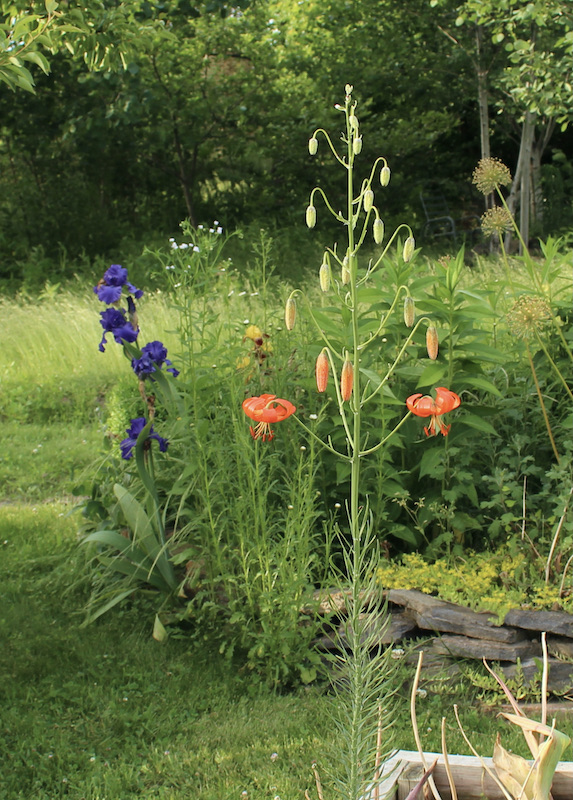
lilium pumilum coral lily

The coral lily (Lilium pumilum) with its glossy scarlet turks-cap flowers.  Seeds would be a nice thing so maybe if I can avoid yanking the plant out after bloom I could raise a whole patch. 

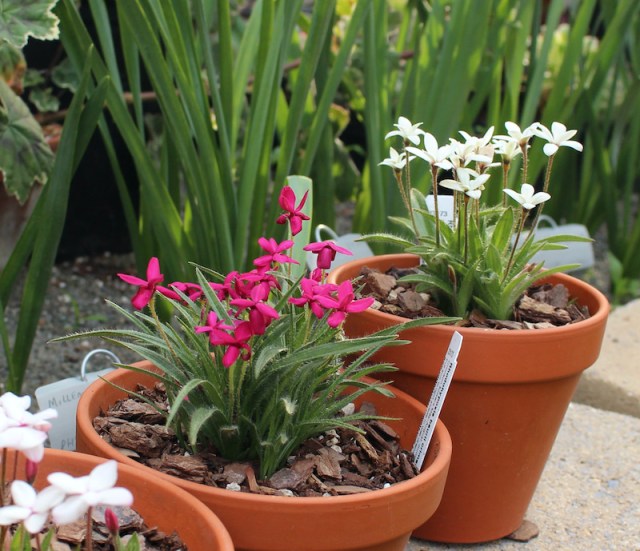
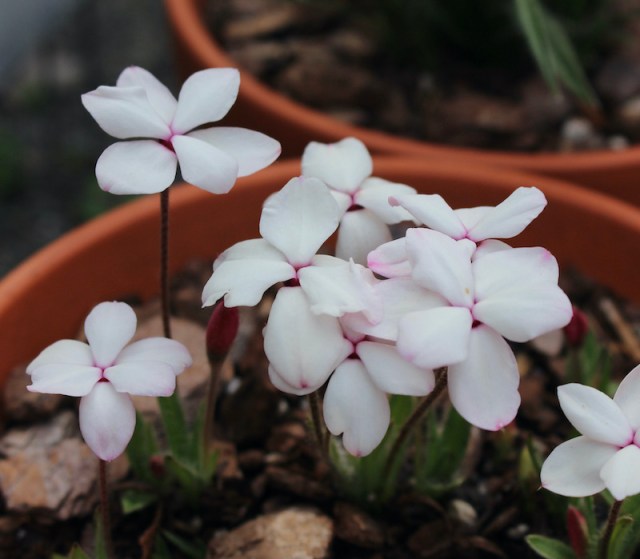
Lilies and clematis and penstemon are nice but it’s the little pots of rhodohypoxis which are thrilling me right now.  Unlike the monkey poxis of central Africa, the Rhodohypoxis of southern Africa are a small corm which sends up pink or white flowers which look as if they were made of paper by a ten year old.  They’ll flower into summer and maybe again here and there late summer, depending on the mood.

rhodohypoxis

I think the hairy leaves are almost as interesting as the exceptionally modest flower.  No curvy pistils and turgid stamens on display here.

They’re not hardy enough for the open garden so mine are all potted, but my less than expert ‘throw them all in the cool but not freezing garage and then put them out again in late March’ method of care seemed to work out all right.  A few rotted though, and I’m not sure if they were too cool and wet in March or if they dried out too much over the winter.  I suspect maybe I put them out too early, but in my defense I thought they were sick of the dry winter and would like the cool rain bringing them out of dormancy… maybe…

rhodohypoxis

Rhodohypoxis baurii ‘Pintado’.  I believe this is my favorite.

As you may suspect there are a few other things which came out of the garage these last few weeks.  The winter garden plants are slowly finding homes, the pots of caladiums and pineapple lilies and whatever else overwintered in a pot are hopefully resprouting, and the bags of cannas and dahlias have been thrown open and watered as they await planting.  My driveway is the definition of a ‘pot ghetto’ and I cringe every time I see Monty pull out a perfectly stored dahlia clump and pot it up in his greenhouse and then contrast that with my trashbags on the concrete.  Hmmm.

the pot ghetto

The driveway probably shouldn’t look like this but give me one more week and maybe there will be noticeable progress.  

I could really use some more unsuspecting garden pals who would believe me when I say they need a crate full of dahlias and cannas.  I thought better safe than sorry when I dug them, but now I’m wondering how safe I thought I needed to be.  Surely there’s plenty of room for them, right?

magnolia society seedlings

I don’t need more plants but of course I was exceptionally excited to see a few sprouts in the magnolia seed pots.  They’re so small I’m sure I’ll have plenty of time to find room for these, and even better that only four seedlings are up.  Two would be more than I need.  

Only a fool would complain about a lack of planting space and then join a plant society devoted to trees, even if those trees are magnolias and magnolias are super awesome and wait, there’s a seed exchange and I can order bunches of seed?  Sadly even I can’t justify more than a year or two of magnolia seed starting…

magnolia macrophylla

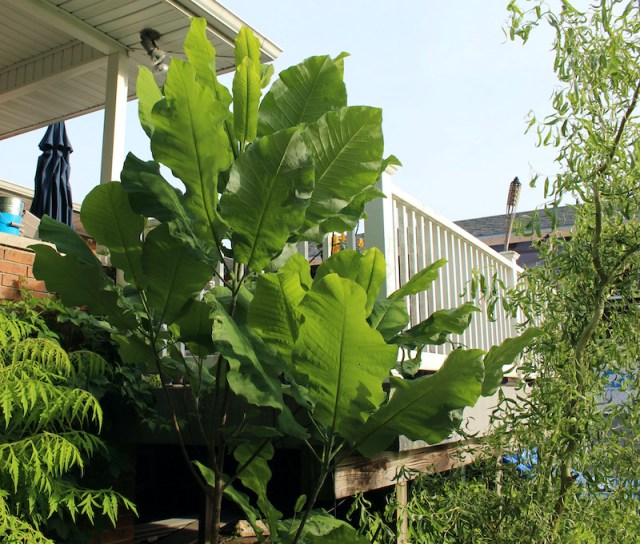
It was just a little seed…. but five years later Magnolia macrophylla is doing great in a completely inappropriate spot.  Largest simple leaf and flower of any native North American plant.  Who could resist?

Seriously though, if we could justify building a ridiculous addition onto our already reasonable home, why can’t I also have a few more magnolias than I need?  Maybe shade gardening isn’t all that bad.

the tropical garden

The tropical garden is looking more Crayola than Caribbean but at least it’s not the disaster it was last week.  Besides weeding I finally trimmed out all the dead winter-kill from the ‘Black Forest’ rose and the ‘Golden Sunshine’ willow in back.  Both are awesome.

We will see of course.  This garden has a 50/50 chance of going completely off the rails at any moment, and I still can’t believe there’s no garden police pulling me over for too many new bulbs or unplanted seedlings.  Hmm.  I hadn’t even thought of those.  Oh well.  At least it’s not a garage full of assault rifles, I guess I could have have exercised my American freedoms in that direction just as easily, so too many plants crammed in too few spots is still not the worst thing.

Have a great week!  I’m off tomorrow to volunteer at the American Rock Garden Society’s annual general meeting in Ithaca NY.  Someone thought it would be a good idea to have me help out at the plant sale and I’m sure they’re right, but personally I think it’s a terrible idea.  They might as well of put me in charge of ice cream scooping or m&m counting, or had me test to see if the Nutella is fresh.  Whatever.  I’ll do my best and make sure my wallet is stuffed full and the back of the car is empty.  Any receipts will hopefully blow out the window on the way home and if someone asks they were all leftovers.  Wish me luck 😉

The Poisoned Earth

I’m not an organic gardener.  I sprinkle fertilizer around, spray for pernicious weeds, douse a bug here and there… I figure “progress” has to be good for something more than shorter winters and a warmer globe, plus I like cool things like antibiotics, vaccines, and diabetes and heart medicines.  Unfortunately, there are a few things which scare me and I’ve been thinking more and more on them lately.  The most recent is the death of this year’s tomato plants.

For all the neglected vegetables of the potager, sauce tomatoes are always in demand and always harvested.  The kids might throw cherry tomatoes around and play baseball with a zucchini but the paste tomatoes always find their way to the saucepan or freezer, and if it were up to me they’d all go towards pizza, not sauce, but now I’m getting distracted.  This year the plants went in early, the stakes before they were needed, all were watered, mulched, and looked great… for a little while.

I mulched with lawn clippings like I always do and within a few days the plants were dying.

2-4-D tomato damage herbicide

All the new growth on the tomatoes is coming out curled and stunted.  According to what I’ve seen online it’s classic 2-4-D herbicide damage and chances for recovery are zero.  

I take care of the lawn next door, and my mother in law always reminds me every year to put down grub killer and something for the weeds.  I usually “fib” and say sure and things are just fine, but this year the clover and dandelions were getting a little too obvious, so rather than explain how the stuff ‘doesn’t always work 100%’ got a bag of Scott’s weed and feed to spread around.  It worked for the most part, we’re back to a monotonous yawn and she seems happy.

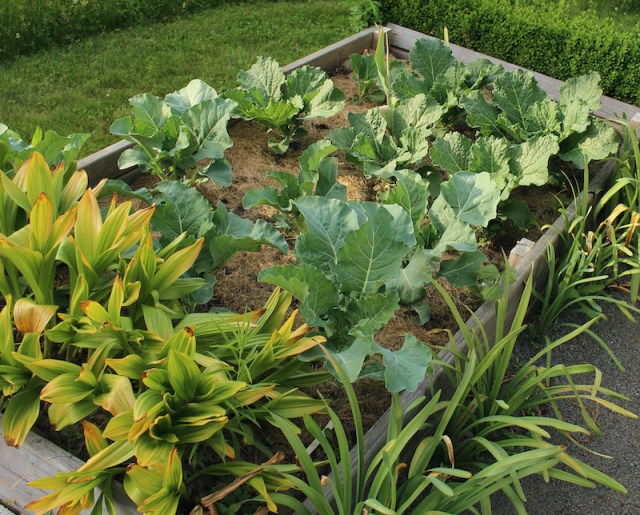
cabbage and cauliflower

The cabbage and cauliflower bed doesn’t seem as sensitive and are growing well.  They likely absorbed the same poisons and now I have to consider the fact it’s part of the cabbage leaves and future cauliflower heads.

So that was the end of March.  Two months of growing and mowing and rains and I was desperate for some mulch in my earliest-ever and most-promising tomato bed.  My lawn is still sparse from bulldozer traffic so what the heck, it’s been months since the last illegal clover shriveled and died over there, so let me just use a mower bag full, what’s the harm…. and then the tomatoes went belly-up.  It scares me to think of that whole yard as still being toxic.

no mow may meadow garden

No-mow May is a month long break from all the chopping and edging and spraying and fertilizing of the lawn growing cult.  I love the way it looks.

Leaf miners are what started all this nervousness about chemicals settling into garden.  Years back I would lose most of my daffodils, snowdrops, snowflakes, amaryllis, and lycoris to narcissus bulb flies… that is used to until I started sprinkling grub killer around the bulbs.  The bulb flies disappeared and that was awesome but then one summer I realized how perfect all the leaves on my columbine (Aquilegia) were.  Perfect leaves on columbine is something I’ve never seen in this garden, they always end up with a bunch of leaf miner tunnels and it’s not perfect but not that big a deal either.  If I feel like it the foliage is trimmed back, and new growth returns quickly, but it was weird to not see them.

Columbine often seeds into areas where I planted daffodils and snowdrops.  The columbine takes up the grub killer and becomes poisonous enough to kill the leaf miners.  Whatever else sprouts there also becomes poisonous.  The leaves decay and the compost becomes poisonous.  Many people say the pollen and nectar of the flowers contains the poison and the bees suffer… and of course people love bees… but think of the crickets and katydids living in the shrubs which also share that soil, suddenly they’re as likely to die as the leaf miners are.

One bag of grub killer would last me for years since I used it so sparingly, but today it’s only columbine in the far reaches of the yard which ever show an occasional leaf miner.  They’re basically extinct in my yard.  Just imagine how a normal person would use a whole bag in a day, across their entire lawn, and from then on every grass blade, perennial plant, shrub, and tree in the yard becomes toxic to insects.  Think of how many neighbors use Lawn Doctors and Tru Greens, and I don’t think they use anything less-toxic than the unlicensed, off the shelf products we gardeners use.  No wonder insect populations are crashing.

no mow may meadow garden

A no-mow May meadow.  Hopefully this is a toxin-free buffet for both myself and the bugs.  I’ll resume regular mowing in August and then keep it up until fall.

I’m probably preaching to the choir here.  I already have some much-smaller, far-less amazing tomato plants to plant in another unmulched bed, and so what if there aren’t any leaf miners.  I just hate to think of everything else we’re losing.

Hope you’re having a great week.  Happy June!

White is a Cooling Color

A friend of mine seems able to pick a color of the day any day and then post a collage of blooms right out of the garden to celebrate.  Me on the other hand, I’m far from there but on a day like today when the garden bakes under a hot sun, anything which might lower the temperature is fair game.  They say adding white flowers to a garden can cool a hot palette but as I trudged around the garden in 97F(36C) afternoon sun I’m not sure it mattered.  We’ll give it a try though since the only truly cool white would have been snow, and it will take months of heat before I wish that on anyone 😉

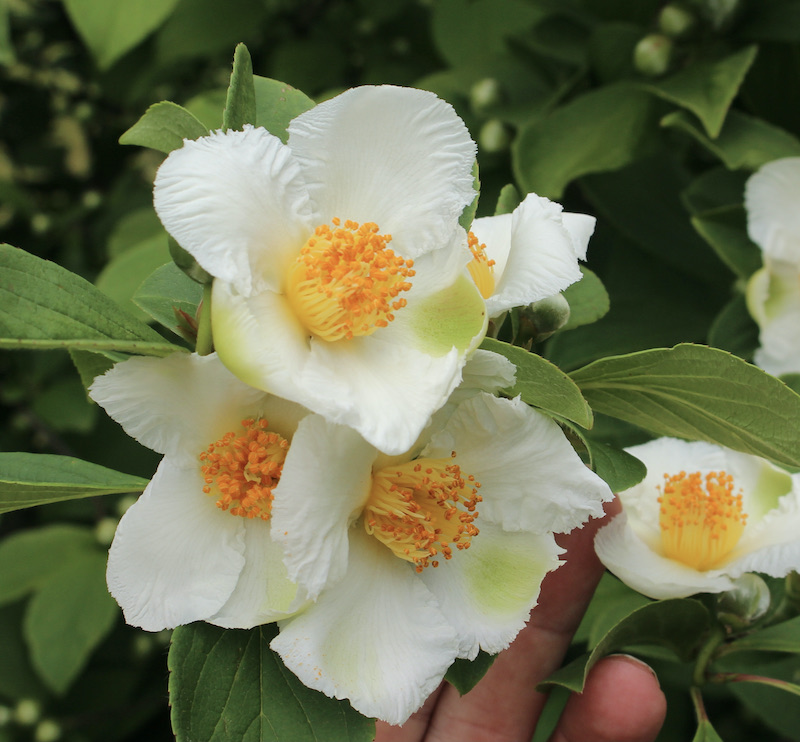
stewartia flower

**full disclosure I took this photo a week ago and the blooms on the Stewartia are no longer this fresh looking, but to look at it now?  Ahhhhhhh 🙂

Heat and cicadas, that would have been a nicely mid-Atlantic June day, but as of yet I haven’t seen more than a few wings and munched torsos.  Maybe a road trip is due?  The younger child (now nearly a full month into her teens) says yes, and the first flowers of the Regal lily “smell like Longwood”.

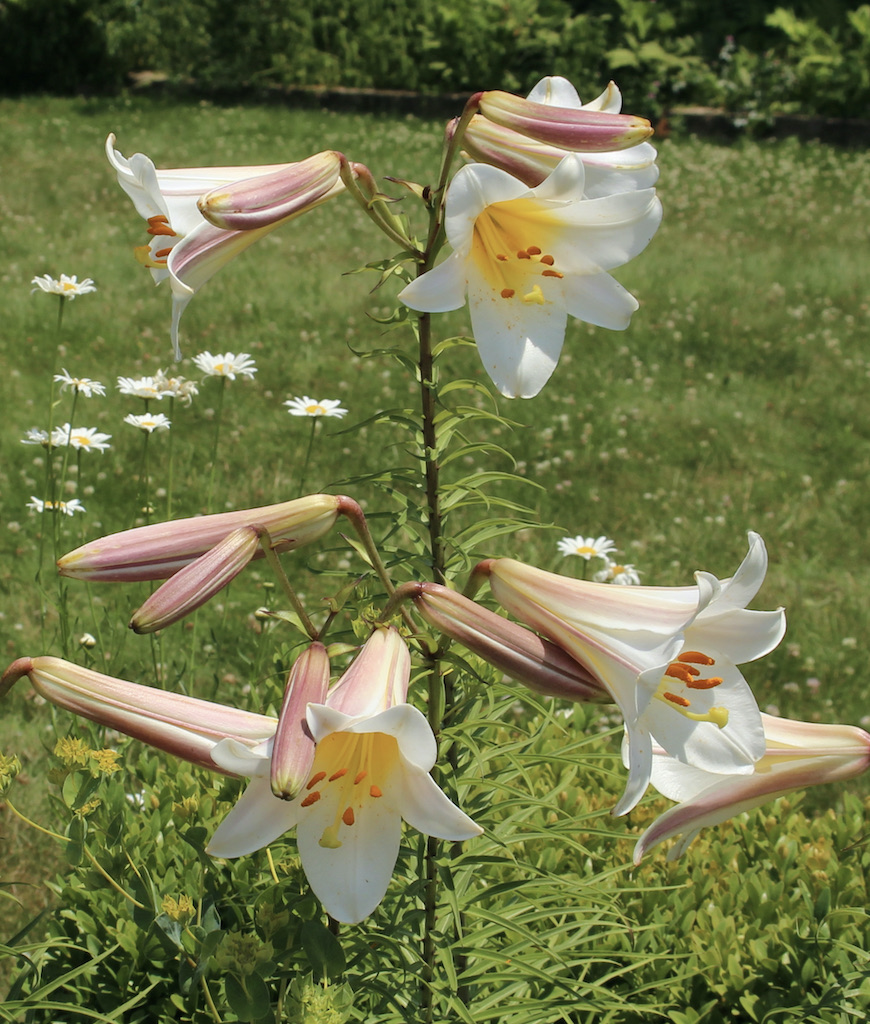
lilium regale

These Regal lilies (Lilium regale) were mush from a late frost last year, and sat dormant from April on… but guess who returned from the dead this year!

I’d be happy with just a break from lawn mowing, and this heat should do the trick.  My neighbors are looking at mostly brown already since they’re more gung-ho about their grass knowing its place and it’s height, but here I give it a little more freedom as the temperatures rise and the sun beats down.  Longer grass withstands both the heat and drought better and recovers faster when the weather breaks, and I’m sure when that break comes and temperature drop with a rain shower or two there will be plenty of time for me to catch up on my love of lawn maintenance.

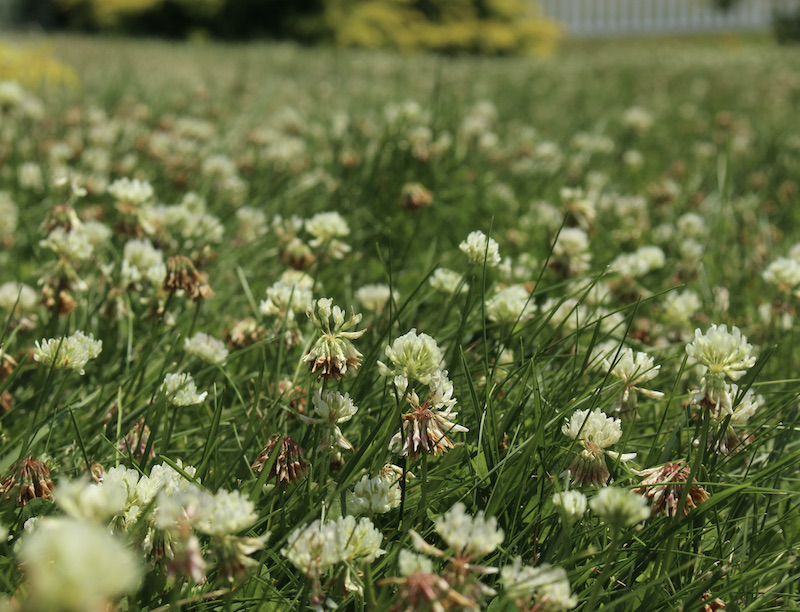
white clover lawn

A flurry of white across the lawn, thanks to the liberal growth of white clover.  A good bee plant most will say, but honestly there’s plenty of other stuff around which they also seem quite thrilled over.

I think cooling white counts even if it’s on the gray side.

mammillaria plumosa

I believe this is Mammillaria plumosa.  Each year it stretches a little further and now another pot will be required.  Any bigger and it won’t fit on the porch steps anymore.  

I was lukewarm to the dusty miller(Jacobaea maritima) which went in as an annual last summer but I quite like the bushier perennial version which returned this spring.  If the summer stays dry and the border doesn’t get too lush and crowded I think it will do well all season.

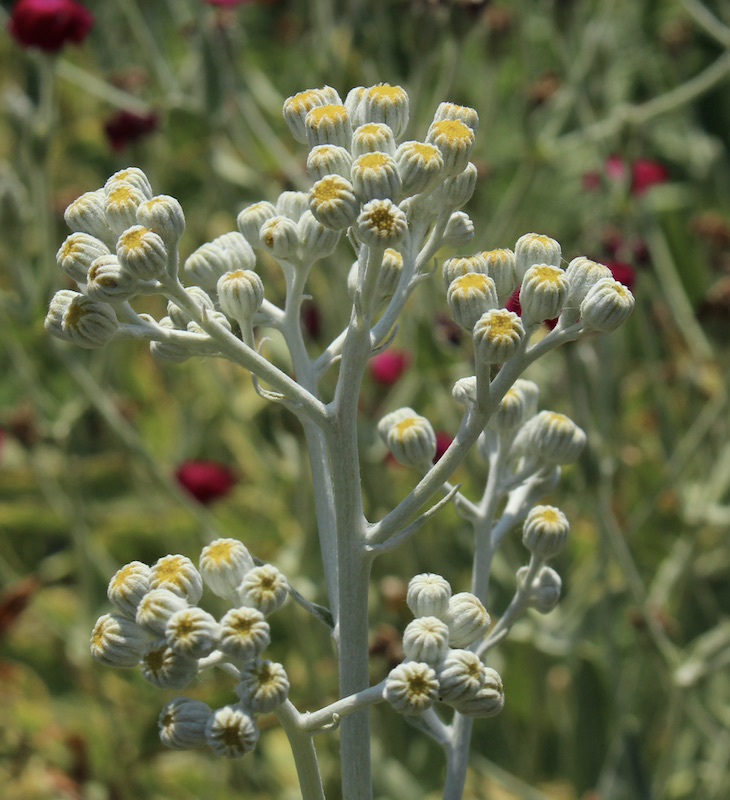
dusty miller flower

Unimpressive flowers on the dusty miller.  

Gray foliage but on a much less soft and felty side would be the Scotch thistle.  This will probably be the last photo of this weed which I subject you to, but fair warning: the Cardoon has yet to bloom, and that’s another weedy thistle which I think is just wonderful and I can’t hide my excitement over 🙂

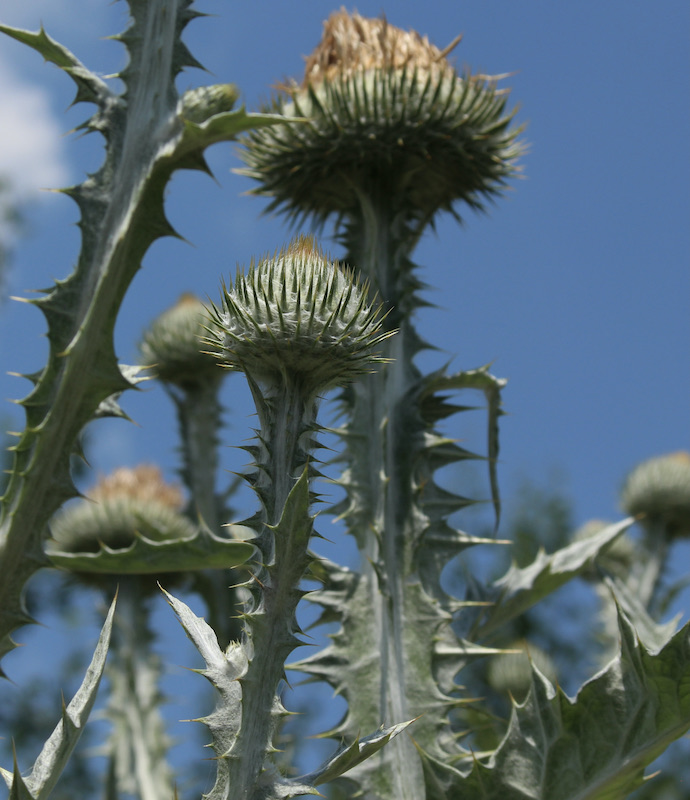
scotch thistle

Scotch thistle against a cloudless sky.  I had to point up since this plant is well over my head by now.

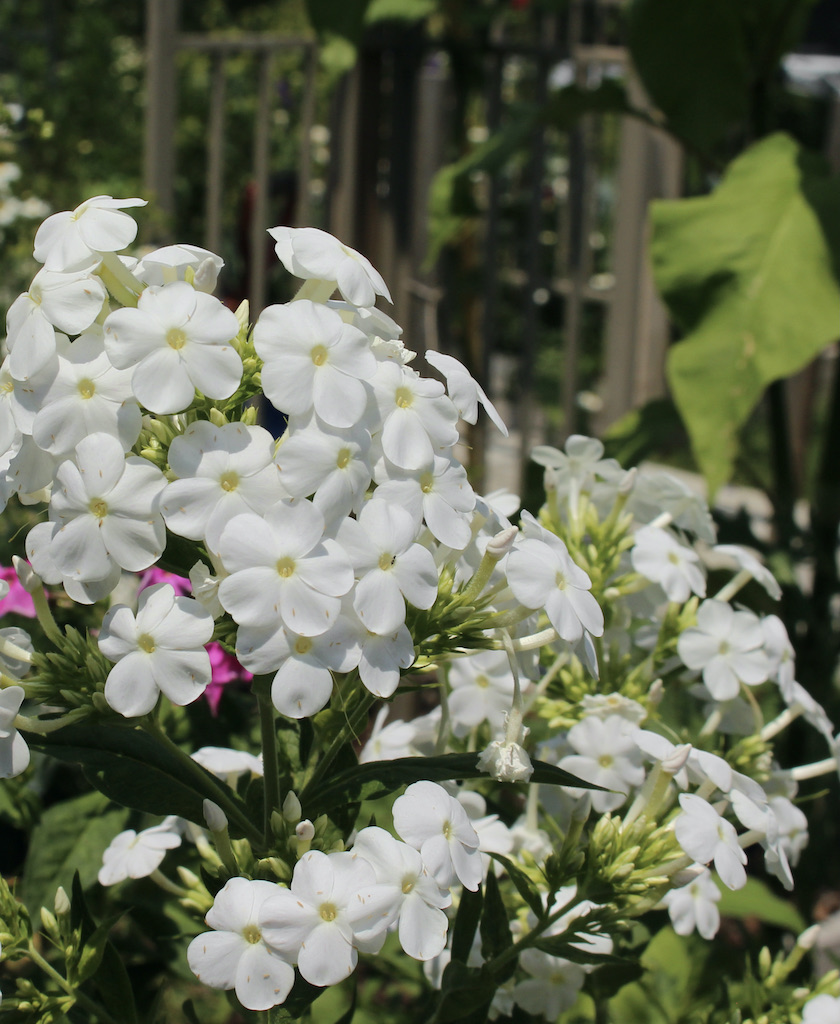
Gray foliage doesn’t have much in the way of scent, but the Phlox paniculata is starting and that has an excellent summer fragrance.  I will avoid complaining about how ungrateful they seem this year, as they’re growing poorly enough that you wouldn’t suspect I transplanted and fertilized, but sometimes you have to give a favorite plant some leeway… unless of course it gets demoted to a former-favorite plant… that would be something which such an ungrateful plant might deserve but then who knows what July will bring.

midsummer white phlox

‘Midsummer White’ garden phlox (Phlox paniculata) is the garden’s first tall phlox to flower.

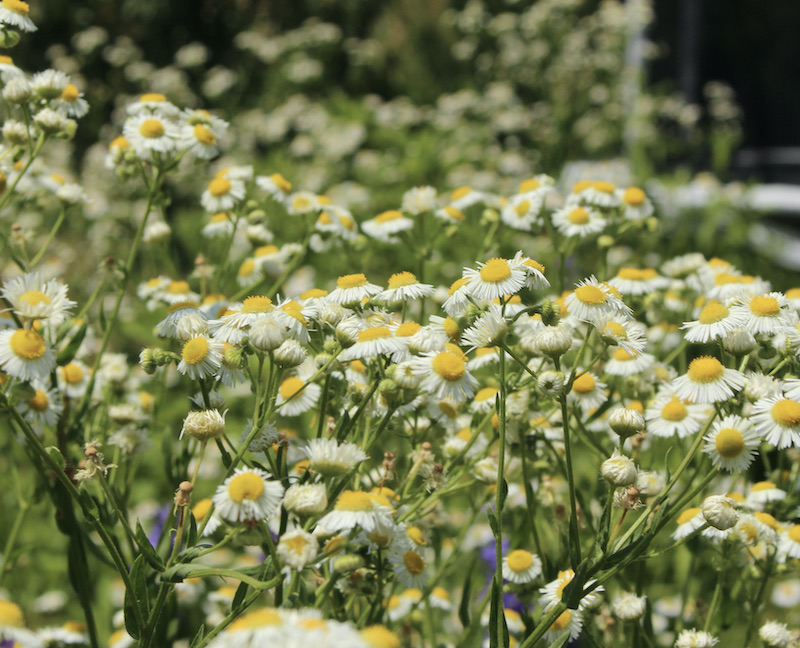
Weeds and wildflowers are never ungrateful.  Overly enthusiastic maybe but you never have to beg them to grow.

erigeron annuus daisy fleabane

A favorite weed, daisy fleabane (Erigeron annuus) can usually be counted on to sprout up when needed. 

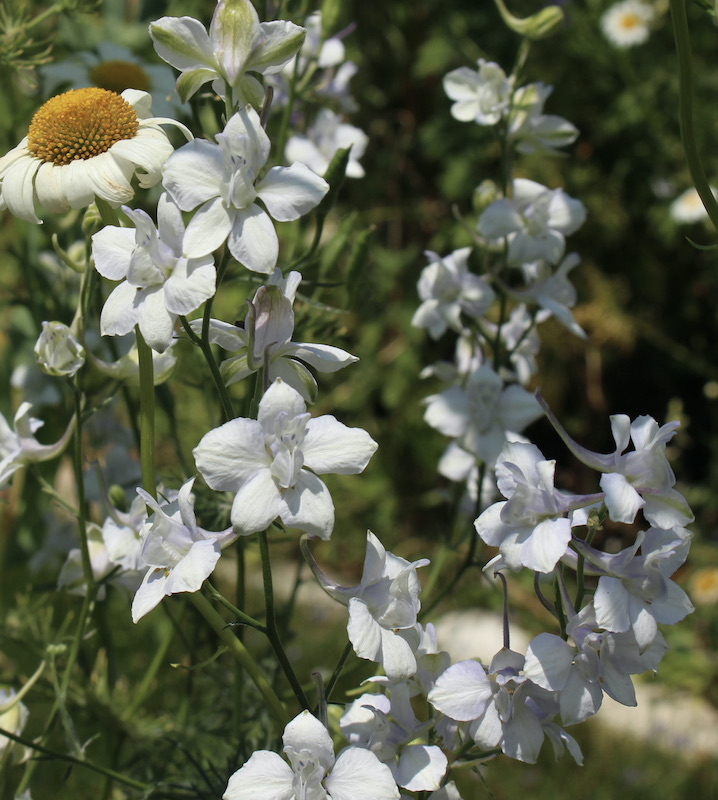
Sometimes you don’t even have to water them.  Actually watering weeds is a crazy idea… unless it’s fleabane or larkspur.  Both might be worth a little spray to get them over a hump.

white larkspur

It looks white, but here the larkspurs all tend to be an icy white with a drop of blue or gray in it.  Kind of a skim milk shade of white rather than titanium white.

Here I go talking about weeds again.  One more though.  Common yarrow has shown up in a few spots in the meadow and I wonder how these seeds find their way.

achillea millefolium common yarrow

Common yarrow (Achillea millefolium) laughs at heat and drought.  I think everything around it will shrivel up and die before you see anything more than a few leaves wilt.

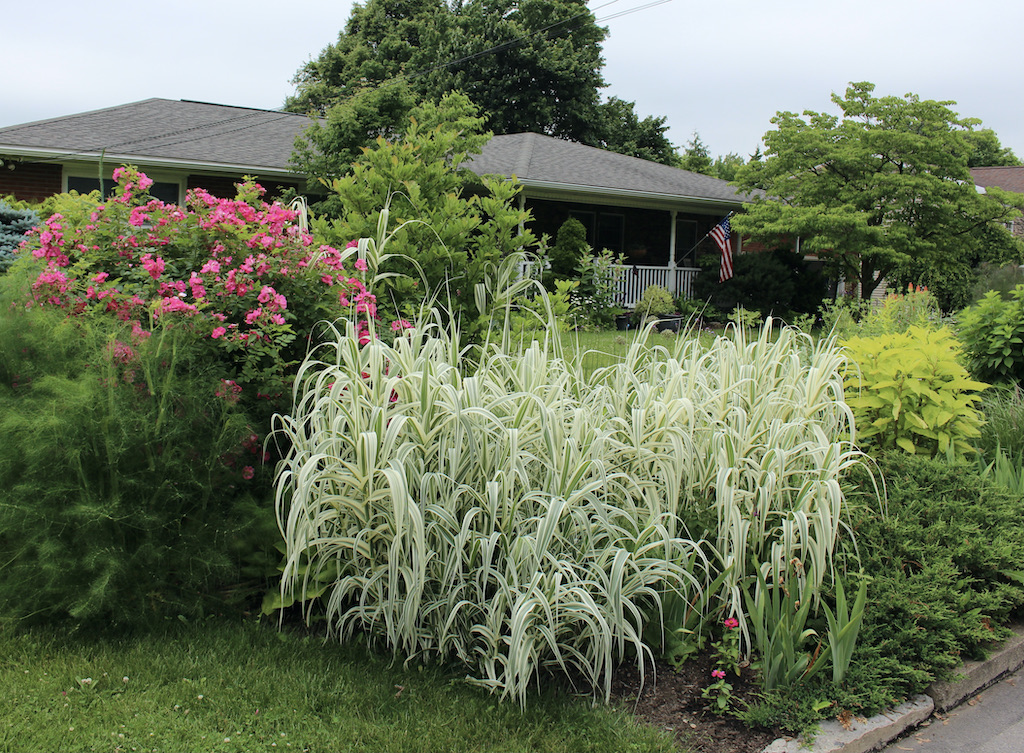
White flowers in a dry meadow won’t cool anyone, but maybe the patch of variegated giant reed grass out front can help.  For months I’ve been saying someone ought to chop out some of the clump, since it really is too big, but it appears the message fell on deaf ears and it’s just as big (actually bigger) than last year.  Probably too big.  Alas.

verbena arundo donax

I’m not saying I judge my neighbors for not asking if I can spare a division, but the giant reed grass (Arundo donax ‘variegata’) is pretty awesome and only gets better as it climbs to 10 feet and more by the end of the season.

It’s way too hot to be out there in the blazing sun hacking inch thick, strong as steel grass rhizomes so that’s one more year for the grass to root in deeper and spread further.  Maybe next year, right?  Shade is a much better option.  White hydrangeas in a dappled shade both looks and sounds cool.

annabelle hydrangea

‘Annabelle’ Hydrangea arborescens is the hydrangea to grow if you want a foolproof every-year-its-a-show kind of hydrangea.  Newer hybrids?  Other species?  Help yourself, I’m just fine with this.

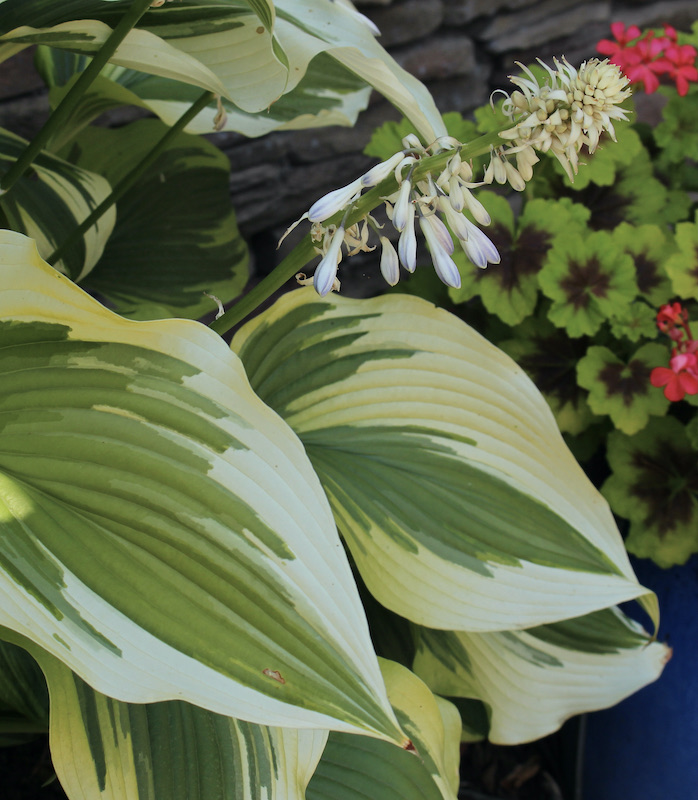
Hostas also make the shade even cooler and many people know this.  Some go to extremes.  I only dabble.

hosta montana aureomarginata

Hosta montana aureomarginata, an oldie but goodie in my opinion.  

There’s another kind of foliage plant which I plan on going overboard with this year.  Caladiums.  I forget how much I’ve already revealed about ‘2021 the year of the caladium’ but it’s going to be big.  Not the empty kind of ‘big’ or ‘huge’ or ‘better than you can imagine’ that politicians have promised in the past, but a big five pound box of mixed tubers which was potted up weeks ago and is now soaking up the heat and starting to grow.  As you know, it’s not often I get excited about a new plant, but waiting for each leaf to unfurl is like waiting for a new plant to unfurl a new leaf and I just can’t think of anything more exciting than that.

sprouting caladium

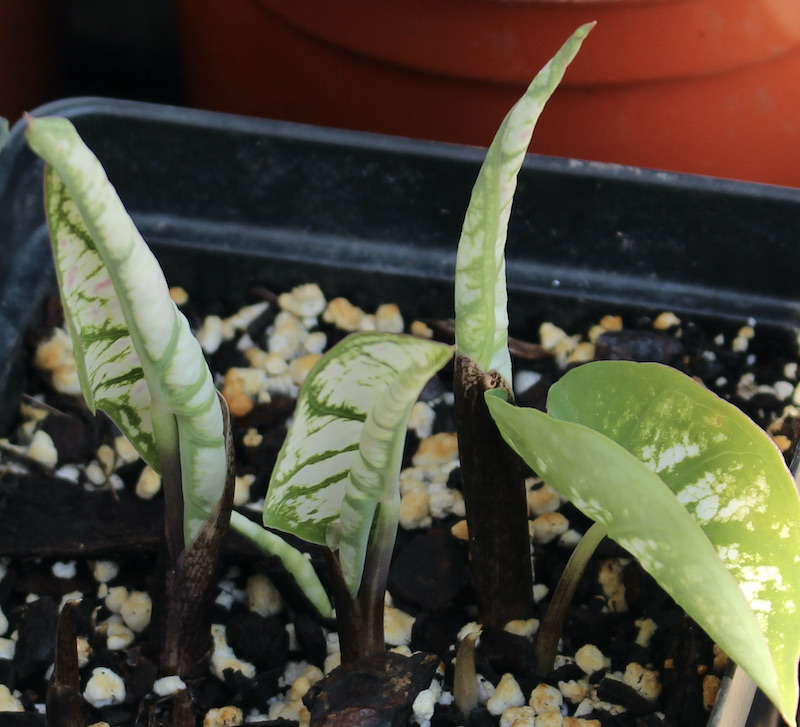
White… with a hint of pink… not that I’m counting but there are 79 caladiums potted up separately and sitting on the driveway waiting to take off into growth.  Summer garage access is overrated if you ask me and I’m sure it will be entirely worth it. 

So there you have it, the cooling effect of white.  I’m all excited about caladiums now but maybe the white helped calm someone else and take the edge off the heat for a minute and that’s a good thing.  That and air conditioning.  Or ice cream.  Or a tub of cool water… whatever it takes to get through this because as you may remember, something called July and August are still on the way and I don’t think you’re going to hear much of ‘boy it’s looking cool next month’ or ‘golly did that temperature drop’ as much as you’re going to hear ‘relentless’ and ‘not a break in sight’.

Or I’m just being pessimistic.  Order some caladium bulbs.  There’s still plenty of time and at least they love the heat even if you don’t.  And even if you’re anti-caladium I hope you have a great week 🙂

Taming the Potager

Reading broadens the mind, and I’ve read too many gardening books to remain satisfied with a plain old vegetable garden.  I of course have a potager, which (from what I’ve heard) is a vegetable garden but fancier, with vegetables but designed and mixed with flowers and supposedly a nicer place to sit around in than the dirt paths and rows of beans of your common vegetable garden.  Plus it’s a French word, and here in America anything with a french name is fancier.  Case in point: baguette vs ‘long loaf of bread’… fancier… and now I rest my case with just one argument, since neither my argument nor the fanciness of my potager will likely stand up to any in depth scrutiny 🙂

hollyhock rust

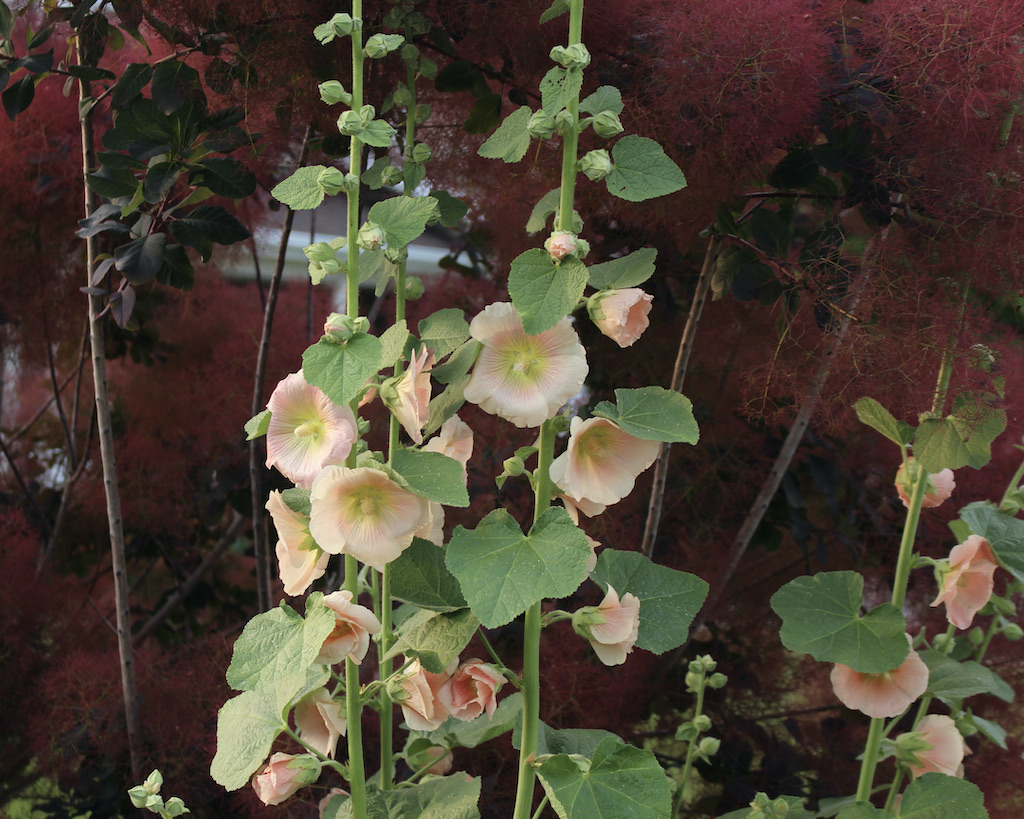
A stray hollyhock seedling in front of ‘Royal Purple’ smokebush (Cotinus).  Normally the bush is cut back but this year was left unpruned in order to smoke (bloom).

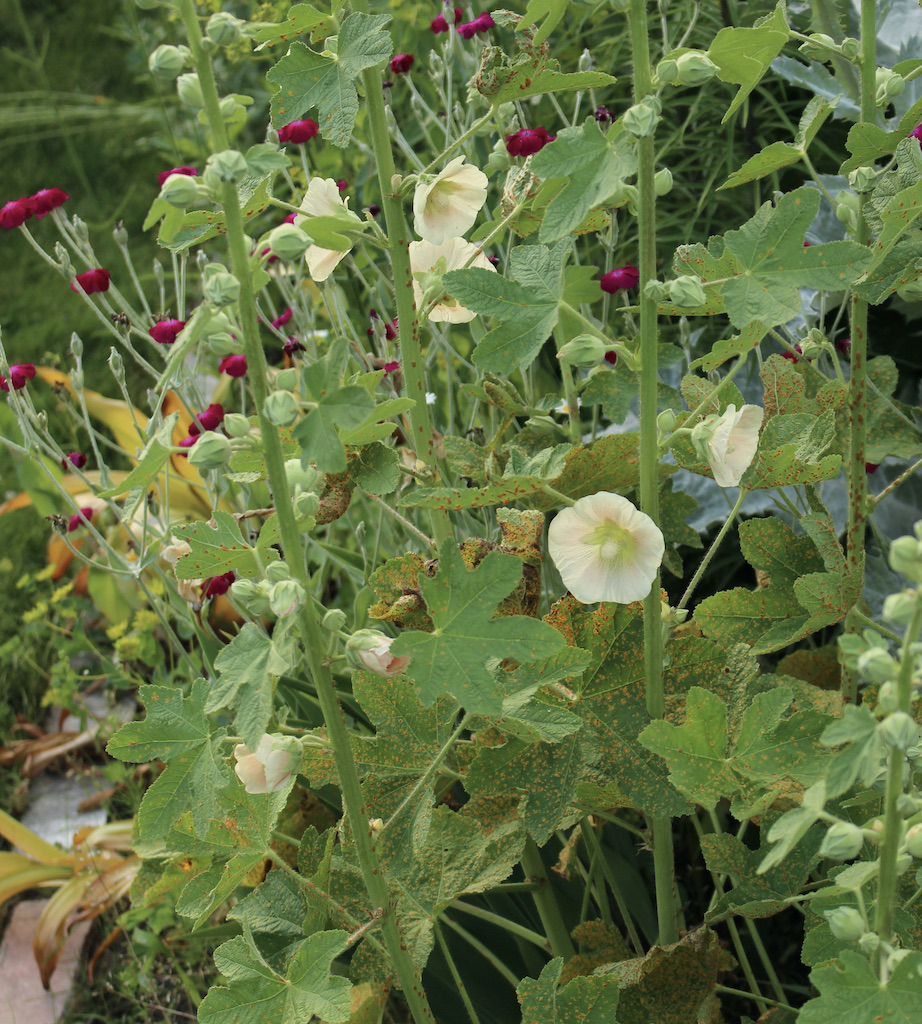
Just a few thoughts on Hollyhocks(Alcea) before we go to the potager.  I was hoping a few rust-resistant plants might show up as I try to mix in a few “rust-resistant” species, but so far no luck.  Rust is not a good look and of course I’m far too lazy to spray.

hollyhock rust

I thought this might be a yellow Alcea rugosa, and possibly less rusty, but the pink tint in the flowers and all the spotting and rusty lesions says otherwise.  I should rip it out now, but…

So I’m 99% sure that starting off with me sharing my disease problems is not the path to fancy, but I’m going to try and save this.  The best thing in the potager this week are the larkspur and oxeye daisies.

larkspur and daisies

Larkspur and daisies.  Not really fancy, but maybe ‘shabby chic’, and chic is right out of Paris.

Some people might point out that Larkspur and daisies are more abandoned farm field than they are high style, but right now I love them, and I’m not even going to mention they’re actually the result of not weeding rather than any planned style initiative.

larkspur and daisies

I meant to dig the alliums and tulips, but never quite got around to it.  Fortunately the largest prickly lettuce and mugwort were weeded out a few weeks ago 🙂

The actual efforts at design are much less impressive.  Roses and clematis to climb the ‘structure’ are still two or three years from breathtaking.

rose chevy chase

I suppose this will be a patriotic design, with the bright red ‘Chevy Chase'(a 1939 rambler rose) joining the misslabeled blue clematis and white daisies.  I’m expecting ten feet or more from Chevy, he should be a strong grower but sadly lacks any fragrance.

Any real potager needs a few vegetables, and so far lettuce and cole crops are the only things looking productive since the tomatoes and squash have only just gone in.

summer cabbage

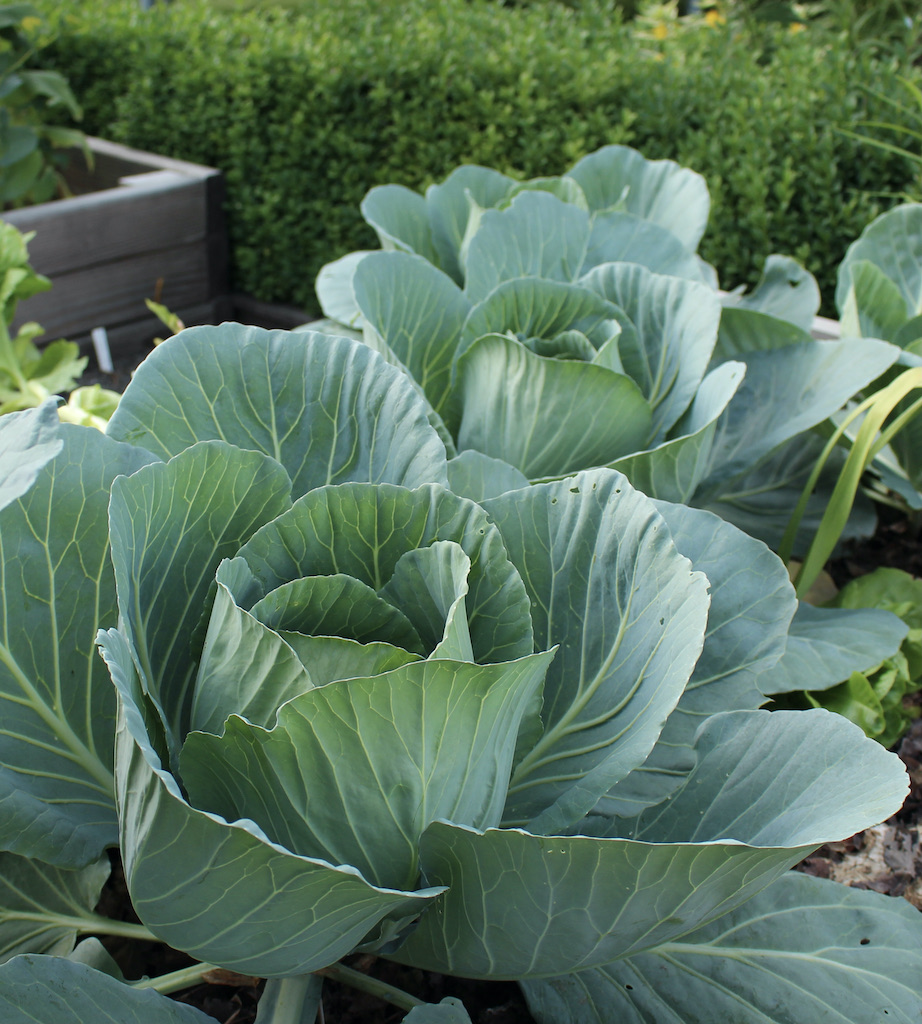
I love cabbages and all their kin.  Earlier in the year the cabbage worms attacked, but after a little picking off, the worms have stayed away or found other hosts.  Un-nibbled leaves really look much better than the usual worm-riddled foliage.

So as usual I have an excuse for being late.  Rabbits made their nest in the middle of the tulip patch.  Somehow six cottontails had to grow up before I could dig the tulips.  I couldn’t transplant the chrysanthemums until the tulips were out, and then dahlias had to go into the bed where the chrysanthemums were.  I think following chrysanthemums with a dahlia planting is called crop rotation, and all the fanciest gardeners practice crop rotation.

dahlia seedlings

Nine ‘Bishop’s Children’ dahlia seedlings are all I got out of a packet of thirty seeds.  That’s a good thing, what would I do with thirty dahlia seedlings?

Some of the other tulip plantings were followed by tomatoes, and I’ll show them as well but they need a few weeks before they and the rest of the new potager plantings begin to look nice.  In the meantime I need pear advice.  Last year a late freeze killed off nearly every flower save three, this year every flower made it.  I have dozens and dozens of little pears and I need to know if I should drag out the ladder and thin them, or if they will naturally thin themselves.  To me the answer is already pretty obvious, but of course I’d love for someone with more experience to tell me I don’t have to thin them.

thinning pears

Little pears.  I already thinned the lower branches to just a few fruits.

It doesn’t look like a few French words will fool anyone, and those are pretty much all the highlights of the potager in mid June.  With the bubble burst, I might as well take you around the rest of the even less fancy parts of the back garden.

wildflower meadow

Weeds along the berm.  Year 1 was smartweed, year 2 was some mustard, year 3 is birds foot trefoil, daisies, and grass.  I think it looks best this year and I think some rose campion seed needs to be sprinkled in as well 🙂

Weeds along the back of the property and now an overgrown snowdrop bed.  Finally after years of tinkering this bed is becoming more stable and I think (a little)less weedy.

rain garden

Snowdrop bed, aka rain garden.  The roof runoff washes down the sand path and keeps this bed a little wetter than it used to be.  The plants seem to love it.

There’s so little design and zero fancy to this side of the yard.  As the years pass it’s becoming more of a snowdrop garden and the other plantings have to take second billing, even if they do occupy the ground for about 11 months compared to the 1 month of white.  Of course I cannot explain myself on this addiction.

blueberry

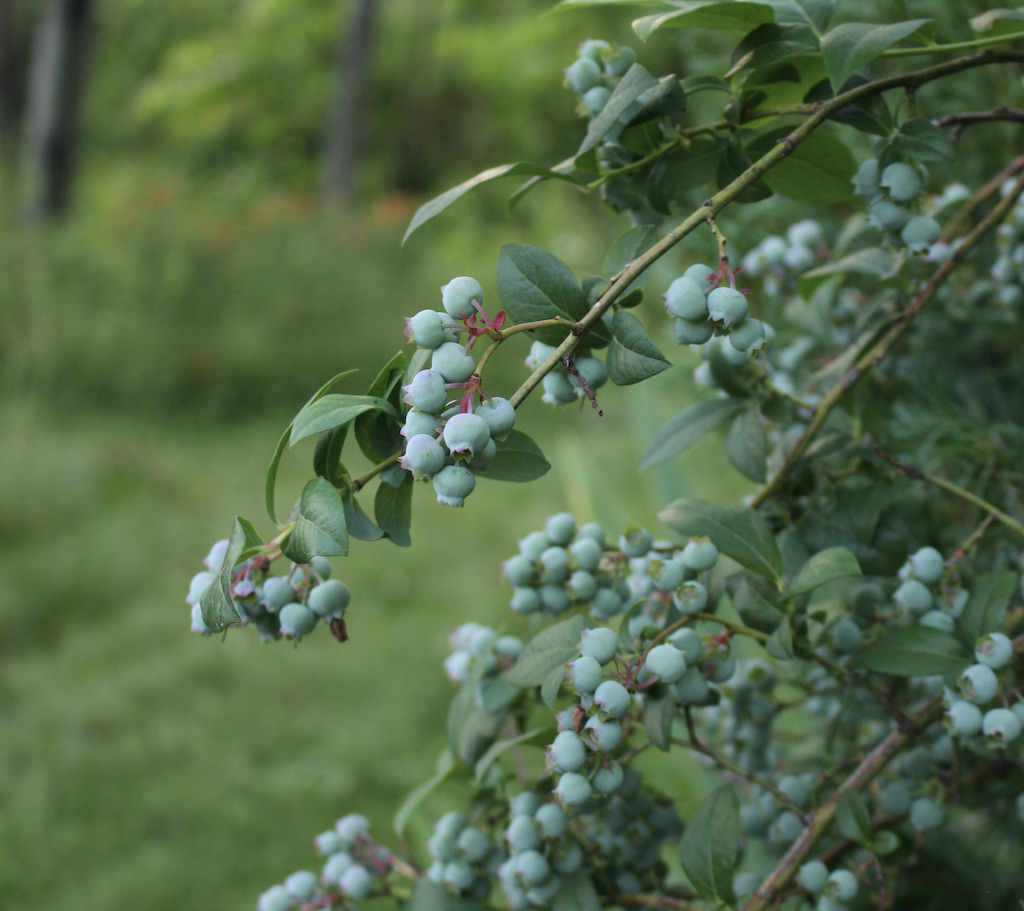
This year the blueberries will be protected.  I have netting, but all the fledgling birds who flock to the bushes are just too clumsy to avoid getting trapped, and I can’t untangle another body.  I’ll try some floating row cover material and hope that out of sight will save enough for pancakes at least.

Hopefully this end of the garden gets some attention this weekend.  It’s always the last job, and for as ‘finishing’ as that sounds it really only means I go right back to the start and begin it all again, this time with more weeding and less planting…

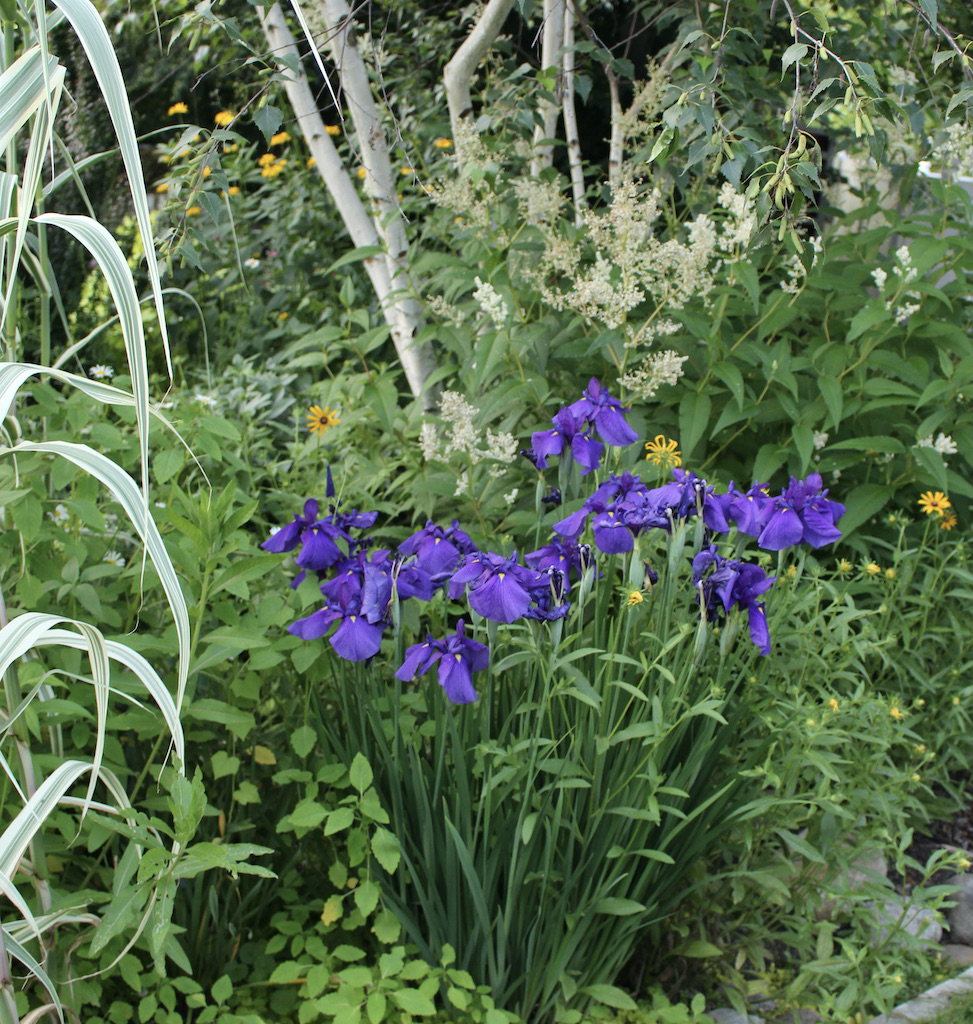
japanese iris

Even in a thicket of weeds this Japanese iris looks fancy.

Maybe on the next go around things will change.  All the weeds will go out, some thoughtful design will go in, some rough edges cleaned up?  I think not.  It’s firefly season and they love all the rough edges and I love having them light up the evening garden, and for as much as I’m tempted to weed-whack the berm or mow the meadow it’s not happening this month.  I’m sure I’ll get over it and it also wouldn’t hurt if I found something better to do 😉

Bonjour, and I hope you have a fancy week!


Enter Summer

Well well well.  The lull is over and with official summer starting in four more days I’m completely ready for days to last forever and I’m completely ok to never put on a real pair of pants again.  Sorry,  please forget that visual.  I’m thinking shorts and bathing suits and whatever else kind of clothing you would wear to the park, not the gray polyester blend  pants you’d  wear to meet your lawyer.  Lawyers should only be dealt with in the winter in my opinion.
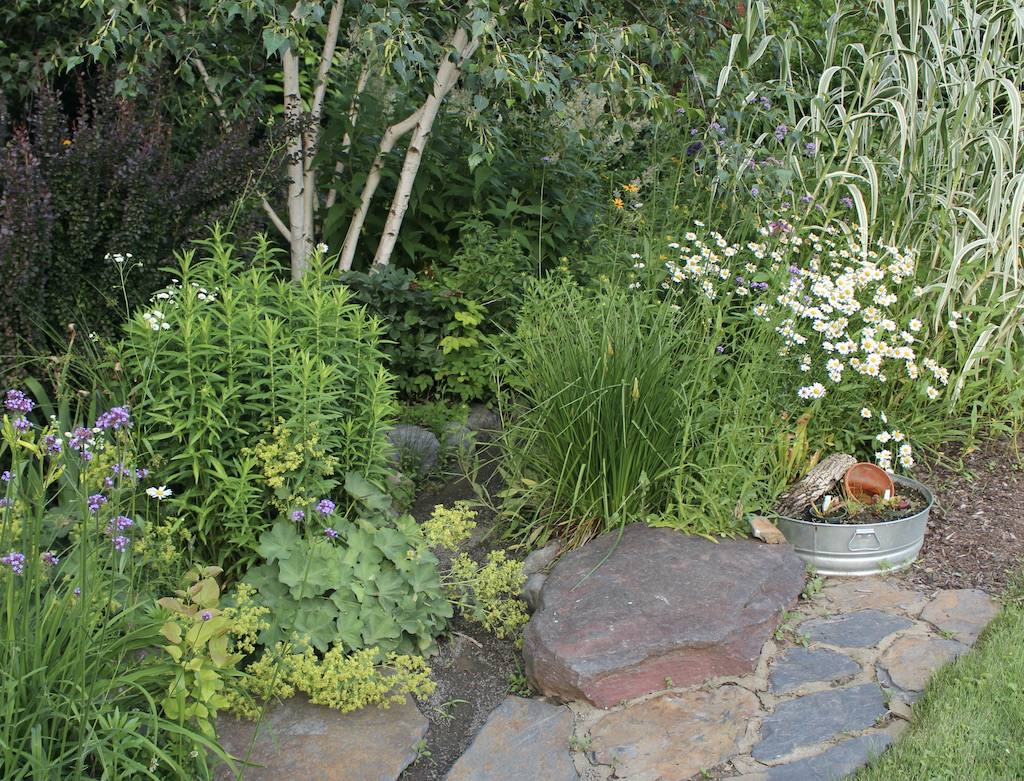
mixed flower border

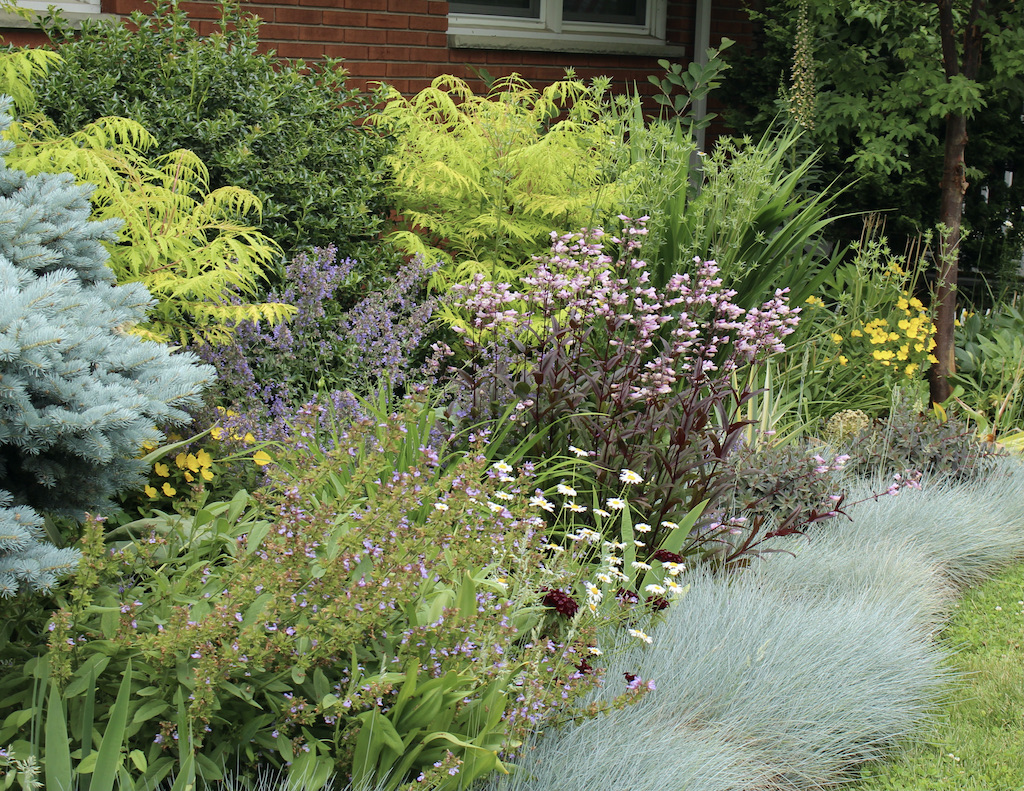
The front border is full of early summer color and a remarkably well-tended assortment of plants.

Following a bump in the road it looks like garden work is back on track around here.  Planting weather continues and I almost feel guilty about putting it to good use when so much of the country sits under stifling heat and relentless drought.  But trust me, if not doing work would mean relief for the hot and dry, you know I would do my part.

mixed flower border

I kind of missed the flowery peak of the roses, but there’s still plenty of color.  Also nice is how much those little spruce and juniper twigs have grown.  It seems just yesterday I had a four inch pot in hand looking at the spot where today a six foot white spruce (Picea glauca ‘Pendula’) stands.

Roses are still obsession du jour, and the greatest tragedy this summer will surely be that I was not able to get up to Ithaca’s ‘Der Rosenmeister‘ to see hundreds of roses in full bloom, filling beds and covering arbors and wafting their various fragrances across the garden as I secretly inventory all the ones I’d like to cram into my own little yard.    I guess there’s next year, but in a strange turn of events I’ve turned into a very not-patient person, and I want it all now.  I can still be understanding and wait for things like small children, tree seedlings, and dogs, but the cup of you-go-firstedness has run dry and my filter is breaking down as I age.  I guess you can start calling me Karen.

westerland rose

Here’s ‘Westerland’ again.  Today it’s my favorite rose.

I’m Karen with a spade, and many of the less inspiring plants in my life are paying the ultimate price.  “oh it’s a good doer’ might save it in your garden but here it’s good night and good bye unless I love it or unless it saves me from even more work.  I’m thinking groundcovers with that last one, ajuga may not be inspiring but it does fill in between the giant reed grass’s stalks and saves me from crawling through there looking for prickly poppy seedlings.

arundo donax

The giant reed grass (Arundo donax variegata) is on the love list, but the clump looks deceptively small in this photo.  I may trade in the spade for an axe on this one, the inch thick roots are not something I’m looking forward to, but the clump needs reducing.

Weeds and plantings I’ve tired of might sound bad, but overall I love the garden right now.  A thick wall of weeds won’t win a magazine cover, but honestly I’ve been looking at them (every day of course) and all it takes is one plant doing well in there for me to think ‘wow, that’s #@&^ing awesome’.

common milkweed

A weed I love, common milkweed (Asclepias syriaca), looking and smelling great this week.  Three tips: be prepared for it to spread, chop it down to two feet after bloom, and just yank up all the suckers without worrying about the roots below (you don’t even want to know).

So as usual I’m babbling about nonsense when I should be finishing this up and ferrying kids to a dental appointment.  More pictures, less blah.

strawberry mertonensis foxglove

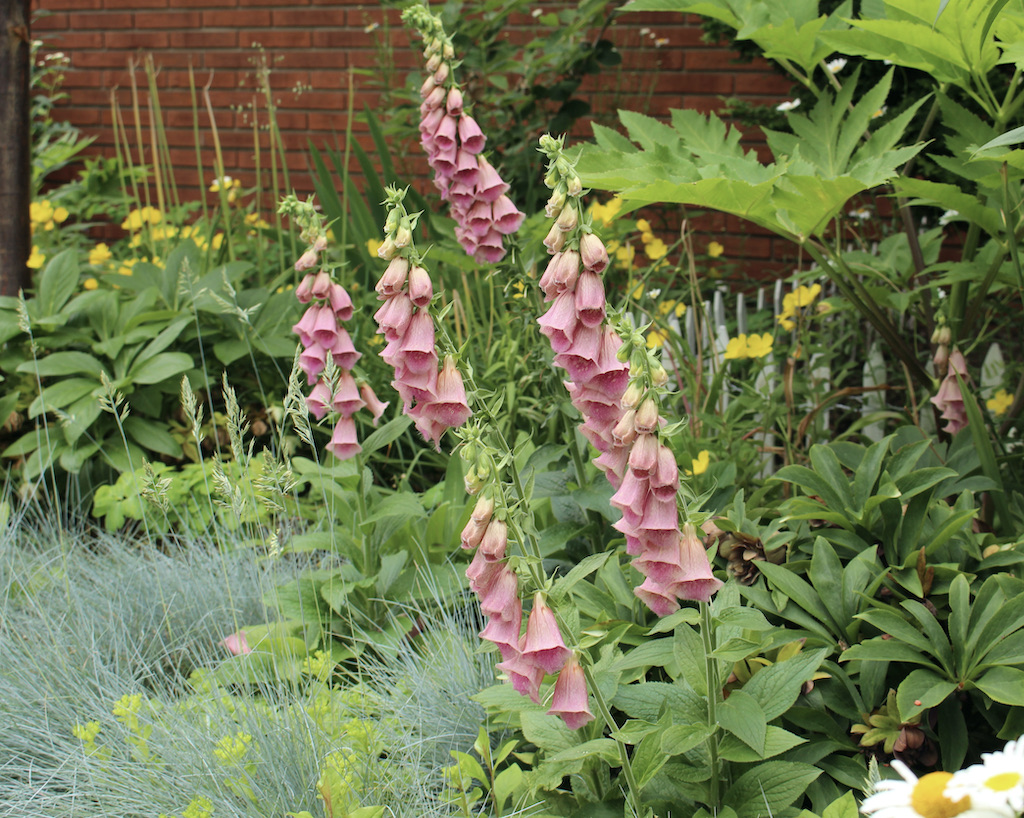
More strawberry foxglove (Digitalis x mertonensis) appearing out of the mess.  These don’t mind the droughts and spider mite attacks which do in the common foxgloves. 

penstemon dark towers

More of the foundation plantings.  As you can see the blue fescue border has not been divided and replanted, and still has way too much thatch built up, but… 

rock garden

The former rock garden, now the colchicum bed.  I’ve resorted to roundup once or twice a year to keep the stone border clean and it’s actually working out very well.

Did I mention I needed more roses?  I do, and it might be time for more clematis as well.  Finally I have a few spots for them to climb up and show off rather than making them crawl around in the dirt… which is not the kind of treatment they deserve.
clematis ruutel

Clematis ‘Ruutel’ doesn’t get much taller than this, which normally wouldn’t thrill me, but the dark red color is still a win.

A friend of mine grows more clematis than she should and that’s probably why she’s such a good friend, so I’m sure if I mentioned cuttings… hmmmm.  That would sure help cool off the credit card from plant purchases.

clematis ville de lyon

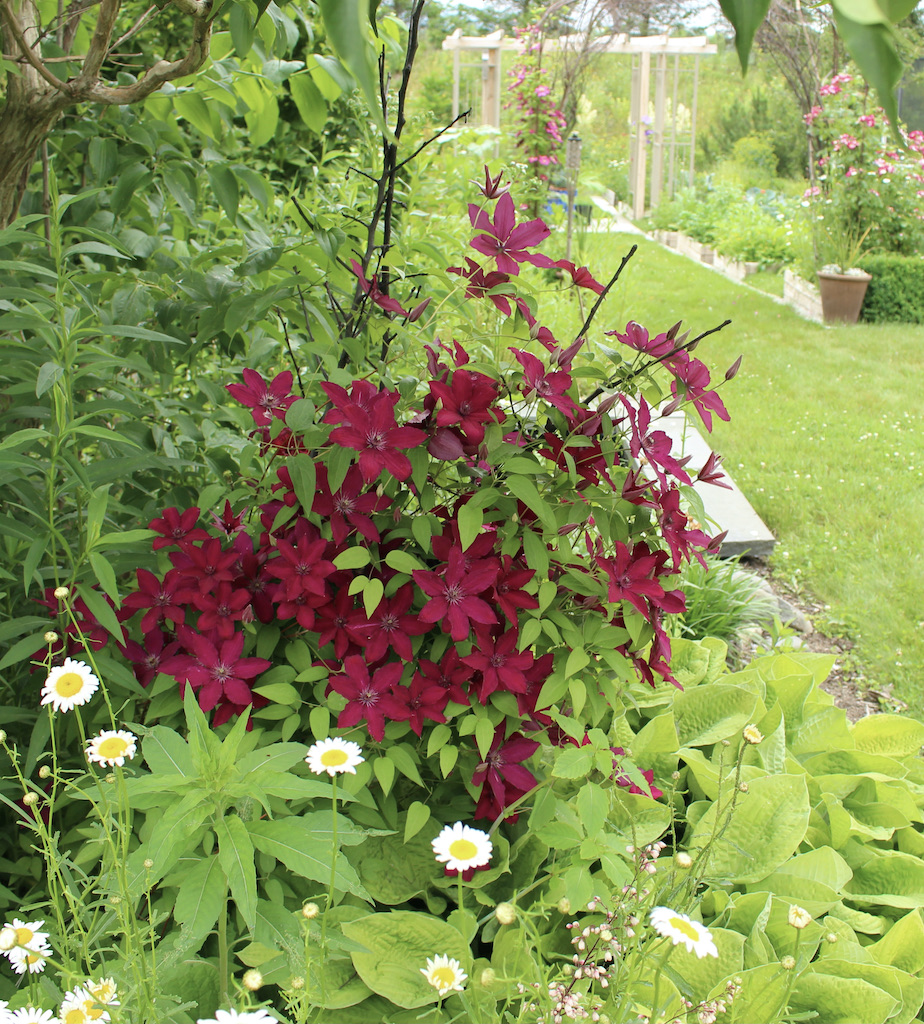
Clematis ‘Ville de Lyon’ does get taller, and I always like flowers at eye level or above.

So the rest is just a mix of unconnected things which are interesting this week.  We could call it a four on Wednesday but of course that’s got zero ring to it 🙂

calycanthus aphrodite

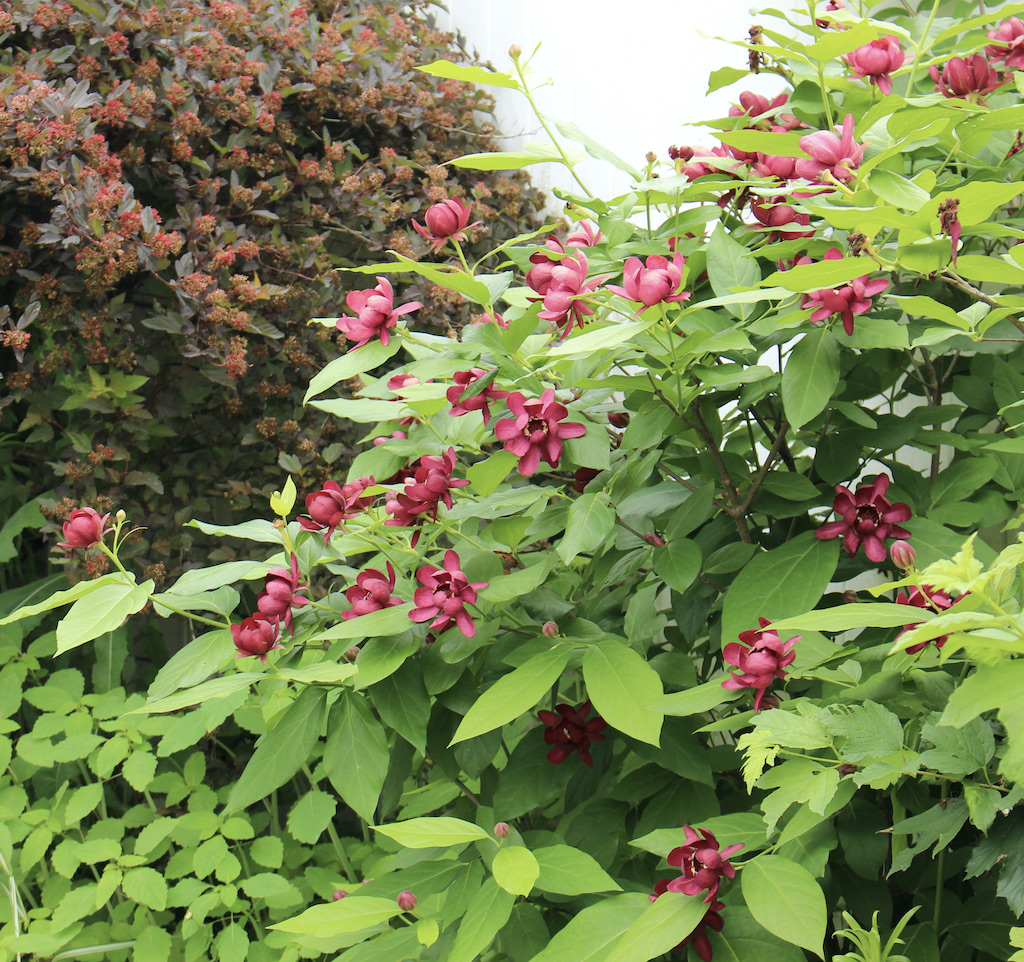
Even in an overexposed photo Calycanthus ‘Aphrodite’ looks pretty good.  I never expected it to become so showy.

aralia sun king

Aralia ‘Sun King’ is still doing well in a cramped, too dry, unfertile, location.  Nine out of ten garden designers despise how I left the rose campion nearby.

martagon lily sunny morning

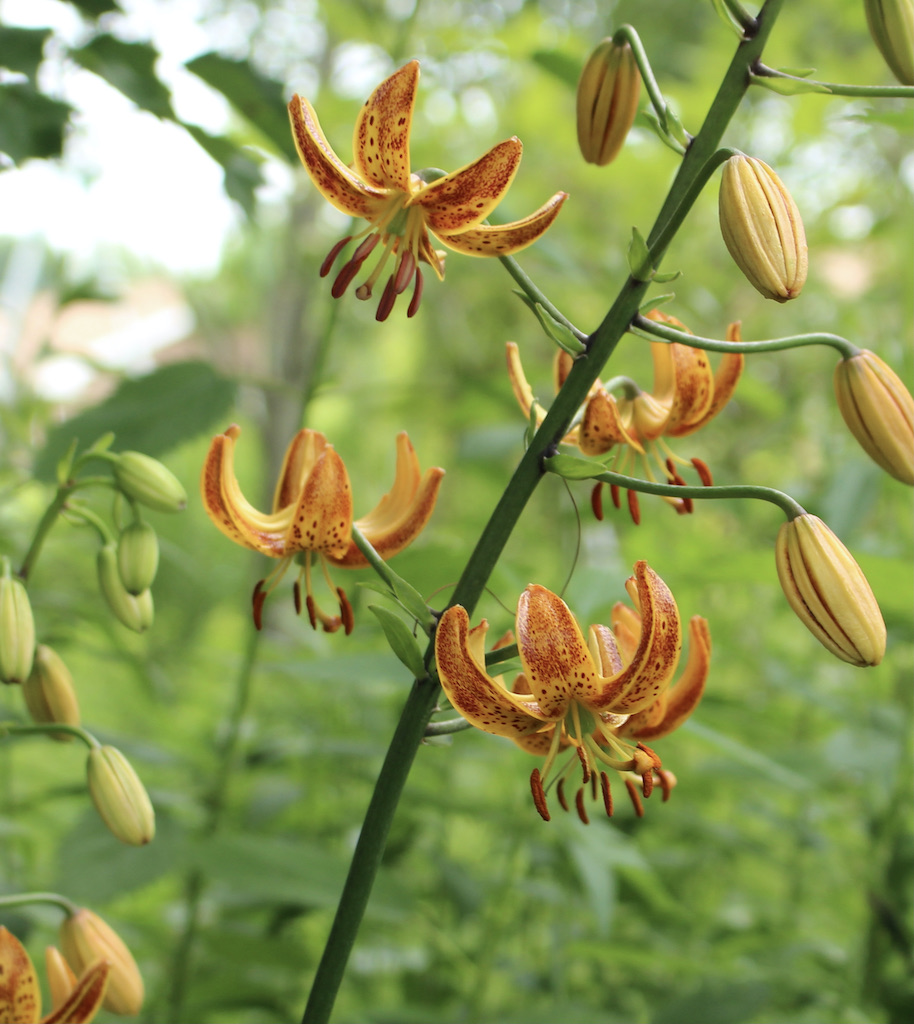
Further into the shade the martagon lilies are blooming.  ‘Sunny Morning’ had a string of bad years with late frosts and swampy soil but then for some reason decided to send up three flower stalks and look amazing.  I don’t get it.  She’s been dormant by July for at least the last two years so I suspect this is a swan’s song kind of show.

meadow garden

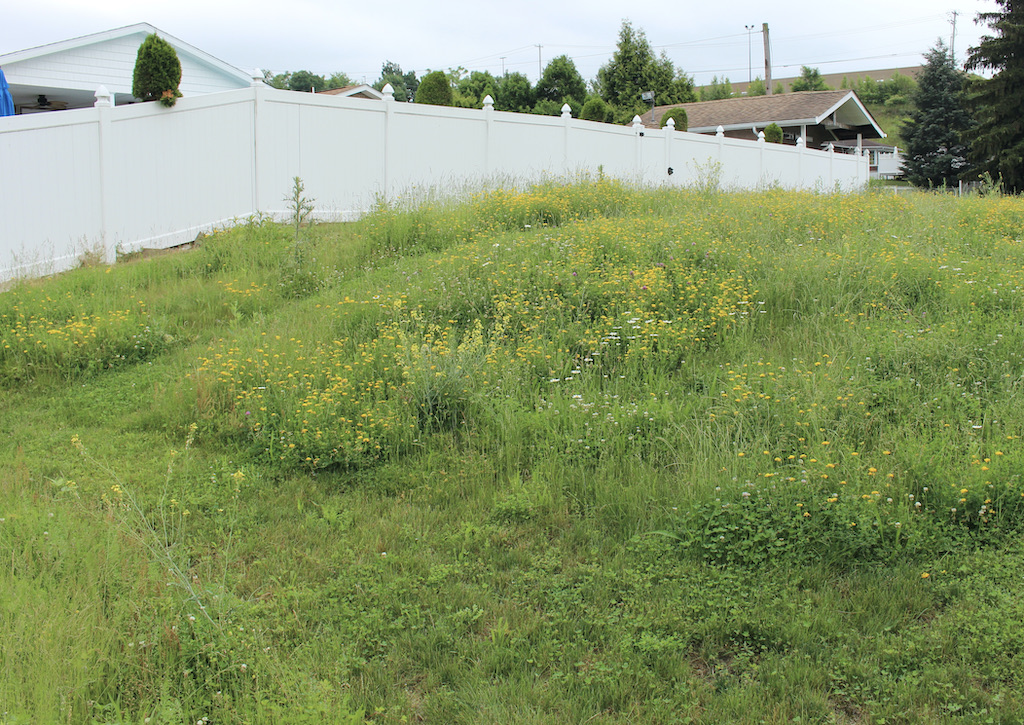
The meadow is developing behind the neighbor’s house.  Oddly it’s one of my favorite spots and has gone from pure turf to a mass of bird’s foot trefoil, other clovers, and a few daisies.  

So I have to stay focused.  I want to go on and on about the butterfly weed and rose campion that needs to be seeded into the meadow, and the merits of adding native penstemons but in a purple foliaged form… but the spring stuff still needs to get planted,  beans need to go into the ground, and daffodils dug and a million other things and there will be time to babble on about uncut  meadows in August.

Hope you’re enjoying all the too-much as much as I am.  Have a great week!

The Potager 2.0

When the pandemic first came to our shores and we were faced with a surprise vacation and then a transition to work at home, the non-commuting lifestyle left me with what seemed like a mountain of extra time to spend in the garden.  ‘Let me get some building materials delivered’ I said, and ‘build a few raised beds’ I thought.  The boss gave her approval and things began to move.  Slowly.  A thousand things had to be moved first, plans needed to come together, but I think it’s finally at a point where I can show it off a bit, if only to get it over with rather than build some unwarranted, over-blown hype.

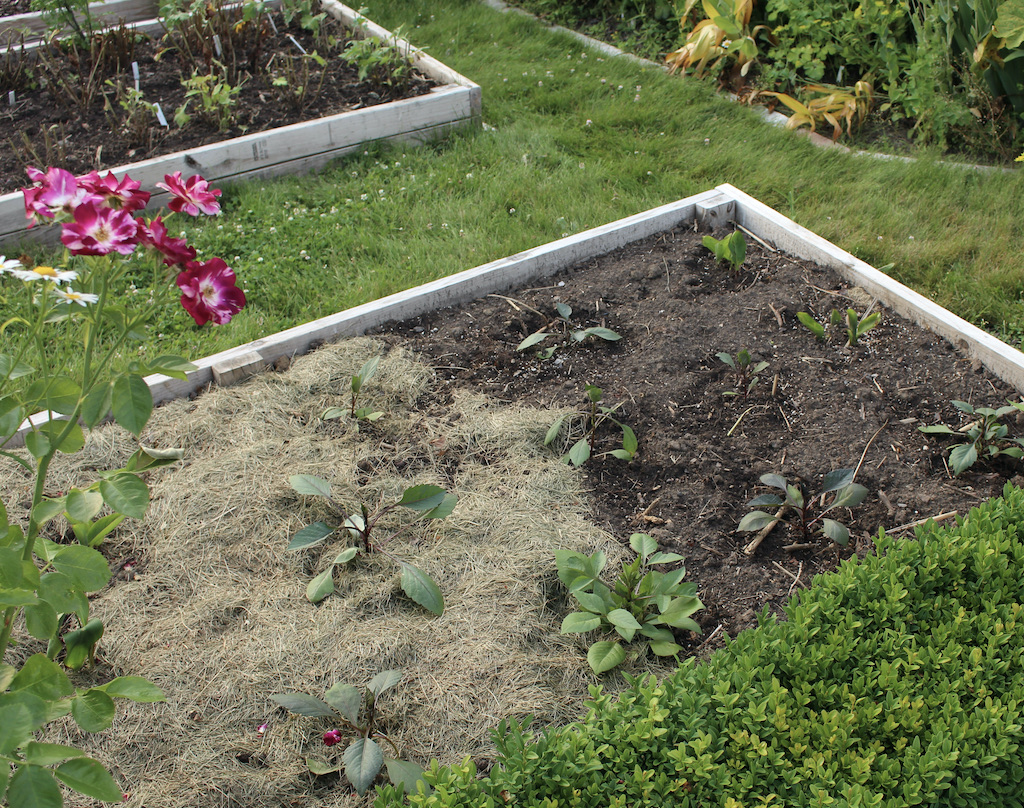
raised beds

The front entrance to the potager.  A slight downward slope ends at the pergola, the beds are leveled into the slope, and the blocks will hopefully help with keeping the lawn edge neat just in case we get enough rain for it to grow again.

The first dilemma was choosing lumber.  As usual I went with cheap and selected eight foot pressure treated 2x4s, but it wasn’t all that easy. Naturally rot resistant cedar or redwood would have been nice, larger boards would have been nicer, but the costs were way higher than I was comfortable with so it was a compromise between expensive all natural, or cheaper with a vague possibility of copper leaching… well I say that but actually the compromise was lower the cost or it’s not going to happen…

Overall I hope to get at least ten years out of the wood because although it’s pressure treated it’s not rated for ground contact.  Eventually it will rot, but the treatment should give at least a few years more than untreated, and funny story… the pandemic caused a pressure treated lumber shortage, so we will see exactly how much faster au naturel rots, since all I could find for the last two beds was untreated wood.

raised beds

The view from the trampoline.  We are into the annual zucchini tsunami and each morning a few more line up on the counter.  Someday I hope to level this bottom part of the garden.  The beds are built level but the grass paths still need some fill to bring them up. 

Besides being cheap with materials,  I also got a little greedy with the bed space vs path width.  Between beds is about two feet, and even if it were wider there was still no way (add laziness to the growing list of personal faults) that I was going to wrestle a lawnmower between each bed.  Enter the wonderfully gritty sand pile.  I knew I didn’t want lawn, wood chips need replacing (and why add organic matter to your paths when it should be going onto your beds?), bare landscape fabric is ugly (and violates my no new plastic policy), so I wanted it to be something inorganic and long lasting (and yet again, cheap).  So I grabbed my face mask and was off to the quarry to look at stone dust, crusher run, and sand.  Surprisingly the sand looked perfect.  It was sharp enough to pack down well for a solid footing, and coarse enough (up to about 1/8″ particles) to not wash away in a heavy rain.  So far I love it, and in the future I might even get sand to top off beds rather than buying ‘topsoil’ that turns to rock the minute it dries.

raised beds

I removed the grass from a few of the pathways and used the turf to fill the beds.  Sand paths will hopefully be low maintenance with great drainage, and if worse comes to worse I can just dig them over and replant grass.

Cinder blocks are also cheap, and at about $1.20 a piece I lugged a few carloads home to use as edging and to form a little paved area under the pergola.  So far I like it.  It’s an honest concrete look rather than concrete pavers trying to pass off as something fancier.  Of course stone would have been another nice permanent edging but again spending a bunch of money was not part of my pandemic response.

With the beds built and the lawn edged and sand down on the paths I was super surprised to see that I still had leftover sand.  I tried to calculate for extra sand for an additional pathway up alongside the fence, but to actually have a plan that worked out was a little bit of a surprise.  After years of collecting and lugging random stones I could finally use them to line a sand trail that gives access to the back of the pond.

garden pond

Finishing the pond is still on the to-do list but for now I think it looks good enough.  The shallow end is in constant use as a birdbath, so it’s really more of a watering hole than a pond…

The pond path is surprisingly popular with the kids and our little garden bunny.  I’ve caught both zipping back and forth, and in the morning there are all kinds of footprints in the sand.

sand path

Pond path’s entrance.  Yes those are mostly weeds.  Weeding went onto the back burner as I lugged load after load of lumber, blocks, and sand.  

To sum it all up I love the new beds and I feel like there’s so much more useable space with it set up this way.  I have a total of eleven 4×8 beds and for now it’s all vegetables and I’m trying not to give in to the temptation of planting flowers… except for the one bed which I gave over to chrysanthemums… but my resolve may dissolve since I still need room for phlox and tulips.  At least I’m trying to be firm with the usual sunflowers and verbena bonariensis seedlings.  -for the record I’m not sure why I needed a bed of chrysanthemum, but after years of neglecting them and abusing them in horribly weedy, infertile, and dry sites, I thought it was about time to do them right.  We will see.

rain garden

Yes, more weeds.  The weeds exploded with last week’s rain and this bed was the next one to need attention.

With everything under control in the potager, there was still enough sand to upgrade the dirt ditch of the rain garden with another nice, stone-lined, sand path.  If you recall, last summer this area received a small paved area and path with all the leftover flat stones liberated from the industrial park construction.  It was nice, but I didn’t like the dirt gully which channeled the runoff, and when I don’t like something I kind of neglect it, and when you neglect a garden the weeds send out an alert, and when they all show up to answer the call things go downhill fast.  The weeds are out now, the sand is down, and although I’m short on rocks along the one side, the other doesn’t look bad at all.  We will see how it holds up.  If you look closely at the paving joints you might notice the joints are neatly filled with sand rather than dirt, and both of those are a pain to keep weed free when all you have is this narrow joint that the roots can hold onto.  Truth is I threw some leftover polymeric sand in there, and when you wet the sand the polymer sets up and solidifies it.  I don’t know how it will hold up but hopefully I’ll get at least a few years of no-weeds-in-the joints enjoyment.  The weeds will be fine elsewhere though, so if you’re worried don’t be.

rain garden

Another step forward I hope.  Mulch would be nice now.

That’s where we’re at going into the weekend.  The weather forecast is promising another heat wave so I’m not worried about mowing, but watering will be on my mind.  I don’t like watering but it does beat lugging cinderblocks and digging turf so I’ll keep the complaining to a minimum.

Traditionally I usually meet the hottest days of summer with a pile of mulch in the driveway.  Hmmm.  I hope you have a more relaxing weekend 😉