Check one corner off

There were a few cool days last week and I was able to drag myself out into the garden and give the vegetable beds a once over (in spite of the dry soil and high pollen counts).  I think it looks as good as it gets, and with all the unintentional flowers it may be fancy enough to call a “potager”, as Annette from Annette’s Garden once called it.  I like the name and it’s stuck.  It has just enough Continental refinement to make me laugh a little when I look at the plastic fencing, weedy sumacs, chainlink and neighboring industrial park!

the potager vegetable garden

The potager with neatly edged beds and way too much disorganization.  By now the warm weather vegetables should already be in but with last week’s frost I’m kind of grateful for my procrastination.

The work always goes faster with a good helper or two, but studies have shown that nine year old boys don’t typically fall into that category.  Still the company is welcome.

kids in the garden

A few edible things are starting to fill the beds but I’m always proudest of the fancy pink marble edging which line the plots.  In a former life the stone accented the front of the house, but now it helps edge the beds.  The look has been called “deep south cemetery” and I’m sure that’s a compliment. 

Ok, so even freshly weeded it’s still kind of messy, but I’m far too proud of the crisp edge along the lawn and the freshly mulched boxwood to let that keep me from posting a photo.  Our little Queen of the Prairie” must agree.  She overlooks the potager but has seen better days as the weather continues to eat away at her plaster self.  Might be time to start hitting the estate sales to find a successor.

boxwood edging vegetable beds

A very rarefied boxwood edging lines the outer perimeter and I think it really elevates the standing of my hodgepodge of plants.  Hopefully I can enjoy it for a few years now that it’s finally growing in, especially since  so many European and New England gardeners are facing multiple boxwood problems … blight, caterpillars, ugh.

The iris are at their peak.  I should really evict them but never do.

iris in the vegetable beds

Seems like for every iris clump I remove a few new ones pop up.  The compost usually brings in a few but the gardener also tends to feel bad for spare plants and ends up putting the innocent little fans in here and there.

I don’t know what to say about this clump.  Two years ago I dumped them here when I needed their real estate for a tomato planting.  I never replanted them but apparently they don’t care.  Two years in an iris bed with no bloom, two years of being tossed to the side and they look great.  Go figure.

historic bearded iris

Their identities are probably lost, but I think the apricot-pink to the right is ‘Jean Guymer’.

It’s not all flowers, there are a few cool weather vegetables braving the up and down temperatures.  Broccoli, lettuce, potatoes, and garlic all look promising, but here the tomato seedlings still all need to be weeded out.  If I knew what they were I’d keep them, but I already have more than enough.  They’ll stay for a few days longer to keep the ground covered since I don’t want mud splattering up into the yummy little lettuce rosettes when I water.

lettuce mervielle quatre seasons matina sweet

Two favorite lettuces, the never bitter ‘Matina Sweet’ and the darker ‘Mervielle de Quatre Saisons’… which should get a delicious tender green heart in a few more days.

The heat was too much for the arugula.  The flowers are nice enough though, and I won’t mind weeding this one out for salads if it goes to seed.

arugula bolting to seed

Chives in bloom and arugula bolting as the weather gets warm.  Time to plant the summer crops!

Even with the weeding and watering there’s still a ton to do.  Some tulips and daffodils will hopefully start coming out this weekend and that should open up room for beans and squash.  It may still be May but I’m going to say summer is here, and the next big project will be summer annuals.  Even though the plantlets are anxious to get out from under the growlights, I hope to tackle one last big weed patch adjacent to the potager before all my energy is lost.  It’s the on again off again red border/ pond bed, and hopefully in the next few weeks there will be some progress there as well.

eliminating weeds from perennial bed

All kinds of weeds filling the red border.  I resorted to roundup along the fence and that’s the only reason it’s not a sea of campanula glomerata.

Wish me luck.  We had a good rainstorm come through this afternoon and everything seems to be letting out a big sigh of relieve (including my water meter).  Facing next week’s high temperatures with a still-dry garden was not something I was looking forward to, so I’m thrilled!
Fluttering into September

Keeping a monthly summary of what kind of butterflies are flying in and out of the garden is a good idea, and Cathy over at Words and Herbs already does just that.  Each month she documents a summary of the regulars, the newcomers, and the rare surprises.  This month I tried, and although neither my patience nor my camera skills match hers it’s still nice to give it a try!

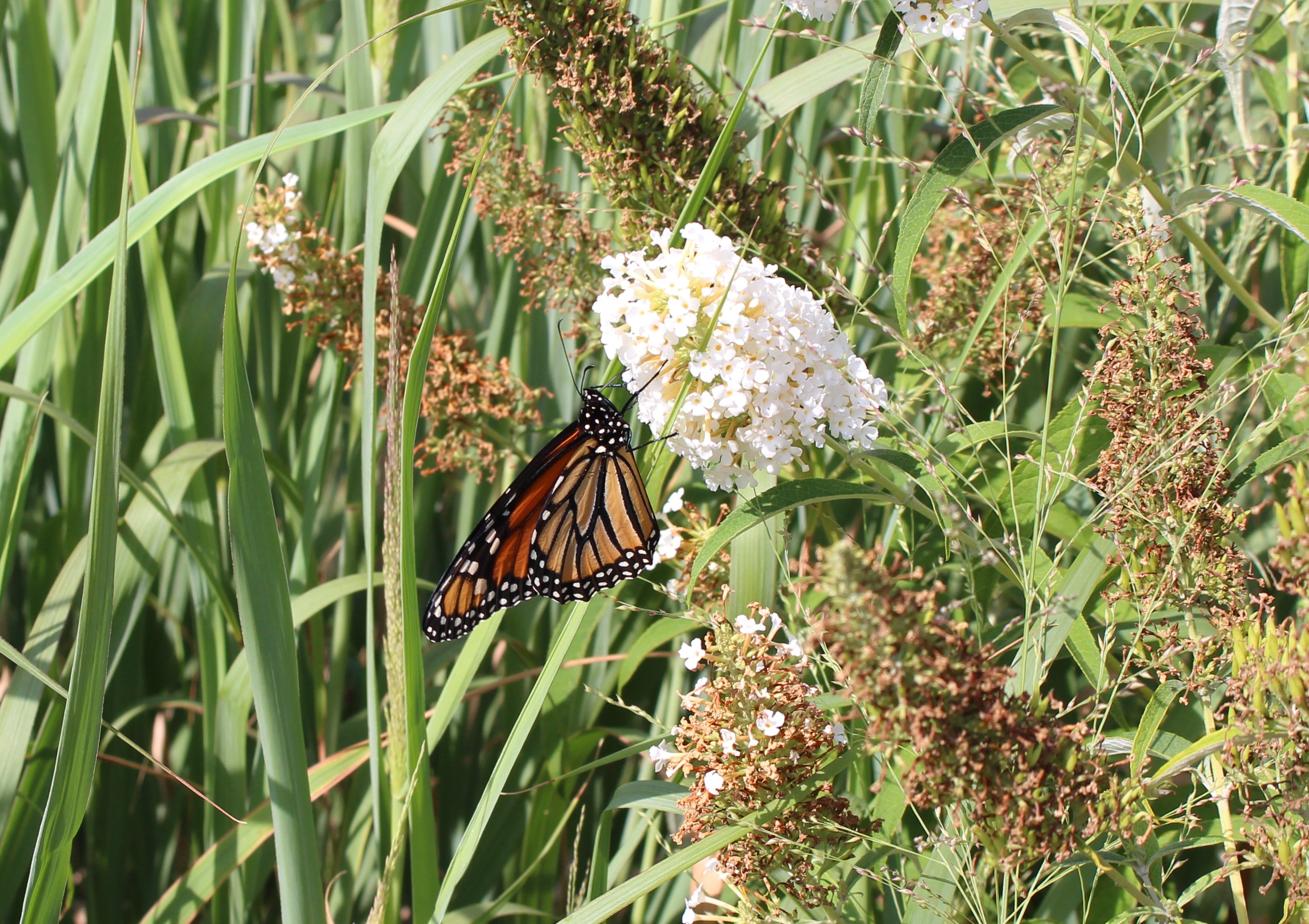
monarch on buddleia

I would bet the Monarch butterfly is North America’s favorite. Here it is catching the last of the white buddleia.

The one butterfly which swarmed this year were the skippers.  There were dozens flitting around the front garden, and although they may not be the flashiest they do seem to have a character all their own.

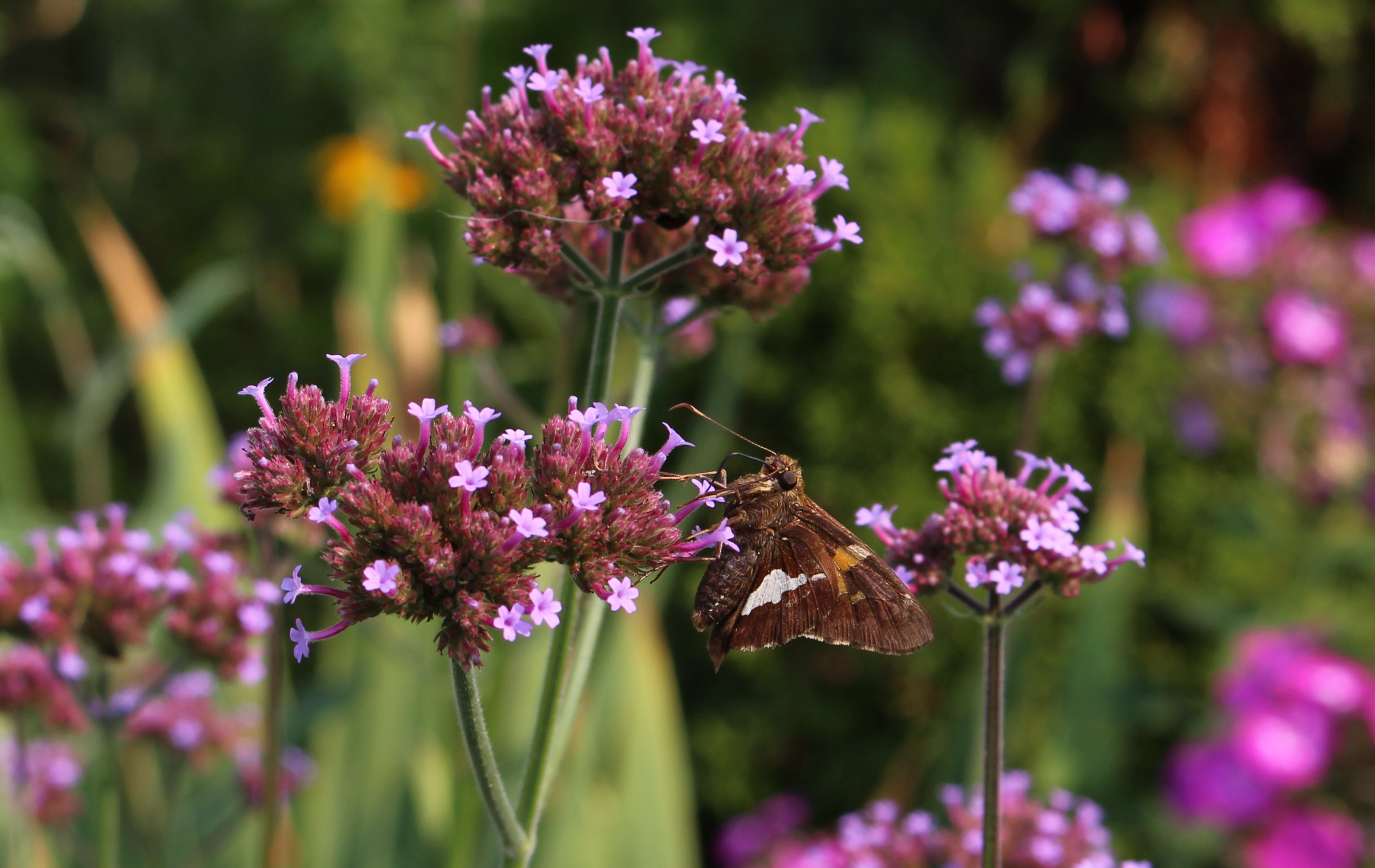
skipper butterfly on verbena

Skipper butterfly (I have no idea which kind) sipping nectar in the verbena patch.

I like to think my garden is relatively butterfly friendly with plenty of nectar plants and plenty of host plants to raise caterpillars on, but the whole idea of gardening with butterflies in mind always struck me as going against every other plant growing principle.  Butterflies are one of the freeloaders of the insect world.  If they weren’t so pretty and entertaining I’m sure most gardeners would focus on getting rid of them rather than putting out the welcome mat.  As youngsters they chew up your plants, and then as adults steal nectar away from the more industrious bees.  Bees at least spread pollen around, but most butterflies (less so moths) have delicate legs and strawlike mouths that just don’t pick up or transfer pollen well.  They fill their bellies up with nectar but the flower still has to sit and wait for a better pollinator to come along.

pair of butterflies

A table for two. I watched this skipper cozying up to quite a few single butterflies. No luck though, as each bloom went dry he left the nectar bar alone.

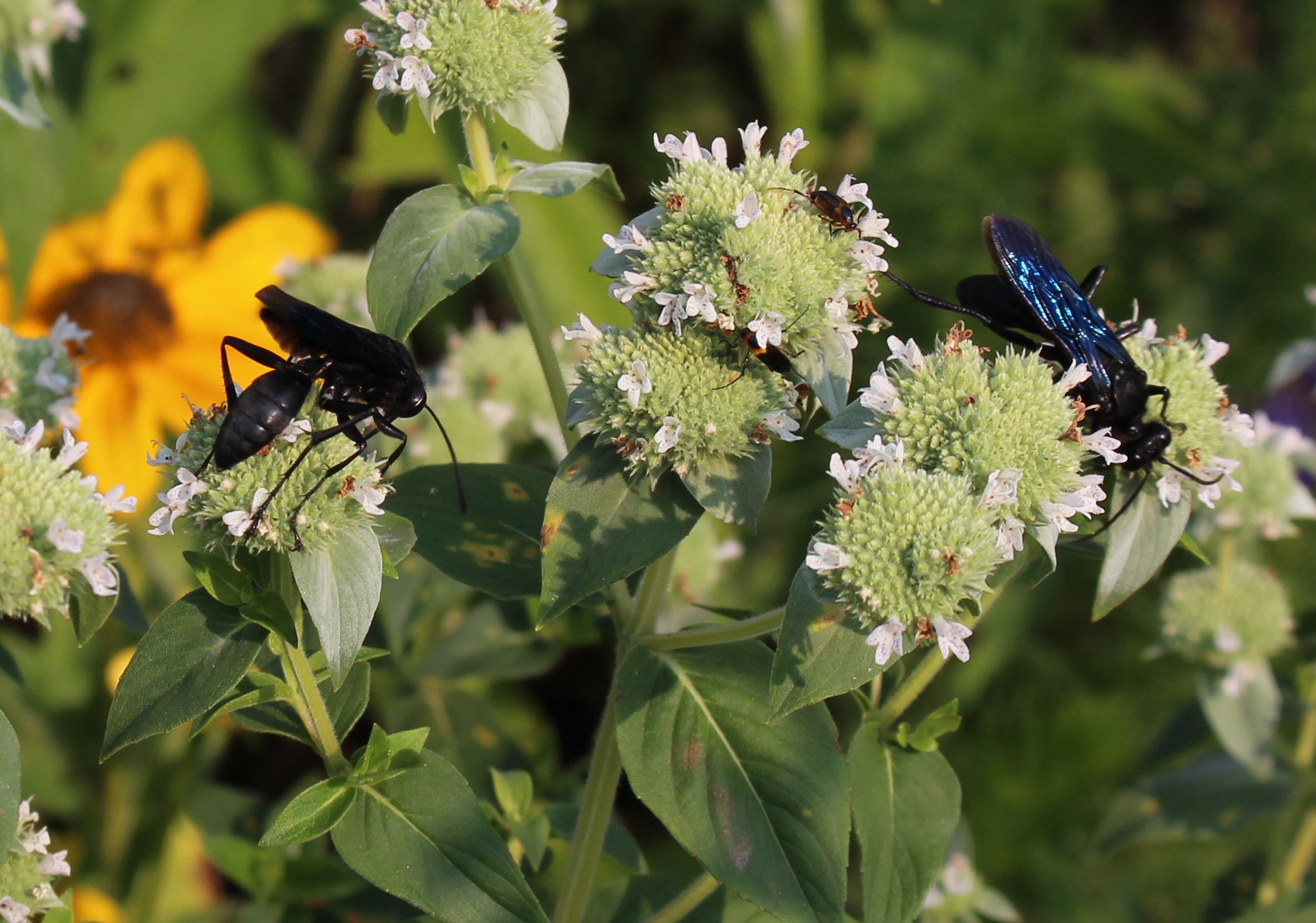
Freeloaders or not, butterflies are welcome here.  Actually with all the bees and wasps and birds in my garden it’s amazing any make it to adulthood to begin with.  Birds and wasps are always looking for a tasty caterpillar morsel to bring home… although I believe these blue dauber wasps are spider hunters.

giant swallowtail on buddleia

Blue dauber wasps, I think these are one of those creepy predators which immobilize their spider prey, pack them away in a tube with a little wasp egg, and then when the egg hatches the paralyzed spiders are nibbled up alive… yikes.

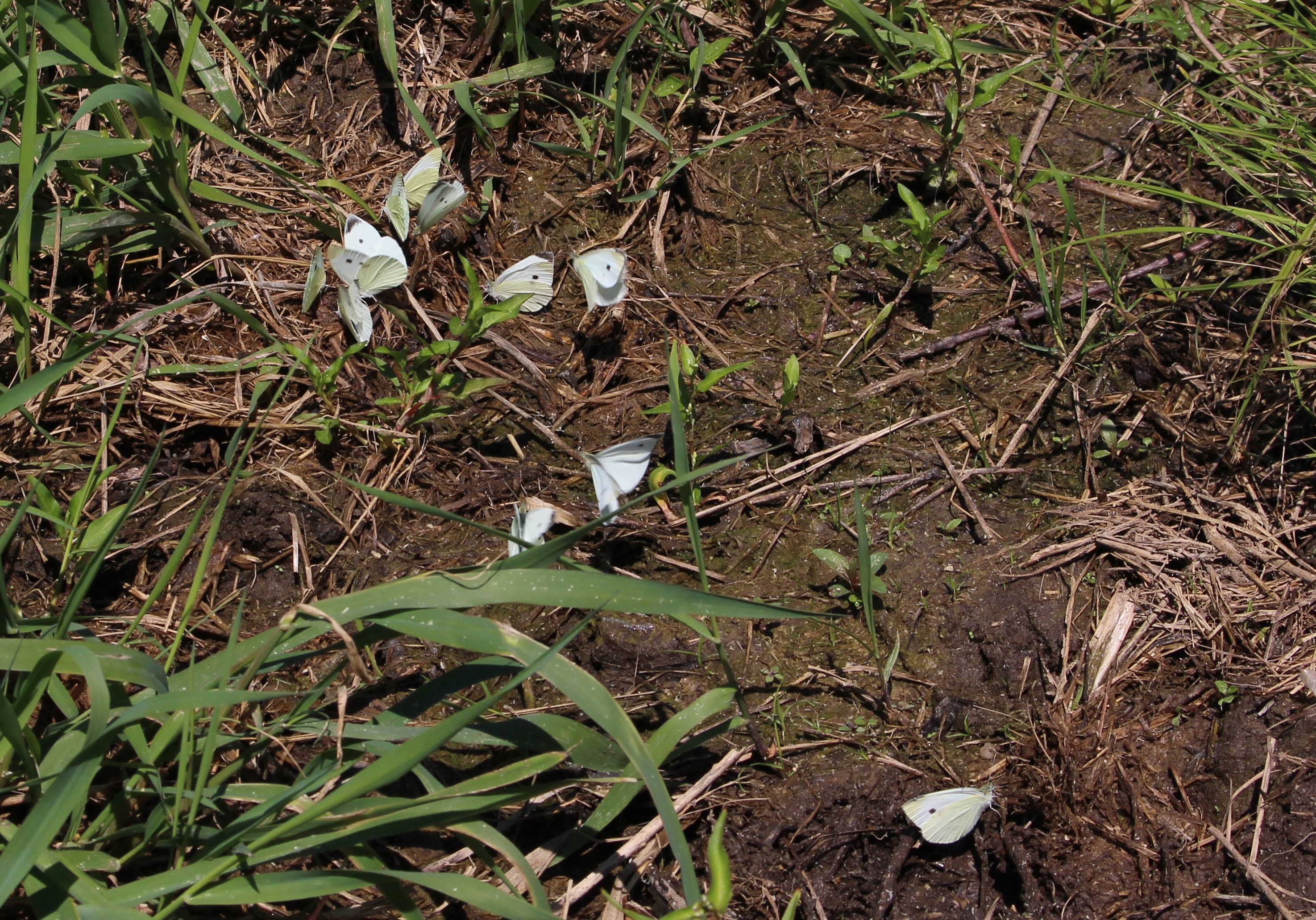
Butterfly cannot live by nectar alone, and while walking in a local state park I came across these cabbage whites “puddling”.  The damp spot where the butterflies were drinking was suspiciously downhill from the restrooms and their aging plumbing, and I suspect this seepage was rich in the salts and minerals that are otherwise missing from a nectar diet.  Not to paint the butterflies in too gross a light, but rotting fruit and urine are two yummies for a nice puddling party.  To each his own I say.

butterflies puddling

Cabbage White butterflies “puddling” at a damp spot, drinking in salts and minerals.

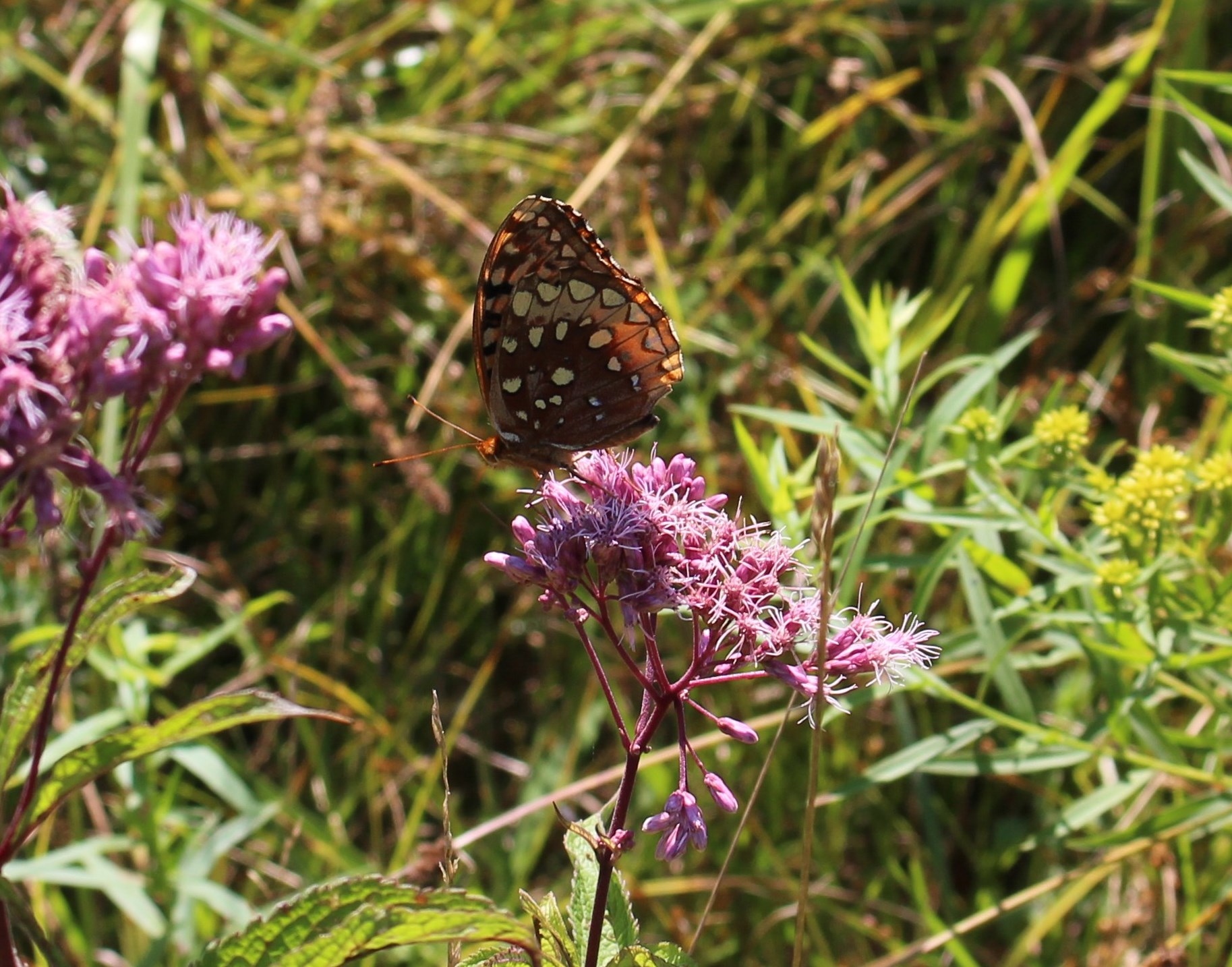
Also seen at the state park was this one.

butterfly on joe pye weed

Maybe an Aphrodite Fritillary(?) on joe pye weed? This one was also at the park although I’ve seen them in my garden too.

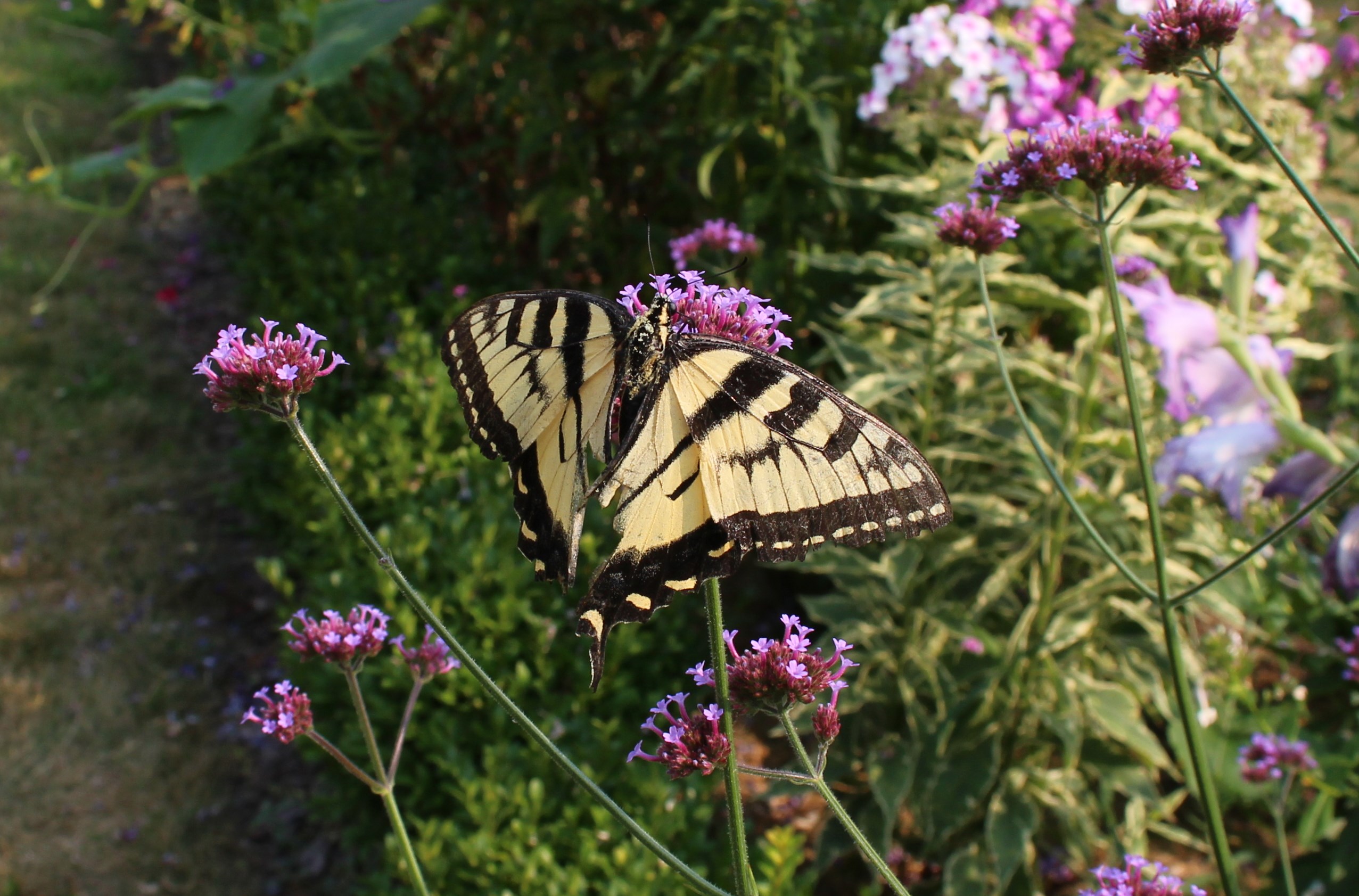
Everyone knows the Monarch, but the swallowtails are my favorites.  In the spring there were a few black swallowtails on the fennel, but the real fancy pants is the yellow Tiger Swallowtail.  This one seems to have run into one too many bird beaks.

tiger swallowtail

I don’t know how long they live, but this tiger swallowtail looks a little worn and ragged. Hopefully he found some energy in the verbena blossoms.

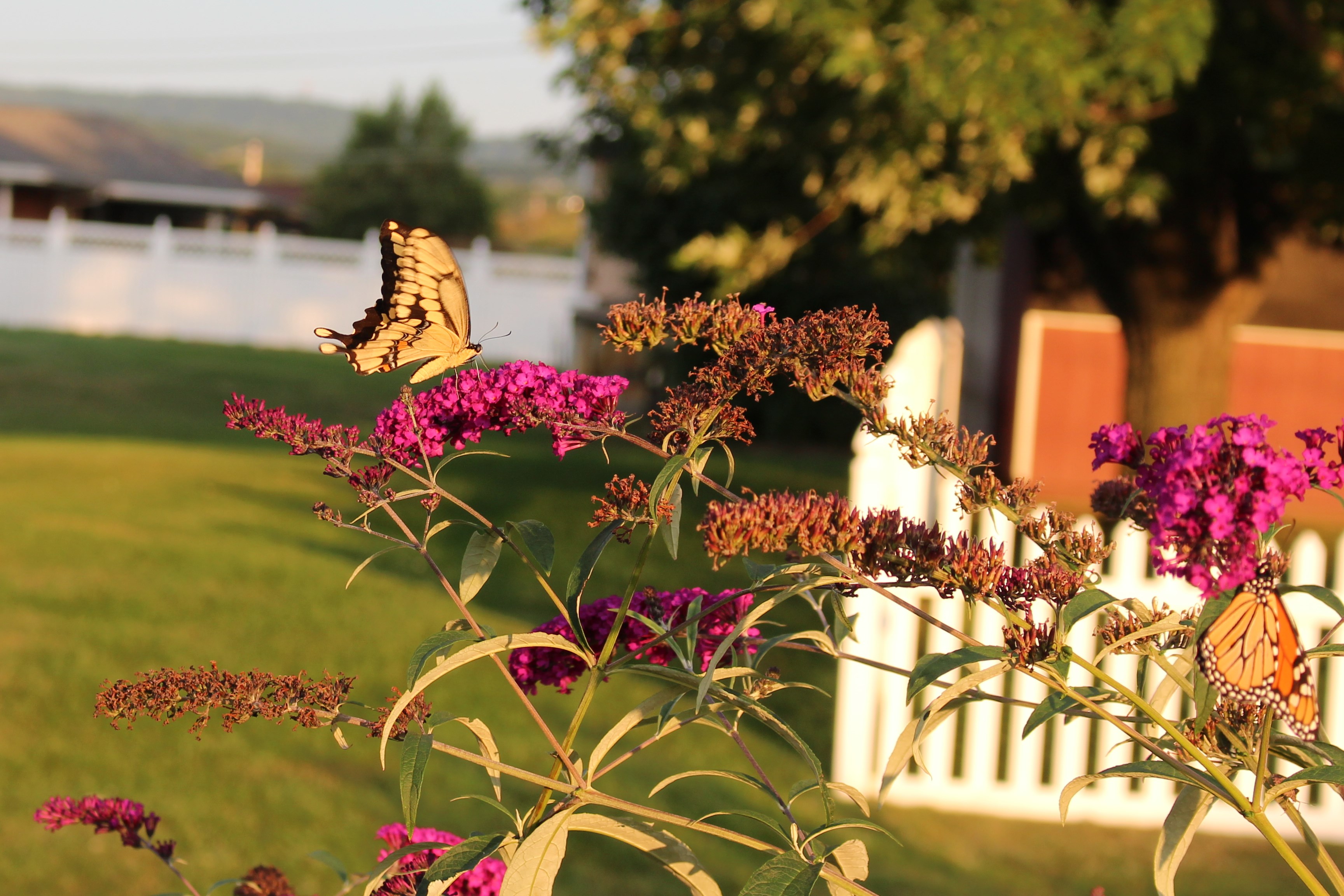
A not-quite-as-yellow as a normal Tiger Swallowtail turned out to actually be a Giant Swallowtail and I was quite pleased.  On the first visit I didn’t get the camera, but when he was back the next day I gave it a go.

giant swallowtail

A Giant Swallowtail, not much different than the Tiger when the wings are up.

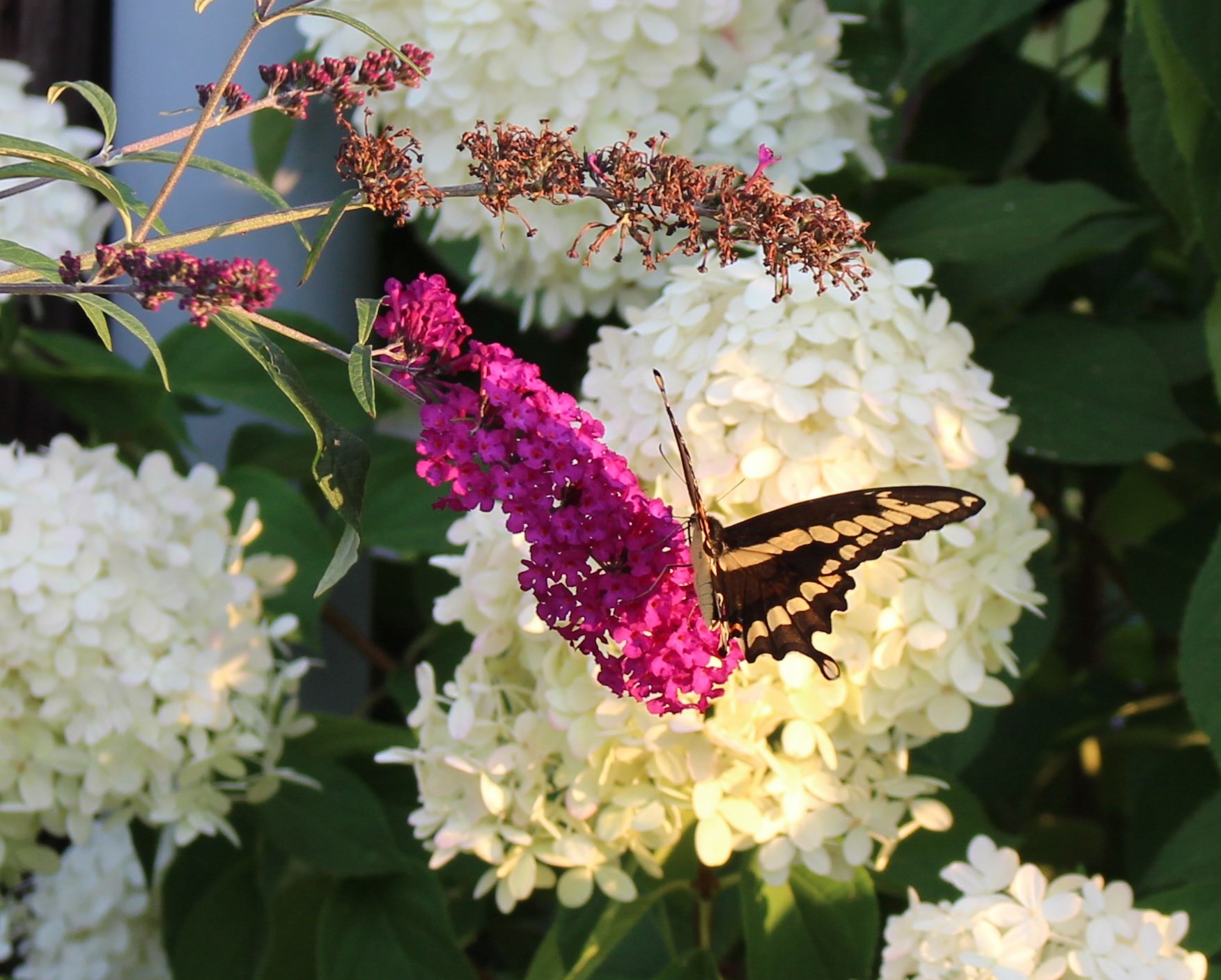
If only the breeze would have calmed, maybe I could have had a clear shot, but as it was he kept on fluttering to keep his balance.  I wanted to get a shot of the darker backside to the wings.

giant swallowtail butterfly

This Giant Swallowtail wasn’t much larger than the Tiger, but in much better shape. Too bad he wouldn’t sit still for his closeup.

So there it is, an August summary of some of the fluttering butter which has been passing through.  Wish the shots could have been clearer but I’m just grateful I was able to get the ones I did!  Hope you enjoyed.
Garden Bloggers Foliage Day -Aug.2014

For nearly three years Christina of Creating my own garden of the Hesperides has been hosting the meme which focuses on foliage in the garden.  I believe her intention was to explore the important role which foliage plays in the garden, and remind everyone that although flowers often steal the stage, foliage remains to carry the show.  Going out this week with the intention of focusing on foliage surprised me in two ways.  First of all I always assumed I was one of those “immature” gardeners who always falls for the flash of flowers and doesn’t have much foliage interest.  That was wrong….  apparently nearly all flowers come with some kind of foliage (who knew!) and even the most flower blinded gardener will have foliage.  Secondly I learned another important revelation…. my garden looks much, much better in close-ups!

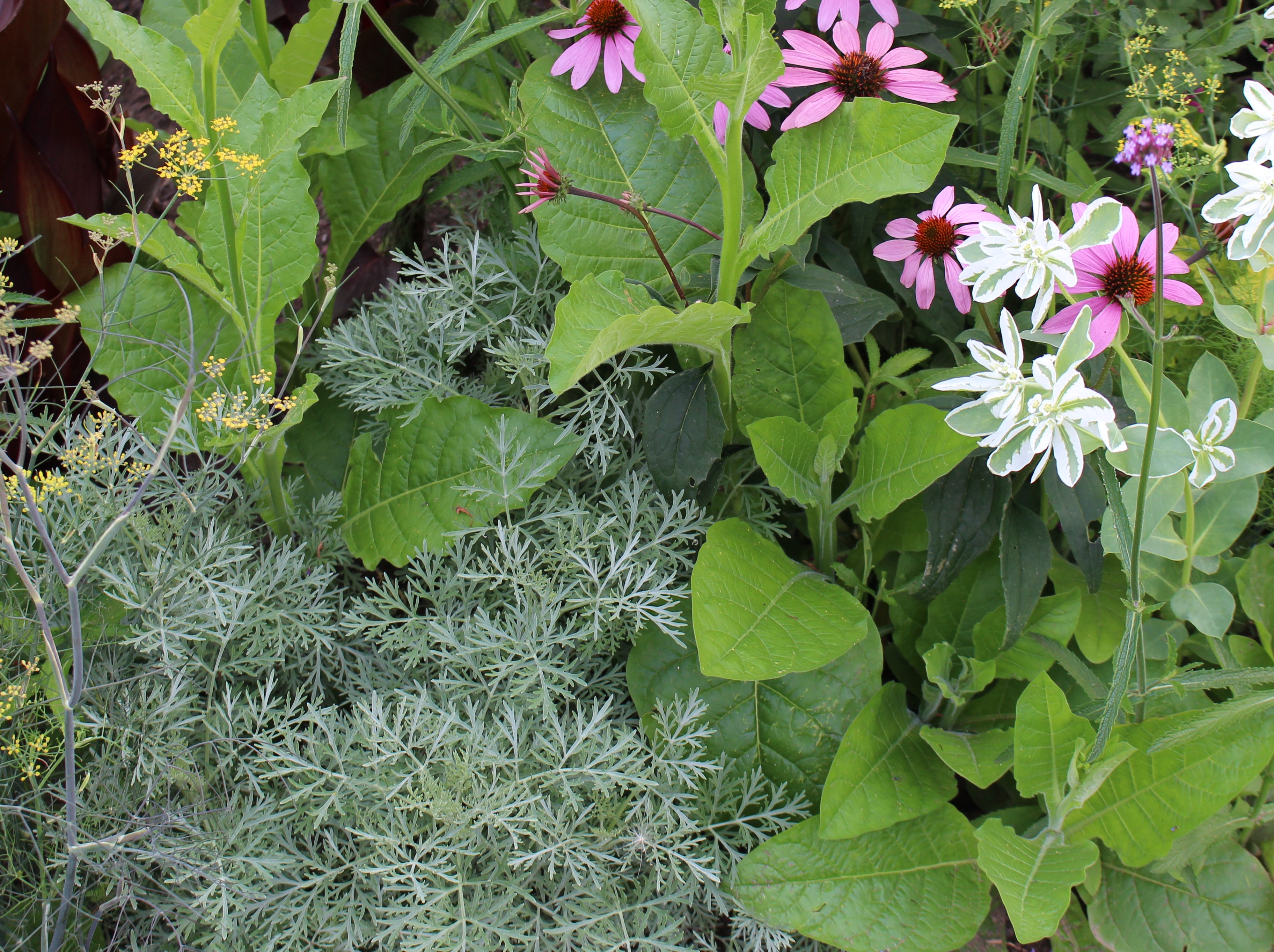
Powis castle Artemisia, snow on the mountain, nicotina, and Echinacea

I’ve grown Artemisia “Powis Castle” before, but never here in Pennsylvania. It was planted this spring and I love the gray foliage mixed with all the other stuff that seeded in with the compost. (fennel, nicotina, Echinacea, snow on the mountain)


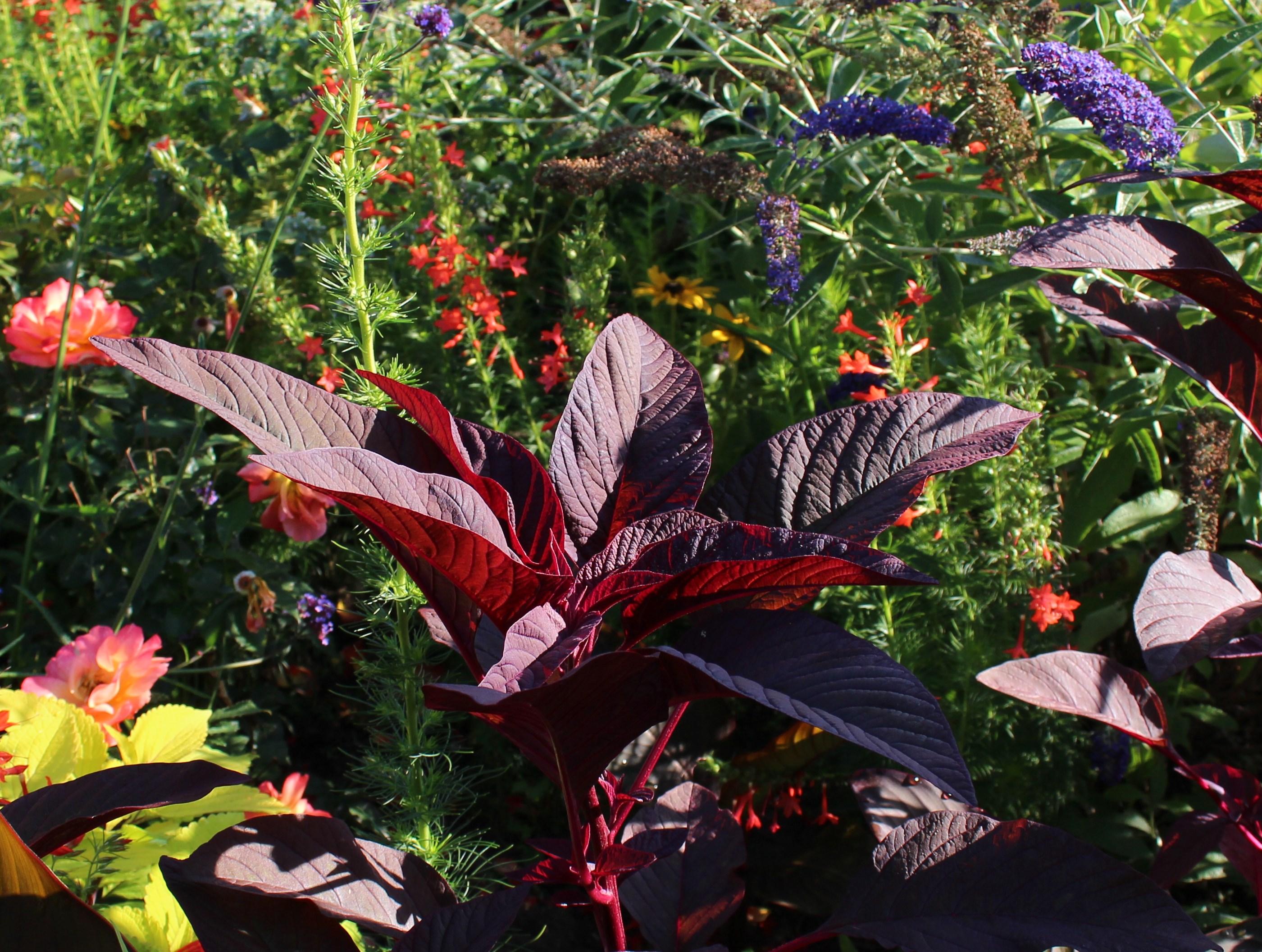
Starting with A and Artemisia is as good place as any, and while we’re here I guess we’ll just keep going along the front street border.  Soil improvement this spring and moving things around brought in plenty of seed-laced compost, and “Hopi Red Dye” amaranthus is easy to spot with its dark red leaves.

amaranthus hopi red dye

Amaranthus “Hopi Red Dye”, as easy to grow as its more weedy relatives.

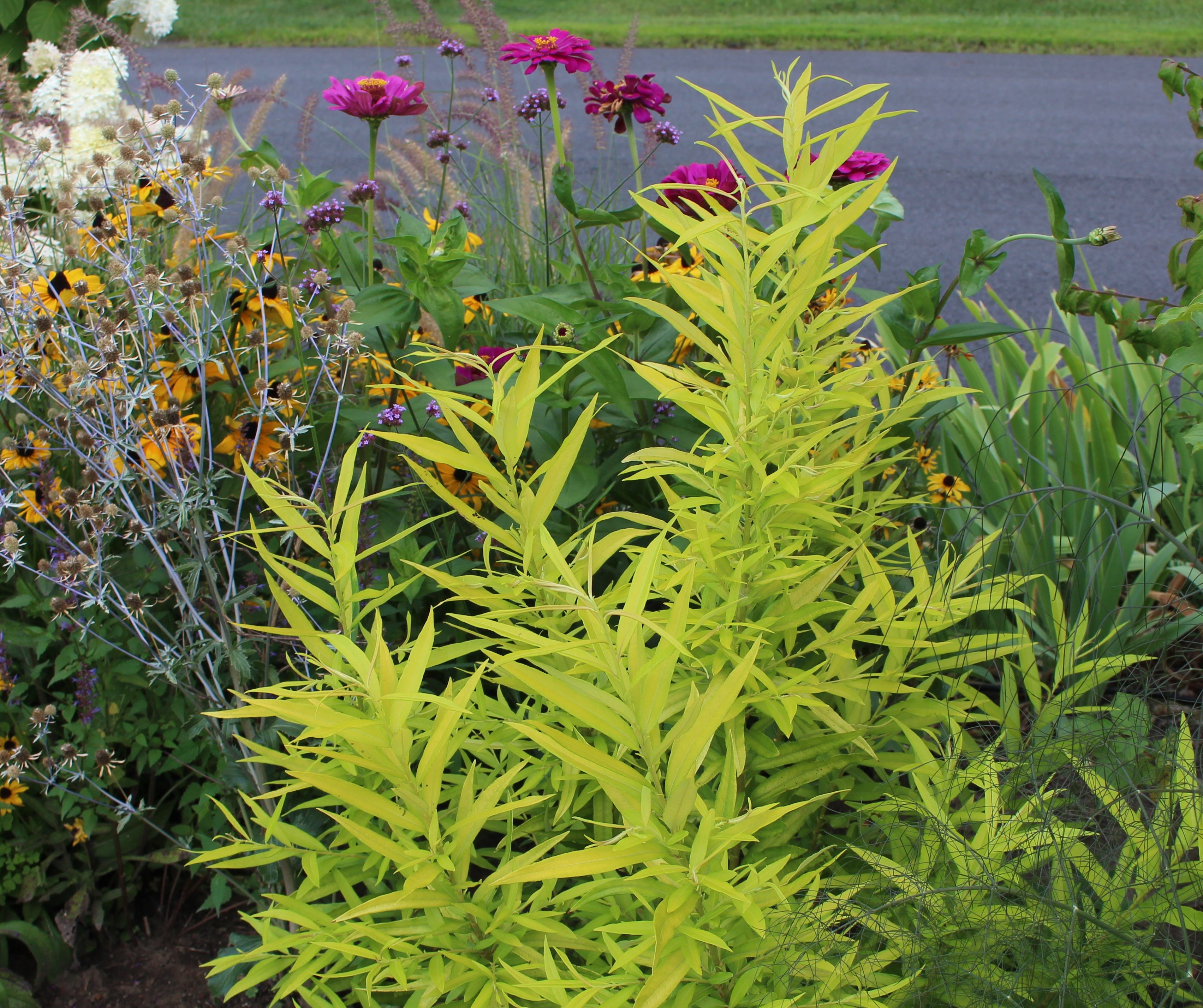
I like purple leaves, but I don’t think I can resist a plant with yellow foliage, and this “Golden Sunshine” willow was an impulse buy last year.  Rabbits mowed it down last winter but willows don’t sulk and this one bounced right back.  Actually I think cutting this one back to the ground each spring would probably be the best way to keep the bright new foliage coming.

golden sunshine willow

Salix “Golden Sunshine”… or at least I think that’s what this willow goes by.  I really need to have a better recording system for my plant IDs.

If pushed I might even admit to having too much yellow foliage around the yard.

arundo donax variegata in perennial border

Arundo donax “variegata” in the front perennial border. An explosion of color with “Black Knight” buddleia, pink agastache, and yellow fennel blossoms. Btw, the arundo is probably 8 feet tall and the butterfly bush 6. Also it’s unusual for the grass to have this much color so late in the summer. Usually the heat makes it go all green.

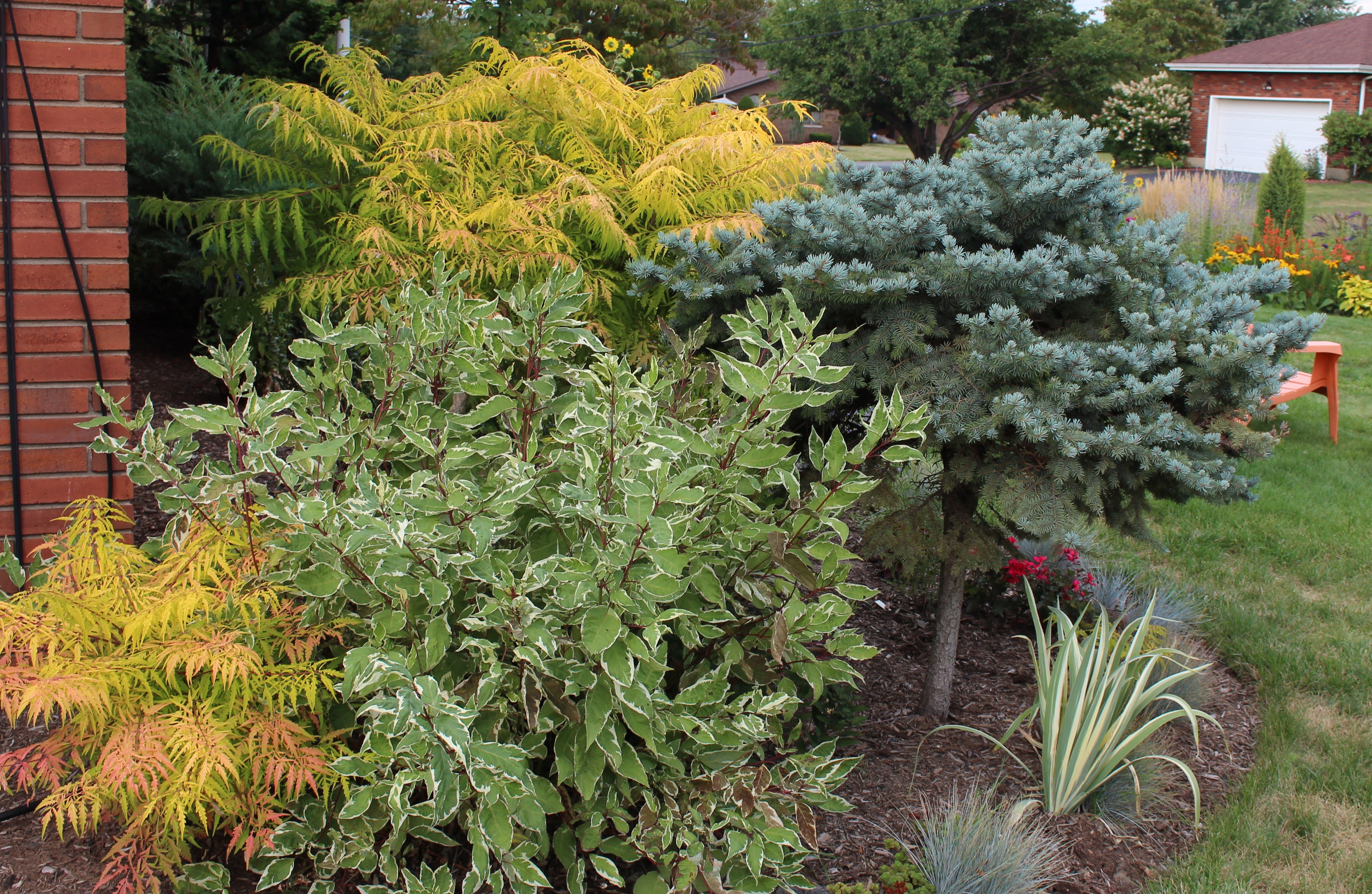
Here’s a little blue in the blue spruce I moved last spring…. and more yellow.

sumac tiger eyes with blue spruce

Have I ever mentioned my love for the foliage of “Tiger Eyes” sumac? It suckers around a bit, but in my mess of a garden that’s no big deal. I haven’t yet decided if this is a formal enough planting for the front of the house though.

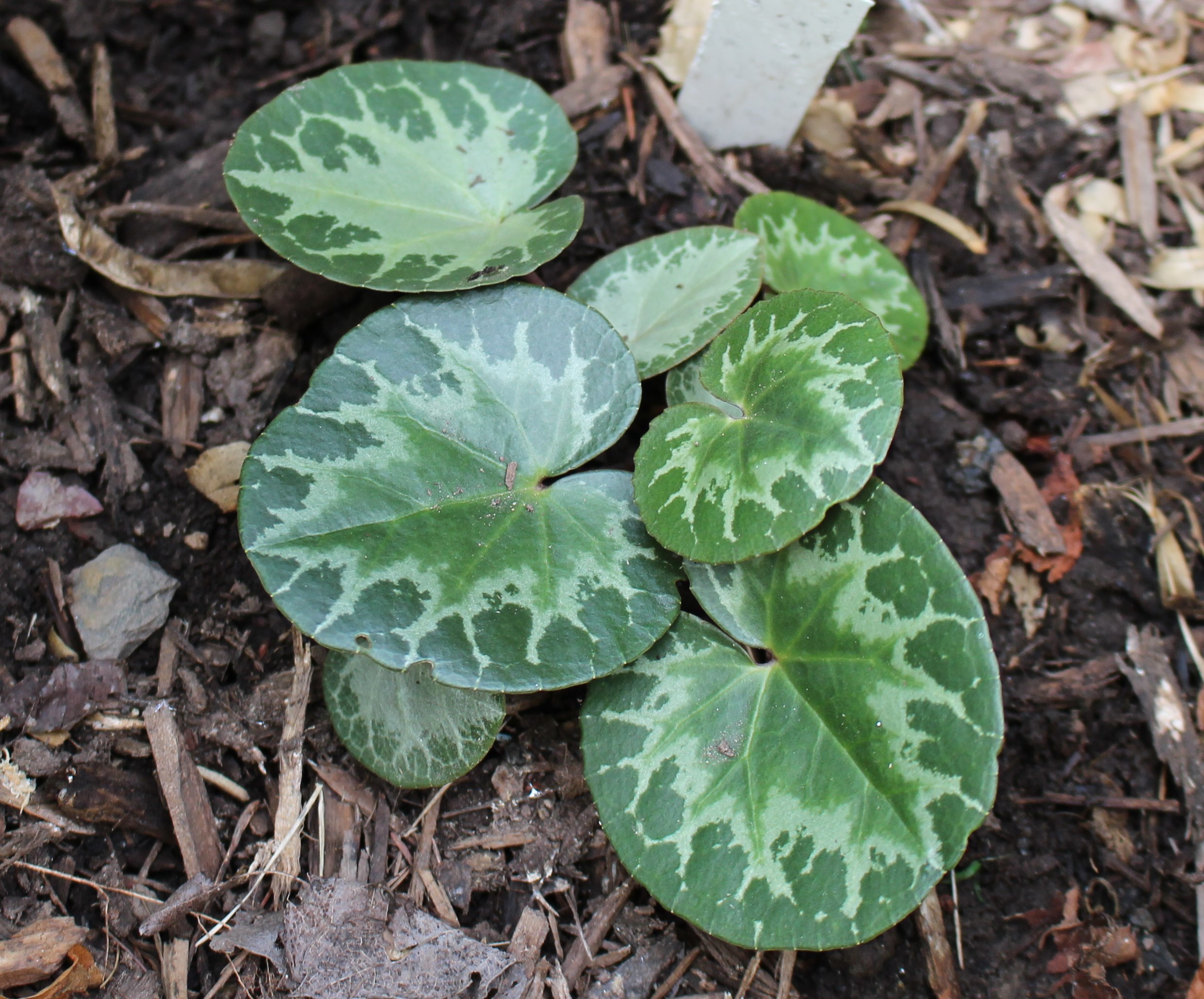
A foliage post without mentioning a cyclamen is just crazy, so here’s my little c. purpurascens plant (probably two or three plants since I see at least two leaf forms).

cyclamen purpurascens foliage

Good things come in little packages, this cyclamen purpurascens is a baby at only maybe 5 inches across but it might be my favorite cyclamen right now…. I’m sure that will change as others appear 🙂

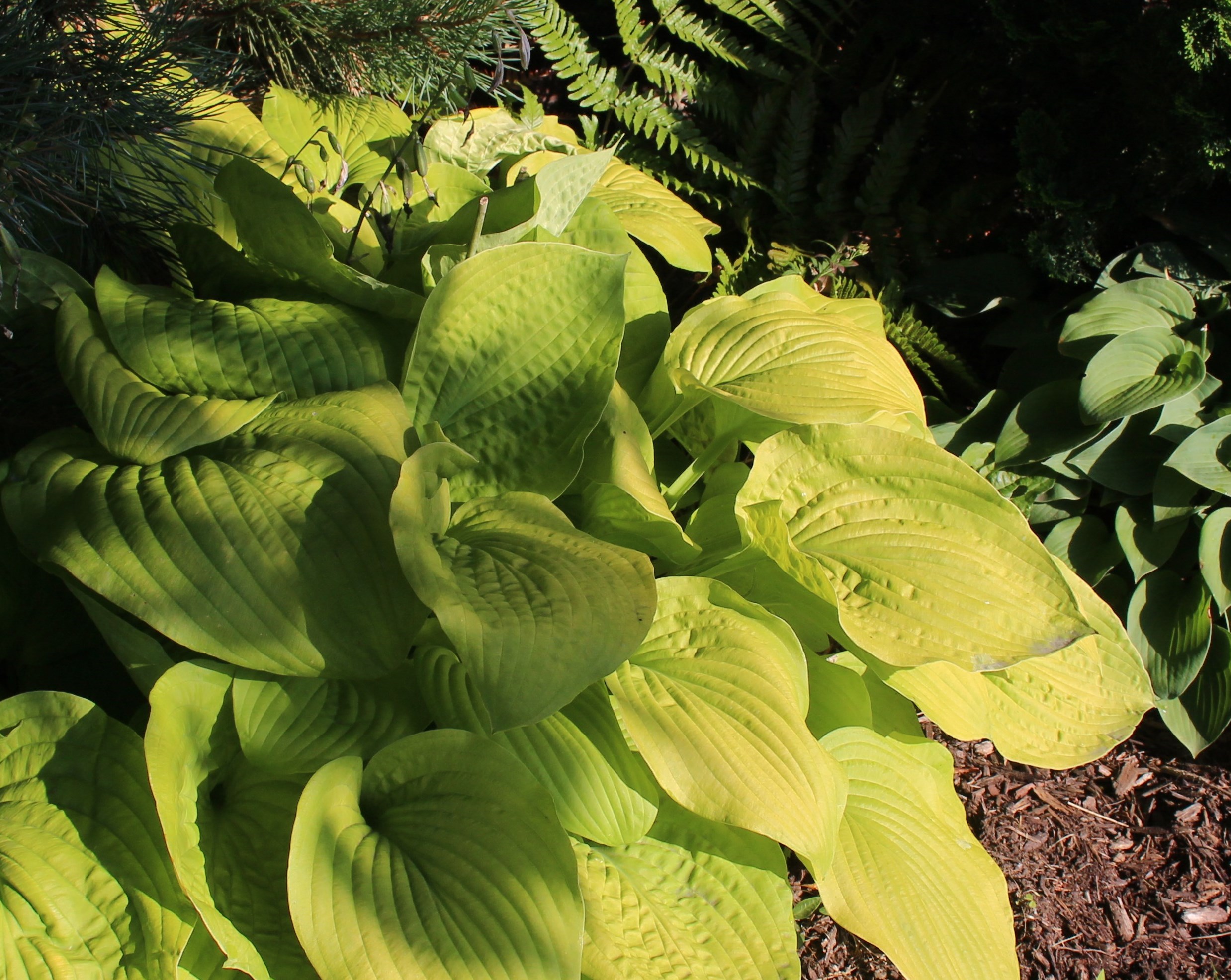
I took a lot of pictures so this may be all over the place, but I’ll try to finish up the front yard first.  Sometimes people think of hosta when they hear the word foliage, and I’ve seen them in a few gardens here and there (just a few!).  Here’s “August Moon” a favorite old variety which lightens to nearly white when in full sun.

hosta august moon

Hosta “August Moon” in one of my few shady areas.

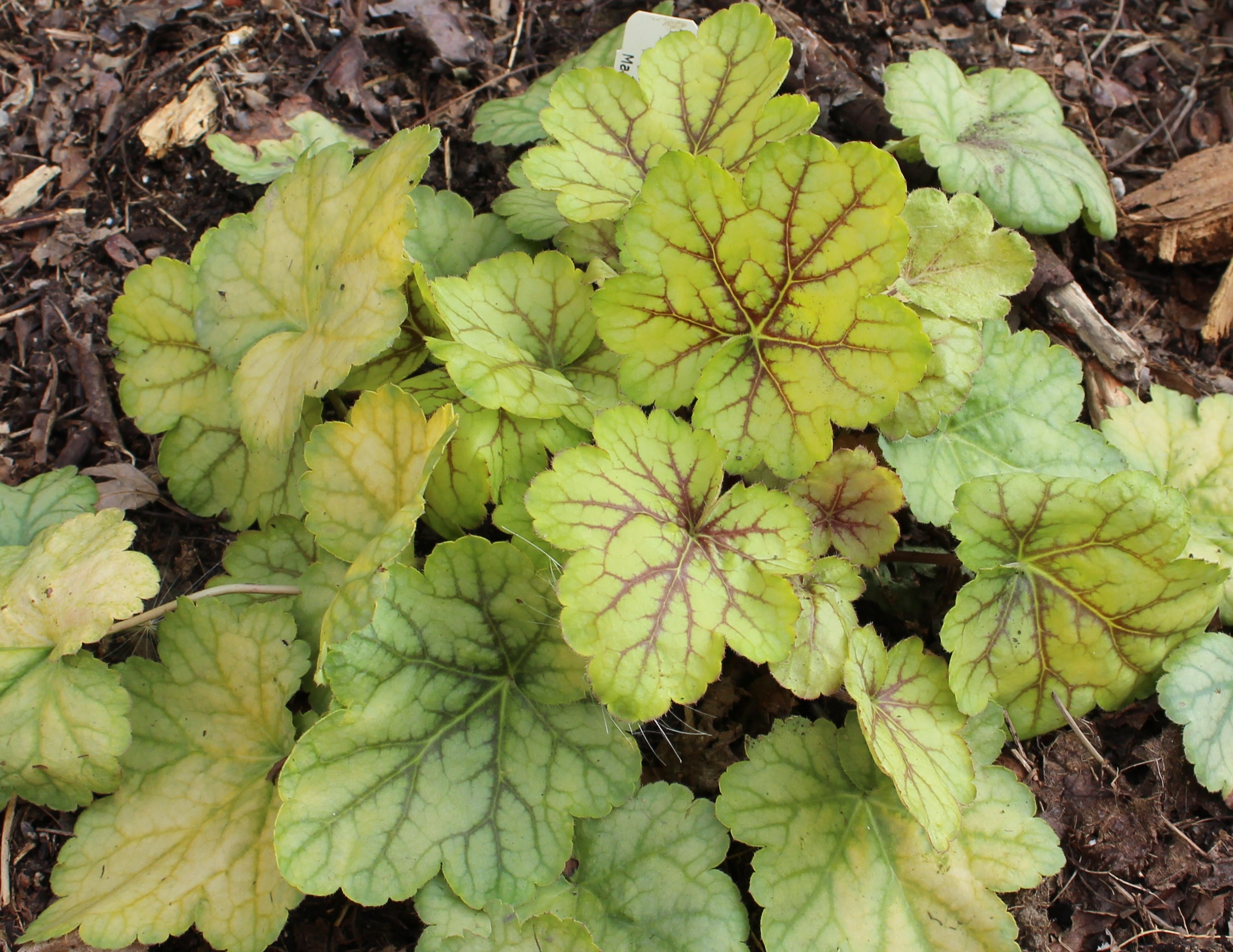
Moving into the back near the (another yellow) sunflowers is the new heuchera patch.  Someday you’ll suffer through an all out heuchera post, but until they grow in a bit I’ll let you off with just one.

heuchera circus clown

One of several new heuchera plants, heuchera “Circus Clown” is off to a good start with a nice mulch and some much needed rain. It’s amazing how the colors on these plants change throughout the year.

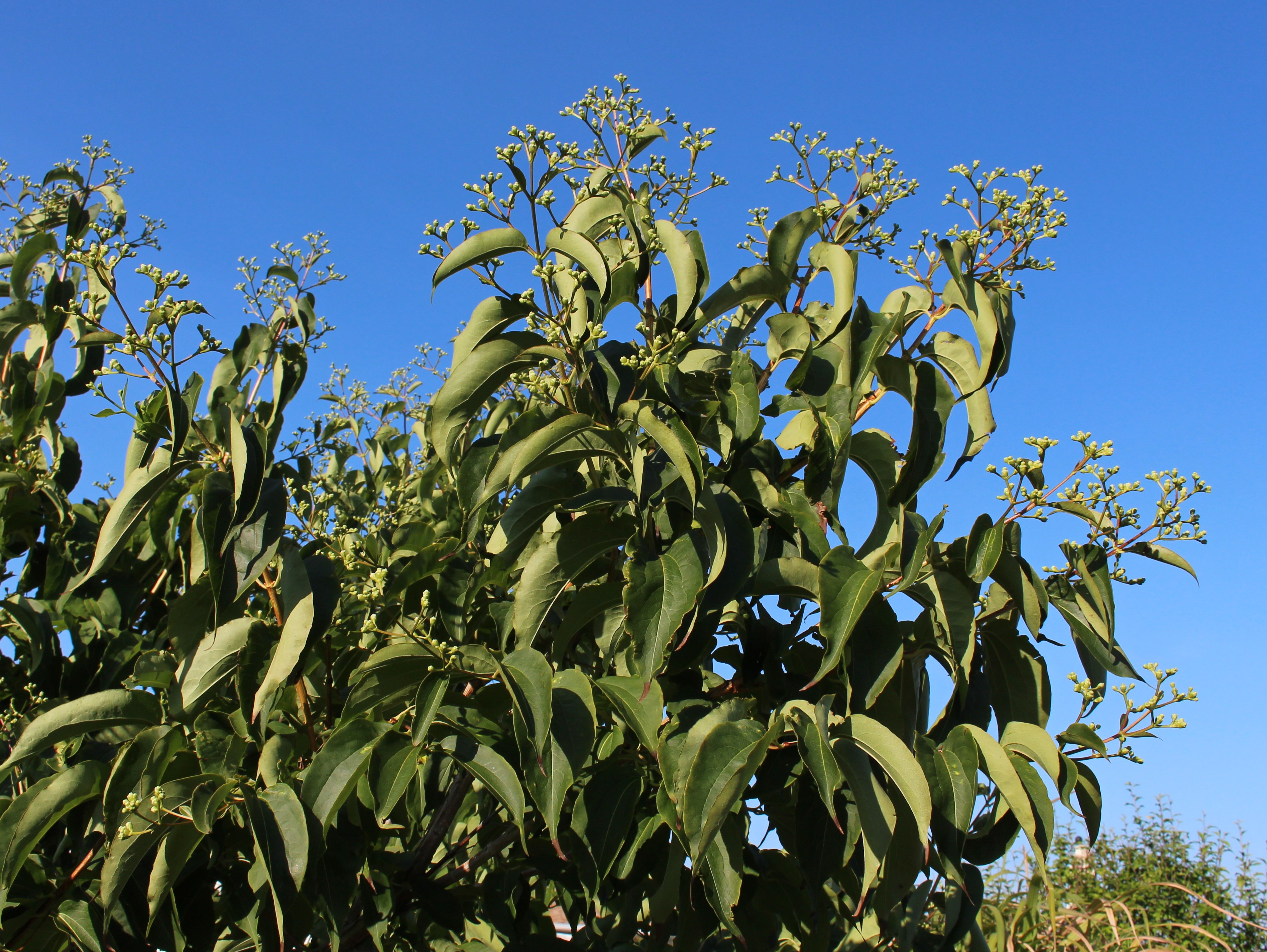
The reason the heuchera can survive here is from the shade of a Seven Sons shrub/tree (heptacodium miconioides).  My plant gets cankers and loses trunks every now and then but I hope it someday gets past that.  Right now I’m enjoying the rich green of the curled stiff leaves.  Kind of a coarse look, but for a guy with so many cannas and dahlias refinement isn’t one of my strong points.

heptacodium miconioides leaves

Heptacodium miconioides leaves against a perfectly clear blue sky.

Enough with the babbling.  Look but don’t touch.

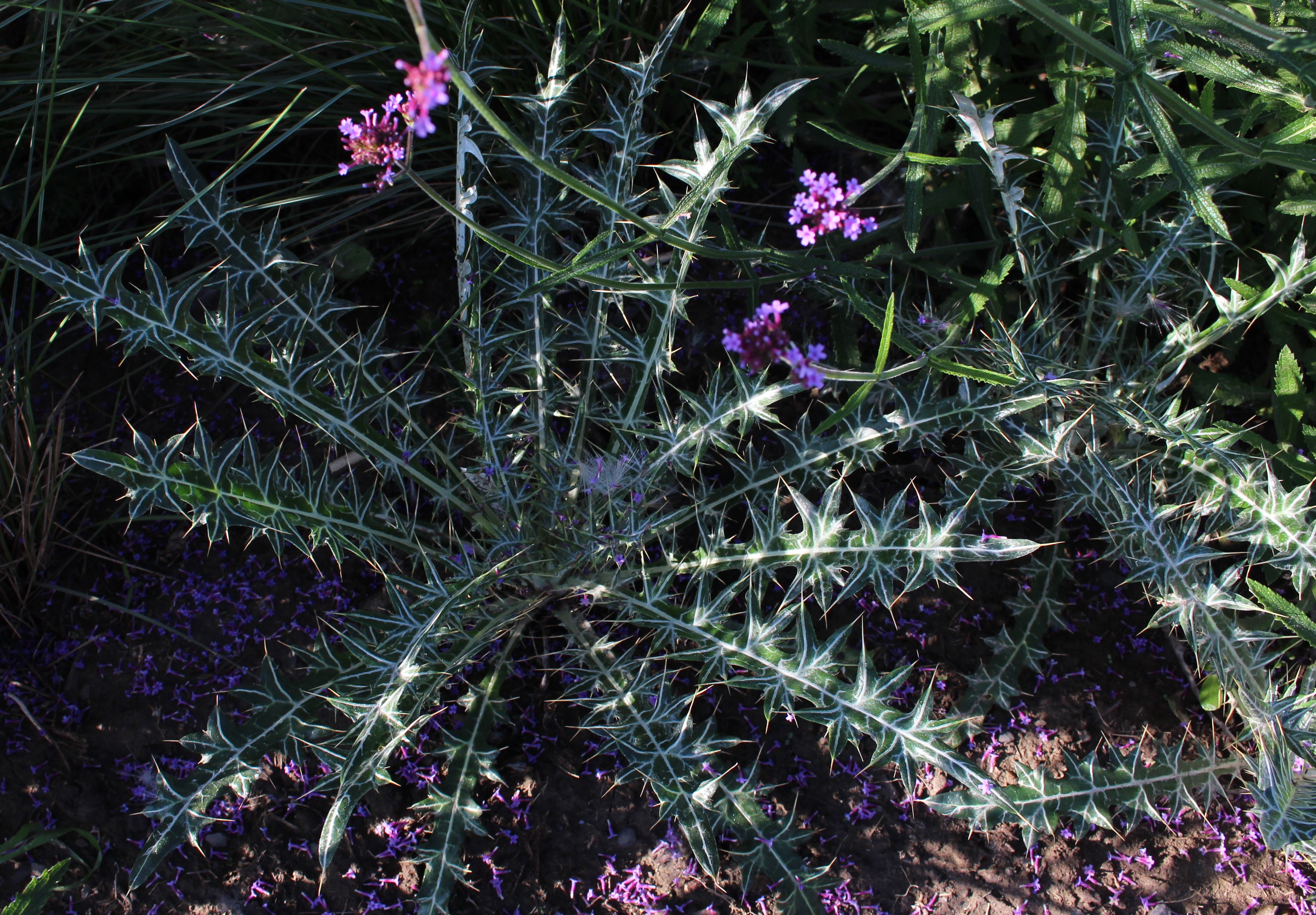
Ptilostemon diacantha

Ptilostemon diacantha with verbena bonariensis blossoms. Of course this is where all the missed baseballs end up rolling.

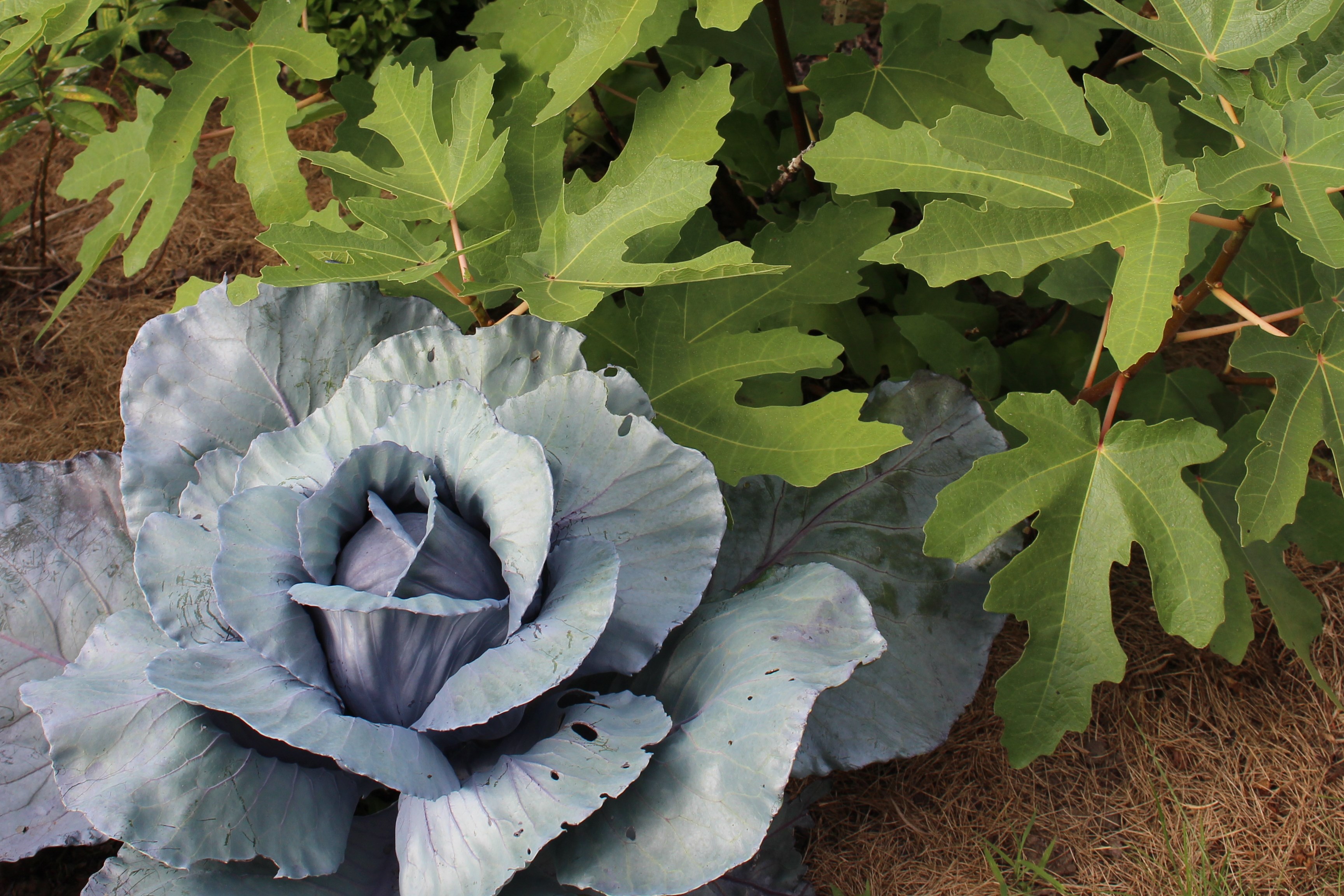
Almost good enough to eat, plants in the vegetable garden (or potager when I’m feeling fancy) also can put on a good show.

red cabbage and fig leaves

Red cabbage and fig leaves, the fig would be happier in Christina’s Mediterranean garden but it hangs on here and the perfectly cut leaves make up for not getting any actual figs 🙂

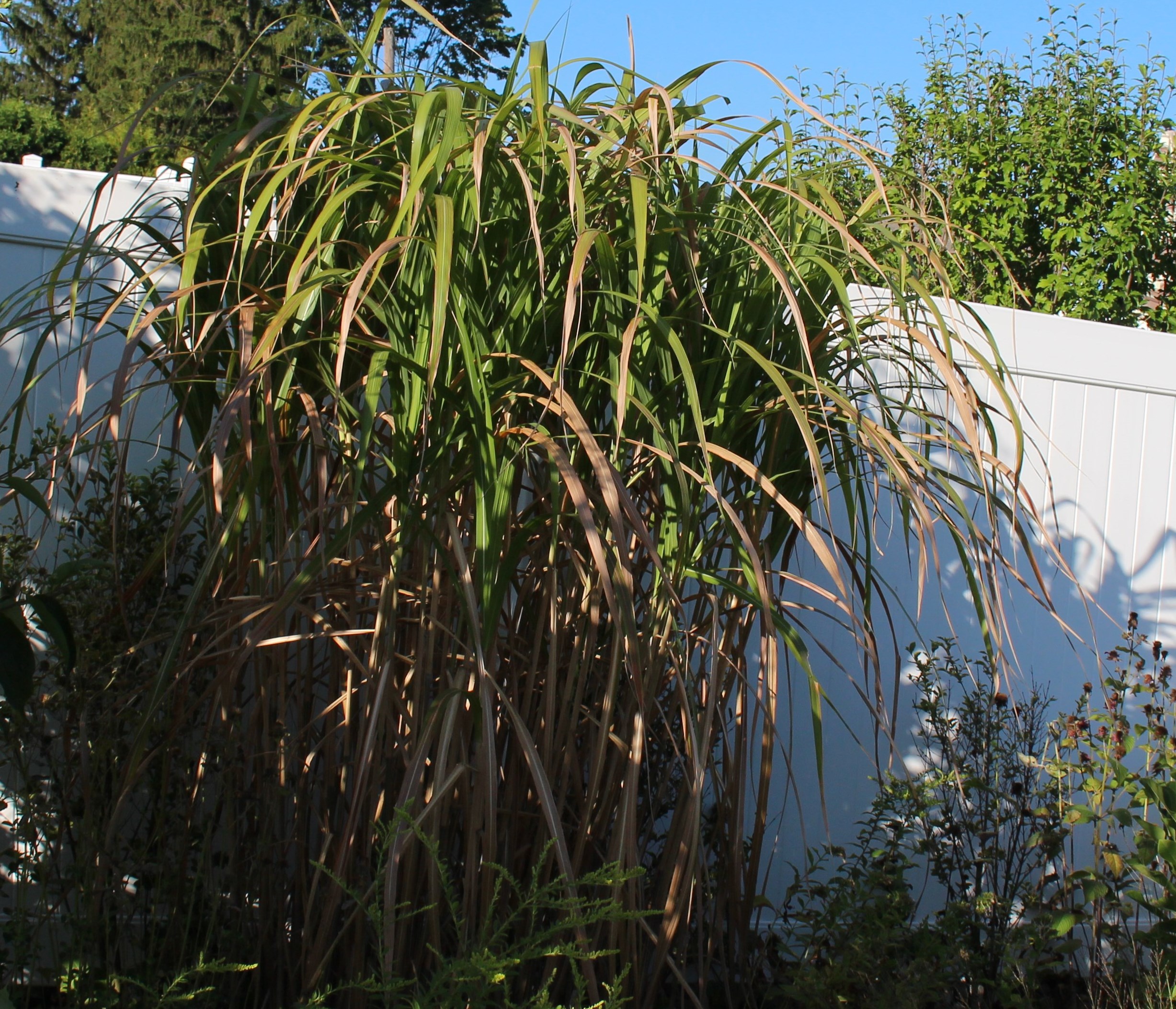
Not all the foliage news is good.  Miscanthus giganteus was off to a good start but our dry spell threw it for a loop and killed off all the lower leaves.

miscanthus giganteus

Miscanthus giganteus wants the steady moisture which I’m too frugal to supply. It might be easier to get something else for this spot.

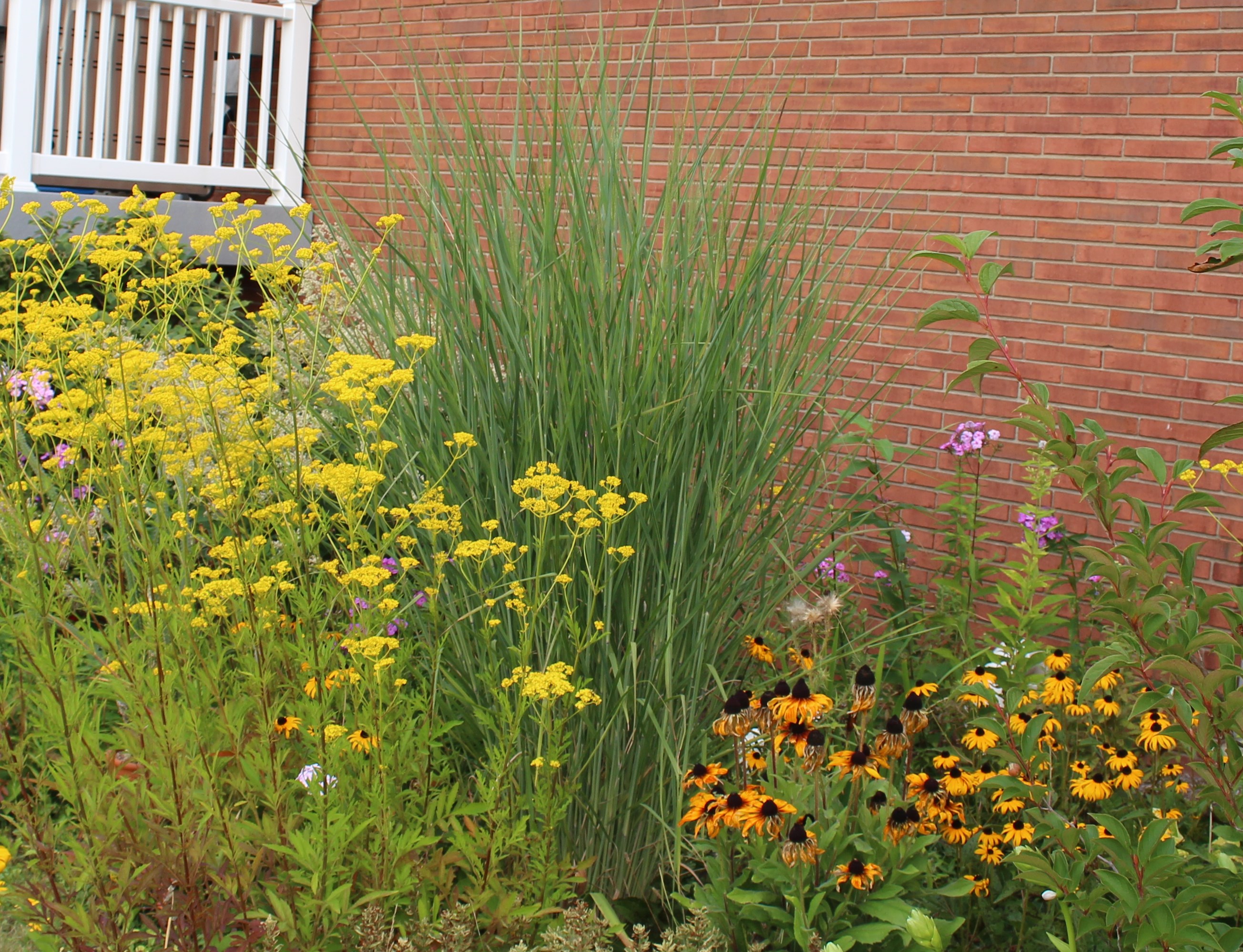
Back by the house is a panicum “Cloud Nine” which is much more comfortable with drought.  I hate this bed and constantly neglect it, but nature did its own thing and filled the gaps with rudbeckia, phlox, and patrina scabiosifolia seedlings.  Sure beats the boring mulch I had there before.

panicum cloud nine with patrina

The stepchild bed with Patrina, panicum, rudbeckia, and phlox.

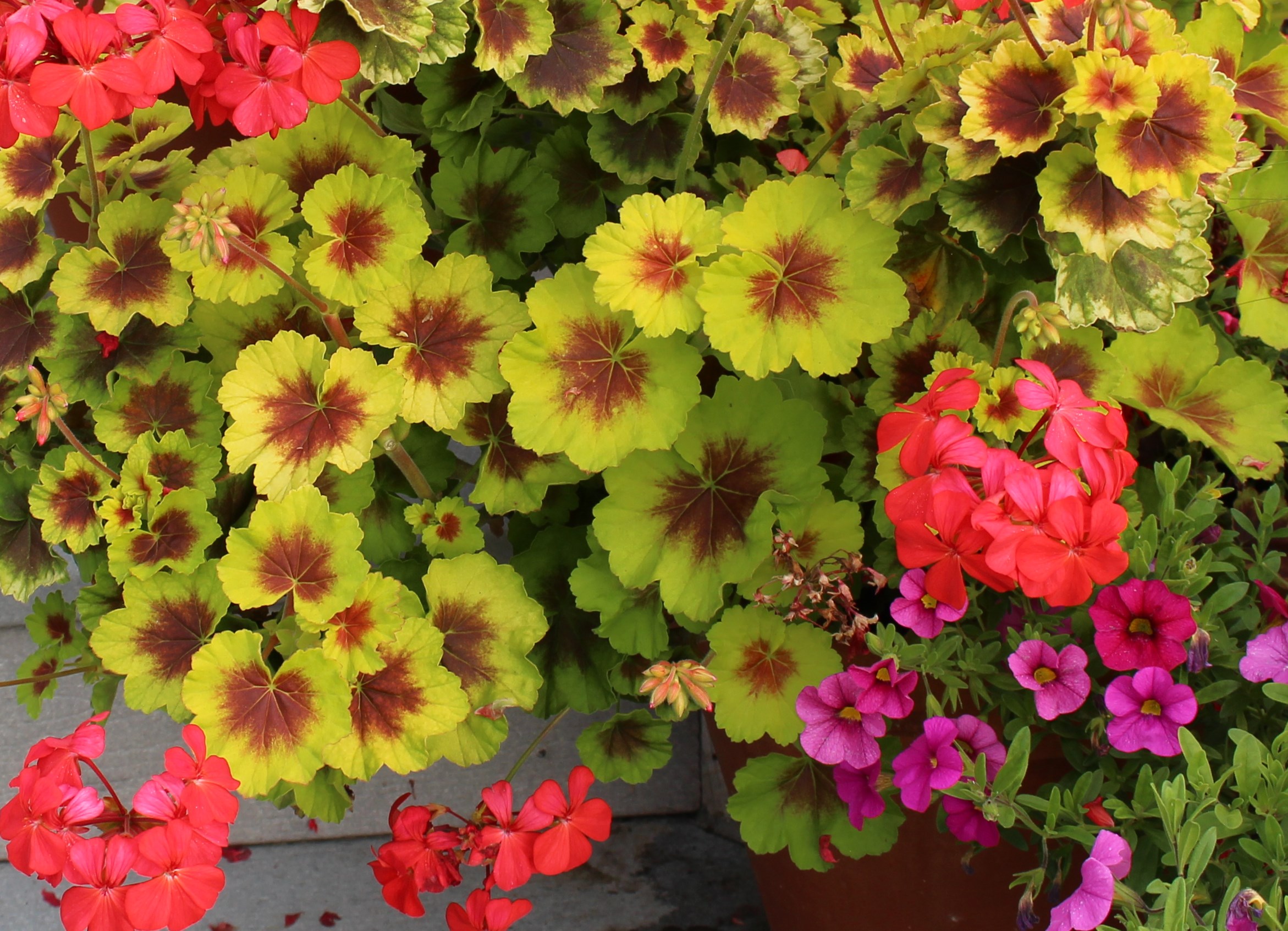
So much for anything that even approaches subtlety.  My tropicals come next, and first off are the geraniums (pelargoniums) which in my delusion and denial I have added to the overwinter and collect list.

zonal geranium

I have to dig up the name for this one, it’s in its second or third year with me and keeps looking better.

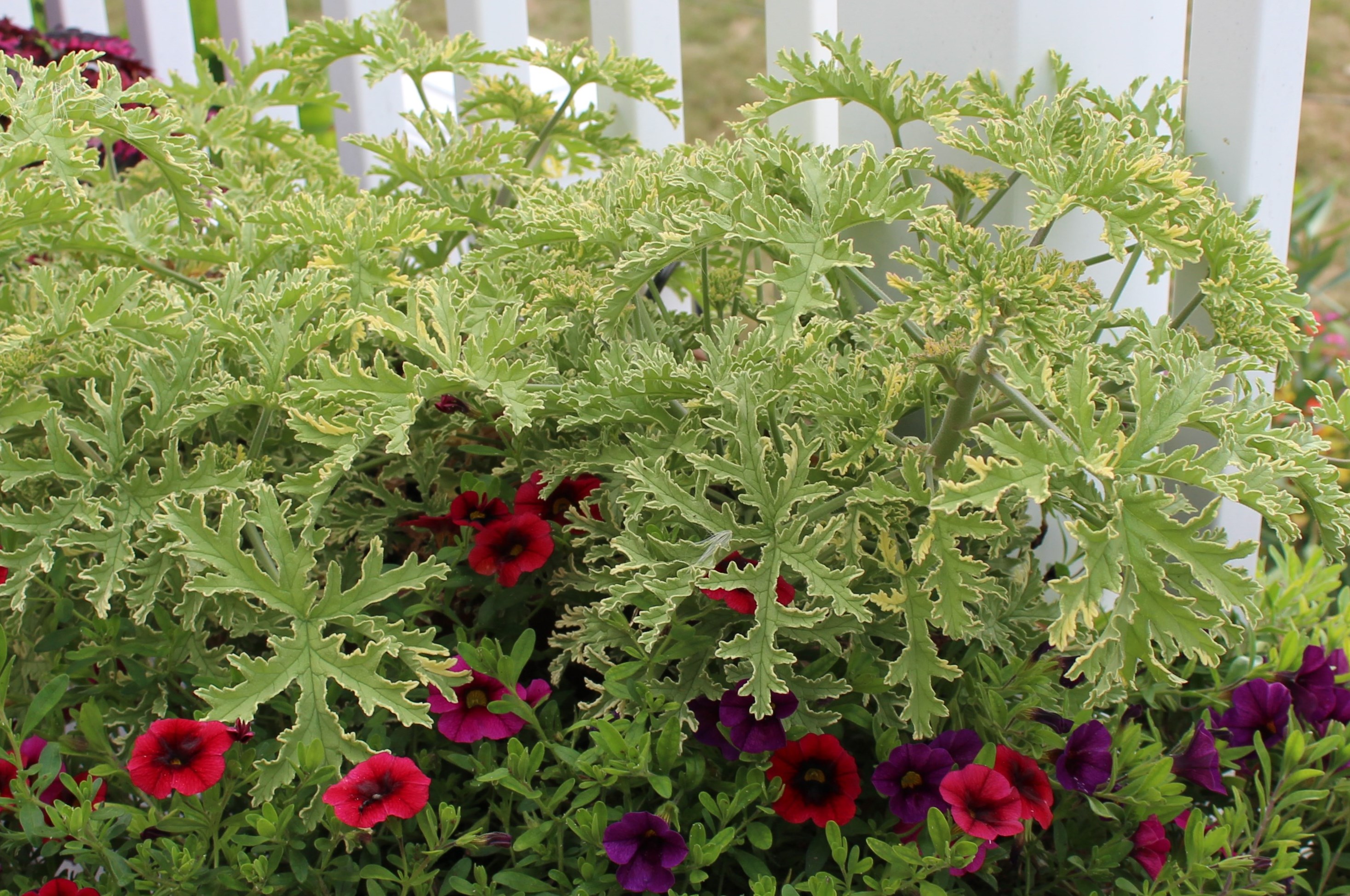
A scented leaved geranium (pelargonium actually) with cut leaves, variegation and scent.  Too much or something for everyone?

scented leaf geranium

This scented geranium is another plant who’s ID is lost in the pot-full-o-tags database. I should probably work on that.

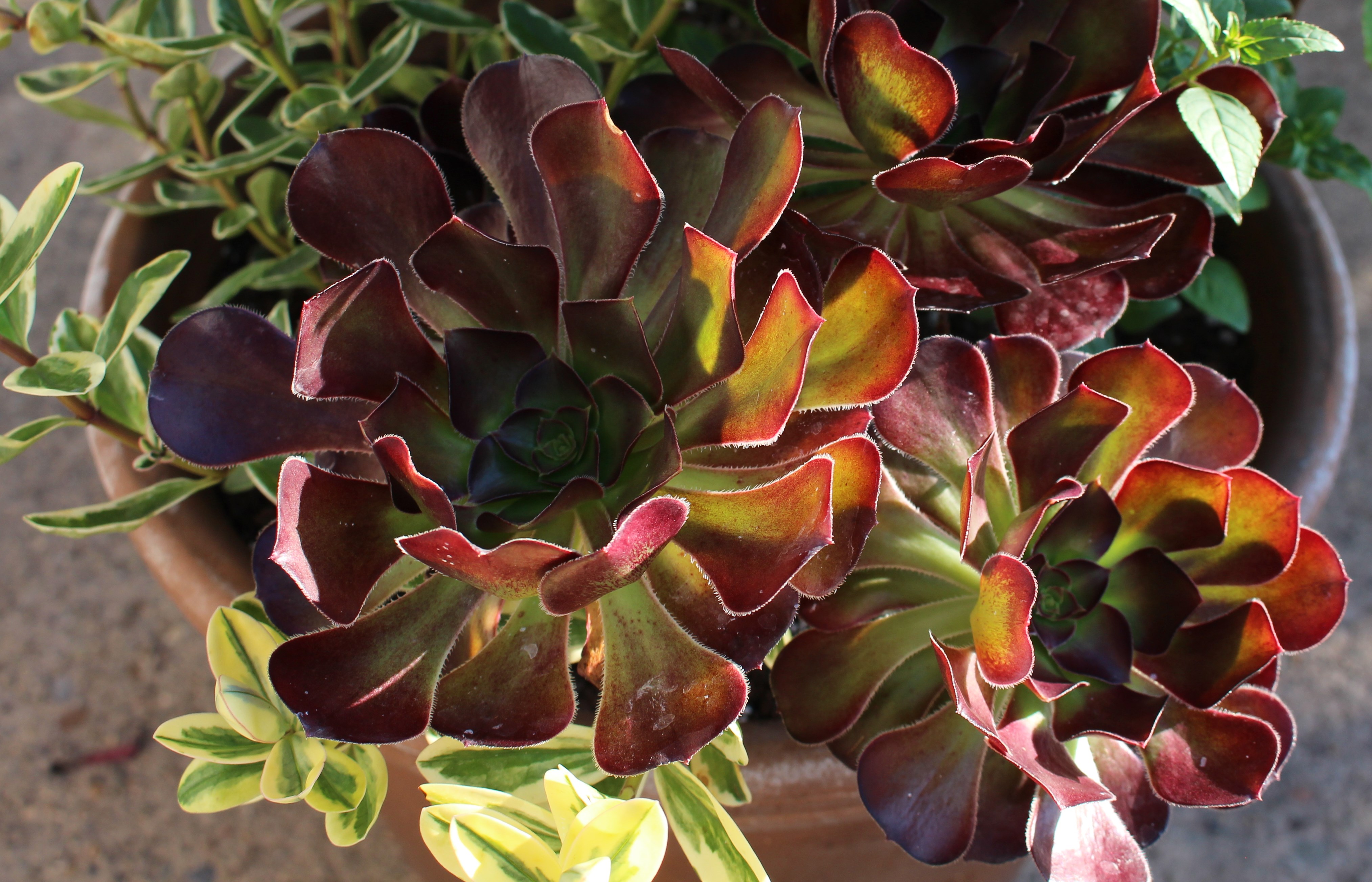
Another one to overwinter in the garage, my first aeonium is looking well.  Hopefully it can handle the high-water location I planted it in -a pot with a variegated hebe and cape fuschia (phygelia).

aeonium with variegated hebe

This one’s label must still be near the top of the tag bucket since it’s a new purchase. A good gardener would go out there, find it and label it…. but all I’ve got for you is it’s not “Schwarzkopf”.

Now to wrap things up (so I can finally get to work on the stupid basement tiling job I started) here are my foliage stars.

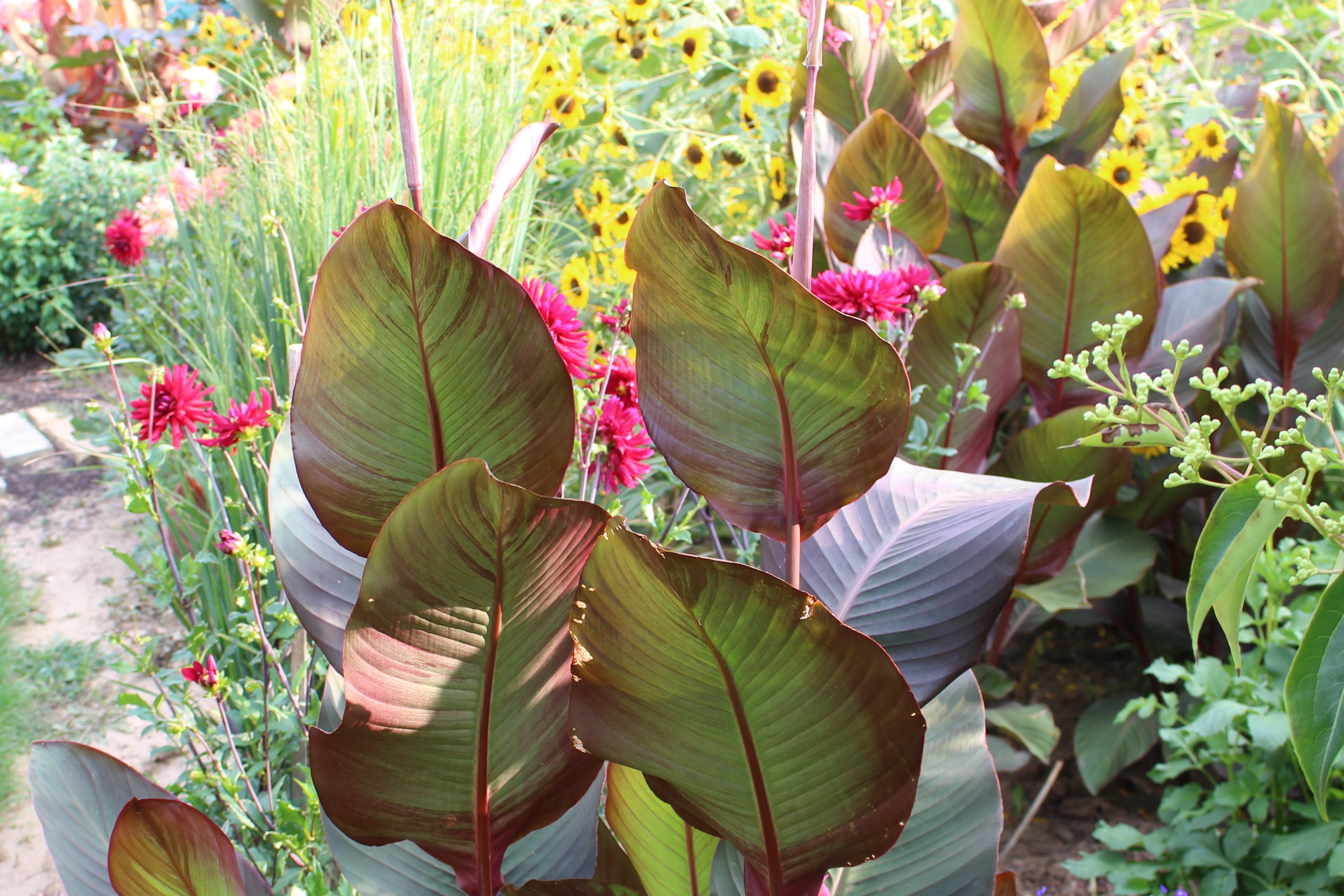
canna tropicana

Canna “Tropicana” might be the most obscene show of gaudy color in my garden. I love it with the dahlias and rudbeckia.   Good thing there’s some green nearby to calm things down.

Morning light on the sunflower patch.

canna in the garden

My ‘Polish cannas’ were a gift which traces it’s history back to a friend’s old Polish neighbor. It’s probably really canna indica “purpurea” or “Russian red”.

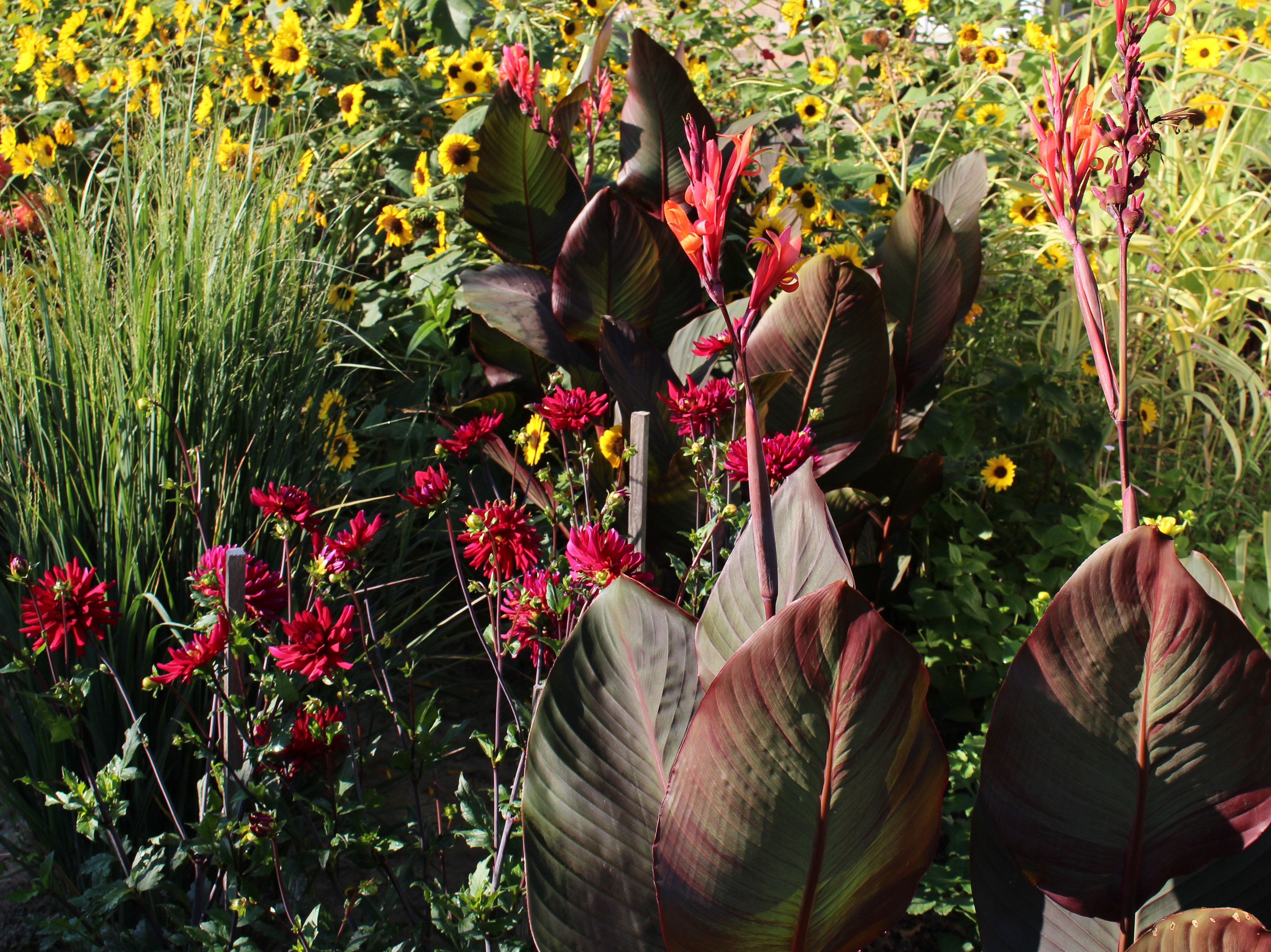
And same cannas at noon.  A sculptural plant I think.

canna with perennials

The small blooms aren’t much for a flower lover, but they have a graceful look and the hummingbirds appreciate them.

So that’s my foliage, thanks for sticking it out.  I did manage to keep all the coleus out (but of course there’s still all of September for that) and I hope that gave a little relief, but I was really surprised by how much color and interest I get from foliage.  Maybe I am growing up and my tastes are maturing…. but I hope not.  I like my messes of color too much!

Thanks Christina for hosting and thanks for opening my eyes to all that foliage does in the garden.

And the clouds opened

For some reason my little valley has been missing all the rains again, and up until last week it’s just been dry, dry, dry…. until Tuesday.  The cold front came through and we enjoyed two days of on and off rain, and the garden just soaked it all up.  It reminded me of one of those nature specials out of the Serengeti.

heucheras in dry shade

You can’t even weed this rock hard “topsoil”. My new heucheras are toughing it out, but this bed sure won’t make it onto a postcard any time soon!

The grass dried up, the trees started dropping leaves, the waterhole pulled in all the wildlife, and animals were on the move.  Anything not within hose range shriveled up, but at least the temperatures were low.  Last year we had a hot baking which killed off the weak, this year I think everyone should recover.

asclepias tuberosa during drought

Asclepias tuberosa is a tough one. I planted these seedlings out last summer and after a few weeks they shriveled up and died due to neglect. Spring resurrected them and they are now trying so hard…. but they’re not cacti!

It looks horrible though.  The front yard had two sprinkler days and just looks dry, the back looks dead!  Here’s the director of cinematography following me around getting the shots that I missed.

lawn dead from drought

I would call this dormant. The weeds even gave up.

But just like in the nature specials, when the rains return the landscape springs back into life.  I took a couple pictures at the end of the two days and although a few things look a bit battered, even the dead back lawn is giving out a sigh of relief.

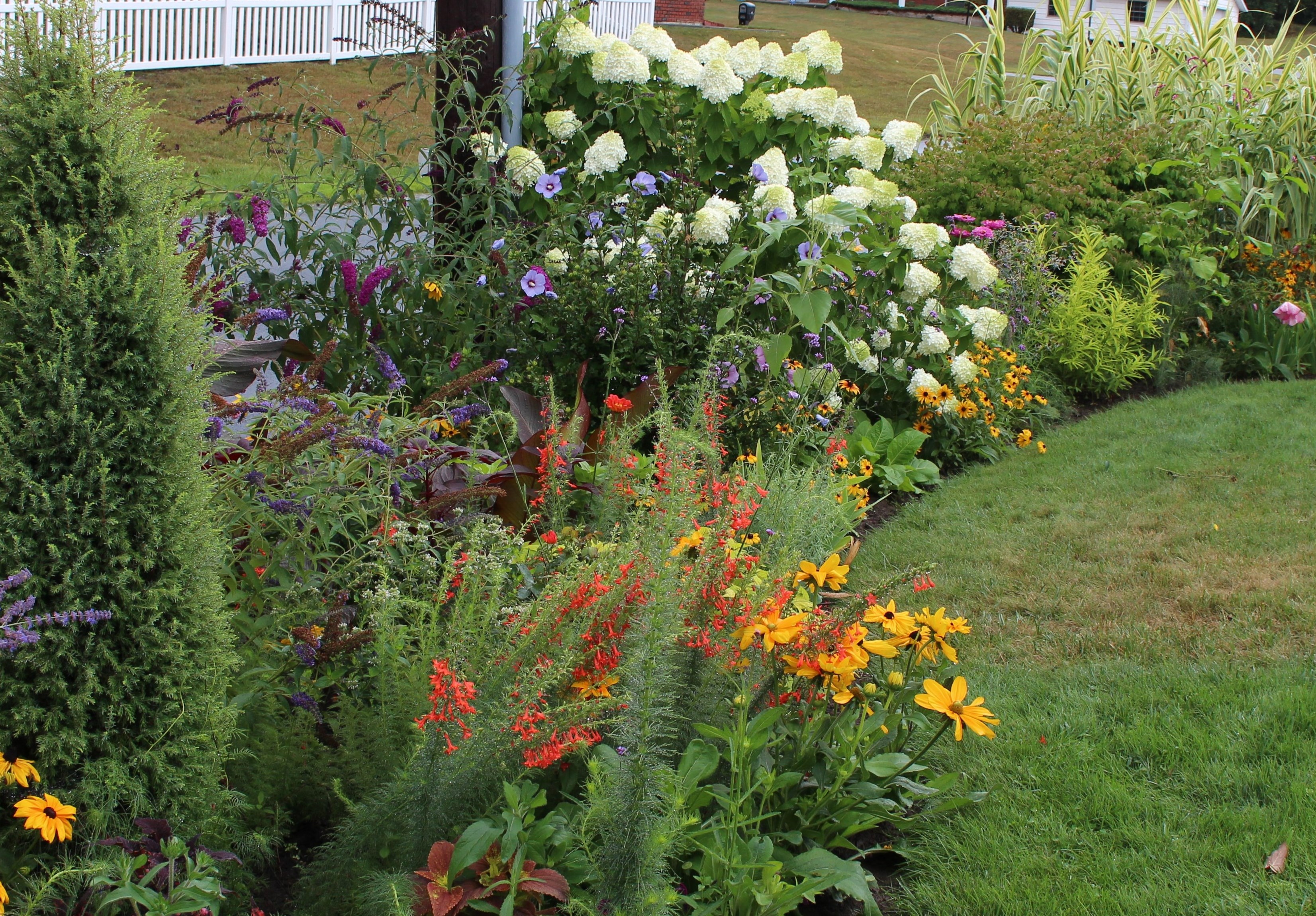
front border with hydrangea

The front street border starts to put on its best show at this time of year, and although polite people would refer to its plantings as “a riot of color” others would call it a mess. Suits me just fine though!

The front foundation bed is a much calmer mix this year.  No bright oranges or over-bright coleus, but all my good intentions from last year of removing the overgrown evergreen and NOT letting any sunflowers grow up kinda fell to the wayside.

foundation planting

I don’t think I can physically pull and compost a sunflower, it’s just unethical to me…. sunflowers and dogwood seedlings, can’t pull either one.

I spend way too much time admiring the “Limelight” hydrangea.  It’s just about at full bloom now and I love its green going into white phase and the way its heavy flower heads are held up on strong stems.  It’s the only white plant out there, and it does stick out, but each spring I look proudly at its buds and imagine how much bigger the show will be!

limelight hydrangea

“Limelight” hydrangea nearly overwhelming the border….More of a purple-yellow theme going on here, but none of my planting plans are ever set in stone.

For some reason prior to the rain the yard was overrun with birds.  Flocks of starlings, catbirds, sparrows, house finches, hummingbirds, goldfinches, cardinals, doves, robins and mockingbirds would swarm each morning.  A large cherry and staghorn sumac berries brought in the fruit eaters, but the others were just all milling about looking for what-nots.  With all those hungry eyes it’s no wonder I’ve seen so few butterflies.

holes in lawn from birds feeding

The day after the rain the back lawn was riddled with all these bill holes. I don’t know what they found in the freshly wetted grass, but there was a flock of around 50 who kept milling around going from lawn to cherry to sumac to lawn.

Strangely enough since the rains came there seem to be far fewer birds.  I need to get out there and explain why their straying from script is throwing off the documentary.  On TV the return of the rains always brings on the migrating hordes!

sunflowers, dahlias and cannas

The rains were just in time for the former tropical bed. Leaves were starting to wilt and I just didn’t have it in me to add another bed to the water-triage list.

So we are back in business.  I hate drought and I hate watering and between the two of them dry spells always get ugly.  Now if it can only get a little warmer again this could have the makings of a great end of summer rally.

Ipomoea quamoclit

Maybe the birds can stop pecking off the tips of the cypress vine (Ipomoea quamoclit) long enough for it to scale the arbor. It’s heading for the top but the birds are relentless. Good thing it’s not a bunny though, the other side for some reason is abused daily by our single resident baby bunny, and can’t even start climbing.

I should be thinking fall garden but I’m going to hide behind denial for a few more days.  The cool weather is supposed to warm up again and hopefully summer will stay strong for another couple weeks.  It’s hard to deny though as the cyclamen sprout and the corn ripens.  Go away autumn, I’m not a fall person!

Off for a bit

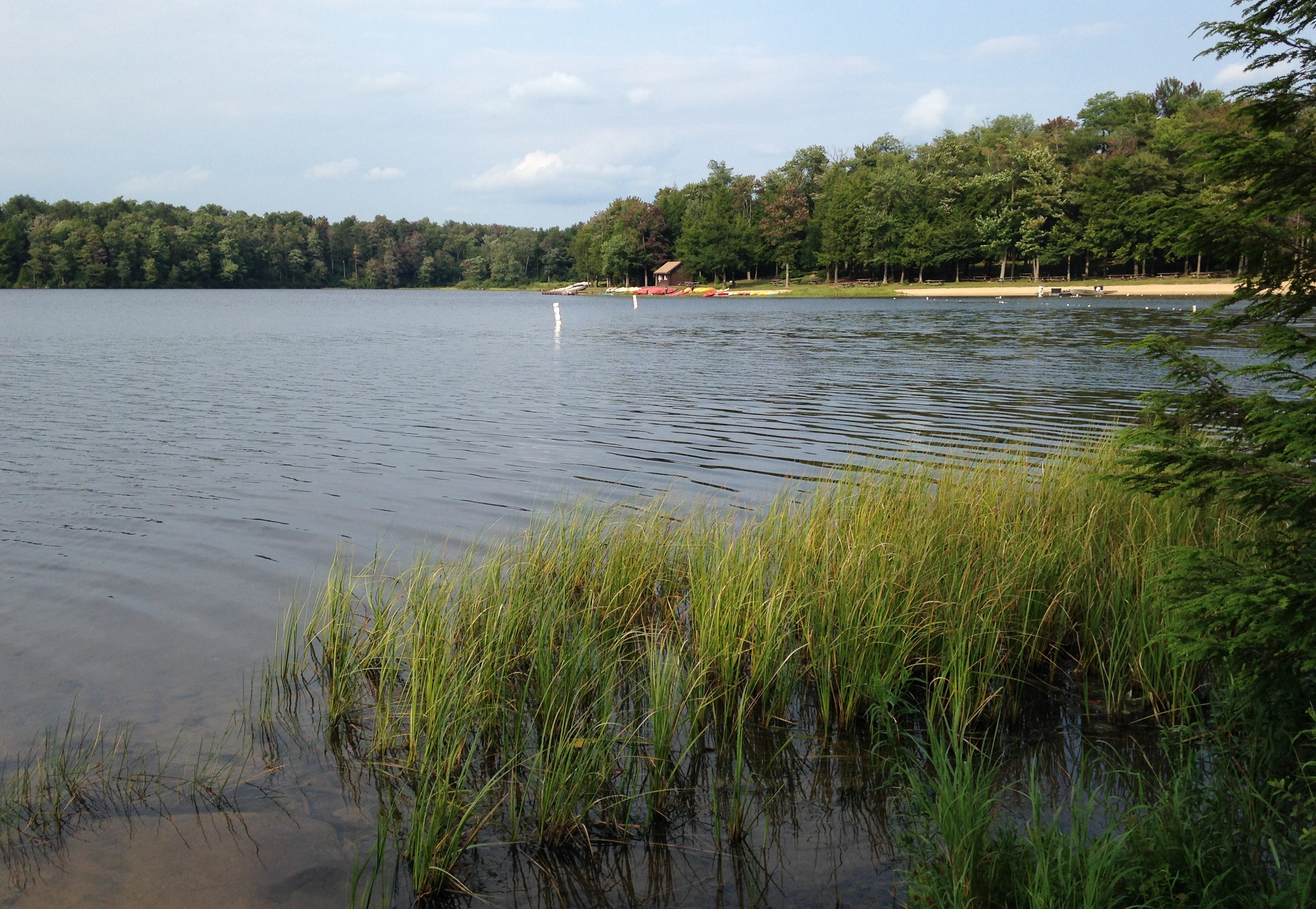
We just got back from a nice little camping trip up into the “mountains” of Pennsylvania.  Rickett’s Glen State Park is just a short drive from our house, but it seems like a world away.

Lake Jean Pa

Lake Jean is near the summit of Red Rock Mountain (2,400ft) and the campground is lakeside.

The kids love to spend the day by the cool clear lake, but Rickett’s Glen is best known for its waterfalls and old growth trees.  Sadly though, after centuries of timeless growth many of the massive hemlocks are now dead and dying.  The newly arrived wooly algeid from Asia has literally sucked the life out of them and the glen is now filled with the gray remains of these crumbling giants.  Better hurry if you want to get anything close to the effect that used to be here even as short as ten years ago, the hemlocks are fading and things don’t look good for the giant ash trees either as the emerald ash borer comes our way.

ricketts glen hemlocks

They’re not as impressive as west coast evergreens, but the Rickett’s Glen hemlocks push 400+ years

One of our first jobs after setting up camp was to head out and collect breakfast…. sort of.  The former hayfields and apple orchards in the park are filled with wild highbush blueberries, and tis the season for blueberries!

-although I couldn’t help but think of the children’s book “Blueberries for Sal” and her surprise run in with a blueberry loving bear 🙂

monarda fistulosa

Monarda fistulosa growing in the former hayfields of Colonel Rickett.

But outside of hunting and gathering the bulk of the trip was spent sitting by the fire, playing at the lake, exploring the woods, and cruising the campground -as part of the children’s biker gang which my kids promptly joined.

playing in the creek

Any running water invites dam building, and here Opa was trying to give a few pointers.

The park ecosystem has a few problems, but for the most part it’s a nice snapshot of the woods which used to be.  There was still a late season bird chorus to wake us at dawn and the woodlands still contained the wild trillium, hepatica, and tiarella which the damp glen protects.  Japanese stilt grass was probably the only non-native invasive plant which was making inroads, a nice contrast to my own overrun neighborhood.

indian pipe

I haven’t seen the ghostly sprouts of indian pipes in a long time. I believe they’re the aboveground flowers of an underground parasitic plant, and not a type of mushroom which I used to think.

Spring is such a busy time but I always say I’m going to get here and see if I can catch a glimpse of the spring ephemerals blooming.  It would also be kind of nice to sneak off here sans children and squeeze in a hike of the treacherous falls trail and see the many waterfalls which fill the glen.  It’s been years since I made the hike, but I just don’t have the nerves to watch the kids teetering near every drop-off and slipping on every mud covered step.

walking tree

Our campsite was surrounded by Lord of the Ring Ent trees. They get their legs when the tree trunk or upended root ball they sprouted on rots away and the new tree’s roots are left behind exposed.

So we’ll stick to the easy trails.  It’s unambitious and tame but it suits us just fine!

walking in the woods

Walking the lower end of the falls trail. We never make it to the waterfalls but the easy walk through the forest is still beautiful.

Next year they’re draining the lake for dam repairs so Rickett’s Glen might be off the list.  We’ll have to venture further,  but I’m sure we’ll find something just as nice and I’m sure it will be just as much fun.  Viva la Summer!

Viva la Tropicalismo!

“Tropicalismo” is so very ’90s but being in style was never my strong point. I still love the tropical look with big leaves and bright colors and lush happy growth right during the months when everything else looks a little tired and faded. Too big elephant ears, too bright cannas and just a little too tall grasses always make me smile when the bleeding hearts are dying in the heat. I even like the bright red salvia that is normally reserved for gas stations and trailer parks. Feel free to judge me, here’s a picture of the tropical bed last year.
tropicalismo planting
This was a new area that was the perfect match of big space, full sun, and no planting budget, so I pulled together the leftover canna roots, popped in a couple sweet potato cuttings, and scattered some annual seedlings and with plenty of water and fertilizer it all came together.
As usual this year I’ve fallen behind, and the tropical bed is still a weed infested patch of leftover perennials, a few nice salvias, and an appropriately bright knockout rose.
tropicalismo planting
I finally got around to weeding, mulching, and planting. It may seem like all is lost with such a late planting date, but the experience of a chronic procrastinator has taught me things will still work out fine. Also the late planting allowed several self sown red salvias and amaranth to make themselves known. All good things since I used up all the spare annuals when I expanded the front yard border.
So here it sits, still a little sparse, but ready to take on all the drought and heat summer throws its way.
tropicalismo planting
With any luck I’ll still have the same tastelessly colorful display as last year, minus a few of the exceptionally colorful and tacky tropicana cannas.
tropicalismo planting