Using the term history around here is a bit of a stretch. History to me means centuries, not the fifty or so years that have passed since our house was built. Fifty puts us into the outdated category as far as baby blue bathroom themes go, but it doesn’t exactly put us on the historical register. The garden is even younger. Fifty years ago five trees were planted, they did well but four were removed just before we bought the place…. and for fifty years the lawn was mown. So I guess we have one pink dogwood, antique grass and not much else.
Since I can’t afford timeless stone walks and weathered brick walls I settle for the history behind plants. In my opinion plants with a story behind them are worth growing just for that. Passalong plants are those which are passed on from gardener to gardener and generation to generation. “My grandmother gave it to me” vs “I bought it at Home Depot” I guess. Iris pass on easy, and some of the historic iris even followed the settlers west as they looked for familiar plants to fill their farmyard gardens. Maybe that’s what I was thinking when I brought these up from the old garden to plant out by the street.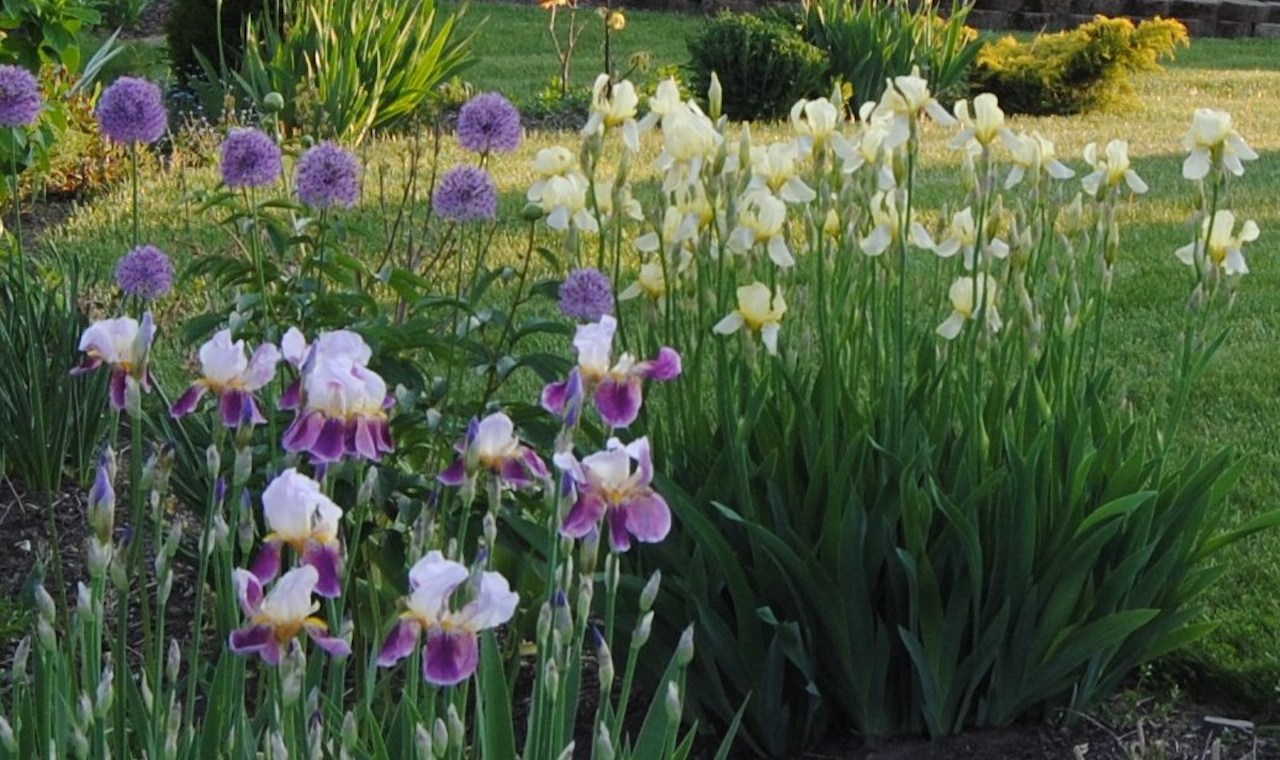
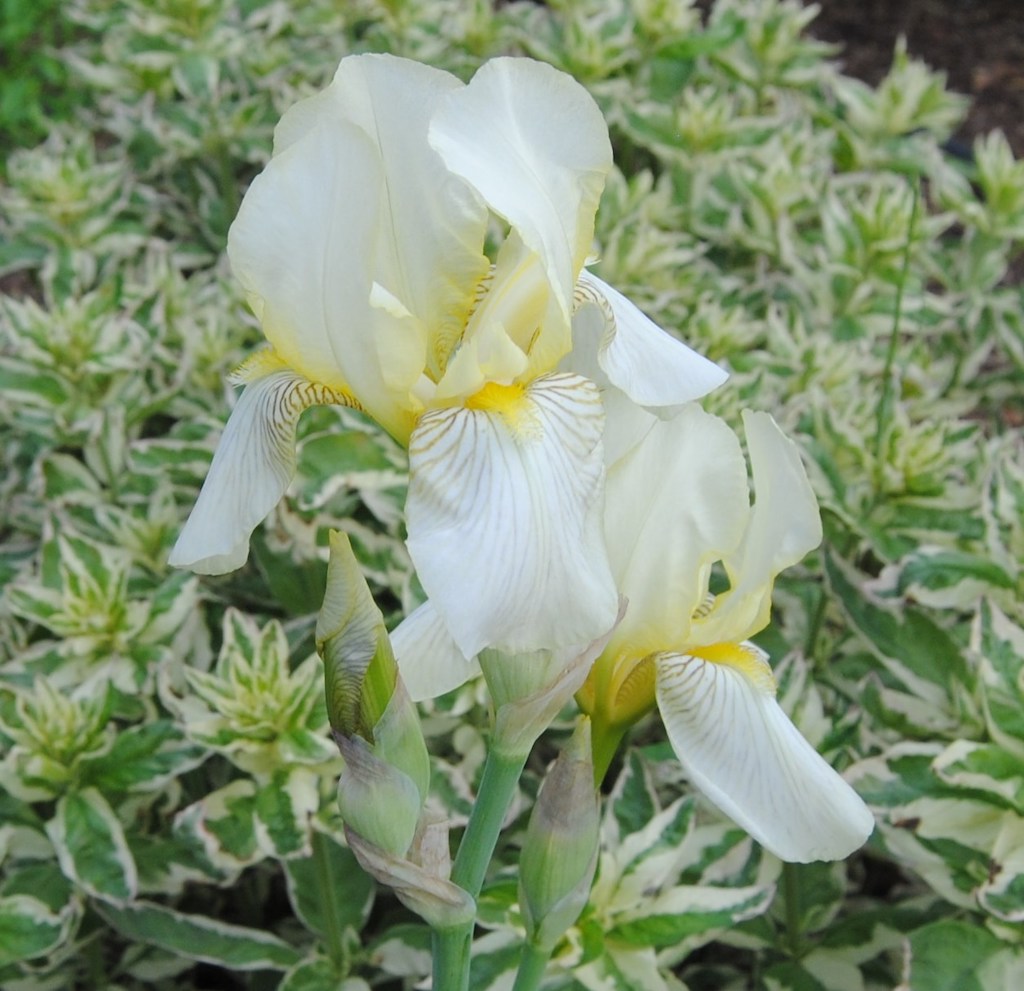 The pale yellow is “flavescens” which dates to 1813 and is indestructible. Mine comes from the side of a highway and survives drought, mowing, weeds, salt…. but does much better in the garden. Sometimes it gets beaten down by relentless gale strength winds (such as we had last weekend) but it always blooms, blooms long, and keeps decent foliage all season.
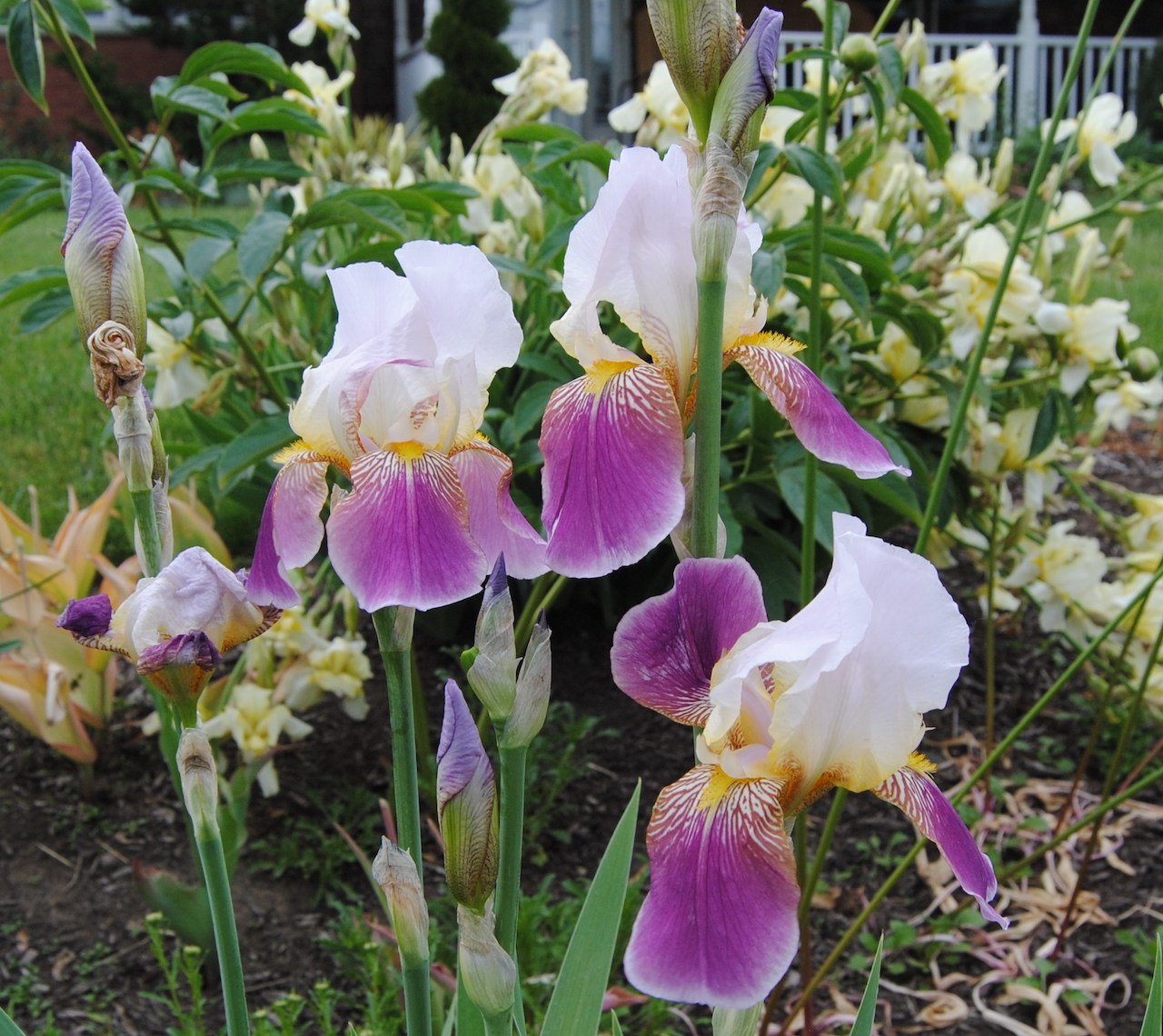 The other iris, a mauve/violet with white standards (the top part) is from my mother’s garden. It’s been there since they bought the house 40ish years ago and is a favorite. Like many historic iris it has a strong grape scent which fills the yard (you can see the windblown flavescens in the background).
“Indian Chief” 1929, was given to me by a friend and is also out there. It’s a well-known historic and shows up in cemeteries around here frequently since it welcomes neglect. I sometimes find the darker ‘smokier?’ colored iris hard to show off in the garden and this is one of them. If anyone has any suggestions on combining them I’d love to hear it.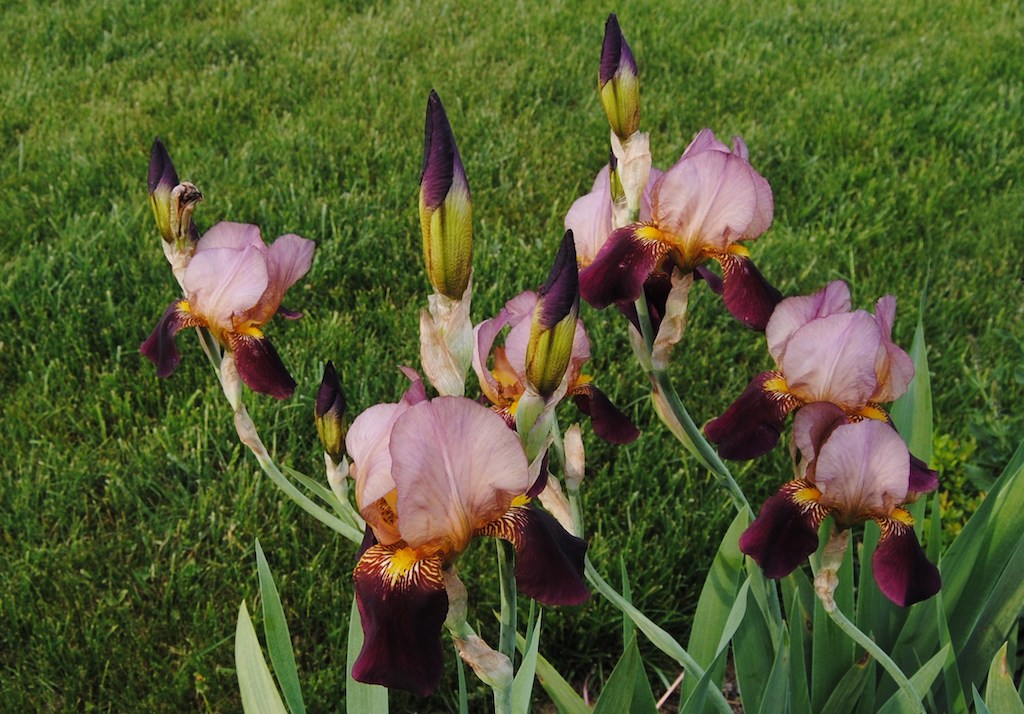
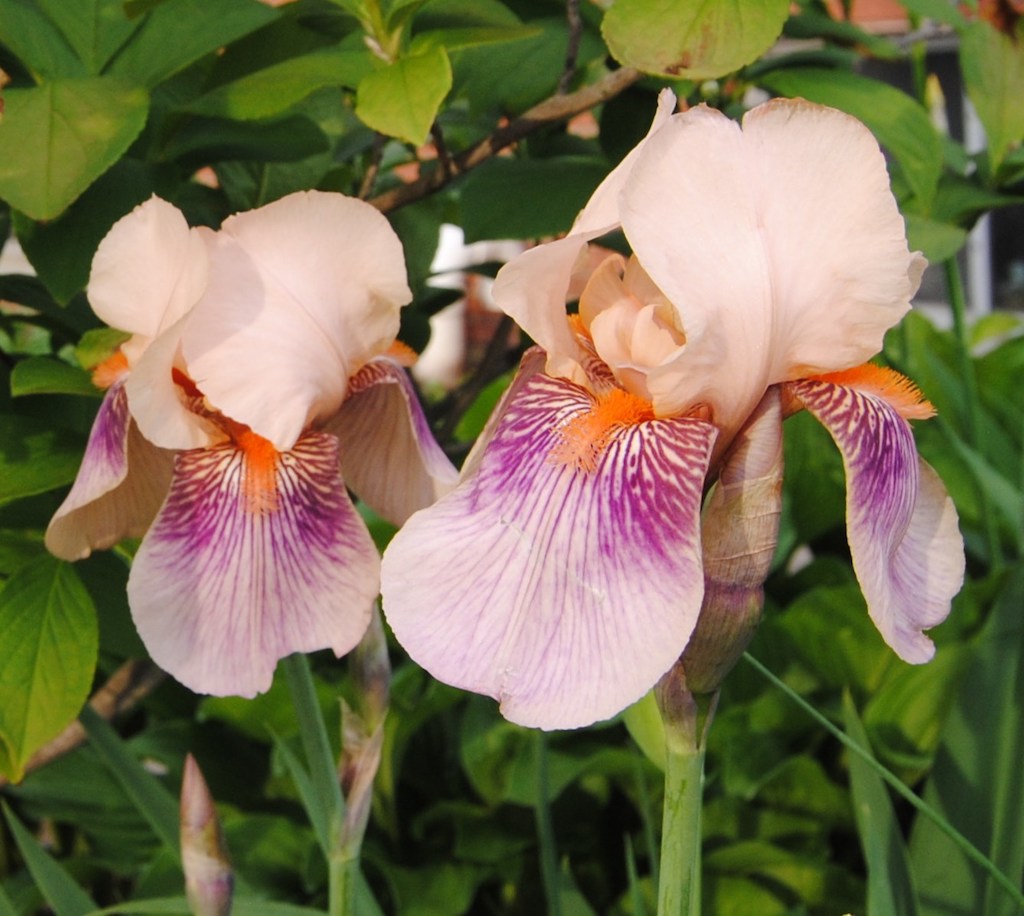 “Color Carnival” 1949 is not a favorite of everyone. I would describe it as a fleshy pink with purple veins and a tangerine beard. My descriptions don’t always match the catalogs.
This batch came up when I used some not completely done compost in this bed. A year of composting and the roots still made a comeback, not bad.
I got this iris as a kid. It was growing in our neighbor’s yard against the wood fence. Rather than outright ask for a bit I patiently pried apart the boards enough so that a single fan could grow through. A year it did and at that point I felt comfortable digging it up and calling it my own. It’s been following me around ever since.
“Rhages” 1934 was purchased. No story. It’s reliable and I like the speckling. In iris talk the speckling around the petal edges is called plicata, sounds fancier that way.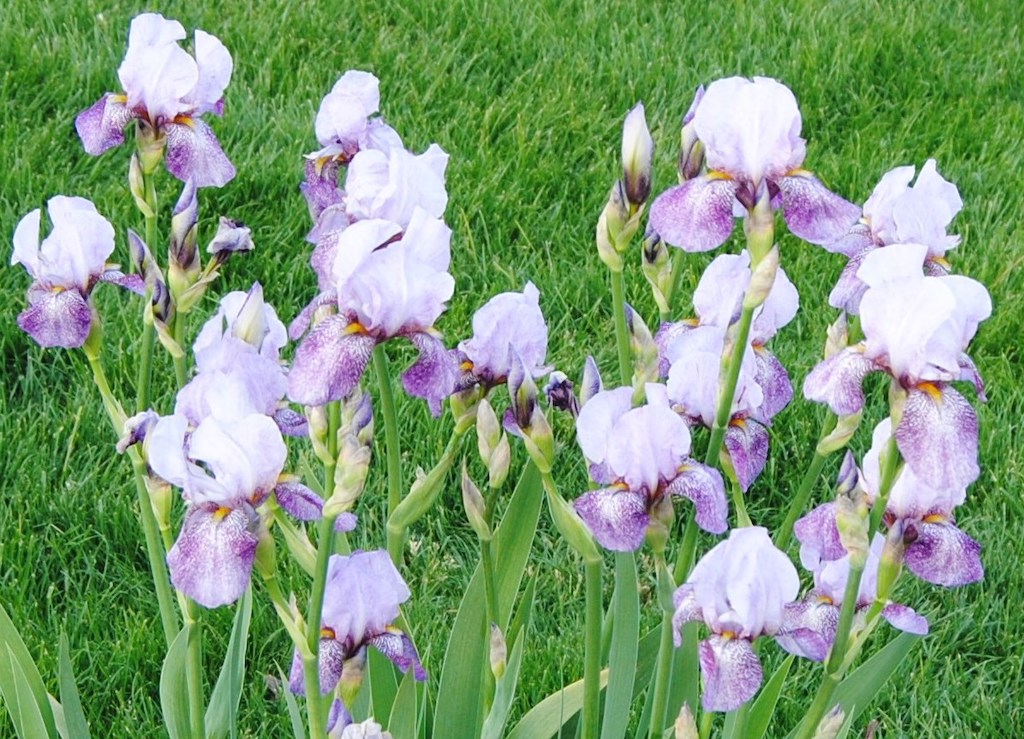
Of course iris do blues best of all. This no ID comes from the same highway roadside as flavescens and is just as hardy. Flowers aren’t too big or too ruffled or too deeply colored, they’re just clear and elegant.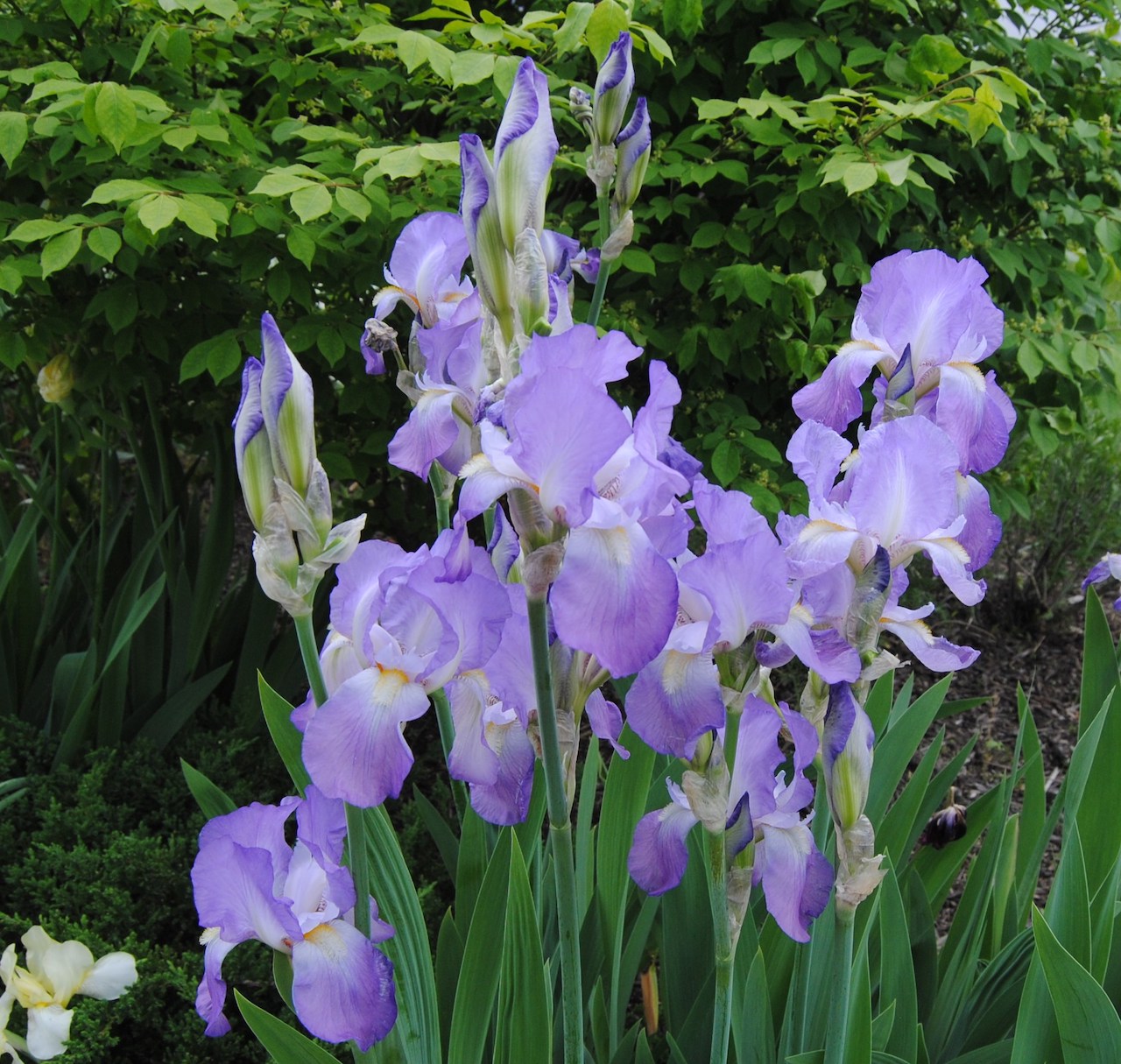
I guess that’s plenty of iris. One last one is “Mme Chobaut” 1916 it’s growing out back in the meadow and could use a decent home. Maybe this year. 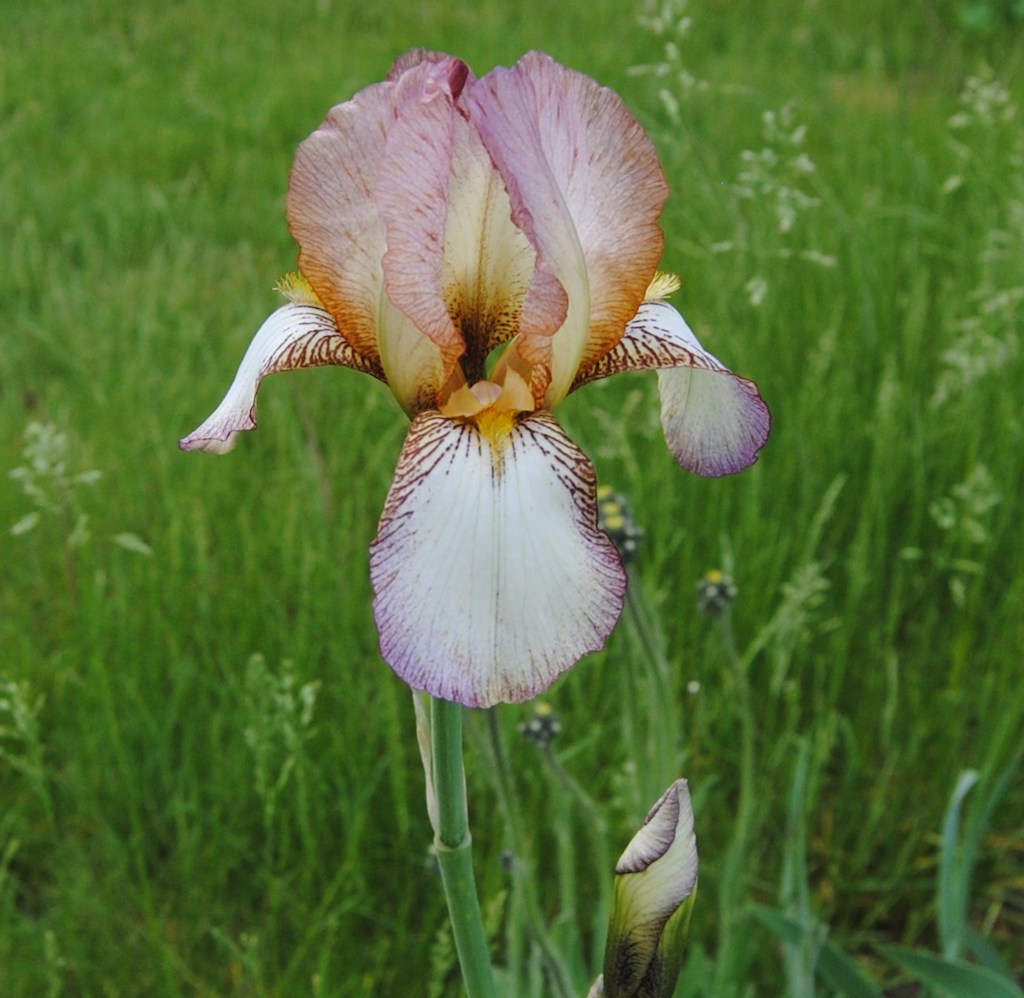
In case you’re interested in older iris there’s HIPS, the historic iris preservation society. It’s a great resource for info and for getting in touch with other old-iris lovers. Members have an iris database to browse and a forum to post to. There’s also an annual sale and quarterly magazine.
I could easily be convinced to grow more of the modern iris, some of them are just amazing in their ruffled fluffery and colors, but I resist. For now I’ll stick with the tried and true. Plus this year the late freeze has killed most of their blooms. Here’s an iris traded to me as “mesmerizer”, but it’s not. Maybe it’s “Nordica”, another white but with orange beards. 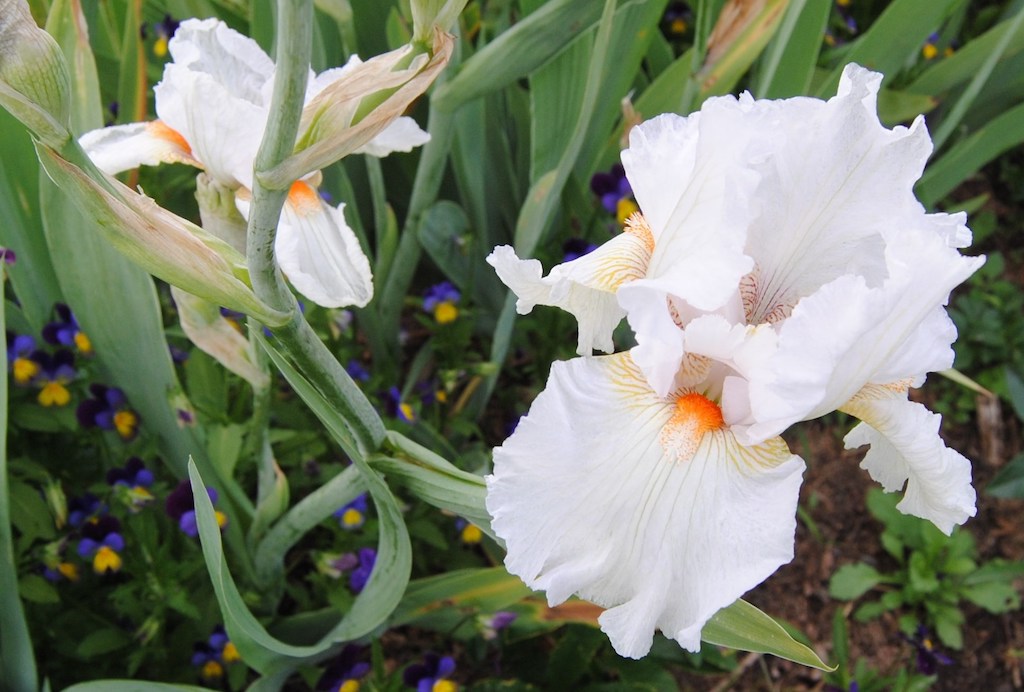
The one bloom looks ok but the other is stunted. The freeze also damaged leaves and killed off most of the other stalks. Such is gardening. It’s like baseball, there’s always next year…. even though you hate to lose.

 sorta like suburbia