A Few Words

We are wrapping up our fourth week here since entering quarantine and the garden is still surprisingly unkempt and disorganized.  The gardener likes to suggest it’s because he’s busy double timing as a common core math teacher to a 6th grader, and in spite of holding a minor in Mathematics it’s a daily struggle, but it’s also been pointed out that the gardener spends a lot of time “thinking”, and often that thinking is interpreted as “just sitting around”.  Obviously sitting around does not get jobs done.

chiondoxa

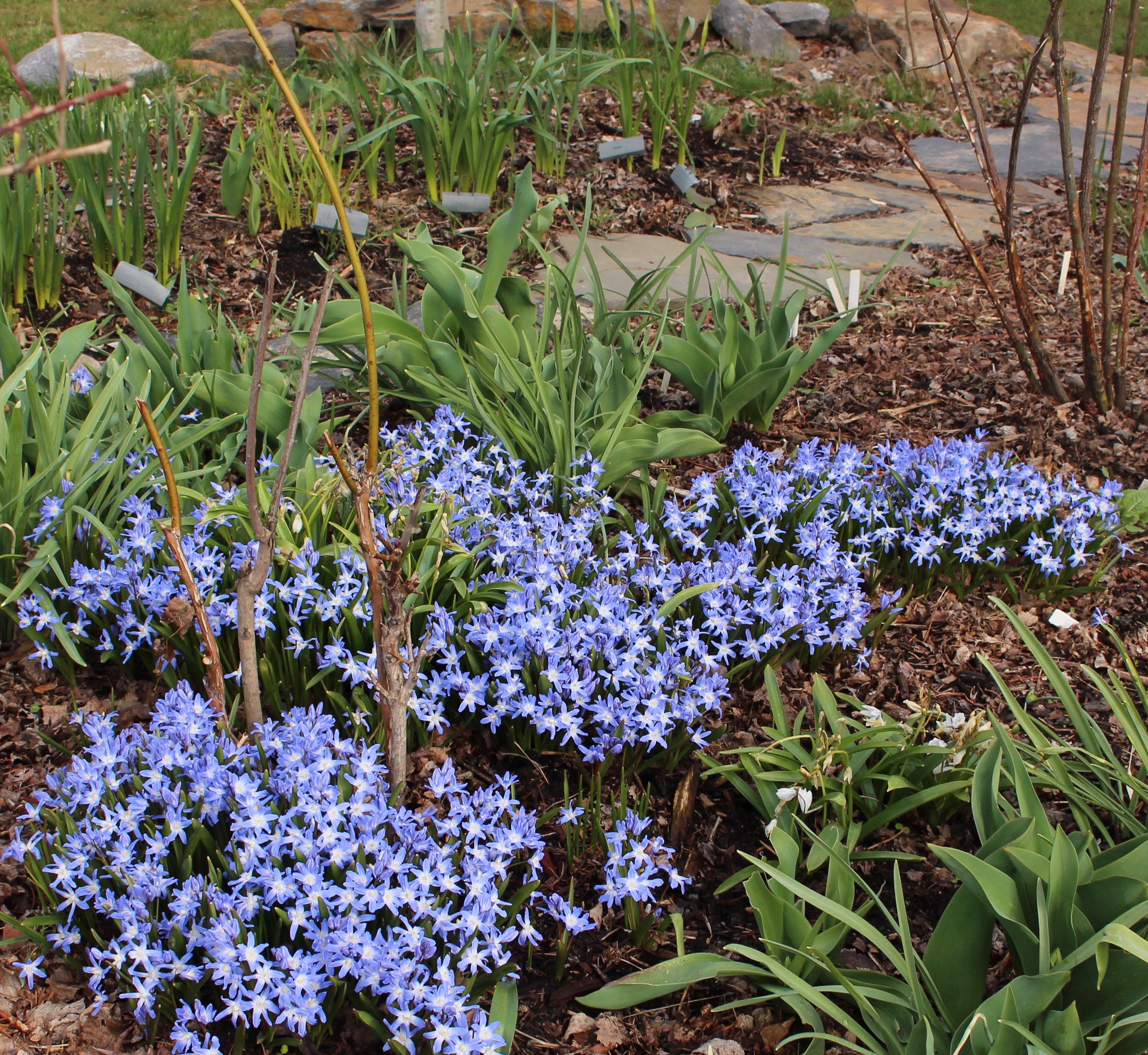
Chiondoxa continues to spread.  These are all clones off a bulb moved years ago, and seem to be waiting for a partner to set seed, but each time weeds are pulled or the gardener thinks the spot is empty and tries to plant something else there, a few bulbs get moved a little further.

The gardener has been thinking the weather has been great, and the gardener has been thinking the sky is bluer than normal, and the gardener has been thinking it’s nice to have time to sit in the springtime sun without some desperate need to get just one spring chore done before dark.  But the gardener has also been wondering if there have always been so many snakes in the yard.

garden snake garter

One of the garden’s garter snakes reading a snowdrop label.  It’s ‘Three Ships’ Mrs Snake.

I do like the snakes.  One chilly morning I came across three little balls of snake out in the morning sun and I was surprised.  A good surprise though, not the EeeAhhhugh Oh! surprise you get when one of these slithery serpents zips away from your reaching hand or approaching step.  I think there’s something primordial in our natural fear of snakes, and I don’t entirely trust a person who just shrugs them off.  Pick them up, fine, handle them, fine, you can think your way through that, but when one zips across your path you better jump a little.

raised beds potager

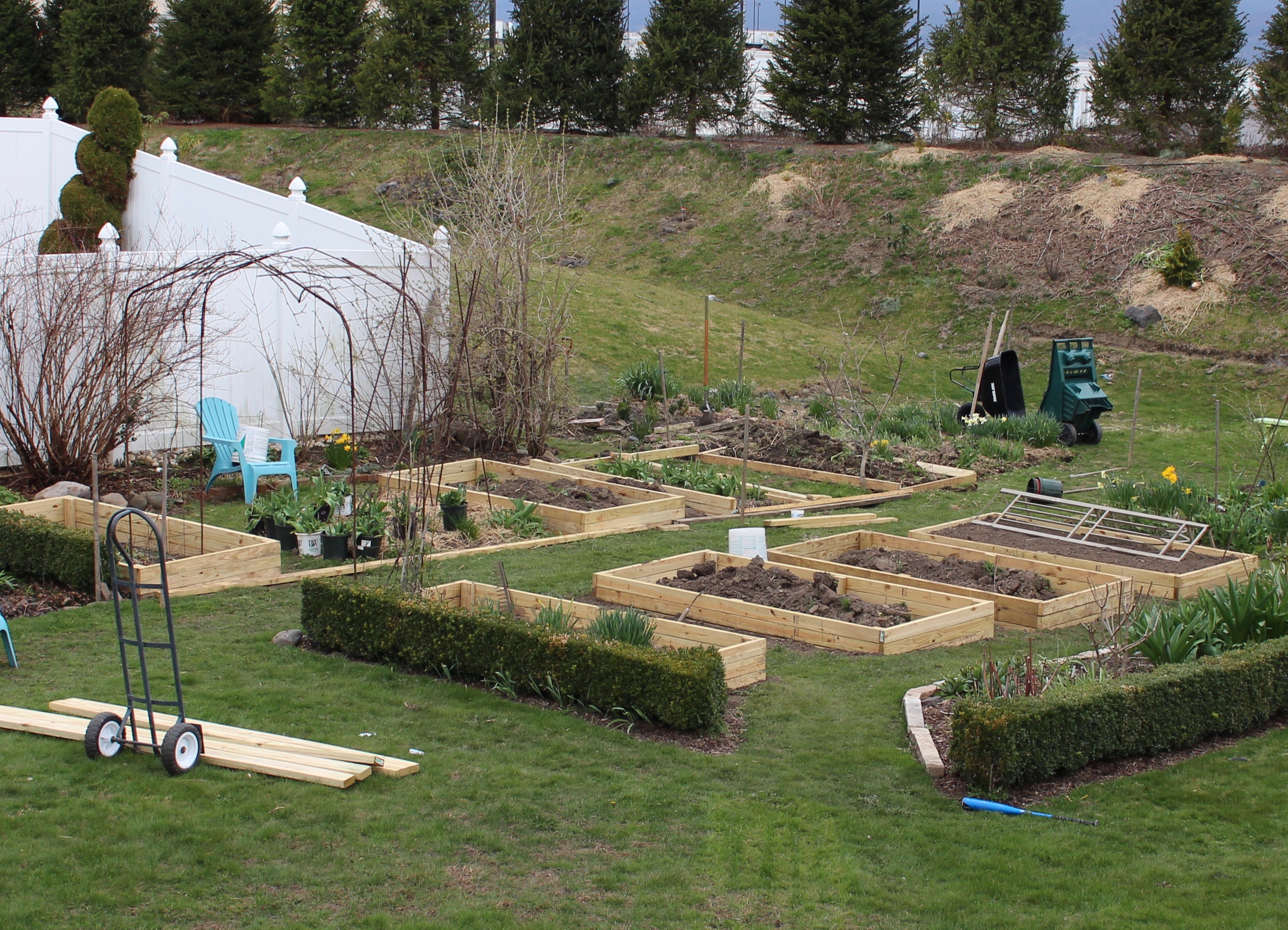
The raised beds are coming together in the potager.   It’s going to be very neat I suspect.  I hope I don’t miss the late summer mayhem of overgrowth and decay, but who’s to say that won’t happen anyway.

It’s been taking forever it seems to get the raised beds built.  There are a number of plants to move or pot up, but I really do blame the gardener.  Not to dwell on the snakes, but work was called off entirely the other day when rustling in the boxwood hedge turned out to be an inappropriately writhing ball of snake procreation…. with an embarrassingly plural number of participants… it was watched for longer than it should have been, but it was interesting to see and of course if that’s what they need to do amongst the daffodils then lets just call off work for the afternoon to give them some privacy.

daffodil glaston

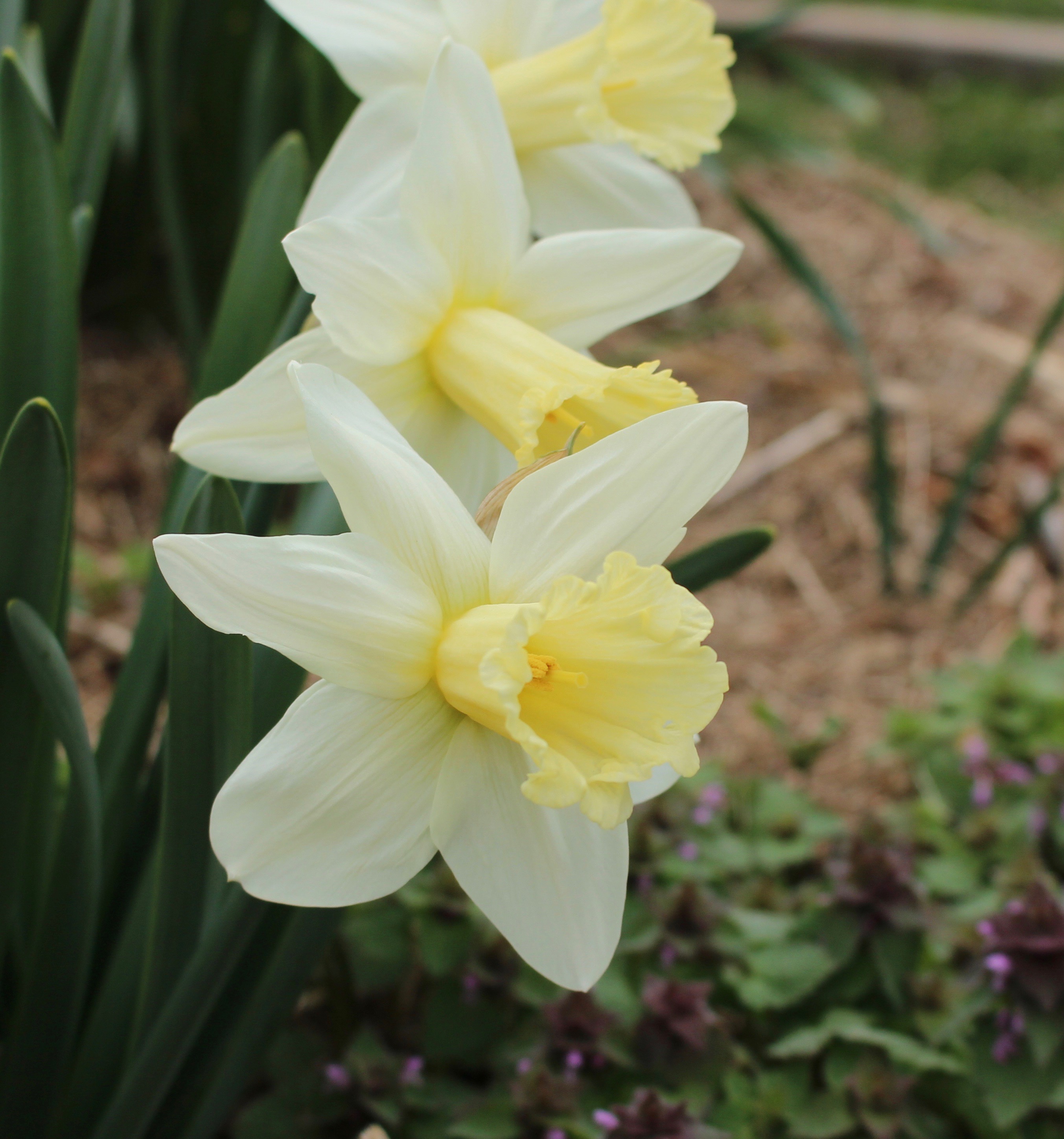
The cool days and cooler nights are bringing out the richest colors in many of the narcissus clumps.  Here’s the daffodil ‘Glaston’, looking luscious and tropical with its fruity cup colors.

So rather than work hard, the gardener looks at daffodils.

daffodil beersheba

Daffodil ‘Beersheba’, a pre 1923 daffodil (according to Daffseek) and nearly 100 years later, still a wonderful thing to have flowering.

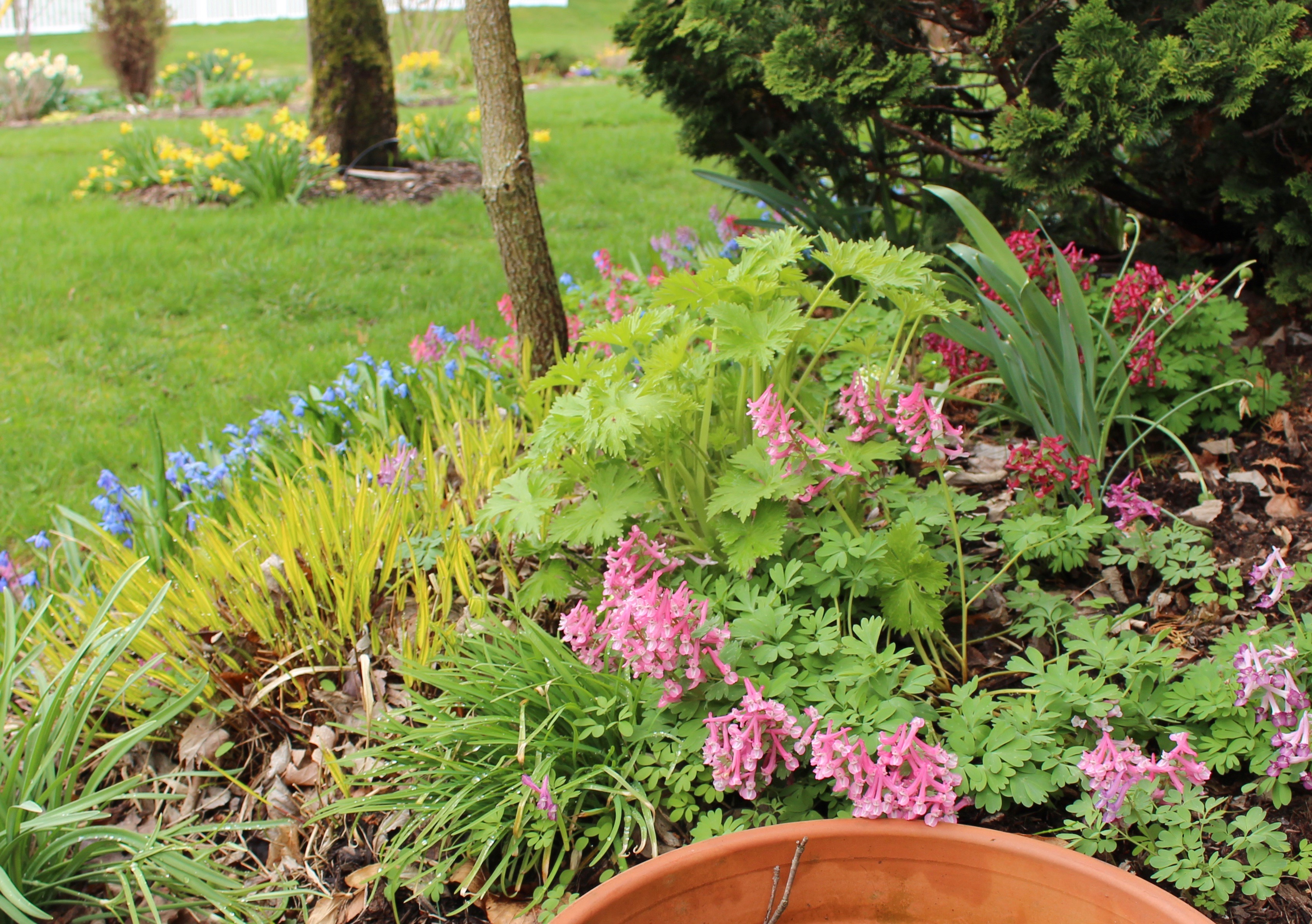
Honestly the daffodils here have been tortured by poor drainage and neglect recently, and the show is not nearly as impressive as in other years, but the fewer words on that the better.  What does warrant a few more words are the corydalis.  They’ve enjoyed the cool weather as well and still look great.  Mostly.  Rabbits gave most if the ones in back a haircut, so….

corydalis solida

Corydalis solida, some named.  The pink in front is the highly acclaimed ‘Gunite’, while the darker red in back is ‘Milda’.

I do like poking through all the corydalis seedlings.  Some are great and plenty are nice, and there’s not that pressure you get with snowdrops to pick out and consider naming every next great thing.  I guess corydalis don’t offer the same wild diversity that snowdrops hold 😉

corydalis solida vanessa

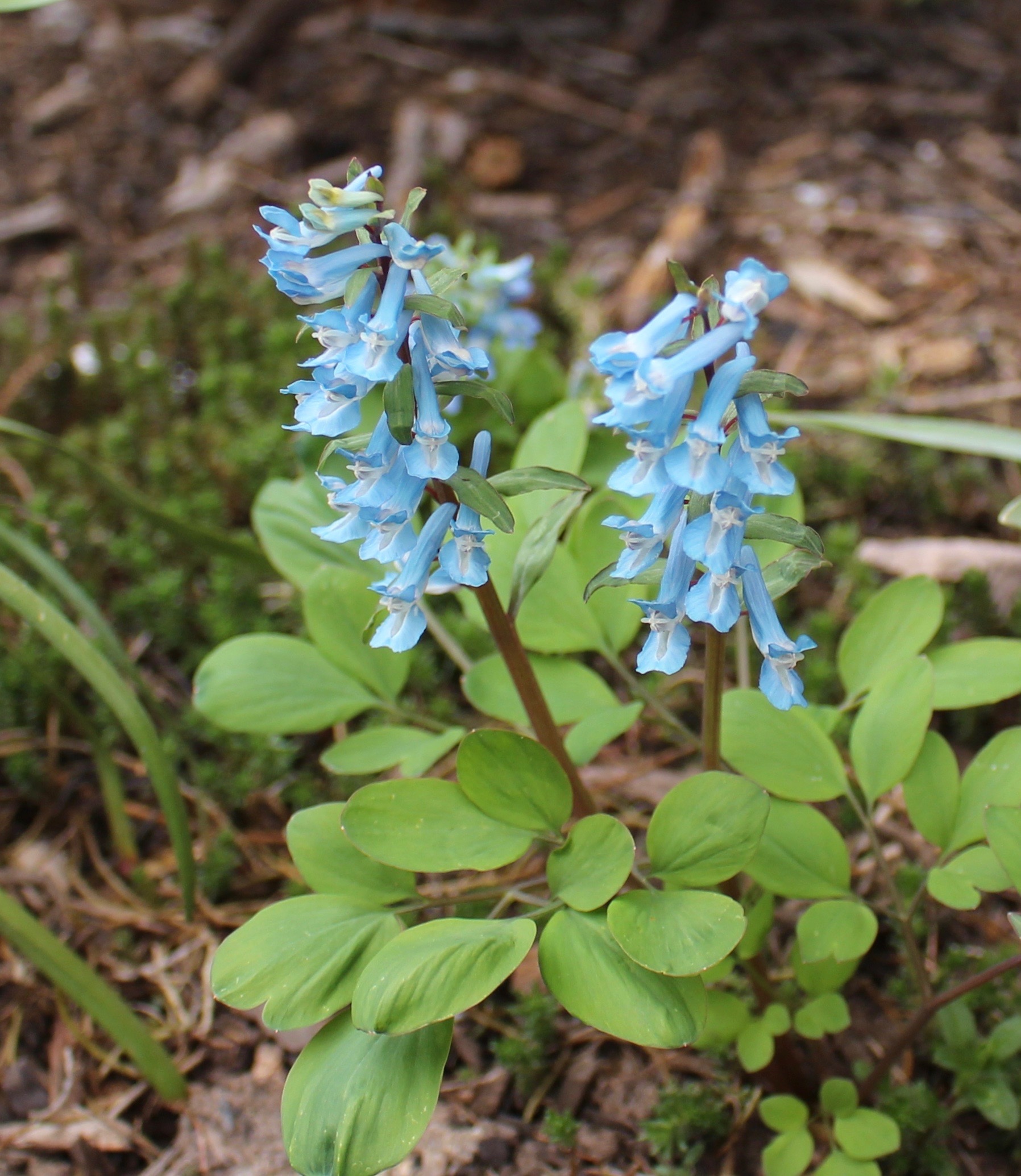
Even with all the nice seedlings, I’m still willing to try a few new named ones here and there.  This new one was described as having exquisite “sky-blue lips and white spurs”… and I suppose that’s possible.

Of course why stop at a good thing?  If you can killed expensive named forms, why not try knocking off a few harder to find species?  These next two prefer summer-dry, Russian steppe/rocky woodland type environs.  The gardener isn’t sure if he should be insulted that the garden contains these types of planting areas, or pleased that the garden has made these happy for a third year, but in any case each spring could easily be their last.

corydalis schanginii ssp. ainae

Corydalis schanginii ssp. ainae growing well in the same conditions that favorTaraxacum officinale.  Apparently much of my garden is well suited to Taraxacum officinale.

Many gardeners crave blue corydalis.  I’ve discovered a knack for killing blue corydalis.  It’s kind of silly knack considering how easy blue scilla are, and hyacinths, and grape hyacinths, but if you know a perfectly perfect flower also comes in various blue shades, of course you need that color, and this gardener is no different.

corydalis fumariifolia

The first blue corydalis to last more than a spring or two (and not look completely miserable while doing it) Corydalis fumariifolia might even be expanding its reach.  I could use another clone.  Maybe seeds could happen with cross pollination…

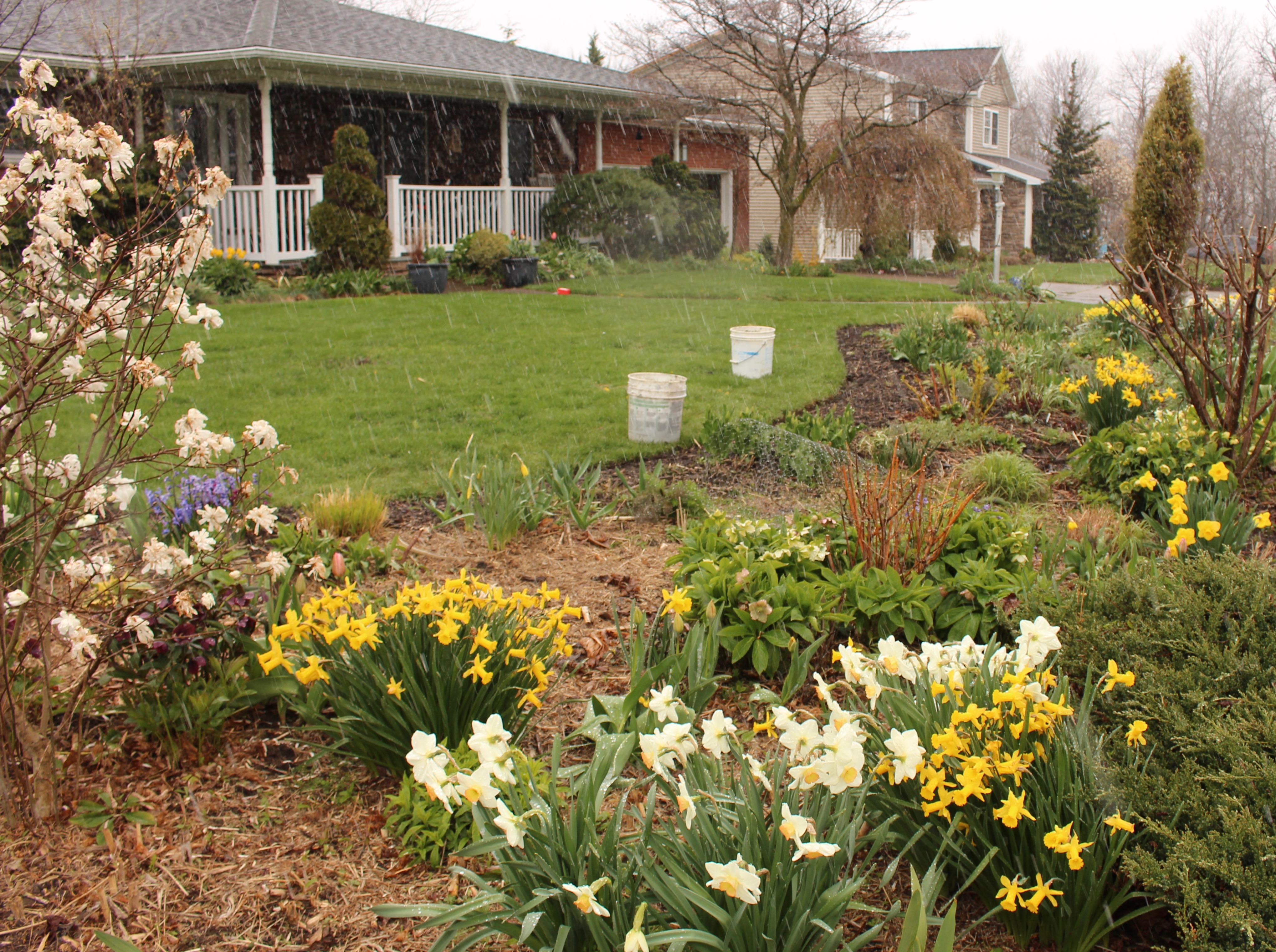
Lets get back to easier things.  A few words for the front border as daffodil season hits its stride.

spring bulbs

Perhaps spring flowers can distract the neighbors from a shoddy cleanup and an un-edged and un-weeded front border.  Seriously, what does that gardener even do around here?

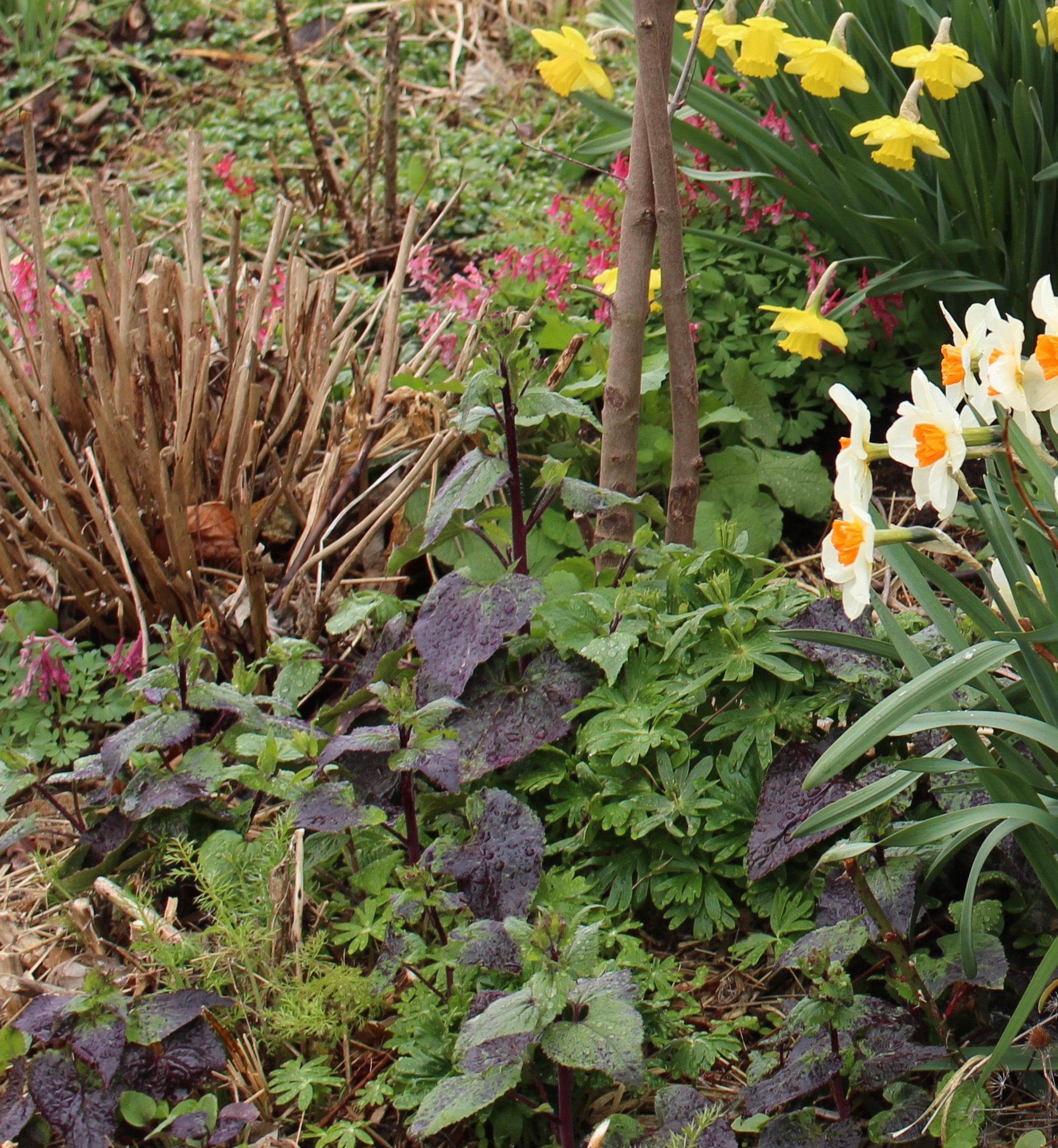
As I think on it (there he goes again not really doing anything measurable), the gardener spends way too much time on nonsense.  To mention a few words on the front border we could say ‘hyacinths and daffodils are easy and they look great’, but there goes the gardener again poking around and making things complicated.  Amongst all the daffodil color he’s most excited to see a few purple leaved moneyplants (Lunaria annua ‘Rosemary Verey’) finally showing a good amount of purple.  It was hard yanking the all green seedlings which used to rule, but over the years they are finally as purple as the strain should be.

Lunaria annua ‘Rosemary Verey’

Those are not weeds, they’re the much anticipated purple leaves of Lunaria annua ‘Rosemary Verey’.

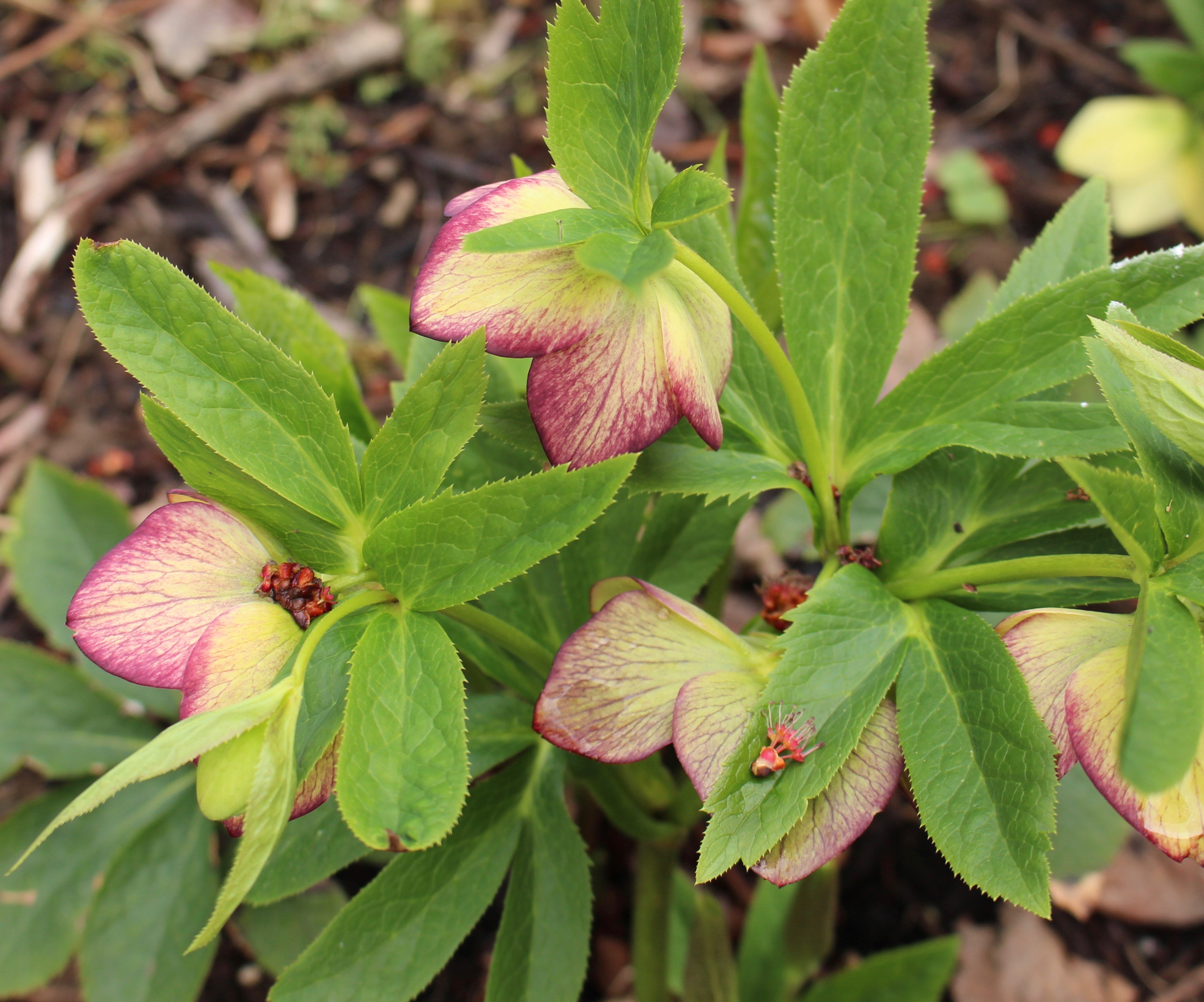
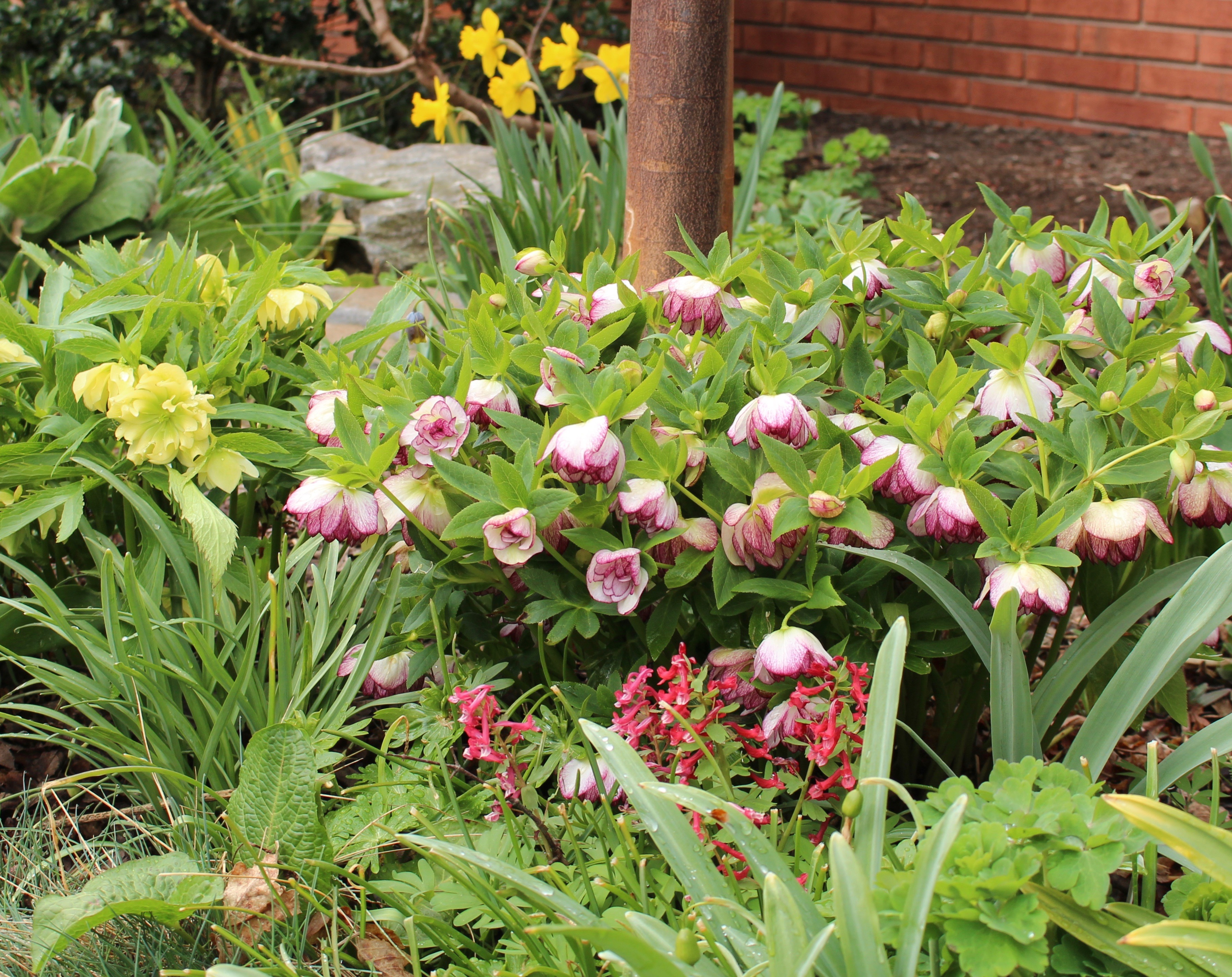
I’ll leave you with even fewer words.  Hellebores are up.

hellebore

A nice picotee yellow seedling.

Another year without a late freeze and they’re all looking good.

hellebore

‘Golden Lotus’ and ‘Peppermint Ice’ with a mess of less showy things.

Hope this post finds you well.  Snow squalls are keeping the gardener inside today so rather than clean the bathrooms he’s blogging, but in spite of that he still gets fed three times a day.  Not bad.

A Project For the Pandemic

I’m extremely lucky.  Both my wife and I are able to work from home, while this health crisis spreads across the land and attacks our healthcare system, and our children are home here with us.  Our immediate family can afford to do the same.  Only a few of our closer friends are on the front lines as healthcare providers, and the area we live in has yards, streets to walk, and woods to wander.  I wish it were the same for everyone.

pulsatilla vulgaris

The first pasqueflower (Pulsatilla vulgaris) opens.  I love their furry sweaters and the saturated color the cool weather brings on.

It’s not though, and the beautiful, early spring is a bit surreal alongside the news headlines and overall concern.  So we stick to home and the garden.

corydalis solida seedlings

Blue Scilla siberica and the red tones of Corydalis solida seedlings have officially taken over the front foundation beds.

Working from home frees up about two hours worth of commute each day, and with lunch and breaks it easily adds up to an extra three hours of spare time each weekday.  Sometimes I even stretch my lunch a little, but please don’t tell.

potager remodel

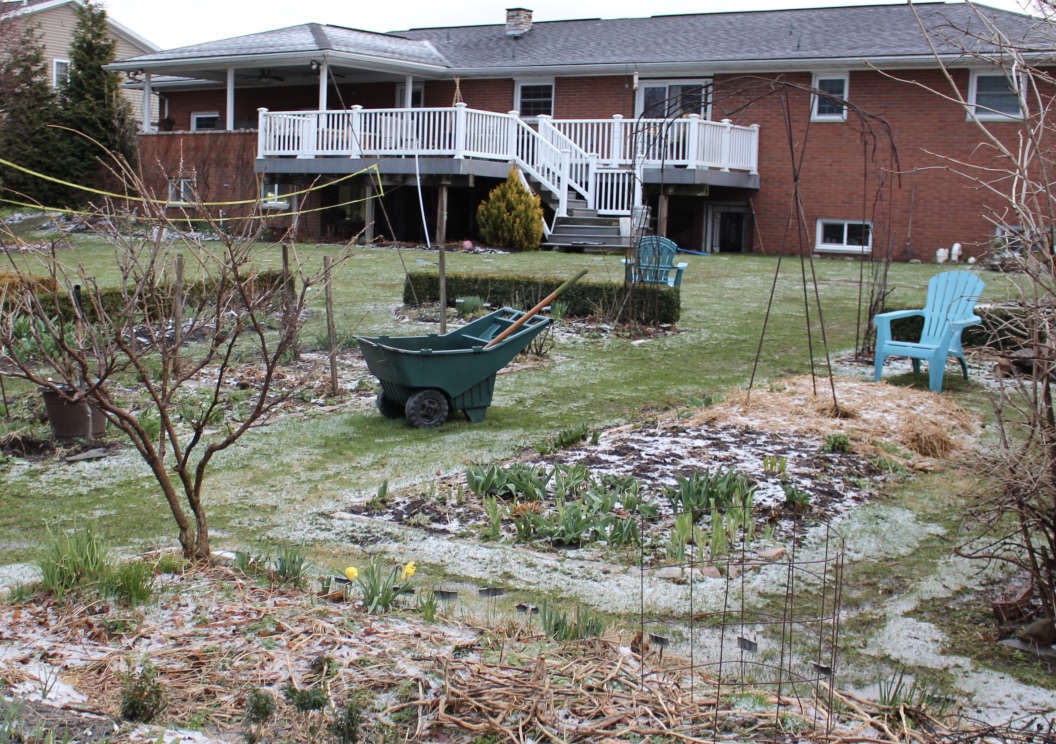
The potager is getting raised beds.  The old edging is coming out and the new layout is being planned.  I have no idea where all the soil to fill raised beds will come from but I’m sure something will work out.

After an ordering fiasco and delivery disaster the wood for the beds has arrived.  Normally I’d make a thousand trips to piecemeal and nickel and dime the entire project, but for once I planned a bit and will hopefully have most of what I need.  We will see.  As projects go it’s fairly simple and straightforward except for two things.  (1) The site is not all that level, and (2) Thousands of plants are in the way.

flower bulb bed

The zucchini and gooseberry bed…. but then underplant the berries with colchicums.  Edge the beds with chrysanthemums.  Tulips came in with the compost.  Daffodils will die down before the zucchini needs room.  The rose is so small… oh I need a spot for these snowdrops…

Common sense would say dig it all under and buy a few new bulbs in the fall.  This was considered, and then considered again, but of course by Thursday I decided to save as much as I can.  How can I dig under tulips just a few weeks away from blooming?  Things are now being moved if possible, or just plain potted up with hopes for a miracle in space becoming available.

spring bulb border

The front border starting to look less sloppy and more flowery.

The potager is going to be a mess for a while so I’ll leave you off with a view of the front street border.  The mowed up debris of last year is starting to become less noticeable as spring bulbs come up green and burst into flower.  Surely some good must come of this.

Have a great week, and all the best.

A Down Day

I don’t know how non-gardeners do it.  Today was a sloppy, sleety, chilly day and after just a few hours of being cooped indoors I’m almost ready to try doing the taxes on my own.  We are hunkering down for our second week at home and although the yard doesn’t look much better for it, at least the open air and sunshine was a nice distraction.  One day inside and I can’t imagine what the rest of our neighbors do to fill the time.  I wonder if they even know the birds are singing and the buds are bursting in spite of the messy weather.

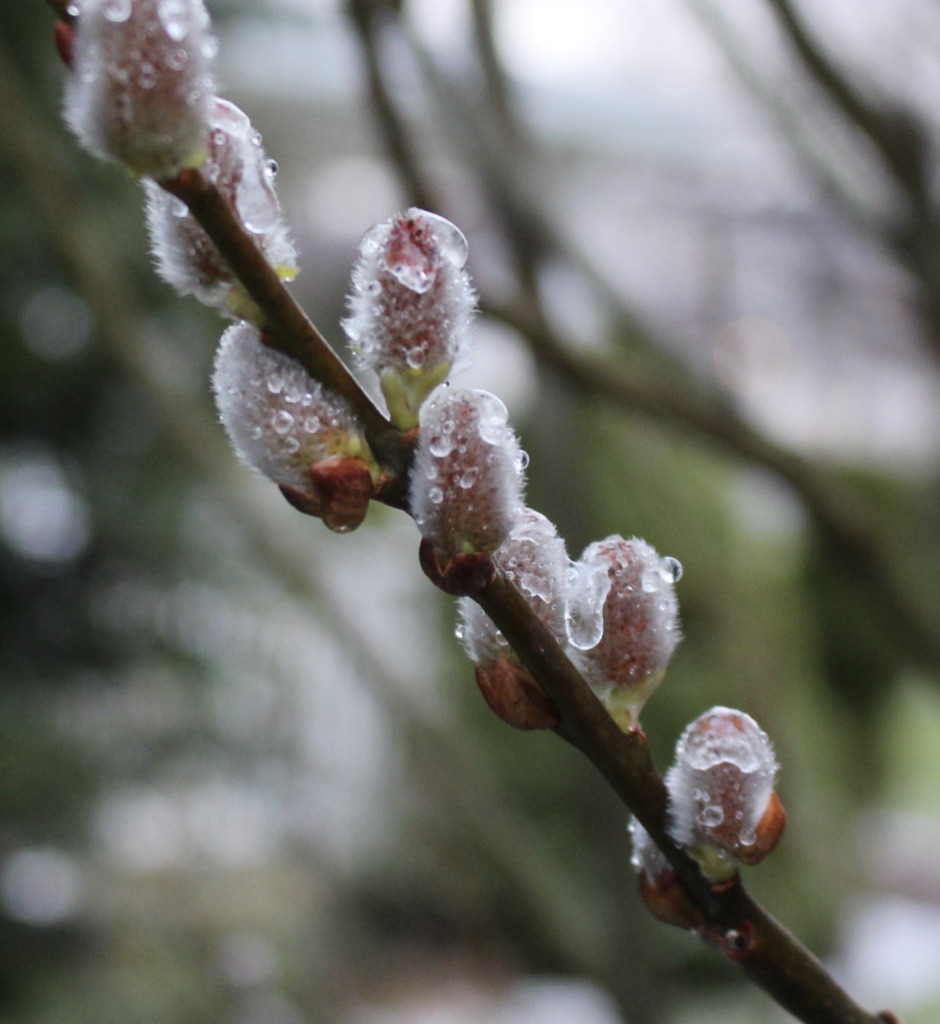
pussy willow

Pussy willow just starting

Things weren’t perfect before, but it was good enough with a coat on and decent mudding shoes, and considering it was still mid March I consider that to be excellent.  The sunshine and warmth ended the snowdrops but there’s always more on the way.

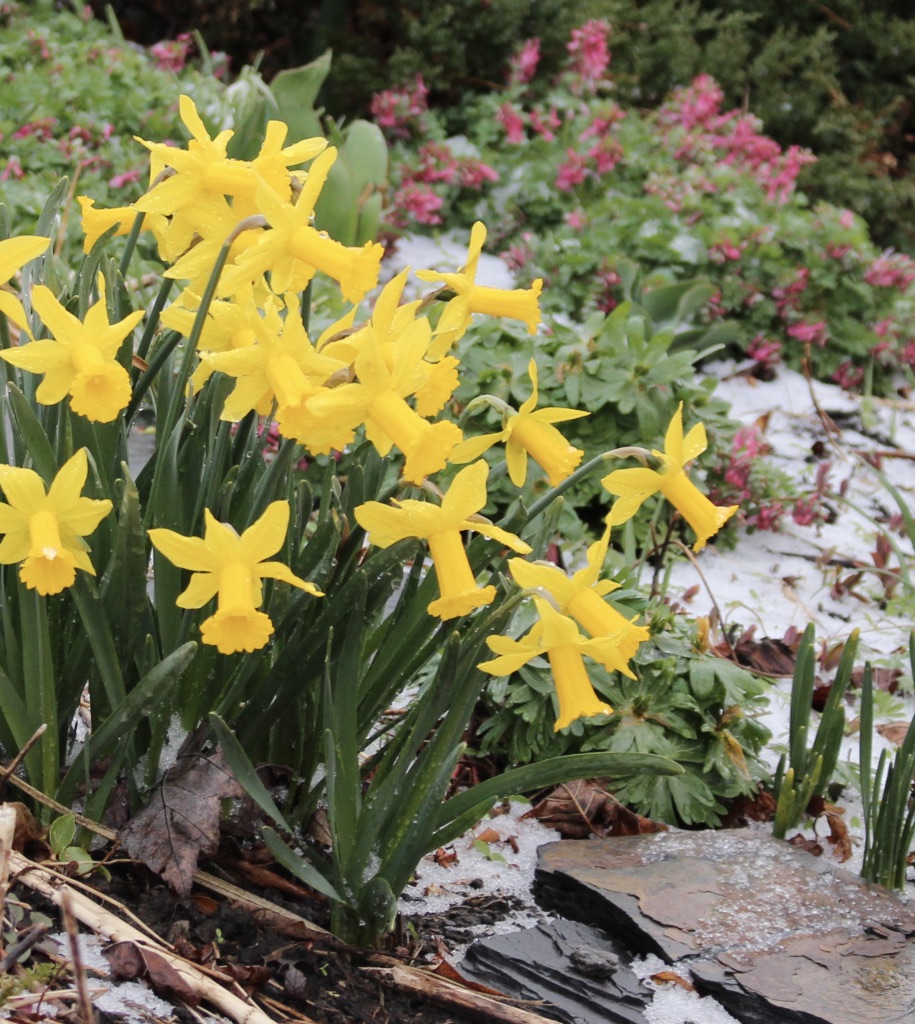
'Tête à Tête' daffodil

The first daffodils are coloring the front beds a springtime gold.  ‘Tête à Tête’ in front, ‘Tweety Bird’ towards the street. 

Corydalis solida and the first daffodils are leading the next flush, and in spite of the snow they’re a sign of real spring.

Tweety bird daffodil

‘Tweety Bird’ is my favorite early daffodil.  It handles the weather well and I love the form.

Maybe a down day is a good thing.  I’ve been pruning, trimming, transplanting, and fixing and after being inside for winter and work, I’m a little short of the normal gardening endurance levels.  Nothing a little a dose of Tylenol can’t fix 😉

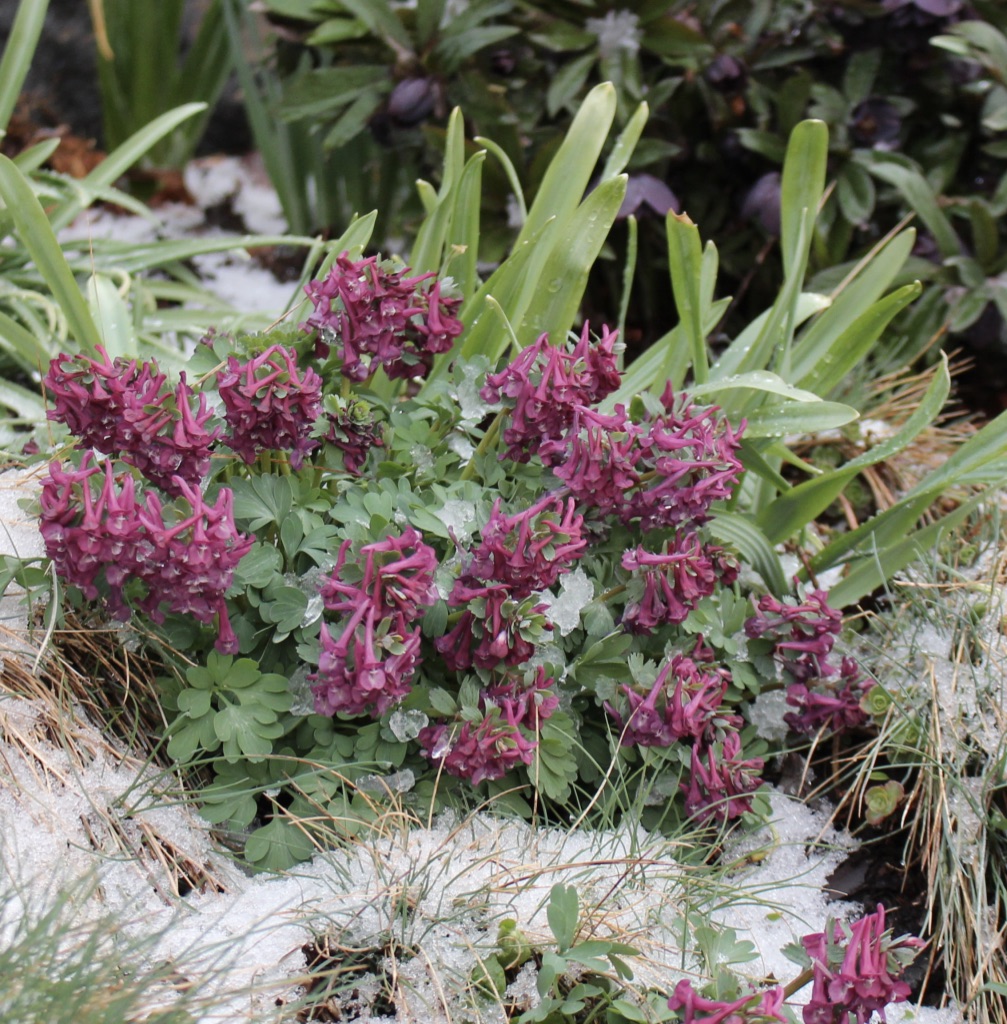
corydalis purple bird

Corydalis solida ‘Purple Bird’.  Many of the named corydalis just abruptly disappear in this garden, but their many seedlings are often just as good (or dare I say better?)

I won’t bore you with the less than impressive transplants and prunings.  Most are just balls of mud in new positions which only I will notice, but one thing which may be noticeable is that plans are afoot.

potager

The work never strays far from a convenient rest spot.  It’s always good to reflect on any progress.

The plans are the byproduct of too much sitting around and thinking, and when it gets bad the gardener decides change for change’s sake might sound like progress, so giddy up!

So wood has been ordered for the construction of raised beds.  Someone here thinks the vegetable component of the potager will be much more productive if the beds are raised… I think planting fewer flowers might help… we will see.  In any case I’m sure it will turn into much more work than it should be, and take far longer.  That makes sense since it’s already cost more than we’ll ever make back in fresh produce.  In any case, have a productive and healthy week!

Panic Buying

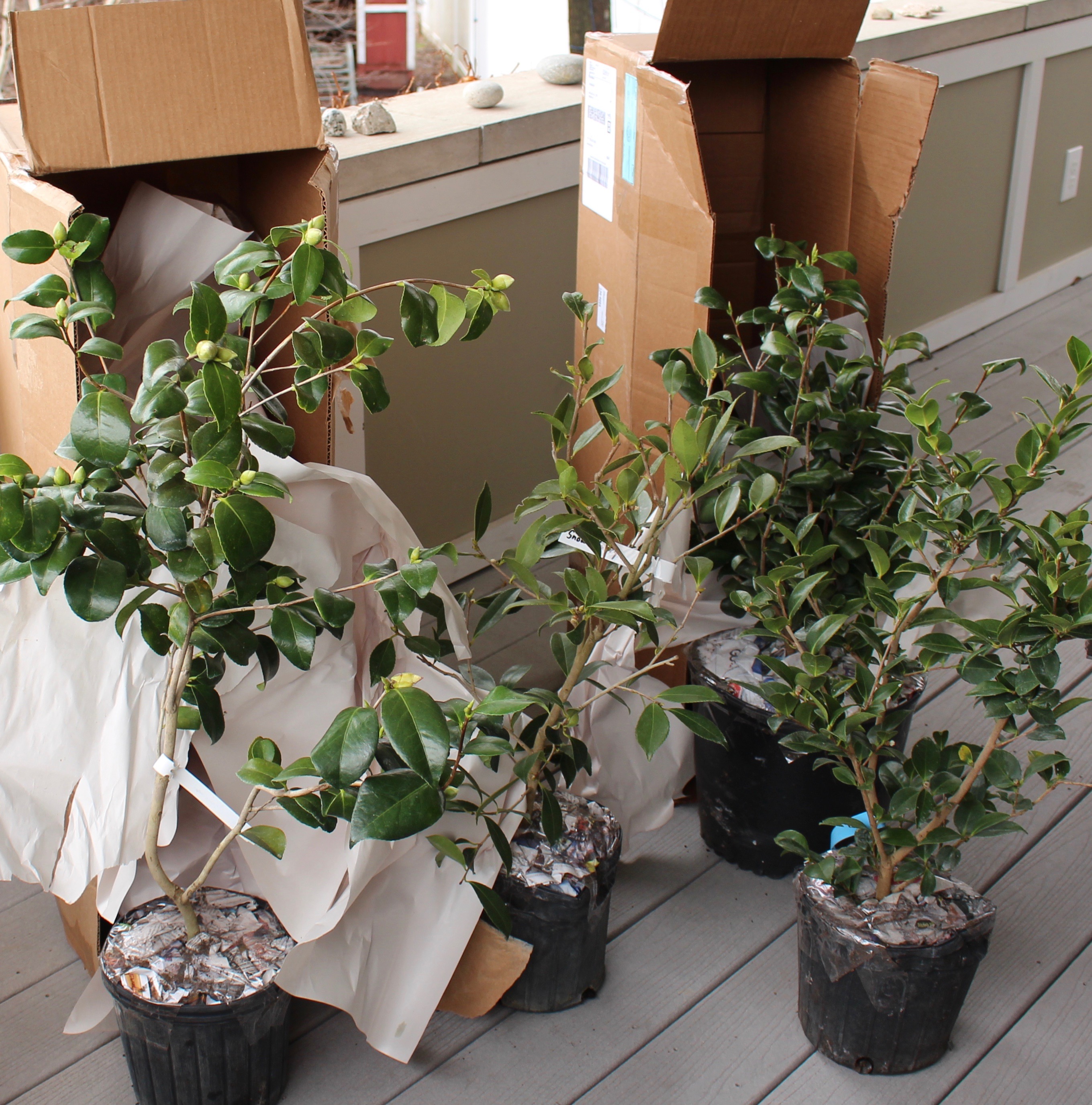
We stocked up on a few things during our last trip to the store, things like chocolate chips, cheese, and icecream, all the essentials you’d need to live on cookies and pizza for the next few weeks, but we were happy enough to skip the toilet paper aisle.  My wife has been hoarding toilet paper since before it was cool, so even with the current demand for paper products we still have at least a month before we need to crack open the paper towel vault.  We all have our panic point though, and mine was warming weather and a lack of any decently sized camellias in the garden, so Friday order, Wednesday ship, and Thursday a sigh of relief.

“Hardy” camellias from Camellia Forest Nursery.  Huge plants, awesome quality… much better than I could ever have imagined!

Panic buying is not based in rational thought, and camellias are not hardy in my zone, but… I’ve been dabbling with a few seedlings.  They’ve survived.  I spoke with Charles Cresson who grows many camellias in his Swarthmore Pa garden.  He suggested I look into the Korean forms of Camellia japonica.  Things were researched, plants were purchased 🙂

When I say camellias are not hardy in my area I mean to say most camellias are not hardy here.  Charles knows a thing or two about camellias, and has been growing them for decades a zone or two south of here, and he pointed me towards the Camellia japonica genetics collected by Barry Yinger in the late 70’s to early 90’s from islands off the Korean Peninsula.  To hear the story of seed collecting under armed escort within sight of North Korea sounds like quite the adventure, but the more restrained Morris Arboretum version is available here.  I’ve heard the hardiest of the seedlings have survived -29F.

So we will see.  Obviously I don’t know where they will be planted.  The two magnolias don’t have a home either, but it’s good to be prepared.

A New Season

Last weekend was David Culp’s Galanthus Gala.  I thoroughly enjoyed myself, and the flood of friends and early season plants and rare goodies that filled the Downingtown Friends Meetinghouse were a treat as the new garden season begins to rev up.  What a difference a few days makes.  I’m sure you see the news so I won’t rehash, but I just want to wish all my friends the best and hope they stay healthy and safe.

cyclamen coum

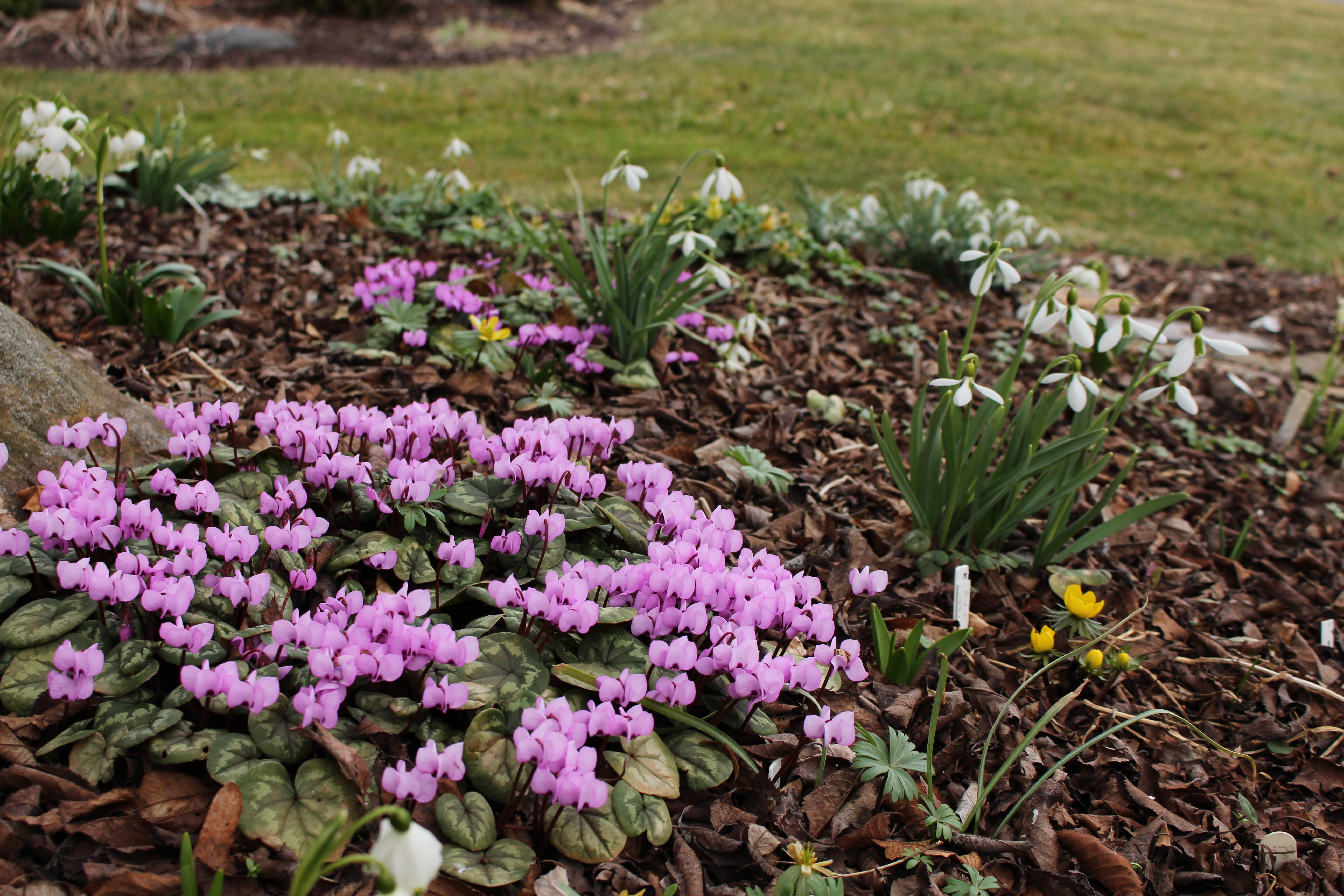
Cyclamen coum doing better than ever thanks to the relatively mild winter.  Over the last year about half the plantings here disappeared as a result of wet and rot, but this cyclamen is spectacular.

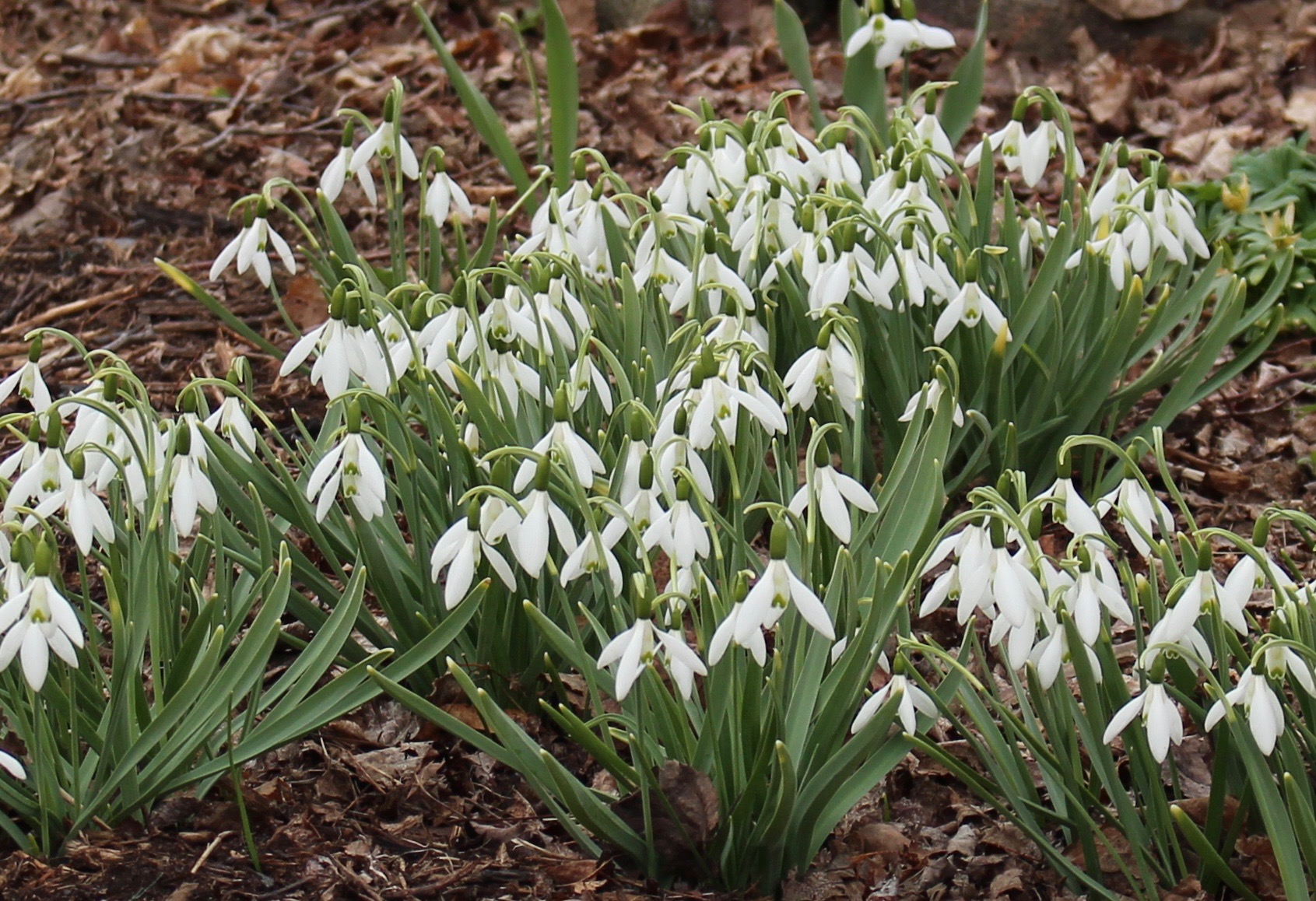
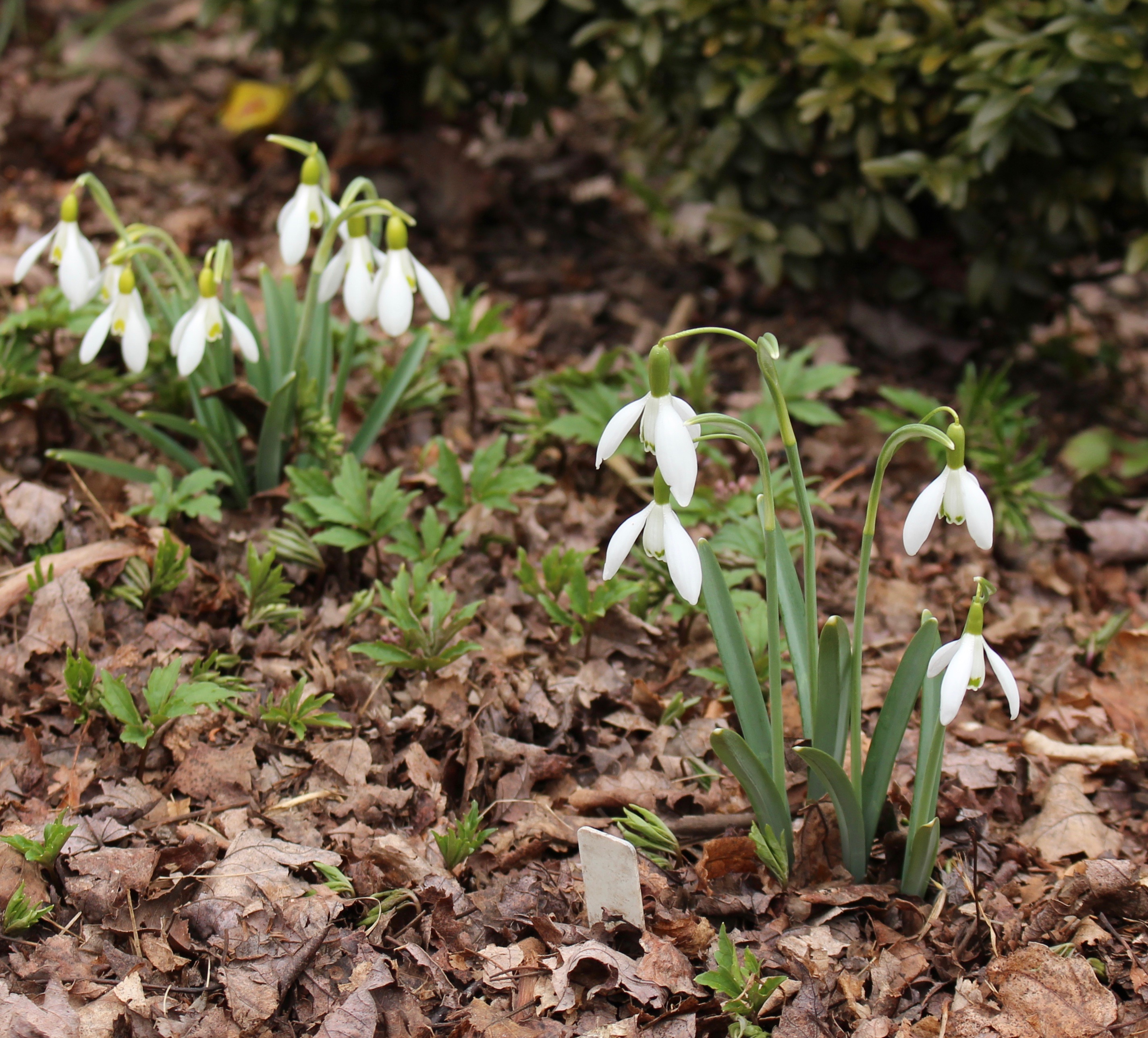
In just a few days spring has arrived and fortunately it’s a white fever which has infected this gardener.  Eleven years of planting and tending is finally starting to pay off, and the tiny handfuls of begged bulbs and lonely singletons are becoming puddles and pools.  I finally have hope that there will one day be a sheet of snowdrop white in this garden, maybe not a California King sheet, but possibly a twin, and that’s excellent enough for me.

nivalis x elwesii

My first handful of snowdrops is up for some more division this year.  I believe it’s a nivalis x elwesii cross.

The non-winter has been a new experience, with some things up early and others holding back.  Restraint payed off for those who held back, since there were a couple harsh nights in February, but for the most part the garden has escaped the usual damage associated with gambling on a winter garden in zone 6.

freeze damage snowdrop

Some drops had their tender stems turn to mush when temperatures dropped into the single digits, but over the years I’m learning who these tender drops are, and am moving them to more sheltered spots.

With the right attitude the good always outweighs the bad, and I like to think there’s a lot of good.  New snowdrops are good, and I can’t believe I have ‘E.A. Bowles’ in the garden this year.  I love it.  When I first saw this drop five years ago on a visit to Hitch Lyman’s Temple Garden,  I thought for sure it would be many years before I would have a chance at it, but here it is.

galanthus ea bowles

‘E.A. Bowles’, a pure white snowdrop which has replaced the three short inners with another set of pure white outers.

So now I shall continue with way more snowdrop pictures than good company should have to endure.  You are more than welcome to scroll down to the end and I won’t take a bit of offense  🙂

galanthus moortown

Another newer to me drop, galanthus ‘moortown’.  Thumbs up for me on these big blooms with a strong mark that bleeds up.

Only a few drops here can claim to be new and exciting.  They might seem that way to me but fancier people will turn their noses up at the plain white and green things I’m obsessing about.  No problem I say.  Social distancing is so much easier around here when your day revolves around tiny green markings on a tiny white flower.

galanthus alans long ovary

I’m not sure who Alan is, but here’s galanthus ‘Alan’s Long Ovary’ looking nice with a growing clump of ‘Winifrede Mathias’ in the background.

Before anyone gets the wrong impression, let me again clearly state that my garden is not as impressive as closeups and heavily cropped photos might imply.  Snowdrops are tiny, and one drop does not a garden make, so I think I still have plenty of time to consider charter bus parking and garden visitor handouts.

american snowdrop garden

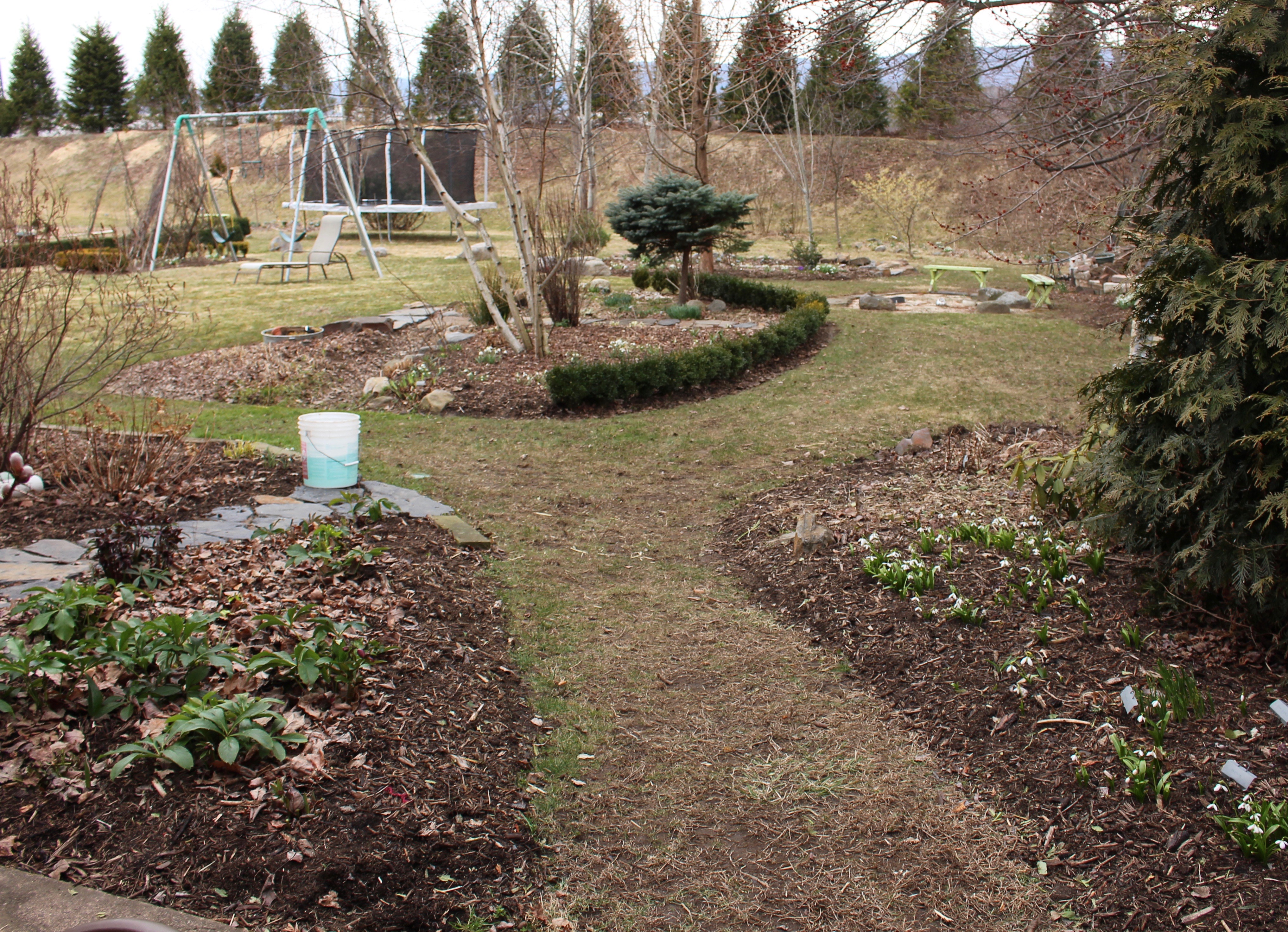
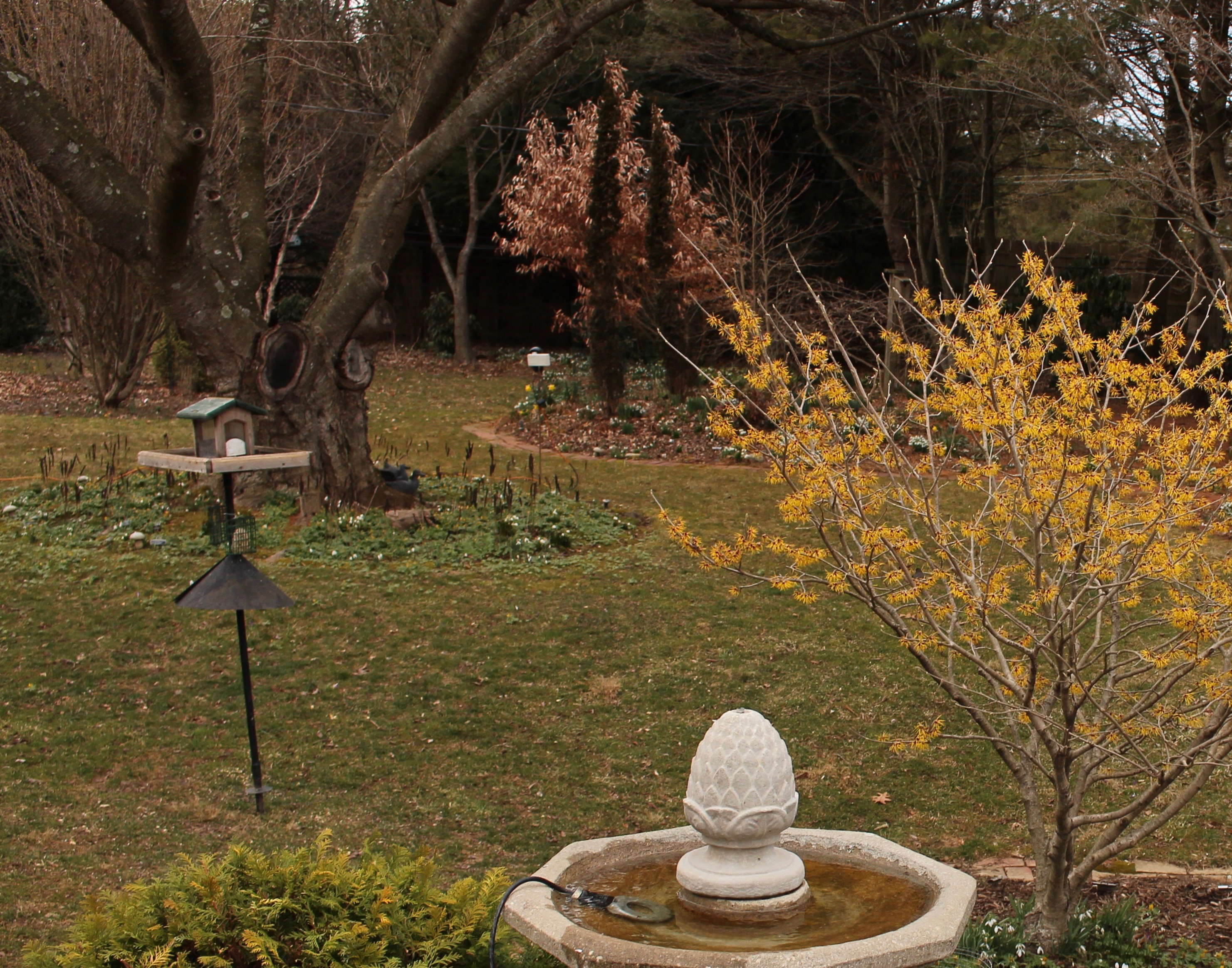
A blank lawn is slowly giving way to planting beds and a garden design.  This is the bulk of my snowdrop garden, and notice that the glare of white is still far from overwhelming.

Even without visitors it’s a fun obsession.  It makes the next few weeks less painful as we shelter in place and face the waiting game.

galanthus kew green

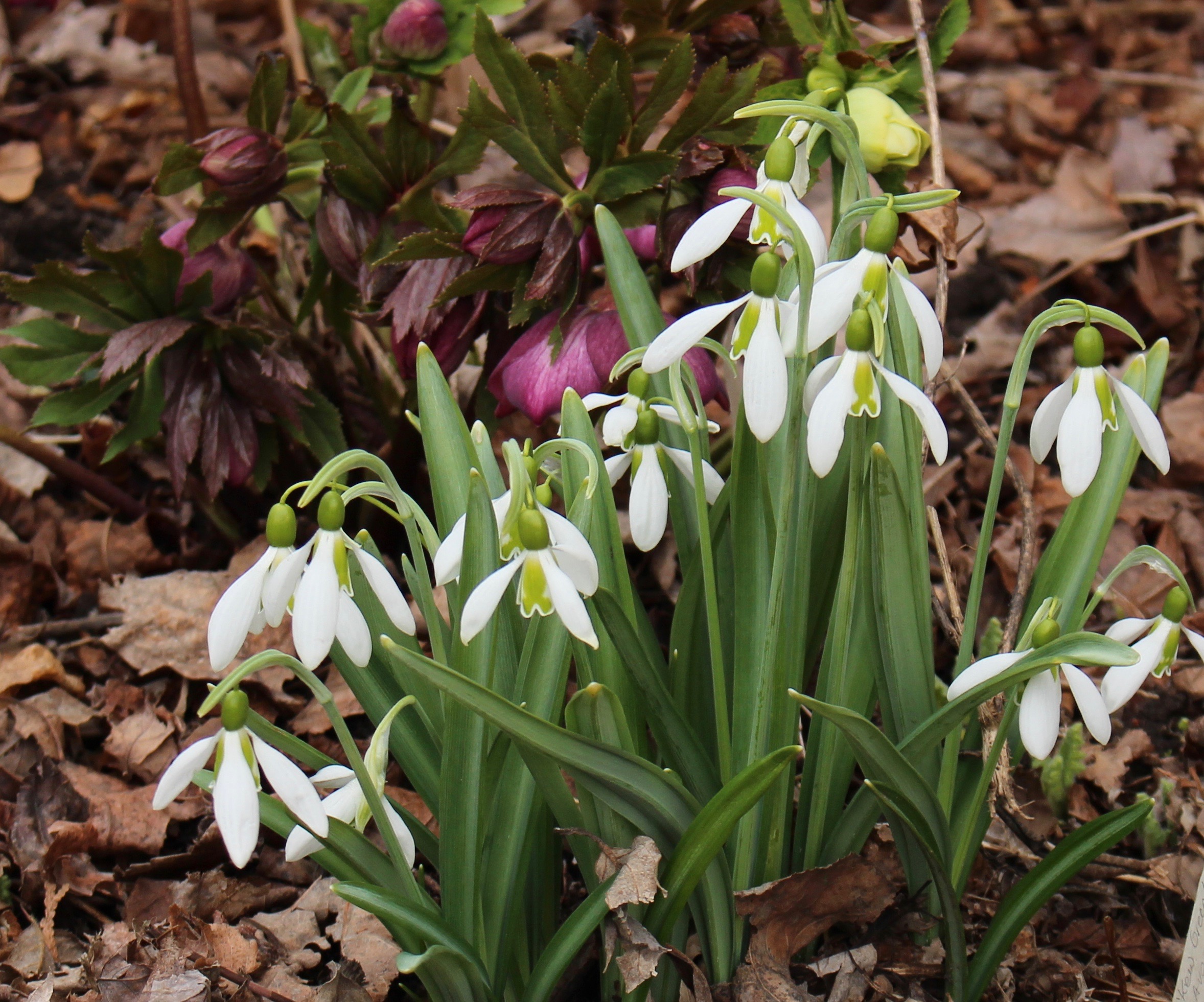
A late galanthus ‘Kew Green’ backed up by an early hellebore.  I like when the drops open alongside other spring color.

Hopefully the garden is enough to wear me out and keep me safe from online plant shopping.  February has already seen magnolia and “hardy” camellia purchases and there’s no plans to where any of it will go, so if we stop there it’s probably a good thing.

galanthus greenish

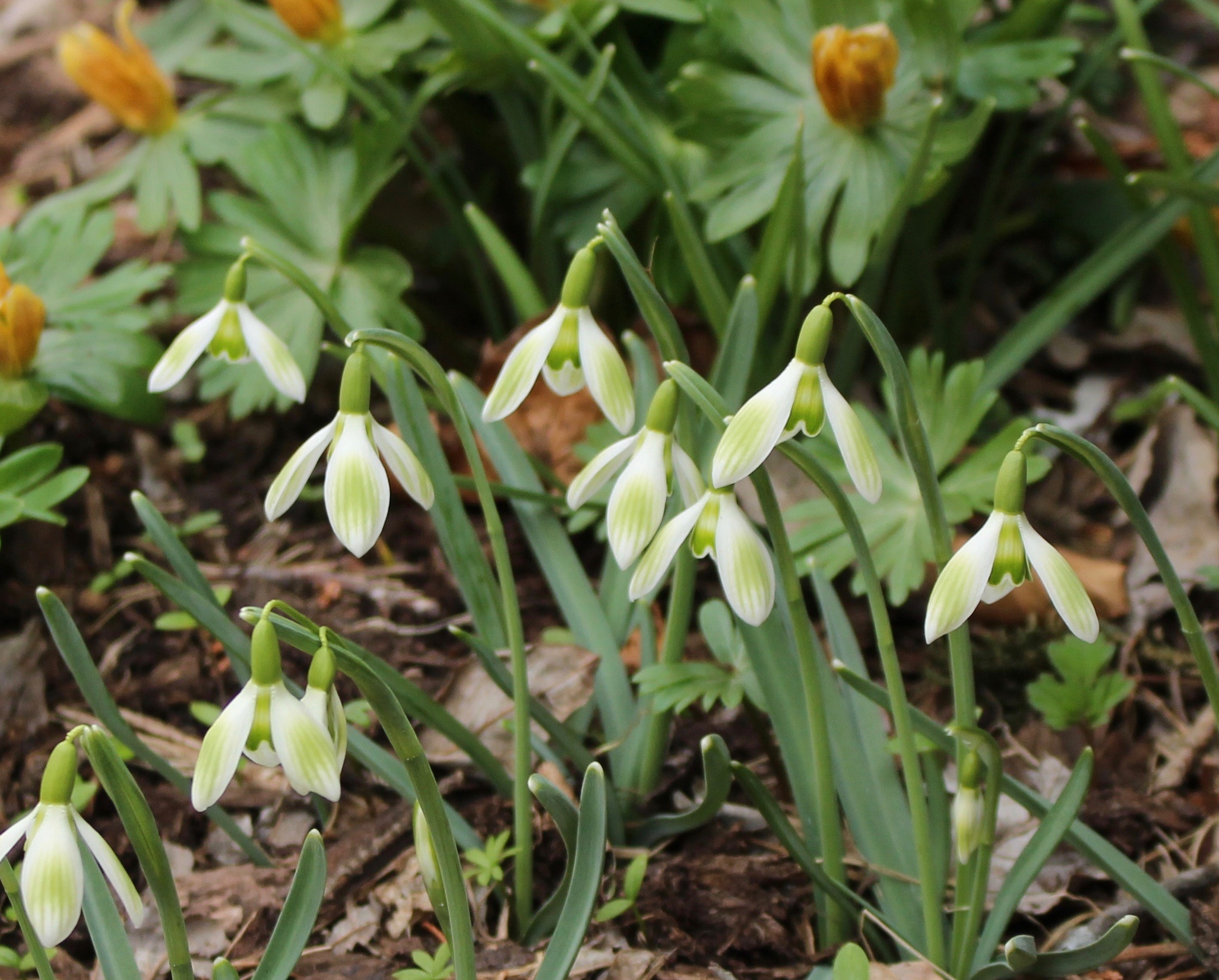
A souvenir snowdrop from another Temple Gardens visit, galanthus ‘Greenish’.  It was beautiful in the gardens and I was thrilled to see it for sale at the exit.

There’s plenty to do without adding anything new, so let me remind myself of that.

rabbit crocus

Rocks thrown down for a new (and yet unfinished) bed edging have kept the rabbits away from the crocus they normally destroy.  I wonder if I can expand on this idea…

Moving plants comes first.  In the earliest days of spring I can pop stuff up and plop it elsewhere without water or worry and that’s perfect for the laziest of gardeners.  Today I shall finish the snowdrops and begin shrubs… according to the plan I never follow…

galanthus sutton courtney

One of my favorites, galanthus ‘Sutton Courtney’ with a few tommy crocus behind.  Fyi the snowdrops still looked nice a few hours later after the bunnies ate all the crocus.

Hope these days treat you well and you’re able to find your own retreat in the garden.

Darn Leap Year

Even though most of the long range forecasts hinted at a shift to colder weather, I’m 99% sure it’s because of the leap year.   I haven’t filled in all the gaps in my new theory but Saturday was much colder than I think we deserved and I bet it would have been a much nicer day if it were March 1st rather than February 29th…. unless that’s not the case.  Come to think of it February wasn’t all that bad this year, with a couple days in the 50’s and plenty in the 40’s to counteract the odd 4 degree night.  Much warmer than normal and practically snow-free, and that made for some wonderfully early snowdrop visits.

galanthus rodmarton arcturus regulus

‘Rodmarton Arcturus’ to the left of ‘Rodmarton Regulus’.  Two stand out snowdrops in a stand out NY snowdrop collection.

First on the list was a visit to an open garden on Long Island NY.  I was in the area to visit my parents and with beautiful sunshine and warm weather in the forecast it just made sense to drag mom out to look at drops.  Dad has learned his lesson on previous colder visits so he wisely stayed home, but even he would have enjoyed the location and warmth.

long island snowdrop garden

The garden’s host leading a group around to admire the drops.    

This is the same garden my friend Paula and I visited last year (nearly a month later btw), and this visit made me realize how spoiled were were the first time.  We had our host nearly all to ourselves that time, and all the stories and tips and conversation made the time fly by too quickly.  This time even though we had to share him with the other groups flowing through, we were still able to catch a glimpse of several treasures and check out what the new season brought.

galanthus joe spotted

Galanthus ‘Joe Spotted’ was looking much finer than my overexposed photos show.  Pity that we were forced to endure such strong sunshine and warm breezes during our visit.

This garden has clump after clump of rare and special snowdrops, so it takes a while to inch through the plantings, but as we got around to the end the healthy clumps of “wild” ‘viridapice’ scattered all through the hedges and shrubbery reminded me that the tried and true also has incredible value.

galanthus viridipice

Patches of Galanthus ‘Viridipice’ around the garden’s edges.  

Come to think of it I may have to order a few more ‘viridapice’ this year when I send in my wish list.  Earlier orders are well on their way to clumping up here and if you’d like to do the same, check under sources on my snowdrop page for the owner’s email address.

winter beach long island

It’s a shame to be less than a mile from the ocean and not stop by.  I miss the winter beach.  

For as pleasant and warm as our February snowdrop visit was, the fake February visit I made yesterday was a far different experience.  On a day which should have been March I set off to the Philly area to meet with my friend Paula for our traditional snowdrop tour.  Cold it was.  And windy.  It was ridiculous to stand out in the wind and cold for nearly three hours but we did, and I’m not sure who was to blame.

winter garden northeast

The garden looked March-ish with witch hazels, snowdrops, and hellebores.  The green of winter aconite looked awfully fresh for a day hovering just above freezing.

Normally Paula and I have much more adventurous spring snowdrop agendas but this year she abandoned me to take on a big overseas adventure in the UK amongst more ancient and vast snowdrop gardens.  Just catching up on that alone took most of the afternoon!

leucojum vernum

Spring snowflakes (Leucojum vernum) and some yellow winter aconite (Eranthis hyemalis) carpet the mossy ground under the central cherry tree.

The garden was filled with enough other distractions to compete with the trip stories.  Snowdrops are nice but the hellebores were also coming up all over, and the mix of colors made me grateful there are plenty of fantastic gardens on this side of the Atlantic as well.

winter hellebores and snowdrops

A real winter garden with awesome hellebores and snowdrops seeding and sprouting everywhere.

I also had an experience which shook me a bit.  There’s a leafy evergreen perennial called the Japanese sacred lily (Rohdea japonica) and although some people go absolutely nuts for them, paying thousands of dollars for special forms, I have remained entirely immune to any desire to grow them.  Then I saw Paula’s.  It was kinda nice.

winter hellebores and snowdrops

More snowdrops and hellebores plus a nice clump of Rohdea japonica.  Hmmmm.

I’ll have to be careful the next time I’m around Edgewood Gardens.  John Lonsdale has a nice variety of them scattered across his hillside and what harm could a second look do, but in the meantime let’s think about cheaper plants.  Galanthus worowonii is a species snowdrop which can be had for a few bucks a bag and in general is nice enough, but not much of a bloomer for me.  Then I saw a nice bunch at Paula’s.  Out of all the many goodies this is the one I was interested in, and I think you’ll see why.

galanthus woronowii

A good blooming, nicely formed Galanthus woronowii on the right, and a regular one on the left.  As you would expect most of what I have in my garden are leafy and floppy like the ones on the left.

So now I’m thinking of more unnecessary plants to try,  Might as well add another.  Winter jasmine (Jasmine nudiflorum) is a floppy, messy, wanna-be shrub that sometimes identifies as a vine.  Don’t be fooled into thinking it’s as fragrant as its cousins (it’s not), but it is a surprisingly floriferous late winter bloomer that doesn’t mind freezing more than it thaws.  I see it listed as hardy to zone 6, so I may poke a stem in here (it roots easily wherever a stem touches down) and give it a global warming try.

winter jasmine

Winter jasmine artfully slung over the perfect boulder.  I’m sure it takes a little trimming to keep in check, but the effect is worth it.

Hmmmm.  It seems like I’ve mentioned quite a few new things to try out this year, and there have only been two garden visits so far.  Luckily it’s March and even though the month is a day late in coming, flipping the calendar means one really important thing which you may or may not know about.  It’s the month of official snowdrop events, and next Saturday, March 7th is David Culp’s Galanthus Gala.  From 10-3 Downington Pa shall transform into the epicenter of rare snowdrop sales, hellebore offerings, uncommon plants, and a celebration of all types of plant nerdery in general.  Alan Street of Avon Bulbs will be offering two lectures and I suspect many plants will find new homes that day.  Admission is free, but pre-sale entry and the lectures will require ticket purchase.  All the cool kids will be there and hopefully I can sneak in as well.
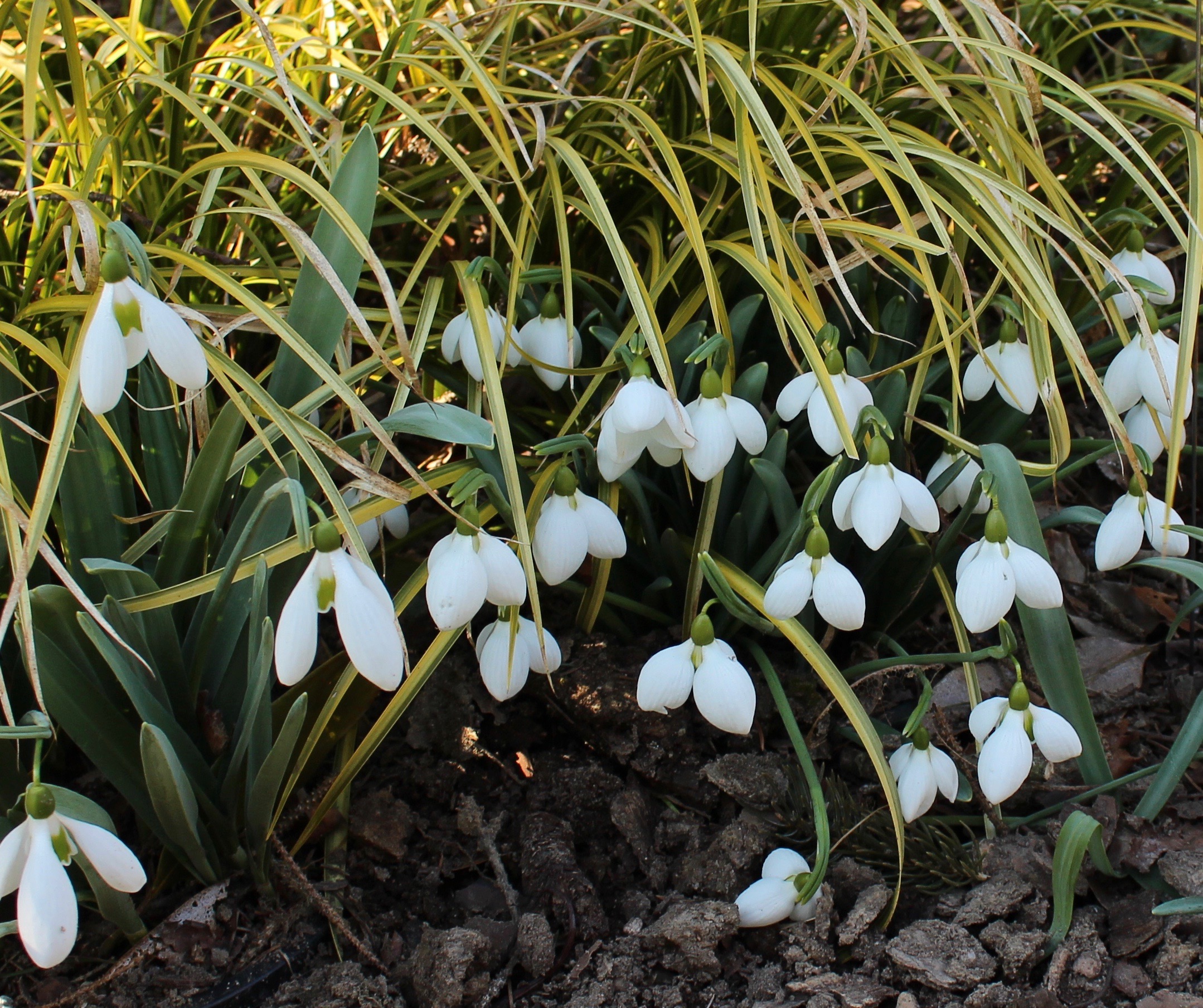
Hope you have an excellent week.  March does have its benefits, and hopefully one of them is warming temperatures.  Not an insignificant point since it took me about 8 hours to warm up again after trying to pull off a garden visit in Fake February.

Fake News!

Spring arrived last week.  There it was right in front of me, the thermometer was roaring to the top and everyone was thrilled by the high numbers.  Records keep breaking and coats were thrown aside as ridiculously overcautious and we embraced the sun.  Surely that weak, orange sun was the reason things were so warm.

galanthus potters pride

Galanthus ‘Potters Pride’, typically in bloom for the end of November Thanksgiving table, has only now been coaxed out of the ground.  

The neighborhood was bustling.  Nearly everybody had a job as garages were swept and litter was cleared and the last of the holiday decorations were secured.  It sure looked good.  My brother in Law even pulled out the leaf blower and cleared all the riff-raff which had blown in while our backs were turned.  Back into the woods it went, and a quick round with the lawnmower has everything returned to that bland, uniform, suburban look which all my neighbors seem to love.

lawn mow in january

Nothing like a freshly cut lawn in January.  Mid January.  In Northern Pennsylvania.  For those who have let the 63F (17C) high get to our heads, our normal lows for this time of year should be closer to 17F (-8C).

The last three months have been filled with erratic ups and downs, but the ups are all we care about.  I have snowdrops sprouting and in full bloom outside and it’s the middle of January and that must be good.

galanthus three ships

Galanthus ‘Three Ships’ up and blooming last week.  Although ‘Three Ships’ hails from milder climates and is known for its Yuletide arrival, here in the colder zones it struggle to reach port by the end of January in a “normal” winter.

But in spite of the early sprouts and premature color something still feels wrong.  The sun keeps claiming it’s perfect, and he deserves all the credit for this unusual warmth but most everyone else can see it’s near the lowest point of its year.  I wish my plants would check this out, but no they just keep fixating on these temperature numbers.  Who cares about tomorrow.

hamamelis pallida

The first of the witch hazels to open here is Hamamelis ‘pallida’.  Full bloom and it’s about a month early. 

Oh well.  When it gets cold I’ll just shelter in place and ride it out.  As usual the weather will take out the most vulnerable and either kill them outright or set them back for a few years, but it happens and in spite of warnings the plants never learn.

I’ll protect my favorites though.  Some plants just agree with everything I do and even if I’m the most incompetent gardener they always make me either feel good or look like I’m winning.  Right now with colder weather and snow briefly returning it’s the winter garden that’s got all the good stuff.

cyclamen coum

The Cyclamen coum growing under lights are starting their show.  Hardy enough to survive outdoors I just like keeping a few inside to enjoy.  

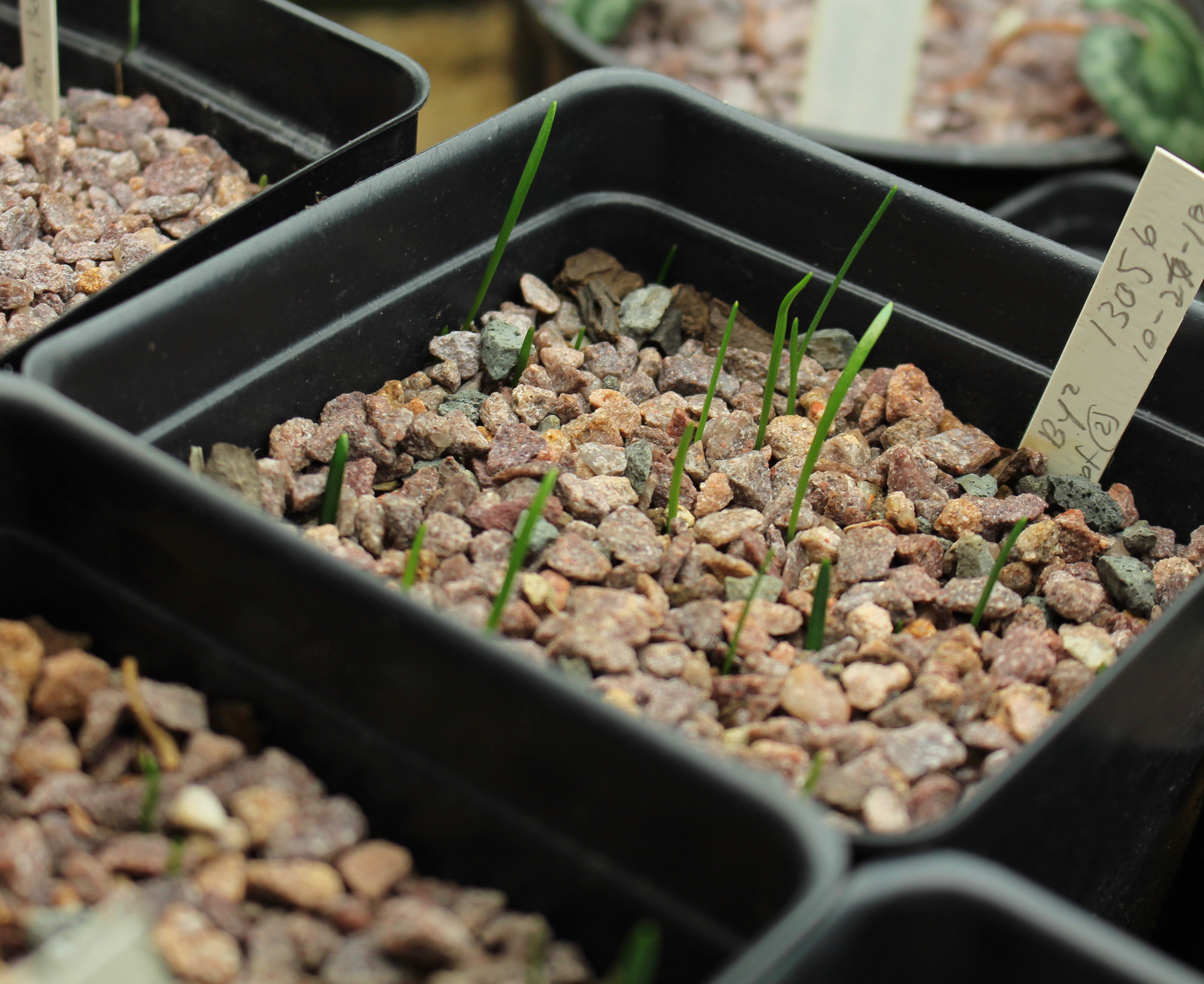
My winter garden in the garage is a nice escape from the real world.  Under the fluorescent shop lights I have a few plants pretending they’re not part of this Pennsylvania garden and also a few that are just too tender to make it on their own.  This year’s wunderkind is the pot of galanthus seedlings I have coming up.  A friend gave me the seed last winter and although a few sprouted then, the bulk have waited until now to start coming up.  Realistically they would be better off in the garden, but here I can admire them endlessly and imagine the hundreds of blooms which are sure to follow… in three or four years… assuming I don’t kill them… just like I’ve killed all the others…

snowdrop seedlings

Snowdrop seedlings.  They still have a long way to go but just think of the possibilities!

I’ve been off my seed-starting kick for a few years now but stuff like this is still irresistible.  There’s so much variability in these seed grown bulbs that I’m excited just thinking about what could be.  I guess that’s what optimism looks like when the nights are still so long, since there’s still bound to be a three year wait at least.  In the meantime three years can pass quickly, and three years ago I started some narcissus seed, and three years later I have a bloom!

narcissus romieuxii

Some type of hoop petticoat daffodil.  The seed were labeled as narcissus romieuxii something-something but they’re not the pale yellow I was expecting, so I’m not committing to a full name yet.
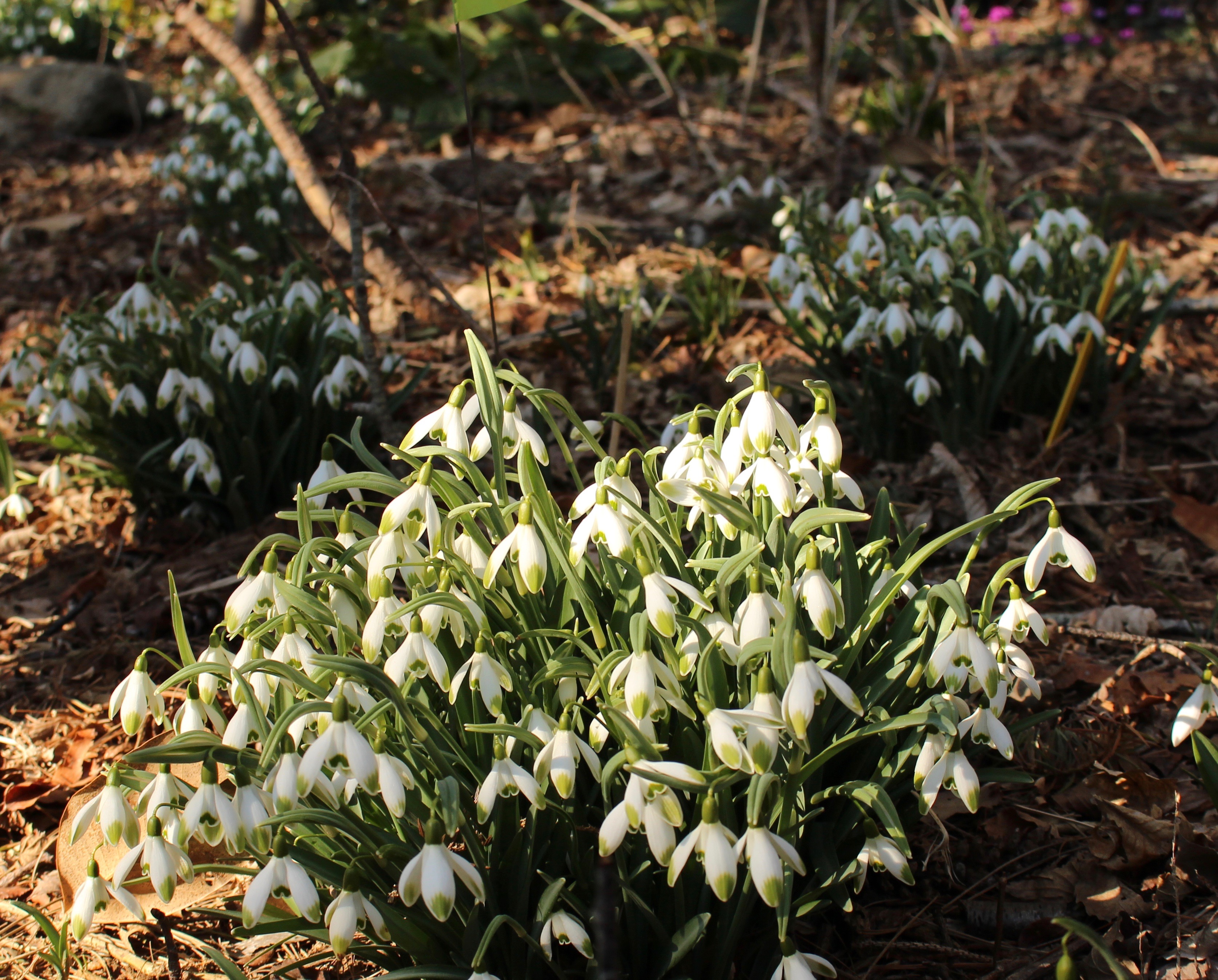
Non-hardy daffodils growing under lights is practically a gateway drug to greenhouse thoughts, so fortunately I don’t have much access to more seed but in these unsettled times you never know.  An offer for more seeds would be much better news than what usually shows up.

In the meantime this winter could end up anywhere.  History shows that these fake warmups always end up badly but maybe I should just hide out in the winter garden and hope for the best.  Maybe this time we’ll only get the tornado rather than the tornado, hail and lightning storm.

The New Kid on the Block

I don’t even try and hide the snowdrop obsession anymore.  Today it feels like all the plants and yardwork of the summer months are just a weak effort to cover up my addiction and to bide my time until cooler months return and snowdrop season kicks back in.  As proof I will confess to driving two hours last weekend to meet up with a few equally crazed friends in the greenhouses of John Lonsdale’s Edgewood Gardens, for the sole purpose of seeing the autumn blooming snowdrops in full flower.  Looking back it was an excellent choice.

galanthus bursanus

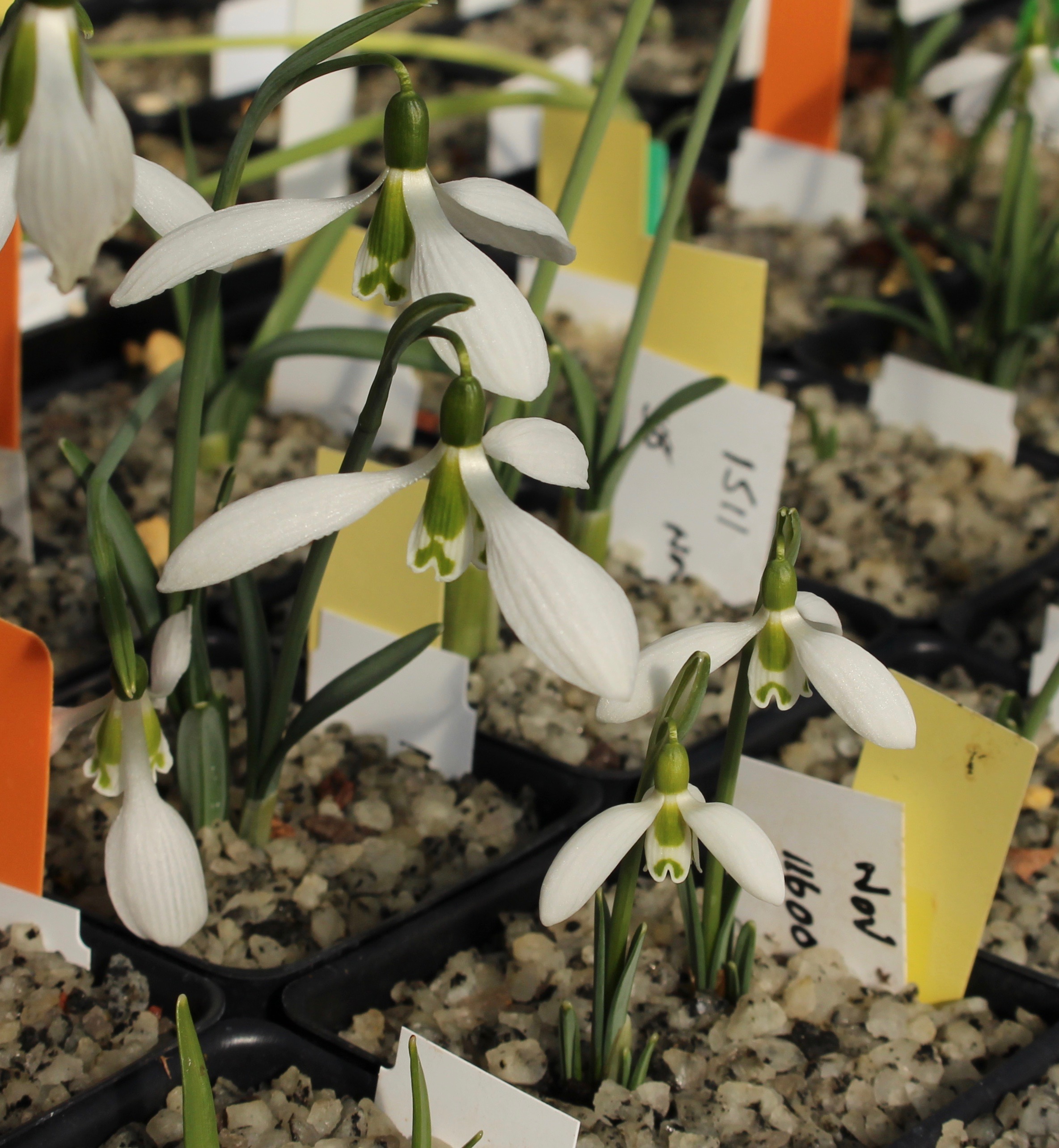
Introducing Galanthus bursanus, a fall blooming surprise with big flowers, multiple bloom stalks, winter foliage, and typically two marks on the inner petals.

Spring and even winter blooming snowdrops can go a long way in easing the pain of a brutal winter, but fall blooming snowdrops make an excellent opener to a slow to arrive season.  Shorter days and colder nights may sap your enthusiasm, but to see a few optimistic sprouts and pristine flowers, the gardener is reminded that the natural world is already getting started on next year.

galanthus bursanus

Most of the Galanthus bursanus were big plants with large flowers, but the range and variety was outstanding with both big and tiny represented.

The highlight of this trip was to see in person a fall blooming snowdrop species which has only just been officially named and described by science.  But gardeners rarely wait for things to be official and for years Galanthus bursanus has been making the rounds as a maybe species or maybe subspecies.  Finally it’s official.  This rare little gem from a small population outside the city of Bursa, Turkey is no longer an odd fall-blooming G. plicatus or unusual G. reginae-olgae, it’s a whole new species… one which to the joy of snowdrop lovers is easy to grow and stands out amongst all the others.

galanthus bursanus

Of course as with all snowdrops, a few selections have already been made including this unusual bloomer… which I loved but others were lukewarm towards.

Of course hundreds of seedlings are already in the works, and since John Lonsdale has a way with these things many of the seedlings have reached blooming size and are now being grown on to see just how special the most special are .  Hopefully in another year or two as all these seedlings hit the pipeline I can crack the wallet open for a couple offsets and give this one a try in my own garden!

galanthus bursanus

Another beautiful form of Galanthus bursanus in front with a G. reginae olgae (one mark, typically flowers without foliage present) behind.

In the meantime, out of thousands of of little pots, there were plenty of other things to admire and to talk about.  Other autumn snowdrops were either at their peak or just starting to open, and the variety represented in all those seed grown plants is just amazing.

galanthus elwesii monostictus green tip

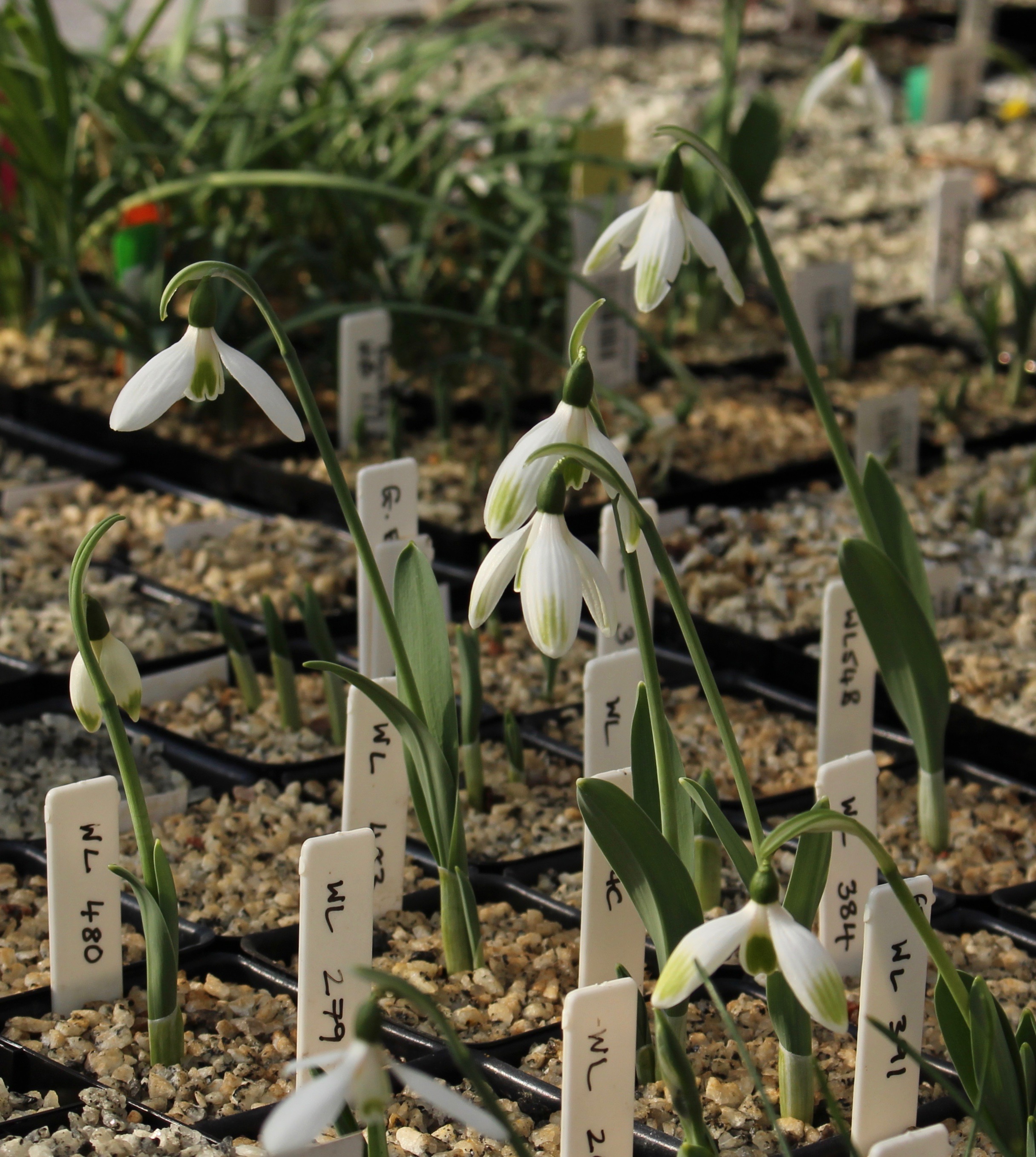
Fall blooming seedlings of Galanthus elwesii var. monostictus, all selected for showing a good bit of green to their outer petals.

And then there were cyclamen.  Maybe even more cyclamen than snowdrops.  The cyclamen were either just coming off their peak bloom or just starting to put out their winter foliage.  I again resisted bringing home more of the borderline hardy species, but the winter garden needed some new Cyclamen hederifolium and faced with such a wide range to choose from, my wallet left this visit with a noticeably thinner waistline.

hardy cyclamen

A few of the cyclamen mother plants, all coming into growth for the winter.

I spent this morning repotting my new treasures.  They didn’t need it, but I like to check out the roots and get them into the same soil that the rest of my cyclamen are in, if only so that all my pots dry out around the same time and all the plants are in the same boat… and can all sink or sail together.

hardy cyclamen

A less hardy species, Cyclamen maritimum has both exceptional leaves as well as masses of flowers (after several weeks in flower these are the last few lingering blooms)

Snowdrops in bloom, a visit with friends, and delicious new plants.  I can’t complain, and I’m kind of excited for the upcoming winter garden season.  The new cyclamen already have me down there on a daily basis, and I’m quite motivated and cleaning things up, organizing and re-arranging, and just plain old admiring the goodies.

It still doesn’t mean I’m hoping for a long winter though…

Rollin, Rollin

So now it’s August.  August fourth to be exact, and I’m not sure how we started into the month already when I only just realized July was ending, but here we are.  Weeding continues and with the front yard relatively under control it’s time to give the back some attention.  The potager is always ground zero for mayhem.

potager

The view from the potager up to the house.

From the right angle and with some nice morning light the potager looks like a flowery wonderland, but an actual visit would show plenty of weeds and needs.  Staking, deadheading, dividing… they’re all on the list somewhere, but weeding is all I really manage to get to.  In my new lower-the-maintenance kick I’m trying to think of better edging and maybe some raised beds and trellises but that’s a whole ‘nother lever and I don’t know if I can pull it off without someone else noticing that the closets still need new shelves and back in June in a moment of clarity that was chosen as the real summer project.

potager

Full disclosure.  The back garden really isn’t as flower-filled as you may think, and the berm is just too steep and too boring to mow… just so I can have more to mow.  So it sits covered in weeds (actually struggling and dried out smartweed for those who need to know) until I commit to planting something better there.

I was kind of inspired by how well the phlox were flowering and didn’t really mind all the hard labor out back.  There are a few seedlings which are nicely fragrant which I always appreciate, and in general quite a few have decided to flower instead of die, and for me and my phlox that’s a big step.

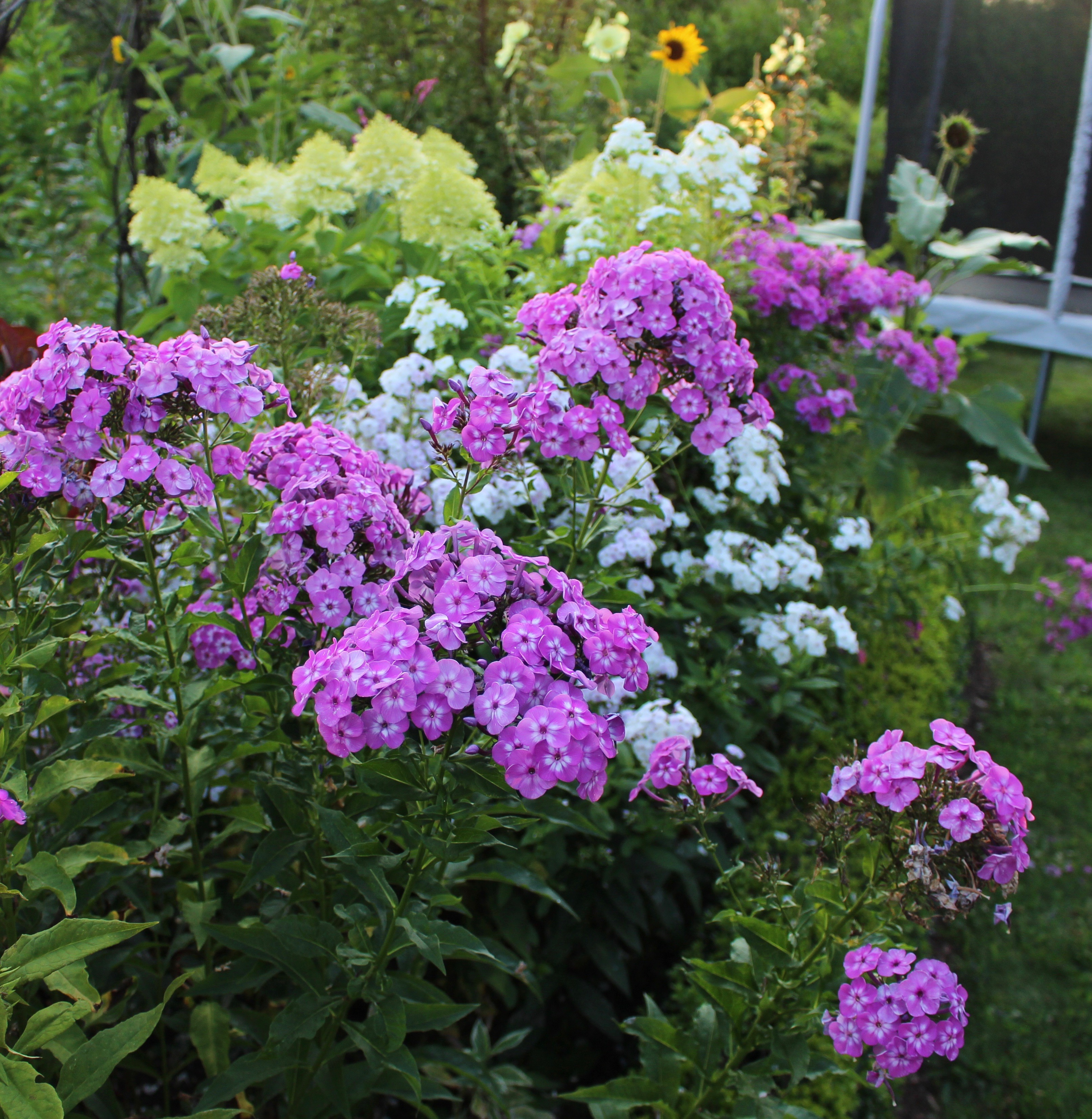
phlox paniculata

Phlox paniculata with some hydrangea ‘Limelight’ in the back.  The hydrangea have grown faster than I thought they would, and this bed might need some rethinking.

I don’t grow the phlox well.  There’s always something they don’t like and I would guess that in any given year for the half that do well there’s another good half that look downright miserable.  I think they’d like a looser, more fertile soil with even moisture levels but that’s just not going to happen and they’ll just have to deal.

phlox paniculata

This pink seedling is my favorite this year.  It’s a pretty average color but up close I love the streaking… which of course doesn’t show too well in this photo.

I made it all the way to the ‘forgotten’ beds in the far back, which are less flower beds than they are just planted areas which I don’t mow.  The double tiger lily (Lilium lancifolium ‘Flore Pleno’) is back there and has finally opened up its congested and twisted blooms.  I never know for sure if I really like it or if it’s just too interesting to not grow, but I’m beginning to think I actually like it 😉

double tiger lily

The double tiger lily has been around since 1870 so of course I’ll need to keep it around.

I was about to tackle one of the worst of the ‘forgotten’ beds when I noticed someone else had moved in before me.  I treasure yellow garden spiders (Agriope aurantia) so when I saw this darling sitting in her web I decided enough was enough with the weeding and frost can level these things just as well as I can.

yellow garden spider

Yellow garden spider down in the weeds.  I can’t leave this darling exposed and homeless, so for the rest of the season this bed is officially a spider refuge.

I’ll regret letting this messy plot go to seed but in the long run I always opt for interesting over pretty so each afternoon I check out how well she’s respun her nest and weather she’s looking a little thin.  Every now and then a Japanese beetle gets flicked into her trap just to make sure she’s plenty plump by autumn.

cardinal flower lobelia

A few of my weeds turned into cardinal flowers (Lobelia cardinalis).  They kind of make up for all the endless rain which gave them the soggy ground they enjoy.

Opting out of any more weeding really gave me a new lease on gardening.  Weeding the whole garden only to start weeding again is about as rewarding as mowing the lawn every time the lawn needs mowing, and it makes me feel like a dog chasing its tail except I’m not that into tails.  These never ending tasks just wear me down.  So the lawn is getting tall and the less noxious weeds are enjoying summer and I’m moving on to projects.  I finally decided to address the pile of flat rocks I had collected last fall and had been mowing around ever since.

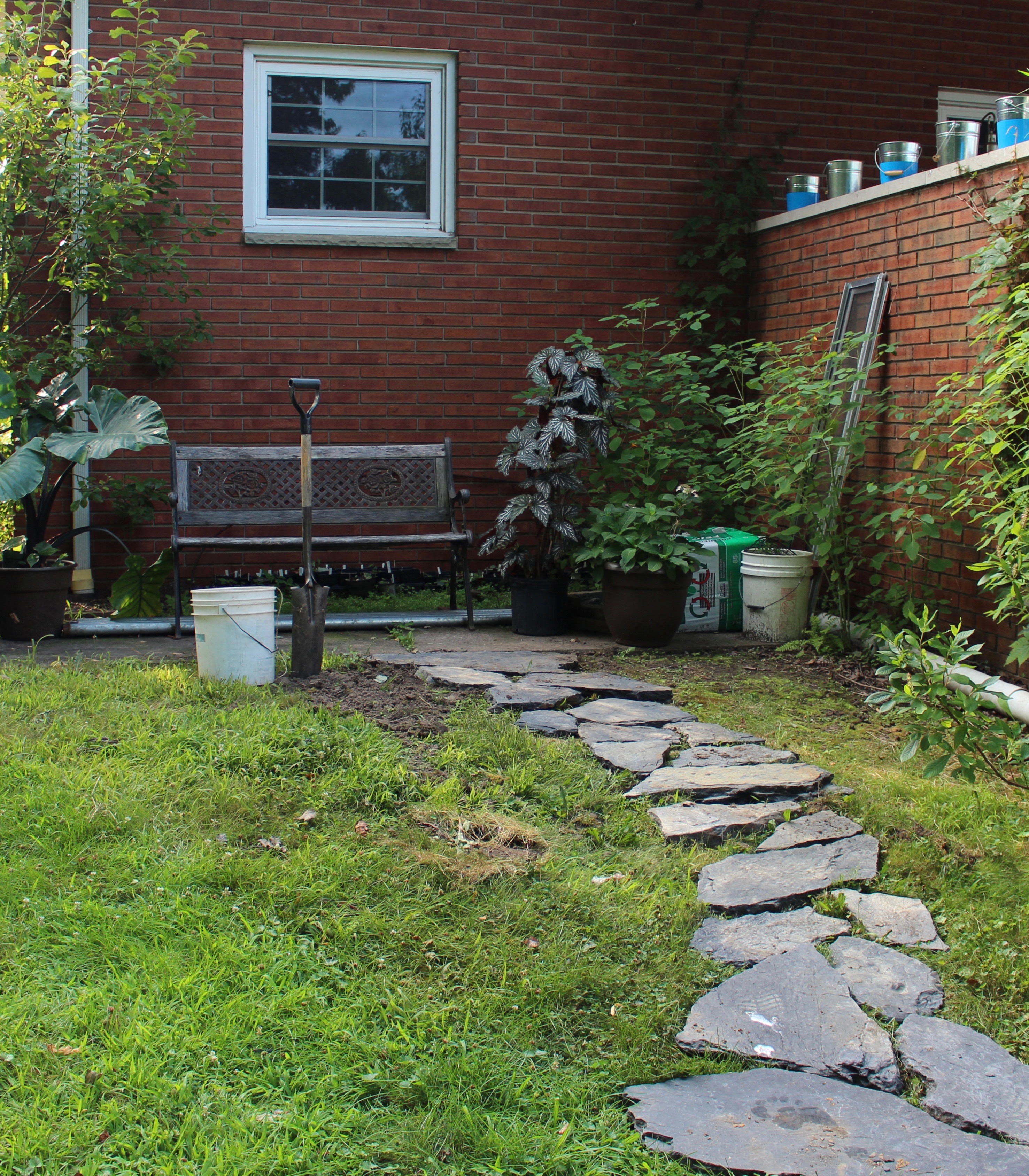
building a bog garden

I don’t know how I moved that big rock back in the day, but last week with a lot of sweat and levering I finally moved it out from behind the grass.  Then I bulked up the stepping stone walk and settled on a spot for the bog garden.

For me projects make you feel like you’re actually making headway.  I want my garden to grow from year to year as well as season to season so changes always make me feel like that’s the case.  The reality is that the photos sometimes say it looked better in the before state, but where’s the fun in that?  Also I bought four new pitcher plants for like $15 on clearance so obviously I needed to invest hours of time and at least twice that much money in peat and sand just so they had a comfortable place to live.

hellebore garden

Leftover stones and a neighbor’s discarded bench were all the excuse needed to make a second new bed while the first new bed was happening.  Why not?

Someone might notice that adding beds to a garden that may already be too much might possibly be a move in the wrong direction but of course I don’t care.  Hobbies should be fun and you’d be amazed at how quickly a weed whacker and a pile of mulch can tame just about any mess.

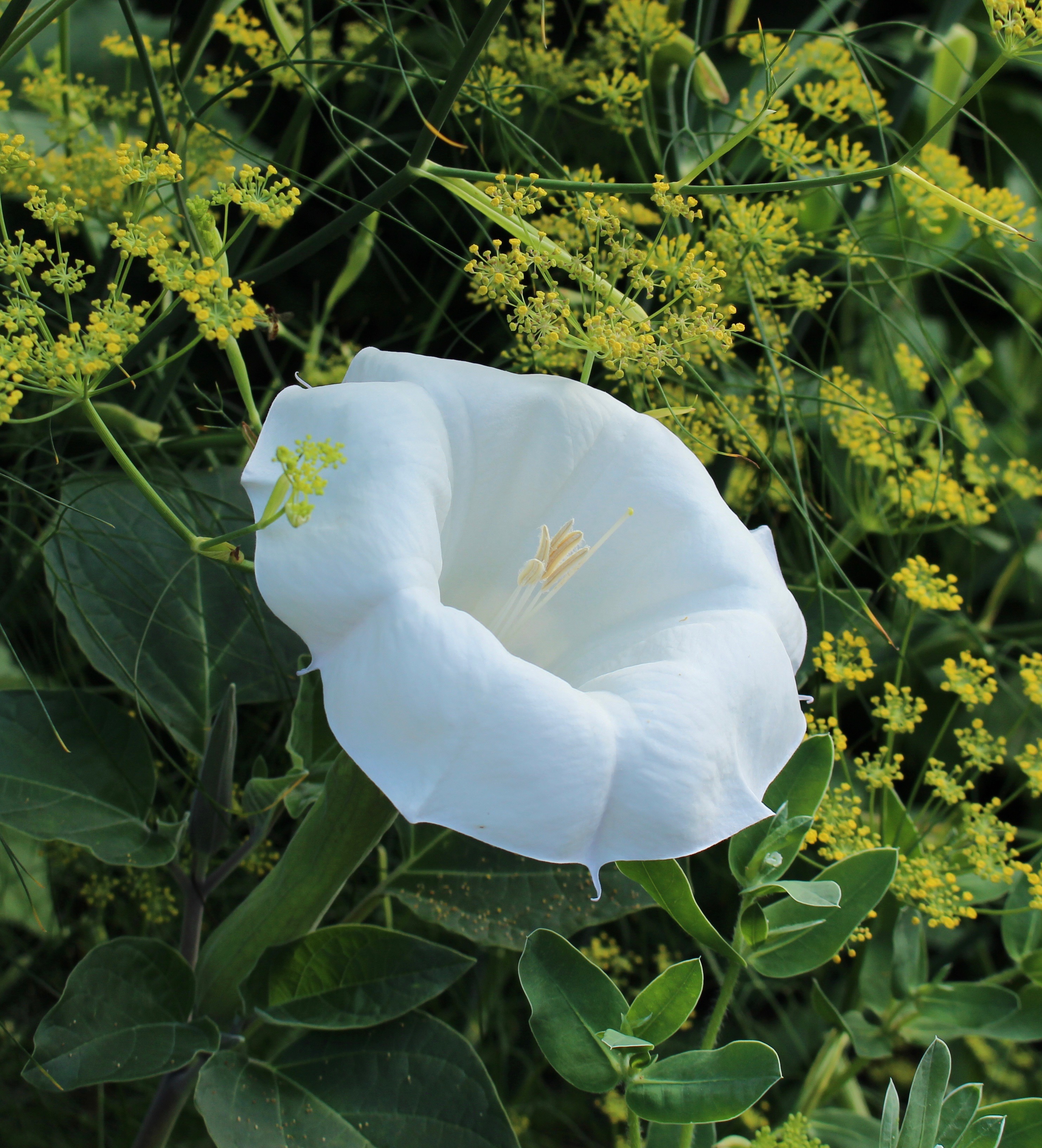
devils trumpet datura

The rewards of messiness.  Devils trumpet seeded out in a cloud of volunteer fennel.  Not bad for a weedy snowdrop bed.

The bog is settling in and the bench now overlooks a patch of hellebores which have finally been moved out of the vegetable garden.  I would have taken and posted a photo but was so sweaty and disgusting the mosquitos even avoided me.  So much for the fun part of the hobby 😉

Rollin with Summer

August approaches, and with it come some of the best outdoor moments of the year.  I love how the garden comes together now, and how everything is just full of humming and buzzing and color.  It’s a treat each day, and my only complaint is how fast the days fly by.

front border

The front border on the last days of July.  Less annual color this year but still a few interesting things to check out each day.

We were away last week on vacation and missed some of the hottest days of the year, but that’s fine with me since it was plenty hot on the island we visited.  The heat here in Pennsylvania was tempered by a few downpours though, and even after a week of neglect the garden still looked fine.

mixed perennial border

I’m starting to wonder if I should try and tame the inner reaches of the front border.  This time of year it starts to look a little messy with self-sown rudbeckia, sunflowers, and phlox.

The fact that the garden carried on fine without me is a little insulting but when it’s messy to begin with I suppose a little more messy doesn’t show.  I’ll take that as one of the perks of having a far from perfect garden, but I did devote a Friday evening to mowing, and a Saturday morning to deadheading and weeding the front borders and I think it did make a difference.

squash seedlings

Neatness would be much improved if I would only stand up to the interesting little things that show up on their own, but I can’t, and although good design never called for a squash patch on the front lawn, it looks like that’s what we’re going to have.

Everything out front is about the same as it always is but I did notice one change.  There seem to be fewer wasps and bees this year, and more flies.  That of course could change in a week, but as I was staking the steely blue eryngium I didn’t have that usual fear-of-sting like I normally do, and I was surprised.

hydrangea limelight

Hydrangea ‘Limelight’ with rudbeckia triloba, eryngium planum, and a few branches of willow ‘Golden Sunshine’.  Yes.  It’s messy here as well.

Hopefully the missing bees and wasps are just an annual blip in bug populations, but I halfway think it’s got something to do with all the bulldozing and construction that went on behind our house.  When they finished off the industrial park, a big chunk of rocky, scrubby, weedy, woodsy habitat was leveled off, and is now either mulched or turf and not at all interesting to anything other than woodchucks.

mixed perennial border

Sedum ‘Bon Bon’ is looking exceptionally nice between the blues and the yellows of the front foundation plantings.  Yes it’s messy here as well and I really need to edge and divide the blue fescue, but that’s not something I’m willing to give up pool time for.

Not to look forward to messiness, but I did go back there this weekend with a sprayer of roundup and an eye for anything particularly invasive.  The weeds and brush will return on their own, but I just want to make sure things like Japanese knotweed, crownvetch, bindweed, and poison ivy don’t gain the upper hand.  I guess you could say I’m a weed connoisseur.

But don’t let all this talk of weeds become too distracting.  I gave the front yard a once over and then did the backyard on Sunday.  Neither looks too bad now and I’ll post more photos shortly, but in the meantime I’m particularly happy with the hardy agapanthus ‘Blue Yonder’ which is slowly clumping up for me at the far end of the front border.  I think this is year three for it, and each spring when it comes back I’m always excited to see a few more shoots, and each summer when it blooms I’m wowed by the saturated color.

agapanthus blue yonder

Agapanthus ‘Blue Yonder’ handled -5F last winter without a problem or any kind of protection.

So that’s it for now.  The heat of summer has things slowing down a bit, and as long as I don’t slow down as well there might be a chance of catching up on projects.  We’ll see.   There are two more trips planned and that’s always a lot more fun 🙂