I’m not quite sure what happened to August, but I just looked at a calendar and it’s practically over. I like August, and I’m not thrilled at all with this time warp.
January has the same number of days, and January never seems to fly by as quickly… even though the days are so much shorter… so maybe some weird time continuum thing is what happened. Or maybe it’s a simpler explanation like ‘time flies when you’re having fun’. Maybe not out-all-night, the-neighbors-called-the-police fun, more like stretching morning coffee time on the porch or going in the pool before bed just because you can fun, but it’s still fun and I feel like these days are numbered.

By June nearly all the Rudbeckia triloba ‘Prairie Glow’ in the front border was dried up and dead, but in July and August a steady lifeline of rainstorms pulled them through. I’m happy for that, they look great now.
Maybe August flew by because the pressure here really eases off in late summer. Things are either done or they’re not and there’s much less to worry or even care about. With ample rain things here look good, and most days I just wander about admiring plants like rudbeckias and hydrangeas. The Hydrangea paniculatas are at their peak now, and they’re always kinda awesome.
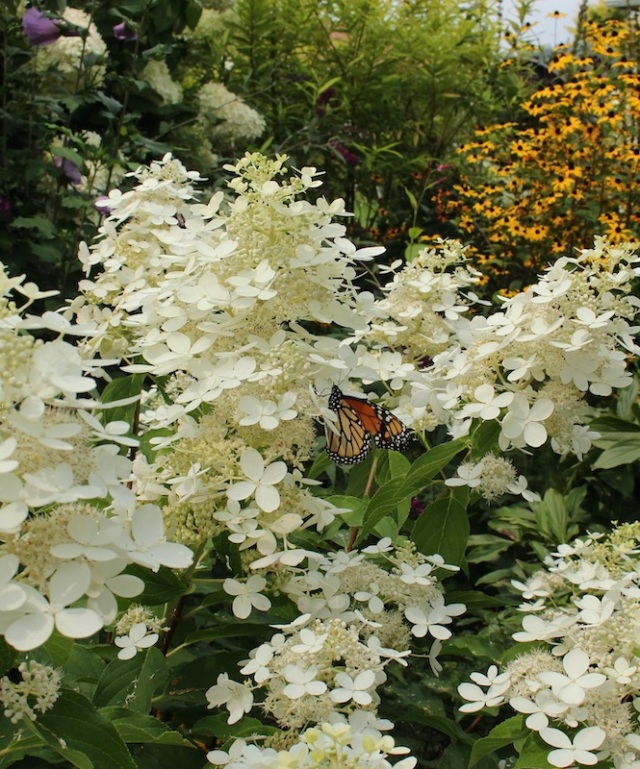
This lacier hydrangea was just buzzing with all the bumble bees and wasps, but even a Monarch butterfly stopped by for a drink.
In my opinion you can’t go wrong with one of these late season hydrangeas. They’re hardy and always bloom here (unlike their blue cousins) and all they ask from me is a late winter pruning to thin out the stems and keep them from getting too out of hand.

A strong pruning in spring keeps the ones on the edge from getting too big, the ones further back are allowed a bit more freedom.
All these hydrangeas are either H. paniculata ‘Limelight’ or seedlings from her. The seedlings have been remarkably nice, and I might try another batch just to have more of them since why not? They’re all a little different and I enjoy the variations along the street border. They’re all a little greenish to start, and I actually moved out my one pinkish ‘Vanilla Strawberry’ because it seemed too white and then too pink alongside all the limey tones.
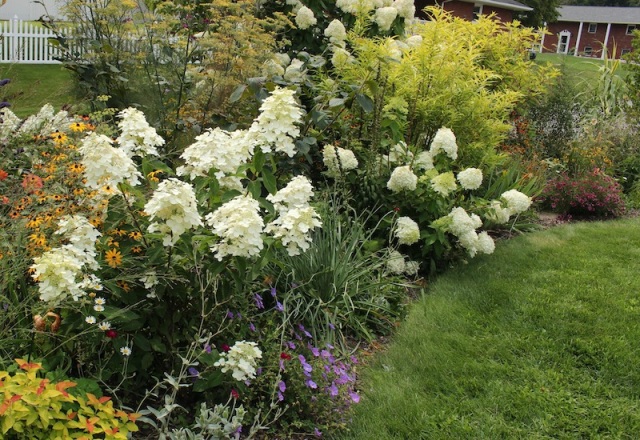
Seedlings of Hydrangea ‘Limelight’ carrying the front border through August.
I don’t think I’m kidding anyone when I talk about setting color themes and working out an organized display in this garden. The history of this place is closer to planting whatever is at hand in whatever space is open and hope that something works out well. I guess for late August these hydrangeas worked out well.

Cannas and Verbena bonariensis also work well. The cannas were rudely dumped here and the verbena came up on its own. Actually only the yucca on the left was planted here on purpose, and even that was a rescue from the trash. Not bad, but I did weed out a bunch of less lovely things as well.
The rest of this post is just heres and theres and updates. Less is more, right? And based on how little I’ve been posting lately maybe it’s better to just get anything up rather than some overly wordy thing which gets tedious after a while, plus I’d like to get to bed early so that’s another incentive for brevity 🙂
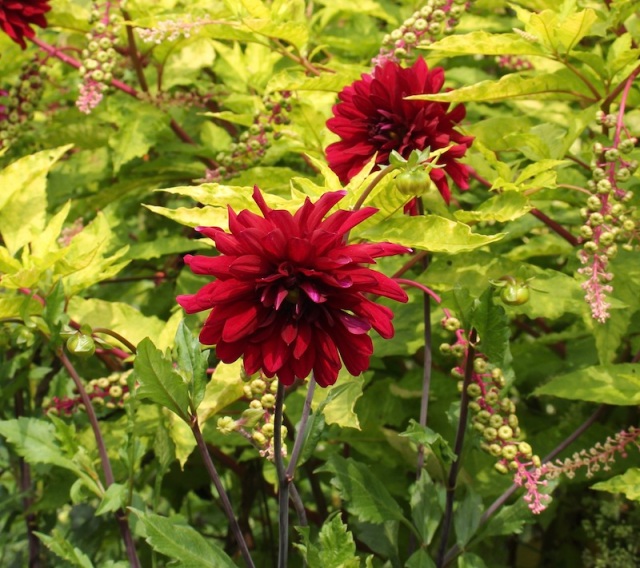
Dahlia ‘Matthew Allen’ amongst the pokeweed.
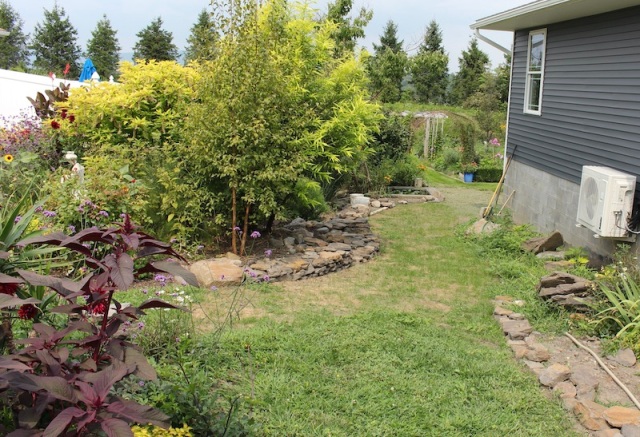
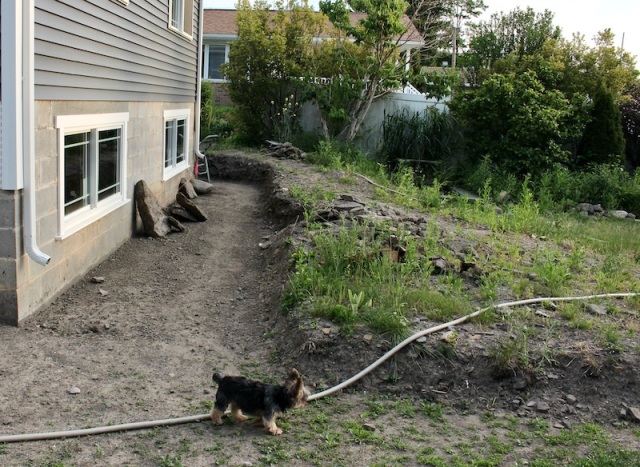
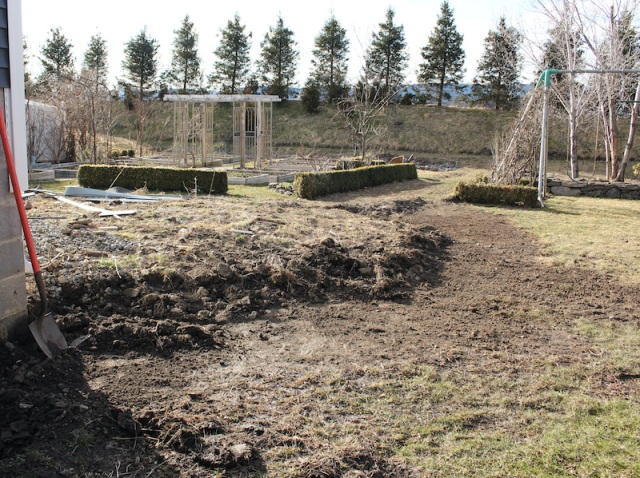
The stones are all “organized” along the slope and the grass seed is sprouting. Finally it looks less like a excavating playground and more like a spot which just needs a little foundation work and a nice bed along the house with anything other than crabgrass.
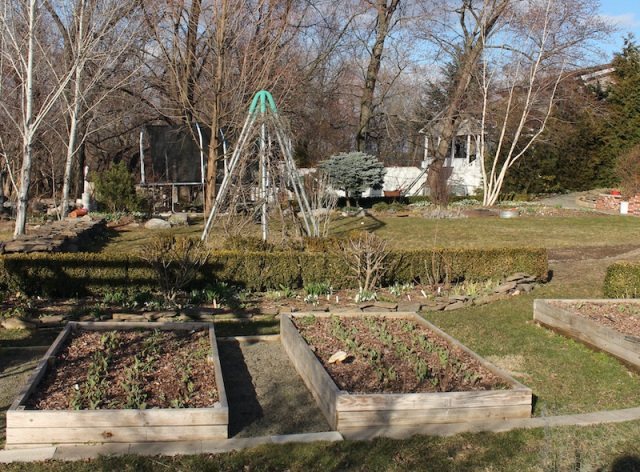
As usual the potager is a mess of overgrown vegetables and aggressive vines. Of course I like it, but I’ll have to confess that it only took two years for the 100% vegetable beds to turn into 25% vegetable beds plus bulbs, tree seedlings, shrub cuttings, small transplants, phlox beds, daylily beds…. a bare patch of soil is rarely planted to lettuce, coleus cuttings and canna seedlings are much more likely.

At least the lawn is mowed. Studies show that any disaster garden looks 78% better with a mowed and edged lawn area.

Beans and a few diseased tomatoes are the only legitimate vegetables still growing here. Now if I could only motivate myself to pick them.

Of course any decent potager has a few Lycoris in it. This ‘magic lily’ from a mixed batch of Lycoris bulbs has produced some nicely colored blooms. I’m guessing it’s a form of Lycoris sprengeri and I’m guessing it will now take three years off from blooming, just because…
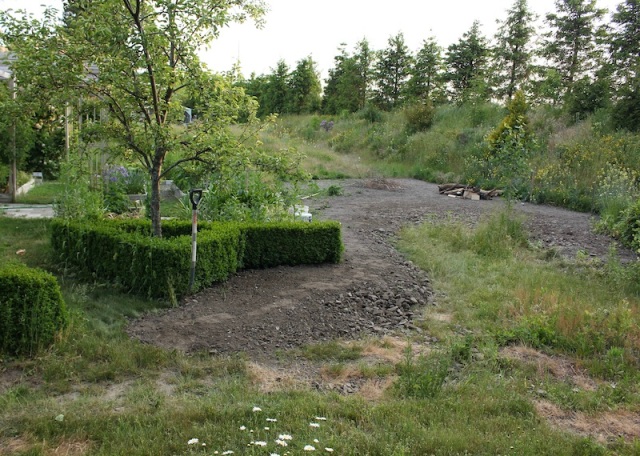
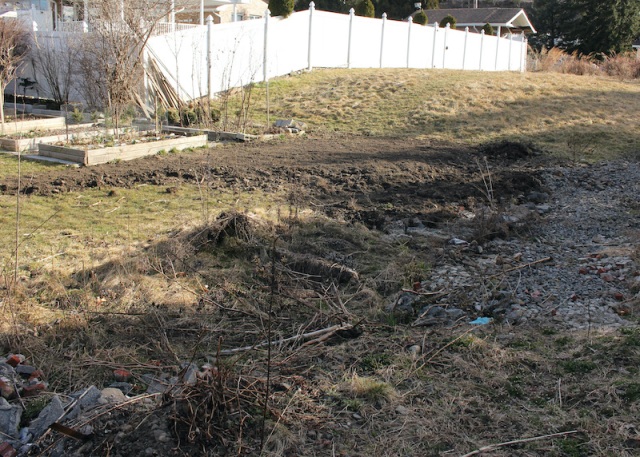
A weedy vegetable garden is one thing, but a weedy waste area is an even better thing. Here’s an Instagram-ready photo of the lovely waste area which is now filled with blooming canola, sunflowers, and a new lawn infested with Verbena bonariensis seedlings. It’s an interesting place, and while I stopped mowing the newly seeded section of lawn so the Verbena can grow into a purple mass of flowers, it’s the cannola patch which demands the most attention. Hundred of honeybees (and a few others) make this corner of the yard buzz on a still afternoon. I can’t believe how many there are.

The ‘waste area’ where all the construction fill was dumped and leveled. It’s a weed factory and probably my favorite part of the yard right now.
I’m still on the fence as to whether or not the birds will appreciate the cannola seed as much as the bees appreciate the flowers. There will be plenty, but as of today I haven’t seen a single seed pod attacked for its contents. That’s in stark contrast to the millet seed which is beginning to ripen in the shadow of the cannola. Chipping sparrows and song sparrows attack the seedheads, and there are always a few in the area to entertain me.
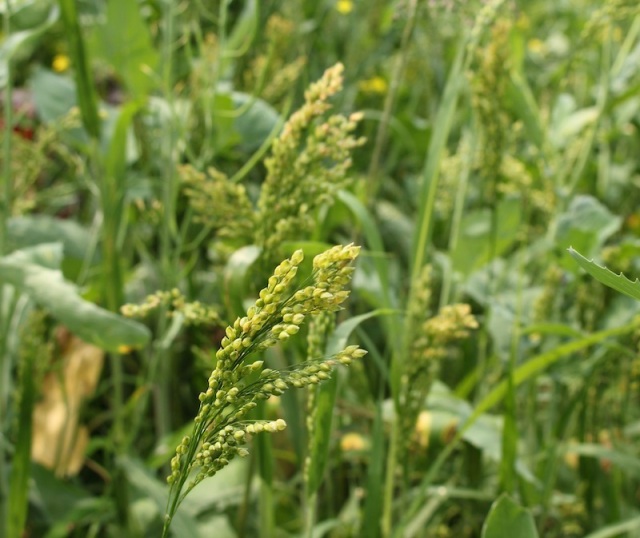
Millet seed heads beginning to ripen.
Besides an area of the yard dubbed ‘the waste area’ my garden also boast a slice of Savannah this summer. ‘The Old South’ is where all the hanging pots of Dichondra ‘Silver Falls’ ended up, and my boring old pink dogwood has been elevated to the role of sprawling live oak with the Dichondra playing tendrils of Spanish moss weeping down from the branches. I’m entirely amazed with myself and smile at it every time I pass, even if the local review is closer to a polite ‘I don’t understand why’.
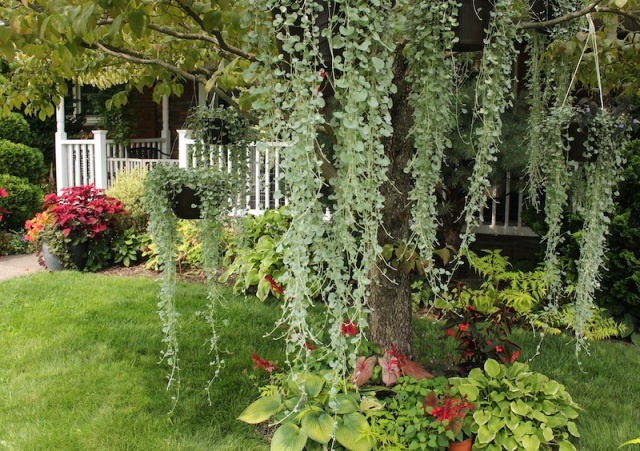
It grows like a weed, and probably is a weed in warmer climates, but here Dichondra ‘Silver Falls’ is just a nice little plant which eats up the endless rain and humidity and turns it into curtains of gray.
Surprisingly the gardener has yet to smack his head on one of the hanging pots, and still smiles when he weaves through the pseudo-moss, not really moss but pseudo-bromeliad veil.
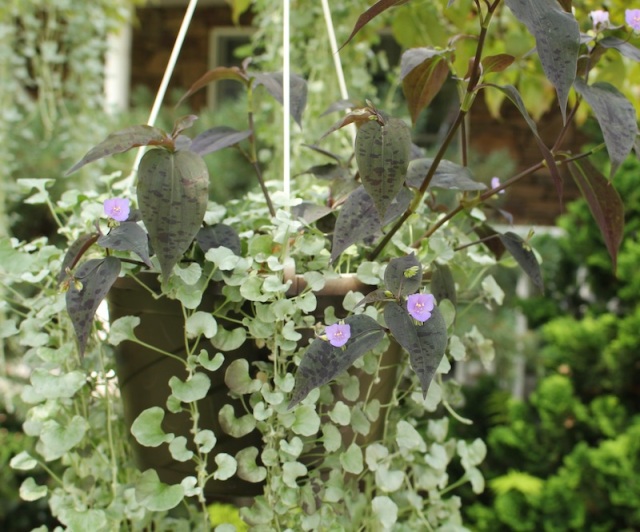
There are even a few nice surprise weeds (spotted widows tears, Tinantia pringlei) in the pots of intentionally planted weeds.
I’m just excited to think how much more this will develop over the next month, and of course this winter I’ll foolishly try and winter them all over and see how much bigger and thicker they can get next year. Obviously I’ll need more caladiums underneath and honestly I think a few Boston ferns would only add to the effect. Maybe I can wire the ferns onto the dogwood trunk and tuck a few more into the branch crooks and bends. My whole next year can revolve around this silly idea and I’m sure sitting inside this winter stewing on it will only help 😉

No one really says anything about the tree but I’m pretty sure they all think it’s amazing. If only I could find one of those ‘Midnight in the Garden of Good and Evil’ statues to complete the theme. That would probably be much more tasteful than trying to re-create some marble mausoleum or deep South cemetery vibe on my front lawn.
In the meantime as this design concept matures, I’ve gone ahead and given two more crape myrtles a chance at life (but more likely death) in this garden. This will be attempt four, and usually three is a respectable place to stop, but I’m gambling on science and planting for an increasingly warm climate here. I saw crape myrtles (Lagerstroemia) in bloom all over Long Island on my last visit, and it’s only been a few decades since they would regularly freeze to the ground or outright die over winter in my parent’s garden. Not to be greedy, but I’d like a large tree in purple and one in a bright cherry or red, and I’ll be on the lookout for a cheap starter to experiment with. In the meantime the ones I’ve added are two dwarf forms which should easily sprout from the roots and bloom even when frozen to the ground. From tiny plants this spring, they’re both forming buds and blooming this summer.

From the Barista series of dwarf crape myrtles, this small plant will hopefully develop into a mound of dark foliage studded with brilliant blooms.
So there it is. The closest I came to a vacation this summer, a trip to fake-Savannah with it’s fake moss and a little token Mc Crape myrtle. I hope to do better next year, but in the meantime even the weediest waste areas of the garden are entertaining me at this time of year, and I’m hoping to ease into colchicum season without the usual whining about fall and autumnal gloom. It’s all good 🙂


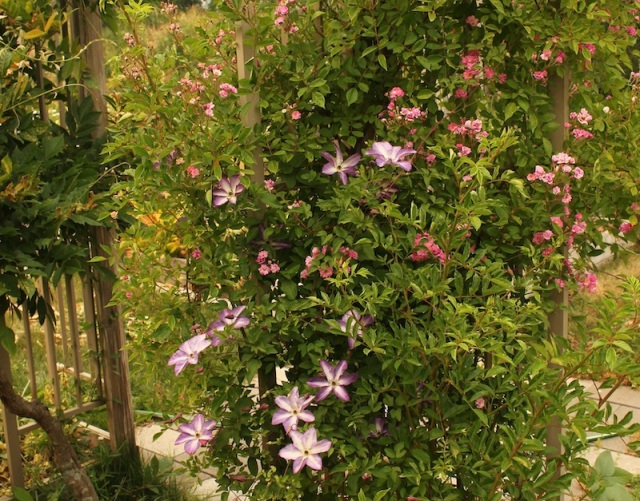
























 sorta like suburbia