Tuesday View: The Tropics 7.5.16

Between you an me this is the Monday afternoon view, but to get anything online before Tuesday night I may have to cheat a little here and there 🙂

I started planting all the true tropicals and annuals about two weeks ago, and although they’re beginning to put on some weight it’s still the scattering of perennials which give all the color.  As you can guess from looking at the lawn we still haven’t had any decent rain.

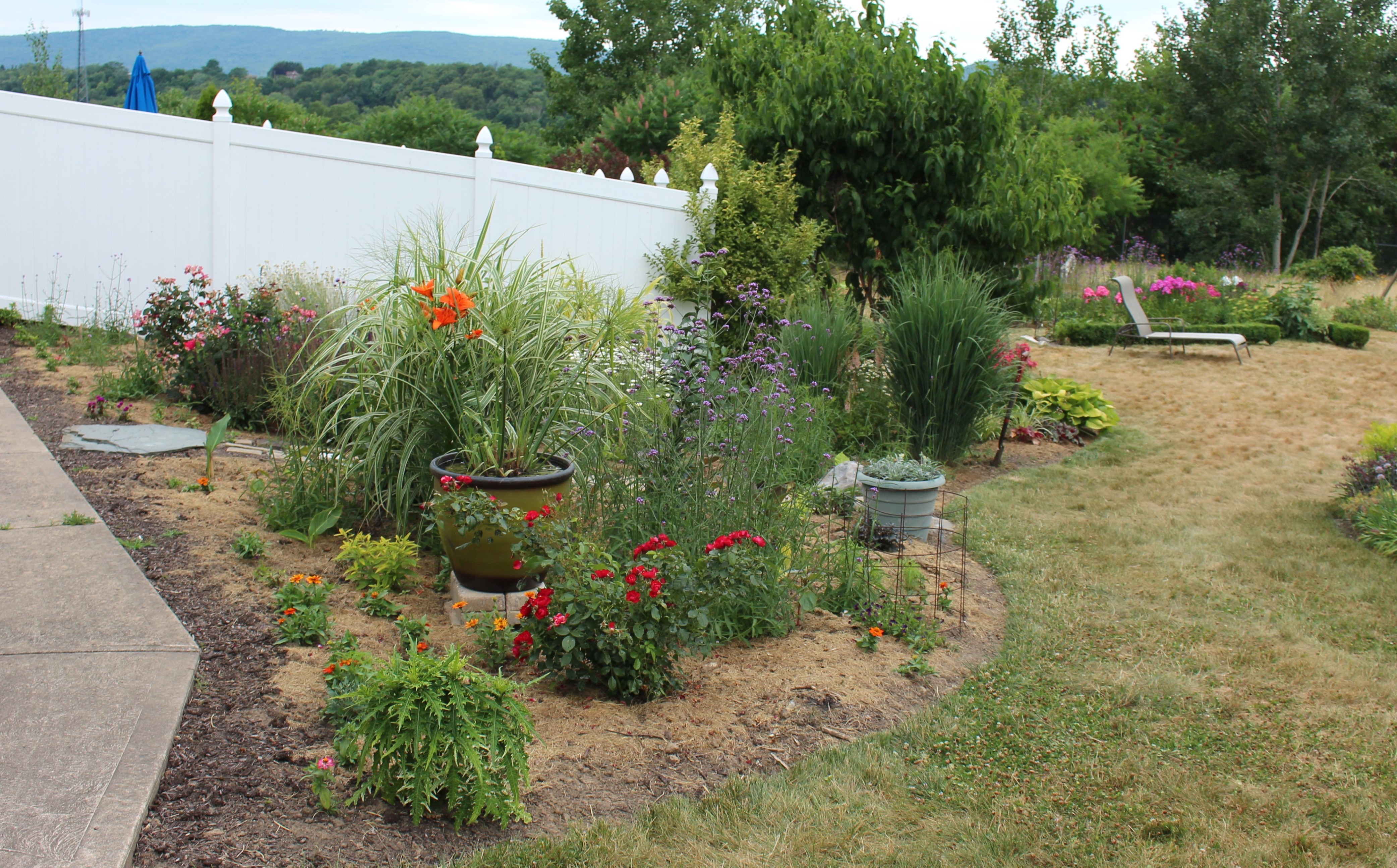
annual flower bed

The tropical garden in the first week of July.  The red of the rose ‘Black Forest’ carries over from last week and the orange lily has opened up.

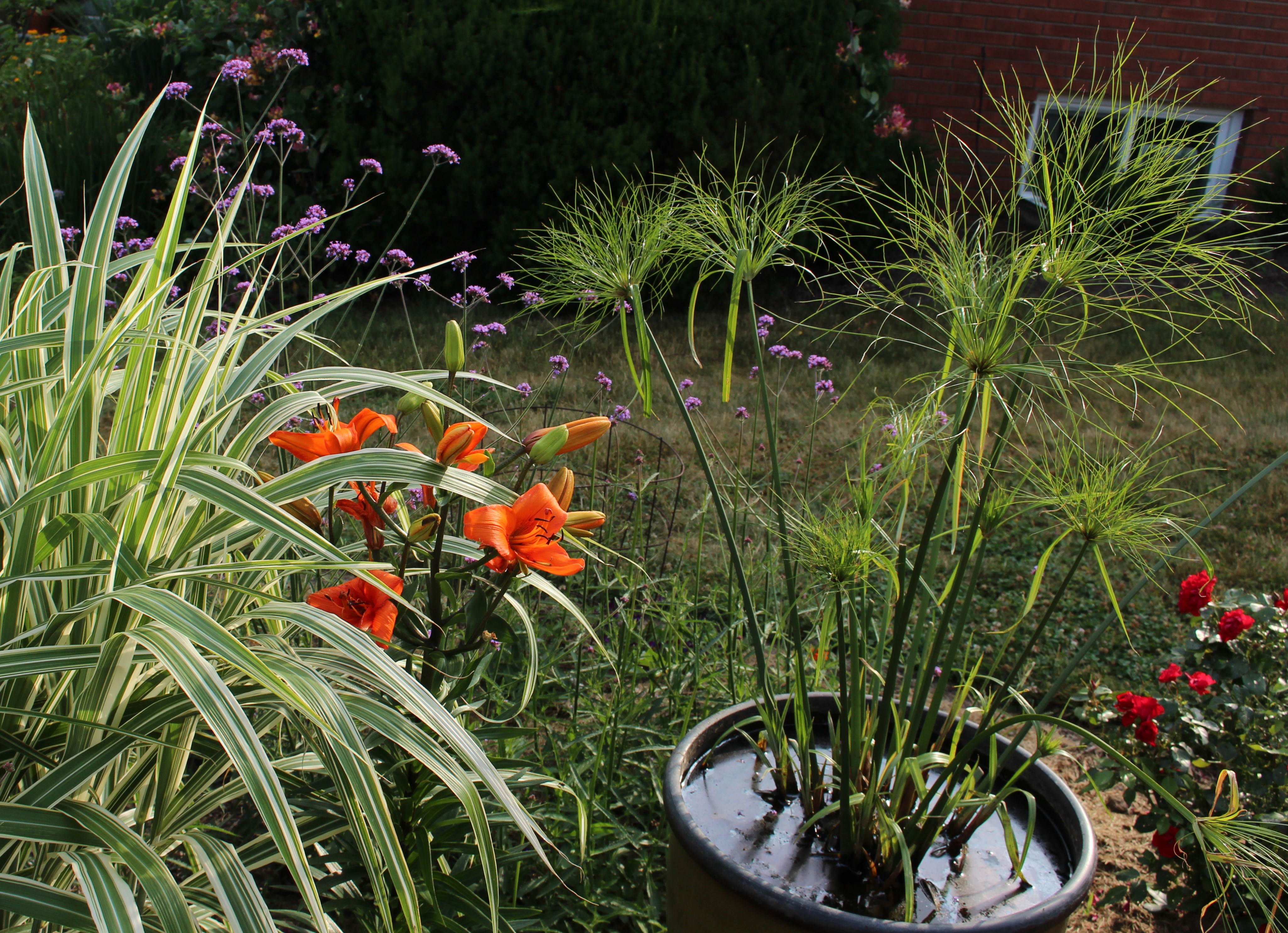
Water is not an issue for the papyrus though since it’s sitting submerged in a planter which lacks a drainage hole.  The green algae has passed its peak and the water looks much less stagnant.  I may even throw a few fish in this week to keep the mosquitos from breeding.

papyrus in pot

The orange lily ‘Liberty Hyde Bailey’ should have been fantastic this year, but I suspect my MIL may have hit it with a bit of stray weedkiller this spring.  The flowers don’t open properly, are a little on the small side, and look stunted in general.  Fortunately the bright color makes up for the stunted-ness.

You may have noticed the purple haze of Verbena bonariensis which is beginning to develop over the bed.  Because of the mild winter several plants of this borderline hardy perennial survived and are already beginning to put on an early show.

castor bean seedling

One of the castor bean seedlings (Ricinus communis) beginning to pick up speed.  If all goes well a few leaves should reach a foot or more across.

This isn’t the first year I’ve had a late start to planting the tropical bed.  There are so many other jobs to attend to before this reaches the top of the list, plus there’s always procrastination and general laziness on my part.  Fortunately I’m a quick learner and have picked up a few tricks along the way, one of which is “The lazy man’s canna and dahlia pre-starting method”.  Rather than potting roots and tubers up and getting them going in a greenhouse or other gardening luxury, I drag the storage tubs out onto the (full, hot-sun) driveway, open tubs and bags, try to orient growing point up, and spray a little water on them all.  Less water is better than too much, and over a week (or three) the shoots begin to grow and the break out of dormancy in a way which I feel is quicker than planting them straight into the cooler ground.  I’d show you pictures but the mess of trays and tubs and bags spread out in front of the garage is a bit embarrassing.

sprouting canna leaves

A few of the cannas are already over a foot tall just maybe ten days after planting.

While we wait for the tropicals, the perennials continue to have their moment.  The purple salvia ‘Caradonna’ is already fading, but there’s an interesting Verbascum showing off behind it.  Normally this would pass unnoticed as a sea of sunflower seedlings takes over this end of the bed and overwhelms everything in it, but this year I’ve manned up and stood up to the little thugs.  One by one I pulled sunflower seedlings out and although it was nearly sinful composting such healthy volunteer plants, it was also a bit cleansing.  I’m ready for something different here.

July perennial border

I was hard on the sunflowers but apparently still let a clump of daisies pass through… oh well.  A sharp eye can make out the yellow spikes of the Verbascum just slightly left of center in this photo.

I’m pretty sure it’s Verbascum nigrum, the black mullein.  It came here uninvited as a hitchhiker in the root ball of a red -stemmed dogwood.  The dogwood in turn was one of those gifts from a better gardener who heard me (how could you not) whining about how nice her dogwoods were, and how I can’t seem to find the same kind anywhere around here.  Sure enough on her next visit a bag came out of the car and inside were the roots of a nearly full sized division off her own plant.  That’s awesome, but even better was the clump of scilla and the healthy verbascum plant which also came up the next spring from the root ball.  I judge a gardener by the weeds they battle, and her scillas and verbascum almost embarrassed me when I thought of the crabgrass and bitter cress which probably followed her home.  Paula was smart to only accept bulbs…. they’re usually weed free 🙂

verbascum nigrum

A closeup of the flowers is an almost unnatural mix of yellow, orange pollen, and purple stamens (I think that’s what the part is called).   I almost wonder if the orange pollen tastes different, since it looks more like Cheetos dust than any kind of bee food…

So that’s where we are this week.  Both Kimberley at Cosmos and Cleome and Cathy at Words and Herbs are also following views each Tuesday and it’s a great way to follow the changes which happen throughout the season.  Give Cathy a visit to see what others are up to , and if you happen to join in please leave a link at Cathy’s blog so we can find you.  Have a great week!

The front border among other things

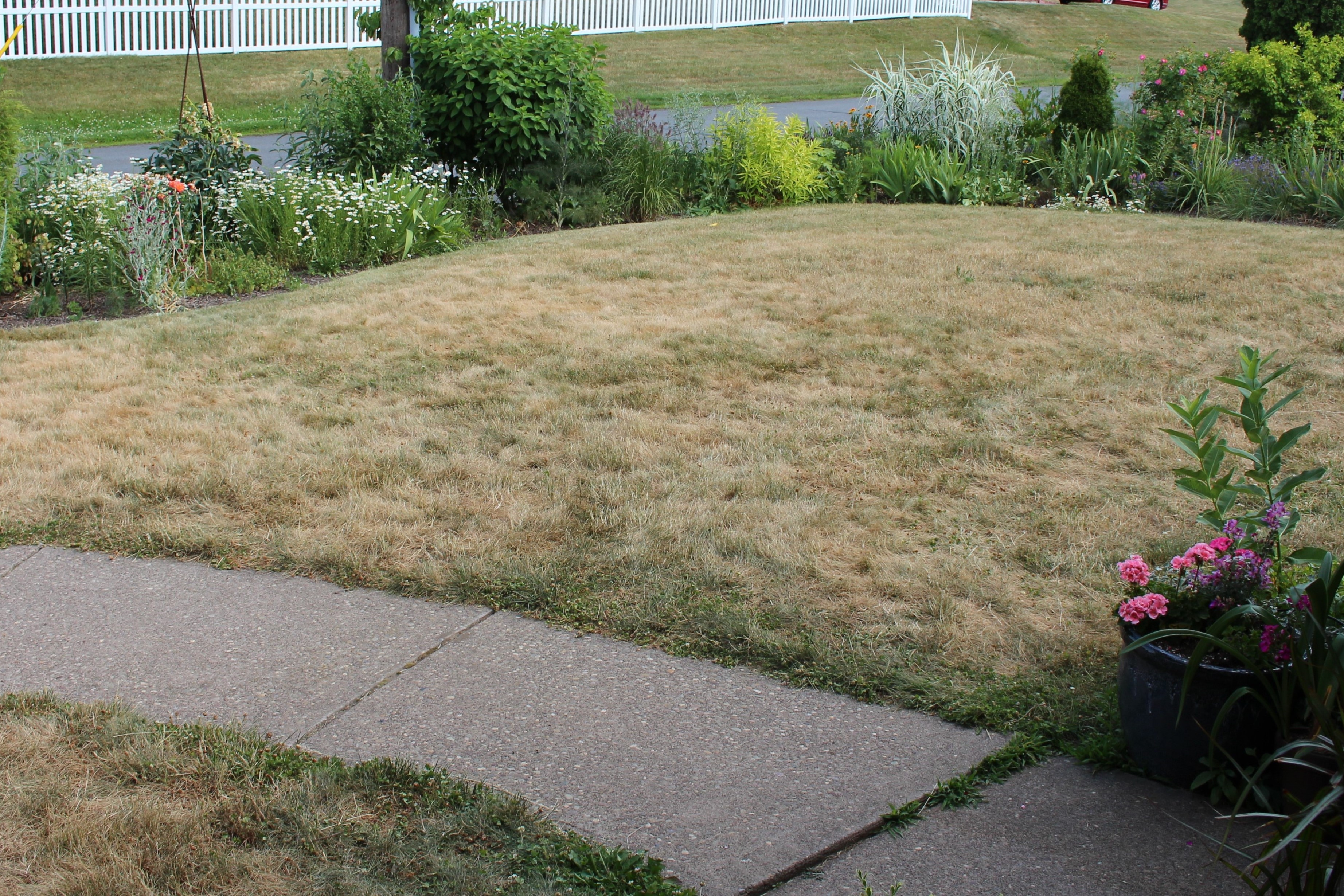
It stopped raining long enough this afternoon for me to get out there and do some watering.  The deluge of nearly 1/10 of an inch did little more than dampen the top layer of mulch and cancel a Little League game, but it was enough to cool things down at least.  Maybe it also gave the pestering hordes of gnats a nice drink as well, God only knows they must be getting tired of sipping my blood and sweat all month.  Here’s how the lawn out front looked yesterday morning.

dormant lawn

Needless to say I don’t bother watering the lawn.  I feel like watering the lawn is a gateway drug to bagging clippings, spraying for weeds, thatching, aerating, spraying for grubs… all those tedious chores which would ruin this vacation from mowing.  On the down side it looks like crap until the rains come back.

I hope my crabbiness about the weather doesn’t come on too thick.   Weatherwise I feel like I’m riding one of those shoddy, barely-passed-inspection carnival rides where you get thrown back and forth between burning and freezing, drought and flood, and all you want is Dramamine and a Tylenol when it comes to a stop.  Maybe today’s misting and this week’s milder temperatures will improve my outlook.  I think it will, especially when there are flowers toughing it out and cheering me up.

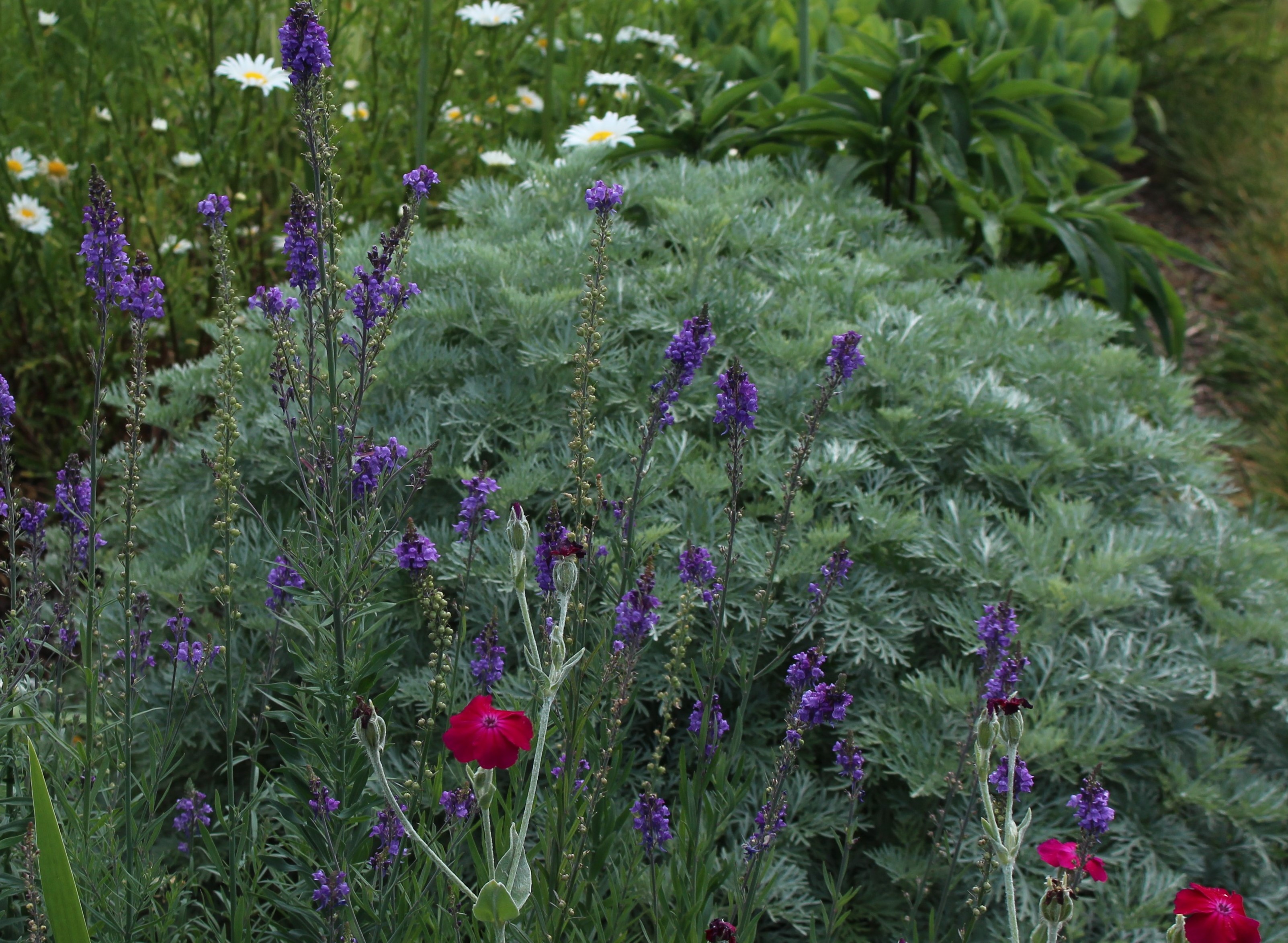
linaria purpurea

A new one this year is Linaria purpurea (toadflax), a hopefully hardy and long blooming airy perennial which was seeded out last year. The seed was supposed to be for ‘Canon Went’, a pink version, but only one or two stalks came true. No big deal as I like it just fine in the regular lilac-blue color.

I’ve done next to nothing on the front border since mulching it with shredded leaves in March… and weeding and deadheading once in May.  That’s great because it still looks decent enough, but not so great since I like to add a few patches of hard working annuals and tropicals in there to brighten up the summer months.  This pattern of neglect isn’t way out of the ordinary though, so even if it’s getting late for annuals I’m 99% sure that if I finally get it planted there will still be a decent show… but I’m not doing the same for the foundation bed.  It’s so dry the majority of the perennials are wilted and dying and I have no desire to even look at it long enough to even consider carving out a few watered spots for annuals.  The blue fescue border was de-seeded last weekend and in general it looks good enough, so I’ll leave it at that.

blue fescue border

I pulled off all the fescue seed heads and the foundation planting will just have to stay like this for the summer… although I may have to airlift out a few hellebores.  They look terrible all flat and yellowing and it may be time to find them a spot in the backyard with a little shade.

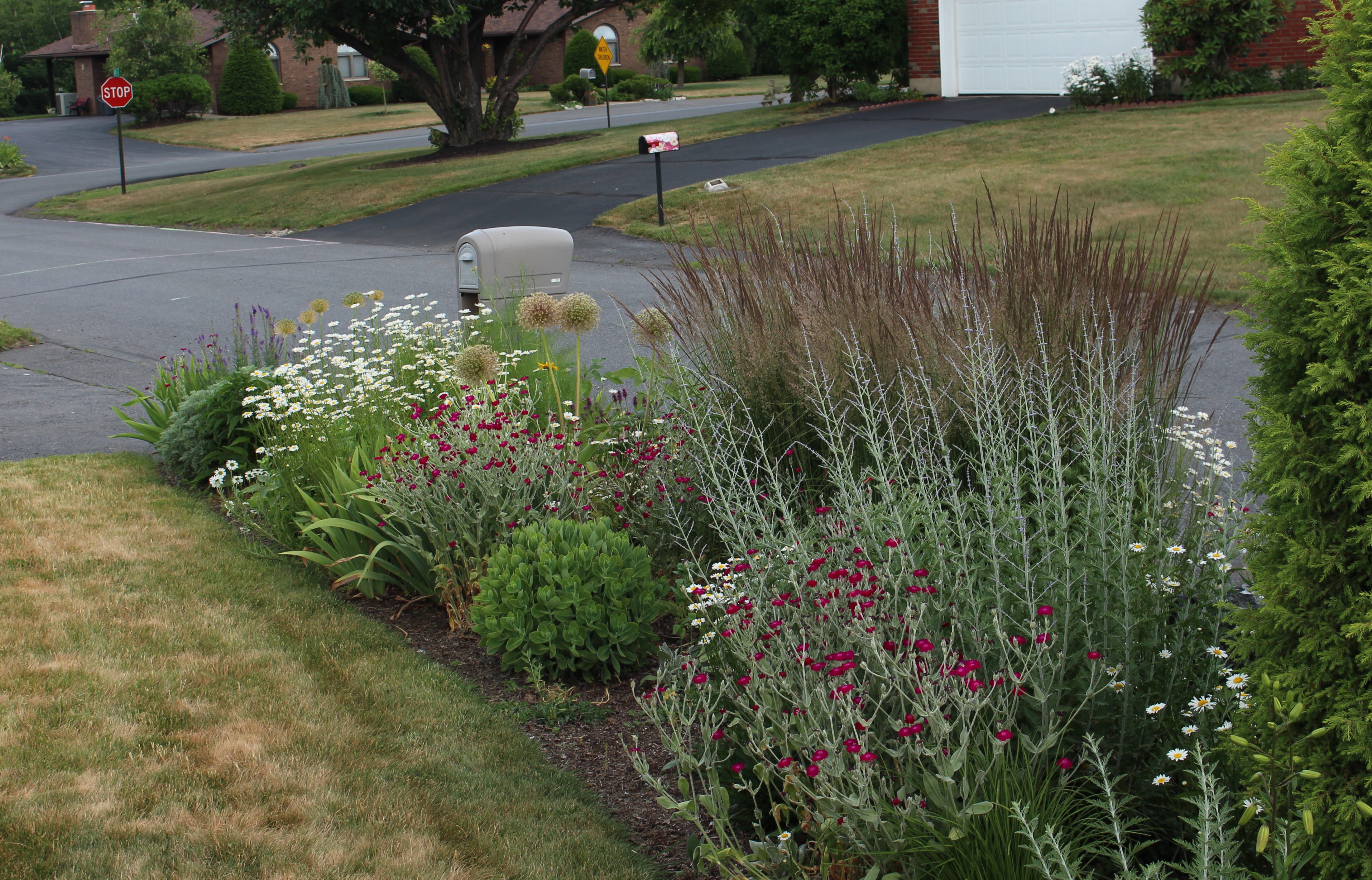
It’s curious to me how some years an odd balance tips and suddenly your most reliable standards vanish.  This year the front border is missing the hordes of rudbeckia which dominated last summer and in their place is a nice wash of rose campion (Lychnis coronaria).  Many people look down on this old fashioned, reseeding, short-lived perennial, but I love it for its tolerance of droughty soils, its soft gray foliage, and its cheerfully bright flowers.  It’s a perfect compliment to the nearly-a-weed white of the oxeye daisies.

allium seedheads

The front border from the near end.  This perspective is perfect for avoiding all the gaps and holes which become apparent when the border is admired head on 🙂

My absolute favorite right now isn’t even a flower though, its the dried round seedheads of allium ‘Pinball Wizard’.  Big fluffy spheres which seem to float above the border are just perfect this year and I’m planning on lifting the bulbs this week to spread them out a bit (the original single bulb has split into four now and I don’t want it to have any overcrowding issues.

lychnis coronaria rose campion

Rose campion, oxeye daisies, and another view of my lovely allium seed heads.  Might as well enjoy the dried stalks since everything else seems to be on its way to drying up completely as well.

Once you move towards the far end of the border things go downhill fast.  Everything in this border gets done from the near end to the far, and unless I’m making a strong effort to be fair, all the good plants, best mulch, nicest compost, most delicate pampering…. all that happens at the one end and rarely carries all the way through to the other side.  I’m pretty sure that the most obvious solution to this problem is to make the border wider again.  More room, more plants, more excitement… the natural choice when faced with a border which might already be a little too much work 🙂

late June perennial border

If I can get a shovel down into the rock hard lawn I could easily bring this border out another foot or two without interfering with third base (which is usually located right next to the chartreuse leaves of the ‘Golden Sunshine’ willow).  I’ll just need to plant something which can handle a few missed kickballs and base overruns.  

Digging will have to wait until August at earliest.  Who knows what there will be left to plant in August, but we’re approaching phlox season and no bed digging is worth the risk of interfering with flowering phlox enjoyment.  Just today one of my new ones opened and it is so amazing I’m sure you’ll see it here shortly.  Wow is all I can say, and to be honest I haven’t been this completely excited about a new flower since at least last week.

the potager in June

The potager in June with its freshly mulched beds, newly concrete-reinforced rebar archway, and the first bright reds and pinks of tall garden phlox (Phlox paniculata).  There are even a few vegetables planted (although the boxwood still needs trimming).

With all the work I’ve done recently in weeding and trimming you might be able to tell I’m now trying to catch up on the blogging.  Well, blogging and watering of course… but please bear with me as sore muscles recover indoors and I throw out a bunch of posts in what might be too little time, and please feel free to skip commenting or even ‘liking’ since I’d hate to wear out my welcome!

Enjoy your week and I’ll be back Thursday to join up with Kimberley at Cosmos and Cleome for her Thursday Feature.  Maybe I’ll even feature the new phlox, although saying that pretty much guarantees a woodchuck or deer attack tonight…

One word…. Dichelostemma

I inherited my mother’s habit of randomly picking up and trying out just about any odd, looks-like-it-might-be-nice bulb that shows up in the garden center’s bins.  Together we’ve failed at freesia, ranunculus, ixia… but every now and then something gives a surprise, and lately it’s been Dichelostemma.

dichelostemma pink diamond

Dichelostemma ‘Pink Diamond’ out in the meadow garden

The first one which made its way into the garden was a selected form of the naturally occurring hybrid ‘Pink Diamond’.  I love the totally tubular pink flowers and the waxy thickness of the blooms and was surprised it actually grew since the bulbs came via a November closeout sale, and late planting into a cold, wet clayish soil is typically not a recipe for success for drought tolerant bulbs from the western reaches of North America.  But they came up fine the next spring and when the wiry flower stalks matured to bright pink clusters of bloom in June I was hooked.

dichelostemma pink diamond

Daisies and Dichelostemma in front of a worse for wear Queen of the Prairie.  The Queen still presides over the back forty, but between acidic rainfall and wayward groundhog nibbling her reign may soon be coming to an end.

‘Pink Diamond’ may or may not become a permanent resident in the meadow.  The first planting returned to bloom the second year but has not put up flowers in the third.  I blame rabbits for nibbling too much of the spring foliage, but we will see what happens next year, as this spring with all the new crocus flowers to chose from the rabbits didn’t quite get to the Dichelostemma foliage before moving on to freshly planted lettuce and broccoli in the vegetable garden.

The ‘other’ Dichelostemma (D. congestum) has been going strong though, putting up its beautiful lilac-purple flower clusters for three years now… in spite of also being nibbled.

dichelostemma congestum

Dichelostemma congestum has the common name of fork toothed Ookow.  When you get tired of introducing guests to your dichelostemma I’m sure switching to the common name will clear things up. 

I love how these plants look among the weeds and grass of the meadow.  I can imagine this isn’t entirely unlike their native habitat in the Western edges of the continent and from a gardeners point of view the yellowing foliage is completely disguised by the surrounding greenery.  Not to get distracted, but I wonder how alliums would work out back here since many of those also share the trick of letting their foliage go to pot just as the blooms reach their peak.

Dichelostemma ida-maia is my last of the D’s and I suppose ‘firecracker plant’ is a decent common name for this one…. although it’s no Ookow.

dichelostemma ida-maia

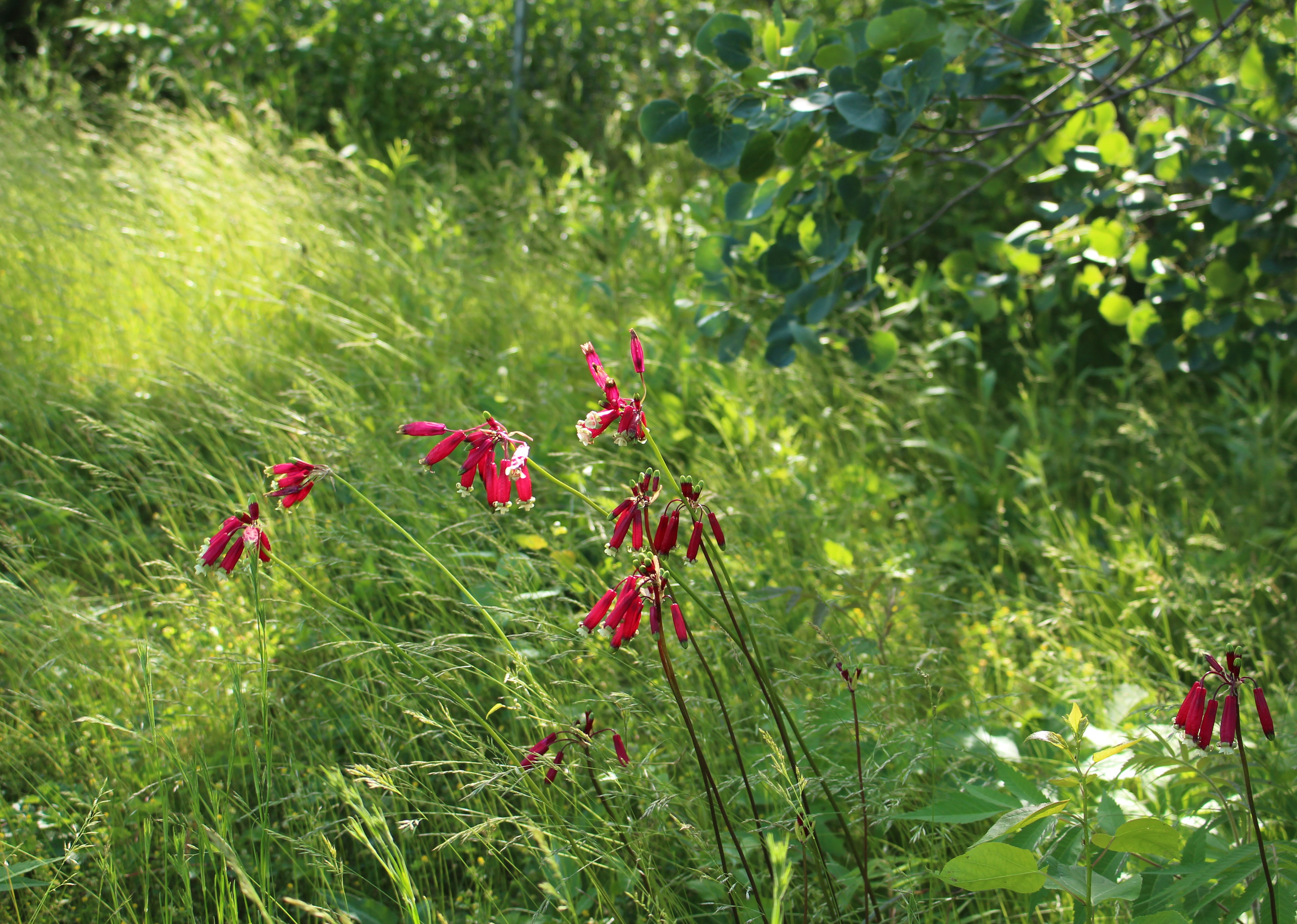
Dichelostemma ida-maia.  The shape and color of this flower has ‘hummingbird plant’ written all over it.

Besides adding more ‘Pink Diamond’ last fall, I also put in a few D. ida-maia… in spite of my thoughts that I wouldn’t like them.  I was completely wrong in my lack of enthusiasm.  The sad anemic version I saw a few years ago is nothing like the group I now have swaying in the dappled light amongst the grass.  I’m far too greedy a collector to commit large spaces to a single plant but I would have no problem adding another hundred or two (versus the 10 I started with) to this end of the meadow, which is entirely do-able since these small bulb are relatively cheap even when not on clearance.

dichelostemma ida-maia

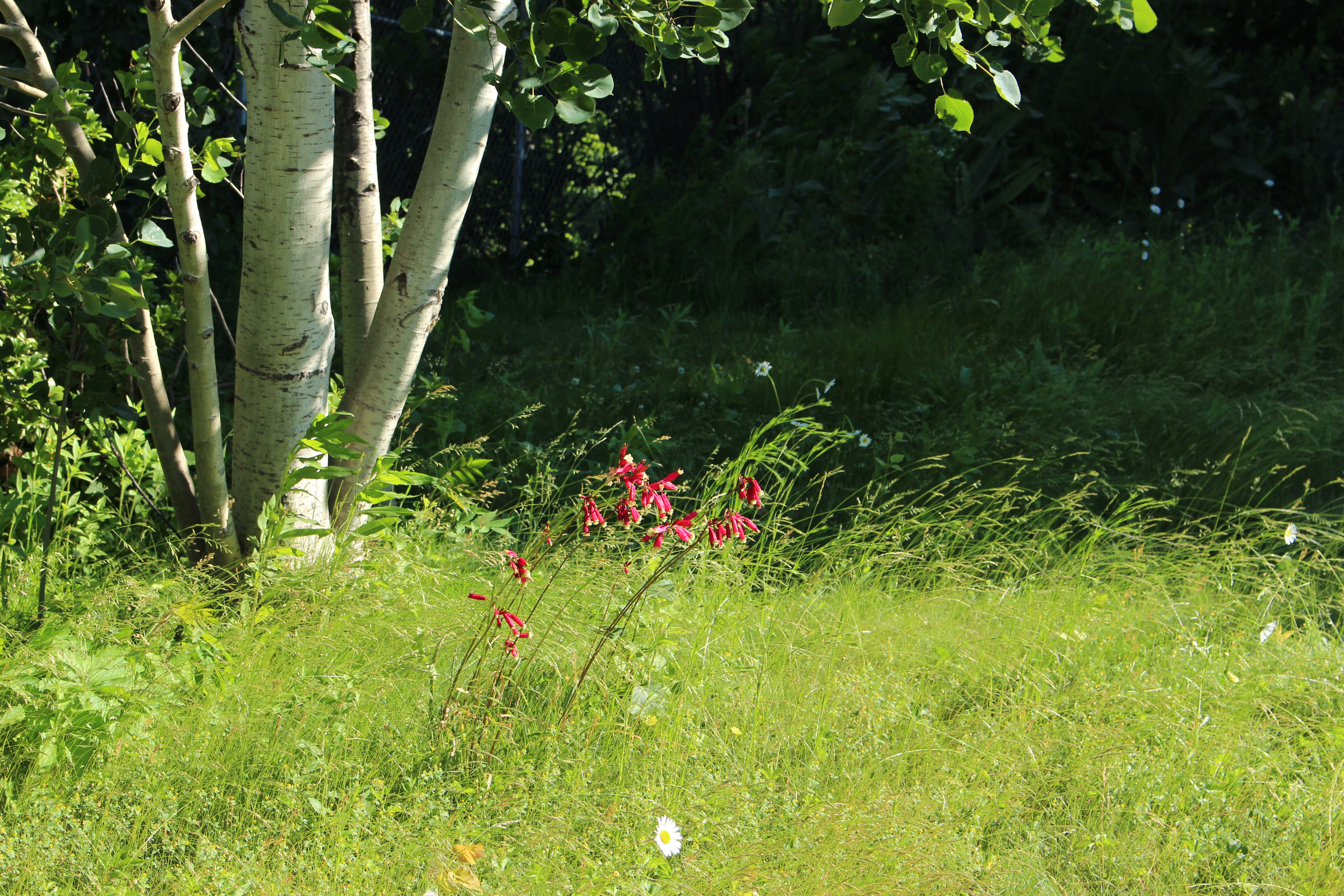
I trimmed up the lower limbs of the aspen and love the Rocky Mountain glade effect it has given.  Add a Western NA native Dichelostemma ida-maia and we may be on to something here 😉

I’m not sure what the hardiness on these plants (both species and their hybrid daughter) is.  To be honest I didn’t think they would make it through their first careless planting (really careless… cold November fingers so one shovel swipe into the turf, dump bag contents into hole and stomp sod clod down again on top), but they did survive, and it was a winter where our lows reached -6F (-21C) with a solidly frozen soil for months.  So they’re at least that hardy, and I think the extreme summer dryness of the meadow also helps them return in spite of any issues with poorly drained, wet winter soils.

Dichelostemma.  Think about it.  I think they’re pretty cool.

An old familiar itch

It’s time to face the reality of unsown seeds and unplanted vegetable beds.  There… done.  For the past few years I’ve been making a real effort tot get all kinds of annual seed growing, all kinds of cuttings started, and all kinds of summer bulbs planted, but this year something is off.  Maybe I’ve been too busy with other things, but in all honesty I live a fairly lazy life and for me to say I don’t have the time or energy to start a few salvia seed or pot up a few coleus cuttings is just a bunch of excuses.  My reality this year is I just don’t care to.  I’m not a farmer after all, and the family won’t go hungry or broke if the potatoes fail, so I just keep enjoying what I’m doing and don’t stress it if this year I only start 10 or 20 coleus cuttings rather than 75.  The iris are in bloom after all, and this year they are nearly perfect.

historic bearded iris

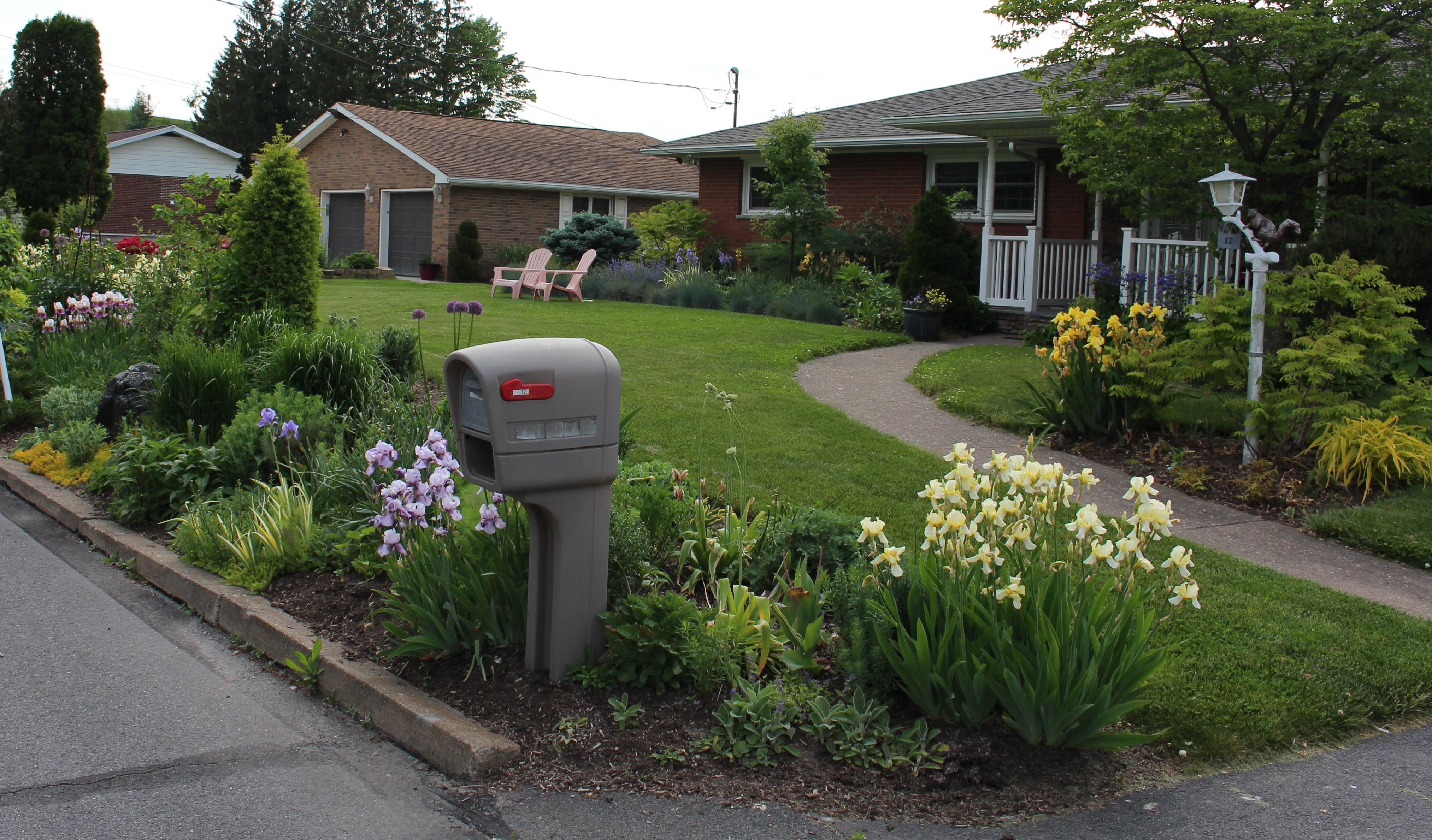
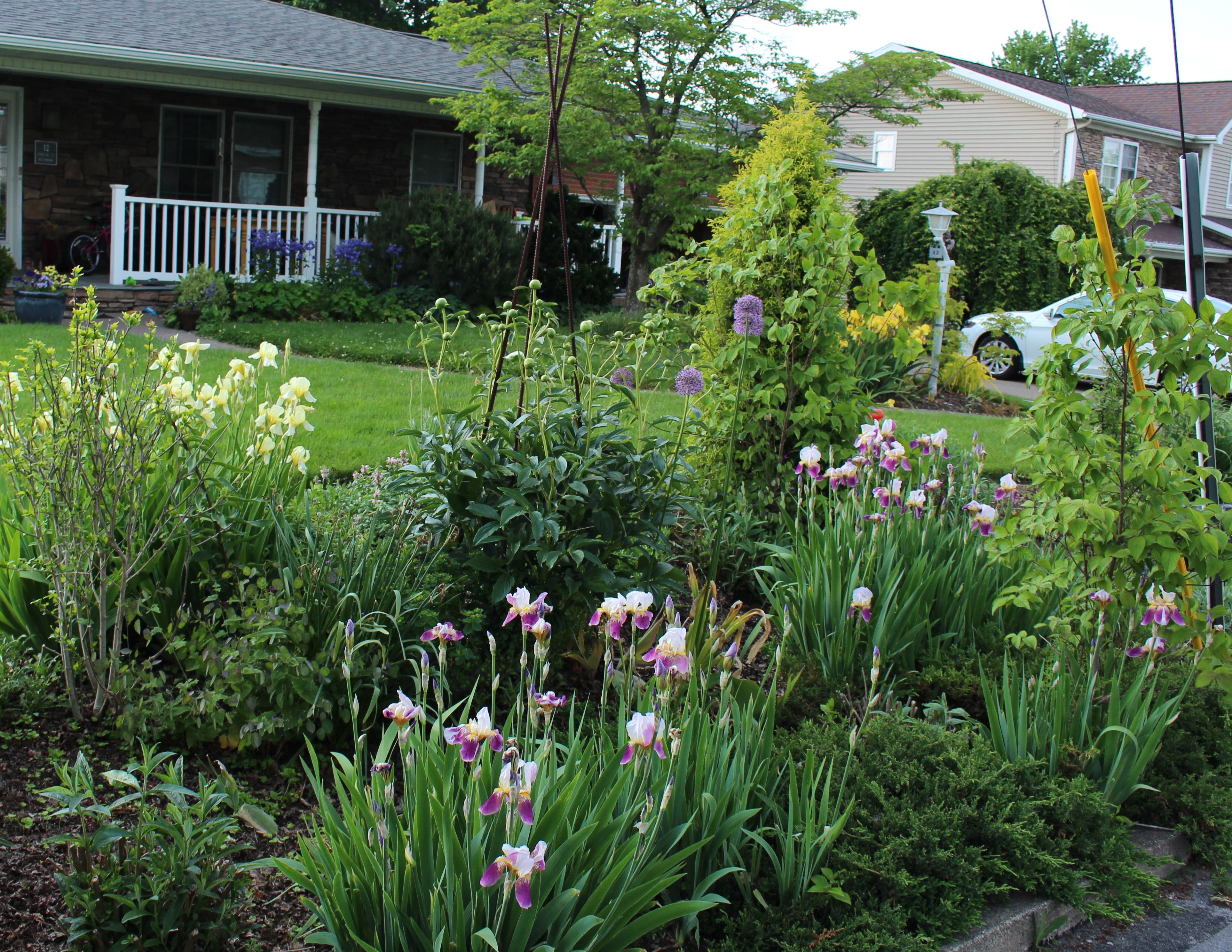
The view from the street is far nicer this spring with green grass and healthy spring growth.  I forgot what it’s like to start the year with cool temperatures and ample rainfall rather than dry winds and drought.

I have a weakness for iris, and go back and forth between indifference and obsession depending on the season.  This year it’s obsession.

historic bearded iris

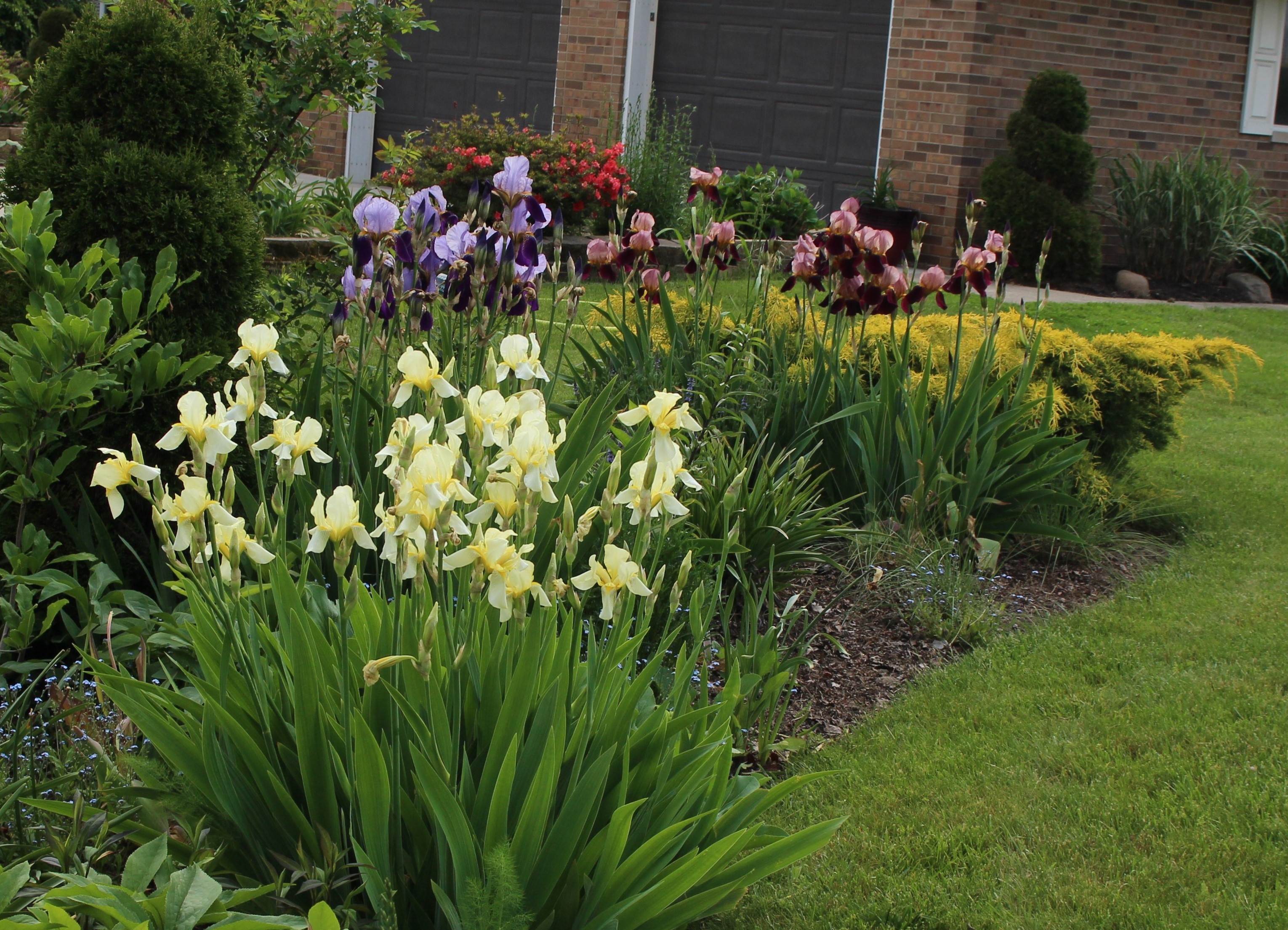
Clumps of iris are scattered throughout the front border.  They are mostly old cultivars (~100 years) and although they lack the ruffles and fluff of the modern iris, they’re very well suited to the rough and tumble of often neglected and often overgrown perennial beds.

The number of blooms, the colors, the fragrance, are conspire against me this season and I’ve been on and off iris websites far more than I should admit…. even though the majority of my iris are either pass-alongs or just plain found alongside the road and had nothing to do with a catalog order.

historic bearded iris

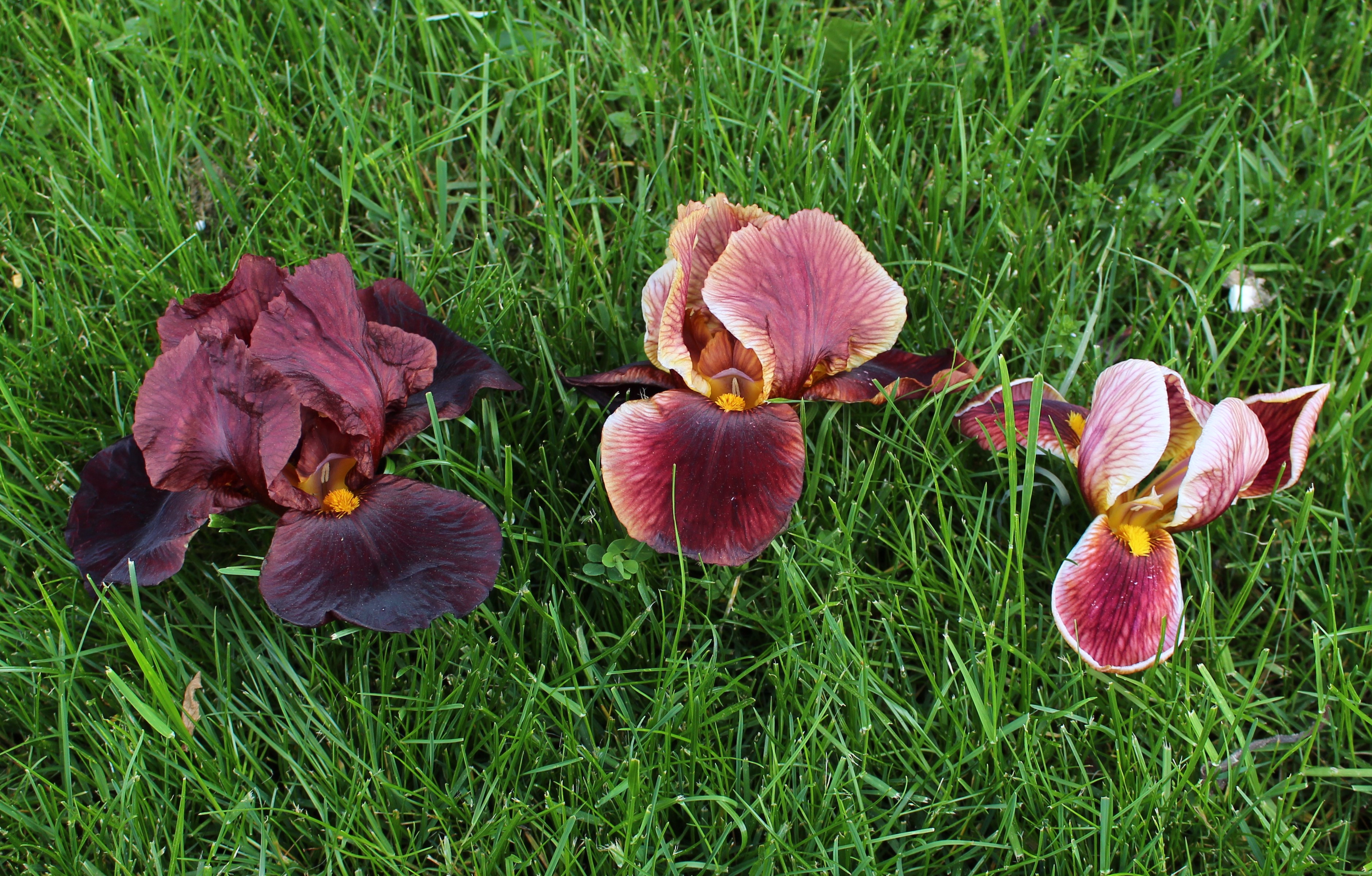
From left to right, Flavescens (pre 1813), Ambassadeur (1920), and Indian Chief (1929).

The jury is still out on any big iris orders since I should really take better care of what I have, but people say it doesn’t hurt to look and so far that’s all I’ve been doing.

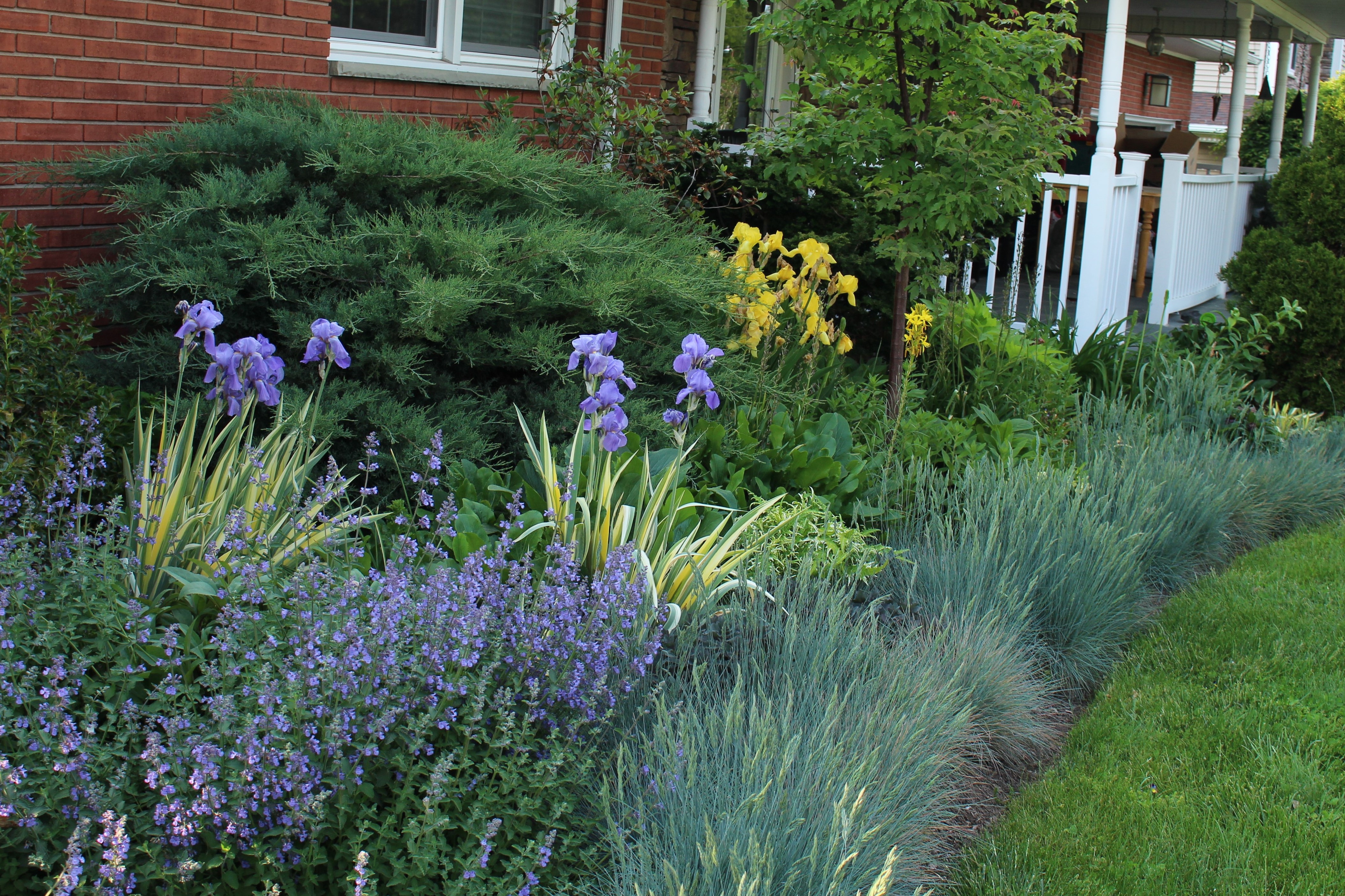
blue foundation planting

The striped leaves of Iris pallida ‘aureo-variegata’ accenting the front foundation plantings.  You can count on this iris to scent the whole corner of a bed with that delicious grape scent which many of the older varieties put out.

It hasn’t been all sloth and idleness in the garden this spring.  A few small projects are getting done in spite of my laziness, although I’m not promising they’ve all been done to the best of my ability or that they are the best value for my little effort.  One interesting discovery I came across is that bearded iris are fairly resistant to Roundup type (glyphosphate) herbicides.  That of course leads me to carelessness when spraying around the clumps next door, since the chances of iris damage are far outweighed by my ‘want to do as little free labor as possible especially when it includes pulling weeds out of monotonously boring mulch beds in someone else’s yard’.

roundup on iris

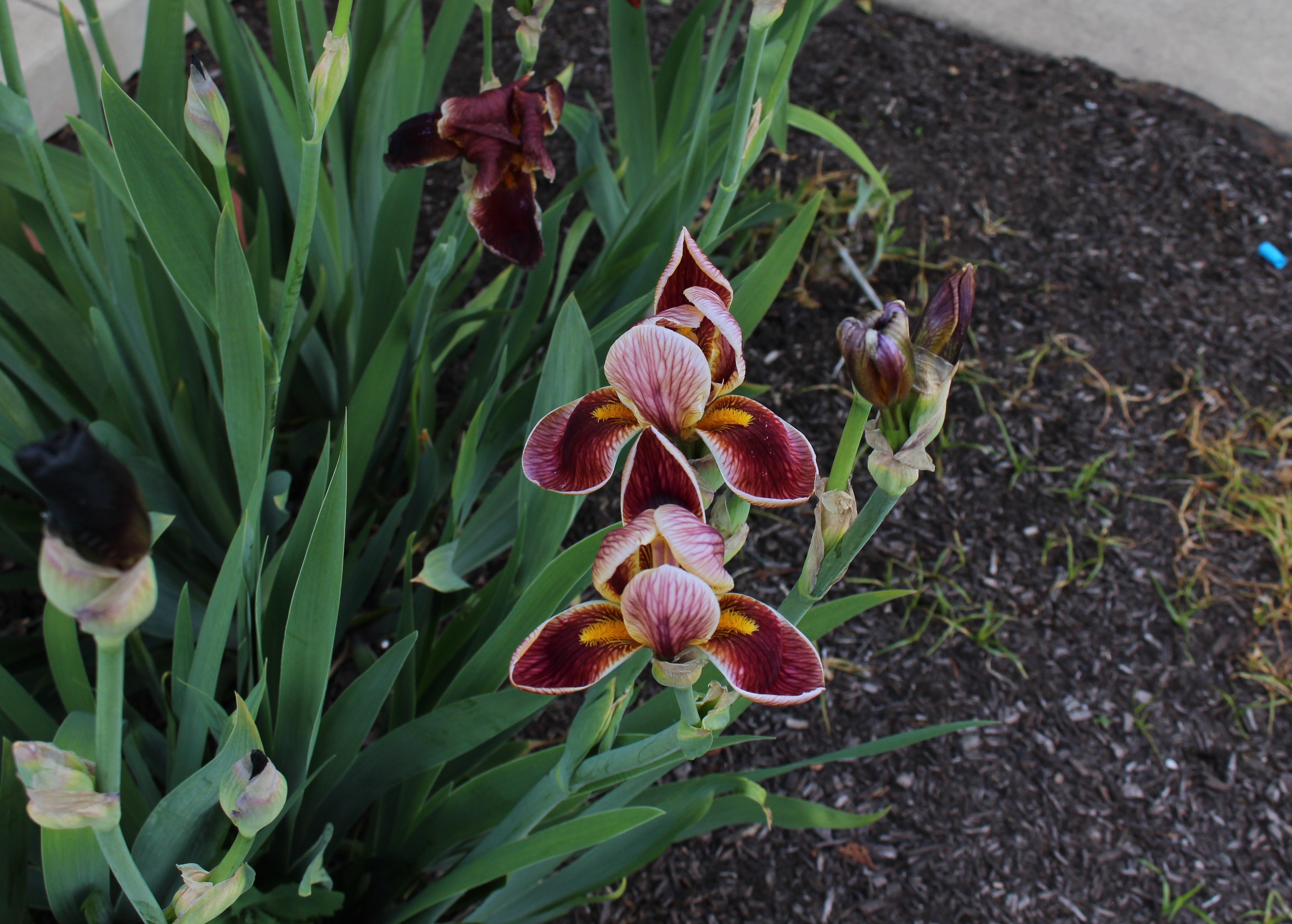
Iris foliage is fairly resistant to Roundup yet the flowers will discolor and stunt depending on how much of the poison they absorb.  These flowers should be larger and a dark velvety red rather than small and anemic looking.   

Before anyone gets too excited, I just want to say I really don’t use too many chemicals in the garden and although I like to appear as if I’m lazily spraying about I really am somewhat cautious, if only because I have too many more sensitive plants which I’d hate to lose.  For what it’s worth my research shows that iris, vinca, and nut grass are pretty much the only plants which will not be outright killed by careless Roundup spraying…. although for the vinca and nut grass the spraying was very intentional.

roundup on iris

Normal iris bloom to the left, increasing Roundup effects on the same plant to the right.  A heavy dose will give a colorless cauliflower-like stalk which is entirely uninteresting.

Besides chemical warfare on weeds, another questionable project started with my purchase of a Charlie Brown delphinium which needed a perfect spot in order to wow everyone with its amazing comeback.  My single successful clump grows alongside the front porch so this was the most obvious spot to try another, except for the six foot Alberta spruce which already grows there.

delphinium foundation planting

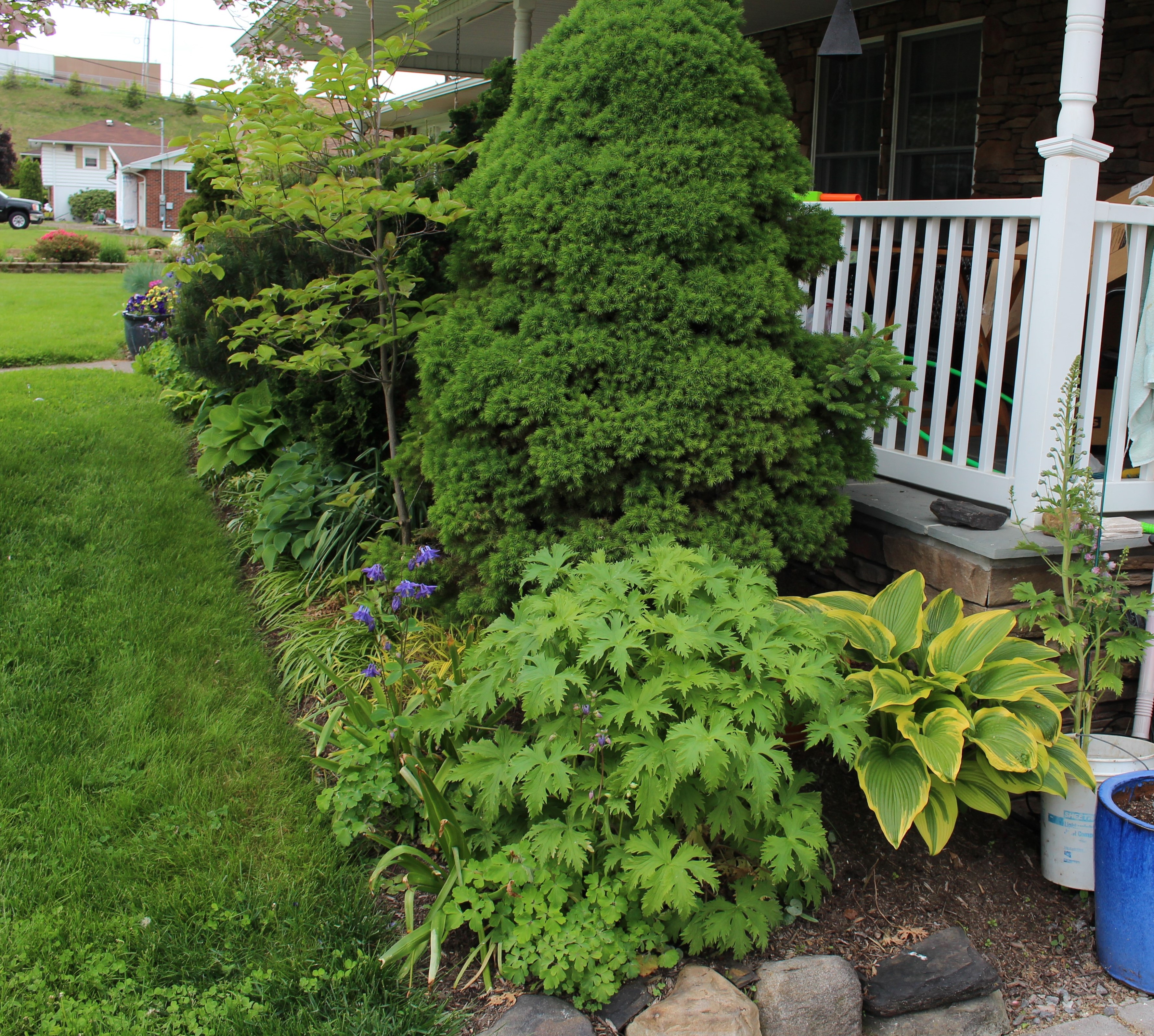
The healthy delphinium clump is front and center with the spruce behind.  The Charlie Brown delphinium sits soaking in the white bucket to the right.

Alberta spruce is a 365 days a year respectable plant, with an attractive form and many years of service in and many years of service to come.  It would make no sense to pull it out in favor of a temperamental diva which needs fussing and fertilizing and timely staking to protect it from the high winds which strike each year (always two or three days into peak bloom season).

delphinium foundation planting

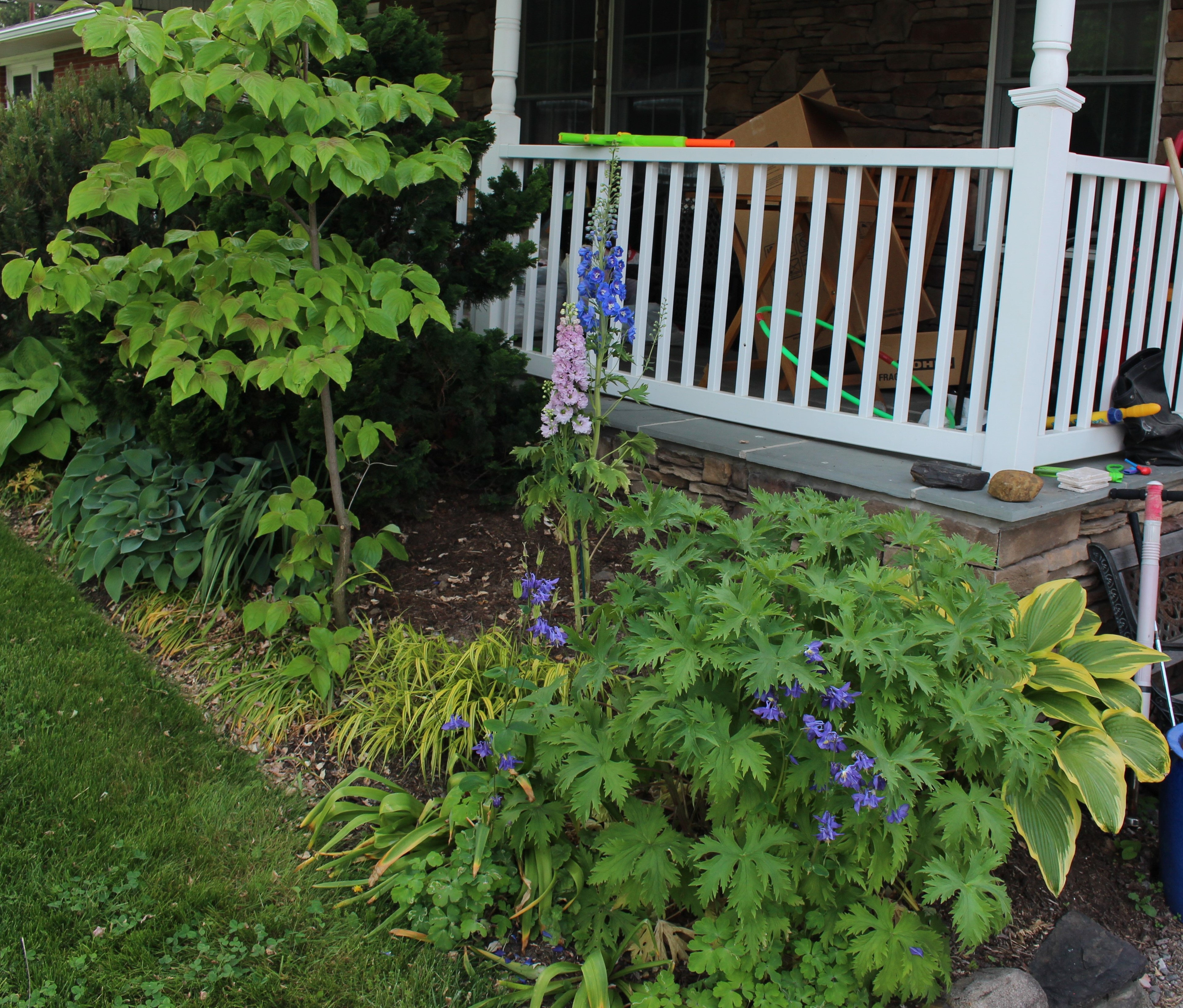
Spruce gone, delphinium in (one of the ‘New Millenium’ hybrids).  Not the most logical decision I’ve ever made but in the garden I prefer to live guilt free and impulse happy.  Also, if you could, please ignore all the trash and clutter on the porch beyond.  I only got around to cleaning it up after this photo was taken.

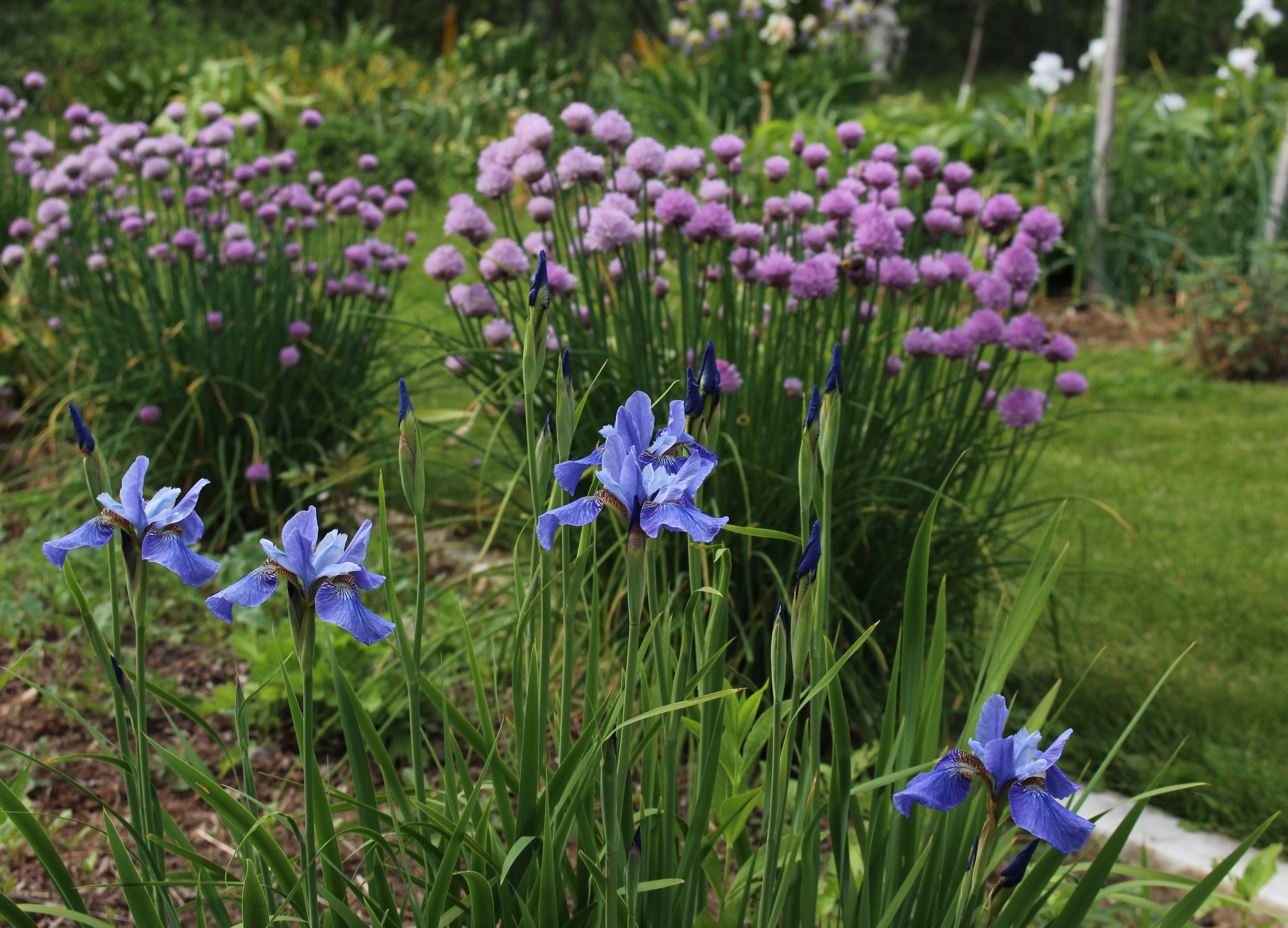
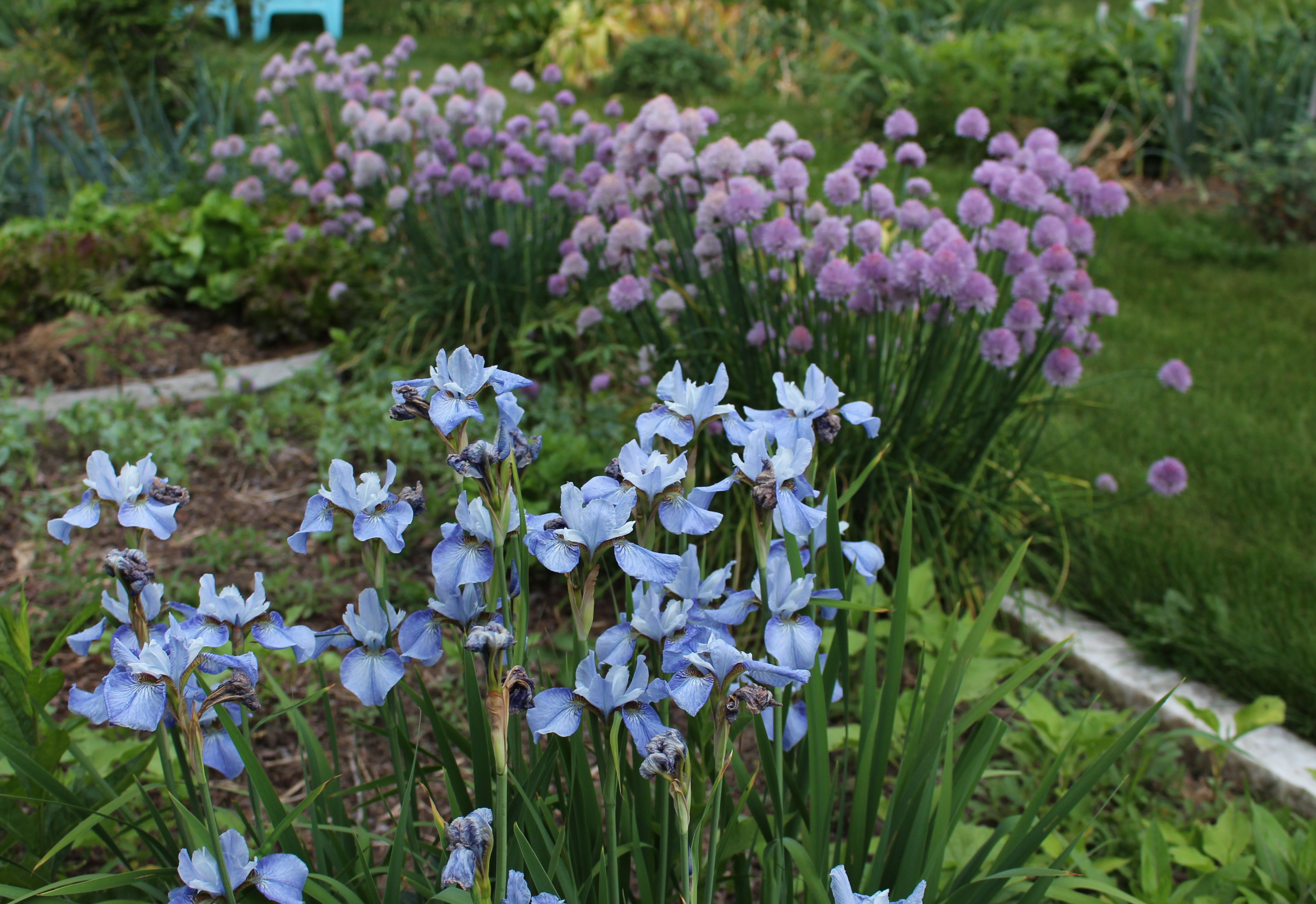
I’m distracted again, let me finish up iris season.  The Siberian iris and Japanese iris might be some of the most beautiful flowers of the plant world, but I don’t grow many.  They seem to flower for a total of one week and although the grassy foliage looks respectable all summer and they handle nearly any abuse which comes their way I try to limit any collecting urges.

purple siberian iris

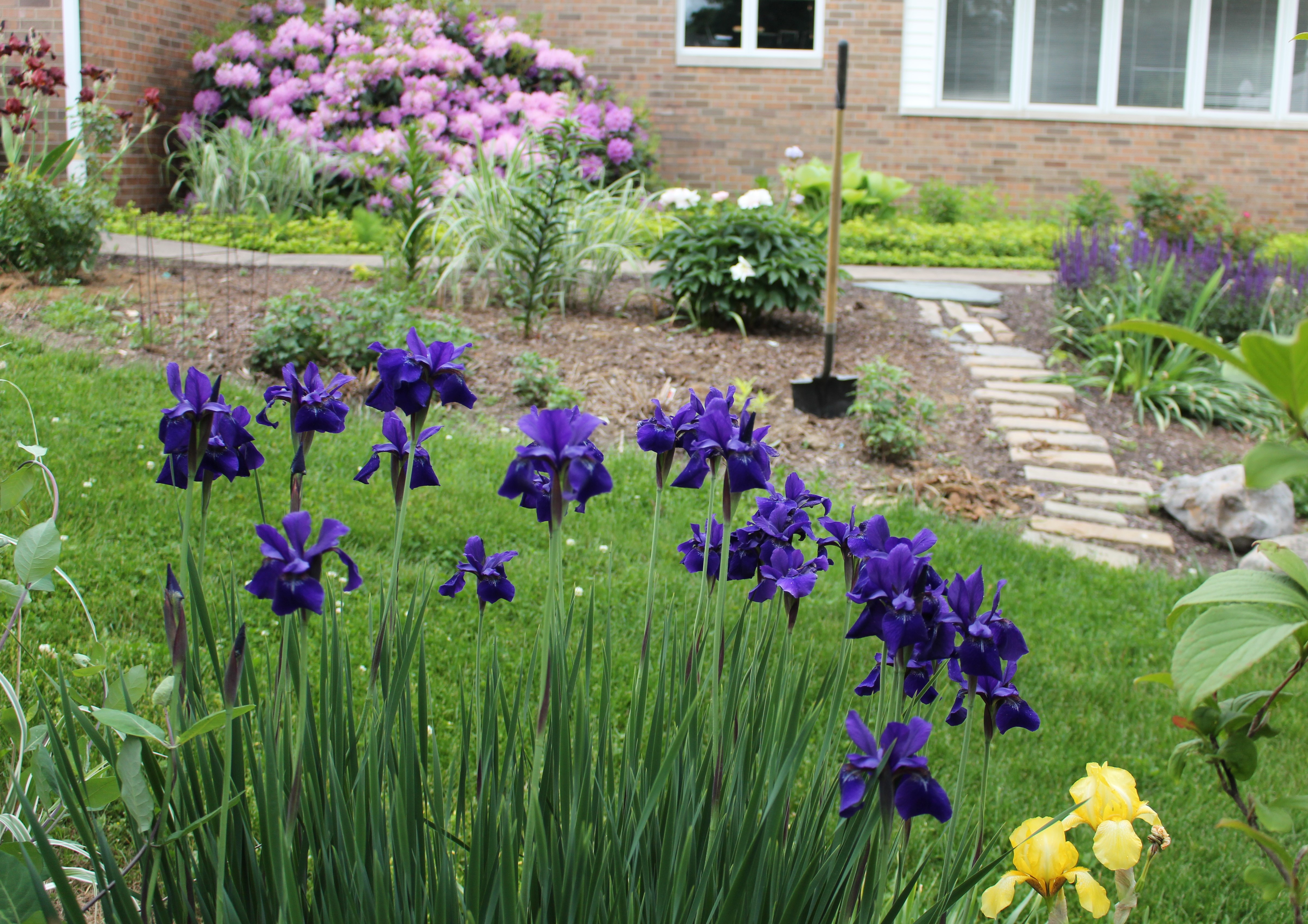
An unknown purple siberian iris with a still unplanted tropical border behind it.

One Siberian iris which I couldn’t walk away from was ‘Super Ego’.  It’s not because it was in bloom when I saw it or that the color was unique or any other particular quality, it was because of a childhood dream which was set on fire by a random White Flower Farm catalog which showed up in my mailbox one winter.  I think I’ve confessed to being a little odd as a child so the fact that I’d sit around spending hours reading through this catalog probably shouldn’t surprise anyone, but this 1980’s era catalog (which I probably still have somewhere in the basement) had ‘Super Ego’s glamor shot in it alongside a poetic description which convinced me that owning this plant would make me richer, smarter, and more popular.  Unfortunately the WWF catalog was way beyond my 10th grade budget so the actual plant never left Connecticut and I was forced to go on without.

Siberian iris super ego

Siberian iris ‘Super Ego’ just starting to open on a Thursday. 

The actual experience of growing ‘Super Ego’, while pleasant enough, didn’t quite live up to my expectations.  For what it’s worth, I guess I’m as smart, rich, and popular as I’m ever going to be.

Siberian iris super ego

‘Super Ego’ five days later after a few 90F days bleached most of the darker blue color out.  The chives in the back seem unfazed by the weather or passing time, although they are entirely less exotic in my opinion.

So as I wait for a new plant to come along and change my life I’ll continue weeding through the backyard iris beds.  They are infinitely less photogenic with their hefty companion plantings of weeds, but the old iris continue to carry on and deserve more respect than their neglected planting spot gives.  I even planted a few zinnia and marigold seeds last weekend.  That may not speak of high class and taste nor earn me a spot in the White Flower Farms catalog but it does mean that things are starting to move on the seed front, and if it all works out July and August should still be full of flowery color.

Spring keeps rolling along

As it is with most things here, the gardener is not exactly on schedule with his gardening.  He’s not exactly on schedule with many things, but the late freeze and the discouraging damage it did to so many spring greens has left him slightly unmotivated.  Then the relentless rain and cold damp brought on rot, and now dry weather is bringing spider mites to the phlox.  So the gardener will restart his spring in mid May and deal with the mites.  He’ll also accept that many projects will again not happen, and will just clear his conscience and move on.  Iris are beginning to bloom after all, and once the iris start to fill the flowerbeds with color and perfume it’s hard to hold onto a black mood.

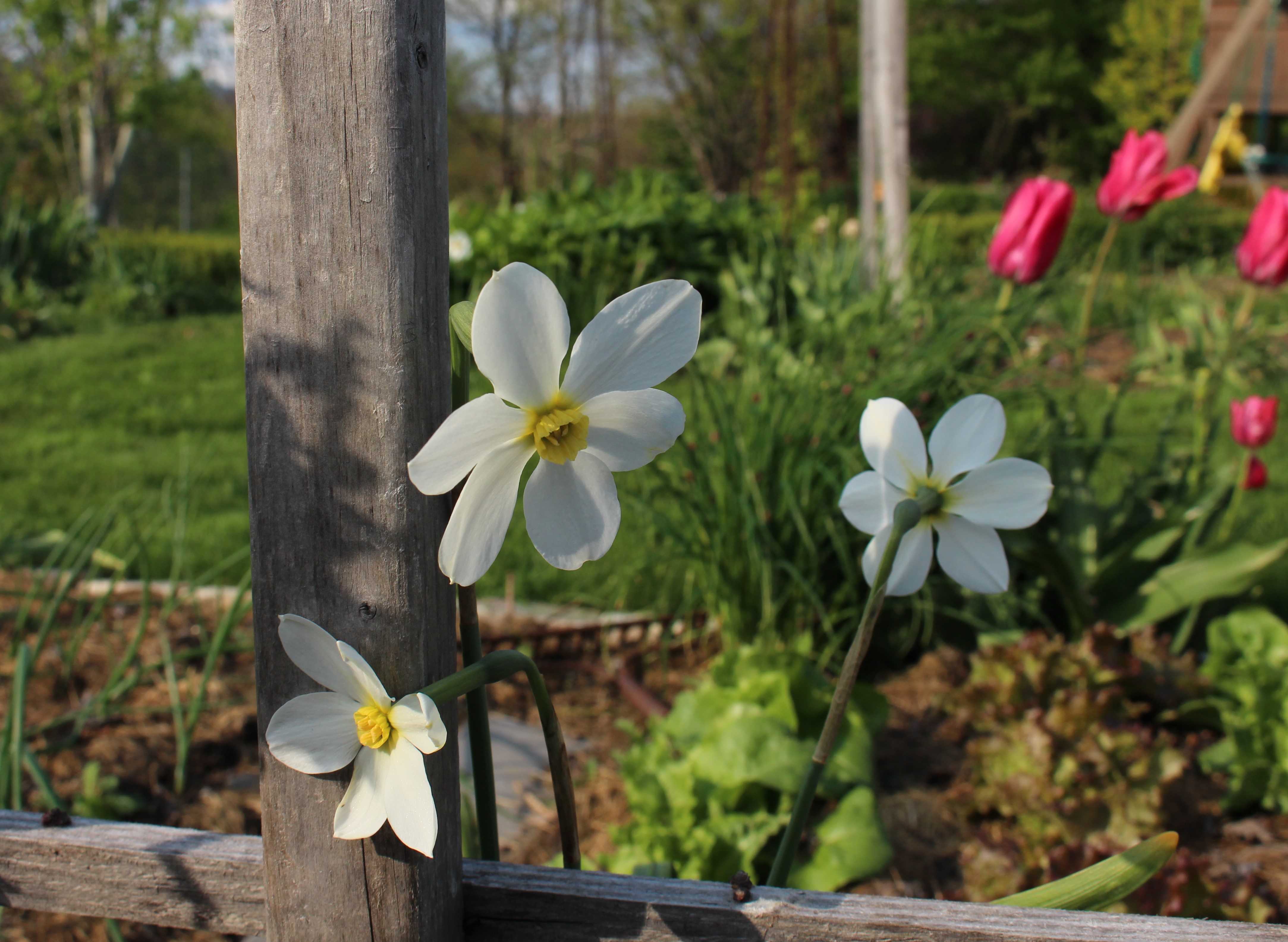
narcissus keats

One of my last daffodils to open, narcissus ‘Keats’ was voted ‘ugliest thing to bloom’ by a more serious daffodil friend.  I’m always one to love the underdog. 

One minor project (which seems to be the only project type I’m capable of tackling this spring) which was finally taken care of was the long suffering heuchera plantings.  A few summers ago I dipped my toes into the hybrid heuchera world and since then they’ve been suffering along in my garden.  My planting beds get too dry, my shade isn’t as high and dappled as they’d like, and my soil is too heavy for their roots but I try nonetheless.  They still have plenty of filling in to do but if you saw the before picture I’m sure you’d agree this is an improvement.  Unfortunately the tan lawn clipping mulch doesn’t do much to set the foliage off, but it’s better than weeds I suppose.

transplant and divide heuchera

The woody stems of the heuchera clumps were dug up, ripped apart and carelessly stuffed back in to the re-dug bed and the plants actually look much happier after their tough love treatment.    

As summer heat settles down on the garden this holiday weekend, I just wanted to celebrate the meadow and a few of the newer plantings which did well this spring.  Number one on the list were the tulip clusiana bulbs which planted into the turf.  They looked perfect out there and I hope they return just as nicely next spring.

tulipa clusiana

Tulip clusiana (I think they were a named variety but I’ll need to dig out the tag) were scattered around in the meadow garden.  I will be extremely happy if they settle in here!

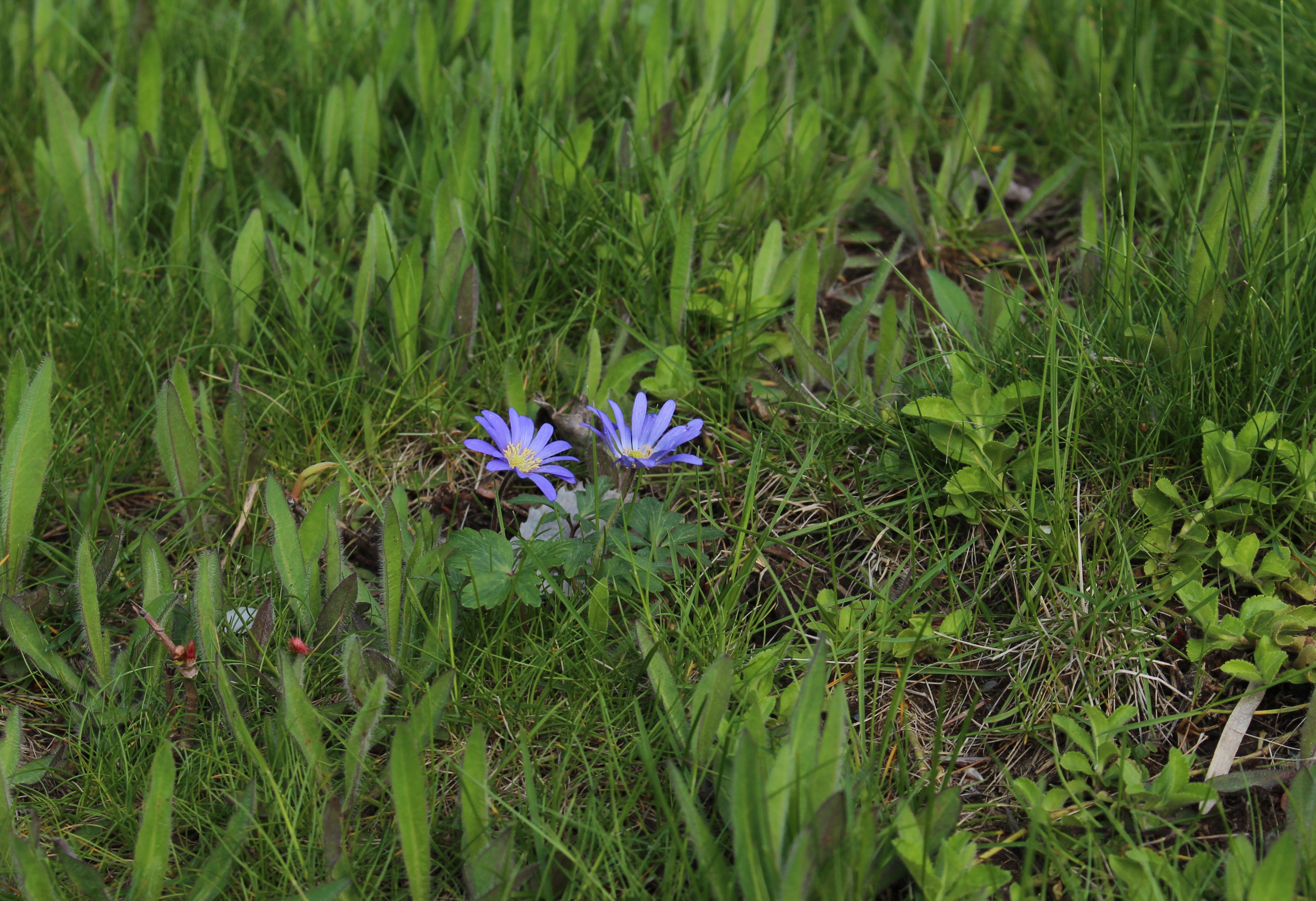
A few Anemone blanda look nice in the shadier parts of the lawn.  I tried throwing them around in several of the outer edges of the garden and then promptly forgot until little sparkles of blue started showing up here and there.  My goal for this one is to recreate the neglected show which used to pop up each spring around my first apartment in upstate NY.  If this plant can naturalize around a ramshackle college boarding house I think it stands half a chance here.

blue anemone blanda

Blue Anemone blanda in the “lawn”. 

Muscari is practically a weed everywhere so I added a few of those as well.  The flowers on these grape hyacinths were nice enough but now I keep looking at the seed heads with their kind-of aqua tint.  I wonder if it was the cooler temperatures or if they’ll always have this attractive look…. or is it just me that thinks they look cool?

muscari seed pods

Seed heads on the grape hyacinths (Muscari).  In other parts of the garden I clip them off to limit their seeding around, but here I’ll risk it 🙂

Most of the bulbs were brought in as bulbs, but if you know me you know there are a few seeds coming along as well.  My little gravel covered pots are bursting with new plants this spring and even though the last freeze did a few things in the majority seemed to enjoy our mild winter.  I’m always a bit surprised anything will grow up through gravel, but in some pots even the tiniest of seedlings make a crowded moss of new green sprouts…. which will soon desperately need thinning!

hypericum albury purple

Hundreds of Hypericum ‘Albury Purple’ seedlings sprouting in the center pot. Realistically I need about two.

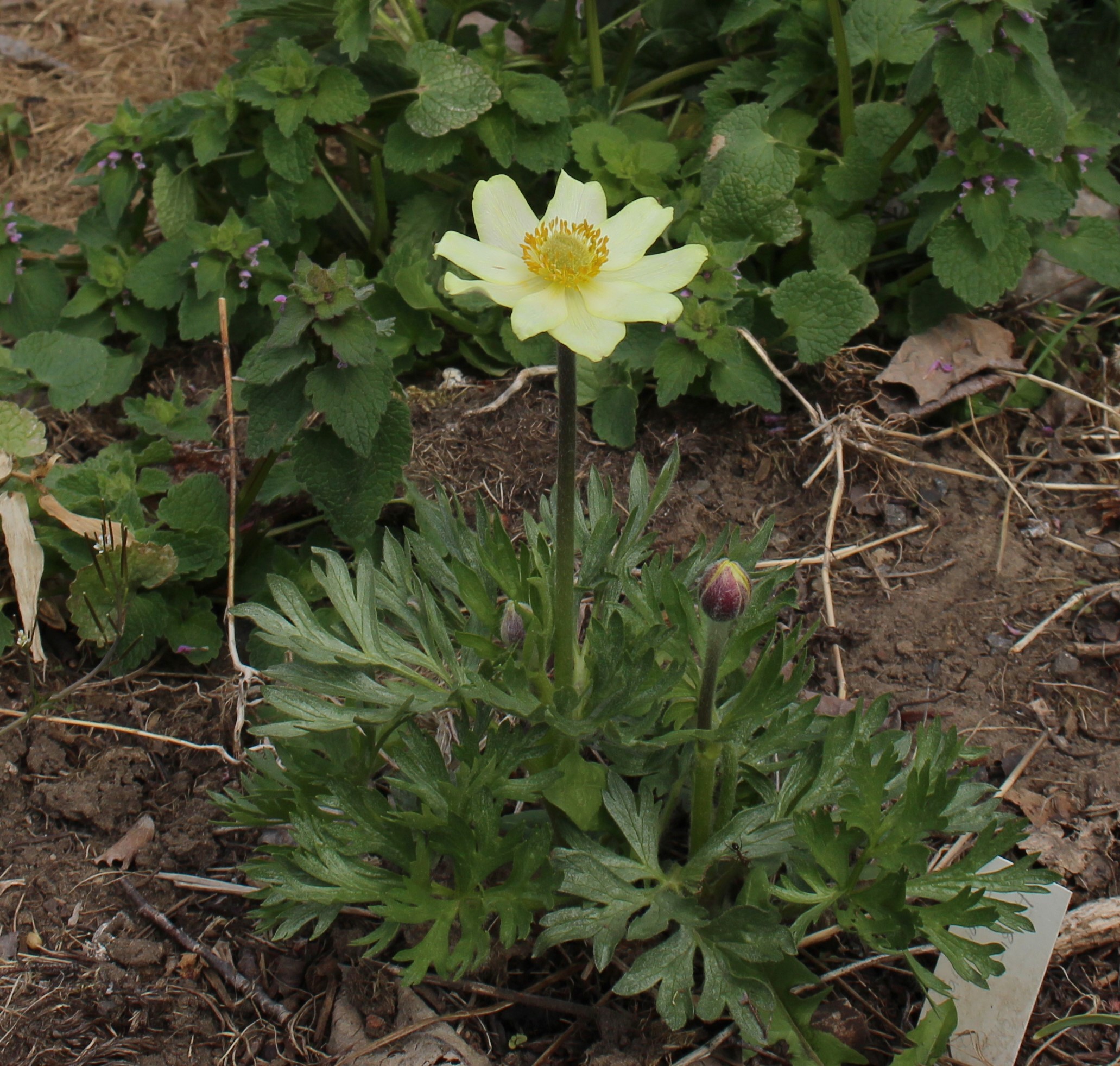
With new seedlings coming along each spring there are always new surprises as youngsters open their first blooms.  A couple years ago I thought I’d dabble in a few species anemones and see how they do in the meadow, and although I’m not sure they’re all correctly labeled, for now I’m just enjoying them for whatever they are.

aneomone caroliniana

Not Anemone caroliniana?  Pretty regardless, and it looks like it might be able to hold its own if I move it out into the thinner areas of grass.  

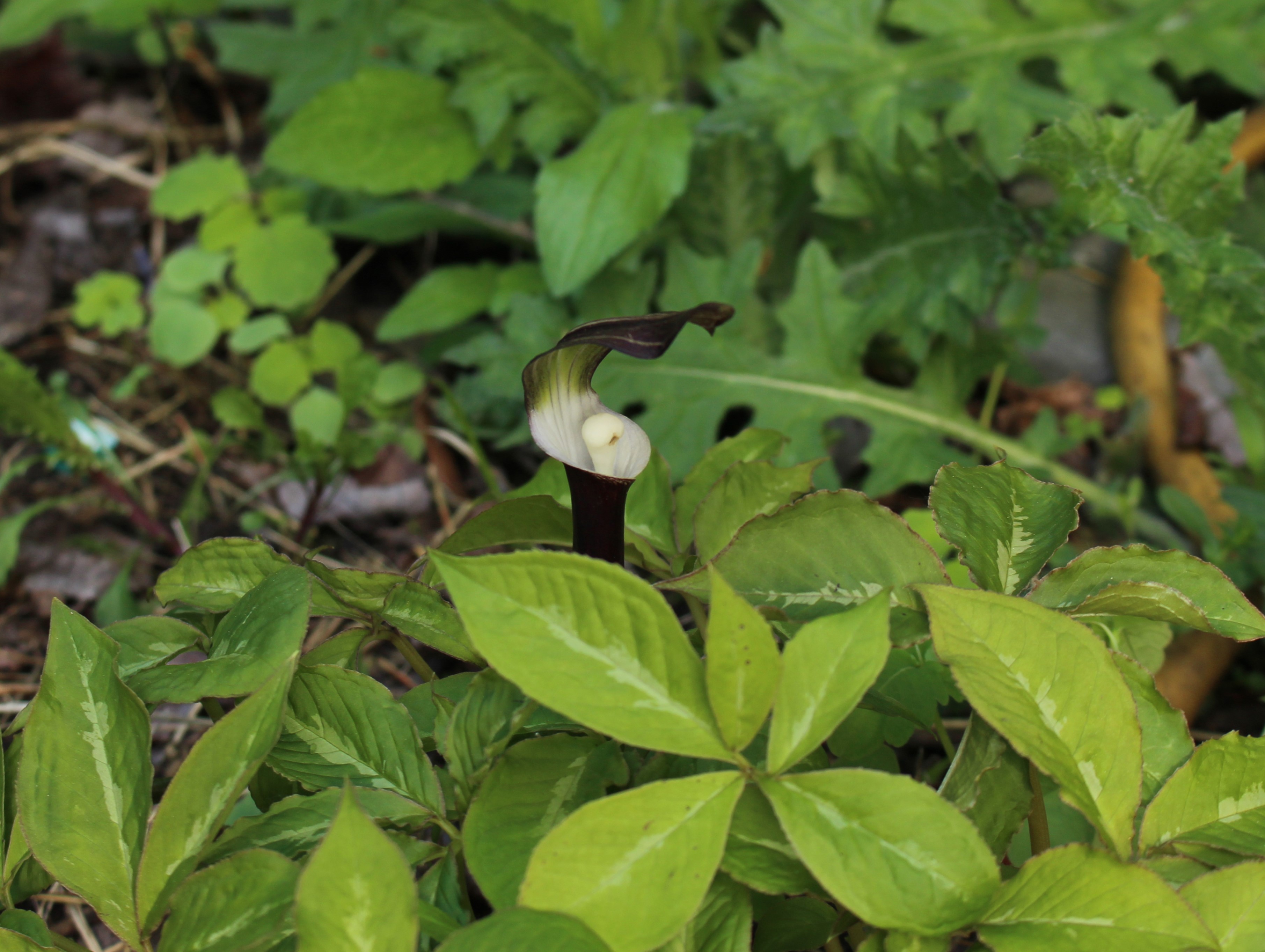
One seedling which has a positive ID is this cool little Japanese Jack-in-the-pulpit or snow rice-cake plant (Arisaema sikokianum).  I was surprised to see any of these three year old seedlings flower, and although the actual flower is definitely on the small side for this species they say size doesn’t matter in these things and I’ll just keep admiring the fancy little bloom.

arisaema sikokianum

Arisaema sikokianum.  Although my picture doesn’t do it justice, I hope you can appreciate the mottled foliage and bright contrasts of this flower. 

So that’s the basic update.  I promise this will be the last time I moan about freezes and such, but I can’t promise some other weather event won’t come along shortly to take its place.  Whatever happens it’s a great iris weekend and I’m sure I’ll be going on about that next 🙂

Too much money

Some complaints will never get you any sympathy, and to complain that tulips are coming up and blooming in all sorts of odd places probably ranks right up there.  Truth be told it’s not a problem, but when every batch of compost seems to hold a new crop of bulbs, the spring planting in the parterre becomes a little more complicated.

tulips in the vegetable garden

Once again the vegetable garden is a complicated mess of far too many flowers and far too few edibles.

For all my failures in the garden, tulips seem to be one plant which enjoys the poorly draining, heavy soil of the flower beds.  It’s a surprise to see this considering many references suggest a loamy, free draining soil for your best chances at success, and even then it’s a safer bet to treat tulips as one or two year treat.  Fortunately no one has whispered this little secret into the ears of my bulbs and they keep coming back and multiplying.

tulips in the vegetable garden

Having a few tulips in the way is just the excuse I need to skip digging too deeply when it comes to planting the spring vegetables. 

I think I do know the secret though.  The soil may be heavy but it’s also thin and dries out relatively quickly once the heat of summer settles in, and if I do manage to drag my lazy self away from the pool to water it’s never a solid deep watering, it’s always a guilty stand around with a hose until things look less dead kind of triage.  I can’t imagine much of the water ever penetrates deeper than two or three inches and for this the heavy soil works to an advantage.  My tulips like a hot, dry summer similar to their ancestral haunts of Eastern Europe and Central Asia and most years (unfortunately) this is what my garden resembles.

tulips in the vegetable garden

Tulips in the onions, tulips in the lettuce.  I try to replant stray bulbs closer to the edges, but there are always more little bulblets in the compost or stray bulbs dug around in the soil.

When I was more ambitious I used to fill several of the beds each fall and then dig them again in June after the foliage died down.  It was a glorious spring explosion but one bad experience soured me to the whole deal and I ended up tossing hundreds of fat promising bulbs.  They really do need a good drying out over the summer and when mine all molded up and rotted one damp August I put a stop to the project.  But…. I can’t promise it won’t happen again some day 🙂

lettuce self sown seedlings

If all goes well this batch of tulip leaves should put out two or three blooms next year.  Not bad for a weed, and if you notice there are more weeds in the lawn, in this case lettuce seedlings from last years neglected plantings.

So to sum it up my tulips don’t mind a nice heavy fertile soil while they’re growing, the just need to follow it up with a warm dry summer rest.  Planting them in a spot which dries out and doesn’t get summertime irrigation is one option, actually digging them up and storing them in a hot, dry, ventilated area until fall planting is another.  Just be prepared to have more tulips than you know what to do with since most tulips will at least double in number every growing season.

double early tulip

Leftover Easter flowers from two or three years ago.  Let them bloom and grow as long as possible in their pot and then stick them into some out of the way spot, preferably one where they will not be overrun with bearded iris 🙂

Although most people recommend species tulips and Darwin types for the best chance at perennializing,  I don’t notice that much of a difference between the types.  Give them all a try is my advice, but for best results regardless of type you will have to dig and divide the bulbs every three or four years  when they begin to get crowded.

perennial Darwin hybrid tulips

A few stray tulips snuck in with the compost for this new snowdrop bed.  With snowdrop season long gone I’m quite happy to see the tulips flowering in a carpet of my favorite annual weed, purple dead nettle (Lamium purpureum). 

Alas, even plants relatively happy with their homes do not always lead perfect lives.  The tulip season may be a little sparse next year for two reasons, both of which revolve around the weather.  The first is our harsh April freeze which damaged many of the buds and much of the blooms for this year’s show.  That in itself could be tolerable, but in the weeks since the weather has remained damp and cool, and many of the damaged plants are now falling victim to gray mold (Botrytis).  Botrytis is bad news and seems to stick around for a few years even after better weather returns.  I’m wondering how many of the affected plants will be going on to tulip heaven…

tulip virus candy apple

Not to go on and on about this late freeze, but here’s yet another example of damaged foliage and stunted blooms.  To top it off I also suspect virus in the streaked blossoms of what should really be a solid colored flower. 

All is not lost though.   I still love tulips and would grow a few even if they only made it a year or so before falling victim to whatever tragedies visit my garden next.

tulip marit

Tulip ‘Marit’ is a favorite this year.  I don’t remember such round flowers last year but the shape and color this year really won me over. 

In the meantime I will keep my fingers crossed.  I far prefer being spoiled for choice as far as tulips go, and if it means working around a few bulbs here and there that’s fine with me.

tulip pink impression

Tulip ‘pink impression’ in the front border.  They’re huge and pink and although battered by the weather they’re still the crowning glory of the border.

Have a great Sunday and happy mother’s day to the moms!

A freeze and the daffodils

I can’t really hold the weather against them, but I do.  Again and again I told them not to get such an early jump on the season but they ignored me and sure enough one final blast of winter came through and taught them all a lesson.  Three weeks later and I’m still mourning the daffodil season which never was.

cold damage daffodil

Can you guess the prevailing wind direction?  Like a windswept bonsai this daffodil ‘Actea’ still managed to pull through and open a few blooms in spite of the 20F winds which blew through. 

I shouldn’t say the whole season was a wash but if I had to guess I would say about half the daffodils lost their buds and blooms completely and only about a quarter opened up nicely.  A quarter goes a long way though and I’m still grateful to have what I do, plus the weather has been very accommodating since so I suspect the surviving daffodils will put on an extra special show next year.

Isn’t that typical of a gardener?  It’s always “wait until you see this next week” or “imagine next year”…. or the apologetic “you should have seen it a few days ago”. 🙂

narcissus daffodil stepchild

One of my many favorites, narcissus ‘stepchild’ is later and in a spot sheltered from the wind, and although neighboring clumps were still de-flowered by the cold, she seems as pretty as ever. 

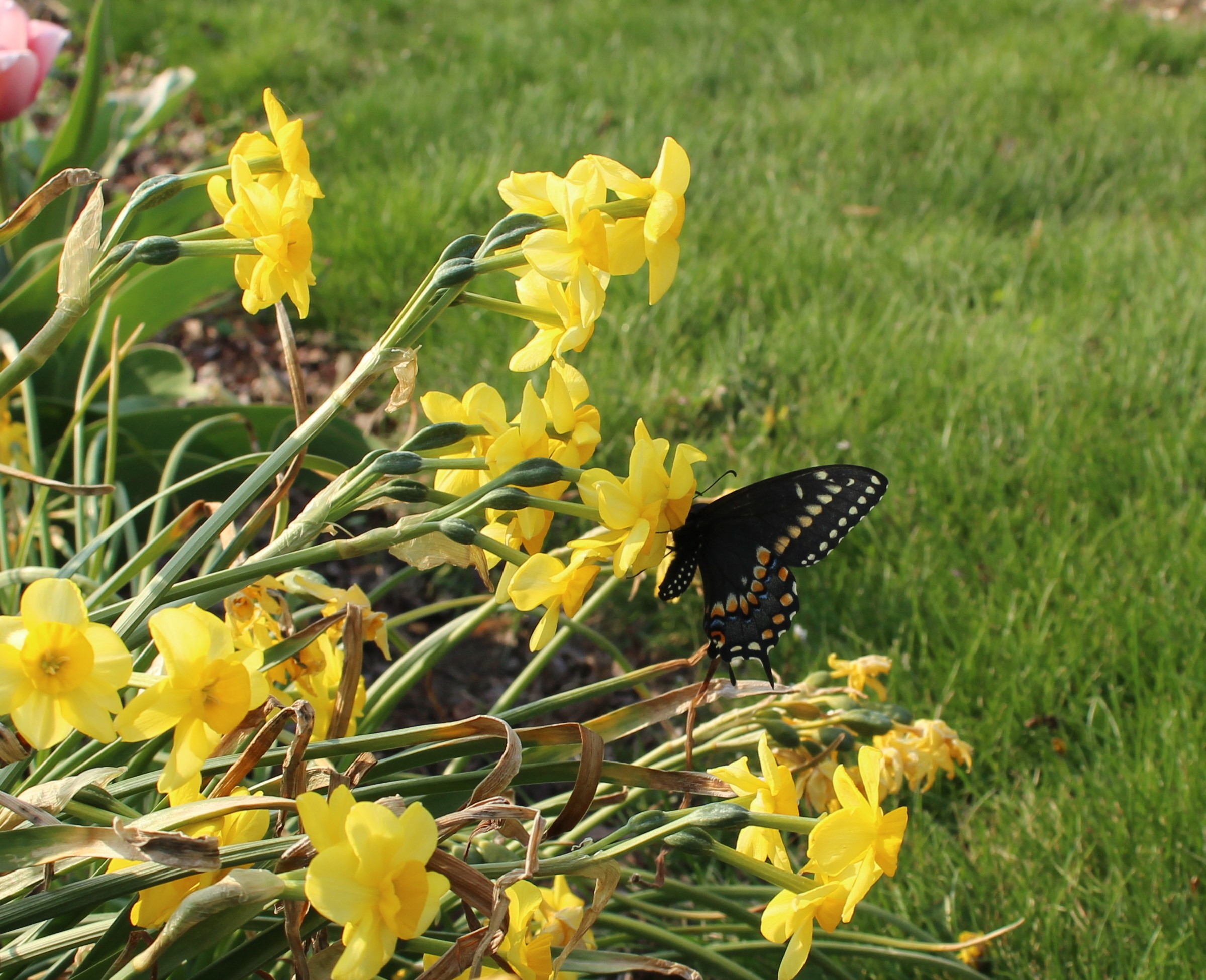
In spite of the wild swings in temperature the various butterflies of the garden seem unfazed and continue to shake off the cold and go about their business as soon as the weather warms enough.  Perhaps I hadn’t noticed in previous years, or perhaps there were other non-freeze burned sources of food available, but this year the daffodils have been very popular with several types of butterflies.

butterfly on daffodil black swallowtail

A black swallowtail feeding off the windblown and weather-beaten flowers of narcissus ‘kokopelli’. 

I hope my wallowing in self pity hasn’t made it seem like all is lost in my end of the woods.  Spring is a fantastic relief even with its frequent ups and downs and if one looks past the blackened cherries and mushy primrose blooms and perennial shoots there’s still more good than sad.

daffodil newcomer narcissus

Later is better this spring, and because a late replanting last fall set daffodil ‘Newcomer’ back a few days, its blooms missed the worst of the weather.  The tulips as well, the shelter of the garden’s tiny boxwood hedge seems to have helped them avoid the full brunt of the winds.

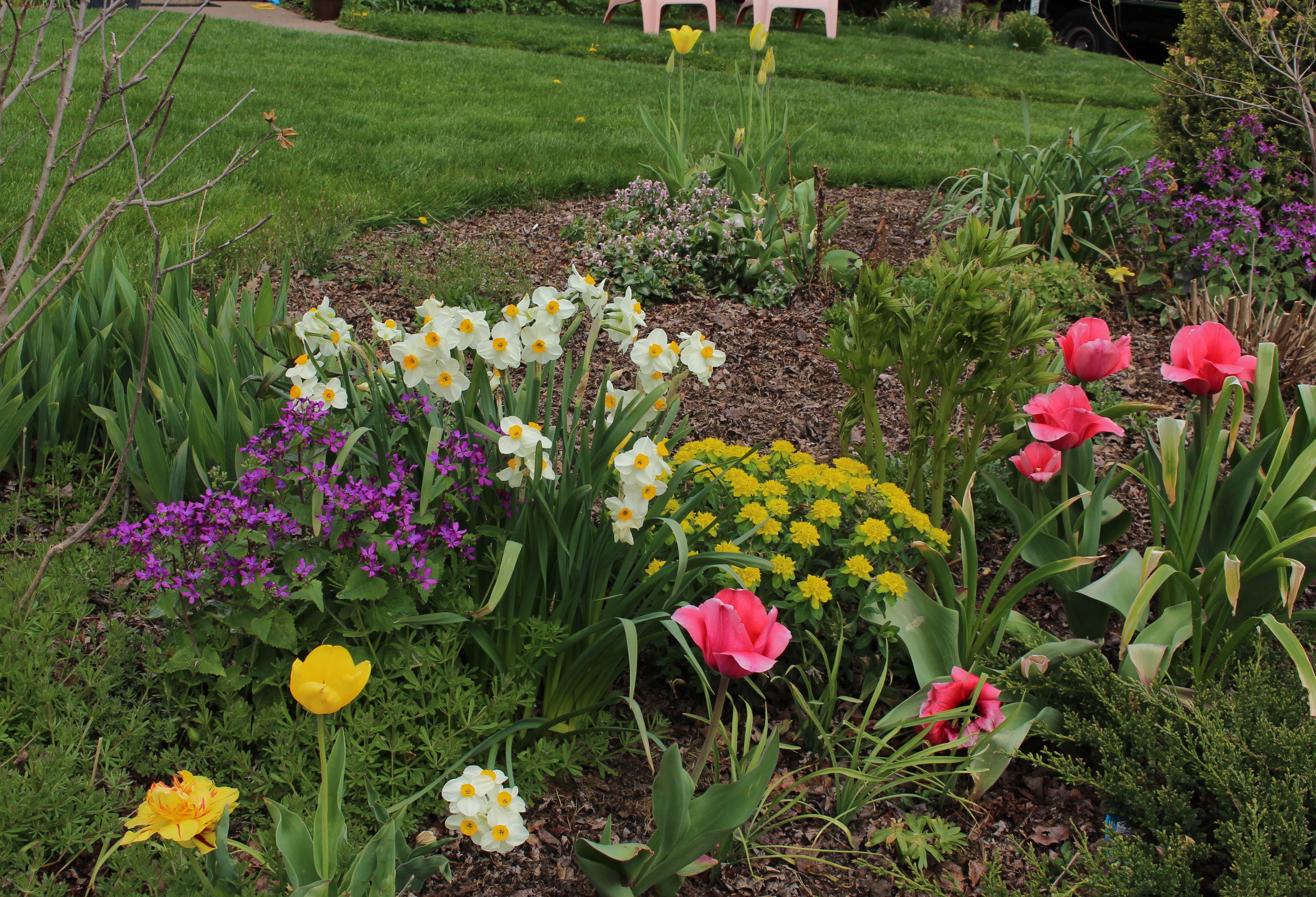
In the lee of the house the front garden missed the full force of the wind.  Here if I ignore all the mushy, blackened hyacinth blooms, and wilted early daffodils I can still find plenty to enjoy.

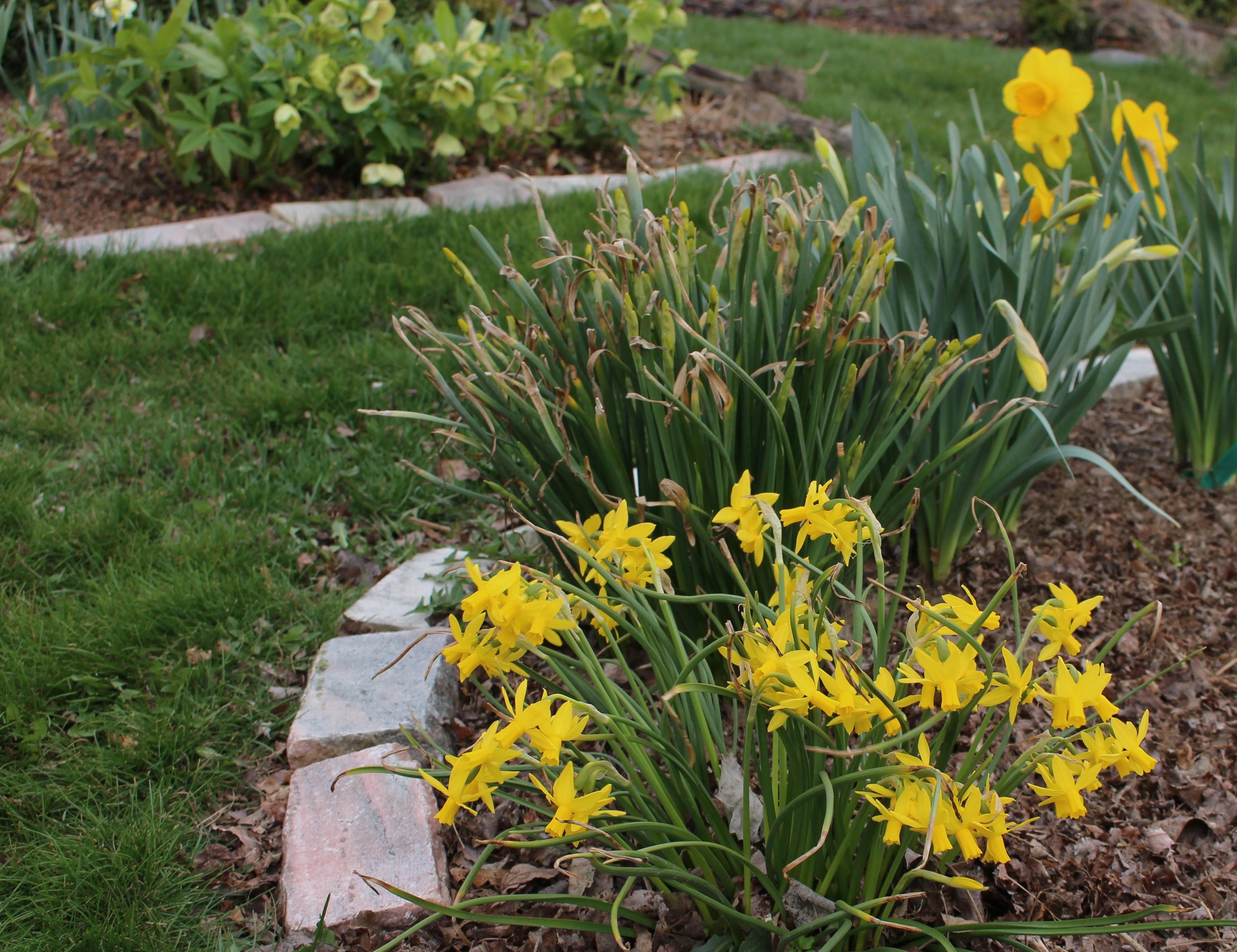
narcissus geranium daffodil

Blooms of the good old reliable daffodil ‘geranium’ set off by ‘pink impression’ tulips, yellow Euphorbia polychrome, and the purple flowers of ‘Rosemary Verey’ Lunaria annua (moneyplant).  I was hoping for darker foliage on the Lunaria but maybe having all the old leaves frozen off a few weeks ago left me with only fresh new green ones.

Maybe this freeze was a warning to diversify.  I admit to having way too many daffodils and maybe adding more supporting players isn’t the worst idea (as if I need a reason for adding more plants!)

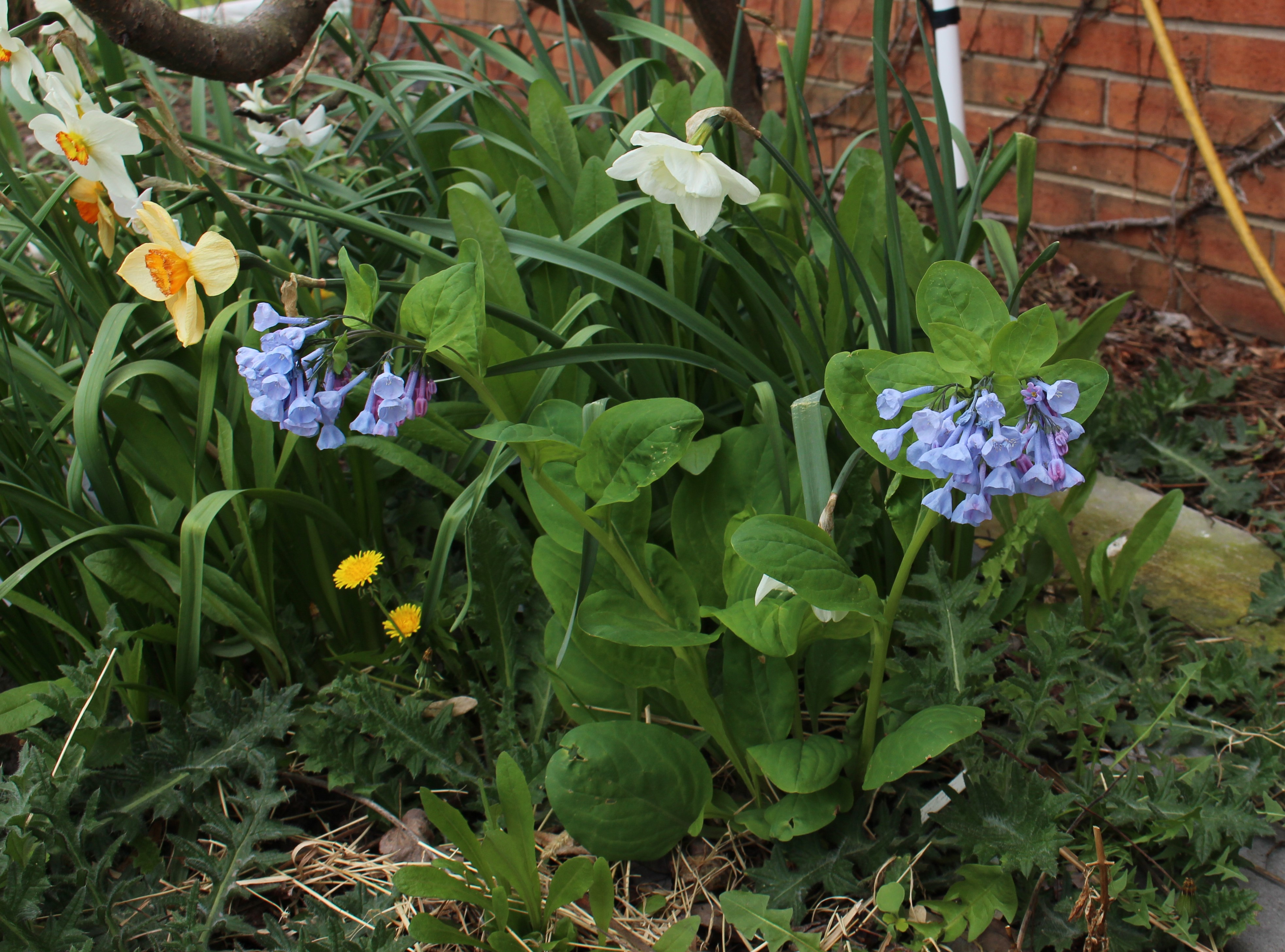
mertensia Virginia bluebell from seed

Finally!  After several failed attempts and then a three year wait for my only sprouted seedling to grow up, the first Virginia bluebell (Mertensia Virginica) is in bloom.  Others claim it to be nearly weedy in its ways, but I managed to kill the first one I bought and then never found it in the garden center again.

I’m kidding of course.  Although I do need to find new homes for many of the most promiscuous daffodils (please let me know if you can take any in), there are billions of new plants on the way regardless, as seeds sown last fall and winter begin to sprout.  I always love these new surprises as much as I love the warmer up sides to this spring’s manic mood swings.  Even a bright yellow dandelion makes me grin when the sun is out!

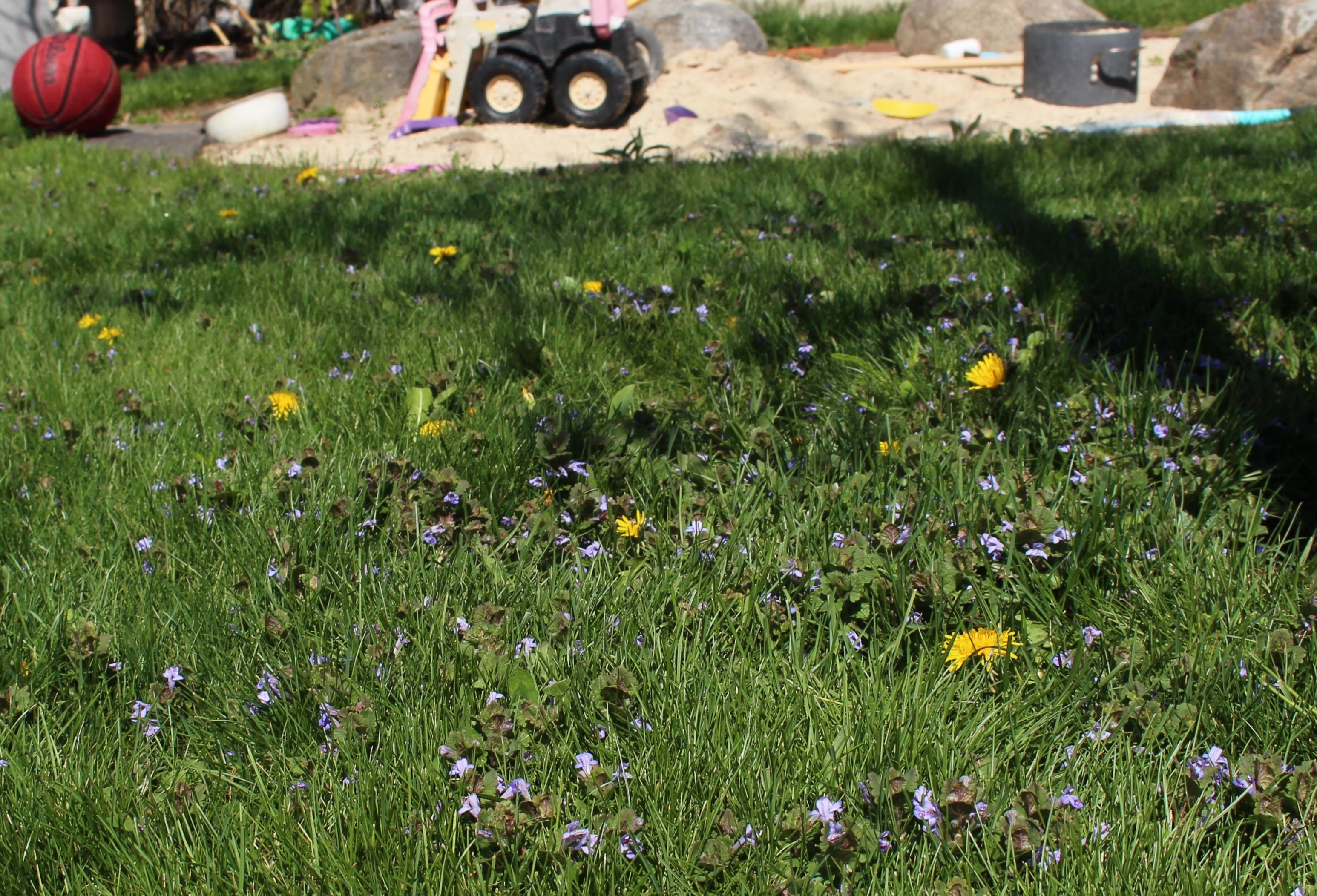
creeping Charlie dandelions

Creeping Charlie and dandelions on a sunny day.  A beautiful lawn in my opinion…. even if Charlie does get on my nerves later in the season.

I have one more gloomy post as I complain about the assault which the cold made against the tulips, but after that things should return to a happier tone which more accurately reflects the joy of the season.   Have a great weekend, I’ve spent far too long on the computer and need to get out there and dig a little before the first Little League game drags me elsewhere 🙂

The Iceman Cometh

I made a point of getting the lawn mowed Saturday.  I wanted to have things nice and neat for when the snow comes.

mixed perennial border

Bright yellow daffodils, blue hyacinths and a freshly cut lawn.  The front border is looking very spring-ish with its mix of sprouting perennials and flowering spring bulbs.  Please ignore the upended chairs which the nasty wind has blown over. 

Although things are way too early this year, all my efforts to convince them to slow down have gone unheeded.  The plants just don’t know what to do with this rollercoaster ride of highs and lows and as a result it’s been a kind of crappy spring with snowdrops peaking and then wilting in a few days of heat, hailstorms knocking everything down, cold weather keeping the depressing wreckage at a standstill, another warm spell to snap things back into high speed, and then now this latest arctic blast.  Here’s the front border six days prior when only a few weather beaten crocus were up.  At least I had enough time to raid the neighborhood dump and mulch the border with plenty of nicely chopped leaves.

mixed perennial border mulched with leaves

A nice mulch of shredded leaves will do wonders smothering the weeds this summer and feeding the soil all spring.  I wish I had more!

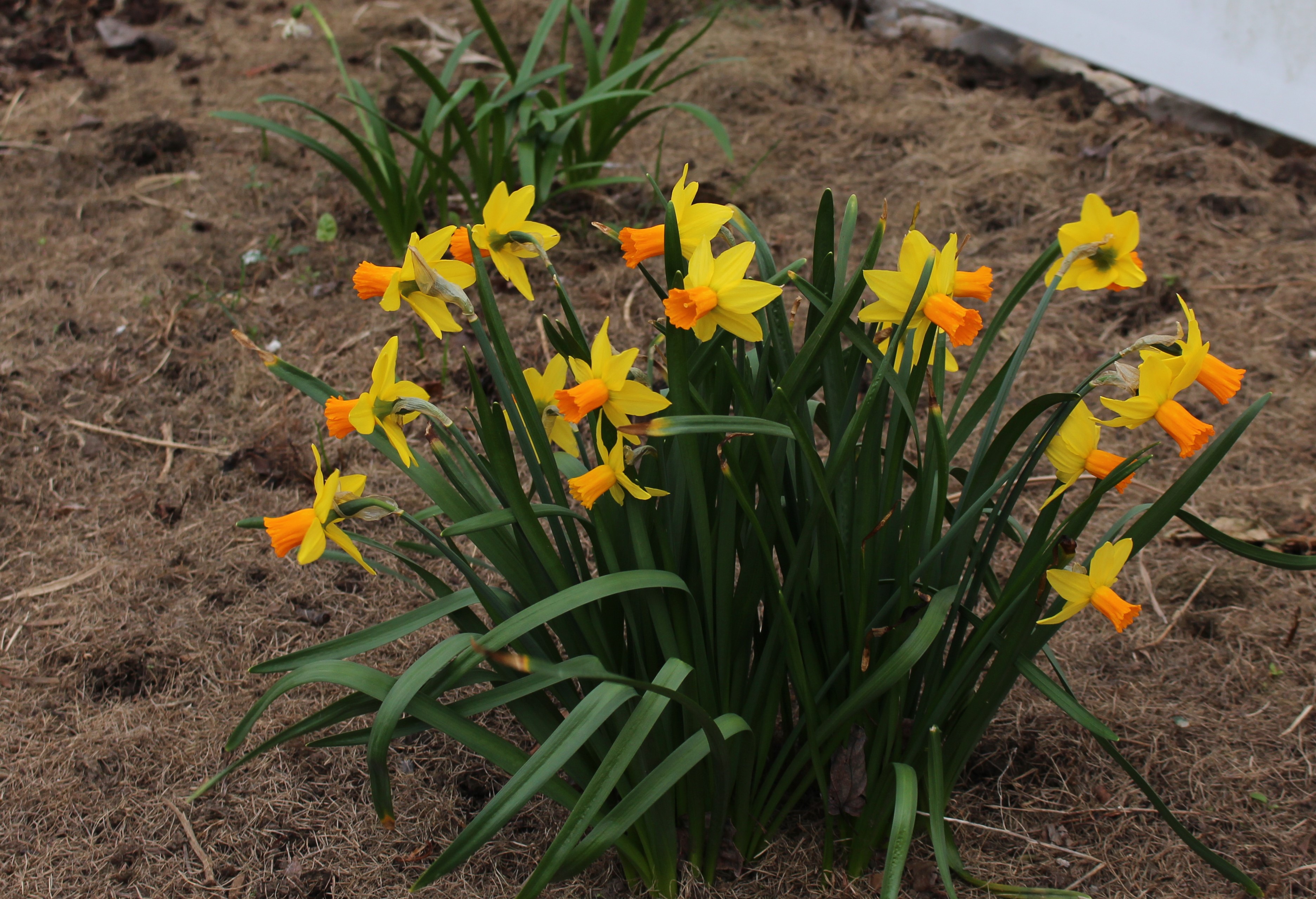
In less than a week we’ve jumped ahead to the peak of the daffodil season.  Last fall I wanted to mix in a few more of the bright yellows so I snapped up a batch of 50 from Van Engelen and haphazardly spread them throughout the border.  I tend to enjoy a more natural look and the scattered planting combined with the wildflowery long noses on this cultivar makes them appear as if they’ve been there much longer than a few months.  I don’t know if I’ve ever mentioned this or if I’ve repeated it a dozen times, but daffodils which hold on to the long trumpets and backswept petals of the original N. cyclamineus species are by far my favorite types 🙂

daffodil tweety bird

Daffodil ‘Tweety Bird’, a product of Brent and Becky Heath’s breeding program, filling in where I pulled out an invasive burning bush last fall.

One, and possibly the only, thing good about frequent cold spells is that some of the daffodils are showing their deepest, glamour shot colors without the fading which normally occurs in the warmer weather.  Here in a cool bed which is shaded by a fence, ‘Jetfire’ is looking almost fluorescent with its orange cup.  I’ve never seen it this bright before, and hopefully this is a good start for this bed since I’m still into the months long process of killing the most persistent weeds here with a double shot of thick mulch and weed killing spray.  Maybe by the start of this summer I can finally refill this open land with all kinds of new goodies!

daffodil narcissus jetstar

Narcissus (or daffodil if you prefer) ‘Jetstar’ blooming with some unusually bright color this spring.  This is one of  my most reliable daffs 🙂

Another thing you may or may not know is that I tend to have a lot of favorite daffodils, and that’s because I grow a good assortment to choose from, and I challenge anyone to stick to just one favorite!  Narcissus ‘Rapture’ is an award winning, American bred daffodil with just the kind of cyclamineus genes I love.  Look at those cute little reflexed petals and long trumpet!  As you can see by the neighboring empty spots, not all daffodils have done as well in this location, since at one time this bed was fully planted.

daffodil narcissus rapture

A nice fat clump of Narcissus ‘Rapture’.  If I didn’t already have so much yellow out front I’d surely spread this one around the mixed border along the street.

But of course the up and down weather is even beginning to wear on the daffodils.  Arctic blasts of cold burnt the early tips of many of the more trusting varieties.

freeze damage on daffodil

The jonquil types of daffodil sprout just a little too early for our zone.  This is probably ‘Pipit’ or ‘Hillstar’ and even in a good year the tips of the foliage get singed by too cold weather extremes. 

It’s all or nothing for some of these daffodils which carry the genes of the more southern N. jonquilla.  If it’s a cold winter they hunker down and don’t poke up their heads until the weather has settled, but in an unsettled winter they keep on trying to get started during every warm spell.

narcissus daffodil tiny bubbles

Narcissus ‘Tiny Bubbles’ with a freeze damaged ‘Kokopelli’ behind it.  I like the dainty flowers on ‘Tiny Bubbles’ but I wish either the foliage was shorter or the blooms up a little higher. 

The unsettled winter crushed this year’s hellebore show.  I should have seen that coming since last fall they looked better than ever and were poised to bloom their heads off.  So much for that.

picotee hellebore

Here’s one which managed to come out and open perfectly between the frigid blasts of cold.  There are singed and damaged flowers all around but this one with its dark centers and perfectly veined blooms is enough to make me smile. 

Of course I have my favorites among the hellebores as well.

yellow hellebore

Even with a few damaged centers and singed outers the buttery yellow of this hellebore keeps it on my best-of-the-hellebores list 🙂

Any opinions on this picotee hellebore growing in the front border?  It’s doing very well in spite of the fact nearly all its neighbors were frozen back to their crowns…

picotee hellebore

Would you call this a yellow picotee hellebore?  I like the red shading and subtle color, but suspect it might not jump out at everyone.

I guess it’s time for a reality check.  Here are the daffodils this morning as the cold wind howls outside.

daffodil frozen in snow

The front foundation border once again covered in snow. 

To be honest I hope the snow predicted for tonight also comes through.  The garden can use a little bit of extra cover to help it out when the low temperatures drop to 19F (-7C) for both Monday and Tuesday.  Whatever.

frozen hyacinth

All the early bulbs flattened and frozen by a late cold snap.  You can bet my fingers are crossed they make it through this….

It’s normal for everything to wilt as it freezes, and that’s a good thing since too much water in the stems will cause them to burst as the water expands, but I’m not sure exactly what else will survive the upcoming deep freeze.  I’m writing off the wisteria, even the barely expanded buds will most likely die off, and the hyacinths will be mush, but I’m most worried about the tulips and daffodils.  A few years ago a one night cold snap permanently ‘did in’ a bunch of tulips, this longer spell has me more worried, and I have many more now than I did back then.

C’est la vie.  Maybe I’ll order a few new cannas today, and dream of a beautiful June garden.  April and May are kind of iffy right now, but as long as the birds sing and the sun is warm we’ll be fine…. tulips or not.

Corydalis… The next big thing

How does such an awesome little spring blooming bulb (tuber if you want to get technical) fly under the radar for so long?  Apparently a couple in-the-know gardeners have been growing these cool little spring bloomers for years, but I for one didn’t even know they existed until a few years ago.  I believe I came across pictures via Ian Young’s bulb log (if you’ve never been, click here immediately to visit -it’s practically required reading for any bulb lovers out there) , and the impression was one which ate away at me until one fall I was finally able to get my dirty fingers on a few.  Of course as my luck would have it these were promptly killed, but the following year a more determined try proved successful, and the next spring I was just as pleased as I thought I’d be when they bloomed.

corydalis George baker

One of the boldest reds, Corydalis “George Baker” blooms right alongside the blues of chiondoxa and Scilla siberica.

The Corydalis family is a large one with many highly collectible family members, but for me it’s the variations on Corydalis solida which excite me the most right now.  This species ranges across Northern Europe into Asia and for the most part greyish mauves and blues dominate the color spectrum, but starting in the 1970’s and 80’s rich reds and purples began to find their way out of the woods and into the hands of collectors and growers.  The Penza strain from Russia and the Prasil strain from Romania are the some of the best known groups for bold colors and many of the newest named varieties come from these collections.

corydalis solida

A more common color of Corydalis solida, a smaller and slightly later flowering plant than the other Corydalis I grow.

As it is with many plants, once you get excited about one you get greedy and need more, so in addition to the “George Baker” and “Beth Evans” which were purchased from Brent and Becky’s bulbs, and the straight Corydalis solida from Van Engelen, I needed to add more.  The blame for this shouldn’t lie entirely on my own shoulders though, since by now I had seen even more Corydalis glamour shots including the most enticing group shot which I found at Carolyn’s Shade Garden.  Her tapestry of rich purple with pinks and reds would have to be imitated in my own garden and to that end I found Russell Stafford’s Odyssey bulbs.

corydalis rosula

The warm wine red of Corydalis ‘Rosula’, complemented by a nice underplanting of random weeds 😉

The new plantings from Odyssey were a mix of successes and failures and based on the excellent condition of the tubers, I’m going to guess the fault again lies with me.  Even as recently as this spring one of the clumps failed to even show, and I suppose there’s something else going on which I don’t entirely understand… but ignorance is bliss, and I enjoy the remaining two cultivars more than ever now…  even though the addition of a pure white or pink would have made the planting even more perfect!

IMG_0376

A more common color but on a sturdier plant, Corydalis ‘Harkov’ scared me by nearly dying last spring after I optimistically dug it up for dividing. It wasn’t ready and it wasn’t pleased, and promptly dried up and went dormant.

I suppose I should try and make this a more useful post by mentioning something other than the many ways in which I’ve killed these plants.  They’re actually fairly carefree in the right woodland conditions, and although I should suggest a fertile, moist shaded site, mine grow quite happily in sites I would consider downright dry, and in locations shaded only by the overhanging perennials and annuals of the front street border.  I guess they don’t know any better.

Another thing I should mention is they bloom early and fade away quickly.  Plant them in a spot where other goodies such as hostas and hellebores or rudbeckias and buddleia fill in for the summer.  My best patch disappears under a carpet of aquilegia (columbine) and ‘Blue Cadet’ hosta two weeks after blooming, and you wouldn’t even know it was there in June, which is good, but you should definitely try to avoid forgetting they’re there and running a shovel through while digging.

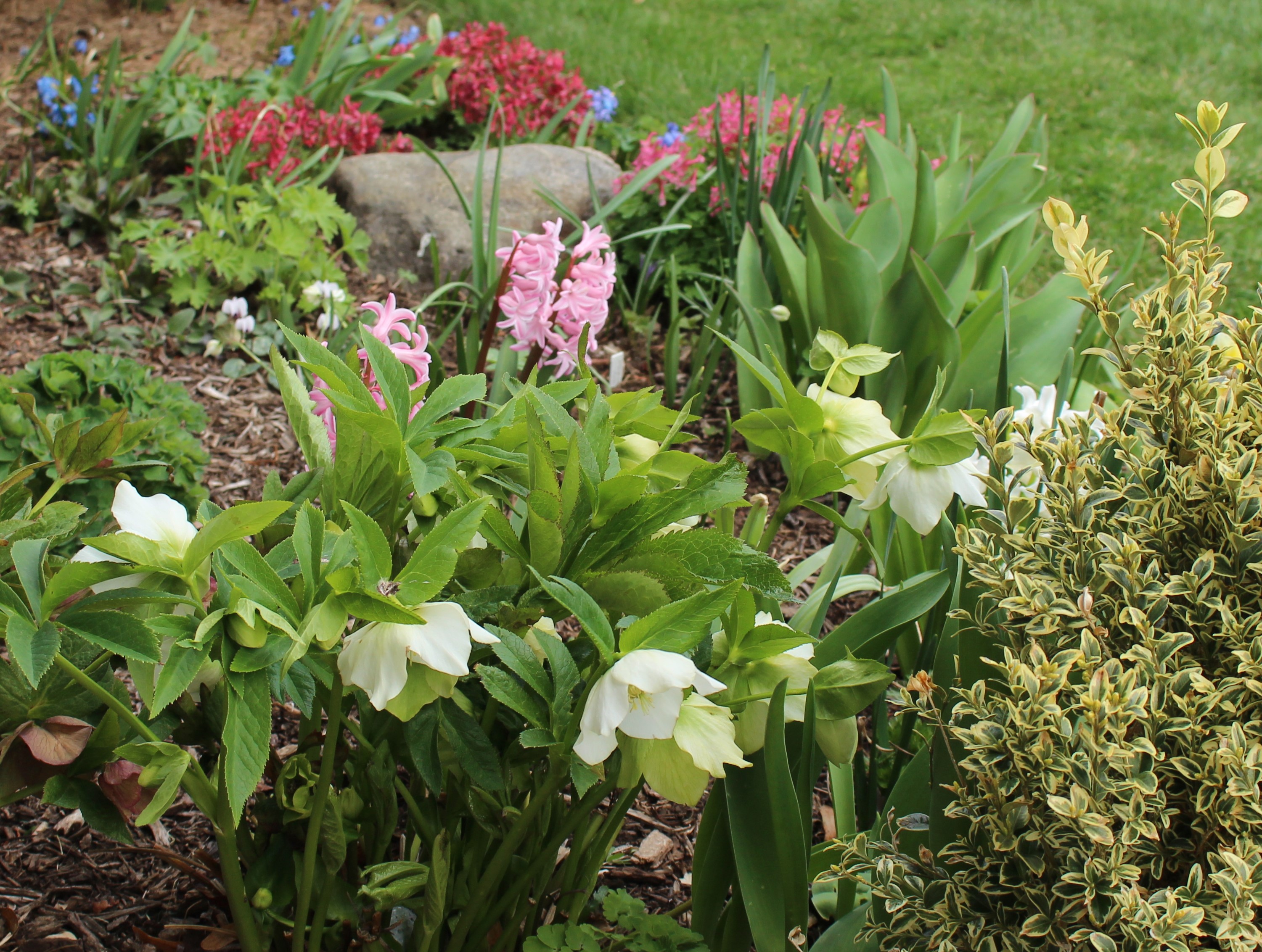
corydalis and hellebores

Corydalis, hyacinths and hellebores filling in now that the snowdrops and eranthis have gone over.  In another month columbine, delphinium, hostas and hellebore foliage will take over for the summer.    

A final note is that for the first year or two in my garden I was convinced they couldn’t possibly be making seeds since they yellowed and died down so quickly after blooming.  I’ve since found out I’m wrong.  Seedlings are spreading quickly and this year I have a few of the first starting to put out their own blooms.  I’m thrilled that they are as red as the parents, and even happier there’s some variety to them as well.

corydalis solida seedlings

Some of the first Corydalis solida seedlings to make it to blooming size. One’s nearly as red as the mother clump of ‘George Baker’, the other’s a completely different dusky mauve.

So now the question is should I just enjoy what I have or should I keep trying to expand the flock?  If I could only remember where I planted them (I think I may have finally spotted one or two this afternoon) I would be able to enjoy a few new ‘Purple Bird’ flowers this spring, but is that enough?  It should be, but history shows little attention to common sense in this garden and I’m already well on my way to picking out just a few more indispensables.  You really shouldn’t show too much restraint in spring, it goes completely against the spirit of the season and even when ordering bulbs for fall planting it’s still a celebration of the end of winter!

The Temple Nursery 2016

I’m not exactly sure how many years it takes before something becomes a tradition but I’m going with two, and since this year marks my fourth springtime visit to the Temple Nursery’s open garden day I guess it is now a tradition, and tradition shouldn’t be tampered with.  I say that because up until the morning of the visit I wasn’t entirely sure I would actually make the drive up to Ithaca NY and beyond since this season’s early warmth had me pretty sure there wouldn’t be much left to look at as far as the garden’s snowdrop (Galanthus) collection goes.  To a certain extent that turned out to be true, but at the end I realized a day visiting a garden in the (almost) spring is never a bad idea, and even if the weather’s not perfect it’s always fun to get out once winter starts retreating.

hitch lyman garden

Side view of Hitch Lyman’s upstate NY garden.  The nursery’s namesake ‘temple’ is visible in the back.

If this visit has become tradition, imperfect weather has also become a tradition, and after weeks of above freezing, almost balmy weather, the bottom dropped out of the weather system two nights before.  Light snow for Saturday and then a low of 17F (-8C) the next morning did in many of the remaining snowdrops and wilted many of the emerging perennials.  We’re used to freezing our kazzoies off on these visits though, so by the time the temperature rose into the 40’s it felt downright balmy.  No wind either and not a single snow squall during the visit… unheard of!

galanthus ex. highdown

The Lyman garden is known for its snowdrop collection, and only a few remained in bloom after all the ups and downs of the weather.  Here is a Galanthus labeled ‘ex. highdown’ which has held up remarkably well to the cold.

The majority of the snowdrops were past, which is somewhat surprising considering The Garden Conservancy had already moved the open date forward two weeks and the date was nearly a full month earlier than last year, but what can you do at such an unsettled time of the year?  I just felt a little bad for others who had traveled much further to see what is normally an exciting collection of hundreds of different snowdrop varieties growing happily in the garden’s small woodland area.

eranthis hyemalis noel ayres

Just a few late blooming winter aconite remained.  This might be Eranthis hyemalis ‘Noel Ayres’ or something similar.  Compared to the bright yellow blooms of the species, this might be an Eranthis only a collector could love. 

I also felt bad for the plants.  The majority of the snowdrops were flat on the ground from the previous night’s cold, and overall the garden did not show well for someone expecting swaths of snowdrops and early flowers.  They’ll recover I’m sure, but frozen plants are never fun.

freeze damage primula

Early primroses wilting as the warm sun hits them.  This would have been a much cheerier sight just a few days ago.

Still I found plenty to keep me entertained, and I enjoyed the company of the garden’s owner, Conservancy volunteers, and several other entertaining guests.  Hanging out… is that too common a term for a Conservancy event?… outdoors with other like minded gardeners on a not-too-cold March afternoon is something I don’t get to enjoy too often in my neck of the woods, so I was quite pleased for making the drive up.

galanthus dr dress

It looked like some kind of sea creature to me, but it’s a Galanthus labeled ‘Dr Dress’ which I believe is the source of this unusually curly leaved snowdrop.

Of course there were blooming snowdrops as well.  I was pleased with some of the later blooming varieties such as the daintily named ‘Dumpy Green’

galanthus dumpy green

Galanthus ‘Dumpy Green’

and the very attractive late 19th century snowdrop, Galanthus ‘Virescens’.

galanthus virescens

The classic green snowdrop, Galanthus ‘Virescens’.

Luckily for me one of my favorites was still in bloom.  It’s been divided since my last visit and is still doing well, Galanthus ‘RD Nutt’ is one that always catches my eye, even though it’s no more white or green or fancy than any other of Mr. Lyman’s many other snowdrops.

galanthus rd nutt

I’ve asked and then forgotten if ‘RD Nutt’ is the name or source of this snowdrop.  It always seems such a neat and heavy bloomer, and appears to be holding up well to the weather.

So I’m glad my schedule cleared up enough to make the trip again this year, and it was a treat to finally see the gardens with a few traces of blue in the background sky.  We will see what next year brings but I’m sure as usual we will make the best of it!

hitch lyman garden

Hitch Lyman’s home, moved to the spot in the 90’s and restored back to it’s original grandeur.

One final note though.  I was a little insulted by how well the hardy cyclamen were doing considering the sad state of my own plantings.  My own Cyclamen coum were killed back to the roots and failed to put on much of a show this spring.  I’m going to blame a lack of mulch and see if I can’t do something about that next year.  We just didn’t have the protection of a snow cover last year, and it looks like these did.

cyclamen coum upstate ny

Some Cyclamen coum looking quite happy in their upstate New York home.  A nice woodland mulch and most likely a protective blanket of snow have them blooming happily with nearly perfect foliage.

Thanks again to the Conservancy and Mr. Lyman for another enjoyable visit, and in case you are interested the Temple Nursery sells snowdrops as well as growing them.   To get on his mailing list (there is no online available) send three or four dollars to the following address: Temple Nursery (H Lyman) Box 591 Trumansburg, NY 14886 and you should receive a listing in January.  Act fast, they sell out in just a few weeks 🙂

Have a great Easter!