October.


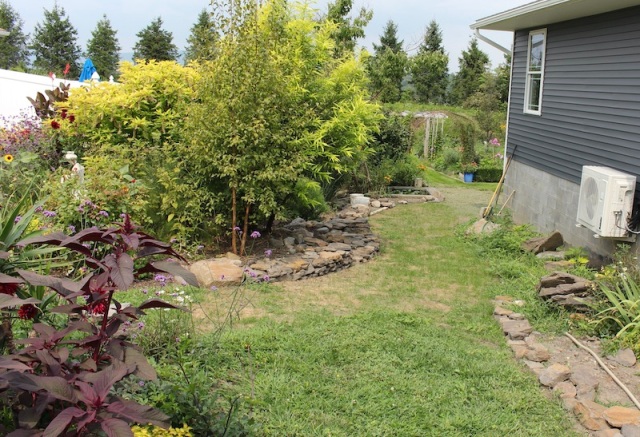
To be honest these photos are about a week old, and when I say “about” you could probably add another week on to that if you’re really dotting all your i’s and crossing your t’s but… *edit* Okay so still trying to be honest (which becomes rarer each day that AI creeps further and further into our lives) just editing a few pictures and writing one sentence appears to add another week onto the timeline, so now rather than an update on the autumn garden this is probably closer to a retrospective.  Let’s call it a retrospective on fall and hope the next post doesn’t become a retrospective on winter.

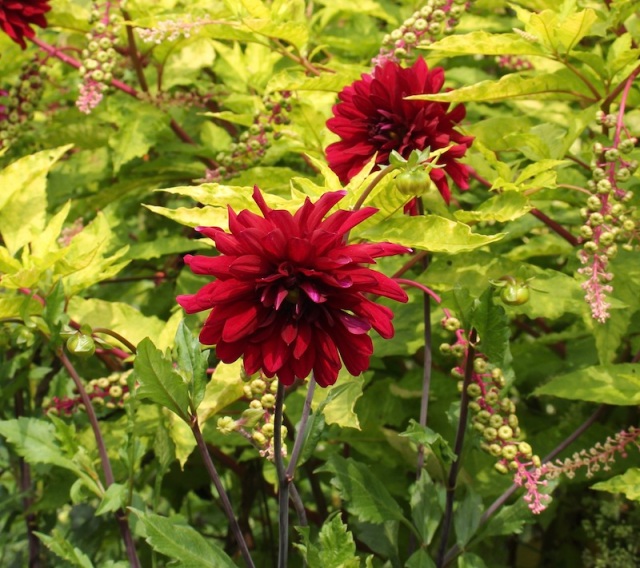
autumn porch decoration

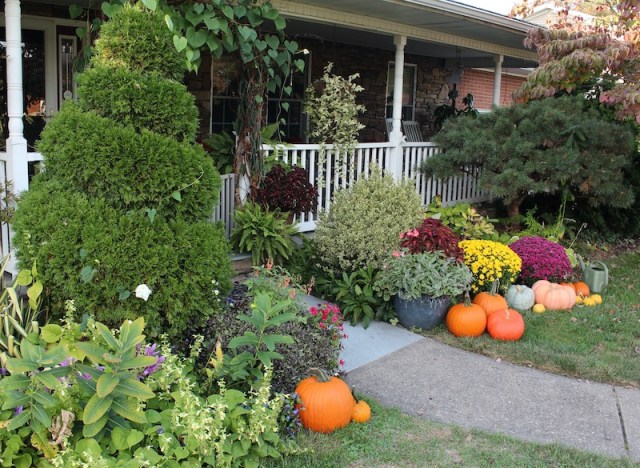
The autumn porch decorations.  A little more than usual this year with three purchased mums and a couple pumpkins and squash to boost the home-grown display.

As usual no excuses for the delays.  The only one I can really put a finger on is the morning when a child asked if anyone was coming with her to a college visit she had set up.  Oh really?  As the parent who drew the short straw I had fifteen minutes to prepare for a day on campus rather than a day bringing in houseplants and that’s probably sounding worse than it really was since much of my life involves fifteen minutes to prepare for something I either put off too long or forgot about, but it’s an excuse for one of the days at least.

potager garden

With the return of rainfall the potager is at least green even if it’s not lush and productive.  Perhaps it’s time for some potager-love, and next year this area will hopefully get some well deserved attention to weeding, watering, and planting.

Maybe it’s time for a what-you-did last summer retrospective since a true update might need to go back that far.  Going all the way back to June the summer was off to a ‘let me just quickly build a shade structure for the deck it will only take a weekend’ start, and news flash *it did not take only a weekend* but it did start off a tropical revival on the deck.  Some corner braces for a 4×4 frame with a shade cloth hung between them and voila!  an excuse to spend the next two weeks re-painting porch furniture, repotting tropicals for the planters, dragging tables and furniture and a tv out to the covered porch, mosquito netting… way too much, but it was all because I saw the corner braces online and between that and two $15 palms which were too amazing to leave at the store things escalated.

tropical deck plantings

The deck was more foliage than flowers this year and now I’m faced with how to overwinter a pair of palms which were probably cheap enough to leave outside, but I could never do that.

So the deck was an innocent start but then as you may recall there was the bulldozing of the daylily farm which happened as June rolled into July.  Things were set into motion.  Rather than replant a few daylilies, three unearthed stones became a rock garden and you know about that, but the rock garden needed a coating of sand and of course I got too much because sand is always useful around here.  Some of the extra sand was used to level out an area where the kid’s old playhouse, aka ‘spider house’, could be placed.  We have no use for a kid’s playhouse currently yet no one to give it to but what if it was repainted and accessorized?  Enter a rebranding of spider house to ‘Begonia House’ since perhaps this area provides just the right filtered shade which the begonias seem to enjoy, and “I think pink would be nice for my house” became the color theme.  A green roof?  We shall try.  The results straddle the line between garish, spray-painted plastic garden trash and elite garden whimsy but I like to pretend that it’s whimsy.  Several great gardening estates have whimsical garden playhouses for children so there you are.  Whimsy in the garden, except my visitors like to over-pronounce the ‘Wh’ as in Cool Whip and I guess referring to it as whhhhhimmmmsy is as classy as we will ever get.

whimsical playhouse

Begonia House’s first year in the Northern corner of the estate.  I’m sure the nearby coldframe and leftover lumber pile only add to the ambiance, but the begonias appreciate the new setting.  I was able to easily gather multiple large overwintered begonias from around the estate but I’m sure that’s not a problem.

So with some of the sand taken care of it was time to address another bit of daylily farm repercussions.  When it happened I lost a lot of plants.  I was angry.  No I didn’t want the town to replace them but here’s a deal which I could get behind.  I have concrete blocks as steps going up the berm which separates us from the industrial park.  They’re kind of ugly but they save me from many a twisted ankle and tumble down the bank as I weed wack or do other maintenance.  If you can get me stone steps to go up the berm I will stop complaining about the lost daylily farm and even worse, the snowdrops which were destroyed.  So there I was for another couple weeks manhandling 300 pound stone treads into the yard and up the slope and then why not add a bunch more stones to the berm and then mulch it all.  Extra stones?  How about some more square stacks of rocks at the base to put potted succulents on.

stone steps

I think it looks better.  Eventually new plantings should tie the steps into the berm a little better but for now I’m waiting to see all the weeds which return before I go putting too many things in there.

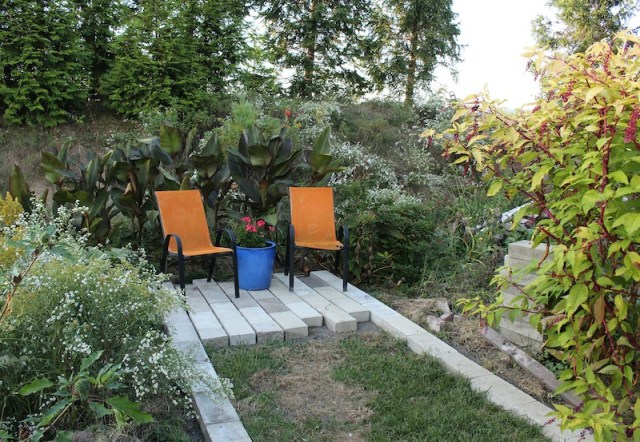
Seems like we’re covering a lot of ground here and I guess we are but remember this is the whole summer we’re looking at so don’t be too impressed.  Plenty of time was spent sitting around and doing nothing which is more par for the course, but one more thing before I get back to that.  A course of concrete blocks was pulled off the berm steps in order to put in the stone steps so why not make a little sitting area in the ‘waste area’ with the extra blocks.  It looks raised but that’s only because the fill here has settled and the area needs just a little more soil to level it up before I’ll be happy with it, so I tried to look ahead a little and prep for that.  I’m probably sharing more than you care to hear but the blocks just add on to the leftover soil and mulch from the daylily farm re-do which also ended up in the ‘waste area’.  Actually the ‘waste area’ isn’t really much of a thing any more but I’m not ready to post the pictures which prove it so you’ll just have to trust me that daylilies are being rowed out and hopefully it will look nice by next summer…

potager garden

It doesn’t look like much but the last of the sand was just enough to bring the blocks up to a level which I like.  A few more blocks cut in half to square off the patio, some more dirt to level the lawn, dirt to create beds on the sides, mulch, plants…. ok it’s a start at least.

Now it’s autumn though.  We had a touch of frost a few days ago and that was just what this gardener needed to remind him that a bunch of stuff needs to come inside and under shelter before the cold becomes more serious.  He tried for one night to claim he didn’t care and maybe a serious frost could save him from a bunch of work, but that proved to be false and now we’re at the two hundred pots and counting phase of winter protection.  It sounds excessive but most of them are tiny little things which shouldn’t even count but for dramatic effect they were counted and it’s really the one or two or ten bigger things which should come with a warning label.  I can’t even speak coherently when I talk about the two most exciting bigger things which I had to go back for since there wasn’t enough room in the car when I first saw them.  The might be Kentia palms and they’re too big for my house but I don’t care and have them now anyway.

clearance kentia palms

I love my new palms and they’re totally unreasonable and unnecessary but for $7 each they had to come home with me.  I will rearrange my life to make them happy.

As you can see all my projects and decisions are entirely reasonable and well thought out.  I hope you’re having the same luck and not wondering how three potted ferns turned into seven even though you gave a couple away in spite of the fear that you might “need” them all after all.  I did give a few away and we should highlight these successes as progress and be glad over it rather than worry about some weird fern obsession developing.  Actually the speed at which the gardener killed a new maidenhair fern probably did more to nip this possible obsession in the frond than any call for self-control could, but again let me claim it as a success.  January is when we splurge on houseplants and I shall wait for that.

Enjoy your autumn!  I am days away from the first snowdrop in bloom and any plants not under protection by then might have to fend for themselves since reasonable decisions become even more unlikely once snowdrop season starts.  Today I can still search for a windowsill for the new lemon, next week I will probably just lose myself to complaining about needing MORE fall blooming snowdrops 😉


Flock Finger Lakes Visits

Given the choice I will always turn down the stage and hide on the sidelines, but not everyone thinks that way, and where  I naturally hate speaking in front of people, they do not.  It amazes me to see this and to see people on stage, out front, capturing people’s attention and engaging an audience with ease and doing things like creating YouTube channels and traveling all over the world exploring places and talking to people.  I met two of these people a few weeks ago, Summer Rayne who you’ll meet and Sander behind the camera, and they put together a video which I think is pretty cool.  I’m sharing it here in spite of the fact I really prefer to feature plants instead of myself but I guess it’s one of those moments when I have to pull up the pants and be a big boy.  Not bad for someone who not so long ago thought having a hand as part of a picture on this blog was too revealing… now there’s a whole ‘me’ on this blog, talking as well, complete with ratty t-shirt, who-knows-what hair and an old man scowl but whatever… I’ve already overthought this too much.   >here’s a link<

So there you go.  I hope you enjoyed the video as much as I did, they did an amazing job directing and keeping me on track, and Summer Rayne’s interest and enthusiasm really keeps the video fun.  Biscuit helps as well, he’s got quite the stage presence and I hope he remembers us when Hollywood comes calling.  In all I’m surprised at how well it turned out, the garden looks much better and more interesting than I see it on the daily, and at one point I turned to my daughter (we had a viewing party) and told her I wished I could visit that place.  It was magical.  Surprise and magic, that’s my attempt to turn things back around to plants, because late August is the start of Surprise aka magic lilies season…. also known as hurricane lilies or naked ladies but perhaps those are two things we shall not bring in to today’s post.

lycoris squamigera

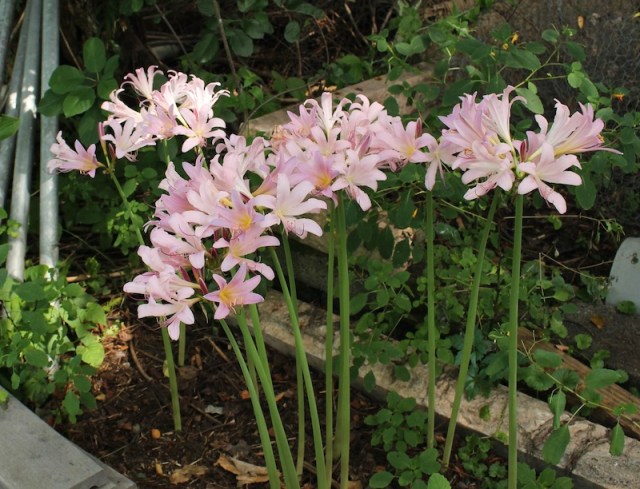
Pink magic lilies (Lycoris squamigera) are probably the most common magic lily to show up in the north.  They seem to do best when abandoned and neglected so here they are amongst the trash and stored debris of the compost pile.

Things can get a little tedious mid August, as the heat and rain/not-rain drag on, but magic lilies can break that up nicely.  Out of nowhere stalks shoot up and burst into bloom all in a matter of days, and it really can be a surprise to see them out and blooming… unless they’re not.  The not-part is where the disclaimer comes in.  These plants can be jerks.  They can sulk, fade away, take a year off, they’re not like Biscuit, all excited and anxious to please, they’re more like cats and don’t really care about what you want.  Sun? Not that sun, I want shade until it’s too much shade.  Feed me but not that food, but I know I’m hungry… Here are more flowers than you can imagine, no wait… I’m not feeling it this year…

lycoris sanguinea

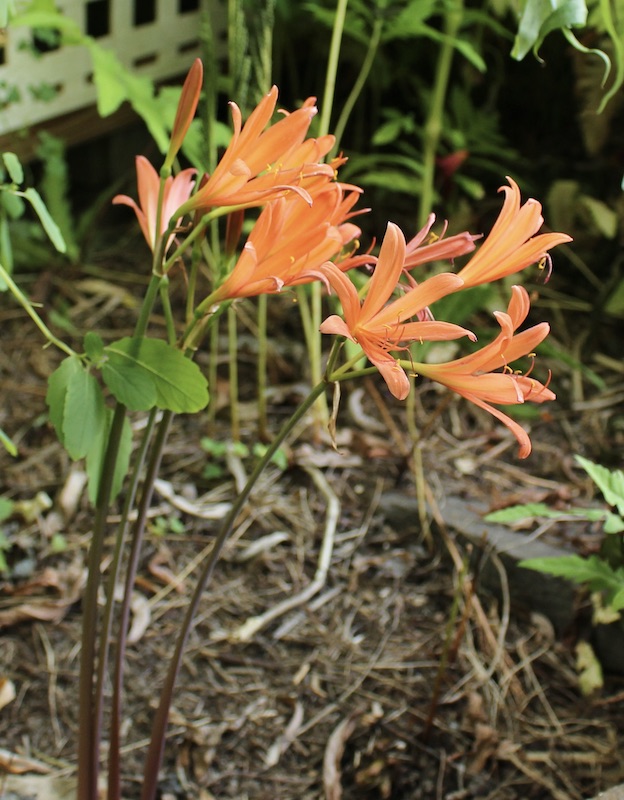
Lycoris sanguinea, the orange surprise lily is apparently feeling it this year.  It’s in a terrible spot but I don’t dare move it since there may be another four year gap in blooms as it works through whatever insult it feels.

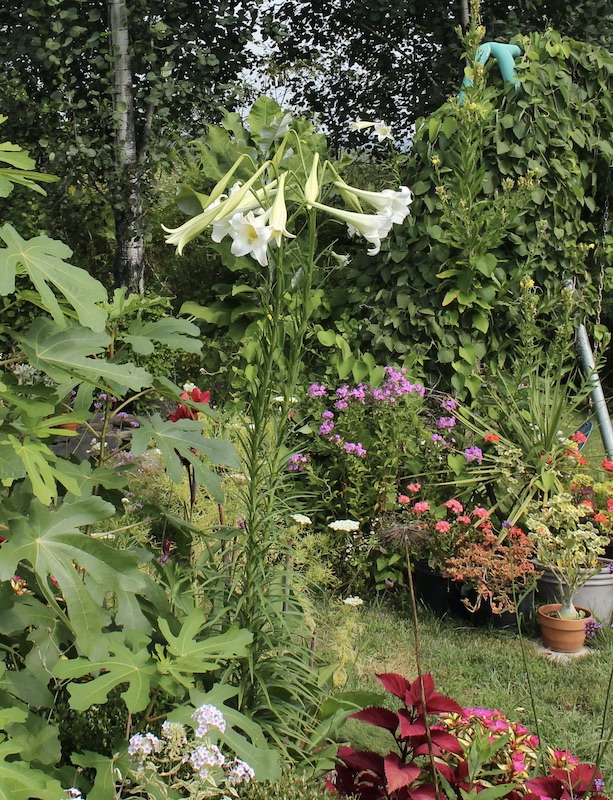
The magic lilies don’t last all that long, but there are (hopefully) a few more later varieties yet to bloom.  If you can drag yourself out through the humidity and bugs at least they give something new and exciting to see each morning before the heat drives you back inside.  Magic lilies aren’t really true lilies, but there is a true lily I’d like to add in here as another reason to brave the outdoors.  The Formosan lily (Lilium formosanum) blooms now as well, and this flower is Biscuit-approved.  Not for eating of course since I think they might be toxic, but for something cool to admire in mid August this lily is… dare I say, easy?  There is a dwarf form, but the ones growing here are the tall form and usually manage five feet but this year with all the rain seven plus feet is not unheard of.  Fragrant, perfectly formed, like a giant easter lily (which some people don’t like, so if that’s the case skip this one) the Formosan lily can grow to blooming size in its first year from seed.  I of course could never care for a plant that well, but even here they’re in flower the second year and they do seed around the garden if their seed can ripen before the first real freeze.

Lilium formosanum

Pure white, fragrant flowers is what Lilium formosanum offers.  Just watch out for those disgusting red lily beetles since they’re about the only thing which can bring this giant down.

I think you’ve heard enough from me today so I’ll just add one more thing.  A trumpet flower, but not a lily, Brugmansia suaveolens is hitting its summer stride.  This angel trumpet is a tropical shrub so I have my favorite local nursery to thank for a decent-sized plant, but I hope to overwinter it and have an even better show next year.  They’re another easy to grow thing but just ask for endless water and fertilizer in order to look happy, and usually I slack in this regard but since I paid for this plant I’m really making an effort.  It’s possible someone has already given me a cutting for a pink version, and perhaps I can round up a white and yellow cutting before next year and perhaps this means I’m obsessing about angel trumpets again but who’s really keeping track.  It’s basically a zucchini, if you can grow that you can grow these, just without the fear of missing a harvest and ending up with a caveman club in your veggie bed.  I guess I should mention that although I’m replacing zucchini plants with brugmansia in the potager, don’t nibble it during the garden tour since it’s quite poisonous.

Brugmansia suaveolens

Brugmansia suaveolens with canna ‘Bengal Tiger’ planted too closely.  As long as it feels like the tropics here we might as well enjoy the look as well, and the fragrance too since the brugmansia is very fragrant once night falls.

So that’s a somewhat rushed summary of the garden.  There’s more going on here and I’d like to go on about it but I’ll guess that this rambling on and a pretty long video are plenty so perhaps next post.  Obviously that could be a while, this appears to be the ‘keep up with nothing’ summer and not the ‘finally post regularly, visit all my blogging friends, keep the weeds back, finish the projects’ summer which I always imagine but it’s still pretty good, even with someone needing senior pictures this afternoon rather than help with her scooter and I don’t know how that came around so fast either.

Hope you enjoy the video and the upcoming week.

Day After Day

Greetings.  It’s been a while and the last post here probably says the same if I could remember that far back, but it’s time to put an effort in and I guess we’ll start with baby steps.  Step 1:  It’s fall.  Even back a week or two to when these photos were taken there was a tint of russet in the view.

hydrangea paniculata

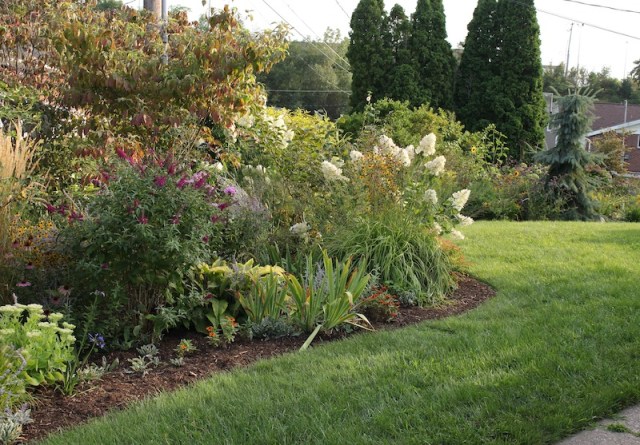
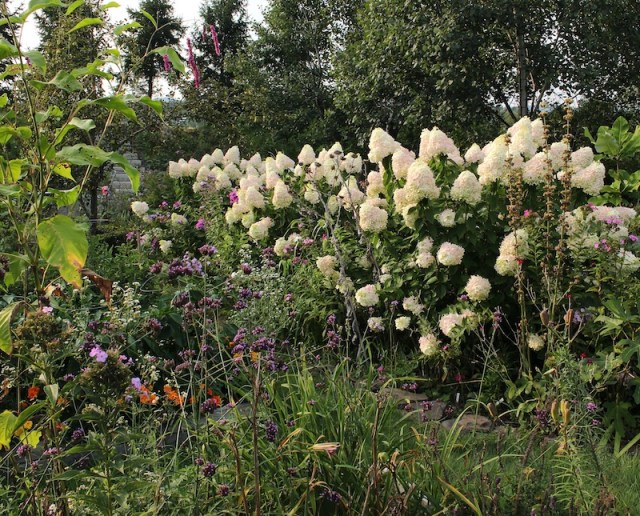
Back in late August when things were looking decent but still a little tired from the heat.  Fortunately we had enough rain to keep the Hydrangea paniculata looking awesome, and can you see that neat border of somewhat fresh mulch?

Step 2: This post has been sitting on my to-do list longer than I’d like to admit so I guess getting that guilty confession out is another step.  No reason, I’ve just been enjoying other things and have sadly neglected both blog and blogging friends.

daylily carved gold

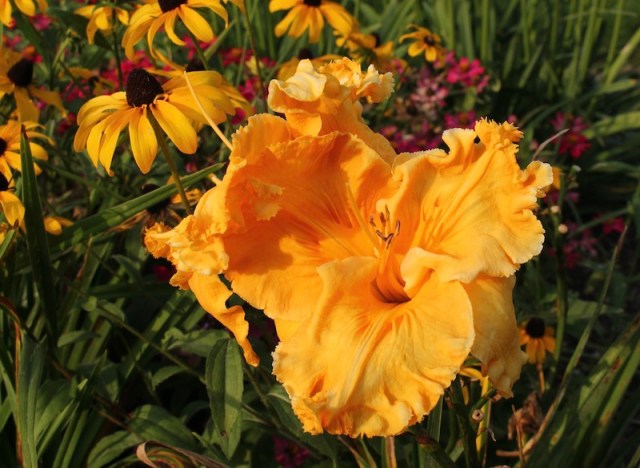
A late rebloom in the daylily farm.  ‘Carved Gold’ which is quite nice in my opinion.

Step 3:  Reassure anyone reading that even though it’s messy and may look neglected, things are still interesting to me and there are wonderful spots, and although I tend to the woe-is-me style of writing I don’t want to give the impression I’m fishing for any ego boosts here… although I’m always pleased to hear them!

hydrangea paniculata

You may notice the ‘Limelight’ planted in the potager has not yet moved and likely never will in spite of the fact I don’t always think this is a good spot.  But it looks great here in August and if I get another post up in September you’ll see it doesn’t look too bad then either!

Step 4:  Get through this and post.  I’m not particularly busy so that’s not the reason, it’s just so nice out this morning I’d like to fill another cup of coffee and use that excuse to sit around longer 😉

hydrangea paniculata

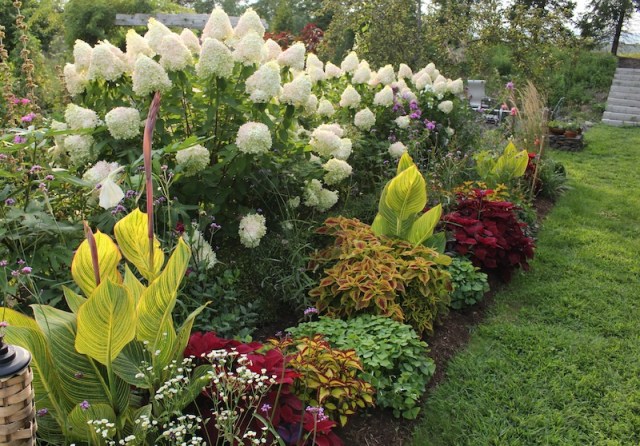
The other side of the ‘Limelight’ (Hydrangea paniculata) border with the new annual plantings where the tulips grew this spring.  There’s a boxwood hedge in there as well, but right now it’s all about the cannas and coleus!

Step 5:  Tell you how excited I am about the pumpkin patch aka former waste area maybe still waste area in the back of the yard.

pumpkin patch

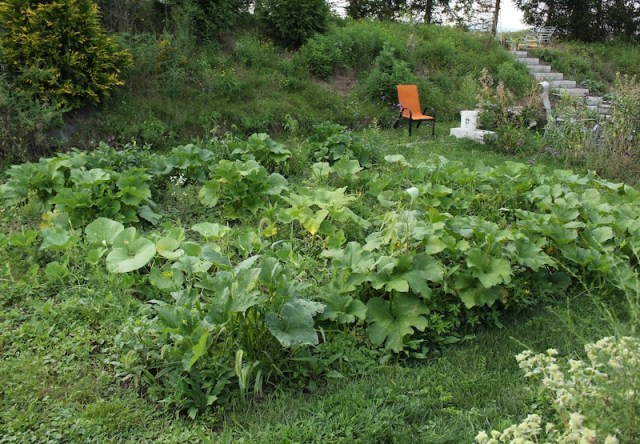
The pumpkin patch three weeks ago.  Pumpkins were just starting to form and I can now safely say a few of the smaller ones should ripen in time. 

Step 6:  It was a really nice although hot summer.  It flew by.  I feel like it was my shortest summer ever, with many missed opportunities -and that’s nothing to be proud of, but there are always enough highlights which is great.

lobelia cardinalis

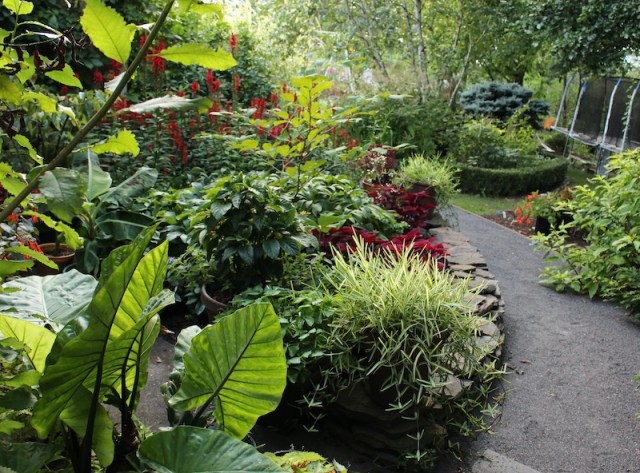
The shade garden area.  Plenty of the red spires of Lobelia cardinalis in this August photo, and a good amount is still in bloom today.

Step 7:  Just wrap it up.  Keep the babbling at a minimum so as not to tie up your visit, and one last photo from the summer garden.

codonopsis lanceolata

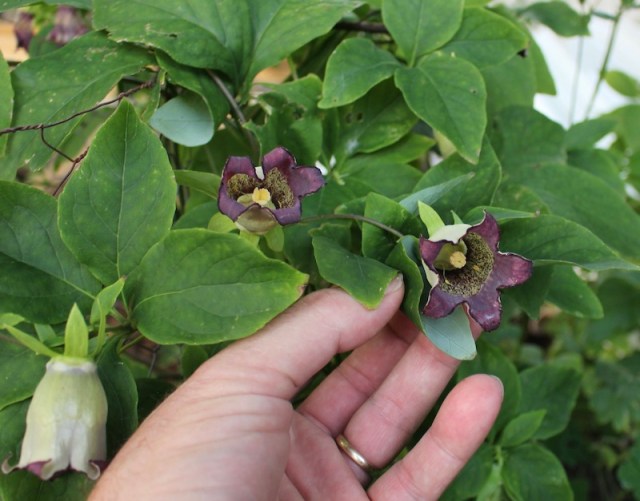
A nice random vine for those of you who like random vines, Codonopsis lanceolata is a late summer treat which has edible and medicinal uses but isn’t going to overwhelm your garden tour visitors.  Sometimes I even miss the blooms, but they are cool little things.

Step 8:  Thanks for visiting and hope you have a great week.  In my head I’m thinking ‘sure I’ll get another post up in a couple of days, colchicums are awesome, annuals are nice, fall feels good’, but my track record speaks otherwise.  We will see!

The Daylily Farm

Summer is going swimmingly, and although it’s been hot we’ve been fairly lucky with rain so the plants are holding up well and the gardener is glad he doesn’t have to drag a hose around any more than he has to.  Not that he would, since our gardener tends more towards lazy than to ‘an ounce of prevention is worth a pound of cure’, but he does feel guilty every now and then when the same plant cries out for help each time he passes and he has to mumble a “sorry, I know this wasn’t part of the deal when I brought you home”…

the daylily farm

The daylily farm

One plant which does seem to take all the neglect in stride is the daylily (Hemerocallis).  Like dahlias and cannas, they’re not everyone’s cup of tea, but since the gardener is a coffee drinker anyway, it was just a matter of time until problems developed.  A visit to a real daylily farm two years ago triggered the problem and of course with no friends willing to step in and squash it, things escalated.  Actually friends suggested more visits,  friends dropped daylilies off,  friends invited the gardener over to ‘dig a few’…

the daylily farm

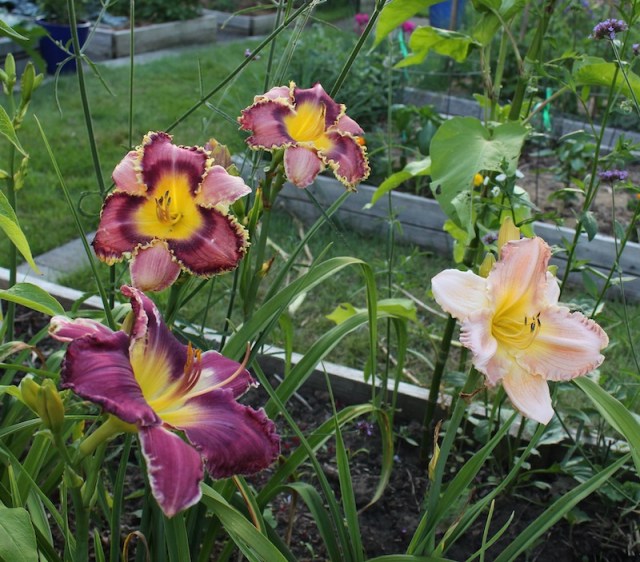
Some goodies in the beds of the daylily farm

A few friends shook their heads and recommended counseling, or more finishing up of home improvement projects, but the gardener enjoyed visiting these daylily farms and with new plants rolling in left and right it seemed only logical to start his own.  Sensible people pointed out there’s no room for a farm.  The gardener laughed.

daylily hawkswoman

A friend gave me ‘Hawkwoman’ and she’s a star.  A heavy bloomer with flowers nearly a foot across!

So now I have a daylily farm.  A friend implied madness when confronted with several beds of daylilies filled with dozens of varieties in a garden which recently held only three, and I had to somewhat agree although he’s not one to talk with his house full of thrift store finds.  Mine is clearly a business venture, so it’s ok.  Small businesses are ok and so are entrepreneurs, and although the flow of daylilies is still only a one way stream into the garden I’m sure it will be turning a profit in no time.  Think of how many farmers you know buzzing around in expensive sports cars and sipping lattes all summer.  That could easily be me.

the daylily farm

‘Nona’s Garnet Spider’ in one of the production (not sales) beds.

But until I decide to sell something the ‘sales beds’ are still just an excuse to line out daylilies in big blocks just because it’s cool as well as the other big plus.  Having a daylily farm in your very own yard also keeps the gardener in the garden, since apparently it’s frowned upon for him to be off visiting other daylily farms every weekend in July.

daylily cosmic struggle

‘Cosmic Struggle’ is another reliable, heavy bloomer who reblooms later in the season.

Maybe I will have a sale day this summer.  Even after just two years they’re multiplying and maybe I don’t love every one as much as the next or I don’t need a row of ten plants of the same variety.  It would be nice to have visitors at least since they do look nice this year and I think other plant nuts would enjoy it.  In the meantime here are some more pictures of the madness.  Not to single anyone out, but a blogger in Germany who might be named Cathy may have said they would welcome photos of daylilies a bit more than snowdrops and I didn’t know how to take that.  How can you compare the diversity of shapes and colors and inherent grace of the snowdrop to that of the daylily?  I don’t get it but here are a few more daylily photos with a little less babbling.

daylily brookside mystery date

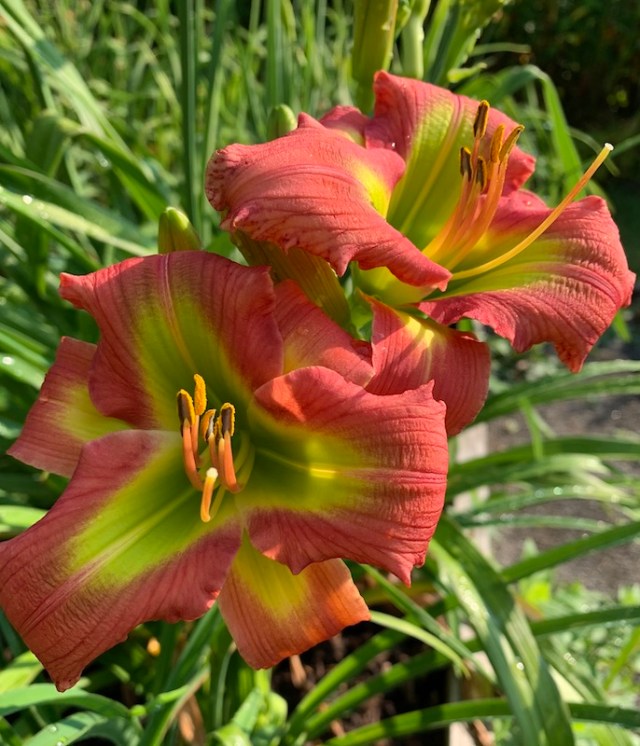
From a local breeder, ‘Brookside Mystery Date’ is a good growing, shorter plant with deliciously colored and textured blooms.  I begged a friend to stop by the grower on their last open weekend to grab it for me since I was tortured by regret over not buying it earlier in the year.

daylily brookside beauty hybrid

Also from a local breeder, one of the unnamed Brookside Beauties which the farm offers.  They’re seedlings they chose to leave unnamed, but couldn’t bear to toss out onto the compost pile.

For local people, the Brookside hybrids are the work of June and Dick Lambertson of Lambertson’s Daylilies.  They were the farm which (unknown to them) started this all, and as they move into full retirement,  Joann and Brad Lamberton (a coincidentally similar name but not related to the Lambertsons) of Garrett Hill Daylilies are picking up the legacy.  And just to support my main supplier and dealer, I’m glad Garrett Hill has taken this on.  They are building a beautiful spot and although I’m sure they question jumping in with both feet like this (on top of their day jobs!), a visit to their farm outside Honesdale Pa is a treat worth the trip.

daylily seedlings

Unnamed daylily seedlings purchased mailorder from Petal Pusher Daylilies in Fort Wayne Indiana.  Some really cool forms came in my mixed box!

daylily seedlings

Green throated flowers are always interesting.  Also an unnamed Petal Pusher seedling.

daylily seedlings

And “blue”?  I’m not sure how I feel about this type since the color varies so much depending on the weather, but on this morning I was a fan!

daylily seedlings

One last unnamed seedling, possibly my favorite from Petal Pushers.

I could go on but I shall not.  Just two final daylily confessions, the first being the Facebook page which was created to pollute the internet with even more daylily photos straight out of the farm here, and the second being the fact I’ve grown a few of my own seedlings here just to see if I could.  You’re more than welcome to ‘like’ the Facebook page but the seedlings thing is a shady endeavor.  With just a small patch of seedlings in bloom I realize I lack the vision and passion to produce anything which amazes anyone but myself, and of course I’m pleased with them, but they’re nothing special.  Good news for the farm I guess, since it lacks the room for rows of seedlings, but on the down side it doesn’t stop me.  I have dozens of new seedlings which need planting out this summer and I’m already eyeing pods forming on this year’s stalks 😉

daylily seedlings

One of the Sorta Suburbia seedlings

Gosh did I go on this morning, and still the house is quiet and breakfast has not been served so here’s the rest of the garden:

the potager

The potager is looking inviting and even a little under control.  Vegetable plantings are sparse this summer, but you know something is always brewing 😉

clematis radar love

The entry arch has clematis ‘Sweet Summer Love’ in full bloom.  I was lukewarm the first year, but now that it’s hit its stride I’m a fan

nigella love in a mist

I’ve finally managed to get a few nigella (aka love in a mist) seedling going, I don’t know why it took so long but I’m liking the airy look and the interesting seed pods which follow the bloom.  It should be an easy reseeder now.

hydrangea tuff stuff

Blue hydrangeas are in bloom everywhere this year, since the non-winter failed to kill them back and a lack of late frosts spared the flower buds,  This is hydrangea ‘Tuff Stuff’ which claims hardiness but has never bloomed like this before.  I wouldn’t mind if this happened again some time.

meadow garden

The meadow garden is too shady now that the Aspen suckers have grown, but the rudbeckia is having a good year regardless.  This area will be mown in August and kept cut until the fall.

kniphofia high roller

I’ve been dabbling in red hot pokers and finally have a few which bloom reliably and for more than a week or two.  Kniphofia ‘High Roller’ is just starting with several later buds still to come for an extended show.

oxeye daisy removal

The oxeye daisy season is getting a little messy and floppy, so out they come.  The mower will take care of this mess, and hopefully the lawn can overwhelm the seedlings which this mess shall produce.

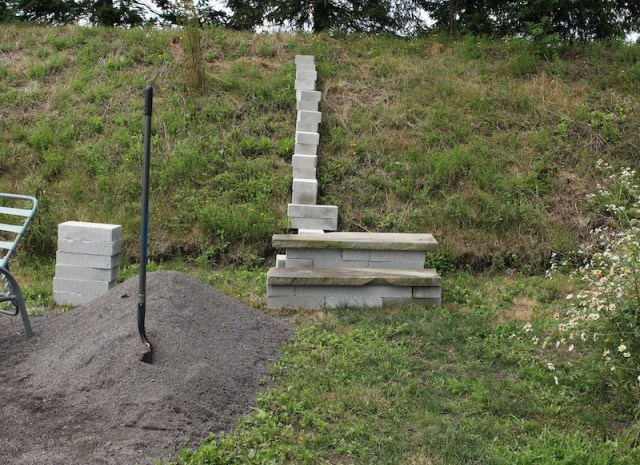
Still no sounds in this house, so I’ll end with just one more photo.  The gardener added a few concrete blocks to the deck supply delivery and now it looks like there will be no new raised beds, rather a set of steps leading up the berm.  That of course will involve more blocks, more leveling, more digging, and far more work than the gardener will consider on a day of rest but it’s going to sit in the back of his mind as a new source of guilt over an unfinished project which wasn’t even a project the week before.  I’m sure it will be an excellent way to reach the top of the hill for weed control purposes.

garden step project

That hill isn’t even safe.  You almost broke your ankle last time you were strimming it.

So that’s pretty much the update from here.  I shall now make some noise so someone feeds me and then spend the rest of the day either immersed in cooling water, hidden in the shade, or comfortable in the embrace of an air conditioning vent.  Summer is pretty good and I wish it didn’t race by.

Enjoy your week!

A Test

I ran a little test here over the last few weeks, but before getting into that let’s just enjoy the 28 minutes of sun which coincided with the weekend and matched the glow of the final color on the dogwoods (Cornus florida).

hydrangea paniculata limelight fall color

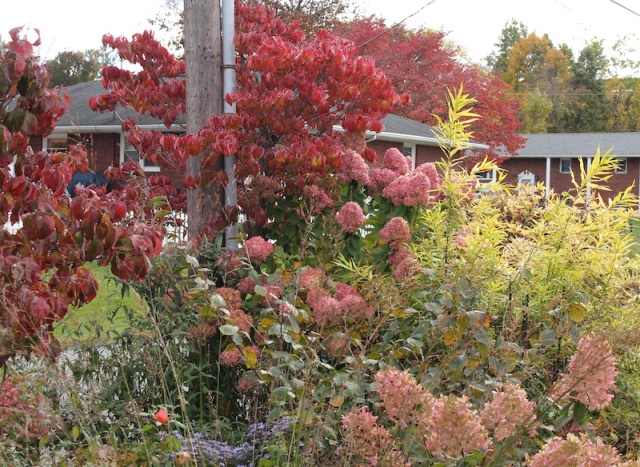
The neighborhood dogwood trees are down to their final autumnal glow after first russeting up in September.

Actually (and as usual) these photos are from earlier in the week when nicer weather prevailed and we were able to enjoy some sunny and perhaps too-warm weather for the few minutes when I wasn’t stuck at work.  It’s only now that I’m getting around to celebrating the glowing colors of this past week as I sit inside again, not due to work but due to the typical weekend rainy weather which is feeding the swap again with even more moisture.  Whatever though, the plants carry on and I don’t remember the Hydrangea paniculatas ever showing so much pink before… and I’m contemplating maybe adding one more, something which is nice and late and intentionally turns pink each year.  The ‘Vanilla Strawberry’ I gave to my mother in law could be a match, but it’s a little earlier than I’d like and because of that might go brown before the season wraps up.

hydrangea paniculata limelight fall color

Hydrangea by the street, also brighter than ever.

Speaking of the season wrapping up I just looked at the ten day, and it looks like frost might finally be on the way.  We’ve had a mild October again, but it looks like November will come in with a light frost at least, and clear the way for tulip planting and final cleanups.

Aster laevis 'Bluebird' (Smooth Aster)

Aster laevis ‘Raydon’s Favorite?’ (Smooth Aster) is my best aster.  It tolerates drought, blooms late, blooms long, and requires no work other than a chopping in half in June.  It’s a star of the late autumn border.

Frost won’t be the worst thing.  The garden starts to look uncomfortable once the leaves start falling and everything goes to sleep, but the marigolds are still going strong.  A good frost moves everything along and puts the lingering things out of their misery while reminding the gardener that there’s a due date approaching for his project, and things need to wrap up before a solid freeze locks everything down.

salvia splendens van houttei

I still haven’t found the perfect spot for this salvia, possibly a form of Salvia splendens van houttei, but it seems to enjoy a bit of shade to grow best around here.  Cuttings have been taken again regardless and it always makes a nice show under the lights… even if it looks a bit cramped in there.

I guess this gardener is ok with an early November first frost.  Tender things are mostly indoors and now just a few heavy pots remain to be considered.  Having a few extra weeks to bring in pots two or three at a time is so much less stressful than running around the night before an early frost and making the hard decisions all at once.

delphinium rebloom

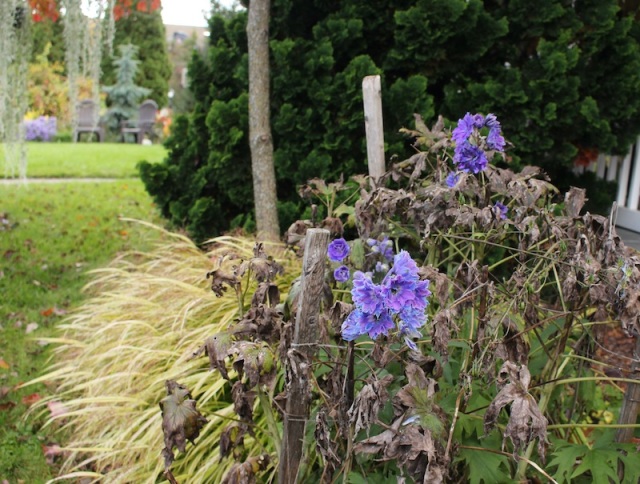
The delphinum is a lingerer.  From a decrepit, summer-weary husk a few perfect flowers are up and open.  Had the gardener trimmed it down a few weeks ago, the husk might have been cheerier, but I’ll take this.

The downside to a lingering autumn is that the number of plants saved goes up with each frost-free week.  Oh well.  Have faith in me that I’m quite capable of killing things off with neglect during the winter 😉

Oenothera biennis

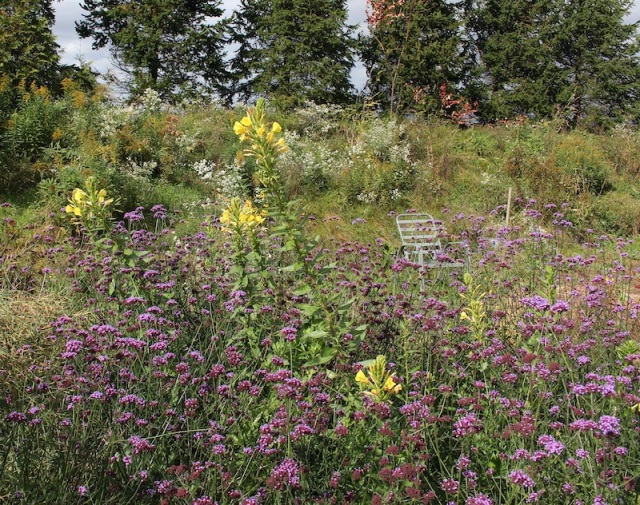
The lingering autumn and on and off gloomy skies have the evening primrose (Oenothera biennis) open all day.  It’s a lovely weed which fits in well with the verbena.

Besides the annual ‘to save or not to save’ questions there’s also the ever-too-long ongoing dirt moving projects.  I’ve reached the point where backyard fill has reached the meadow, and I’m into the phase where fill is being graded down to the level of the meadow, and basically that means I’ve filled in as much as I wanted to and there’s an end in sight for this back part of the yard.

landscaping project

There’s almost enough level ground so that I can run a grass path from the house all the way back to the berm.  That was an important thing back in the day, but as I look at it now I’m not sure why…  maybe it was more work than it was worth…

If the back part of the yard is leveled and almost done, does that mean the hill of construction fill in the middle of the yard is gone?  Haha, of course not!  There’s still a nice bit sitting in the middle of the yard, just waiting for a poor soul to dig it all up and wheelbarrow it to other far reaches of the garden.  The last few tons of dirt and rock are destined for the side of the yard, to level out along the fence and around the coldframe area, and hopefully provide a nice spot for the homeless camellia seedlings.

landscaping project

There’s only a little bit of the mountain left.  We are almost at the two year mark for when the digging first began, and I am hoping for less strenuous days ahead.

So besides impending frost and ongoing earthmoving there’s still the small matter of a test.  I really did have a point in that title and it refers to new lighting ambitions for the always expanding winter garden.  We are going LED and moving on from the fluorescent shop lights which have served their time.

growing under led lights

The product.  Four foot LED shoplights from Harbor Freight.  On sale for $43 but I see they’re up to $54 again, and that’s not in the budget for additional sets….

It seems like everyone has an opinion on using LED lights for raising plants, and I blame the basement growers of ‘medicinal’ crops for all this info and interest.  There’s the science of specific wavelengths for the efficiency of photosynthesis but then there’s an avalanche of weakly proven theories on what’s best for what kind of growth and how ideal certain setups are and and and…. I tried to follow along but after numerous attempts came to the conclusion that LED lights specifically for plants were far outside my budget, plus many were a pinkish sort of light, and even with the current mania for Barbie and pink, I was not down with that.  I finally stumbled across someone with some growing experience who stated that general LEDs, although they don’t emit light at the wavelengths specifically matching the preferred wavelengths for chlorophyll peak efficiency, emit light which is good enough for the range, and with that in mind just get something bright enough.  So that’s what I did.  The price and brightness were there but my confidence wasn’t, so I decided that a simple test might be a good idea before full commitment.

growing under led lights

Corn, arugula, and calendula seedlings grown under LED (left) and fluorescent (right).  If anything the LED seedlings look better, if not at least they’re on par with results from the old system.

The test was a few pots with corn, arugula, and calendula seedlings sown and grown completely under the two light sources.  It was an experimental setup which would make a real scientist cringe, but conditions were mostly similar for both lights and they were just a few feet apart in my garage workshop but not close enough to overlap.  Without making too much of the results it looks like the LED worked just fine in growing the seedlings.  The corn was indifferent but the arugula and calendula actually seemed to grow faster and more strongly than the Fluorescent plants.  I’d show the calendula but of course a slug found the pot and trimmed them back to the size of the other pot before said slug was dispatched.  I guess I shall consider that when analyzing my experimental error.

galanthus bursanus

Snowdrops?  Yes!  It’s that time of year again and Galanthus bursanus is leading the way.  Please ignore the slug damage, I first blamed rabbits but when all the rest of the blooms disappeared with near surgical precision I think the bunnies are innocent for once and slugs are the true culprits.

That’s the first of what will surely become too many photos of snowdrops, but I’m sure you knew that.  There should be more, but in addition to slugs hitchhiking their way into the winter garden they’ve been extremely active in the garden and have mowed down more than their share of the earliest of the autumn flowering snowdrops.  Snowdrops in the fall is a new thing for me, I never thought is could be an option this far North, but with every winter less enthusiastic than the last it’s becoming a possibility.  I just have to figure out how to grow them.  They survive, but there’s still something (other than slug attacks) which doesn’t let them grow as well as the others already here.  Don’t you worry though, rather than discouraged I’m even more enthusiastic about them and just keep trying them in new spots until they find something to their liking!

Hopefully we all find something to our liking.  Have a great week!

Fast Forward

I’m not quite sure what happened to August, but I just looked at a calendar and it’s practically over.  I like August, and I’m not thrilled at all with this time warp.

January has the same number of days, and January never seems to fly by as quickly… even though the days are so much shorter… so maybe some weird time continuum thing is what happened.  Or maybe it’s a simpler explanation like ‘time flies when you’re having fun’.  Maybe not out-all-night, the-neighbors-called-the-police fun, more like stretching morning coffee time on the porch or going in the pool before bed just because you can fun, but it’s still fun and I feel like these days are numbered.

rudbeckia prairie glow

By June nearly all the Rudbeckia triloba ‘Prairie Glow’ in the front border was dried up and dead, but in July and August a steady lifeline of rainstorms pulled them through.  I’m happy for that, they look great now.

Maybe August flew by because the pressure here really eases off in late summer.  Things are either done or they’re not and there’s much less to worry or even care about.  With ample rain things here look good, and most days I just wander about admiring plants like rudbeckias and hydrangeas.  The Hydrangea paniculatas are at their peak now, and they’re always kinda awesome.

hydrangea limelight seedling

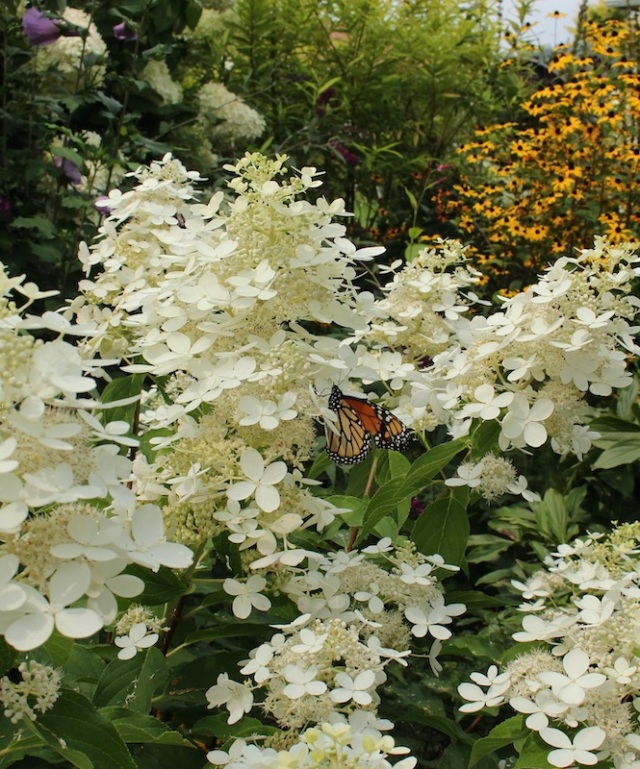
This lacier hydrangea was just buzzing with all the bumble bees and wasps, but even a Monarch butterfly stopped by for a drink.

In my opinion you can’t go wrong with one of these late season hydrangeas.  They’re hardy and always bloom here (unlike their blue cousins) and all they ask from me is a late winter pruning to thin out the stems and keep them from getting too out of hand.

hydrangea limelight seedling

A strong pruning in spring keeps the ones on the edge from getting too big, the ones further back are allowed a bit more freedom.

All these hydrangeas are either H. paniculata ‘Limelight’ or seedlings from her.  The seedlings have been remarkably nice, and I might try another batch just to have more of them since why not?  They’re all a little different and I enjoy the variations along the street border.  They’re all a little greenish to start, and I actually moved out my one pinkish ‘Vanilla Strawberry’ because it seemed too white and then too pink alongside all the limey tones.

hydrangea limelight seedling

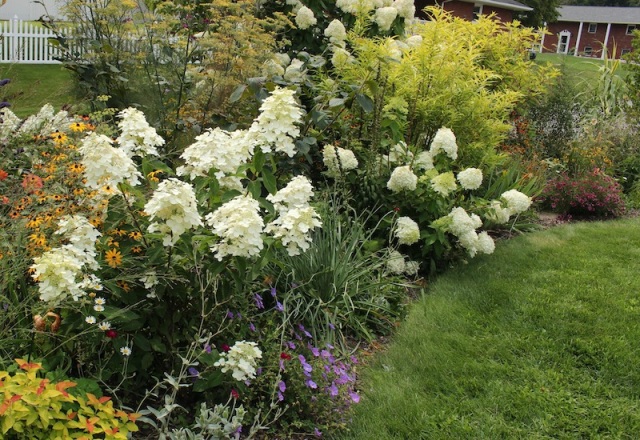
Seedlings of Hydrangea ‘Limelight’ carrying the front border through August.

I don’t think I’m kidding anyone when I talk about setting color themes and working out an organized display in this garden.  The history of this place is closer to planting whatever is at hand in whatever space is open and hope that something works out well.  I guess for late August these hydrangeas worked out well.

cannanova and verbena bonariensis

Cannas and Verbena bonariensis also work well.  The cannas were rudely dumped here and the verbena came up on its own.  Actually only the yucca on the left was planted here on purpose, and even that was a rescue from the trash.  Not bad, but I did weed out a bunch of less lovely things as well.

The rest of this post is just heres and theres and updates.  Less is more, right?  And based on how little I’ve been posting lately maybe it’s better to just get anything up rather than some overly wordy thing which gets tedious after a while, plus I’d like to get to bed early so that’s another incentive for brevity 🙂

dahlia matthew allen

Dahlia ‘Matthew Allen’ amongst the pokeweed.

garden stone wall

The stones are all “organized” along the slope and the grass seed is sprouting.  Finally it looks less like a excavating playground and more like a spot which just needs a little foundation work and a nice bed along the house with anything other than crabgrass.

As usual the potager is a mess of overgrown vegetables and aggressive vines.  Of course I like it, but I’ll have to confess that it only took two years for the 100% vegetable beds to turn into 25% vegetable beds plus bulbs, tree seedlings, shrub cuttings, small transplants, phlox beds, daylily beds…. a bare patch of soil is rarely planted to lettuce, coleus cuttings and canna seedlings are much more likely.

garden potager

At least the lawn is mowed.  Studies show that any disaster garden looks 78% better with a mowed and edged lawn area.

garden potager

Beans and a few diseased tomatoes are the only legitimate vegetables still growing here.  Now if I could only motivate myself to pick them.

lycoris sprengeri

Of course any decent potager has a few Lycoris in it.  This ‘magic lily’ from a mixed batch of Lycoris bulbs has produced some nicely colored blooms.  I’m guessing it’s a form of Lycoris sprengeri and I’m guessing it will now take three years off from blooming, just because…

A weedy vegetable garden is one thing, but a weedy waste area is an even better thing.  Here’s an Instagram-ready photo of the lovely waste area which is now filled with blooming canola, sunflowers, and a new lawn infested with Verbena bonariensis seedlings.  It’s an interesting place, and while I stopped mowing the newly seeded section of lawn so the Verbena can grow into a purple mass of flowers, it’s the cannola patch which demands the most attention.  Hundred of honeybees (and a few others) make this corner of the yard buzz on a still afternoon.  I can’t believe how many there are.

garden waste area

The ‘waste area’ where all the construction fill was dumped and leveled.  It’s a weed factory and probably my favorite part of the yard right now.

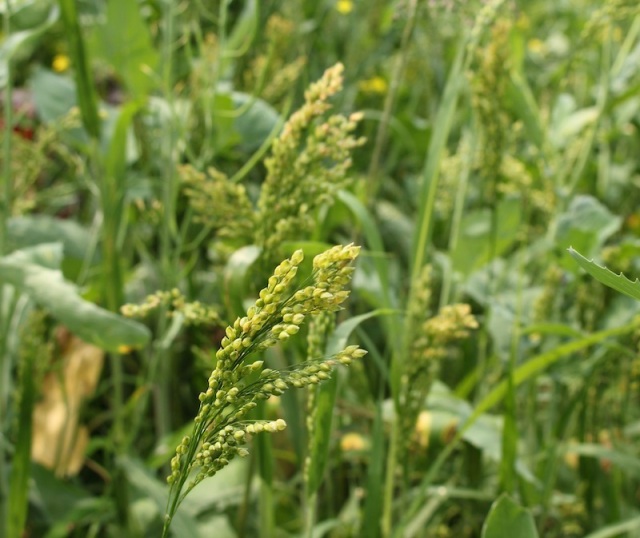
I’m still on the fence as to whether or not the birds will appreciate the cannola seed as much as the bees appreciate the flowers.  There will be plenty, but as of today I haven’t seen a single seed pod attacked for its contents.  That’s in stark contrast to the millet seed which is beginning to ripen in the shadow of the cannola.  Chipping sparrows and song sparrows attack the seedheads, and there are always a few in the area to entertain me.

millet bird seed

Millet seed heads beginning to ripen.

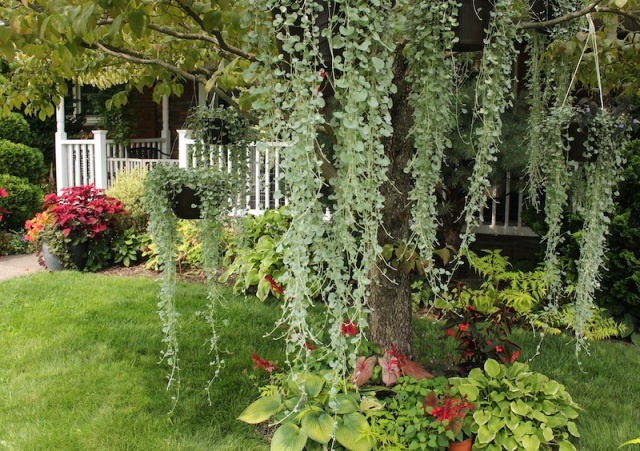
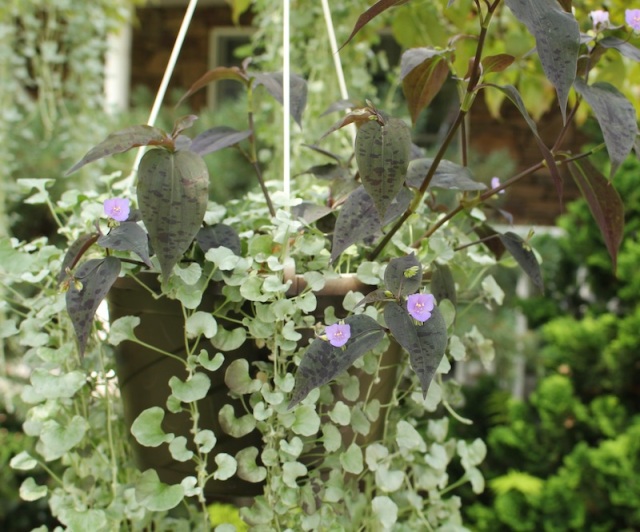
Besides an area of the yard dubbed ‘the waste area’ my garden also boast a slice of Savannah  this summer.  ‘The Old South’ is where all the hanging pots of Dichondra ‘Silver Falls’ ended up, and my boring old pink dogwood has been elevated to the role of sprawling live oak with the Dichondra playing tendrils of Spanish moss weeping down from the branches.  I’m entirely amazed with myself and smile at it every time I pass, even if the local review is closer to a polite ‘I don’t understand why’.

dichondra silver falls

It grows like a weed, and probably is a weed in warmer climates, but here Dichondra ‘Silver Falls’ is just a nice little plant which eats up the endless rain and humidity and turns it into curtains of gray.

Surprisingly the gardener has yet to smack his head on one of the hanging pots, and still smiles when he weaves through the pseudo-moss, not really moss but pseudo-bromeliad veil.

dichondra silver falls

There are even a few nice surprise weeds (spotted widows tears, Tinantia pringlei) in the pots of intentionally planted weeds.

I’m just excited to think how much more this will develop over the next month, and of course this winter I’ll foolishly try and winter them all over and see how much bigger and thicker they can get next year.  Obviously I’ll need more caladiums underneath and honestly I think a few Boston ferns would only add to the effect.  Maybe I can wire the ferns onto the dogwood trunk and tuck a few more into the branch crooks and bends.  My whole next year can revolve around this silly idea and I’m sure sitting inside this winter stewing on it will only help 😉

dichondra silver falls

No one really says anything about the tree but I’m pretty sure they all think it’s amazing.  If only I could find one of those ‘Midnight in the Garden of Good and Evil’ statues to complete the theme.  That would probably be much more tasteful than trying to re-create some marble mausoleum or deep South cemetery vibe on my front lawn.

In the meantime as this design concept matures, I’ve gone ahead and given two more crape myrtles a chance at life (but more likely death) in this garden.  This will be attempt four, and usually three is a respectable place to stop, but I’m gambling on science and planting for an increasingly warm climate here.  I saw crape myrtles (Lagerstroemia) in bloom all over Long Island on my last visit, and it’s only been a few decades since they would regularly freeze to the ground or outright die over winter in my parent’s garden.  Not to be greedy, but I’d like a large tree in purple and one in a bright cherry or red, and I’ll be on the lookout for a cheap starter to experiment with.  In the meantime the ones I’ve added are two dwarf forms which should easily sprout from the roots and bloom even when frozen to the ground.  From tiny plants this spring, they’re both forming buds and blooming this summer.

crape myrtle barista series

From the Barista series of dwarf crape myrtles, this small plant will hopefully develop into a mound of dark foliage studded with brilliant blooms.

So there it is.  The closest I came to a vacation this summer, a trip to fake-Savannah with it’s fake moss and a little token Mc Crape myrtle.  I hope to do better next year, but in the meantime even the weediest waste areas of the garden are entertaining me at this time of year, and I’m hoping to ease into colchicum season without the usual whining about fall and autumnal gloom.  It’s all good 🙂

Before the Rain?

Three weeks is a long time to go between posts, especially if you’re one of those bloggers who keeps saying they’re going to step it up this year with a flurry of uplifting, timely and engaging content that… I guess I say that every year… June is a busy time, and sometimes things get done and sometimes nothing gets done, and both take time.  Time that you think you’ll have back in March, but when summer rolls around she always proves you wrong.  Better to just move on and give the usual apology for ignoring many and hope that July will be different, which is usually not the case 😉

delphinium in bloom

Let me again brag about the delphinium patch.  In spite of the drought they came up well and now that they’re entering their most fragile state the forecast will obviously call for severe weather.  This always happens.  My fingers are crossed this week’s staking efforts will be enough to keep them safe.

So the last post on this blog was a depressing litany of drought, smoke, hopelessness, and most of that was accurate, but as any good gardener will do you assess and move on.  Sometimes moving on means a big icecream and lots of pool time, but this June the weather was more campfires and sweatshirts so I was at a loss.  Turns out cool weather and dry soil is an excellent combination for bulb digging, and if I can’t have a nice garden at least I can try for neat, so many bulbs are dug and much of the potager is an empty yet well-kept space, and most of the garden is in fact somewhat weed free and waiting.  Waiting for the rain I guess, since nothing much happens when it’s dry.

crinum bulbispermum

I was seeing photos online of Crinum bulbispermum in bloom and mine was not, but now it is.  Within days I went from calling it lazy to calling it amazing as three stalks came up on this one and two on the other.  The season is short, but the flowers are worth it.

So I had a plan.  Neat was in and after putting in the work I decided I loved the look even if the grass was browning and the perennials were yellowing and wilted.  I even spent an afternoon weed wacking the berm which usually doesn’t happen until August, and honestly that looks much better as well.

potager with larkspur

A neat yet somewhat empty potager.  A few tomatoes went in as well as beans, but no masses of self-sown flowers since the soil is too dry.  There is a little color though, last fall larkspur seedlings filled in the edges of the tulip beds and are now putting on an awesome show.

As is always the case as soon as one thinks they have a handle on things, the path changes.  This week the forecast is filled with rain and humidity.  We’ve had rain over the weekend and cloud bursts here and there, but so far none of the amounts have lived up to expectations, and they’re still far short of what we need but they’re enough to bring weed sprouts up in the neat dust, and triple the size of the innocent weedlings which two days ago looked as if they were too small to bother with.  I suspect even the lawn will need mowing again if the forecast holds up.

clematis venosa violacea

Clematis ‘Venosa Violacea’ has been getting some water and is completely worth the attention.  Clematis are amazing and I’m worried about all the cute little ones I keep looking at and wanting 🙂

If this summer turns into a good-for-growing summer my earth moving projects might take a hit.  So far cool weather and a few bug-free hours in the evening are revealing new planting areas up along the addition, and new level ground back behind the potager.  It was a big day when the leveled areas were up where they were supposed to be and the first new paths were raked and seeded with grass.  There’s suddenly hope that the garden will return to something more attractive than rubble piles and trip hazards and that’s a great thing.

garden fill topsoil

The area behind the potager is where all the construction fill is moving to.  It used to slope down to a low spot but is now mostly level, which is quite an accomplishment considering that the area around the white bucket was about three feet lower when I started this spring.  The tan section going back to the berm, between the buckets, is where grass seed has been put down and it’s an extension of the path which runs through the potager.

All the dirt moving is a win-win scenario.  As the back of the yard fills and levels off, the area surrounding the new addition is also coming back to a finished level.  Soon I hope to put grass paths back in where concrete trucks once stood, and work something out with all the rock I’ve dug up.  Give me another two weeks for this part of the garden and I promise a better scene, although I can’t make a similar promise for the foundation.  It might be a year at least before the brick situation is figured out.

grading the garden

The area to the side of the house is almost fully graded and the plan is for the grass path continuing all the way down.  I had been thinking of a sand path where all the weeds are coming up on the right of the picture, but I think it will also be grass again, so there will be two strips of grass leading down to the back.  

Wow that all seems like a lot of work.  I better wrap this post up before I start thinking too hard on what all needs to get done before I can do even more of the stuff which needs to get done.   Fresh mulch would be nice.  That would be even more of lots of work, and clearly not better than pool time, but at least it keeps me off the streets and out of the gym.

deck container plantings

The deck plantings are one thing which is looking nice this year.  The drip irrigation was set up earlier than ever and this has been my escape from the mess in the rest of the yard.  Surprisingly most of this is from dried plants which came back to life once I drug them out of the garage.  The large pot of pink and purple was supposed to be an overwintered rosemary, but calibrachoa seedlings took over and I don’t even care if the rosemary comes back or not.  I found it very interesting that calibrachoa roots can survive more drought than rosemary, and from now on I might be throwing them in the garage as well to overwinter.

Thanks for making it this far.  It’s still gray and gloomy outside, but I might brave the gloom and take a second coffee outside to see how things are going.  It would be nice to get two more days worth of shoveling in before the the rain brings on an explosion of weeds and the lawn gets out of control, but as always it’s still better than snow and ice 😉

Have a great week!

Cool

I’m feeling a little guilty since I expected great things for this snowdrop season, but never expected it to go on forever.  I’m apologizing.  Sorry that every post for the past few months has mentioned ‘snow’-anything, and as the East coast gets a little winter weather, and parts of the West coast tunnel through to find front doors and buried cars, I’m also sorry that there’s no end in sight.  I’ll try to be quick.

snowdrop garden

The view from the street is starting to hint at a snowdrop theme, and I think they’re ready for some more dividing and spreading around this spring for an even better show next year.

These photos were taken yesterday afternoon, and today we’re looking at about four inches of snow covering them, but the white stuff always melts quickly in March, even when a foot or two drops.  Fortunately we don’t have that here… Sorry Eliza 😉

crocus heuffelianus tatra shades

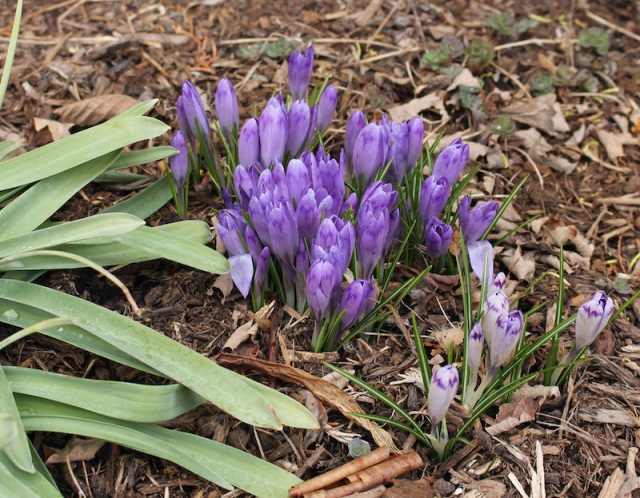
Finally a flower that’s not white.  Crocus heuffelianus, ‘Tatra shades’ doing well but I bet a little dividing and spreading around (once they go dormant) would make for an even better show next year.

A light snow will highlight any new sprouts and flowers which stand out above the snowline, and surely mark them for decapitation by rabbits, but for a few days at least we were able to enjoy them.  The rabbits probably figure out real quick that snowdrops are a yuck thing, but crocus are not, and once they find the first blooms they’ll spend the next night or two searching out every last flower in the yard.  Good for them I guess.  I do get annoyed when they keep coming back to eat every attempt the crocus make at growing foliage, since it will weaken next year’s show, but for the few days the crocus are in flower I don’t mind sharing… a little…

leucojum vernum null punkte

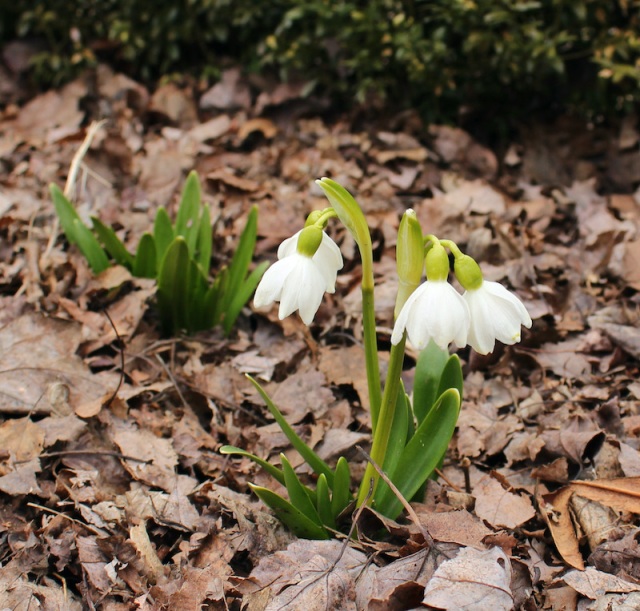
A white flower which is not a snowdrop (Galanthus).  I love snowflakes (Leucojum vernum), and this form, which lacks nearly all the green of the normal tips, is even more special.  I need to divide and spread around this and the clump behind so it bulks up quicker and puts on an even better show next year.     

So that’s two flowers which are not snowdrops and I feel less sorry again, so back to normal!

galanthus augustus

Can you tell I never pruned that rose last year?  Add that to the list.  Also add dividing ‘Augustus’ to the list, he’s the drop in the front and with such nice foliage I think dividing and moving him around to a few new spots would make for an even better show next year.

Did you notice a few snowdrops behind ‘Augustus’?  They’re all random patches of the giant snowdrop (Galanthus elwesii) and are quite a few more snowdrops than I need.  It’s hard to plant new snowdrops when the spots are already filled with old snowdrops so I might have to address all the less-special clumps and their seedlings this summer.  Seedlings.  Don’t even get me started on seedlings.  I have baby snowdrops coming up in all the wrong places, and even though every snowdrop is special your own babies are even more so which means they all need attention.

galanthus blonde inge seedling

I’m guessing this is a seedling of ‘Blonde Inge’ because of the bright yellow inner petals, even though I’m not sure how a seed managed to travel the six feet between here and the mother clump.  There are a few more scattered about but they lack the yellow and are just plain green.  All of course should be divided and moved to spots of their own for an even better show next year.   

Although it’s a good excuse, the gardener here isn’t using the on-again, off-again cool weather and snow as a reason to sit on the computer all day looking at daylily sales.  He did already divide and move a few bunches of snowdrops to new locations.  To be honest it amounted to about 25 minutes of work between vacuuming plaster dust and scooping ice cream, but it does fall into the work category so that’s a good thing.  Take a trowel or small shovel, dig deep to avoid slicing through the deeper bulbs… which for some reason always happens anyway… tease a few bunches apart or take it down to single bulbs if you’re greedy, trowel out a new spot and shove them in at the same depth, give them a little drink to settle in.  My gardener uses a water-soluble fertilizer like Miracle-Gro as the drink, but better gardeners with more ambition could work in soil amendments and organic fertilizers to start your new plantings off on a good footing.

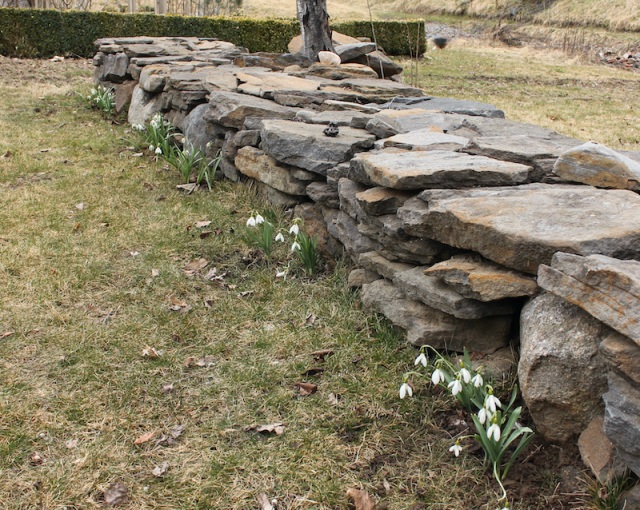
snowdrop garden

The new stone wall will probably need rebuilding some day as a result of poor workmanship, but at least the results of the 20 minutes spent planting these snowdrops will last.  I can’t wait to see them settle in for an even better show next year!

There’s snow on the ground, the year is barely off to a start, and I’m already obsessing about next year.  Sounds about right.  I hate to think what I would waste my time with if it weren’t for the garden, probably something silly like managing retirement investments, or monetizing a youtube channel or Ticktock feed.  Who needs that, right?

Enjoy this flashback to winter, and may all your bids on your favorite daylily auction not win especially if you were counting on a lot to not win since that’s a bunch of daylilies even if you have a daylily farm to plant.  Yeah 😉

Snowdropping ’23

It’s a shameful fact that for as much as I talk up the year’s snowdropping adventure, I also drag my feet in getting the post up.  It’s been a week.  A week and a little, and I need to stop going through the pictures again and again, reliving the day, and just get them out there with as little babbling as possible.  Fortunately the morning is cold so maybe for a few minutes I can be productive while the flowers here soak in the sun before standing back up… and again completely distract me.

naturalized snowdrops

Naturalized snowdrops (Galanthus nivalis), winter aconite (Eranthis hiemalis) and spring snowflakes (Leucojum vernus) in a Pennsylvania park. 


I started the morning on my own, wandering through a Philly area park admiring the century old blanket of snowdrops and other spring bulbs which carpet the now neglected former estate.  There used to be a dream that I’d stumble upon some priceless new variation in white here, but over the years I’ve become satisfied with just seeing them greet the spring each year and carry on unbothered.  Between my crawling through the underbrush and bending over backwards to admire trees it’s a miracle I haven’t yet left the park on crutches after tumbling down a rocky embankment, but so far so good.

triple tulip poplar

When planting trees always remember proper spacing and mature height.

I survived, and so off to meet Paula at her garden.  It’s been a few years since I’ve had a full-sun, comfortably warm visit there, and this year we made it a priority.

naturalized snowdrops

The patches of snowdrops are becoming sheets!

I always get stupidly excited to see all the bulbs in bloom, but this year to see it all in full sun with the blooms wide open I may have let out a naughty word as I got out of the car.  That’s a lot of &*^@g snowdrops was my eloquent first impression.

naturalized snowdrops

I always love the mossy bed surrounding this ugly old ‘Kwanzan’ cherry tree.  There’s so much character in the tree and even though it’s a pain fighting the roots and keeping it in shape I hope it stays for a number of years.

It’s hard taking it all in yet finding the time to focus on all the different forms.  She has quite a few and there’s a story behind nearly every last one.  Fortunately Paula knows me well enough to not get offended when we’re talking about one clump and suddenly I turn to take a picture of something else or jump over to a new plant!

galanthus rodmarton regulus

A big clump of a big drop, ‘Rodmarton Regulus’.

My wish list always grows during these garden visits.

galanthus green mile

One of the greenest of the greens, galanthus ‘Green Mile’.

galanthus amy doncaster

A growing clump of ‘Amy Doncaster’

hamamelis princeton gold

The witch hazel Hamamelis x ‘Princeton Gold’ 

There was something other than snowdrops which really caught my eye (besides the hellebores and witch hazels), and that was the pink viburnum (Viburnum x bodnantense ‘Pink Dawn’) in full bloom.  It actually caught my nose, and I followed the scent over to where the shrub was tucked into the shrubby edge of the garden.  Of course I’ve already looked for a source 😉

Viburnum x bodnantense 'Pink Dawn'

The fragrant pink blooms of Viburnum x bodnantense ‘Pink Dawn’

With all the distractions, this visit was running into our typical behind-schedule run-mode, but because we sometimes know our limits we made sure to pencil only one more garden into the day.

naturalized snowdrops

White snowdrops, blue reticulated iris, and a bunch of other things spread around the driveway slope of Paula’s garden.

It’s almost time for the Galanthus Gala, and Paula’s got a bunch of stuff dug and potted for the day, but that doesn’t mean there’s not more planning and preparation needed.  I knew she was headed over to David Culp’s Brandywine Cottage to meet with David that afternoon and discuss, so of course I invited myself along.

david culp brandywine cottage

The fenced in vegetable garden feels like the heart of the gardens at Brandywine Cottage, and even in the middle of February there’s a jewelbox bed of floral treasures outside the gate.

The gardens were at a snowdrop peak and I don’t even know why I’m bothering to post since books have been written and photos taken which are far superior, but it was an exciting visit and David was nice enough to say ‘post what you want, I enjoy reading your blog’…. um, did you catch that?  David Culp said he knows I have a blog and says he might have read it?  Honestly I’ll probably try and work that into nearly every conversation I have from this snowdrop season beyond, and I hope it’s not too embarrassing when he finds out.

david culp brandywine cottage

Yellow on yellow with winter aconite and a nice yellow hellebore with just a faint blush of speckling.

Oh and also these pictures.  David’s last two books, ‘The Layered Garden’ and ‘A Year at Brandywine Cottage’ were photographed by Rob Cardillo, so I hope I don’t embarrass myself on that level as well since all my photos rely on luck rather than skill.

david culp brandywine cottage

Plantings along the driveway.  There was actually an apology that we missed the lavender sheet of crocus which had mostly ended.   

david culp brandywine cottage

Not the fanciest view of the cottage, but this view shows how every bed of the garden is layered with snowdrops, snowflakes, winter aconite and other goodies which shine before the perennials and shrubs take center stage.

David and Micheal know how to live, and ‘A Year at Brandywine Cottage’ sounds real fancy with decorating suggestions, planting ideas, and delicious recipes and all the things you like to see in a book, but the crazy thing is that’s just Tuesday to them.  You pull up on a Wednesday and there’s a bowl filled with floating hellebore blooms, celeriac soup with a crème fraîche, a toasty living room with fire burning, cutflowers, winter arrangements inside and out, friends pulling into the driveway…  It’s pretty cool.

david culp brandywine cottage

Paths through the garden, snowdrops are settling in everywhere.

There was a bunch of snowdrop talk.  There was also snowdrop work which was in progress, but you’ll have to wait until the gala to hear more of that since the heart of it was going on in the growing beds.  Clumps were being selected for dividing and potting up in order to fill the sales table, and for the sake of honesty I had to steer clear of any place where shovels and fancy snowdrops were close to one another.  We headed round to the meadow and up through the hillside instead.

david culp brandywine cottage

Paths meander throughout the sloped areas of the garden.  If you’re familiar with ‘The Layered Garden’ you’ll know this all began with a noxious, weed-filled slope and a run-down shell of a cottage.

galanthus primrose warburg

Treasures are tucked throughout the hillside.

Of course we stayed too long.  The light was already dimming as we meandered back off the hillside.

hellebore brandywine hybrids

Hellebores and a million other things cover every inch of the slope, and there’s much more slope than you can see here.  In another week or two the scene will completely change as all the narcissus come in and the hellebores really get blooming.

The hillside is filled with hellebores, and for many people ‘Brandywine’ is more a strain of hybrid hellebores rather than a cottage.  There’s a reason for that.  Early on in the development of modern hellebores David asked friends overseas for the best and brought back a bunch of these to the US to start ‘dabbling’ with his own hybrid strain.  He wanted a few “nice ones” for the slope and needed more than just divisions could supply, so over the years the ‘Brandywine Hybrids’ came into being.  They were my first experience with a more upscale hellebore and the strain made plants with clearer colors and more outward facing blooms available to even the more average gardener.

hellebore brandywine hybrids

A red section of the slope just getting started.  Notice they’ve all been trimmed back of their old foliage.  Thousands of plants all trimmed neatly and the debris removed…

hellebore brandywine hybrids

A perfect combination of structured shrubs, background evergreens, and spring enthusiasm. 

So hellebores are awesome, but for a little while longer all my focus is on snowdrops and snowdrop galas.  David Culp’s snowdrop gala is set for this upcoming weekend (March 3rd and 4th) and will again make Downingtown Pa the epicenter of American galanthophiles, either in person or in spirit.  There will be online events, in-person and virtual talks, auctions, and Q&As, plus my favorite part the specialty vendors.  I’ve been good and only contacted one seller for a super-special plant, but that doesn’t mean my budget ends with that.  There’s a reason I’ve been holding back with online sales 😉

So maybe I’ll see you there, maybe I’ll see you online, maybe I’m glad this weekend worked out well and didn’t disrupt my plans on attending, but however it works out I hope you’re having a great end of February!
Snowy Drops

Sorry, but a little snow isn’t going to stop the madness.

snowdrops in the snow

Snowdrops with winter aconite and a few cyclamen.

snowdrop kildare

Here’s ‘Kildare’ again. The white of the snow really brings out his green nose.

hamamelis aphrodite witch hazel

‘Aphrodite’ is one of the newer witch hazels here and has been settling in well.  

galanthus norfolk blonde

1 bloom, 1 bloom, no show, no bloom, no bloom, one bloom.  That’s my record so far in the six years ‘Norfolk Blonde’ has been painfully tolerating the conditions of this garden.  This year to add insult to injury, a pale drop I found in a wild Ny population is putting out two blooms, and they look just as special as the blonde I paid for and have been nursing along.  #shadenfreude   

galanthus blonde inge

‘Blonde Inge’ again.  I love the clump this year and now with a little snow the yellow interior seems to glow through.

galanthus magnet

I’ve been informed this in not the real ‘Magnet’ and for now on I shall refer to it as ‘Notmagnet’.  I bought a “Real Magnet” and it’s kind of behind and a little to the right of center and looks just like ‘Notmagnet’ except for the label being different.  Don’t let a stray ‘Notmagnet’ on the far right distract you from the ‘Real Magnet’ just next to it, and just for the record I like ‘Notmagnet’ a lot because he’s a good doer. 

eranthis orange glow galanthus backhouse spectacles

This orange ‘Orange Glow’ Eranthis hiemalis really is aglow today in the snow. The spot where I threw all his seed last year was scraped by a bulldozer so I’m hoping for a new batch this spring.

galanthus rosemary burnham

‘Rosemary Burnham’ did indeed hold on to her color this year as a result of the cooler weather and refreshing snow.  She’s looking very elegant to me.

And that was fast.  This post only took about 30 minutes, but getting distracted by other snowdrop pictures, previous blog posts, Facebook snowdrop pictures, witch hazels, long term weather predictions, and potato pancakes all took their toll and brought the full investment to about two and a half hours.  Hmmm.  Me thinks someone is easily distracted 😉