The Temple Nursery 2016

I’m not exactly sure how many years it takes before something becomes a tradition but I’m going with two, and since this year marks my fourth springtime visit to the Temple Nursery’s open garden day I guess it is now a tradition, and tradition shouldn’t be tampered with.  I say that because up until the morning of the visit I wasn’t entirely sure I would actually make the drive up to Ithaca NY and beyond since this season’s early warmth had me pretty sure there wouldn’t be much left to look at as far as the garden’s snowdrop (Galanthus) collection goes.  To a certain extent that turned out to be true, but at the end I realized a day visiting a garden in the (almost) spring is never a bad idea, and even if the weather’s not perfect it’s always fun to get out once winter starts retreating.

hitch lyman garden

Side view of Hitch Lyman’s upstate NY garden.  The nursery’s namesake ‘temple’ is visible in the back.

If this visit has become tradition, imperfect weather has also become a tradition, and after weeks of above freezing, almost balmy weather, the bottom dropped out of the weather system two nights before.  Light snow for Saturday and then a low of 17F (-8C) the next morning did in many of the remaining snowdrops and wilted many of the emerging perennials.  We’re used to freezing our kazzoies off on these visits though, so by the time the temperature rose into the 40’s it felt downright balmy.  No wind either and not a single snow squall during the visit… unheard of!

galanthus ex. highdown

The Lyman garden is known for its snowdrop collection, and only a few remained in bloom after all the ups and downs of the weather.  Here is a Galanthus labeled ‘ex. highdown’ which has held up remarkably well to the cold.

The majority of the snowdrops were past, which is somewhat surprising considering The Garden Conservancy had already moved the open date forward two weeks and the date was nearly a full month earlier than last year, but what can you do at such an unsettled time of the year?  I just felt a little bad for others who had traveled much further to see what is normally an exciting collection of hundreds of different snowdrop varieties growing happily in the garden’s small woodland area.
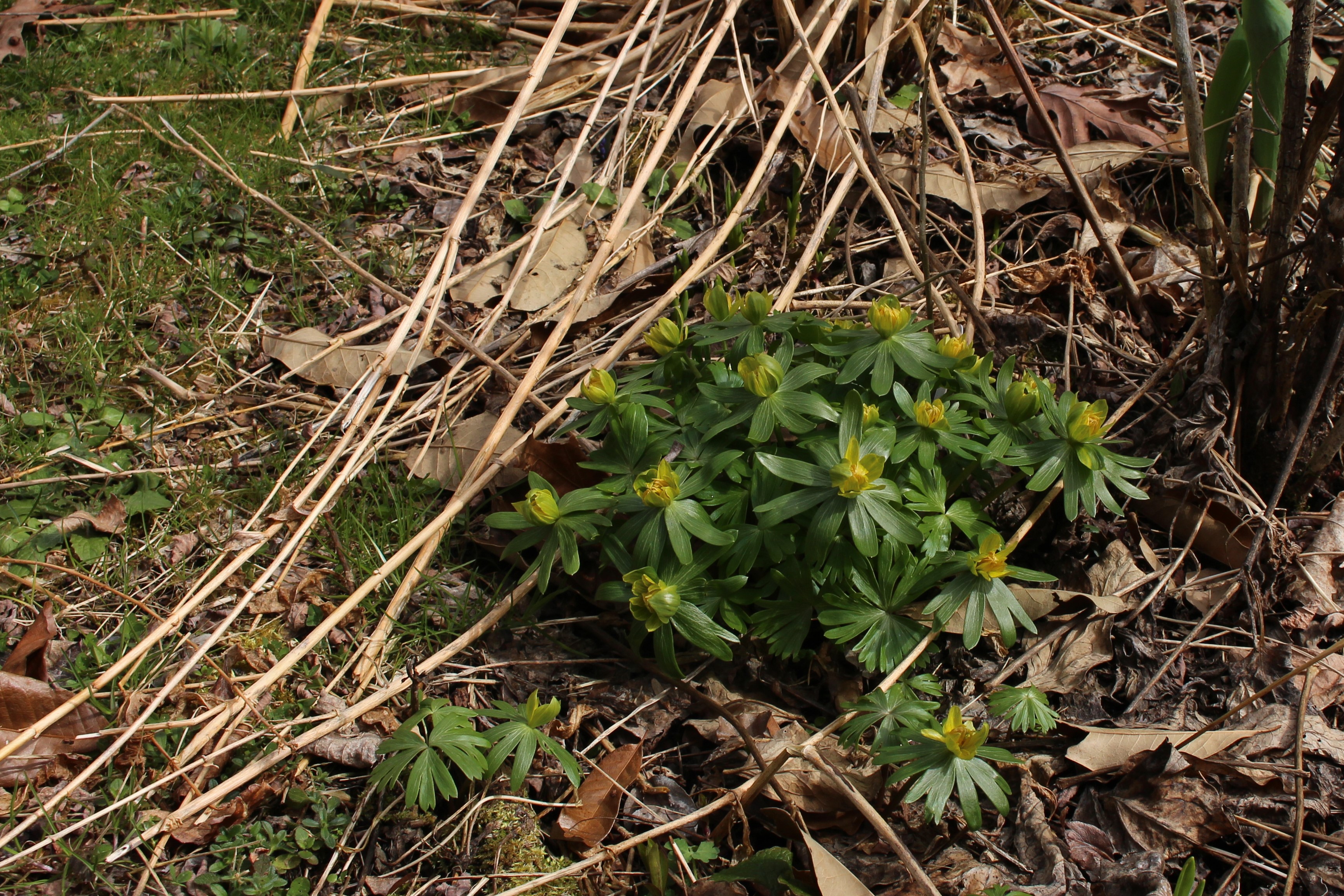
eranthis hyemalis noel ayres

Just a few late blooming winter aconite remained.  This might be Eranthis hyemalis ‘Noel Ayres’ or something similar.  Compared to the bright yellow blooms of the species, this might be an Eranthis only a collector could love. 

I also felt bad for the plants.  The majority of the snowdrops were flat on the ground from the previous night’s cold, and overall the garden did not show well for someone expecting swaths of snowdrops and early flowers.  They’ll recover I’m sure, but frozen plants are never fun.
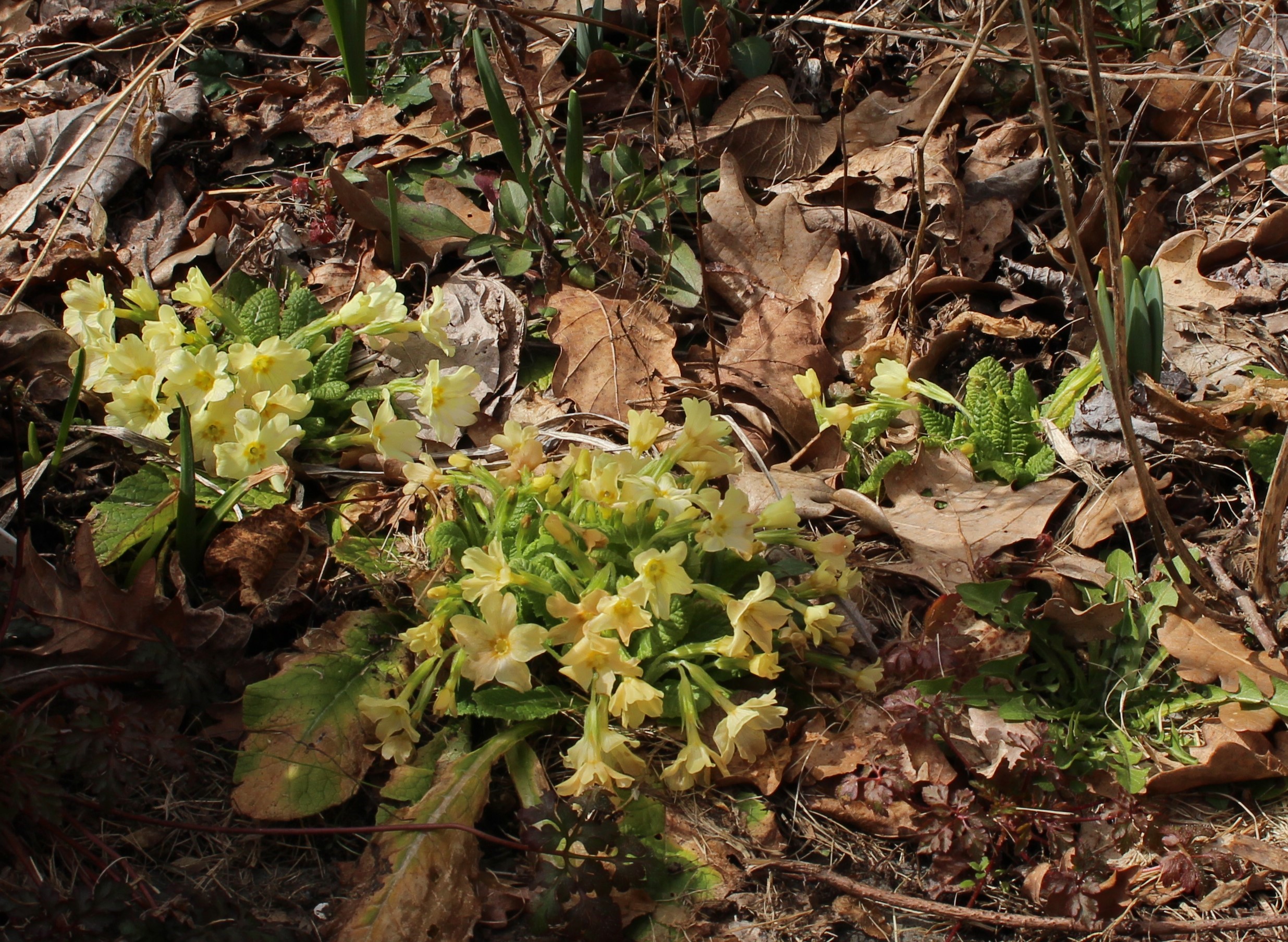
freeze damage primula

Early primroses wilting as the warm sun hits them.  This would have been a much cheerier sight just a few days ago.

Still I found plenty to keep me entertained, and I enjoyed the company of the garden’s owner, Conservancy volunteers, and several other entertaining guests.  Hanging out… is that too common a term for a Conservancy event?… outdoors with other like minded gardeners on a not-too-cold March afternoon is something I don’t get to enjoy too often in my neck of the woods, so I was quite pleased for making the drive up.
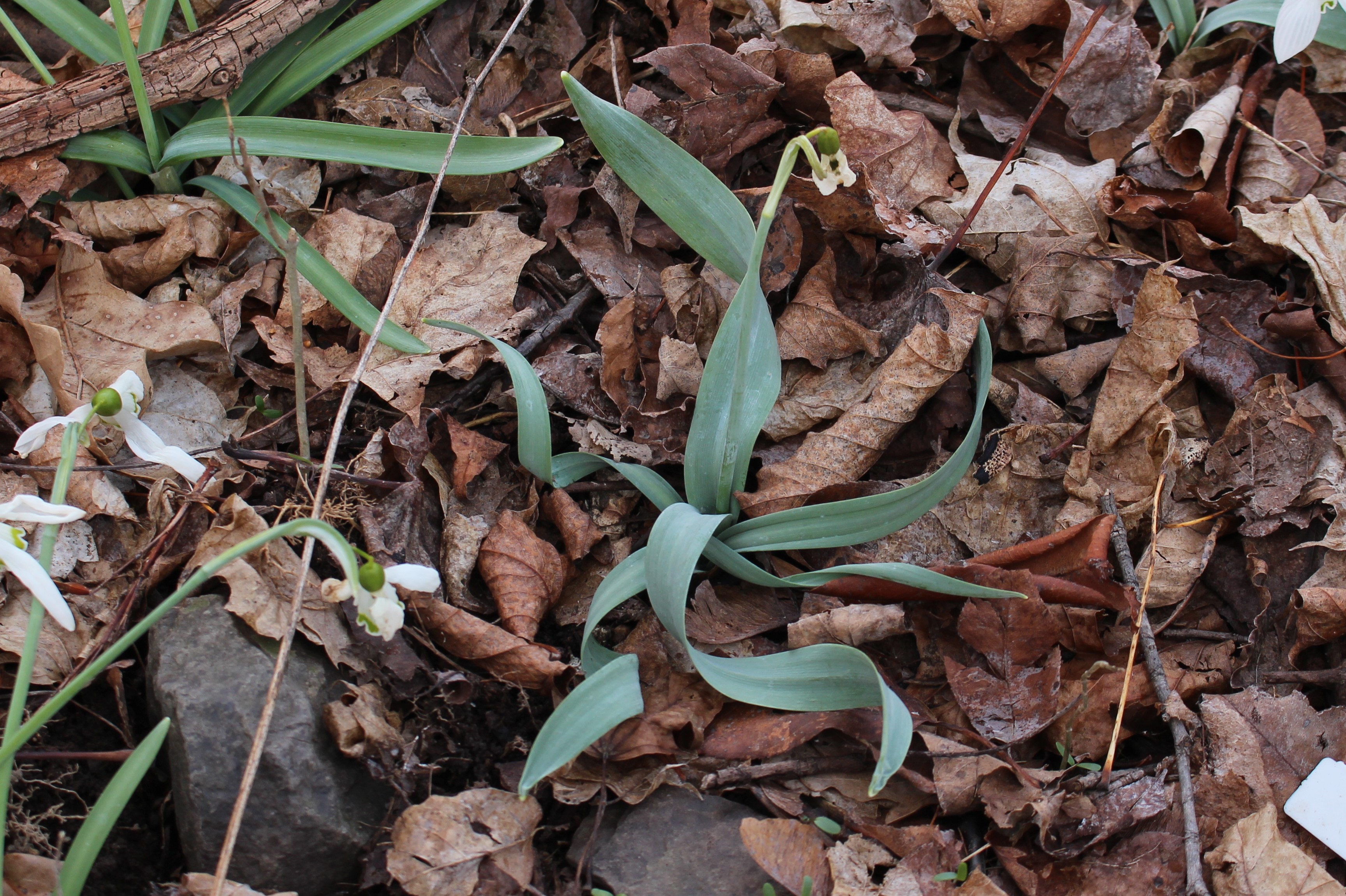
galanthus dr dress

It looked like some kind of sea creature to me, but it’s a Galanthus labeled ‘Dr Dress’ which I believe is the source of this unusually curly leaved snowdrop.

Of course there were blooming snowdrops as well.  I was pleased with some of the later blooming varieties such as the daintily named ‘Dumpy Green’

galanthus dumpy green

Galanthus ‘Dumpy Green’

and the very attractive late 19th century snowdrop, Galanthus ‘Virescens’.
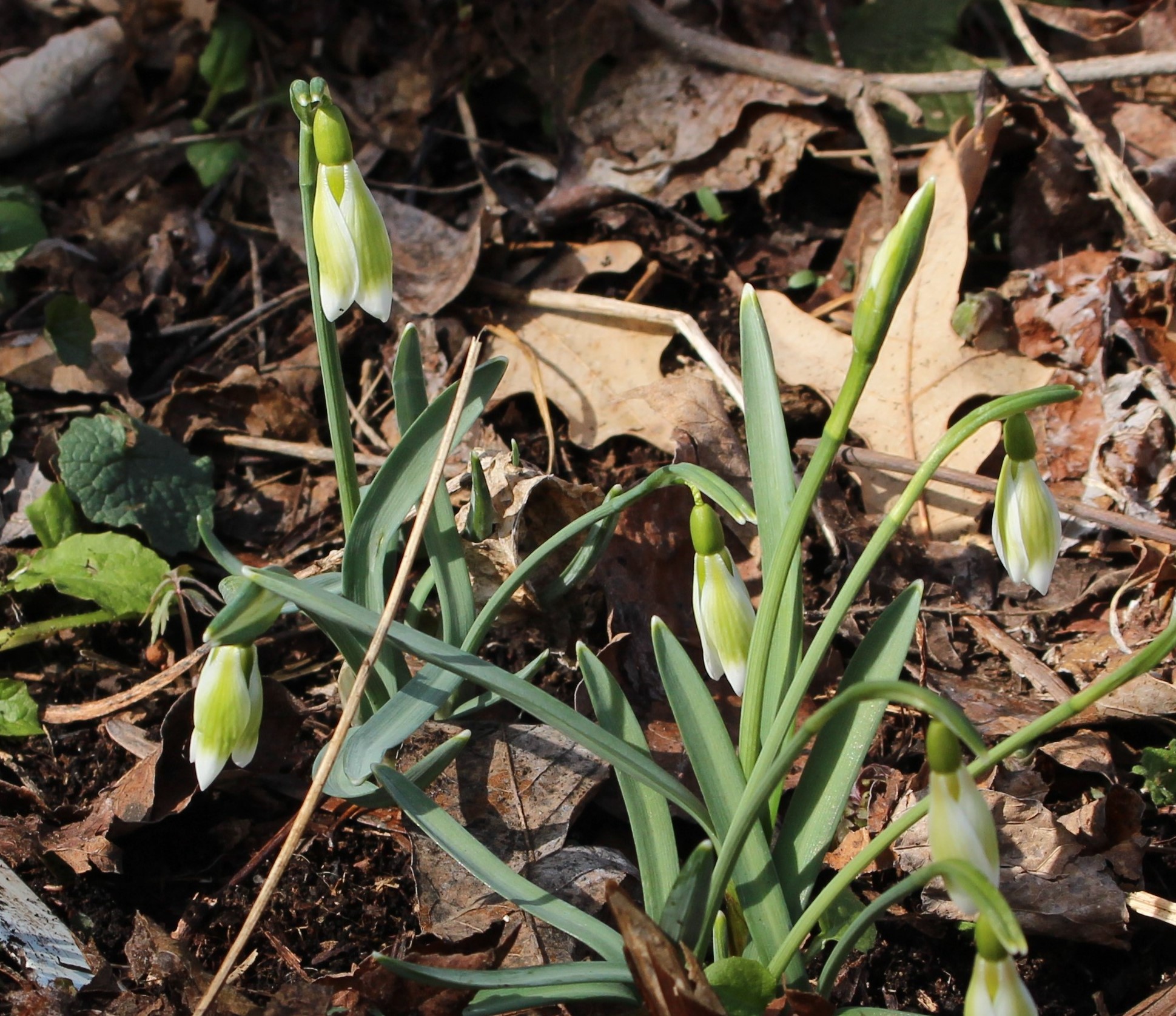
galanthus virescens

The classic green snowdrop, Galanthus ‘Virescens’.

Luckily for me one of my favorites was still in bloom.  It’s been divided since my last visit and is still doing well, Galanthus ‘RD Nutt’ is one that always catches my eye, even though it’s no more white or green or fancy than any other of Mr. Lyman’s many other snowdrops.
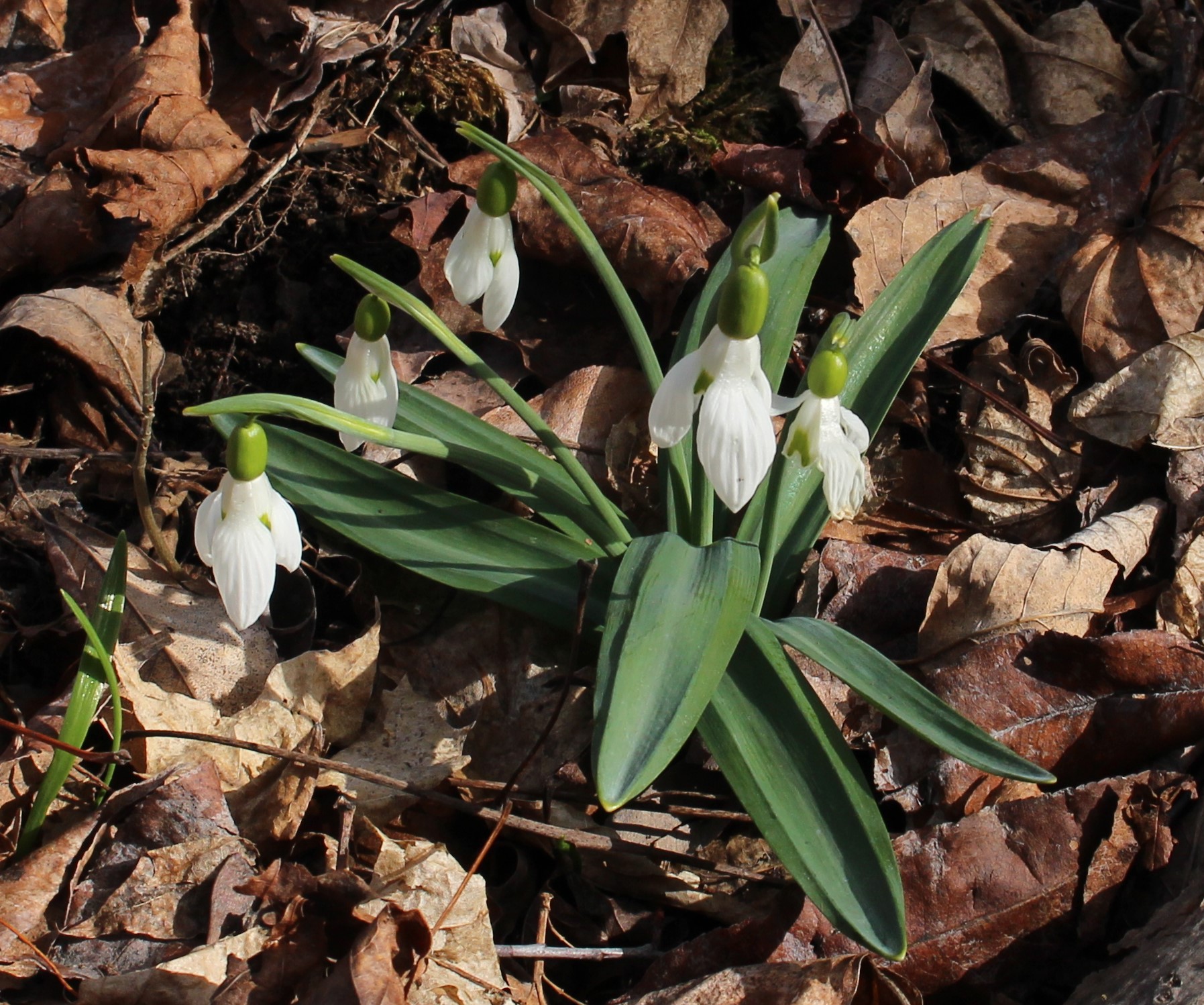
galanthus rd nutt

I’ve asked and then forgotten if ‘RD Nutt’ is the name or source of this snowdrop.  It always seems such a neat and heavy bloomer, and appears to be holding up well to the weather.

So I’m glad my schedule cleared up enough to make the trip again this year, and it was a treat to finally see the gardens with a few traces of blue in the background sky.  We will see what next year brings but I’m sure as usual we will make the best of it!
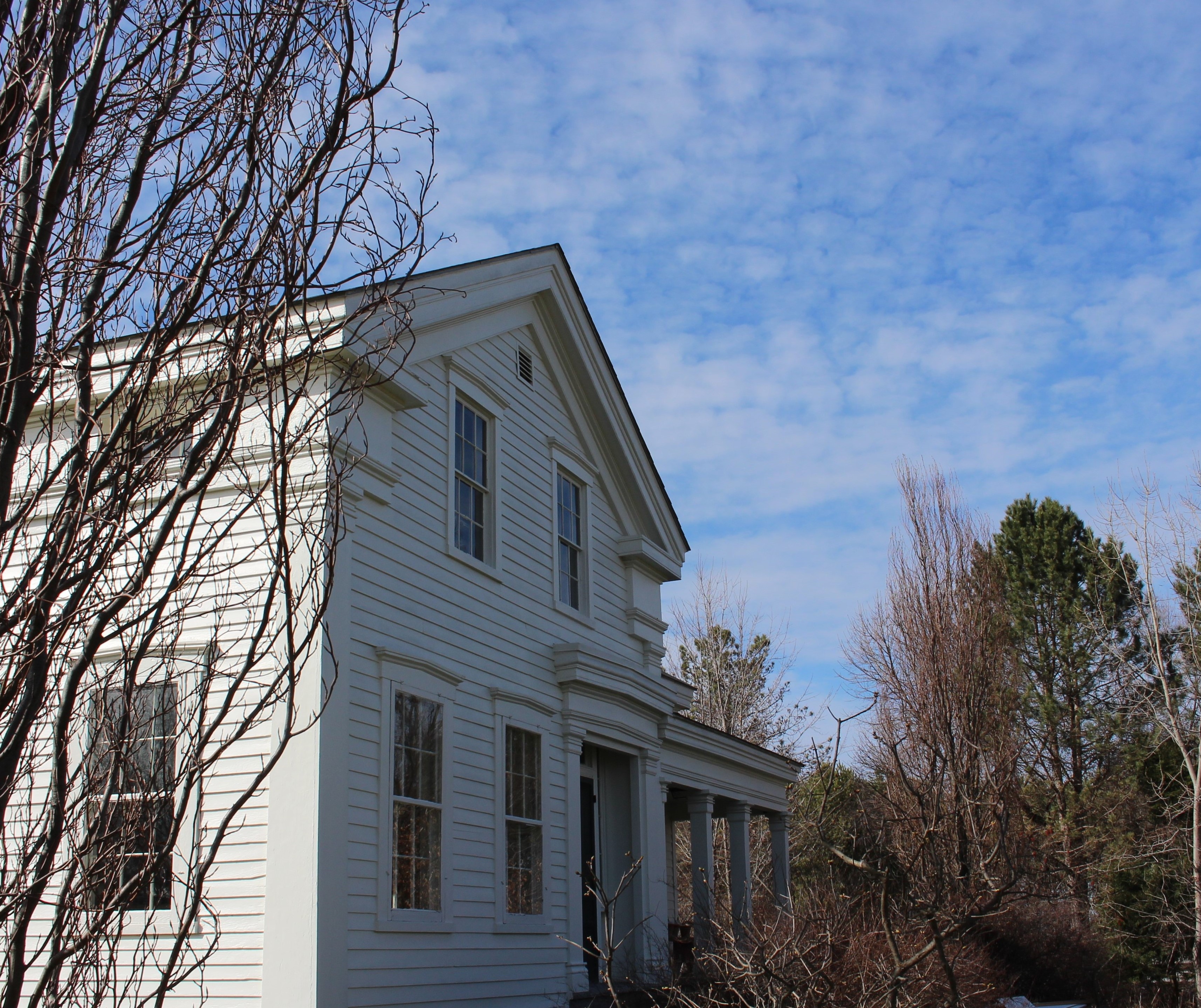
hitch lyman garden

Hitch Lyman’s home, moved to the spot in the 90’s and restored back to it’s original grandeur.

One final note though.  I was a little insulted by how well the hardy cyclamen were doing considering the sad state of my own plantings.  My own Cyclamen coum were killed back to the roots and failed to put on much of a show this spring.  I’m going to blame a lack of mulch and see if I can’t do something about that next year.  We just didn’t have the protection of a snow cover last year, and it looks like these did.
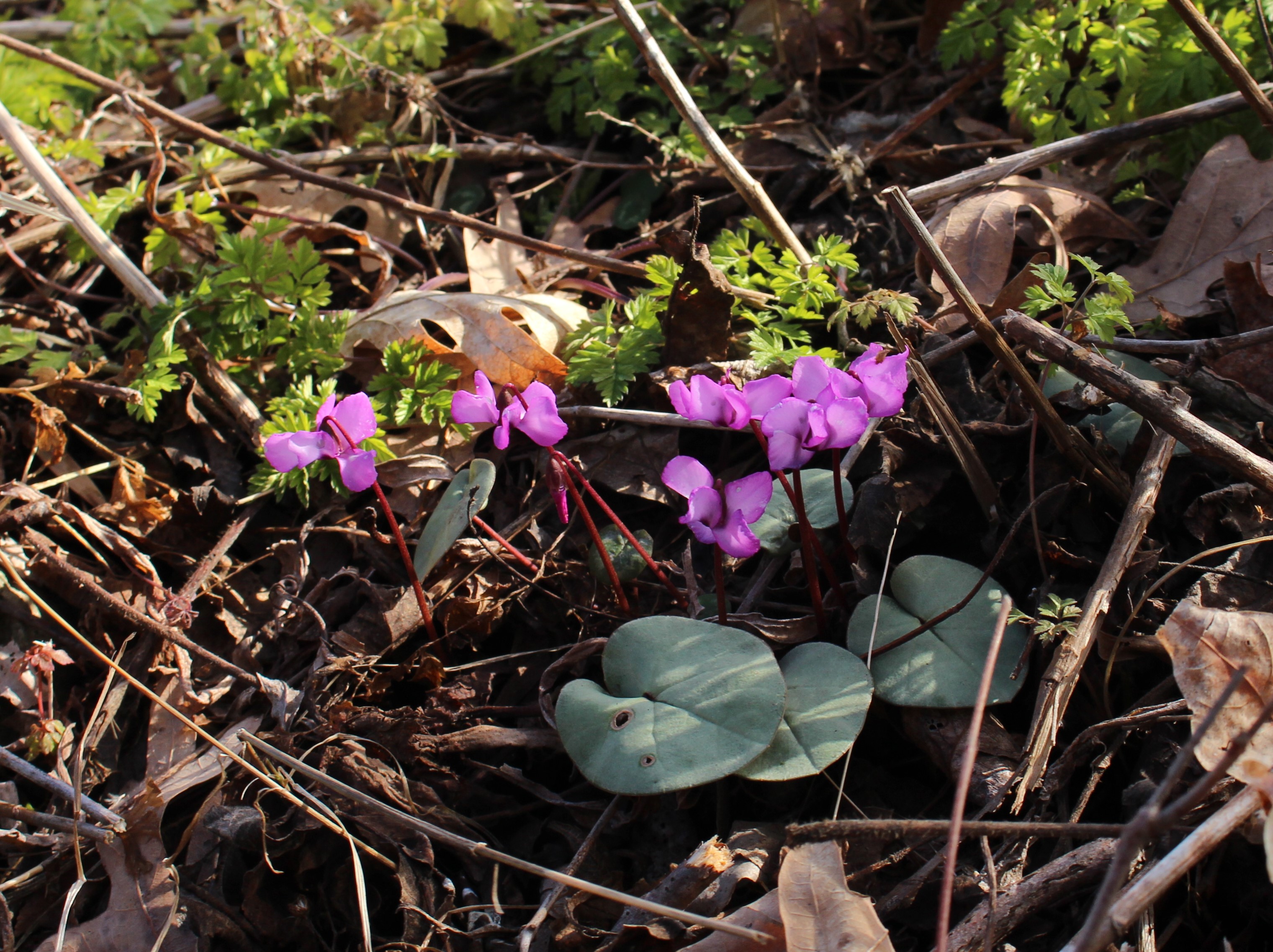
cyclamen coum upstate ny

Some Cyclamen coum looking quite happy in their upstate New York home.  A nice woodland mulch and most likely a protective blanket of snow have them blooming happily with nearly perfect foliage.

Thanks again to the Conservancy and Mr. Lyman for another enjoyable visit, and in case you are interested the Temple Nursery sells snowdrops as well as growing them.   To get on his mailing list (there is no online available) send three or four dollars to the following address: Temple Nursery (H Lyman) Box 591 Trumansburg, NY 14886 and you should receive a listing in January.  Act fast, they sell out in just a few weeks 🙂

Have a great Easter!

Snowdropping 2016

*ok so I’m trying to get back onto the blogging ball.  With a schedule finally cleared up I have a bunch of catching up to do here as well as on other blogs… so flashback to something I began writing about two weeks ago!*

Spring doesn’t normally roll around to this end of Pennsylvania until the end of March,  but this year on the tail end of El Nino it looks as if winter has just thrown in the towel and let spring walk right in a few weeks early.  “Sit down and stay a while” I say, and although I should speak glowingly about my own spring treasures in bloom right now, my first panicked thought was I might miss the snowdrop season down south.  I promptly sent out a few emails, jumped in a car and met up with my friend Paula at a park near her home for our second annual Philly snowdrop adventure.

naturalized snowdrops united states

Snowdrops naturalized on the grounds of a former Philadelphia estate.

Last year our snowdrop adventure was a response to the miserably long winter, this year it was a desperate attempt to catch the season before it flashed by.  We made the trip on March 8th and even though we were nearly a month earlier than last year many of the earlier bloomers were already past.

leucojum vernus yellow

A nice yellow tipped spring snowflake (Leucojum vernum) blooming amidst the rubble.

In spite of the advanced season we did manage to catch plenty of snowdrops still in bloom, and it was fun wandering from patch to patch searching for those little “specials”.  Maybe someday after a hundred years of abandonment and years of gentle woodland protection my own garden will produce something different but for now I’ll have to rely on these hidden treasures.

naturalized snowdrops galanthus nivalis

We saw plenty of patches of four petalled snowdrops, but also a wonderful range of larger and smaller, thinner, longer, taller…. all the tiny variations on white and green which may make some gardeners yawn, but which make me smile.

But there was only so much time we could spend sweating our way through the underbrush.  We had bigger fish to fry this morning and for us it was a visit to John Lonsdale’s Edgewood Gardens.  John grows and sells (but more just grows and grows) about a billion plants in his suburban landscape and the plantings range from high desert cactus to mountain to woodland to everything in between.  I was lost on much of it but I’m going to try my best and show a few favorites even if the names are lacking.  If you are more cat-like and on the verge of death due to some unsatisfied identity curiosity then I would absolutely suggest contacting John directly via his website.  He will surely have an ID for you, as well as cultural conditions, related cultivars, the exact source of his plant…. and to top it all off he probably grew it himself from wild collected seed!

iris and hardy cactus

A beautiful species iris right alongside hardy cacti.  Did I mention the cactus?  There were beds planted full of them as well as agaves and yucca, all surviving the Pennsylvania snow and ice without any additional winter protection.

I need to just move on here.  I love growing bulbs and there were more here than I’ve ever even considered so here are just the highlights of our visit.  Keep in mind the calendar is still saying winter for a few more weeks and the real show is still at least two months off!

eranthis guinea gold

Winter aconite (Eranthis species)  galore in the Lonsdale garden.  We missed the peak for many of the Eranthis hyemalis types but these crosses with Eranthis cilicica (similar to the ‘Guinea Gold’ cross) were just opening…. don’t let the label throw you off, that’s for something else yet to come right in front of this patch of gold.

At nearly 80F (26C) and sunny even a few of the first primula were opening.

pale yellow hardy primula

The winter may have been short, but even here a sudden drop to around 0F (-17C) did its damage to winter foliage and early sprouts.  Still bright and beautiful though, and its location on what looked to be a dry shaded slope has me rethinking how tough primroses can be.

Hellebores were everywhere.

speckled hellebore

Just a plain old hellebore which caught my eye.  a little winter damage but I love the speckling.

John said he was in the process of working through the hellebores, getting rid of many older and self seeded plants, and ‘upgrading’ some of the hybrids… and I wish him luck.  There were hundreds, if not thousands, and it would take a more critical eye than mine to thin the herd.

hellebore anna's red

One of the newer, cross-species hellebore cultivars.  I forgot what it was, but maybe it’s ‘Anna’s Red’?

Plenty of hellebore species as well.  All over the garden were bits and shoots coming up from seed collected throughout the hellebore world.

green hellebore

A cool green species hellebore.  Green may not be the showiest flower color but they sure look great close up.

hellebore tibetanus

Hailing from China is Helleborus thibetanus. This plant was only just brought into cultivation in the 1990’s and if you can believe it John says this plant plant produced only one flower last year. What a difference a single year can make!

Trilliums were also everywhere.  John kept naming species, naming ranges and ecotypes, naming seed sources, describing how many were yet to come…. it was all a little overwhelming.  I think to return in May and see patches and patches of trilliums blooming across the hillside would be quite the sight.

trillium foliage

One of the earliest trilliums already up.  The foliage is just amazing and there were hundreds more sprouting or just waiting to burst out of the ground.

There were tons of early trout lilies (Erythronium) coming up as well.  More cool foliage, exquisite flowers 🙂

trout lilies erythronium

Just a few of the earliest of the trout lilies coming up.  I love the fine markings on these and the fancy purple pollen just as much as the silvery speckling on the leaves.

I’ve never seen blooming Hepatica (liverwort) in person but recognized the little jewels the minute I saw them.  Maybe this will finally be the spring I venture out into the woods and find a few blooms of my own in the wild.  I’ll be excited to find anything, but suspect they won’t hold a candle to some of the selections and hybrids which we saw springing up out of the leafmould.

red hepatica

What color on such a tiny bloom.

violet hepatica

The detail on these flowers is amazing in all its intricate perfection.

It was also well into Adonis season.  Several cultivars were spotted throughout the beds and each one seemed better than the last and we hit them perfectly with their flowers open wide in the warm winter sun.  The saturated colors were almost too bright for an early March afternoon.

double yellow adonis

Double yellow Adonis Amurensis

I’ve heard that this native of NE Asia isn’t all that hard to grow it’s just a little slow to start and a little pricey to get a hold of.  Spring sun and a sheltered woodland location for the summer seem to work well for it, just know that the ferny foliage dies back and the plant disappears once the weather warms for summer.

orange adonis cultivar

An orange Adonis cultivar with a nice bunch of hardy cyclamen leaves.  Cyclamen were nearly everywhere, I began to not notice them unless I had to step over a particularly nice one seeded into the path 🙂

fringed orange adonis

Dark ferny foliage, a fringed pale orange flower…. what’s not to like about this Adonis?

We spent way too much time at John’s but it wasn’t until we checked our watches that we realized how much we had actually imposed on his day!  The poor guy had just finished up about ten days of on the road and had been through more states in a week than I hit in a year and here we were not even giving him enough time to enjoy his first day back.  So we tried to get a move on it, thanked him again for his hospitality and time, and then rushed through the last hordes of snowdrops, cyclamen, and cacti between us and the exit… did I mention the cacti?  I could easily fill a second visit with just the cacti (not that I’m really hinting).

Off to Paula’s!

snowdrops galanthus in garden beds

Snowdrops (Galanthus nivalis mostly) scattered throughout the garden beds.

Paula has really put in some work into collecting and dividing and spreading snowdrops throughout her garden, and it’s really an inspiration to see the possibilities of what a few years hard work can produce.  It makes me wonder when and if my own garden will ever start to show a similar effect of late winter interest.  There were goodies everywhere and of course it was the snowdrops which I really honed in on.

galanthus elwesii

Nice established clumps of Galanthus elwesii (the ‘giant snowdrop’) with it’s bigger blooms and grayer foliage.

Paula really has a great winter garden going with snowdrops galore and plenty of color from the earliest bloomers.  It’s here where we wound down from our latest snowdrop adventure.

double snowdrops galanthus and hellebores

Double snowdrops (Galanthus ‘flore pleno’) and hellebores fill in a shaded slope.

There were hellebores, winter aconite, snowdrops, snowflakes, witch hazels, crocus, all kinds of flowers coming out to brave the last few weeks of winter.

raspberry veined hellebore

A real nice raspberry veined hellebore.  I really need to do a little ‘upgrading’ of my own!

Of course we got bogged down in examining every tiniest bloom and discussed every growing nuance.  That’s what makes these garden visits so special.

galanthus gloria

Galanthus ‘Gloria’, a perfect flower with such long inners with just the smallest touch of white.  I really like these ‘pocs’ where the inner petals nearly match the long white outers.

By this point my winter knees were starting to complain about all the kneeling and bending which I’d been putting them through all day.  Maybe I should have started getting back into gardening shape a few weeks earlier, but in spite of the little aches and slower pace we carried on for a few more closeups.

galanthus doncasters double charmer

You almost wouldn’t guess this were a snowdrop, but it’s Galanthus ‘doncasters double charmer’ in all its crazy, spiky, greenness.

And a final snowdrop….

galanthus big boy

Galanthus ‘big boy’, just coming up and already big even before it expands to its full size.  The green tips are a nice touch and I think I like it!

And then the day was over.  Time to hop in the car and head back North.

orange witch hazel jelena

An orange witch hazel (Hamamelis ‘Jelena’ ) in full bloom as the day ends.

A special thanks to John Lonsdale for a great visit, and thanks of course to Paula for putting up with me for the whole day.  It wouldn’t have been half as much fun without her, and when we were pulled over and asking a stranger if they’d mind us traipsing around in their side yard looking at the snowdrops I knew I had the right travel buddy.  Until next year!

GBFD February

Each month on the 22nd Christina of Creating My Own Garden of the Hesperides invites us to join in on a consideration of foliage in the garden.  Foliage effects in the winter months can seem to drag on and February may have its pleasant moments in Christina’s Italian landscape, but here in Pennsylvania February is the month when the relentless assault of winter begins to wear down even the toughest greenery.  Imagine my surprise when a beautiful February weekend comes along and gets me thinking about outdoor things other than snow.  It felt great to get outside again, do a few spring-like tasks, and consider what was holding the garden together.

pelargonium foliage color

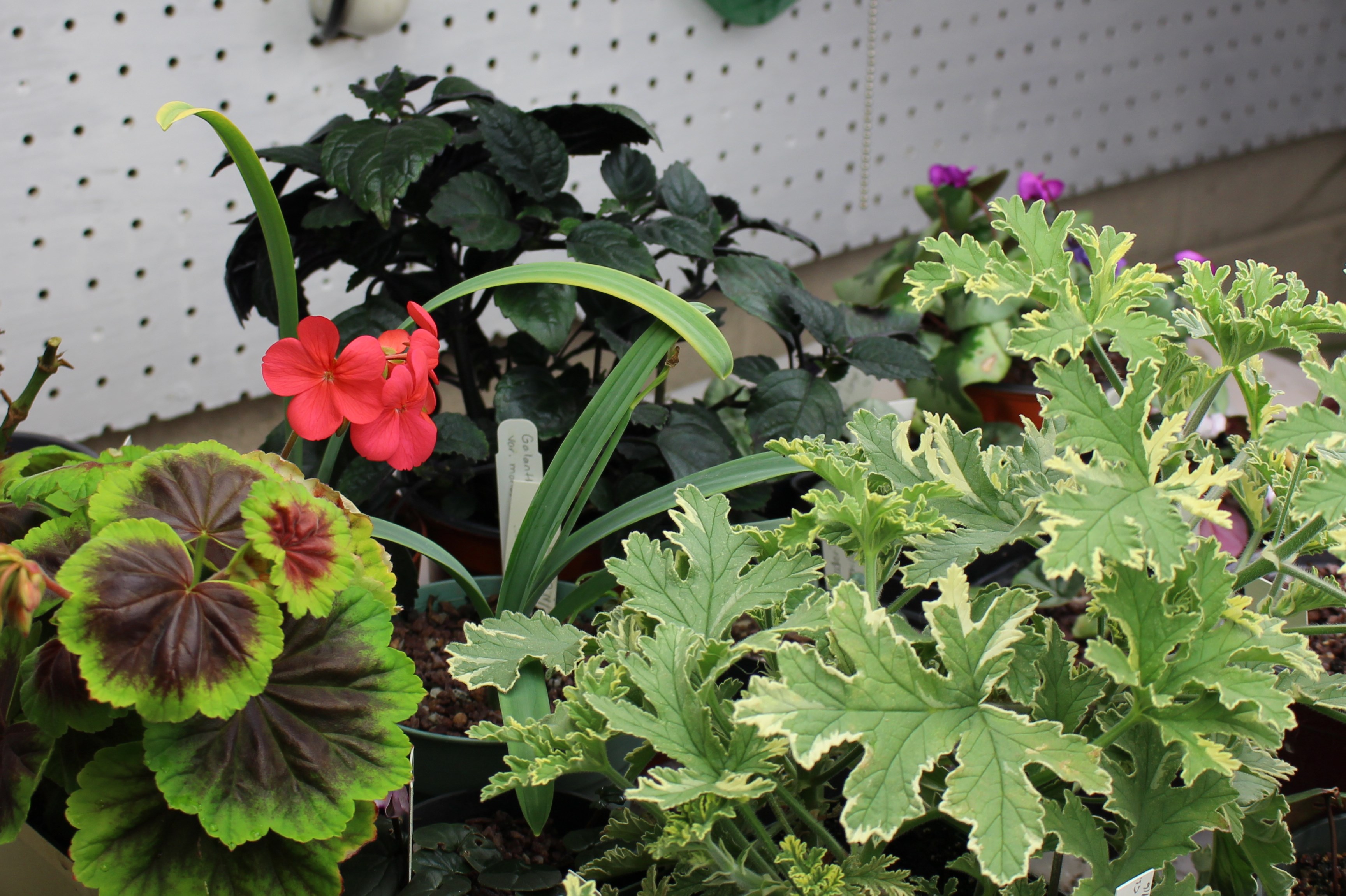
Even a nice February day needs some warmup time, so while waiting for the thermometer what better thing to do than enjoy the foliage of geraniums (Pelargonium) and other tender plants indoors under the growlights.

One task I did tackle was a little front garden cleanup.  The snowdrops are coming up here in the front foundation bed, and dead sunflower trunks do not add to ambiance of the scene.  Blue fescue (Festuca glauca, cultivar unknown) does though, and I’m enjoying the edging of faded blue which lines the front.  A nice solid swath of one plant helps tie this bed together but I’m not entirely convinced I can give up my collecting habits in favor of better (notice I won’t say good) design.  My single mass planting of little fescues is a starting point though and even if I can’t add more solid pools elsewhere maybe I can at least repeat a few nice patches of similar foliage here and there for the sake of continuity.

Festuca glauca winter color

Cute tufts of Festuca glauca in their winter finery…. which looks remarkably like their spring summer and fall finery, but every garden needs a few reliable doers.

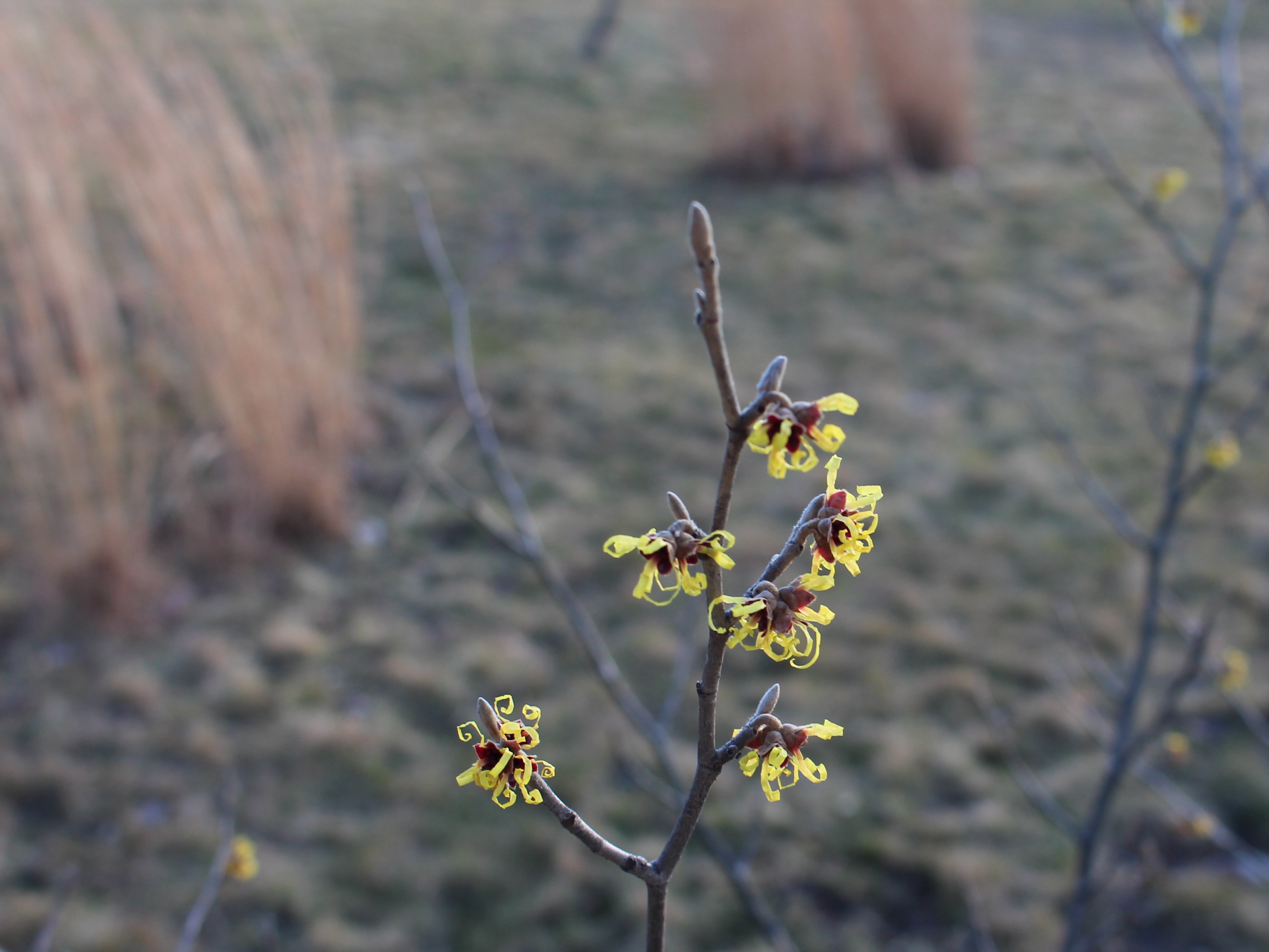
Another grass which has lasted well throughout the winter are the native little bluestem clumps (Schizachyrium scoparium) which dot the back meadow area.  They will be cut down shortly as crocus blooms begin to fill the meadow, but for now they’re a nice backdrop to my weakly flowering witch hazel (Hamamelis mollis ‘Pallida’).  It’s too dry and exposed here for the witch hazel to do well in this location, but it hangs on and every now and then has a good spring.

witch hazel pallida

The crinkled blooms of ‘Pallida’ Chinese witch hazel are always a nice winter surprise and I feel like the russet foliage of the little bluestem grass in the background complements the flower color well.

It may have felt like spring for a few hours but it’s still surely winter around here.  El Nino has thrown things for a loop and by my wildly inaccurate guess we are about three weeks ahead of a ‘normal’ winter.  Not a problem I say, and I’ll take the early snowdrops and deal with future wild temperature fluctuations as they come.

snowdrops and eranthis aconite

Cyclamen hederifolium foliage and a mulch of dried autumn leaves looks so much more comfortable than bare mud.  I guess even last year’s dead foliage counts on a February foliage day 🙂

So even in the dead of winter there is foliage making a contribution and there is hope for the upcoming year.  Hope is always a good thing, and what better way to breed more hope than to look at other inspiring foliage effects from around the world.  Give Christina’s blog a visit and as always have a great week!

Please don’t mention frost

The last few days have been cold, rainy, and damp.  Combine that with reports from the north of snow flurries and frost and I guess it’s time to face reality…. eventually.  Let’s make one more visit to the tropical garden while I sit indoors waiting for things to dry out.

peach salvia annaul planting

Seedlings of this peachy-pink salvia splendens have finally come into their own along with the grasses.   A garden which ends in a crescendo rather than sputtering out is my kind of garden!

Although autumn is never welcome around here I am grateful for the rain and the possibility of seeing green grass again.  I did break down and water the front around the middle of last month but my brief sprinkle just provides life support and doesn’t bring on a lush flush of green.  A green lawn does seem to set things off so much better…

Abelmoschus Manihot dahlia happy single flame

Second year’s a charm for this Abelmoschus Manihot.  It’s an annual for me and doesn’t appreciate the dry poor soil of most of the garden.  Although the size and color of the blooms is perfect, it shamefully begins to close up by the time I get home from work. 

Actually a green lawn just means more mowing so I guess I’ll embrace the summertime tan, but being that the autumn rains have returned, something green to set off the soon to be falling red maple leaves would be nice.

miscanthus cabaret

Miscanthus ‘cabaret’ in the tropical garden.  This one becomes massive so I’ll need to take a spade to it next spring to keep the clump size reasonable. 

But cool plants don’t really need much to set them off anyway.  This year time under the growlights and a little stay on the heating mat have given the swan plant seedlings just the head start they needed.  Gomphocarpus physocarpus is the official name but the plant goes by several other names, all more colorful than that of ‘swan plant’.

Gomphocarpus physocarpus flowers milkweed

Gomphocarpus physocarpus used to be an African member of the milkweed genus (Asclepias) but somewhere along the line got booted out.  Monarch butterflies disagree though and still feed on the foliage, while the flowers show off the family resemblance.

The tall graceful willow-like plants are attractive enough in their own right, but the real draw for this plant are the interesting seedpods.  Pufferfish milkweed and balloon plant are more common names describing this feature.

swan plant family jewels

Pods forming on the six foot tall plants of the sawn milkweed.  They always draw attention.

In case you haven’t noticed, the pods seem to form in pairs and the puffiness is joined by a vegetative hairiness which leads to several other descriptive names.  Since Tammy over at Casa Mariposa already broke the ice with her sure-to-make-you-smile plant support post on “All the Wobbly Bits“, I’m going to introduce the male version here, which also needs support on occasion.  Family jewels plant, Bishop’s balls, and hairy balls plant are additional common names which more worldy and less discrete eyes have given to this plant.

Gomphocarpus physocarpus seed pod hairy balls

Quite a set of seed pods growing on Gomphocarpus physocarpus.  A pair like this would make any gardener proud, and you could sow your seed far and wide once they’re ripe and released.

I’ve seen swan milkweed listed as a cutflower, but I’m not sure what bouquet they could find their way into (outside of a bachelorette, or bachelor-bachelor party favor).  I think my best bet is to leave them out there swaying in the breeze and not bring them inside, least of all feature them in one of Cathy’s Vase on Monday posts!

dahlia in mixed perennial border

Dahlias in the front border.  I need to re-focus on dahlias next year and give them the care they need.  They’re not really a fend for themselves kind of plant!

I’ll leave you with a more respectable showing of my most reliable unknown dahlia.  It’s sandwiched into the rough and tumble of the front border but I feel the color goes perfectly with the aged seedheads of ‘Karl Foerster’.  I guess there are some good things about the end of summer and maybe even I can finally let go.

Make way for Monarchs

The last few weeks are bringing the Monarch butterflies in.  They usually miss my plot on their springtime crawl North, but during their escape to the South they come right through.  It’s good timing too as it comes about four or five weeks after I’ve given up completely on the vegetable garden and the selfsown Verbena bonariensis have taken over.  Last week they were all over the place feeding and fluttering and during the one day of perfect conditions I counted at least 20 in there at one time.  They don’t stay long, but walking the paths and having the large orange butterflies lifting up and floating around you on a warm autumn day is a wonderful experience.

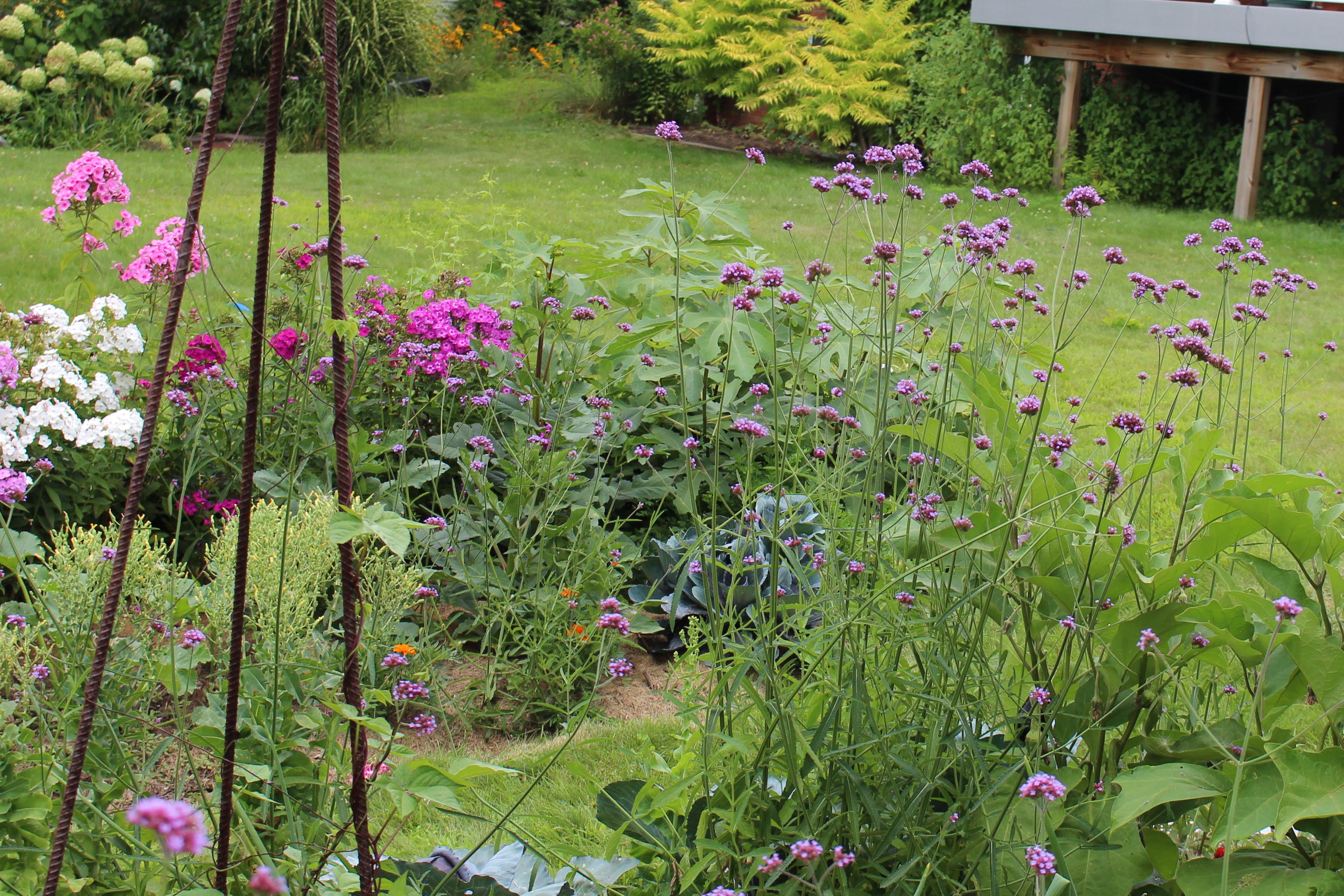
verbena bonariensis

An airy purple haze of Verbena bonariensis will spring up wherever I leave an unmulched spot of soil.

The verbena is clearly a favorite, but other flowers also fill the menu.  I don’t think of double dahlias as wildlife-friendly but maybe the color brings in even more dinner guests.  I at least think they look great.

dahlia sandra

Not a Monarch but still a welcome visitor, this fritillary is taking a break on dahlia ‘Sandra’.

My dahlias are not quite where I’d want them to be this year.  I’d blame the rains of July but in reality it’s the neglect of August and September which really did them in.  Fortunately with some good lighting and a few verbena screening and distracting they still look nice.

dahlias and verbena

Dahlias and verbena in the morning light.

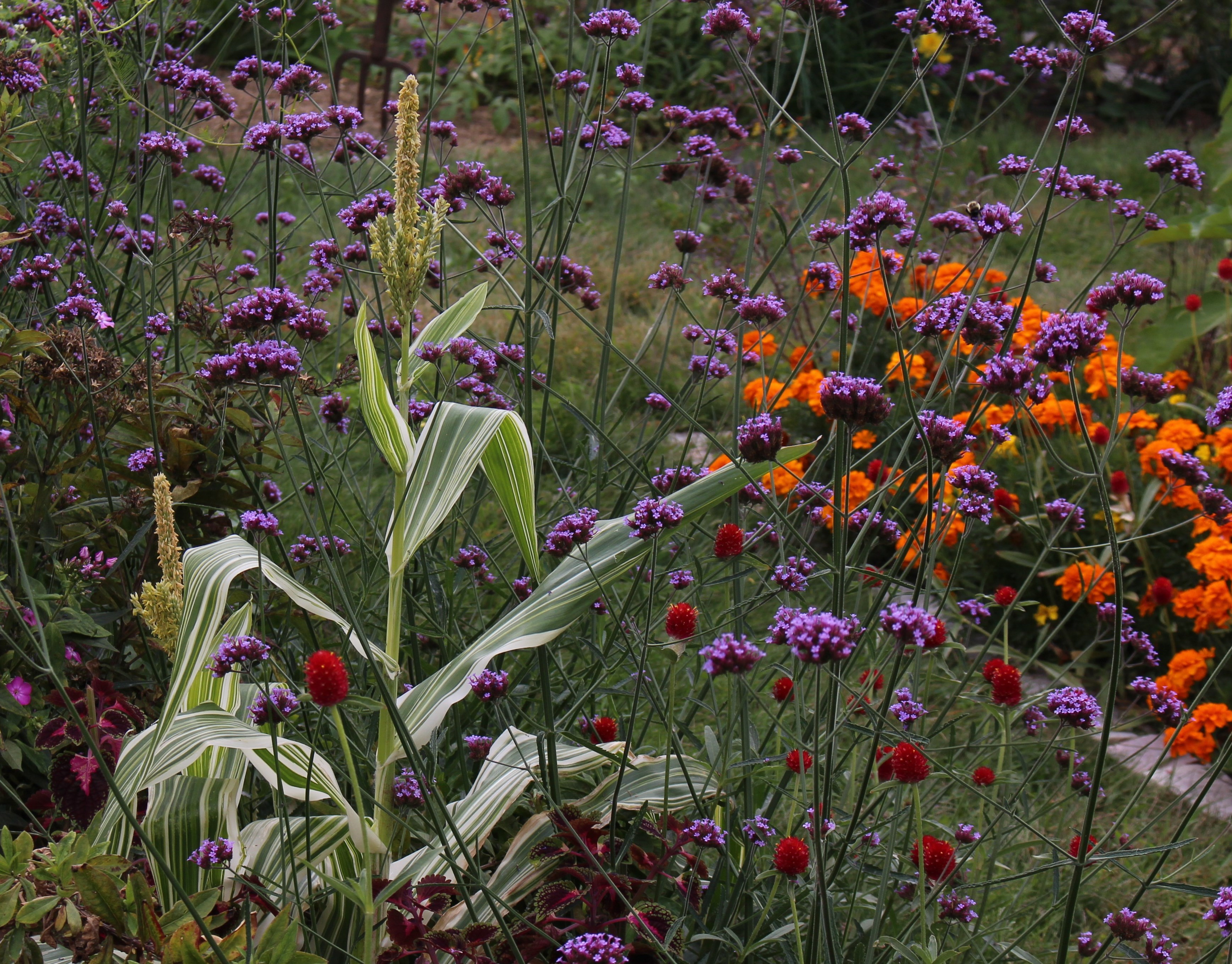
I like that the flowers take over in autumn, and I like that the combinations and players change each year as I gain or lose interest in one thing or another.  This year ‘Tiger cub’ corn is back.  The seed was a gift from Nan Ondra of Hayefield and I love the variegation but I’m afraid it won’t have time to ripen any seed this fall unless things stay warm late.  My fingers are crossed.  I love how the bright leaves of the corn go with the bright colors of the red gomphrena and orange marigolds.  Word is marigolds are supposed to be a no-no in classy gardens,  but I still love their carefree color and I like them even better knowing they’re another gifted plant, this time from Kimberley of  Cosmos and Cleome.

tiger cub ornamental corn

I did start out with cauliflower here in the spring, but then rather than replant with a fall crop I put in a few ‘QIS red’ gomphrena seedling, a few ‘Tiger cub’ corn kernels, and a few coleus for good measure.

I like this autumn mess.  Lettuce would be nice too but it’s just been too hot and dry and I just don’t have the ambition to start plants in a shaded spot for transplanting.  Plus I can always pick it up at the market… unlike butterflies, those I need the flowers for.

verbena bonariensis cypress vine Ipomoea quamoclit

In a few spots ‘love in a puff’ and the red blooms of cypress vine (Ipomoea quamoclit) thread their way through the verbena stems.  These little surprises make me smile.

Here’s another little surprise which I could fill a whole photo album with.  This spring I finally seeded out a few Spanish flag vines (Ipomoea lobata), and although they never sprouted in their seedling pots, they did once I threw the leftover soil into the garden.  It’s a late bloomer and like many in the morning glory family it can be a little rambunctious, but in this spot it’s perfect.  The spent broccoli seed stalks (I suspect I’ll be weeding out tons of broccoli weedlings next spring)  and verbena stalks provide just enough support and when a bed to the left opened up after the potato harvest the vines moved right in.  I couldn’t have planned the color coordination with the chrysanthemums any better.

Ipomoea lobata Spanish flag

Ipomoea lobata (Spanish flag) vining through verbena stalks, broccoli stems, and some of my favorite orange chrysanthemums. 

The colors of this planting are the perfect match to my daughter’s favorite orange ice pops… please don’t question why she was eating this while the morning light was still so fresh.

Ipomoea lobata Spanish flag

Color echoes in an ice pop.

I’m not a pink and grey pastel kind of guy so this bold mix of orange and purple really tickles my color bone.  Throw in a few hot pink persicarias in front of the dark foliage of the ‘Coppertina’ ninebark (Physocarpus) and I’m more than happy.  I just regret that my photo skills weren’t enough to capture it all together in one shot.

Ipomoea lobata Spanish flag

More orange and purple in the fall garden.

Another thing I regret is that the flag vine planted on the deck has turned out to be a much less vibrantly colored plant from a more refined end of the gene pool.  When my seeds seemed destined to fail I snapped up a potful found at my favorite nursery.  It’s still a very nice thing, and I’ve even grown a paler yellow version before, but I can’t help wish they all had the darker stems and bolder orange of their more common cousin.

Ipomoea lobata Spanish flag

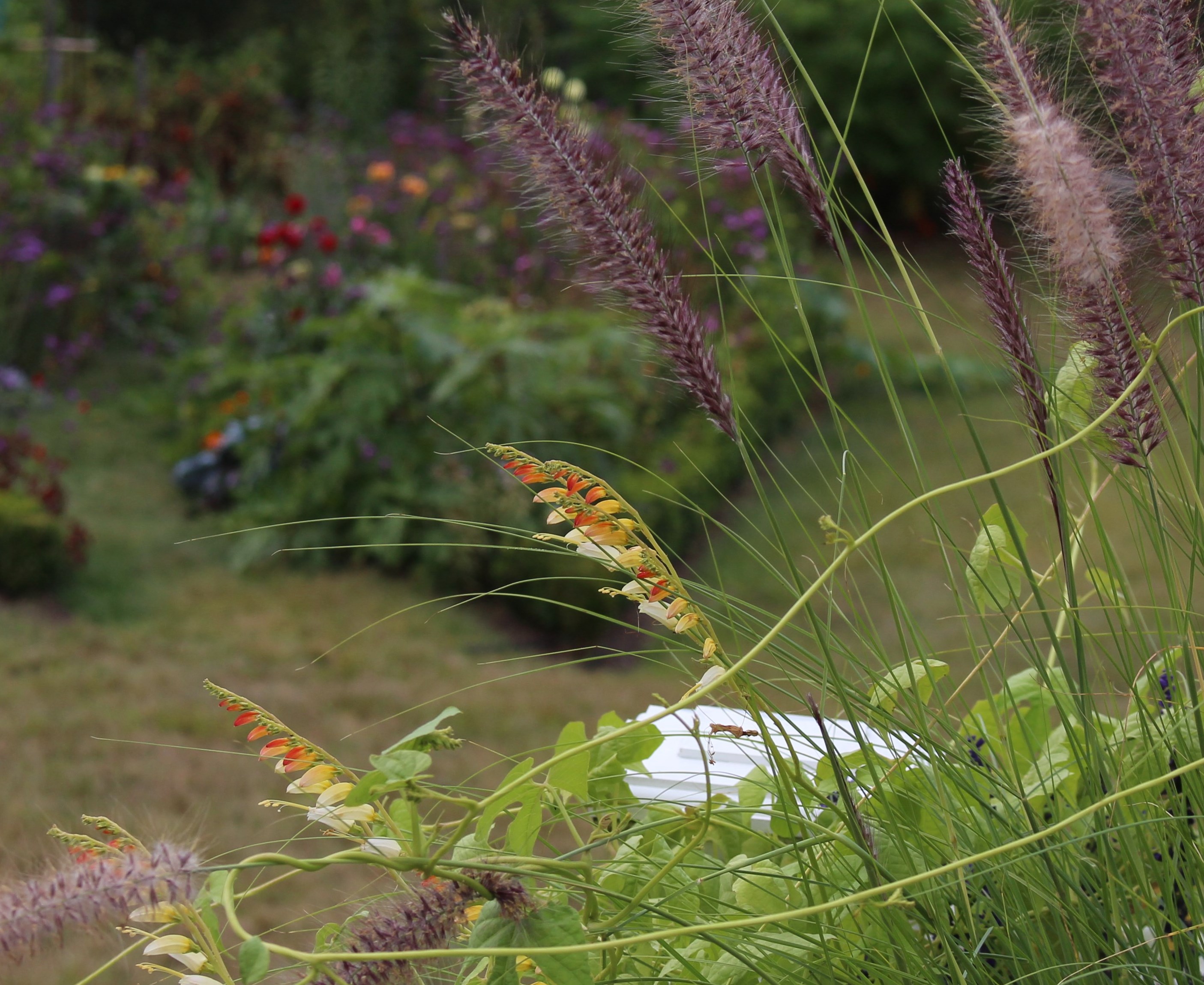
A paler version of Spanish flag grappling through some pennisetum on the deck.  The whiter blooms and lighter foliage are nice enough, but I need darker colors to hold up to the white railing.

Bold and less bold are still just fine and it really revs up the autumn season around here.  With temperatures finally cooling off and a good soaking rain last night fall is officially in full swing here and I guess I’m going to have to finally give up on my whining about the loss of summer.  It’s about time I’m sure, and to cheer myself up I think I’m going to get into chrysanthemums next post.  Have a great weekend 🙂

Stop it with the autumn talk

Many people enjoy and claim they welcome the coming of autumn.   I want to make it clear that I do not, and although the last few days have been a little too hot and dry for my taste, I would much prefer the relief of a summertime cloudburst rather than any farewell to summer eulogy.  So I guess what I want is just a few more days of denial before I’m forced to admit the season is breaking down.

hardy chrysanthemums

The tomatoes of summer are still going strong even with their new neighbors the fall chrysanthemums.

After a promising start to the summer August went dry and for the past forty days we’ve barely cracked the 1/4 inch mark for rainfall.  With high temperatures, thin soil, drying winds, and full sun the life was sucked out of a garden which had been almost carefree at the start of the summer.  With a nice rain today we’ll see how fast things bounce back.  My guess is it will be a much faster turnaround than the last two summers when things REALLY dried out to a crisp.

fall vegetable gardening

One patch of watered soil ready for fall planting. Hopefully cool weather will soon allow for a few broccoli and cauliflower transplants.

In spite of the heat a few things still look nice.  The tropical garden got a few minutes with the hose, and that seems to have been enough to keep it from death.  I love the colors right now with the purple verbena bonariensis, dark red dahlias, and peach colored salvia splendens filling the bed.

salvia splendens van houttei peach

A little orange from ‘Tropicanna’ canna goes a long way in brightening up the late summer salvia, verbena and dahlias.

With the grass dried up to a crispy beige the stronger reds, oranges, and purples really stand out.  I don’t think a bed full of lavenders, whites, and pale pinks would be as eye catching…. which I’m going to say is a good thing, since in this world of gray and tan I can use as much eye catching and hold-on-to-life color as I can get!

dahlia mathew alan

End of summer color from dahlia ‘Mathew Alan’.  As usual the dahlias could use some dead heading.

Even up front a little bold color is a nice thing.  The border along the house foundation has a few spots of color from the ‘Masquerade’ peppers I planted out this spring.  The true type has purple peppers changing to yellow, orange, and red while a few oddball plants started right off with pale yellow and are now going through the same sunset effect.

pepper masquerade

‘Masquerade’ peppers from seed with all the fescue clumps I divided up this spring.  I finally like this bed… but we’ll see how I can mess it up next year 🙂

Along the street is another story.  Even with a few emergency waterings things look end of summer tired.

dry perennial border

To water or not to water, that is the question.  Obviously I chose the latter, but the ‘Karl Forster’ feather reed grass, sedums, and perovskia are still holding on.

I did give the ‘Limelight’ hydrangea a little soaking, but a few water lovers such as the ‘Golden sunshine’ willow will need a good bit of water before they look anything close to happy again.

dry perennial border

I think this border will need a little trimming out of dead things once the rains soak in.  No big deal though, a little fall cleanup will carry it on through the next few months.

There are still a few bright spots.  Even in the harsh midday sun kniphofia ‘Ember Glow’ looks nice.  It could be a little taller but the size actually works well with the peppers and coleus (please ignore the dead rudbeckias and dying zinnias).

kniphofia

Red hot poker (Kniphofia) with peppers and a surprisingly sun and drought resistant coleus.  I wasn’t sure if the poker would ever bloom this year but I guess it’s a later cultivar. 

Until the garden bounces back the best thing to do is spend more time in the shade, seated with cold beverage in hand.  I can ignore the weeds and dead lawn quite successfully on the back deck.

summer planters on the deck

This is a late summer view, not autumn.  I’ll keep that delusion up until the first frosts threaten!

Even with a good soaking the lawnmower will still likely be on vacation for another week or two.  I’m ok with that.  I hope the soil takes in the rain, the plants come back, and I can finally use something other than a pickaxe to dig a hole.  Maybe then I’ll start thinking about things like fall while I’m taking care of a little late summer transplanting and bulb planting 🙂

Down on the farm

Late August is bathing us in heat this year and the steady rains have brought on the harvest.  We modestly refer to our garden as “the farm” or “potager” and this is the time of year when it shines.  Produce begins to trickle in and suddenly there’s a little more interest in the backyard.

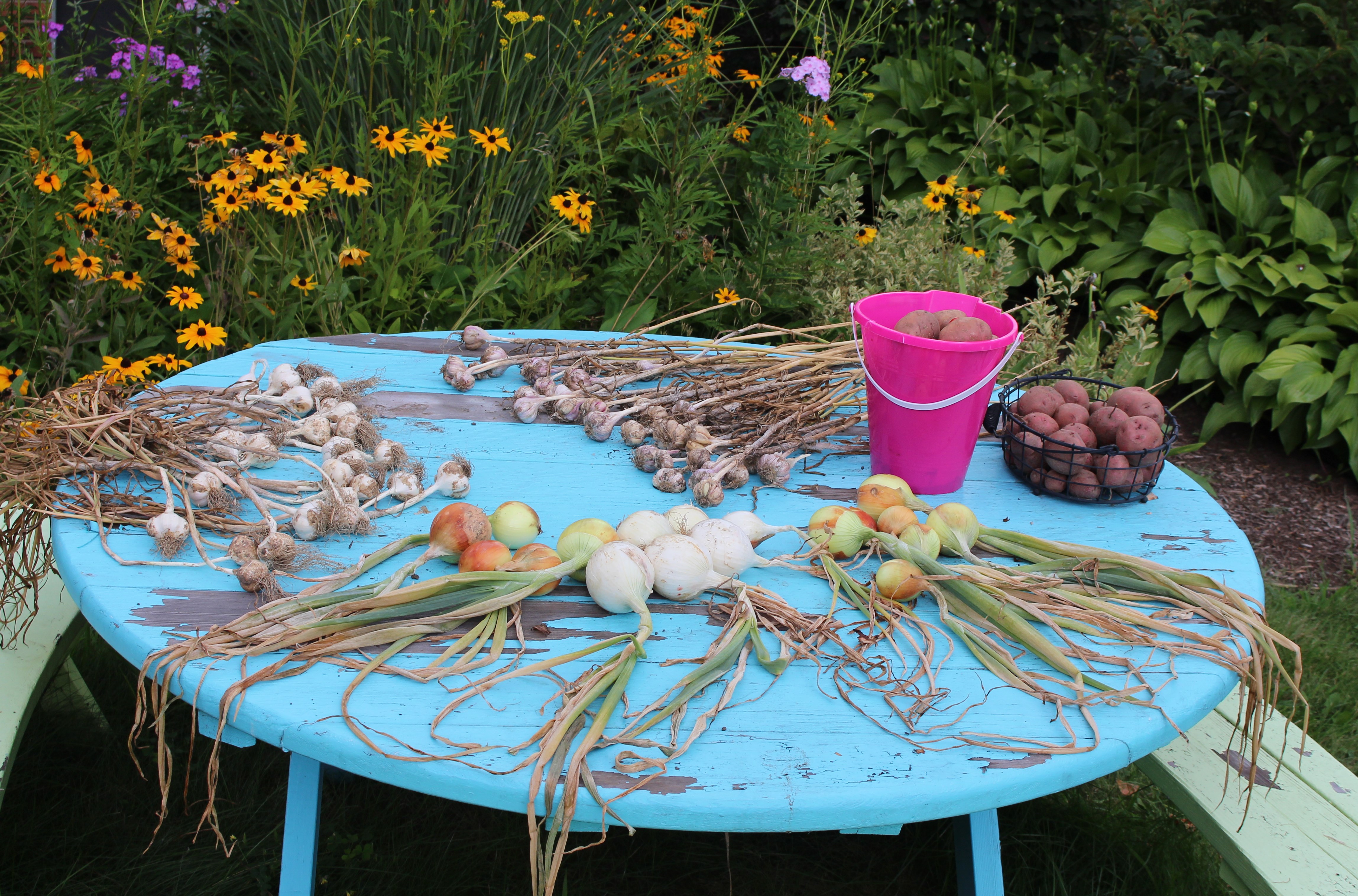
harvest from the garden

The picnic table is the place to be for drying off and cleaning up before the kitchen.  Garlic, potatoes, and the first of the onions started the month off.

Eggplant and peppers have been going out, onions are always popular, tomatoes are on their way, and beans are yet to come.  The harvest is late due to planter’s procrastination but who out there hasn’t ever fallen behind?  At this time of year even I fix up a plate of veggies, and they aren’t even deep fried 🙂

IMG_8425

I grow red cabbage just for the looks, but there’s a good chance these heads will disappear soon and show up again later as rotkraut.  Fine by me, but in the meantime they look nice with the verbena, eggplant, and marigolds.

I admire a neat garden with raised, raked beds and straight rows of perfect plantings, but that’s nowhere even close to my garden.  The potager is tumbledown mix of flowers, crops, and all kinds of odds and ends that found an open spot of soil and made it their home.  Phlox are never turned away, and earlier in the month they started their summertime concerto and the music still plays on through the heat.  For this I consider myself lucky,  since earlier in the spring between spidermites and drought I got the feeling it would be a down year for the tall garden phlox (Phlox paniculata).

phlox paniculata dorffreude

Phlox paniculata ‘Dorffreude’ (Karl Foerster introduction, 1939) making a good argument that newer isn’t always better.

The phlox make me happy, but the other flowers which add to the non-agricultural chaos also make me smile, and the tall Verbena bonariensis leads the way with their bee and butterfly attracting bloom heads.

IMG_8305

Now’s the time when the verbena becomes too attractive to pull.  It’s a fair trade-off since the flowers draw in nearly every passing butterfly.

One area of responsible neatness is the boxwood hedge which edges the two forward sides of the garden.  After three years the small plants have finally begun to look nearly respectable.  To celebrate this milestone I spent way too much money on what I hope will be a set of premium hedge shears.  The electric trimmer has been shelved and I took the quieter, more contemplative path of manual trimming.  For me it’s relaxing and I think I’m one of the few who actually enjoys this job.

training boxwood hedge

Slowly the boxwood hedge fills in.  I can still remember the summer day way back when me, a bucket of boxwood clippings,  a few trays of potting mix, and a couple beers started this all.

Besides boxwood and phlox, chrysanthemums (ok, new name dendranthema) are starting to make a serious play for potager real estate.  This spring I added even more of the larger flowered football types, trying to stick with anything which might be hardy through the winter.  I’d try to explain this growing obsession with mums but honestly after just admitting I enjoy hedge trimming I’m not sure there’s much I can say to defend this last quirk.

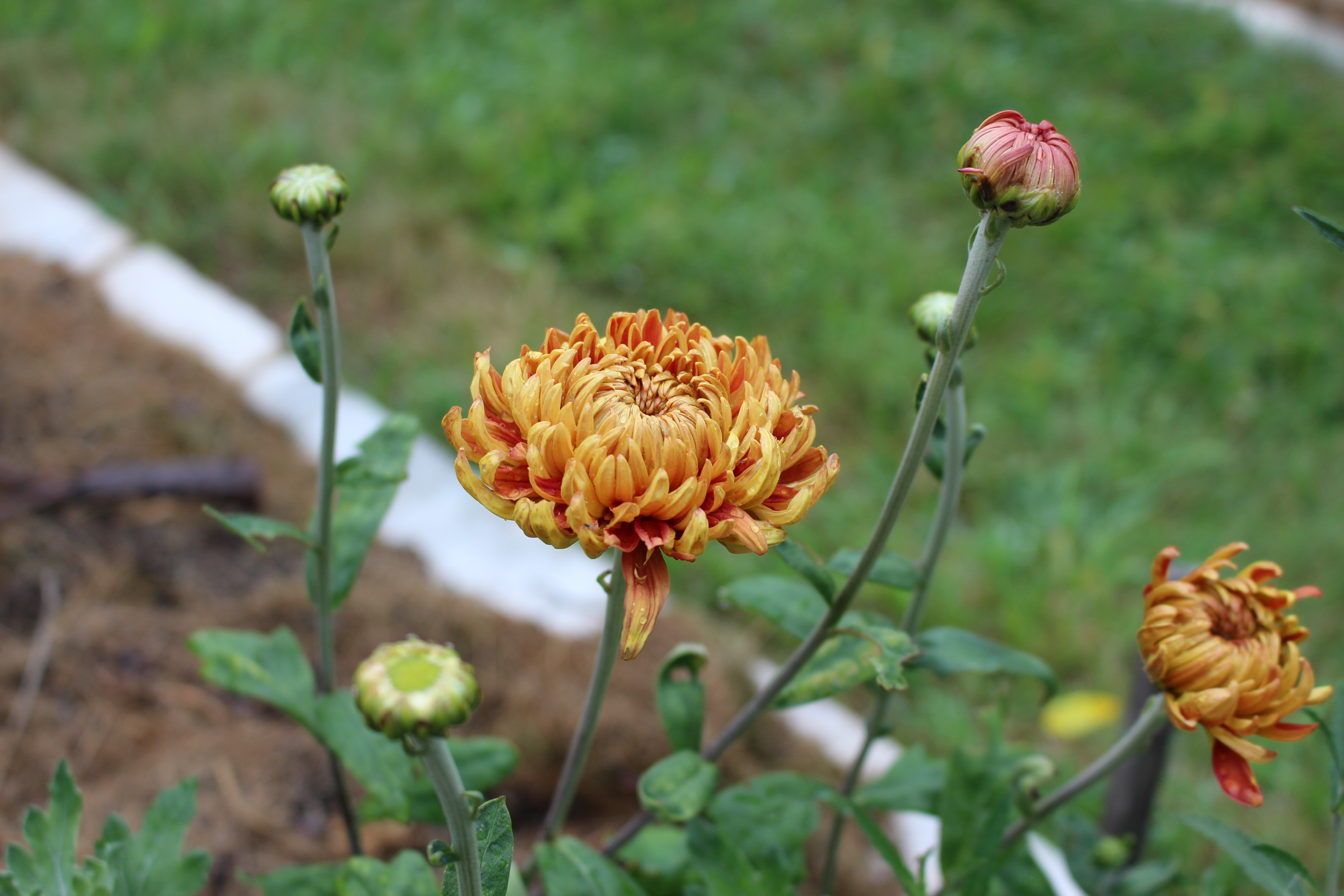
hardy football mum

Hardy (hopefully) football mum.  If the mood strikes next year I may even try disbudding a few of these to see if I can force all the plant’s energy into one single, perfectly large, perfectly perfect, bloom.

Dahlias.  I like dahlias.  I think I’ve already confessed to that.  Of course a late planting gives late flowers, and you know me and late.

moonlight dahlia

Dahlia ‘Moonstruck’.  This is its third year and it has yet to let me down, although I suspect it carries a virus which causes the leaves to yellow and die way too early in the season.

Sometimes late isn’t anyone’s fault.  For the second year in a row I’ve had these gladiolus bulbs overwinter in the open garden.  Against better advice I even transplanted them in June and look at that, the clump still managed to send up two bloom stalks.  If this keeps up I’ll need to divide the clumps next year since the other clump is up to 8 flower stalks!

winter hardy gladiolus

Just your average hellebore-gladiolus-rudbeckia-tomato planting.  I don’t think you’ll find this combo anywhere else… probably for good reason 🙂

But procrastination does have its down side.  Although the persicaria and rudbeckia have never looked better next to the potager, the light green ‘turf’ in the bed is 100% weeds…. and this is still supposed to be a red border, which rudbeckia is not.  Also the trellis never received a solid footing, and was never officially planted.  I guess that’s what the plans for next season are made of!

persicaria red border

persicaria red border

Enjoy your own harvest, whether it be fruits or flowers, contentment or excitement.  The season is here and as long as the heat doesn’t kill you first you can shelve these moments away in your mind for those dark days in January.


Hello Susan

My intention this spring was to keep the front yard a little more organized and really put my foot down against the reseeders which took over last summer….. but then the rest of the world happened and just like many good intentions my organization theme fell to the wayside.  This year rudbeckias took over.

gloriosa daisies rudbeckia

Rudbeckias, black eyed Susans, gloriosa daisies, whatever you want to call them these rudbeckia hirta hybrids really bring gold to the front border.  Fyi this is as far along the bed as the edging and mulching got this spring.  You can see my spade handle just where I left it about two months ago 🙂 

For as much as I like the softer yellows, and for as summery a tint golden yellow is, bright gold is probably one of my least favorite flower colors.  The golden takeover of the front garden really goes against any design theory I have for this bed and I suppose if I were of the more controlling type it would cause me a little mental turmoil but I think I’m ok with the brightness.  It helps bring a little sun to what’s so far been a pretty wet and ‘pearly’ summer.

rudbeckia hirta gloriosa daisy perennial bed

The front border with plenty of rudbeckias.  I was firm with seedlings of amaranth, standing cypress, and oxeye daisies but this year the black eyed Susans slipped by.

A casual passerby might think things look well under control and maybe even close to well tended, but just inside the bed turmoil reigns.  Here the inner section was supposed to be a restful patch of dark leaves canna…. which it’s not… because too many ‘good enough’ plants came up and the gardener just didn’t have the heart to pull them out.  It worked out for the best though, the variety of green centered and brown eyed rudbeckia which grew is a nice tradeoff (as long as you can continue to ignore the unplanted cannas sitting on the driveway).

mixed annual rudbeckia plantings

Mixed shades of selfsown rudbeckia seedlings. 

There used to be a greater variety of darker shades mixed in with the straight gold daisies but over the last few years I’ve tended to pull the browned eyed versions.  They seem more prone to mildew in my garden and rather than look at that I just pull them and send them to the compost before their seed ripens.

mixed perennial border

A more ‘refined’ view of the border.  Less is surely more with these bright colors but to be honest the patches where the rudbeckia grows and blooms thickest are the patches which make me smile 🙂

A week or two ago would have been a good time to seed out a few zinnias to fill in for when I get tired of the fading rudbeckias but all the rain seems to have drowned my seedling tray, so we’ll see what happens now.  Fortunately there are always volunteers willing to step up.  Here are a few sunflowers coming along (in a totally inappropriate spot) and I know a few verbena bonariensis seedlings could be found elsewhere.

sunflower seedlings

The future sunflower patch.  Goldfinches have already been stopping by but they’ve got a few more weeks to wait before this seed factory starts up.

The entire border hasn’t been given over to gold.  Here’s a now classic combination of Perovskia, Echinacea, and ‘Karl Foerster” feather reed grass made famous back in the ’90s by the Washington DC based design team of Oehme, Van Sweden.  They were one of the pioneers in publicizing the ‘New American’ prairie style planting style which moved American design away from lawns and English style gardens to a more relaxed look filled with lower maintenance swaths of color and forms which sway in the summer breeze.

Oehme, van Sweden inspired planting

My Oehme, van Sweden inspired planting of ‘Karl Foerster’ grass, coneflowers, and Russian sage.

Coneflowers also anchor the far end of the bed, and the golden rudbeckias haven’t quite conquered this far down the line.

morning light perennial border

This end of the border is were my enthusiasm for weeding and maintenance always wears a little thin.  As long as the lawn stays mowed and the edges get trimmed I think the weeds and lack of deadheading aren’t quite so noticeable.

The black eyes Susans which grow in this front border are nearly all the tetraploid version of America’s native Rudbeckia hirta, and for plant geeks such as myself the history of these plants is one of those cool wintertime stories which make gardening just that much more interesting.  A version of the story can be found by clicking here, but the short summertime summary involves Dr. Blakeslee of Massachusetts’s Smith College treating seed of the native rudbeckia with the genetics altering chemical colchicine and doubling their chromosome count.  Eventually David Burpee got a hold of the new race of flowers and set his company to work refining and selecting for more colors and forms, and in 1957 introduced the plants as we know them today.  The tetraploid version is bright and big and bold, but the normal diploid Rudbeckia hirta still has its fans for its daintier, summertime wildflower look.

rudbeckia hirta quilled petals

A straight Rudbeckia hirta which showed up in the back garden.  I like the spoon shaped petals on this one and hopefully can save a few seeds.

Rudbeckia hirta comes in two basic forms, the regular and the larger tetraploid version.  They’re both short lived perennials which may bloom the first year or may die after blooming, depending on their mood, but they’re both far from troublesome.  Don’t get this Susan mixed up with the truly perennial, clump forming Rudbeckia fulgida which is just starting to come into bloom now.  This one (usually grown as the ‘Goldsturm’ version, another Oehm,Van Sweden favorite as well as Karl Foerster introduction) is another indestructible rudbeckia but for me it’s just too much of a perennial commitment to gold 🙂

rudbeckia hirta light yellow

Another wild rudbeckia hirta which I’m keeping an eye on out back.  It’s a lighter yellow shade with a spidery inward curl to the petals (which often shows up in the darker ones as well).  I like it! 

So there you have it, the glory of gloriosa daisies in the garden of a gardener who doesn’t like gold.  Some will surely point out that I’m in gold loving denial, but daisies and gold are completely common and unrefined and I’m going to try and claim it was against my will and better taste that they took over this summer.  Either that or I just don’t care what good taste and garden trends dictate!

Enjoy summer 🙂

The softer side

It’s not all prickles and barbs here, there are a few fluffy gobs of pink which have found their way into the garden and onto the kitchen table.

sarah bernhardt peony

Peony season is here and in my opinion the best place for them is a vase.

Nearly all the huge blooms end up being cut and brought into the house, they’re so heavy that even with strong stems the flowers end up down in the dirt.  Staking would be an option but cutting is far less work, and often they last longer in the house protected from the weather.

pink double peony

There’s no simple grace in a double peony, it’s all fat opulence and fluff. 

This anonymous peony was purchased as a single pink and it’s not even close, but I love it anyway.  A wild guess would say it’s ‘Sarah Bernhardt’ but the blooms barely have a fragrance and from what I read Sarah should have scent to spare.  No complaints though, fragrant blooms are not welcome in a house full of allergy cursed and fragrance sensitive noses.

peonies in a vase

Possibly ‘Sarah Bernhardt’ peony?

Even though the flowers do nothing for the nose, I love running my hands over the flowers and teasing the flowers open.  It’s a habit my grandmother would always complain about, saying it would ruin the flowers.  She was right of course, but peony season is so short might as well enjoy them, plus burying your nose in a peony is far safer than snuggling up to a thistle 🙂

April, May and June, all in one week

I’ve been hiding.  Our temperatures spiked up to 92F (33C) last week and watching the wilted daffodils and tulips being thrashed by the dry wind was just too depressing.  In a few hot days three weeks of bloom flew by and it’s now mostly over.  The temperatures finally dropped today but I still wish we would get some rain before the grass completely yellows.  I don’t like a dry spring.

Fortunately May is still May, and regardless of the weather there’s still plenty to be happy about!

growing perennials from seed

At least my winter seed sowing is paying off. This year I have my first frittilarias and tulips from seed, and it’s endlessly entertaining to search the pots for the latest sprouts.

Between NARGS, HPS, and American Primrose Society seed exchanges I have plenty of pots of little goodies to experiment with, and as long as nobody mentions the fact I have no room for most of these, I think we’ll all just enjoy the enthusiasm of the newest little sprouts in my garden 🙂

lilium martagon seedlings

Martagon lily seedlings going on to their third year.  At this rate there’s not much rush to find more room.

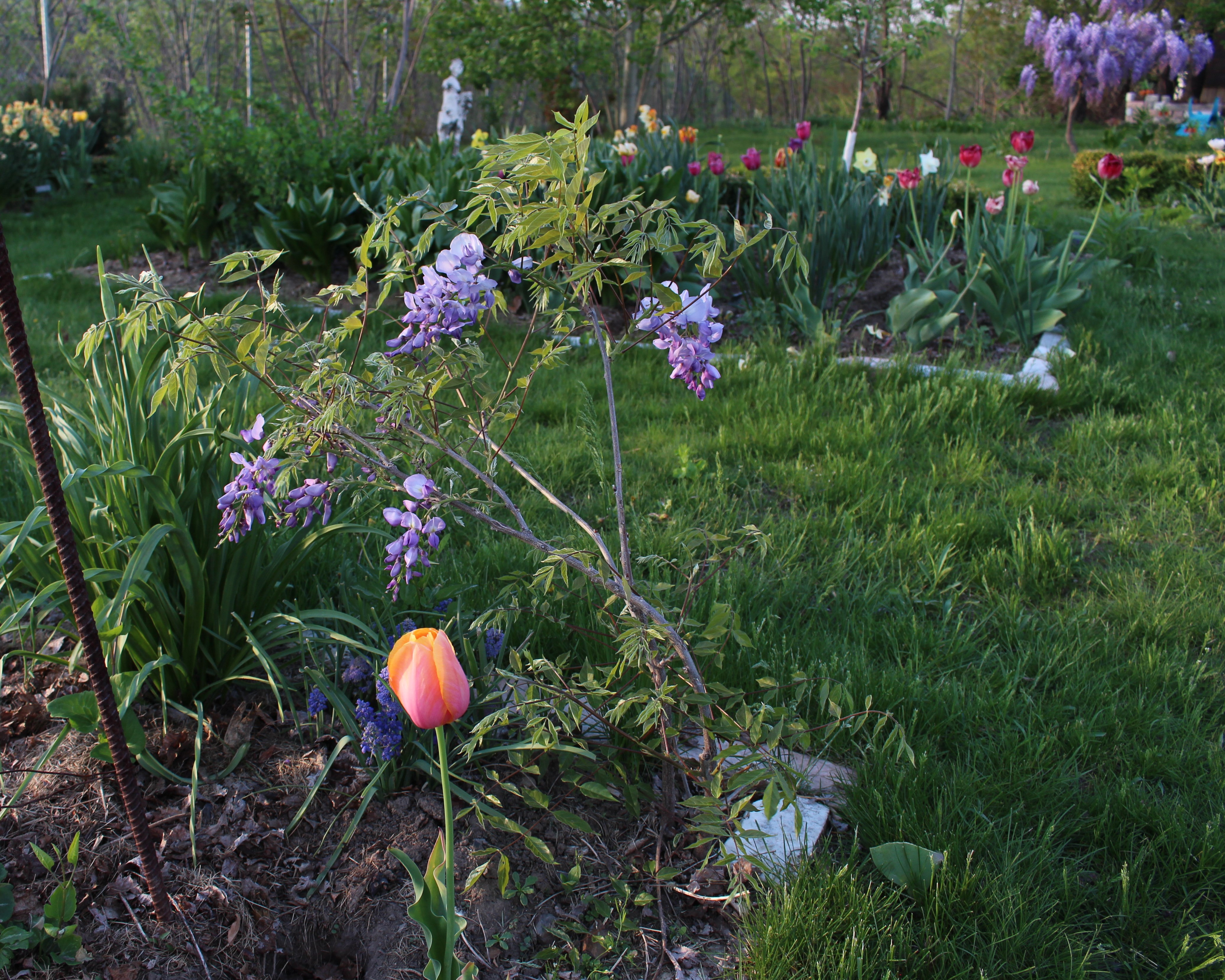
In addition to bringing on the seedlings the heat brought the wisteria from buds to blooms in barely four days.  Last spring was a total loss due to a harsh winter and late freeze, but this year about half the buds survived.  I don’t even miss the lost buds, it’s still full of flowers.

standard wisteria tree

Japanese wisteria planted out in the meadow.  Without anything nearby to grab onto and climb I think it’s invasive tendencies can be kept under wraps.

Maybe you noticed my sad little fritillaria imperialis blooming behind the wisteria.  The hot wind wilted the flowers quickly but I managed to get a photo of the interesting inside of the hanging blooms.

fritillaria imperalis nectaries

The nectar drops at the inner base of the fritillaria imperalis blooms.  A cool thing to look at, but it’s just a bit too “glandular” in appearance for my tastes!

The fritillaria will be something to keep my fingers crossed for in order for it to survive, but the japanese wisteria cannot be mentioned without a warning about it’s invasiveness.  Killing it would be far more work than the neglect which keeps it alive, and to turn your back on this plant runs the risk of having it take over.  I keep it in the middle of a lawn area were it cannot grab onto anything, to grow it as a vine and keep it on anything less than a massive arbor would be more work than I want to consider.

wisteria that doesn't refuse to bloom

Some seed grown wisteria may take decades before they finally decide to bloom, mine is a cutting off my parent’s plant which has always put on a heavy show of flowers.  Even this sucker which came up last year after I moved the mother plant already has a few blooms on it.  A smart person only needs one wisteria, I’m not sure why I’m going to keep this second one 🙂

Speaking of plants which wouldn’t mind taking over the world, I think I’ve finally decided against keeping this darker purple vinca minor.  I like it well enough but without a border or wall to hold it back it’s spreading out just a little to enthusiastically.  This plant (and my wayward campanula glomerata) are officially on the elimination list.  I might put some of it next door in one of the boring mulch beds around my mother in law’s house.  It’s not that hard to rip out, improves the look of an empty mulch bed immensely, and between the house and lawn it shouldn’t get into too much trouble.

vinca minor atropurpurea

Vinca minor ‘atropurpurea’.  A good groundcover in the right place, but a little to aggressive for my beds, and I wouldn’t want to let it escape into the wild. 

Before the heat struck I did manage to finish up a little hard labor.  The front house bed has had a once over, been expanded and topped with new mulch.  I forgot who gave me the idea, but I divided up the blue fescue clumps and spread them far and wide across the front of the border.  I like it, which isn’t something I could say the last time I redid this foundation planting.

mixed border foundation planting

The front foundation planting looking all springy.  Any opinions on the pink rhododendron in front of the brick?  I have mine, and it involves a shovel 🙂

The bed along the front of the house has been one of my favorites this spring.  The shelter of the house gives a little protection from the drying wind and my mulching has kept down many of the most annoying weeds.  Some would say my thistles are weeds but I think they’re fantastic.  You’re not going to want to touch them though….

Ptilostemon diacantha

Ptilostemon diacantha.  I can’t wait to see this one bloom (even though the blooms may be slightly anti-climactic) and will surely collect seeds if I get that far… using gloves of course 🙂

Something a little more suburbia-friendly are the tulips and camassia.  It looks nice enough here but I may remove a bunch of the camassia.  In the heat I don’t think they’ll last more than six days, a little too short of a bloom period for my tastes although I can’t complain about how carefree they are.  Maybe I’ll try them somewhere less prominent.

tulips and camassia

Tulips and camassia highlighting the front foundation planting.  The blue fescue has been divided up and spread all along the front now and I think it looks better than the gappy line which was there before.  Funny to think these are all the descendants of a single moth-eaten clump which I rescued from a neighbor’s yard. 

Close up the camassia are an airy, beautiful flower, and I think to see it growing en-mass in its native Western North American haunts would be great.  Maybe someday.

camassia leichtlinii caerulea or 'blue danube'

Camassia leichtlinii caerulea or ‘blue danube’, I’m not sure which since I planted both but they all look identical to me.

Iris season is next.  The stalks are shooting up all over and it makes the rapid passing of the daffodils feel a little less painful.  I’m sure it will be a fantastic year for iris…. unless that’s the exact point when the rain decides to come.

iris pallida 'variegata' in a mixed border

I always forget to divide the awesome iris pallida ‘variegata’.  It’s one of my favorites but seems to like more frequent division and better soil than some of the others.

So that’s it from here.  I have to apologize for not responding to comments or leaving any on the blogs I visit,  I’ve been keeping up with the reading but for the most part have been just too grumpy and unmotivated to add any productive comments.  But there’s hope.  The first irises are opening today and I’m already feeling better.  This sounds good, but unfortunately the weekend is already filled to capacity with field trips, birthday parties, dance recitals, sports banquets and baseball games and I’ll be lucky to even step foot in the garden for a few days.

But it’s almost Friday, and I hope a great weekend is had by all!