So if you see this post and think it’s been a while you’re right. Two months of silence is an unprecedented void on this blog, and I’m a little annoyed with myself that this winter the blog review will go straight from early spring bulbs right into summer… but that’s something to worry about in January. Today we’re just past the summer solstice and it’s midday with the thermometer at 95F (35C) and apparently that’s just what it took to get me inside and in front of the computer again.
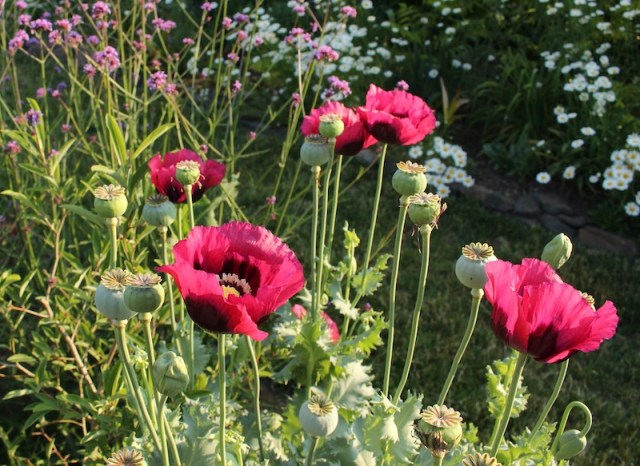
One of the opium poppies (Papaver somniferum), probably a ‘Laurens Grape’ seedling, is looking exceptional in spite of the heat. The opium poppies are safe, but the Shirley poppies (Papaver rhoeas) became rabbit food once the bunnies developed a taste. They were looking so promising…
So where was I? Here of course. Partially busy, partially lazy, going to work, and then off to Iowa for a week at the end of May (also for work). Things were transplanted, things were weeded, regular rains helped everything immeasurably, and then a load of mulch helped me immeasurably in keeping the weeds from returning… once it was spread of course. I think the garden looks nice, and if you can remember one of the reasons I wanted it to look visitor-nice was for a high school graduation party that would take place here. It did take place. Last weekend when the weather was cooler and excellent we had food and fun and about 70 people over to celebrate. Last minute projects went until the last minute of course, but overall the scars and construction of the last few years have been erased and the garden is finally back.
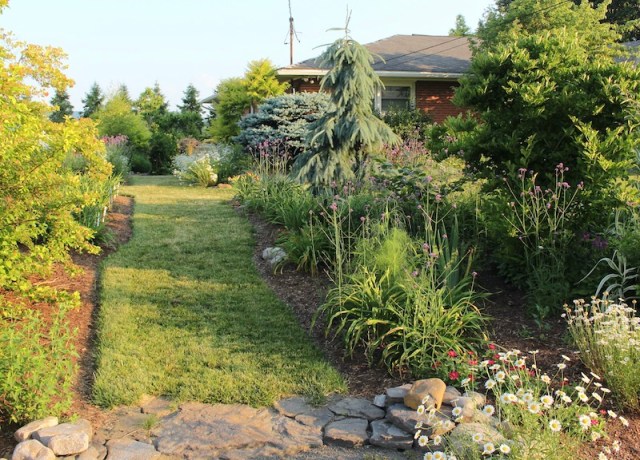
All the rain was a blessing for the lawn, with newly seeded areas sprouting well, and zero-topsoil areas growing as if their roots actually had something healthy to live on. This is the side of the house where two years of concrete trucks and work vehicles had been accessing the addition. I now call it the daylily walk.
To be honest the garden has been here throughout, but there was a lot more ‘interesting’ than anyone but myself would appreciate. Buggy borders filled with weeds and waste spaces overflowing with seediness are the first things I’d check each morning, but others would likely hold a different opinion. The fact that there were little to no complaints about the mess and in particular the lack of steps down from the deck for several years is quite amazing now that I think on it. I should really do some before and after posts.
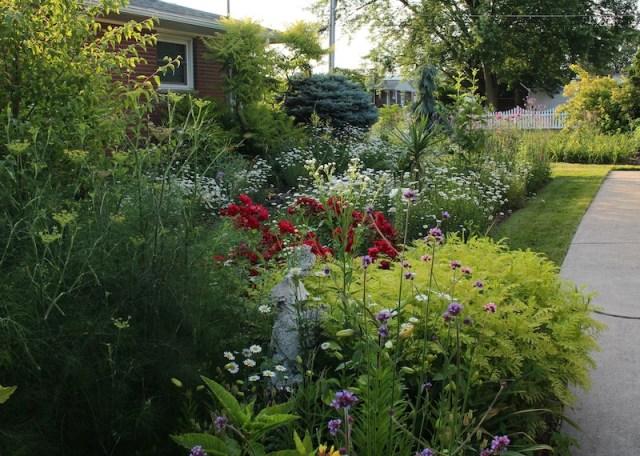
Currently the beds on the side of the house are overfilled with the common oxeye daisy. It’s a weed but it’s a weed which I’d take over empty mulch beds any day, and until better things get planted… or the heat wipes them out… I’ll take it.
A before and after would be great for one of the big surprises this summer. Little seeds sprout and grow and suddenly one afternoon you’re amazed by a huge flower on your baby Southern Magnolia (M. grandiflora). Yes, trees have been growing from seeds for eons, but when it’s by your own hand that’s something else. I would have to check, but I suspect the tree is somewhere around ten years old.
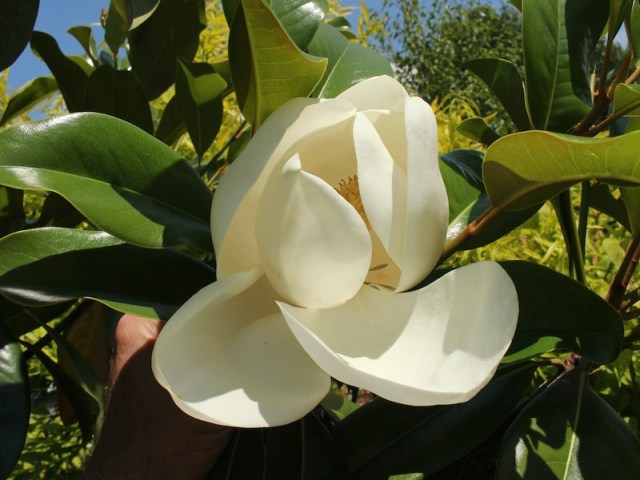
The first of five flowers which this Magnolia grandiflora has set. This and one other seedling have flower buds, the third still has some growing to do.
Perhaps the mild winter helped the Magnolias along, since they’re borderline hardy in this zone, but I’ll take it regardless. Another thing I’ll take is the nearly 100% overwintering of all the purple Verbena bonariensis which has come up just in time for the party. There are seedlings (still too small to flower) as well, but for the party a few big patches of purple really make things look much better than they are!
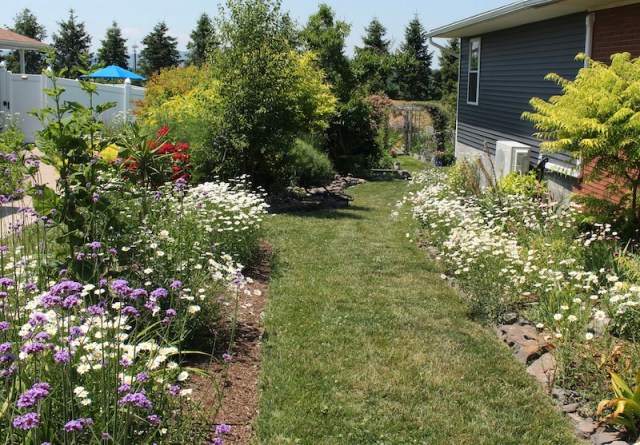
The path sloping down to the backyard and potager.
In between small talk and second helpings a few people noticed the garden. “Wow, that’s a lot of plants”, “it looks nice”, and “that must be a lot of work” were some of the comments and they were all quite nice to hear but I kept shooting myself in the foot by pointing out how many of the plants were actual weeds. For the oxeye daisies I kept telling people to look alongside the highway later and notice the same exact flowers, and for the verbena I pointed out that they’re all self-sown seedlings, and for the milkweeds I just highlighted the ‘weed’ part of the name. I do like the milkweeds though. They are a weed, but an interesting one and not as unattractive as many of my other “interesting” plants.
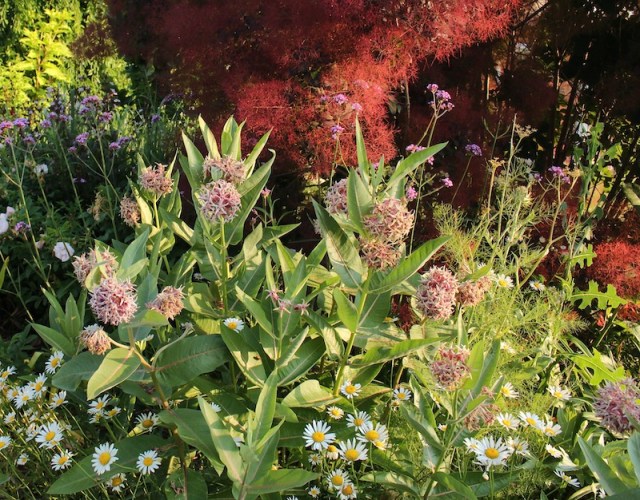
Alongside the driveway the showy milkweed (Asclepias speciosa) is flowering for the first time. It struggled to get started but apparently all the growth was underground since it’s sprouting everywhere this year!
Right now it’s the showy and the common milkweed which are putting on the best show. They’re somewhat similar but the common is much taller, especially this year with all the rain. Once they finish blooming I’ll wack em back since a six foot tall clump of m’weed by the front door is not the curb appeal our mailperson needs to see every day.
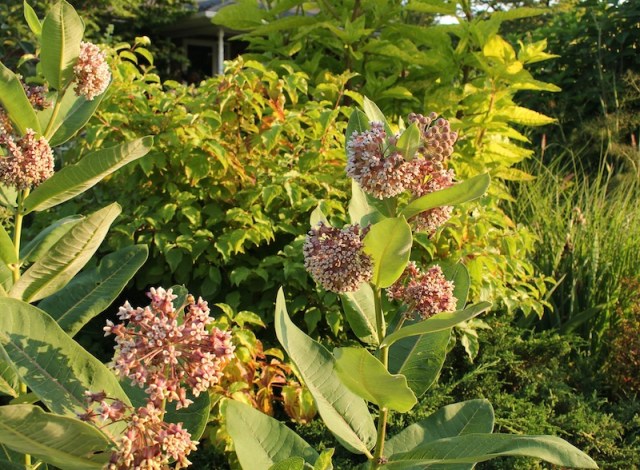
Common milkweed (Asclepias syrica) pops up throughout the garden because its roots go everywhere. In okay spots it will be cut down to about three feet after bloom, in not-okay spots I pull them out, and usually they break off neatly at the root and I can ignore what must be a massive root system.
So as usual I started this post with high hopes, but now it’s six days later and still not done. Let me try and get moving. A short summary (which is what I should have started this all with) is party was good, garden was decent, massive projects were finished enough, and summer is off to an excellent (although slightly exhausting) start.
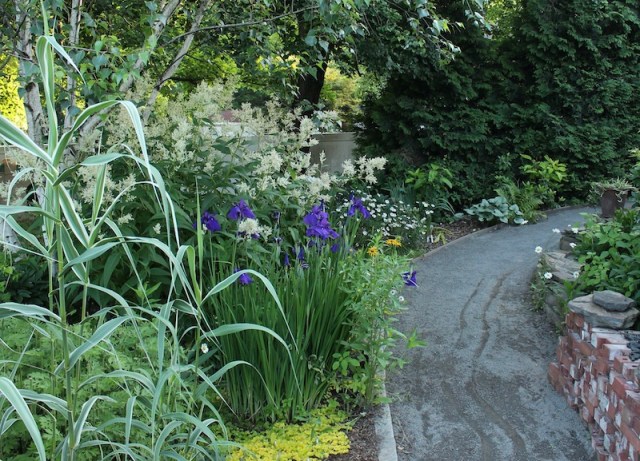
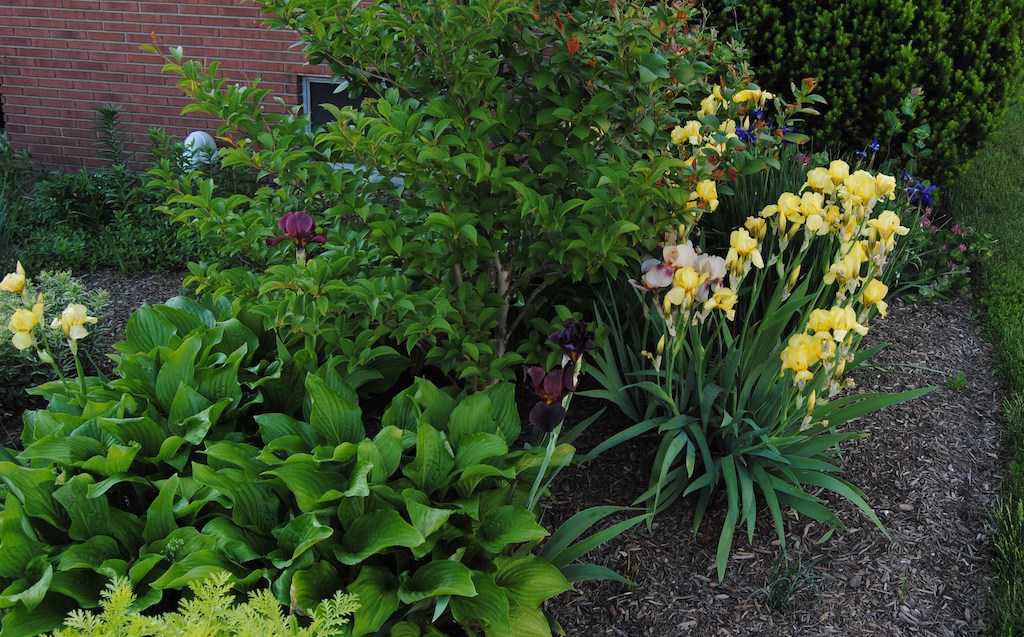
No one complimented the Japanese iris but I thought they were nice. Please note the brick piles which still remain. I can’t do everything!
So in the week since the party I’m less focused on plumbing and deck reconstruction and more focused on finishing up on the garden to-do list. I’ll hopefully get another post up one of these days because the daylilies have started, the tulips have been dug, the annuals planted, and things look even better, especially since the heat broke yesterday and we had a nice downpour to water things.
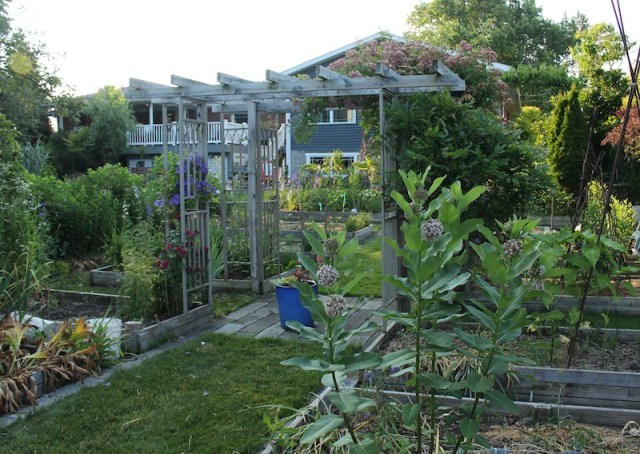
The weedy end of the potager. More milkweed and still a few beds of bulbs to dig, but a mown lawn goes a long way in making any corner of the yard tolerable.
The cooler weather has been a nice break from the smothering heat and humidity, and yesterday I was able to work outside without the waterfall of sweat and overall homeless in Florida look which has been the rule for the last two weeks.
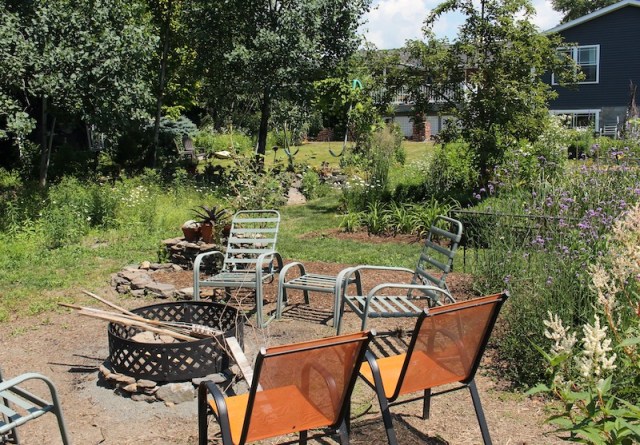
Part of last year’s ‘waste area’ became a firepit. It looks so much more purposeful than a patch of weeds but with the hot nights there have been no demands to give it a try.
When I said the garden looked good enough I wasn’t kidding. We were focused on other things, and other things always end up taking longer than expected and you don’t always get around to yanking out the dried up tulip stems. Weeds can wait when it’s a couple hours before the party and you’re setting pavers at the base of the new deck stairs while someone else is asking if she could powerwash the stairs so that she could set up tables and chairs since she thought that would be an important thing to do as well. She was right. It all came together and no one openly questioned the plethora of exceptionally healthy no-doubts-they’re-real-weeds and the embarrassingly undug tulip beds.
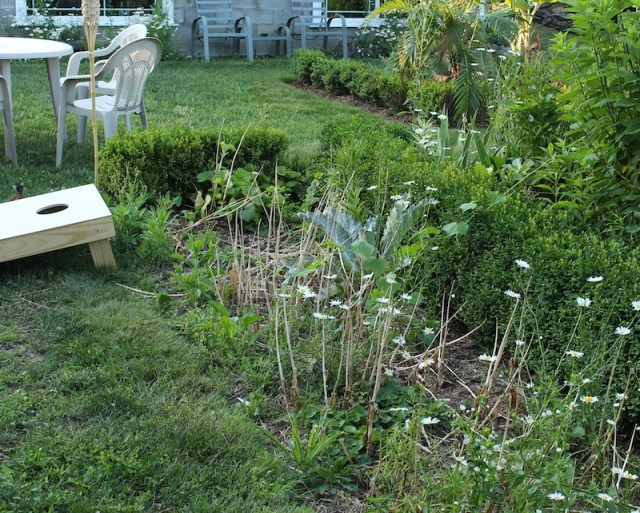
Someone with more sense might have focused on this bed in the very center of the yard, but…
Let me reassure you that in the days after the party the tulips have been (mostly) all dug and some of the biggest weeds are gone. There’s hope, and in another week or so I won’t need the distractions of food, beer and lawn games to keep people from looking too closely since hopefully there will be far fewer ‘ouch’ parts of the garden!
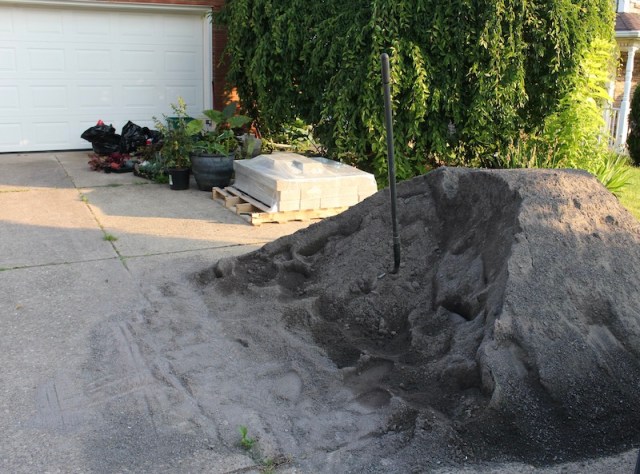
This driveway loudly announces ‘projects not done’, and no one said a word about it. I guess we have some decent friends, or at least friends who know better than to get me started on some long sand moving explanation.
So summer 2024 is off to an excellent yet tiring start. There shall be droughts and bugs and deer attacks but with any amount of luck there will also be garden harvests, bird-filled mornings, flowers, fragrance, and fun… and daylilies. I’m still kind of into the daylily thing, and with them opening up new blooms every day I have to make a decision on the daylily farm plans. It started as a joke, people were enthusiastic, and now I fear they were just joking along with me! We will see.
Thanks for reading and it’s good to be back!
 sorta like suburbia