Done With Autumn….

Well that lasted about a week.  I miss summer and wish autumn would get on with it.  Yesterday was beautiful, but today it’s colder and rainy, and I’m sure the wind is pulling down all the autumn foliage just as it finally colors up here in the valley.  Here are a few spots in the garden, maybe when I look back in January the cold and ice will put it all in perspective.

The back deck in autumn

Frost is forecast for tomorrow night nearly everything still needs to come in.  Sadly enough I have less than 24 hours left to procrastinate. 

I spent most of Saturday just wasting time.  The weather was nearly perfect and the schedule was open, but 90% of the day was spent watching grass blow in the wind or birds picking through seed heads and nearly no time time was spent productively.  If we had to separate into ants and grasshoppers, I’d be all grasshopper this weekend.

October in the potager

The potager is all ready to fall apart for winter with everything dying back and going to seed.  Peppers were harvested, the rest is on its own now.

I guess I did mow the lawn on Friday.  It didn’t really need it but the mower made quick work of stray twigs and leaves which were starting to pile up and with the mower set to mulch it was not much of a commitment at all.  Also it kind of chopped up the turf clods which lay all around the back yard courtesy of Mr. Skunk.  Someone suggested I replace and tamp down all the clods before mowing… I gave him the look and said he was more than welcome to do that in his own yard.  Here we prefer to thank the skunks for their free grub removal and turf aeration services and let winter work apart the clods.

the meadow in autumn

Back behind the swingset, the meadow looks downright respectable again after a few mowings.  

Mowing the lawn takes a little longer these days now that the meadow area is back on the weekly cut plan.  To those who thought the tall grass was a reservoir of dangerous ticks and snakes and spiders this comes as a relief, but to me it’s all just part of getting the turf ready for next year’s show of spring bulbs and early summer wildflowers.  It will sprout up again just fine next spring, and ironically enough the most dangerous thing back there still remains within inches of the swing.  The bright red seed pods you see belong to the castor bean plant(Ricinus communis), and as you may know the beans are the source of the poison ricin.  Smaller children would need to be watched, but based on what a struggle vegetable eating is in this house I’m pretty confident my own kids won’t be picking beans up out of the dirt and eating them any time soon.

The tropical garden

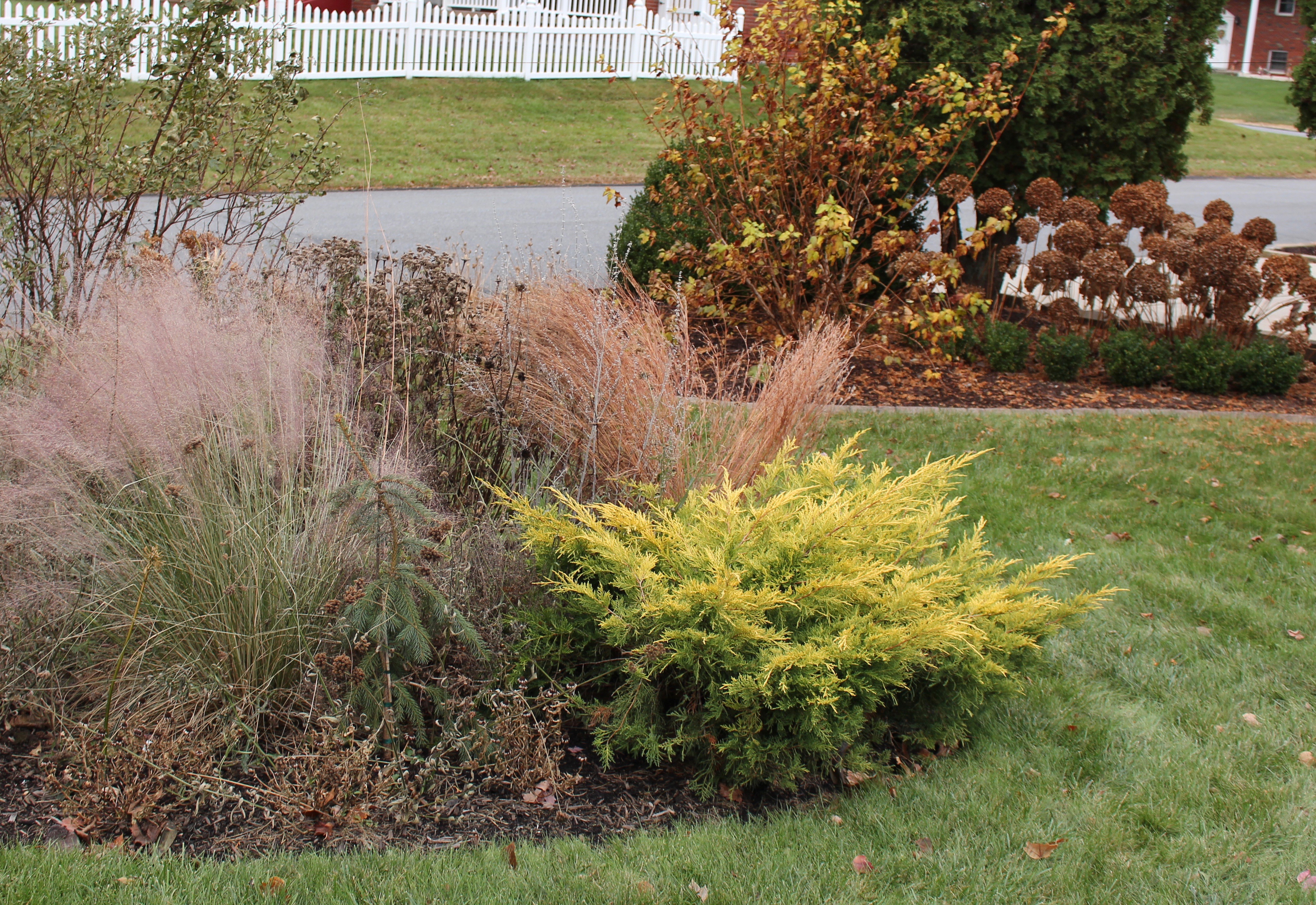
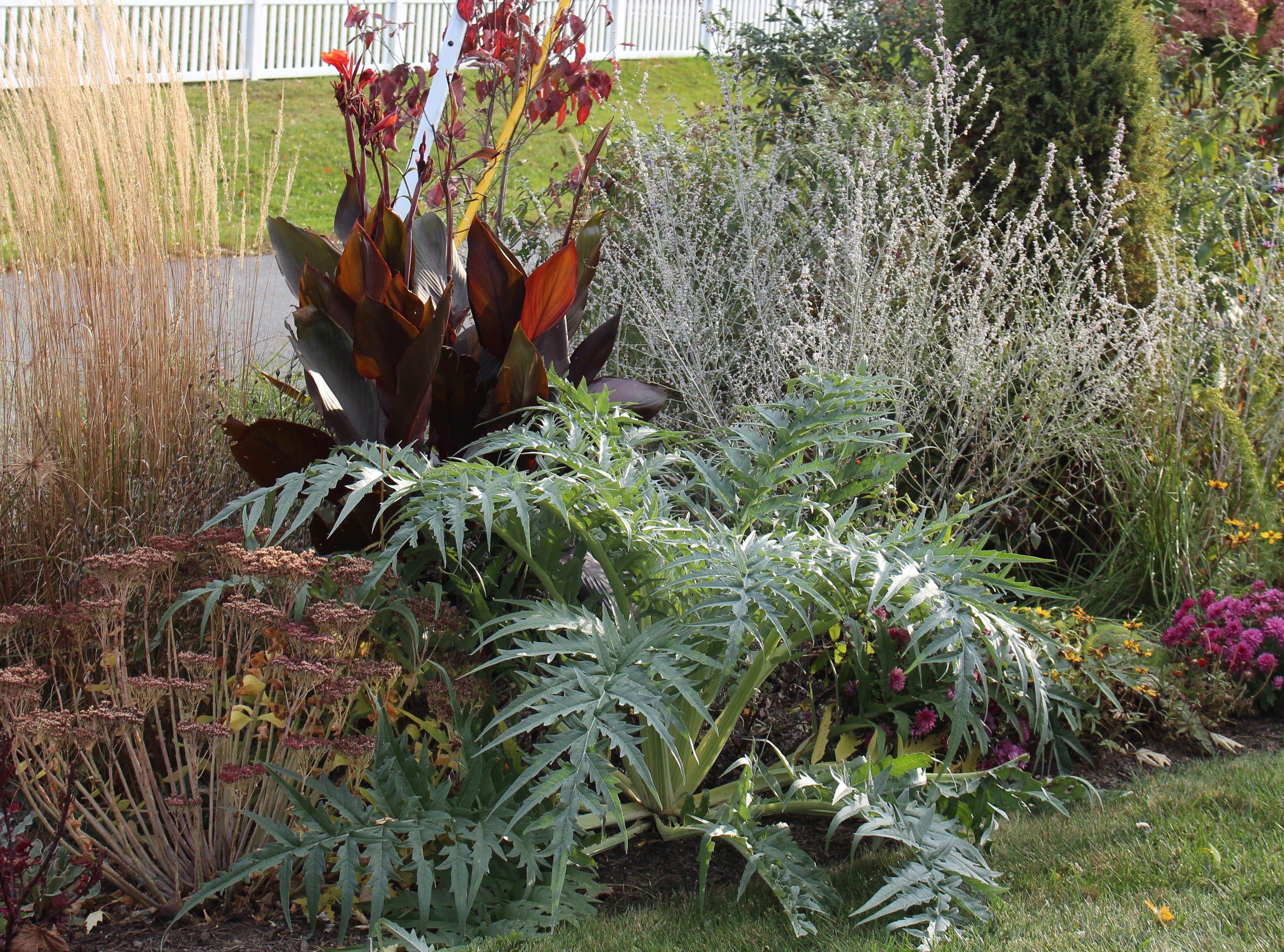
The tropical garden just before the frost.  Not as lush as last year but the grasses are still a good 8+ feet tall, and overshadow the not-quite-as-tall-as-last-year cannas.

I may not have done much in most of the garden but at least I did pay some attention to the rock garden.  It still doesn’t have any rocks but at least the yews are trimmed.  Weird that out of all the things to do this time of year I’d be trimming up little yew meatballs, but there you have it, Saturday’s big job.  Here’s a photo from a few years ago to give you an idea of where we came from.

overgrown yew hedge

Every spring… trim the yews… I finally got so bored with it I let them go, but after a few years the neighbors started talking.

Two years ago I trimmed the yews back to within a few inches of the ground.  It was either that or remove them completely, but after the struggle of taking a single one out (so the electrician could rework the electric service), I suddenly warmed up to the idea of keeping them.  So now I have little yew nuggets along the foundation and an empty south-facing mulch bed which seems perfect for rock garden plants.  I’ve already filled most of it and it’s a constant battle to keep from doubling the size of the bed.

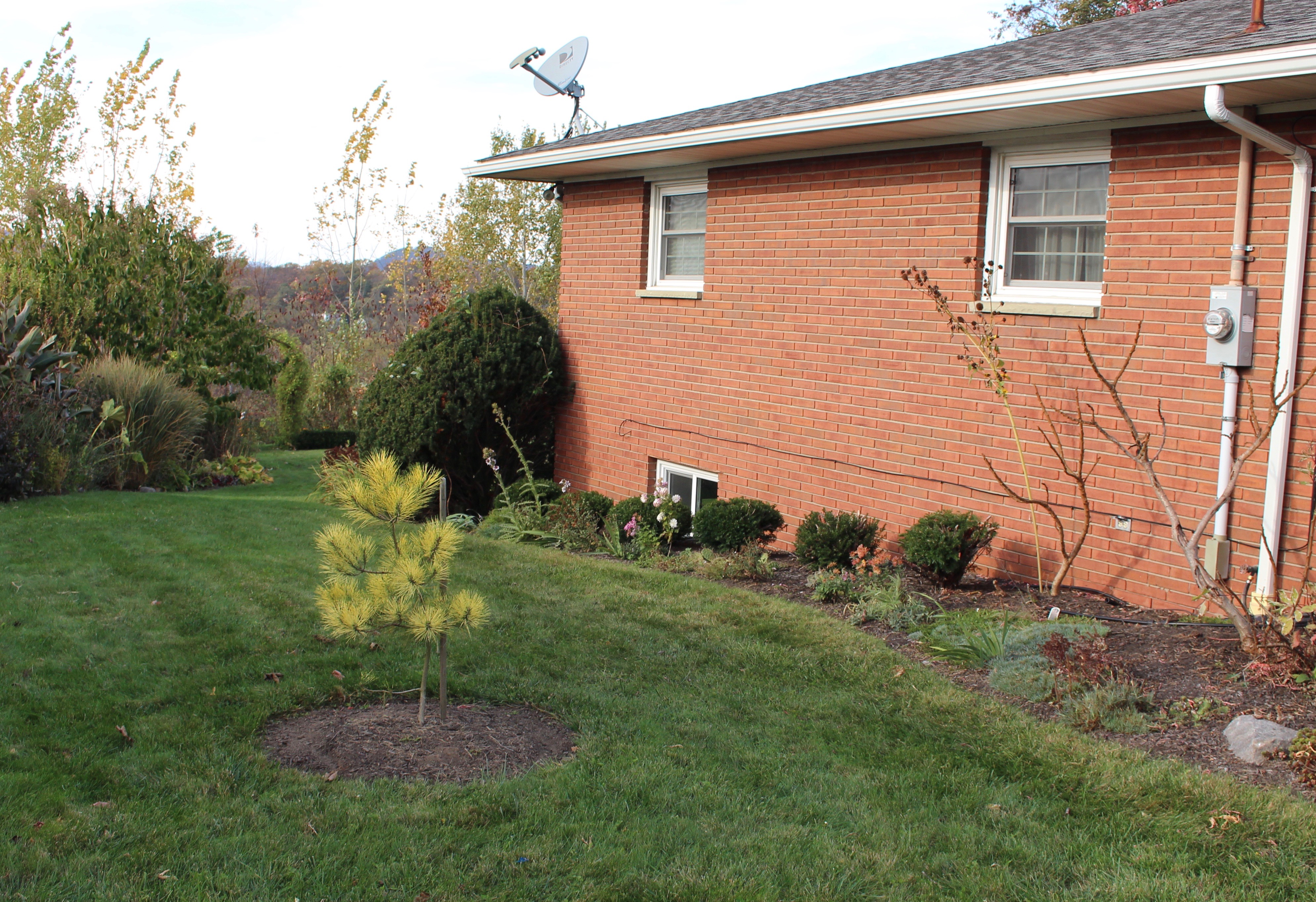
the rock garden

The rock garden.  You may see a single rock to the far right but for the life of me I don’t know how the name started.  -Btw the pine is Pinus densiflora ‘Burke’s Red Variegated’.  I love it. 

Eventually I’ll need to get moving if I really want to be serious about gardening again next year.  Beds need cleaning, plants need saving, things need transplanting.  There’s always plenty to do but in the back of my mind I keep figuring that cold indoor days are coming and I should take advantage of the last warm days.  That probably means doing things, but a little soaking it up doesn’t hurt either.

porch decorations for autumn

We will see how this handles a little frost.  All together I think I found about 20 of the odd little Yugoslavian finger squash once I started looking around out back, and between those and a few mums I think we’re decorated.

Tomorrow I’ll be running around.  Or not.  Most of the geraniums, amaryllis, and cordyline spikes can handle a little frost and should be ok for another week or so, so I guess it all comes down to seeing how long I can postpone the inevitable.

overwinter geraniums

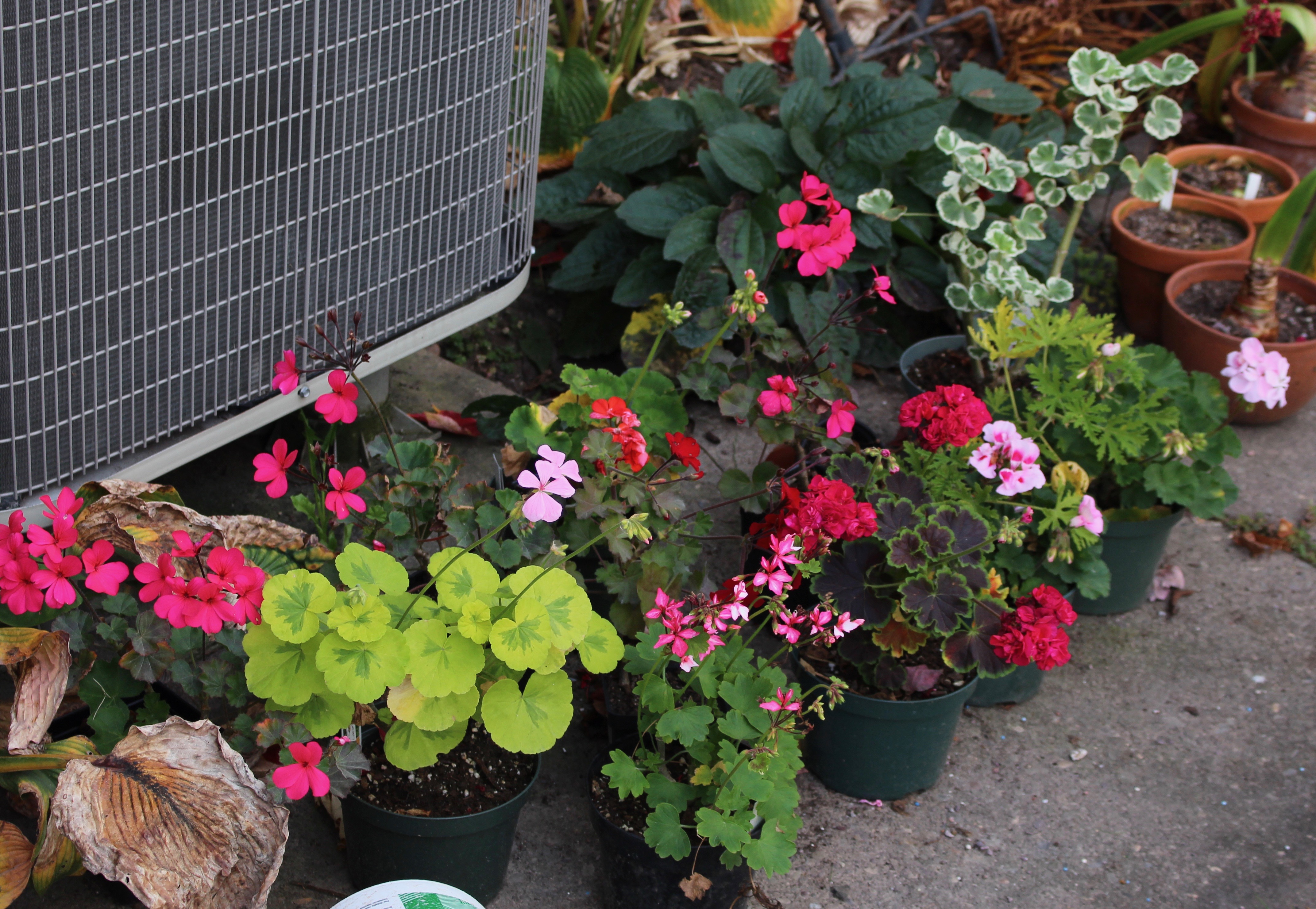
Geraniums (pelargoniums) lined up and ready to come in.  Between these and a few cuttings already under lights I think I can give any geranium-loving granny a good run for her money.    

Frost will come, the garden will go to bed, and the dreams of spring will start.  I’m sure there are still plenty of perfect days to come but for now I’m dreading the end, and even worse when the clocks fall back next weekend.  I wonder if it’s too early to start thinking about snowdrops.

… haha, who am I kidding, I’ve already been obsessing about them for the last month!

Have a great week, and maybe you can find something pleasant in the soft light, beautiful colors, and crisp air of autumn 😉

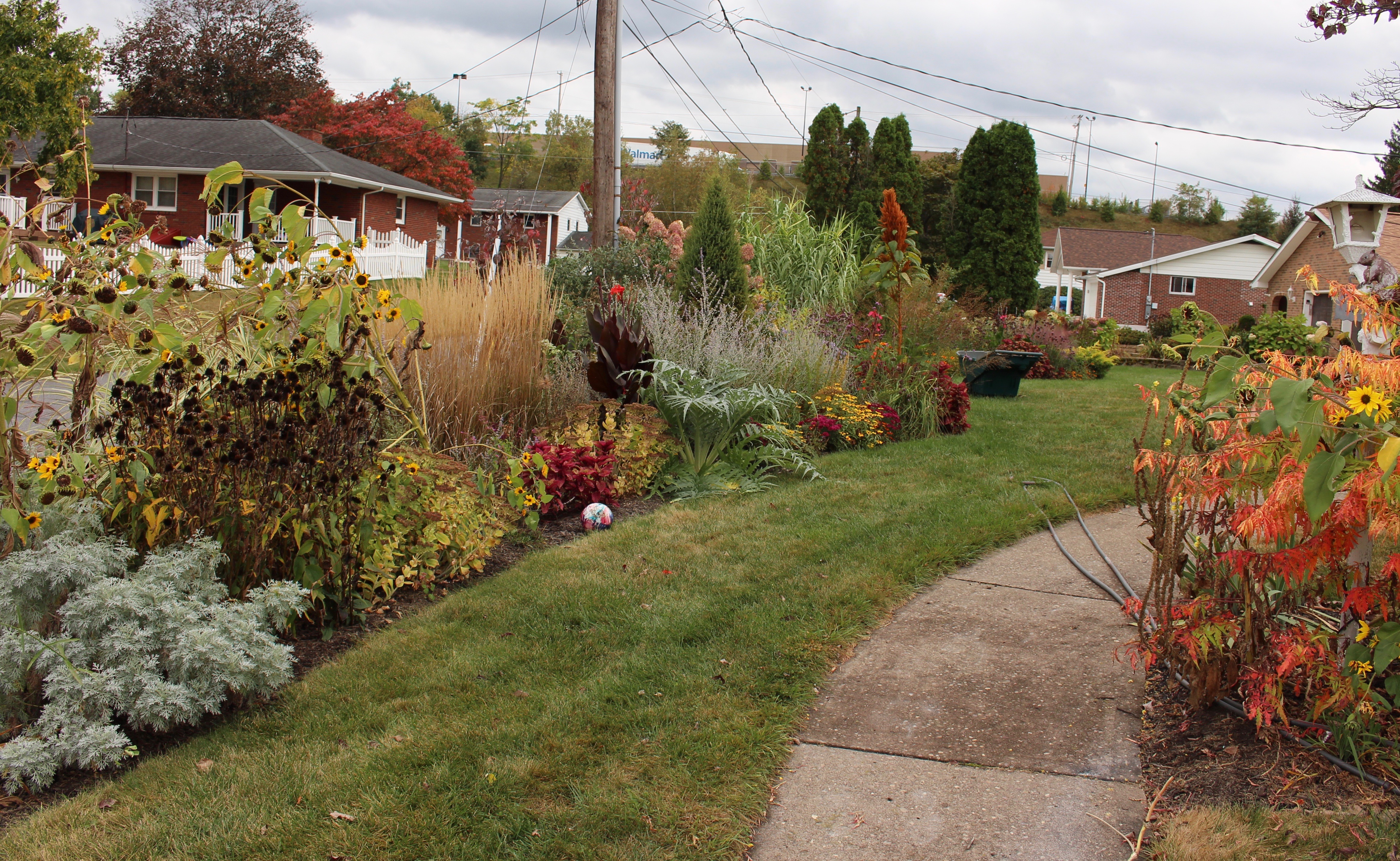
Tuesday View: The Front Border 10.9.17

My gardener has been extremely unmotivated these last few weeks as he comes to terms with the long stretch of hot dry weather which has settled down upon this corner of Pennsylvania.  Months and months of not needing to water and not having to concern himself with pampering transplants has spoiled him, and the last month of humid, buggy, unseasonable heat has him refusing to work.  As a result this week’s Tuesday view is not much changed from the last view, and other than the general air of decay setting in, there hasn’t been much of a fight put up against this end of season degeneration.

front border

Today’s Tuesday View.  Autumn is here.

The garden did get a good soaking this weekend when the latest hurricane leftovers blew through, but the humid dampness also brought the local gnat population to an electrified frenzy.  Lets hope it also electrifies the gardener since all we’ve gotten out of him in the last few weeks has been a 20 minute manic attack on a relatively innocent Rose of Sharon bush (Hibiscus syriacus ‘bluebird’).  It happened one overly warm afternoon, shortly after he was heard ranting something to the effect of  “look at all those friggin’ seed pods, no way I’m pulling up thousands of seedlings next spring”.  So out it came.

front border

Sometimes pretty blue flowers and inoffensive green leaves just aren’t enough.  The Rose of Sharon is out now, but unfortunately the branches, rootball, and garden cart still sit where the gardener left them over a week ago.  Not even the threat of a Tuesday View was enough to get him moving!

Fortunately there have been a few other autumn goings on which can distract us from the local labour’s laziness and sloth.  The fall bloomers are coming on in full force and the Monarch migration has reached its highpoint.

aster raydon's favorite

We are on the downside of the migration but Monarchs still keep fluttering on through.  Aster ‘Raydon’s Favorite’ might not be the Monarch’s favorite but as far as asters go it’s mine.  It tolerates drought, needs nothing from me, and flowers for weeks.  

There are always a few dozen butterflies floating through the air, and as you stroll they take off and circle in a round, lazy pattern which makes you wonder how they ever manage to make it all the way to Mexico.  But they do, and although it’s still on the warm side they better get a move on it.  Frost is coming and the last nectar-filled flowers won’t be around forever.

pepper sedona sun

Some color at the midpoint of the bed.  An unknown purple mum from a years-past porch decoration and the cute little orange and yellow fruits of ‘Sedona Sun’ pepper.  Each year I like ornamental peppers more and more and who knows, maybe next next spring will turn into pepperpalooza!  

The last big hurrah of the front border will be the pink muhly grass (Muhlenbergia capillaris) at the far end.  Most years the peak of pinkness hits only to be followed by a bleaching frost but this year my fingers are crossed for at least a few days of enjoyment.  I’ll try for a better photo next week with a little late afternoon sunshine but for now you’re stuck with a little of the grass with yet another Monarch perched in front.

monarch butterfly

Monarch butterfly surrounded by the colors of autumn.

So that wraps up this Tuesday’s view, and it also signifies the beginning of the end of the 2017 season.  You may have noticed that in spite of the heat I’m no longer quite as convinced that summer will never end, and I’m actually accepting that autumn is here.  I guess it was inevitable, and if you’d like to see what it looks like in other parts of the world give Cathy a visit at Words and Herbs to check up on a few other Tuesday Views.  I hear she is also admitting the season is winding down.

As always have a great week!

Colchicums!

I’m finally ready to admit it’s fall and then what happens?  The rains stop, the thermometer rises, and we’re right into the middle of a stinkin’ heat wave.  I would have loved this at the start of the month when the pool was still open, but now it’s just making the gnats hungry and me grumpy.  Fortunately it’s colchicum season and between that and the chrysanthemums things look somewhat refreshing around here (provided you only go out in the morning or near sunset!)

colchicum bornmuelleri

Colchicums, aka autumn crocus, aka naked ladies, are a nice way to ring in the change of seasons with something fresh.  Out of the hard, dry ground come these unlikely flowers, all eager to show off such as this favorite, Colchicum speciosum ssp. bornmuelleri

I’ve written about colchicums before so I don’t want to rehash the same old info I always give out, but the short summary version for the autumn blooming types is… leafy clumps of hosta-like leaves in the spring fade away in May, and various shades of pink through white crocus-like flowers appear without anything else (naked!) in late summer and early autumn.  I like them well enough 🙂

colchicum in lawn

Before things got too hot the colchicums in the meadow area were coming up nicely.  They seem to be settling in well but if you look towards the back you’ll see another planting which is much sparser.

The trick to growing colchicums is to find a spot where the spring foliage won’t bother you as it dies back in early summer, yet the spot is open enough so you can see the flowers as they come up later in the year.  For a while I had them all by themselves in a bed which was too dry for anything else, but as they’ve multiplied I’ve had to plant them outside my comfort zone and actually try and come up with decent companion plantings and landscape uses.

colchicum in ground cover

I’ve shown them in the blue plumbago Ceratostigma plumbaginoides) ground cover before.  It’s not for everyone but I don’t think it’s the worst combination I’ve ever put together.

The plantings which have pleased me the most are the ones in ground covers rather than plain old mulch or bare soil.  Sedums make a nice carpet and I have it in my head to try a lot more like this.  Hopefully some of that will happen!

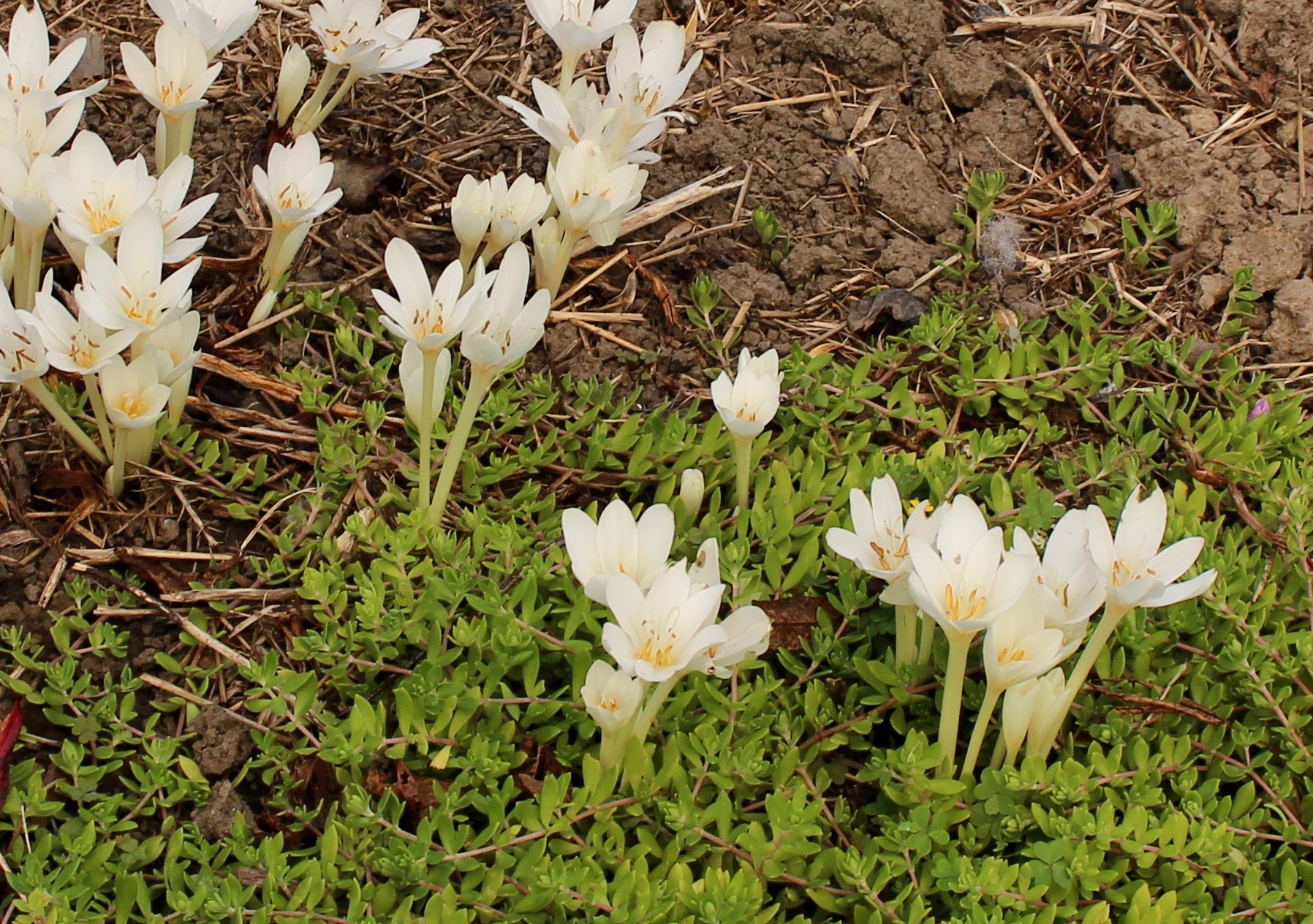
colchicum autumnale album

Colchicum autumnale album with and without a nice creeping sedum blanket.  I think the ones surrounded by green are far nicer.

Unlike most bulbs which move best while dormant, colchicums also give you the option of procrastinating until bloom time and then having the much more enjoyable experience of digging and planting bulbs (actually corms if you’re going to get technical, and even then people will debate you) in full bloom and moving them to the exact spot you want to see them flower.

dividing colchicum

Colchicum ‘Nancy Lindsay’ lifted and divided at the start of September.  The roots are just starting but if you’re careful no harm is done.

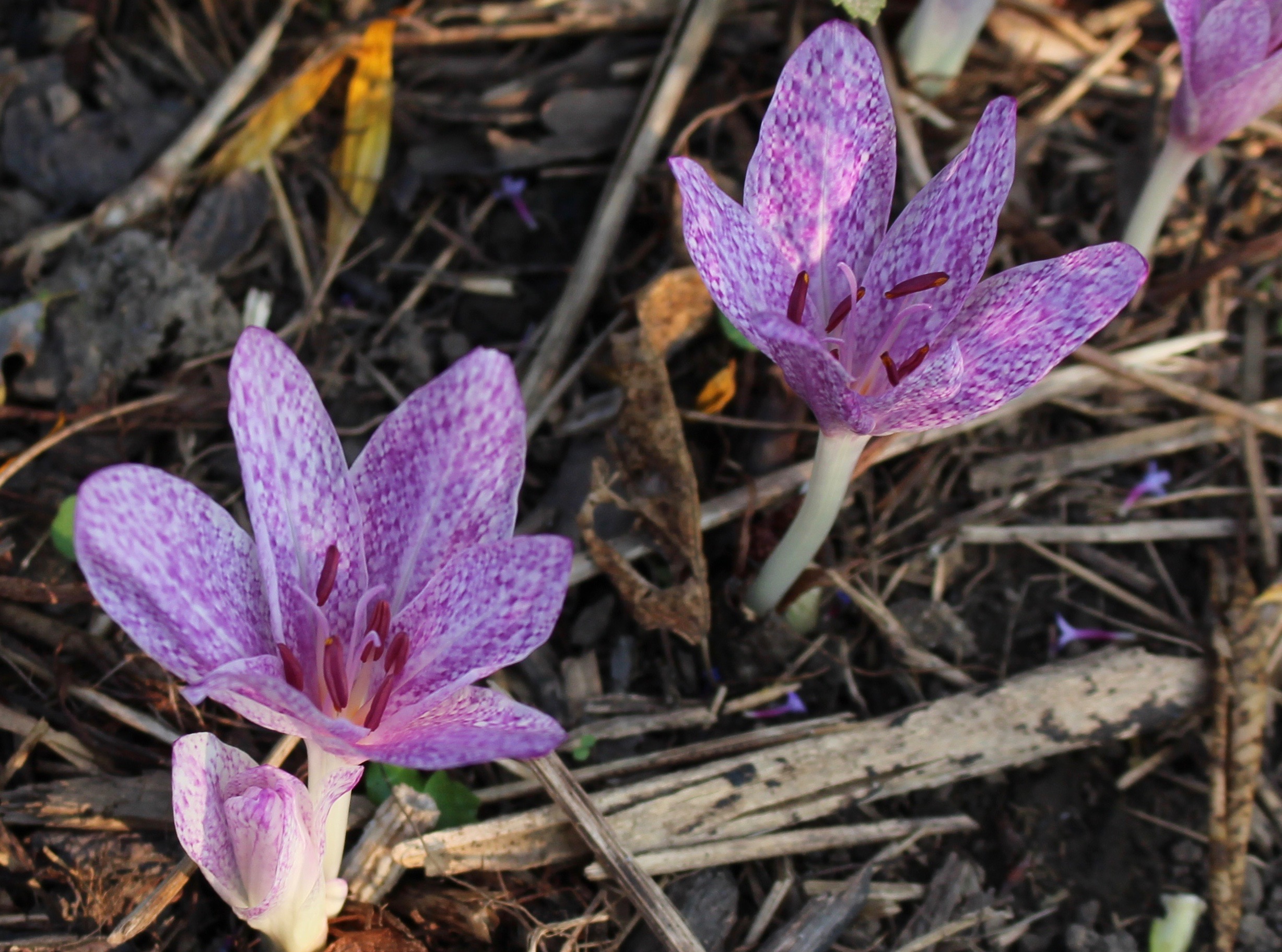
You really want to make sure they’re in a spot where you won’t miss the flowers.  The big, bright ones are unavoidable but the smaller more detailed blooms are also worth your attention.  Checkering, or tessellation, is something extra special and worth a closer look.

colchicum tessellation

The dainty and early flowering Colchicum x aggripinum.  Tessellation on the newly opened flowers of this hybrid is really something.

This flower also does doubles.  I’m not the type of gardener who will drop any single just to pick up the double version, but these have their own charms… well maybe not charm since they’re so fat and double and pink, but they do pack a punch.  I think of paper flowers when I see these, I don’t think it would too hard to replicate them in pink crepe paper if the need arose.

colchicum waterlily

colchicum waterlily

Who am I kidding?  I love the double as much as any of the others, and if we’re being honest I really wouldn’t mind adding another couple new ones even if it was only to have another couple new ones.  Just for the record I saw a few really tempting ones at my favorite local nursery, Perennial Point, and I did not buy one.  Yes, I’m patting myself on the back.

colchicum byzantium

I think I like them in the lawn best of all (C. byzantium)

I may be working through collecting issues with these bulbs, but there’s someone else out there who’s clearly gone over the edge.  Her name is Kathy Purdy and if you’re a follower of Cold Climate Gardening you already know she has one of the largest colchicum collections around and will be opening her upstate New York garden this fall for the first time to show them off.  I’m in, and if you’re interested >click here< to visit her blog for the details.  Have a great week!

The Efficiency of Factory Farming

Apparently it’s September.  Every time I look at the calendar it kind of surprises me that the year can fly by so quickly but really?  September?  It’s becoming harder and harder to convince myself that summer won’t end.

potager flowers

The view of the vegetable garden (aka Potager) in early September.

Many people consider September to be an autumn month.  I’m going to assume you know where I stand on that theory.  I bet those same people consider the vegetable garden to be the most appropriate place for growing vegetables,  and not a catch-all spot for all the flowers and shrubs which couldn’t fit into the regular borders and beds.   Neat, productive, raised beds bursting with produce are nice enough, but at this time of year I love the flowery, seedy look of a vegetable garden gone wild, even with all the overgrowth, bugs, and mildew 🙂

canna cannova rose

A sign of the season.  The bold colors say summer but the seed pods and overgrown vines say autumn.  A big spiderweb even sets it up for a halloween look.  In case you’re wondering these are some ‘Cannova Rose’ seedlings which I started this spring just to see how they turn out.  I think it was a success!

There were a few things which did manage to come out of the potager which were worth eating.  Potatoes, tomatoes, peppers, beans, and loads of zucchini  all somehow managed to find enough room to produce a harvest, as well as a meager crop of onions.  The onions looked so promising in April, but I think they just wanted more sun.

birdfood sunflowers

I was so close to wasting this space on corn.  Instead I bought a few ears at the farmstand and filled the bed with sunflower seedlings which were weeded out from other parts of the garden.  ‘Hopi Red Dye’ amaranths seedlings became a convenient complement to the sunflowers when I forgot to weed them out after the garlic was harvested.

Now the garden is mostly given over to the annuals which I rip out so religiously in May, but always seem to overlook in June.  The verbena, persicaria, sunflowers, and chrysanthemums quickly take advantage of the opening and I’m always happy to see them thrive.

colchicum x agrippinum

Of course there had to be a few bulbs in here and there as well.  When I crawled in under the sunflowers I found the colchicum x agrippinum patch in full bloom.  I’m a big fan of these late summer bloomers.

I do have plenty of flowering things which were planted on purpose as well.  The colchicums (autumn crocus, naked ladies, meadow saffron) are looking great right now and I can’t help but show a few pictures.  Actually I’m sure you’ll see more pictures in a later post.  For some reason the vegetable beds are where I’ve planted most of them, and even though the companion plantings are haphazard, the flowers themselves are very convenient to admire when planted out this way.

colchicum speciosum

Colchicum speciosum surrounded by mildewed phlox and verbena.  A fresh flower in the middle of all that decay is always such a treat.

Although I planted a few bulbs on purpose (if you can call it that when you’re wandering around with a plant and a trowel and no forethought to where it would go when you bought it) those plants are in the minority.  The most spectacular things invited themselves.

potager flowers

The marigold border and a gifted zinnia were the plan (thanks Kimberley!) and the peppers were the purpose, but the perfection came from self sown verbenas and the intense blue of Browallia americana. 

Up until June I pull out every last ‘Kiss Me Over the Garden Gate’ seedling (Persicaria orientalis).  Their 6+ feet of rapid, vigorous growth tends to intimidate the lettuce but eventually a few are overlooked and before I know it I’m ducking under the dangling chains of dark pink flowers every time I do the garden rounds.

kiss me over the garden gate

Persicaria orientalis towering over the failed onion bed.  For the record purslane and crabgrass had more to do with the underwhelming onion harvest than one too many flower seedlings 😉

The last thing to thrill me in the veggie patch are chrysanthemums.  I love how they and the colchicums wrap up summer around here.

potager flowers

I’m starting to sound like a broken record with the seeding out thing (assuming people still remember what broken records sound like) but even this chrysanthemum came on its own.  I guess that’s what barren soil and general neglect can do… plus the weeding out of nastier things of course.  I love the color and big flowers 🙂  

The back beds of the potager have the worst soil and get the least attention.  During most summers even the weeds struggle to take root since the soil crusts up and most seedlings can’t even get a root down before they die… except for quack grass (similar to couch grass).  I spent a few sweat filled summer afternoons tracing back grass roots and sifting soil, trying to get every last shoot.  Of course I didn’t but at least it’s one battle in this war where I took the upper hand.

hardy garden chrysanthemum

This is the chrysanthemum which started it all.  A seed exchange packet of “collected from ‘Innocence'” survived drought and flood and freeze and still looks great.  It does need a Chelsea chop in June to control floppiness, but that’s all. 

My neighbor put in some excellently neat and tidy raised beds this spring which grew some beautiful beets and salad and armloads of other produce.  His vegetables know their place and his flowers are neatly nestled into orderly mulch beds which surround the house.  My wife was very impressed. I have to admit I liked it as well but just don’t know if I can give up this spontaneous jungle.  Time will tell.

My apologies for not having shown any vegetables in this vegetable garden update.

A Tropical Update

While we look to the tropics and wait to see what the latest hurricane brings I think a trip to the milder side is in order.  The Pennsylvania tropics are much calmer and even-keeled and if you ignore the heavy hand of winter’s approach I think it’s a nice enough retreat from everything else going on.

tropical garden

The tropical border this summer.  The steady rains were a plus but the cooler temperatures held many a hot-blooded plant back.

Even though things were in the ground earlier than ever this year the cool weather made for a slow start.  I even lost nearly all the dahlias when my “big patch of ’em” idea didn’t go well with the “all the water drains here” reality.  Losing plants to an excess of water is not something I’ve ever experienced here on this thin-soiled hilltop.  Fortunately there’s always a backup plan.

tropical garden

The striped leaves of ‘Bengal Tiger’ canna rank as one of my all time favorite plants.  To me they seem to go well with everything, especially the purple verbena bonariensis and surviving dahlias.

Verbena.  Verbena bonariensis is my backup plan for nearly every plant fiasco/disaster.  Any unmulched sunny spot quickly sprouts a few seedlings and all this gardener has to do is stand back.  If anything they need thinning since they  come up thick and look much better when each has some space of their own.

alcazar kniphofia

This might be my most promising red hot poker.  Kniphofia ‘Alcazar’ has nice big spikes with just the right glow factor.  Last year there were only two flower stalks which faded in a week or two, but this year three flushes of flowerings kept the plant interesting for almost two months.  I hope it wasn’t a fluke!

I do tend to let things just happen.  Laziness and distraction can do that to a garden, and the far end of the tropical border is mostly foliage.

tropical garden

Leaves aren’t all that bad.  Having a spot where color is not entirely in your face is probably a good idea.

The mulch which I smothered this end of the bed with must have contained some leftover autumn decorations so the coleus I planted ended up being smothered by the climbing vines of Yugoslavian finger squash.  They seemed to love all the rain and vines slinked and slithered all through the back of the border.

yugoslavian finger squash

There’s something about the name ‘Yugoslavian finger squash’ which I think is funny.  Yugoslavian?  The finger?  Finger squash?  It’s like a teenage boy came up with the name and I guess it speaks volumes for my maturity level.   

So while we await our Finger squash decorating bonanza the rest of the border is busy with the bees and butterflies who take advantage of the color.

monarch on verbena

With any luck this year’s Monarch migration will be a big one, and I hope I left enough verbena to keep them around for a few days. 

I’m hoping things work out well for a big Monarch migration this autumn.  A few years ago there was a trifecta of beautiful weather, plenty of butterflies, and loads of verbena blossoms and walking through the fluttering garden was almost surreal.  Thinking back on it I really feel bad for those people who hire landscape companies, spray for any wildlife which gets too close, and then stare at lawn all summer.  Holy boring.

katydid

At three or four inches long Katydids are an insect you can have a conversation with.  People go on about bees and butterflies but these guys are my favorites… even if they do eat decent sized chunks out of the purple canna leaves.

The tropical garden is not boring.

tropical garden

Too much?  Stripes on stripes was not the plan but somehow ‘Tropicana’ ended up in front of ‘Cosmopolitan’ fountain grass.  It should look even more tasteful in another few weeks when the grass puts out its pink flower heads.

Hope a good weekend is had by all and a little boring can extend down to the areas in the path of hurricane Irma.  The tropics look much better when not ravaged by obscene winds.

1 Free seed + 6 years = 7 Attaboys

Some people say that seed starting is complicated or that it requires way too much patience but I’m going to disagree.  Patience is waiting for a 5 year old to tie their own shoes when you’re already late.  If you can make it through that without any permanent blood pressure spikes, you can start a seed.  It’s as simple as kindergarten math… assuming you’re not dealing with Common Core of course…

Six years ago I received some Eucomis seed from author Nancy Ondra.  In case you’ve been living under a rock, Nancy is the author of several excellent gardening books and also the force behind an amazing Pennsylvania garden showcased on her Hayefield blog, and the seed was part of an annual giveaway of curious and exotic seeds she had collected throughout the growing season.  Her act of generosity resulted in one tiny Eucomis seedling sprouting and then surviving years of on and off neglect to finally reach a size large enough to bloom.  I think it’s pretty cool.

eucomis Oakhurst seedling

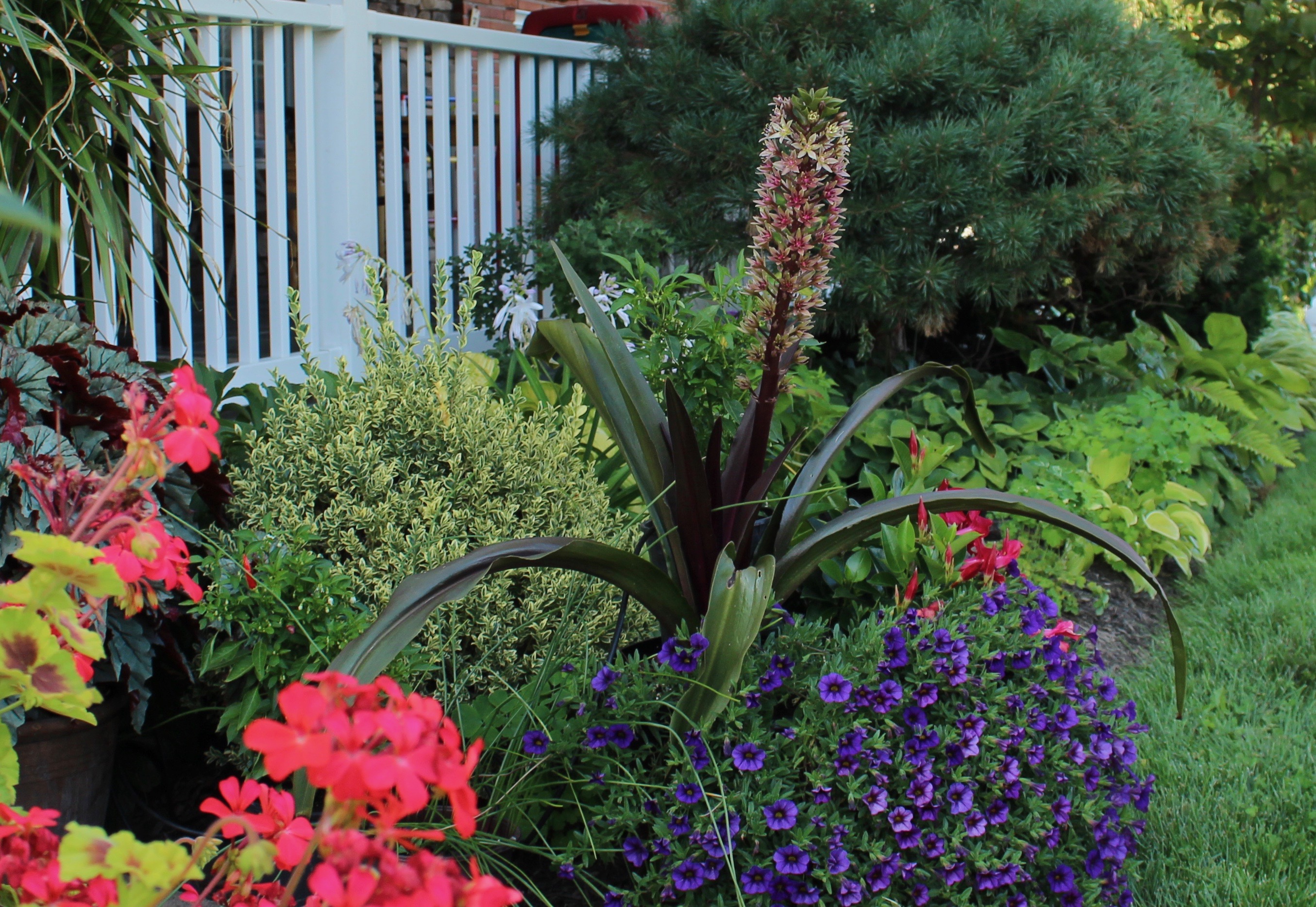
A Eucomis seedling grown from a seed off Eucomis ‘Oakhurst’.  I believe that gives it the fancy name of Eucomis comosa ex Oakhurst…. I think.

Sure I could have just bought one along the way and saved a bunch of time but it’s not like I spent every day wishing it would grow just a little bit faster, you just enjoy it for what it is.  It’s not patience at all, it’s you looking forward to every spring when it sprouts up even bigger than the year before and then you every fall digging the bulb to see just how much more plump it’s become.  It sure doesn’t hurt that the dark leaves make for a very nice foliage accent in my summer planters.

eucomis Oakhurst seedling

Eucomis are also referred to as pineapple lilies.  They’ve got the same leafy bottom  plus the pineapple shaped flower which sprouts up is topped by a tuft of leaves, just like a real pineapple.

So thanks for the seeds Nan and now I’m off to the next pineapple lily adventure.  I hear they’re one of those odd plants which grow easily from leaf cuttings.  Just cut off a leaf, stick it in some soil, and new plant!  I’ll have to wait until next summer for the best chances but it sounds like I’ve got something to keep me entertained until 2022 😉

Visiting Jean

My friend Jean has an amazing garden which she’s been working on for years and she’s made it into a treasure trove of color and textures which flourish in spite of the thin mountainside soil she first started with.  I love a garden which you can walk through and experience and this garden fits that bill perfectly.

jeans pond

Yoga frog leads the class of froglets who follow along from the safety of the pond.

It’s a sheltered garden filled with the sounds of running water.  You enter the backyard though a shaded arbor at the end of a long drive which leads you through the large wooded lot.  What first grabs your attention when you step through the gate is the large pond carved into the mountainside.  It looks as if it’s always been there, a relaxing little nook left over from when the glaciers last scrubbed this part of Pennsylvania.

jeans pond

Looking out across from the house and main patio to the pond.  A natural stone path leads to a cozy seating area and fire pit, a clematis covered arch marks the path out into the garden beyond.

You have two choices here, explore the pond and gardens to your left or ignore the deck and patios (and inviting patio seating) surrounding the house and let the color of the slope to the right draw you in.  We usually choose the flowery slope 🙂

jeans garden

Jean’s garden is always magazine ready.  It’s got color, paths, destinations, focal points, vignettes… Here container plantings line the stone steps which take you to the upper garden.

I guess the upside to gardening on a thinly covered, rocky mountainside is that stone paths and walls are just an arm’s length away… assuming you’ve got a prybar and shovel at the end of that arm!  Over the years Jean has built up terraces and pickaxed out level planting areas to make room for her plant addiction and they really keep the garden interesting with their changes in elevation and solid structure.

jeans garden

Color galore with annual plantings and summer perennials.  Of course if there’s a nice bright phlox I have to include the picture 😉

The top of the slope has been kept open for sun and leveled to make room for all the summer color that fills this end of the garden.  On my last visit the dahlias were just starting to take off and I hope I wasn’t too pushy with my hints of how much I liked the colors and how well they’d look in my own garden!

Zinnias, calibrachoa, and of course dahlias.  This picture just doesn’t do the scale justice, the pot of purple fountain grass is probably about six feet up on a tower of container plantings.

Jean is just a little obsessed.  It’s hard for me to believe a gardener could be that way but she’s got plants all over, she’s got plant inventories, she’s involved in plant groups, she travels for plants, and she’s got about a million plans which are on the drawing board.  It’s always fun talking to her as her compulsively organized type A personality deconstructs gardening.

jeans dahlias

Even the plant supports are well thought out and complement the yellows, oranges, reds and purples of this section.

Beyond the sunny and bright center of the garden, pathways take you out into the more shaded woodland edges.  Hydrangeas abound and although I didn’t get any decent pictures of them individually, if you start looking you’ll see they show up nearly everywhere… and not just planted ones… believe it or not there are hundreds of hydrangea seedlings in any open spot of soil or gravel which gets a little sun.  What a thought to have to weed out handfuls of hydrangea!
jeans garden

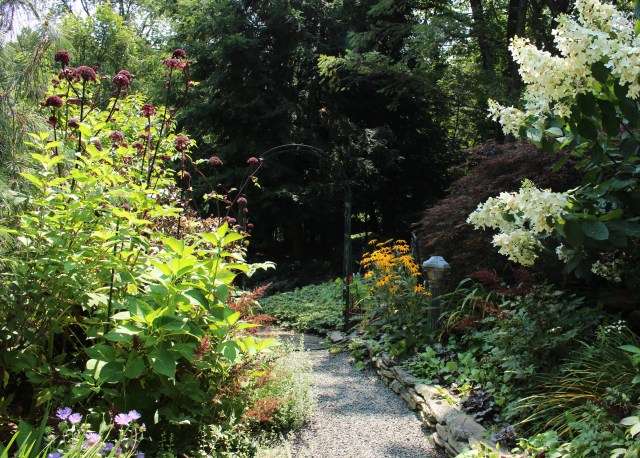
Stone lined paths run throughout the garden and special shrubs and trees fill every available space.  Here the left side of the path is dominated by an eight foot tall planting of purple angelica (Angelica gigas ‘purpurea’).

If there’s one thing which Jean struggles with it’s the local vole population.  Deer are around as well but at least you can fence them out.  Voles are a curse.

jeans garden

The shadier planting still look great but at one time they were also filled with hostas.  Lots of them.

Soil additives, traps, caged plantings, containers, all are in use to wage war against the rodent hordes but as Jean likes to say, her stone walls and rock ledges are practically vole condos so it’s a continuous battle.

jeans garden

Round about the back a pathway has been planted up as a scented walkway.  On a previous visit the fragrance of oriental lilies filled the air, on my my last visit it’s been replaced by the scent of passionflowers and fragrant hostas.

Fortunately she’s holding her own and shows no signs of throwing in the trowel.  Score one more for Jean.

jeans garden

Shaded steps leading around to the fire pit.  I love how things fill in here, and you could plant a whole other garden with the dwarf goats beard, ferns, and other goodies which sprout up in the cracks.

I’ll leave you with one last pond photo as we return to the house.

jeans pond

Just the right amount of water lilies for interest and open water for light reflection.  I’m sure the Japanese maple is awesome in the fall but my favorite right now is the airy variegated moor grass Molinia caerulea ‘Variegata’).

As you exit the garden off the main patio you can’t help but notice how well Jean grows climbing nasturtium.  Although I love the leaves and flower colors, this is one plant I always struggle with.

jeans nasturtium

Nasturtium climbing the arch.  It looks so healthy!

And that takes us back to where we started.  I hope you enjoyed the tour as much as I did and it’s inspired me to make more paths and get more shrubs in the ground.  Structure.  That’s what I need… just like snowdrops are what Jean needs 😉

Thanks Jean!

My Favorite Plant

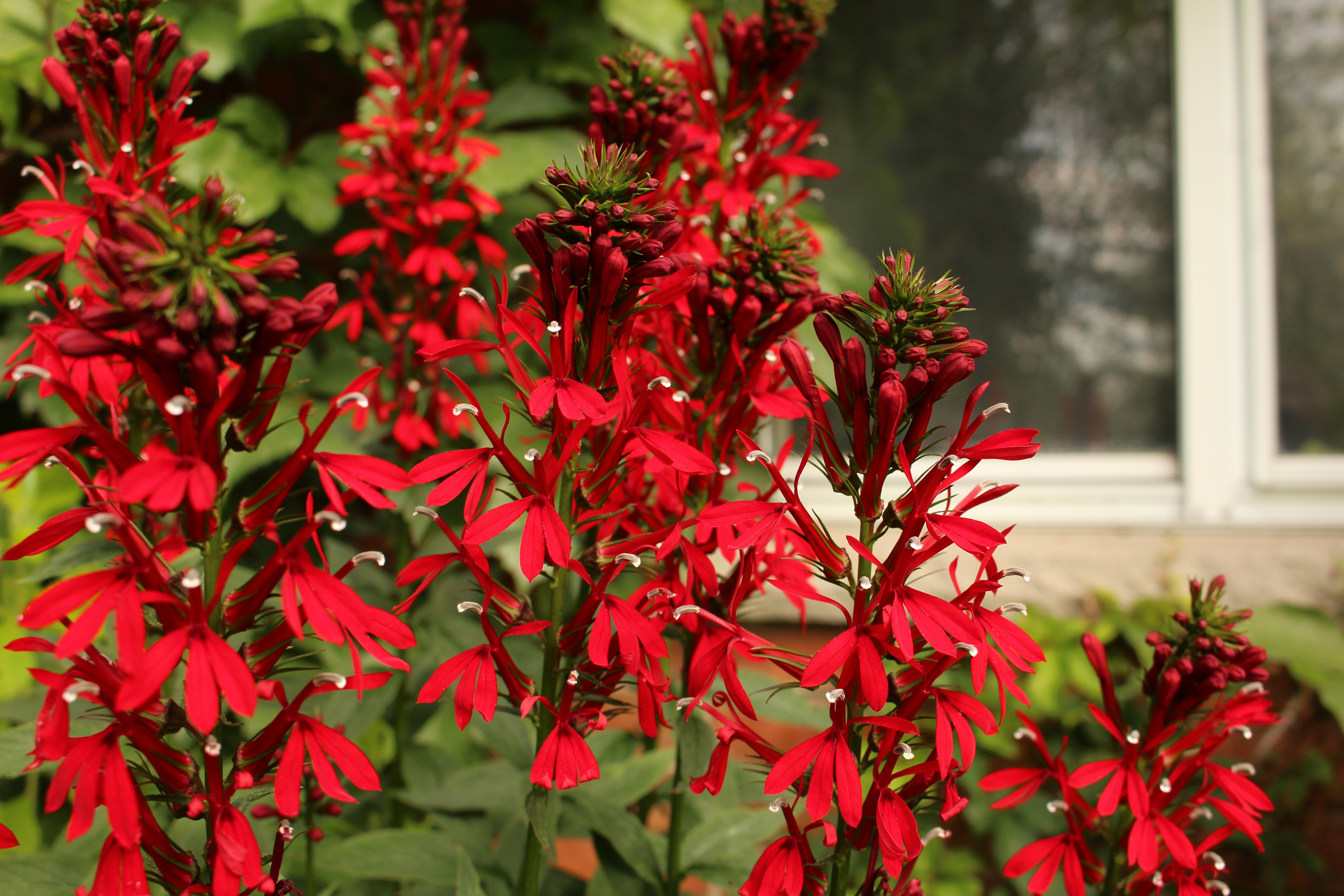
Ok, so snowdrops are my favorite plant, but sometimes I get distracted… like every few minutes, but right now my favorite plant is the cardinal flower (Lobelia cardinalis).  We were away for a week and when I made my first return tour of the garden and saw this, I just maybe let out a little ‘wow’.

lobelia cardinalis

Now that’s red.  I hope my picture does the plant justice.

Cardinal flower is a native of Eastern North America, and this same plant can be found in the woods, in ditches, along ponds… anywhere the ground stays damp, and I’ve seen it there, and honestly it’s often looked better than my planting, but this one’s here in the garden, and anytime I can sneak over to take a look I do.  It’s harder than you think considering the resident hummingbird usually gives me a dive-bomb when I linger too long.

lobelia cardinalis

The color is awesome, but the odd grey tips to the flowers are also cool.

The cardinal flower is nice but my favorite plant is actually this coleus.  As far as coleus go it’s probably kind of dull, but when I look at how these cuttings have filled in and see how the colors go so well with the rest of the bed, I’m thrilled.

coleus bedding

This coleus makes this end of the bed look so healthy and lush.  I like it so much I was eyeing the mother plant on the deck and considering taking another round of cuttings to fill the rest of the bed.  It is only August after all, plenty of time to plant more summer annuals 😉

Who am I kidding, my favorite plant is actually this tiny Stachys albotomentosa ‘Hidalgo’.  It grew from seeds and when these little peachy red flowers finally opened it easily moved into the favorite position.  Do I need to mention it’s a relative of the gentle lambs ears and also known as the seven up plant?  With a little imagination the foliage has a soft drink scent when rubbed, which is a nice touch, but honestly I’d rather it were more hardy and stood a chance of surviving winter here…

stachys albotomentos hildago

What’s not to like about fuzzy grey stems, nicely textured leaves and small peachy apricot flower spikes?  This stachys is absolutely my favorite plant.

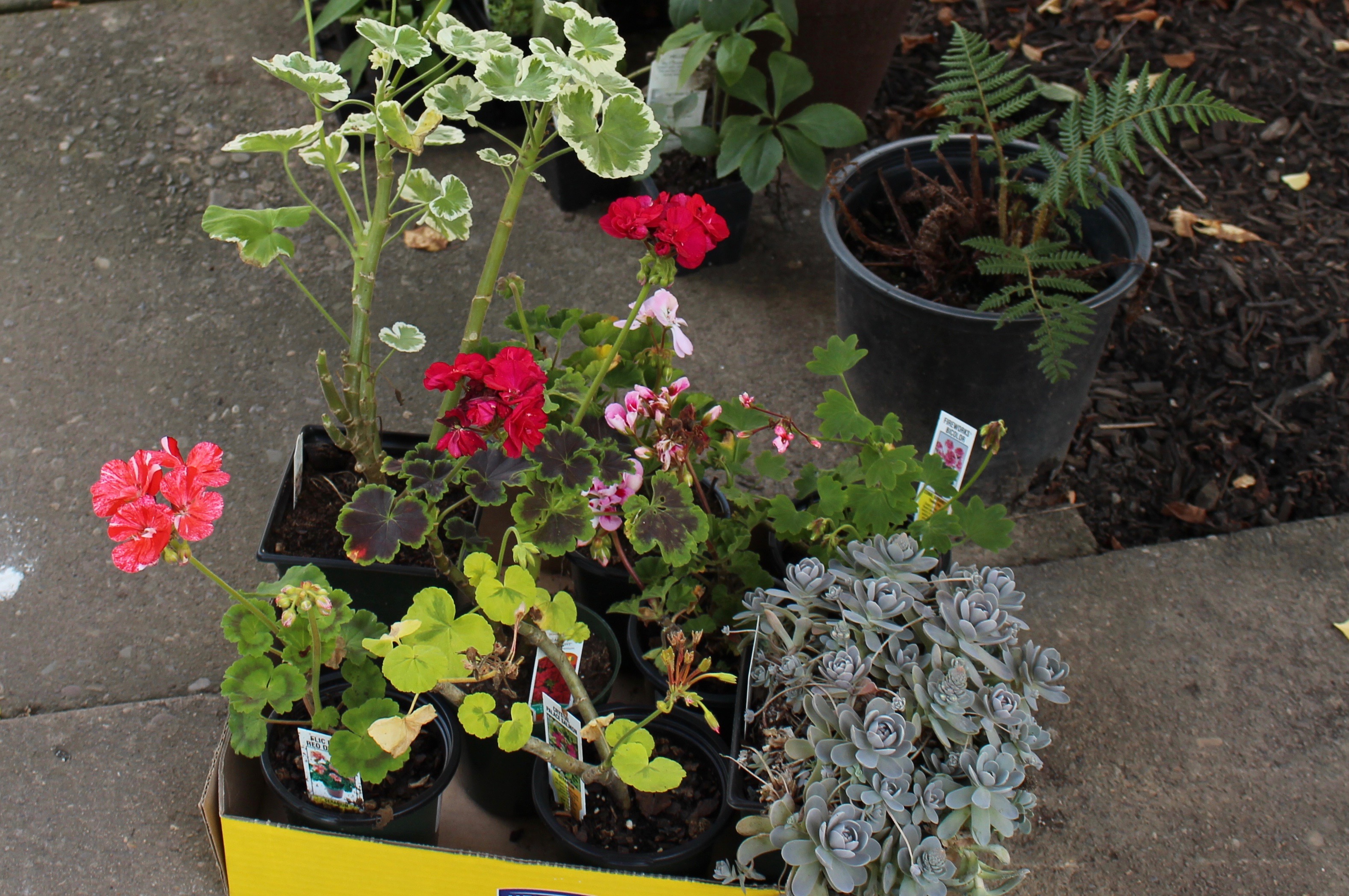
But then I went to the nursery and was a little surprised to discover I’ve become my grandmother and geraniums (Pelargoniums) have become my favorite plant.  Seven tired and sad looking specimens came home with me and I can’t wait to see what a repotting and some liquid fertilizer can do for them.  I’ve been under the delusion that geraniums are my favorite plant before, and it usually involves collecting them, overwintering too many, and then wondering what to do with them.  We’ll see.

geraniums pelargoniums

I made a quick getaway after these were rung up.  They did look a little sad but for what I paid I’m sure they’ll soon realize some kind of cashier error took place and come looking to get them back.

Oh and did you notice the grey little succulent in there with the geraniums?  It’s a pot full of Chinese dunce caps (Orostachys Iwarenge) a cool little plant which is supposed to be fully hardy to zone 5.  You wouldn’t guess from the way it looks now but in early summer the rosettes will grow upwards to become little peaks, or dunce caps.  I think the name is very appropriate for most of what I do here, and when it blooms next year I’m sure it will be a favorite 🙂

Tuesday View: The Front Border 8.15.17

It’s time once again to join up with Cathy at Words and Herbs for her weekly take on the Tuesday view.  I’ve missed a week with traveling but the rains have not, and 2017 continues to be a marvelously well watered and well behaved summer.

front border

The front border continues to fill in and color up as summer progresses.  The sunflowers are now in charge.

It’s hard to believe that just a few months ago I wasn’t sure what exactly would be filling in the new sections of this bed.  People said it would all come together but I had my doubts.  Fortunately it did, and I’m very pleased with the results.

front border

Although they haven’t been in bloom very long there are already enough sunflower seeds to start bringing in the goldfinches.  I love that they find so much to feed on in my garden and their bright yellow feathers and constant chatter are always welcome.

Most of the filling in of the border relies on seeds, cuttings and divisions.  I bring that up now because someone mentioned surprise at how my wife is so good about me spending so much money on the garden.  At the time I just laughed it off, but as I thought a little further on it, it occurred to me that they might think I actually do spend a lot of money.  The short response is that I don’t. Excluding any snowdrops which may or may not have found their way into the border, I probably spent $60 on plants (for this bed) this year.  This includes $20 for my amazingly cool new variegated comfrey, $15 for an impulse-buy-lupine, $6 for a salvia, maybe $5 each for a new mail order butterfly bush and agastache, and I guess $9 for a few six packs of zinnia seedlings… although I bet it was closer to $6…

standing cypress ipomoea

A few unmulched spots of the older bed have sprouted a nice crop of the bright scarlet wands of standing cypress (Ipomopsis rubra).  I would call self-seeding plants such as these ‘free’ volunteers, and the price tag of $0 needs no spousal pre-approval.

The bulk of this border either comes from established perennials which were already in place, or the divisions, cuttings, or seedlings of things I already had on hand.

front border

The depths of the bed interior are now a hopeless mess of colorful annuals mixed with reliable, veteran perennials.  I haven’t even tried to get back there, the only attention it’s received has been a handful of fertilizer I threw in the general direction of the canna.  

Although my border does not do much in supporting the local nursery industry, it does seem to draw in the bugs.

monarch

A healthy, well fed monarch butterfly.  I wonder if I’ll see any fresh new ones this week as my former caterpillars should be about ready to emerge. ($0 for these butterfly bushes -cuttings off mom’s bush, $0 for the rudbeckia -grown from ‘stolen’ seeds) 

I sometimes just can’t believe how many bees, butterflies, and other insects can be found winging their way through this garden.  It makes me sad for my neighbors and their dull seas of lawn.

cannova rose

From the left, $0 for the sea holly which was grown from seed exchange seeds, $0 for the overwintered ‘cannova rose’ canna.  Free verbena bonariensis seedlings which were transplanted in, and free coleus grown from cuttings.

I’m at a loss as to how I can explain the importance of bugs to my less interested neighbors.  I’m thinking about the life happening all around me and they’re debating a bug bomb which could kill off all the pesky mosquitos and gnats from their entire yard.  A dead yard.  What a fun place to be…

purple salvia splendens

For $0 I found a few salvia splendens seedlings sprouting in the tropical bed, potted them up, got them going, and then planted them back out.  I was hoping for purple but the salmon color which was also there last year would have been fine… even though I really wanted the purple 🙂

So it looks like the bugs will keep this area as a ‘safe zone’ for a few more years yet.  I guess I could do better with more and more bug-friendly plantings, but for now this works for me.

front border

My $0 monster cardoon.  Grown from some seed exchange seeds it’s done better than I had hoped.  I can’t even remember the other two seedlings which were planted just behind it.

I’m out of buggy commentary and financially responsible planting advice.  Lets just take a look at the bed’s far end.

front border

My second favorite view.  $0 for Self seeded verbena bonariensis, $0 for coleus cutting, $0 for cannas. 

And one last look at a nearby bed 🙂

caladium

This spring I ripped everything out from around this dogwood.  The hostas went to a good home but nothing else other than mulch came back in to replace them… until now.  My caladiums finally have a summer home!

Enjoy the week and as usual thanks go out to Cathy for hosting each Tuesday!

Because I Can

I admire blogs which are helpful, inspiring or just plain a joy to look at, but I think mine has a different ‘mission statement’ or raison d’être.  It’s all about me, and trust me sometimes I feel like I’m all over the place so it’s not always a pretty picture.  With the gardening season well on its way to the halfway point  I sometimes step back and ask myself what the heck got into my head when I started this or that “project”.  Thankfully the thought usually flickers away almost as quickly as it came, but someone (Chloris actually, though I doubt she remembers) said the reason I do it is because I can.  It all came together with that and although I still can’t make sense out of half of it, at least I now have a legitimate answer… and of course I’m going to run with it.

All these deep thoughts came out a little more during the recent garden tour which took place here.  Don’t get me wrong, it all went well and everyone was wonderful about it and I loved that someone other than myself was excited to see the garden, but I did find myself explaining (or even making excuses) a lot.   What I probably could have done was just answer with “because I can”.  The reason I’m a compulsive plant multiplier and divider is…. well… because I can 😉

propagating perennials

A bit of root came off my newest treasure, the variegated comfrey ‘Axminster Gold’, and within a few weeks I have a new plant.  Come to think of it I must have stuck a twig of my ‘Golden Sunshine’ willow into the ground here as well since I also see a bit of it now growing to the right of the comfrey.

I’m always pinching cuttings, scattering seed, or spading out little divisions of the plants which you can never have too many of.  Just last week I realized the coleus pots on the deck were getting a little too big for early August and gave them all a trim.  Suddenly there’s a bucket full of cuttings…

coleus cuttings

I’ve got dozens of coleus planted throughout the garden this year but almost all came from just four bushy plants I picked up this spring.  I looked for well branched plants, took as many cuttings as I could, and voila!  A couple flats of free coleus to plant around the garden.

I didn’t even bother to root the latest batch of coleus cuttings, they were just stuck right into the soil wherever things looked a little sparse.  No special prep, just maybe remove a leaf or two at the base and stick them in.  Watering would be helpful, but you’d be surprised how long these can survive rootless, even in the hot sun for days.

Multiplying your annuals is easy enough but how about something like a hardy cyclamen?  I often get self sown seedlings but this year there seemed to be even more of the curiously coiled seed pods than usual.  I’ll have to collect them of course and plant them out, even though I already have a good number.  And the reason for this?  #becauseIcan

cyclamen seeds

Cyclamen hederifolium seed pods bursting as they ripen.  Looks like I’ll need to prep a new seed bed for a couple thousand more cyclamen seedlings.  Oh well, it’s #becauseIcan

Maybe I can convince myself to give a few of the seeds away but lets talk about snowdrops (once again) for just one minute.

galanthus bulbs

The bulbs I ordered online through Cornovium arrived, plus (quite a few) traded bulbs.  How many different snowdrops does one person need, surely not dozens, so why do it? #becauseIcan

I have seedling magnolias and seedling camellias.  Neither of them are likely to be hardy over the years, so why grow them? #becauseIcan

limelight hydrangea cutting

I have a beautiful ‘Limelight’ hydrangea growing out front, but now three cuttings have appeared in the vegetable garden.  They’ve done very well this year with huge panicles of flowers over a foot across, but I don’t need them and have no clue as to where they’ll go.  Why start them in the first place? #becauseIcan 

To further prove that I just don’t learn I took a few more hydrangea cuttings this weekend.  Looks like I just want to be prepared in case everything else gets ripped up and I decide to plant masses of hydrangeas all over.  For the record it’s very easy to do, now’s an excellent time to do it, and it’s the perfect accompaniment to a few cold beverages on a Sunday afternoon.  As a brief effort to keep this blog somewhat useful and mildly educational here’s how I do it.

shrub cuttings

About a six inch ‘Goldilocks’ shoot (i.e. not too young not too mature), scrape a little bark off the bottom inch, dip in rooting powder, make a hole in a pot of sand, place cutting into hole, water.  

I don’t think anyone came here today to make softwood shrub and tree cuttings, but if you do try it,  make sure the sand is what you’d call a ‘sharp’ sand.  It feels coarse, is freely draining, and usually easy to find as bagged playground sand (NOT masonry sand which is too fine).

softwood cuttings

Butterfly bushes, hydrangeas, arborvitae… all of them are easy to root shrubs and all of them unnecessary.  I don’t bother covering them, but you could.  I don’t water them everyday but you could (mine will be lucky to get rained on).  They do need to be in a fully shaded spot though, no avoiding that.

So while I ponder the locations for another fifty or eighty new shrubs (#becauseIcan), have a look at some other equally cute little babies.

monarch eggs

Ok, Monarch butterfly eggs are not cute, but they will be!  I saw the mother lingering around the milkweed and lo and behold I was able to lift a few eggs and bring them in onto the windowsill.

I’d love to bring my little babies into the house, but the boss said I can’t, and when I asked why not she said becauseIcan’t, and we will wisely drop the argument, take the eggs, and return to the garage.

caterpillar enclosure

A few old screens, some wood cut up for ends, random leftover screws to hold it together and just like that, a butterfly (well actually caterpillar) enclosure.  Someone made a comment to the effect of ‘did you seriously stain and varnish the wood for your bugs?’ and I responded with ‘yes, yes I did.’ (while I whispered #becauseIcan)

In the meantime the eggs have hatched, the caterpillars grown, and I’ve now placed them outside to find their own spot to hang their chrysalis.  With any luck there will be fresh new monarchs floating around the garden in another few days.

monarch caterpillar

Gardeners are always complaining about one thing or another eating their plants, and here I am encouraging it.  You of course guessed it… #becauseIcan

I’m afraid it may already be too late for me to quit while I’m ahead but here’s one last adventure.  Somehow I’ve accumulated quite a few caladiums, and somehow I’ve been able to overwinter them, and somehow I’ve grown attached to them.  I didn’t see this coming at all, but that doesn’t seem to matter.  This spring (well actually early summer since apparently I was too busy doing other equally pointless things), I potted up all the roots individually because I didn’t want them mixed up anymore.

caladium

A couple years worth of clearance rack purchases and random odds and ends picked up here and there.  I think they’re awesome even if they might not be the most tasteful plants.  

This weekend I sorted them out and potted them all up again into bigger containers with each container holding just one leaf type.  The OCD amongst us will also see that rather than searching out all orange pots like last time, this time I went with all the leftover black nursery pots which litter the back of my garage… mostly because that’s all I have left.  It seems so much more controlled and I was so pleased with myself that I went immediately to my favorite local nursery to look for more.  Perennial Point came through and I decided I was worth not one but two new leaf types.  It even got better when at checkout I was told that annuals were on sale, buy one get one, and suddenly I was paying $7.50 for the pair instead of the $15 full price… or not.  I of course was already set on buying two, so did the most reasonable thing and went back to select the other two I wanted as my ‘get ones’.

caladium

Why buy even more caladiums after saying I ”have too many’ in April? #becauseIcan!

And that brings me to where we’re at.  I should really take up some less compulsive hobby like marathon running or fantasy football, but I’m stuck with this.  Fortunately the kids are still young and don’t think anything’s wrong and my wife has a remarkably high tolerance for me.  She was even out in the yard this weekend and asked what something was.  I think it’s so cute when she pretends to be interested 😉

So have a great week and if anyone out there understands hashtags let me know.  A friend uses them all the time and I just thought it might be time to step up my game. #youknowit #becauseIcan