One word…. Dichelostemma

I inherited my mother’s habit of randomly picking up and trying out just about any odd, looks-like-it-might-be-nice bulb that shows up in the garden center’s bins.  Together we’ve failed at freesia, ranunculus, ixia… but every now and then something gives a surprise, and lately it’s been Dichelostemma.

dichelostemma pink diamond

Dichelostemma ‘Pink Diamond’ out in the meadow garden

The first one which made its way into the garden was a selected form of the naturally occurring hybrid ‘Pink Diamond’.  I love the totally tubular pink flowers and the waxy thickness of the blooms and was surprised it actually grew since the bulbs came via a November closeout sale, and late planting into a cold, wet clayish soil is typically not a recipe for success for drought tolerant bulbs from the western reaches of North America.  But they came up fine the next spring and when the wiry flower stalks matured to bright pink clusters of bloom in June I was hooked.

dichelostemma pink diamond

Daisies and Dichelostemma in front of a worse for wear Queen of the Prairie.  The Queen still presides over the back forty, but between acidic rainfall and wayward groundhog nibbling her reign may soon be coming to an end.

‘Pink Diamond’ may or may not become a permanent resident in the meadow.  The first planting returned to bloom the second year but has not put up flowers in the third.  I blame rabbits for nibbling too much of the spring foliage, but we will see what happens next year, as this spring with all the new crocus flowers to chose from the rabbits didn’t quite get to the Dichelostemma foliage before moving on to freshly planted lettuce and broccoli in the vegetable garden.

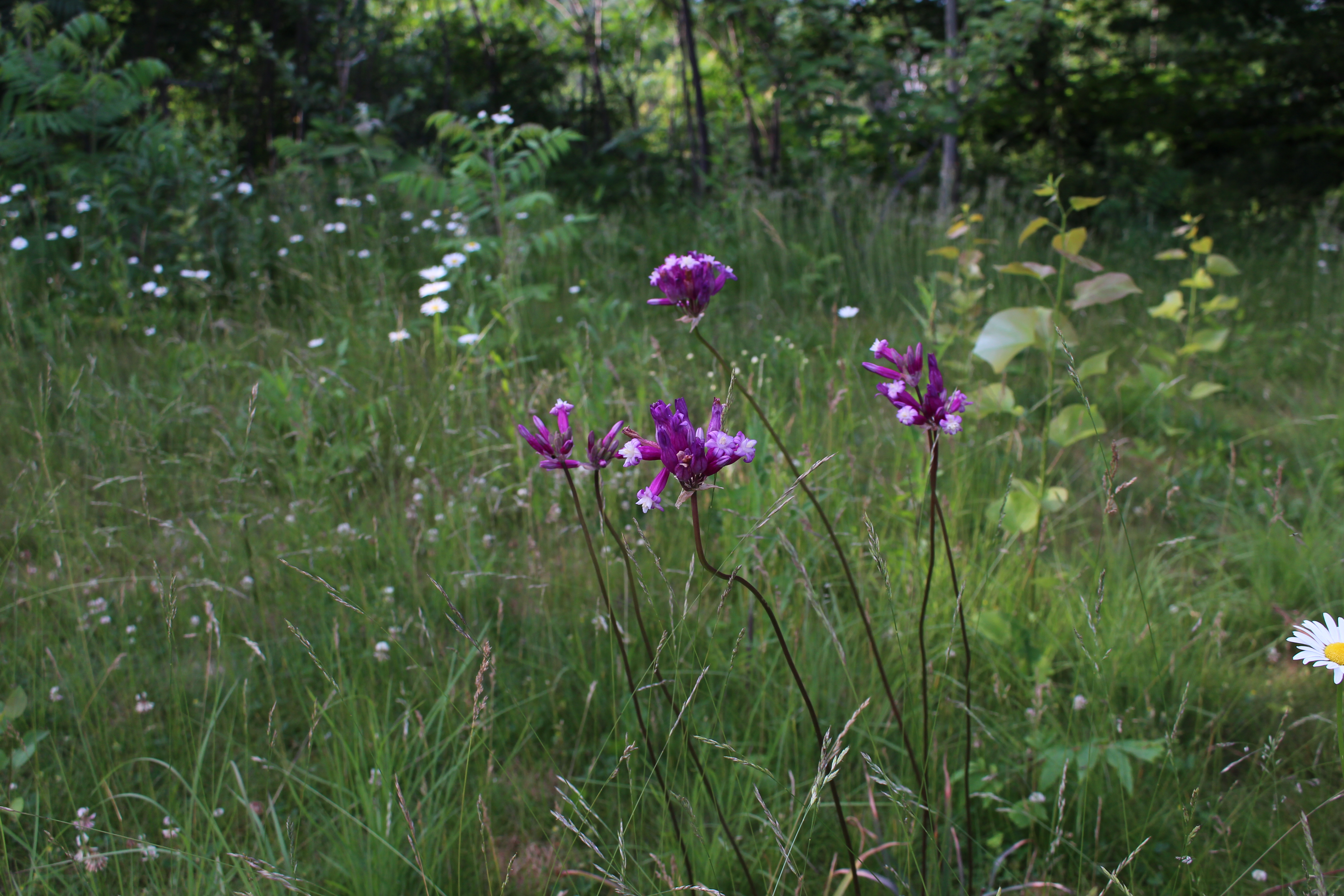
The ‘other’ Dichelostemma (D. congestum) has been going strong though, putting up its beautiful lilac-purple flower clusters for three years now… in spite of also being nibbled.

dichelostemma congestum

Dichelostemma congestum has the common name of fork toothed Ookow.  When you get tired of introducing guests to your dichelostemma I’m sure switching to the common name will clear things up. 

I love how these plants look among the weeds and grass of the meadow.  I can imagine this isn’t entirely unlike their native habitat in the Western edges of the continent and from a gardeners point of view the yellowing foliage is completely disguised by the surrounding greenery.  Not to get distracted, but I wonder how alliums would work out back here since many of those also share the trick of letting their foliage go to pot just as the blooms reach their peak.

Dichelostemma ida-maia is my last of the D’s and I suppose ‘firecracker plant’ is a decent common name for this one…. although it’s no Ookow.

dichelostemma ida-maia

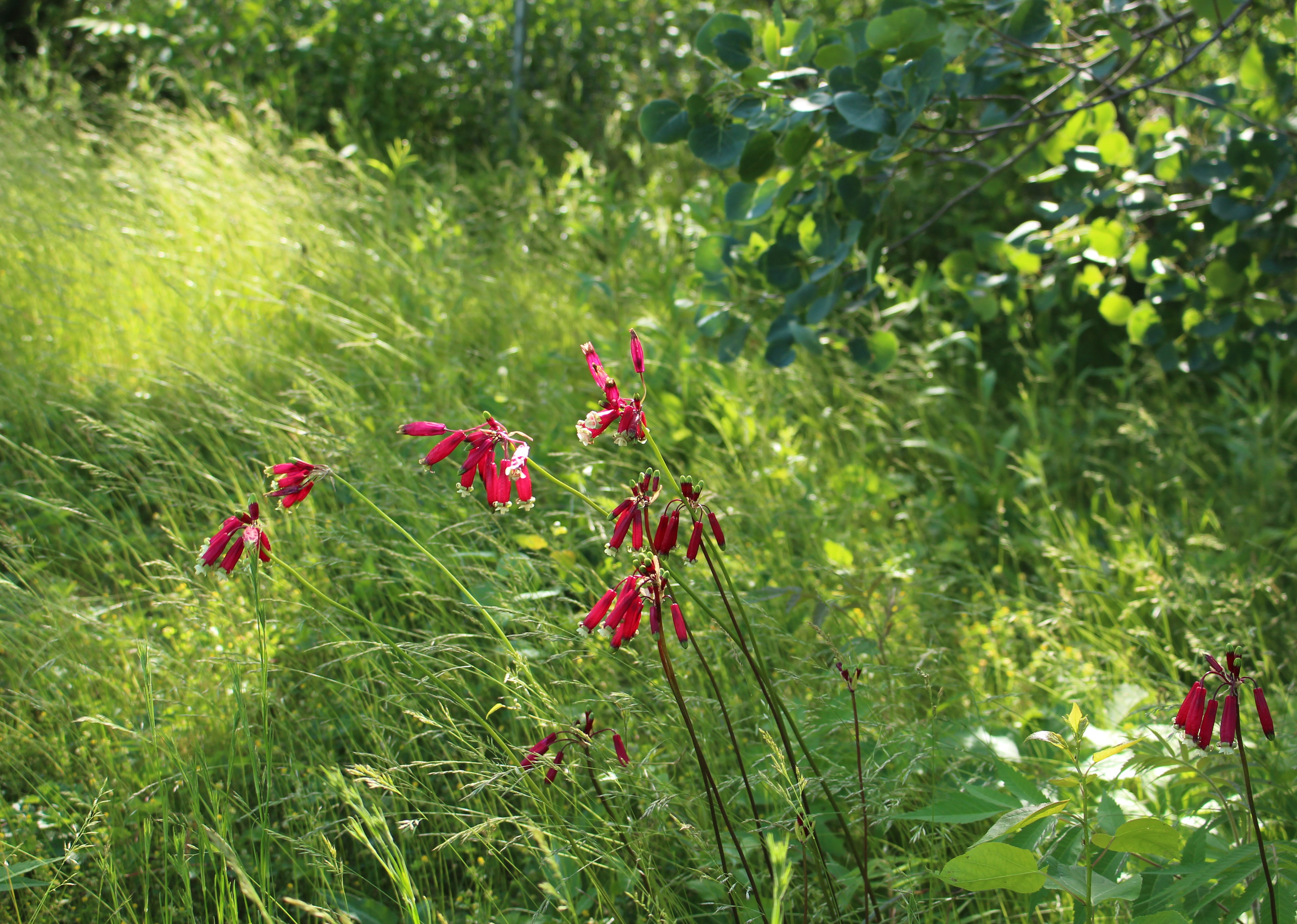
Dichelostemma ida-maia.  The shape and color of this flower has ‘hummingbird plant’ written all over it.

Besides adding more ‘Pink Diamond’ last fall, I also put in a few D. ida-maia… in spite of my thoughts that I wouldn’t like them.  I was completely wrong in my lack of enthusiasm.  The sad anemic version I saw a few years ago is nothing like the group I now have swaying in the dappled light amongst the grass.  I’m far too greedy a collector to commit large spaces to a single plant but I would have no problem adding another hundred or two (versus the 10 I started with) to this end of the meadow, which is entirely do-able since these small bulb are relatively cheap even when not on clearance.

dichelostemma ida-maia

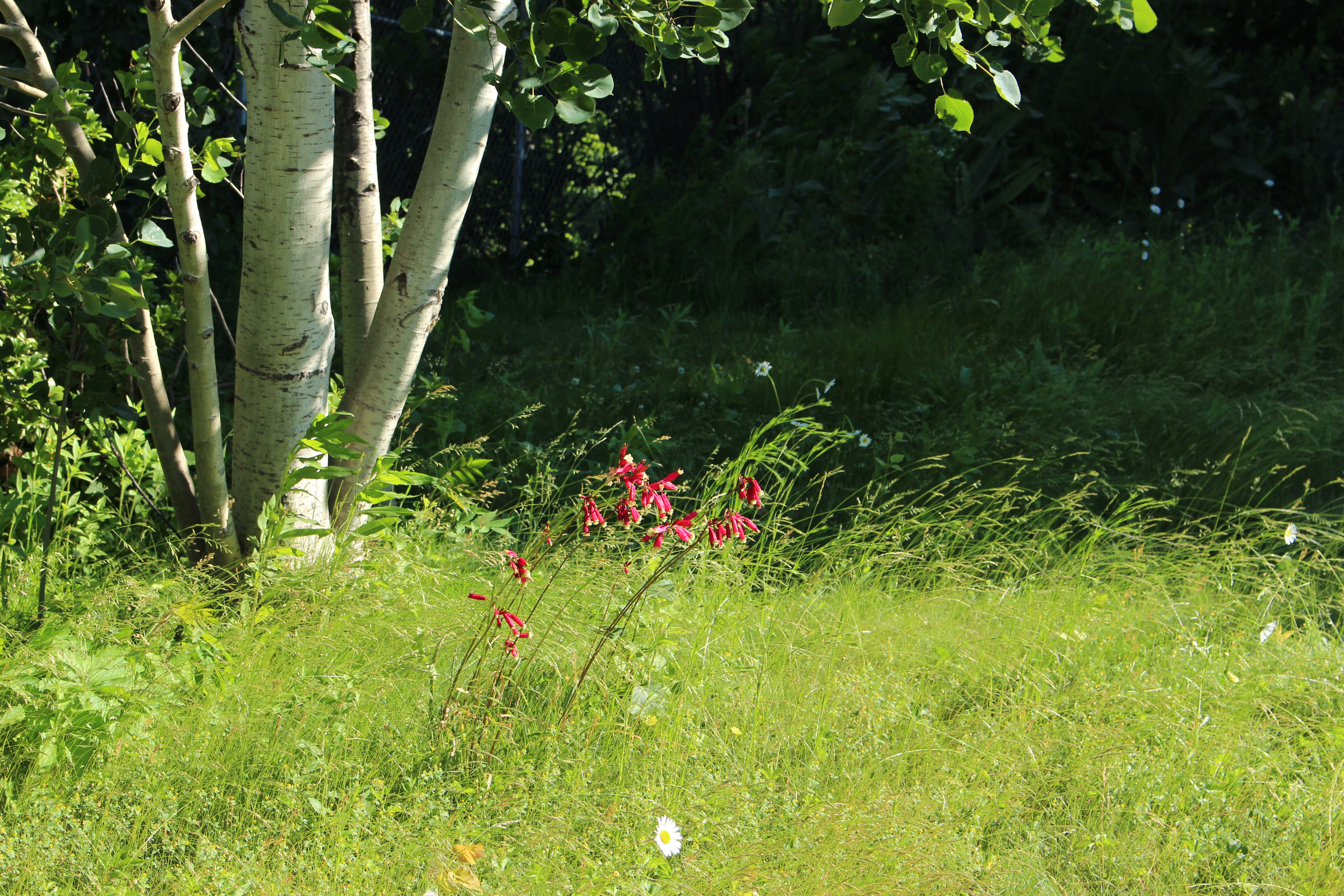
I trimmed up the lower limbs of the aspen and love the Rocky Mountain glade effect it has given.  Add a Western NA native Dichelostemma ida-maia and we may be on to something here 😉

I’m not sure what the hardiness on these plants (both species and their hybrid daughter) is.  To be honest I didn’t think they would make it through their first careless planting (really careless… cold November fingers so one shovel swipe into the turf, dump bag contents into hole and stomp sod clod down again on top), but they did survive, and it was a winter where our lows reached -6F (-21C) with a solidly frozen soil for months.  So they’re at least that hardy, and I think the extreme summer dryness of the meadow also helps them return in spite of any issues with poorly drained, wet winter soils.

Dichelostemma.  Think about it.  I think they’re pretty cool.

GBFD Finishing August

Yesterday was the 22nd, today the 23rd, and by the time this post is finished the date will probably flip on to the 24th, which will make me two full days late in joining Christina in the celebration of Garden Blogger’s Foliage Day.  I’m sure she’s fine with my tardiness but I’m also sure I didn’t want to miss this month’s opportunity to look past flowers and recognize all the contributions foliage makes in the garden.

squash climbing in garden

In the vegetable garden the broad leaves of late planted summer squash threaten to swamp their less edible neighbors. I love how fast they grow in the heat.

I’m a big fan of large leaves and whether they’re squash or cannas or elephant ears, the more enthusiastic a grower the better!  While some plants did not enjoy the recent spell of hot weather, a newer resident of the garden did.

Alocasia Borneo Giant

One of the larger elephant ears, Alocasia ‘Borneo Giant’, is finally putting out some more enthusiastic growth. The leaf is still barely larger than my hand but the giant part of the name gives me hope for the future!

Summer is when I really enjoy the potted plants on the deck.  Not only can they be enjoyed from the window, they can be enjoyed as you walk by, as you sit in a comfy seat, or from below.  It’s as if you’re multitasking your enjoyment!

coleus in deck planters

The rich foliage pattern of this coleus sometimes gets lost in a planting, but against the white railings the colors really come through.

Besides showcasing my favorite plants close up, the deck is also a great place to show off the little things which get lost out in the garden.

potted succulents

Little cacti and succulents which don’t mind a few missed waterings or weekend road trips.  They’re all foliage and make great deck plants… which look even better if the gardener finally repots them into roomier quarters (as I did this spring, although one of this bunch already needs a bigger home).

As I was walking about trying to focus on foliage, I realized this collection at the end of the deck steps doesn’t rely on a single flower to bring in the color.

deck planters

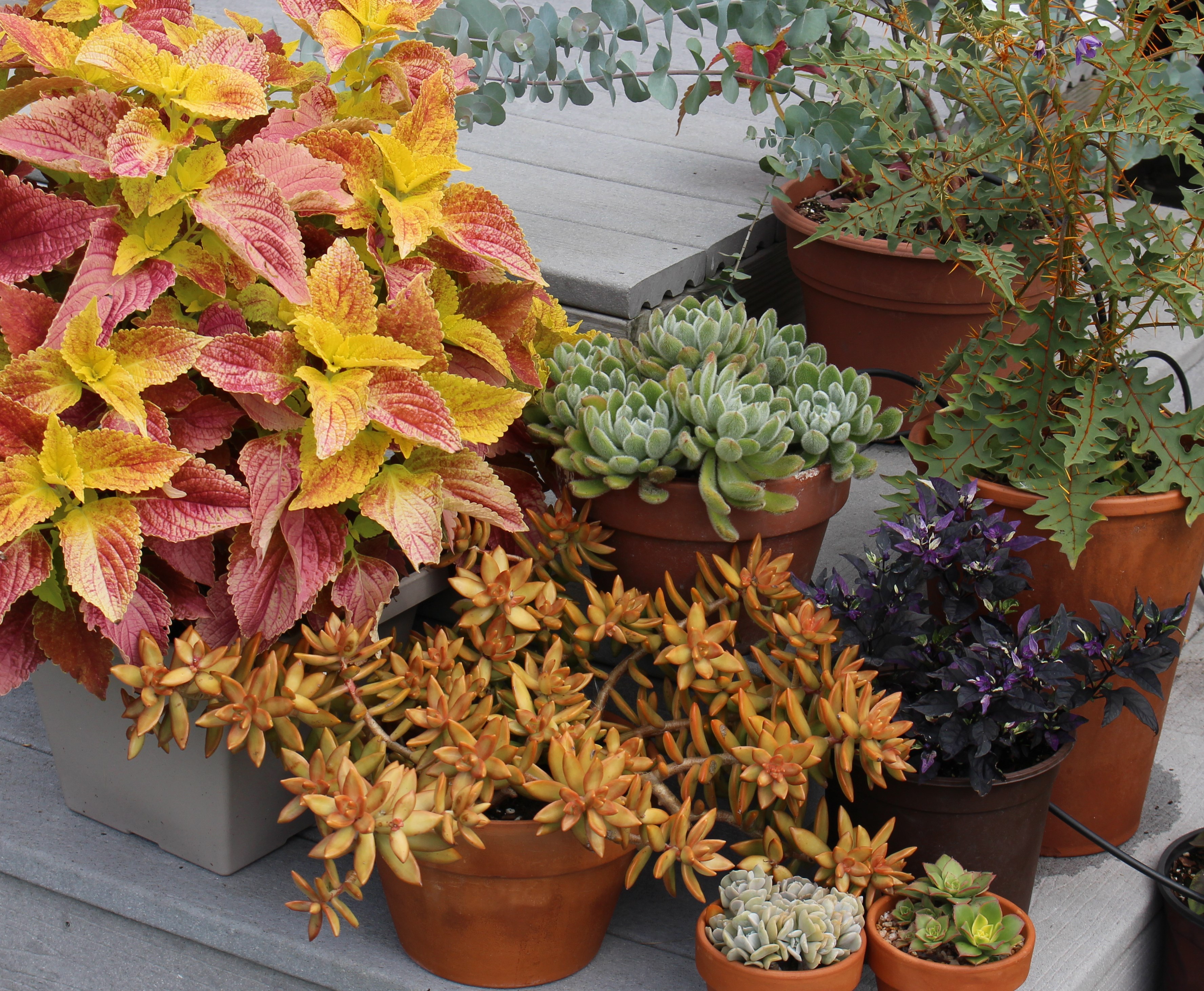
More succulents as well as ‘Alabama Sunset’ coleus, ‘purple flash’ pepper, and my belovedly spiny porcupine tomato.

It’s really way past time to do a catch-up post on this year’s deck planters (and hopefully I can come clean soon) but there’s only so much time tonight, and there’s still plenty of other foliage to consider in the garden.  For as exciting as flowers and color are, sometimes the eye needs to rest on a little green.  For me chrysanthemums are a nearly indestructible planting for some of the hotter, dryer, tougher-to-fill spots which could use a soft mound of green.

chrysanthemum foliage

Usually the iris in the back has nothing but sad, browning and yellowing leaves, but this year the rain has been enough to keep it growing strong.  The chrysanthemum on the other hand looks respectable for the entire summer, even when the crabgrass gives up.

Dry sun is bad, but dry shade is worse, and this year I’ve been surprised at how well variegated obedient plant, (Physostegia virginiana ‘Variegata’) has done.  In moist soil it may spread a little too enthusiastically, but here it seems downright demure, and I wonder if the straight green type would be as restrained.

Physostegia virginiana 'Variegata'

Physostegia virginiana ‘Variegata’ lighting up the shade.  It’s a dry spot full of maple roots, but the foliage on this plant still looks great.

In my only bit of non-rooty shade I can always count on the calm contrasts of foliage form and color via evergreens and hostas.  Although things are beginning to get crowded here, I won’t mess with this planting until it starts to look desperate.

shade foliage border

Along the porch the hostas cover the spring bulb plantings and dwarf conifers shelter the porch without overwhelming it.  They’re all slow growing plants, but not too long ago I remember being able to easily plant between these shrubs.

The calm of the shade garden is always appreciated in summer, but in sunnier spots August means flowers, and I do try for plenty of that as well.  Even with all the flowers though, a good foliage background can make a world of difference.

cannas and dahlias

The rich red flowers of dahlia ‘Mathew Allen’ set off even brighter next to the solid mass of the red-leaved cannas.   

I’m all for the masses of flowers but you sometimes need a rest here and there and a mass of foliage can be just the ticket.  For next year I’m already nursing along a few new bananas and elephant ears and I think things will look a little different in this border.  If worse comes to worse though I can always replant sunflowers 🙂

cannas and sunflowers

More cannas trying to keep their chin up against the tide of sunflowers which still swirls around the tropical garden.  In my opinion this bed could have used a few more masses of foliage to balance out all the bloom. 

So there are some August musings on foliage from my neck of the woods.  If you’d like to dabble a little deeper give Creating my own garden of the Hesperides a visit.  Each month on the 22nd Christina provides the platform there to host a foliage review, and I’m sure you won’t be disappointed by the foliage musings of bloggers from around the world!

Down on the farm

Late August is bathing us in heat this year and the steady rains have brought on the harvest.  We modestly refer to our garden as “the farm” or “potager” and this is the time of year when it shines.  Produce begins to trickle in and suddenly there’s a little more interest in the backyard.

harvest from the garden

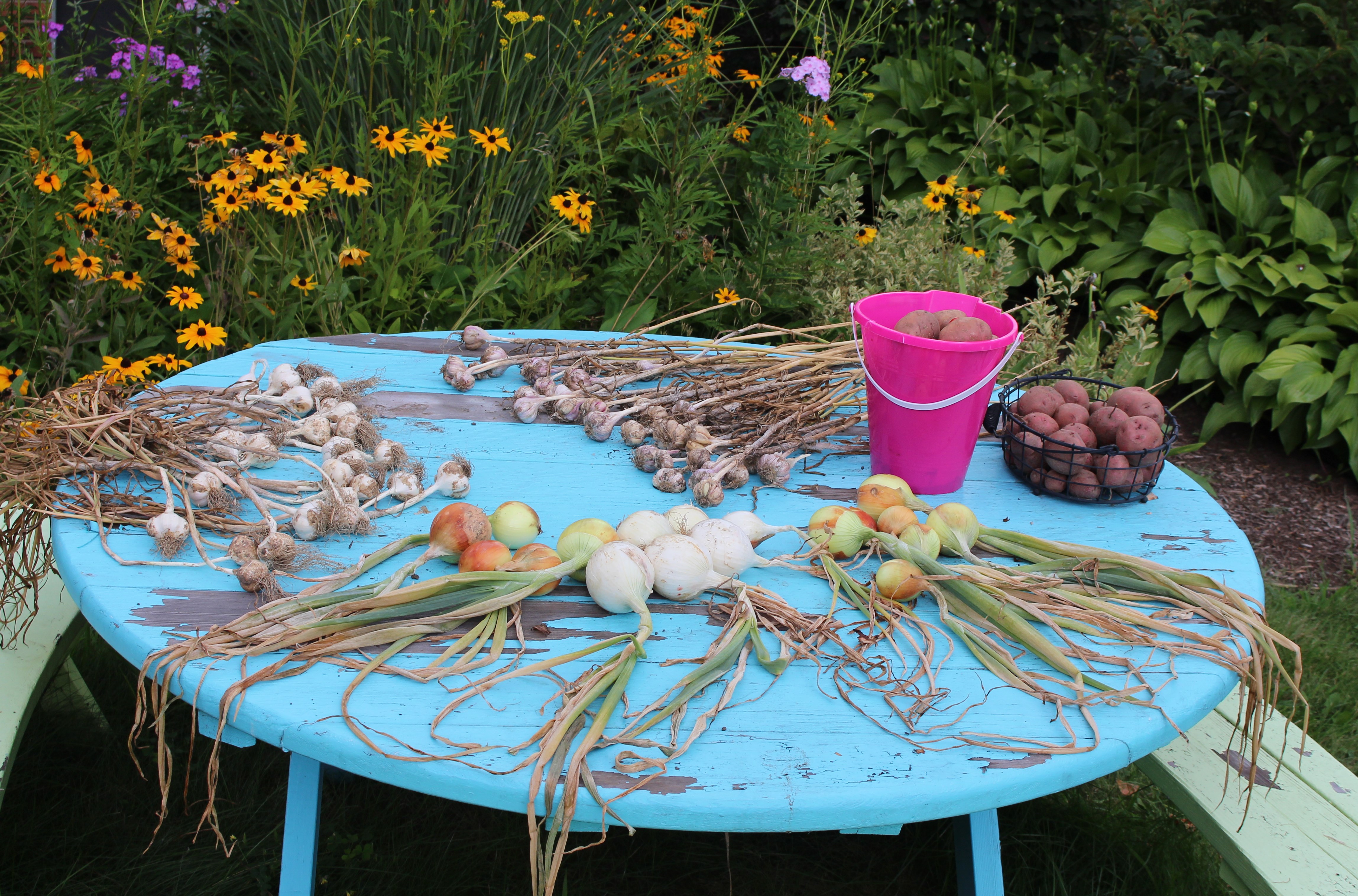
The picnic table is the place to be for drying off and cleaning up before the kitchen.  Garlic, potatoes, and the first of the onions started the month off.

Eggplant and peppers have been going out, onions are always popular, tomatoes are on their way, and beans are yet to come.  The harvest is late due to planter’s procrastination but who out there hasn’t ever fallen behind?  At this time of year even I fix up a plate of veggies, and they aren’t even deep fried 🙂

IMG_8425

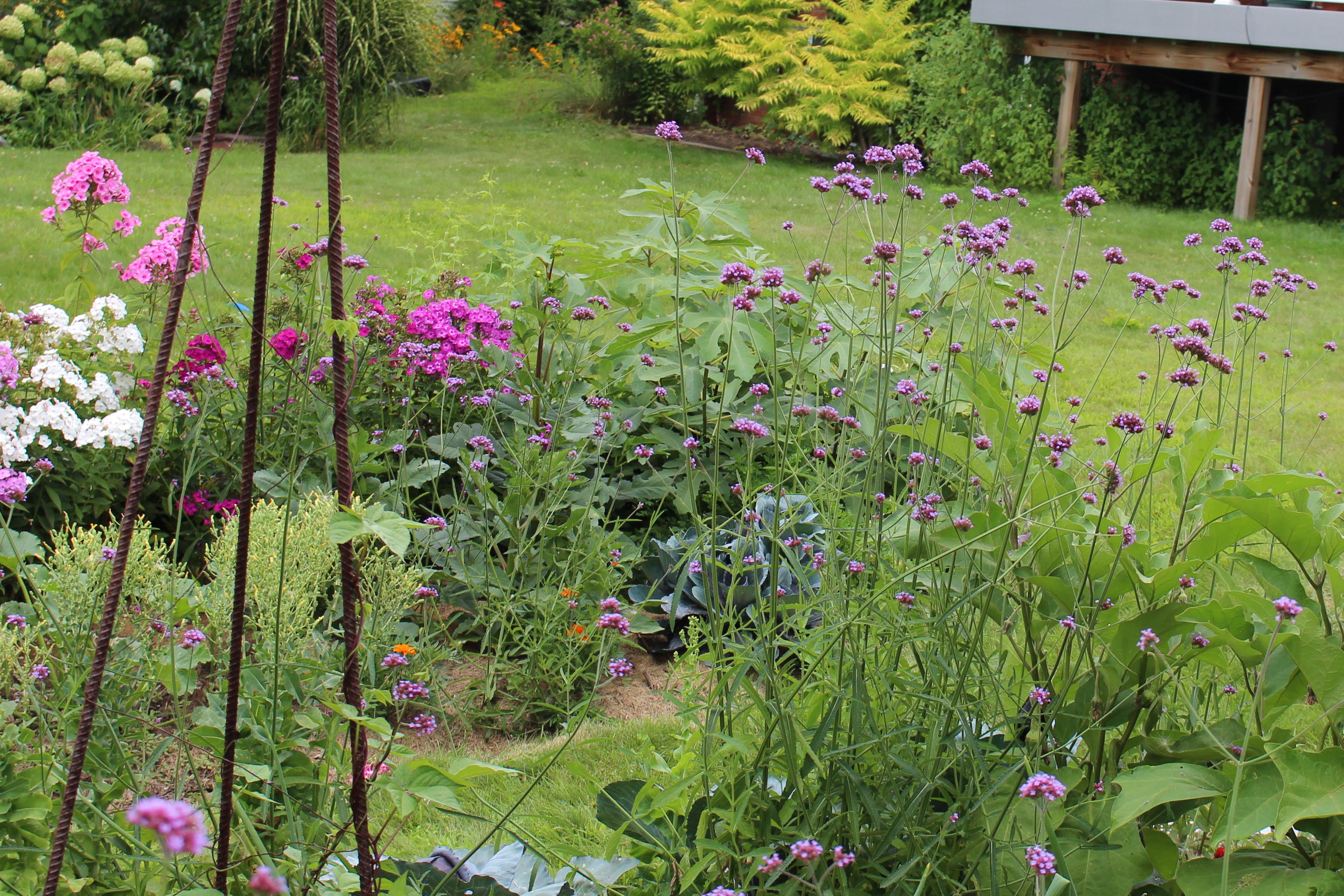
I grow red cabbage just for the looks, but there’s a good chance these heads will disappear soon and show up again later as rotkraut.  Fine by me, but in the meantime they look nice with the verbena, eggplant, and marigolds.

I admire a neat garden with raised, raked beds and straight rows of perfect plantings, but that’s nowhere even close to my garden.  The potager is tumbledown mix of flowers, crops, and all kinds of odds and ends that found an open spot of soil and made it their home.  Phlox are never turned away, and earlier in the month they started their summertime concerto and the music still plays on through the heat.  For this I consider myself lucky,  since earlier in the spring between spidermites and drought I got the feeling it would be a down year for the tall garden phlox (Phlox paniculata).

phlox paniculata dorffreude

Phlox paniculata ‘Dorffreude’ (Karl Foerster introduction, 1939) making a good argument that newer isn’t always better.

The phlox make me happy, but the other flowers which add to the non-agricultural chaos also make me smile, and the tall Verbena bonariensis leads the way with their bee and butterfly attracting bloom heads.

IMG_8305

Now’s the time when the verbena becomes too attractive to pull.  It’s a fair trade-off since the flowers draw in nearly every passing butterfly.

One area of responsible neatness is the boxwood hedge which edges the two forward sides of the garden.  After three years the small plants have finally begun to look nearly respectable.  To celebrate this milestone I spent way too much money on what I hope will be a set of premium hedge shears.  The electric trimmer has been shelved and I took the quieter, more contemplative path of manual trimming.  For me it’s relaxing and I think I’m one of the few who actually enjoys this job.

training boxwood hedge

Slowly the boxwood hedge fills in.  I can still remember the summer day way back when me, a bucket of boxwood clippings,  a few trays of potting mix, and a couple beers started this all.

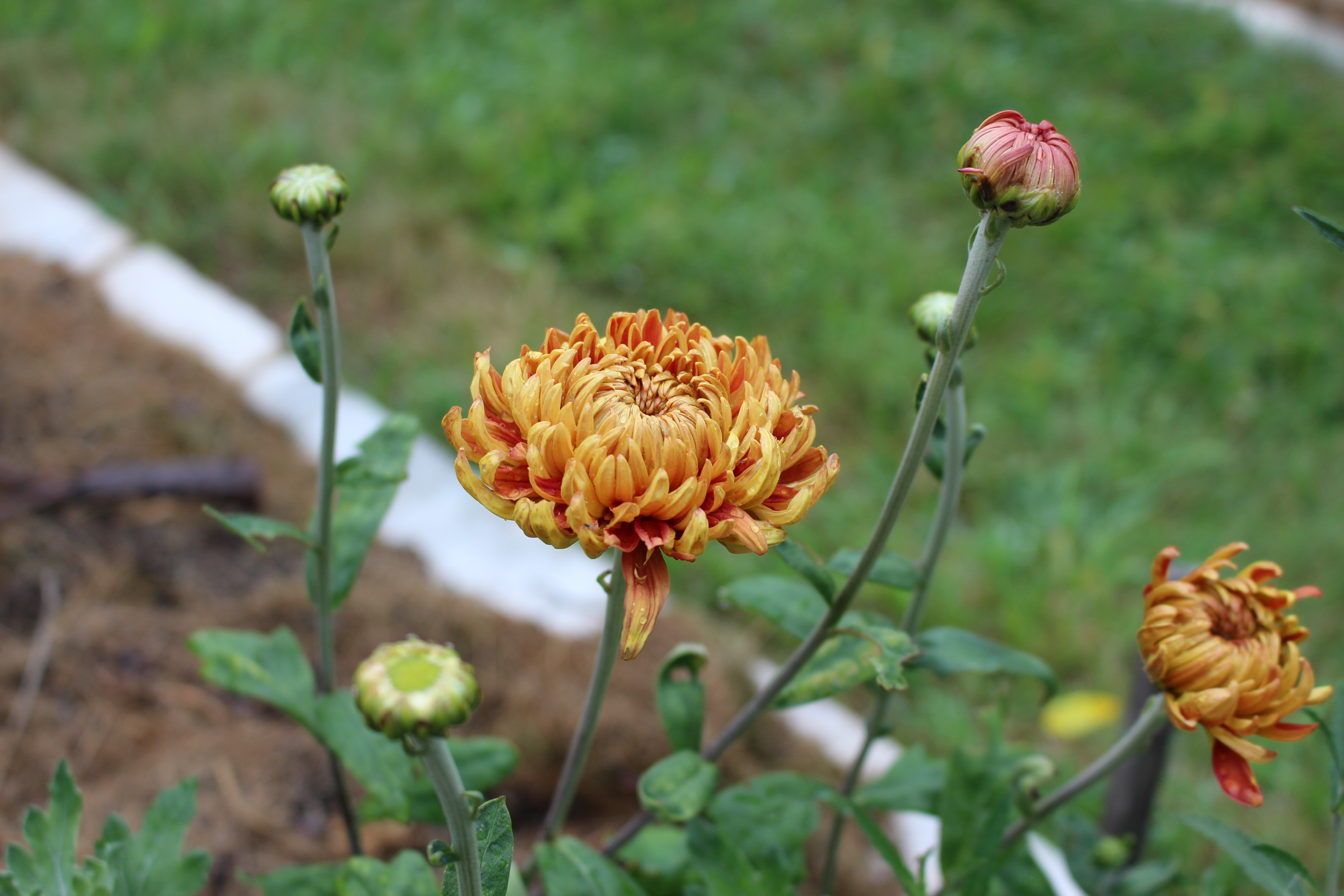
Besides boxwood and phlox, chrysanthemums (ok, new name dendranthema) are starting to make a serious play for potager real estate.  This spring I added even more of the larger flowered football types, trying to stick with anything which might be hardy through the winter.  I’d try to explain this growing obsession with mums but honestly after just admitting I enjoy hedge trimming I’m not sure there’s much I can say to defend this last quirk.

hardy football mum

Hardy (hopefully) football mum.  If the mood strikes next year I may even try disbudding a few of these to see if I can force all the plant’s energy into one single, perfectly large, perfectly perfect, bloom.

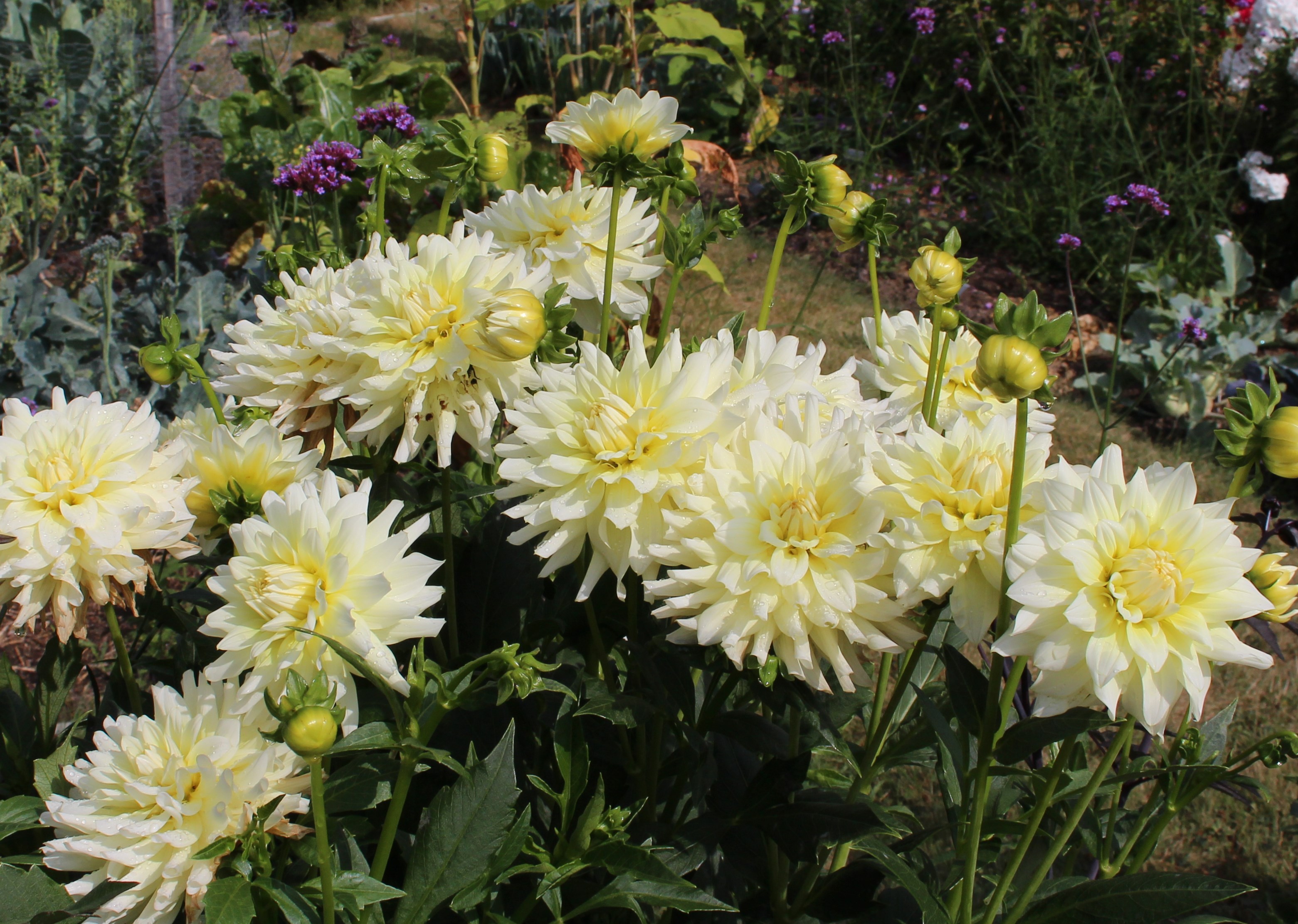
Dahlias.  I like dahlias.  I think I’ve already confessed to that.  Of course a late planting gives late flowers, and you know me and late.

moonlight dahlia

Dahlia ‘Moonstruck’.  This is its third year and it has yet to let me down, although I suspect it carries a virus which causes the leaves to yellow and die way too early in the season.

Sometimes late isn’t anyone’s fault.  For the second year in a row I’ve had these gladiolus bulbs overwinter in the open garden.  Against better advice I even transplanted them in June and look at that, the clump still managed to send up two bloom stalks.  If this keeps up I’ll need to divide the clumps next year since the other clump is up to 8 flower stalks!

winter hardy gladiolus

Just your average hellebore-gladiolus-rudbeckia-tomato planting.  I don’t think you’ll find this combo anywhere else… probably for good reason 🙂

But procrastination does have its down side.  Although the persicaria and rudbeckia have never looked better next to the potager, the light green ‘turf’ in the bed is 100% weeds…. and this is still supposed to be a red border, which rudbeckia is not.  Also the trellis never received a solid footing, and was never officially planted.  I guess that’s what the plans for next season are made of!

persicaria red border

persicaria red border

Enjoy your own harvest, whether it be fruits or flowers, contentment or excitement.  The season is here and as long as the heat doesn’t kill you first you can shelve these moments away in your mind for those dark days in January.


Spare the rod

My nemesis the sunflower.

bird seed sunflowers

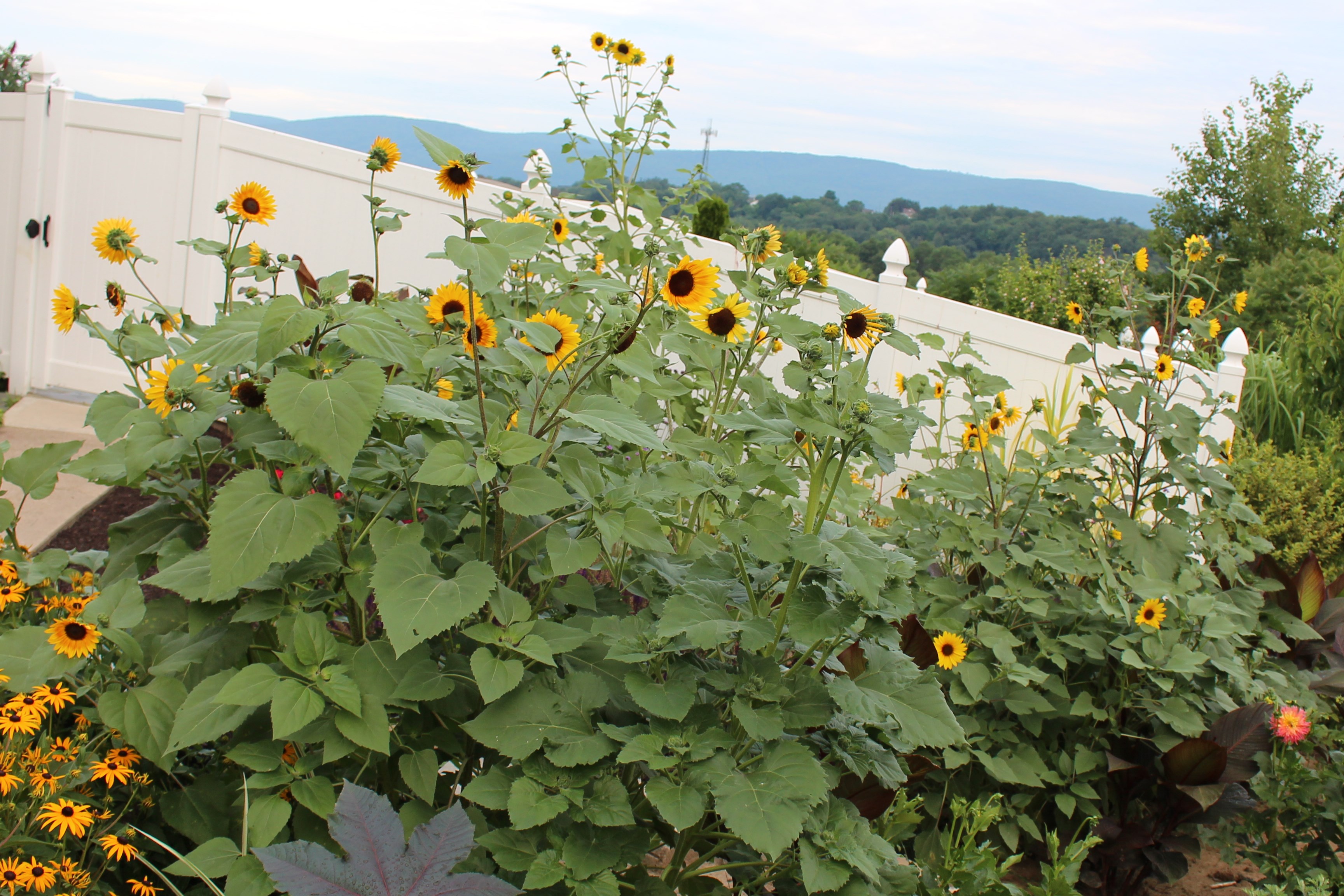
Self sown sunflowers from birdseed backed up by variegated giant reed grass (Arundo donax ‘gold chain’).

Harmless and full of promise is how they appear in the spring, now two months later they’re acting more like closing time at the bar.  Sloppy drunks hang all over one another, sprawl across the beds, and smother the other sober little plants which have yet to grow.  If it weren’t for their summertime good looks and the goldfinches they pull in I would compost them all!

sunflower bloom birdseed

Future birdfood.

It doesn’t take many sunflower seedlings to overtake a bed and between the extra mulching and copious rainfall they’ve had everything they needed to explode.  It’s like a lovely tsunami of sun looming over the plantings.

flower border sunflowers

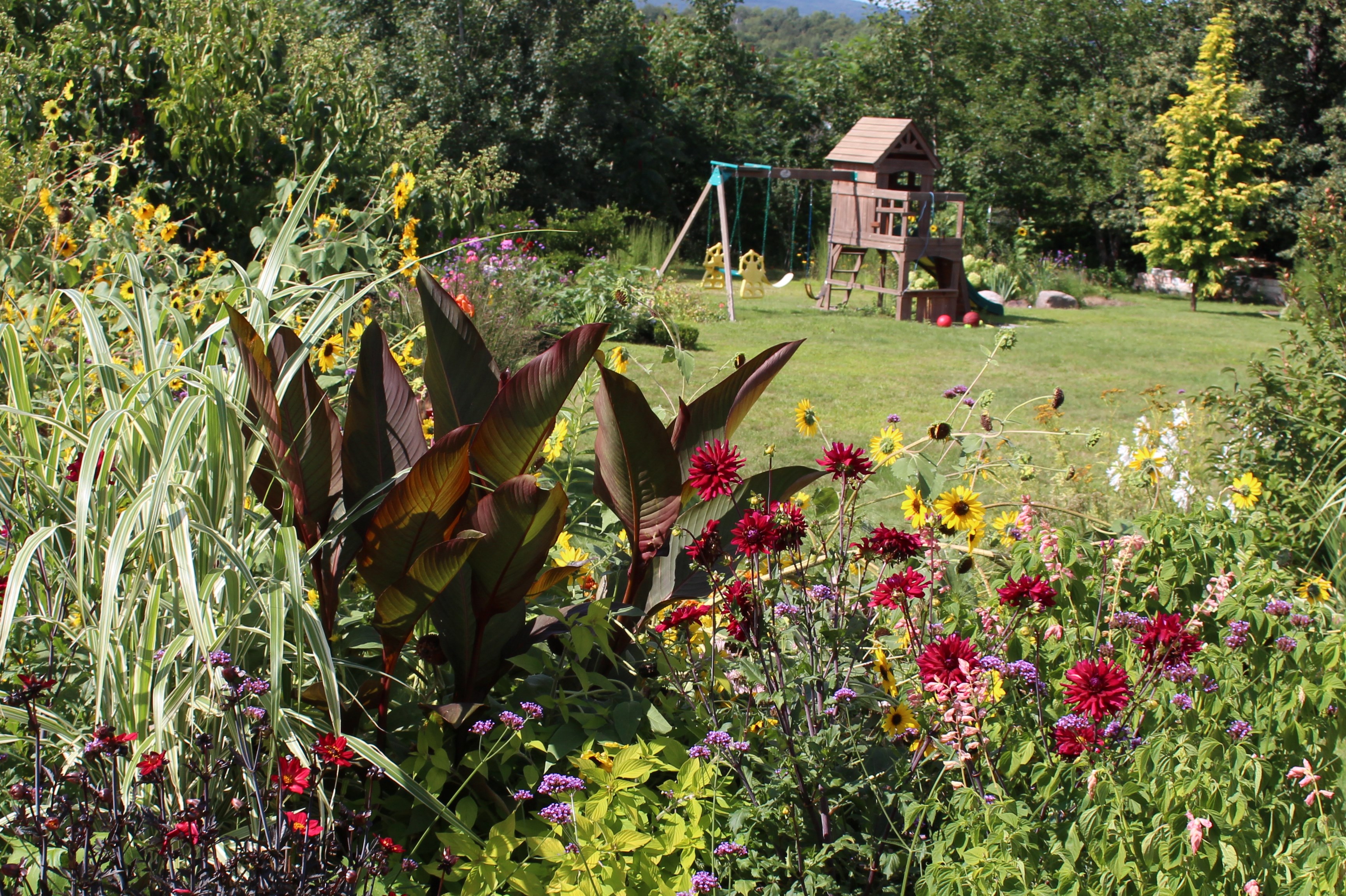
The sunflowers do look pretty with the purple verbena bonariensis, striped leaves of ‘tropicanna’ canna, and the first of the peach colored salvia splendens.

From the top of the bed it still looks pretty but only after I cut down two of the sunflower trees and chopped the rest back in order to clear the pool path again.

tropicals with annuals border

The tropical border looking colorful, but as usual not very tropical.

The inner depths of the tropical bed are beyond reach, I’ll have to wait for frost before I can get in there again.  Fortunately it’s well mulched and doesn’t need much of anything for most of the summer, so as long as the cannas and reed grass don’t get completely swamped I guess I can turn the other cheek and let chaos rule.

arundo donax gold chain with sunflowers

There’s a giant thistle in there as well, I see a steady trail of goldfinches flying in and out feasting on the seed.

Really.  Next year will be the year when this whole mess gets back under control.  The sunflowers will have to go as well as the chrysanthemums which never did get moved like they were supposed to.  In spite of the overwhelming agricultural look of the sunflowers (and I have to admit I really love the show right now) there are a few tropical highlights which have flickered on.  The cannas may not be as big as in years past, but I would never go without them.

healthy canna tropicana

Healthy ‘Tropicanna’ canna leaves in a sea of green with only a touch of gold.

They’ve still got a good two months of growing before frost threatens and hopefully everything will still have plenty of time to fill in.  While other parts of the garden might be taking on a weary look this time of year, these tropicals are just going from good to better, and it’s not just the cannas.  The dahlias are beginning to come on as well.  The flowers are what I’m waiting for, but on a few the foliage show is even better.

dahlia happy single flame

Dahlia ‘happy single flame’ with the dark purple spires of ‘Lighthouse purple’ salvia behind.  I wish those salvia were just a tiny bit taller, right now this low planting looks closer to Victorian bedding than tropicalismo!

Although the foliage is fantastic, I wish I could say the same for the blooms of dahlia ‘happy single flame’.  They  don’t last long and never really make the ‘wow’ impression most of the other dahlias do.  The color is great though and I’ll try to hold on to this one for another year or two, even as the others bloom their heads off in comparison.

dahlia happy single flame

Peak bloom on dahlia ‘happy single flame’.

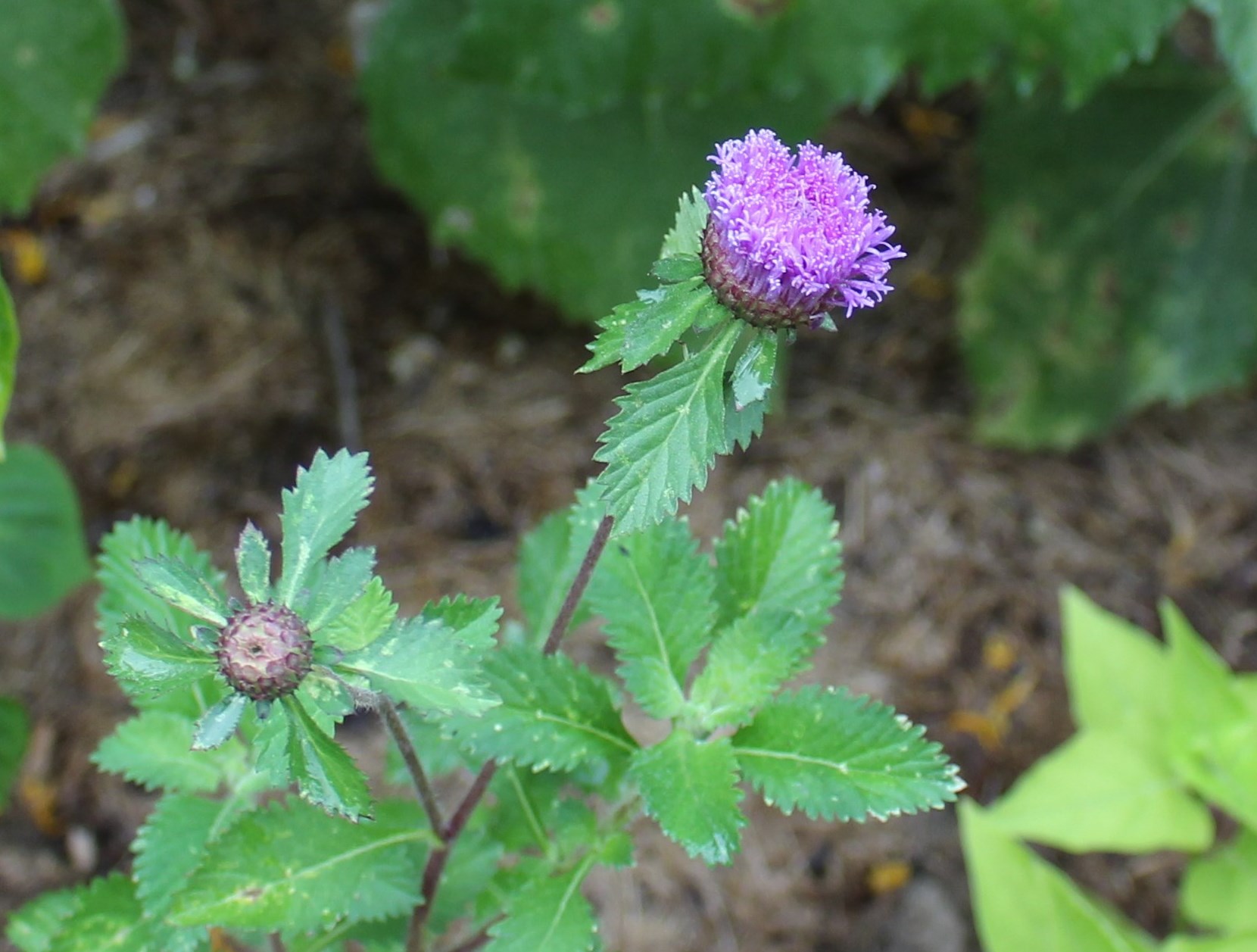
One plant which I had high hopes for but is now slightly underwhelming is the Brazilian button.  New this year from the HPS Mid Atlantic seed exchange, the buttons are nice enough but there could be more flowering at one time and most importantly have a color less like the verbena which I already have filling in all over.  You just don’t notice them in the mix.

Centratherum punctatum Brazilian button

Brazilian button (Centratherum punctatum)

But I’m being too negative.  The sunflowers are awesome and the patch is full of flowery interest, and whenever I get the chance I sit (with a drink preferably) and watch the comings and goings of the goldfinches, hummingbirds, and bees.

pink salvia splendens

The pink salvia splendens are only now starting to flower having spent most of the summer putting on weight.  The large leafy bushes should put on a great show for me and the hummingbirds.

I’m sure there will be more to come from the tropical garden, and if I can only keep a firm hand next year it might even look tropical-ish as well.  Right now I’m just happy enough it’s mulched and weeded from the topside all the way down to the low end.  Last year the low end was pathetic with its drought crisped annuals and struggling heucheras (is that the correct plural for heuchera?)  This year it’s much improved and I can see this becoming a nice transition to the pond garden…. once I get a non-leaky pond in!

panicum northwind in garden

Next year the new divisions will fill in and there should be a wall of panicum ‘northwind’  separating the tropics on the left from the heucheras and pond garden on the right.  

In the photo above you can barely make out the blue mist of Browallia Americana hovering above the hosta.  It’s an easy enough annual (native to Central and South America and across the Caribbean isles) and each year I like it’s nearly true-blue flowers even more.  Too bad I can’t get the camera to agree on the color, it always washes it out to a violet.

browallia americana

Browallia americana

So summer is still in full swing here, and for someone who prefers to ignore the calendar there’s not even a hint of the season winding down yet.  I like this sense of denial and will hang on to it for as long as I can…. but if pushed I will admit to thinking about next year already.  Ok, so I don’t even need a push.  I stumbled upon a summer sale at the nursery and took home a cool little banana plant.  It’s been a couple years since my banana growing days but I can feel the itch again and who knows what this means for next year’s plantings 🙂

The sputtering tropics

Again I’m trying to recapture the tropical gardens of years past, but again I’m falling short.  The fault is entirely my own though and I know that, but in NE Pennsylvania tropical plantings mean around six months of empty planting area and I just don’t have enough self control to keep them perennial and bulb-free.  Really… in October how bad can it be to slip in an extra daffodil or lily?

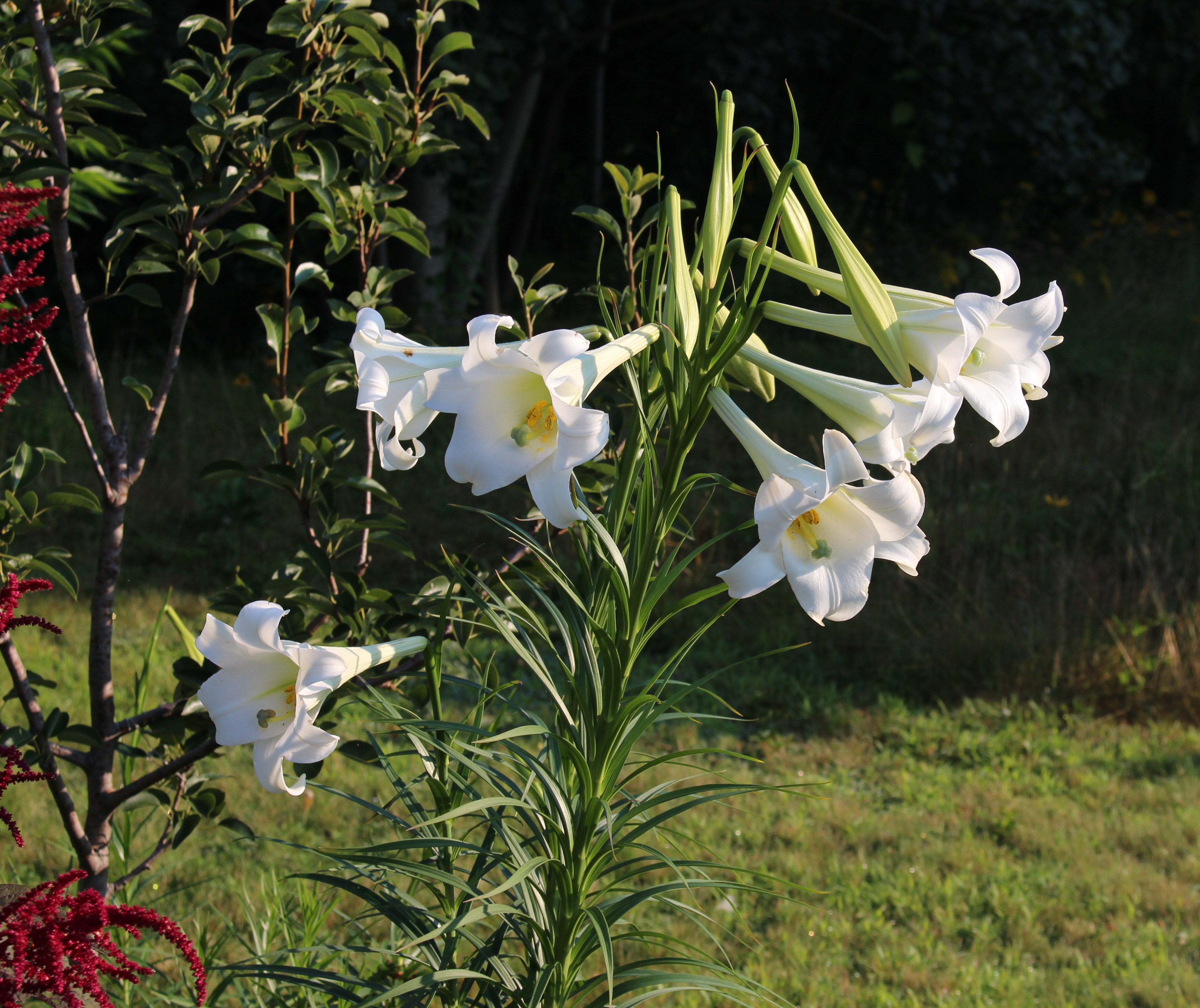
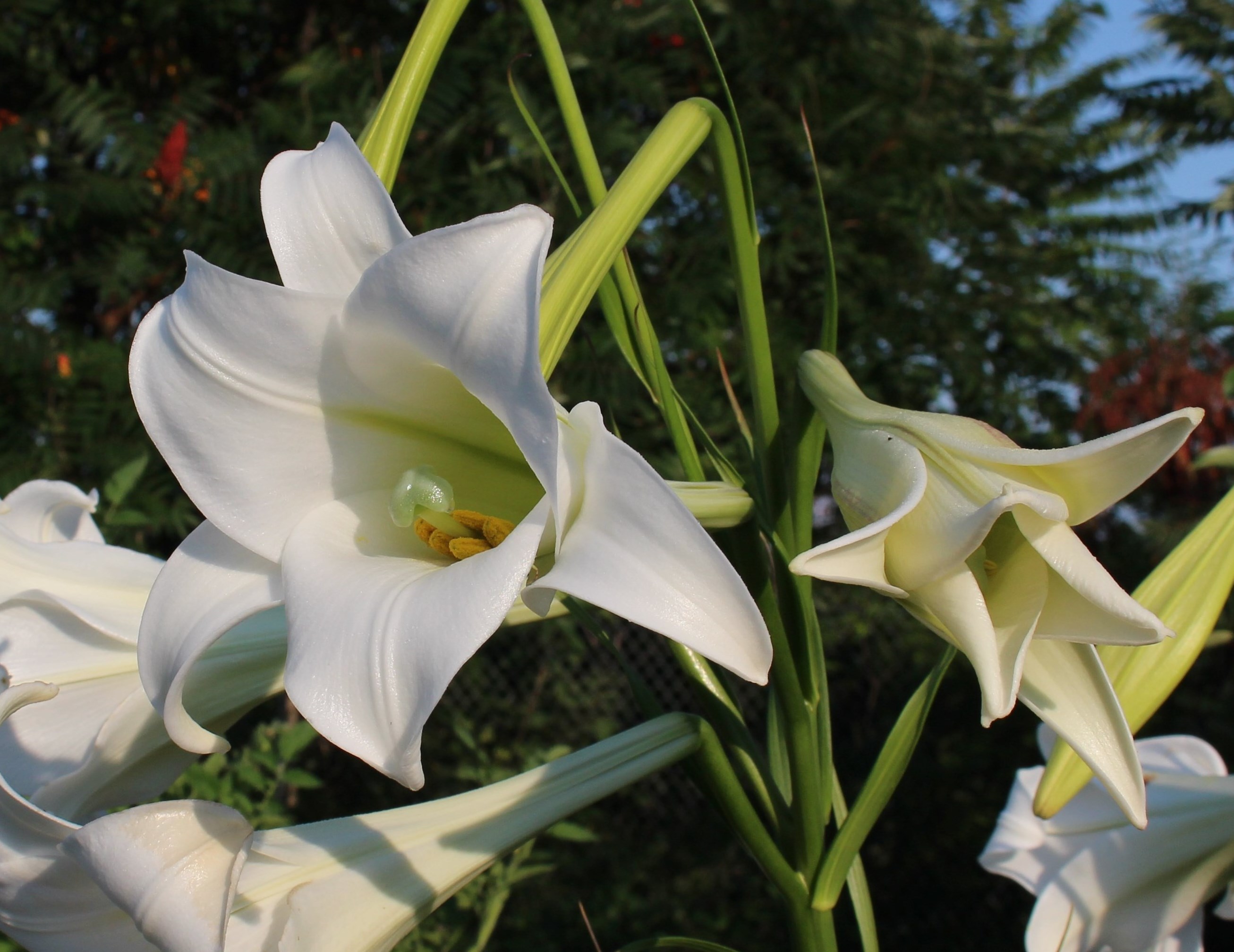
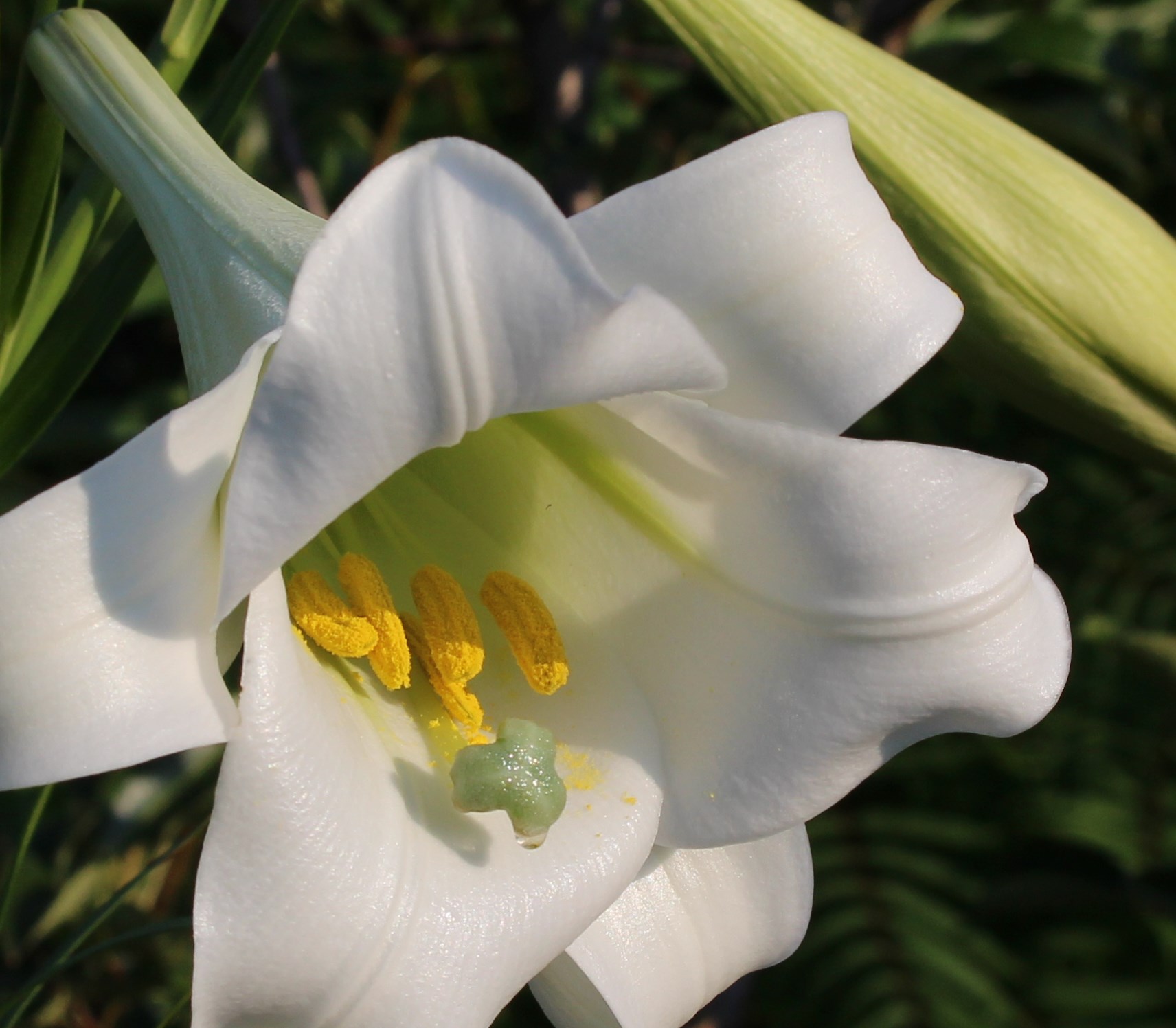
liberty hyde bailey lily

First year blooms on ‘Liberty Hyde Bailey’.  Photo credits for this artistic shot go to the wife,  to tell the truth I wasn’t so sure she even knew where the garden was, let alone was interested in taking any pictures 😉

To my credit serious mulching with every scrap of mulched leaves and any garden debris I could send through the mower has substantially reduced last year’s problem.  The problem was that this bed was overrun with sunflowers, and if we ignore the fact that the gardener himself was responsible with planting them we can pretend that only having a half dozen or so of the plants this year is an improvement.  Still a few self seeded anyway and hopefully this more manageable patch won’t again overshadow the ‘tropical’ look with ‘overgrown agricultural’.  -and for the record I did rip out at least another dozen healthy sunflower seedlings, and nearly drove myself to drink over the guilt (but after a hard day of work what gardener doesn’t deserve a cool drink?)

saving money on mulch

A few sunflowers coming up but hopefully enough bright color and big leaves to make it look tropical.  I only had enough bark mulch for the outer edge, the rest is lawn clippings.

Mulching has been an obsession lately.  I raided the neighborhood woods again and brought home a few wheelbarrows of stinky dumped grass clippings which I used to cover the inner reaches of the bed.  It was just in time to smother tons of baby weeds but most importantly the rotting grass was a solid dose of fertilizer for all the little goodies coming up.  Within a few days everything turned a lush green and started putting out new growth.  It was amazing what a difference the grass made and I’m sure the earthworms are pleased as well.  In order to keep it more presentable I robbed some leftover wood mulch from next door and tidied up the edges of the bed with a few shovelfuls of that.  It’s the dyed mulch which I’m not crazy about, but it being free really appealed to my budget sense.

mulch and paver pathway

I also leveled and set the mismatched stone and paver bits which pave the shortcut between our yard and grandma’s pool.  It looks halfway decent now and is much less of an ankle twister.

Even with plants in and mulch applied, the bed is still not out of the woods.  There’s always a problem child or two.  First it’s the chrysanthemums which I planted and meant to transplant once spring rolled around.  That didn’t happen and to add insult to injury they are coming into bloom now…. just when I don’t need fall color.

mammoth yellow quill chrysanthemum

‘Mammoth yellow quill’ chrysanthemum looking good in July.  I guess next year I’ll pinch in May and try to delay bloom, mums in September would have been nicer!

Another problem are the two cannas I bought.  They were from a reputable online nursery and were listed as showing no signs of virus, but the first leaves tell a different story.  A refund is already on my account but I really wanted to add a healthy canna ‘Musifolia’ and ‘Pretoria’ to the bed.  the leaf streaking and yellowing/browning patches are sure signs of canna virus so these have regrettably been thrown to the trash.

canna virus

These leaves should have a lush, solid green, but instead are showing the streaks and mottling of canna virus.

As usual the third problem child is me.  How could I pull out this lusty little bull thistle?

bull thistle in garden

An excellent example of a weed.  The goldfinches will appreciate the seed heads of this thistle, and surprisingly enough I don’t get many seedlings even when I let them grow.  They seem to need open soil to sprout which is not easy to find around here.

As the tropical garden puts on some weight and gets ready for August I’m going to see if my tidying and weeding streak can finally extend next door to the not-so-red-border.  It needs the help, but so far all I’ve managed is the start of an access path which will circle around through the back of the border.  I’ve been eliminating the weedy campanulas and moving out other plants but still have a long way to go.

a new path into the flower beds

The start of a new path through the back of the red border.  Unfortunately that was as far as my free mulch would take me….

What is summer without a few projects?  Hopefully my neighbors will oblige me with more grass clippings, maybe temperatures will stay low, and maybe I can blaze a path through the thicket which is beginning to take over.  I won’t even mention the water filled hole which has formed where the pond used to be.  All the rain we had has made this area into a soggy mess!

hemerocallis altisima and raspberry wine monarda

Topping out at around 5 and a half feet, this daylily (hemerocallis altisima) looks cool with the dark blooms of ‘Raspberry Wine’ monarda and a few other leftovers from back when this bed was loved.  The tall grass (Miscanthus giganteus) is thriving on all the extra rain and is at least two feet over the neighbor’s six foot privacy fence. 

I guess it’s a start, and time will tell if it’s also an end.  With two weeks of vacation coming up and plenty of weekend trips in between, I may just sit back and enjoy summer rather than sweat out another bed re-do.  The wooliness doesn’t seem to bother anyone other than myself and digging is always more pleasant in September!

Hello dahlias :)

I’ve always dabbled a little in dahlias, but last year I treated myself to a few named ones from Swan Island Dahlias.  Last year they did great, this year even better!

dahlia moonstruck

Dahlia “moonstruck” would look great in a border, it’s got a nice height and really puts out the flowers.

I did lose a couple (my overwintering technique is sloppy at best) but I like to think of it as natural selection.  Eventually I’ll be left with only the dahlias that can tolerate my abuse!  Right now if I can only keep them watered and possibly fertilized once more they should put on a great show until frost cuts them down.

dahlia tanjoh

Dahlia “Tanjoh” barely bloomed last year, this year it’s in a much better spot and is really starting to put on a nice show.

I consider dahlias to be as easy to grow as a cabbage.  Maybe that’s why some people look down on them, they grow so lush and showy that there’s little room for subtlety and finesse…. which is just fine with me.  I grow them best amongst the vegetables where they can be fussed over and freely cut for the house, and they relish the easy life amongst the tomatoes and beans.

dahlia 'mathew alan'

This was supposed to be my favorite from last year “Plum Pretty”, but apparently it’s dahlia “Mathew Alan’. He’s a nice enough dahlia, but this means it was the plum that died over winter and went onto the compost pile….

I love all kinds of dahlias, but seem to be stuck on the quilled ‘cactus’ types.  A six inch wide cactus bloom and a height of about four feet seem just right for my taste, but a look through any dahlia offering will show plants from a half a foot to six with blooms from one inch to twelve…. and daisies, pom poms, dinnerplates, waterlilies, collarettes and more and more in the way of bloom types.

dahlia 'bride to be'

With a generic white flower name such as ‘Bride to Be’ I would guess this one would be perfect for a wedding arrangement. It’s a waterlily type, with broad, perfectly arranged, rounded petals.

Water, rich soil, and full sun are all these ask of me.  They should be staked, but I’m the sort who waits until a storm knocks them all down before I do anything….. I should really reconsider that plan, especially since I just picked up some suitable wood at the DIY store (no excuses!)

dahlia "goovy" with japanese beetles

Slugs, earwigs and Japanese beetles are the only troublemakers I get in the dahlia patch. They’re never much of a problem, I just dispense punishment, clip the bloom, and wait for a new one to come up in its place. This is dahlia “Groovy”, a darker leaved variety.

I’ve been through dahlia phases before and usually after a couple seasons of digging and replanting I either get bored or end up losing them all to bad winter storage.  We’ll see.  This latest phase is still burning hot and fierce, and I’m tempted to turn over the entire vegetable patch and fill it with dahlias!

peach dahlia

My oldest dahlia. This unidentified one from the box store has been surviving the in and outs of winter storage for at least 9 years…. practically a record in responsibility for me! (If it was taller it could be the 1963 dahlia “Alfred Grille”, but named or nameless still a nice one)

So we’ll see what happens.  Dahlia season is just starting and there are more to come, but opinions may change when the temperatures drop.  Digging soggy dahlia roots on a cold windy October weekend can really kill a plant lust and I’m far too frugal to just buy new tubers each spring.

Do you bother with dahlias?

Resist temptation

Summertime DIY projects are an awful thing, and not just for their interference with pool time.  This beautiful time of year with its warmth and sunshine is also the time when nurseries and box stores try and clear out their inventory, and as long as I’m at the store picking up lumber and sandpaper I might as well take a stroll through the plants to see what’s going on.  So far an oleander and golden arborvitae have joined the screw and hinge purchases, and under the relentless strain of repeated returns to the store it’s no surprise my resistance wears thin and a small eucalyptus or succulent falls in the cart too.  Some people buy chocolate, I buy plants, and at a midsummer 50% off sale I run the risk of getting fat.

The DIY store is not a nursery.  The plants are not well cared for and are right in there with washing machines, pipe, and soda coolers…… but sometimes you get lucky.  Sometimes you don’t though, and it bothers me that they sell diseased and dying plants such as these ‘Tropicana’ cannas.

virus in canna leaf

Canna ‘Tropicana’ should be a gaudy blend of yellow, pink, and red stripes on a purple leaf, without breaks and mottling of color. You’re looking at canna virus.

I would guess the store doesn’t know and doesn’t much care to know but the grower should, and to send out plants looking this bad (and to then sell them for nearly $15!) seems irresponsible.  Reputation must not matter much as long as the bottom line keeps looking good.

diseased cannas

Back in the day people went crazy over the wild colors which would show up in virused tulips….. but they learned the lesson and dumped the plants. ‘Tropicana’ growers didn’t get the memo, and each year I see these deformed offerings.

I would think if it’s your business you would want to send out the healthiest plants possible, and I’ve seen several online sources openly discuss the canna virus struggle, but some don’t seem to care.  ‘Tropicana’ can be a really cool plant…. if not entirely tasteful 🙂

healthy tropicana canna

Tropicana out by the mailbox last year. Maybe not virus-free (I’m back and forth on whether or not it’s clean) but it sure looks better than the store version.

I like my cannas and try to toss anything that looks suspicious, but I hate to see the pros doing a worse job than me.

I’d also hate to leave on a down note so here’s another lapse in judgment that you might enjoy.  Santa Rosa is an excellent online source for plants, and they run some amazing sales, here are the goodies which arrived last month after I fell victim to their online summer clearance.

plants from Santa Rosa gardens

I wasn’t even aware of my heuchera addiction until this showed up. My collection of one plant just increased by a dozen more….

The sale is still going on by the way, and if you use the coupon code of JULY10 when checking out, another $10 will come off your $35 minimum order… that’s practically giving plants away and I’m not going to go there (but I would never judge others who lack my amazing will power!)


The garden formerly known as tropical

There’s a spot in my yard (actually most of it inches over into my Mother in Law’s yard) where I like to indulge in a little of the tropics.  Last year it was full of cannas, sweet potatoes, and other warm weather friends, but this year it seems to have lost some of that bold tropical flair.  As usual it’s my own fault, and as usual it’s a long story, so I’ll try to keep it short.  It all begins in April when mulch was purchased for next door, and a willing volunteer was needed to spread it.  I foolishly agreed, but the deal was to add a couple tons of topsoil (I said I needed it to fill in along a sidewalk).  “I’ll spread all your mulch if you buy me even more stuff which needs spreading”.  Let me just say I run a hard bargain.

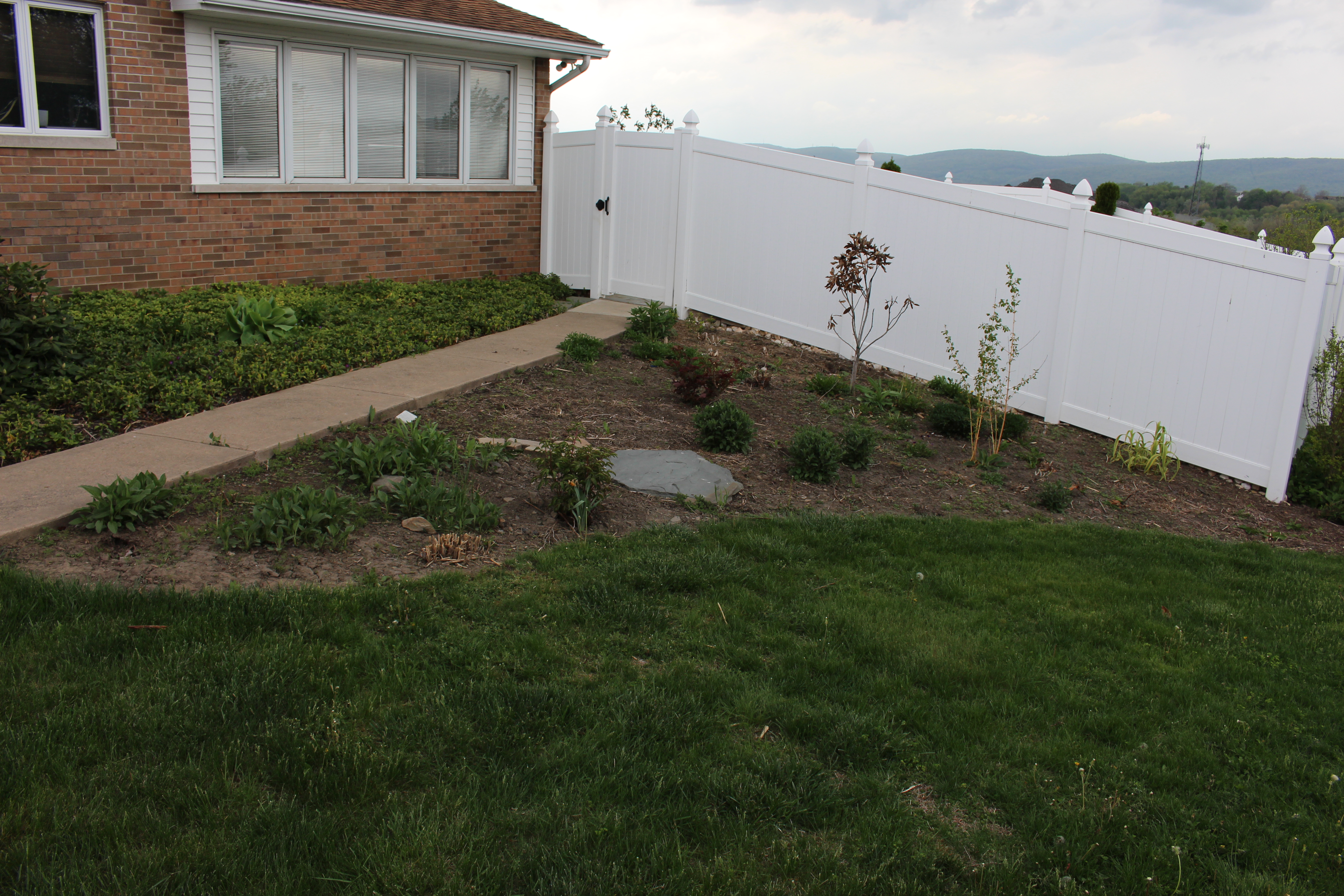
new flower bed

Look at that three inch drop from the sidewalk into the tropical bed. Clearly an ankle twisting lawsuit in the making!

So the mulch was spread, perennials divided, shrubs trimmed, weeds pulled…. the deal kept getting better and better it seems, but then it came down to the heap of topsoil sitting in the driveway.  I used a few wheelbarrows to raise the soil along the walk and was still left with plenty.  Finally my plan was coming together hah hah hah.  I’m pretty sure I mentioned I might use the topsoil to expand the bed a bit, so that’s what I went ahead and did 🙂

digging a new perennial bed

Line the edge with a hose, cut in and dig out the edge, smother the grass with about two inches of topsoil… wow did I hate mowing this sloped little patch of sickly grass!

No one said a word about the tripled in size, very empty bed.  I think people around here may be a little wary about asking questions for fear I will plant up a field of dandelions or something.  Some people have said I’m stubborn and criticism may tend to encourage me even more.  I like to think of it as proving a point 😉

fresh soil in flower bed

A huge empty garden bed in May. What could possibly make a gardener happier (other than a few loads of compost mixed in)?

The last bits of mulch made the bed a little more suburban-friendly and a few paver scraps thrown down along the center made an acceptable shortcut for the kids.  Then on to the real fun!  Canna and dahlia roots were lugged out and planted, and that was well enough, but then trouble started brewing.  A box filled with a dozen or so rooted chrysanthemum cuttings showed up at the door.  I can check on them constantly if they’re right along the edge of the new bed, so that’s where they went.  Don’t ask me why I needed a box of chrysanthemums, February is a tough month.

new flower bed

Somehow random perennials invaded the tropical border, that and chrysanthemums….

Then of course I tried to make the front yard more respectable by not having sunflowers all throughout the foundation plantings.  Out they came and into the new bed they went.  I have a serious problem in trying to show any kind of resolve against sunflower seedlings, they’re all summer and sunshine and it seems borderline criminal to pull them as weeds.

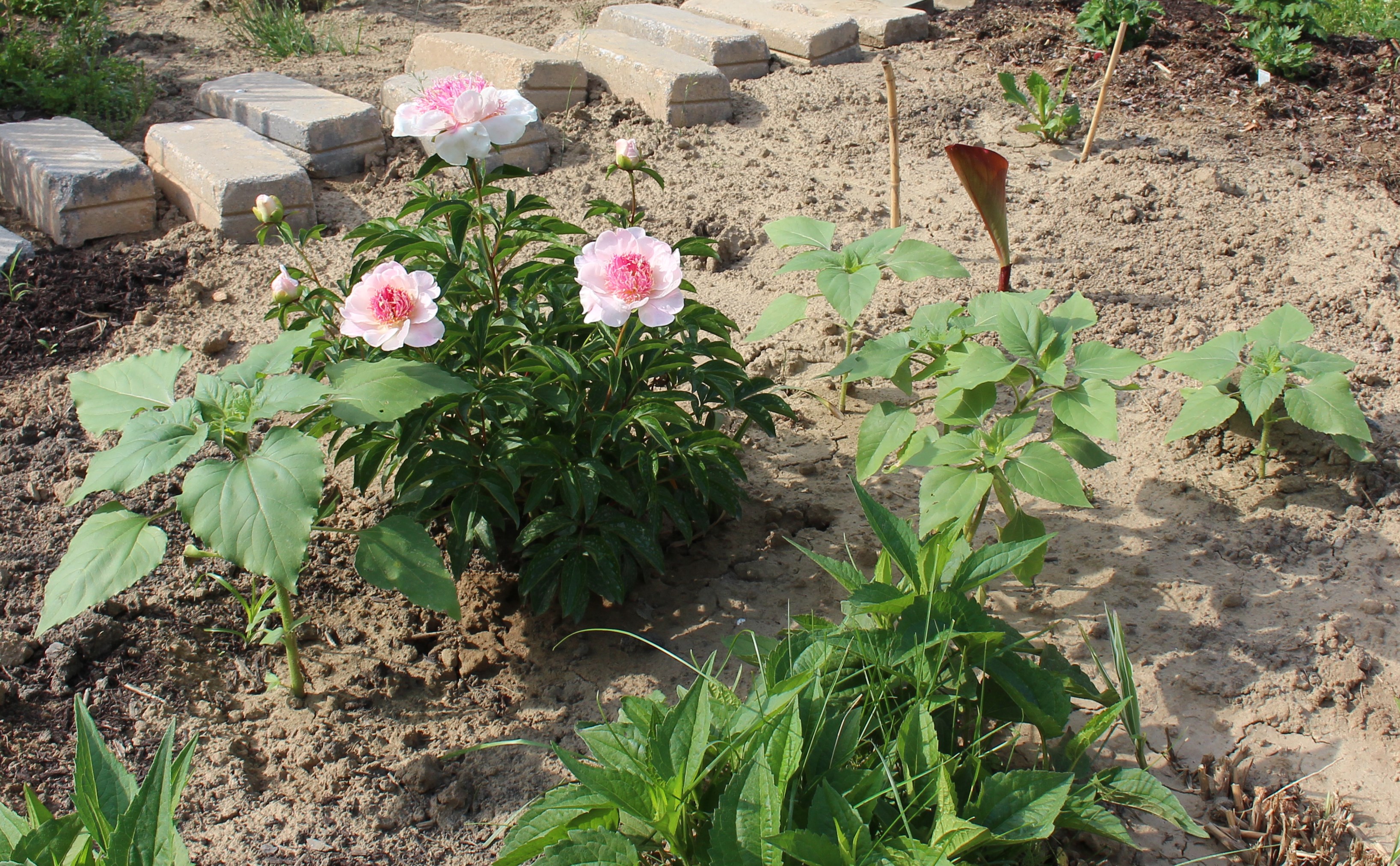
peony "do Tell"

Peony “Do Tell” can’t seriously expect to be the only plant using this spot of sun all year. The sunflowers should take over by July and the peony will just hang out in their shade until next year…. that’s the theory at least.

Things still look awfully barren but until the heat of summer hits it’s all kind of just biding its time.  Looking over from my yard you can see the bit of slope which made me hate mowing this spot.  Plus I’m not all that crazy about lawn to begin with *yawn* ….. it’s only really good for walking around on while checking the plants out!

side view

Year two of “I should give the table another coat of pain” -June 10th

My grass just doesn’t have the strength to come up through the soil (southerners may have a different experience), and even without soil improvement the new plants are still doing well as they feed off the decaying lawn underneath.  A month later and things are looking better.  The cannas still give a tropical look, but all the sunflowers are giving more of a neglected-agriculture vibe!

cannas, grasses, and sunflowers

July 13th, about a month later and the cannas are up, the sunflowers are growing, and I still keep looking at the bare dirt wishing for some compost or mulch to cover it up with.

As the sunflowers come into bloom they’re pretty and cheerful… but they’re not the tropics.

sunflower bed

It looks lush and green, so I should be happy. Also it’s not the color disaster I grew here last year, another reason to be pleased!

Besides it being a non-tropical border, a few other problems are coming to light.  The first is that some of the chrysanthemums relentlessly insist on setting buds and blooming for summer instead of fall.  I think I failed to pinch them back enough when planting them out in the spring, but I just don’t have the heart to do it now.

mums blooming too early

Chrysanthemums blooming in July, hopefully they’ll be on the correct schedule next year…. but they’ll need dividing by then, so I have no idea where to put them all!

To me a more insidious problem is the sunflower blooms.  When the first flower opened I cringed.  They’re completely pollen free, and because of that they don’t offer much to pollinators, and even worse they don’t set seed as well as the normal types.  I thought for sure since they were selfsown from last year’s plants that they should be normal functioning sunflowers but that’s not the case.  These all appear to carry the pollen-free gene, a gene which I’m sure came from the birdfeed seed.  I’m not big on all the seed conspiracies, but this looks like a genetic insurance policy that keeps farmers coming back to the seed supplier each year, and keeps them from replanting their own crop.  Good for a seed seller but not so good for me and all my now genetically tainted sunflowers.

pollen free sunflower with bee

Not much here for the bees.

Luckily there’s a small patch of sunflowers out front which still grow normally.  Once these started blooming I noticed a few seeds starting to form in the other patch (I guess a little pollen goes a long way throughout the garden!).  I need to make sure I get my seedlings from this area next year.

wild sunflower

This sunflower looks like it’s full of tasty seeds, not full of empty husks like over in the other patch.

The sunflowers look pretty enough, but all I see are the black soulless eyes of the walking dead…. ok maybe not that bad, but they lack the busy bees and bugs that usually do laps around the big open pollen filled flowers.  The goldfinches have also been very insulting as they touch down to check on the seed supply and come up empty.  Hopefully pollen from the front yard will work it’s way back here to at least make the birds happy.  Just in case, I planted a patch of heirloom sunflowers in the now completely dug up daffodil patch.  They’ll be late, but they’ll have pollen, and I think they’ll still make it before frost.

selfsown sunflowers

Sunflowers coming on strong.

I’m still holding out for a few tropical effects.  One castor bean seed came up and is now taking off, and “tropicanna” canna is looking healthy.  Also if I have nothing better to do this week, a few coleus and sweet potato cuttings can fill in one or two of the still empty spots, and maybe by late August ‘tropicalismo’ will revisit this bed once again.

castor bean with tropicanna canna

Castor bean “carmencita” and a few over-fed “Tropicana” cannas. The cannas seem to get much brighter colors when grown on the lean side, or with just a little 10-10-10 fertilizer. This batch has a lot of green in them due to higher nitrogen, probably from some miracle grow.

I don’t know if they say tropical to everyone, but dahlias never fail to bring brightness.  This peachy pink with yellow cactus flower makes me think of some overdone tropical drink.  Yummy!

pink and yellow cactus dahlia

Unknown dahlia which I keep saving from year to year. This spring I tried to show some restraint with them since last season planting a dozen or so might have been overkill 🙂

One plant I still need to plant out more of is verbena bonariensis.  In almost all my other beds it can be counted on to show up and make a play for taking over any open spot, here in the new soil it hasn’t had a chance to seed in yet.  Any transplants made this time of year will shrug off the shock of moving quickly and should be blooming up a purple storm in no time at all so I better get moving.

arundo donax "gold chain"

The grassy tropicalish leaves of arundo donax “gold chain” make a great mix with the sunflowers and verbena. I might have to plant this combo on purpose next year to make sure it happens again!

The tall old fashioned red leaved cannas always make me happy.  They’re super easy to overwinter, never look ratty, and always grow as fast as the fertilizer and water will take them.  The small reddish blooms which come later in the season aren’t much to talk about, but the hummingbirds love them.
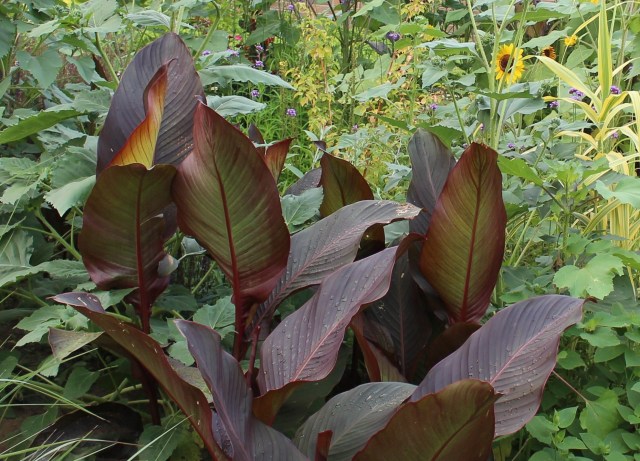
red russian canna

Maybe canna “red Russian”? We call them Polish cannas after the old Polish woman who years ago gave the first ones to a friend of mine.

So that’s the latest from the ex-tropical bed.   It may still heat up as the season progresses, but for now it’s decidedly temperate and might remain so for a while.  No amaranthus or salvia seedlings showed, and this spring was a bust as far as all the seeds I started, so many of the brightest colors from last year are hushed.  For now I’ll have to keep satisfied with my little bit of the tropics in containers.

tropicals in containers

A couple real tropicals planted in containers where I can best keep an eye on them.

Not to go on any longer than I already have, but those weak little pots of tropicalismo surrounded by weeds and dead grass aren’t just a bad planter arrangement.  To me they’re the accent on a new gavel terrace backed by a low stone wall.  Maybe a fire pit.  I think one of the reasons my garden looks the way it does is because I have a bit too much vision, but we’ll see.  I do tend to work backwards and always find the plants first…. who cares if the seating area is still a little “in development”?

The meadow in June

Last summer ended up being awfully dry in my neck of Pennsylvania, and as a result the grass in the meadow (or orchard if the apple tree ever takes off) took quite a beating.  Parts are so stunted this year you can barely tell it’s been uncut since spring.  This kind of defeats my dream of amber waves of grass rising and falling in the breeze, but it works out great for the new summer bulbs I dibbled around into the turf last fall.  I experimented with a few triteleia and dichelostemma, and although I didn’t expect much out of them after the cold and wet winter, they survived and are now showing off nicely amongst the sparse grass.

triteleia ixioides starlight

The thin grass leaves plenty of room for short bulbs such as triteleia ixioides “starlight”.  It’s not a great picture since it doesn’t show any of the soft yellow of this flower, but it’s the best I could manage!

I needed some bulbs which the rabbits wouldn’t decimate (unlike the crocus) and these have worked out well so far.  I have my fingers crossed they’ll return next year, but for now I’m happy with them.  I think my favorite is this dichelostemma ‘pink diamond’ a natural hybrid from somewhere out of the western end of North America, and hopefully a good match for my dry-as-a-bone-in-summer meadow.

dichelostemma pink diamond

Dichelostemma “pink diamond”, the tubular pink blooms look almost waxy and rise up above the grass while the grass covers up its yellowing leaves.

Sumac and aspen are constantly making a bid to take over the meadow, so I need to get in there and snap them off.  Too bad the lazy little bunnies can’t do me a favor and chew these plants down.  It would finally give the blueberries a break.

dichelostemma pink diamond

The bright color of the “pink diamond” blooms really stand out in the meadow.  Good thing too since last year’s drought was also rough on rudbeckia and daisy seedlings.

Dichelostemma congestum was another treat.  It’s got a clear, bright blue color and also stands out well in the grass.  Hopefully this is another bulb that will settle in and call the meadow home.

dichelostemma congestum

Dichelostemma congestum looking nice up against the only patch of decent grass.

If I trust my seed skills I could try collecting a few and nursing them along for more of these little bulbs, but honestly I think they’re better off falling to the ground and fending for themselves.

dichelostemma congestum

If the butterfly weed was just a little quicker I could have a nice mix of bright orange to go with the daisies and dichelostemma. Summer’s the time for bright combos, right?
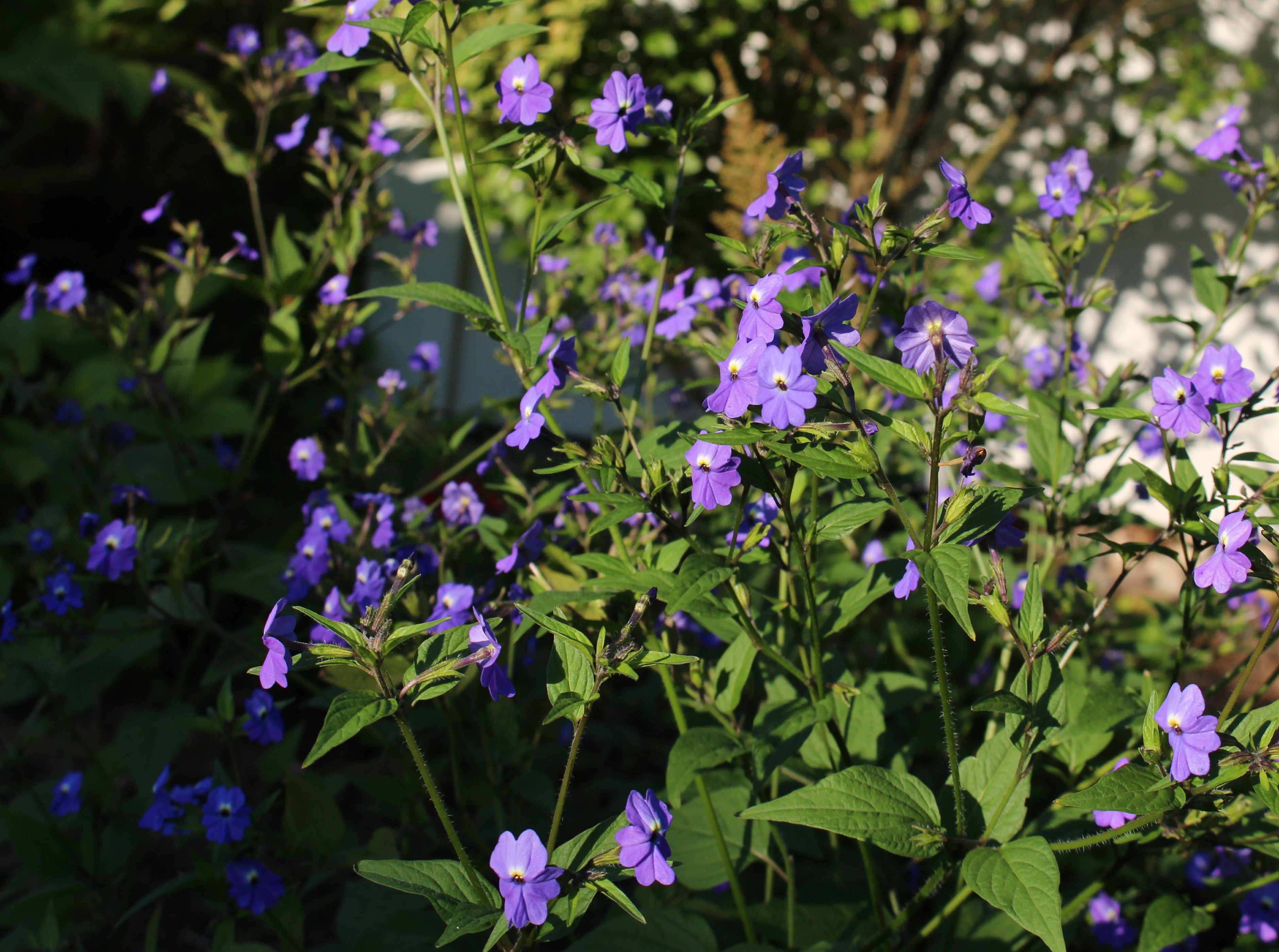
So that’s it for the meadow in June.  The butterfly weed is coming along and should make for a colorful intro into July and I’m glad to have a few interesting things back there.  Sure beats the half dead lawn I used to waste my time cutting each week!