Garden Bloggers Foliage Day -Aug.2014

For nearly three years Christina of Creating my own garden of the Hesperides has been hosting the meme which focuses on foliage in the garden.  I believe her intention was to explore the important role which foliage plays in the garden, and remind everyone that although flowers often steal the stage, foliage remains to carry the show.  Going out this week with the intention of focusing on foliage surprised me in two ways.  First of all I always assumed I was one of those “immature” gardeners who always falls for the flash of flowers and doesn’t have much foliage interest.  That was wrong….  apparently nearly all flowers come with some kind of foliage (who knew!) and even the most flower blinded gardener will have foliage.  Secondly I learned another important revelation…. my garden looks much, much better in close-ups!
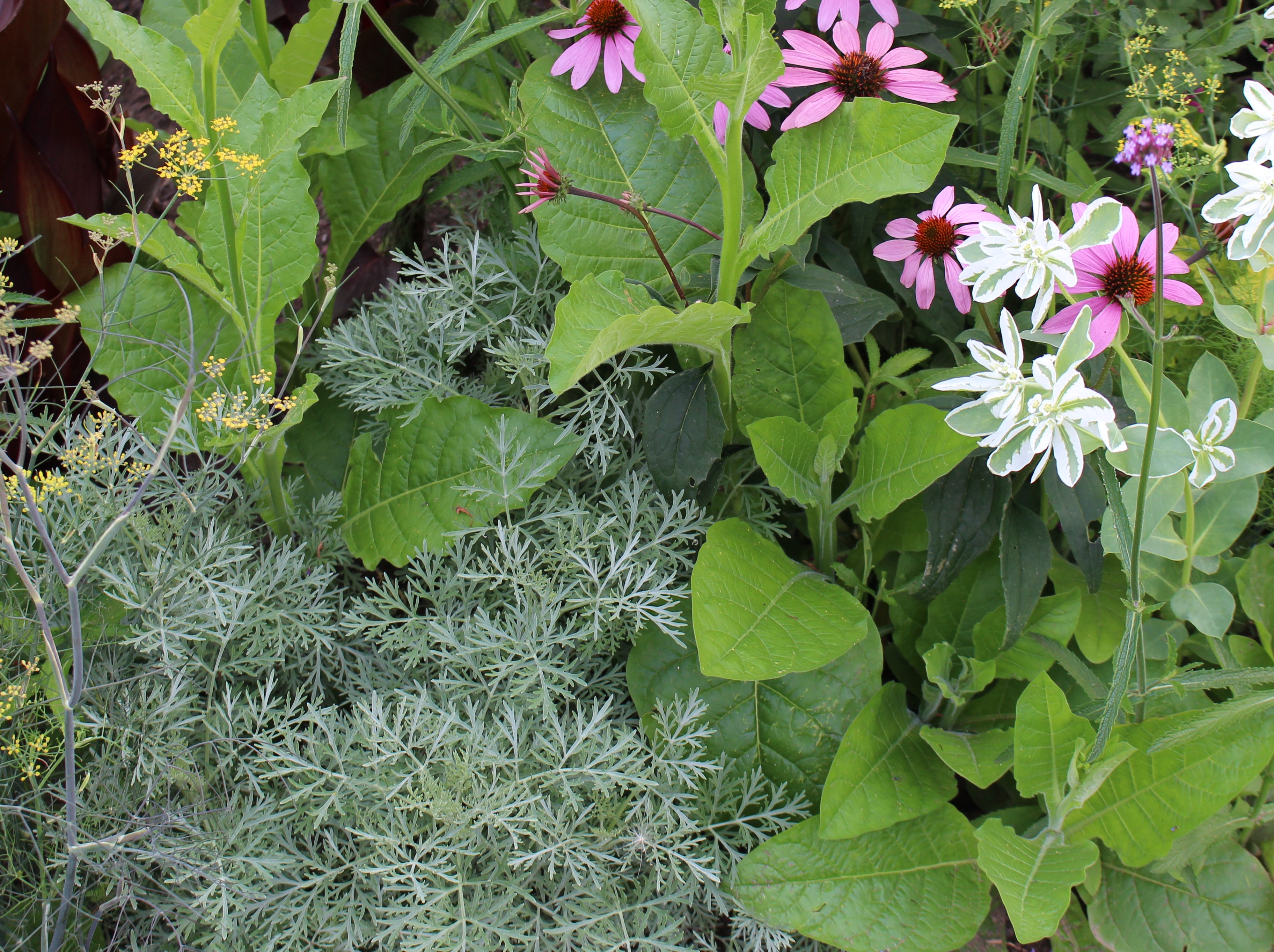
Powis castle Artemisia, snow on the mountain, nicotina, and Echinacea

I’ve grown Artemisia “Powis Castle” before, but never here in Pennsylvania. It was planted this spring and I love the gray foliage mixed with all the other stuff that seeded in with the compost. (fennel, nicotina, Echinacea, snow on the mountain)


Starting with A and Artemisia is as good place as any, and while we’re here I guess we’ll just keep going along the front street border.  Soil improvement this spring and moving things around brought in plenty of seed-laced compost, and “Hopi Red Dye” amaranthus is easy to spot with its dark red leaves.
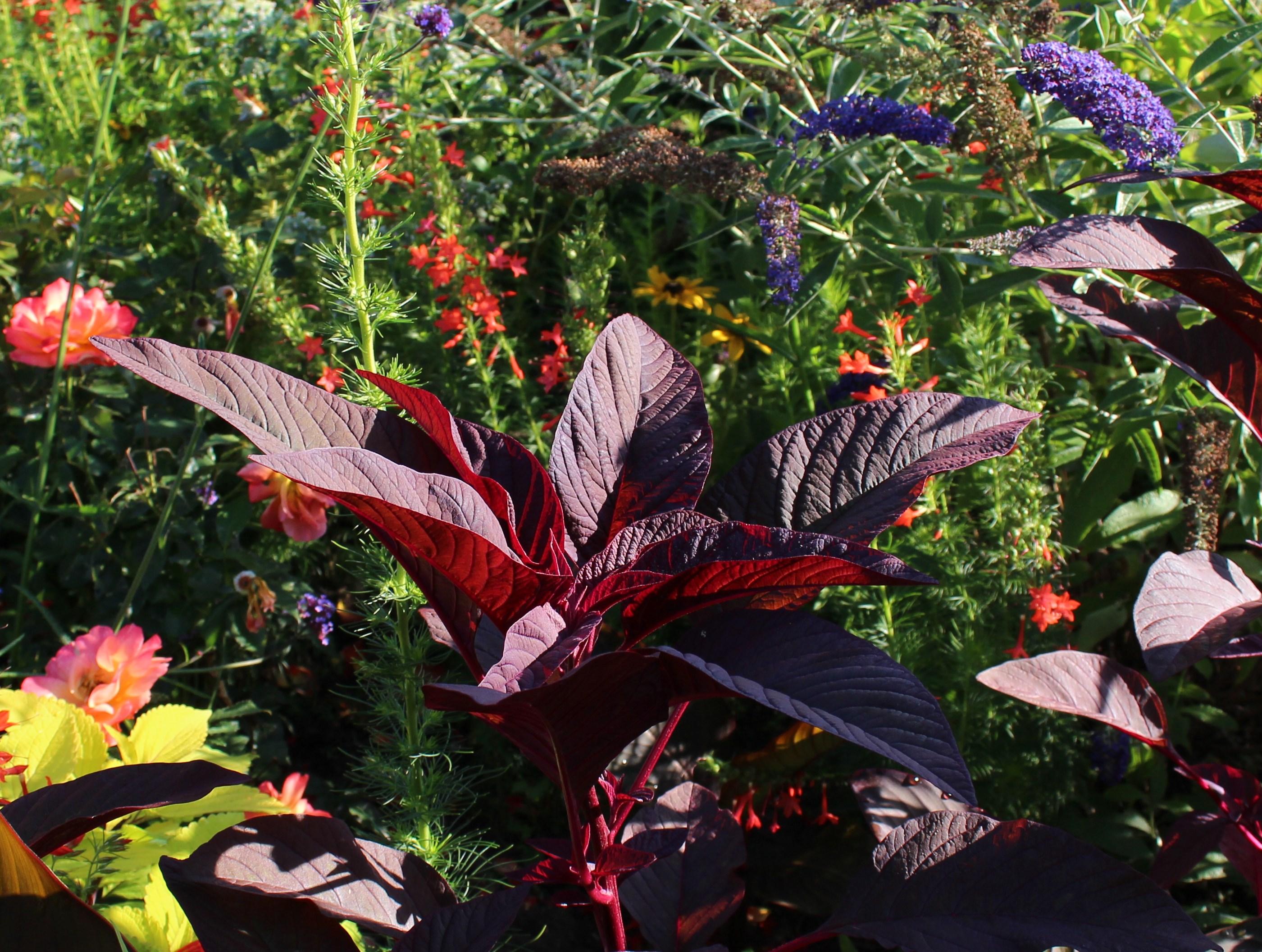
amaranthus hopi red dye

Amaranthus “Hopi Red Dye”, as easy to grow as its more weedy relatives.

I like purple leaves, but I don’t think I can resist a plant with yellow foliage, and this “Golden Sunshine” willow was an impulse buy last year.  Rabbits mowed it down last winter but willows don’t sulk and this one bounced right back.  Actually I think cutting this one back to the ground each spring would probably be the best way to keep the bright new foliage coming.
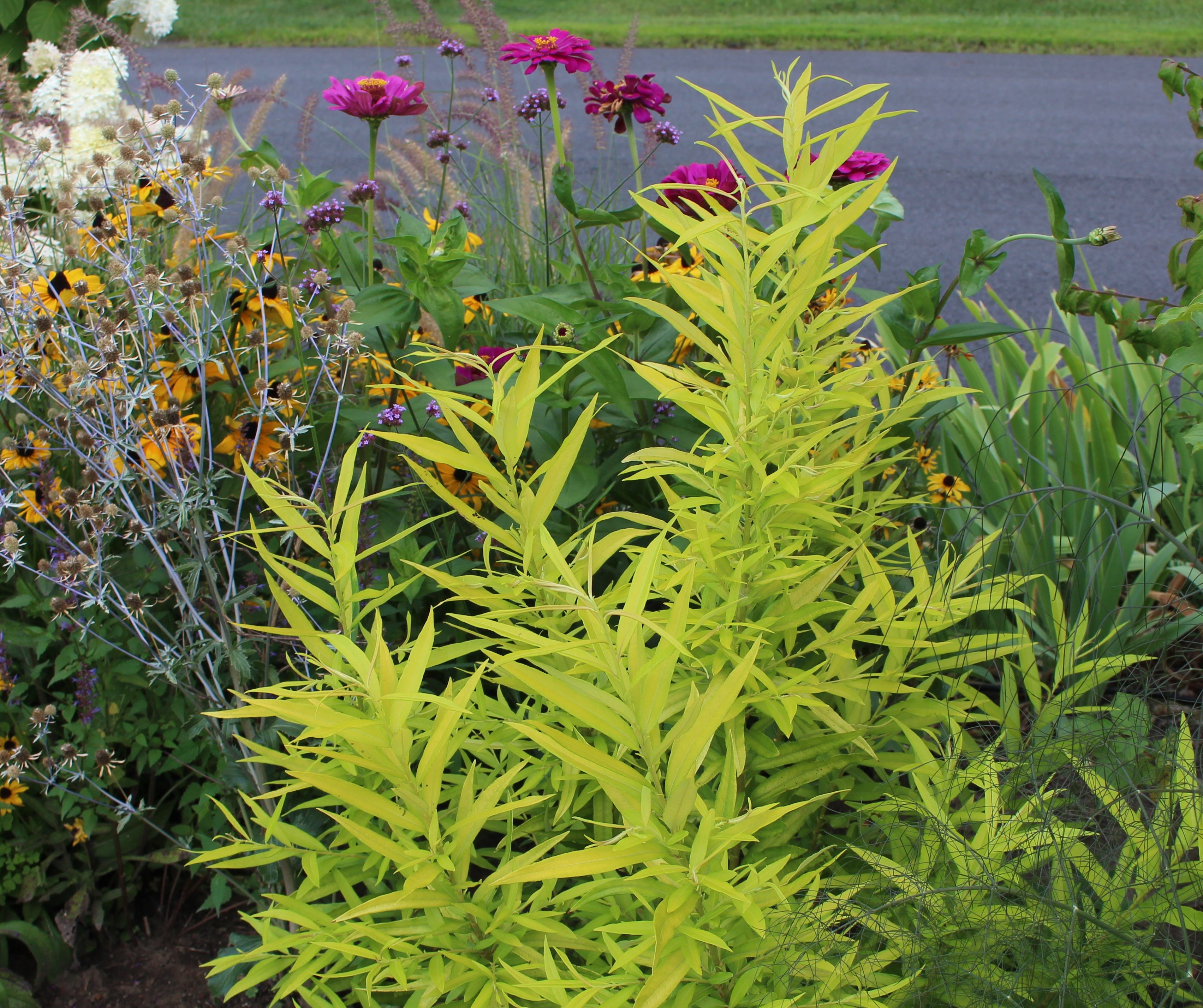
golden sunshine willow

Salix “Golden Sunshine”… or at least I think that’s what this willow goes by.  I really need to have a better recording system for my plant IDs.

If pushed I might even admit to having too much yellow foliage around the yard.

arundo donax variegata in perennial border

Arundo donax “variegata” in the front perennial border. An explosion of color with “Black Knight” buddleia, pink agastache, and yellow fennel blossoms. Btw, the arundo is probably 8 feet tall and the butterfly bush 6. Also it’s unusual for the grass to have this much color so late in the summer. Usually the heat makes it go all green.

Here’s a little blue in the blue spruce I moved last spring…. and more yellow.
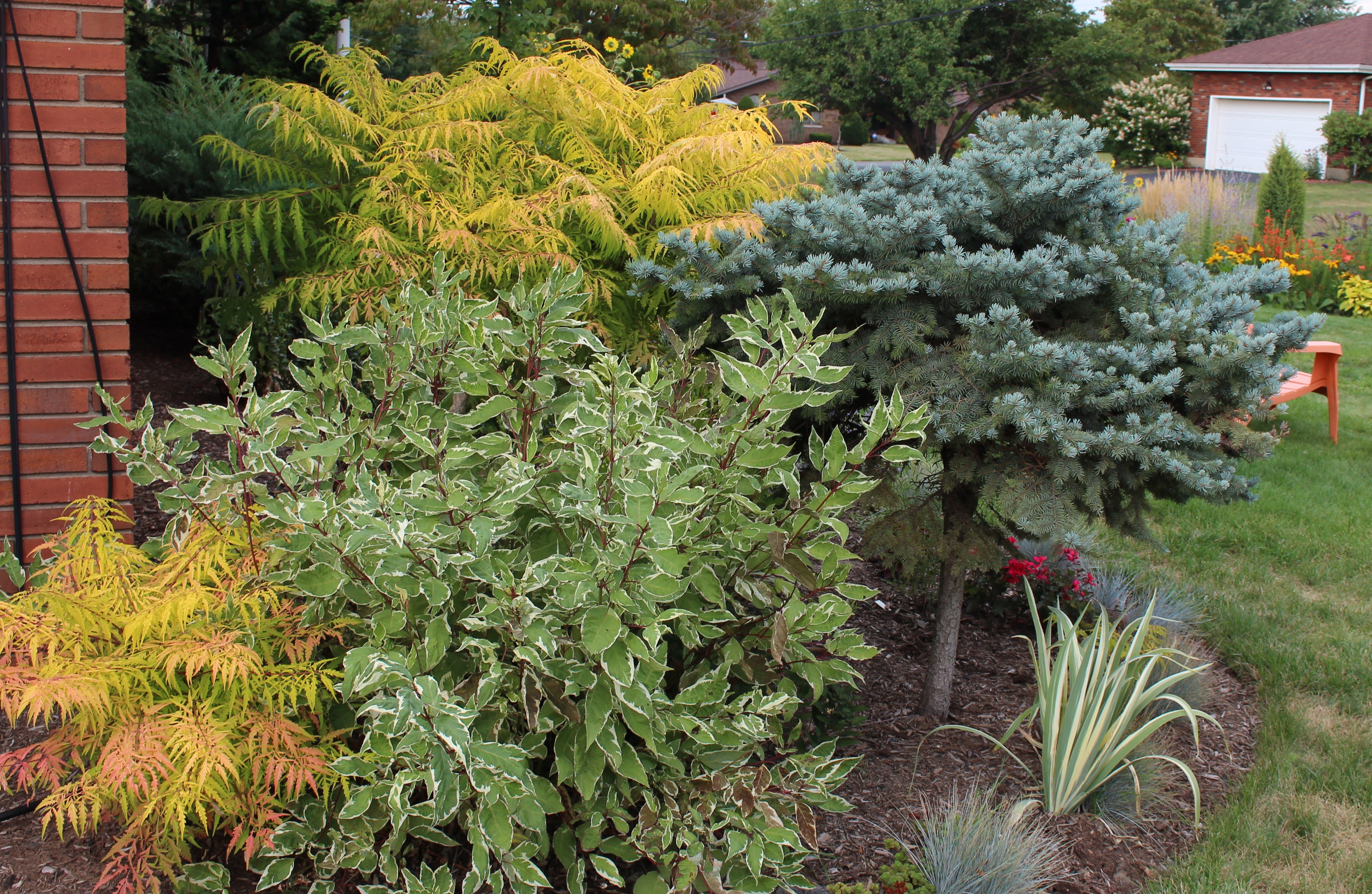
sumac tiger eyes with blue spruce

Have I ever mentioned my love for the foliage of “Tiger Eyes” sumac? It suckers around a bit, but in my mess of a garden that’s no big deal. I haven’t yet decided if this is a formal enough planting for the front of the house though.

A foliage post without mentioning a cyclamen is just crazy, so here’s my little c. purpurascens plant (probably two or three plants since I see at least two leaf forms).
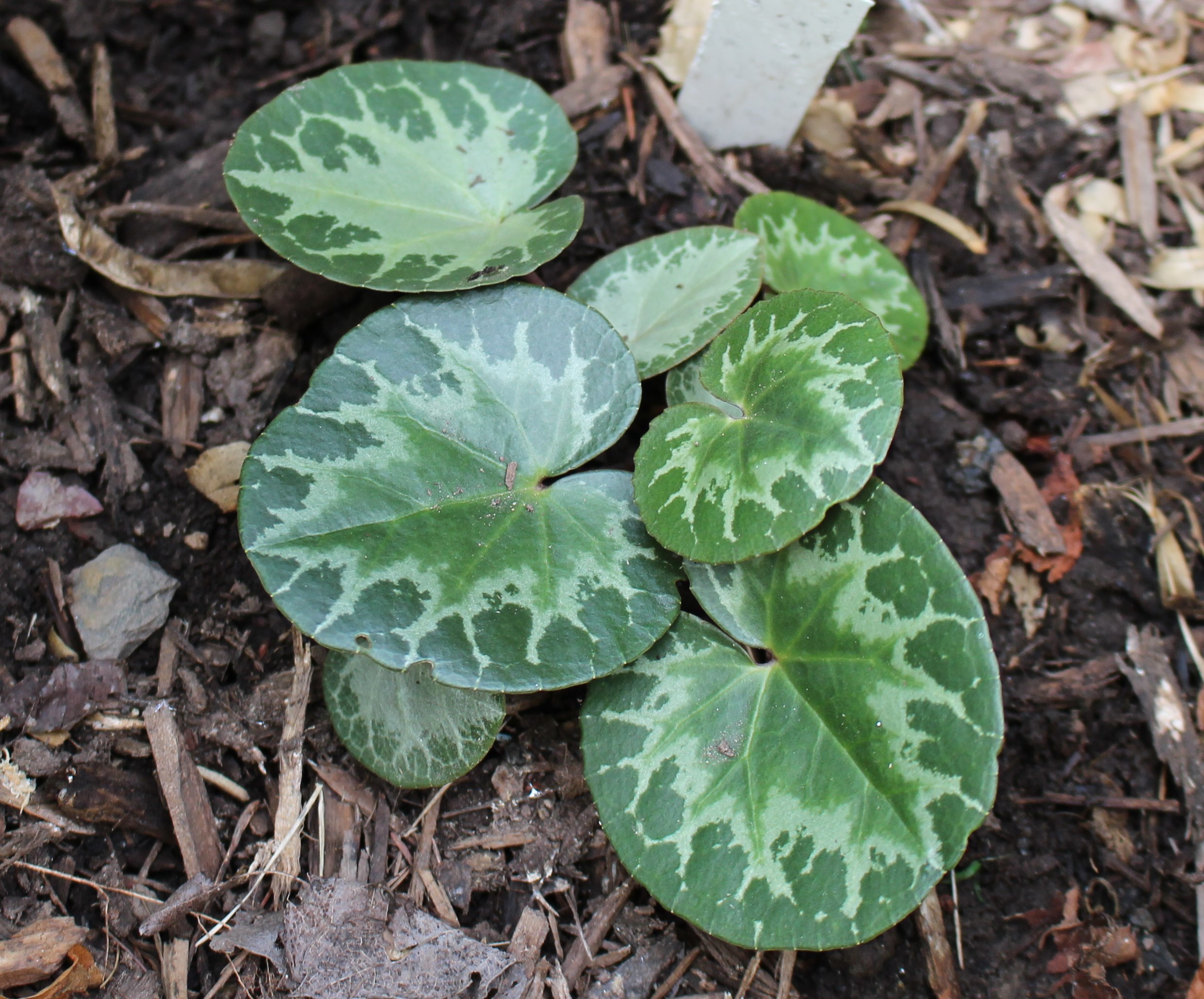
cyclamen purpurascens foliage

Good things come in little packages, this cyclamen purpurascens is a baby at only maybe 5 inches across but it might be my favorite cyclamen right now…. I’m sure that will change as others appear 🙂

I took a lot of pictures so this may be all over the place, but I’ll try to finish up the front yard first.  Sometimes people think of hosta when they hear the word foliage, and I’ve seen them in a few gardens here and there (just a few!).  Here’s “August Moon” a favorite old variety which lightens to nearly white when in full sun.
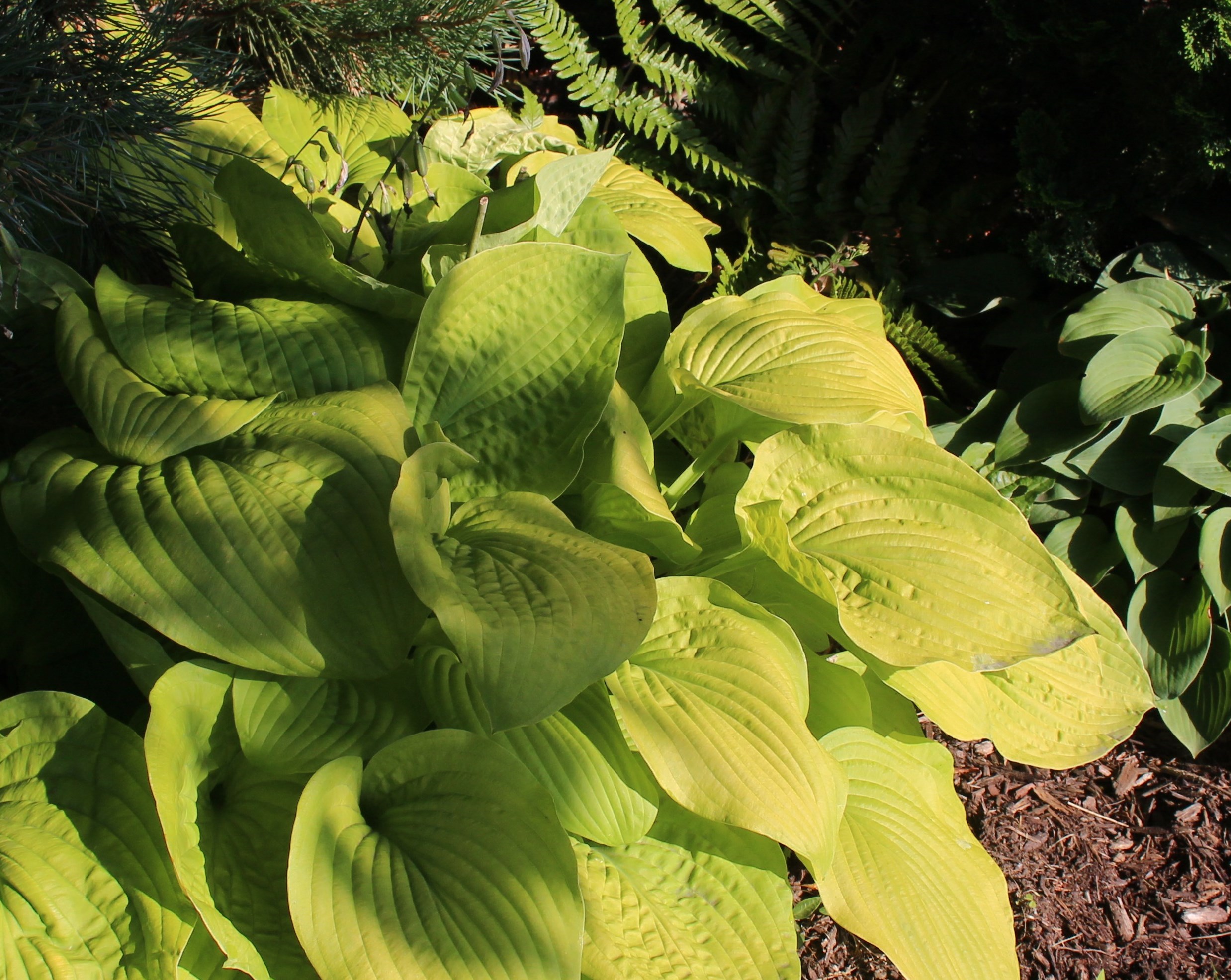
hosta august moon

Hosta “August Moon” in one of my few shady areas.

Moving into the back near the (another yellow) sunflowers is the new heuchera patch.  Someday you’ll suffer through an all out heuchera post, but until they grow in a bit I’ll let you off with just one.
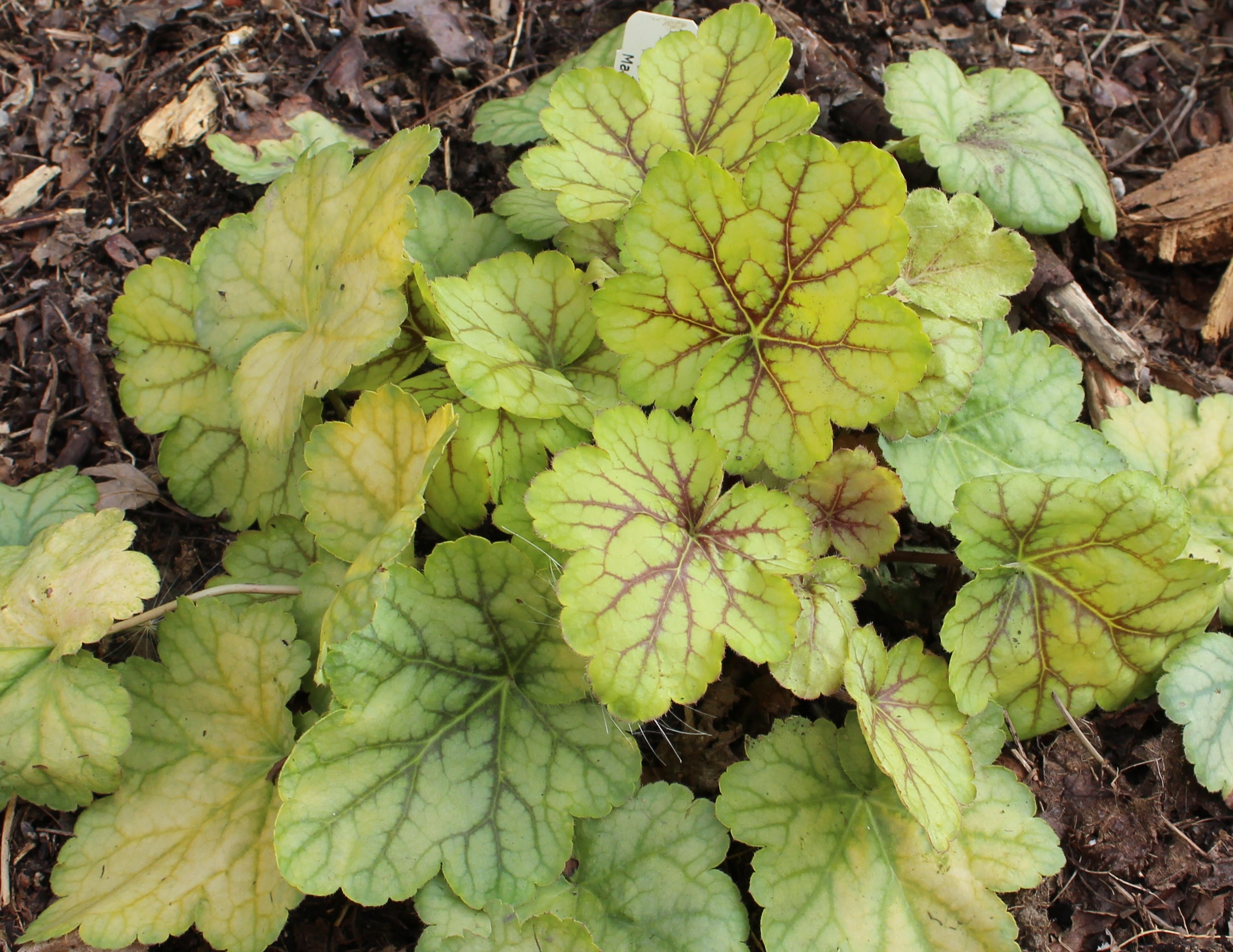
heuchera circus clown

One of several new heuchera plants, heuchera “Circus Clown” is off to a good start with a nice mulch and some much needed rain. It’s amazing how the colors on these plants change throughout the year.

The reason the heuchera can survive here is from the shade of a Seven Sons shrub/tree (heptacodium miconioides).  My plant gets cankers and loses trunks every now and then but I hope it someday gets past that.  Right now I’m enjoying the rich green of the curled stiff leaves.  Kind of a coarse look, but for a guy with so many cannas and dahlias refinement isn’t one of my strong points.
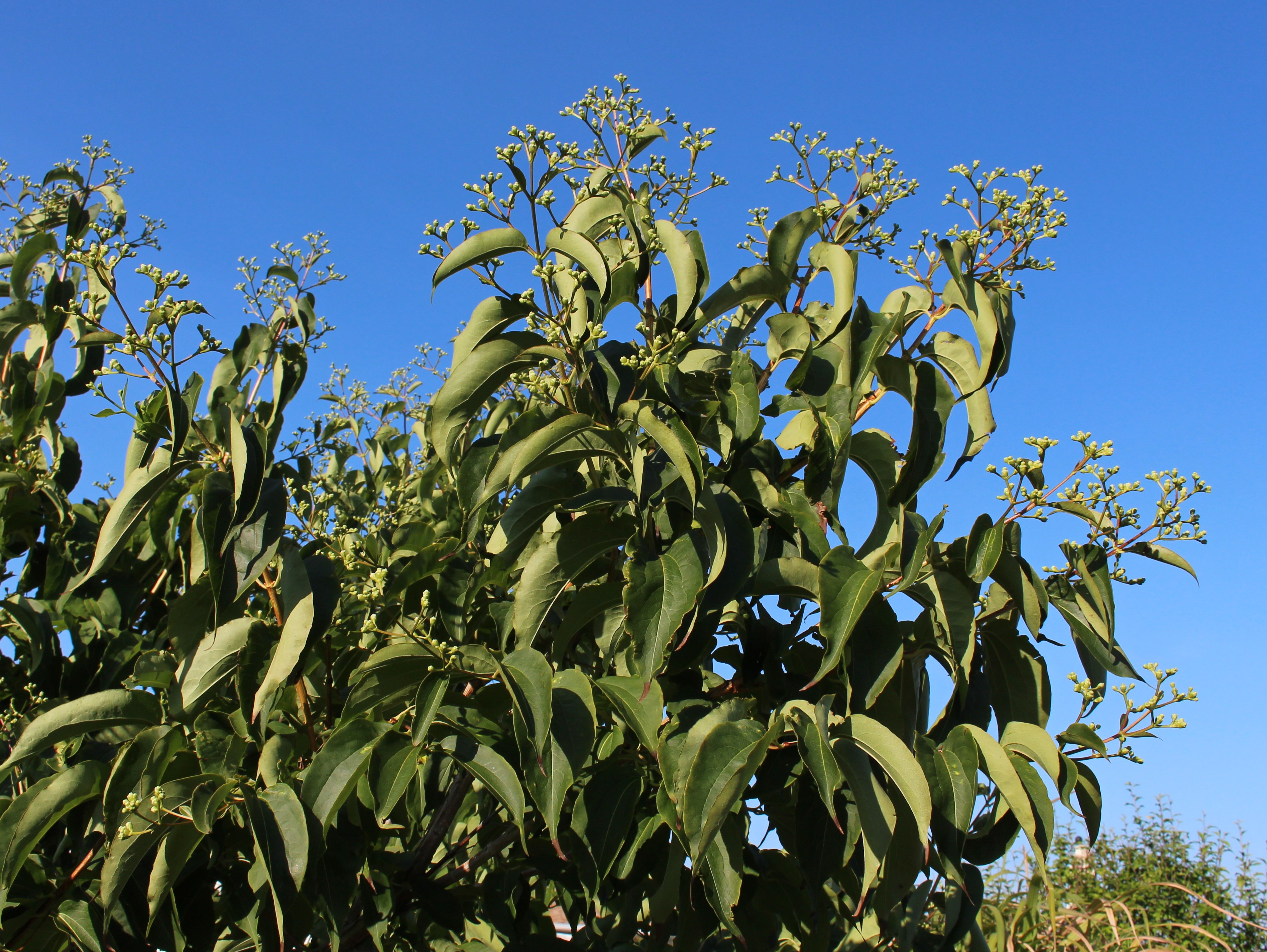
heptacodium miconioides leaves

Heptacodium miconioides leaves against a perfectly clear blue sky.

Enough with the babbling.  Look but don’t touch.
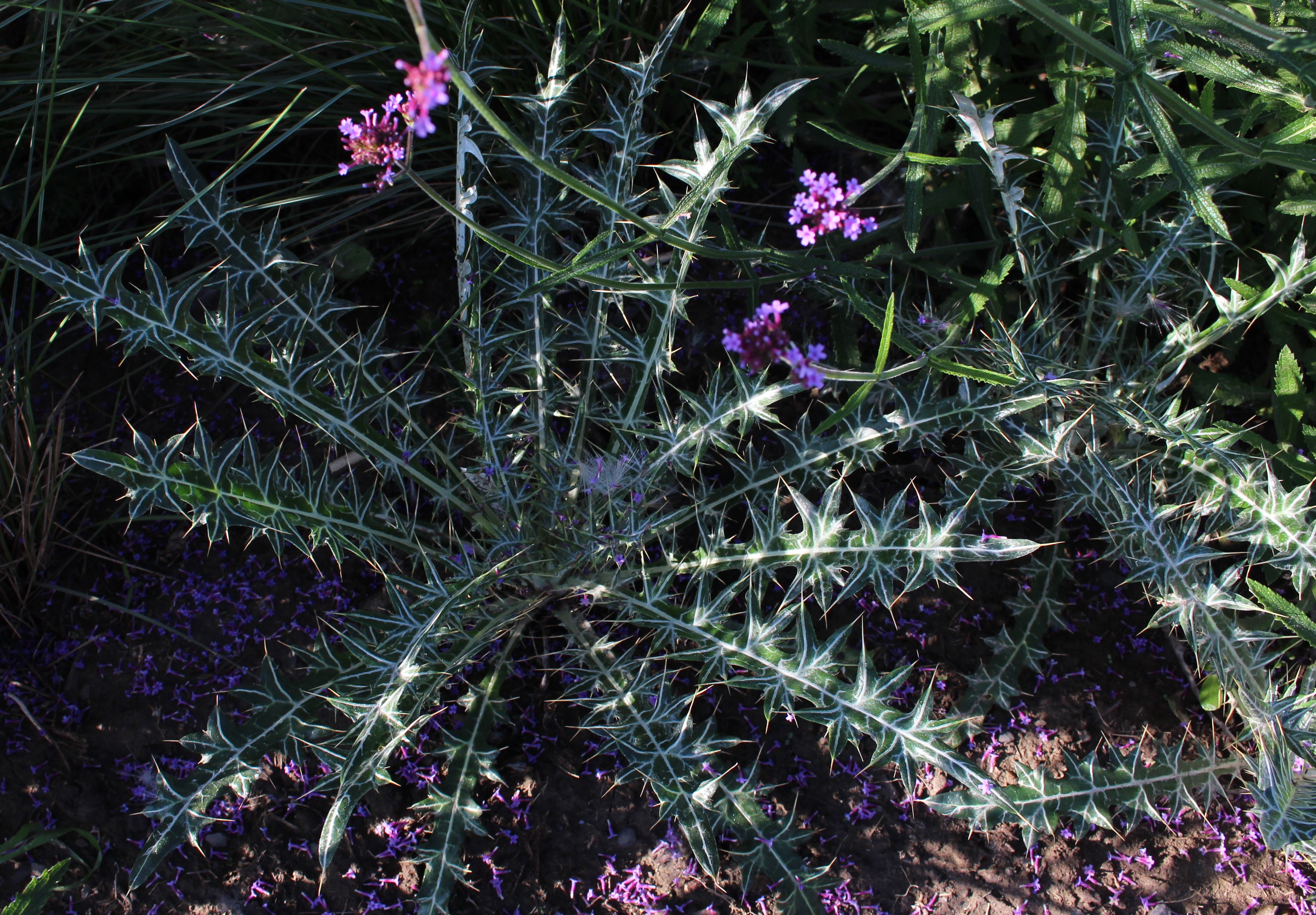
Ptilostemon diacantha

Ptilostemon diacantha with verbena bonariensis blossoms. Of course this is where all the missed baseballs end up rolling.

Almost good enough to eat, plants in the vegetable garden (or potager when I’m feeling fancy) also can put on a good show.
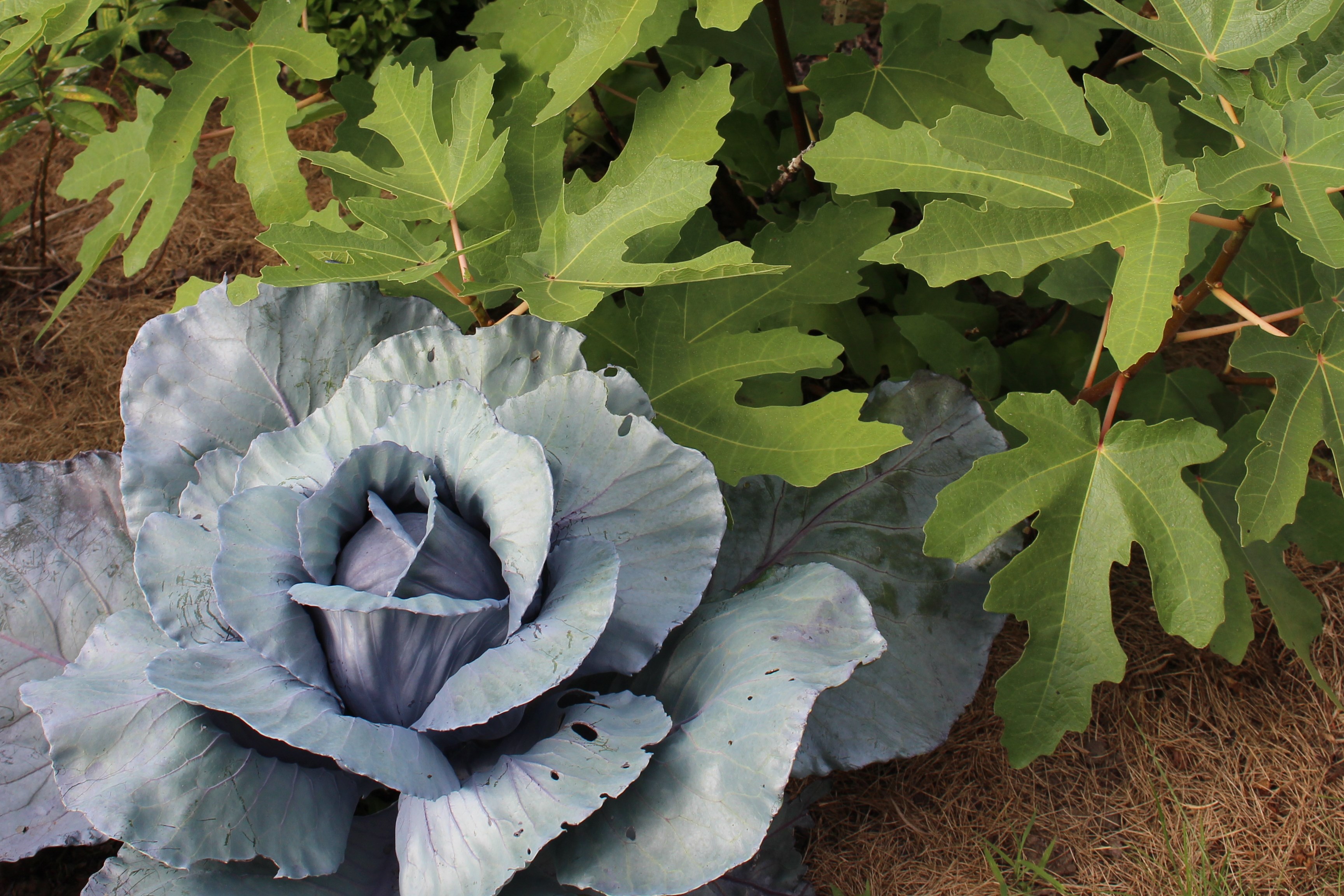
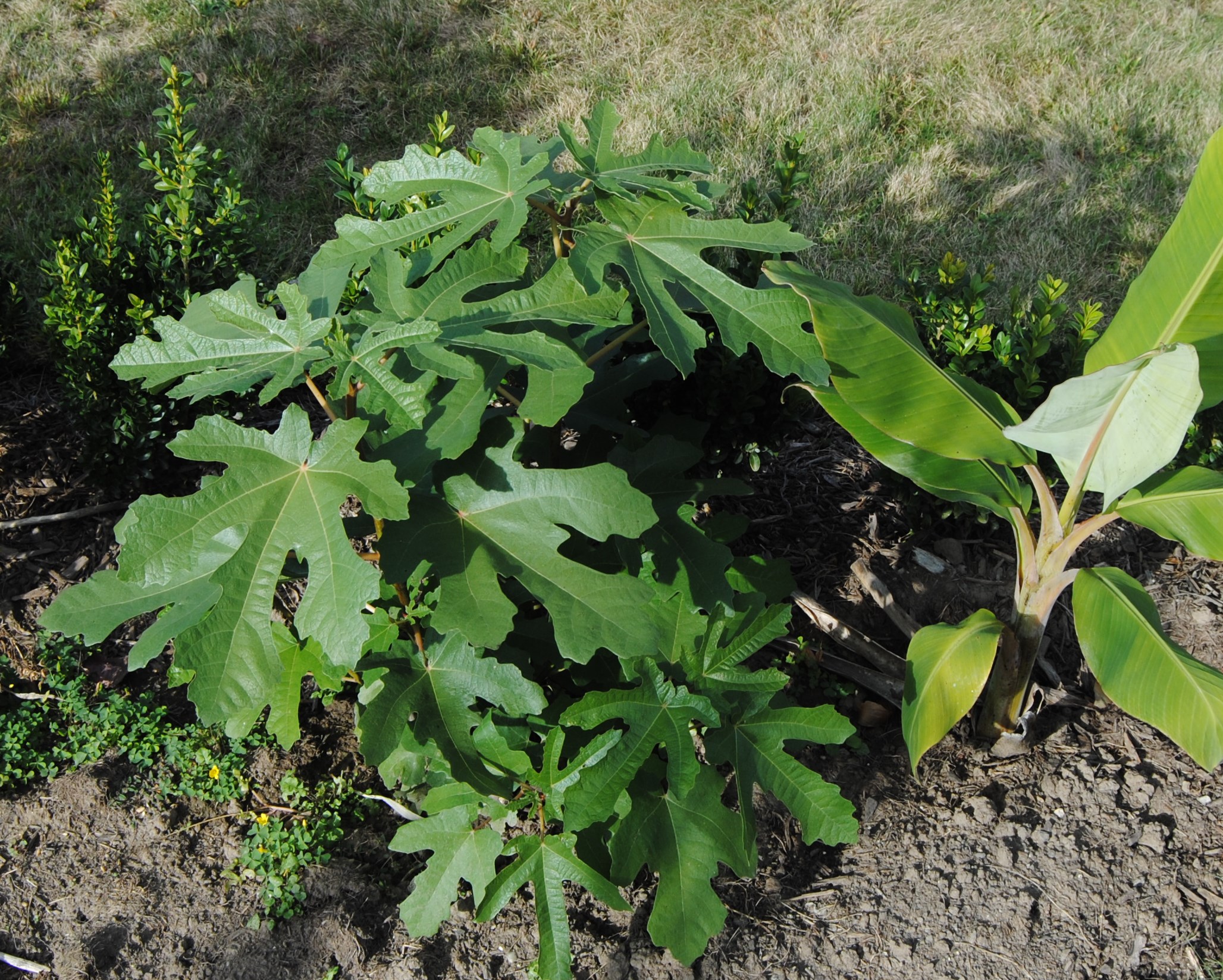
red cabbage and fig leaves

Red cabbage and fig leaves, the fig would be happier in Christina’s Mediterranean garden but it hangs on here and the perfectly cut leaves make up for not getting any actual figs 🙂

Not all the foliage news is good.  Miscanthus giganteus was off to a good start but our dry spell threw it for a loop and killed off all the lower leaves.
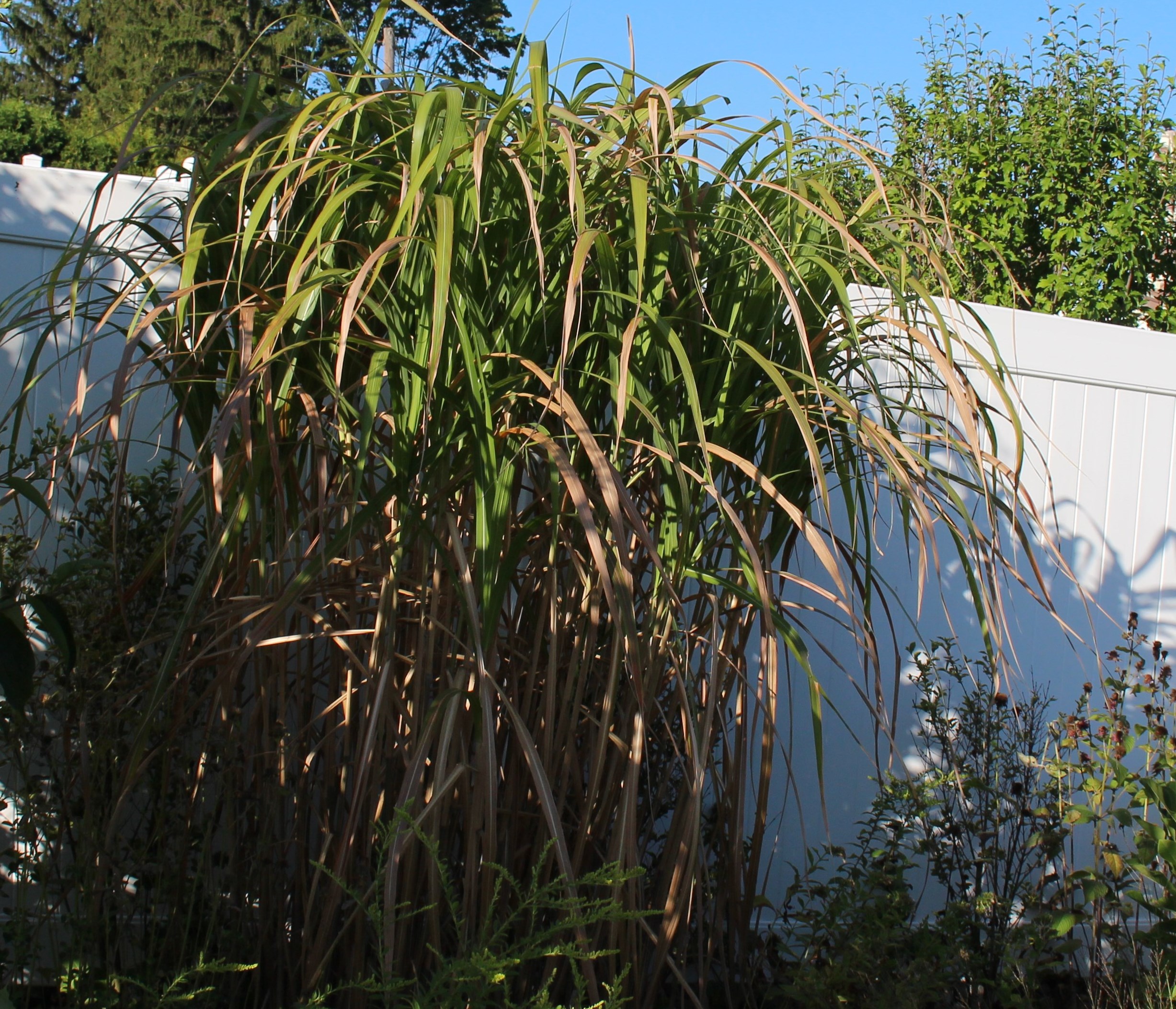
miscanthus giganteus

Miscanthus giganteus wants the steady moisture which I’m too frugal to supply. It might be easier to get something else for this spot.

Back by the house is a panicum “Cloud Nine” which is much more comfortable with drought.  I hate this bed and constantly neglect it, but nature did its own thing and filled the gaps with rudbeckia, phlox, and patrina scabiosifolia seedlings.  Sure beats the boring mulch I had there before.
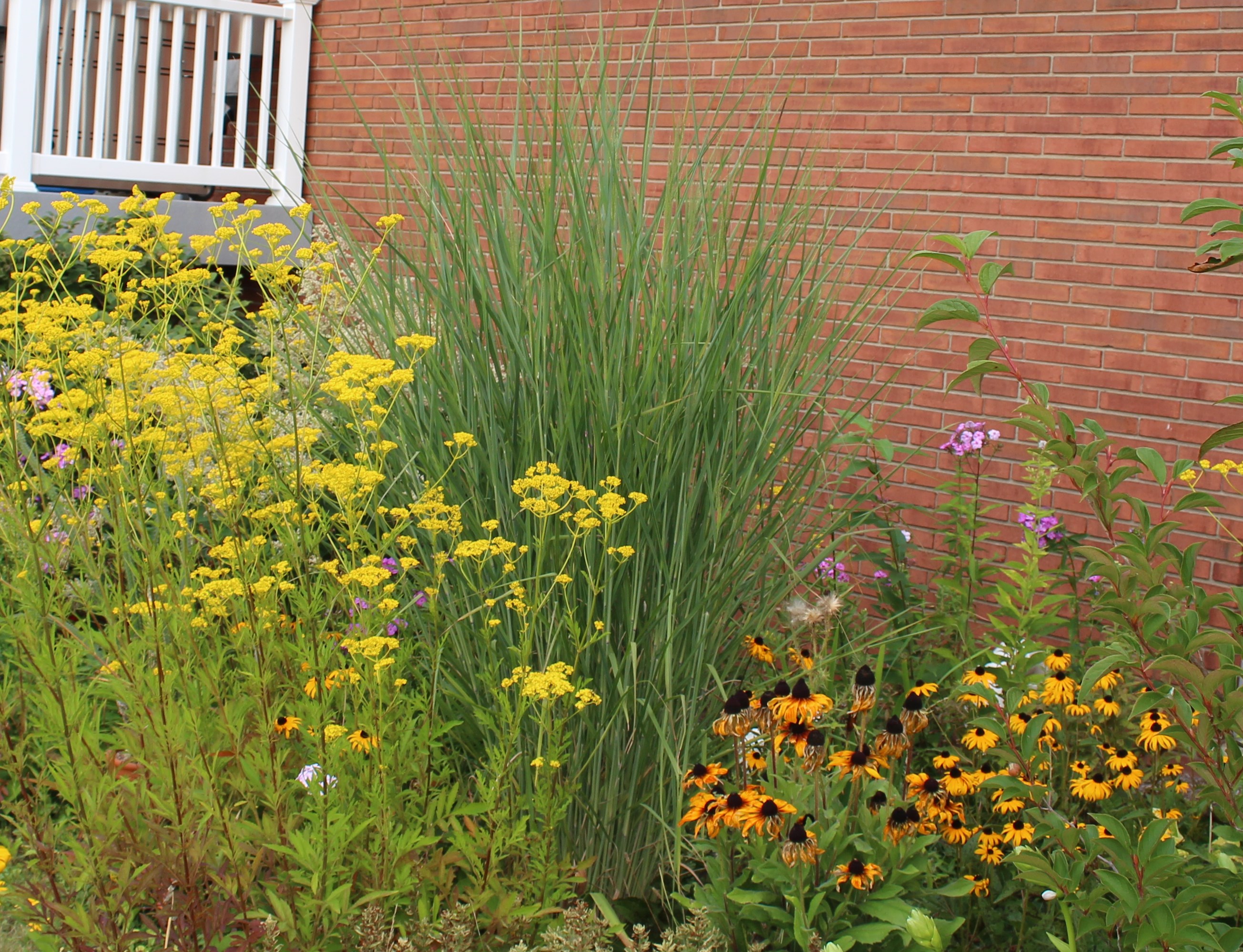
panicum cloud nine with patrina

The stepchild bed with Patrina, panicum, rudbeckia, and phlox.

So much for anything that even approaches subtlety.  My tropicals come next, and first off are the geraniums (pelargoniums) which in my delusion and denial I have added to the overwinter and collect list.
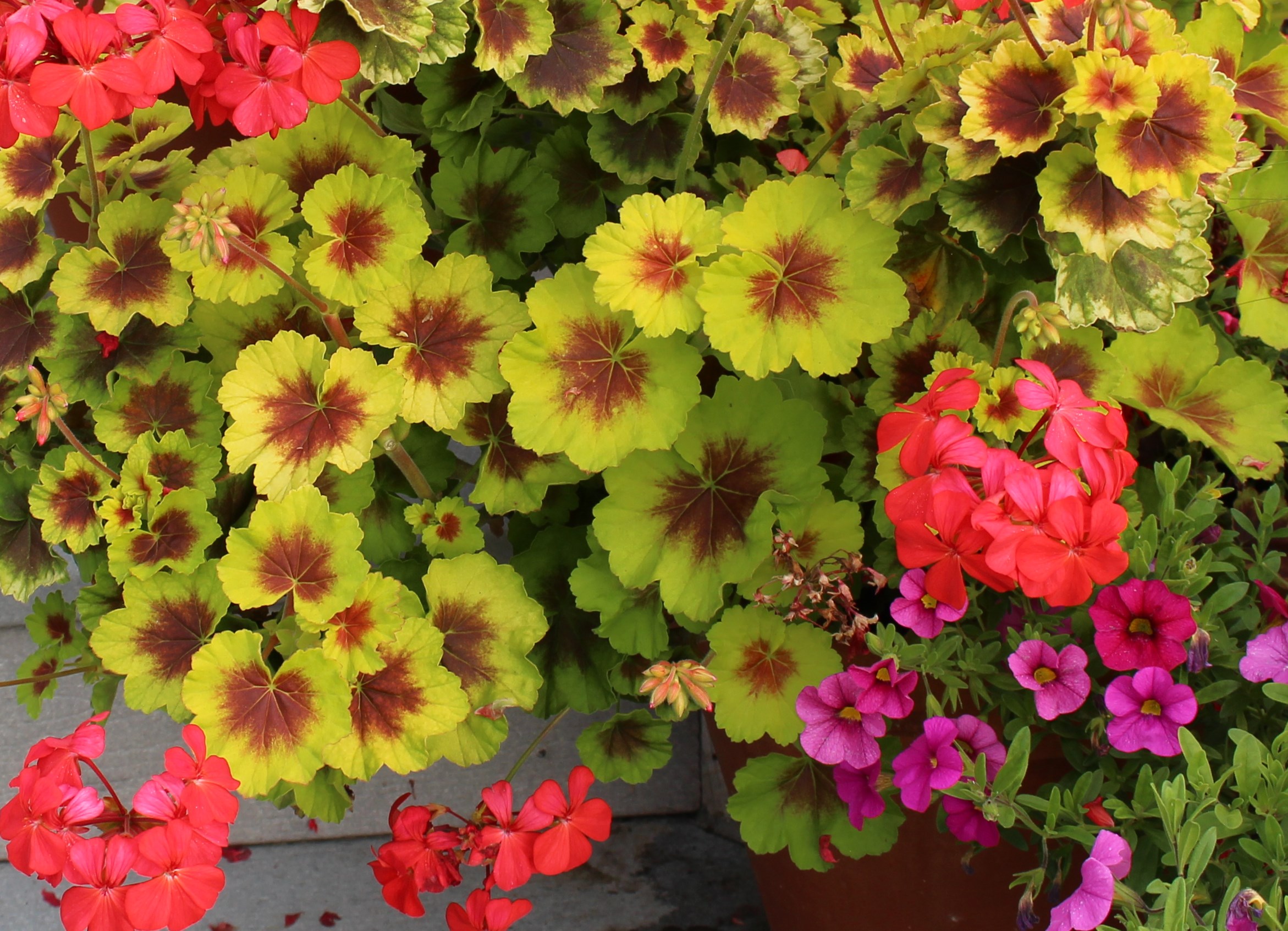
zonal geranium

I have to dig up the name for this one, it’s in its second or third year with me and keeps looking better.

A scented leaved geranium (pelargonium actually) with cut leaves, variegation and scent.  Too much or something for everyone?
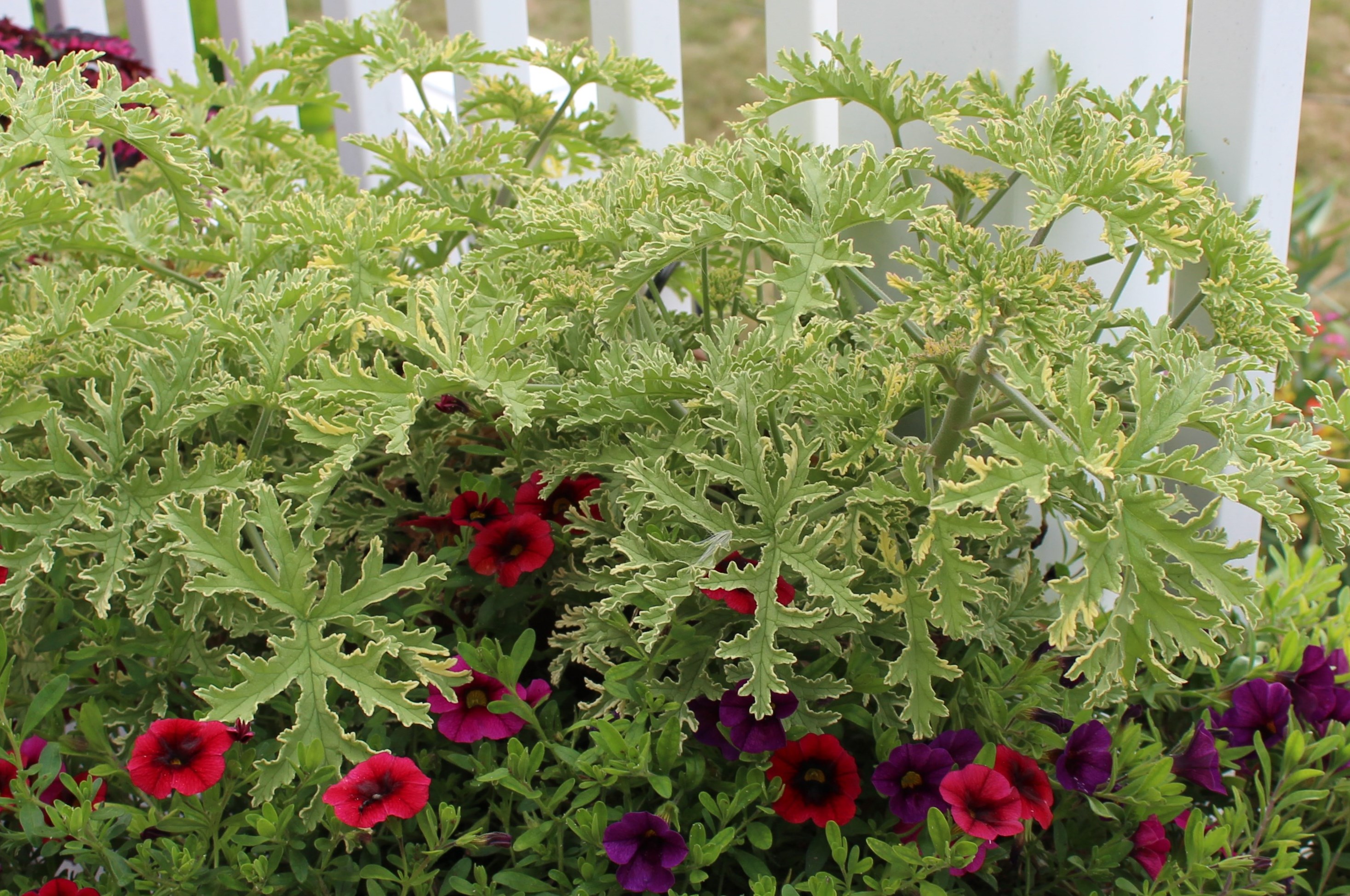
scented leaf geranium

This scented geranium is another plant who’s ID is lost in the pot-full-o-tags database. I should probably work on that.

Another one to overwinter in the garage, my first aeonium is looking well.  Hopefully it can handle the high-water location I planted it in -a pot with a variegated hebe and cape fuschia (phygelia).
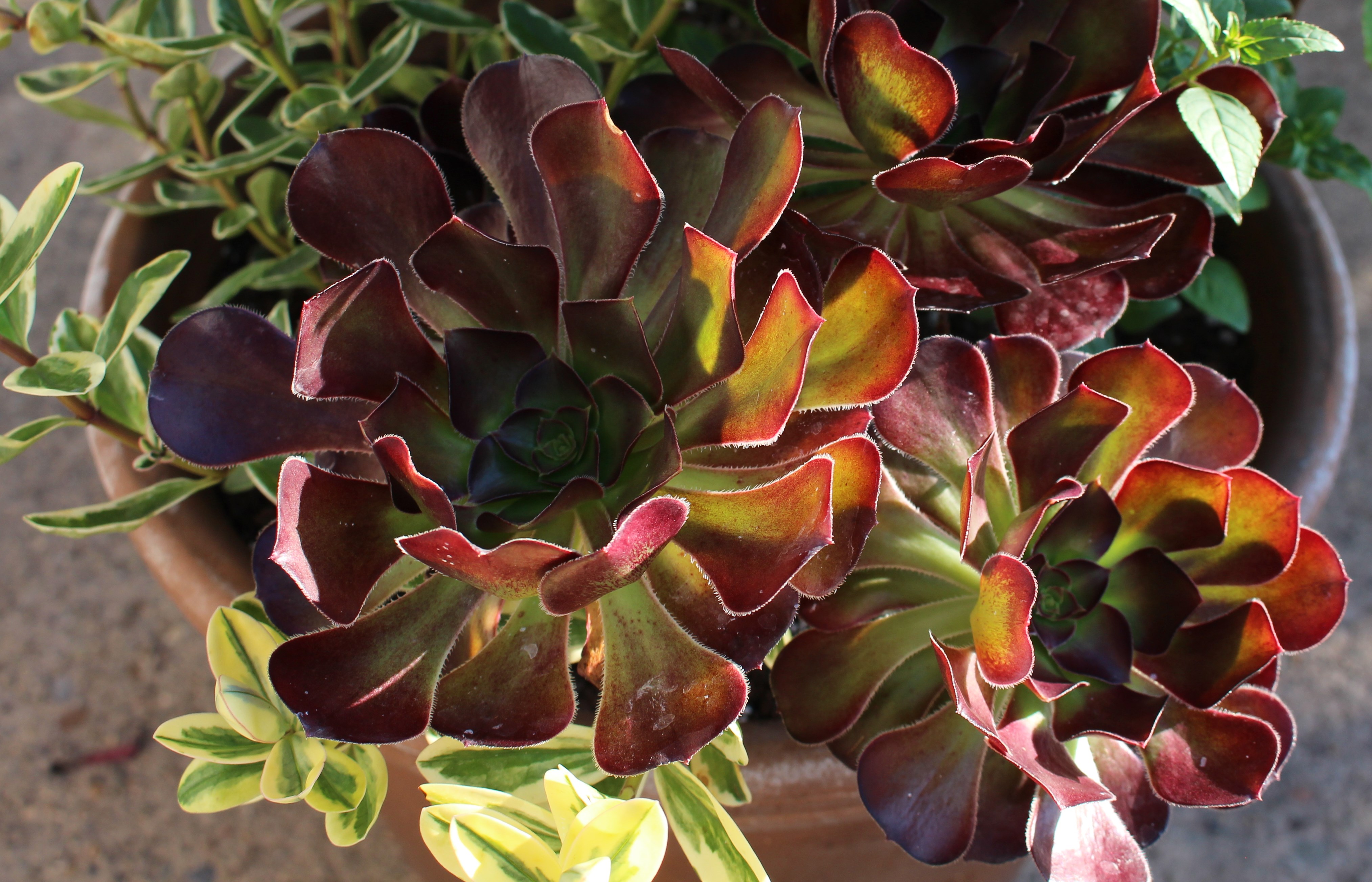
aeonium with variegated hebe

This one’s label must still be near the top of the tag bucket since it’s a new purchase. A good gardener would go out there, find it and label it…. but all I’ve got for you is it’s not “Schwarzkopf”.

Now to wrap things up (so I can finally get to work on the stupid basement tiling job I started) here are my foliage stars.

canna tropicana

Canna “Tropicana” might be the most obscene show of gaudy color in my garden. I love it with the dahlias and rudbeckia.   Good thing there’s some green nearby to calm things down.

Morning light on the sunflower patch.
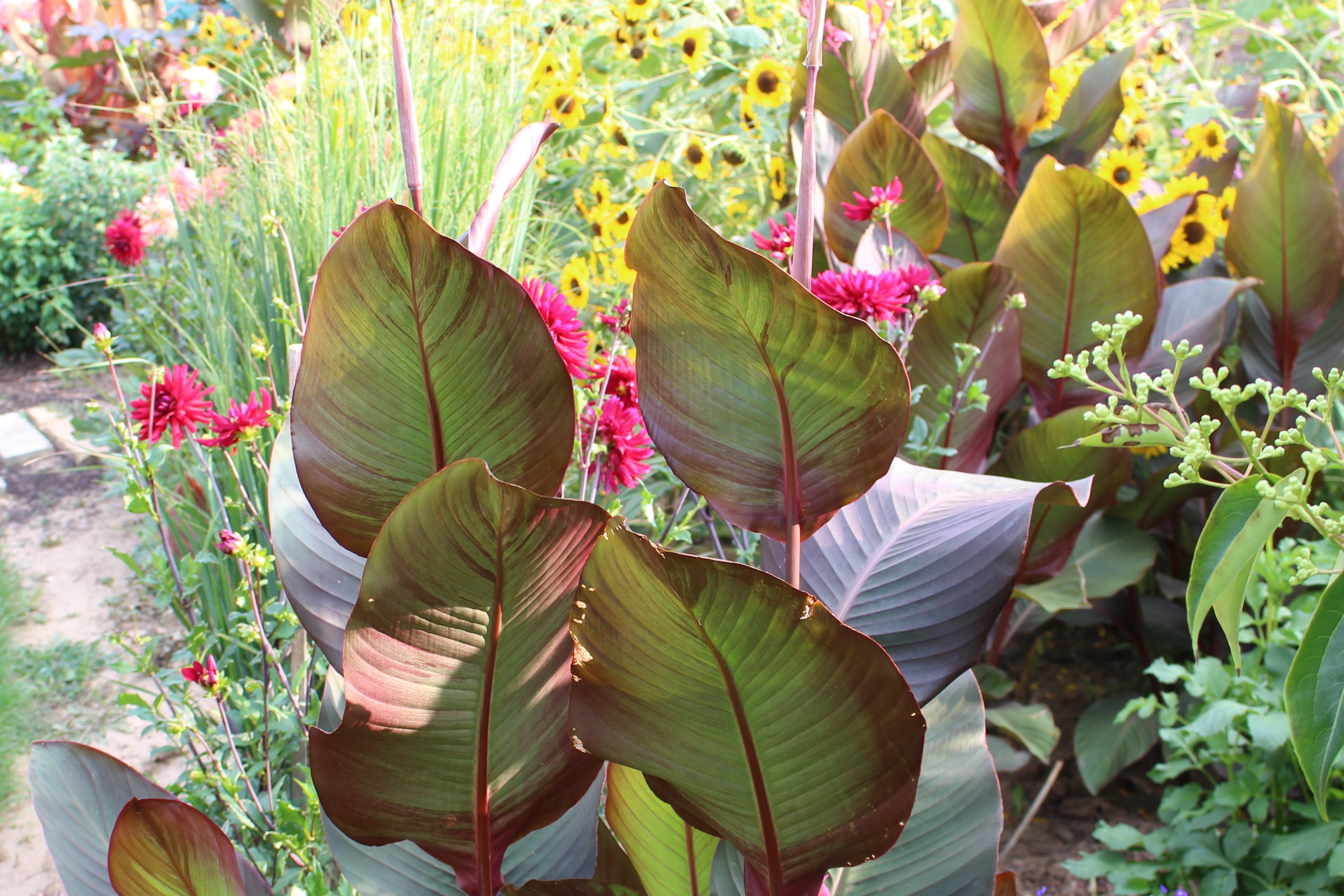
canna in the garden

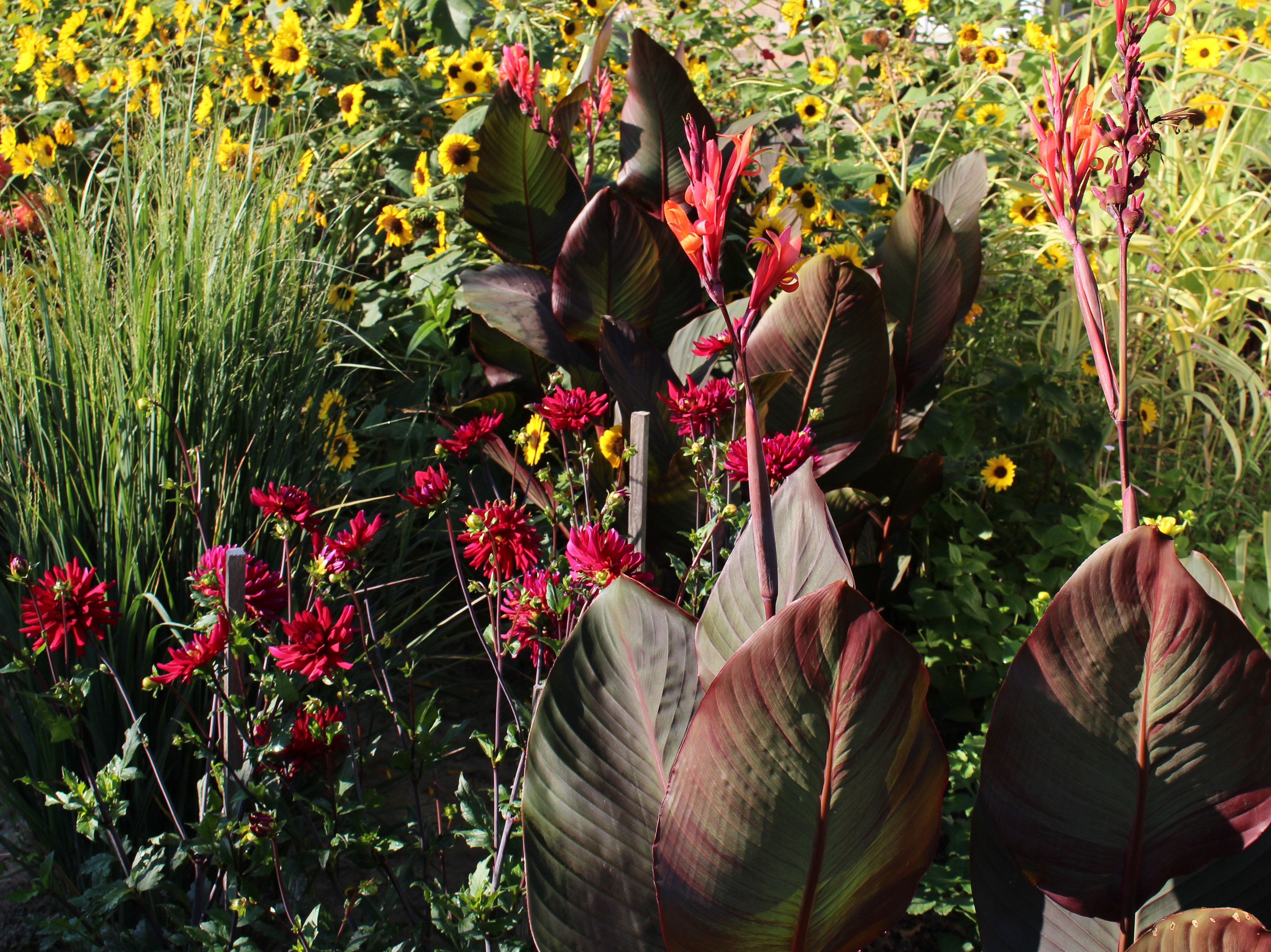
My ‘Polish cannas’ were a gift which traces it’s history back to a friend’s old Polish neighbor. It’s probably really canna indica “purpurea” or “Russian red”.

And same cannas at noon.  A sculptural plant I think.
canna with perennials

The small blooms aren’t much for a flower lover, but they have a graceful look and the hummingbirds appreciate them.

So that’s my foliage, thanks for sticking it out.  I did manage to keep all the coleus out (but of course there’s still all of September for that) and I hope that gave a little relief, but I was really surprised by how much color and interest I get from foliage.  Maybe I am growing up and my tastes are maturing…. but I hope not.  I like my messes of color too much!

Thanks Christina for hosting and thanks for opening my eyes to all that foliage does in the garden.
Welcome to Fall

Now that autumn is here I have officially given up on watering the garden.  The cooler temperatures are not as deadly as the summertime heat, and the rain we had a week ago should be enough to keep things alive.  So things are on their own for a while.

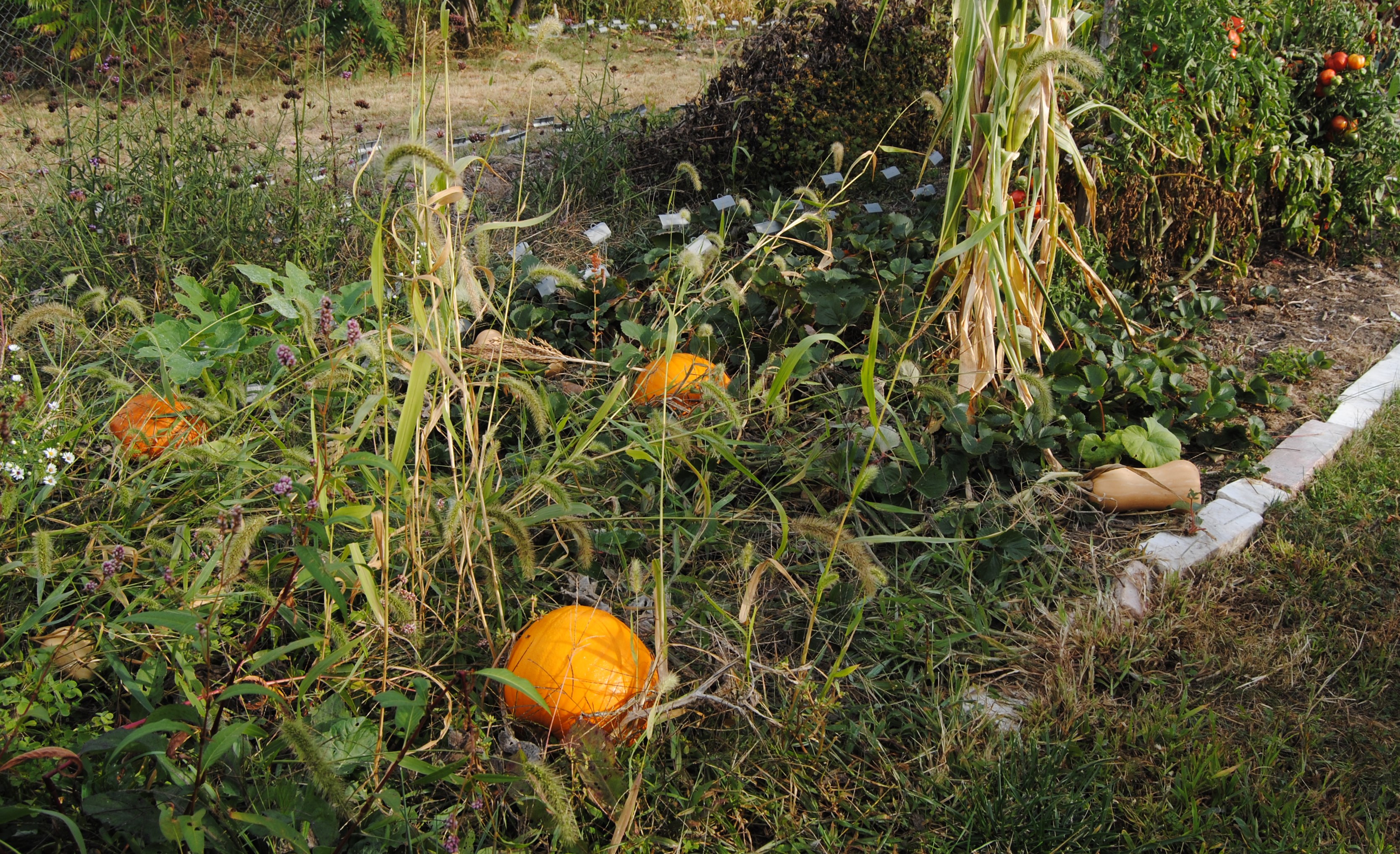
Most of the vegetable garden is done anyway.  Yesterday I let the kids pick the pumpkins and decorate the porch for Halloween.pumpkin patch

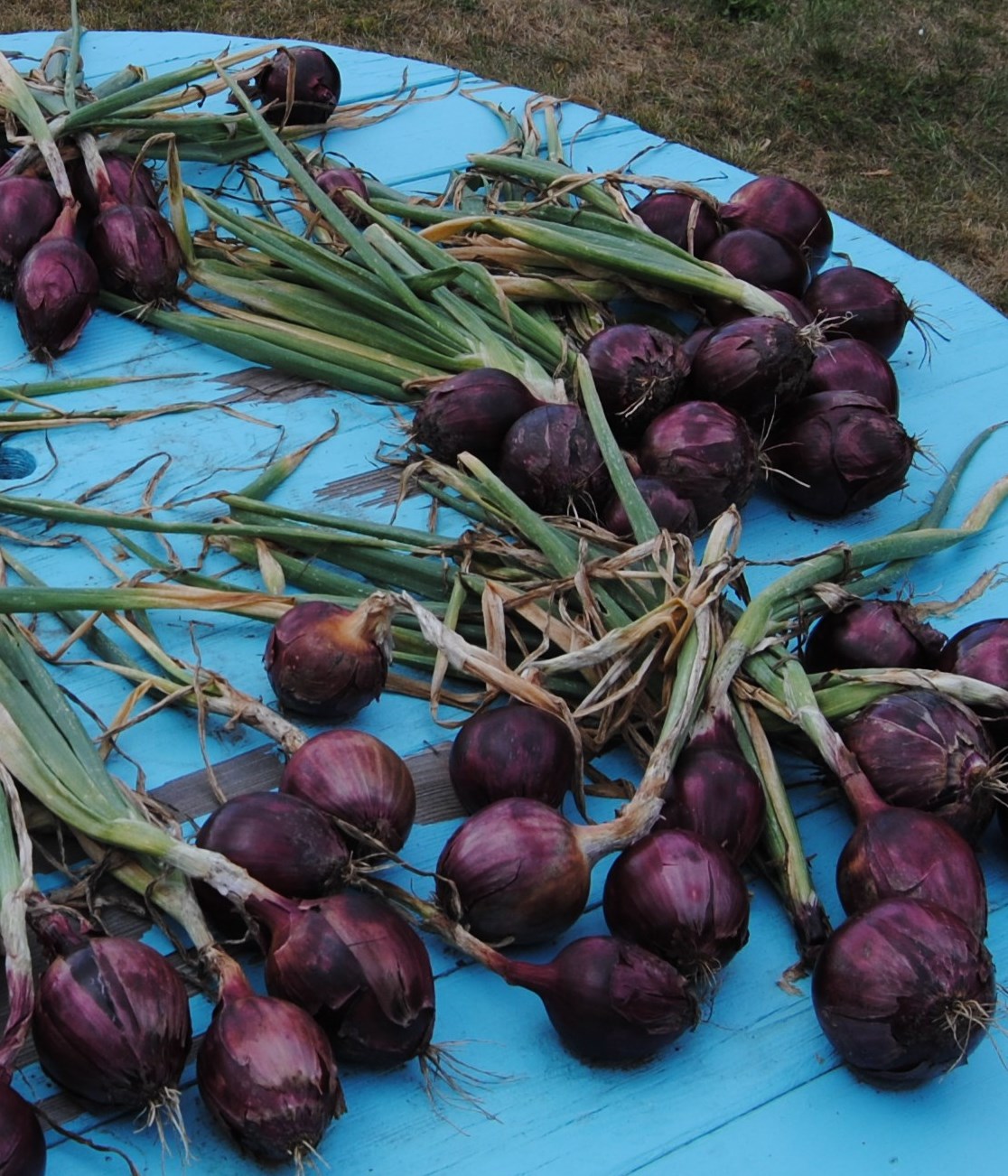
red wing onion harvestThe ‘Red Wing’ onions were also harvested as well as the last of the eggplant.  This pretty much finishes up the garden for the year (with the exception of a few peppers and a single brussel sprout plant).  It’s a shame the dry weather sapped all my enthusiasm for a fall planting, the idea of a fresh lettuce harvest right about now sounds very nice.

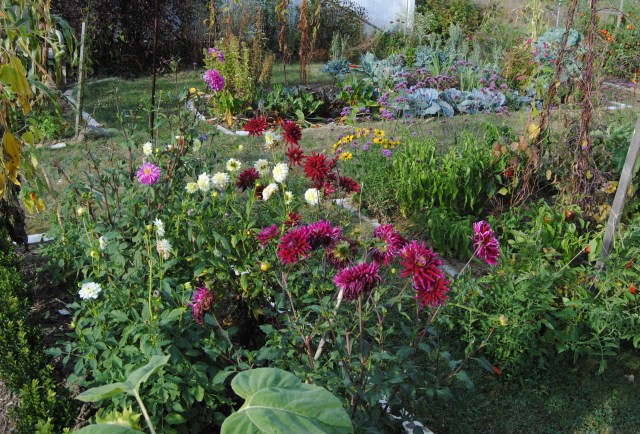
Despite the end of regular watering, the dahlias continue to put out flowers and carry on.  But they are beginning to look tired, and anytime the sun gets strong the leaves wilt.  Just about everything looks tired.dahlias in the vegetable garden

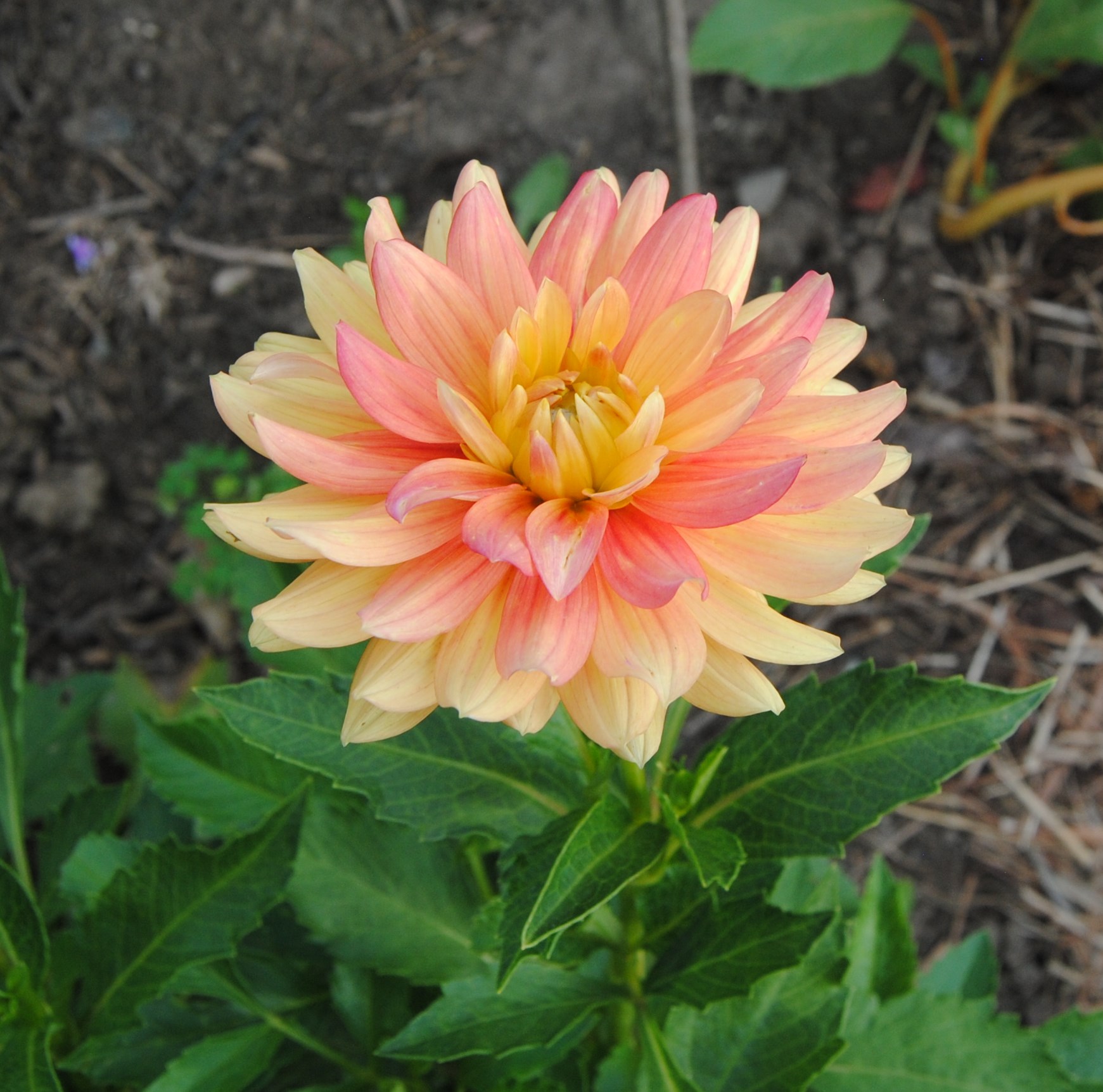
sunset colored dahliaThe only dahlia that actually looks better now is this one.  I need to look up the name, but the color that looked awful in July shines in autumn.

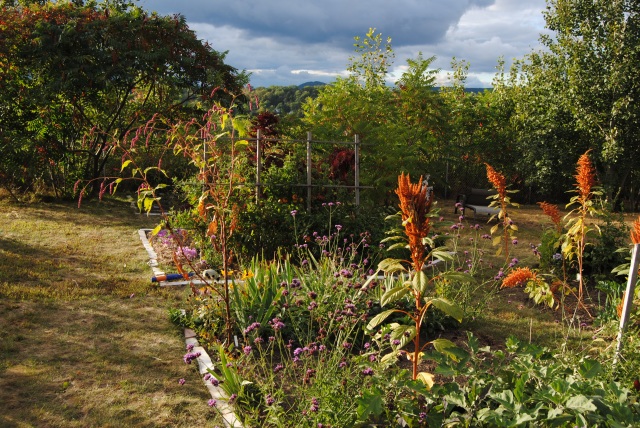
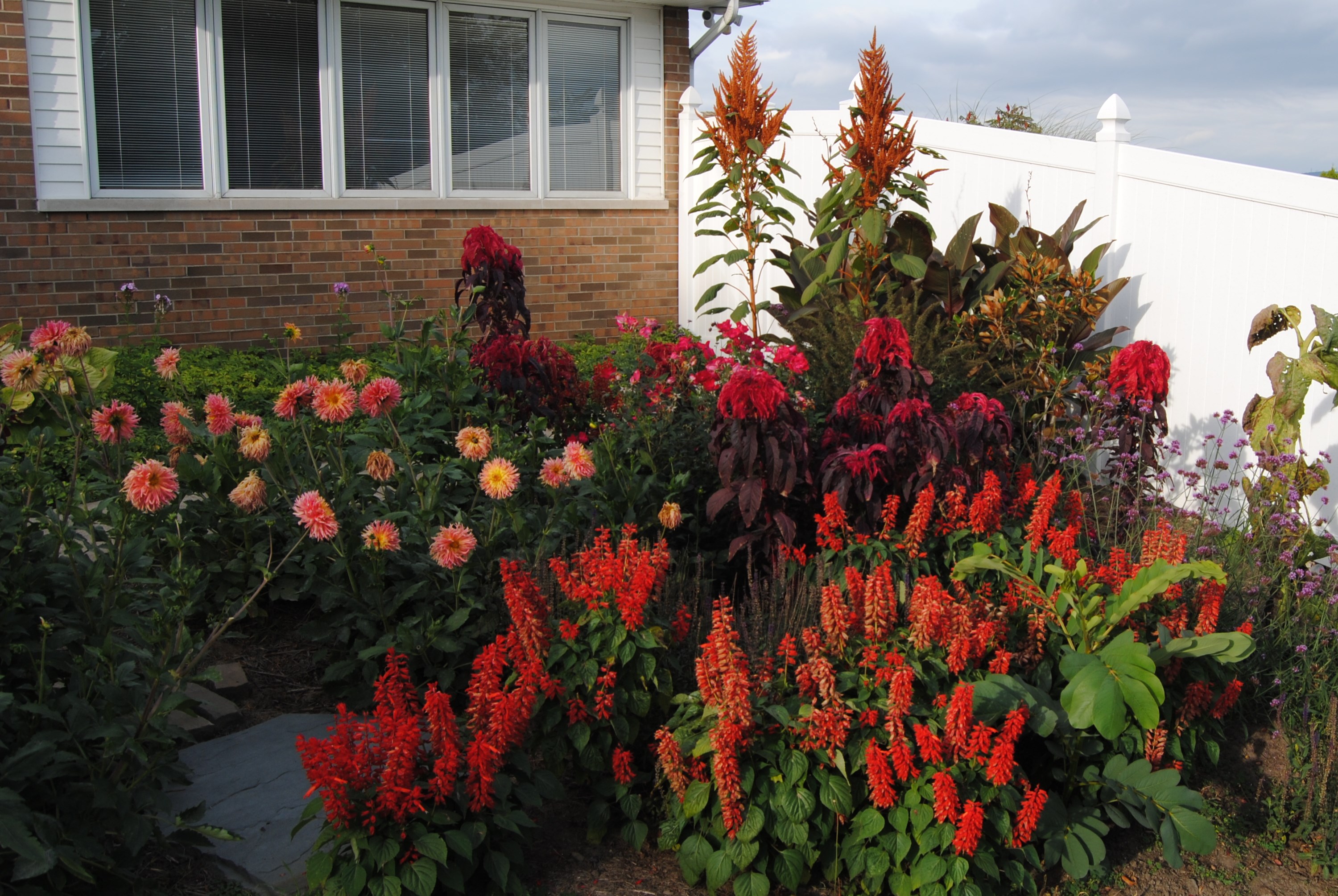
In case you haven’t already picked up on it, the vegetable garden tends to become a flower garden as the season progresses.  Any gap in the plantings quickly fills with self sown verbena, Persicaria orientalis, and amaranthus ‘hot biscuits’.  The amaranthus has a weedy look that not everyone appreciates, but I like it, and have been very generous with spreading the seedlings throughout the yard.  At this time the seedheads seem to glow in the autumn sun.the late summer vegetable garden

"phoenix" the fig returned from the ashesThe glow of autumn light is a signal to start thinking about protecting the tender plants for winter.  My fig has had a troubled season.  It spent the winter in the dark of the garage and began sprouting in January.  The sprouts dried off by March but then a few pots of water brought some new shoots for April.  By May I decided to use its pot for other, healthier looking plants, and while the fig waited for a new home (perched with rootball exposed on a spare saucer) it died again, this time I thought for good… on to the compost pile it went.  But like cats, apparently figs have several lives.  Around July I noticed a few sprouts coming up out of the compost and upon investigation found the fig root ball to be the source.  Finally it was given a decent home, and it’s grown this year without any resentment.  Now what to do this winter…..

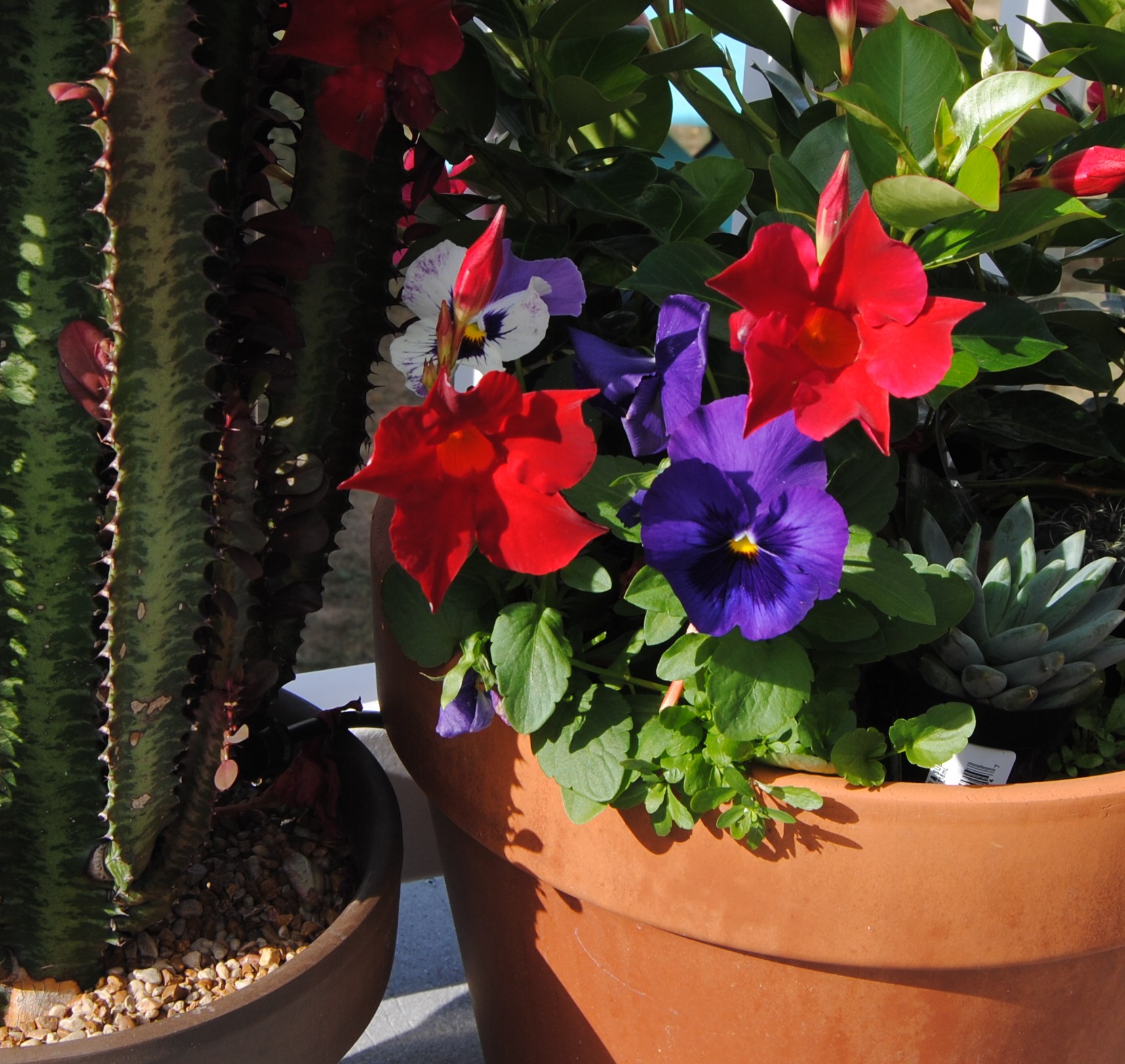
red Dipladenia with pansiesAlso needing a winter home are the tropicals on the deck.  Even though I only paid three dollars for this red dipladenia, I can’t let it die!  So either the dipladenia or the pansies will need to be repotted and brought in.  I would have never thought of this combo, but pansy seeds do their own thing.

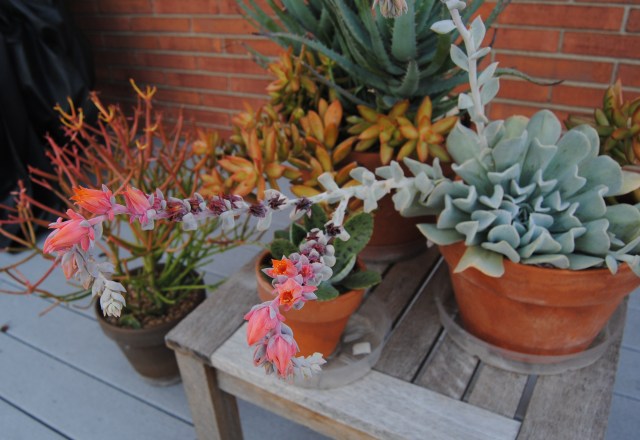
I don’t even want to think about the rest of the non-hardy deck plants.  They’re growing and blooming and doing well in general even though I never got around to any of the summertime repotting or transplanting I had planned.blooming succulents on deck

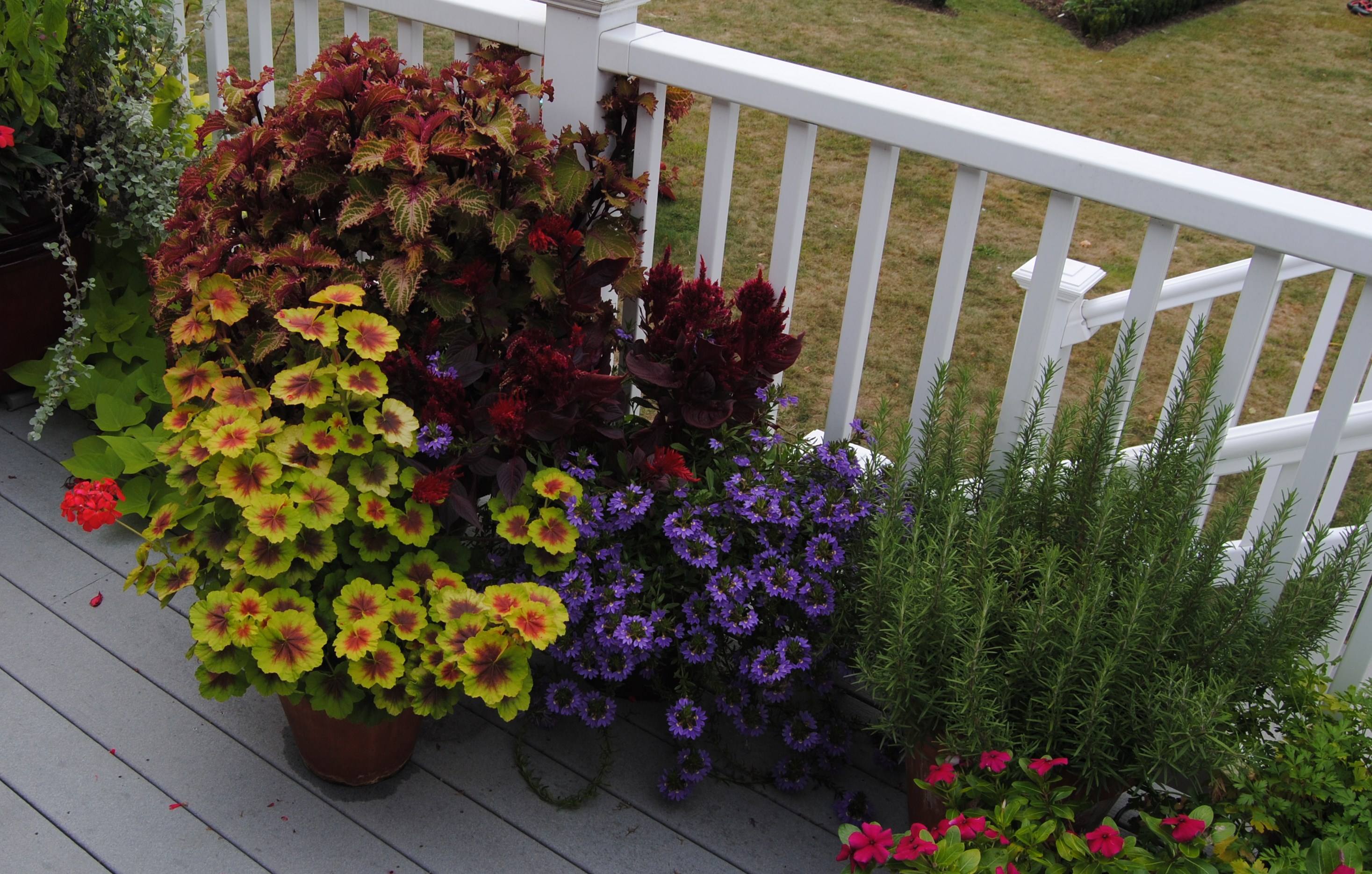
 The geranium should hang on in the dark of the garage, maybe the rosemary, but I’ll need someplace warmer for the coleus.early fall planters on the deck

Fortunately the tropical garden survives the winter by seed or stored tuber.  No windowsills needed for this end of the garden.red themed tropical garden

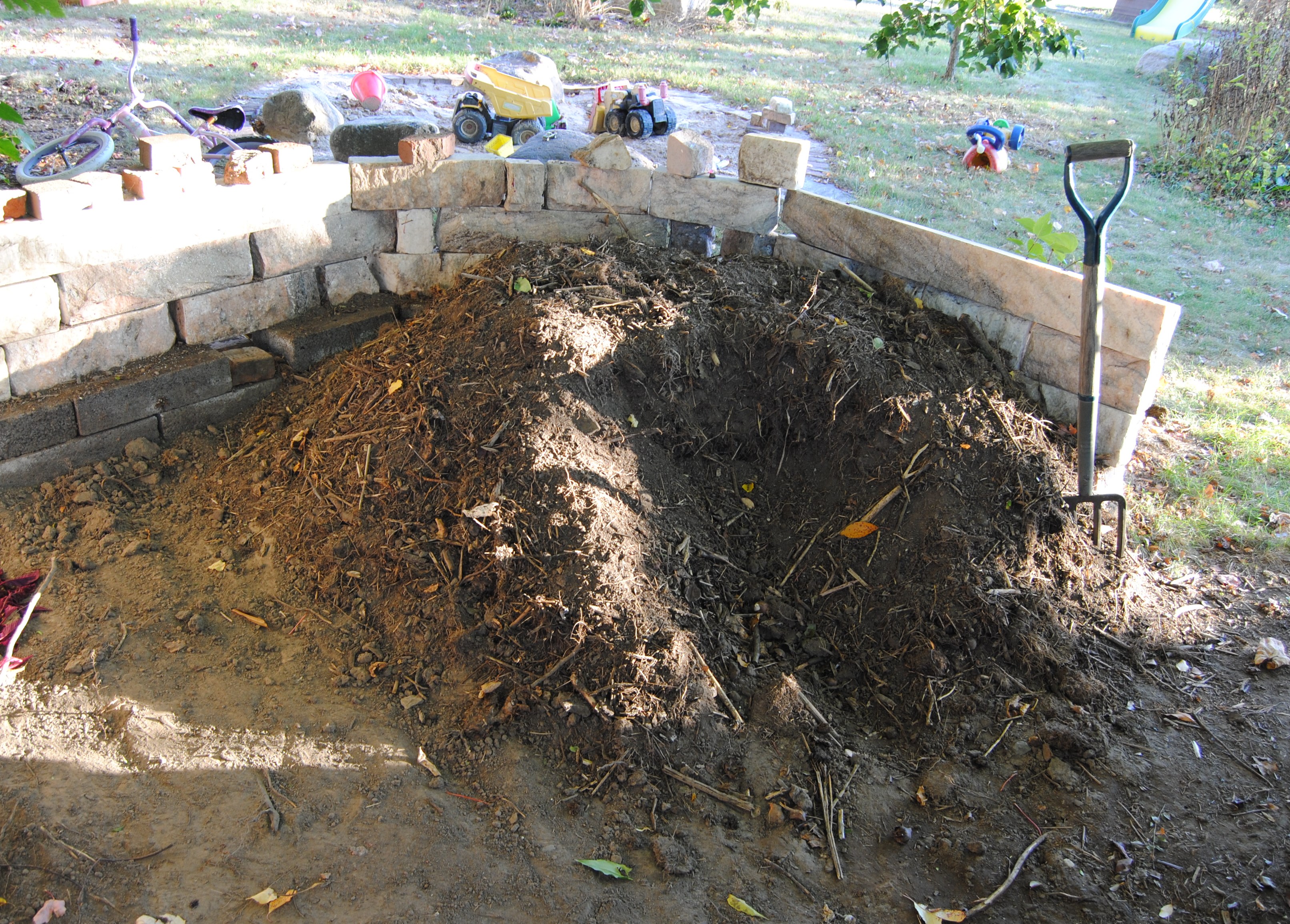
the freshly turned compost pile…and I’m finally getting some work done instead of just sipping drinks in the shade.  The compost pile was turned and a bonanza of “god enough” compost was found underneath.  It’s as dry as a bone in the pile, so I’m surprised there was any decay going on at all, but the plants will love it and I’m grateful for any scraps I find.  the question will be “who gets it?”

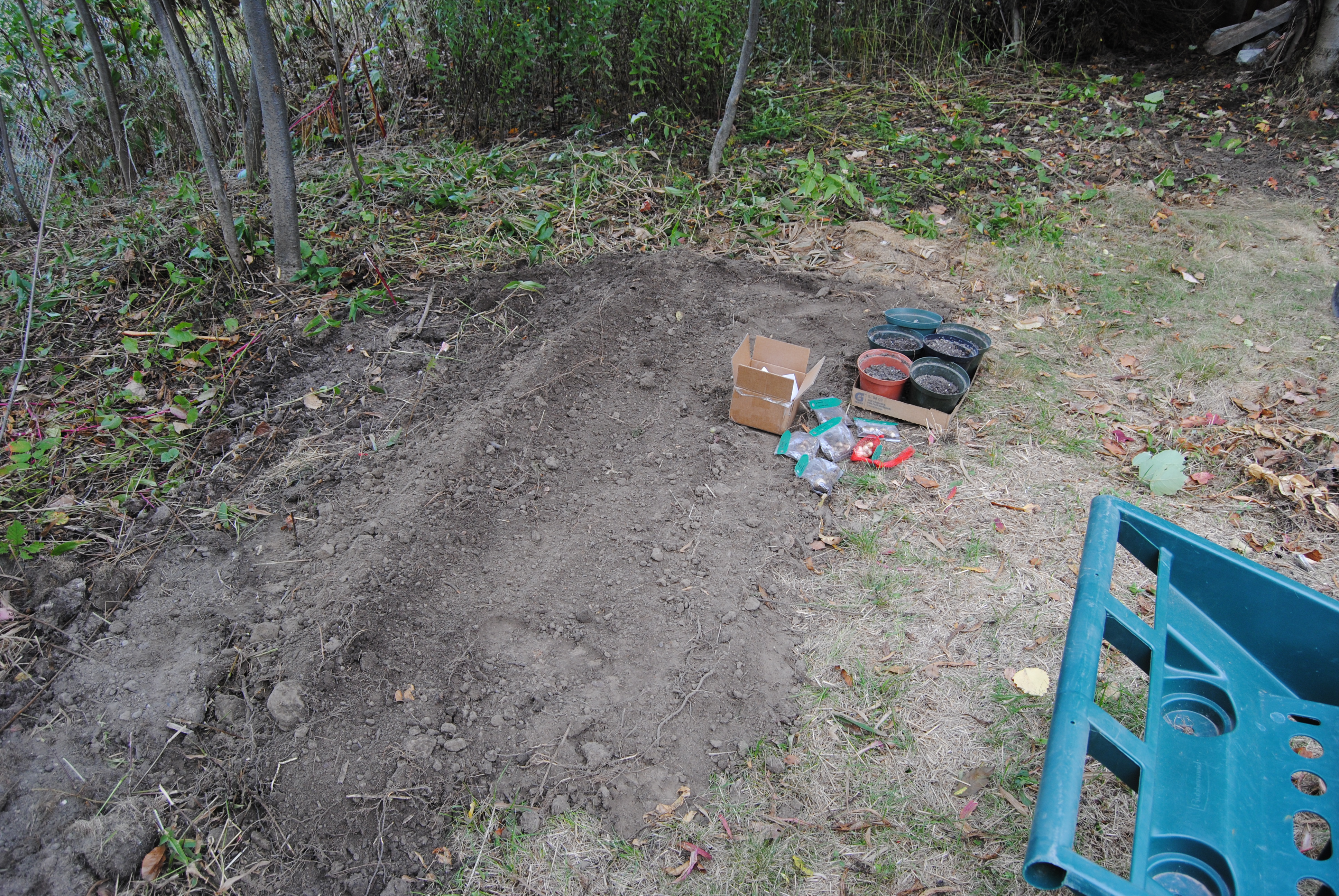
Actually there’s no question, my favorite new bulbs always get the scarce compost.  Here’s the newest bed in the back of the meadow.  A privet hedge (luckily privet isn’t invasive here) is planned for along the fence, and a snowdrop (galanthus) bed will get its start here.  I’ll bore you with the varieties next spring but for now here’s a picture of my usual low work (ie lazy) bed preparations.new bed for snowdrops (galanthus)A couple inches of topsoil from elsewhere in the garden is spread out, bulbs are pressed down into the raked surface, a few inches of compost is used to top off and cover.  The compost I used has a good amount of soil mixed in, but if it was more organic I’d cover the bulbs with a layer of garden soil too.  They should be just fine here, and I’ll give them a good mulch of chopped autumn leaves once they come down.

I celebrate fall with bulb planting, I love getting the bulbs nestled down into the earth for next spring, I just wish the soil wasn’t so unfriendly and dry.

Manifest Destiny

The flower beds are expanding again at the expense of turf area and that’s fine with me since I hate mowing the lawn, but the lawn clippings are my number one choice for mulch in the garden.  Less grass growing means less mulch is growing.  An inch or less of lawn clippings tucked in around perennials and vegetables is a great mulch, it doesn’t mat much, kills weed seedlings, and most importantly moves all that free nitrogen fertilizer from the lawn into the more useful garden.  Earthworms love grass clippings and happy earthworms mean happy plants.

So that’s my dilemma.  More room for plants or more mulch growing fields…. obviously plant room wins every time.  I guess my flower beds are like little European settlers ripping up the prairie and spreading across the land and the lawn grubs are tiny tiny bison losing habitat and being pushed to the edge…… ok too much coffee.  I don’t think this has anything to do with history repeating itself.

So.  Easiest way to expand beds: have someone else do it.

Second easiest: lasagna gardening or no dig gardening.  There are books, FAQ’s, youtube videos, but it’s a simple concept.  Basically all you do is lay down paper, newspaper or cardboard to smother whatever is there and then cover this with leaves, compost, topsoil or whatever else can hold the paper down and eventually become a part of the soil.  It takes some time (about a year to rot down) and can be messy, so what I do for larger beds is plant what I want right into the lawn, throw a little compost around them for the worms, cover grass in between with newspaper (leave the paper out in the rain for a couple weeks to wet- it’s much easier to work with) and then hide everything under a nice layer of wood mulch.  Much more suburban-friendly:)

Third easiest: Buy topsoil, dump topsoil 4 or more inches deep (with or without paper underneath, depending on what weeds are there), plant into topsoil, mulch, call it a raised bed.

Fourth: My prefered method, turn under everything and just plant away (more to follow)

Fifth:  (notice I’m leaving out the word ‘easiest’ from now on) Dig up turf…… throw down compost, fertilizer, lime, whatever goodness you want to mix in….. dig or rototill it all together… plant with pride.  You lose all the fertility and organic matter of the top few inches (the best part) but the soil prep makes up for it.

Sixth:  Double dig.  Hardcore stuff here.  Dig a one-shovel depth trench across the bed and put that soil into a wheelbarrow or on the side.  Get down into the trench and use a pitchfork to loosen the next shovel layer down.  Add soil amendments if you’re that crazy and mix them in too.  Get out of the trench and move over a couple feet.  Dig a new trench, shoveling the soil over into the first trench.  Repeat all the way across the bed.  When you’re done, drag the soil you put aside down to the last trench and fill it up.  Then to completely kill your back, redig the top layer across the entire bed adding whatever amendments you want.  It’s a great concept which I tried a couple times back in my teen years, but teenagers are not well-known for good judgement and/or good time management.  Plus I’m much lazier now.

Ok this is going on for way too long.  All I wanted to do was put up a couple pictures of my expanded flower bed and I guess since the kids are sleeping late I feel like I could go on all morning!….. wait here they come….. time to wrap things up.

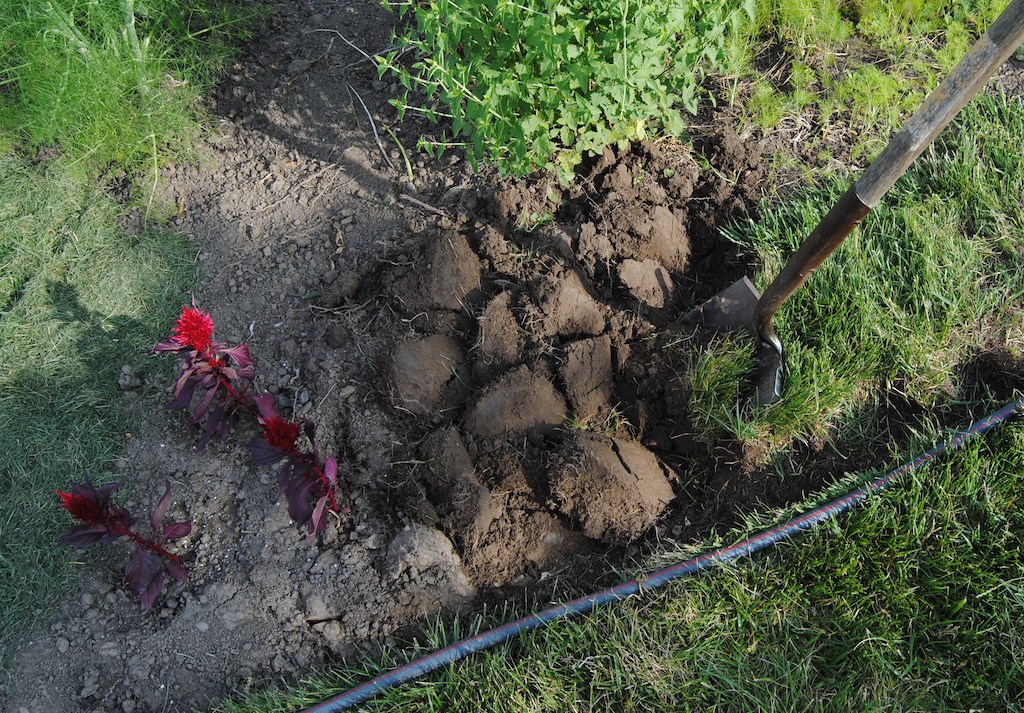
My choice for new bed prep:  Line out your new bed with a garden hose to get the shape the way you want.  Remember less is more as far as curves go, so avoid a sharper turn than your mower can handle.  A sharp turn means you’ll always be missing that spot or mowing into the bed to get it.

Edge along the hose with a square spade.  Use a round tip shovel to pop out a little of the grass along the outside of the bed and establish your edge.

digging garden beds

Start digging.  Use the round tip shovel to slice off a shovelful of grass and soil.  Flip the dirt back into the hole grass side down and keep going.  It helps if you remove a couple shovelfulls first in order to have a spot to flip the grass over into.digging garden beds

I plant immediately after turning, the section to the left was yesterday’s section.  Over the next couple weeks the grass rots into compost and the plants love it.  As always mulch!

Two last tips.  Beware southerners, your grass isn’t as wimpy as mine and you’ll need extra smothering or even roundup….. also digging it over like this won’t barely phase it if it’s something like Bermuda grass.

Also ALWAYS sharpen your shovels and hoes.  Use a metal file or better yet a grinding wheel to put a nice sharp edge on the blade.  They don’t come from the store sharpened (for obvious reasons) and if you’ve never done this before you will LOVE how a sharp shovel or hoe cuts through the dirt and weeds.