The first few weeks of spring all happened in four days, four gloriously warm and sunny days! I prefer a drawn out cool season with no big shocks but I don’t think that will be the case this year. Last Saturday went up to just over 80F (27C) and the drab gray garden exploded into color.
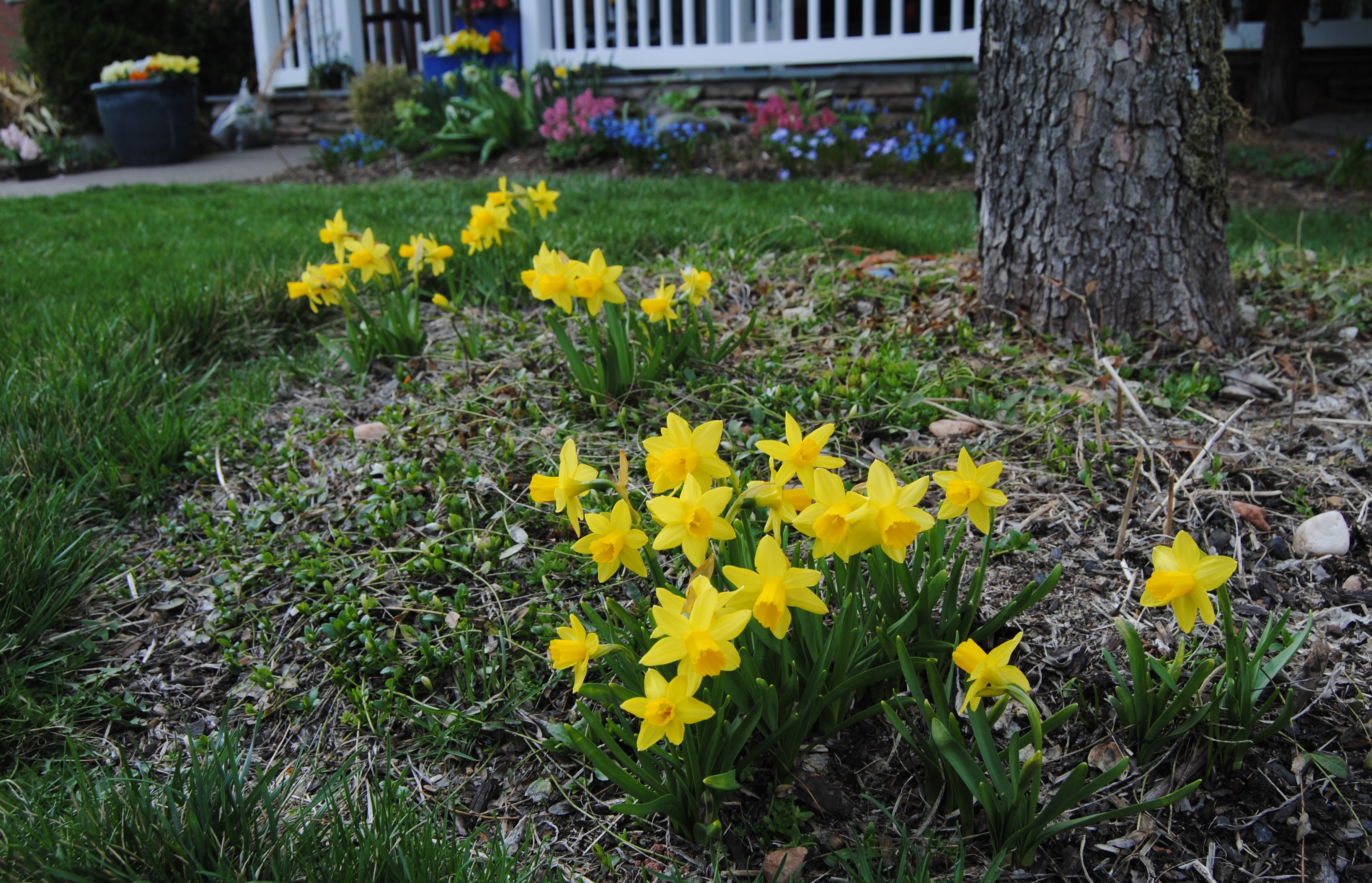
Narcissus “Tete a Tete” one of the best small, early daffodils for the garden and also for forcing in pots.
Just a few days ago we were freezing our kazooies off looking at snowdrops, now I’m rushing to admire the last spring snowflake (leucojum vernum) before the warm weather fries its delicate bloom. It’s hanging on in a cold spot which only just thawed out last week.

Leucojum vernum the spring snowflake, that’s a flake, not a drop, even though snowdrops are a close relative.
Around front, the shelter of the house has things popping up even faster. Corydalis “George Baker?” and the hellebores opened in two days, the hyacinth was a fat bud Sunday and then full bloom on Monday when I took this picture.

I have good luck with hyacinths. In fact the blooms get so big and heavy they end up flopping when fully open. This little piglet has been in the same spot for five years and has a bloom bigger than ever, plus two secondary stalks. If only the yucca “colorguard” behind wasn’t so beat up by the winter….

The hard winter may have been good for something though. This is the first spring I’ve ever seen corydalis seedlings, and Carolyn over at Carolyn’s Shade Garden said she notices an abundance of seedlings around her plants after a snowier winter. Maybe the snow cover helps moderate the soil moisture or temperature and aids in germination or maybe after all the snow we’re just looking more desperately and notice every single green sprout!

Corydalis seedlings, I first thought they were some odd one-leafed clover that needed weeding out!
Corydalis are one of my new favorites, and the most confusing thing about the seedlings is I never even noticed the seed pods forming… and trust me I was looking! I have it in my head to nurture nice swaths of corydalis color similar to the showcase found in Carolyn’s garden. The ones I have here (“George Baker and “Beth Evans”) were originally ordered from Brent and Becky’s and are exactly the bold colors I’m looking for. I also added some straight species corydalis solida from Van Engelen’s, but they’re just a little too pale and small and actually seem to be dying out.
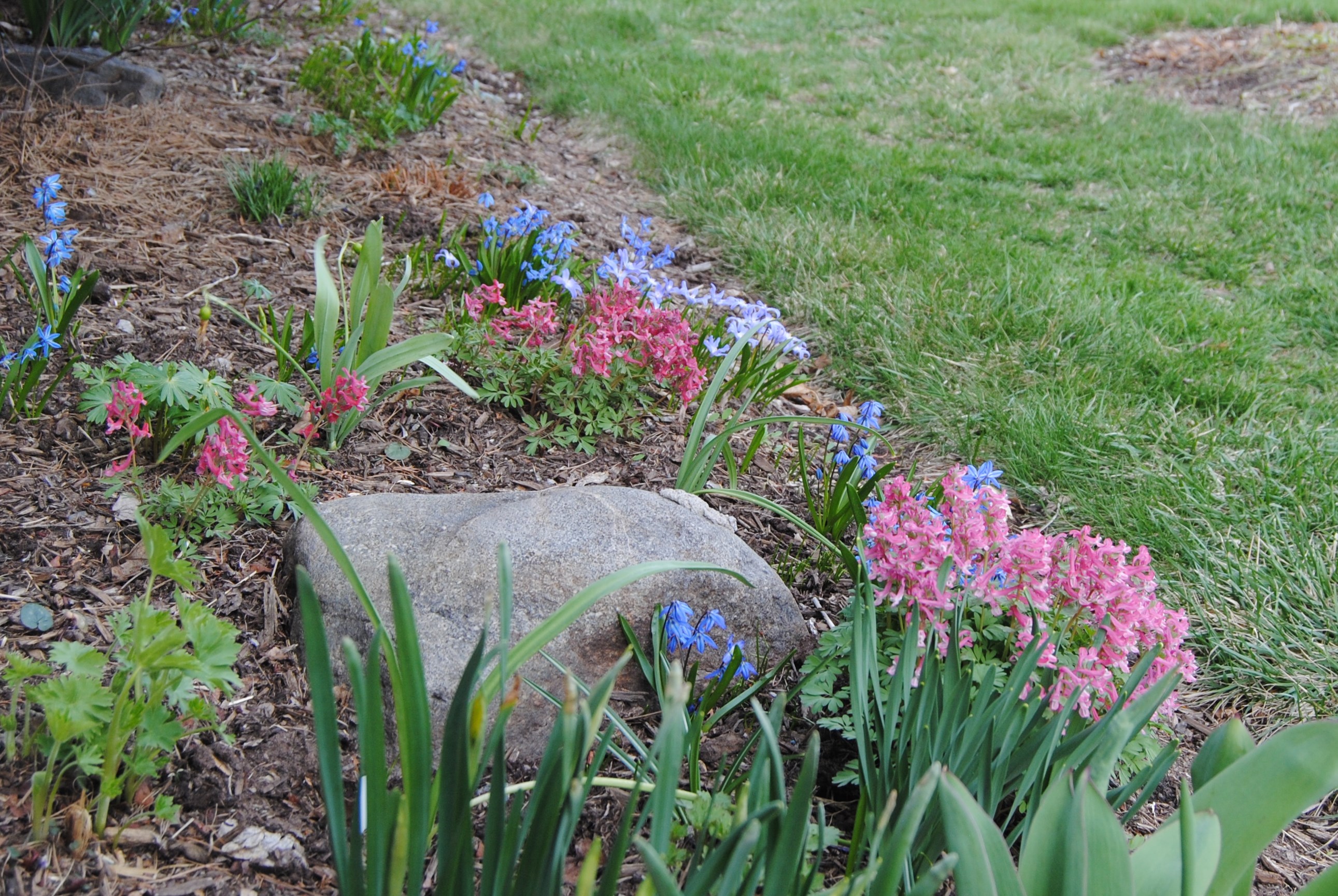
Corydalis solida with blue scilla siberica “Spring Beauty” and Chiondoxas…. and finally some greening grass.
Corydalis really appreciate division and replanting, and this single bulb moved the year before last is already a nice little clump. You just have to get to them quick though, they die down fast after blooming and it’s hard to remember where they were.

Corydalis “George Baker” with some hyacinths in need of division and replanting.
My focus for the last few days has been getting the cleanup done so everything can sprout up all nice and fresh. Some people are concerned that early cleanups leave the little sprouts exposed to late frosts, but I never have a problem. Actually I feel that mulched areas warm up in the sun more quickly than damp exposed earth, but overall it’s the mid May freezes that kill my plants, not the cold blasts in March and April, so I clean up as soon as I can get out there. It lets me see all the weeds such as this campanula that has taken over most of what was supposed to be an iris bed.

Cleanup includes taking the seeds out from under the deck. What was I thinking when I started all these!? Even if I get rid of all the campanula plus some more lawn, there still might not be enough room for planting out all these seedlings. A few pots already show sprouts btw.

Seed pots sown throughout fall and winter and left to stratify (exposed to the elements) under the deck.
Daffodils will also need some attention this summer. The first are opening and I’d like to divide several of these clumps after they die back. Here’s the early yellow “Peeping Tom” and some unknown bicolor that I’d love to put a name to.

Some of the daffodil beds got a nice mulch of mowed up maple leaves last fall, but they only go so far. As I clean out the flower beds everything from leaves to perennial stalks to shrub trimmings to ornamental grass tops, all gets run over by the mower and bagged up to either mulch beds or feed the compost. The warm weather brought up this clump of narcissus “Rapture” so fast, I barely had time to get the mulch around it before the blooms opened.

Narcissus “Rapture” opening so fast in the warm weather the blooms barely had time to make it up out of the ground.
I really should use some of these early daffodils out in the front beds along with a few of these blue chiondoxas. This clump was actually just a weed which hitchhiked in on some scilla mischtschenkoana bulbs which share this same spot. Six days prior the scilla was in full bloom and there wasn’t a sign of the chiondoxa. Now look at it!

A clump of what might be chiondoxa forbesii… don’t know for sure since I never really planted it 🙂
There’s nothing subtle about spring in my garden. Besides yard cleanup I planted these pansies out in pots by the front door, and although these are in a more subtle grayish pot, the rest were planted in a bright cobalt pot! Planter choices aside, I may be on to something with the pansy mix. Christina over at Creating my own garden of the Hesperides used a similar color mix for an arrangement of Gerber daisies, and I’m going to be on the lookout for my own daisies in these colors too.
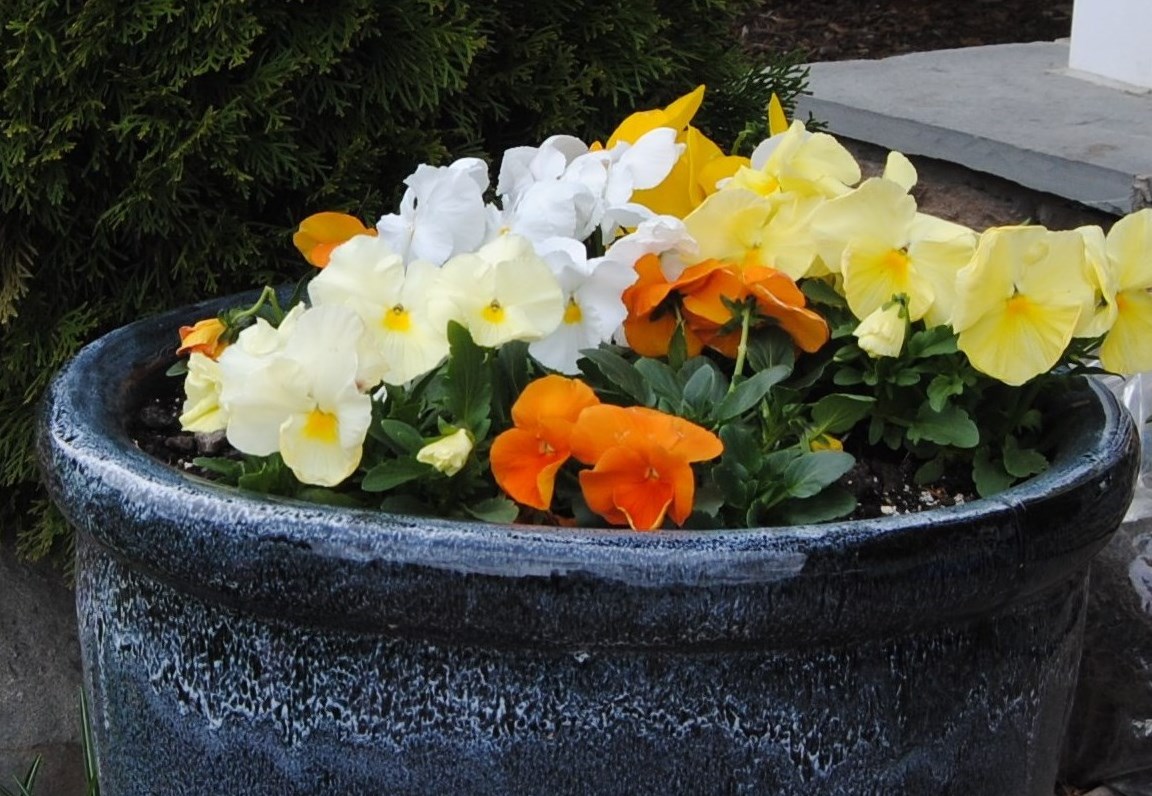
‘daffodil mix’ Matrix pansies
So that brings us to the next flush of color. The hellebores are also starting to open up in the exposed parts of the garden. Here’s “HGC Silvermoon” still looking kind of greenish. The foliage on this one is great and I’m jealous of gardeners who are able to get it through the winter with leaves worth looking at.

Hellebore “HGC Silvermoon” just starting to open up. Too bad the nice foliage on this one was burnt up by the cold.
And one of the first Elizabethtown seedlings just starting to come up.

A nice freckled hellebore from Elizabethtown seed.
So spring is finally here in full force, just in time for Easter. There are still a few bumps in the road …..such as last night’s snowfall and low of 21F (-6C) but I think we’ll make it. I just have to find the time to catch up on all the things that were on hold because of the weather. It’s way too early to fall behind!


 Writing out the labels probably takes the most time. Name, notes, date, and source written with a plain old pencil.


 All kinds of goodies were re-discovered just in time for fall planting, I think it was something like 20 packets for $7 and I picked out 40. Who can’t use a few more lily seedlings coming along or a couple packets of winter aconite seed? NARGS keeps previous lists online, so if you’re curious to see if it’s something you might be interested in,
  sorta like suburbia