The meadow in June

Last summer ended up being awfully dry in my neck of Pennsylvania, and as a result the grass in the meadow (or orchard if the apple tree ever takes off) took quite a beating.  Parts are so stunted this year you can barely tell it’s been uncut since spring.  This kind of defeats my dream of amber waves of grass rising and falling in the breeze, but it works out great for the new summer bulbs I dibbled around into the turf last fall.  I experimented with a few triteleia and dichelostemma, and although I didn’t expect much out of them after the cold and wet winter, they survived and are now showing off nicely amongst the sparse grass.

triteleia ixioides starlight

The thin grass leaves plenty of room for short bulbs such as triteleia ixioides “starlight”.  It’s not a great picture since it doesn’t show any of the soft yellow of this flower, but it’s the best I could manage!

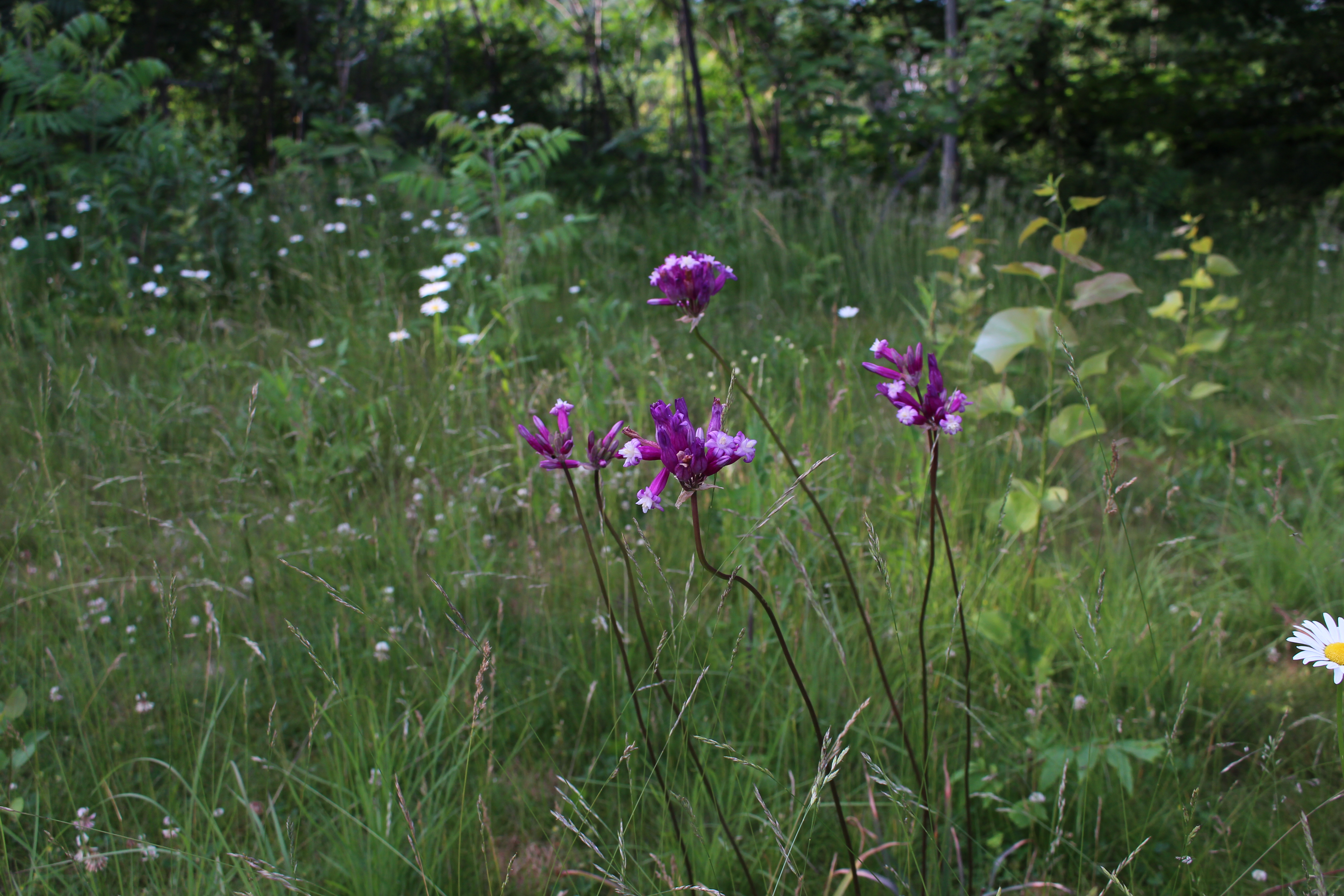
I needed some bulbs which the rabbits wouldn’t decimate (unlike the crocus) and these have worked out well so far.  I have my fingers crossed they’ll return next year, but for now I’m happy with them.  I think my favorite is this dichelostemma ‘pink diamond’ a natural hybrid from somewhere out of the western end of North America, and hopefully a good match for my dry-as-a-bone-in-summer meadow.

dichelostemma pink diamond

Dichelostemma “pink diamond”, the tubular pink blooms look almost waxy and rise up above the grass while the grass covers up its yellowing leaves.

Sumac and aspen are constantly making a bid to take over the meadow, so I need to get in there and snap them off.  Too bad the lazy little bunnies can’t do me a favor and chew these plants down.  It would finally give the blueberries a break.
dichelostemma pink diamond

The bright color of the “pink diamond” blooms really stand out in the meadow.  Good thing too since last year’s drought was also rough on rudbeckia and daisy seedlings.

Dichelostemma congestum was another treat.  It’s got a clear, bright blue color and also stands out well in the grass.  Hopefully this is another bulb that will settle in and call the meadow home.

dichelostemma congestum

Dichelostemma congestum looking nice up against the only patch of decent grass.

If I trust my seed skills I could try collecting a few and nursing them along for more of these little bulbs, but honestly I think they’re better off falling to the ground and fending for themselves.

dichelostemma congestum

If the butterfly weed was just a little quicker I could have a nice mix of bright orange to go with the daisies and dichelostemma. Summer’s the time for bright combos, right?

So that’s it for the meadow in June.  The butterfly weed is coming along and should make for a colorful intro into July and I’m glad to have a few interesting things back there.  Sure beats the half dead lawn I used to waste my time cutting each week!

Fall is in the air

The last couple days have been cooler, less humid and just plain pleasant to be outside in.  I’m not saying it’s fall weather, but it’s pretty close, and based on the dry, sad state of many plants in my garden I might say they’re ready for this summer to be over.  The front border has been on an IV drip of water and this life support intervention has kept it looking decent.  Having done a mid summer bed expansion here, and having added many annuals and tropicals, it kind of needs it in order to not become a dusty wasteland…. what a lovely contrast to the lawn which has not benefitted from any watering.

The pink in front is a sedum which has been doing very well the last few years.  I always hated this color growing up, but this might be an improved version of regular sedum spectabile.  It was given to me without a name, but after surviving a transplant and division during 90 degree heat I guess I owe it a place.  Next year I’m hoping for an even fuller plant.

From the other direction more of the elephant ear, coleus, and cannas are visible.  The ‘hot biscuits’ amaranthus is blooming now and I like the brown seedheads…. it kind of gives a grainy farmland look here in suburbia.

My birdseed sunflowers are all doing well in spite of the lack of water and lack of attention.  The only drawback is their lack of pollen, and you can see the centers of the flowers are black, not pollen-yellow.  Pollen free is great for cut flowers but the bees are not thrilled.  A few come by for nectar, which I guess is enough to get them pollinated, but they’re not the busy centers of activity that the rest of the flowers are.

I’m just glad they’re hanging in there.  Sunflowers must be quite drought tolerant for an annual since this is how the rest of the bed looks….  I’ve given up on keeping it watered.

In the backyard, the dahlias are still getting water and even with me cutting nearly every bloom, they’re still giving a nice spot of color in front of the dead lawn.

While it was still hot and humid I got around to mowing down the meadow.  I traded in my electric chopper for the day and borrowed my brother in law’s heftier gas powered lawnmower.  It made quick work of the crispy dried grass and wildflowers.  Typically I try to cut back the meadow earlier in the year, but with the hot, dry weather I really didn’t feel like doing anything at all, so it was only now that I found the motivation.  Because of my lack of enthusiasm everything got cut, there was no mowing around butterfly weed or native grasses, it all got the same treatment.  It was a good thing I finally got it done, because for some reason the colchicums have heard the call of autumn and begun to sprout.  How they come up through the dry, hard-packed, rock-like soil is anyone’s guess, and what triggers them to wake up is beyond me, but there they are.  Fresh blooms in a sea of dry crispiness.

I wish there was some similar promise in this end of the yard.  The Annabelle hydrangeas were fantastic in the spring but now are just dying sticks.  They’ll recover if rain comes soon, but for now everything just skips over our little spot, or never even reaches the ground.

It could easily be worse, there are still a few green weeds in there, but Pennsylvania usually doesn’t go this long without rain.  On top of that it doesn’t help that most everywhere else on the east coast is at above average rainfall… but I have faith.  Right now Thursday is showing 100% chance of rain, and maybe this cooler weather is signaling a change in the weather.

Life on the Prairie

I’m still working on the street border cleanup and expansion.  Normally I would have called it quits as far as digging and transplanting go but with all the rain and overcast days I’m just trying to get  a little more done before the lazy days of summer kick in.  Today the humidity almost killed me but I did manage to push myself and got a little further.  An update is on its way but in the meantime here are a few pictures of another part of the yard.

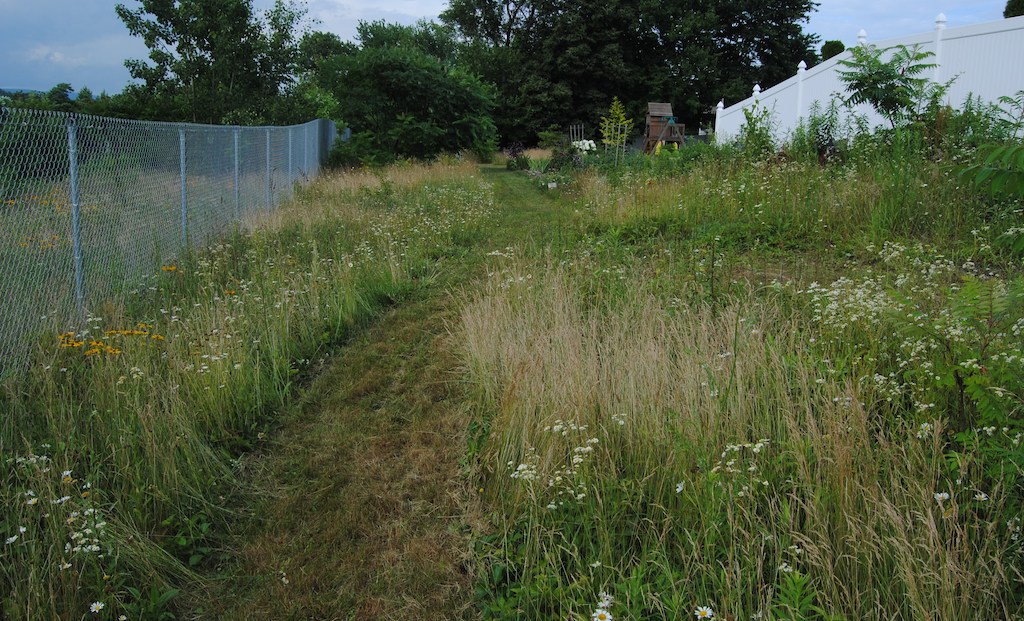
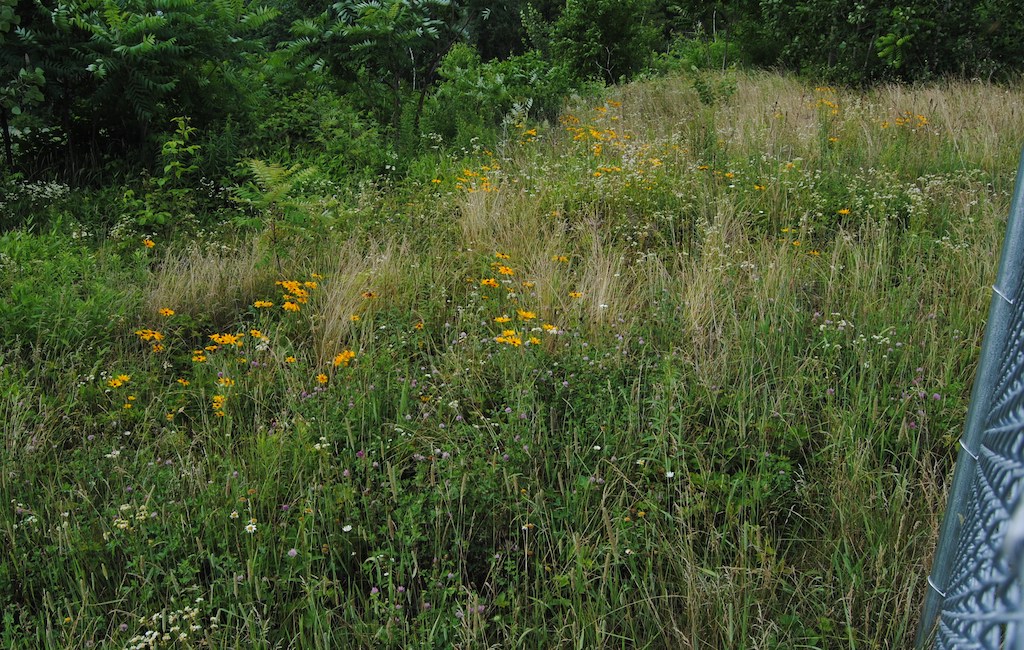
The far reaches of the yard are left to themselves for most of the year.  I love the wild look but that opinion is not held by everyone who lives here or who peers over the fence.  It will get a rough mowing around the end of July but for now it’s full of wildflowers and bugs and butterflies and bunnies.  I was so pleased with myself for getting all the paths mown I figured I’d take a couple pictures.meadow garden

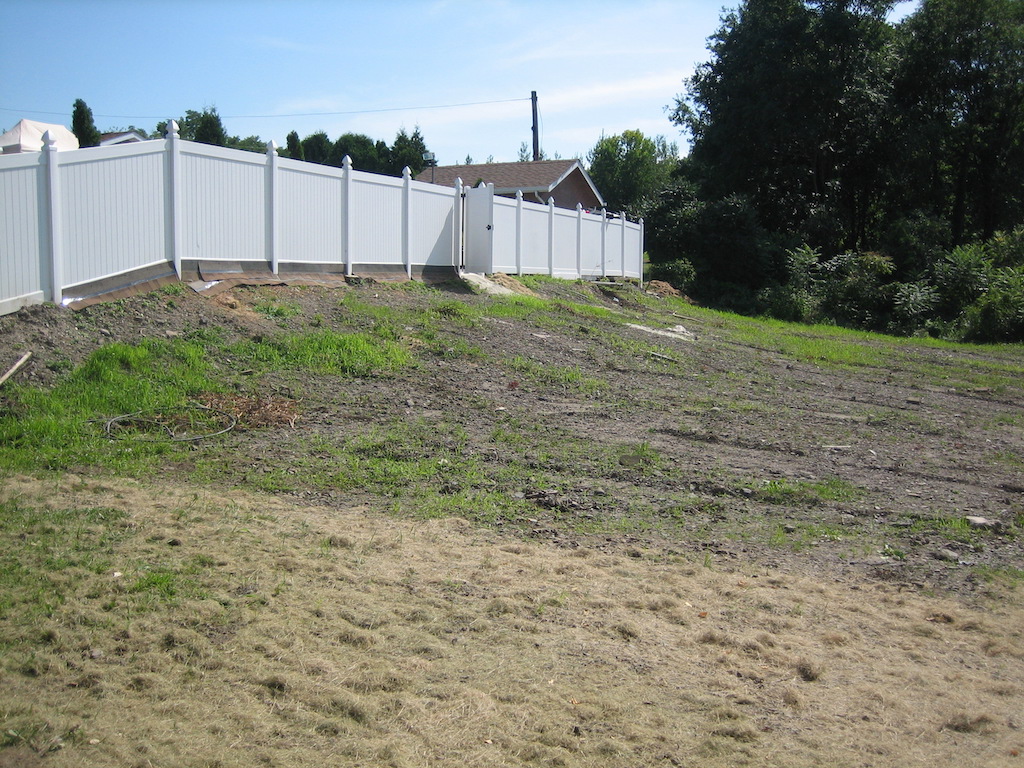
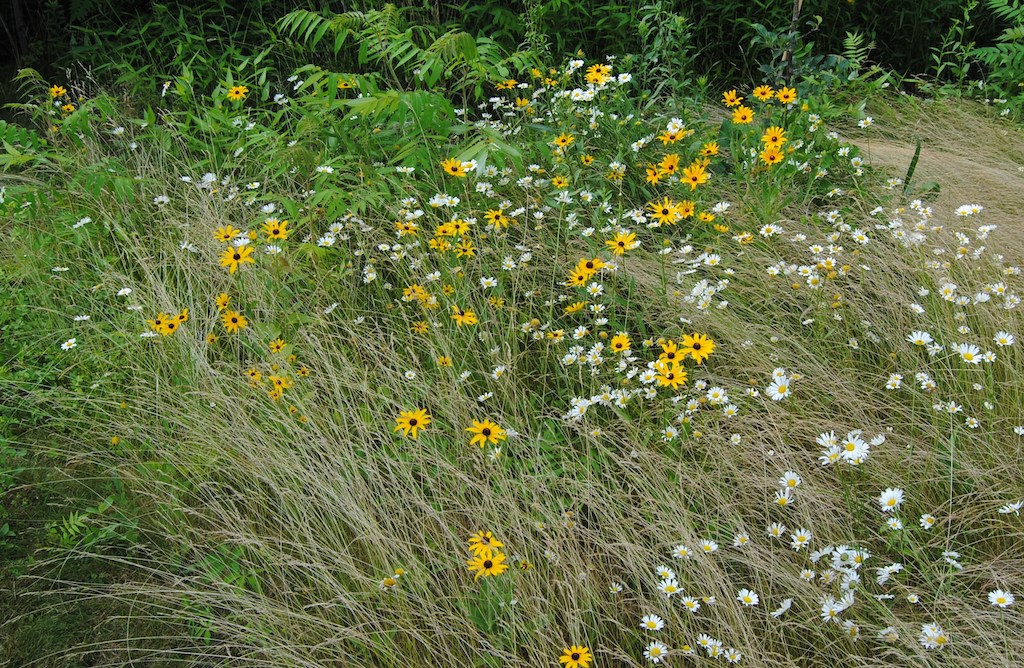
This is the area behind my mother in Law’s house.  It’s a no-man’s land between her fence and the new fence surrounding the new industrial park.  About five years ago this was just bare earth but over the years I’ve seeded in some grass, thrown down some daisy and rudbeckia seed and just kept it mowed (early spring and mid summer) to keep the worst of the weeds from taking over.  Here’s the five year picture.  In the front you can see where I spread the lawn clippings I collected from another part of lawn that had gone to seed. meadow garden

meadow gardenThe worst weeds back there are creeping blackberries, Canada goldenrod, and queen anne’s lace.  I think I pulled most of the QA Lace (too invasive) but the blackberries are giving me trouble.  The kids call them “pokies” and I hate the way the runners grab your leg and razor wire a cut right in the sensitive part of your ankle.  I hate them and remember hating them myself as a kid when one got me out in the woods.

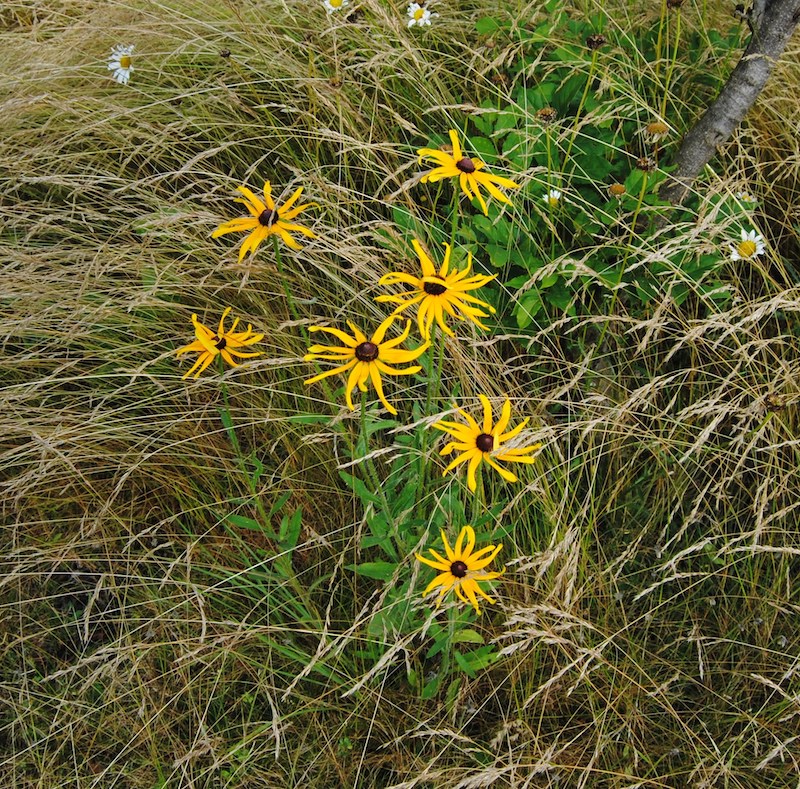
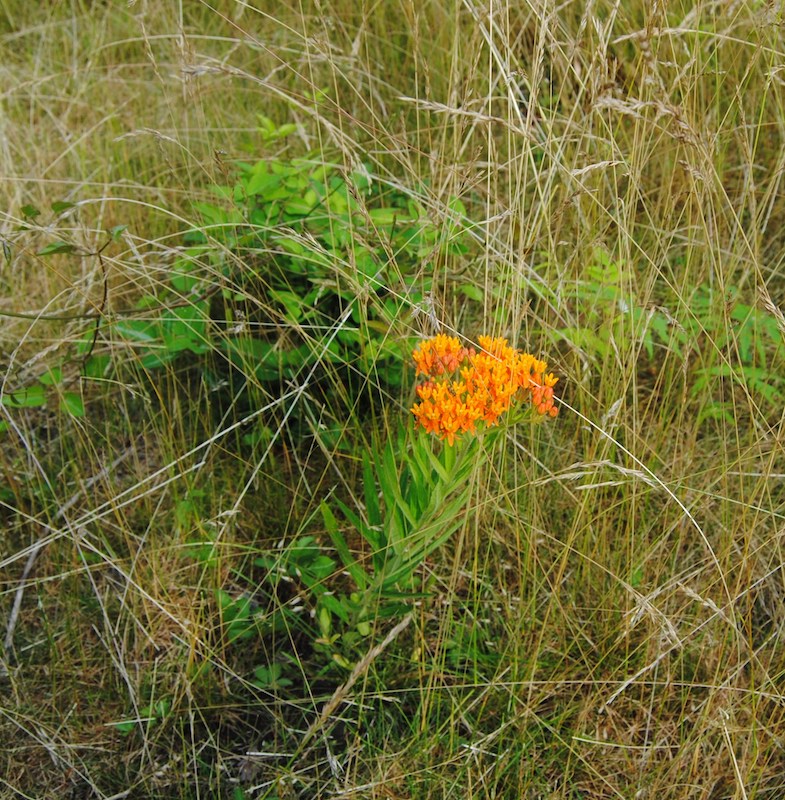
meadow gardenThe wild black eyed susans are blooming now as well as some late oxeye daisies.  Both of these are welcome and I’ve been trying to add some other interesting stuff to keep them company.  The late summer mowing should encourage the early blooming grass to fill in, but I’ve been planting out some butterfly weed seedlings (Asclepsias tuberosa).  The first to reach blooming size is flowering this year, I hope others follow.meadow garden

The chainlink fence went up last year and has cut me off from half the meadow.  There’s a possibility a gate will magically appear in the fence and I’ll again be able to give this a mow.  I’d like to be able to control what grows in back here and don’t want trees too big and too close to the fence.

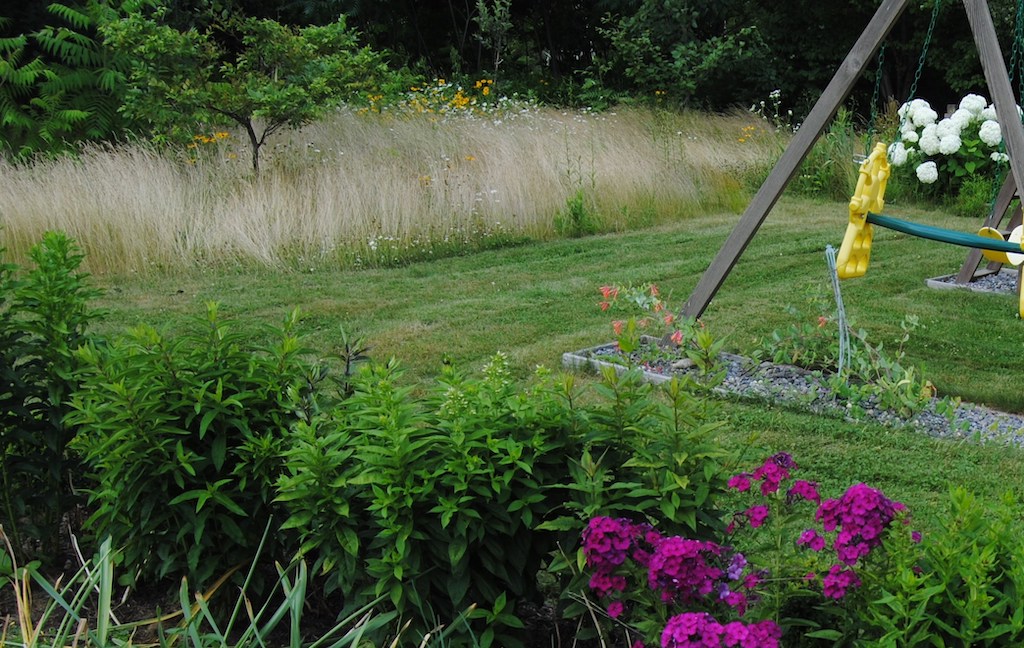
Back on our side of the fence there’s a second half of the meadow called the ‘orchard’.  I planted an apple tree there this spring, hence the lofty renaming.  The grass in this section is thicker since part was already turfgrass before I started letting in all the daisies.meadow garden

With the paths mowed and the edges neat I think the meadow has a nice look.  It’s popular with the younger crowd for important activities such as daisy collecting and grasshopper catching.  It’s also a great place for firefly chasing, and since July is firefly season there was a lot of path running as the kids tried to catch as many as they could.meadow garden

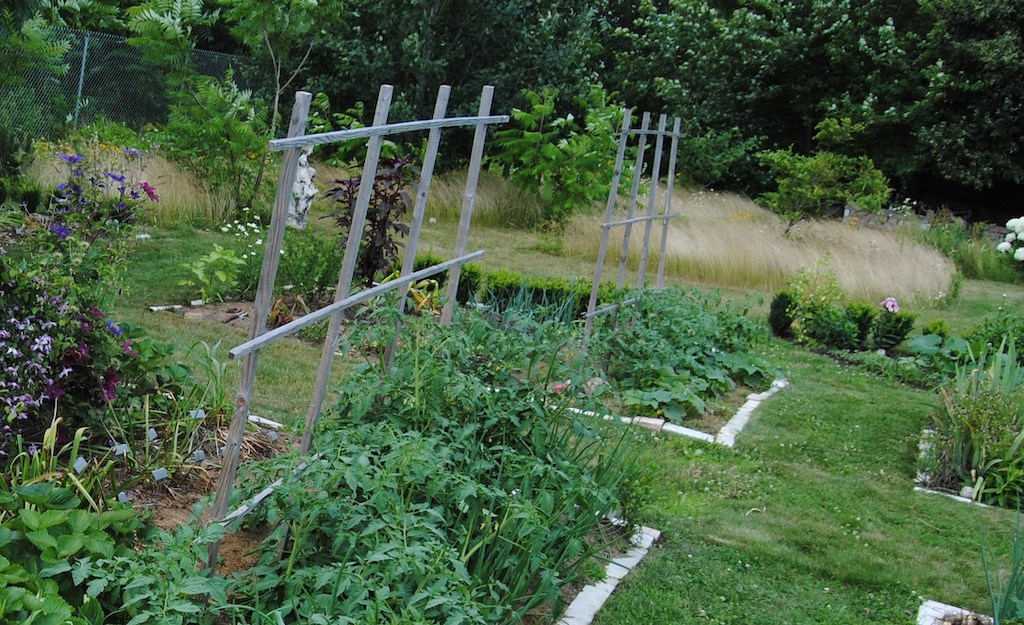
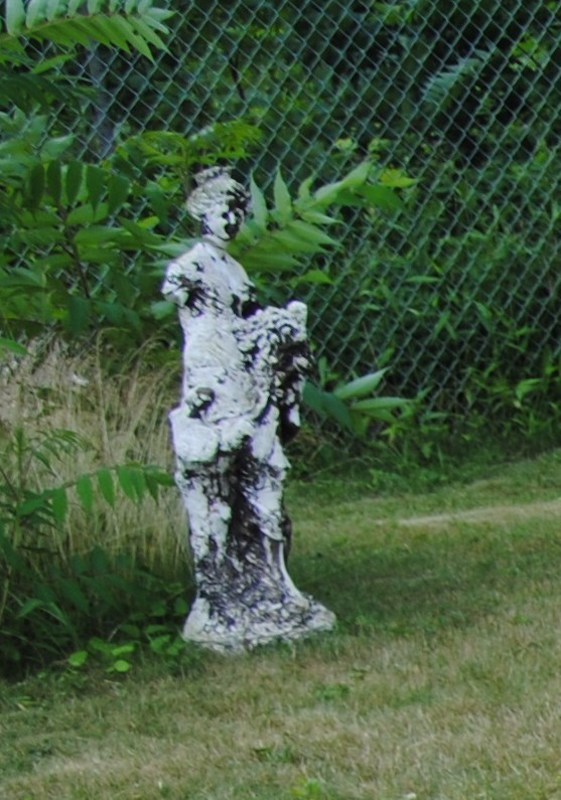
I’ll end with a look across from the vegetable garden to the meadow…. I mean orchard…… If you look carefully through the crooked tomato trellis you might catch a glimpse of ‘the queen of the prairie’.  She guards the entrance to the orchard and admires the overgrown lawn.  Some say she’s just an old plaster statue that wouldn’t sell at an estate sale.  I say she’s our queen.meadow garden

meadow gardenNow back to digging says the queen.

My best weed

My garden lacks sophistication.  There’s little if any structure, the planting schemes are weak, it’s usually a mess, and I have plenty of weeds.  To help get around these faults I’ve taken to accepting volunteer help in designing the beds and plantings.  What this means is I avoid a lot of unnecessary work by letting things self sow and keeping most of these volunteer seedlings as “design elements” instead of admitting they’re unplanned weeds.  Oxeye daisies are one of these and they do a great job filling every little gap anywhere they can.  I don’t mind.oxeye daisy

Between the daisies, fennel and verbena bonariensis I could keep this border filled all year without lifting a finger, but even I would have to admit it’s more of a highway wayside look than a garden.  I’ll need to pull most of these this week as I work through the bed thinning overgrowth and then adding a few annuals and tropicals for summer color.

Daisies are even easier in the no-man’s land between the industrial park and our development.  Rather than keeping a tame suburban lawn here I’ve opted for a meadow of rough wildflowers and waving grasses.  The grasses are slowly establishing but the daisies filled in the first year.oxeye daisy

Rather than beating this area into submission every week, I let it go until July or so and then give it a cut to spread seeds and wack back the less-preferred sumac and golden rod.  With a mown path for more civilized access this is a popular area for the kids and their friends.  Many bouquets find their way out of this weed patch and onto our kitchen windowsill, and the grasshoppers and bunnies are just as popular….. unfortunately they also eventually find their way out of the meadow.oxeye daisy

To my surprise this meadow area is not as popular with the grownups.  It’s become a tradition each spring to engage in the ‘cutting of the weeds’ argument and then take the day long vow of silence that follows.  But for now the grass and daisies stay and the wildlife rejoices.