Spring is Quite Awesome

Okay.  So if this blog post goes up in the next day or two it’s just a three week gap and not four, and I guess that’s better, even if I’m forcing myself to sit here right now and get something done while my heart is saying do nothing, crawl into bed, find a blanket, play mindless phone games….

spring violas

The violas of spring look great, they love the cool weather and frequent rains, and for once I like the color mix in this pot.  Too often I impulsively buy a celebratory mess of spring shades and hope for the best, and then act confused when the colors still look like a mess when planted!

With this week’s chilly and damp weather a blanket is definitely required even though a couple days prior the air conditioning had to go on to fight the heat and humidity.  Those temperatures, alongside regular rains and then a little too many rains, has the garden bursting with growth and color and fortunately not with fugus and blight yet, and I hope it stays that way.  I grabbed a bunch of pictures last weekend during a gap in the rain, and my favorite subject was the lovely rose ‘Aicha’.  I love her soft shade of yellow, the simplicity of her single flowers, and the arching shape to the bush.  She has a light fragrance, and right now I can forgive the leaf spot and only a few here-and-there sparse reblooming flowers in late summer.

rose aicha

The yellow of ‘Aicha’ ushers in the yellow/blue/purple phase of the front garden.

I picked up ‘Aicha’ at Der Rosenmeister nursery on a spring trip to Ithaca NY one year, and each summer since it has been a rose dream to make it up to their open garden party (June 13th this year btw) which Leon hosts each year.  It’s a party with music and fun, plus hundreds of full-bloom, cold-hardy rambling and climbing roses massed across the grounds of his home.  I would make a wish list of course.  It took me days of contemplating to fit in just three, so a list would be trouble which I don’t need but where’s the fun in that?

variegated iris

Somewhat fitting into the yellow/blue/purple phase is the variegated Iris pallida ‘Aureo Variegata’ which I love for foliage as much as the lemony scented flowers.

It’s actually still early for roses so lets bask in the show of the bearded iris first.  The iris don’t like the rain right now, but last summer’s drought was just what they do like, and this spring they’re showing their appreciation of the previous year’s rot-free dry weather.  I probably said I wanted more last summer and then did nothing to accomplish that, so this year I have a plan.  I think they would do very well on the berm.  I’m at a point where I want to plant something appropriate on the berm, and as long as nobody complains too vigorously about weeds in the iris I think this summer I’ll give it try.  Younger me would  aim for weeding after planting, but I’m starting to understand my limits as I get a bit more experience, and I can warn everyone right now that the iris on the berm will be weedy and I apologize ahead of time.

iris sunol

‘Sunol’ is an oddly colored iris which would probably do better on a weedy berm rather than the garden since it’s just as crowded, but less sunny here.  I believe the “dwarf” blue spruce is squeezing it out faster than I wanted to imagine.

I guess you can’t talk about the May garden without mentioning weeds.  One of this year’s goals was to eliminate a few from the garden and mostly from the lawn, and when a friend saw that post they mentioned the idea of a wildflower section in a corner of the lawn as a a safe-zone to balance the weedless-lawn effort.  Upon hearing this excellent suggestion I realized that what I wrote was really a bunch of misleading nonsense.  Such is often the case for this blog but in this case it gives a totally different picture than intended.  I forgot that the lawn purists consider a lawn as a place for grass and only grass, and oh my gosh that’s not what I’m aiming for since in my opinion a grass-only lawn is about as boring as boring can be.  My weeds are narrowleaf plantain and creeping charlie.  I hate the plantain and have grown tired of the creeping charlie so they are now the two weeds who’s numbers I am trying to reduce.  Violets as well but I hesitate to mention that since they’re so beloved, but they seed everywhere and are nearly impossible to get out of flower beds, so enough is enough.  My biggest problem in spraying to control these three weeds is that the clover and dandelions are also killed if spray get on them, so I have to be careful and precise to miss them.  Hawkweed is also a treasure in my lawn, and to be honest I’ve transplanted plugs to get it into new spots… actually in the older parts of town I’ve seen a lawn or two with a few shades of yellow which I’d love in my own lawn, but I’m not quite ready to knock on doors asking for weed samples.  So just to be clear, for me a weed-free lawn is only grass-based, and the green is well spangled with the blooms of a carefully curated blend of colors, just with less plantain mostly because I just don’t like the stuff… unless it’s the wide-leaf form in purple which I guess I do like…

iris elsinore

Bearded iris are not weeds in any sense of the term.  This is ‘Elsinore’, one of my favorites.

So rest assured this garden is quite safe from a turf obsession.  To lose finches picking through dandelion seedheads, bunnies grazing the clover patches, and bees working the birds foot trefoil would be sad.  Actually I feel a little concerned when I see a vast expanse of fertilizer-hyped, weed-killer soaked turf and think of the hours wasted keeping it that way and the dollars which could have been spent on better pursuits.  Those people obviously never grew a snowdrop nor jealously eyed a patch of English daisies growing in a garden they visited last weekend and then thought of their own pot of English daisies and then spent the next three days staring out at a rainy garden wondering where a good spot would be to plant them in the lawn… Hmmm.  You may see why little actual work happens here when the gardener wastes hours thinking about where in the lawn to plant new weeds.

Glaucium corniculatum blackspot or red horned-poppy

The colchicum bed with a few not-colchicums filling in the gaps.  The orange poppies are red horned-poppies (Glaucium corniculatum) and love a dry, poor soil which doesn’t speak well of the soil in this bed.

Enough about weeds.  May here is about flowers and the enthusiastic growth of plants, and besides the iris here are a few odds and ends of treasures and tasks.

Robin's PlantainErigeron pulchellus 'Lynnhaven Carpet

Matt Bricker will often bring a few non-galanthus goodies to the Galanthus Gala, and one year a pot of Robin’s Plantain (Erigeron pulchellus ‘Lynnhaven Carpet’) came home with me.  It’s a nice low groundcover with soft leaves and cheerful daisies in spring and is about as easy to grow as anything.

Not that I’m anything close to a purist but I just noticed the horned poppies and Robin’s Plantain (a daisy not to be confused with the previously mentioned plantain) are North American natives and to keep with a theme for more than a minute here’s one last shrubby, maybe someday small treeish native thing, the red buckeye (Aesculus pavia).  In a miserably hot and dry spot on the berm it carries on, growing inch by inch and blooming faithfully each spring.  It would like a better spot but carries on well enough with what it has, the show increasingly clashing with the pink and mauve rhododendrons which also suffer on the slope here.
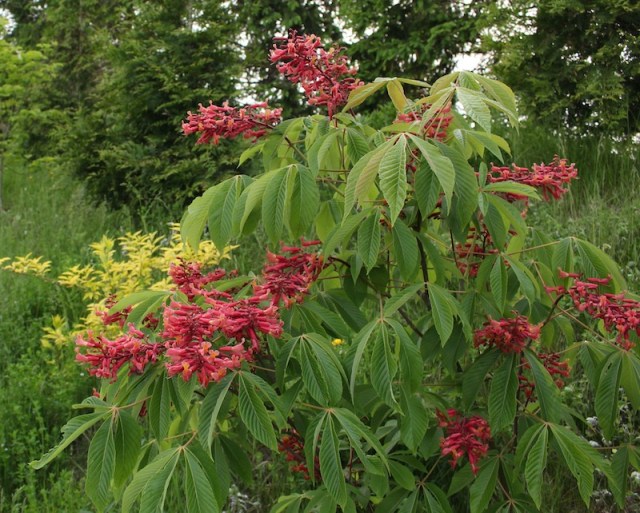
Aesculus pavia red buckeye

Red buckeye (Aesculus pavia) is listed as a hummingbird magnet but as of yet… it’s just a pretty shrub on the berm.  I’m hiding buckeye seeds each year and maybe one day they’ll carpet the industrial park.

That was possibly a full minute of focus on how unfocused I am, but as I’m sure you know there are just so many other things going on it’s hard to stick to a task.  A gardener goes out with the ambition of transplanting a sedum but sees a branch to prune and a weed to pull and then gets lost looking for a trowel they remember using two days ago and before you know it the rain started again and you’re wondering why you spent twenty minutes deadheading hellebores instead of mucking leaves out of the pond.  There’s a mile long to-do list, which I’m sure is the same for every gardener (and if not and you are that rare exception please keep that an inside thought) and perhaps this weekend the list will get shorter before it gets even longer.  I don’t even know what my list says so here’s a guesstimate.  Most everything is out for the summer, most vegetables are coming along, a few new plants are here, but the summer bulbs and back porch have not yet been attended to.

bromeliads overwintering

The bromeliads are slightly pale but nearly as lush as when they came inside last fall.  They’re almost too easy and this gardener is only allowed to buy maybe one or (at most) two new ones this year since that’s ok and not a sign of addiction at all.

On a plus side the garage is still being used for vehicles rather than entering the annual contest to hold as many empty pots, wheelbarrows, boxes, bags of potting soil and tables full of drying bulbs and corms as possible, and to achieve that the driveway has stayed open enough to drive on.  It’s basic math since I am out numbered now.  Three out of the four drivers here agree that the driveway is better utilized for cars rather than as a makeshift summer nursery/pot ghetto/staging area for excessive plant additions to the garden, and now the gardener is forced to hide his compulsion just around the corner, alongside the garage 😉

golden ninebark seedling Physocarpus opulifolius

My friend Kathy Purdy warns that stray tree and shrub seedlings should be addressed when small and not allowed to sink their roots in and create a removal issue down the line, but… golden ninebark seedlings (Physocarpus opulifolius) are so cute and can’t possibly ever be in the wrong place… right?

That’s it from here.  It is now Saturday morning and once the last person asleep here wakes up we shall go to a coffee shop and the two children will make us breakfast… assuming we pay for it and tip them as well, and then after that I’m sure something will get done here even if your guess is as good as mine as to what it will be.  The lawn needs cutting, so I’ll probably head outside and start by planting petunias next door and then check the pool filter.  Maybe I’ll eventually find that trowel again, who knows, but in the meantime I hope you have a wonderful spring weekend!
The Poisoned Earth

I’m not an organic gardener.  I sprinkle fertilizer around, spray for pernicious weeds, douse a bug here and there… I figure “progress” has to be good for something more than shorter winters and a warmer globe, plus I like cool things like antibiotics, vaccines, and diabetes and heart medicines.  Unfortunately, there are a few things which scare me and I’ve been thinking more and more on them lately.  The most recent is the death of this year’s tomato plants.

For all the neglected vegetables of the potager, sauce tomatoes are always in demand and always harvested.  The kids might throw cherry tomatoes around and play baseball with a zucchini but the paste tomatoes always find their way to the saucepan or freezer, and if it were up to me they’d all go towards pizza, not sauce, but now I’m getting distracted.  This year the plants went in early, the stakes before they were needed, all were watered, mulched, and looked great… for a little while.

I mulched with lawn clippings like I always do and within a few days the plants were dying.

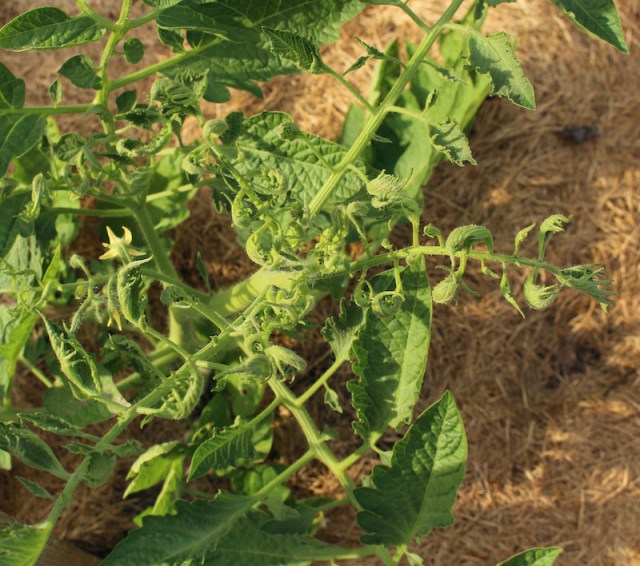
2-4-D tomato damage herbicide

All the new growth on the tomatoes is coming out curled and stunted.  According to what I’ve seen online it’s classic 2-4-D herbicide damage and chances for recovery are zero.  

I take care of the lawn next door, and my mother in law always reminds me every year to put down grub killer and something for the weeds.  I usually “fib” and say sure and things are just fine, but this year the clover and dandelions were getting a little too obvious, so rather than explain how the stuff ‘doesn’t always work 100%’ got a bag of Scott’s weed and feed to spread around.  It worked for the most part, we’re back to a monotonous yawn and she seems happy.

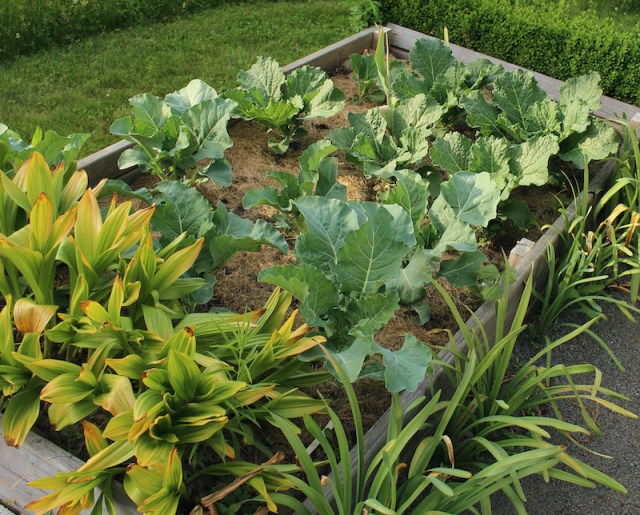
cabbage and cauliflower

The cabbage and cauliflower bed doesn’t seem as sensitive and are growing well.  They likely absorbed the same poisons and now I have to consider the fact it’s part of the cabbage leaves and future cauliflower heads.

So that was the end of March.  Two months of growing and mowing and rains and I was desperate for some mulch in my earliest-ever and most-promising tomato bed.  My lawn is still sparse from bulldozer traffic so what the heck, it’s been months since the last illegal clover shriveled and died over there, so let me just use a mower bag full, what’s the harm…. and then the tomatoes went belly-up.  It scares me to think of that whole yard as still being toxic.

no mow may meadow garden

No-mow May is a month long break from all the chopping and edging and spraying and fertilizing of the lawn growing cult.  I love the way it looks.

Leaf miners are what started all this nervousness about chemicals settling into garden.  Years back I would lose most of my daffodils, snowdrops, snowflakes, amaryllis, and lycoris to narcissus bulb flies… that is used to until I started sprinkling grub killer around the bulbs.  The bulb flies disappeared and that was awesome but then one summer I realized how perfect all the leaves on my columbine (Aquilegia) were.  Perfect leaves on columbine is something I’ve never seen in this garden, they always end up with a bunch of leaf miner tunnels and it’s not perfect but not that big a deal either.  If I feel like it the foliage is trimmed back, and new growth returns quickly, but it was weird to not see them.

Columbine often seeds into areas where I planted daffodils and snowdrops.  The columbine takes up the grub killer and becomes poisonous enough to kill the leaf miners.  Whatever else sprouts there also becomes poisonous.  The leaves decay and the compost becomes poisonous.  Many people say the pollen and nectar of the flowers contains the poison and the bees suffer… and of course people love bees… but think of the crickets and katydids living in the shrubs which also share that soil, suddenly they’re as likely to die as the leaf miners are.

One bag of grub killer would last me for years since I used it so sparingly, but today it’s only columbine in the far reaches of the yard which ever show an occasional leaf miner.  They’re basically extinct in my yard.  Just imagine how a normal person would use a whole bag in a day, across their entire lawn, and from then on every grass blade, perennial plant, shrub, and tree in the yard becomes toxic to insects.  Think of how many neighbors use Lawn Doctors and Tru Greens, and I don’t think they use anything less-toxic than the unlicensed, off the shelf products we gardeners use.  No wonder insect populations are crashing.

no mow may meadow garden

A no-mow May meadow.  Hopefully this is a toxin-free buffet for both myself and the bugs.  I’ll resume regular mowing in August and then keep it up until fall.

I’m probably preaching to the choir here.  I already have some much-smaller, far-less amazing tomato plants to plant in another unmulched bed, and so what if there aren’t any leaf miners.  I just hate to think of everything else we’re losing.

Hope you’re having a great week.  Happy June!

Fall Lawn Care

The lawn maintenance contract for the yard next door was on the market this spring and guess who had the winning bid?  Yours truly!  The field of entries was stacked with lawn doctors and local landscaping companies and when the offers were reviewed my bid of zero dollars for time and labor rose to the top.  Last year I was already doing the mowing, but some chem-lawn was handling the other stuff… now it’s all me.

She did express some doubt in my laissez-faire approach to lawn maintenance but in the long run I think the economics won her over.  My own lawn is only now just reviving from the drought of summer.

Without boring you with the details (your welcome to ask for more info if interested) my lawn care consists of the following: use an (expensive) quality blend of grass seed (I don’t like rye grass, so the less of that the better), use the cheapest plain old fertilizer you can find (I usually go for the K-grow from that K-store), mow on the high side and if it doesn’t bother you leave the clippings on the lawn.  Forget everything else.

Because I don’t water, the lawn was completely dead from late July on, but as soon as rain and cooler temperatures arrive it comes back fast.  To get it prepared for this rebirth I gave the dead lawn a close haircut without a bag and left all that thatch wherever it fell.  I threw around some of the cheap fertilizer and waited for the fall to do its magic.  Two weeks later and two weak rain storms and it’s started to green up again…. although I did do a little supplemental watering for my MIL’s yard (we’re still 8″ short of normal for rain this year….)

The patchy spots will fill in over the next week or two as that grass comes back to life, but it’s real important to get the lawn nice and thick now so that it’s too dense for crabgrass seeds to sprout next spring.  Also never cover the whole lawn with grub killer.  Grub killer may kill grubs for a season, but it also kills off the earthworm population, and there’s nothing better than earthworms for free fertilizing, free aeration, and free thatch removal.

The down side to all this is that lawn mowing is back on the to-do list.  My lawn can still wait a week, but the extra water next door means mowing this weekend.  Oh well, the clippings will give the earthworms over there a well deserved end of summer snack!

My best weed

My garden lacks sophistication.  There’s little if any structure, the planting schemes are weak, it’s usually a mess, and I have plenty of weeds.  To help get around these faults I’ve taken to accepting volunteer help in designing the beds and plantings.  What this means is I avoid a lot of unnecessary work by letting things self sow and keeping most of these volunteer seedlings as “design elements” instead of admitting they’re unplanned weeds.  Oxeye daisies are one of these and they do a great job filling every little gap anywhere they can.  I don’t mind.oxeye daisy

Between the daisies, fennel and verbena bonariensis I could keep this border filled all year without lifting a finger, but even I would have to admit it’s more of a highway wayside look than a garden.  I’ll need to pull most of these this week as I work through the bed thinning overgrowth and then adding a few annuals and tropicals for summer color.

Daisies are even easier in the no-man’s land between the industrial park and our development.  Rather than keeping a tame suburban lawn here I’ve opted for a meadow of rough wildflowers and waving grasses.  The grasses are slowly establishing but the daisies filled in the first year.oxeye daisy

Rather than beating this area into submission every week, I let it go until July or so and then give it a cut to spread seeds and wack back the less-preferred sumac and golden rod.  With a mown path for more civilized access this is a popular area for the kids and their friends.  Many bouquets find their way out of this weed patch and onto our kitchen windowsill, and the grasshoppers and bunnies are just as popular….. unfortunately they also eventually find their way out of the meadow.oxeye daisy

To my surprise this meadow area is not as popular with the grownups.  It’s become a tradition each spring to engage in the ‘cutting of the weeds’ argument and then take the day long vow of silence that follows.  But for now the grass and daisies stay and the wildlife rejoices.

Just another day at the salt mines

I can sorta relate to the people looking for low maintenance plants and landscaping.  I for one love being outside, watching things grow, tending plants, dividing, staking, deadheading…. even weeding.  About the only thing I really don’t care for is watering, so when it’s spring and I have a list of projects to work on and halfway through start to think it’s more trouble than it’s worth….. well it might be time to hit the lawnchair with a drink.  In a sick way I sometimes look around at my fellow suburbanites and think their yards look just as good as mine, but then I remember it’s unlikely they have a couple dozen different iris coming along into bloom, and they probably don’t even have any more than one or two snowdrops.  That helps my mood and I go through and finish the day with a smug grin, quite pleased with myself all over again.

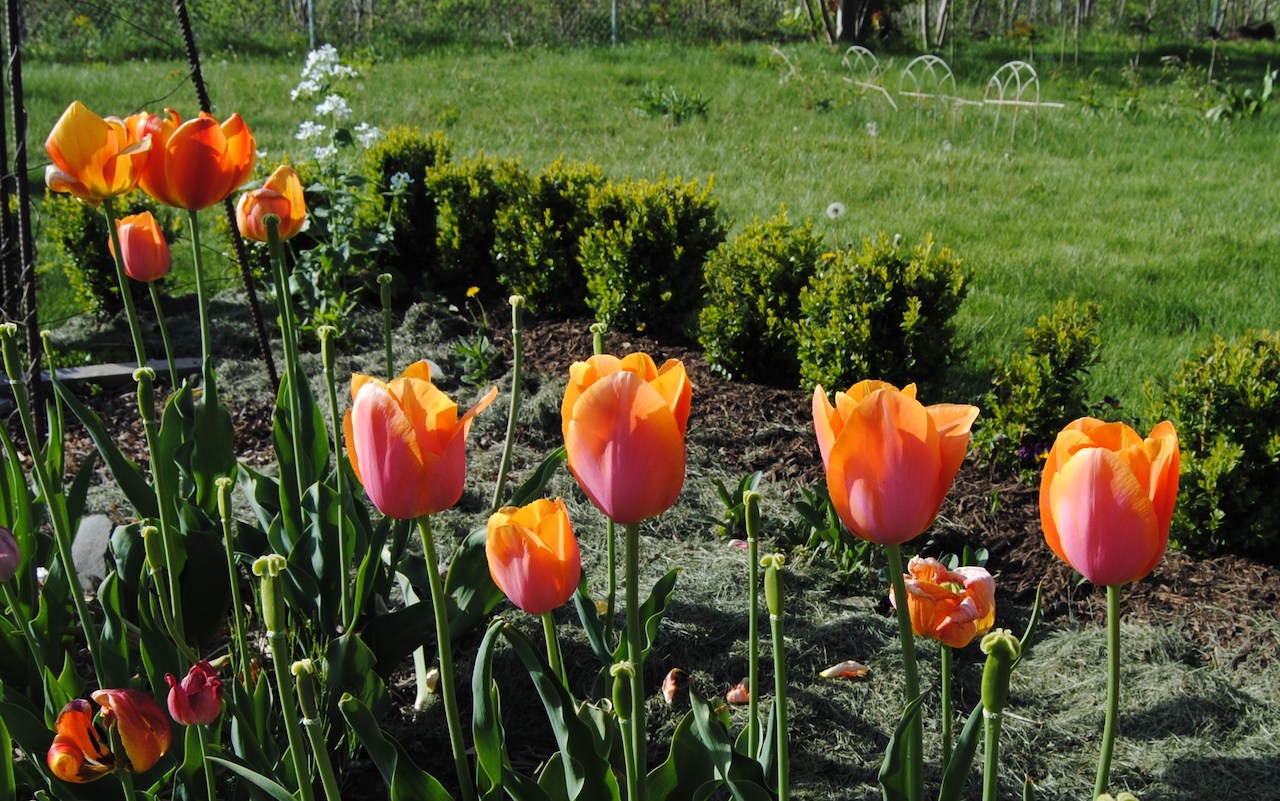
The late tulips are still holding out, these (probably “Dordogne”) mixed in with all the others keep the patch colorful even after the rest are over.  Unless Sunday’s high winds beat them silly, they should last another week.tulip dordogne

I think what beats me down is the lawn maintenance.  If you want to talk high maintenance a lawn is right there on top.  Part of that is my fault, I’m stubborn and insist on using a corded electric mower instead of something bigger, stronger, and faster.  It’s not the most manly mower, but from someone who’s always wandering the yard looking at his flowers….. well, the mower doesn’t help.

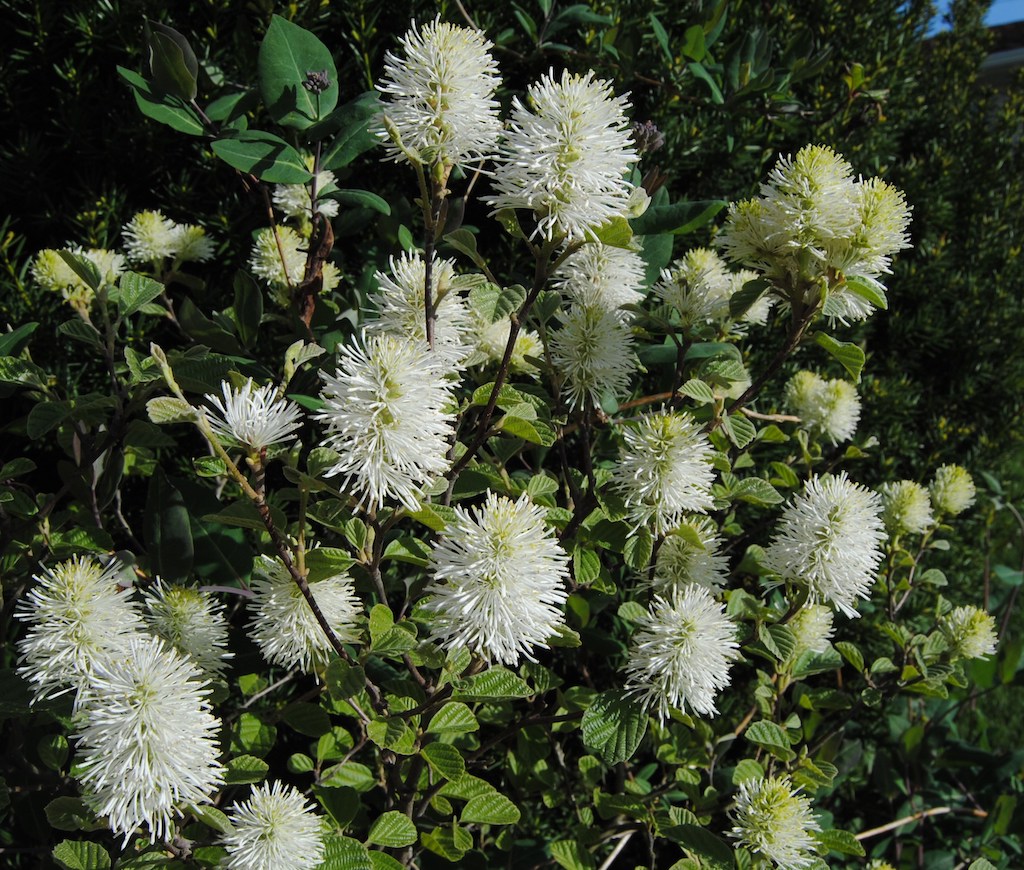
fothergillaSomething that’s mostly no-maintenance is fothergilla.  It doesn’t need pruning, blooms with these nice white bottlebrush flowers, is presentable all summer, and come fall puts on a nice show of glowing reds, yellows and oranges.  The blooms don’t last long for me, somewhere around two weeks, but that’s plenty.  You miss it when it’s gone, which in my opinion is better than a plant that wears out its welcome.

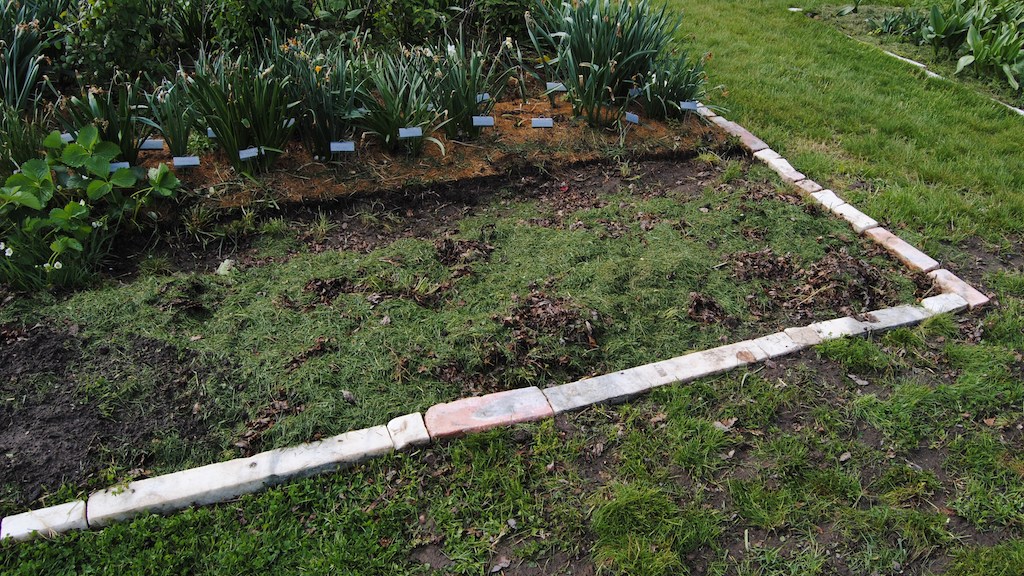
Round around July the lawn starts wearing out its welcome.  Mowing in the heat stinks and I look forward to the summer sun and drought sucking the green out of its blades.  As long as I mow on the long side it just goes dormant, and the summer vacation from mowing is much welcomed, since mowing clearly cuts into pool time.  But right now I need the flush of green clippings since they’re my number one mulch for the vegetable garden.   I use them and some leftover chopped maple leaves to smother the grass and weeds that are buried in this new bed.lasagna bedMost of the weeds and grass will die, and hopefully by the time tomato planting weather rolls around (2 more weeks?) I can carefully dig down to soil level, plant the seedlings, top the bed with new clippings, and admire my avoidance of actually digging up this patch of hardpacked gravely “soil”.

Since I don’t have enough better things to do I actually transplanted some of the grass from the new bed into the former bed-turned-new-pathway (lower right of the picture).  I’m a big sod mover.  I hate waiting for grass seed to sprout.  People will disagree, but I like grass paths through the garden.  If you noticed, mine are edged with fancy pink marble sections.  Some people have compared the look to “deep south cemetery”, but it’s the best use I could think of for the stone we pulled off the house front.  Maybe it’s the second best…. we also have a pink marble compost bin.

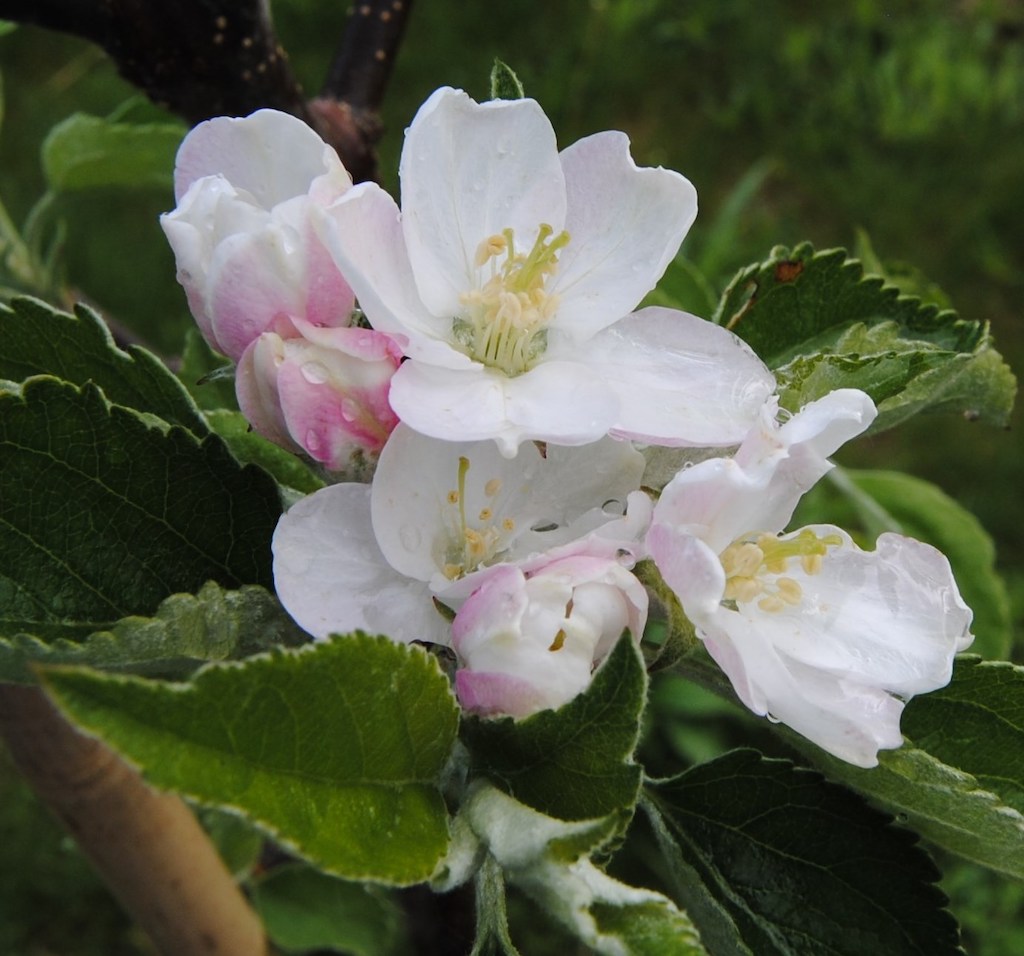
apple blossom In the orchard our new “Freedom” apple has even put out a few blossom clusters.  I should of course nip them off so the tree has more energy to establish, but I don’t care.  For all I know the tree could die tomorrow, so I’ll enjoy the blooms today.

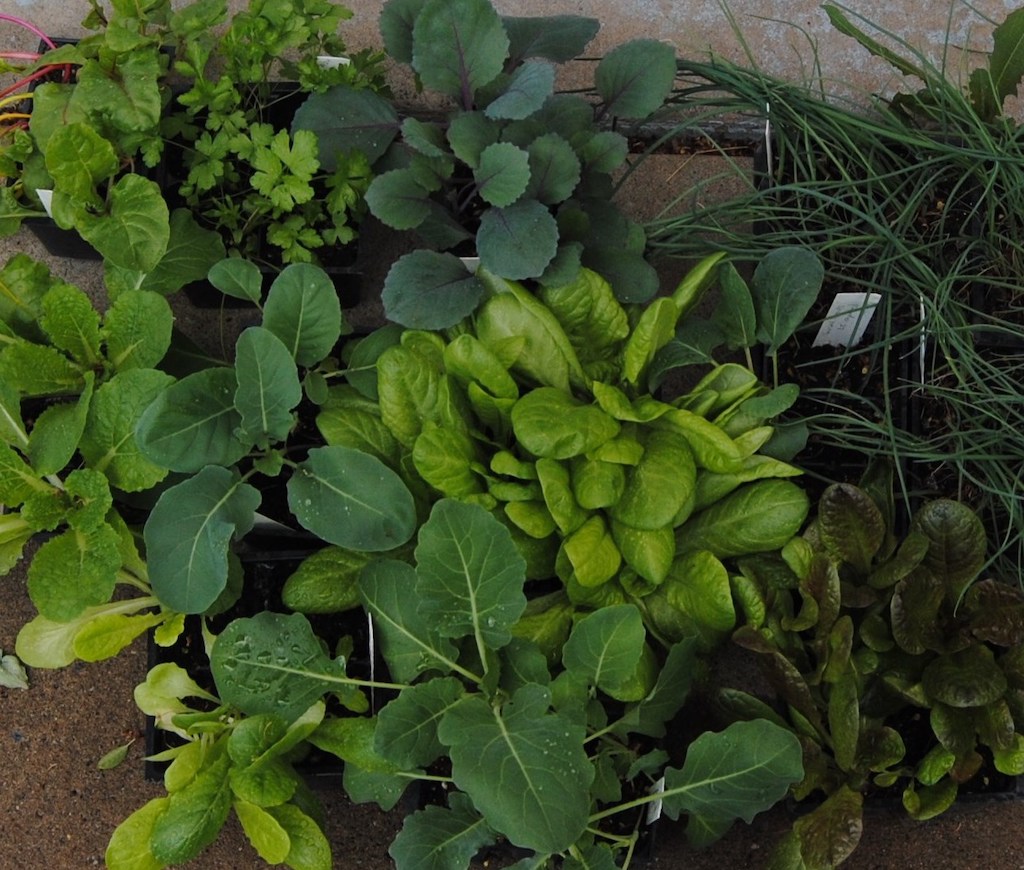
vegetable transplantsSpeaking of dying tomorrow, we have a frost predicted for tonight.  I brought in a few succulents and four or five early summer plant purchases.  The rest of the stuff is on its own.  Planning for low maintenance gardening means not sweating the small stuff like late frosts.  The cold weather veggie seedlings will tough it out (strong sun would damage them more than cool weather).

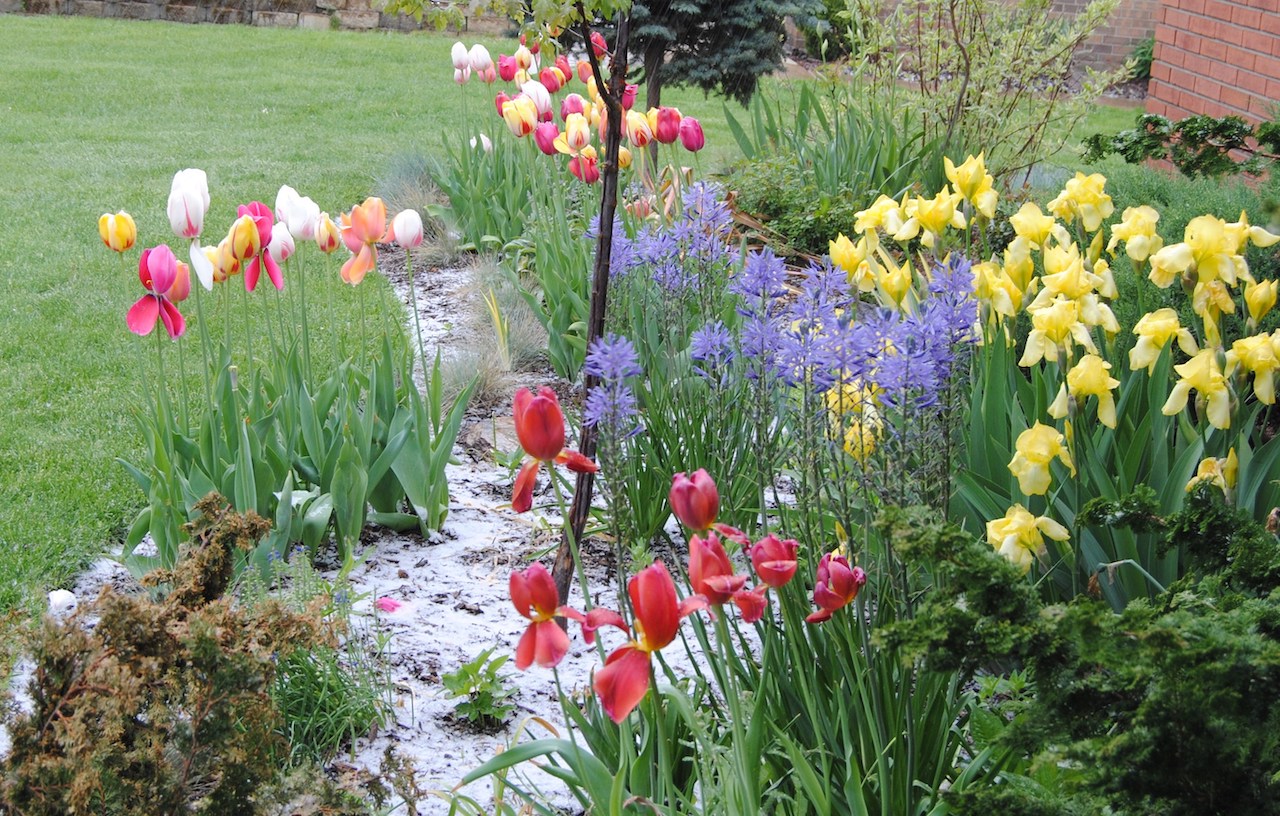
So we will see where the weather takes us.  I figure if the tulips and iris don’t mind this afternoon’s snow, they shouldn’t mind a slight frost.tulips in snow