Flock Finger Lakes Visits

Given the choice I will always turn down the stage and hide on the sidelines, but not everyone thinks that way, and where  I naturally hate speaking in front of people, they do not.  It amazes me to see this and to see people on stage, out front, capturing people’s attention and engaging an audience with ease and doing things like creating YouTube channels and traveling all over the world exploring places and talking to people.  I met two of these people a few weeks ago, Summer Rayne who you’ll meet and Sander behind the camera, and they put together a video which I think is pretty cool.  I’m sharing it here in spite of the fact I really prefer to feature plants instead of myself but I guess it’s one of those moments when I have to pull up the pants and be a big boy.  Not bad for someone who not so long ago thought having a hand as part of a picture on this blog was too revealing… now there’s a whole ‘me’ on this blog, talking as well, complete with ratty t-shirt, who-knows-what hair and an old man scowl but whatever… I’ve already overthought this too much.   >here’s a link<

So there you go.  I hope you enjoyed the video as much as I did, they did an amazing job directing and keeping me on track, and Summer Rayne’s interest and enthusiasm really keeps the video fun.  Biscuit helps as well, he’s got quite the stage presence and I hope he remembers us when Hollywood comes calling.  In all I’m surprised at how well it turned out, the garden looks much better and more interesting than I see it on the daily, and at one point I turned to my daughter (we had a viewing party) and told her I wished I could visit that place.  It was magical.  Surprise and magic, that’s my attempt to turn things back around to plants, because late August is the start of Surprise aka magic lilies season…. also known as hurricane lilies or naked ladies but perhaps those are two things we shall not bring in to today’s post.
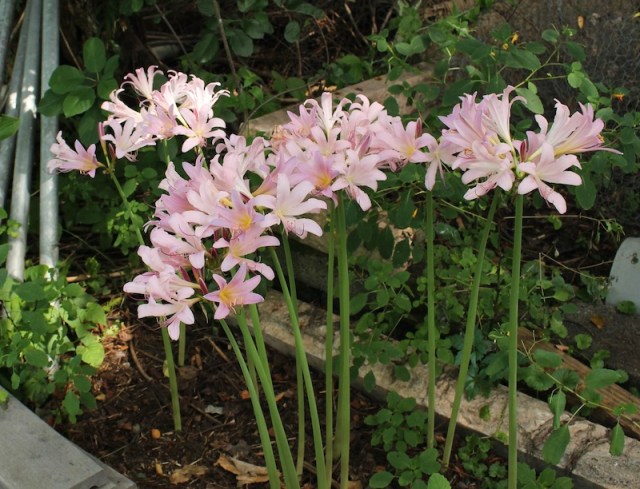
lycoris squamigera

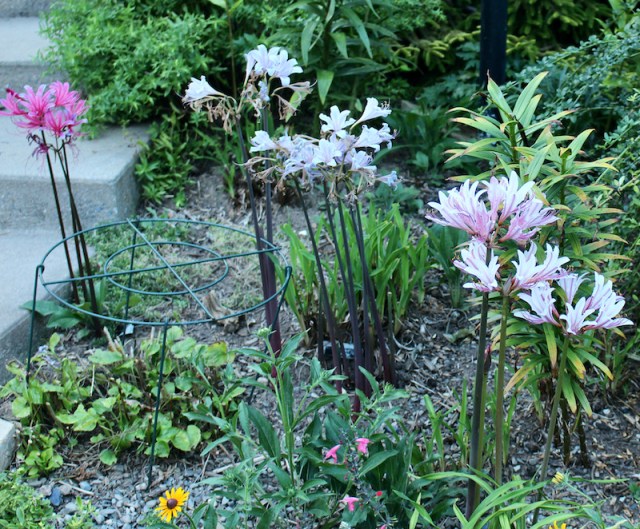
Pink magic lilies (Lycoris squamigera) are probably the most common magic lily to show up in the north.  They seem to do best when abandoned and neglected so here they are amongst the trash and stored debris of the compost pile.

Things can get a little tedious mid August, as the heat and rain/not-rain drag on, but magic lilies can break that up nicely.  Out of nowhere stalks shoot up and burst into bloom all in a matter of days, and it really can be a surprise to see them out and blooming… unless they’re not.  The not-part is where the disclaimer comes in.  These plants can be jerks.  They can sulk, fade away, take a year off, they’re not like Biscuit, all excited and anxious to please, they’re more like cats and don’t really care about what you want.  Sun? Not that sun, I want shade until it’s too much shade.  Feed me but not that food, but I know I’m hungry… Here are more flowers than you can imagine, no wait… I’m not feeling it this year…
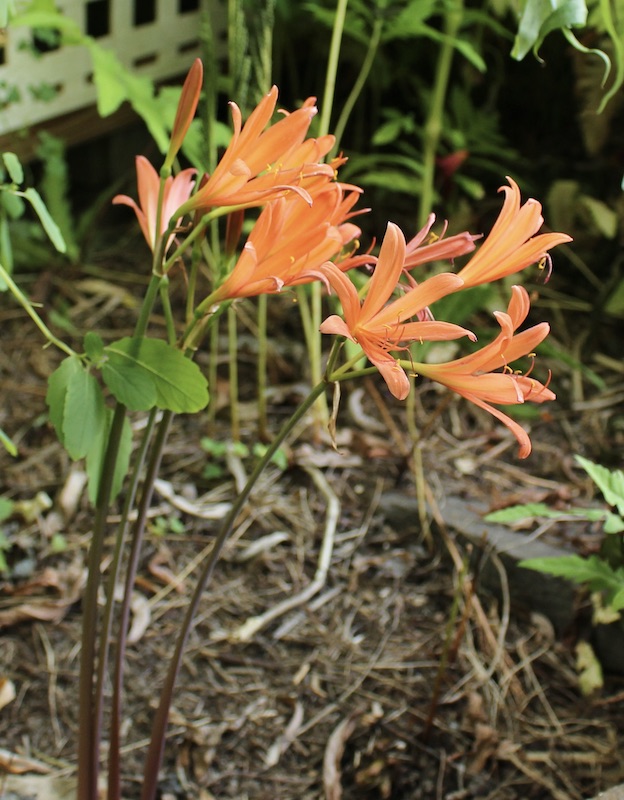
lycoris sanguinea

Lycoris sanguinea, the orange surprise lily is apparently feeling it this year.  It’s in a terrible spot but I don’t dare move it since there may be another four year gap in blooms as it works through whatever insult it feels.

The magic lilies don’t last all that long, but there are (hopefully) a few more later varieties yet to bloom.  If you can drag yourself out through the humidity and bugs at least they give something new and exciting to see each morning before the heat drives you back inside.  Magic lilies aren’t really true lilies, but there is a true lily I’d like to add in here as another reason to brave the outdoors.  The Formosan lily (Lilium formosanum) blooms now as well, and this flower is Biscuit-approved.  Not for eating of course since I think they might be toxic, but for something cool to admire in mid August this lily is… dare I say, easy?  There is a dwarf form, but the ones growing here are the tall form and usually manage five feet but this year with all the rain seven plus feet is not unheard of.  Fragrant, perfectly formed, like a giant easter lily (which some people don’t like, so if that’s the case skip this one) the Formosan lily can grow to blooming size in its first year from seed.  I of course could never care for a plant that well, but even here they’re in flower the second year and they do seed around the garden if their seed can ripen before the first real freeze.
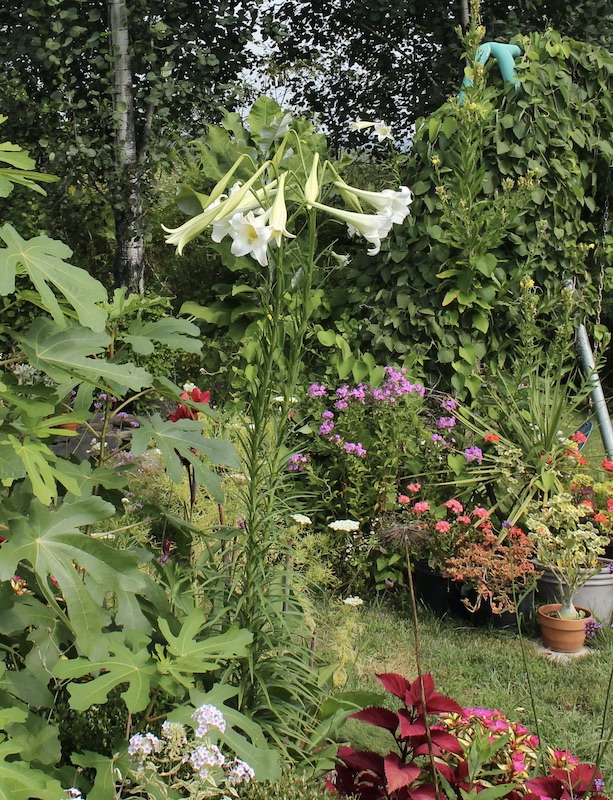
Lilium formosanum

Pure white, fragrant flowers is what Lilium formosanum offers.  Just watch out for those disgusting red lily beetles since they’re about the only thing which can bring this giant down.

I think you’ve heard enough from me today so I’ll just add one more thing.  A trumpet flower, but not a lily, Brugmansia suaveolens is hitting its summer stride.  This angel trumpet is a tropical shrub so I have my favorite local nursery to thank for a decent-sized plant, but I hope to overwinter it and have an even better show next year.  They’re another easy to grow thing but just ask for endless water and fertilizer in order to look happy, and usually I slack in this regard but since I paid for this plant I’m really making an effort.  It’s possible someone has already given me a cutting for a pink version, and perhaps I can round up a white and yellow cutting before next year and perhaps this means I’m obsessing about angel trumpets again but who’s really keeping track.  It’s basically a zucchini, if you can grow that you can grow these, just without the fear of missing a harvest and ending up with a caveman club in your veggie bed.  I guess I should mention that although I’m replacing zucchini plants with brugmansia in the potager, don’t nibble it during the garden tour since it’s quite poisonous.

Brugmansia suaveolens

Brugmansia suaveolens with canna ‘Bengal Tiger’ planted too closely.  As long as it feels like the tropics here we might as well enjoy the look as well, and the fragrance too since the brugmansia is very fragrant once night falls.

So that’s a somewhat rushed summary of the garden.  There’s more going on here and I’d like to go on about it but I’ll guess that this rambling on and a pretty long video are plenty so perhaps next post.  Obviously that could be a while, this appears to be the ‘keep up with nothing’ summer and not the ‘finally post regularly, visit all my blogging friends, keep the weeds back, finish the projects’ summer which I always imagine but it’s still pretty good, even with someone needing senior pictures this afternoon rather than help with her scooter and I don’t know how that came around so fast either.

Hope you enjoy the video and the upcoming week.
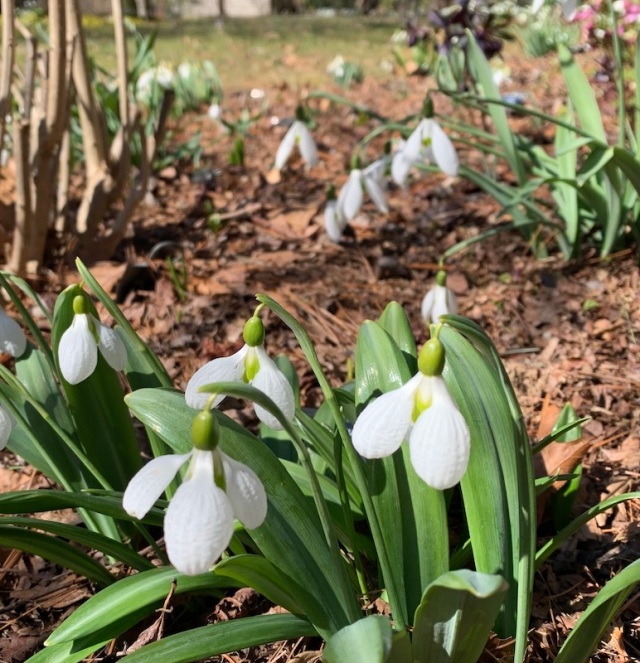
And Then it Was Over

So it’s raining again and it’s been raining and there’s more rain in the forecast.  It’s warm, well maybe not brutally warm but at least unusually warm for March, and things are sprouting all over.  Snowdrops are in bloom and won’t last long with all this going on, and the Galanthus Gala is over for another year.  Just so you’re prepared, this promises to be a lukewarm post, kind of like going back to work after New Year’s and Christmas have passed and you’re completely in holiday mode yet it’s over and you’re back to waking to the alarm clock rather than to excitement for the day.  I’ll try to rekindle the excitement just for this post, and perhaps tomorrow will be a drier, cheerier, snowdrop-filled day!

downington galanthus gala

‘Augustus’ in the bright, deliciously warm sunshine of Paula Squitiere’s garden.  Almost too sunny for photos, but too much sun is absolutely not a complaint!

Great highs are often followed by a lull and I believe it’s hitting me.  I had an excellent time, and to make it even more excellent we rolled together Snowdropping ’24 wand Gala ’24 all into a single two day event of snowdrop-overload.  Sadly I don’t have any decent pictures of the morning and the hours spent touring my friend Paula’s garden, or the visit to the still dormant (yet showing great promise) Bondville Mill Park, but I did click a few photos at the afternoon destination.  I hope you don’t mind me re-living the day 😉

edgewood gardens

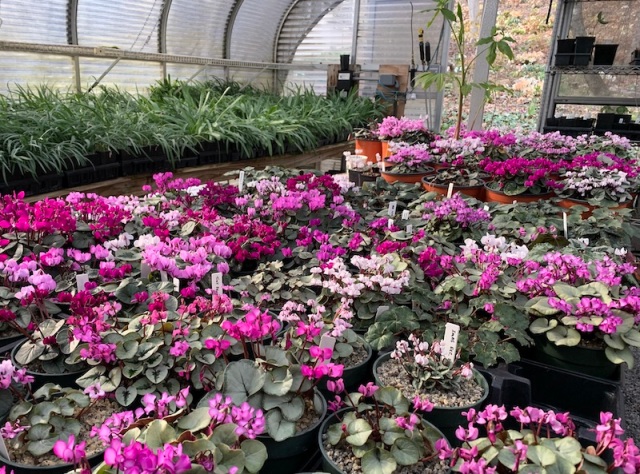
The Cyclamen coum were at their absolute peak when we visited the greenhouses of John Lonsdale’s Edgewood Gardens.

I’ve been to Edgewood Gardens a few times before but there’s always something new, and for this visit it was the Cyclamen coum and hellebores, both at their peak.  They were amazing.  If the seedlings weren’t already all destined for the Gala sales tables I could have really done some damage to my wallet, so as a plan B, I convinced myself that I could replicate this at my own place by sowing plenty of seed this summer and waiting a couple years and…. well I can at least imagine being able to replicate 🙂

downington galanthus gala

Dr Lonsdale on the right, Timothy Calkins to the left.  John is no doubt extolling the virtues of his newly named Cylamen coum ‘Sophie’ strain, it’s the pool of heavy-blooming, dark purple plants at the corner of the bench.

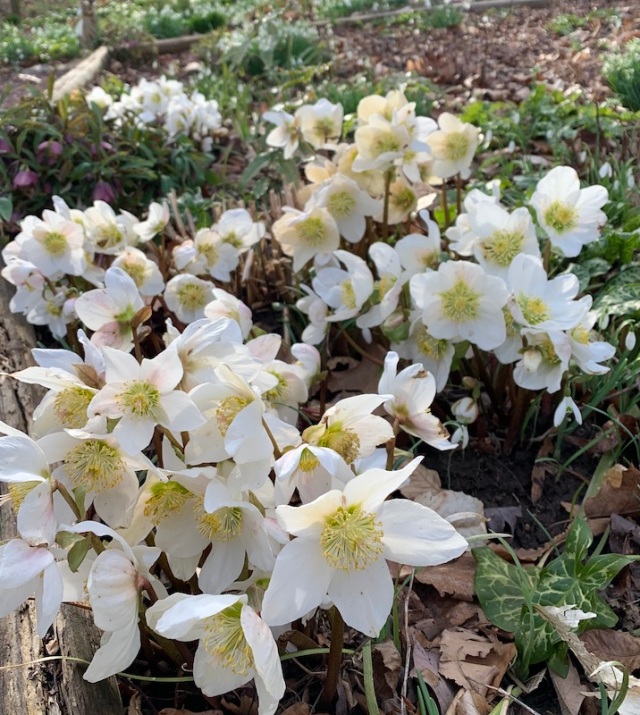
Another vision which I will not even imagine replicating were the clumps of Christmas rose (Helleborus niger) which were in peak flower throughout the gardens.  Some had already been blooming for months, but the main show had come on in the last few weeks.  Of course they were all of a large-flowered strain, some fading to pink tones, some variegated, and even a double, and all amazing.  They were thriving and most had seeded in on their own and of course I didn’t bring up that I’ve killed these plants three times already and the fourth was likely thinking about dying as well… but with eternal optimism I know there will be a fifth try.  How could I not be with visions like this!?

edgewood gardens hellebores

Helleborus niger scattered about in the beds of Edgewood Gardens.

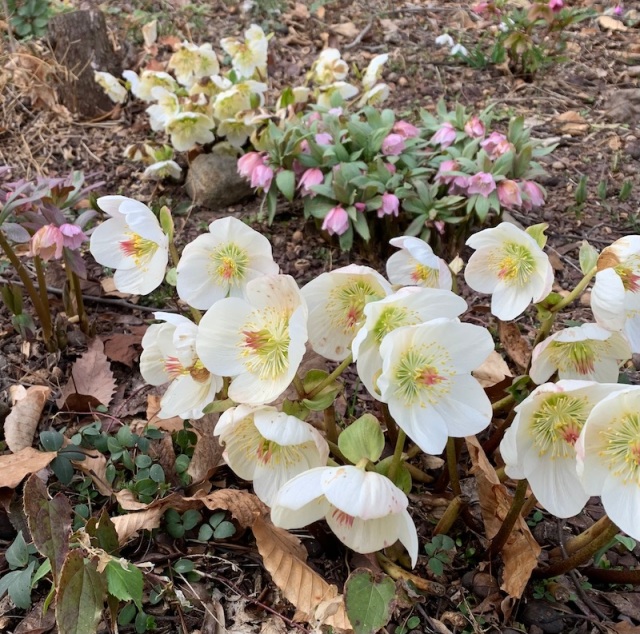
Besides dozens and dozens of H. niger there were many other species and crosses of Hellebore.  One which I have yet to try killing is the H. thibetanus which has also clumped up and sown around.  Unlike many of the other evergreen hellebores, H. thibetanus is one which goes fully dormant for the summer and seems to be a little more critical of growing conditions not entirely to its liking.  Maybe if I can ever stop killing off the cute little H. niger seedlings I’ll give this trickier one a try.

edgewood gardens hellebores

More H. niger with H. thibetanus behind.  They were quite nice…

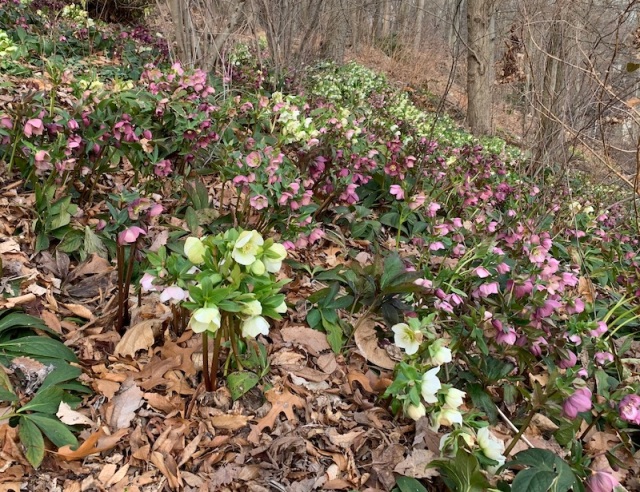
Oh and other hellebores.  Fancier species and hybrids fill the lower slope but even the commoners which fill the upper portion of the hillside were nothing to complain about.  Hmmm.  There’s a slope behind our house going down to the industrial park.  Native plants might be ideal, but thousands of hellebores?  That might also be a nice option.

edgewood gardens hellebores

Hundreds of self-sown hellebore at Edgewood Gardens.  With other treasures galore these plants are a little more prolific than one might like, but in bloom it’s an excellent sight.

Besides the show stoppers there were thousands of other things coming along such as peonies, trillium, trout lilies, hepaticas, snowdrops, winter aconite, corydalis… even the paths were peppered with treasures.

edgewood gardens erythronium sibiricum

This bunch of full-bloom troutlily surely ended up in every visitor’s camera roll.  It was perfect.  Erythronium caucasicum for those who need to know these things.

So Friday was a great pre-game.  A day filled with thousands of snowdrops, multiple gardens, beautiful weather, and then an evening of great food, friends, and the first Gala talk (an online presentation) covering the work of Nancy Goodwin and her amazing Montrose Gardens.  I was now all set to tackle the Galanthus Gala the next morning.

downington galanthus gala

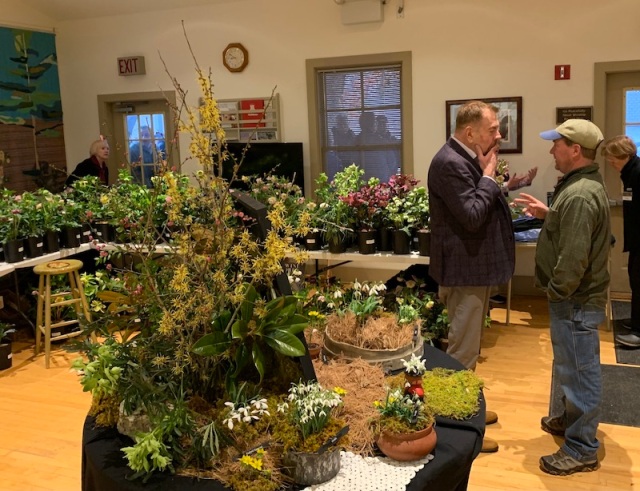
As the crowds gather outside, David Culp and Andy Schenk work out last minute strategy.  Hellebores fill the sales tables and Gerald Simcoe’s Gala display graces the center of the space.

This year I offered to carry a box and thereby managed to sneak in past the crowds.  Quite a slick move if you ask me but once my box carrying skills were revealed I ended up with a bunch of other tasks which almost interfered with my scoping out the sales tables before the opening bell rung.  It was worth it though.  When the doors opened and the crowd swarmed in I had the chance to see the excitement first hand.  Excitement and also a good bit of crazy in some of those eyes.  You would be wise not to put yourself between some of the more determined shoppers and the target of their obsessions, and as always it’s a relief to know that in some crowds I can still come off as somewhat not-completely plant obsessed.

downington galanthus gala

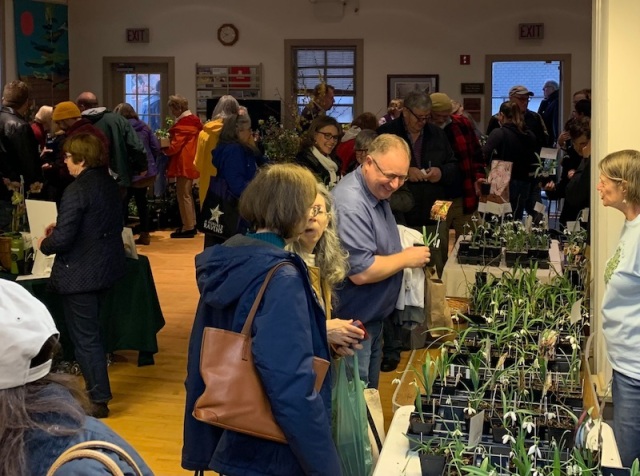
About 45 minutes in and the rush has subsided enough to get a picture.

The rest of the day was filled with additional talks, more plant browsing, meeting up with friends, more plant browsing, braving the rain, more plant browsing….

downington galanthus gala

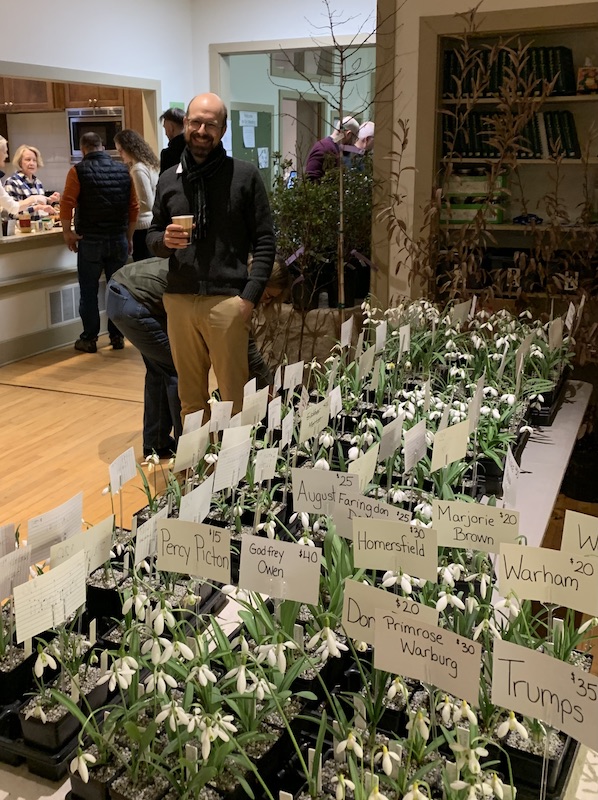
Matthew Bricker and his table-full of perfectly blooming snowdrops.  The plants look fresh, Matthew looks fresh and then the crowds came.  By the end of the day a total of four pots remained, and I was still considering taking ‘Sentinel’ home and making it three.

In all it was a great trip and event and of course I’ll be there again next year, and maybe then I’ll make a stronger effort to be more social, since for some reason I felt a little talked-out by lunchtime.  Maybe carrying a jar of Nutella to boost my energy throughout the day is a good plan since being talked-out is no excuse on a once a year chance to swim through the biggest pool of snowdrop nuts in the US, and a full year is a long time to wait when an opportunity is lost.

Thanks of course to all the organizers and planners who put so much time and effort into getting this together each year.  I can only imagine since to me it always seems to go off without a hitch and I’m sure in reality there are quite a few bumps along the way.  All the best until next year!

Snowdropping ’23

It’s a shameful fact that for as much as I talk up the year’s snowdropping adventure, I also drag my feet in getting the post up.  It’s been a week.  A week and a little, and I need to stop going through the pictures again and again, reliving the day, and just get them out there with as little babbling as possible.  Fortunately the morning is cold so maybe for a few minutes I can be productive while the flowers here soak in the sun before standing back up… and again completely distract me.

naturalized snowdrops

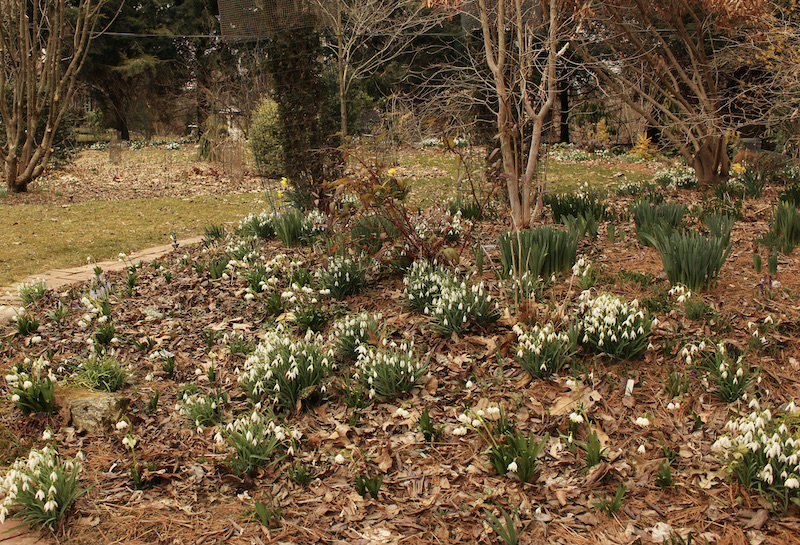
Naturalized snowdrops (Galanthus nivalis), winter aconite (Eranthis hiemalis) and spring snowflakes (Leucojum vernus) in a Pennsylvania park. 
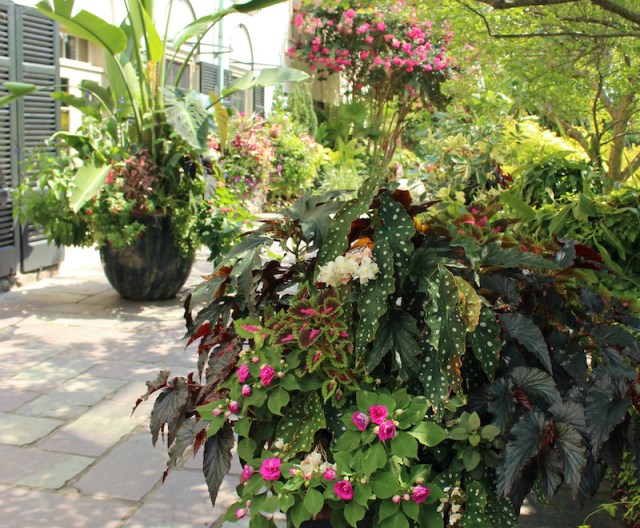
 

I started the morning on my own, wandering through a Philly area park admiring the century old blanket of snowdrops and other spring bulbs which carpet the now neglected former estate.  There used to be a dream that I’d stumble upon some priceless new variation in white here, but over the years I’ve become satisfied with just seeing them greet the spring each year and carry on unbothered.  Between my crawling through the underbrush and bending over backwards to admire trees it’s a miracle I haven’t yet left the park on crutches after tumbling down a rocky embankment, but so far so good.

triple tulip poplar

When planting trees always remember proper spacing and mature height.

I survived, and so off to meet Paula at her garden.  It’s been a few years since I’ve had a full-sun, comfortably warm visit there, and this year we made it a priority.

naturalized snowdrops

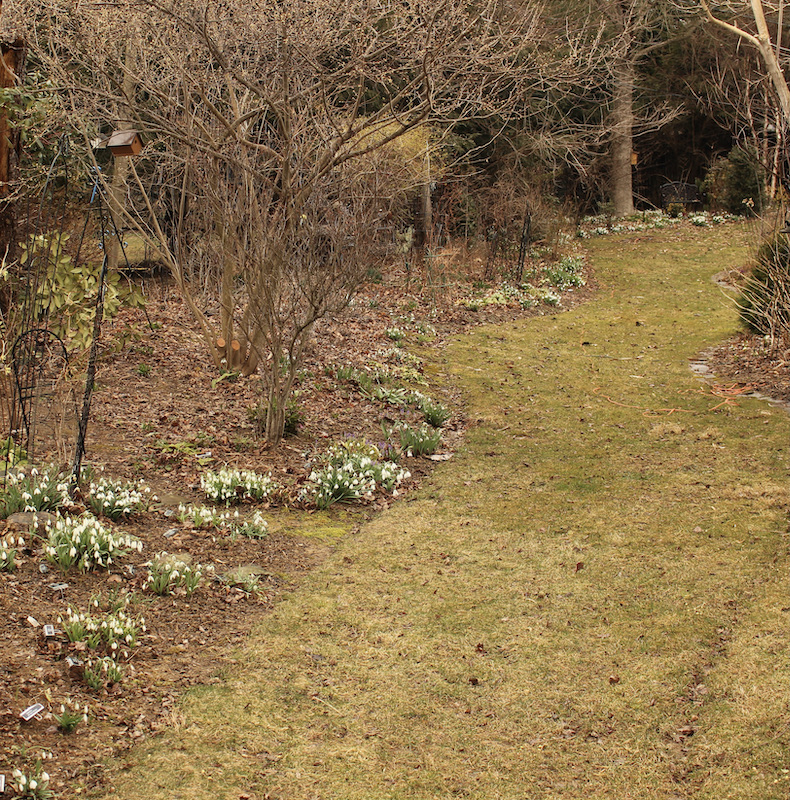
The patches of snowdrops are becoming sheets!

I always get stupidly excited to see all the bulbs in bloom, but this year to see it all in full sun with the blooms wide open I may have let out a naughty word as I got out of the car.  That’s a lot of &*^@g snowdrops was my eloquent first impression.

naturalized snowdrops

I always love the mossy bed surrounding this ugly old ‘Kwanzan’ cherry tree.  There’s so much character in the tree and even though it’s a pain fighting the roots and keeping it in shape I hope it stays for a number of years.

It’s hard taking it all in yet finding the time to focus on all the different forms.  She has quite a few and there’s a story behind nearly every last one.  Fortunately Paula knows me well enough to not get offended when we’re talking about one clump and suddenly I turn to take a picture of something else or jump over to a new plant!

galanthus rodmarton regulus

A big clump of a big drop, ‘Rodmarton Regulus’.

My wish list always grows during these garden visits.

galanthus green mile

One of the greenest of the greens, galanthus ‘Green Mile’.

galanthus amy doncaster

A growing clump of ‘Amy Doncaster’

hamamelis princeton gold

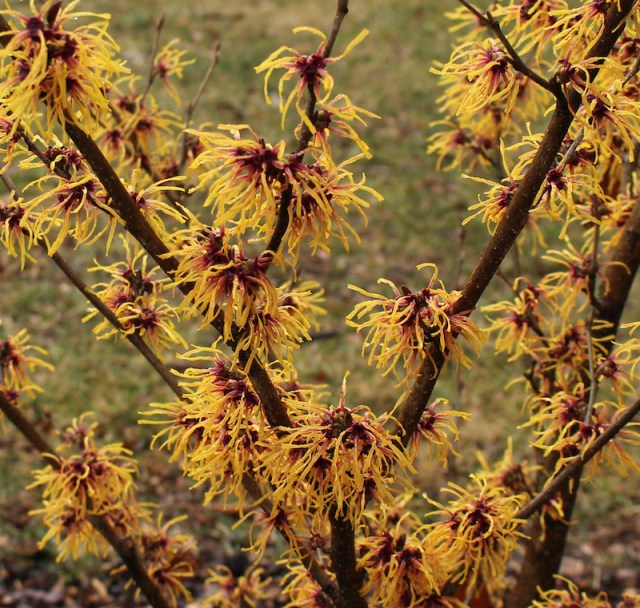
The witch hazel Hamamelis x ‘Princeton Gold’ 

There was something other than snowdrops which really caught my eye (besides the hellebores and witch hazels), and that was the pink viburnum (Viburnum x bodnantense ‘Pink Dawn’) in full bloom.  It actually caught my nose, and I followed the scent over to where the shrub was tucked into the shrubby edge of the garden.  Of course I’ve already looked for a source 😉

Viburnum x bodnantense 'Pink Dawn'

The fragrant pink blooms of Viburnum x bodnantense ‘Pink Dawn’

With all the distractions, this visit was running into our typical behind-schedule run-mode, but because we sometimes know our limits we made sure to pencil only one more garden into the day.

naturalized snowdrops

White snowdrops, blue reticulated iris, and a bunch of other things spread around the driveway slope of Paula’s garden.

It’s almost time for the Galanthus Gala, and Paula’s got a bunch of stuff dug and potted for the day, but that doesn’t mean there’s not more planning and preparation needed.  I knew she was headed over to David Culp’s Brandywine Cottage to meet with David that afternoon and discuss, so of course I invited myself along.

david culp brandywine cottage

The fenced in vegetable garden feels like the heart of the gardens at Brandywine Cottage, and even in the middle of February there’s a jewelbox bed of floral treasures outside the gate.

The gardens were at a snowdrop peak and I don’t even know why I’m bothering to post since books have been written and photos taken which are far superior, but it was an exciting visit and David was nice enough to say ‘post what you want, I enjoy reading your blog’…. um, did you catch that?  David Culp said he knows I have a blog and says he might have read it?  Honestly I’ll probably try and work that into nearly every conversation I have from this snowdrop season beyond, and I hope it’s not too embarrassing when he finds out.

david culp brandywine cottage

Yellow on yellow with winter aconite and a nice yellow hellebore with just a faint blush of speckling.

Oh and also these pictures.  David’s last two books, ‘The Layered Garden’ and ‘A Year at Brandywine Cottage’ were photographed by Rob Cardillo, so I hope I don’t embarrass myself on that level as well since all my photos rely on luck rather than skill.

david culp brandywine cottage

Plantings along the driveway.  There was actually an apology that we missed the lavender sheet of crocus which had mostly ended.   

david culp brandywine cottage

Not the fanciest view of the cottage, but this view shows how every bed of the garden is layered with snowdrops, snowflakes, winter aconite and other goodies which shine before the perennials and shrubs take center stage.

David and Micheal know how to live, and ‘A Year at Brandywine Cottage’ sounds real fancy with decorating suggestions, planting ideas, and delicious recipes and all the things you like to see in a book, but the crazy thing is that’s just Tuesday to them.  You pull up on a Wednesday and there’s a bowl filled with floating hellebore blooms, celeriac soup with a crème fraîche, a toasty living room with fire burning, cutflowers, winter arrangements inside and out, friends pulling into the driveway…  It’s pretty cool.

david culp brandywine cottage

Paths through the garden, snowdrops are settling in everywhere.

There was a bunch of snowdrop talk.  There was also snowdrop work which was in progress, but you’ll have to wait until the gala to hear more of that since the heart of it was going on in the growing beds.  Clumps were being selected for dividing and potting up in order to fill the sales table, and for the sake of honesty I had to steer clear of any place where shovels and fancy snowdrops were close to one another.  We headed round to the meadow and up through the hillside instead.

david culp brandywine cottage

Paths meander throughout the sloped areas of the garden.  If you’re familiar with ‘The Layered Garden’ you’ll know this all began with a noxious, weed-filled slope and a run-down shell of a cottage.

galanthus primrose warburg

Treasures are tucked throughout the hillside.

Of course we stayed too long.  The light was already dimming as we meandered back off the hillside.

hellebore brandywine hybrids

Hellebores and a million other things cover every inch of the slope, and there’s much more slope than you can see here.  In another week or two the scene will completely change as all the narcissus come in and the hellebores really get blooming.

The hillside is filled with hellebores, and for many people ‘Brandywine’ is more a strain of hybrid hellebores rather than a cottage.  There’s a reason for that.  Early on in the development of modern hellebores David asked friends overseas for the best and brought back a bunch of these to the US to start ‘dabbling’ with his own hybrid strain.  He wanted a few “nice ones” for the slope and needed more than just divisions could supply, so over the years the ‘Brandywine Hybrids’ came into being.  They were my first experience with a more upscale hellebore and the strain made plants with clearer colors and more outward facing blooms available to even the more average gardener.

hellebore brandywine hybrids

A red section of the slope just getting started.  Notice they’ve all been trimmed back of their old foliage.  Thousands of plants all trimmed neatly and the debris removed…

hellebore brandywine hybrids

A perfect combination of structured shrubs, background evergreens, and spring enthusiasm. 

So hellebores are awesome, but for a little while longer all my focus is on snowdrops and snowdrop galas.  David Culp’s snowdrop gala is set for this upcoming weekend (March 3rd and 4th) and will again make Downingtown Pa the epicenter of American galanthophiles, either in person or in spirit.  There will be online events, in-person and virtual talks, auctions, and Q&As, plus my favorite part the specialty vendors.  I’ve been good and only contacted one seller for a super-special plant, but that doesn’t mean my budget ends with that.  There’s a reason I’ve been holding back with online sales 😉

So maybe I’ll see you there, maybe I’ll see you online, maybe I’m glad this weekend worked out well and didn’t disrupt my plans on attending, but however it works out I hope you’re having a great end of February!

One Last Summer Trip

It’s embarrassing to realize this trip and these photos are all already a week old, but no matter.  Visiting a garden like Chanticleer, just outside of Philadelphia never gets old, and after a summer of ‘wait, I have to be around for this… and that… and I wish it would rain…’ it was great to get away for what might be one of my last summer trips, and always fun to be out and about with garden stuff from dawn to dusk!  Here are a few impressions from the day.  Check out their website and other links for better photos and video, it’s such an awesome garden to visit and I tried to rush through in under two hours so…

chanticleer

The entry area is always a tropical planter paradise.  Note the leaf stalk of the Titan arum (corpse flower, Amorphophallus titanum) on the far right.  Am I the only person who couldn’t care less about the smelly bloom, yet loves the massive single leaf which they produce?

Hmmm.  Since it was such a rapid race of a visit maybe this should be a quick post, so here goes.  The ‘teacup garden’ is always my first and favorite section to visit.  It’s like a tropical conservatory out for the summer for a Pennsylvania country vacation.

chanticleer

Look at all these foliage goodies, and the hanging blooms of the Brugmansia are just summertime awesome!

Wander down to the tennis court next.  It’s been entirely re-done and although it’s lost the ‘tennis court’ vibe I like the new Netherlands-France rolling hedge vibe.

chanticleer

There’s a soft spot in my heart for neatly trimmed hedges.  Another year to grow in and this one will be perfect, plus a patch of my favorite giant reed grass (Arundo donax) doesn’t hurt either.

The cutting garden also underwent a re-do.  More vegetables, more paths meandering through, a little more controlled.  Personally I like a garden of chaos in September, but maybe deep down inside realize that this is a better look… hahaha just kidding.  I like it but miss the tsunami of towering blooms and grasping vines of years past.

chanticleer

Orange marigolds seemed to be a theme through several of the gardens this year.

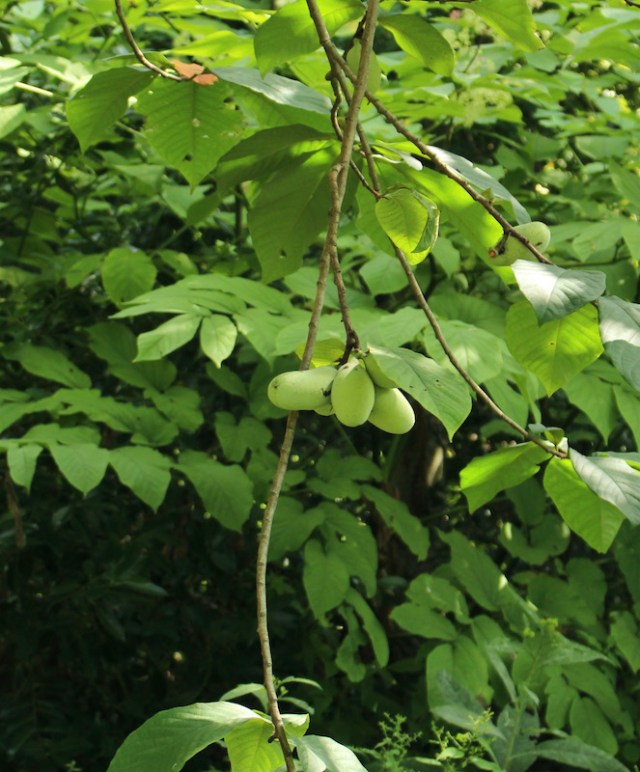
I skipped the woods but not before realizing the large magnolia wasn’t really a magnolia.  It was an American pawpaw tree (Asimina triloba) with plenty of fruit on its way to ripening.  I’ve never had one, but word is they’re delicious with their custardy-goodness.

chanticleer

American pawpaw tree (Asimina triloba) with a cluster of almost-ripe fruit.

I rushed through the meadow filled with full-bloom prairie dropseed (Sporobolus heterolepis), a beautiful spot but I just don’t like the “popcorn” scent of this grass, and then cut through the ruin garden to get to the gravel garden.  I love the gravel garden.  It was a full-sun, 90F (32C) morning and I was still standing around with that dumb look on my face, smiling at the succulent planters and running my hands through the grass like a real weirdo.  I’m so glad that finally, after 50 years, I finally grew out of that caring what other people think stage.

chanticleer

Not the best picture, but the gravel garden is an open spot filled with full-sun, drainage-loving Mediterranean-type plants which don’t seem to mind a couple months of hot.

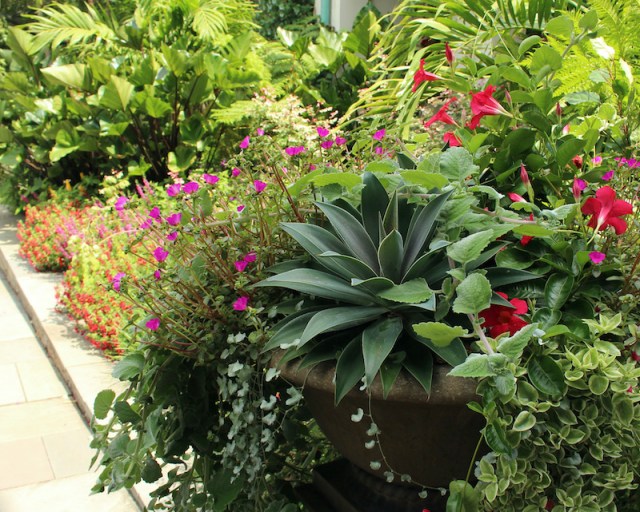
Down around the ponds to visit the koi and admire the lush, water-loving stuff, and then quickly through the Asian woods and serpentine plantings, and finally to the main house.  The house is always surrounded by too many pots which are too big and overfilled with too many goodies.  Many of the plants are too cool.  The only way I didn’t spend another hour in just this section was because I was alone and because of that didn’t need to start pointing out and naming and babbling on about every single thing.  I will only share a few photos 😉

chanticleer

The mangave cult is alive and well here.  It’s a big plus they’re not as spiny and poky as they look.

chanticleer

Sometimes I had to put both hands in my pockets to fight the urge to take cuttings. Everything seems grown to perfection which is not easy to pull off in such mixed plantings.

chanticleer

The pool area. There are bananas and other tropicals all along the walls. Such an awesome sight although it makes me feel a bit guilty for killing mine… again…

chanticleer

Yeah. Just awesome. Red mandevilla and some yellow leaved jasmine.

chanticleer

Hmmmm. Passionflowers are pretty cool and maybe I should have more than just one…

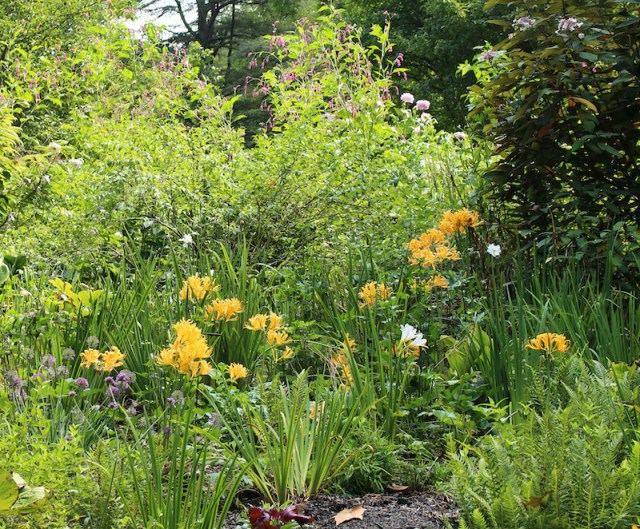
A visit to Chanticleer is a good choice at any time of year, but I might have to admit to an ulterior motive for my visit.  Surprise lilies (Lycoris) have been interesting lately and I knew there were a few plantings here and there in the gardens, so why not make up an excuse to drive two hours to go see them?

chanticleer lycoris

I think these were yellow Lycoris chinensis with a few white Lycoris longituba mixed in, but since there was a fence and a few yards between me and them I couldn’t really get as close as I wanted.  

I might have been “interested” in some of the hardier Lycoris for a few years now (many of the nicest are tender and only thrive in Southern gardens), but based on their embarrassing performance in my own garden, I really didn’t want to admit it.  I guess it’s out now though.  My name is Frank and I grow Lycoris poorly.

chanticleer lycoris

Lycoris squamigera floating above the grass of the bulb meadow.  These will be joined by the early colchicums in just a few more days.

I don’t think I’m the only one who struggles with these bulbs.  They’re often referred to as surprise lilies or magic lilies, and although some people claim it’s because of the way they burst out of the soil and into bloom in just a few days, I believe it’s because each year it’s either a surprise or plain magic that they actually lived or even bothered to bloom for you.  It doesn’t help when you see them growing best alongside a burnt out building or abandoned farm or hear some old gardener complaining about how they take over their beds and there are just too many in their garden.  Based on this apparent finickiness I’m going to say there’s a better than good chance mine are dying out of spite.

chanticleer lycoris

Maybe a paler form of Lycoris chinensis up near the ruin gardens?  Just like all the others these appear to be settling in happily… unlike my little jerks…  

If I wanted to give myself a true dose of reality I’d look up how many years ago it was that I first planted my earliest bulbs.  ‘They’ say it takes a few years for them to settle in, but the difference between settling in and dying out is a distinction I’m having trouble with… so in the meantime I will continue admiring them in other peoples gardens.  A garden where they are doing much better in is my friend Paula’s.  Her garden is not an abandoned farmstead, and she is not an old gardener, but they are still doing well for her even if a few were just a little past prime for my visit.

lycoris hiaro blue

A trio of excellent hardier varieties of Lycoris.  From left to right, ‘L x haywardii’, ‘Hiaro Blue’ (a selection of L. sprengeri and I think the same as ‘Blue Pearl’), and ‘L x incarnata’.    

As is typical with many of my garden days, by the time it was wrapping up the sun was pretty much set, so sorry about not having photos of the rest of the lycoris in back, but the best thing I learned on this visit was ‘just move them’ if they’re not thriving.  For as obvious as that seems it was kind of a break through for me.

lycoris haywardii

A closeup of Lycoris x haywardii.  I would like to grow this one well enough to see this show in my own garden… and that’s an understatement based on the twitching I feel when I look at it!

So with a rushed visit to Chanticleer and a twilight garden tour with Paula, you might be thinking I stopped for a sit down lunch and dinner, or maybe wasted my time with some other nonsense, but the truth is I was digging daylilies.

transplanting daylilies

“I have a few I could share, stop by if you’re in the area” said a friend…

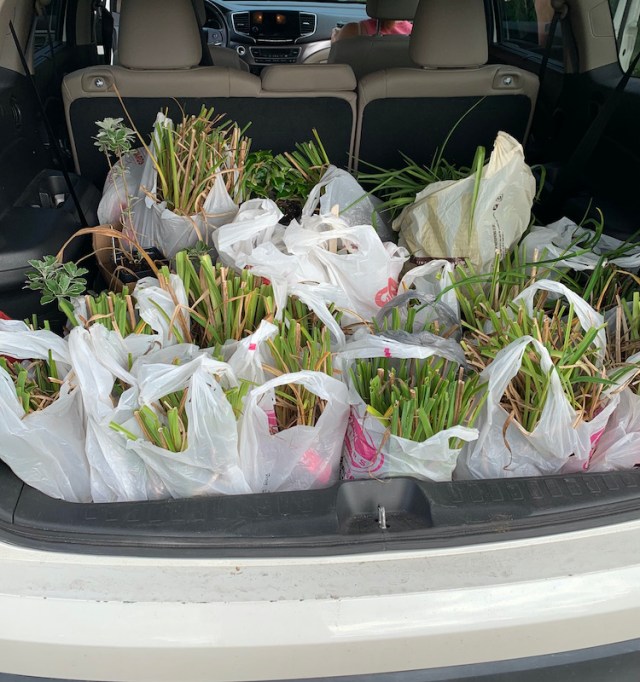
The back of my car was quite full of plants for the ride home.  There was even a gifted sprig of tuberose which perfumed the ride through the mountains.  I was quite pleased.

So I was kind of joking about the daylily farm, but with a whole side-of-the-house lawn destroyed by construction I figured what the hey, it’s better than replanting grass.  I’ve been pickaxing stones and trying to amend a driveway of fill ever since.  Have an excellent weekend and maybe this foolishness will help put your own into perspective 😉

Snowdropping ’22

It snowed Wednesday.  It’s snowing today.  Time to revisit last weekend when winter thought it would be funny to go North for a day and see what happens.  Now don’t go thinking that spring exploded around this end of Pennsylvania in just one day.  For that to happen it’s going to take a string of warmer days and we’re no there yet (maybe next week?), for this glimpse of spring we needed to crack open the kid’s college fund, fill the tank with gas, and head down South to the outskirts of Philly.  Spring is revving up down there and it was the perfect time for Paula and I to celebrate our annual Snowdropping Day!

Scott arboretum snowdrops

Snowdrops and winter aconite (Galanthus and Eranthis hyemalis) around the Scott Arboretum

It was a warm forecast with just a trace of rain in the morning, so of course it was pouring when we arrived at our first stop.  Rumor had it that Swarthmore College’s Scott Arboretum is rich with early spring bloomers and plenty of Witch Hazel (Hamamelis), and that of course turned out to be true.  It also turned out that I was able to cross off a bucket list plant sighting by seeing Leucojum vernum ‘Gertrude Wister’ growing lustily in what is rumored to be its garden of origin, the Wister Garden of the Scott Arb.  This double Leucojum (actually a fused flower, not double) still needs to grow in my garden, but for now it is doing very well for itself closer to home.

leucojum gertrude wister

A fantastic clump of Leucojum ‘Gertrude Wister’ at the Scott Arboretum.

Gertrude Wister by the way is a name it wouldn’t hurt knowing more about.  She was an accomplished horticulturalist and author in both the Philly area and nationally and instrumental in promoting plants and horticulture in the mid 1900’s.  You can read more >here<.

Scott arboretum snowdrops

Winter garden standards surrounding the arboretum headquarters.

So with Leucojum ‘Gertrude Wister’ checked off the list we continued to explore the grounds while enjoying the soft and then hearty drizzle.  It seems only right that our snowdrop day would bring on precipitation.

Scott arboretum snowdrops

Snowdrops (Galanthus nivalis) filling in amongst the trunks of a Metasequoia allee.  Very nice if you ask me.

Actually the rain wasn’t too bad.  I had a hat after all, so that at least kept my hair as stylish as usual.

Scott arboretum snowdrops

Snowdrops, hellebores, and Rohdea japonica make for a nice groundcover under the dawn redwoods.

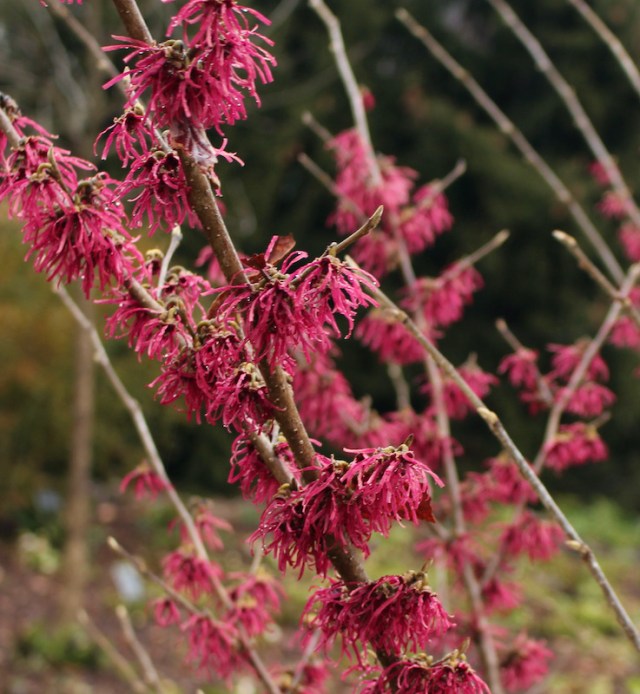
The rest of the visit was a ‘but wait, there’s more’ tour as we wandered from one witch hazel to the next.  They were perfect and the rain only made their color shine more warmly, even when it stopped for a minute here and there.

hamamelis angelly strawberries and cream westerstede

From left to right, Hamamelis ‘Angelly’, ‘Westerstede’, and ‘Strawberries and Cream’

hamamelis strawberries and cream

From pictures and descriptions I did not think ‘Strawberries and Cream’ would be a color I’d enjoy, but with a dark background and complimented by the yellows, it drew me in.

Growers of the spring blooming, Asian, witch hazels are probably aware that one of the more common problems is their tendency to hold onto last year’s dried and browned foliage.  Some people claim to not mind but I prefer the leafless look, and have been neurotic about searching out hints as to which ones tend to hold leaves and what cultural conditions encourage leaf drop.  I don’t know if I have any answers but we did see a few cultivars which held firm to last year’s leaves.

hammemelis doerak

Actually I didn’t mind the bright orange of Hamamelis ‘Doerak’ against the rich brown of the wet leaves, but dry it out and I’m not sure I’d feel the same.  Also there was another reddish cultivar who’s flowers were lost amongst the leaves, so I’m always going to place my vote for leaves-which-drop cultivars, and pass on this one.

Witch hazels are oddly rare in my neck of the woods, I suspect because they bloom prior to ‘go out to the nursery and buy all the plants for my yard’ day and people just don’t know about them, but slowly I’m finding plants and making a witch hazel show happen here.  I’ve got reddish, orange, yellow, and need more of all but in the past I’ve been thumbing my nose at the ‘purple’ forms.  Stupid me to think they wouldn’t show up in the brown and gritty winter landscape, I saw some awesome examples and of course now I have to do even more searching (Broken Arrow, Forest Farm, and Rare Finds Nursery will lead off the search).

hamamelis tsukubana-kurenai

Hamamelis ‘Tsukubana-kurenai’.  I’m going out on a limb and suggesting this is a Japanese cultivar, and I believe I need this one.

A purple and another orange are just what I need.  The oranges are my favorites, and ‘Chris’ has just enough of an orange tint to thrill me.  I suspect it is named after the UK authority, collector and grower of witch hazels, Chris Lane, but I’m only guessing.  Like many things today I feel like I can just guess at things and once they’re in writing on the internet that’s valid enough, but I’m digressing now…  To sum it up here’s a >more qualified writeup on hamamelis< which you may want to look at.  One mislabeled photo does not disqualify all the other excellent information the article contains.

hamamelis chris

Hamamelis ‘Chris’.  Heavy flowering, large flowers, bold color.  I loved it.

Hmmm.  It seems like this might be a long post since I’m only about an hour or two into our day, but whatever.  We’re up to about four inches of new snow here today so it’s off to our second Swarthmore PA stop, Hedgleigh Spring, the gardens of author/horticulturalist Charles Cresson.

charles cresson garden

I noticed that this is a neighborhood of above average gardeners, but Charles’ front garden states it loudly with a sweep of naturalizing crocus tommasinianus and patches of self-sown snowdrops.

On our last visit to see the fall camellias, Charles made the casual comment that we should see all the spring bulbs filling the meadow along the stream.  Absolutely.  We set the date but I’m not sure if Charles really expected us to go through with it based on the look he gave us when we showed up.  I can’t believe it was the steady rain or our mostly soaked appearance because at least Paula had enough sense to bring an umbrella, I think it was explained later when Charles mentioned two phones suddenly began ringing the minute we pressed the doorbell.  All was well though and off we went!

hedgleigh spring hellebore

Some of the hellebores scattered throughout the grounds.  My favorites are always the yellows.

Charles donates a plethora of special seeds to (among others)the Mid Atlantic Hardy Plant Society seed exchange, and I always have to smile as I see plants here which I have seedlings of in my own garden.

hedgleigh spring hellebore

This ‘seafoam’ colored hellebore is one I have a few seedlings of.  It has a greenish color with the slightest blue cast and I hope some of mine pick up a similar shade.

Several camellia seedlings also have roots here.  Flowering was just starting but it still amazes me to see how vigorous these shrubs grow in this northern edge of their range.

hedgleigh spring camellia

The recent cold had only done a slight bit of damage, but the main show of camellias looked extremely promising.

There were quite a few other ‘wows’.  The winter blooming Iris unguicularis was one of them.  Perfectly formed flowers of rich colors were quite a surprise out in the open garden.

iris unguicularis

These Iris unguicularis had been enjoying the shelter of a clear plastic tote over the winter and I shall have to revive my own bucketing efforts because the results are absolutely worth it.

There were many Adonis cultivars as well.  Some were just sprouting, some were being troublesome, and some were just excellent.  In case you’re not in the know, Adonis amurensis is one of the earliest woodland-edge perennials to push up flowers in shades of yellow to red.  Trouble free in a spot it likes, it’s not always easy to find a spot it likes, and at prices which rival snowdrops, the heartbreak of a lost plant is only matched by the sting your wallet feels.

cresson adonis

Adonis in full bloom and quite happy.  Single yellow is affordable, anything which runs to double or deeper shades of orange will require mortgage refinancing.

But enough on silly expensive perennials.  We came to see little bulbs, and they were everywhere.  Patches of named forms, drifts of the most common types, and seedlings galore with all kinds of excellent markings to thrill a galanthophile’s heart.

hedgleigh spring snowdrops

Small early bulbs were throughout the gardens.  This is how I love them most, scattered and naturalized into comfortable patches.

Some of the patches were decades old and showed up all over, with the newest and rarest limited to just a few beds.  Nearly each bunch had a story to go with it and to hear Charles talk of the forms and where they came from was a who’s who of the local gardening community.

galanthus white dream

Galanthus ‘White Dream’ was the most special non-special drop I saw.  Amazing.  Plain and white and perfect.

But what we really came to see was the meadow which lies behind the garden fence.  When Paula got her first glimpse she grabbed my shoulder with that crazy look in her eyes which I of course never show and I was afraid she was about to jump the creek to get there.

hedgleigh spring snowdrops

The creek and meadow outside the garden proper.  Mostly native perennials and bulbs.  Lots of bulbs, from the earliest days of spring to the last days of fall.

Charles told us about the hours spent on knees digging and dividing and replanting clump after clump to spread snowdrops far and wide.  Bulbs from elsewhere were added and over the last forty years seedlings have matured and clumped up and added their own genetics.

hedgleigh spring snowdrops

Most of the galanthus are G. nivalis, G. elwesii, and hybrids between the two.  As usual crocus were everywhere.

We spent quite some time back there, first admiring the overall effect and then finally crouching down to examine anything and everything which looked specialer.

charles cresson garden

Charles and Paula inspecting the masses of daffodil sprouts and snowdrop blooms.

We found a bunch of cool things.  I suggested that we take the three best forms and name them Charles, Paula, and Frank and start spreading them around in honor of the day, but of course they thought I was joking.  Hah hah.  Of course I was…

prunus mume

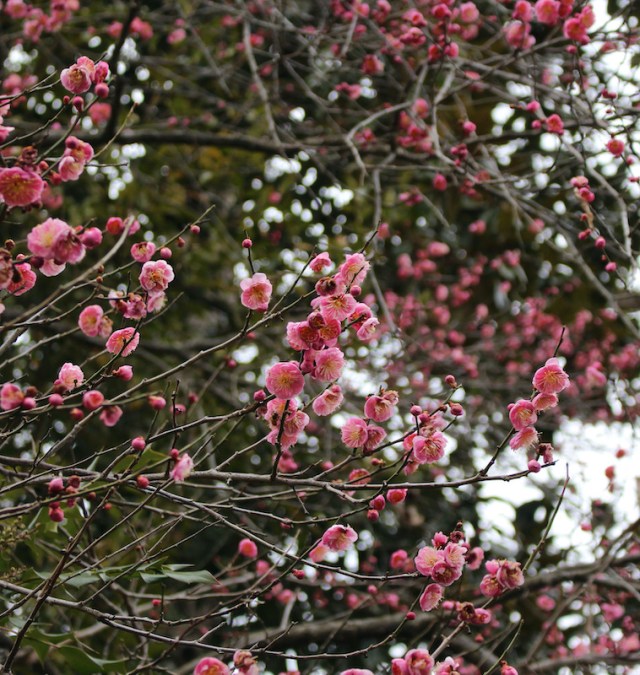
Prunus mume, the Japanese Apricot blooming away back in the main garden

We finished the tour and then continued to overstay our welcome.  It had stopped raining and after I said how much I loved the Prunus mume and Charles said it self seeds all the time, we were all rooting around through the mulch looking for seedlings.  Our visit had really degenerated into what it always does, the schedule goes out the window and we end up dirty.

Eventually it was off to the next garden.  Matthew and Jamie Bricker were completely polite about us showing up at 5pm on a Sunday to drag them through the garden.  They’re about three years into a new garden and it’s astounding how much they’ve already accomplished in a garden which had to be wrestled back from overgrown neglect…. Plus three kids and plenty of home improvement projects… I was suddenly very insecure about my own questionable progress 🙂

bricker garden

Just a small slice of the Bricker garden. Snowdrops were already spreading into decent clumps all over the garden, all nicely mulched with a plethora of sweet gum balls from the mature sweet gum trees (Liquidambar)

This is where the pictures end.  We ran out of light before we ran through our hosts’ patience but it was great seeing how far this garden had already grown and the shape it was taking.  We will hopefully be back.  The Brickers are putting together an outstanding snowdrop collection and for local gardeners and Gala attendees they’re already a great source for potted extras.  Once he gets more settled into the new spot I suspect he won’t mind being listed as a source, but for now… well it never hurts to ask 😉 I’m sure you’ll be able to find him on Facebook.

Scott arboretum snowdrops

Snowdrops (‘Brenda Troyle’ actually) in the dark.  It was still far too warm (and dry now) to call it a night.

I don’t know if Paula thought I was joking when I said we were still going to get through her garden by flashlight, but we did.  It was warm, the drops were open and glowing, and the wind had settled down completely.  For the first few minutes the rustling in the garden was a bit eerie but then we realized it was all the nightcrawlers brought up by the rain and active in the warmth and it was slightly less creepy.  Even in the dark by flashlight with giant earthworms stalking us it was a perfect end to the day.  Her garden looks great as all our gardens did that day, and as usual our snowdropping day was an excellent start to the season.  Now if it would just stop snowing…

Thanks to our hosts, enjoy the season, and all the best!

A Day of Rock Gardening

Last weekend my friend Kathy of Cold Climate Gardening talked me into a plant sale.  No offense to her salesmanship, but it wasn’t the toughest sell considering I’ve been itching to get back to town ever since my first ‘Ithaca Spring Garden Fair and Plant Sale’ two years ago.  Covid you know… so I’ve been saying pass, but then Kathy told me about the spring plant sale of the Adirondack Chapter of the North American Rock Garden Society.  It’s a members only thing, just a few people donating, buying and selling, but it sounded perfect.  Big deal that I wasn’t a member(yet) and it’s an over two hour drive, plus it’s a whole Saturday away from a garden which I should be weeding… and I already had plenty of unplanted things… but you know as well as I do that once the gardening gauntlet is thrown down it must be accepted, so of course I said yes.

It was a beautiful morning and the drive was a perfect trip up the Susquehanna river valley and then across the rolling dairy hills East of Cayuga lake to the plant sale.  The sale was fun.  Members (which now included me) were given numbers and each person had a chance to visit the sale tables and pick up a favorite.  After a couple rounds of this the tables were opened to everyone, and one by one they emptied.  There was more of course.  While this was going on plant talk was every where, an auction was lined up, a free table was filled and cleaned out… members introduced their favorite plants which they thought ought to be selling better, and at one point someone just stood on a bench and invited everyone over to visit their garden afterwards 🙂 I like these people, and this also brings me to one of the big selling points for me doing the drive and joining the chapter.  Garden visits.  I had heard that a local rock gardener had offered to open their garden after the sale, for members to visit.  It’s a garden I had read about and seen pictures of, and I knew it was a must-see garden.  Wow, was that the truth!

ithaca rock garden

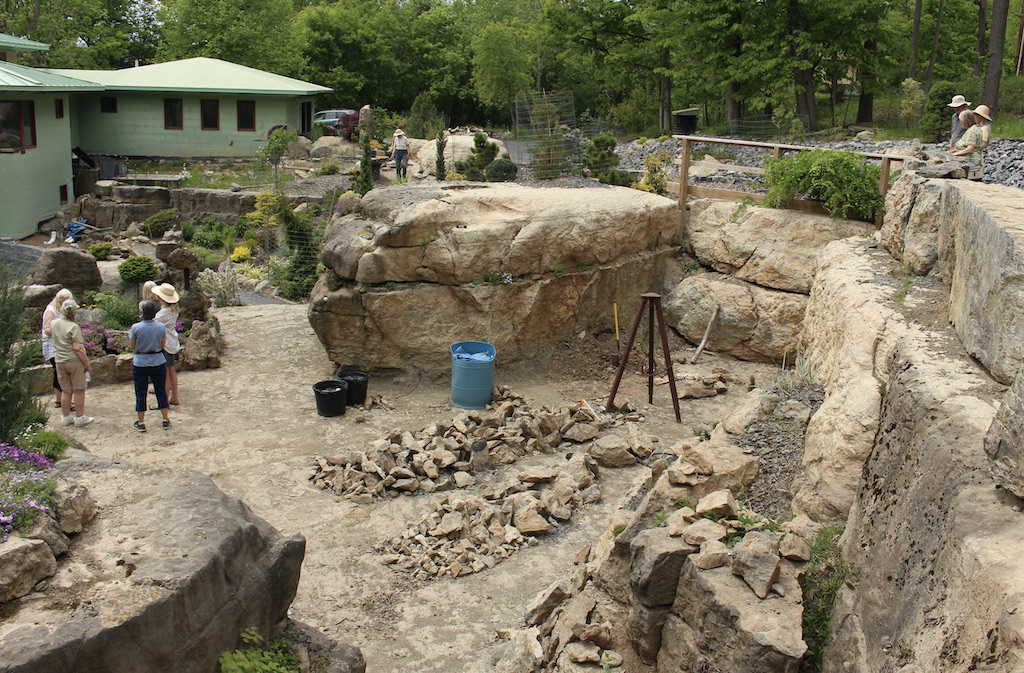
A hillside was being excavated to expose the bedrock

Some of the epic rock gardens of Europe are heaps of stone built up to create mini-Matterhorns out of flat cow pasture.  This garden is not that.  Here a pair of inspired gardeners found a plot of land where they knew they could carve the earth down to bedrock, and then build a rock garden up that follows the natural cut of the ravine.  It’s actually quite a crazy idea, but awesome to see.

ithaca rock garden

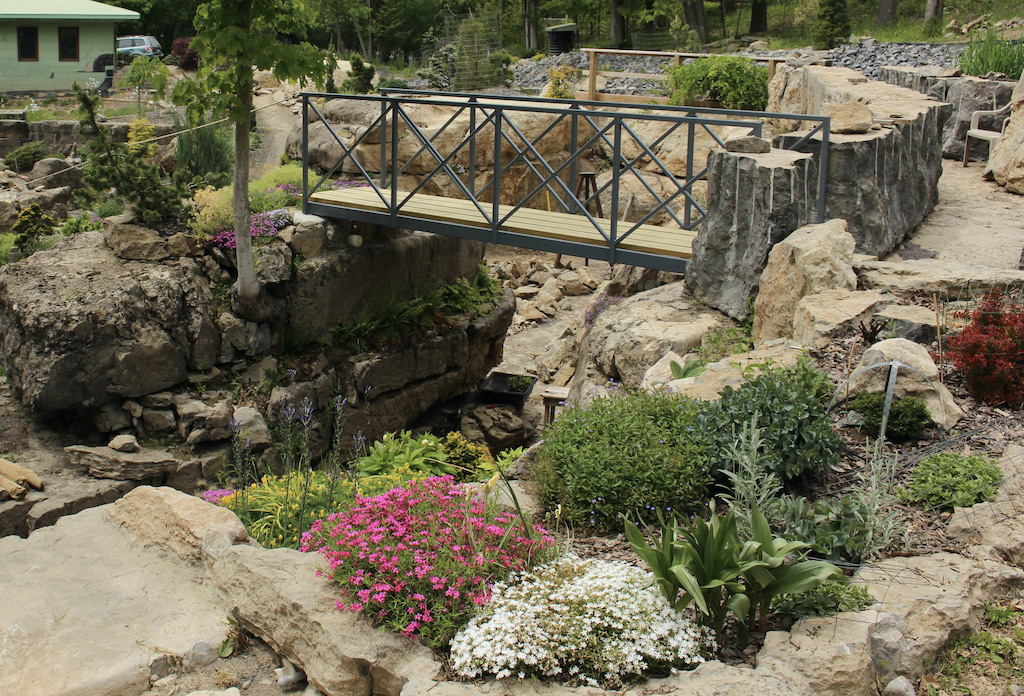
One of the newest additions, a bridge now spans the gap between rocky outcroppings.

Of course these pictures don’t do the scale of the garden justice.  Massive boulders were being moved and placed in a way which looked as if the glaciers did all the heavy lifting thousands of years back.  Unearthing the bedrock sounds easier with the help of heavy machinery, but then consider the care which has to be taken to not gouge the naturally weathered walls and boulders as they’re being uncovered.  All the fine uncovering had to be done with hand… and then moved by hand…

ithaca rock garden

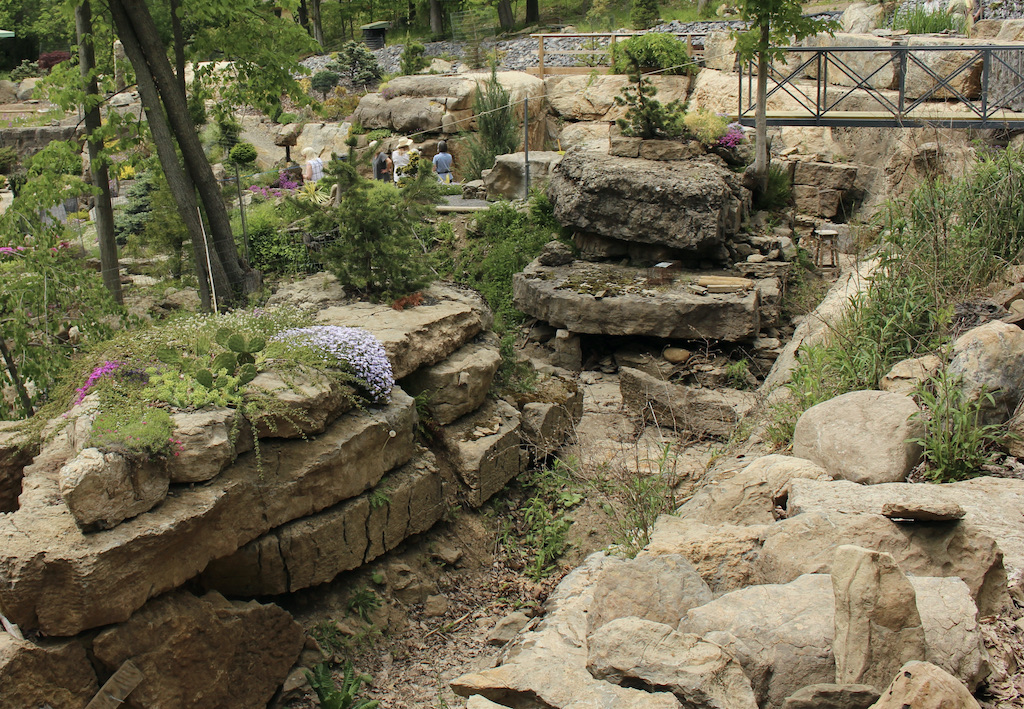
The earthworks from even further back.  All of this was uncovered, and much of it moved into a more effective place or position, even the larger slabs of stone.  Behind where this photo was taken there’s even more excavation.

One of the chapter members mentioned that the owners were back and forth about opening the garden.  ‘It’s not a garden, it’s a construction site’ is more or less what I got as the reasoning, but only half of that is true.  It’s an awesome construction site, but it’s also an amazing garden, and I think it’s even more amazing when you can see what went in to all the plantings.

ithaca rock garden

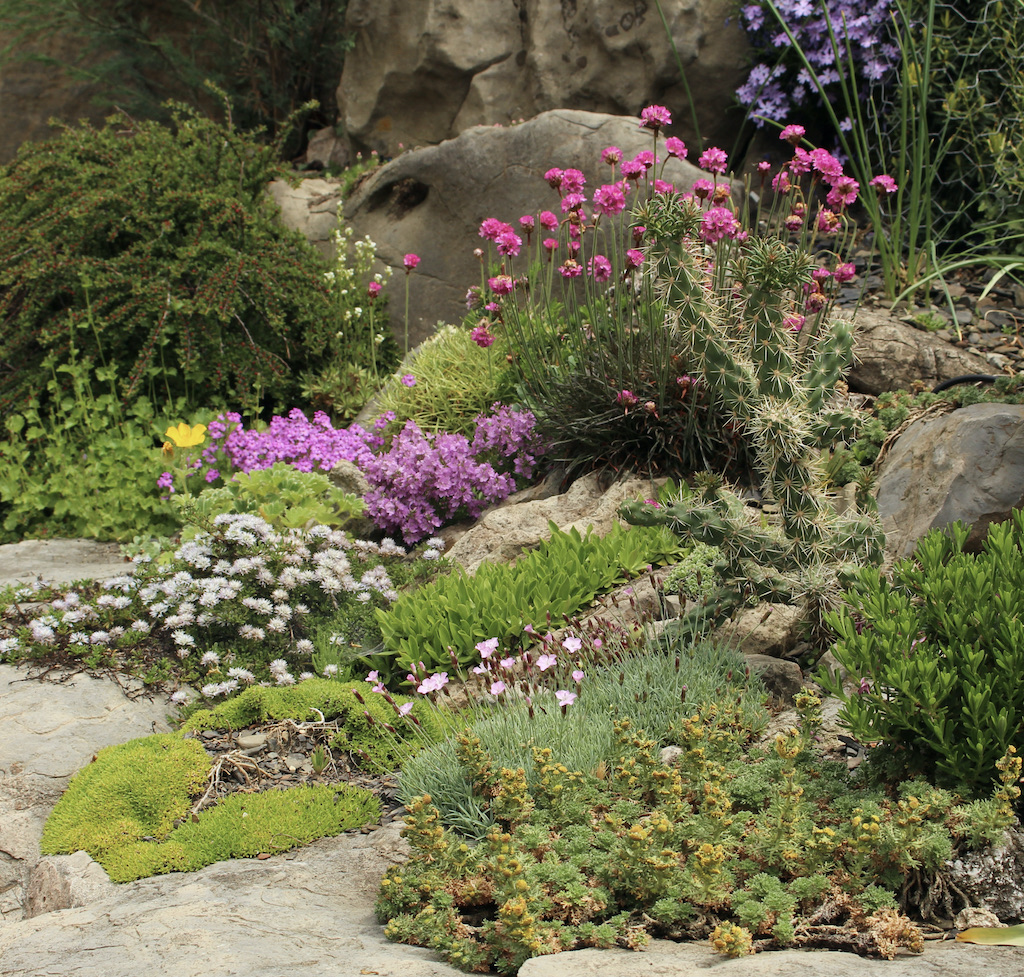
Plantings tumble down the slope, this one built up with tufa stone, a porous rock light and airy enough to allow plant roots to penetrate.

This is the first real rock garden I’ve ever visited so I can’t say much about the plants other than they looked perfectly happy.

ithaca rock garden

Rocks overhanging a small pool.  Tufa stone allows for plants to be ‘set’ directly into drilled holes.  Eventually the plants spread out on their own as the roots find their own paths into the rock.

ithaca rock garden

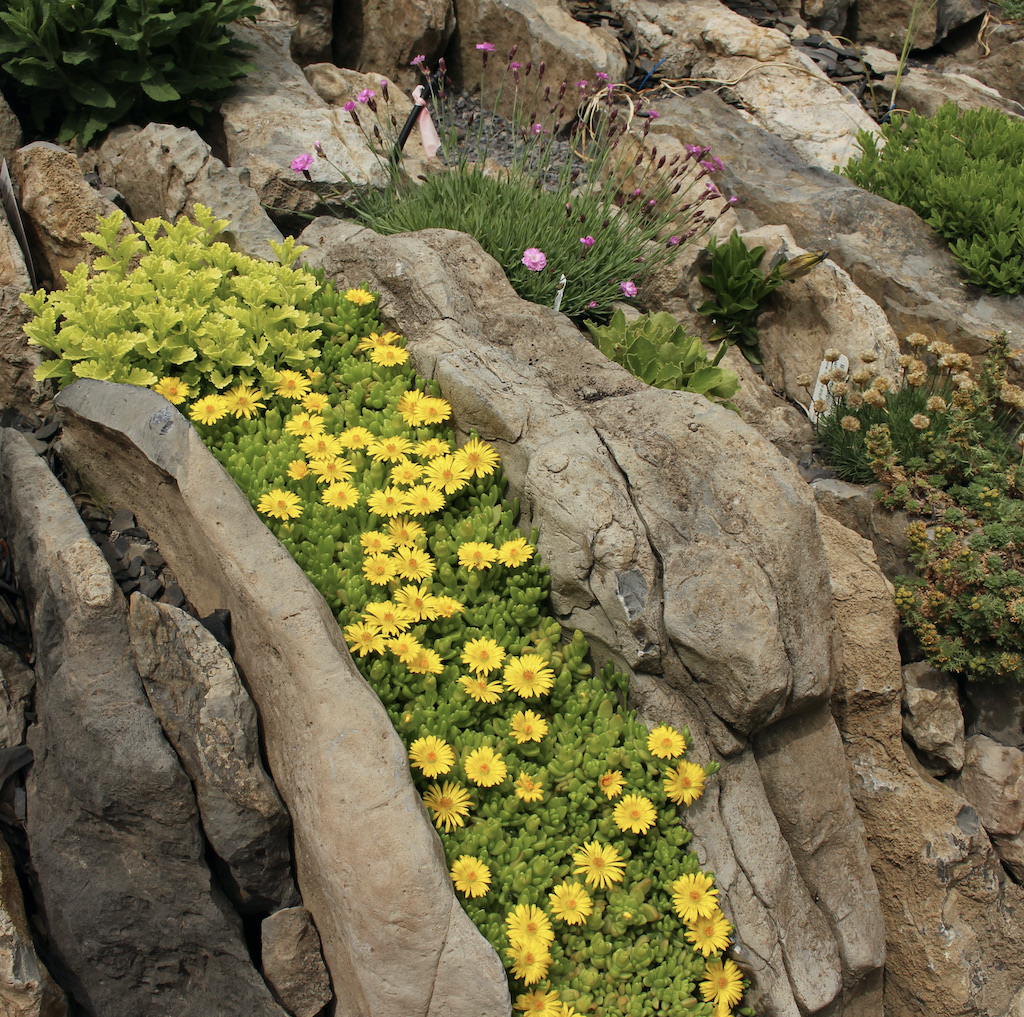
Oh, and just a big crevice garden for all those things which love a deep root run between stones.  Yellow delosperma and a yellow leaved teucrium (which I just happened to pick up at the plant sale!)

ithaca rock garden

Some of the plantings were really amazing

ithaca rock garden

Even a hosta!  -but I really love the yellow leaved saxifrage (maybe saxifraga ‘Cloth of Gold’?)

As I worked my way down the paths through the rock gardens, and headed closer to the house, I reached the patio area.  Here the garden hosts had set up a dining area with snacks and beverages and plenty of wine.  From what I hear this generosity was all part of a master plan to “loosen lips” and get the honest impressions of their visitors with an eye towards improvements and new ideas.  Sadly, I believe the wine was just wasted on me 🙂

ithaca rock garden

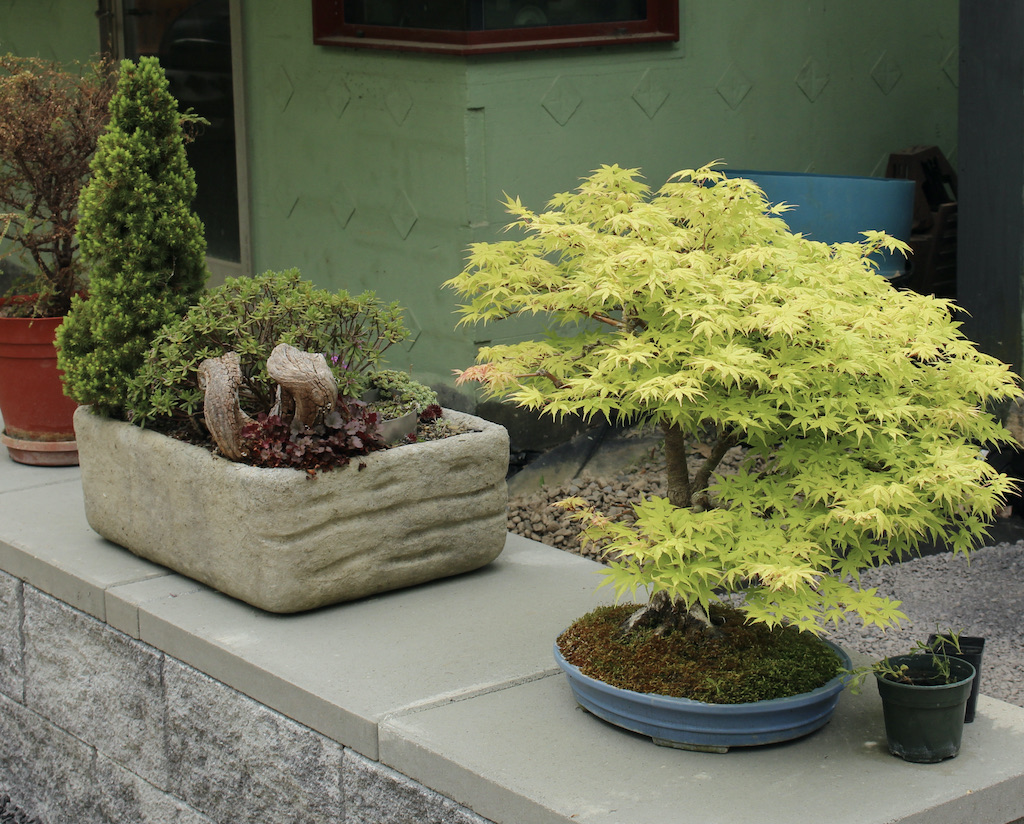
Bonsai and trough gardens.

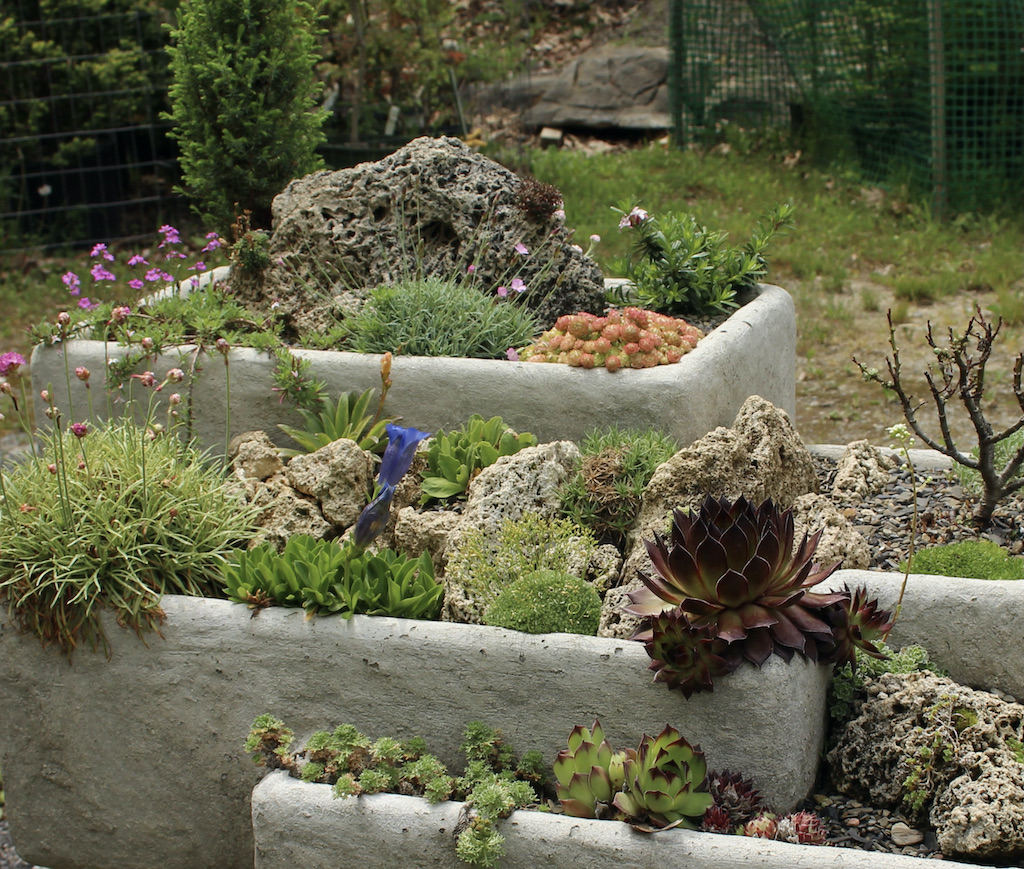
The trough gardens were particularly interesting, and not just because of the mini landscapes planted in them.  In the past these gardeners have hosted trough making workshops in the garden as well as publishing articles on the process, and I was excited to see that the troughs look excellent in person.  Excellent enough that I think I’ll give one a go this summer and see how it turns out!

ithaca rock garden

Some of the troughs were quite complex.

Wine and snacks have a way of gathering people, so at the patio I stopped and took in a few of the conversations.  Someone asked me how I liked the top part of the gardens and I said ‘Top?  There’s also a bottom?’ …and yes, there’s a whole other part to the garden.

ithaca rock garden

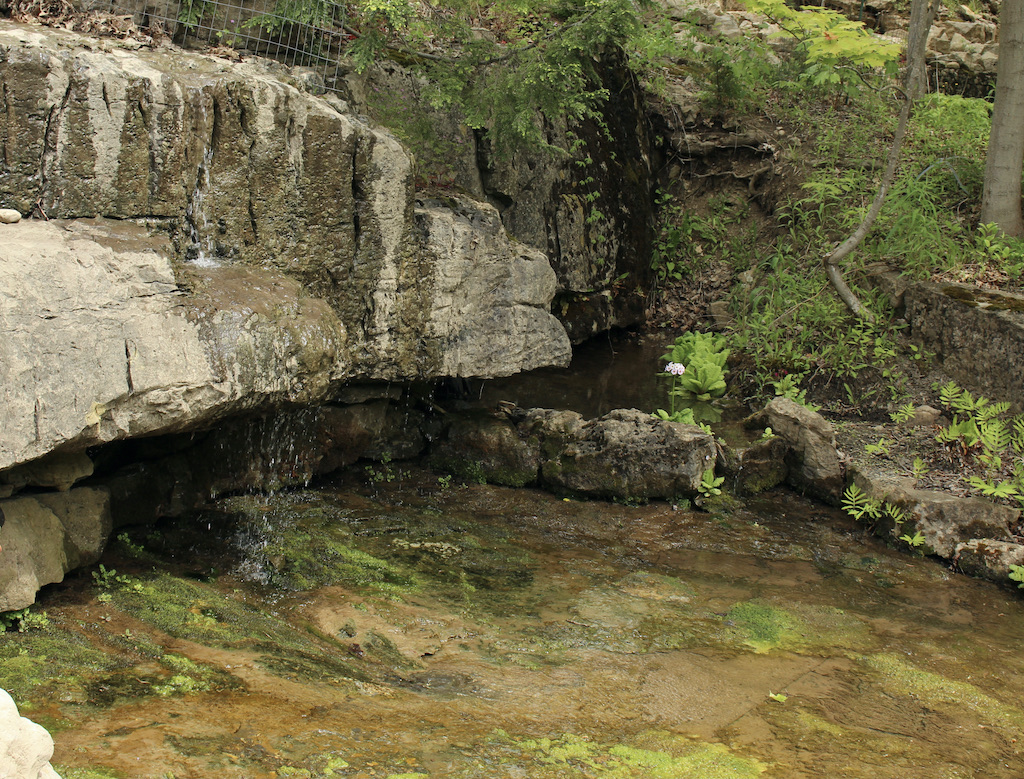
Below the rock garden a natural seep provides flowing water for the bottom part of the gardens.

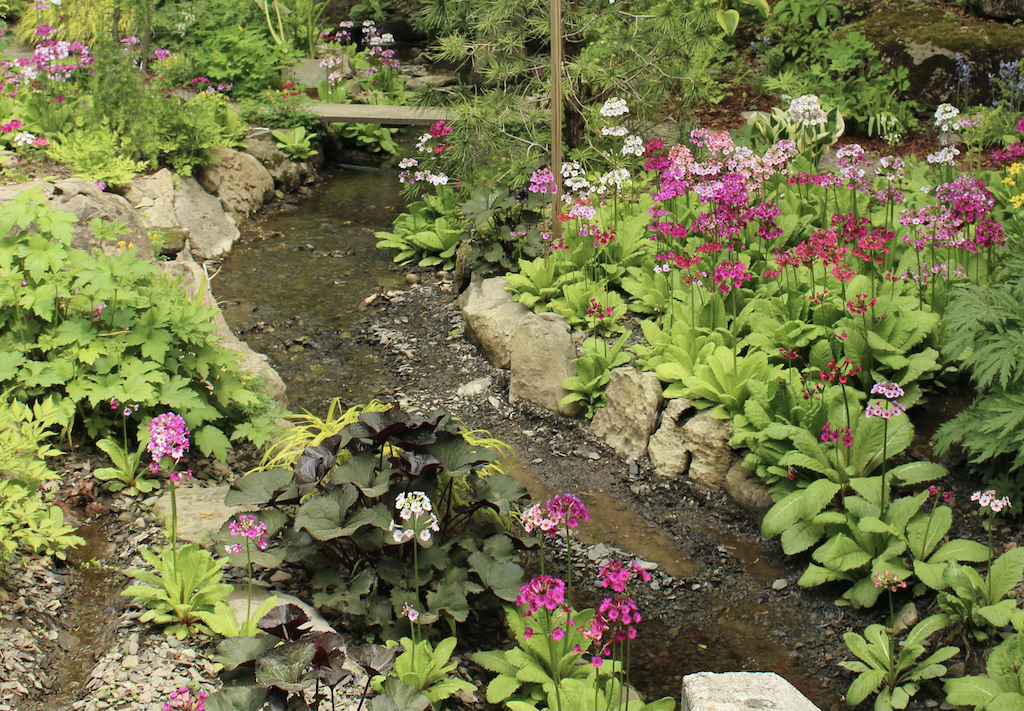
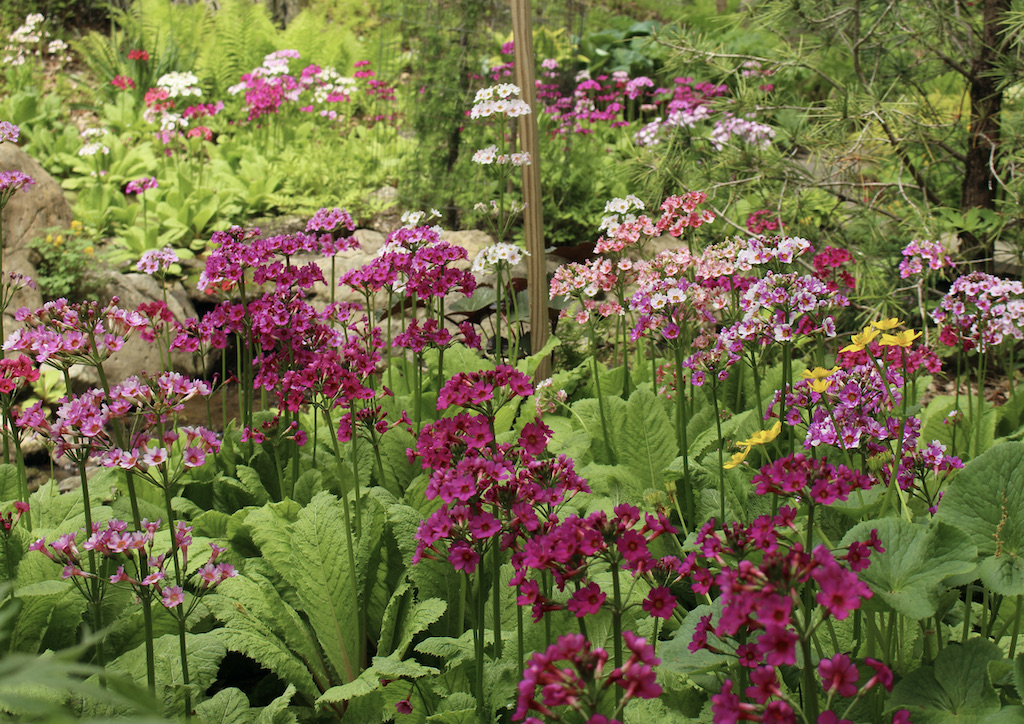
As you come around a few more boulders you find yourself at the bottom of the ravine, where a mass of Primula japonica fill the low spots.  They were just starting their peak bloom, it was excellent.

ithaca rock garden

A path runs back and forth along the stream.

ithaca rock garden

Masses of Primula japonica

ithaca rock garden

The stream heads out to the lake.  You would never guess a downpour had this garden nearly flooded a few days prior to the opening.

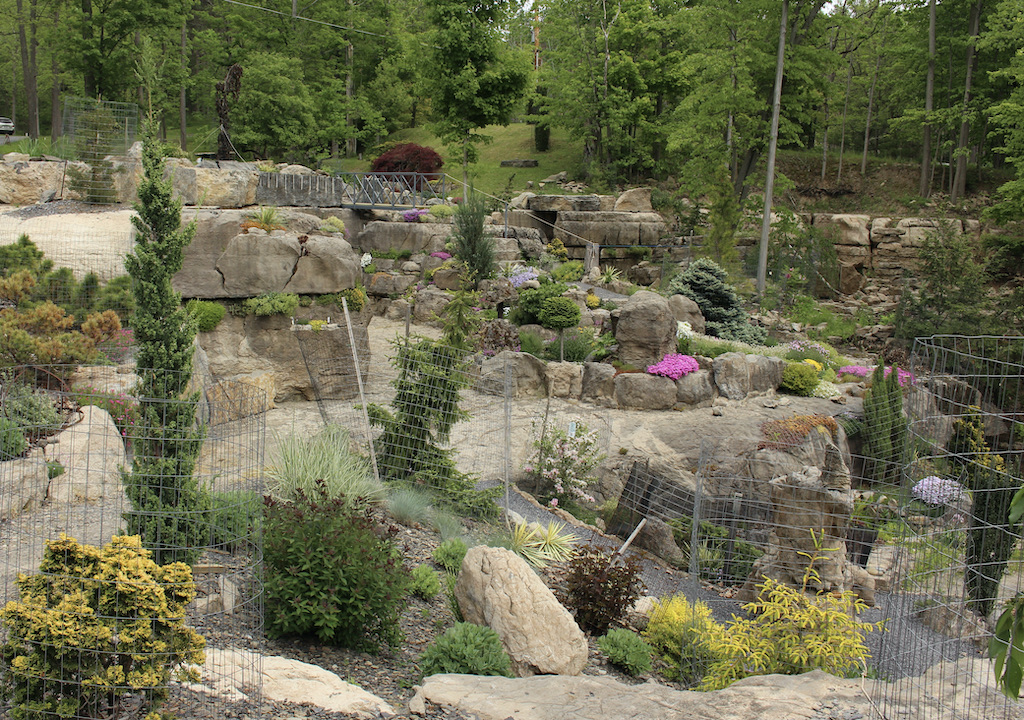
There were more woodland plants, azaleas, rhododendrons, and tree peonies but of course I can’t show everything, so I’ll leave off with one last overview of the upper garden as viewed from the house.  As you can see ‘dwarf’ conifers are also an interest.

ithaca rock garden

A view from the other side.  You can see some of the deer fencing, obviously the hooved beasts have no respect for such a special place.

So this garden was amazing, but who would I be if I turned down another garden tour invite?  I headed a few miles further to the impromptu open garden which had been announced at the sale, and here I was able to enjoy huge beds filled with lush perennials all grown to perfection.  I’m afraid I derailed plenty of my host’s Saturday afternoon gardening plans since it was already kind of late, but she still gave me the full tour!

ithaca rock garden

Tree peonies were at their moment of perfection.

There were cool plants everywhere, and they were all so well grown that I tried to avoid all honesty about my own garden when asked.  My big regret though is that I didn’t take more pictures.  It’s almost criminal that there are no photos of the red horse chestnut (Aesculus x carnea ‘Ft. McNair’) which was in full flower over one of the back beds.

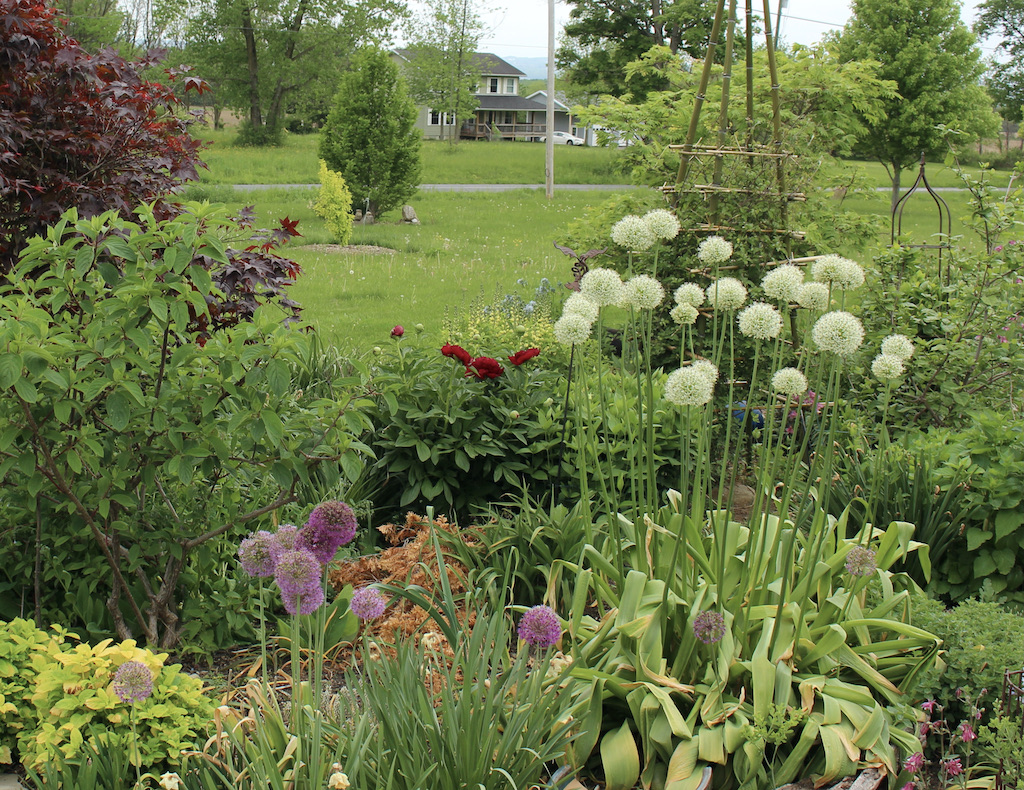
ithaca rock garden

Alliums, Aquilegia, and peony were at their peak but I could see that the show had started months ago with spring bulbs, and will continue for months more with all the other later perennials.

ithaca rock garden

Wow.

So I’m also not even mentioning the shade gardens, the small arboretum of special trees, the field of dahlia tubers I was preventing her from planting… It was another fascinating garden and I have to say that the best thing about this day was meeting person after person who were so crazy about plants that it made me feel entirely sane.  What a group!

I rushed out of this stop with a new friend (and even more plants in my hands) and headed for my last stop.  It was already about dinnertime when I rolled into my friend Leon’s driveway but he didn’t seem too annoyed with me.  He knew I’d be late and still led me around the grounds of Der Rosenmeister Nursery and tolerated question after question.  I didn’t have time for a single picture.  I bought three roses.  I’m going back in a few weeks to see the hundreds of roses in full bloom, and it is guaranteed to be another great trip and I’m sure you’ll hear all about it 🙂

Hope you enjoyed this adventure !

Snowdropping 2021

I’ve heard them say it’s the bad trips, not the good, that you remember best, and over the years they become some of your best memories… so maybe someday this trip will rank more highly, but for now its chilly wetness ranks it closer to the bottom.  At one point my snowdropping buddy stated the day reminded her of the windy, frigid visits to upstate NY and the Temple Gardens open day, and she could be right.  In my defense our local forecast was decent, but I foolishly assumed it would be even milder and just as dry 100 miles South.  Silly me.

naturalized snowdrops

I would guess snowdrop adventures in the UK and EU are far less gritty than our adventures.  Tea and cake from what I’ve heard.  To satisfy that question, we didn’t find either.

As I was driving down my better sense knew this trip was too short-notice and not up to or normal standards, so I dropped the hint that I would be fine doing our traditional park visit alone, and Paula must have looked at the thermometer and thought ‘hallelujah!’

“Yes” she said, “That’s fine, maybe I’ll go next week”.

naturalized snowdflakes

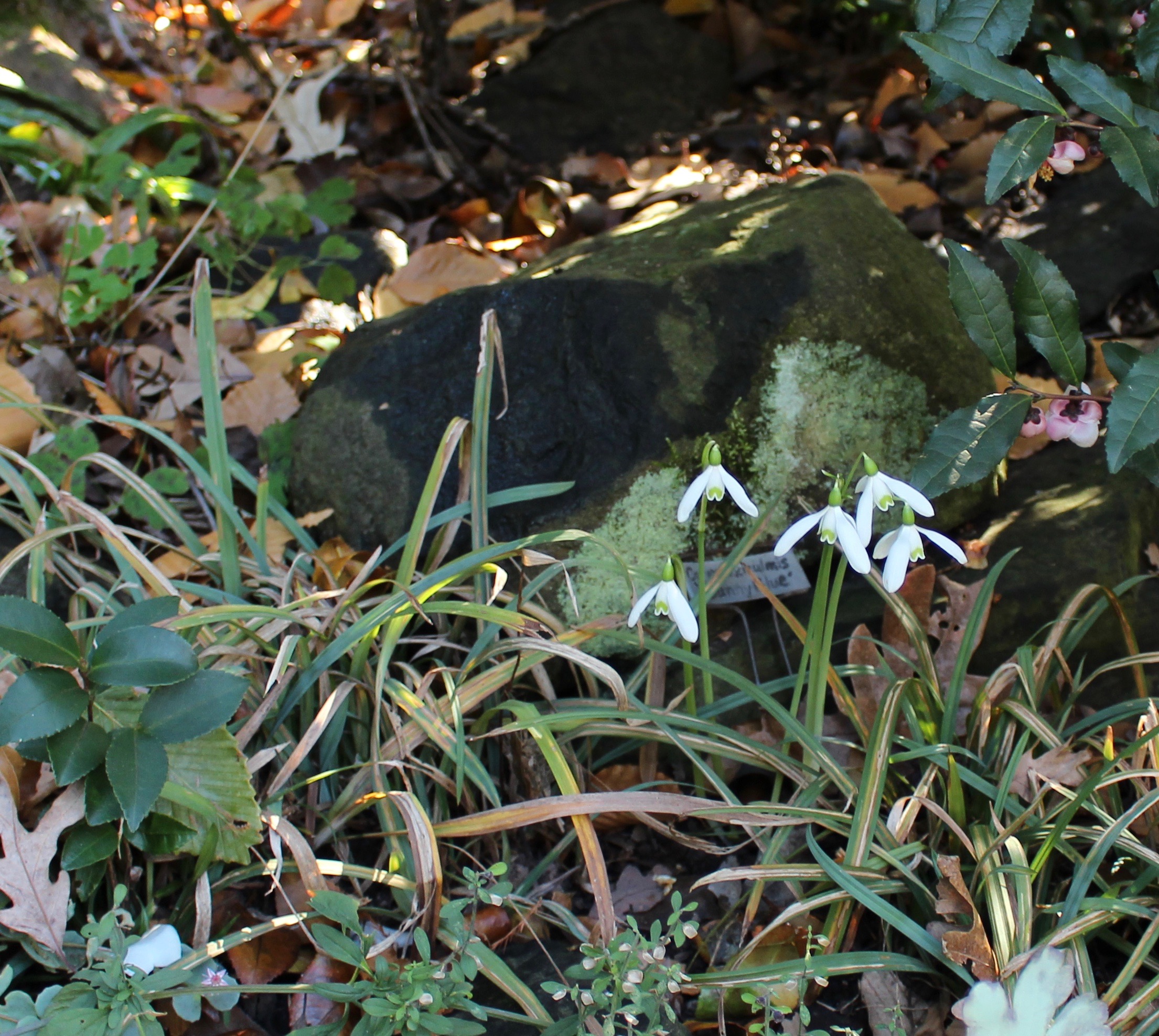
The yellow of the winter aconite (Eranthis hiemalis) was fading, but the snowflakes (Leucojum vernum) were just coming up.

The park we visit hasn’t changed in years, but this year I noticed some cleanup.  Brush removed, new paths, general cleaning up.  I’m glad to see some love going in, but also have to admit a little sadness.  Paths of bare earth cut through swathes of snowdrops and winter aconite means many bulbs were destroyed.  Decades of neglect built the show, I just hope a cleaner and neater future leaves a place for them and remembers the history of this plot.

eranthis

Bulbs are tenacious though.  A tree disaster happens, a scar opens, and still the yellow of winter aconite manages to sprout and bloom amongst the debris.

Ok so I really wasn’t all that sad and I did spend a good hour or so examining hundreds of flowers looking for something special so it was still an excellent visit, but the real star of my trip was Paula’s garden.  I swear there were twice as many blooms as I remembered.  I love when I pull up somewhere and get that stupid grin and start talking to myself about how cool it looks.  Sometimes I even do that with passengers onboard, and probably get concerned looks, but with each passing year I notice less and less, and care?  Not even 🙂

american snowdrop garden

The glow of ‘Jelena’ (Hamamelis ‘Jelena’) lights up and perfumes the highs while snowdrops and heucheras fill the lows.

It was so refreshing to see all the color filling a garden.  On the ride over I was desperately scanning the neighborhoods looking for anything but it was never much more than desolately neat lawns and mulch, or way more evergreens than even a cemetery would want.  Occasionally there were some snowdrops or a hellebore, so I guess there’s hope, but inspiring?  No…

american snowdrop garden

Paula has reached the point where nearly all the beds have snowdrops wedged in between the dormant perennials and mix of shrubbery.  She complained about too many seedlings.  I pretended to understand.

As usual we stood out in the cold examining every drop, commenting on how well it grew and where it was from.  There were also witch hazels, winter aconite, and snowflakes to discuss.  It’s great seeing a garden which comes alive while the rest of the neighborhood sits brown and dead.

american snowdrop garden

One of many hellebores.  The color stood out better in real life, I’m sure I yet again had some camera setting mis-adjusted.

By the time we slowly shuffled around the far end of the garden the icy drizzle had switched over to a rainy drizzle, and when I suggested it might be more polite to skip the other garden we had scheduled, Paula seemed fine with that.  We were both ready to warm up and dry out.  I even passed on an offer to dig one or two trades… tell me that’s not a sign!

american snowdrop garden

The last couple years of plantings line the side garden, each special variety socially distanced with only the occasional seedling breaking quarantine.

I guess I’m not as feverishly desperate as I used to be.  It’s still a thrill to go visiting but it’s more and more about the people, and then coming home is less and less of a let-down.  There are still a few (actually plenty) of snowdrop treasures I covet, but give me a sunny winter day with bunches of average white ones surrounding me really makes me feel as if I’ve arrived…. at least in MY mind 🙂

Have a great weekend, and let this be your **last warning** that pictures from my own garden are up next!

Christmas Spirit

On Sunday Pennsylvania goes back to some of the restrictions we saw back in March.  Lockdown is how some would call it but inconvenient seems like a better descriptor… unless your livelyhood is again at stake… Restaurants are back to take-out only and indoor entertainment venues and community activities are cancelled.  Stores are limited to 50% capacity.  It’s like lockdown lite and I guess that’s all you can get away with when so much of our state government is determined to fight for our freedoms even while hundreds of residents die each day from a virus they insist isn’t that bad.  But you know this.  You read the news, and those who are being safe are being safe and those who aren’t just won’t believe the stove is hot until they touch it.

longwood christmas

The Orangery, one of Longwood’s main conservatories.  This was all yellow chrysanthemums and a wall of yellow Salvia madrensis just a few days before we visited.

Longwood’s greenhouses are considered indoor entertaiment, and as such will now be closed throughout the holidays, but fortunately we were able to get down there on our usual Sunday after Thanksgiving visit.  The tickets were reserved a week in advance, and even though by the time the day arrived everything was sold out we were still happy to find the place nearly empty.  I believe ticket sales had been cut down to about 25% normal capacity, so from our first step out of the car, through the entrance, to the grounds, through our meal, through the greenhouse, back to our car we barely touched a cleaned surface or moved within six feet of another visitor.  I felt entirely safe, but keep in mind I also believe in the 5 seconds rule so your results may vary.

longwood christmas

Under the cover of Australian tree ferns, two ribbons of poinsettia surround a line of fountains running down the center of the exhibition hall.

As usual the decorations were perfect.  Swathes of holiday flowers, stylish ornaments, perfect lighting, and all the special touches we look for on our visits.  Even the kids were impressed although I suspect they’re both into the stage where much of what their dad does embarrasses them, and forcing them to pose as they opened the bathroom door probably didn’t help.  My bad, but I consider the conservatory bathrooms to be one of the underrated highlights of any Longwood visit.  Lushly planted green walls surround the spacious private powder rooms, and even if you’re not inspired to take a picture you’ll probably never again want to settle for a drafty stall.

longwood christmas

I don’t think she’s smiling under the mask but whatever,  I’m sure these assignments build character.

I’ve only got a few more decent pictures since most of the time we just enjoyed the visit, but Longwood has been posting quite a few photos online this year and pretty much all of them are better anyway so let me suggest their website, Facebook, Instagram, or whatever media you prefer.  Also I recommend their drone flight through the greenhouses video which really shows off the inside decorations.  It’s almost as good as being there.

longwood christmas

I always drag the kids through the greenhouses once during the daylight hours… much better to see all the plants that way 🙂

Both inside and out, the best show starts as daylight fades.  Lights are everywhere and decorations sparkle and it’s nearly impossible to take in all the fantastic detail.

longwood christmas

Just imagine inventorying and storing all the ornaments every year.  

There’s always a nightime hush after dark.  A nice spiked or unspiked hot chocolate makes an excellent strolling companion, maybe not so much for our visit though since it was so warm we barely even needed our coats.

longwood christmas

Everything a-sparkle and a-glow.  If this scene doesn’t please Santa I don’t know what will.

longwood christmas

Each decorated tree was better than the last.

After our final cruise around the greenhouse we did one more lap around the grounds.  We caught all the outdoor lights, visited a few bonfires, and took in one final fountain show.

longwood christmas

The main fountain show is shut down for the winter but the theatre fountains are still a show. 

So we had a great visit.  You should go as well, but maybe not this year since besides being mostly sold out, the greenhouses are shut down until Jan 4th the earliest.  Put it on your list though, and then stay safe so that everyone’s still around next year to check it off.

All the best, and if you didn’t do it before watch the drone video!

A Festival of Mums

Well I do feel guilty overposting when I don’t even take the time to respond to comments or visit other blogs, but there was a second part to my recent garden-day-out which just doesn’t fit into that post, and it’s just too good to not share (as opposed to some of the things I put on about my own garden!).  Our beautiful morning in the private garden of Charles Cresson was followed by an equally beautiful afternoon at the very public Longwood Gardens.  Of course we were late, so there were a few seconds of nervousness when we saw the crowded parking lot and the well-past admission time on our timed tickets, but all was well.  We cruised through a perfectly distanced and contact-free admission process and were exploring the grounds just minutes later.

longwood bell tower

Longwood’s  bell tower with fall color and some late afternoon sunshine.

The weather was still perfect, the grounds were perfect, the fall colors were perfect, the water was clear, fresh sod was laid, the paths were raked.  Longwood is an excellent autumn strolling garden, but to be honest I sometimes get a tiny bit bored.  I wasn’t in the mood to hike the meadow, I had seen miles and miles of autumn color on the drive down, and all the summer plantings were already out and replaced with uber-neat animal netting to protect the recent tulip plantings, or super tidy raked soil.  It all made me feel somewhat guilty for the unplanted bulbs and general mess at home, so our stroll was actually kinda short.

hamamelis virginiana 'Harvest Moon'

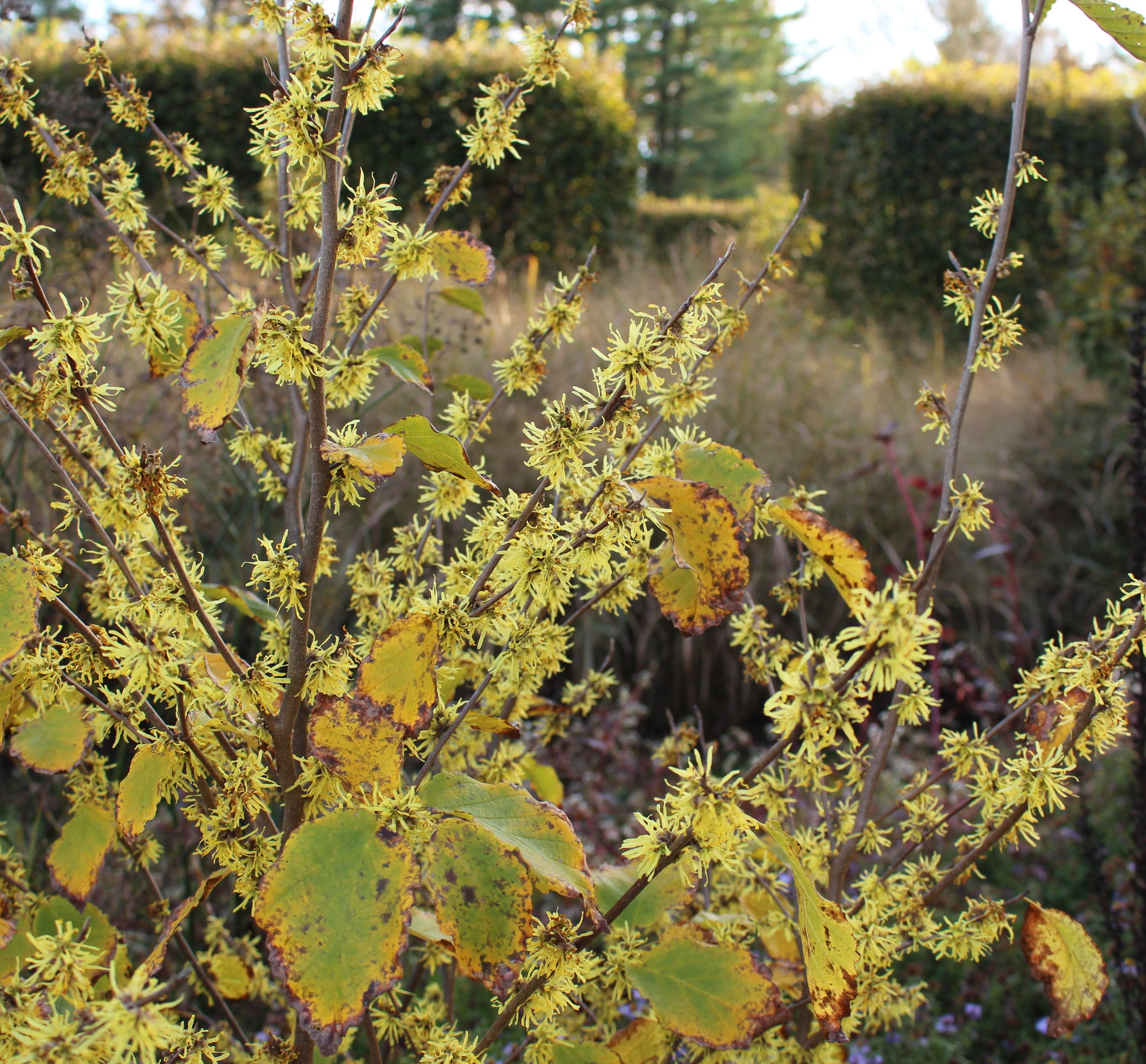
Hamamelis virginiana ‘Harvest Moon’ looking exceptional amongst late bloomers and autumn grasses.  It’s in full sun by the way, and I’ve noticed that even the wild ones which line my path to work bloom much heavier when in full sun.

My friend Paula was with me, and we both agreed that next year Longwood should call us and let us pick through their trash pile of discarded annuals and tropicals and help them get rid of some of that mess.  I’m sure my better half would have no problem with me coming home with a trunk full of things to pot up and keep inside all winter 🙂

Tetrapanax papyrifer

In the gardens behind the bell tower I saw a few big clumps of ricepaper plant (Tetrapanax papyrifer) which looked as if they had overwintered in the spot.  I love the leaf on this thing and have been trying to get one for years, even if it is a terrible spreader and some people are allergic to the fine hairs…

yellow ilex opaca

A very well-planned combination of yellow Amsonia hubrichtii foliage backed by a ripening crop of yellow berried American holly (Ilex opaca)

Of course you can’t judge me for thinking I have either the room or time to take in dozens of high maintenance and tender plants which are totally unreasonable for my garden.  It’s a much cheaper addiction than fancy shoes that don’t fit comfortably or a flat screen tv which is just too big for a room which sits you six feet away.  But I’m digressing.  We actually came to see the mums, and as we approached the conservatory things started to look promising.

longwood chrysanthemums

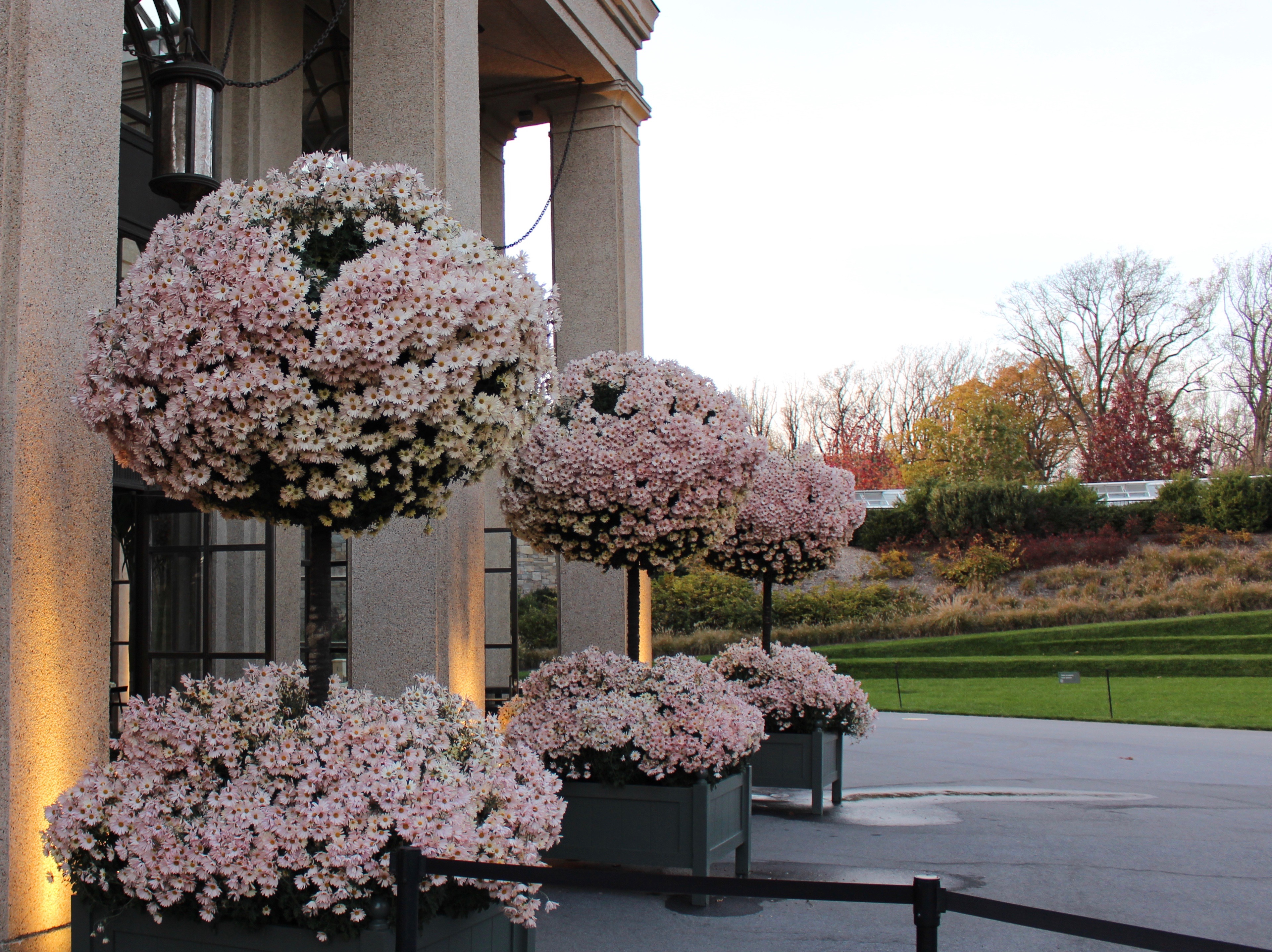
Wow 🙂 Hardy chrysanthemums grown as a basket on top (I think) raised high over a planter of the same.

Last year I visited the NY Botanical Garden to see their display and I loved it, but for all their variety and diverse forms and traditional training techniques, Longwood had less but more and went straight for the Wow.

longwood chrysanthemums

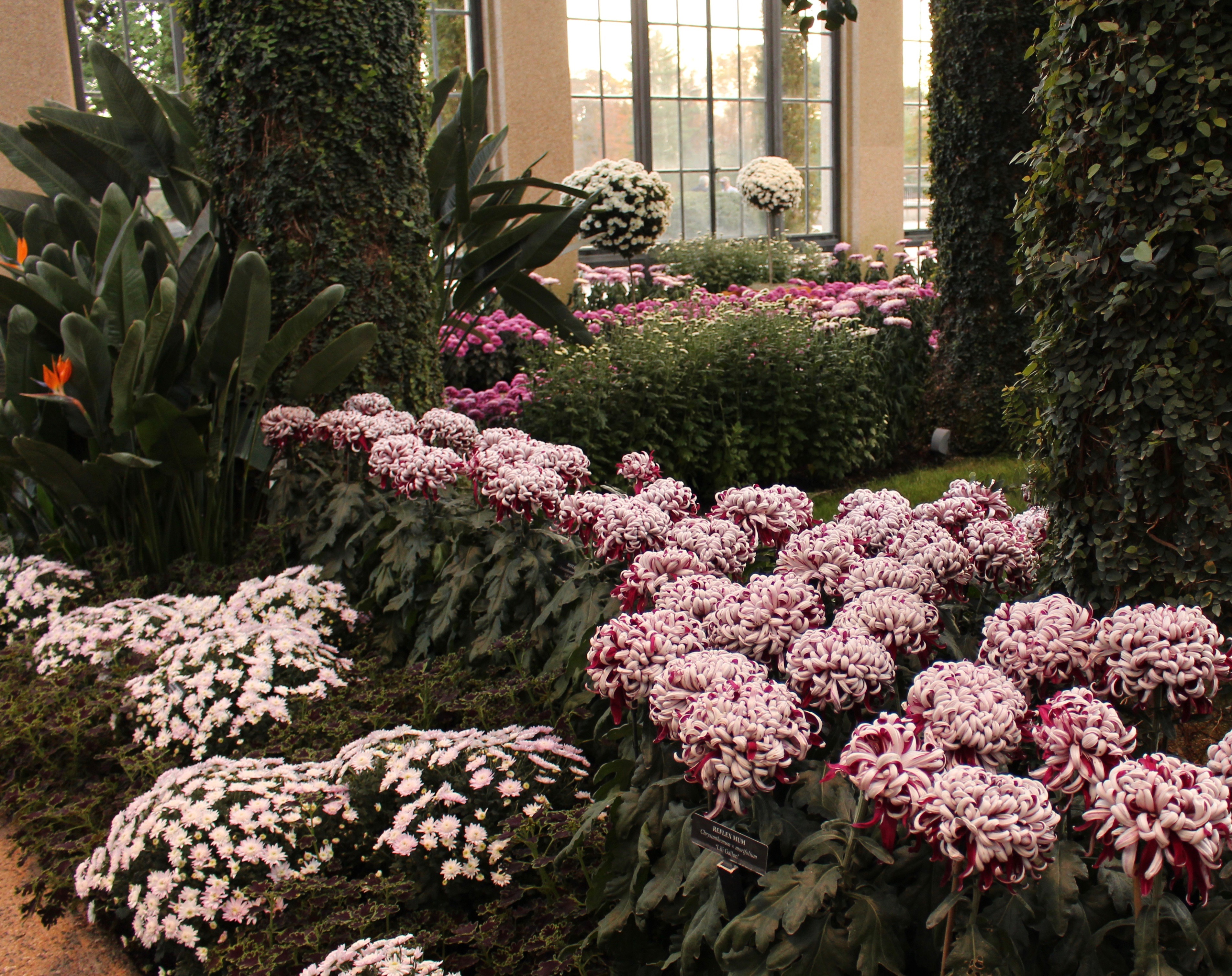
My favorite part, the explosion of yellow lining the path across the orangery.  Giant yellow chrysanthemums and a wall of yellow Salvia madrensis.   

If you’re still with me you may be wondering just how exactly you can “have less but more”, so let me try and explain myself.  There were fewer total varieties and forms, but hundreds of each.  I don’t know how you plan or find the room to grow and train hundreds (or even thousands!?) of mums to football size perfection, but apparently Longwood does.

longwood chrysanthemums

There was so much yellow here I wanted to roll in it.

The rest of the conservatories were just more wow.  I think the less I write the better, so here it is.

longwood fern conservatory

The exhibition hall, flooded with a film of reflective water and shaded by tree ferns.  The topiary are begonias and I don’t think I’ve ever liked begonias more.

longwood chrysanthemums

The ‘thousand bloom’ chrysanthemums.  A single plant grown and trained for a meticulously perfect show.  The one in back is absolutely huge.

longwood chrysanthemums

Maybe these were all the leftovers?  A merciful Longwood employee opened the one-way barrier and let me through when she saw me standing there mumbling ‘I need to go there, I need to go there’.  I loved it.  Maybe this was my favorite…

longwood chrysanthemums

If the yellow was too much there were plenty of yellow-free zones.

longwood chrysanthemums

Yeah there were a lot.  ‘Chrysanthemum Festival’ is a worthy title.

longwood chrysanthemums

And every single, last one was perfectly grown.  I suspect there’s still half a greenhouse worth of backups somewhere!

I enjoyed it.  If you’ve never been I recommend giving it a try, just know that the display comes down this weekend and the conservatories close until after Thanksgiving as they prep for Christmas, so that someday visit might have to wait until next year.

Keep your fingers crossed and faces masked in the meantime.  The kids are annoyed I didn’t take them along, and are anxious to see this year’s Christmas decorations, but with record COVID cases and rising deaths across the country and with rising numbers in Pennsylvania I don’t know how that will work out.  I’d say we can hope and pray for the best but seriously…  just wear the stupid mask and avoid the party at the bar and that will probably get us much further than some false hopes and empty prayers.

But I’m probably preaching to the choir here.  Stay healthy and have an excellent weekend and wish me luck as I finally consider my own messy garden and unplanted bulbs 🙂

Hedgleigh Spring

Garden visits have been sparse this year, but being outdoors in the warm sunshine with a fresh breeze is probably one of the safer pursuits these days, and as we approach the more confining months of winter it might be best to stretch the legs one more time before the season of long nights settles in.  I had heard that hardy, autumn blooming camellias were a thing down in the suburbs of Philly, so when a stretch of beautiful autumn weather presented itself I knew I needed to check it out.  An offer had been made last spring and my fingers were crossed that offer still stood.  It did, and the offer was just as gracious as before and a few days later I was heading South to one of the most highly regarded private gardens of the Philadelphia area.

hedleigh spring

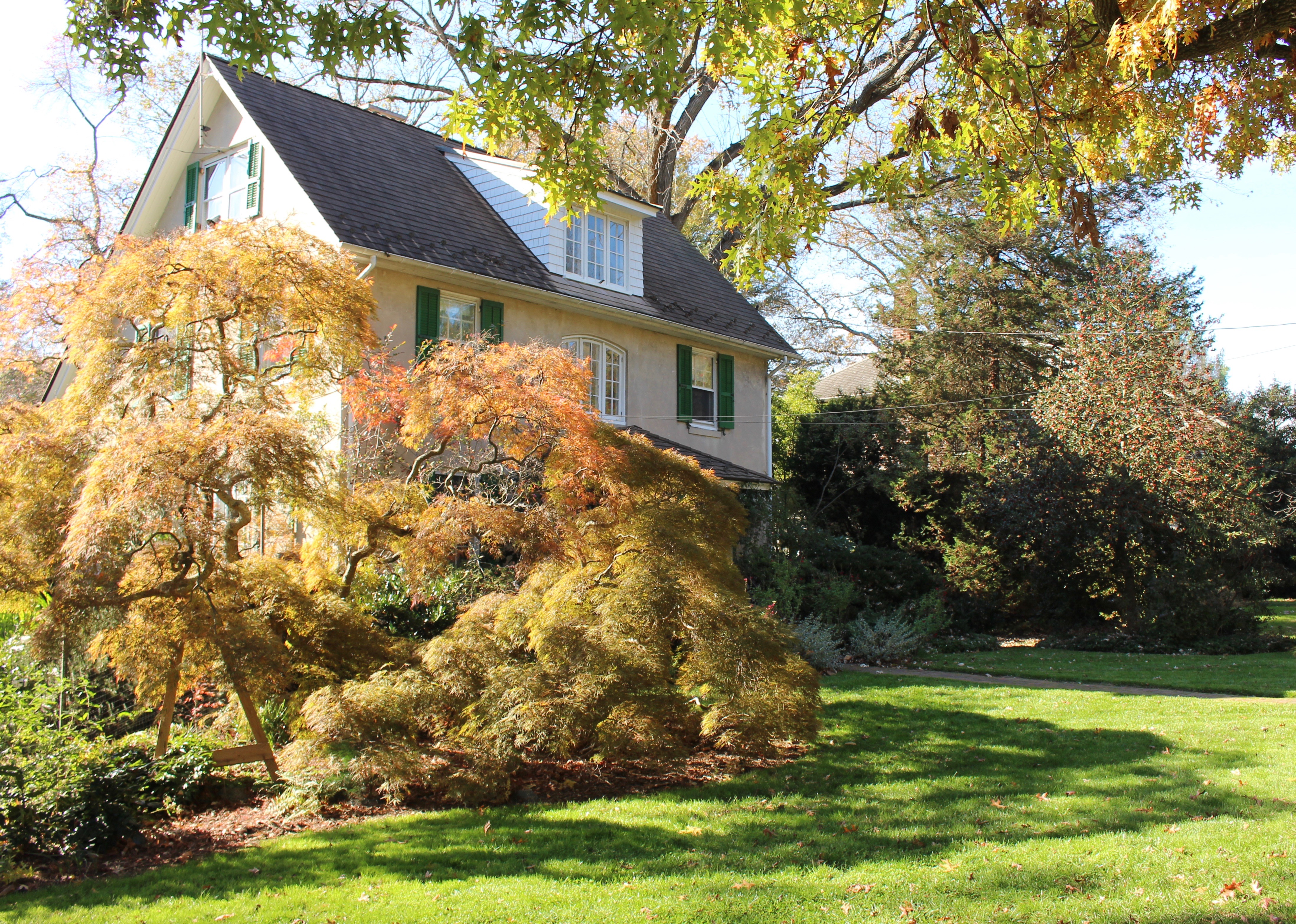
Cressons have been tending the land of Hedgleigh Spring since before Charles’ grandfather built the house over 100 years ago.  I’m going to guess the mountain of ‘dwarf’ cutleaf maple alongside the house probably dates just as far back.

November is not typically a month reserved for garden visits, but this beautifully orchestrated collector’s garden has something for every month of the year.  While other gardens are down to a pot of mums alongside the front door, Hedgleigh Spring offers decades worth of collecting, growing and hybridizing fall(and spring) blooming camellias, and melding them into a landscape already full of exceptional autumn interest.  Beautiful weather helped as well.  Blue skies, balmy temperatures and dozens of fall blooming camellias at their peak made for an excellent garden tour.

needle palm

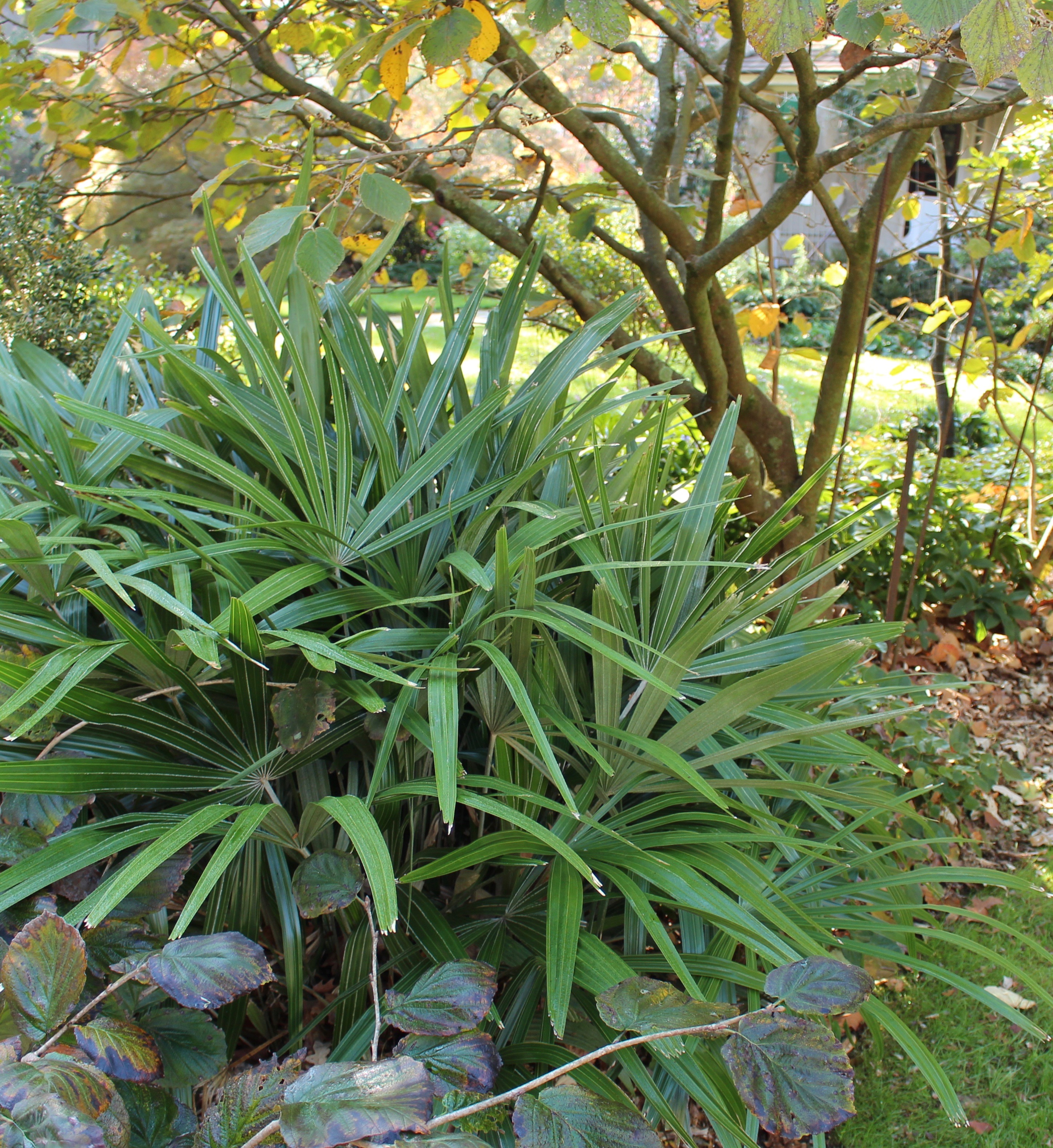
It’s a good sign when mature needle palms and witch hazels grace the streetside plantings.

We started out front of course, and for as hard as I tried (and I really thought I was doing great) I missed the names of most of what I was really interested in.  My apologies, but if you really need more info I’m sure I can find it out for you.  One of the highlights of the tour was the extensive background information for each plant, each cross, the typical growth habit, care, pruning hints… and names… everything had a name, but you can blame this visitor for losing it.

ackerman hybrid camellia

‘Winter’s Rose’.  A beautiful flower on a dwarf plant,  but I do remember Charles warning me that it’s usually too late a bloomer to put on a good show, and all those unopened buds will probably freeze off during the winter.

I did make a special effort to keep my ears open for anything which might possibly have the magical combination of early fall bloom and enough hardiness to possibly offer a show in my much colder garden.  It’s a foolish idea since decades later I can still remember how all the “hardy” camellias I saw planted around a much warmer Long Island faded away, but…. whatever.  Charles put it in a much more promising tone.  He said it would be interesting to see someone “trialing” these crosses in a much colder climate.  I’ll keep that in mind for when a brutal winter comes along and crushes my delusions with a zone 6a reality.

hedleigh spring

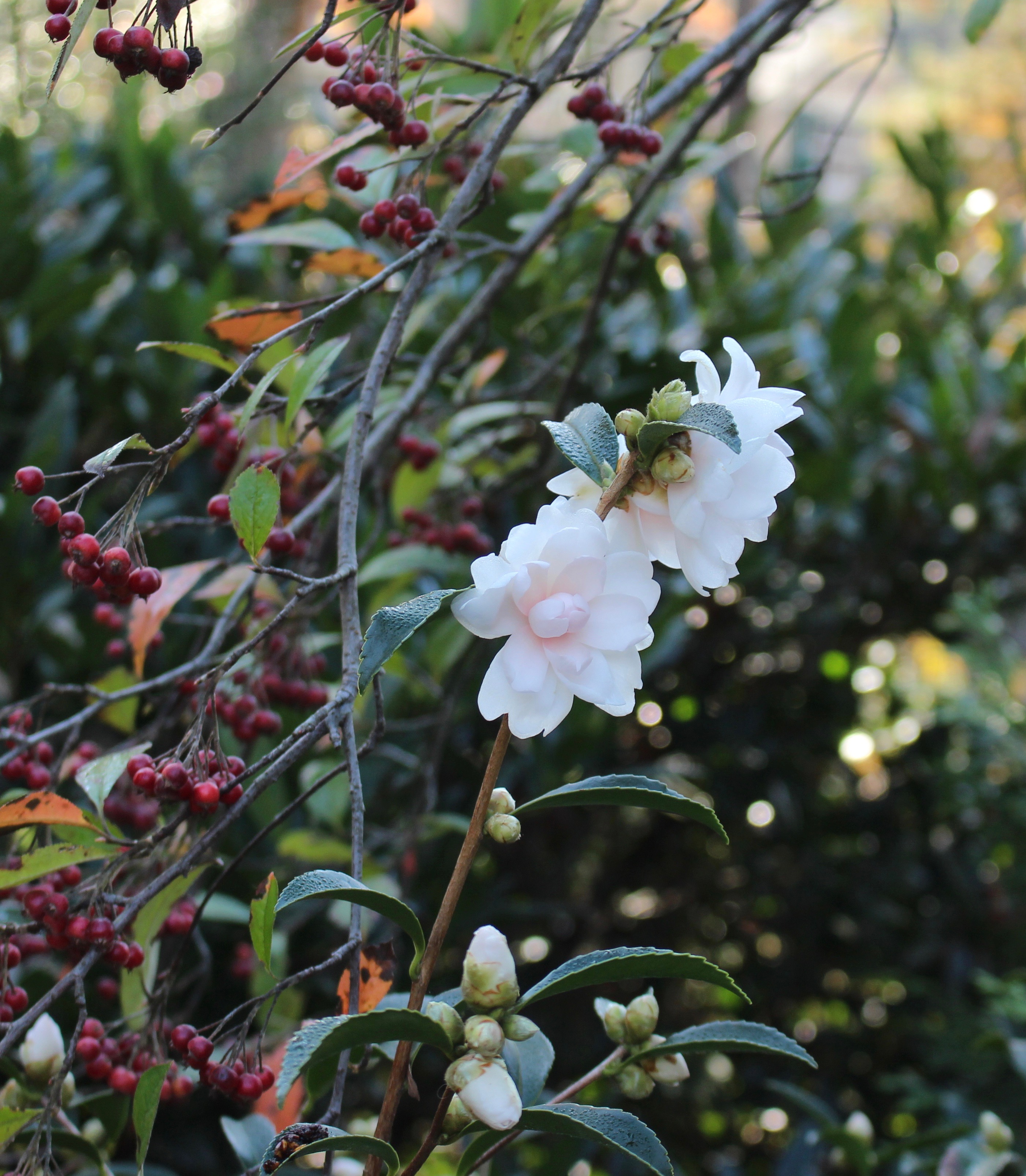
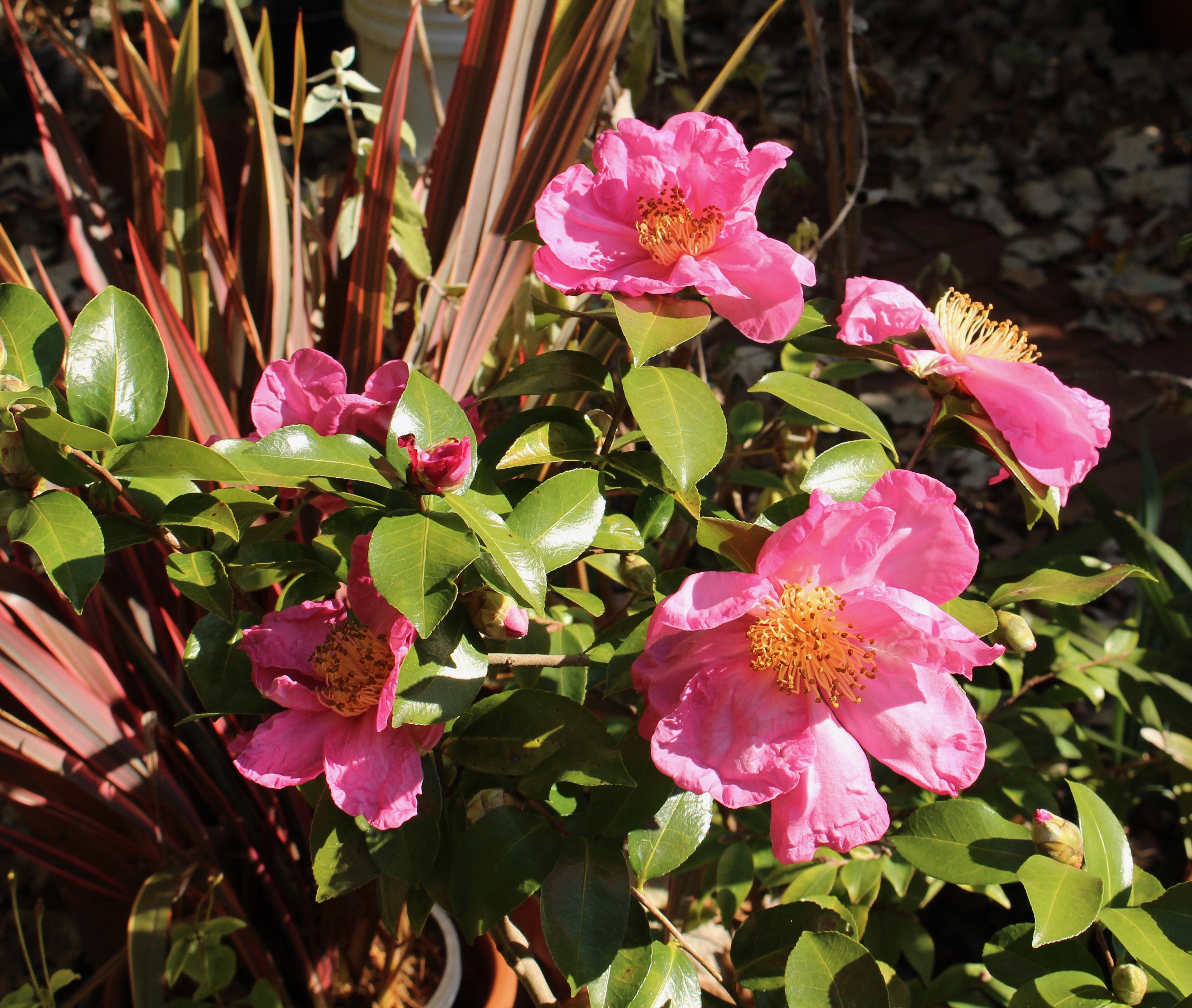
An un-named tall, fast growing C. oleifera x C. sasanqua ‘Cleopatra’ cross with plenty of buds and a long bloom season that starts early enough to beat the cold.

Although I saw many which I’d like to try I was reminded that most fall bloomers are not bud hardy and once winter sets in, any unopened buds will be lost.  For my zone, a well thought out selection would be something not only hardy, but a plant which starts blooming early, has plenty of buds, and doesn’t show damage too strongly even if it does get hit with a few early freezes.

hardy camellia

A beautiful large-flowered semi double which was just too nice to leave out.  It’s one of Charles’ un-named hybrids, a ‘Snowflurry’ x ‘Moon Festival’ cross, which has been hardy, but perhaps not unique enough to name?  It looked perfect for our visit, but Charles warned that it would be a less-promising choice since the blooms are usually later.

Some siting ideas which were shared involved avoiding the sunny warm spot which you would think is a good idea for borderline hardy plants.  I’m told full winter sun on cold, frozen leaves will dehydrate and kill.  Better to site in a winter shaded or afternoon sunny spot.

hedleigh spring

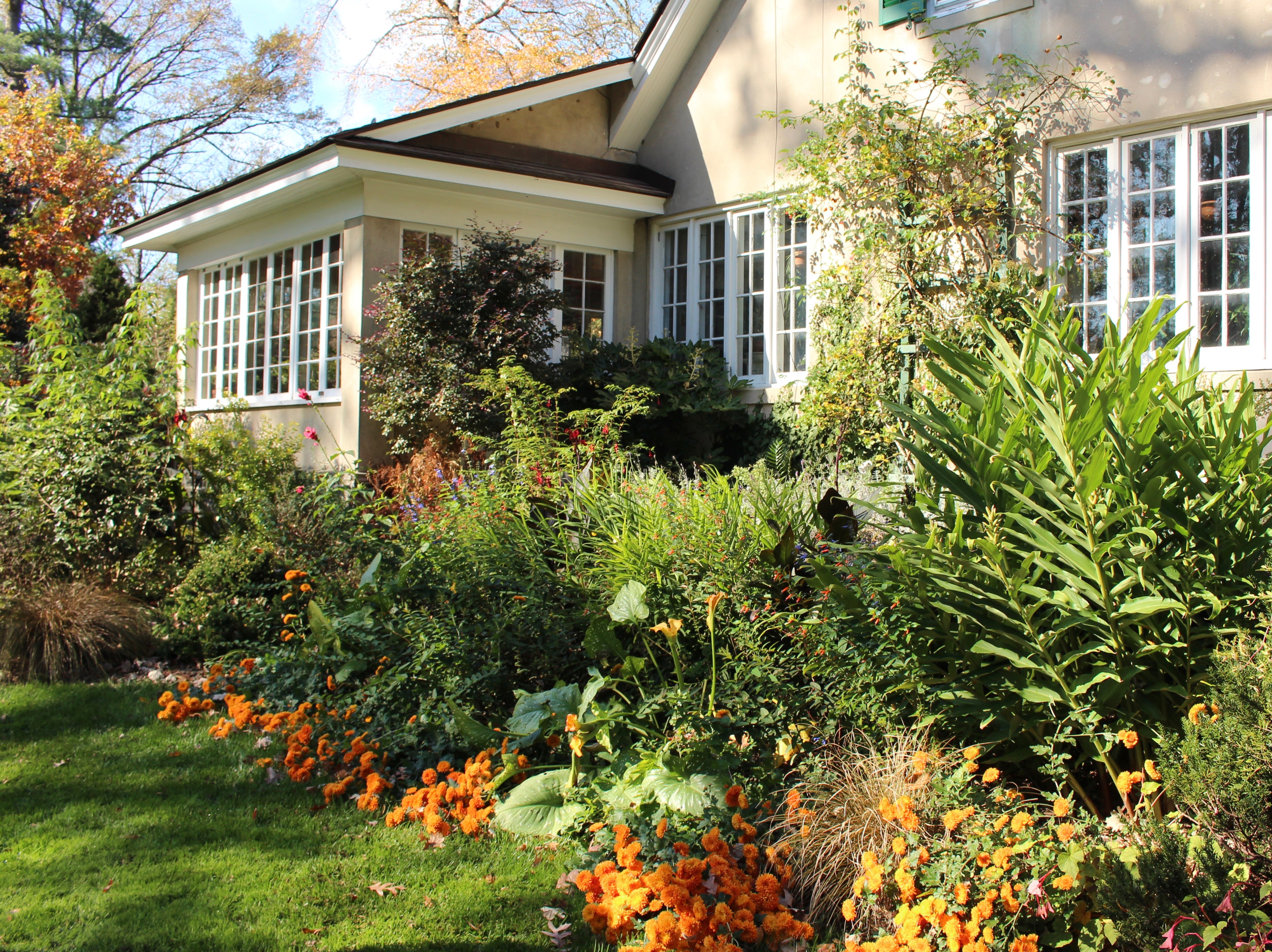
The warm nook of a Southern exposure can keep other borderline hardy plants quite happy.  Flowering gingers in need of division, loropetalum, Fatsia, and plenty of southern bulbs.  Plus orange mums, ‘Dixter Orange’ if you’re curious.

Or just hope for the best.  Creeping fig is something I’ve only seen on inside walls, and never imagined it would survive for decades on the outside, but there it was.

hedleigh spring

Creeping fig (Ficus pumila ‘minima’) alongside ‘Buttercup’ english ivy.  The fig gets frozen back each winter which is probably a good thing, but each summer it’s back.

Obviously not everything can be hardy so it was no surprise there were plenty of potted treasures which come in each winter.  One of them, a zone 8 ‘Moon Festival’ camellia, was just opening its 6 inch crepe textured blooms right on time for our visit.  The cool thing about this one is that years back it had been crossed with a hardier plant and only now two of the seedlings of the cross were showing their first flowers.  One in particular held on to the large form and wrinkled texture, so of course it will be something interesting to watch as it grows and develops.

camellia moon festival

Camellia ‘Moon Festival’ in a pot on the back patio.

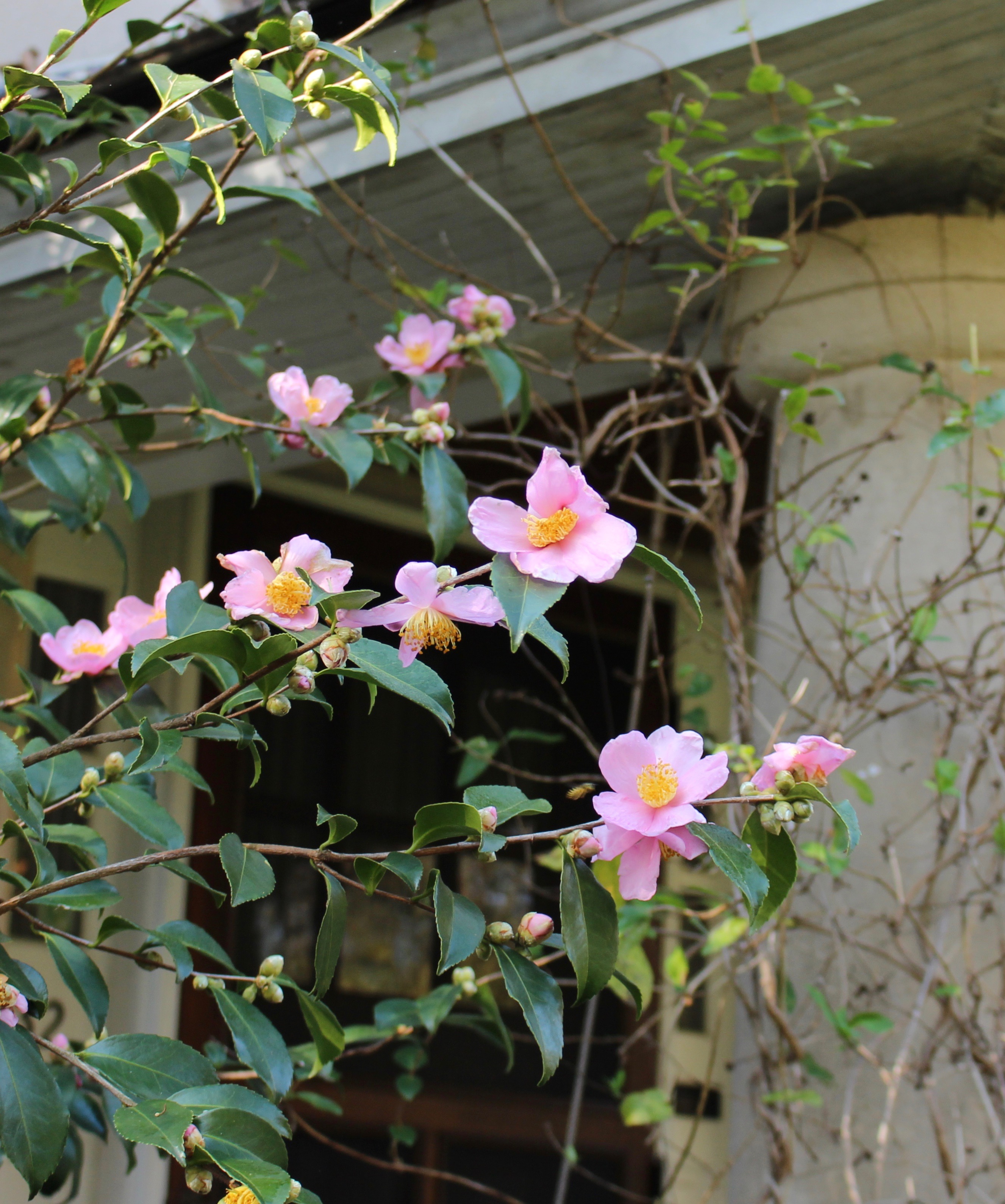
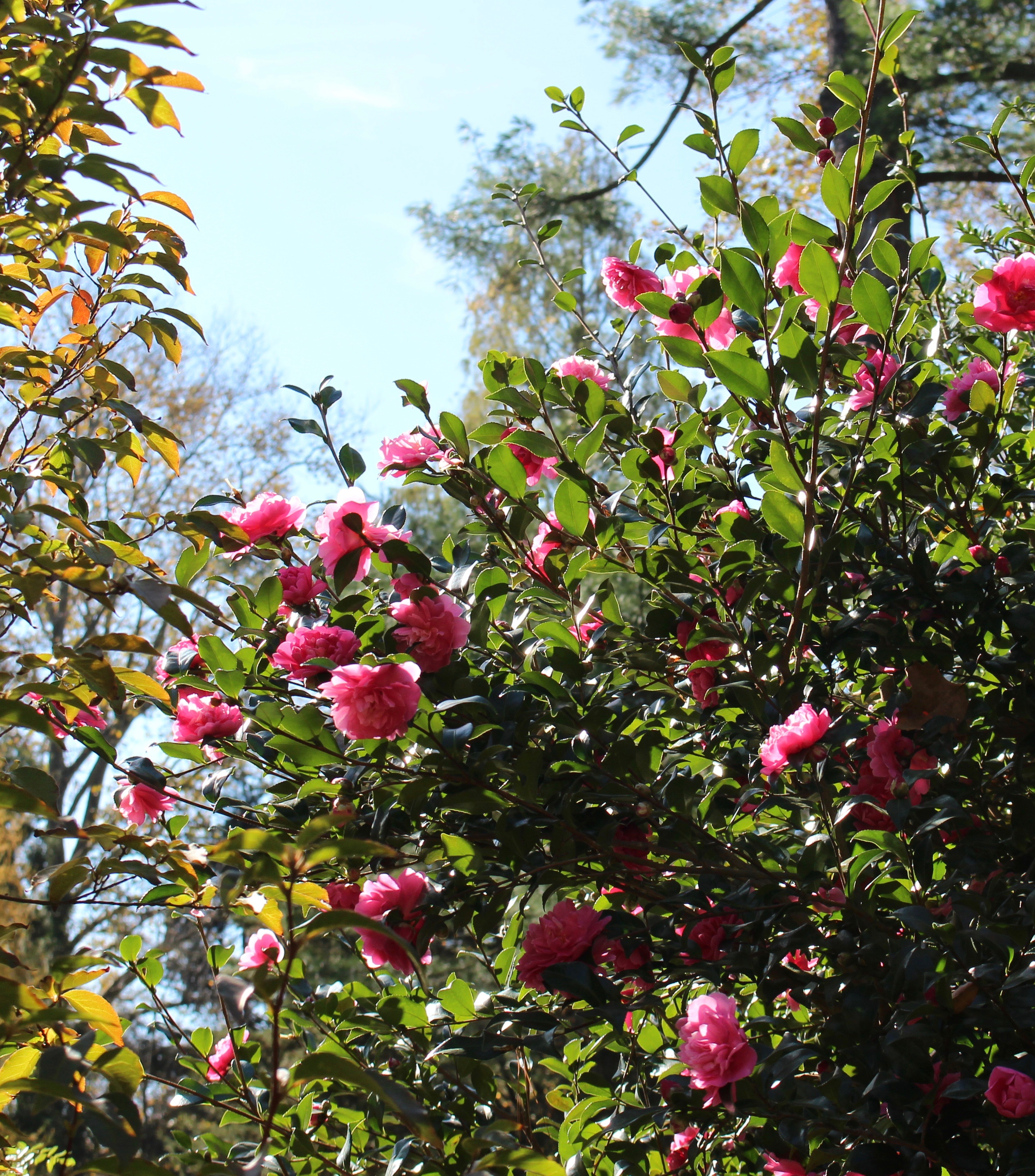
And there were more.  A particular standout was ‘Autumn Spirit’ with a deep pink color and a fairly formal double form.  Out in the open in full bloom with the blue skies and changing foliage colors around it, it was quite the show.  This might be one I risk up here in the tundra, it would be worth it.

camellia autumn spirit

Camellia ‘Autumn Spirit’

Hardiness isn’t the only hurdle.  Bad gardening also has to be dealt with, and when I saw this beautiful bank of ‘Snow Flurry’ I had to confess I’d killed mine this spring when we flipped into drought and I flipped into late spring apathy and didn’t water in time.  I may need to try again.

camellia snow flurry

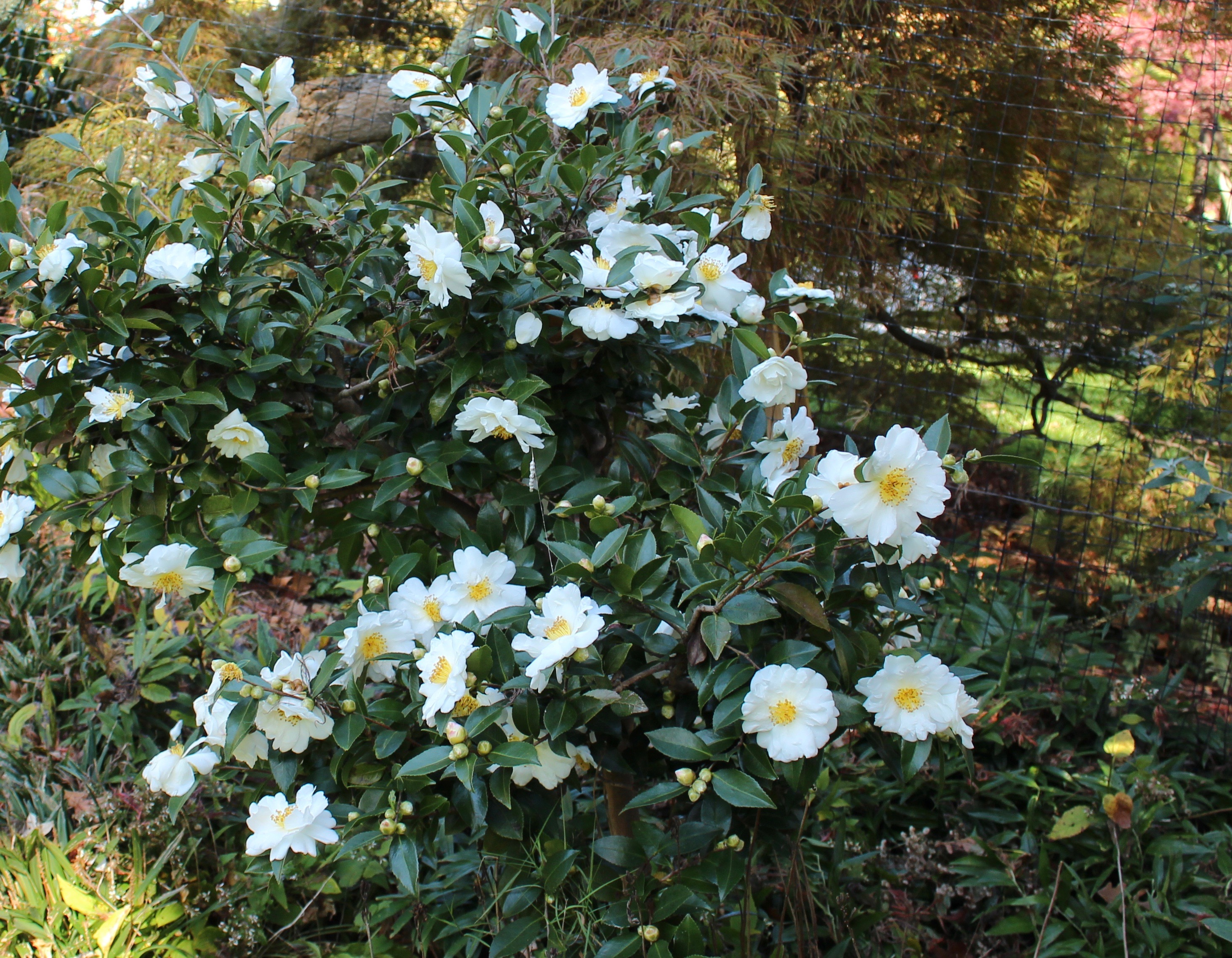
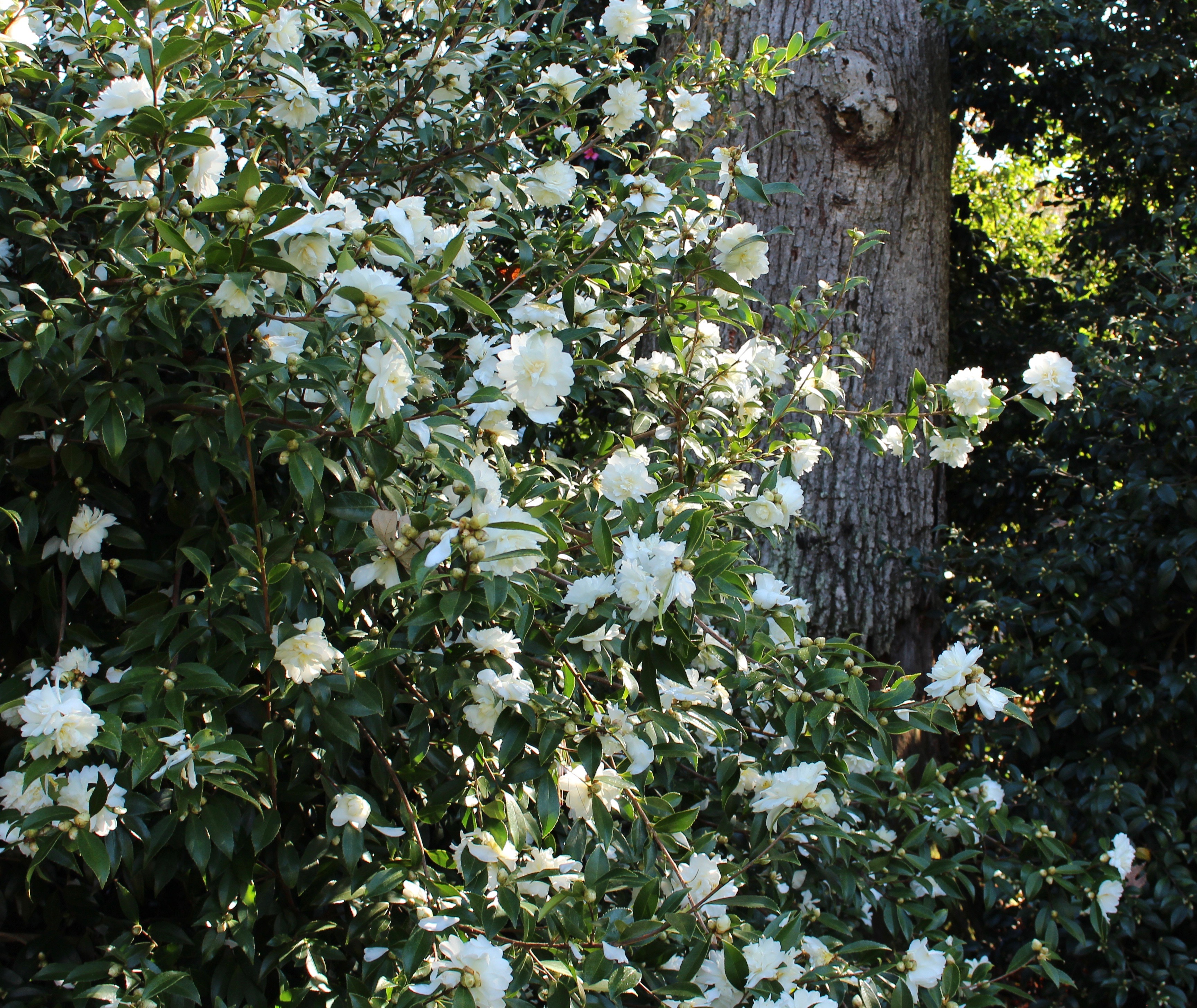
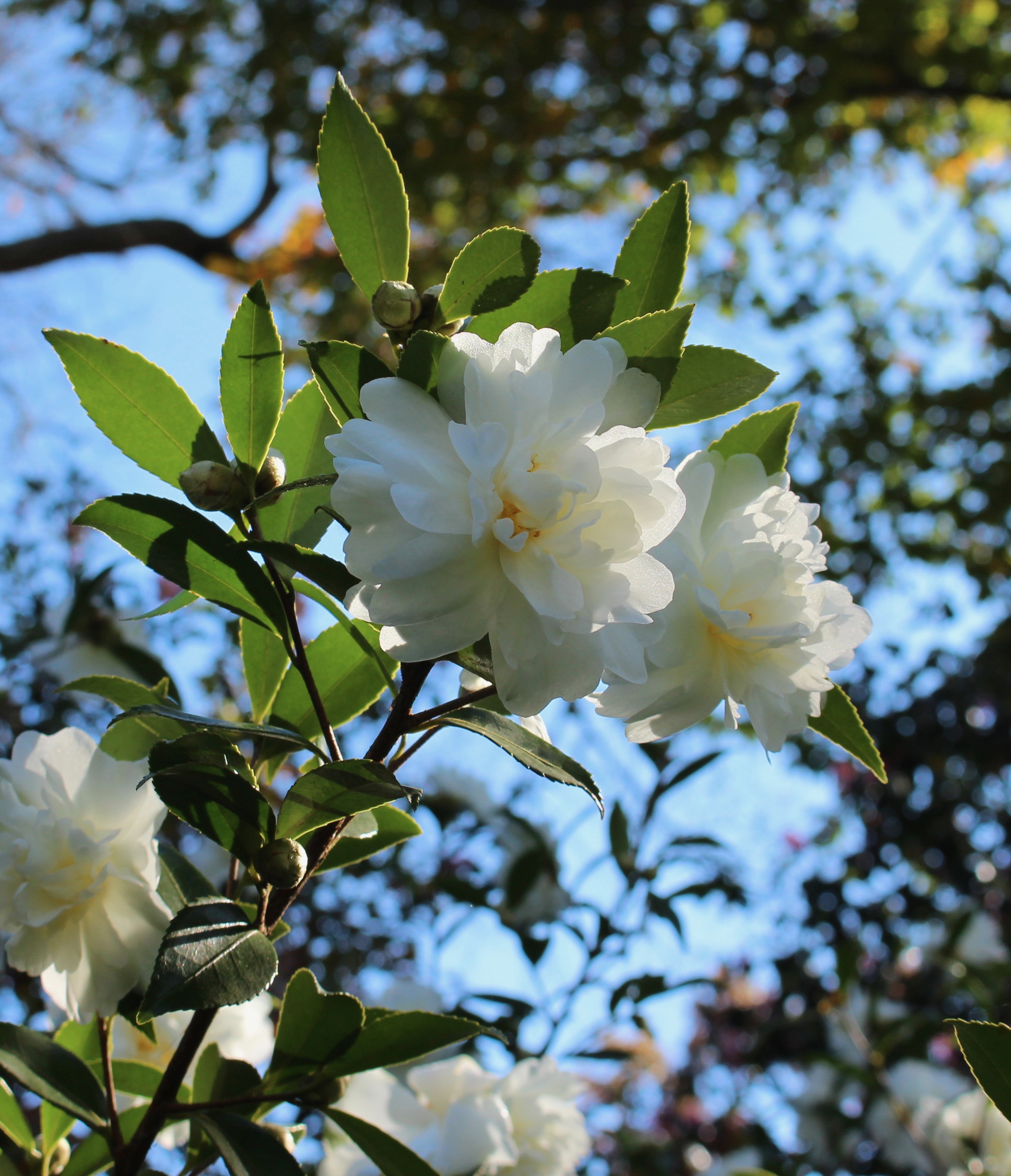
More like a whiteout, camellia ‘Snow Flurry’ was at its peak, covered in flowers from top to bottom and ringed in a puddle of spent petals.

camellia snow flurry

Camellia ‘Snow Flurry’ against the autumn sky.

Before I go on too long, I want to point out again that there was so much more to see than just dozens and dozens of camellias.  There were beautifully mature oak and bald cypress trees, banks of azaleas and hollies, southern and deciduous magnolias, perennial borders, fern gardens, woodland plantings, a vegetable and berry garden, rock garden, pond, and lots of bulbs.  Over the years Charles has made a name for himself in the bulb world and often gives talks and leads classes at Longwood and other locales in the area.

hedleigh spring

Of course fall blooming (Galanthus regiae-olgae) would catch my eye, but also notice the self sown camellia seedling and the pink flowering form of tea (Camellia sinensis) just off to the right.

My fingers are crossed that someday I can make it back for the spring bulbs, but on this visit it was all about a garden that looks good in its fall colors.

hedleigh spring

Mature trees surround the property, and of course I loved the hardy palms (Sabal minor ‘McCurtain).

Besides all the plants, the nerd in me was particularly excited to finally see the signature curved picket fence (91 ft long in case you’re wondering) which backs  a similarly curved perennial border, which blends in to mirrored rose beds on each side, and which finishes up with raised borders banked with stone (shown above with the palms).  For as much a collection of plants this garden is, it’s still focused on landscape design and plant combinations, with each one growing in a spot that shows it off well.

hedleigh spring

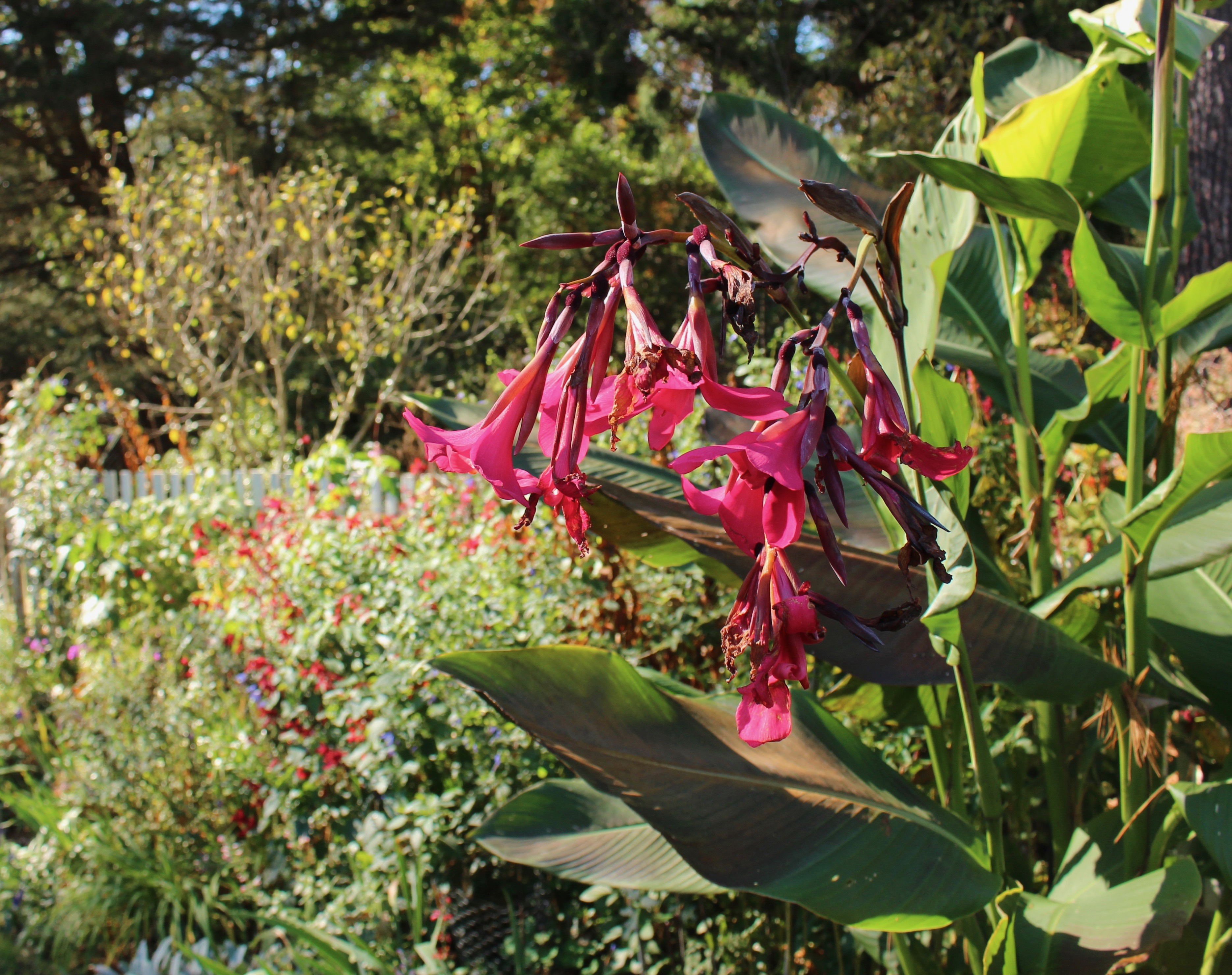
With foliage slightly singed by frost, Canna x ehemanii adds hot pink and tropical foliage to a border heavy on the warm colors of salvia and other bold summer plantings.

Actually things showed off well throughout the garden.

chrysanthemum gethsemane moonlight

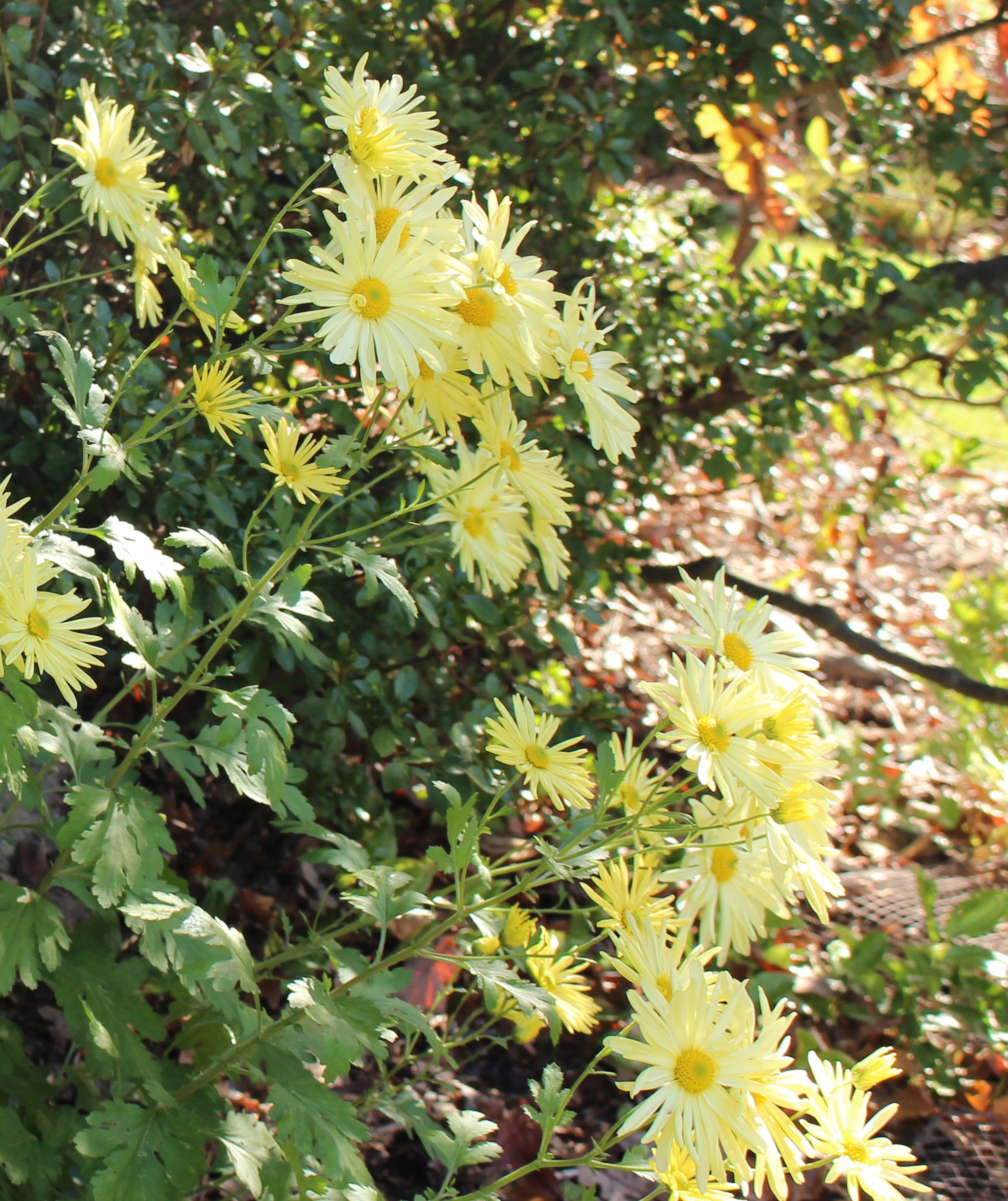
Chrysanthemum ‘Gethsemane Moonlight’

Sorry but I do have to mention one more camellia.  Charles donates dozens and dozens of seed varieties each year to (among other places) the Hardy Plant Society, Mid Atlantic group seed exchange.  Over the years I’ve tried quite a few, and as we wandered the gardens it was fun to see the parents of many of my plants.  Camellia ‘Survivor’ was named after surviving a cold snap which many others did not, and it’s one of the parents of seedlings here in my own garden.  Hopefully the now 18 inch seedling growing here will someday also show off those hardy genes, and give this gardener a fall flower or two.

hardy camellia survivor

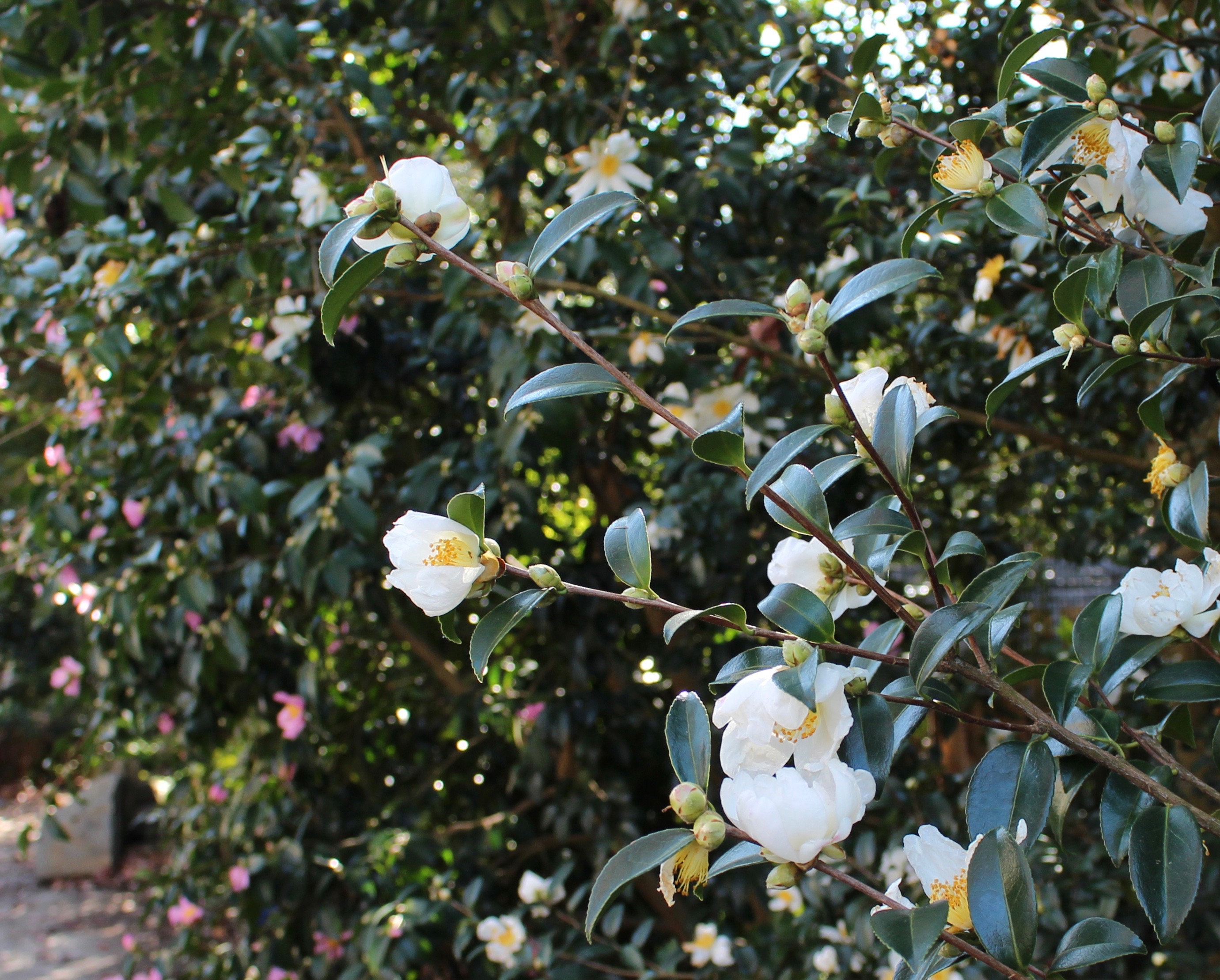
Camellia ‘Survivor’.  Charles actually encouraged me to reach up into the small tree and take a few ripe seed pods.  I tried to act like it was no big deal and even shared a few with the others.

And then the tour started to wrap up.  We heard car doors slamming as another group arrived, but fortunately there were still a few minutes for one last dash out back to the creek which runs through the back end of the property.  Yes, there’s even a creek… and a small wet meadow area…

hedleigh spring

Cypress knees holding one bank while recycled concrete from a sidewalk redo hems in the other side.  I was surprised to hear that this innocently clear and calm creek can burst up over its banks by several feet in a good storm.

So that was it.  We had already stayed way too long but even on the way back to our cars there were things we had somehow missed the first time through.

crocus speciosus

There were hundreds of Crocus speciosus in the front yard, but a surprise bunch in back caught the light perfectly.  I have to try this one again, mine were never this nice.

It was a great morning and besides seeing a lot, I also learned quite a bit.  Thanks again to Charles for all the time he spent with us, if we were pests in any way he never let on, and hopefully when he mentioned how the meadow along the creek was just filled with early bloomers he meant that we should see it some day!