April, May and June, all in one week

I’ve been hiding.  Our temperatures spiked up to 92F (33C) last week and watching the wilted daffodils and tulips being thrashed by the dry wind was just too depressing.  In a few hot days three weeks of bloom flew by and it’s now mostly over.  The temperatures finally dropped today but I still wish we would get some rain before the grass completely yellows.  I don’t like a dry spring.

Fortunately May is still May, and regardless of the weather there’s still plenty to be happy about!

growing perennials from seed

At least my winter seed sowing is paying off. This year I have my first frittilarias and tulips from seed, and it’s endlessly entertaining to search the pots for the latest sprouts.

Between NARGS, HPS, and American Primrose Society seed exchanges I have plenty of pots of little goodies to experiment with, and as long as nobody mentions the fact I have no room for most of these, I think we’ll all just enjoy the enthusiasm of the newest little sprouts in my garden 🙂

lilium martagon seedlings

Martagon lily seedlings going on to their third year.  At this rate there’s not much rush to find more room.

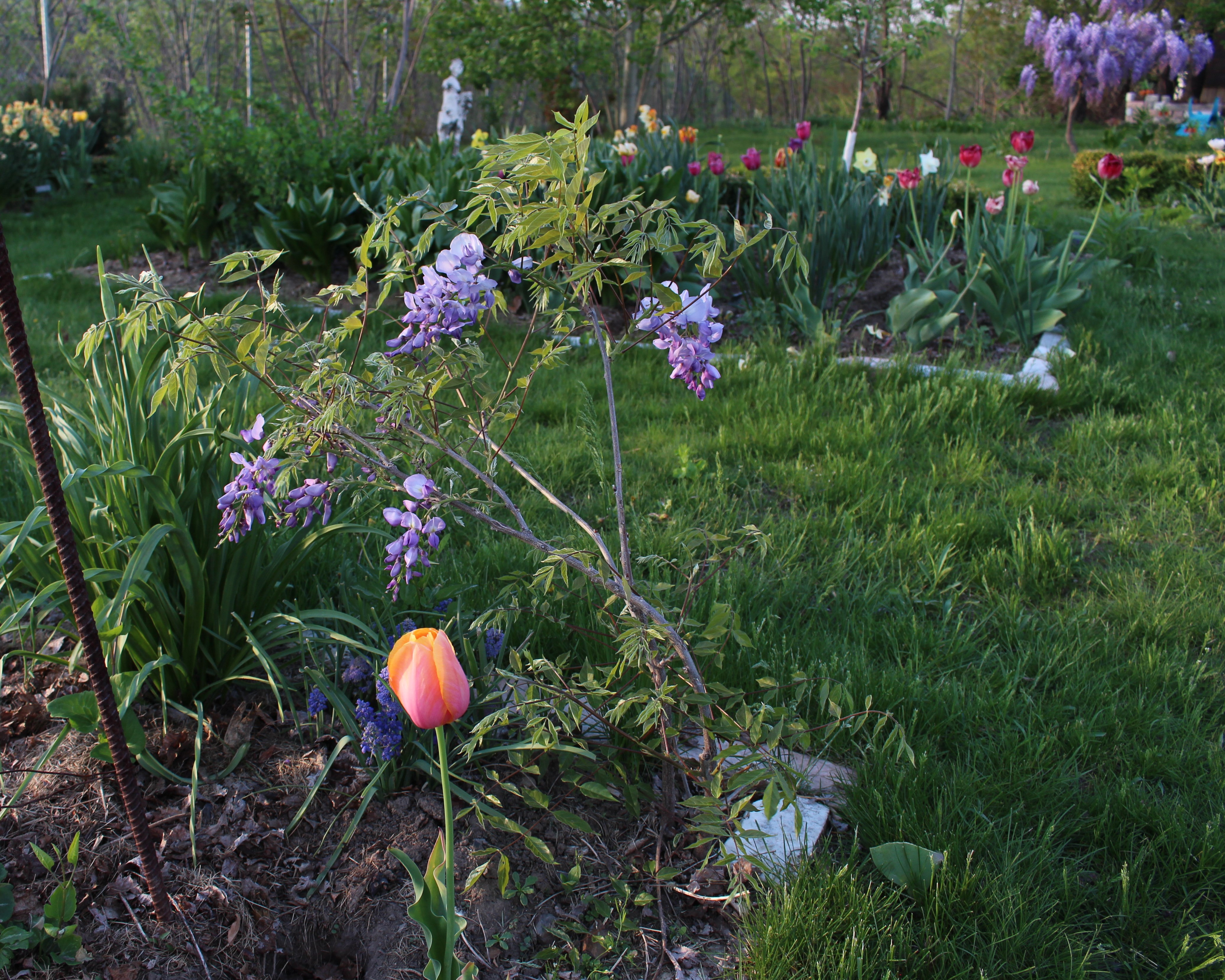
In addition to bringing on the seedlings the heat brought the wisteria from buds to blooms in barely four days.  Last spring was a total loss due to a harsh winter and late freeze, but this year about half the buds survived.  I don’t even miss the lost buds, it’s still full of flowers.

standard wisteria tree

Japanese wisteria planted out in the meadow.  Without anything nearby to grab onto and climb I think it’s invasive tendencies can be kept under wraps.

Maybe you noticed my sad little fritillaria imperialis blooming behind the wisteria.  The hot wind wilted the flowers quickly but I managed to get a photo of the interesting inside of the hanging blooms.

fritillaria imperalis nectaries

The nectar drops at the inner base of the fritillaria imperalis blooms.  A cool thing to look at, but it’s just a bit too “glandular” in appearance for my tastes!

The fritillaria will be something to keep my fingers crossed for in order for it to survive, but the japanese wisteria cannot be mentioned without a warning about it’s invasiveness.  Killing it would be far more work than the neglect which keeps it alive, and to turn your back on this plant runs the risk of having it take over.  I keep it in the middle of a lawn area were it cannot grab onto anything, to grow it as a vine and keep it on anything less than a massive arbor would be more work than I want to consider.
wisteria that doesn't refuse to bloom

Some seed grown wisteria may take decades before they finally decide to bloom, mine is a cutting off my parent’s plant which has always put on a heavy show of flowers.  Even this sucker which came up last year after I moved the mother plant already has a few blooms on it.  A smart person only needs one wisteria, I’m not sure why I’m going to keep this second one 🙂

Speaking of plants which wouldn’t mind taking over the world, I think I’ve finally decided against keeping this darker purple vinca minor.  I like it well enough but without a border or wall to hold it back it’s spreading out just a little to enthusiastically.  This plant (and my wayward campanula glomerata) are officially on the elimination list.  I might put some of it next door in one of the boring mulch beds around my mother in law’s house.  It’s not that hard to rip out, improves the look of an empty mulch bed immensely, and between the house and lawn it shouldn’t get into too much trouble.

vinca minor atropurpurea

Vinca minor ‘atropurpurea’.  A good groundcover in the right place, but a little to aggressive for my beds, and I wouldn’t want to let it escape into the wild. 

Before the heat struck I did manage to finish up a little hard labor.  The front house bed has had a once over, been expanded and topped with new mulch.  I forgot who gave me the idea, but I divided up the blue fescue clumps and spread them far and wide across the front of the border.  I like it, which isn’t something I could say the last time I redid this foundation planting.

mixed border foundation planting

The front foundation planting looking all springy.  Any opinions on the pink rhododendron in front of the brick?  I have mine, and it involves a shovel 🙂

The bed along the front of the house has been one of my favorites this spring.  The shelter of the house gives a little protection from the drying wind and my mulching has kept down many of the most annoying weeds.  Some would say my thistles are weeds but I think they’re fantastic.  You’re not going to want to touch them though….

Ptilostemon diacantha

Ptilostemon diacantha.  I can’t wait to see this one bloom (even though the blooms may be slightly anti-climactic) and will surely collect seeds if I get that far… using gloves of course 🙂

Something a little more suburbia-friendly are the tulips and camassia.  It looks nice enough here but I may remove a bunch of the camassia.  In the heat I don’t think they’ll last more than six days, a little too short of a bloom period for my tastes although I can’t complain about how carefree they are.  Maybe I’ll try them somewhere less prominent.

tulips and camassia

Tulips and camassia highlighting the front foundation planting.  The blue fescue has been divided up and spread all along the front now and I think it looks better than the gappy line which was there before.  Funny to think these are all the descendants of a single moth-eaten clump which I rescued from a neighbor’s yard. 

Close up the camassia are an airy, beautiful flower, and I think to see it growing en-mass in its native Western North American haunts would be great.  Maybe someday.

camassia leichtlinii caerulea or 'blue danube'

Camassia leichtlinii caerulea or ‘blue danube’, I’m not sure which since I planted both but they all look identical to me.

Iris season is next.  The stalks are shooting up all over and it makes the rapid passing of the daffodils feel a little less painful.  I’m sure it will be a fantastic year for iris…. unless that’s the exact point when the rain decides to come.

iris pallida 'variegata' in a mixed border

I always forget to divide the awesome iris pallida ‘variegata’.  It’s one of my favorites but seems to like more frequent division and better soil than some of the others.

So that’s it from here.  I have to apologize for not responding to comments or leaving any on the blogs I visit,  I’ve been keeping up with the reading but for the most part have been just too grumpy and unmotivated to add any productive comments.  But there’s hope.  The first irises are opening today and I’m already feeling better.  This sounds good, but unfortunately the weekend is already filled to capacity with field trips, birthday parties, dance recitals, sports banquets and baseball games and I’ll be lucky to even step foot in the garden for a few days.

But it’s almost Friday, and I hope a great weekend is had by all!

Refueled and ready to go

I got a good dose of the tropics last Saturday.  The Mid Atlantic group of the Hardy Plant Society organized a tour of the Michael Bowell garden down near Philadelphia.  Michael is the owner of Create-a-Scene, a florist/indoor-outdoor landscaping/container planting/nursery owning/seasonal decorating service which is well known around the country, and in addition to the business Michael is both a long-time Philadelphia Flower Show fixture and an in-demand speaker on all sorts of plant topics.  My intro may be somewhat lacking and vague but hopefully the garden pictures tell a better story.

michael Bowell create a scene

Not your average porch plantings, this one comes with a ton of tropicals, fancy pottery, and random art. The hanging baskets are filled with what I think are those odd tropical pitchers (nepanthes) which end each leaf with a bug-unfriendly pitcher trap.

The focus of the visit was Michael’s extensive (addictive maybe?) collection of tropical plants which are arranged throughout the gardens.  All of them out for the summer and then in for the winter, and even with Michael’s four greenhouses the task seems overwhelming.  Plus on top of that it’s not just a handful of coleus and a potted mandevilla, it’s all kinds of species and families and rare cultivars….

michael Bowell garden

The sheltered side garden of Michael Bowell’s garden. Art, ponds, fountains, arbors, pergolas, and plants… lots of plants. I think most of this garden around the house is mobile and the plants will soon be trimmed and the pots moved back under shelter.

This autumn garden visit by the HPS seems to be an annual tradition and is the setting for an informal cutting swap of whatever members bring along.  The icing on the cake however was Michael’s generosity with his own cuttings.  As long as care was taken, members were allowed to take cuttings of any particularly irresistible plants they came across along the way.  I tried to show restraint but then as soon as the formal tour ended I had to run around one last time to snip a few begonia, geranium, and coleus cuttings.  I’ll let you know how I make out 🙂

michael Bowell create a scene

I felt like it was a garden that almost required entertaining. Seating areas and enclosed spaces really defined the different parts of the garden.

For as interesting as I found the garden, it took me a few minutes to work through my anger issues before I could really enjoy the garden visit.  I was a little irritated with that the powers that be for sending rain showers on the one morning I wanted to do an outdoor tour.  Nearly three months without any serious rain and there we were driving an hour and a half through steady rainfall and then later dodging puddles and soggy lawn.  Luckily we only dealt with one brief shower during the tour and then clear skies thereafter (of course my own garden received nothing more than a light drizzle all day).

lacebark pine pinus bungeana

I think I should finally get myself a lacebark pine (pinus bungeana). My garden is short on evergreens and I love this bark. It’s a clumsy looking tree though and might need quite a bit of pruning and training….

My pictures really don’t do the garden justice and the recent downpour had plenty of autumn leaves falling down on everything, but I hope you can get a good impression of the plants and plantings.  My impression of it all has inspired me to evict the sunflowers and bring the tropical garden back to its full gaudy lushness next year!

michael Bowell garden

I resisted taking any flowering maple (abutilon) cuttings since I have no faith in my ability to overwinter them…. but this tall, red veined flower was delicious and when it showed up in front of a purple ornamental grass I knew I’d need something similar next year!

The tour doesn’t end with the garden, Michael is also an expert on orchids and has a couple greenhouses set up to entertain this passion.  Oh and did I mention the two story high greenhouse which abuts the house?

michael Bowell garden

How cool is an outdoor deck enclosed by the greenhouse? A dinner out on the deck in January amongst the tree ferns and palms sounds like a good antidote to snow.

The garden is a treasure chest of ideas and creativity.  To me it seems like someone came up with an idea and then ran with it, whether that meant carving out a new garden, training a new plant, or scaling a 60 foot tree to hang a little sculpture.  Most of the sculpture is metal and neon art by Simple and it’s hung throughout the gardens.  I bet it gives off an awesome atmosphere at night when all lit up.

michael Bowell garden

I think this is my first garden tour where an invite was extended to go out through a window onto the roof (future enclosed sunporch) in order to get a nice overview of the gardens. An in-training weeping katsura (Cercidiphyllum) dominates and encloses the far end of the garden.

Oh and dogs, fish, parrots, and poultry also share the garden.  What better construction to place at the end of the vegetable garden than a poultry house?

michael Bowell garden

A real beauty or plain ugly? Regardless of your opinion I’m sure this display would melt the heart of any turkey hen.

The majority of my photos were out of focus, overexposed poo-poo, so I’ve got nothing on the vegetable and fruit gardens, but let me slip in one last picture which shows some of the main tropical beds.  These included several areas of full and lush plantings, stuffed with all sorts of exotic goodies… I thought they were perfect 🙂

michael Bowell garden

I need to give my own variegated miscanthus more room next year to develop, and definitely put it close to some dark leaved cannas and elephant ears. Cool.

All this tropical inspiration gives me plenty of ideas for next year.  I think it’s time again to pack a bed full of completely unreasonable, inappropriate, overblown leaves and flowers.  I’ll ignore the amount of work it takes until it’s too late and see what happens.

These are the dreams which will keep me going until we finally get some nice rains and good planting weather.  I’m sick of this dry, dusty crust that passes for soil and it’s a shame to be thinking next summer when I should be excited about tulip planting and perennial dividing.  I’m sure it will come soon enough though!

Cook’s Treat!

A friend of mine likes to use the term “Cook’s Treat”.  I think he picked it up from Nigella Lawson’s cooking show, and likes to call out the phrase whenever he snaps up a particularly tasty leftover trimming or yummy browned crust.  The cook’s the one doing all the work, shouldn’t they get a break now and then?

Now my interpretation of “Cook’s Treat” is more like taking a swig of wine when I pass it to my wife for the shrimp scampi pan, so my version is a little different….. but why not try using it all over the place?  I’ve been tiling in the basement this summer, so how about a “tiler’s treat”?

new chocolate colored terra cotta pots

“Cook’s Treat” was called a few times on trips to the DIY store. Clearance sales, new pots, and irresistible plants all helped make lugging 75lb boxes of tile tolerable.

On yet another trip for mortar and grout I stopped in at a local store which specializes in liquidating odds and ends from other retailers.  Last year this store got in a load of pottery which included some chocolatey colored Italian terra cotta.  I carefully (and frugally) bought only two pots at that time.  On this visit I had my fingers crossed for an end of year sale, and almost let out an un-manly squeal when I saw 40% off.  Four more nice sized pots for just under $7 each and some $2.50 bags of potting soil came home.  The money I saved went towards an emergency nursery stop, and I picked up a dusty pink cape fuchsia (phygelius), purple aeonium, and a variegated hebe.  They were not on sale, but still a bargain compared to all the time and money spent on the stupid tile.

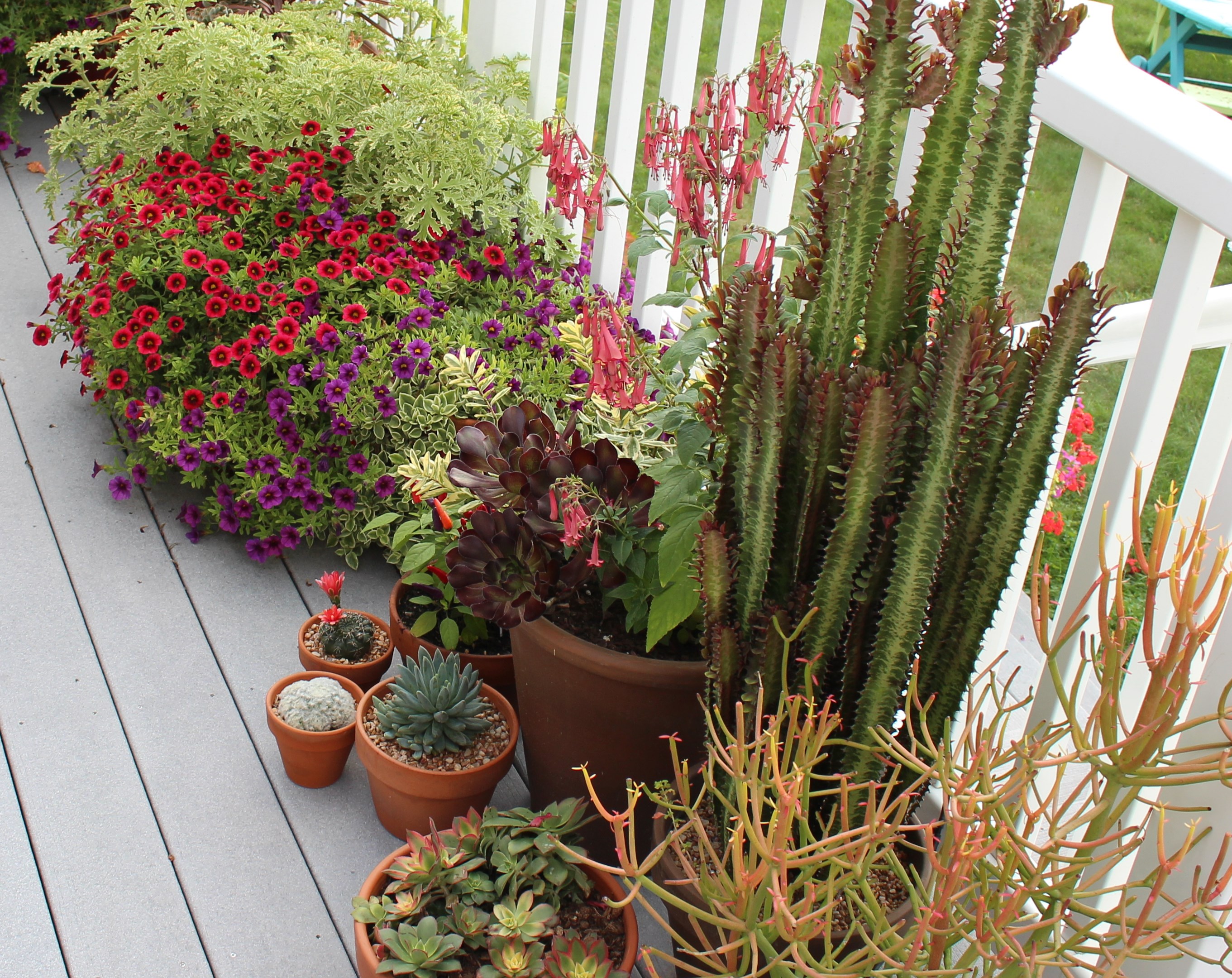
container plants for deck

You see deck flowers here, I see pots from last year and about five new pots which will all either have to come indoors or find some other safe spot for the winter.

New pots are becoming a problem.  The terra cotta and glazed ceramic that I hated when younger are now irresistible and I’m always bringing home another one or two.  I wish I had access to fancier ones (and could afford them) but for now the Depot and Lowes are nice and convenient.

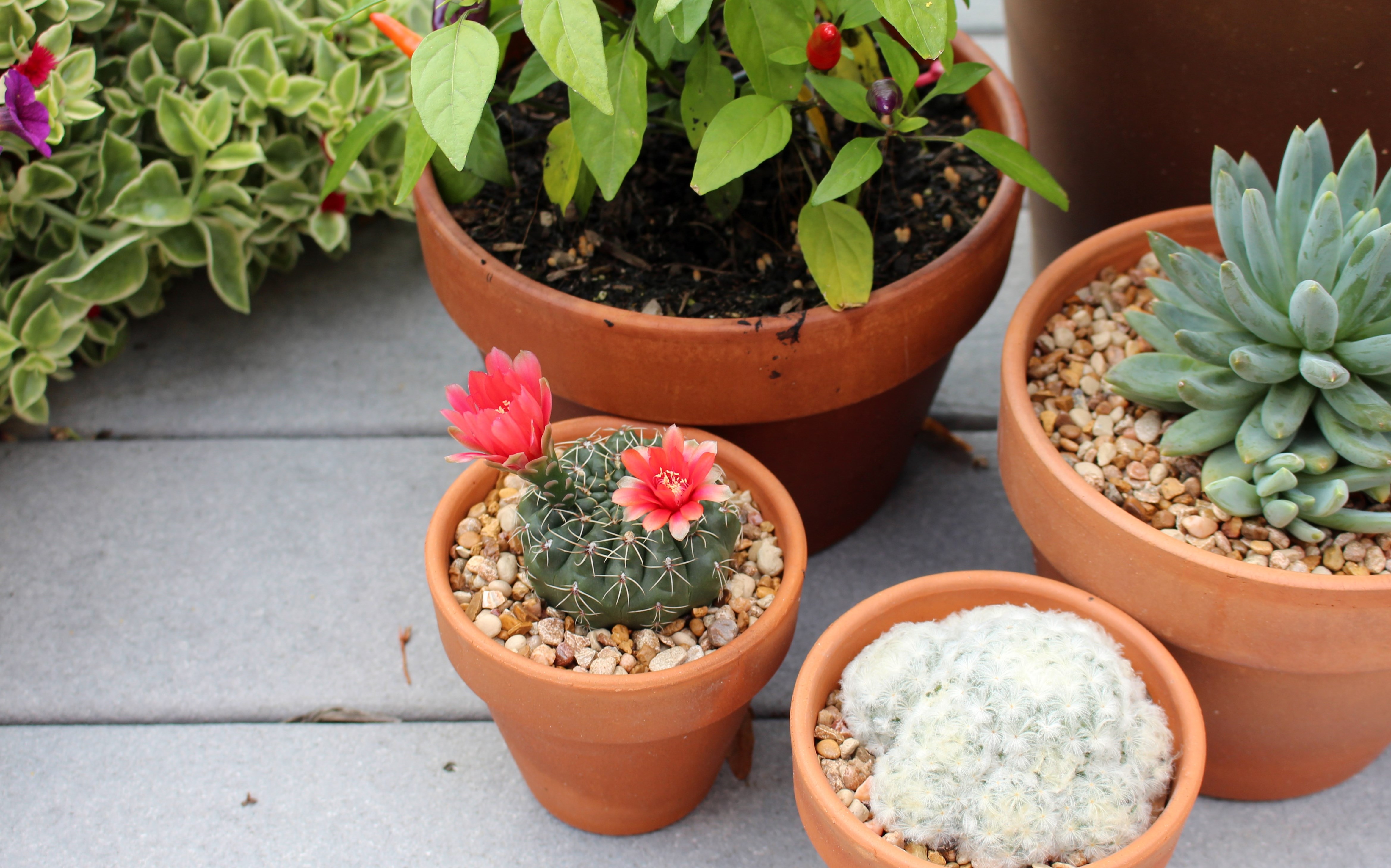
blooming cactus

The cactus and succulent need a nice heavy pot to keep from tipping over, plus unlike plastic the terra cotta breathes, and even when overwatered the roots still get enough air to not mind.

Just how bad it’s become will only really show up in another few weeks when I need to find wintering spots for them all.  Even if I don’t bother and let the plants freeze and die, the clay pots can’t.  They’re porous and absorb water and when that water freezes and expands inside the clay it will likely crack the pots.

miscanthus in pots

The miscanthus divisions from this spring have grown huge, and although they are planted in red plastic pots which can be left out all winter without being damaged, the plants will die when winter hits.  In pots, exposed out on a deck, plants generally lose about two hardiness zones.

Not everything is in fancy terra cotta.  This pot features a struggling pitcher plant which is the focal point of my exciting new bog garden.  Although there were a lot of complaints when certain family members discovered their ‘favorite popcorn tub’ was the only container I could find without drain holes, I think it’s working out fine.  I just wanted to add that things would be much greener if it didn’t dry out completely when I took the kids on a long weekend visit to my parents.  Apparently someone here thought the weak rain we had would be enough to keep it alive…. regardless of the explicit watering instructions I left for this one little pot!

container bog with pitcher plant

Rather than bear the label of “too cheap to buy a real pot” I’d like to think of this as recycling, or upcycling one of the many disposable plastic things children generate.

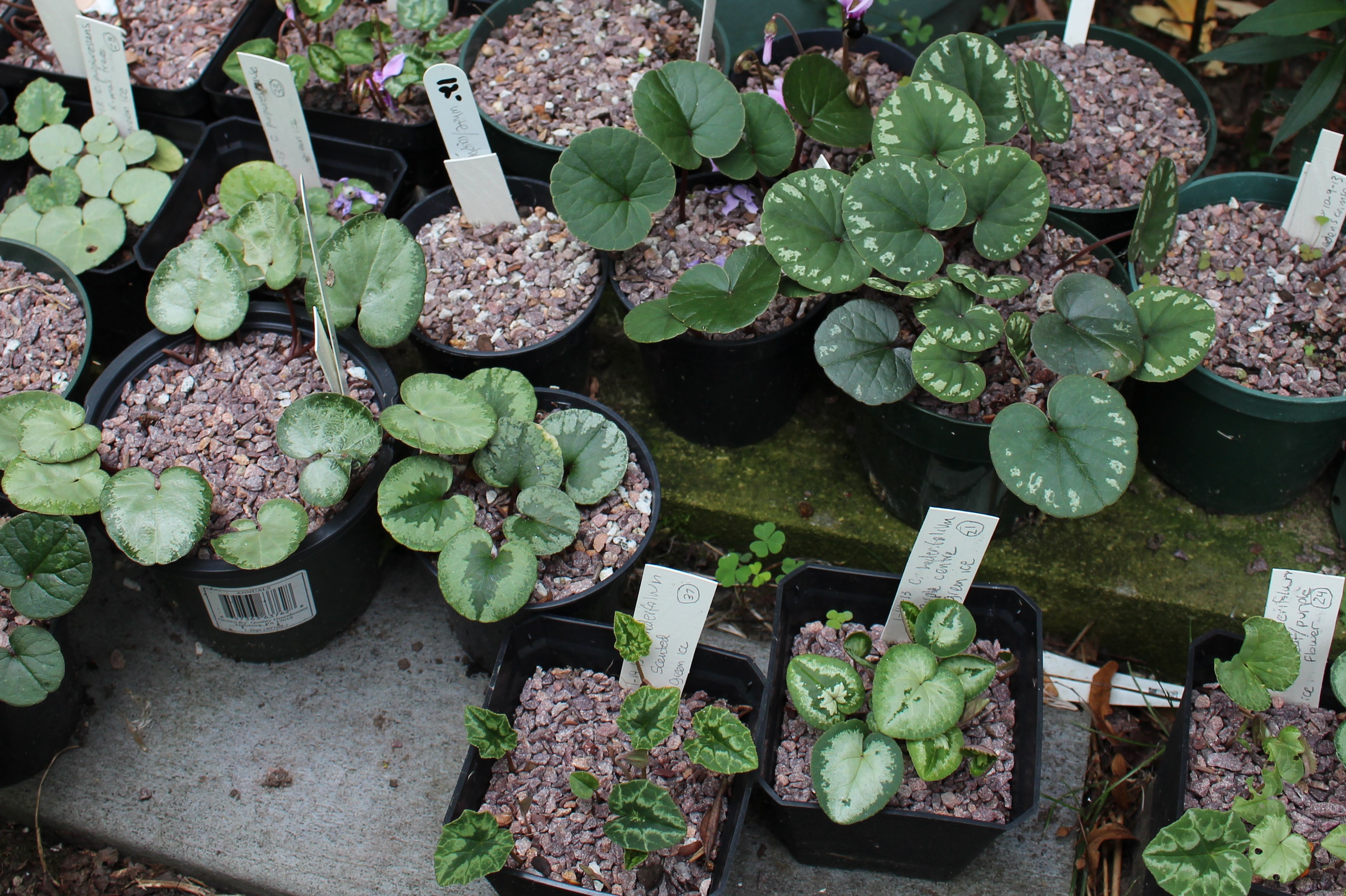
….and there are still plenty of cyclamen in pots.  For as much as I try, new ones keep showing up!

hardy cyclamen sprouting in the fall

Aren’t they the coolest little things? The cyclamen in pots always seem to sprout earlier than the ones in the ground….. and no, I didn’t spend $12 dollars on the empty pot, it’s just a second label to remind me this one comes back in under lights for the winter.

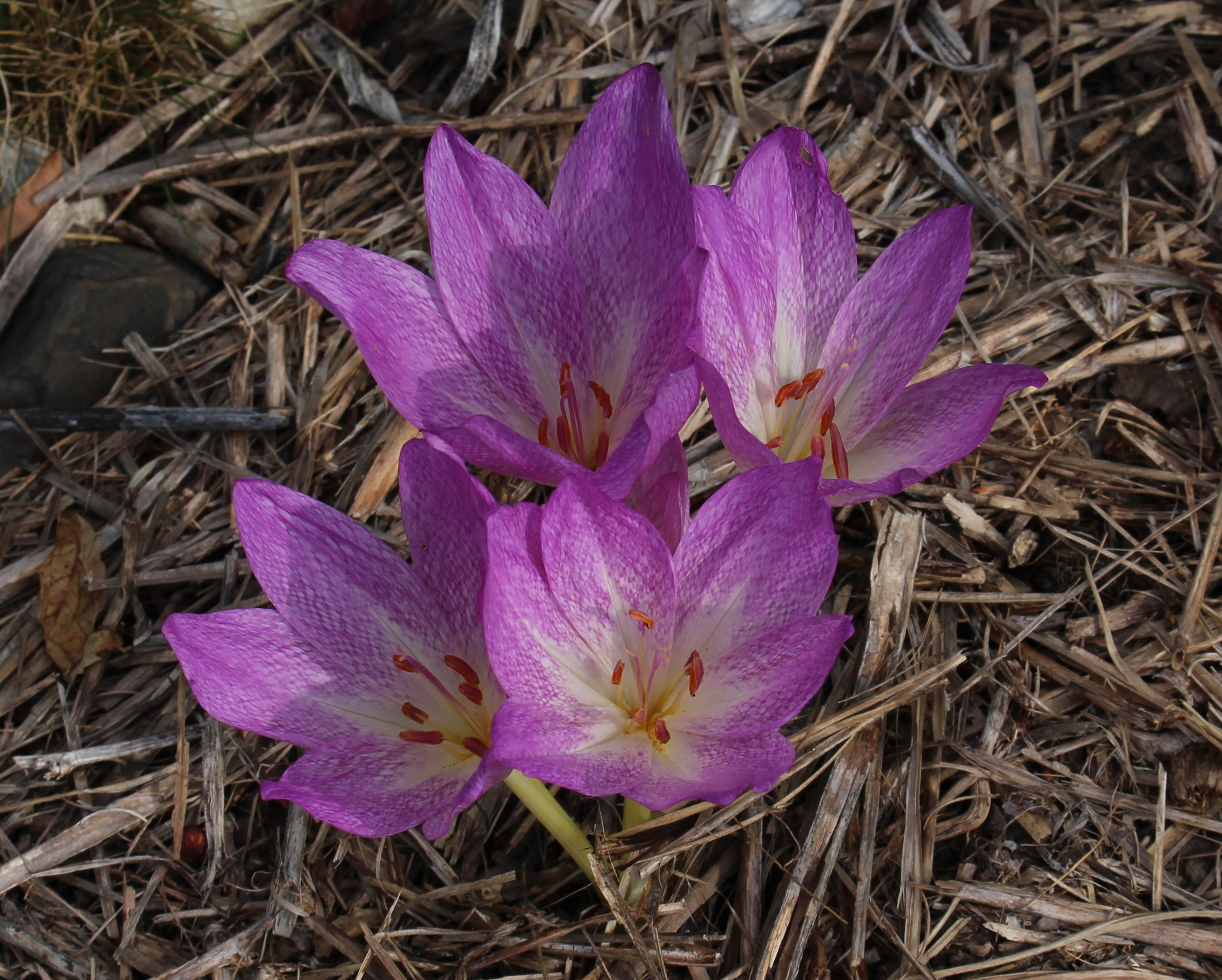
Thankfully I don’t grow any colchicums in pots.  This is a new favorite from ‘Daffodils and More’ and makes a nice start to the season.

colchicum "Disraeli"

colchicum “Disraeli”

I’ll probably have to make a full disclosure of pot purchases soon enough.  This is only the tip of the iceberg.  Things will look much worse when I start staging them all together to bring them inside 🙂

Same old story, dry again…..

The rains came, the grass greened, and all was well for a few weeks, but now it’s dry again.  I shouldn’t complain though since it hasn’t been hot enough to kill off anything, just a few wilting annuals and sad looking, dry dahlias.  Fortunately the perennials have deep enough roots to carry on, and overall the front yard doesn’t look too bad.

zinnias in a mixed border

The front border may be dry, but there’s still enough color and texture to keep things interesting.  I watered a little after taking these pictures…. the guilt of wilting zinnias and coleus was too much of a weight on my conscience.

When things go dry I start to lose interest.  The plants look sad and I hate watering, so my daily inspections just turn into bored sighs and a quick return to the porch furniture or air conditioning.  It’s a shame since so many things are still peaking and a little water would do a world of good for my thin quick-to-dry “topsoil”.

sedum spectabile brilliant

The sedums (maybe sedum spectabile “Brilliant”?) are in full bloom with bees galore, and help give some nice solid color to what otherwise might be too busy a planting.

I don’t like a planting that limps into autumn in a half dead state of decay.  I want something that hangs on until the last hard freeze forces things to come crashing down to an end.  In the front yard that means a mix of long season “lingerers”, late perennials, grasses of course, and plenty of planted and self sown annuals.

late season flower border

It’s mostly green in this border in June, but the color really revs up in September.   The yellow rudbeckias in bloom now came up as seedlings in June (when I finally got around to weeding and dividing and planting my way through this bed).

Occasionally some of the earlier perennials take a second bow.  This clump of delphiniums was great in June (for a few days before strong winds flattened them all), but now they’re back for some late season color.

rebloom on delphinium

Green grass, full borders, and rebloom on the delphinium.  The next storm will surely flatten them (again) but for now this corner by the garage is a nice welcome home.  This picture is looking out from the garage, across the walk to the front door, and on to the front border along the street.

The beds along the house are ok too, but much calmer.  This year I tried to limit the usual “too much color” look and stick with more gray and blue tones with some yellow of course.  The red coleus just happened…. you know I can’t go cold turkey when there is open soil and a few extra plants in my hands 🙂

ranch house foundation planting

The plants are a little spotty, but the overall effect is much calmer than last year…. even with a couple clumps of orange mums coming along 🙂

I guess a bright accent by the front door is sorta acceptable.  This almost became the year of the geranium considering how two pots overwintered became eight big plants when divided.  I really shouldn’t, but maybe I can just roll this pot into the garage and hope for the best when winter kicks in.  I’ve already got nearly a billion plants coming in so what’s one more pot?

potted geraniums

Potted geraniums, a perfect container plant for gardeners with a less than perfect watering record. Seeing the blue leadwort (ceratostigma) blooming reminds me that I wanted to try a few colchicums here.

So the front garden is aging gracefully and as long as a little rain comes our way it should still be a nice, colorful fall.  Seeing the pot full of geraniums reminds me of some developments this year which could now become an ugly problem.  My containers have been multiplying and it might be time for some plant confessions.

Garden Bloggers Foliage Day -Aug.2014

For nearly three years Christina of Creating my own garden of the Hesperides has been hosting the meme which focuses on foliage in the garden.  I believe her intention was to explore the important role which foliage plays in the garden, and remind everyone that although flowers often steal the stage, foliage remains to carry the show.  Going out this week with the intention of focusing on foliage surprised me in two ways.  First of all I always assumed I was one of those “immature” gardeners who always falls for the flash of flowers and doesn’t have much foliage interest.  That was wrong….  apparently nearly all flowers come with some kind of foliage (who knew!) and even the most flower blinded gardener will have foliage.  Secondly I learned another important revelation…. my garden looks much, much better in close-ups!

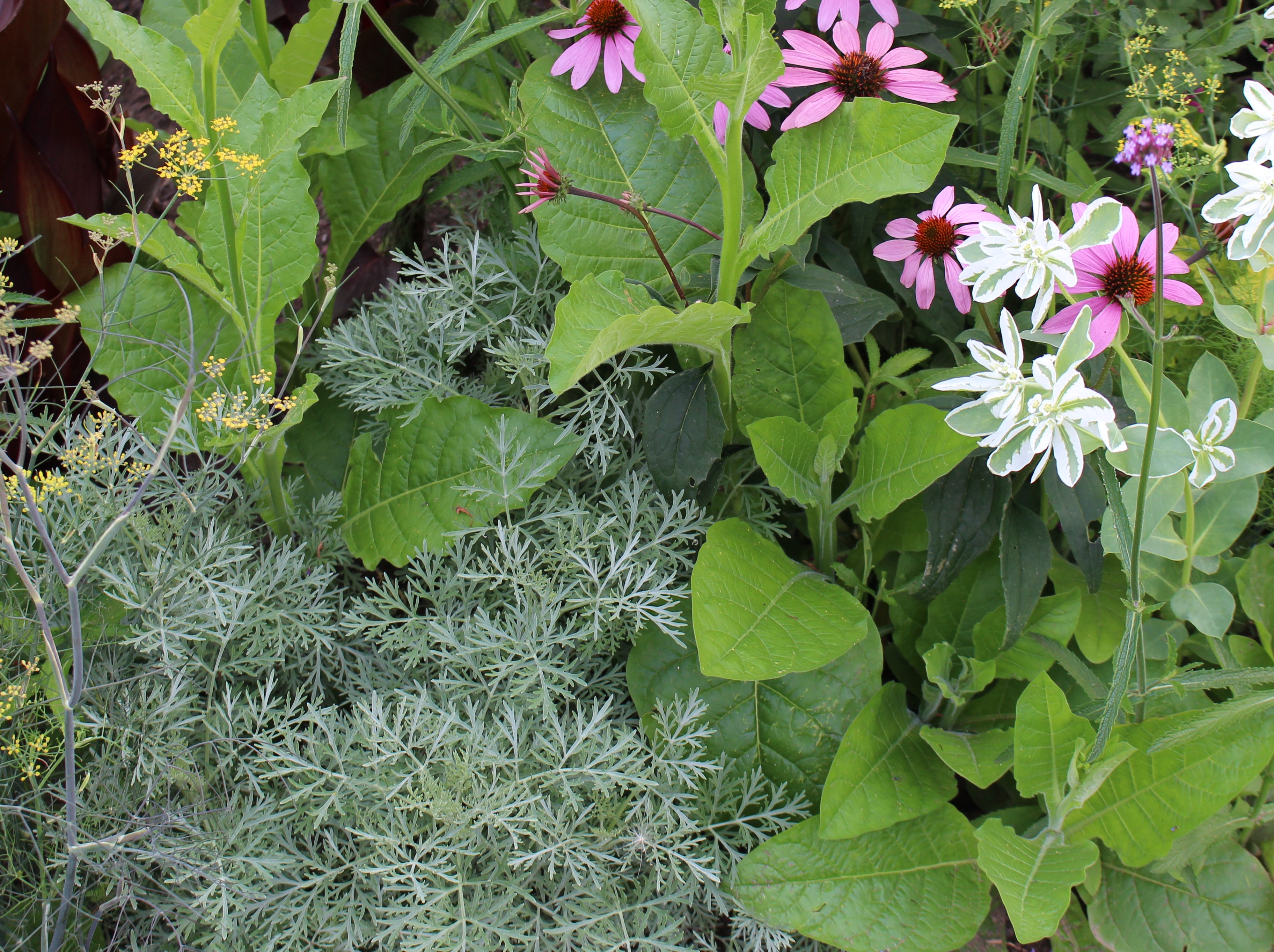
Powis castle Artemisia, snow on the mountain, nicotina, and Echinacea

I’ve grown Artemisia “Powis Castle” before, but never here in Pennsylvania. It was planted this spring and I love the gray foliage mixed with all the other stuff that seeded in with the compost. (fennel, nicotina, Echinacea, snow on the mountain)


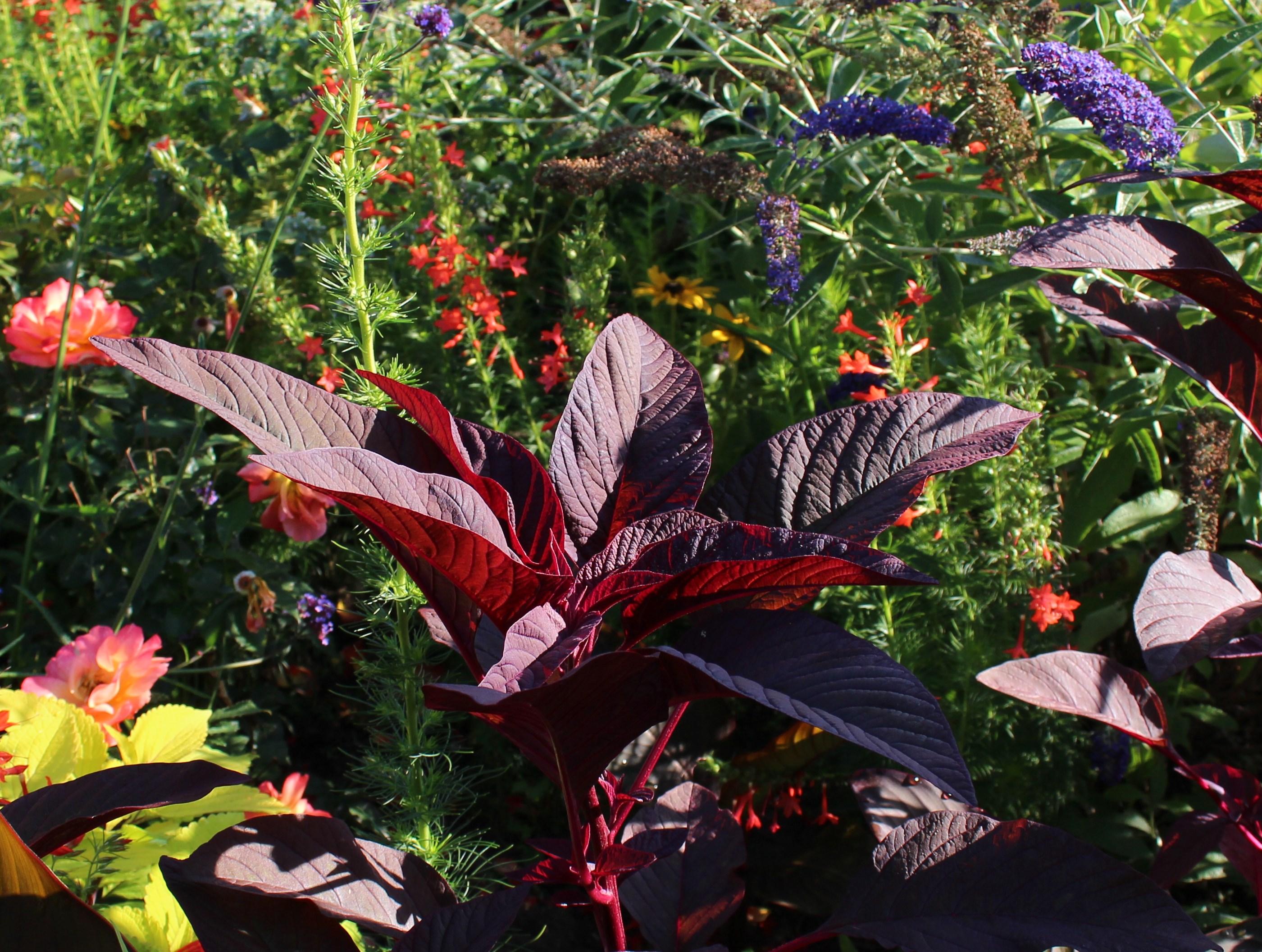
Starting with A and Artemisia is as good place as any, and while we’re here I guess we’ll just keep going along the front street border.  Soil improvement this spring and moving things around brought in plenty of seed-laced compost, and “Hopi Red Dye” amaranthus is easy to spot with its dark red leaves.

amaranthus hopi red dye

Amaranthus “Hopi Red Dye”, as easy to grow as its more weedy relatives.

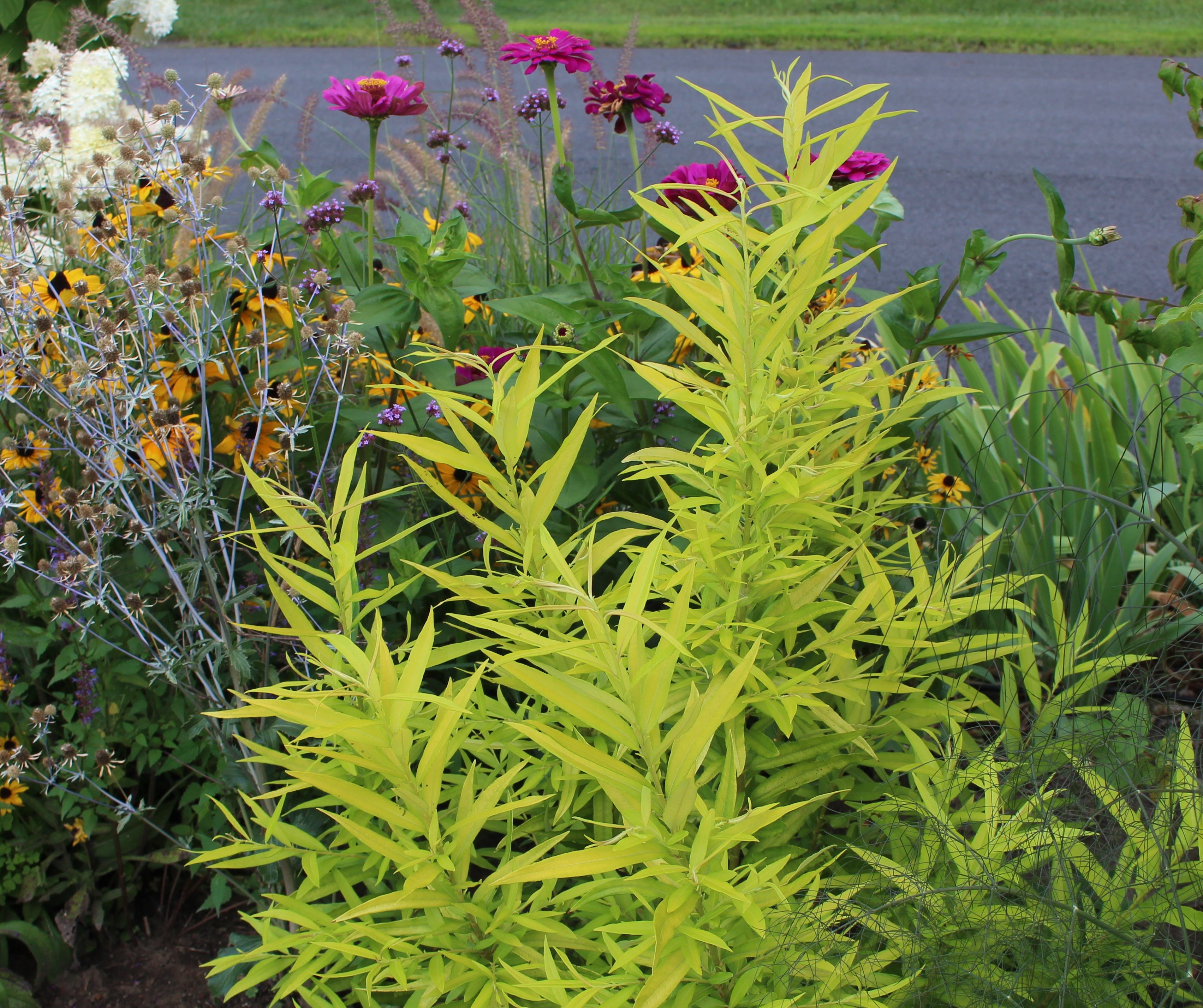
I like purple leaves, but I don’t think I can resist a plant with yellow foliage, and this “Golden Sunshine” willow was an impulse buy last year.  Rabbits mowed it down last winter but willows don’t sulk and this one bounced right back.  Actually I think cutting this one back to the ground each spring would probably be the best way to keep the bright new foliage coming.

golden sunshine willow

Salix “Golden Sunshine”… or at least I think that’s what this willow goes by.  I really need to have a better recording system for my plant IDs.

If pushed I might even admit to having too much yellow foliage around the yard.

arundo donax variegata in perennial border

Arundo donax “variegata” in the front perennial border. An explosion of color with “Black Knight” buddleia, pink agastache, and yellow fennel blossoms. Btw, the arundo is probably 8 feet tall and the butterfly bush 6. Also it’s unusual for the grass to have this much color so late in the summer. Usually the heat makes it go all green.

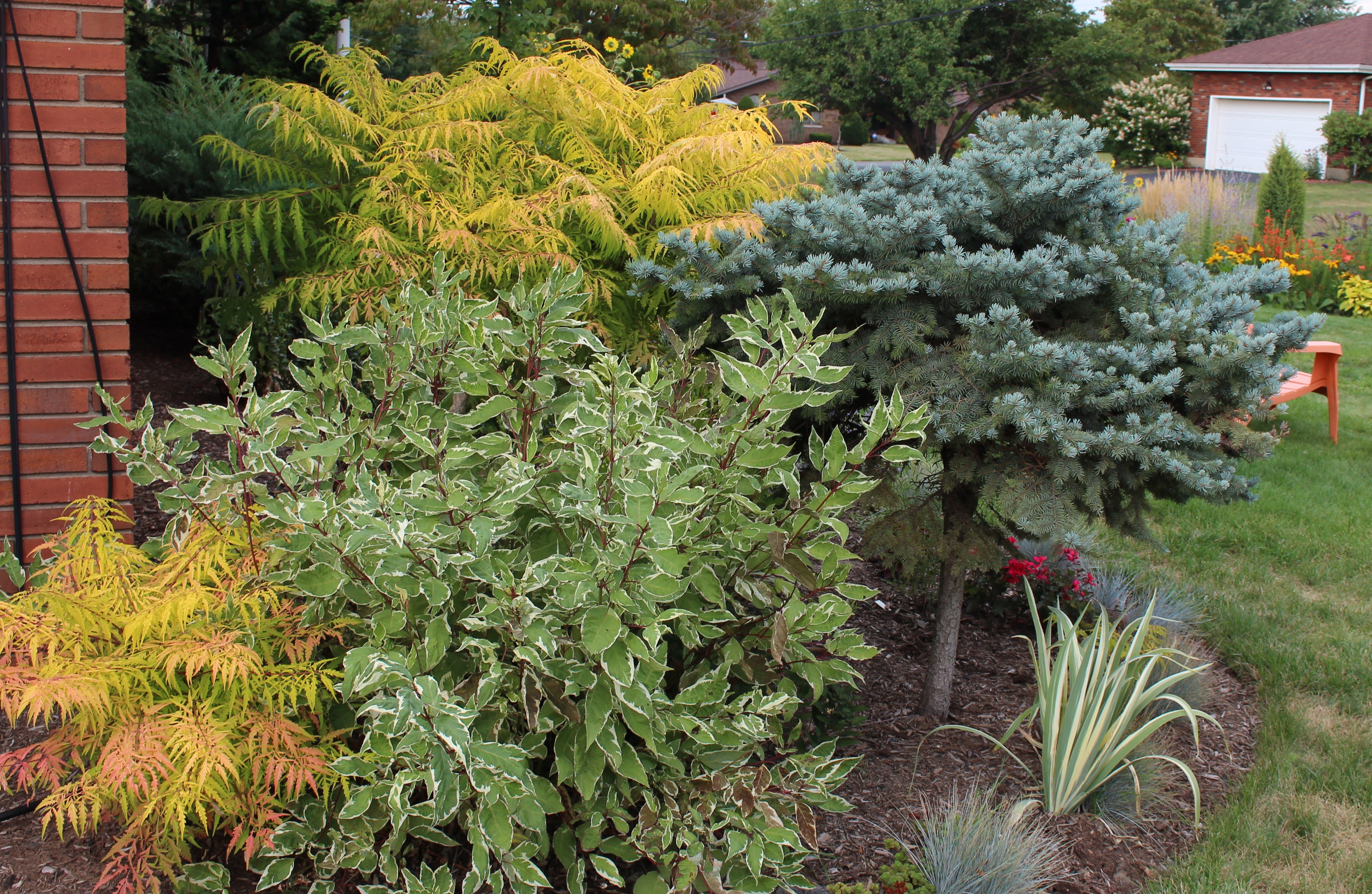
Here’s a little blue in the blue spruce I moved last spring…. and more yellow.

sumac tiger eyes with blue spruce

Have I ever mentioned my love for the foliage of “Tiger Eyes” sumac? It suckers around a bit, but in my mess of a garden that’s no big deal. I haven’t yet decided if this is a formal enough planting for the front of the house though.

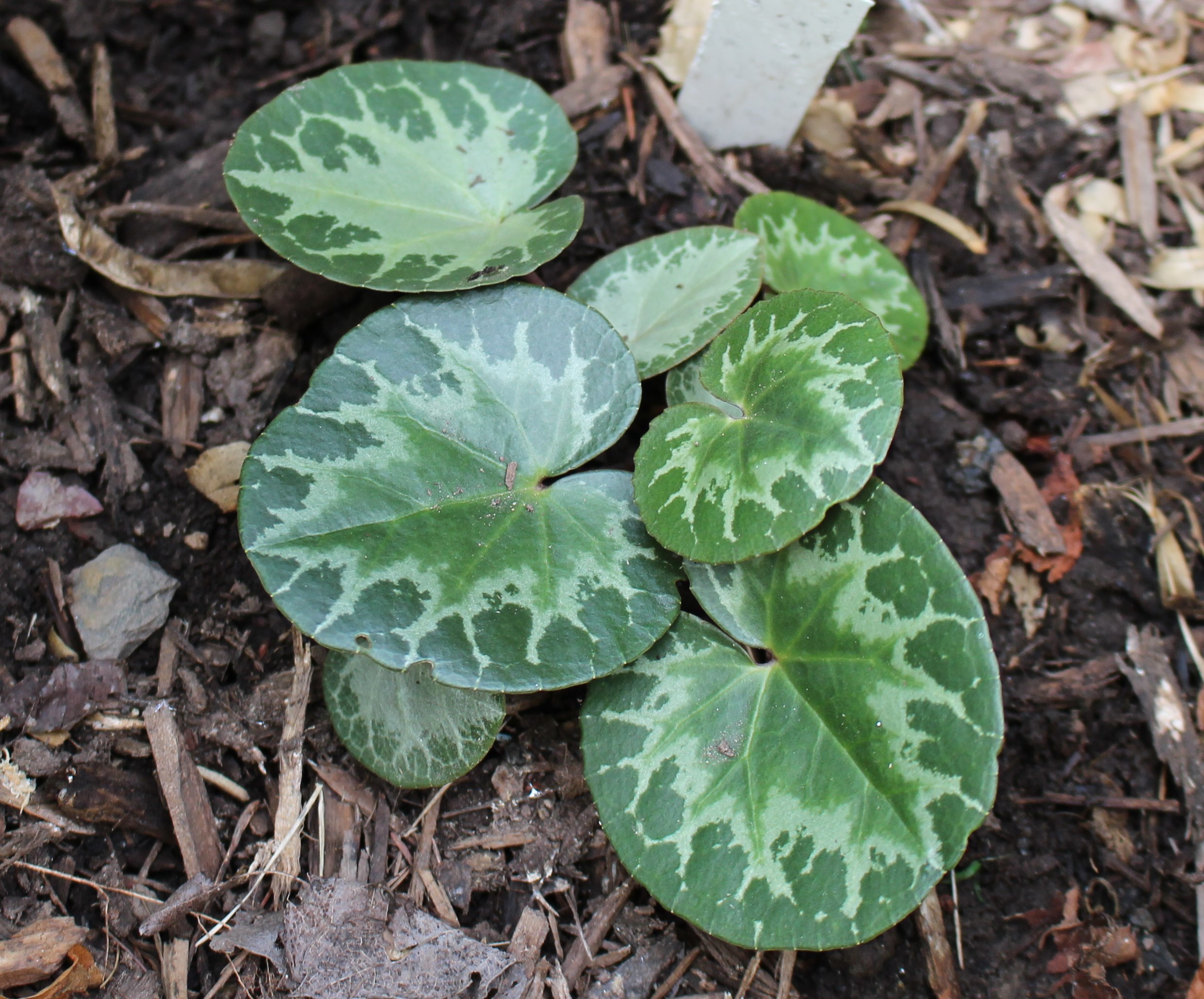
A foliage post without mentioning a cyclamen is just crazy, so here’s my little c. purpurascens plant (probably two or three plants since I see at least two leaf forms).

cyclamen purpurascens foliage

Good things come in little packages, this cyclamen purpurascens is a baby at only maybe 5 inches across but it might be my favorite cyclamen right now…. I’m sure that will change as others appear 🙂

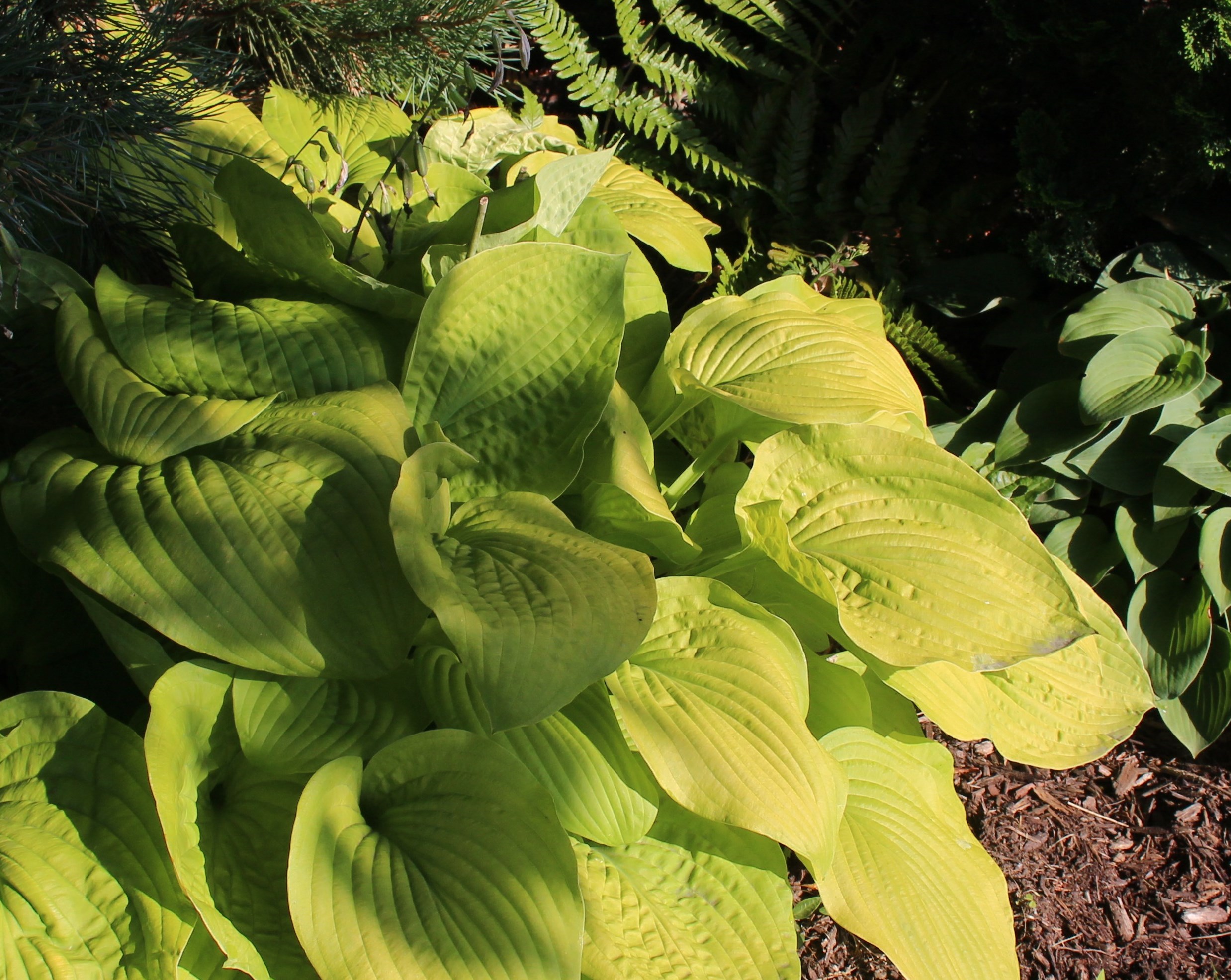
I took a lot of pictures so this may be all over the place, but I’ll try to finish up the front yard first.  Sometimes people think of hosta when they hear the word foliage, and I’ve seen them in a few gardens here and there (just a few!).  Here’s “August Moon” a favorite old variety which lightens to nearly white when in full sun.

hosta august moon

Hosta “August Moon” in one of my few shady areas.

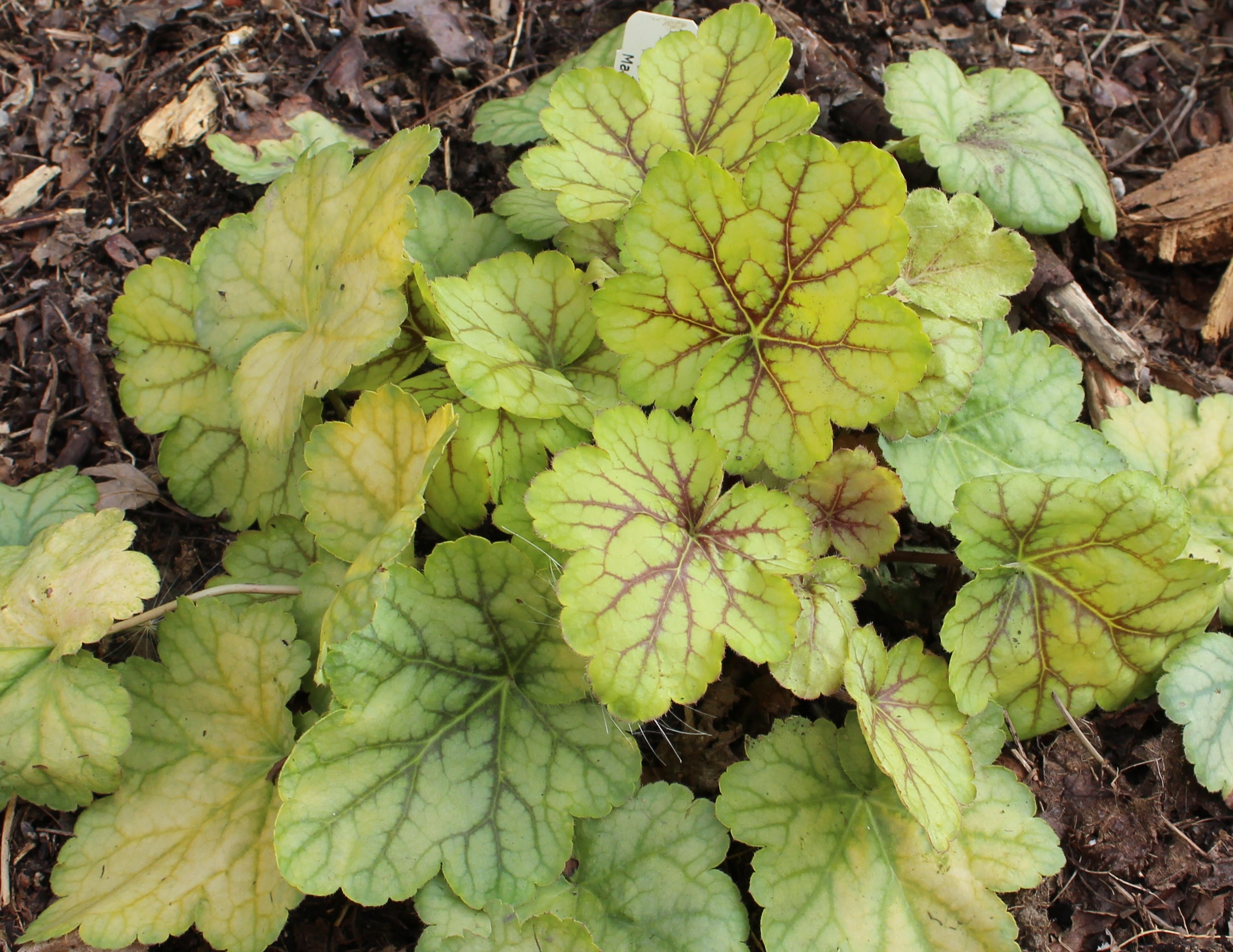
Moving into the back near the (another yellow) sunflowers is the new heuchera patch.  Someday you’ll suffer through an all out heuchera post, but until they grow in a bit I’ll let you off with just one.

heuchera circus clown

One of several new heuchera plants, heuchera “Circus Clown” is off to a good start with a nice mulch and some much needed rain. It’s amazing how the colors on these plants change throughout the year.

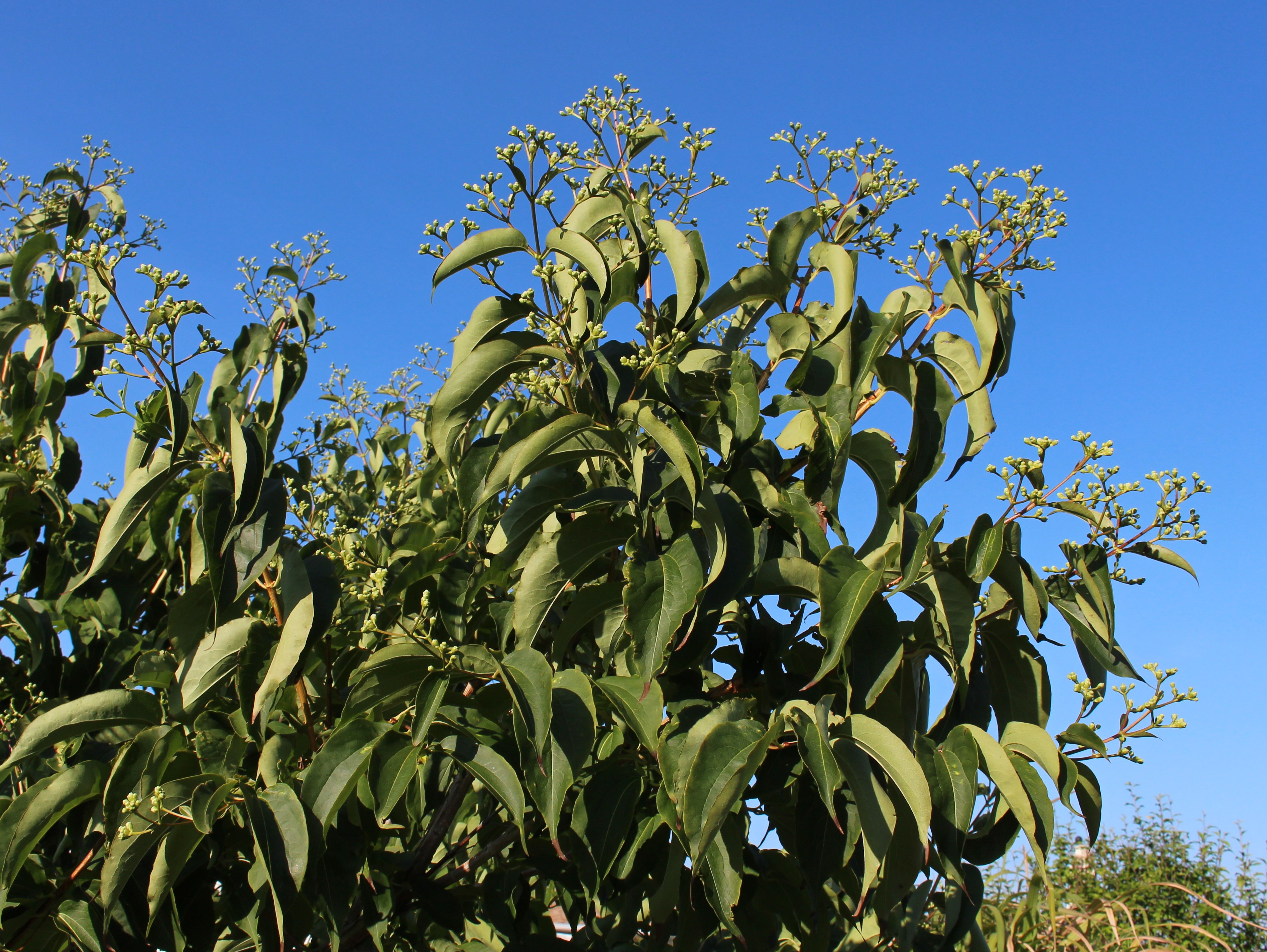
The reason the heuchera can survive here is from the shade of a Seven Sons shrub/tree (heptacodium miconioides).  My plant gets cankers and loses trunks every now and then but I hope it someday gets past that.  Right now I’m enjoying the rich green of the curled stiff leaves.  Kind of a coarse look, but for a guy with so many cannas and dahlias refinement isn’t one of my strong points.

heptacodium miconioides leaves

Heptacodium miconioides leaves against a perfectly clear blue sky.

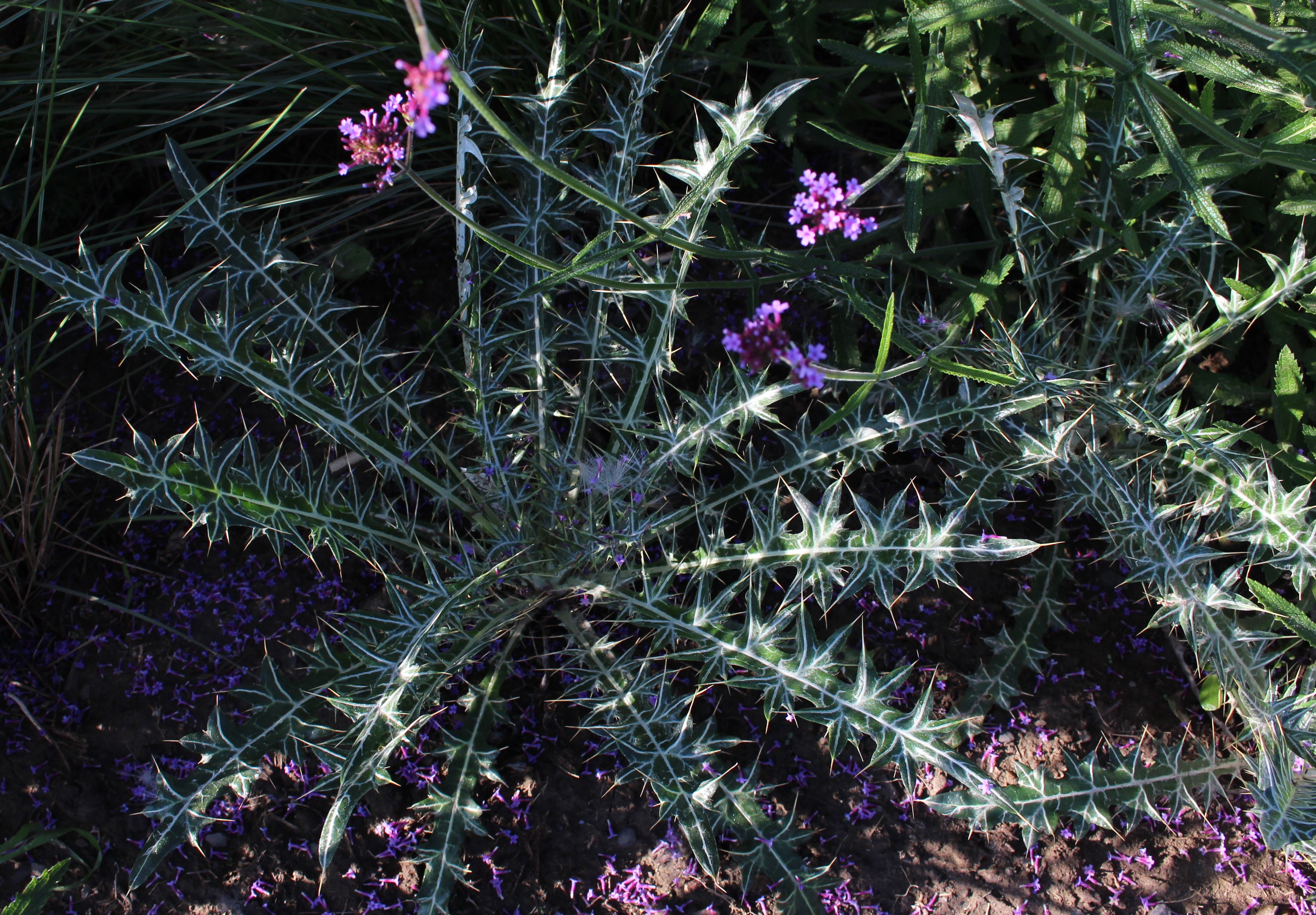
Enough with the babbling.  Look but don’t touch.

Ptilostemon diacantha

Ptilostemon diacantha with verbena bonariensis blossoms. Of course this is where all the missed baseballs end up rolling.

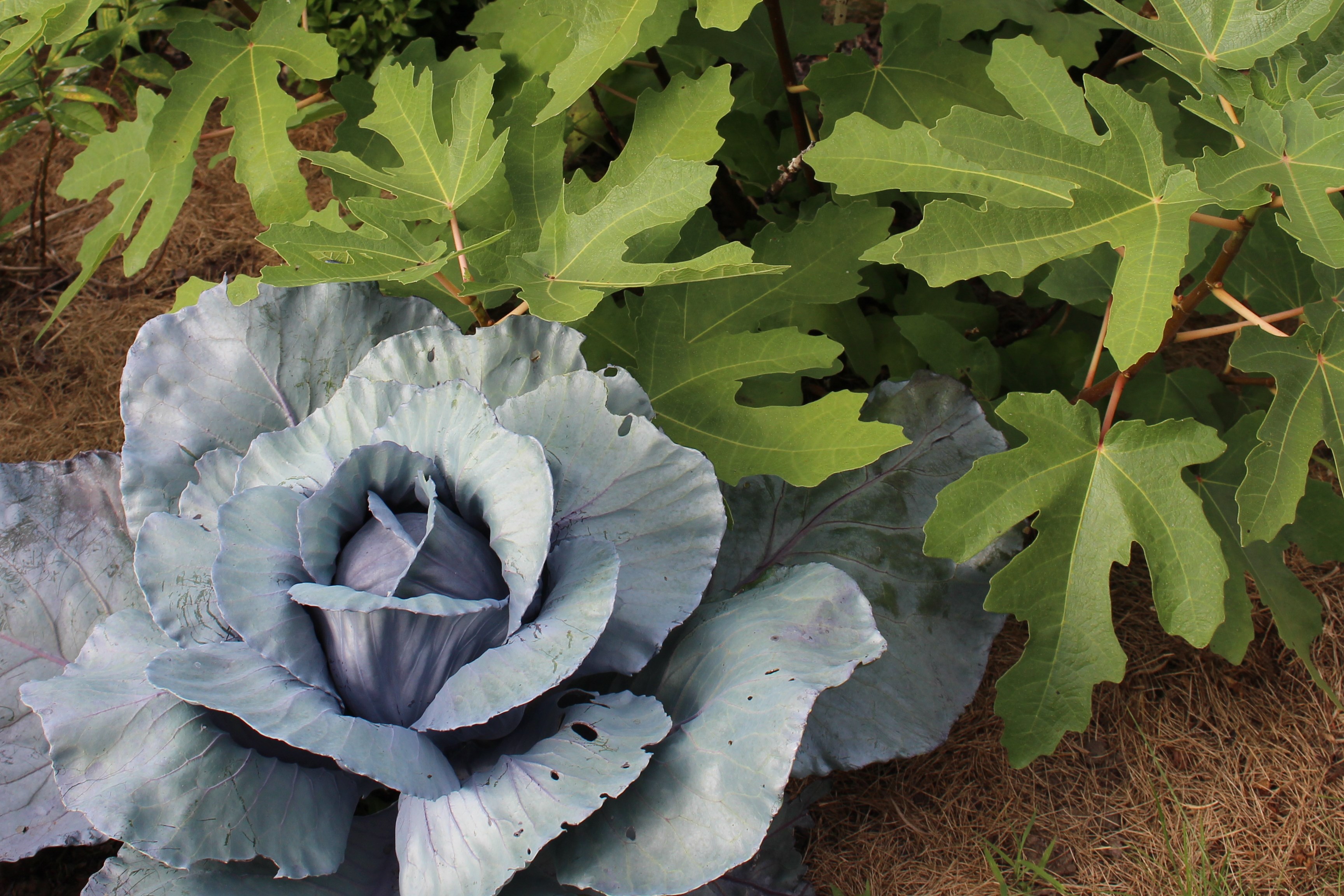
Almost good enough to eat, plants in the vegetable garden (or potager when I’m feeling fancy) also can put on a good show.

red cabbage and fig leaves

Red cabbage and fig leaves, the fig would be happier in Christina’s Mediterranean garden but it hangs on here and the perfectly cut leaves make up for not getting any actual figs 🙂

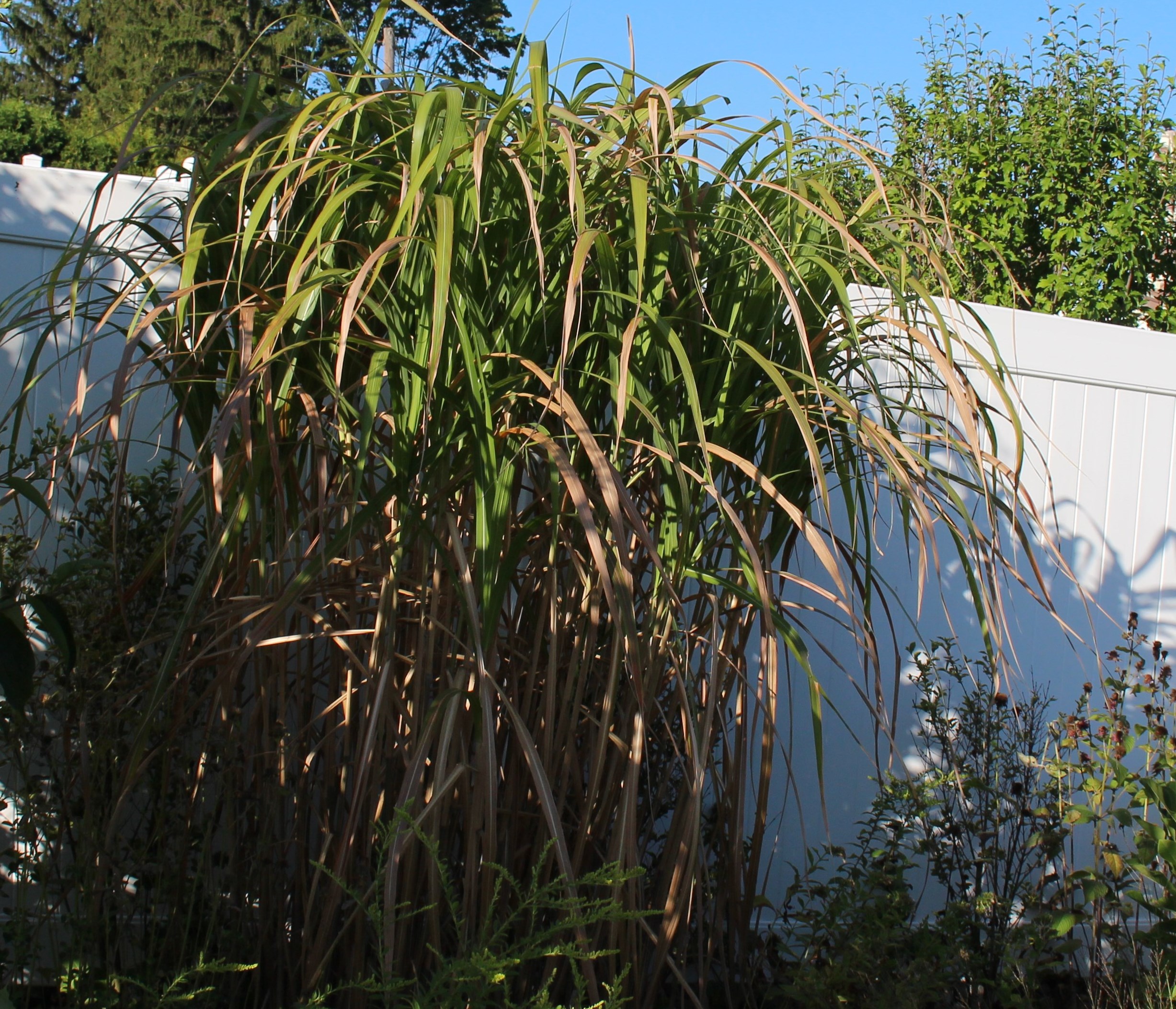
Not all the foliage news is good.  Miscanthus giganteus was off to a good start but our dry spell threw it for a loop and killed off all the lower leaves.

miscanthus giganteus

Miscanthus giganteus wants the steady moisture which I’m too frugal to supply. It might be easier to get something else for this spot.

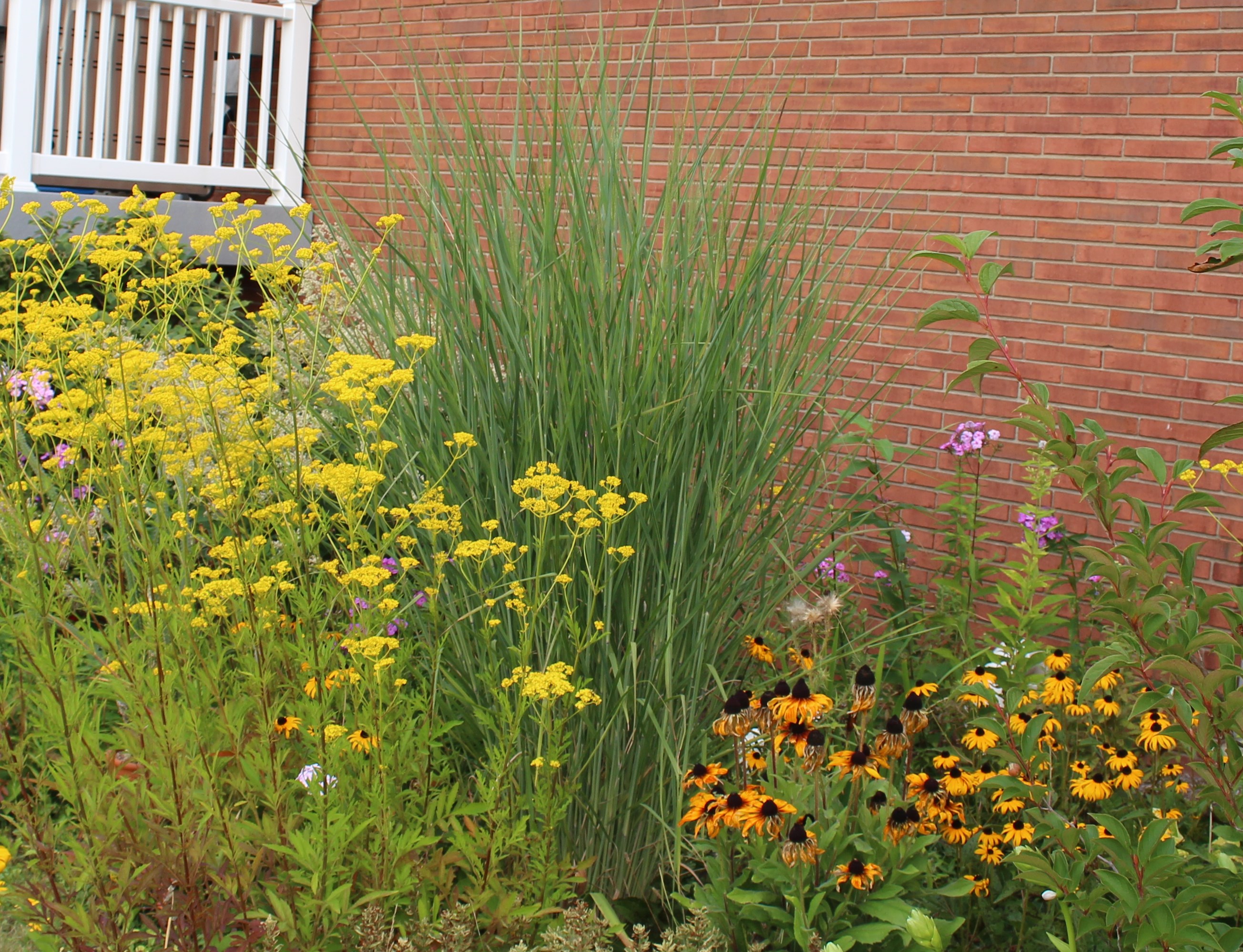
Back by the house is a panicum “Cloud Nine” which is much more comfortable with drought.  I hate this bed and constantly neglect it, but nature did its own thing and filled the gaps with rudbeckia, phlox, and patrina scabiosifolia seedlings.  Sure beats the boring mulch I had there before.

panicum cloud nine with patrina

The stepchild bed with Patrina, panicum, rudbeckia, and phlox.

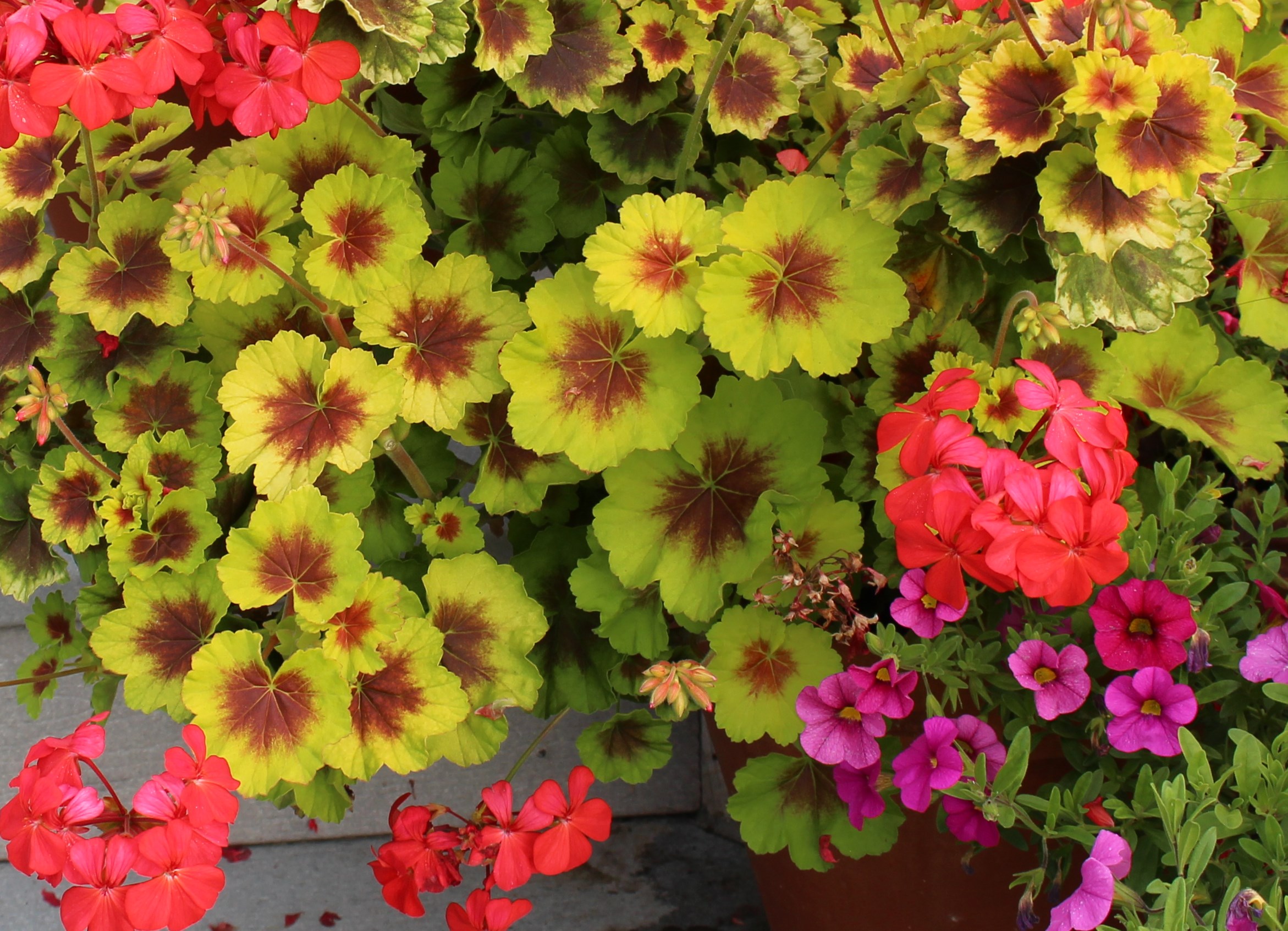
So much for anything that even approaches subtlety.  My tropicals come next, and first off are the geraniums (pelargoniums) which in my delusion and denial I have added to the overwinter and collect list.

zonal geranium

I have to dig up the name for this one, it’s in its second or third year with me and keeps looking better.

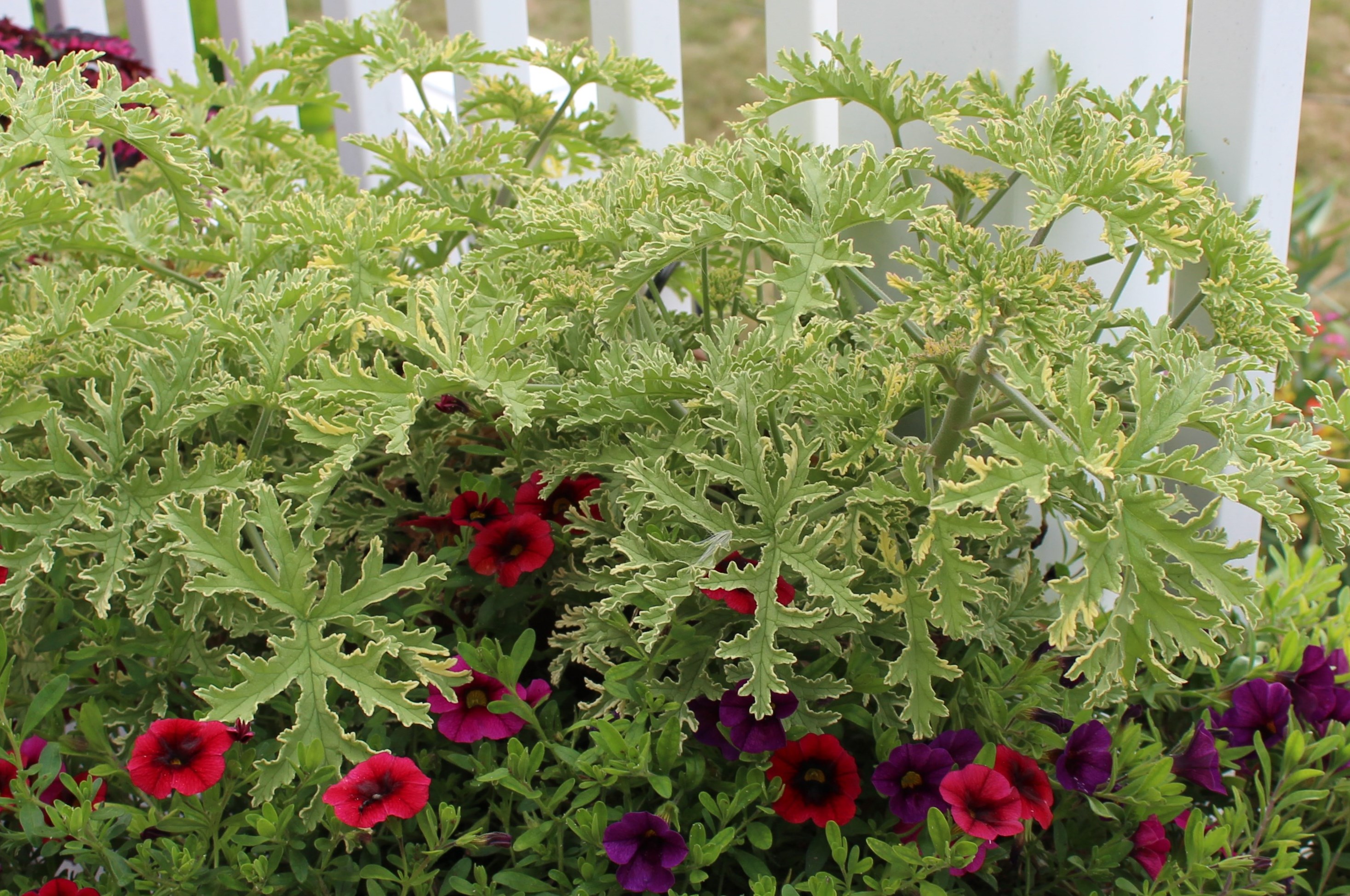
A scented leaved geranium (pelargonium actually) with cut leaves, variegation and scent.  Too much or something for everyone?

scented leaf geranium

This scented geranium is another plant who’s ID is lost in the pot-full-o-tags database. I should probably work on that.

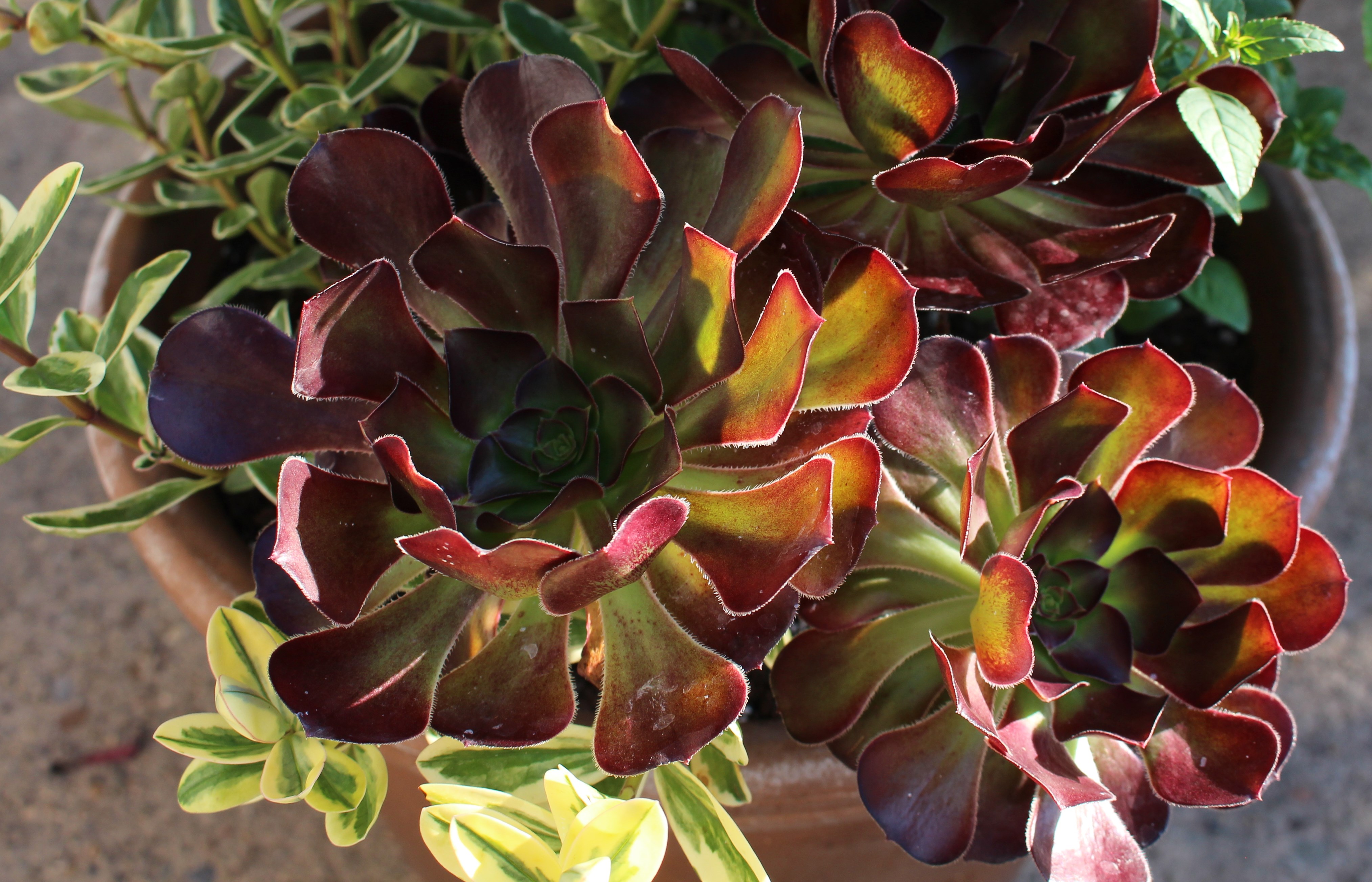
Another one to overwinter in the garage, my first aeonium is looking well.  Hopefully it can handle the high-water location I planted it in -a pot with a variegated hebe and cape fuschia (phygelia).

aeonium with variegated hebe

This one’s label must still be near the top of the tag bucket since it’s a new purchase. A good gardener would go out there, find it and label it…. but all I’ve got for you is it’s not “Schwarzkopf”.

Now to wrap things up (so I can finally get to work on the stupid basement tiling job I started) here are my foliage stars.

canna tropicana

Canna “Tropicana” might be the most obscene show of gaudy color in my garden. I love it with the dahlias and rudbeckia.   Good thing there’s some green nearby to calm things down.

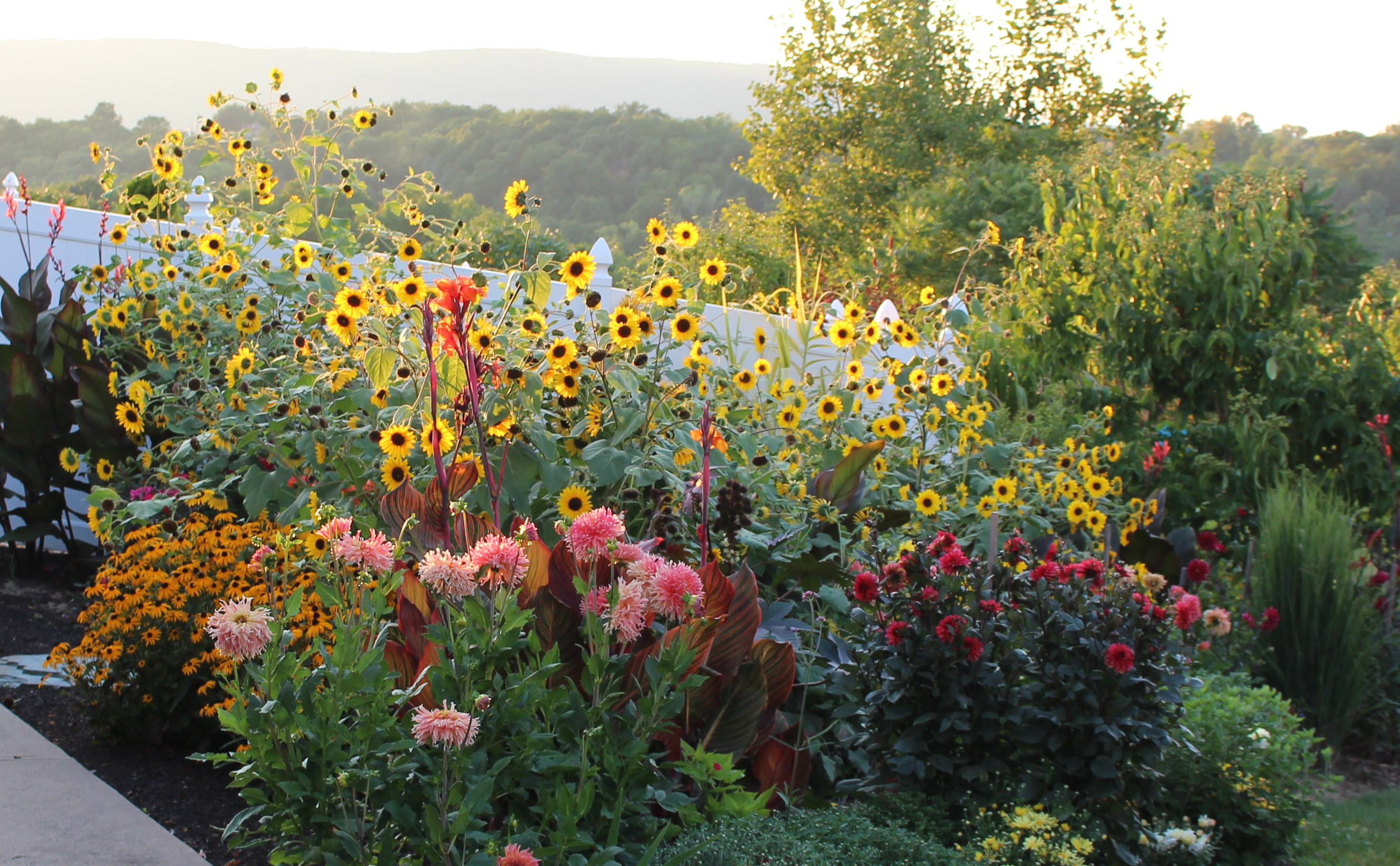
Morning light on the sunflower patch.

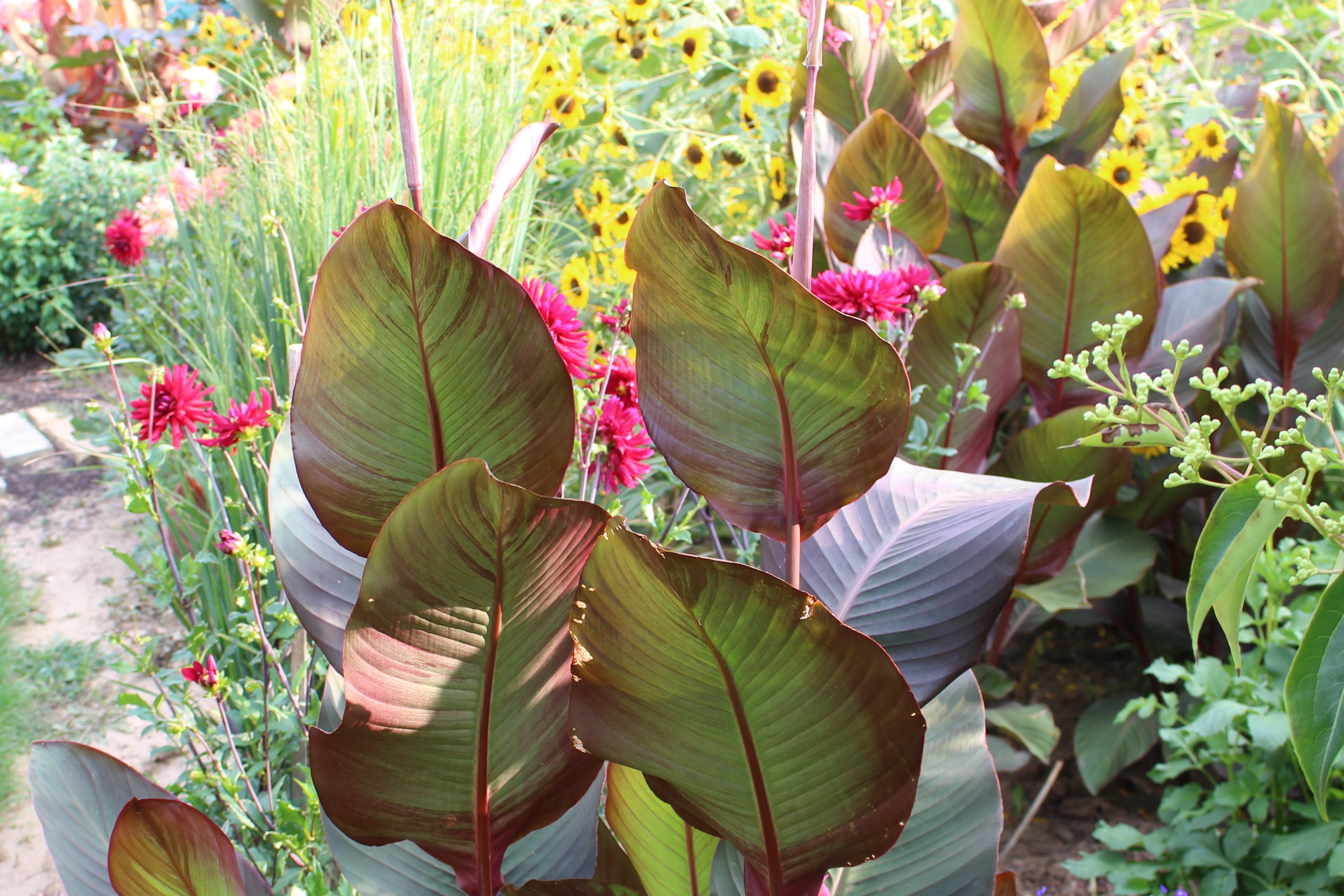
canna in the garden

My ‘Polish cannas’ were a gift which traces it’s history back to a friend’s old Polish neighbor. It’s probably really canna indica “purpurea” or “Russian red”.

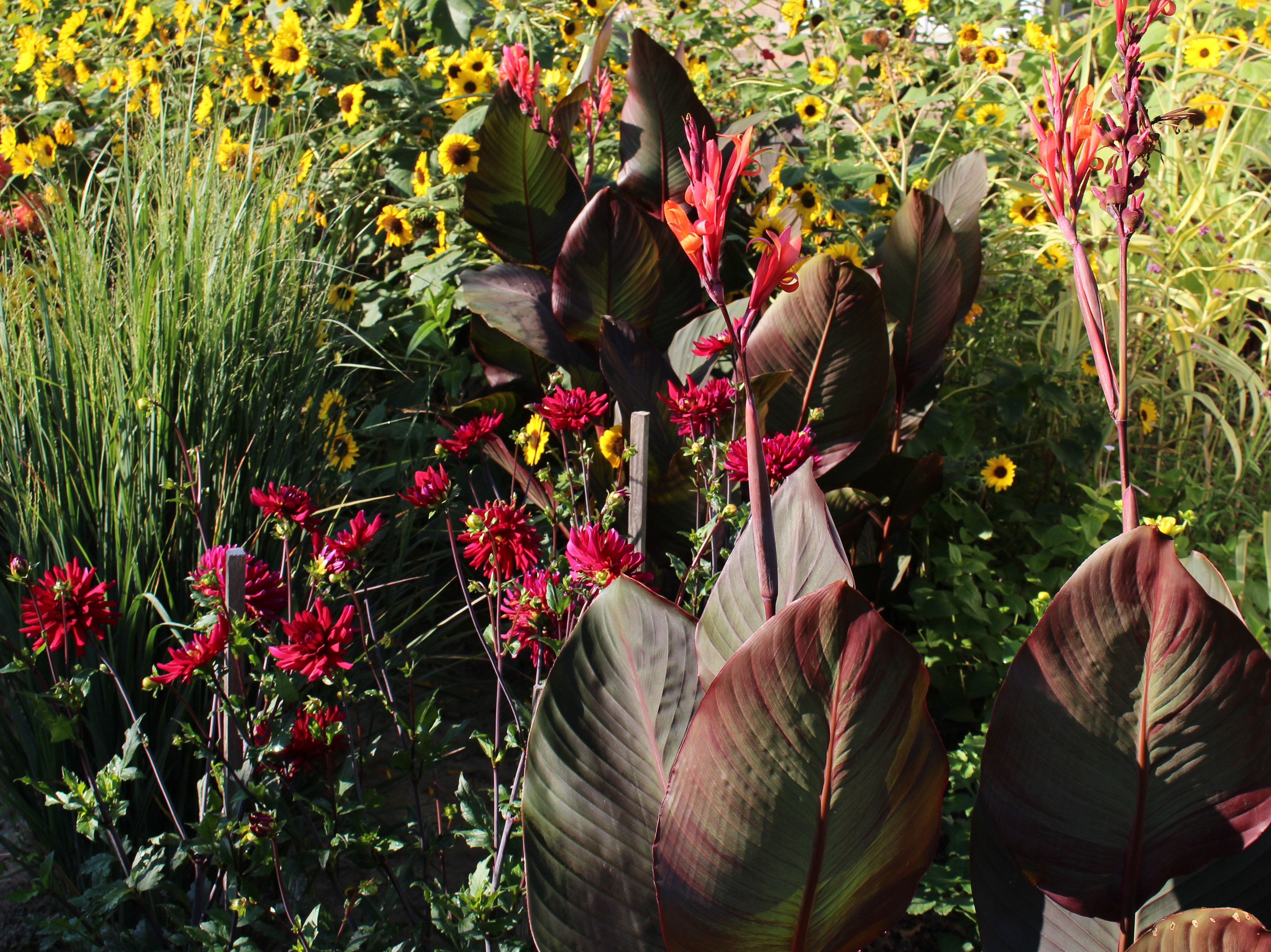
And same cannas at noon.  A sculptural plant I think.

canna with perennials

The small blooms aren’t much for a flower lover, but they have a graceful look and the hummingbirds appreciate them.

So that’s my foliage, thanks for sticking it out.  I did manage to keep all the coleus out (but of course there’s still all of September for that) and I hope that gave a little relief, but I was really surprised by how much color and interest I get from foliage.  Maybe I am growing up and my tastes are maturing…. but I hope not.  I like my messes of color too much!

Thanks Christina for hosting and thanks for opening my eyes to all that foliage does in the garden.

In a vase on Monday

Surprisingly enough I’ve made the Monday vase twice in a row, unheard of!

sunflowers from birdseed

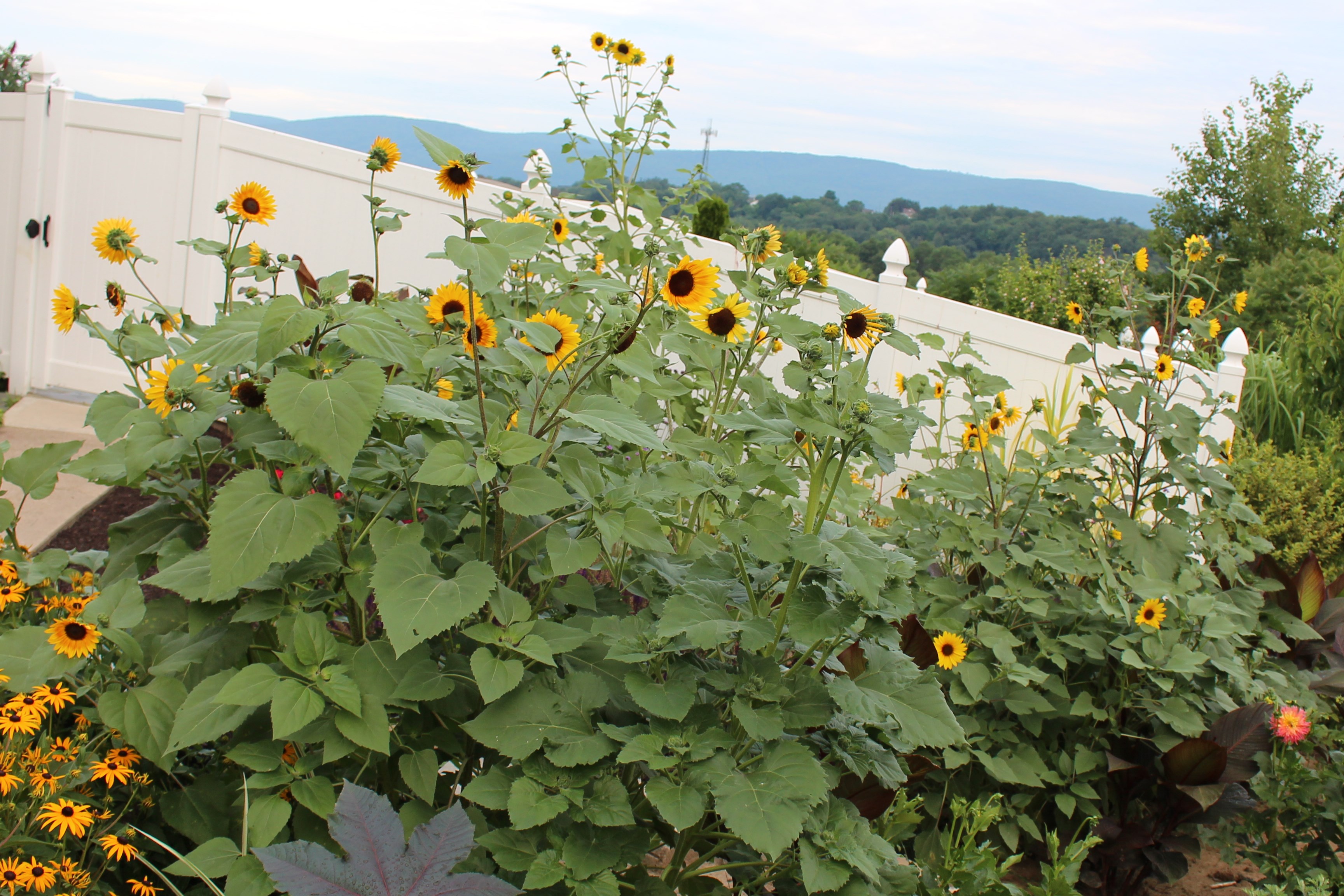
Not a bad group of sunflowers, all volunteers from the birdfeeder.

The sunflowers inspired me, and their carefree summer spirit made it easy as pie to put this arrangement together.  After they were in place I was told they needed some other vase, and the red didn’t look good, but “don’t push me” is what I said!  I added the blue wine bottle,  I guess I was feeling very primary with all the sunflower yellow.

I didn’t do much fussing over them and I think they look fine, but I noticed this evening they had done a little of their own arranging, and heads were lifted and there was less of the droopy down facing that you see here.  It’s kind of like a vase of tulips in that they keep growing and twisting to get into a better position.  This should have come as no surprise from a flower that keeps turning its head to face the sun.

sunflower bloom

The birds have been enjoying the seedheads outside for weeks, I guess it’s time for me to enjoy a few myself indoors.

You would think a bunch of volunteer sunflowers grown from seed out of the feeder would all just run the range of yellow, yellow, yellow, but there is some variation in these.  They’re taller and shorter, branched higher and lower, longer petals, shorter, quilled petals, darker centers, pale yellow, splash of brown, deep golden… it’s quite the surprise.

sunflowers in a vase

Different colors and sizes, nothing real fancy, but nice surprises none the less.

I feel like I splurged in cutting these all for a few days in the house, but I’m sure more will come.  The patch still has plenty to look forward to and even a steady stream of goldfinches can’t eat them all.

black oil sunflowers

Sunflowers at sunset. They’ve officially taken over.

So that’s my Monday vase.  I may jump back in here and there to fill a vase, but work is gearing up again and the shorter days really kill my gardening vibe.  The vases are fun though and if you’re interested in joining I’m sure Cathy at Rambling in the Garden would be happy to have you.  Thanks for hosting Cathy!

A summertime stroll with a couple surprises

I think I’ve been pretty good this summer keeping up with the garden.  Usually I have so many more weed patches and unplanted pots, but this year  things look a little better.  I know, I know…. prep soil first, have a plan, buy new plant with a spot in mind, don’t plant more than you can take care of, keep low maintainence in mind….  but that’s not how I roll 🙂

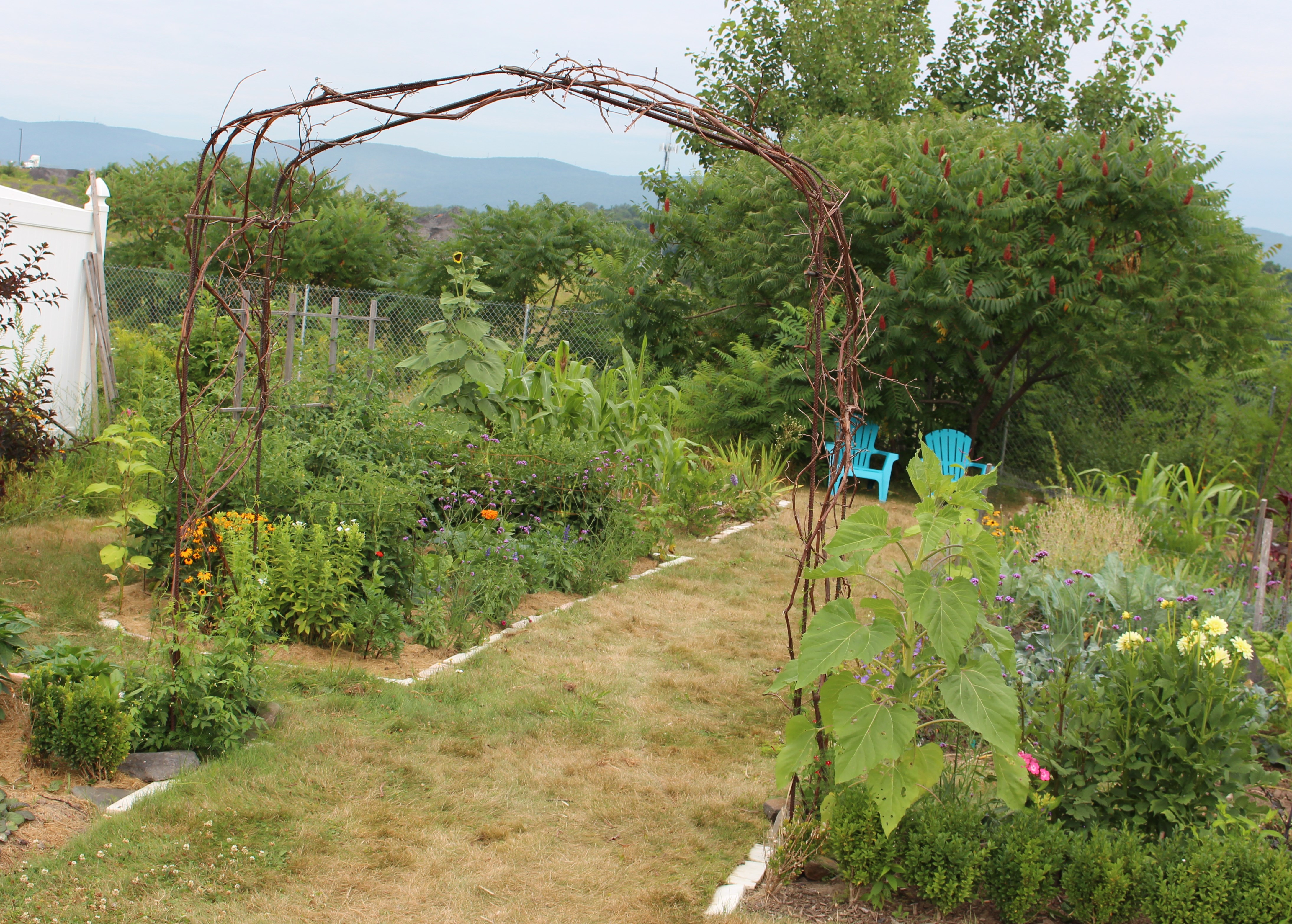
I finally cut, bent, and put together the rebar arbor I’ve pictured in my head for the last two years.  Last summer it was a single span, this year I doubled it for more stability and wired in a few cross braces.  I really should throw a little concrete around the base…. but I’ll wait till it blows over this autumn before I learn that lesson (again).

rebar garden arbor

Arbor going into the vegetable garden. The rebar alone looked a little bare, so I went out back and ripped down a few grape vines to bulk it up, and give the vines a little something to hold on to.

Since we’re in the vegetable garden, here’s the early garlic harvest.  This is the first year I managed to plant it properly (in October), and I’m pleased.  I’m even more pleased since these were stray, sprouting cloves I found in the bottom of the vegetable crisper which were planted out rather than thrown away.

garlic harvest

Garlic harvest. The ones I actually bought from the garden center specifically for planting are a later variety and yet to be harvested.

Last winter was one of the coldest, snowiest ones I’ve experienced living here, so you can imagine my surprise to find some gladiolus overwintered.  I vaguely remember there being a few thin little wisps of gladiolus leaves here last summer (I must have missed some of the tiny cormlets when the mother bulbs were lifted) but never gave them much thought.  This year they’re back, and voila, the little things surprised me even more by blooming!

phlox 'bright eyes'

Not only was the gladiolus a surprise, but the color coordination with the phlox, verbena and pole bean blooms is better than anything I could plan!

I only finished laying out and digging up the vegetable garden last summer, prior to that it was lawn and a holding bed for some of the plants brought up from the old house.  One of those plants was a wisteria vine, and when I moved it the remaining roots put up a couple suckers.  Surprise again when one of the suckers actually put out a bloom!

wisteria summer bloom

Not many gardeners are avant-garde enough to combine sweet corn with wisteria, and the fact that I’m considering building another arbor or tuteur in order for this guy to stay here says a lot about the haphazard design of my garden.

It surprises me that I would actually post a photo of this mess.  It’s the unfinished steps to the deck, and it’s were I like to sit with a drink thinking about all the tasks I should be finishing up instead.

tropicals in containers

Tropicals in pots, geraniums on the steps, and plenty of weeds. I actually did trim them all back yesterday but I’m sure they’ll have rebounded by the time I take another picture.

From the steps I get a good view of the vegetable patch -I like to call it the farm 🙂 , and the sunflower patch.  Last week I noticed this quilled version in with the others.  The rolled up petals are different enough to be interesting.

quilled sunflower blooms

In the center is the quilled version of the regular sunflowers. The flowers are nice enough, but it’s the coming and going of the goldfinches and sparrows that keeps things busy around here… as well as the angry little hummingbird who tries to chase everyone away.

I’m getting the feeling yellow is a little passé as far as being a fashionable color -if it ever was- but I clearly have a problem with “acquiring” yellow leaved plants.  “Isla Gold” Tansy is one of my favorites with its finely cut foliage and drought tolerance.

isla gold tansy with bon bon sedum

‘Isla Gold’ Tansy (Tanacetum vulgare) in front of ‘Bon Bon’ sedum. Don’t let the stupid name throw you off, the sedum is also a great plant.

Around the house in the front yard I finally gave up on the way-too-dry-and-hard-to-water spot by the lamppost.  I trimmed the ‘Tiger Eyes’ staghorn sumac back to the ground and let it and its suckers fill in the bed.  Too much yellow?  I don’t think so, and I no longer have to water this spot.

tiger eye sumac

I hope the plant police don’t find me. ‘Tiger Eyes’ cutleaf sumac (Rhus typhina “Bailtiger”) is a patent protected plant, and here it is propagating itself without corporate approval.

Another weedy spot has been the front street border.  I should probably do something about this since it’s a slightly prominent location which everyone who passes sees… but I’m a little bored with it right now.  Maybe once this bright red standing cypress (Ipomopsis rubra) blooms and some of the other annuals take off I’ll like it again.  I wish I had some nice mulch for it though.  I’m constantly jealous of compost rich gardeners and the ones who flaunt their piles of aged leaf mould,  and I think I’m close to breaking down and raiding the yard waste dumped by my neighbors in the nearby woods.  I’m sure my mother in law will be horribly embarrassed.

selfseeding annuals

More golden yellow in the form of rudbeckias, this time tastefully paired with red standing cypress -which almost has a touch of orange in the blooms. If people complain I’ll remind them the ipomopsis is a southeast native plant and hummingbird friendly, hopefully that will distract them from judging my trailer park color combos too harshly.

“Blue Satin” -or maybe ‘Blue Bird’, I forget- rose of sharon (hibiscus syriacus) always looks a little out of place or a little weedy to me, but the color is interesting and it just laughs off drought and abuse.  The white variety “Diana” (a sterile variety) still needs to be acquired, I keep forgetting to take a cutting of my mother’s bush in NY.

blue satin hibiscus

As close to blue as you get in rose of Sharon, “Blue Satin” is a cool color but reseeds freely, and the seedlings though nice enough are all more purplish.

You can’t help but notice the big clump of arundo donax ‘variegata’ (variegated giant reed) growing at the end of the bed.  Wow,  I love it.  It will easily reach 10+ feet by autumn and if frost holds off we’ll even see the seed plumes.  This variety will begin the season with a crisp white/green variegation, mellow to yellow around now, and then go green as soon as temperatures peak for the summer.  It’s invasive down south, so keep that in mind, but the huge clumps I used to see down in Texas were quite impressive.

arundo donax variegata

Still bright, this clump should ‘green out’ in the next few weeks if temps go up… the cool summer has kept it brighter for longer than usual.

A few pennisetum “Karley Rose” divisions (also patented, so please don’t tell anyone I split my clump) are still gaining momentum here amongst the black eyed susans.  They would have done better without all the company but I just couldn’t rip out the daisies.  I’m sure by next year the grass will just muscle it’s way through and form a big clump to hopefully balance out the big hydrangea.

karley rose pennisetum with black eyed susans

Pennesitum ‘Karley Rose’, rudbeckia hirta seedlings, and erynginum in the shadow of the almost blooming ‘Limelight’ hydrangea.

I’ll end with a non yellow.  Verbena bonariensis is starting to open up all over the borders and I wish I had more!  Serves me right for having ripped so much out this spring.

verbena bonariensis

Finally something to balance out all the yellow, but is that a prickly thistle coming up through the middle of the clump!? Who missed that weed?

You might notice in the last picture that there’s a mild green tint to the lawn.  I’m afraid I’ve gone over to the dark side, and have begun to water the lawn.  The brown straw mat I looked at all last July and August was just too depressing, and if I can just get it to the next thunderstorm (tonight I hope), things should stay green for at least another week or two.  Honestly I only ran the sprinkler one day, and the back lawn is responsibly dead….. but I may or may not have also fertilized the day before I watered…. sometimes even good people stray.

Have a great week!

The garden formerly known as tropical

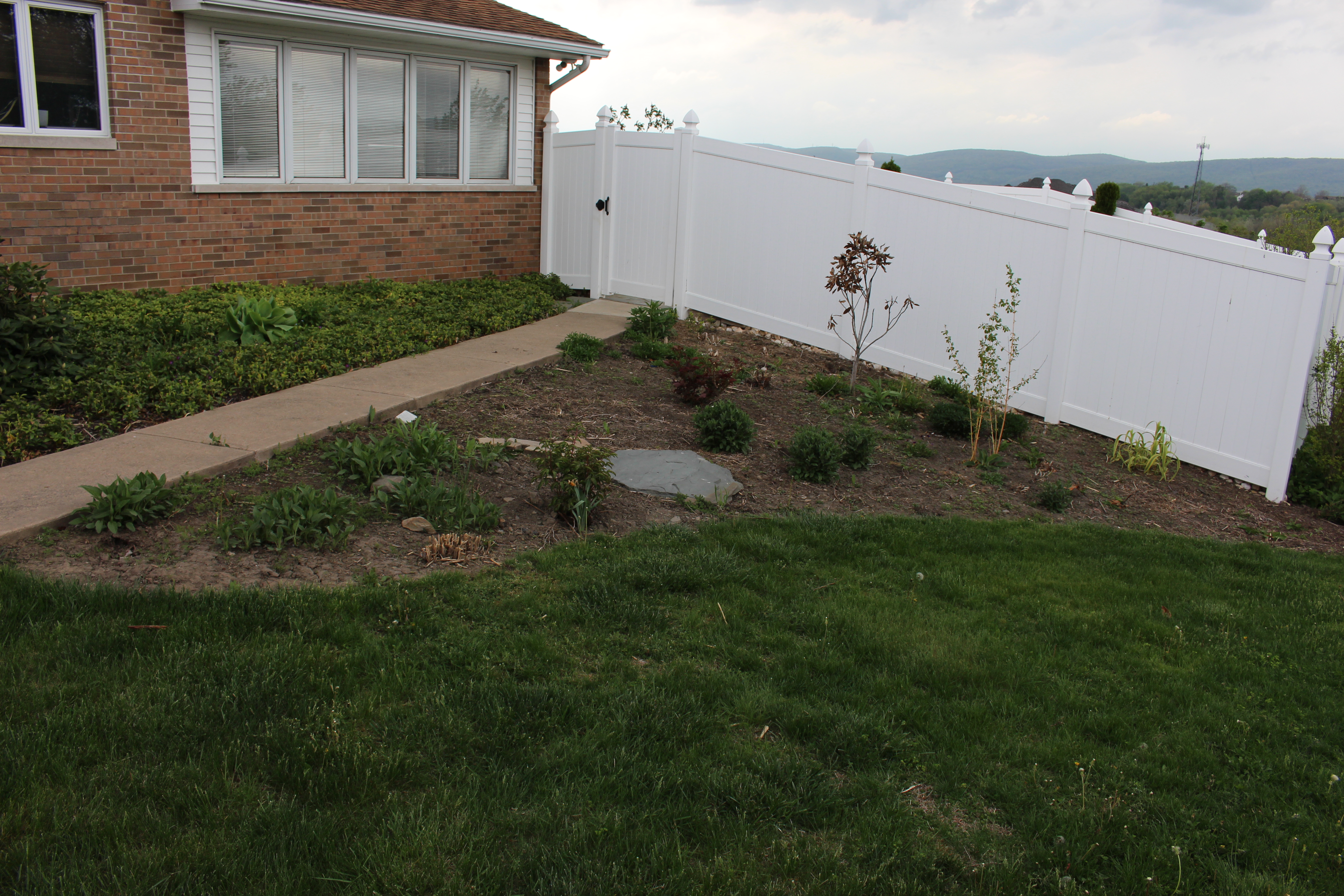
There’s a spot in my yard (actually most of it inches over into my Mother in Law’s yard) where I like to indulge in a little of the tropics.  Last year it was full of cannas, sweet potatoes, and other warm weather friends, but this year it seems to have lost some of that bold tropical flair.  As usual it’s my own fault, and as usual it’s a long story, so I’ll try to keep it short.  It all begins in April when mulch was purchased for next door, and a willing volunteer was needed to spread it.  I foolishly agreed, but the deal was to add a couple tons of topsoil (I said I needed it to fill in along a sidewalk).  “I’ll spread all your mulch if you buy me even more stuff which needs spreading”.  Let me just say I run a hard bargain.

new flower bed

Look at that three inch drop from the sidewalk into the tropical bed. Clearly an ankle twisting lawsuit in the making!

So the mulch was spread, perennials divided, shrubs trimmed, weeds pulled…. the deal kept getting better and better it seems, but then it came down to the heap of topsoil sitting in the driveway.  I used a few wheelbarrows to raise the soil along the walk and was still left with plenty.  Finally my plan was coming together hah hah hah.  I’m pretty sure I mentioned I might use the topsoil to expand the bed a bit, so that’s what I went ahead and did 🙂

digging a new perennial bed

Line the edge with a hose, cut in and dig out the edge, smother the grass with about two inches of topsoil… wow did I hate mowing this sloped little patch of sickly grass!

No one said a word about the tripled in size, very empty bed.  I think people around here may be a little wary about asking questions for fear I will plant up a field of dandelions or something.  Some people have said I’m stubborn and criticism may tend to encourage me even more.  I like to think of it as proving a point 😉

fresh soil in flower bed

A huge empty garden bed in May. What could possibly make a gardener happier (other than a few loads of compost mixed in)?

The last bits of mulch made the bed a little more suburban-friendly and a few paver scraps thrown down along the center made an acceptable shortcut for the kids.  Then on to the real fun!  Canna and dahlia roots were lugged out and planted, and that was well enough, but then trouble started brewing.  A box filled with a dozen or so rooted chrysanthemum cuttings showed up at the door.  I can check on them constantly if they’re right along the edge of the new bed, so that’s where they went.  Don’t ask me why I needed a box of chrysanthemums, February is a tough month.

new flower bed

Somehow random perennials invaded the tropical border, that and chrysanthemums….

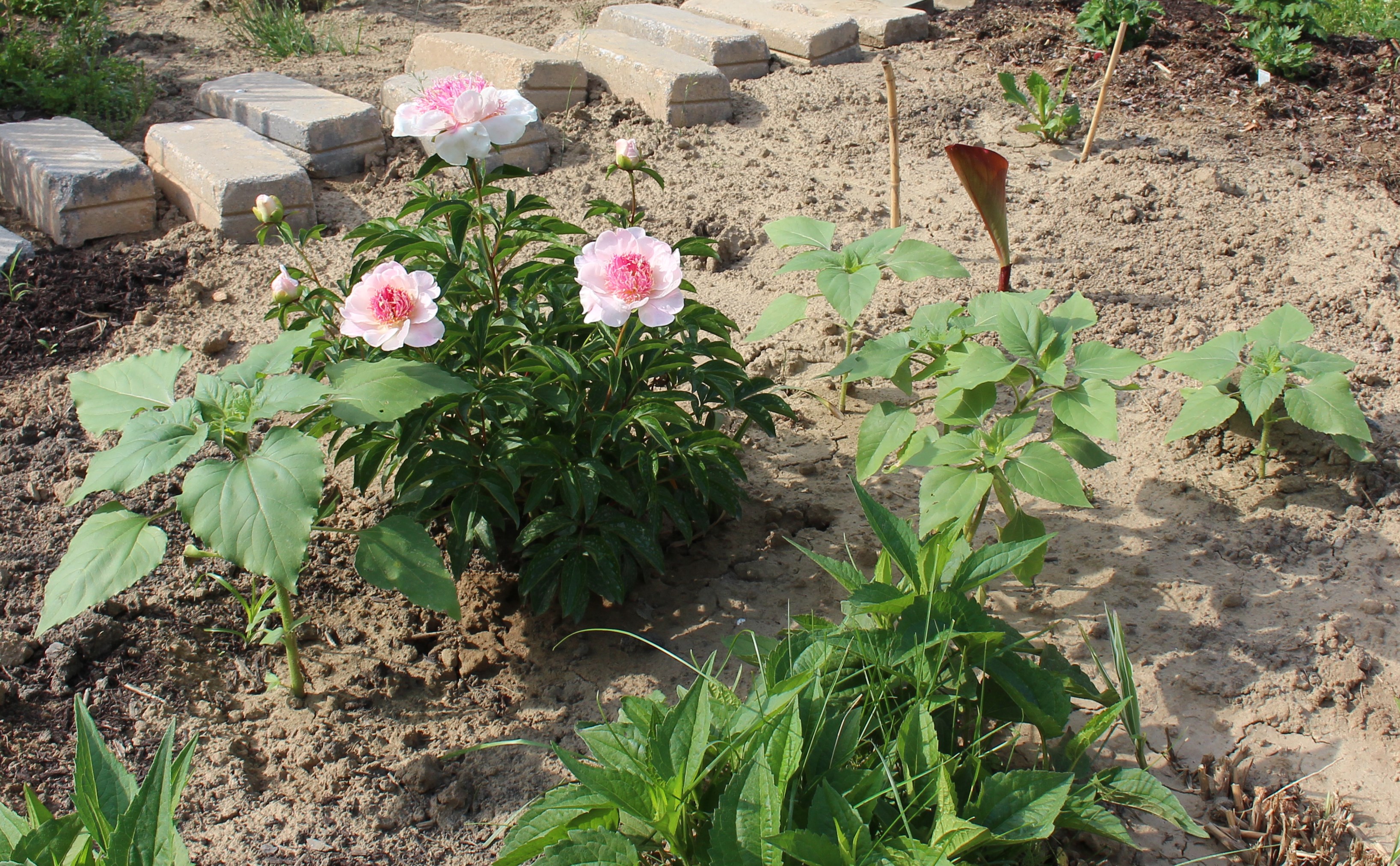
Then of course I tried to make the front yard more respectable by not having sunflowers all throughout the foundation plantings.  Out they came and into the new bed they went.  I have a serious problem in trying to show any kind of resolve against sunflower seedlings, they’re all summer and sunshine and it seems borderline criminal to pull them as weeds.

peony "do Tell"

Peony “Do Tell” can’t seriously expect to be the only plant using this spot of sun all year. The sunflowers should take over by July and the peony will just hang out in their shade until next year…. that’s the theory at least.

Things still look awfully barren but until the heat of summer hits it’s all kind of just biding its time.  Looking over from my yard you can see the bit of slope which made me hate mowing this spot.  Plus I’m not all that crazy about lawn to begin with *yawn* ….. it’s only really good for walking around on while checking the plants out!

side view

Year two of “I should give the table another coat of pain” -June 10th

My grass just doesn’t have the strength to come up through the soil (southerners may have a different experience), and even without soil improvement the new plants are still doing well as they feed off the decaying lawn underneath.  A month later and things are looking better.  The cannas still give a tropical look, but all the sunflowers are giving more of a neglected-agriculture vibe!

cannas, grasses, and sunflowers

July 13th, about a month later and the cannas are up, the sunflowers are growing, and I still keep looking at the bare dirt wishing for some compost or mulch to cover it up with.

As the sunflowers come into bloom they’re pretty and cheerful… but they’re not the tropics.

sunflower bed

It looks lush and green, so I should be happy. Also it’s not the color disaster I grew here last year, another reason to be pleased!

Besides it being a non-tropical border, a few other problems are coming to light.  The first is that some of the chrysanthemums relentlessly insist on setting buds and blooming for summer instead of fall.  I think I failed to pinch them back enough when planting them out in the spring, but I just don’t have the heart to do it now.

mums blooming too early

Chrysanthemums blooming in July, hopefully they’ll be on the correct schedule next year…. but they’ll need dividing by then, so I have no idea where to put them all!
To me a more insidious problem is the sunflower blooms.  When the first flower opened I cringed.  They’re completely pollen free, and because of that they don’t offer much to pollinators, and even worse they don’t set seed as well as the normal types.  I thought for sure since they were selfsown from last year’s plants that they should be normal functioning sunflowers but that’s not the case.  These all appear to carry the pollen-free gene, a gene which I’m sure came from the birdfeed seed.  I’m not big on all the seed conspiracies, but this looks like a genetic insurance policy that keeps farmers coming back to the seed supplier each year, and keeps them from replanting their own crop.  Good for a seed seller but not so good for me and all my now genetically tainted sunflowers.

pollen free sunflower with bee

Not much here for the bees.

Luckily there’s a small patch of sunflowers out front which still grow normally.  Once these started blooming I noticed a few seeds starting to form in the other patch (I guess a little pollen goes a long way throughout the garden!).  I need to make sure I get my seedlings from this area next year.

wild sunflower

This sunflower looks like it’s full of tasty seeds, not full of empty husks like over in the other patch.

The sunflowers look pretty enough, but all I see are the black soulless eyes of the walking dead…. ok maybe not that bad, but they lack the busy bees and bugs that usually do laps around the big open pollen filled flowers.  The goldfinches have also been very insulting as they touch down to check on the seed supply and come up empty.  Hopefully pollen from the front yard will work it’s way back here to at least make the birds happy.  Just in case, I planted a patch of heirloom sunflowers in the now completely dug up daffodil patch.  They’ll be late, but they’ll have pollen, and I think they’ll still make it before frost.

selfsown sunflowers

Sunflowers coming on strong.

I’m still holding out for a few tropical effects.  One castor bean seed came up and is now taking off, and “tropicanna” canna is looking healthy.  Also if I have nothing better to do this week, a few coleus and sweet potato cuttings can fill in one or two of the still empty spots, and maybe by late August ‘tropicalismo’ will revisit this bed once again.

castor bean with tropicanna canna

Castor bean “carmencita” and a few over-fed “Tropicana” cannas. The cannas seem to get much brighter colors when grown on the lean side, or with just a little 10-10-10 fertilizer. This batch has a lot of green in them due to higher nitrogen, probably from some miracle grow.

I don’t know if they say tropical to everyone, but dahlias never fail to bring brightness.  This peachy pink with yellow cactus flower makes me think of some overdone tropical drink.  Yummy!

pink and yellow cactus dahlia

Unknown dahlia which I keep saving from year to year. This spring I tried to show some restraint with them since last season planting a dozen or so might have been overkill 🙂

One plant I still need to plant out more of is verbena bonariensis.  In almost all my other beds it can be counted on to show up and make a play for taking over any open spot, here in the new soil it hasn’t had a chance to seed in yet.  Any transplants made this time of year will shrug off the shock of moving quickly and should be blooming up a purple storm in no time at all so I better get moving.

arundo donax "gold chain"

The grassy tropicalish leaves of arundo donax “gold chain” make a great mix with the sunflowers and verbena. I might have to plant this combo on purpose next year to make sure it happens again!

The tall old fashioned red leaved cannas always make me happy.  They’re super easy to overwinter, never look ratty, and always grow as fast as the fertilizer and water will take them.  The small reddish blooms which come later in the season aren’t much to talk about, but the hummingbirds love them.

red russian canna

Maybe canna “red Russian”? We call them Polish cannas after the old Polish woman who years ago gave the first ones to a friend of mine.

So that’s the latest from the ex-tropical bed.   It may still heat up as the season progresses, but for now it’s decidedly temperate and might remain so for a while.  No amaranthus or salvia seedlings showed, and this spring was a bust as far as all the seeds I started, so many of the brightest colors from last year are hushed.  For now I’ll have to keep satisfied with my little bit of the tropics in containers.

tropicals in containers

A couple real tropicals planted in containers where I can best keep an eye on them.

Not to go on any longer than I already have, but those weak little pots of tropicalismo surrounded by weeds and dead grass aren’t just a bad planter arrangement.  To me they’re the accent on a new gavel terrace backed by a low stone wall.  Maybe a fire pit.  I think one of the reasons my garden looks the way it does is because I have a bit too much vision, but we’ll see.  I do tend to work backwards and always find the plants first…. who cares if the seating area is still a little “in development”?

Happy Memorial Day!

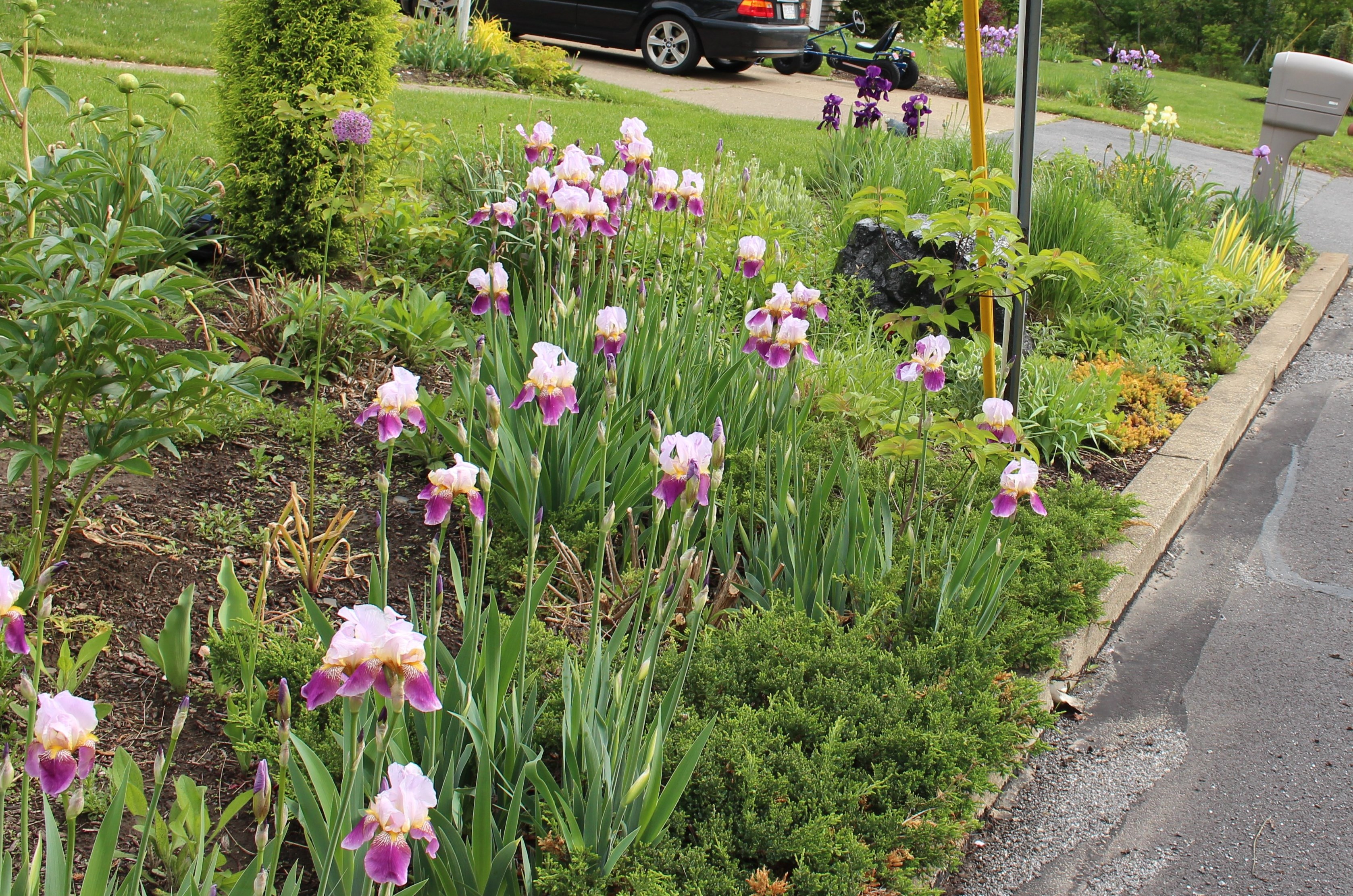
Here in the US it’s Memorial Day, a day of parades and ceremonies to remember the sacrifices of the fallen.  Today we’ll be hitting the main events but we’ll also be grilling and getting ready for summer since the weather is finally agreeing with the calendar.  Yesterday I finally got to spend a lot of time in my own garden and most of it was spent getting the front yard straightened out.  It was a pleasure since the whole yard is perfumed right now with the lemony and grape scents of flowering bearded iris.

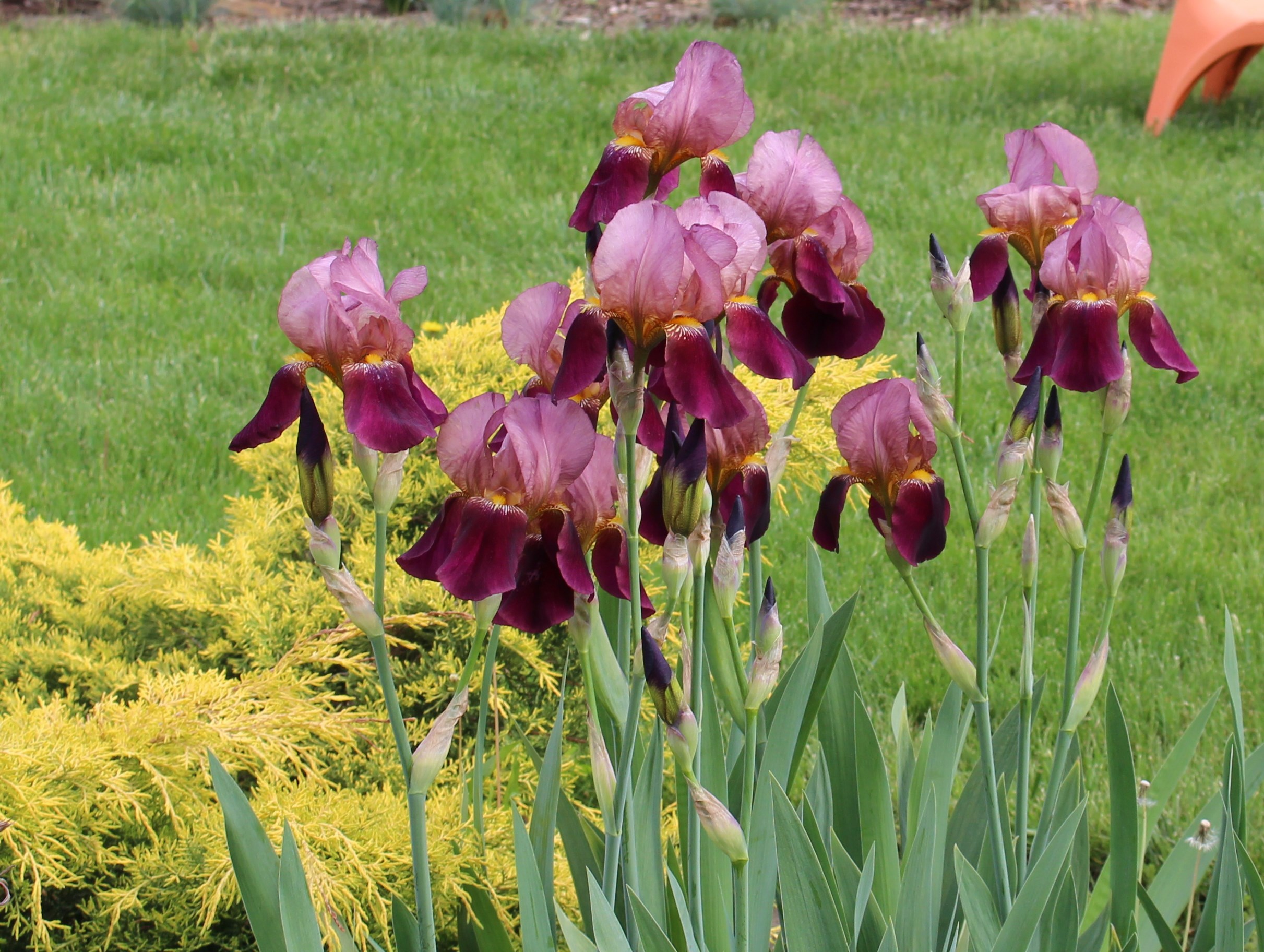
historic iris

This old iris is one of my favorites.  Although nameless, it has a strong fragrance and carefree habit. Butterfly bush will shade the entire patch come July, but these iris keep going regardless.

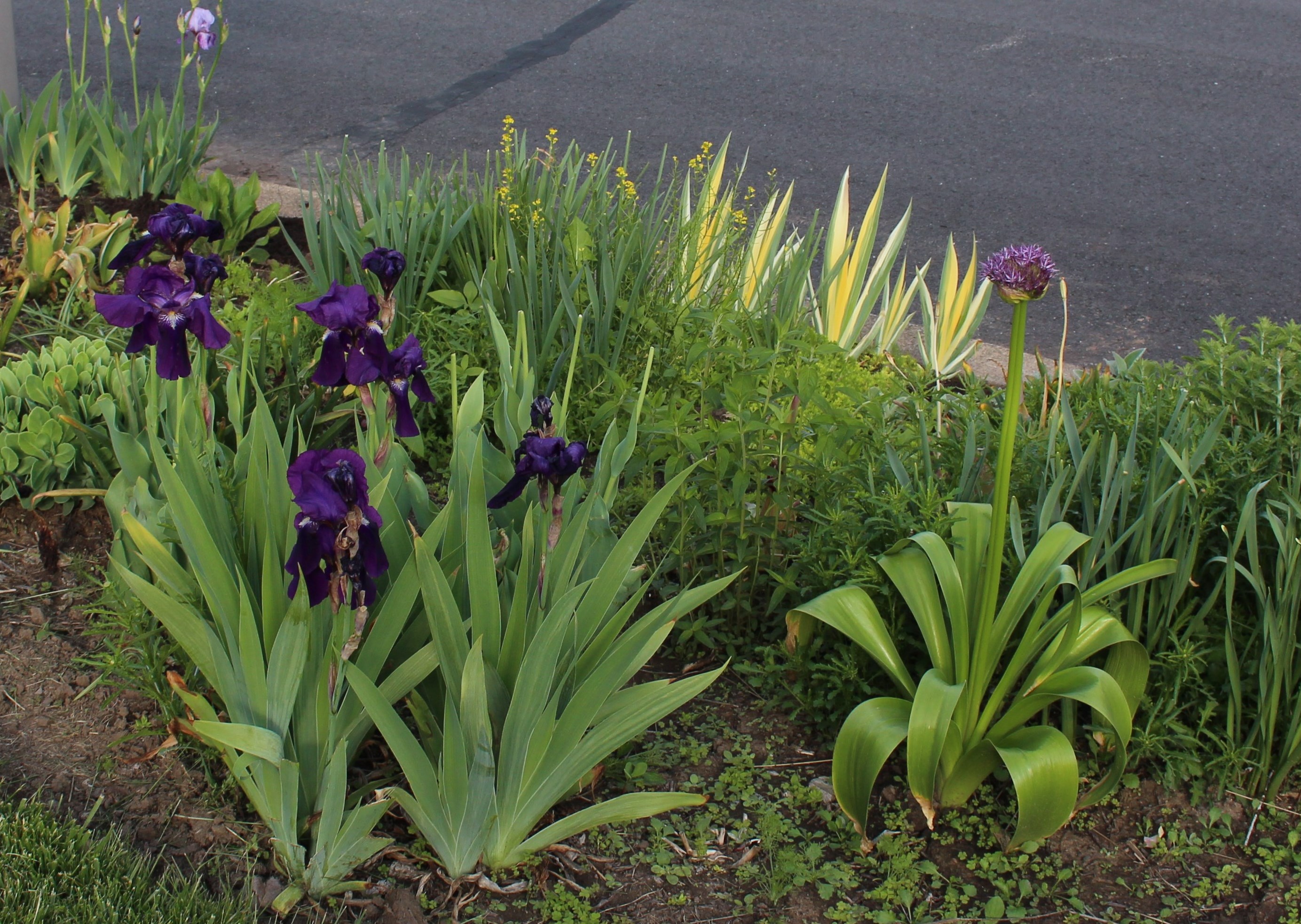
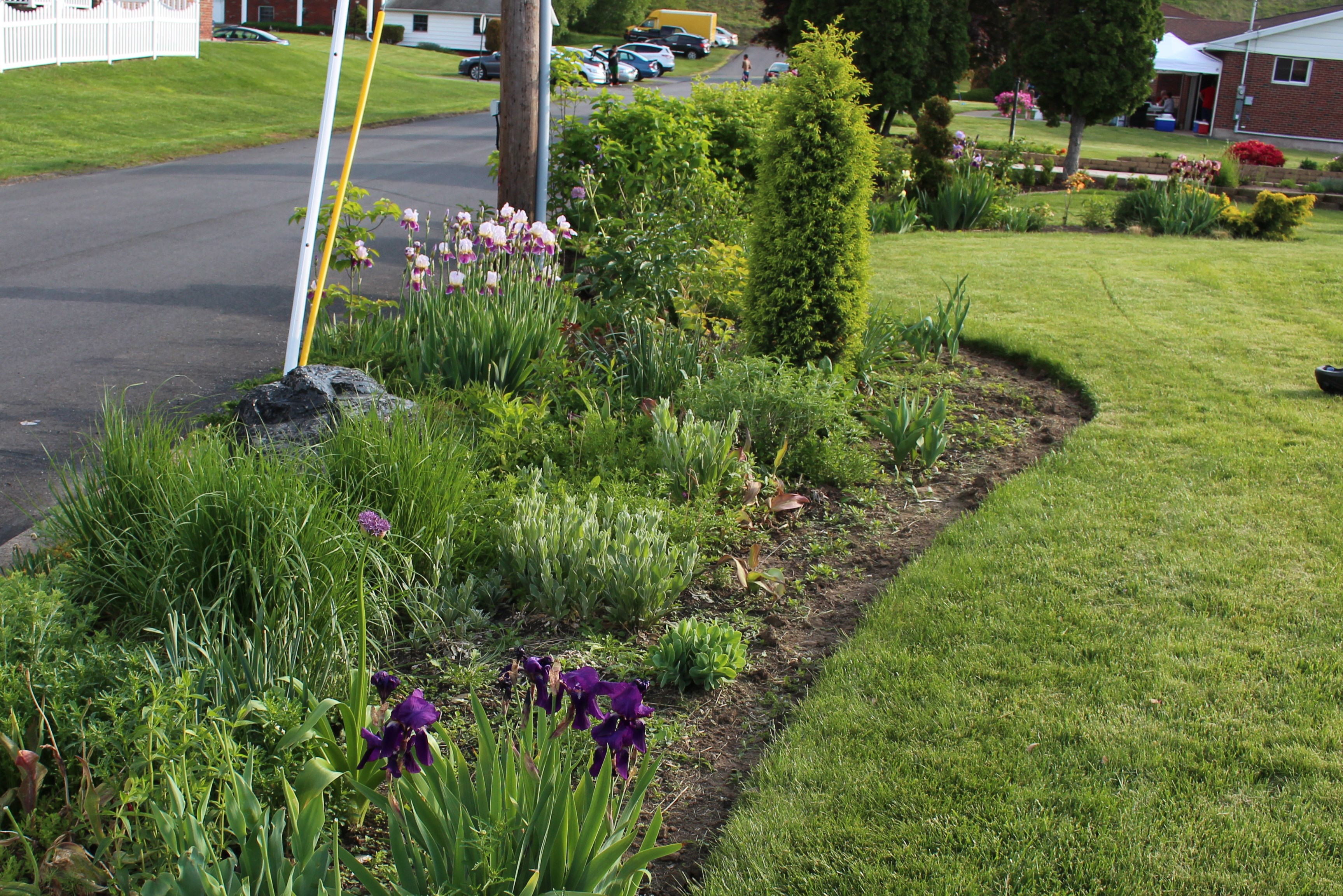
The front border along the street is dry full sun, and the iris enjoy the summertime baking.  I think the dry, lean life helps ward off all the floppiness and fungal diseases that sometimes becomes a problem with bearded iris.

iris indian chief

Iris “Indian Chief” is also an older nearly indestructible iris. I sometimes think of these as cemetery iris since they seem to go on indefinitely, lovingly planted by a gravestone and then neglected for the next 50 years.

The iris are a little sparse this year compared to years gone by.  I pulled out wheelbarrows full last summer to try and thin things out, so it will be another year before some of the new clumps really fill in.  Sometimes the garden needs some tough-love 🙂 They were the perfect plant for this location though, and really helped make a new border look full and settled in within the second year.

iris rhages

Iris “rhages”, another historic iris from the 1920’s. Approaching its 100 year mark and still a pleasure!

I did some moving and dividing but this bed will need some serious weeding once I can sort out what all the seedlings are.  Drought last year kept all the biennials and perennials from sprouting last fall, so the real estate was open for tons of nicotina, verbena, and rudbeckia seedlings.  Something about the winter was perfect for seed sprouting since I have things coming up that normally don’t- such as sedum seedlings- and few of the usual characters such as oxeye daisies and forget me nots.

iris kochii

Iris kochii, a bearded iris collected from the wilds of northern Italy around 1887, and my allium splurge coming on next to it. I finally broke down and shelled out the $7 for this bulb and now I’m looking forward to the softball sized blooms.

I think I’m going to collect up all the rudbeckia seedling and just spread them around throughout the border this year.  between those and a few cannas this might be a low maintenance year for the front bed. (this said while considering all the cool seeds still sitting unsown in my seed box)

streetside perennial border

I think I need a few more iris here in the middle….  With all the spring bulbs gone things are too green, but imagine it with big swaths of orange and yellow rudbeckias! (plus a few red zinnias maybe?)

A firm hand (and a shovel) were used against all the little guys drifting down towards the street.  The border may get a bit unruly but I used some leftover mulch to give it a clean edge.  Although I’m not a fan of the brown dyed mulch (it was free from next door) it gives a nice neat edge and might be the easiest thing you can do to make an “overly exuberant” planting look controlled.

mulched perennial bed

A foot or two of fresh mulch along the edge even makes the weeds look better. -yes, that’s a big chunk of coal… this part of Pennsylvania is coal country and we actually sit right above one of the mines.

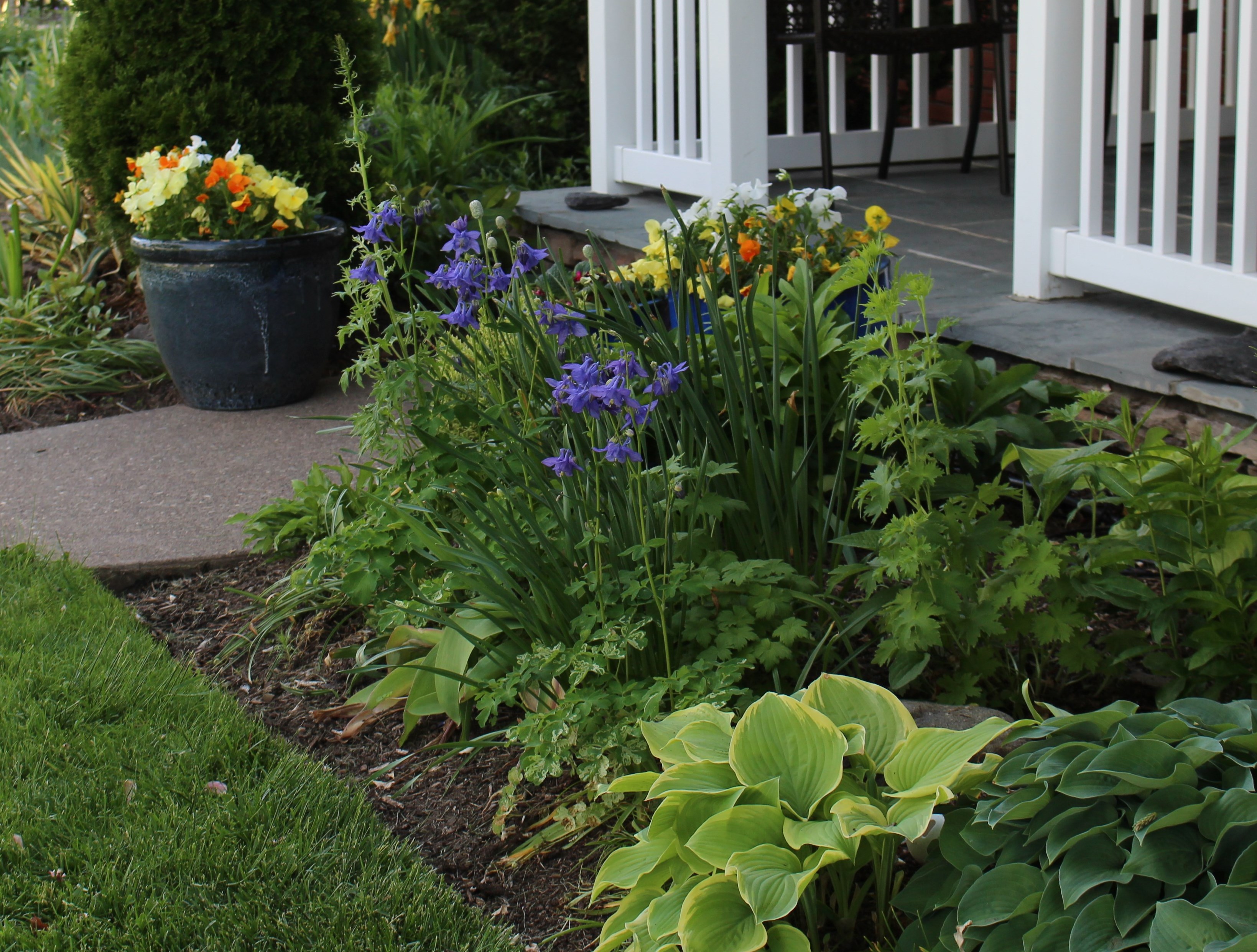
The border along the house also got a little attention, but overall there’s not much to do here.  Hostas have covered up and filled in around the early bulb foliage and the columbine seed I threw around last year has grown up and added some nice blue color.  In another few weeks I’ll come along and get some annuals in, probably some of the coleus cuttings off the windowsill.

self sown columbine

Blue aquilegia filling in until the annuals get planted. With warmer weather coming the pansy’s days are numbered.

I was a little firmer with the sunflower seedlings this year.  Dozens came up (apparently all the seeds weren’t eaten by the goldfinches) but I moved all but a few to the tropical garden… which has now become a sunflower field.  A few are left though, and the neighbors will just have to deal with rank eight foot annuals mixed in with the foundation plantings.  Here’s another questionable front yard planting.  Miss Willmott’s Ghost (eryngium giganteum) is a slightly weedy looking, thistle-like biennial that is just starting to put up its bloom stalks.  This is my first year with it (the seedlings didn’t do much last summer) but I already love it.  Just look at those flawless leaves with that nice veining!

eryngium giganteum foliage

The striped leaves of iris pallida “variegata” with blue fescue and Miss Wilmott’s Ghost. I’m all into the ghost right now, but the iris deserves some more respect too. I should really give it a spot of its own, and not just these stray bits that were missed when digging the bed over.

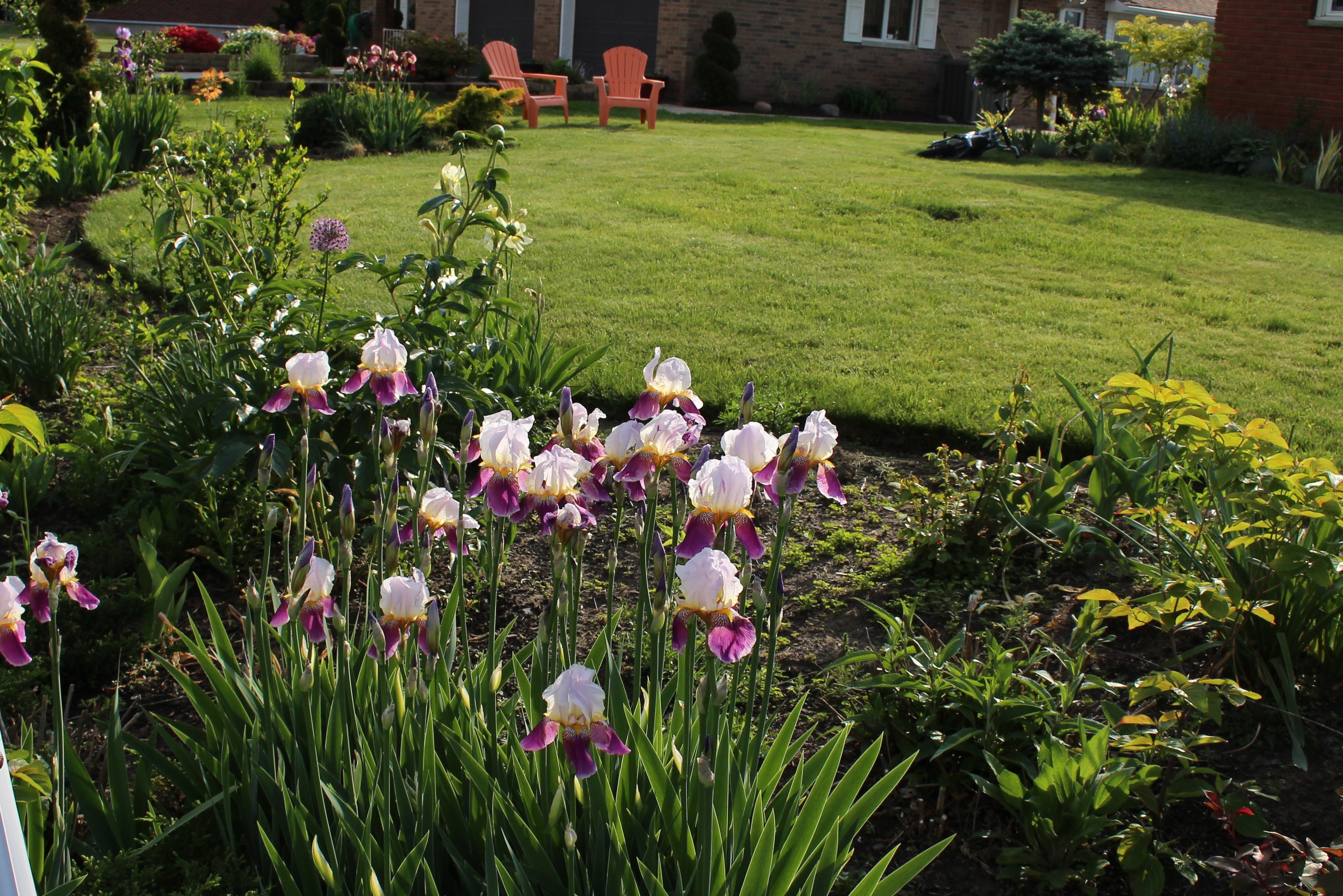
I hope to give the vegetable garden a little attention today.  It’s overrun with weeds at a time of year when it should be brimming with harvestable lettuce.  Oh well, we have to pick our battles at this time of year, so I’ll just focus on the front with its neatly edged lawn and freshly cut grass.

iris in perennial border

How do those stupid chairs keep showing up in every picture?!

Wish me luck with the back.  Today is supposed to be warmer again and I hate breaking a sweat on a holiday.  Plus the deck needs powerwashing and there’s grilling to do… and who knows what valid reason I’ll find to sit around with a cold beverage 🙂

Such are the problems of almost-summer!

A May Day walkabout

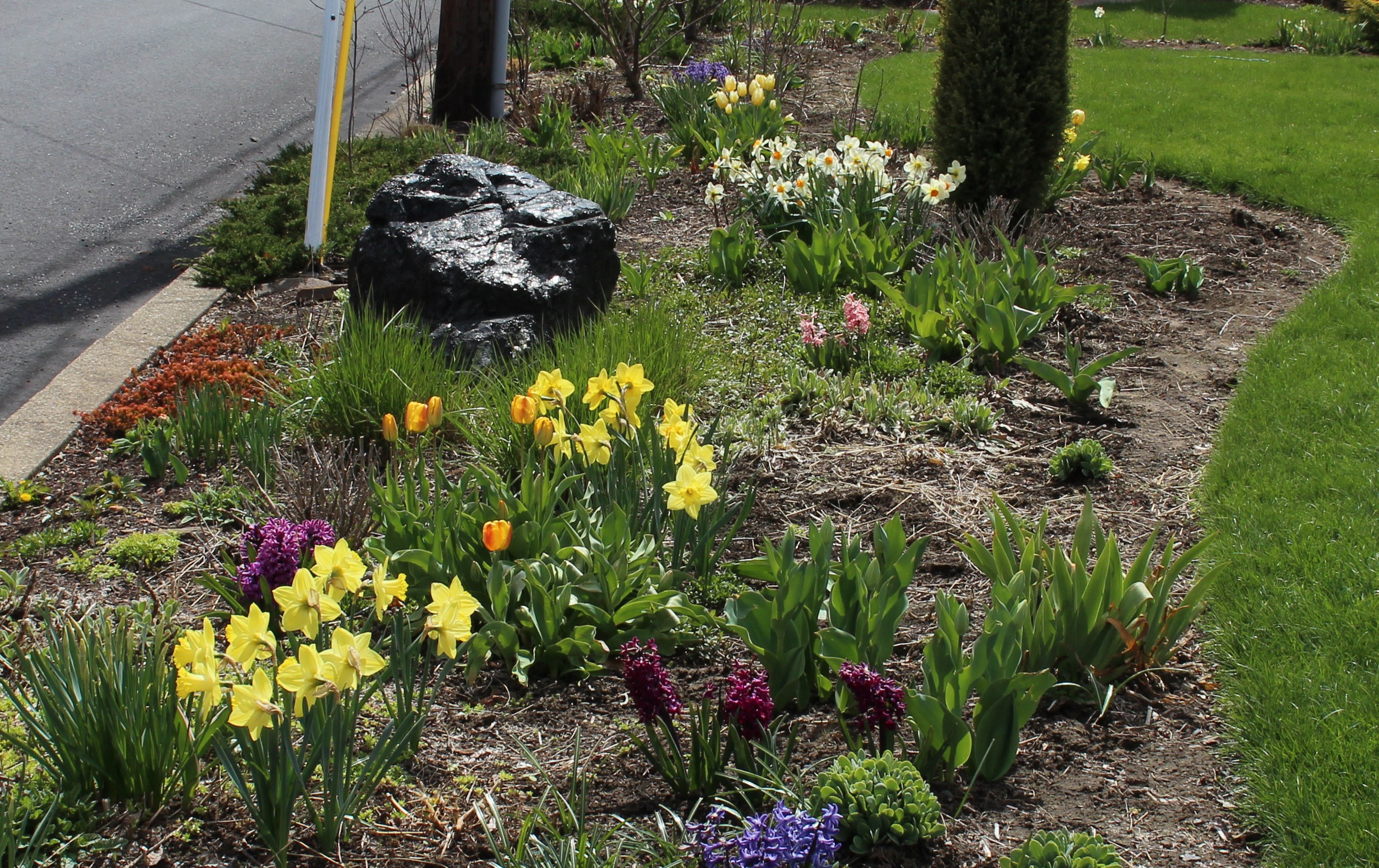
The start of May is always an exciting time because for us it’s that part of spring when everything just explodes into growth.  We might be a little behind this year, but you still can’t beat the first of May.  The biggie bulbs like daffodils and tulips are taking off now and the front bed has finally been resurrected from its winter drabness.

spring bulbs in a mixed border

Early daffodils and a few of the first tulips opening up along the front border.

I’m trying to get things moved around while it’s still cool but life always interferes with colds, work, and T ball games so I’m already way behind.  Last Saturday all I wanted to do was move seven rooted privet cuttings into place to start a nice little hedge along the back fence, instead it turned into an hour long project and I ended up digging out a good sized boulder.  At least I got this magnolia transplanted before it leafed out.

white magnolia

Magnolia in position near the street. I wish I knew the variety but it’s a layered cutting stolen from my brother in Law’s yard….. yes, it needs some pruning.

If I had more land there’s a good chance I’d find room for a number of magnolias.  But I don’t, so I try to stick with some of the smaller types… even though a nice big one would make for a good shade garden once you trim it up.  Here’s magnolia “Ann”, one of the smaller bush/tree sized ones, finally big enough to bloom after several years of rabbit attacks.

magnolia ann

Magnolia “Ann”. A smaller, later blooming cultivar that should grow into a nice sized bush here in front of the fence.

winter buned foliage on southern magnolia "little gem"

“Little Gem” magnolia still looking worse for wear after the winter.

While on the subject of magnolias, the freezer burned “Little Gem” is still looking sad and brown and dead, but I’m still pretty sure it will recover just fine once warm weather hits.  As soon as these brown leaves start to drop off I’ll know the plant is starting to think about putting on new leaves.  It will look worse before it gets better, but hopefully by June will look as good as new.

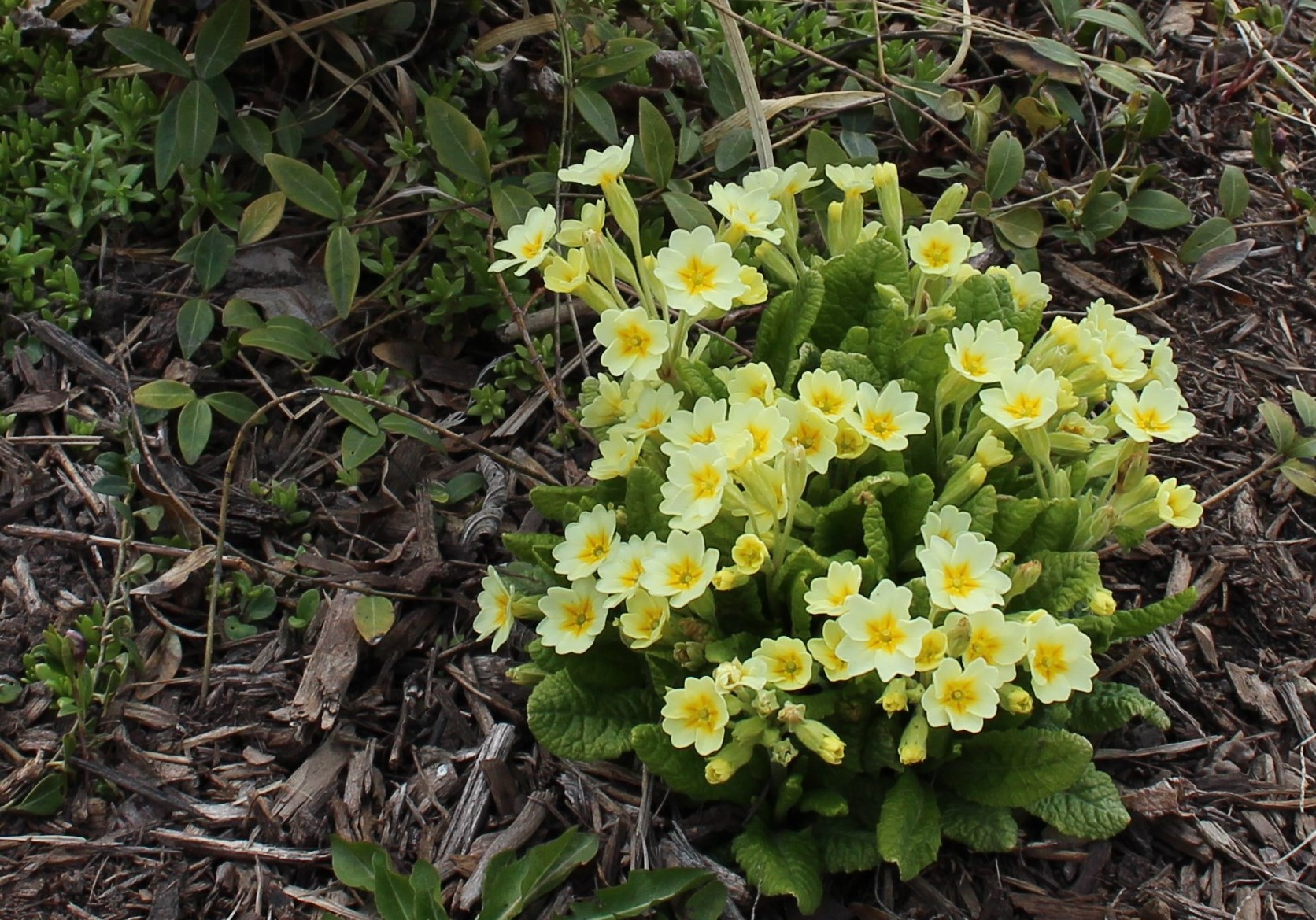
Luckily other parts of the garden look good enough to distract you from the first aid beds.  Yellow primrose has clumped up nicely in the damper parts of the yard.  In the next few days I’m going to try separating this clump, and hopefully this really is the right time of year to tackle this.  My track record on primula is not too good, so wish me luck.

yellow primrose primula vulgaris

A yellow primrose (primula vulgaris?), one of the few primula to survive any amount of time in my care.

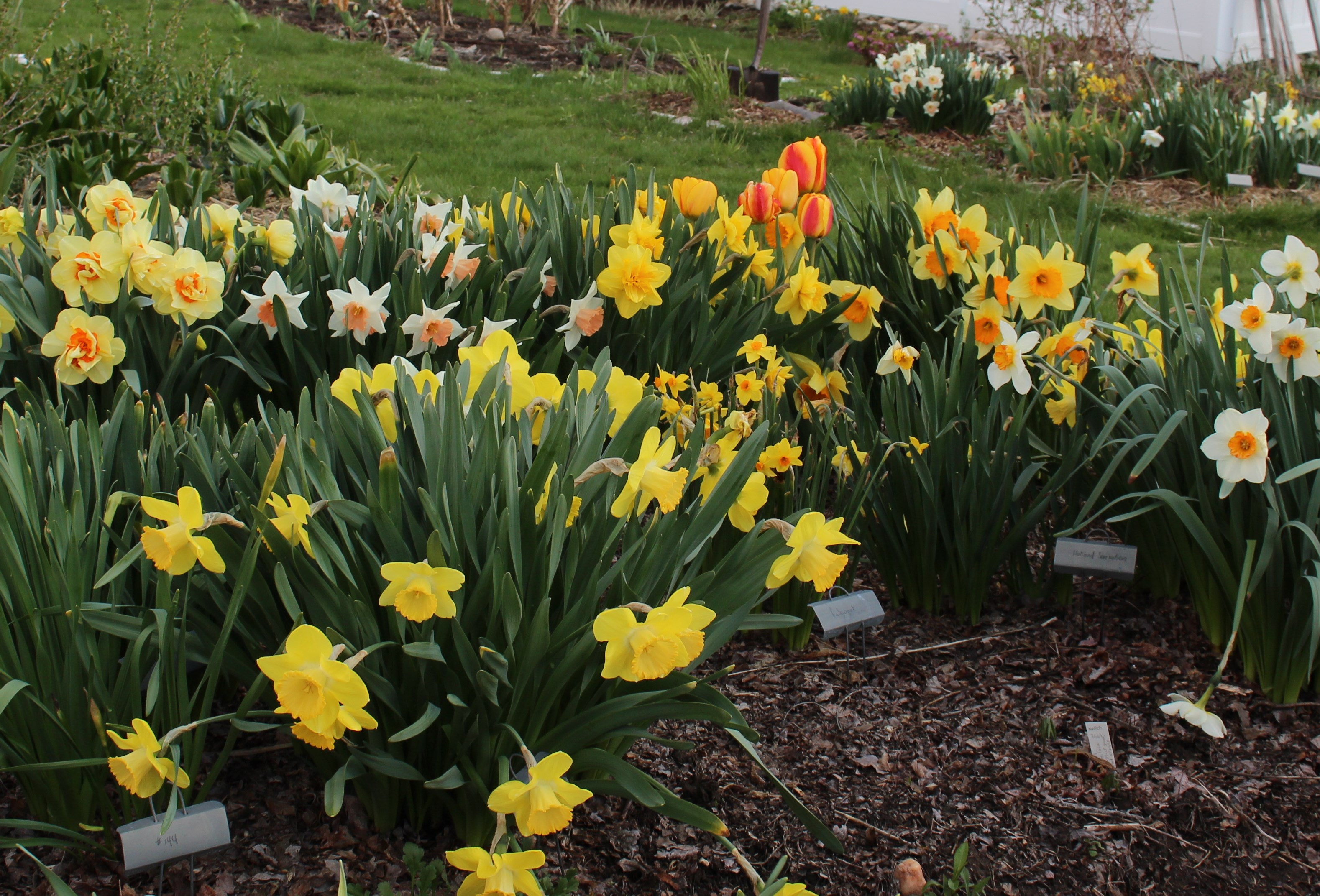
I guess I might as well bore you with a few daffodils too 🙂  I have quite a few and really do need to give them some attention this summer in terms of division and moving and “thinning the herd”.

daffodils and tulips

Some of my favorite daffodils…. with a few tulips sneaking in.

A friend of mine lured me in to the daffodil world a few years ago.  While she succumbed to  the dark world of show daffodils, I’ve held strong and try to keep myself satisfied with just a few good garden varieties…. actually it’s hard to go wrong with daffodils, and it’s also hard to stop at just a hundred or two!

mixed pink and white daffodils

Left to right- narcissus “golden echo”, “passionale”, and “serola”

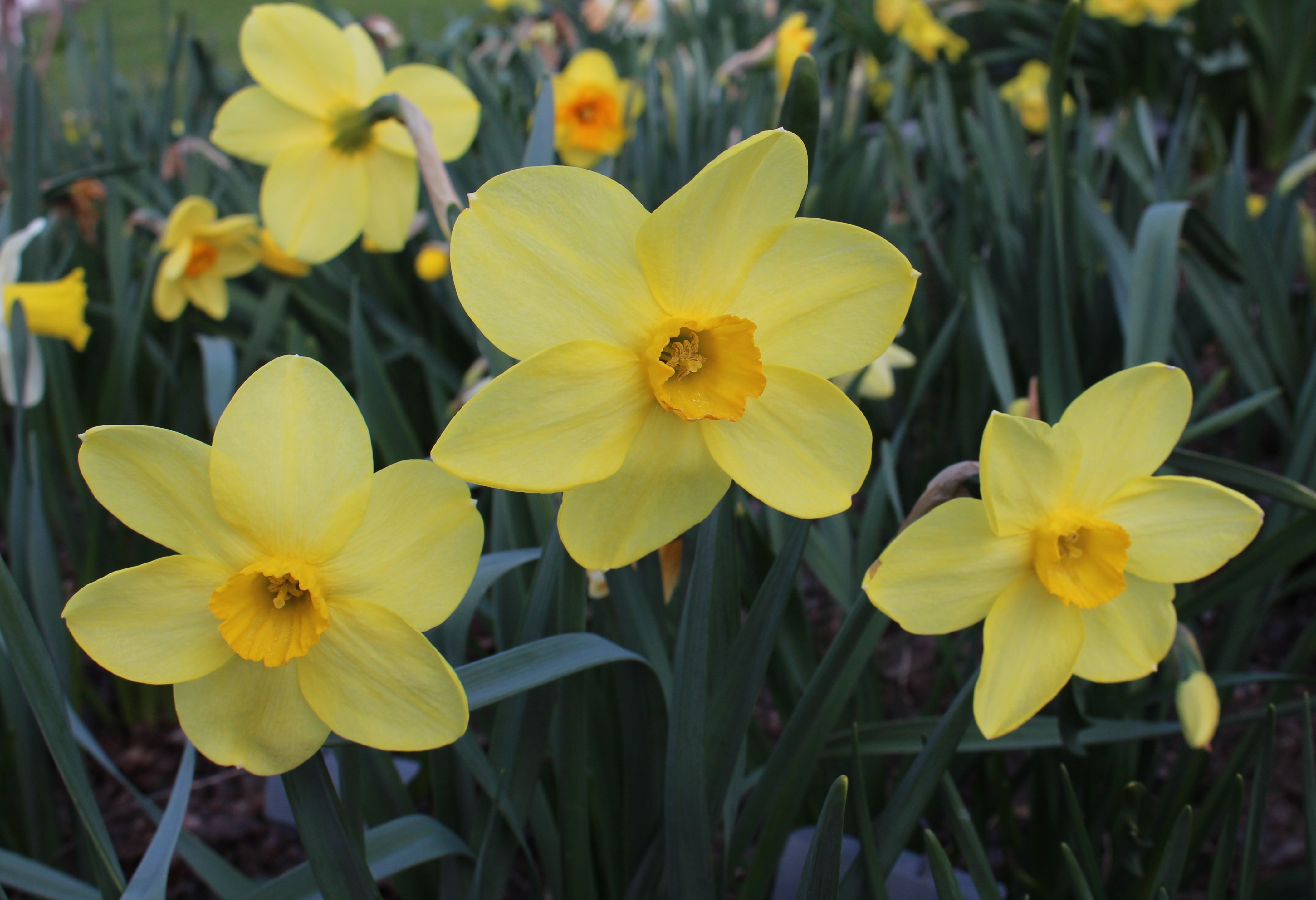
Maybe I’ll admit to having just a few show quality daffodils.  As far as I know something like this one, with a nice strong (not tissue papery) flower substance, nice flat petals, clean unmarked, and no nicks or anything around the edge…. that’s what makes for a flower you could bring to a show (that and a few years practice and you might bring home a bunch of ribbons!)

narcissus "new penny"

Narcissus “New Penny” looking nice in the garden and maybe worthy a spot on the show bench?

It’s still a little early here for tulips, they’re only just starting to color up around the beds and add in a little contrasting pinks and reds, but the muscari always brings in a nice blue to go along with the yellows and whites of the daffodils.  These can be a pest in some gardens, but I guess I’m still young enough or dumb enough to not mind them spreading a bit…. or I’ve been conscientious enough to behead them after blooming to stop their seed spreading ways.

blue muscari

Regular old blue muscari given to me by a friend. I need to remember to spice up this planting with a few of the pale blue “Valerie Finnis” which still need planting out.

A plant I wouldn’t mind seeing spread a little is this nice double hellebore that’s blooming for the first time this spring.  It’s another seedling from the now closed Elizabethtown nursery and I believe it was supposed to be a double pink cross.  Double it is but pink it’s not, and I’m quite happy with this genetic mix up.  The newest blooms open a pale chartreuse and then darken to a limey green.  I can’t wait to see what it looks like next year!

green double hellebore from elizabeth town seed

First year’s bloom of a lime green double hellebore from Elizabethtown seed.

And that just about does it.  After the subtle rarefication of a lime green hellebore I leave you with a final view of bright tulips and a photo bombing tacky orange plastic Adirondack chair.  It was a gift from my mother in law and I’m really quite pleased with it.  I guess my endless whining about wanting a couple for the back yard didn’t fall on deaf ears.

tulips and daffodils in a mixed border

What better front yard art is there than brightly colored plastic lawn furniture?

I wonder how long it can stay out there before the Hillbilly comments start and people again loudly question my design sense?  Maybe a pair of these chairs would be twice as good?  I might have to test that this weekend, since I eventually will retire these to the back.  In the meantime I’m beginning to think this could be the new millennium’s version of the pink flamingo.