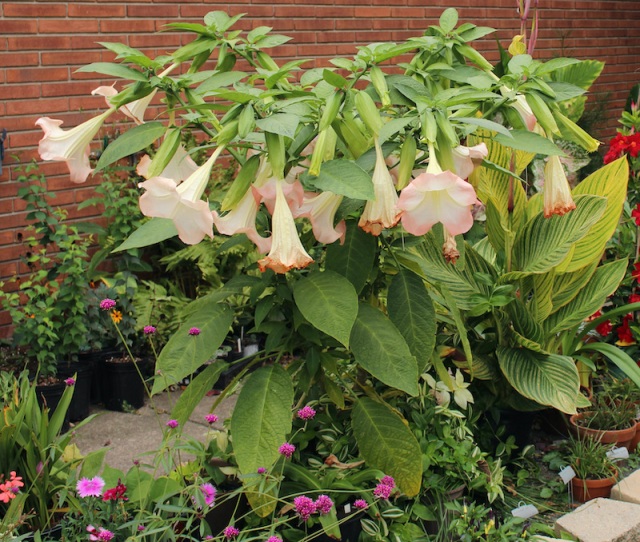
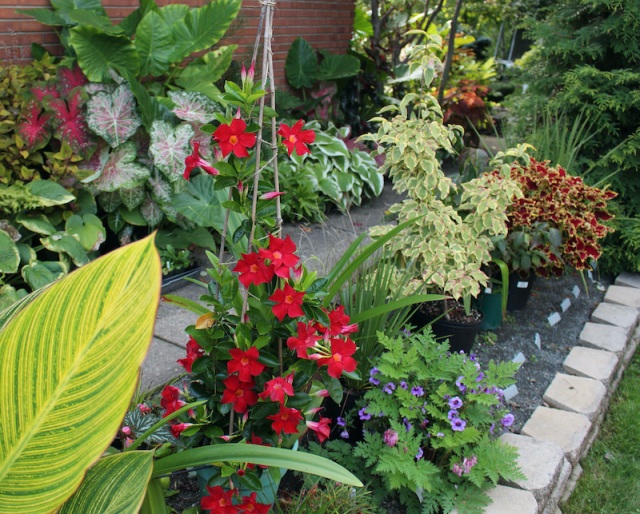
The Livin’ is Easy

This summer is going by way too fast and I am not liking that.  Just a day left in July and then it’s August and once August starts my summer days are numbered, and it seems particularly frantic because I still have tulips and daffodils and snowdrops which I’ve been meaning to dig since June as well as a bunch of potted things which I’ve been whispering apologies to all spring and summer as I keep putting off that job as well.  Don’t even ask me how the drip irrigation is going.  It’s been raining enough that watering has rarely come up on the to-do list, so of course repairing the drip setup keeps getting knocked off the top of the list, and I mention that one in particular because I had to go around this morning and save wilted things since of course I don’t water until it’s too late.  Have I mentioned in the last few breaths how much I hate watering?  Probably, but let me say it again.  I’d rather risk heatstroke weeding in the sun for a couple hours dripping sweat and covered in dirt rather than drag that stupid hose around.
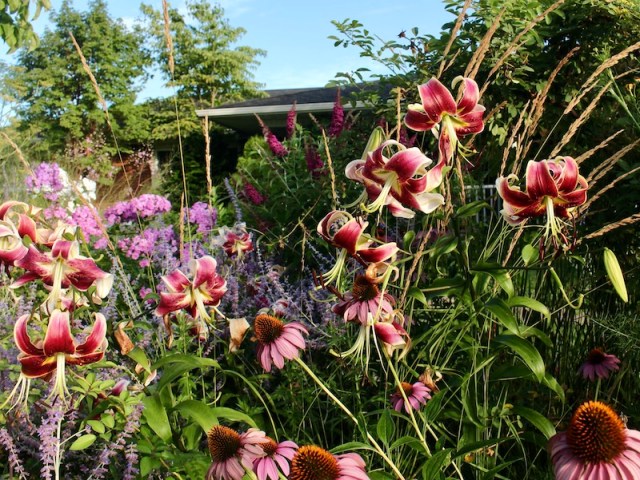
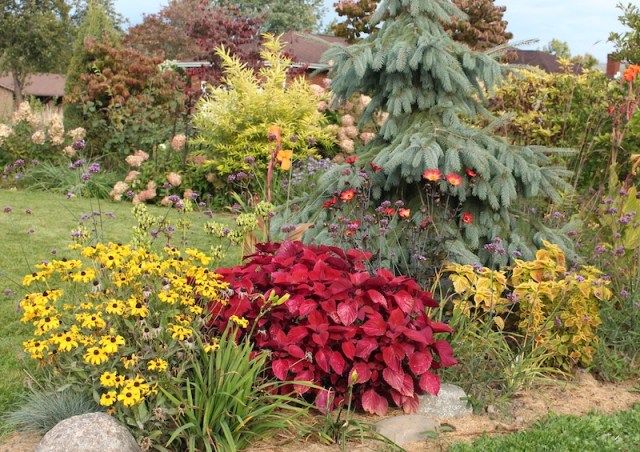
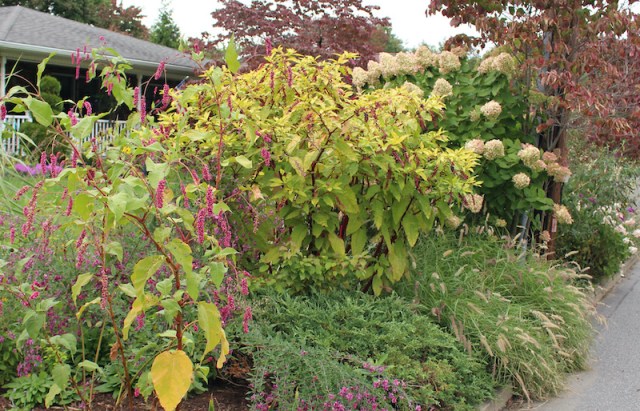
The front border is lush and overgrown due to this summer’s steady rains.  Even I think it might be a little “much” for along the street, but better too much than too little is what I say.  This is lilium “Scheherazade” doing well, and also not on the lily beetle menu (yet) so that’s also good.

Risking heatstroke and actual heatstroke aren’t separated by much, and with our third day over 90F (32+C) I’m trying to walk the line and avoid drifting over to the actual part.  Despite my love of lawn chairs and pool floats I’ve been far too busy outside feeding the gnats and losing water weight as I toil in the fields.  Maybe that’s not the worst training considering our potential future, but for now I do it for the fun of gardening and imagine Martha and Monty just as sweaty and disgusting in the heat of summer when they have their own daylily farms to rebuild.

summer lawn seeding

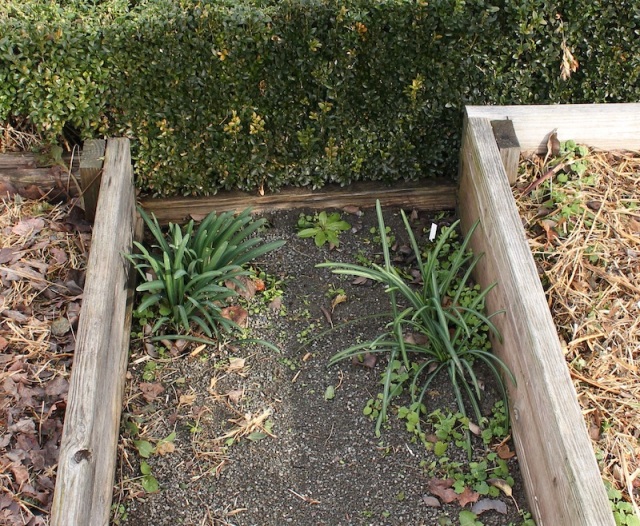
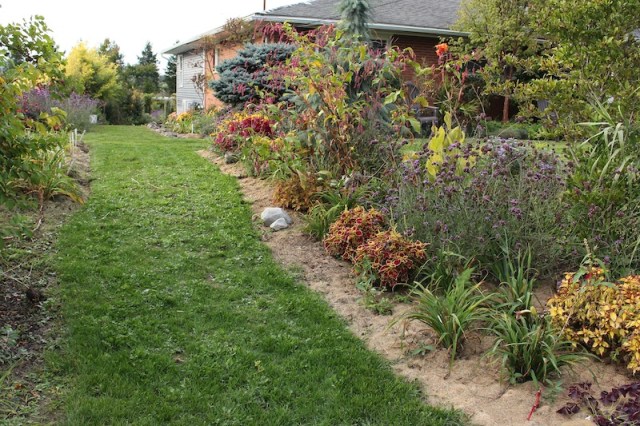
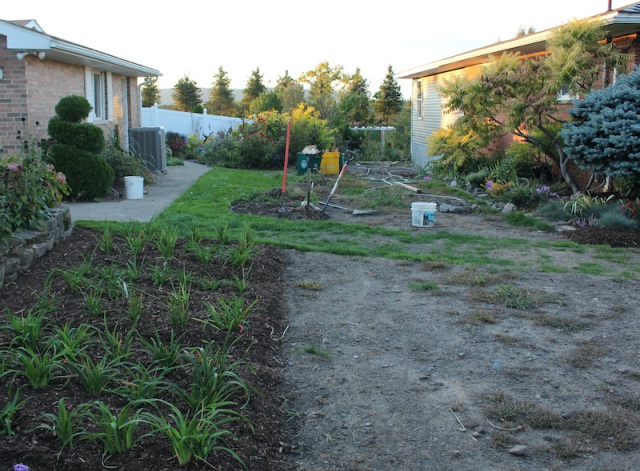
A daylily farm is rising from the ashes.  I’ve regraded and seeded the grass path, and as of today I’m happy to report a green shimmer as the seeds  begin to sprout.

My gosh, please skip ahead if you want to avoid the complaining, but it all started when I called the town a few days into staring at the bulldozed remains of my daylilies.  ‘So what’s the plan?’ I asked… and then entered into a discussion which became quite vigorous after I realized they thought I wanted to do all the repairs myself.  I did say that at the start when a hole at the street meant putting a few rocks back and maybe replanting a ninebark, but when the bulldozer and destruction moved twenty more feet into my yard and left a swath of raw shale and compacted topsoil, I assumed they might be able to spot me a little topsoil and mulch, even if they didn’t replace the farm or do any of the actual work.  A meeting was set up.  In the meantime I got to work.

First try to save a few things.  About half the daylilies were left with crowns so I uncovered them and gave them a little feed.  A few other things were uncovered along the street, and there might be hope for them over the next few weeks.  All my stones were buried, but one of the backhoe operators set aside a few new ones he found, and I got brave and split a bigger one to end up with two big stepping stones along the street.  The basketball hoop went back and then I regraded my little grass path.  In all I probably pickaxed and hauled off about 20 wheelbarrows of stony, shaley dirt to lower the grade and then tried to spread whatever topsoil they left into the beds.  That was awful, backbreaking work but then because I like a nice edge to a new lawn path, I dug up turf from in back and used it as sod to line the sides of the path.  Then the easy part of seed, topped with lawn clippings to keep the seed damp long enough to sprout, and then wait.  As of today, about a week later, the daylilies are sending up new growth, the grass seed is sprouting, and I’ve even popped in a few odds and ends like a new daylily or two, and some spare cannas and elephant ears to make it look less depressing.

daylily farm

There’s hope.

Since I took these photos, the town has come through with some mulch and topsoil, so more blood and sweat was shared for that, and we will see about the rest of the deal.  Hopefully the next farm report will be overwhelmingly amazing.  I have put some mulch down so I know at least that will be nice, and I’m in the process of picking daylilies to move in…. but enough of that… let’s look at where the rest of the garden is during these last days of July.
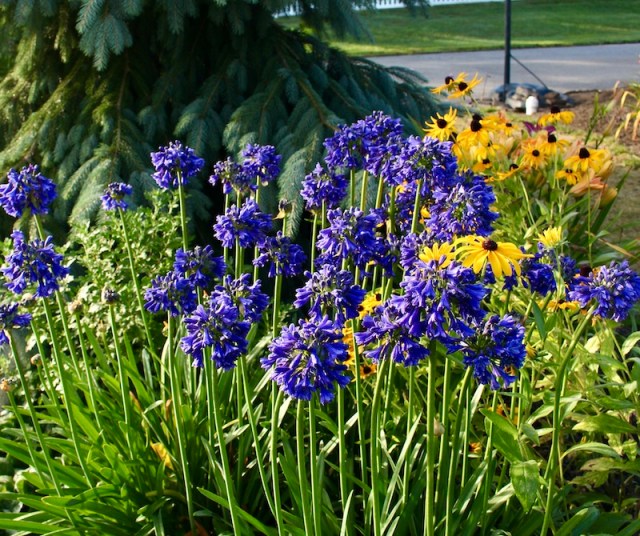
The agapanthus are blooming, and over the years ‘Blue Yonder’ has become a clump.  I love it.

I have nothing bad to say about the agapanthus this year.  They get no special attention yet are covered with blooms and have been perfectly hardy here for a number of years, with winter lows down to about zero and no protective mulch or sheltered location.  It looks like a few have enjoyed all this year’s rains, but even in dry years they haven’t seemed to complain too much.  I guess they’re as easy as daylilies, so I wonder if I can divide ‘Blue Yonder’ (my absolute favorite) and line out a row in the farm…. which would be awesome…

agapanthus campanulatus

Some agapanthus from seed.  These are A. campanulatus forms, the seeds of which were coincidentally saved from the bulldozers during the last sewer incident.

I guess I need to mention that not all agapanthus will be as hardy.  If you’re in a northern area, check up on the hardiness rating before you plant it, out in full sun of course and then never do another thing for it other than admire the blooms and bask in the compliments.

agapanthus hardy white

A dwarf white form given to me as seedlings from a white Seneca Hills Nursery(Ellen Hornig) selection.

Here’s one more look at ‘Blue Yonder’ 😉

agapanthus blue yonder

‘Blue Yonder’ has a richer color and flower heads packed with later flower buds, giving it a longer bloom time than some of the others.

I don’t know if I’d consider the agapanthus to be borderline hardy in my zone, I guess only a truly brutal winter would settle that, but I do consider some of the Crinum lilies I have planted to be borderline.  Two other forms are less than enthusiastic about life here in NePa but ‘Cecil Houdyshel’ increases in size and puts out a couple flower stalks each year so we shall only talk about that one.

crinum Cecil Houdyshel

Crinum ‘Cecil Houdyshel’ in front of the dark foliage of ‘Royal Purple’ smokebush, alongside the driveway.  Very elegant in my opinion.

As you would suspect, I don’t give this one any winter protection, and after our normal lows last year I was a little worried, but slowly he came back to life.  All the rain and humidity and heat must really have him feeling at home this summer, so hopefully there will be several more bloom stalks to come.

crinum Cecil Houdyshel

Cecil has a decent form, not as sloppy a mess as some crinum like to be but that’s just my opinion based on one plant and almost no other crinum experience.

Seems like we’ve left the daylily farm for a Southern excursion, so here’s another thing from down South.  Standing cypress (Ipomopsis rubra) is a native to Southeastern North America, or plain America as we in the US like to say, and it’s a cool thing.  The hummingbirds agree, and they’re aways buzzing this part of the garden when it’s blooming.  Two things though.  Everywhere I see it referred to as a biennial or short lived perennial and that’s fine, these plants are from a new seed source and they grew fuzzy rosettes last year with a five foot stalk erupting this summer, but the ones I grow from another source are strictly annuals and never form rosettes and never live beyond year one.  Who knows.  It’s above my pay grade to wonder if they are all the same species but these are the curiosities which live in my brain so I’m sorry to put it in yours now.

Ipomopsis rubra

Ipomopsis rubra, paired with the lovely neon green foliage of pokeweed (Phytolacca americana ‘Sunny Side Up’)

The potager is another curiosity.  I wonder if I can still call it a potager when 90% of the plantings are not-vegetables, but can’t quite bring myself to admit it’s become another flower farm.  Perhaps there’s an authoritative number listed somewhere in France for potager percentages but do supposedly-edible dahlia roots and figs-which-will-never-produce-figs count as veggies and fruit?
cannanova rose

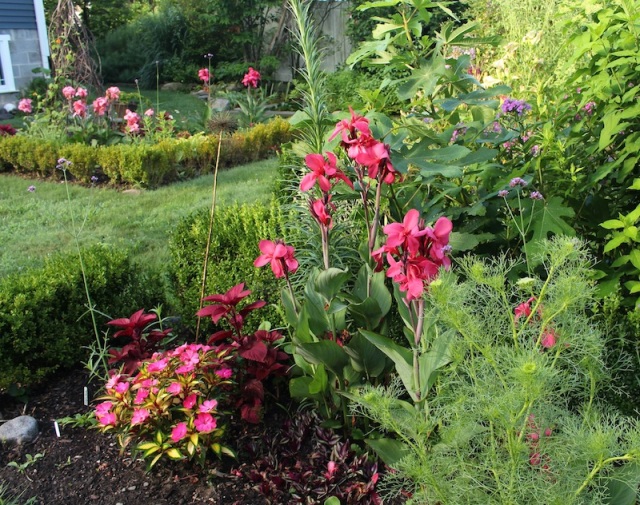
Cannas are blooming quite well in and around the potager.  This is ‘Cannanova Rose’, an easy, quick to bloom selection which even comes true from seed.

Whatever.  Potager it shall remain.  If I can get away with calling a couple rows of daylilies a farm than I can stick with potager for this.

potager

My little tropical hiding spot in the potager.  Bananas are totally edible and potager approved even if there’s next to no chance I’ll ever see fruit, but the foliage makes up for any missing banana harvest.

I refuse to share a photo of my pathetically anemic tomatoes or the deer-chewed pepper stubs but I will share a single phlox photo.  Only one because the rain-fueled hydrangeas have crowded nearly everything else out, but one should get the point across.

phlox paniculata

The garden phlox are a little late due to an early season deer pruning but they’re finally making a show.

Can I put in a good word for pears?  As of today the tree is overloaded with a heavy crop, and although the gardener should have thinned them out for better quality (and to save the tree from collapse) my hope is that a few escape the deer and squirrels and chipmunks and make it to the dinner table.  A bushel of Bartlett pears will really put the potager accounting into the black in a way that 3 raspberries, 7 gooseberries, and a half handful of blueberries will not.  Someone really should have netted the berry bushes rather than continuously hope the birds ‘miss a few’.

bartlett pear

This year’s Bartlett pear crop, heavier each day and hopefully not too heavy.

Maybe the berries didn’t go far in feeding the household, but they did contribute to a steady stream of fledglings coming out of the garden.  I don’t really mind the loss, and actually resist netting the fruits since the dopey youngsters tend to get tangled and I prefer a fruitless pancake over a traumatic bird un-netting.

baby robin

Yet another robin leaving the nest.

So that’s where we’re at.  A lot of rambling so I’m wondering if perhaps the heat got to me more than I care to admit but hopefully there was something of interest in there.  In spite of all the work summer is still quite excellent and so is the air conditioning when the heat gets to be too much so I really can’t complain.  Enjoy your week!
Inching to Summer

Well these pictures are only about a week old, so I think that’s an improvement in blog efficiency?  They’re just a couple of updates on the garden and I guess the biggest ones are that the gardener hasn’t been too lazy, and the iris were nice, and I felt the pressure to take a few pictures before they were all gone. Honestly though, I can barely remember back this far.  These spring days are busy, and so much is focused on what’s next it’s hard to live in the moment let alone remember the past,  but I believe this was one of those days when clouds rolled in but not too many, the lawn was longer but not too long, the weeds were growing but not too grown,  and I was tired but not too tired to take one more tour around the garden with a camera.  So let me start in the most urgent area, my NEED for more chive colors!  Chives as you know are an herb nearly everyone can stomach, with a mild onion taste which steps in when parsley is busy elsewhere.  I could go on now and possibly bring in all kinds of lore and growing information together and try to make this blog a useful resource… but that’s a lot of work, and I’m pretty sure you could prompt AI to write up as long a discourse on chives as you’d like so here I am empowering you.  Copy and past “write a three page paper on the history use, and cultivation of chives”  into the prompt at ChatGPT and there you go.  Before you know it you’ll be thanking ChatGPT  for an interesting read and then asking what it’s doing later and if it has time to chat some more.  I guess I should say my goodbyes now and thank you for following this blog for as long as you have.

chives allium schoenoprasum

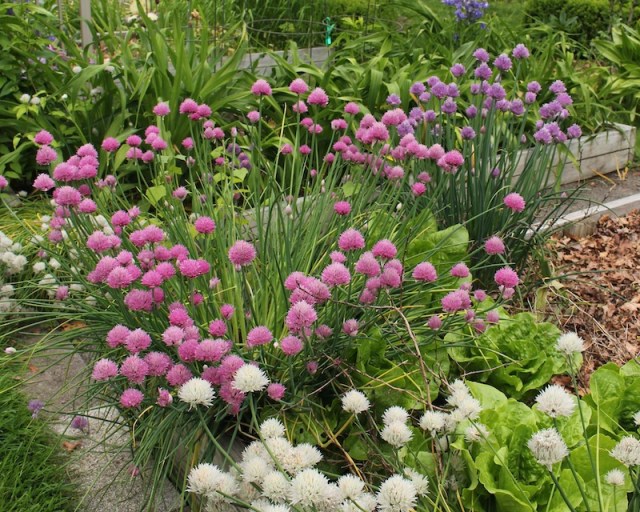
Pink ‘Forescate’, white ‘Album’, and the typical mauve of chives (Allium schoenoprasum) in the potager.  I think they’re amazing.

Before moving on to the last of the iris, let me also mention the fun fact that your innocent looking chives is a widespread species, native to scattered spots in North America, across Europe and Northern Asia, all the way to Korea and Japan, and as such shows plenty of variation, and as such should be in my garden as a strong purple as well as the colors already here.  Maybe someday.

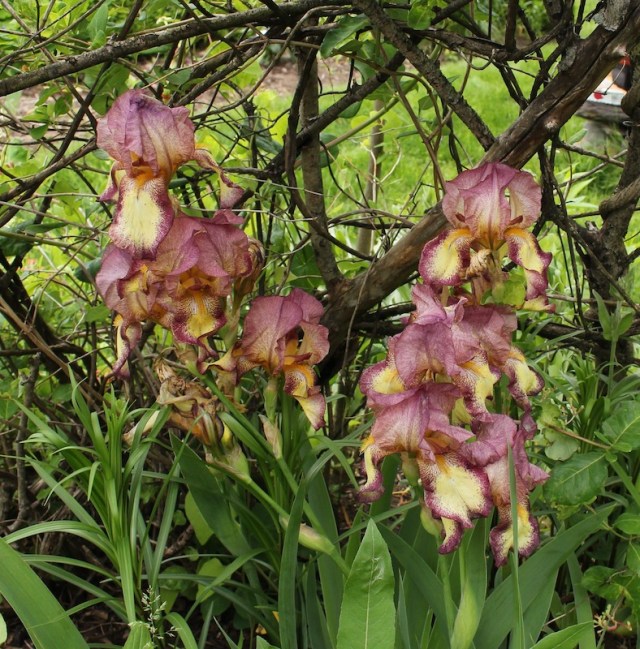
historic bearded iris

Neglected iris (‘Tiffany’, 1935ish) blooming as if they were pampered in a more appropriate spot.  Older, ‘historic’ bearded iris are much more forgiving than their ruffly modern cousins, although ‘Tiffany’ here isn’t exactly a plain Jane.

Perhaps it’s obvious, but when we jump right from chives to bearded iris you can see there’s not much planning or organization or connection in the writing of this blog, and to most everyone out there it’s obvious this is an entirely human production and 0% AI, but I guess just like I assume everyone knows I’m not endorsed by the multi-colored chives association when I go on about chives, I also assume you can see there’s no AI contribution to this blog.  You knew that of course but I’m rambling tonight  so when that happens I tend to re-state the obvious.  No AI writing and all the weeds and mess in the photos are real as well.  Wow is an AI blog sounding better and better with every keystroke!

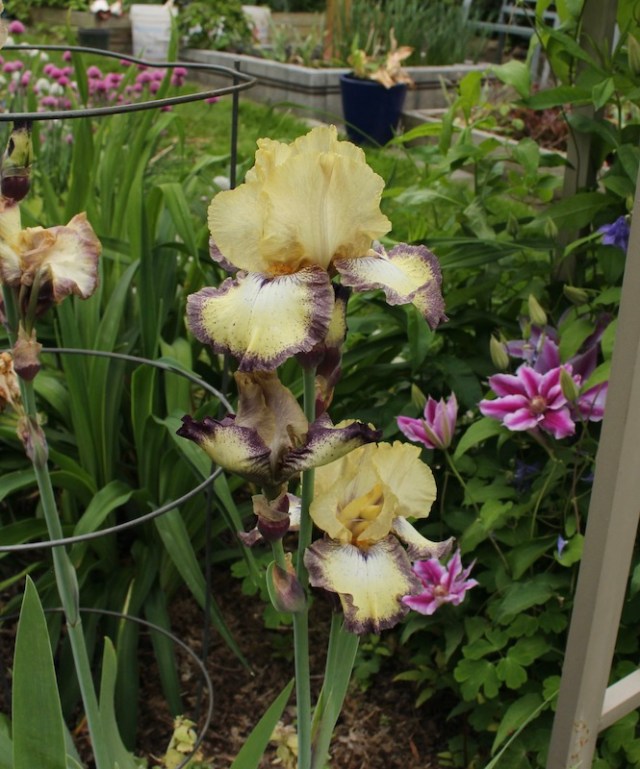
iris ominous stranger

Iris ‘Ominous Stranger’ is cool but as a 1992 “historic” it puts this gardener into the historic category.  Hmmm.  Anyway, let me point out the from-a-bag clematis behind it.  Second year from one of those cheap bags which show up in the early spring and are dead by planting season, this ‘Nelly Moser’ survived!

I guess I’m replaceable.  Probably not replaceable, but invisible is just as final when this blog is lost in a horde of AI generated articles and banter… all the AI stuff which will soon overwhelm a person’s search results.  Come to think of it it’s not unlike the early days of the internet when people were generating tons of cool bits of information, but then slowly it shifted to everyone selling something and the info became a generic lure to one shopping site or another.  Oh.  Iris.  I like the historic ones.  They’re hardy and fragrant, and each year I claim I’ll take better care of them and then I don’t.

historic bearded iris

A weedy patch of ‘Darius’ an 1873 era historic iris.

This might be the year.  I want to put a bunch on the berm, so we will see.

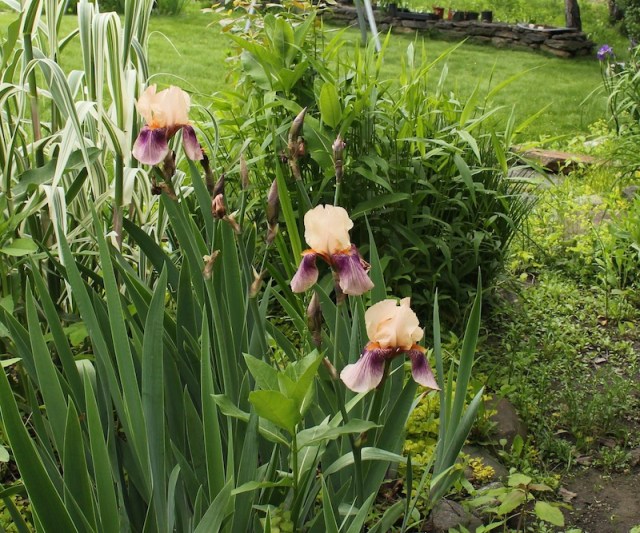
historic iris color carnival

‘Color Carnival’, 1949 persists in terrible and wet spots where it can but would rather not.  A modern iris planted here would not have been as accommodating and would have become stinky mush years ago.

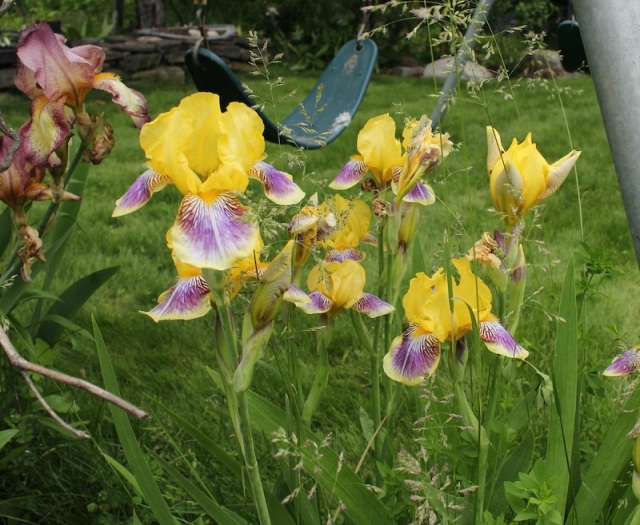
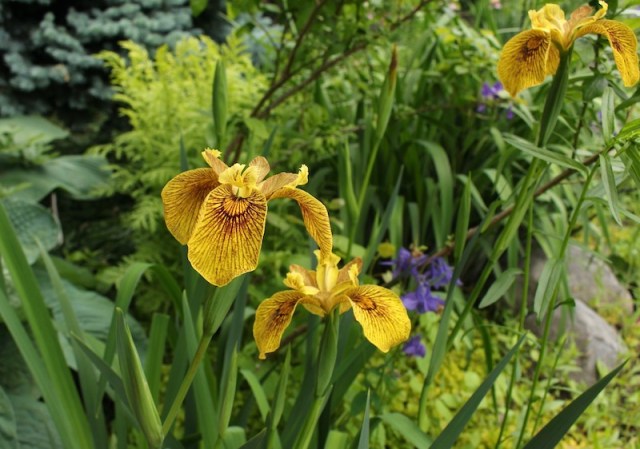
Honestly iris are some of the most amazing flowers.  It’s hard to find an ugly one and I think you can only do it when some of the oddly colored or over-ruffled ones edge into an area which isn’t your taste.  A few non-bearded iris which are flowering now (and to my taste) are the yellow flags and their relatives.

iris berlin tiger

Iris ‘Berlin Tiger’ is easy and unique.  Maybe not bed of geraniums impressive, but when you get all caught up in the pattern it’s amazing.

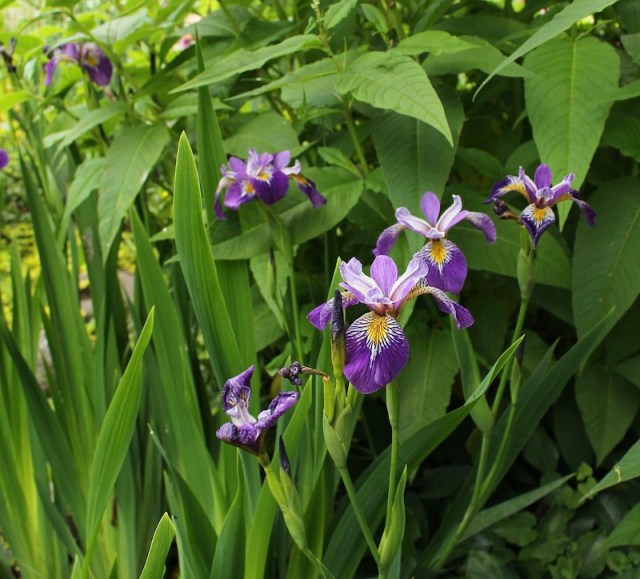
Okay, I have to move this iris thing along and won’t mention much on foliage.  There’s ‘Gerald Darby’ who emerges in spring with a strong purple color on the foliage which looks great for a couple weeks.  The foliage fades to green, but the simple blooms are also nice, and like ‘Berlin Tiger’ he’s easy to grow.  A few others have yellow emerging foliage or variegated, or… the iris family is big, there’s plenty to grow.   Trust me, you’ll run out of space before you run out of plants to try.

iris holden's child

An inter-species cross, ‘Holden’s Child’ has smaller blooms but a long season.

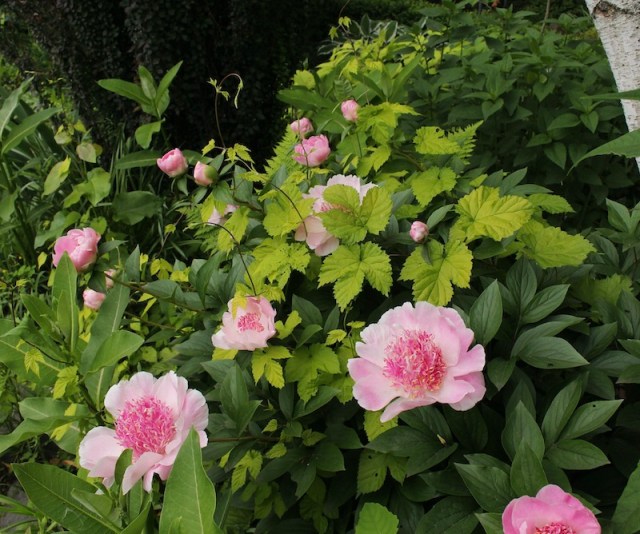
Peonies are starting and I don’t grow many.  Peonies, iris, roses, clematis… some of the most beautiful flowers, are all coming on now and you need to be careful before the whole garden is filled with May and June color and there’s nothing left for July.  Worse things could happen.  You could spend the rest of the summer at the beach if you overdo June, and that’s not bad either.

peony do tell

Peony ‘Do Tell’ was there and I bought it.  Now it’s stuffed in where it has to fight off golden hops each summer and that’s probably not ideal.  Try to avoid buying every amazing peony you find just like I avoid buying every amazing snowdrop I find.  well…. forget that, you do you.

Sorry, as usual I’m going on too much.  Let me wrap it up with some wider scenes since the abundant rain has everything lush and excellent, and the gardener has had some success keeping things in order this spring.

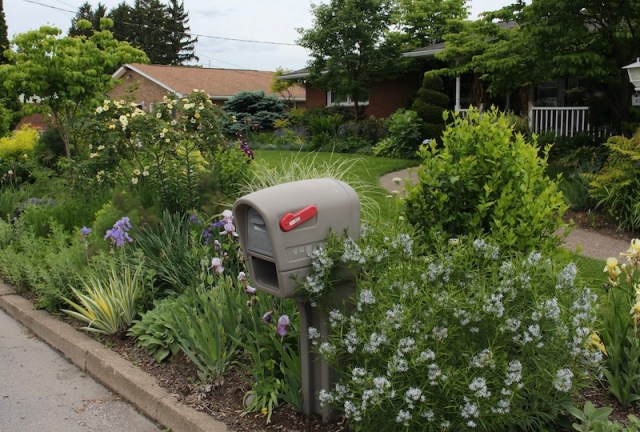
early summer perennial border

The street border is possibly going to get a firm thinning once the Amsonia is done blooming.  The Amsonia will be cut back to about 1-2 feet and behave much better than if left alone.  Also this will eliminate all the seeds which will otherwise overrun this corner.

Success in May and early June isn’t much of a flex in my opinion, since nearly everything still looks fresh and new right now, but I will take my wins as they come.  Last year I was still moving dirt and sowing lawn at this time, so anything looks better than that.

early summer perennial border

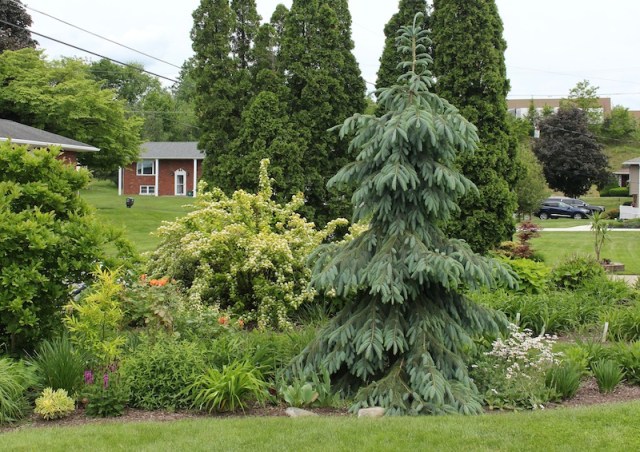
This end of the front border is now anchored by my beloved weeping white spruce (Pinus glauca ‘Pendula’).  Someday I should dig up a few baby pictures from when it landed on my doorstep as a tiny mail ordered graft.  The golden ninebark (Physocarpus opulifolius ‘Luteus’?) behind the spruce also came here as a twig in a box.

rose westerland

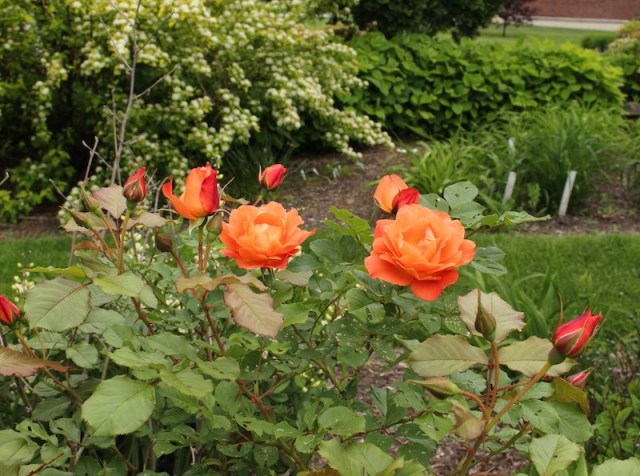
The almost a climber rose ‘Westerland’ is also in the far end of the front border.  I love the color but might have to move it to a viewed-from-afar location so I don’t feel as ashamed of the foliage issues later in the year.

potager plantings

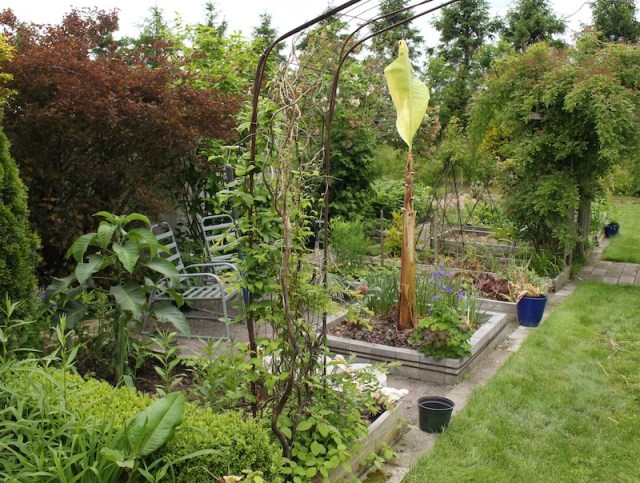
One last overview.  It appears the potager is becoming the new tropical garden.  The banana is out for the year and off to a great start.  A brugmansia and cannas have been planted as well, it should be fun.

That’s it on the “wide views” so not as may as I thought, but there’s other fun afoot such as all the other summer stuff which needs to go in on the deck and into pots.  Many people take care of this by June first…. I always have some stupid idea slowing me down, like how should I re-invent this wheel?

brazilian plume Justicia carnea

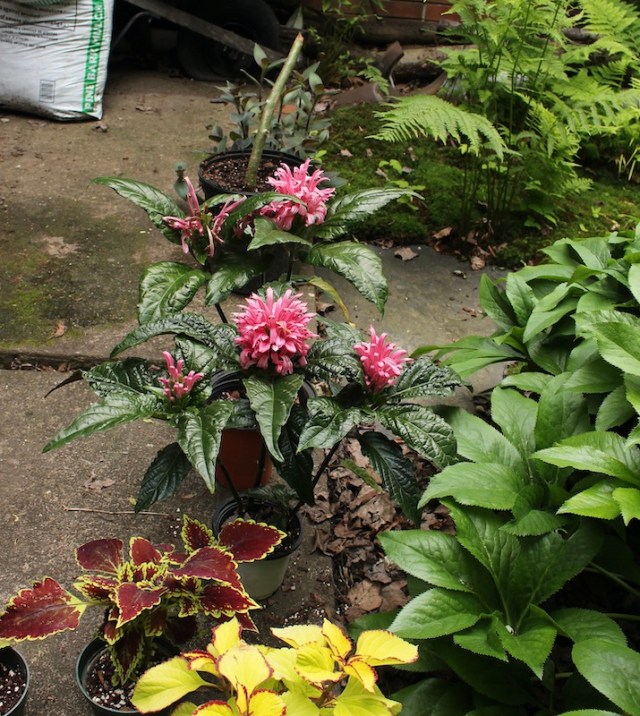
A friend gifted me a Brazilian plume (Justicia carnea) last year and I love it.  The mother plant froze last winter but not before I took a few cuttings (which, just for reference root very easily).

Fortunately the endless rain has kept my neglected pots watered and my optimism alive.  Few annuals are going in this year… assuming things don’t hit some major end-of-spring sale temptation… and the bulk of things are out of the winter garden and back for another year.  There are still a few new treasures picked up here and there, but overall I have no guilty splurges to confess.  Maybe one amazing Brugmansia and a palm that’s taller than me but I’ll only feel guilty if I return to the store today to pick up a second palm.  It was $15.  It’s taller than I am.  It’s like a tropical resort is coming together on my back deck and you know how much a resort trip would cost, so clearly this is a money saving option thank you.

the pot ghetto

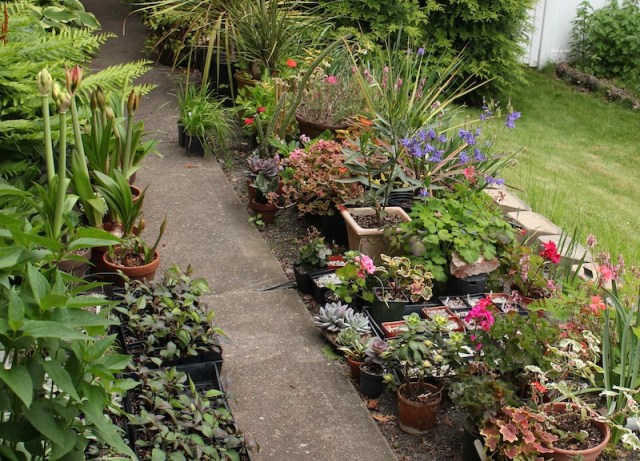
The pot ghetto next to the garage.  Let me point out the two flats of dahlia seedlings lower left.  ‘Bishop’s Children’ seed from the Mid Atlantic HPS seed exchange and I may fill the potager with dahlias this weekend.

I should get to work and not go palm shopping.  We will see, but in the meantime I hope you enjoy an excellent weekend.

A Little Push

It looks like our tediously warm and dry autumn has finally made a turn towards wet, cold, and winter.  Warm and dry isn’t the worst thing, but when the days stretch into weeks and the autumn foliage is more a giving up on life it gets old.  The garden I enjoy is full of life and surprises and when it’s day after day of plants giving up I lose interest, and when interest is lost motivation follows.  I looked at the racks of tulips waiting to be planted.  I looked at the dry, baked-hard, beds where they were to be planted.  I turned around and went back inside.

But now things have made a complete turnaround, with a day of steady rain followed by a night of snow which continued into the next day.  In all it might be two inches of rain and as the snow melts into the ground I think the garden has finally received the soaking it needed and the gardener  might have to get back on board.  While the snow is melting the bored gardener has gone into the archives to see if he can find some tulip planting motivation, and even if he’s not exactly bubbling over with enthusiasm to go out and dig, at least he’s been shamed into taking a little better care of the unplanted bulbs.

perennial tulips

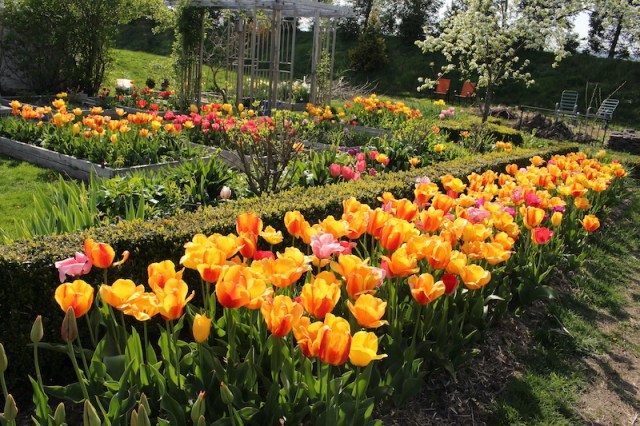
Tulips in the front border this previous spring.  Fortunately these seem happy enough coming back on their own each year with little effort on my part, although it’s well past time a few bunches were dug and divided.

I’ve been digging and dividing the tulips in the back garden for a few years now, trying to get ahead of the tulip fire (a type of fungal botrytis blight) which has infected the soil back there.  The digging, replanting, and mulching had helped but then this spring, right as the tulips were coming into growth and blooming, a string of cool, rainy weather hit and the problem went from ok to all over the place with each rain shower.  April showers may bring May flowers, but when May is also full of cool and damp weather it just brings botrytis to the tulips and that’s not fun.

perennial tulips

The purple of Lunaria annua (honesty or money plant) mixes and contrasts well with the yellows and pinks of the tulips.  Unlike AI suggests, this plant is a biennial so don’t be fooled by the scientific name.

Although the botrytis is not fun, the worser part is the smaller bulbs I dug as a result of their infected foliage.  Digging big healthy bulbs is one of the June joys of the garden and when you’re just finding medium or stunted bulbs… again, not fun.  It also didn’t help that June went from cool and damp to hot and dry all of a sudden, triggering the bulbs into an early dormancy, so add that to the list of reasons the gardener has not been feeling the tulip-love this summer.

perennial tulips

Tulips in the potager beds, the worst areas for botrytis and the area where all the tulips are dug each summer.

The tulip love is back though, and after seeing the reminder of what it looked like last spring  it makes me wonder how I ever even considered thinking poorly about one of my favorite plants.  Surely it’s the lazy side of me searching for excuses to pass on the planting and find alternate homes for the bulbs.  It’s like a flashback to the year I found rot in the bulb trays and with great disgust tossed everything onto the compost pile, only to have tulips coming up beautifully all over it the next spring, and have compost laced with bulbs the next summer.

I shall plant… soon I hope.  It depends on when the snow melts, and how cold it gets for Thanksgiving.  And when I dig the cannas and dahlias and plant the garlic, since that’s also on the to-do list since little in the way of planting or digging has been done while the ground has been so dry.  Even the fall-blooming snowdrops have looked depressed and droopy, although not a single bloom was lost to slugs this year…

Galanthus Barnes

Galanthus ‘Barnes’.  One of the earliest for me with only this one late group still in flower.  The rest were less photogenic as they wilted and dried out far too quickly in the sun.

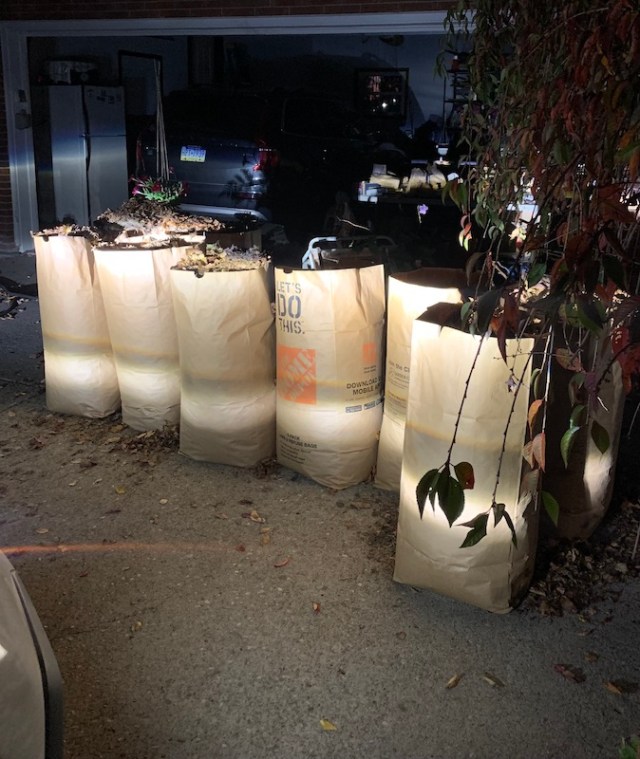
There has been one ultra-positive thing which has turned up this autumn, and that’s the bags of leaves which friends have given me and the row of filled bags which greeted me one evening as I pulled in after work.  My nephew came through with a collection from one of his lawn jobs and I’m proud to say they’re already all spread about and settling down to feed the garden underneath the snow.

using leaves in the garden

A driveway filled with bags of nicely mulched leaves.  A gardener’s delight!

Forgive me for not sharing any snow pictures.  The total for our town was in the 7 inch range and it looked beautiful from the inside looking out, but one day later and the higher elevations are still digging out, repairing powerlines, and removing downed trees, as it was a very heavy snow and their totals were almost twice what we received.  For hours the interstate was closed.  I’ve sat for hours on a closed interstate on a snowy mountain pass in the middle of nowhere and I can vouch it’s no fun.

Fingers crossed that my next post has a ‘tulips planted’ comment, and it’s not something which involved chipping through ice during the Christmas holidays.  We will see, in any case I hope it’s a fun time.

Corydalis Solida

There was a time when spring blooming bulb lists and catalogs wouldn’t show up until late summer.  The obsessed would have orders in the mail before heading out to the beach again, but the more sensible would dillydally with other distractions until that first chilly afternoon got them thinking about planting up for the next season.  It was a logical model.  Most spring blooming bulbs are dug in the summer and who has the time to count bulbs, set prices, and send out a catalog when you have acres of tulips to dig?  But times change, and these days the bulb merchants are perhaps willing to take a bit of a gamble on prices and harvests, and know gardeners are at their weakest now when the cold of winter is still fresh in our minds and a hillside of daffodils sounds like a good idea.  It is a good idea! With things sprouting everywhere the gardener doesn’t even think twice about last November and all the mumbling about planting bulbs before the ground freezes and another daffodil hillside would be brilliant 😉

corydalis solida

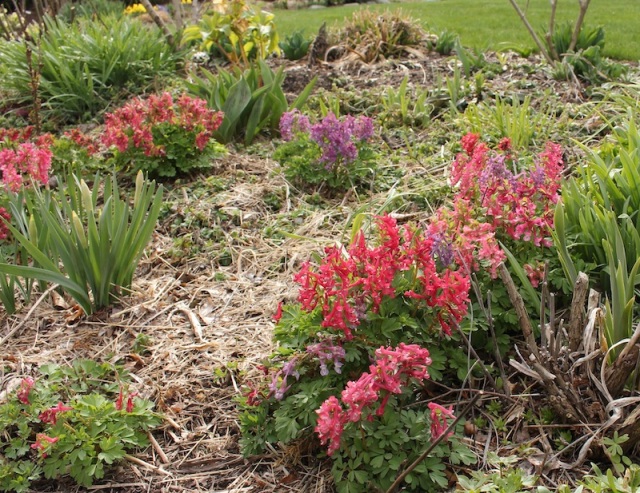
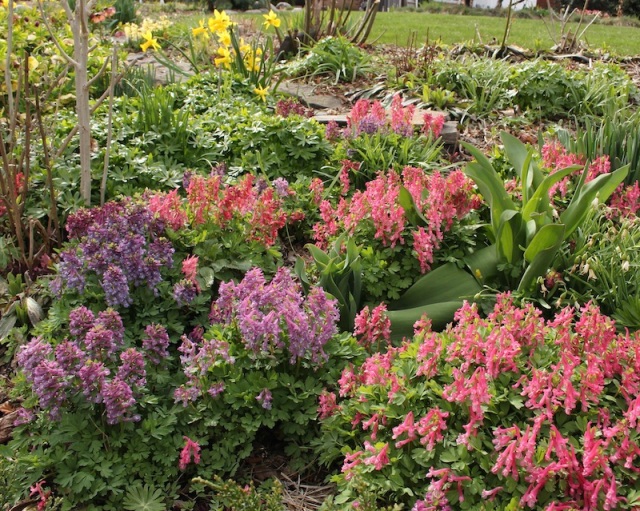
Not daffodils, but a range of Corydalis solida seedlings coming up in the front street border.

Maybe there’s no daffodil hill in your future, but don’t give up because of that.  Take a browse through the ‘minor bulb’ section, or the ‘miscellaneous bulbs’ tab and realize that tiny bulbs are barely any work to plant and can sometimes make just as big a display.  Corydalis solida comes to mind and this year they’re quite an excellent show as the cool (somewhat gloomy) weather is keeping them in flower and keeping their colors nearly as bright as the day they opened.

corydalis solida

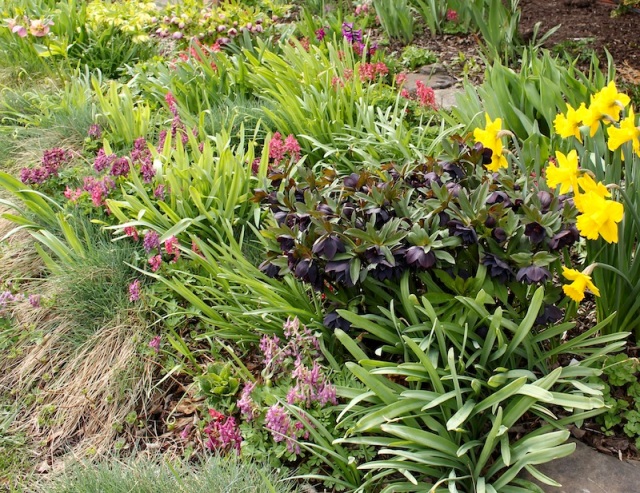
Corydalis solida squeezing in where they can amongst the snowdrop and winter aconite foliage.  This bed is a free for all until the next thing sprouts up and takes over.

Back in the day this blogger made a better effort at providing somewhat useful information, but that day is not today so let me suggest this post from 2016 when I was still just dabbling in the corydalis world.  The best moment for me in my 2016 flashback was my wonder at seeing the first seedlings and how they differed from the mother plants.  Good times.  I believe nearly everything in the garden now is a seedling, and the originals are all gone, so if you adhere to a strict color palette and mauve in your melon offends your vision I’d say skip corydalis.

corydalis solida

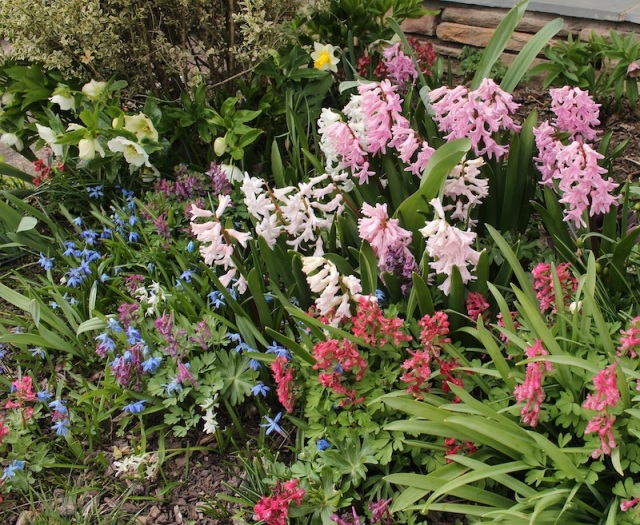
A visit to 2016 also reminded me that there were just two pink and one white hyacinths in this patch, and just a single bunch of pink corydalis solida.  Old me was much neater.

Since we wandered into the recent past I guess some more lessons learned are that other minor bulbs also spread freely.  I’m thinking the blue Scilla siberica in the last photo, and I’m wondering if I should evict it from other parts of the garden before it really mounts an invasion.  Grape hyacinths (Muscari) can also spread more than you might like but are easier to deadhead… until you miss a batch…

corydalis solida

Corydalis solida in one of the snowdrops beds.  Obviously I just walk past this section when I’m wandering the garden with a homeless new plant in my hand, there’s not a single spot left for new things.  

Well this post appears to be wandering off track as usual.  I hope everyone enjoyed a nice Easter weekend and didn’t spend too much time looking at bulb catalogs whenever there was a lull in the family time, and I almost made it through this post without mentioning the weather or snowdrops.

galanthus peardrop

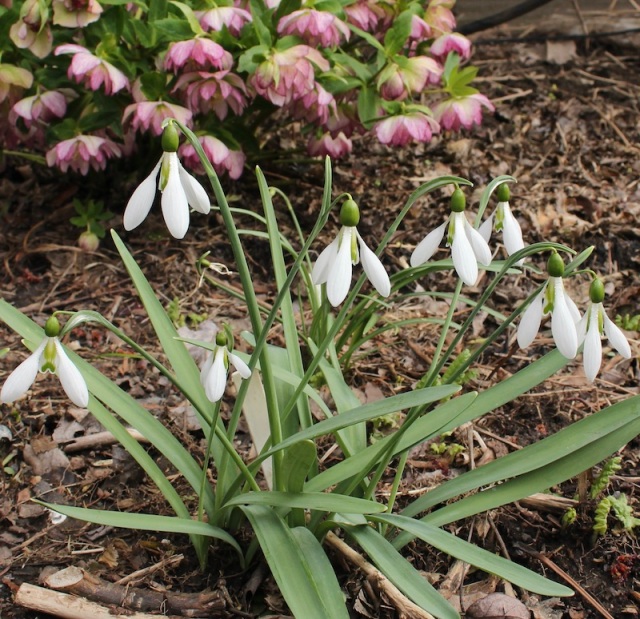
One of the latest to bloom, Galanthus ‘Peardrop’ would be a keeper even if she flowered in the thick of the season, before all the others had faded and she’s the only drop left standing. 

Oh weather.  We’re about two or three weeks ahead of a normal season and there’s two or three inches of rain forecast for the next few days.  Ugh.  It better straighten out before all the daffs and tulips open is all I’ll add.

Have a great week 🙂

Spring on Pause

You may have heard that a bit of chilly weather has rolled across North America.  Our lowest low of the last few days has been just five degrees below average, but after months of non-winter it feels downright arctic.  I even put the winter coat on for yesterday’s garden stroll!

spring garden

The front border is beginning to come to life.  ‘Tweety Bird’ is my earliest (and dare I say favorite?) daffodil and has never flinched due to cold or ice or snow.  

Yesterday was a complete wash out with about two inches of rain filling my rain gauges (aka work buckets which litter the garden) and now it’s all locked in cold.  For the last four nights I’ve even returned the pots of rosemary and dracaena back to the safety of the garage, and put off evicting the hardy cyclamen from the winter garden, but the pansies I planted out are on their own.  Right now they’re face down in the frozen dirt, but by late afternoon I expect to see their cheery faces again.  If not, I’m sure they’ll send up new blooms and that should ease any guilt I might have over not bothering to cover up and protect these little greenhouse divas at all.

garden hellebores

Upward facing blooms on a hellebore are nice, but the cold rains of spring are a good reason to hang low and protect your pollen.  These are also kissing the dirt right now, limp until the freezing weather passes.

Although we didn’t need another foot or two of rain it has been good for the transplants.  Maybe even a little too good since I noticed a few leaning spruce and tilted hazels, but a quick stomp of the foot should rectify that and the water also helps since I didn’t water anything when they were moved since they’re all nice and dormant and the ground is wet enough.  I had planned to spend the entire month moving snowdrops, but these woody plants were calling, and if I can make these moves quickly hopefully they can work out the transplant shock somewhat in the last few weeks before leafing out and pushing new growth.  Maybe next week the snowdrops will have a chance… unless concrete calls and I finally work on the deck steps…

spring garden

Snowdrops are fading and the next wave of spring bloomers are on their way.  

Whatever happens, this is also the time of year when between jobs I question the number of other bulbs in need of moving and dividing.  Actually I sometimes just question the number of bulbs here.  Dividing and moving requires a spot to move things to and at the moment I’m at a loss.  There’s already a new colchicum bed for divided colchicums, there’s a new tulip bed for moved tulips, and nearly every other somewhat-appropriate ground location has a few snowdrops growing there.  Hmmmm.

spring garden

The “vegetables only” policy for the potager did not age well.  Four years later and there are a few garlic sprouts in the closest bed, but everything else is more flower than edible…  

I of course am innocent in all this.  One new allium and two new snowdrops came home with me from the Gala this spring.  Last autumn only a “few” new snowdrops went in the ground, and seriously how big is one snowdrop?  I didn’t buy a single daffodil or tulip.  I am a victim.

I bet you also know that people who claim persecution and innocence most loudly are not and I think I’ll stop right there.  If it gets warmer soon enough maybe I’ll spread a six inch clump of snowdrops into a four foot patch, or maybe take another dozen coleus cuttings in the winter garden, regardless of where things end up here I hope your Sunday goes well and you have an excellent week 😉

A Boring November

Must. make. post….

For a brief moment in time I had fallen under the impression that my autumn-hating self had made a turn for the better, and that the new me could embrace falling temperatures and a dialing back of the gardening year, but the last few weeks have proven that impression to be false.  I’m apathetic and bored with the garden, bored with the to-do list, and bored with the plants.  Even the onset of the Holiday season hasn’t snapped me out of it, although the annual visit to Longwood Gardens did at least motivate me to pull out the Christmas decorations and get a little into the mood here.

longwood christmas

A ‘retro’ themed Longwood Gardens was as festive as ever with holiday song, lights, and decorations galore.

As usual it was a fun trip, and we had a groundbreaking addition this year as the boy wanted to take his girlfriend along for the visit.  She was a delight of course, but who are these people I live with these days… people who have jobs and drive and have girlfriends?  I wonder where my worm collecting and sandbox playing garden helpers have disappeared to.

longwood christmas

Christmas decorations in the Music Room.  The girl liked all the retro colors and style and I can see all the old becoming new again just as it often does.

Back at home I did at least manage to finish up the bulk of the garden cleanup and bring in the last of the tender things, just in time for our four cold days which actually managed to put a little frost into the soil and a skim of ice on the mountain lakes.  Immediately the conversation turned to the impending winter and all the joys of snow and cold.  Rumor around here is we are to expect a “bad” winter with a bunch of cold and snow all courtesy of an El Niño weather pattern, which to me sounds exciting but I wonder if it really stands a chance.  Perhaps we do have the conditions for a nice Nor’easter pulling in all kinds of snowy moisture from the coast but I’m not sure I can completely put my trust in what “everyone” is saying.  From what I gather 2023 is on track to be the warmest year ever recorded and I’m just not ready to put warmest year and bad winter together as a forecast… so as always we will wait and see what the actual local weather does.

garden cleanup

Ready for winter with just a few still-too-nice to be cut down perennials and a few growing evergreens.  The ‘Gold Cone’ juniper to the left is getting a bit sloppy as it approaches maturity and I’m debating taking an axe to it.  The kids wanted it for Christmas though, so once the lights are off…

We will also have to wait and see what the gardener here does.  I’m ready to leave this season of brown behind and move on to white.  It can be snow or snowdrops, both will make me equally happy although I don’t know if my knee is ready for a season on the slopes yet… although kneeling is a critical part of snowdrop season as well…

garden cleanup

I begged and borrowed my way to enough leaves to blanket the potager beds with a cover of mulch.  Tulips have been planted in several and with or without snow it should be a nice April show.

I just checked the 10 day forecast.  Only four days below freezing and an inch of rain next Sunday.  Those lows are well onto the warm side of average in a month when we should be below freezing each night, and those lows are not exactly the weather we will need for a white Christmas.

winter foliage lycoris

Many plants will enjoy another mild winter.  Lycoris houdyshellii on the left and L. radiata on the right will suffer foliage damage if it gets too cold for too long.  Based on a twenty year average they shouldn’t survive here, but on a five year? …so far so good.

I apologize for a somewhat gloomy post on a gloomy late autumn day, but if you need a flashback to cheerier times give Cathy a visit at Words and Herbs for her week of flowers.  It’s what I should be looking at rather than whining about weather and moping about the season.  Perhaps I’ll visit now.  Enjoy 🙂

Feeding the Soil

So yeah, another day lost to endless rain… I actually cleaned the kitchen and cooked some food for the fam instead of escaping to the garden.  Nothing healthy was cooked, I’m a maestro with the deep fryer, but for a gloomy and gray, chilly day it seemed appropriate.  Now it’s 9pm and after several apathetic attempts at a blog post throughout the day, I suppose a firmer tone should be set and anything should be posted.  Photos were taken yesterday for just this purpose, so maybe something good can come of a day with no garden time.

allium thunbergii ozawa

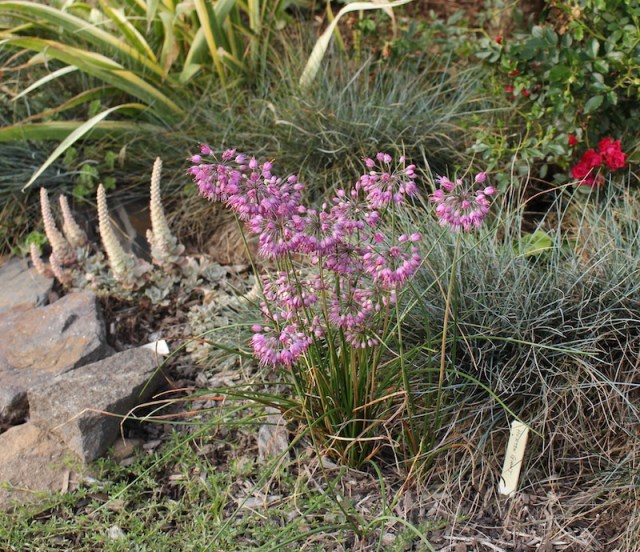
Allium thunbergii ‘Ozawa’ has finally opened.  Although I’m the only one to notice so far, I’ve been checking him each day waiting for just this moment and that’s exciting.

The biggest news is that after years of no Allium thunbergii, I’m suddenly basking in the joy of four separate plantings.  One of them really doesn’t count.  It’s the miserable patch of seedlings which I’ve been nursing along for at least seven years, and has only bloomed once in all that time.  I don’t want to talk about it.  I do want to gush on about the two I picked up at a NARGS plant sale, and then the one which showed up a few weeks later when a friend was nice enough to send me a division as well.  From a thunbergii desert to a garden flooded with October blooming alliums was more than I could hope for, and now in their second year here I’m quite pleased.  My friend sent the cultivar ‘Ozawa’ and the other two are maybe a straight species form, and the white ‘Album’, and all three are putting on a great show.

allium thunbergii

The small white Allium thunbergii album with another A. thunbergii which was just labeled ‘pink’.  These two are showing off just inches away from another patch which rarely flowers… It’s hard admitting that one of your babies is a little ‘lacking’.   

Now before I start mulling over the idea that an early fall-blooming snowdrop would complement these alliums wonderfully, lets check off the last of the colchicums.  In this garden the long-blooming, double white C. autumnale ‘Alboplenum’ finishes off the season, and this late favorite now comes up in a couple spots around the yard.  It should be a couple more, but the colchicum transplanting steam has cooled off, and it looks like these are going to have to wait until next summer to get a little more space and maybe a little more sun elsewhere.

colchicum autumnale alboplenum

Colchicum autumnale alboplenum looking slightly sparse and tired, but still giving a decent show under a dwarf white pine.  I always like how the falling needles blanket the ground for the colchicum, but the dry shade doesn’t always please the colchicum. 

The steam on a few projects has cooled down, and maybe that’s where the rain is coming from, but the focus is now turned to embracing the new wheelbarrow and moving dirt again.  Pickaxe a few square feet, shovel them out, wheel them back, repeat… and then go sit down for a couple minutes.  No sense in wearing yourself out, and absolutely no reason that a gardener should be working so hard as to sweat in mid October.

fall flowers

One of the rest seats faces the end of the front border.  Things are beginning to wind down, but as long as frost holds off there’s still plenty of color.

As I’ve probably mentioned way too many times, this garden isn’t built on the deep, fertile soils of a lush river valley, it’s just a few inches of topsoil skimming the top of construction fill, which sits just above rocks and bedrock… and then if you keep going coal mines will be the only other excitement down there.  Roots do not go deep, and I’m always trying to improve on that, even if it’s in ways which often do more than they should to avoid anything which seems like real work, or even worse, sound like they could be costly.

lawn clipping mulch

At least the newly seeded lawn has been enjoying all the rain.  This area was completely dug up and bulldozed and I’m counting on mulches like lawn clippings to bring life back and re-create some topsoil.

Sifting out rocks, double digging beds, working in amendments and soil conditioners, and buying in ‘topsoil’ are all great ideas, and I love seeing other gardeners do it and then watch as their spades slice through a delicious chocolate cake soil to plant things, but there’s about a zero chance that will ever happen here.  Here my main method of attack is (1)dump organic matter on top and (2)wait for the worms and other creatures to work it into the soil, and (3)grow lots of things.  Growing things have roots, and the roots work through the soil, and when they die they leave a path and organic matter… so let me alter that and say (3)grow lots of things and then kill them but leave the roots there.  You can probably guess I’m not one to worry about removing stumps, and pulling things up and getting all the roots?  Also not a priority.

Of course some roots have to come out, but wherever I can I try to smother weeds with a layer of mulch first.  Lately lawn clippings have been my mulch of choice, and from snowdrops to daylilies to boxwoods, they’re all getting a nice inch or two.

The lawn alone doesn’t give enough clippings, so this is when the meadow gets a scalping as well.  All the rain has it pretty lush so hopefully it’s more clippings than weed seeds, but even a few weeds are worth it.

A cleaned out bed is easier to mulch, so chopping back has started and where better to throw the spent stalks and fading foliage than on the lawn?  It all gets mowed up and thrown back onto a bed elsewhere and all that organic matter stays around the plants which produced it.  Things doesn’t look 100% fancy, but is so much easier than hauling it to the compost.  It’s only the hellebores which don’t get their own shredded foliage returned to the same bed, and phlox stems also go elsewhere.  These are the only plants which give me any kind of build-up of disease concerns.  Everything stays in the garden, it just moves to a different part with other plant species.

isodon effusus plectranthus rabdosia

Isodon effusus, formerly rabdosia, formerly plectranthus, is flopping all over the snowdrop bed and in full bloom.  It’s impossible to photograph, and the name is impossible to remember, but it does bring in some excellent color, even better when the red maples begin dropping their leaves alongside the blue.

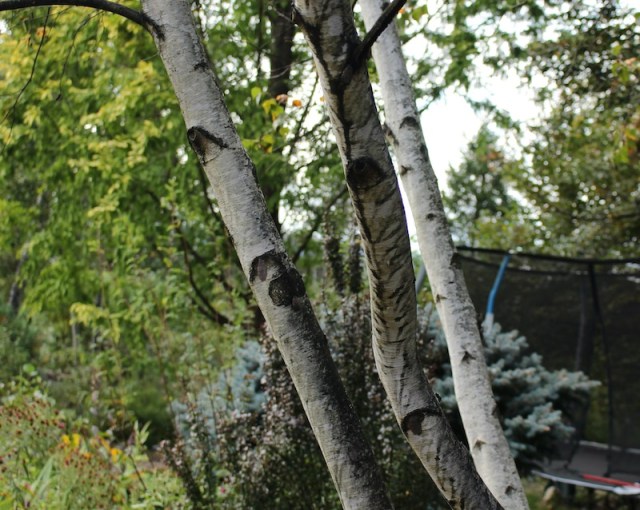
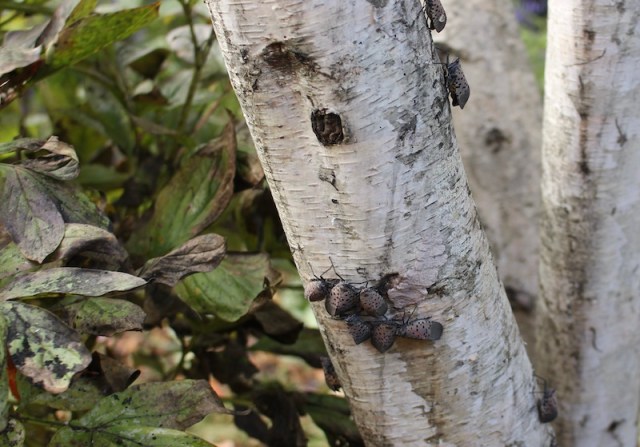
Golly does the rain have me chatty.  I’m moving dirt, building soil, and the only other thing I still want to mention is power washing.  The spotted lanternfly is into its third year here and is about as bad as last.  They’re mostly annoying with their clumsy hopping and bumbling flight, but their honeydew pee is beyond annoying and enters irritating.  The sweet pee is gross, but the black mold it grows is disgusting.  The black mold is the reason you haven’t had to endure endless succulent wall photos, since most of my succulents are blackened by the drizzle they get under the aspens.  Pretty much anything around the bases of trees is sticky and black, and of course the white birches don’t show well either when they’re dripping with pee and mold.

spotted lanternfly

Hopefully a November once-over with the power washer will clean this gunk off.  

According to most Lanternfly information I should be stomping and spraying and controlling the beasts as best I can, but I’m not.  When the mold started getting bad I briefly considered pulling out the shop vac and making a brush attachment to sweep the trees clean, but you can guess where that ended up.  Cracking open a beverage, pulling up a lawn chair, and vacuuming up a wasp nest is fun, but running the vacuum up and down trees for the lanternflies seem like work, so no thanks.  I’ll take this first hit in stride and hope it balances itself out similar to the Asian ladybugs, Japanese beetles, stinkbugs… hmmmm there’s quite a menu of invasive pests which have come this way over the years…

spotted lanternfly

Spotted lanternflies beginning to lay eggs at the base of the tree, alongside the blackened foliage of a peony.  

Let’s leave off on a good note… as the patter of rain on the roof has picked up yet again…

hardy garden chrysanthemum

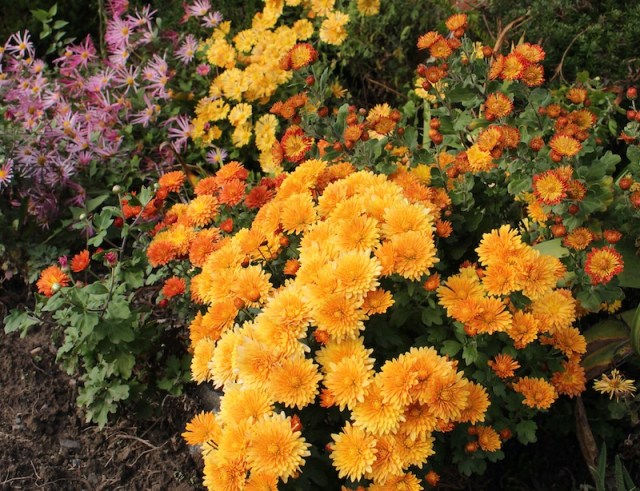
Each fall I keep wanting to transplant a few of these hardy garden chrysanthemum seedlings to more spots around the garden and each spring my attention is elsewhere.  Today this double orange is my favorite.  I should collect seeds when they’re done and play that game again 😉

So that’s a post, for better or worse.  I hope if anything it entertained, and I also hope that your Sunday is sunny and enjoyable!

Still Dull

Here in the sorta mountains of Eastern Pennsylvania, summer has taken a turn for the wet.  I always prefer wet to dry, but others are complaining about bad pool weather and an endless train of cloudy weather that seems to be tracking here.  Honestly I’m not sure what they really want though, because yesterday when it was over 90F (33C) and humid they complained about the heat, so maybe they shouldn’t talk about their dream of moving to Florida.

Fortunately the garden doesn’t go on and on with complaints.  A once-over to remove the browned stems and shriveled dreams of a dry spring and we’re back in business, with lush flowers and even lusher weeds.

july flower border

The front border is at a summertime peak with the yellow lily ‘Conca d’Or’ taking center stage.

I will also try not to dwell on complaints.  Summer is going too fast, not enough is getting done, and I don’t have enough space for my daylily farm, but at least I’ve finished clearing the dirt away from the side of the house.

graded side yard

All the dirt has been removed, now it’s on to doing something with all the stone, and then figuring out the grass path which will lead around the corner.

To celebrate this dirt moving milestone I decided to tackle the mass of concrete down by the street and finish cleaning up the front of the yard as well.  It was as much fun as you can imagine.  At first I thought I was overdoing it by bringing the jackhammer back, but when the concrete turned out to be a foot thick in spots I guess the pickaxe wouldn’t have been enough.

breaking up concrete

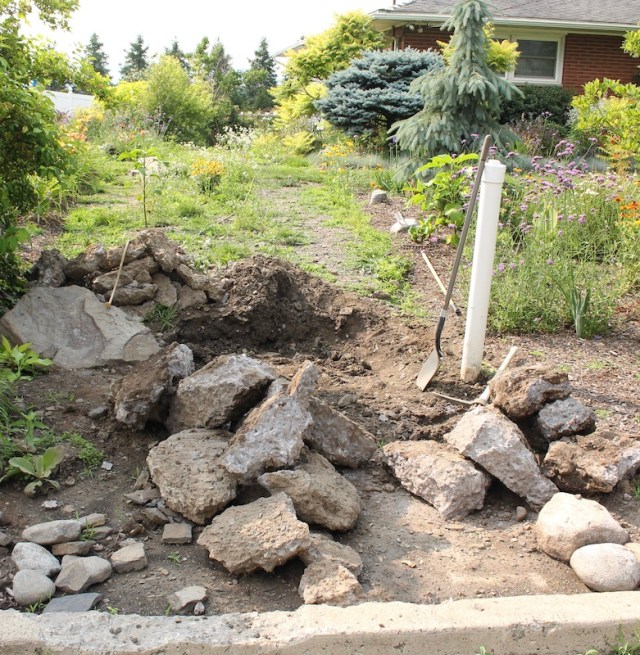
All the concrete has been broken up and the chunks are ready for hauling away. They’re bigger (and heavier) than the photo suggests…

Don’t let the pictures scare you.  Last week I not only moved the concrete out of the way, I also graded the path, but in a few stones, seeded grass, and planted out a tray or two of coleus cuttings.  It looks much nicer and I hope to share those photos as soon as I get out there and take them…

Enjoy the weekend!  I’m hoping for enough of a break in the rain today to fit in a garden visit and a daylily farm trip with friends.  I guess it’s not all work and no play in spite of what I like to pretend 😉

The World is Burning

Just to let you know, there’s nothing nice in this post.  A few flowers, but mostly a miniseries of complaints and disappointments and all the bumps in the road which gardeners imagine won’t happen this year, but then happen.  I guess the most obvious place to start is with the smoke.  It was noticeable earlier in the week, eerily oppressive mid week, and then apocalyptically thick yesterday.  The smell of smoke was everywhere, and I can only imagine how it’s like closer to the source.  My thoughts go out to the firefighters and residents who are out of homes and in fear of their safety and wondering when they’ll get a reprieve.

wildfire smoke

About four in the afternoon, looking out beyond the berm towards the industrial park.  Visibility is less than a mile.

Fortunately, although the woods are dry and a good wind has been blowing, local brushfires have been relatively quiet.  About a week ago we had a half inch of rain, which was enough to take the most desperate edge off for a few plants, but of course it’s nothing close to what we need.  I think for May this area came in as the driest May since 1901 and the soil is already taking on that deep-dry that usually doesn’t set in until August.

dry lawn

The front yard isn’t a desert (yet) but most of the lawn is crispy and I’m not even going to bother planting annuals.  Maybe it’s a good year to open things up and create some mulch patches.

Earth moving is now on pause due to rock-hard conditions.  It was hard enough working through the rocky-compacted-subsoil before, but once it dries to the concrete stage even I have second thoughts.

grading the yard

The weeds were thrilled with the brief shower we had and perked right up.  It’s a sad year when you end up relying on crabgrass, mullein, and oxeye daisies for a garden high point.

Most of my plants know they’re somewhat on their own  in the dry.  I hate watering and only do it as triage to keep the most desperate treasures alive, and it takes a real dramatic shriveling, dry look to guilt me into attempting a save.  Usually it’s just in time, but I’m afraid our one rain event tricked me into thinking I could take a couple days off.  As a result there’s a good chance I lost two newer dogwoods, a couple struggling rhododendrons, a witch hazel or two, and a few seedling pots.   I’m sad about it all but only really upset about the one dogwood.  It was a special gift, can’t easily be replaced, and I suspect when the dust of this season clears it will bother me even more.

drought witch hazel

Maybe a just in time watering saved this witch hazel for another few days.  Maybe.  There are long, likely-dry, hot months ahead and I don’t expect this missed watering to be the last.

Dry weather is nothing new, even if it comes at a time of year which is normally the most perfect gardening time of the year, but this year it’s on top of one of the latest freezes ever, and the garden is still trying to move on from that.  Browned new foliage is still trying to grow out on magnolias and willows, only to advance right into wilting stage due to the lack of water.

clematis venosa violacea

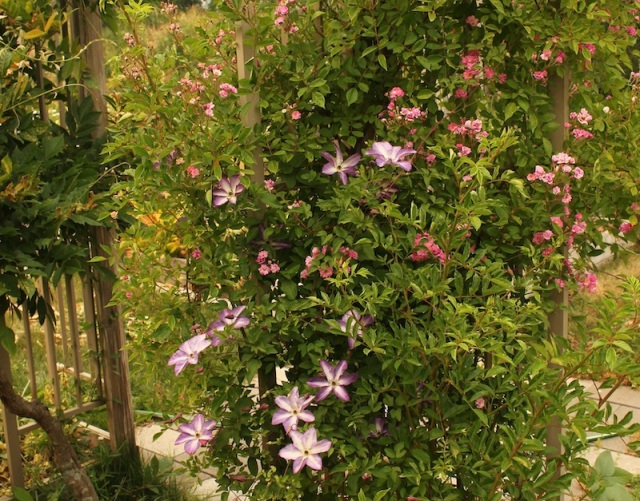
I was so excited to see flower buds all over the rambling rose ‘Wartburg’.  Its clusters of pink roses should look nice with the first flowers of the clematis ‘Venosa Violacea’… until they didn’t… I only just realized that this whole side of the rose is more exposed and was likely more damaged by the cold.  I’m seeing stunted roses on some of the other bushes and of course am hoping that next year they’re perfect again.

The freeze damage could also be worse, and up in the mountains it was.   The beech forests were really hit hard, worse than I suspected even just a few days ago.  Patches along the road are all browned and whole trees have their new foliage burnt.  That’s annoying, but not really as bad as it looks.  The trees will recover if not for the other thing going on.  I’m seeing large swaths of beech forest infected by Beech Leaf Disease… much much more than last year and it looks severe on a few trees.  Beech trees are a big part of the canopy in some areas and with a six to ten year fatality I’m not looking forward to adding stands of dead beech trunks to the dead ash trees from borers and the bleached oak skeletons from prior spongy moth (gypsy month) infestations.  The forest needed a break, not a new pestilence.

plant pot ghetto

Plants in waiting on the driveway.  There’s a backlog in moving things out into the soil of the rock-hard garden and that’s probably a good thing, since they’re likely better off here.  The amaryllis are definitely happy here!

Did I mention it’s also cold?   Normally Canadian air brings bright blue skies and cooler weather, but it was in the 40’s the other morning and that’s terrible to have the week after you open the pool(which of course has a leak on top of everything else).  I was digging tulips in a sweatshirt rather bathing suit and thats not normal.
See?  I promised a post full of complaints, and I believe I’ve delivered.  Everything seem to be going in the wrong direction without an end in sight, and I guess I should be more miserable but I’m not.  Bulb trays have been built, tulip are being dug, and I’ve fallen back to the potager, daylily farm, and anything the drip irrigation lines can be hooked up to.  The deck containers look nice, a few day lilies are sending up bloom scapes, and I spent twenty minutes this evening watching baby bunnies nibble weeds and chase each other around the lawn.  Spring still has a few good things tucked up her sleeve and as long as I can putter in safety I’m grateful.  All the best.

October

September flew by and now it’s October.  Autumn, and for maybe the first time in forever I’m glad to be done with summer.  Maybe.

colchicum with groundcover

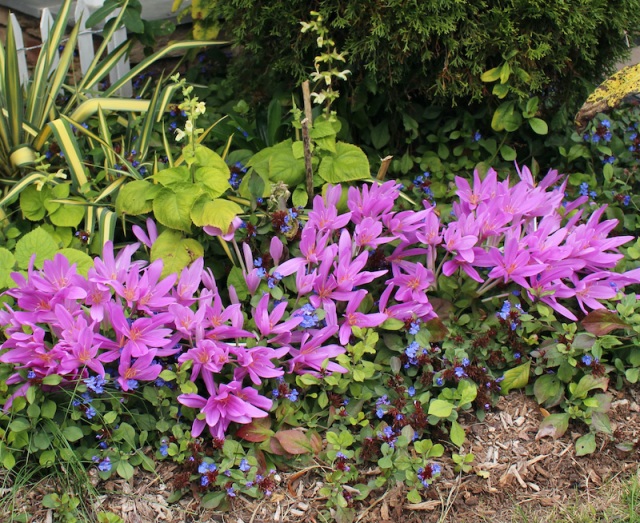
Colchicum ‘Lilac Beauty’ coming into full bloom against the blue of leadwort(Ceratostigma plumbaginoides).  I think I show this scene every year, I like it.

It’s been chilly and gray and rainy and within 5 days I had my fill of autumn and started thinking about snowdrops and even colder weather.  Cold I don’t really mind, it’s these depressing dark days which wear me down and I can’t imagine “living” somewhere with endlessly gloomy weather.

colchicum speciosum

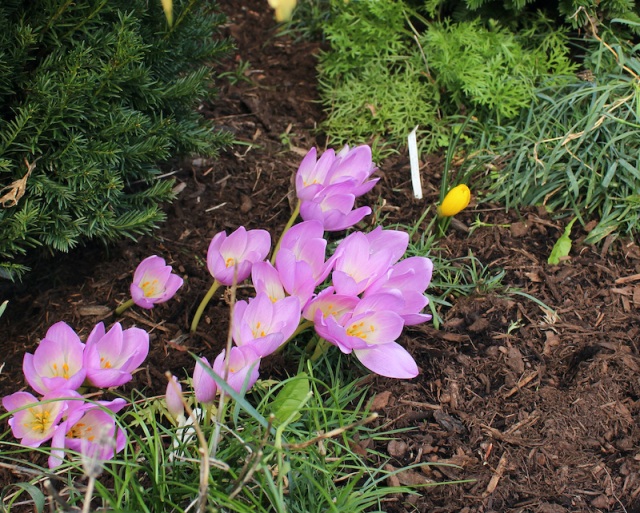
A colchicum speciosum which came as ‘bornmuellerii’ but might not be.  The yellow next to it is a Sternbergia lutea, a fall blooming crocus look-alike which I need more of.

The gloom and rain also makes the lawn explode into growth and I’ve mowed it more times in the last month than all summer, and between that and the endless construction, and cleaning out the house next door, and making room for another person’s everything, and work, and lawyer talk, and explaining geometry and biology every night to a 14 year old, well I guess I know why September flew by.  Good thing for colchicums and all those other autumn goodies, they sure make up for a less than complete daylily farm!

Colchicums by the driveway and a few 40% off goodies which I of course don’t need, but at least won’t need cramming into an already overfilled basement.

So it’s busy here and a new normal is setting in and a change of seasons might not be the worst thing to keep everyone moving along.  The colchicums kicked off autumn and now hardy cyclamen and autumn flowering crocus and chrysanthemums are making it into a party.

Most of this would be fine in the open garden, but I do like having the most special of things all in one single protected space. Maybe next year I’ll evict the camellia seedlings and give them a try in the open garden.

Besides the miracle of copious rain, and its explosive effect on the lawn, the rain also performed a little miracle in the potager.  It’s nothing to impress a Southerner, but having any kind of red spider lily in bloom this far north is something I did not expect to ever actually have happen but it did.  Maybe there’s hope for it establishing.  I wouldn’t complain if it settled in here, but knowing that the second bulb was also doing well up until it rotted last summer is giving me a few serious doubts.

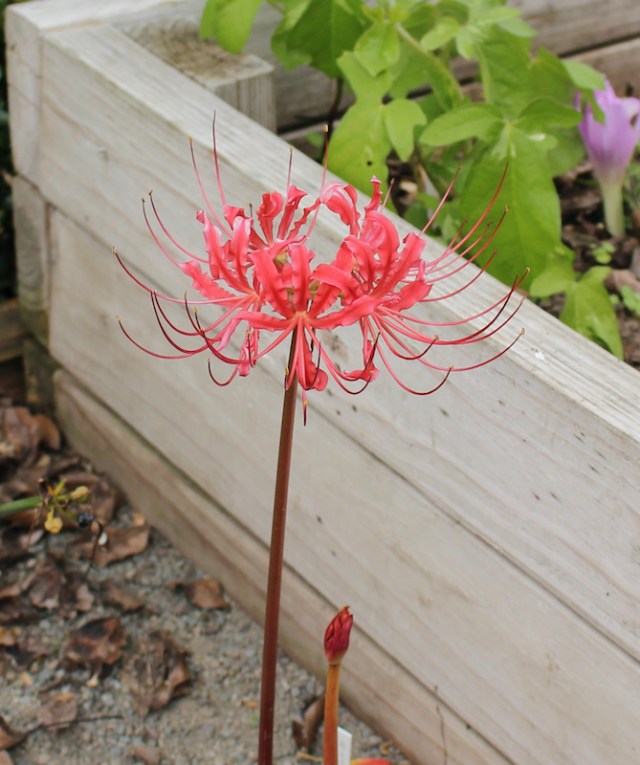
Lycoris radiata, the red spider lily. Winter foliage will grow in another few weeks and then look miserable all winter as it wishes it were still south of the Mason-Dixon line.

Elsewhere in the garden the colors are all autumn and the vibe is all seedy.

Along the street the ‘Sunnyside Up’ pokeweed (Phytolacca americana) is as lovely and promiscuous as ever. Unlike everything else here it didn’t even seem to mind the heat and drought this summer.

Even after a summer of neglect and weeks of triage watering there were still plenty of things which bounced back.  The front border looks full and the potager is an overgrown mess.  It might not be as tusnami-of-chlorophyl as previous years but I can deal with it.

I didn’t expect Geranium ‘Rozanne’ to endure the drought like it has, but it looks great and seems to have been reborn this October.

potager

Maybe the thousands of dollars spent watering were worth it here in the potager… things limped through the heat and then made for one last hurrah now that it’s cool and wet.

tropicanna canna

For the last two or three weeks you can’t even tell the cannas and dahlias spent all June and July in misery. Stunted plants aren’t the worst thing for a gardener who never got around to staking.

Progress on the daylily farm hasn’t been as swift as I had hoped for.  My sole employee gets a list each weekend, but then when Sunday afternoon rolls around it’s like he didn’t even have a list, since it’s been mostly ignored for two days and nothing was done.  Last weekend he made a good point about taking a few cuttings and carrying in a few pots instead but he really could have done a little more in the digging department on top of that.  Perhaps this weekend I’ll take him out back and give him a serious talking to.  Hopefully he’ll see the light, and hopefully back there no one will see me mumbling to myself again.  

new daylily bed

Ok, I distinctly remember my mother in law saying ‘I don’t care, as long as it looks nice you can plant whatever you want’ a couple months ago when I asked about planting some coleus in her planter.  Maybe I took that out of context, but so far there have been zero comments about a daylily farm going in on the side of her house.

So maybe the daylily farm will be ready by next spring, and maybe it will not.  Whatever happens I’m sure it will mostly complement the tropical bed which has also somewhat revived from the rain… and is also just across the property line, in my mother in law’s yard…

tropical bed

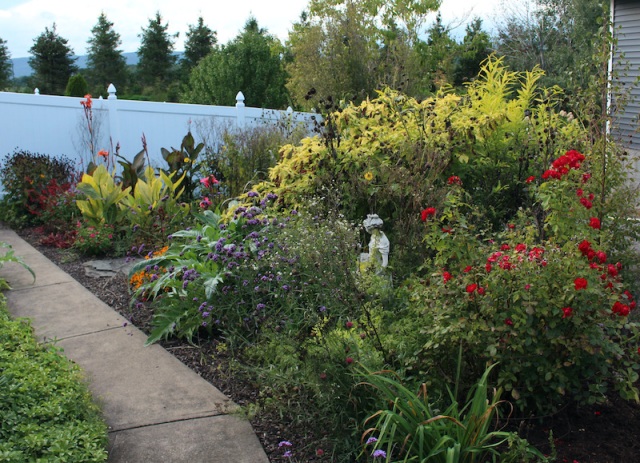
Not a whole lot of tropicals in the tropical bed this year, but even the tropics have their run-down, abandoned-farm kind of areas.  Thankfully there’s more yellow pokeweed here weeding around and complementing the red roses and purple verbena.   

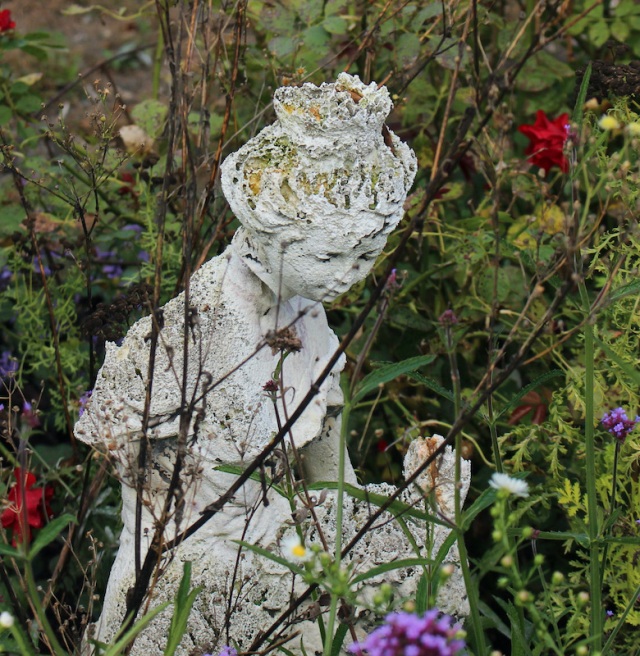
While the stunted cannas here bring me down a bit, it’s my Queen of the Prairie statue which brings on the only commentary about this bed.  The statue has been called creepy, and it’s been questioned as to why it faces her kitchen window but that’s just coincidence and I think she looks pensively thoughtful and pleasant.

prairie queen statue

Although no one insisted the Queen remain in our living room I don’t think anyone expected her to be evicted to the back lawn once we bought the house.  Personally I think she’s enjoying her trip back to the earth.

Something else who’s days are numbered are the tropical pots.  Time to start thinking about who is freezing, who is becoming a pot of cuttings, and who is getting hauled back in for the winter garden.  It shouldn’t surprise anyone that things have multiplied and been added to.

red cane begonia

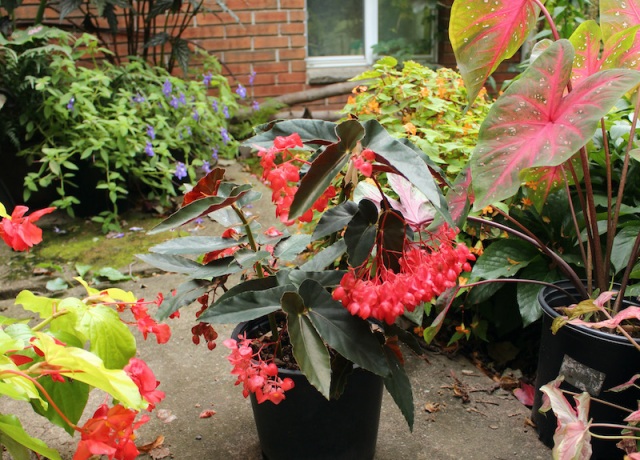
Obviously this begonia needs to come inside.  What soul-less heathen would let frost touch it while it’s flowering its head off?

The new angel’s trumpet in a (heavy)20 inch pot looked much less alarming as a little free cutting last fall, and a couple elephant ear divisions were never expected to fill one entire half of the garage but then it happened.  Better safe than sorry is what I always like to think, so of course they’re all going to get safe winter homes.

pink brugmansia

In May I almost let spider mites kill this.  “pinch off all the leaves, soap it down, and fertilize and water the sh!t out of it and it will be fine” was the excellent advice I received.  It would look even better if i didn’t forget to fertilize the last few weeks and missed a few waterings…

Other things are also finding their way in for the winter.  If it’s an early freeze things might be easier, but if it’s a late freeze I’ll have way too much time to soften up and say what’s the harm in one more?

red suntory mandevilla

I hope this red mandevilla can survive the winter with me.  Previous attempts have failed but how can I not try?

There’s always room for one more and it’s good to have all these things going on to carry us through the next month.  Each month has it’s own surprises, and even if I didn’t need the surprise water heater replacement yesterday, having hot water again is almost as nice as a house packed full of somewhat appreciative houseplants and a garage full of sleeping bulbs and tubers.

Hmmm.  I didn’t even think about digging things yet.  That might be a November, as the snow flies, kind of project and I’ll wait until then to worry about it.  One month at a time, right?