Thursday’s Feature: Colchicums!

As one considers the winding down of summer and the general decay of the growing season… as I suppose one should on this first day of autumn… there do seem to be a few positive notes which make the changing of the seasons more bearable.  While other things die or flee in response to cooler temperatures and weakened sunshine, a few plants spring to life, and if you count yourself among the optimists you could almost consider this to be the start of a new growing season with flushes of new foliage for the cooler weather, healthy root growth and spring buds forming below ground, and the first of the autumn flowers.  “Good for you” I say since I am not a lover of fall and its frosty death, but even I will admit colchicums make it easier to cope, and the fresh blooms at this time of year make it all seem a little less final.

With those cheery thoughts in mind I’m again joining Kimberley at Cosmos and Cleome for her Thursday Feature, and the flowers of the autumn crocus or naked ladies (Colchicums) are what stand out in my garden this week.

colchicum nancy lindsay

A reliable Colchicum with smaller flowers and colored flower stems, Colchicum ‘Nancy Lindsay’ would be on the short list of favorites.

As a good blogger I should take this opportunity to discuss the various details of researched growing conditions and also cover the finer points of colchicum cultivation but as you may have already guessed from previous posts I bore easily and tend to laziness, so to be honest I’d recommend getting that book learnin’ elsewhere.  I’m more of a stick it in the ground and see if it grows kind of guy, so if you don’t mind, click on >this link< and you’ll find a few of Kathy’s posts over at Cold Climate Gardening which should do very nicely to fill the void I leave.  She’s like a crazy cat lady of colchicums, and in addition to growing, showing, sharing, and speaking on colchicums, she also does an excellent job of putting that information online.  She’s also a wonderful person, so I hope she finds neither ‘crazy’ nor ‘cat lady’ offensive since I would hate to offend her good nature.

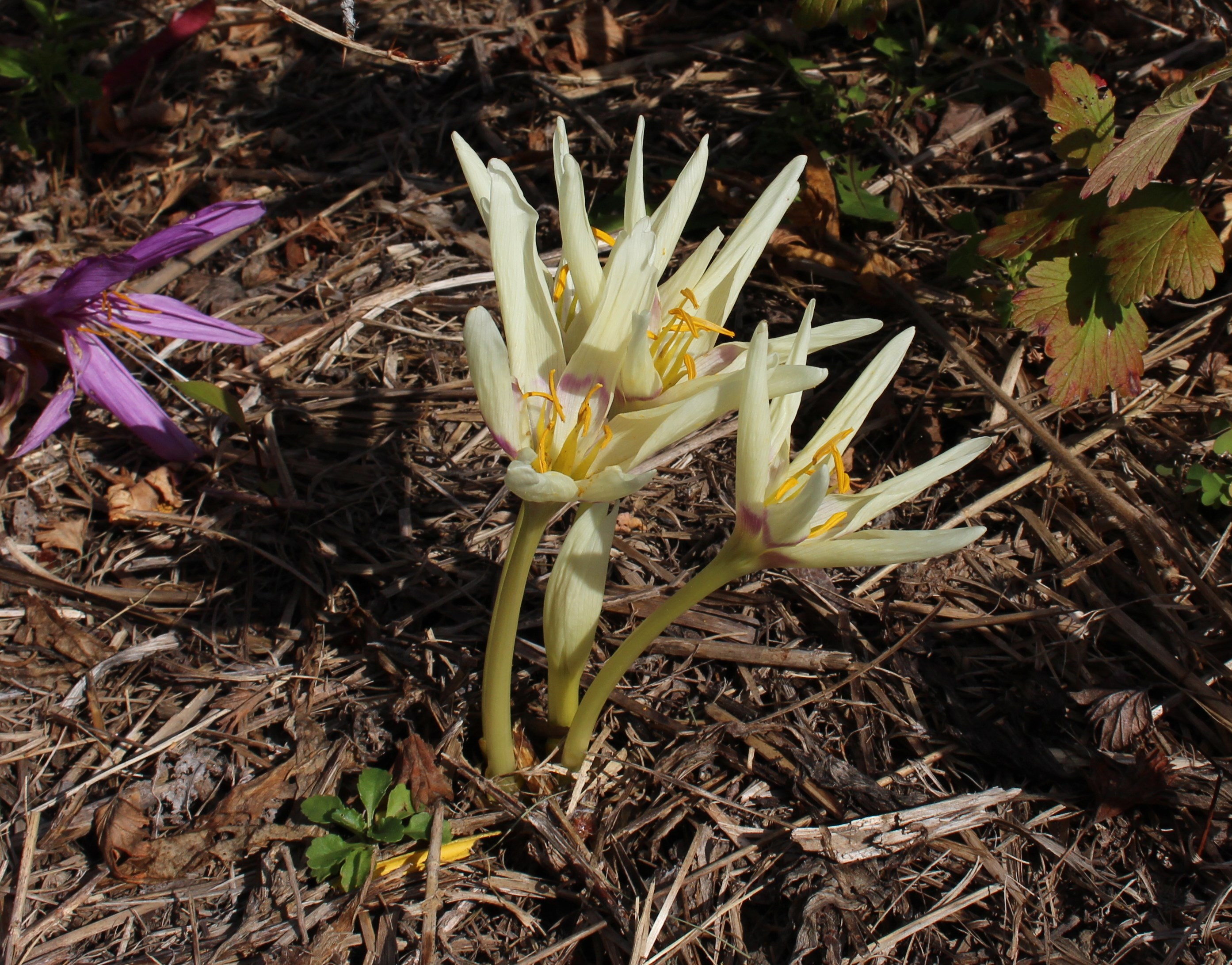
colchicum innocence

Colchicum run a range of pink shades from dark to light, but the odd white form really lights up an autumn bed.  Here’s Colchicum ‘Innocence’.  Decent sized blooms, slight pink tint when you look for it, and a good grower.

Better sources of information aside, I guess I should mention some of the barest essentials of Colchicums.  They bloom bare, without foliage, hence the common name of naked ladies.  Their bloom shape resembles that of crocus, hence the name autumn crocus -although they share no family relation whatsoever.  Of course being unrelated to crocus is not the worst thing since wildlife love the crocus around here yet completely avoid the poisonous parts of colchicums.

In the early spring, colchicums quickly grow leafy, hosta-like foliage but then yellow and disappear once the weather heats up.  Decent, well drained soil, sun or part shade (the more sun in spring the better), and hope for the best.

colchicum foliage

Spring species tulips and the springtime foliage of colchicums growing in the lawn.

With their fall blooms, colchicum are a bit of an oddity when compared to the regular spring and summer flowers of most bulb catalogs.  Maybe this is why they seem expensive when compared to the mass produced spring bulbs, but don’t let it fool you.  They might require some special handling and storing, but overall  it’s an easy group to grow.  If I have one bit of advice which may be helpful it’s to plant shallowly in heavy soils.  The flowers seem to struggle when sprouting up out of hard-packed soil, and if they can’t make it up chances are the spring foliage won’t make it either, and your special new bulb will die.  Cover loosely I say, and if the bulbs (actually corms btw) are already flowering, do not cover the flowers with dirt and expect them to rise up out of the soil.  The flowers, and foliage as well, seem to take advantage of the old, dried floral tubes and follow these paths up out of the soil.  When newly planted, the tunnels from last year no longer exist, so to get around this plant shallowly and cover with some mulch once flowering is finished and you should be in good shape.

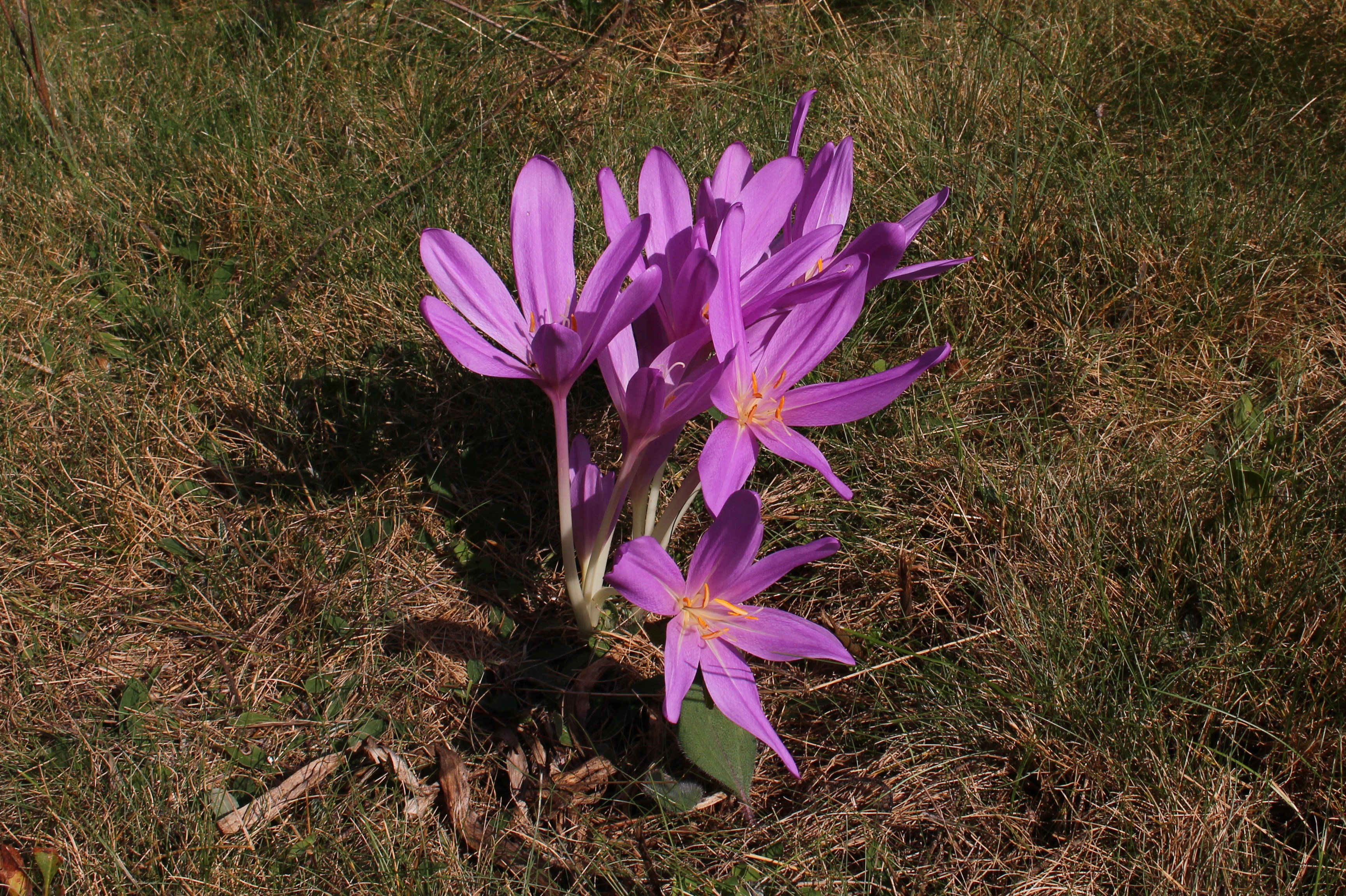
colchicum lilac wonder

Colchicum ‘Lilac Wonder’ planted in grass.  If planting in lawns, be prepared to hold back on mowing until the foliage has yellowed off.  I like a field of gone-to-seed grass swaying in the breeze in June.  You may not.

Over the last two years I’ve been adding colchicums to the meadow garden, and so far have been pleased enough to want to add more this fall.  I’m hoping they do well enough amongst the root completion of the grass and so far so good on that.  Another plus is I prefer the flowers when set off by the green grass, even though in most years this area usually has more of a brown grass look to it.

colchicum lilac wonder

More Colchicum ‘Lilac Wonder’ planted in the meadow garden. This is my favorite colchicum right now, it really does well here.

colchicum in meadow grass

A more sparse planting of an unknown colchicum.  This one will sulk if the spring is too short or dry, or isn’t exactly to its liking.  I’d blame the lawn, but the same lack of blooming happens in my flower beds as well.

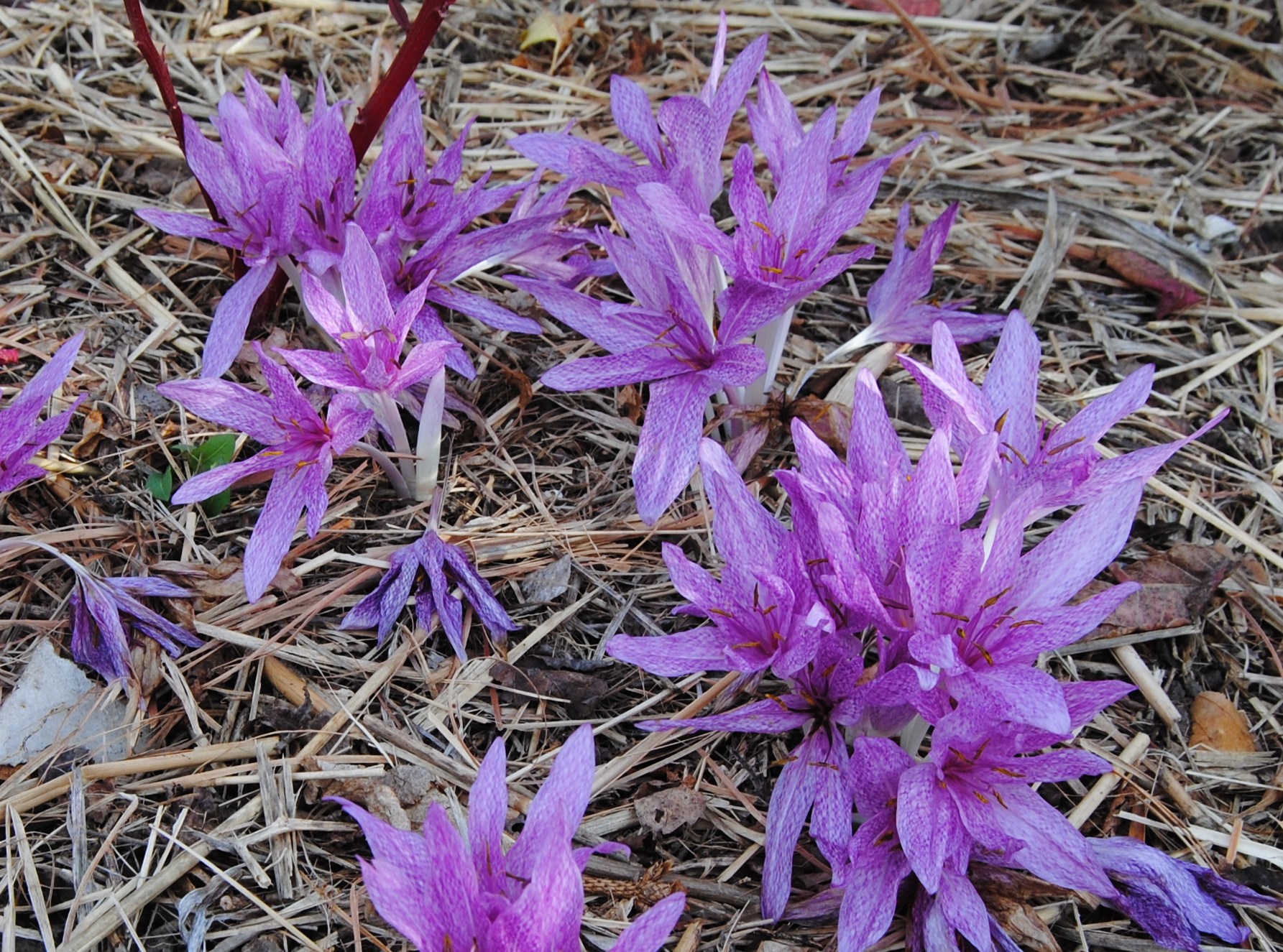
I’m going to wrap it up here since although I can stare at and talk colchicums for hours in the garden, I am way past the limits of my attention span here at the computer.  But before ending I have to show Colchicum x aggripinum and the remarkable pattern of its blooms.  Many colchicums show tessellation in their flowers and of the ones I grow this one shows it best.

colchicum x aggripinum

The smaller, shorter foliage and flowers of colchicum x aggripinum still show up very well in the garden.  This clump liked being divided last summer, but didn’t like the late freeze and short spring we had, so I hope it fills in better next year.

colchicum x aggripinum

Tessellation on a flower of colchicum x aggripinum.  I love this patterning.

If you’ve made it this far I might as well apologize while I still have your attention.  There are still a few weeks left in the colchicum season and it’s very likely you’ll see more of them at some point or another as I try to work my way through this otherwise miserable new season.  In the meantime though, please consider giving Kimberley a visit to see what she and others are posting about this Thursday.  Perhaps they have a higher opinion of autumn.

Why wait for spring?

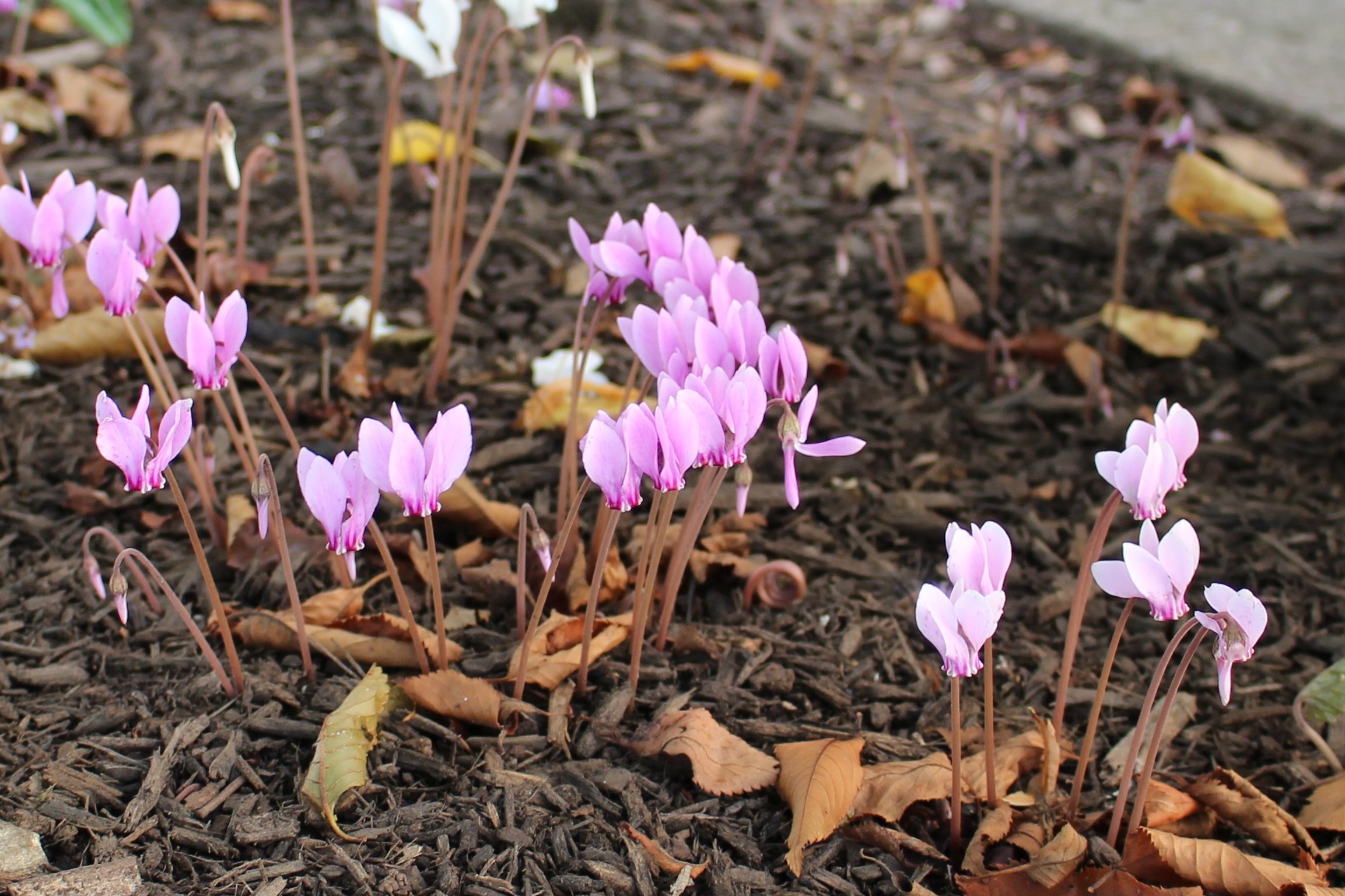
I’m halfway enjoying fall this year.  Yes, everything is dying, it’s too dry, and we face months of snowy gloom, but right now the fall bulbs are blooming and it’s a little bit of rebirth right before *the end* (sorry but I will never actually look forward to the arrival of winter).  The hardy cyclamen, in this case cyclamen hederifolium, have been blooming for several weeks now.

naturalized cyclamen

I was ambitious this year and spread a little shredded wood mulch around the cyclamen bed. For a while it looked immaculate under the cherry….. but within minutes the dirty little tree resumed its leaf dropping….

Last winter the polar vortex was brutal on these little guys.  Fortunately they’ve shrugged off the foliage loss and act as if nothing at all happened.  I wish I had clearer photos, but out of the dozens of cyclamen pictures I took, these were the only two which came out halfway in focus.  I need a photo mentor who can begin to point out some of my worst mistakes 🙂

hardy cyclamen hederifolium

For me the best thing about these hardy cyclamen hederifolium are the leaf patterns, but the flowers aren’t too shabby either….

Cyclamen are the best, but colchicums follow at a close second.  Actually the colchicums do put on a more impressive show, but it’s all or nothing with these ladies, and ends more quickly than the slow and steady cyclamen display.

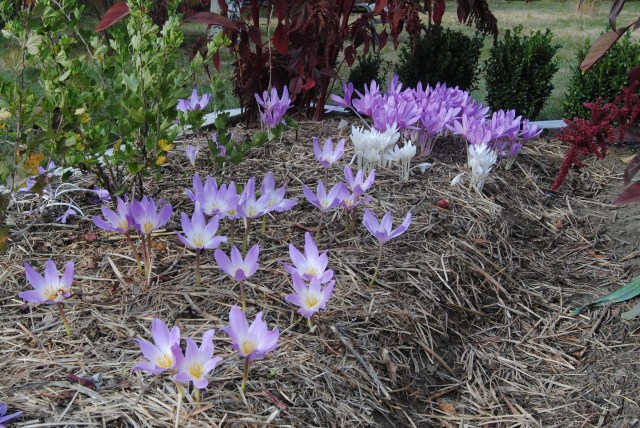
colchicum flower bed

Most of my favorite colchicums are together in this bed. It’s bone dry (the third gooseberry bush actually died this summer) but the bulbs seem right at home.

I’ve devoted the way-too-dry-for-vegetables end of the veggie patch to colchicums and daffodils, and they seem happy enough here, but as the garden grows I’m thinking there might be something better to do with this spot for the other 11 months of the year.  Amaranthus once filled the bed, but the soil was too dry for them to survive this summer.

colchicum '‘Harlekijn’ 'Harlequin'

New this year, colchicum ‘‘Harlekijn’ is what I’d call “interesting”. Most pictures show more pink to the bloom, but that might change from year to year. Overall I like the curious rolled (or quilled) petals and they do make for something ‘different’ 🙂

The few colchicums I have planted in the meadow seem just as happy and to my eye look a little more comfortable growing amongst the barely green grass.  In fact the only bulb of colchicum autumnale ‘Pleniflorum’ to bloom for me is this one planted in the lawn.

colchicum autumnale 'Pleniflorum'

The colchicum autumnale ‘Pleniflorum’ planted in the official colchicum bed don’t bother blooming. This one in the lawn seems marginally more happy and is even gracing us with the sprouting of a second flower bud.

The (I think ) ‘Lilac Wonder’ planted in the lawn is possibly my favorite colchicum.  It blooms long, large, and heavily and makes quite the pool of color.  I’m thinking next summer might see a lot of these moving around, since they’ve multiplied like rabbits and are ready for dividing, but it’s not something I want to tackle this fall.

colchicum 'lilac wonder' in lawn

Colchicum ‘Lilac Wonder’ growing happily in the (now mowed) meadow.

You might be wondering why I’m even talking about moving flowering bulbs in the fall.  According to what I’ve read and heard (and done) colchicums are ok to move while in bloom.  It’s probably better to wait till the foliage dies in the summer and the bulbs are dormant, but I’m more of a do it while you remember kind of guy, and it’s much easier (and more fun) to move them while in bloom.  You can’t always be a slave to your plants you know, and every now and then they have to just suck it up and deal with things at a less than perfect time.

tranplanting colchicum in bloom

This unknown clump of colchicums which I call “not the giant” comes from a single stray bulb left behind from the last digging. It’s in full bloom and the roots have just begun to sprout from the base of the corm…. even in soil so dry I could have used a dust mask while digging.

Obviously you want to take a little care with the roots while planting, but to be honest I was more concerned about snapping off the blooms.  Instant gardening is what I call this, and the bulbs were planted individually right under the turf without any soil prep.

naturalized colchicum in lawn

Two days later the blooms look as fresh as the day I dug them. After being planted into more bone dry soil… and not even watered while transplanting… this will be a true test of how well colchicum handle autumn transplanting. We’ll revisit next fall!

Kathy at Cold Climate Gardening is a truly addicted colchicum lover (I’m just a dabbler), and her recent post on how colchicums know when to bloom asks a lot of the same questions I have.  They’re growing in soil so hard and dry I don’t even know how the roots penetrate the soil, yet they do, and cyclamen perform a similar trick.  Somehow these bulbs seem to have an odd internal clock that just goes off one day and they start growing.  Maybe it’s better I just ignore this heavy thinking and stick to enjoying the blooms, so here’s one last flower to end the post.  Not hardy, it’s one of those odd things that find their way into your online cart and then surprise you when you’ve forgotten all about that weak moment with a gift certificate.

bessera elegans flower

A fascinating flower shape, bessera elegans also comes in a rare deep purple. Mine are just blooming and I love it. Keep in mind though that the foliage is a floppy mess of green. Imagine thin dark green daffodil leaves so spineless they can’t lift themselves up off the ground and you have an accurate picture.

So fall flowers are off to a strong start.  I wish I had an autumn snowdrop to go with them, but I fear I’ve killed off my one bulb.  Obviously I don’t want to talk about it :/


Colchicum Clear-up

My late colchicum shipment from Daffodils and More was well into bloom by the time I finished dragging my feet and placed an order.  I guess I didn’t elaborate enough on how these little guys work…. I thought everyone was obsessed with colchicums at this time of year!

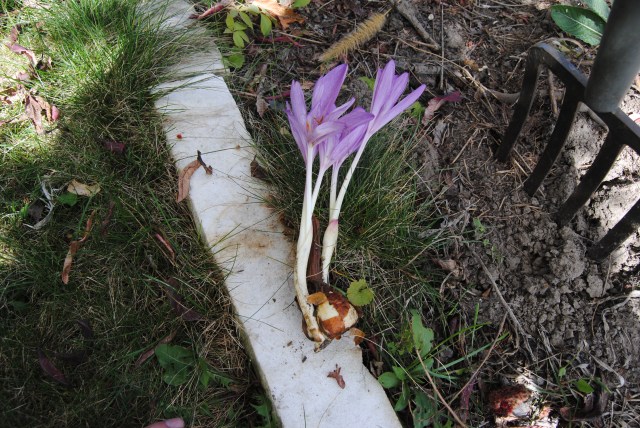
Colchicums are one of the “naked lady” bulbs that bloom in fall, they come up out of the dry autumn soil and surprise you with bare flowers minus the greenery.colchicum bed

They grow their hosta-like leaves in the spring, just like other hardy bulbs, but the blooms wait till late summer before even thinking about showing up.  Colchicums are on their own schedule and if you’re a little late in getting them in the ground they’ll ignore your tardiness and go ahead and bloom anyway, soil or no soil.  No problem, since the fall rooting will just wait until the bulb returns to the damp earth before it kicks in.  This is how the bulbs looked coming out of their paper shipping bags.colchicum blooming without soil

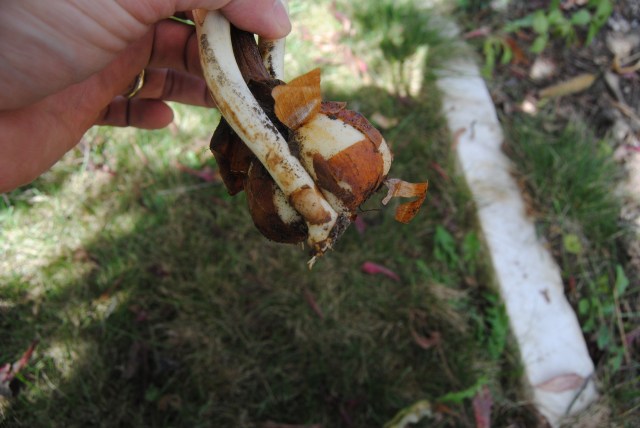
The bulbs I received were perfect, they had all been stored upright so that the floral tube came straight up and the separate blooms sprouted normally from within the tube.  If the bulbs are stored willy-nilly the blooms come out all over the place and are a pain to plant properly.  If grown normally a bulb forms a ‘heel’ where the roots sprout from, and a tube which brings the flowers to the surface.

This bulb was planted last week and you can just start to see tiny roots growing… Sorry Annette, I just had to dig one up again to take a look and a photo!colchicum bulb heel

When you plant these already-in-growth bulbs, take care to keep the tip of the floral tube just above the soil surface.  When the leaves sprout in the spring they also come up the inside of this floral tube and use it as a path to the surface.  If planted too deeply or not facing up, the leaves cannot grow up, and as a result die underground.  This is a costly lesson to learn since colchicum bulbs aren’t all that cheap, and if a whole batch of late planted bulbs die you will feel guilty for at least three years, especially if you lose another batch the following year…. (ask me how I know this)

planting flowering colchicums

Once planted nothing much seems to bother colchicums.  The run of the mill garden types thrive in average soil and full sun to part shade and pests usually don’t bother them outside of slug attacks on the blooms.  Colchicums are in fact poisonous enough to cause a nasty end to gardener or gopher and the same compound that protects them from chewing rodents and grazing rabbits is also the original source of colchicine,  which is used to treat gout.  In the gardening world, colchicine is also the chemical treatment that will cause seeds to go into polyploidy (doubled and tripled sets of chromosomes) when the cells begin to divide.  Tetraploid daylilies are the best example I can think of, but a quick online search shows many others.  Maybe my colchicum obsession isn’t as much selfish plant lust as it is just plain old gratefulness to a bulb that keeps giving!

With the exception of a single recently dug bulb, my new colchicums are already settled into the colchicum bed.  One of their neighbors is colchicum speciosum, a vigorous, long blooming bulb.colchicum speciosum

The large speciosum (renamed as “Lilac Wonder” – Thanks Cathy!) dwarfs it’s tiny neighbor, the slightly off-white colchicum autumnale ‘Album’.   Both are very popular with the late season honeybees.  I’m going to hope the honey doesn’t take on any of the poisons!  (I’m sure it doesn’t)colchicum autumnale 'Album'

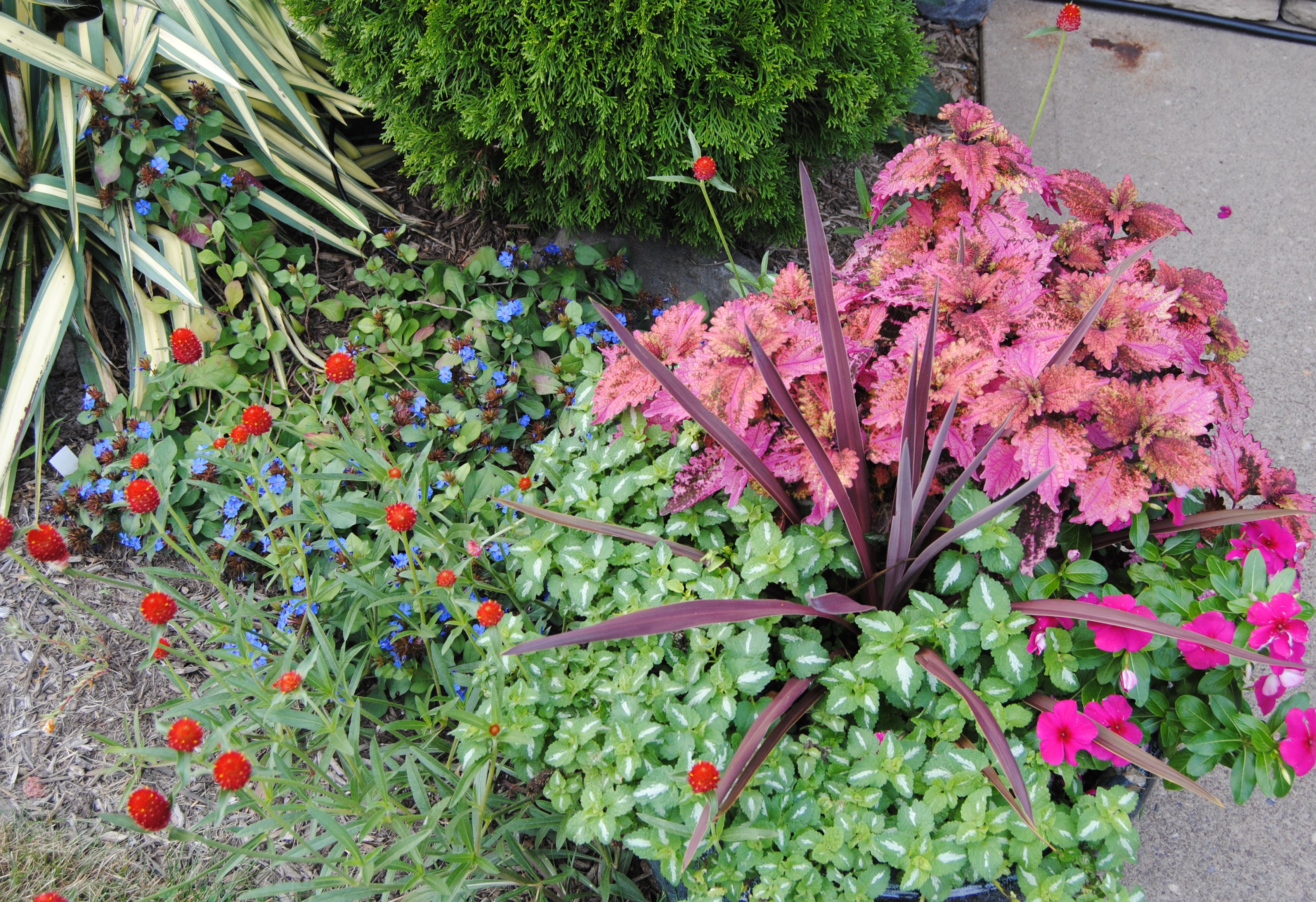
I’m thinking of giving the colchicum bed an overhaul.  The bulbs could use more elbow room and the display could use some background plantings a little more colorful than the drab mulch I threw on there this summer.  Susie over at pbmgarden got me thinking this summer about groundcovers and I think I have the perfect plan for at least a clump or two of the light pink colchicums.  I want to divide up the blue leadwort (Ceratostigma plumbaginoides) and spot a few colchicums into that.  Here’s where I have it right now in the front yard.  It makes a halfway decent groundcover with a long season of gentian-blue flowers and green foliage.  The leaves take on red tints with the cooler weather and the fact that it sprouts kind of late in the spring makes it an even better companion!  Ceratostigma plumbaginoides

So that’s the plan.

Just one more thing before I’m completely done with colchicums.  The word is ‘tesselation’ and it describes the geometric patterning some colchicums show.  Colchicum x agrippinum has plenty of this checkering and it’s one of my favorites.colchicum x agrippinum

Did I do that?

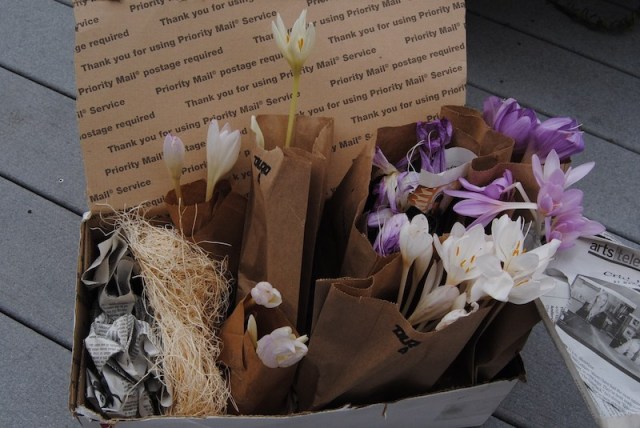
This box showed up on my doorstep Friday and it’s bursting at the seams with colchicum flowers!  The wise gardener orders these bulbs well in advance of autumn so that this scene takes place in the well prepared garden bed, but the procrastinating gardener takes the risk and begs via email for a late order and shipment.

I may have gone through this kind of poor planning before, so the bare-bulb blooms are no big surprise or worry, but the show would have been ten times better had the bulbs already been planted.  But this order was the result of panic.  A couple weeks ago I realized I didn’t have anywhere near as many colchicums as a self respecting colchicum lover should have, so I immediately went to Daffodils and More, David Burdick’s bulb website.  He dabbles in the colchicums, has an excellent selection, and after a couple emails back and forth I was able to convince him to part with a few, even though they were already headed into blooming stage (as you can see, they don’t need soil or planting in order to bloom!).  They arrived at my doorstep even before my check was cashed and I have to say they’re the best cared for colchicums I have ever received.  Instead of looking worse for their journey they’re already planted in the ground and settling in.

I was halfway tempted to keep them in the box and have them close enough to examine day or night while blooming, but better judgment won out and they were planted the next day.  I just need some groundcover ideas.  Some nice companion plantings would surely make this bed look even better as the bulbs clump up.

This info might be a little too late, but I noticed Brent and Becky’s bulbs just put their colchicums on sale for 50% off. It’s a great deal (and the source of many of my own bulbs) but most have already sold out…. but there are a couple left, and it’s not that I want to encourage any late season colchicum incidents in your own garden, but colchicum byzantinum and colchicum ‘giant’ are two of my favorites……